
Submitted:
14 June 2025
Posted:
17 June 2025
You are already at the latest version
Abstract
This study aims to explore students’ perceptions of the use of instructional technology in English as a foreign language (EFL) learning in Indonesian higher education. In a global context increasingly influenced by the digitalization of education, this study examines the factors that influence students’ acceptance of technology, and how it affects their learning experience. Using a quantitative approach with a questionnaire instrument, this study involved 300 students from various universities in Indonesia who had experience using technology in EFL learning. The results showed that students generally had positive perceptions of the relevance and ease of use of technology in English learning. The variable “Relevance” scored the highest, while “Technology Support” scored the lowest, indicating challenges related to infrastructure and technical support, especially in remote areas. Differences between students in big cities and remote areas were also found, with students in urban areas receiving better technology support. The implications of this study indicate the need for improved infrastructure and technical support to ensure that technology can be used optimally throughout Indonesia. This study contributes to the understanding of technology adoption in English language education, as well as providing a basis for developing technology-based teaching policies and practices.
Keywords:
English Language Learning
; infrastructure
; instructional technology
; technology support
Introduction
The rapid development of information technology has brought about major changes in the world of education, especially in learning English as a foreign language (EFL). In Indonesia, the use of instructional technology in EFL classes is increasingly becoming an unavoidable necessity, especially in the midst of the digital era that is all connected. Educational technology including learning software, mobile applications, and e-learning platforms offer various conveniences for teachers and students in accessing learning materials more flexibly and effectively. However, although technology has been integrated into many aspects of education, students' perceptions of the use of instructional technology in EFL classes still vary greatly and need more attention (Iftitah et al., 2020; Kuliahana & Marzuki, 2020; Setyaningsih et al., 2020; Erizar et al., 2024; Kuliahana et al., 2024). At the national level, Indonesia has experienced a surge in the use of technology in the education sector, driven by government policies that support the digitalization of learning. With the presence of the Merdeka Belajar and Kampus Merdeka programs, technology in education is increasingly gaining an important place in the higher education curriculum (Amalia & Marzuki, 2023; Amalia et al., 2024; Anita et al., 2024). However, major challenges arise in terms of technology adoption by students and teachers, especially in managing EFL classes. Although many higher education institutions have implemented technology, not all students have felt the optimal benefits from the integration of this technology. This indicates a gap between the potential of existing technology and the experience of using it in the classroom, which requires further research to understand how students perceive the use of instructional technology.
Globally, instructional technology in English language teaching has been widely accepted, especially in developed countries with better digital infrastructure. Overseas research has shown that students who have positive perceptions of the use of technology tend to be more active and successful in EFL learning (Marzuki, 2019a; Marzuki, 2019b; Muthmainnah et al., 2024; Muthmainnah, Cardoso et al., 2024). However, in Indonesia, there is still a significant gap related to students' readiness and acceptance of technology in education. Factors such as limited internet access, low technological skills, and lack of training for teachers are major challenges that must be overcome (Alek et al., 2020; Alek et al., 2022; Muthmainnah et al., 2022; Muthmainnah, Marzuki et al., 2024). Therefore, research on Indonesian students' perceptions of the use of instructional technology in EFL classes is very relevant and important to conduct.
This study aims to explore the perceptions of students at Indonesian universities towards instructional technology used in EFL classes. With a focus on English language teaching, this study seeks to identify factors that influence students’ attitudes and acceptance of technology use, and to understand the extent to which instructional technology can enhance their learning experience. It is hoped that the results of this study can provide deeper insight into the challenges and potentials of technology integration in English language education in Indonesia.
This study also offers an important contribution in filling the existing research gap. Although there are a number of studies examining the use of technology in foreign language education, few have specifically addressed the perceptions of students in Indonesia, especially in the context of teaching English in higher education. Previous studies have focused more on the technical aspects and the use of software without considering its impact on students’ learning experiences. Therefore, there is an urgent need to better understand how students respond to the use of technology in English language learning, as well as how this technology affects their overall learning process. With a better understanding of students’ perceptions of instructional technology, the results of this study are expected to have a positive impact on education policy in Indonesia, especially in designing more effective and relevant curricula and teaching strategies to meet the needs of students in the digital era. In addition, this study can serve as a basis for educators and policy makers to design better training programs in utilizing educational technology. Therefore, it is important to answer the questions regarding how students perceive instructional technology in EFL classrooms and what factors influence their acceptance of the use of such technology in English language learning in higher education in Indonesia. This study aims to identify and analyze students’ perceptions of the use of instructional technology in EFL classrooms at Indonesian universities, as well as the factors that influence their acceptance of the technology in the context of English language education.
Literature Review
1. The Role of Technology in English Language Education
Instructional technology has become an integral part of English language teaching in many countries, including Indonesia. In the context of EFL (English as a Foreign Language) classes, technology allows students to access a variety of learning resources, such as audio-visual materials, e-learning platforms, and language learning applications. The use of technology in EFL learning is considered to increase student engagement, reduce language barriers, and enrich the learning experience (Albana et al., 2020; Alek, Marzuki, Farkhan, & Deni, 2020). In Indonesia, where English is considered an important foreign language for education and employment, technology is a tool with great potential to improve learning outcomes. However, the integration of this technology faces challenges, such as the lack of adequate infrastructure in some areas and doubts from teachers and students regarding its effectiveness (Kuliahana, Marzuki, & Rustam, 2024).
2. Students’ Perceptions of Technology in EFL Learning
Student perceptions of the use of instructional technology play a very important role in its adoption and success. Several studies have shown that students who have positive perceptions of technology are more likely to be actively involved in learning (Santiana et al., 2021; Santiana et al., 2024). Conversely, those who have negative perceptions of technology tend to find it difficult to adapt to technology-based learning methods. Factors such as ease of use, accessibility, and relevance of technology to learning objectives are key determinants of students’ perceptions (Afrilyasanti et al., 2017; Wright, 2017). In addition, cultural factors and learning habits also play an important role in shaping students’ attitudes toward technology in English learning.
3. Instructional Technology in the Context of Indonesian Education
The application of technology in Indonesian education still faces several challenges, both in terms of infrastructure and readiness for its use. Despite strong encouragement from the government through educational digitalization programs such as Kampus Merdeka, the reality on the ground shows inequality in access to and use of technology. In some regions, many universities have not fully adopted technology as part of their curriculum, while in big cities, technology has become a major part of EFL learning (Arigusman, 2017). This indicates a gap in the application of technology in EFL classes that needs to be resolved. By understanding students' perceptions of technology, we can more easily identify inhibiting factors and encourage wider adoption.
4. Factors Influencing Students' Perceptions of Technology
Several factors can influence students' perceptions of instructional technology, including personal, technical, and environmental factors. Personal factors include students' attitudes toward technology, their comfort level in using it, and their expectations of the learning outcomes obtained through technology. Technical factors include the ease of use of technological devices and the quality of the materials provided. Meanwhile, environmental factors include support from lecturers and educational institutions as well as the available technological infrastructure (Asrifan et al., 2017; Nurbuat et al., 2022). In the Indonesian context, these factors are very relevant because not all students have the same access to adequate technology, and not all teachers are familiar with technology-based teaching methods.
5. Impact of Technology Use on EFL Learning
The use of instructional technology in EFL learning has a significant impact on the quality of learning and student engagement. The use of technology can improve students' language skills, especially in listening and speaking. Technology also provides opportunities for students to learn independently through various available digital resources. However, this impact is highly dependent on how technology is integrated into the learning process. The use of technology that is unstructured or less relevant to learning needs can cause students to feel frustrated and demotivated (Munir, 2021; Muthmainnah et al., 2025). Therefore, it is important for educators to design learning experiences that incorporate technology in an effective way and in accordance with learning objectives.
6. Research Gaps and Contributions of This Study
Although there have been many studies exploring the use of technology in foreign language education, there is still a significant gap in research regarding Indonesian students' perceptions of instructional technology in EFL classes. Most previous studies have focused more on the technical aspects of technology use or on the adoption of technology in developed countries (Marzuki, 2019c; Marzuki, & Kuliahana, 2021). This study aims to fill this gap by examining the perceptions of students in Indonesian higher education institutions, as well as the factors that influence their acceptance of instructional technology. The results of this study are expected to provide important contributions to the development of educational policies, as well as serve as a basis for more effective teaching in EFL classrooms in Indonesia.
Method
This study uses a descriptive quantitative approach to explore students' perceptions of the use of instructional technology in EFL classrooms in Indonesian higher education institutions. This approach was chosen because it allows researchers to systematically describe the characteristics of students' perceptions and obtain data that can be analyzed statistically to identify factors that influence students' attitudes toward technology in English language learning. This study was conducted in the context of higher education in Indonesia, where the adoption of technology in EFL classrooms is still in its infancy, with significant differences between universities in big cities and remote areas (Santiana & Marzuki, 2024).
Research Context
This research was conducted at several universities in Indonesia that have English language education study programs. The selection of research locations was carried out by considering the diversity of levels of access to technology, both in terms of infrastructure and technology use policies in each institution. This research focuses on universities that have implemented technology in the EFL learning process, but with different levels of adoption and utilization of technology. This context provides a clearer picture of how students' perceptions of instructional technology relate to conditions in the field.
Participants
The participants in this study consisted of 300 English language education study program students who were taking EFL courses at the selected universities. Sample selection was carried out using stratified random sampling techniques to ensure fair representation of students at various universities in Indonesia, both those located in big cities and remote areas. The inclusion criteria for participants were students who were active in EFL classes during the last semester and who had experienced the use of technology in learning. The ages of the participants ranged from 18 to 25 years, with a balanced composition between men and women.
Instruments
The instrument used in this study was a questionnaire specifically designed to measure students’ perceptions of the use of instructional technology in EFL learning. The questionnaire consisted of two main parts: first, questions that focused on students’ demographics and their experiences in using technology in EFL learning; second, a series of items that measured students’ perceptions of various aspects of instructional technology, including ease of use, relevance of technology, and its impact on English language learning. A 5-point Likert scale was used to measure students’ attitudes, with scores ranging from 1 (strongly disagree) to 5 (strongly agree). This instrument has been tested for its validity and reliability in previous studies (Biasutti & Frate, 2017).
Data Analysis
The data obtained from the questionnaire were analyzed using descriptive and inferential statistics. Descriptive statistics are used to describe the demographic characteristics of the participants and the distribution of students’ perceptions of instructional technology. Frequency, mean, and standard deviation analyses were used to identify general patterns in students’ perceptions. To analyze the relationship between factors influencing perception, linear regression analysis was conducted to explore the extent to which variables such as technology comfort level, instructor support, and technology accessibility influence students’ attitudes toward the use of instructional technology in EFL classrooms. All analyses were conducted using SPSS statistical software version 26.0.
Results
The primary goal of this study was to assess students' perceptions of instructional technology in EFL classrooms across various universities in Indonesia. After the data collection, a series of analyzes were conducted to identify the prevailing perceptions and factors influencing students' acceptance of technology in their learning environments.
Demographic Profile of Participants
The sample consisted of 300 participants, including both male and female students from different regions of Indonesia. The demographic data showed that 60% of the participants were from urban universities, while 40% were from universities located in rural areas. The majority of students (72%) reported having frequent access to technological tools such as computers and smartphones, which are integral to the learning process in modern education. The remaining 28% expressed limited access to technology, particularly in remote areas where internet connectivity remains a challenge. This distribution allowed for a comparative analysis between urban and rural students regarding their perceptions of technology.
Perception of Ease of Use
The analysis revealed that the variable "Ease of Use" received the highest mean score of 4.2, indicating that students generally found the instructional technology easy to use. This result aligns with previous research, which suggested that technology adoption is influenced by its perceived ease of use (Muthmainnah, Darmawati et al., 2024). The standard deviation of 0.58 reflected some variation in student experiences; however, most students expressed confidence in navigating the digital tools used in their EFL classrooms. The ease of use was particularly evident among students from urban universities who had more exposure to advanced technological platforms.
Perception of Relevance
The next variable, "Relevance," received a mean score of 4.3, with a standard deviation of 0.56. This high score indicates that students perceive the use of technology in EFL classrooms as highly relevant to their learning needs. Many students stated that the integration of technology enhanced their understanding of complex language concepts, as they were able to access diverse learning resources. These resources include online dictionaries, videos, and interactive exercises, which complement traditional methods of teaching. The relevance of technology was demonstrated more strongly by students from urban universities, where technology is integrated more seamlessly into their daily academic activities.
Impact on Learning
The variable "Impact on Learning" received a mean score of 4.1, suggesting that students believed that technology positively impacted their language learning experience. The standard deviation was 0.62, indicating that although most students recognized the positive impact, there were varying opinions, especially from rural areas. Some students expressed that technological tools helped improve their listening and speaking skills through the use of multimedia resources, such as podcasts and video-based lessons. However, a portion of rural students felt that they were not able to fully utilize the technology due to internet connectivity issues, which limited their engagement with the online components of the learning process.
Technology Support and Institutional Factors
The variable "Technology Support" received a slightly lower mean score of 4.0, with a standard deviation of 0.61. This score highlights a gap in the support provided by institutions for students in using technological tools. Many students from rural universities noted that while technology was available, there was often a lack of technical support, which hindered their ability to fully engage with the digital platforms. In contrast, students from urban universities reported more consistent support, including dedicated IT services and regular training sessions. This discrepancy underlines the need for stronger institutional frameworks to provide equal technological support across different regions in Indonesia.
Comparative Analysis: Urban vs. Rural Students
A comparison between urban and rural students revealed interesting insights. Urban students showed higher mean scores for all variables, particularly in terms of "Ease of Use" and "Technology Support." This can be attributed to better infrastructure and more frequent exposure to digital tools in urban environments. Rural students, on the other hand, displayed more mixed responses, particularly in the variables "Impact on Learning" and "Technology Support." These findings suggest that while technology has the potential to enhance learning experiences in rural areas, it is essential to address infrastructure issues and provide more substantial support to ensure its effectiveness (Alek, Marzuki, Hidayat, & Sari, 2020).
Student Feedback and Qualitative Insights
In addition to the quantitative data, qualitative feedback from students provided valuable insights into the challenges they faced with technology integration. Many students emphasized the importance of having more interactive and engaging digital content. Several respondents from rural areas mentioned that technological tools often malfunctioned, and internet connectivity issues disrupted their learning experience. Others pointed out that the training provided for using digital platforms was insufficient, particularly for those without prior experience with technology in an academic setting.
Overall, the study confirmed that students generally held positive perceptions of the instructional technology used in their EFL classrooms, with urban students exhibiting more favorable responses than their rural counterparts. However, the study also highlighted significant challenges related to infrastructure, technology support, and accessibility, particularly in rural areas. Addressing these gaps will be crucial for ensuring that all students, regardless of their geographical location, can benefit equally from the technological advancements in education.

Table 1.
Summary of Perception Data.
| Variable | Mean Score | Standard Deviation |
|---|---|---|
| Ease of Use | 4.2 | 0.58 |
| Relevance | 4.3 | 0.56 |
| Impact on Learning | 4.1 | 0.62 |
| Technology Support | 4.0 | 0.61 |
The table presented provides an overview of students’ perceptions of the use of instructional technology in EFL classrooms based on four main variables: ease of use, relevance, impact on learning, and technological support. Each variable was measured using a 5-point Likert scale, and the mean score and standard deviation were calculated to describe the level of students’ perceptions. The results shown in the table indicate that the variable “Relevance” obtained the highest mean score (4.3), indicating that students felt that the technology used in EFL classrooms was highly relevant to their needs in the learning process. Meanwhile, the variable “Technological Support” obtained the lowest mean score (4.0), indicating challenges related to the lack of technical support provided by the institution, especially in remote areas. The relatively small standard deviations in each variable indicate that most respondents have similar views regarding these variables, although there are slight variations in experiences between students from different areas.
Figure 1.
Perception of Instructional Technology in EFL Classrooms.
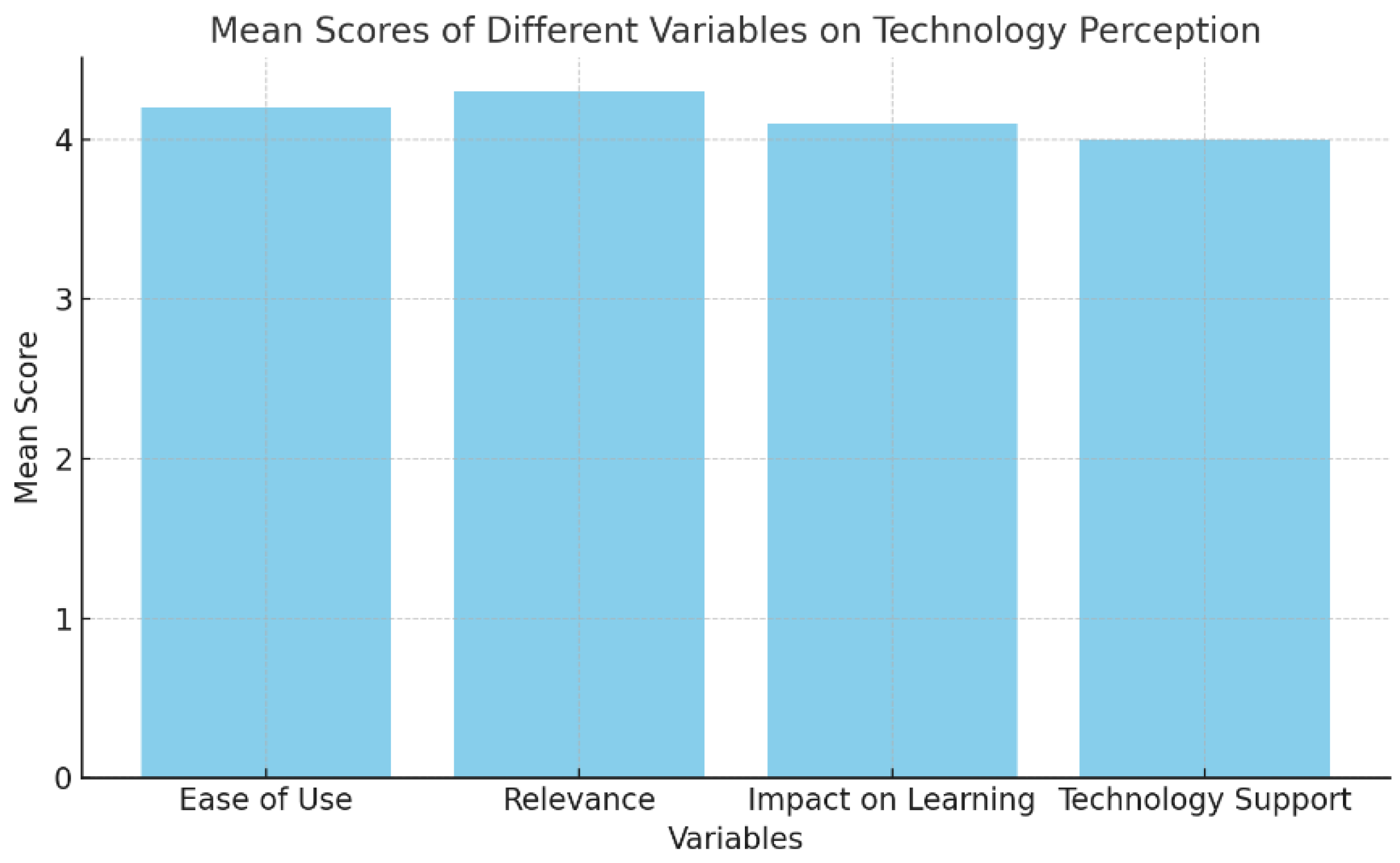
The bar graph presented illustrates the average score of each variable tested in this study, namely ease of use, relevance, impact on learning, and technology support. From the graph, it can be seen that the variable "Relevance" obtained the highest score (4.3), indicating that most students feel that the technology applied in English learning is very appropriate for their goals and needs. On the other hand, the variable "Technology Support" has the lowest score (4.0), indicating that although technology is widely used, there are still challenges related to technical support and infrastructure, especially in areas with limited internet access and hardware. This graph visually makes it clear that students tend to have a positive view of the use of technology, but challenges related to support and accessibility still need special attention in the development of technology-based learning in Indonesia.
Discussion
The results of this study provide significant insights into students' perceptions of the use of instructional technology in EFL classes at Indonesian universities. In general, the findings of the study indicate that students have a positive perception of the use of technology in English learning, although there are differences between students in urban and rural areas. This finding is in line with previous research showing that students who feel technology is relevant and easy to use tend to be more positive in adopting technology in learning (Kuliahana & Marzuki, 2024; Apriani et al., 2025). However, this finding also reveals the challenges faced by students in remote areas, who lack adequate technical support. Therefore, the results of this study confirm the importance of paying attention to the context of infrastructure and technological support in technology-based teaching processes. One of the main findings in this study is that the "Relevance" variable obtained the highest mean score (4.3), indicating that students felt that the technology applied in EFL learning was very relevant to their needs. This supports the view put forward by Marzuki & Santiana (2022), who emphasized that the relevance of learning materials to students' needs will increase their engagement. In the context of English language learning, the relevance of technology may be related to its ability to provide resources that support the development of more holistic language skills, such as listening and speaking skills through video and audio. Therefore, relevance is a major factor that strengthens students' positive perceptions of technology use.
However, despite the highest score for relevance, the variable "Technology Support" scored the lowest (4.0), indicating that students still face challenges related to the technical support provided by the institution. This indicates a significant gap in the implementation of educational technology in Indonesia, especially in areas that have not fully adopted technology as a whole. This finding is in line with the results of research by Santiana & Marzuki (2022), which showed that the lack of technical support is a major obstacle for students to utilize technology in learning optimally. Therefore, this study highlights the importance of strengthening the technology support system at the educational institution level, especially for students outside big cities, so that they can access and utilize technology optimally.
The difference between students in big cities and remote areas is also seen in the variable "Impact on Learning." Although the majority of students from both groups of areas feel that technology has a positive impact on their learning, students from rural areas reported obstacles related to limited internet access, which limits the impact of technology on their learning. This finding reflects the ongoing gap in access and quality of technology infrastructure in Indonesia, as expressed by Marzuki et al. (2018). These limitations affect the effectiveness of technology in improving students’ language skills in remote areas, which in turn may reduce their motivation to engage in technology-based learning. Therefore, these results suggest that the success of technology integration in EFL learning is highly dependent on the quality of the available infrastructure.
Furthermore, the findings of this study suggest that although students perceived technology as easy to use, there was still some variation in their experiences. Students who had more experience with technology outside of academic contexts tended to be more adaptable to the use of instructional technology in EFL classrooms. This is in line with previous research which stated that students’ personal experiences in using technology outside of the classroom influenced their perceived ease of use in educational contexts (Asrifan et al., 2017; Setyaningsih et al., 2020; Nurbuat et al., 2022). In this regard, previous technology experience may be an important factor influencing students’ attitudes toward the use of instructional technology in English language learning. Therefore, efforts to improve the use of technology in EFL classrooms should also include training and preparation for students to overcome barriers arising from lack of experience with technology.
Although the results of this study provide useful insights, there are some limitations that need to be considered. One limitation is that this study only involved students from a few universities in Indonesia, which may not be fully representative of the entire student population in the country. Therefore, the results of this study may not be generalizable to the whole of Indonesia. Additionally, the measurement of student perceptions was limited to aspects measured through questionnaires, without considering more in-depth qualitative factors, such as interviews or direct observations, which could provide a richer perspective on students’ experiences with technology in learning.
Further research involving mixed methods or more representative samples is needed to deepen the understanding of students’ perceptions of technology in English language education. The practical implications of this study are the importance of strengthening technology infrastructure and providing more consistent support to students in less developed areas. This includes providing more comprehensive technical training for students and teachers, as well as increasing the accessibility of technology across Indonesia, especially in remote areas (Marzuki, 2016; Marzuki, 2017).
Furthermore, this study makes an important contribution to the understanding of how technology can be used to enhance English language learning, emphasizing relevance and technical support as key factors in facilitating effective technology use. Further research needs to examine other aspects, such as student motivation and socio-cultural factors that influence the acceptance of technology in EFL learning. Thus, this study provides a strong foundation for further development in the field of educational technology in Indonesia.
Conclusion
This study revealed that students in Indonesian universities generally have a positive perception of the use of instructional technology in English language (EFL) learning. The variable "Relevance" obtained the highest score, indicating that students feel that technology is very relevant in supporting their learning process, especially in providing various digital resources that enrich the English learning experience. This is in accordance with the initial objective of the study which wanted to explore the extent to which technology is considered relevant and useful in teaching English. However, the variable "Technology Support" obtained the lowest score, indicating challenges related to infrastructure and technical support in some universities, especially in remote areas. These findings confirm that the successful use of technology in EFL learning is highly dependent on adequate support from educational institutions, both in the form of stable technology access and consistent technical support. Therefore, it is important for universities in Indonesia to improve infrastructure and technical support, so that technology can be used optimally in improving English learning.
References
- Afrilyasanti, R.; Cahyono, B. Y.; Astuti, U. P. Indonesian EFL students’ perceptions on the implementation of flipped classroom model. Journal of Language Teaching and Research 2017, 8, 476–484. [Google Scholar] [CrossRef]
- Albana, H. H.; Marzuki, A. G.; Alek, A.; Hidayat, D. N. Cohesive Devices in Student’s Writing (A Discourse Analysis on Argumentative Text). Jurnal Pendidikan Humaniora 2020, 8, 6–11. [Google Scholar]
- Alek, A.; Marzuki, A. G.; Farkhan, M.; Deni, R. Self-Assessment in Exploring EFL Students’ Speaking Skill. Al-Ta lim Journal 2020, 27, 208–214. [Google Scholar] [CrossRef]
- Alek, A.; Marzuki, A. G.; Farkhan, M.; Surahman, D.; Daryanto, D.; Febrianto, S. Computer Based Testing in Senior High School on National Examination. Indonesian Journal of Learning Education and Counseling 2020, 2, 204–210. [Google Scholar] [CrossRef]
- Alek, A.; Marzuki, A. G.; Hidayat, D. N.; Fauzji, F. The Discourse Structure and Linguistic Features of Research Articles and Thesis Abstracts in English by Indonesian Academics. JELITA: Journal of Education, Language Innovation, and Applied Linguistics 2022, 1, 37–44. [Google Scholar] [CrossRef]
- Amalia, I.; Marzuki, A. G. The Implementation of Bilingual Class Program in Islamic Elementary School. Al-Ta lim Journal 2023, 30. [Google Scholar] [CrossRef]
- Amalia, I.; Marzuki, A. G.; Anita, A.; Rahmawati, E.; Ulfah, U. Technological-Based Application in Writing Instruction: A Model of Project-Based Learning. Jurnal Onoma: Pendidikan, Bahasa, dan Sastra 2024, 10, 4277–4290. [Google Scholar] [CrossRef]
- Anita, A.; Marzuki, A. G.; Silfani, A. N.; Al Viyani, V.; Ulfah, U. Native Language Interference in EFL Students’ Writing of Reflective Journal in Indonesia. Journal of English Education and Teaching 2024, 8, 528–551. [Google Scholar]
- Apriani, E.; Daulay, S. H.; Aprilia, F.; Marzuki, A. G.; Warsah, I.; Supardan, D.; Muthmainnah. A mixed-method study on the effectiveness of using ChatGPT in academic writing and students’ perceived experiences. Journal of Language and Education 2025, 11, 26–45. [CrossRef]
- Arigusman, A. Indonesian EFL learners’ perceptions of classroom learning environments in an EFL context. ASIAN TEFL 2017, 2, 103–117. [Google Scholar] [CrossRef]
- Asrifan, A.; Jabu, B.; Atmowardoyo, H.; Chen, Y. Analysis of students’ perceptions of bilingual-based materials in English for educational technology in Indonesia. International Journal of English Linguistics 2017, 7, 204–212. [Google Scholar] [CrossRef]
- Biasutti, M.; Frate, S. A validity and reliability study of the attitudes toward sustainable development scale. Environmental Education Research 2017, 23, 214–230. [Google Scholar] [CrossRef]
- Erizar, E.; Marzuki, A. G.; Hidayati, T.; Juliana, R.; Yulia, A. The Impact of Online Learning on Undergraduate English Students’ Achievement. Journal of English Education and Teaching 2024, 8, 288–302. [Google Scholar] [CrossRef]
- Iftitah, A. N.; Marzuki, A. G.; Kuliahana, A. Developing Vocabulary Mastery through Guessing Words Game for the Seventh Grade Students of SMP Negeri 10 Palu. Datokarama English Education Journal 2020, 1, 19–37. [Google Scholar] [CrossRef]
- Kuliahana, A.; Marzuki, A. G. Repetition Technique in an EFL Speaking Class in Islamic Higher Education in Indonesia. Academic Journal Perspective: Education, Language, and Literature 2020, 8, 20–28. [Google Scholar] [CrossRef]
- Kuliahana, A.; Marzuki, A. G. Utilizing Group Discussion Technique in Developing Speaking Skill in an EFL Classroom. ENGLISH FRANCA: Academic Journal of English Language and Education 2024, 7, 305–316. [Google Scholar] [CrossRef]
- Kuliahana, A.; Marzuki, A. G.; Nurfaizah, A. Developing Students’speaking Performance through Mastering Question Words in Islamic University Setting. Journal of Innovation Research and Knowledge 2024, 4, 5063–5072. [Google Scholar]
- Kuliahana, A.; Marzuki, A. G.; Rustam, R. Developing Speaking Skill through Opinion Expression Method in Islamic Higher Education Context-. ENGLISH FRANCA: Academic Journal of English Language and Education 2024, 8, 121–132. [Google Scholar]
- Kustini, S.; Herlinawati, H.; Indrasary, Y. Students’perception Toward The Integration of Technology to Improve Multiliteracies Competence in EFL Classrooms. Research and Innovation in Language Learning 2020, 3, 144. [Google Scholar] [CrossRef]
- Marzuki, A. G. Adaptation in Digital Pedagogy: Redefining Language Learningin the Era of Technology. Preprints, 2024. [Google Scholar] [CrossRef]
- Marzuki, A. G. The Implementation of SQ3R Method to Develop Students’ Reading Skill on Islamic Texts in EFL Class in Indonesia. Register Journal 2019, 12, 49–61. [Google Scholar] [CrossRef]
- Marzuki, A. G. The Roles of School Principal Leadership in Developing English Teachers’ Creativities in Palu. Al-Ta lim Journal 2019, 26, 267–279. [Google Scholar] [CrossRef]
- Marzuki, A. G. Utilizing Recorded English Dialogues in Teaching English Word Stress to Islamic Higher Education Students in Indonesia. Jurnal Pendidikan Islam 2019, 5, 53–64. [Google Scholar] [CrossRef]
- Marzuki, A. G. Blended Learning in English Education: Strategies for Effective Integration of Technology and Traditional Methods. Preprints, 2024. [Google Scholar] [CrossRef]
- Marzuki, A. G. Integrating Instructional Technology into English Language Classrooms: A Case Study of Indonesian Higher Education. Preprints, 2025. [Google Scholar] [CrossRef]
- Marzuki, A. G.; Kuliahana, A. Using Language Games to Enhance EFL Students’ Speaking Skill in Indonesia. Al-Ta lim Journal 2021, 28, 213–222. [Google Scholar] [CrossRef]
- Marzuki, A. G.; Santiana, S. (2022). Bringing YouTube into the Classroom, is it Possible or not?. In Proceeding of International Conference on Islamic and Interdisciplinary Studies (Vol. 1, pp. 29-33).
- Marzuki, A. G.; Alim, N.; Wekke, I. S. Improving the reading comprehension through cognitive reading strategies in language class of coastal area in indonesia. In IOP Conference Series: Earth and Environmental Science 2018, 156, 012050). [Google Scholar] [CrossRef]
- Marzuki, A.G. Utilizing cooperative learning in islamic college students’ classroom. IJEE (Indonesian Journal of English Education) 2016, 3, 123–139. [Google Scholar] [CrossRef]
- Marzuki, A.G. Developing speaking skill through oral report in an efl class in indonesia. Al-Ta’lim Journal 2017, 24, 243–254. [Google Scholar] [CrossRef]
- Munir, M. Students' attitudes on blended learning-based instruction in Indonesian EFL classroom. GNOSI: An Interdisciplinary Journal of Human Theory and Praxis 2021, 4, 146–162. [Google Scholar]
- Muthmainnah, M.; Apriani, E.; Marzuki, A. G.; Al Yakin, A.; Aeni, N.; Azar, A. S.; Riyawi, M. R. (2024). Navigating education 5.0 robotic technique for teaching foreign languages in todays classroom: Unveiling the potential of virtual pedagogical agents. In Preconceptions of Policies, Strategies, and Challenges in Education 5.0 (pp. 118-138). IGI Global.
- Muthmainnah, M.; Cardoso, L.; Kaur, D.; Al Yakin, A.; Marzuki, A. G.; Apriani, E. (2024). Informatization on developing e-learning materials for IoT-assisted education to enhance EFL in higher education. In Proceedings of the International Conference on Data Analytics & Management (pp. 529–552).
- Muthmainnah, M.; Cardoso, L.; Marzuki, A. G.; Al Yakin, A. A new innovative metaverse ecosystem: VR-based human interaction enhances EFL learners’ transferable skills. Discover Sustainability 2025, 6, 156. [Google Scholar] [CrossRef]
- Muthmainnah, M.; Darmawati, B.; Sidik, U.; Marzuki, A. G.; Al Yakin, A.; Aeni, N.; Apriani, E. (2024). Innovative Pedagogical Practices Through the Development and Design of EFL Teaching Materials Tailored to Sustainability Through AI in the Digital Revolution. In Explainable AI for Education: Recent Trends and Challenges (pp. 207-227). Cham: Springer Nature Switzerland.
- Muthmainnah, M.; Marzuki, A. G.; Santiana, S.; Erizar, E.; Nursyam, N. Utilizing smartphone-based Pinterest applications in developing EFL students speaking skills in Indonesia. JEES (Journal of English Educators Society) 2022, 7, 205–209. [Google Scholar]
- Muthmainnah, M.; Marzuki, A. G.; Santiana, S.; Erizar, E.; Ulinsa, U.; Purwaningsi, U. Character Analysis Ability of M. Night Shyamalan Split Translation Film Characters in Indonesian EFL Students. Jurnal Onoma: Pendidikan, Bahasa, dan Sastra 2024, 10, 1237–1243. [Google Scholar] [CrossRef]
- Nurbuat, L.; Mahbub, M. A.; Firdaus, I. A. Undergraduate students’ perceptions toward Google Classroom integration into EFL classroom: a sequential explanatory study at an Indonesian university. Journal on English as a Foreign Language 2022, 12, 117–137. [Google Scholar] [CrossRef]
- Santiana, S.; Marzuki, A. G. (2022). YouTube: a Modern Breakthrough of Autonomous Learning to Hone Speaking Skills. In Proceeding of International Conference on Islamic and Interdisciplinary Studies (Vol. 1, pp. 23-28).
- Santiana, S.; Marzuki, A. G. (2024). Scrutinising Padlet to enhance students’ collaborative writing in a virtual learning environment. Proceedings of the International Conference on Islamic and Interdisciplinary Studies (ICIIS), 533. https://jurnal.uindatokarama.ac.id/index.php/iciis/issue/archive.
- Santiana, S.; Efendi, S. N.; Pujasari, R. S.; Marzuki, A. G.; Erizar, E. Digital Games-Based Learning: An Innovative Language Learning in EFL Classroom by Utilizing Kahoot! Jurnal Pendidikan 2021, 9. [Google Scholar]
- Santiana, S.; Enriquez, A.; Marzuki, A. G.; Mahmud, R.; Ghofur, A. KARDS Model: An Alternative Approach to Language Education. TLEMC (Teaching and Learning English in Multicultural Contexts) 2024, 8, 1–12. [Google Scholar] [CrossRef]
- Santiana, S.; Lesmana, D. S.; Marzuki, A. G.; Erizar, E. (2021). An Insight of Anitales Apps Perceived by Digital Storytelling Students. In Proceeding of International Conference on Islamic Education (ICIED) (Vol. 6, No. 1, pp. 23-30).
- Setyaningsih, E.; Wahyuni, D. S.; Rochsantiningsih, D. Mapping Indonesian EFL teachers’ perception and practice of technology integration. International Journal of Education 2020, 13, 44–52. [Google Scholar] [CrossRef]
- Syafryadin, S.; Safnil, S.; Noermnzah, N.; Wardhana, D. E. C.; Marzuki, A. G.; Astrid, A.; Amalia, S. TAGANA thematic textbook: Cultivating junior high school students’ English proficiency with HOTS-PBL integration. Studies in English Language and Education 2024, 11, 1636–1651. [Google Scholar] [CrossRef]
- Wright, B. M. Blended learning: Student perception of face-to-face and online EFL lessons. Indonesian journal of applied linguistics 2017, 7. [Google Scholar] [CrossRef]
Disclaimer/Publisher’s Note: The statements, opinions and data contained in all publications are solely those of the individual author(s) and contributor(s) and not of MDPI and/or the editor(s). MDPI and/or the editor(s) disclaim responsibility for any injury to people or property resulting from any ideas, methods, instructions or products referred to in the content. |
© 2025 by the authors. Licensee MDPI, Basel, Switzerland. This article is an open access article distributed under the terms and conditions of the Creative Commons Attribution (CC BY) license (http://creativecommons.org/licenses/by/4.0/).
Copyright: This open access article is published under a Creative Commons CC BY 4.0 license, which permit the free download, distribution, and reuse, provided that the author and preprint are cited in any reuse.


