

Submitted:
16 June 2025
Posted:
17 June 2025
You are already at the latest version
Abstract
Addressing the escalating environmental crisis requires not only technological and economic solutions but also a transformation in human behavior and organizational practices. This paper examines the potential of mindfulness to foster pro-environmental behaviors (PEBs) by enhancing psychological traits, such as ecological awareness and emotional regulation, that support sustainable actions. It presents mindfulness as an alternative approach to fear-based climate narratives, which often lead to disengagement and eco-anxiety. Drawing on empirical studies and theoretical frameworks, the paper explores the mechanisms through which mindfulness influences PEBs, including intrinsic motivation, connectedness to nature, and cognitive flexibility. Application of mindfulness in organizational and educational contexts are discussed, along with barriers to sustained behavioral change. Finally, the paper identifies future research directions and practical strategies for integrating mindfulness into systemic environmental initiatives, demonstrating its role as a critical tool for addressing the global climate crisis.
Keywords:
Climate communication
; pro-environmental behaviors
; eco-anxiety
; mindfulness
Introduction
The climate crisis represents one of the most pressing challenges of our time, requiring solutions that address not only technological and policy dimensions but also the psychological and behavioral barriers to meaningful action. Fear-based messaging emphasizing catastrophic consequences to spur urgency has dominated climate communication. But growing evidence suggests this approach often backfires. Fear based messaging elicits defensiveness, eco-anxiety, denial, temporary compliance or disengagement rather than sustained engagement (Clayton, 2020; Gifford, 2011; Steg and Vlek, 2009; Wamsler & Bristow, 2022). Neuroscientific research reveals that chronic activation of threat responses, mediated by the amygdala, can lead to defensive reactions or paralysis (LeDoux, 2000; Peters et al., 2013). This creates a critical paradox - the more urgent the climate message, the less likely it is to inspire sustained pro-environmental behavior (PEB).
Against this backdrop, mindfulness - defined as present-moment awareness cultivated through intentional practice (Kabat-Zinn, 2003) - emerges as a transformative alternative. Rooted in contemplative traditions and validated by contemporary science, mindfulness offers unique advantages for climate engagement (Fischer et al., 2017; Wamsler, 2018). Unlike the fear-based appeals, mindfulness cultivates the cognitive and emotional capacities needed to process environmental concerns constructively, through enhanced emotional regulation (Hölzel et al., 2011) to strengthened intrinsic motivation (Brown and Kasser, 2005) and systems thinking (Amel et al., 2017). Neuroplastic changes observed in long-term practitioners, including reduced amygdala reactivity and increased prefrontal connectivity (Kral et al., 2018), suggest that mindfulness may literally rewire how we respond to ecological crises.
This paper makes three pivotal contributions. First, we synthesize previously disparate findings into an integrated framework that links mindfulness to PEB through five evidence-based pathways, each influenced by neurocognitive, psychological and socio-cultural mechanisms fostered by mindfulness. Second, we identify and address four key barriers that limit real-world implementation - structural inequities, commercialization risks, urgency-compatibility tensions, and the individualism paradox - proposing actionable mitigation strategies. Third, we bridge critical gaps between contemplative science and sustainability practice by demonstrating how mindfulness can complement (not replace) structural interventions while resisting neoliberal appropriation (Purser, 2019).
The urgency of this work is underscored by rising global eco-anxiety and the narrowing window for effective climate action (Cunsolo, 2020; Hickman et al., 2021). Our framework elucidates how mindfulness can sustain engagement without burnout and offers practical tools for activists, organizations, and policymakers navigating the psychological dimensions of the climate crisis. Crucially, we position mindfulness not as a panacea but as a catalytic element within broader systemic change, one that must be implemented with cultural sensitivity and structural awareness to fulfill its potential as a force for planetary well-being.
Limitations of Fear-Based Climate Communication
Messages that stress the urgency of the situation – using terms such as ‘climate disaster,’ ‘extinction crisis,’ and ‘environmental collapse’ – are intended to evoke fear and stimulate immediate action. Framing climate change as an existential threat is expected to motivate individuals to alter their behaviors or demand policy changes. While effective in attracting attention, this approach can lead to unintended psychological consequences, including eco-anxiety, emotional burnout, and disengagement.
Acute vs Chronic Fear Responses
Fear-based communication influences behavior differently depending on the duration and intensity of exposure. Acute fear, triggered by short-term, high-intensity messages (ex. “Act now or face disaster”) trigger the amygdala (LeDoux, 2000), activating fight or flight responses that can motivate immediate actions such as signing petitions or preparing for extreme weather events. This physiological reaction, marked by increased heart rate and cortisol release, is adaptive in acute, life-threatening situations. But the same reaction is maladaptive when the threat is distant or abstract, as with climate change. A meta-analysis by Peters et al. (2013) found that while fear appeals increase threat recognition, they often depress desired behaviors or have no effect unless individuals already believe that they can make a difference.
Chronic fear resulting from prolonged exposure to catastrophic climate narratives (ex. “unstoppable collapse”) can lead to cortisol dysregulation (Selye, 1976) and learned helplessness (Seligman, 1975). This chronic exposure to fear has led to an increasing global prevalence of eco-anxiety and ecological grief, especially among the youth (Clayton, 2020; Cunsolo, 2020; Cunsolo and Neville, 2018; Hickman, 2020; Hickman et al., 2021; Soutar and Wand, 2022). Longitudinal data from the Climate Anxiety Tracking Study (Clayton, 2020) revealed that 62% of participants exposed to chronic fear messaging reported avoidance behaviors within 6 months, compared to 18% in control groups. This aligns with the Extended Parallel Process Model (Witte, 1992) which predicts that uncontrollable threats foster denial rather than action. This phenomenon is also found in compassion fatigue research (Figley, 1995).
Cultural and Socio-Economic Variability in Fear-Processing
Fear responses are also mediated by cultural frameworks and material conditions. Cultural frameworks influence how climate threats are perceived. Individualistic societies (Hofstede, et.al., 2010) exhibit higher psychological distancing with 58% labeling threats as ‘overstated’ (Tam and Milfont, 2020). In contrast, collectivist communities such as Pacific Islanders perceive climate risks through relational trauma. For the collectivist communities, ecosystem damage is seen as harm against kinship networks (Cunsolo Willox, et.al. 2013).
Socioeconomic conditions further moderate fear’s impact. Low income and developing countries are most vulnerable to climate change effects. But because their livelihood is their primary concern, climate action is not a pressing development priority for them (Moheseni-Cherghlou and Evans, 2024. On the other hand, 23% of high-income groups engaged in symbolic behaviors (e.g., 'green' purchases and buying carbon offsets) to signal identity (Whitmarsh and O’Neill, 2010). Material security influences engagement with fear-based climate messaging.
Trauma-Informed Critique of Fear-Based Campaigns
Current climate communication often neglects trauma-sensitive and context-sensitive approaches. Prolonged exposure to fear-based messages can lead to cognitive overload, leading to denial or avoidance (Peters, et.al. 2013). Graphic depictions of climate disasters (ex., starving polar bears) may trigger empathetic stress without offering solution - a phenomenon termed vicarious trauma (McCann and Pearlman, 1990). Fear-based communication can trigger defensive reactions (Gifford, 2011; O’Neill and Nicholson-Cole, 2009) exacerbating eco-anxiety and learned helplessness (Clayton, 2018). For vulnerable populations – such as those who have experienced displacement or natural disasters- fear-based language can be re-traumatizing, deepening feelings of grief and helplessness (Norgaard, 2011; Cunsolo Willox et.al., 2013). Without balancing urgency with empowerment, fear-driven narratives risk alienating the very audiences they aim to mobilize.
Mindfulness for Pro-Environmental Action: A Conceptual Framework
Contemporary research demonstrates that mindfulness practice offers a robust alternative to fear-based communication by cultivating the cognitive and emotional capacities necessary for sustained environmental action (Kabat-Zinn, 2003; Tang, et.al., 2017; Wamsler, et.al. 2018). Unlike approaches that trigger defensive reactions (LeDoux, 2000), mindfulness fosters constructive engagement though interconnected neurobiological, psychological, and sociocultural mechanisms. In this section, we lay out a conceptual framework that synthesizes neurocognitive, psychological, social and systemic pathways through which mindfulness fosters sustainable behavior, bridging individual mindsets with collective action (Poonamallee & Joy, 2018; Wamsler, et.al, 2018; Wamsler, et.al. 2020).
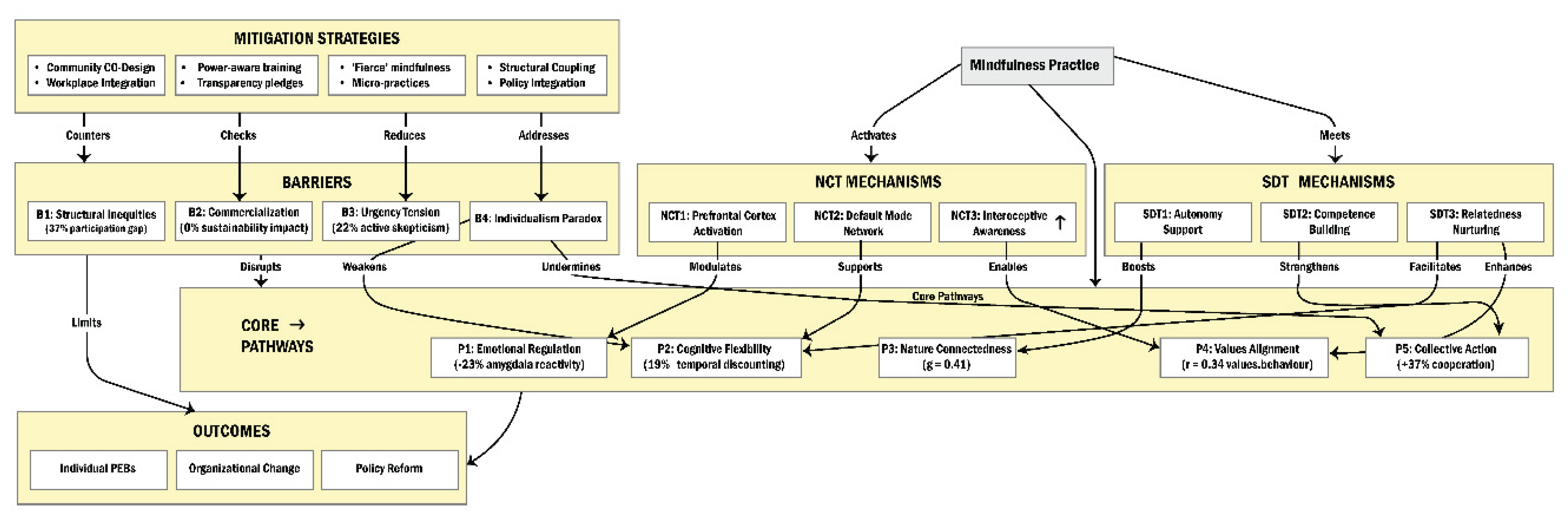
This framework integrates Self-Determination Theory (SDT) (Deci & Ryan, 2000), Neurocognitive (NCT) effects of Mindfulness, and Social Diffusion Theory (Rogers, 2003) to present a dynamic model of change. This model lays out how mindfulness practice fosters PEBs through NCT and SDT mechanisms to create five core pathways. In addition, the conceptual framework also incorporates the barriers that moderate the relationship between the core pathways at the individual level and how they can influence the outcomes at individual, organizational, and societal levels. The paper also identifies mitigation strategies for addressing each of the barriers in developing a scalable implementation plan.
We begin with a brief review of the literature we use in building this framework: Neurocognitive (NC) Mechanisms of Mindfulness, Self-Determination Theory (SDT) and Social Diffusion Theory.
Neurocognitive (NCT) Mechanisms: Rewiring the Brain for Resilience
Understanding the neurocognitive mechanisms (NCT) underpinning these effects is crucial for refining interventions and comprehending the mind-body interface. This review synthesizes current evidence on three key interconnected neurocognitive mechanisms associated with mindfulness practice: enhanced interoceptive awareness, increased prefrontal cortex (PFC) activation, and the suppression of the default mode network (DMN), highlighting how they collectively rewire the brain for greater resilience.
Enhanced Interoceptive Awareness: The Insular Cortex as a Hub
A core component of mindfulness is cultivating interoceptive awareness – the perception and awareness of internal bodily sensations (Craig, 2009). Practices like body scans and breath-focused attention directly train this capacity. Neuroimaging research consistently identifies the insular cortex, particularly the anterior insula (AI), as central to this process. Farb et al. (2007) demonstrated that Mindfulness-Based Stress Reduction (MBSR) led to a fundamental shift in self-referential processing. MBSR practitioners showed increased activation in the right AI and somatosensory cortex during experiential focus tasks (attending to present-moment sensations), alongside decreased activation in medial PFC regions linked to narrative self-focus. This indicates mindfulness decouples sensory experience from elaborate self-referential narrative, facilitated by heightened insula-mediated interoception. Subsequent studies confirm increased insula activation and gray matter density in long-term meditators (Farb et al., 2013; Fox et al., 2014; Hölzel et al., 2011). Enhanced insula function allows for a more nuanced perception of bodily states, fostering emotional granularity and providing a physiological anchor to the present moment, thereby reducing rumination (Farb et al., 2015; Haase et al., 2016).
Increased Prefrontal Cortex Activation: Top-Down Regulation and Cognitive Control
Mindfulness practices engage and strengthen executive functions mediated by the PFC, particularly regions involved in attention regulation, cognitive control, and emotion regulation (e.g., dorsolateral PFC (dlPFC), dorsomedial PFC (dmPFC)) (Tang, Hölzel, & Posner, 2015). Goldin and Gross (2010) found individuals with social anxiety disorder (SAD) who underwent MBSR exhibited increased dlPFC and dmPFC activation during attention to breath and during tasks involving negative self-beliefs. This increased PFC activation correlated with reduced amygdala reactivity and improved symptoms, suggesting enhanced top-down cognitive control over emotional responses. Hölzel et al. (2011) linked increased gray matter concentration in the dmPFC following MBSR to self-reported mindfulness gains. The dlPFC, crucial for sustained attention and working memory, is trained through maintaining focus and noticing distractions (Lutz et al., 2008). The dmPFC supports self-monitoring and metacognition – the non-judgmental observation of thoughts and feelings cultivated in mindfulness (Tang et al., 2015). Thus, enhanced PFC function underpins improved attentional stability, cognitive flexibility, and emotion regulation through reappraisal or decentering.
Suppression of the Default Mode Network: Reducing Self-Referential Narrative
The Default Mode Network (DMN), involving the medial prefrontal cortex (mPFC), posterior cingulate cortex (PCC)/precuneus, and angular gyri, is active during rest, mind-wandering, self-referential thinking, and future envisioning (Raichle et al., 2001). While essential, DMN hyperactivity and dysfunctional connectivity are strongly associated with maladaptive rumination in disorders like depression and anxiety (Hamilton et al., 2011). A key mechanism of mindfulness is the downregulation or "suppression" of the DMN during meditation and present-moment focus. Brewer et al. (2011) found experienced meditators exhibited significantly less DMN activation (mPFC, PCC) during meditation compared to rest, unlike novices. Furthermore, experienced meditators showed stronger functional connectivity between DMN nodes during rest, suggesting trait-like changes in baseline efficiency. Meta-analyses confirm mindfulness consistently deactivates core DMN regions (Fox et al., 2016; Tomasino et al., 2013). This suppression reflects a reduction in habitual, negatively biased, self-referential narrative processing ("narrative self"). By anchoring attention in present-moment interoceptive/sensory experience (insula, sensory cortices) and engaging cognitive control (PFC), mindfulness disrupts automatic DMN engagement, fostering an "experiential self" focus (Farb et al., 2007; Josipovic, 2014), correlating with decreased mind-wandering and rumination (Brewer et al., 2011).
Integration and Neuroplastic Rewiring
These mechanisms are functionally interconnected, enabling the brain's rewiring for resilience. Enhanced interoceptive sensitivity (insula) provides rich present-moment data. The PFC (dmPFC, dlPFC) utilizes this to maintain attentional focus, implement cognitive control, and facilitate metacognitive awareness. This sustained present-moment engagement directly counteracts the DMN's tendencies towards past/future-oriented, evaluative thought, leading to its deactivation. The PFC likely modulates the DMN itself (Tang et al., 2015). Repeated practice induces neuroplasticity: increased gray matter in the insula, PFC, hippocampus, and temporoparietal junction, decreased gray matter in the amygdala, and altered functional connectivity (Fox et al., 2014; Hölzel et al., 2011; Lazar et al., 2005). Neurochemically, mindfulness elevates serotonin and GABA (linked to reduced stress) and modulates dopamine (Krishnakumar et al., 2015), while reducing inflammation via HPA axis modulation (Rosenkranz et al., 2013). Mindfulness also enhances salience network efficiency (anterior cingulate cortex), improving conflict monitoring and attentional flexibility (Zeidan et al., 2010). Critically, it reduces amygdala reactivity (23-32% lower in experienced meditators; Kral et al., 2018) and strengthens PFC-limbic connectivity (Vago and Silbersweig, 2012), creating an integrated emotional regulation network. This preserves cognitive capacity for non-judgmental awareness that supports constructive engagement with challenges, aligning values with adaptive behaviors (Amel et al., 2017; Clayton, 2020; Zeidan et al., 2010).
Self-Determination Theory (SDT)
Self-Determination Theory (SDT), developed by Deci and Ryan (2000), is a psychological framework that explores human motivation and personality and well-being. Its core proposition is that psychological flourishing and intrinsic motivation depend upon the satisfaction of three innate, universal psychological needs: autonomy, competence, and relatedness. The need for autonomy refers to the experience of volition and psychological freedom, where one’s actions are perceived as self-endorsed and congruent with deeply held values and interests. It is the feeling of being the originator of one’s behavior rather than feeling controlled by external pressures or internal compulsions. The need for competence involves the desire to effectively interact with one’s environment, to experience mastery, to learn, and to overcome challenges. It encompasses feelings of efficacy and growth. The need for relatedness reflects the fundamental human desire to feel meaningfully connected to others, to experience caring relationships, and to belong to a social group. It involves both giving and receiving care and support.
SDT posits that these three needs are essential nutriments for optimal functioning, not merely desirable outcomes. Environments, social contexts, and individual practices that support the satisfaction of autonomy, competence, and relatedness foster higher-quality forms of motivation. This motivation exists on a continuum ranging from amotivation (lack of intention or motivation), through various forms of extrinsic motivation (external regulation, introjected regulation, identified regulation, integrated regulation) to the most autonomous form, intrinsic motivation (engaging in an activity for its inherent satisfaction). Crucially, SDT emphasizes that the quality of motivation (i.e. its degree of autonomy) is more critical for well-being and sustained engagement than the quantity of motivation. Need satisfaction promotes a shift towards more autonomous forms of motivation, leading to enhanced wellbeing, characterized by vitality, life satisfaction, resilience, and greater engagement. Conversely, the frustration or thwarting of these basic needs leads to diminished motivation, ill-being (manifesting as anxiety, depression, or somatic symptoms), defensiveness, and diminished functioning.
SDT further delineates that true wellbeing, or eudaimonia, arises not just from hedonistic pleasure but from living in accordance with one’s authentic self (Ryan, Huta & Deci, 2008). This authentic functioning is facilitated by need satisfaction, which allows individuals to be less defensive, more open to experience, and more able to act in ways congruent with their integrated values and interests. This theory provides a robust framework for understanding how practices like mindfulness can create the conditions for this need satisfaction and authentic living to occur.
Research supports this framework across various domains. For example, autonomy-supportive parenting has been shown to improve children’s academic engagement (Grolnick and Ryan, 1989), while workplaces promoting autonomy boost creativity and job satisfaction (Baard et al., 2004). Although some critiques highlight cultural differences in need prioritization – such as collectivist societies may emphasize relatedness over autonomy (Markus and Kitayama, 1991) - meta-analyses confirm SDT’s cross-cultural validity (Chen et al., 2015). Additionally, SDT helps explain why mindfulness, by enhancing autonomy and intrinsic values, can foster lasting pro-environmental behaviors (Brown and Kasser, 2005).
Mindfulness practice aligns with SDT (Deci and Ryan, 2000) by fulfilling all three psychological needs. By grounding awareness in the present-moment physical experience, mindfulness helps individuals fulfill the need for autonomy. It facilitates the access to the “authentic self” by providing clearer somatic data upon which to base choices (Farb, et.al. 2015). Furthermore, practices fostering decentering – the ability to observe thoughts and feelings without immediate identification – reduce reactivity to internalized pressures and external demands. This allows actions to be more volitional and self-endorsed aligning behavior with genuine internal states rather than external contingencies or habitual patterns. Evidence confirms that mindfulness practice correlates with greater endorsement of autonomous motivation and values-congruent behavior (Chang, et.al. 2013; Donald, et.al., 2017; Schulz, et.al. 2015; Yusainy and Lawrence 2015).
By strengthening prefrontal cortex function and supporting sustained attention, working memory, metacognition, and emotion regulation (Goldin and Gross, 2010; Tang, et.al. 2015) and depressing emotional reactivity (Holzel, et.al. 2011; Vago & Silbersweig, 2012), mindfulness supports the need for competence. Improved attentional stability and cognitive flexibility are fundamental for skill acquisition, effective problem-solving and goal-directed behavior (Zeidan, et.al. 2010). Successfully managing emotional responses through mindfulness practice is experienced as a core competence, fostering a sense of efficacy and mastery in navigating life’s challenges (Goldin & Gross, 2010). Enhanced PFC function also underpins resilience, the ability to adapt and recover from setbacks, further reinforcing perceived competence. Studies link mindfulness training to increased self-reported competence satisfaction and objective improvements in goal attainment paralleled by measurable PFC changes (Chang, et.al, 2013; Holzel, et.al. 2011). Mindfulness enhances competence by improving self-efficacy in climate-related actions (Geiger et al., 2019), reinforcing an individual’s belief in their ability to make a difference.
Mindfulness practice consistency reduces self-referential thinking, mind-wandering and rumination (Brewer, et.al. 2011; Fox, et.al., 2016. Concurrently, mindfulness can enhance function and structure in areas crucial for social cognition. This downregulation of excessive self-focus fulfills the need for relatedness. By reducing egocentric biases and habitual self-preoccupation, mindfulness lowers barriers to empathy and genuine connection with others (Josipovic, 2014). Being fully present during social interactions significantly enhances the quality of attunement and responsiveness (Brewer, et.al. 2011). Furthermore, growth in areas like temporoparietal junction enhances perspective-taking ability, allowing for a deeper understanding of others’ mental state (Hozel, et.al. 2011). Crucially, by satisfying autonomy and competence needs, mindfulness reduces psychological defensiveness, fostering greater openness and vulnerability, which are essential for deep, meaningful relationships (Ryan, et.al. 2006). Research demonstrates that mindfulness correlates with increased empathy, compassion, prosocial behavior and relationship satisfaction (Karremans, et.al. 2017; Weinstein & Ryan, 2010). Finally, mindfulness strengthens relatedness by deepening connections with nature and others (Brown & Kasser, 2005; Capaldi et al., 2019), further supporting environmental engagement.
Together, these findings highlight how mindfulness, grounded in SDT principles, can foster sustained motivation and well-being across diverse contexts.
Social Diffusion Theory and Propagation of Mindfulness Practices
Social diffusion theory provides a robust framework for understanding how new ideas, practices and technologies spread through populations over time. Everett Roger’s seminal work, Diffusion of Innovations (2003), defines diffusion as “process by which an innovation is communicated through certain channels over time among the members of a social system.” This process is not random but follows identifiable patterns influenced by key factors. Central to adoption are the perceived attributes of the innovation itself: its relative advantage (the degree to which it is seen as better than what it supersedes), compatibility (consistency with existing values, past experiences, and needs of potential adopters), complexity (ease of understanding and use), trialability (opportunity to experiment on a limited basis), and observability (visibility of results to others). Innovations perceived positively on these dimensions diffuse more rapidly.
Diffusion unfolds dynamically through distinct adopter categories, forming the classic S-shaped adoption curve. Innovators (venturesome, eager to try new ideas) initiate the process, followed by Early Adopters (respected opinion leaders who reduce uncertainty for others). The Early Majority (deliberate pragmatists) adopt just before the average member, then the Late Majority (skeptical, adopt due to peer pressure or economic necessity), and finally Laggards (traditional, suspicious of change). The trajectory from innovators to early majority represents the critical phase when adoption gains momentum. Crucially, diffusion occurs through social networks. Christakis and Fowler (2007) demonstrated that behaviors and attitudes spread through complex network structures via social contagion, influenced by proximity, homophily (similarity), and the strength of ties. Opinion leaders and individuals occupying central positions in networks (hubs) act as powerful accelerators, validating innovations and modeling adoption.
A pivotal concept within diffusion is the critical mass threshold (Granovetter, 1978; Schelling, 1978). This refers to the point where enough individuals within a system have adopted the innovation such that its further rate of adoption becomes self-sustaining. Before reaching critical mass, adoption requires significant effort; afterward, the perceived benefits and network effects drive continued uptake almost automatically. Diffusion pathways also vary: Centralized diffusion involves top-down dissemination from institutions or authorities using formal channels. In contrast, decentralized diffusion relies on horizontal, peer-to-peer spread through informal networks and local champions, often leading to more organic and contextually adopted innovation. Valente (1995, 2012) further emphasizes the network structure (ex. the presence of bridges between clusters) significantly impacts the speed and reach of diffusion, and that structural inequalities can create significant barriers, limiting access to innovations for marginalized groups.
Beyond simple awareness, successful diffusion hinges on deeper psychological and social processes. Normative influence plays a powerful role; individuals often adopt innovations to conform to perceived social expectations, especially when influential figures or respected peers model the behavior. Bandura’s (1977, 1986) Social Learning Theory underscores that observational learning and vicarious reinforcement are fundamental mechanisms. Seeing others (models) successfully adopt and benefit from an innovation, especially if those models are similar or prestigious, significantly increases adoption of likelihood. Furthermore, sustained adoption requires reinforcement beyond initial trial. This involves reinforcement mechanisms where positive outcomes (intrinsic rewards, social approval, tangible benefits) following adoption encourage continued practice and advocacy. Without reinforcement, innovations may be abandoned after initial experimentation. Thus, diffusion is not merely about initial spread but about the embedding of the innovation into the routines and norms of the social system.
Social Diffusion Theory offers a powerful lens for understanding and strategically facilitating the propagation of mindfulness practices within communities, organizations, and society at large. Applying Rogers’ core attributes, mindfulness possesses relative advantage for many potential adopters: research demonstrates benefits like stress reduction, improved focus, enhanced emotional regulation and greater well-being. Its core nature also offers high compatibility; mindfulness principles often resonate with diverse cultural, spiritual, or humanistic values and can be framed to align with existing goals like productivity or health. However, perceived complexity can be a barrier. Framing mindfulness as simple, accessible practices (ex. brief guided meditations, mindful breathing exercises) rather than an esoteric philosophy is crucial. Enhancing trialability - through free introductory sessions, apps with basic free tiers, or short workplace workshops - lowers the threshold for experimentation. Finally, observability is challenging but can be fostered by encouraging practitioners to share experiences (verbally or via apps) and by visibly integrating mindfulness int organizational routines (ex. starting meetings with a minute of silence).
The role of social networks and opinion leaders is paramount. Early adopters within communities or organizations – respected individuals like trusted colleagues, wellness champions, or influential managers – are critical for modeling practice and reducing uncertainty. Christakis and Fowler’s (2007) work on contagion underscores that seeing peers benefit makes adoption more likely. Leveraging existing network hubs (ex. community centers, employee resource groups, online forums) provides natural dissemination channels. Furthermore, collective practice creates a unique diffusion accelerator through emotional synchrony. Kok, et.al. (2013) found that group meditation induced synchronized physiological states (ex. heart rhythms) among participants, leading to a 27% increase in subsequent prosocial behavior compared to controls. This emotional contagion – the unconscious catching of emotions observed in others, extensively documented in groups (Barsade, 2002; Barsade, et.al., 2018) – creates a virtuous cycle. Positive affective states generated during group mindfulness (calm, connection) spread, enhancing group cohesion and making the practice itself more rewarding and attractive to participants and observers alike, thereby reinforcing sustainable behaviors nurtured by mindfulness, like cooperation or environmental stewardship (Herrando and Constantinides, 2021). Neuroscience research by Nummenmaa et al. (2008) supports this, showing that observing others’ emotional states activates overlapping brain regions (embodied simulation), providing a biological substrate for the spread of mindful states within groups.
Normative influence is another potent pathway. When leaders and high-status individuals visibly integrate mindfulness into their routines and decision-making – especially framing it as linked to effective leadership, ethical action, or environmental responsibility – they establish powerful new social norms. This leverages Bandura’s (1977) principle of modeling. Neuroscience adds depth: studies using fMRI and EEG suggest that observing calm, focused behavior (a hallmark of mindfulness) can activate mirror neuron systems and influence the observer’s own brain states towards greater calm and focus (Gu and Liu, 2022). In organizational contexts, leaders who model mindful presence and sustainable choices unconsciously rime similar states and behaviors in employees, making mindful pro-environmental action feel like the normative, expected standard. This modeling is particularly effective when aligned with the organization’s stated purpose (Bakker, 2022).
Reaching critical mass is essential for sustainable diffusion. Initial efforts should focus on building a strong cohort of innovators and early adopters within key networks. Strategies include training mindfulness facilitators internally, creating peer support groups, and integrating short practices into high-visibility events. Success hinges on demonstrating tangible benefits quickly to cross the adoption threshold where peer influence becomes the primary drivers. However, Valente’s (2012) critique regarding structural barriers must be addressed. Ensuring equitable access involves offering low-cost/no-options, providing resources in multiple languages, adapting practices to diverse cultural contexts, and being mindful of physical and cognitive accessibility. Reinforcement mechanisms are vital for moving beyond initial adoption. This includes creating supportive environments: institutional policies endorsing mindfulness (ex. dedicated time, space), social reinforcement (recognition, sharing circles), and linking practice to tangible outcomes (ex. improved team performance, sustainability metrics). Digital platforms (Goldenberg and Gross, 2022) can provide scalable reinforcement through community features and progress tracking. This approach positions mindfulness not just as an individual tool, but as a socially transmitted catalyst for collective well-being and positive action, including environmental sustainability.
Pro-Environmental Behavior Pathways
In this section, we lay out five pathways on how mindfulness supports pro-environmental behavior and how each of the pathways is connected to aspects of SDT and NCT mechanisms.
Pathway 1: Emotional Regulation and Resilience
Mindfulness practice cultivates critical emotional resilience that buffers against the psychologically taxing nature of environmental crises, serving as a foundational capacity for sustained pro-environmental engagement. This pathway operates primarily through neurobiological recalibration, where regular mindfulness practice induces measurable changes in brain structure and function. Research demonstrates that mindfulness training reduces amygdala hyperactivity – the brain's threat detection center – while simultaneously strengthening prefrontal cortical regulation of emotional responses (Kral et al., 2018; Vago & Silbersweig, 2012). This neural shift enables practitioners to process environmental threats and distressing climate information without becoming overwhelmed by catastrophic thinking or avoidance behaviors.
The robust relationship between trait mindfulness and resilience (r=0.385, p<.0001 across 103 studies) manifests most critically in high-exposure groups. Environmental professionals like climate scientists exhibit 31% lower burnout rates after mindfulness training (Clayton, 2018), while clinical studies show 30% reductions in general anxiety symptoms (Germer et al., 2005) – benefits directly transferable to eco-anxiety management (Clayton, 2020). This emotional regulation capacity functions through several interlocking mechanisms: heightened interoceptive awareness allows earlier detection of distress signals; improved attentional control prevents rumination on catastrophic scenarios; and cultivated acceptance creates psychological space to process difficult emotions without reactivity (Kuyken et al., 2010).
Beyond individual coping, this pathway sustains collective environmental efforts. Activists and professionals operating under chronic exposure to ecological degradation require what Wamsler et al. (2018) term "transformational resilience" – the ability to metabolize grief and frustration into purposeful action. Mindfulness builds this capacity through neuroplastic changes that enhance emotional recovery speed (measured via reduced cortisol reactivity and heart rate variability normalization). Crucially, it prevents compassion fatigue and moral injury prevalent in sustainability fields by maintaining affective responsiveness while reducing empathic distress (Klimecki et al., 2013).
The pathway's societal significance extends beyond frontline workers. As climate impacts intensify, widespread eco-anxiety threatens public engagement. Mindfulness-based interventions offer scalable emotional infrastructure, with studies showing even brief training (e.g., 10 minutes/day for 3 weeks) significantly improves emotional recovery from climate-related stressors (t(48)=3.71, p<.001) (Hirshfield et al., 2022). This positions mindfulness not merely as personal coping tool, but as necessary psychological scaffolding for maintaining civic engagement through prolonged environmental crises – enabling citizens to stay informed, emotionally regulated, and motivated despite escalating threats.
Pathway 2: Cognitive Flexibility and Ethical Decision-Making
Mindfulness enhances the core cognitive capacities essential for navigating complex sustainability challenges and making ethical choices aligned with long-term ecological well-being. This pathway operates by fostering cognitive flexibility – the ability to adapt thinking, shift perspectives, and disengage from automatic responses – which is critical for overcoming psychological barriers to pro-environmental action (Moore & Malinowski, 2009; Greenberg et al., 2012). Robust research demonstrates that mindfulness training yields three key, interconnected improvements:
- Reduced Temporal Discounting: Mindfulness practitioners exhibit significantly lower temporal discounting rates (β = -0.22, p < .05; Tang et al., 2017), meaning they place greater relative value on future rewards and consequences compared to immediate gratification. This shift is linked to increased activation in brain regions associated with future-oriented thinking (e.g., prefrontal cortex) and reduced activity in regions linked to impulsive reward processing (e.g., ventral striatum) during intertemporal choice tasks (Wittmann et al., 2016). This makes practitioners more likely to prioritize long-term environmental benefits over short-term conveniences or costs.
- Enhanced Recognition of Ecological Interdependencies: Mindfulness cultivates a heightened awareness of interconnectedness, leading to significantly improved recognition of complex ecological relationships (η² = 0.11; Amel et al., 2017). This involves moving beyond simplistic, linear thinking to appreciate systemic feedback loops, unintended consequences, and the embeddedness of human actions within natural systems (Zylowska et al., 2008; Jacob et al., 2009). This systemic understanding fosters a stronger sense of responsibility towards the broader web of life.
- Decreased Vulnerability to Greenwashing: Practitioners demonstrate greater resistance to deceptive environmental marketing (d = 0.61; Lefebvre et al., 2020). Mindfulness enhances critical evaluation skills and reduces susceptibility to superficial cues (e.g., nature imagery, vague claims like "eco-friendly") by promoting present-moment attention to actual substance and reducing reliance on cognitive heuristics (Parguel et al., 2021). However, this effect is context-dependent, with weaker impacts observed specifically for environmental greenwashing claims compared to corporate social responsibility greenwashing, potentially due to the higher complexity and lower consumer familiarity with detailed environmental credentials (Parguel et al., 2021; Seele & Schultz, 2022).
This cultivation of cognitive flexibility is fundamental for ethical decision-making in the sustainability domain. It allows practitioners to overcome deeply ingrained system justification biases – the tendency to defend and rationalize the status quo even when it is harmful – by enabling critical examination of existing socio-economic structures and consumption norms (Leuke & Gibson, 2014; Jost et al., 2004). Furthermore, it directly mitigates future discounting tendencies (Tang et al., 2015), fostering a stronger sense of future self-continuity (Hershfield, 2011). This enhanced connection with one's future self makes the long-term consequences of environmental degradation feel more personally relevant and urgent, motivating present actions to safeguard future well-being. This cognitive shift cultivates transformational individuals capable of stepping outside societal norms that often impede climate action, envisioning alternative futures, and challenging unsustainable practices (Amel et al., 2017; Wamsler, 2020).
Additionally, mindfulness supports intrinsic motivation (Pathway 4), reduces activist burnout by buffering chronic stress and fostering resilience (Galante et al., 2021; Maslach et al., 2001), and shows promise in helping to bridge ideological divides that obstruct environmental progress. This occurs by reducing cognitive rigidity and fostering perspective-taking and empathic concern, even towards those holding differing views (Poonamallee, 2021).
Pathway 3: Connectedness to Nature
Human-nature connectedness (HNC) the sense of merging with or feeling part of the natural world (Schultz, 2002; Mayer & Frantz, 2004)—is a robust predictor of pro-environmental behavior. Meta-analyses confirm individuals with higher HNC exhibit stronger environmental actions (Barragan-Jason et al., 2021). These behaviors are not merely habitual or externally motivated but are often driven by intrinsic values shaped through a deep bound with nature. Meta-analyses confir that both direct nature contact, and mindfulness interventions reliably enhance HNC (Schutte & Malouff, 2018; Barragan-Jason et al., 2021) making them effective strategies for fostering a sustainable mindset.
HNC is not just a determinant of environmental action; it also functions as a fundamental psychological need supporting well-being (Baxter & Pelletier, 2019). Psychological theories like Self-Determination Theory (SDT) emphasize the importance of relatedness—our innate need to feel connected to others and the world around us—as a key factor in supporting mental health and motivation. HNC fulfills this need by creating a sense of unity with the natural world. Research has shown that authentic connection to nature is more impactful than mere exposure. Studies highlight that HNC, rather than just the amount of time spent in natural environments, predicts reduced levels of stress, anxiety, and depression (Richardson et al., 2021; Chang et al., 2024). It also correlates with improved well-being outcomes, such as heightened life satisfaction and positive affect (Richardson et al., 2021).
Mindfulness amplifies the effects of HNC by enhancing awareness and fostering a deeper engagement with natural surroundings. For example, Nisbet and Zelenski (2019) found that mindful nature walks significantly boosted HNC and reduced negative affect compared to both non-mindful nature walks and indoor activities. These findings underscore the synergistic relationship between mindfulness and HNC, suggesting that mindfulness-based practices can be a powerful tool in promoting a connection to nature and, consequently, environmental stewardship.
Neuroscientifically, mindfulness refines attentional focus and perceptual sensitivity, particularly in natural settings. Tang et al., (2019) demonstrated that mindfulness enhances activity in the visual association cortices, areas of the brain responsible for processing detailed environmental information. This heightened sensory engagement fosters a deeper appreciation of nature’s complexity and beauty, further reinforcing HNC. Morevoer, mindfulness helps individuals attune to their surroundings and strengthens their intrinsic motivation for sustainable behaviors by fulfilling the SDT’s relatedness need.
The link between mindfulness, HNC, and pro-environmental behavior is profound. By fostering a sense of ecological embeddedness, mindfulness not only enhances well-being but also bridges personal values with actionable, sustainable behaviors (Pathway 4). This dynamic interplay between psychological connectedness, mindfulness, and environmental engagement creates a virtuous cycle. Mindfulness strengthens HNC, which in turn promotes both personal well-being and a commitment to environmental stewardship. Thus, cultivating mindfulness in natural settings serves as a dual pathway to enhance individual flourishing and collective sustainability, emphasizing the interdependence of human and ecological health.
Pathway 4: Intrinsic Motivation and Values Alignment
Mindfulness cultivates sustained environmental engagement by fundamentally strengthening the alignment between individuals' behaviors and their deeply held ecological values, thereby bridging the often-observed attitude-behavior gap (Ericson, Kjønstad, & Barstad, 2014). Robust research demonstrates that mindfulness practitioners exhibit significantly stronger correlations (r = .34, p < .05) between their pro-environmental attitudes and actual behaviors compared to non-practitioners (Brown & Kasser, 2005). This enhanced values-behavior congruence is not merely correlational; it emerges through specific cognitive and affective mechanisms facilitated by mindfulness training. Primarily, mindfulness (1) heightens awareness of cognitive dissonance when actions contradict internalized environmental values (Amel et al., 2017). This heightened sensitivity makes the discomfort arising from value-behavior inconsistencies more salient, acting as an intrinsic motivator for behavioral change to resolve the dissonance (Festinger, 1957). Secondly, mindfulness (2) reduces defensive rationalizations commonly used to justify unsustainable behaviors (Lueke & Gibson, 2014). By fostering non-judgmental awareness and reducing ego-defensiveness, mindfulness diminishes tendencies towards moral disengagement (e.g., diffusion of responsibility, advantageous comparison) and cognitive neutralization techniques that allow individuals to bypass negative self-evaluations for harmful actions (Stanszus, Frank, & Geiger, 2017; Ericson et al., 2014).
Furthermore, this alignment process is deeply rooted in intrinsic motivation. Mindfulness supports autonomy, a core psychological need (Ryan & Deci, 2000), by helping individuals clarify their authentic values and reducing the influence of external pressures or introjected demands (Schultz, Shriver, Tabanico, & Khazian, 2004). When environmental actions stem from this clarified intrinsic value system and sense of volition, rather than external coercion or guilt, they become more personally meaningful and sustainable over time (Weinstein, Przybylski, & Ryan, 2009). Longitudinal data from organizational settings provides compelling evidence for the durability of these effects. Mindfulness-trained employees not only show immediate increases in value-congruent actions but maintain 23% higher rates of such behaviors at a 12-month follow-up compared to controls (Wamsler et al., 2018). This persistence suggests mindfulness facilitates the internalization of pro-environmental values and the formation of self-sustaining habits aligned with them (Geiger, Otto, & Schrader, 2020; Wamsler & Brink, 2018). Ultimately, by fostering intrinsic motivation through autonomy support and reducing internal psychological barriers to action (like dissonance avoidance and rationalization), mindfulness enables individuals to act more consistently on their ecological concerns, leading to deeper and more enduring environmental engagement (Barbaro & Pickett, 2016).
Pathway 5: Self to Social Transformation: Collective Action
While modern secular mindfulness often overlooks its spiritual roots, traditional practices centered on cultivating compassion, transcendence, and interconnectedness (Sherrell & Simmer-Brown, 2017; Trammel, 2017). Mindfulness was originally designed to transcend ego-centric perspectives and foster ethical, compassionate living (Barney et al., 2015; Poonamallee & Goltz, 2014). Research confirms meditation enhances compassion (Condon et al., 2013)—a trait critical for addressing planetary suffering. A study of 2,096 participants linked compassion directly to pro-environmental values, intentions, and actions (Pfattheicher et al., 2016).
To maximize societal impact, modern mindfulness must bridge personal and structural transformation by emphasizing individual growth’s link to collective outcomes (Poonamallee & Joy, 2018; Van Doesum et al., 2013). This potential is evident in education, where students progressed from viewing mindfulness as stress relief to recognizing its role in deeper personal/social change (Poonamallee, 2021). Self-Determination Theory (SDT) mechanisms (e.g., competence, autonomy) further reinforce intrinsic motivation for collective action.
Mindfulness also enhances ethical decision-making (Pathway 4) by improving perspective-taking and moral cognition (Goleman, 2013). Practitioners show reduced intergroup bias (Oyler et al., 2021) and 37% greater cooperation in climate dilemmas (Ruff & Fehr, 2014), enabling choices beyond self-interest (Reb et al., 2015). Connectedness to nature correlates with self-transcendence—diminished self-focus and blurred self-other boundaries (Lengieza et al., 2021)—fostered by mindfulness. Together, these illustrate how ethically aligned mindfulness supports both well-being and environmental action.
In the next section, we describe the structural barriers that limit the adoption and effective scaling up on mindfulness interventions for fostering PEB outcomes and disrupt the core pathways. We also identify strategies for mitigating these barriers towards more effective implementation.
Barriers to Scaling and Mitigation Strategies
Structural Inequities
Marginalized populations face significant structural and material barriers creating the mindfulness gap (Purser, 2019) where the environmental and psychological benefits of contemplative practices remain inaccessible to those most affected by ecological degradation and systemic inequality. Research by Bullard (2000), a pioneer in environmental justice scholarship, documents how low-income communities often lack access to traditional mindfulness programs due to financial constraints, time limitations from multiple jobs, and inadequate community infrastructure. These disparities mirror patterns in "environmental privilege" where access to nature and wellness resources follows racial and economic lines (Rigolon et al., 2018).
Pellow's (2018) critical environmental justice framework provides essential grounding here, reminding us that contemplative practices must be contextualized within structures of inequality (Prolux and Begen-Cico, 2022). Emerging research demonstrates the potential of culturally adapted approaches: Wilson et al. (2023) found that a land-based wellness intervention incorporating Indigenous knowledge systems reduced stress and improved mental health outcomes in Native American communities by 32% compared to conventional mindfulness programs. Similarly, trauma-informed mindfulness interventions show particular promise for marginalized urban youth, addressing structural violence while cultivating resilience (Ginwright, 2018). These approaches highlight the need to move beyond universalist mindfulness models toward context-specific practices that acknowledge differential access to both green spaces and contemplative resources (Jennings et al., 2019).
The mindfulness gap thus reflects deeper inequities in what constitutes "wellbeing" and who gets to define it, requiring solutions that center community knowledge and address material deprivation alongside spiritual needs (Watson, et.al. 2023). Without such structural reckoning, mindfulness risks becoming another form of exclusionary self-care that ignores root causes of distress in marginalized communities.
Co-Optation and Commercialization Risks
The rise of workplace mindfulness faces corporate co-optation, exemplified by Amazon's "Mindful Amazonian" program. While reducing reported stress by 17%, it simultaneously intensified productivity demands and suppressed union organizing (Purser, 2019). This reflects critiques of "McMindfulness," where corporations adopt mindfulness to enhance performance within exploitative structures (Purser, 2019; Van Dam et al., 2018).
Similar co-optation occurs in sustainability: companies often use mindfulness branding for greenwashing. While mindfulness can reduce general susceptibility to greenwashing (d = 0.61; Lefebvre et al., 2020), its effect weakens against corporate environmental claims specifically (Parguel et al., 2021), suggesting it may legitimize business-as-usual practices.
Effective mindfulness initiatives must explicitly address power structures. The "Sustainable Rage" model shows how mindfulness helps activists productively channel moral outrage within power dynamics (Wong, 2021). Approaches like South Africa’s Ubuntu Climate Initiative integrate personal practice with community organizing to maintain structural focus (Crippen, 2021), embodying an ethico-ecological perspective (Samuel, 2022). Advaita, an ancient Indian tradition, offers a radical alternative to Western dualism by dissolving the subject-object divide. It positions sustainability as embodied wisdom, where Earth care arises from understanding we are nature (Poonamallee, 2010). This challenges capitalist instrumentalization, recentering mindfulness for collective liberation and ecological consciousness.
Urgency-Compatibility Tension
The perceived tension between mindfulness’ emphasis on present-moment awareness and climate activism's urgency demands careful navigation. Critics argue contemplative approaches risk fostering passivity amid ecological crisis (Norgaard, 2011) and activists may view mindfulness as incompatible with direct action. However, emerging models of "fierce mindfulness" suggest alternative approaches. Their approach includes brief "micro-practices" during direct actions, trauma-informed group processing, and strategic use of contemplative practices to maintain long-term engagement. Neuroscientific research supports this integration, demonstrating that mindfulness-trained activists show both the amygdala regulation needed to prevent burnout (23% reduction in stress hormones) and sustained engagement in campaigns (Kral et al., 2018). This suggests mindfulness may enhance rather than diminish urgent action when properly framed as a support for sustained engagement rather than an alternative to activism. These models carefully balance acceptance with action, using mindfulness to channel rather than suppress the energy of righteous anger toward systemic transformation. Further, there is a need to investigate how mindfulness practices can be adapted for diverse populations and cultural contexts (Hytman, et.al., 2025).
The Individualism Paradox
Mindfulness practices present a fundamental paradox in sustainability contexts: while cultivating valuable capacities for emotional regulation and present-moment awareness (Hölzel et al., 2011), their predominant individualistic framing risks reinforcing the very systems driving ecological crisis. Purser's (2019) concept of "McMindfulness" captures this tension, describing how mindfulness has been co-opted as a tool for personal adaptation to structurally toxic environments rather than as a means for systemic critique. Neuroscience research confirms mindfulness' benefits for individual stress reduction through measurable changes in brain structure and function (Hölzel et al., 2011), yet these neurocentric outcomes often eclipse analysis of the political-economic conditions creating that stress in marginalized communities (Pellow, 2018).
This paradox manifests in three key dimensions. First, the therapeutic framing of mindfulness as self-care individualizes distress that frequently originates in systemic failures - what Cederström and Spicer (2015) term the "wellness syndrome," where structural problems become reinterpreted as personal shortcomings. Second, corporate mindfulness programs exemplify this depoliticization, teaching employees to manage stress while leaving exploitative workplace conditions unchallenged (Purser, 2019). Third, in environmental contexts, an overemphasis on personal behavior change through mindful consumption (e.g., "eco-mindfulness") risks diverting attention from the 100 corporations responsible for 71% of global emissions (Griffin, 2017), exemplifying what Maniates (2001) identifies as the "individualization of responsibility" in sustainability discourse.
The path forward requires reintegrating mindfulness' psychological benefits with structural analysis. Wamsler et al. (2021) propose "transformative mindfulness" frameworks that explicitly link inner development with outer systemic engagement, tracking both neuropsychological changes and concrete policy impacts. Similarly, Indigenous mindfulness traditions demonstrate how contemplative practice can nurture both personal wellbeing and collective environmental stewardship through relational worldviews (Wilson et al., 2023). This synthesis offers an alternative to the individualism paradox - positioning mindfulness not as an end in itself, but as groundwork for the clarity and resilience needed to engage in collective climate action and policy transformation.
Discussion: Scaling and Systemic Integration of Mindfulness for Sustainability
To be effective, mindfulness interventions need to be implemented and studied at different levels including the individual, organization, community, and public policy (Norton, et.al. 2015). Such multi-level transformation occurs through recursive processes where inner development – enhanced self-awareness, emotional regulation, and values alignment - catalyzes outer systemic change (Poonamallee & Goltz, 2014; Poonamallee, 2020; Poonamallee, 2021; Wamsler, et.al. 2022).
Policy Integration: Mainstreaming Mindfulness in Governance
Mindfulness is gaining recognition as a valuable tool across public health, education, and workplace policy domains, establishing precedents for its integration into climate governance frameworks. The UK's National Health Service (NHS) has pioneered this approach by prescribing mindfulness-based cognitive therapy (MBCT) for recurrent depression since 2004, with clinical trials demonstrating sustained efficacy (Kuyken et al., 2016). Similarly, the U.S. Veterans Administration has institutionalized mindfulness in PTSD treatment protocols, reporting significant symptom reduction among participants (Lang et al., 2019). These healthcare models provide precedents for addressing climate-related anxiety through structured mindfulness interventions.
Emerging applications demonstrate mindfulness' potential in environmental policymaking. The European Union's Climate Leadership Program for senior decision-makers incorporated mindfulness training with measurable outcomes: participants showed significant improvements in transformative leadership qualities, systems-thinking capacity, and pro-environmental policy engagement (Ramsetetter et al., 2023). This aligns with neuroscientific findings that mindfulness practice enhances prefrontal cortex activity associated with complex decision-making (Tang et al., 2015), suggesting potential benefits for climate policy formulation. Building on these foundations, policymakers could develop "mindfulness impact assessments" (MIAs) as a complement to existing regulatory tools, systematically evaluating how climate policies affect public eco-anxiety and psychological resilience.
Costa Rica's pioneering Wellbeing Economy model provides an exemplary case of holistic integration. By incorporating indigenous mindfulness traditions into national decarbonization planning, the country has achieved both exceptional environmental outcomes (forest cover increasing from 26% to over 52% since 1983) and high wellbeing metrics (Helliwell et al., 2023). This approach reflects Thich Nhat Hanh's (2015) advocacy for contemplative practices in climate policy, as presented to the UNFCCC. The European Union is now exploring similar integrations, with preliminary findings from its Green Deal implementation suggesting that policymakers practicing mindfulness demonstrate greater resistance to industry lobbying and enhanced capacity for long-term systems thinking (European Commission, 2023).
These developments indicate three promising pathways for policy integration: 1) adapting clinical mindfulness protocols for climate distress management, 2) incorporating contemplative practices into leadership development programs, and 3) embedding mindfulness principles in environmental policy design processes. As research by Wamsler et al. (2022) demonstrates, such institutionalization requires careful attention to cultural context and avoidance of Western-centric approaches, learning from indigenous and traditional wisdom traditions while maintaining scientific rigor. The challenge lies in scaling these promising pilots into comprehensive governance frameworks that connect inner transformation with systemic climate action.
Organizational-Level or Workplace Systems: Structural Embedding
The most effective workplace mindfulness initiatives are those systematically integrated into organizational culture, performance metrics, and physical environments. Research demonstrates that institutionalizing contemplative practices creates a virtuous cycle: enhanced employee self-awareness strengthens engagement with sustainability objectives, while organizational sustainability frameworks provide concrete applications for mindful decision-making (Patel & Holm, 2017; Wamsler & Bristow, 2022). For instance, outdoor retailer Patagonia incorporates participation in "Mindful Mondays" sessions into its environmental, social, and governance (ESG) reporting metrics, creating accountability for practice implementation. Similarly, Unilever's Compassionate Leadership Program - which combines mindfulness training with ethical leadership development - has demonstrated measurable impacts, including a 20% increase in principled decision-making among participating executives (Rupprecht et al., 2023).
Successful workplace integration requires a multi-tiered approach. Leadership development programs serve as critical leverage points, as evidenced by Google's Search Inside Yourself initiative achieving 73% employee participation while cultivating systems-thinking capacity and emotional resilience among tech executives (Tan, 2022). However, stand-alone training programs show limited durability without complementary structural support. The most impactful implementations embed mindfulness into human resources policies (e.g., meditation leave provisions), operational procedures (e.g., mindful meeting protocols), and workspace design (e.g., quiet rooms and nature-integrated offices) (Ankrah, 2023). The Inner Development Goals framework exemplifies this comprehensive approach by simultaneously tracking psychological metrics (present-moment awareness, emotional regulation) and traditional sustainability key performance indicators (carbon footprint reduction, supply chain transparency) (Wamsler et al., 2021).
Three persistent challenges require attention: First, the commercial simplification of mindfulness into productivity tools risks undermining its transformative potential (Purser, 2019). Second, global corporations must adapt programs to diverse cultural contexts - for example, Japanese firms like Toyota have successfully integrated Zen principles with kaizen continuous improvement methods. Third, programs must avoid becoming elite perks by ensuring accessibility across organizational hierarchies; studies show frontline employee participation predicts sustainability implementation more strongly than executive engagement alone (Rupprecht et al., 2023).
Emerging best practices suggest successful implementations: 1) align mindfulness objectives with existing organizational values, 2) create cross-functional implementation teams, and 3) develop metrics that connect individual development with collective outcomes. As Wamsler and Bristow (2022) emphasize, the goal is not just stress reduction but cultivating the cognitive and emotional capacities needed for organizational transformation toward sustainability. When structurally embedded rather than superficially adopted, workplace mindfulness can shift from personal coping mechanism to catalyst for systemic change.
In the following section, we describe a set of cross-cutting change levers that can accelerate mindfulness implementation at various levels.
A Social Diffusion Framework for Scaling Mindfulness in Sustainability Policy and Organizations
Grounded in Rogers' diffusion of innovations theory and Granovetter's threshold models of collective behavior, this strategy presents a multi-level approach for mainstreaming mindfulness as a sustainability accelerator. The framework recognizes that successful diffusion requires simultaneous activation of institutional, organizational, and community-level change mechanisms while respecting cultural adaptation processes and network dynamics.
Institutionalization Through Policy and Structural Change
At the macro level, governments can accelerate adoption through policy mechanisms that lower adoption thresholds for organizations and individuals. Regulatory mandates for workplace mindfulness programs, modeled after occupational health standards (Hülsheger et al., 2013), create necessary pressure for institutional change while tax incentives lower financial barriers to implementation (Frank et al., 2024). These top-down approaches gain effectiveness when combined with market mechanisms like preferential procurement policies favoring organizations with demonstrated mindfulness integration in their sustainability practices. The education system serves as a critical diffusion channel, with school-based mindfulness programs (Kuyken et al., 2013) creating early adopter cohorts that gradually shift social norms through peer networks - a process Granovetter's (1978) threshold model predicts will accelerate once a critical mass of adopters is achieved.
Organizational Adoption Through Networked Leadership
Within organizational settings, the strategy leverages social diffusion theory's emphasis on opinion leaders by cultivating mindfulness champions among sustainability officers and team leaders. This creates a cascading peer influence effect similar to Google's successful training model, where early adopters naturally influence colleagues through demonstrated benefits and reduced perceived risk. The approach integrates double-loop learning (Argyris & Schön, 1978) to embed mindfulness in strategic sustainability decision-making, moving beyond superficial implementation. Behavioral architecture is intentionally redesigned through habit-stacking techniques (Clear, 2018) that pair mindfulness practices with existing work routines, while digital nudges merge meditation prompts with sustainability reminders (Thaler & Sunstein, 2008) - creating synergistic behavior change loops.
Cultural Adaptation and Community-Based Diffusion
Recognizing that innovations spread fastest when adapted to local contexts (Rogers, 2003), the strategy emphasizes cultural hybridization pathways. This includes modifying practice formats to align with cultural norms, as demonstrated by successful adaptations in Latin American contexts through shortened, body-based approaches (García-Campayo et al., 2017). Indigenous knowledge integration, exemplified by New Zealand's incorporation of Māori relational frameworks in environmental governance (Cribb et al., 2022; Finlayson, 2019), shows how cultural bridging can enhance adoption while respecting local worldviews. Community-based participatory methods (Prolux et al., 2018) ensure grassroots relevance by training local mindfulness ambassadors who understand community-specific adoption thresholds and can appropriately frame benefits.
Economic and Technological Acceleration
The strategy employs economic leverage points predicted by diffusion theory to demonstrate relative advantage over status quo approaches. Public-private partnerships expand access through subsidized digital platforms (Fleming et al., 2023), while innovative financing models like mindfulness-linked carbon credits create novel value propositions. Urban design interventions that embed contemplative spaces in sustainable infrastructure (Honey-Rosés, 2023) provide physical anchors for practice, creating visible proof concepts that stimulate peer-to-peer spread through observable benefits.
Implementation Phasing and Networked Governance
The transition from pilot to scale follows Rogers' diffusion curve, beginning with coalition-building among early adopter institutions before reaching critical mass. Cross-sector networks like the Wellbeing Economy Governments initiative (Fioramonti et al., 2022) provide governance structures for shared learning and standard-setting. Measurement systems tracking both mindfulness adoption and sustainability outcomes (Sutcliffe et al., 2016) create feedback loops that reinforce diffusion while meeting ESG reporting requirements (Eccles et al., 2014).
This multi-lever approach systematically addresses the full innovation-decision process outlined in diffusion theory - from knowledge acquisition through implementation confirmation. By simultaneously activating policy, economic, organizational and cultural change mechanisms while respecting network dynamics and adoption thresholds, it creates the necessary conditions for mindfulness to become institutionalized as a sustainability accelerator across societal systems.
Implications for Future Research
This is a potential fertile area for further research, and we present below 12 testable propositions derived from the conceptual framework, organized by component relationships.
Mindfulness-Mechanisms-Pathways
- NCT: Greater prefrontal cortex activation during mindfulness practice will predict stronger emotional regulation effects (reduced amygdala reactivity). (A→NCT1→P1 link)
- SDT: Mindfulness interventions that enhance autonomy support (SDT1) will show greater values behavior alignment (P4) than those that don’t. (A→ SDT1→ P4 link)
Pathway – Outcomes
- 3.
- Individuals showing increased nature connectedness (P3) post-mindfulness engage in more individual PEBs (C1), especially in consumption behaviors (P3→ O1 link).
- 4.
- Groups with improved collective action (P5) from mindfulness will demonstrate more organizational sustainability initiatives (O2). (P5→ C2 link)
Barrier Interactions
- 5.
- Structural inequities (B1) will moderate P5→ C2 effects, with weaker outcomes in high inequity contexts (B1 disrupts P5→ C2).
- 6.
- The individualism paradox (B4) will negatively correlate with cognitive flexibility gains (P2) from mindfulness (B4 weakens P2).
Strategy Efficacy
- 7.
- “Fierce mindfulness” training (S3) will reduce urgency tension barriers (B3) more than standard mindfulness (S3 counters B3).
- 8.
- Policy-integrated mindfulness programs (S4) will mitigate individualism paradox effects (B4) on collective action (P5) (S4→ B4→ P5).
Cross-Mechanism Effects
- 9.
-
Participants with both high interoceptive awareness (NCT3) and autonomy support (SDT1) will show the strongest values alignment (P4). (NCT3+SDT1→ P4 interaction).
- 10.
- Default mode network suppression (NCT2) will mediate the relationship between mindfulness practice and reduced temporal discounting (P2). (A→ N2→ P2 mediation).
Real-World Impact
- 11.
- Organizations combining workplace integration (S1) and competence building (SDT2) will show greater sustainability policy adoption (O3). (S1+SDT2→ O3)
- 12.
- Community co-designed programs (S1) will yield stronger nature connectedness (P3) in low-income groups by reducing structural inequity barriers (B1). (S1 mitigates B1→P3).
Research Design Framework
A mixed method, longitudinal, multi-level, randomized control trial with embedded neuroimaging, quantitative, and qualitative components.
Method
Sampling Plan
Meta analyses show mindfulness interventions have small to medium effects on sustainability outcomes nature connectedness (P3) may require a larger sample for robustness and to allow for sub-group analysis. 500 to 600 individuals stratified by income/gender and other demographic variables.
Prior fMRI studies show large neural effects of mindfulness (Kral, et.al. 2018) and therefore a smaller sample of 50 will suffice. Further, cost constraints of fMRI may limit sample size and one way to address the cost could be to use EEG data.
Experimental Conditions
The intervention group will undergo a mindfulness program that includes SDT enhanced modules and practices such as focused attention and body scans. The control group will undergo a wellness program.
Measures and Type of Data
Survey instruments such as Basic Psychological Needs Scale (BPNS), Inclusion of Nature in Self Scale (INS) and Individualism-Collectivism Scale (ICS) may be administered on a weekly, pre and post intervention frequency. Demographic details will need to be collected to assess baseline structural inequities. For assessing the neurocognitive mechanisms, we will need to incorporate pre, post and 6 months fMRI studies. Collective action may need organizational level data on team metrics. In addition, qualitative data such as interviews, focus groups, contemplative art products, journals will add richness to the study.
Data Analysis
Hypothesis testing using multi-level modeling, social network analysis, and moderator analysis, and triangulation of neurocognitive, SDT, and outcome data into path models.
Controls & Validity
Researchers assessing outcomes will be blinded for group assignment. We will build a 1 year follow up incentive to prevent attrition. We will control for confounding variables such as baseline mindfulness, political ideology, and role in climate work (for example activist or scientist).
Ethical Considerations
IRB approval will be obtained and informed consent will clarify all the risks such as fMRI risks (non-invasive, non-radiation) and assurances regarding data anonymity. The sampling plan will ensure participants of low-income groups.
Conclusion
The climate crisis demands innovative approaches that address both systemic drivers of environmental degradation and the psychological barriers to sustained pro-environmental action. Traditional fear-based messaging, while effective in capturing attention, often leads to eco-anxiety, disengagement, or paralysis, undermining long-term behavioral change. This paper presents mindfulness as a transformative alternative, offering a framework grounded in neurocognitive, psychological, and sociocultural mechanisms to foster sustainable behavior.
Our framework elucidates five evidence-based pathways through which mindfulness cultivates pro-environmental behavior (PEB): enhanced emotional regulation, values-behavior alignment, nature connectedness, collective action, and cognitive flexibility. These pathways are supported by empirical findings, such as reduced amygdala reactivity, stronger intrinsic motivation, and increased cooperation in climate-related scenarios. Importantly, mindfulness not only mitigates the adverse effects of climate distress but also empowers individuals and communities to engage constructively with environmental challenges.
However, scaling mindfulness for sustainability requires addressing critical barriers, including structural inequities, commercialization risks, and the individualism paradox. Strategies such as community co-design, policy integration, and culturally sensitive adaptations are essential to ensure mindfulness interventions are inclusive and effective. Real-world examples, like Sweden’s Mindful Parliament and the Ubuntu Climate Initiative, demonstrate the potential of mindfulness to bridge individual and systemic change when implemented with intentionality and structural awareness.
Mindfulness is not a panacea but a catalytic tool within broader systemic transformations. By fostering inner resilience and collective action, it complements technological and policy solutions, offering a holistic approach to sustainability. Future research should explore cross-cultural adaptations, longitudinal impacts, and the integration of mindfulness with structural interventions to maximize its potential.
In a world grappling with rising eco-anxiety and urgent climate deadlines, mindfulness provides a pathway to sustained engagement—one that balances urgency with empowerment, and individual action with collective transformation. This framework invites researchers, practitioners, and policymakers to reimagine climate communication and action, prioritizing both planetary health and human well-being.
References
- Amel, E., Manning, C, Scott, B, & Koger, S. (2017). Beyond the roots of human inaction: Fostering collective effort toward ecosystem conservation. Science, 356(6335), 275–279. [Google Scholar] [CrossRef] [PubMed]
- Ankrah, D., Bristow, J., Hires, D., & Henriksson, J.A. (2023). “Inner Development Goals: from inner growth to outer change”. Field Actions Science Reports, 25 2. Available online: http://journals.openedition.org/factsreports/7326.
- Argyris, C., & Schön, D. A. (1997). Organizational learning: A theory of action perspective. Reis, (77/78), 345–348. [Google Scholar] [CrossRef]
- Moheseni-Cheraghlou, A., & Evans, H. (2024). Climate change prioritization in low-income and developing countries. Atlantic Council. Available online: https://www.atlanticcouncil.org/in-depth-research-reports/issue-brief/climate-change-prioritization-in-low-income-and-developing-countries/.
- Baard, P. P., Deci, E. L., & Ryan, R. M. (2004). Intrinsic need satisfaction: a motivational basis of performance and well-being in two work settings 1. Journal of Applied Social Psychology, 34(10), 2045–2068. [Google Scholar] [CrossRef]
- Bakker, A. B. (2022). The social psychology of work engagement: state of the field. Career Development International, 27(1), 36–53. [Google Scholar] [CrossRef]
- Bandura, A., Walters, R. H. (1977). Social learning theory, (Vol. 1, pp. 141-154). Englewood Cliffs, NJ: Prentice Hall.
- Barbaro, N., & Pickett, S. M. (2016). Mindfulness and connectedness to nature: Implications for pro-environmental behavior. Personality and Individual Differences 93, 137–142. [Google Scholar] [CrossRef]
- Barney, J.B., Wicks, J. C., Scharmer, O., & Pavlovich, K. (2015). Exploring transcendental leadership: a conversation. Journal of Management, Spirituality & Religion, 12(4), 290–304. [Google Scholar] [CrossRef]
- Barragan-Jason, G., de Mazancourt, C., Parmesan, C., Singer, M. C., & Loreau, M. (2022). Human-nature connectedness as a pathway to sustainability: A global meta-analysis. Conservation letters, 15(1), e12852. [Google Scholar] [CrossRef]
- Barsade, S.G., Coutifaris, C.G.V., & Pillemer, J. (2018). Emotional contagion in organizational life. Research in Organizational Behavior, 38, 137–151. [Google Scholar] [CrossRef]
- Baxter, D. E., & Pelletier, L. G. (2019). Is nature relatedness a basic human psychological need? A critical examination of the extant literature. Canadian Psychology/Psychologie canadienne, 60(1), 21–34. [Google Scholar] [CrossRef]
- Brewer, J. A., Worhunsky, P. D., Gray, J. R., Tang, Y. Y., Weber, J., & Kober, H. (2011). Meditation experience is associated with differences in default mode network activity and connectivity. Proceedings of the National Academy of Sciences of the United States of America, 108(50), 20254–20259. [Google Scholar] [CrossRef] [PubMed]
- Brown, K. W., & Kasser, T. (2005). Are psychological and ecological well-being compatible? The role of values, mindfulness, and lifestyle. Social Indicators Research, 74(2), 349–368. [Google Scholar] [CrossRef]
- Bullard, R. D. (2000). Dumping in Dixie: Race, class, and environmental quality. Westview Press. [Google Scholar]
- Capaldi, C. A., Passmore, H-A., Nisbet, E.K, Zelenski, J.M., & Dopko, R.L. (2015). Flourishing in nature: A review of the benefits of connecting with nature and its applications as a positive psychology intervention. International Journal of Wellbeing, 5(4), 1–16. [Google Scholar] [CrossRef]
- Cederström, C., & Spicer, A. (2015). The wellness syndrome. John Wiley & Sons. [Google Scholar]
- Chang, C. C., Lin, B. B., & Feng, X. (2024). A lower connection to nature is related to lower mental health benefits from nature contact. Sci Rep, 14, 6705. [Google Scholar] [CrossRef]
- Chang, JH., Huang, CL., & Lin, YC. (2015). Mindfulness, Basic Psychological Needs Fulfillment, and Well-Being. J Happiness Stud, 16, 1149–1162. [Google Scholar] [CrossRef]
- Chen, B., Vansteenkiste, M., Beyers, W., Boone, L., Deci, E. L., Van der Kaap-Deeder, J., & Verstuyf, J. (2015). Basic psychological need satisfaction, need frustration, and need strength across four cultures. Motivation and emotion, 39, 216–236. [Google Scholar] [CrossRef]
- Christakis, N. A., & Fowler, J. H. (2007). The spread of obesity in a large social network over 32 years. New England journal of medicine, 357(4), 370–379. [Google Scholar] [CrossRef]
- Clayton, S. (2020). Climate anxiety: Psychological responses to climate change. Journal of Anxiety Disorders. Volume, 74. [Google Scholar] [CrossRef]
- Clayton, S. (2018). Mental health risk and resilience among climate scientists. Nature Clim Change, 8, 260–261. [Google Scholar] [CrossRef]
- Clear, J. (2018).Atomic Habits: An Easy & Proven Way to Build Good Habits & Break Bad Ones. Avery .
- Condon, P., Desbordes, G., Miller, W. B., & DeSteno, D. (2013). Meditation increases compassionate responses to suffering. Psychological Science, 24(10), 2125–2127. [Google Scholar] [CrossRef]
- Craig, A. D. (2009). How do you feel—now? The anterior insula and human awareness. Nature Reviews Neuroscience, *10*(1), 59–70. [Google Scholar] [CrossRef] [PubMed]
- Cribb, M., Mika, J. P., & Leberman, S. (2022). Te Pā Auroa nā Te Awa Tupua: the new (but old) consciousness needed to implement Indigenous frameworks in non-Indigenous organisations. AlterNative: An International Journal of Indigenous Peoples, (Original work published 2022). 18(4), 566–575. [Google Scholar] [CrossRef]
- Crippen, Matthew. (2021). Africapitalism, Ubuntu, and Sustainability. Environmental Ethics, 43(3), 235–259. Available online: https://philarchive.org/rec/CRIAUA. [CrossRef]
- Cunsolo, A., Harper, S.L., Minor, K., Hayes, K., Williams, K.G., & Howard, C. (2020). Ecological grief and anxiety: the start of a healthy response to climate change? The Lancet Planetary Health, 4(7), E261–263. [Google Scholar] [CrossRef]
- Cunsolo, A.W., Harper, S.L., & Ford, J.D. (2013). Climate change and mental health: an exploratory case study from Rigolet, Nunatsiavut, Canada. Climatic Change, 121, 255–270. [Google Scholar] [CrossRef]
- Cunsolo, A, & Neville, R.E. (2018). "Ecological grief as a mental health response to climate change-related loss. "Nature Climate Change, 8, no. 4 275–281. [Google Scholar] [CrossRef]
- de Koning, J., Lavanga, M., & Spekkink, W. (2024). Exploring the clothing overconsumption of young adults: An experimental study with communication interventions. Journal of Cleaner Production, 467. [Google Scholar] [CrossRef]
- Deci, E. L., & Ryan, R. M. (2000). The "what "and "why "of goal pursuits: Human needs and the self-determination of behavior. Psychological Inquiry, 11(4), 227–268. [Google Scholar] [CrossRef]
- Donald, J.N., Bradshaw, E.L., Ryan, R.M., Basarkod, G., Ciarorochi, J., Duineveld, J.J., Guo, J., & Sahdra, B.K. (2019). Mindfulness and its association with varied types of motivation: A systematic review and meta-analysis using Self-Determination Theory. Personality and Social Psychology Bulletin, 1–18. Available online: https://josephciarrochi.com/wp-content/uploads/2021/12/donald-et-al-ciarrochi-mindfulness-and-motivation.pdf. [CrossRef]
- Eccles, R. G., Ioannou, I., & Serafeim, G. (2014). The impact of corporate sustainability on organizational processes and performance. Management science, 60(11), 2835–2857. [Google Scholar] [CrossRef]
- Ericson, T., Kjønstad, B. G., & Barstad, A. (2014). Mindfulness and sustainability. Ecological Economics 104, 73–79. [Google Scholar] [CrossRef]
- Farb, N. A., Segal, Z. V., Mayberg, H., Bean, J., McKeon, D., Fatima, Z., & Anderson, A. K. (2007). Attending to the present: mindfulness meditation reveals distinct neural modes of self-reference. Social Cognitive and Affective Neuroscience, *2*(4), 313–322. [Google Scholar] [CrossRef] [PubMed]
- Farb, N. A., Anderson, A. K., & Segal, Z. V. (2012). The mindful brain and emotion regulation in mood disorders. Canadian journal of psychiatry. Revue canadienne de psychiatrie, 57(2), 70–77. [Google Scholar] [CrossRef] [PubMed]
- Farb, N., Daubenmier, J., Price, C. J., Gard, T., Kerr, C., Dunn, B. D., Klein, A. C., Paulus, M. P., & Mehling, W. E. (2015). Interoception, contemplative practice, and health. Frontiers in psychology, 6, 763. [Google Scholar] [CrossRef]
- Festinger, L. (1957). A theory of cognitive dissonance. Stanford University Press. [Google Scholar]
- Figley, C. R. (Ed.). (1995). Compassion fatigue: Coping with secondary traumatic stress disorder in those who treat the traumatized. Brunner/Mazel. [Google Scholar]
- Finlayson, C. (2019). A river is born: New Zealand confers legal personhood on the Whanganui River to protect it and its native people. In Sustainability and the Rights of Nature in Practice (pp. 259–278). CRC Press. [Google Scholar]
- Fioramonti, L., Coscieme, L., Costanza, R., Kubiszewski, I., Trebeck, K., Wallis, S., & De Vogli, R. (2022). Wellbeing economy: an effective paradigm to mainstream post-growth policies? Ecological Economics, 192, 107261. [Google Scholar] [CrossRef]
- Fischer, D., Stanszus, L., Geiger, S., Grossman, P., & Schrader., U. (2017). Mindfulness and sustainable consumption: A systematic literature review of research approaches and findings. Journal of Cleaner Production, 162, 544–558. [Google Scholar] [CrossRef]
- Fleming, T., Poppelaars, M., & Thabrew, H. (2023). The role of gamification in digital mental health. World Psychiatry, 22(1), 46. [Google Scholar] [CrossRef]
- Fox, K. C., Dixon, M. L., Nijeboer, S., Girn, M., Floman, J. L., Lifshitz, M., Ellamil, M., Sedlmeier, P., & Christoff, K. (2016). Functional neuroanatomy of meditation: A review and meta-analysis of 78 functional neuroimaging investigations. Neuroscience and biobehavioral reviews, 65, 208–228. [Google Scholar] [CrossRef]
- Fox, K. C., Nijeboer, S., Dixon, M. L., Floman, J. L., Ellamil, M., Rumak, S. P., Sedlmeier, P., & Christoff, K. (2014). Is meditation associated with altered brain structure? A systematic review and meta-analysis of morphometric neuroimaging in meditation practitioners. Neuroscience and biobehavioral reviews, 43, 48–73. [Google Scholar] [CrossRef]
- Frank, H.E., Alabanese, A., Sun, S., Saadeh, F., Johnson, B.T., Elwy, A.R., & Loucks, E.B. (2024). Mindfulness-Based stress reduction health insurance coverage: If, how, and when? An integrated knowledge translation (iKT) Delphi key informant analysis. Mindfulness, 15, 1220–1233. [Google Scholar] [CrossRef]
- Galante, J., Friedrich, C., Dawson, A. F., Modrego-Alarcón, M., Gebbing, P., Delgado-Suárez, I., Gupta, R., Dean, L., Dalgleish, T., White, I. R., & Jones, P. B. (2021). Mindfulness-based programmes for mental health promotion in adults in nonclinical settings: A systematic review and meta-analysis of randomised controlled trials. PLoS medicine, 18(1), e1003481. [Google Scholar] [CrossRef] [PubMed]
- García-Campayo, J., Demarzo, M., Shonin, E., & Van Gordon, W. (2017). How Do Cultural Factors Influence Teaching and Practice of Mindfulness and Compassion in Latin Countries? Frontiers in psychology, 8, 1161. [Google Scholar] [CrossRef] [PubMed]
- Geiger, SM, Otto. (2018). Mindfully Green and Healthy: An Indirect Path from Mindfulness to Ecological Behavior. Front Psychol. [Google Scholar] [CrossRef] [PubMed]
- Geiger, N., Gaspar, Swim, Fraser, & J., *!!! REPLACE !!!*. (2019). Untangling the components of hope: Increasing pathways (not agency) explains the success of an intervention that increases educators’ climate change discussions. Journal of Environmental Psychology, 66. [Google Scholar] [CrossRef]
- Germer, C. K., Siegel, R. D., & Fulton, P. R. (Eds.). (2005). Mindfulness and psychotherapy. The Guilford Press. [Google Scholar]
- Gifford, R. (2011). The dragons of inaction: Psychological barriers that limit climate change mitigation and adaptation. American Psychologist, 66(4), 290–302. [Google Scholar] [CrossRef]
- Goldenberg, A., & Gross, J. J. (2020). Digital emotion contagion. Trends in cognitive sciences, 24(4), 316–328. Available online: https://www.cell.com/trends/cognitive-sciences/abstract/S1364-6613(20)30027-9. [CrossRef]
- Goldin, P. R., & Gross, J. J. (2010). Effects of mindfulness-based stress reduction (MBSR) on emotion regulation in social anxiety disorder. Emotion, *10*(1), 83–91. [Google Scholar] [CrossRef]
- Goleman, D. (2013). Focus: The hidden driver of excellence. HarperCollins Publishers. [Google Scholar]
- Granovetter, M. (1978). Threshold models of collective behavior. American journal of sociology, 83(6), 1420–1443. [Google Scholar] [CrossRef]
- Greenberg, J., Reiner, K., & Meiran, N. (2012). "Mind the trap": Mindfulness practice reduces cognitive rigidity. PLoS ONE, 7(5), e36206. [Google Scholar] [CrossRef]
- Grolnick, W. S., & Ryan, R. M. (1989). Parent styles associated with children's self-regulation and competence in school. Journal of Educational Psychology, 81(2), 143–154. [Google Scholar] [CrossRef]
- Gu, F., & Liu, J. (2022). Environmentally Specific Servant Leadership and Employee Workplace Green Behavior: Moderated Mediation Model of Green Role Modeling and Employees’ Perceived CSR. Sustainability, 14(19), 11965. [Google Scholar] [CrossRef]
- Haase, L., Thom, N. J., Shukla, A., Davenport, P. W., Simmons, A. N., Stanley, E. A., & Johnson, D. C. (2016). Mindfulness-based training attenuates insula response to an aversive interoceptive challenge. Social Cognitive and Affective Neuroscience, *11*(1), 182–190. [Google Scholar] [CrossRef] [PubMed]
- Hamilton, J. P., Furman, D. J., Chang, C., Thomason, M. E., Dennis, E., & Gotlib, I. H. (2011). Default-mode and task-positive network activity in major depressive disorder: implications for adaptive and maladaptive rumination. Biological Psychiatry, *70*(4), 327–333. [Google Scholar] [CrossRef] [PubMed]
- Herrando, C., & Constantinides, E. (2021). Emotional contagion: A brief overview and future directions. Frontiers in psychology, 12, 712606. [Google Scholar] [CrossRef]
- Hershfield, H. E. (2011). Future self-continuity: how conceptions of the future self transform intertemporal choice. Annals of the New York Academy of Sciences, 1235, 30–43. [Google Scholar] [CrossRef]
- Hickman, C. (2020). We need to (find a way to) talk about Eco-anxiety. Journal of Social Work Practice, 34(4), 411–424. [Google Scholar] [CrossRef]
- Hickman, C., Marks, E., Pihkala, P., Clayton, S., Lewandowski, R. E., Mayall, E. E., Wray, B., Mellor, C., & van Susteren, L. (2021). Climate anxiety in children and young people and their beliefs about government responses to climate change: a global survey. The Lancet. Planetary health, 5(12), e863–e873. [Google Scholar] [CrossRef]
- Hofstede, G., Hofstede, G.J., & Minkov, M. (2010). Cultures and Organizations: Software of the Mind: Intercultural Cooperation and Its Importance for Survival (2nd Edition). McGraw-Hill, London. [Google Scholar]
- Hölzel, B. K., Lazar, S. W., Gard, T., Schuman-Olivier, Z., Vago, D. R., & Ott, U. (2011). How Does Mindfulness Meditation Work? Proposing Mechanisms of Action from a Conceptual and Neural Perspective. Perspectives on psychological science: a journal of the Association for Psychological Science, 6(6), 537–559. [Google Scholar] [CrossRef]
- Honey-Roses, J. (2023). Barcelona’s Superblocks as Spaces for Research and Experimentation. The Journal of Public Space, 8(2), 1–20. [Google Scholar] [CrossRef]
- Hülsheger, U. R., Alberts, H. J. E. M., Feinholdt, A., & Lang, J. W. B. (2013). Benefits of mindfulness at work: The role of mindfulness in emotion regulation, emotional exhaustion, and job satisfaction. Journal of Applied Psychology, 98(2), 310–325. [Google Scholar] [CrossRef]
- Hytman, L., Amestoy, M.E., & Ueberholz, R.Y. (2025). Cultural Adaptations of Mindfulness-Based Interventions for Psychosocial Well-Being in Ethno-Racial Minority Populations: A Systematic Narrative Review. Mindfulness, 16, 21–41. [Google Scholar] [CrossRef]
- Jacob, J., Jovic, E., & Brinkerhoff, M.B. (2009). Personal and Planetary Well-being: Mindfulness Meditation, Pro-environmental Behavior and Personal Quality of Life in a Survey from the Social Justice and Ecological Sustainability Movement. Soc Indic Res, 93, 275–294. [Google Scholar] [CrossRef]
- Josipovic, Z. (2014). Neural correlates of nondual awareness in meditation. Annals of the New York Academy of Sciences, *1307*(1), 9–18. [Google Scholar] [CrossRef] [PubMed]
- Jost, J. T., Banaji, M. R., & Nosek, B. A. (2004). A Decade of System Justification Theory: Accumulated Evidence of Conscious and Unconscious Bolstering of the Status Quo. Political Psychology, 25(6), 881–919. [Google Scholar] [CrossRef]
- Kabat-Zinn, J. (2003). Mindfulness-based interventions in context: Past, present, and future. Clinical Psychology: Science and Practice, 10(2), 144–156. [Google Scholar] [CrossRef]
- Karremans, J. C., Schellekens, M. P., & Kappen, G. (2017). Bridging the Sciences of Mindfulness and Romantic Relationships. Personality and social psychology review: an official journal of the Society for Personality and Social Psychology, Inc, 21(1), 29–49. [Google Scholar] [CrossRef]
- Klimecki, O. M., Leiberg, S., Ricard, M., & Singer, T. (2014). Differential pattern of functional brain plasticity after compassion and empathy training. Social cognitive and affective neuroscience, 9(6), 873–879. [Google Scholar] [CrossRef]
- Kok, B. E., Coffey, K. A., Cohn, M. A., Catalino, L. I., Vacharkulksemsuk, T., Algoe, S. B., & Fredrickson, B. L. (2013). How positive emotions build physical health: Perceived positive social connections account for the upward spiral between positive emotions and vagal tone. Psychological science, 24(7), 1123–1132. [Google Scholar] [CrossRef]
- Kral, T. R. A., Schuyler, B. S., Mumford, J. A., Rosenkranz, M. A., Lutz, A., & Davidson, R. J. (2018). Impact of short-and long-term mindfulness meditation training on amygdala reactivity to emotional stimuli. NeuroImage, 181, 301–313. [Google Scholar] [CrossRef]
- Krishnakumar, D, Hamblin, MR, & Lakshmanan, S. (2015). Meditation and Yoga can Modulate Brain Mechanisms that affect Behavior and Anxiety-A Modern Scientific Perspective. Anc Sci, 2(1), 13–19. [Google Scholar] [CrossRef]
- Kuyken, W., Watkins, E., Holden, E., White, K., Taylor, R. S., Byford, S., Evans, A., Radford, S., Teasdale, J. D., & Dalgleish, T. (2010). How does mindfulness-based cognitive therapy work? Behaviour research and therapy, 48(11), 1105–1112. [Google Scholar] [CrossRef] [PubMed]
- Lang, A. J., Malaktaris, A. L., Casmar, P., Baca, S. A., Golshan, S., Harrison, T., & Negi, L. (2019). Compassion meditation for posttraumatic stress disorder in veterans: A randomized proof of concept study. Journal of traumatic stress, 32(2), 299–309. [Google Scholar] [CrossRef] [PubMed]
- Lazar, S. W., Kerr, C. E., Wasserman, R. H., Gray, J. R., Greve, D. N., Treadway, M. T., & Fischl, B. (2005). Meditation experience is associated with increased cortical thickness. neuroreport, 16(17). [Google Scholar] [CrossRef] [PubMed]
- LeDoux, JE. (2000). Emotion circuits in the brain. Annu Rev Neurosci, 23, 155–84. Available online: https://pubmed.ncbi.nlm.nih.gov/10845062/. [CrossRef]
- Lengieza, M. L., Swim, J. K., & Hunt, C. A. (2019). Effects of post-trip eudaimonic reflections on affect, self-transcendence and philanthropy. The Service Industries Journal, 41(3–4), 285–306. [Google Scholar] [CrossRef]
- Lueke, A., & Gibson, B. (2014). Mindfulness Meditation Reduces Implicit Age and Race Bias: The Role of Reduced Automaticity of Responding. Social Psychological and Personality Science, 6(3), 284–291, (Original work published 2015). [Google Scholar] [CrossRef]
- Lutz, A., Slagter, H. A., Dunne, J. D., & Davidson, R. J. (2008). Attention regulation and monitoring in meditation. Trends in Cognitive Sciences, *12*(4), 163–169. [Google Scholar] [CrossRef]
- Markus, H. R., & Kitayama, S. (1991). Cultural variation in the self-concept. In The self: Interdisciplinary approaches (pp. 18–48). Springer New York; New York, NY. [Google Scholar]
- Maniates, M. F. (2001). Individualization: Plant a tree, buy a bike, save the world? Global Environmental Politics, 1(3), 31–52. [Google Scholar] [CrossRef]
- Maslach, C., Schaufeli, W. B., & Leiter, M. P. (2001). Job burnout. Annual review of psychology, 52, 397–422. [Google Scholar] [CrossRef]
- Mayer, F. S., & Frantz, C. M. (2004). The connectedness to nature scale: a measure of individuals’ feeling in community with nature. Environ. Psychol., 24, 503–515. [Google Scholar] [CrossRef]
- McCann, I. L., & Pearlman, L. A. (1990). Vicarious traumatization: A framework for understanding the psychological effects of working with victims. Journal of Stress, 3(1), 131–149. [Google Scholar] [CrossRef]
- Moore, A., & Malinowski, P. (2009). Meditation, mindfulness and cognitive flexibility. Consciousness and cognition, 18(1), 176–186. [Google Scholar] [CrossRef] [PubMed]
- Nisbet, E. K., Zelenski, J. M., & Grandpierre, Z. (2019). Mindfulness in nature enhances connectedness and mood. Ecopsychology, 11(2), 81–91. [Google Scholar] [CrossRef]
- Norgaard, K. M. (2011). Living in Denial: Climate Change, Emotions, and Everyday Life. The MIT Press. Available online: http://www.jstor.org/stable/j.ctt5hhfvf.
- Norton, T. A., Parker, S. L., Zacher, H., & Ashkanasy, N. M. (2015). Employee Green Behavior: A Theoretical Framework, Multilevel Review, and Future Research Agenda. Organization & Environment, 28(1), 103–125. Available online: https://www.jstor.org/stable/26164724.
- Nummenmaa, L., Hirvonen, J., Parkkola, R., & Hietanen, J. K. (2008). Is emotional contagion special? An fMRI study on neural systems for affective and cognitive empathy. NeuroImage, 43(3), 571–580. [Google Scholar] [CrossRef]
- O’Neill, S., & Nicholson-Cole, S. (2009). “Fear Won’t Do It”: Promoting Positive Engagement With Climate Change Through Visual and Iconic Representations. Science Communication, 30(3), 355–379. [Google Scholar] [CrossRef]
- Oyler, D. L., Price-Blackshear, M. A., Pratscher, S. D., & Bettencourt, B. A. (2021). Mindfulness and intergroup bias: A systematic review. Group Processes & Intergroup Relations, 25(4), 1107–1138. [Google Scholar] [CrossRef]
- Panno, A., Giacomantonio, M., Carrus, G., Maricchiolo, F., Pirchio, S., & Mannetti, L. (2017). Mindfulness, Pro-environmental Behavior, and Belief in Climate Change: The Mediating Role of Social Dominance. Environment and Behavior, 50(8), 864–888, (Original work published 2018). [Google Scholar] [CrossRef]
- Parguel, B., & Johnson, G. (2021). Beyond greenwashing: Addressing ‘the great illusion’of green advertising. Responsible Organization Review, 16(2), 59–66. Available online: https://shs.cairn.info/journal-responsible-organization-review-2021-2-page-59?lang=en. [CrossRef]
- Patel, T., & Holm, M. (2017). Practicing mindfulness as a means for enhancing workplace pro-environmental behaviors among managers. Journal of Environmental Planning and Management, 61(13), 2231–2256. [Google Scholar] [CrossRef]
- Pfattheicher, S., Sassenrath, C., & Schindler, S. (2016). Feelings for the Suffering of Others and the Environment: Compassion Fosters Proenvironmental Tendencies. Environment and Behavior, 48(7), 929–945. [Google Scholar] [CrossRef]
- Pellow, D. N. (2018). What is critical environmental justice? Polity Press. [Google Scholar]
- Peters, G.J, Ruiter, R.A., & Kok, G. (2013). Threatening communication: a critical re-analysis and a revised meta-analytic test of fear appeal theory. Health Psychology Review, 7:sup1, S8–S31. [Google Scholar] [CrossRef] [PubMed]
- Poonamallee, L. (2021, ). Social Mindfulness Adoption and Functional Use in a Classroom Context: A Qualitative Exploration. Academy of Management Proceedings. [Google Scholar] [CrossRef]
- Poonamallee, L. (2020). Expansive Leadership: Cultivating Mindfulness to Lead Self and Others in a Changing World– A 28-Day Program (1st ed.). Routledge. [Google Scholar] [CrossRef]
- Poonamallee, L. (2010). Advaita (Non-dualism) as Metatheory: A Constellation of Ontology, Epistemology, and Praxis. INTEGRAL REVIEW, 6(3). Available online: https://digitalcommons.mtu.edu/cgi/viewcontent.cgi?referer=&httpsredir=1&article=1391&context=business-fp.
- Poonamallee, L., & Joy, S. (2021). Rousing Collective Compassion at Societal Level: Lessons from Newspaper Reports on Asian Tsunami in India. IIM Kozhikode Society & Management Review, 11(1), 25–46. [Google Scholar] [CrossRef]
- Poonamallee, L., & Joy, S. (2018). Connecting the Micro to the Macro: An exploration of Micro-behaviors of individuals who drive CSR initiatives at the Macro-Level. Frontiers in Psychology, 9, 2417. [Google Scholar] [CrossRef]
- Poonamallee, L. C., Goltz, S. M. (2014). "Beyond Social Exchange Theory: An Integrative Look at Transcendent Mental Models for Engagement", Integral Theory (Vol. 10, No. 1, pp. 63-90). https://integral-review.org/beyond-social-exchange-theory-an-integrative-look-at-transcendent-mental-models-for-engagement/ .
- Proulx, J., & Bergen-Cico, D. (2022). Exploring the adaptation of mindfulness interventions to address stress and health in Native American communities. In C. M. Fleming, V. Y. Womack, & J. Proulx (Eds.), Beyond White mindfulness: Critical perspectives on racism, well-being and liberation (pp. 110–124). Routledge. [Google Scholar] [CrossRef]
- Proulx, J., Croff, R., & Oken, B. (2018). Considerations for Research and Development of Culturally Relevant Mindfulness Interventions in American Minority Communities. Mindfulness, 9, 361–37. [Google Scholar] [CrossRef]
- Purser, R. E. (2019). McMindfulness: How mindfulness became the new capitalist spirituality. Repeater Books. [Google Scholar]
- Raichle, M. E., MacLeod, A. M., Snyder, A. Z., Powers, W. J., Gusnard, D. A., & Shulman, G. L. (2001). A default mode of brain function. Proceedings of the National Academy of Sciences, *98*(2), 676–682. [Google Scholar] [CrossRef]
- Ramstetter, L., Rupprecht, S., Mundaca, L., Osika, W., Stenfors, C. U. D., Klackl, J., & Wamsler, C. (2023). Fostering collective climate action and leadership: Insights from a pilot experiment involving mindfulness and compassion. iScience, 26(3), 106191. [Google Scholar] [CrossRef]
- Reb, J., Narayanan, J., & Ho, Z. W. (2015). Mindfulness at work: Antecedents and consequences of employee awareness and absent-mindedness. Mindfulness, 6(1), 111–122. [Google Scholar] [CrossRef]
- Richardson, M., Passmore, H. A., Lumber, R., Thomas, R., & Hunt, A. (2021). Moments, not minutes: The nature-wellbeing relationship. International Journal of Wellbeing, 11(1). Available online: https://www.internationaljournalofwellbeing.org/index.php/ijow/article/view/1267. [CrossRef]
- Rigolon, A., Browning, M. H. E. M., Lee, K., & Shin, S. (2018). Access to Urban Green Space in Cities of the Global South: A Systematic Literature Review. Urban Science, 2(3), 67. [Google Scholar] [CrossRef]
- Robertson, J. L., & Barling, J. (2013). Greening organizations through leaders' influence on employees' pro-environmental behaviors. Journal of Organizational Behavior, 34(2), 176–194. [Google Scholar] [CrossRef]
- Rogers, & Everett. (2003). Diffusion of Innovations, 5th Edition. Simon and Schuster. ISBN 978-0-7432-5823-4. [Google Scholar]
- Rosenkranz, M. A., Davidson, R. J., Maccoon, D. G., Sheridan, J. F., Kalin, N. H., & Lutz, A. (2013). A comparison of mindfulness-based stress reduction and an active control in modulation of neurogenic inflammation. Brain, behavior, and immunity, 27(1), 174–184. [Google Scholar] [CrossRef] [PubMed]
- Ruff, C. C., & Fehr, E. (2014). The neurobiology of rewards and values in social decision making. Nature reviews. Neuroscience, 15(8), 549–562. [Google Scholar] [CrossRef]
- Ryan, R. M., & Deci, E. L. (2000). Self-determination theory and the facilitation of intrinsic motivation, social development, and well-being. The American psychologist, 55(1), 68–78. [Google Scholar] [CrossRef]
- Ryan, R. M., & Deci, E. L. (2017). Self-determination theory: Basic psychological needs in motivation, development, and wellness. Guilford publications. [Google Scholar]
- Ryan, R., Huta, V., & Deci, E.L. (2008). Living well: a self-determination theory perspective on eudaimonia. J Happiness Stud, 9, 139–170. [Google Scholar] [CrossRef]
- Said, N., & Wölfl, V. (2025). Impact of Constructive Narratives About Climate Change on Learned Helplessness and Motivation to Engage in Climate Action. Environment and Behavior, 57(1-2), 75–117, (Original work published 2025). [Google Scholar] [CrossRef]
- Samuel, O. S. (2024). Ubuntu and the Problem of Belonging. Ethics, Policy and Environment, 27(3), 350–370. Available online: https://www.tandfonline.com/doi/full/10.1080/21550085.2023.2179818. [CrossRef]
- Schultz, P.P., Ryan, R.M., Niemiec, C.P., & et al. Mindfulness, Work Climate, and Psychological Need Satisfaction in Employee Well-being, (2015). Mindfulness, 6, 971–985. [CrossRef]
- Schultz, P. W., Shriver, C., Tabanico, J. J., & Khazian, A. M. (2004). Implicit connections with nature. Journal of Environmental Psychology, 24(1), 31–42. [Google Scholar] [CrossRef]
- Schutte, N. S., & Malouff, J. M. (2018). Mindfulness and connectedness to nature: A meta-analytic investigation. Personality and Individual Differences, 127, 10–14. [Google Scholar] [CrossRef]
- Seele, P., & Schultz, M.D. (2022). From Greenwashing to Machinewashing: A Model and Future Directions Derived from Reasoning by Analogy. J Bus Ethics, 178, 1063–1089. [Google Scholar] [CrossRef]
- Seligman, M. E. P. (1975). Helplessness: On depression, development, and death. Freeman/Times Books/ Henry Holt & Co. [Google Scholar]
- Selye, H. (1976). Stress in Health and Disease. Butterworths; Boston. [Google Scholar]
- Sherell, J., & Simmer-Brown. (2017). Spiritual bypassing in the contemporary mindfulness movement. ICEA Journal, 1(1), 75–93. Available online: http://www.contemplativemind.org/files/ICEA_vol1_2017.pdf.
- Soutar, C, & Wand, APF. 2022. Understanding the Spectrum of Anxiety Responses to Climate Change: A Systematic Review of the Qualitative Literature. Int J Environ Res Public Health, 19(2), 990. [Google Scholar] [CrossRef]
- Stanszus, L. S., Frank, P., & Geiger, S. M. (2019). Healthy eating and sustainable nutrition through mindfulness? Mixed method results of a controlled intervention study. Appetite, 141, 104325. [Google Scholar] [CrossRef]
- Steg L., Vlek C. (2009). Encouraging pro-environmental behaviour: An integrative review and research agenda. Journal of Environmental Psychology, 29(3), 309–317. [Google Scholar] [CrossRef]
- Sutcliffe, K. M., Vogus, T. J., & Dane, E. (2016). Mindfulness in organizations: A cross-level review. Annual review of organizational psychology and organizational behavior, 3(1), 55–81. [Google Scholar] [CrossRef]
- Tam, K.-P., & Milfont, T. L. (2020). Towards cross-cultural environmental psychology: A state-of-the-art review and recommendations. Journal of Environmental Psychology, 71, Article 101474. [Google Scholar] [CrossRef]
- Tang, Y. Y., Hölzel, B. K., & Posner, M. I. (2015). The neuroscience of mindfulness meditation. Nature Reviews Neuroscience, *16*(4), 213–225. [Google Scholar] [CrossRef]
- Tang, Y, Geng, L, Schultz, PW, Zhou, K, & Xiang, P. (2017). The effects of mindful learning on pro-environmental behavior: A self-expansion perspective. Conscious Cogn, 51, 140–148. [Google Scholar] [CrossRef]
- Thaler, R., & Sunstein, C. (2008). Nudge: Improving decisions about health, wealth and happiness. Penguin Random House. [Google Scholar]
- Tomasino, B., Fregona, S., Skrap, M., & Fabbro, F. (2013). Meditation-related activations are modulated by the practices needed to obtain it and by the expertise: an ALE meta-analysis study. Frontiers in Human Neuroscience, *6*, 346. [Google Scholar] [CrossRef] [PubMed]
- Trammel, R. C. (2017). Tracing the roots of mindfulness: Transcendence in Buddhism and Christianity. Journal of Religion & Spirituality in Social Work: Social Thought, 36(3), 367–383. [Google Scholar] [CrossRef]
- Vago, DR, & Silbersweig, DA. (2012). Self-awareness, self-regulation, and self-transcendence (S-ART): a framework for understanding the neurobiological mechanisms of mindfulness. Front Hum Neurosci, 6, 296. [Google Scholar] [CrossRef] [PubMed]
- Valente, T.W. (2012). Network Interventions. Science, 337, 49–53. [Google Scholar] [CrossRef]
- Van Doesum, N. J., Van Lange, D. A. W., & Van Lange, P. A. M. (2013). Social mindfulness: Skill and will to navigate the social world. Journal of Personality and Social Psychology, 105(1), 86–103. [Google Scholar] [CrossRef]
- Wamsler, C. (2020), "Education for sustainability: Fostering a more conscious society and transformation towards sustainability", International Journal of Sustainability in Higher Education, Vol. 21 No. 1, pp. 112-130 . [CrossRef]
- Wamsler, C. (2018). Mind the gap: The role of mindfulness in adapting to increasing risk and climate change. Sustain Sci, 13, 1121–1135. [Google Scholar] [CrossRef]
- Wamsler, C., & Brink, E. (2018). Mindsets for sustainability: Exploring the link between mindfulness and sustainable climate adaptation. Ecological Economics 153, 218–234. [Google Scholar] [CrossRef]
- Wamsler, C., & Bristow, J. (2022). At the intersection of mind and climate change: integrating inner dimensions of climate change into policymaking and practice. Climatic Change, 173, 7. [Google Scholar] [CrossRef]
- Wamsler, C., Schäpke, N., Fraude, C., Stasiak, D., Bruhn, T., Lawrence, M., & Mundaca, L. (2020). Enabling new mindsets and transformative skills for negotiating and activating climate action: Lessons from UNFCCC conferences of the parties. Environmental science & policy, 112, 227–235. [Google Scholar] [CrossRef]
- Wamsler, C., Brossmann, J., Hendersson, H., Kristjansdottir, R., McDonald, C., & Scarampi, P. (2018). Mindfulness in sustainability science, practice, and teaching. Sustainability science, 13(1), 143–162. [Google Scholar] [CrossRef]
- Wang, D., Wenxu Mao Lu, Z. Sun, Chongyu, Hu, Y. (2025). Mindfulness empowers employees' green performance: The relationship and cross-level mechanisms between green mindfulness leadership and employees’ green behavior. Journal of Environmental Psychology, Volume, 103, 102585. Available online: https://www.sciencedirect.com/science/article/pii/S0272494425000684. [CrossRef]
- Watson, D., Wallace, J., Land, C., & Patey, J. (2023). Re-organising wellbeing: Contexts, critiques and contestations of dominant wellbeing narratives. Organization, 30(3), 441–452, (Original work published 2023). [Google Scholar] [CrossRef]
- Weinstein, N., Przybylski, A. K., & Ryan, R. M. (2009). Can nature make us more caring? Effects of immersion in nature on intrinsic aspirations and generosity. Personality & social psychology bulletin, 35(10), 1315–1329. [Google Scholar] [CrossRef]
- Weinstein, N., & Ryan, R. M. (2010). When helping helps: autonomous motivation for prosocial behavior and its influence on well-being for the helper and recipient. Journal of personality and social psychology, 98(2), 222–244. [Google Scholar] [CrossRef]
- Whitmarsh, L., & O'Neill, S. (2010). Green identity, green living? The role of pro-environmental self-identity in determining consistency across diverse pro-environmental behaviours. Journal of Environmental Psychology, 30(3), 305–314. [Google Scholar] [CrossRef]
- Wilson, D.H., German, D., & Ricker, A. (2013). Feasibility, acceptability and effectiveness of a culturally informed intervention to decrease stress and promote well-being in reservation-based Native American Head Start teachers. BMC Public Health, 23, 2088. [Google Scholar] [CrossRef]
- Witte, K. (1992). Putting the fear back into fear appeals: The extended parallel process model. Communication Monographs, 59(4), 329–349. [Google Scholar] [CrossRef]
- Wittmann, M., Otten, S., Schötz, E., Sarikaya, A., Lehnen, H., Jo, H.-G., Kohls, N., Schmidt, S., & Meissner, K. (2015). Subjective expansion of extended time-spans in experienced meditators. Frontiers in Psychology, 5, Article 1586. [Google Scholar] [CrossRef]
- Woods-Giscombé, C. L., & Gaylord, S. A. (2014). The cultural relevance of mindfulness meditation as a health intervention for African Americans: Implications for reducing stress-related health disparities. Journal of Holistic Nursing 32, 147–160. [Google Scholar] [CrossRef]
- Wong, D. (2021). Mindfulness and moral outrage: Friends or foes? Philosophy East and West, 71(3), 825–841. [Google Scholar]
- Yu, L., & Zellmer-Bruhn, M. (2018). Introducing Team Mindfulness and Considering its Safeguard Role Against Conflict Transformation and Social Undermining. AMJ, 61, 324–347. [Google Scholar] [CrossRef]
- Yusainy, C., & Lawrence, C. (2015). Brief mindfulness induction could reduce aggression after depletion. Consciousness and cognition, 33, 125–134. [Google Scholar] [CrossRef] [PubMed]
- Zeidan, F., Johnson, S. K., Diamond, B. J., David, Z., & Goolkasian, P. (2010). Mindfulness meditation improves cognition: Evidence of brief mental training. Consciousness and Cognition, 19(2), 597–605. [Google Scholar] [CrossRef] [PubMed]
- Zuroff, D. C., Koestner, R., Moskowitz, D. S., McBride, C., & Bagby, R. M. (2012). Therapist’s autonomy support and patient’s self-criticism predict motivation during brief treatments for depression. Journal of Social and Clinical Psychology, 31(9), 903–932. [Google Scholar] [CrossRef]
- Zylowska, L., Ackerman, D. L., Yang, M. H., Futrell, J. L., Horton, N. L., Hale, T. S., Pataki, C., & Smalley, S. L. (2008). Mindfulness meditation training in adults and adolescents with ADHD: a feasibility study. Journal of attention disorders, 11(6), 737–746. [Google Scholar] [CrossRef]
Disclaimer/Publisher’s Note: The statements, opinions and data contained in all publications are solely those of the individual author(s) and contributor(s) and not of MDPI and/or the editor(s). MDPI and/or the editor(s) disclaim responsibility for any injury to people or property resulting from any ideas, methods, instructions or products referred to in the content. |
© 2025 by the authors. Licensee MDPI, Basel, Switzerland. This article is an open access article distributed under the terms and conditions of the Creative Commons Attribution (CC BY) license (http://creativecommons.org/licenses/by/4.0/).
Copyright: This open access article is published under a Creative Commons CC BY 4.0 license, which permit the free download, distribution, and reuse, provided that the author and preprint are cited in any reuse.


