

Submitted:
07 June 2025
Posted:
09 June 2025
You are already at the latest version
Abstract
The coffee industry produces substantial amounts of by-products, including pulp, husk, silverskin, and spent coffee grounds (SCG), which are often discarded as waste. These residues are, however, rich in valuable bioactive compounds, dietary fiber, proteins, and lipids, offering significant potential for sustainable valorization. This review provides a comprehensive synthesis of recent advancements in the green valorization of coffee industry residues, with a particular focus on their applications in food and feed systems. It explores the compositional properties of various coffee by-products and examines a wide range of emerging transformation technologies. These include biological processes such as fermentation for producing organic acids, enzymes, and single-cell proteins; green extraction techniques such as supercritical CO₂, microwave-assisted, and ultrasound-assisted extraction for the recovery of antioxidants, caffeine, and phenolic compounds; and chemical conversions like hydrolysis and Maillard reactions to generate fermentable sugars, prebiotics, and flavor compounds. Novel approaches such as solid-state fermentation and encapsulation are also discussed for their potential to enhance the functional value of these residues. The valorization of coffee by-products not only supports environmental sustainability but also contributes to the development of circular food systems. Particular attention is given to the role of these innovations in improving food and feed quality. Addressing key challenges, including variability in residue composition and integration into supply chains, is essential to fully realize the potential of coffee industry by-products in future food and feed innovation.
Keywords:
animal feed
; coffee pulp
; coffee waste
; green extraction
; husk
; silverskin
; spent coffee ground
1. Introduction
Coffee is one of the most extensively consumed beverages globally, with its global popularity supporting a multibillion-dollar industry that includes cultivation, processing, distribution, and retail. As of 2024, global coffee production exceeds 10 million tons annually, with leading producers including Brazil, Vietnam, Colombia, and Ethiopia (Al-Ghamdi et al., 2024; USDA, 2025). The coffee value chain sustains the livelihoods of more than 25 million smallholder farmers and substantially contributes to the GDP of numerous developing nations (Tolesa & Tolesa, 2024). Nevertheless, within this burgeoning production exists a less acknowledged truth: for each kilogram of processed coffee beans, around two kilograms of trash are produced, comprising pulp, husk, silverskin, and spent coffee grounds. This amounts to millions of tons of organic garbage each year, much of which is either landfilled, burnt, or left to decay untreated, producing greenhouse gases, contributing to water and soil pollution, and placing environmental pressures on local ecosystems (Arya et al., 2022; Serna-Jimenez et al., 2022).
The Improper management of coffee industry residuals not only causes environmental problems, but also results in a large loss of undiscovered bioresources. These waste streams contain lignocellulosic materials, polyphenols, lipids, proteins, and other bioactive chemicals with potential high-value applications (Pongsiriyakul et al., 2024; Serna-Jimenez et al., 2022). Traditional disposal practices, such as open dumping or burning, exacerbate air and water pollution and fail to recognize the circular economy potential embedded in these residues (Kumar & Agrawal, 2020). This growing awareness has sparked interest in turning waste into wealth—transforming environmental liabilities into economically and socially beneficial products through green valorization strategies. In doing so, the coffee sector can shift from a linear production model to a more regenerative, resource-efficient system that aligns with global sustainability goals such as the United Nations Sustainable Development Goals (SDGs) (Fazle & Bin, 2024; Z. Liu et al., 2023; Pal et al., 2024; Urugo et al., 2024).
In response to this imperative, researchers and industry stakeholders are increasingly exploring the green valorization of coffee industry residues. Green valorization refers to the sustainable transformation of waste materials into valuable products through environmentally friendly processes (Langsdorf et al., 2021; Pongsiriyakul et al., 2024; Rebollo-Hernanz et al., 2023). In the context of coffee waste, particular attention has been given to its application as food and feed additives due to its rich nutritional and bioactive compound profile. In addition to food-related uses, coffee by-products are also gaining recognition as important raw materials in various industries, including biopolymer manufacturing, cosmetics, and pharmaceuticals. These innovations not only reduce the ecological footprint of the coffee industry but also create new revenue streams and promote resource efficiency (Ahmed et al., 2024; Navajas-porras et al., 2025).
Recent advances in biotechnological tools, chemical processing techniques, and material sciences have significantly expanded the potential of coffee waste valorization. For instance, enzymatic hydrolysis, microbial fermentation, and green extraction methods are enabling the recovery of bioactive compounds with antioxidant, antimicrobial, and anti-inflammatory properties (Divyashri et al., 2023; Mediani et al., 2023; Zabaniotou & Kamaterou, 2019). Simultaneously, innovations in bioengineering are facilitating the conversion of spent coffee grounds into biodegradable plastics, nanomaterials, and advanced carbon-based materials for energy storage and environmental remediation (Ahmed et al., 2024; Powell et al., 2021).
Despite a growing body of literature on the subject, a comprehensive synthesis that consolidates current research and identifies knowledge gaps remains lacking. This review addresses that need by examining recent advances in the green valorization of coffee industry residues, with particular attention to applications relevant to food science and food safety. It explores the compositional characteristics of coffee by-products, current processing and conversion technologies, and their potential use in functional food ingredients, nutraceuticals, and feed applications.
2. Methodology
A comprehensive literature review was conducted to synthesize both quantitative and qualitative research findings on the valorization potential of coffee industry by-products. The literature search focused on studies published between 2017 and 2025, reflecting the most recent advancements and emerging trends in the field. Relevant peer-reviewed publications were identified through major scientific databases including Google Scholar®, Scopus®, Web of Science®, Springer Link, ScienceDirect, PubMed, and MDPI. The initial search employed broad keywords such as coffee by-products, coffee waste utilization, bioactive compounds, green extraction techniques, biotechnological processes, circular economy, and food safety. Due to the high volume of articles retrieved, additional refined search terms were used to narrow the focus, including spent coffee grounds, coffee pulp valorization, coffee husk fermentation, supercritical CO₂ extraction of coffee residues, solid-state fermentation of coffee waste, and nutritional potential of coffee by-products.
Studies were included based on their relevance to the valorization of coffee processing residues for food and feed applications, particularly those that addressed compositional analysis, green and biotechnological transformation methods, safety, and functional potential. Articles that fell outside the thematic scope or lacked methodological rigor were excluded. The final selection of literature formed the basis for a critical synthesis of current knowledge and identification of research gaps in the green valorization of coffee industry residues.
3. Types and Composition of Coffee Industry Residues
The coffee processing chain generates a diverse range of by-products, each varying in origin, composition, and potential applications. These residues arise from different stages of coffee processing, including harvesting, pulping, fermentation, drying, roasting, and brewing. At each stage, specific forms of organic waste are produced ranging from fibrous solids such as husk and pulp, to fine particulate matter like silverskin, and moist organic slurries such as SCG (Ariefandie & Zhu, 2023; Iriondo-dehond et al., 2020). In addition, liquid effluents generated during wet processing represent another significant waste stream with considerable environmental impact. While traditionally regarded as agricultural or industrial waste, these by-products are now recognized as underutilized bioresources with considerable potential for valorization (Fraga-corral et al., 2021; Ufitikirezi et al., 2024). Their physicochemical composition rich in lignocellulose, lipids, proteins, antioxidants, polyphenols, and caffeine makes them valuable feedstocks for various applications across the energy, agriculture, pharmaceutical, cosmetic, and food industries. However, their heterogeneity and seasonal availability, combined with high moisture content and potential phytotoxicity, pose challenges for storage, transport, and direct use (Ahmed et al., 2024; Oleszek et al., 2023).
Understanding the detailed chemical profiles, moisture levels, structural properties, and bioactive content of these residues is essential for developing tailored valorization strategies. For example, residues rich in lignocellulosic material are better suited for bioenergy or biomaterial production, while those with high antioxidant content may be more appropriate for nutraceutical or cosmetic applications (Okolie et al., 2021; M. Tripathi et al., 2023). Moreover, recognizing the stage-specific origin of each residue can help identify synergies in processing and opportunities for integrating waste management into existing coffee value chains. This section provides an overview of the primary coffee industry residues: coffee pulp, husk, silverskin, spent coffee grounds, and other less-explored waste materials such as processing wastewater. Each subsection highlights their generation pathways, quantitative and qualitative characteristics, and potential for green valorization.
3.1. Coffee waste generated during dry/wet processing
Coffee pulp and husk are the main by-products generated during the initial stages of post-harvest processing, and their formation is closely linked to the method employed for bean extraction, either wet (washed) or dry (natural) processing (Figure 1 and 2). These two approaches are commonly selected based on regional practices, climate conditions, infrastructure, and market demands, and each yields different waste profiles both in quantity and composition (R. Campos et al., 2021; P. S. Murthy & Naidu, 2012). In the wet processing method, commonly used in Latin American and East African countries, ripe coffee cherries are first mechanically depulped to remove the outer skin and pulp. This is followed by fermentation or enzymatic treatment to break down the mucilaginous layer surrounding the beans. The process requires substantial quantities of water and generates large amounts of coffee pulp, along with wastewater containing organic matter and microbial residues. The pulp, typically moist and bulky, represents approximately 40–50% of the fresh cherry weight and must be handled promptly due to its rapid fermentation and potential for leachate generation (Blumenthal et al., 2022; G. A. F. Campos et al., 2020; Genanaw et al., 2021; Král et al., 2024).
Conversely, in the dry processing method, more common in countries like Brazil and Ethiopia, coffee cherries are sun-dried whole often on large patios or raised beds before mechanical hulling removes the outer layers. This approach produces a coffee husk that includes the dried skin, pulp, and parchment layer in one composite by-product (Irawan et al., 2024; Král et al., 2024; Poltronieri & Rossi, 2016). Though less water-intensive, dry processing results in waste with a more fibrous and lignocellulosic texture, which may influence its applicability for various valorization pathways compared to the wetter pulp from washed processing. Both coffee pulp and husk account for a substantial proportion of biomass waste in the coffee value chain (Irawan et al., 2024; Tamilselvan et al., 2024). On a global scale, it is estimated that over 10 million tons of coffee cherries are processed annually, resulting in millions of tons of pulp and husk residues. If not managed properly, these by-products can cause serious environmental problems, including methane emissions, surface water contamination, and foul odors due to anaerobic decomposition. Their abundance and organic richness present both a waste management challenge and a promising opportunity for sustainable valorization in agriculture, food, and industrial applications (Abdel-shafy & Mansour, 2018; Ufitikirezi et al., 2024).
Coffee pulp and husk are rich in organic matter and exhibit a complex biochemical composition (Table 1) that reflects the physiology of the coffee cherry. These residues contain significant quantities of structural carbohydrates, primarily cellulose, hemicellulose, and pectin, which together account for a large portion of their dry matter (Machado, Ferreira, et al., 2024; Pyrzynska, 2024). The lignocellulosic matrix formed by these polymers contributes to the fibrous nature of the by-products and supports their potential in biocomposite, paper, and soil amendment applications (Ashokkumar et al., 2024). In addition to carbohydrates, both pulp and husk contain appreciable levels of crude protein, along with essential minerals such as potassium (K), calcium (Ca), magnesium (Mg), phosphorus (P), and trace elements like iron (Fe) and zinc (Zn). The high potassium content is particularly advantageous for the formulation of organic fertilizers or composts, while the presence of micronutrients enhances their suitability as animal feed supplements although this is moderated by food safety concerns (Gil-Ramírez et al., 2024; Takala, 2021).
Furthermore, coffee pulp and husk are rich in bioactive secondary metabolites such as caffeine, tannins, chlorogenic acids, and other phenolic compounds. These compounds exhibit a wide range of biological activities, including antioxidant, antimicrobial, anti-inflammatory, and allelochemical effects (Dos Santos et al., 2024; Silva et al., 2021). Their presence highlights the potential of coffee residues for applications in food additives, nutraceuticals, pharmaceutical, and cosmetic industries, and has stimulated interest in green extraction techniques for isolating these bioactives. However, despite the favorable biochemical and phytochemical profile, the direct application of coffee pulp and husk remains constrained by anti-nutritional and toxicological factors. Caffeine and tannins, in particular, can inhibit microbial processes and present toxicity risks in animals when ingested in large quantities (Carmen et al., 2020; Franca & Oliveira, 2009).
Additionally, the high moisture content (often exceeding 70–80% in fresh pulp) accelerates microbial spoilage and fermentation, leading to unpleasant odors and posing logistical challenges for storage, handling, and processing. To mitigate these challenges, a range of pre-treatment and stabilization methods have been explored, including sun drying, ensiling, fermentation, composting, and chemical detoxification (Franca & Oliveira, 2009; Pushpa S Murthy et al., 2009). These treatments not only reduce moisture and enhance shelf stability but also improve the safety, digestibility, and usability of the biomass across food-related and industrial contexts. Moreover, integrated biorefinery approaches are increasingly enabling the systematic fractionation of these residues into multiple value-added components such as fermentable sugars, organic acids, dietary fibers, and natural antioxidants, thus maximizing their overall valorization potential (Rebollo-Hernanz et al., 2023; Zabaniotou & Kamaterou, 2019).
3.2. Coffee wastes generated during roasting
Coffee silverskin, the main waste produced during the roasting stage, is a thin, papery membrane that envelops the coffee bean during its development within the cherry. It is part of the parchment layer and serves as a protective covering around the seed. During the roasting process, thermal expansion and internal pressure caused by the heat cause the silverskin to detach from the roasted coffee bean (Górska et al., 2020; Iriondo-dehond et al., 2017). As the coffee beans undergo roasting, the silverskin becomes brittle and easily separates due to the volatile compounds released during the Maillard reaction and the breakdown of sugars and amino acids. The Silverskin (Figure 3) is often seen as a by-product of the roasting process, typically discarded as waste by coffee manufacturers (Franca et al., 2024). Although silverskin constitutes only a small fraction of the total weight of roasted coffee, its widespread generation across coffee roasting facilities contributes to its significant cumulative volume. For instance, given the global coffee production annually, the sheer quantity of coffee silverskin generated each year is estimated to be in the hundreds of thousands of tons, making it a notable waste stream within the coffee industry globally (Agata Nolasco et al., 2022; Pongsiriyakul et al., 2024).
As roasting facilities process millions of coffee beans each year, silverskin is often treated as an undesirable by-product that is typically disposed of as waste. Despite its relatively small mass, silverskin is increasingly recognized as an underutilized resource due to its unique chemical composition and bioactive properties. The main reason silverskin has historically been disregarded is its low bulk density and high brittleness, which makes it difficult to handle, store, and process (Franca et al., 2024; Kusumocahyo et al., 2019). Moreover, the material is often mixed with fine dust from roasting, making its collection and separation challenging. However, emerging technologies and valorization strategies are beginning to explore innovative ways of utilizing this coffee by-product, transforming it from waste to a valuable resource. Given its abundance of polyphenolic compounds, fiber, and antioxidants, coffee silverskin has shown potential for various applications in functional food ingredients, cosmetics, and pharmaceuticals (Koskinakis et al., 2025; Kusumocahyo et al., 2019; Rebollo-Hernanz et al., 2023). It is particularly rich in melanoidins, which are formed through the Maillard reaction during roasting and are known for their antioxidant and anti-inflammatory properties. Additionally, silverskin contains high levels of dietary fiber (up to 50%), which can be utilized in nutraceuticals and food products aimed at improving digestive health (Cruz et al., 2019; Franca et al., 2024).
While coffee silverskin has the potential for high-value applications, its current underutilization presents a significant opportunity for innovation. Advanced extraction technologies including supercritical CO₂ extraction, solvent-based extraction, and enzyme-assisted techniques have been proposed for the recovery of bioactive compounds from silverskin, increasing the feasibility of using it in cosmetic formulations, such as skin care products that harness its antioxidant and anti-aging properties (Ginting et al., 2022; Koskinakis et al., 2025; Marzorati et al., 2023).
The low volume of silverskin produced per kilogram of coffee bean may limit its commercial viability for large-scale applications. However, as global coffee consumption continues to rise and sustainability concerns grow, the industry is increasingly focused on turning this small yet abundant by-product into a profitable commodity (Cavanagh et al., 2023; Sidło & Latosi, 2025). Developing efficient separation, collection, and processing techniques will be critical in scaling up these applications and promoting the circular economy within the coffee industry. Despite its relatively small volume compared to other coffee by-products, coffee silverskin is chemically rich and has garnered significant attention due to its high content of bioactive compounds that have promising applications across several industries, including nutraceuticals, cosmetics, and functional foods. These compounds contribute not only to its potential health benefits but also to its use as an environmentally sustainable resource (Ahmed et al., 2024; Nzekoue et al., 2020; Zabaniotou & Kamaterou, 2019).
One of the most notable attributes of coffee silverskin is its high dietary fiber content, which makes silverskin an excellent source of insoluble fiber, which has well-documented benefits for gut health, including improved digestion, cholesterol reduction, and potential anti-cancer effects. The fiber content also positions coffee silverskin as an attractive ingredient for functional foods and dietary supplements designed to promote digestive wellness (N. Andrade et al., 2021; Cantele et al., 2022). Moreover, this fiber can be further processed into prebiotics, supporting the growth of beneficial gut bacteria and contributing to overall intestinal microbiota balance. Coffee silverskin also contains a wide variety of antioxidants, making it a rich source of phenolic compounds, which are known for their free radical scavenging activity. These antioxidants play a key role in neutralizing oxidative stress in the body, which is linked to chronic diseases such as cardiovascular disease, diabetes, and neurodegenerative disorders. Among the most important antioxidants in coffee silverskin are chlorogenic acids, which are known for their anti-inflammatory, anti-hypertensive, and antidiabetic properties. The presence of caffeoylquinic acid and other polyphenolic compounds further contributes to its potential as a natural antioxidant-rich ingredient in various functional foods and nutraceuticals (Cantele et al., 2022; Franca et al., 2024; Machado, Galrinho, et al., 2024).
In addition to its fiber and antioxidant content, coffee silverskin is rich in essential amino acids such as glutamine, alanine, and leucine, which are vital for protein synthesis, energy metabolism, and overall cell function. These amino acids, alongside the peptides formed during roasting, give silverskin a functional edge in the food and cosmetic industries. The presence of these amino acids makes it a suitable source for the development of protein-enriched foods or beauty products, where amino acids contribute to skin regeneration and moisturization. Additionally, the high protein content of silverskin adds value to its potential as a protein source for both human and animal feed (N. Andrade et al., 2021; Jirarat et al., 2024).
A distinctive feature of coffee silverskin is its content of melanoidins, complex brown polymers formed during the Maillard reaction between amino acids and reducing sugars during roasting. Melanoidins not only contribute to the characteristic color and flavor of roasted coffee but also possess significant antioxidant activity, which has been linked to anti-inflammatory and anti-aging effects. These compounds are particularly beneficial for cosmetic formulations, where they can be used to promote skin protection and anti-wrinkle effects, as well as contribute to the antioxidant properties of skin-care products (Bessada et al., 2018; Cruz et al., 2019; Peixoto et al., 2022; Rebollo-hernanz et al., 2019).
Moreover, coffee silverskin contains caffeine, the well-known stimulant found in coffee, although in smaller quantities compared to the coffee bean itself. The presence of caffeine in silverskin may have functional implications for its use in cosmetic and dermatological products. Caffeine is a popular ingredient in skin-care formulations due to its ability to promote blood circulation, reduce inflammation, and provide anti-cellulite benefits (Bessada et al., 2018; Rodrigues et al., 2023). Phenolic compounds, particularly flavonoids, are also abundant in coffee silverskin. These compounds, such as quercetin, kaempferol, and catechins, offer a range of potential health benefits, including cardioprotective effects, immunity enhancement, and anti-cancer properties. Their ability to modulate cellular signaling pathways linked to oxidative stress, inflammation, and tumor progression further enhances the appeal of silverskin in the development of pharmaceuticals and functional foods aimed at preventing chronic diseases (Franca et al., 2024; Jirarat et al., 2024; Neto et al., 2021).
3.3. Coffee waste generated during brewing
SCG are the residual material left after brewing roasted and ground coffee, and they represent one of the most significant by-products generated during the coffee consumption phase (Figure 4). Whether in households, cafés, restaurants, or industrial coffee processing plants, SCG are produced in large quantities as a result of the brewing process. In fact, it is estimated that for every kilogram of soluble coffee consumed, nearly two kilograms of wet SCG are produced. This makes SCG the largest solid waste stream in coffee consumption, with millions of tons of coffee grounds being discarded annually worldwide. The generation of SCG is particularly prominent in households and cafes, where filter coffee, espresso, and drip-brewing methods are commonly employed (Maiyah et al., 2025; Montemurro et al., 2024). In industrial coffee processing, the waste streams can include coffee capsules, instant coffee production, and large-scale brewing operations. As coffee consumption continues to rise globally, the quantity of SCG produced also increases, contributing to environmental waste management issues due to their high organic content and moisture levels (Pongsiriyakul et al., 2024; Stylianou et al., 2018).
Spent coffee grounds (Figure 4) primarily consist of coffee bean residues, which include cellulose, hemicellulose, and lignin from the coffee plant’s cell wall structure. These organic components give SCG a unique chemical composition that lends itself to various valorization pathways (Ahmed et al., 2024; Zabaniotou & Kamaterou, 2019). One of the primary characteristics of SCG is its high moisture content, which complicates transportation and storage. Due to this high moisture content, fresh SCG is considered biologically unstable and prone to microbial degradation, leading to the production of odors and anaerobic conditions unless adequately processed (Stylianou et al., 2018). In addition to its structural components, SCG contains lipids, proteins, and carbohydrates that are released during the brewing process. The lipid content in SCG is primarily composed of coffee oil, which is rich in unsaturated fatty acids such as oleic, linoleic, and palmitic acids. These oils can be extracted and refined for use in cosmetics, pharmaceuticals, and skin care formulations. Additionally, antioxidants such as chlorogenic acids, polyphenols, and caffeine remain in SCG after brewing, making it a potential source of bioactive compounds for nutraceuticals and skin care formulations (Ahmed et al., 2024; Mota et al., 2020; Sakouhi et al., 2024).
The antioxidant capacity of SCG is another feature that has garnered attention for its potential use in health and wellness products (Horgan et al., 2023; Maiyah et al., 2025). The polyphenolic compounds present in SCG, including caffeic acid and chlorogenic acids, are known for their anti-inflammatory, anti-cancer, and antioxidant properties. The high level of caffeine in SCG is also of interest for use in cosmetic formulations, particularly in anti-aging and anti-cellulite products, due to its stimulating effects on blood circulation and fat breakdown (Rodrigues et al., 2023; Stylianou et al., 2018). Despite the vast potential of SCG, there are several challenges associated with its direct utilization. Its high moisture content requires efficient drying techniques to make it suitable for further processing and commercialization (Arias et al., 2020; Tun et al., 2020). Additionally, large-scale collection and processing of SCG remain logistically challenging due to the fragmented nature of the coffee consumption industry, with SCG being generated at various levels, from individual households to large industrial producers. Thus, the development of scalable and economically viable technologies for collecting, drying, and processing SCG is key to unlocking its full potential as a valuable by-product in the circular economy (Ahmed et al., 2024; Pongsiriyakul et al., 2024; Zabaniotou & Kamaterou, 2019).
SCG are characterized by a complex and diverse chemical composition, which makes them an excellent candidate for a wide range of industrial applications. SCG contain a significant proportion of lipids, polysaccharides, and bioactive compounds, all of which contribute to their potential as a valuable resource in various sectors, including cosmetics, functional foods, and biodegradable materials (Sapatale et al., 2020; Yusufoğlu et al., 2024). SCG are rich in lipids, these lipids are predominantly made up of unsaturated fatty acids, such as oleic acid, linoleic acid, and palmitic acid. The high concentration of unsaturated fats in SCG makes them a valuable source of bio-oil, which can be extracted and utilized in cosmetic formulations as an emollient or moisturizer. Coffee oils derived from SCG are also rich in phytosterols and tocopherols (vitamin E), which have antioxidant and anti-inflammatory properties, enhancing the oil’s appeal for use in anti-aging products and skin-care formulations (Cubas et al., 2022; Rodrigues et al., 2023; Sakouhi et al., 2024).
SCG’s cellulose and hemicellulose can be hydrolyzed to release sugars, which can be fermented by microorganisms to produce value-added compounds. Additionally, SCG can serve as a potential raw material for the production of biodegradable plastics, leveraging the inherent carbohydrate structure to produce sustainable alternatives to conventional petroleum-based plastics (Masssijaya et al., 2023). SCG is also a rich source of bioactive compounds, which contribute to its potential in a variety of health-related and cosmetic applications. One of the most notable groups of bioactive molecules in SCG is phenolic compounds, including chlorogenic acids, caffeic acid, and other flavonoids. These phenolics have been widely recognized for their antioxidant properties, which are vital for neutralizing free radicals and reducing oxidative stress in the body. The antioxidant capacity of SCG is particularly valuable in nutraceuticals, where it can be used to formulate anti-aging supplements or dietary additives designed to improve cellular health and combat chronic diseases linked to oxidative damage, such as cardiovascular disease, diabetes, and neurodegenerative disorders (C. Andrade et al., 2022; Bevilacqua et al., 2023; Pyrzynska, 2025).
In addition to their antioxidant effects, the phenolic compounds in SCG also possess anti-inflammatory and anti-cancer properties, making them highly sought after for the development of functional foods and pharmaceuticals. SCG’s phenolic-rich extracts have been shown to help modulate the body’s inflammatory pathways and protect against tumor growth and metastasis, offering promising avenues for therapeutic applications in chronic inflammation and cancer prevention (Angeloni et al., 2021; Pyrzynska, 2025). SCG also retains residual caffeine, which contributes to its stimulant and anti-fatigue properties. While the caffeine content in SCG is significantly lower than in the fresh coffee bean, it still holds potential for cosmetic applications. Caffeine has been widely incorporated into topical treatments for its ability to stimulate circulation, reduce cellulite, and act as an antioxidant to protect skin cells from damage caused by UV radiation. Caffeine also plays a role in fat metabolism and has been used in formulations designed to promote fat breakdown and weight loss (Barcelos et al., 2020; Bevilacqua et al., 2023; Blanco-llamero et al., 2024).
Furthermore, SCG contain tocopherols (vitamin E), which are potent antioxidants that play a key role in skin protection and anti-aging treatments. Vitamin E is known for its ability to neutralize free radicals and protect the skin from environmental stressors, including pollution and UV radiation, making SCG a potential source of cosmetic ingredients for skin-care products aimed at reducing signs of aging, such as wrinkles and skin sagging (Blanco-llamero et al., 2024; dos Santos et al., 2021). Another important aspect of SCG’s bioactive profile is its antimicrobial activity, which has been attributed to the presence of polyphenolic compounds like caffeic acid and chlorogenic acids. These compounds have demonstrated the ability to inhibit the growth of a wide range of bacteria and fungi, including pathogenic strains such as Escherichia coli, Staphylococcus aureus, and Candida albicans. This makes SCG a promising ingredient in the development of antimicrobial agents for food preservation, wound care, and personal hygiene products (Castro-diaz et al., 2025; Montemurro et al., 2024). The natural antimicrobial properties of SCG can also be leveraged in the production of biocides or eco-friendly cleaning agents, offering an alternative to synthetic chemicals. Also, SCG’s high antioxidant and antimicrobial properties make it an ideal material for natural food packaging or food additives designed to extend shelf life by reducing microbial contamination (Castro-diaz et al., 2025; Dordevic et al., 2024).
4. Technologies and Methods for Coffee By-Product Valorization
The coffee industry generates a considerable volume of waste through its production and processing stages. However, these by-products particularly coffee pulp, husk, silverskin, and SCG can be transformed into high-value products, particularly in the food sector. Valorization not only reduces environmental burden but also enables a circular bio-economy that fosters sustainability, food innovation, and economic resilience. This section explores major valorization technologies including biological processes, green extraction techniques, chemical conversion methods, and emerging innovations aimed at harnessing the full potential of coffee by-products in food applications.
4.1. Biological processes
4.1.1. Fermentation
Fermentation is a biologically-driven process leveraging microorganism’s bacteria, yeasts, and fungi to convert the organic matter in coffee residues into useful metabolites. Coffee pulp and SCG are rich in carbohydrates and proteins, making them ideal substrates for microbial fermentation (Ahmed et al., 2024; Montemurro et al., 2024). Key outputs from fermentation include organic acids such as lactic acid, citric acid, and acetic acid, which serve as natural preservatives, acidity regulators, and flavor agents in food manufacturing. These acids are commonly used in beverages, canned goods, baked items, and dairy products (Aloo et al., 2024; Kim et al., 2024; Pongsiriyakul et al., 2024). Fermentation can also yield enzymes such as cellulase, amylase, and xylanase, which are critical in baking, juice clarification, and animal feed formulation. For example, cellulase improves dough consistency and shelf life in bakery applications, while xylanase enhances digestibility (Ravindran et al., 2019). An emerging frontier is the production of single-cell protein (SCP) using fungi or algae cultivated on coffee residues. SCP provides a sustainable, protein-rich alternative for food fortification and meat substitutes, especially in developing countries facing protein malnutrition (Jomnonkhaow et al., 2024; Pillaca-pullo et al., 2025).
4.2. Green extraction techniques
4.2.1. Supercritical CO₂ Extraction
Supercritical carbon dioxide (SC-CO₂) extraction is a solvent-free, eco-friendly technology (Herzyk et al., 2024) employed to extract bioactive lipophilic compounds from SCG and silverskin. When CO₂ is pressurized above its critical point, it acts as a selective solvent for compounds such as caffeine, chlorogenic acid, diterpenes, tocopherols, and essential oils. These extracts have antioxidant, anti-inflammatory, and antimicrobial properties that make them valuable in functional foods, dietary supplements, nutraceuticals, and even natural food preservatives (Awad et al., 2021; Barajas-Álvarez et al., 2021; Romano et al., 2023). Additionally, flavor and aroma compounds obtained via SC-CO₂ are used in the formulation of health drinks, protein bars, and flavored water products (Marzorati et al., 2023).
4.2.2. Microwave-Assisted and Ultrasound-Assisted Extraction (MAE & UAE)
MAE and UAE are advanced, non-conventional extraction methods that improve efficiency and yield while preserving heat-sensitive bioactives. MAE uses electromagnetic radiation to rupture cell walls, facilitating rapid compound release, while UAE employs ultrasonic waves to enhance solvent penetration and mass transfer (Lyngdoh & Jyoti, 2024; Zia et al., 2022). These techniques have been successful in extracting polyphenols, caffeine, flavonoids, and antioxidants from SCG and husk, which are then used in fortified foods, antioxidant beverages, confectioneries, and nutraceutical capsules. Their energy efficiency and low solvent requirement also make them attractive for industrial-scale, sustainable extraction (Mediani et al., 2023; Shen et al., 2023).
4.2.3. Pressurized Liquid Extraction (PLE)
PLE, also known as Accelerated Solvent Extraction, utilizes high pressure and temperature to extract both polar and non-polar compounds with minimal solvent use (Alarcon et al., 2023). This method is particularly effective for recovering lipids, phenolic acids, carotenoids, and alkaloids from SCG and silverskin (Koskinakis et al., 2025). In food applications, PLE-derived extracts are used in functional oils, antioxidant fortification of cereals and bakery products, and dietary supplement formulations. This technology allows the production of clean-label ingredients suitable for health-conscious consumers (Bürck et al., 2024; Pyrzynska, 2024).
4.3. Chemical conversion
4.3.1. Hydrolysis for sugars and fine chemicals
Chemical and enzymatic hydrolysis are employed to depolymerize cellulose and hemicellulose into fermentable sugars. Acidic hydrolysis utilizes dilute acids under controlled heat, while enzymatic hydrolysis applies enzymes like cellulase or hemicellulase to selectively break bonds (de Souza & Yukio, 2021; Zhou et al., 2021). The resultant monosaccharides glucose, xylose, and arabinose serve as carbon sources for the microbial synthesis of lactic acid, succinic acid, and natural sweeteners. These derivatives have wide applications in fermented foods, beverages, food preservation, and low-calorie products (Mukherjee et al., 2023). Hydrolysis can also yield oligosaccharides that function as prebiotics, promoting gut health when incorporated into dairy, cereal, or snack foods. Moreover, sugar-derived intermediates like furfural and HMF (hydroxymethylfurfural) can be used in producing bio-based food packaging materials (Sarghini et al., 2021; S. Tripathi & Murthy, 2023).
4.3.2. Maillard Reaction-Based Valorization
The Maillard reaction an interaction between amino acids and reducing sugars is utilized to develop natural flavor compounds, pigments, and aroma enhancers from coffee waste, especially SCG (Franca & Oliveira, 2022; Moccand et al., 2023). Controlled Maillard reactions yield volatile compounds that simulate roasted, caramel, or nutty flavors. These flavor concentrates can be used in instant soups, meat alternatives, baked goods, and seasoning blends, offering a natural alternative to synthetic additives (Chen et al., 2023; Shakoor et al., 2022).
4.4. Emerging Technologies
4.4.1. Solid-State Fermentation (SSF)
SSF uses minimal water to grow fungi or yeast on solid coffee residues like husk and pulp. This method is advantageous for producing bioactive peptides, organic acids, flavor precursors, and antioxidant-rich extracts (Núñez Pérez et al., 2022; Šelo et al., 2021). SSF products can be incorporated into protein bars, fermented food condiments, and functional snacks, while reducing the moisture-associated spoilage risk. Microorganisms like Rhizopus oryzae and Aspergillus niger have shown high efficacy in such processes (Erismann et al., 2025; Huang et al., 2024).
4.4.2. Encapsulation Technologies
Encapsulation (micro or nano) is applied to protect and deliver bioactives from coffee residues like caffeine, phenolics, or fatty acids during processing and storage. Techniques include spray drying, coacervation, and liposomal encapsulation (Rashwan et al., 2023; Sadik et al., 2023; Shaddel et al., 2024). Encapsulated compounds offer improved stability, controlled release, and sensory masking, making them ideal for use in sports drinks, fortified dairy products, cereals, and health gummies. These technologies facilitate the integration of coffee waste derivatives into mainstream food systems (Alu’datt et al., 2022; Compounds et al., 2023).
5. Applications of Valorized Coffee by-Products in Food and Feed Industry
The valorization of coffee by-products has gained significant attention in the food and feed sectors for its potential to produce valuable products from coffee by-products such as SCG, coffee silverskin, coffee pulp, and husk. These residues are rich in bioactive compounds, fibers, proteins, and antioxidants that can be harnessed to create functional ingredients and animal feed, contributing to a more circular and sustainable food system. This section explores the applications of valorized coffee wastes in the area of food and feed industry. Table 2 summarizes coffee by-products and their potential area of application into various food and feed-related value-added products.
5.1. Food Industry Applications
Coffee by-products are being increasingly integrated into food formulations due to their rich nutritional and functional profiles. Applications span dietary fiber enrichment, antioxidant delivery, protein supplementation, and gut microbiota modulation (Machado, Ferreira, et al., 2024; Rebollo-Hernanz et al., 2023). These innovations not only offer health benefits to consumers but also contribute to reducing industrial food waste. The versatility of coffee residues allows their incorporation into various aspects (Tamilselvan et al., 2024). Figure 5 depicts applications of valorized coffee byproducts across food industries
5.1.1. Dietary Fiber Enrichment
SCG are particularly rich in insoluble dietary fiber. These fibers have been effectively incorporated into baked goods, functional beverages, and snack bars, contributing to improved digestive health and enhanced satiety (Campos-Vega et al., 2020; Papageorgiou et al., 2024). Dietary fiber from SCG helps regulate bowel movements, manage blood sugar levels, and lower cholesterol. Furthermore, its inclusion in food products improves textural quality and moisture retention, providing functional advantages in baking applications (Campos-Vega et al., 2020; Koay et al., 2023; Montoya-Hernández et al., 2023).
5.1.2. Antioxidant Fortification
Coffee pulp and SCG contain high levels of polyphenols, especially chlorogenic acids, which possess antioxidant and anti-inflammatory properties. These bioactives are suitable for incorporation into nutraceuticals, dietary supplements, and functional foods like energy bars, where they help combat oxidative stress and support overall wellness (Angeloni et al., 2021; Díaz-Hernández et al., 2022). Regular intake of antioxidant-enriched foods has been associated with reduced risk of chronic diseases such as cardiovascular ailments and neurodegenerative disorders. Valorized coffee antioxidants also contribute to the stability and shelf-life of food products (Bijla et al., 2024; Pyrzynska, 2025; Tkaczenko & Kurhaluk, 2025).
5.1.3. Prebiotic Potential
The fermentation of coffee by-products has shown their ability to act as prebiotics by selectively supporting the growth of beneficial gut bacteria such as Bifidobacteria and Lactobacillus species (Machado, Ferreira, et al., 2024). This opens up their potential as functional ingredients in dairy alternatives, cereals, and gut-health-focused food products. Prebiotic-enriched products help maintain a balanced intestinal microbiota, support immune function, and may prevent gastrointestinal disorders. The use of coffee-derived prebiotics thus combines gut health promotion with waste minimization (Choe, 2025; Koay et al., 2023; S. Tripathi & Murthy, 2023).
5.1.4. Protein Enrichment
Coffee residues also contain extractable proteins that can be utilized in plant-based formulations. These proteins have been applied to high-protein snacks, vegan meat substitutes, and fortified flours, providing sustainable protein sources for health-conscious consumers (Ronie et al., 2024; Sommano et al., 2023). They possess good amino acid profiles, and when blended with other protein sources, can improve nutritional value and functional properties such as emulsification and water-holding capacity. Their use in protein-enriched foods supports the growing demand for plant-based diets (Arya et al., 2022; Iriondo-dehond et al., 2020).
5.2. Feed Industry Applications
Beyond human nutrition, coffee residues have valuable uses in the animal feed industry. With growing pressure on conventional feed resources and the demand for sustainable alternatives, coffee by-products provide an economical and environmentally friendly solution. These applications align with circular economy principles and are illustrated in Figure 6. Valorized coffee waste has demonstrated promising results in animal nutrition trials and contributes to both economic viability and environmental stewardship.
5.2.1. Livestock Feed Ingredient
SCG and coffee pulp are viable feed ingredients due to their rich content of protein, fiber, and lipids. These materials have been tested in ruminant, poultry, and swine diets, offering a cost-effective alternative to conventional feed ingredients (Franca et al., 2024; Kotsou et al., 2023; Tamilselvan et al., 2024). Their inclusion does not compromise animal health when used in balanced formulations and has shown to improve feed palatability and intake. Processing methods such as drying and pelletization enhance their stability and usability (Enrique et al., 2020; Iriondo-dehond et al., 2020).
5.2.2. Nutrient Supply
Coffee by-products are natural sources of essential nutrients, including calcium, potassium, and amino acids. These nutrients support proper bone development, metabolic functions, and muscle growth in livestock, contributing to animal health and performance (Alagawany et al., 2021; Iriondo-dehond et al., 2020). Supplementation with coffee waste-based feed has been linked to improved reproductive performance and immune response in some animal studies (Van Doan et al., 2021). The mineral-rich profile of coffee residues also complements other feed ingredients for a more balanced diet (Vargas-serna et al., 2025).
5.2.3. Improved Digestibility and Growth
Inclusion of processed coffee residues in feed enhances digestibility due to improved fiber structure and nutrient availability. Studies indicate positive effects on feed efficiency and weight gain, particularly when the residues undergo pre-treatment to reduce anti-nutritional factors (Marew et al., 2024; San Martin et al., 2023). Techniques such as enzymatic hydrolysis and fermentation can significantly improve the bioavailability of nutrients and reduce compounds like caffeine and tannins that may interfere with digestion (Cavanagh et al., 2023; Estrada-Flores et al., 2021).
5.2.4. Environmental Benefits
Utilizing coffee waste in animal feed helps reduce dependency on conventional feedstock, limits waste sent to landfills, and supports circular economy practices. This approach not only conserves environmental resources but also promotes sustainable livestock production systems. It reduces greenhouse gas emissions associated with waste decomposition and feed production, enhancing the overall sustainability of agricultural practices (Aguilar-Rivera & Olvera-Vargas, 2023; Ahmed et al., 2024; Pal et al., 2024). Table 2, summarizes study reports on the potential application of coffee by-products in food and feed industry.
6. Environmental and Economic Perspectives in the Food and Feed Industry
The valorization of coffee waste represents an innovative and sustainable approach within the food and feed industry. By transforming by-products such as SCG, coffee husks, and silverskin into functional ingredients and feed additives, the food sector can reduce waste, improve environmental performance, and generate economic value. However, the successful implementation of such strategies requires a thorough understanding of their environmental and economic implications. This section explores the application of life cycle assessment (LCA), cost-benefit analysis (CBA), and carbon footprint reduction to evaluate the viability and sustainability of food-based coffee waste valorization processes. These tools support evidence-based decision-making for food industry stakeholders aiming to adopt circular economy practices and reduce resource dependency.
6.1. Life Cycle Assessment (LCA) of Food-Related Valorization
Life cycle assessment (LCA) is a comprehensive methodology that evaluates the environmental impacts of a product or process across its entire life cycle from raw material acquisition through production, use, and disposal. In the context of food-related coffee waste valorization, LCA is instrumental in identifying the most sustainable pathways for converting waste streams into value-added ingredients, such as dietary fiber powders, antioxidant extracts, and protein-enriched additives (dos Muchangos et al., 2025; Shawky et al., 2025). By analyzing key environmental indicators such as greenhouse gas emissions, water and energy use, and eutrophication potential—LCA enables researchers and industry actors to compare different processing technologies and identify environmental trade-offs (Marques et al., 2025; Peralta et al., 2024). For example, the drying and milling of SCG into fiber-rich flour for use in bakery products may involve significant energy inputs. However, when compared with the environmental cost of producing equivalent ingredients from virgin raw materials, the upcycled SCG product may offer a net reduction in environmental burden.
Moreover, LCA supports the evaluation of how such valorization contributes to circular food systems. Incorporating coffee waste-derived materials into food formulations diverts organic residues from landfills, reduces the need for agricultural inputs, and enhances resource efficiency (Pal et al., 2024; Tamilselvan et al., 2024). Additionally, when applied to animal feed production, LCA helps assess the environmental implications of replacing conventional feed components with coffee waste-based alternatives, such as protein-rich SCG or antioxidant-rich husks. Through scenario modeling and sensitivity analyses, LCA can also highlight opportunities for process improvement such as integrating renewable energy sources, improving logistics in waste collection, or optimizing extraction methods thereby guiding sustainable design and policy development in the food sector (de Moraes et al., 2025; Forcina et al., 2023).
6.2. Cost-Benefit Analysis of Coffee Waste Valorization for Food and Feed
Economic viability is a critical determinant of whether coffee waste valorization strategies can be successfully adopted in commercial food and feed production. CBA provides a structured framework for comparing the financial costs of waste processing technologies against the potential economic returns from producing and marketing upcycled food ingredients (Bruno et al., 2023; Maria et al., 2025). The initial costs of valorization include infrastructure investment (e.g., drying ovens, milling equipment, extraction units), operational expenses (e.g., energy, labor, transportation), and compliance with food safety and quality standards.
On the benefits side, producers can generate revenue by incorporating coffee-derived ingredients into a growing range of functional food products, including health-oriented bakery items, fortified snacks, dietary supplements, and animal feed (Bevilacqua et al., 2023; Rebollo-Hernanz et al., 2023). For instance, the conversion of SCG into antioxidant-rich powders has garnered attention in the functional food market due to the high content of polyphenols and melanoidins, which exhibit antioxidant, antimicrobial, and anti-inflammatory properties. These bioactive compounds are increasingly sought after for clean-label food formulations. Similarly, dietary fibers derived from coffee waste have been explored as prebiotic ingredients with benefits for gut health (Hu et al., 2023; Nzekoue et al., 2020).
CBA also helps quantify intangible or indirect benefits such as enhanced brand image, compliance with sustainability targets, and alignment with consumer demand for eco-friendly products. In the feed sector, substituting a portion of traditional feed with SCG can reduce feed costs while potentially improving animal health due to the presence of bioactive compounds (Sajid & Ertz, 2024; San Martin et al., 2021). Importantly, CBA must consider scalability. Small-scale operations may benefit from low-capital technologies such as drying and pelletizing, while large-scale food processors may justify higher investments in advanced extraction and formulation processes. The integration of co-product streams (e.g., energy recovery from unused residues) can further improve the overall economic case.
6.3. Carbon Footprint and Emissions Reduction through Food Valorization
The food industry’s carbon footprint encompasses emissions generated from agricultural production, ingredient processing, packaging, transportation, and waste disposal. Coffee waste valorization can significantly contribute to carbon footprint reduction by offsetting the use of emission-intensive raw materials and minimizing organic waste sent to landfills (Afrouzi et al., 2023; Bhatia et al., 2023; T. C. Liu et al., 2023). In particular, replacing synthetic or non-renewable food additives with natural compounds extracted from coffee by-products offers a dual benefit: reducing emissions from synthetic compound synthesis and lowering the carbon intensity of the final product (Dari et al., 2025). For example, the incorporation of SCG-derived antioxidants in food products can replace petroleum-based preservatives while simultaneously utilizing a waste stream (Ahmed et al., 2024).
The conversion of coffee residues into dietary fibers or feed ingredients also reduces methane emissions that would otherwise result from anaerobic degradation in landfills. Moreover, when applied as a partial substitute in animal feed, coffee waste products can reduce the need for resource-intensive crops like soy, thus indirectly contributing to reduced land-use change and associated emissions (Augusto et al., 2025; Stubenrauch et al., 2022). Quantifying these benefits through carbon accounting and LCA supports the development of low-carbon food supply chains. Such approaches can help companies meet corporate sustainability reporting requirements, align with international climate targets, and access green financing or carbon credit opportunities. A comprehensive understanding of emissions across the value chain from waste collection to product use is essential to maximize the climate benefits of coffee waste valorization. This entails not only process optimization but also life cycle thinking in product development and supply chain management.
7. Policy, Regulatory, and Market Landscape in Food and Feed Valorization
As coffee waste valorization technologies mature, a robust policy and regulatory framework alongside evolving market conditions will be essential for advancing their integration into the food and feed sectors. Government incentives, food safety regulations, and market mechanisms are increasingly being designed to promote sustainable practices that convert agricultural residues, including coffee by-products, into functional ingredients and animal feed components. This section focuses on waste management policies relevant to food and feed, certification standards for safety and quality assurance, and emerging market trends and investments that are shaping the food-related valorization landscape.
7.1. Waste Management and Bioeconomy Policies Relevant to Food Systems
The transition to a circular food system depends heavily on effective waste management policies that encourage the transformation of agro-industrial residues, such as SCG and coffee husks, into valuable food and feed ingredients. Governments and intergovernmental bodies have begun integrating food system sustainability into bioeconomy and circular economy strategies. These frameworks promote the reuse and recycling of organic waste, specifically advocating for its reintegration into the food chain where safe and feasible. In the European Union, the Bioeconomy Strategy and the Circular Economy Action Plan emphasize reducing food waste and valorizing biomass for food and feed use, thereby supporting investment in technologies that convert coffee residues into dietary fibers, protein-rich feed components, and antioxidant-rich food additives. Such policies often come with incentives including research grants, tax credits, or pilot program funding that encourage industries to adopt sustainable food waste valorization practices (EC, 2018).
Moreover, national food waste strategies in several coffee-producing countries increasingly recognize the potential of agricultural by-products to support food security, reduce environmental impacts, and stimulate rural economic development. These policies play a pivotal role in shaping a favorable environment for the uptake of coffee waste valorization technologies tailored to the food and feed industry (Dhiman et al., 2025; Oyedeji et al., 2024).
7.2. Certification and Safety Considerations in Food and Feed Applications
Ensuring the safety and quality of coffee waste-derived ingredients is a prerequisite for their successful adoption in food and animal feed products (Pongsiriyakul et al., 2024). Regulatory frameworks governing food and feed safety such as those enforced by the European Food Safety Authority (EFSA), the U.S. Food and Drug Administration (FDA), and Codex Alimentarius require that ingredients from non-conventional sources, including agricultural by-products, meet stringent safety, hygiene, and compositional standards. Valorized coffee waste materials, such as dietary fibers, polyphenol-rich extracts, and protein supplements, must undergo safety evaluations related to microbiological contamination, heavy metal content, allergenicity, and antinutritional factors (A. Nolasco et al., 2022; Socas-Rodríguez et al., 2021). For instance, SCG used in baked goods must be proven safe for human consumption through toxicological assessments and nutritional profiling. Similarly, the use of coffee husks or SCG in animal feed formulations requires compliance with feed-specific regulations, including digestibility, absence of mycotoxins, and nutrient balance.
In addition to meeting safety standards, coffee waste-derived food and feed products may benefit from obtaining certifications such as organic, non-GMO, or Fair Trade, depending on the sourcing and processing methods. These certifications enhance consumer trust and marketability, particularly among health-conscious and environmentally aware consumers. Certifications also play a crucial role in facilitating trade across regions by harmonizing product standards. They serve as benchmarks for product traceability, sustainability claims, and compliance with environmental and ethical sourcing practices relevant to food production (Gupta et al., 2025; Klingel et al., 2020; Rebollo-Hernanz et al., 2023).
7.3. Market Trends and Investment Landscape in Food and Feed Valorization
The demand for sustainable and functional food ingredients is driving a growing market for coffee waste-derived products. In particular, the food industry is increasingly exploring SCG and other coffee residues as sources of antioxidant compounds, insoluble fibers, and protein supplements. These are being incorporated into bakery products, nutritional bars, meat analogues, and other health-oriented formulations. In the animal feed sector, studies have shown the potential of SCG and coffee husks as components in ruminant and poultry diets, offering economic and nutritional benefits when used in appropriate ratios (Marew et al., 2024; Pongsiriyakul et al., 2024). These applications are drawing attention from agri-food companies and feed manufacturers aiming to diversify ingredient sources and reduce reliance on conventional feedstocks.
Investors are also taking note of the potential for scalability and profitability in this domain. Venture capital and public-private partnerships are increasingly directed toward startups and research institutions developing innovative food and feed applications for coffee waste. These investments often support the development of scalable extraction technologies, quality control systems, and supply chain innovations that reduce production costs and enhance product consistency (Ahmed et al., 2024; Iriondo-dehond et al., 2020). Consumer preferences are evolving toward products that are both nutritious and environmentally friendly. As a result, companies are positioning coffee waste-derived ingredients as part of their sustainability commitments and corporate social responsibility (CSR) strategies (Rebollo-Hernanz et al., 2023; Tamilselvan et al., 2024). This market alignment creates a positive feedback loop, where demand for eco-innovative products further incentivizes technological development and policy support.
Furthermore, the growing interest in “upcycled foods” a category now officially recognized by several food standards bodies provides additional marketing and regulatory clarity for coffee waste-derived ingredients, reinforcing their commercial viability in mainstream food markets (Melios et al., 2025; Spratt et al., 2021).
8. Challenges and Future Research Directions
The valorization of coffee industry residues offers promising opportunities for sustainable food product development and nutrition enhancement. However, several technical challenges and knowledge gaps remain, which must be addressed to enable large-scale implementation and commercialization of food-related coffee waste valorization. This section focuses on technical, logistical, and quality control challenges specifically relevant to food applications, as well as future research priorities in this domain.
8.1. Technical Bottlenecks and Knowledge Gaps
Several challenges continue to impede the food-related valorization of coffee residues. A major issue is the variability in the composition of coffee by-products such as spent coffee grounds, pulp, and silverskin which affects their suitability and consistency as raw materials for food and nutraceutical use (Durán-Aranguren et al., 2021; Serna-Jimenez et al., 2022). This compositional heterogeneity complicates the development of standardized food-grade processes and formulations, impacting both safety and sensory quality.
Extraction and purification of bioactive compounds such as antioxidants, polyphenols, and dietary fiber components from coffee waste also pose technical barriers. Challenges include low extraction efficiency, high energy or solvent consumption, and difficulties in achieving food-grade purity and stability (Bondam et al., 2022). Moreover, while enzymatic and microbial fermentation methods show potential, they often require precise control over fermentation parameters and microbial strains to be safe and effective for food use (Navajas-porras et al., 2025). Future research should focus on optimizing these technologies for food-grade applications, while also evaluating their nutritional and functional impacts on final food products.
8.2. Integration into Existing Coffee Value Chains
Integrating food-oriented valorization processes into existing coffee production systems remains difficult due to structural and operational limitations. Most current systems are designed to handle coffee beans, not by-products for food production. Processing facilities must adapt to accommodate the hygienic handling, separation, and storage of residues destined for food use, which may require significant investment in infrastructure, training, and food safety protocols (Banu et al., 2021). There is also a need to develop value-added product lines such as fiber-enriched flours, food supplements, or antioxidant extracts within the existing coffee economy. Collaboration between farmers, processors, food scientists, and small- and medium-sized enterprises (SMEs) is key to aligning efforts across the value chain. Support from food safety authorities and extension services can help facilitate adoption, especially in resource-constrained settings.
8.3. Standardization and Quality Control
Quality control and standardization are especially critical for coffee-derived food products. Without established food-grade standards for coffee by-products, there is a risk of variability in safety, nutritional composition, and shelf life (Rebollo-Hernanz et al., 2023). Issues such as contamination with mycotoxins, pesticide residues, or heavy metals must be rigorously monitored, especially for products aimed at human consumption. To ensure consumer safety and market access, standardized protocols are needed for microbial safety, nutritional labeling, and functional claims for products incorporating coffee residues. Furthermore, methods to stabilize and preserve bioactive components such as antioxidants and dietary fibers during processing and storage require further investigation.
8.4. Opportunities for Interdisciplinary Innovation
Food valorization of coffee waste calls for interdisciplinary research that merges food technology, microbiology, bioprocess engineering, and nutritional sciences. Innovations in fermentation, enzymatic hydrolysis, and encapsulation could lead to new functional foods, supplements, or food ingredients with improved nutritional and health-promoting properties. For example, dietary fibers from silverskin or polyphenol-rich extracts from spent grounds could be incorporated into bakery products, beverages, or functional snacks.
Future research could also explore the probiotic potential of fermented coffee waste products or their prebiotic effects on gut microbiota. Additionally, digital tools such as machine learning and process modeling could optimize food-safe extraction pathways or predict the sensory impact of incorporating valorized ingredients into food matrices. International collaboration and funding support are needed to scale these technologies and bring them into practical use, especially in coffee-producing countries where coffee residues are abundant but underutilized. Emphasizing food-based applications ensures both nutritional and economic value while contributing to a more circular and sustainable food system.
9. Conclusion
The valorization of coffee industry residues offers a promising pathway for enhancing sustainability, nutrition, and resource efficiency in both the food and feed sectors. This review has examined key by-products such as pulp, husk, silverskin, and spent coffee grounds, highlighting their rich composition in dietary fiber, antioxidants, lipids, and bioactive compounds. These constituents provide significant potential for use as functional ingredients in food including bakery products, beverages, and supplements and as nutritionally valuable components in animal feed, contributing to food security, animal health, and circular economy principles. Integrating coffee by-products into food and feed systems can enhance nutritional profiles, reduce waste, and optimize agricultural resource use. Their application not only aligns with global goals to promote sustainable food systems but also opens new avenues for innovation in product formulation and dietary enrichment across human and animal nutrition.
Nonetheless, several challenges remain. Issues such as variability in raw material composition, potential safety concerns, and lack of standardized processing protocols hinder broader commercialization. Ensuring safety, quality, and regulatory compliance is especially critical for both food and feed-grade applications. Future efforts should prioritize the development of robust extraction and processing technologies, establishment of safety and nutritional standards, and implementation of certification schemes to build consumer and industry trust. To fully realize the potential of coffee residue valorization, a coordinated and interdisciplinary strategy is essential bringing together researchers, food and feed technologists, industry stakeholders, and policymakers. With sustained investment in innovation and supportive regulatory frameworks, coffee waste can transition from an environmental liability to a mainstream source of high-value ingredients for both food and feed, fostering sustainability and resilience in global agri-food systems.
Author Contributions
Markos Makiso Urugo: conceptualization, data organization, writing— original draft, and editing. Paulos Getachew: data organization, review, proofreading, editing, and Supervision, Biruk Tagesse Lambe: review, proofreading, editing, final approval, and supervision. Eyasu Yohannis: data organization, review, editing, and proofreading, Abel Afework: data organization, proofreading, review, and editing, Nabiat Meteke: data organization, proofreading, review, and editing, Sadu Yasin: data organization, proofreading, review, and editing Misikir Milkias: proofreading, reviewing, editing, and final approval, Yetenayet, B. Tola: reviewing, proofreading, editing, supervision, and final approval. Tilahun T. Abera: reviewing, proofreading, editing, supervision, and final approval, Habtamu Fekadu Gemede: reviewing, proofreading, editing, supervision, and final approval, Mohammed Worku: reviewing, proofreading, editing, supervision, and final approval.
Funding
no funding.
Availability of Data and Materials
Not applicable.
Conflict of Interest
The authors declare no competing interests.
References
- Abdel-Shafy, H.I.; Mansour, M.S.M. Solid waste issue: Sources, composition, disposal, recycling, and valorization. Egypt. J. Pet. 2018, 27, 1275–1290. [Google Scholar] [CrossRef]
- Afrouzi, H.N.; Ahmed, J.; Siddique, B.M.; Khairuddin, N.; Hassan, A. A comprehensive review on carbon footprint of regular diet and ways to improving lowered emissions. Results Eng. 2023, 18. [Google Scholar] [CrossRef]
- Aguilar-Rivera, N., & Olvera-Vargas, L. A. (2023). Management of Food Waste for Sustainable Economic Development and Circularity. In Handbook of Sustainability Science in the Future (pp. 1895–1917). Springer, Cham. https://doi.org/10.1007/978-3-031-04560-8_173.
- Ahmed, H.; Abolore, R.S.; Jaiswal, S.; Jaiswal, A.K. Toward Circular Economy: Potentials of Spent Coffee Grounds in Bioproducts and Chemical Production. Biomass 2024, 4, 286–312. [Google Scholar] [CrossRef]
- Al-Ghamdi, S.; Alfaifi, B.; Elamin, W.; Lateef, M.A. Advancements in Coffee Manufacturing: From Dehydration Techniques to Quality Control. Food Eng. Rev. 2024, 16, 513–539. [Google Scholar] [CrossRef]
- Alagawany, M.; Elnesr, S.S.; Farag, M.R.; Tiwari, R.; Yatoo, M.I.; Karthik, K.; Michalak, I.; Dhama, K. Nutritional significance of amino acids, vitamins and minerals as nutraceuticals in poultry production and health – a comprehensive review. Veter- Q. 2020, 41, 1–29. [Google Scholar] [CrossRef] [PubMed]
- Plaza, M.; Marina, M.L. Green Extraction Techniques in Food Analysis; Bentham Science Publishers Ltd.: Sharjah, United Arab Emirates, 2023. [Google Scholar]
- Aloo, O.S.; Gemechu, F.G.; Oh, H.-J.; Kilel, E.C.; Chelliah, R.; Gonfa, G.; Oh, D.-H. Harnessing fermentation for sustainable beverage production: a tool for improving the nutritional quality of coffee bean and valorizing coffee byproducts. Biocatal. Agric. Biotechnol. 2024, 59. [Google Scholar] [CrossRef]
- Alu'DAtt, M.H.; Alrosan, M.; Gammoh, S.; Tranchant, C.C.; Alhamad, M.N.; Rababah, T.; Zghoul, R.; Alzoubi, H.; Ghatasheh, S.; Ghozlan, K.; et al. Encapsulation-based technologies for bioactive compounds and their application in the food industry: A roadmap for food-derived functional and health-promoting ingredients. Food Biosci. 2022, 50. [Google Scholar] [CrossRef]
- Ameca, G.M.; Cerrilla, M.E.O.; Córdoba, P.Z.; Cruz, A.D.; Hernández, M.S.; Haro, J.H. Chemical composition and antioxidant capacity of coffee pulp. Cienc. E Agrotecnologia 2018, 42, 307–313. [Google Scholar] [CrossRef]
- Andrade, C.; Perestrelo, R.; Câmara, J.S. Bioactive Compounds and Antioxidant Activity from Spent Coffee Grounds as a Powerful Approach for Its Valorization. Molecules 2022, 27, 7504. [Google Scholar] [CrossRef]
- Andrade, N.; Peixoto, J.A.B.; Oliveira, M.B.P.P.; Martel, F.; Alves, R.C. Can coffee silverskin be a useful tool to fight metabolic syndrome? Front. Nutr. 2022, 9, 966734. [Google Scholar] [CrossRef]
- Angeloni, S.; Freschi, M.; Marrazzo, P.; Hrelia, S.; Beghelli, D.; Juan-García, A.; Juan, C.; Caprioli, G.; Sagratini, G.; Angeloni, C.; et al. Antioxidant and Anti-Inflammatory Profiles of Spent Coffee Ground Extracts for the Treatment of Neurodegeneration. Oxidative Med. Cell. Longev. 2021, 2021. [Google Scholar] [CrossRef]
- Roslan, N.A.; Sukri, S.A.M.; Wei, L.S.; Shahjahan, M.; Rohani, F.; Yea, C.S.; Kabir, M.A.; Guru, A.; Goh, K.W.; Kallem, P.; et al. Replacement of fishmeal by fermented spent coffee ground: Effects on growth performance, feed stability, blood biochemistry, liver, and intestinal morphology of African catfish (Clarias gariepinus). Aquac. Rep. 2024, 36. [Google Scholar] [CrossRef]
- Osorio-Arias, J.; Delgado-Arias, S.; Cano, L.; Zapata, S.; Quintero, M.; Nuñez, H.; Ramírez, C.; Simpson, R.; Vega-Castro, O. Sustainable Management and Valorization of Spent Coffee Grounds Through the Optimization of Thin Layer Hot Air-Drying Process. Waste Biomass- Valorization 2019, 11, 5015–5026. [Google Scholar] [CrossRef]
- Febrianto, N.A.; Zhu, F. Coffee bean processing: Emerging methods and their effects on chemical, biological and sensory properties. Food Chem. 2023, 412, 135489. [Google Scholar] [CrossRef]
- Arya, S.S.; Venkatram, R.; More, P.R.; Vijayan, P. The wastes of coffee bean processing for utilization in food: a review. J. Food Sci. Technol. 2021, 59, 429–444. [Google Scholar] [CrossRef] [PubMed]
- Ashokkumar, V.; Chandramughi, V.; Kumar, G.; Ngamcharussrivichai, C.; Piechota, G.; Igliński, B.; Kothari, R.; Chen, W.-H. Advancements in lignocellulosic biomass: A critical appraisal of fourth-generation biofuels and value-added bioproduct. Fuel 2024, 365. [Google Scholar] [CrossRef]
- Fernandes, M.A.d.O.; Baêta, B.E.L.; Adarme, O.F.H.; Fonseca, A. LCA-based carbon footprint analysis of anaerobic digestion of coffee husk waste. Renew. Sustain. Energy Rev. 2024, 207. [Google Scholar] [CrossRef]
- Awad, A.M.; Kumar, P.; Ismail-Fitry, M.R.; Jusoh, S.; Ab Aziz, M.F.; Sazili, A.Q. Green Extraction of Bioactive Compounds from Plant Biomass and Their Application in Meat as Natural Antioxidant. Antioxidants 2021, 10, 1465. [Google Scholar] [CrossRef]
- Banu, J.R.; Kannah, R.Y.; Kumar, M.D.; Preethi; Kavitha, S. ; Gunasekaran, M.; Zhen, G.; Awasthi, M.K.; Kumar, G. Spent coffee grounds based circular bioeconomy: Technoeconomic and commercialization aspects. Renew. Sustain. Energy Rev. 2021, 152. [Google Scholar] [CrossRef]
- Barajas-Álvarez, P.; Castillo-Herrera, G.A.; Guatemala-Morales, G.M.; Corona-González, R.I.; Arriola-Guevara, E.; Espinosa-Andrews, H. Supercritical CO2-ethanol extraction of oil from green coffee beans: optimization conditions and bioactive compound identification. J. Food Sci. Technol. 2021, 58, 4514–4523. [Google Scholar] [CrossRef]
- Barcelos, R.P.; Lima, F.D.; Carvalho, N.R.; Bresciani, G.; Royes, L.F. Caffeine effects on systemic metabolism, oxidative-inflammatory pathways, and exercise performance. Nutr. Res. 2020, 80, 1–17. [Google Scholar] [CrossRef] [PubMed]
- Bessada, S.M.F.; Alves, R.C.; Oliveira, M.B.P.P. Coffee Silverskin: A Review on Potential Cosmetic Applications. Cosmetics 2018, 5, 5. [Google Scholar] [CrossRef]
- Bevilacqua, E.; Cruzat, V.; Singh, I.; Rose’meyer, R.B.; Panchal, S.K.; Brown, L. The Potential of Spent Coffee Grounds in Functional Food Development. Nutrients 2023, 15, 994. [Google Scholar] [CrossRef]
- Bhatia, L.; Jha, H.; Sarkar, T.; Sarangi, P.K. Food Waste Utilization for Reducing Carbon Footprints towards Sustainable and Cleaner Environment: A Review. Int. J. Environ. Res. Public Heal. 2023, 20, 2318. [Google Scholar] [CrossRef]
- Bijla, L.; Hmitti, A.; Fadda, A.; Oubannin, S.; Gagour, J.; Aissa, R.; Laknifli, A.; Sakar, E.H.; Gharby, S. Valorization of spent coffee ground as a natural antioxidant and its use for sunflower oil shelf-life extension. Eur. J. Lipid Sci. Technol. 2024, 126. [Google Scholar] [CrossRef]
- Blanco-Llamero, C.; Macário, H.F.; Guedes, B.N.; Fathi, F.; Oliveira, M.B.P.P.; Souto, E.B. Bioactives in Nutricosmetics: A Focus on Caffeine from Tea to Coffee. Cosmetics 2024, 11, 149. [Google Scholar] [CrossRef]
- Blinová, L. , Sirotiak, M., Bartošová, A., & Soldán, M. (2017). Utilization of Waste From Coffee Production. Vedecké Práce Materiálovotechnologickej Fakulty Slovenskej Technickej Univerzity v Bratislave so Sídlom v Trnave, 25(40), 91–101.
- Blumenthal, P.; Steger, M.C.; Bellucci, A.Q.; Segatz, V.; Rieke-Zapp, J.; Sommerfeld, K.; Schwarz, S.; Einfalt, D.; Lachenmeier, D.W. Production of Coffee Cherry Spirits from Coffea arabica Varieties. Foods 2022, 11, 1672. [Google Scholar] [CrossRef]
- Bondam, A.F.; da Silveira, D.D.; dos Santos, J.P.; Hoffmann, J.F. Phenolic compounds from coffee by-products: Extraction and application in the food and pharmaceutical industries. Trends Food Sci. Technol. 2022, 123, 172–186. [Google Scholar] [CrossRef]
- Bruno, M.; Marchi, M.; Ermini, N.; Niccolucci, V.; Pulselli, F.M. Life Cycle Assessment and Cost–Benefit Analysis as Combined Economic–Environmental Assessment Tools: Application to an Anaerobic Digestion Plant. Energies 2023, 16, 3686. [Google Scholar] [CrossRef]
- Bürck, M.; Ramos, S.d.P.; Braga, A.R.C. Enhancing the Biological Effects of Bioactive Compounds from Microalgae through Advanced Processing Techniques: Pioneering Ingredients for Next-Generation Food Production. Foods 2024, 13, 1811. [Google Scholar] [CrossRef]
- Campos-Vega, R.; Arreguín-Campos, A.; Cruz-Medrano, M.A.; Bilbao, M.D.d.C. Spent coffee (Coffea arabicaL.) grounds promote satiety and attenuate energy intake: A pilot study. J. Food Biochem. 2020, 44, e13204. [Google Scholar] [CrossRef] [PubMed]
- Campos, G.A.F.; Sagu, S.T.; Celis, P.S.; Rawel, H.M. Comparison of Batch and Continuous Wet-Processing of Coffee: Changes in the Main Compounds in Beans, By-Products and Wastewater. Foods 2020, 9, 1135. [Google Scholar] [CrossRef]
- Campos, R.C.; Pinto, V.R.A.; Melo, L.F.; da Rocha, S.J.S.S.; Coimbra, J.S. New sustainable perspectives for “Coffee Wastewater” and other by-products: A critical review. Futur. Foods 2021, 4. [Google Scholar] [CrossRef]
- Cantele, C.; Tedesco, M.; Ghirardello, D.; Zeppa, G.; Bertolino, M. Coffee Silverskin as a Functional Ingredient in Vegan Biscuits: Physicochemical and Sensory Properties and In Vitro Bioaccessibility of Bioactive Compounds. Foods 2022, 11, 717. [Google Scholar] [CrossRef]
- Carmen, M.-T.; Lorena, Z.-C.; Alexander, V.-A.; Amandio, V.; Raúl, S. Coffee Pulp: An Industrial By-product with Uses in Agriculture, Nutrition and Biotechnology. Rev. Agric. Sci. 2020, 8, 323–342. [Google Scholar] [CrossRef]
- Castaldo, L.; Lombardi, S.; Gaspari, A.; Rubino, M.; Izzo, L.; Narváez, A.; Ritieni, A.; Grosso, M. In Vitro Bioaccessibility and Antioxidant Activity of Polyphenolic Compounds from Spent Coffee Grounds-Enriched Cookies. Foods 2021, 10, 1837. [Google Scholar] [CrossRef] [PubMed]
- Castro-Díaz, R.; Silva-Beltrán, N.P.; Gámez-Meza, N.; Calderón, K. The Antimicrobial Effects of Coffee and By-Products and Their Potential Applications in Healthcare and Agricultural Sectors: A State-of-Art Review. Microorganisms 2025, 13, 215. [Google Scholar] [CrossRef]
- Cavanagh, Q.; Brooks, M.S.-L.; Rupasinghe, H. Innovative technologies used to convert spent coffee grounds into new food ingredients: Opportunities, challenges, and prospects. Futur. Foods 2023, 8. [Google Scholar] [CrossRef]
- Chala, B.; Oechsner, H.; Latif, S.; Müller, J. Biogas Potential of Coffee Processing Waste in Ethiopia. Sustainability 2018, 10, 2678. [Google Scholar] [CrossRef]
- Chen, C.; Zhang, M.; Xu, B.; Chen, J. Improvement of the Quality of Solid Ingredients of Instant Soups: A Review. Food Rev. Int. 2021, 39, 1333–1358. [Google Scholar] [CrossRef]
- Choe, U. Valorization of spent coffee grounds and their applications in food science. Curr. Res. Food Sci. 2025, 10, 101010. [Google Scholar] [CrossRef] [PubMed]
- Borah, M.S.; Tiwari, A.; Sridhar, K.; Narsaiah, K.; Nayak, P.K.; Inbaraj, B.S. Recent Trends in Valorization of Food Industry Waste and By-Products: Encapsulation and In Vitro Release of Bioactive Compounds. Foods 2023, 12, 3823. [Google Scholar] [CrossRef]
- de la Cruz, S.T.; Iriondo-DeHond, A.; Herrera, T.; Lopez-Tofiño, Y.; Galvez-Robleño, C.; Prodanov, M.; Velazquez-Escobar, F.; Abalo, R.; del Castillo, M.D. An Assessment of the Bioactivity of Coffee Silverskin Melanoidins. Foods 2019, 8, 68. [Google Scholar] [CrossRef] [PubMed]
- Cubas, A.L.V.; Hermann, K.A.d.C.; Lins, E.F.; Maraschin, M.; Coelho, D.S.; Moecke, E.H.S. Spent ground coffee oil using non-thermal plasma technology as a pre-extraction method: an in vitro analysis of collagen synthesis, cell proliferation and migration and toxicity. Sustain. Chem. Pharm. 2022, 29. [Google Scholar] [CrossRef]
- Dabade, A. (2020). Extraction and Functional Properties of Crude Proteins from Coffee Silver Skin and its Cost Effective Application. NCIFEH Conference Proceeding Sept April, 252.
- Dari, D.N.; da Silva, L.F.; Júnior, A.M.B.L.; Freitas, I.S.; Aires, F.I.d.S.; dos Santos, J.C.S. Spent coffee grounds: Insights and future prospects for bioenergy and circular economy applications. Green Technol. Sustain. 2025, 3. [Google Scholar] [CrossRef]
- de Almeida, M.N.; Halfeld, G.G.; da Costa, I.B.; Guimarães, L.G.d.L.; Cordeiro, B.; Guimarães, V.M. Exploring the Potential of Coffee Husks as a Raw Material for Second-Generation Ethanol Production. BioEnergy Res. 2023, 17, 281–293. [Google Scholar] [CrossRef]
- de Moraes, F. , Moraes, B. De, Kulay, L., & Trianni, A. (2025). Integrating life cycle assessment and ecodesign to improve product effectiveness and environmental performance: A novel approach. Sustainable Production and Consumption, 55(24), 76–89. 20 October. [CrossRef]
- de Otálora, X.D.; Ruiz, R.; Goiri, I.; Rey, J.; Atxaerandio, R.; Martin, D.S.; Orive, M.; Iñarra, B.; Zufia, J.; Urkiza, J.; et al. valorisation of spent coffee grounds as functional feed ingredient improves productive performance of Latxa dairy ewes. Anim. Feed. Sci. Technol. 2020, 264. [Google Scholar] [CrossRef]
- de Souza, T.S.P.; Kawaguti, H.Y. Cellulases, Hemicellulases, and Pectinases: Applications in the Food and Beverage Industry. Food Bioprocess Technol. 2021, 14, 1446–1477. [Google Scholar] [CrossRef]
- Dhiman, S.; Thakur, B.; Kaur, S.; Ahuja, M.; Gantayat, S.; Sarkar, S.; Singh, R.; Tripathi, M. Closing the loop: technological innovations in food waste valorisation for global sustainability. Discov. Sustain. 2025, 6, 1–35. [Google Scholar] [CrossRef]
- Díaz-Hernández, G.C.; Alvarez-Fitz, P.; Maldonado-Astudillo, Y.I.; Jiménez-Hernández, J.; Parra-Rojas, I.; Flores-Alfaro, E.; Salazar, R.; Ramírez, M. Antibacterial, Antiradical and Antiproliferative Potential of Green, Roasted, and Spent Coffee Extracts. Appl. Sci. 2022, 12, 1938. [Google Scholar] [CrossRef]
- Divyashri, G.; Murthy, T.P.K.; Ragavan, K.V.; Sumukh, G.M.; Sudha, L.S.; Nishka, S.; Himanshi, G.; Misriya, N.; Sharada, B.; Venkataramanaiah, R.A. Valorization of coffee bean processing waste for the sustainable extraction of biologically active pectin. Heliyon 2023, 9, e20212. [Google Scholar] [CrossRef] [PubMed]
- Dordevic, D.; Gablo, N.; Zelenkova, L.; Dordevic, S.; Tremlova, B. Utilization of Spent Coffee Grounds as a Food By-Product to Produce Edible Films Based on κ-Carrageenan with Biodegradable and Active Properties. Foods 2024, 13, 1833. [Google Scholar] [CrossRef]
- dos Muchangos, L.S.; Mejia, C.; Gupta, R.; Sadreghazi, S.; Kajikawa, Y. A systematic review of life cycle assessment and environmental footprint for the global coffee value chain. Environ. Impact Assess. Rev. 2024, 111. [Google Scholar] [CrossRef]
- dos Santos, É.M.; de Macedo, L.M.; Ataide, J.A.; Delafiori, J.; Guarnieri, J.P.d.O.; Rosa, P.C.P.; Ruiz, A.L.T.G.; Lancellotti, M.; Jozala, A.F.; Catharino, R.R.; et al. Antioxidant, antimicrobial and healing properties of an extract from coffee pulp for the development of a phytocosmetic. Sci. Rep. 2024, 14, 1–11. [Google Scholar] [CrossRef]
- dos Santos, É.M.; de Macedo, L.M.; Tundisi, L.L.; Ataide, J.A.; Camargo, G.A.; Alves, R.C.; Oliveira, M.B.P.; Mazzola, P.G. Coffee by-products in topical formulations: A review. Trends Food Sci. Technol. 2021, 111, 280–291. [Google Scholar] [CrossRef]
- Durán-Aranguren, D.D.; Robledo, S.; Gomez-Restrepo, E.; Valencia, J.W.A.; Tarazona, N.A. Scientometric Overview of Coffee By-Products and Their Applications. Molecules 2021, 26, 7605. [Google Scholar] [CrossRef]
- EC, (European Commission). (2018). A sustainable bioeconomy for Europe: strengthening the connection between economy, society and the environment. https://doi.org/10.2777/478385.
- Enrique, O.-M. , Esther, M. ( 15, 149–158.
- Erismann, Y.; Brück, W.M.; Andlauer, W. Solid-State Fermentation of Agro-Industrial By-Products. Nutraceuticals 2025, 5, 11. [Google Scholar] [CrossRef]
- Estrada-Flores, J.G.; Pedraza-Beltrán, P.E.; Yong-Ángel, G.; Avilés-Nova, F.; Rayas-Amor, A.-A.; Solís-Méndez, A.D.; González-Ronquillo, M.; Vázquez-Carrillo, M.F.; Castelán-Ortega, O.A. Effect of Increasing Supplementation Levels of Coffee Pulp on Milk Yield and Food Intake in Dual-Purpose Cows: An Alternative Feed Byproduct for Smallholder Dairy Systems of Tropical Climate Regions. Agriculture 2021, 11, 416. [Google Scholar] [CrossRef]
- Rabbi, M.F.; Bin Amin, M. Circular economy and sustainable practices in the food industry: A comprehensive bibliometric analysis. Clean. Responsible Consum. 2024, 14. [Google Scholar] [CrossRef]
- Forcina, A.; Petrillo, A.; Travaglioni, M.; di Chiara, S.; De Felice, F. A comparative life cycle assessment of different spent coffee ground reuse strategies and a sensitivity analysis for verifying the environmental convenience based on the location of sites. J. Clean. Prod. 2022, 385. [Google Scholar] [CrossRef]
- Fraga-Corral, M.; Otero, P.; Echave, J.; Garcia-Oliveira, P.; Carpena, M.; Jarboui, A.; Nuñez-Estevez, B.; Simal-Gandara, J.; Prieto, M.A. By-Products of Agri-Food Industry as Tannin-Rich Sources: A Review of Tannins’ Biological Activities and Their Potential for Valorization. Foods 2021, 10, 137. [Google Scholar] [CrossRef]
- Franca, A.S.; Basílio, E.P.; Resende, L.M.; Fante, C.A.; Oliveira, L.S. Coffee Silverskin as a Potential Ingredient for Functional Foods: Recent Advances and a Case Study with Chocolate Cake. Foods 2024, 13, 3935. [Google Scholar] [CrossRef] [PubMed]
- Franca, A. S. , & Oliveira, L. S. (2009). Coffee Processing Solid Waste: Current uses and future perspectives. In Agricultural Wastes (pp. 156–189).
- Franca, A.S.; Oliveira, L.S. Potential Uses of Spent Coffee Grounds in the Food Industry. Foods 2022, 11, 2064. [Google Scholar] [CrossRef]
- Gambero Rosso. (2021). Cascara, coffee husk infusion: what is it and how is it made. https://www.gamberorossointernational.
- Genanaw, W.; Kanno, G.G.; Derese, D.; Aregu, M.B. Effect of Wastewater Discharge From Coffee Processing Plant on River Water Quality, Sidama Region, South Ethiopia. Environ. Heal. Insights 2021, 15. [Google Scholar] [CrossRef] [PubMed]
- Gil-Ramírez, A.; Rebollo-Hernanz, M.; Cañas, S.; Cobeta, I.M.; Rodríguez-Rodríguez, P.; Gila-Díaz, A.; Benítez, V.; Arribas, S.M.; Aguilera, Y.; Martín-Cabrejas, M.A. Unveiling the Nutritional Profile and Safety of Coffee Pulp as a First Step in Its Valorization Strategy. Foods 2024, 13, 3006. [Google Scholar] [CrossRef]
- Ginting, A.R.; Kit, T.; Mingvanish, W.; Thanasupsin, S.P. Valorization of Coffee Silverskin through Subcritical Water Extraction: An Optimization Based on T-CQA Using Response Surface Methodology. Sustainability 2022, 14, 8435. [Google Scholar] [CrossRef]
- Górska, A.; Brzezińska, R.; Wirkowska-Wojdyła, M.; Bryś, J.; Domian, E.; Ostrowska-Ligęza, E. Application of Thermal Methods to Analyze the Properties of Coffee Silverskin and Oil Extracted from the Studied Roasting By-Product. Appl. Sci. 2020, 10, 8790. [Google Scholar] [CrossRef]
- Gottstein, V.; Bernhardt, M.; Dilger, E.; Keller, J.; Breitling-Utzmann, C.M.; Schwarz, S.; Kuballa, T.; Lachenmeier, D.W.; Bunzel, M. Coffee Silver Skin: Chemical Characterization with Special Consideration of Dietary Fiber and Heat-Induced Contaminants. Foods 2021, 10, 1705. [Google Scholar] [CrossRef]
- Gouvea, B.M.; Torres, C.; Franca, A.S.; Oliveira, L.S.; Oliveira, L.S.; Oliveira, E.S. Feasibility of ethanol production from coffee husks. Biotechnol. Lett. 2009, 31, 1315–1319. [Google Scholar] [CrossRef] [PubMed]
- Ground to Ground. (2015). The Amazing Opportunitites in Coffee Pulp Recycling. https://groundtoground. 2015.
- Gupta, M.K.; Balodi, V.; Tripathi, A.D. ; Rizwana; Agarwal, A.; Nirmal, N.P.
- Herzyk, F.; Piłakowska-Pietras, D.; Korzeniowska, M. Supercritical Extraction Techniques for Obtaining Biologically Active Substances from a Variety of Plant Byproducts. Foods 2024, 13, 1713. [Google Scholar] [CrossRef] [PubMed]
- Horgan, F.G.; Floyd, D.; Mundaca, E.A.; Crisol-Martínez, E. Spent Coffee Grounds Applied as a Top-Dressing or Incorporated into the Soil Can Improve Plant Growth While Reducing Slug Herbivory. Agriculture 2023, 13, 257. [Google Scholar] [CrossRef]
- Hu, S.; Gil-Ramírez, A.; Martín-Trueba, M.; Benítez, V.; Aguilera, Y.; Martín-Cabrejas, M.A. Valorization of coffee pulp as bioactive food ingredient by sustainable extraction methodologies. Curr. Res. Food Sci. 2023, 6, 100475. [Google Scholar] [CrossRef]
- Huang, C.-H.; Liao, Y.-M.; Tsai, G.-J. Solid-State Fermentation of Grain-Derived By-Products by Aspergillus kawachii and Rhizopus oryzae: Preparation and Evaluation of Anti-Allergic Activity. Fermentation 2024, 10, 457. [Google Scholar] [CrossRef]
- Irawan, A.; Rabemanolontsoa, H.; McLellan, B.C. Comprehensive Environmental Impact Analysis of Dry Processing Methods for Specialty Coffee Beans in Bondowoso, Indonesia Using Life Cycle Assessment. Biomass 2024, 4, 843–864. [Google Scholar] [CrossRef]
- Iriondo-dehond, A. , Fernandez-gomez, B., National, S., Martinez-saez, N., & Martirosyan, D. M. (2017). Coffee Silverskin: A Low-Cost Substrate for Bioproduction of High-Value Health Promoting Products. Annals of Nutrition & Food Science, 1(September), 1–7.
- Iriondo-DeHond, A.; Iriondo-DeHond, M.; del Castillo, M.D. Applications of Compounds from Coffee Processing By-Products. Biomolecules 2020, 10, 1219. [Google Scholar] [CrossRef] [PubMed]
- Jirarat, W.; Kaewsalud, T.; Yakul, K.; Rachtanapun, P.; Chaiyaso, T. Sustainable Valorization of Coffee Silverskin: Extraction of Phenolic Compounds and Proteins for Enzymatic Production of Bioactive Peptides. Foods 2024, 13, 1230. [Google Scholar] [CrossRef]
- Jomnonkhaow, U.; Plangklang, P.; Reungsang, A.; Peng, C.-Y.; Chu, C.-Y. Valorization of spent coffee grounds through integrated bioprocess of fermentable sugars, volatile fatty acids, yeast-based single-cell protein and biofuels production. Bioresour. Technol. 2023, 393, 130107. [Google Scholar] [CrossRef]
- Kim, S.; Kim, J.-C.; Kim, Y.Y.; Yang, J.E.; Lee, H.M.; Hwang, I.M.; Park, H.W.; Kim, H.M. Utilization of coffee waste as a sustainable feedstock for high-yield lactic acid production through microbial fermentation. Sci. Total. Environ. 2023, 912, 169521. [Google Scholar] [CrossRef]
- Klingel, T.; Kremer, J.I.; Gottstein, V.; de Rezende, T.R.; Schwarz, S.; Lachenmeier, D.W. A Review of Coffee By-Products Including Leaf, Flower, Cherry, Husk, Silver Skin, and Spent Grounds as Novel Foods within the European Union. Foods 2020, 9, 665. [Google Scholar] [CrossRef] [PubMed]
- Koay, H.; Azman, A.; Zin, Z.M.; Portman, K.; Hasmadi, M.; Rusli, N.; Aidat, O.; Zainol, M. Assessing the impact of spent coffee ground (SCG) concentrations on shortbread: A study of physicochemical attributes and sensory acceptance. Futur. Foods 2023, 8. [Google Scholar] [CrossRef]
- Koskinakis, S.E.; Stergiopoulos, C.; Vasileiou, C.; Krokida, M. Sustainable Valorization of Coffee Silverskin Waste: Pressurized Liquid Extraction of Bioactive Compounds. Foods 2025, 14, 615. [Google Scholar] [CrossRef]
- Kotsou, K.; Chatzimitakos, T.; Athanasiadis, V.; Bozinou, E.; Athanassiou, C.G.; Lalas, S.I. Utilization of Spent Coffee Grounds as a Feed Additive for Enhancing the Nutritional Value of Tenebrio molitor Larvae. Sustainability 2023, 15, 16224. [Google Scholar] [CrossRef]
- Král, E.; Rukov, J.L.; Mendes, A.C. Coffee Cherry on the Top: Disserting Valorization of Coffee Pulp and Husk. Food Eng. Rev. 2023, 16, 146–162. [Google Scholar] [CrossRef]
- Kumar, A.; Agrawal, A. Recent trends in solid waste management status, challenges, and potential for the future Indian cities – A review. Curr. Res. Environ. Sustain. 2020, 2. [Google Scholar] [CrossRef]
- Kusumocahyo, S.P.; Tangguh, P.; Annelies, C.D.; Sutanto, H. Utilization of Coffee Silverskin By-Product from Coffee Roasting Industry through Extraction Process for the Development of Antioxidant Skin Gel. 2019, 70, 313–325.
- Langsdorf, A.; Volkmar, M.; Holtmann, D.; Ulber, R. Material utilization of green waste: a review on potential valorization methods. Bioresour. Bioprocess. 2021, 8, 1–26. [Google Scholar] [CrossRef]
- Liu, T.-C.; Wu, Y.-C.; Chau, C.-F. An Overview of Carbon Emission Mitigation in the Food Industry: Efforts, Challenges, and Opportunities. Processes 2023, 11, 1993. [Google Scholar] [CrossRef]
- Liu, Z.; de Souza, T.S.P.; Holland, B.; Dunshea, F.; Barrow, C.; Suleria, H.A.R. Valorization of Food Waste to Produce Value-Added Products Based on Its Bioactive Compounds. Processes 2023, 11, 840. [Google Scholar] [CrossRef]
- Lorbeer, L.; Schwarz, S.; Franke, H.; Lachenmeier, D.W. Toxicological Assessment of Roasted Coffee Silver Skin (Testa of Coffea sp.) as Novel Food Ingredient. Molecules 2022, 27, 6839. [Google Scholar] [CrossRef]
- Nonglait, D.L.; Gokhale, J.S. Review Insights on the Demand for Natural Pigments and Their Recovery by Emerging Microwave-Assisted Extraction (MAE). Food Bioprocess Technol. 2023, 17, 1681–1705. [Google Scholar] [CrossRef]
- Machado, M.; Santo, L.E.; Machado, S.; Lobo, J.C.; Costa, A.S.G.; Oliveira, M.B.P.P.; Ferreira, H.; Alves, R.C. Bioactive Potential and Chemical Composition of Coffee By-Products: From Pulp to Silverskin. Foods 2023, 12, 2354. [Google Scholar] [CrossRef]
- Machado, M.; Ferreira, H.; Oliveira, M.B.P.P.; Alves, R.C. Coffee by-products: An underexplored source of prebiotic ingredients. Crit. Rev. Food Sci. Nutr. 2023, 64, 7181–7200. [Google Scholar] [CrossRef]
- Machado, M.; Galrinho, M.F.; Passos, C.P.; Santo, L.E.; Chiș, M.S.; Ranga, F.; Puga, H.; Palmeira, J.; Coimbra, M.A.; Oliveira, M.B.P.; et al. Prebiotic potential of a coffee silverskin extract obtained by ultrasound-assisted extraction on Lacticaseibacillus paracasei subsp. paracasei. J. Funct. Foods 2024, 120. [Google Scholar] [CrossRef]
- Maiyah, N.; Kerdpiboon, S.; Supapvanich, S.; Kerr, W.L.; Sriprom, P.; Chotigavin, N.; Klaypradit, W.; Puttongsiri, T. Recovering bioactive compounds and antioxidant capacity of medium roasted spent coffee grounds through varied hydrothermal brewing cycles. J. Agric. Food Res. 2025, 20. [Google Scholar] [CrossRef]
- Marew, L.; Meheret, F.; Asmare, B. Effect of Processed Coffee Husk on Feed Intake, Nutrient Digestibility, Body Weight Changes and Economic Feasibility of Bonga Sheep Fed on Natural Pasture Hay as a Basal Diet. Veter- Med. Sci. 2024, 10, e70118. [Google Scholar] [CrossRef]
- Ghinea, C.; Ungureanu-Comăniță, E.-D.; Țâbuleac, R.M.; Oprea, P.S.; Coșbuc, E.D.; Gavrilescu, M. Cost-Benefit Analysis of Enzymatic Hydrolysis Alternatives for Food Waste Management. Foods 2025, 14, 488. [Google Scholar] [CrossRef]
- Marques, C.; Güneş, S.; Vilela, A.; Gomes, R. Life-Cycle Assessment in Agri-Food Systems and the Wine Industry—A Circular Economy Perspective. Foods 2025, 14, 1553. [Google Scholar] [CrossRef]
- Marzorati, S.; Jiménez-Quero, A.; Massironi, A.; Nasti, R.; Verotta, L. Circular valorization of coffee silverskin through supercritical CO2 for the production of functional extracts. RSC Sustain. 2023, 1, 563–573. [Google Scholar] [CrossRef]
- Masssijaya, S.Y.; Lubis, M.A.R.; Nissa, R.C.; Nurhamiyah, Y.; Nugroho, P.; Antov, P.; Lee, S.-H.; Papadopoulos, A.N.; Kusumah, S.S.; Karlinasari, L. Utilization of Spent Coffee Grounds as a Sustainable Resource for the Synthesis of Bioplastic Composites with Polylactic Acid, Starch, and Sucrose. J. Compos. Sci. 2023, 7, 512. [Google Scholar] [CrossRef]
- Mediani, A.; Kamal, N.; Lee, S.Y.; Abas, F.; Farag, M.A. Green Extraction Methods for Isolation of Bioactive Substances from Coffee Seed and Spent. Sep. Purif. Rev. 2022, 52, 24–42. [Google Scholar] [CrossRef]
- Melios, S.; Johnson, H.; Grasso, S. Sensory quality and regulatory aspects of upcycled foods: Challenges and opportunities. Food Res. Int. 2024, 199, 115360. [Google Scholar] [CrossRef] [PubMed]
- Moccand, C.; Manchala, A.D.; Sauvageat, J.-L.; Lima, A.; FleuryRey, Y.; Glabasnia, A. Improvement of Robusta coffee aroma by modulating flavor precursors in the green coffee bean with enzymatically treated spent coffee grounds: A circular approach. Food Res. Int. 2023, 170, 112987. [Google Scholar] [CrossRef]
- Montemurro, M.; Casertano, M.; Vilas-Franquesa, A.; Rizzello, C.G.; Fogliano, V. Exploitation of spent coffee ground (SCG) as a source of functional compounds and growth substrate for probiotic lactic acid bacteria. LWT 2024, 198. [Google Scholar] [CrossRef]
- Montoya-Hernández, D.; Dufoo-Hurtado, E.; Cruz-Hernández, A.; Campos-Vega, R. Spent coffee grounds and its antioxidant dietary fiber promote different colonic microbiome signatures: Benefits for subjects with chronodisruption. Microb. Pathog. 2023, 185, 106431. [Google Scholar] [CrossRef]
- Mota, D.A.; Santos, J.C.B.; Faria, D.; Lima, Á.S.; Krause, L.C.; Soares, C.M.F.; Ferreira-Dias, S. Synthesis of Dietetic Structured Lipids from Spent Coffee Grounds Crude Oil Catalyzed by Commercial Immobilized Lipases and Immobilized Rhizopus oryzae Lipase on Biochar and Hybrid Support. Processes 2020, 8, 1542. [Google Scholar] [CrossRef]
- Mujtaba, M.; Fraceto, L.F.; Fazeli, M.; Mukherjee, S.; Savassa, S.M.; de Medeiros, G.A.; Pereira, A.D.E.S.; Mancini, S.D.; Lipponen, J.; Vilaplana, F. Lignocellulosic biomass from agricultural waste to the circular economy: a review with focus on biofuels, biocomposites and bioplastics. J. Clean. Prod. 2023, 402. [Google Scholar] [CrossRef]
- Murthy, P.S.; Naidu, M.M. Sustainable management of coffee industry by-products and value addition—A review. Resour. Conserv. Recycl. 2012, 66, 45–58. [Google Scholar] [CrossRef]
- Murthy, P.S.; Naidu, M.M.; Srinivas, P. Production of α-amylase under solid-state fermentation utilizing coffee waste. J. Chem. Technol. Biotechnol. 2009, 84, 1246–1249. [Google Scholar] [CrossRef]
- Navajas-Porras, B.; Castillo-Correa, M.; Navarro-Hortal, M.D.; Montalbán-Hernández, C.; Peña-Guzmán, D.; Hinojosa-Nogueira, D.; Romero-Márquez, J.M. The Valorization of Coffee By-Products and Waste Through the Use of Green Extraction Techniques: A Bibliometric Analysis. Appl. Sci. 2025, 15, 1505. [Google Scholar] [CrossRef]
- Neto, D.P.d.C.; Gonot-Schoupinsky, X.P.; Gonot-Schoupinsky, F.N. Coffee as a Naturally Beneficial and Sustainable Ingredient in Personal Care Products: A Systematic Scoping Review of the Evidence. Front. Sustain. 2021, 2. [Google Scholar] [CrossRef]
- Van Nguyen, D.; Duong, C.T.T.; Vu, C.N.M.; Nguyen, H.M.; Pham, T.T.; Tran-Thuy, T.-M.; Nguyen, L.Q. Data on chemical composition of coffee husks and lignin microparticles as their extracted product. Data Brief 2023, 51, 109781. [Google Scholar] [CrossRef]
- Nolasco, A.; Squillante, J.; Velotto, S.; D'AUria, G.; Ferranti, P.; Mamone, G.; Errico, M.E.; Avolio, R.; Castaldo, R.; Cirillo, T.; et al. Valorization of coffee industry wastes: Comprehensive physicochemical characterization of coffee silverskin and multipurpose recycling applications. J. Clean. Prod. 2022, 370. [Google Scholar] [CrossRef]
- Nolasco, A.; Squillante, J.; Esposito, F.; Velotto, S.; Romano, R.; Aponte, M.; Giarra, A.; Toscanesi, M.; Montella, E.; Cirillo, T. Coffee Silverskin: Chemical and Biological Risk Assessment and Health Profile for Its Potential Use in Functional Foods. Foods 2022, 11, 2834. [Google Scholar] [CrossRef] [PubMed]
- Pérez, J.N.; Arias, B.S.C.; Quintero, J.C.d.l.V.; Baca, S.Z.; Pais-Chanfrau, J.M. Multi-Objective Statistical Optimization of Pectinolytic Enzymes Production by an Aspergillus sp. on Dehydrated Coffee Residues in Solid-State Fermentation. Fermentation 2022, 8, 170. [Google Scholar] [CrossRef]
- Nzekoue, F.K.; Angeloni, S.; Navarini, L.; Angeloni, C.; Freschi, M.; Hrelia, S.; Vitali, L.A.; Sagratini, G.; Vittori, S.; Caprioli, G. Coffee silverskin extracts: Quantification of 30 bioactive compounds by a new HPLC-MS/MS method and evaluation of their antioxidant and antibacterial activities. Food Res. Int. 2020, 133, 109128. [Google Scholar] [CrossRef]
- Okolie, J.A.; Nanda, S.; Dalai, A.K.; Kozinski, J.A. Chemistry and Specialty Industrial Applications of Lignocellulosic Biomass. Waste Biomass- Valorization 2020, 12, 2145–2169. [Google Scholar] [CrossRef]
- Oleszek, M.; Kowalska, I.; Bertuzzi, T.; Oleszek, W. Phytochemicals Derived from Agricultural Residues and Their Valuable Properties and Applications. Molecules 2023, 28, 342. [Google Scholar] [CrossRef]
- Oyedeji, S., Patel, N., Krishnamurthy, R., & Fatoba, P. O. (2024). Agricultural Wastes to Value-Added Products: Economic and Environmental Perspectives for Waste Conversion. In Advances in Biochemical Engineering/Biotechnology (pp. 1–34). Springer. https://doi.org/10.1007/10_2024_274.
- Pal, P.; Singh, A.K.; Srivastava, R.K.; Rathore, S.S.; Sahoo, U.K.; Subudhi, S.; Sarangi, P.K.; Prus, P. Circular Bioeconomy in Action: Transforming Food Wastes into Renewable Food Resources. Foods 2024, 13, 3007. [Google Scholar] [CrossRef]
- Papageorgiou, C.; Dermesonlouoglou, E.; Tsimogiannis, D.; Taoukis, P. Enrichment of Bakery Products with Antioxidant and Dietary Fiber Ingredients Obtained from Spent Coffee Ground. Appl. Sci. 2024, 14, 6863. [Google Scholar] [CrossRef]
- Peixoto, J.A.B.; Andrade, N.; Machado, S.; Costa, A.S.G.; Puga, H.; Oliveira, M.B.P.P.; Martel, F.; Alves, R.C. Valorizing Coffee Silverskin Based on Its Phytochemicals and Antidiabetic Potential: From Lab to a Pilot Scale. Foods 2022, 11, 1671. [Google Scholar] [CrossRef] [PubMed]
- Brenes-Peralta, L.; De Menna, F.; Vittuari, M. Interlinked driving factors for decision-making in sustainable coffee production. Environ. Dev. Sustain. 2022, 26, 3297–3330. [Google Scholar] [CrossRef]
- Phuong, D.V.; Quoc, L.P.T.; Van Tan, P.; Duy, L.N.D. Production of bioethanol from Robusta coffee pulp (Coffea robusta L.) in Vietnam. Food raw Mater. 2019, 7, 10–17. [Google Scholar] [CrossRef]
- Pillaca-Pullo, O.S.; Lopes, A.M.; Bautista-Cruz, N.; Estela-Escalante, W. From coffee waste to nutritional gold: bioreactor cultivation of single-cell protein from Candida sorboxylosa. J. Chem. Technol. Biotechnol. 2024, 100, 360–368. [Google Scholar] [CrossRef]
- Poltronieri, P.; Rossi, F. Challenges in Specialty Coffee Processing and Quality Assurance. Challenges 2016, 7, 19. [Google Scholar] [CrossRef]
- Pongsiriyakul, K.; Wongsurakul, P.; Kiatkittipong, W.; Premashthira, A.; Kuldilok, K.; Najdanovic-Visak, V.; Adhikari, S.; Cognet, P.; Kida, T.; Assabumrungrat, S. Upcycling Coffee Waste: Key Industrial Activities for Advancing Circular Economy and Overcoming Commercialization Challenges. Processes 2024, 12, 2851. [Google Scholar] [CrossRef]
- Powell, M.D.; LaCoste, J.D.; Fetrow, C.J.; Fei, L.; Wei, S. Bio-derived nanomaterials for energy storage and conversion. Nano Sel. 2021, 2, 1682–1706. [Google Scholar] [CrossRef]
- Pyrzynska, K. Useful Extracts from Coffee By-Products: A Brief Review. Separations 2024, 11, 334. [Google Scholar] [CrossRef]
- Pyrzynska, K. Spent Coffee Grounds as a Source of Chlorogenic Acid. Molecules 2025, 30, 613. [Google Scholar] [CrossRef]
- Rashwan, A.K.; Karim, N.; Xu, Y.; Xie, J.; Cui, H.; Mozafari, M.R.; Chen, W. Potential micro-/nano-encapsulation systems for improving stability and bioavailability of anthocyanins: An updated review. Crit. Rev. Food Sci. Nutr. 2021, 63, 3362–3385. [Google Scholar] [CrossRef]
- Ravindran, R.; Williams, G.A.; Jaiswal, A.K. Spent Coffee Waste as a Potential Media Component for Xylanase Production and Potential Application in Juice Enrichment. Foods 2019, 8, 585. [Google Scholar] [CrossRef] [PubMed]
- Rebollo-Hernanz, M.; Aguilera, Y.; Gil-Ramírez, A.; Benítez, V.; Cañas, S.; Braojos, C.; Martin-Cabrejas, M.A. Biorefinery and Stepwise Strategies for Valorizing Coffee By-Products as Bioactive Food Ingredients and Nutraceuticals. Appl. Sci. 2023, 13, 8326. [Google Scholar] [CrossRef]
- Rebollo-Hernanz, M.; Fernández-Gómez, B.; Herrero, M.; Aguilera, Y.; Martín-Cabrejas, M.A.; Uribarri, J.; del Castillo, M.D. Inhibition of the Maillard Reaction by Phytochemicals Composing an Aqueous Coffee Silverskin Extract via a Mixed Mechanism of Action. Foods 2019, 8, 438. [Google Scholar] [CrossRef]
- Rodrigues, R.; Oliveira, M.B.P.P.; Alves, R.C. Chlorogenic Acids and Caffeine from Coffee By-Products: A Review on Skincare Applications. Cosmetics 2023, 10, 12. [Google Scholar] [CrossRef]
- Romano, R.; De Luca, L.; Basile, G.; Nitride, C.; Pizzolongo, F.; Masi, P. The Use of Carbon Dioxide as a Green Approach to Recover Bioactive Compounds from Spent Coffee Grounds. Foods 2023, 12, 1958. [Google Scholar] [CrossRef]
- Ronie, M.E.; Aziz, A.H.A.; Kobun, R.; Pindi, W.; Roslan, J.; Putra, N.R.; Mamat, H. Unveiling the potential applications of plant by-products in food – A review. Waste Manag. Bull. 2024, 2, 183–203. [Google Scholar] [CrossRef]
- Ayyaril, S.S.; Shanableh, A.; Bhattacharjee, S.; Rawas-Qalaji, M.; Cagliani, R.; Shabib, A.G.; Khan, M.I. Recent progress in micro and nano-encapsulation techniques for environmental applications: A review. Results Eng. 2023, 18. [Google Scholar] [CrossRef]
- Sajid, M.; Ertz, M. Blueprints to Benefits: Towards an Index to Measure the Impact of Sustainable Product Development on the Firm’s Bottom Line. Sustainability 2024, 16, 537. [Google Scholar] [CrossRef]
- Sakouhi, F.; Saadi, C.; Omrani, I.; Boukhchina, S.; Solana, R.R. Quality parameters and lipid composition of oil extracted from spent coffee grounds: A promising alternative to vegetable oils used for consumption and cosmetic purposes. Eur. J. Lipid Sci. Technol. 2024, 126. [Google Scholar] [CrossRef]
- Martin, D.S.; Ibarruri, J.; Luengo, N.; Ferrer, J.; García-Rodríguez, A.; Goiri, I.; Atxaerandio, R.; Medjadbi, M.; Zufía, J.; de Cámara, E.S.; et al. Evaluation of Valorisation Strategies to Improve Spent Coffee Grounds’ Nutritional Value as an Ingredient for Ruminants’ Diets. Animals 2023, 13, 1477. [Google Scholar] [CrossRef]
- Martin, D.S.; Orive, M.; Iñarra, B.; García, A.; Goiri, I.; Atxaerandio, R.; Urkiza, J.; Zufía, J. Spent coffee ground as second-generation feedstuff for dairy cattle. Biomass- Convers. Biorefinery 2020, 11, 589–599. [Google Scholar] [CrossRef]
- Saratale, G.D.; Bhosale, R.; Shobana, S.; Banu, J.R.; Pugazhendhi, A.; Mahmoud, E.; Sirohi, R.; Bhatia, S.K.; Atabani, A.; Mulone, V.; et al. A review on valorization of spent coffee grounds (SCG) towards biopolymers and biocatalysts production. Bioresour. Technol. 2020, 314, 123800. [Google Scholar] [CrossRef]
- Sarghini, F.; Marra, F.; De Vivo, A.; Vitaglione, P.; Mauriello, G.; Maresca, D.; Troise, A.D.; Echeverria-Jaramillo, E. Acid hydrolysis of spent coffee grounds: effects on possible prebiotic activity of oligosaccharides. Chem. Biol. Technol. Agric. 2021, 8, 1–12. [Google Scholar] [CrossRef]
- Šelo, G.; Planinić, M.; Tišma, M.; Tomas, S.; Komlenić, D.K.; Bucić-Kojić, A. A Comprehensive Review on Valorization of Agro-Food Industrial Residues by Solid-State Fermentation. Foods 2021, 10, 927. [Google Scholar] [CrossRef]
- Serna-Jiménez, J.A.; Siles, J.A.; de los Ángeles Martín, M.; Chica, A.F. A Review on the Applications of Coffee Waste Derived from Primary Processing: Strategies for Revalorization. Processes 2022, 10, 2436. [Google Scholar] [CrossRef]
- Shaddel, R.; Akbari-Alavijeh, S.; Cacciotti, I.; Yousefi, S.; Tomas, M.; Capanoglu, E.; Tarhan, O.; Rashidinejad, A.; Rezaei, A.; Bhia, M.; et al. Caffeine-loaded nano/micro-carriers: Techniques, bioavailability, and applications. Crit. Rev. Food Sci. Nutr. 2022, 64, 4940–4965. [Google Scholar] [CrossRef]
- Shakoor, A.; Zhang, C.; Xie, J.; Yang, X. Maillard reaction chemistry in formation of critical intermediates and flavour compounds and their antioxidant properties. Food Chem. 2022, 393, 133416. [Google Scholar] [CrossRef]
- Shawky, E.; Gibbons, S.; Selim, D.A. Bio-sourcing from byproducts: A comprehensive review of bioactive molecules in Agri-Food Waste (AFW) streams for valorization and sustainable applications. Bioresour. Technol. 2025, 132640. [Google Scholar] [CrossRef]
- Shen, L.; Pang, S.; Zhong, M.; Sun, Y.; Qayum, A.; Liu, Y.; Rashid, A.; Xu, B.; Liang, Q.; Ma, H.; et al. A comprehensive review of ultrasonic assisted extraction (UAE) for bioactive components: Principles, advantages, equipment, and combined technologies. Ultrason. Sonochemistry 2023, 101, 106646. [Google Scholar] [CrossRef]
- Sidło, W.; Latosińska, J. Reuse of Spent Coffee Grounds: Alternative Applications, Challenges, and Prospects—A Review. Appl. Sci. 2024, 15, 137. [Google Scholar] [CrossRef]
- Silva, M.d.O.; Honfoga, J.N.B.; de Medeiros, L.L.; Madruga, M.S.; Bezerra, T.K.A. Obtaining Bioactive Compounds from the Coffee Husk (Coffea arabica L.) Using Different Extraction Methods. Molecules 2020, 26, 46. [Google Scholar] [CrossRef] [PubMed]
- Socas-Rodríguez, B.; Álvarez-Rivera, G.; Valdés, A.; Ibáñez, E.; Cifuentes, A. Food by-products and food wastes: are they safe enough for their valorization? Trends Food Sci. Technol. 2021, 114, 133–147. [Google Scholar] [CrossRef]
- Sommano, S.R.; Jantrawut, P.; Sangta, J.; Chanabodeechalermrung, B.; Sunanta, P.; Bakshani, C.; Willats, W. Utilization of coffee pulp for the production of sustainable cellulosic composite and plant-based hydrogel as a potential human wound dressing. Food Struct. 2023, 37. [Google Scholar] [CrossRef]
- Spratt, O.; Suri, R.; Deutsch, J. Defining Upcycled Food Products. J. Culin. Sci. Technol. 2020, 19, 485–496. [Google Scholar] [CrossRef]
- Stem Fellowship. (2022). Spent Coffee Ground Biodiesel: a brief introduction to an alternative fuel source and its production. https://live.stemfellowship.
- Stubenrauch, J.; Garske, B.; Ekardt, F.; Hagemann, K. European Forest Governance: Status Quo and Optimising Options with Regard to the Paris Climate Target. Sustainability 2022, 14, 4365. [Google Scholar] [CrossRef]
- Stylianou, M.; Agapiou, A.; Omirou, M.; Vyrides, I.; Ioannides, I.M.; Maratheftis, G.; Fasoula, D. Converting environmental risks to benefits by using spent coffee grounds (SCG) as a valuable resource. Environ. Sci. Pollut. Res. 2018, 25, 35776–35790. [Google Scholar] [CrossRef]
- Takala, B. Utilization of Coffee Husk and Pulp Waste as Soil Amendment. A Review. 2021, 12, 10–16. [Google Scholar] [CrossRef]
- Tamilselvan, K.; Sundarajan, S.; Ramakrishna, S.; Amirul, A.-A.A.; Vigneswari, S. Sustainable valorisation of coffee husk into value added product in the context of circular bioeconomy: Exploring potential biomass-based value webs. Food Bioprod. Process. 2024, 145, 187–202. [Google Scholar] [CrossRef]
- Tkaczenko, H.; Kurhaluk, N. Antioxidant-Rich Functional Foods and Exercise: Unlocking Metabolic Health Through Nrf2 and Related Pathways. Int. J. Mol. Sci. 2025, 26, 1098. [Google Scholar] [CrossRef]
- Tolesa, S.F.; Tolesa, B.F. An Examination of Ethiopian Data on the Coffee Value Chain from a Systemic Perspective. Int. J. Bus. Econ. Res. 2024, 13, 142–151. [Google Scholar] [CrossRef]
- Tripathi, M.; Sharma, M.; Bala, S.; Connell, J.; Newbold, J.R.; Rees, R.M.; Aminabhavi, T.M.; Thakur, V.K.; Gupta, V.K. Conversion technologies for valorization of hemp lignocellulosic biomass for potential biorefinery applications. Sep. Purif. Technol. 2023, 320. [Google Scholar] [CrossRef]
- Tripathi, S.; Murthy, P.S. Coffee oligosaccharides and their role in health and wellness. Food Res. Int. 2023, 173, 113288. [Google Scholar] [CrossRef]
- Tun, M.M.; Raclavská, H.; Juchelková, D.; Růžičková, J.; Šafář, M.; Štrbová, K.; Gikas, P. Spent coffee ground as renewable energy source: Evaluation of the drying processes. J. Environ. Manag. 2020, 275, 111204. [Google Scholar] [CrossRef] [PubMed]
- Ufitikirezi, J.d.D.M.; Filip, M.; Ghorbani, M.; Zoubek, T.; Olšan, P.; Bumbálek, R.; Strob, M.; Bartoš, P.; Umurungi, S.N.; Murindangabo, Y.T.; et al. Agricultural Waste Valorization: Exploring Environmentally Friendly Approaches to Bioenergy Conversion. Sustainability 2024, 16, 3617. [Google Scholar] [CrossRef]
- Urugo, M.M.; Teka, T.A.; Gemede, H.F.; Mersha, S.; Tessema, A.; Woldemariam, H.W.; Admassu, H. A comprehensive review of current approaches on food waste reduction strategies. Compr. Rev. Food Sci. Food Saf. 2024, 23, e70011. [Google Scholar] [CrossRef] [PubMed]
- USDA, (United States Department of Agriculture Foreign Agricultural Services). (2025). Production- Coffee. 2024/2025 Coffee Production Trend. https://www.fas.usda. 0711.
- Van Doan, H.; Lumsangkul, C.; Hoseinifar, S.H.; Harikrishnan, R.; Balasundaram, C.; Jaturasitha, S. Effects of coffee silverskin on growth performance, immune response, and disease resistance of Nile tilapia culture under biofloc system. Aquaculture 2021, 543. [Google Scholar] [CrossRef]
- Vargas-Serna, C.L.; Pineda-Osorio, A.N.; Gallego-Ocampo, H.L.; Plaza-Dorado, J.L.; Ochoa-Martínez, C.I. Transforming Coffee and Meat By-Products into Protein-Rich Meal via Black Soldier Fly Larvae (Hermetia illucens). Sustainability 2025, 17, 460. [Google Scholar] [CrossRef]
- Wongsiridetchai, C.; Jonjaroen, V.; Sawangwan, T.; Charoenrat, T.; Chantorn, S. Evaluation of prebiotic mannooligosaccharides obtained from spent coffee grounds for nutraceutical application. LWT 2021, 148. [Google Scholar] [CrossRef]
- Yusufoğlu, B.; Kezer, G.; Wang, Y.; Ziora, Z.M.; Esatbeyoglu, T. Bio-recycling of spent coffee grounds: Recent advances and potential applications. Curr. Opin. Food Sci. 2023, 55. [Google Scholar] [CrossRef]
- Zabaniotou, A.; Kamaterou, P. Food waste valorization advocating Circular Bioeconomy - A critical review of potentialities and perspectives of spent coffee grounds biorefinery. J. Clean. Prod. 2019, 211, 1553–1566. [Google Scholar] [CrossRef]
- Zhou, Z.; Liu, D.; Zhao, X. Conversion of lignocellulose to biofuels and chemicals via sugar platform: An updated review on chemistry and mechanisms of acid hydrolysis of lignocellulose. Renew. Sustain. Energy Rev. 2021, 146. [Google Scholar] [CrossRef]
- Zia, S.; Khan, M.R.; Shabbir, M.A.; Aslam Maan, A.; Khan, M.K.I.; Nadeem, M.; Khalil, A.A.; Din, A.; Aadil, R.M. An Inclusive Overview of Advanced Thermal and Nonthermal Extraction Techniques for Bioactive Compounds in Food and Food-related Matrices. Food Rev. Int. 2020. [Google Scholar] [CrossRef]
Figure 1.
Coffee husk (Gambero Rosso, 2021).
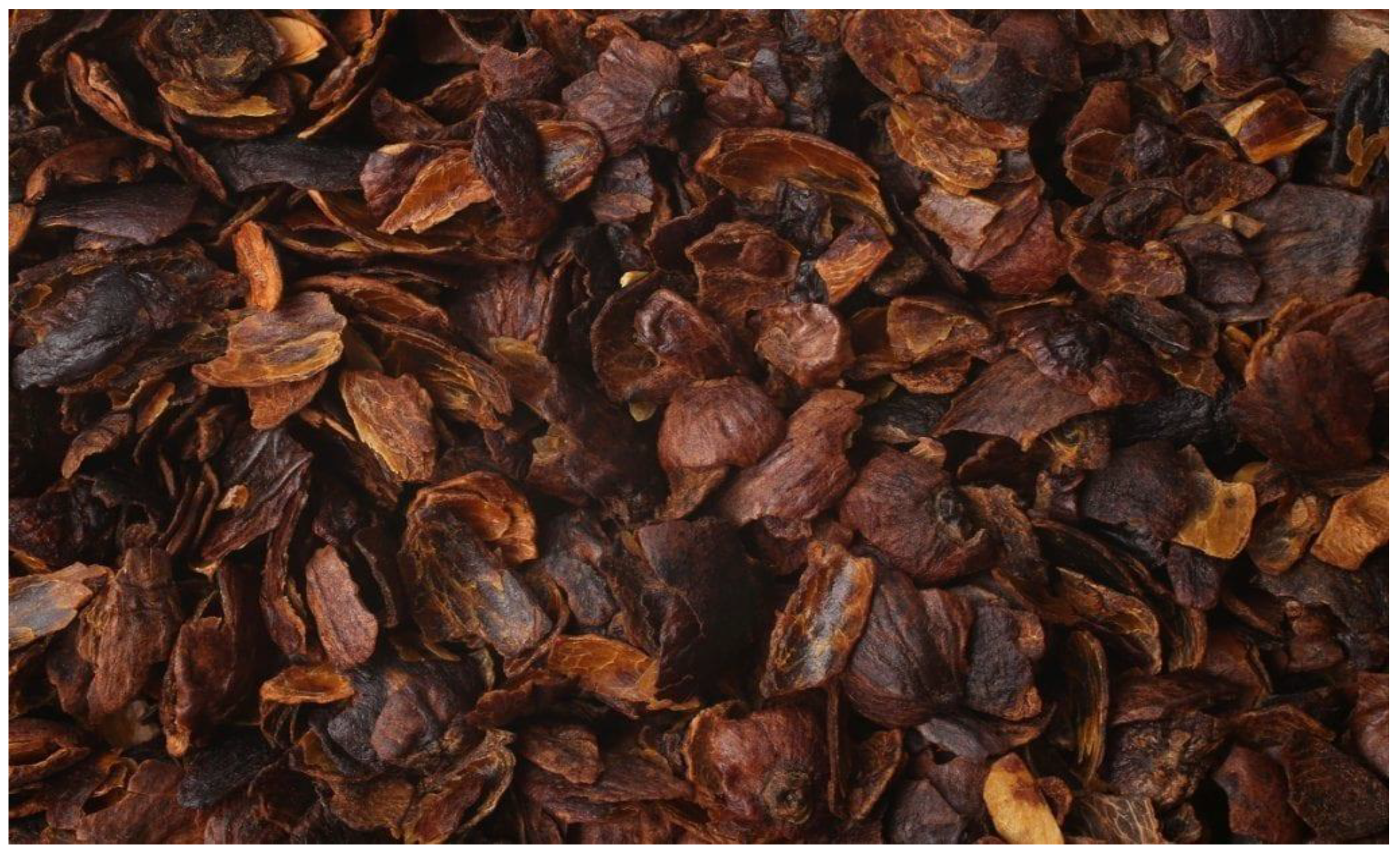
Figure 2.
Coffee pulp (Ground to Ground, 2015).
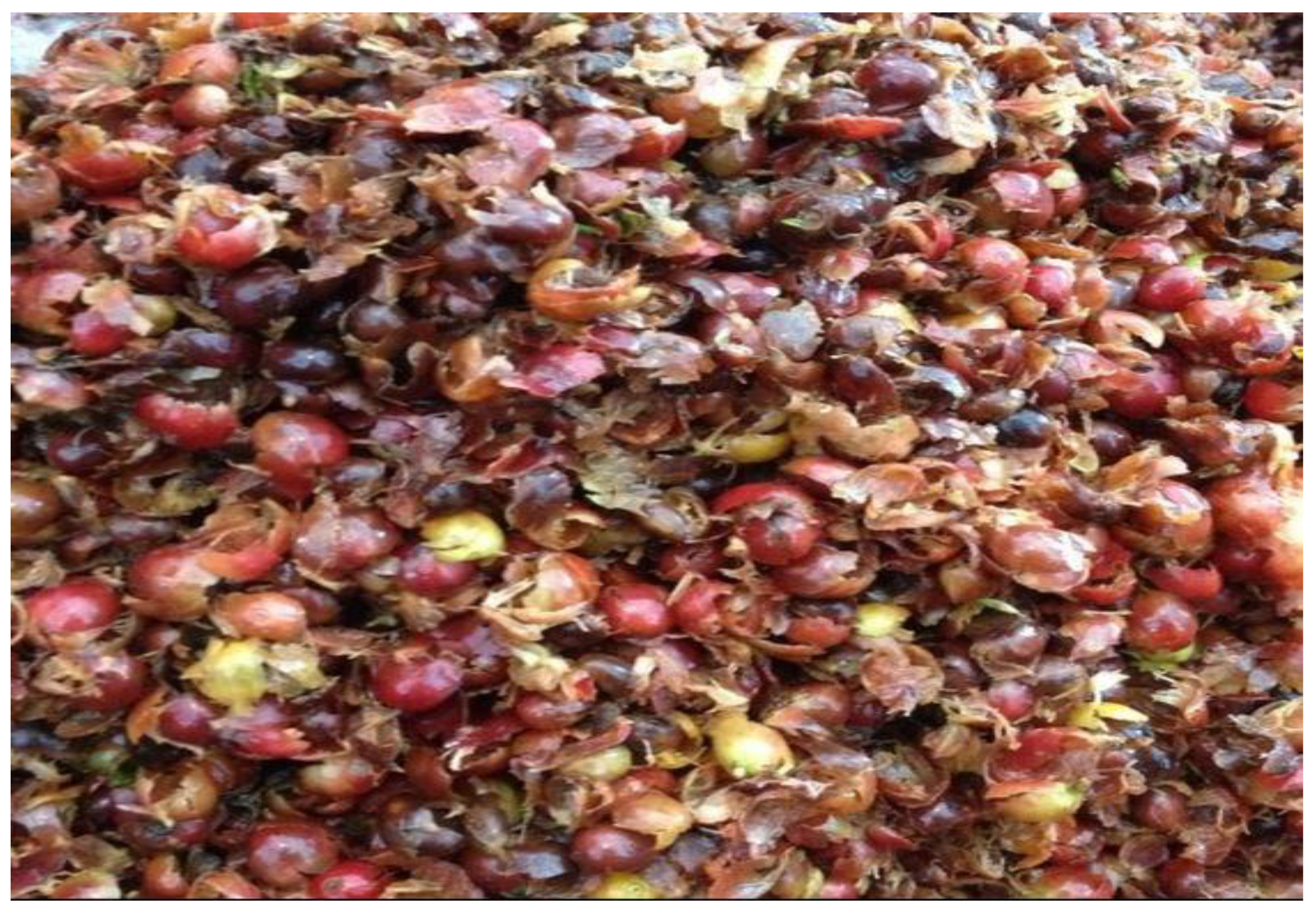
Figure 3.
Coffee Silverskin (Dabade, 2020).
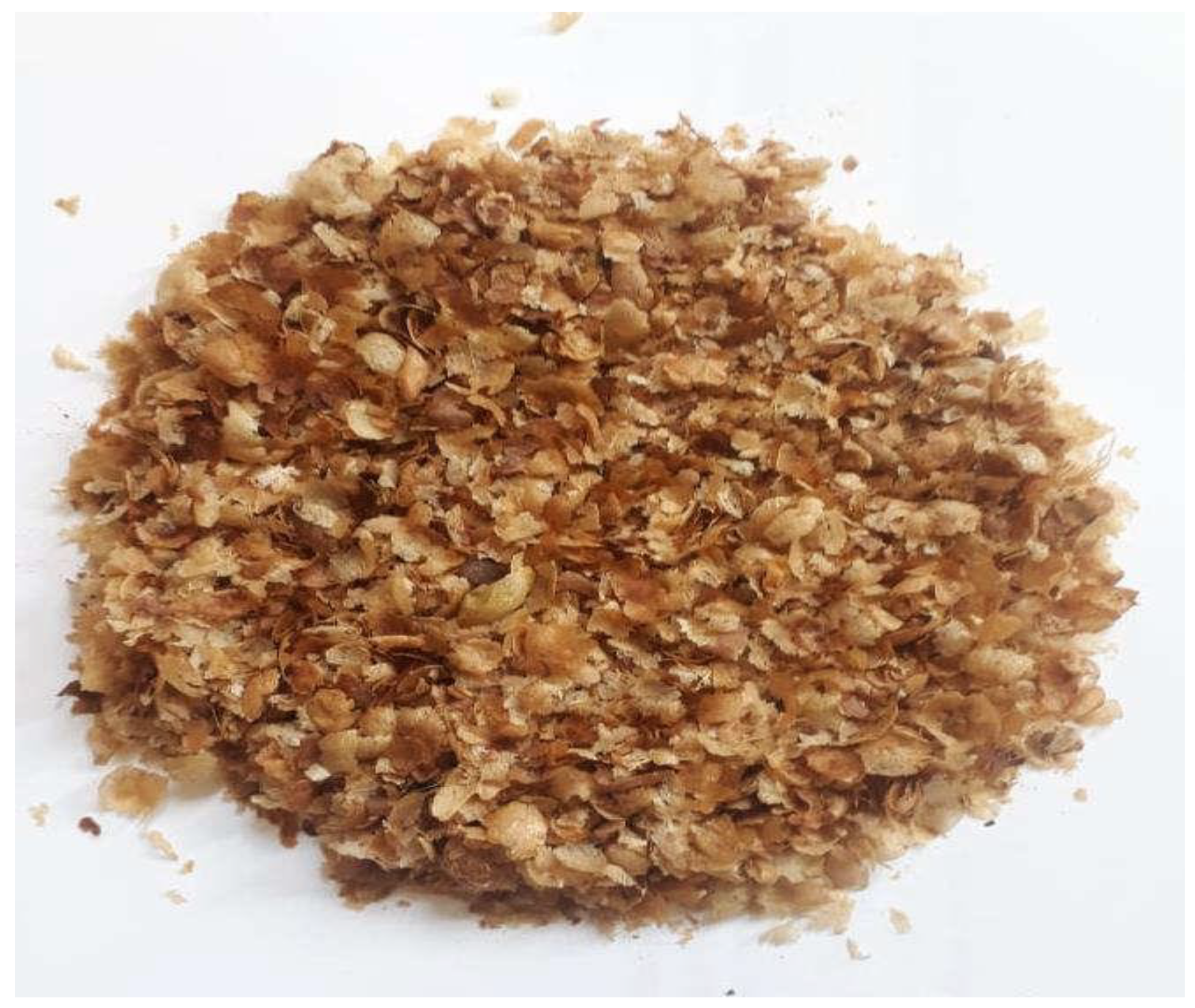
Figure 4.
Spent coffee ground (Stem Fellowship, 2022).
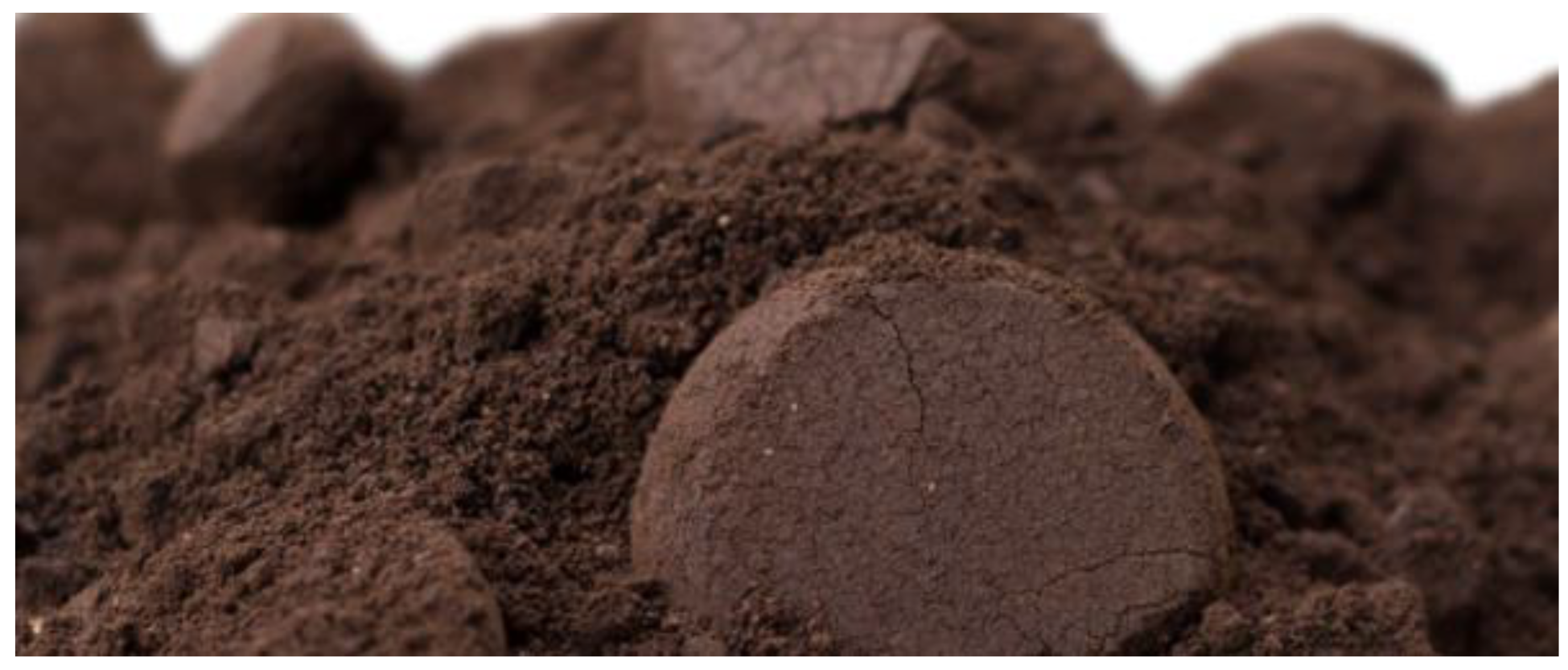
Figure 5.
Applications of valorized coffee byproducts across food industries.
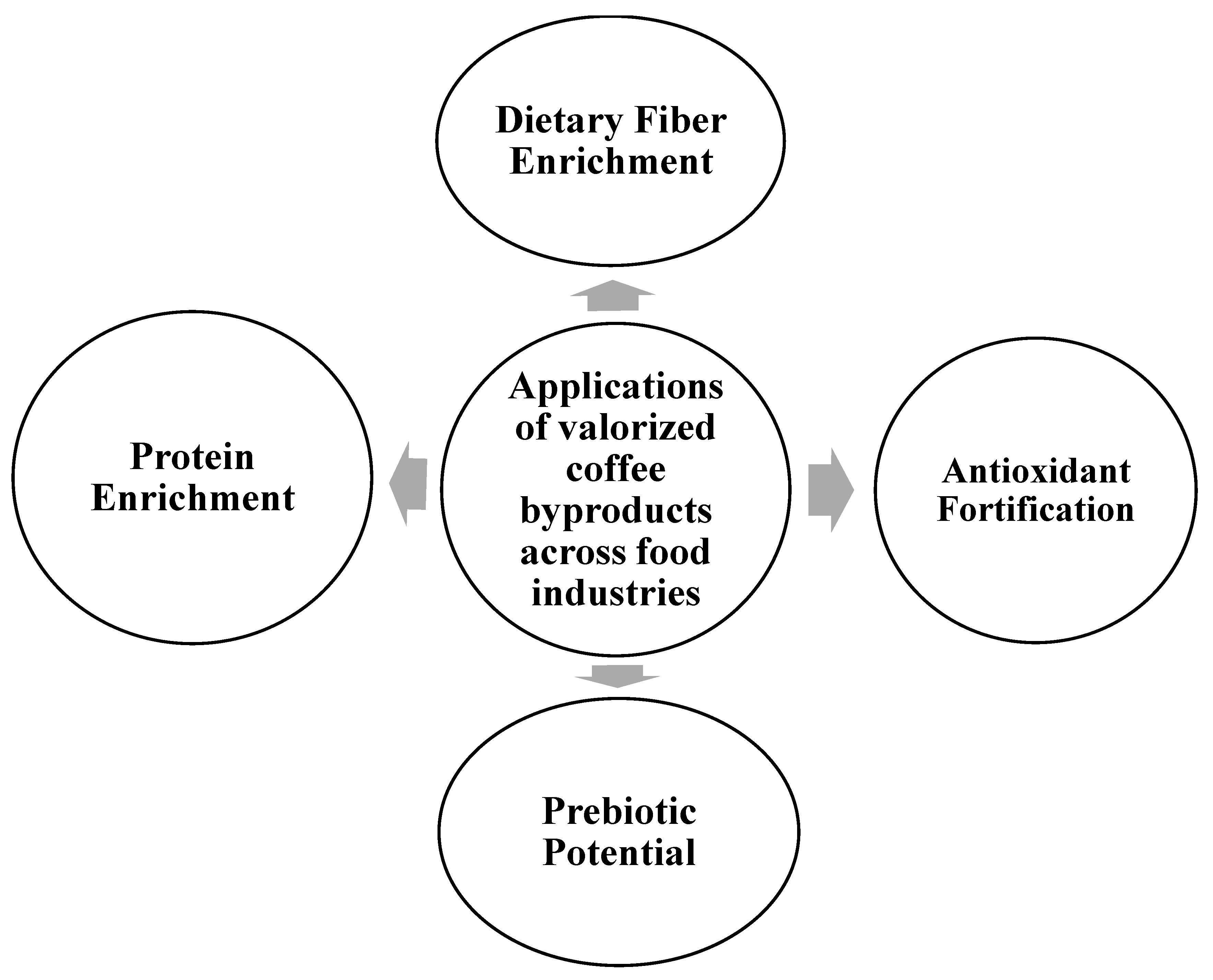
Figure 6.
Application of coffee byproducts in feed industry.
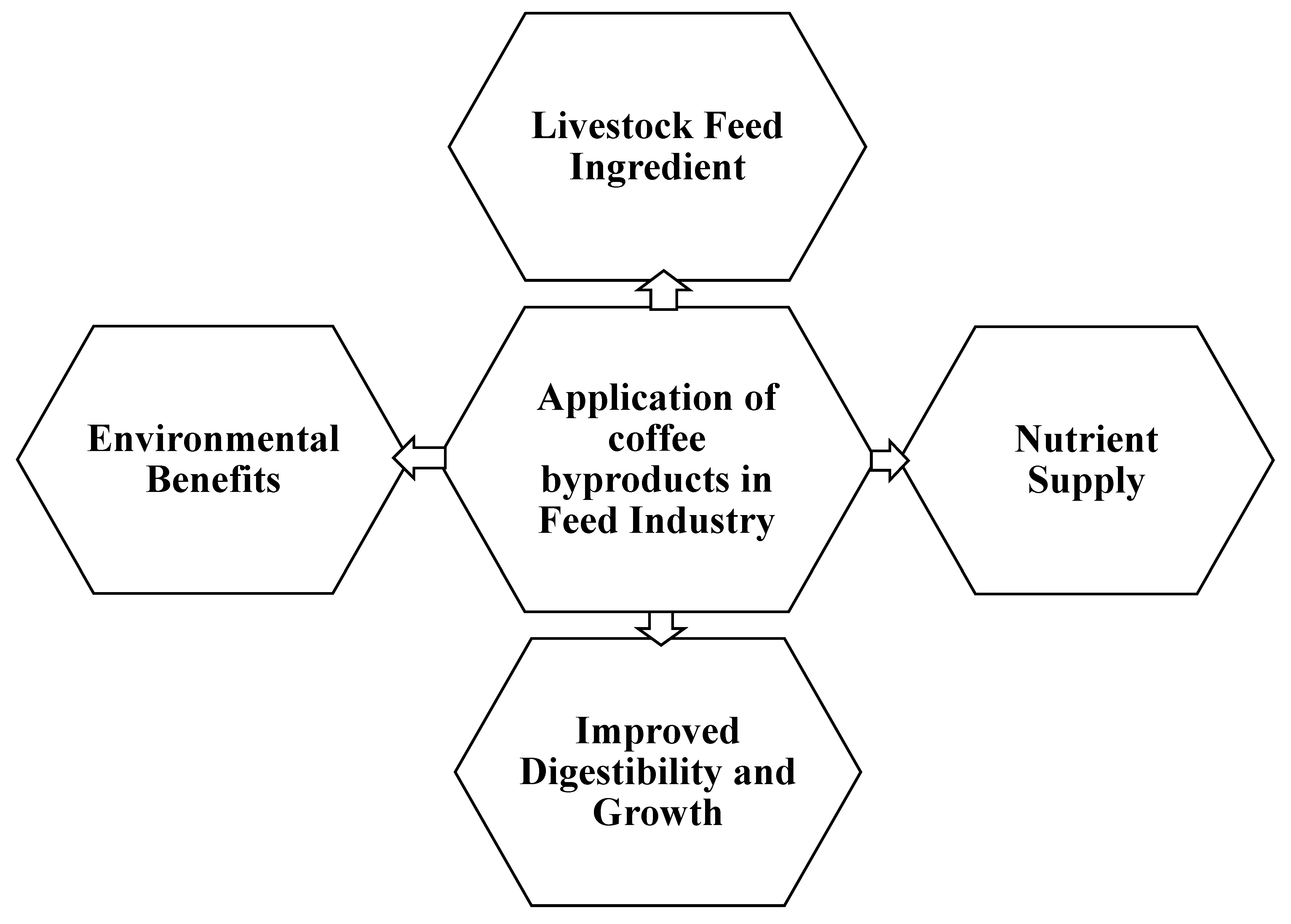

Table 1.
Summary of coffee byproducts, nutritional and bioactive compounds (% dw).
| Processing Stage | Types of Byproduct | Key nutritional and Bioactive Compounds Composition | References |
| Wet processing | Pulp (43%) | Carbohydrates (31%), dietary fiber (46%), proteins (9-10%), lipids (1–2%), minerals (6–10%), cellulose (25%), hemicellulose (3%), lignin (20-31%), Ash (6-7%), polyphenols (8%), caffeine (18%) | (Ameca et al., 2018; Chala et al., 2018; Machado et al., 2023; Phuong et al., 2019) |
| Dry processing | Husk (50% w/w) | Carbohydrates (43-85%), Total dietary fiber (39%), cellulose (39-43%),lignin (6-42%), and hemicellulose (9-12%), protein (8-11%), lipids (1-3%), ash (7%), Ash (9.5%), minerals (3-7%), tanins (5%), caffeine (1%) | (Chala et al., 2018; de Almeida et al., 2023; Gouvea et al., 2009; Machado et al., 2023; Nguyen et al., 2023) |
| Roasting | Silverskin (4.2% w/w) | Carbohydrate (5-14.5%) Dietary fiber (50-65%), proteins (7-22%), lipids (1-3%), Ash (7-11%), Caffeine (0.8-1.3%), chlorogenic acids (1-6.8%), melanoidins (17-23%) | (Gottstein et al., 2021; Iriondo-dehond et al., 2017; Lorbeer et al., 2022; Machado et al., 2023) |
| Brewing | Spent coffee grounds (91% w/w) | Carbohydrate (45-89%), cellulose 8–25%, hemicellulose 30–40%), lignin (20–30%), lipids (1.5-27%), Caffeine (1–2%), Ash (8-11%), protein (10-17%), minerals (0.1-1%). | (Blinová et al., 2017; Franca & Oliveira, 2022; Machado et al., 2023) |
Table 2.
Summary of coffee by-products and their potential area of application.
| Application Area | Product | Coffee By-Product Used | Main Findings | Reference |
| Food Industry | Dietary Fibers | Pulp, Husk, Silverskin | The addition of coffee silverskin to chocolate cakes increased dietary fiber, antioxidant capacity, and phenolic content, with cakes containing 2.6% and 3.6% CS receiving good sensory acceptance. Despite the lower acceptance of cakes with 4.6% CS, the study confirms CS’s potential as a functional food ingredient with significant health benefits. | (Franca et al., 2024) |
| Antioxidants | SCG | Cookies enriched with SCGc contained 780 mg of melanoidins, 16.2 mg of chlorogenic acid (CGA), 6.5 mg of caffeine, and 0.08 mg of phenolic acids per 100 g of sample. Among the CGAs, 5-caffeoylquinic acid was the most abundant, measured at 116.4 mg/100 g in SCG and 8.2 mg/100 g in SCGc. Compared to control cookies, the SCGc samples exhibited significantly higher antioxidant activity and total phenolic content | (Castaldo et al., 2021) | |
| Protein Enrichment | SCG, Pulp | Incorporating SCGs into the diet of Tenebrio molitor larvae significantly enhanced their nutritional value. Larvae fed with 25% SCGs showed a 45.26% increase in crude protein, an 81.28% increase in vitamin C, an 822.79% increase in vitamin A, and a 29.01% increase in polyphenols. | (Kotsou et al., 2023) | |
| Prebiotic | SCG | Mannooligosaccharides (MOS) from SCGs demonstrated notable prebiotic properties. When added to Lactobacillus acidophilus cultures, MOS enhanced bacterial activity by 23.96% and significantly improved survival under simulated gastrointestinal conditions, with a 77.41% survival rate after 2 hours of exposure to α-amylase. Additionally, Lactobacillus casei cultures grown with MOS were able to inhibit the growth of Salmonella paratyphi by 12.55%. | (Wongsiridetchai et al., 2021) | |
| Animal feed industry | Animal Feed Ingredients | Pulp, Husk, SCG | SCG are a viable alternative feed ingredient for dairy cattle, with feeding up to 5% SCG in the concentrate showing no negative impact on milk yields, fat content, or overall animal performance, while only slightly reducing crude protein by 1.8%. | (San Martin et al., 2021) |
| Nutrient supply | SCG | Incorporating 100g/Kg SCG into feed of dairy ewes improved milk yield and composition by enhancing rumen fermentation patterns—specifically increasing acetic, butyric, isovaleric, and isobutyric acids—without affecting intake, digestibility, or feeding behavior. | (de Otálora et al., 2020) | |
| Improving growth performance | SCG | Replacing 10% of fish meal (FM) with fermented SCGS in the diet of African catfish (Clarias gariepinus) significantly improved growth performance, feed floatability, and water stability. Fish fed with the 10% fermented SCGs diet (T2) showed the highest improvements (p < 0.05) in growth metrics, intestinal villus length, width, and crypt depth, as well as in blood parameters such as white and red blood cells, haemoglobin, albumin, globulin, total protein, and creatine. Additionally, higher total bacterial counts in feed and intestine were observed in the T2 group. | (Aqilah et al., 2024) |
Disclaimer/Publisher’s Note: The statements, opinions and data contained in all publications are solely those of the individual author(s) and contributor(s) and not of MDPI and/or the editor(s). MDPI and/or the editor(s) disclaim responsibility for any injury to people or property resulting from any ideas, methods, instructions or products referred to in the content. |
© 2025 by the authors. Licensee MDPI, Basel, Switzerland. This article is an open access article distributed under the terms and conditions of the Creative Commons Attribution (CC BY) license (http://creativecommons.org/licenses/by/4.0/).
Copyright: This open access article is published under a Creative Commons CC BY 4.0 license, which permit the free download, distribution, and reuse, provided that the author and preprint are cited in any reuse.


