

Submitted:
06 July 2025
Posted:
07 July 2025
You are already at the latest version
Preprints on COVID-19 and SARS-CoV-2
Abstract
Background/Objectives: Parental engagement plays a vital role in children's development and well-being, influencing their health, learning outcomes, and major life decisions. This involvement is fostered through trusting relationships between families and professionals and can be strengthened by supportive interventions such as home visits and integrated therapies. However, its level can be influenced by various factors, including household structure, parental education, school-family communication, and broader social conditions such as migration. This study examines how these variables are associated with parental engagement in the educational process in Chile during the COVID-19 pandemic, a period in which the country implemented some of the most stringent public health measures in Latin America, including extended quarantines and mobility restrictions, which were gradually relaxed as vaccination efforts progressed. Methods: This study analyzes 1432 responses from adults in Chile on the International COVID-19 Impact on Parental Engagement Study, using univariate and multivariate analysis to psychometrically validate the scale used, and identifying significant relationships between parental engagement factors and sample characteristics using nonparametric statistical methods. Results: A factor analysis was performed that identified two dimensions (social learning for parenting and parenting in homeschooling) from 8 valid items, with good fit and validity indicators, revealing significant associations between social learning for parenting and school-home communication on the learning plan, and parental engagement and the variables child´s age, school-home communication on the learning plan and parental engagement time Conclusions: This study demonstrates that parental involvement in learning at home is a relational social process conditioned by school-family communication, which requires co-responsible and inclusive educational approaches to promote equity.
Keywords:
parental engagement
; school-family communication
; digital social learning
; family structure
; educational equity
1. Introduction
Parental engagement is fundamental to achieving good outcomes in child support, child welfare and education programs. This engagement is based on a collaborative relationship between parents and professionals, such as home visitors, social workers or educators, and is built on trust, open communication and mutual respect. In home visiting programs, for example, home visitors learn about the culture and needs of families, adapting their approach to each situation [1,2]. In the field of child well-being, the creation of a supportive and trusting environment is crucial, especially in sensitive situations such as child protection assessments, as negative attitudes or lack of trust can hinder the process [3]. In the educational context, engagement can be more challenging for parents of children with disabilities, such as autism, due to marginalization and lack of support, highlighting the importance of creating inclusive and collaborative environments [4]. In summary, successful interventions depend on a relationship based on trust, understanding and effective communication [5].
Parental engagement also has a profound impact on child development, spanning key areas such as health and important decision-making. Studies show that parental involvement is essential for child well-being. In Japan, excessive screen time in children was found to be related to parental internet use and lack of clear rules, highlighting the importance of being involved in regulating this behavior [6]. In the United States, open communication between parents and children about substance use reduces risks, although it has declined, especially in low-income families, highlighting the need to promote more conversations about substance use [7]. In school eye health programs, parental involvement is crucial to educate about eye care, benefiting children’s health and academic performance [8]. In India, parental involvement in issues such as their adolescent daughters’ school performance and personal relationships helped delay marriage, allowing girls to choose their husbands, showing how parental involvement supports important decisions [9]. Finally, in studies on child development, the participation of parents, although not always accurate, was fundamental and complemented by expert verification [10]. In conclusion, parental involvement is essential for the holistic development and future well-being of children.
In addition, parental involvement is key to the development and success of children, both in the therapeutic and educational settings. In interventions such as Parent-Child Interaction Therapy (PCIT), it has been shown that therapists’ interaction with parents influences children’s progress. Those parents who received more responsive feedback acquired skills faster and were less likely to drop out of treatment [11]. This support was also critical in the educational context during the COVID-19 pandemic, when parental involvement in learning at home improved school performance, being mediated by factors such as parental psychological control [12]. In therapies such as DIR/Floortime for children with autism spectrum disorder (ASD), parental engagement to the implementation of therapy at home favored child development [13]. However, parents of children with ASD face additional challenges, such as isolation in schools, which makes it more necessary to strengthen partnerships with educators for effective parental involvement [4]. Thus, parental involvement is essential to the well-being and success of children in any context.
Parental involvement in their children’s education is essential to their academic success, but factors such as immigration status and English proficiency often hinder their involvement, especially in low-income Hispanic families. Despite the barriers, these parents see their role as crucial, focusing on helping their children learn and guiding them in respect and behavior [14]. Programs such as Head Start show that the relationship between the race and ethnicity of the teacher and child can improve parental involvement, reduce absences and encourage greater engagement [15]. In addition, it is important that teachers establish close relationships with families and recognize their diversity, as reflected in educational policies [16]. This joint effort is crucial in difficult contexts, such as in schools for children with special needs, where family support significantly impacts learning outcomes [17]. In crisis situations, such as the COVID-19 pandemic, parental involvement becomes even more important, as seen in Uganda, where actively involved families helped their children to continue learning, even in resource-poor rural areas [18]. This underscores that, despite the challenges, parental involvement remains key to educational success.
Following the COVID-19 pandemic, parental support practices have not only been sustained but strengthened because of the experience gained during the remote learning period. This situation structurally transformed the relationship between families and schools, promoting more active and necessary participation by caregivers in children’s learning [19,20]. The literature shows that this involvement had positive effects on students’ academic performance, emotional engagement, and overall well-being [4,18,21]. Likewise, new parenting skills were developed, such as creating educational activities at home, using digital tools, and strengthening ties with teachers, even in low-resource contexts [12,13,22]. In Canada, for example, many parents encouraged healthy routines despite the increase in childhood sedentary lifestyles [23].
In the current educational scenario, these findings are particularly relevant, as they can guide public policies that seek to consolidate a more sustainable and equitable family school collaboration. Various studies highlight the need to institutionalize this relationship through more effective communication, digital training for caregivers, and greater support within schools [24,25]. Finally, experiences such as family support in learning mathematics at home reveal the creativity and resilience of families in the face of educational challenges, providing key evidence for strengthening long-term inclusive strategies [26].
In recent years, the proliferation of digital environments has significantly redefined how families access parenting support, information, and peer interaction. Social networking sites, online communities, and educational platforms have emerged as dynamic, informal learning spaces that shape parenting practices, particularly during periods of social disruption such as the COVID-19 pandemic. These environments do more than transmit information; they foster emotional validation, normalize diverse parenting experiences, and enable the co-construction of situated knowledge [27,28]. For families in contexts of social vulnerability, digital media increasingly represent critical tools for navigating educational challenges and enhancing agency. In this regard, the concept of “social learning for parenting,” as examined in this study, must be reinterpreted to encompass not only face-to-face interactions with professionals and peers but also digitally mediated engagements embedded within hybrid and participatory networks of informal support.
During the pandemic, Chile implemented comparatively strict measures, including prolonged quarantines, curfews, mobility restrictions, and border closures, all under the framework of the “Paso a Paso” (Step by Step) Plan. These actions involved strong state control and were among the most rigorous in Latin America, gradually easing only as vaccination rates increased.
Parental engagement is essential for children’s well-being and development, and one of the most effective approaches to fostering it is social learning for parenting. This model is based on active collaboration between parents and professionals, such as home visitors or therapists, where not only resources are provided, but also learning about family needs and dynamics. For example, in home visiting programs, professionals adapt their approach according to what they observe in each family, which allows for the creation of a relationship of trust and mutual support [1,2]. This type of interaction helps parents acquire new skills, enhancing their ability to positively influence their children’s development. In addition, in therapeutic interventions such as Parent-Child Interaction Therapy (PCIT), responsive feedback and a collaborative approach between parents and therapists have been shown to accelerate children’s progress [11]. Thus, social learning for parenting not only strengthens family bonds, but also creates a more inclusive and effective environment for children’s comprehensive development [4,5].
Finally, parental involvement in home education is crucial for children’s academic and emotional development. By collaborating closely with educators, parents create an environment of trust that is conducive to learning, as evidenced during the COVID-19 pandemic, active involvement improved school performance [12]. However, barriers such as immigration status and linguistic difficulties can hinder this participation, highlighting the need for inclusive policies [14,15]. Support programs such as home visiting and collaborative therapies, such as Parent-Child Interaction Therapy (PCIT), also show how support for parents improves children’s development [1,2,11]. Thus, active parental engagement is essential for the success and well-being of children, both in their education and in their emotional development [4,5].
In view of the above, this paper aims to analyze the degree of relationship between Parental Engagement and the sociodemographic characteristics of parents or caregivers (Family profile), composition and dynamics of the nuclear family (Household structure) and the interaction and link between the home and the school environment (School-family communication). To answer the following research questions: How is the level of Parental Engagement related to the socio-demographic characteristics of the parents or caregivers, such as educational level, occupation and income, and how does the structure of the home and the quality of communication between the school and the family influence the degree of parental engagement in the educational process?
2. Materials and Methods
This study is based on a dataset published in the data descriptor by Osorio-Sáez et al. [29], developed within the framework of the International COVID-19 Impact on Parental Engagement Study (ICIPES). The dataset originates from an online survey conducted across 23 countries, with a total of 4,658 parents and caregivers participating. The questionnaire was structured into several key sections, including demographic and contextual information about the parents and their children, characteristics of the children’s schools and internet access, the perceived impact of the COVID-19 pandemic on parental roles within the home, and reported teaching practices associated with home-schooling. Informed consent was obtained from all participants involved in the data collection process. The study protocol received ethical approval under reference EIRA1–5408 from the Research Ethics Committee of the University of Bath.
For the purposes of this study, we considered only 1,432 responses from the adult population (aged 25 to 64) in Chile. The data set has been analyzed at univariate and multivariate levels, for establishing psychometric validity by means of structural evidence [30]. In univariate terms, the presence of variance (>0), and the limitation of skewness and kurtosis in each item (|≤ 1|, both), have been of interest, using SPSS 23 software (IBM, New York, NY, USA) [31]. And at the multivariate level it has included exploratory and confirmatory factor analysis, using sequentially SPSS 23 software and FACTOR Software, to perform an exploratory retesting of the factors in this specific sample and confirmation of the factors present in the measurement [32].
To report the exploratory factor analysis in measuring confidence levels, the authors applied the Kaiser-Meyer-Olkin (KMO) measure of sampling adequacy. In addition, the authors used Bartlett’s test of sphericity to identify items that belonged to factors within the scale as a form of exploratory factor analysis (EFA) with the extraction method, unweighted least squares (ULS), rotation method and Oblimin with Kaiser normalization [31], including high communalities, high factor loadings to support the sample size and minimum items per factor (MIF) [33,34,35].
For confirmatory factor analysis, the measure of sampling adequacy (MSA) was initially considered [36], and reported as indicators: Chi-square/degree of freedom (χ2/df), root mean square error of approximation (RMSEA), adjusted goodness-of-fit index (AGFI), goodness-of-fit index (GFI), comparative fit index (CFI), non-normalized fit index (NNFI) and root mean square root of residuals (RMSR) [37,38,39] (See Table 1).
The resulting factors were subsequently examined through cross-tabulation with the variables characterizing the sample. Due to the predominance of ordinal and categorical data, nonparametric statistical methods were employed. The analysis was conducted using SPSS version 23, applying Symmetric Measures (specifically Kendall’s tau-c and Gamma) as well as the Chi-square (χ²) test of association. Statistical significance was determined at the 0.05 level, with stronger effects ideally observed at the 0.01 level. Additionally for Kendall’s tau-c and Gamma, higher absolute values indicated stronger ordinal associations (e.g., values around 0.1 are considered weak, ~0.3 moderate, and ≥0.5 strong), with positive or negative signs reflecting the direction of the relationship. [40,41,42].
3. Results
3.1. Factorial Analysis
As a first step, the univariate analysis of the items has generated the elimination of items with bias and/or kurtosis limiting the study to 11 out of a total of 26 items (PE_1, PE_4, PE_5, PEIS, PUTBC_1, PUTR_1, PUTS_1, PUTS_2, and SHS) (See details in Appendix A, Table A1). Then using SPSS an exploratory factor analysis (EFA) was performed with a KMO of 0.751 and Bartlett’s Test of Sphericity with significance of 0.000 (Approx. Chi-Square 3645.099, and df 55), supporting 9 items in 2 factors as shown in Table 3.
Then, for the 9 items that present response variability, using FACTOR Software a confirmatory factor analysis (CFA) has been performed for 2 factors, the Measure of Sampling Adequacy (MSA) does not propose to eliminate any item, the Hull method for selecting the number of common factors Advised the 2 factors, KMO of 0.771 with ic at 90% (0.743, 0.784), and Bartlett’s Test of Sphericity with significance of 0.000 (Approx. Chi-Square 4477.4, and df 36), supporting 8 items (see Table 4).
Finally, the validation and reliability statistics of the proposed model are reported in Table 5. According to the parameters, the values of robust goodness of fit AGFI, GFI, CFI, CFI, NNFI and fitted residuals RMSR present a good fit, the robust goodness of fit statistic RMSEA presents an acceptable parameter, in the case of χ2/df the result is 3.6, being above the acceptable parameter of 3. But the FACTOR software reports that the Minimum Fit Function Chi Square with 19 degrees of freedom is equal to 68.605 and a p-value equal to 0.000000.
Based on the above evidence, we can understand that the data effectively measures a factor F1 Social Learning for Parenting, and a factor F2 Parenting in Homeschooling, whose FT Parental Engagement is the product of the linear combination of F1 and F2 by the weighted eigenvalues we have reported in Table 4.
F1 = RND (MEAN (PUTS_1, PUTS_2, SHS, PUTBC_1, PE_1)),
F2 = RND (MEAN (PE_4, PUTR_1, PE_5)),
FT= 0.723*F1 +
0.277*F2
Once these factors were established, we performed non-parametric cross tables using non-metric measures with the set of variables characterizing the sample.
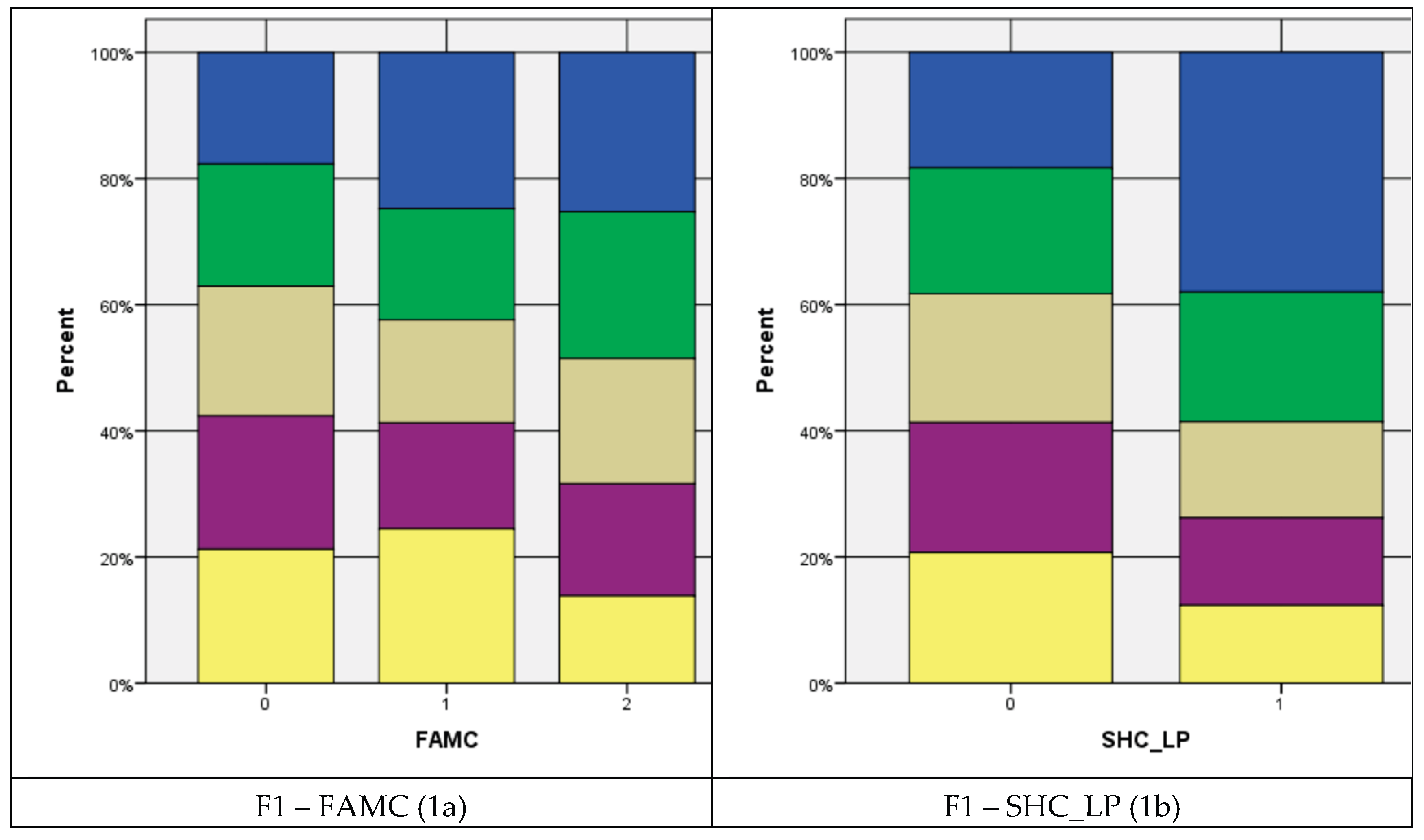
As Table 6 shows, based on the Symmetric Measures, Kendall’s tau-c and Gamma, the variables Family structure/composition (FAMC) and School Home communication: Learning Plan (SHC_LP) correlate significantly with the factor Social Learning for Parenting (F1), but despite the high weighting of F1 in the aggregation of FT, no significant correlations are found for FT. The correlations for F1 are shown in the set of Figures 1a and 1b.
The correlation results obtained for Family Structure/Composition (FAMC) show a significant p value, accompanied by a Tau c coefficient close to zero, indicating a weak relationship between the variables. This result can be explained by the large sample size (n > 1,000), since in large samples even very small associations, i.e., with low coefficients, can reach statistical significance. Consequently, although the relationship is statistically significant, it lacks practical relevance or sufficient magnitude, so it is not possible to affirm the existence of a substantive correlation between Family Structure/Composition (FAMC) and the Social Learning for Parenting factor (F1).
Figure 1.
Correlation between Family structure/composition (FAMC) y School Home communication: Learning Plan (SHC_LP) with the factor Social Learning for Parenting (F1).
Figure 1.
Correlation between Family structure/composition (FAMC) y School Home communication: Learning Plan (SHC_LP) with the factor Social Learning for Parenting (F1).
As a way of obtaining further evidence, we have also performed non-parametric cross tables by means of chi-square test between the factors and the set of variables of characterization of the sample.
As Table 7 shows, based on the Chi-Square Test, the variable Child’s age (CHAG) correlates with high significance with the factors Social Learning for Parenting (F1), Parenting in Homeschooling (F2), and Parental Engagement. The variable School Home communication: Learning Plan (SHC_LP) correlates significantly with the factors Social Learning for Parenting (F1) and Parental Engagement. And finally, the variable Parental engagement - time (PETT) correlates significantly with the factors Parenting in Homeschooling (F2), and Parental Engagement (FT). This is represented in Figure 2 set. There are significant associations between key parental and educational variables and the main engagement factors, which will be further addressed in the discussion section.
4. Discussion
The lack of correlation observed between social learning for parental engagement and family structure or composition observed in the Chilean case is contrary to the literature that states that: 1) non-traditional families more frequently resort to digital social learning to guide their parenting, especially in the absence of a co-parental figure or in contexts of poorly defined parental roles [43,44,45,46,47], and 2) traditional nuclear families show greater stability and less need for external support [48].
The correlation between Social Learning for Parenting and the existence of formal communication with the school regarding the learning plan (SHC_LP) provides an additional relevant perspective. In homes where there is no clear and structured communication with the school, parents are more likely to resort to social networks or digital sources to fill this communication gap [49,50].
Thus, while structured and effective communication between school and family is commonly viewed as a key facilitator of parental engagement, its influence may be contingent upon broader sociocultural dynamics, particularly in contexts where diverse family forms are normalized and formal structures are less predictive of parental involvement. According to Epstein [49], this communication is one of the essential dimensions to strengthen educational collaboration between both actors. In this study, it is evident that parents who have access to clear and timely information about the learning plan develop a more active and focused involvement. In contrast, the absence of such communication encourages parents to adopt informal strategies, such as consulting social networks or digital resources, which can generate inequalities in the quality of the support offered [51]. These dynamics highlight the role of the mesosystem in Bronfenbrenner’s ecological framework [48], underscoring the need for inclusive school practices that promote educational equity.
This situation presents ambivalent implications. On the one hand, it evidences the caregivers’ capacity for agency and adaptability by actively seeking resources that allow them to accompany their children’s learning [52]. On the other hand, it may reflect a gap in educational co-responsibility, where the school fails to sufficiently guide families, which could generate a dependence on sources of information that are not always reliable or appropriate to the specific context [45].
These findings reinforce the notion that parental social learning is a contextual, relational, and adaptive phenomenon, shaped not merely by family configuration, but by the interplay between informal caregiving practices and the level of institutional trust and support available. [46,47]. Consequently, these findings highlight the need to design school communication strategies that are not only inclusive and empathetic, but also responsive to the sociocultural realities of diverse family structures and their differentiated pathways to educational engagement and knowledge acquisition [49,50].In addition, a methodological and practical challenge arises to distinguish when social learning acts as an enriching resource and when, on the other hand, it constitutes a response to institutional neglect or isolation, a situation that could negatively affect pedagogical decision making in the domestic sphere.
In relation to parental engagement, the pattern of variation according to the child’s age is in line with previous research indicating a higher involvement in early stages, followed by a decrease during adolescence [53]. Bronfenbrenner [48] posits that the family microsystem evolves alongside the developmental trajectory of the child, continuously reshaping the forms, intensity, and contextual meaning of parental engagement. This phenomenon can also be understood from the stage-environment fit model proposed by Eccles et al. [54], which argues that the demands and expectations of the environment are adjusted to the developmental needs of the adolescent, conditioning the type of support he or she receives.
Finally, the time devoted by parents to support learning reflects not only their intrinsic motivation, but also their perception of self-efficacy and the explicit invitations they receive from both the school and their children [55]. The data confirm that a greater number of weekly hours devoted to educational support is associated with greater diversity and quality in parental engagement strategies. However, access to and use of this resource are shaped by broader structural conditions, such as employment status and the availability of support networks, while family composition alone does not appear to significantly constrain parental engagement. Therefore, the time available also functions as an indicator of social and economic capital, highlighting the need for educational policies that address material inequalities and support diverse family configurations [56].
5. Conclusions
The findings of this study offer robust empirical support for the central role of the family environment and the school–family relationship in shaping home-based learning support practices. Rather than being an individual behavior or merely a reflection of caregivers’ educational capital, parental engagement emerges as a structured and relational social process. It is shaped by variables such as the child’s age, the regularity of parental involvement, and, most significantly, the presence of fluid, trust-based communication between educational institutions and families. These findings align well-established conceptual frameworks, such as Bronfenbrenner’s ecological systems theory, which situates the child within a network of interdependent microsystems [48], and Epstein’s school partnership model, which conceptualizes parental involvement as a multifaceted construct responsive to both institutional and family dynamics [49]. The study reinforces that the presence, or absence, of effective school communication influences not only the quantity of support provided by caregivers, but also their perceived confidence, alignment with curricular expectations, and propensity to seek external or institutional assistance when addressing academic challenges.
From the point of view of educational policy, these findings reinforce the need to move from focused and compensatory intervention models to systemic approaches of co-responsibility. School institutions should be considered co-constructors of parental involvement, through the generation of intentional communication and collaboration strategies, especially in contexts marked by structural inequality. Thus, a clear recommendation emerges: to strengthen the initial and continuous training of teachers in socio-educational linkage and intercultural communication tools, together with the design of stable institutional mechanisms that encourage dialogue and the participation of families in pedagogical processes.
In the Chilean context, the growing visibility of diverse family structures such as single-parent, same-sex, and transnational households challenges the historically dominant nuclear and heteronormative model [57]. Recent empirical evidence indicates that family configuration does not significantly predict parental engagement; rather, engagement is shaped by variables such as school–family communication, access to educational and emotional resources, and caregivers’ subjective perceptions of their parenting role [58]. This perspective aligns with psychosocial and ecological frameworks of parenting, which conceptualize engagement as a relational, emotionally embedded, and contextually situated process, structured by motivational beliefs, role perceptions, and mutual expectations within the family–school dynamic [59]. Rigorous evidence from randomized field trials, such as the Getting Ready intervention, demonstrates that relationship-focused strategies enhance caregiver warmth, sensitivity, and support for children’s learning and socio-emotional development [60]. Moreover, scoping reviews reveal that caregiving practices are more influenced by affective bonds, emotional regulation, and social support networks than by formal family structure [61]. Together, these findings reinforce the need to move beyond reductionist frameworks and adopt integrative models that recognize the symbolic, emotional, and sociocultural dimensions underpinning parental engagement. In psychosocially complex environments, fostering reciprocal trust and meaningful dialogue between families and schools becomes essential for sustaining involvement.
However, it is necessary to recognize some limitations of the study. The cross-sectional nature of the design prevents the analysis of the evolutionary dynamics of parental involvement, limiting the understanding of its transformation over time. Likewise, the sample does not allow us to explore in depth the differences by socioeconomic level, gender or ethno-cultural affiliation, factors that could influence the forms and levels of family involvement. The use of self-reported data also introduces a possible social desirability bias that could affect the interpretation of certain results.
Considering these limitations, lines of research are open that could enrich and deepen the findings obtained. Future research could adopt longitudinal approaches to observe how parental support practices evolve in post-pandemic scenarios or in the face of active bonding policies promoted by the educational system. Likewise, it is suggested that qualitative or mixed methodologies be incorporated to understand the meanings, tensions and strategies involved in parental engagement in different sociocultural groups and territories. Emerging issues such as the role of digital technologies, coeducation in diverse families or the emotional impact of educational accompaniment at home deserve to be investigated in greater depth.
In sum, this study contributes to the strengthening of the empirical and theoretical field on parental involvement, offering evidence that supports the need to understand it as a dialogical, situated and politically relevant process. By positioning the school-family link as a strategic axis for educational equity, the results presented here invite us to rethink the ways in which school systems recognize and articulate family knowledge, moving towards a more inclusive, co-responsible and territorially situated education.
Supplementary Materials
The following supporting information can be downloaded at the website of this paper posted on Preprints.org, Table S1: ParEng.csv.
Author Contributions
Conceptualization, R.B.-C., and A.V.-M.; methodology, A.V.-M., and N.C.-B.; validation, R.B.-C., N.C.-B., and A.V.-M.; formal analysis, A.V.-M., and N.C.-B.; data curation, R.B.-C., and A.V.-M.; writing—original draft preparation, R.B.-C., G.S.-S., and A.V.-M.; writing—review and editing, A.V.-M., M.B.-C., M.J.S.-F., and N.C.-B.; visualization, A.V.-M., and N.C.-B.; supervision, M.B.-C.; project administration, A.V.-M.; funding acquisition, R.B.-C., G.S.-S., N.C.-B., and A.V.-M.. All authors have read and agreed to the published version of the manuscript.
Funding
The APC was funded by publication incentives for Pontificia Universidad Católica de Valparaíso (Code: APC2025), Universidad Arturo Prat (Code: APC2025), Universidad Católica de la Santísima Concepción (Code: APC2025), Universidad Central de Chile (Code: APC2025), Universidad de Las Américas (Code: APC2025), Universidad de Santiago de Chile (Code: APC2025).
Institutional Review Board Statement
This study uses secondary data previously published in the journal Data in Brief under a Creative Commons Attribution (CC-BY) license. The data paper underwent peer review, and the dataset is openly accessible through the repository linked to the article [19].
Informed Consent Statement
The dataset does not include sensitive information or personal identifiers, and was collected and anonymized by the original authors in accordance with the journal’s ethical and methodological standards. As these data are publicly available and fully anonymized, no additional informed consent or ethical approval was required. Full attribution is provided in compliance with the CC-BY license terms. The present analysis offers new insights based on the original dataset, without altering its structure or violating the conditions of reuse.
Data Availability Statement
Curated data in supplementary material.
Acknowledgments
We are grateful to the Doctoral Program in Health, Psychology and Psychiatry of the Rovira i Virgili University for the access to software and specialized bibliographic databases.
Conflicts of Interest
The authors declare no conflicts of interest.
Abbreviations
The following abbreviations are used in this manuscript:
| AGFI | Adjusted Goodness-of-Fit Index |
| ASD | Autism Spectrum Disorder |
| CFI | Comparative Fit Index |
| EFA | Exploratory Factor Analysis |
| GFI | Goodness-of-Fit Index |
| ICIPES | International COVID-19 Impact on Parental Engagement Study |
| KMO | Kaiser-Meyer-Olkin |
| MIF | Minimum Items Per Factor |
| MSA | Measure Of Sampling Adequacy |
| NNFI | Non-Normalized Fit Index |
| PCIT | Parent-Child Interaction Therapy |
| RMSEA | Root Mean Square Error of Approximation |
| RMSR | Root Mean Square Root of Residuals |
| ULS | Unweighted Least Squares |
| χ2/df | Chi-Square/Degree of Freedom |
Appendix A
The appendix shows a univariate analysis of the items.

Table A1.
Descriptive Statistics.
| Item (Variable) |
N | Minimum | Maximum | Mean | Std. Deviation | Skewness | Kurtosis | ||
| Statistic | Statistic | Statistic | Statistic | Statistic | Statistic | Std. Error | Statistic | Std. Error | |
| PUTR_1 | 1432 | .00 | 4.00 | 1.2346 | 1.34460 | .837 | .065 | -.527 | .129 |
| PE_1 | 1432 | .00 | 4.00 | 1.7430 | 1.25321 | .268 | .065 | -.927 | .129 |
| PE_2 * | 1432 | .00 | 4.00 | 1.7374 | 1.32156 | .320 | .065 | -1.029 | .129 |
| PUTS_1 | 1432 | .00 | 4.00 | 2.7982 | 1.29199 | -.760 | .065 | -.611 | .129 |
| PUTS_2 | 1432 | .00 | 4.00 | 2.6662 | 1.30324 | -.607 | .065 | -.781 | .129 |
| PUTS_3 * | 1432 | .00 | 4.00 | 2.3624 | 1.29475 | -.239 | .065 | -1.048 | .129 |
| PUTBC_1 | 1432 | .00 | 4.00 | 1.7605 | 1.29905 | .324 | .065 | -.938 | .129 |
| PEIS | 1406 | .00 | 4.00 | 2.0149 | 1.21048 | .032 | .065 | -.889 | .130 |
| PE_3 * | 1432 | .00 | 4.00 | 2.0321 | 1.37323 | .018 | .065 | -1.221 | .129 |
| PE_4 | 1432 | .00 | 4.00 | 1.5126 | 1.33380 | .545 | .065 | -.858 | .129 |
| WHSB_1 * | 1432 | .00 | 4.00 | 1.7123 | 1.41111 | .323 | .065 | -1.189 | .129 |
| WHSB_2 * | 1432 | .00 | 4.00 | 2.5279 | 1.38750 | -.408 | .065 | -1.151 | .129 |
| PE_5 | 1432 | .00 | 4.00 | 1.3645 | 1.17917 | .635 | .065 | -.394 | .129 |
| SHS | 1432 | .00 | 4.00 | 2.9183 | 1.37651 | -.949 | .065 | -.482 | .129 |
| PUTR_2 * | 1432 | .00 | 4.00 | 2.0077 | 1.37282 | -.149 | .065 | -1.240 | .129 |
| PUTBC_2 | 1432 | .00 | 4.00 | 1.3568 | 1.26299 | .529 | .065 | -.823 | .129 |
| PUTBC_3 * | 1432 | .00 | 4.00 | 1.5992 | 1.33436 | .298 | .065 | -1.108 | .129 |
| PUTBC_4 * | 1432 | .00 | 4.00 | 2.0985 | 1.39959 | -.199 | .065 | -1.242 | .129 |
| PUTR_3 * | 1432 | .00 | 4.00 | 1.8443 | 1.33968 | .068 | .065 | -1.164 | .129 |
| PUTBC_5 * | 1432 | .00 | 4.00 | 1.8596 | 1.36462 | .080 | .065 | -1.200 | .129 |
| PUTBC_6 * | 1432 | .00 | 4.00 | 1.9406 | 1.33017 | -.043 | .065 | -1.163 | .129 |
| PUTBC_7 * | 1432 | .00 | 4.00 | 1.8059 | 1.32967 | .075 | .065 | -1.161 | .129 |
| PUTBC_8 * | 1432 | .00 | 4.00 | 1.9309 | 1.34537 | -.022 | .065 | -1.170 | .129 |
| PUTBC_9 * | 1432 | .00 | 4.00 | 1.8855 | 1.32155 | .044 | .065 | -1.099 | .129 |
| PUTBC_10 * | 1432 | .00 | 4.00 | 1.8366 | 1.31427 | .070 | .065 | -1.108 | .129 |
| PUTS_4 | 1432 | .00 | 4.00 | 1.1697 | 1.08279 | .731 | .065 | .044 | .129 |
| Valid N (listwise) |
1406 | ||||||||
* Items eliminated due to skewness or kurtosis problems.
References
- Shanti, C. Engaging Parents in Early Head Start Home-Based Programs: How Do Home Visitors Do This? J. Evid.-Based Soc. Work 2017, 14, 311–328. [Google Scholar] [CrossRef] [PubMed]
- Korfmacher, J. , Green, B., Staerkel, F. et al. Parent Involvement in Early Childhood Home Visiting. Child Youth Care Forum 2008, 37, 171–196. [Google Scholar] [CrossRef]
- Lehtme, R; Toros, K. Parental engagement in child protection assessment practice: Voices from parents. Child. Youth Serv. Rev. 2020, 113, 104968. [Google Scholar] [CrossRef]
- Urkmez, B; Gedik, S; Guzen, M. Experiences of Parents of Children with ASD: Implications for Inclusive Parental Engagement J. Child Fam. Stud. 2023, 32, 951–964. [CrossRef]
- Arneson, K.; Peterson, J.; Heideman, J.; Delaney, K.R. When parenting is a longer road than anticipated: a journey examining parents’ experience and engagement at a therapeutic day school. Soc. Work Ment. Health 2020, 18, 587–603. [Google Scholar] [CrossRef]
- Yamada, M.; Sekine, M.; Tatsuse, T. Parental Internet Use and Lifestyle Factors as Correlates of Prolonged Screen Time of Children in Japan: Results From the Super Shokuiku School Project. J. Epidemiol. 2018, 28, 407–413. [Google Scholar] [CrossRef]
- Salas-Wright, C.P.; AbiNader, M.A.; Vaughn, M.G.; Sanchez, M.; Oh, S.; Goings, T.C. National Trends in Parental Communication With Their Teenage Children About the Dangers of Substance Use, 2002-2016. J. Prim. Prev. 2019, 40, 483–490. [Google Scholar] [CrossRef]
- Wahl, M.; Vongsachang, H.; Kretz, A.M.; Callan, J.; Neitzel, A.; Mukherjee, M.R.; Friedman, D.S.; Collins, M.E. Strategies for Success: Parent Perspectives on School-based Vision Programs. Health Behav. Policy Rev. 2022, 9, 683–696. [Google Scholar] [CrossRef]
- Paul, P.; Closson, K.; Raj, A. Is parental engagement associated with subsequent delayed marriage and marital choices of adolescent girls? Evidence from the Understanding the Lives of Adolescents and Young Adults (UDAYA) survey in Uttar Pradesh and Bihar, India. SSM-Popul. Health 2023, 24, 101523. [Google Scholar] [CrossRef]
- Le Luyer, M.; Boll, M.E.; Lemmers, S.A.M.; Stoll, S.J.; Hoffnagle, A.G.; Smith, A.D.A.C.; Dunn, E.C. How well do parents identify their child’s baby teeth? Engagement and accuracy of parent-reported information on a tooth checklist survey. Community Dentist. Oral Epidemiol. 2024, 52, 731–738. [Google Scholar] [CrossRef]
- Barnett, M.L.; Niec, L.N.; Peer, S.O.; Jent, J.F.; Weinstein, A.; Gisbert, P.; Simpson, G. Successful Therapist-Parent Coaching: How In Vivo Feedback Relates to Parent Engagement in Parent-Child Interaction Therapy. J. Clin. Child Adolesc. Psychol. 2017, 46, 895–902. [Google Scholar] [CrossRef] [PubMed]
- Yu, X.; Chen, Y.H.; Yang., C.L.; Yang, X.J.; Chen, X.; Dang, X.X. How does parental involvement matter for children’s academic achievement during school closure in primary school? Br. J. Educ. Psychol. 2022, 92, 1621–1637, e12526. [Google Scholar] [CrossRef] [PubMed]
- Praphatthanakunwong, N.; Kiatrungrit, K.; Hongsanguansri, S.; Nopmaneejumruslers, K. Factors associated with parent engagement in DIR/Floortime for treatment of children with autism spectrum disorder. Gen. Psychiat. [CrossRef]
- Johnson, S.B.; Arevalo, J.; Cates, C.B.; Weisleder, A.; Dreyer, B.P.; Mendelsohn, A.L. Perceptions About Parental Engagement Among Hispanic Immigrant Mothers of First Graders from Low-Income Backgrounds. Early Child. Educ. J. [CrossRef]
- Markowitz, A.J.; Bassok, D.; Grissom, J.A. Teacher-Child Racial/Ethnic Match and Parental Engagement With Head Start, Am. Educ. Res. J. 2020, 57, 2132–2174, 2831219899356. [CrossRef]
- Antony-Newman, M. Teachers and School Leaders’ Readiness for Parental Engagement: Critical Policy Analysis of Canadian Standards, J. Teach. Educ. 2024, 75, 321–333. [Google Scholar] [CrossRef]
- Spear, S.; Spotswood, F.; Goodall, J.; Warren, S. Reimagining parental engagement in special schools - a practice theoretical approach. Educ. Rev. 2022, 74, 1243–1263. [Google Scholar] [CrossRef]
- Sakaue, K; Wokadala, J; Ogawa, K. Effect of parental engagement on children’s home-based continued learning during COVID-19-induced school closures: Evidence from Uganda, Int. J. Educ. Dev. 2023, 100, 102812. [CrossRef]
- Carter, R.A.; Rice, M.; Yang, S.H.; Jackson, H.A. Self-regulated learning in online learning environments: Strategies for remote learning. Information and Learning Sciences 2020, 121(5–6), 321–329. [CrossRef]
- Yang, Y.; Liu, K.Q.; Li, M.; Li, S.Q. Students’ affective engagement, parental involvement, and teacher support in emergency remote teaching during the COVID-19 pandemic: Evidence from a cross-sectional survey in China. Journal of Research on Technology in Education 2022, 54(sup1), S148–S164. [Google Scholar] [CrossRef]
- Treviño, E.; Miranda, C.; Hernández, M.; Villalobos, C. Socioeconomic status, parental involvement and implications for subjective well-being during the global pandemic of COVID-19. Frontiers in Education 2021, 6, 762780. [Google Scholar] [CrossRef]
- Soltero-González, L.; Gillanders, C. Rethinking home-school partnerships: Lessons learned from Latinx parents of young children during the COVID-19 era. Early Childhood Education Journal 2021, 49(5), 965–976. [Google Scholar] [CrossRef]
- Moore, S.A.; Faulkner, G.; Rhodes, R.E.; Brussoni, M.; Chulak-Bozzer, T.; Ferguson, L.J.; Mitra, R.; O’Reilly, N.; Spence, J.C.; Vanderloo, L.M.; Tremblay, M.S. Impact of the COVID-19 virus outbreak on movement and play behaviours of Canadian children and youth: A national survey. International Journal of Behavioral Nutrition and Physical Activity 2020, 17, 85. [Google Scholar] [CrossRef]
- Marchant, E.; Todd, C.; James, M.; Crick, T.; Dwyer, R.; Brophy, S. Primary school staff perspectives of school closures due to COVID-19, experiences of schools reopening and recommendations for the future: A qualitative survey in Wales. PLOS ONE 2021, 16(12), e0260396. [Google Scholar] [CrossRef]
- Tabatadze, S.; Chachkhiani, K. COVID-19 and emergency remote teaching in the country of Georgia: Catalyst for educational change and reforms in Georgia? Educational Studies 2021, 57(1), 78–95. [Google Scholar] [CrossRef]
- Harper, F.K.; Rosenberg, J.M.; Comperry, S.; Howell, K.; Womble, S. Mathathome during the COVID-19 pandemic: Exploring and reimagining resources and social supports for parents. Education Sciences 2021, 11(2), 60. [Google Scholar] [CrossRef]
- Livingstone, S., & Blum-Ross, A. (2020). Parenting for a digital future: How hopes and fears about technology shape children’s lives. Oxford University Press. [CrossRef]
- Zaman, B., Nouwen, M., Vanattenhoven, J., De Ferrerre, E., & Van Looy, J. A qualitative inquiry into the contextualized parental mediation practices of young children’s digital media use at home. Journal of Broadcasting & Electronic Media 2016, 60(1), 1–22. [CrossRef]
- Osorio-Saez, EM.; Eryilmaz, N.; Sandoval-Hernandez, A., Lau, Y-Y., Barahona, E., Bhatti, AA., Ofoe, GC., Castro Ordóñez, LA., Cortez-Ochoa, AA., Espinoza-Pizarro, RA., Fonseca-Aguilar, E., Isac, MM., Dhanapala, KV., Kameshwara, KK., Martínez-Contreras, YA., Mekonnen, GT., Mejía, JF., Miranda, C., Moh’d, SA., Morales-Ulloa, R., Morgan, K K., Morgan, TL., Mori, S., Nde, FE., Panzavolta, S., Parcerisa, Ll., Paz, CL., Picardo, O., Piñeros, C., Rivera-Vargas, P., Rosa, A., Saldarriaga, LM., Silveira-Aberastury, A., Tang, YM., Taniguchi, K., Treviño, E., Valladares-Celis, C., Villalobos, C., Zhao, D., Zionts, A. Survey data on the impact of COVID-19 on parental engagement across 23 countries, Data in Brief 2021, 106813. [CrossRef]
- Hughes, D.J. Psychometric Validity. In The Wiley Handbook of Psychometric Testing; Irwing, P., Booth, T., Hughes, D.J., Eds.; John Wiley & Sons Ltd.: Hoboken, NJ, USA, 2018; pp. 751–779. [Google Scholar] [CrossRef]
- Lloret-Segura, S.; Ferreres-Traver, A.; Hernandez, A.; Tomás, I. Exploratory Item Factor Analysis: A practical guide revised and up-dated. An. Psicol. 2014, 30, 1151–1169. [Google Scholar] [CrossRef]
- Ferrando, P.J.; Lorenzo-Seva, U. Program FACTOR at 10: Origins, development and future directions. Psicothema 2017, 29, 236–240. [Google Scholar] [CrossRef]
- Lorenzo-Seva, U.; Timmerman, M.E.; Kiers, H.A.L. The Hull Method for Selecting the Number of Common Factors. Multivar. Behav. Res. 2011, 46, 340–364. [Google Scholar] [CrossRef]
- Kyriazos, T.A. Applied Psychometrics: Sample Size and Sample Power Considerations in Factor Analysis (EFA, CFA) and SEM in General. Psychology 2018, 09, 2207–2230. [Google Scholar] [CrossRef]
- Velicer, W.F.; Fava, J.L. Affects of variable and subject sampling on factor pattern recovery. Psychol. Methods 1998, 3, 231–251. [Google Scholar] [CrossRef]
- Lorenzo-Seva, U. & Ferrando, P.J. (2021) The Forgotten Index for Identifying Inappropriate Items Before Computing Exploratory Item Factor Analysis, Methodology 2021, 17, 296–306. 2021, 17, 296–306. [CrossRef]
- Sun, J. (2005). Assessing goodness of fit in confirmatory factor analysis. Measurement and evaluation in counseling and development, 37(4), 240-256.
- Schermelleh-Engel, K. , Moosbrugger, H., and Müller, H. Evaluating the Fit of Structural Equation Models: Tests of Significance and Descriptive Goodness-of-Fit Measures. Methods Psychol. Res., 2003, 8, 23–74. [Google Scholar]
- Kalkan, Ö. K., & Kelecioğlu, H. The effect of sample size on parametric and nonparametric factor analytical methods. Educational Sciences: Theory & Practice, 2016 16(1), 153-171. [CrossRef]
- McHugh, M.L. The chi-square test of independence. Biochem Med (Zagreb) 2013, 23, 143–149. [Google Scholar] [CrossRef]
- Muñoz-Pichardo, J.M.; Lozano-Aguilera, E.D.; Pascual-Acosta, A.; Muñoz-Reyes, A.M. Multiple Ordinal Correlation Based on Kendall’s Tau Measure: A Proposal. Mathematics 2021, 9, 1616. [Google Scholar] [CrossRef]
- Sensoy, S.; Arıcı, Y. K. Comparison via Simulation of Association Coefficients Calculated between Categorical Variables. Ann. Med. Res. 2023, 30, 1119–1124. [Google Scholar] [CrossRef]
- Biblarz, T. J. , & Stacey, J. How does the gender of parents matter? J. Marriage and Family. 2010, 72(1), 3–22. [Google Scholar] [CrossRef]
- Raley, R. K., & Sweeney, M. M. Divorce, repartnering, and stepfamilies: A decade in review. J. of Marriage and Family, 2020 82(1), 81–99. [CrossRef]
- Livingstone, S., & Blum-Ross, A. Parenting for a digital future: How hopes and fears about technology shape children’s lives. Oxford University Press 2020. [CrossRef]
- Zaman, B., Nouwen, M., Vanattenhoven, J., De Ferrerre, E., & Van Looy, J. A qualitative inquiry into the contextualized parental mediation practices of young children’s digital media use at home. Journal of Broadcasting & Electronic Media. 2016, 60(1), 1–22. [CrossRef]
- Walsh, F. (2016). Strengthening family resilience (3rd ed.). The Guilford Press.
- Bronfenbrenner, U. (1979). The Ecology of Human Development: Experiments by Nature and Design. Cambridge, MA: Harvard University Press.
- Epstein, J. L. (2011). School, family, and community partnerships: Preparing educators and improving schools (2nd ed.). Routledge. Philadelphia, PA: Westview Press. [CrossRef]
- Muñoz Rodríguez, É. P. Interacción de categorías sociales en la relación familias-escuela ¿cómo favorecen u obstaculizan la participación? Revista Latinoamericana de Estudios Educativos. 2022, 52(3), 337–370. [Google Scholar] [CrossRef]
- Desimone, L. Linking Parent Involvement with Student Achievement: Do Race and Income Matter? The Journal of Educational Research. 1999, 93(1), 11–30. [Google Scholar] [CrossRef]
- Green, L., Holloway, D., Stevenson, K., Leaver, T., & Haddon, L. (Eds.). (2020). The Routledge companion to digital media and children (1st ed.). Routledge. [CrossRef]
- Pomerantz, E.M., Moorman, E. A., & Litwack, S. D. The How, Whom, and Why of Parents’ Involvement in Children’s Academic Lives: More Is Not Always Better. Review of Educational Research. 2007, 77(3), 373-410. [CrossRef]
- Eccles, J. S., Midgley, C., Wigfield, A., Buchanan, C. M., Reuman, D., Flanagan, C., & Mac Iver, D. Development during adolescence: The impact of stage-environment fit on young adolescents’ experiences in schools and in families. American Psychologist, 1993, 48(2), 90–101. [CrossRef]
- Hoover-Dempsey, K.V. , & Sandler, H. M. Why Do Parents Become Involved in Their Children’s Education? Review of Educational Research. 1997, 67(1), 3–42. [Google Scholar] [CrossRef]
- Hill, N. E., & Tyson, D. F. Parental involvement in middle school: A meta-analytic assessment of the strategies that promote achievement. Developmental Psychology. 2009, 45(3), 740–763. [CrossRef]
- Sánchez-Díaz, C.; Muñoz, A.; Osorio, J. Diversidad familiar y trayectorias educativas: Un análisis desde la perspectiva de la equidad en Chile. Rev. Latinoam. Educ. Inclusiva 2018, 12, 155–172. [Google Scholar]
- Veloza-Morales, M.C.; Forero Beltrán, E.; Rodríguez-González, J.C. Significados de familia para familias contemporáneas. Rev. Latinoam. Cienc. Soc. Niñez Juventud 2023, 21, 180–198. [Google Scholar] [CrossRef]
- Hoover-Dempsey, K.V.; Sandler, H.M. Final Performance Report for OERI Grant #R305T010673: The Social Context of Parental Involvement: A Path to Enhanced Achievement; U.S. Department of Education: Washington, DC, USA, 2005.
- Knoche, L.L.; Edwards, C.P.; Sheridan, S.M.; Kupzyk, K.A.; Marvin, C.A.; Cline, K.D.; Clarke, B.L. Getting Ready: Results of a randomized trial of a relationship-focused intervention on parent engagement in rural Early Head Start. Infant Ment. Health J. 2012, 33, 439–458. [Google Scholar] [CrossRef]
- Stapley, E.; Vainieri, I.; Li, E.; Merrick, H.; Jeffery, M.; Foreman, S.; Casey, P.; Ullman, R.; Cortina, M. A scoping review of the factors that influence families’ ability or capacity to provide young people with emotional support over the transition to adulthood. Front. Psychol. 2021, 12, 732899. [Google Scholar] [CrossRef]
Figure 2.
Correlations between Child’s age (CHAG), School Home communication: Learning Plan (SHC_LP) y Parental engagement – time (PETT) with the resulting factor Parental Engagement (FT).
Figure 2.
Correlations between Child’s age (CHAG), School Home communication: Learning Plan (SHC_LP) y Parental engagement – time (PETT) with the resulting factor Parental Engagement (FT).
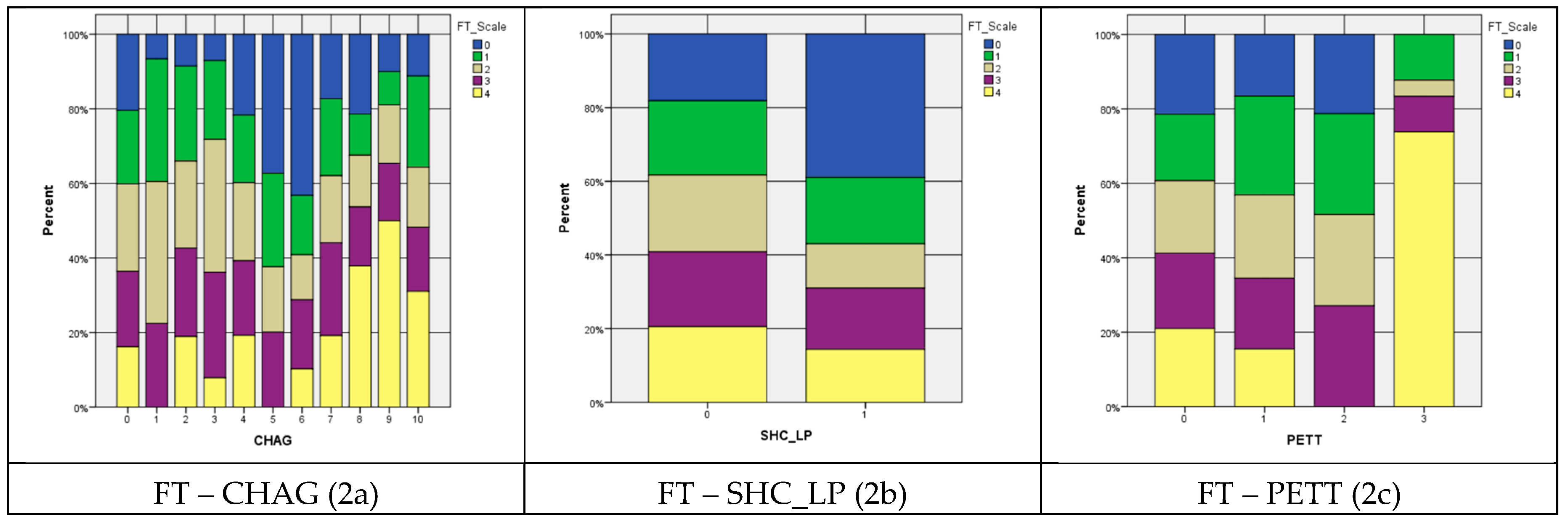
Table 1.
Validation and reliability reported in previous articles and parameters.
| Article | Sample | Method | MIF | χ2/df | RMSEA | AGFI | GFI | CFI | NNFI | RMSR |
| Schermelleh-Engel et al. [4] | ≥ 200 | Good fit | NR | ≥ 0 ≤ 2 | ≤ .05 | ≥ .90 ≤ 1.00 | ≥ .95 ≤ 1.00 | ≥ .97 ≤ 1.00 | ≥ .97 ≤ 1.00 | < .05+ |
| Acceptable fit | ≥ 3 | > 2 ≤ 3 | > .05 ≤ .08 | ≥ .85 < .90 | ≥ .90 < .95 | ≥ .95 < .97 | ≥ .95 < .97 | ≥ .05 ≤ .08++ |
NR: not reported. ** Good fit; * acceptable fit. + indicated in Kalkan et al. [39].
Table 2.
Set of variables characterizing the sample.
| Name (ID) | Categories | Value | N |
| Parent/carer gender (PGEN) N = 1432 |
Mother, Stepmother, Grandmother, adoptive/foster mother or female guardian | 0 | 1171 |
| Father, Stepfather, Grandfather, adoptive/foster father or male guardian | 1 | 261 | |
| Parent/carer years of schooling (PYS) N = 1432 |
8 | 12 | |
| 9 | 0 | ||
| 10 | 55 | ||
| 11 | 0 | ||
| 12 | 29 | ||
| 13 | 104 | ||
| 14 | 33 | ||
| 15 | 689 | ||
| 16 | 0 | ||
| 17 | 428 | ||
| 18 | 0 | ||
| 19 | 81 | ||
| 20 | 0 | ||
| 21 | 1 | ||
| Parent/carer Age (PAG) N = 1432 |
25-34 years old | 2 | 191 |
| 35-44 years old | 3 | 674 | |
| 45-54 years old | 4 | 469 | |
| 55-64 years old | 5 | 98 | |
| Family structure/composition (FAMC) N = 1283 |
Living with the father/mother of the child | 0 | 913 |
| Living with a partner who is not the father/mother of the child | 1 | 113 | |
| Raising a child without a partner | 2 | 257 | |
| Child’s age (CHAG) N = 1432 |
6-year-old | 0 | 204 |
| 7-year-old | 1 | 129 | |
| 8-year-old | 2 | 149 | |
| 9-year-old | 3 | 114 | |
| 10-year-old | 4 | 128 | |
| 11-year-old | 5 | 116 | |
| 12-year-old | 6 | 137 | |
| 13-year-old | 7 | 96 | |
| 14-year-old | 8 | 96 | |
| 15-year-old | 9 | 84 | |
| 16-year-old | 10 | 179 | |
| Children in the household (CHH) (Number of siblings) N = 1432 |
0 | 453 | |
| 1 | 609 | ||
| 2 | 275 | ||
| 3 | 67 | ||
| 4 | 20 | ||
| 5 | 5 | ||
| 6 | 2 | ||
| 7 | 1 | ||
| School Home communication: Learning Plan (SHC_LP) N = 1432 |
Yes | 0 | 1335 |
| No | 1 | 97 | |
| School Home communication (SHC_FLP) N = 1335 |
Everyday | 0 | 640 |
| Between two to three times per week | 1 | 207 | |
| Once per week | 2 | 350 | |
| Fortnight / every two weeks | 3 | 103 | |
| Once per month | 4 | 35 | |
| Parental engagement: homeschooling (PEHS) N = 1432 |
Yes | 0 | 1115 |
| No | 1 | 317 | |
| Parental engagement: time (PETT) N = 1115 |
Less than 10 hours per week | 0 | 793 |
| Between 11 and 20 hours per week | 1 | 279 | |
| Between 21 and 30 hours per week | 2 | 35 | |
| More than 31 hours per week | 3 | 8 |
Table 3.
Pattern Matrix Exploratory Factor Analysis.
| Item ID | Questions | Factor |
Factor Name |
|
| 1 | 2 | |||
| PUTS_1 | Follow on social media what other parents do and try to do exactly the same. | .885 | F1: Social Learning for Parenting |
|
| PUTS_2 | Follow on social media what other parents do and use it as an inspiration. | .845 | ||
| PUTBC_1 | Look for ideas on the internet using different websites. | .487 | ||
| PE_1 | Follow my ideas about what my children need to learn. | .474 | ||
| SHS | I ask my older child(ren) to be in charge of homeschooling the little one(s). | .450 | ||
| PEIS | I try to replicate the way I was taught when I was at school. | .441 | ||
| PE_4 | My children and I have a set homeschooling timetable. | .578 | F2: Parenting in Homeschooling |
|
| PUTR_1 | Check the school’s emails, blog, and website to follow the activities they suggest for the children. | .549 | ||
| PE_5 | I develop with my children spontaneous learning activities not necessarily school-related such as cooking, woodwork, online games, physical activities, etc. | .445 | ||
| Rotation Sums of Squared Loadings a |
2.539 | 1.295 | ||
| Factor Correlation |
Factor 1 | 1.000 | .129 | |
| Factor 2 | .129 | 1.000 | ||
Extraction Method: Unweighted Least Squares. Rotation Method: Oblimin with Kaiser Normalization. Rotation converged in 8 iterations.a When factors are correlated, sums of squared loadings cannot be added to obtain a total variance.
Table 4.
Pattern Matrix Confirmatory Factor Analysis.
| Item ID | Factor | Factor | Factor | ||
| 1 | 2 | ||||
| PUTS_1 | .989 (0.956; 1.015) a | F1: Social Learning for Parenting |
|||
| PUTS_2 | .909 (0.876; 0.939) | ||||
| SHS | .473 (0.409; 0.529) | ||||
| PUTBC_1 | .444 (0.398; 0.485) | ||||
| PE_1 | .439 (0.396; 0.490) | ||||
| PE_4 | .720 (0.660; 0.777) | F2: Parenting in Homeschooling |
|||
| PUTR_1 | .649 (0.582; 0.725) | ||||
| PE_5 | .538 (0.481; 0.595) | ||||
| Eigenvalues of the Reduced Correlation Matrix |
2.972 | 1.137 | Sum: 4.109 | ||
| Weighted Eigenvalues | 0.723 | 0.277 | |||
| Factor Correlation | 1.000 | .344 (0.290; 0.397) | Factor 1 | ||
| .344 (0.290; 0.397) | 1.000 | Factor 2 | |||
a Bias-Corrected and accelerated (BCa) bootstrap 90% confidence intervals.
Table 5.
Validation and reliability reported and parameters.
| Article | Sample | Fit | MIF | χ2/df | RMSEA | AGFI | GFI | CFI | NNFI | RMSR |
| Schermelleh-Engel et al. [38] | ≥ 200 | Good | NR | ≥ 0 ≤ 2 | ≤ .05 | ≥ .90 ≤ 1.00 | ≥ .95 ≤ 1.00 | ≥ .97 ≤ 1.00 | ≥ .97 ≤ 1.00 | < .05+ |
| Acceptable | ≥ 3 | > 2 ≤ 3 | > .05 ≤ .08 | ≥ .85 < .90 | ≥ .90 < .95 | ≥ .95 < .97 | ≥ .95 < .97 | ≥ .05 ≤ .08++ | ||
| Osorio-Saez et al [29] by Chile | 1597 | NR | NR | .153 | NR | NR | .869 | NR | NR | |
| Proposed Model | 1406 | 3 | 3.611 | .054* (.030; .061) |
.989** (.986; .995) | .994** (.993; .998) | .986** (.982; .996) | .973** (.966; .992) | .037** (.024; .041) |
NR: not reported. ** Good fit; * acceptable fit. + indicated in Kalkan et al. [39].
Table 6.
Cross-table, Symmetric Measures.
| Name (ID) | F1 | F2 | FT | ||||||||||
| Val. |
Asym. Std. Error |
Approx. T |
Approx. Sig. | Val. |
Asym. Std. Error |
Approx. T |
Approx. Sig. |
Val. |
Asym. Std. Error |
Approx. T |
Approx. Sig. | ||
| Parent/carer gender (PGEN) N = 1432 |
Kendall’s tau-c | .031 | .023 | 1.382 | .167 | .022 | .023 | .962 | .336 | .033 | .022 | 1.492 | .136 |
| Gamma | .075 | .054 | 1.382 | .167 | .052 | .054 | .962 | .336 | .085 | .057 | 1.492 | .136 | |
| Parent/carer years of schooling (PYS) N = 1432 |
Kendall’s tau-c | -.006 | .019 | -.338 | .736 | .011 | .019 | .591 | .554 | -.010 | .019 | -.544 | .587 |
| Gamma | -.011 | .033 | -.338 | .736 | .019 | .032 | .591 | .554 | -.019 | .034 | -.544 | .587 | |
| Parent/carer Age (PAG) N = 1432 |
Kendall’s tau-c | .038 | .021 | 1.863 | .062 | .014 | .020 | .676 | .499 | .025 | .020 | 1.246 | .213 |
| Gamma | .063 | .034 | 1.863 | .062 | .022 | .033 | .676 | .499 | .045 | .036 | 1.246 | .213 | |
| Family structure/composition (FAMC) N = 1283 |
Kendall’s tau-c | -.045 | .021 | -2.117 | .034* | -.016 | .021 | -.755 | .450 | -.029 | .020 | -1.450 | .147 |
| Gamma | -.094 | .044 | -2.117 | .034* | -.033 | .044 | -.755 | .450 | -.068 | .046 | -1.450 | .147 | |
| Child’s age (CHAG) N = 1432 |
Kendall’s tau-c | .034 | .021 | 1.622 | .105 | .008 | .022 | .367 | .714 | .025 | .020 | 1.233 | .218 |
| Gamma | .042 | .026 | 1.622 | .105 | .010 | .027 | .367 | .714 | .034 | .028 | 1.233 | .218 | |
| Children in the household (CHH) (Number of siblings) N = 1432 |
Kendall’s tau-c | .015 | .020 | .764 | .445 | -.006 | .020 | -,314 | .753 | -.005 | .019 | -.255 | .799 |
| Gamma | .025 | .033 | .764 | .445 | -.010 | .032 | -.314 | .753 | -.009 | .034 | -.255 | .799 | |
| School Home communication: Learning Plan (SHC_LP) N = 1432 |
Kendall’s tau-c | -.032 | .015 | -2.084 | .037* | .005 | .016 | .327 | .744 | -.016 | .016 | -1.036 | .300 |
| Gamma | -.177 | .082 | -2.084 | .037* | .028 | .084 | .327 | .744 | -.095 | .090 | 1.036 | .300 | |
| School Home communication (SHC_FLP) N = 1335 |
Kendall’s tau-c | .012 | .020 | .614 | .539 | -.018 | .020 | -.882 | .378 | .009 | .020 | .447 | .655 |
| Gamma | .021 | .034 | .614 | .539 | -.030 | .034 | -.882 | .378 | .017 | .037 | .447 | .655 | |
| Parental engagement: homeschooling (PEHS) N = 1432 |
Kendall’s tau-c | -.005 | .025 | -.191 | .849 | -.014 | .025 | -.544 | .586 | .001 | .024 | .039 | .969 |
| Gamma | -.010 | .050 | -.191 | .849 | -.027 | .050 | -.544 | .586 | .002 | .053 | .039 | .969 | |
| Parental engagement: time (PETT) N = 1115 |
Kendall’s tau-c | -.018 | .020 | -.887 | .375 | -.033 | .020 | -1.624 | .104 | -.031 | .019 | -1.581 | .114 |
| Gamma | -.044 | .050 | -.887 | .375 | -.081 | .050 | -1.624 | .104 | -.083 | .052 | -1.581 | .114 | |
* Statistical significance.
Table 7.
Cross-table, Chi-Square Tests.
| Name (ID) | F1 | F2 | FT | |||
| Value |
Asymptotic Significance (2 - sided) |
Value |
Asymptotic Significance (2 - sided) |
Value |
Asymptotic Significance (2 - sided) |
|
| Parent/carer gender (PGEN) N = 1432 | 2.672 | .614 | 8.304 | .081 | 5.545 | .236 |
| Parent/carer years of schooling (PYS) N = 1432 | 23.346 | .867 | 21.851 | .911 | 27.375 | .700 |
| Parent/carer Age (PAG) N = 1432 | 14.795 | .253 | 6.050 | .914 | 7.907 | .792 |
| Family structure/composition (FAMC) N = 1283 | 9.230 | .323 | 6.818 | .556 | 12.660 | .124 |
| Child’s age (CHAG) N = 1432 | 70.192 | .002** | 85.920 | .000** | 95.144 | .000** |
| Children in the household (CHH) (Number of siblings) N = 1432 | 27.141 | .511 | 21.278 | .814 | 30.729 | .329 |
| School Home communication: Learning Plan (SHC_LP) N = 1432 | 10.208 | .037* | 7.045 | .134 | 12.447 | .014* |
| School Home communication (SHC_FLP) N = 1335 | 20.963 | .180 | 13.756 | .617 | 21.616 | .156 |
| Parental engagement: homeschooling (PEHS) N = 1432 | 5.032 | .284 | 4.560 | .336 | 2.631 | .621 |
| Parental engagement: time (PETT) N = 1115 | 19.649 | .074 | 21.912 | .039* | 21.972 | .038* |
* Statistical significance, ** high statistical significance.
Disclaimer/Publisher’s Note: The statements, opinions and data contained in all publications are solely those of the individual author(s) and contributor(s) and not of MDPI and/or the editor(s). MDPI and/or the editor(s) disclaim responsibility for any injury to people or property resulting from any ideas, methods, instructions or products referred to in the content. |
© 2025 by the authors. Licensee MDPI, Basel, Switzerland. This article is an open access article distributed under the terms and conditions of the Creative Commons Attribution (CC BY) license (http://creativecommons.org/licenses/by/4.0/).
Copyright: This open access article is published under a Creative Commons CC BY 4.0 license, which permit the free download, distribution, and reuse, provided that the author and preprint are cited in any reuse.


