

Submitted:
27 May 2025
Posted:
28 May 2025
You are already at the latest version
Abstract
A considerable amount of decarbonization is being driven by multinational corporations and technology companies all over the world as a result of the necessity to reduce and control the emissions of greenhouse gases (GHG) to lower the global carbon footprint. A perspective of the outlook of green hydrogen generation is held through the utilization of AEMs, wind, and PEMECs to establish energy transitional approaches. Anion exchange membrane (AEM) electrolysers overcome the worst problems of conventional types of electrolysers because of their ability to use non-platinum and non-nafion membrane materials, high hydrogen storage density, and compact microcells recommended for large-scale low-carbon systems. Another technique for ultraclean hydrogen production via oxidation is ethanol electrocatalysis in PEMECs. In this study, hydrogen production via water electrolysis with the help of anion-conducting solid polymer electrolytes and a novel integrated inorganic membrane electrode assembly (I2 MEA) for anion exchange membrane (AEM) water electrolysis by using inorganic Mg-Al layered double hydroxides (Mg-Al LDHs) as an ionic conductor were also theoretically and economically investigated and opinionated to produce low-carbon hydrogen.
Keywords:
green hydrogen
; AEMs
; PEMECs
; wind generation
; greenhouse gas
; low carbon hydrogen economy
; sustainable development goals
; sustainable perspectives
; hydrogen production
1. The Critical Role of Renewable Hydrogen in the Energy Transition
Transitioning to low-carbon technologies is challenging and daunting in the current environment, with significant financial expenditures, new installations and retrofits, and increased energy prices and demand. The goal of decarbonisation in the energy sector is to reduce greenhouse gas emissions into the atmosphere. CO2 emissions are expected to increase to an average of 2.7 ppm/year by 2017, compared to 1.3 ppm/year from 1960 to 2000 (Intergovernmental Panel on Climate Change, 2015) after the 2015 Paris Agreement. Numerous research articles, patents, and opinions about costly low-carbon hydrogen generation methods or conventional hydrogen production have been published. Low-carbon hydrogen generation methods that are cost-effective, efficient, and sustainable are still desperately needed (Abe et al., 2019; Bak et al., 2002a; Cassetti et al., 2023; Chang et al., 2022; Dawood et al., 2020; Figueroa et al., 2008; Q. Yang et al., 2022; W.-J. Yang & Aydin, 2001). These demands can only be satisfied if extensive study and analysis of low-carbon hydrogen is completed. Life cycle assessments of various production methods, environmental impact assessments, and computer studies of multiple production, storage, and risk assessments should be the primary driving forces behind such research. Following the completion of this analysis, low-carbon hydrogen production and storage techniques should be tested sustainably in laboratories before moving on to the next phase of developing effective, reasonably priced, and environmentally friendly methods for producing and storing hydrogen for industrial, educational, and pilot-scale projects (Bak et al., 2002b; Krishnan et al., 2023; Mascarenhas et al., 2019; Sharma et al., 2023; Thomas et al., 2020; Zupone et al., 2015). Once such pilot-scale low-carbon hydrogen projects are established, only such hydrogen energy techniques can be commercialised for sustainable low-carbon economy circulation.
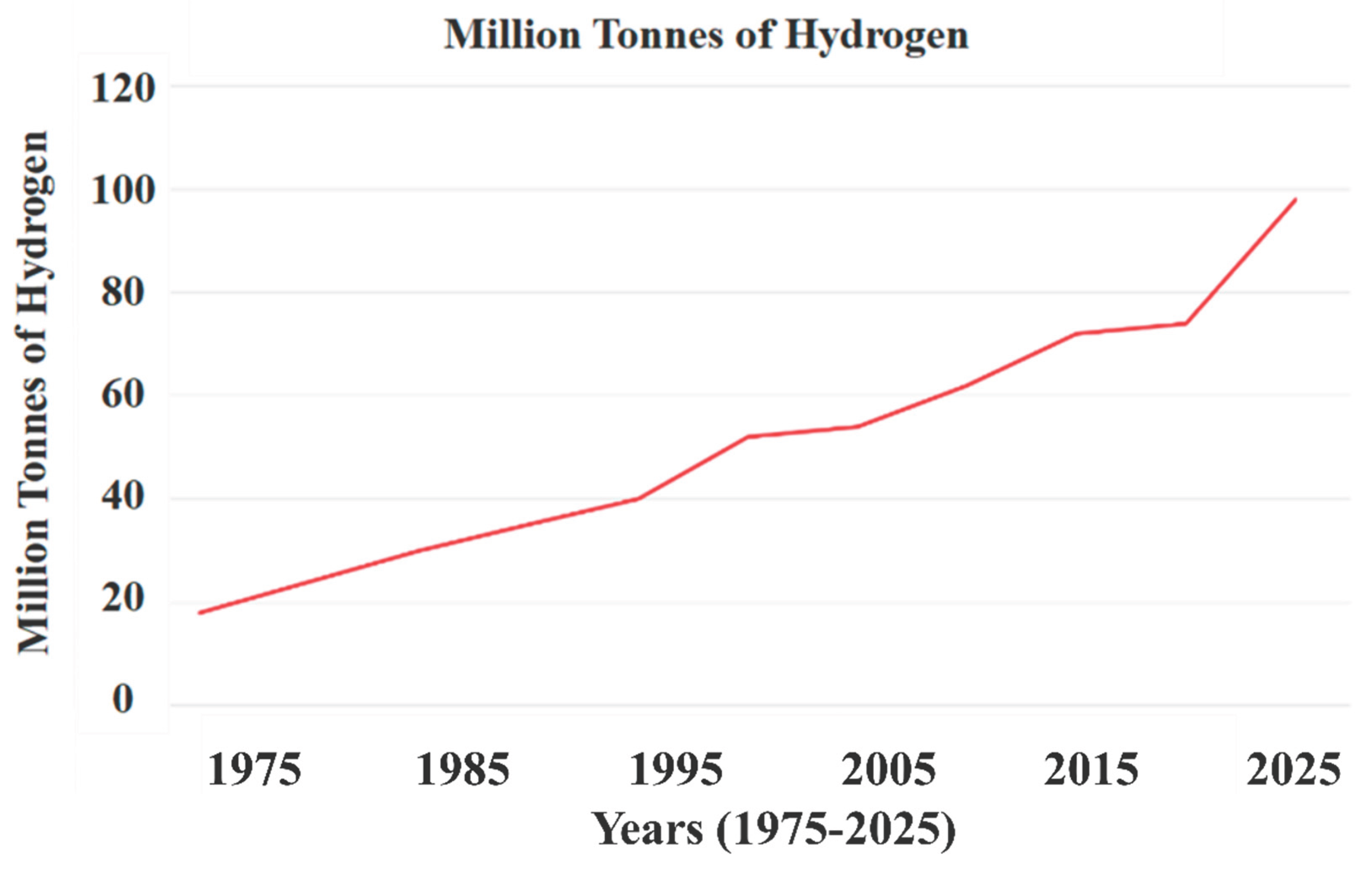
Figure 1.
Trend of usage of Hydrogen from 1975-2025 (Intergovernmental Panel on Climate Change, 2015).
Figure 1.
Trend of usage of Hydrogen from 1975-2025 (Intergovernmental Panel on Climate Change, 2015).
2. Economic Aspects of Green Hydrogen Electrolysis Technology
Green hydrogen, which will be sold between US$1.5 and US$3.4 per kilogram in 2023, is used in the manufacturing of methanol, electricity generation, fuels and ammonia. However, because it is made from fossil fuels, CO2 emissions increase. According to IRENA, green hydrogen has a CO2 capture efficiency of at most 85–95%, which results in 5–15% CO2 emissions (Clark & Rifkin, 2006). The cost of producing one kilogram of green hydrogen, which is derived by hydrolysing water, ranges from $3 to $7 (Ajanovic et al., 2022a, 2022b; Blanco, 2009). According to Bloomberg New Energy Finance, the cost of green hydrogen will decrease to $1.60 to $2.60 in 2030 and $0.8 to $1.60 in 2050 (Oliveira et al., 2021). While net neutral carbon-based green, turquoise, and blue hydrogen can produce CO2-reduced hydrogen, research on nanomaterials is crucial for the generation and storage of hydrogen, which will help reduce costs (Bockris, 2013; Chew et al., 2023; Dillman & Heinonen, 2022; Sherif et al., 2005; Tseng et al., 2005). One of the reasons behind this cost reduction, is the subtle transition of conventional energy sources with modern renewables which are affordable, sustainable and efficient. The detailed sustainable hydrogen supply chain management scheme is shown in Figure 2. This method works on the basis of input data delivery, mathematical modelling approach formulation and result analysis (Eh et al., 2022). The figure demonstrates the actuality of the thorough economic aspect which involves an input-output model. For the supply chain management, first a thorough quantification of the raw materials and assess the hydrogen demand of the consumers for which the production system will be setup. The production technologies, and investment operating costs is also analysed with the help of cost-benefit analysis. Once all the input data is collected, then the mathematical modelling approach is conducted on the basis of which output results are conducted entailing around optimal investment plan, location, scale (TRL 1-9) and supply routes.
To analyse the low carbon hydrogen potential, thorough statistics of the current global market of hydrogen demand in billions of USD are necessary. Figure 3 shows the compound annual growth rate pattern from 2022 to 2023; based on these statistics, compound growth of market demand growth is projected until 2028 for a 10.2% compound annual growth rate (CAGR) value. Consecutively. various CAGR projections have to be also stated for several modern renewables as well, and based on the compound annual growth rate, the market demand and value will be assessed for all the energy sources (Bossel and Eliasson, 2022). The projected values of CAGR in Figure 3 for global market value are especially demonstrated for green hydrogen energy, which entails a moderate compound annual growth rate as compared to other modern renewables.
3. Electrolysis for Green Hydrogen Production
In order to improve the quality of the air in the surrounding area and make the transition from fossil fuels to zero-carbon energy systems, hydrogen and fuel cell technologies are very necessary. For the purpose of producing hydrogen, a number of techniques are utilized. These techniques include the electrolysis of water and coal, the steam reforming of natural gas, the creation of hydrogen from petroleum, and the gasification of coal. Only 0.1% of the world's hydrogen is now produced using the age-old process of electrolysis (Naimi & Antar, 2018; Schmidt et al., 2017; Ursua et al., 2012). power is used to divide water into hydrogen and oxygen, and based on the carbon footprint of power, highly pure hydrogen can be created. Green hydrogen can be produced and used as fuel in end uses, such as fuel cell cars, by integrating highly renewable energy sources (REVs), such as solar and wind photovoltaics (Hermesmann & Müller, 2022; Liu et al., 2022; Yu et al., 2021a). However, electrolysis requires 9 litres of water to produce 1 kg of cleaner hydrogen, which can result in a high-water demand, such demand can also be subsequently be solved if there is a continuous hydrogen production reactor used where the used water in the electrolysis system is recycled (Arsad et al., 2023; Proost, 2019; Yue et al., 2021).
Each compartment in the highly modular structure of the electrolyser has 100 cells and dead plant material (Abdin et al., 2021; Yu et al., 2021b). This structure is very useful for the low-carbon hydrogen industrial scale-up process of hydrogen generation; compared to proton membrane electrolysis (PEM) and solid oxide electrolysis (SOE), alkaline electrolysers are more advanced but require less of an investment (Marshall et al., 2007; Pastore et al., 2022; Pletcher & Li, 2011). PEM electrolysers have higher working loads and current densities, whereas SOEs are still in their infancy. Alkaline electrolysers currently cost between $500 and $1,400 per KW to create hydrogen, PEM electrolysers cost between $1,100 and $1,800 per KW, and SOE electrolysers cost between $2,500 and $5,600 per KW. The cost of electrolysers can be decreased to less than $400/KW by increasing their capacity to 70 GW (Lechartier et al., 2015; Ni et al., 2008). To meet these criteria, it is also necessary to produce affordable membrane and electrode materials. Great progress has been made in the field of proton exchange membrane fuel cells (PEMFCs) over the past decade due to their high efficiency, cleanliness, and zero carbon footprint (Tymoczko et al., 2016). However, the high cost, insufficient power density and durability of these materials are major obstacles to their commercialisation and could also be major disadvantages in the industrialisation of low-carbon hydrogen (Bobicki et al., 2012; Griffiths et al., 2021; Hitch & Dipple, 2012; Mittal & Kushwaha, 2024b, 2024a; Taji et al., 2018). Figure 4 demonstrates the various novel electrolysis generators which showcased great potential based on the industrial needs (Baykara, 2018; Panchenko et al., 2023; Ye et al., 2019; S. Zhang et al., 2021). These electrolysis generator processes involve wind mill for hydrogen and power generation, proton exchange membrane electrolysis cells and anion exchange membrane electrolyser. Electrolysis is an age-old technology that accounts for only 0.1% of the world's hydrogen production. By integrating renewable energy sources (REV) such as solar and wind power, green hydrogen can be produced and used as fuel in road and railways governed transport by the application of fuel cells (Gondal et al., 2018; Modisha et al., 2019; Saeidi et al., 2021; X. Zhang et al., 2023).
4. Wind Energy Based Electrolysis
By making several adjustments, a wind energy source, such as a windmill, can also be used to generate electricity and hydrogen (Das et al., 2022; Duan et al., 2023; Maestre et al., 2021; Williams et al., 2019; C. Yang et al., 2019). An electrolyser is essential for producing hydrogen from any electrical source because it combines electricity and water to produce hydrogen and oxygen as designed in Figure 5 (Blaabjerg et al., 2012; Fingersh, 2003; Hansen, 2012; Joselin Herbert et al., 2007; Khalilnejad & Riahy, 2014; Rodrigues et al., 2015).
The wind turbine transforms wind energy into mechanical energy, which is then increased in speed and sent to the generator rotor, which is converted into electrical energy by the gear and coupling system. As there would be only one electrical conversion (from AC to DC), a connected system like this would be less expensive overall and more efficient (Blaabjerg & Ke Ma, 2013; Chen et al., 2009; Mostafaeipour et al., 2016; Rezaei et al., 2020; Snyder & Kaiser, 2009; Zhuang et al., 2023). Wind energy electrolysis showcases immense practical possibilities for industrial applications and projects. Electrolysis of wind energy can reduce grid connection expenses. Infrastructure costs are decreased by self-sufficient units with integrated electrolysers and wind turbines. It also helps mitigate climate change by substituting hydrogen produced from fossil fuels. Wind-generated green hydrogen is useful in several industrial operations, including transportation, steel and metal manufacturing, chemical industries, and refineries. A sustainable hydrogen production method that minimises environmental impact and meets industrial demands is provided by wind energy electrolysis (Armijo & Philibert, 2020; Bosma & Nazari, 2022; Schrotenboer et al., 2022).
5. Proton Exchange Membrane Electrolyser (PEM)
It uses a solid polymer electrolyte membrane to conduct protons (H+) while preventing electron migration and operates at low temperatures (approximately 50-80 °C). Green hydrogen production is expensive compared to traditional hydrogen production methods, mainly due to the high cost of renewable energy sources and electrolysis technology (Z. Ma et al., 2021) as engineered in Figure 6.
Electrochemical water splitting is a sustainable method for producing green hydrogen using electrolysis cells, known as electrolysers. These electrolysers can be used with wind energy sources like wind turbines to optimise the power grid. However, alkaline and proton exchange membrane electrolysers face challenges such as handling hydrogen, large structures, and expensive materials (Jiao et al., 2021; Kang et al., 2019; Martinez et al., 2018; Salari et al., 2022).
High NaBH4 concentrations and reaction rates are necessary for the NaBH4-PEMFC system to function correctly. To control H2 generation, the system design should consider PEMFC performance and an additional humidifier. Since the theoretical cell voltage for the electrochemical decomposition of organic molecules is lower than the theoretical cell voltage of water, another strategy that uses biomass feedstock (instead of water) as a source of hydrogen appears to be very promising (Mittal et al., 2024). Although organic biomass-derived raw materials, including alcohols, carboxylic acids, sugars, etc., have been considered hydrogen sources, there has been very little research on the electrochemical breakdown of organic molecules (Han et al., 2015, 2017).
Pt-based catalysts have been studied for the anodic oxidation of ethanol because they can provide fast reaction rates at low voltages. In addition to water, numerous other hydrogen-containing substances can dissociate to create hydrogen, mainly organic substances derived from biomass. Compared to the hydrogen produced by thermal processes, such as SR, ATR, and PrOx, the electrochemical breakdown of water or an organic substance generates hydrogen of significantly more excellent quality and does not necessitate further exhaust gas purification. since none of the other gases (CO, CO2, etc.) were present.
Water electrolysis is a process that is almost complete, although it requires a large amount of energy (w5 kWh (Nm3)-1)(Lamy et al., 2014). PEM electrolysers produce high-quality hydrogen, but the widespread use of them will need sustained cost-cutting measures and encouraging legislation. PEM electrolysers are essential to the hydrogen economy as we transition to a sustainable energy source. PEM electrolyser costs are determined by several parameters, including scale, baseline cost estimate, balance of plant (BOP), and stack components. The projected balance of plant (BOP) cost for a 1 MW nameplate electrolyser system is $575/kW.
6. Anion-Exchange Membrane Electrolyser (AEMs)
The anion exchange membrane electrolyser (AEM) has some challenges due to its high hydrogen storage density and compact microcells on large cells. A solid polymeric alkaline membrane is a key component affecting the efficiency of AEM electrolysers (Merle et al., 2011). Research prospects are proposed for finding potential alkaline solid polymer electrolytes for AEM electrolysers. The challenge is finding promising polymeric materials for fabricating alkaline solid polymer membranes (Dekel, 2018; Gottesfeld et al., 2018; Huang et al., 2022; Mustain et al., 2020; Nejati et al., 2018).
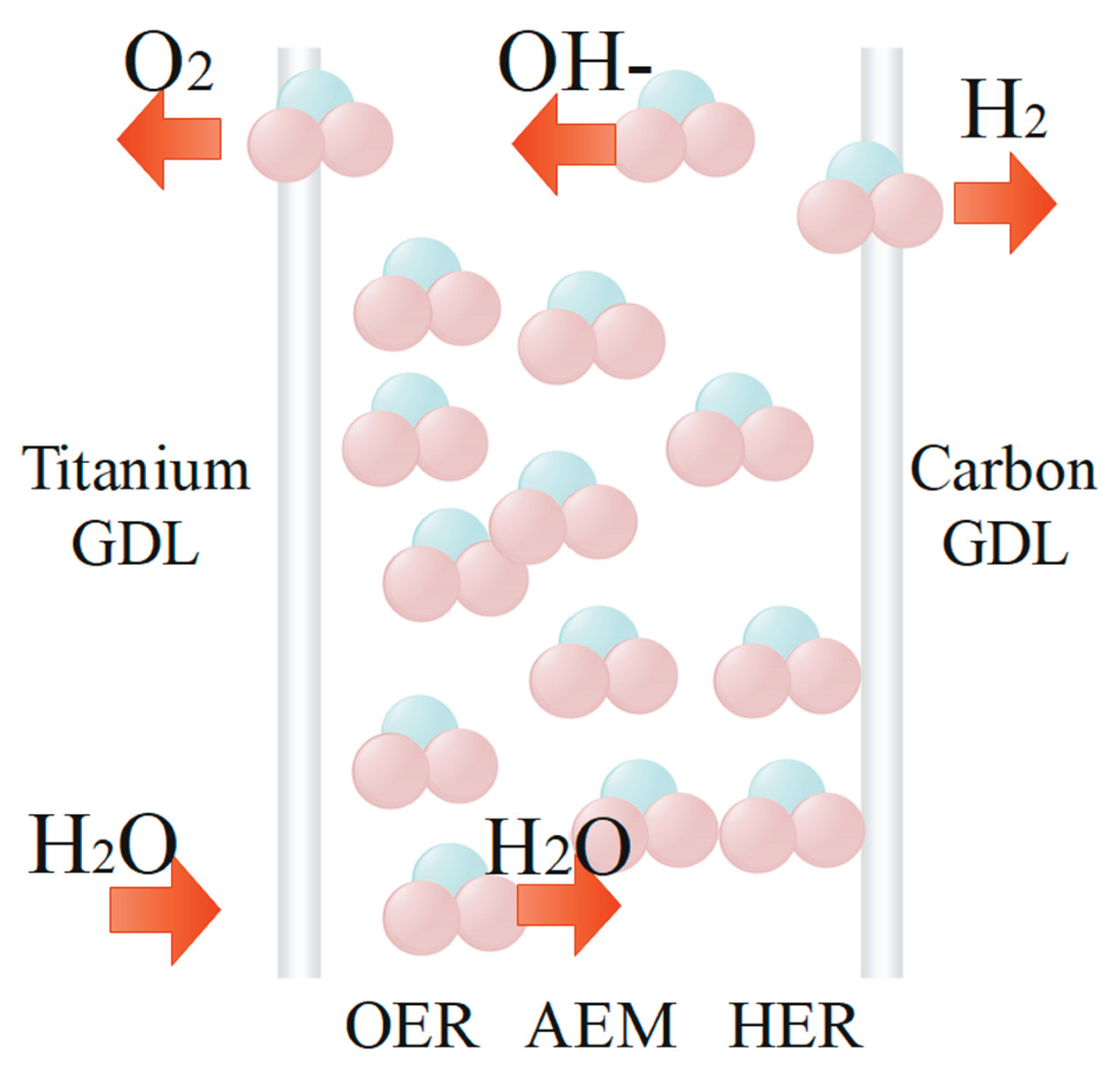
Functional groups can enhance ionic conductivity by adding ion pathways and increasing ion exchange capacity. The alkaline solid polymer electrolyte's ability to maintain the AEM electrolyser's operating cell is critical. As the energy transition progresses, there is an urgent need to replace fossil fuels with cleaner, sustainable, and emission-free fuels, and hydrogen generation is one promising possibility as demonstrated in Figure 7 (Ge et al., 2017; M. Ma et al., 2017; Miyata, 1983; Varcoe et al., 2014; Yan et al., 2019).
7. Conclusions
The current advancements in the energy transition and the associated challenges revealed that there is an urgent need to replace fossil fuels with cleaner, sustainable, and zero-net-emission fuels, and one viable option is hydrogen generation. Anion exchange membrane (AEM) electrolysers have been proposed as a remedy to the worst elements of previous electrolyser types due to their high hydrogen storage density, capacity to manufacture compact micro-cells on a large cell scale, and use of non-platinum and non-nafion membrane materials.
One of the viable approaches for manufacturing ecologically friendly hydrogen is electrochemical water splitting. In the hydrogen processing business, alkaline and proton exchange membrane electrolysers have advanced to the advanced commercial level in recent decades. There are several industrial mega-developments in the recent green hydrogen production projects. The industrial green hydrogen market is expanding quickly thanks to strategic investments, policy alignment, and technology advancements. As these enormous advancements take place, green hydrogen is going to be essential to the world's energy transformation. There is also an electrolysis manufacturing scale-up, which involves both the formation of gigafactories and cost reduction. There is an observable rapid increase in the low carbon hydrogen economy markets in India and with more attention towards such electrolysis generation systems, there will be a significant energy alternation transition.
References
- Abdin, Z.; Abdin, Z.; Tang, C.; Tang, C.; Liu, Y.; Catchpole, K. R. Large-scale stationary hydrogen storage via liquid organic hydrogen carriers. IScience 2021. [Google Scholar] [CrossRef] [PubMed]
- Abe, J. O.; Popoola, A. P. I.; Ajenifuja, E.; Popoola, O. Hydrogen energy, economy and storage: Review and recommendation. International Journal of Hydrogen Energy 2019. [Google Scholar] [CrossRef]
- Ajanovic, A.; Sayer, M.; Haas, R. The economics and the environmental benignity of different colors of hydrogen. International Journal of Hydrogen Energy 2022, 47(57), 24136–24154. [Google Scholar] [CrossRef]
- Armijo, J.; Philibert, C. Flexible production of green hydrogen and ammonia from variable solar and wind energy: Case study of Chile and Argentina. International Journal of Hydrogen Energy 2020, 45(3), 1541–1558. [Google Scholar] [CrossRef]
- Arsad, A. Z.; Hannan, M. A.; Al-Shetwi, A. Q.; Hossain, M. J.; Begum, R. A.; Ker, P. J.; Salehi, F.; Muttaqi, K. M. Hydrogen electrolyser for sustainable energy production: A bibliometric analysis and future directions. International Journal of Hydrogen Energy 2023, 48(13), 4960–4983. [Google Scholar] [CrossRef]
- Bak, T.; Nowotny, J.; Rekas, M.; Sorrell, C. C. Photo-electrochemical hydrogen generation from water using solar energy. Materials-related aspects. International Journal of Hydrogen Energy 2002, 27(10), 991–1022. [Google Scholar] [CrossRef]
- Baykara, S. Z. Hydrogen: A brief overview on its sources, production and environmental impact. International Journal of Hydrogen Energy 2018. [Google Scholar] [CrossRef]
- Blaabjerg, F.; Ma, Ke. Future on Power Electronics for Wind Turbine Systems. IEEE Journal of Emerging and Selected Topics in Power Electronics 2013, 1(3), 139–152. [Google Scholar] [CrossRef]
- Blaabjerg, F.; Liserre, M.; Ma, K. Power Electronics Converters for Wind Turbine Systems. IEEE Transactions on Industry Applications 2012, 48(2), 708–719. [Google Scholar] [CrossRef]
- Blanco, M. I. The economics of wind energy. Renewable and Sustainable Energy Reviews 2009, 13(6–7), 1372–1382. [Google Scholar] [CrossRef]
- Bobicki, E. R.; Liu, Q.; Liu, Q.; Liu, Q.; Liu, Q.; Liu, Q.; Xu, Z.; Zeng, H. Carbon capture and storage using alkaline industrial wastes. Progress in Energy and Combustion Science 2012. [Google Scholar] [CrossRef]
- Bockris, J. O. The hydrogen economy: Its history. International Journal of Hydrogen Energy 2013. [Google Scholar] [CrossRef]
- Bosma, S. B. M.; Nazari, N. Estimating Solar and Wind Power Production Using Computer Vision Deep Learning Techniques on Weather Maps. Energy Technology 2022, 10(8). [Google Scholar] [CrossRef]
- Cassetti, G.; Boitier, B.; Elia, A.; Le Mouël, P.; Gargiulo, M.; Zagamé, P.; Nikas, A.; Koasidis, K.; Doukas, H.; Chiodi, A. The interplay among COVID-19 economic recovery, behavioural changes, and the European Green Deal: An energy-economic modelling perspective. Energy 2023, 263, 125798. [Google Scholar] [CrossRef]
- Chang, K.-H.; Sun, Y.-J.; Lai, C.-A.; Chen, L.-D.; Wang, C.-H.; Chen, C.-J.; Lin, C.-M. Big data analytics energy-saving strategies for air compressors in the semiconductor industry–an empirical study. International Journal of Production Research 2022, 60(6), 1782–1794. [Google Scholar] [CrossRef]
- Chen, Z.; Guerrero, J. M.; Blaabjerg, F. A Review of the State of the Art of Power Electronics for Wind Turbines. IEEE Transactions on Power Electronics 2009, 24(8), 1859–1875. [Google Scholar] [CrossRef]
- Chew, Y. E.; Cheng, X. H.; Loy, A. C. M.; How, B. S.; Andiappan, V. Beyond the Colours of Hydrogen: Opportunities for Process Systems Engineering in Hydrogen Economy. Process Integration and Optimization for Sustainability 2023, 7(4), 941–950. [Google Scholar] [CrossRef]
- Clark, W. W.; Rifkin, J. A green hydrogen economy. Energy Policy 2006, 34(17), 2630–2639. [Google Scholar] [CrossRef]
- Das, K.; Waiba, S.; Jana, A.; Maji, B. Manganese-catalyzed hydrogenation, dehydrogenation, and hydroelementation reactions. Chemical Society Reviews 2022, 51(11), 4386–4464. [Google Scholar] [CrossRef]
- Dawood, F.; Anda, M.; Shafiullah, Gm. Hydrogen production for energy: An overview. International Journal of Hydrogen Energy 2020. [Google Scholar] [CrossRef]
- Dekel, D. R. Review of cell performance in anion exchange membrane fuel cells. Journal of Power Sources 2018, 375, 158–169. [Google Scholar] [CrossRef]
- Demirbas, A. Future hydrogen economy and policy. Energy Sources, Part B: Economics, Planning, and Policy 2017, 12(2), 172–181. [Google Scholar] [CrossRef]
- Dillman, K. J.; Heinonen, J. A ‘just’ hydrogen economy: A normative energy justice assessment of the hydrogen economy. Renewable and Sustainable Energy Reviews 2022, 167, 112648. [Google Scholar] [CrossRef]
- Duan, X.; Dakhchoune, M.; Hao, J.; Agrawal, K. V. Scalable Room-Temperature Synthesis of a Hydrogen-Sieving Zeolitic Membrane on a Polymeric Support. ACS Sustainable Chemistry and Engineering 2023, 11(21), 8140–8147. [Google Scholar] [CrossRef]
- Eh, C. L. M.; Tiong, A. N. T.; Kansedo, J.; Lim, C. H.; How, B. S.; Ng, W. P. Q. Circular Hydrogen Economy and Its Challenges. Chemical Engineering Transactions 2022, 1273–1278. [Google Scholar]
- Figueroa, J. D.; Fout, T.; Plasynski, S.; McIlvried, H. G.; Srivastava, R. D. Advances in CO2 capture technology—The U.S. Department of Energy’s Carbon Sequestration Program ☆. International Journal of Greenhouse Gas Control 2008. [Google Scholar] [CrossRef]
- Fingersh, L. J. Optimized Hydrogen and Electricity Generation from Wind 2003. [CrossRef]
- Ge, R.; Ren, X.; Ji, X.; Liu, Z.; Du, G.; Asiri, A. M.; Sun, X.; Sun, X.; Chen, L.; Chen, L.; Chen, L.; Chen, L. Benzoate Anion-Intercalated Layered Cobalt Hydroxide Nanoarray: An Efficient Electrocatalyst for the Oxygen Evolution Reaction. Chemsuschem 2017. [Google Scholar] [CrossRef]
- Gondal, I. A.; Masood, S. A.; Khan, R. Green hydrogen production potential for developing a hydrogen economy in Pakistan. International Journal of Hydrogen Energy 2018, 43(12), 6011–6039. [Google Scholar] [CrossRef]
- Gottesfeld, S.; Dekel, D. R.; Page, M.; Bae, C.; Yan, Y.; Zelenay, P.; Kim, Y. S. Anion exchange membrane fuel cells: Current status and remaining challenges. Journal of Power Sources 2018, 375, 170–184. [Google Scholar] [CrossRef]
- Griffiths, S.; Sovacool, B. K.; Kim, J.; Bazilian, M.; Uratani, J. M. Industrial decarbonization via hydrogen: A critical and systematic review of developments, socio-technical systems and policy options. Energy Research & Social Science 2021, 80, 102208. [Google Scholar] [CrossRef]
- Han, B.; Mo, J.; Kang, Z.; Yang, G.; Barnhill, W.; Zhang, F.-Y. Modeling of two-phase transport in proton exchange membrane electrolyzer cells for hydrogen energy. International Journal of Hydrogen Energy 2017, 42(7), 4478–4489. [Google Scholar] [CrossRef]
- Han, B.; Steen, S. M.; Mo, J.; Zhang, F.-Y. Electrochemical performance modeling of a proton exchange membrane electrolyzer cell for hydrogen energy. International Journal of Hydrogen Energy 2015, 40(22), 7006–7016. [Google Scholar] [CrossRef]
- Hansen, A. D. Generators and Power Electronics for Wind Turbines. In Wind Power in Power Systems; Wiley, 2012; pp. 73–103. [Google Scholar] [CrossRef]
- Hermesmann, M.; Müller, T. Green, Turquoise, Blue, or Grey? Environmentally friendly Hydrogen Production in Transforming Energy Systems. Progress in Energy and Combustion Science 2022. [Google Scholar] [CrossRef]
- Hitch, M.; Dipple, G. M. Economic feasibility and sensitivity analysis of integrating industrial-scale mineral carbonation into mining operations. Minerals Engineering 2012. [Google Scholar] [CrossRef]
- Huang, T.; Qiu, X.; Zhang, J.; Li, X.; Pei, Y.; Jiang, H.; Yue, R.; Yin, Y.; Jiang, Z.; Zhang, X.; Guiver, M. D. Hydrogen crossover through microporous anion exchange membranes for fuel cells. Journal of Power Sources 2022, 527, 231143. [Google Scholar] [CrossRef]
- Intergovernmental Panel on Climate Change. Climate Change 2014: Mitigation of Climate Change; Cambridge University Press, 2015. [Google Scholar] [CrossRef]
- Jiao, K.; Xuan, J.; Du, Q.; Bao, Z.; Xie, B.; Wang, B.; Zhao, Y.; Fan, L.; Wang, H.; Hou, Z.; Huo, S.; Brandon, N. P.; Yin, Y.; Guiver, M. D. Designing the next generation of proton-exchange membrane fuel cells. Nature 2021, 595(7867), 361–369. [Google Scholar] [CrossRef]
- Joselin Herbert, G. M.; Iniyan, S.; Sreevalsan, E.; Rajapandian, S. A review of wind energy technologies. Renewable and Sustainable Energy Reviews 2007, 11(6), 1117–1145. [Google Scholar] [CrossRef]
- Kang, Z.; Yu, S.; Yang, G.; Li, Y.; Bender, G.; Pivovar, B. S.; Green, J. B.; Zhang, F.-Y. Performance improvement of proton exchange membrane electrolyzer cells by introducing in-plane transport enhancement layers. Electrochimica Acta 2019, 316, 43–51. [Google Scholar] [CrossRef]
- Khalilnejad, A.; Riahy, G. H. A hybrid wind-PV system performance investigation for the purpose of maximum hydrogen production and storage using advanced alkaline electrolyzer. Energy Conversion and Management 2014. [Google Scholar] [CrossRef]
- Krishnan, N.; Kumar, K. R.; Inda, C. S. How solar radiation forecasting impacts the utilization of solar energy: A critical review. Journal of Cleaner Production 2023, 388, 135860. [Google Scholar] [CrossRef]
- Lamy, C.; Jaubert, T.; Baranton, S.; Coutanceau, C. Clean hydrogen generation through the electrocatalytic oxidation of ethanol in a Proton Exchange Membrane Electrolysis Cell (PEMEC): Effect of the nature and structure of the catalytic anode. Journal of Power Sources 2014, 245, 927–936. [Google Scholar] [CrossRef]
- Lechartier, É.; Lechartier, E.; Laffly, E.; Laffly, E.; Laffly, E.; Laffly, E.; Péra, M.; Péra, M.-C.; Gouriveau, R.; Gouriveau, R.; Hissel, D.; Hissel, D.; Zerhouni, N.; Zerhouni, N. Proton exchange membrane fuel cell behavioral model suitable for prognostics. International Journal of Hydrogen Energy 2015. [Google Scholar] [CrossRef]
- Liu, W.; Wan, Y.; Xiong, Y.; Gao, P. Green hydrogen standard in China: Standard and evaluation of low-carbon hydrogen, clean hydrogen, and renewable hydrogen. International Journal of Hydrogen Energy 2022. [Google Scholar] [CrossRef]
- Ma, M.; Ge, R.; Ji, X.; Ren, X.; Liu, Z.; Asiri, A. M.; Sun, X.; Sun, X.; Sun, X. Benzoate Anions-Intercalated Layered Nickel Hydroxide Nanobelts Array: An Earth-Abundant Electrocatalyst with Greatly Enhanced Oxygen Evolution Activity. ACS Sustainable Chemistry & Engineering 2017. [Google Scholar] [CrossRef]
- Ma, Z.; Witteman, L.; Wrubel, J. A.; Bender, G. A comprehensive modeling method for proton exchange membrane electrolyzer development. International Journal of Hydrogen Energy 2021, 46(34), 17627–17643. [Google Scholar] [CrossRef]
- Maestre, V. M.; Ortiz, A.; Ortiz, I. Challenges and prospects of renewable hydrogen-based strategies for full decarbonization of stationary power applications. Renewable & Sustainable Energy Reviews 2021. [Google Scholar] [CrossRef]
- Marshall, A.; Børresen, B.; Hagen, G.; Tsypkin, M.; Tunold, R. Hydrogen production by advanced proton exchange membrane (PEM) water electrolysers—Reduced energy consumption by improved electrocatalysis. Energy 2007, 32(4), 431–436. [Google Scholar] [CrossRef]
- Martinez, D.; Zamora, R.; Martinez, D.; Zamora, R. INTERNATIONAL JOURNAL OF RENEWABLE ENERGY RESEARCH MATLAB Simscape Model of An Alkaline Electrolyser and Its Simulation with A Directly Coupled PV Module; Issue 1, 2018; Vol. 8. [Google Scholar]
- Mascarenhas, J. dos S.; Chowdhury, H.; Thirugnanasambandam, M.; Chowdhury, T.; Saidur, R. Energy, exergy, sustainability, and emission analysis of industrial air compressors. Journal of Cleaner Production 2019, 231, 183–195. [Google Scholar] [CrossRef]
- Merle, G.; Wessling, M.; Nijmeijer, K. Anion exchange membranes for alkaline fuel cells: A review. Journal of Membrane Science 2011, 377(1–2), 1–35. [Google Scholar] [CrossRef]
- Mittal, H.; Kushwaha, O. S. Machine Learning in Commercialized Coatings. In Functional Coatings; Wiley, 2024a; pp. 450–474. [Google Scholar] [CrossRef]
- Mittal, H.; Kushwaha, O. S. Policy Implementation Roadmap, Diverse Perspectives, Challenges, Solutions Towards Low-Carbon Hydrogen Economy. Green and Low-Carbon Economy 2024b. [Google Scholar] [CrossRef]
- Mittal, H.; Verma, S.; Bansal, A.; Singh Kushwaha, O. Low-Carbon Hydrogen Economy Perspective and Net Zero-Energy Transition through Proton Exchange Membrane Electrolysis Cells (PEMECs), Anion Exchange Membranes (AEMs) and Wind for Green Hydrogen Generation. Qeios 2024. [Google Scholar] [CrossRef]
- Miyata, S. Anion-exchange properties of hydrotalcite-like compounds. Clays and Clay Minerals 1983. [Google Scholar] [CrossRef]
- Modisha, P. M.; Ouma, C. N. M.; Garidzirai, R.; Wasserscheid, P.; Bessarabov, D. The prospect of hydrogen storage using liquid organic hydrogen carriers. Energy & Fuels 2019. [Google Scholar] [CrossRef]
- Mostafaeipour, A.; Khayyami, M.; Sedaghat, A.; Mohammadi, K.; Shamshirband, S.; Sehati, M.-A.; Gorakifard, E. Evaluating the wind energy potential for hydrogen production: A case study. International Journal of Hydrogen Energy 2016, 41(15), 6200–6210. [Google Scholar] [CrossRef]
- Mustain, W. E.; Chatenet, M.; Page, M.; Kim, Y. S. Durability challenges of anion exchange membrane fuel cells. Energy & Environmental Science 2020, 13(9), 2805–2838. [Google Scholar] [CrossRef]
- Naimi, Y.; Antar, A. Hydrogen Generation by Water Electrolysis. In Advances In Hydrogen Generation Technologies; InTech, 2018. [Google Scholar] [CrossRef]
- Nejati, K.; Akbari, A.; Davari, S.; Asadpour-Zeynali, K.; Rezvani, Z. Zn–Fe-layered double hydroxide intercalated with vanadate and molybdate anions for electrocatalytic water oxidation. New Journal of Chemistry 2018. [Google Scholar] [CrossRef]
- Ni, M.; Leung, M. K. H.; Leung, D. Y. C. Energy and exergy analysis of hydrogen production by a proton exchange membrane (PEM) electrolyzer plant. Energy Conversion and Management 2008. [Google Scholar] [CrossRef]
- Oliveira, A. M.; Beswick, R. R.; Yan, Y. A green hydrogen economy for a renewable energy society. Current Opinion in Chemical Engineering 2021, 33, 100701. [Google Scholar] [CrossRef]
- Panchenko, V. A.; Daus, Yu. V.; Kovalev, A. A.; Yudaev, I. V.; Litti, Yu. V. Prospects for the production of green hydrogen: Review of countries with high potential. International Journal of Hydrogen Energy 2023, 48(12), 4551–4571. [Google Scholar] [CrossRef]
- Pastore, L. M.; Lo Basso, G.; Sforzini, M.; de Santoli, L. Technical, economic and environmental issues related to electrolysers capacity targets according to the Italian Hydrogen Strategy: A critical analysis. Renewable and Sustainable Energy Reviews 2022, 166, 112685. [Google Scholar] [CrossRef]
- Pletcher, D.; Li, X. Prospects for alkaline zero gap water electrolysers for hydrogen production. International Journal of Hydrogen Energy 2011, 36(23), 15089–15104. [Google Scholar] [CrossRef]
- Proost, J. State-of-the art CAPEX data for water electrolysers, and their impact on renewable hydrogen price settings. International Journal of Hydrogen Energy 2019, 44(9), 4406–4413. [Google Scholar] [CrossRef]
- Rezaei, M.; Naghdi-Khozani, N.; Jafari, N. Wind energy utilization for hydrogen production in an underdeveloped country: An economic investigation. Renewable Energy 2020, 147, 1044–1057. [Google Scholar] [CrossRef]
- Rodrigues, S.; Restrepo, C.; Kontos, E.; Teixeira Pinto, R.; Bauer, P. Trends of offshore wind projects. In Renewable and Sustainable Energy Reviews; Elsevier Ltd, 2015; Vol. 49, pp. 1114–1135. [Google Scholar] [CrossRef]
- Saeidi, S.; Saeidi, S.; Saeidi, S.; Najari, S.; Hessel, V.; Wilson, K.; Keil, F. J.; Concepción, P.; Suib, S. L.; Rodrigues, A. E. Recent advances in CO2 hydrogenation to value-added products—Current challenges and future directions. Progress in Energy and Combustion Science 2021. [Google Scholar] [CrossRef]
- Salari, A.; Hakkaki-Fard, A.; Jalalidil, A. Hydrogen production performance of a photovoltaic thermal system coupled with a proton exchange membrane electrolysis cell. International Journal of Hydrogen Energy 2022, 47(7), 4472–4488. [Google Scholar] [CrossRef]
- Salman, S. K.; Teo, A. L. J. Windmill modeling consideration and factors influencing the stability of a grid-connected wind power-based embedded generator. IEEE Transactions on Power Systems 2003, 18(2), 793–802. [Google Scholar] [CrossRef]
- Schmidt, O.; Gambhir, A.; Staffell, I.; Hawkes, A.; Nelson, J.; Few, S. Future cost and performance of water electrolysis: An expert elicitation study. International Journal of Hydrogen Energy 2017. [Google Scholar] [CrossRef]
- Schrotenboer, A. H.; Veenstra, A. A. T.; uit het Broek, M. A. J.; Ursavas, E. A Green Hydrogen Energy System: Optimal control strategies for integrated hydrogen storage and power generation with wind energy. Renewable and Sustainable Energy Reviews 2022, 168, 112744. [Google Scholar] [CrossRef]
- Sharma, G. D.; Verma, M.; Taheri, B.; Chopra, R.; Parihar, J. S. Socio-economic aspects of hydrogen energy: An integrative review. Technological Forecasting and Social Change 2023, 192, 122574. [Google Scholar] [CrossRef]
- Sherif, S. A.; Barbir, F.; Veziroglu, T. N. Wind energy and the hydrogen economy—review of the technology. Solar Energy 2005, 78(5), 647–660. [Google Scholar] [CrossRef]
- Snyder, B.; Kaiser, M. J. Ecological and economic cost-benefit analysis of offshore wind energy. Renewable Energy 2009, 34(6), 1567–1578. [Google Scholar] [CrossRef]
- Taji, M.; Farsi, M.; Keshavarz, P.; Keshavarz, P. Real time optimization of steam reforming of methane in an industrial hydrogen plant. International Journal of Hydrogen Energy 2018. [Google Scholar] [CrossRef]
- Thomas, J. M.; Edwards, P. P.; Edwards, P. P.; Dobson, P. J.; Owen, G. P. Decarbonising energy: The developing international activity in hydrogen technologies and fuel cells. Journal of Energy Chemistry 2020. [Google Scholar] [CrossRef]
- Tseng, P.; Lee, J.; Friley, P. A hydrogen economy: opportunities and challenges. Energy 2005, 30(14), 2703–2720. [Google Scholar] [CrossRef]
- Tymoczko, J.; Calle-Vallejo, F.; Schuhmann, W.; Bandarenka, A. S. Making the hydrogen evolution reaction in polymer electrolyte membrane electrolysers even faster. Nature Communications 2016, 7(1), 10990. [Google Scholar] [CrossRef]
- Ursua, A.; Ursúa, A.; Ursua, A.; Gandía, L. M.; Sanchis, P. Hydrogen Production From Water Electrolysis: Current Status and Future Trends 2012. [CrossRef]
- Varcoe, J. R.; Atanassov, P.; Dekel, D. R.; Herring, A. M.; Hickner, M. A.; Kohl, Paul. A.; Kucernak, A. R.; Mustain, W. E.; Nijmeijer, K.; Scott, K.; Xu, T.; Zhuang, L. Anion-exchange membranes in electrochemical energy systems. Energy Environ. Sci. 2014, 7(10), 3135–3191. [Google Scholar] [CrossRef]
- Williams, N. J.; Williams, N. J.; Seipp, C. A.; Brethomé, F. M.; Ma, Y.-Z.; Ma, Y.-Z., I; nov, A. S., I; nov, A. S.; Bryantsev, V. S.; Kidder, M. K.; Martin, H.; Holguin, E.; Garrabrant, K. A.; Custelcean, R. CO2 Capture via Crystalline Hydrogen-Bonded Bicarbonate Dimers. Chem 2019. [Google Scholar] [CrossRef]
- Yan, H.; Xie, Y.; Wu, A.; Cai, Z.; Wang, L.; Wang, L.; Wang, L.; Tian, C.; Zhang, X.; Fu, H. Anion-Modulated HER and OER Activities of 3D Ni-V-Based Interstitial Compound Heterojunctions for High-Efficiency and Stable Overall Water Splitting. Advanced Materials 2019. [Google Scholar] [CrossRef]
- Yang, C.; Mu, R.; Wang, G.; Song, J.; Tian, H.; Zhao, Z.-J.; Gong, J. Hydroxyl-mediated ethanol selectivity of CO2 hydrogenation. Chemical Science 2019. [Google Scholar] [CrossRef] [PubMed]
- Yang, Q.; Chu, G.; Zhang, L.; Zhang, D.; Yu, J. Pathways toward carbon-neutral coal to ethylene glycol processes by integrating with different renewable energy-based hydrogen production technologies. Energy Conversion and Management 2022, 258, 115529. [Google Scholar] [CrossRef]
- Yang, W.-J.; Aydin, O. Wind energy-hydrogen storage hybrid power generation. International Journal of Energy Research 2001, 25(5), 449–463. [Google Scholar] [CrossRef]
- Ye, R.-P.; Ding, J.; Gong, W.; Argyle, M. D.; Zhong, Q.; Wang, Y.; Wang, Y.; Xiang, W.; Russell, C. K.; Xu, Z.; Russell, A. G.; Li, Q.; Li, Q.; Li, Q.; Li, Q.; Li, Q.; Fan, M.; Fan, M.; Fan, M.; Yao, Y.-G. CO 2 hydrogenation to high-value products via heterogeneous catalysis. Nature Communications 2019. [Google Scholar] [CrossRef]
- Yu, M.; Wang, K.; Wang, K.; Wang, K.; Wang, K.; Wang, K.; Vredenburg, H. Insights into low-carbon hydrogen production methods: Green, blue and aqua hydrogen. International Journal of Hydrogen Energy 2021a. [Google Scholar] [CrossRef]
- Yu, M.; Wang, K.; Wang, K.; Wang, K.; Wang, K.; Wang, K.; Vredenburg, H. Insights into low-carbon hydrogen production methods: Green, blue and aqua hydrogen. International Journal of Hydrogen Energy 2021b. [Google Scholar] [CrossRef]
- Yue, M.; Lambert, H.; Pahon, E.; Roche, R.; Jemei, S.; Hissel, D. Hydrogen energy systems: A critical review of technologies, applications, trends and challenges. Renewable and Sustainable Energy Reviews 2021, 146, 111180. [Google Scholar] [CrossRef]
- Zhang, S.; Zhaoxuan, W.; Liu, X.; Hua, K.; Shao, Z.; Wei, B.; Huang, C.; Wang, H.; Wang, H.; Wang, H.; Sun, Y. a short review of recent advances in direct co 2 hydrogenation to alcohols. Topics in Catalysis 2021. [Google Scholar] [CrossRef]
- Zhang, X.; Schwarze, M.; Schomäcker, R.; van de Krol, R.; Abdi, F. F. Life cycle net energy assessment of sustainable H2 production and hydrogenation of chemicals in a coupled photoelectrochemical device. Nature Communications 2023, 14(1), 991. [Google Scholar] [CrossRef]
- Zhuang, W.; Pan, G.; Gu, W.; Zhou, S.; Hu, Q.; Gu, Z.; Wu, Z.; Lu, S.; Qiu, H. Hydrogen economy driven by offshore wind in regional comprehensive economic partnership members. Energy & Environmental Science 2023, 16(5), 2014–2029. [Google Scholar] [CrossRef]
- Zupone, G. Lo, Amelio; Barbarelli, S.; Florio, G.; Scornaienchi, N. M.; Cutrupi, A. Levelized Cost of Energy: A First Evaluation for a Self Balancing Kinetic Turbine. Energy Procedia 2015. [Google Scholar] [CrossRef]
Figure 2.
Sustainable Hydrogen Supply Chain Management (Eh et al., 2022).
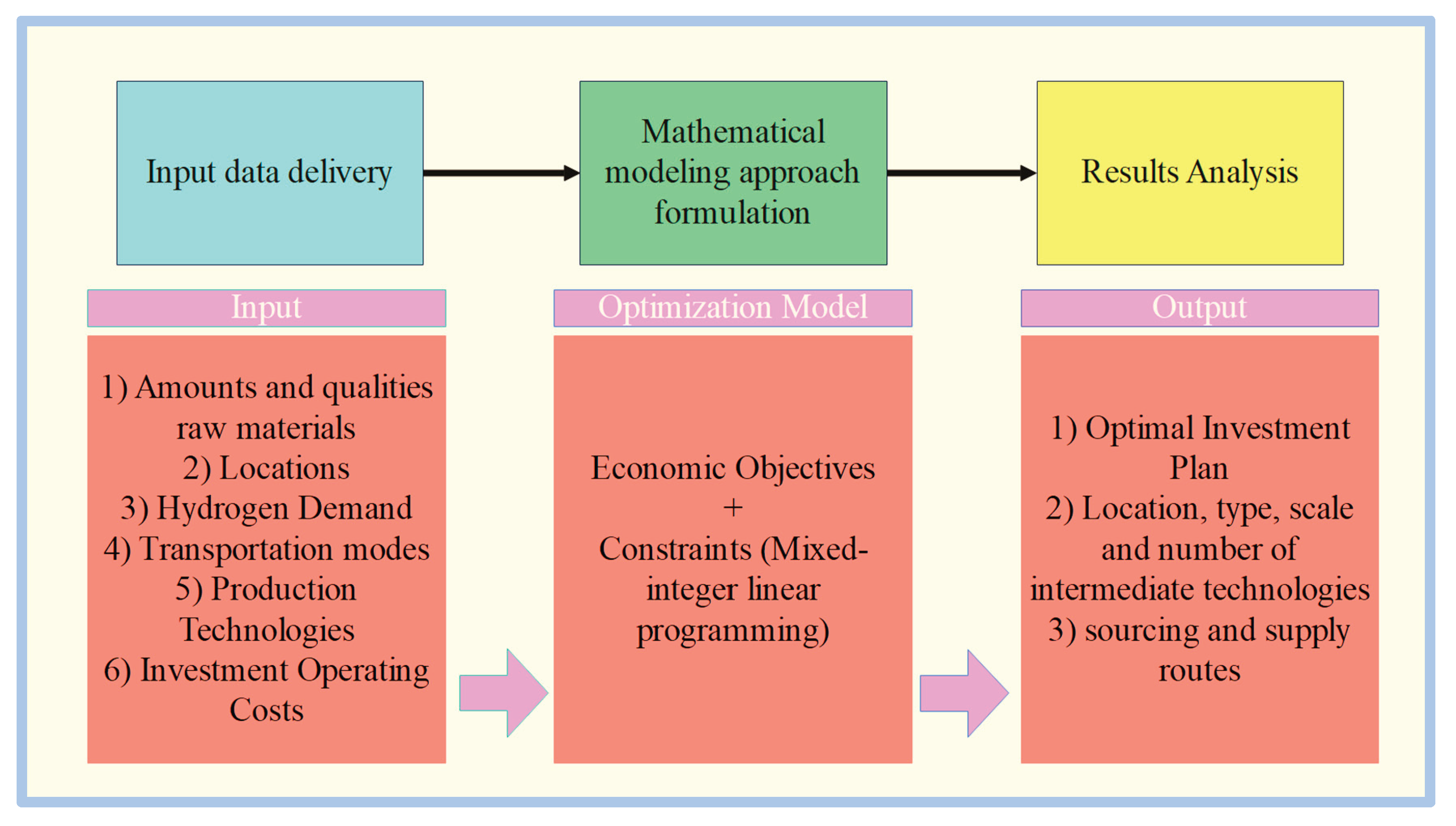
Figure 3.
Global market value of hydrogen demand from 2022 to 2028 (projected) (Bossel and Eliasson, 2022).
Figure 3.
Global market value of hydrogen demand from 2022 to 2028 (projected) (Bossel and Eliasson, 2022).
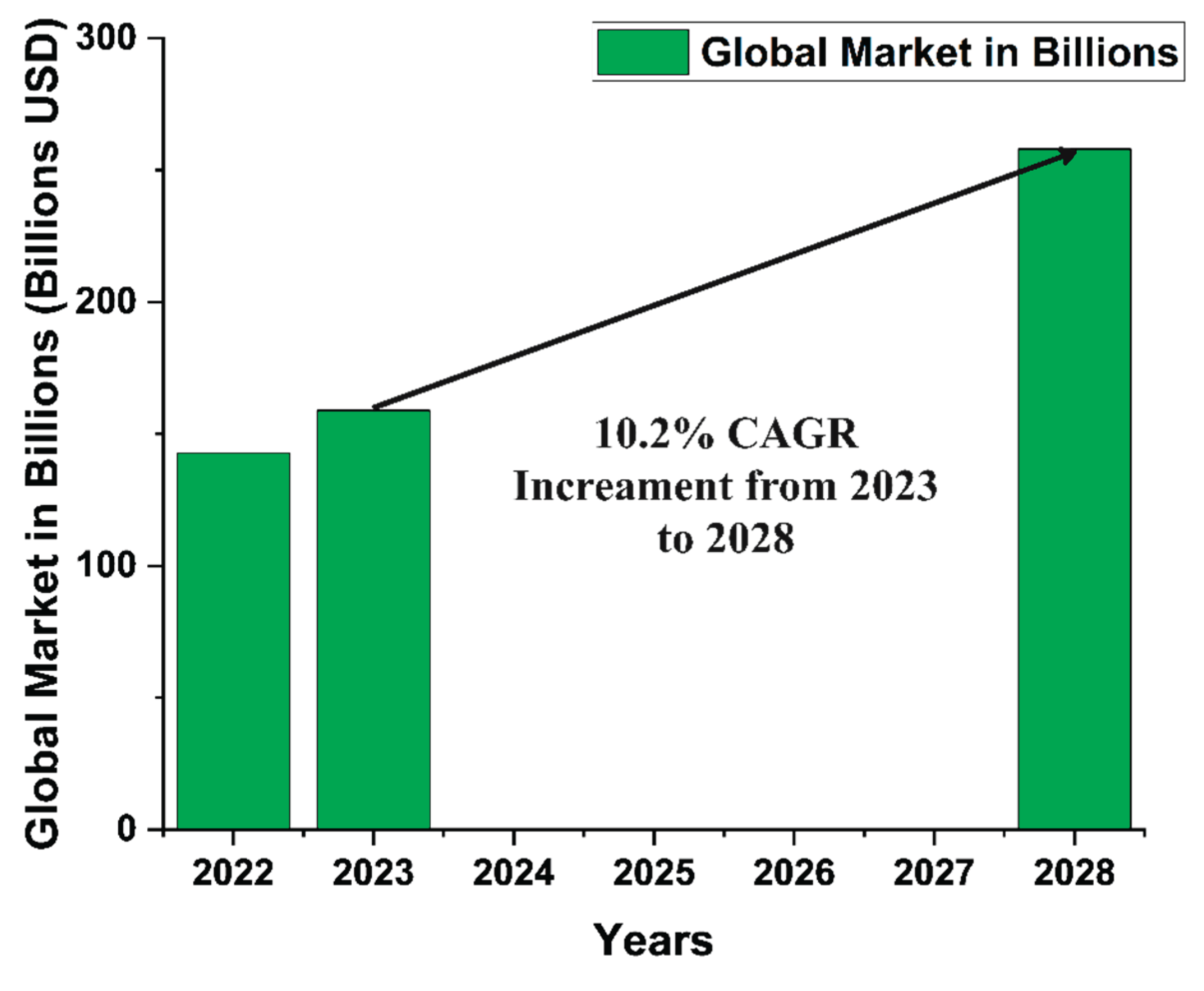
Figure 4.
Overview of Different Kinds of electrolysers in the production of green hydrogen (Bobicki et al., 2012; Griffiths et al., 2021; Hitch & Dipple, 2012; Mittal & Kushwaha, 2024b, 2024a; Taji et al., 2018).
Figure 4.
Overview of Different Kinds of electrolysers in the production of green hydrogen (Bobicki et al., 2012; Griffiths et al., 2021; Hitch & Dipple, 2012; Mittal & Kushwaha, 2024b, 2024a; Taji et al., 2018).
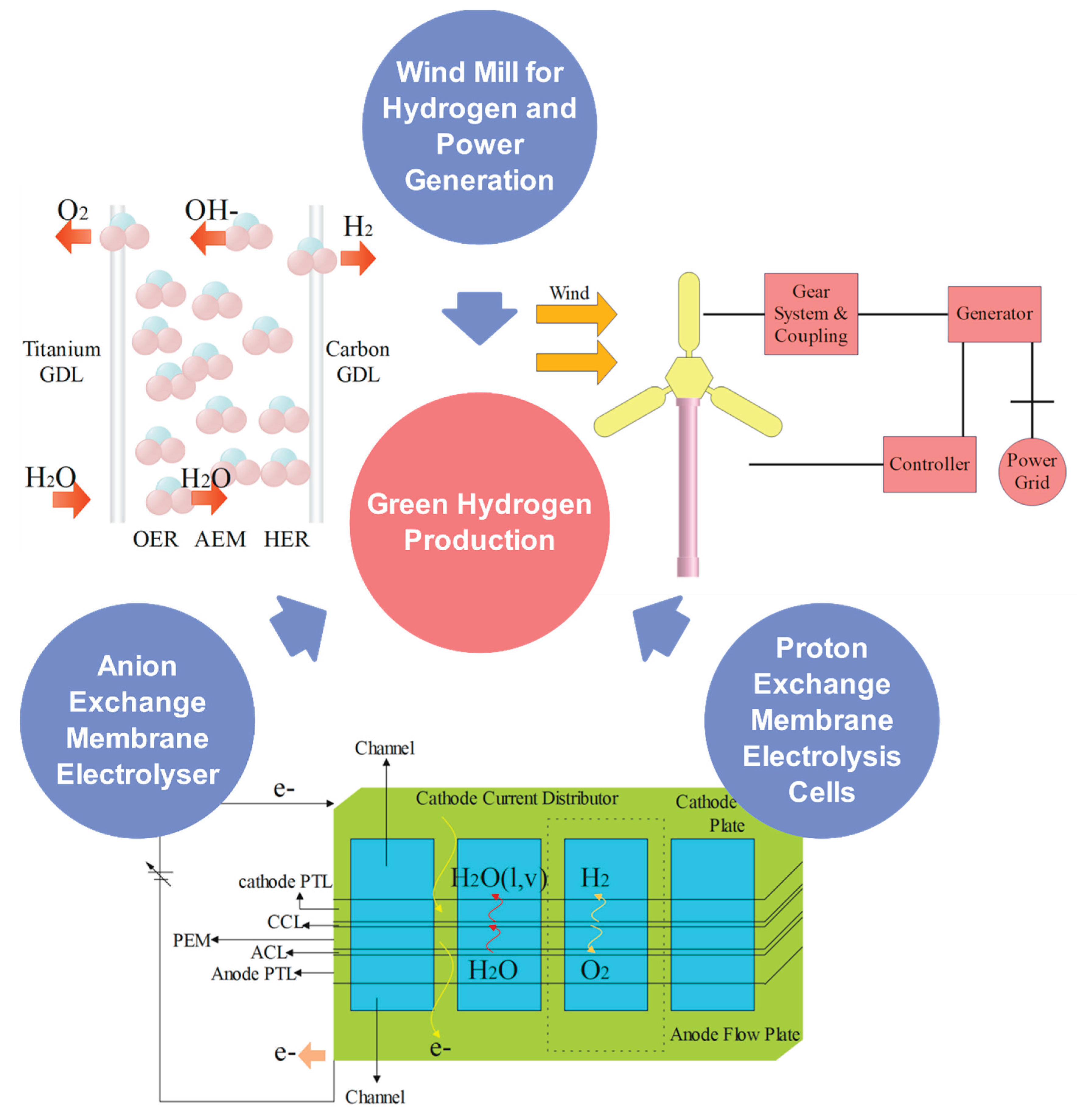
Figure 5.
Wind Turbine System Flow Diagram (Salman & Teo, 2003).
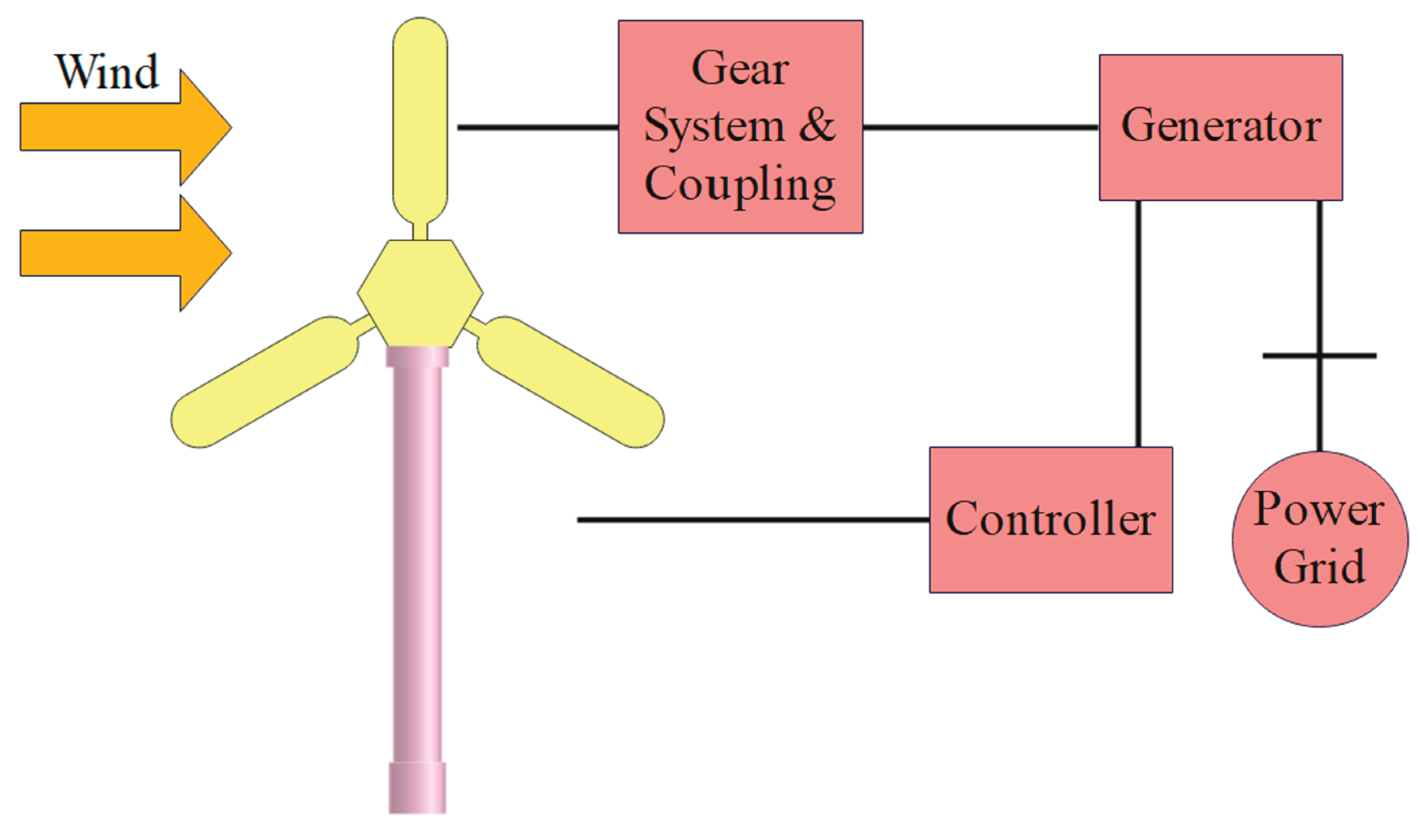
Figure 6.
Cross-Section of PEMECs (Z. Ma et al., 2021).
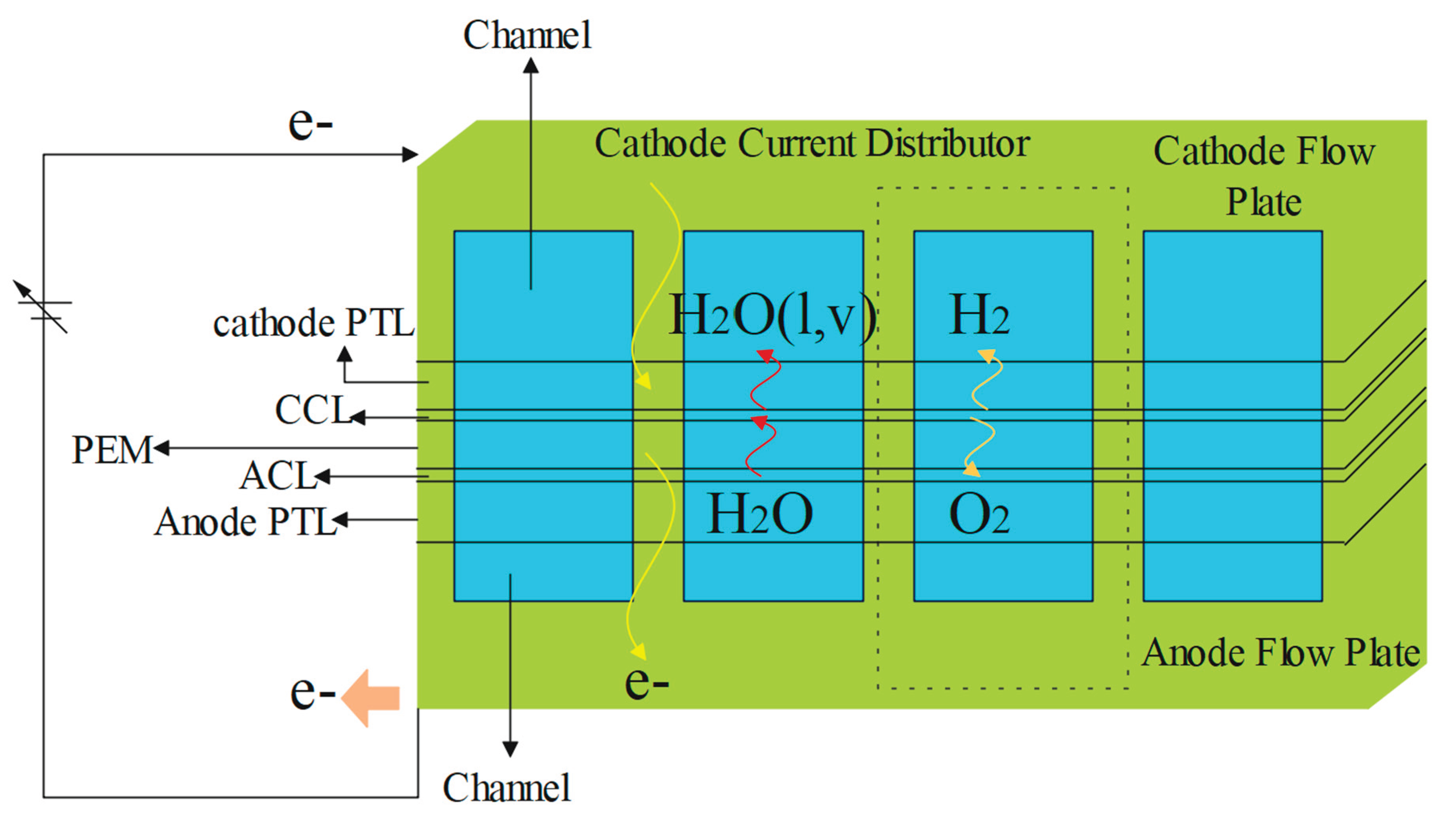
Figure 7.
Configuration of AEM electrolysis (Ge et al., 2017; M. Ma et al., 2017; Miyata, 1983; Varcoe et al., 2014; Yan et al., 2019).
Figure 7.
Configuration of AEM electrolysis (Ge et al., 2017; M. Ma et al., 2017; Miyata, 1983; Varcoe et al., 2014; Yan et al., 2019).
Disclaimer/Publisher’s Note: The statements, opinions and data contained in all publications are solely those of the individual author(s) and contributor(s) and not of MDPI and/or the editor(s). MDPI and/or the editor(s) disclaim responsibility for any injury to people or property resulting from any ideas, methods, instructions or products referred to in the content. |
© 2025 by the authors. Licensee MDPI, Basel, Switzerland. This article is an open access article distributed under the terms and conditions of the Creative Commons Attribution (CC BY) license (http://creativecommons.org/licenses/by/4.0/).
Copyright: This open access article is published under a Creative Commons CC BY 4.0 license, which permit the free download, distribution, and reuse, provided that the author and preprint are cited in any reuse.


