

Submitted:
20 May 2023
Posted:
22 May 2023
You are already at the latest version
Abstract
Energy demand has exponentially increased with the increase in the world population and ur-banization. Renewable energy is clean, renewable, and environmentally friendly. Hydrogen production through Proton Exchange Membrane (PEM) electrolyzer is an efficient way to produce renewable energy. The efficiency and energy consumption of the PEM electrolyzer depends on the feed water quality. In this report, we study the effect of pH, TDS, and conductivity on hydrogen production as well as energy consumption during the process. pH values (3, 7, 9), TDS values (300ppm, 600ppm, 900ppm), and conductivity values (30mS/cm, 70mS/cm, 100mS/cm) were studied to understand and optimize the hydrogen production using PEM electrolyzer. The in-vestigations showed that hydrogen production is significantly affected by pH, total dissolved solids, and conductivity, and the best levels of each variable were identified by extensive testing. The findings show both the scientific significance of proton exchange electrolysis in meeting the growing energy demands of society as well as the importance of knowing the influence that di-verse conditions have on the creation of hydrogen. Our research, in general, contributes to the expanding body of scientific knowledge on the topic of the effective production of hydrogen and offers useful insights for the continuation of investigation in this field.
Keywords:
Keywords: Hydrogen production
; PEM electrolyzer
; Proton Exchange Membrane
; Water electrolysis
; Electrolytic hydrogen production
1. Introduction
For sustainable development, hydrogen will play a crucial role in the future [1]. Fuel cells use hydrogen to generate electricity that is efficient and clean [2]. Hydrogen is the lightest gas, and any accidental leakage will be dispersed quickly. Hydrogen is not a natural source, unlike fossil fuels. Hydrogen is produced from other sources as currently hydrogen is produced from hydrocarbon reforming, but the process is not clean nor renewable [3]. As an alternative hydrogen can be prepared by using solar energy through photocatalysis, thermochemical cycles, or water electrolysis, as these methods offer renewable and green production of hydrogen [4].
Among the renewable energy sources, hydrogen production through the electrolysis method is highly promising due to its potential to act as an energy storage medium. Proton exchange membrane (PEM) is one of the dominant hydrogen electrolysis technologies, due to its high efficiency, high current density, low-temperature range, and fast response [5].
The PEM electrolyzer acts as an electrolytic conductor between a cathode and an anode. The water molecules are passed from anode to cathode. At the cathode, the water molecule is decomposed into electrons, protons, and oxygen [6]. The protons formed are positively charged hydrogen ions. The electric energy fed into the system is converted into chemical energy and the electrons which had been created exit the cell via the external circuit [7]. Later, the protons and electrons recombine and form hydrogen at the cathode. The PEM electrolyzer works by electrochemically splitting water into oxygen and hydrogen at their respective electrodes. Since water is the medium from which the hydrogen is produced, its quality might affect the outcome of the electrolysis process [5]. Water quality that may affect the PEM electrolyzer efficiency are pH, total dissolved solids (TDS), and conductivity. pH of the electrolyte affects the hydrogen production as well as the energy consumption of the PEM electrolyzer [8]. A lower pH offers a low energy consumption as it reduces the overall potential of oxygen evolution reaction (OER) but there is an issue of membrane degradation. Another important factor is conductivity which also lowers the overall potential consequently decreasing the energy required. There is also an asymmetric and pH-dependent distribution of reactive excess overvoltage among hydrogen and oxygen evolution reactions [9]. High conductivity can also degrade the membrane, so, there is a need for an optimized value of pH, TDS as well as conductivity to ensure the enhanced performance of PEM electrolyzers. The American Society for Testing and Materials (ASTM) recommends Type I deionized water – water containing less than 50 ppb of total organic carbon, a resistivity of more than 1 MΩ-cm, and less than 5 µg/L of sodium and chloride content – for commercial PEM electrolyzers [10]. However, almost all water resources are not pure, which implies that additional costs are incurred in the purification of water for PEM electrolyzers. A study on the effect of TDS on the efficiency of photovoltaic cell shows that a higher TDS level (0-2000ppm) in the water is preferable for better production while there was no production when the TDS level fell to zero [11]. Similarly, a study using artificial river water (soft water) as an electrolyte for the PEM electrolyzer resulted in the degradation of the electrolyzer because of the increased concentration of calcium and magnesium ions. The cell performance and mechanical life of the PEM electrolyzer were reduced [12].
Most investigations on PEM electrolysis for hydrogen production focus on the demonstration of PEM electrolysis for hydrogen production [5], the development of new catalysts [13], and the development of new proton exchange membrane electrolytes [14,15]. However, the optimization of the system and the feed water is still challenging. Therefore, in this study, the effect of water quality – with a focus on total dissolved solids (TDS), water pH, and conductivity – on the energy consumption of the PEM electrolyzer is investigated. Here we evaluated the impact of varying pH levels, TDS levels, and water conductivity on the efficiency of hydrogen production and the lifespan of electrolyzer. We investigated the potential for optimizing the design and operating conditions of the PEM electrolyzer to reduce energy consumption and improve efficiency.
2. Experimental Design
C10 PEM electrolyzer, Electrolytic solutions, pH meter, Conductivity meter, TDS tester, Power meter, Gas burette, pH buffer solution, Thermometer.
The PEM electrolyzer is a kind of solid oxide hydrogen production cell. For the experiments C10 model hydrogen system was used. The electrolyte used in the PEM Electrolyzer is PEM-Caustic free. It has certain specifications like on-site hydrogen generation, automated, and site ready enclosures The power consumed per mass of H2 Gas produced is 68.9 KWh/Kg. The temperature range of PEM electrolyzer is 5oC to 40oC. Net production rate is 179 SLPM or 21.6 kg/24hr.
The PEM electrolyzer has been used to split water into oxygen and hydrogen. Two electrodes made of stainless steel, one cathode and one anode are immersed in water. The electrode material is welded onto rod so that the electrodes can be connected to power source easily. Power meter is used to measure the current and voltage passing through the electrolyte. A resistive material such as Teflon is used to separate these two electrodes. When current flows through these electrodes, water splits into oxygen and hydrogen. As hydrogen is positively charged it is collected at the cathode while oxygen which is negatively charged is collected at the anode. These gases flow into the measuring device through pipes. These pipes are connected to the gas burette, a cylindrical glass tube that is open at the top and bottom. The tube is filled with water and then inverted so that the open end is submerged in a water-filled basin or container. The volume of water that is displaced by the gas produced is measured as the gas is collected in the tube. The volume of gas produced can be determined by measuring the difference in water levels before and after the gas is introduced.
Study of effect of pH, TDS, and conductivity
Different parameters such as pH, TDS, and conductivity of the electrolyte solution in PEM electrolyzer affect the production of hydrogen and oxygen as well as energy consumption. So, in this work, we investigated the effect of pH of electrolytes by using different pH buffers to adjust the pH (3, 7, and 11) of electrolyte. TDS values of the electrolytes were maintained at 300ppm, 600ppm, and 900ppm. The conductivity of the electrolytic solution was adjusted to 30mS/cm, 70 mS/cm, and 100mS/cm.
4. Expected Results
4.1. Hydrogen-Oxygen Production-Impact of pH:
With the change in the pH of the electrolyte the production of hydrogen and oxygen changes. As shown in Figure 1 production of hydrogen and oxygen as a function of time and pH, which ranges from 3 to 11 at regular intervals. It's interesting that the initial results indicated a decline in hydrogen and oxygen production as pH increased from 3 to 7, indicating that the electrolyzing process is probably slow at neutral pH. Surprisingly, the results showed a significant increase in production at a pH of 11, indicating that the alkalinity of the water samples is probably supporting the production of hydrogen and oxygen.
Hydrogen-Oxygen Production- Impact of TDS:
In the evaluation of three distinct TDS concentrations, 300 ppm was taken to be a low concentration, 600 ppm the middle concentration, and 900 ppm the high concentration. The outcomes were consistent with the research done by Abdullah et al. and his associates [7]. The results show an increase in the production of hydrogen and oxygen because of the rising TDS concentration, which probably acts as a catalyst to encourage the formation of hydrogen. This leads to the conclusion that producing hydrogen from water is more advantageous at higher TDS levels, while limited production at low concentrations suggests that there may not be any hydrogen generation at zero TDS levels as shown in Figure 2.
Hydrogen-Oxygen Production-Impact of Conductivity:
Another crucial element that might impact a PEM electrolyzer's energy usage is conductivity. A reduced energy need can be achieved by reducing the overpotential needed for the OER at the anode, which is shown by greater conductivity values, which also imply a higher ion concentration in the electrolyte solution. High conductivity, however, can also raise the chance of membrane deterioration and raise the amount of energy needed for pumping. As, the production of hydrogen depends heavily on conductivity, and multiple studies have shown where varying conductivity was achieved by using various solutions to boost conductivity, which in turn increases hydrogen production. Our efforts, which analyse the water samples under three distinct conductivity values ranging from 30 to 100 at equal intervals presented in Figure 3, have shown similar results According to the findings, after achieving a level of maximum hydrogen, there was no distinct impact of further increase in power. For instance, according to a previous study, hydrogen production at solar radiation levels more than 800 W/m2 was almost same. At high radiation levels, no appreciable variations in hydrogen production were seen [13]. It is interesting to note that once production reaches its maximum level, there was a little decline in hydrogen output because sedimentation settles because of hydrogen generation. However, the level of hydrogen production stayed roughly constant after achieving a maximum level within a few hours. Also, like in prior research [15], a drop in voltage was noticed at greater conductivity values, but production remained higher, indicating that the production of hydrogen is a function of increased current rather than voltages.
Impact of pH on Energy Consumption of PEM electrolyzer:
The pH level of the electrolyte can effectthe energy consumption of the system. The pH level affects the conductivity of the electrolyte, which in turn affects the efficiency of the electrolysis process. Typically, the optimal pH range for a PEM electrolyzer is between 7 and 9. At higher pH levels, the electrolyte can become more conductive, which may improve the efficiency of the electrolysis process. However, if the pH is too high, the membrane in the electrolyzer can become damaged, leading to decreased performance and increased energy consumption.
On the other hand, if the pH is too low, the conductivity of the electrolyte may decrease, leading to decreased efficiency and increased energy consumption. Additionally, a low pH can cause the membrane to dry out, which can also decrease performance and increase energy consumption.
Figure 4 shows that at Low pH the energy consumption of PEM electrolyzer is increased. At pH 8 the energy consumption is lowest, that is 45 KWh/m3 H2. As the pH increases or decreases from this the energy consumption tends to start increasing.
Impact of TDS on Energy Consumption of PEM electrolyzer:
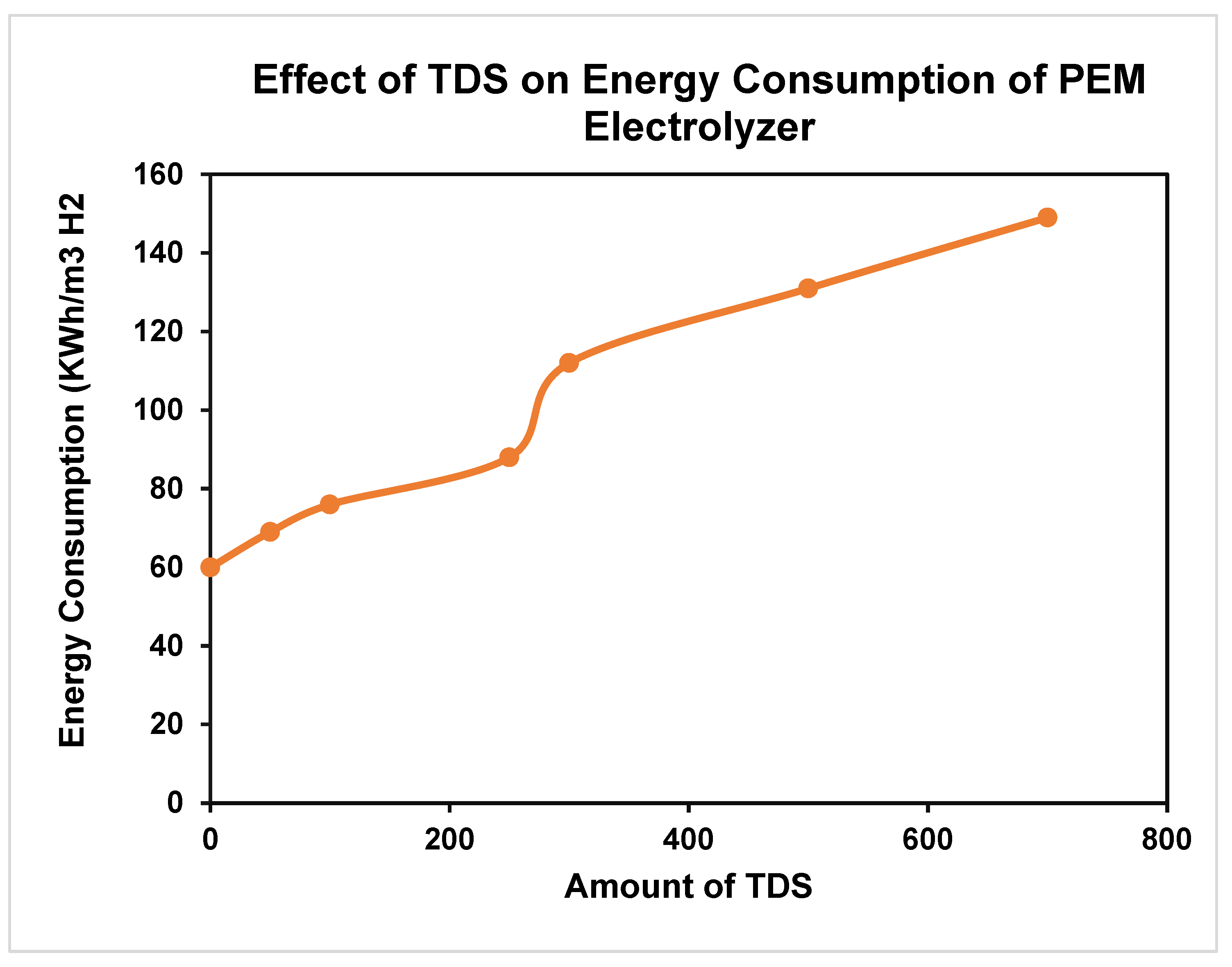
Total Dissolved Solids (TDS) can have a significant impact on the energy consumption of a Proton Exchange Membrane (PEM) electrolyzer. TDS refers to the concentration of all inorganic and organic substances that are dissolved in water. When these substances are present in the water used in an electrolyzer, they can affect the performance and efficiency of the electrolyzer.
The presence of TDS in water can increase the electrical conductivity of the water, which can cause an increase in the cell voltage required for electrolysis to occur. This increase in cell voltage results in an increase in the energy consumption of the electrolyzer. Additionally, TDS can cause fouling of the electrodes and membrane, which can reduce the efficiency of the electrolyzer and further increase energy consumption.
To mitigate the impact of TDS on energy consumption, it is important to ensure that the water used in the PEM electrolyzer is of high purity and has a low TDS concentration. Water treatment technologies such as reverse osmosis and deionization can be used to remove TDS from water, which can improve the efficiency of the PEM electrolyzer and reduce its energy consumption as shown in Figure 5.
Impact of Different Water Quality and Impact on Energy Consumption of PEM Electrolyzer:
Sea water, well water, and deionized water are three examples of the different types of water that might affect the energy requirements of a proton exchange membrane (PEM) electrolyzer.
Dissolved salts, minerals, and other pollutants are abundant in sea water. Because of the increased electrical conductivity of the water caused by these contaminants, the electrolyzer experiences increased electrical resistance. Since more energy is needed to overcome the resistance, the electrolysis process is slowed down. The higher voltages required to provide the required amount of current flow contribute to the overall rise in energy usage.
Dissolved salts and contaminants in well water are typically much lower than in sea water. Minerals and other things that can interfere with electrolysis may still be present. How exactly the composition of the well water affects energy usage is a matter of some degree of uncertainty. The energy needed to treat well water is typically lower than that required to treat sea water or to treat deionized water.
Deionized water is water that has had the mineral ions removed through a process called deionization. It is also known as demineralized water and distilled water. Deionized water's electrical conductivity is far lower than that of both sea water and well water. Therefore, it has a lower electrical resistance during electrolysis and uses less energy to generate the same amount of current. Energy efficiency increases when utilizing deionized water in a PEM electrolyzer.
Deionized water's poor conductivity may be good for saving energy, but it doesn't contain any of the ions that are necessary for the electrolyzer's electrochemical reactions. Water quality needs should be carefully considered depending on the specific design and operation of the PEM electrolyzer system, as these ions may be important for maintaining the performance and longevity of the electrolyzer components.
5. Conclusion
In conclusion, it is possible to conclude that proton exchange electrolysis has become the most prominent method for the generation of hydrogen. The enormous influence that pH, total dissolved solids, and conductivity have on the creation of hydrogen was revealed by our studies, which were carried out under a wide range of environmental circumstances. To contribute to the progress of scientific knowledge on the effective production of hydrogen, thorough experimentation has been used to determine the optimal amounts of each of these variables. The findings of this study highlight the crucial importance of understanding the influence that different conditions have on the production of hydrogen and the scientific significance of proton exchange electrolysis in meeting the increasing energy demands of our society.
Author Contributions
first author Zaid Binhazzaa with a supervision did the work and experimentations from Dr.Zyead Almutairi and that include directing the research scope and proofreading the article
Funding
This research received no external funding
Data Availability Statement
Not available publically, date were obtained for the purpose of writing the article
Acknowledgments
I would like to express my sincere gratitude to Dr.Zyead Almutairi and Mogbel Alrushaid for their invaluable guidance, support and mentorship throughout my research, their expertise and insights have been instrumental in sharping my analytical skills and refining my research methodology. Finally yet importantly, I would like to deliver my sincere appreciation to my family for their ultimate support and encouragement throughout my academic journey. Their unwavering support and expectation is my main sustainable driver to aim higher in my career and academic journey
Conflicts of Interest
The authors declare no conflict of interest
References
- Ni, M.; Ni, M.; Dennis, Y.C. Leung Electrochemistry Modeling of Proton Exchange Membrane (PEM) Water Electrolysis for Hydrogen Production. World Hydrogen Energy Conference 2006, 33–39. [Google Scholar]
- Ni, M.; Leung, M.K.H.; Leung, D.Y.C. Parametric Study of Solid Oxide Fuel Cell Performance. Energy Conversion and Management 2007, 48, 1525–1535. [Google Scholar] [CrossRef]
- Koroneos, C.; Dompros, A.; Roumbas, G.; Moussiopoulos, N. Life Cycle Assessment of Hydrogen Fuel Production Processes. International Journal of Hydrogen Energy 2004, 29, 1443–1450. [Google Scholar] [CrossRef]
- Ni, M.; Leung, M.K.H.; Leung, D.Y.C.; Sumathy, K. A Review and Recent Developments in Photocatalytic Water-Splitting Using TiO2 for Hydrogen Production. Renewable and Sustainable Energy Reviews 2007, 11, 401–425. [Google Scholar] [CrossRef]
- Barbir, F. PEM Electrolysis for Production of Hydrogen from Renewable Energy Sources. Solar Energy 2005, 78, 661–669. [Google Scholar] [CrossRef]
- Aouali, F.Z.; Becherif, M.; Ramadan, H.S.; Emziane, M.; Khellaf, A.; Mohammedi, K. Analytical Modelling and Experimental Validation of Proton Exchange Membrane Electrolyser for Hydrogen Production. International Journal of Hydrogen Energy 2017, 42, 1366–1374. [Google Scholar] [CrossRef]
- Siracusano, S.; Baglio, V.; Lufrano, F.; Staiti, P.; Aricò, A.S. Electrochemical Characterization of a PEM Water Electrolyzer Based on a Sulfonated Polysulfone Membrane. Journal of Membrane Sciences 2013, 448, 209–214. [Google Scholar] [CrossRef]
- MA, L.; SUI, S.; ZHAI, Y. Investigations on High Performance Proton Exchange Membrane Water Electrolyzer. International Journal of Hydrogen Energy 2009, 34, 678–684. [Google Scholar] [CrossRef]
- Binninger, T.; Heinritz, A.; Mohamed, R. Kinetic Reference Potential, PH-Effect, and Energy Recovery in Electrolysis of Water. Physical Chemistry 2020. [Google Scholar] [CrossRef]
- Shiva Kumar, S.; Himabindu, V. Hydrogen Production by PEM Water Electrolysis – a Review. Materials Science for Energy Technologies 2019, 2. [Google Scholar] [CrossRef]
- Khan, M.A.; Al-Attas, T.; Roy, S.; Rahman, M.M.; Ghaffour, N.; Thangadurai, V.; Larter, S.; Hu, J.; Ajayan, P.M.; Kibria, M.G. Seawater Electrolysis for Hydrogen Production: A Solution Looking for a Problem? Energy & Environmental Science. [CrossRef]
- Abdallah, S.; Yousef, E.; Abdullah, I.; Tamime, A. The Effect of TDS on the Hydrogen and Oxygen Production Using Photovoltaic Power Generation System Available online:. Available online: https://www.semanticscholar.org/paper/The-Effect-of-TDS-on-the-Hydrogen-and-Oxygen-Using-Abdallah-Yousef/4bb62514951dca4847b1dfbb90fc0f6e51900acd (accessed on 19 May 2023).
- GRIGORIEV, S.; POREMBSKY, V.; FATEEV, V. Pure Hydrogen Production by PEM Electrolysis for Hydrogen Energy. International Journal of Hydrogen Energy 2006, 31, 171–175. [Google Scholar] [CrossRef]
- LINKOUS, C. Development of New Proton Exchange Membrane Electrolytes for Water Electrolysis at Higher Temperatures. International Journal of Hydrogen Energy 1998, 23, 525–529. [Google Scholar] [CrossRef]
- Kowsari, E.; Zare, A.; Ansari, V. Phosphoric Acid-Doped Ionic Liquid-Functionalized Graphene Oxide/Sulfonated Polyimide Composites as Proton Exchange Membrane. International Journal of Hydrogen Energy 2015, 40, 13964–13978. [Google Scholar] [CrossRef]
Figure 1.
Impact of pH on Hydrogen Production
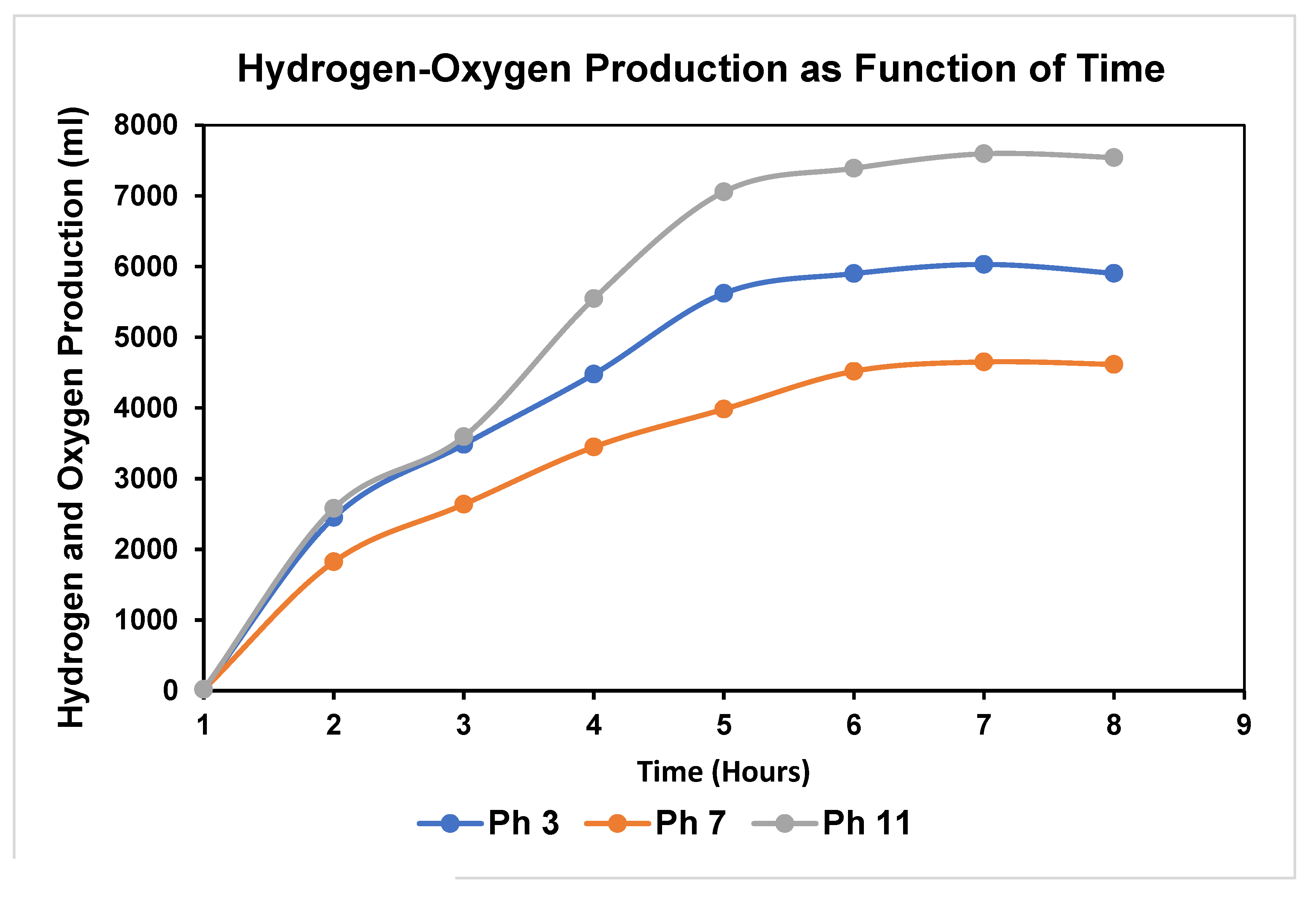
Figure 2.
Impact of TDS on Hydrogen-Oxygen Production.
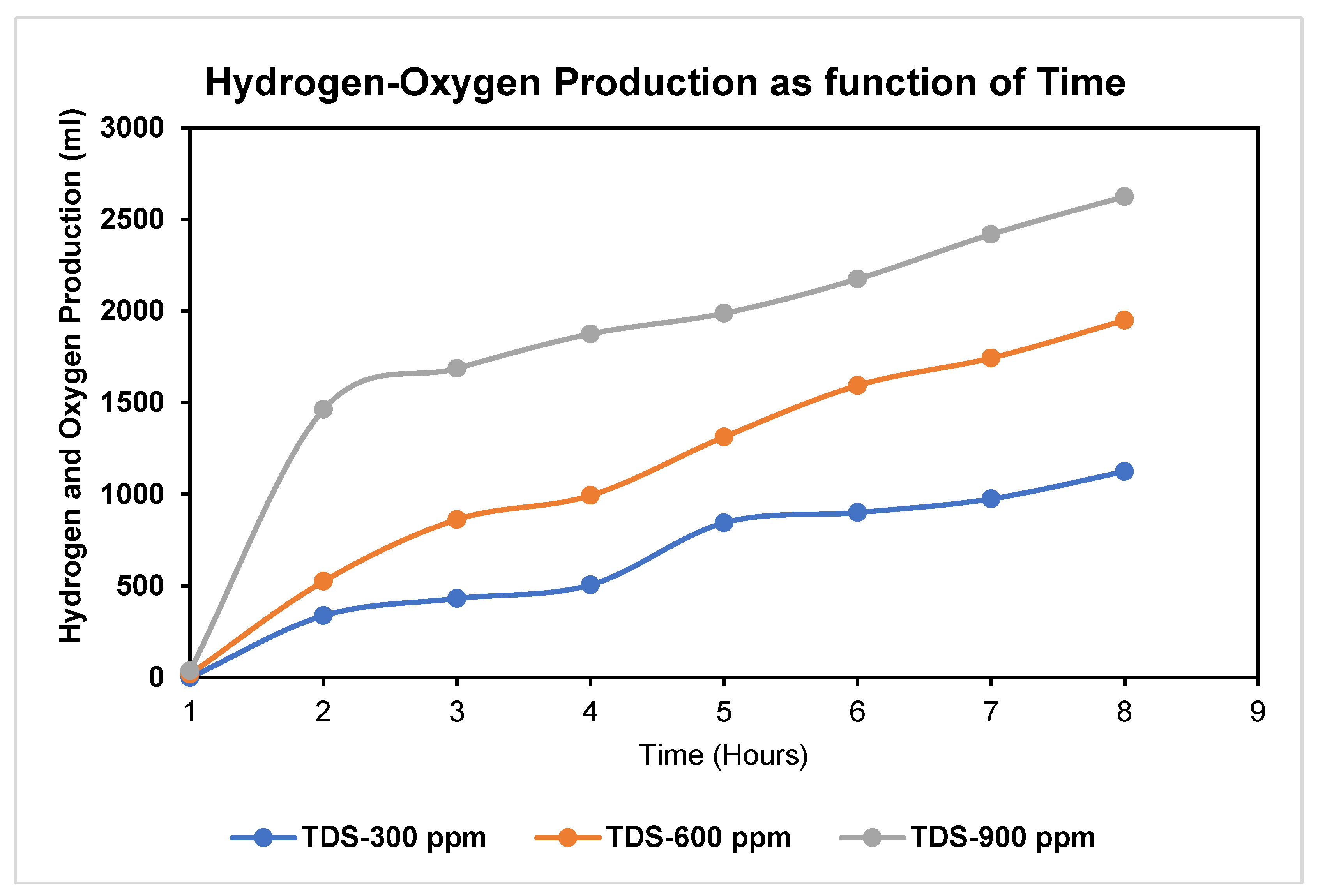
Figure 3.
Impact of Conductivity on Hydrogen-Oxygen Production.
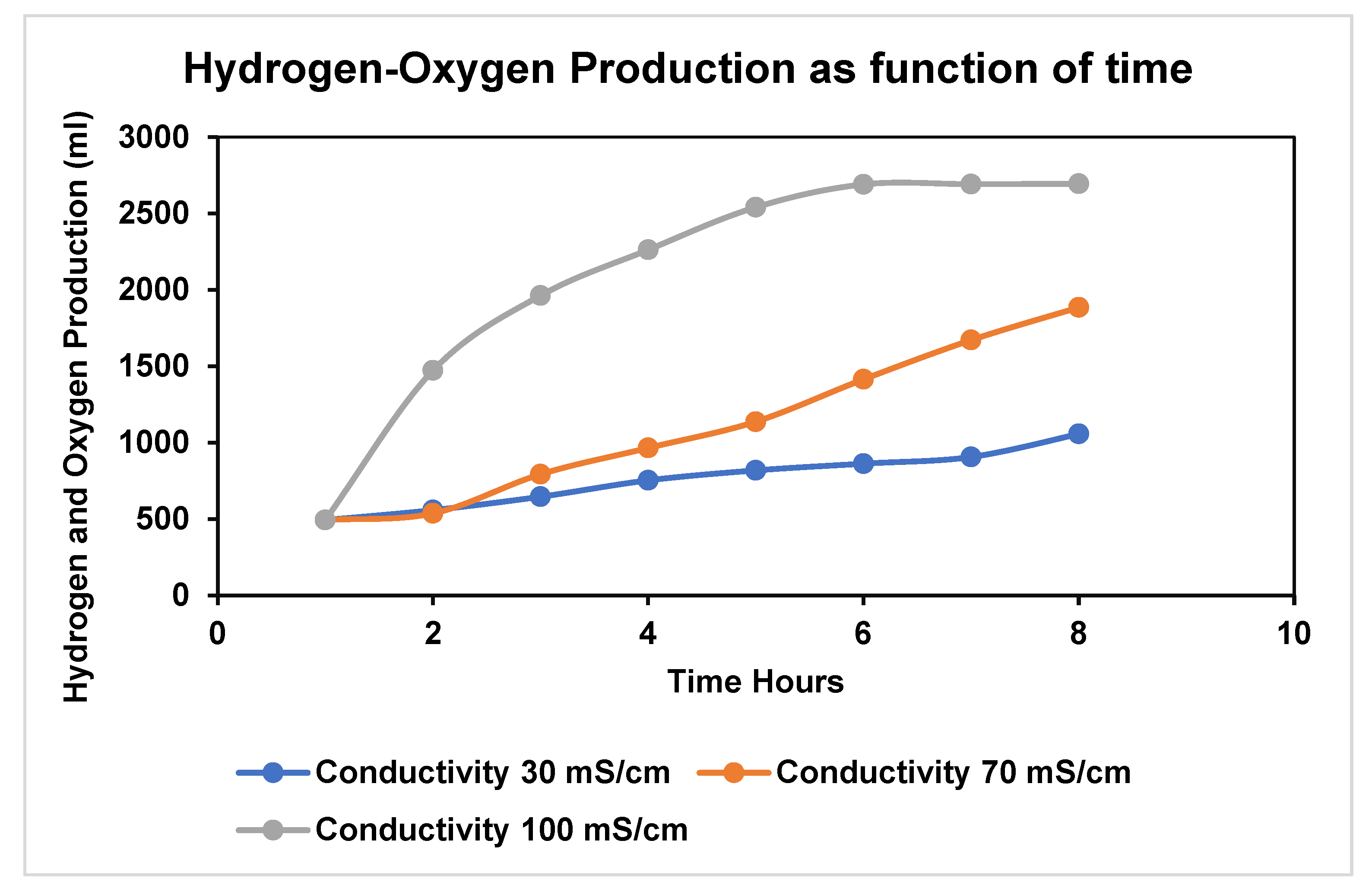
Figure 4.
Impact of pH on Energy Consumption of PEM Electrolyze.
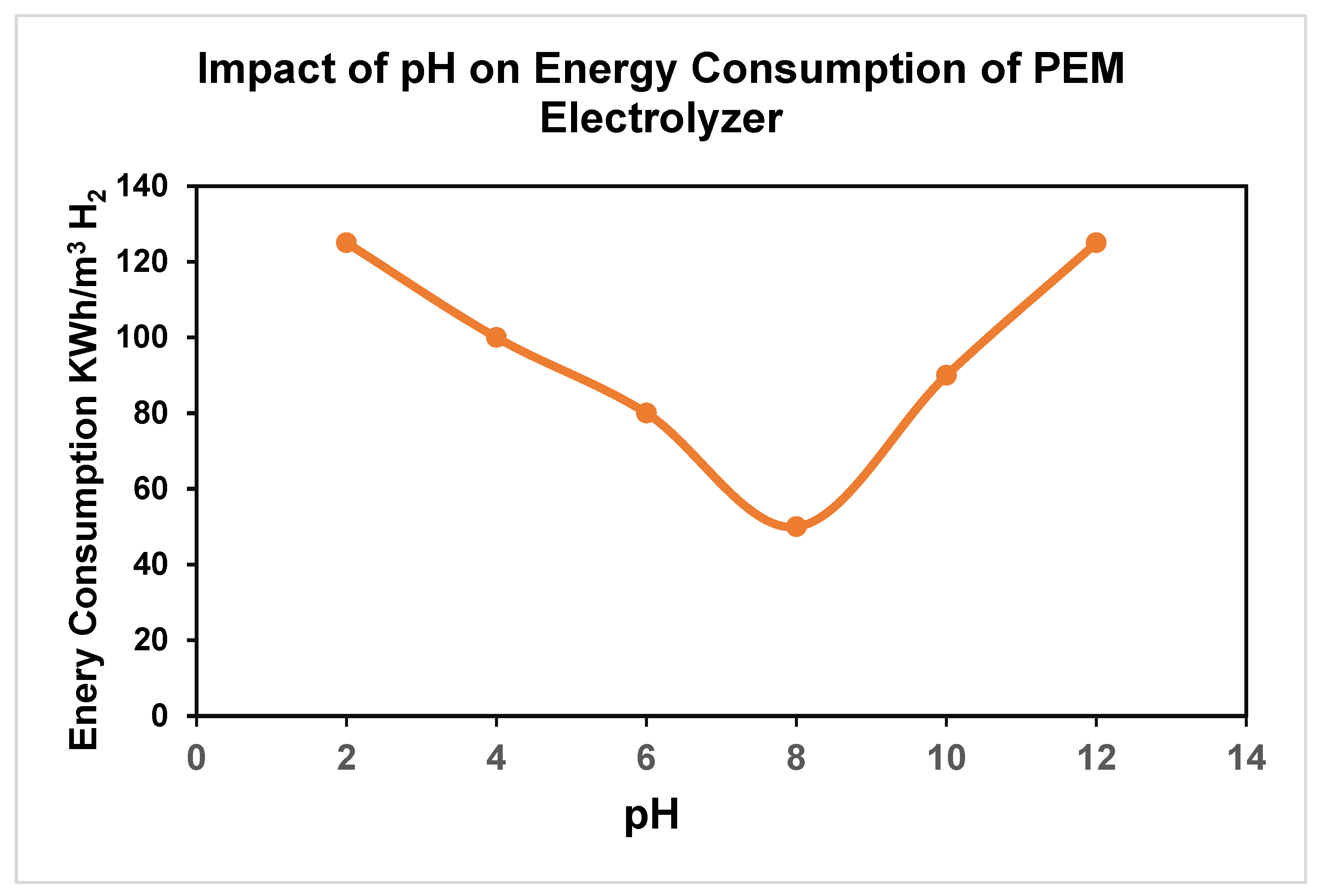
Figure 5.
Impact of TDS on Energy Consumption of PEM electrolyzer.
Disclaimer/Publisher’s Note: The statements, opinions and data contained in all publications are solely those of the individual author(s) and contributor(s) and not of MDPI and/or the editor(s). MDPI and/or the editor(s) disclaim responsibility for any injury to people or property resulting from any ideas, methods, instructions or products referred to in the content. |
© 2023 by the authors. Licensee MDPI, Basel, Switzerland. This article is an open access article distributed under the terms and conditions of the Creative Commons Attribution (CC BY) license (http://creativecommons.org/licenses/by/4.0/).
Copyright: This open access article is published under a Creative Commons CC BY 4.0 license, which permit the free download, distribution, and reuse, provided that the author and preprint are cited in any reuse.


