
Submitted:
16 May 2025
Posted:
17 May 2025
You are already at the latest version
Abstract
For visitors who live the modern, hectic, and bustling city life, rural destinations provide an alternative to escape in a serene environment. Rural tourism also promotes community development, rural restructuring, and capital redistribution. Prior studies paid little attention to the role that rural tourism plays in local economic development. Particularly, what hinders rural tourism’s contribution to sustainable local economic development remains unclear. Using qualitative data generated from 41 key informants from a wide range of stakeholders, the findings of this study demonstrate that rural tourism makes positive contributions to sustainable local economic development. It increases household income, facilitates capital redistribution, and promotes rural entrepreneurship. However, its contribution has been constrained by financial, structural, marketing, and technological factors. Research implications are discussed, and avenues for future research are recommended.
Keywords:
rural tourism
; local economic development
; local communities
; poverty alleviation
; Shandong province
; People's Republic of China
1. Introduction
Due to its positive impact on the economy, society, culture, and environment, the tourism sector is regarded as a facilitator of sustainable development (Su et al., 2019). Tourism contributes toward achieving the United Nations Sustainable Development Goals (SDGs) as it is directly connected to goals 8, 12, and 14 of the SDGs, with the potential to contribute to several others. As one of the rapidly growing tourism segments, rural tourism has been advocated in both developed and developing countries (Gao & Wu, 2017; Iorio & Corsale, 2010) as a tool to balance urban and rural economic development and promotes local communities’ quality of life (Deng et al., 2020; Wang, 2020). In China, tourism has been considered one of the key economic pillars in the long-term national socio-economic development of the country (Gao & Wu, 2017; Li, Ryan & Cave, 2016).
In the previous decades, numerous Chinese villages in the countryside have developed rural tourism (Gao & Wu, 2017; Liu et al., 2020). The development of rural tourism, in turn, promotes the integration of various businesses and facilitates industrial transformation as well as capital investment (Diao & Liu, 2019; Su et al., 2019). Therefore, given the substantial role of rural tourism, the Chinese central government has made a series of steps to promote its development (Gao & Wu, 2017; Liu et al., 2020; Su et al., 2019). Especially from 2017 onwards, rural tourism has received more attention in China since the Chinese state council espoused industry convergence as a key driver of rural tourism development and diversification (Lyu, Huang & Mao, 2021; Shen et al., 2019). Industry convergence implies a circumstance where the primary, secondary, and tertiary industries merge to provide support and boost tourism development (Shen et al., 2019).
The notion of rural tourism gains attention in China and the demand for rural tourism consumption has also been increasing (Gao & Wu, 2017; Li et al., 2016). People living in bustling urban centers have begun to realise the importance of rurality and look for a slower pace of environment to escape (Chi & Lee, 2020). In the contemporary world, the demand for rural tourism has also been prompted by numerous social media actors and influencers. Additionally, since the COVID-19 pandemic, people’s interest in domestic travel in China has been growing as a substitute for international tourism. However, despite the growing attention from the government and local communities on the importance of rural tourism, there is a dearth of research on the perspective of local economic sustainability particularly the growth constraints and intervention mechanisms to further boost the contribution of rural tourism. More academic studies were called to identify best practices and constraints so that rural tourism can be used as a catalyst for sustainable local economic development (Shen et al., 2019). Furthermore, Gao and Wu (2017) and Deng, Lu, and Zhao (2020) suggested further studies to unravel the inextricable linkages between the tourism sector and other sectors of the rural economy and thereby develop integrated rural tourism that contributes to sustainable long-term rural development. Subsequently, the objective of the current study is to explore the role of rural tourism in local economic development in the countryside using Shandong Province as a research context.
In line with our primary research objective, this study aims to:
- (1)
- examine the current state of rural tourism development in Shandong Province.
- (2)
- investigate factors that facilitate sustainable rural tourism development in the province and,
- (3)
- identify constraints hindering rural tourism development and forward possible suggestions for pertinent actors to expedite the sustainable development of rural tourism.
2. Theoretical Background
Rural tourism is a form of tourism interconnected with the economic, social, cultural, natural, and human structures of rural areas. Primarily relying on rural amenities, rural tourism is considered a niche tourism market that has a strong linkage with agriculture (Fleischer & Tchetchik, 2005). The complementarity between rural tourism and agriculture is widely discussed (Darău et al., 2010; Iorio & Corsale, 2010; Randelli et al., 2014). Lane (1994) noted that interest in countryside recreation grew in the 19th century as a reaction to the stress and squalor of expanding industrial cities. However, rural tourism started to draw academic attention during the 1980s and 1990s. As discussed by Lane (1994), rural tourism has the following five essential features; (1) practiced in rural areas, (2) rural function, (3) small scale, (4) traditional culture, and (5) local ownership. Therefore, rural tourism is a segment of tourism that takes place in the countryside and utilises human-made and natural rural resources.
Rural tourism also has many different forms entailing the environment, history, economy, and geography. Rural tourism offers tourists the opportunity to experience an authentic rural lifestyle and permits direct host-guest interactions. Despite there is lack of a uniform definition of rural tourism, the location where the activity takes place, the types of tourism activities, and the typologies of tourism products and services are common denominators of rural tourism (Zhang et al., 2019). Nowadays, rural areas are no longer related purely to agricultural spaces but are becoming centers for the stimulation of new socio-economic activities and investment opportunities including tourism (Saxena et al., 2007). In many rural areas around the world, the economic implication of tourism goes beyond generating income through renting rooms and selling handicrafts (Aazami & Shanazi, 2020; Randelli & Martellozzo, 2019). It also invigorates rural infrastructure and facilities, creates short and long-term job opportunities, diversifies economies, draws in more investment opportunities, and stimulates local entrepreneurship (Shen et al., 2019).
Briedenhann (2004) and Shen et al. (2019) indicated that the development of rural tourism in underdeveloped areas stimulates the rise of other tourism businesses and the establishment of cooperation and partnership among different enterprises. Agri-tourism has also been growing exponentially in various countries along with rural tourism such as in Italy and Japan (Ohe & Ciani, 2012; Privitera, 2010). Rural tourism has been closely linked to food clusters (Lee, Wall & Kovacs, 2015) and alternative food networks (Sidali, Kastenholz, & Bianchi, 2015). Food clusters are places that offer visitors an array of culinary tourism experiences, such as food tours, farm visits, and complementary arts and cultural-related events (Lee et al., 2015) while alternative food networks imply community-supported agriculture, farmers’ markets, fair trade, specialised forms of organic agriculture, direct farm retail, and the slow food movements (Edwards, 2016). Some scholars also discuss rural tourism as a tool to build and consolidate national identity and defy neocolonialism (George, Mair & Reid, 2009; Silva & Leal, 2015). It also helps to diversify and promote the rural economy, expand employment opportunities, and support rural areas’ overall prosperity (Islam & Carlsen, 2012; Wang, 2020; Wilson et al., 2001). Therefore, rural tourism enables communities in the countryside to reap the benefits of tourism while protecting their way of life, identity, and ecosystem if its development follows the principles of sustainability. For example, Iorio and Corsale (2010) highlighted that in Romania rural tourism diversifies communities’ economic base and improves their livelihood both economically and in other aspects of their lives. Unlike other types of tourism, rural tourism can be less expensive to develop, and it is less dependent on outside firms (Islam & Carlsen, 2012). However, it is critical to ensure that rural tourism development initiatives take local leadership, widespread community support, and sustained collaboration between rural tourism enterprises and other stakeholders for successful rural tourism development.
In the previous decades, China’s rural tourism sector attracts growing attention. The country has rich rural tourism resources and diverse natural landscapes that offer rural tourists a range of unique experiences, most of which can be contrasted with the images of Chinese cities (Liu et al., 2017; Zhao et al., 2020). China's rural development effort is impacted by its overall national development plans and policy implications (Li et al., 2020; Sofield & Li, 2011). Due to chronic social contradictions in the country, people's desire for a better living standard has been in jeopardy (Ren, 2019; Wang, 2020). The current development imbalance between urban and rural areas has been the root cause of social inequalities (Liu, 2018). Consequently, rural revitalisation is regarded as one of the major national strategic decisions through urban and rural integration, rural economic progress, and poverty alleviation. The rural revitalisation strategy aims to shift the focus of national development from urban to rural areas (Lyu et al., 2021) and narrow the development gap between urban and rural areas. To this end, developing rural tourism has been identified as a viable option (Randelli et al., 2014). The development of rural tourism effectively guides and promotes the flow and redistribution of capital from urban areas to rural areas. It also supports areas that have been experiencing industrial transition such as from relying heavily on logging to developing sustainable tourism (Ma & Yang, 2022). Currently, rural tourism becomes the beacon of economic development and a tool to support villages and communities (Gao & Wu, 2017) in rural China (Figure 1).
Tourism has been growing rapidly in Shandong province (CEIC, 2020). It is a special corridor for rural tourism development, because of its diversified geographical and socio-economic features as well as rich cultural and heritage resources. In 2018 and 2019, 503 and 540 million tourists (including both domestic and international) visited Shandong province respectively (ProgrammerSought, 2020). Because of the favorable measures taken to increase investment in rural tourism and improve rural tourism facilities, rural tourism was projected to hit the 41 billion USD milestone in revenue in 2020 (Liu, 2018). However, achieving this target might be impacted by the unprecedented outbreak of the COVID-19 global pandemic. In recent years, some of the villages in Shandong province strive to combine rural natural tourist attractions such as mountains, rivers, lakes, and wetlands with rural cultural tourism resources such as local cuisine, folk culture, ancient villages, and farmhouses that expedite rural tourism development (Zhao et al., 2020).
3. Research Methodology
This study employs a qualitative research approach due to the exploratory nature of its objectives. There is a dearth of research that examines the roles rural tourism plays in local economic progress and influencing factors of the developmental process. To fulfill this research aim, we selected Shandong, China as a research context. Shandong is one of the 23 provinces in the People’s Republic of China. The province covers a total area of 153,000 square km and with a total population of 100.472 million, it is the second most populated province in China after Guangdong (Statista, 2020). The province is situated on the lower banks of the Yellow River, and it faces the Bohai Sea to the north and the Yellow Sea to the east. Shandong Province is uniquely positioned in Chinese civilisation and history as an ancient battlefield, and the origin of much of China's religion and philosophy (China Today.com, 2020). Moreover, as a popular tourist destination, Shandong Province has a wide variety of rural tourist attractions (Zhao, Han & Wang, 2020). This study mainly considers the leisure tourism segment where visitors travel to rural destinations for holiday purposes and use local facilities and services in addition to site seeing and participating in various local events such as festivals, and traditional markets.
We collected data from various key tourism stakeholders in the province through in-depth interviews and researchers’ observations over two periods - between April 2022 and June 2022, and March 2024 and April 2024. Overall, 41 participants - 12 local communities, eight local guides, four tourism professionals, four government employees, five homestay business owners, four restaurant owners, and four village shop owners were recruited purposively (Table 1). We recruited participants purposively based on their proximity to the rural tourism sector in the province as well as their prior experience. In detail, the selection criteria were 1) individuals who have a sufficient understanding of the rural tourism sector, 2) work in the tourism sector, 3) engage in government tourism organisations, and 4) have four or more years of experience in the sector. To boost clarity and improve communication, we conducted all the in-depth interviews using Mandarin, the national language, and then we performed back-to-back translations to English. Theoretical saturation was considered to terminate further data collection as any additional interview ceases to bring new insights. Furthermore, the main purpose of a qualitative study is to advance a deeper understanding of the topic of interest by analysing in-depth information instead of drawing generalisations from a large sample (Crouch & McKenzie, 2006). Subsequently, data saturation was reached after conducting 41 interviews. Researchers’ observations were also used as an additional data source and a method to triangulate interview data. It supports in-depth interviews by providing information about the local communities' enthusiasm for the growth of rural tourism, the potential, and constraints of existing rural tourism. Participants were clarified with the research objectives and their consent was sought. Participants’ privacy is protected as we conceal their identities. Prior to analysis, data were organised, cleaned, trimmed, and prepared for subsequent coding. Then we conducted our analysis using open coding, axial coding, and selective coding as can be seen in Figure 2. Data were analysed thematically where similar themes were categorised to form the upper-level themes to eventually form theoretical insights.
To ensure the credibility of research findings, the researchers have implemented techniques such as confirmability audits, member checks, and peer debriefing in addition to spending adequate time during data collection. We also strived to maintain scientific rigour by immersing ourselves in the data and maintaining contact with research participants for further clarifications when a need arises (Easterby-Smith, Thorpe, & Jackson, 2015). Credibility in research is ensured when study findings accurately reflect the opinions of participants involved in the study (Hockings et al. 2009).
4. Results and Discussion
4.1. Current State of Rural Tourism and Factors That Expedite Sustainable Rural Tourism
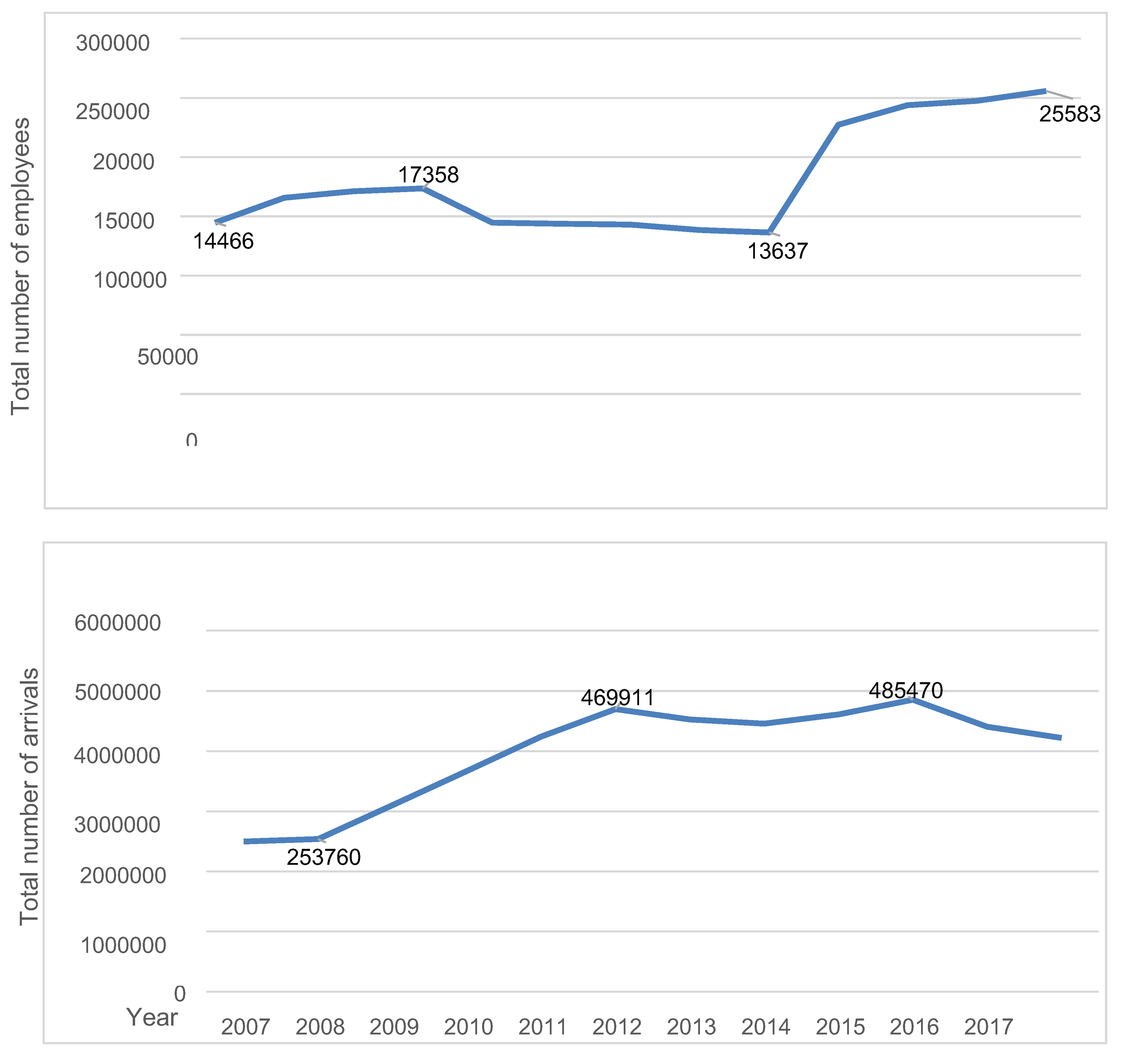
Currently, rural tourism plays a vital role in employment creation and driving the development of the rural economy in the province. As can be seen in Figure 3, while visitor numbers increased by 91 percent in just ten years (between 2007 and 2017), there was nearly a 77 percent increase in employment between 2005 and 2017. Figure 3 also shows that rural tourism has been developing rapidly since 2006 and continues to grow with an annual growth rate of more than 20%. Rural areas possess resources such as scenery, culture, and activities that draw tourists and urban residents (Lyu et al., 2021). For example, about half of China's 55 UNESCO World Heritage sites are found in rural areas (Dai & Zhang, 2007). World Heritage sites are the centers of gravity for both domestic and international tourists to rural communities. China's rich tourism resources and the current stage of economic and social development also provide a favorable climate for the development of rural tourism. Thus, China is undergoing a rural tourist boom, and even amid the COVID-19 outbreak, more than four billion trips were made throughout China in 2021, generating 500 billion USD in revenue (Westcott & Wang, 2021).
As a government tourism employee indicated during the interview, after carefully assessing its potential, the Shandong Provincial Party Committee has ratified rural tourism development plans to boost the sustainable development of the sector in the province. Moreover, according to our desk-top-based research, with the aim to financially strengthen rural tourism enterprises and thereby boost their development prospect, Shandong Provincial authorities have issued a series of financial, and tax-favored policies (Liu, 2020). In terms of the infrastructure necessary for rural tourism development, the construction of roads connecting every village of the province is already completed. It significantly increased the capability of regional and less developed rural areas to receive visitation. In 2018 alone, the province allocated a total of 12.6 million USD in special funds for rural tourism development to support 72 counties, focusing on poverty alleviation, rural tourism cluster area development, and new tourist attractions development (PG1, May 2021). It was also highlighted that recently the poverty alleviation project for rural tourism in Shandong Province approved three categories of financial support ranging from 14,585 USD to 14,585,000 USD, to sustain the development of rural tourism (PG1, May 2021). Such critical measures are taken by the government to stimulate rural tourism as one of the key economic pillars in the province. Gao and Wu (2017) and Lyu et al. (2021) noted that rural tourism becomes a tool for preserving rural villages and sustaining indigenous communities. The provincial government supports the sector in line with the policy directions from the central government (Shen et al., 2019). According to the Shandong Province Department of Culture and Tourism (2020), the province targeted to host 540 million arrivals with a total tourism receipt of nearly 4 billion USD in 2020 despite the actual achievement might be affected by the unprecedented outbreak of the COVID-19 global pandemic. The following quote elucidates the opinion of a homestay owner in Weihai.
Many tourists came to our village before the epidemic, and most of them were from cities. Since I have been in this industry for the past seven years, I can say that tourism has been gradually expanding, and we have been able to generate revenue by renting out rooms. However, the COVID-19 outbreak had an impact on the visitor flow, which now starts to catch up (HO5, March 2024).
Figure 3.
Total number of tourism employees (2005-2017) and the total number of tourist arrivals (2007- 2018) in Shandong Province (CEIC, 2020).
Figure 3.
Total number of tourism employees (2005-2017) and the total number of tourist arrivals (2007- 2018) in Shandong Province (CEIC, 2020).
4.2. Constraints of Rural Tourism Development
As an emerging tourist destination in a rapidly developing country, Shandong Province faces financial, structural, marketing, and technological limitations that hinder the sustainable development of its rural tourism. Among the setbacks, poor access to finance and low-interest fee loans were mentioned by the private sector participants. Moreover, the lack of sustained and customised training that helps to build the capacities of rural enterprises is identified as a constraint of successful rural tourism development.
We have been benefiting from the development of rural tourism and we want to expand the development and obtain more benefits. However, such an expansion demands better infrastructure and facilities, which require capital investment. Although we receive some supporting funds and loans from the government and some villagers raise funds, there is still a considerably large funding gap to build quality asphalt roads, and clean and tidy scenic spots, museums, and libraries (LC1, June 2022).
In addition, factors such as lack of adequate follow-up from the government, ineffective crisis management, unhealthy competition among rural tourism enterprises, and poor facility development reduce the contributions of rural tourism to the local economic development and attractiveness of rural areas. Another factor that hinders the sustainable development of rural tourism in the province is the practice of an unsustainable development model that pays little to no attention to the local ecology and poverty alleviation.
Rural tourism does not only generate income and creates job opportunities, but it also has unfavorable effects on the ecology by causing pollution such as an increase in rubbish, sewage, CO2 emissions, and environmental deterioration. Additionally, in some villages, only a small portion of the community ended up benefiting while the majority were overlooked. Due to the nature of the sector, these issues are urgent and require a shift in the development paradigm that prioritises quality over quantity, takes the natural ecosystem into account, and ensures justice and equity in community engagement (TP3, April 2024).
Moreover, the current rural tourism in the province is not yet properly integrated with other local economic activities such as trade and agriculture. This undermines the overall impacts of rural tourism in improving local tourism resources, enhancing destination competitiveness, and alleviating rural poverty from a long-term perspective (Wang, 2020). Integrated rural tourism is strongly linked to the economic, social, cultural, natural, and human structures of destinations to create value chains (Gao & Wu, 2017). To tackle such challenges, a government official highlights the necessity of revisiting the rural tourism development model to drive the sector in a sustainable manner.
To develop sustainable and resilient rural tourism in Jinan village, the town authority has raised nearly one million USD. The fund is crucial for the development of rural tourism in the village in various ways, such as renovating roads and greening and reforesting recreational areas, which improve the attractiveness of the village. According to the requirements of provinces and cities, the government came to understand that the development of rural tourism shall be envisioned as a long-term project that takes environmental and socio-cultural issues into account along with economic aspects. We will also provide funds, technology, management, and other support promptly to support the development status of rural tourism (PG1, June 2022).
Regarding the importance of a paradigm shift in rural tourism development, a local government representative also accentuates the determination of the government in promoting sustainable rural tourism to address rural poverty and foster environmental sustainability, as follows:
Shandong Province has been increasingly allocating budgets to develop rural tourism that targets poverty alleviation, rural tourism cluster area development, and resilient tourism development endeavors. To achieve longer-term development, the provincial government will continue to support the development of rural tourism, improve rural tourism resources, link rural tourism with other rural industrial structures, including the agricultural industry chain, and develop communities’ capacity so that they take part in the rural tourism development (LGov2, April 2022).
Moreover, the lack of product diversification and insufficient use of information technology in marketing transactions and networking have been detected as constraints of rural tourism development in the province. The role of responsible marketing and promotion of the countryside for tourism purposes has been discussed in the literature, and setbacks such as inadequate financial and human resources, including appropriate expertise and training, impede rural tourism marketing efforts (Sharpley & Sharpley, 1997). A participant lamented:
Presently, rural tourism products and projects in Shandong are mainly sightseeing and festivals, whereas other cultural features and environmental resources receive less attention (LG2, June 2022).
However, Shandong could capitalise on its diverse resources, including its suburbs, countryside, villages, scenic landscapes, ancient towns, local cultural lifestyles, and ecological resources, to augment its rural tourism. Research participants unanimously underline the significance of diversifying rural tourism products by integrating leisure, experience, vacation, and activity-based tourism such as sightseeing, hiking, walking, and camping to realise the development of competitive and resilient rural tourism (Shi, 2018). In this regard, a local community representative describes that:
I noticed that tourists come to our village and visit the countryside, including agricultural areas. They buy agricultural products because the prices are quite cheap, and the products are fresh and authentic. However, due to a lack of diversified rural tourism products, tourists’ length of stay is quite short. I hope visitors’ stays could be extended if we work toward diversifying rural tourism offers and improving the attractiveness of our surroundings (LC7, June 2022).
The researchers have also observed this during field visits, where the sector would bring more benefits if the current potential of the province had been transformed into rural tourism products. The following statement from a shop owner supplements the significance of product diversification in the province.
Providing tourists with more tourism products and services brings more benefits to the destination and visitors. On the one hand, it develops value chains, boosts local trade, and increases earnings. On the other hand, it enables tourists to have alternatives in rural areas, which improves their overall experience (SO1, March 2024).
Regarding the application of information technology, our findings reveal inadequate usage in the sampled villages confirming existing literature (Wang, 2020). This is due to the lack of wider wireless internet coverage which limits mobile and electronic payments in addition to inhibiting digital marketing (Wu, 2020). Considering the emergence of 5G and the application of augmented reality (AR) and virtual reality (VR), the role of information and communication technology is enormous in revolutionising the marketing landscape, improving service quality, and enhancing operational efficiency. Proper integration and usage of information technology are extremely important in transforming rural tourism development (Lane & Kastenholz, 2015; Wang, 2020). As Zhao et al. (2020) also noted, the development of rural tourism in Shandong should take advantage of the internet and information technology to build a smart rural tourism ecosystem. The following quote from a homestay owner, which echoes the opinions of other rural tourism business owners, also demonstrates the growing importance of information technology and the internet in rural tourism development.
The Internet has become a crucial infrastructure and the lifeblood of rural tourism. By the way, as soon as tourists come to our bed and breakfast establishment, the first thing they ask for is the WiFi password. If there is no Internet, they do not like to stay. Many tourists hope that we can be as convenient as businesses in cities in terms of digital utilisation such as online booking and electronic payment options. Therefore, as we move forward, there are several areas for improvement, particularly in terms of information technology applications (HO4, April 2022).
Therefore, post-pandemic tourism needs to integrate IT into its operation to create convenience for tourists and promote the development of sustainable rural tourism.
4.3. Intervention Mechanisms to Further Develop Sustainable Rural Tourism
In line with the impediments to rural tourism development mentioned in section 4.2, our research findings suggest the following countermeasures as part of intervention mechanisms. Given that sustained political commitment and attention are vital toward sustainable tourism development in general (Deng et al., 2020), governments at all levels in the province should create an enabling environment and introduce more encouraging policies and measures for the development of sustainable and resilient rural tourism. Regarding finance, the government shall allocate an adequate budget for rural tourism infrastructure development and facilitate access to minimal-interest loans for community members so that they can be included in the rural tourism business (Deng et al., 2020; Xue, 2020). Along with providing financial support and boosting the entrepreneurial and business capacities of rural communities consistent training and capacity-building schemes are also paramount. While supporting the development of rural tourism, the government should also develop a set of effective early warning, monitoring, and management plans to ensure the resilience of rural tourism and to successfully respond to problems triggered by unforeseeable crises such as the COVID-19 pandemic. Since infrastructure and facility development is the lifeblood of tourism development, all pertinent rural tourism stakeholders are also expected to exert a concerted effort in this respect (Deng, et al., 2020; Liu et al., 2020; Zhang & Zhang, 2020). To this end, a villager in Linyi underlined the necessity of infrastructure for rural tourism development, and revealed the insufficient capacity of the local community in sustaining rural tourism infrastructure themselves:
Since we do not have all the necessary skill sets, techniques, and finance to build modern public toilets and recycling factories, support from governmental and non-governmental organisations is paramount to ensure hygiene and environmental cleanliness (LC8, May 2022).
As far as diversifying rural tourism products is concerned, all rural tourism actors are required to be innovative and creative in developing new offers. Packaging different rural tourism products and providing them to tourists at a reasonable price are also essential to improve visitors’ length of stay, enhance visitors’ experience, and increase the trickle-down effects of tourism (Lyu et al., 2021; Tian & Wang, 2020). The following is what a tourism professional highlights in this regard.
Considering that our industry is transitioning to a new era following the pandemic, developing tourism products that cater to a wide range of consumers is crucial. Post-pandemic tourism should aim for quality experience design and management in a rural setting, and most importantly, it needs to benefit communities and restore the natural ecosystem (TP4, April 2024).
With regards to expanding internet coverage and boosting its applications, both the private sector and government institutions shall work collaboratively and provide network coverage to villages so that they enjoy the fruits of digital technology (Sun et al., 2020). In this modern era, information technology penetrates almost all walks of life to varying degrees and rural tourism is no different. Since the lack of environmental cleanliness is also another chronic problem identified, carefully addressing this issue is also imperative, especially in post COVID-19 era where hygiene is enormously critical (Liu, 2020).
Finally, this study argues that to better integrate rural tourism with other local economic activities and ensure a bottom-up rural tourism development model where local communities play a central role in terms of both owning and managing rural tourism enterprises, a paradigm shift is needed in the development model (Deng et al., 2020; Su et al., 2019). Such a shift, in turn, helps to improve environmental attractiveness, boost destination competitiveness, reduce poverty, and thereby contribute to the sustainable economic development of tourist destinations (Abukhalifeh & Wondirad, 2019; Higgins-Desbiolles & Bigby, 2022). Application of the community-led paradigm, however, requires indigenised knowledge and consistent support from different stakeholders. Table 2 presents a summary of leading themes extracted from qualitative data.
5. Conclusion
Rural tourism is highlighted as a driver of change in rural areas since it revives local economies while promoting social and cultural identities. Combining protection and usage as its fundamental principles, rural tourism is also considered a viable option for poverty alleviation and rural development. In recent years, the development of rural tourism has gained profound attention from the Chinese government due to the introduction of the concept of industry convergence and comprehensive transition.
The current study investigates the role of rural tourism in promoting local economic development and sheds new light on the growth constraints of rural tourism in Shandong Province, China. Research findings demonstrate that rural tourism has a prospect of achieving the triple objectives of economic development, socio-cultural revitalisation, and ecological protection in rural destinations if a proper development model is adopted. Rural tourism increases communities’ household income, complements rural agriculture, replaces environmentally extractive economic activities, and thereby rehabilitates the natural ecology. It also promotes the employment of rural communities and improves the skill and capabilities of farmers. However, the sector faces several constraints such as financial, infrastructural, entrepreneurial, and technological, as well as systemic challenges including poor integration and a weak value chain. Given tourism is a sector that touches many other industries, tackling the challenges detected in this study requires a collaborative response from pertinent actors. Since the post-pandemic tourism consumption trend is changing toward activity and quality-based consumption and experiences (Assaf, Kock & Tsionas, 2022; Jin, Bao & Tang, 2022; Lyu et al., 2021), allocating sufficient resources, and putting effort are critical investments to advance rural tourism. Addressing these challenges does not only improve rural tourism development but also enhances communities’ quality of life and tourists’ consumption experience. The Shandong Province government has been supporting rural tourism by providing incentives to enterprises that cater to it and developing rural infrastructure in accordance with policy directives from the central government.
Despite its multifaceted benefits, it is important to be aware that the development of rural tourism may also bring undesirable consequences such as occupying scarce rural land, especially for the construction of parking lots, entertainment facilities, and other tourism business venues among others, which eventually lead to the shortage of rural land. Moreover, the influx of many tourists also produces waste, sewage, and CO2 emissions that affect the quality of the rural environment.
6. Implications, Limitations, and Directions for Future Research
Theoretically, the findings of this research advance our understanding regarding the multidimensional roles of rural tourism in fostering economic development. In pursuit of sustainable economic development efforts, there are various structural and practical handicaps that require a collaborative response from key rural tourism actors. We argue that environmental rehabilitation as well as concerted tourism stakeholders’ collaboration are important for successful rural tourism development. Practically, based on the analysis of the literature and our results, this study identifies relevant intervention mechanisms that need to be taken by pertinent rural tourism actors such as local communities, local and provincial government organs, and private rural tourism business operators.
Since this research attempts to examine the roles of rural tourism mainly for economic development from a destination development perspective, it does not involve tourists as research participants. However, had we also been able to include visitors as study participants, the study findings could perhaps be more robust and comprehensive. Furthermore, we were constrained due to a lack of fresh data regarding the flow of rural tourists in various villages in the province which in turn, limits the study in triangulating its findings. In this respect, future research shall integrate the views of rural tourists and portray a holistic picture by consulting up-to-date secondary data. Regardless of the aforesaid limitations, however, this research provides substantial insights into sustainable and competitive rural tourism development in China and subsequently offers valuable lessons to other places that experience a comparable rural tourism development path or face similar kinds of rural tourism development constraints.
Author Contributions:
- (1)
- Study conception and design: Dr. Amare WONDIRAD.
- (2)
- Acquisition of data: Dr. Yuanqi Cui and Dr. Wang Jingya
- (3)
- Analysis and interpretation of data: Dr. Amare WONDIRAD, Dr. Yuanqi Cui and Dr. Wang Jingya
- (4)
- Drafting of manuscript: Dr. Amare WONDIRAD, Dr. Yuanqi Cui and Dr. Wang Jingya
- (5)
- Critical revision: Dr. Amare WONDIRAD, Dr. Yuanqi Cui, Dr. Wang Jingya, and Dr. Yue Ma
Acknowledgments
The authors wish to express their sincere gratitude to the research participants for generously dedicating their valuable time and providing critical insights, which significantly contributed to the achievement of the study’s objectives.
Conflicts of Interest
Authors declare no conflicts of interest.
References
- Aazami, M., & Shanazi, K. (2020). Tourism wetlands and rural sustainable livelihood: The case from Iran. Journal of Outdoor Recreation and Tourism, 30, 100284. [CrossRef]
- Abukhalifeh, A. N., & Wondirad, A. (2019). Contributions of community-based tourism to the socio-economic well-being of local communities: the case of Pulau Redang Island, Malaysia. International Journal of Tourism Sciences, 19(2), 1-18. [CrossRef]
- Assaf, A. G., Kock, F., & Tsionas, M. (2022). Tourism during and after COVID-19: An expert-informed agenda for future research. Journal of Travel Research, 61(2), 454-457. [CrossRef]
- BES Cultural Tourism Group (2019). Three important things when developing rural tourism. Retrieved 05.04.2020 from http://www.bescn.com/article/9525.html.
- CEIC (2020). China CN: Domestic tourism revenue: Rural. Retrieved 23.04.2020 from https://www.ceicdata.com/en/china/domestic-tourism-revenue.
- CEIC (2020). China CN: Domestic tourist: Rural. Retrieved 23.04.2020 from https://www.ceicdata.com/en/china/domestic-tourist.
- CEIC (2020). China Tourism: Shandong. Retrieved from 17.05.2020 from https://www.ceicdata.com/en/china/tourism-shandong.
- Chen, W. J., (2003). Discussion on the deep development of modern Rural Tourism in China.
- Chi, X.; Lee, S.K.; Ahn, Y.-J.; Kiatkawsin, K. (2020). Tourist-Perceived Quality and Loyalty Intentions towards Rural Tourism in China. Sustainability, 12, 3614. [CrossRef]
- China Today.com (2020). China Province: Shandong Province. Retrieved 06.04.2020 from http://www.chinatoday.com/city/shandong.htm.
- Crouch, M., & McKenzie, H. (2006). The logic of small samples in interview based qualitative research. Social Science Information, 45(4), 483–499. [CrossRef]
- Darău, A. P., Corneliu, M., Brad, M. L., & Avram, E. (2010). The concept of rural tourism and agritourism. Studia Universitatis “Vasile Goldis” Arad, 5(1), 39-42.
- Deng, A., Lu, J., & Zhao, Z. (2020). Rural destination revitalization in China: applying evolutionary economic geography in tourism governance. Asia Pacific Journal of Tourism Research, 1-16. [CrossRef]
- Diao, H. B., & Liu, Y. H. (2019). Research on the promotion of rural tourism in Shandong Province from the perspective of global tourism. Journal of Shandong Vocational and Technical College of Commerce, 019(002), 5-9.
- Easterby-Smith, M., Thorpe, R., & Jackson, P. R. (2015). Management and business research (5th edn.). London: Sage Publications.
- Edwards, F. (2016). Alternative food networks. In David M. K (Edn). Encyclopedia of food and agricultural ethics, p. 1-7, Springer.
- Fleischer, A., & Tchetchik, A. (2005). Does rural tourism benefit from agriculture?. Tourism Management, 26(4), 493-501. [CrossRef]
- Gao, J., & Wu, B. (2017). Revitalizing traditional villages through rural tourism: A case study of Yuanjia Village, Shaanxi Province, China. Tourism Management, 63, 223-233. [CrossRef]
- Gao, Y. Y. (2017). Development Status and Prospect of Leisure agriculture and rural Tourism in Donggang District. Grassroots Agricultural Technology Promotion, 002, 59-61.
- Higgins-Desbiolles, F., & Bigby, B. C. (2022). A local turn in tourism studies. Annals of Tourism Research, 92(C), 1-10. [CrossRef]
- Hockings, M., Stolton, S., Dudley, N., & James, R. (2009). Data credibility: What are the “right” data for evaluating management effectiveness of protected areas?. New Directions for Evaluation, 2009(122), 53-63. [CrossRef]
- Iorio, M., & Corsale, A. (2010). Rural tourism and livelihood strategies in Romania. Journal of Rural Studies, 26(2), 152-162. [CrossRef]
- Islam, F., & Carlsen, J. (2012). Tourism in rural Bangladesh: Unlocking opportunities for poverty alleviation?. Tourism Recreation Research, 37(1), 37-45. [CrossRef]
- Jin, X., Bao, J., & Tang, C. (2022). Profiling and evaluating Chinese consumers regarding post-COVID-19 travel. Current Issues in Tourism, 25(5), 745-763. [CrossRef]
- Lane, B. (1994). What is rural tourism?. Journal of Sustainable Tourism, 2(1-2), 7-21.
- Lane, B., & Kastenholz, E. (2015). Rural tourism: the evolution of practice and research approaches–towards a new generation concept?. Journal of Sustainable Tourism, 23(8-9), 1133-1156. [CrossRef]
- Li, M., Liu, T., & Qiu, S. (2020). Governance of sustainable tourism development in China. Journal of China Tourism Research, 16(2), 261–278. [CrossRef]
- Liu, C., Dou, X., Li, J., & Cai, L. A. (2020). Analyzing government role in rural tourism development: An empirical investigation from China. Journal of Rural Studies, 79, 177-188. [CrossRef]
- Liu, J., Nijkamp, P., & Lin, D. (2017). Urban-rural imbalance and tourism-led growth in China. Annals of Tourism Research, 64, 24-36. [CrossRef]
- Liu, M. Z. (2017). A Review of rural Tourism research in China. Modern Economic Information, 20, 309-310.
- Liu, Y. H., (2018). Research on the path of improving the quality and efficiency of. Shandong rural tourism under the rural revitalization strategy. [J]. Journal of Yantai Vocational College, 4, 7-12.
- Liu, Y. Z. (2020). Research on the Transformation and Upgrading of Rural Tourism in Shandong Under the COVID-19 epidemic. Gansu Agricultural, 04, 19-22.
- Lyu, J., Huang, H., & Mao, Z. (2021). Middle-aged and older adults’ preferences for long-stay tourism in rural China. Journal of Destination Marketing & Management, 19, 100552. [CrossRef]
- Ma, Y., & Yang, L. (2022). Sustainable Tourism in Emerging Regional Destinations in China: Stakeholder Participation in Genhe. In A. S. Balasingam & Y. Ma (Eds.), Asian tourism sustainability (pp. 101–117). Springer Nature.
- Merriam, S. B. (2009). Qualitative research: A guide to design and implementation. San Francisco, CA: John Wiley & Sons.
- Ohe, Y., & Ciani, A. (2012). Accessing demand characteristics of agritourism in Italy. Tourism and Hospitality Management, 18(2), 281-296.
- Peter M. & Joanne C. (2000). Residents' attitudes to proposed tourism development. Annals of Tourism Research, 27(2), 391-411.
- ProgrammerSought (2020). Shandong explores the integration of cultural tourism and promotes the revitalization of Qilu countryside. Retrieved on 29.03.2020 from https://www.programmersought.com/article/3102556942/.
- Randelli, F., Romei, P., & Tortora, M. (2014). An evolutionary approach to the study of rural tourism: The case of Tuscany. Land use policy, 38, 276-281. [CrossRef]
- Ren, Q. (2019). The influence of rural tourism on rural economic growth and its countermeasures. Social Scientist, 4(264), 75-81.
- Shandong Province Department of Culture and Tourism (2020). 2020 Provincial conference on culture and tourism held on 15 January 2020. Available at: http://whhly.shandong.gov.cn/art/2020/1/15/art_68380_8730239.html.
- Shandong Province. [J]. Resource Development and Marketing, 25(12):1143-1146.
- Shen, W., Liu-Lastres, B., Pennington-Gray, L., Hu, X., & Liu, J. (2019). Industry convergence in rural tourism development: a China-featured term or a new initiative?. Current Issues in Tourism, 22(20), 2453-2457. [CrossRef]
- Shi, B., (2018). Motivation and path of rural tourism transformation and upgrading. from the perspective of regional tourism: A case study of Shaanxi Province. [J]. Enterprise Economic, 7, 77-82.
- Sidali, K. L., Kastenholz, E., & Bianchi, R. (2015). Food tourism, niche markets and products in rural tourism: Combining the intimacy model and the experience economy as a rural development strategy. Journal of Sustainable Tourism, 23(8-9), 1179-1197. [CrossRef]
- Sofield, T., & Li, S. (2011). Tourism governance and sustainable national development in China: A macro-level synthesis. Journal of Sustainable Tourism, 19(4–5), 501–534. [CrossRef]
- Statista (2020). Population in China in 2018, by region. Retrieved on 05.02.2020 from https://www.statista.com/statistics/279013/population-in-china-by-region/.
- Su, M. M., Wall, G., Wang, Y., & Jin, M. (2019). Livelihood sustainability in a rural tourism destination-Hetu Town, Anhui Province, China. Tourism Management, 71, 272-281.
- Tian, Y., & Wang, D. G. (2020). Upgrading and Transformation Path choice of rural tourism destinations in Shandong Province in the post-epidemic era. Humanities World, 165, 14-19.
- Wang, A. (2020). Research on the Development of Smart Rural Tourism in Shandong Province in the Era of Internet. In Journal of Physics: Conference Series 1575(1), 1- 5.
- Wang, C. X. (2020). Exploration on the development predicament and path of tourism poverty alleviation Villages in Shandong Province. China Academic Journal Electronic Publishing House, 12(027), 59-60.
- Wang, X. & Chen, J. E. (2020). Rural tourism product homogeneity problem analysis and countermeasures research. Jiangsu Agricultural Science, 48(2), 14-19.
- Williams, J., & Lawson, R., (2001). Community issues and resident opinions of tourism. Annals of Tourism Research, 28(2), 269-290. [CrossRef]
- Wu, M. Y., & Pearce, P. L. (2013). Tourists to Lhasa, Tibet: how local youth classify, understand and respond to different types of travelers. Asia Pacific Journal of Tourism Research, 18(6), 1-24. [CrossRef]
- Wu, X. Y., (2020). Wan, Y. "Five Paths" to build a health and maintenance tourist destination. [J]. Contemporary County Economy, 3, 52-pp.
- Xue, L. H. (2020). Research on rural tourism development in Shandong Province under the background of rural revitalization Strategy. South China Agriculture, 14(12), 108- 112.
- Zhang, C., Deng, F., Yang, Y., Yin, L. (2019). A summary of rural tourism research. Rural Econ, 2, 202–206.
- Zhang, G. H., & Zhang, H. (2020). Analysis on the driving force and spatial pattern of rural tourism development in Shandong Province. Journal of Shandong Technology and Business University, 34(3), 23-30.
- Zhao, W. Y. (2019). Shandong Provincial Finance raised 100 million yuan to support the development of rural tourism. Retrieved 14.02.2020 from https://www.qlwb.com.cn/2019/0305/1404235.shtml.
- Zhao, Y., Han, Y., & Wang, Y. (2020). How to Establish the Wisdom of Rural Tourism Based on “Internet+”: Taking Coastal Areas in Shandong Province for Example. Journal of Coastal Research, 103(SI), 1047-1050. [CrossRef]
Figure 1.
Rural tourist arrivals and rural tourism receipt (USD) in China (2008-2019) (CEIC, 2020).

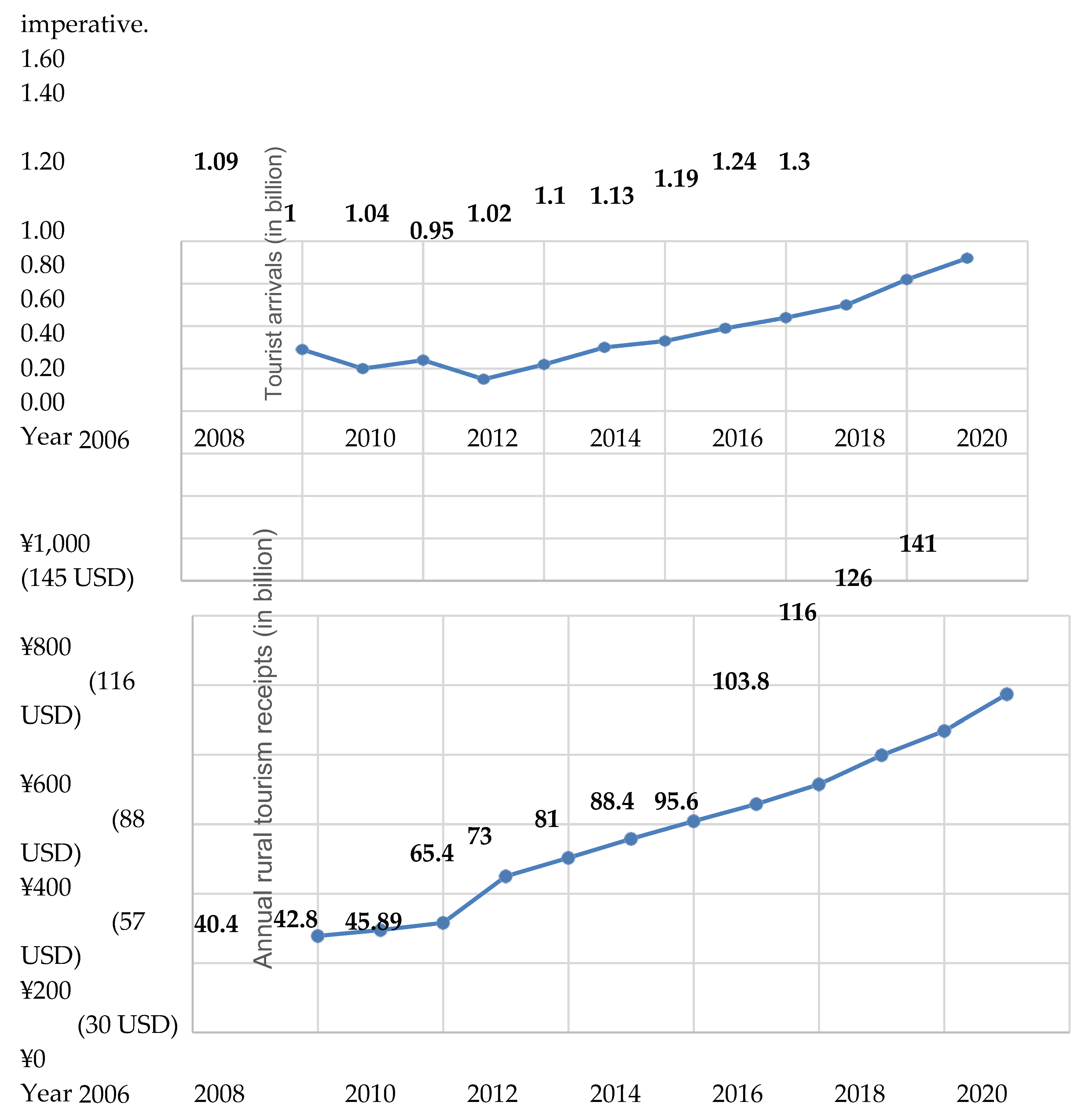
Figure 2.
Data analysis process (Authors’ plot, 2021).
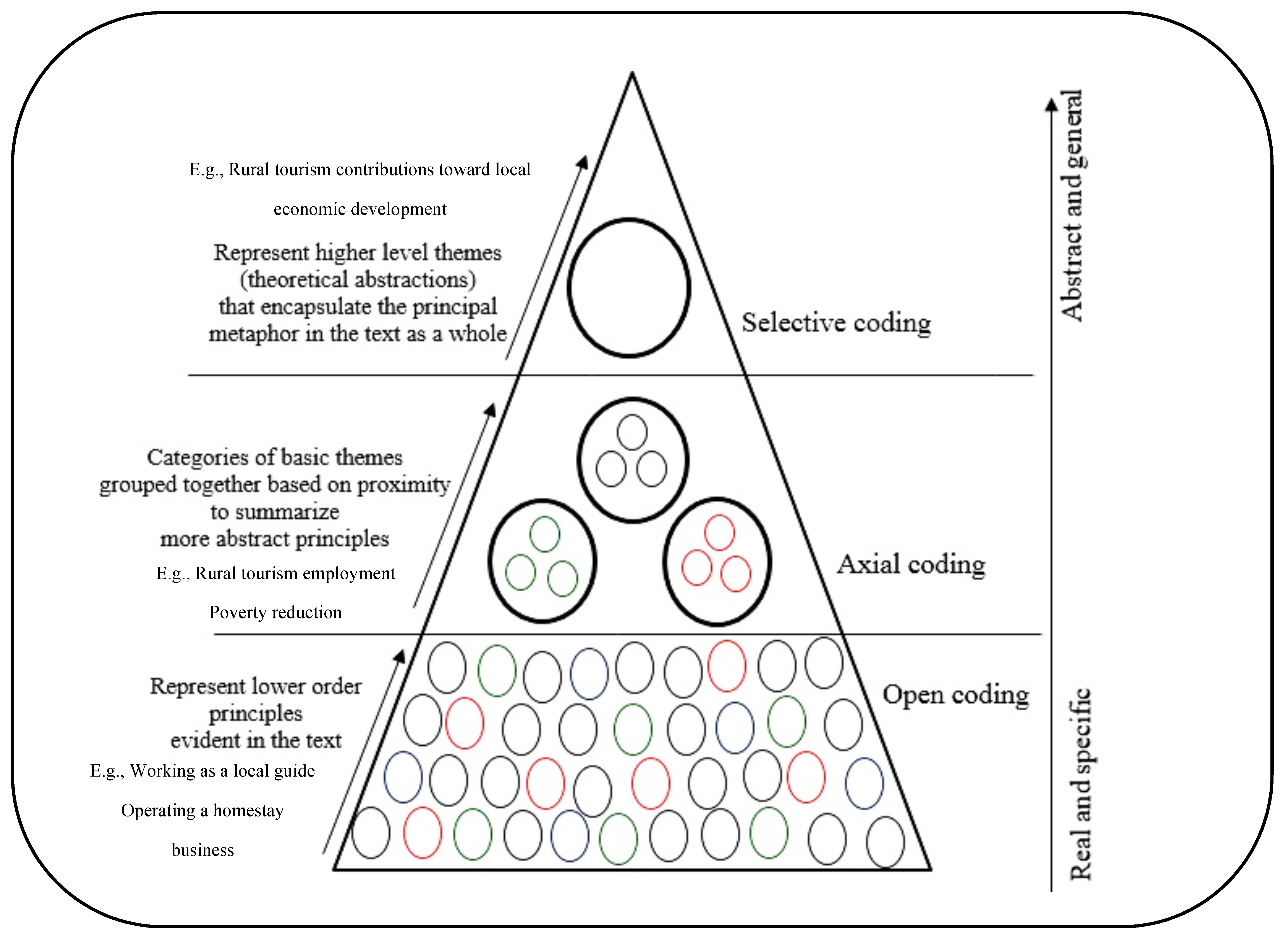

Table 1.
Demographic profiles of research participants.
| Participant No. | Participant Category | Sex | Age | Participants’ residence | Total years of experience in tourism |
|---|---|---|---|---|---|
| 1 | Local community_L1 | F | 20-30 | Linyi | 5 |
| 2 | Local community_L2 | M | 41-50 | Linyi | 7 |
| 3 | Local community_L3 | M | Above 50 | Linyi | 15 |
| 4 | Local community_L4 | M | 31-40 | Jinan | 8 |
| 5 | Local community_L5 | F | 41-50 | Jinan | 6 |
| 6 | Local community_L6 | M | 31-40 | Jinan | 10 |
| 7 | Local community_L7 | M | 20-30 | Zibo | 7 |
| 8 | Local community_L8 | F | Above 50 | Linyi | 9 |
| 9 | Local community_L9 | M | 31-40 | Weihai | 4 |
| 10 | Local community_L10 | M | Above 50 | Zibo | 16 |
| 11 | Local community_L11 | F | 41-50 | Linyi | 9 |
| 12 | Local community_L12 | F | 20-30 | Jinan | 6 |
| 13 | Local guide_LG1 | F | 41-50 | Jinan | 7 |
| 14 | Local guide_LG2 | F | 41-50 | Jinan | 9 |
| 15 | Local guide_LG3 | M | 41-50 | Linyi | 6 |
| 16 | Local guide _LG4 | M | Above 50 | Zibo | 12 |
| 17 | Local guide_LG5 | F | Above 50 | Zibo | 11 |
| 18 | Local guide_LG6 | M | 31-40 | Weihai | 5 |
| 19 | Local guide_LG7 | M | 41-50 | Linyi | 8 |
| 20 | Local guide_LG8 | F | 31-40 | Weihai | 4 |
| 21 | Tourism Professional_TP1 | M | Above 50 | Zibo | 21 |
| 22 | Tourism Professional_TP2 | M | 31-40 | Zibo | 12 |
| 23 | Tourism Professional_TP3 | F | 41-50 | Jinan | 9 |
| 24 | Tourism Professional_TP4 | F | 41-50 | Weihai | 12 |
| 25 | Local government_LGov1 | M | 41-50 | Linyi | 15 |
| 26 | Local government_LGov2 | M | 31-40 | Weihai | 8 |
| 27 | Local government_LGov3 | F | 41-50 | Zibo | 11 |
| 28 | Provincial government_PG1 | M | 41-50 | Jinan | 10 |
| 29 | Homestay owner _HO1 | F | 31-40 | Jinan | 6 |
| 30 | Homestay owner _HO2 | M | 41-50 | Weihai | 10 |
| 31 | Homestay owner _HO3 | M | Above 50 | Zibo | 11 |
| 32 | Homestay owner _HO4 | F | 41-50 | Linyi | 8 |
| 33 | Homestay owner _HO5 | M | 31-40 | Weihai | 7 |
| 34 | Restaurant owner_RO1 | M | 41-50 | Jinan | 10 |
| 35 | Restaurant owner_RO2 | F | Above 50 | Zibo | 15 |
| 36 | Restaurant owner_RO3 | M | Above 50 | Weihai | 11 |
| 37 | Restaurant owner_RO4 | F | 41-50 | Linyi | 9 |
| 38 | Shop owner_SO1 | F | 41-50 | Zibo | 6 |
| 39 | Shop owner_SO2 | M | 31-40 | Weihai | 4 |
| 40 | Shop owner_SO3 | M | 41-50 | Jinan | 7 |
| 41 | Shop owner_SO4 | M | Above 50 | Linyi | 8 |
Table 2.
Summary of leading themes extracted from qualitative data.
| No | Leading themes | Frequency |
| Benefits of rural tourism | ||
| 1 | Creates employment opportunities | 65 |
| 2 | Reduces poverty | 54 |
| 3 | Develops rural infrastructure | 47 |
| 4 | Rehabilitates local ecology | 39 |
| 5 | Creates value chains | 35 |
| 6 | Cultivates rural entrepreneurship | 29 |
| 7 | Increases the demand for rural products and services | 25 |
| 8 | Improvs rural quality of life | 25 |
| 9 | Develops rural destination | 23 |
| 10 | Stimulates local economy | 20 |
| 11 | Increases government attention to rural areas | 18 |
| Constraints of rural tourism development | ||
| 1 | Access to finance | 56 |
| 2 | Lack of capacity development training | 45 |
| 3 | Poor information technology (IT) utilization (in marketing and transactions) | 41 |
| 4 | Inadequate follow-up and technical support | 38 |
| 5 | Ineffective crisis management strategies | 32 |
| 6 | Infrastructural constraints | 27 |
| 7 | Unhealthy competition among rural tourism businesses | 23 |
| 8 | Unplanned facility development | 18 |
| 9 | Poor hygiene | 16 |
| 10 | Unsustainable business practices | 14 |
| 11 | Lack of diversification (products and services) | 12 |
| 12 | Poor integration of rural tourism | 10 |
| Interventions for the development of a resilient and competitive rural tourism | ||
| 1 | Promote the use of information technology | 61 |
| 2 | Facilitate financial access | 58 |
| 3 | Introduce a new rural tourism development model (competitive, resilient, integrated, and sustainable) | 51 |
| 5 | Community capacity development | 44 |
| 6 | Innovation and new product development (authentic and affordable) | 42 |
| 7 | Allocate sufficient budget | 37 |
| 8 | Expand infrastructural development | 34 |
| 10 | Improve environmental cleanliness and attractiveness | 34 |
| 11 | Maintain hygiene consistently | 32 |
| 12 | Engage local communities (participation and empowerment) | 31 |
| 13 | Increase stakeholders’ cooperation | 29 |
| 14 | Scale-up government support | 27 |
Disclaimer/Publisher’s Note: The statements, opinions and data contained in all publications are solely those of the individual author(s) and contributor(s) and not of MDPI and/or the editor(s). MDPI and/or the editor(s) disclaim responsibility for any injury to people or property resulting from any ideas, methods, instructions or products referred to in the content. |
© 2025 by the authors. Licensee MDPI, Basel, Switzerland. This article is an open access article distributed under the terms and conditions of the Creative Commons Attribution (CC BY) license (http://creativecommons.org/licenses/by/4.0/).
Copyright: This open access article is published under a Creative Commons CC BY 4.0 license, which permit the free download, distribution, and reuse, provided that the author and preprint are cited in any reuse.


