

Submitted:
27 April 2025
Posted:
28 April 2025
You are already at the latest version
Abstract
As a key driver for rural revitalization, the rural tourism and cultural industry plays a crucial role in promoting economic growth and represents a promising new direction for the tourism sector. However, the most challenging yet critical aspect of this industry lies in transforming cultural resources into capital, a process that involves four essential stages: resource extraction, categorization, accumulation, and conversion. To address this, the research employs Grounded Theory methodology to establish a conceptual framework. Based on this approach, the study systematically progresses through open coding, axial coding, selective coding, and theoretical saturation testing to explore the transformation process of cultural resources into capital. The findings suggest a development path driven by cultural capital, offering a practical reference for advancing the rural tourism industry and achieving sustainable rural revitalization.
Keywords:
cultural capital
; cultural resources
; rural revitalization
; Grounded Theory
; cultural tourism industry
; Longling County
1. Introduction
The definition of a rural area as a socio-economic system encompasses more than geographical boundaries; it emphasizes cultural elements, dynamic production and living patterns, and distinctive economic characteristics [1]. Rural cultural capital constitutes a central pillar of socio-economic development, manifesting not only in natural resources and physical assets but also in traditional customs, historical heritage, craftsmanship, and community ethos [2]. This cultural capital serves as a defining feature that distinguishes rural areas from urban centers while providing a foundation for economic transformation and sustainable growth [3].
Tourism and rural societies share an intrinsic connection [4]. The rise of the cultural tourism industry reflects both urbanization-driven nostalgia for agrarian lifestyles and its role as a strategic driver of rural revitalization [5]. Natural resources, cultural landscapes, and traditional skills, as expressions of cultural capital, form the core attractions of rural tourism, thereby injecting fresh vitality into local economies [3]. In the post-pandemic era, rural tourism has emerged as a vital conduit for fulfilling people’s aspirations for a high-quality life, leveraging its unique ecological and cultural values [5].
The integration of cultural, agricultural, and tourism elements defines rural cultural tourism as a multidisciplinary and cross-sectoral industry [5]. Cultural capital acts as a bridge within this sector, enhancing resource productivity and unlocking growth potentials to drive high-quality socio-economic development [4]. For sustainable progress in this field, the preservation and transformation of cultural capital are essential [6]. Such capital encompasses material dimensions, such as featured industries and heritage architecture, intangible aspects like folk traditions and craftsmanship, and spiritual elements, including nostalgia and cultural identity [7]. These resources, when thoughtfully cultivated and adapted, sustain industry growth while strengthening residents’ cultural confidence and community cohesion[8,9].
This study employs a combination of Grounded Theory and semi-structured interviews [3,10] to systematically analyze the dynamic evolution of cultural capital within rural tourism and cultural industries, ultimately constructing a theoretical framework for cultural capital accumulation and transformation tailored to China’s rural tourism sector [11]. From a theoretical perspective, cultural capital, as a vital component of social capital [12], encompasses three primary dimensions: material capital, intangible cultural heritage capital, and spiritual capital[13].
Through open and axial coding analysis informed by Grounded Theory, this research identifies three critical pathways by which rural cultural capital can be transformed into tourism competitiveness in the context of cultural-tourism integration. First, the standardized development pathway facilitates the conversion of local characteristics, traditional crafts, and folk activities into marketable tourism products and experiences. Second, the brand-oriented promotion pathway emphasizes the refinement of regional cultural uniqueness to create distinctive cultural brands and IPs. Third, the innovative multi-dimensional linkage pathway leverages emerging technologies such as virtual reality and digital currencies to develop digital tourism products, internet-based sales platforms, and immersive experiences [14].
Empirical evidence from two case studies in Guizhou Province—Xinren Miao Township’s Huayu Village in Qiannan Buyi and Miao Autonomous Prefecture and the West River Thousand Household Miao Village—demonstrates successful models of cultural capital transformation. These villages have effectively converted traditional Miao embroidery into cultural and creative products, adapted Miao folk songs into performing arts programs, and established a “Digital Miao Village” exhibition hall, showcasing innovative practices that embody the theoretical framework.
This research underscores the importance of cultural capital accumulation and its innovative transformation for sustainable development in rural tourism industries, advocating for the establishment of long-term mechanisms to facilitate cultural capital conversion [15].
Research findings reveal that the accumulation process of rural cultural capital exhibits distinct hierarchical characteristics. At the surface level, this involves the protection of tangible cultural heritage and the promotion of local specialties. At the intermediate level, it focuses on the propagation of characteristic industry brands and the transmission of intangible cultural heritage. Finally, at the deep level, it entails the internalization and externalization of value orientations [3]. Furthermore, the conversion mechanism of cultural capital reflects a multisectoral collaboration process, necessitating the joint participation of government entities, businesses, and community residents [2].
In terms of practical implications, the development of rural cultural tourism industries requires the establishment of robust mechanisms for the preservation and utilization of cultural capital, the creation of long-term conversion frameworks, and the promotion of public engagement in cultural capital development to achieve a win-win scenario and sustainable growth. Exemplifying this approach, in Sichuan Province, the collaborative model of “government guidance + corporate operations + community involvement” has successfully preserved traditional villages while maximizing cultural value [2,16]. However, current research generally overlooks the dynamic evolutionary nature of cultural capital within the context of rural cultural tourism industries, particularly regarding its accumulation and conversion pathways [17].
This study presents a theoretical framework for the accumulation and conversion of cultural capital in rural cultural tourism industries through a review of existing literature and field investigations, combined with grounded theory analysis and semi-structured interviews. It systematically explores the mechanisms of cultural capital operation [3]. The limitation of this research lies in the small sample size, suggesting a need for future quantitative research to validate the findings [4].
This paper undertakes an in-depth analysis of the development and demand of China’s rural cultural tourism industry, with a focus on Yunnan Province, Long ling County, offering theoretical support and actionable recommendations for promoting sustainable growth in local cultural tourism.
2. Research Design
2.1. Research Objects
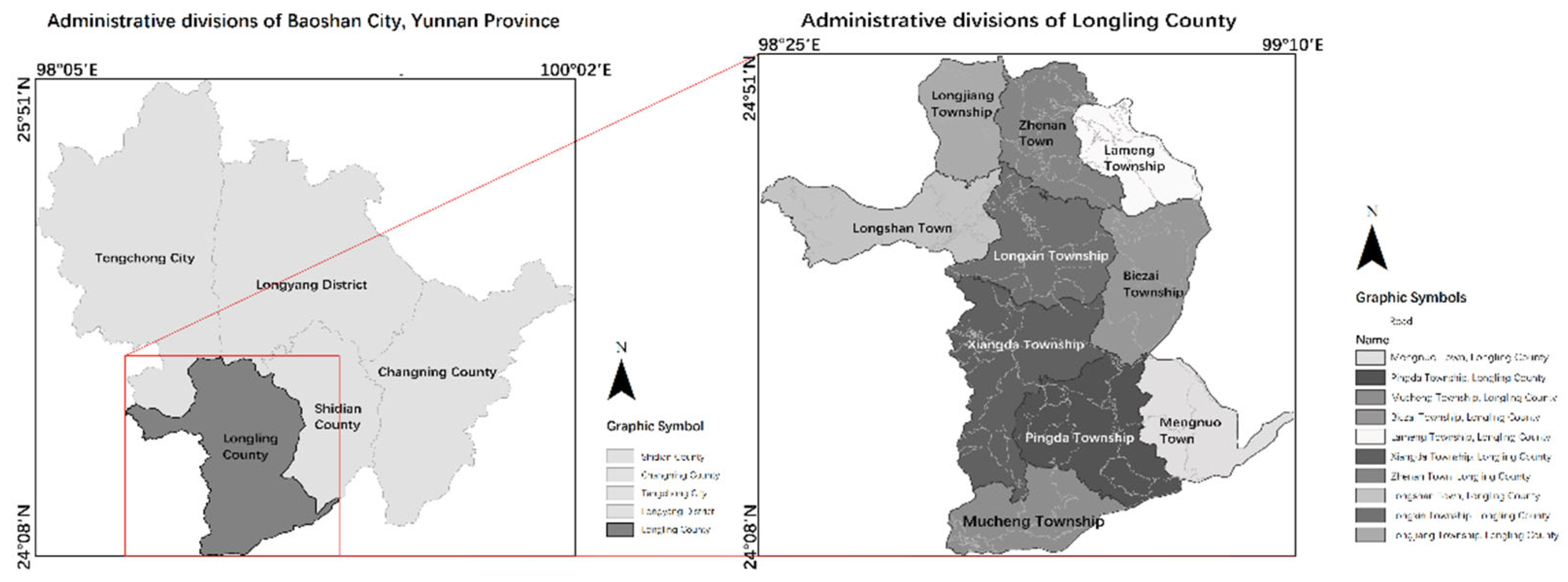
The study focuses on Longling County[18], located in the western part of Yunnan Province, China, as the research object, with a total of five townships and five townships (including one ethnic township), under which there are five communities and 116 village committees, and this study conducts field research and interviews in eight locations in six of these areas[18,19]. Longling County, as a typical representative county in the western Yunnan region of China, has a high degree of similarity in its zoning setup, development history and construction strategies with other regions in China [20]. In the early days, rural areas dominated the county’s economic development and land area, reflecting the basic characteristic of “agriculture-based” in most regions of China [21]. In recent years, under the impetus of national policies, the county has promoted the transformation and upgrading of the local economy by optimizing the industrial structure with its superior natural endowments, pleasant climatic conditions and good ecological environment [22]. However, its development is still in the primary stage of lack of development paths and development funds. Currently, the transportation conditions of the region pose certain constraints to the development of culture and tourism, but its special location advantage - located between the three major transportation hubs of Baoshan, Mangshi and Tengchong - provides an important opportunity for future development[23]. The unique tourism experience, the originality of natural resources, the simplicity of folk culture and the diversity of tourism scenes have shaped a unique core competitiveness for the county[24], and the internal logic of the excavation and development of its cultural resources provides a reference for other rural areas [25].
Figure 1.
Location of Longling County, Baoshan City, Yunnan Province.
2.2. Data Sources and Processing
In order to gain a deeper understanding of the foundation of Longling’s cultural tourism development, the local development planning and expectations of cultural tourism, and to find out the differences and gaps between the goals and the status quo, the author has adopted the research methods of literature survey, typical survey, field survey, interview survey and questionnaire survey, with the literature and case studies as the pre-cognitive and post-cognitive supplements, and has utilized the Baidu news, Bacardi, Tencent, Sohu, etc., and local government websites, such as the Baidu news portal, Baoshan People’s Government portal, etc., with the keywords of “Longling + cultural tourism” and “industry + culture”. Portal, Baoshan City People’s Government Portal and other local government websites, with “Longling + cultural tourism” and “industry + culture” as the keywords, selecting “cultural resources” in line with the theme of this study ”, “cultural tourism industry” and other cases as the supplementary research materials of the rooted theory. (See Appendix A for specific reference websites)
For the field research, the author visited a number of research sites in Longling in July-August 2024, with the aim of collecting and analyzing information to provide a basis for decision-making. The field research has traveled to Longling’s Longjiang Township Vast Terraced Fields[26], Vast Tea Gardens, Zhen’an Township’s mango base[27], Bizhai Tea Mountain, Bangla Palm Hot Springs, Huanglong jade Industrial Park, and Mucheng to carry out research and interviews. Interviews were conducted with different groups of people based on the designed questionnaire. The interviewees are divided into three categories, one is randomly selected local households and workers hired by the industry for interviews and inquiries; the other is targeted selection of industry bosses and persons in charge for in-depth exchanges and conversations; and the other category is relevant government staff. During the interviews, the questionnaire will be supplemented and deleted according to the subject’s understanding of the industry, cultural resources, resource transformation, etc., but to ensure that the basic idea and process remain unchanged.
The questionnaire is divided into three parts, targeting the various levels of cultural tourism and industry. The first part is the basic information of the respondents, including the respondents’ gender, age, specific work content and the positioning of the work in the whole chain. The second part is the development of the cultural tourism and industry survey, to understand the current situation of the personnel in the cultural tourism and industry, including the positioning of the target of the service, the current situation of the market, the promotion of the situation, the economic benefits, and the source of funds. The third part is the investigation of the future development direction of cultural tourism and industry, including product strategy, pricing strategy, industrial development planning.
This paper uses paper questionnaires plus electronic questionnaires to launch the survey, electronic questionnaires are distributed through the see number, and the types of survey respondents include cultural and tourism service enterprises, government departments, staff of mango and coffee enterprises[27,28,29,30], staff of distributors, and individual growers. A total of 87 questionnaires were returned in this survey, and 5 invalid questionnaires were excluded to get 82 valid questionnaires. In order to verify the theoretical saturation, 54 respondents were randomly selected as coded data for the rooted theory and the remaining 28 respondents were used to verify the theoretical saturation. (see Appendix A for specific questionnaire)
The statistical characteristics of the customers who received the questionnaire are shown in Table 1:
From the gender of the survey respondents, there are 63 males and 24 females, a ratio of 63:24, with males predominating. In terms of the age of the survey respondents, there are 36 people under 35 years old, 29 people between 36 and 45 years old, 16 people between 46 and 60 years old, and 6 people aged 60 years old and above, which shows that the middle-aged group and the young group are the main practitioners related to cultural tourism and industry. In terms of the types of personnel surveyed, there were 31 people from cultural tourism service enterprises, 12 people from government departments, 24 people from the staff of mango and coffee enterprises[27,29], 7 people from the staff of distributors, and 13 people from individual growers, which is a balanced distribution of the types of personnel.
(2) Development of cultural tourism and industry and future development direction issues
In response to the local cultural tourism and industry survey situation, through data analysis, it is understood that there are the following characteristics.
- Service object: there are differences in different cultural tourism types.
By cross-analyzing the survey respondents with the level of their service object hierarchy, it is found that different cultural and tourism conditions target different service populations, for example, the cultural and tourism industry is positioned higher than the mango and other industries in the crowd positioning of cultural and tourism resources such as Huanglong jade and coffee. In the case of limited government policy resources, human resources can be prioritized towards large-scale and high-benefit cultural tourism resources, so as to optimize the allocation of resources.
Figure 2.
Overall analysis of product positioning crowd in Longling cultural tourism industry.
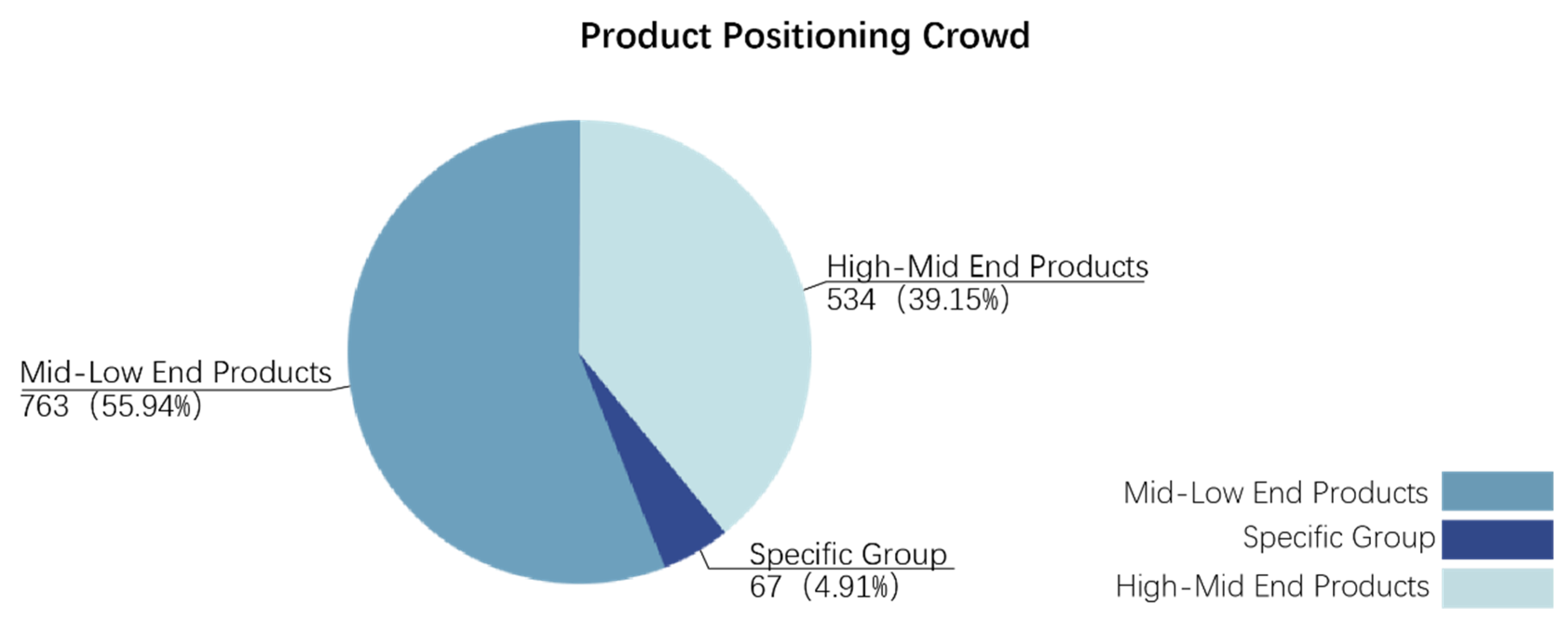
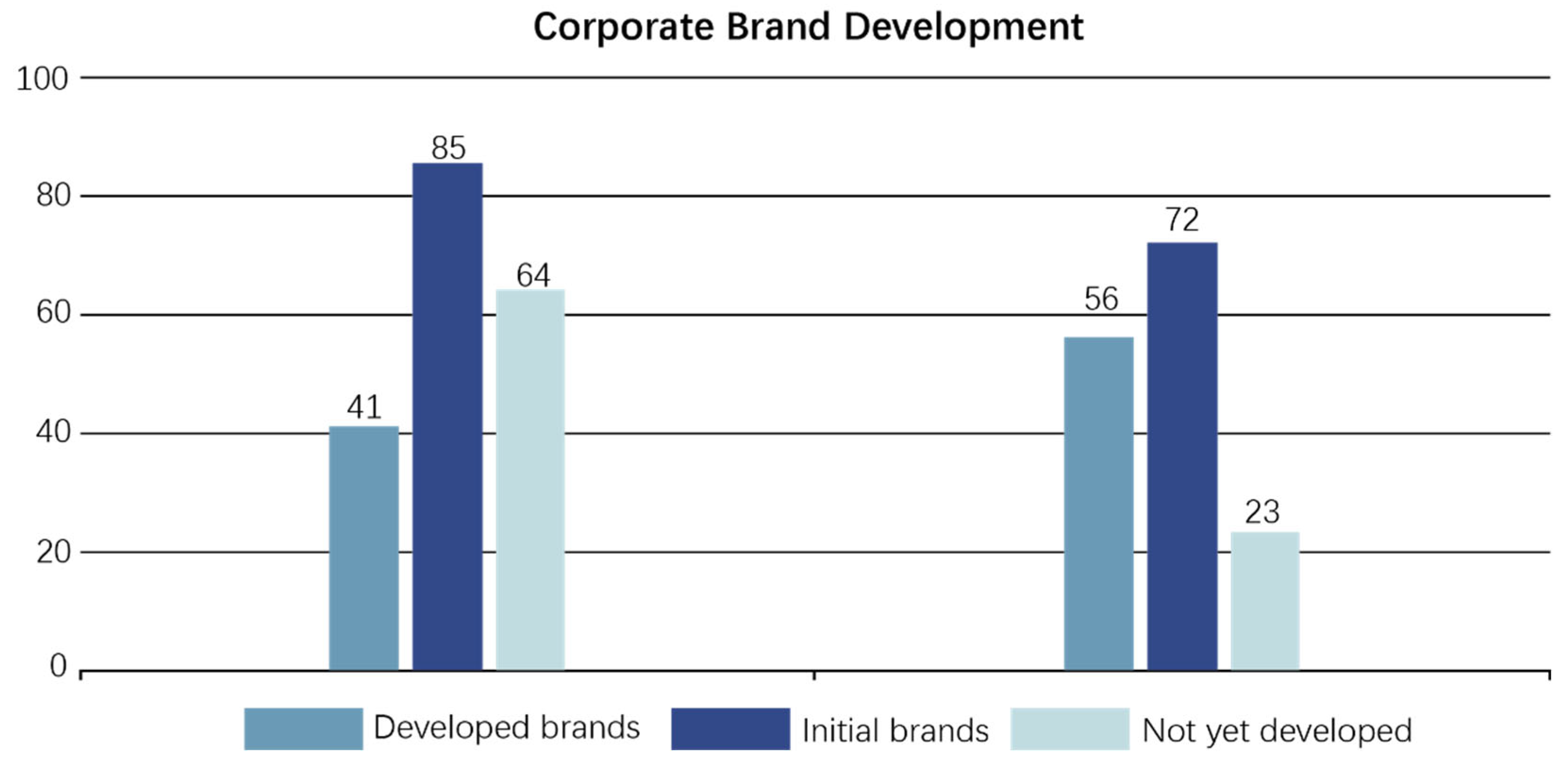
Figure 3.
Corporate brand development.
- operation mode to be optimized: the development speed and the same type of enterprises in the era there is a gap.
Culture and tourism industry enterprises can be developed for the current stage of development of personalized development approach to make up for the gap that exists between the same type of enterprises, improve the quality of service development.
- Enterprise brand development: has not formed a complete brand image.
Through the cultural tourism industry enterprise image statistics, enterprises usually through the first enhance the quality of products, after perfecting the brand image of the way to develop, the brand image of the development level are not high, did not form a brand enterprise with Longling characteristics.
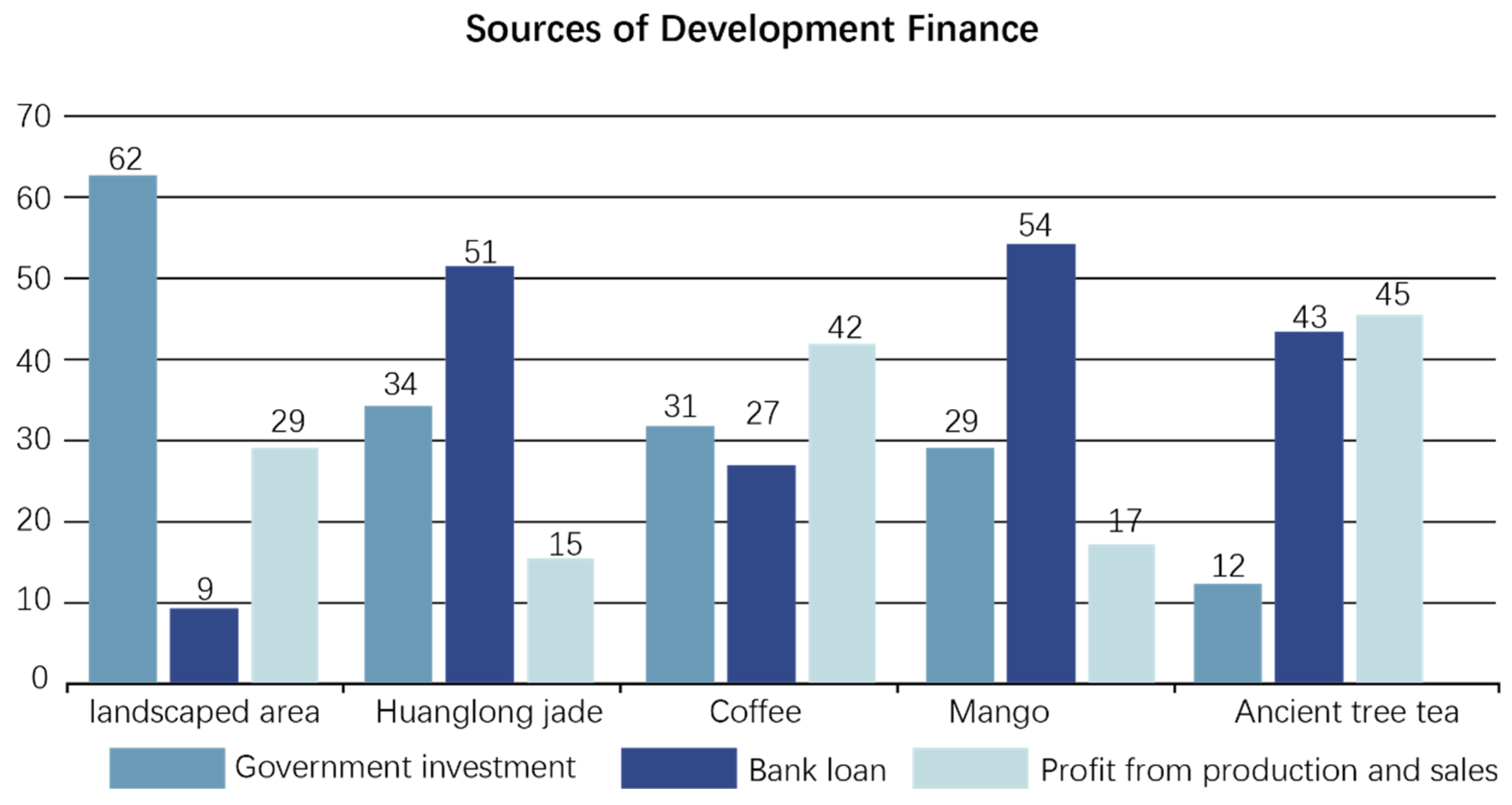
- Sources of development funds: government investment, bank loans, profits from production and sales, investment by cooperative enterprises, crowdfunding.
Facing different products, the degree and way of enterprise investment are different. As shown in Figure 3.3, about 2/3 of the enterprises prefer government investment and loans from banks for the development of agricultural products industries with long industrial cycles such as coffee and mango[27,28], while in the face of the culture and tourism industry which has to be constructed with a certain amount of works, more than half of the survey respondents support the rapid development of Longling’s culture and tourism mainly through the government’s investment in key culture and tourism projects.
Figure 4.
Statistical map of sources of development finance.
- Promotion of cultural tourism and industry: online or offline channels are initially established.
Through the investigation and analysis of the promotion of cultural tourism and industry, 60% of the enterprises have made attempts to promote offline and online, only 25% of the enterprises said that they have formed a complete online and offline promotion channels, and in response to the needs of the positioning crowd, the product marketing model should be improved in these aspects.
2.3. Research Method
This study adopts a combination of rooted theory and semi-structured interviews, aiming to explore in depth the path of accumulation and transformation of cultural capital in the rural cultural tourism industry [31]. Rooted theory, as a bottom-up qualitative research method, summarizes the core concepts and internal logic of the accumulation and transformation of cultural capital from the raw data through the process of open coding, spindle coding, and selective coding.14 The study mainly takes Longling County, Yunnan Province, as a case site, collects in-depth views and experiences from local cultural and tourism practitioners, government staff and villagers through semi-structured interviews, combines field observations and literature, systematically analyzes the dynamic evolution of cultural capital, and constructs and forms a theoretical model for the accumulation and transformation of cultural capital, which will provide practical inspiration for the development of rural culture and tourism [25].
The present study employs a mixed-methods approach that combines grounded theory with semi-structured interviews to investigate the mechanisms of cultural capital accumulation and transformation within the rural tourism and cultural industries. Grounded theory, as a bottom-up qualitative research methodology, facilitates the identification of core concepts and underlying logics through an iterative process of open, axial, and selective coding, enabling the generation of theoretically derived insights from raw data. This study primarily focuses on Longling County, Yunnan Province as the case study, employing semi-structured interviews to gather in-depth perspectives and experiences from local cultural and tourism practitioners, government officials, and villagers. These qualitative data are complemented by field observations and literature review, enabling a systematic examination of the dynamic evolution of cultural capital. Through this comprehensive approach, the research constructs a theoretical model elucidating the processes of cultural capital accumulation and transformation. The findings offer practical insights for rural cultural and tourism development, thereby contributing to the theoretical discourse on cultural capital and its application in regional development strategies.
2.4. Data Encoding
2.4.1. Open Coding
The open coding process primarily involves organizing and transforming research data, including survey responses, interview transcripts, and related materials, into textual form. Through this process, researchers dissect and deconstruct the textual content, conducting conceptual labeling of meaningful information at the word and sentence level. Specifically, each phrase and statement within the textual data is tagged according to the discrete events or phenomena it represents. Similar tags are subsequently grouped and consolidated into broader categories to achieve thematic organization. To ensure the reliability and validity of the coding process, this study implements several quality control measures. Immediately following each interview, raw data from audio recordings and survey results are archived and preliminarily coded. Additionally, to address potential misinterpretations of nuanced expressions, researchers conduct follow-up phone interviews. These subsequent communications facilitate a thorough clarification of participants’ intended meanings, thereby enhancing the accuracy of the coding process. Through iterative refinement and thematic analysis centered on the transformation of cultural resources into cultural capital within the tourism and cultural industries, the study identified 89 preliminary categories, which were subsequently grouped into 22 subcategories [32] (See Table 2).
2.4.2. Axial Coding
Axial coding emphasizes connecting the individual categories derived from open coding through a process of cluster analysis, establishing relationships between different concepts, and ultimately extracting higher-level main categories. In this study, open coding yielded 22 subcategories. These categories were then analyzed, categorized, and abstracted, focusing on their qualitative characteristics, hierarchical structure, and potential logical relationships. This process resulted in the identification of 4 ma categories that drive cultural tourism development in Longling County under the impetus of cultural capital: preservation and optimization, value recognition, standardized development, and brand promotion. The primary respondents were categorized into three groups: local industrial workers, folk artisans, and government officials. Furthermore, the study’s findings regarding development methods and mechanisms were primarily based on interviews with key personnel involved in core industries and government officials, combined with lessons learned from rural development experiences in other regions. This integrated approach provided a comprehensive understanding of the factors influencing cultural tourism development in Longling County[32]. (See Table 3)
2.4.3. Selective Coding
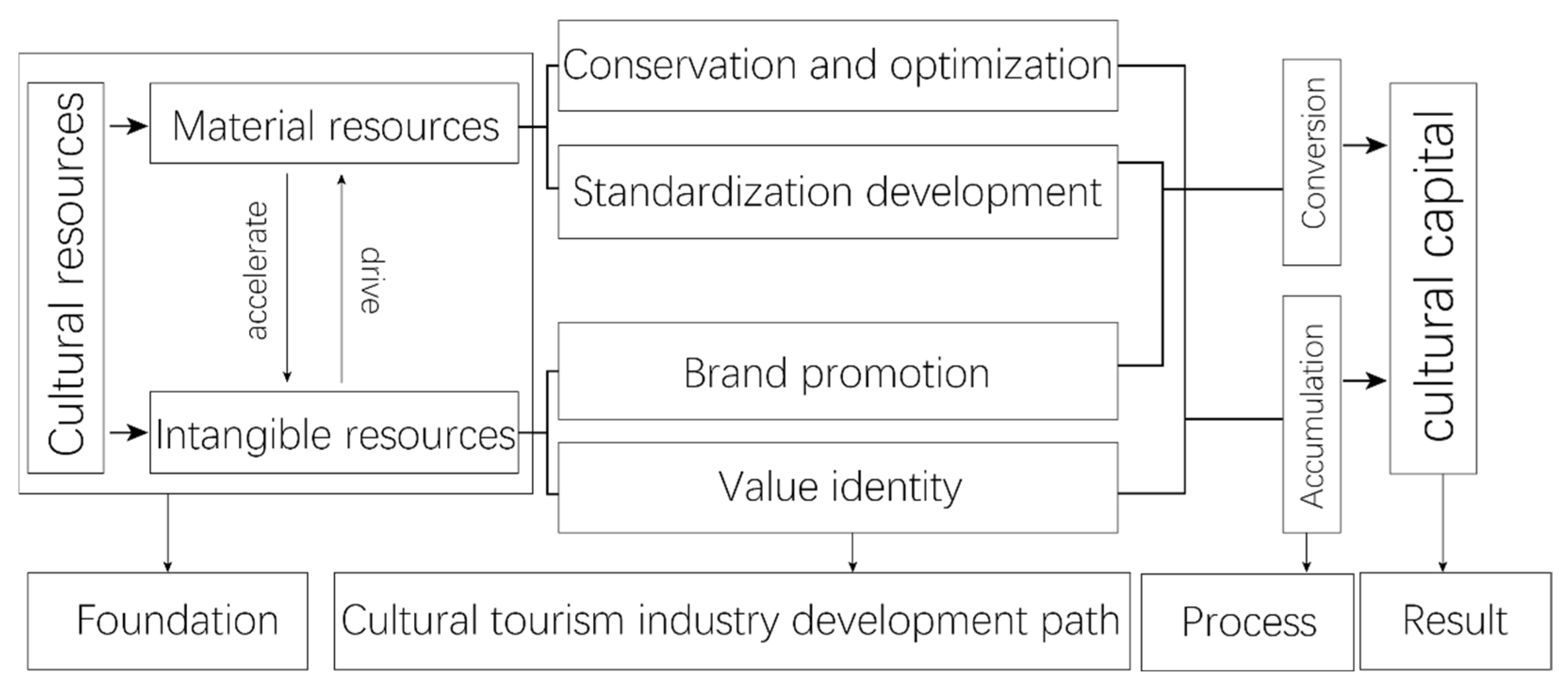
By incorporating supplementary literature and research themes, we further refined and integrated the categories identified, giving rise to the core concept of “cultural resource accumulator” as the primary pathway for cultural accumulation and transformation under cultural capital-driven rural tourism development. To ensure conceptual coherence, we examined the potential logical relationships among the derived categories and extracted an overarching narrative that synthesizes all subcategories. Specifically, the fundamental structure of rural tourism development, as conceptualized, posits cultural resources as the essential developmental foundation. Through systematically organized rural industry pathways, these resources undergo processes of accumulation and transformation, ultimately yielding cultural capital. Cultural resources encompass both tangible and intangible components. On the one hand, tangible resources serve as a foundation for the transmission and evolution of intangible cultural elements. On the other hand, intangible resources inspire the exploration and development of tangible resources at a conceptual and symbolic level. The development of tangible resources is often characterized by standardized industrial processes, brand promotion, and meticulous preservation efforts. In contrast, the development of intangible resources relies primarily on cultural identity and engagement from both local and external stakeholders [36]. As these pathways interact synergistically, they pave the way for a successful transition from cultural resources to cultural capital (Refer to Figure2. 1 for a conceptual illustration).
Figure 5.
Model of cultural capital-driven cultural tourism development mechanism.
2.4.4. Saturation Test
To ensure that the coding framework comprehensively captures the core characteristics and essence of the research subjects, a rigorous theoretical saturation test was conducted after the initial coding phase. To guarantee the reliability of the test, we employed a stratified random sampling method, selecting one-third of the interview data as the sample for examination. This sample was carefully chosen to include respondents from diverse demographic backgrounds, including variations in gender, age, and careers, thereby ensuring good representativeness. In this process, the research team conducted re-coding on the selected samples, with particular attention to the emergence of any new significant categories. The findings demonstrated a high degree of consistency between the re-coded results and the previous conclusions, with no new significant categories identified. Moreover, the core constructs consistently appeared across the sample data. These results serve to confirm that the coding framework has adequately captured the core characteristics and primary concerns of the research subjects, thereby ensuring the stability and reliability of the research conclusions [37].
3. Model Interpretation and Analysis
3.1. Accumulation of Cultural Resources
Cultural resources are the basis for the differentiated development of rural culture and tourism industry. Longling County, due to the initial stage of development--industrial development funds are limited, cultural awareness is insufficient--has not formed a culture and tourism development system. The excavation and accumulation of cultural resources only stay in the stage of independent development of the private sector, and there is no unified development and guidance.
3.1.1. Protection and Optimization of Material Resources
In terms of the protection and optimization of material resources, folk practices show multiple characteristics. From the perspective of intergenerational inheritance of traditional skills, part of the intangible cultural heritage has been more effectively protected, such as wood carving patterns, folk praying activities and other cultural elements have been continued in the rural society. It is worth noting that there are significant differences in the status of transmission of different traditional skills: lightweight crafts such as rattan chair weaving, embossing and paper umbrella making are in relatively good shape, while stone processing faces the dilemma of having no one to carry on the tradition. Practitioners involved in stone processing admitted that despite their innermost desire to perpetuate the skill, the heavy physical labor and long learning cycle have dissuaded many potential successors (Interview: July 2024, Longjiang Township, Longling County, Yunnan Province). In terms of ecological landscape maintenance, Longling County has made full use of its unique natural resource endowment and successfully constructed an eco-friendly rural landscape system through the development of green and non-polluting rice paddy farming and forest economy. Especially in terms of infrastructure construction, the local government has significantly improved the service level and reception capacity of rural tourism scenic spots through the introduction of advanced processing equipment and the improvement of public service facilities, laying a solid foundation for the high-quality development of the cultural and tourism industry.
Specifically, the effect of the implementation of these practical measures is reflected in the following aspects: firstly, the intergenerational inheritance of traditional handicrafts effectively maintains the local cultural memory and attracts a large number of tourists to experience traditional culture; secondly, the careful maintenance of ecological landscapes provides rural tourism with space for green development, the most representative of which is the combination of the rice-fish symbiosis system and the original ecological pine forest, and this ecological landscape has become an The most representative is the combination of rice-fish symbiosis system and pristine pine forest, which has become an important attraction for tourists; again, the optimization and upgrading of the infrastructure provides an important guarantee for the cultural tourism project, and a series of initiatives represented by the karting project and the construction of cultural tourism demonstration sites have significantly improved the quality of the tourists’ experience. These comprehensive measures have not only promoted the sustainable development of the rural cultural tourism industry, but also injected new development momentum for rural revitalization. However, due to the unique attributes and characteristics of different material resources, there are significant differences in their inheritance paths, input costs, and modes of expression, so more targeted strategies and adjustments are needed in the actual protection and optimization process[5,38].
3.1.2. Cultural Value Identity Enhancement
On the basis of material resource protection, Longling County further enhances cultural value identity through cultural narrative construction and accumulation of intangible culture. For example, by combining tea culture, jade culture and folk activities with short dramas and novels, Longling County not only enhances the attractiveness of cultural narratives, but also improves the dissemination of culture through digital linkages (such as Internet cultural propaganda and combining hot Internet stems). However, the process of accumulating intangible culture also faces some dilemmas. On the one hand, the inheritance of intangible culture, such as folk activities and traditional crafts, requires more financial and human resource support, while the dispersed and fragmented nature of local cultural resources poses challenges to systematic accumulation. On the other hand, how to avoid over-commercialization and alienation of cultural symbols in the process of combining cultural narratives with commerce is also a problem that needs to be solved. In the coffee industry chain, a person in charge of a coffee experience hall shared, “My family grew coffee when I was very young, and I found that the local coffee in Zhen’an had certain characteristics, and I began to explore how to promote the local coffee and start a business to grow and process coffee” (Interview: July 2024, Zhen’an Town, Longling County, Yunnan Province). And Mr. Yang of Huanglong jade Enterprise emphasized, “Combine people with stories and businessmen who do business together, organize and enhance it, turn it into different short stories, and the short stories are published every year in a book. Think about it this is the culture of Huanglong jade, cultural things actually start from the story.” (Interview: August 2024, Longling County, Yunnan Province). It can be seen that the high-end industrial sector pays more attention to cultural connotation refinement, branding and consumer recognition of product value.
The development of cultural industry needs to pay attention to the following aspects: firstly, the systematic accumulation of elements such as the construction of the industry chain’s visibility, the expansion of integration channels, the cultivation of consumer groups, the laying of the foundation for development, the financial support and the maintenance of the ecological environment; secondly, the realization of systematic transformation of the local culture through the operation of the industry, and at the same time focusing on the inheritance of the traditional skills and the continuous dissemination of the cultural stories; and lastly, the need to explore diversified cultural dissemination Finally, diversified ways of cultural dissemination should be explored. At the level of value recognition, it is reflected in the consensus of trust and good social atmosphere among community members, as well as in the internalization and externalization of cultural capital, which is specifically manifested in the conscious flow of people’s behaviors, modes of communication, and folk practices, as well as in their trust in and reliance on cultural traditions. This actually marks the highest level of accumulation of intangible cultural resources.
3.2. Cultural “Resource-Capital” Transformation
According to the coding results of the data obtained from the semi-structured interviews, it can be found that in the implementation of the “resource-capital” transformation drive in Longling County, there are more subcategories of standardized development channels, indicating that the local material resources are rich in variety, and the industrial development is relatively sound, but the combination of featured industries and local non-material resources is still omitted.
3.2.1. Standardized Development of Material Resources
Longling County has taken a series of practical measures in the standardized development of material resources. For example, tea plantations and rice paddies, as basic economic industries, provide a unique industrial foundation for cultural tourism projects through green planting and ecological and technological-based integrated development. In addition, Longling County has further developed the economic value of forests through forest planting and farming, realizing a win-win situation for both ecology and economy. In terms of jade culture and coffee industry, Longling County has transformed material resources into cultural capital by digging up the cultural connotation of jade and exploring the boutique routes of coffee, helping to renew the cultural tourism industry. These measures have not only enhanced the added value of products, but also injected cultural connotations into cultural tourism projects and strengthened their market competitiveness. In Longjiang Township, the local government is actively building “four million mu” featured projects, of which “Vast Terraced Fields” project is not only an important tourist landscape, but also an important carrier of the “land of fish and rice” cultural display. According to Director Peng of the Longling County Youth League Committee, the terrace project is positioned as a benchmark demonstration of cultural and tourism development in Longjiang Township, aiming to drive the overall development of the surrounding area through the strategy of “leading by example” (Interview: July 2024, Longjiang Township, Longling County, Yunnan Province). This is a practice of joint promotion of local ecological landscape maintenance and utilization.
Around the standardized development of material resources, the county has laid a solid foundation for rural cultural tourism development. In the field of traditional handicrafts, with the help of the combination of intangible cultural heritage elements and modern market demand, the county needs to develop cultural and creative products and experience projects with cultural symbols, continue the inheritance vitality of traditional handicrafts, and at the same time realize the enhancement of their market value through innovative design and brand building. In, scientific planting technology and standardized management processes significantly improve the quality of basic agricultural products and their market competitiveness, on the basis of the deep integration of agriculture and cultural and tourism resources, the county to create an agricultural manor, idyllic complex and other modes of industrial integration, to achieve the connotative development of the industrial economy. In the industrialization process, the local has formed a more perfect standardized development model, especially in the field of planting has made significant progress. For example, Zhen’an’s mango planting and coffee planting industries [39], Longjiang’s red fine soft rice cultivation, and Bizhai’s tea planting have all shown good development. According to the secretary of Longjiang Township, Mr. Yang, the local government is committed to building a cultural industry in the “land of fish and rice” and integrating cultural tourism development (Interview: July 2024, Longjiang Township, Longling County, Yunnan Province). However, in reality, the correlation between local industries and culture is low, and even with the help of the cultural tourism program, it is still difficult for tourists to experience the countryside in depth.
3.2.2. Industrial Brand Establishment and Promotion
It is worth noting that the development of some high-end products has received high attention, such as Huanglong jade, coffee and the not-yet-completed Bangla Palm Hot Spring Project. In the coffee industry chain, a person in charge of a coffee experience hall shared, “My family grew coffee when I was very young, and I found that the local coffee in Zhen’an had certain characteristics, and I began to explore how to promote the local coffee and start a business to grow and process coffee” (Interview: July 2024, Zhen’an Town, Longling County, Yunnan Province). This shows that the high-end industrial sector pays more attention to cultural connotation refinement, branding, and consumer recognition of product value. The county has also introduced modern technology and branding operation concepts to transform high-quality resources such as huanglong jade and bangla palm hot springs into high-quality cultural and tourism products to meet tourists’ pursuit of personalized and quality experiences. Through the deep processing and hot spring resort facilities construction, in the enhancement of the economic value of resources at the same time, the county also focuses on the depth of integration with cultural elements, strengthening the cultural perception of tourists experience. In addition, the implementation of the county’s “Vast Terraced Fields” demonstration project demonstrates the innovative practice of cultural and tourism scenic area construction[36]. Through the integrated promotion of landscape restoration and infrastructure construction, the county not only improves the ecological environment of the scenic area, but also relies on the terraced rice field culture to develop a farming experience, folklore performances and other immersive experience projects, realizing the attractiveness of the scenic area and the value of the rural culture and tourism brand double enhancement. This series of initiatives through the spatial reconstruction and cultural symbiosis, for the local culture and tourism industry of high-quality development has injected a new impetus[40,41].
Through the establishment, promotion and standardized operation of brands, the market recognition and attractiveness of related products are enhanced. The establishment of these brands not only brings growth to the local economy, but also injects cultural connotation into the cultural tourism industry. However, the process of brand promotion also faces some realistic dilemmas, such as insufficient differentiation of brand positioning and imperfect integration of industrial chain. In the future, Longling County can further enhance the brand’s market competitiveness and influence by strengthening cross-field cultural synergy networks (e.g., cooperation with online sales platforms) and focusing on the implantation of high-precision products. As Mr. Yang of Huanglong jade said, “Combine with this highly sophisticated this thing, what about this Huanglong jade, only then will it gradually move up.” (Interview: August 2024, Longling County, Yunnan Province).
3.3. Synergy of Cultural Resources Accumulation and Transformation to Promote Sustainable Development of Culture and Tourism Industry
A close synergistic relationship has been formed between the accumulation and transformation of cultural resources in Longling County. First, material resources such as historical buildings, ecological landscapes and infrastructures provide the hardware foundation for the cultural tourism industry, while intangible cultures such as traditional crafts and cultural narratives inject cultural connotations into cultural tourism projects. For example, by combining tea culture with agritourism and jade culture with short plays, Longling County has realized the innovative transformation of cultural resources. Secondly, cross-disciplinary cultural synergy networks and digital linkages also provide technical support and dissemination channels for the transformation of cultural resources. This synergistic relationship not only enhances the attractiveness of cultural tourism projects, but also lays the foundation for sustainable development. Related studies also show that the synergy between cultural resources and capital accumulation and transformation can effectively enhance the economic and social benefits of the cultural tourism industry.
The existing synergistic relationship between the accumulation and transformation of cultural resources in Longling County provides an important support for the sustainable development of its cultural tourism industry. On the one hand, material resources such as tea plantations, rice fields and jade processing equipment provide the industrial foundation for the cultural tourism project, while cultural resources such as folk activities and traditional crafts inject cultural connotations into the cultural tourism project. This synergistic relationship not only enhances the attractiveness of cultural tourism projects, but also brings growth to the local economy. However, the current development still faces challenges such as fragmented distribution of cultural resources and insufficient integration of industrial chains. In the future, the county can further optimize the accumulation and transformation mechanism of cultural resources by improving the cross-discipline cultural synergy network (e.g., establishing partnerships with e-commerce platforms) and developing high value-added cultural products, thus enhancing the sustainable development of the cultural tourism industry. This mode of synergistic development not only enhances the value of Longling County’s cultural tourism brand, but also helps to promote the overall progress of the regional economy and society. Through the above analysis, it can be found that the accumulation and transformation of cultural resources is not only the core driving force for the development of Longling County’s cultural tourism industry, but also an important reference for the development of cultural tourism in other regions. In the future, the county should further strengthen the synergistic transformation ability of cultural resources and promote the deep integration of the industrial chain in order to realize the goal of high-quality development of the cultural tourism industry[41].
4. Conclusions and Discussion
4.1. Conclusions
The accumulation and transformation of cultural capital in rural cultural tourism industry is a complex and systematic engineering construction. This process is characterized by dynamism and involves multi-dimensional integration and operation. First of all, the discovery and integration of cultural resources is the basic work of forming cultural capital. This link not only covers the systematic study of rural history, culture and folklore, but also includes the value assessment and development and utilization of natural resources and ecological landscapes. Classifying the types of cultural resources into capital into material and non-material categories is more helpful in categorizing the basic work, grasping the focus and being more targeted. This kind of work needs to be accomplished by a research team with professional knowledge background and practical experience, by means of in-depth investigation, fieldwork and textual collation and research. The simultaneous transformation of resources to capital on the basis of accumulation is a direct channel to obtain economic benefits in the rural cultural tourism industry. Among them, value recognition is the key to realizing the value-added of cultural capital, and it is the direction that needs to be invested in the development of the whole process of standardized development and brand promotion of the industry[42].
4.2. Discussion
The conversion of cultural capital in the rural tourism industry is a systematic and comprehensive process that involves several interconnected dimensions. At its core, it entails the effective integration and development of cultural resources, while simultaneously establishing robust market operational mechanisms to facilitate their economic transformation. A critical component of this process is the development of a market-oriented operational framework. This involves a comprehensive approach encompassing market research, product promotion, marketing strategies, and customer service. By leveraging multi-channel marketing tactics and establishing effective consumer communication channels, it is possible to enhance market recognition and build brand reputation. Continuous refinement of product and service offerings based on market feedback is essential for constructing a sustainable market operations system. Equally important is the role of social participation, which serves as a vital foundation for the sustained development of cultural capital transformation. This dimension encompasses a collaborative framework involving diverse stakeholders including government support, corporate investment, and community involvement. For instance, governments can implement industry development policies, businesses can contribute financial and managerial expertise, while rural communities can engage through cultural preservation and product development initiatives. This multi-stakeholder partnership creates a synergistic effect that drives overall development.
In essence, the process of cultural capital accumulation and conversion in the rural tourism sector is a complex system consisting of four integral components: cultural resource integration, creative development, market promotion, and social collaboration. By ensuring seamless integration and coherent advancement across these dimensions, it becomes possible to effectively realize the economic value of cultural resources and foster the sustainable growth of the rural tourism industry.
4.3. Limitations
Based on the exploration of the path of cultural capital accumulation and transformation in the rural cultural tourism industry in Longling County, Yunnan Province, based on the Zagan theory, this study systematically reveals the key role of cultural capital in the process of rural revitalization and its complex dynamic evolution process[8]. The research methodology adopts the semi-structured interview method and combines with the coding analysis of the Zagan theory, and successfully constructs a path model of the accumulation and transformation of cultural capital, which is useful for the in-depth understanding of the internal mechanism of the integrated development of the rural cultural tourism industry. cultural tourism integration development, providing solid theoretical support for an in-depth understanding of the intrinsic mechanism of rural cultural tourism development. However, this study demonstrates that there are still some limitations to the study: first, the geographical limitation of the sample selection may affect the generalizability of the findings; second, the research model is constructed mainly based on the existing data, which may make it difficult to comprehensively cover the diversified scenarios of rural cultural tourism development. In addition, the actual effects of rural cultural tourism development may also be constrained by multiple factors such as policy environment, market fluctuations and ecological protection, and these external variables have not been fully considered in the current study [11].
Existing studies show that there is still room for further exploration in terms of theoretical depth, empirical analysis and dynamic evolution research. Future research can be further deepened in the following aspects: first, combining the rooting theory and semi-structured interview method to explore the localization path of cultural capital; second, strengthening the integration of multidisciplinary perspectives to build a more complete theoretical analysis framework; third, expanding the research sample to enhance the universality of the research conclusions; and fourth, introducing more external variables such as the policy environment, market factors, etc., and comprehensively assessing their impact on the rural cultural tourism development.
4.4. Further Development
In the future academic exploration and social practice, we can consider further deepening the research on the mechanism of cultural capital accumulation and transformation from multiple dimensions, combining theoretical analysis and empirical research to build a more complete research system. First of all, at the level of research methodology, the representativeness and diversity of research samples can be expanded to cover groups with different socio-economic backgrounds, age structures and education levels through stratified sampling and other methods, so as to reflect the dynamic process of cultural capital accumulation more comprehensively; at the level of regional comparative research, the research perspective can be expanded from a single region to the national scope, especially in the horizontal comparison between different ethnic regions, economically developed regions and less developed regions. Horizontal comparison between less developed regions.
At the level of practical application of cultural tourism, combined with the in-depth promotion of the national strategy of rural revitalization, it can be carried out in terms of policy guidance and optimization of market mechanism[17]. It can provide institutional guarantee for the development of the rural cultural tourism industry through tax concessions, special fund subsidies, infrastructure investment, etc.; it can also introduce social capital, innovate the business model, and promote the effective combination of cultural capital and economic capital. In the process of digital transformation of the cultural tourism industry, new technologies such as big data, artificial intelligence and virtual reality can be used to innovate cultural communication methods and enhance the value of cultural experience. For example, through the construction of a smart tourism platform, accurate marketing of tourism resources and personalized services can be achieved.
In terms of sustainable development, it is necessary to pay special attention to the role of green finance in the transformation of cultural capital; strengthen the construction of talent cultivation mechanisms for the cultural tourism industry, and enhance the professional skills and innovation capabilities of local residents through vocational training and educational cooperation programs, so as to provide talent protection for the sustainable transformation of cultural capital [5,43].
In addition, with the continuous upgrading of consumer demand, there is a growing demand for personalized, experiential and quality cultural tourism consumption. This requires the rural culture and tourism industry to focus on cultural heritage and meet modern consumer needs in the development process. Innovative forms such as special festivals, non-heritage experience projects, and theme lodging can be used to create unique cultural and tourism products with local characteristics, and to achieve a win-win situation in terms of economic and cultural benefits.
Future research and practice should focus on the combination of theoretical analysis and practical exploration, and through multidisciplinary cross-research, build a universal and operable cultural capital transformation model to provide theoretical guidance and practical reference for the implementation of rural revitalization strategy.
Appendix A. Questionnaire on Cultural Capital and Rural Industry
Section 1: Basic Information
1. What industry do you work in?
□Cultural Tourism Service Enterprises □Government □Mango Enterprises
□coffee Enterprises □Supplier staff □Individual Grower
2. What do you think is the demographic profile of the products in your business?
□Middle age □Young age □elderly user groups □hobby □Popular, low-end □Boutique, high-end □special population
3. The stage of development of the company you work for or how many people in the business?
□Just starting □<10 people □10-50 people □50-200 people □>200 people
4. What do you expect your business to look like?
□Improvement of product quality □Scaling up and multi-genre development □National roll-out □Online e-commerce sales □Offline shop sales
5. What are the ways to promote your business products?
□E-commerce live sales □Offline shop promotion □Distributor sales □Participation in relevant competitions □Referral from an acquaintance
6. Sources of financing for enterprise development
□Investment in government projects □Bank loan □Product marketing profit
Section 2: Open-ended Question
7. Do you enjoy your job?
8. Can you describe the strengths and needs of your job?
9. How do you plan to further develop your business in the future?
10. Can you tell us something about your work and life that stands out for you?
References
- Liu, M.C.; Wang, A.C. New Productivity Enabling High-Quality Development of Rural Culture and Tourism Industry: Mechanisms, Dilemmas and Countermeasures [J]. Journal of Social Science of Harbin Normal University 2025, 16, 64–69. [Google Scholar]
- Shao, L.T. Exploring the Path of Rural Tourism to Promote the Strategy of Rural Revitalization [J]. Tourism Overview 2022, 15, 163–165. [Google Scholar]
- Zhang, Z.Q. Exploring the Development Strategy and Path of Rural Cultural Tourism [J]. Tourism Overview 2024, 5, 89–91. [Google Scholar]
- Li, Y. Analysis on the Development Strategy of Rural Tourism Cultural and Creative Industry under the Background of Rural Revitalization Strategy [J]. Tourism Overview 2022, 24, 176–178. [Google Scholar]
- Qin, Z.C.; Gao, P.Z. Research on the Integration Path of Rural Culture and Tourism Industry and Science and Technology in the New Era--Based on the Perspective of Production Factors [J]. Economic and Social Development 2022, 20, 52–60. [Google Scholar] [CrossRef]
- Qiu, Z.C. The Value Dimension of the Concept of Cultural Tourism Integration and the Practice of Rural Cultural Revitalization [J]. Social Scientist 2021, 9, 51–55. [Google Scholar]
- Wang, J.J. Qinghai University. Research on the path of integrated development of rural culture and tourism industry in ethnic areas under the perspective of rural revitalization [J]. Gansu Agriculture 2024, 1, 89–95. [Google Scholar] [CrossRef]
- Zhao, H.H. Exploring the development mechanism and mode of rural revitalization under the guidance of cultural and tourism integration [J]. Tourism and Photography 2022, 10, 13–15. [Google Scholar]
- Sojen, P.; E. L D.; Sanjay, L. The nexus between cultural tourism and social entrepreneurship: a pathway to sustainable community development in Nepal[J]. J HERIT TOUR 2022, 17, 615–630. [Google Scholar]
- Wang, Y.; Sui, P.H.; Yin, X.Y.; Chen, Y.L. Analysis of Influencing Factors on the Construction of New Business Models of Rural Cultural Tourism [J]. China Journal of Commerce 2023, 10, 29–32. [Google Scholar] [CrossRef]
- Ren, J.R. Research on Creative Transformation of Ecological and Cultural Resources of Traditional Villages [J]. Jiangsu Commercial Forum 2022, 1, 62–67. [Google Scholar] [CrossRef]
- Feng, Y.N. Research on the development mode of tourism industry in the context of rural revitalization [J]. Marketing 2023, 16, 74–76. [Google Scholar]
- Gong, X.P.; Pan, J.X. Research on the Integrated Development of County Culture and Tourism in the Context of Rural Revitalization--Taking Longmen County as an Example [J]. Journal of Guangdong Radio & Television University 2023, 32, 92–99. [Google Scholar]
- Liu, S.; Wang, J.H. Research on the Path of Diversified Tourism Model to Promote Rural Revitalization [J]. Management Observer 2018, 23, 59–61. [Google Scholar]
- Sun, M.; Wu, N.C.; FA, Y.Q. Selection and Embodiment of Cultural Elements for Renewal and Restoration of Traditional Villages in the Context of Rural Revitalization [J]. Urbanism and Architecture 2024, 21, 44–48. [Google Scholar] [CrossRef]
- Peng Pai. Available online: https://m.thepaper.cn/newsDetail_forward_28397708 (accessed on 16 August 2024).
- Wang, Q. Research on the Mechanism and Path of Cultural and Tourism Integration Enabling Rural Revitalization [J]. Journal of Shandong Academy of Governance 2022, 4, 61–69. [Google Scholar]
- People’s Government of Longling County. Available online: https://www.longling.gov.cn/ (accessed on 22 July 2024).
- SOHU. Available online: https://www.sohu.com/a/704679533_100257233 (accessed on 2 August 2024).
- Zhang, J.Y. Research on the Development Path of Baoshan Culture and Tourism Industry [J]. Farm Economic Management 2024, 10, 34–37. [Google Scholar]
- Tencent. Available online: https://new.qq.com/rain/a/20240825A044T300 (accessed on 9 August 2024).
- Peng Pai. Available online: https://m.thepaper.cn/newsDetail_forward_24855597 (accessed on 5 August 2024).
- Huan Qiu. Available online: https://m.huanqiu.com/article/4B4TUMH7SxR (accessed on 10 July 2024).
- People’s Government of Baoshan City. Available online: https://www.baoshan.gov.cn/info/1037/10049674.htm (accessed on 3 August 2024).
- Tang, L.; Xie, S.Y. Discussion on the Positioning of Government Functions in Rural Tourism - An Empirical Study Based on Rooted Theory [J]. Journal of Social Science of Harbin Normal University 2016, 7, 98–102. [Google Scholar]
- Xinhuanet. Available online: http://www.yn.xinhuanet.com/20240624/7c76f0ab7c9a4b82ab57b27d55bb1453/c.html (accessed on 7 September 2024).
- People’s Government of Longling County. Available online: https://www.longling.gov.cn/info/5634/171274.htm#:~:text=%E8%8A%92%E6%9E%9C%E6%98%AF%E9%BE%99%E9%99%B5%E5%8E%BF (accessed on 7 August 2024).
- People’s Government of Longling County. Available online: https://www.longling.gov.cn/info/5634/4027769.htm (accessed on 25 June 2024).
- Longling, Baoshan: Reinventing the Coffee Industry Throughout the Chain. Available online: https://yn.yunnan.cn/system/2024/02/23/032952842.shtml (accessed on 22 July 2024).
- Returning to his hometown to start his own business, Yunnan Longling youth Chu Mingxiao’s ‘coffee dream’. Available online: https://baoshan.yunnan.cn/system/2024/03/04/032963108.shtml (accessed on 2 August 2024).
- Zwierzchowska, J. Tourism in Rural Areas of Castilla-La Mancha[J]. MISC GEOGR 2008, 13, 231–237. [Google Scholar] [CrossRef]
- Cai, L.B.; Wang, L.W. Research on factors and mechanism of cultural tourism integration in cultural heritage sites--Taking the example of Laosicheng site in western Hunan [J]. Journal of Sichuan Normal University (Social Sciences Edition) 2023, 50, 91–97. [Google Scholar] [CrossRef]
- Yunnan Forestry and Grassland Bureau. Available online: https://lcj.yn.gov.cn/html/2023/zcjd_1121/70244.html (accessed on 16 June 2024).
- Bai, Du. Available online:. Available online: https://baijiahao.baidu.com/s?id=1808886383313190004&sShare=2 (accessed on 15 July 2024).
- People’s Government of Longling County. Available online: https://www.longling.gov.cn/info/9138/3970219.htm (accessed on 25 July 2024).
- Jiang, H.; Feng, W. User demand analysis of tourism cultural and creative products based on rooting theory [J]. Western Leather 2022, 44, 46–51. [Google Scholar]
- Jiang, H.P.; Wu, W.Z.; Lan, Y.; Ding, Q.J. The Conflict and Coordination Mechanism of Interpersonal Relationship between New and Old Residents in Community Reorganization at Heritage Sites: A Model Based on Tangkou in Huangshan [J]. Sustainability 2023, 15. [Google Scholar] [CrossRef]
- Song, H.M.; Zhu, C.; Nang, H.L.F. Exploring Residents’ Perceptions and Attitudes towards Sustainable Tourism Development in Traditional Villages: The Lens of Stakeholder Theory [J]. Sustainability 2021, 13, 13032–13032. [Google Scholar] [CrossRef]
- Tencent. Available online: https://view.inews.qq.com/k/20210706A07HTX00?web_channel=wap&openApp=false#:~:text=%E9%A3%8E%E7%94%9F%E6%B0%B4%E8%B5%B7%E7%9A%84%E8%8A%92 (accessed on 2 September 2024).
- Maryam, P. Searching for possible potentials of cultural and creative industries in rural tourism development; a case of Rudkhan Castle rural areas[J]. Consumer Behavior in Tourism and Hospitality 2022, 17, 180–196. [Google Scholar]
- Li, W.; Li, Z. Intangible Cultural Heritage Sustainable Development from the Perspective of Rural Cultural Industry - Taking Shengzhou Bamboo Weaving in Zhejiang, China as an Example[J]. ART DES 2020, 3. [Google Scholar]
- Wang, H.X.; Yang, B.; Chen, S.J.; Liu, X.Z.; Qi, F.Y. Research on rural tourism development model in the Yellow River Basin based on network attention [J]. Chinese Journal of Agricultural Resources and Regional Planning 2024, 45, 221–235. [Google Scholar]
- Yin, Y.M. Research on Emotional Experience and Generation Mechanism of Rural Tourists [D]. Huaqiao University, 2019. [Google Scholar] [CrossRef]

Table 1.
Descriptive statistics of respondents’ characteristics.
| variable | type | people’s number | percentage(%) |
| gender | man | 48 | 55.17% |
| woman | 39 | 44.83% | |
| age | under 35 years old | 36 | 41.38% |
| aged 36 to 45 | 29 | 33.33% | |
| aged 46 to 60 | 16 | 18.39% | |
| over 60 years old | 6 | 6.90% | |
| personnel type | cultural and tourism service enterprises | 31 | 35.63% |
| government | 12 | 13.79% | |
| staff members of mango and coffee enterprises | 24 | 27.59% | |
| staff members of the suppliers and distributors | 7 | 8.05% | |
| Individual growers | 13 | 14.94% |
Table 2.
Example of open coding.
| Original Interview Materials | Preliminary Categories | Conceptualization | Subcategories |
| I reported to the county that the establishment of such a county-level project or city-level project, the story of the people and business combined together, the Huanglong jade organized to enhance the different small stories, small stories published annually in the book ... I do this embossing for more than 20 years, learning a fur is very easy, but a lot of skills are very complex! (W1、W63-69) | Establishment of county-level projects or municipal-level projects; stone processing crafts, paper umbrella processing crafts, rattan chair weaving techniques, and material bearing traditional crafts; | aa1 Establishment of subject research;aa2 Crafts passed on from generation to generation | a1 Preservation of authenticity |
| Rhododendron [33], the forest preserve, uses this view to attract tourists... (W8-12) | Original ecology; raising fish in the rice paddies without chemical fertilizer and pesticides, green and non-polluting, attracting tourists by the beautiful scenery.; | aa3 Native pine forests; aa4 Rice-fish symbiosis system; aa5 Taking advantage of the landscape; | a2 Ecological landscape maintenance |
| The whole village wood processing no one better than our side of the family to do, we are 10 years ago the introduction of a carving with a computer (W3、W9) | Jade design, processing and carving, introduction of a computer for carving | aa6 Introduction of processing equipment | a3 Infrastructure optimization |
| This tea tree was in the Qing Dynasty before, so this tea tree is more than 300 years old, we are the ancestors from Zhen’an moved to the mountain... (W47-52) | Tea trees are over 300 years old, an ancient tea-horse road, mountain guardians, tea guardians | aa7 Ancient Tea-Horse Road, aa8 Spatial Conservation of Agricultural Cultural Heritage | a4 Village space protection |
| August 3rd torch festival is in Mucheng, belongs to the Yi minority festival, Mucheng Township ah, belongs to an ethnic minority township, Longling County is the most remote, and Myanmar across the Nu River... (W10-15) | The patterns of wood, stone and jade carvings represent blessings; family ancestor worship; fairs and rushes | aa9 stone pattern; aa10 paper umbrella pattern; aa11 jade modelling; aa12 story accumulation | a5 Geographical character presentation |
| So these things, it needs to be done every year, every year to precipitate, so including this Huanglong jade museum from scratch (W5-9) | Combine people with stories and merchants who do business, and organize and elevate it to become a story | aa13 Combining story and business; aa14 collating stories | a6 Cultural Narrative Construction |
| Since then I have been exploring ways to promote local coffee and started a business to grow and process coffee. (W6-9) | Promote and start a business to grow and process coffee, so that more people outside the country can drink and enjoy the coffee here. | aa15 Love for hometown causes; aa16 Advancing innovative hometown industries; | a7 emotional link |
| Since then I have been exploring ways to promote the local coffee and started a business to grow and process coffee, and have fallen in love with the land. (W16-20) | Because of his commitment to the coffee industry, he learnt the traditional techniques from his father’s generation and gradually fell in love with the land. | aa17 Material carries nostalgia; aa18 Craft carries kinship; aa19 Sense of belonging to the land | |
| But it’s a hobby for us, we just love the craft... (W61-62) | Folk festivals are held regularly, it feels good to live in the area, and tourists like to participate in local folklore events | aa20 enjoy local speciality; aa21 enjoy local festivals; aa22 carry out folklore activities independently | a8 cultural identity |
| I am in the rattan craft and have been weaving for 46 years, our heritage started in 65... (W61-62) | There are local craftsmen in jade carving, general stone processing, rattan chair weaving, paper umbrella making, and wood carving, and the crafts are passed down from generation to generation | aa23 Stone Processing Craft, aa24 Paper Umbrella Processing Craft, aa25 Rattan Chair Weaving Craft, aa26 Jade Processing Craft; | a9 Traditional Craft Inheritance |
| The painting on the surface of this oil-paper umbrella is commonly ‘plum, orchid, bamboo and chrysanthemum’, which is elegant and noble, and has a good meaning. (W57-60) | Different motifs have different meanings, most of which represent prayers, wishes, reunions, etc.; there are small-scale ancestor festivals in the village based on the nuclear family; the village has regular market rushes | aa27 Wood carvings with floral symbolism; aa28 Folkloric prayers; | a10 Ethnic Element Mining |
| A few rides set up in trees were done in the front, the ground was not cleared too much, there were no weeds, small ones were not affected. Go-karts were also introduced at that time... What is being done now is to transfer that rice paddy economy and raise fish in the rice paddies to carry out and promote the rice paddy park later on. (W21-25) | Introduced go-karting and other tourism projects; combined online and offline sales; supervision and management in place, promoting material as culture, demonstrating the value of material things; job division of labor refinement to expand employment and improve the professionalism of employees | aa29 Employment expansion; aa30 Talent acquisition; aa31 Entrepreneurship development; aa32 Industry segmentation | a11 Development of the industrial base |
| We build our activity facilities in the forest underneath the forest and do not cut down trees...camping is possible in the off-season, this one is very gentle (W23-27) | Understorey cultivation, farming, exploitation of the value of understorey space in forests, and other economic methods, as well as the cultivation of high-quality coffee, taking advantage of the high altitude and good environment. | aa33 Accumulation of industrial capital: aa34 Improved land use; aa35 Higher altitude and better environment | |
| Under a simple children’s recreational facilities, these facilities require frequent maintenance, because this side of the project is limited, the introduction of enterprises can not maintain the capital and income, it is difficult to maintain (W21-27) | Construction of various infrastructures, continuous expansion and renovation of scenic spots, and favorable policies to mitigate population loss. | aa36 Development base optimization; aa37 Construction of infrastructure; aa38 Expansion of scenic projects; aa39 Launch of favorable policies; | |
| This tea plantation actually want to do a view, but did not complete the repair ... our development concept in the past few years, is centered on the integration of agriculture and tourism ... also need e-commerce, e-commerce with goods is very helpful in merchandising! (W24、W30-32) | Agri-tourism, cultural tourism and mutual reinforcement; ecological development; combined with the Internet to promote the bandwagon | aa40 Traditional-modern integrated development; aa41 Combined agritourism; aa42 Eco-technological; aa43 Combined tea plantation development[34]; aa44 Combined terraced field development | a12 Integrated development |
| We have been trying different varieties every year, and we are also talking about a village with one product and a village with many products. (W28-31) | Introducing new planting, carving and breeding techniques, promoting local products through the Internet, establishing the Huanglong jade Museum and the Grain Museum[35], and taking the “Vast Terraced Fields” in Longjiang Township as the core to drive the development of the surrounding area. | aa45 Cross-disciplinary cultural synergy network; aa46 Combined online and offline sales; aa47 Jade written as a story; aa48 Establishment of a museum; aa49 Establishment of a demonstration site; aa50 Cultural and educational co-construction | |
| The paddy park radiates from our whole paddy field, made a central point, a demonstration point (W31-34) | Be a demonstration and center point for cultural tourism projects | aa51 Driven development; aa52 Establishment of cultural tourism demonstration sites | a13 Industrial economic upgrading |
| This area is trying to promote the integration of tea tourism, digging into the traditional history and culture, and then introducing some modern concepts...those art concepts have to combine a little bit of tradition and modernity. (W35-36) | Using the culture of the land of fish and rice, carry out and promote the elements of paddy parks and tea culture; combine them with short dramas, novels and animations; and write stories about jade, transforming it into culture and combining it with short dramas to attract audiences; | aa53 culture IP value transformation; aa54 emphasis on tea culture; aa55 emphasis on fish and rice villages | |
| In fact, the quality of our tea here is very good, but the fame has not gone out... The rice we push on our side is called red fine soft very good, very good quality and high nutritional value (W32-34) | Tea plantations and rice paddies are plantations, which are the basic economic industry of Long Jiang; jade and coffee are mid-range and high-grade this product; communicate with outside merchants and anticipate in advance to reduce losses; | aa56 target market orientation; aa57 product orientation; aa58 development content orientation | a14 Market operations |
| This tea, in fact, there are boutique tea for sale and non-boutique tea for sale, boutique tea is hand-picked, one leaf, one bud, but then the labor cost is very high...(W36-39) | aa59 differentiated selling channel construction; aa60 communicating with merchants | ||
| A simple facility for children’s recreation was made under the forest, and these facilities need to be maintained frequently... At that time, we thought about preparing to build a recreation industry, and in fact this forest is very suitable for recreation... (W40-42) | Understorey cultivation, farming, exploitation of the value of understorey space in forests and other economic methods for sustainable development at the local level | aa61 Eco-friendly development; aa62 Forest plantations; aa63 Forest farming | a15 Sustainable development: eco-friendly development |
| We invite in is we hold Huanglong jade carving competition in Longling every year, through the carving competition, every year the whole a Huanglong jade publicity is very very good. (W2-7) | Every year, the Huanglong jade carving competition is held in Longling, inviting people from all over the world to come to participate and watch the competition, emphasizing on bringing in and going out | aa64 organize competitions; aa65 organize exhibitions | a16 Advocacy for locality |
| These large domestic jewel exhibitions are to participate in, carving competitions should also participate in, is to improve our Huanglong jade show volume and exposure (W2-7) | To participate in big jewel shows to increase the amount of Huanglong jade shown and exposure; | aa66 Increased exposure; aa67 Participation in competitions. | a17 Cultural impact enhancement |
| There must be a book published every year in the name of the museum, and not just a few pictures posted...for the clientele to be positioned as a middle to high end user group in society (W6-9) | Taking over the former industry and continuing to explore how to promote local coffee; focusing on the middle and high-end user groups in the society; developing the industry while promoting the industrial culture and building the industrial brand. | aa68 heritage linkage; aa69 cultural and educational co-construction | a18 Cross-cutting cultural synergy network |
| Now short videos have to be done, and then the next step is audiobooks and short dramas, and to push it, the lowest cost and easiest to push is actually the short dramas...(W3-7) | Industry campaigns are integrated with digital media, with webisodes and web articles | aa70 Cultural promotion on the Internet; aa71 in conjunction with short plays; aa72 in conjunction with web articles | a19 Digital linkage |
| Our company from the beginning of the establishment of the boutique route has been to take, for the positioning of the customer is the society of the middle and high end of the use of groups, which is the company to survive and develop the basic conditions ...(W12-16) | Working for a coffee company, positioning mid-range and high-end products, taking the boutique route; organizing and forming the cultural story of Huanglong jade. | aa73 coffee boutique route; aa74 jade cultural excavation | a20 Cultural Value Reconstruction |
| As times are constantly evolving, the future is definitely a combination of online and offline sales (W56-60) | Join the network segment, in the sales pitch to increase the number of viewers; the development of the product should be combined with the high and sophisticated things to gradually replace the value | aa75 combined with media campaigns; aa76 transcripts | a21 Cultural memory activation |
| Combine with this high precision this thing to extend the value of Huanglong jade (W3-5) | aa77 Incorporating hot internet terriers; aa78 Highly sophisticated product placement | a22 Consumer targeted precision operations |
Table 3.
Example of axial coding.
| Main Categories | Subcategories | Conceptualization |
| A1 Material-Accumulation Conservation and Optimization |
a1 Preservation of authenticity | aa1 Establishment of subject research;aa2 Crafts passed on from generation to generation |
| a2 Ecological landscape maintenance | aa3 Native pine forests; aa4 Rice-fish symbiosis system; aa5 Taking advantage of the landscape; | |
| a3 Infrastructure optimization | aa6 Introduction of processing equipment | |
| a4 Village space protection | aa7 Ancient Tea-Horse Road, aa8 Spatial Conservation of Agricultural Cultural Heritage | |
| a5 Geographical character presentation | aa9 stone pattern; aa10 paper umbrella pattern; aa11 jade modelling; aa12 story accumulation | |
| A2 Intangible - Accumulation Value Identity |
a6 Cultural Narrative Construction | aa13 Combining story and business; aa14 collating stories |
| a7 emotional link | aa15 Love for hometown causes; aa16 Advancing innovative hometown industries; | |
| aa17 Material carries nostalgia; aa18 Craft carries kinship; aa19 Sense of belonging to the land | ||
| a8 cultural identity | aa20 enjoy local specialities; aa21 enjoy local festivals; aa22 carry out folklore activities independently | |
| a9 Traditional Craft Inheritance | aa23 Stone Processing Craft, aa24 Paper Umbrella Processing Craft, aa25 Rattan Chair Weaving Craft, aa26 Jade Processing Craft; | |
| a10 Ethnic Element Mining | aa27 Wood carvings with floral symbolism; aa28 Folkloric prayers; | |
| A3 Material -Conversion Standardization Development |
a11 Development of the industrial base | aa29 Employment expansion; aa30 Talent acquisition; aa31 Entrepreneurship development; aa32 Industry segmentation |
| aa33 Accumulation of industrial capital: aa34 Improved land use; aa35 Higher altitude and better environment | ||
| aa36 Development base optimization; aa37 Construction of infrastructure; aa38 Expansion of scenic projects; aa39 Launch of favorable policies; | ||
| a12 Integrated development | aa40 Traditional-modern integrated development; aa41 Combined agritourism; aa42 Eco-technological; aa43 Combined tea plantation development; aa44 Combined terraced field development | |
| aa45 Cross-disciplinary cultural synergy network; aa46 Combined online and offline sales; aa47 Jade written as a story; aa48 Establishment of a museum; aa49 Establishment of a demonstration site; aa50 Cultural and educational co-construction | ||
| a13 Industrial economic upgrading | aa51 Driven development; aa52 Establishment of cultural tourism demonstration sites | |
| aa53 culture IP value transformation; aa54 emphasis on tea culture; aa55 emphasis on fish and rice villages | ||
| a14 Market operations | aa56 target market orientation; aa57 product orientation; aa58 development content orientation | |
| aa59 differentiated selling channel construction; aa60 communicating with merchants | ||
| a15 Sustainable development: eco-friendly development | aa61 Eco-friendly development; aa62 Forest plantations; aa63 Forest farming | |
| A4 Intangible - Conversion Brand Promotion |
a16 Advocacy for locality | aa64 organize competitions; aa65 organize exhibitions |
| a17 Cultural impact enhancement | aa66 Increased exposure; aa67 Participation in competitions. | |
| a18 Cross-cutting cultural synergy network | aa68 heritage linkage; aa69 cultural and educational co-construction | |
| a19 Digital linkage | aa70 Cultural promotion on the Internet; aa71 in conjunction with short plays; aa72 in conjunction with web articles | |
| a20 Cultural Value Reconstruction | aa73 coffee boutique route; aa74 jade cultural excavation | |
| a21 Cultural memory activation | aa75 combined with media campaigns; aa76 transcripts | |
| a22 Consumer targeted precision operations | aa77 Incorporating hot internet terriers; aa78 Highly sophisticated product placement |
Disclaimer/Publisher’s Note: The statements, opinions and data contained in all publications are solely those of the individual author(s) and contributor(s) and not of MDPI and/or the editor(s). MDPI and/or the editor(s) disclaim responsibility for any injury to people or property resulting from any ideas, methods, instructions or products referred to in the content. |
© 2025 by the authors. Licensee MDPI, Basel, Switzerland. This article is an open access article distributed under the terms and conditions of the Creative Commons Attribution (CC BY) license (http://creativecommons.org/licenses/by/4.0/).
Copyright: This open access article is published under a Creative Commons CC BY 4.0 license, which permit the free download, distribution, and reuse, provided that the author and preprint are cited in any reuse.


