

Submitted:
14 May 2025
Posted:
15 May 2025
You are already at the latest version
Abstract
In the contemporary educational process, it is essential to integrate the Sustainable Development Goals (SDGs) into courses aimed at training specialists in chemical engineering to prepare students for addressing global environmental and social challenges. This study examines the integration of SDGs into chemical engineering education and their impact on students. The objective of this research is to assess the influence of incorporating SDGs into the chemical engineering curriculum on the educational process, identify changes in students’ awareness and understanding, and determine the extent to which this approach fosters sustainable thinking among future professionals. The study involved 117 Kazakhstani students enrolled in a Chemistry program, with an average age of 21 years. Among the participants, 67% were male and 33% were female, all in their fourth year of study. Data collection was conducted through a questionnaire comprising both closed and open-ended questions. The findings indicate that 50% of respondents assessed their knowledge of SDGs as moderate, while 24% rated their knowledge as good. Most students (88.2%) were familiar with the concept of SDGs, highlighting the significance of this topic. Participants identified SDG 12, Responsible Consumption and Production (48%), and SDG 6, Clean Water and Sanitation (71%), as the most important SDGs in the context of chemical engineering. Furthermore, 42% of respondents reported a significant improvement in their understanding of SDGs after completing the course. The survey also revealed that the curriculum requires more practical examples and an interdisciplinary approach.
Keywords:
sustainable development
; education
; training tasks
; education for the sake of sustainable development
; chemical technology
; components of sustainable development
; integrating
1. Introduction
The development of civil society is of particular importance in the context of globalization, which is characterized by the rapid exchange of information and cultural values at the international level. Cultural policy plays an important and diverse role in this process. Cultural policy enhances citizens' awareness, encourages public participation, and lays the foundation for harmonious interaction between citizens and authorities [1].
The education and upbringing of the younger generation is an indicator of the healthy life and social conditions of the entire country, the standard of living, and the standard of living, that is, the future of the nation [2]. That is why the future of the nation, the education and upbringing of the next generation are the most urgent issues. In this regard, the role of environmental education and education is huge. Correct, systematic delivery of environmental education and upbringing in the educational system will undoubtedly be an indicator of future health and well-being, and social condition [3]. Specialists in the education system are highly qualified to impart this knowledge. It is very important for chemistry teachers to acquire up-to-date competencies. One of the most important and currently relevant competencies of chemistry teachers is the acquisition of environmental knowledge and its successful application in practice, skills formed based on sustainable development goals [4].
Global issues such as climate change require urgent changes in lifestyles and habits. Industrial chemical processes play an important role in global progress, but their activities are often associated with negative environmental impacts, high resource consumption, and significant waste production [5]. These challenges require rethinking the design and implementation of chemical engineering processes. Implementing these changes undoubtedly requires new knowledge, skills, and values, as well as modern relationships that contribute to building sustainable societies. The importance of education systems for sustainable development is clearly expressed in the new 2030 Agenda for Sustainable Development [6,7]. Education is an end and an important instrument for achieving all other SDGs and can be specifically addressed in Goal 4 of the Sustainable Development Goals (SDGs). This means that education is an integral part of human existence, lifestyle, and skills, as well as a fundamental factor for sustainable development. In this regard, it is an important area for achieving sustainable development goals.
The Sustainable Development Goals are an ambitious global action program to change the world people live in today [8]. The UN General Assembly adopted the "Sustainable Development Agenda" until 2030 on September 25, 2015. A key element of the 2030 Agenda was the 17 Sustainable Development Goals [7]. The United Nations’ Sustainable Development Goals (SDGs) play a crucial role in transforming education by promoting new approaches to address global challenges. SDG 4, which focuses on providing inclusive, equitable, and quality education, emphasizes the need to adapt educational programs to make learning not only accessible but also practical, relevant, and impactful in today’s world (6). One of the most important tools for achieving the Sustainable Development Goals is the integration of sustainable development principles into educational programs [9]. The development of education based on the ideas of sustainable development can produce a new generation of professionals who are able to design and implement environmentally friendly, resource-saving technologies. Irina Bokova, Director General of UNESCO "Education can and should contribute to the formation of a new understanding of global sustainable development."[8,10,11].
Integrating the SDGs into educational programs, such as the chemical technology course, enables students to understand the connection between science and sustainable development [12]. For instance, chemistry offers solutions to issues like pollution reduction, waste management, and the development of energy-efficient production methods [13,14]. This knowledge empowers future specialists to contribute meaningfully to solving key environmental challenges, making their impact more significant in society. Embedding SDGs in education fosters the development of essential skills in students, including critical thinking, analytical problem-solving, and teamwork. These competencies are vital for future professionals in chemical technology and other scientific fields related to sustainable development. Consequently, a chemical technology course based on the SDGs helps prepare specialists who are not only proficient in their field but also aware of their responsibility toward a sustainable future [15]. The importance of the subject stems from the need to increase students' awareness of sustainable development, develop environmental analytical skills, and develop innovative solutions for the chemical industry. In addition, the integration of the Sustainable Development Goals into chemical education contributes to international goals such as reducing the carbon footprint and transitioning to a circular economy.
2. Literature Review
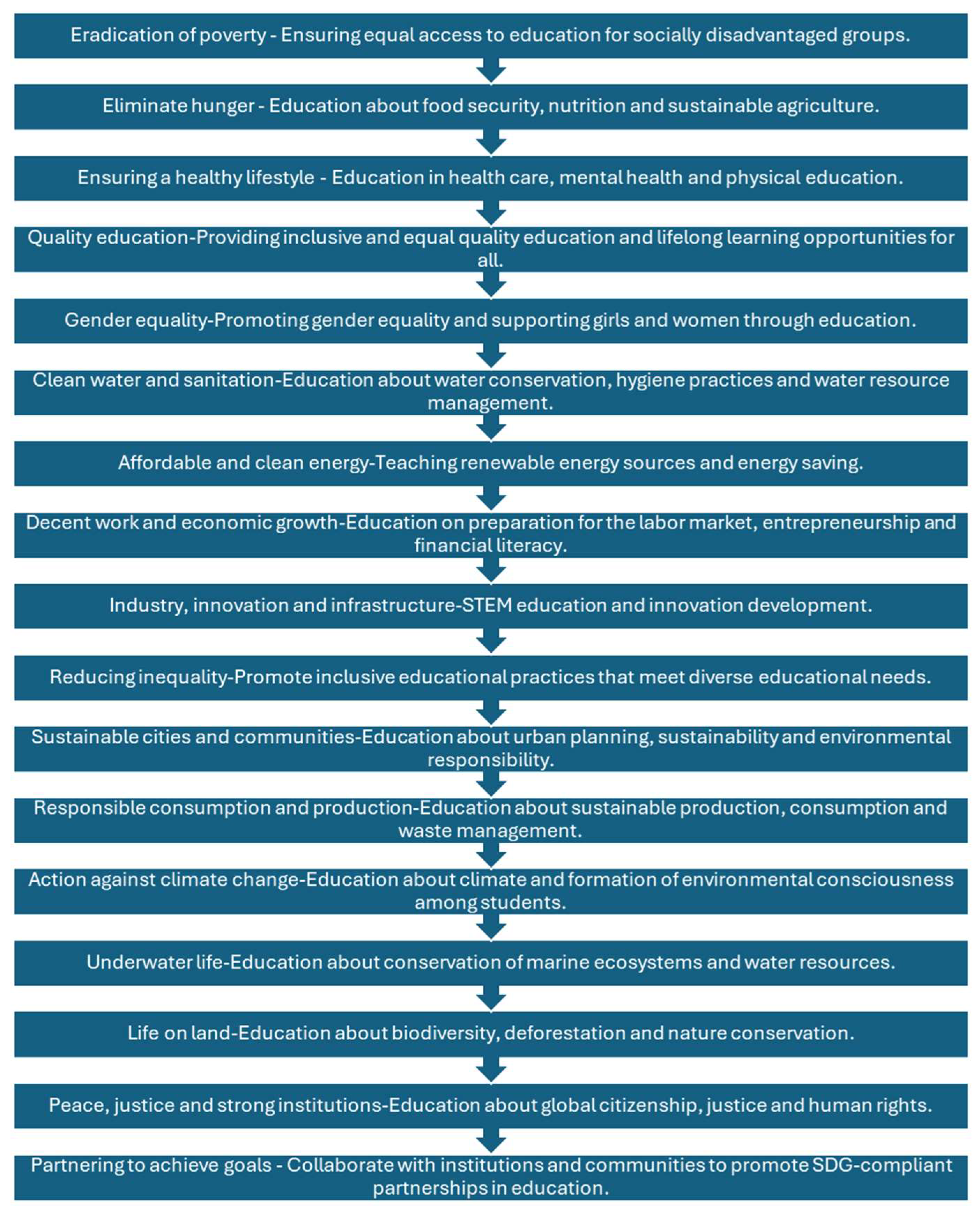
17 goals of sustainable development. Sustainable development is a development process that aims to meet the needs of present and future generations [16]. This idea should be implemented through education because education gives people the information and skills they need to build a sustainable lifestyle [17]. Education is one of the most important means of achieving the goals of sustainable development. These goals include issues such as access to quality education, gender equality, environmental sustainability, and economic and social justice. Therefore, it is important to integrate the principles of sustainable development into education systems. Table 1 describes the 17 goals SDG in detail [10,17,18].
Figure 1.
17 goals of sustainable development.
The field of chemical technology is the basis of modern production and economy. It covers many important areas, from energy production to material recycling and production of environmentally friendly products. However, there are also a number of environmental problems associated with this industry, such as the release of harmful waste, air pollution, water and soil degradation. Therefore, some of the "Sustainable Development Goals" are directly related to chemical technology. Chemical technology plays a fundamental role in our modern economy, influencing numerous fields such as energy production, manufacturing, pharmaceuticals, agriculture, and environmental protection [19]. Pedagogical Models for Integrating Sustainable Development into Chemistry EducationWhen teaching the SDGs, three main tasks can be distinguished: educational-cognitive, emotional, and behavioral. Each educational goal aims to support individuals who can effectively promote sustainable development based on a comprehensive understanding of the Sustainable Development Goals (SDGs). An essential part of this goal is to teach students the scientific method so that they understand the techniques and strategies used to solve global problems and achieve the SDGs. This goal is called the task of developing problem-solving skills [20].
Several key approaches have been identified to effectively integrate the principles of sustainable development into education systems. Education on sustainable development: Practical classes and project work: Pupils and students should be engaged in practical projects related to sustainable development, not limited to theoretical knowledge. For example, schools and universities can organize activities such as implementing environmental projects, creating waste recycling programs, and improving energy efficiency. Educational work and social responsibility: Sustainable development should not be limited to subject knowledge. It is also important to develop a sense of responsibility in pupils and students, to teach them socially and environmentally responsible actions. In this context, activities such as organizing volunteer work and participating in green school programs are effective [21]. Integrating sustainable development principles into educational programs requires an innovative approach to course design [16]. One of these approaches is the introduction of interdisciplinary education that links chemistry with ecology, economics, and technologies for sustainable development [14]. This approach allows students to understand chemical engineering processes in the context of their impact on the environment and society. For example, one effective approach is introducing "Socio-Scientific Issues" (SSI) in chemistry education. This approach involves addressing real-world sustainability challenges—like pollution, resource management, and green chemistry principles—while encouraging critical thinking and collaboration among students [22]. Integrating SDGs into chemistry courses enables students to connect chemistry concepts to broader issues, envision future scenarios, and participate in meaningful discussions about their role in fostering a sustainable world [23]. Special emphasis is placed on problem-based learning, which promotes the development of critical thinking skills and complex problem-solving skills [24]. Using concrete examples from the chemical industry related to reducing carbon emissions, recycling waste, or converting renewable raw materials, students can evaluate the effectiveness and sustainability of technological solutions. Schools and higher education institutions should include sustainable development issues in their curricula [14]. Teachers should convey information about environmental issues, resource conservation, waste management, and the green economy. It is important to form students' careful attention to nature and, environmental responsibility of society. Another unique model is project-based learning, which focuses on developing innovative solutions [25]. Students work in groups to develop projects aimed at optimizing chemical processes, reducing harmful effects, or implementing environmentally friendly technologies. Many researchers, including those analyzing educational practices in Finland, highlight how integrating SDGs in chemistry not only addresses environmental challenges but also fosters competencies in students to act responsibly at both local and global levels [26]. They prepare students to actively engage in building a sustainable society [27]. “Skills for Sustainable Development Goals” (SDGs) aim to provide students with the knowledge, skills, and attitudes needed to actively contribute to sustainable development [10,18].
The integration of digital technologies, such as process modeling using special software, is also of pedagogical importance. Using digital tools, students can visualize complex chemical processes, assess energy efficiency, and develop sustainable alternatives. The use of digital resources is important for effective teaching of sustainable development issues [28]. Internet resources, video materials, games and simulations can be used during training to develop students' skills in finding solutions to sustainable development issues. Problem Statement: Modern chemistry education must address global challenges such as sustainable development. The Sustainable Development Goals (SDGs) play a key role in preparing environmentally conscious and socially responsible professionals. However, students' awareness of the SDGs and their integration into the educational process remains insufficiently explored, particularly in the context of chemistry education. The research hypothesis suggests that integrating the SDGs into the chemical engineering curriculum will enhance students' awareness and career readiness while fostering a deeper understanding of the environmental and social aspects of professional practice. The objective of this study is to assess the impact of incorporating SDGs into the chemical engineering curriculum on the educational process, identify changes in students' awareness and understanding, and determine the extent to which this approach contributes to the development of sustainable thinking among future specialists.
Research Objectives:
- Assess students' baseline knowledge and understanding of the concept of sustainable development prior to the implementation of the educational program.
- Develop and implement an educational course integrating the Sustainable Development Goals (SDGs) into chemistry education.
- Evaluate changes in students' perception of the importance of sustainable development.
3. Methodology
Study Design: This study examines the perspectives of chemistry students on the Sustainable Development Goals (SDGs) and their application in chemistry education. To achieve this, both quantitative and qualitative data were collected to assess students’ awareness and understanding of the topic using a survey-based approach. The study employed a quasi-experimental design, consisting of several sequential stages.At the first stage, students responded to the initial two questions of the survey to determine their baseline knowledge and awareness of the SDGs and their application in chemistry lessons. This stage allowed participants to identify their initial level of awareness and highlight areas requiring further attention.The second stage involved the implementation of a specially designed educational course incorporating the SDGs. The course included lectures, seminars, and practical sessions aimed at integrating sustainability principles into the study of chemical engineering processes. Students were assigned tasks and projects addressing real-world environmental and technical challenges.At the third stage, students completed a final survey after completing the course. The questionnaire assessed changes in their awareness and understanding of the SDGs, as well as the extent to which the effective integration of these goals into the curriculum enhanced their interest and awareness. The final stage of the study involved analyzing the collected data using statistical methods to evaluate the impact of the educational intervention.
Participants: Lectures and seminars on the subject of chemical technology incorporating the goals of sustainable development have been studied in practice at the Kazakh National Pedagogical University named after Abai on the course "Chemical Technology", the fourth year students of the specialty "Chemistry" participated in this research. The study involved a total of 117 students who participated in the experiment. The selection of participants was based on their voluntary willingness to take part in the research, ensuring the absence of any coercion or external pressure on respondents. Among the participants, 67% were male and 33% were female, allowing for a diverse range of perspectives and approaches to studying the topic of sustainable development. The participants' ages ranged from 20 to 22 years, with a mean age of 21 years. The inclusion criteria for the study required students to be enrolled in the fourth year of the Chemistry program. Exclusion criteria included students who did not express a willingness to participate in the study, as well as those who did not meet the specified educational requirements.
Research procedure: By integrating the Sustainable Development Goals into the subject of chemical technology, students are given not only theoretical knowledge, but also practical skills. This process was carried out in several ways: Inclusion of specific topics on SDG in the curriculum: During the teaching of chemical technology, topics related to SDG were introduced in each chapter or section. For example, lessons on energy efficiency, renewable energy sources, water and air purification technologies were linked to SDG 7 and SDG 6. Problem-based learning: Support SDG by giving students tasks to solve specific environmental problems. For example, topics such as the impact of plastics on the environment or the recycling of harmful industrial waste. This approach helps students develop critical thinking skills and understand the real-life application of SDG. Hands-on learning through laboratory work was using environmentally friendly processes in laboratory classes, for example, creating experiments based on the principles of green chemistry. It is important to adapt students to sustainable development by teaching them how to use environmentally safe methods and technologies. Determining the level of knowledge through questionnaires and tests: Conducting questionnaires related to SDG to students during the lesson and assessing their knowledge on these issues. For example, "Which of the Sustainable Development Goals are relevant to chemical technology?" by asking which goals students consider important. Considering the above-mentioned needs, sustainable development goals were integrated into each topic during the teaching of the subject "Chemical Technology" according to this research. According to the content of the topics, was paid attention to the integration of all sustainable development goals, among the seventeen goals, the most relevant for chemical technology were №12 Responsible consumption and production, and №.4 Quality education goals.
To develop a lesson plan for chemical technology in a way that integrates the Sustainable Development Goals (SDGs), determine the main theme of your lesson and what goals should be prioritized. Below is a sample lesson plan - Table 1.

Table 1.
Lesson topics incorporating the Sustainable Development Goals.
| № | Lecture Topic |
A Sustainable Development Goal Related to the Topic | Content | Task | Reading Efficiency |
|---|---|---|---|---|---|
| 1 | Ammonia synthesis | SDG 2: Zero hunger |
Ammonia-based fertilizers are essential for modern agriculture, helping to increase crop yields and support global food security. By enabling the production of nitrogen-rich fertilizers, ammonia synthesis plays a vital role in feeding a growing population and enhancing agricultural productivity, which directly aligns with Goal 2 | Special questions about sustainable development goals. Diagram of ammonia synthesis. Infographics about the use of ammonia. Text tasks to determine environmental consequences during production. Experimental task about greenhouse gases search for solutions; |
Understands the importance of producing fertilizers through ammonia synthesis in eradicating hunger. Determines the environmental consequences of ammonia production. Discusses the importance of ammonia production. Proposes solutions to identify consequences; |
| SDG 9: Innovation and infrastructure development |
Traditional ammonia synthesis through the Haber-Bosch process requires high pressures and temperatures, consuming vast amounts of energy. The industry is actively exploring sustainable synthesis methods, such as using renewable hydrogen from water electrolysis, to reduce emissions and decrease energy usage, promoting responsible production practices. | ||||
| SDG 12: Responsible consumption and production | Resource efficiency is the effective use of energy and raw materials in the synthesis process |
||||
| SDG 13: Combat climate change | Reducing the costs of greenhouse gases | ||||
| 2 | Aluminum production | SDG 12: Responsible consumption and production |
Waste management, i.e. reduction of bauxite waste and other waste, introduction of environmentally friendly technologies; | Assessment of the impact of aluminum production on the environment and discussion of ways to solve environmental problems. Study the problems of energy consumption in aluminum production and find ways to replace it with sustainable energy sources; |
Understands the technological process of aluminum production, the use of raw materials and the problems of energy consumption. Effective analysis, innovativeness of proposed solutions and evidence with specific examples. Determines the sustainability and environmental benefits of the recycling process; |
| SDG 13: Climate action |
Reducing the costs of greenhouse gases in aluminum production, switching to renewable energy sources and increasing energy efficiency; | ||||
| 3 | Fuel energy | SDG 7: Access to affordable, reliable, sustainable and modern energy sources for all | Creation of new technologies of energy production, improvement of chemical properties of energy carriers and provision of efficient use of energy are considered within this discipline. For example, hydrogen energy or biomass fuel technologies. | Carry out a specific study and develop project proposals on increasing the environmental sustainability of fuel energy by using alternative energy sources; | Students analytically analyze ways to solve future environmental problems of fuel energy by using alternative energy sources. |
| SDG 12: Responsible consumption and production | Implementation of waste-free or low-waste technologies, research on ways to optimize production and consumption using green chemistry principles. |
An example of the next lecture on this subject was the topic "Aluminum production". During the lecture, first, the environmental effects of aluminum production include several important aspects, and then it is possible to see the connection with the goals of sustainable development in this production. The environmental impacts of aluminum production include: CO₂ emissions (the oxidation of carbon anodes during the Hall-Héroult process produces significant amounts of carbon dioxide (CO₂). This is one of the greenhouse gases that contributes to climate change.), bauxite waste (bauxite waste from the Bayer process - red mud, ecologically problematic. These wastes: May harm local ecosystems, water sources and soil. High pH (alkaline) levels, presence of chemicals (e.g. aluminum, iron, sodium) may damage local flora and fauna. Impact on water resources (Water pollution: Chemicals used during bauxite processing can enter water sources, causing pollution of local water resources. Water consumption: Aluminum production requires large amounts of water, which depletes local water supplies.), Soil pollution (Manufacturing processes and waste management, heavy metals (e.g. aluminum, cadmium) may enter the soil.) Along with the ecological aspects, the following social aspects were seen. The environmental impacts of aluminum production also affect residents, such as health problems, environmental disputes and reduced quality of life. Excessive fertilizer use can lead to soil degradation and biodiversity loss. Optimizing fertilizer application, enhancing ammonia efficiency, and developing sustainable ammonia-based fertilizers can support soil health and biodiversity, contributing to sustainable land management [11]. During lectures and seminars, students participated in hands-on activities that helped them see the significance of their own actions in building a sustainable future. They worked on case studies, where they analyzed real-world examples of environmental and social challenges across various industries like agriculture, energy, and waste management. By looking at these examples, students gained a clearer view of how their fields connect to sustainability. In group projects, they brainstormed solutions for specific Sustainable Development Goals (SDGs), such as clean water access, renewable energy, and responsible production practices. These team activities encouraged them to think creatively and understand how working together can lead to real change. Students also engaged in critical evaluations of current practices, where they assessed everyday industrial and societal habits to identify areas for sustainable improvement. This analysis gave them a better understanding of the direct impact of sustainability in their fields and sparked self-reflection on their future roles.
Research Tools: The questionnaire consisted of two sections (Appendix 1). The first section included five closed-ended questions designed to assess students' knowledge of the Sustainable Development Goals (SDGs) and their relevance to chemical technology. These questions addressed key aspects such as raising awareness of the fundamental principles of sustainable development, applying these principles in professional practice, and integrating sustainable approaches into chemistry lessons. Students evaluated statements using a five-point Likert scale, where 1 indicated "strongly disagree" and 5 indicated "strongly agree." The second section comprised five open-ended questions, allowing students to express their opinions on the current state of chemical engineering education in the context of sustainable development and provide suggestions and recommendations for improvement. This section provided insights into individual perspectives and helped identify the most pressing issues related to the integration of sustainability into chemistry education. The questionnaire’s reliability was evaluated using Cronbach’s alpha coefficient, which yielded a value of 0.94. This high reliability score confirms the questionnaire’s consistency and suitability for research purposes. The assessment of data conformity to a normal distribution was conducted using the Shapiro-Wilk test, which produced a value of 0.92, indicating an optimal fit to the normal distribution. The survey was conducted at the end of the chemical technology course to ensure that participants could accurately assess the topic and integrate the Sustainable Development Goals (SDGs) into the curriculum. The survey was conducted anonymously, ensuring the objectivity and reliability of the collected data. The results obtained provided insights into students' level of awareness regarding the SDGs and enabled an evaluation of the effectiveness of the proposed educational approach in chemistry instruction.
Data analysis and processing: The questionnaire responses were analyzed using descriptive and comparative statistics to identify key trends, distributions, and correlations among respondents' answers. The first section of the questionnaire employed a five-point Likert scale, with responses coded from 1 ("I have no knowledge at all") to 5 ("I am very knowledgeable"). The frequency and percentage of each response option were calculated, allowing for an overall assessment of participants' level of awareness. The qualitative data from the second section of the questionnaire were systematically coded in stages to structure the responses for further analysis. All participants' responses were compiled into a single database. Binary coding was used for multiple-choice questions, such as options 1 and 2. Each selected option was treated as a separate category: if a respondent chose a specific item, it was coded as 1; otherwise, it was coded as 0. For example, if a participant selected "pollution reduction" and "resource management," these options were assigned a value of 1, while all other options were assigned a value of 0. The aggregated data were then used to calculate the total number of selections in each category and determine percentage distributions. Open-ended questions (Questions 3–5) were analyzed using thematic coding. In the initial stage, all respondents' answers were reviewed to identify key ideas and recurring themes. A list of categories was then developed based on frequently used words, phrases, and semantic units. Each response was assigned to an appropriate category. For instance, in response to a question about difficulties in studying SDG-related subjects, common themes included "lack of time for textbook study" and "challenges in applying theoretical knowledge in practice." These themes were grouped into categories and used to calculate the frequency of mentions, facilitating a structured analysis of students' perceptions and challenges related to the integration of sustainable development into chemistry education.
Statistical data processing: A comprehensive approach incorporating descriptive statistics was employed to analyze the survey data. All calculations were conducted using Microsoft Excel and the IBM SPSS statistical package, ensuring the accuracy and reproducibility of results. Initially, descriptive statistical analysis was performed on the first section of the questionnaire. This analysis provided an overview of response distributions and identified key trends. Subsequently, content analysis was conducted on the open-ended questions, with responses categorized through thematic coding. Prior to analysis, data completeness and accuracy were verified, and questionnaires containing incomplete or invalid responses were excluded. This statistical processing of data facilitated an objective interpretation of survey results and enabled an assessment of the course's impact on students’ understanding of the Sustainable Development Goals (SDGs) and their perceived importance of integrating these goals into chemistry education.
Ethical Issues: Special attention was given to ensuring compliance with ethical standards to protect the rights, safety, and confidentiality of participants throughout the study. All students who participated provided informed consent, having received a detailed explanation of the study’s objectives, data collection procedures, and data processing methods. Participants were informed that their participation was voluntary and that they could withdraw from the study at any time without providing a reason or facing any consequences. Confidentiality was maintained through the anonymous collection of responses, preventing participant identification. All data were securely stored in protected files and used exclusively for the purposes of this study. During the analysis, information was aggregated to prevent the identification of individual responses, thereby ensuring the anonymity and integrity of the collected data.
Research Limitations: The study was limited to a single group of students, which may restrict the generalizability of the findings to a broader population. Data were collected through self-reported questionnaires, which may introduce subjective biases and socially desirable responses. The analysis of open-ended responses depended on the quality and completeness of the information provided, thereby limiting the depth of the conclusions. Additionally, the results may vary depending on the specific context of chemistry education and the level of awareness of the Sustainable Development Goals (SDGs) within a particular institution or region. Despite these limitations, the findings are valuable for understanding students' perceptions of the SDGs and their integration into chemistry education, particularly given the measures taken to ensure scientific integrity and adherence to ethical standards.
4. Results
Answers to the first block of the questionnaire. According to the results of the survey, more than eighty percent of students have knowledge about sustainable development goals (Figure 2). The distribution of participants' responses to the first question revealed that the majority of respondents (50%) assessed their level of knowledge about the Sustainable Development Goals (SDGs) as "moderate", indicating that while half of the participants possess basic knowledge on the topic, they do not have a deep understanding of it. Additionally, 24% of respondents reported that they "know the SDGs well," suggesting the presence of a subgroup with a relatively high level of knowledge, possibly due to prior exposure to the topic. These findings highlight the need for a more detailed explanation of the principles and key aspects of the SDGs for a significant proportion of students. The response category "I know them very well" received only a small number of responses, which can be interpreted as an overall homogeneous level of knowledge among respondents, without pronounced clusters at either end of the knowledge scale.
A total of 88.2% of participants responded "yes" to the second question, indicating a high level of awareness regarding the existence of the Sustainable Development Goals (SDGs). In contrast, 11.8% of respondents answered "no," suggesting the presence of a small group of students who are not yet familiar with the SDGs. These findings highlight the importance of incorporating SDG-related education for all students within chemistry education, particularly given the global significance of sustainable development. Most of the study participants identified SDG 12 – Responsible Consumption and Production – as the SDG related to chemical technology. This goal includes sustainability of chemical production, reduction of hazardous waste and conservation of resources. SDG 9 – Industrial development, innovation and infrastructure and SDG 7 – Ammonia are also included as an alternative energy source that can be used in fuel cells and hydrogen storage thanks to high-density hydrogen. Research into green ammonia synthesis methods, such as electrochemical and photocatalytic approaches, could reduce reliance on fossil fuels, making ammonia a cleaner energy solution in the future. The analysis of responses to the subsequent survey questions (Questions 3–5) revealed that many students (43%) considered the inclusion of the Sustainable Development Goals (SDGs) in chemistry courses as "important." A neutral stance was taken by 15% of students, indicating a lack of sufficient awareness regarding the specific benefits of integrating the SDGs into the educational process. Furthermore, 48% of participants stated that chemical engineering is "likely to contribute" to the achievement of the SDGs, demonstrating students' recognition of the discipline’s potential in addressing global challenges. Only 4% and 1% of respondents selected the options "minimally contributes" and "does not contribute at all," respectively, suggesting that skepticism about the effectiveness of chemical engineering in advancing sustainable development is minimal.
Responses to Question 5 indicated that most participants (42%) "significantly improved" their understanding of the SDGs after completing the course. This result confirms the course's effectiveness in expanding students’ knowledge. Additionally, 15% of participants reported that their understanding had "greatly improved," reflecting a high level of engagement and receptiveness to the material among a specific subgroup of students. A smaller proportion of students (8%) indicated that their knowledge had improved "slightly," while only 0.5% reported that their understanding had "not changed at all," further validating the success of the instructional approach employed on the course.
Answers to the second block of the questionnaire: The results of the second set of questions indicate that students associate their knowledge of chemistry with key aspects of the Sustainable Development Goals (SDGs) (Figure 3). One of the most frequently mentioned aspects was SDG 6: Clean Water and Sanitation, which was selected by 71% of participants. This finding underscores a strong recognition of the role of chemical engineering in addressing challenges related to water purification, wastewater treatment, and access to clean drinking water.
SDG 7: Affordable and Clean Energy and SDG 12: Responsible Consumption and Production were equally important to respondents, each selected by 50% of participants. This indicates that students recognize the contribution of chemical technologies to the development of alternative energy sources, improvements in energy efficiency, and the advancement of sustainable production and recycling technologies.
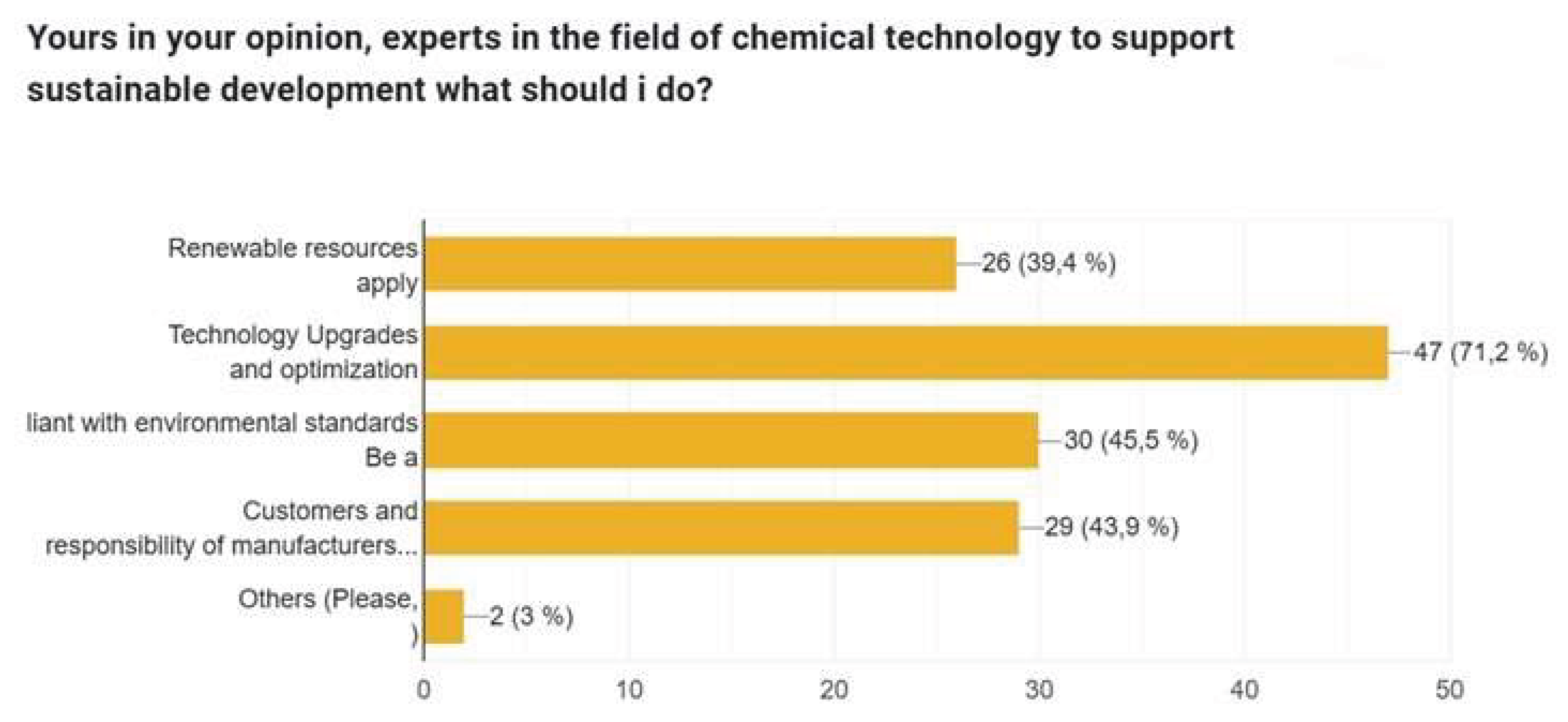
Additionally, SDG 9: Industry, Innovation, and Infrastructure was chosen by 39% of respondents, reflecting an awareness of the role of chemical technologies in modernizing infrastructure, creating innovative materials, and developing industrial sectors with a focus on sustainability. In contrast, SDG 13: Climate Action was selected by only 27% of participants, suggesting that awareness of the importance of chemical engineering in reducing carbon emissions and addressing climate adaptation remains relatively low. This finding highlights the need for greater emphasis on these topics within educational programs. Notably, only 2% of respondents selected the "personal response" option, indicating that the predefined survey choices provided a well-structured list covering the major applications of chemical engineering within the context of the SDGs. Overall, students demonstrated the strongest knowledge in areas related to water, energy, and sustainable production. However, there remains significant potential for improving their understanding of chemistry’s role in combating climate change and fostering innovative infrastructure development. The results presented in Figure 4 illustrate participants' opinions on the most important measures to support the Sustainable Development Goals (SDGs) within the field of chemical technology. The most widely supported measure was the need for technological modernization and optimization, selected by 71% of respondents. This finding highlights the significance of implementing innovative technologies to enhance production efficiency, reduce environmental impact, and minimize resource consumption. The second most frequently chosen option was compliance with environmental standards, endorsed by 45% of respondents. This result underscores the importance of adhering to environmental regulations and sustainable operational practices, which are critical for mitigating the environmental footprint of the chemical industry.
The category "Consumer and Producer Responsibility" ranked third, selected by 44% of respondents. These results emphasize the importance of an approach in which producers assume responsibility for the sustainability of their products throughout their entire life cycle, while consumers play a crucial role in making informed decisions about sustainable products. Resource Recovery was supported by 39% of respondents, indicating the necessity of developing and implementing methods for regenerating natural resources, such as waste recycling, ecosystem restoration, and transitioning to renewable energy sources.
The "Other" category received the least support, with only 3% of respondents selecting this option, suggesting that proposals not included in the predefined categories were considered relatively less relevant. Overall, the findings demonstrate that students specializing in chemical technology prioritize key measures that support the Sustainable Development Goals, including technological innovation, environmental standards, and producer responsibility. This underscores the importance of a comprehensive approach that integrates innovation, environmental management, and accountability at all levels of production and consumption. Participants' responses to the open-ended questions in the second section of the survey provide valuable insights into their perceptions of the course, highlighting its strengths and areas for enhancement. In response to the question: "What changes in chemical engineering education, in your opinion, could further contribute to achieving the Sustainable Development Goals (SDGs)?", one participant stated: "We need more practical examples related to waste recycling and the use of renewable resources so that students can see the practical applicability of theoretical knowledge." Another respondent suggested: "A module on modern environmental standards and production methods should be added, as many students do not fully understand how these aspects influence their future careers." These responses emphasize the need for a more applied approach to education, incorporating a stronger focus on contemporary issues, the practical implementation of knowledge, and an expanded environmental context within the curriculum. Another question asked: "Which example or assignment in the course helped you the most in understanding the Sustainable Development Goals?" One participant highlighted a task involving the calculation of carbon dioxide emissions during the production of various materials, which helped them understand the environmental impact of chemical processes. Another respondent pointed to an example of plastic waste recycling, demonstrating how innovations can serve as solutions to global environmental challenges. These examples were considered particularly valuable, as they underscored the connection between chemical technology and real-world environmental issues. In response to the question: "What challenges did you encounter while integrating the Sustainable Development Goals (SDGs) into your studies?", one participant stated: "It was difficult to connect sustainability theory with real-world problems in chemical engineering, as they sometimes seemed unrelated to the SDGs. I would have appreciated more introductory courses to better understand these concepts." This response highlights the need for additional instructional materials and improved integration of interdisciplinary connections, enabling students from diverse backgrounds to develop a deeper understanding of the course topics. The analysis of responses suggests that the course should be adapted to enhance its practical orientation, incorporate supplementary introductory content on the SDGs, and strengthen the link between theoretical concepts and real-world professional practice. Thus, integrating sustainability goals into chemical engineering not only expands students' knowledge, but also prepares them to address global environmental issues as professionals in the field in the future. This integration builds students' environmental consciousness and promotes their commitment to sustainability in the workplace in the future. Through the training, students didn't just learn about sustainability - they felt empowered to make a meaningful impact. Their projects and ideas are now laying the groundwork for further research and innovative approaches that contribute to a more sustainable world.
5. Discussion
Comparing the data from this study, it can be concluded that students' baseline knowledge of the Sustainable Development Goals (SDGs) (with 50% of respondents rating their knowledge as "moderate") prior to completing the course does not align with findings from studies conducted in other countries, such as Indonesia. The objective of the Indonesian study was to assess students' knowledge, awareness, and perception of the SDGs among students at public universities in Indonesia [29]. The results of the online survey indicated that 76.8% of the total respondents were aware of the SDGs, and 73.9% had a positive perception of them. However, 42.0% of students reported having no knowledge of the SDGs. Another study conducted by Indonesian researchers similarly found that 89.5% of students were aware of the SDGs, while 62.5% had good knowledge of them [30]. Descriptive statistical analysis conducted by Malaysian researchers also demonstrated that respondents possessed a high level of knowledge and a positive attitude toward the SDGs [31]. Similarly, researchers in Spain examined students' awareness of the SDGs, finding that nearly half of the students had a "good level of awareness," while 40.91% demonstrated an "acceptable level of awareness." Only 3.64% of respondents were categorized as having a "poor level of awareness" in this section of the survey [32]. The discrepancy between our findings and those discussed above highlights a broader issue in Kazakhstan—namely, the lack of understanding of sustainable development principles in professional education. This finding underscores the need for further integration of sustainability concepts into the higher education curriculum to enhance students’ comprehension and application of the SDGs in their respective fields. In more developed countries, the principles of sustainable development are more deeply integrated into educational programs, beginning at early stages of learning. This approach contributes to a higher level of awareness and knowledge among students. In Kazakhstan, the emphasis on sustainable development is less pronounced in educational curricula, particularly at the level of professional education. The availability of educational resources may also have influenced the results. In Indonesia, Malaysia, and Spain, a greater number of educational materials and initiatives are accessible to students, including online courses, lectures, and seminars related to sustainable development. In Kazakhstan, such resources are more limited and insufficiently promoted. The findings of this study are regarding the importance of integrating the SDGs into school curricula aligned with previous research. Most students (43%) considered it "important" to incorporate the SDGs into chemistry courses, which corresponds with the conclusions of other researchers. Indonesian scholars argue that chemistry education plays a role in supporting the SDGs by employing specific teaching models and methods, such as discussions, concept mapping, practical approaches, and project-based learning [33]. Other researchers emphasize that education for sustainable development fosters social changes that protect the environment and improve quality of life [34]. The application of SDG in chemical technology allows students to create sustainable production systems and support environmental sustainability [35]. The integration of sustainable development goals and chemical technology is a new step in the education system. Such integration not only develops students' chemical knowledge, but also strengthens their responsibility towards world problems, especially environmental threats. In this curriculum model, students develop critical thinking and problem-solving skills tailored to sustainable practices. This holistic perspective prepares students to become responsible professionals capable of contributing to the transition toward sustainable industry practices. From a scientific perspective, the results can be explained through the concept of constructivist learning [36]. According to this framework, a deep understanding of educational material is achieved through students' active engagement in the learning process. The integration of the Sustainable Development Goals (SDGs) into problem-based chemistry courses fosters the development of critical thinking and problem-solving skills, as evidenced by the significant increase in students' awareness and interest [17,24]. Overall, the findings of this study highlight the importance of incorporating the SDGs into the curriculum for future chemists. These results align with international research, which underscores the necessity of an interdisciplinary approach that emphasizes practical application [14].
6. Conclusions
Mastering the ideas of sustainable development of future chemical specialists contributes to ensuring the ecological and economic stability of Kazakhstan. Thus, the connection between the educational process and SDG allows students to educate students not only professionally, but also from a moral point of view. The study results indicated that 50% of participants assessed their knowledge of the Sustainable Development Goals (SDGs) as moderate, while 24% reported a high level of knowledge. This finding underscores the need for additional educational efforts to enhance students' understanding of the subject. A total of 88.2% of respondents demonstrated a high level of awareness of the SDG concept, whereas the remaining 11.8% emphasized the importance of structured learning, particularly within the field of chemistry education. Most participants associated chemical engineering with SDG 12: Responsible Consumption and Production, highlighting their recognition of the necessity for a sustainable approach to manufacturing and waste management. Additionally, significant attention was given to SDG 6: Clean Water and Sanitation, with 71% of respondents emphasizing the crucial role of chemical technologies in ensuring access to clean water. Thus, the course's effectiveness was confirmed, as 43% of respondents considered the integration of SDGs into academic courses important. However, awareness of the role of chemistry in addressing climate change (SDG 13) remained relatively low (27%), indicating the need for improvements in the educational framework to strengthen students' understanding of this critical issue. The practical significance of this study lies in identifying the need to strengthen the educational foundation aimed at developing students' skills in sustainable production, environmental responsibility, and the practical application of theoretical knowledge. Its scientific value is reflected in the in-depth analysis of the relationship between chemical engineering and the achievement of key Sustainable Development Goals (SDGs). The findings may be utilized for the development of interdisciplinary educational programs focused on integrating SDGs into higher education, particularly within technical and engineering disciplines. Furthermore, they can contribute to the design of educational strategies that enhance student engagement with global sustainability issues. Future research directions include the development and testing of new educational modules centered on practical applications of sustainable development, the analysis of interdisciplinary approaches to integrating SDGs across various fields of knowledge, and the examination of the long-term impact of these educational initiatives on graduates’ professional careers.
Appendix A
Appendix A.1
Survey Questionnaire
- How aware are you of the Sustainable Development Goals (SDGs)?
- ○
- I have no knowledge at all
- ○
- I have heard a little, but I am not sure
- ○
- I have a moderate understanding
- ○
- I have a good understanding
- ○
- I have a very good understanding
- 2.
- Have you ever heard of the Sustainable Development Goals?
- ○
- Yes
- ○
- No
- 3.
- How important do you consider the integration of SDGs into chemistry education?
- ○
- Not important at all
- ○
- Slightly important
- ○
- Neutral
- ○
- Important
- ○
- Very important
- 4.
- To what extent do you think chemical technology can contribute to achieving the SDGs?
- ○
- Does not contribute at all
- ○
- Rather does not contribute
- ○
- Neutral
- ○
- Rather contributes
- ○
- Fully contributes
- 5.
- How has your understanding of the SDGs changed after completing the course?
- ○
- Did not change at all
- ○
- Slightly improved
- ○
- Moderately improved
- ○
- Significantly improved
- ○
- Substantially improved
- Which aspects of the Sustainable Development Goals (SDGs) do you consider to be related to chemical technologies? (Select no more than three options)
- SDG 6: Clean Water and Sanitation
- SDG 7: Affordable and Clean Energy
- SDG 9: Industry, Innovation, and Infrastructure
- SDG 12: Responsible Consumption and Production
- SDG 13: Climate Action
- Other (please specify)
- 2.
- In your opinion, what actions should a chemical technology expert take to support the SDGs? (Select no more than three options)
- Resource regeneration
- Technology modernization and optimization
- Compliance with environmental standards
- Consumer and producer responsibility
- Other (please specify)
- 3.
- What changes in the teaching of chemical technology do you believe could better contribute to achieving the Sustainable Development Goals?
- 4.
- Which examples or assignments presented in the course did you find most useful for understanding the Sustainable Development Goals?
- 5.
- What challenges did you face while studying the course, considering the integration of the Sustainable Development Goals?
References
- Marzoeva, A. V. Guidelines of state policy in the development of civil society in Russia. Bulletin of the International Centre of Art and Education. 2024.
- Makhametova, D. Education and upbringing of the younger generation in the context of modern educational technologies. Modern trends in teaching a foreign language in the 21st century. 2023. 1 (1): 246-249.
- Aliskhanova, M., Khasbulatova, Z., Khadzhiev, R. Experience and Problems of Environmental Education, Education and Upbringing. In SHS Web of Conferences (Vol. 172, p. 01040). EDP Sciences. 2023. [CrossRef]
- Askarovich, M. S., Qizi, O. N. B., Kizi, M. I. B. Formation of professional-pedagogical competences of future teachers of chemistry. Bulletin of Science and Education. 2021. 6-3 (109): 28-31.
- Karki, S., Hazarika, G., Yadav, D., Ingole, P. G. Polymeric membranes for industrial applications: Recent progress, challenges and perspectives. Desalination, 2024. 573: 117200. [CrossRef]
- Anderson, C. C., Denich, M., Warchold, A., Kropp, J. P., Pradhan, P. A systems model of SDG target influence on the 2030 Agenda for Sustainable Development. Sustainability science. 2022. 17 (4): 1459-1472. [CrossRef]
- Wilkinson, E., Schipper, L., Simonet, C., Kubik, Z. Climate change, migration and the 2030 Agenda for Sustainable Development. ODI, 2022.
- United Nations. "The Sustainable Development Goals Report 2020." United Nations Department of Economic and Social Affairs, 2020.
- Kanapathy, S., Lee, K. E., Mokhtar, M., Syed Zakaria, S. Z., Sivapalan, S. A framework for integrating sustainable development concepts into the chemistry curriculum towards achieving education for sustainable development in Malaysia. International Journal of Sustainability in Higher Education. 2021. 22 (6): 1421-1449. [CrossRef]
- Lehmann, H., Joseph, A. Sustainability in Chemical Engineering: Meeting the Challenges of the Future. Current Opinion in Chemical Engineering. 2020. 29: 46-51.
- McIntosh, M., Wiek, A. Educating Future Change Agents for Sustainability: Lessons from the University of Arizona. International Journal of Sustainability in Higher Education. 2018. 19 (4): 668-682.
- Ferrer-Estévez, M., Chalmeta, R. Integrating sustainable development goals in educational institutions. The International Journal of Management Education. 2021. 19 (2): 100494. [CrossRef]
- Wissinger, J. E., Visa, A., Saha, B. B., Matlin, S. A., Mahaffy, P. G., Kümmerer, K., Cornell, S. Integrating sustainability into learning in chemistry. Journal of Chemical Education. 2021. 98 (4): 1061-1063. [CrossRef]
- Hardy, J. G., Sdepanian, S., Stowell, A. F., Aljohani, A. D., Allen, M. J., Anwar, A., Wright, K. L. Potential for chemistry in multidisciplinary, interdisciplinary, and transdisciplinary teaching activities in higher education. Journal of Chemical Education. 2021. 98 (4): 1124-1145. [CrossRef]
- Juntunen, M. K., Aksela, M. K. Education for Sustainable Development in Chemistry: Challenges, Possibilities and Pedagogical Models. Chemistry Education Research and Practice. 2014. 15 (4): 488-500.
- Halkos, G., Gkampoura, E. C. Where do we stand on the 17 Sustainable Development Goals? An overview on progress. Economic Analysis and Policy. 2021. 70: 94-122. [CrossRef]
- Rajabifard, A., Kahalimoghadam, M., Lumantarna, E., Herath, N., Hui, F. K. P., Assarkhaniki, Z. Applying SDGs as a systematic approach for incorporating sustainability in higher education. International Journal of Sustainability in Higher Education. 2021. 22 (6): 1266-1284. [CrossRef]
- Sharma, R., Chauhan, M. Teaching Sustainability: Integrating Sustainable Development Goals into Chemistry Education. Journal of Chemical Education. 2021. 98 (2): 367-374.
- Chen, B., Graedel, T. E. Sustainable Urban Systems: An Integrated Approach to Urban Sustainability. Annual Review of Environment and Resources. 2016. 41: 251-275.
- Azapagic, A. Sustainable Chemical Engineering: Dealing with Wicked Problems. Chemical Engineering Research and Design. 2017. 131: 171-186.
- Clugston, R. M., Calder, W. Critical Dimensions of Sustainability in Higher Education. In Sustainability: Approaches and Methods in Higher Education (pp. 35-55). Springer, 2016.
- Cahyani, V. P., Fadly, D., Islawati, I., Ahmad, F. The attitude of chemistry education students to socio-scientific issues (SSI) in chemistry learning. INSECTA: Integrative Science Education and Teaching Activity Journal. 2014. 5 (2): 212-223. [CrossRef]
- Anastas, P. T., Zimmerman, J. B. Designing for Sustainability through Green Chemistry: The Nexus of Chemicals, Resources, Energy, and Environmental Impact. Green Chemistry Letters and Reviews. 2018. 11 (3): 223-236.
- Saputro, S. A Conceptual framework for empowering students’ critical thinking through problem based learning in chemistry. In Journal of Physics: Conference Series (Vol. 1842, No. 1, p. 012046). IOP Publishing, 2021.
- Situmorang, M., Sinaga, M., Sitorus, M., Sudrajat, A. Implementation of project-based learning innovation to develop students’ critical thinking skills as a strategy to achieve analytical chemistry competencies. Chemistry. 2022. 15: 16. [CrossRef]
- Rieckmann, M. Education for Sustainable Development Goals: Learning Objectives, 2017.
- Burmeister, M., Rauch, F., Eilks, I. Education for Sustainable Development (ESD) and Chemistry Education. Chemistry Education Research and Practice. 2012. 13 (1): 59-68. [CrossRef]
- George, G., Merrill, R. K., Schillebeeckx, S. J. Digital sustainability and entrepreneurship: How digital innovations are helping tackle climate change and sustainable development. Entrepreneurship theory and practice. 2021. 45 (5): 999-1027.
- Novieastari, E., Pujasari, H., Abdul Rahman, L. O., Ganefianty, A., Rerung, M. P. Knowledge, perception, and awareness about Sustainable Development Goals (SDGs) among students of a public university in Indonesia. International Journal of Health Promotion and Education. 2022. 60 (4): 195-203. [CrossRef]
- Jati, H. F., Darsono, S. N. A. C., Hermawan, D. T., Yudhi, W. A. S., Rahman, F. F. Awareness and knowledge assessment of sustainable development goals among university students. Jurnal Ekonomi & Studi Pembangunan. 2019. 20 (2): 163-175. [CrossRef]
- Afroz, N., Ilham, Z. Assessment of knowledge, attitude and practice of University Students towards Sustainable Development Goals (SDGs). The Journal of Indonesia Sustainable Development Planning. 2020. 1 (1): 31-44. [CrossRef]
- Oltra-Badenes, R., Guerola-Navarro, V., Gil-Gómez, J. A., Botella-Carrubi, D. Design and implementation of teaching–learning activities focused on improving the knowledge, the awareness and the perception of the relationship between the SDGs and the future profession of university students. Sustainability. 2023. 15 (6): 5324. [CrossRef]
- Azizah, U., Yonata, B. The Integration of Green Chemistry Principles in Basic Chemistry Learning to Support Achievement of Sustainable Development Goals (SDGs) through Education. Journal of Technology and Science Education. 2023. 13 (1): 233-254. [CrossRef]
- Martín-Alfonso, J. E., Yáñez, R. Integration of Teaching Laboratory Activities Based on the Valorization of Industrial Waste into Chemical Education to Address the Emerging Sustainable Development Goals. Journal of Chemical Education. 2024. 101 (10): 4405-4410. [CrossRef]
- Sillanpaa, M., Ncibi, C. A Sustainable Chemistry Approach: Green Chemistry in the Framework of the Sustainable Development Goals. Sustainable Chemistry and Pharmacy. 2019. 12: 100146.
- Selim, S. H. Diplomacy as Pedagogy, Pedagogy as Diplomacy: Diplomatic Simulations, Constructivism, and the 2030 Sustainable Development Agenda, 2021.
Figure 2.
The first and second questions of the survey.
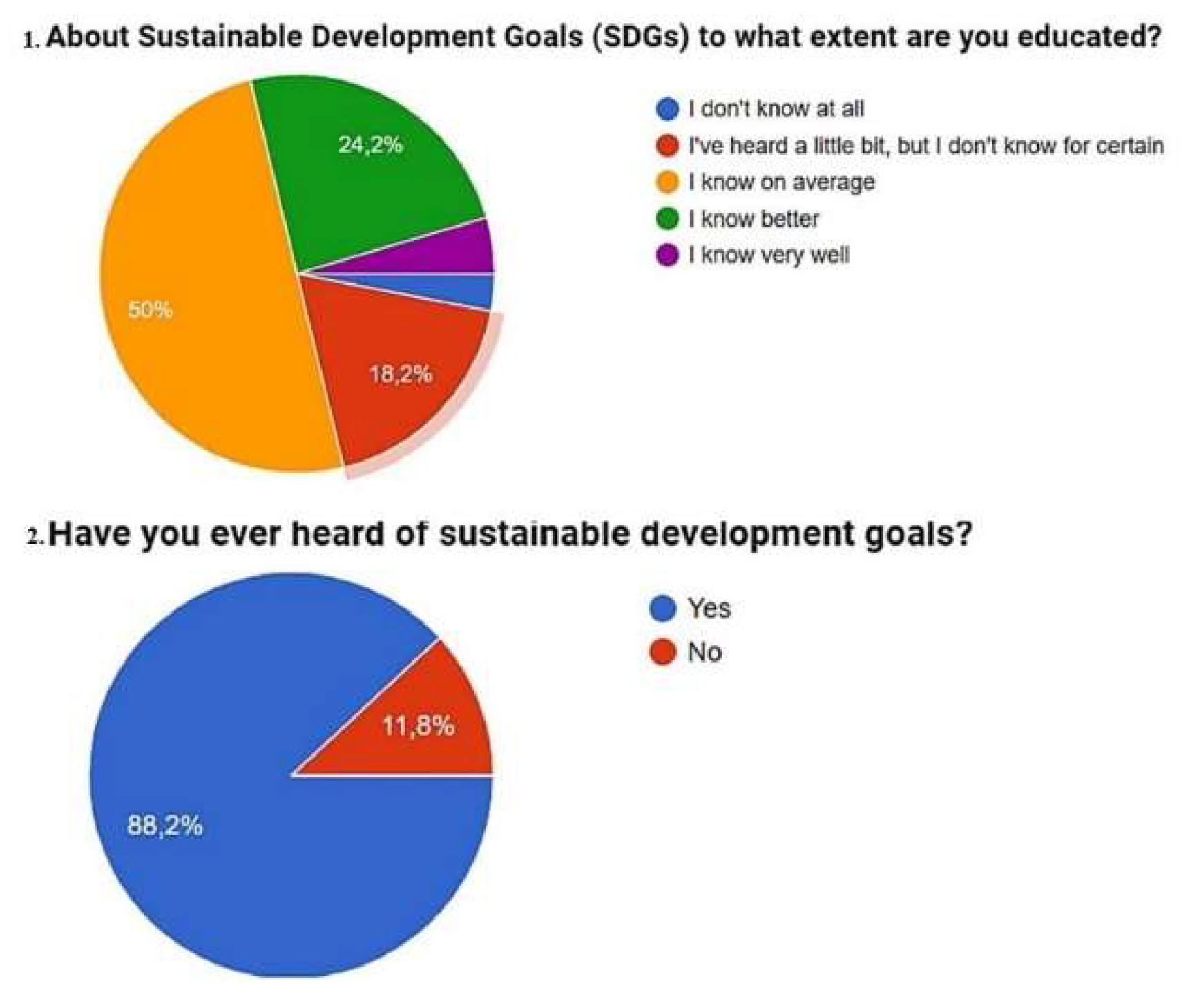
Figure 3.
First Question of the Second Section of the Questionnaire.
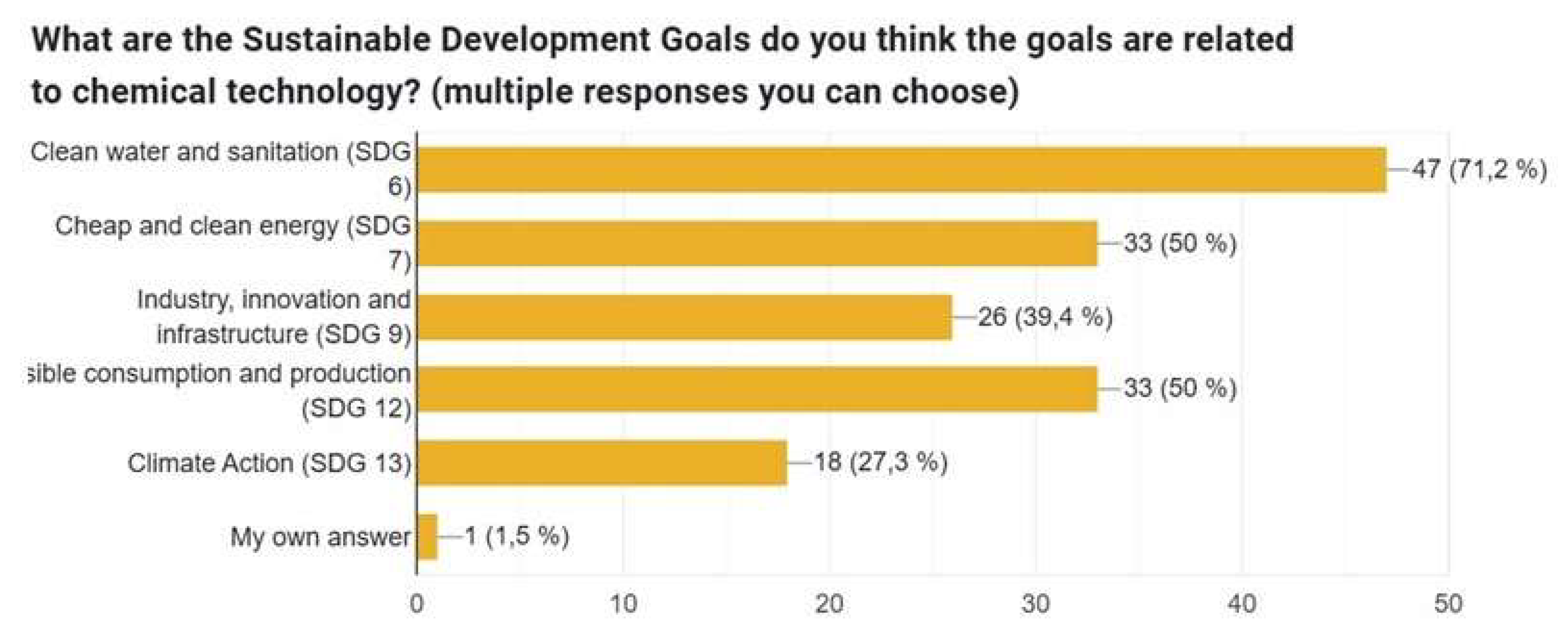
Figure 4.
Second Question of the Second Section of the Questionnaire.
Disclaimer/Publisher’s Note: The statements, opinions and data contained in all publications are solely those of the individual author(s) and contributor(s) and not of MDPI and/or the editor(s). MDPI and/or the editor(s) disclaim responsibility for any injury to people or property resulting from any ideas, methods, instructions or products referred to in the content. |
© 2025 by the authors. Licensee MDPI, Basel, Switzerland. This article is an open access article distributed under the terms and conditions of the Creative Commons Attribution (CC BY) license (http://creativecommons.org/licenses/by/4.0/).
Copyright: This open access article is published under a Creative Commons CC BY 4.0 license, which permit the free download, distribution, and reuse, provided that the author and preprint are cited in any reuse.


