

Submitted:
26 February 2025
Posted:
27 February 2025
You are already at the latest version
Abstract
This article examines the pedagogical aspects of developing the professional compe-tencies of chemistry teachers in the context of the Sustainable Development Goals (SDGs). In the face of global challenges, the teacher training system requires the inte-gration of the principles of Education for Sustainable Development (ESD), aimed at fostering critical thinking, systematic analysis, and strategic planning. The article ana-lyzes key teacher competencies necessary for the effective implementation of SDGs in the educational process, including systematic and critical thinking, anticipatory fore-casting, normative and strategic competencies, as well as interdisciplinary collaboration skills. Particular attention is given to pedagogical models such as flipped learning, gamification, project-based, and interdisciplinary approaches that contribute to the professional development of chemistry teachers.
The study substantiates the need for the implementation of innovative educa-tional strategies aimed at developing environmental awareness, analytical skills, and research activities among future educators. Methodological aspects of integrating SDGs into chemistry teacher training curriculum, as well as international experience in this field, are explored. The research findings highlight the importance of a comprehensive approach to shaping the professional competence of chemistry educators, incorporating interactive teaching methods, digital technologies, project-based, and problem-oriented learning. The conclusion presents recommendations for optimizing the educational process to ensure teachers are prepared to integrate sustainable development principles into school chemistry education.
Keywords:
professional competence
; competency
; chemistry teacher
; sustainable development goals
1. Introduction
In today's era of globalization, the issue of developing the professional competence of educators in the field of education has become increasingly relevant. The United Nations 2030 Agenda for Sustainable Development has explicitly emphasized the need to improve the quality of education and modernize the process of training professionals and teachers in the education sector. The Sustainable Development Goals (SDGs) define key priorities for the global community and necessitate the alignment of educational systems with these objectives.
This article focuses on the pedagogical aspects of developing the professional competence of chemistry teachers within the framework of the SDGs. Professional competence in chemistry teaching extends beyond subject knowledge to include the ability to guide students in addressing ecological, economic, and social challenges, thereby fostering universal competencies. In this regard, the integration of SDGs into the educational process is one of the essential conditions for enhancing the professional competence of chemistry teachers. The alignment of professional competence with the SDGs requires the identification of theoretical and methodological foundations, making this issue particularly relevant. This necessitates the exploration and application of pedagogical theories that support the integration of sustainable development principles into teacher education.
2. Literature Review
2.1. The Impact of Preparing Future Teachers on the Implementation of the Sustainable Development Goals
Recent studies confirm that the integration of Education for Sustainable Development (ESD) into teacher training programs plays a crucial role in shaping the professional competencies of future educators. This integration enhances their readiness to incorporate sustainability principles into educational practice. Developing sustainable behavioral models among teachers supports students' environmental literacy, fosters socially responsible thinking, and facilitates the adaptation of educational programs to global challenges. This study examines the level of knowledge, attitudes, and practical actions related to the Sustainable Development Goals (SDGs) among students of pedagogical universities in Croatia [1]. The analysis of data collected from 275 students at the universities of Zagreb, Pula, and Rijeka indicates that while students demonstrate a high level of theoretical knowledge (83.6% of students are aware of the SDGs), their practical implementation remains limited. For instance, only 18.5% of respondents were aware that the goals are to be achieved by 2030, and 45.1% of students did not consider income inequality a global issue. The research methodology was based on an adapted questionnaire developed by Afroz & Ilham (2020) and employed correlation analysis, t-tests, and ANOVA.
The findings reveal a positive correlation between SDG knowledge and its practical implementation (r=0.217); however, students exhibit a low willingness to engage in sustainability-related activities. For example, participation in sustainability courses remains low (M=1.46), and informal discussions on these topics are infrequent (M=2.45) [2]. The data confirm the necessity of integrating sustainability courses into teacher training programs and encouraging future educators to engage in practical sustainability-related activities. Letina and Diković (2024) argue that these courses should not only focus on education but also aim to foster active civic engagement among future teachers. These findings align with previous research (Borges, 2019; Nousheen et al., 2020), which emphasizes that a high level of knowledge about sustainability must be accompanied by the development of methodological competencies that enable the effective integration of this knowledge into the educational process [3].
2.2. Implementing Innovative Pedagogical Approaches to Achieve the Sustainable Development
Research highlights that the use of innovative pedagogical methods contributes to improving the quality of higher education and achieving the Sustainable Development Goals (SDGs). Interactive educational technologies, such as Flipped Learning, foster independent thinking, active participation in the learning process, and the development of professional competencies necessary for addressing global challenges. The study by Quadrado and Zaitseva (2019) examines the implementation of the Flipped Learning model in the context of training specialists oriented toward SDG implementation. The authors emphasize that traditional lecture-based teaching methods are less effective in enhancing students' cognitive engagement compared to flexible learning models. The findings suggest that Flipped Learning allows students to acquire fundamental knowledge in their personal learning space while utilizing classroom time for discussions, project-based work, and direct interaction with instructors [4]. The research methodology is based on an educational experiment conducted as part of the Masters in Development Practice (MDP) program at Instituto Politécnico do Porto (Portugal). During the experiment, students applied Flipped Learning principles in courses focused on analyzing and designing solutions for the Sustainable Development Goals (SDGs). To assess the effectiveness of this method, various evaluation techniques were employed, including an analysis of learning outcomes, student surveys, and a comparative study of results obtained through traditional teaching methods. The key findings of the study are as follows: Flipped Learning increases student engagement in the learning process, as they actively interact with course materials. 85% of students reported that the flexibility of this method improved their understanding of complex concepts. The use of game-based learning and project-based approaches enhances student motivation and fosters the development of analytical thinking skills. Instructors employing this method can quickly identify knowledge gaps and adjust their teaching strategies in real-time [5]. The findings of Quadrado and Zaitseva (2019) confirm that the integration of Flipped Learning into higher education serves as an effective strategy for training specialists capable of creatively addressing sustainability challenges. This approach aligns with key trends in contemporary educational policy, which emphasize competency-based learning and the advancement of digital technologies (Khan, 2012; Talbert, 2012). Future research could focus on examining the impact of this method on the development of professional skills and its influence on graduates' career success [6].
2.3. Integration of Sustainable Development Goals into the Educational Practice of Future Science Teachers
Recent studies confirm that preparing future teachers with competencies in Education for Sustainable Development (ESD) is a key factor in the successful implementation of the Sustainable Development Goals (SDGs). Integrating SDGs into pedagogical practice fosters critical thinking, environmental literacy, and a strategic approach to addressing global challenges among future educators. The study conducted by Guo, Huang, and Chen analyzes the level of pedagogical and sustainability-related competencies among prospective primary school teachers in the context of integrating SDGs into science education curricula. The experiment employed both quantitative and qualitative methods, including curriculum analysis, self-assessment by students, and expert evaluations by instructors. The research, conducted in East China during the 2023–2024 academic year, involved 88 students specializing in pedagogy, who developed science curricula incorporating SDGs [7].
The research methodology included the following elements:
- A pedagogical competency assessment scale, including 10 criteria such as core competencies, explanation skills, questioning techniques, and lesson conclusion abilities.
- Analysis of ESD competencies, including systemic, critical, and strategic thinking, as reflected in the curricula and pedagogical strategies developed by students.
- A survey to determine students' perspectives on integrating SDGs into teaching courses.
Key Findings of the Study: Discrepancy between self-assessment and expert evaluation: While students overestimated their performance in traditional pedagogical skills, their self-assessment of SDG-related competencies aligned with expert evaluations. Dominance of Pedagogical Content Knowledge (PCK) over SDG motivation and values (MV): The study found that although students demonstrated strong subject-specific knowledge, their curriculum designs did not sufficiently integrate sustainability principles, as they prioritized conventional teaching methods. Positive attitudes toward integrating SDGs into teaching courses: 80% of respondents indicated that incorporating sustainability into science courses contributed to their professional development.
The findings of Guo et al. (2024) highlight the need to place greater emphasis on developing motivational and strategic competencies for the effective integration of SDGs in teacher training programs. Additionally, it is essential to design methodologies that support the practical implementation of SDGs in the educational process. These conclusions align with trends identified in Bertschy et al. (2013), who argue that teachers should be equipped not only with subject knowledge but also with the skills to facilitate learning processes adapted to global sustainability challenges [8].
2.4. Teacher Competencies and Challenges in Implementing the Sustainable Development Goals: A Comparative Study Between Indonesia and Vietnam
In the context of globalization and technological advancements, teachers require new knowledge and skills to ensure high-quality education and foster a responsible civil society. This study was conducted based on a systematic literature review using the PRISMA methodology. The authors analyzed publications from Scopus, SEForA, ERIC, and ScienceDirect databases, comparing pedagogical strategies, curricula, and teacher professional training in the educational systems of Indonesia and Vietnam. Key Findings of the Study: Teacher Competencies: In both countries, core competencies include pedagogical skills, subject knowledge, digital literacy, and intercultural communication; however, their levels of development differ significantly. In Indonesia, teachers regularly participate in professional development courses, yet a substantial proportion (77.2%) do not meet professional certification requirements. In contrast, teacher training in Vietnam is predominantly focused on academic knowledge, with insufficient emphasis on innovative teaching methods and digital technologies. Information and Communication Technology (ICT): Indonesia has implemented digitalization programs in its education system, whereas Vietnam lags in integrating ICT into the teaching process. The study highlights the necessity of enhancing teacher training, introducing innovative educational technologies, and fostering international collaboration to effectively integrate the Sustainable Development Goals into the education system [9].
2.5. Developing Teachers' Environmental Competencies in the Context of Sustainable Development
Recent studies indicate that training teachers in environmental education plays a crucial role in achieving the Sustainable Development Goals (SDGs). Integrating environmental competencies into teacher training programs fosters critical thinking, enhances understanding of global environmental challenges, and encourages students to adopt an active civic stance. This study analyzes the effectiveness of a training program on sustainability and environmental education for secondary school teachers in rural areas. The authors emphasize that the successful implementation of SDGs requires not only awareness of environmental issues but also the development of effective teaching methods that enable the practical application of knowledge. The research was conducted during the 2020–2021 academic year at Secondary School No.47 of Guerrero Autonomous University, Mexico. Methods Used to Assess the Training Program's Impact:
- Pre- and post-training surveys of teachers.
- Analysis of pedagogical activities recorded during the training process.
- Evaluation of the implemented methodological strategies, covering socio-environmental issues, environmental education, SDGs 2030, and pedagogical approaches.
Key Findings: Positive impact of the training program: After completing the course, teachers demonstrated a deeper understanding of the complexity of environmental issues and their connection to social factors. Improvement in professional competencies: Participants noted that the proposed methodological strategies facilitated the integration of environmental topics into the educational process. Development of interdisciplinary approaches: The program contributed to establishing cross-subject connections that allowed environmental issues to be explored in different academic disciplines. Practical orientation: During the training, teachers developed applied projects aimed at improving the ecological conditions of their schools and local communities.
Recommendations for Effective Integration of SDGs into School Education: Regular professional development for teachers and the inclusion of environmental education as a mandatory component of teacher training programs. Utilization of transdisciplinary approaches to integrate environmental competencies across all subjects. Emphasis on the practical aspects of environmental education, engaging students and local communities in sustainability-related projects. These findings align with the research of Wanchana et al. (2019), which highlights the need for active teacher participation and flexibility in educational strategies to develop competencies in sustainable development [10].
3. Methodology
To achieve the research objectives and address the stated tasks, the study employed the following general scientific research methods: content analysis of relevant literature and scientific articles on the topic, as well as synthesis and systematization of the studied material.
4. Results and Discussion
In modern education, it is increasingly important not only to acquire fundamental theoretical knowledge but also to develop the ability to connect knowledge with real-life situations, including everyday life and professional activities. This highlights the necessity of applying integrative and competency-based approaches in education. When effectively combined, these approaches enable more optimal learning outcomes across various subjects, further emphasizing the significance of the chosen research topic. Professional competence refers to the combination of knowledge, skills, abilities, and personal qualities required for effective and high-quality professional activity. This concept plays a crucial role in pedagogical practice, as a teacher’s professional competence directly influences their success in the teaching and educational process.
4.1. Key Theoretical Concepts of Professional Competence
First, let us define the concept of "competence." Various definitions of this term can be found in numerous literary sources. An analysis of fundamental pedagogical and psychological literature reveals that the terms "competence" and "competency" are frequently used in pedagogical practice. However, there is no universally accepted and precise interpretation of these terms. Additionally, the relationship between these concepts, their types, and possible classifications differ significantly among authors. Let us begin by examining the term "competence." In Latin, it translates as "to correspond, to match, to be suitable." The term was introduced in 1959 by American psychologist White, who defined it as an individual's ability to effectively interact with their environment. According to the definition in the explanatory dictionary of the Russian language by Ozhigov and Shvedova, "competence" refers to a person's deep awareness and knowledge in a particular field. According to the aforementioned authors, competence is based on a person’s skills, experience, and abilities, which, in turn, enable them to perform specific tasks or fulfill assigned responsibilities. One of the authors who provided the most comprehensive definition of the terms "competence" and "competency" is A.V. Khutorskoy. In his view, competence-based learning involves the integrated acquisition of fundamental knowledge and skills by the learner, as well as a focus on achieving the ultimate educational and developmental outcomes [11].
Education is one of the highest values that ensures social and cultural processes in society. The key condition for improving the quality of this value is the development of teachers' professional competence. Therefore, in the process of building a knowledge-based society, educators are expected to demonstrate a high level of professional competence. The foundation of the competency-based approach lies in answering the question: "What kind of knowledge does society need, and how can it meet both societal and individual needs?" Developing teachers' competencies is one of the most pressing issues in modern education. This approach is considered an effective way to overcome the crisis caused by the contradictions between traditional teaching methods and the expansion of educational content. Here, the emphasis is placed not on the amount of knowledge acquired but on the ability to apply it effectively. For this reason, the concepts of competence, competency, and professional competency are widely used in the education systems of developed countries and have been integrated into the key directions of our country’s new educational standards. In the context of globalization, we strive to explore the meaning of professional competence and examine relevant research in this area to determine its practical significance [12]. According to scholar K. Kudaibergenova, the concept of competence is defined as follows: "Competence is a term introduced in pedagogy in recent years as a result of increased attention to the subjective experience of an individual. The Latin term 'competens' refers to a person who possesses deep knowledge and experience in a particular field and is capable of making authoritative decisions on specific issues." Kazakhstan scholar S.Z. Baikhonova defines a teacher’s professional competence as "a harmonious combination of scientific-theoretical, methodological, pedagogical, and psychological preparation." Furthermore, it encompasses the process of developing skills and abilities essential for professional and creative activities, as well as the cultivation of professionally significant personal qualities [13]. According to the scholar, the professionally significant qualities of a teacher include reflection, adaptability, empathy, communication skills, the ability to collaborate, emotional appeal, sensitivity to understanding students' needs, self-criticism, and mobility, i.e., competitiveness. In the approach of N.K.Kabardov and E.V.Artsishevskaya, competence is understood as a behavioral characteristic, the activity of an individual, and the level of formation of necessary skills. They viewed competence as both a stage of mastery and a result of learning. Within the framework of educational modernization, the competency-based approach is aimed at developing a concept of expected outcomes. According to M.V.Ryzhkov, competence encompasses not only cognitive and technological components but also motivational and social aspects. It is considered a universal concept that integrates learning outcomes with value orientations. Meanwhile, N.G.Miloradova proposes four key directions for developing competence within the education system: Professional-methodological competence – mastering methodological skills in one's field; Operational competence – a set of effective experiences and skills for successfully performing specific tasks; Social communication competence – the ability to establish productive connections with society and the workplace; Personal competence – self-awareness, reflection, and the ability to identify and develop personal values [14].
Modern education focuses on mastering three fundamental competencies:
- Communicative competence – self-management, readiness for social interaction, the ability to implement and assess professional outcomes, understanding societal development trends, high communicative skills, and adaptability in communication.
- Information competence – analytical thinking, clear and strategic vision, mastery of information resources, and the ability to integrate modern information technologies into life processes.
- Problem-solving competence – creativity, the ability to establish harmony between goals and communication programs [15].
Professional-pedagogical competence consists of several key types: special competence, methodological competence (knowledge of the subject, skills, and methods for their development), and psychological-pedagogical competence (students' motivation, abilities, and methods for their personal development). The qualitative formation of each of these competencies is closely related to the level of a specialist’s professional competence. From a functional-personal perspective, professional competence forms the foundation of a teacher's pedagogical activity and is manifested as the ability to solve pedagogical tasks using various methods. This concept encompasses general approaches and a set of skills that ensure the effectiveness of professional activity. A teacher’s professional competence is continuously demonstrated and applied in various forms throughout their daily pedagogical practice. It is considered a personal attribute that includes three interrelated components: professional knowledge (knowledge applied in pedagogical practice), professional skills (the abilities and competencies required to perform professional tasks), and professional values and qualities (the teacher’s personal characteristics and values). These components are systematically integrated to support the teacher’s personal development and serve as prerequisites, tools, or outcomes in the pedagogical process [16]. As Abai Qunanbaiuly stated, all phenomena in nature follow certain laws, and by adhering to these laws, a person can achieve their goals. Today, mastering effective management skills is the key to achieving new qualitative results. For management actions to be successful, every citizen must preserve their country, language, history, traditions, and cultural heritage with great responsibility and ensure their continuity for future generations. Based on the ideas mentioned above, competence can be defined as an individual’s ability to effectively apply specific knowledge, skills, experience, and behavioral patterns in real-life situations. This concept is characterized as an integrative outcome of educational content, indicating that competence is formed not only within traditional learning methods but also in informal and supplementary educational contexts.
4.2. Professional Competence of a Chemistry Teacher: Structure and Features
The role of modern chemistry in human civilization is particularly significant. Chemistry contributes to meeting the growing demand for new materials and technologies in society and in individuals while fostering the development of students’ chemical and environmental thinking. To achieve these objectives, chemistry teachers must continuously improve their pedagogical and subject-related competencies, master methodological tools, and be motivated for self-development and professional growth. In the modern educational environment, a chemistry teacher’s subject competence is considered a crucial component of their overall professional competence. This competence is formed through an open, complex, and continuously evolving system that includes several subsystems, such as higher pedagogical education, additional professional training, and self-development.
The professional activity of chemistry teachers consists of several functional components:
- Gnostic component – mastery of the subject area and the ability to analyze the content and methods of teaching.
- Organizational component – structuring students' activities and managing information within the pedagogical process.
- Communicative component – the ability to interact effectively with students, colleagues, and parents; this component also focuses on developing students' analytical and cognitive skills.
- Constructive and design components – planning and structuring the content of teaching and education, as well as organizing students' learning activities. An essential aspect of a teacher's professional activity is reflective management, which involves monitoring and adjusting students' activities to develop their sense of personal responsibility. One of the key tasks of chemistry teachers is to transform students into active subjects of their own learning process by fostering the knowledge, confidence, and initiative necessary for independent problem-solving [17].

Table 1.
Description of the Professional Competence of Chemistry Teachers.
| № | Type of Competence | Description |
| 1 | Subject Competence | Deep theoretical and practical knowledge in the field of chemistry. Mastery of conducting chemical experiments and explaining them to students. Ability to organize chemical processes while adhering to safety regulations. |
| 2 | Methodological Competence | Effective use of modern pedagogical technologies in chemistry teaching, adapting educational content considering students' individual characteristics. |
| 3 | Psychological-Pedagogical Competence | Ability to enhance students' interest in learning by considering their psychological and age-related characteristics. |
| 4 | Information Competence | Use of digital tools, materials, and online educational platforms, application of neurotechnologies, visualization of learning materials, and use of virtual laboratories in chemistry teaching. |
| 5 | Innovative Competence | Implementation of new teaching methods through research and creativity, increasing students' interest by demonstrating the practical relevance of chemistry education. |
Let us focus on subject competence, one of the key aspects of a chemistry teacher’s professional competence, as outlined in the table above. The subject competence of chemistry teachers refers to their ability to acquire the necessary knowledge and skills in chemistry and apply them effectively in the educational field to ensure professional efficiency. This competence consists of several essential components. First, a chemistry teacher must master theoretical chemical knowledge, deeply understanding fundamental theories and concepts in chemistry and being able to explain them clearly to students. Second, the ability to apply theoretical knowledge plays a crucial role. A teacher must be able to analyze chemical information, explain chemical phenomena and the properties of substances, and develop students’ problem-solving skills. Third, the ability to conduct experimental work is vital. A chemistry teacher must be capable of organizing laboratory experiments and accurately interpreting their results to enhance students’ practical understanding of chemistry. The professional self-development of a chemistry teacher consists of several stages. First, the teacher identifies their individual professional needs and plans ways to develop them. Then, they set specific goals in accordance with these needs. At each stage of self-education and the educational process, the teacher defines concrete tasks and formulates expected outcomes. They select the necessary methods and tools and focus on their implementation. Additionally, through self-organization, monitoring, and adjustment, they consciously engage in the process of self-improvement. Finally, they analyze their results and determine areas for further enhancement [18].
4.3. Sustainable Development Goals and Their Impact on Pedagogical Competence
On September 25, 2015, the United Nations General Assembly adopted the 2030 Agenda for Sustainable Development. This universal program, aimed at guiding humanity towards sustainable development, was based on the decisions made at the 2012 United Nations Conference on Sustainable Development held in Rio de Janeiro. Over a period of three years, representatives of UN member states, millions of citizens, and thousands of organizations contributed to its preparation through research and surveys [19].
The 17 Sustainable Development Goals (SDGs) serve as the core element of the 2030 Agenda. These goals encompass the key priorities for human development and are aimed at creating a sustainable, peaceful, just, and prosperous future for all. They address global challenges, including the need for efficient use of natural resources while considering their limitations. Additionally, the agenda emphasizes that poverty eradication must be pursued alongside economic growth strategies, ensuring a balanced and inclusive approach to development. An international implementation framework has been developed, focusing on three key issues: sustainability challenges, the role of values, and the interconnections between various United Nations initiatives. First, regarding sustainability challenges, education for sustainable development must prepare individuals to address, plan, and overcome issues that threaten the stability of our planet. Many of these issues were first discussed at the 1992 Earth Summit in Rio de Janeiro and later revisited at the 2002 World Summit on Sustainable Development in Johannesburg.These challenges include: Access to water (a potential source of conflicts), Energy issues (particularly the transition to renewable energy), Biodiversity, Healthcare [20].
In the fifth clause of the Johannesburg Declaration, it was emphasized that these issues are the responsibility of states and should be addressed within both spatial and temporal scales. Furthermore, it was stated that they relate to the three pillars of sustainable development: the environment, society, and the economy. The declaration states: "We recognize our collective responsibility to advance economic and social development and environmental protection as interdependent and mutually reinforcing pillars of sustainable development at the local, national, regional, and global levels." In the eleventh clause of the declaration, the following goals were identified as key objectives and prerequisites for sustainable development: poverty eradication, adaptation of consumption and production patterns, and the management of natural resources essential for economic and social development. The concept of sustainability is highly complex and multifaceted, encompassing everything from waste management to the protection of human rights, poverty reduction, population migration, and climate change. To address these challenges, it is necessary to implement innovative educational strategies capable of fundamentally transforming citizens' behavior. Stepping into the 21st century and transforming the way of thinking, states must rely on the values that shape their national identity. Education for sustainable development does not aim to completely negate history and culture or oppose traditional society to a technological one. Instead, it seeks to foster an understanding of the values of our own society as well as those of others. This is a key aspect of education for sustainable development. "Every nation, cultural group, and individual must recognize their own values and learn to assess them in the context of sustainability" (UNESCO, 2005, p.7). Values include the following: ideas of justice (human rights, fairness), respect (for people, for nature), emotions (empathy, cooperation), and principles (participation, precaution, responsibility) [19]. The integration of values into educational programs requires in-depth discussion. Education for sustainable development primarily aims to convey values and ensure the continuity of heritage across generations. This approach allows for the identification of values in accordance with local contexts and cultural characteristics. Culture is considered the fourth pillar of sustainable development. The Decade of Education for Sustainable Development must align with other international initiatives. These include the Millennium Development Goals, Education for All, and the United Nations Literacy Decade. To achieve the Sustainable Development Goals (SDGs), UNESCO is currently working on enhancing education for sustainable development and has introduced a new initiative—the Education for Sustainable Development (ESD) for 2030 program. This initiative describes education as the ideal pathway to achieving the SDGs. According to this concept, the SDGs constitute a broad agenda that cannot be realized without education. In its report "Education for Sustainable Development Goals: Learning Objectives," UNESCO states that global citizens for sustainable development represent the vision of humanity proposed by ESDG. The report identifies key competencies for sustainability, including: systems thinking, anticipatory competence, normative perspective, strategic collaboration, critical thinking, self-awareness, and the ability to solve complex problems. These competencies represent a significant milestone in the discussion of essential skills over the past decades. The competencies for sustainable development align with the skills that learners should develop in the field of Education for Sustainable Development (ESD), as identified by the Japanese National Commission for UNESCO. These competencies include the following:
- ○
- Values of sustainable development – respect for human dignity, appreciation of diversity, inclusivity, equal opportunities, and environmental protection;
- ○
- Systems thinking – understanding the essence of issues and phenomena, analyzing them through a holistic and comprehensive approach;
- ○
- Critical thinking – the ability to conduct critical analysis and evaluation;
- ○
- Data and information analysis – the ability to assess and interpret information effectively;
- ○
- Communication skills – effective interaction and expression of ideas;
- ○
- Leadership development – fostering leadership abilities.
Additionally, key competencies for sustainable development include anticipatory competence, strategic planning, and self-awareness. The Sustainable Development Goals (SDGs) aim to illustrate the interconnectedness of environmental, economic, and social issues by defining objectives and indicators, analyzing the implementation process, setting priorities, and executing forward-looking actions. Furthermore, the SDGs seek to strengthen partnerships from the community level to higher institutional levels. These new approaches to achieving the SDGs are implemented through core competencies in sustainable development and are directed toward addressing these challenges [21].
Table 2.
Competencies Required for Sustainable Development.
| № | Competency | Description |
| 1 | Systems Thinking Competency | Ability to analyze complex systems, understand interconnections between various aspects of sustainable development, and effectively operate under uncertainty. |
| 2 | Collaboration Competency | Ability to learn from others, understand different perspectives, work in teams, resolve conflicts, and organize problem-solving processes through cooperation and participation. |
| 3 | Anticipatory Competency | Ability to understand and evaluate future scenarios, apply foresight principles, assess consequences of actions, and manage risks and changes. |
| 4 | Critical Thinking Competency | Ability to critically question norms, practices, and opinions, analyze personal values, perspectives, and actions, and form a stance on sustainability issues. |
| 5 | Normative Competency | Ability to understand and analyze norms and values related to sustainable development, recognize ethical principles, and apply sustainability-related values and goals. |
| 6 | Self-Awareness Competency | Understanding one’s role in local and global communities, evaluating personal actions, and fostering motivation for sustainable development. |
| 7 | Strategic Competency | Ability to collaboratively design and implement innovative strategies that promote sustainability at local and global levels. |
| 8 | Integrated Problem-Solving Competency | Ability to use various approaches to solve complex sustainability issues and develop inclusive, fair, and sustainable solutions. |
Education for Sustainable Development (ESD) is considered an integral part of the Sustainable Development Goals (SDGs) and is directly linked to SDG 4 (Quality Education) and Target 4.7, which emphasizes global citizenship education. UNESCO views these two aspects as mutually reinforcing elements. Furthermore, it is essential to highlight the significance of ESD within the broader framework of the remaining sixteen SDGs. Education for Sustainable Development primarily focuses on developing interdisciplinary competencies in learners and makes a substantial contribution to collective efforts in achieving the SDGs. This educational approach enables individuals to influence social, economic, and political changes, as well as to actively engage in the sustainable development process by modifying their own behavior. Additionally, ESD fosters the development of social-emotional, cognitive, and behavioral skills, helping to fulfill the specific objectives of each SDG. This, in turn, accelerates the implementation of sustainable development goals. In other words, Education for Sustainable Development not only helps individuals understand the essence of the SDGs but also equips them with the knowledge and skills necessary to actively contribute to their realization. It empowers citizens to make informed decisions and participate in transformative changes aimed at building a sustainable future [22,23].
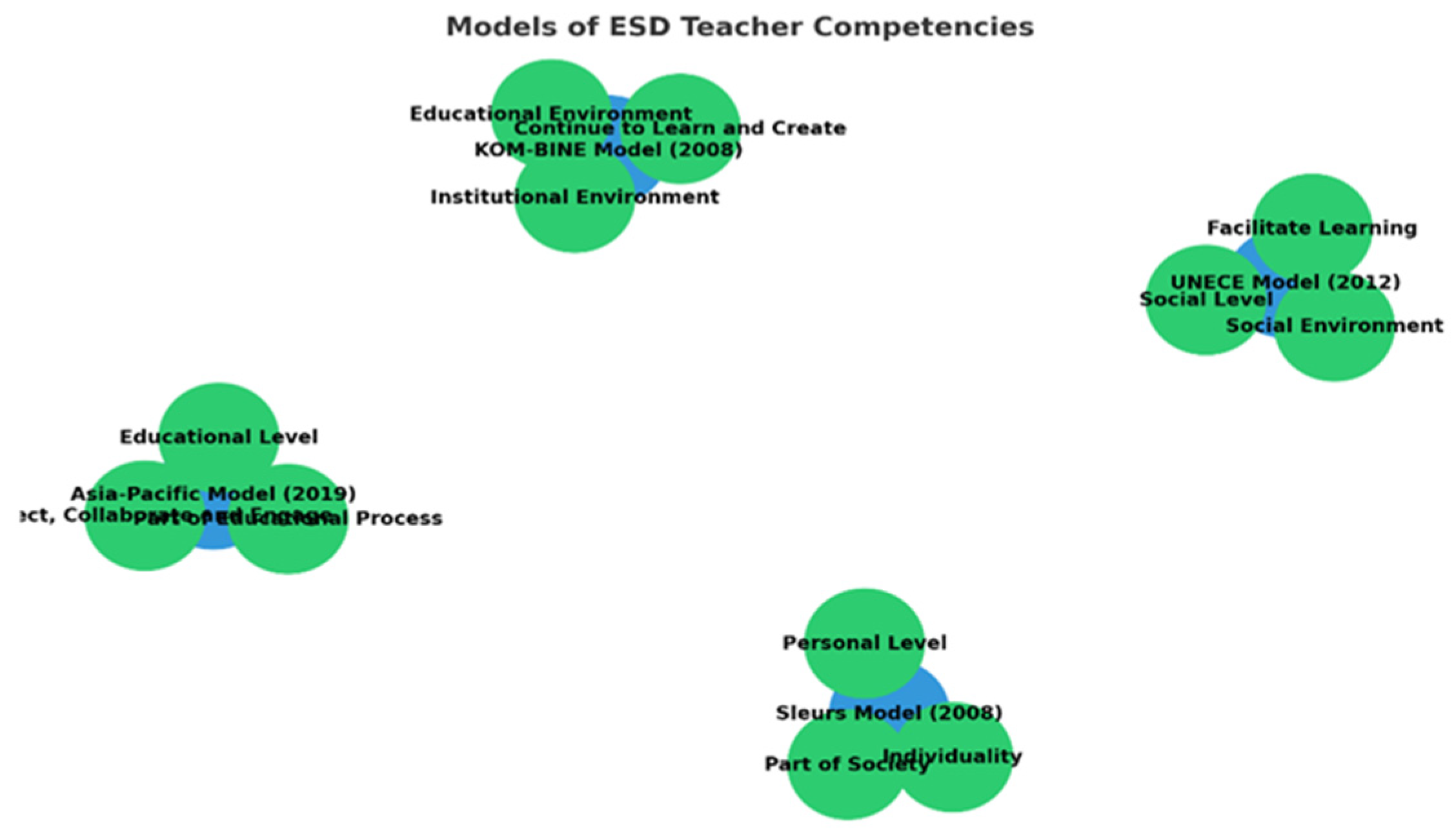
Education for Sustainable Development (ESD) has introduced various models outlining the competencies required for educators. One such model is Sleurs’ (2008) model, which was developed as a result of a project by the United Nations Economic Commission for Europe (UNECE). This model, known as the "Dynamic Model of ESD Competencies in Teacher Education," focuses on integrating ESD into teacher training curricula. In this model, the teacher is not only regarded as an educator but also as an individual engaged in dynamic interactions with students, colleagues, and society. The model defines ESD competencies for educators based on three professional dimensions: the teacher as an individual, the teacher as a professional within educational institutions, and the teacher as an active member of society. It also highlights three core competencies: teaching, reflection, and networking and collaboration. The competencies required for implementing Education for Sustainable Development encompass knowledge, systems thinking, emotions, values, and ethics. These competencies equip educators with the ability to integrate sustainability principles into teaching and learning processes, fostering a deeper understanding of sustainable development among students [24,25].
The next model, "KOM-BiNE," encompasses three behavioral domains of teachers: the teaching environment, the institutional environment, and society. This model is similar to the professional dimensions described in Sleurs’ model. According to this model, ESD competencies include the following elements: knowledge and action, as well as values, communication and reflection, planning and organization [26]. The model proposed by Bertschy, Künzli, and Lehmann (2013) focuses on professional action competencies specific to ESD and is directed toward early childhood and primary education. This model is based on the UNECE and Sleurs ESD competency models. The Bertschy model emphasizes knowledge in complex and multifaceted ESD topics and the ability to translate this knowledge into teaching and learning materials. It also considers the ability to constructively resolve conflicts related to such topics. This model views ethical evaluation as a learning objective and collaborative creation competence as a central element that students should develop [27].
UNESCO's Bangkok project ("Integrating Education for Sustainable Development (ESD) into Teacher Education in Southeast Asia," UNESCO, 2018) presents another influential model of teacher competencies in ESD. This model is based on a review tool designed to assess the extent to which ESD has been integrated into teacher education programs. The model evaluates seven key competencies in teachers' ESD practice, which are outlined as follows: ESD concepts, ESD content, ESD methodologies, integration of ESD into curricula, ESD policy, ESD and community engagement, and implementation of ESD at the institutional level [28].
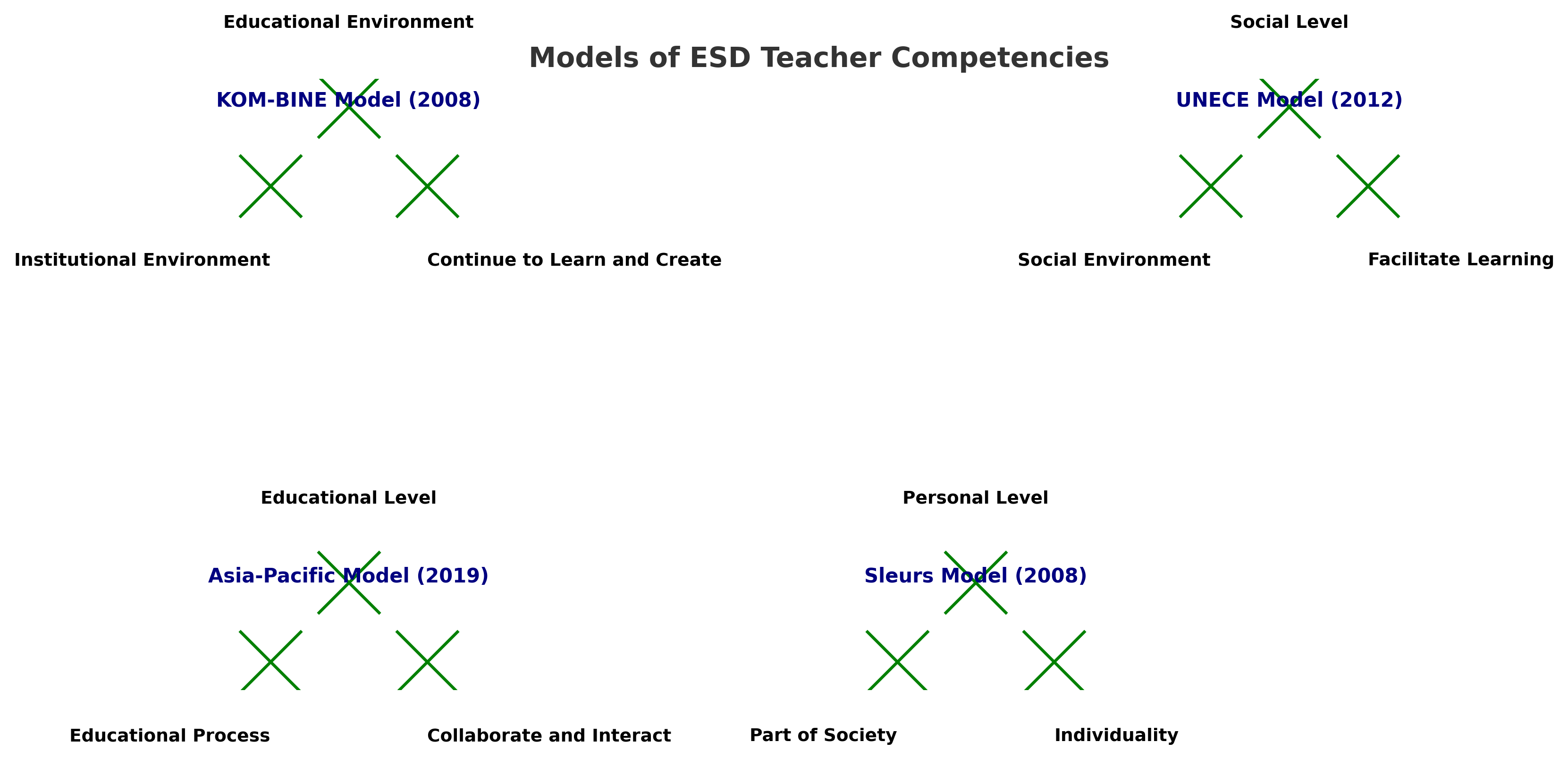
Here is the updated visualization with improved colors:
- Blue nodes represent ESD Competency Models (UNECE Model, Sleurs Model, Asia-Pacific Model, KOM-BINE Model).
- Green nodes represent Key Competencies associated with these models.
Figure 1.
Models of ESD Teacher Competencies.
4.4. Professional Competence of Chemistry Teachers Based on the Sustainable Development Goals (SDGs)
In addition to acquiring the competencies necessary for sustainable development citizens (such as knowledge, skills, attitudes, values, motivation, and commitments), teachers must also develop general professional competencies. We consider education as an essential and integral part of achieving the Sustainable Development Goals (SDGs). Quality education is one of the fundamental human rights and a crucial condition for ensuring the well-being and success of society. It serves as the foundation for the realization of all other rights. In this regard, within the framework of the "Education 2030" agenda, various countries around the world are studying and analyzing concrete achievements and successes in education. One of the key issues considered within the goal of quality education is "Competencies and Skills of the 21st Century." In our research, we propose professional competencies for chemistry educators based on the principles of sustainable development. These proposed competencies have been formulated by analyzing the professional competencies required for educators in our country, with a particular focus on those relevant to chemistry teachers [29].
Table 3.
Sustainability-based competencies of chemistry teachers and their link to the SDGs.
| № | Competency | Description | Relevant SDG | Example |
| 1 | Systems Thinking Competency | Ability to analyze complex systems, recognize interconnections between different aspects of sustainability, and solve chemistry-related global challenges. | SDG 13 (Climate Action) | Analyzing global climate patterns and their effects on chemical processes. |
| 2 | Anticipatory Competency | Ability to assess long-term consequences of decisions and predict sustainability outcomes in chemistry education. | SDG 7 (Affordable and Clean Energy) | Evaluating the environmental impact of energy sources and their chemical reactions. |
| 3 | Normative Competency | Understanding and integrating ethical aspects of chemistry in sustainability. | SDG 10 (Reduced Inequalities) | Teaching about green chemistry and its role in reducing environmental injustice. |
| 4 | Collaboration Competency | Ability to work in interdisciplinary teams and apply chemistry knowledge to solve real-world sustainability challenges. | SDG 17 (Partnerships for the Goals) | Partnering with environmental organizations for chemistry-related sustainability projects. |
| 5 | Critical Thinking Competency | Ability to evaluate data, analyze the credibility of sources, and critically assess chemical sustainability challenges. | SDG 12 (Responsible Consumption and Production) | Analyzing the environmental impact of industrial chemical production. |
| 6 | Self-Awareness Competency | Reflecting on personal and professional roles in promoting sustainable chemistry education. | SDG 4 (Quality Education) | Engaging in self-reflection on how to integrate SDGs into chemistry teaching. |
| 7 | Strategic Competency | Designing and implementing innovative chemistry education strategies that align with sustainability principles. | SDG 11 (Sustainable Cities and Communities) | Developing educational projects on urban air and water pollution. |
| 8 | Integrated Problem-Solving Competency | Applying a multidisciplinary approach to solving complex chemistry-related sustainability challenges. | SDG 6 (Clean Water and Sanitation) | Investigating the impact of chemical contaminants on water quality. |
The role and impact of training educators in the field of Education for Sustainable Development (ESD) are particularly crucial in countries actively developing educational programs aligned with the Sustainable Development Goals (SDGs). Fujii (2021) examines the process of developing an ESD competency model for future natural science teachers in Japan, based on the Context, Input, Process, Product (CIPP) model. Using this approach, the author analyzed the "Methods of Teaching Natural Science in Primary School" course and its impact on the development of key professional competencies of future teachers. The main findings of the study indicate that after completing the course, students developed a deeper understanding of the role of sustainable development in education. Survey results showed that future teachers recognized the importance of integrating issues such as climate change, biodiversity, sustainable consumption, and disaster prevention into the learning process. However, significant methodological challenges emerged—students faced difficulties in integrating ESD concepts into traditional school subjects. To enhance the effectiveness of ESD teaching for future educators, the following measures are recommended:
- Developing structured courses that include not only theoretical training but also practical projects aimed at integrating sustainable development into education.
- Establishing an interdisciplinary approach in teacher training that incorporates elements of environmental, economic, and social sustainability.
- Strengthening teachers’ professional development through Lesson Study and other methods based on reflection and collaboration.
These findings are supported by the research of Bertschy et al. (2013), who emphasize that ESD teacher training should develop systems thinking, collaboration skills, and the ability to strategically manage the educational process [30].
5. Conclusions
Teacher preparation in the context of Education for Sustainable Development (ESD) requires the development of multilevel competencies that go beyond traditional education. These include critical thinking, strategic planning, teamwork, and an understanding of global issues. Modern pedagogical models, such as project-based learning, flipped learning, and interdisciplinary approaches, contribute to the effective development of these competencies, making education more relevant and practice-oriented. Developing these competencies in future teachers is a crucial step in integrating sustainable development principles into the education system, fostering environmental responsibility among students, and creating conditions for successfully achieving the Sustainable Development Goals (SDGs). The primary focus is on integrating SDGs into curricula and their role in fostering critical thinking, collaboration, and sustainability competencies in future teachers. Key Findings: Integration of Sustainable Development Goals: The study revealed that while the importance of education for sustainable development is widely recognized, its integration into curricula remains fragmented. Many programs lack a systematic approach to incorporating these goals into pedagogical practice. Development of 21st-Century Competencies: Authors note that current teacher preparation programs do not sufficiently promote the key competencies needed for effective teaching in the 21st century. These include critical thinking, problem-solving, and collaboration skills. Recommendations:To improve the situation, it is recommended to revise curricula and ensure a deeper and more systematic integration of SDGs. This can be achieved by: Developing chemistry education courses based on sustainable development principles. Implementing practical, project-oriented learning activities. Raising awareness among educators about the importance of sustainability in education.
References
- Letina, A., & Diković, M. (2024). Future teachers’ knowledge, attitudes and practice regarding sustainable development goals. Education and New Developments 2024 – Volume I. [CrossRef]
- Afroz, N., & Ilham, Z. (2020). Assessment of knowledge, attitude and practice of University Students towards Sustainable Development Goals (SDGs). The Journal of Indonesia Sustainable Development Planning, 1(1), 31-44p. [CrossRef]
- Borges, F. (2019). Knowledge, Attitudes and Behaviours Concerning Sustainable Development: A Study among Prospective Elementary Teachers. Higher Education Studies, 9(2), 22–32. [CrossRef]
- Quadrado, J. C., & Zaitseva, K. K. (2019). New pedagogical approaches to induce Sustainable Development Goals. Higher Education in Russia, 28(3), 50–56. [CrossRef]
- Quadrado, J.C., Zaitseva, K. Engineering education interdisciplinarity in global teams. In: 45th SEFI Annual Conference 2017: Education Excellence for Sustainability: Proceedings,pp. 954–96.
- Davies, R.S., West, R.E. (2014). Technology Integration in Schools. In: J.M. Spector, M.D. Merrill, J.Elen, M.J. Bishop (Eds.). Handbook of Research on Educational Communications and Technology.
- Eilks, I. Science education and education for sustainable development; Justifications, models, practices and perspectives. Eurasia J. Math. Sci. Technol. Educ. 2015, 11, 149–158. [CrossRef]
- Guo, C., Huang, Y., & Chen, X. (2024). Research on Integration of the Sustainable Development Goals and Teaching Practices in a Future Teacher Science Education Course. Sustainability, 16(4982). [CrossRef]
- Firdaus, M., Fuad, Z., Kusaeri, & Rusydiyah, E. F. (2023). Portrait of Teacher Competence and Implementation Challenges of Achieving Sustainable Development Goals (SDGs): A Comparative Study between Indonesia and Vietnam. Jurnal Iqra': Kajian Ilmu Pendidikan, 8(2), 50–68. [CrossRef]
- Moctezuma Teresa, L. M., Aparicio López, J. L., Rodríguez Alviso, C., Gervacio Jiménez, H., & Brito Carmona, R. M. (2022). Environmental Competencies for Sustainability: A Training Experience with High School Teachers in a Rural Community. Sustainability, 14(4946). [CrossRef]
- A. B. Bekenova Theoretical aspects of the formation of key competencies of students in the field of chemistry through the integration of natural science subjects Series: Chemical and Biological Sciences. No.1. 2023. [CrossRef]
- Qaliev B. Explanatory Dictionary of the Kazakh Language. – Almaty: "Sozdyk-Slovar", 2014. – 728 p.
- Sardarova, Zh. I., & Zhangozieva, M. S. (2019). The current state of the development of teachers' professional competencies in the context of the new paradigm of education; The theory and practice of teaching.
- Aqtanova, Q. Q. (2021). Types of competencies in the 21st century and their formation in formal and informal education systems. Republican Scientific-Methodological and Information-Analytical Journal, (1), 6–10.
- Melyan, E. G. (2021). 21st-century skills and competencies and their formation in the formal and informal education system. Republican Scientific-Methodological and Information-Analytical Journal, (1), 11–14.
- Shopan, M. B. (2019). Components of the formation of future teachers' professional competence. BULLETIN of Ablai Khan KazUIR & WL, Series “Pedagogical Sciences”, (2), 40–47. ISSN 2412–2149.
- Formation of subject competence of pedagogical specialists in chemistry. (2023); Bulletin of Abai KazNPU, Series “Natural and Geographical Sciences”, 4(78).
- Kosinova, Y. P. (2023). Competencies and competence of a chemistry teacher.
- United Nations General Assembly. (2015). Transforming our world: The 2030 agenda for sustainable development. Retrieved from https://sdgs.un.org/2030agenda.
- UNESCO. (2017). Education for Sustainable Development Goals: Learning Objectives. Paris: UNESCO. Retrieved from https://unesdoc.unesco.org/.
- Wanchana, W., & Pongsophan, J. (2019). Enhancing Teacher Competence for Sustainable Development: A Case Study in Thailand. Journal of Sustainable Education, 11(2), 45-60.
- Sleurs, W. (2008). The Dynamic Model of ESD Competencies in Teacher Education. United Nations Economic Commission for Europe (UNECE). Retrieved from https://www.unece.org/.
- Bertschy, F., Künzli, C., & Lehmann, M. (2013). Teachers’ professional action competencies for ESD: Experiences from Switzerland. Journal of Education for Sustainable Development, 7(2), 33-49.
- Khan, S. (2012). Redefining Education for the 21st Century: The Role of Sustainable Development in Teacher Training Programs. International Journal of Educational Research, 5(1), 67-82.
- Guo, C., Huang, Y., & Chen, X. (2024). Research on Integration of the Sustainable Development Goals and Teaching Practices in a Future Teacher Science Education Course. Sustainability, 16(4982). [CrossRef]
- Bekenova, A. B. (2023). Theoretical aspects of the formation of key competencies of students in the field of chemistry through the integration of natural science subjects. Series: Chemical and Biological Sciences, No.1. [CrossRef]
- Fujii, T. (2021). Developing an ESD competency model for future natural science teachers: A case study from Japan. Journal of Environmental Education Research, 27(3), 78-95.
- Nousheen, M., Zai, S. A. Y., Waseem, M., & Khan, S. A. (2020). Education for sustainable development (ESD): Effects of sustainability education on pre-service teachers’ attitude towards sustainable development. Journal of Cleaner Production, 250, 119537.
- Talbert, R. (2012). Flipped Learning Strategies for Active Learning Environments. Journal of Educational Technology, 9(1), 42-57.
- Bertschy, F., Künzli, C., & Lehmann, M. (2013). Teacher training for education for sustainable development in Switzerland: The development of professional action competencies. Journal of Education for Sustainable Development, 7(1), 5-20.
Disclaimer/Publisher’s Note: The statements, opinions and data contained in all publications are solely those of the individual author(s) and contributor(s) and not of MDPI and/or the editor(s). MDPI and/or the editor(s) disclaim responsibility for any injury to people or property resulting from any ideas, methods, instructions or products referred to in the content. |
© 2025 by the authors. Licensee MDPI, Basel, Switzerland. This article is an open access article distributed under the terms and conditions of the Creative Commons Attribution (CC BY) license (http://creativecommons.org/licenses/by/4.0/).
Copyright: This open access article is published under a Creative Commons CC BY 4.0 license, which permit the free download, distribution, and reuse, provided that the author and preprint are cited in any reuse.


