

Submitted:
06 May 2025
Posted:
07 May 2025
You are already at the latest version
Abstract
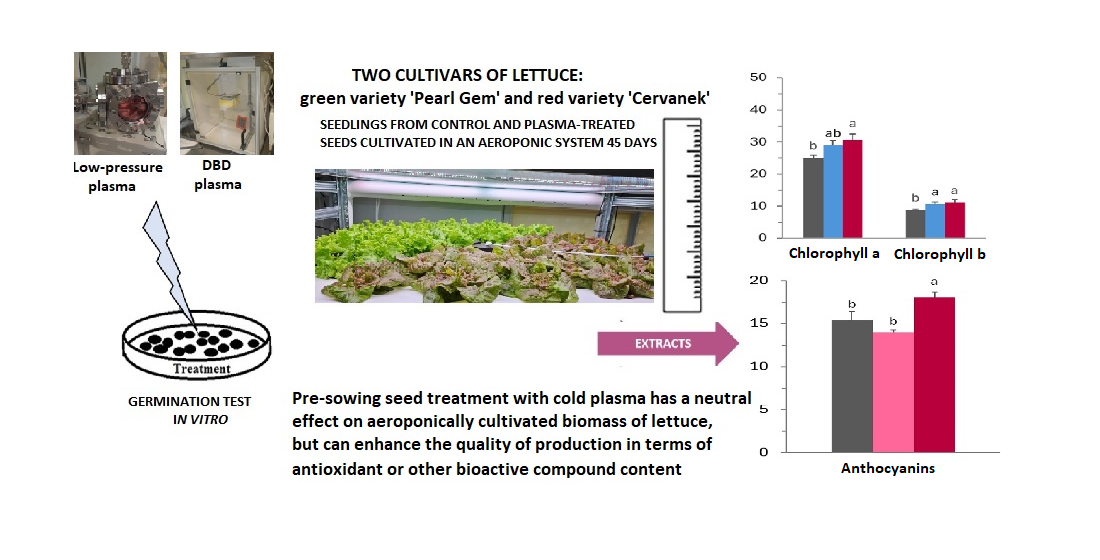
Aeroponic plant cultivation is a novel technology explored for its potential in indoor farming. In this study we evaluated the effects of seed treatments with cold plasma on growth, physiological processes and biochemical parameters in two lettuce cultivars - green variety 'Perl Gem' and red variety 'Cervanek' cultivated in an aeroponic system for 45 days. Seeds were treated with low-pressure air plasma for 3 min (further denoted as LCP3) or atmospheric dielectric barrier discharge (DBD plasma) for 3 and 5 min (reffered to as DBD3 and DBD5 groups). We estimated the effects of seed treatments on parameters of seedling growth, photosynthetic efficiency, amounts of photosynthetic pigments, anthocyanins, total phenolic compounds (TPC), and antioxidant activity in leaves. Despite the observed effects on germination and early growth, seed treatments did not affect biomass gain or head/root ratio in both lettuce cultivars. Seed treatments increased the photosynthetic performance index and amounts of photosynthetic pigments in ‘Pearl Gem’ but not 'Cervanek' leaves. Seed treatments enhanced the content of protective phenolic compounds and antioxidant activity in ‘Pearl Gem’, and anthocyanin content in 'Cervanek' leaves, indicating potential to improve the nutritional value of the edible part of lettuce cultivated in an aeroponic system.
Keywords:
aeroponics
; anthocyanins
; antioxidant activity
; cold plasma
; Lactuca sativa
; photosynthesis
; photosynthetic pigments
; seeds
; total phenolic compounds
1. Introduction
Traditional resource-intensive agricultural practices are focused on maximizing production yields through intensive use of chemicals, often with little regard for environmental degradation. In contrast, sustainable agriculture technologies seek to balance the needs of food production while preserving resources and ecosystems [1,2]. Modern technologies are designed to minimize environmental harm by using organic practices, reducing inputs of synthetic chemicals (fertilizers, herbicides, pesticides, etc.), and conserving water, soil and biological diversity. Analysis of global data on agricultural production and population size has revealed that worldwide production of fruits and vegetables is not sufficient to meet global health needs [3]. It was concluded that the global nutrition and agricultural communities should explore innovative ways to increase fruit and vegetable production and consumption to meet the food and health needs of the population. In this respect, an increase in both plant production and nutritional value is important as large amounts of nutrients and bioactive compounds in food serve to overcome malnutrition and chronic diseases [4].
Home and urban gardening represent a viable, small-scale yet underestimated component of sustainable agrifood systems [5]. In this context, the development of soilless and vertical farming, including hydroponic, aeroponic and aquaponic systems, is being explored, since such systems provide higher plant yields while using less water (up to 90%) and land (75%) compared to the conventional soil-based agriculture [6,7]. Among these technologies, hydroponic cultivation is the most widely used and best studied [8], while the potential of aeroponics is still under intensive investigation. Aeroponic cultivation is a method of growing plants without soil, where the roots are exposed to air and misted with a nutrient-containing aerosol droplets [9]. It resolves several plant cultivation constraints occurring during hydroponic cultivation, including improved oxygen availability within the root bed, more efficient water use (aeroponics recycles 99% of the water utilized [7]), optimized and controllable nutrient delivery promoting faster and uniform crop growth, and better isolation from pathogen pressures and plant disease. In addition, aeroponic cultivation offers benefits such as cultivation at latitudes incompatible with certain crops, reporposing of disused urban buildings, and contributing to price stabilization [10,11]. Aeroponics has been applied to the cultivation of more than 50 crop species, including fruits and vegetables [12].
Lettuce (Lactuca sativa L.), also known as leaf lettuce, is one of the most frequently consumed vegetable crop species globally [13]. The health benefits of lettuce leaves are associated with the presence of secondary metabolites and vitamins, such as glycosylated flavonoids, hydroxycinnamic acids, sesquiterpene lactones lactucin and lactucopicrin, carotenoids, B vitamins, ascorbic acid, and tocopherols [13]. It is valued as a rich source of calcium, iron and potassium, but is low in sodium, fat, and calories [14]. Different lettuce varieties are commercially accessible year-round and grown in open fields, greenhouses, and various soilless cultivation systems, including aeroponics [12]. A notable shift from soil cultivation to soilless systems for lettuce production has been driven by several factors: a shortened growth cycle, multiple harvests per year, controllable nutrient solutions to reduce nitrate accumulation, the ability to incorporate essential trace elements crucial for human nutrition, and the potential to extend shelf-life [15]. Numerous studies on optimizing conditions for aeroponic cultivation of lettuce have been published since the first report in 1998 [16], leading to the general conclusion that aeroponics is a highly efficient technology for lettuce production [16,17,18,19,20,21,22,23,24,25].
In this study, we aimed to combine aeroponic cultivation of lettuce with another innovative agrotechnology, namely, pre-sowing seed treatment with non-thermal plasma or cold plasma (CP). CP is a non-equilibrium plasma produced by various types of discharge in gases. It contains a complex mixture of charged particles (ions, free electrons), neutral particles (gas molecules, free radicals), and photons of ultraviolet and visible light [26,27]. It has previously been demonstrated that the interaction of CP with seeds results in multiple effects – seed decontamination, enhanced germination, seedling growth stimulation, increased production yields in numerous plant species, improved stress resistance and enhanced systemic resistance against pathogens (see reviews [27,28,29,30]). Pre-sowing seed treatments can result in increased amounts of biologically active compounds in medicinal plants [31]. The reported findings on CP-induced changes in leaf antioxidant activity are variable, ranging from neutral to negative or positive, depending on the experimental model, treatment protocol, plant species, variety, or even genetic line [32,33,34,35,36,37]. Nevertheless, such findings indicate that the potential of CP treatments to improve the nutritional value of plants should be further investigated [38]. A few studies have reported slight positive effects of direct seed treatment with CP on lettuce germination [39,40], but treatment-induced changes on biochemical composition of leaves have not been studied.
This study aimed to evaluate the effects of seed treatments with CP on growth, physiological processes and biochemical parameters in two lettuce cultivars – green variety ‘Pearl Gem’ and red variety ‘Cervanek’ – cultivated in an aeroponic system („Baltic Freya“) for 45 days. We hypothesized that seed treatment can induce changes in biochemical leaf composition, including the content of photosynthetic pigments, anthocianins, total phenolic compounds (TPC) and antioxidant activity, and stimulate photosynthesis and lettuce growth in an aeroponic system. Since aeroponic cultivation has been demonstrated to significantly improve lettuce root growth but not shoot growth compared to hydroponics [25], we also aimed to test whether CP can increase leaf to root ratio in aeroponically grown lettuce. This assumption was based on the observation that seed treatments with CP can stimulate above-ground growth in common buckwheat [36] and industrial hemp [41]. We compared the effects of seed irradiation using two different CP generation systems: low-pressure cold plasma (LCP) and atmospheric dielectric discharge (DBD) plasma.
2. Materials and Methods
2.1. Plant Material
Lettuce (Lactuca sativa) seeds were obtained from the commercial seed source company “Agrimatco” (Kaunas, Lithuania). Two cultivars were used in this study: green romaine lettuce variety ‘Pearl Gem’ and red green butterhead lettuce variety ‘Cervanek’. Seeds were stored in a refrigerator (+12°C) under dry, dark conditions until the experiment.
2.2. Seed Treatment with Plasma
Based on the results of the pilot germination experiments, lettuce seeds were treated with low-pressure air plasma for 3 min or 5 min (further denoted as LCP3 and LCP5) or atmospheric dielectric barrier discharge (DBD plasma) for 3 and 5 min (further denoted as DBD3 and DBD5). Seed irradiation with LCP was carried out in a hermetic stainless-steel reactor of capacitively coupled RF discharge as described earlier [42]. A total of 200 seeds were spread out in a single layer within a 5 cm diameter glass Petri dish, which was placed in the reactor at a distance of 60 mm from the electrode. The chamber was sealed and a vacuum pump and an airflow controller were used to reach and maintain a constant 100 Pa pressure inside the chamber. RF voltage with a frequency of 430 MHz was applied to the powered electrode (discharge power 50 W). Air was used as the gaseous phase, and the airflow was set at 89±5 mL/min.
Seed irradiation with DBD was carried out using device previously described in detail earlier [43]. A single layer of 200 seeds was placed on a glass tray under the electrode, maintaining a 5 mm the distance between the electrode and the seed surface. Discharges were generated in the electrode air gaps by applying a pulsed voltage of 7 kV (Logy Electric, LHV-09K). The discharge frequency and power density were 14.4 kHz and 3.05 W/cm2, respectively. The total power was 4.64 W, and the treated area was 1.52 cm2. Seeds were treated with DBD plasma at room temperature, and the relative humidity of the air was maintained at 50±5% by an ultrasonic humidifier.
2.3. Seed Germination Test In Vitro
Germination was assessed by in vitro test four days after seed irradiation with plasma. Untreated (control) seeds and seeds exposed to LCP and DBD were evenly distributed on two layers of filter paper in 90-mm-diameter plastic Petri dishes (three replicates of 50 seeds each) and watered with 5 mL distilled water. Petri dishes with seeds were placed in a climatic chamber (Pol-Eko-Aparatura KK 750, Poland) with automatically controlled relative humidity (60%). Alternating light regimes (16 h light, 8 h dark) and a constant temperature of 25 ± 1 °C were maintained in the chamber. Additional water was provided, if necessary, to prevent seed drying. Seeds were imbibed at 8 AM, and the number of germinated seeds was monitored the next day until their numbers stopped increasing.
The effect of LCP and DBD on germination was quantitated based on changes in germination kinetics parameters, derived using Richards’ function [44] to analyze the germinating seed population [45]. The parameters included: Vi (%) – the final germination percentage indicating seed viability, Me (h) – the median germination time (t50%) indicating the germination halftime of a seed lot or germination rate, and Qu (h) – the quartile deviation indicating the dispersion of germination time in a seed lot (half of the seeds with an average growth time germinate within the range Me ± Qu).
2.4. Cultivation of Seedlings in an Aeroponic System
For cultivation in an aeroponic system, control seeds and seeds treated with LCP or DBD were transferred to the growth container with moistened 20 × 20 mm Grodan rock wool cubes (Roermond, The Netherlands) carefully sowing one seed per cube. Growth containers with seeds were placed in a climatic chamber (Pol-Eko-Aparatura KK 750, Poland), where stable conditions were maintained as described above for the germination test in vitro. Twelve days after emergence, seedlings that have developed two true leaves were transferred into an aeroponic system within a walk-in, controlled-environment chamber designed to replicate typical vertical farming conditions. Eight seedlings from each experimental group of both cultivars were cultivated in marked positions of the chamber: control, LCP3, and DBD5 group for ‘Pearl Gem’ (24 seedlings in total) and control, DBD3, and DBD5 group for ‘Cervanek’ (24 seedlings in total) cultivar.
Environmental parameters were maintained as follows: a 16 h photoperiod with artificial lighting from a custom LED panel composed of six Samsung Horticulture L2 LED modules, providing a light intensity of 250 µmol m⁻2 s⁻1. Relative humidity was 50 ± 5%, with day and night temperatures of 21 °C and 17 °C, respectively. CO2 concentration was maintained at 1000 ppm. Intermittent aeroponic irrigation was carried out using a Nebula R1+ rotational nozzle (Freya Cultivation Systems, Garliava, Lithuania), programmed to spray for 45 s every 495 s. The nutrient solution concentrate, consisting of Plagrons (Ospel, The Netherlands) Hydro A (NPK 3-0-1 with 4.2% Ca and 0.4% MgO) and Hydro B (NPK 1-3-6 with 1.4% MgO), was diluted at a 1:400 ratio with deionized water. The pH of the nutrient solution was continuously monitored and adjusted using an acid (HNO3) or base (KOH) to maintain a target pH of 5.5–6.5, and the solution electrical conductivity was held at 1.56 ± 0.1 mS/cm. A photograph of lettuce seedling leaves and roots in aeroponic system is shown in Figure 1. Aeroponic cultivation of both ‘Pearl Gem’ and ‘Cervanek’ variety resulted in plants with well-developed heads 45 days after sowing.
2.5. Measurement of Photosynthetic Efficiency
The function of the photosynthetic system in lettuce leaves was measured on the 45th day after sowing using a portable chlorophyll fluorescence measuring device Handy PEA. Prior to measurement, the leaves were adapted to the dark for 15 min. Chlorophyll a fluorescence was measured after an instantaneous light flash at an intensity of 2000 mol-2 ·S -1 ·photons. The effectiveness of the photosystem II (FSII) was determined by the maximum quantum efficiency coefficient Fv/Fm ratio, and the photosynthesis performance index PIABS was derived from chlorophyll a fluorescence measurement in the leaves.
2.6. Morphometric Measurements
Seedling height, root and shoot length, leaf number, and the fresh weight of seedlings, their roots, shoots and leaves were measured in 45-day-old plants (n = 7-8).
2.7. Analysis of Leaf Biochemical Parameters
The leaves were collected from 45-day-old plants, frozen in liquid nitrogen, ground into powder using a batch mill with a disposable grinding chamber (Tube-Mill control, IKA, Staufen, Germany), and stored at -80° C. The effects of seed treatments on the amount of photosynthetic pigments, anthocyanins, total phenolic content (TPC), and antioxidant activity in seedling leaves were estimated spectrophotometrically (UV-1900i spectrophotometer) in the prepared extracts. To determine of antiradical activity and total phenolic compound (TPC) content, leaf powder was mixed with 85% methanol in a ratio of 1:5 (w/v) and extracted using ultrasound for 15 min at 4 °C. The mixture was centrifuged at 16,000 × g for 10 min, and the supernatant was collected and stored at –20 °C until analysis. 4-6 samples were taken from each experimental group.
Antioxidant activity was measured by the scavenging of the stable 2,2-diphenyl-1-picrylhydrazyl free radical (DPPH), as described previously [46]. Accordingly, 50 µL of lettuce leaf extract was added to 1950 µL of a DPPH solution (25 µg/L, prepared in acetonitrile–methanol–sodium acetate buffer (100 mM, pH 5.5) (1:1:2)). After 15 min of incubation in the dark at room temperature, absorbance was measured at 515 nm. Rutin was used as a standard, and antioxidant activity was expressed as mg of rutin equivalent (RUE) mg g−1 of FW.
TPC content was determined using the modified Folin–Ciocalteu method [46]. A total of 0.2 mL of lettuce leaf extract was mixed with 1 mL of 0.2 N Folin–Ciocalteu reagent and 0.8 mL of 7.5% sodium carbonate solution. After 60 min of incubation in the dark at room temperature, absorbance was measured at 760 nm. Gallic acid was used as a standard, and the results were expressed as mg of gallic acid equivalent (GAE) per mg g−1 of fresh weight (FW).
Total anthocyanin content was determined in fresh lettuce samples frozen in liquid nitrogen, using the modified method of Perez-Lopez et. al. [47]. Anthocyanins were extracted from the lettuce sample with 3M HCl/100% methanol (4:16 v/v) using a sample/extractant ratio of 1:5 (w/v). For extraction, the sample/extractant mixture was incubated in an ultrasonic bath for 10 min at room temperature. The extracts were centrifuged at 16000 g for 10 min at room temperature. The absorbance of the extracts was measured at 524 nm and 653 nm. The anthocyanin content was calculated in cyanidin-3-glucoside equivalents by applying a molar extinction coefficient at 524 nm of 0.033 µM-1cm-1 and subtracting the interference due to pheophytin (A524-0.24A653)/0.033).
The amounts of chlorophylls a and b and carotenoids were determined in ethanolic extract of lettuce leaves. Prepared frozen lettuce leaf powder was mixed with 96% ethanol at a ratio of 1:5 (w/v) and extracted using ultrasound for 10 min at 4 °C. The mixture was centrifuged at 16,000 × g for 10 min, and the supernatant was collected. The extraction procedure was repeated. The supernatant was collected in the same tube and stored at –20 °C until analysis. 4-6 samples were prepared for each treatment group. The absorption of the extract was measured at wavelengths of 665 nm (chlorophyll a, Chl a), 649 nm (chlorophyll b, Chl b) and 470 nm (carotenoids). The amounts of Chl a, Chl b and total carotenoids was calculated using the formulas described by Lichtenthaler and Buschmann [48].
2.8. Statistical Analysis
Statistical analysis of the results was performed using Statistica 7 software (issued by IBM Lietuva, Vilnius, Lithuania to Vytautas Magnus University). One-way analysis of variance (ANOVA) and Fishers least significant difference (LSD) test were used to compare the means of control versus treated groups of lettuce plants cultivated in aeroponics. Statistical significance of treatment effects was considered to be statistically significant at p < 0.05. All measurements of the various parameters in control and pre-sowing treatment groups were expressed as mean ± SEM. Differences in the same parameters between ‘Cervanek’ and ‘Perl Gem’ cultivars were estimated using Students t-tests for unpaired samples. Difference was considered statistically significant at p < 0.05.
3. Results
In vitro germination curves of ‘Cervanek’ and ‘Pearl Gem’ seeds are presented in Figure 2, and the calculated parameters of germination kinetics are shown in Table 1.
Seeds of both cultivars germinated very rapidly. The first radicles emerged at the 17th hour after imbibition and maximum germination was achieved within 5 hours. Therefore germinated seeds were counted every 30 min. Despite the steep slope of the germination curves, it can be observed (Figure 2) that LCP-treated seeds germinated faster compared to DBD-treated and control seeds.
Qantitative parameters of germination kinetics (Table 1) calculated from individual germination curves indicate that the maximum germination (Vi) of control seeds was close (‘Pearl Gem’) or equal (‘Cervanek’) to 100%; therefore seed treatments did not enhance final germination percentage.
A slight stimulation of germination (a 2% decrease in Me) was observed in the LCP3 and CP5-treated ‘Pearl Gem’ groups, as well as in the LCP5 group of the ‘Cervanek’ cultivar. Seed treatments did not affect the uniformity of germination (Qu). DBD treatments had no effect on germination kinetics in either cultivar.
The growth of seedlings germinated in Petri dishes was estimated 10 days after sowing and the results are presented in Table 2. The parameters of seedling length in the control ‘Pearl Gem’ group exceeded those of the ‘Cervanek’ cultivar by 10-30%. Despite that, seedling weight was similar in both cultivars (Table 2). Seed treatment with LCP3, LCP5 and DBD5 increased the length of ‘Pearl Gem’ roots (up to 18%) and seedling length (up to 12%); seedling weight was enhanced (10%) in LCP3 and DBD5 groups. However, DBD3 treatment slightly reduced the length of ‘Pearl Gem’ seedlings and their roots (4-7%). The effects of treatments on ‘Cervanek’ seedlings differed from those observed in ‘Pearl Gem’. LCP3 and LCP5 treatments decreased shoot length by 7%, while LCP5 increased root length by 15%.
In ‘Cervanek’ seedlings, shoot length and seedling weight increased by 7-8% in DBD3 and DBD5-treated groups, while other morphometric parameters did not differ from the control.
Due to the limited space in the aeroponic system, two experimental groups were selected for aeroponic cultivation of ‘Pearl Gem’ and ‘Cervanek’ seedlings, based on the effects of seed treatments in germination kinetics and early seedling growth (Table 1 and Table 2). LCP3 and DBD were chosen for the ‘Pearl Gem’ cultivar due to a combination of positive effects on germination and seedling weight. The increased seedling weight and length provided rationale for selecting DBD3 and DBD5 treatments for further experiments with the ‘Cervanek’ cultivar. Control and treated seeds germinated in moistened Grodan rock wool cubes. The developed seedlings (12 days after sowing) were transferred to an aeroponic cultivation system and harvested for morphometric and biochemical analysis after head formation (45 days after sowing). Before sampling, the efficiency of the photosynthetic system in leaves was estmated. The morphometric parameters are shown in Table 3.
The obtained results showed that biomass gain in an aeroponic system was higher in ‘Pearl Gem’ seedlings compared to ‘Cervanek’ (plant weight, root weight and leaf weight were 28%, 35% and 27% larger, respectively), although plant length did not differ. The number of leaves in ‘Cervanek’ plants was 72% larger compared to ‘Perl Gem’. However, seed treatments did not have an effect on morphometric plant parameters in either cultivar.
A comparison of photosynthetic efficiency indices in the leaves of seedlings cultivated in an aeroponic system is presented in Table 4.
The indices of photosynthetic efficiency were cultivar-dependent. The photosynthetic performance index PIABS in the leaves of the control ‘Pearl Gem’ plants was by 49% higher, while the Fv/Fm ratio was 2.3% higher in comparison to ‘Cervanek’. In both cultivars, seed treatments did not affect the Fv/Fm ratio. In ‘Pearl Gem’ plants growing from LCP3 and DBD3-treated seeds, the PIABS index was substantially increased, compared to the control (by 28 and 36%, respectively). In ‘Cervanek’ plants, the DBD treatments resulted in a strong PIABS increase (the increase in DBD3 and DBD5 groups was 57 and 46%, respectively).
The effects of seed treatments on the content of photosynthetic pigments in lettuce leaves are shown in Figure 3.
Significantly higher levels of photosynthetic pigments were detected in the leaves of ‘Cervanek’ plants; the amounts of Chl a, Chl b, and total carotenoids were significantly higher (by 39%, 27%, and 53%, respectively) compared to ‘Pearl Gem’ plants. However, the pigment levels in ‘Cervanek’ plants grown from treated seeds were the same as in the control plants, except for a 10% increase in total carotenoids in the DBD3 group. In contrast, seed treatments led to a significant increase in chlorophyll and carotenoid content in ‘Pearl Gem’ plants. In the LCP3-treated group, the amounts of Chl a, Chl b and Chl (a+b) were higher by 16%, 21%, and 17%, respectively, while in the DBD5 group the respective increases were 22%, 29%, 23%, compared to the control. In addition, DBD5 treatment resulted in a 20% increase in carotenoid content.
The total content of anthocyanins in ‘Pearl Gem’ leaves was below the detection level; therefore, Figure 4 presents anthocyanin levels only in ‘Cervanek’ plants. The anthocyanin content in plants from the DBD3 group was unaffected, while in the DBD5 group it increased by 18% compared to the control.
The content of total phenolic compounds (TPC) and antioxidant activity was also higher in control plants of ‘Cervanek’ cultivar, by 31% and 2.2 times, respectively, compared to those of ‘Pearl Gem’ (Figure 5, a and b).
‘Pearl Gem’ seed treatment with LCP3 induced a strong increase in TPC content (54%) ant antioxidant activity (3.4-fold), in contrast to DBD5, which did not affect TPC and reduced antioxidant activity by 34%. A similar pattern of DBD treatment effects was observed in ‘Cervanek’ plants, where antioxidant activity was reduced in the DBD3 and DBD5 groups by 30 and 14%, respectively. DBD5 treatment also reduced TPC content by 15%.
4. Discussion
The effects of pre-sowing seed treatments with CP on plant performance depend on a large variety of factors, such as the mode of seed treatment, crop species, cultivar, seed dormancy type and status, cultivation conditions and methods, and the presence of biotic or abiotic stress (see reviews [27,28,29,30]). Several studies on the combination of CP technologies with soilless farming methods have been conducted; however, they were mostly limited to the use of plasma-treated nutrient solutions in hydroponic cultivation systems [49,50,51]. Significant improvement of growth, increased levels of chlorophyll and soluble proteins, and upregulated expression of salinity tolerance genes were observed in hydroponically cultivated Brassica rapa subsp. Chinensis plants using air DBD-treated Hoagland nutrient solution [49]. Plasma-activated water (PAW), produced by spark discharge, has been applied to maize seeds during germination and to seedlings in the third day of cultivation in paper rolls, followed by 10 days of cultivation in hydroponics [50]. PAW pretreatment improved early seedling growth and increased chlorophyll content in leaves after subsequent treatments combined with arsenic. Green oak lettuce has been grown in a hydroponic system using (1) Hoagland solution without nitrates, (2) the same solution supplemented by a commercial N fertilizer, and (3) a solution in which the same concentration of nitrate was generated by the pinhole plasma jet technique [51]. Plant growth was reduced in the first solution, but equally enhanced in the other two solutions. Moreover, plants accumulated more nitrates when grown in the chemically fertilized solution compared to the plasma-treated one. These studies demonstrated the distinct benefits of combining CP with hydroponic cultivation. However, only a few studies have reported plasma applications for aeroponic plant cultivation. Gao et al. [52] developed a large-area uniform plasma device used to interact with high-flux micron-sized mist droplets to produce plasma-activated mist containing high concentrations of fixed nitrogen compounds. Such mist was successfully used for mung bean cultivation in an aeroponic system. Finally, the only available study on combination of the pre-sowing seed treatment with aeroponic cultivation of stevia plants has recently been published [42]. The authors compared the effects of seed treatment with LCP and DBD plasma on growth and steviol glycoside content in stevia cultivated in soil and aeroponics. Plants cultivated in aeroponics produced more biomass and contained 2-fold higher amounts of steviol glycosides and 3-fold higher amounts of TPC compared to plants cultivated in soil.
In this study, we examined the effects of pre-sowing seed treatment with CP on the growth, morphometric, physiological and biochemical traits of two lettuce cultivars (‘Pearl Gem’and ‘Cervanek’) cultivated in an aeroponic system. Despite the observed effects on germination in vitro (Figure 1, Table 1) and early seedling growth (Table 2), seed treatments did not affect biomass gain or the head/root ratio in either lettuce cultivar grown in an aeroponic system (Table 3). This finding supports the notion that CP-induced effects on seed germination and early seedling growth have limited predictive value for plant responses to seed treatments during longer vegetation periods [30].
However, seed treatments induced notable cultivar-dependent changes in physiological and biochemical plant parameters. The photosynthetic efficiency in ‘Cervanek’ plants was lower compared to the faster-growing ‘Pearl Gem’ (Table 4), despite higher content of chlorophylls in ‘Cervanek’ leaves (Figure 3). The effects of treatments on PIABS in ‘Pearl Gem’ might be associated with a strong treatment-induced increase in photosynthetic pigment levels. However, DBD treatments did not induce changes in pigment content but strongly enhanced PIABS in ‘Cervanek’. Instead inducing changes in chlorophyll content, DBD5 treatment increased anthocyanin levels in ‘Cervanek’ leaves (Figure 4). Anthocyanins are hydrophilic flavonoid pigments that exert health benefits, including strong antioxidant and anti-inflammatory properties as well as potential therapeutic applications in preventing urinary tract infections, diabetes, cardiovascular issues, and cancer [53].
The finding that DBD5 treatment can increase anthocyanin content in ‘Cervanek’ red lettuce leaves, together with the LCP3-induced increase in the amounts of protective TPC and antioxidant activity in ‘Pearl Gem’ green lettuce leaves (Figure 5) indicates potential to improve the nutritional value of the edible part of lettuce plants cultivated in an aeroponic system. We did not cultivate ‘Cervanek’ from LCP treated seeds in an aeroponic system, therefore the question whether LCP treatments are more effective compared to DBD increasing TPC and radical scavenging activity in aeroponically cultivated lettuce leaves remains to be further investigated. On the other hand, our results confirm earlier findings in stevia [42], demonstrating that despite having a neutral effect on aeroponically cultivated plant biomass, CP treatments can enhance the quality of plant production in terms of antioxidant or other bioactive compound content.
From this perspective, further investigations are needed to optimize CP treatment the protocols for lettuce and other plant species under aeroponic cultivation conditions. For example, it remains unclear how LCP treatments affect antioxidant activity and anthocyanin content in the leaves of red lettuce cultivars. Pre-sowing seed treatments did not stimulate plant growth in either aeroponically cultivated stevia [42] or lettuce (this study), possibly due to the exceptionally favorable growth conditions provided by an aeroponic system. Nevertheless, research involving a wider range of plant species is required to support the general conclusion regarding the neutral effects of seed treatments on biomass gain under aeroponic cultivation.
Author Contributions
Conceptualization, V.M.; methodology, E.J., G.K., K.K., M.S., R.Z.; N.Z.; I.J.; validation, R.Z., A.J., L.D.-F., Z.N.; formal analysis, V.M.; N.Z.; investigation, R.Z., A.J., E.J.; L.D.-F; data curation, R.Z., A.J.; writing—original draft preparation, V.M.; writing—review and editing, V.M.; K.K.; visualization, Z.N; supervision, V.M. All authors have read and agreed to the published version of the manuscript.
Conflicts of Interest
The authors declare no conflict of interest.
Abbreviations
The following abbreviations are used in this manuscript:
| CP | Cold plasma |
| Chl a | Chlorophyll a |
| Chl b | Chlorophyll b |
| C-3-GE | Cyanidin-3-glucoside equivalent |
| DBD | Dielectric plasma discharge |
| DPPH | 2,2-diphenyl-1-picrylhydrazyl free radical |
| GAE | Galic acid equivalent |
| FW | Fresh weight |
| LCP | Low-pressure cold plasma |
| LSD | Fisher’s least significant difference |
| Me | Median germination time |
| PAW | Plasma-activated water |
| Qu | Quartile deviation |
| RUE | Rutin equivalent |
| TPC | Total phenolic content |
| Vi | Final germination percentage |
References
- Velten, S.; Leventon, J.; Jager, N.; Newig, J. What Is Sustainable Agriculture? A Systematic Review. Sustainability 2015, 7, 7833–7865. [Google Scholar] [CrossRef]
- Wheaton, E.; Kulshreshtha, S. Environmental Sustainability of Agriculture Stressed by Changing Extremes of Drought and Excess Moisture: A Conceptual Review. Sustainability 2017, 9, 970. [Google Scholar] [CrossRef]
- Siegel, K.R.; Ali, M.K.; Srinivasiah, A.; Nugent, R.A.; Narayan, K.M.V. Do We Produce Enough Fruits and Vegetables to Meet Global Health Need? PLoS ONE 2014, 9, e104059. [Google Scholar] [CrossRef]
- Keatinge, J.D.H.; Yang, RY.; Hughes, J.; Easdown, W.J.; Holmer, R. The importance of vegetables in ensuring both food and nutritional security in attainment of the Millennium Development Goals. Food Sec. 2011, 3, 491–501. [Google Scholar] [CrossRef]
- McGreevy, S.R.; Rupprecht, C.D.D.; Niles, D.; Wiek , A.; Carolan, M.; Kallis , G.; Kantamaturapoj , K.; Mangnus, A.; Jehlička, P.; Taherzadeh, O.; Sahakian, M.; Chabay , I.; Colby, A.; Vivero-Pol, J.-L.; Chaudhuri , R.; Spiegelberg, M.; Kobayashi, M.; Balázs, B.; Tsuchiya, K.; Nicholls, C.; Tanaka, K.; Vervoort, J.; Akitsu, M.; Mallee, H.; Ota, K.; Shinkai, R.; Khadse, A.; Tamura, N.; Abe, K.; Altieri, M.; Sato, Y.-I.; Tachikawa, M. Sustainable agrifood systems for a post-growth world. Nat Sustain 2022, 5, 1011–1017. [Google Scholar] [CrossRef]
- Benke, K.; Tomkins, B. Future Food-Production Systems: Vertical Farming and Controlled-Environment Agriculture. Sustain. Sci. Pract. Policy 2017, 13, 13–26. [Google Scholar] [CrossRef]
- Kumar, T.V.; Verma, R.A. Comprehensive Review on Soilless Cultivation for Sustainable Agriculture. J. Exp. Agric. Int. 2024, 46, 193–207. [Google Scholar] [CrossRef]
- Velazquez-Gonzalez, R.S.; Garcia-Garcia, A.L.; Ventura-Zapata, E.; Barceinas-Sanchez, J.D.O.; Sosa-Savedra, J.C. A Review on Hydroponics and the Technologies Associated for Medium- and Small-Scale Operations. Agriculture 2022, 12, 646. [Google Scholar] [CrossRef]
- Lakhiar, I.A.; Gao, J.M.; Syed, T.N.; Chandio, F.A.; Tunio, M.H.; Ahmad, F.; Solangi, K.A. Overview of the Aeroponic Agriculture—An Emerging Technology for Global Food Security. Int. J. Agric. Biol. Eng. 2020, 13, 1–10. [Google Scholar] [CrossRef]
- Eldridge, B.M.; Manzoni, L.R.; Graham, C.A.; Rodgers, B.; Farmer, J.R.; Dodd, A.N. Getting to the Roots of Aeroponic Indoor Farming. New Phytol. 2020, 228, 1183–1192. [Google Scholar] [CrossRef]
- Mangaiyarkarasi, R. Aeroponics System for Production of Horticultural Crops. Madras Agric. J. 2020, 107, 1–7. [Google Scholar] [CrossRef]
- Gurley, T.W. Aeroponics; CRC Press: Boca Raton, FL, USA, 2020. [Google Scholar]
- Yang, X.; Gil, M.I.; Yang, Q.; Tomás-Barberán, F.A. Bioactive compounds in lettuce: highlighting the benefits to human health and impacts of preharvest and postharvest practices. Compr Rev Food Sci Food Saf. 2022, 21, 4–45. [Google Scholar] [CrossRef] [PubMed]
- Li, W.; Wang, Q.; Wang, Y. Non-Destructive Inspection of Physicochemical Indicators of Lettuce at Rosette Stage Based on Visible/Near-Infrared Spectroscopy. Foods 2024, 13, 1863. [Google Scholar] [CrossRef] [PubMed]
- Popsimonova, G.; Agic, R.; Bogevska, Z.; Davitkovska Jankulovska, M. Lettuce (Lactuca sativa L.) - the neglected vegetable in the Macedonian production and trade. J. Agricult. Food Environ. Sci. 2022, 76, 56–62. [Google Scholar]
- Jie, H.; Kong, L.S. Growth and photosynthetic characteristics of lettuce (Lactuca sativa L.) under fluctuating hot ambient temperatures with the manipulation of cool root-zone temperature. J. Plant Physiol. 1998, 52, 387–391. [Google Scholar] [CrossRef]
- Kacjan-Maršić, N.; Osvald, J. Nitrate content in lettuce (Lactuca sativa L.) grown on aeroponics with different quantities of nitrogen in the nutrient solution. Acta Agronomica Hungarica 2002, 50, 389–397. [Google Scholar] [CrossRef]
- Tan, L.P.; He, J.; Lee, S.K. Effects of Root-Zone Temperature on the Root Development and Nutrient Uptake of Lactuca sativa L “Panama” Grown in an Aeroponic System in the Tropics. J. Plant Nutrition 2002, 25, 297–314. [Google Scholar] [CrossRef]
- He, J.; Austin, P.T.; Lee, S.K. Effects of elevated root zone carbon dioxide and air temperature on photosynthetic gas exchange, nitrate uptake, and total reduced nitrogen content in aeroponically grown lettuce plants. J. Exp. Bot. 2010, 61, 3959–3969. [Google Scholar] [CrossRef]
- Luo, H.Y.; He, J.; Lee, S.K. Interaction between Potassium concentration and Root-Zone Temperature on Growth and Photosynthesis of Temperate Lettuce Grown in the Tropics. J. Plant Nutr. 2012, 35, 1004–1021. [Google Scholar] [CrossRef]
- Albornoz, F.; Lieth, J.H.; González-Fuentes, J.A. Effect of different day and night nutrient solution concentrations on growth, photosynthesis, and leaf NO3-content of aeroponically grown lettuce. Chil. J. Agric. Res. 2014, 74, 240–245. [Google Scholar] [CrossRef]
- Hikosaka, Y.; Kanechi, M.; Sato, M.; Uno, Y. Dry-fog aeroponics affects the root growth of leaf lettuce (Lactuca sativa L. cv. Greenspan) by changing the flow rate of spray fertigation. Environ. Control Biol. 2015, 53, 181–187. [Google Scholar] [CrossRef]
- Mohamed, T.M.K.; Gao, J.M.; Tunio, M. Development and experiment of the intelligent control system for rhizosphere temperature of aeroponic lettuce via the Internet of Things. Int. J. Agric. Biol. Eng. 2022, 15, 225–233. [Google Scholar]
- Puccinelli, M.; De Padova, A.; Vernieri, P.; Carmassi, G.; Incrocci, L. Response of Aeroponically Cultivated Baby-Leaf Lettuce (Lactuca sativa L. ) Plants with Different Zinc, Copper, Iodine, and Selenium Concentrations. Horticulturae 2024, 10, 726. [Google Scholar] [CrossRef]
- Li, Q.; Li, X.; Tang, B.; Gu, M. Growth Responses and Root Characteristics of Lettuce Grown in Aeroponics, Hydroponics, and Substrate Culture. Horticulturae 2018, 4, 35. [Google Scholar] [CrossRef]
- Misra, N.; Schlutter, O.; Cullen, P. Plasma in Food and Agriculture. In Cold Plasma in Food and Agriculture: Fundamentals and Applications; Misra, N.N., Schlutter, O., Cullen, P.J.M., Eds.; Elsevier: Amsterdam, The Netherlands, 2016; pp. 1–16. [Google Scholar]
- Bilea, F.; Garcia-Vaquero, M.; Magureanu, M.; Mihaila, I.; Mildažienė, V.; Mozetič, M.; Pawlat, J.; Primc, G.; Puač, N.; Robert, E.; Stancampiano, A.; Topala, I.; Žūkienė, R. Non-Thermal Plasma as Environmentally-Friendly Technology for Agriculture: A Review and Roadmap. Crit. Rev. Plant Sci. 2024, 42, 428–486. [Google Scholar] [CrossRef]
- Ishikawa, K.; Koga, K.; Ohno, N. Plasma-Driven Sciences: Exploring Complex Interactions at Plasma Boundaries. Plasma 2024, 7, 160–177. [Google Scholar] [CrossRef]
- Pánka, D.; Jeske, M.; Łukanowski, A.; Baturo-Ciésniewska, A.; Prus, P.; Maitah, M.; Maitah, K.; Malec, K.; Rymarz, D.; Muhire, J.D.D.; Szwartc, K. Can Cold Plasma Be Used for Boosting Plant Growth and Plant Protection in Sustainable Plant Production? Agronomy 2022, 12, 841. [Google Scholar] [CrossRef]
- Mildaziene, V.; Ivankov, A.; Sera, B.; Baniulis, D. Biochemical and Physiological Plant Processes Affected by Seed Treatment with Non-Thermal Plasma. Plants 2022, 11, 856. [Google Scholar] [CrossRef]
- Mildaziene, V.; Pauzaite, G.; Naucienė, Z.; Malakauskiene, A.; Zukiene, R.; Januskaitiene, I.; Jakstas, V.; Ivanauskas, L.; Filatova, I.; Lyushkevich, V. Pre-Sowing Seed Treatment with Cold Plasma and Electromagnetic Field Increases Secondary Metabolite Content in Purple Coneflower (Echinacea purpurea) Leaves. Plasma Process. Polym. 2018, 15, 1700059. [Google Scholar] [CrossRef]
- Mildaziene, V.; Paužaitė, G.; Naučienė, Z.; Zukiene, R.; Malakauskienė, A.; Norkeviciene, E.; Slepetiene, A.; Stukonis, V.; Olšauskaite, V.; Padarauskas, A.; Filatova, I.; Lyushkevich, V. Effect of Seed Treatment with Cold Plasma and Electromagnetic Field on Red Clover Germination, Growth and Content of Major Isoflavones. J. Phys. D Appl. Phys. 2020, 53, 264001. [Google Scholar] [CrossRef]
- Ghasempour, M.; Iranbakhsh, A.; Ebadi, M.O.; Ardebili, Z. Seed Priming with Cold Plasma Improved Seedling Performance, Secondary Metabolism, and Expression of Deacetylvindoline O-Acetyltransferase Gene in Catharanthus roseus. Contrib. Plasma Phys. 2020, 60, e201900159. [Google Scholar] [CrossRef]
- Judickaitė, A.; Lyushkevich, V.; Filatova, I.; Mildažienė, V.; Žūkienė. The Potential of Cold Plasma and Electromagnetic Field as Stimulators of Natural Sweeteners Biosynthesis in Stevia rebaudiana Bertoni. Plants 2022, 11, 611. [Google Scholar] [CrossRef]
- Lyu, X.; Chen, Y.; Gao, S.; Cao, W.; Fan, D.; Duan, Z.; Xia, Z. Metabolomic and transcriptomic analysis of cold plasma promoting biosynthesis of active substances in broccoli sprouts. Phytochem. Anal. 2023, 34, 925–937. [Google Scholar] [CrossRef]
- Ivankov, A.; Naučienė, Z.; Degutytė-Fomins, L.; Žūkienė, R.; Januškaitienė, I.; Malakauskienė, A.; Jakštas, V.; Ivanauskas, L.; Romanovskaja, D.; Šlepetiene, A.; Filatova, I.; Lyushkevich, V.; Mildažienė, V. Changes in Agricultural Performance of Common Buckwheat Induced by Seed Treatment with Cold Plasma and Electromagnetic Field. Appl. Sci. 2021, 11, 4391. [Google Scholar] [CrossRef]
- Čėsniene, I.; Čėsna, V.; Miškelytė, D.; Novickij, V.; Mildažienė, V.; Sirgedaitė-Šežienė, V. Seed Treatment with Cold Plasma and Electromagnetic Field: Changes in Antioxidant Capacity of Seedlings in Different Picea abies (L.) H. Karst Half-Sib Families. Plants 2024, 13, 2021. [Google Scholar] [CrossRef]
- Asefi, N.; Singh, R.K. The Impact of Cold Plasma and Plasma-Activated Water on Germination of Grains and Legumes for Enhanced Nutritional Value. Curr. Nutr. Rep. 2025, 14, 57. [Google Scholar] [CrossRef]
- Okumura, T.; Attri, P.; Kamataki, K.; Yamashita, N.; Tsukada, Y.; Itagaki, N.; Shiratani, M.; Ishibashi, Y.; Kuchitsu, K.; Koga, K. Detection of NO3− introduced in plasma-irradiated dry lettuce seeds using liquid chromatography-electrospray ionization quantum mass spectrometry (LC-ESI QMS). Sci. Rep. 2022, 12, 12525. [Google Scholar] [CrossRef]
- Okumura, T.; Anan, T.; Shi, H.; Attri, P.; Kamataki, K.; Yamashita, N.; Itagaki, N.; Shiratani, M.; Ishibashi, Y.; Koga, K.; Mildažienė, V. Response of lettuce seeds undergoing dormancy break and early senescence to plasma irradiation. Appl. Phys. Express 2024, 17, 057001. [Google Scholar] [CrossRef]
- Ivankov, A.; Naučienė, Z.; Žūkienė, R.; Degutytė-Fomins, L.; Malakauskienė, A.; Kraujalis, P.; Venskutonis, P.R.; Filatova, I.; Lyushkevich, V.; Mildažienė, V. Changes in Growth and Production of Non-Psychotropic Cannabinoids Induced by Pre-Sowing Treatment of Hemp Seeds with Cold Plasma, Vacuum and Electromagnetic Field. Appl. Sci. 2020, 10, 8519. [Google Scholar] [CrossRef]
- Judickaitė, A.; Jankaitytė, E.; Ramanciuškas, E.; Degutytė-Fomins, L.; Naučienė, Z.; Kudirka, G.; Okumura, T.; Koga, K.; Shiratani, M.; Mildažienė, V.; Žūkienė, R. Effects of Seed Processing with Cold Plasma on Growth and Biochemical Traits of Stevia rebaudiana Bertoni Under Different Cultivation Conditions: In Soil Versus Aeroponics. Plants 2025, 14, 271. [Google Scholar] [CrossRef]
- Judickaitė, A.; Venckus, J.; Koga, K.; Shiratani, M.; Mildažienė, V.; Žūkienė, R. Cold Plasma-Induced Changes in Stevia rebaudiana Morphometric and Biochemical Parameter Correlations. Plants 2023, 12, 1585. [Google Scholar] [CrossRef] [PubMed]
- Richards, F.J. A Flexible Growth Function for Empirical Use. J. Exp. Bot. 1959, 10, 290–300. [Google Scholar] [CrossRef]
- Hara, Y. Calculation of Population Parameters Using Richards Function and Application of Indices of Growth and Seed Vigor to Rice Plants. Plant Prod. Sci. 1999, 2, 129–135. [Google Scholar] [CrossRef]
- Blinstrubienė, A.; Burbulis, N.; Juškevičiūtė, N.; Vaitkevičienė, N.; Žūkienė, R. Effect of Growth Regulators on Stevia rebaudiana Bertoni Callus Genesis and Influence of Auxin and Proline to Steviol Glycosides, Phenols, Flavonoids Accumulation, and Antioxidant Activity in Vitro. Molecules 2020, 25, 2759. [Google Scholar] [CrossRef]
- Perez-Lopez, U.; Pinzino, C.; Quartacci, M.F.; Ranieri, A.; Sgherri, C. Phenolic composition and related antioxidant properties in differently colored lettuces: A study by electron paramagnetic resonance (EPR) kinetics. J. Agric. Food Chem. 2014, 62, 12001–12007. [Google Scholar] [CrossRef]
- Lichtenthaler, H.K.; Buschmann, C. Chlorophylls and Carotenoids: Measurement and Characterization by UV-VIS Spectroscopy. Curr. Protoc. Food Anal. Chem. 2001, 1, F4.3–1. [Google Scholar] [CrossRef]
- Veerana, M.; Ketya, W.; Choi, E.-H.; Park, G. Non-thermal plasma enhances growth and salinity tolerance of bok choy (Brassica rapa subsp. chinensis) in hydroponic culture. Front. Plant Sci. 2024, 15, 1445791. [Google Scholar] [CrossRef]
- Lukacova, Z.; Svubova, R.; Selvekova, P.; Hensel, K. The Effect of Plasma Activated Water on Maize (Zea mays L.) under Arsenic Stress. Plants 2021, 10, 1899. [Google Scholar] [CrossRef]
- Ruamrungsri, S.; Sawangrat, C.; Panjama, K.; Sojithamporn, P.; Jaipinta, S.; Srisuwan, W.; Intanoo, M.; Inkham, C.; Thanapornpoonpong, S.-N. Effects of Using Plasma-Activated Water as a Nitrate Source on the Growth and Nutritional Quality of Hydroponically Grown Green Oak Lettuces. Horticulturae 2023, 9, 248. [Google Scholar] [CrossRef]
- Gao, H.; Wang, G.; Huang, Z.; Nie, L.; Liu, D.; Lu, X.; He, G.; Ostrikov, K.K. Plasma-Activated Mist: Continuous-Flow, Scalable Nitrogen Fixation, and Aeroponics. CS Sustain. Chem. Eng. 2023, 11, 4420–4429. [Google Scholar] [CrossRef]
- Lakshmikanthan, M.; Muthu, S.; Krishnan, K.; Altemimi, A.B.; Haider, N.N.; Govindan, L.; Selvakumari, J.; Alkanan, Z.T.; Cacciola, F.; Francis, Y.M. A comprehensive review on anthocyanin-rich foods: Insights into extraction, medicinal potential, and sustainable applications. J. Agric. Food Res. 2024, 17, 101245. [Google Scholar] [CrossRef]
Figure 1.
Leaves (left) and roots (right) of lettuce plants growing in aeroponic system (Freya Cultivation Systems).
Figure 1.
Leaves (left) and roots (right) of lettuce plants growing in aeroponic system (Freya Cultivation Systems).
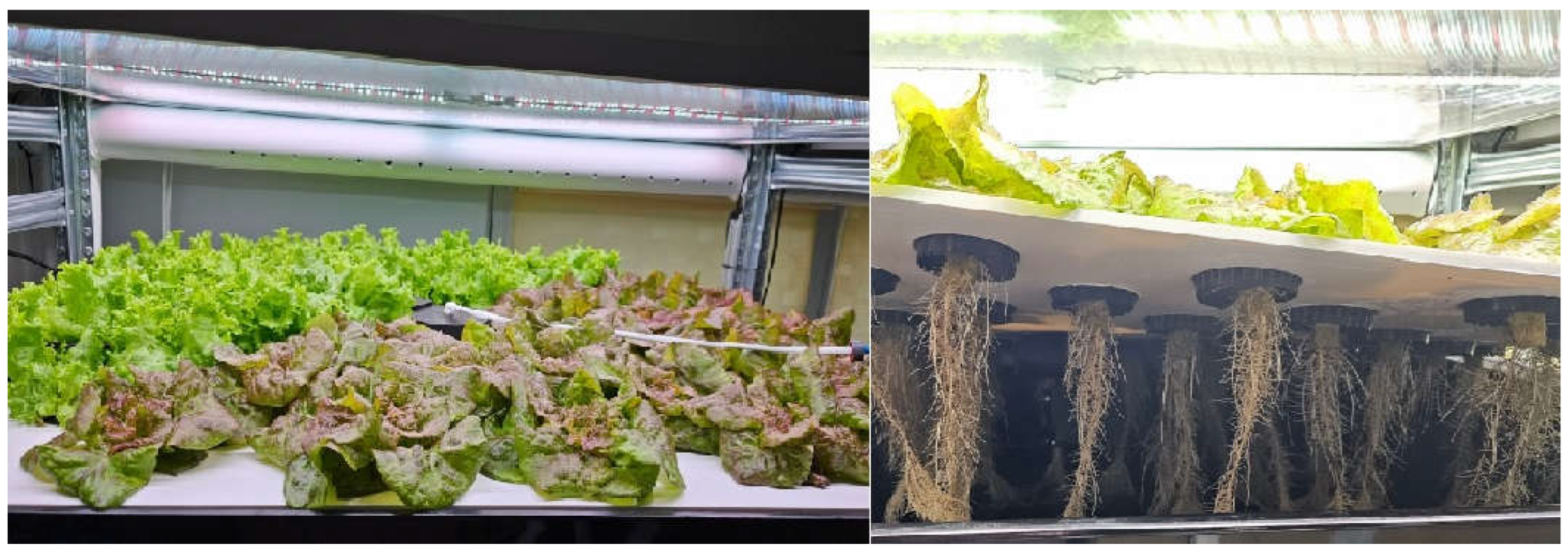
Figure 2.
Seed germination dynamics of two lettuce varieties – (a) ‘Pearl Gem’, (b) ‘Cervanek’. The average values of three replicates ± standard error are presented (n = 3). The number of seeds in each replicate was 50.
Figure 2.
Seed germination dynamics of two lettuce varieties – (a) ‘Pearl Gem’, (b) ‘Cervanek’. The average values of three replicates ± standard error are presented (n = 3). The number of seeds in each replicate was 50.
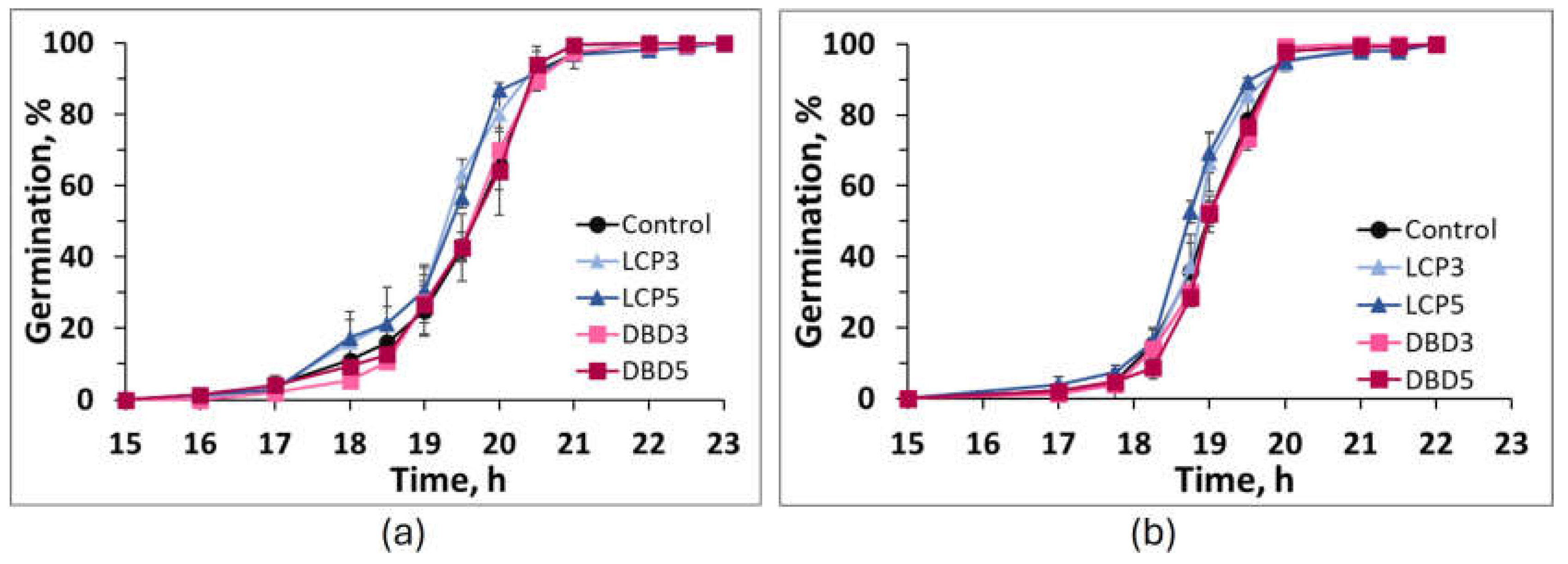
Figure 3.
The amounts of chlorophylls a and b in leaves of two lettuce cultivars grown in an aeroponic system – (a) ‘Pearl Gem’, (b) ‘Cervanek’. The average values of three replicates ± standard error are presented (n = 3-4). Different lowercase letters indicate significant differences (p < 0.05, Fisher’s least significant difference (LSD) test), # - statistically significant difference between ‘Cervanek’ and ‘Perl Gem’ cultivars (Student’s t-test, p < 0.05).
Figure 3.
The amounts of chlorophylls a and b in leaves of two lettuce cultivars grown in an aeroponic system – (a) ‘Pearl Gem’, (b) ‘Cervanek’. The average values of three replicates ± standard error are presented (n = 3-4). Different lowercase letters indicate significant differences (p < 0.05, Fisher’s least significant difference (LSD) test), # - statistically significant difference between ‘Cervanek’ and ‘Perl Gem’ cultivars (Student’s t-test, p < 0.05).
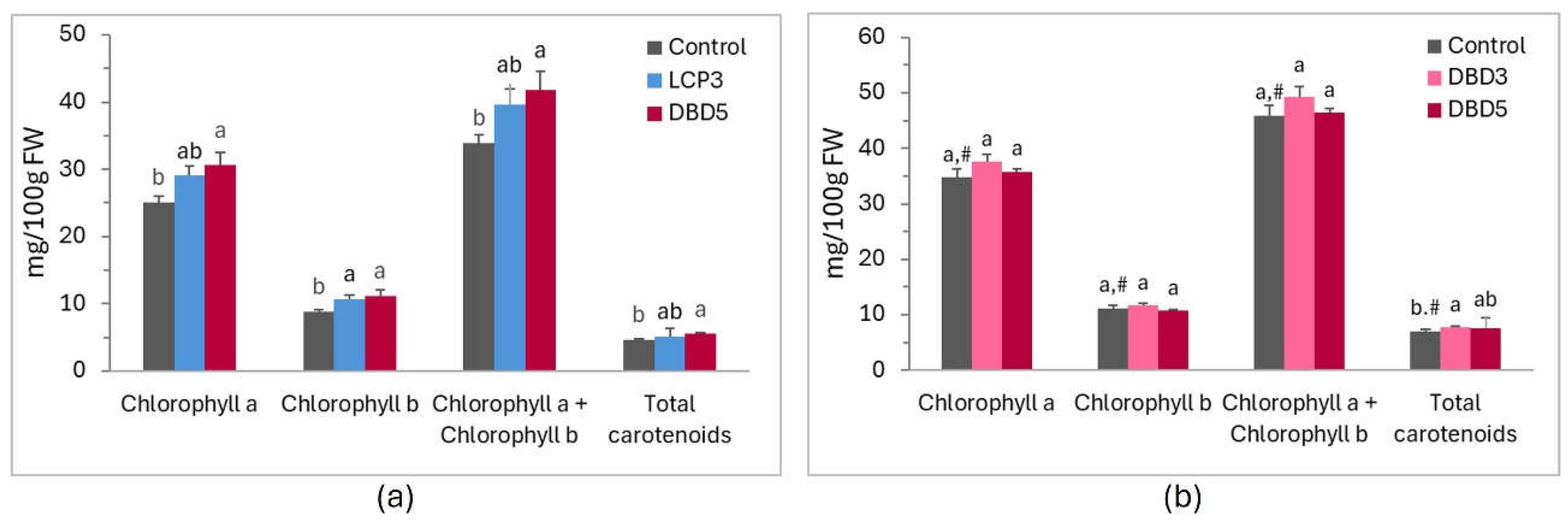
Figure 4.
The total amount of anthocyanins in leaves of ‘Cervanek’ plants grown in an aeroponic system. The average values of three replicates ± standard error are presented (n = 4-6). Different lowercase letters indicate significant differences (p < 0.05, Fisher’s least significant difference (LSD) test).
Figure 4.
The total amount of anthocyanins in leaves of ‘Cervanek’ plants grown in an aeroponic system. The average values of three replicates ± standard error are presented (n = 4-6). Different lowercase letters indicate significant differences (p < 0.05, Fisher’s least significant difference (LSD) test).
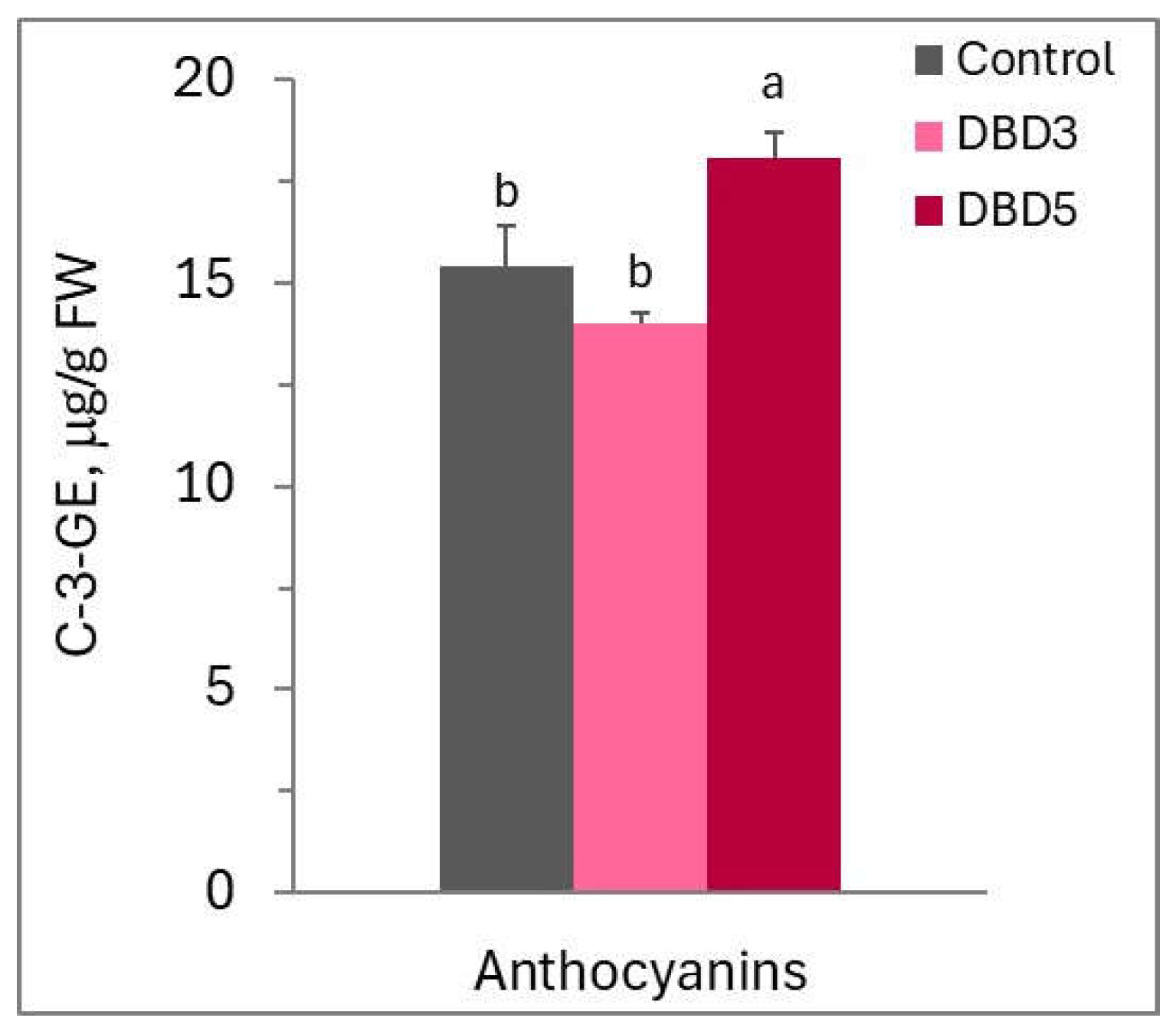
Figure 5.
The total phenolic content (TPC) and antioxidant activity in leaves of two lettuce varieties grown in an aeroponic system – (a) ‘Pearl Gem’, (b) ‘Cervanek’. The average values of three replicates ± standard error are presented (n = 4-6). Different lowercase letters indicate statistically significant differences (p < 0.05, Fisher’s least significant difference (LSD) test); # – statistically significant difference between ‘Cervanek’ and ‘Perl Gem’ cultivars (Student’s t-test, p < 0.05); GAE – gallic acid equivalent; RE – rutin equivalent.
Figure 5.
The total phenolic content (TPC) and antioxidant activity in leaves of two lettuce varieties grown in an aeroponic system – (a) ‘Pearl Gem’, (b) ‘Cervanek’. The average values of three replicates ± standard error are presented (n = 4-6). Different lowercase letters indicate statistically significant differences (p < 0.05, Fisher’s least significant difference (LSD) test); # – statistically significant difference between ‘Cervanek’ and ‘Perl Gem’ cultivars (Student’s t-test, p < 0.05); GAE – gallic acid equivalent; RE – rutin equivalent.
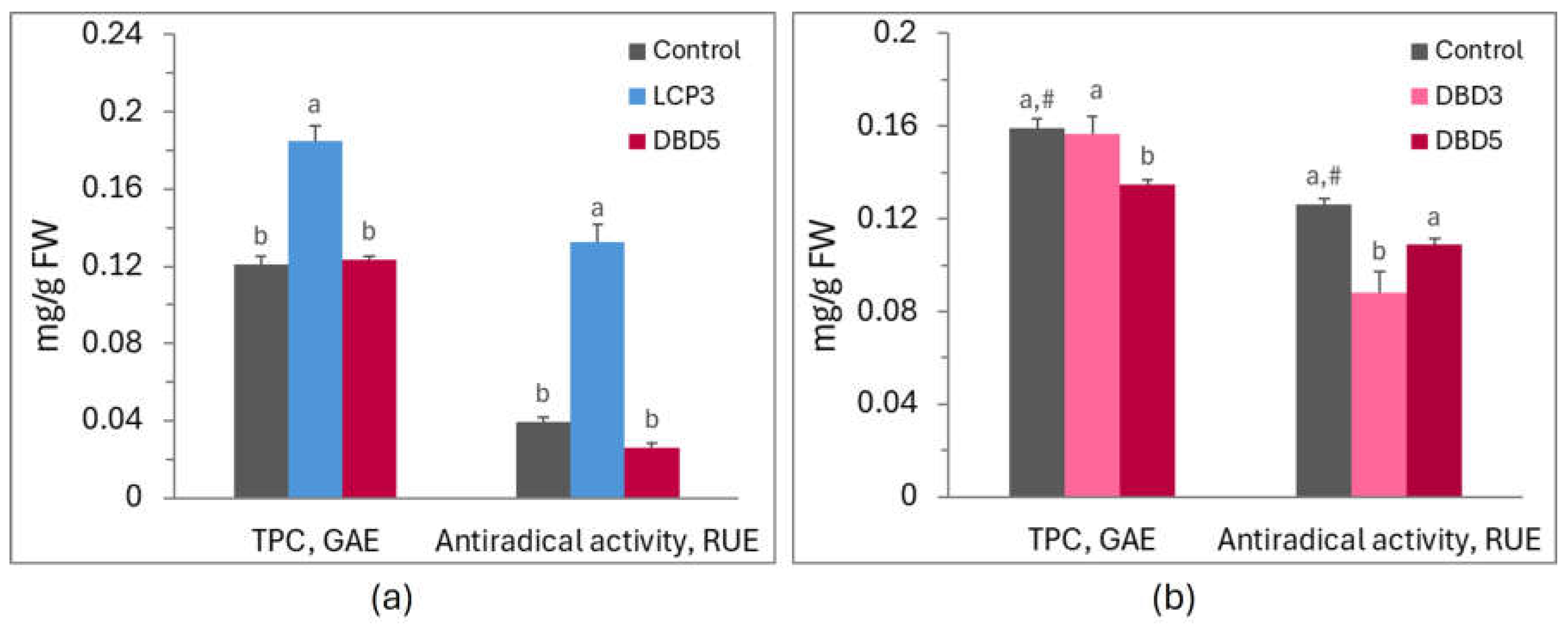

Table 1.
Indices of lettuce germination kinetics of control and treated seeds in vitro.
| Cultivar | Indice | Control | LCP3 | LCP5 | DBD3 | DBD5 |
|---|---|---|---|---|---|---|
| ‘Pearl Gem’ | Vi, % | 99.3±0.7 | 99.3±0.7 | 100.0±0.0 | 100.0±0.0 | 100.0±1.0 |
| Me, h | 19.6±0.2a | 19.2±0.1b | 19.3±0.1b | 19.6±0.1a | 19.7±0.1a | |
| Qu, h | 0.6±0.0a | 0.6±0.1a | 0.6±0.0a | 0.5±0.0a | 0.6±0.0a | |
| ‘Cervanek’ | Vi, % | 100.0±0.0a | 100.0±0.0a | 100.0±0.0a | 100.0±0.1a | 100.0±0.1a |
| Me, h | 19.0±0.1a,b,# | 18.9±0.0b | 18.7±0.1c | 19.0±0.0a | 19.1±0.0a | |
| Qu, h | 0.5±0.0a | 0.5±0.0a | 0.5±0.0a | 0.5±0.0a | 0.5±0.1a |
Vi − the final germination percentage, Me − the median germination time, Qu − the quartile deviation. Different lowercase letters indicate significant differences (Fisher’s least significant difference (LSD) test, p < 0.05), # − statistically significant difference between ‘Cervanek’ and ‘Perl Gem’ cultivars (Student’s t-test, p < 0.05), (n = 7-8).
Table 2.
Morphometric parameters of lettuce seedlings 10 days after sowing in vitro.
| Cultivar | Parameter | Control | LCP3 | LCP5 | DBD3 | DBD5 |
|---|---|---|---|---|---|---|
| ‘Pearl Gem’ | Seedling length, mm | 93.3.±1.7b | 105.0±1.7a | 101.0±1.7a | 89.9±1.6c | 102.8±1.3a |
| Root length, mm | 62.6±1.5b | 73.7±1.5a | 70.7±1.5a | 58.5±1.4c | 72.2±1.8a | |
| Shoot length, mm | 31.4±0.5a | 31.3±0.5a | 30.1±0.4a | 31.5±0.3a | 30.6±1.0a | |
| Seedling weight, mg | 17.6±0.4b | 19.4±0.2a | 18.8±0.6a,b | 18.4±0.4a,b | 19.2±0.2a | |
| ‘Cervanek’ | Seedling length, mm | 78.0±1.9a# | 78.8±1.7a | 82.2±1.9a | 80.2±3.2a | 80.0±1.2a |
| Root length, mm | 56.6±1.9b# | 58.9±1.9a,b | 65.3±1.8a | 56.8±3.2b | 56.8±1.3b | |
| Shoot length, mm | 21.5±0.3b# | 19.8±0.3c | 19.9±0.2c | 23.4±0.3a | 23.2±0.4a | |
| Seedling weight, mg | 19.2±0.4b | 19.1±0.3b | 19.2±0.7b | 19.9±0.2a | 20.7±0.3a |
Different lowercase letters indicate significant differences (p < 0.05, Fisher’s least significant difference (LSD) test), # − statistically difference between ‘Cervanek’ and ‘Perl Gem’ cultivars (Student’s t-test, p < 0.05), (n = 50).
Table 3.
Morphometric parameters of lettuce plants cultivated in aeroponics 45 days after sowing.
| Cultivar | ‘Pearl Gem’ | ‘Cervanek’ | ||||
|---|---|---|---|---|---|---|
| Parameter | Control | LCP3 | DBD5 | Control | DBD3 | DBD5 |
| Plant length,cm | 52.1±2.3 | 47.3±2.7 | 51.4±2.6 | 49.8±1.6 | 52.8±1.4 | 49.5±0.4 |
| Root length, cm | 37.3±2.8 | 34.1±2.7 | 37.8±2.5 | 37.8±1.8 | 40.6±1.4 | 37.6±0.8 |
| Head length, cm | 13.3±1.2 | 13.1±0.5 | 13.1±0.4 | 11.1±0.7 | 10.6±1.4 | 11.9±0.5 |
| Head width, cm | 26.5±1.7 | 24.7±1.0 | 26.5±1.7 | 23.6±1.0 | 25.7±0.9 | 24.4±0.7 |
| Plant weight, g | 40.3±4.6 | 36.2±5.3 | 36.3±3.6 | 29.0±3.7# | 29.1±2.3 | 28.3±2.8 |
| Root weight, g | 6.6±0.7 | 6.1±0.7 | 6.1±0.5 | 4.4±0.5# | 4.2±0.4 | 4.4±0.5 |
| Head weight, g | 33.8±4.0 | 30.1±4.7 | 30.3±3.2 | 24.7±3.3# | 24.9±2.0 | 23.9±2.4 |
| Leaf number | 9.5±0.7 | 9.7±0.6 | 9.6±0.3 | 16.3±0.7# | 15.8±0.4 | 15.8±0.8 |
# - statistically difference between ‘Cervanek’ and ‘Perl Gem’ cultivars (Student’s t-test, p < 0.05; n = 7-8).
Table 4.
The indices of photosynthetic efficiency in lettuce leaves 45 days after sowing.
| Cultivar | ‘Pearl Gem’ | ‘Cervanek’ | ||||
|---|---|---|---|---|---|---|
| Indice | Control | LCP3 | DBD3 | Control | DBD3 | DBD5 |
| Fv/Fm | 0.86±0.01a | 0.85±0.01a | 0.86± 0.00a | 0.84± 0.01a,# | 0.85± 0.00a | 0.84± 0.00a |
| PIABS | 2.38±0.17b | 3.04±0.33a | 3.26 ± 0.28a | 1.21±0.16b# | 1.90 ± 0.16a | 1.76 ± 0.09a |
Fv/Fm – maximum quantum efficiency coefficient of PSII, PIABS – photosynthetic performance index. The means ± standard errors are presented (n = 7-8). Different lowercase letters indicate significant differences (p < 0.05, Fisher’s least significant difference (LSD) test); # – statistically significant difference between ‘Cervanek’ and ‘Perl Gem’ cultivars (Student’s t-test, p < 0.05);.
Disclaimer/Publisher’s Note: The statements, opinions and data contained in all publications are solely those of the individual author(s) and contributor(s) and not of MDPI and/or the editor(s). MDPI and/or the editor(s) disclaim responsibility for any injury to people or property resulting from any ideas, methods, instructions or products referred to in the content. |
© 2025 by the authors. Licensee MDPI, Basel, Switzerland. This article is an open access article distributed under the terms and conditions of the Creative Commons Attribution (CC BY) license (http://creativecommons.org/licenses/by/4.0/).
Copyright: This open access article is published under a Creative Commons CC BY 4.0 license, which permit the free download, distribution, and reuse, provided that the author and preprint are cited in any reuse.


