

Submitted:
03 August 2024
Posted:
05 August 2024
You are already at the latest version
Abstract
Indoor farming systems enable plant production in precisely controlled environments, managing factors such as lighting, photoperiod, and nutrient supply, to enhance crop yield and quality. However, the implementation of stable growth conditions and the absence of stress stimulants can weaken plants' defense responses and limit the accumulation of bioactive, health beneficial phytochemicals. A potential solution is the controlled application of stressors, such as supplemental ultraviolet (UV) light, which stimulates secondary metabolites (SM) synthesis and increase overall antioxidant potential. To this end, we analyzed the efficiency of short-term pre-harvest supplementation of red-green-blue (RGB, LED) spectrum with ultraviolet B (UV-B, 311 nm) or C (UV-C, 254 nm) light to boost phytochemicals synthesis. Additionally, given the biological harm of UV radiation due to high-energy photons, we monitored plants’ photosynthetic activity during treatment. Our analyses showed that UV-B radiation, applied with a cumulative dose of 15.622 kJ m–2, did not negatively impact photosynthetic activity while significantly increasing the overall antioxidant potential of lettuce through enhanced levels of polyphenolic SM (total phenolics, flavonoids, anthocyanins) and ascorbic acid. Conversely, UV-C radiation, applied with a lower cumulative dose of 6.008 kJ m–2, induced anthocyanin accumulation in the green leaf cultivar but significantly harmed the photosynthetic apparatus and limited plant growth. These results are crucial for understanding the potential of UV light supplementation in producing functional plants.
Keywords:
indoor farming
; spectrum supplementation
; ultraviolet light
; antioxidant potential
; lettuce
1. Introduction
Traditional agriculture faces challenges, including climate change, extreme weather conditions, land degradation, dwindling freshwater supplies, and urbanization [1]. These factors complicate the task of securely providing high quality food for a growing population. Consequently, there is increasing interest in plant production within closed facilities, such as plant factories, vertical farms, and indoor-growing modules [2]. Indoor farming (IF) involves cultivating plants inside buildings, often without soil, using nutrient solutions and artificial lighting, allowing for year-round growth [3] and mitigating the disadvantages of open-field farming, such as weather extremes, pathogens, and pests [1]. Additionally, for most plant production, artificial lighting systems with non-saturating light intensity are adequate, with light quality being more critical than quantity [4].
Plants grown in open-field conditions are exposed to sunlight, which includes UV radiation [5]. Consequently, they have evolved various metabolic and biochemical responses to UV exposure, including increased synthesis of secondary metabolites (SM) [6] and other antioxidants [7]. SM accumulated mostly in epidermal plants layers and function as sunscreens, protecting underlaying tissue from damaging effects of UV light. Still, the prolonged exposure to UV light might lower their protective potential and reduce overall photosynthetic activity [8].
The UV spectrum (100–400 nm) is divided into three sub-regions: UV-A (315–400 nm), UV-B (280–315 nm), and UV-C (100–280 nm) [9]. The underlying mechanism of plant responses to UV light involves various photoreceptors, such as blue light/UV-A photoreceptors like cryptochromes (CRYS) and the UV Resistance Locus 8 (UVR8) photoreceptor, which operates through UV-B light [10]. The perception and response to UV-C light is linked to the redox state of cells and the generation of reactive oxygen species (ROS) [11]. The primary regulator of plants’ responses to UV light is the elongated hypocotyl 5 (HY5) transcription factor, whose UV-dependent accumulation induces the biosynthesis of SM such as phenolic compounds, with flavonoids being the largest class [11,12,13,14]. In the case of antioxidants, UV radiation upregulates also the expression and activity of enzymes associated with ascorbic acid (AsA) recycling [7]. Consequently, UV radiation is considered a tool to biofortify indoor farming (IF)-grown crops with functional phytochemicals and boost antioxidant capacity of leafy vegetables [15,16]. Among the analyzed phytochemicals polyphenols have anti-mutagenic, chemopreventive and anti-carcinogenic activities [17], and act a natural reactive oxygen species reducers and potent antioxidants preventing oxidative damage of biomolecules. The main classes of polyphenolic compounds found in plants are flavonoids, phenolic acids, lignans, and stilbenes [18]. Flavonoids are the most abundant polyphenolic compounds in food, and classified as chalcones, flavanones, flavonols, flavones, isoflavones, 3-deoxyflavonoids, proanthocyanidins, and anthocyanins - the glycosylated anthocyanidins [13].
Therefore, the aim of this study was to examine the efficiency of short-term supplementation of the spectrum with UV-B (311 nm) and UV-C (254 nm) in increasing the antioxidant potential of leafy plants, assessed by total phenolics (TPC) and flavonoids (TFC) content as well as the anthocyanins and ascorbic acid level. For this purpose, baby leaf lettuce (Lactuca sativa var. crispa L.) cultivars with green (cv. Lollo Bionda) and reddish leaves (cv. Lollo Rossa) grown in a growth chamber under a red-green-blue (RGB) spectrum, supplemented with increasing doses of UV light shortly prior to harvest. Then to indicate, the influence of UV light exposition we monitored photosynthetic activity with chlorophyll a fluorescence as well as the level of photosynthetic pigments, proteins, and lipid peroxidation rate. While, to assess the efficiency of UV-treatment on antioxidant potential we carried also analyses of overall antioxidant potential (TAC, total antioxidant capacity) and showed that UV-B exposure enhanced TPC, TFC and anthocyanins in both lettuce cultivars, while ascorbic acid only in green leaf one. At the same time, plants treated with UV-B cumulative dose (CD) of 15.622 kJ m–2 show no negative impact on photosynthetic apparatus functionally and plants’ morphology. On the other hand, despite the restricted exposition time to UV-C light (CD = 6.008 kJ m–2) its application significantly decreases the photochemical activity and reduces the rate of controlled energy quenching, especially in green leaf lettuce. Moreover, UV-C treatment has been significantly less effective to induce SM and ascorbic acid accumulation, than UV-B light. This study provides valuable insights into the role of UV-B and UV-C supplementation in standard RGB lighting systems, which are mostly devoid of UV components, to improve the quality of leafy plant products.
2. Results
2.1. Antioxidant Capacity in Response to Supplemental UV-B or UV-C Light
2.1.1. Total Phenolic Content
Estimated total phenolic content (TPC) is expressed as nmol gallic acid equivalents per mg of fresh weight (FW) (Figure 1). Analysis showed that reddish cultivar of lettuce presented almost 3-times higher phenolics content under the control RGB spectrum (Figure 1b) than green-leaf one (Figure 1a). The short-term exposition of plants to supplemental UV-B light increased TPC level, especially in green-leaf cultivar, as we observed 28% and 7% higher TPC level compared to control for LB and LR, respectively. In contrast, UV-C exposure did not stimulate TPC accumulation in LB cultivar, and even decreased it level by approximately 18% in LR one.
2.1.2. Total Flavonoid Content
Total flavonoid content (TFC) is expressed as µg rutin equivalents per mg of fresh weight (FW) (Figure 2). Similarly to TPC, also flavonoids content was significantly higher in reddish leaf cultivar Lollo Rossa compared to Lollo Bionda. Under RGB spectrum, we documented 2.7 times higher TFC level in the LR compared to the LB cultivar. Supplementation of RGB spectrum within UV-B light increased flavonoids content by almost 3- and 1.6-fold in LB (Figure 2a) and LR cultivar (Figure 2b), respectively. As in the case of TPC, also in TFC estimation, UV-C showed negative impact in LR cultivar, noticed with 17% lower TFC compared to RGB group (Figure 2b). The Lollo Bionda cultivar showed, however, 2-fold increase of TFC pool after UV-C exposure (Figure 2a).
2.1.3. Anthocyanins Level
Under the category of flavonoids, anthocyanins (ANT) are prominent compounds naturally occur as glycosides in pigmented organs of plants. As expected, the reddish lettuce LR showed 5.5-times higher ANT level, compared to than green leaf LB (Figure 3). Moreover, analyses showed that UV-B supplementation to the RGB spectrum significantly increased the ANT pool in both green and reddish lettuce cultivar, as LB lettuce showed 15% (Figure 3a) and LR - 71% (Figure 3b) higher ANT level compared to RGB control after UV-B exposure. Like TFC level, UV-C exposition increased ANT level in LB cultivar by 46%, while reduced its accumulation in LR by 30%, compared to RGB plants.
2.1.4. Ascorbic Acid Pool
In addition to polyphenolic SM, we also analyzed ascorbic acid pool in both lettuce cultivar, both an initial AsA pool and total AsA level, after reduction its residual oxidized form, the dehydroascorbic acid (DAsA), back to AsA with reducing agent – DTT. Interestingly, in the case of reddish cultivar LR of lettuce, most of the AsA level was presented in reduced AsA form, except the pool observed for the UV-C supplemented plants (Figure 4b). UV-B and UV-C induced total pool of AsA (AsA+DAsA) by 33 and 16%, respectively. At the same time, LB plants grown under RGB spectrum showed almost 1.5-times lower total AsA pool, compared to LR plants. LB plants have been also more vulnerable to UV-B light exposure, as while the reduced form of AsA remained at RGB-like level, plants exposed to UV-B accumulated significant higher level of DAsA (Figure 4a). Such observation has been also proved within AsA+DAsA/AsA ratio estimation, which increased in LB cultivar after UV-B exposition by 85% (Figure 4c). In the case of reddish cultivar, no changes in mentioned ratio have been documented (Figure 4d).
2.1.5. Overall Antioxidant Capacity
The total antioxidant capacity (TAC) was expressed as µg equivalents of butylated hydroxytoluene (BHT) per mg of FW (Figure 5a, b) and DPPH radical scavenging activity rate (Figure 5c, d), which were assessed based on fitted experimental data of BHT calibration curve, as described in Materials and Methods. As expected, analysis proved that overall antioxidant capacity complies with polyphenolic SM, especially with TPC in LB or TFC and ANT level in LR cultivar. Under spectrum depleted in UV light radiation, the green leaf cultivar showed 1.5-times lower antioxidant capacity compared to reddish one. Despite short-term exposition of plants within UV-B or UV-C light, it was efficient in antioxidant capacity increase in green cultivar. In the LB lettuce TAC was increased by 66 and 53% for UV-B and UV-C, respectively (Figure 5a). Also, radical scavenging activities were increased in UV-B and UV-C by 10 and 8%, respectively.
On the contrary, even though LR lettuce showed enhanced polyphenolic SM level and AsA pool in response to UV-B treatment, the overall antioxidant capacity showed no further increase, presumably due to initial high level of antioxidant compounds. Thus, the analyzed DPPH radical scavenging activity reached control-like value of 78% (Figure 5d). At the same time, UV-C exposition exerted significant negative influence on TAC, due to reduced TPC, TFC and ANT level, and consequently 10% lower scavenging activity of applied radical.
2.2. Photosynthetic Activity Under Short-Term Exposition to UV-B or UV-C Light
2.2.1. The effect of UV Light Supplementation on Photosynthetic Pigments and Soluble Leaf Protein Content
Both analyzed lettuce cultivars presented similar content of chlorophyll a+b under RGB spectrum (Table 1 and Table 2). As expected, however, the increased level of screening pigments in reddish Lollo Rossa lettuce protects chlorophylls from UV-driven degradation, noticed with almost unchanged level in both UV treatment (Table 2). At the same time, green-leaf Lollo Bionda lettuce presented 9 and 62% decreased of chlorophyll a+b content in response to UV-B and UV-C exposure, respectively. Moreover, in the case of LB plants exposure to UV-C light, the drop of the chlorophyll content was noted, which was more strongly associated with the reduced chlorophyll a (decreased by 66%) than chlorophyll b (50% drop), indicating the reaction centers (RC) of photosystems were dismantled rather than antennas. Also, in LR cultivar UV light increased chlorophyll b level by 26 and 7% for UV-B and UV-C, respectively, while the chlorophyll a content in mentioned groups decreased by 10 and 8%, respectively.
The relative change of chlorophylls content has been estimated with chlorophyll a/b ratio (Table 1 and Table 2). The accessory pigments content, measured as the carotenoids pool, also showed that UV-B light exposure increased the number of carotenoid-rich antennas per RC, as in LR cultivar 15% higher level of carotenoids has been noticed compared to RGB group. In the LB plants no difference has been observed under UV-B supplementation. On the contrary, UV-C light caused reduction of carotenoids pool by 73 and 26% for LB and LR, respectively, and consequently increased the ratio of chlorophyll a+b to carotenoids in UV-C-treated plants. The total content of soluble leaf protein (SLP) has been also analysed and showed that in the case of green leaf lettuce both UV lights exposition exerted positive impact on SLP. Within UV-B and UV-C supplementation enhanced SLP in LB cultivar by 59 and 17%, respectively. Conversely, in the LR cultivar UV-B showed no influence on SLP, while UV-C decreased protein level by at least one-third. Moreover, there was noticeable lower SLP in the LB than in LR cultivar under RGB spectrum (Table 1 and Table 2).
2.2.2. Influence of UV Light Supplementation on RuBisCO Abundance
Electrophoretic separation of SLP followed by densitometric analysis of RuBisCO enzyme’s large (LSU) and small (SSU) subunits within ImageJ software, proved that even the short-term UV light treatment modifies RuBisCO accumulation. The relative amounts of RuBisCO LSU and SSU are essentially consistent with the SLP. In the case of LB cultivar UV-B treatment increased LSU and SSU by 73 and 81%, respectively, while UV-C increased LSU and SSU by 34 and 36%, respectively (Figure 6a, c). On the contrary, in LR lettuce UV-B radiation decreased the relative abundance of LSU and SSU, compared to RGB, by 20 and 41%, respectively, while in response to UV-C LSU and SSU dropped by 69 and 83%, respectively (Figure 6b,c).
2.2.3. The effect of UV Light Supplementation on Subsequent Photosynthetic Efficiency of PSII
To estimate the influence of the progressively increased time of UV light exposure on lettuce, we analyzed the actual condition of the photosynthetic apparatus every other day after the treatment with the chlorophyll a fluorescence induction kinetics. Results are depicted in Figure 7 and 8. In the case of UV-B light, no negative impact on maximum quantum efficiency of photosystem (Fv/Fm) has been noted for both cultivars even after the last day of treatment with cumulative dose of 15.622 kJ m–2 (Figure 7a, Figure 8a). Although, the detailed analyses of the photochemical (Figure 7b, Figure 8b) and non-photochemical energy distribution (Figure 7c, d, Figure 8c, d) at first day (Day 1) showed a slight decrease of effective quantum yield of PSII photochemistry (ΦPSII) (Figure 7b, Figure 8b) followed by simultaneous increase of ΦNPQ (Figure 7c, Figure 8c), the changes seem be temporal. After the fourth day of UV-B treatment photochemical and non-photochemical energy distribution, as well as the ETR (Figure 7f, Figure 8f) regained to the control level in both cultivars, indicating that plants acquired sort of acclimation.
On the contrary, UV-C light supplementation, despite the reduced time of exposition and CD compared to UV-B, exerted negative impact on photosynthetic activity of both cultivars since the first day of exposition. The harmful effects of UV-C have been noticed with reduced photochemical quenching (Fv/Fm, ΦPSII and ETR) (Figure 7a, b, f, Figure 8a, b, f) and activate mechanism of energy dissipation in form of heat with NPQ mechanism (ΦNPQ and NPQ, Figure 7c, e, Figure 8c, e), followed by increased passive energy losses documented with ΦNO. It should be noted, however, that LR cultivar tended to acquired sort of acclimation after the third day of UV-C treatment, noticed with increased photochemical efficiency (Figure 8a, b) and electron transport rate (Figure 8F) and reduced yield of non-photochemical quenching (Figure 8c, d). Yet, in both cultivars NPQ parameter (Figure 7e, Figure 8e) remained decreased after fourth day, which indicate that effective protective mechanism of excessive absorbed energy dissipation in form of harmless heat has been downregulated.
2.2.4. The Effect of UV Light Supplementation on Lipid Peroxidation Rate and Plant Morphology
Due to noticeable negative influence of UV-C light treatment on photosynthetic apparatus status we also analyzed the rate of oxidative stress within TBARS assay, which detected byproducts of lipid peroxidation in the sample, mostly the MDA. Surprisingly, the increased rate of TBARS formation, due to increased ROS formation has been identified only in green leaf cultivar (Figure 9a), but still the increase was limited with 24% in response to UV-B exposure, while in UV-C no additional TBARS formation has been noticed. In the case of reddish cultivar, UV-B as well as the UV-C treatment decreased TBARS level by 15% for both, compared to RGB (Figure 9b). It should be also noted that LR cultivar showed 2.5-times higher TBARS level even under RGB control spectrum compared to LB one.
However, the negative impact of even low dose of UV-C exerted on lettuce plants, has been proved, when analyzed the plants’ morphology of LB (Figure 10) and LR (Figure 11) cultivar, presenting severely inhibited the growth and misshaped, visibly damaged leaves with necrotic lesions placed on edges of the leaf blade.
3. Discussion
3.1. Efficiency of RGB Spectrum Supplementation With UV-B or UV-C Light on Antioxidant Capacity of Lettuce
The consumption of produced fruits and vegetables is strictly associated with the prevention of many diseases due to the antioxidant activity of plant secondary metabolites [16]. However, the anticipated expansion of indoor farming, which employs strictly controlled and stable growing conditions, may restrict the levels of health-promoting compounds, as these compounds typically accumulate in response to abiotic stresses. In this area of study, UV radiation is an especially underrated factor currently missing in most horticultural lighting systems of plants applied in protected cultivation, such as consistent (indoor farming) and inconsistent systems (greenhouse) [19]. Therefore, the aim of this study is to identify an efficient, easy-to-operate, and non-invasive method to biofortify plant tissue with secondary metabolites for use in indoor farming. The proposed method involves the short-term exposure of plants to low doses of UV radiation directly before harvest. In our previous study [20] we successfully employed the pre-harvest UV-A light (365 nm) supplementation to the RGB spectrum to enhanced antioxidant accumulation in lettuce and basil plants. Thus, in this paper we further analyzed the influence of UV light from UV-B and UV-C region on the antioxidant properties of popular leafy vegetable, lettuce, grown in both green and reddish cultivars. Moreover, as the employed UV wavelengths are characterized by high energy photons the impact of UV light treatment has been also studied, and it is discussed in the next chapter.
Similar approach has been previously analyzed in research [21], which evaluated the effect of various UV wavelengths exposition on phenolic compounds accumulation, growth, and photosynthetic activity of red leaf lettuce cv. Hongyeom. The mentioned authors, applied UV light in the time-constant, repeated doses (6 days, 4 h per day for UV-B, 3 days 2 h per day for UV-C) or with daily increasing dose (from 1 to 7 hours per day, 6 days, UV-B) and documented that UV-B (306 nm) or UV-C (253.7 nm) treatment increased the total phenolic concentration by 3.6 and 3.2-times, respectively, compared with control. There was, however, no significant difference between accumulation of phenolics with constant and gradually increasing doses of UV-B light. Authors noted also enhanced antioxidant capacity of lettuce measured with ABTS assay.
In the case of our study, we applied narrowband UV-B lamp, typically used for phototherapy [22], with a dominant peak around 311 nm and minor one at 364 nm. Analyses proved that 4-days long progressive supplementation of UV-B light to the RGB background, applied prior to harvest is sufficient and effective method for increment the total phenolic (TPC) (Figure 1), flavonoid (TFC) (Figure 2) and anthocyanins (ANT) (Figure 3) content, both in green and red leaf lettuce cultivar. UV-B light exposure has been documented to be the most efficient to increase TFC and ANT. Moreover, in the case of TPC and TFC green leaf cultivar Lollo Bionda has been proved to be significantly more susceptible to enhance their accumulation in response to UV-B then cv. Lollo Rossa. An explanation for such results, is fact that reddish cultivar is already characterized by 3- , 2.7- 5.5-times higher level of TPC, TFC and ANT under control spectrum, respectively, compared to cv. Lollo Bionda. Yet, UV-B exposure significantly enhanced the content of ANT level in LR plants (Figure 3b). Also, in the case of the ascorbic acid (AsA) study proved that UV-B exposure was more efficient to induce its accumulation in green leaf lettuce, while this effect has been mostly attributed to the accumulation of oxidized form of AsA (Figure 4B). Consequently, UV-B exposure enhanced overall antioxidant capacity (TAC) of green leaf cultivar extracts (Figure 5) by two-thirds and presented 10% higher radical scavenging activity compared to plants grown solely under RGB spectrum. In case of LR cultivar, no further increase of TAC has been noticed, despite UV-B exposure, due to initial high level of antioxidant compound. Also, in our previous study [20], we documented that LB lettuce present significantly higher responsiveness to UV-A-depended phenolic compounds synthesis than reddish LR plant. In leaves, phenolics accumulation protects photosynthetic apparatus against UV damage, thus the green cultivars presented significantly lower TPC when grown without stressors such as UV, while it made them more vulnerable to UV light exposition that activates secondary metabolites synthesis and deposition. The mechanism, the underlaying the TPC, TFC and ANT synthesis in response to UV light may be attributed to its ability to induce the gene expression of phenylalanine ammonia lyase (PAL), a key enzyme involved in the first step of the phenylpropanoid pathway [23].
Still, however, UV-B exposure also induced carotenoids accumulation in LR plants (Table 2), indicating its application might be also considered as tool for biofortification of plants products with other phytochemicals. Carotenoids, like phenolics and AsA, present antioxidant activity and protect cells and tissues from damage of free radicals and singlet oxygen, providing enhancement of the immune function, protection from sunburn reactions and delaying the onset of certain types of cancer [24]. Although, no induction of carotenoids level has been observed for LB cultivar, but in previous research [25], which tested other green and red leaf lettuce cultivars, noted that UV-B supplementation increased the carotenoids pool of green leaf lettuce, while reducing the levels of these compounds in the red leaf plants. Thus, the reaction might be cultivar- or dose-dependent, as has been shown in previous paper [26].
In the study, the influence of UV-C short-term exposition also has been analyzed. Dominant peak in spectrum of analyzed UV-C lamp is at 253/254 nm, with minor peak at 312/313 nm. However, as the UV-C light is high energy radiation we have chosen 254 nm UV-C lamp, which has been showed to exerted less negative impact on plant tissue than 222 nm lamps [27] and not produce ozone. Employed UV-C low-pressure mercury lamp has been equipped with dopped quartz envelope to block 185 nm radiation emission, minimizing the O3 generation [28] and risk of non-specific harmful effect of ozone stress [29]. Moreover, we also adjusted the times of individual exposition according to previous study [21] reducing the cumulative dose of UV-C to 6.008 kJ m–2, compared to 15.622 kJ m–2 of UV-B. Results showed that in LB cultivar UV-C light exposure exerted no effect on TPC (Figure 1a) or AsA (Figure 4a), while increased TFC (Figure 2a) and ANT (Figure 3a) by nearly 2- and 1.5-times, respectively. Consequently, in the case of Lollo Bionda lettuce the TAC parameter increased by 53% (Figure 5a), indicating that UV-C is potent factor to increased antioxidant capacity of green lettuce. However, following the UV-C exposure, the LB presented reduced leaf areas and severe morphological traits changes that included leaf glazing, bronzing and curling (Figure 10c), as has been also noted in previous research [12]. In the case of red leaf lettuce, we showed the UV-C light exerted negative impact on analyzed phenolic compounds and carotenoids content, while increased only slightly the total AsA level. Thus, as a results of UV-C exposure LR plants presented significantly reduced TAC as well as the radical scavenging activity (Figure 5b, d). In addition, UV-C treatment of LR, similarly to effects noted for LB, induced occurrence of negative morphological traits (Figure 11c). On the contrary, researchers documented that UV-C in low doses is an elicitor of the biosynthesis of carotenoids and flavonoids in red bell peppers [30], and in tatsoi baby leaves combined with hyperoxia conditions [31].
The discrepancies of UV-B and UV-C efficiency to induce synthesis of antioxidants and impact on plants condition are related to their mode of perception and action. Upon UV-B exposure, inactive UVR8 dimers monomerize in the cytoplasm and accumulate in the nucleus. UVR8 monomers are crucial to avert the breakdown of HY5 transcription factor. HY5 accumulation induces flavonoid biosynthesis by upregulation of genes such as chalcone synthase (CHS), flavonol synthase (FLS1) and chalcone flavanone isomerase (CHI) [12]. UV-C, however, is considered to be perceive by plants through redox state change, as its exposition induced ROS production, through the mitochondrial electron transport chain and NADPH oxidase [32]. Moreover, analysis [32] suggests that UV-C helps in the retention of AsA and phenolic content in acerola by altering ascorbic acid and phenolic metabolism. Authors noted that UV-C activated the L-galactono-1,4-lactone dehydrogenase (GalDH), a key enzyme for vitamin C biosynthesis, and altered the composition of phenolic compounds, through phenolic biosynthesis. Such conclusions are consistent with our results obtained for green leaf cultivars with lower, initial level of SM, but no agrees when analyzed the reddish lettuce. Thus, it might be that such an effect is a consequence of continuous quenching of ROS with antioxidant phytochemicals. An increased accumulation of UV highly absorbing compounds such as phenolics and flavonoids make more the UV radiation to be absorbed and generates ROS, that exceed the ability of plants of their scavenging, followed by ROS-related damages. Alternatively, observed UV-C induction of phytochemicals synthesis might be related to UVR8 activation, as it is postulated the UV radiation that exceeds 250 nm might be absorbed within UVR8, thus sharing the same signaling way as the UV-B light [11].
3.2. Condition of Photosynthetic Apparatus in Response to UV-B or UV-C Supplementation to the RGB Spectrum
The adverse effects of UV radiation on the structure and function of the photosynthetic apparatus (PA) are well known and documented [33]. While, however, the effects of UV-A radiation may be damaging or non-damaging, even mitigating the deleterious effect of other UV wavelength regions [34], the UV-B and especially UV-C light action are mostly considered to have adverse effect on photosynthesis efficiency. UV-B irradiation has been shown to decreased the amount of plastoquinones (PQs) and impaired their function in the PSII complex. Moreover, the prime action sites of UV-B, that contributing to decrease in photosynthetic activity are CO2 fixation and oxygen evolution with Mn cluster, impairment of PSII by damaging of D1/D2 reaction centre proteins, and to a lesser extent, of PSI proteins, reduction of total chlorophyll, Rubisco content and activity and inactivation of ATP synthase [33,35]. However, when applied with low-dose, UV-B radiation has been documented to not necessarily have damaging effect on photosynthesis or pigment level and the treatment is mostly not lethal as PA readily recovers. Moreover, analyses of different corn hybrids, clearly documented that there is a significant variation in resistance to adverse effect of UV-B radiation between plants and the relative change of photosynthesis can be used as a measure of the their resistance to the harmful effect of UV-B [36]. Moreover, as consistent with our results UV-B light induced shift of antioxidant balance towards synthesis of UV-absorbing pigments such as flavonoids and carotenoids and increasing stress resistance of the PA [37].
However, in the case of UV-C, it possess the indisputable adverse effect on photosynthesis, which is related mostly to higher energy photons of UV-C wavelength that induced rather destruction then impairment of PA’s structures such as reported for PQs [33]. However, still little is known about the exact mechanism, underlying the UV-C-related photosynthesis impairment. In review [38], the negative effect of UV-C treatment on PA of lettuce is linked up to its damaging effect on PQs, which has been recorded with fluorescence induction curve. Similar, we also observed almost immediate (Day 1) drop of photosynthetic activity in both lettuce cultivars after UV-C treatment (Figure 7a, Figure 8a). Moreover, UV-C exposition is also proposed to exerted damaging effect within the integrity of thylakoids as they undergo fusion and the accumulation of starch. Also, the part of the UV-C between 254 and 262 nm spectrum is the most effective for DNA and protein molecules damage and inhibits mitochondria and chloroplasts activity due to production of ROS [38]. Analyses of chlorophyll a fluorescence parameters in previous research [39] showed that Arabidopsis thaliana plants exposed to low-dose UV-C light presented reduction of Fv/Fm, ΦPSII and NPQ in similar manner to LB and LR lettuce tested in this paper. Interestingly, study [39] stated that phot1 and phot2 (phototropins) receptors contribute to the inhibition of UV-C-induced foliar cell death. In such explanation, UV-C treatment decreases expression of PHOT1 and PHOT2 genes, while genes of light harvesting complexes (LHCB1.1, LHCB2.1, LHCB2.2 and LHCB2.4) were significantly upregulated after treatment, presumably as a results of blocked phototropin-dependent signalling. Thus, it might be an explanation of observed increased SLP and LSU/SSU in LB cultivar in RGB+UV-C plants. Also, another study [40] showed the both UV-B and UV-C light exposition increase the soluble protein content in leaves of Tetrastigma hemsleyanum.
In such scenario, LR plants that presented higher initial content of UV-C absorbing phytochemicals [41] are less vulnerable to UV-C effect both positive, related to SM accumulation, and adverse, related to PA disruption, proved with analyses of TBARS. Additionally, less negative impact of UV-C on LR, compared to LB, might be contributed to higher accumulation of AsA. Previous research [42] documented UV-protective effect on PSII centres in grana and stroma lamellae after exogenous application of AsA in pea seedlings (Pisum sativum L. cv. Borec), related to Mn cluster protection and stabilization of PSII, rather than to the direct increase of ROS scavenging activity. Such conclusion, seems to be also genuine for our analysis as in LR cultivar increased total AsA level showed no correlation to DPPH scavenging rate.
Taken together, our results are in accordance with previous studies [21,43] and showed that UV-C light induces accumulation of phytochemicals, especially in green leaf cultivars, although provokes negative morphological changes and inhibits plants growth. Consequently, pre-harvest UV-C application, to improve nutraceutical properties in ready-to-eat leafy vegetables, is limited. Previous research documented, however, that UV-C could be consider as a effective tool for postharvest application, especially in less fragile plant food, such as grains, as analyses [13] demonstrated that UV-C irradiation is an effective method in fungal control and reduction of mycotoxins in stored rice.
4. Materials and Methods
4.1. Plant Material, Growth Conditions and Light Treatment
Baby leaf lettuce (Lactuca sativa var. crispa L.) cultivars with green (cv. Lollo Bionda, LB) and reddish leaves (cv. Lollo Rossa, LR) were sown in P9 containers (9 × 9 × 10 cm) filled with a substrate composed of peat, perlite, and an N:P:K ratio of 9:5:10 (pH = 6.0–6.5). The containers were divided into groups and transferred to environmentally controlled growth chambers. The plants were cultivated for 20 consecutive days (20 DAS, days after sowing) under LED RhenacM12 lamps (PXM, Podleze, Poland) providing 200 µmol m–2 s–1 of the RGB spectrum (R:G:B; 661 : 633 : 520 : 434 nm) applied solely (control, Figure 12a) or under RGB spectrum supplemented 4 days prior to harvest with increasing doses of UV-B (311 nm, PL-S 9W/01/2P 1CT/6X10BOX, Philips Lighting, Eindhoven, The Netherlands, Figure 12b) or UV-C (254 nm, TUV PL-S 9W/2P 1CT/6X10BOX, Philips Lighting, Figure 12c), align with the schedule presented in Table 3.
The RGB treatment served as the control group. Light composition and photosynthetic photon flux density (PPFD) were monitored daily using a calibrated spectroradiometer GL SPECTIS 5.0 Touch (GL Optic Lichtmesstechnik GmbH, Weilheim/Teck, Germany). The containers with plants were turned in twice a day. The photoperiod was 16/8 h (day/night; day 6.00 am–10.00 pm), the average air temperature was maintained at 23/20°C (day/night), relative air humidity was kept at 50–55% and 420±10 µmol mol–1 of CO2. The plants were watered with tap water when necessary and fertilized once a week with 1% (w/v) fertilizer (N:P:K = 9:9:27; Substral Scotts, Warszawa, Poland). Ten plants (two repetitions with five plants per light condition) were grown with each kind of light treatment.
4.2. Estimation of Total Phenolic Content with Folin–Ciocalteu Assay
Estimation of total phenolic content (TPC) was conducted, as described earlier [44]. In brief, 100 mg of fresh weight (FW) leaf tissue was placed in tubes with 1.0 ml of methanol. Samples, kept in dim light, were vortexed for 20 s and incubated for 30 min at 60°C with inversion every 10 min to improve extraction. Then, the sample mixture was centrifuged at 10,000 × g for 2 min, and then the supernatant was carefully collected without disturbing the plant tissue, transferred to a new tube, and mixed once again for 15 s. Then 100 µl of each extract, cooled down to room temperature (RT), was mixed with 200 µl 10% (v/v) Folin–Ciocalteu reagent (F-C) and vortexed twice for 10 s. Then 800 µl of 700 mM Na2CO3 was added, vortexed twice for 10 s, and incubated for 30 min at 40°C, protected from light. After incubation mixture was centrifuged at 10,000 × g for 1 min and transferred to a 96-well microplate with 200 µl per well. For TPC determination the absorbance (Abs) at 765 nm was estimated with a microplate spectrophotometer (Mobi, MicroDigital Co., Ltd., Republic of Korea) with six replicates. The standard curve with gallic acid (0–200 nmol) was used to estimate nanomoles of phenolic compounds (gallic acid equivalents) in a sample.
4.3. Estimation of Total Flavonoid Content
For the measurement the total flavonoid (TFC) assay [45] with modification was applied. The 60 µl of methanol extract obtained previously for TPC assay was mixed with 680 µl of 30% (v/v) methanol: water and 30 µl of 0.5 M NaNO2, vortexed for 20 s and incubated at RT for 3 min without light. Then 30 µl of 0.3 M AlCl3 x 6H2O was added to each sample, vortexed for 20 s and incubated at RT for 3 min, and then mixed with 200 µl of 1 M NaOH, vortexed and left for the next 40 min at RT without light. After incubation, samples were mixed, shortly centrifugated (5,000 × g for 1 min) and 200 µl aliquot of each sample were transferred to 96-well microplate. For TFC determination the Abs at 506 nm was estimated with a microplate spectrophotometer with six replicates. The flavonoid content in the sample extracts was quantified using calibration curves of flavonoid standards of rutin.
4.4. The Ascorbate/Dehydroascorbate (AsA/DAsA) Ratio Estimation
Ascorbic acid (AsA) was determined by the bipyridyl method [46]. The ascorbate/dehydroascorbate (AsA/DAsA) ratio is an indicator of the stress level in plants. The method involves the extraction and determination of AsA and DAsA. The assay is based on the reduction of Fe3+ to Fe2+ by AsA and the spectrometric determination of Fe2+ in complex with 2,2’-bipyridyl. DAsA is reduced to AsA by pre-incubation of the sample with dithiothreitol (DTT) dissolved in 0.2 M phosphate buffer (Na2HPO4/NaH2PO4) at pH = 7.4. The excess DTT has been removed using N-ethylmaleimide (NEM, Sigma), and the total AsA concentration is determined using the 2,2’-bipyridyl method. The DAsA concentration is assessed from the difference between the total and initial AsA concentrations.
In brief, 500 mg of plant samples were homogenized into a fine powder in a mortar placed on ice with the addition of 1.5 ml of 6% TCA. The homogenate was transferred to a 2 ml tube and centrifuged for 5 min at 15,000 x g (4°C). Supernatant was transferred to tube and immediately analyzed for AsA and DAsA presence. Absorbance was read at 525 nm. L-ascorbic acid solutions in concentrations of 0, 0.06, 0.125, 0.25, 0.5, and 1.0 µM dissolved in 6% (w/v) TCA were used to determine the calibration curve for AsA. The analysis was performed in six replicates for each treatment.
4.5. Anthocyanins Assay
The levels of anthocyanins (ANT) were measured, as described earlier [47]. Plant tissue (200 mg) was extracted with 1 ml methanol: HCl (99: 1, v/v) at 4°C. The samples Abs was spectrophotometrically measured at 530 and 657 nm with six replicates, and the relative anthocyanins levels [AU g–1 FW] were determined using Eq. 1:
4.6. Antioxidant Activity by DPPH Assay
The antioxidant activity of each plant extract was measured by the 1,1-diphenyl-2-picrylhydrazil (DPPH) scavenging assay according to the previous study [48]. For DPPH assay the 60 µl of plant methanol extract obtained previously for TPC assay was mixed with 904 µl of methanol and 576 µl of 0.125 mM DPPH in methanol, vortexed for 20 s and incubated for 30 min at 37°C. Using a microplate spectrophotometer, the Abs of each sample was measured at 517 nm with six replicates. To determine sample radical scavenging activity, the calibration curve with a synthetic antioxidant - butylated hydroxytoluene (BHT) (0–400 µg per ml) and 0.125 mM DPPH was plotted. The following formula was used to calculate the percentage of DPPH scavenging activity (2):
* control states for DPPH mixture incubate with 0 µg BHT solution.
4.7. Photosynthetic Pigments Determination
The concentrations of chlorophyll a and b and total carotenoids were measured spectrophotometrically, after being dissolved in dimethyl sulfoxide (DMSO). Pigments were extracted from approximately 20 mg of leaf tissue in 1.0 ml DMSO. Samples, kept in dim light, were vortexed for 1 min, then capped and incubated for 3 h at 65°C with inversion every 10 min to improve extraction. Then the sample mixture was centrifuged at 10,000 × g for 5 min, and the supernatant was carefully collected and transferred to a new tube. Pigments determination was carried according to previous assay [49] at 480, 649, and 665 nm, with formulas suitable for 1 nm resolution. The assay was performed in six replicates for each treatment.
4.8. Leaf Soluble Protein Level and Densitometric Analysis of RuBisCO Subunits
Soluble leaf proteins (SLP) were extracted with an alkaline lysis method according to the previous procedure [50]. Plant material was incubated for 10 min at 90°C in 500 µl of alkaline lysis buffer (0.1 M NaOH, 0.05 M EDTA, 2% SDS, 2% β-mercaptoethanol). After cooling to RT, 5 µl of 4 M acetic acid was added. The tubes were then vortexed and incubated again for a maximum of 10 minutes at 90°C. The obtained supernatant was used to assess protein content using a NanoDrop 2000 spectrophotometer (Thermo Fisher Scientific, Waltham, United States) at a wavelength of 280 nm.
Then calculated amount of each extract mixed with Laemmli Sample Buffer (Bio-Rad, Hercules, USA) was loaded onto precast 4–20% gradient TGX polyacrylamide gels (Bio-Rad) and run with a constant voltage of 200 V for 20 min. Three replicates of each treatment were analyzed. Gels were stained with Bio-Safe™ Coomassie Stain (CBB, Bio-Rad). The quantification of the protein bands of the CBB stained gels was made using densitometric analysis (ImageJ v.1.52, National Institutes of Health, Maryland, USA). The relative amount of RuBisCO subunits was calculated using as a maximum the value measured in RGB control plants [51].
4.9. Measurement of Chlorophyll Fluorescence (ChF) Induction Kinetics
ChF induction kinetics of control and UV-treated lettuce leaves was performed using pulse amplitude modulated (PAM) fluorometer (Maxi IMAGING-PAM M-Series, Walz, Effeltrich, Germany). The minimal fluorescence level (Fo) with all PSII reaction centers open was measured by the measuring modulated blue light (λ = 450 nm, 0.01 μmol m−2 s−1). The maximal fluorescence level (Fm) with all PSII reaction centers closed was determined by a 0.8 s saturating pulse at 2700 μmol m−2 s−1 in 30 min dark-adapted leaves. Then, the leaf was continuously illuminated with blue actinic light (186 μmol m−2 s−1). The maximum quantum yield of PSII (Fv/Fm), actual photochemical efficiency of PSII (ΦPSII), the quantum yield of regulated energy dissipation in PSII (ΦNPQ) and non-regulated energy dissipation in PSII (ΦNO), non-photochemical energy quenching (NPQ) and electron transport rate in PSII (ETR) were measured, every other day after UV light exposition. All analyses were conducted between 8.00 am and 10.00 pm.
4.10. Measurement of Lipid Peroxidation Rate
The level of oxidative damage to membranes in response to UV-treatment was estimated indirectly with an assessment of byproducts of lipid peroxidation reacted with thiobarbituric acid (TBA) and among them malondialdehyde (MDA) content. The assay was in accordance with the previous procedure [52]. In brief, 200 mg of leaf tissue was homogenized in 1 ml of methanol and incubated at 60°C for 30 min. After centrifugation at 10,000 × g for 5 min, 300 µl of each extract was mixed with 600 µl TCA-BHT-TBA mixture with 0,18 M, 65,5 µM and 45 mM, respectively. Mixed tubes were incubated for 5 min at 95°C. After centrifugation at 10,000 × g for 1 min, the Abs of supernatants was measured at 532 nm and values corresponding to non-specific absorption at 450 nm and a correction factor for non-specific turbidity at 600 nm. The MDA concentration [μmol g–1 FW] determined on a fresh weight basis was calculated according to previous research [51] with the following formula (3):
4.11. Models for Data Fitting and Statistical Analysis
The fitting of experimental data of DPPH inhibition by BHT used for DPPH radical scavenging activity rate was performed using OriginPro version 2024 (OriginLab Corporation, Northampton, MA, USA).
Statistical analyses were performed using Statistica 13.3 software (StatSoft Inc., Oklahoma, OK, USA). The normal distribution of variables was verified using the Shapiro–Wilk test, and the equality of variances was evaluated using Levene’s test. One-way ANOVA and post hoc Tukey’s HSD tests were employed to analyze the differences between the investigated groups. The data are presented as mean with standard deviation (±SD). Statistical significance was determined at the 0.05 level (p = 0.05).
5. Conclusions
The results demonstrate that low-dose short-term UV-B supplementation (4 days, total 3.75 h) to a red-green-blue light spectrum allows to induce accumulation of health-promoting phytochemicals such as phenolics, flavonoids, anthocyanins, carotenoids and ascorbic acid and enhances the overall antioxidants capacity, especially in green leaf cultivar of lettuce (Lollo Bionda type), while in reddish leaf cultivar (Lollo Rossa type) the positive effect of UV-B supplementation on antioxidants accumulation is more limited, presumably due to the initial higher concentration of protective compounds. Analyses also showed that UV-B application in cumulative dose of 15.622 kJ m–2 showed no adverse effect either on photosynthetic activity or morphology of both lettuce cultivars. On the contrary, UV-C supplementation, despite lower doses applied (CD = 6.008 kJ m–2) is effective only in green leaf cultivar, where successfully induced antioxidants accumulation. However, even despite that, its application for lettuce biofortification is not recommended as it exerts adverse effect on both cultivars’ morphology, with leaf glazing, bronzing and curling, thus significantly decreases the quality of obtained leafy products. In the case of reddish leaf Lollo Rossa, we noted that plants were less vulnerable to UV-C treatment, but it has both positive and negative outcomes, as better photosynthetic apparatus protection was accompanied with minor activation of phytochemical synthesis. Taken together, our study provides important solutions for indoor lighting improvement, mostly devoid of lamps emitting UV radiation, especially in the UV-B region.
Author Contributions
Conceptualisation, E.S. and M.T.; formal analysis, I.P.; methodology, I.P., E.S. and M.T.; data curation, I.P.; writing—original draft preparation, I.P., E.S. and M.T.; writing—review and editing, M.T., I.P. and E.S. All authors have read and agreed to the published version of the manuscript.
Funding
This research was funded by the Polish Ministry of Science and Higher Education (Grant No. SUPB.RN.24.211, E.S, M.T.) and the Polish Agency for Restructuring and Modernisation of Agriculture (Grant No. DDD.6509.00044.2022.13, M.T., E.S.).
Institutional Review Board Statement
Not applicable.
Informed Consent Statement
Not applicable.
Data Availability Statement
The data presented in this study are available on request from the corresponding author. The data are not publicly available due to the strict management of various data and technical resources within the research teams.
Conflicts of Interest
The authors declare no conflict of interest.
References
- Ampim, P.A.; Obeng, E.; Olvera-Gonzalez, E. Indoor vegetable production: An alternative approach to increasing cultivation. Plants 2022, 11, 2843. [Google Scholar] [CrossRef]
- Amitrano, C.; Chirico, G.B.; De Pascale, S.; Rouphael, Y.; De Micco, V. Crop management in controlled environment agriculture (CEA) systems using predictive mathematical models. Sensors 2020, 20, 3110. [Google Scholar] [CrossRef] [PubMed]
- Gnauer, C.; Pichler, H.; Schmittner, C.; Tauber, M.; Christl, K.; Knapitsch, J.; Parapatits, M. A recommendation for suitable technologies for an indoor farming framework. Elektrotech. Informationstechnik 2020, 137, 370–374. [Google Scholar] [CrossRef]
- Trojak, M.; Skowron, E. Light quality-dependent regulation of non-photochemical quenching in tomato plants. Biology 2021, 10, 721. [Google Scholar] [CrossRef] [PubMed]
- Surjadinata, B.B.; Jacobo-Velázquez, D.A.; Cisneros-Zevallos, L. UVA, UVB and UVC light enhances the biosynthesis of phenolic antioxidants in fresh-cut carrot through a synergistic effect with wounding. Molecules 2017, 22, 668. [Google Scholar] [CrossRef]
- Brazaityte, A.; Virsile, A.; Jankauskiene, J.; Sakalauskiene, S.; Samuoliene, G.; Sirtautas, R.; Novičkovas, A.; Dabašinskas, L.; Miliauskienė, J.; Vaštakaitė, V.; Bagdonavičienė, A.; Duchovskis, P. Effect of supplemental UV-A irradiation in solid-state lighting on the growth and phytochemical content of microgreens. Int. Agrophys. 2015, 29, 13–22. [Google Scholar] [CrossRef]
- Liu, S.; Yu, L.; Liu, L.; Yang, A.; Huang, X.; Zhu, A.; Zhou, H. Effects of ultraviolet-B radiation on the regulation of ascorbic acid accumulation and metabolism in lettuce. Horticulturae 2023, 9, 200. [Google Scholar] [CrossRef]
- Takshak, S.; Agrawal, S.B. Defense potential of secondary metabolites in medicinal plants under UV-B stress. J. Photochem. Photobiol. B 2019, 193, 51–88. [Google Scholar] [CrossRef]
- Darré, M.; Vicente, A.R.; Cisneros-Zevallos, L.; Artés-Hernández, F. Postharvest ultraviolet radiation in fruit and vegetables: Applications and factors modulating its efficacy on bioactive compounds and microbial growth. Foods 2022, 11, 653. [Google Scholar] [CrossRef]
- D’Amico-Damião, V.; Carvalho, R.F. Cryptochrome-related abiotic stress responses in plants. Front. Plant. Sci. 2018, 9, 431291. [Google Scholar] [CrossRef]
- Artés-Hernández, F.; Castillejo, N.; Martínez-Zamora, L. UV and visible spectrum led lighting as abiotic elicitors of bioactive compounds in sprouts, microgreens, and baby leaves—A comprehensive review including their mode of action. Foods 2022, 11, 265. [Google Scholar] [CrossRef] [PubMed]
- Vanhaelewyn, L.; Van Der Straeten, D.; De Coninck, B.; Vandenbussche, F. Ultraviolet radiation from a plant perspective: The plant-microorganism context. Front. Plant. Sci. 2020, 11, 597642. [Google Scholar] [CrossRef] [PubMed]
- Ferreyra, M.L.F.; Serra, P.; Casati, P. Recent advances on the roles of flavonoids as plant protective molecules after UV and high light exposure. Physiol. Plant. 2021, 173, 736–749. [Google Scholar] [CrossRef] [PubMed]
- Xiao, Y.; Chu, L.; Zhang, Y.; Bian, Y.; Xiao, J.; Xu, D. HY5: A pivotal regulator of light-dependent development in higher plants. Front. Plant. Sci. 2022, 12, 800989. [Google Scholar] [CrossRef] [PubMed]
- Goto, E.; Hayashi, K.; Furuyama, S.; Hikosaka, S.; Ishigami, Y. Effect of UV light on phytochemical accumulation and expression of anthocyanin biosynthesis genes in red leaf lettuce. Acta Hortic. 2016, 1134, 179–186. [Google Scholar] [CrossRef]
- Jacobo-Velázquez, D.A.; Moreira-Rodríguez, M.; Benavides, J. UVA and UVB radiation as innovative tools to biofortify horticultural crops with nutraceuticals. Horticulturae 2022, 8, 387. [Google Scholar] [CrossRef]
- Cetin, E.S. Induction of secondary metabolite production by UV-C radiation in Vitis vinifera L. Öküzgözü callus cultures. Biol. Res. 2014, 47, 1–7. [Google Scholar] [CrossRef]
- Rosales, T.K.O.; Fabi, J.P. Valorization of polyphenolic compounds from food industry by-products for application in polysaccharide-based nanoparticles. Front. Nutr. 2023, 10, 1144677. [Google Scholar] [CrossRef] [PubMed]
- Weiland, M.; Weßler, C.F.; Filler, T.; Glaab, J.; Lobo Ploch, N.; Winterwerber, U. , Wiesner-Reinhold, M.; Schreiner, M.; Neugart, S. A comparison of consistent UV treatment versus inconsistent UV treatment in horticultural production of lettuce. Photochem. Photobiol. Sci. 2023, 22, 1611–1624. [Google Scholar] [CrossRef]
- Pacak, I.; Trojak, M.; Skowron, E. The use of UV-A radiation for biofortification of lettuce and basil plants with antioxidant phenolic and flavonoid compounds. Folia Biol. Oecol. 2024, 18, 110–121. [Google Scholar] [CrossRef]
- Lee, M.J.; Son, J.E.; Oh, M.M. Growth and phenolic compounds of Lactuca sativa L. grown in a closed-type plant production system with UV-A,-B, or-C lamp. J. Sci. Food Agric. 2014; 94, 197–204. [Google Scholar] [CrossRef]
- Addison, R.; Weatherhead, S.C.; Pawitri, A.; Smith, G.R.; Rider, A.; Grantham, H.J.; Cockell, S.J.; Reynolds, N.J. Therapeutic wavelengths of ultraviolet B radiation activate apoptotic, circadian rhythm, redox signalling and key canonical pathways in psoriatic epidermis. Redox Biol. 2021, 41, 101924. [Google Scholar] [CrossRef] [PubMed]
- Wong, C.E.; Teo, Z.W.N.; Shen, L.; Yu, H. Seeing the lights for leafy greens in indoor vertical farming. Trends Food Sci. Technol. 2020, 106, 48–63. [Google Scholar] [CrossRef]
- Xavier, A.A.O.; Pérez-Gálvez, A. Carotenoids as a Source of Antioxidants in the Diet. In Carotenoids in Nature; Stange, C., Ed.; Springer International Publishing: Cham, Switzerland, 2016; Volume 79, pp. 359–375. [Google Scholar] [CrossRef]
- Caldwell, C.R.; Britz, S.J. Effect of supplemental ultraviolet radiation on the carotenoid and chlorophyll composition of green house-grown leaf lettuce (Lactuca sativa L.) cultivars. J. Food Compos. Anal. 2006; 19, 637–644. [Google Scholar] [CrossRef]
- Milić Komić, S.; Živanović, B.; Dumanović, J.; Kolarž, P.; Sedlarević Zorić, A.; Morina, F.; Vidocić, M.; Veljović Jovanović, S. Differential antioxidant response to supplemental UV-B irradiation and sunlight in three basil varieties. Int. J. Mol. Sci. 2023, 24, 15350. [Google Scholar] [CrossRef] [PubMed]
- Otake, M.; Okamoto Yoshiyama, K.; Yamaguchi, H.; Hidema, J. 222 nm ultraviolet radiation C causes more severe damage to guard cells and epidermal cells of Arabidopsis plants than does 254 nm ultraviolet radiation. Photochem. Photobiol. Sci. 2021, 20, 1675–1683. [Google Scholar] [CrossRef] [PubMed]
- Claus, H. Ozone generation by ultraviolet lamps. Photochem. Photobiol. 2021, 97, 471–476. [Google Scholar] [CrossRef]
- Yadav, P.; Mina, U. Ozone stress responsive gene database (OSRGD ver. 1.1): A literature curated database for insight into plants’ response to ozone stress. Plant Gene 2022, 31, 100368. [Google Scholar] [CrossRef]
- Castillejo, N.; Martínez-Zamora, L.; Artés-Hernández, F. Postharvest UV radiation enhanced biosynthesis of flavonoids and carotenes in bell peppers. Postharvest Biol. Technol. 2022, 184, 111774. [Google Scholar] [CrossRef]
- Tomás-Callejas, A.; Otón, M.; Artés, F.; Artés-Hernández, F. Combined effect of UV-C pretreatment and high oxygen packaging for keeping the quality of fresh-cut Tatsoi baby leaves. Innov. Food Sci. Emerg. Technol. 2012, 14, 115–121. [Google Scholar] [CrossRef]
- Rabelo, M.C.; Bang, W.Y.; Nair, V.; Alves, R.E.; Jacobo-Velázquez, D.A.; Sreedharan, S.; Alcântara de Miranda, M.R.; Cisneros-Zevallos, L. UVC light modulates vitamin C and phenolic biosynthesis in acerola fruit: Role of increased mitochondria activity and ROS production. Sci. Rep. 2020, 10, 21972. [Google Scholar] [CrossRef]
- Vass, I.; Szilárd, A.; Sicora, C. Adverse effects of UV-B light on the structure and function of the photosynthetic apparatus In Handbook of Photosynthesis, 2nd ed.; Pessarakli, M., Ed.; CRC Press: Boca Raton, FL, USA, 2005; pp. 827–843. [Google Scholar]
- Štroch, M.; Materová, Z.; Vrábl, D.; Karlický, V.; Šigut, L.; Nezval, J.; Špunda, V. Protective effect of UV-A radiation during acclimation of the photosynthetic apparatus to UV-B treatment. Plant Physiol. Biochem. 2015, 96, 90–96. [Google Scholar] [CrossRef]
- Kataria, S.; Jajoo, A.; Guruprasad, K.N. Impact of increasing Ultraviolet-B (UV-B) radiation on photosynthetic processes. J. Photochem. Photobiol. B 2014, 137, 55–66. [Google Scholar] [CrossRef] [PubMed]
- Jovanić, B.R.; Radenković, B.; Despotović-Zrakić, M.; Bogdanović, Z.; Barać, D. Effect of UV-B radiation on chlorophyll fluorescence, photosynthetic activity and relative chlorophyll content of five different corn hybrids. J. Photochem. Photobiol. 2022, 10, 100115. [Google Scholar] [CrossRef]
- Kosobryukhov, A.; Khudyakova, A.; Kreslavski, V. Impact of UV radiation on photosynthetic apparatus: Adaptive and damaging mechanisms. In Plant Ecophysiology and Adaptation under Climate Change: Mechanisms and Perspectives I.; Spinger: Berlin, Germany, 2020; pp. 555–576. [Google Scholar] [CrossRef]
- Urban, L.; Charles, F.; de Miranda, M.R.A.; Aarrouf, J. Understanding the physiological effects of UV-C light and exploiting its agronomic potential before and after harvest. Plant Physiol. Biochem. 2016, 105, 1–11. [Google Scholar] [CrossRef] [PubMed]
- Rusaczonek, A.; Czarnocka, W.; Willems, P.; Sujkowska-Rybkowska, M.; Van Breusegem, F.; Karpiński, S. Phototropin 1 and 2 influence photosynthesis, UV-C induced photooxidative stress responses, and cell death. Cells 2021, 10, 200. [Google Scholar] [CrossRef] [PubMed]
- Bai, Y.; Gu, Y.; Liu, S.; Jiang, L.; Han, M.; Geng, D. Flavonoids metabolism and physiological response to ultraviolet treatments in Tetrastigma hemsleyanum Diels et Gilg. Front. Plant Sci. 2022, 13, 926197. [Google Scholar] [CrossRef] [PubMed]
- Bijlsma, J.; de Bruijn, W.J.; Velikov, K.P.; Vincken, J.P. Unravelling discolouration caused by iron-flavonoid interactions: Complexation, oxidation, and formation of networks. Food Chem. 2022, 370, 131292. [Google Scholar] [CrossRef] [PubMed]
- Dobrikova, A.G.; Krasteva, V.; Apostolova, E.L. Damage and protection of the photosynthetic apparatus from UV-B radiation. I. Effect of ascorbate. J. Plant Physiol. 2013, 170, 251–257. [Google Scholar] [CrossRef] [PubMed]
- Martínez-Romero, D.; Guillén, F.; Pérez-Aguilar, H.; Castillo, S.; Serrano, M.; Zapata, P.J.; Valero, D. Is it possible to increase the aloin content of Aloe vera by the use of ultraviolet light? J. Agric. Food Chem. 2013, 61, 2165–2170. [Google Scholar] [CrossRef] [PubMed]
- Ainsworth, E.A.; Gillespie, K.M. Estimation of total phenolic content and other oxidation substrates in plant tissues using Folin–Ciocalteu reagent. Nat. Protoc. 2007, 2, 875–877. [Google Scholar] [CrossRef]
- Shraim, A.M.; Ahmed, T.A.; Rahman, M.M.; Hijji, Y.M. Determination of total flavonoid content by aluminum chloride assay: A critical evaluation. LWT 2021, 150, 111932. [Google Scholar] [CrossRef]
- Kampfenkel, K.; Vanmontagu, M.; Inzé, D. Extraction and determination of ascorbate and dehydroascorbate from plant tissue. Anal. Biochem. 1995, 225, 165–167. [Google Scholar] [CrossRef] [PubMed]
- Laby, R.J.; Kincaid, M.S.; Kim, D.; Gibson, S.I. The Arabidopsis sugar-insensitive mutants sis4 and sis5 are defective in abscisic acid synthesis and response. Plant J. 2000, 23, 587–596. [Google Scholar] [CrossRef] [PubMed]
- Mehmood, A.; Javid, S.; Khan, M.F.; Ahmad, K.S.; Mustafa, A. In vitro total phenolics, total flavonoids, antioxidant and antibacterial activities of selected medicinal plants using different solvent systems. BMC Chem. 2022, 16, 1–10. [Google Scholar] [CrossRef]
- Wellburn, A.R. The spectral determination of chlorophylls a and b, as well as total carotenoids, using various solvents with spectrophotometers of different resolution. J. Plant Physiol. 1994, 144, 307–313. [Google Scholar] [CrossRef]
- Tsugama, D.; Liu, S.; Takano, T. A rapid chemical method for lysing Arabidopsis cells for protein analysis. Plant Methods 2011, 7, 1–7. [Google Scholar] [CrossRef] [PubMed]
- Skowron, E.; Trojak, M. Effect of exogenously-applied abscisic acid, putrescine and hydrogen peroxide on drought tolerance of barley. Biologia 2021, 76, 453–468. [Google Scholar] [CrossRef]
- Hodges, D.M.; DeLong, J.M.; Forney, C.F.; Prange, R.K. Improving the thiobarbituric acid-reactive-substances assay for estimating lipid peroxidation in plant tissues containing anthocyanin and other interfering compounds. Planta 1999, 207, 604–611. [Google Scholar] [CrossRef]
Figure 1.
Total phenolic content (TPC) of control (RGB), UV-B treated (RGB+UV-B) or UV-C treated (RGB+UV-C) plants of baby leaf lettuce (Lactuca sativa var. crispa L.) cultivar with (a) green (cv. Lollo Bionda) and (b) reddish leaf (cv. Lollo Rossa) at 20 DAS (days after sowing), estimated as nmol gallic acid equivalents per mg of fresh weight (FW). Each bar represents the average ± SD of six independent measurements (n = 6). Different letters (a–c) indicate significant differences between treatments at p = 0.05 with a Tukey’s HSD test.
Figure 1.
Total phenolic content (TPC) of control (RGB), UV-B treated (RGB+UV-B) or UV-C treated (RGB+UV-C) plants of baby leaf lettuce (Lactuca sativa var. crispa L.) cultivar with (a) green (cv. Lollo Bionda) and (b) reddish leaf (cv. Lollo Rossa) at 20 DAS (days after sowing), estimated as nmol gallic acid equivalents per mg of fresh weight (FW). Each bar represents the average ± SD of six independent measurements (n = 6). Different letters (a–c) indicate significant differences between treatments at p = 0.05 with a Tukey’s HSD test.
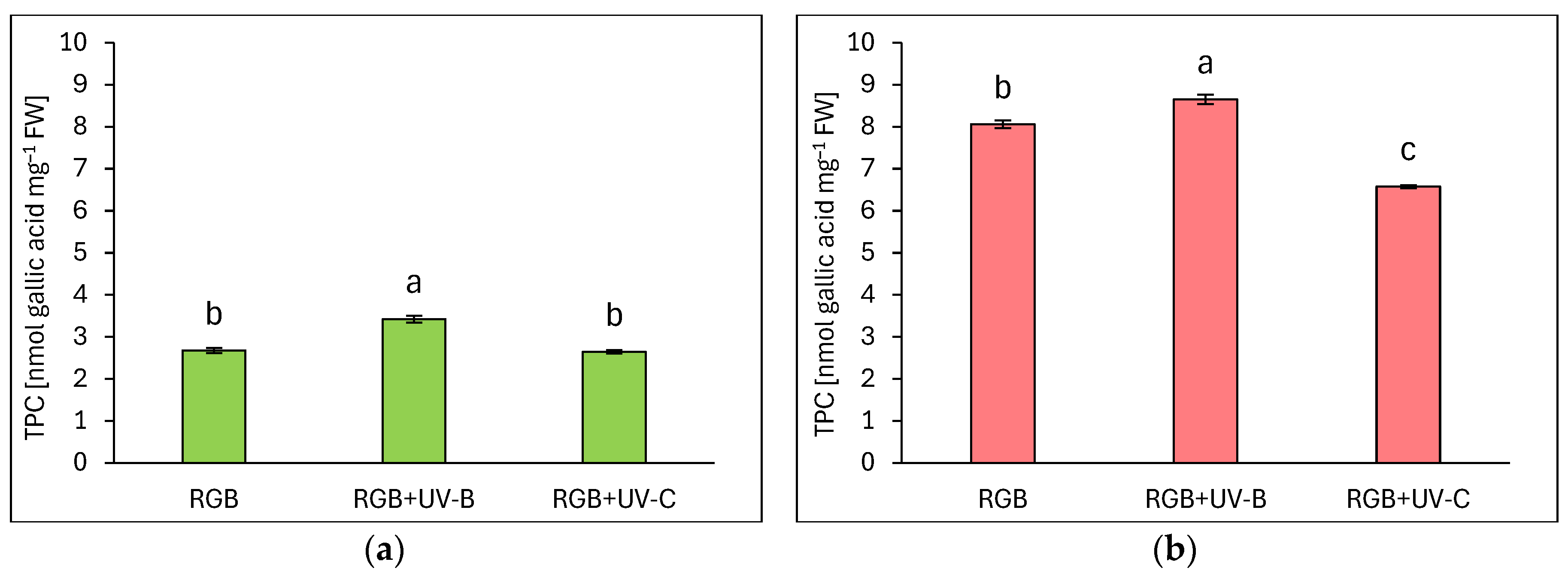
Figure 2.
Total flavonoid content (TFC) of control (RGB), UV-B treated (RGB+UV-B) or UV-C treated (RGB+UV-C) plants of baby leaf lettuce (Lactuca sativa var. crispa L.) cultivar with (a) green (cv. Lollo Bionda) and (b) reddish leaf (cv. Lollo Rossa) at 20 DAS (days after sowing), estimated as µg rutin equivalents per mg of fresh weight (FW). Each bar represents the average ± SD of six independent measurements (n = 6). Different letters (a–c) indicate significant differences between treatments at p = 0.05 with a Tukey’s HSD test.
Figure 2.
Total flavonoid content (TFC) of control (RGB), UV-B treated (RGB+UV-B) or UV-C treated (RGB+UV-C) plants of baby leaf lettuce (Lactuca sativa var. crispa L.) cultivar with (a) green (cv. Lollo Bionda) and (b) reddish leaf (cv. Lollo Rossa) at 20 DAS (days after sowing), estimated as µg rutin equivalents per mg of fresh weight (FW). Each bar represents the average ± SD of six independent measurements (n = 6). Different letters (a–c) indicate significant differences between treatments at p = 0.05 with a Tukey’s HSD test.
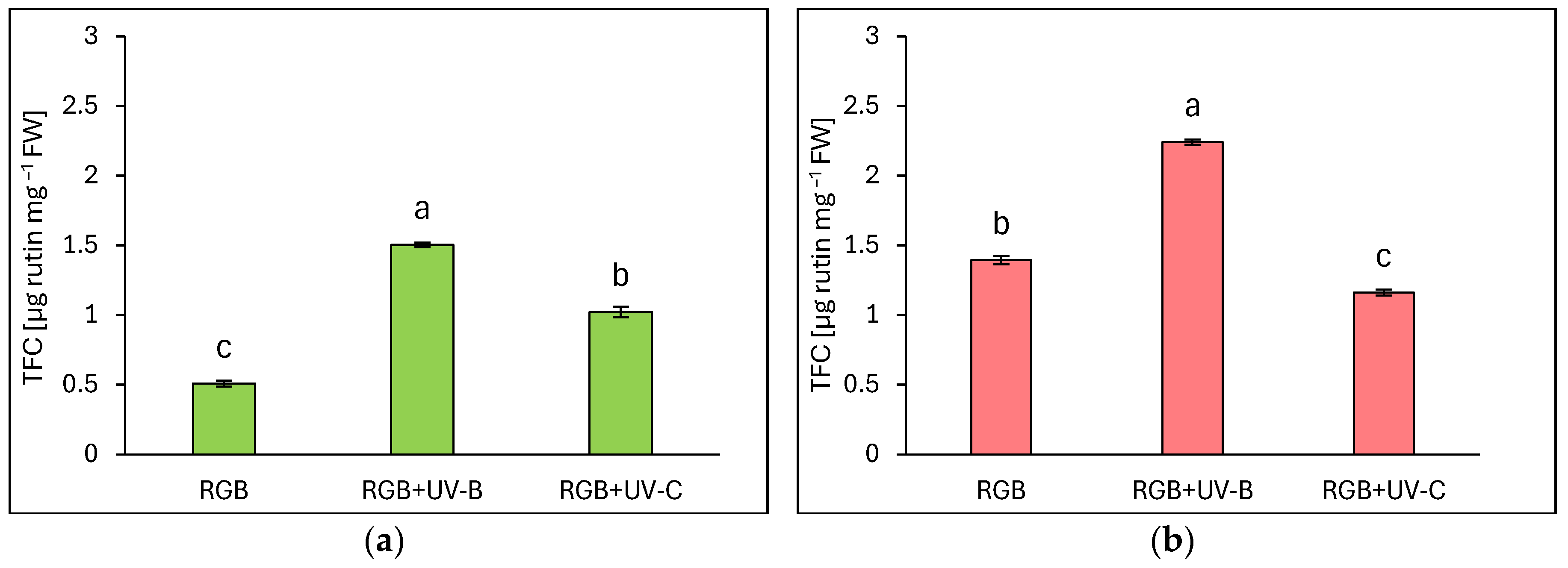
Figure 3.
Anthocyanins (ANT) concentration of control (RGB), UV-B treated (RGB+UV-B) or UV-C treated (RGB+UV-C) plants of baby leaf lettuce (Lactuca sativa var. crispa L.) cultivar with (a) green (cv. Lollo Bionda) and (b) reddish leaf (cv. Lollo Rossa) at 20 DAS (days after sowing), estimated as arbitrary unit (AU) per g of fresh weight (FW). Each bar represents the average ± SD of six independent measurements (n = 6). Different letters (a–c) indicate significant differences between treatments at p = 0.05 with a Tukey’s HSD test.
Figure 3.
Anthocyanins (ANT) concentration of control (RGB), UV-B treated (RGB+UV-B) or UV-C treated (RGB+UV-C) plants of baby leaf lettuce (Lactuca sativa var. crispa L.) cultivar with (a) green (cv. Lollo Bionda) and (b) reddish leaf (cv. Lollo Rossa) at 20 DAS (days after sowing), estimated as arbitrary unit (AU) per g of fresh weight (FW). Each bar represents the average ± SD of six independent measurements (n = 6). Different letters (a–c) indicate significant differences between treatments at p = 0.05 with a Tukey’s HSD test.
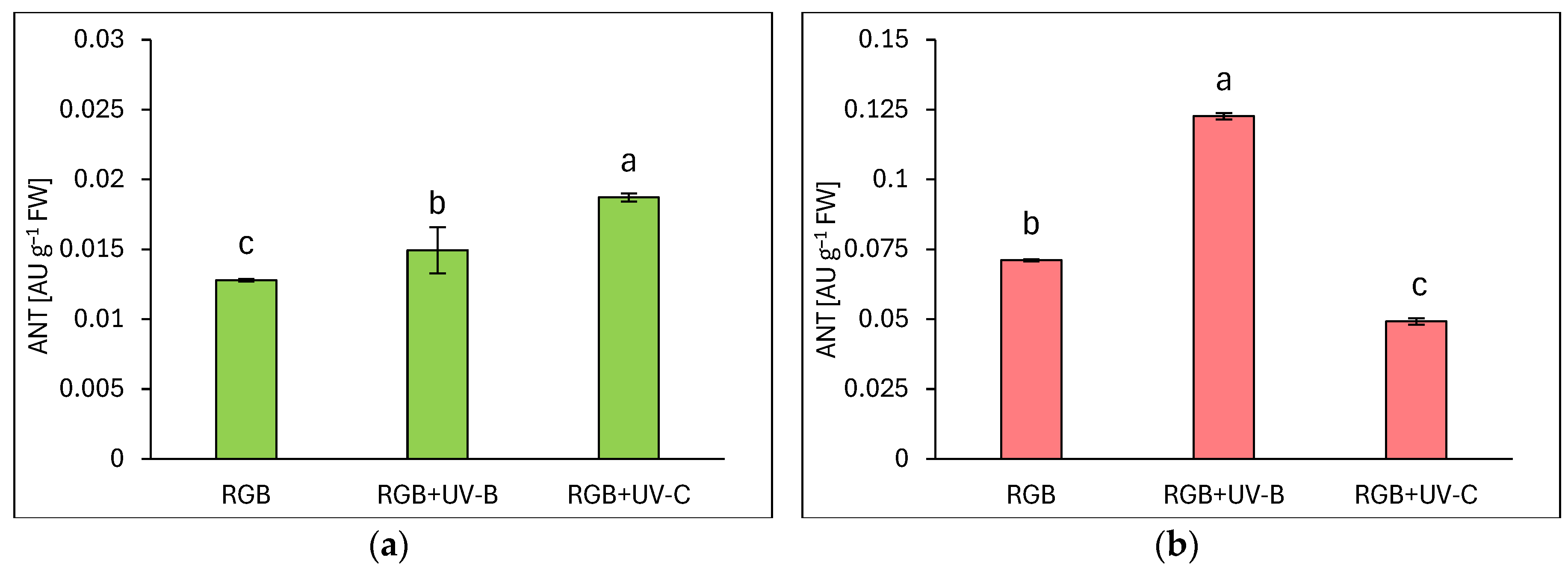
Figure 4.
Initial ascorbic acid (AsA) level, total AsA pool (AsA+DAsA) and total AsA to initial AsA ratio (AsA+DAsA/AsA) of control (RGB), UV-B treated (RGB+UV-B) or UV-C treated (RGB+UV-C) plants of baby leaf lettuce (Lactuca sativa var. crispa L.) cultivar with (a, c) green (cv. Lollo Bionda) and (b, d) reddish leaf (cv. Lollo Rossa) at 20 DAS (days after sowing). Initial AsA was estimated directly in a sample by bipyridyl method, while total AsA pool was assessed after additional reduction of dehydroascorbic acid (DAsA) with dithiothreitol (DTT). Each bar represents the average ± SD of six independent measurements (n = 6). Different letters (a–b) indicate significant differences between treatments at p = 0.05 with a Tukey’s HSD test.
Figure 4.
Initial ascorbic acid (AsA) level, total AsA pool (AsA+DAsA) and total AsA to initial AsA ratio (AsA+DAsA/AsA) of control (RGB), UV-B treated (RGB+UV-B) or UV-C treated (RGB+UV-C) plants of baby leaf lettuce (Lactuca sativa var. crispa L.) cultivar with (a, c) green (cv. Lollo Bionda) and (b, d) reddish leaf (cv. Lollo Rossa) at 20 DAS (days after sowing). Initial AsA was estimated directly in a sample by bipyridyl method, while total AsA pool was assessed after additional reduction of dehydroascorbic acid (DAsA) with dithiothreitol (DTT). Each bar represents the average ± SD of six independent measurements (n = 6). Different letters (a–b) indicate significant differences between treatments at p = 0.05 with a Tukey’s HSD test.
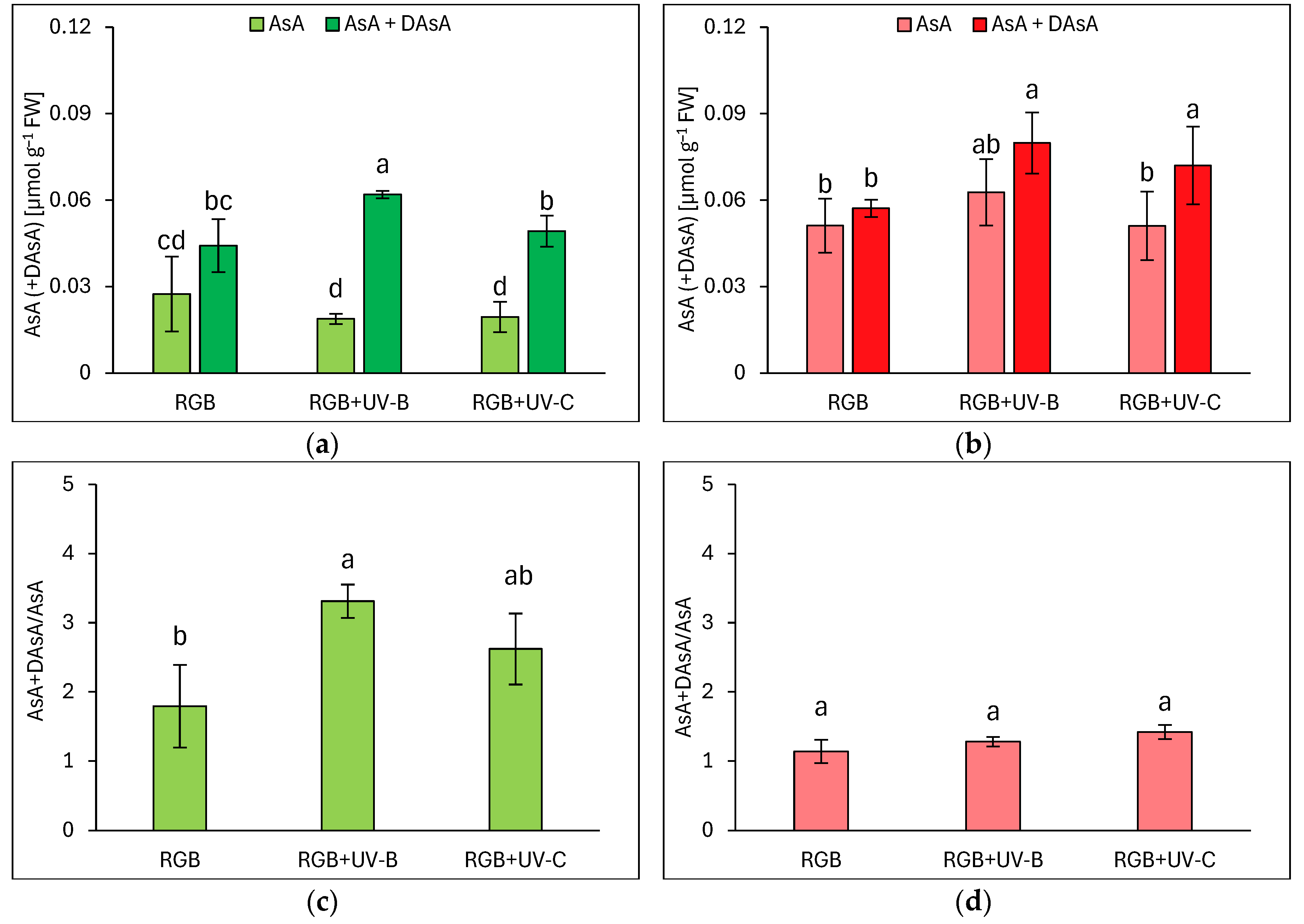
Figure 5.
The total antioxidant capacity (a, b) and DPPH radical scavenging activity rate (c, d) of control (RGB), UV-B treated (RGB+UV-B) or UV-C treated (RGB+UV-C) plants of baby leaf lettuce (Lactuca sativa var. crispa L.) cultivar with (a, c) green (cv. Lollo Bionda) and (b, d) reddish leaf (cv. Lollo Rossa) at 20 DAS (days after sowing), estimated as µg BHT equivalents per mg of fresh weight (FW). Each bar represents the average ± SD of six independent measurements (n = 6). Different letters (a–c) indicate significant differences between treatments at p = 0.05 with a Tukey’s HSD test.
Figure 5.
The total antioxidant capacity (a, b) and DPPH radical scavenging activity rate (c, d) of control (RGB), UV-B treated (RGB+UV-B) or UV-C treated (RGB+UV-C) plants of baby leaf lettuce (Lactuca sativa var. crispa L.) cultivar with (a, c) green (cv. Lollo Bionda) and (b, d) reddish leaf (cv. Lollo Rossa) at 20 DAS (days after sowing), estimated as µg BHT equivalents per mg of fresh weight (FW). Each bar represents the average ± SD of six independent measurements (n = 6). Different letters (a–c) indicate significant differences between treatments at p = 0.05 with a Tukey’s HSD test.
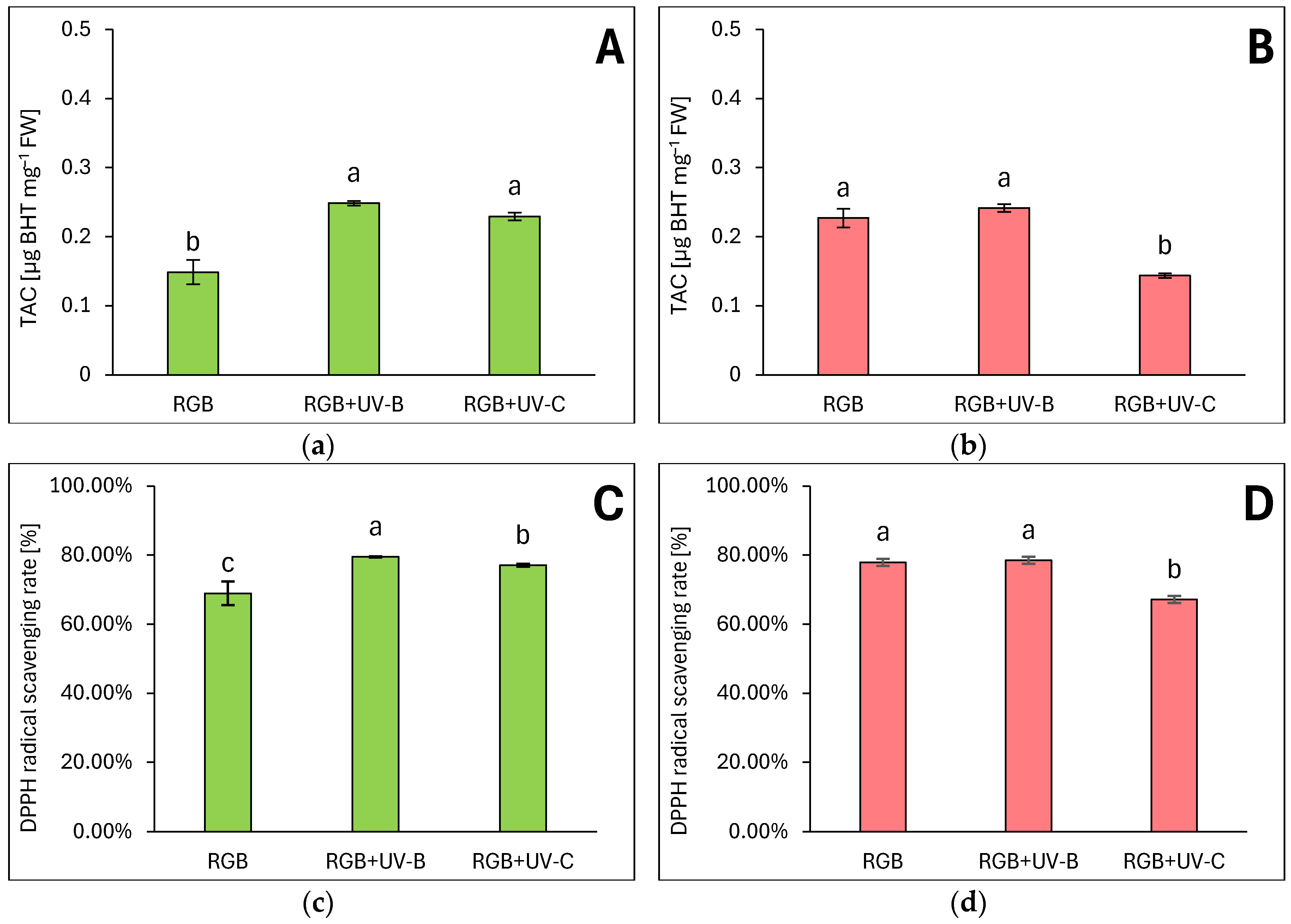
Figure 6.
Densitometric analysis of RuBisCO large (LSU) and small (SSU) subunit of control (RGB), UV-B treated (RGB+UV-B) or UV-C treated (RGB+UV-C) plants of baby leaf lettuce (Lactuca sativa var. crispa L.) cultivar with (a) green leaf (cv. Lollo Bionda) or (b) reddish leaf (cv. Lollo Rossa) after short-term (1-4 day) progressive exposition to UV light at 20 DAS (days after sowing). Beneath (c) the LSU (53 kDa) or SSU (14 kDa) protein bands of leaf proteins resolved in a 4–20% TGX polyacrylamide gel and visualized with Coomassie Stain. The relative amounts (%) of RuBisCO subunits were normalized to RGB control. Bars represent the average ± SD of three independent measurements (n = 3). Different letters (a–c for LSU or a’–c’ for SSU) indicate significant differences between treatments at p = 0.05 with a Tukey’s HSD test.
Figure 6.
Densitometric analysis of RuBisCO large (LSU) and small (SSU) subunit of control (RGB), UV-B treated (RGB+UV-B) or UV-C treated (RGB+UV-C) plants of baby leaf lettuce (Lactuca sativa var. crispa L.) cultivar with (a) green leaf (cv. Lollo Bionda) or (b) reddish leaf (cv. Lollo Rossa) after short-term (1-4 day) progressive exposition to UV light at 20 DAS (days after sowing). Beneath (c) the LSU (53 kDa) or SSU (14 kDa) protein bands of leaf proteins resolved in a 4–20% TGX polyacrylamide gel and visualized with Coomassie Stain. The relative amounts (%) of RuBisCO subunits were normalized to RGB control. Bars represent the average ± SD of three independent measurements (n = 3). Different letters (a–c for LSU or a’–c’ for SSU) indicate significant differences between treatments at p = 0.05 with a Tukey’s HSD test.
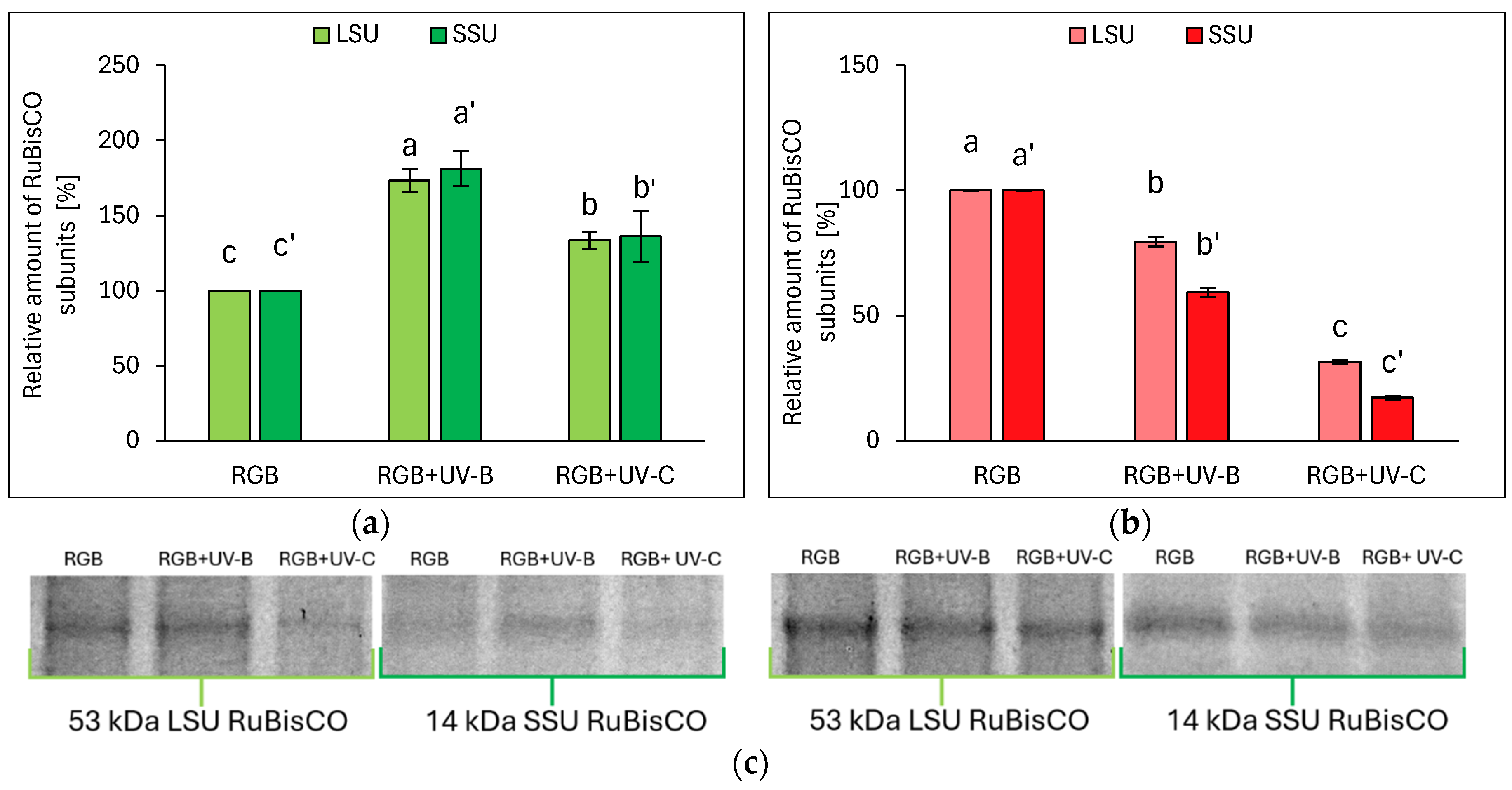
Figure 7.
Chlorophyll a fluorescence analysis of control (RGB), UV-B treated (RGB+UV-B) or UV-C treated (RGB+UV-C) plants of baby leaf lettuce (Lactuca sativa var. crispa L.) cultivar with green leaf (cv. Lollo Bionda) after short-term (1-4 day) progressive exposition to UV light. (a) maximum quantum yield of PSII photochemistry (Fv/Fm), (b) effective quantum yield of PSII photochemistry (ΦPSII), (c) quantum yield of regulated (ΦNPQ) and (d) non-regulated energy dissipation (ΦNO), (e) non-photochemical quenching (NPQ) and (f) electron transport rate (ETR). The analyses were carried out with 55 μmol m–2 s–1 of blue (450 nm) actinic light. Each data point represents the average ± SD of six independent measurements (n = 6). Different letters (a, b) indicate significant differences between treatments at p = 0.05 with a Tukey’s HSD test.
Figure 7.
Chlorophyll a fluorescence analysis of control (RGB), UV-B treated (RGB+UV-B) or UV-C treated (RGB+UV-C) plants of baby leaf lettuce (Lactuca sativa var. crispa L.) cultivar with green leaf (cv. Lollo Bionda) after short-term (1-4 day) progressive exposition to UV light. (a) maximum quantum yield of PSII photochemistry (Fv/Fm), (b) effective quantum yield of PSII photochemistry (ΦPSII), (c) quantum yield of regulated (ΦNPQ) and (d) non-regulated energy dissipation (ΦNO), (e) non-photochemical quenching (NPQ) and (f) electron transport rate (ETR). The analyses were carried out with 55 μmol m–2 s–1 of blue (450 nm) actinic light. Each data point represents the average ± SD of six independent measurements (n = 6). Different letters (a, b) indicate significant differences between treatments at p = 0.05 with a Tukey’s HSD test.
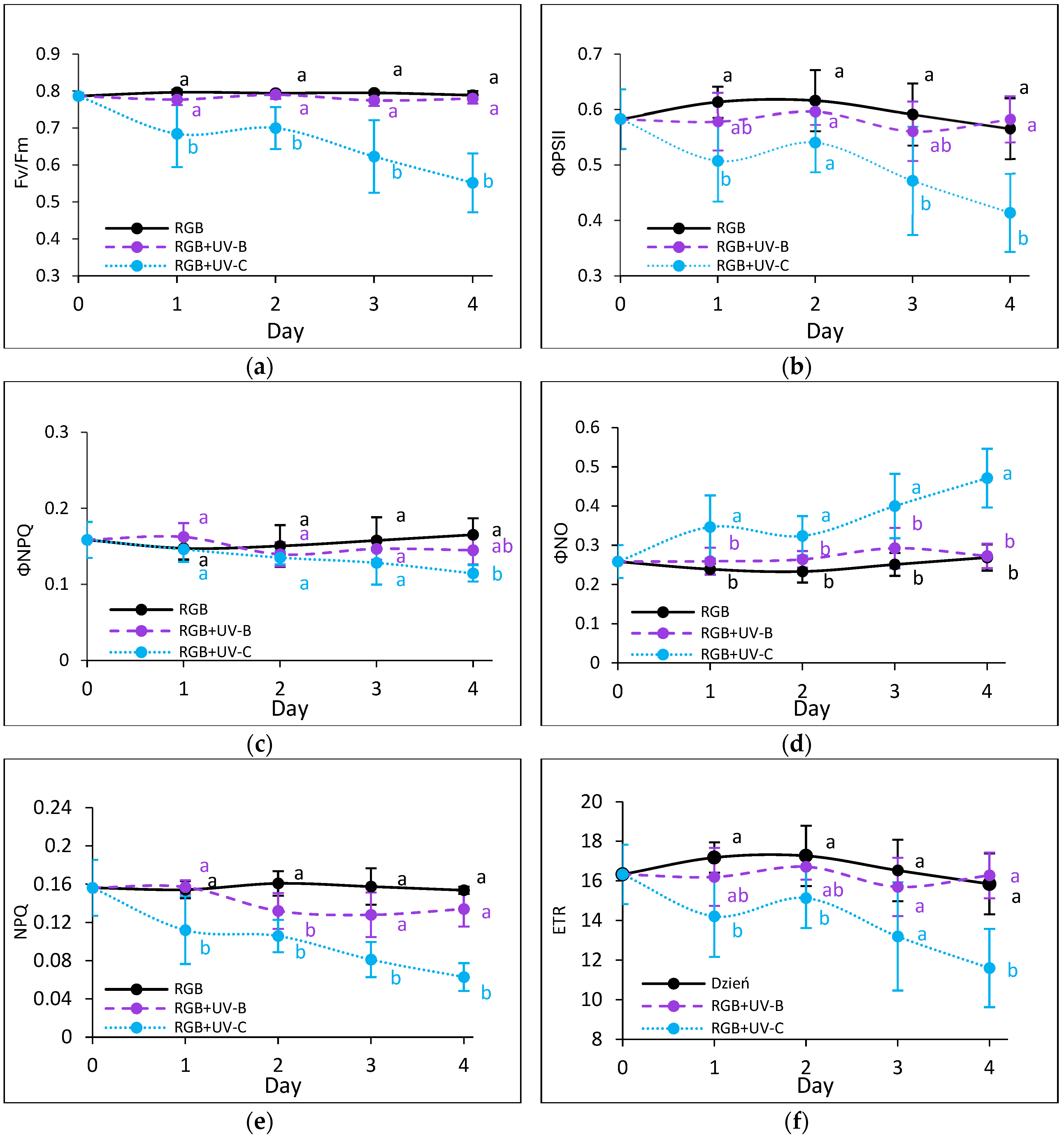
Figure 8.
Chlorophyll a fluorescence analysis of control (RGB), UV-B treated (RGB+UV-B) or UV-C treated (RGB+UV-C) plants of baby leaf lettuce (Lactuca sativa var. crispa L.) cultivar with reddish leaf (cv. Lollo Rossa) after short-term (1-4 day) progressive exposition to UV light. (a) maximum quantum yield of PSII photochemistry (Fv/Fm), (b) effective quantum yield of PSII photochemistry (ΦPSII), (c) quantum yield of regulated (ΦNPQ) and (d) non-regulated energy dissipation (ΦNO), (e) non-photochemical quenching (NPQ) and (f) electron transport rate (ETR). The analyses were conducted with 55 μmol m–2 s–1 of blue (450 nm) actinic light. Each data point represents the average ± SD of six independent measurements (n = 6). Different letters (a, b) indicate significant differences between treatments at p = 0.05 with a Tukey’s HSD test.
Figure 8.
Chlorophyll a fluorescence analysis of control (RGB), UV-B treated (RGB+UV-B) or UV-C treated (RGB+UV-C) plants of baby leaf lettuce (Lactuca sativa var. crispa L.) cultivar with reddish leaf (cv. Lollo Rossa) after short-term (1-4 day) progressive exposition to UV light. (a) maximum quantum yield of PSII photochemistry (Fv/Fm), (b) effective quantum yield of PSII photochemistry (ΦPSII), (c) quantum yield of regulated (ΦNPQ) and (d) non-regulated energy dissipation (ΦNO), (e) non-photochemical quenching (NPQ) and (f) electron transport rate (ETR). The analyses were conducted with 55 μmol m–2 s–1 of blue (450 nm) actinic light. Each data point represents the average ± SD of six independent measurements (n = 6). Different letters (a, b) indicate significant differences between treatments at p = 0.05 with a Tukey’s HSD test.
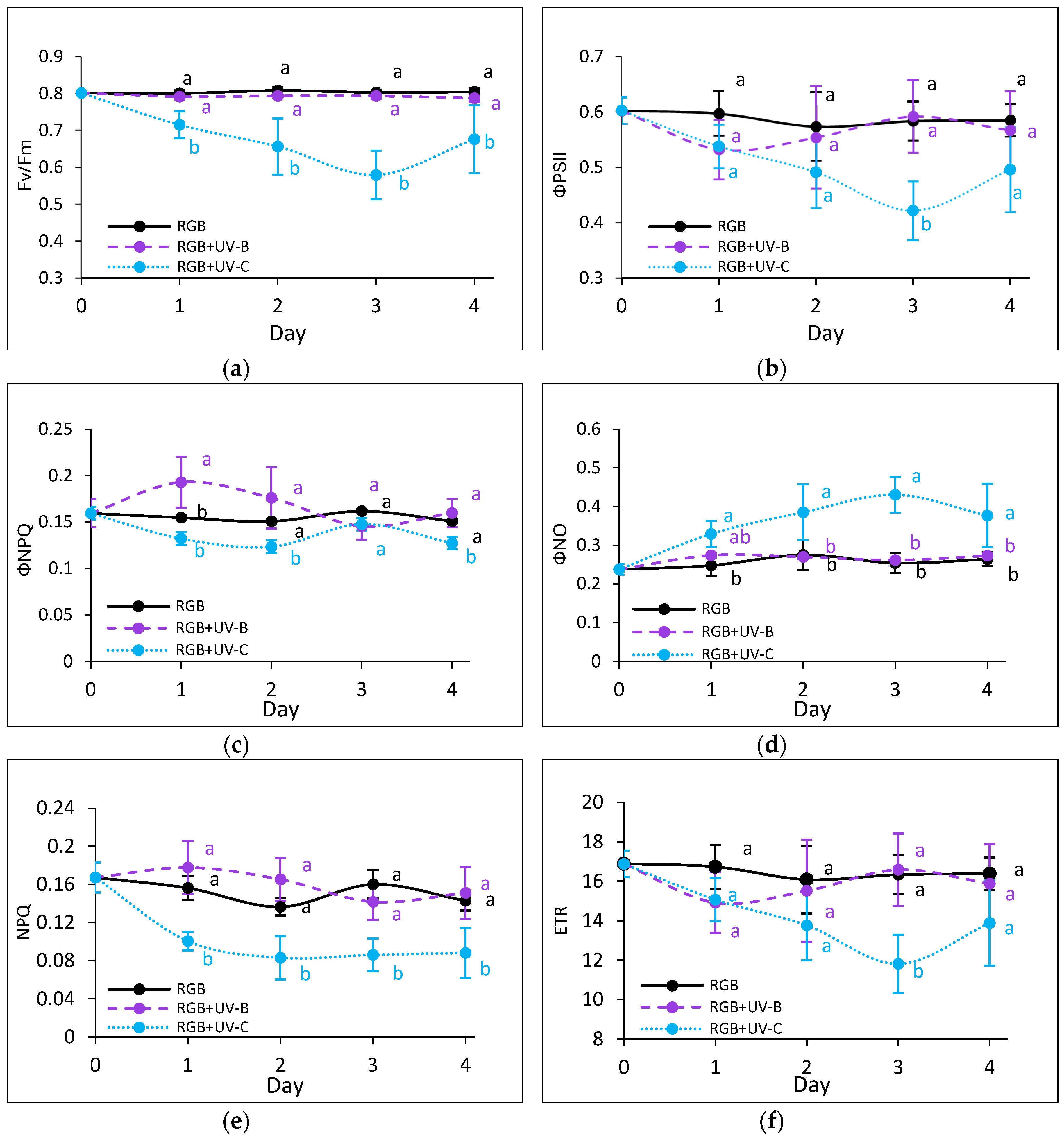
Figure 9.
The rate of lipid peroxidation assessed with thiobarbituric acid reactive substances (TBARS) level of control (RGB), UV-B treated (RGB+UV-B) or UV-C treated (RGB+UV-C) plants of baby leaf lettuce (Lactuca sativa var. crispa L.) cultivars with (a) green (cv. Lollo Bionda) and (b) reddish leaf (cv. Lollo Rossa) of control (RGB) or UV-A treated (RGB+UV-A) plants of baby leaf lettuce (Lactuca sativa var. crispa L.) cultivars with green (cv. Lollo Bionda) and red leaf (cv. Lollo Rossa) at 20 DAS (days after sowing),, estimated with TBARS assay. Each bar represents the average ± SD of six independent measurements (n = 6). Different letters (a, b) indicate significant differences between treatments at p = 0.05 with a Tukey’s HSD test.
Figure 9.
The rate of lipid peroxidation assessed with thiobarbituric acid reactive substances (TBARS) level of control (RGB), UV-B treated (RGB+UV-B) or UV-C treated (RGB+UV-C) plants of baby leaf lettuce (Lactuca sativa var. crispa L.) cultivars with (a) green (cv. Lollo Bionda) and (b) reddish leaf (cv. Lollo Rossa) of control (RGB) or UV-A treated (RGB+UV-A) plants of baby leaf lettuce (Lactuca sativa var. crispa L.) cultivars with green (cv. Lollo Bionda) and red leaf (cv. Lollo Rossa) at 20 DAS (days after sowing),, estimated with TBARS assay. Each bar represents the average ± SD of six independent measurements (n = 6). Different letters (a, b) indicate significant differences between treatments at p = 0.05 with a Tukey’s HSD test.
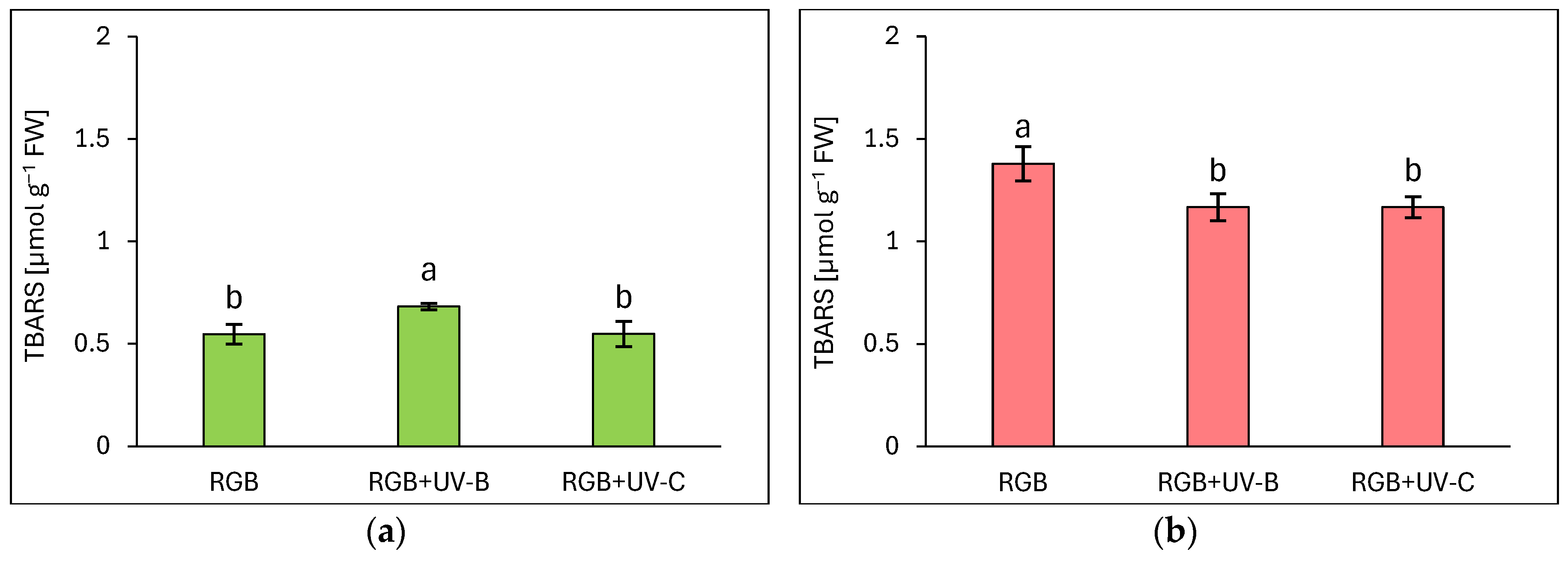
Figure 10.
Morphology of 20-DAS plants of baby leaf lettuce (Lactuca sativa var. crispa L.) cultivar with green (cv. Lollo Bionda, LB) grown under (a) RGB (C, control), (b) RGB+UV-B (UV-B supplemented, 311 nm) spectrum (c) RGB+UV-C (UV-C supplemented, 254 nm) spectrum.
Figure 10.
Morphology of 20-DAS plants of baby leaf lettuce (Lactuca sativa var. crispa L.) cultivar with green (cv. Lollo Bionda, LB) grown under (a) RGB (C, control), (b) RGB+UV-B (UV-B supplemented, 311 nm) spectrum (c) RGB+UV-C (UV-C supplemented, 254 nm) spectrum.
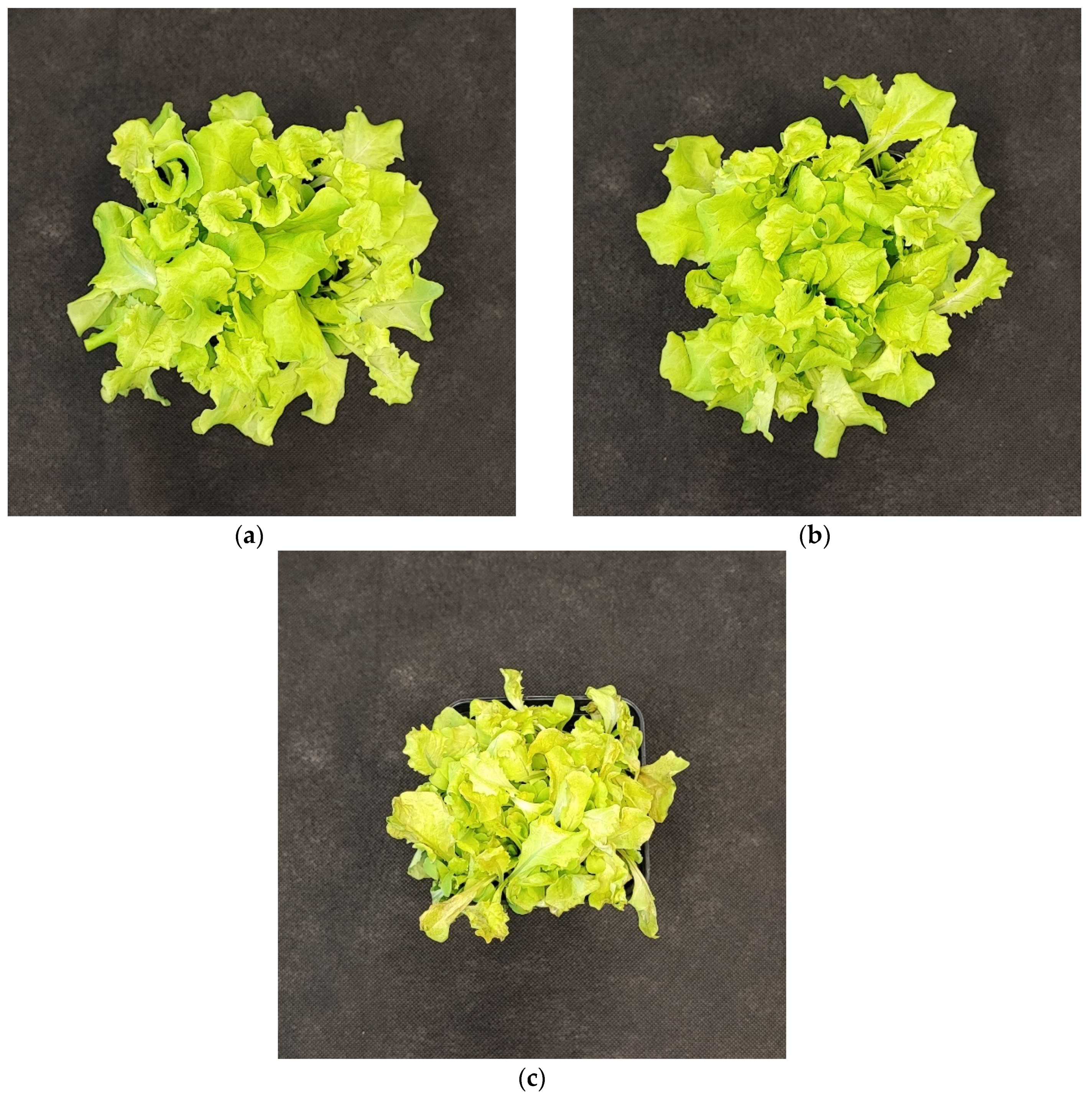
Figure 11.
Morphology of 20-DAS plants of baby leaf lettuce (Lactuca sativa var. crispa L.) cultivar with reddish leaf (cv. Lollo Rossa, LR) grown under (a) RGB (C, control), (b) RGB+UV-B (UV-B supplemented, 311 nm) spectrum (c) RGB+UV-C (UV-C supplemented, 254 nm) spectrum.
Figure 11.
Morphology of 20-DAS plants of baby leaf lettuce (Lactuca sativa var. crispa L.) cultivar with reddish leaf (cv. Lollo Rossa, LR) grown under (a) RGB (C, control), (b) RGB+UV-B (UV-B supplemented, 311 nm) spectrum (c) RGB+UV-C (UV-C supplemented, 254 nm) spectrum.
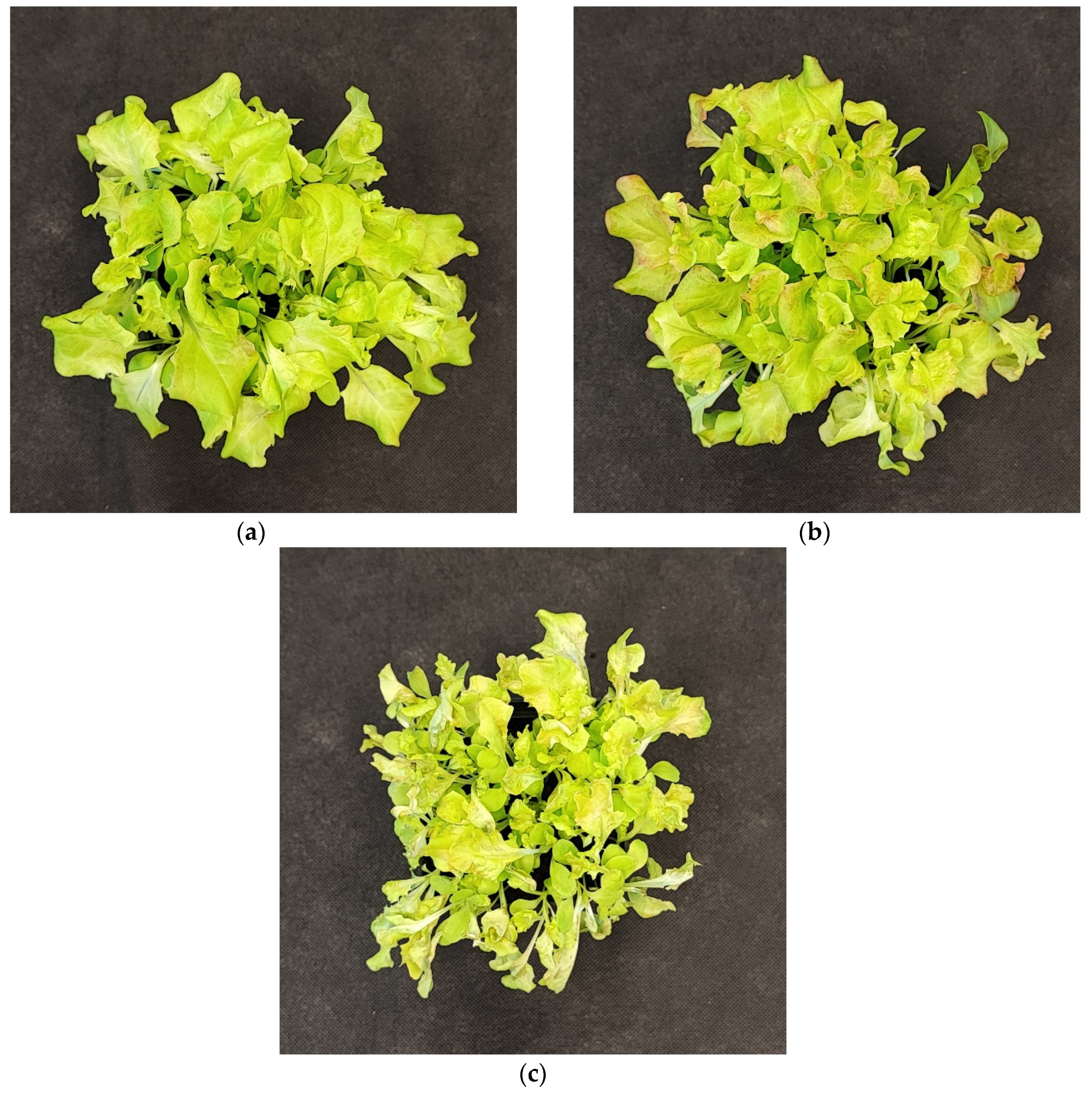
Figure 12.
The light spectra of lamps were recorded with a spectroradiometer at four locations and then averaged. All plants tested were grown at 200 µmol m–2 s–1 of RGB (red–green–blue) spectrum (R:G:B; 661 : 633 : 520 : 434 nm) solely (a, control) for 20 days or under RGB spectrum supplemented 4 days prior to harvest with increasing doses of UV-B (311 nm) (b) or UV-C (254 nm) (c).
Figure 12.
The light spectra of lamps were recorded with a spectroradiometer at four locations and then averaged. All plants tested were grown at 200 µmol m–2 s–1 of RGB (red–green–blue) spectrum (R:G:B; 661 : 633 : 520 : 434 nm) solely (a, control) for 20 days or under RGB spectrum supplemented 4 days prior to harvest with increasing doses of UV-B (311 nm) (b) or UV-C (254 nm) (c).
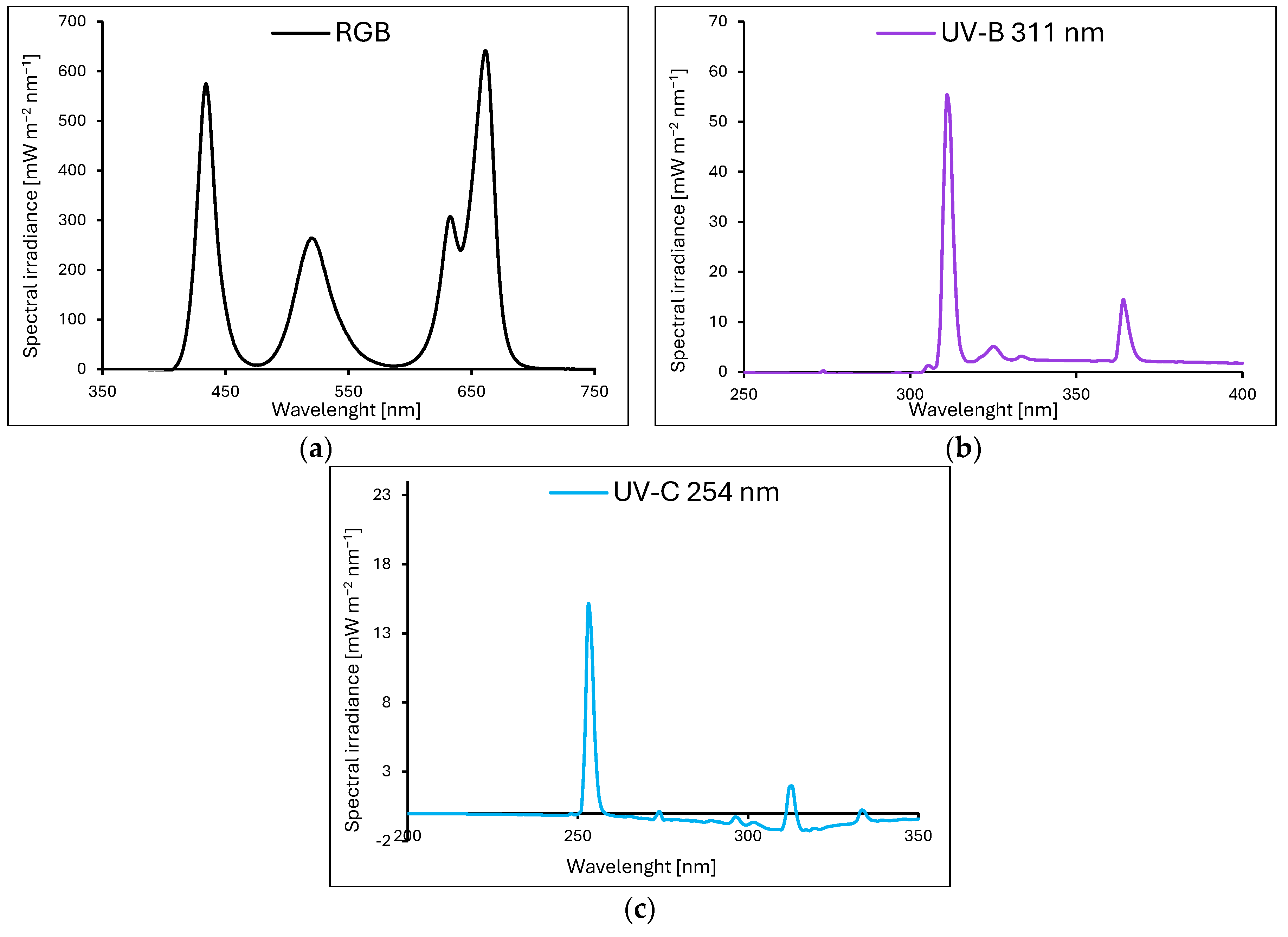

Table 1.
The abundance of photosynthetic pigments extracted with DMSO, the accumulation of soluble protein content (SLP) in leaves of baby leaf lettuce (Lactuca sativa var. crispa L.) cv. Lollo Bionda under different light conditions.
Table 1.
The abundance of photosynthetic pigments extracted with DMSO, the accumulation of soluble protein content (SLP) in leaves of baby leaf lettuce (Lactuca sativa var. crispa L.) cv. Lollo Bionda under different light conditions.
| Parameter | Treatment | ||
|---|---|---|---|
| RGB | RGB+UV-B | RGB+UV-C | |
| Chlorophyll a+b [mg g–1 FW] |
0.839 ± 0.013a | 0.764 ± 0.003b | 0.323 ± 0.002c |
| Chlorophyll a [mg g–1 FW] |
0.601 ± 0.010a | 0.547 ± 0.002b | 0.205 ± 0.001c |
| Chlorophyll b [mg g–1 FW] |
0.238 ± 0.003a | 0.217 ± 0.001b | 0.117 ± 0.001c |
| Chlorophyll a/b | 2.521 ± 0.016a | 2.520 ± 0.002a | 1.748 ± 0.010b |
| Carotenoids [mg g–1 FW] |
0.114 ± 0.002a | 0.112 ± 0.000a | 0.031 ± 0.000b |
| Chlorophyll a+b/ Carotenoids |
7.373 ± 0.031b | 6.807 ± 0.012c | 10.361 ± 0.069a |
| Soluble leaf proteins [mg g–1 FW] |
26.92 ± 0.15c | 42.89 ± 1.12a | 31.46 ± 0.57b |
The presented values are means of six (or four for SLP) replicates ± SD. Different letters (a–c) in the same row indicate significant differences between treatments at p = 0.05 with a Tukey’s HSD test. FW - fresh weight.
Table 2.
The abundance of photosynthetic pigments extracted with DMSO, the accumulation of soluble protein content (SLP) in leaves of baby leaf lettuce (Lactuca sativa var. crispa L.) cv. Lollo Rossa under different light conditions.
Table 2.
The abundance of photosynthetic pigments extracted with DMSO, the accumulation of soluble protein content (SLP) in leaves of baby leaf lettuce (Lactuca sativa var. crispa L.) cv. Lollo Rossa under different light conditions.
| Parameter | Treatment | ||
|---|---|---|---|
| RGB | RGB+UV-B | RGB+UV-C | |
| Chlorophyll a+b [mg g–1 FW] |
0.824 ± 0.004b | 0.836 ± 0.006a | 0.798 ± 0.008c |
| Chlorophyll a [mg g–1 FW] |
0.575 ± 0.003a | 0.520 ± 0.003c | 0.531 ± 0.004b |
| Chlorophyll b [mg g–1 FW] |
0.250 ± 0.002c | 0.316 ± 0.003a | 0.267 ± 0.004b |
| Chlorophyll a/b | 2.301 ± 0.011a | 1.645 ± 0.011c | 1.986 ± 0.018b |
| Carotenoids [mg g–1 FW] |
0.124 ± 0.001b | 0.141 ± 0.001a | 0.092 ± 0.000c |
| Chlorophyll a+b/ Carotenoids |
6.645 ± 0.042b | 5.936 ± 0.039c | 8.651 ± 0.088a |
| Soluble leaf proteins [mg g–1 FW] |
40.16 ± 0.15a | 39.70 ± 1.20a | 27.13 ± 1.72b |
The presented values are means of six (or four for SLP) replicates ± SD. Different letters (a–c) in the same row indicate significant differences between treatments at p = 0.05 with a Tukey’s HSD test. FW - fresh weight.
Table 3.
The schedule of supplemental UV-B and UV-C light treatment.
| Treatment, wavelength peak (nm) | Daily time exposure (min), diurnal time | Total time (h) |
Total irradiance (W m–2) |
Irradiance (PAR) (W m–2) |
Cummulative dose (kJ m–2) |
|||
|---|---|---|---|---|---|---|---|---|
| Day 1 | Day 2 | Day 3 | Day 4 | |||||
| UV-B, 311 | 15 12.00-12.15 pm |
30 12.00-12.30 pm |
60 12.00-13.00 pm |
120 12.00-14.00 pm |
3.75 | 1.1572 | 0.253 | 15.622 |
| UV-C, 254 | 7,5 12.00-12.08 pm |
15 12.00-12.15 pm |
30 12.00-12.30 pm |
60 12.00-13.00 pm |
1.875 | 0.8901 | 0.177 | 6.008 |
Disclaimer/Publisher’s Note: The statements, opinions and data contained in all publications are solely those of the individual author(s) and contributor(s) and not of MDPI and/or the editor(s). MDPI and/or the editor(s) disclaim responsibility for any injury to people or property resulting from any ideas, methods, instructions or products referred to in the content. |
© 2024 by the authors. Licensee MDPI, Basel, Switzerland. This article is an open access article distributed under the terms and conditions of the Creative Commons Attribution (CC BY) license (http://creativecommons.org/licenses/by/4.0/).
Copyright: This open access article is published under a Creative Commons CC BY 4.0 license, which permit the free download, distribution, and reuse, provided that the author and preprint are cited in any reuse.


