

Submitted:
02 May 2025
Posted:
07 May 2025
You are already at the latest version
Preprints on COVID-19 and SARS-CoV-2
Abstract
The COVID-19 crisis has turned teleworking from a minority option into an imposed and generalized way of life and has called into question its contribution to corporate sustainability. The present review is the first systematic review of the effects of telework on the environmental, social, and economic pillars of corporate sustainability in scholarly literature published from 2020 to 2024. And a total of 50 studies from three databases (Scopus, Science Direct and Taylor and Francis) were reviewed according to PRISMA guideline by both the data bibliometric analysis and narrative synthesis. Findings show that telework has the potential to improve environmental sustainability by decreasing commuting emissions (29%-54% depending on its deployment intensity), but rebound effects such as increased residential energy use work against this (in part) positive regard. From a social point of view, telework is double-edged, between helping balance personal and work life and possessing the potential to lead to greater isolation and aggravate existing inequalities, particularly in developing countries. Economically, it drives operational costs down and expands the talent pool, impacting micro, meso and macroeconomically. The possibility of telework as a tool of sustainable development is substantially moderated by organizational culture, digital infrastructure, sociodemographic reality and even the physical environment. We argue that telework is a potentially transformative driver of corporate sustainability, if deployed strategically within a given context; however, disciplinary fragmentation and methodological lacunae in common metrics remain, especially with regard to long-term effects and implementation in developing economies.
Keywords:
telework
; remote work
; corporate sustainability
; systematic review
; environmental impact
; social equity
; organizational transformation
; COVID-19
; work-life balance
; digital transition
1. Introduction
The COVID-19 pandemic radically transformed global labor dynamics, converting telework from a minority option to a widespread necessity in a matter of weeks [1,2]. While telework existed before this health crisis, its massive and mandatory adoption during lockdowns accelerated a process of organizational transformation that has persisted even after the pandemic [3,4]. This abrupt transition to remote work environments revealed not only its technical viability in multiple sectors but also its potential multidimensional contribution to corporate sustainability through reduced commuting, lower energy consumption in offices, and resource optimization [5,6].
In this context, remote work evolved from responding to a health crisis to becoming a strategic component for business operations more aligned with the Sustainable Development Goals, particularly for sustainable cities, climate action, decent work, and inequality reduction [7,8]. In fact, early research also began to observe how properly implementing the logic of telework effectively reduced greenhouse gas emissions, alleviated human congestion in cities, helped people with limited mobility access meaningful employment, and improved work-life balance [9,10].
However, the relationship between telework and corporate sustainability proved to be complex and worthy of systematic and rigorous examination. On one hand, several studies used various methods to document environmental improvements as employee daily commutes decreased [11,12]; on the other hand, emerging research also pointed to possible rebound effects and trade-offs between different dimensions of sustainability [13,14]. These included increased residential energy consumption, inequalities in access to digital infrastructure, a residential boom in suburban areas, and potential impacts on team spirit in workplaces [15,16].
In terms of a critical approach, researchers later had to consider not only the direct effects of implementing telework on reducing carbon emissions but also the immediate effects on household energy consumption, indirect effects on social equity, and concerns about workers' mental health and well-being [17,18]. Additionally, various contextual factors related to the characteristics of the built environment, public transportation systems, digital infrastructure, and organizational policies had a significant effect in moderating telework's contribution to sustainability [19,20,21].
In line with the accelerated changes brought about by the COVID-19 pandemic, it is essential to consider the impact of telework as an emerging phenomenon transforming the labor market in Latin America. Although this modality allowed certain economic activities to be sustained in a context of confinement, it also exposed and amplified pre-existing structural inequalities in the region. Various studies show that access to telework was primarily determined by educational level, labor formality, occupation type, and access to information technologies, which excluded large segments of informal, young, and low-income workers [22]. Likewise, recent research has highlighted that, although remote work has the potential to contribute to corporate and environmental sustainability, its implementation also generates rebound effects, such as increased energy consumption in households or uncontrolled urban expansion. Therefore, its effective contribution to sustainability depends on contextual, regulatory, and organizational factors [2,8].
Although the amount of research was relatively abundant, this quantity continued to reveal important information gaps. First, there was considerable geographic concentration, with a preponderance of studies conducted in Western developed economies and a minimal proportion of work focused on developing or emerging contexts [6,23]. Second, a significant disciplinary divide was identified, with the environmental, organizational, and social elements of the telework phenomenon studied in isolation in the literature, without comprehensive consideration of their interactions [8,24]. Finally, standardized metrics and coherent methodological frameworks were lacking to quantify the overall contribution of telework to corporate sustainability in its individual dimensions [25,26].
Consequently, the following research objectives led to a systematic review: 1) Impact: What is the documented impact of telework on the environmental, social, and economic dimensions of corporate sustainability in the literature published in the period 2020-2024? 2) Moderation: What contextual factors have moderated the effectiveness of telework as a sustainability strategy based on organizational, geographical, and socioeconomic environments in the published literature? 3) Methodology: What methodologies, metrics, and indicators have assessed the contribution of telework to corporate sustainability, and what are their strengths and weaknesses?
Thus, based on the research questions, the purpose of this systematization was to: consider the contribution of telework to global corporate sustainability in the period 2020-2024. Therefore, throughout the work, patterns, trends, and empirical evidence are identified based on a detailed, transparent, and replicable analysis of the academic literature.
The structure of this systematized review, which revolved around three specific interconnected objectives, is summarized below. First, to summarize the available evidence in the scientific literature on the effects of implementing the telework model on sustainability in the corporate environment, from environmental, social, and economic aspects, identifying synergies and trade-offs between dimensions and patterns of causality and association. Second, to characterize the contributions of moderating factors to the modulating effectiveness of telework as a sustainability strategy based on different organizational, work, technological, socioeconomic, and regulatory contexts, across advanced and emerging economies. The third, in line with the focus, was to analyze the literature approaches, metrics measures, and mapped indicators developed to measure the impact of telework on corporate sustainability, and to propose an integrated evaluation system applied in the pursuit of the SDGs.
Regarding the scientific contribution of this review work, this project managed to address more precisely the contextual variability in terms of geography, sectors, and socioeconomic circumstances. In the interest of truth, this approach allowed overcoming the fragmentation of international literature and providing a solid foundation on which future research in this and other fields can be built [27,28]. Furthermore, several previous studies covered the contextual variety in geographical, sectoral, and socioeconomic terms, which in turn could help identify opportunities based on good practices that depend on organizational reality [29,30]. Finally, the literature review conducted as part of this project is also of decisive importance with respect to the development of corporate remote work strategies that maximize benefits and minimize disadvantages in general [21,31].
Overall, beyond the impact in terms of academic implementation, the results of this systematic review provided practical guidelines to policymakers, senior executives, and human resources and sustainability professionals. The reason is that they were able to inform their decisions regarding how to implement remote work models that are consistent with corporate sustainability principles and current environmental challenges with solid scientific evidence.
1.1. Evolutionary Background of Telework
In summary, the concept of telework has undergone a significant transformation in recent years, which has been hastened by the situation associated with the COVID-19 pandemic. In fact, the contemporary classification developed by [32] regarding the degree of formalization of telework, namely informal (in the sense of being based on implicit agreements), occasional (in the sense of agreeing only for specific events), and permanent (in the sense of regulations and contractualization) has become of fundamental importance in the context of the large-scale implementation of remote work in response to global restrictions.
Going along this line, [33] identified a differential modality, which they called emergency telework. It refers to the sudden, compulsive, and generalized imposition of telework, as opposed to the planned and voluntary virtuality from before the pandemic. Furthermore, this term made it possible to conceptualize the particularities of remote work worldwide during this pandemic. Such is the case of emergency telework. Similarly, [34] identified post-pandemic telework to refer to the emerging hybrid model of remote work with partial face-to-face presence. Finally, this model consolidated as a hegemonized paradigm of the current occupational field.
At the same time, it is worth noting that the recent development of remote work forms has also been accompanied by the growth of its spatial modalities. Thus, [35] have documented the phenomenon of the proliferation of "third spaces" for remote work, including telework hubs, coworking spaces, and nomadic work environments, which expand the geography beyond the binarity of home and office. To a similar extent, [36] has recorded greater heterogeneity in the temporal intensities of telework, joining from occasional arrangements to full-time permanent modalities, with hybrid schemes in between due to changing in-person attendance.
However, beyond what has been said, one specific conceptual development stands out for its interest, proposed by [37], who identify four evolutionary generations of telework, namely, the first generation linked to fixed telecenters, the second associated with home workers, the third generation marked by mobility and nearby devices, and the fourth generation assumed virtual collaborative work environments and cloud platforms. In fact, these categories duly reflect the technological and organizational modification of the phenomenon in recent decades.
1.2. Theoretical Foundations of the Telework-Sustainability Relationship
Frameworks vary in the environments used to address the relationship between telework and sustainability. First, [38] applied the Theory of socio-technical transition. From this perspective, telework is a feature of socio-technical systems, involving technologies, infrastructures, regulations, practices, and cultural meanings for implementation. Therefore, it is valuable when addressing the large-scale change necessary for telework to contribute to sustainability. On the other hand, [39] proposed the creation of sustainable value theory from an organizational point of view. This theory provides a valuable framework for evaluating the impact of telework on corporate business sustainability because it targets all three aspects of sustainability, including economic, social, and environmental. The authors described a development of corporate sustainability through three stages: 1.0, focused on mitigating negative corporate externalities, 2.0, creating shared value, and 3.0, which is addressing socio-environmental challenges as business opportunities. Depending on how it is implemented, it can affirm how telework can contribute to any of these stages.
From an organizational perspective, [39] Sustainable Value Creation Theory proposes a framework, which is particularly suitable for evaluating telework's contribution to corporate sustainability, as it considers the phenomenon's impacts in three dimensions: economic, social, and environmental. The authors propose an evolutionary framework, which distinguishes corporate sustainability 1.0 due to supply, 2.0 due to demand, and 3.0: decentralizing and recreating sustainability from transforming a challenge into an opportunity, which corresponds to telework implemented at various levels. The Theory of Social Practices, presented by [40], is another relevant analytical framework; according to these authors, telework is a labor migration that is not reduced to location, but manifests through the reconfiguration of practices that interrelate these various systems. These approaches allow escaping a reductionist approach that considers only the effects of telework on transport emissions. Finally, [41] Theory of Organizational Climate Change offers the opportunity to consider how organizations in general include telework in their climate mitigation and adaptation strategy. It can have the potential to be both an incremental innovation and a radical innovation in organizational practice, and this depends on how it is integrated with corporate strategy and culture.
Last but not least, [42] have presented a Theory of Just Transition for telework. They emphasize that the socio-environmental benefits of telework should not only be equitable but must be distributed taking into account who may be most vulnerable to change-related costs. Such an approach finally aligns with the assessment: I know that these criteria can be used to evaluate equity and social justice in the introduction of telework as a sustainability measure.
1.3. Dimensional Categorization of Sustainability in Telework
1.3.1. Environmental Dimension
The carbon footprint of the environmental dimension of telework has been thoroughly and recently examined and reassessed following its widespread implementation throughout the pandemic. Meanwhile, in particular, [43] developed an analytical framework formed by multiple factors for the carbon footprint of telework, avoiding only the criterion of avoided travel, but adding others, such as household energy consumption, substitution of non-work travel, and the impact of moving for a long period. Furthermore, the following year, [26] proposed a taxonomy of environmental impact of telework, differentiating various levels. For example, first-order effects leave aside emissions and automobile congestion; second-order effects include building energy consumption and land use; and third-order encompasses the transformation of urban structural changes.
The distinction established by [44] is also significant, as it divided telework according to the intensity of the practice and evidenced the fact of differences in environmental benefits: while full-time telework decreases emissions by 54%, hybrid that is practiced for 2-3 days a week provides reductions of between 29 and 37%. However, significant rebound effects are pointed out by [45], who describes higher domestic energy consumption, longer residence-work distance, and subsequent recovery of the consumption pattern, among other practices. Therefore, another recently published finding by [21] is particularly relevant, as they propose the interaction between telework and energy efficiency in buildings. The authors concluded that remote work can complement or dismantle an energy efficiency strategy in a building, depending on specific contexts, such as the local climate, the average state of housing, and the strategy and behavior of specific residents, which underlines the need for an integrated approach to evaluation.
1.3.2. Social Dimension
Furthermore, the social dimension of telework during the pandemic and post-pandemic time in the context of corporate sustainability has been largely investigated. Therefore, as mentioned by [46], a multidimensional framework to evaluate work well-being when working from home was proposed. In particular, the approach sheds light on affective, cognitive, social, professional, and psychosomatic dimensions. [47] proposal is complementary to this categorization, as the taxonomy of social impact of telework identified individual, organizational, and social dimensions. According to the authors, social benefits are more individual, although it is assumed that the challenges in this category are based on organizational and social dimensions.
During the pandemic and post-pandemic period, the social dimension of telework in the context of corporate sustainability has been largely investigated. Therefore, as mentioned by [46], a multidimensional framework to evaluate work well-being while working from home was proposed. In particular, the approach sheds light on affective dimensions (i.e., emotions, satisfaction), cognitive (that is, attention, role clarity), social (i.e., relationships, collaboration), professional (that is, ability to develop, independence), and psychosomatic (i.e., physical and mental health). [47] proposal is complementary to this categorization, as they identified a taxonomy of social impacts of telework: individual (autonomy, work-life balance), organizational (culture, cohesion), and social (inclusion, community development). According to the authors, social benefits are more individual, although it is assumed that the challenges in this category are based on organizational and social dimensions.
Particularly relevant, in this sense, is the study conducted by [18] regarding the effects of telework on quality of work life, which identified five distinctive patterns of experience: "thriving" -- high well-being and productivity; "balanced" -- moderate well-being and productivity; "isolated" -- low social well-being but high productivity; "overwhelmed" -- low well-being and moderate productivity; and "disconnected" -- low well-being and productivity. Therefore, this typology proves the heterogeneity of social experiences in the remote work environment. Additionally, [9] documented critical aspects related to social equity in telework contexts, identifying potential gaps based on gender, socioeconomic level, geographic location, and family status. According to their findings, women, poorly paid workers, residents of rural areas with low connectivity, and people with care responsibilities face disproportionate challenges, suggesting the need for inclusive telework policies to maximize their contribution to social sustainability.
1.3.3. Economic Dimension
In more recent studies, the characterization of the economic impacts of telework on corporate sustainability has been notably refined. For example, [48] proposed an analytical structure for a classification of economic effects at three levels: 1) microeconomic: individual productivity, operating costs; 2) mesoeconomic: organizational innovation, talent attraction; 3) and macroeconomic: regional development, sectoral competitiveness. While this conceptual structure is complemented with the taxonomy of [49], who include a concept of "telework dividend" quantifying an economic value equivalent to 2.5% of GDP in developed economies generated by a reduction in travel costs, improvement of time and labor flexibility, highlighting its contribution to the sustainability of economic models.
Finally, from a particularly innovative perspective, [50] model the spatial economic impacts of telework and find a highly varied urban densification in the periphery and a commercial expansion in the other, as well as the revitalization of rural territorial seas and business attraction. In this case, the spatial impacts of telework can be understood, and their potential distributed through the authors' analytical framework.
From the perspective of the circular economy, it should be noted that [51] have developed an evaluative framework of how telework impacts circular business models through dematerialization, extension of the useful life of physical assets, and optimization of shared resource use. The findings are geographically crucial, as they indicate that telework, when strategically implemented, can be a key element within business strategies that aim at the circular economy and resource efficiency.
1.4. Integrated Evaluation Models of Telework in Corporate Sustainability
In this sense, regarding the comprehensive evaluation of telework's contribution to corporate sustainability, the most significant methodological advances in recent years in this regard are, on one hand, the Social Life Cycle Analysis model adapted by [52], which constitutes a systematic way of evaluating the social impacts of telework throughout its value chain, from equipment manufacturing to electronic waste management. On the other hand, the Sustainable Value Framework developed by [39] has been specifically adapted to telework by [53], who propose an evaluation matrix that analyzes how remote work practices simultaneously affect the creation of economic and sustainable value. In terms of its dimensions, this framework includes cost and risk reduction, reputation and legitimacy enhancement, innovation acceleration, and sustainable growth repositioning and trajectory.
Particularly innovative in this sense is the work carried out by [54] who has developed the Telework Sustainability Maturity model, which proposes an evolutionary gradation from "incidental telework" (markedly focused on immediate operational benefits) to "transformational telework" (integrated into the corporate sustainability strategy). This typology appears completed with the work carried out by [55] who have developed the Multi-criteria Evaluation Framework, which integrates quantitative and qualitative indicators in the environmental, social, and economic dimensions, in such a way that the assessments can be comprehensive and contextually adapted. It is relevant to mention that, subsequent to the work of this review, [56] proposed an evaluative framework specifically adapted to quantify the contributions of telework to the SDGs. This framework maps direct and indirect impacts of telework on 9 of the 17 SDGs and included part of the analysis of synergies and commitments between objectives. Undoubtedly, this work favors the alignment of telework strategies with the 2030 agenda and allowed communicating it to stakeholders.
Lastly, a relevant methodological development is the Framework for Territorial Impact Analysis of Telework or FITT for its acronym in English, presented by [30] can be used to systematically assess the effects of different intensities and modalities of telework on spatial patterns of economic activity, energy consumption, and social welfare at a territorial scale; that is, it implies a model of secondary impacts that allow making informed decisions about telework policies towards sustainability.
1.5. Conceptual Gaps and Emerging Analytical Challenges
However, despite these advances and improvement in the conceptualization and evaluation of the telework-sustainability relationship, there are still important conceptual gaps to note regarding the most recent literature. Mainly, the "scale paradox" presented by [10] is presented as significant, as they argue the "frequent lack of connection" between microscale analyses, many of which relate to the benefits of telework at the individual or organizational level, and macro-scale analyses, or at the level of total systemic impacts, which reduce the complete evaluation of telework in the sustainability environment.
Thus, the "temporal myopia" identified by [57], in addition to the disconnection between the macro and micro levels of abstraction, could be another vital conceptual limitation: Most studies evaluate short-term impacts, leaving aside the dynamic effects, which arise in longer time frames, such as changes in urbanization patterns, sector restructuring, and gradually conditioned behavioral adaptation affecting the sustainable benefits of flexible work.
From a methodological perspective, for example, [16], point to the "disciplinary fragmentation" that distinguishes the field, with approaches from engineering, economics, psychology, and environmental science that rarely meet and discuss theoretically, which limits the possibility of developing integrated theoretical complements. Therefore, the "disciplinary fragmentation" in "theory" is reflected in the possibility of a "quantitative revolution" in which inapplicable evaluation frameworks are developed since they cannot be weighted against each other and in the lack of "consensus" on "standard" metrics that allow measuring the sustainability of telework.
In this sense, an especially relevant emerging challenge in relation to the above is what [58] call the "context-conditions gap." The gap presented by these authors manifests in the lack of attention to how "context characteristics (digital infrastructure, public policies, and organizational culture) condition the materialization of the sustainable potential of telework." The above becomes especially relevant when trying to judge the generalization and transferability of findings to different socioeconomic, cultural, and geographical contexts.
Finally, the review found that it was also necessary to develop theoretical frameworks that, in the theory of intersectionality in the analysis of telework and sustainability, as insinuated by [59], analyze how the effects of telework and sustainability differ based on gender, social class, geographical location, and other dimensions of social differentiation, which would ultimately contribute to a more diffuse and socially conscious understanding of the phenomenon.
2. Materials and Methods
2.1. Systematic Review Design
The present analysis was conducted through a systematic review under the guidelines of the PRISMA protocol (Preferred Reporting Items for Systematic Reviews and Meta-Analyses) for the synthesis of scientific evidence on the contribution of telework to global corporate sustainability during the period 2020-2024. The methodological process was organized based on the four sequential phases proposed by the PRISMA protocol, identification, screening, eligibility, and inclusion with the aim of ensuring a systematic, transparent, and reproducible process.
2.2. Search Strategy and Database Selection
The systematic selection was carried out between January and March 2024, in three scientific databases that were chosen following an effective and emerging strategy. These are:
- Scopus: Selected for its broad and multidisciplinary coverage, with access to highly impactful journals in key areas, environmental, business, and social sciences in particular.
- Science Direct: Considered for its specialization in literature with a particular strength in sustainability and business management.
- Taylor & Francis Online: Chosen for its recognized coverage in social sciences and organizational studies, crucial for understanding the dimensions of work-from-home society.
The strategy was structured in three conceptual blocks through Boolean operators, as shown in Table 1.
To ensure thoroughness, the search was complemented with a manual review of bibliographic references from key studies (snowball technique) and consultation of relevant documents from organizations such as the ILO and ECLAC.
2.3. Inclusion and Exclusion Criteria
Precise criteria were established for the selection of studies, as specified in Table 2.
2.4. Study Selection Process
The selection process followed the phases established by PRISMA, as shown in Figure 1 (PRISMA flow diagram). The initial search in the three databases yielded 567 potentially relevant records (Scopus: 287; Science Direct: 182; Taylor & Francis: 98). After removing 111 duplicate records, the titles and abstracts of 456 unique records were reviewed, excluding 258 that did not meet the initial criteria.
The 198 preselected articles were evaluated in full text, excluding 148 additional studies for various reasons: methodological quality deficiencies (75), period outside the established range (33), and inadequate methodology (40). Finally, 50 studies met all eligibility criteria and were included in the final synthesis.
2.5. Bibliometric Analysis
The bibliometric analysis using Bibliometrix in R allowed mapping the structure and evolution of the research field. The global map of scientific production (Figure 2) revealed a clear concentration of knowledge in countries of the global north (United States, Japan, Germany, United Kingdom, France, and China), with emerging nodes in nations such as Brazil, Mexico, India, and Australia, evidencing both the globalization of the phenomenon and regional asymmetries in its study.
The thematic map (Figure 3) showed the distribution of concepts according to their density and centrality, locating "teleworking", "humans", and "work-life balance" as motor themes, while "telecommuting", "covid-19", and "workplace" appeared as basic themes. The network of co-occurrence of keywords (Figure 4) confirmed the centrality of terms such as "remote work", "sustainability", and "climate change", also revealing the emergence of a new organizational language that links health, performance, and virtuality.
The accumulated scientific production by journal (Figure 5) showed that during the analyzed period, there was sustained growth in line with the increase in publications. The most notable examples include the International Journal of Environmental Research and Public Health and the Journal of Occupational and Environmental Medicine, which rose significantly. The trend reflects the growing interest in the environmental and social dimension of telework.
2.6. Synthesis of Results
The synthesis of the 50 selected studies followed a structured narrative approach that allowed integrating findings from research with different methodological designs. The studies were organized into three main categories corresponding to the dimensions of sustainability (Table 3):
- Environmental dimension (23 studies): Focused on carbon emissions, energy consumption, mobility, and space use.
- Social dimension (17 studies): Focused on work well-being, work-life balance, inclusion, and equity.
- Economic dimension (10 studies): Oriented towards productivity, operational costs, innovation, and organizational resilience.
For each dimension, evidence matrices were developed that synthesized the main findings, their empirical solidity, and the relevant contextual factors, facilitating the identification of consensuses, controversies, and gaps in knowledge.
2.7. Methodological Limitations
The main methodological limitations of this review include: the restriction to publications in English and Spanish; the limited time period (2020-2024), although justified by the focus on the post-pandemic transformation of telework; the predominance of studies conducted in developed Western contexts, which limits generalization to emerging economies; and the conceptual heterogeneity in the operationalization of telework and the dimensions of sustainability. These limitations were considered in the interpretation of results and noted as opportunities for future research.
3. Results
From a bibliometric note, the Figure 2 shows a strong centralism of knowledge in countries of the global north, led by the United States, Japan, Germany, United Kingdom, France, and China, both in terms of scientific production and resources invested in research on digital transformation and business sustainability. They not only produce proportionally more but insert their cooperation networks and subscriber strength in the networks of greater involvement in high-impact journals.
In part, this pattern is explained by the presence of renowned universities and research institutes, consolidated innovation systems, and public policies that promote research focused on corporate sustainability, organizational change, and information technologies. These nations also lead the adoption of mixed work models and include ESG factors in business strategies. At a second level, emerging nations, such as Brazil, Mexico, India, South Korea, Australia, and South Africa, have culminated with a growing presence, which could reflect their intentions to contextualize telework in their regional realities. Although doubts persist about quality, increasing production suggests a diversification of topics that will ultimately enrich global perspectives on labor sustainability.
The countries of the developing South are such emerging nodes and can play a crucial role in contextualization, as they must adapt sustainable telework models to social, economic, and cultural realities different from those of the North. This "phenomenon" could be interesting in terms of bibliometrics, and it is not at all out of place to affirm the commitment of knowledge diversification paths with bibliometrics for possible comparative research lines.
However, compared to these vast regions, the broader areas of Africa, Central Asia, and Eastern Europe appear to lack representation. These epistemic voids and regional asymmetries can be attributed to structural limitations related to, for example, lack of digital connectivity, investment in research, and public policies related to business sustainability. In conclusion, the bibliometric map not only allows tracing the so-called poles of knowledge; it also calls for more science, and certainly facilitates international and collaborative networks and research lines that promote an equity-based and global approach to the issue of telework as a driver of sustainability.
The thematic map (Figure 3) presents the distribution of key concepts according to the density and centrality of theme development within the research corpus 2020--2024. The representation provides a broad approach to the evolution of themes related to telework. The motors --to the highly developed and highly central themes of the field-- are located in the upper right. In this quadrant, "teleworking", "humans", "work-life balance" are visible. Thus, work-life balance has become a crucial dimension of remote work in recent literature. Therefore, it can be concluded that recent studies are not technically centered; in turn, they put the human being first, adjusting it to favorable development conditions in the name of business stability.
Meanwhile, in the lower right quadrant, the basic themes "telecommuting" and its synonyms "covid-19" and "workplace" are found. Their existence here suggests that, even though these concepts were massively addressed during the outbreak of the pandemic, only now is their position consolidating as stable components of the organizational structure. Or following the corporate sustainability argument, these concepts are in the process of transitioning from a logic of immediate response to their planned and lasting integration into institutional strategies.
On the other hand, in the lower left quadrant---which represents emerging or declining themes---terms such as "telework", "human resource management", and "information and communication technologies" are found. This ambiguous location can be interpreted as an invitation to rethink these approaches from more contemporary lenses. That is, it is not enough to talk about telework and ICTs, but it is necessary to review them from the perspective of equity, decarbonization, inclusion, and sustainable digital transformation.
Finally, in the upper left quadrant are situated the niche themes, such as "job stress", "posture", and "body position", which although they have low impact on the general field, are critical for specific research focused on occupational health and digital ergonomics.
The Figure 4, corresponding to the network of co-occurrence of keywords, allows identifying the most used terms and their semantic interrelationships. In this case, the analysis confirms the centrality of words such as "telecommuting", "covid-19", "teleworking", "humans", "work from home", and "coronavirus disease 2019". These not only reflect the global emergency situation that drove massive telework but also reveal the emergence of a new organizational language that links health, performance, and virtuality.
In the same network, the densest connections within the atomic network referred to terms were related to mental health and well-being. Some of the key indicators were "job stress", "mental health", "quality of life", "depression", and "psychology". Thus, the atomic network demonstrates that telework is not simply a technical solution but a truly human phenomenon that encompasses all aspects of life. Since variables such as sex and age group (young adult, middle-aged) were included in the network analysis, they suggest that the issue of telework is increasingly considered from an intersectional perspective.
On the other hand, terms in blue such as "pandemic", "occupational health", "ergonomics", and "prevention and control" account for the transversal interest in the health variable of telework. This aspect has been fundamental for rethinking corporate wellness protocols, opening the door for new research that links public health, organizational design, and institutional resilience.
The development of scientific production on telework in the period 2020—2024 (Figure 5) has been characterized by sustained growth. This corresponds to the increase in academic interest in the study of telework in different dimensions and strands: health, organizational, technological, and environmental. This evolution has been verified through the results of the activity of the most active academic sources. Their trajectory revealed the consolidation of certain disciplinary fields, at the same time that it participated in the emergence of new areas of approach.
Of course, among the analyzed journals, the International Journal of Environmental Research and Public Health stands out strongly, showing a pattern of rapid and sustained growth since 2020, reaching its peak in 2023 and remaining relatively stable in 2024. It is easy to conclude from this data that we can speak of the centrality of the journal in the contemporary academic debate. As mentioned, telework is a phenomenon directly related to well-being, public health, and the sustainability of different work environments. For this reason, the journal focused on the relationship between remote work, physical and mental health, quality of life, and sustainable organizational policies represented an interesting compendium.
In second place, the Journal of Occupational and Environmental Medicine has shown a progression, albeit less significant. However, given the priority of the source in providing information on occupational health and the services that the work environment implies in the earliest publications, in the current context of homework, the interest of organizations has been elevated, as can be seen from the capture of this source. Consequently, corporate sustainability in terms of remote work also involves a detailed study and analysis of ergonomic, psychosocial, and environmental factors related to staffing.
In the same line, multidisciplinary journals such as PLOS ONE and BMC Public Health have also maintained sustained productivity in relation to the subject. These publications are characterized by opening the debate on telework research from transversal perspectives, which has favored an interdisciplinary approach to this problem between social sciences, health, politics, and management. In this sense, they have had a decisive role in the expansion of the problem of home work towards more general discussions on digitalization, labor justice, and organizational resilience.
On the other hand, publications such as Transportation and Transportation Research Part A: Policy and Practice have increased at more modest, although significant, rates. They have offered valuable perspectives on how telework has transformed mobility patterns in the city, the use of trains and buses, and the activation of city space. Although more sporadic, the described themes show an emerging trend that presents great potential for contribution to the holistic vision of sustainability, in particular from a unique emission and clearing approach.
In summary, this brief analysis of the historical curve of accumulated production of sources identifies that the WORK journal behaved in an interesting way, with a sharp peak between 2021 and 2022 and a subsequent stabilization process. This pattern is likely created from the confluence of an initial interest in documenting the immediate effects of the first global shift to telework, especially in relation to the redesign of tasks, the adaptation of domestic spaces, and the new dynamics of relationships between employers and employees. However, its production did not follow a sustained growth process, it remains a relevant source for understanding how "the new work" affects the organization of work and the management of human talent. Three major conclusions can be derived from this bibliometric study. First, health and environment sources have led the voice in a context in which working conditions are increasingly associated with physical and mental health. Second, there is an account of a process of diversification of the variables considered, with specialized journals in transportation, public policy, and ergonomics joining the analysis of the phenomenon. And, finally, that some multidisciplinary journals have served as editorial bridges, allowing research with diversified approaches to converge in the analysis of what, by all accounts, is the same global problem.
Therefore, these dynamics indicate that telework is not just a fashion modification. Like the research topic, it is placed on transversal planes, extending into corporate sustainability, public health, urban planning, and social equity. The accumulated literature from 2020 to 2024 supports this claim and represents a good foundation for continued subsequent research.
4. Discussion
In summary, the systematic review presented on the topic of telework as a strategy for a sustainable future revealed certain significant patterns of reflection within the framework of post-pandemic labor transformation. The highlighted results are managed in relation to the connection with the objectives of the task and allow naming the fundamental similarities and differences that have been accounted for through science on the matter.
4.1. Multidimensional Impacts of Telework on Corporate Sustainability
The exposition through the developed analysis allows concluding that, beyond its accidental origin derived from the contingency of the health crisis, telework eventually constitutes a structural element of corporate sustainability. In terms of the assumptions raised by [39], as well as after reviewing what is recorded in the respective sections, the identified benefits in environmental terms, in terms of reduction of the existence of emitting sources by the reduction of displacements, is the most recurrently identified positive impact in the literature. However, and in accordance with the table presented above, the effectiveness of these benefits exhibits significant variability in terms of the intensity of telework: a reduction of 29% and 54% of its 5 different variables, depending on whether they are hybrid or fully remote [44].
There is special interest in that bibliometric studies show an evolution in how related environmental impacts are understood, going from one-dimensional points of view, such as the reduction of the total distance traveled, to much more complex perspectives that include secondary and tertiary effects. This notion of conceptual change suggests a maturation of the scientific domain in question and is confirmed by the fact that at least one of the specialized journals on environmental sustainability issues appears among the 50 most cited journals in the analyzed period.
However, recent literature has warned about significant rebound impacts that could partially counteract these effects; for example, there is evidence of increased energy use in homes, the growth of expanding urban areas, and more non-work travel [13,45]. Similarly, the presence of these compensatory effects in different areas indicates that a more comprehensive analysis is needed that goes beyond isolated disjointed analyses that do not take into account the multiple and complex interdependencies between energy systems, mobility patterns, and spatial conditions.
Regarding the social dimension, the synthesized evidence reflects a clear duality. On one hand, telework strengthens aspects such as work autonomy, flexible online human resources, work-life balance, and well-being, central elements of sustainable work environments. This is evidenced in the centrality of the work-life balance, well-being category in the identified map. On the other hand, concerns related to social isolation, the blurring of work boundaries, and projected inequities in terms of who can benefit most from telework, especially with respect to workers with space limitations, care responsibilities, and/or limited access to technology, are relevant [9,18].
In terms of the organizational scale, benefits are documented in terms of operational costs -- reduction and broader employability and, possibly, potential increase in productivity. The economic review for the long term provides an understanding of the development of trends when considering larger scales of analysis. Considering the mesoeconomy, telework caused enormous changes in urban development and the revitalization of local peripheral economies. Overall, the aforementioned diversity of effects confirms the relevance of the multilevel approach proposed by [48] to truly understand the economic implications of telework.
4.2. Moderating Factors and Contextualization of Sustainable Telework
A crucial finding of this review is the identification of multiple moderating factors that significantly condition the materialization of the sustainable potential of telework. On the other hand, the bibliometric analysis allows observing a marked geographical concentration of scientific production around the phenomenon, with a predominance of research developed in advanced Western contexts. In this line, the results of this review point to a certain limitation in the capacity to generalize the results to emerging economies.
This imbalance is an image of deeper asymmetries regarding digital infrastructure, urban lifestyles, and regulatory frameworks, which are determinants for the success of sustainable telework strategies. According to [2], in the case of telework in Latin America, this has exacerbated pre-existing structured deficiencies that have converted the modality into a systematic reproducer. of excluding informal, low-income workers with less access to technologies.
Furthermore, the collected literature also suggests that, ultimately, organizational factors such as guild culture, digital competencies of managers, and adequacy of performance evaluation systems also moderate a substantial impact on the telework phenomenon [53]. The latter, in particular, under post-pandemic conditions, when settling on the concept of "emergency telework" by [33] towards premeditated hybrid architectures requires a significantly more challenging organizational transformation.
Particularly significant is the finding that the characteristics of the built environment ---both residential and urban--- emerge as crucial moderators of the sustainable benefits of telework. Studies such as those by [21] and [58] demonstrate that the energy efficiency of housing, accessibility to proximity services, and the quality of the surrounding public space decisively condition the environmental footprint and well-being of teleworkers.
4.3. Methodological Advances and Pending Gaps
The analysis of the methodologies employed reveals a predominance of quantitative approaches (54% of the studies), reflecting an effort to systematically quantify the impacts of telework in various contexts. However, this methodological prevalence could limit the understanding of experiential and cultural dimensions that require deeper qualitative approaches.
Another significant advance identified is the development of comprehensive evaluative frameworks. For example, the Sustainable Telework Maturity System by [54] or the Framework for Territorial Impact Analysis by [30] allow contextualized multidimensional assessments. Perhaps the framework developed by [56] is the most promising, as the study explicitly links telework practices with their contribution to the SDGs, thus aligning development with global agendas even if national objectives differ.
However, important methodological gaps still persist. The disciplinary fragmentation mentioned by [16] identifies the creation of conditions that hinder the development of standardized metrics that coherently encompass the environmental, social, and economic dimension of sustainable telework. Furthermore, the "temporal myopia" as highlighted by [57] is limited to analyzing the dynamic effects that only manifest in longer time horizons, such as changes in residential living patterns and the resulting urban reconfiguration of telework.
Finally, the scarce representation of research focused on emerging economies, particularly Latin American, is concerning, which constitutes a significant epistemic gap, considering that contextual factors decisively moderate the impacts of telework. This limitation acquires special relevance in the analysis of the social equity dimension, where research such as that of [22] suggests that access to telework in the region has amplified pre-existing inequalities related to educational level, labor formality, and technological access.
4.4. Practical Implications and Management Guidelines
The evidence synthesized in this document offers concrete guidelines for policymakers and business executives interested in implementing sustainable telework strategies. First, the findings also suggest that maximizing environmental benefits requires an integrated approach that, along with the formation of emissions avoided by travel, simultaneously considers the energy quality of domestic environments and potential behavioral compensations. Second, the review clearly shows the need to implement inclusive telework policies that explicitly address discrimination. This is especially important in emerging contexts, where the digital divide and gender asymmetries can exacerbate existing vulnerabilities.
Finally, the identified evaluative frameworks, particularly those aligned with the SDGs, provide practical tools for organizations to systematically monitor the contribution of telework to their corporate sustainability goals, which would also contribute to their evidence-based decision-making and transparency in communication with their stakeholders. In summary, this systematic review reveals the transformative potential of telework to move towards a sustainable organization paradigm, provided it is strategically implemented across all dimensions and considering contextual moderating factors. Future research areas should address the identified gaps, mainly regarding equity in emerging economies and the long-term evaluation of the spatiotemporal configuration and social and socioeconomic dynamics.
5. Conclusions
In completing, the systematic review conducted has managed to provide a rigorous analysis of the contribution of telework to global corporate sustainability in the period from 2020 to 2024. So far, the panorama has proven to be more complicated and multifaceted than the simplistic discourse on the work modality in question. The findings obtained based on the formulated research questions shed light on the issues raised and achieve the established objectives, therefore presenting a series of significant conclusions for contemporary organizational theory and practice.
Regarding the first specific objective, of synthesizing the scientific evidence on the multidimensional performances of telework, it is believed that it demonstrates that of the three performances of corporate sustainability, telework can lead them in positive terms, as long as there are specific nuances and conditionalities. Regarding environmental sustainability performances, on one hand, the evidence demonstrates that telework can lead to a significant reduction in greenhouse gas emissions and levels of consumption of goods and resources due to reduced travel and rationalization of corporate space. However, these are not automatic or one-dimensional and are eclipsed by: 1) the rebound effect in household energy consumption, 2) the extension of the urban commercial network to the peripheries, and 3) the fact that companies compare an 8% reduction in emissions with non-work travel. Quantified, the skates reach between 29 and 54%. These or these impacts need to be contextualized and quantified at the time of an evaluation.
Regarding the social dimension, the evidence presents a dual character: while, on one hand, telework provides greater work autonomy, flexible work schedules, and greater compatibility between work and extra-work life, on the other, the process threatens to increase psychosocial isolation, blur the lines between home and work, and intensify pre-existing inequalities. Perhaps most crucial is the evidence that points to very different patterns of experiences among collaborators ranging from flourishing to disconnected, maintaining the heterogeneity of social impact and the need for telework policies that are sensitive to diversity. Regarding the economic dimension, the evidence found confirms the organizational benefits of telework, which include reduction of operational costs, access to a large talent pool, and possible increases in productivity subject to organizational factors such as company culture, senior management competencies in remote leadership, and instrumentation of performance evaluation.
In relation to the second objective that revolved around the characterization of the moderating factors that condition the effectiveness of telework as a sustainability capacity in itself, the analysis previously carried out allowed concluding that the sustainable viability of telework, as a practice, is significantly interceded by contextual factors of diverse natures. In the organizational sphere, factors such as culture, leadership, digital competencies of the employer, and performance management practices stand out. From the technological sphere, the available digital infrastructure, both corporate and territorial, emerges as a condition, creating particularly notorious asymmetries in emerging economy contexts. Socioeconomic factors such as education level, labor formality, and the gender gap, not only condition access to and experience of teleworking but determine it. Finally, the characteristics of the built environment --both residential and urban-- determine its environmental footprint and its impact on well-being.
In this research, the evidence of abysmal gaps between advanced and emerging economies is of interest. The reviewed literature shows how, in the Latin American case, access to telework has been strongly conditioned by educational factors, labor formality characteristics, and access to information technologies, which has resulted in a practically systematic exclusion of young workers --whose levels of informality tend to be very high-- and informal workers with lower incomes. This, in turn, underlines the need for public and organizational policies that directly address these structures, so that telework is not an instrument for deepening existing gaps, but an effective mechanism for promoting social and labor equity.
Regarding the third objective of reflection on the methodologies and indicators used to evaluate the contribution of telework to corporate sustainability, it can be observed that this field has achieved significant advances in the identification and development of more comprehensive evaluative frameworks. At the same time, the most promising frameworks are those that explicitly connect practices with the contribution to the SDGs, as they frame them and facilitate their alignment with broader global agendas. At the same time, methodological gaps remain significant, including the disciplinary fragmentation of the academic perspective, which makes it difficult to identify common metrics, the "temporal myopia" of the practice itself, since long-term effects are much more difficult to study, and the lack of representation of emerging economy studies.
Finally, through these findings and in line with the main objective of this research, it is possible to conclude that telework has significant potential to contribute to global corporate sustainability, provided it is properly implemented taking into account the complexity of its repercussions and adapted to specific contextual restrictions and opportunities. It is suggested that this potential extends beyond a simple tactical response to the contingency of the public health crisis to become a fundamental element of sustainable, resistant, and inclusive organizational models.
The patterns, trends, and empirical evidence highlighted in this review of the empirical material point to a gradual shift from instrumental perceptions of telework, which only benefits lively temporary operations to long-term integrated strategic approaches embedded in advance in sustainable value creation. Thus, this transformation speaks of some "conceptual maturation" of the field, which is well represented both in the thematic map of the reviewed literature multiple, as the lexeme "sustainability", "climate change", "relational work balance" and others are in the identical centers.
Finally, this systematic review, by integrating and synthesizing existing knowledge on this subject, contributes to overcoming the identified disciplinary fragmentation and provides a solid foundation on which to build. The findings presented also offer practical guidelines for policymakers, business executives, and human resources and sustainability professionals to base their decisions on robust scientific evidence, maximizing the potential benefits of telework and minimizing its potential adverse effects.
Without additional research addressing the identified gaps, particularly in equitable implementation in emerging economies, comprehensive assessment of long-term impacts, and advancement of standardized metrics that facilitate coherent comparisons between different organizational, sectoral, and geographical environments, telework will not be consolidated as a uniform global corporate sustainability strategy.
Supplementary Materials
The following supporting information can be downloaded at the website of this paper posted on Preprints.org, File S1: Prisma Statement. Reference [60] is cited in the Supplementary Files.
Author Contributions
Conceptualization, E.V.R.F. and G.L.C.I.; methodology, E.V.R.F. and A.M.M.V.; software, M.A.R.V. and R.E.A.G.; validation, E.J.D.G., J.F.E.G. and J.F.E.G.; formal analysis, M.A.R.V. and A.M.M.V.; investigation, E.V.R.F., E.J.D.G. and V.R.R.Y.; resources, E.J.D.G. and A.M.M.V.; data curation, M.A.R.V. and L.M.G.U.; writing—original draft preparation, G.L.C.I. and L.M.G.U.; writing—review and editing, J.L.B.J., L.M.G.U. and V.R.R.Y.; visualization, G.L.C.I. and R.E.A.G.; supervision, J.L.B.J. and R.E.A.G.; project administration, G.L.C.I., J.L.B.J. and V.R.R.Y.. All authors have read and agreed to the published version of the manuscript.
Funding
This research received no external funding.
Institutional Review Board Statement
Not applicable.
Informed Consent Statement
Not applicable.
Data Availability Statement
Data are contained within the article.
Conflicts of Interest
The authors declare no conflicts of interest.
References
- Caulfield, B.; Charly, A. Examining the Potential Environmental and Travel Time Saved Benefits of Remote Working Hubs. Transport Policy 2022, 127, 139–147. [CrossRef]
- Victoriano-Habit, R.; El-Geneidy, A. Why Are People Leaving Public Transport? A Panel Study of Changes in Transit-Use Patterns between 2019, 2021, and 2022 in Montréal, Canada. Journal of Public Transportation 2024, 26, 100087. [CrossRef]
- Athanasiadou, C.; Theriou, G. Telework: Systematic Literature Review and Future Research Agenda. Heliyon 2021, 7. [CrossRef]
- Gibson, C.B.; Gilson, L.L.; Griffith, T.L.; O’Neill, T.A. Should Employees Be Required to Return to the Office? Organizational Dynamics 2023, 52, 100981. [CrossRef]
- Sweet, M.; Scott, D.M. Insights into the Future of Telework in Canada: Modeling the Trajectory of Telework across a Pandemic. Sustainable Cities and Society 2022, 87, 104175. [CrossRef]
- Barbour, N.; Menon, N.; Mannering, F. A Statistical Assessment of Work-from-Home Participation during Different Stages of the COVID-19 Pandemic. Transportation Research Interdisciplinary Perspectives 2021, 11, 100441. [CrossRef]
- Benita, F. Human Mobility Behavior in COVID-19: A Systematic Literature Review and Bibliometric Analysis. Sustainable Cities and Society 2021, 70, 102916. [CrossRef]
- Li, W.; Zhang, E.; Long, Y. Unveiling Fine-Scale Urban Third Places for Remote Work Using Mobile Phone Big Data. Sustainable Cities and Society 2024, 103, 105258. [CrossRef]
- Gaspar, T.; Jesus, S.; Farias, A.R.; Matos, M.G. Healthy Work Environment Ecosystems for Teleworking and Hybrid Working. Procedia Computer Science 2024, 239, 1132–1140. [CrossRef]
- Rüger, H.; Laß, I.; Stawarz, N.; Mergener, A. To What Extent Does Working from Home Lead to Savings in Commuting Time? A Panel Analysis Using the Australian HILDA Survey. Travel Behaviour and Society 2024, 37, 100839. [CrossRef]
- Wang, K.; Ozbilen, B. Synergistic and Threshold Effects of Telework and Residential Location Choice on Travel Time Allocation. Sustainable Cities and Society 2020, 63, 102468. [CrossRef]
- Ceccato, R.; Baldassa, A.; Rossi, R.; Gastaldi, M. Potential Long-Term Effects of Covid-19 on Telecommuting and Environment: An Italian Case-Study. Transportation Research Part D: Transport and Environment 2022, 109, 103401. [CrossRef]
- Cerqueira, E.D.V.; Motte-Baumvol, B.; Chevallier, L.B.; Bonin, O. Does Working from Home Reduce CO2 Emissions? An Analysis of Travel Patterns as Dictated by Workplaces. Transportation Research Part D: Transport and Environment 2020, 83, 102338. [CrossRef]
- Motte-Baumvol, B.; Schwanen, T.; Bonin, O. Telework and the Day-to-Day Variability of Travel Behaviour: The Specificities of Fridays. Transportation Research Part D: Transport and Environment 2024, 132, 104245. [CrossRef]
- Xinxin, C.; Umair, M.; Rahman, S. ur; Alraey, Y. RETRACTED: The Potential Impact of Digital Economy on Energy Poverty in the Context of Chinese Provinces. Heliyon 2024, 10, e30140. [CrossRef]
- Asmussen, K.E.; Mondal, A.; Batur, I.; Dirks, A.; Pendyala, R.M.; Bhat, C.R. An Investigation of Individual-Level Telework Arrangements in the COVID-Era. Transportation Research Part A: Policy and Practice 2024, 179, 103888. [CrossRef]
- Fabiani, C.; Longo, S.; Pisello, A.L.; Cellura, M. Sustainable Production and Consumption in Remote Working Conditions Due to COVID-19 Lockdown in Italy: An Environmental and User Acceptance Investigation. Sustainable Production and Consumption 2021, 28, 1757–1771. [CrossRef]
- Chuang, Y.-T.; Chiang, H.-L.; Lin, A.-P. Information Quality, Work-Family Conflict, Loneliness, and Well-Being in Remote Work Settings. Computers in Human Behavior 2024, 154, 108149. [CrossRef]
- Bouzaghrane, M.A.; Obeid, H.; Villas-Boas, S.B.; Walker, J. Influence of Telecommuting on Out-of-Home Time Use and Diversity of Locations Visited: Evidence from the COVID-19 Pandemic. Transportation Research Part A: Policy and Practice 2024, 190, 104276. [CrossRef]
- Cuerdo-Vilches, T.; Navas-Martín, M.Á.; March, S.; Oteiza, I. Adequacy of Telework Spaces in Homes during the Lockdown in Madrid, According to Socioeconomic Factors and Home Features. Sustainable Cities and Society 2021, 75, 103262. [CrossRef]
- Norouziasas, A.; Attia, S.; Hamdy, M. Impact of Space Utilization and Work Time Flexibility on Energy Performance of Office Buildings. Journal of Building Engineering 2024, 98, 111032. [CrossRef]
- International Labour Organization Available online: https://www.ilo.org/es/publications/desafios-y-oportunidades-del-teletrabajo-en-america-latina-y-el-caribe (accessed on 1 May 2025).
- Anik, M.A.H.; Khan, N.A.; Habib, M.A. Mapping the Interplay of Work-Arrangement, Residential Location, and Activity Engagement within an Integrated Model. Transportation Research Part A: Policy and Practice 2024, 190, 104294. [CrossRef]
- Kraus, S.; Ferraris, A.; Bertello, A. The Future of Work: How Innovation and Digitalization Re-Shape the Workplace. Journal of Innovation & Knowledge 2023, 8, 100438. [CrossRef]
- Guerin, T.F. Policies to Minimise Environmental and Rebound Effects from Telework: A Study for Australia. Environmental Innovation and Societal Transitions 2021, 39, 18–33. [CrossRef]
- O’Brien, W.; Yazdani Aliabadi, F. Does Telecommuting Save Energy? A Critical Review of Quantitative Studies and Their Research Methods. Energy and Buildings 2020, 225, 110298. [CrossRef]
- Santana, M.; Cobo, M.J. What Is the Future of Work? A Science Mapping Analysis. European Management Journal 2020, 38, 846–862. [CrossRef]
- Asatiani, A.; Norström, L. Information Systems for Sustainable Remote Workplaces. The Journal of Strategic Information Systems 2023, 32, 101789. [CrossRef]
- Salon, D.; Mirtich, L.; Bhagat-Conway, M.W.; Costello, A.; Rahimi, E.; Mohammadian, A. (Kouros); Chauhan, R.S.; Derrible, S.; da Silva Baker, D.; Pendyala, R.M. The COVID-19 Pandemic and the Future of Telecommuting in the United States. Transportation Research Part D: Transport and Environment 2022, 112, 103473. [CrossRef]
- Behrens, K.; Kichko, S.; Thisse, J.-F. Working from Home: Too Much of a Good Thing? Regional Science and Urban Economics 2024, 105, 103990. [CrossRef]
- Mora, L.; Kummitha, R.K.R.; Esposito, G. Not Everything Is as It Seems: Digital Technology Affordance, Pandemic Control, and the Mediating Role of Sociomaterial Arrangements. Government Information Quarterly 2021, 38, 101599. [CrossRef]
- Belzunegui-Eraso, A.; Erro-Garcés, A. Teleworking in the Context of the Covid-19 Crisis. Sustainability 2020, 12, 3662. [CrossRef]
- Green, N.; Tappin, D.; Bentley, T. Working From Home Before, During and After the Covid-19 Pandemic: Implications for Workers and Organisations. New Zealand Journal of Employment Relations 2020, 45, 5–16. [CrossRef]
- Abrardi, L.; Grinza, E.; Manello, A.; Porta, F. Work from Home Arrangements and Organizational Performance in Italian SMEs: Evidence from the COVID-19 Pandemic. Empirical Economics 2024, 67, 2821–2863.
- Waizenegger, L.; McKenna ,Brad; Cai ,Wenjie; and Bendz, T. An Affordance Perspective of Team Collaboration and Enforced Working from Home during COVID-19. European Journal of Information Systems 2020, 29, 429–442. [CrossRef]
- Hodder, A. New Technology, Work and Employment in the Era of COVID-19: Reflecting on Legacies of Research. New Technology, Work and Employment 2020, 35, 262–275. [CrossRef]
- López-Igual, P.; Rodríguez-Modroño, P. Who Is Teleworking and Where from? Exploring the Main Determinants of Telework in Europe. Sustainability 2020, 12, 8797. [CrossRef]
- Boons, F.; Doherty, B.; Köhler, J.; Papachristos, G.; Wells, P. Disrupting Transitions: Qualitatively Modelling the Impact of Covid-19 on UK Food and Mobility Provision. Environmental Innovation and Societal Transitions 2021, 40, 1–19. [CrossRef]
- Dyllick, T.; Muff, K. Clarifying the Meaning of Sustainable Business: Introducing a Typology From Business-as-Usual to True Business Sustainability. Organization & Environment 2016, 29, 156–174. [CrossRef]
- Vasseur, V.; Backhaus, J.; Fehres, S.; Goldschmeding, F. Capabilities and Social Practices: A Combined Conceptual Framework for Domestic Energy Use. Journal of Cleaner Production 2024, 455, 142268. [CrossRef]
- Wright, C.; Nyberg, D. Corporations and Climate Change: An Overview. WIREs Climate Change 2024, 15, e919. [CrossRef]
- Fankhauser, S.; Smith, S.M.; Allen, M.; Axelsson, K.; Hale, T.; Hepburn, C.; Kendall, J.M.; Khosla, R.; Lezaun, J.; Mitchell-Larson, E.; et al. The Meaning of Net Zero and How to Get It Right. Nature Climate Change 2022, 12, 15–21.
- Hook, A.; Court, V.; Sovacool, B.K.; Sorrell, S. A Systematic Review of the Energy and Climate Impacts of Teleworking. Environ. Res. Lett. 2020, 15, 093003. [CrossRef]
- Raj, R.; Kumar, V.; Sharma, N.K.; Singh, S.; Mahlawat, S.; Verma, P. The Study of Remote Working Outcome and Its Influence on Firm Performance. Social Sciences & Humanities Open 2023, 8, 100528. [CrossRef]
- Maipas, S.; Panayiotides, I.G.; Kavantzas, N. Remote-Working Carbon-Saving Footprint: Could COVID-19 Pandemic Establish a New Working Model with Positive Environmental Health Implications? Environ Health Insights 2021, 15, 11786302211013546. [CrossRef]
- Charalampous, M.; Grant, C.; Tramontano, C.; Michailidis, E. Systematically Reviewing Remote E-Workers’ Well-Being at Work: A Multidimensional Approach. European Journal of Work and Organizational Psychology 2021, 28, 51–73. [CrossRef]
- Oakman, J.; Kinsman, N.; Stuckey, R.; Graham, M.; Weale, V. A Rapid Review of Mental and Physical Health Effects of Working at Home: How Do We Optimise Health? BMC Public Health 2020, 20, 1825. [CrossRef]
- Kazekami, S. Mechanisms to Improve Labor Productivity by Performing Telework. Telecommunications Policy 2020, 44, 101868. [CrossRef]
- Barrero, J.M.; Bloom, N.; Davis, S.J. Why Working from Home Will Stick 2021.
- Delventhal, M.; Parkhomenko, A. Spatial Implications of Telecommuting 2024.
- Aldieri, L.; Brahmi, M.; Bruno, B.; Vinci, C.P. Circular Economy Business Models: The Complementarities with Sharing Economy and Eco-Innovations Investments. Sustainability 2021, 13, 12438. [CrossRef]
- Blak Bernat, G.; Qualharini, E.L.; Castro, M.S.; Barcaui, A.B.; Soares, R.R. Sustainability in Project Management and Project Success with Virtual Teams: A Quantitative Analysis Considering Stakeholder Engagement and Knowledge Management. Sustainability 2023, 15, 9834. [CrossRef]
- van der Lippe, T.; Lippényi, Z. Beyond Formal Access: Organizational Context, Working From Home, and Work-Family Conflict of Men and Women in European Workplaces. Soc Indic Res 2020, 151, 383–402. [CrossRef]
- Messenger, J. Telework in the 21st Century; 2019; ISBN 978 1 78990 374 4.
- Chitnis, M.; Fouquet, R.; Sorrell, S. Rebound Effects for Household Energy Services in the UK. The Energy Journal 2020, 41, 31–60. [CrossRef]
- Stefaniec, A.; Brazil, W.; Whitney, W.; Zhang, W.; Colleary, B.; Caulfield, B. Examining the Long-Term Reduction in Commuting Emissions from Working from Home. Transportation Research Part D: Transport and Environment 2024, 127, 104063. [CrossRef]
- Zhang, K.; Li, S.; Qin, P.; Wang, B. Spatial and Temporal Effects of Digital Technology Development on Carbon Emissions: Evidence from China. Sustainability 2023, 15, 485. [CrossRef]
- Mouratidis, K.; Papagiannakis, A. COVID-19, Internet, and Mobility: The Rise of Telework, Telehealth, e-Learning, and e-Shopping. Sustainable cities and society 2021, 74. [CrossRef]
- Delbosc, A.; Kent, J. Employee Intentions and Employer Expectations: A Mixed-Methods Systematic Review of “Post-COVID” Intentions to Work from Home. Transport Reviews 2024, 44, 248–271. [CrossRef]
- Page, M.J.; McKenzie, J.E.; Bossuyt, P.M.; Boutron, I.; Hoffmann, T.C.; Mulrow, C.D.; Shamseer, L.; Tetzlaff, J.M.; Akl, E.A.; Brennan, S.E.; et al. The PRISMA 2020 statement: an updated guideline for reporting systematic reviews. BMJ 2021, 372, n71. [CrossRef]
Figure 1.
PRISMA flowchart of the study selection process for the systematic review on teleworking and corporate sustainability (2020-2024).
Figure 1.
PRISMA flowchart of the study selection process for the systematic review on teleworking and corporate sustainability (2020-2024).
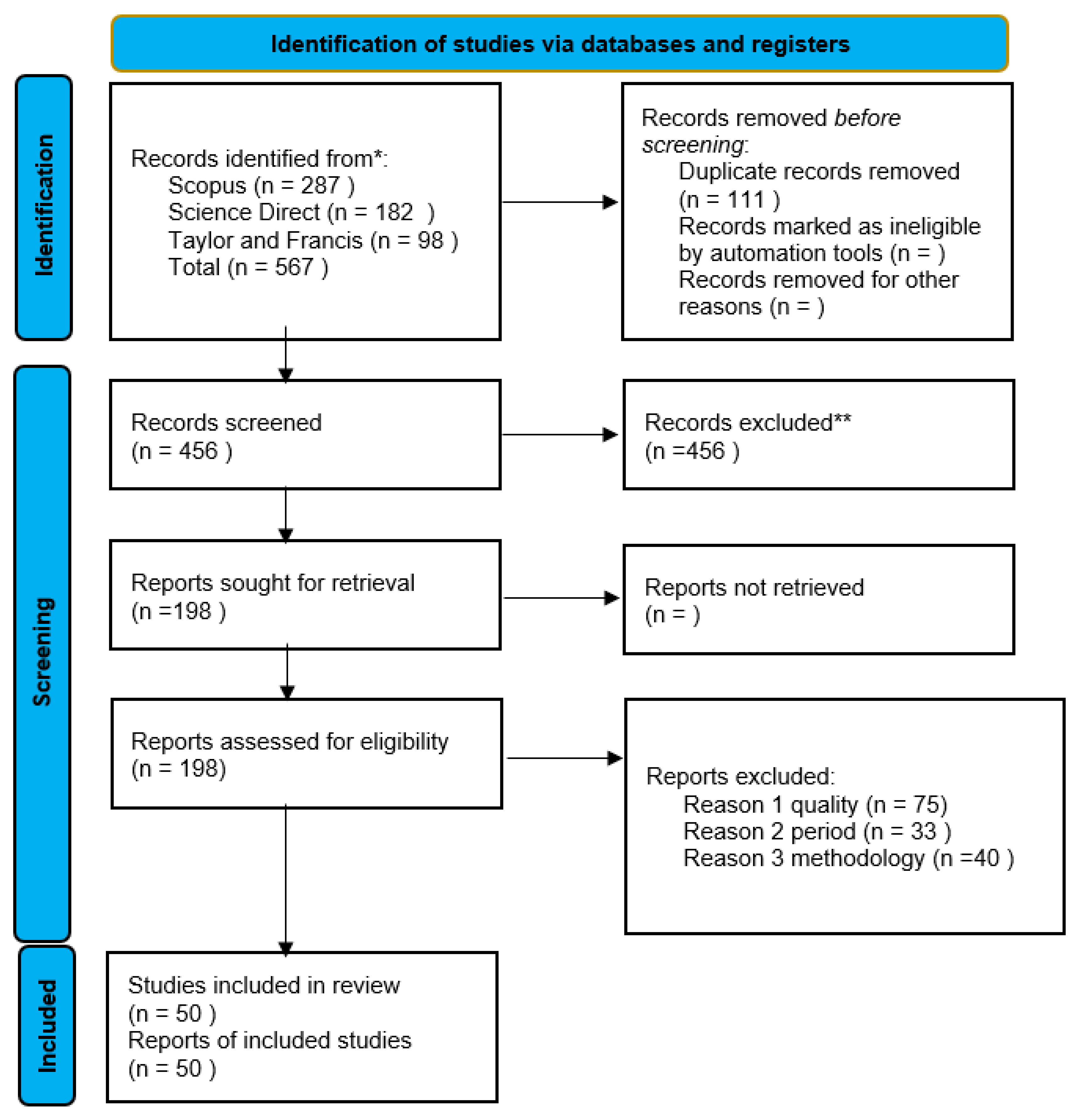
Figure 2.
Global Map of Scientific Production in Sustainable Teleworking (2020–2024).
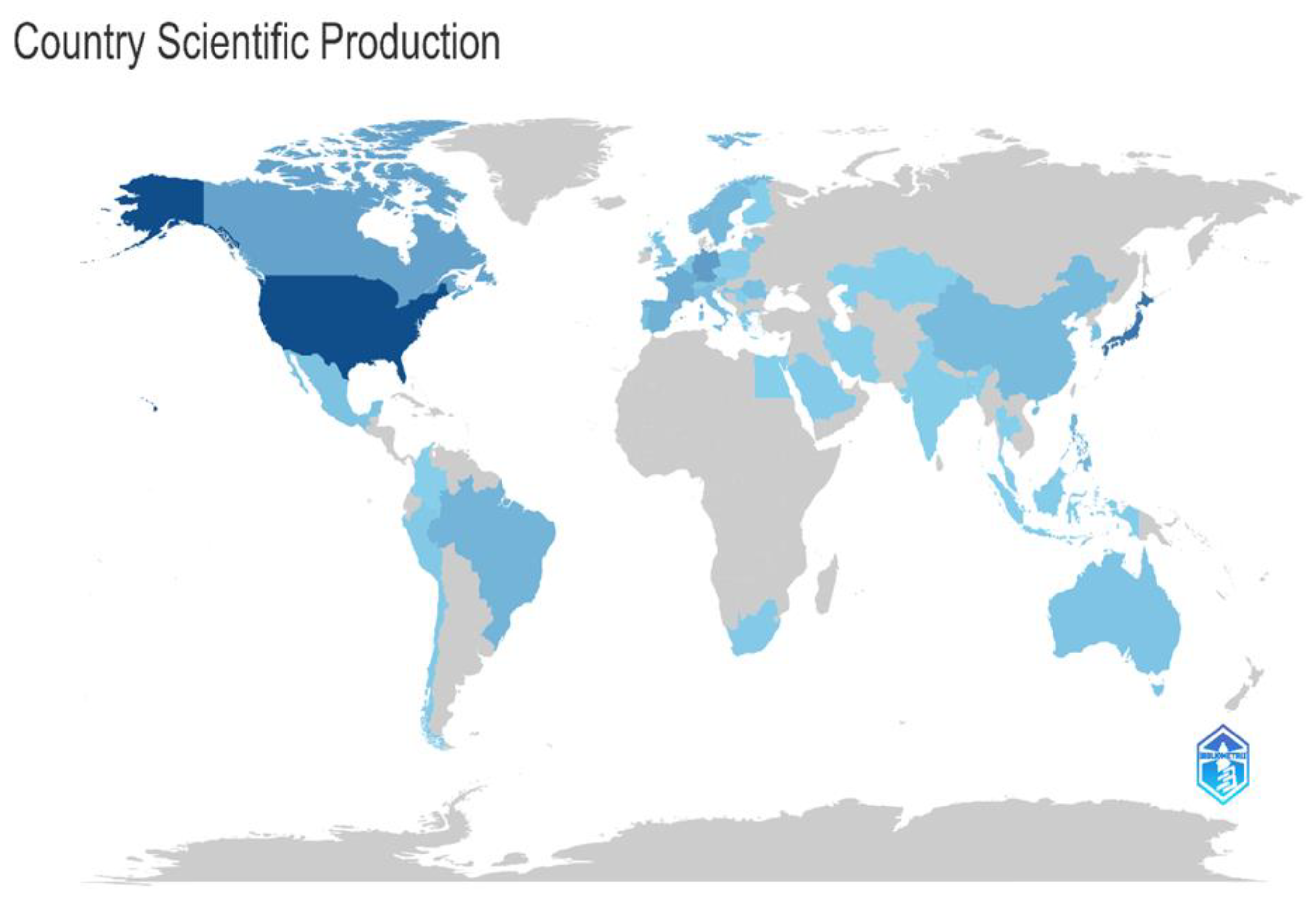
Figure 3.
Thematic Map of Literature on Telework and Corporate Sustainability (2020--2024).
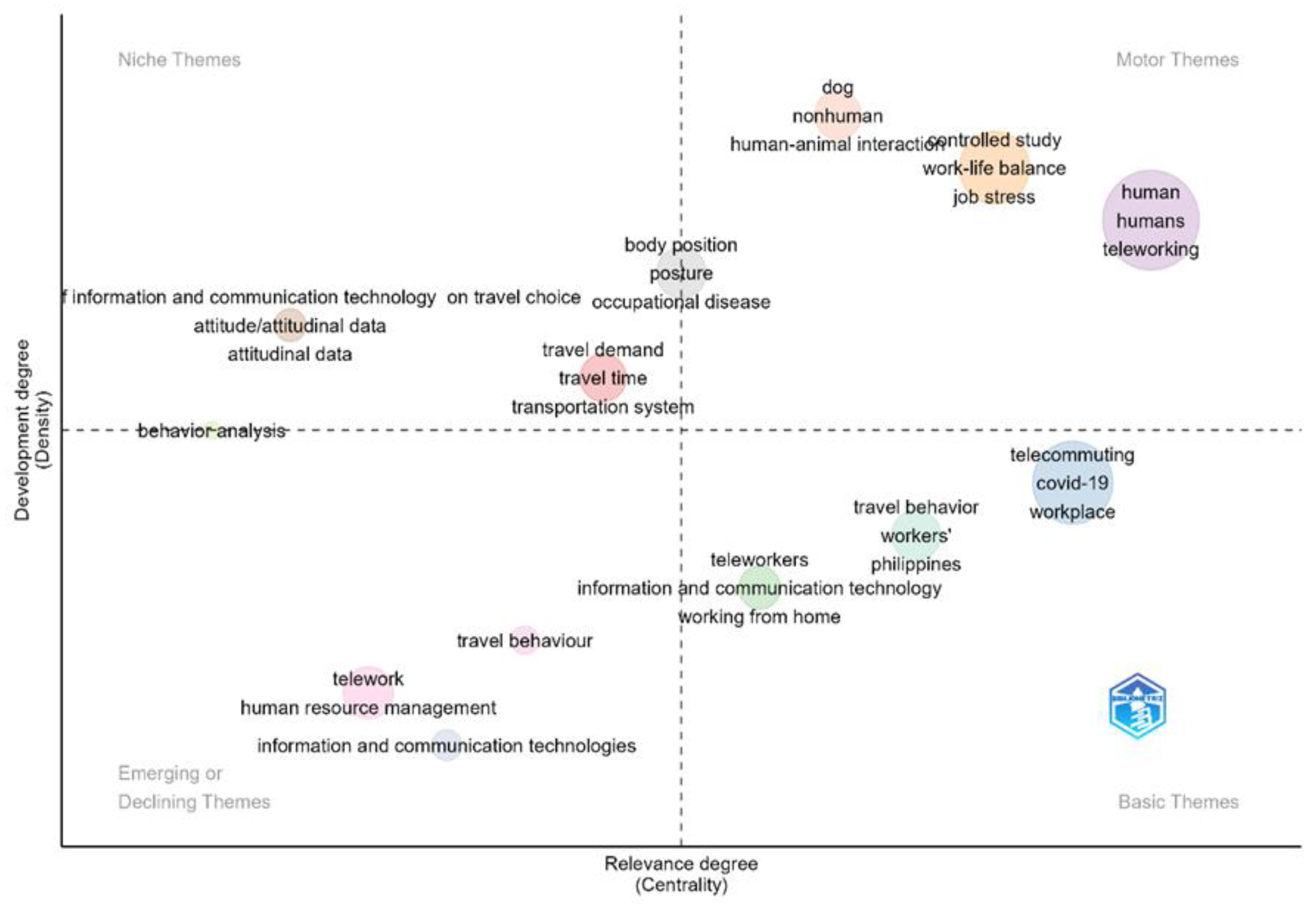
Figure 4.
Network of Co-Occurrence of Keywords.
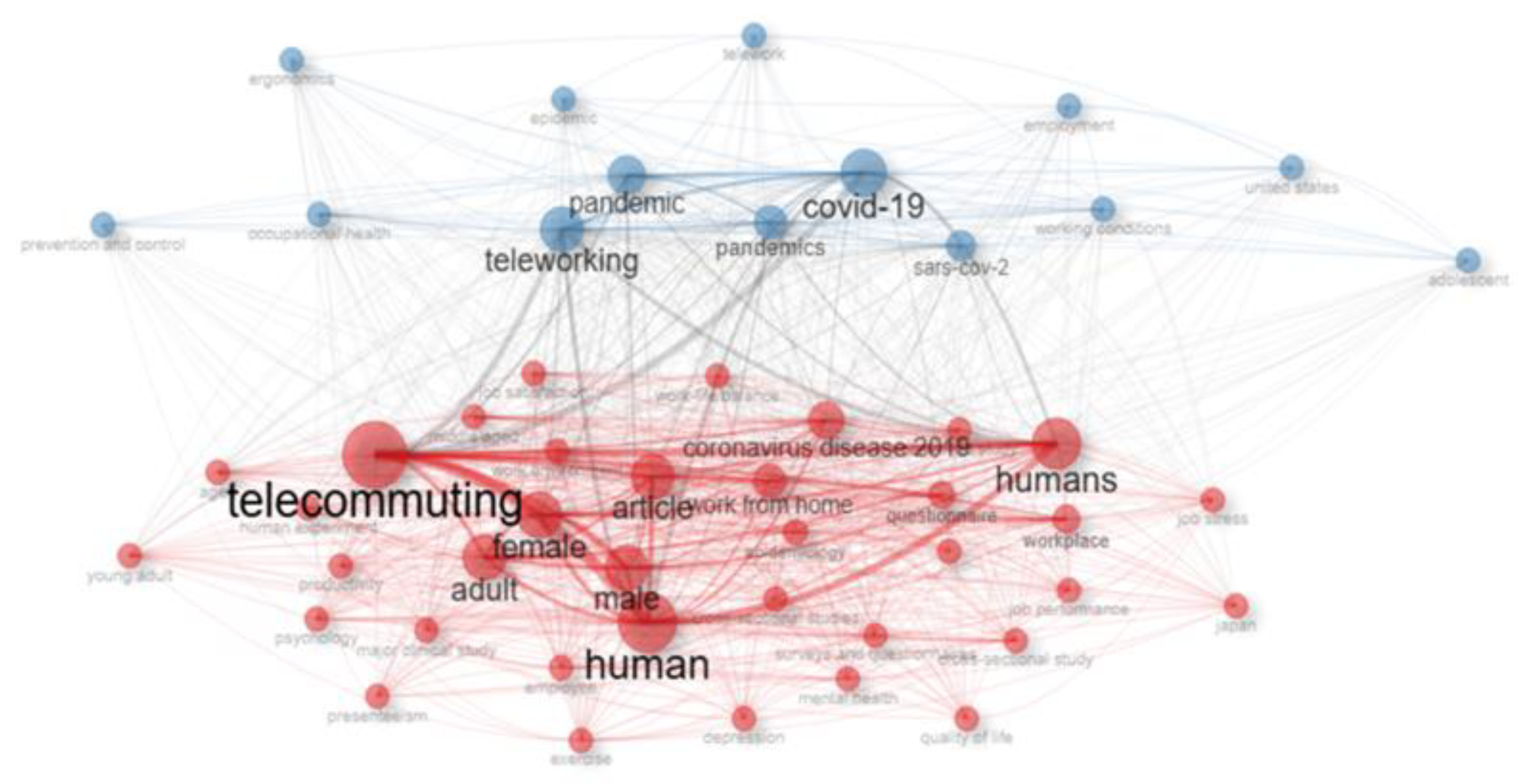
Figure 5.
Accumulated Scientific Production by Journal (2020--2024).
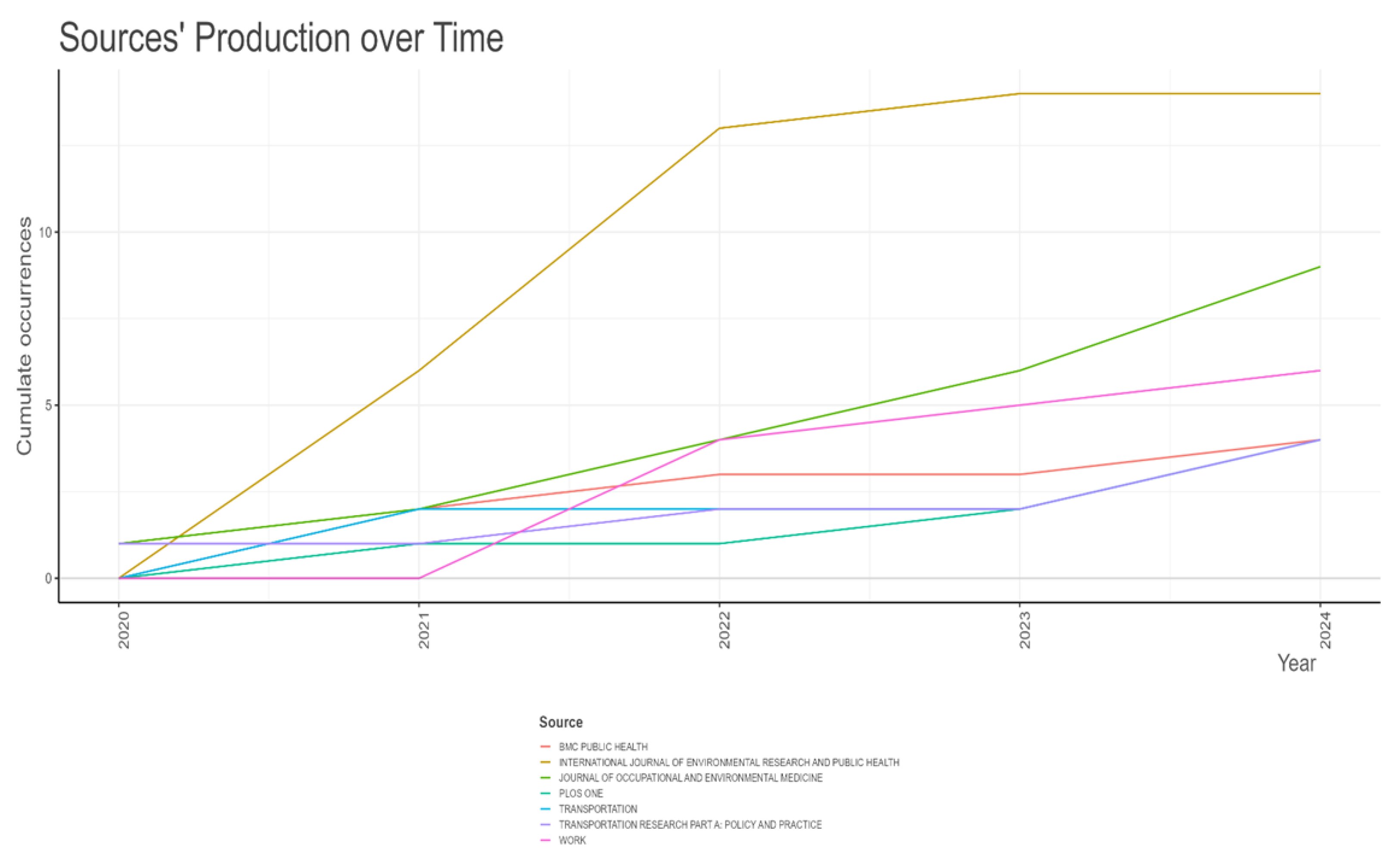

Table 1.
Search strategy by conceptual blocks.
| Concept block | Search terms |
|---|---|
| Telework | "telework*" OR "remote work*" OR "work from home" OR "telecommut*" OR "virtual work*" OR "distributed work*" OR "flexible work*" OR "home office" |
| Sustainability | "sustainab*" OR "environment*" OR "carbon footprint" OR "emission*" OR "energy" OR "ESG" OR "triple bottom line" OR "social" OR "wellbeing" OR "economic*" OR "resilien*" OR "SDG*" |
| Corporate scope | "corporat*" OR "organization*" OR "business*" OR "enterprise*" OR "company" OR "companies" OR "firm*" OR "workplace*" OR "institution*" |
Table 2.
Applied inclusion and exclusion criteria.
| Inclusion criteria | Exclusion criteria |
|---|---|
| Studies published between January 2020 and February 2024 | Studies published outside the established period |
| Peer-reviewed scientific articles and working papers from recognized institutions | Opinion pieces, editorials, or communications without explicit methodology |
| Studies that explicitly analyze the relationship between teleworking and corporate sustainability | Studies focused exclusively on technical aspects of teleworking |
| Publications in English or Spanish | Publications in other languages |
| Studies with verifiable and transparent methodology | Studies focused solely on the immediate impact of COVID-19 without prospective analysis |
Table 3.
Distribution of studies by sustainability dimension and geographic region.
| Region | Environmental Dimension | Social Dimension | Economic Dimension | Total |
|---|---|---|---|---|
| Europe | 9 | 6 | 4 | 19 |
| North America | 7 | 5 | 3 | 15 |
| Asia-Pacific | 4 | 3 | 2 | 9 |
| Latin America | 2 | 2 | 1 | 5 |
| Africa | 1 | 1 | 0 | 2 |
| Total | 23 | 17 | 10 | 50 |
Table 4.
Methodologies employed in the analyzed studies.
| Methodological approach | Number of studies | Percentage |
|---|---|---|
| Quantitative | 27 | 54% |
| Qualitative | 13 | 26% |
| Mixed methods | 7 | 14% |
| Systematic review | 3 | 6% |
| Total | 50 | 100% |
Disclaimer/Publisher’s Note: The statements, opinions and data contained in all publications are solely those of the individual author(s) and contributor(s) and not of MDPI and/or the editor(s). MDPI and/or the editor(s) disclaim responsibility for any injury to people or property resulting from any ideas, methods, instructions or products referred to in the content. |
© 2025 by the authors. Licensee MDPI, Basel, Switzerland. This article is an open access article distributed under the terms and conditions of the Creative Commons Attribution (CC BY) license (http://creativecommons.org/licenses/by/4.0/).
Copyright: This open access article is published under a Creative Commons CC BY 4.0 license, which permit the free download, distribution, and reuse, provided that the author and preprint are cited in any reuse.


