

Submitted:
05 May 2025
Posted:
06 May 2025
Read the latest preprint version here
Abstract
Agriculture in Europe need to progress towards a new business system, which sustainable agricultural practices are the driving force behind this business. These sustainable practices will contribute to Europe climate neutrality by 2050. Carbon farming is an agricultural management form where agricultural practices help to sequester CO2 in the soil and thus mitigate CO2 from the atmosphere. The adoption of Carbon farming by farmers can be encouraged through “The common agricultural policy” (CAP), regarding “Good Agricultural and Environmental Condition “ (GAEC) that become central to environmental and climate goals, and through the certification of carbon removals, by selling carbon credits to companies in the food supply chain or other industrial companies that emit CO2 emissions into the atmosphere, so that those emissions are offset by the CO2 sequestered in the soil. Increasing SOC (Soil organic carbon) in soil through carbon farming practices will promote soil quality and fertility, being essential for the protection of soil ecosystem services. Carbon farming farmers should be trained on the carbon credit market, so that it is seen as an opportunity to generate additional income for their farm, as well as contributing to carbon neutrality, also the credibility of the farming profession at community level and a healthy planet for future generations. The aim of this study is to identify new proposals, such as technical, technological, legislative or policy instruments, that help promote carbon farming practices, through a bibliometric analysis on carbon farming, as there is a gap on bibliometric review studies on carbon farming, in the scientific literature. The bibliometric analysis results showed that the principal common terms include “carbon farming,” “carbon sequestration, “climate change” and "Australia”, Australia is the country with most published carbon farming documents and key author with the top number of citations is Kragt M. E.. Carbon farming aims to be an ecoagrosystem to be broadly embraced by farmers.
Keywords:
Carbon farming
; bibliometric analysis
; carbon credit market
; regenerative agriculture
1. Introduction
The European Green Deal strategy promotes a competitive and resource efficient economy. It targets no net greenhouse gas (GHG) emissions by 2050, protecting natural resources and citizen health from the effects of environment hazards (European Commission,2020). Continued greenhouse gas emissions will cause global warming to reach 1.5 °C in the near time. To limit human-caused global warming, it is necessary to restrict total CO2 emissions and achieve net zero CO2 emissions, along with significant cuts in other greenhouse gases. This includes deep reductions in CO2, methane, and requires carbon dioxide removal for net negative emissions (IPCC, 2023). Carbon removals require to become the focus after achieving climate neutrality, as negative emissions will help stabilize temperature increases. Solutions from natural ecosystems and industrial carbon capture and storage should be efficiently and sustainably used. Both types of carbon removals must meet strict monitoring, reporting, and verification standards to support EU climate and environmental goals (European Commission, 2021).
Agricultural sector can contribute to reduce GHG emissions via mitigation technologies or better farming practices, creating a carbon sink through soil organic carbon accumulation, sustainable production of biomass for bioeconomy and food security, reducing the use of fossil fuel as phytochemicals and energy and losses and waste decreasing (European Commission, 2019).
Carbon farming is defined by European Commission (2021) as:
a green business model that rewards land managers for taking up improved land management practices, resulting in the increase of carbon sequestration in living biomass, dead organic matter and soils by enhancing carbon capture and/or reducing the release of carbon to the atmosphere, in respect of ecological principles favourable to biodiversity and the natural capital overall. (p.5)
Carbon farming practices will improve carbon sequestration in soil, such as: afforestation and reforestation, agroforestry which combines trees with crops or livestock; techniques like catch crops, cover crops, and conservation tillage that can help protect soil, converting cropland to grassland and restoring peatlands and wetlands, decreasing oxidation of current carbon stock and aiding carbon sequestration (European Commission, 2021).
There is a gap in scientific research on bibliometric review studies regarding carbon farming shown in surveys made on scientific platforms, such as Scopus (Scopus, 2025) and Web of Science (Web of science, 2025). A bibliometric analysis is done to identify new proposals, such as technical, technological, legislative, or policy instruments, to promote carbon farming practices.
The following section (2) is a carbon farming literature review, succeeded by the methodology section (3) where a bibliometric analysis is done, ensued by systematic review with objective criteria. Afterwards there is a discussion section (4). The conclusion section (5) of the study is then presented.
2. Literature Review
2.1. Soil Health and Carbon Farming
Soil as a non-replaceable resource, is a vital part of the natural environment, and serves important environmental, social, and economic roles (Blum, 2005).
Soils can be considered healthy when a good chemical, biological, and physical condition is achieved. It allows them to provide diverse ecosystem services, such as producing food and biomass, filtering water and nutrient recycling, supporting life and biodiversity, storing carbon, providing cultural services and a plank for human activities, supplying raw materials, and serving as a heritage stock (European Commission, 2021; European Commission, 2023).
An integrated view of healthy soils includes both the inherent and dynamical properties of soils and the desired level of soil quality needed for soil functions and ecosystem services (Baritz, et al., 2023). Soil health is defined by FAO, (2020) as “the ability of the soil to sustain the productivity, diversity, and environmental services of terrestrial ecosystems”.
A directive of the European Parliament and of the Council on Soil Monitoring and Resilience (Soil Monitoring Law) has been proposed in 2023. The long-term goal of the Directive is to achieve healthy soils by 2050. Initially, it will focus on creating a soil monitoring framework and assessing soil conditions across the Europe. It will also require sustainable soil management and the unhealthy soils regeneration, but without mandating healthy soils or intermediate targets until 2050. This measured approach will help prepare and encourage sustainable practices. In the second stage, once assessment results are available, the Commission will review progress and may update the directive to speed up advancements toward the 2050 goal (EC, 2023).
European Commission Soils Vision is:
“By 2050, all EU soil ecosystems are in healthy condition and are thus more resilient, which will require very decisive changes in this decade. By then, protection, sustainable use and restoration of soil has become the norm. As a key solution, healthy soils contribute to address our big challenges of achieving climate neutrality and becoming resilient to climate change, developing a clean and circular (bio)economy, reversing biodiversity loss, safeguarding human health, halting desertification and reversing land degradation.” (European Commission, 2021 a, p.2)
In the proximal future, agriculture, forestry, and other land use are possible choices that can help to adapt and reduce climate change effects. Conserving, better management, restoring forests and ecosystems offer most of the promising economic mitigation solutions. In addition, reducing tropical deforestation is essential for complete mitigation. Effective adaptation strategies include agroforestry, society adjustment, farm and countryside diverseness, urban agriculture and better cultivars (IPCC, 2023; Kell, 2012). Conservation agriculture improves soil health by enhancing its physical, chemical, and biological properties (Francaviglia et al., 2023).
The Communication on Sustainable Carbon Cycles outlines conducts to promote carbon farming as a sustainable business pattern. The main measures included are the promotion of carbon farming practices under the Common Agricultural Policy (CAP) and other EU programmes and activities promoting the standardization of monitoring, reporting, and verification methodologies. (Kyriakarakos et al., 2024; Sharma et al., 2021). Carbon farming retains more organic carbon in the soil and enhances soil quality compared to mono-cropping and improves agricultural production (Sharmet al., 2021). The use of conservation agriculture principles, like conservation tillage, permanent cover, and crop diversification (Francaviglia et al., 2023), also improves food security and reduces greenhouse gas emissions. (Francaviglia et al.,2023; Sharma, et al., 2021).
2.2. SOC and Agricultural Productivity
Soil organic carbon (SOC) concentration, as well soil’s quality, and dynamics are crucial for soil functions and ecosystem services. The main components of SOM (soil organic matter) are plant and animal residues, active SOM and stable SOM. It contains 45–60% SOC and is a major energy source for soil microorganisms. SOC includes decomposed plants and animals’ materials and microbial biomass and their outgrowths. The threshold level of SOC in the root zone is 1,5 – 2,0 %. Maintaining SOC above this level supports soil structure, water use, nutrient retention, root processes, and greenhouse gas control. Sustainable SOC management is a key for soil health and can be achieved through conservation agriculture, diverse farming systems and organic amendments (Lal, 2016).
An evaluation of 61 topsoil and 26 subsoil observations found that soil organic carbon in agroforestry systems is usually higher than in areas without trees. Hedgerows have the highest SOC rates, comparing to alley cropping and silvopastoral systems, especially at 20 – 40 cm depth. Agroforestry enhances SOC in temperate zones and improves carbon storage, despite possible SOC losses during planting, agroforestry can effectively reduce carbon emissions and be eligible for carbon credit certificates (Mayer et al. 2022).The silvopastoral system increase carbon sequestration and reduces greenhouse emissions comparing to the agroforestry system (Sharma et al. 2021).
The potential of carbon farming practices was examined for sequestering organic carbon and reducing emissions in European agricultural soils. SOC (Soil organic Carbon) sequestration for organic amendments, cover crops, poplar plantations, conservation management, organic management, and combined carbon farming practices, was found with median SOC absolute gains varying from 0.32 to 0.96 Mg C/ha/yr at a depth of 0–30 cm. It was verified that converting cropland to short rotation forestry increased carbon. Cropland conversion into permanent grassland or pasture showed positive median SOC relative at 0–30 and 0–90 cm and 0–100 cm soil depth. An evaluation of lower soil disturbance at 0–50 cm soil depth, neutralized any rise of SOC stock found at 0–30 and 0–40 cm soil depth, ensuing no climate benefit. Strategies such as conservation management, organic management and cover crops with organic amendments changed arable land from being a carbon source to a net sink (Petersson et al.,2025).
Across 145 fields and 62 farms in Po Valley, Italy, it was verified that SOM levels are influenced by the characteristics of the soil farming type, tillage, and the preceding crop, while fertilization can be important for SOM capacity when combined with those factors. Soil organic matter (SOM) is 13.8% and 18.8% higher in conservation agriculture (CA) compared to organic (OR) and conventional (CO) practices, respectively. When the practice of CA is for over 3 years, it significantly improves SOM, more than OR for over 5 years. Also, No-tillage is identified as an effective practice for SOM conservation (Castaldi et al., 2024).
Mattila & Vihanto (2024), shows in their survey that improving soil structure could increase plant rooting depth. Compacted surface soil limits water storage and infiltration, causing more runoff and less moisture for plants and microbes. Farmers can improve productivity and soil carbon by enhancing soil structure, utilizing more sunlight, and increasing microbe and earthworm populations. Kell (2012), verified that most soil carbon comes from roots rather than from shoots and leaf litter and most measurements focus on the top meter of soil, yet plants with deeper roots could capture more carbon.
SOC isn’t a complete substitute for mineral fertilizer, but increasing SOC with low N inputs may help maintain yields and minimize fertilizer use. Raising SOC can enhance maize yields by 10-11% and wheat by 23-37%, providing chances to improve SOC, to lower N inputs and increase yields in areas with low SOC (Oldfield et al., 2019).
Lessened carbon soils and the least productive, have the bigger sequestration potential, it means that marking those soils for land change would have a low opportunity cost. In contrast, the most productive land, also sequesters more carbon, having a big opportunity cost for land use change (Pretty et al., 2005).
Francaviglia et al., (2023) embolden Member States to introduce mandatory eco-schemes in their CAP Strategic Plans which focus on carbon farming practices to increase SOC content and protect soil conditions. Also to include in CAP Strategic Plans specific indicators, targets for SOC accumulation assessment of trade-offs between increasing SOC storage and GHG emissions.
Farmers need to embrace advisory services to understand about carbon farming, to face high costs, and be enlightened about yields. (Pretty et al.,2005; Sharma et al.,2021).
2.3. SOC and Carbon Credit Market
Farmers to adopt new methods for carbon sinks restoration need financial support. Carbon credit markets may help to finance these efforts. However, there are challenges around permanence, verification, additionality, certification cost and equity (Liu, 2022).
Due to significant uncertainty in SOC estimations at farms, lasting monitoring is advised to assess SOC gains from conservation agriculture practices. Shortened term monitoring is also necessary for informed agricultural policy decisions based on early SOC balance assessments (Francaviglia et al., 2023). To a precise measure of carbon sequestration opportunity cost, it is important to consider externalities when calculating the costs of changing land use or management practices. Important questions arise about valuing environmental benefits and costs, and so accurate measurement of soil carbon is needed to calculate costs, along with assessing technology availability and associated costs (Pretty et al. 2005).
For credits to represent real reductions in GHG emissions and be tradable, there have been created frameworks that outlines how to measure, monitor, report, and verify soil carbon sequestration (Kyriakarakos et al., 2024). A public certification system is essential to build trust in CO2 storage technologies and lower monitoring costs. Certification can also boost carbon credit markets in carbon farming and biogenic sources (Wolf, 2022). A very small number of companies attempt services for issuing carbon credit certificates. These companies measure SOC and have their measurements verified and certified. Those certified measurements can then be used to issue carbon credit certificates (Kyriakarakos et al., 2024).
The study of Kragt et al., (2016) focused on the public’s WTP (Willing to Pay) for carbon farming co benefits, shown that policies that enhance native vegetation on farms are more appealing to the public because more welfare benefits are gain from carbon mitigation activities that offer environmental co-benefits, like biodiversity. It was suggested that carbon farming policies could be expanded to include these co-benefits, leading to higher payments for carbon credits that provide additional environmental advantages. Likewise, increases in soil organic matter may bring environmental benefits, justifying government payments to support sustainable agriculture (Pretty et al.,2005).
Farmers will have easy access to issue tradable carbon credit certificates, which determine the impact of carbon farming on the technical progress of agriculture, raising farmers income while removing and storing atmospheric carbon (Kyriakarakos et al, 2024).
2.4. Sustainability’s Bibliometric Analysis
Droste et al. (2018) searched on the Web of Science collection for “ecosystem service,” finding over 14,000 articles. They used latent Dirichlet allocation (LDA) to analyse ecosystem services (ES) research from 1990 to 2016. Most of the topics focus on natural sciences, while few addresses social sciences. The Ecosystem Service (ES) studies affirm discussions on economic valuation and sustainability science’s function.
Research on sustainable land use in agriculture has grown over 30 years, especially since 2006. Principal subjects of this research include Environmental Sciences, Agronomic and Biological Sciences, and Social Sciences, with fewer studies in Economic Sciences. The major themes are agronomic studies on soil and crops, sustainable water management, land use change, and sustainable development (Aznar-Sánchez, et al., 2019). A systematic literature review and bibliometric analysis in biodiversity accounting was done by Blanco-Zaitegi et al., (2022). The analysis with SciMAT software, identified five main theme-clusters: sustainability, biodiversity reporting, corporate biodiversity management, environmental protection, and emancipatory accounting.
The bibliometric study of Stefanis et al. (2024) examined environmental sustainability in relation to the European Green Deal, from 1985 to 2020. It was found that topics like “sustainability,” “circular economy,” and “life cycle assessment” have been important, while “decarbonization” and “bioeconomy” have recently gained attention. The research highlights the need for a circular economy, efficient resource use, waste reduction, and recycling. It emphasizes technological innovation, renewable energy, energy efficiency, and digitalization to achieve European Green Deal goals for a sustainable economy.
The article by Girao, I. et al. (2023) reviewed the literature on High Nature Value farmland (HNVf) and valuation of ecosystem services (VES) until 2022. It established that HNVf research is mainly in Europe with subject fields such as environmental science, agriculture, and biological sciences, while VES covers economics, policy making and biology. It was suggested a need for a combined approach between HNVf monitoring techniques and valuation of ecosystem services (VES).
A mixed-method approach, starting with a literature review and a bibliometric analysis with VosViewer used by di Santo et al. (2022), focused on “dryland farming” and “climate change”. It was found relevant papers from 2004 to 2022, showing that after 2006 there was a grew interest in climate. Since 2015, the greater tendency for dryland farming, was linked to the 2030 Agenda for Sustainable development. This study identified the need for adapting to climate change and the role of social capital. It stressed participatory policies, farmer training, and support to climate change adaptation.
The bibliometric analysis by D’Amato (2017), reviewed literature on Circular Economy (CE), Green Economy (GE), and Bioeconomy (BE) from 1990 to 2017 using the Web of Science and R software. GE is the most discussed particularly in developing countries, while CE and BE are more popular in developed nations. Interest in these areas raised after 2000, especially BE in Europe and USA, due to solid policy support. Circular Economy research grew notably after events like the 2015 UN Climate Change Conference. Green Economy (GE) involve aspects of Bioeconomy (BE) and Circular Economy (CE). BE, and GE makes prominent ways for a sustainable economy.
From scientific publications from 2013 to 2023, Nifatova et al. (2024) conducted a bibliometric analysis using the Scopus database. Research increased from 2016–2018 and 2020–2021, mainly in Germany, Finland, and Italy, focusing on sustainability and circular bioeconomy. Essential points include balancing social equality and environmental responsibility, preventing inequality, encouraging innovation, and integrating biotechnology. It was found pathways for technology and environmental balance in bioeconomy, showing connections with green and circular economies but raising concerns about sustainability.
The research of Mougenot, et al. (2022), used a computational analysis with the R package and Biblioshiny, providing a new way to study bioeconomic literature. These findings indicated that bioeconomy principles can effectively address environmental challenges. There has been increasing interest and cooperation in bioeconomy fields over the last two decades, although it was noticed a depletion systematic review of related trends. The USA leads in bioeconomy research, with significant collaboration among researchers from China and Western Europe.
Precision Agriculture’s (PA) condition and trends was explored by Rejeb, et al. (2024) using a bibliometric method, which displayed four elements: technologies, application areas, advantages, and barriers. Principal technologies include UAVs, IoT, AI techniques, and GPS, which are applied in soil management, livestock, crop management and cultivation. Major barriers to PA adoption include high costs, limited technical knowledge, insufficient information, and technical issues like connectivity, security and privacy concerns. These challenges addresses uncertainties in new agricultural technologies for successful PA implementation.
Martinho (2021) reviewed scientific literature from Web of Science and Scopus on soil salinity and economic dynamics. The study reveals that after 2014, academia focused more on sustainability and water management, particularly in China, the United States, Australia, and India. Frequent terms included “yield,” “plant growth,” “treatment,” “concentration,” “drainage,” “root tolerance,” and “salt stress”.
In view of the sustainability’s bibliometric analysis, Aznar-Sánchez et al. (2019) suggested that future research should focus on agricultural circular economic schemes, stakeholder understanding, sustainable urban planning, irrigation systems, and climate adaptation, especially in Russia, the Middle East, and Africa. Blanco-Zaitegi et al. (2022) stated that SDG 14 and 15, corporate biodiversity management, stakeholder commitment, and modern accounting practices should be explored. According to Martinho (2021), further studies are needed on the socioeconomic effects of soil salinity, specifically regarding social implications.
3. Bibliometric Analysis
A bibliometric analysis was conducted using VOSviewer 1. 6. 20 software. This software builds networks of journals, researchers, organisations and countries based on citation, bibliographic coupling, co-citation, co-occurrence, or co-authorship links (VOS viewer, 2025). VOSviewer Manual (Van Eck, et al., 2023) content provides the following information about bibliographic data links analysis:
- Bibliographic coupling link connects two items citing the same documents.
- Co-citation link connects two items cited by the same documents.
- Citation link is a connection where one item cites another.
- Co-authorship link counts publications which two researchers co-authored.
- Co-occurrence link counts publications where two terms/keywords appear together.
The Scopus Collection was chosen for the data source, for being a broad and credible scholastic source database (Scopus, 2025). The search on Scopus Collection database was carried out with the terms” Carbon Farming”, in the “article tittle, abstract and keywords” query, without filters, so that all records could be analysed. It was identified 343 documents, which all were selected, and the dataset exported in a “Comma-Separated Values file (.csv). Afterwards the VOSviewer software analysis was applied on that csv data extracted.
3.1. Results
Following the bibliometric analysis using VOSviewer on 343 documents about Carbon Farming research and considering the bibliographic data analysis map of bibliographic coupling on documents (Figure 1), there are 11 clusters being cluster 1 with red colour and includes 65 documents, cluster 2 with dark green colour and contains 50 documents, cluster 3 with dark blue colour and consist of 46 documents, cluster 4 with dry green colour and comprises 44 documents, cluster 5 with purple colour and incorporates 38 documents, cluster 6 with light blue colour and holds 30 documents, cluster 7 with orange colour and covers 19 documents, cluster 8 with old pink colours and contains 4 documents, cluster 9 with pink colour and with 4 documents, cluster 10 with Light pink colour and contains 3 documents and cluster 11 with light green colour and with 2 documents included (Table 1).
The bibliographic map (Figure 1) shows isolated clusters, the old pink (8) and Light pink (10). The clusters 1 (red), 3 (dark Blue), 4 (dry green), 5 (purple), 6 (light blue) are close together (Figure 1-a and Figure 1- b). The clusters 11 (light green) (Figure 1-a) and 7 (orange) (Figure 1- a ) are further away from that group of clusters (1, 3, 4, 5, 6) but closer to those clusters, than the clusters 8 (old pink) and 10 (light pink) (Figure 1). The clusters 2 (dark green) and 5 (purple) are more related to each other and still closer to the main group of clusters (1, 3,4,5, 6) (Figure 1- b and Figure 1-c).
The five most cited documents were by Prommer J., Newton P., Yuen J. Q., Nath A. J., Harman G. E. (Table 2).
“PLOS ONE”, “Agricultural Systems”, “Frontiers in Sustainable Food Systems”, and “Forest Ecology and Management” and “Environmental Science and Policy” are the sources with the highest citations number for “Carbon Farming” research (Figure 2 and Table 3). The strongest sources relationships, includes ”Soil and Tillage Research”, “Journal of Environmental Management”, “European Journal of Soil Science”, “Sustainability (Switzerland),” “Agriculture, Ecosystems and Environment” (Table 4).
The top five sources with the highest number of documents on Carbon Farming are “Sustainability (Switzerland)”,” “Rangeland Journal”, “Soil and Tillage Research”, “Journal of Environmental Management” and “Agronomy” (Table 5).
In terms of author citations, the five principals authors with the highest number of citations are Kragt M. E, Hofthansi F., Hood- Nowotny R. C., Kitzler B. and Offre P. (Table 6 and Figure 3-a). There is a strong connection between documents by the authors: French E., Christensen, S., Duncan W. D. and O’Connor and Phillips A. (Table 7 and Figure 3-b).
The countries with more documents published on carbon farming are Australia, USA, Germany, Italy, China (Figure 4). The countries with the greatest connection are the Germany, USA, Australia, Italy, India and United Kingdom (Table 8 and Figure 4).
The five organizations with the highest number of citations are: Core Facility of Cell Imaging and Ultrastructure Research of the University of Vienna in Austria, Department of Ecogenomics and Systems Biology of the University of Vienna in Austria, Department of Health and Environment of the Austrian Institute of Technology in Tulln, Department of Microbiology and Ecosystem Science of the University of Vienna in Austria, and the Institute of Forest Ecology and Soil of the Federal Research and Training Centre for Forests, Natural Hazards and Landscape in Vienna, Austria (Table 9, Figure 5).
3.2. Systematic Review with Criteria
A systematic review was conducted, selecting the 15 articles with the most citations, on carbon farming research (Table 12). The articles cover various topics related to carbon farming. These topics include the effects of biochar on nitrogen (Prommer et al., 2014), the definition of regenerative agriculture (Newton, 2020), and the role of bamboo as a carbon sink (Nath et al., 2015; Yuen et al., 2017). Other subjects discussed are the development of Enhanced Plant Holobiomes for climate mitigation (Harman et al., 2019; Harman et al., 2021), carbon farming potential, and policies for private land conservation to reduce deforestation in Australia (Evans et al., 2016). The review also notes the adoption of climate-smart practices that blend traditional methods with technology to boost productivity and lower greenhouse gas emissions (Panchasara et al., 2021). Implementing carbon farming practices can be expensive, but soil carbon certificates may offer financial support if standard methods, indicators and monitoring are established (Paul et al., 2023). Some findings indicate that adding woody litter preserves soil carbon from drought (Fenner et al., 2020) and that controlled traffic farming can prevent soil compaction (Chamen et al., 2015). Management practices have been shown to store carbon only in the top 0-10 cm of soil (Lam et al., 2013). Additionally, agroforestry is noted to enhance soil organic carbon and biodiversity conservation (Mayer et al., 2022; Evans et al., 2015). Lastly, farmer choices are influenced by their views on climate change and past experiences with carbon farming, highlighting the need for informed policies for practices management selection ( Dumbrell et al., 2016).
4. Discussion
The European Green Deal aims for no net greenhouse gas emissions by 2050 (European Commission, 2020), and the European soil monitoring law targets healthy soils by the same year. This leads to sustainable agricultural management practices that reduce CO2 emissions and rise organic carbon in the soil (EC, 2023). Carbon farming as a green business, enhances soil carbon sequestration, preserves natural resources, and rewards farmers through the carbon credits market (European Commission,2021). On 6 December 2024, “The Carbon Removals and Carbon Farming (CRCF) Regulation (EU/2024/3012)” was published, being a voluntary system for certifying carbon removals, farming, and storage in Europe (European Commission, 2025a).
Carbon farming practices like agroforestry, silvopastoral, cover crops, conservation tillage, grasslands and crop rotations improve carbon storage on soil (Francaviglia et al., 2023; European Commission, 2021). Soil organic carbon management results in an healthy soil that is also essential for carbon sequestration, as compacted soil restricts root development and water retention, affecting soil carbon from roots and yields (Kell, 2012; Mattila & Vihanto, 2024).
Australia, the USA, Germany, Italy, and China have the most published documents on carbon farming (Figure 4). From Europe, countries as Germany, Italy, and the United Kingdom publish the most documents, followed by France, Spain, Greece, Switzerland, Finland, and Belgium. Outside Europe, countries as Australia, USA, China, India, Japan and Brazil contribute to the publication of carbon farming documents. Australia has the average publication date in 2017, while Italy and Spain have 2023, France has 2022, and Germany has 2021.
The most cited organizations are from Austria, Singapore, India, and the USA (Table 9).The top sources for carbon farming documents are “Sustainability (Switzerland)” with average publication in 2022, “Rangeland Journal” in 2018, “Soil and Tillage Research” in 2023, “Journal of Environmental Management” in 2022 and “Agronomy” in 2023 (Table 5).The five most cited documents were written by Prommer J. in 2014, Newton P. in 2020, Yuen J. Q. in 2017, Nath A. J. in 2015, and Harman G. E. in 2019.These average publication dates are related to the date of publications of regulations and policies like LULUCF in 2018 (European Commission, 2025b) and the new Common Agriculture Policy (2023-2027) that supports the goals of the European Green Deal with incentives for eco-farming practices such as organic farming, agro-ecology, carbon farming, and animal welfare (European Commission, 2025). As well as events such as the Paris Agreement in 2015 and the Kyoto Protocol (2013-2020) for climate neutrality (UN,2025).
The principal common terms (Table 11) in carbon farming research include “carbon farming,” “carbon sequestration”, “climate change.” and “Australia”. Australia is one of the first countries to establish a carbon credit market by the government (Parliament of Australia, 2025), and thus, being with many published carbon farming documents and being a top common term on carbon farming research. The most common author keywords are “carbon farming”, “carbon sequestration”, “climate change”, “climate change mitigation” and “soil organic carbon”, “Soil carbon”, “agriculture”, “agroforestry”, “biodiversity”, “conservation agriculture”, “Greenhouse Gas Emissions”, “sustainable agriculture”, “carbon credits” and “Soil organic matter”, which are the principal related terms of carbon farming system.
5. Conclusions
The carbon farming bibliometric analysis revealed that, the key authors with the top number of citations are Kragt M. E, Hofthansi F., Hood- Nowotny R. C., Kitzler B. and Offre P. (Table 6 and Figure 3-a), the most published carbon farming documents are from Australia, USA, Germany, Italy, and China (Figure 4). Also, the principal 5 common terms (Table 11) in carbon farming research include “carbon farming,” “carbon sequestration, “climate change” and “Australia and the most common 15 author keywords are “carbon farming”, “carbon sequestration”, “climate change”, “climate change mitigation” and “soil organic carbon”, “Soil carbon”, “agriculture”, “agroforestry”, “biodiversity”, “conservation agriculture”, “Greenhouse Gas Emissions”, “sustainable agriculture”, “carbon credits” and “Soil organic matter” (Table 10). Carbon farming enhances organic carbon in soils with agroforestry, silvopastoral, hedgerows, and sustainable agriculture practices like cover crops, conservation agriculture, reduced tillage, and grazing management that improves carbon sequestration, soil organic carbon storage, and biodiversity, for climate change and mitigation. Farmers adopting carbon farming practices and the CRCF Regulation (EU/2024/3012) will earn extra income by selling carbon credits to polluting companies that compensate their GHG emissions.
Policy Proposals
Carbon farming practices could be encouraged through the existence of a Regenerative Agriculture Production EU Regulation, in which policy makers could financially support the introduction of this agroecosystem, so that farmers can change with a minimum risk for this climate mitigation production method. A Regenerative agriculture certification could be applied to food products, with label mentions to carbon farming and climate neutrality, so that those food products can gain added value in the agrifood chain. A merchandising about regenerative agriculture and carbon farming should be done on food products at point sells.
Regenerative Agriculture systems hangs healthy food demand with environmental restoration, using agriculture production for the resolution of environmental issues, with practices that sequesters soil organic carbon and restore and manage soil health. (Lal, 2020). Regenerative agriculture includes a conservation agriculture system without tillage, with residue mulching, cover cropping, integrated nutrient and pest management, complex rotations, and integrating crops with trees and livestock (Lal, 2015 cited by Lal, 2020).
The new Common Agriculture Policy (2023-2027) encourages eco-farming practices. Carbon farming practices could be monitored for soil carbon accumulation, with financial incentives applied for increases in SOC. A standard MRV (monitoring, reporting, verifying) methodology of SOC could be regulated by EC, to be used on CAP and on carbon credit market.
Training should be given to agricultural technicians on carbon farming practices regenerative agriculture, for SOC monitoring or auditing a regenerative agriculture certification. Training should be given to farmers, consumers and citizens in general about carbon farming practices, carbon credit markets and regenerative agriculture production. Agriculture and forestry department of each EC country could have rural extension services for the divulgation of carbon farming. Rural extension services, media, and education in schools, creating school gardens with carbon farming practices are extremely important. Also, pilot farms of carbon farming practices could be open to farmers, so that they could learn and contact with carbon farming.
The opportunity cost regarding carbon farming practices and land use change should be researched, to determine exact cost calculations and assess the risk of adoption, and see if it is worthwhile join the carbon credit market.
In Europe, many countries are releasing many documents on carbon farming, but the rest of the world needs to research and publish more on this topic.
Carbon farming is a sustainable agriculture method that preserves natural resources, conserves biodiversity, achieves carbon neutrality, and offers economic compensation for ecosystem services provided by carbon credits market. It aims to be an ecoagrosystem broadly embraced by farmers.
Acknowledgments
This work was developed under the Science4Policy 2023 (S4P-23): annual science for policy project call, an initiative by PlanAPP – Competence Centre for Planning, Policy and Foresight in Public Administration in partnership with the Foundation for Science and Technology, financed by Portugal’s Recovery and Resilience Plan.
References
- Aznar-Sánchez, J.A.; Piquer-Rodríguez, M.; Velasco-Muñoz, J.F.; Manzano-Agugliaro, F. Worldwide research trends on sustainable land use in agriculture. Land use policy 2019, 87, 104069. [Google Scholar] [CrossRef]
- Baritz, R.; Amelung, W.; Antoni, V.; Boardman, J.; Hijbeek, R.; Horn, R.; Steinhoff-Knopp, B.; et al. Soil monitoring in Europe–Indicators and thresholds for soil health assessments. Copenhagen: European Environment Agency 2023, 10, 956606. [Google Scholar]
- Blanco-Zaitegi, G.; Etxeberria, I.Á.; Moneva, J.M. Biodiversity accounting and reporting: A systematic literature review and bibliometric analysis. Journal of Cleaner Production 2022, 371, 133677. [Google Scholar] [CrossRef]
- Blum, W.E. Functions of soil for society and the environment. Reviews esperain Environmental Science and Bio/Technology 2005, 4, 75–79. [Google Scholar] [CrossRef]
- Castaldi, F.; Buttafuoco, G.; Bertinaria, F.; Toscano, P. A geospatial approach for evaluating impact and potentiality of conservation farming for soil health improvement at regional and farm scale. Soil and Tillage Research 2024, 244, 106212. [Google Scholar] [CrossRef]
- Chamen, T. Controlled traffic farming–from worldwide research to adoption in Europe and its future prospects. Acta Technologica Agriculturae 2015, 18, 64–73. [Google Scholar] [CrossRef]
- D’Amato, D.; Droste, N.; Allen, B.; Kettunen, M.; Lähtinen, K.; Korhonen, J.; Toppinen, A.; et al. Green, circular, bio economy: A comparative analysis of sustainability avenues. Journal of cleaner production 2017, 168, 716–734. [Google Scholar] [CrossRef]
- di Santo, N.; Russo, I.; Sisto, R. Climate change and natural resource scarcity: A literature review on dry farming. Land 2022, 11, 2102. [Google Scholar] [CrossRef]
- Droste, N.; D’Amato, D.; Goddard, J.J. Where communities intermingle, diversity grows–The evolution of topics in ecosystem service research. PLoS One 2018, 13, e0204749. [Google Scholar] [CrossRef]
- Dumbrell, N.P.; Kragt, M.E.; Gibson, F.L. What carbon farming activities are farmers likely to adopt? A best–worst scaling survey. Land Use Policy 2016, 54, 29–37. [Google Scholar] [CrossRef]
- EU Commission. CAP Specific Objectives explained (Brief No 4)- AGRICULTURE AND CLIMATE MITIGATION; 2019. [Google Scholar]
- European Commission. The European Green Deal. In Communication from the Commission to the European Parliament, the European Council, the Council, the European Economic and Social Committee and the Committee of the Regions.; Brussels, 2020. [Google Scholar]
- European Commission. Communication from the Commission to the European Parliament, the European Council. Sustainable Carbon Cycles COM/2021/800 Final. 2021. [Google Scholar]
- European Commission. EU Soil Strategy for 2030 Reaping the Benefits of Healthy Soils for People, Food, Nature and Climate. 2021. [Google Scholar]
- European Commission. Proposal for a DIRECTIVE OF THE EUROPEAN PARLIAMENT AND OF THE COUNCIL on soil monitoring and resilience (soil monitoring law). 2023. [Google Scholar]
- European Comission. Agriculture and Rural Development. 2025. Available online: https://agriculture.ec.europa.eu/common-agricultural-policy/cap-overview/cap-2023-27_en (accessed on 30 April 2025).
- European Comission. a-Climate Action. 2025. Available online: https://climate.ec.europa.eu/eu-action/carbon-removals-and-carbon-farming_en (accessed on 30 April 2025).
- European Comission. b- Climate Action- Land Use sector. 2025. Available online: https://climate.ec.europa.eu/eu-action/land-use-sector_en (accessed on 30 April 2025).
- Evans, M.C.; Carwardine, J.; Fensham, R.J.; Butler, D.W.; Wilson, K.A.; Possingham, H.P.; Martin, T.G. Carbon farming via assisted natural regeneration as a cost-effective mechanism for restoring biodiversity in agricultural landscapes. Environmental Science & Policy 2015, 50, 114–129. [Google Scholar]
- Evans, M.C. Deforestation in Australia: Drivers, trends and policy responses. Pacific Conservation Biology, 2016; 22, 130–150. [Google Scholar]
- FAO. Towards a definition of Soil Health- INTERGOVERNMENTAL TECHNICAL PANEL ON SOILS- ITPS Soil Letters #1. 2020. [Google Scholar]
- Fenner, N.; Freeman, C. Woody litter protects peat carbon stocks during drought. Nature Climate Change 2020, 10(4), 363–369. [Google Scholar] [CrossRef]
- Francaviglia, R.; Almagro, M.; Vicente-Vicente, J.L. Conservation agriculture and soil organic carbon: Principles, processes, practices and policy options. Soil Systems 2023, 7, 17. [Google Scholar] [CrossRef]
- Girao, I.; Gomes, E.; Pereira, P.; Rocha, J. Trends in High Nature Value Farmland and Ecosystem Services Valuation: A Bibliometric Review. Land 2023, 12, 1952. [Google Scholar] [CrossRef]
- Harman, G.E.; Uphoff, N. Symbiotic root-endophytic soil microbes improve crop productivity and provide environmental benefits. Scientifica 2019, 2019, 9106395. [Google Scholar] [CrossRef]
- IPCC. Summary for Policymakers. In Climate Change 2023: Synthesis Report. Contribution of Working Groups I, II and III to the Sixth Assessment Report of the Intergovernmental Panel on Climate Change; Lee, H., Romero, J., Eds.; IPCC: Geneva, Switzerland, 2023; pp. 1–34. [Google Scholar] [CrossRef]
- Kragt, M.E.; Gibson, F.L.; Maseyk, F.; Wilson, K.A. Public willingness to pay for carbon farming and its co-benefits. Ecological Economics 2016, 126, 125–131. [Google Scholar] [CrossRef]
- Kell, D.B. Large-scale sequestration of atmospheric carbon via plant roots in natural and agricultural ecosystems: Why and how. Philosophical Transactions of the Royal Society B: Biological Sciences 2012, 367, 1589–1597. [Google Scholar] [CrossRef] [PubMed]
- Kyriakarakos, G.; Petropoulos, T.; Marinoudi, V.; Berruto, R.; Bochtis, D. Carbon Farming: Bridging Technology Development with Policy Goals. Sustainability 2024, 16, 1903. [Google Scholar] [CrossRef]
- Lal, R. Soil health and carbon management. Food and energy security 2016, 5, 212–222. [Google Scholar] [CrossRef]
- Lal, R. Regenerative agriculture for food and climate. Journal of soil and water conservation 2020, 75, 123A–124A. [Google Scholar] [CrossRef]
- Lam, S.K.; Chen, D.; Mosier, A.R.; Roush, R. The potential for carbon sequestration in Australian agricultural soils is technically and economically limited. Scientific reports 2013, 3(1), 2179. [Google Scholar] [CrossRef]
- Liu, S. Restoring Carbon Sinks in Agriculture through Carbon Credits; Sustainable Finance Initiative: Stanford, CA, USA, 2022. [Google Scholar]
- Martinho, V.J.P.D. Relationships between soil salinity and economic dynamics: Main highlights from literature. Open Agriculture 2021, 6, 689–701. [Google Scholar] [CrossRef]
- Mattila, T.J.; Vihanto, N. Agricultural limitations to soil carbon sequestration: Plant growth, microbial activity, and carbon stabilization. Agriculture, Ecosystems & Environment 2024, 367, 108986. [Google Scholar]
- Mayer, S.; Wiesmeier, M.; Sakamoto, E.; Hübner, R.; Cardinael, R.; Kühnel, A.; Kögel-Knabner, I. Soil organic carbon sequestration in temperate agroforestry systems–A meta-analysis. Agriculture, Ecosystems & Environment 2022, 323, 107689. [Google Scholar]
- Mougenot, B.; Doussoulin, J.P. Conceptual evolution of the bioeconomy: A bibliometric analysis. Environment, Development and Sustainability 2022, 24, 1031–1047. [Google Scholar] [CrossRef] [PubMed]
- Nath, A.J.; Lal, R.; Das, A.K. Managing woody bamboos for carbon farming and carbon trading. Global Ecology and Conservation 2015, 3, 654–663. [Google Scholar]
- Newton, P.; Civita, N.; Frankel-Goldwater, L.; Bartel, K.; Johns, C. What is regenerative agriculture? A review of scholar and practitioner definitions based on processes and outcomes. Frontiers in Sustainable Food Systems 2020, 4, 577723. [Google Scholar] [CrossRef]
- Nifatova, O.; Danko, Y.; Petrychuk, S.; Romanenko, V. Modern Bioeconomy Measurement in the Green Economy Paradigm: Four Pillars of Alternative Bioeconomy. Sustainability 2024, 16, 9612. [Google Scholar] [CrossRef]
- Oldfield, E.E.; Bradford, M.A.; Wood, S.A. Global meta-analysis of the relationship between soil organic matter and crop yields. Soil 2019, 5, 15–32. [Google Scholar] [CrossRef]
- Panchasara, H.; Samrat, N.H.; Islam, N. Greenhouse gas emissions trends and mitigation measures in Australian agriculture sector—A review. Agriculture 2021, 11, 85. [Google Scholar] [CrossRef]
- Paul, C.; Bartkowski, B.; Dönmez, C.; Don, A.; Mayer, S.; Steffens, M.; Helming, K.; et al. Carbon farming: Are soil carbon certificates a suitable tool for climate change mitigation? Journal of Environmental Management 2023, 330, 117142. [Google Scholar] [CrossRef] [PubMed]
- Parliament of Australia. 2025. Available online: https://www.aph.gov.au/Parliamentary_Business/Bills_Legislation/Bills_Search_Results/Result?bId=r4653 (accessed on 5 January 2025).
- Petersson, T.; Antoniella, G.; Perugini, L.; Chiriacò, M.V.; Chiti, T. Carbon farming practices for European cropland: A review on the effect on soil organic carbon. Soil and Tillage Research 2025, 247, 106353. [Google Scholar] [CrossRef]
- Pretty, J.; Farage, P.; Ball, A. Economic constraints to the adoption of carbon farming. Canadian journal of soil science 2005, 85, 541–547. [Google Scholar] [CrossRef]
- Prommer, J.; Wanek, W.; Hofhansl, F.; Trojan, D.; Offre, P.; Urich, T.; Hood-Nowotny, R.C.; et al. Biochar decelerates soil organic nitrogen cycling but stimulates soil nitrification in a temperate arable field trial. PloS one 2014, 9(1), e86388. [Google Scholar] [CrossRef]
- Rejeb, A.; Rejeb, K.; Abdollahi, A.; Hassoun, A. Precision Agriculture: A Bibliometric Analysis and Research Agenda. Smart Agricultural Technology 2024, 100684. [Google Scholar]
- Scopus, Scopus database. 2025. Available online: https://www.scopus.com/search/form.uri?display=basic#basic (accessed on 21 January 2025).
- Sharma, M.; Kaushal, R.; Kaushik, P.; Ramakrishna, S. Carbon farming: Prospects and challenges. Sustainability 2021, 13, 11122. [Google Scholar] [CrossRef]
- Stefanis, C.; Stavropoulos, A.; Stavropoulou, E.; Tsigalou, C.; Constantinidis, T.C.; Bezirtzoglou, E. A spotlight on environmental sustainability in view of the European Green Deal. Sustainability 2024, 16, 4654. [Google Scholar] [CrossRef]
- UN (2025)- Climate change. Available online: https://unfccc.int/kyoto_protocol (accessed on 30 April 2025).
- Van Eck, N.J.; Waltman, L. Manual for VOSviewer version 1.6.20. 2023. Available online: https://www.vosviewer.com/documentation/Manual_VOSviewer_1.6.20.pdf (accessed on 30 April 2025).
- VOS viewer. VOSviewer - Visualizing scientific landscapes; Centre for Science and Technology Studies, Leiden University: The Netherlands, 2025. [Google Scholar]
- Web of science. Web of Science Core Collection 2025. Available online: https://www.webofscience.com/wos/woscc/basic-search (accessed on 21 January 2025).
- Wolf, A. Sustainable carbon cycles: A framework for the ramp-up of carbon capture? Intereconomics 2022, 57, 260–266. [Google Scholar] [CrossRef]
- Yuen, J.Q.; Fung, T.; Ziegler, A.D. Carbon stocks in bamboo ecosystems worldwide: Estimates and uncertainties. Forest Ecology and Management 2017, 393, 113–138. [Google Scholar] [CrossRef]
Figure 1.
Bibliographic coupling/documents map (Full view). a- Results of documents bibliographic coupling. b- Results of documents’ bibliographic coupling. c -Results of documents’ bibliographic coupling. d- Results of documents’ bibliographic coupling.
Figure 1.
Bibliographic coupling/documents map (Full view). a- Results of documents bibliographic coupling. b- Results of documents’ bibliographic coupling. c -Results of documents’ bibliographic coupling. d- Results of documents’ bibliographic coupling.
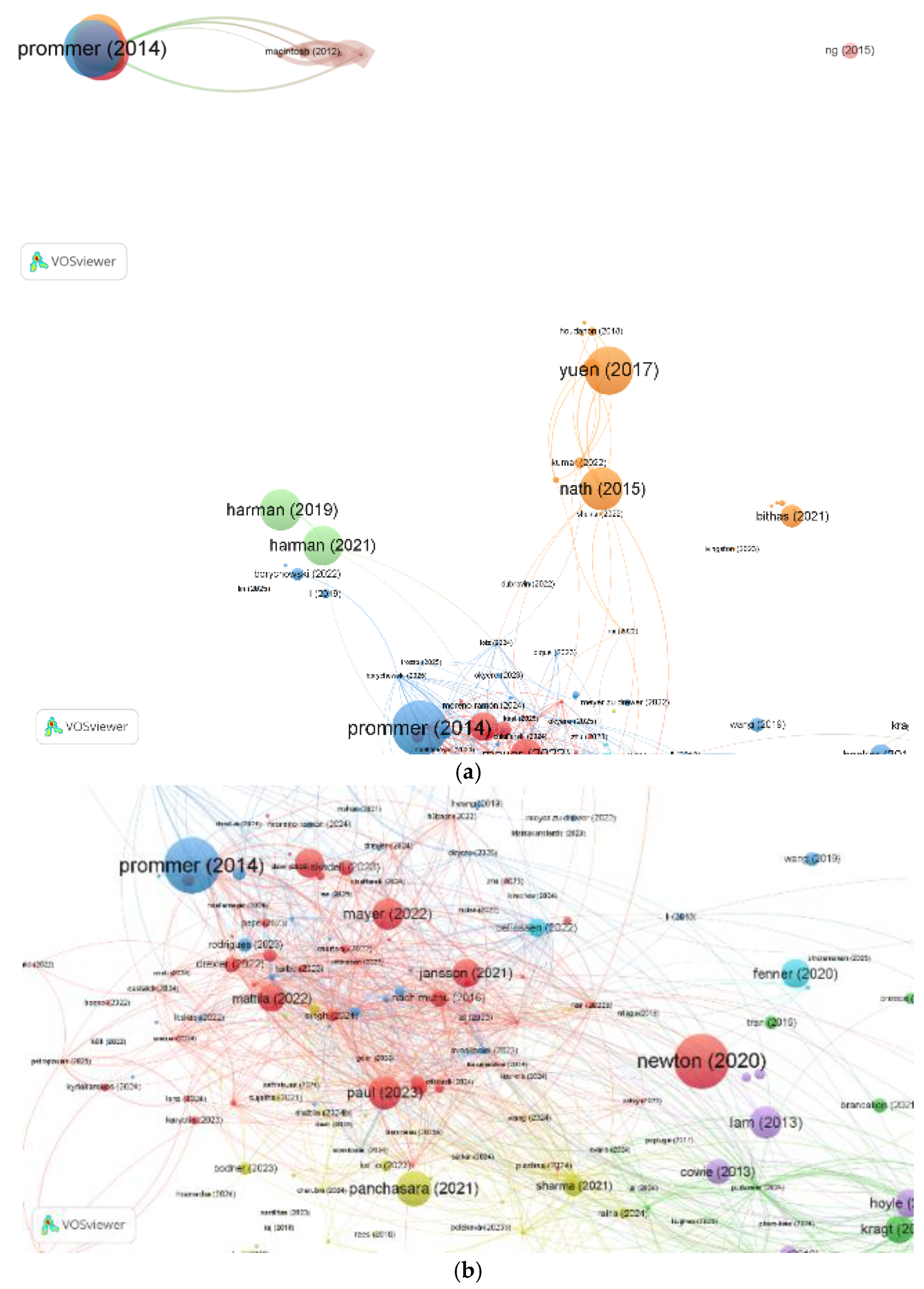
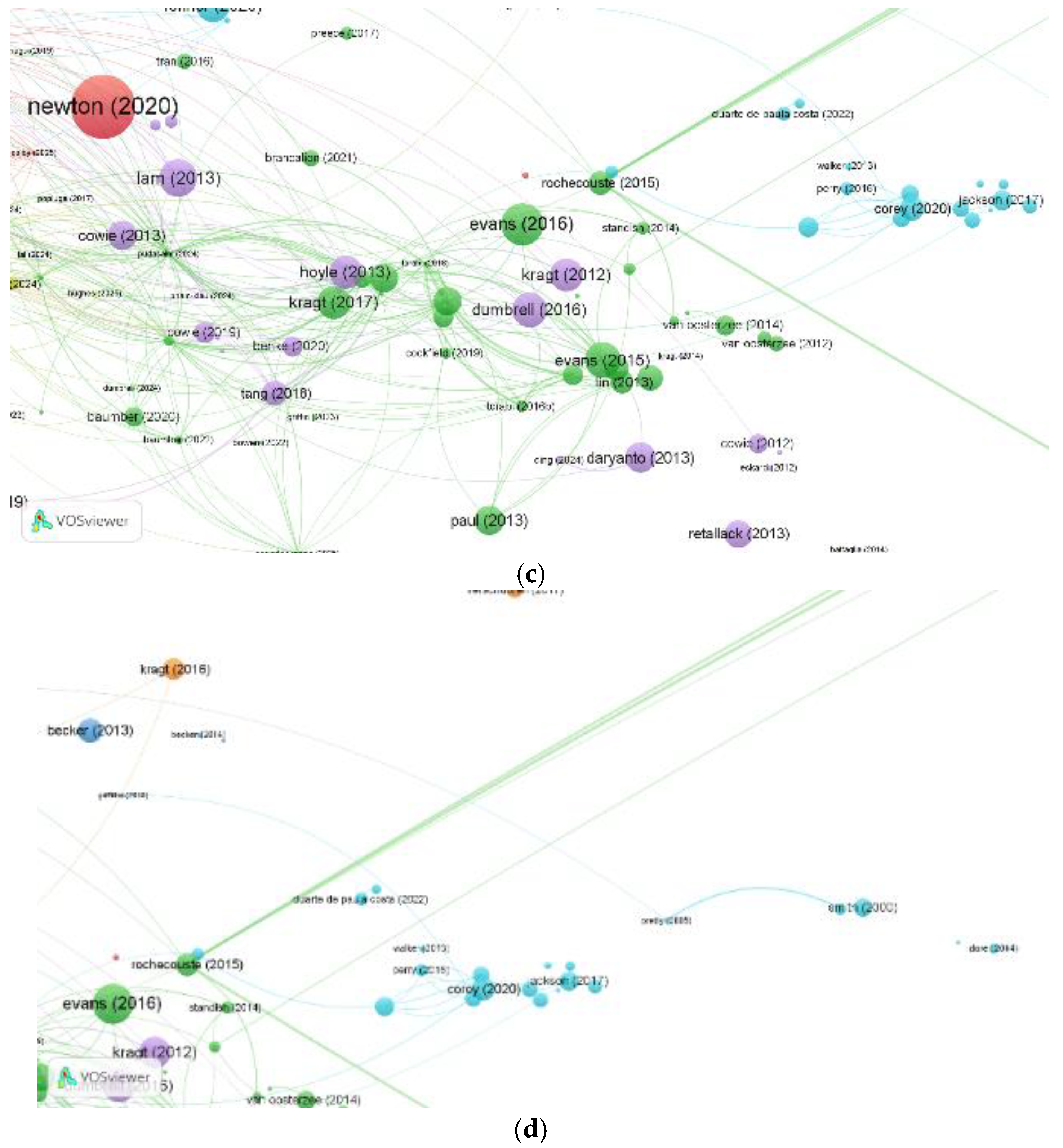
Figure 2.
Results of sources’ bibliographic coupling links map.
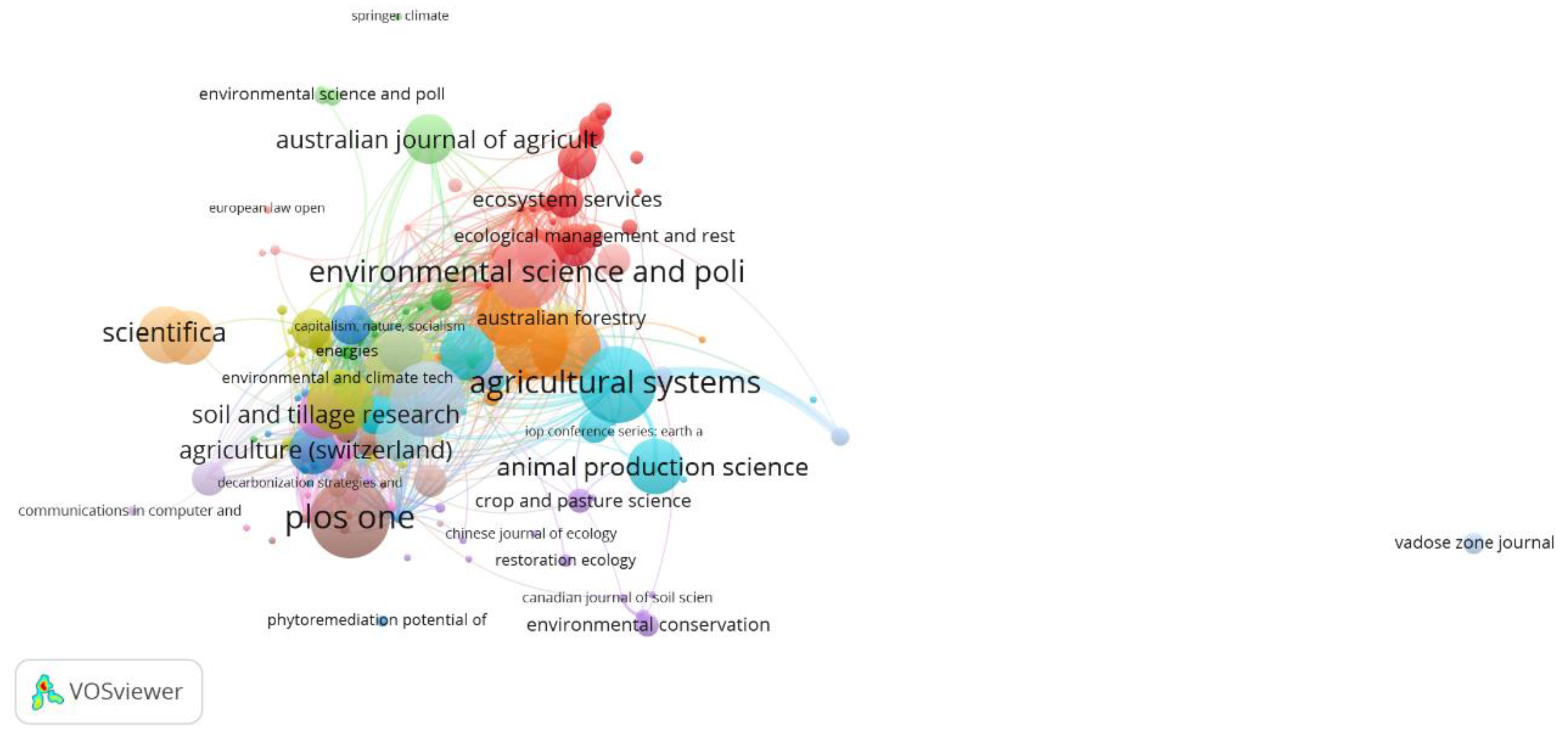
Figure 3.
Results of author’s bibliographic coupling links map (Full view). a- Zoom of the results of bibliographic coupling links map of authors with the highest number of citations. b- Zoom of the results of bibliographic coupling links map of authors with the highest number of Total link Strength.
Figure 3.
Results of author’s bibliographic coupling links map (Full view). a- Zoom of the results of bibliographic coupling links map of authors with the highest number of citations. b- Zoom of the results of bibliographic coupling links map of authors with the highest number of Total link Strength.
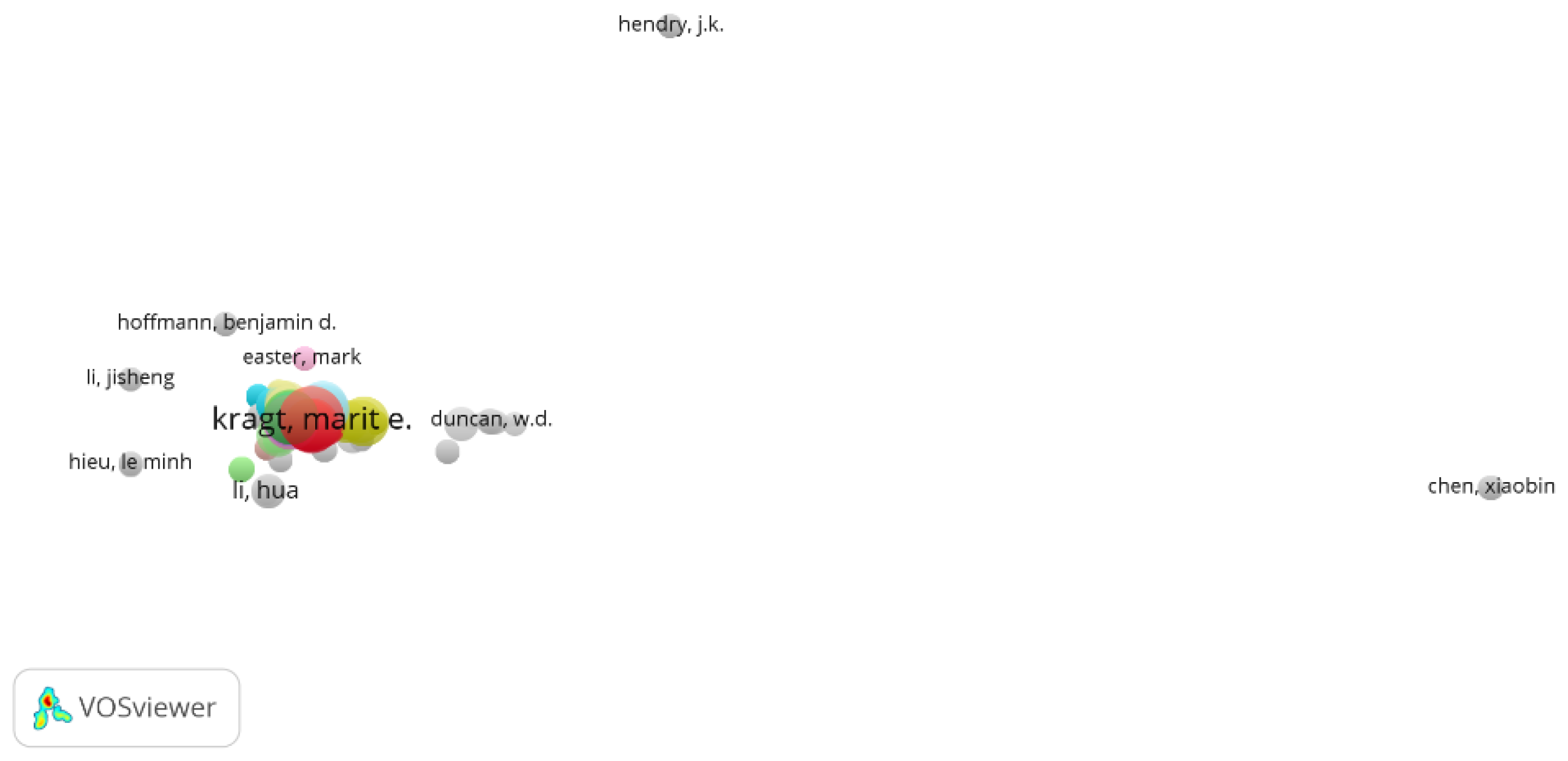
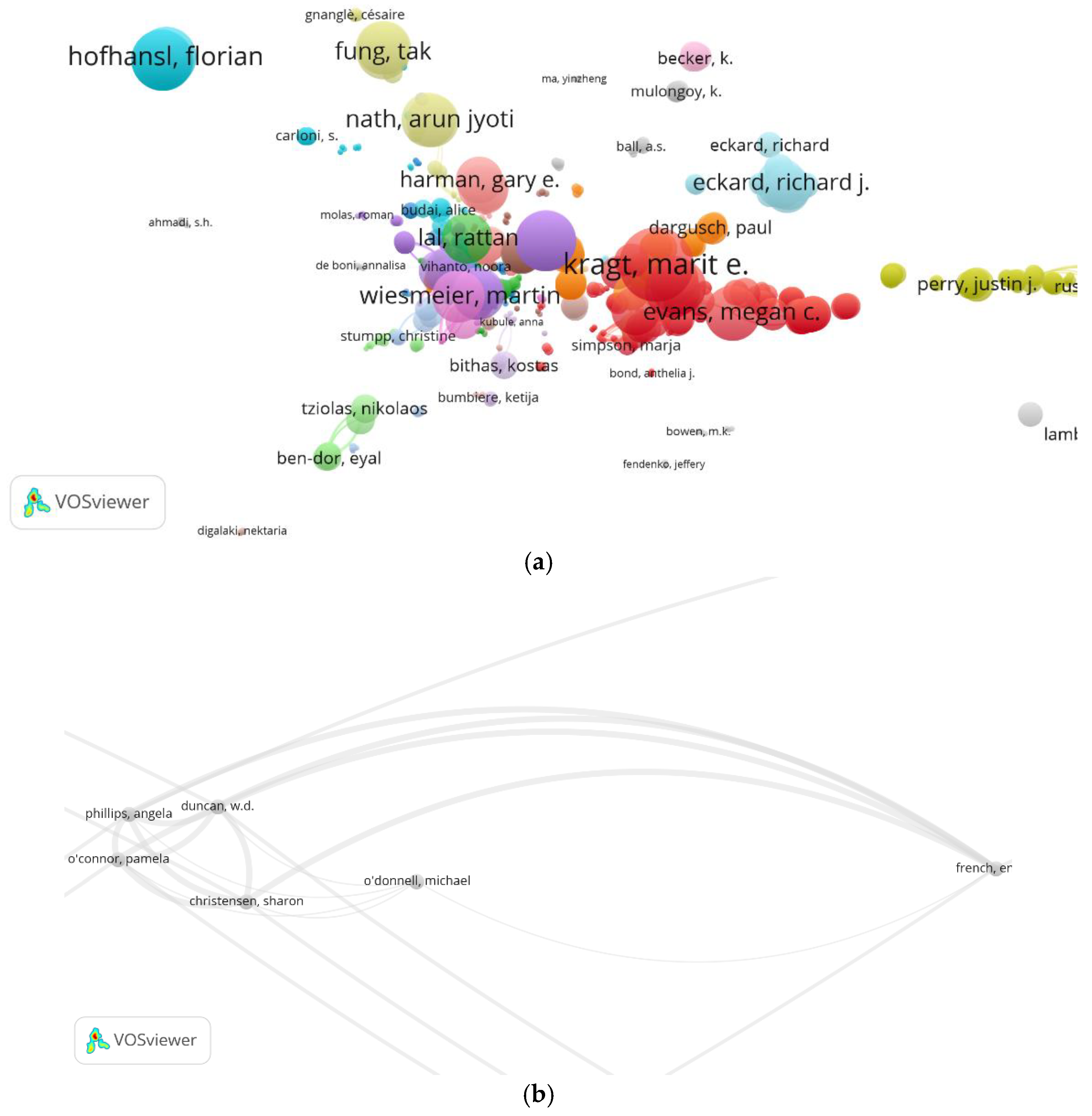
Figure 4.
Results of countries ‘bibliographic coupling links map.
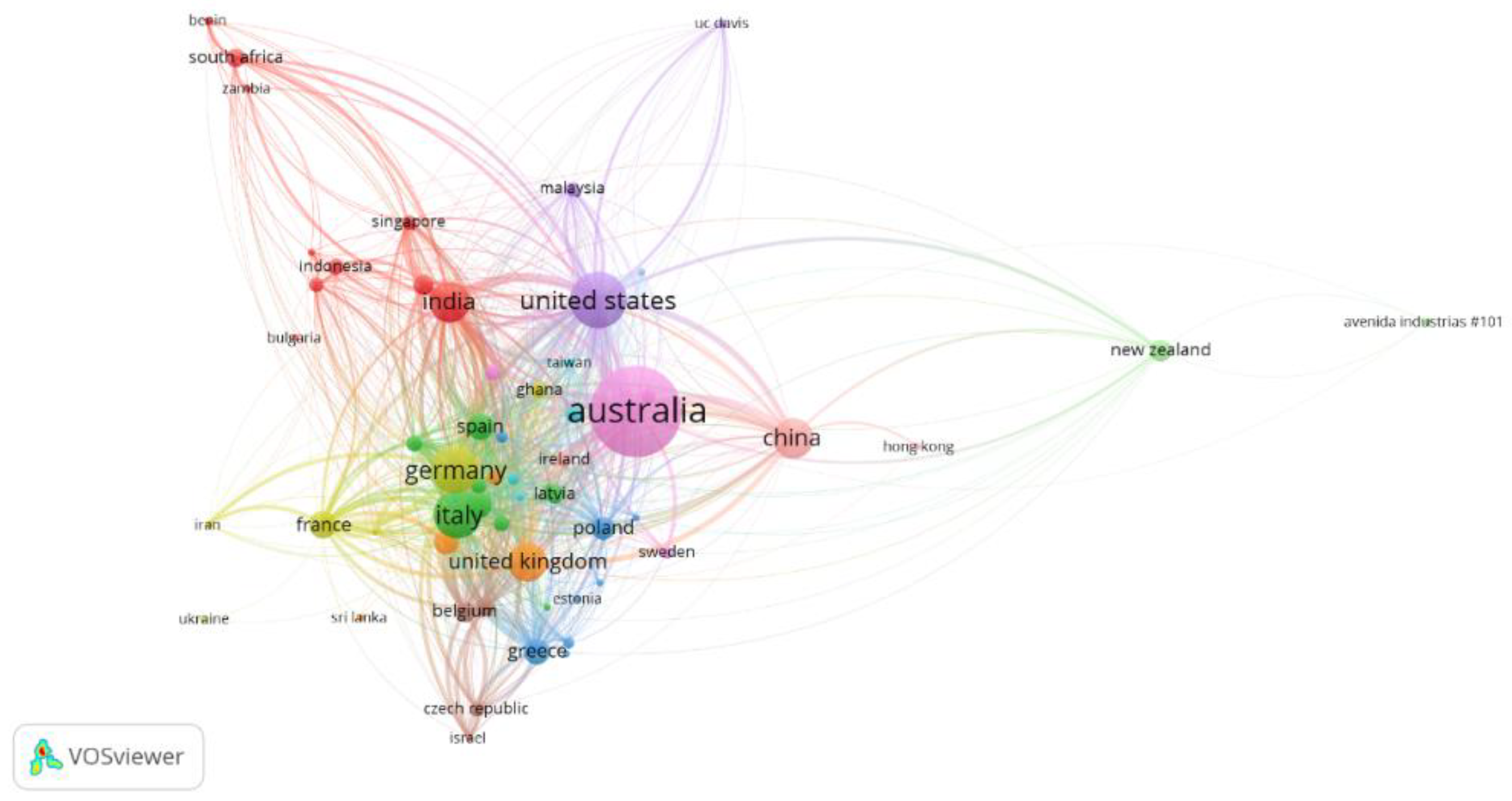
Figure 5.
– Results of organizations ‘bibliographic coupling links.

Figure 6.
Results of co-occurrence links of Author keywords.
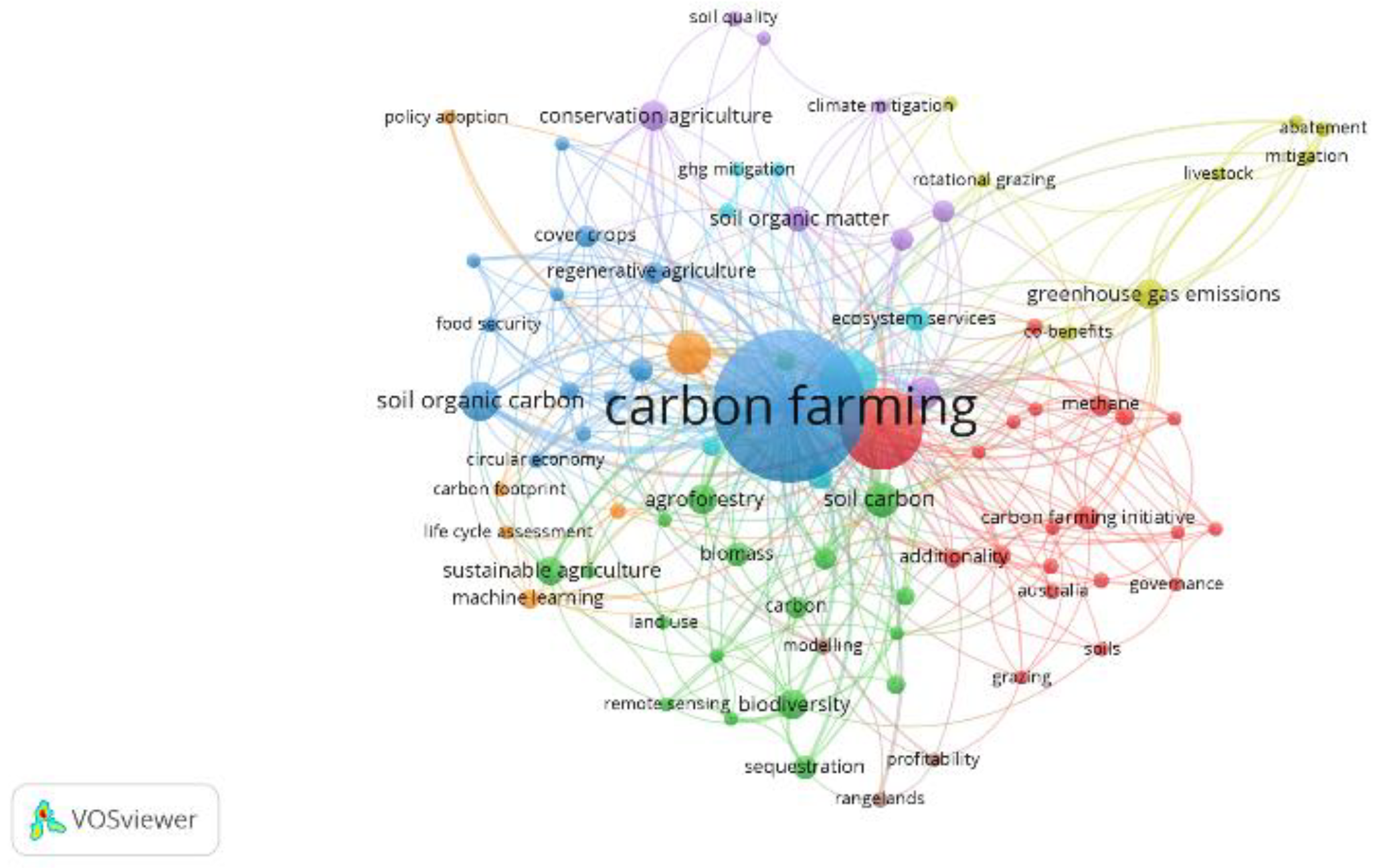
Figure 7.
Results of co-occurrence links of All keywords.
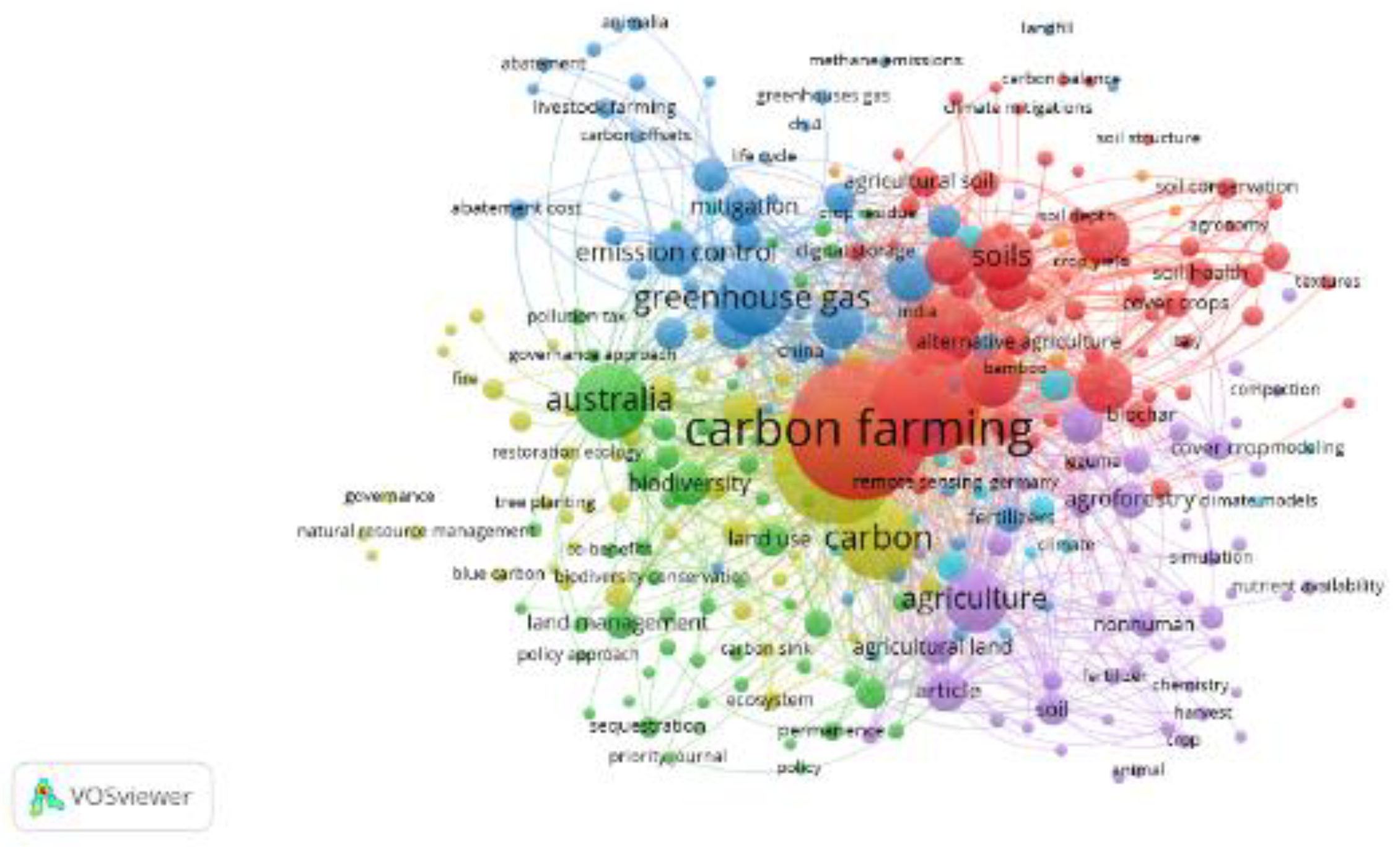
Figure 8.
a- Zoom of results of All – keywords co-occurrence links.
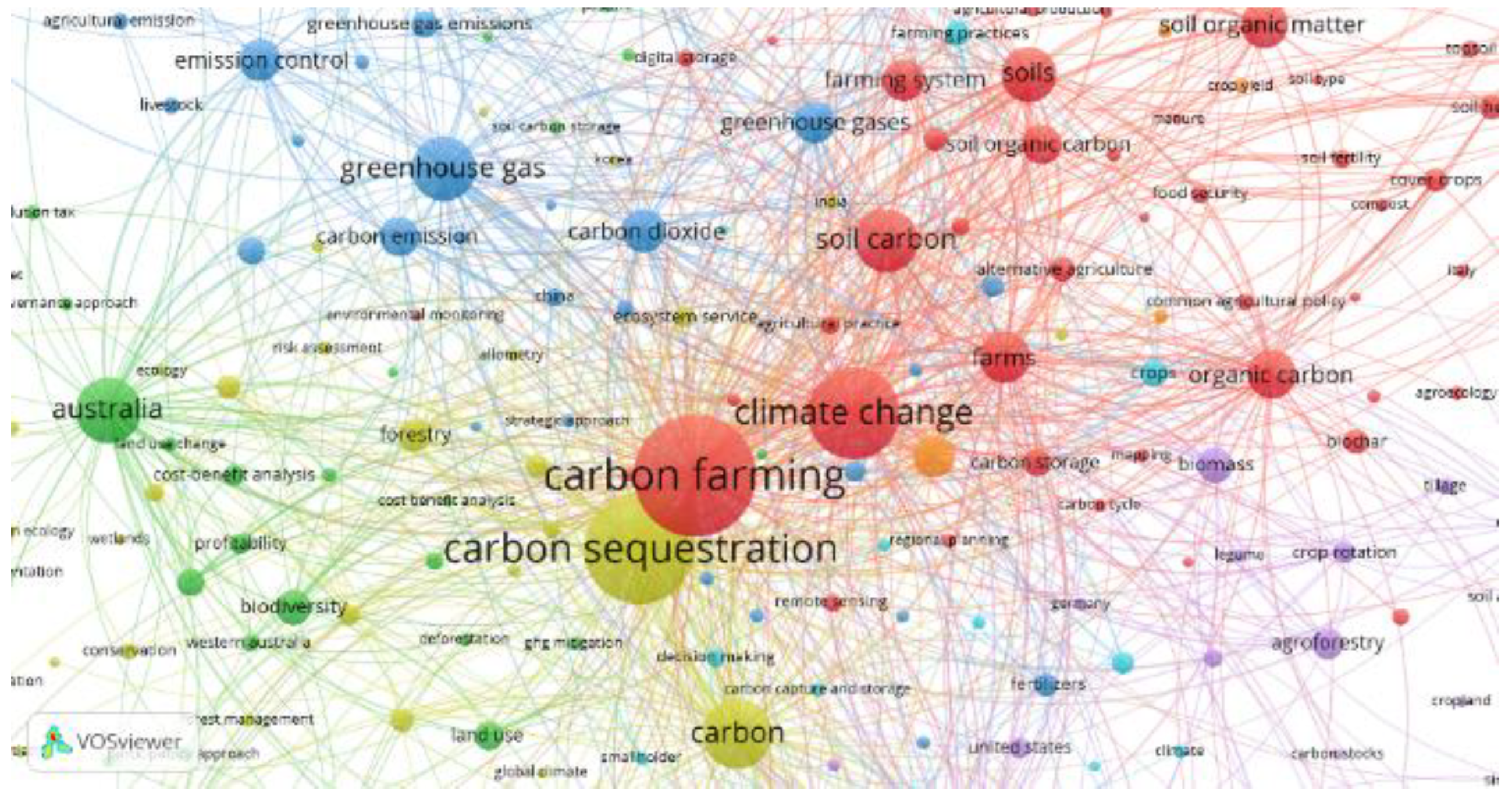

Table 1.
Relation of Clusters and articles from documents bibliographic coupling analysis.
| Cluster | Colour | Documents |
|---|---|---|
| 1 | Red | 65 |
| 2 | Dark green | 50 |
| 3 | Dark blue | 46 |
| 4 | Dry green | 44 |
| 5 | Purple | 38 |
| 6 | Light blue | 30 |
| 7 | Orange | 19 |
| 8 | Old Pink | 4 |
| 9 | Pink | 4 |
| 10 | Light Pink | 3 |
| 11 | Light Green | 2 |
Table 2.
First 15 documents with the highest number of citations, for bibliographic coupling links, considering full counting.
Table 2.
First 15 documents with the highest number of citations, for bibliographic coupling links, considering full counting.
| Document Description | DOI | Total Link Strength | Citations | Normalised Citations | Year | |
|---|---|---|---|---|---|---|
| Prommer (2014) | Prommer, J.; Wanek, W.; Hofhansl, F.; Trojan, D.; Offre, P.; Urich, T.; Schleper, C.; Sassmann, S.; Kitzler, B.; Soja, G.; Hood-Nowotny, R. L.,” Biochar decelerates soil organic nitrogen cycling but stimulates soil nitrification in a temperate arable field trial”, Plos one, 9(1) | https://doi.org/10.1371/journal.pone.0086388 | 19 | 245 | 8.6726 | 2014 |
| Newton (2020) | Newton, P.; Civita, N.; Frankel-Goldwater, L.; Bartel, K; Johns, C.” What is regenerative agriculture? a review of scholar and practitioner definitions based on processes and outcomes”, Frontiers in Sustainable food systems, 4 | https://doi.org/10.3389/fsufs.2020.577723 | 26 | 239 | 5.8293 | 2020 |
| Yuen (2017) | Yuen, J.Q.; Fung, T.; Ziegler, A. D.“Carbon stocks in bamboo ecosystems worldwide: estimates and uncertainties”, Forest Ecology and Management, 393, 113-138 | https://doi.org/10.1016/j.foreco.2017.01.017 | 42 | 192 | 4.129 | 2017 |
| Nath (2015) | Nath, A. J.; Lal, R.; Das, A.K., “Managing woody bamboos for carbon farming and carbon trading”, Global Ecology and Conservation, 3, 654-663 | https://doi.org/10.1016/j.gecco.2015.03.002 | 99 | 155 | 4.1892 | 2015 |
| Harman (2019) | Harman, G. E.; Uphoff, N.” Symbiotic root-endophytic soil microbes improve crop productivity and provide environmental benefits”, Scientifica, 2019 | https://doi.org/10.1155/2019/9106395 | 28 | 144 | 6.1975 | 2019 |
| Harman (2021) | Harman, G.E.; Doni, F.; Khadka, R.B.; Uphoff, N., “Endophytic strains of trichoderma increase plants’ photosynthetic capability”, Journal of applied microbiology, 130(2), 529-546 | https://doi.org/10.1111/jam.14368 | 57 | 135 | 3.5526 | 2021 |
| Evans (2016) | Evans, M. C.,”Deforestation in Australia: drivers, trends and policy responses”, Pacific Conservation Biology, 22(2), 130-150 | https://doi.org/10.1071/pc15052 | 66 | 111 | 3.6923 | 2016 |
| Panchasara (2021) | Panchasara, H.; Samrat, N.H.; Islam, N.,”Greenhouse gas emissions trends and mitigation measures in australian agriculture sector—a review”, Agriculture (Switzerland), 11(2), 1-16 | https://doi.org/10.3390/agriculture11020085 | 39 | 107 | 2.8158 | 2021 |
| Paul (2023) | Paul, C.; Bartkowski, B.; Dönmez, C.; Don, A.; Mayer, S.; Steffens, M.; Weigl, S.; Wiesmeier, M.; Wolf, A.; Helming, K., “Carbon farming: are soil carbon certificates a suitable tool for climate change mitigation?, Journal of environmental management, 330 | https://doi.org/10.1016/j.jenvman.2022.117142 | 242 | 95 | 11.79 | 2023 |
| Lam (2013) | Lam, S. K.; Chen, D.; Mosier, A. R.; Roush, R., “The potential for carbon sequestration in Australian agricultural soils is technically and economically limited, Scientific reports, 3 | https://doi.org/10.1038/srep02179 | 94 | 91 | 3 | 2013 |
| Mayer (2022) | Mayer, S.; Wiesmeier, M.; Sakamoto, E.; Hübner, R.; Cardinael, R.; Kühnel, A.; Kögel-Knabner, I., “Soil organic carbon sequestration in temperate agroforestry systems – a meta-analysis”, Agriculture, Ecosystems and Environment, 323 | https://doi.org/10.1016/j.agee.2021.107689 | 143 | 88 | 8.0647 | 2022 |
| Evans (2015) | Evans, M. C.; Carwardine, J.; Fensham, R. J.; Butler, D.W.; Wilson, K.A.; Possingham, H. P.; Martin, T.G., “Carbon farming via assisted natural regeneration as a cost-effective mechanism for restoring biodiversity in agricultural landscapes”, Environmental Science and Policy, 50, 114-129 | https://doi.org/10.1016/j.envsci.2015.02.003 | 116 | 85 | 2.2973 | 2015 |
| Dumbrell (2016) | Dumbrell, N. P.; Kragt, M. E.; Gibson, F. L. l.,”what carbon farming activities are farmers likely to adopt? a best-worst scaling survey”, Land Use Policy, 54, 29-37 | https://doi.org/10.1016/j.landusepol.2016.02.002 | 100 | 82 | 2.7277 | 2016 |
| Fenner (2020) | Fenner, N.; Freeman, C., “Woody litter protects peat carbon stocks during drought”, Nature climate change, 10(4), 363-369 | https://doi.org/10.1038/s41558-020-0727-y | 5 | 76 | 1.8537 | 2020 |
| Chamen (2015) | Chamen, T., “Controlled traffic farming - from worldwide research to adoption in Europe and its future prospects”, Acta Technologica Agriculturae, 18(3), 64-73 | https://doi.org/10.1515/ata-2015-0014 | 3 | 76 | 2.0541 | 2015 |
Table 3.
First 15 Sources with the highest number of citations, for bibliographic coupling links, considering full counting and1minimum number of documents of a source.
Table 3.
First 15 Sources with the highest number of citations, for bibliographic coupling links, considering full counting and1minimum number of documents of a source.
| Sources | Total Link Strength |
Documents | Citations | Normalised Citations |
Average Publication Year |
|---|---|---|---|---|---|
| Plos One | 20 | 2 | 260 | 9.8795 | 2016 |
| Agricultural Systems | 391 | 5 | 250 | 10.1252 | 2014.8 |
| Frontiers in Sustainable Food Systems | 200 | 2 | 240 | 6.2668 | 2022 |
| Forest Ecology and Management | 74 | 3 | 226 | 5.0954 | 2016.6667 |
| Environmental Science and Policy | 275 | 4 | 224 | 6.4354 | 2016.25 |
| Land Use Policy | 262 | 5 | 206 | 8.8322 | 2017.8 |
| Journal of Environmental Management | 604 | 6 | 202 | 23.0418 | 2022 |
| Agriculture, Ecosystems and Environment | 422 | 4 | 190 | 18.7424 | 2020.5 |
| Global Ecology and Conservation | 189 | 2 | 185 | 5.1871 | 2015.5 |
| Scientifica | 28 | 1 | 144 | 6.1975 | 2019 |
| Animal Production Science | 65 | 6 | 141 | 4.6479 | 2014.5 |
| Journal of Applied Microbiology | 57 | 1 | 135 | 3.5526 | 2021 |
| Soil Research | 102 | 2 | 133 | 4.3846 | 2013 |
| Australian Journal of Agricultural and Resource Economics | 88 | 3 | 113 | 4.3372 | 2016.6667 |
| Soil and Tillage Research | 610 | 8 | 112 | 13.162 | 2023.75 |
Table 4.
First 15 Sources with the highest number of Total Link Strength, for bibliographic coupling links, considering full counting and1minimum number of documents of a source.
Table 4.
First 15 Sources with the highest number of Total Link Strength, for bibliographic coupling links, considering full counting and1minimum number of documents of a source.
| Sources | Total Link Strength | Documents | Citations | Normalised Citations |
Average Publication Year |
|---|---|---|---|---|---|
| Soil and Tillage Research | 610 | 8 | 112 | 13.162 | 2023.75 |
| Journal of Environmental Management | 604 | 6 | 202 | 23.0418 | 2022 |
| European Journal of Soil Science | 488 | 5 | 30 | 4.6633 | 2023.8 |
| Sustainability (Switzerland) | 476 | 12 | 78 | 4.7945 | 2022.8333 |
| Agriculture, Ecosystems and Environment | 422 | 4 | 190 | 18.7424 | 2020.5 |
| Agronomy | 408 | 6 | 26 | 2.6749 | 2022.6667 |
| Agricultural Systems | 391 | 5 | 250 | 10.1252 | 2014.8 |
| Australasian Journal of Environmental Management | 291 | 3 | 8 | 0.172 | 2018.3333 |
| Geoderma | 284 | 4 | 56 | 4.6992 | 2022.75 |
| Journal of Rural Studies | 279 | 3 | 26 | 3.8748 | 2023 |
| Environmental Science and Policy | 275 | 4 | 224 | 6.4354 | 2016.25 |
| Land Use Policy | 262 | 5 | 206 | 8.8322 | 2017.8 |
| Soil Systems | 240 | 3 | 5 | 1.8741 | 2023.6667 |
| Environmental Science: Advances | 231 | 1 | 16 | 7 | 2024 |
| Ecosystem Services | 217 | 3 | 62 | 7.8062 | 2021.3333 |
Table 5.
- First 15 Sources with the highest number of documents, for bibliographic coupling links, considering full counting and1minimum number of documents of a source.
Table 5.
- First 15 Sources with the highest number of documents, for bibliographic coupling links, considering full counting and1minimum number of documents of a source.
| Sources | Documents | Citations | Normalised Citations |
Average Publication Year |
|---|---|---|---|---|
| Sustainability (Switzerland) | 12 | 78 | 4.7945 | 2022.8333 |
| Rangeland Journal | 11 | 87 | 4.1056 | 2018.2727 |
| Soil and Tillage Research | 8 | 112 | 13.162 | 2023.75 |
| Journal of Environmental Management | 6 | 202 | 23.0418 | 2022 |
| Agronomy | 6 | 26 | 2.6749 | 2022.6667 |
| Animal Production Science | 6 | 141 | 4.6479 | 2014.5 |
| European Journal of Soil Science | 5 | 30 | 4.6633 | 2023.8 |
| Agricultural Systems | 5 | 250 | 10.1252 | 2014.8 |
| Land Use Policy | 5 | 206 | 8.8322 | 2017.8 |
| Agriculture, Ecosystems and Environment | 4 | 190 | 18.7424 | 2020.5 |
| Geoderma | 4 | 56 | 4.6992 | 2022.75 |
| Environmental Science and Policy | 4 | 224 | 6.4354 | 2016.25 |
| Carbon Management | 4 | 17 | 1.0634 | 2018.5 |
| Agriculture (Switzerland) | 4 | 111 | 4.2524 | 2023.25 |
| Environmental and Planning Law Journal | 4 | 21 | 0.7356 | 2012.75 |
Table 6.
First 15 Authors with the highest number of citations, for bibliographic coupling links, considering full counting and 1 minimum number of documents of an author.
Table 6.
First 15 Authors with the highest number of citations, for bibliographic coupling links, considering full counting and 1 minimum number of documents of an author.
| Authors | Total Link Strength |
Citations | Normalised Citations |
Average Publication Year |
|---|---|---|---|---|
| Kragt, M. E. | 3030 | 374 | 13.8501 | 2015.5714 |
| Hofhansl, F. | 1119 | 245 | 8.6726 | 2014 |
| Hood-Nowotny, R. C. | 1119 | 245 | 8.6726 | 2014 |
| Kitzler, B. | 1119 | 245 | 8.6726 | 2014 |
| Offre, P. | 1119 | 245 | 8.6726 | 2014 |
| Prommer, J. | 1119 | 245 | 8.6726 | 2014 |
| Sassmann, S. | 1119 | 245 | 8.6726 | 2014 |
| Schleper, C. | 1119 | 245 | 8.6726 | 2014 |
| Soja, G. | 1119 | 245 | 8.6726 | 2014 |
| Trojan, D. | 1119 | 245 | 8.6726 | 2014 |
| Urich, T. | 1119 | 245 | 8.6726 | 2014 |
| Wanek, W. | 1119 | 245 | 8.6726 | 2014 |
| Bartel, K. | 361 | 239 | 5.8293 | 2020 |
| Civita, N. | 361 | 239 | 5.8293 | 2020 |
| Frankel-Goldwater, L. | 361 | 239 | 5.8293 | 2020 |
Table 7.
First 15 Authors with the highest number of Total link Strength, for bibliographic coupling links, considering full counting and 1 minimum number of documents of an author.
Table 7.
First 15 Authors with the highest number of Total link Strength, for bibliographic coupling links, considering full counting and 1 minimum number of documents of an author.
| Authors | Total Link Strength |
Documents | Citations | Normalised citations |
Average publication Year |
|---|---|---|---|---|---|
| French, E. | 11603 | 1 | 2 | 0.0659 | 2013 |
| Christensen, S. | 11510 | 1 | 4 | 0.1319 | 2013 |
| Duncan, W.D. | 11510 | 1 | 4 | 0.1319 | 2013 |
| O’Connor, P. | 11510 | 1 | 4 | 0.1319 | 2013 |
| Phillips, A. | 11510 | 1 | 4 | 0.1319 | 2013 |
| Wiesmeier, M. | 6566 | 5 | 185 | 20.1798 | 2022.6 |
| Don, Axel | 5671 | 4 | 151 | 18.5328 | 2023 |
| Macintosh, A. | 5347 | 2 | 23 | 0.8015 | 2012.5 |
| Waugh, L. | 5155 | 1 | 11 | 0.4059 | 2012 |
| Mayer, S. | 3668 | 2 | 183 | 19.9934 | 2022.5 |
| Metternicht, G. | 3572 | 5 | 64 | 3.7483 | 2022 |
| Kögel-Knabner, I. | 3541 | 2 | 115 | 11.5542 | 2022.5 |
| Baumber, A. | 3286 | 4 | 64 | 3.7483 | 2021.25 |
| Cross, R. | 3286 | 4 | 64 | 3.7483 | 2021.25 |
| Dönmez, C. | 3271 | 2 | 95 | 11.79 | 2023.5 |
Table 8.
First 15 Countries with the highest number of Total link Strength, for bibliographic coupling links, considering full counting and 1 minimum number of documents of a country.
Table 8.
First 15 Countries with the highest number of Total link Strength, for bibliographic coupling links, considering full counting and 1 minimum number of documents of a country.
| Countries | Total Link Strength |
Documents | Citations | Normalised citations |
Average Publication Year |
|---|---|---|---|---|---|
| Germany | 5044 | 32 | 502 | 58.4773 | 2021.9688 |
| United States | 4872 | 44 | 1113 | 45.599 | 2020.2955 |
| Australia | 4619 | 113 | 2402 | 99.7286 | 2017.1858 |
| Italy | 3800 | 31 | 207 | 30.5355 | 2023 |
| India | 2923 | 22 | 314 | 24.4154 | 2021.8636 |
| United Kingdom | 2629 | 21 | 349 | 22.4879 | 2019.0476 |
| France | 2087 | 11 | 159 | 13.9946 | 2022.6364 |
| Spain | 2026 | 10 | 107 | 9.3411 | 2023.1 |
| China | 1913 | 23 | 360 | 34.4401 | 2020.6087 |
| Switzerland | 1894 | 10 | 160 | 19.9914 | 2023.2 |
| Greece | 1713 | 10 | 126 | 9.3065 | 2023 |
| Belgium | 1586 | 6 | 73 | 5.7172 | 2023.6667 |
| Brazil | 1499 | 5 | 118 | 3.9615 | 2020.8 |
| Japan | 1065 | 6 | 50 | 1.3623 | 2021.8333 |
|
Finland |
1040 |
9 | 135 | 18.9102 |
2022.4444 |
Table 9.
First 15 Organizations with the highest number of citations, for bibliographic coupling links, considering full counting and 1 minimum number of documents of an organization.
Table 9.
First 15 Organizations with the highest number of citations, for bibliographic coupling links, considering full counting and 1 minimum number of documents of an organization.
| Organizations | Total Link Strength | Citations | Normalised Citations | Average Publication Year |
|---|---|---|---|---|
|
Core Facility of Cell Imaging and Ultrastructure Research, University of Vienna, Vienna, Austria |
456 | 245 | 8.6726 | 2014 |
|
Department of Ecogenomics and Systems Biology, University of Vienna, Vienna, Austria |
456 | 245 | 8.6726 | 2014 |
| Department of Health and Environment, Austrian Institute of Technology, Tulln, Austria | 456 | 245 | 8.6726 | 2014 |
| Department of Microbiology and Ecosystem Science, University of Vienna, Vienna, Austria | 456 | 245 | 8.6726 | 2014 |
| Institute of Forest Ecology and Soil, Federal Research and Training Centre for Forests, Natural Hazards and Landscape, Vienna, Austria | 456 | 245 | 8.6726 | 2014 |
| Environmental Studies Program, University of Colorado Boulder, Sustainability, Energy and Environment Community, Boulder, co, United States | 81 | 239 | 5.8293 | 2020 |
| Department of Biological Sciences, National University of Singapore, Singapore | 309 | 192 | 4.129 | 2017 |
| Department of Geography, National University of Singapore, Singapore | 309 | 192 | 4.129 | 2017 |
| Carbon Management and Sequestration Center, the Ohio State University, Columbus, 43210, OH, United States | 454 | 155 | 4.1892 | 2015 |
| Department of Ecology and Environmental Science, Assam University, Silchar, 788011, India | 454 | 155 | 4.1892 | 2015 |
| Department of Ecology and Environmental Science, Assam University, Silchar, Assam, 788011, India | 454 | 155 | 4.1892 | 2015 |
| Cornell University, iIhaca, NY, United States | 143 | 144 | 6.1975 | 2019 |
| College of Agriculture and Life Sciences, Cornell University, Ithaca, NY, United States | 424 | 135 | 3.5526 | 2021 |
| Cornell University, Geneva, NY, United States | 424 | 135 | 3.5526 | 2021 |
| Department of Plant Pathology, the Ohio State University, Wooster, OH, United States | 424 | 135 | 3.5526 | 2021 |
Table 10.
First 15 Author keywords, considering full counting and 3 as the minimum number of occurrences of a term.
Table 10.
First 15 Author keywords, considering full counting and 3 as the minimum number of occurrences of a term.
| Author Keywords | Total Link Strength | Occurrences | Average Publication Year |
|---|---|---|---|
| Carbon Farming | 226 | 130 | 2021.4154 |
| Carbon Sequestration | 98 | 49 | 2019.9592 |
| Climate Change | 58 | 29 | 2021.2759 |
| Climate Change Mitigation | 45 | 19 | 2020.2105 |
| Soil Organic Carbon | 33 | 16 | 2022 |
| Soil Carbon | 32 | 13 | 2021.4615 |
| Agriculture | 26 | 12 | 2021.8333 |
| Agroforestry | 18 | 10 | 2022.6 |
| Biodiversity | 23 | 10 | 2018.8 |
| Conservation Agriculture | 18 | 10 | 2022.4 |
| Greenhouse Gas Emissions | 19 | 10 | 2018.5 |
| Sustainable Agriculture | 14 | 9 | 2023.3333 |
| Carbon Credits | 11 | 8 | 2020.5 |
| Soil Organic Matter | 23 | 8 | 2022.375 |
| Biochar | 19 | 7 | 2024.1429 |
Table 11.
All Keywords’ co-occurrence links, considering full counting and 3 as the minimum number of occurrences of a term.
Table 11.
All Keywords’ co-occurrence links, considering full counting and 3 as the minimum number of occurrences of a term.
| All Keywords | Total Link Strength | Occurrences | Average Publication Year |
|---|---|---|---|
| Carbon Farming | 898 | 131 | 2021.4198 |
| Carbon Sequestration | 1105 | 112 | 2020 |
| Climate Change | 869 | 83 | 2020.9277 |
| Carbon | 731 | 54 | 2019.1296 |
| Australia | 506 | 50 | 2016.4 |
| Greenhouse Gas | 566 | 47 | 2018.6809 |
| Soil Carbon | 483 | 46 | 2021.0652 |
| Agriculture | 528 | 38 | 2019.9211 |
| Soils | 499 | 37 | 2021.027 |
| Farms | 484 | 34 | 2022.8529 |
| Organic Carbon | 444 | 31 | 2021.2258 |
| Soil Organic Matter | 302 | 29 | 2021.8276 |
| Carbon Dioxide | 397 | 26 | 2019.3846 |
| Climate Change Mitigation | 311 | 25 | 2020.16 |
| Emission Control | 247 | 25 | 2017.6 |
Table 12.
Systematic review of 15th more cited documents.
| Author | DOI | Main Subject of the Article |
|---|---|---|
| Prommer (2014) | https://doi.org/10.1371/journal.pone.0086388 | The study spotlights the soils nitrogen cycle and verifies how organic and inorganic nitrogen levels is affected by biochar in a field trial in Lower Austria. It was found that biochar increased total organic carbon in soil but decreased extractable organic pool and soil nitrate. Conversely, biochar promoted soil ammonia oxidizers and sped up gross nitrification rates. Our results indicate a link between organic and inorganic N cycles in soil, with organic N accumulation and slowed inorganic N release. Adding inorganic nitrogen with biochar could offset the decrease in organic nitrogen mineralization. |
| Newton (2020) | https://doi.org/10.3389/fsufs.2020.577723 | There is no legal or regulatory nor a common usage definition of “regenerative agriculture“ term, although general concern about it. To describe the term “regenerative agriculture, It was reviewed 229 journal articles and 25 practitioner websites” The study has shown that many definitions of regenerative agriculture were being used, established on processes like( cover crops, livestock combination, and lowering or eradicating tillage), and on outcomes like (soil health rise, carbon sequestration, and biodiversity increments), a mixture of processes and outcomes. The definitions discrepancy used could bring ambiguity about what the meaning when stakeholders refer to regenerative agriculture. Authors suggest that the term “regenerative agriculture”, for any circumstance or usage must be cautiously defined. |
| Yuen (2017) | https://doi.org/10.1016/j.foreco.2017.01.017 | In bamboo ecosystems, the total carbon range is similar to rubber plantations and tree orchards, higher than agroforests, grasslands, shrublands and pastures, and lower than that of most forests. Annual carbon accumulation rates are estimated at 8–14 Mg /ha and falling to 4 Mg /ha after when a choicy harvest happens. A capable bamboo stands management will reinforce favourable carbon farming. Bamboo should be recognized for its importance as a carbon sink and its ecosystem services, such as preventing soil erosion and providing construction and food resources. |
| Nath (2015) | https://doi.org/10.1016/j.gecco.2015.03.002 | Nath, et al., (2015) shown the potential of woody bamboos in biomass carbon storage and as an option for carbon farming and trading. The average carbon storage rate in woody bamboos is 30–121 Mg ha−1, with a sequestration rate of 6–13 Mg ha−1 per year. Bamboo grows quickly, completing its cycle in 120 to 150 days, and contributes significantly to carbon sequestration. Despite its benefits, the role of bamboo in Clean Development Mechanism and REDD schemes needs further exploration. It has potential for generating tradable carbon and providing income for rural communities. |
| Harman (2019) | https://doi.org/10.1155/2019/9106395 | Endophytic microorganisms improve plant performance, they promote gene expression that produces proteins to detoxify reactive oxygen species (ROS). ROS increase due to environmental stresses or overexcitation of photosynthetic pigments. Enhanced photosynthesis rates from these endophytes lead to improved plant growth. The development of enhanced plant holobiomes ( EPHs ) can reduce nitrogen pollution, mitigate stresses from climate change, minimize methane production, enhance carbon sequestration, and increase farmers’ incomes through carbon credits. |
| Harman (2021) | https://doi.org/10.1111/jam.14368 | Bettering the crop plants photosynthesis can aid the production of enough food and fibre for a rising population meanwhile also contributing for climate mitigation. Some fungi from the Trichoderma genus can augment photosynthesis by stimulating specific genes and pigments. These fungi also help reduce damage from reactive oxygen species (ROS), leading to better shoot and root growth, increased crop yields, and carbon storage in soil. |
| Evans (2016) | https://doi.org/10.1071/pc15052 | The study discusses deforestation directions, motives and policy feedback in Australia, over the past 40 years, looking into the institutional, economic, and environmental factors related to forest loss. Also, it appraises past native vegetation policies and recent changes in legislation and reviews. The study highlights the potential of policies with incentives, as carbon farming and private land conservation to reduce deforestation. It points out the need for an improved policy fuse and better monitoring and evaluation to adequately undertake deforestation in Australia. |
| Panchasara (2021) | https://doi.org/10.3390/agriculture11020085 | Agriculture contributes significantly to greenhouse gas emissions, impacting climate change directly and indirectly. In Australia, livestock farming generates 70% of emissions, mainly from methane. To reduce these emissions, the agriculture sector should adopt climate-smart practices that combine traditional methods with technology to enhance productivity while reducing GHG emissions and a resilient food system to climate change. |
| Paul (2023) | https://doi.org/10.1016/j.jenvman.2022.117142 | To rise SOC ranks implies agricultural management changes which demand costs for the farmer. Those costs could be covered with private soil carbon certificates, where farmers register fields with providers who certify SOC increases, and then sold as voluntary emission neutralizers. Those emissions offsets can not be guaranteed because of governance issues that includes lack of monitoring, challenges with proving additionality, leakage effects, and accountability for re-emitted SOC. Thus, it is necessary to establish standard methods, indicators, and monitoring systems. |
| Lam (2013) | https://doi.org/10.1038/srep02179 | A meta-analysis assessed the technical and economic viability of increasing soil C through better management practices. The findings suggest that these practices can only store C effectively in the top 0–10 cm of soil, and the benefits decrease over time. Also, deeper soil layers do not show significant C gains. It appears that pasture can aid C sequestration but poses challenges like increased methane emissions, higher irrigation needs, and inefficiencies in using land for animal food compared to crops. Ultimately, enhanced practices raised soil C by only 0. 05–0. 15 Mg C ha–1 year–1 in the top 10 cm, and the economic feasibility remains low. |
| Mayer (2022) | https://doi.org/10.1016/j.agee.2021.107689 | An evaluation of 61 topsoil and 26 subsoil observations found that soil organic carbon in agroforestry systems is usually higher than in areas without trees. Hedgerows have the highest SOC rates, comparing to alley cropping and silvopastoral systems, especially at 20–40 cm depth. Agroforestry enhances SOC in temperate zones and improves carbon storage. Despite possible SOC losses during planting, agroforestry can effectively reduce carbon emissions and be eligible for carbon credit certificates. |
| Evans (2015) | https://doi.org/10.1016/j.envsci.2015.02.003 | The study of Evans, et al., (2015) shows that Assisted Natural Regeneration (ANR)embr is a cost-effective way for reforesting, that helps carbon sequestering and biodiversity conservation. In Queensland, north-eastern Australia It was verified that carbon farming needed little incentive for farmers to adopt, with low to moderate carbon prices. If the carbon price is ($50 t CO2e), 10. 5 million hectares could sequester 1825 million tons of CO2e in 100 years. |
| Dumbrell (2016) | https://doi.org/10.1016/j.landusepol.2016.02.002 | Dumbrell, et al. (2016) conducted a survey with dryland cropping and mixed crop-livestock farmers in Western Australia to identify carbon sequestration practices. Farmers’ choices were influenced by their views on climate change and experience with carbon farming. Preferred practices included stubble retention and no-till cropping, while tree planting was less selected. Farmers affected by climate wished to adopt tree planting. Policies should allow farmers flexibility to choose practices and should provide useful information. The chance to reduce emissions and sell carbon credits seemed unimportant to farmers, but improved soil quality and reduced erosion were viewed as top rewards, while uncertainties in policy, carbon prices and profits were viewed as concerns to farmers. |
| Fenner (2020) | https://doi.org/10.1038/s41558-020-0727-y | This study shows that adding woody litter, it helps to preserve external carbon and protects soil carbon from drought by leaching polyphenolics, at northern peatlands. These compounds limit microbial activity and growth by restricting access to iron and nutrients. This method could arise new carbon-farming strategies. |
| Chamen (2015) | https://doi.org/10.1515/ata-2015-0014 | The intention of controlled traffic farming is to manage machinery use by limiting field vehicles to specific lanes to prevent soil compaction. In Australia, researchers began creating these on- farm machinery systems in the 1990s, leading to a large adoption on about 13% of cropped land. On the turn of the century, although changes to extension services in northern Europe, the control traffic model adoption remained unchanged. The transfer of this technology has depended on dedicated individuals rather than institutions, with a similar pattern in Australia. |
Disclaimer/Publisher’s Note: The statements, opinions and data contained in all publications are solely those of the individual author(s) and contributor(s) and not of MDPI and/or the editor(s). MDPI and/or the editor(s) disclaim responsibility for any injury to people or property resulting from any ideas, methods, instructions or products referred to in the content. |
© 2025 by the authors. Licensee MDPI, Basel, Switzerland. This article is an open access article distributed under the terms and conditions of the Creative Commons Attribution (CC BY) license (http://creativecommons.org/licenses/by/4.0/).
Copyright: This open access article is published under a Creative Commons CC BY 4.0 license, which permit the free download, distribution, and reuse, provided that the author and preprint are cited in any reuse.


