
Submitted:
04 September 2023
Posted:
06 September 2023
You are already at the latest version
Abstract
Conservation agriculture and conservation tillage have drawn the attention not only of scientists but of politicians and societies worldwide. This paper aims to present a method for selecting re-search studies on conservation agriculture, conservation tillage, and the role of straw residues on soil health and soil stability against climatic hazards. VOSviewer version 1.6.18 free software tool was used in this study to achieve the bibliometric and mapping approach for studies on the effects of climate change in terms of conservation, tillage, soil health, and straw and microbe or straw and climate interaction or other paradigms. Scopus database (accessed July 7, 2023) indexed a total of 752.2018 bibliographic items classified into 15 paradigms e.g., Carbon (AND Straw) or Microbes (AND Straw). From the examination of the selected papers, it was concluded that straw residue has an impact on soil's physical, chemical, and biological properties and the environment in general.
Keywords:
Agriculture
; selective review
; bibliometrics
; bibliometric mapping
1. Introduction
Concepts like conservation agriculture and soil health have been receiving increasing scientific interest recently; both concepts are referred to as important sectors in agriculture economies and are critical because the requirement of more food needs to be produced every year should be related to minimize soil disturbance and enhances biodiversity.
1.1. Conservation: Conservation Agriculture
Our world is expected to reach the number of 8.6 billion people by 2030 and 9.8 billion by 2050, according to a new United Nations report [1]. In order to meet the growing needs of the expanding global population, the total cultivated land area has witnessed a staggering growth of over 500% in the past fifty years. This intensification has been accompanied by a 700% rise in fertilizer usage and a significant multiplication in the use of pesticides that causes negative impact to the environment such as poor nutrient-use efficiency, higher levels of greenhouse gas emissions, ground-water eutrophication, degradation of soil quality including soil erosion [2]. The intensification agriculture may lead upwards the agricultural production and yields, through the utilization of agrochemicals (pesticides and fertilizers), expanded irrigation practices, and shifts in seed varieties, but on the contrary intensification agriculture contributes to vitally important complications like climate change, land-system change, and freshwater use [3]. Because of the above, we are driven to new agriculture methods and practices with more ecological impact that combine the growth of the crop yield without using an extra land with the protection of natural resources and habitats like Sustainable Intensification Agriculture (https://www.nature.com/collections/jieihecica).
Similarly, the method of Conservation Agriculture (CA) supports a sustainable agricultural model that enables the profitable/gainful production of food while at the same time, natural resources are kept safeguarded [4,5]. As CA is followed by different practices based on no-till management, not only decreases the use of chemical fertilizer and pesticide practices but protects and controls soil erosion, declines soil degradation, and improves soil properties and health [6,7,8]. The consistent reduction of mechanical soil disruption to a minimum; the establishment of a lasting organic cover on the soil using crop residues and/or cover crops; and the promotion of species diversity by employing diverse crop rotations, sequences, and associations are the most significant principles of the CA [9,10]. The Ca could be applied to any agricultural landscape around the world providing numeral of advantages such as economical (reduced costs, labor savings) and environmental (carbon sequestration, controlling of air pollution, sustainability, water, improved biodiversity, and soil health) [11].
According to the Food and Agriculture Organization of the United Nations (FAO) [12], the foundation for reaching sustainable intensification of agricultural production is the CA when combined with other established effective practices such as utilizing high-quality seeds and implementing integrated management strategies for pests, nutrients, weeds, and water. The first CA principle which is based on the “minimum mechanical soil disturbance” requires low disturbance no-tillage techniques and direct seeding while there is a maximum of 25% of the cropped or a maximum of the area of 15 cm of the disturbed area, whichever value is smaller. Three categories are identified on the second principle based on the percentage of ground cover immediately after the direct seeding operation: a) 30-60%; b) > 60-90%; and c) > 90%. Any area that has less than 30% ground cover is not considered to be practicing conservation agriculture. The last principle includes species diversification, rotations or associations should consist of a minimum of three distinct crop species to meet the requirement [13].
The European Commission is making efforts to guide the agriculture sector of the European Union towards a more sustainable path, through various European policies emphasizing CA practices as a successful approach for protecting soil as well as a soil therapy to significant environmental challenges [14,15]. In general, European soils play a crucial role in the global carbon cycle as they act as a significant reservoir of active carbon, and also, their impact extends to changes in greenhouse gas (GHG) concentrations in the atmosphere [15].
Decades of measurements indicate a significant decline in soil organic matter (SOM) levels, primarily attributed to agricultural land use. When there is a 1% decrease in soil organic carbon (SOC) within the topsoil layer of 30 cm, it corresponds to a loss of around 45 tons of carbon or 166 tons of CO2 per hectare. This calculation vividly demonstrates the influence of agriculture on the emission of CO2 into the atmosphere, as land use practices that result in SOC depletion contribute to this effect. Alternatively, this finding also highlights the opportunity for carbon sequestration through changes in agricultural practices. If successful in replenishing at least a portion of the soil organic carbon (SOC) that has been lost over many years of conventional tillage, such changes in agricultural practice hold the potential for carbon sequestration [15].
1.2. Tillage: Conservation tillage:
Since the earliest advanced civilizations, soil tillage has played a crucial role in agricultural production as it helps to incorporate crop residues into the soil, manages weed control, and drives the best physical environmental soil conditions for seed growth and plant development [16]. These intensive farming methods are resulting in a decline in the quality of soil and excessive use of natural resources, leading to imbalances in nutrients and further damage to ecosystem functions [17]. On the contrary, over the past few decades, conservation tillage systems such as no-till, zero tillage, and reduced tillage have gained widespread adoption worldwide because of their beneficial effects on soil preservation [18].
Conservation tillage (CT) is an agricultural technique designed to reduce the frequency or intensity of tillage operations, with rewards of specific economic and environmental advantages. These advantages encompass a reduction in carbon dioxide and greenhouse gas emissions, reduced dependence on farm machinery and equipment, and lowered fuel and labor expenses. Additionally, the implementation of CT techniques has demonstrated positive effects on soil health, minimized runoff, mitigated erosion [19], the protection of moisture evaporation from the ground, the growth of plant and root, the preservation nutrients at both macro- and micro-levels and reduction of chemical pesticides, herbicides and fertilizers [20] are some extra benefits of the CT.
The organic matter and the soil fertility are improved by adopting long-term no-till (NT) or reduced tillage (RT) methods. Nevertheless, over time, long-term implementation of NT or RT systems could be resulting excessive compaction of the surface layers due to heavy machinery traffic. This compaction can have negative consequences on the transport of air, water, and solutes in the soil, as well as hinder the penetration of roots [18]. The method of CT, such as reducing or eliminating soil inversion and maintaining soil cover through the use of straw returned to the field or incorporated into the soil, have been implemented on a worldwide scale [21], but also it is essential to have a better comprehension of how conservation tillage practices impact the physical and chemical properties of the soil. This understanding is crucial for effectively managing and preserving soil in various situations involving different soil management approaches, soil types, and climatic conditions [21].
The semiarid central Great Plains (CGP) of the United States observed better cropping strength and more efficient water storage when the NT system was adopted in dry yield areas while alongside NT offers a good soil structure and cuts down the initial cost of the farm [22]. Although the advantages mentioned previously are present, the continuous implementation of NT practices tends to result in the stratification of soil nutrients and soil organic matter (SOM). It can also lead to increased acidification in the upper soil surface and potentially elevate bulk density near the soil surface [23].
To summarize, worldwide the adoption of NT practices has brought a positive impact on the environment and a significant transformation in agricultural systems. Also, the diversity of soil bacterial and archaeal was higher in the no-till system than standard till in a long-term soil experiment in the West Side Research and Extension Center, California’s Central Valley [24]. Finally, it has provided growers with the ability to effectively manage larger expanses of land while minimizing energy, machinery requirements (less fuel consumption) and reducing labor needs for farmers [25].
1.3. Soil: Soil conservation
A part of sustainable agriculture, it is soil conservation. Soil conservation encompasses a variety of agricultural techniques and approaches that aim to prevent the degradation, erosion, and depletion of land. It involves implementing sustainable practices and strategies that prioritize the long-term use of the soil and consider future needs. By adopting appropriate and timely measures, farmers can enhance the productivity and viability of their fields for many years ahead [26].
Preserving the biodiversity of soil ecosystems and safeguarding their vital role in enhancing fertility is a key goal of soil conservation. These diverse eco-communities play essential roles by contributing to the soil's fertility in various ways. They introduce organic matter, decompose organic substances to release nutrients, and enhance water infiltration and aeration. Creating positive conditions for these living organisms within the soil is crucial for supporting healthy vegetation, as microorganisms play a vital role in processing organic matter to meet the nutritional needs of plants [27].
1.4. Soil: Soil health
Soil is a dynamic and complex system that undergoes constant changes due to both non-living and living factors in the environment. Soil health refers to the soil's ability to sustain the activities of various microorganisms, such as bacteria, archaea, fungi, protists, plants, and animals [28,29,30,31,32]. It also involves the soil's capacity to interact with the non-living components of the environment, facilitating the exchange of matter and energy [33,34,35,36]. This perspective holds considerable influence and argues that the restructuring of agricultural systems to achieve objectives related to global food security, sustainable intensification, and nutritional quality should prioritize soil microbes, giving them a central or even primary role [37]. In the absence of significant natural or human-induced disruptions, it is reasonable to assume that over time, each soil will gradually reach a state of soil health that is close to its maximum potential within the prevailing environmental limitations. These constraints may include factors such as temperature, climate conditions, water availability, parent material composition, the soil microbiome, and the presence of other organisms [33].
In agricultural systems, the interactions between agricultural practices and the environment of the rhizosphere typically influence soil microbial communities and nutrient cycling [38]. Based on that, research shows that agricultural intensification harms a large microbial diversity of the soil and physical, chemical, and biological actions [39]. For instance, the soil bacterial diversity is reduced by the frequent use of inorganic nitrogen fertilizers which also affects the bacterial community structure [40]. For that reason, sustainable methods and environmentally friendly techniques like intercropping have the potential to preserve and improve the health, quality, and fertility of soil, and have beneficial effects on various soil quality attributes, including the promotion and preservation of soil organic matter, facilitation of biological nitrogen fixation (especially when legume crops are involved), enhancement of phosphorus availability, and mitigation of soil erosion [41,42,43].
Straw return is a commonly adopted agricultural practice aimed at soil organic carbon levels and overall soil fertility, and numerous studies have focused on monitoring alterations in the soil microbial community after the application of straw. Also, the act of returning straw to the soil plays a positive impact on various indicators of soil quality, including the levels of essential nutrients, soil structure, and biological functions [44]. Moreover, litter decomposition, an essential ecosystem function, is primarily regulated by microorganisms, which has significant implications for both carbon sequestration and nutrient cycling in ecosystems globally, and approximately 90% of the decomposition of organic matter is contributed by bacteria and fungi [45].
The aim of the research is to present a method for selecting research studies regarding agriculture and soil health. In this study, we mostly pay attention to articles published in leading journals mentioning conservation agriculture, conservation tillage, and the role of straw residues on soil health and soil stability against climatic hazards. The aim of this study is also to determine which approach might be appropriate to empirically address the connection between agriculture and impacts on soil health.
2. Materials and Methods
2.1. Search Strategy – Using Scopus & Web of Science to Thoroughly Search Scientific Literature
This bibliographic research was conducted in accordance with the guidelines of bibliographic analysis using the VOSviewer program as presented in previous study [46]. On July 7, 2023, a literature search was performed using the electronic databases Scopus and Web of Science in order to access articles and book chapters provided by publishers regarding the Conservation, Conservation and Tillage, Conservation - Tillage - Soil, Conservation - Tillage – Soil – Health, Conservation - Tillage – Soil – Health, AND Carbon (AND Straw) or Microbes (AND Straw) or Nitrogen (AND Straw) or Microorganisms (AND Straw) or Biodiversity (AND Straw) or Bacteria (AND Straw) or Climatic (AND Straw) or Climate (AND Straw) or Erosion (AND Straw) or SOM (AND Straw) or Organic matter (AND Straw) or Emission (AND Straw) or Water (AND Straw). In detail, the search query on Scopus or on Web of Science was as follows:
Conservation AND
Tillage AND
Soil AND
Health AND
Carbon (AND Straw) or Microbes (AND Straw) or Nitrogen (AND Straw) or Microorganisms (AND Straw) or Biodiversity (AND Straw) or Bacteria (AND Straw) or Climatic (AND Straw) or Climate (AND Straw) or Erosion (AND Straw) or SOM (AND Straw) or Organic matter (AND Straw) or Fungi (AND Straw) or Rhizosphere (AND Straw) or Emission (AND Straw) or Water (AND Straw).
The initial search in both database (Scopus and Web of Science) used the keywords “Conservation” AND “Tillage” AND “Soil” AND “Health”, filtering the search results to keywords up to “Carbon” AND “Straw” or “Microbes” AND “Straw” ……. or “Emission” AND “Straw” or “Water” AND “Straw”, as described above. All keywords (selection criteria) for mapping studies were presented in Figure 1.
2.2. Data Analysis and Bibliometric Mapping
The VOSviewer version 1.6.18 free software tool (https://www.vosviewer.com, accessed on 29 September 2022) was used in order to distinguish the documents received from each query. In this study, the documents received from Scopus or Web of Science are presented as graph-based maps by create a map based i) on Bibliographic Data (Figure 2) and ii) on Text Data (Figure 3), and as distance-based maps in order to reflect the strength of the relation between the items. All distance-based and graph-based maps were analyzed using the following methods of analysis (i) the type of analysis: Co-occurrence; (ii) the unit of analysis: All keywords; and (iii) the counting method: Full counting. Furthermore, VOSviewer’s visualization such as Network Visualization, Overlay Visualization and Density Visualization type were used for displaying bibliometric maps for each Scopus search query, e.g., “Conservation” – “Tillage” – “Soil” – “Health” AND “Climate” AND “Straw” (Figures S1a–S15d Supplementary Materials).
3. Results
3.1. Characteristics of the Scopus and the Web of Science bibliographic database studies
The two bibliographic databases, Scopus and Web of Science yielded a total of 752.2018, 19.267, 18.640, and 4.483 publications for Scopus search and 527.000, 9.907, 8.947, and 730 publications for Web of Science search based on the search strategy criteria “Conservation,” “Tillage”, “Soil” and “Health” as presented with the Figure 4 and Figure 5.
The comparison for the remaining 15 criteria, e.g., “nitrogen” AND “straw,” are presented in Figure 4 and Figure 5. Among those criteria, the Scopus bibliographic database yielded a significantly high number of publications compared Web of Science database. In detail, based on Scopus and Web of Science bibliographic database search, “rhizosphere” AND “straw” criteria yielded a total of 4.483 AND 261 for Scopus (Figure 4) and 19 AND 1 for Web of Science (Figure 5), publications, respectively. Furthermore, as we show with map bibliography graphs (Figures SA1 – SA15, supplementary material), this influence significantly the subject of selection criteria based on i) bibliographic data and ii) text data. Therefore, we concluded that the Scopus database demonstrates more publication results to study our selective criteria.
3.2. Using Scopus to Thoroughly Search Scientific Literature
The Scopus database on July 7, 2023, indexed a total of 4.483 AND 946 bibliographic items for “Nitrogen” AND “Straw,” 4.483 AND 261 bibliographic items for “Rhizosphere” AND “Straw,” 3.186 AND 955 bibliographic items for “Carbon” AND “Straw,” 3.168 AND 966 bibliographic items for “Water” AND “Straw,” 2.931 AND 790 bibliographic items for “Climate” AND “Straw,” 1.564 AND 564 bibliographic items for “Emission” AND “Straw,” 1.525 AND 302 bibliographic items for “Biodiversity” AND “Straw,” while results for the remaining searches, were limited to less than 1000 bibliographic items (Figure 4), and was included in the supplementary materials only. All results retrieved from the Scopus database according to topic “Carbon” AND “Straw” or “Microbes” AND “Straw” ……. or “Emission” AND “Straw” or “Water” AND “Straw”, as described above (2.1), were presented in Figures SB1–SB15 (supplementary material).
3.2.1. The “Nitrogen” AND “Straw” Results Based on the Literature Search Query on Scopus
VOSviewer Network Visualization data indicated that “Conservation - Nitrogen” AND “Straw” results are distinguished in five groups – red; blue; mustard color; green; and purple circles, associated with: conservation agriculture; crop rotation; crop yield; zero tillage; zero tillage; crop practice and soil aggregate (red circles, Figure 6), is also associated with, conservation tillage; straw; soil microorganism; bacteria; microbial community; and microbiota (blue circles, Figure 6), with soil conservation; soil; biochar; nitrogen; chemistry; bulk density; pyrolysis; soil pollution; bioremediation; and soil remediation (mustard color circles, Figure 6), more with, climate change; sustainable development; greenhouse gases; soil carbon and emission control (green circles, Figure 6), even more with, water conservation; soil water; water supply; runoff and evapotranspiration (purple circles, Figure 6).
VOSviewer Overlay Visualization data indicated that for the “Conservation - Nitrogen” AND “Straw” query, the most recently scientific results are: biochar; soil remediation; microbiota; fungal community, and proteobacteria (Figure 7).
VOSviewer Density Visualization data indicated that for the “Conservation - Nitrogen” AND “Straw” query, the most important scientific results are: soil conservation; conservation agriculture; conservation tillage; agriculture; nitrogen; crops; crop yield; crop rotation; tillage; zero tillage; no-till; climate change; soil water; erosion; and runoff (Figure 8).
3.2.2. The “Rhizosphere” AND “Straw” Results Based on the Literature Search Query on Scopus
VOSviewer Network Visualization data indicated that “Conservation - Rhizosphere” AND “Straw” results are distinguished in four groups – red; blue; green; and mustard color circles, associated with: soil conservation; conservation agriculture; conservation tillage; climate change; sustainability; crop rotation; crop residue; tillage; soil microorganism; microorganisms; and nematoda (red circles, Figure 9), is also associated with, soil; agriculture; rhizosphere; microbial community; microbiology; microbiota; microflora; microbial diversity; fungus; bacteria; plant roots; proteobacteria; and actinobacteria (blue circles, Figure 9), with soil pollution; nutrients; carbon; soil amendment; biochar; charcoal; soil remediation; phosphorous; nitrogen; soil pollutant; heavy metals; and cadmium (green circles, Figure 9), even more with, ecosystems; composting; food supply; soil erosion; and drought (mustard color circles, Figure 9).
VOSviewer Overlay Visualization data indicated that for the “Conservation - Rhizosphere” AND “Straw” query, the most recently scientific results are: soil pollution; biochar; charcoal; soil remediation; phosphorous; nitrogen; soil pollutant; heavy metals; pyrolysis; and cadmium (Figure 10).
VOSviewer Density Visualization data indicated that for the “Conservation - Rhizosphere” AND “Straw” query, the most important scientific results are: soil conservation; conservation tillage; agriculture; conservation agriculture; bacteria; microbial community; and climate change (Figure 11).
3.2.3. The “Carbon” AND “Straw” Results Based on the Literature Search Query on Scopus
VOSviewer Network Visualization data indicated that “Conservation - Carbon” AND “Straw” results are distinguished in five groups – blue; purple; green; red; and mustard color circles, associated with: conservation agriculture; conservation tillage; zero tillage; crop residue; organic carbon; and health (blue circles, Figure 12), is also associated with, conservation tillage; straw; microbial community; soil microorganism; bacteria; fungus; microbiota; microflora; metabolism; soil fauna; nematode; and proteobacteria (purple circles, Figure 12), with soil conservation; soil; carbon; organic matter; biochar; soil pollution; soil pollutant; heavy metals; potassium; and nitrogen (green circles, Figure 12), with soil erosion; soil degradation; and drought (red circles, Figure 12), even more with climate change; crop production; sustainable development; greenhouse gases; sustainability; and environmental impact (mustard color circles, Figure 12).
VOSviewer Overlay Visualization data indicated that for the “Conservation - Carbon” AND “Straw” query, the most recently scientific results are: biochar; pyrolysis; soil remediation; microflora; microbiota; and soil acidity (Figure 13).
VOSviewer Density Visualization data indicated that for the “Conservation - Carbon” AND “Straw” query, the most important scientific results are: soil conservation; conservation tillage; conservation agriculture; soils; crop residue; zero tillage; organic carbon; crop production; soil erosion; erosion; sustainability; and climate change (Figure 14).
3.2.3. The “Water” AND “Straw” Results Based on the Literature Search Query on Scopus
VOSviewer Network Visualization data indicated that “Conservation - Water” AND “Straw” results are distinguished in five groups – red; purple; blue; green; and mustard color circles, associated with: conservation agriculture; conservation tillage; zero tillage; crop residue; soil quality, legume; brassica napus; no-tillage; and system productivity (red circles, Figure 15), is also associated with, mulch; cover crop, soil ecosystem; and nematoda (purple circles, Figure 15), with microbial community; soil microorganisms; bacterium; microbiota; and actinobacteria (blue circles, Figure 15), with: soil; soil pollution; biochar; soil remediation; pyrolysis; and pollution (green circles, Figure 15), even more with carbon sequestration; climate change; environmental protection; greenhouse gases; and global warming (mustard color circles, Figure 15).
VOSviewer Overlay Visualization data indicated that for the “Conservation - Water” AND “Straw” query, the most recently scientific results are: biochar; soil remediation; pyrolysis; and microbiota (Figure 16).
VOSviewer Density Visualization data indicated that for the “Conservation - Water” AND “Straw” query, the most important scientific results are: soil conservation; conservation agriculture; conservation tillage; zero tillage; soil quality; carbon sequestration; climate change; mulching; and irrigation (Figure 17).
3.2.4. The “Climate” AND “Straw” Results Based on the Literature Search Query on Scopus
VOSviewer Network Visualization data indicated that “Conservation - Climate” AND “Straw” results are distinguished in five groups – blue; mustard color; red; green; and purple circles, associated with: conservation agriculture; crop rotation; mulching; and residue management (blue circles, Figure 18), is also associated with, crops; carbon sequestration; water conservation; fertilizers; greenhouse gases; and soil temperature (mustard color circles, Figure 18), with soil; nitrogen; carbon; soil fertility; manure; phosphorous; soil pollution; biochar; pyrolysis; soil remediation; potassium; and soil acidity (red circles, Figure 18), with soil conservation; soil moisture; and cover crops (green circles, Figure 18), even more with organic carbon; crop residue; zero tillage; tillage; soil carbon; soil organic carbon; aggregates; and soil aggregates (purple circles, Figure 18).
VOSviewer Overlay Visualization data indicated that for the “Conservation - Climate” AND “Straw” query, the most recently scientific results are: soil conservation; conservation agriculture; agriculture; crop rotation; zero tillage; tillage; crop residue; soil carbon; carbon sequestration; organic carbon; and greenhouse gas (Figure 19).
VOSviewer Density Visualization data indicated that for the “Conservation - Climate” AND “Straw” query, the most important scientific results are: soil conservation; conservation agriculture; carbon sequestration; zero tillage; organic carbon; crop residue; crop rotation; soil carbon; and water conservation (Figure 20).
3.2.5. The “Emission” AND “Straw” Results Based on the Literature Search Query on Scopus
VOSviewer Network Visualization data indicated that “Conservation - Emission” AND “Straw” results are distinguished in four groups – blue; green; red; and mustard color circles, associated with: conservation agriculture; conservation tillage; crop residue; tillage; soil quality; soil carbon; cropping practice; soil organic carbon, fertilizer; organic compounds; porosity; soil depth; and aggregates (blue circles, Figure 21), is also associated with, soil conservation; nitrogen; soil; carbon; biochar; charcoal; soil property; biomass; soil pollution; soil amendment; organic matter; microbial community; fungus; bacterium; and soil microorganisms (green circles, Figure 21), with agriculture; crop production; water conservation; fertilizers; nutrients; food security; food supply; and topsoil (red circles, Figure 21), even more with carbon sequestration; sustainability; sustainable development; carbon dioxide; global warming; greenhouse gases; gas emissions; and energy use (mustard color circles, Figure 21).
VOSviewer Overlay Visualization data indicated that for the “Conservation - Emission” AND “Straw” query, the most recently scientific results are: biochar; profitability; bioremediation; soil remediation; pyrolysis; degradation; microflora; microbiota; and aggregates (Figure 22).
VOSviewer Density Visualization data indicated that for the “Conservation - Emission” AND “Straw” query, the most important scientific results are: soil conservation; conservation agriculture; carbon sequestration; crop production; water conservation; sustainability, crop residue; and conservation tillage (Figure 23).
3.2.5. The “Biodiversity” AND “Straw” Results Based on the Literature Search Query on Scopus
VOSviewer Network Visualization data indicated that “Conservation - Biodiversity” AND “Straw” results are distinguished in five groups – red; green; purple blue; and mustard color circles, associated with: soil conservation; soil; conservation agriculture; sustainable development; soil erosion; cultivation; water conservation; restoration; and biogeochemistry (red circles, Figure 24), is also associated with, carbon sequestration; organic carbon; crop residue; crop rotation; agricultural management; soil carbon; soil organic carbon; and soil nitrogen (green circles, Figure 24), with conservation tillage; ecosystem services; fungi; straw; soil biodiversity; nematoda; soil fauna; and earthworm (purple circles, Figure 24), with soil; microbial community; bacteria; soil microbiology; microbiology, soil fertility; plant growth; microflora; microbiota; and metabolism (blue circles, Figure 24), even more with biodiversity; sustainability; climate change; biochar; ecosystem; charcoal; and water (mustard color circles, Figure 24).
VOSviewer Overlay Visualization data indicated that for the “Conservation - Biodiversity” AND “Straw” query, the most recently scientific results are: conservation agriculture; organic carbon; restoration; bacteria; microbiology; soil microbiology; microflora; microbiota; biochar; charcoal; chemistry; and metabolism (Figure 25).
VOSviewer Density Visualization data indicated that for the “Conservation - Biodiversity” AND “Straw” query, the most important scientific results are: soil conservation; conservation agriculture; conservation tillage; soil quality; microbial community; sustainability; biodiversity; organic carbon; carbon sequestration; water conservation; and climate change (Figure 26).
3.2.6. The “Climatic” AND “Straw” Results Based on the Literature Search Query on Scopus
VOSviewer Network Visualization data indicated that “Conservation - Climatic” AND “Straw” results are distinguished in five groups – red; blue; purple; mustard color; and green circles, associated with: soil conservation; soils; moisture; soil erosion; runoff; water conservation, erosion; and runoff (red circles, Figure 27), is also associated with, conservation agriculture; zero tillage; crop rotation; nutrient management; and gangetic plain (blue circles, Figure 27), with carbon sequestration; climate change; soil organic matter; manure; and carbon (mustard color circles, Figure 27), with nitrogen; microbial community; microbiology; and bacteria (purple circles, Figure 27), even more with soil management; environmental restoration, and conservation of natural resources (green circles, Figure 27).
VOSviewer Overlay Visualization data indicated that for the “Conservation - Climatic” AND “Straw” query, the most recently scientific results are: conservation agriculture; vegetation; irrigation; carbon footprint; and bulk density (Figure 28).
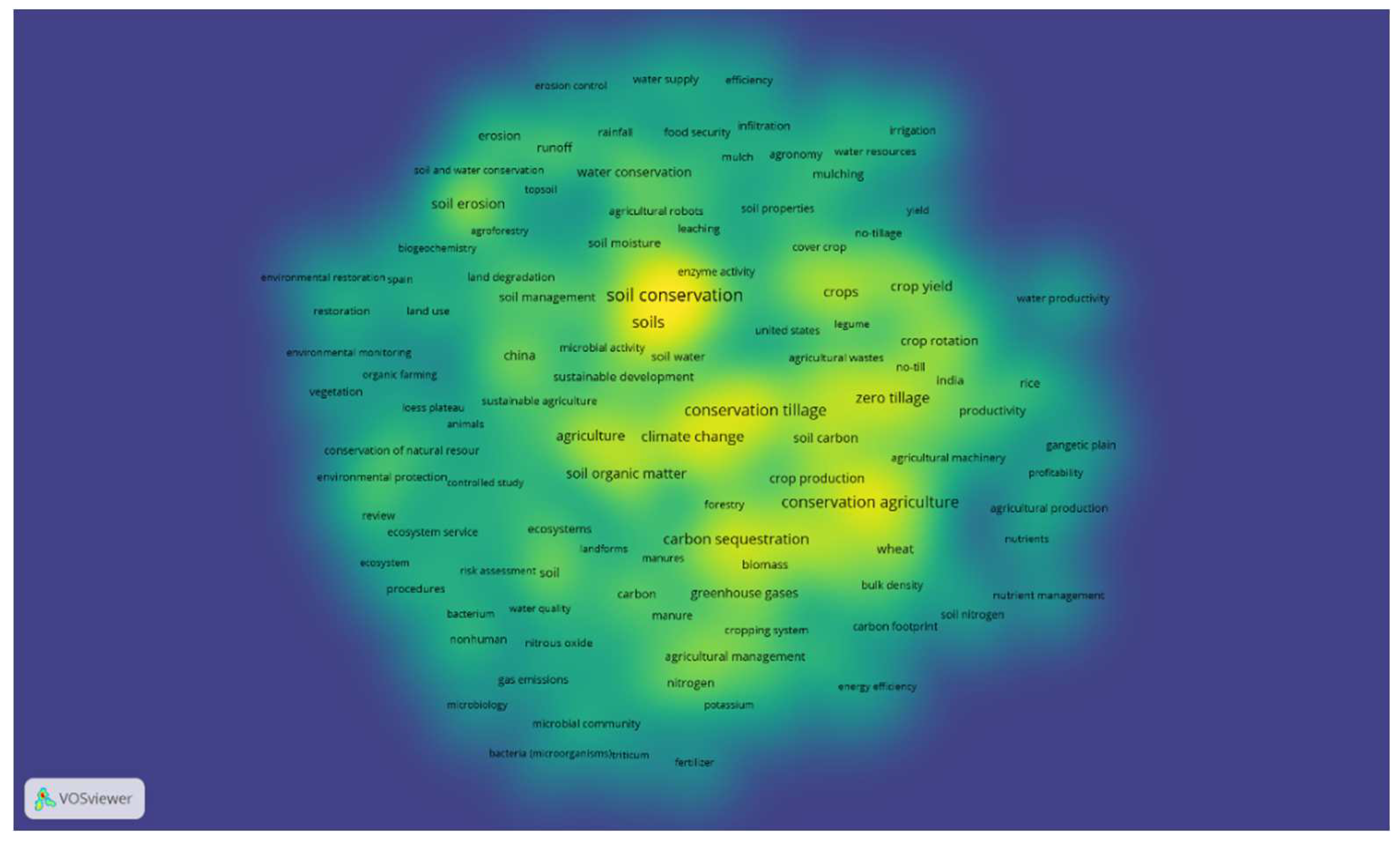
VOSviewer Density Visualization data indicated that for the “Conservation - Climatic” AND “Straw” query, the most important scientific results are: soil conservation; conservation tillage; agriculture; climate change; carbon sequestration; zero tillage; sustainable development; and microbial activity (Figure 29).
4. Discussion
Our research raised some important keywords, such as:
- ▪
- crop production; system productivity; crop rotation; crop practice; cover crop; crop residue; legume and Brassica napus;
- ▪
- conservation tillage; zero tillage; tillage and no-tillage;
- ▪
- soil; soil property; soil quality; soil management; soil conservation; soil aggregate; soil microorganism; soil pollution; soil remediation; soil organic matter; soil carbon; soil organic carbon; soil amendment; soil erosion; soil degradation; soil ecosystem; soil fertility; soil temperature; soil acidity; soil moisture; aggregates; soil aggregates; porosity; soil depth; topsoil and gangetic plain
- ▪
- rhizosphere and plant roots;
- ▪
- chemistry; metabolism; bulk density; pyrolysis; and bioremediation
- ▪
- nutrients; fertilizers; carbon; carbon sequestration; nitrogen; potassium; phosphorous; heavy metals and cadmium
- ▪
- water conservation; soil water; water supply; runoff and evapotranspiration
- ▪
- biomass; straw; mulch; mulching and residue management;
- ▪
- organic matter; organic compounds; manure; biochar and charcoal;
- ▪
- microbiology; microflora; microbial community; microbial diversity; microbiota; bacteria; microorganisms; fungus; nematoda; proteobacteria and actinobacteria
- ▪
- climate change; global warming; greenhouse gases; carbon dioxide; emission control; gas emissions and drought;
- ▪
- sustainable development; sustainability; ecosystems; food supply; food security; environmental protection; pollution; energy use; environmental restoration, and conservation of natural resources
So far, there is little information available on the impacts of straw grass cropping systems on soil quality. A search for the most important above keywords on Scopus showed that, 36,484; 9,099; and 4,818; documents were found for tillage, no-tillage; and zero tillage, respectively.
Tillage of the soil has been used mainly to prepare a seedbed, reduce weeds and manage crop residues using a variety of systems such as plow, chisel, and disk. Throughout the years, tillage systems have changed as the cost of fuel and labor increased, and new tillage technologies have become available such as direct seeding or the no-till. It is well-known that tillage systems affect soil properties such as temperature, moisture, bulk density, aggregation, organic matter content, and plant properties such as root density [47]. Concerning no-till studies shows that no-till farming increased the soil organic matter and porosity, which led to better water infiltration in semi-arid regions of Spain [48], improved soil structure and water-holding capacity in semi-arid regions of western India [49], improved the soil porosity and water-holding capacity in a semi-arid region of South Africa [50], similarly improved soil moisture and water infiltration into the soil and reduced runoff and erosion [51], in long-term trials in different regions of Morocco the no-till system improved yields and soil stability against climatic hazards [52], and found that no-till systems improved the physical properties of the soil, including an increased soil structure, soil organic matter (SOM) accumulation, water-holding capacity, and reduced erosion in the Merchouch region of northwest Morocco [53].
The literature shows that returning straw to the field, including burying, composting, decomposing agent, and mainly mulching (wheat straw mulch), which is the most economical and accepted method, can avoid the environmental pollution caused by straw burning and accumulation [54]. Moreover, returning straw can also fertilize the soil, decrease the runoff of surface water, improve soil water storage, and prevent soil compaction induced by a single application of chemical fertilizers [55]. Soil organic matter (SOM), soil aggregates, and soil microbes (Proteobacteria, Acidobacteria, and Ascomycota species) play key roles in agriculture soil fertility. Understanding those dynamics, e.g., SOM or soil microbiota, is essential for the sustainability of the agroecosystem. Based on that, research [56] showed that wheat straw incorporation increased the soil SOM and SOM fractions, improved soil physical structure, and enhanced the soil microbial community diversity.
It is well acknowledged that soil tillage practice and straw returning treatment redistribute carbon in soil and promote bacterial biomass. According to Bu et al., [57], tillage practices and straw-returning methods affect topsoil bacterial community and organic matter, whereas a long-term no-tillage and straw retention management enhances soil bacterial community diversity of Proteobacteria and Acidobacteria, and soil properties, e.g., the soil C/N ratio [58]. Straw retention, regardless if the straw remains on the soil surface or is mixed into the soil, has been shown to support soil carbon stocks, improve soil physical, soil structural stability, maintain soil nutrient levels, and alter microbial biomass formation [59,60]. Even more, research showed that crop residue retained in the field, in no-tilled plots, significantly increased total carbon stocks, water aggregate stability, soil bulk density, and penetration resistance [61], whereas tillage decreased the N and K stocks in the surface soil [62]. Overall, long-term monoculture cropping systems decrease soil health, while continuous no-till showed improvements in crop yield and also increased organic matter indicators such as active carbon, respiration, and protein or other soil physical indicators, e.g., the available water capacity, the water stable aggregation, the penetration resistance and water infiltration rate [63].
Globally, the long-term no-till farming challenges crop productivity, soil health, and ecosystem services address the direct effects on crop production and soil health compared to conventional farming practices, such as the loss of fertile topsoil via runoff and erosion or declining soil quality due to soil degradation [64]. On the contrary, studies on plant pathogenic fungi show that the no-till increases significantly in topsoil the soil-borne plant pathogens, e.g., Rhizoctonia solani, as well as the frequency of others, such as Pythium spp., compared with conventional tillage [65]. On that matter, no-till farming probably be unnecessary and not economically feasible on that, we assume that more research is needed. Besides soil tillage practices like conservation tillage which defined as any method of soil cultivation that leaves the previous year's crop residue, conservation agriculture practices and associated ecosystem services showed greater rates of soil organic carbon sequestration in tilled than no-tilled systems [66].
However, several studies [67], showed that soil structure under no-till should be considered carefully before implementation, especially the root and canopy characteristics of the cover crop; the thick rooted cover crops beneficial to soil structural remediation can cause negative effects in soils sensitive to erosion even to water framework and more research is needed.
Leaving straw in the field and the use of cover crops increases organic matter inputs to the soil, besides that in our days; as an environmentally friendly practice, crop straw is widely used to manage soil organic carbon sequestration and, together with cover crop and tillage practices, may interact positively and promote sustainable and environmentally friendly agricultural practices [68].
Several studies confirm that no-till soils have the potential to hold higher water content than soils under conventional tillage, meaning that conserving water could be important for crop growth and maintenance during periods of drought [67].
It is widely acknowledged that Conservation Agriculture with water management, with the improves overall land husbandry for rainfed and irrigated production, but little is known about the evapotranspiration and how this affect soil health in general. According to USGS [https://www.usgs.gov/special-topics/water-science-school/science/evapotranspiration-and-water-cycle], evapotranspiration includes water evaporation into the atmosphere from the soil surface, evaporation from the capillary fringe of the groundwater table, and evaporation from water bodies on land. Evapotranspiration also includes transpiration, which is the water movement from the soil to the atmosphere via plants.
According to FAO Irrigation and Drainage Paper No. 56 [69], evaporation and transpiration occur simultaneously and there is no easy way of distinguishing between the two processes. Apart from the water availability in the topsoil, the evaporation from a cropped soil is mainly determined by the fraction of the solar radiation reaching the soil surface. This fraction decreases over the growing period as the crop develops and the crop canopy shades more and more of the ground area. When the crop is small, water is predominately lost by soil evaporation, but once the crop is well developed and completely covers the soil, transpiration becomes the main process. So, ‘Evapotranspiration,’ - both actual evaporation and transpiration - is probably a base term for sustainable agricultural production which contribute to increased water and nutrient use efficiency and to improved and sustained crop production.
The bulk density is one of the most common physical parameters to assess the impact of tillage and crop residue on agricultural soils, as it is an indicator of the soil’s compaction and reflects the soil’s ability to function in terms of structural support, water and solute movement, and soil aeration [70]. High bulk densities cause root impedance and lead to poor crop emergence. According to Li et al. [71] in a global meta-analysis, the no-tillage system increased bulk density with residue retention of 1.4% compared with the conventional tillage. So, traditional agriculture through conventional tillage provokes a significant alteration of physical soil properties, such as degradation of the structure, compaction problems, soil bulk density, etc. and Conservation Agriculture can reduce these negative effects of conventional tillage [70,71].
Moreover, soil structure is a significant parameter in the sustainability of agroecosystems, and aggregate stability against different stresses (rainfall, tillage, etc.) is a useful measure to define soil structural stability [70]. According to Six et al., [72], the soil organic matter (SOM) promotes macroaggregate formation; meanwhile, soil aggregates improve the physical protection of organic matter.
So, under conservation agriculture, higher aggregate stability is obtained as a result of the interaction of various factors, such as (i) the retention of organic residue on the soil surface, which protects soil aggregates from raindrop impact and avoids soil compaction [73]; (ii) decomposing organic matter which increases the aggregation process [74]; (iii) no soil disturbance which increases fungal populations and the persistence of root networks that encourage the stability of the aggregates [75]; and (iv) reducing soil disturbance in conservation agriculture systems which allows the development of a more stable soil structure than in conventional tillage systems [76].
5. Conclusions
This research tries, based mainly on a bibliography study, to determine the important effects of straw residue on soil's physical, chemical, and biological properties and the environment in general. Moreover, in this bibliography study, we used detailed findings related to indicators of soil quality, the conservation agriculture and no-till practices.
Supplementary Materials
The following supporting information can be downloaded at the website of this paper posted on Preprints.org.
Author Contributions
Conceptualization, S.L. and I.V.; investigation, M.V and I.V.; writing—original draft preparation, M.V. and I.V.; writing—review and editing, S.L. and I.V.; visualization, S.L. and I.V.; supervision, I.V. All authors have read and agreed to the published version of this manuscript.
Funding
This research received no external funding.
Data Availability Statement
Not applicable.
Acknowledgments
Not applicable.
Conflicts of Interest
The authors declare no conflict of interest.
References
- United Nations Report. Department of economic and social affairs. World population projected to reach 9.8 billion in 2050 and 11.2 billion in 2100. Assessed in 07/23. Available online: https://www.un.org/en/desa/world-population-projected-reach-98-billion-2050-and-112-billion-2100.
- Banerjee, S.; Walder, F.; Büchi, L.; Meyer, M.; Held, A.Y.; Gattinger, A.; Keller, T.; Charles, R.; van der Heijden, M.G.A. Agricultural intensification reduces microbial network complexity and the abundance of keystone taxa in roots. The ISME Journal 2019, 13, 1722–1736. [Google Scholar] [CrossRef] [PubMed]
- Bennett, E.M.; Baird, J.; Baulch, H.; Chaplin-Kramer, R.; Fraser, E.; Loring, P.; Morrison, P.; Parrott, L.; Sherren, K.; Winkler, K.J.; Cimon-Morin, J.; Fortin, M.-J.; Kurylyk, B.L.; Lundholm, J.; Poulin, M.; Rieb, J.T.; Gonzalez, A.; Hickey, G.M.; Humphries, M.; Bahadur, K.; Lapen, D.K.C. Ecosystem services and the resilience of agricultural landscapes, Chapter One. Editor(s): Bohan, D.A.; Vanbergen, A.J. Advances in Ecological Research, 2021, 64, 1-43. Academic Press, ISSN 0065-2504, ISBN 9780128229798. [CrossRef]
- Sahu, G.; Mohanty, S.; Shreya, D. Conservation agriculture-a way to improve soil health. Journal of Experimental Biology and Agricultural Sciences 2020, 8, 355–368. [Google Scholar] [CrossRef]
- Jat, M.L.; Chakraborty, D.; Ladha, J.K.; Rana, D.S.; Gathala, M.K.; McDonald, A.; Gerard, B. Conservation agriculture for sustainable intensification in South Asia. Nature Sustainability 2020, 3, 336–343. [Google Scholar] [CrossRef]
- Goss, M.J.; Carvalho, M.; Brito, I. Functional Diversity of Mycorrhiza and Sustainable Agriculture, Chapter 1 in: Challenges to Agriculture Systems, Editor(s): Goss, M.J.; Carvalho, M.; Brito, I. Academic Press, 2017, 1-14, ISBN 9780128042441. [CrossRef]
- Hossain, A.; Maitra, S.; Ahmed, S.; Mitra, B.; Ahmad, Z.; Garai, S.; Mondal, M.; Adeel, M.; Shankar, T.; Meena, R.S. Legumes for nutrient management in the cropping system, Chapter 6 in: Advances in Legumes for Sustainable Intensification, Editor(s): Meena, R.S.; Kumar, S.; 2022, Academic Press, 93-112, ISBN 9780323857970. [CrossRef]
- Devkota, M.; Singh, Y.; Yigezu, Y.A.; Bashour, I.; Mussadek, R.; Mrabet, R. Conservation Agriculture in the drylands of the Middle East and North Africa (MENA) region: Past trend, current opportunities, challenges and future outlook, Chapter Five in: Advances in Agronomy, Editor(s): Sparks, D.L.; Academic Press, 2022, 172, 253-305, ISSN 0065-2113, ISBN 9780323989534. [CrossRef]
- Rodríguez, C.; Durán-Zuazo, B.; Soriano Rodríguez, V.H.; García-Tejero, M.; Gálvez Ruiz, I.F.; Cuadros Tavira, B. Conservation agriculture as a sustainable system for soil health: A review. Soil Systematic 2022, 6, 87. [Google Scholar] [CrossRef]
- Zulu, S.; Lembe, D.; Magwaza, G.; Nozipho, S.; Motsa, M.; Sithole, N.J.; Ncama, K. Long-term no-till conservation agriculture and nitrogen fertilization on soil micronutrients in a semi-arid region of south Africa. Agronomy 2022, 12, 1411. [Google Scholar] [CrossRef]
- Bazrafkan, K.; Valizadeh, N.; Khannejad, S.; Kianmehr, N.; Bijani, M.; Hayati, D. What drives farmers to use conservation agriculture? Application of mediated protection motivation theory. Frontiers in Psychology 2022, 13, 991323. [Google Scholar] [CrossRef]
- FAO. Conservation agriculture. Conservation agriculture principles. Available online: https://www.fao.org/conservation-agriculture/overview/what-is-conservation-agriculture/en/ (accessed on 17 July 2023).
- FAO. Conservation agriculture. Available online: https://www.fao.org/conservation-agriculture/overview/conservation-agriculture-principles/en/ (accessed on 17 July 2023).
- Gonzalez-Sanchez, E.J.; Veroz-Gonzalez, O.; Blanco-Roldan, G.L.; Marquez-Garcia, F.; Carbonell-Bojollo, R. A renewed view of conservation agriculture and its evolution over the last decade in Spain. Soil and Tillage Research 2015, 146, 204–212. [Google Scholar] [CrossRef]
- González-Sánchez, E.J.; Kassam, A.; Basch, G.; Streit, B.; Holgado-Cabrera, A.; Triviño-Tarradas, P. Conservation agriculture and its contribution to the achievement of agri-environmental and economic challenges in Europe[J]. AIMS Agriculture and Food 2016, 1, 387–408. [Google Scholar] [CrossRef]
- Mahran, S.; Li, G.; Rahim, N.; Tahir, M.M. Sustainable conservation tillage technique for improving soil health by enhancing soil physicochemical quality indicators under wheat mono-cropping system conditions. Sustainability 2021, 13, 8177. [Google Scholar] [CrossRef]
- Pittarello, M.; Dal Ferro, N.; Chiarini, F.; Morari, F.; Carletti, P. Influence of tillage and crop rotations in organic and conventional farming systems on soil organic matter, bulk density and enzymatic activities in a short-term field experiment. Agronomy 2021, 11, 724. [Google Scholar] [CrossRef]
- Çelik, İ.; Günal, H.; Acar, M.; Acir, N.; Barut, Z.B.; Budak, M. Strategic tillage may sustain the benefits of long-term no-till in a vertisol under Mediterranean climate. Soil and Tillage Research 2019, 185, 17–28. [Google Scholar] [CrossRef]
- UC Sustainable Agriculture Research and Education Program, 2017. Conservation Tillage. What is Sustainable Agriculture? UC Division of Agriculture and Natural Resources. Available online: https://sarep.ucdavis.edu/sustainable-ag/conservation-tillage (accessed on 17 July 2023).
- Blanco-Canqui, H.; Ruis, S.J. No-tillage and soil physical environment. Geoderma 2018, 326, 164–200. [Google Scholar] [CrossRef]
- Sadiq, M.; Li, G.; Rahim, N.; Tahir, M.M. Sustainable conservation tillage technique for improving soil health by enhancing soil physicochemical quality indicators under wheat mono-cropping system conditions. Sustainability 2021, 13, 8177. [Google Scholar] [CrossRef]
- Obour, A.K.; Holman, J.D.; Simon, L.M.; Schlegel, A.J. Strategic tillage effects on crop yields, soil properties, and weeds in dryland no-tillage systems. Agronomy 2021, 11, 662. [Google Scholar] [CrossRef]
- Obour, A.K.; Mikha, M.M.; Holman, J.D.; Stahlman, P.W. Changes in soil surface chemistry after fifty years of tillage and nitrogen fertilization. Geoderma 2017, 308, 46–53. [Google Scholar] [CrossRef]
- Schmidt, R.; Gravuer, K.; Bossange, A.V.; Mitchell, J.; Scow, K. Long-term use of cover crops and no-till shift soil microbial community life strategies in agricultural soil. PLoS ONE 2018, 1513, 0192953. [Google Scholar] [CrossRef]
- Dang, Y.P.; Moody, P.W.; Bell, M.J.; Seymour, N.P.; Dalal, R.C.; Freebairn, D.M.; Walker, S.R. Strategic tillage in no-till farming systems in Australia’s northern grains-growing regions: II. Implications for agronomy, soil and environment. Soil and Tillage Research 2015, 152, 115–123. [Google Scholar] [CrossRef]
- Conservation Institute. Soil conservation-What do i need to kno about it? Learn about its importance. Available online: https://www.conservationinstitute.org/soil-conservation/ (accessed on 17 July 2023).
- EOS Data analytics. Soil conservation methods and benefits of implementation. Available online: https://eos.com/blog/soil-conservation/ (accessed on 17 July 2023).
- Vagelas, I.; Leontopoulos, S. Modeling the overdispersion of Pasteuria penetrans endospores. Parasitologia 2022, 2, 206–227. [Google Scholar] [CrossRef]
- Leontopoulos, S.; Vagelas, I.; Gravanis, F.T.; Gowen, S.R. The effect of certain bacteria and fungi on the biology of the root-knot nematode Meloidogyne sp. Mutitrophic Interactions in Soil and Integrated Control IOBC wprs Bulletin 2014, 27, 165–169. [Google Scholar]
- Leontopoulos, S.; Petrotos, K.; Anatolioti, V.; Skenderidis, P.; Tsilfoglou, S.; Vagelas, I. Chemotactic responses of Pseudomonas oryzihabitans and second stage juveniles of Meloidogyne javanica on tomato root tip exudates. International Journal of Food and Biosystems Engineering 2017, 5, 75–100. [Google Scholar]
- Leontopoulos, S.; Petrotos, K.; Anatolioti, V.; Skenderidis, P.; Tsilfoglou, S.; Papaioannou, C.; Kokkora, M.; Vagelas, I. Preliminary studies on mobility and root colonization ability of Pseudomonas oryzihabitans. International Journal of Food and Biosystems Engineering 2017, 3, 73–89. [Google Scholar]
- Leontopoulos, S.; Petrotos, K.; Anatolioti, V.; Skenderidis, P.; Tsilfoglou, S.; Vagelas, I. Effects of cells and cells-free filtrates supernatant solution of Pseudomonas oryzihabitans on root-knot nematodes (Meloidogyne javanica). International Journal of Food and Biosystems Engineering 2017, 6, 23–37. [Google Scholar]
- Naz, M.; López-Sánchez, R.C.; Fuentes-Lara, L.O.; Cabrera-De la Fuente, M.; Benavides-Mendoza, A. Soil health and plant stress mitigation, Chapter 6. Editor(s): Ghorbanpour, M.; Shahid, M.A.; In: Plant Stress Mitigators, Academic Press, 2023, 99-114. ISBN 9780323898713. [CrossRef]
- Lambakis, D.; Skenderidis, P.; Leontopoulos, S. Technologies and extraction methods of polyphenolic compounds derived from pomegranate (Punica granatum) peels. A mini review. Processes 2021, 9, 236. [Google Scholar] [CrossRef]
- Leontopoulos, S.; Skenderidis, P.; Skoufogianni, G. Potential use of medicinal plants as biological crop protection agents. Biomedical Journal of Scientific and Technical Research 2020, 25, 19320–19324. [Google Scholar] [CrossRef]
- Leontopoulos, S.; Skenderidis, P.; Kalorizou, H.; Petrotos, K. Bioactivity potential of polyphenolic compounds in human health and their effectiveness against various food borne and plant pathogens. A review. International Journal of Food and Biosystems Engineering 2017, 7, 1–19. [Google Scholar]
- Sadras, V.; Alston, J.; Aphalo, P.; Connor, D.; Ford-Denison, R.; Fischer, T.; Gray, R.; Hayman, P.; Kirkegaard, J.; Kirchmann, H.; Kropff, M.; Lafitte, H.R.; Langridge, P.; Lenne, J.; Mínguez, M.I.; Passioura, J.; Porter, J.R.; Reeves, T.; Rodriguez, D.; Ryan, M.; Villalobos, F.J.; Wood, D. Making science more effective for agriculture, Chapter Four. Editor(s): Sparks, D.L. In: Advances in Agronomy, Academic Press, 2020, 163, 153-177. ISSN 0065-2113, ISBN 9780128207697. [CrossRef]
- Zhao, Y-H; Wang, N.; Yu, M.-K.; Yu, J.-G.; Xue, L.-H. Rhizosphere and straw return interactively shape rhizosphere bacterial community composition and nitrogen cycling in paddy soil. Frontiers in Microbiology 2022, 13, 945927. [CrossRef]
- Navarro-Noya, Y.E.; Gómez-Acata, S.; Montoya-Ciriaco, N.; Rojas-Valdez, A.; Suárez-Arriaga, M.C.; Valenzuela-Encinas, C.; Jiménez-Bueno, N.; Verhulst, N.; Govaerts, B.; Dendooven, L. Relative impacts of tillage, residue management and crop-rotation on soil bacterial communities in a semi-arid agroecosystem, Soil Biology and Biochemistry 2013, 65, 86-95. ISSN 0038–0717. [CrossRef]
- Kavamura, V.N.; Mendes, R.; Bargaz, A.; Mauchline, T.H. Defining the wheat microbiome: Towards microbiome-facilitated crop production. Computational and Structural Biotechnology Journal 2021, 19, 1200–1213. [Google Scholar] [CrossRef] [PubMed]
- Dubey, A.; Malla, M.A.; Khan, F.; Chowdary, K.; Yadav, S.; Kumar, A.; Sharma, S.; Khare, P.K.; Khan, M.L. Soil microbiome: A key player for conservation of soil health under changing climate. Biodiversity Conservatory 2019, 28, 2405–2429. [Google Scholar] [CrossRef]
- Glaze-Corcoran, S.; Hashemi, M.; Sadeghpour, A.; Jahanzad, E.; Afshar, R.K.; Liu, X.; Herbert, S.J. Understanding intercropping to improve agricultural resiliency and environmental sustainability, Chapter Five. Editor(s): Sparks, D.L. In: Advances in Agronomy, Academic Press, 2020, 162, 199-256. ISSN 0065-2113, ISBN 9780128207673. [CrossRef]
- Beals, K.K. Making sense of soil microbiome complexity for plant and ecosystem function in a changing World. PhD diss., University of Tennessee, 2022. Available online: https://trace.tennessee.edu/utk_graddiss/7139.
- Yuan, L.; Gao, Y.; Mei, Y. Liu, J.; Kalkhajeh, Y.K.; Hu, H.; Huang, J. Effects of continuous straw returning on bacterial community structure and enzyme activities in rape-rice soil aggregates. Scientific Reports 2023, 13, 2357. [Google Scholar] [CrossRef] [PubMed]
- Wahdan, S.F.M.; Ji, L.; Schädler, M.; Wu, Y.-T.; Sansupa, Ch.; Tanunchai, B.; Buscot, F.; Purahong, W. Future climate conditions accelerate wheat straw decomposition alongside altered microbial community composition, assembly patterns, and interaction networks. ISME Journal 2023, 17, 238–251. [Google Scholar] [CrossRef]
- Vagelas, I.; Leontopoulos, S. A Bibliometric analysis and a citation mapping process for the role of soil recycled organic matter and microbe interaction due to climate change using scopus database. AgriEngineering 2023, 5, 581–610. [Google Scholar] [CrossRef]
- El Mekkaoui, A.; Moussadek, R.; Mrabet, R.; Douaik, A.; El Haddadi, R.; Bouhlal, O.; Elomari, M.; Ganoudi, M.; Zouahri, A.; Chakiri, S. Effects of tillage systems on the physical properties of soils in a semi-arid region of Morocco. Agriculture 2023, 13, 10–3390. [Google Scholar] [CrossRef]
- Fernández-Ugalde, O.; Virto, I.; Bescansa, P.; Imaz, M.; Enrique, A.; Karlen, D.L. No-tillage improvement of soil physical quality in calcareous, degradation-prone, semiarid soils. Soil & Tillage Research 2009, 106, 29–35. [Google Scholar] [CrossRef]
- Kurothe, R.S.; Kumar, G.; Singh, R.K.; Hb, S.; Tiwari, S.; Vishwakarma, A.K.; Sena, D.R.; Pande, V.C. Effect of tillage and cropping systems on runoff, soil loss and crop yields under semiarid rainfed agriculture in India. Soil & Tillage Research 2014, 140, 126–134. [Google Scholar] [CrossRef]
- Mtyobile, M.; Muzangwa, L.; Mnkeni, P.N. Tillage and crop rotation effects on soil carbon and selected soil physical properties in a Haplic Cambisol in Eastern Cape, South Africa. Soil and Water Research 2019, 15, 47–54. [Google Scholar] [CrossRef]
- Ouattara, B.; Coulibaly, K.T.; Kohio, E.N.; Doumbia, S.; Ouédraogo, S.; Nacro, H.B. Effets du Système de Culture sous couverture Végétale (SCV) sur les flux hydriques d’un sol ferrugineux à l’Ouest du Burkina Faso. International Journal of Biological and Chemical Sciences 2018, 12, 1770–1783. [Google Scholar] [CrossRef]
- Laghrour, M.; Moussadek, R.; Mrabet, R.; Dahan, R.; El-Mourid, M.; Zouahri, A.; Mekkaoui, M. Long and midterm effect of conservation agriculture on soil properties in dry areas of Morocco. Applied and Environmental Soil Science 2016, 2016, 6345765. [Google Scholar] [CrossRef]
- Mekkaoui, A.E.; Moussadek, R.; Mrabet, R.; Chakiri, S.; Douaik, A.; Ghanimi, A.; Zouahri, A. The conservation agriculture in northwest of Morocco (Merchouch area): The impact of no-till systems on physical properties of soils in semi-arid climate. E3S Web of Conferences 2021. [Google Scholar] [CrossRef]
- Goodman, B.A. Utilization of waste straw and husks from rice production: A review. Journal of Bioresources and Bioproducts 2020, 5, 143–162. [Google Scholar] [CrossRef]
- Kalkhajeh, Y.K.; He, Z.; Yang, X.; Lu, Y.; Zhou, J.; Gao, H.; Ma, C. Co-application of nitrogen and straw-decomposing microbial inoculant enhanced wheat straw decomposition and rice yield in a paddy soil. Journal of Agriculture and Food Research 2021, 4, 100134. [Google Scholar] [CrossRef]
- Zheng, B.; Chen, P.; Du, Q.; Yang, H.; Luo, K.; Wang, X.; Yang, F.; Yong, T.; Yang, W. Soil organic matter, aggregates, and microbial characteristics of intercropping soybean under straw incorporation and N input. Agriculture 2022, 12, 1409. [Google Scholar] [CrossRef]
- Bu, R.; Ren, T.; Lei, M.; Liu, B.; Li, X.; Cong, R.; Yangyang, Z.; Lu, J. Tillage and straw-returning practices effect on soil dissolved organic matter, aggregate fraction and bacteria community under rice-rice-rapeseed rotation system. Agriculture, Ecosystems & Environment 2020, 287, 106681. [Google Scholar] [CrossRef]
- Luo, Y.; Iqbal, A.; He, L.; Zhao, Q.; Wei, S.; Ali, I.; Ullah, S.; Yan, B.; Jiang, L. Long-term no-tillage and straw retention management enhances soil bacterial community diversity and soil properties in southern China. Agronomy 2020, 10, 1233. [Google Scholar] [CrossRef]
- Moebius-Clune, B.N.; Es, H.V.; Idowu, O.J.; Schindelbeck, R.R.; Moebius-Clune, D.J.; Wolfe, D.W.; Abawi, G.S.; Thies, J.E.; Gugino, B.K.; Lucey, R.F. Long-term effects of harvesting maize Stover and tillage on soil quality. Soil Science Society of America Journal 2008, 72, 960–969. [Google Scholar] [CrossRef]
- Laird, D.A.; Chang, C. Long-term impacts of residue harvesting on soil quality. Soil & Tillage Research 2013, 134, 33–40. [Google Scholar] [CrossRef]
- Villamil, M.B.; Little, J.; Nafziger, E.D. Corn residue, tillage, and nitrogen rate effects on soil properties. Soil & Tillage Research 2015, 151, 61–66. [Google Scholar] [CrossRef]
- Villamil, M.B.; Nafziger, E.D. Corn residue, tillage, and nitrogen rate effects on soil carbon and nutrient stocks in Illinois. Geoderma 2015, 253, 61–66. [Google Scholar] [CrossRef]
- Nunes, M.R.; van Es, H.M.; Schindelbeck, R.R.; Ristow, A.; Ryan, M.R. No-till and cropping system diversification improve soil health and crop yield. Geoderma 2018, 328, 30–43. [Google Scholar] [CrossRef]
- Jayaraman, S.; Dalal, R.C. No-till farming: Prospects, challenges – productivity, soil health, and ecosystem services. Soil Research 2022, 60, 435–441. [Google Scholar] [CrossRef]
- Sumner, D.R.; Dowler, C.C.; Johnson, A.W.; Baker, S.H. Conservation tillage and seedling diseases in cotton and soybean double-cropped with Triticale. Plant Disease 1995, 79, 372–375. [Google Scholar] [CrossRef]
- Horwath, W.R.; Kuzyakov, Y. The potential for soils to mitigate climate change through carbon sequestration. Developments in Soil Science 2018, 35, 61–92. [Google Scholar] [CrossRef]
- Skaalsveen, K.; Ingram, J.; Clarke, L.E. The effect of no-till farming on the soil functions of water purification and retention in north-western Europe: A literature review. Soil and Tillage Research 2019, 189, 98–109. [Google Scholar] [CrossRef]
- Wanic, M.; Żuk-Gołaszewska, K.; Orzech, K. Catch crops and the soil environment – a review of the literature. Journal of Elementology 2018, 24, 31–45. [Google Scholar] [CrossRef]
- Allen, R.G.; Smith, M.; Pereira, L.S.; Raes, D.; Wright, J.L. Revised FAO procedures for calculating evapotranspiration: Irrigation and drainage paper No. 56 with Testing in Idaho. 2001. [CrossRef]
- Cárceles Rodríguez, B.; Durán-Zuazo, V.H.; Soriano Rodríguez, M.; García-Tejero, I.F.; Gálvez Ruiz, B.; Cuadros Tavira, S. Conservation agriculture as a sustainable system for soil health: A review. Soil Systems 2022, 6, 87. [Google Scholar] [CrossRef]
- Li, Y.; Li, Z.; Cui, S.; Jagadamma, S.; Zhang, Q. Residue retention and minimum tillage improve physical environment of the soil in croplands: A global meta-analysis. Soil and Tillage Research 2019, 194, 104292. [Google Scholar] [CrossRef]
- Six, J.; Bossuyt, H.; DeGryze, S.; Denef, K. A history of research on the link between (micro)aggregates, soil biota, and soil organic matter dynamics. Soil and Tillage Research 2004, 79, 7–31. [Google Scholar] [CrossRef]
- Cherubin, M.R.; Oliveira, D.M.; Feigl, B.J.; Pimentel, L.G.; Lisboa, I.P.; Gmach, M.R.; Varanda, L.L.; Morais, M.C.; Satiro, L.S.; Popin, G.V.; Paiva, S.R.; Santos, A.K.; Vasconcelos, A.L.; Melo, P.L.; Cerri, C.E.; Cerri, C.C. Crop residue harvest for bioenergy production and its implications on soil functioning and plant growth: A review. Scientia Agricola 2018, 75, 255–272. [Google Scholar] [CrossRef]
- Murphy, B.W. Impact of soil organic matter on soil properties—A review with emphasis on Australian soils. Soil Research 2015, 53, 605–635. [Google Scholar] [CrossRef]
- Wang, Y.; Xu, J.; Shen, J.; Luo, Y.; Scheu, S.; Ke, X. Tillage, residue burning and crop rotation alter soil fungal community and water-stable aggregation in arable fields. Soil and Tillage Research 2010, 107, 71–79. [Google Scholar] [CrossRef]
- Azooz, R.; Arshad, M. Soil infiltration and hydraulic conductivity under long-term no-tillage and conventional tillage systems. Canadian Journal of Soil Science 1996, 76, 143–152. [Google Scholar] [CrossRef]
Figure 1.
Flow diagram for mapping studies using selection criteria (keywords).
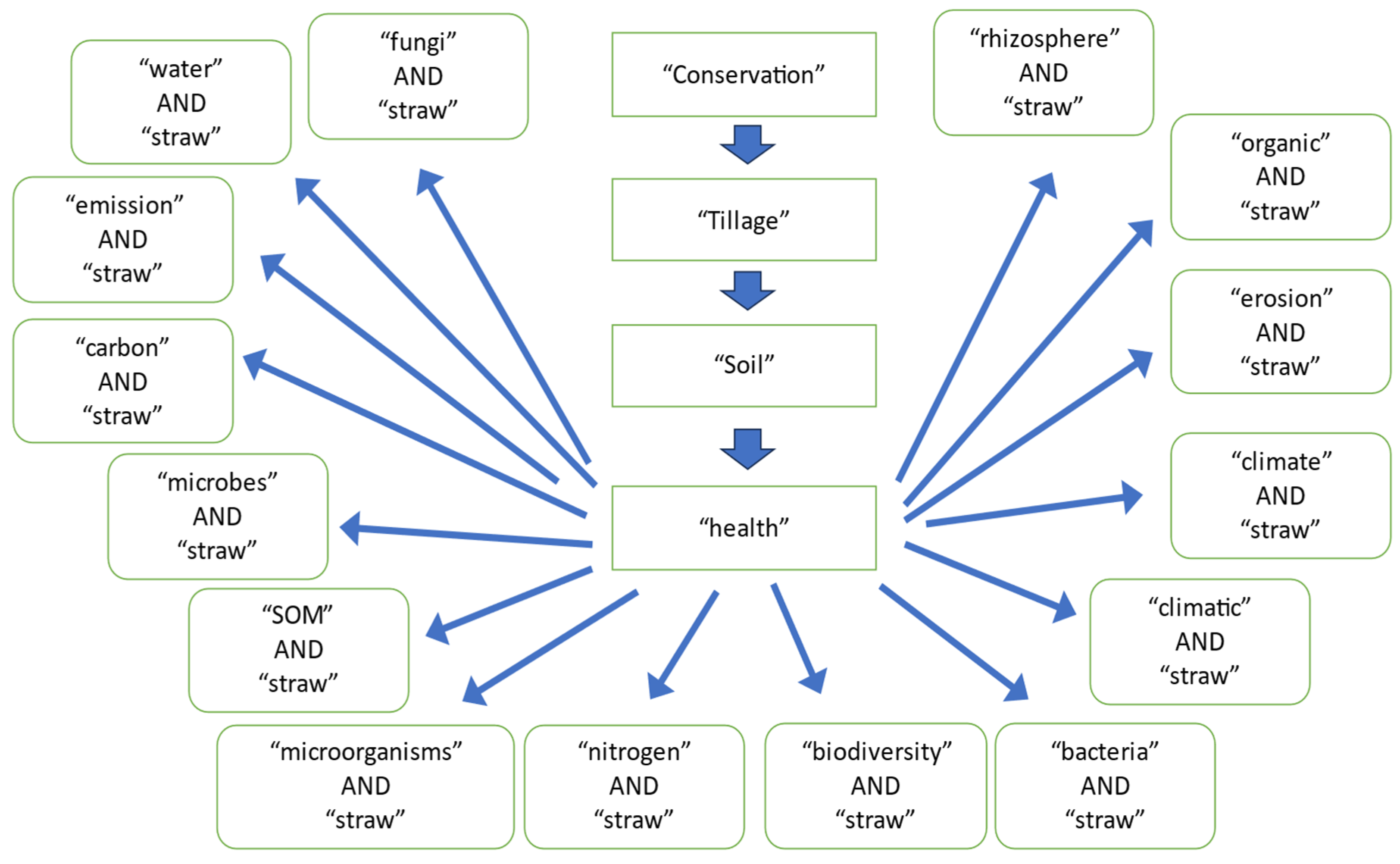
Figure 2.
Bibliographic map based on Bibliographic Data type of VOSviewer software. Results were obtained with the VOSviewer software based on bibliographic data for the “Conservation - Climate” AND “Straw” query. Supported read data were from Scopus (a) and Web of Science (b) bibliographic database files.
Figure 2.
Bibliographic map based on Bibliographic Data type of VOSviewer software. Results were obtained with the VOSviewer software based on bibliographic data for the “Conservation - Climate” AND “Straw” query. Supported read data were from Scopus (a) and Web of Science (b) bibliographic database files.
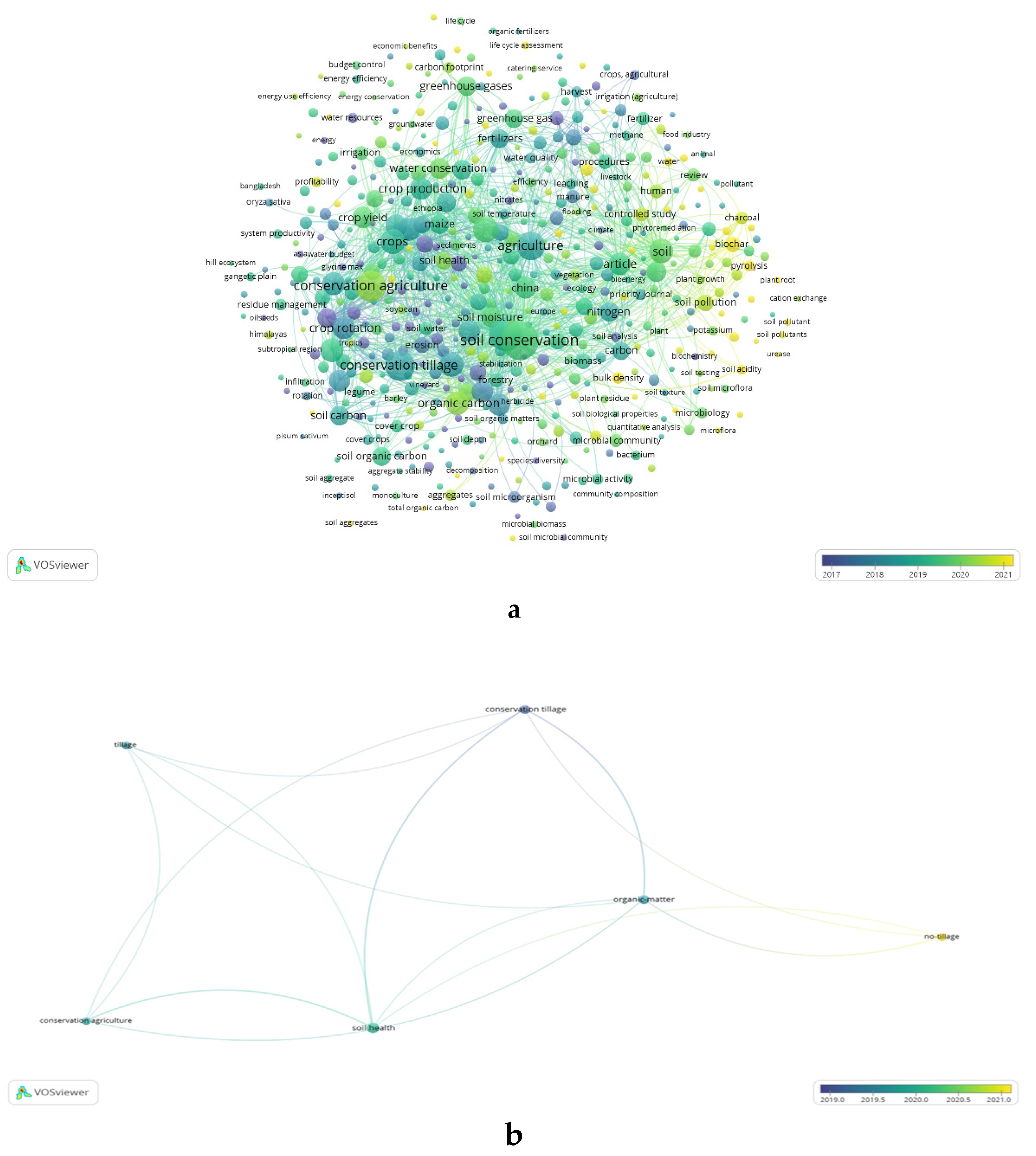
Figure 3.
Bibliographic map based on Text Data type of VOSviewer software. Results were obtained with the VOSviewer software based on bibliographic data for the “Conservation - Climate” AND “Straw” query. Supported read data were from Scopus (a) and Web of Science (b) bibliographic database files.
Figure 3.
Bibliographic map based on Text Data type of VOSviewer software. Results were obtained with the VOSviewer software based on bibliographic data for the “Conservation - Climate” AND “Straw” query. Supported read data were from Scopus (a) and Web of Science (b) bibliographic database files.
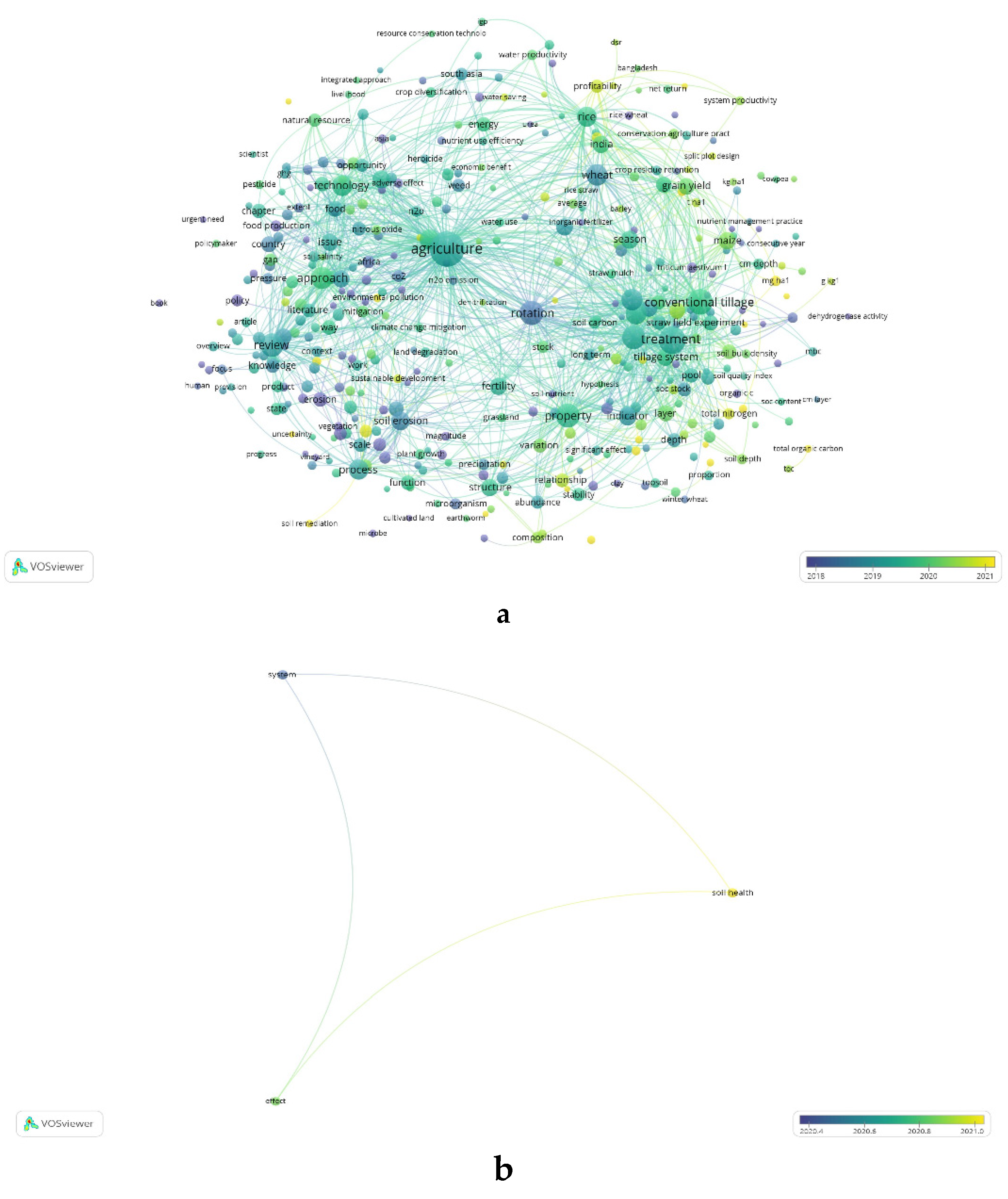
Figure 4.
Flow diagram of studies identified based on Scopus bibliographic database files, including results (count numbers marked by bold format) for the selective criteria (keywords, e.g., “nitrogen”).
Figure 4.
Flow diagram of studies identified based on Scopus bibliographic database files, including results (count numbers marked by bold format) for the selective criteria (keywords, e.g., “nitrogen”).
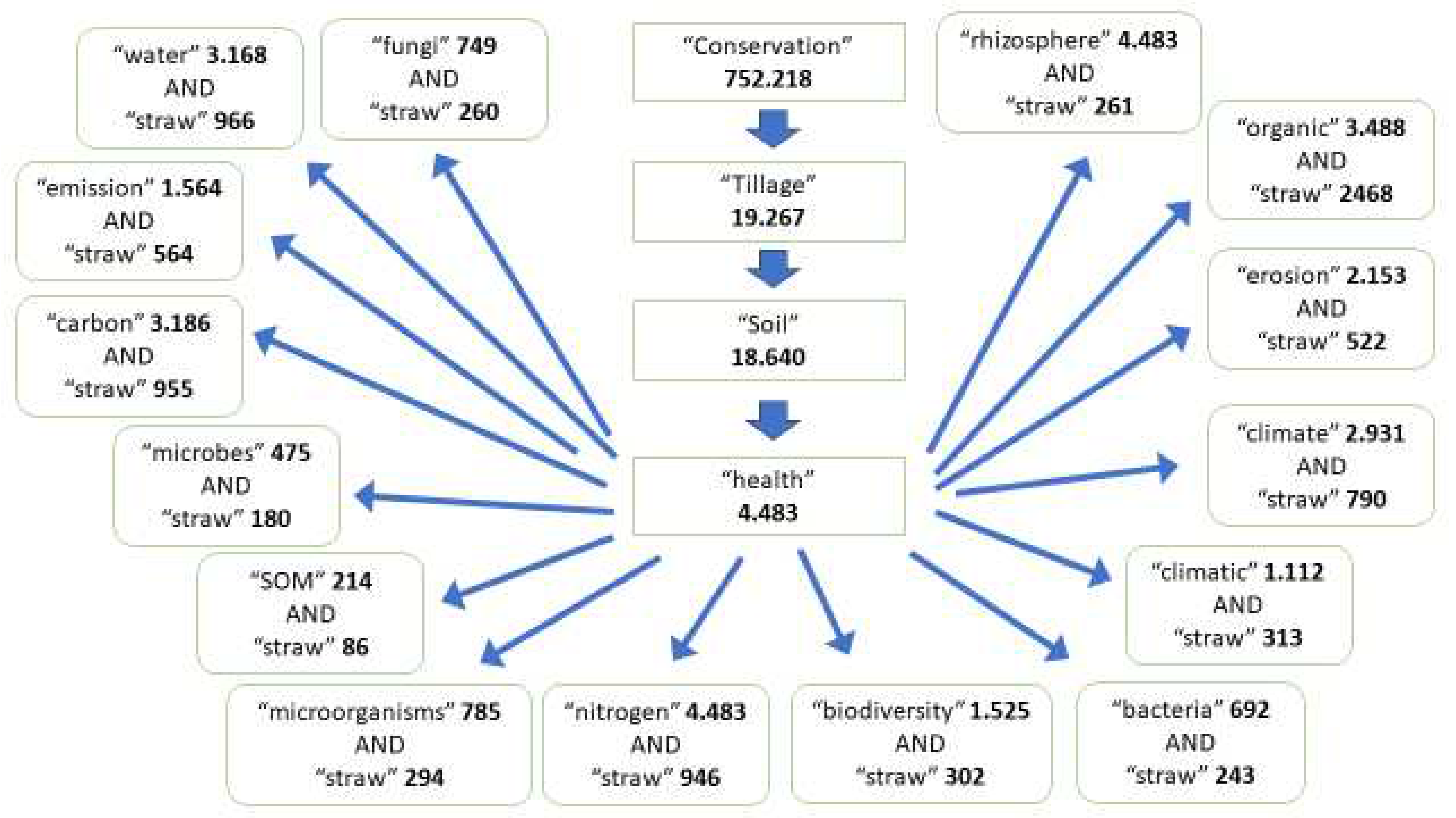
Figure 5.
Flow diagram of studies identified based on Web of Science bibliographic database files, including results (count numbers marked by bold format) for the selective criteria (keywords, e.g., “nitrogen”).
Figure 5.
Flow diagram of studies identified based on Web of Science bibliographic database files, including results (count numbers marked by bold format) for the selective criteria (keywords, e.g., “nitrogen”).
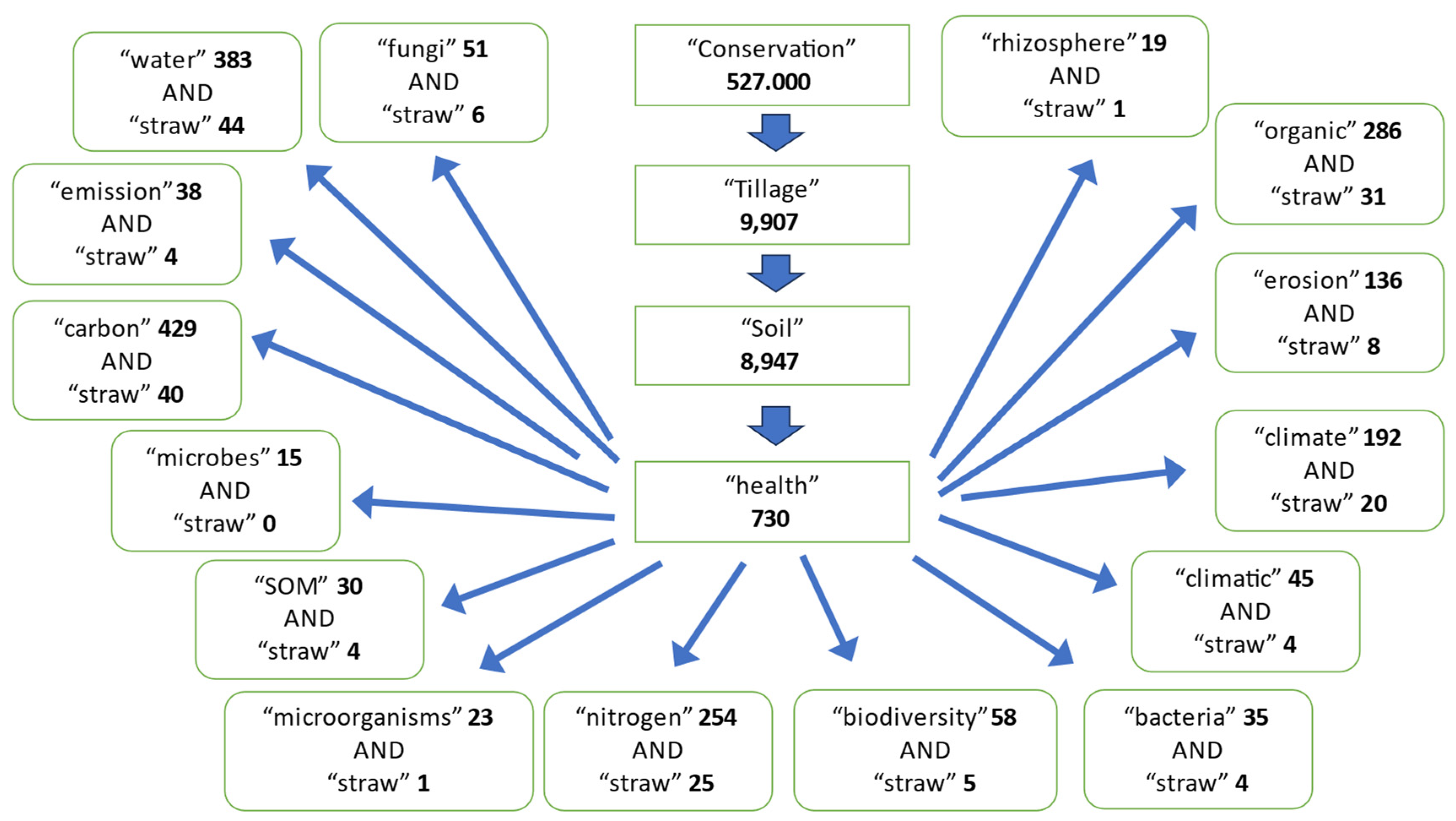
Figure 6.
Bibliographic map based on Network Visualization type. Results were obtained with the VOSviewer software based on bibliographic data for the “Conservation - Nitrogen” AND “Straw” query.
Figure 6.
Bibliographic map based on Network Visualization type. Results were obtained with the VOSviewer software based on bibliographic data for the “Conservation - Nitrogen” AND “Straw” query.
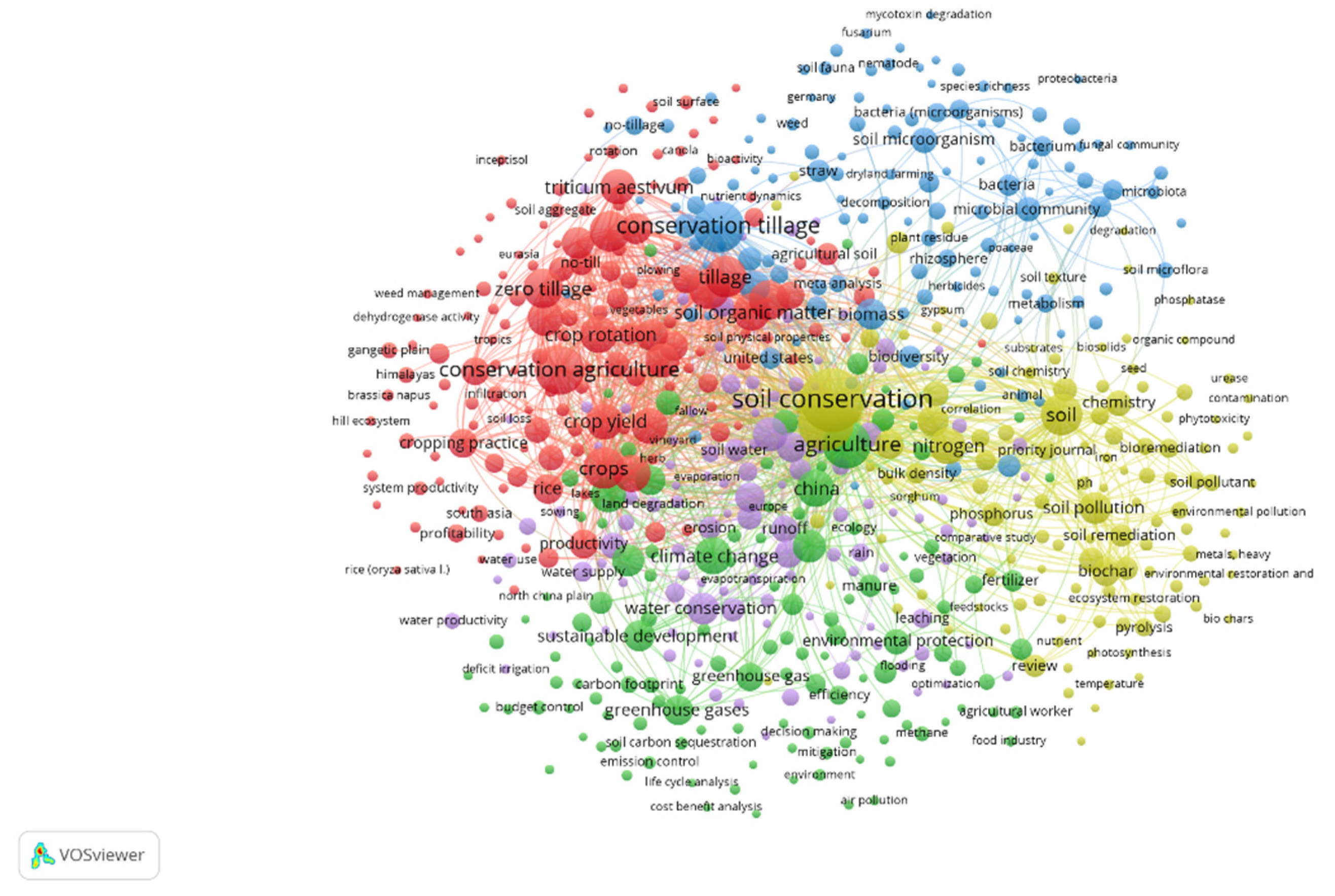
Figure 7.
Bibliographic map based on Overlay Visualization type. Results were obtained with the VOSviewer software based on bibliographic data for the “Conservation - Nitrogen” AND “Straw” query.
Figure 7.
Bibliographic map based on Overlay Visualization type. Results were obtained with the VOSviewer software based on bibliographic data for the “Conservation - Nitrogen” AND “Straw” query.
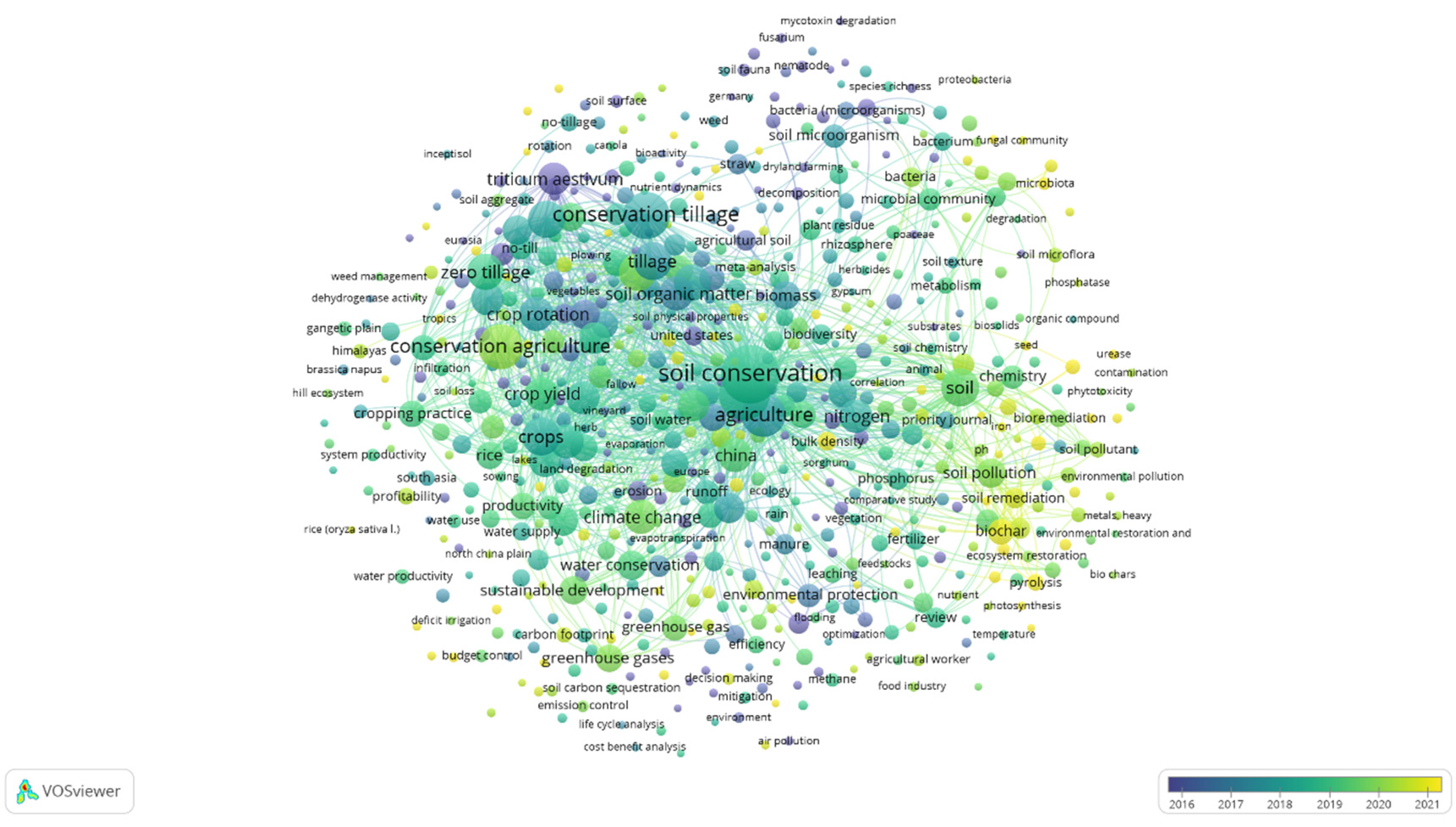
Figure 8.
Bibliographic map based on Density Visualization type. Results were obtained with the VOSviewer software based on bibliographic data for the “Conservation - Nitrogen” AND “Straw” query.
Figure 8.
Bibliographic map based on Density Visualization type. Results were obtained with the VOSviewer software based on bibliographic data for the “Conservation - Nitrogen” AND “Straw” query.
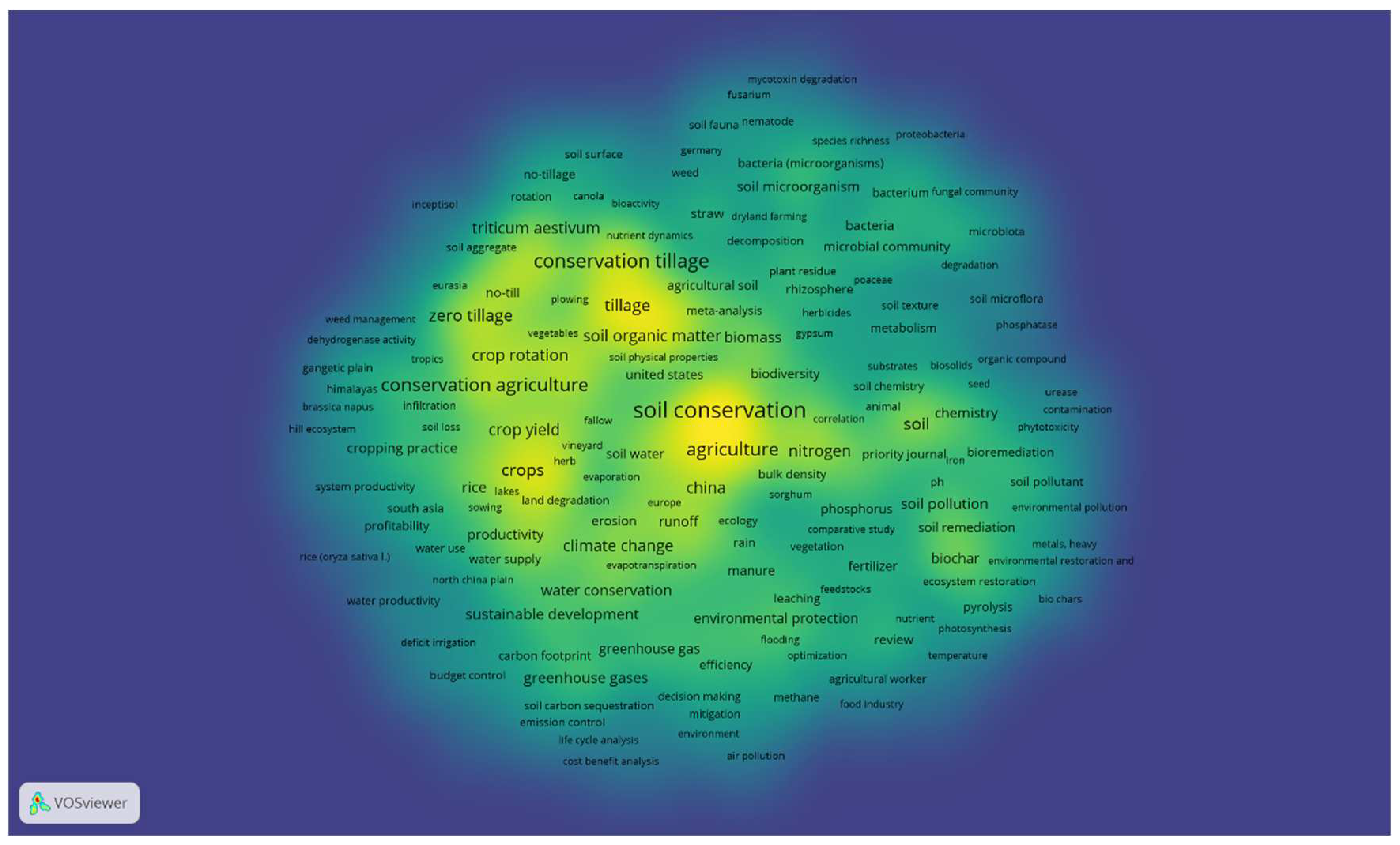
Figure 9.
Bibliographic map based on Network Visualization type. Results were obtained with the VOSviewer software based on bibliographic data for the “Conservation - Rhizosphere” AND “Straw” query.
Figure 9.
Bibliographic map based on Network Visualization type. Results were obtained with the VOSviewer software based on bibliographic data for the “Conservation - Rhizosphere” AND “Straw” query.
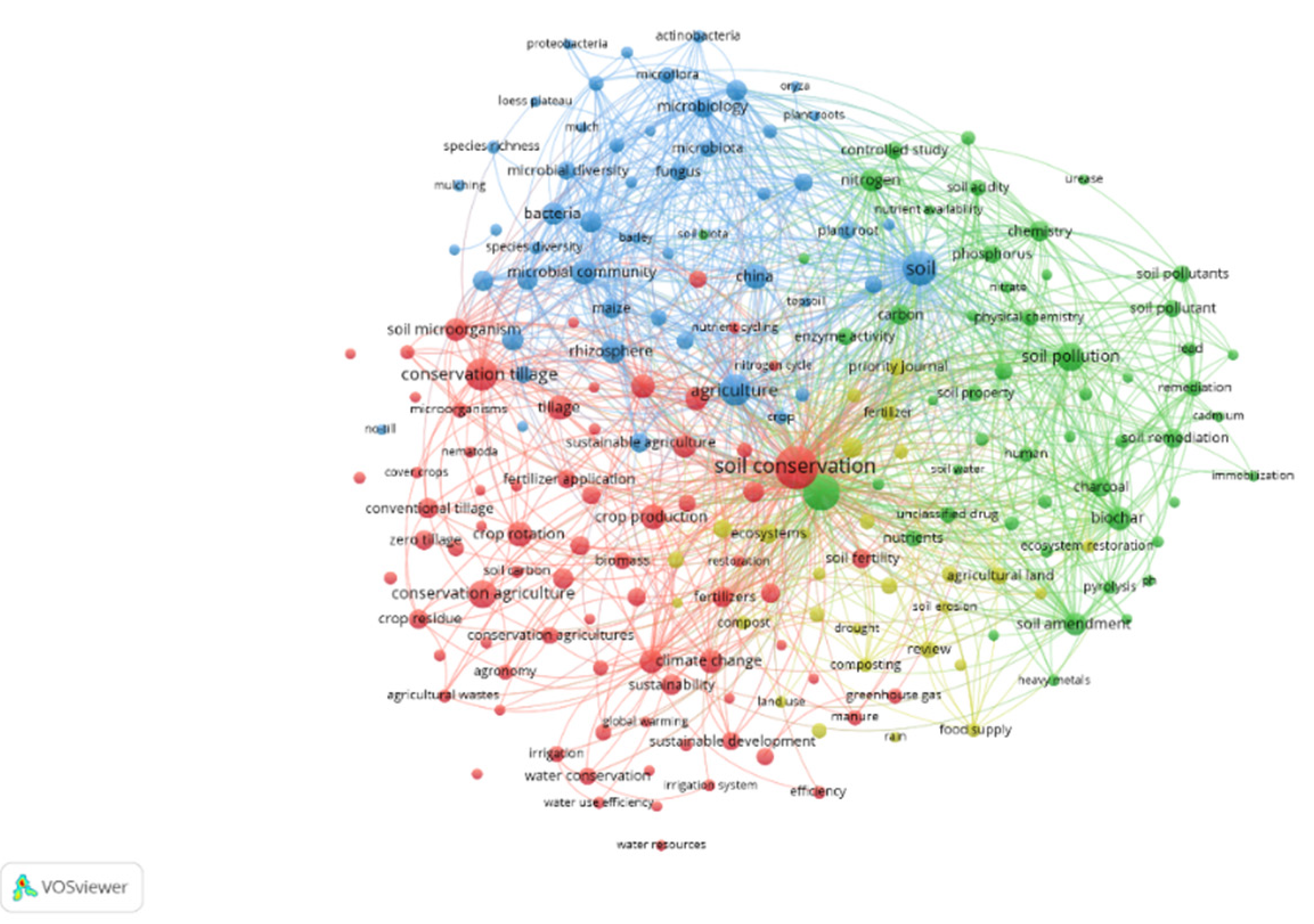
Figure 10.
Bibliographic map based on Overlay Visualization type. Results were obtained with the VOSviewer software based on bibliographic data for the “Conservation - Rhizosphere” AND “Straw” query.
Figure 10.
Bibliographic map based on Overlay Visualization type. Results were obtained with the VOSviewer software based on bibliographic data for the “Conservation - Rhizosphere” AND “Straw” query.
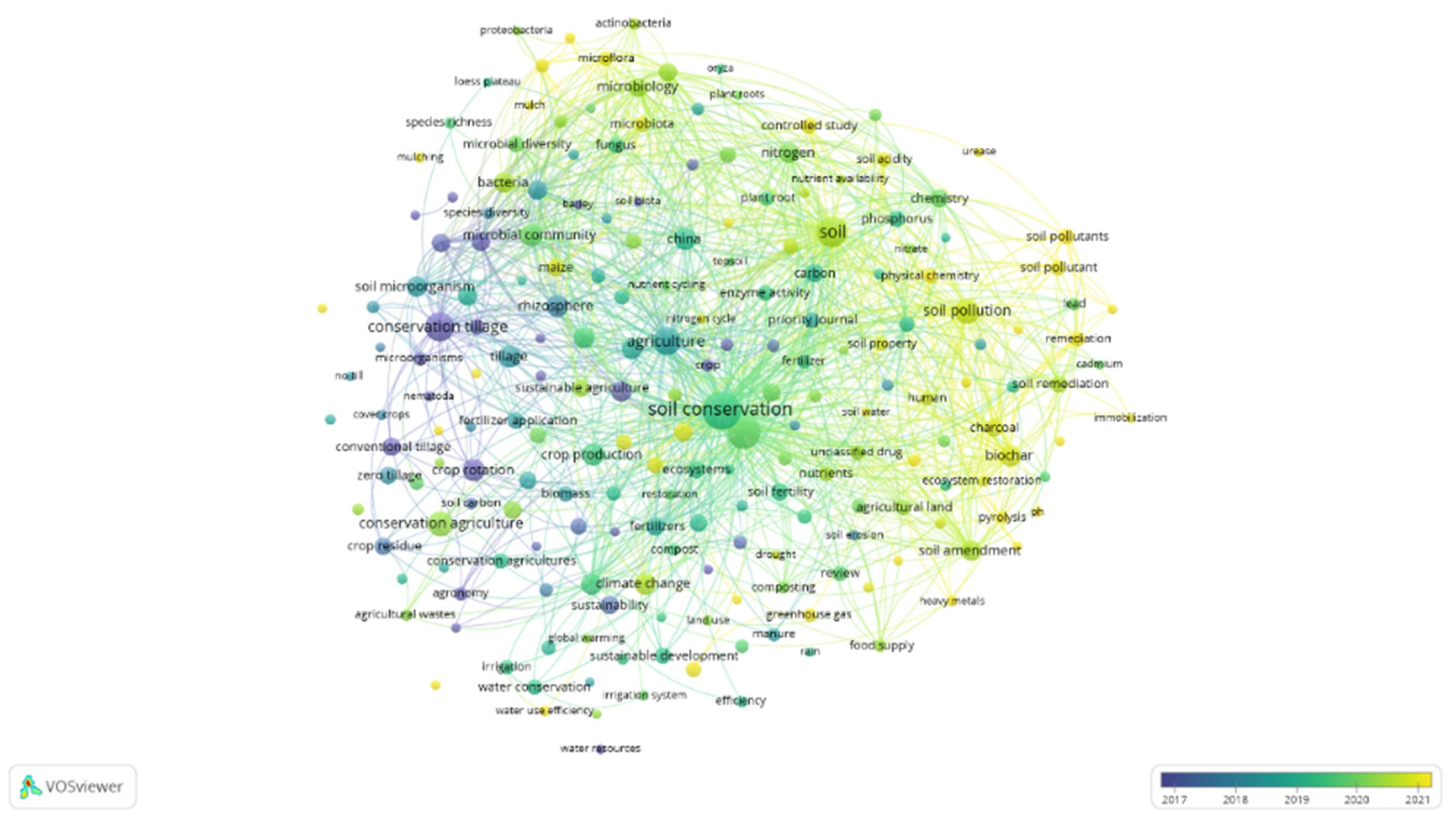
Figure 11.
Bibliographic map based on Density Visualization type. Results were obtained with the VOSviewer software based on bibliographic data for the “Conservation - Rhizosphere” AND “Straw” query.
Figure 11.
Bibliographic map based on Density Visualization type. Results were obtained with the VOSviewer software based on bibliographic data for the “Conservation - Rhizosphere” AND “Straw” query.
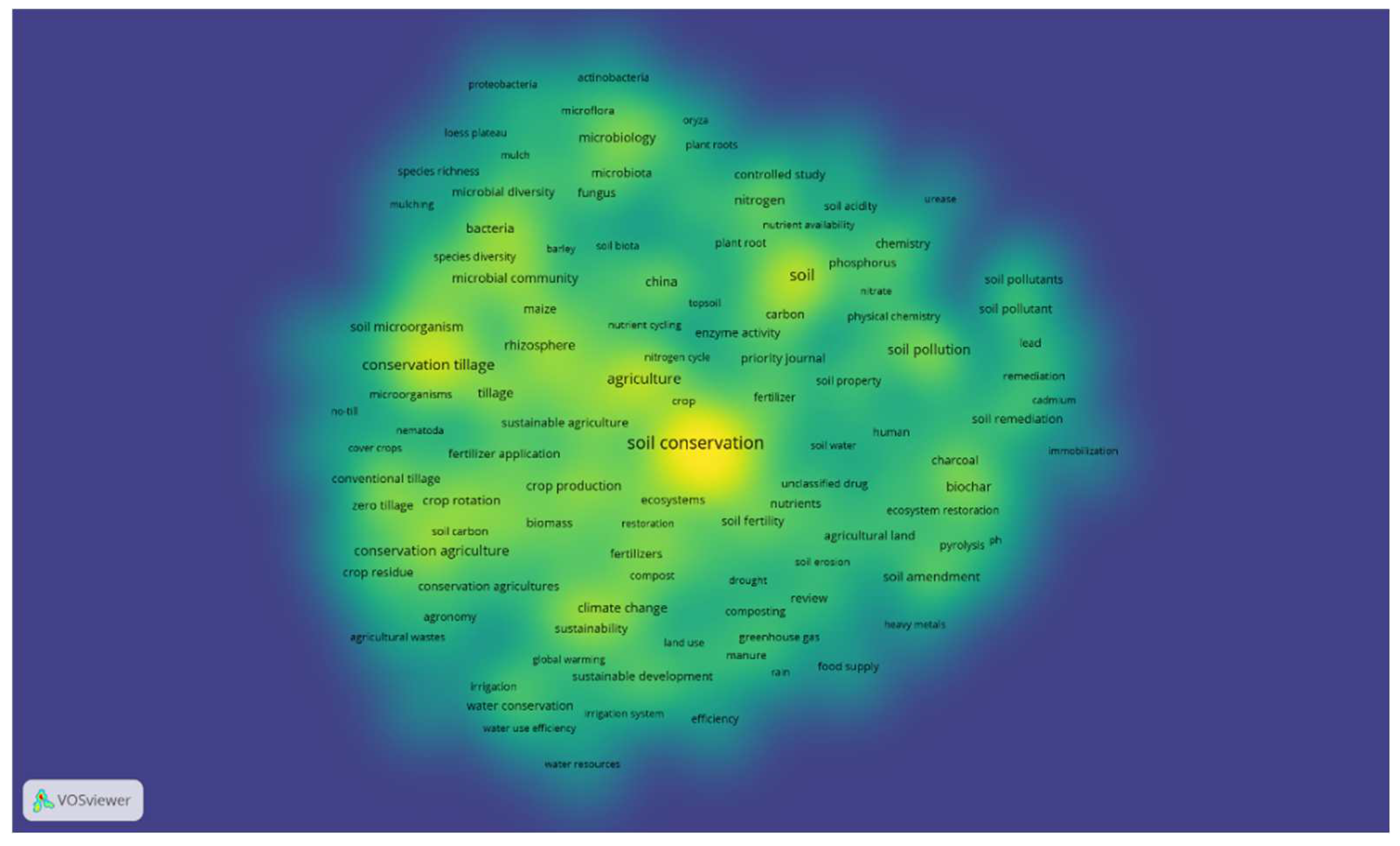
Figure 12.
Bibliographic map based on Network Visualization type. Results were obtained with the VOSviewer software based on bibliographic data for the “Conservation - Carbon” AND “Straw” query.
Figure 12.
Bibliographic map based on Network Visualization type. Results were obtained with the VOSviewer software based on bibliographic data for the “Conservation - Carbon” AND “Straw” query.
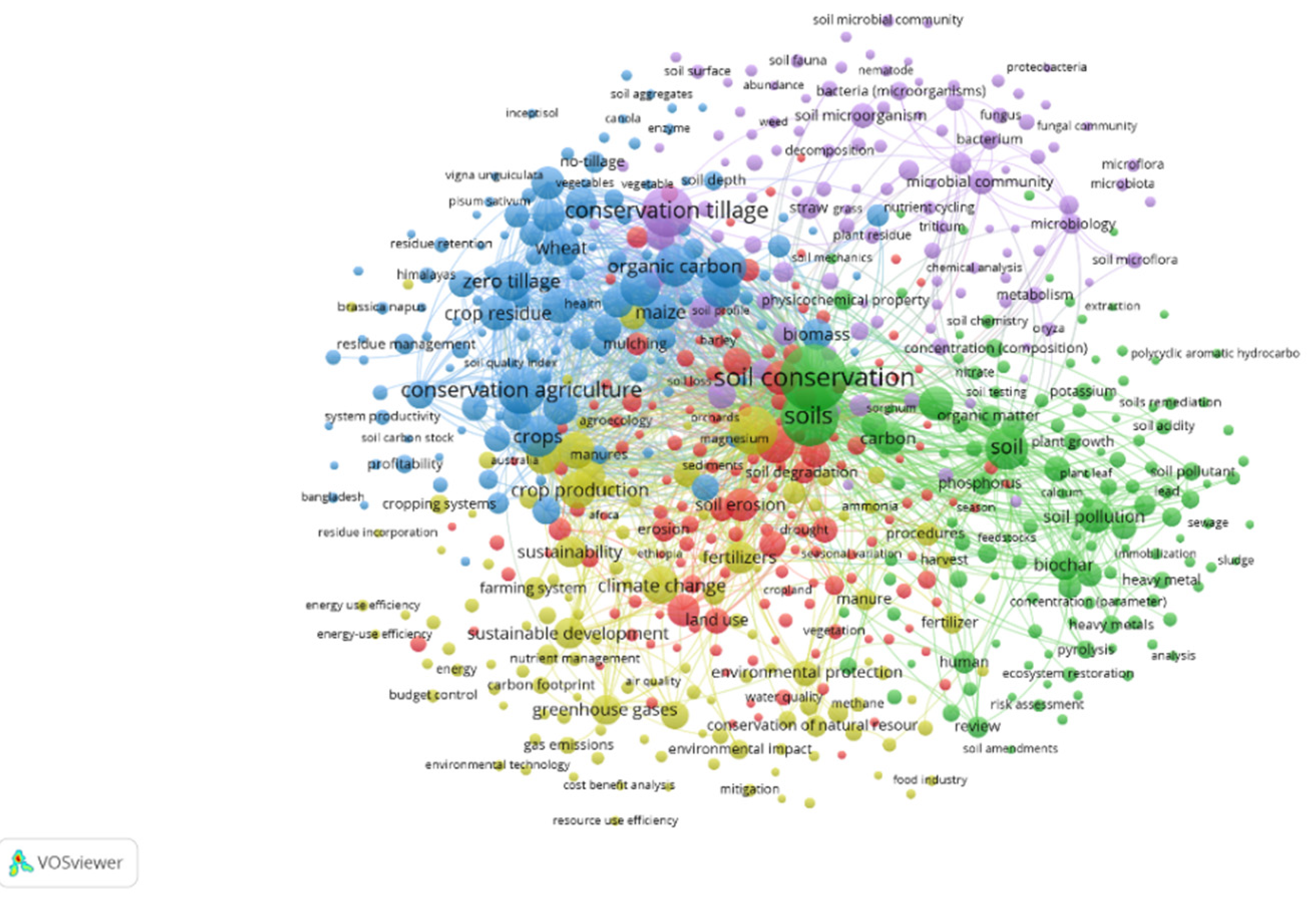
Figure 13.
Bibliographic map based on Overlay Visualization type. Results were obtained with the VOSviewer software based on bibliographic data for the “Conservation - Carbon” AND “Straw” query.
Figure 13.
Bibliographic map based on Overlay Visualization type. Results were obtained with the VOSviewer software based on bibliographic data for the “Conservation - Carbon” AND “Straw” query.
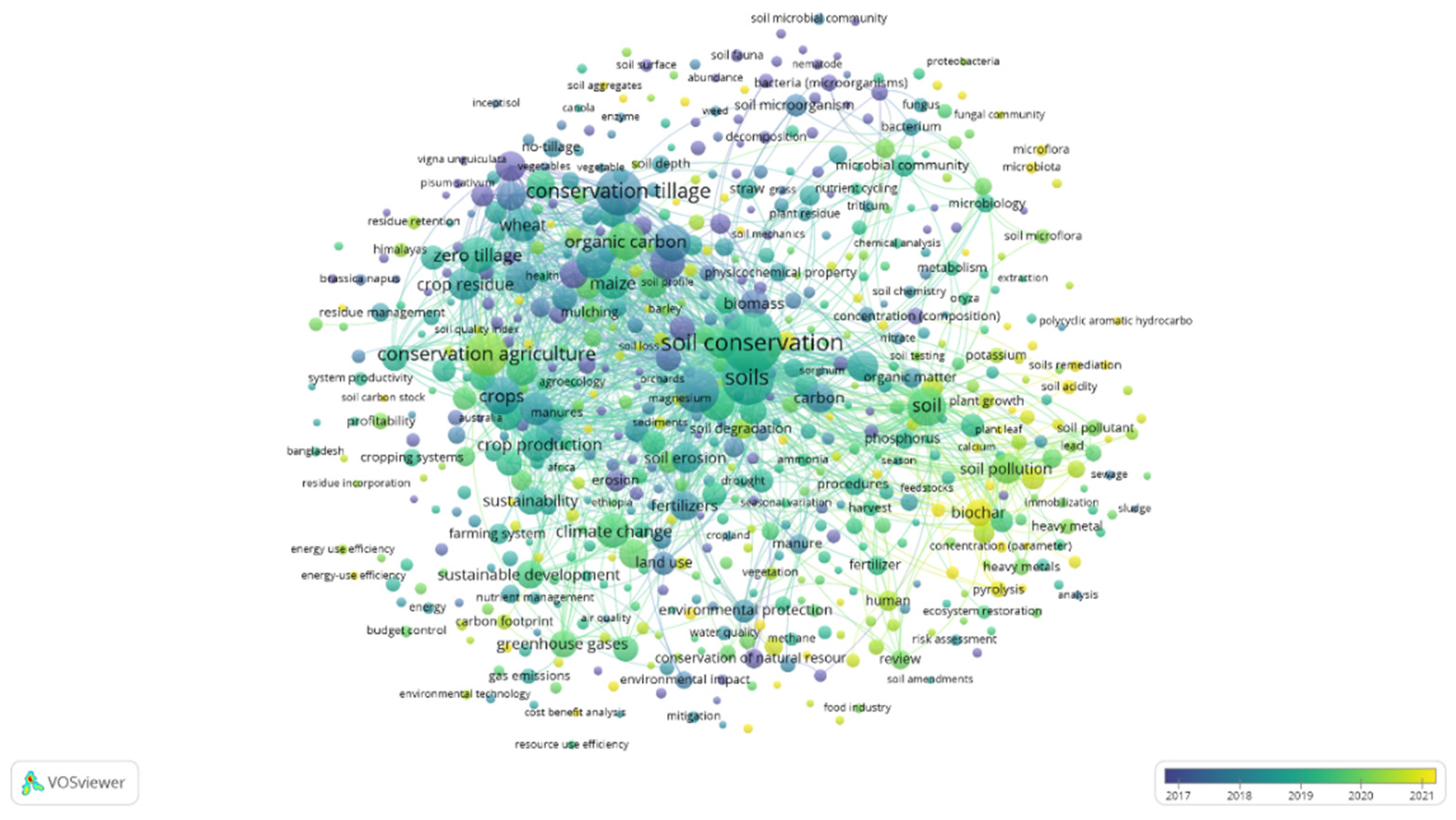
Figure 14.
Bibliographic map based on Density Visualization type. Results were obtained with the VOSviewer software based on bibliographic data for the “Conservation - Carbon” AND “Straw” query.
Figure 14.
Bibliographic map based on Density Visualization type. Results were obtained with the VOSviewer software based on bibliographic data for the “Conservation - Carbon” AND “Straw” query.
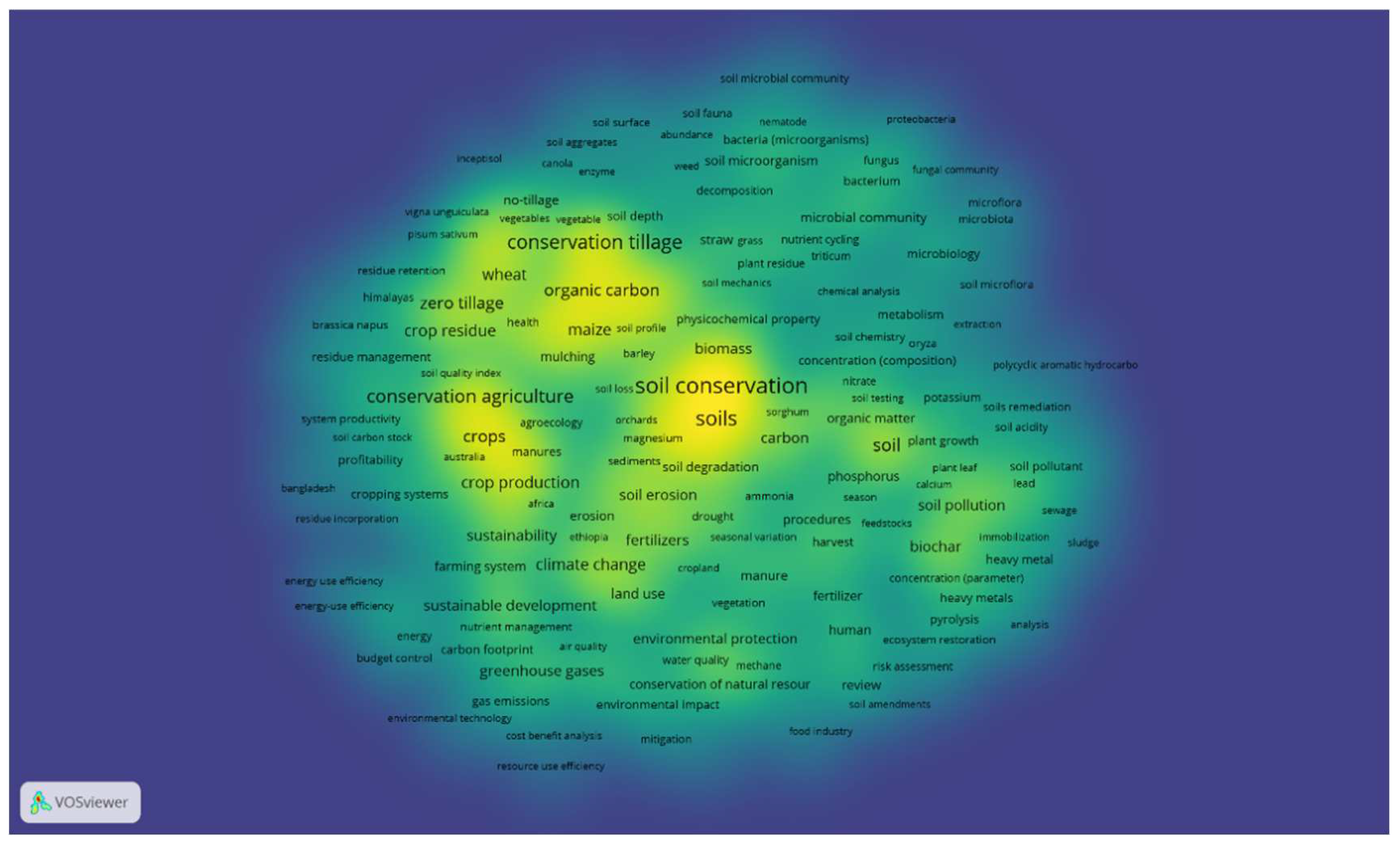
Figure 15.
Bibliographic map based on Network Visualization type. Results were obtained with the VOSviewer software based on bibliographic data for the “Conservation - Water” AND “Straw” query.
Figure 15.
Bibliographic map based on Network Visualization type. Results were obtained with the VOSviewer software based on bibliographic data for the “Conservation - Water” AND “Straw” query.
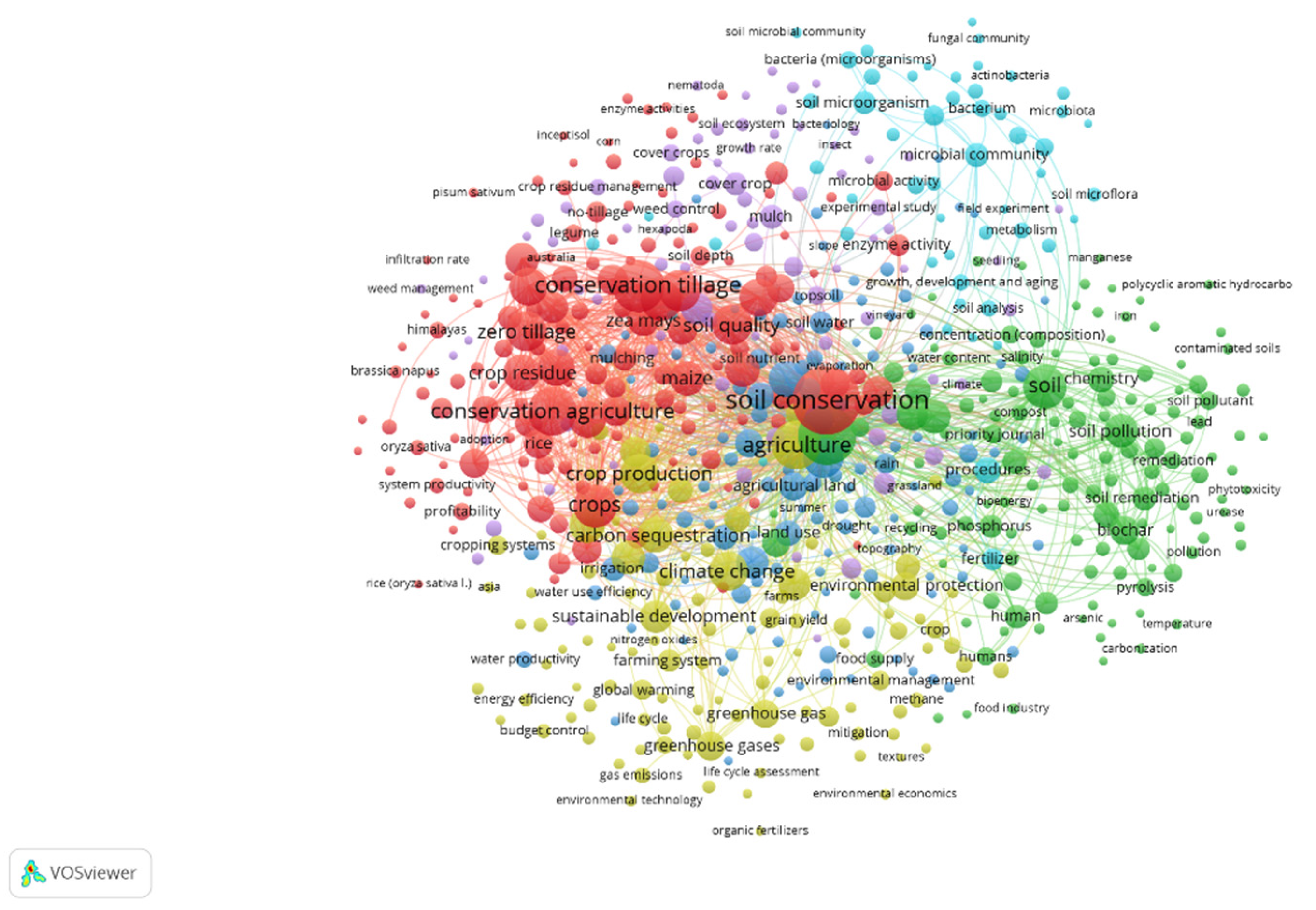
Figure 16.
Bibliographic map based on Overlay Visualization type. Results were obtained with the VOSviewer software based on bibliographic data for the “Conservation - Water” AND “Straw” query.
Figure 16.
Bibliographic map based on Overlay Visualization type. Results were obtained with the VOSviewer software based on bibliographic data for the “Conservation - Water” AND “Straw” query.
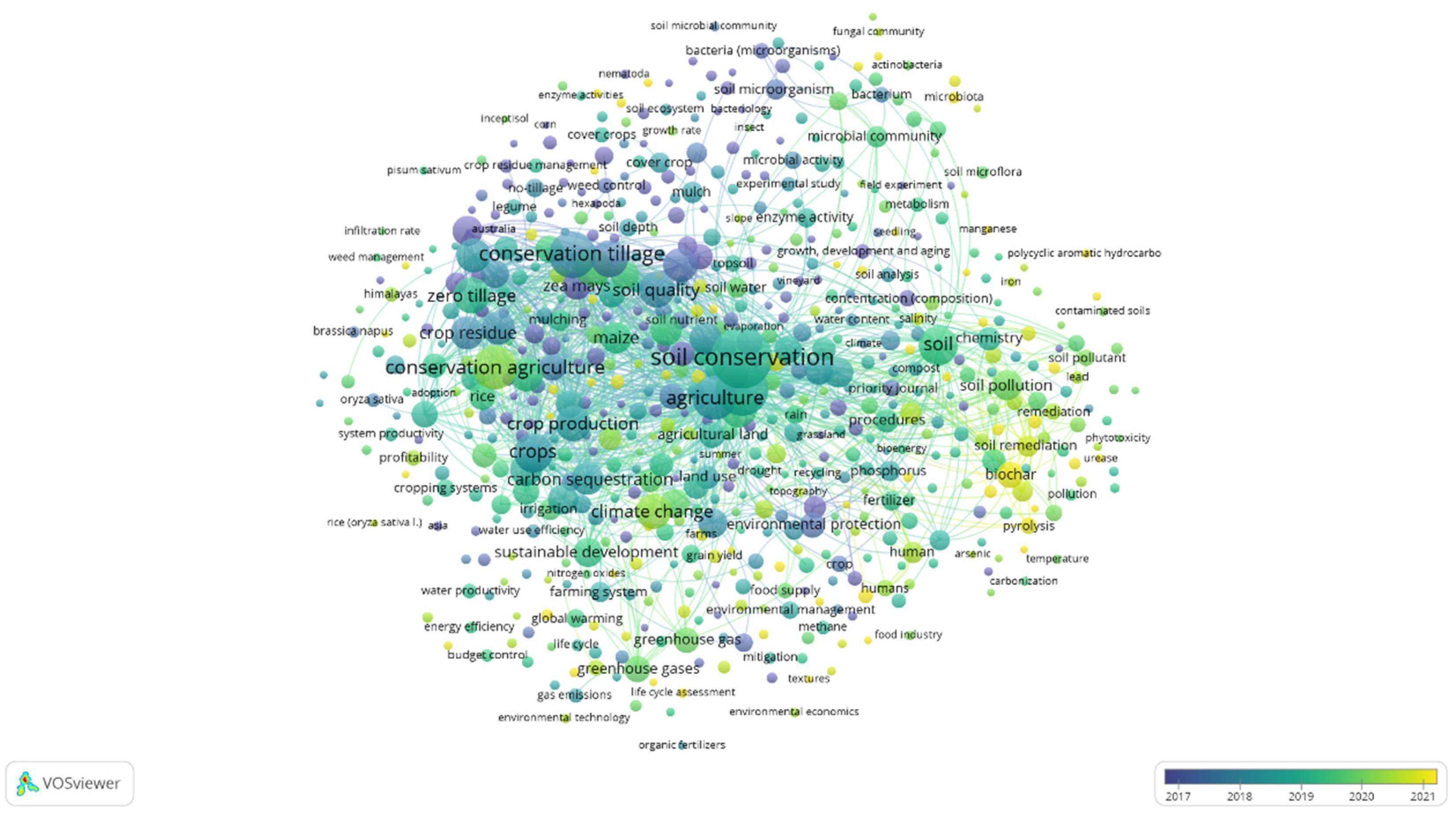
Figure 17.
Bibliographic map based on Density Visualization type. Results were obtained with the VOSviewer software based on bibliographic data for the “Conservation - Water” AND “Straw” query.
Figure 17.
Bibliographic map based on Density Visualization type. Results were obtained with the VOSviewer software based on bibliographic data for the “Conservation - Water” AND “Straw” query.
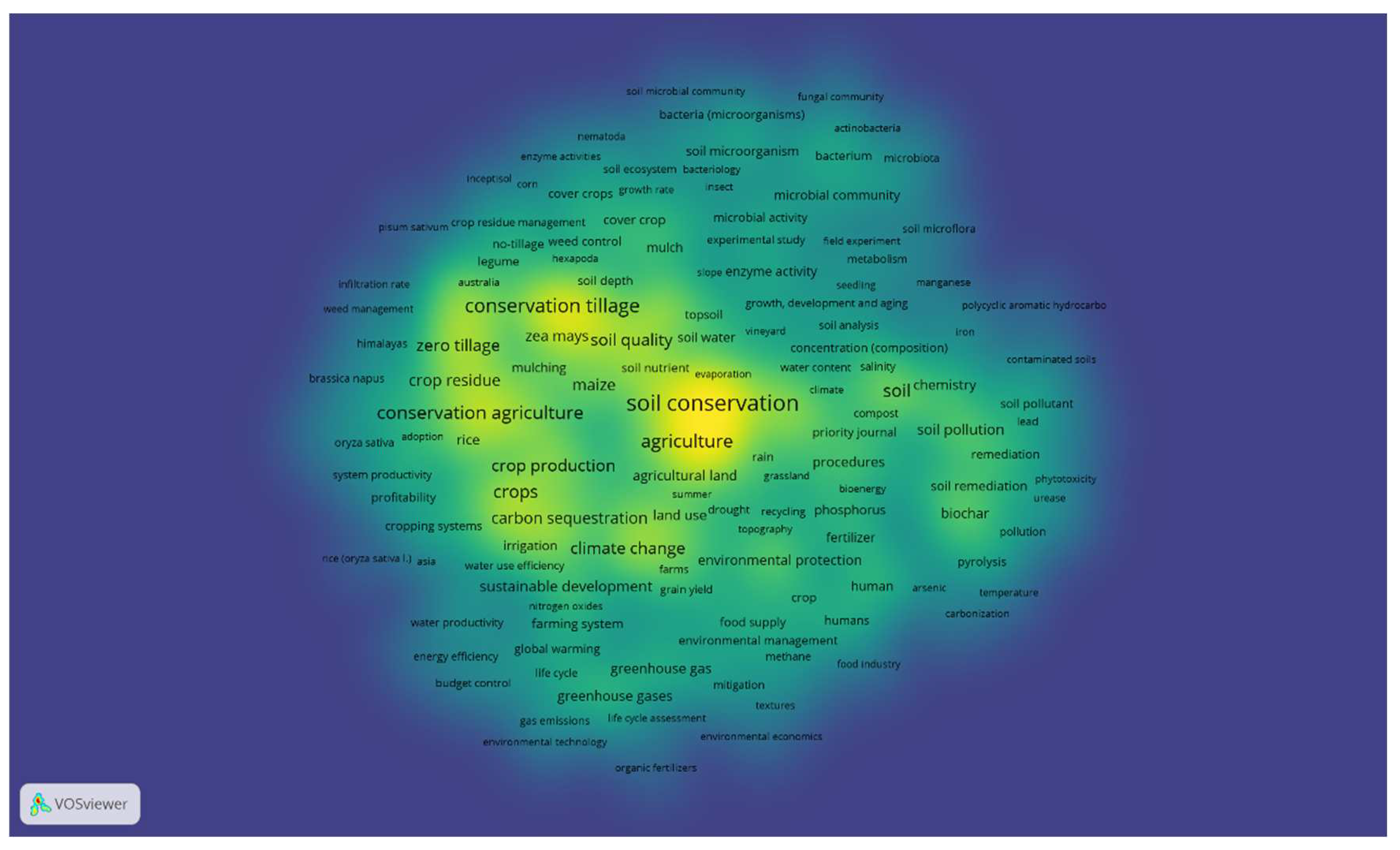
Figure 18.
Bibliographic map based on Network Visualization type. Results were obtained with the VOSviewer software based on bibliographic data for the “Conservation - Climate” AND “Straw” query.
Figure 18.
Bibliographic map based on Network Visualization type. Results were obtained with the VOSviewer software based on bibliographic data for the “Conservation - Climate” AND “Straw” query.
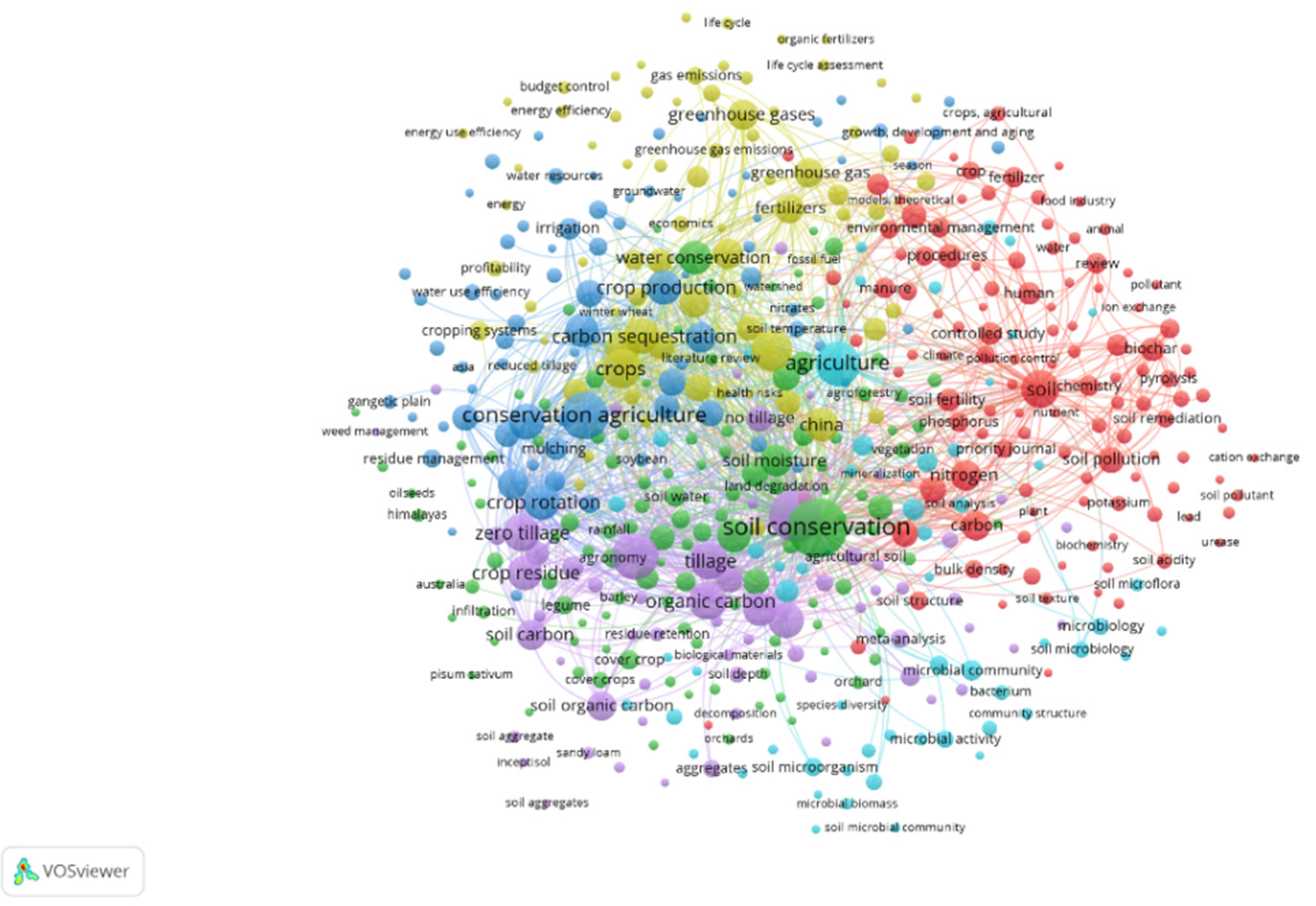
Figure 19.
Bibliographic map based on Overlay Visualization type. Results were obtained with the VOSviewer software based on bibliographic data for the “Conservation - Climate” AND “Straw” query.
Figure 19.
Bibliographic map based on Overlay Visualization type. Results were obtained with the VOSviewer software based on bibliographic data for the “Conservation - Climate” AND “Straw” query.
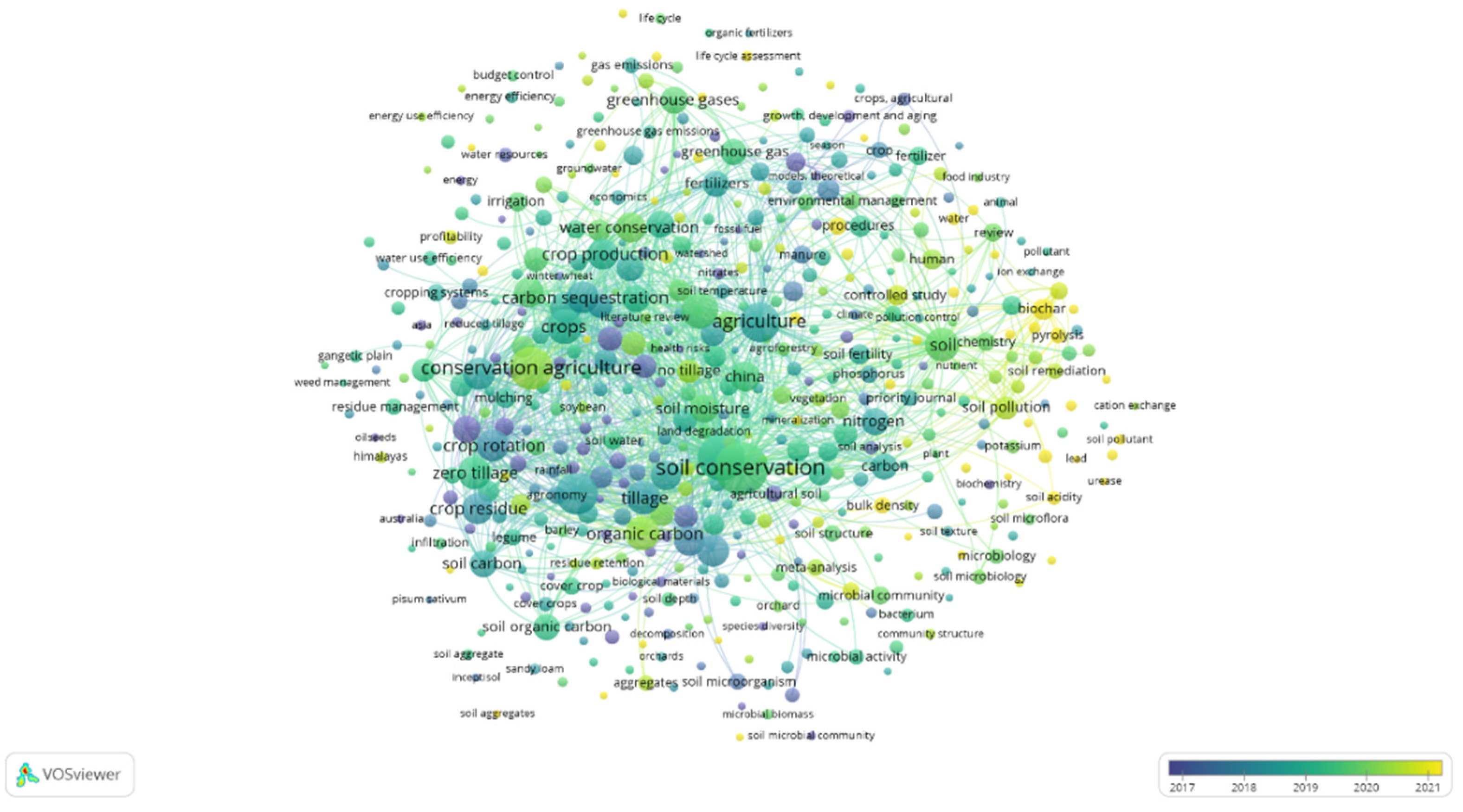
Figure 20.
Bibliographic map based on Density Visualization type. Results were obtained with the VOSviewer software based on bibliographic data for the “Conservation - Climate” AND “Straw” query.
Figure 20.
Bibliographic map based on Density Visualization type. Results were obtained with the VOSviewer software based on bibliographic data for the “Conservation - Climate” AND “Straw” query.
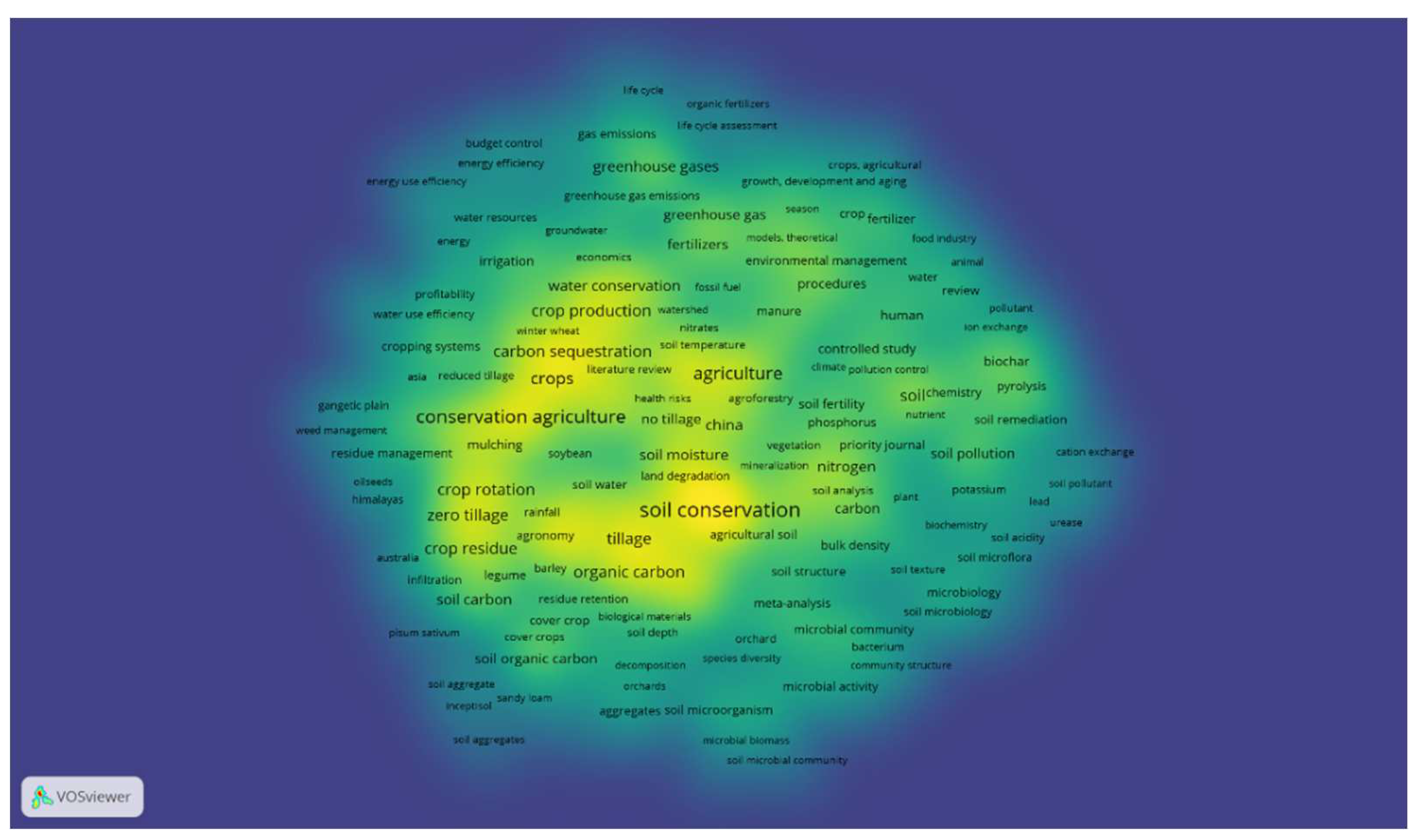
Figure 21.
Bibliographic map based on Network Visualization type. Results were obtained with the VOSviewer software based on bibliographic data for the “Conservation - Emission” AND “Straw” query.
Figure 21.
Bibliographic map based on Network Visualization type. Results were obtained with the VOSviewer software based on bibliographic data for the “Conservation - Emission” AND “Straw” query.
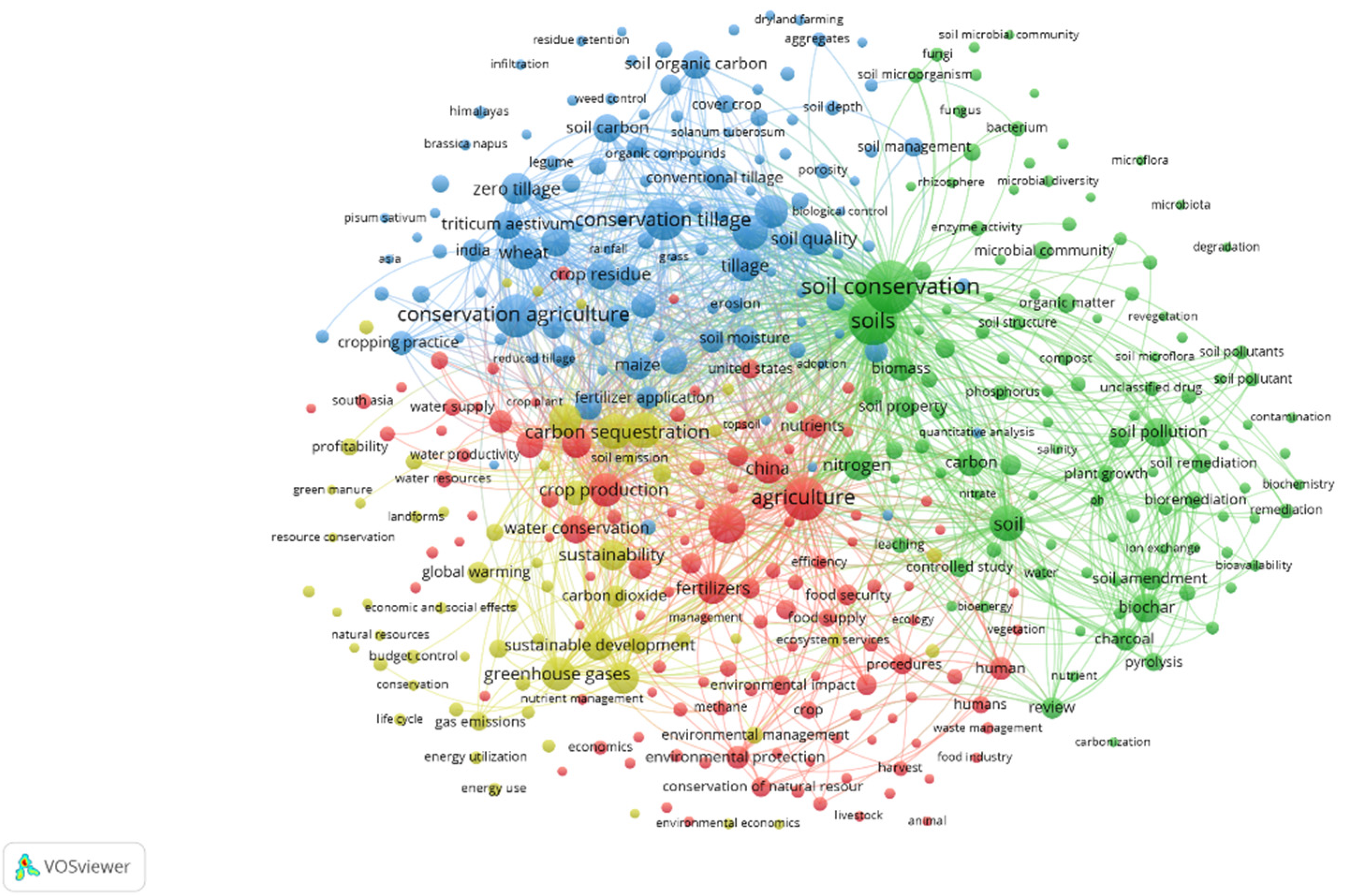
Figure 22.
Bibliographic map based on Overlay Visualization type. Results were obtained with the VOSviewer software based on bibliographic data for the “Conservation - Emission” AND “Straw” query.
Figure 22.
Bibliographic map based on Overlay Visualization type. Results were obtained with the VOSviewer software based on bibliographic data for the “Conservation - Emission” AND “Straw” query.
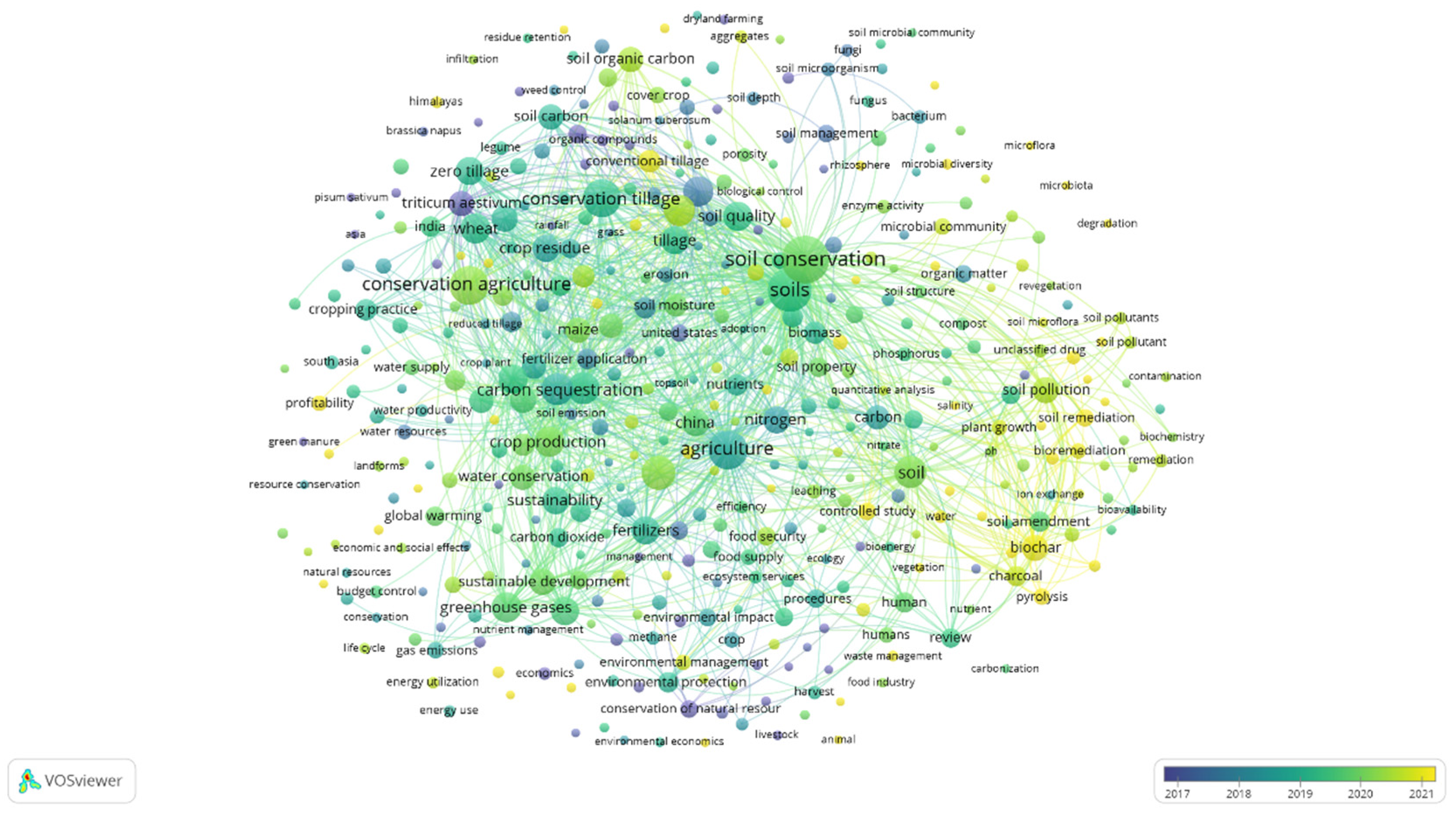
Figure 23.
Bibliographic map based on Density Visualization type. Results were obtained with the VOSviewer software based on bibliographic data for the “Conservation - Emission” AND “Straw” query.
Figure 23.
Bibliographic map based on Density Visualization type. Results were obtained with the VOSviewer software based on bibliographic data for the “Conservation - Emission” AND “Straw” query.
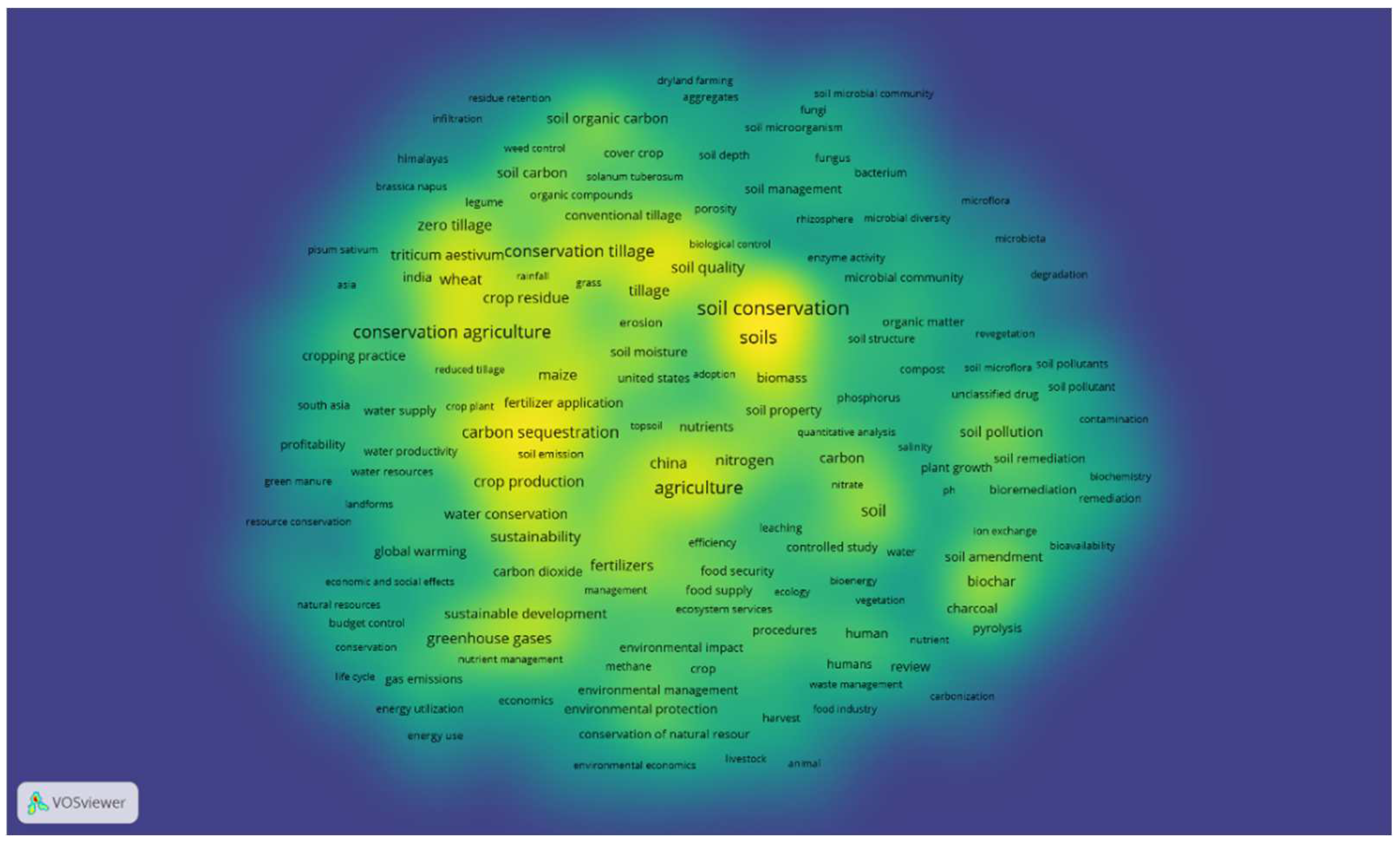
Figure 24.
Bibliographic map based on Network Visualization type. Results were obtained with the VOSviewer software based on bibliographic data for the “Conservation - Biodiversity” AND “Straw” query.
Figure 24.
Bibliographic map based on Network Visualization type. Results were obtained with the VOSviewer software based on bibliographic data for the “Conservation - Biodiversity” AND “Straw” query.
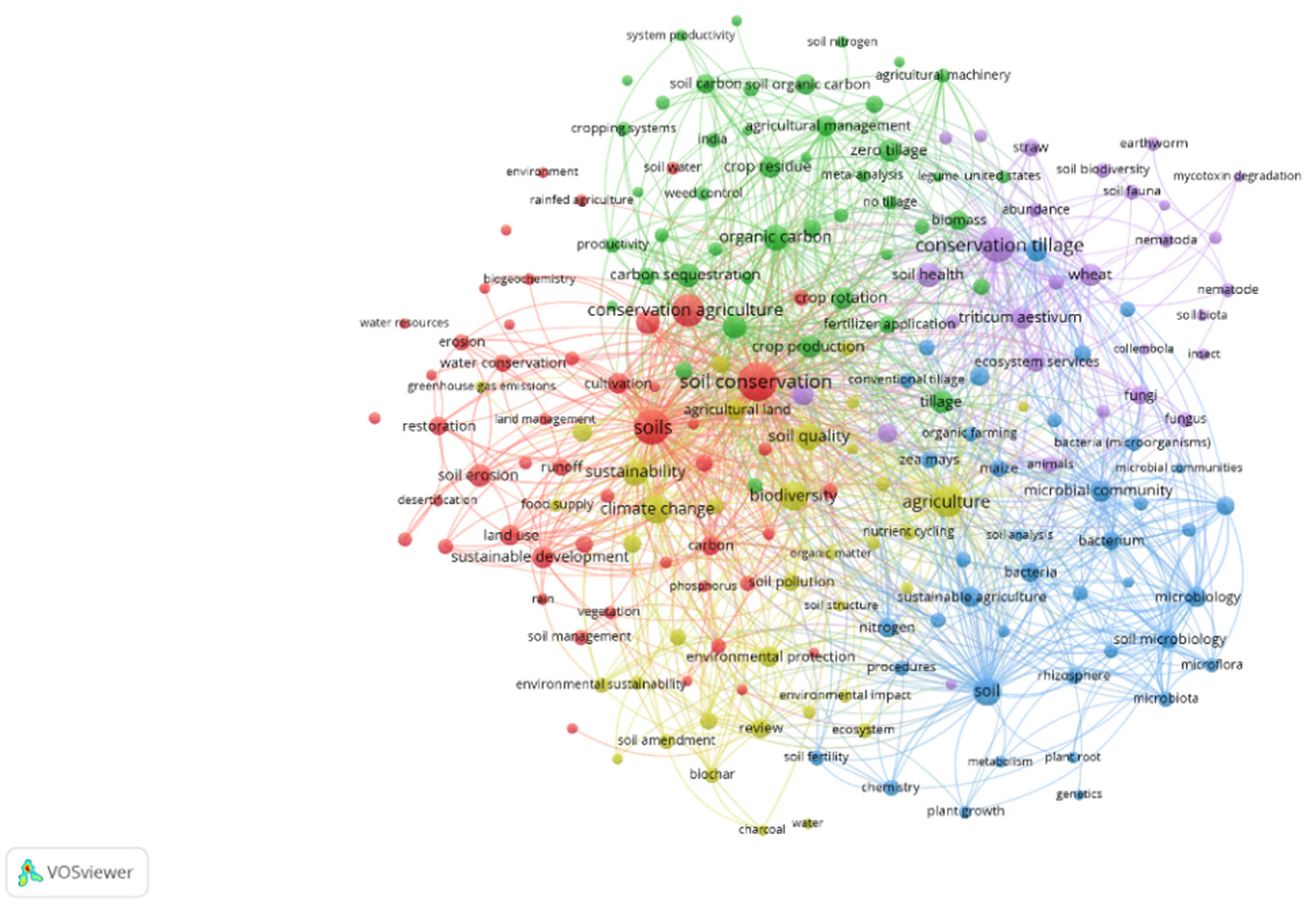
Figure 25.
Bibliographic map based on Overlay Visualization type. Results were obtained with the VOSviewer software based on bibliographic data for the “Conservation - Biodiversity” AND “Straw” query.
Figure 25.
Bibliographic map based on Overlay Visualization type. Results were obtained with the VOSviewer software based on bibliographic data for the “Conservation - Biodiversity” AND “Straw” query.
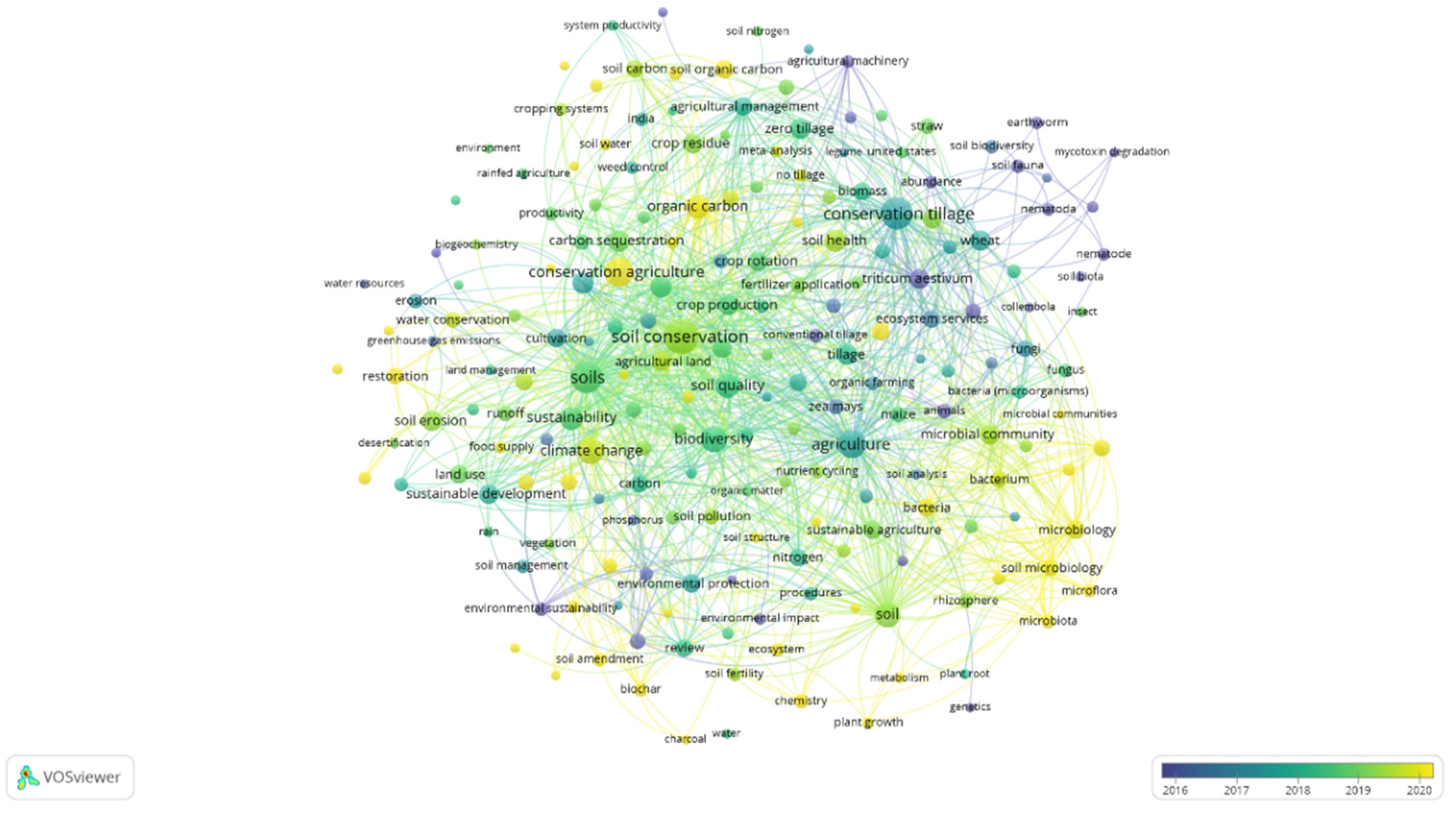
Figure 26.
Bibliographic map based on Density Visualization type. Results were obtained with the VOSviewer software based on bibliographic data for the “Conservation - Biodiversity” AND “Straw” query.
Figure 26.
Bibliographic map based on Density Visualization type. Results were obtained with the VOSviewer software based on bibliographic data for the “Conservation - Biodiversity” AND “Straw” query.
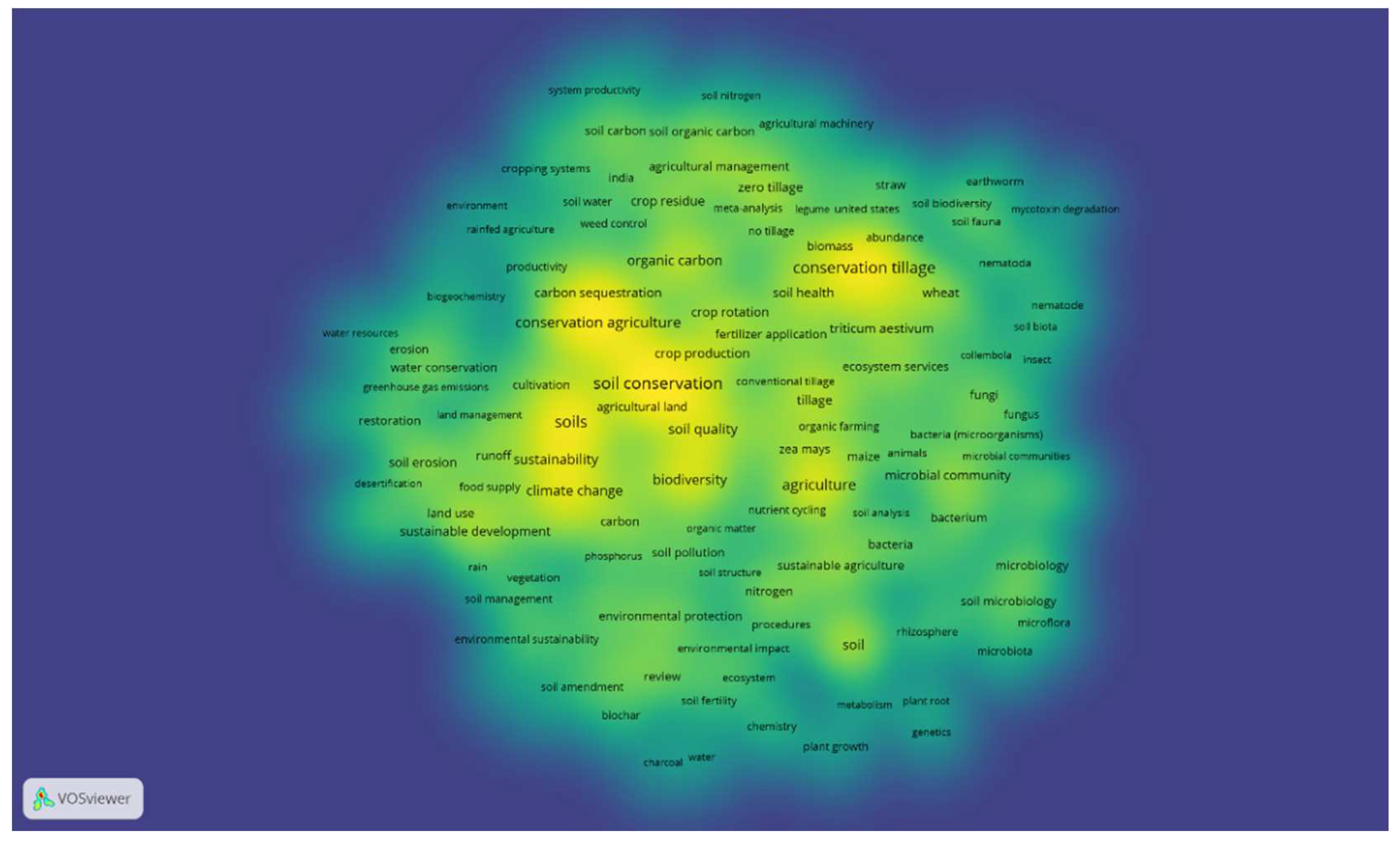
Figure 27.
Bibliographic map based on Network Visualization type. Results were obtained with the VOSviewer software based on bibliographic data for the “Conservation - Climatic” AND “Straw” query.
Figure 27.
Bibliographic map based on Network Visualization type. Results were obtained with the VOSviewer software based on bibliographic data for the “Conservation - Climatic” AND “Straw” query.
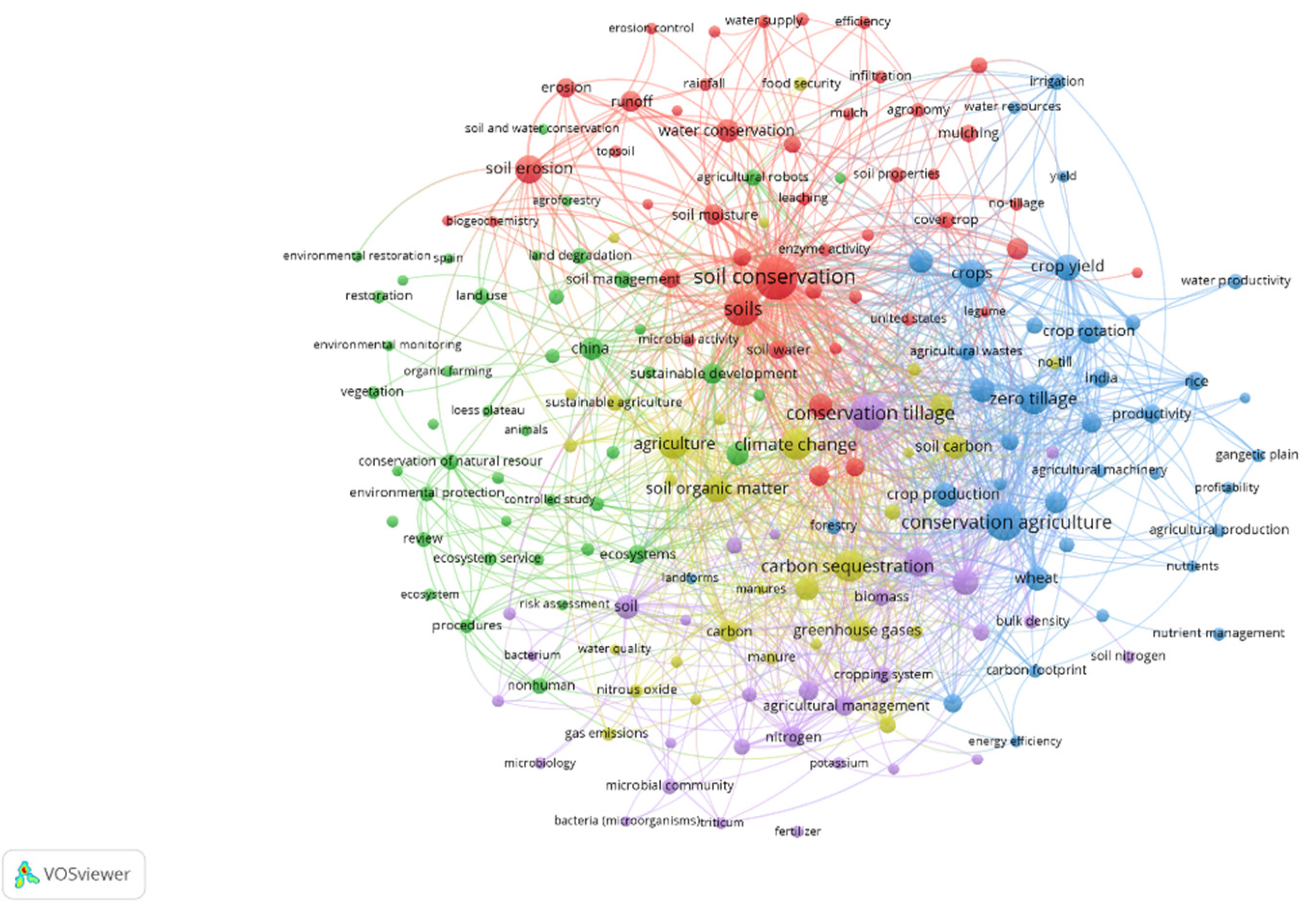
Figure 28.
Bibliographic map based on Overlay Visualization type. Results were obtained with the VOSviewer software based on bibliographic data for the “Conservation - Climatic” AND “Straw” query.
Figure 28.
Bibliographic map based on Overlay Visualization type. Results were obtained with the VOSviewer software based on bibliographic data for the “Conservation - Climatic” AND “Straw” query.
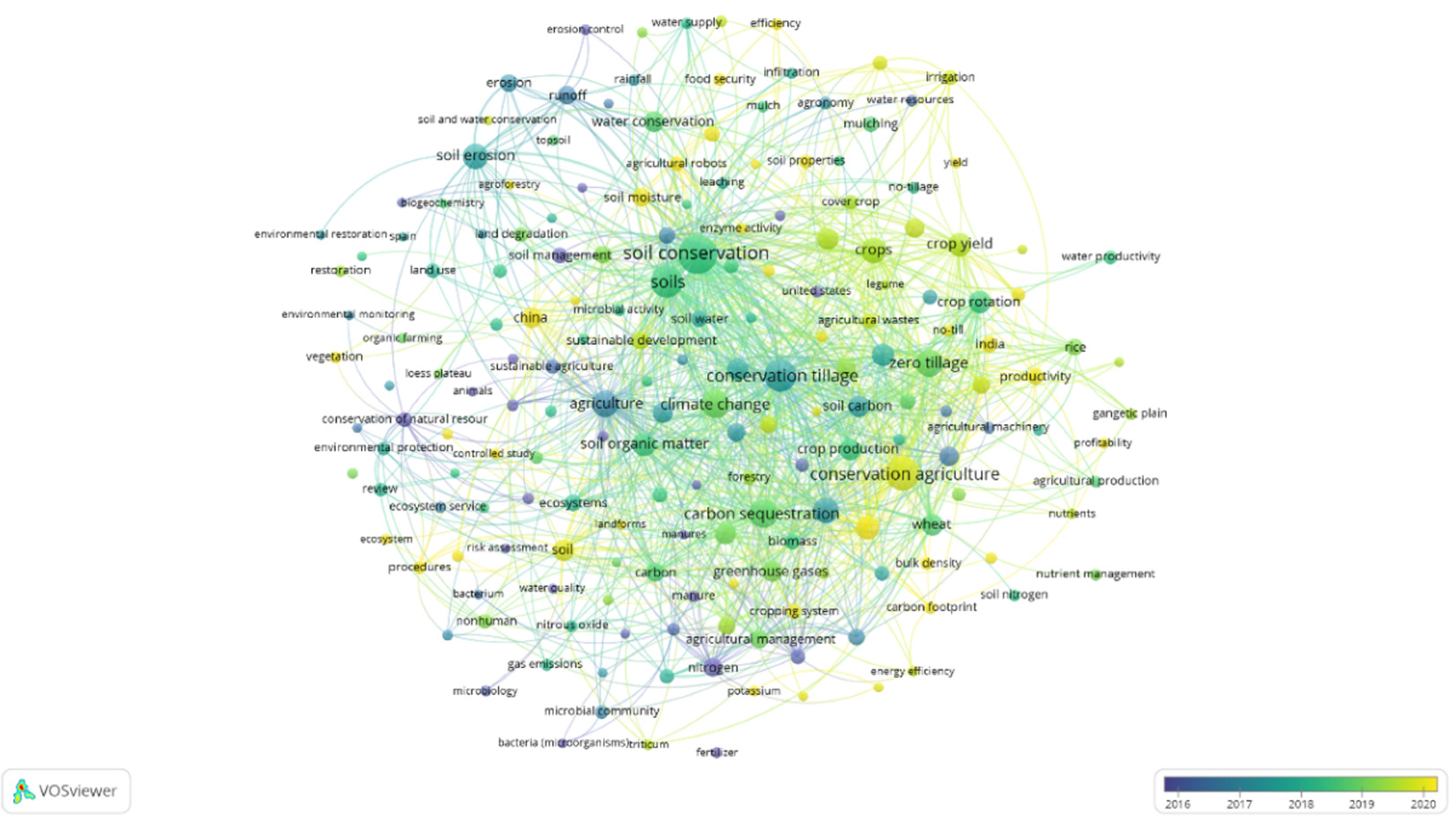
Figure 29.
Bibliographic map based on Density Visualization type. Results were obtained with the VOSviewer software based on bibliographic data for the “Conservation - Climatic” AND “Straw” query.
Figure 29.
Bibliographic map based on Density Visualization type. Results were obtained with the VOSviewer software based on bibliographic data for the “Conservation - Climatic” AND “Straw” query.
Disclaimer/Publisher’s Note: The statements, opinions and data contained in all publications are solely those of the individual author(s) and contributor(s) and not of MDPI and/or the editor(s). MDPI and/or the editor(s) disclaim responsibility for any injury to people or property resulting from any ideas, methods, instructions or products referred to in the content. |
© 2023 by the authors. Licensee MDPI, Basel, Switzerland. This article is an open access article distributed under the terms and conditions of the Creative Commons Attribution (CC BY) license (http://creativecommons.org/licenses/by/4.0/).
Copyright: This open access article is published under a Creative Commons CC BY 4.0 license, which permit the free download, distribution, and reuse, provided that the author and preprint are cited in any reuse.


