

Submitted:
24 April 2025
Posted:
25 April 2025
You are already at the latest version
Abstract
This study investigated the response mechanism of tillage construction on pad-dy yield in black soil fields by adopting four mechanical tillage techniques, namely rotary tillage (RT), shallow ploughing (SP), deep ploughing (DP), and culvert pipe drainage (CD), to solve the problems associated with the reduction of effective tillage layer in black soil paddy fields, as well as the poor quality and low yield of paddy rice. The results showed that SP, DP and CD techniques were able to increase the rice yield and improve the effec-tive tillage layer of the soil and the soil structure. Among them, DP had the most obvious effect, compared with traditional RT, the fast-acting N was 37.27 mg·kg-1 higher in the 20-30 cm soil layer, and the soil solid phase decreased by 1.86%-3.90% in the soil tripartite ratio, in which these physicochemical properties promoted the development and growth of roots, increased the growth of root system by 6.53%-16.33%, with the yield increased by up to 9.81%. This study combines four mechanical tillage techniques and proposes a mechanism of tillage construction from soil structure improvement, to soil physicochem-ical property enhancement, and then to root system and yield enhancement. This mecha-nism may help to guide the implementation of mechanical tillage methods in paddy fields, which has important insights for future agricultural practices.
Keywords:
black soil
; paddy fields
; tillage-layer construction
; rotary tillage
; shallow ploughing
; deep ploughing
1. Introduction
Paddy soil is a particular type of soil formed by the evolution of other soils under long-term irrigation and rice-cultivation conditions [1]. Different soil types and hydrological conditions result in varying physical and chemical properties of paddy soil, which have different effects on the soil's water, fertilizer, air, heat, and nutrient-content changes. It can be predicted that various types of paddy soil developed from different soil types will inevitably have different impacts on rice growth and development. Therefore, there are significant differences in the obstacle factors affecting the yield of paddy soil formed from multiple soil types. For example, numerous practices have proven that the obstacle factor of paddy soil formed from albic soil is the presence of a leaching-deposition argillic horizon. This horizon has a heavy texture, poor water-holding and permeability, as well as poor physical properties. Lowering this argillic horizon is the key to increasing rice yields [2]. Paddy soil formed from meadow soil has a deep soil layer, fertile soil, a moderate sand-clay ratio, and rich nutrients. However, the groundwater level is often too high, which can easily cause poor drainage. The growth of rice is slow in the early growth stage. Therefore, it is particularly important to implement shallow-water irrigation and timely field drying to increase soil and water temperatures [3]. Paddy soil formed from black soil is fertile and has a high organic-matter content. However, long-term tillage has led to a thinning of the organic-matter layer in black soil, a decline in soil fertility, and a deterioration of the soil structure, which is an important factor affecting yields [4]. Therefore, rational tillage and sustainable development are required. In this study, the focus was on the obstacle factors of paddy soil formed from black soil, and the response mechanisms of several typical tillage methods to paddy yields were investigated.
Black soil in cultivated land has good properties and high fertility, making it very suitable for plant growth. It is a precious and rare soil resource on Earth, known as the "giant panda in cultivated land" [5]. There are only four major black soil regions in the world, namely the Mississippi River Basin in the United States, the Ukrainian Steppe, the Pampas Plateau in Argentina, and the Northeast Black-Soil Region in China [6]. The total area of the Northeast Black-Soil Region in China is approximately 1.03 million square kilometers, playing an important role in ensuring food security and sustainable agricultural development [7]. However, numerous studies [8,9,10,11] have shown that in the Sanjiang Plain region of Northeast China, the long-term use of improper tillage patterns has led to a significant thinning of the effective tillage layer of the soil, a reduction in the tillage depth, and an upward shift of the plow-pan position. This has restricted the effective growth space of rice roots and the absorption capacity of deep layer soil nutrients [12]. This change has not only reduced the nutrient supply per unit area of the soil, forcing rice production to rely excessively on chemical fertilizers to maintain high and stable yields, but also weakened the soil fixing ability and lodging resistance of the roots as they can only extend horizontally instead of vertically [13]. In addition, the physical and chemical properties of the soil tillage layer have deteriorated, including a decrease in air permeability and water permeability, and the accumulation of reducing substances and gases, which has further aggravated the problems of rice-root poisoning and a decline in crop quality [14]. Therefore, constructing a reasonable soil tillage layer structure is of great significance for improving the above mentioned soil problems, enhancing rice quality, and increasing yields.
In recent years, researchers have attempted to construct effective tillage layers in black soil through mechanical, chemical, and biological means. The main methods suitable for field operations are mechanical means, such as rotary tillage (RT), shallow ploughing (SP), deep ploughing (DP), etc. [15,16,17]. Generally, the RT depth is 8-10 cm, the SP depth is 12-13 cm, and the DP depth is usually more than 20 cm [18]. RT and SP can be considered traditional tillage layer construction methods, while DP is used to improve the subsoil. The difference in tillage layer construction is that DP can break the plow pan, connecting the tillage layer and the subsoil into a whole and increasing the permeability of paddy fields [19]. Paradoxically, the broken plough subsoil layer during DP is an important means of preventing excessive water loss from paddy fields, and with the relatively homogeneous mechanical composition of black soils and good soil structure, it is an important issue whether the broken plough subsoil layer can be reconstructed effectively.
However, the long term application of traditional methods such as RT and SP also has problems, such as thickening and upward shifting of the plow pan, which hinders the growth of rice roots. This contradictory problem ultimately leads to unclear response effects of different tillage layer construction methods on rice yields and quality, and an unclear mechanism for constructing effective tillage layers in paddy fields on black soil. Solving this dilemma is the key content of this article. In addition, due to the rich groundwater resources in the Northeast Black-Soil Region of China, waterlogging is likely to occur. High water levels can lead to insufficient accumulated temperature in paddy fields and poor drainage, which are also important factors affecting crop yields and quality [20].
In response to these contradictory problems, this study focused on mechanical tillage methods. DP, SP, and RT operations were carried out on paddy soil formed from black soil. Based on RT, a culvert pipe drainage (CD) experiment was conducted to lower the groundwater level. With the ultimate goal of rice yield and quality, this study compared the effects of multiple mechanical tillage methods on soil physical and chemical properties such as soil porosity, bulk density, available nitrogen, phosphorus, and potassium. These physical and chemical properties further affected root growth and finally influenced rice yields. By analyzing the effects of mechanical tillage on soil physical and chemical properties, rice roots, and rice yields step by step, this article revealed the response mechanism of reasonable tillage layer construction in black soil paddy fields to rice yields and quality. This mechanism provides key technical support for the healthy production of paddy fields, improving food yields, and ensuring food quality, which also provides an important revelation for future agricultural practices.
2. Materials and Methods
2.1. Experimental Site and Time
The experimental site was selected at the paddy field experimental area of the Water Conservancy Experimental Station in Anqing city, Heilongjiang Province, China (longitude 127°47, latitude 47°15'). The average annual rainfall is 500 mm. The tested soil is black-soil-type paddy soil, and rice has been planted for more than 20 years. The land preparation method has been long-term continuous RT for many years. The depth of RT was 8-10 cm, the average thickness of the tillage layer was 11.3 cm, and the average thickness of the subsoil layer was 10.5 cm. The experiment lasted for two years, 2019 and 2020 respectively.
2.2. Fundamental Properties of the Soil
The fundamental properties of the soil are shown in Table 1.
2.3. Experimental Design
The experiment adopted a large plot comparison scheme, setting 4 treatments: RT treatment, SP treatment, DP treatment, and CD treatment, to compare the changes in soil physical, chemical properties, soil utilization rate, and yield in black soil paddy fields, as shown in Figure 1. The experiment lasted for two years, and the mechanical treatments were carried out after the autumn harvest of rice. Each treatment plot was 40 m long and 30 m wide. The fertilization amount was the same for each treatment in the two-year experiment. The types of fertilizers were urea, diammonium phosphate, and potassium sulfate. The application amounts were calculated based on pure N, P₂O₅, and K₂O, which were 150, 70, and 75 kg·hm2 respectively. The application method was as follows: N was applied in three stages as base fertilizer, green return fertilizer, and panicle fertilizer, with an application ratio of 4:3:3; K fertilizer was applied as base fertilizer and panicle fertilizer, with an application ratio of 3:2; P fertilizer was applied all at once as base fertilizer. The base fertilizer was applied during the spring water land preparation of paddy fields, with full layer fertilization. The topdressing was sprayed on the leaves during the green return period and booting stage. The topdressing period of K fertilizer was the same as the second topdressing period of N fertilizer, and K fertilizer and N fertilizer were mixed and sprayed on the leaves. The paddy field irrigation management mode was the shallow-wet-dry intermittent irrigation mode, that was, during the shallow-water-layer stage, the water layer on the soil surface was maintained at 3-5 cm, and then gradually reached a moist state. At this time, there was no obvious water on the surface, but there was water in the footprints. When the ground was dry and the footprints were moist, irrigation was carried out again, and the water-layer depth was still 3-5 cm. The experimental schemes for the two years were consistent. The tested rice variety was Longqingdao 3 of China, and the specific mechanical treatment methods were as follows.
(1) RT treatment: A rotary tiller (produced by Xiangli Machinery Co., Ltd., Weifang, Shandong, China, model: GAN200, as shown in Figure 1a) was used for RT. The tillage depth was set to 10 cm. Then, in the spring of the next year, the field was directly flooded with water, and mechanical water land preparation was carried out.
(2) SP treatment: A self developed paddy field deep plow was used for SP treatment (as shown in Figure 1b). The tillage depth was set to 20 cm. Then, before the paddy field was flooded with water in the spring of the next year, it was rotary tilled with a rotary plow, flooded with water, and mechanically prepared.
(3) DP treatment: The machinery and method were the same as those of the SP treatment, but the tillage depth was set to 30 cm (as shown in Figure 1c).
(4) CD treatment: A large plot comparison was adopted. Due to the difference in mechanical operations between CD and other operation modes, the tillage scale was slightly different. Each plot was 60 m long and 60 m wide, as shown in Figure 1(d). The irrigation management of the experimental area was the same, adopting the shallow-wet-dry intermittent irrigation mode [21]. The subsurface pipe valves were opened for drainage during the late tillering stage of rice for field drying and at the initial maturity stage, and the valves were closed at other times. A 30 cm wide and 40-50 cm deep open ditch was dug, and the tillage layer soil and the lower layer soil were placed on both sides for layered backfilling. After adjusting the slope of the ditch bottom with fine sand, a polyvinyl-chloride pipe wrapped with a filter screen was placed flat at the bottom of the ditch and connected at the head and tail. A 10 cm thick layer of rice straw and rice husks was laid on the pipe as a filter material, and then the soil was backfilled in layers after tamping. The outlet of the subsurface pipe was connected to an open ditch outside the plot, and a switch valve was installed.
2.4. Experimental Methods
(1) Soil sampling: a 60 cm×60 cm×60 cm soil profile was dug at the middle of the transverse direction. Undisturbed soil samples and chemical analysis samples were collected in layers with a 100 cm3 ring knife. The sampling layers were 0-10 cm, 10-20 cm, and 20-30 cm. Three parallel samples were taken at each layer. The collected ring knives were sealed and brought back to the laboratory for standby.
(2) Chemical indicators: The soil alkaline hydrolyzable nitrogen was determined by the diffusion absorption method [22]; the soil available phosphorus content was determined by the sodium bicarbonate extraction method [23]; the available potassium content was determined by the hydrochloric acid leaching AAS method [24].
(3) Physical indicators: The soil solid phase, liquid phase, and gas phase were measured with a soil DIK-1130 soil three phase measuring instrument [25]; the soil bulk density was measured by the ring knife method; the soil water content was measured by the oven drying method; the soil saturated hydraulic conductivity was measured with a DIK-4012 soil permeability instrument; the soil aeration coefficient was measured with a DIK-5001 soil aeration instrument; the soil texture composition was measured with an MS-2000 laser particle size analyzer [26].
(4) Rice root vigour: It was determined by root wound flow method [27].
(5) Crop yield: 10 plants were taken from each treatment, and the root system and other traits were determined by indoor seed test; the yield was measured in the field, and each treatment was harvested directly from the whole area using a Kubota harvester.
2.5. Statistical Analysis
The experimental data listed in the figures and tables of this article are the arithmetic means of the experimental results measured over two years. For the soil physical and chemical property data (such as soil three-phase ratio, bulk density, porosity, aeration coefficient, saturated hydraulic conductivity, as well as organic matter, alkaline-hydrolyzable nitrogen, available phosphorus, and available potassium contents), rice root activity indicators (root bleeding volume), and yield related data (effective panicle number, grains per panicle, grain empty rate, etc.) obtained under different mechanical tillage treatments (RT, SP, DP, and CD treatment), an analysis of variance (ANOVA) was first performed. Analysis of variance can evaluate the significance of differences among different treatment groups [28], and judge the overall impact of different tillage methods on the above mentioned indicators. If the results of the analysis of variance show significant differences, a least significant difference (LSD) t-test was further used for pairwise comparisons. For each type of data index at each soil depth, the differences between different treatments were accurately compared. For rice yield related data, such as the effective panicle number under different treatments, after the analysis of variance showed significant differences, the LSD t-test was used to determine the significance of differences in the effective panicle number among the treatments. To ensure the reliability and validity of the data, all data were statistically analyzed, and intuitive charts (such as bar charts, line charts, etc.) were drawn to display the change trends of each index under different treatments, facilitating a clearer comparison of the effects of different mechanical tillage methods.
3. Results
In this study, different mechanical tillage conditions had differential impacts on the soil structure. The results indicated that the DP treatment had the most remarkable effect on improving the physical and chemical properties of the soil. In this research, the local conventional mechanical land preparation method, that is, RT operation, was used as the control group. In terms of soil structure, compared with RT, the proportion of the soil solid phase under DP conditions decreased by 1.86%-3.90%. The soil bulk density in the 10-20 cm soil layer decreased by 0.08 g/cm3, and in the 20-30 cm soil layer, it was 0.03 g/cm3 lower than that of rotary tillage.
3.1. Changes in Soil Physical Properties
As shown in Figure 2, it presents the changes in the soil three-phase ratio, bulk density, and soil porosity. From Figure 2(a) and Figure 2(b), it can be seen that in the 0-30 cm soil layer, the soil solid-phase ratio indicators of the SP and DP treatments decreased by 0.74%-4.80% and 1.86%-3.90% respectively compared with the RT treatment. In the 10-20 cm soil layer, the soil liquid phase ratio of the SP and DP treatments increased by 1.74% and 2.67%. In the 20-30 cm soil layer, the soil gas phase ratio of the SP and DP treatments increased by 0.95% and 0.64%.
It can be seen from Figure 2(c) and Figure 2(d) that compared with the RT treatment, the soil bulk density under other mechanical treatment methods decreased significantly with the deepening of the soil layer. In the 10-20 cm soil layer, the soil bulk density of the SP treatment decreased by 0.09 g/cm3 compared, and that of the DP treatment decreased by 0.08 g/cm3. In the 20-30 cm soil layer, the soil bulk density of the DP treatment decreased by 0.03 g/cm3.
As can be seen from Figure 2(e) and Figure 2(f), the soil porosity of the SP and DP treatments both showed an increasing trend compared with that of the RT treatment. In the 0-30 cm soil layer, the increase range of the SP treatment was 0.44%-4.80%, and that of the DP treatment was 1.86%-3.93%. In the second year, the change trends of various physical indicators of the soil under different treatments were basically the same as those in the first year. The SP and DP treatments improved the physical properties of the paddy soil in black soil regions, which was beneficial to the growth and development of the roots of rice plants. The data of the DP treatment were more obvious.
Figure 3 shows the changes in the soil aeration coefficient and saturated hydraulic conductivity under different mechanical tillage methods. Both the soil aeration coefficient and saturated hydraulic conductivity exhibit an increasing trend. In the 10-20 cm soil layer, compared with RT, the soil aeration coefficient and saturated hydraulic conductivity under the SP treatment increased by 4.04 times and 2.71 times respectively, and those under the DP treatment increased by 4.42 times and 2.14 times respectively. In the 20-30 cm soil layer, the DP treatment increased the soil aeration coefficient and saturated hydraulic conductivity by 1.86 times and 2.87 times respectively compared with the CD technology.
3.2. Changes in Soil Chemical Properties
Figure 4 shows the changes in soil chemical properties under four tillage methods. It can be seen from Figure 4 that RT is not conducive to the improvement of soil organic matter, alkaline-hydrolyzable nitrogen, available phosphorus, and available potassium contents (Figure 4a-d).
In the 10-20 cm soil layer, the contents of soil organic matter, alkaline-hydrolyzable nitrogen, available phosphorus, and available potassium under the SP treatment are slightly higher than those under the RT treatment. In the 10-30 cm soil layer, the contents of soil organic matter, alkaline-hydrolyzable nitrogen, available phosphorus, and available potassium in the DP treatment are higher than those in the RT treatment. In the 20-30 cm soil layer, compared with the SP and CD technologies, the soil organic matter in the DP treatment increased by 0.56% and 1.75% respectively. In the first year, the contents of soil organic matter, alkaline-hydrolyzable nitrogen, available phosphorus, and available potassium in the RT treatment gradually decreased from the surface layer to the deep layer. Since black soil has a relatively thick black soil layer, the differences in soil nutrients among different soil layers are not very obvious. Tillage does not cause a significant decline in soil nutrients in the tillage layer, and the nutrient content in the deep layer soil shows an increasing trend compared with that in RT. The change trends of soil nutrients in each treatment in the second year are basically the same as those in the first year. The DP treatment makes the soil nutrients in each layer of black soil type paddy soil tend to be homogeneous, which is helpful for rice plants to absorb soil nutrients during different growth stages.
3.3. Effects on Soil Utilization Rate
This study characterized the soil utilization rate of rice from two aspects: the absorption of nitrogen, phosphorus, and potassium by rice and the root activity. Figure 5 shows the effects of different mechanical tillage methods on the roots.
3.3.1. Effects on the Absorption of Nitrogen, Phosphorus, and Potassium by Rice
As can be seen from Figure 5(a) and Figure 5(b), the nitrogen content in rice grains shows the order of DP>SP>RT>CD treatment, and the potassium content in rice grains shows the order of DP>SP>RT>CD treatment. This indicates that DP is beneficial for plants to absorb nitrogen and potassium from deep layer soil. The phosphorus content in rice grains shows the order of SP>DP>RT>CD, suggesting that SP is beneficial for plants to absorb phosphorus from deep layer soil.
3.3.2. Effects on the Root Activity of Rice
The amount of root bleeding in rice directly reflects the ability of rice to actively absorb nutrients and is an important indicator of root activity [29]. As can be seen from Figure 5(c), the root bleeding amounts of rice under the DP and SP treatments increased by 12.17% and 6.09% respectively compared with that under the RT treatment. As shown in Figure 5(d), the root growth amount and vertical root length of rice under the SP and DP treatments are higher. The dry matter mass and root length of the roots under the SP treatment increased by 6.53% and 10.81%, and those under the DP treatment increased by 16.33% and 21.62%. Comprehensive analysis shows that the DP treatment helps to increase the root bleeding amount of rice, is beneficial for improving the root activity of rice, and promotes the growth of rice roots.
As shown in Table 2, the SP and DP treatments can increase the effective panicle number and grains per panicle of rice and reduce the grain empty rate. In the first year, the measured yields of rice under the SP and DP treatments increased by 6.91% and 9.81% respectively compared with that under the RT treatment, and in the second year, they increased by 6.59% and 7.84% respectively. The difference in the yield increasing amplitude between the SP and DP treatments compared with the RT treatment in the second year was not as obvious as that in the first year, but the yield increasing trends in the two-year experiment were consistent, indicating that increasing the plowing depth has a certain positive effect on increasing rice yields.
4. Discussion
Mechanical tillage is capable of constructing a reasonable tillage layer to varying degrees, providing an environment suitable for rice root fertility and increasing nutrient storage capacity, and there is a strong correlation between rice yield and the construction of soil tillage layer [30]. The results of this study also show that a reasonable mechanical tillage mode could construct an effective soil tillage layer, improve the physical and chemical properties of the soil, further promote the absorption of soil nutrients by roots, help the vertical growth of rice roots, and effectively enhance lodging resistance. At the same time, robust rice roots can improve the soil utilization rate, increase the absorption of available nitrogen, phosphorus, and potassium, and ultimately increase the rice yield. Therefore, this study established a mechanism diagram of the response of soil tillage layer construction to crop growth status, as shown in Figure 6. The following further analyzes the effects of different tillage methods on soil physical and chemical properties and soil nutrient utilization rates.
4.1. Effects of Different Treatment Methods on Soil Physical Properties
The physical properties of the soil directly affect the growth, reproduction, and metabolic functions of organisms in the soil [31]. The three-phase ratio is an important parameter for evaluating the mutual relationship of soil water, fertilizer, air, and heat, which is a key factor determining soil fertility and crop growth [32,33]. Under the DP treatment, the soil solid phase decreased by 1.86%-3.90%, and both the liquid phase and the gas phase increased, increasing the air permeability and water permeability of the soil, which is beneficial for root respiration.
The size of soil pores is an important manifestation of soil physical properties [34]. Compared with other treatments, the soil porosity increased by 2.42%-4.93% under the DP treatment. Good soil pores can provide better water permeability and air permeability for plant growth, are beneficial for the “dry-soil-effect” of the soil, and promote the mineralization and decomposition of nutrients in the tillage layer [35]. This study verified that DP can improve soil physical properties, making the available soil nutrients higher than those of other treatments. Some scholars have used DP technology to improve aged paddy fields and achieved good yield increasing effects. However, DP in sandy soil may cause water and fertilizer leakage [36]. The paddy fields in the Sanjiang Plain of Northeast China are mainly distributed in low plain areas. The soil is heavy textured, has poor permeability, poor drainage, a low redox potential, and the roots of rice are vulnerable to the harm of reducing substances. Some scholars argue that DP is an effective measure to reduce the content of reducing gases. In addition, in paddy fields with long-term RT land preparation, the plow pan moves upward, and the tillage layer thickness is about 10-12 cm, which affects the growth of rice roots and makes the rice prone to lodging. DP expands the living area of roots, which is beneficial for roots to absorb nutrients from deep layer soil, and appropriate DP is beneficial for the nutrient accumulation of rice [37]. The DP treatment technology can construct a better tillage layer. At the same time, good soil physical properties could also improve soil chemical properties.
4.2. Effects of Different Treatment Methods on Soil Chemical Properties
Soil organic matter is an important component of the solid phase of the soil, a major source of plant nutrition. It can promote the growth and development of plants, improve the physical properties of the soil, promote the activities of microorganisms and soil organisms, as well as facilitate the decomposition of nutrient elements in the soil [38]. Compared with RT, the DP treatment technology increased the organic matter in the tillage layer by 0.56%, and the upper and lower soil layers tended to be homogeneous. Soil organic matter is also the most important nutrient reservoir for soil N and P and the main source of plant available N and P. Among them, N, P, and K elements are essential for plant growth and development. The increase in the proportion of large soil pores is conducive to the full dissolution of available N, P, and K in the soil solution, and their presence is the effective elements that can be absorbed and utilized by plant roots.
Available nitrogen is the main element for plants to synthesize proteins, folic acid, and chlorophyll [39]. In the 20-30 cm soil layer, the content of available nitrogen in the DP treatment was 37.27 mg·kg⁻¹ higher than that in the RT treatment. Available phosphorus can promote the formation and growth of early roots [40]. Comprehensive data shows that the content of available phosphorus is relatively high in the 10-20 cm soil layer. Available potassium is a major nutrient element for plants and is also one of the elements that often affect crop yields due to insufficient supply in the soil [41]. In the 20-30 cm soil layer, only the DP and CD technologies had an available potassium content higher than 100 mg·kg⁻¹. Sufficient available nitrogen, phosphorus, and potassium elements are beneficial for rice to absorb soil nutrients during different growth stages, improving the quality and yield of rice [42]. The interaction of available nitrogen, phosphorus, and potassium in the soil during rice production and development has a crucial impact on rice production and yield [43], and the source of improving these lies in reasonable mechanical tillage methods.
4.3. Effect of Mechanical Tillage Practices on Soil Nutrient Utilisation and Yield
The effective absorption of soil nutrients can improve the soil utilization rate [44,45]. Through data analysis, the nitrogen content in rice grains shows the order of DP>SP>RT>CD treatment, and the potassium content in rice grains shows the order of DP>SP>RT>CD treatment, indicating that DP is beneficial for plants to absorb nitrogen and potassium from deep layer soil. The phosphorus content in rice grains shows the order of SP>DP>RT>CD, indicating that SP is beneficial for plants to absorb phosphorus from deep layer soil. Comprehensive analysis shows that increasing the plowing layer thickness is beneficial for the absorption and utilization of soil elements by rice roots and can increase the soil utilization rate.
The nutrients required for crop growth and development are absorbed by the roots. Well-developed plant roots not only contribute to crop growth and prevent lodging but also help to improve crop quality and yield [46,47]. According to the analysis of experimental data, compared with other treatments, the DP treatment technology can effectively improve the soil structure, thereby constructing a more reasonable tillage layer, increasing the water permeability and air permeability of the soil, and improving the utilization rate of soil organic matter and fertilizers by plant roots. The data of this study also show that DP operations can more fully absorb available nitrogen, phosphorus, and potassium in the soil.
The root bleeding volume is an indicator of the root vitality coefficient of plants. Excessively high root bleeding volume may lead to the necrosis of crop roots and affect crop growth and development [48]. The root bleeding volume of rice under the DP treatment increased by 12.17%, which is helpful for improving the root activity of rice [49]. The root growth amount and vertical root length of rice under the DP treatment are higher than those under the RT treatment. The DP treatment increased by 16.33% and 21.62% respectively compared with the RT.
These indicators are ultimately reflected in the data of crop root growth and yield. In the first year, the measured yields of rice under the SP and DP treatments increased by 6.91% and 9.81% respectively compared with that under the RT treatment, and in the second year, they increased by 6.59% and 7.84% respectively. The data shows that DP could indeed effectively construct a reasonable tillage layer in black soil paddy fields. It is worth noting that this study had a two year experimental cycle, and the data of the two years showed that DP had a significant yield increasing effect on black soil paddy fields in Northeast China. However, the long-term effect of DP still needs to be further verified. Moreover, DP operations consume a large amount of power, have high costs, and may cause problems such as water leakage in rice fields. Therefore, how to establish a reasonable field promotion model still needs further follow up verification.
5. Conclusions
This study investigated the response mechanisms of four mechanical tillage techniques, namely rotary tillage (RT), shallow plowing (SP), deep plowing (DP), and culvert pipe drainage (CD) on rice yields. A yield increasing mechanism was established, which started from mechanical tillage, improved the soil structure, then enhanced the physical and chemical properties of the soil, and finally promoted root growth and increased yields. At the same time, this study verified that, with a two year cycle, DP operations in black soil paddy fields could improve the soil structure and thus increase yields. Specifically, the following conclusions were drawn from this study.
(1) The DP treatment technology could break the upward-shifted plow pan, improve the physical properties of black soil paddy fields, reduce the proportion of the soil solid phase and the bulk density, increase the soil porosity, and promote the growth of rice roots. In the 0-30 cm soil layer, compared with RT, the proportion of the soil solid phase in the DP treatment decreased by 1.86%-3.90%. The soil bulk density in the 10-20 cm soil layer decreased by 0.08 g/cm3, and in the 20-30 cm soil layer, it decreased by 0.03 g/cm3. The soil porosity in the 0-30 cm soil layer increased by 1.86%-3.93%.
(2) The improvement of the soil structure in black soil paddy fields helped to enhance the chemical properties of the soil, increase the soil nutrient storage capacity, and enhance the contents of available N, P, and K in the tillage layer, especially the content of available N. The content of available N in the DP treatment was 37.27 mg·kg⁻¹ higher than that in the RT, which played an important role in promoting the growth of rice during the growth period.
(3) Good soil physical and chemical properties helped to enhance the absorption of chemical elements by rice roots, promote the growth of rice roots, and improve the yield of rice. In the first year of the experiment, the measured yields of rice under the SP and DP treatments increased by 6.91% and 9.81% respectively compared with that under the RT treatment, and in the second year, they increased by 6.59% and 7.84% respectively, verifying the response effect of plowing operations on rice yields.
(4) The CD technology could improve the drainage of paddy fields, promote the respiration of deep layer soil pores, increase the content of soil organic matter. For areas with poor drainage and high groundwater levels, by establishing continuous gas exchange channels, it could effectively reduce the accumulation of reducing substances in the soil, promote the mineralization, decomposition, and humification of organic matter, and thus increase crop yields.
This study systematically revealed the improvement mechanisms and yield response laws of different tillage technologies on black soil paddy fields, and constructed a linkage synergy theoretical framework of “mechanical disturbance-soil structure optimization-nutrient activation-root development-yield improvement”, providing important scientific basis for improving the cultivated land quality of black soil paddy fields and increasing crop yields. It also provided theoretical and technical references for sustainable agriculture in the global black soil belt.
Author Contributions
Writing-original draft, B.B.; data curation, Q.W., B.B. and J.L.; formal analysis, Q.W., Y.L. and J.L.; methodology, Q.W. and J.Z.; investigation, Q.W., B.B., Y.L. and J.Z.; supervision, B.B. and B.W.; software, B.B.; writing-review & editing, B.W.; conceptualization, B.W.; funding acquisition, Q.W. and B.W. All authors have read and agreed to the published version of the manuscript.
Funding
This work was supported by the National Natural Science Foundation of China Youth Science Fund Project (No. 3220152034), National Key R&D Program Projects for the 14th Five Year Plan (No. 2022YFD1500800), and Jilin Provincial Department of Human Resources and Social Security’s “Postdoctoral Talent Support in Jilin Province” Project (No. 820231342418).
Data Availability Statement
The original contributions presented in the study are included in the article, and further inquiries can be directed to the corresponding author.
Acknowledgments
Our thanks to all the authors cited in this paper and the anonymous referees for their helpful comments and suggestions.
Conflicts of Interest
The authors declare that they have no conflicts of interest.
References
- Anami, B.S.; Malvade, N.N.; Palaiah, S. Deep learning approach for recognition and classification of yield affecting paddy crop stresses using field images. Artif. Intell. Agric. 2020, 4, 12–20. [Google Scholar] [CrossRef]
- Arnay, R.; Hernández, A.J.; Mallol, C. Soil micromorphological image classification using deep learning: The porosity parameter. Appl. Soft Comput. 2021, 102, 107093. [Google Scholar] [CrossRef]
- Aslam, Z.; Yasir, M.; Yoon, H.S.; Jeon, C.O.; Chung, Y.R. Diversity of the bacterial community in the rice rhizosphere managed under conventional and no-tillage practices. J Microbiol. 2013, 51, 747–756. [Google Scholar] [CrossRef] [PubMed]
- Du, Y.; Lu, Y.; Guo, S.; Wang, R.; Song, X.; Ju, X. Enhanced efficiency nitrogen fertilizers (EENFs) can reduce nitrous oxide emissions and maintain high grain yields in a rain-fed spring maize cropping system. Field Crops Res. 2024, 312, 109408. [Google Scholar] [CrossRef]
- Dueñas, M.J.; Poznyak, T.; Rodríguez, J.L.; Chairez, I. Simultaneous ethylbenzene decomposition by ozone in a liquid-solid-gas three-phase system. Environ. Technol. Innovation. 2022, 28, 102788. [Google Scholar] [CrossRef]
- Ferreira, C.J.B.; Tormena, C.A.; Severiano, E.d.C.; Nunes, M.R.; Menezes, C.C.E.d.; Antille, D.L.; Preto, V.R.D.O. Effectiveness of narrow tyne and double-discs openers to overcome shallow compaction and improve soybean yield in long-term no-tillage soil. Soil Tillage Res. 2023, 227, 105622. [Google Scholar] [CrossRef]
- He, Z.Q. Agricultural and environmental significance of soil organic matter and plant biomass: Insight from ultrahigh resolution Fourier transform ion cyclotron resonance mass spectrometry. Pedosphere 2024, 35, 3–7. [Google Scholar] [CrossRef]
- He, C.; Deng, F.; Yuan, Y.; Huang, X.; He, Y.; Li, Q.; Li, B.; Wang, L.; Cheng, H.; Wang, T.; Tao, Y.F.; Zhou, W.; Lei, X.L.; Chen, Y.; Ren, W.J. Appearance, components, pasting, and thermal characteristics of chalky grains of rice varieties with varying protein content. Food Chem. 2024, 440, 138256. [Google Scholar] [CrossRef]
- Huang, M.; Xiao, Z.; Hu, L.; Chen, J.; Cao, F. Amylopectin content rather than amylose or protein content is critical to determining the starch digestion rate in high-amylose rice. Food Chem. Adv. 2024, 5, 100758. [Google Scholar] [CrossRef]
- Jan, S.; Ghoroi, C.; Saxena, D.C. Effect of particle size, shape and surface roughness on bulk and shear properties of rice flour. J. Cereal Sci. 2017, 76, 215–221. [Google Scholar] [CrossRef]
- Jiang, Y.; Yang, X.; Ni, K.; Ma, L.; Shi, Y.; Wang, Y.; Cai, Y.J.; Ma, Q.X.; Ruan, J.Y. Nitrogen addition reduces phosphorus availability and induces a shift in soil phosphorus cycling microbial community in a tea (Camellia sinensis L.) plantation. J. Environ. Manage. 2023, 342, 118207. [Google Scholar] [CrossRef]
- Li, G.; Xu, S.; Tang, Y.; Wang, Y.; Lou, J.; Zhang, Q.; Zheng, X.J.; Li, J.; Iqbal, B.; Cheng, P.F.; Zhan, A.B.; Du, D.L. Spartina alterniflora invasion altered soil greenhouse gas emissions via affecting labile organic carbon in a coastal wetland. Appl Soil Ecol. 2024, 203, 105615. [Google Scholar] [CrossRef]
- Li, H.; Ren, R.; Zhang, H.; Zhang, G.; He, Q.; Han, Z.; Meng, S.H.; Zhang, Y.L.; Zhang, X.H. Factors regulating interaction among inorganic nitrogen and phosphorus species, plant uptake, and relevant cycling genes in a weakly alkaline soil treated with biochar and inorganic fertilizer. Sci. Total Environ. 2023, 905, 167280. [Google Scholar] [CrossRef]
- Li, S.; Zhang, Y.; Zhao, J.; Groenigen, K.J.; Shen, X.; Zhang, H.; Gu, J.F.; Zhang, W.Y.; Hui, D.F.; Chen, Y.; Liu, L.J. Water-saving irrigation practices in rice paddies reverse the impact of root aerenchyma on methane emissions. Agr Ecosyst Environ. 2025, 378, 109309. [Google Scholar] [CrossRef]
- Li, S.H.; Yang, C.H.; Yi, X.X.; Zheng, F.X.; Du, X.Z.; Sheng, F. Influence of γ-PGA on greenhouse gas emissions and grain yield from paddy rice under different rice varieties. Sci. Total Environ. 2024, 948, 174649. [Google Scholar] [CrossRef] [PubMed]
- Liao, P.; Bell, S.M.; Chen, L.; Huang, S.; Wang, H.; Miao, J.; Qi, Y.M.; Sun, Y.N.; Liao, B.; Zeng, Y.J.; Wei, H.Y.; Gao, H.; Dai, Q.G.; Zhang, H.C. Improving rice grain yield and reducing lodging risk simultaneously: A meta-analysis. Eur J Agron 2023, 143, 126709. [Google Scholar] [CrossRef]
- Liao, S.; Deng, F.; Zhou, W.; Wang, L.; Li, W.; Hu, H.; Pu, S.L.; Li, S.X.; Chen, Y.; Tao, Y.F.; Zhang, C.; Li, Q.P.; Ren, W.J. Polypeptide urea increases rice yield and nitrogen use efficiency through root growth improvement. Field Crops Res. 2024, 313, 109415. [Google Scholar] [CrossRef]
- Liu, R.; Yang, L.; Zhang, J.; Zhou, G.; Chang, D.; Chai, Q.; Cao, W. Maize and legume intercropping enhanced crop growth and soil carbon and nutrient cycling through regulating soil enzyme activities. Eur J Agron. 2024, 159, 127237. [Google Scholar] [CrossRef]
- Liu, S.; Ji, X.; Chen, Z.; Xie, Y.; Ji, S.; Wang, X.; Pan, S. Silicon facilitated the physical barrier and adsorption of cadmium of iron plaque by changing the biochemical composition to reduce cadmium absorption of rice roots. Ecotox Environ Safe. 2023, 256, 114879. [Google Scholar] [CrossRef]
- Liu, S.K.; Wu, B.Y.; Niu, B.; Xu, F.Y.; Yin, L.A.; Wang, S.W. Regional suitability assessment for different tillage practices in Northeast China: A machine learning aided meta-analysis. Soil Tillage Res. 2024, 240, 106094. [Google Scholar] [CrossRef]
- Liu, X.F.; Zhang, Z.; Shuai, J.B.; Wang, P.; Shi, W.J.; Tao, F.L.; Chen, Y. Impact of chilling injury and global warming on rice yield in Heilongjiang Province. J. Geog. Sci. 2013, 23, 85–97. [Google Scholar] [CrossRef]
- Luo, C.; Zhang, W.Q.; Meng, X.T.; Yu, Y.F.; Zhang, X.L.; Liu, H.J. Mapping the soil organic matter content in Northeast China considering the difference between dry lands and paddy fields. Soil Tillage Res. 2024, 244, 106270. [Google Scholar] [CrossRef]
- Mao, Z.; Ma, X.; Liu, Y.; Geng, M.; Tian, Y.; Sun, J.; Yang, Z. Study on time effect and prediction model of shear strength of root-soil complex under dry-wet cycle. Biogeotechnics 2024, 2, 100079. [Google Scholar] [CrossRef]
- Miressa, S.B.; Ding, Q.S.; Li, Y.N.; Amisi, E.O. Optimization of tillage operation parameters to enhance straw incorporation in rice-wheat rotation field. Agriculture-Basel 2025, 15, 54. [Google Scholar] [CrossRef]
- Natasha, B.I.; Niazi, N.K.; Shahid, M.; Ali, F.; Masood, H.I.; Rahman, M.M.; Younas, F.; Hussain, M.M.; Mehmood, T.; Shaheen, S.M.; Naidu, R.; Rinklebe, J. Distribution and ecological risk assessment of trace elements in the paddy soil-rice ecosystem of Punjab, Pakistan. Environ Pollut 2022, 307, 119492. [Google Scholar] [CrossRef]
- Ni, L.; Lu, Y.; Wang, L.; Wang, Y.; Bai, Y. Accurate model of nitrogen accumulation in transplanted rice under different nutrient distribution ratios. Field Crops Res. 2022, 286, 108608. [Google Scholar] [CrossRef]
- Nunna, S.A.D.; Balachandar, D. Genotype-specificity in putative competitive endophytes modulated by root exudation of rice. Rhizosphere 2024, 31, 100940. [Google Scholar] [CrossRef]
- Ohno, H.; Banayo, N.P.M.C.; Bueno, C.S.; Kashiwagi, J.; Nakashima, T.; Corales, A.M.; Ricardo, G.; Nitika, S.; Arvind, K.; Yoichiro, K. Longer mesocotyl contributes to quick seedling establishment, improved root anchorage, and early vigor of deep-sown rice. Field Crops Res. 2018, 228, 84–92. [Google Scholar] [CrossRef]
- Ouyang, W.; Xu, Y.; Hao, F.; Wang, X.; Siyang, C.; Lin, C. Effect of long-term agricultural cultivation and land use conversion on soil nutrient contents in the Sanjiang Plain. Catena 2013, 104, 243–250. [Google Scholar] [CrossRef]
- Pöhlitz, J.; Schlüter, S.; Rücknagel, J. Short-term effects of double-layer ploughing reduced tillage on soil structure and crop yield. Soil Use Manage 2024, 40, e13043. [Google Scholar] [CrossRef]
- Rathore, S.S.; Babu, S.; Shekhawat, K.; Kumar, V.; Gairola, A.; Wani, O.A.; Singh, V.K. Exploring sustainable agricultural production models to coordinate system productivity, soil biological health and eco-efficiency in the semi-arid region. Environ Sustain Ind 2024, 24, 100480. [Google Scholar] [CrossRef]
- Riaz, A.; Qin, Y.; Zheng, Q.; Chen, X.; Jiang, W.; Riaz, B.; Xiao, N.; Wu, X.; Qiu, X.; Xu, J.; Chen, G.; Chen, Z.H.; Deng, F.L.; Zeng, F.R. Cr(VI) behaves differently than Cr(III) in the uptake, translocation and detoxification in rice roots. Sci. Total Environ. 2024, 948, 174736. [Google Scholar] [CrossRef] [PubMed]
- Sharma, T.; Arya, V.M.; Sharma, V.; Sharma, S.; Popescu, S.M.; Thakur, N.; Jeelani, M.I.; Mohamed, A.E.; Gurjinder, S.B. Impact of cropping intensity on soil nitrogen and phosphorus for sustainable agricultural management. J. King Saud Univ. Sci 2024, 36, 103244. [Google Scholar] [CrossRef]
- Shen, H.O.; Hu, W.; Che, X.C.; Li, C.L.; Liang, Y.S.; Wei, X.Y. Assessment of Effectiveness and Suitability of Soil and Water Conservation Measures on Hillslopes of the Black Soil Region in Northeast China. Agronomy-Basel 2024, 14, 1755. [Google Scholar] [CrossRef]
- Sun, L.Q.; Bai, Y.; Wu, J.; Fan, S.J.; Chen, S.Y.; Zhang, Z.Y.; Xia, J.Q.; Wang, S.M.; Wang, Y.P.; Qin, P.; Li, S.G.; Xu, P.; Zhao, Z.; Xiang, C.B.; Zhang, Z.S. OsNLP3 enhances grain weight and reduces grain chalkiness in rice. Plant Commun. 2024, 5, 100999. [Google Scholar] [CrossRef]
- Tang, S.; Pan, W.; Zhou, J.; Ma, Q.; Yang, X.; Wanek, W.; Karina, A.M.; Yakov, K.; David, R.C.; Wu, L.H.; Andrew, S.G.; Davey, L.J. Soil nitrogen and phosphorus regulate decomposition of organic nitrogen compounds in the rothamsted experiment. Soil Biol Biochem 2024, 196, 109502. [Google Scholar] [CrossRef]
- Wang, L.; Zhong, D.; Chen, X.; Niu, Z.; Cao, Q. Impact of climate change on rice growth and yield in China: Analysis based on climate year type. GeoSus. 2024, 5, 548–60. [Google Scholar] [CrossRef]
- Wang, X.; Yang, B.; Jiang, L.; Zhao, S.; Liu, M.; Xu, X.; Jiang, R.; Zhang, J.; Duan, Y.; He, P.; Zhou, W. Organic substitution regime with optimized irrigation improves potato water and nitrogen use efficiency by regulating soil chemical properties rather than microflora structure. Field Crops Res. 2024, 316, 109512. [Google Scholar] [CrossRef]
- Wittwer, R.A.; Klaus, V.H.; Miranda, O.E.; Sun, Q.; Liu, Y.; Gilgen, A.K.; Buchmann, N.; Van, D.H.; Marcel, G.A. Limited capability of organic farming and conservation tillage to enhance agroecosystem resilience to severe drought. Agric. Syst. 2023, 211, 103721. [Google Scholar] [CrossRef]
- Xu, H.; Xu, S.; Xu, Y.; Jiang, Y.; Li, T.; Zhang, X.; Yang, J.; Wang, L. Relationship between the physicochemical properties and amylose content of rice starch in rice varieties with the same genetic background. J. Cereal Sci. 2024, 118, 103932. [Google Scholar] [CrossRef]
- Yahaya, S.M.; Mahmud, A.A.; Abdullahi, M.; Haruna, A. Recent advances in the chemistry of nitrogen, phosphorus and potassium as fertilizers in soil: A review. Pedosphere 2023, 33, 385–406. [Google Scholar] [CrossRef]
- Yang, C.; Liu, H.; Gong, P.; Li, P.; Li, L. Electrolysis characterization of saline wastewater discharged from a subsurface pipe in saline-alkali land. J. Water Process Eng. 2023, 55, 104265. [Google Scholar] [CrossRef]
- Yang, J.; Jiang, W.; Liu, Y.; Feng, Q. Influence of porosity and temperature on light non-aqueous phase liquid diffusion in soils. Chemosphere 2023, 333, 138744. [Google Scholar] [CrossRef]
- Yang, L.; Wu, P.; Zuo, Z.; Long, L.; Shi, J.; Liu, Y. ERoots: A three-dimensional dynamic growth model of rice roots coupled with soil. Biosyst. Eng. 2024, 244, 122–133. [Google Scholar] [CrossRef]
- Zhang, H.; Zhao, L.; Wang, W. Finite element implementation of a seepage-stress coupling method for solid-liquid-gas three phases in porous media considering compressible gas. Comput. Geotech. 2024, 169, 106189. [Google Scholar] [CrossRef]
- Zhang, S.; Rasool, G.; Wang, S.; Zhang, Y.; Guo, X.; Wei, Z.; Zhang, X.Y.; Yang, X.; Wang, T.S. Biochar and Chlorella increase rice yield by improving saline-alkali soil physicochemical properties and regulating bacteria under aquaculture wastewater irrigation. Chemosphere 2023, 340, 139850. [Google Scholar] [CrossRef] [PubMed]
- Zhao, Y.P.; Bian, Q.Y.; Dong, Z.D.; Rao, X.J.; Wang, Z.G.; Fu, Y.B.; Chen, B.L. The input of organic fertilizer can improve soil physicochemical properties and increase cotton yield in southern Xinjiang. Front. Plant Sci. 2025, 15, 1520272. [Google Scholar] [CrossRef]
- Zhi, L.; Yuan, W.; Yudi, H.; Wei, L.; Bin, L.; Guiyuan, M. Multi-stable isotope and multi-element origin traceability of rice from the main producing regions in Asia: A long-term investigation during 2017-2020. Food Chem. 2023, 412, 135417. [Google Scholar] [CrossRef]
- Zhuang, H.; Zhang, Z.; Han, J.; Cheng, F.; Li, S.; Wu, H.; Mei, Q.; Song, J.; Wu, X.Y.; Zhang, Z.L.; Xu, J.L. Stagnating rice yields in China need to be overcome by cultivars and management improvements. Agric. Syst. 2024, 221, 104134. [Google Scholar] [CrossRef]
Figure 1.
Diagram of field operations. (a) Rotary tillage. (b) Shallow ploughing. (c) Deep ploughing. (d) Culvert pipe drainage.
Figure 1.
Diagram of field operations. (a) Rotary tillage. (b) Shallow ploughing. (c) Deep ploughing. (d) Culvert pipe drainage.
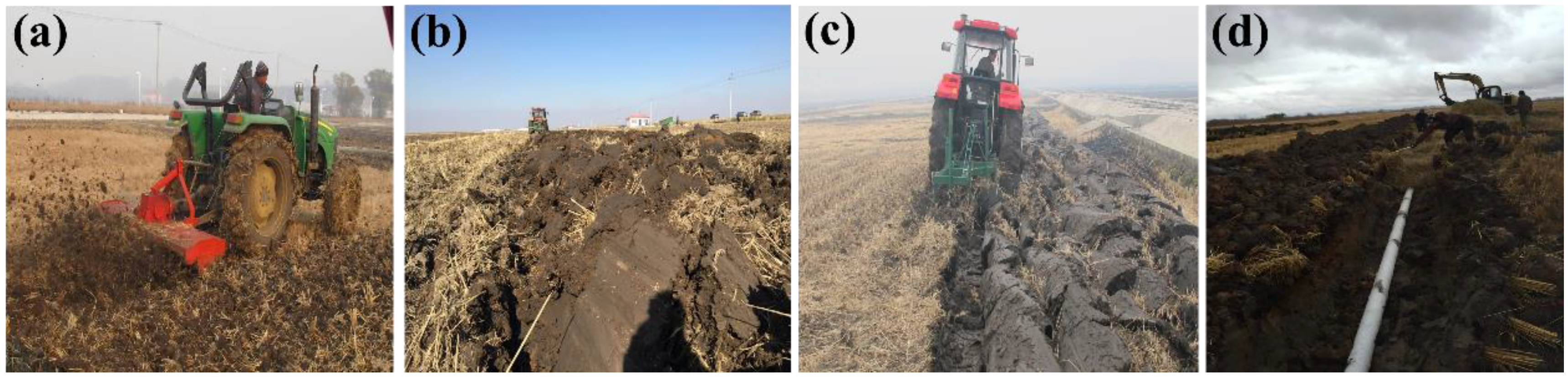
Figure 2.
Changes in soil tripartite ratio, bulk weight and soil porosity. (a) Soil tripartite ratio in the first year. (b) Soil tripartite ratio in the second year. (c) Soil bulk weight in the first year. (d) Soil bulk weight in the second year. (e) Soil porosity in the first year. (f) Soil porosity in the second year.
Figure 2.
Changes in soil tripartite ratio, bulk weight and soil porosity. (a) Soil tripartite ratio in the first year. (b) Soil tripartite ratio in the second year. (c) Soil bulk weight in the first year. (d) Soil bulk weight in the second year. (e) Soil porosity in the first year. (f) Soil porosity in the second year.
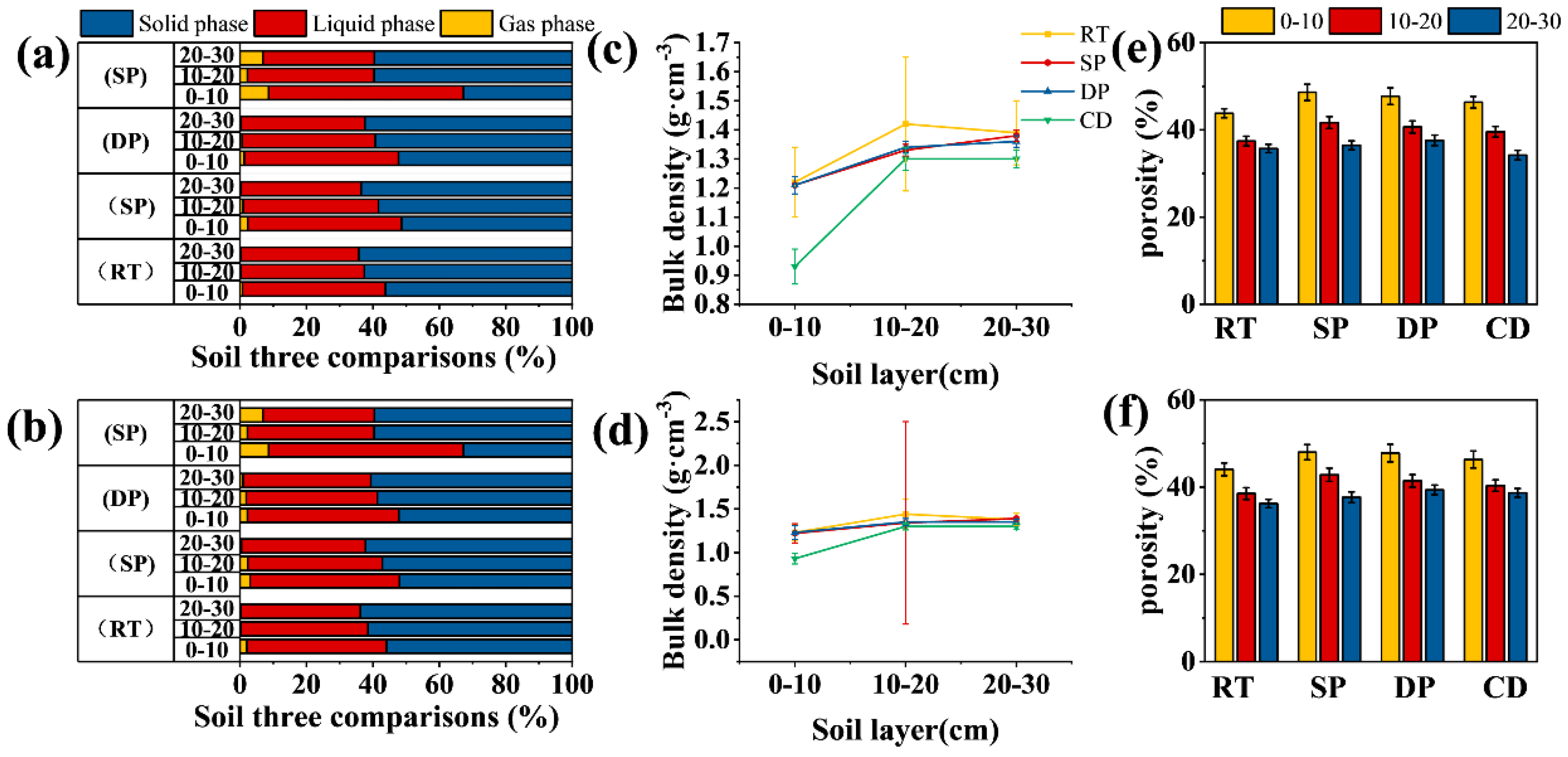
Figure 3.
Changes in soil aeration coefficient and saturated permeability coefficient under different mechanical tillage practices. (a) Changes in soil aeration coefficient and saturated permeability coefficient in the first year. (b) Changes in soil aeration coefficient and saturated permeability coefficient in the second year.
Figure 3.
Changes in soil aeration coefficient and saturated permeability coefficient under different mechanical tillage practices. (a) Changes in soil aeration coefficient and saturated permeability coefficient in the first year. (b) Changes in soil aeration coefficient and saturated permeability coefficient in the second year.
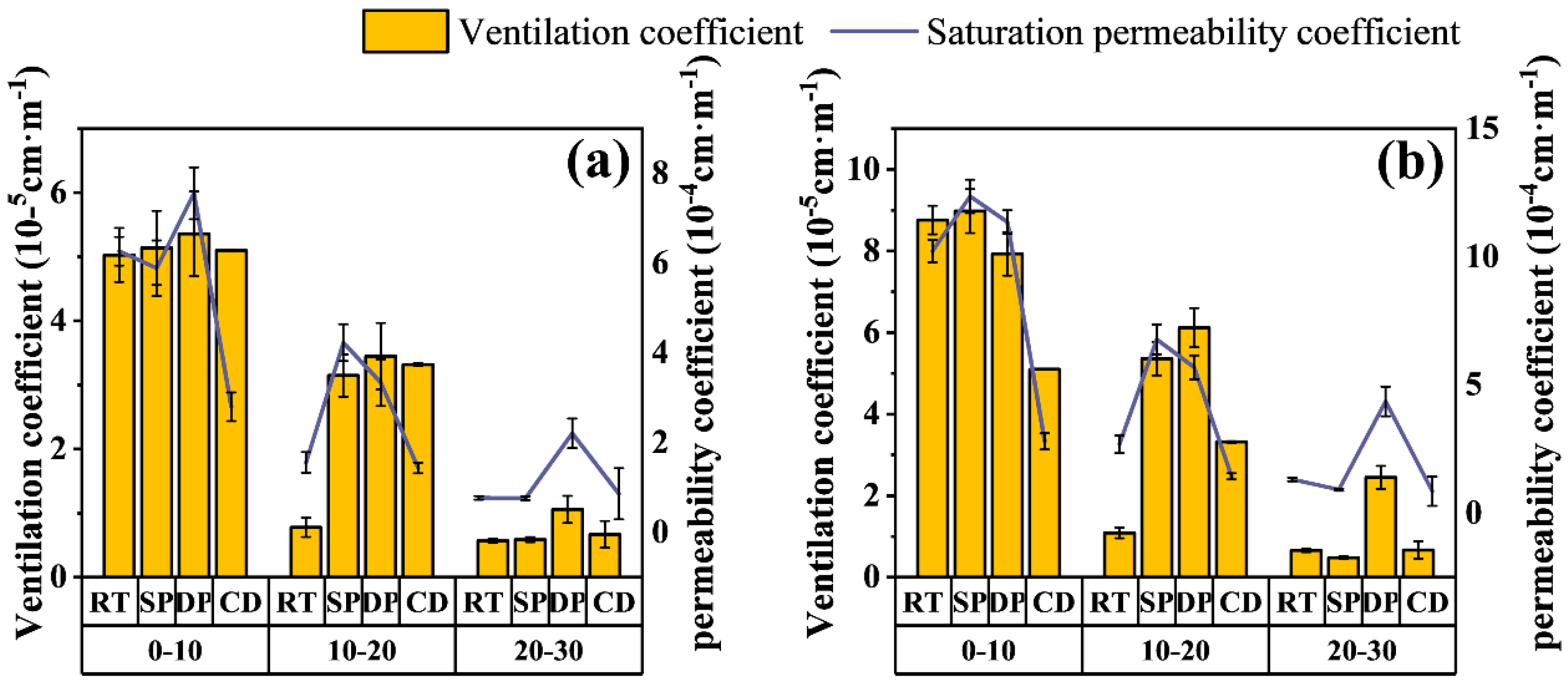
Figure 4.
Changes in soil chemical properties. (a) Fast-acting phosphorus. (b) Fast-acting potassium. (c) Organic matter. (d) Fast-acting nitrogen.
Figure 4.
Changes in soil chemical properties. (a) Fast-acting phosphorus. (b) Fast-acting potassium. (c) Organic matter. (d) Fast-acting nitrogen.
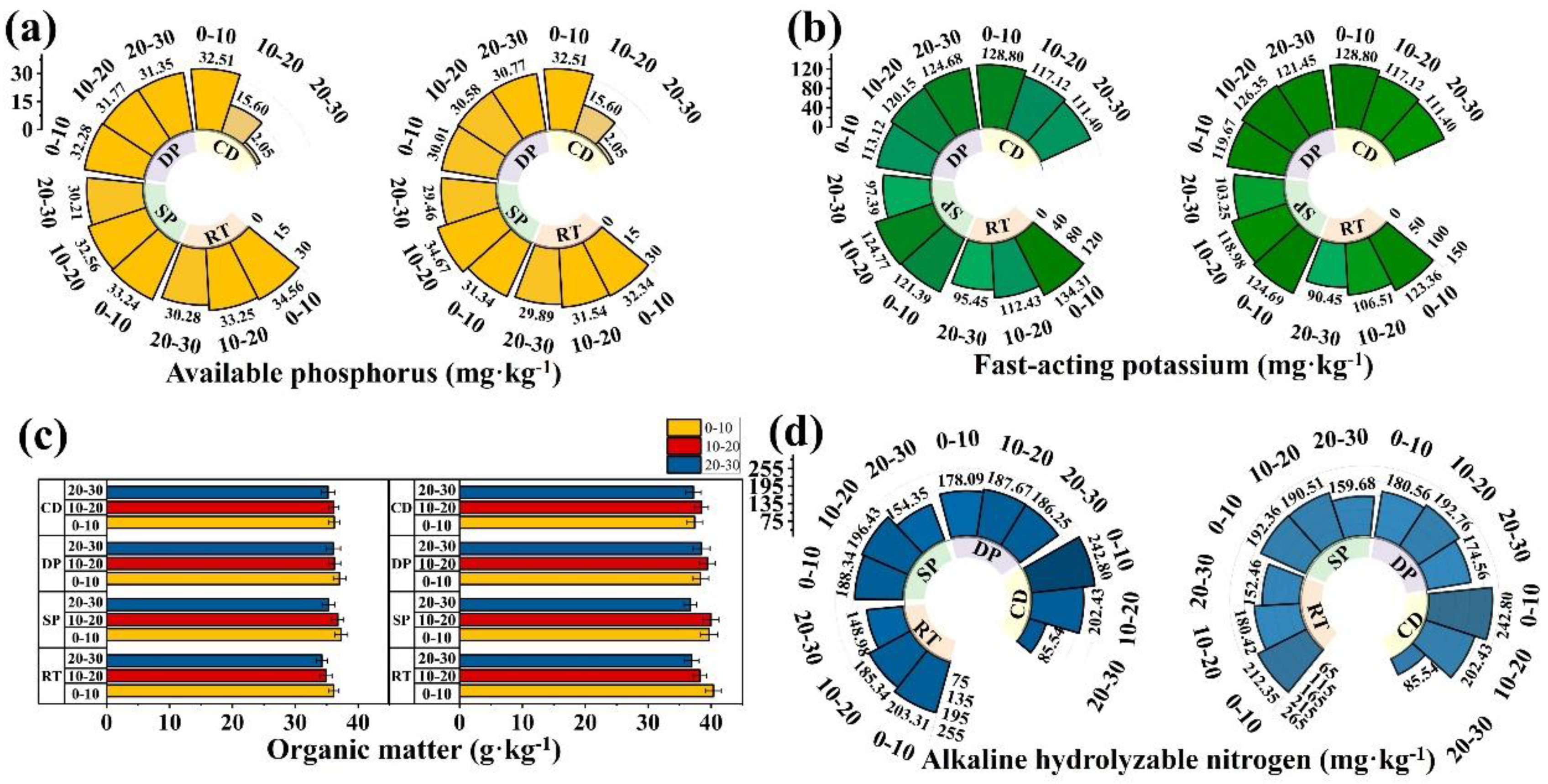
Figure 5.
Effect of different mechanical tillage on root system. (a) Root display. (b) Soil utilization. (c) Root wound flow. (d) Root dry weight and root length.
Figure 5.
Effect of different mechanical tillage on root system. (a) Root display. (b) Soil utilization. (c) Root wound flow. (d) Root dry weight and root length.
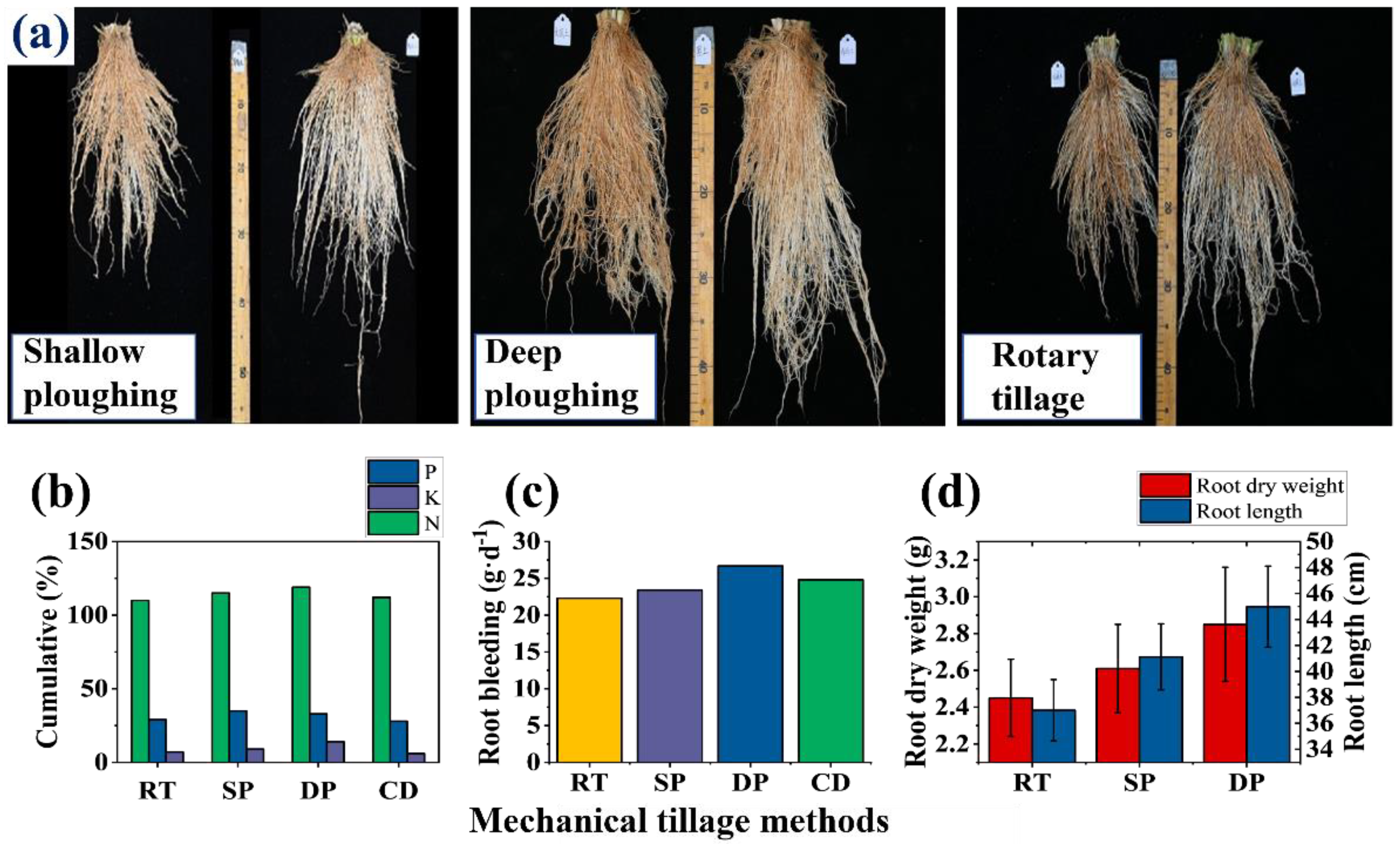
Figure 6.
Soil tillage construction mechanism for yield increase.
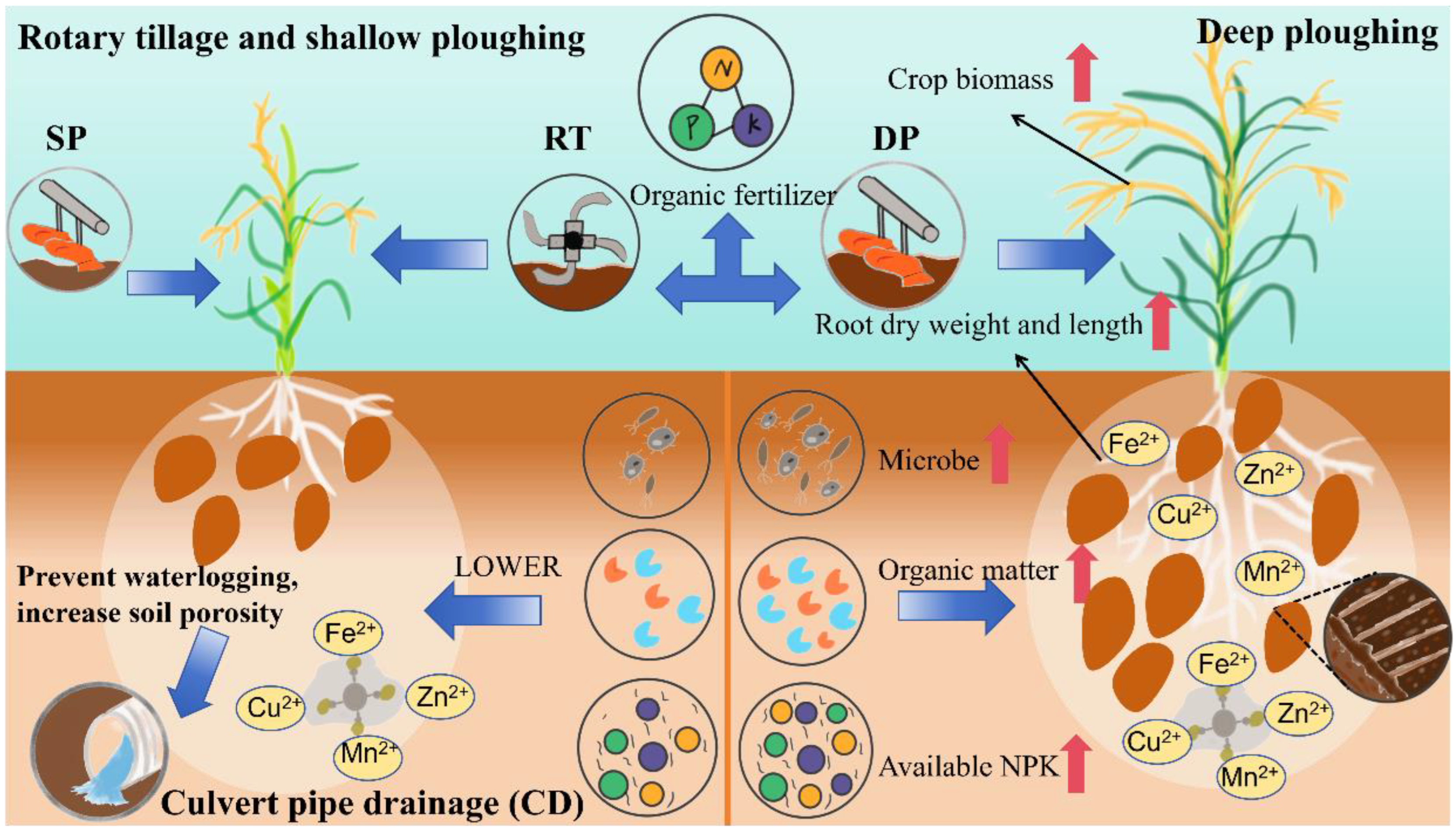

Table 1.
Fundamental information of the soil.
| Soil depth (cm) | Organic matter (mg/kg) | Available N (mg/kg) | Available P (mg/kg) | Available K (mg/kg) | Fraction composition (mm) | ||
|---|---|---|---|---|---|---|---|
| 2-0.02 | 0.02-0.002 | 0-0.002 | |||||
| 0-10 | 41.8 | 198.29 | 36.22 | 112.06 | 37.3 | 32.3 | 30.4 |
| 10-20 | 39.3 | 175.24 | 33.49 | 101.5 | 34.9 | 32.3 | 31.8 |
| 20-30 | 36.9 | 152.59 | 30.25 | 96.93 | 32 | 37.4 | 30.6 |
Table 2.
Data related to crop yields under the three tillage practices.
| Year | Dispose | Number of units per square metre | Number of grains on each plant | Seed-set percentage (%) |
|---|---|---|---|---|
| The first year | RT | 504.12±20.33 | 105.11±11.22 | 14.32±1.22 |
| SP | 565.43±26.13 | 122.34±6.88 | 12.78±1.13 | |
| DP | 558.64±30.12 | 114.23±7.45 | 12.33±1.26 | |
| The second year | RT | 524.09±21.56 | 115.21±8.98 | 11.45±1.57 |
| SP | 557.12±30.78 | 127.67±7.86 | 12.12±2.02 | |
| DP | 568.34±26.55 | 119.34±6.67 | 9.83±1.35 |
Disclaimer/Publisher’s Note: The statements, opinions and data contained in all publications are solely those of the individual author(s) and contributor(s) and not of MDPI and/or the editor(s). MDPI and/or the editor(s) disclaim responsibility for any injury to people or property resulting from any ideas, methods, instructions or products referred to in the content. |
© 2025 by the authors. Licensee MDPI, Basel, Switzerland. This article is an open access article distributed under the terms and conditions of the Creative Commons Attribution (CC BY) license (http://creativecommons.org/licenses/by/4.0/).
Copyright: This open access article is published under a Creative Commons CC BY 4.0 license, which permit the free download, distribution, and reuse, provided that the author and preprint are cited in any reuse.


