

Submitted:
22 April 2025
Posted:
23 April 2025
You are already at the latest version
Abstract
Ants, with their remarkable capabilities and intricate social structures, have emerged as unconventional yet promising allies in forensic science. This review paper explores the potential of ants as forensic evidence collectors, shedding light on their behavior, role in decomposition processes, and practical applications in criminal investigations. We examine the background of forensic evidence gathering techniques, emphasizing the shortcomings of conventional procedures and the demand for creative fixes. Ants have a clear edge over humans in finding and moving evidence because of their acute senses and effective foraging techniques. We demonstrate the critical role ants play in supporting investigations, from establishing the time of death to locating important evidence by using case studies and real-world situations. Despite their potential, entomologists and forensic specialists must work together to handle ethical issues and practical difficulties. This paper not only underscores the potential of ants as invaluable tools in forensic science but also outlines future research directions and practical guidelines for their integration into forensic practices.
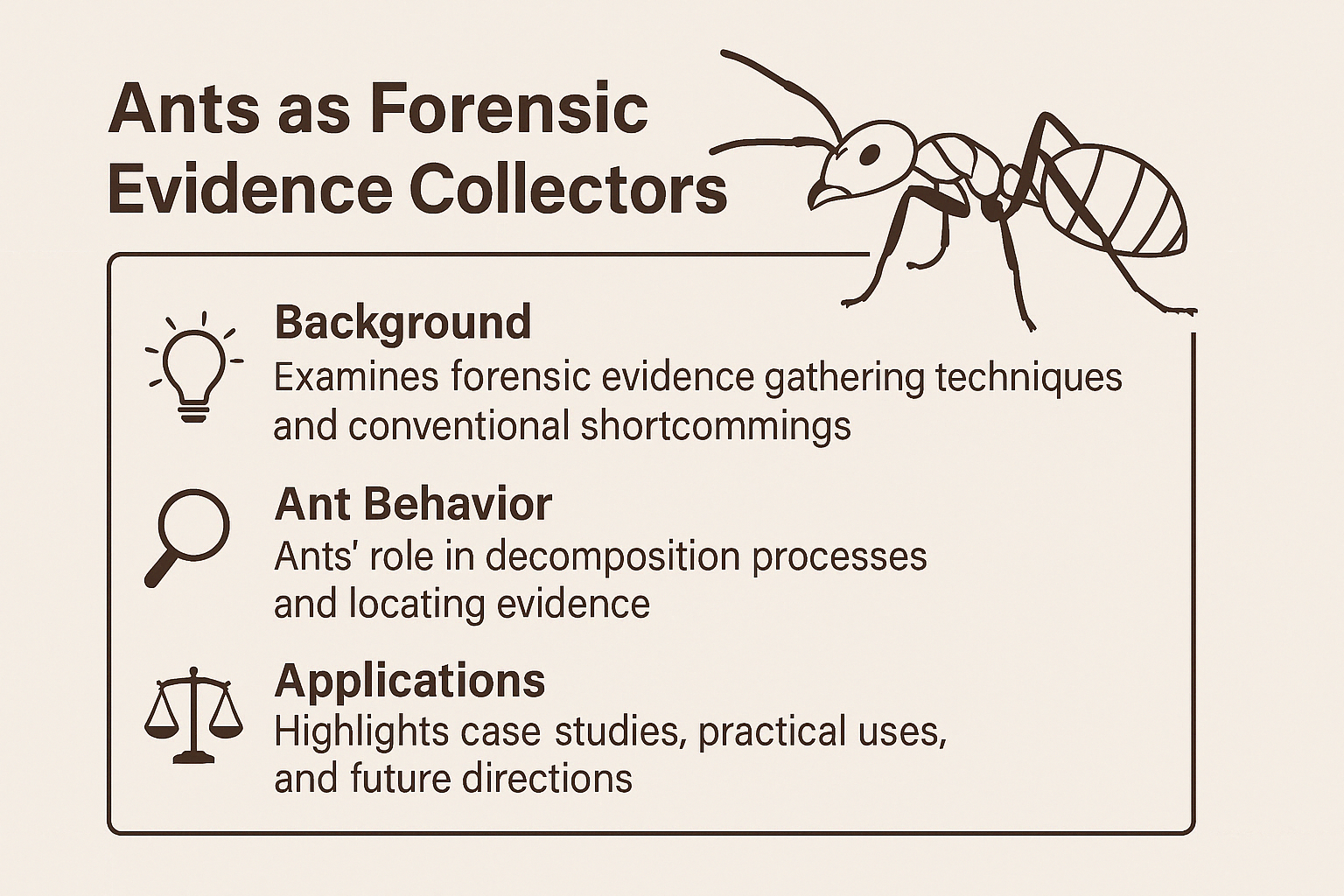
Keywords:
ants
; forensic science
; evidence collection
; decomposition
; criminal investigations
; entomology
1. Introduction
1.1. Brief Overview of Forensic Evidence Collection
Forensic science, an intricate discipline at the intersection of science and criminal justice, strives to unravel mysteries by analyzing evidence that often serves as the silent witness to a crime [1]. The crucial process of gathering evidence, which can make or break the quest of justice, is at the center of any criminal investigation. Forensic evidence collection has long relied on conventional techniques, such as DNA analysis and fingerprint analysis [2]. But in the dynamic field of forensic science, scientists and investigators are always looking for new ways to improve the effectiveness and dependability of this crucial stage.
Forensic evidence collection is a meticulous and multidisciplinary endeavor, encompassing a wide array of materials and substances. The traditional techniques employed, while invaluable, are not without limitations. Problems like contamination, deterioration, and the complexity of crime scenes frequently present obstacles that call for creative solutions [3]. In this quest, researchers and scientists have started looking for unconventional partners, and one such partner has surfaced from the complex natural world: ants [4].
This paper delves into the unconventional realm of using ants as forensic evidence collectors. The constraints of human-driven systems have led to an investigation of alternative, nature-inspired solutions, even though established methods have demonstrated their value [5]. Ants provide a distinct viewpoint in the realm of forensic research because of their extraordinary skills and intuitions [6]. By understanding and harnessing the natural behaviors of certain ant species, researchers aim to revolutionize the way evidence is located, transported, and ultimately analyzed in criminal investigations [7].
Understanding the dynamic nature of forensic science is crucial as we begin our investigation into ants as forensic evidence collectors. Incorporating non-traditional techniques not only creates new opportunities for discovery but also challenges assumptions regarding the limits of forensic investigation [8]. By illuminating their function in gathering evidence and their potential influence on the development of forensic science, this review will reveal the potential of ants as priceless friends in the search for the truth.
1.2. Importance of Efficient and Reliable Evidence Collection in Criminal Investigations
In the intricate realm of criminal investigations, the quest for truth hinges upon the ability to assemble and decipher evidence accurately [9]. The saying “justice delayed is justice denied” emphasizes how important it is to gather evidence quickly and accurately in order to promote accountability and fairness in legal systems. This crucial duty not only helps prove guilt or innocence but also significantly influences the stories that are told in courtrooms [10].
Forensic evidence collection forms the cornerstone of any criminal investigation, serving as the conduit between the crime scene and the judicial process. Its significance is emphasized by the fact that the integrity of the evidence gathered affects not only the results of specific cases but also the criminal justice system’s overall credibility [11]. It is impossible to overestimate the importance of accuracy and completeness in this procedure, since any error or carelessness in gathering evidence could result in false allegations or the exoneration of those who are guilty [12].
Forensic investigators have historically used a wide range of techniques, from DNA profiling to fingerprint analysis, to establish a sequence of events and identify the criminals. Nevertheless, despite their undeniable value, these traditional methods have drawbacks [13]. The emergence of innovative and unconventional methods in forensic science is driven by the recognition of these limitations and the quest for more efficient, reliable, and sometimes, unexpected avenues for evidence collection [14].
This study explores one such unconventional yet intriguing method: using ants to gather forensic evidence. Understanding the larger context of forensic evidence collection is essential as we investigate this fascinating option [15]. Our legal systems’ effectiveness depends on our capacity to adjust, develop, and adopt strategies that improve the precision and comprehensiveness of the evidence offered in court while simultaneously expediting the investigation process [16].
By examining the importance of efficient and reliable evidence collection, we lay the groundwork for an exploration into the fascinating world of ant-assisted forensic science [17]. We are encouraged by this voyage to question established ideas, push the limits of forensic techniques, and take into account innovative concepts that could completely alter the field of criminal investigations [18]. Let’s keep in mind the significant influence that cutting-edge techniques for gathering evidence can have on the fight for justice and the upholding of the truth in the face of hardship as we explore the complexities of this subject.
1.3. Introduction to the Use of Ants in Forensic Science
Forensic science stands as a crucial pillar in the realm of criminal investigations, where meticulous evidence collection plays a pivotal role in unraveling mysteries and delivering justice. Forensic experts have historically used a wide range of methods, from DNA profiling to fingerprint analysis, to collect evidence. Ants, on the other hand, have become an intriguing and unusual ally in recent years [19]. These tenacious insects, which are frequently disregarded in forensic settings, have natural tendencies that make them ideal for gathering important evidence.
Despite their effectiveness, the traditional techniques of gathering evidence frequently have drawbacks, including the requirement for specialized equipment, time constraints, and weather-dependent viability. We set out on a quest to investigate the potential of these small but amazing creatures to transform the field of evidence recovery as we dig deeper into the usage of ants in forensic research [20]. This creative method makes use of ants’ innate instincts, taking advantage of their unmatched capacity to find, recover, and move objects of interest in a very effective and methodical way.
Ants, renowned for their collective intelligence and sophisticated communication systems, exhibit a level of organization that can be harnessed to streamline forensic processes. In addition to offering an innovative approach for collecting evidence, the use of ants in forensic research may help overcome some of the drawbacks of more conventional methods [21]. Ants may prove to be crucial collaborators in revealing buried realities at crime scenes and decomposition sites, giving forensic investigators an extra tool to improve the precision and dependability of their results.
The history of forensic evidence collecting, the changing landscape of investigative techniques, and the backdrop of ant use in forensic science will all be covered in the present study [22]. Understanding the behavior and capacities of ants can help us understand why some species are especially well-suited for this use. Additionally, we will investigate the mutually beneficial link between ants and decomposition processes, revealing the complex interplay that makes ants useful contributors to time since death estimation [23].
As we work through this novel strategy, we will provide actual case studies that illustrate how ants have been crucial to gathering evidence and eventually impacted the results of criminal investigations. We’ll discuss ants’ benefits as evidence collectors, such as their quickness, effectiveness, and capacity to adjust to a variety of environmental circumstances [24]. But every method has drawbacks, and we will look closely at the moral issues and possible limitations surrounding the use of ants in forensic research.
In essence, this exploration of ants as forensic evidence collectors invites us to reconsider and expand the boundaries of conventional forensic methodologies [25]. It pushes us to acknowledge the unrealized potential of nature and promotes a mutually beneficial link between the complex ant activities and the stringent standards of forensic investigations [26]. As we set out on the quest, the use of ants in forensic science could represent a paradigm shift that brings in a new era of criminal justice and evidence gathering.
2. Background
2.1. Historical Perspective on Forensic Evidence Collection Methods
With roots in ancient civilizations when basic investigation methods were used to solve crimes, forensic evidence collecting has undergone tremendous change over the ages. The historical perspective on forensic evidence gathering techniques sheds light on the early investigators’ varied approaches and the slow evolution of forensic science.
- 1.
- Ancient Civilizations:
As rulers looked for methods to settle conflicts and carry out justice, early forensic science developed in ancient civilizations including Babylon, Egypt, and Rome [27]. Basic techniques like fingerprinting clay tablets and utilizing fingerprints on papers for authentication were part of these early forensic efforts [28].
- 2.
- Middle Ages:
The idea of “trial by ordeal” gained popularity during the Middle Ages as legal systems became more organized [29]. In order to establish guilt or innocence, techniques like the hot iron and cold-water tests were used, which reflected an antiquated method of gathering forensic evidence based on bodily responses to perceived injustices [30].
- 3.
- Renaissance and Early Modern Period:
A change toward a more scientific method of inquiry was highlighted by the Renaissance. The application of medical expertise in judicial investigations was first established by the Italian physician Fortunato Fidelis in the 17th century [31]. During this time, forensic pathology also gained popularity, and people like Ambroise Paré helped to clarify how wounds relate to criminal activity [32].
- 4.
- Late 19th to Early 20th Century:
The late 19th century witnessed significant advancements in forensic evidence collection. Anthropometry is a methodology of measuring and classifying bodily traits that was introduced as a means of criminal identification by the French criminologist Alphonse Bertillon [33]. Modern fingerprint analysis was made possible by Sir Francis Galton’s fingerprint research, which further transformed forensic identification [34].
- 5.
- The Role of Sherlock Holmes and Fiction:
Through fictional figures like Sherlock Holmes, forensic science also became more well known in the late 19th and early 20th centuries [35]. The value of deductive thinking and the methodical gathering of evidence were highlighted in Arthur Conan Doyle’s detective stories, which impacted public opinion and served as an inspiration for actual forensic procedures [36].
- 6.
- Emergence of DNA Evidence:
James Watson and Francis Crick’s discovery of the structure of DNA in the subsequent half of the 20th century was a revolutionary advancement [37]. The foundation for DNA profiling, a cutting-edge forensic technique that is now essential to criminal investigations, was established by this discovery [38].
- 7.
- Contemporary Forensic Evidence Collection:
Digital forensics, entomology, and forensic anthropology are only a few of the many specialized areas that make up modern forensic science [39]. The scope and precision of forensic evidence gathering procedures have been further increased by technological developments like computer forensics, DNA sequencing, and the application of sophisticated imaging techniques [40].
Gaining an appreciation for the ongoing innovation and improvement in the field of forensic evidence collecting requires an understanding of its historical background. The evolution of DNA profiling from ancient trial by ordeal to modern DNA profiling illustrates the persistent human search for precise and reliable methods to solve criminal mysteries.
2.2. Challenges and Limitations of Traditional Evidence Collection
A vital component of criminal investigations is the gathering of forensic evidence, which offers vital information that can make or break a case. Conventional approaches have been used for a long time, but as Figure 1 illustrates, they have inherent difficulties and restrictions that may affect the precision and effectiveness of the investigation.
- 1.
- Contamination Risks:
Traditional evidence collection methods often involve physical contact between investigators and the crime scene. Because investigators may inadvertently bring foreign elements, including skin cells, hair, or fibers, to the crime scene, this intimate contact raises the possibility of contamination. Contamination raises doubt on the validity of the results and jeopardizes the integrity of the evidence [41].
- 2.
- Cross-Contamination:
The possibility of cross-contamination is a major concern in multi-scene crime investigations. Investigators may transport trace evidence from one scene to another when they travel between places. This may cause the evidence to be interpreted incorrectly and make it more difficult to draw a direct connection between the evidence and the crime [42].
- 3.
- Destructive Sampling:
Traditional evidence collection methods often involve the removal of physical samples from the crime scene. This can be harmful by nature, yet it is required for laboratory analysis. Sample removal may change the crime scene’s initial condition, making it more difficult to reconstruct what happened. Furthermore, the scope and complexity of forensic investigations may be impacted by small sample numbers [43].
- 4.
- Time Sensitivity:
Evidence may deteriorate or change over time in certain situations, and the conventional collection method takes a long time. Delays in gathering and analyzing evidence may affect the success of the investigation and may lead to the loss of important information. In situations involving biological evidence, like DNA, this kind of sensitivity is especially important [44].
- 5.
- Subjectivity in Observation:
Traditional evidence collection becomes rather subjective due to human factors. A crime scene may be interpreted differently by different investigators, which could result in differing results. This subjectivity raises questions regarding the impartiality of the investigation process and may affect the validity and dependability of the evidence offered in court [45].
- 6.
- Limited Technological Integration:
While many facets of forensic science have changed as a result of technological advancements, traditional ways of gathering evidence have been slower to adopt new technologies. The effectiveness and precision of evidence collection may be constrained by the use of manual techniques, particularly in contrast to more contemporary and automated procedures [46].
- 7.
- Resource Intensity:
Conventional evidence gathering often calls for a large investment of time, money, and manpower. The scalability of forensic operations and investigative budgets may be hampered by this resource intensity. Because of resource limitations, certain cases can thus get less attention or undergo insufficient forensic analysis [47].
Understanding these challenges and limitations highlights the need for continuous innovation in forensic science. To get beyond these drawbacks and improve the accuracy of evidence gathering in criminal investigations, it becomes crucial to investigate alternate techniques, such as incorporating technological solutions and using unusual strategies like ants.
2.3. The Emergence of Unconventional Methods, Including the use of Ants in Forensic science
Forensic science, the application of scientific methods to the investigation of crimes, has continually evolved to meet the challenges posed by the ever-changing landscape of criminal activities. In the past, collecting forensic evidence mostly depended on established protocols, technical developments, and human expertise. To improve the effectiveness and dependability of forensic investigations, however, the drawbacks and restrictions of traditional techniques have prompted the research of novel and unusual strategies [48].
Particularly in cases involving decomposition, outdoor crime scenes, and the search for human remains, these limits were acknowledged. Conventional approaches frequently encounter challenges such contamination, the requirement for substantial resources, and the quick deterioration of evidence. In order to overcome these obstacles, forensic scientists and entomologists started investigating alternative, nature-inspired methods [49].
The use of ants to gather forensic evidence is one such unusual strategy that has drawn interest. Ants have a special set of benefits when it comes to crime scene investigation because they are scavengers by nature and have highly developed senses of smell and tracking. The concept is based on how some ant species naturally find and move objects of interest, such as decaying organic materials [50].
Ants have long been used in forensic investigations. Ants and other insects have long been acknowledged by indigenous communities and traditional knowledge as being important to the decomposition process. The scientific community has just recently started to methodically investigate and utilize ants’ potential as useful aids in the gathering of forensic evidence, but [51].
The emergence of this unconventional method is a testament to the interdisciplinary nature of forensic science, where collaboration between entomologists, forensic experts, and law enforcement professionals has paved the way for innovative solutions. Researchers have conducted studies to identify suitable ant species for specific environments, understand their foraging behavior, and develop protocols for integrating ants into forensic investigations [52].
Ants’ investigation as forensic evidence collectors mark a paradigm shift in the field and gives a viable way to get around the drawbacks of conventional techniques [53]. The potential uses of this unusual method are growing as we learn more about the complexities of ant activity and how they interact with crime scenes, creating new avenues for enhancing the precision and effectiveness of forensic investigations [54]. The transition from conventional to unconventional approaches is a fascinating development that captures the fluidity of forensic science and its dedication to remaining on the cutting edge of methodological and technical developments.
3. Ants in Forensic Science
3.1. Overview of Ant Behavior and Capabilities
Ants, belonging to the family Formicidae, are social insects that have adapted to a diverse range of ecosystems, displaying remarkable behaviors and capabilities. This section provides a detailed exploration of the fundamental aspects of ant behavior, shedding light on their communication, foraging strategies, and organizational structures.
3.1.1. Social Structure
Ants are eusocial insects with highly organized social structures that are members of the Formicidae family. Their intricate societies demonstrate cooperative behaviors, communication, and the division of labor. To fully understand ants’ potential use in collecting forensic evidence, one must have a solid understanding of their social organization [55].
- 1.
- Eusociality in Ants:
Eusociality is a hallmark of ant colonies, characterized by overlapping generations, cooperative care of the young, and reproductive division of labor. The colony functions as a superorganism, with individuals working together for the survival and reproduction of the colony [56].
- 2.
- Castes within Ant Colonies:
There are various castes within ant colonies, and each has distinct duties. Fertile females in charge of reproduction are known as queens.
Sterile females who performed a variety of duties, including nursing, colony defense, and foraging are called as workers. Male ants that are only interested in mating with queens are known as drones.
- 3.
- Division of Labor:
Ants are highly specialized, with individuals concentrating on particular duties according to their caste and age. Foraging, nursing, nest management, and defense are among the tasks. Division of labor improves the colony’s usefulness and efficiency.
- 4.
- Communication and Chemical Signaling:
Ants communicate primarily through pheromones, chemical signals that convey information. Pheromones are used for trail marking, alarm signaling, and recognition of nestmates. Communication is crucial for coordinating activities within the colony.
- 5.
- Nest Construction and Maintenance:
Ants use a range of resources, including soil, leaves, and even their own bodies, to build their nests. Nests provide the colony with protection, food storage, and shelter. As the colony increases, maintenance activities include repairing and enlarging the nest [57].
- 6.
- Cooperative Brood Care:
Ants exhibit cooperative care for their brood, with workers responsible for feeding, grooming, and protecting developing eggs, larvae, and pupae. This cooperative care ensures the survival and well-being of the next generation.
- 7.
- Adaptive Behavior:
Ant colonies have exceptional environmental flexibility. The colony can efficiently address issues like predation, resource scarcity, and variations in temperature through collective decision-making.
- 8.
- Ants as Ecosystem Engineers:
Ants play a crucial role in shaping ecosystems through their activities, such as seed dispersal, soil aeration, and nutrient cycling. Their impact on the environment extends beyond the colony boundaries [58].
3.1.2. Foraging Behavior
As social insects, ants display intricate behaviors that are vital to their colony’s survival. Ants’ foraging habits are among their most fascinating features; they are essential to obtaining food, resources, and, as we shall see, the possibility of using them to gather forensic evidence.
- 1.
- General Characteristics of Ant Foraging Behavior
Ant foraging behavior is a dynamic and well-coordinated activity that involves the search, retrieval, and transportation of food resources back to the nest. This behavior is orchestrated by complex communication systems within the ant colony, enabling efficient exploitation of their environment.
- 2.
- Communication Mechanisms
Pheromones, which are chemicals that transmit information about food supplies, nest sites, and possible threats, are the main means of communication for ants. In order to direct other members of the colony to the resources they have found, foraging ants create pheromone trails. Forager recruitment and organization may be impacted by the strength and makeup of these pheromone trails [59].
- 3.
- Division of Labor
Ant colonies’ division of labor is frequently associated with foraging behavior. Foragers and other specialized castes have unique behavioral and physical traits that enable them to be excellent at finding and moving food. The colony’s overall resource acquisition efficiency is improved by this division [60].
- 4.
- Trail Following
Ants employ trail following as a strategy to navigate between the nest and food sources. As ants follow the pheromone trails left by their predecessors, a collective effort emerges, optimizing the exploration of the environment and the discovery of new resources. This behavior is not only efficient for food collection but also presents opportunities for the application of ants in forensic science [61].
- 5.
- Application in Forensic Evidence Collection
Ants’ foraging behaviors have applications in forensic research, especially when it comes to identifying and collecting cadaver scent. Ants are known to be drawn to decaying organic materials, and because of their effective foraging skills, they can be useful helpers in identifying and moving forensic evidence including human remains [62].
To sum up, knowing the nuances of ant foraging behavior offers important insights into how they may be used in forensic science. Ants can be used as efficient tools for evidence discovery and collection by utilizing their innate instincts and talents, providing a fresh and creative approach in the field of forensic investigations.
3.1.3. Problem-Solving and Adaptability
Ants are convivial insects with a wide range of skills and behaviors that help them thrive in a variety of settings. Two important facets of ant behavior are examined in this overview: adaptation and problem-solving. Comprehending these characteristics is essential for acknowledging the intricacy of ant communities as well as their possible uses in a variety of domains, including as robotics, ecology, and, as this talk will highlight, forensic science.
- 1.
- Problem-Solving in Ant Colonies
Ant colonies are extremely well-organized superorganisms that depend on group decision-making to function well. Ants’ capacity to find the most effective routes to food sources is among the best-known instances of this behavior. Deneubourg and Goss [63] showed how ants use pheromone trails to collectively enhance path choices. Ants are adept at allocating tasks throughout the colony in addition to making decisions. Depending on the colony’s immediate needs, physical capabilities, and age, responsibilities are assigned. Gordon [64] highlighted how this system is dynamic, with ants able to transition between tasks in response to shifting demands and environments. Ants also have remarkable cognitive skills, such as memory and learning. Ants’ ability to pick up and remember visual signals to successfully navigate their environment was demonstrated by Latour B [65]. Because of their sophisticated actions, ants are of interest to researchers studying complex systems and collective intelligence in addition to entomology.
- 2.
- Adaptability of Ants
Ants exhibit remarkable adaptability, allowing them to thrive in a wide range of environmental conditions. Because of their adaptability to different environments, different species can be found in habitats that range from arid deserts to thick rainforests. Menzel and Giurfa’s work, which emphasized ant colonies’ ability to adapt to a variety of ecological niches, lends additional credence to this adaptability [66]. Ants exhibit the capacity to adapt their social structures in response to outside influences in addition to their resistance to their surroundings. Ant colonies can change their organizational dynamics and reproductive tactics in response to shifting ecological conditions, according to Oster and Wilson’s observations [67]. Ants also have intricate symbiotic and cooperative relationships with other living things. Ant societies are dynamic and adaptive, as demonstrated by the mutualistic interactions Menzel and Giurfa described, such as those between ants and aphids [66].
- 3.
- Implications for Forensic Science
In forensic investigations, ants’ exceptional problem-solving skills can be successfully used to find and gather evidence. Numerous studies have shown that ants have an innate ability to find and move small objects, such as those conducted by Bronstein JL et al., which proved how ants help find and efficiently move decomposing remains [68]. Ants’ great degree of flexibility makes them useful for environmental monitoring in addition to their role in gathering evidence. Through ecological indicators, their behavioral responses to shifting environmental conditions can complement forensic investigations by offering crucial information, such as establishing the chronology of events at a crime scene [69].
Ants’ problem-solving and adaptability showcase the intricacies of their social structures and highlight their potential applications in various fields. In forensic science, leveraging these capabilities could revolutionize evidence detection and environmental monitoring, contributing to more effective and efficient investigations.
3.1.4. Agriculture and Animal Husbandry
Ants, as social insects, exhibit a wide range of behaviors and capabilities that extend beyond their conventional roles in nature. This section delves into the specific aspects of ant behavior related to agriculture and animal husbandry, shedding light on their ecological significance and potential applications in various fields.
- 1.
- Ant Societal Structure and Organization
Ants live in incredibly well-organized colonies whose members are categorized into castes according to their duties as workers, soldiers, and queens. Efficient task specialization is made possible by this intricate social structure [70]. Ant colonies use complex communication systems, such as chemical signals (pheromones) and tactile cues, to promote cooperative behavior [71].
- 2.
- Ants as Agriculturists
Some ant species are agricultural in nature, using fungus as their main food source. For instance, fresh leaves are cut and transported to their nests by leafcutter ants, who use them as a substrate for the growth of fungi [72]. Ant colonies’ ecological adaptability is demonstrated by this unusual agricultural practice, which incorporates mutualistic partnerships between ants and fungi [73].
- 3.
- Ants and Aphid Farming
Some ant species engage in mutualistic relationships with aphids, protecting them from predators and receiving honeydew, a sugary substance excreted by aphids, in return [74]. This form of animal husbandry demonstrates ants’ ability to manipulate other insects for their benefit, highlighting their ecological impact on diverse ecosystems.
- 4.
- Ecosystem Services Provided by Ants
Ants play a crucial role in pest control by preying on various insect species, regulating populations and contributing to overall ecosystem balance [75]. Their activities in soil aeration, seed dispersal, and nutrient cycling further contribute to the health and productivity of agricultural landscapes [76].
- 5.
- Applications in Sustainable Agriculture
Sustainable farming methods can benefit from an understanding of ant behavior and ecological responsibilities. For instance, encouraging ant-friendly habitats may improve natural pest management and lessen the need for chemical pesticides [77]. The incorporation of knowledge about ants into agroecological systems is consistent with initiatives to create resilient and ecologically friendly farming methods.
In summary, examining the complexities of ant behavior in relation to agriculture and animal husbandry reveals both the possibility for creative uses in sustainable practices as well as their intriguing ecological responsibilities. There may be fresh chances to improve ecological and agricultural sustainability as scientists work to understand the intricacies of ant behavior.
3.1.5. Intelligence and Learning
Ants, belonging to the family Formicidae, are renowned for their highly organized and complex social structures. Beyond their collective behaviors, recent research has shed light on the intelligence and learning capabilities exhibited by ants, which hold significant implications for various fields, including ecology, neuroscience, and, intriguingly, forensic science.
- 1.
- Ant Intelligence: A Collective Endeavor
Ants are social insects with a level of social organization that is higher than that of individual ants. They live in colonies. Ant colonies’ intelligence is frequently ascribed to the interactions and collective behavior of individual ants [78]. With complex communication networks and a division of labor among several ant castes, including workers, soldiers, and queens, ant colonies function as superorganisms.
- 2.
- Learning in Ants: Adaptability and Memory
Ants have a remarkable capacity for environmental learning in addition to their ability to engage in complex social behaviors. Ants can navigate complex surroundings, acquire and store spatial information, and modify their behavior based on experience, according to research [79]. For activities like foraging, where ants must maximize food gathering and maneuver effectively across their environment, this learning ability is essential.
- 3.
- Communication and Information Transfer
Ants communicate primarily through chemical signals known as pheromones. This sophisticated chemical communication system enables ants to convey information about food sources, danger, and even mark paths for other ants to follow. The ability to transmit and interpret complex information through pheromones enhances their collective decision-making processes [80].
- 4.
- Problem-Solving Abilities
Studies have demonstrated that ants display problem-solving skills in various contexts. For instance, ants can navigate mazes, find the most efficient routes to food sources, and even adapt their foraging strategies based on changing environmental conditions [81]. The problem-solving abilities of ants highlight their cognitive flexibility and capacity to respond to novel challenges.
- 5.
- Application in Forensic Science
Forensic science will be greatly impacted by the growing comprehension of ants’ intellect and capacity for learning. Ants can be used to gather evidence at crime scenes because of their innate abilities to find and move objects. They are also useful instruments for determining the time of death in forensic investigations due to their propensity for decomposition processes.
To sum up, the overview of ant behavior and abilities shows a degree of learning and intelligence that surpasses the intellect of a single ant to the collective intelligence of the entire colony. This knowledge has promising applications in forensic science, supporting the development of forensic investigation techniques and creating new opportunities for creative evidence collection strategies.
This overview highlights the intricate social structures, remarkable foraging strategies, and problem-solving capabilities of ants. Understanding these behaviors is crucial not only for ecological studies but also for unlocking their potential in various applications, such as in forensic science, agriculture, and robotics.
Ants’ complex habits and abilities must be understood in order to fully utilize their potential in forensic science, where their innate instincts can be used to gather evidence effectively in a variety of settings.
3.2. Identification of Specific ant Species Suitable for Forensic Evidence Collection
Forensic entomology, the application of insect biology to criminal investigations, has witnessed a growing interest in utilizing ants as forensic evidence collectors. Ants’ complex habits and abilities must be understood in order to fully utilize their potential in forensic science, where their innate instincts can be used to gather evidence effectively in a variety of settings.
3.2.1. Pheidole megacephala (Big-Headed Ant)
The use of insect biology in legal investigations, or forensic entomology, has become well-known for its assistance in crime scene investigations and postmortem interval estimation. Ants have become potential contributors to forensic science because of their natural capacity to find and interact with different kinds of evidence. The identification and usefulness of a particular ant species, Pheidole megacephala, also referred to as the Big-Headed Ant in Figure 2, for the collecting of forensic evidence are the main topics of this section.
- A.
- Overview of Pheidole megacephala:
The ant species Pheidole megacephala is found all over the world and is distinguished by its huge workers’ heads, which are excessively large in relation to their body size. Due to its polymorphism, which includes minor and major worker castes, this species is adaptable to a variety of duties, such as nest guarding and foraging [82]. Their potential use in forensic investigations is influenced by their versatility and capacity to flourish in a variety of settings.
- B.
- Suitability for Forensic Evidence Collection:
- 1.
- 1. Foraging Behavior:
Pheidole megacephala is an efficient forager with a keen sense of smell, allowing them to locate and retrieve various items from their surroundings. This foraging behavior makes them well-suited for discovering and collecting forensic evidence at crime scenes [83].
- 2.
- Transportation Abilities:
The Big-Headed Ant is incredibly strong and capable of carrying loads that are several times their own weight. For carrying tiny objects to their nests, like hair, bone fragments, or other trace evidence, this ability offers advantages [84].
- 3.
- Nesting Habits:
Pheidole megacephala have a variety of nesting habitats since they can build their nests in soil, leaf litter, or decomposing wood. Because of their versatility, they can be found at diverse crime scenes, which could make them useful for gathering evidence in a variety of contexts [85].
- 4.
- Broad Geographic Distribution:
Pheidole megacephala is found in tropical and subtropical regions globally, making it a candidate for forensic investigations in a wide range of climates and ecosystems [86]. This broad distribution enhances its applicability in diverse forensic contexts.
- C.
- Case Studies:
The use of Pheidole megacephala in forensic investigations has been recorded in a number of case studies. For instance, studies conducted by Ahmad A. and Omar B. shown how this ant species may be used to find and gather bone remains, demonstrating its potential as a useful instrument for crime scene investigation [87].
The Big-Headed Ant, Pheidole megacephala, is a viable choice for gathering forensic evidence because of its global distribution, feeding patterns, nesting behaviors, and transportation capabilities. By giving law enforcement and forensic experts more resources for efficient crime scene investigations, the identification of certain ant species with these characteristics advances the growing area of forensic entomology.
3.2.2. Formica spp. (Wood Ants)
In order to assist with legal investigations, forensic entomology uses the study of insects and other arthropods, especially when determining the postmortem period and locating human remains. As seen in Figure 3, several ant species, such Formica spp., have demonstrated promise in their capacity to effectively gather and process forensic evidence among the wide variety of insects used in forensic science.
A. Overview and Taxonomy
Formica spp., commonly known as wood ants, belong to the Formicidae family. These ants are prevalent in various ecosystems, including forests and woodlands. With their distinct morphology and behavior, wood ants have attracted the attention of forensic researchers seeking alternative methods for evidence collection [88].
B. Behavioral Characteristics Relevant to Forensic Evidence Collection
Wood ants are appropriate for forensic applications due to a number of their habits. Their capacity to move objects, effective pheromone transmission, and keen foraging instincts all add to their potential as forensic evidence collectors [89]. At crime scenes, these actions are essential for finding and moving evidence.
C. Case Studies and Research Findings
The usefulness of Formica spp. in forensic scenarios has been demonstrated in a number of investigations. Wood ants were found to quickly find and move small objects during decomposition trials in a study by Eubanks et al. The importance of wood ants in helping forensic investigators locate dispersed remains effectively was highlighted in the study [90].
D. Advantages of Formica spp. in Forensic Evidence Collection
Wood ants exhibit rapid and organized foraging behavior, enhancing the speed of evidence discovery [90]. Wood ants thrive in diverse environmental conditions, making them adaptable to various forensic contexts [91]. Unlike traditional evidence collection methods, the use of wood ants is minimally invasive, preserving potential forensic evidence [92].
E. Considerations and Challenges
Even though Formica spp. exhibit promise, there are factors and difficulties to take into account:
Ethical Problems such as careful consideration must be given to the moral ramifications of employing living organisms in forensic investigations [89]. Environmental factors such as geographical location, climate, and ecological features can all affect how effective wood ants are [91].
F. Future Directions and Research Needs
Future studies should concentrate on examining species-specific behavior to determine the most effective forensic evidence collectors in order to further expand the relevance of Formica spp. in forensic science. The creation of organized training courses for forensic experts is also necessary in order to use wood ants in crime scene investigations. Formica spp., especially wood ants, offer a novel and exciting way to gather forensic evidence. They are useful friends in crime scene investigations because of their unique characteristics, which include quick and well-organized foraging and their capacity to adapt to a variety of environmental situations. This strategy provides an unconventional yet efficient way to find evidence, enhancing and maybe enhancing current forensic procedures.
3.2.3. Solenopsis invicta (Red Imported Fire Ant)
There is growing interest in using ants to gather evidence in forensic entomology, which applies insect biology to legal investigations. Because of its exceptional traits and behaviors, Solenopsis invicta, also referred to as the Red Imported Fire Ant (RIFA), stands out among the many ant species as a possible contender. As seen in Figure 4, this section explores the discovery of Solenopsis invicta as a species that is especially well-suited for gathering forensic evidence.
A. Taxonomy and Distribution
Solenopsis invicta belongs to the Formicidae family and is recognized for its reddish-brown coloration and aggressive nature. Native to South America, this ant species has spread globally, with established colonies in various regions, including the United States, China, Australia, and Europe. Research has highlighted its adaptability to diverse environments, making it a ubiquitous presence in both urban and rural settings [93].
B. Aggressive Behavior and Colony Structure
Solenopsis invicta’s aggressive and territorial behavior is one of the main characteristics that make it appropriate for gathering forensic evidence. When disturbed, worker ants react quickly and collectively, initiating mass attacks on alleged intruders. RIFA colonies are noted for their strong nest defense. At crime scenes, this protective response might be used to find and gather evidence [94]. Furthermore, in forensic applications, Solenopsis invicta colony structure is essential. A large number of worker ants, several queens, and a vast network of tunnels facilitate effective material transportation and foraging, allowing for a quick and well-coordinated attempt to collect forensic evidence [95].
C. Detection of Decomposing Tissue
Solenopsis invicta has demonstrated a remarkable ability to detect and respond to decomposing tissue. Research has shown that RIFA can locate and gather around cadavers, accelerating the decomposition process. This behavior can be harnessed for forensic purposes, aiding in the identification of crime scenes and estimating the postmortem interval [96].
D. Challenges and Considerations
Although Solenopsis invicta offers special benefits for gathering forensic evidence, there are drawbacks and moral issues that need to be taken into account. Because of RIFA’s aggressive character, investigators may be at risk, so cautious preparation and safety precautions are required. Furthermore, while evaluating results, it is important to take into account how environmental conditions affect ant behavior [97].
The Red Imported Fire Ant, Solenopsis invicta, is a viable choice for gathering forensic evidence because of its aggressive nature, colony structure, and capacity to identify decaying tissue. But using this species in forensic investigations necessitates carefully weighing the ethical ramifications and probable difficulties. It will be easier to successfully include Solenopsis invicta into forensic entomology procedures if more research is done on its ecology and behavior.
3.2.4. Oecophylla smaragdina (Weaver Ant)
Unconventional techniques for gathering evidence have advanced in forensic entomology, the study of insects in legal contexts. Using particular ant species to support forensic investigations is one such creative strategy. As illustrated in Figure 5, this section focuses on the identification and usefulness of Oecophylla smaragdina, also referred to as the Weaver Ant, for the collection of forensic evidence.
A. Overview of Weaver Ants (Oecophylla smaragdina):
Weaver Ants, or Oecophylla smaragdina, are members of the Formicidae family and are distinguished by their distinct traits and activities [98]. Native to tropical and subtropical locations, these ants flourish in a variety of settings, including as urban areas and woods [99]. In terms of appearance, Weaver Ants are identified by their greenish hue and very hostile conduct [98]. Their capacity to weave intricate nests out of leaves using silk created by their larvae is one of their most amazing characteristics [98].
B. Weaver Ants in Forensic Science:
Weaver Ants exhibit unique behavioral traits that offer promising applications in forensic investigations. Their habit of creating nests is one of their most distinctive characteristics. As natural traps for forensic material, these ants build elaborate nests that can be put strategically close to crime scenes to help with the passive collecting of trace evidence [100]. Weaver Ants are renowned for their effective object-carrying abilities in addition to their building prowess. Their ability to move objects with exceptional power and coordination has been shown in studies, and this ability can be used to successfully transfer small pieces of evidence to their nests for subsequent retrieval and examination [101].
C. Weaver Ants and Decomposition:
Weaver ants play a significant role in the natural decomposition of organic matter, contributing to the breakdown and recycling of biological materials in their environment [102]. They can affect the rate at which organic matter breaks down at a decomposition site, which can impact the overall ecological dynamics that are pertinent to forensic investigations. In forensic settings, knowledge of weaver ants’ interactions with decaying bodies is useful for calculating the post-mortem delay [102]. By serving as biological markers of particular decomposition phases, these ants can help forensic specialists determine the exact time of death.
D. Case Studies:
Several case studies illustrate the successful implementation of Weaver Ants in forensic investigations, particularly in the transportation of trace evidence and their ability to operate effectively across diverse environmental conditions [103]. These ants have shown a great deal of promise in identifying and transporting tiny forensic items, which will increase the effectiveness of evidence gathering. Weaver ant use in these situations is not without difficulties, though. To guarantee appropriate and efficient use, significant issues pertaining to the environment and ethics must be addressed [103]. To further understand these problems and create plans for reducing any potential negative effects, research must continue.
Because of their unique behavioral characteristics and ecological responsibilities, weaver ants, in particular, Oecophylla smaragdina have shown great promise as agents in the collecting of forensic evidence. They make significant contributions to forensic entomology because of their exceptional skills in nest construction, effective communication, and group item transportation. These actions create new opportunities for minimally invasive forensic procedures in addition to facilitating the organic flow of possible evidence. However, further research is need to fully utilize weaver ants’ potential. The improvement of current methods and the resolution of problems pertaining to their forensic use should be the main goals of future research. Furthermore, multidisciplinary cooperation between entomologists, forensic scientists, and legal specialists will be necessary for the successful integration of weaver ants into conventional forensic procedures in order to guarantee the findings’ scientific validity and legal admissibility.
3.2.5. Lasius spp. (Yellow Meadow Ant)
Insects are essential to the collection of evidence in forensic entomology, and ants have drawn interest recently due to their extraordinary skills. Lasius spp., also referred to as the Yellow Meadow Ant in Figure 6, is a noteworthy ant species that has demonstrated potential in forensic investigations.
A. Characteristics of Lasius spp.:
Lasius spp. belongs to the Formicidae family and is prevalent in various ecosystems, particularly meadows and grasslands. These ants exhibit social behavior, living in colonies with a well-defined caste system, including workers, queens, and males [104].
B. Foraging Behavior and Nesting Habits:
The effectiveness of Lasius species’ foraging activity is noteworthy. These ants can be used for forensic purposes because they have been seen scouting vast distances for food supplies and because their nests are frequently located in soil [105].
C. Use in Forensic Evidence Collection:
Lasius spp. have been shown in studies to be useful for finding and moving small items, such as forensic evidence [106]. Because of their innate foraging habits, they may gather hair, fibers, or even human tissues for use in forensic investigations.
D. Species Identification:
Identification of Lasius spp. involves morphological characteristics such as body size, coloration, and the presence of specific features on the ant’s body. Additionally, genetic analysis, including DNA barcoding, has been employed for accurate species identification [107].
E. Advantages of Lasius spp. in Forensic Science:
Lasius spp. are valued in forensic settings where meticulous evidence collecting is essential since they are known to be effective foragers that can explore wide distances in quest of resources [105]. Their exceptional environmental flexibility further increases their usefulness in a variety of forensic circumstances, enabling them to operate efficiently in both urban and rural areas. Furthermore, Lasius species’ natural activity makes it easier to gather evidence without causing harm to sensitive samples while maintaining the integrity of the crime scene.
F. Case Studies:
Several case studies have highlighted the potential of Lasius spp. in evidence transmission. For example, a study by De Melo Rodovalho C et al. (2007) documented the successful use of Lasius spp. in locating and transporting trace evidence in a simulated case scenario [108].
G. Challenges and Considerations:
While Lasius spp. shows promise, challenges such as environmental variables, seasonality, and potential disruptions in their natural behavior should be considered [109]. Additionally, ethical considerations regarding the use of live organisms in forensic investigations warrant careful attention.
The Yellow Meadow Ant, Lasius spp., is an asset for gathering forensic evidence because of its versatility and effective feeding habits. Finding the right ant species for forensic uses creates new opportunities for study and application in the developing area of forensic entomology.
An in-depth knowledge of the behavioral characteristics, feeding habits, and environmental adaptability of the ant species is necessary when selecting one for the collecting of forensic evidence. The chosen ant species should improve the effectiveness of evidence recovery and detection in forensic investigations while also complementing the particular needs of the crime scene. The selection criteria for the best ant partners in forensic entomology are being improved and new opportunities are being revealed by ongoing study in this area.
3.3. Exploration of Ants’ Natural Instincts in Finding and Transporting Objects
Ants are gregarious, well-organized insects that come in many different varieties and have amazing instincts and habits. When thinking about their use in forensic science, especially in the location and conveyance of items pertinent to criminal investigations, it is essential to comprehend their innate inclinations. This section explores the main features of ants’ innate tendencies that enable them to gather forensic evidence efficiently.
3.3.1. Communication and Coordination
Ants, as social insects, have evolved highly sophisticated communication and coordination systems that enable them to efficiently find and transport objects within their environment. Understanding these natural instincts is crucial when considering their potential application in forensic science.
A. Chemical Communication:
Ants mostly use chemical messages called pheromones to communicate. These chemical cues can be used to indicate danger or to designate pathways to food sources, among other things. Ants use a wide variety of pheromones for communication, according to research [110]. A key component of their innate behavior is the capacity to create and follow scent trails.
B. Trail Following:
Ants are adept at following trails laid down by other colony members. When an ant discovers a food source or a potential object of interest, it leaves a pheromone trail leading back to the nest. Other ants then follow this trail to locate and retrieve the object [111]. This trail-following behavior is crucial for the efficient transportation of resources within the colony.
C. Coordination in Object Transport:
Ants have amazing coordination when transporting objects. According to studies, ants exhibit a degree of flexibility and cooperation by modifying their carrying behavior in response to the weight and size of the load [112]. For the items to be successfully transported back to the colony, this coordination is necessary.
D. Division of Labor:
Ant colonies exhibit a high degree of division of labor, with distinct worker castes specializing in different tasks. Foraging ants, responsible for finding and collecting food and objects, demonstrate a remarkable ability to efficiently communicate information about the location and nature of resources [113].
E. Communication in Nest Construction:
Ants demonstrate coordinated behavior in nest construction in addition to foraging. Ants collaborate to construct intricate nest structures, and efficient labor and resource allocation depend on communication [114]. The sophisticated coordination and communication systems found in ant colonies are reflected in this team effort.
Gaining knowledge of these ants’ innate tendencies can help with their possible application in the gathering of forensic evidence. Researchers can investigate methods to educate ants for certain activities, such finding and moving forensic evidence in various locations, by utilizing their communication and coordination skills.
3.3.2. Foraging Behavior
As innate foragers, ants are always looking for food and resources in their environment. Individual scouting and group decision-making within the colony combine to produce this foraging activity. Ants use methodical search strategies to cover a lot of ground when looking for resources. In forensic investigations, this habit can be used to find scattered evidence or cover large crime scenes. As gregarious insects, ants’ exceptional hunting habits have drawn interest from a variety of scientific fields, including forensic science. Leveraging their abilities in forensic evidence collecting requires an understanding of the finer points of their innate instincts for locating and moving objects.
A. Foraging Patterns and Trail Formation
Ants are known for their highly organized foraging patterns, which involve the establishment of pheromone trails. Pheromones are chemical signals emitted by ants to communicate with their colony members. In the context of foraging, ants deposit pheromones along the path they travel, creating a trail that guides other ants to the source of food or, in the case of forensic applications, to relevant evidence. This behavior is well-documented in literature [115].
B. Ant Species Variability in Foraging Behavior
The foraging habits of different ant species vary. While some species are generalists, others are quite specialized. In forensic applications, the selection of ant species is essential since it affects how well evidence is detected and transported. For example, the Argentine ant (Linepithema humile) can traverse huge areas because of its extensive foraging networks [116].
C. Recruitment Mechanisms
Ants use complex recruitment strategies to increase the effectiveness of their foraging. Ants notify other members of their colony when they find a food source or, in the context of forensics, a possible piece of evidence. Pheromones, vibrations, and tactile contacts aid in this recruitment process, which enables quick labor mobilization to recover and move the found item [117].
D. Cooperative Transport of Objects
Ants exhibit cooperative transport behavior, in which several people work together to move objects that are significantly bigger than themselves. This tendency is especially helpful in forensic situations when the weight and quantity of the evidence can vary. Ants have been shown to efficiently move burdens up to many times their body weight when they work together [118].
E. Adaptability to Environmental Challenges
Ants’ foraging behavior demonstrates a remarkable degree of adaptability, which enables them to overcome a variety of environmental obstacles. Ants exhibit a remarkable ability to alter their foraging techniques, whether it is locating things in difficult settings, overcoming obstacles, or adjusting to changes in terrain [119].
F. Application in Forensic Evidence Collection
An application of ants in the gathering of forensic evidence is made possible by an understanding of their foraging behavior. Researchers and forensic specialists can create methods to teach ants to find and move particular kinds of evidence by taking advantage of their innate inclinations. This provides a non-invasive and effective method of recovering evidence in a variety of settings.
In conclusion, investigating ants’ innate abilities to locate and move objects—especially their feeding habits—opens up new avenues for creative forensic applications. The development of forensic science can be greatly aided by utilizing the combined knowledge and skills of ant colonies.
3.3.3. Trail Following
Ants create pheromone trails to direct other members of the colony when they find a food source or a valuable item. For effective resource exploitation, this trail-following behavior is essential. Ants can be trained to follow particular odors linked to evidence in forensic applications, guiding investigators straight to the source. As social insects, ants have a complex navigational and communication system that has fascinated both forensic scientists and researchers. Trail following is a noteworthy feature of animal behavior that is important to their foraging efforts and has important ramifications for the gathering of forensic evidence.
A. Ant Communication and Trail Following Mechanism
Pheromones are chemical signals that ants use to mark trails and communicate with one another. As a means of chemical communication inside the colony, ants release chemical molecules called pheromones, which are picked up by their antennae [120]. An amazing example of this communication system is trail following, in which ants leave pheromones along a path to help other members of the colony find a food source or an object they have found.
B. Formation of Trails in Response to Stimuli
Ants actively engage in trail following when they encounter stimuli, such as a potential food source or a foreign object. This behavior involves a cooperative effort, with individual ants depositing pheromones along the path as they move towards the target. The intensity of the pheromone trail increases with the number of ants using it, creating a positive feedback loop that reinforces the chosen route [121].
C. Implications for Forensic Evidence Collection
Ants’ capacity for trail-following has important ramifications for the identification and recovery of evidence in forensic research. Researchers may be able to direct ants to certain areas of interest by employing naturally occurring odors linked to forensic evidence or by carefully positioning alluring scents [122]. This method provides a non-invasive and effective way to locate evidence by utilizing the ants’ innate trail-following capabilities.
D. Practical Applications in Forensic Investigations
The usefulness of ant trail following in trace substance detection has been investigated in studies. Chalissery et al.’s research showed how effective it is to use ant trails to feel and follow one another’s trail pheromones. Ants were able to find and follow smell trails that went to simulated places in the experiment, suggesting that this technique could be used to find hidden trace items [123]. According to this study, ants may be used to find forensic evidence.
E. Challenges and Considerations
Although ants’ trail-following behavior has potential for forensic uses, there are obstacles to overcome. The success of trail following tests can be affected by variables including the ant species used, the presence of competing odors, and weather circumstances [124]. To maximize the efficiency of ant-assisted evidence collecting, researchers need to carefully take these factors into account.
F. Future Directions and Research Opportunities
There are many prospects for more research in the developing discipline of forensic science’s investigation of ant trail tracking. Future research might concentrate on improving techniques, determining which ant species are best suited for various settings, and creating useful recommendations for forensic investigators looking to use this cutting-edge strategy.
In conclusion, ants’ innate instincts, especially their tendency to follow trails offer a special way to gather forensic evidence. Finding and moving items of forensic relevance can be done more effectively and non-invasively thanks to this investigation of their communication mechanisms.
3.3.4. Object Transport
Ants are incredibly strong and versatile when it comes to returning items to the colony. Some animals are remarkably adept at navigating a variety of terrains and can carry burdens that are many times their body weight.
In forensic situations where evidence must be moved for additional study without contamination, this innate transferring sense is helpful.
As social insects, ants display highly specialized and evolved behaviors that go beyond their usual foraging habits. Their capacity to locate and move objects is one fascinating feature of their behavior that has generated attention in the study of forensics. Ants’ potential use as forensic evidence collectors can be clarified by comprehending the subtleties of their innate inclinations in item transfer.
A. Ant Navigation and Foraging Behavior:
Ants are known for their remarkable navigation skills and complex foraging strategies. A seminal study by Wehner et al. demonstrated that ants utilize both visual and olfactory cues for navigation. The ability to follow pheromone trails left by other ants enables them to efficiently locate and transport food resources [125]. This innate navigational capability forms the basis for their potential role in object transport in forensic settings.
B. Object Transport in Ant Colonies:
Ant colonies function as extremely well-organized societies, with each individual assigned a specific task. Ants frequently work together to move objects of interest, demonstrating that object transport is frequently a team effort. According to Ron JE et al., worker ants use their bodies to carry things that are far heavier and larger than those of individual ants. Ant colonies are ideal for activities involving object transport because of their cooperation and division of labor [126].
C. Chemical Communication and Pheromone Trails:
Ant colonies’ communication system is mostly dependent on chemical cues. To convey information about food supplies, danger, and nest locations, ants emit pheromones. Once formed, pheromone trails can direct ants to certain areas and items [127]. Organizing the movement of items throughout the colony depends heavily on this chemical exchange.
D. Forensic Applications:
Forensic science is directly impacted by the investigation of ants’ innate instincts in item movement. Ants can be trained to identify and carry particular objects of forensic relevance, such hair, bloodstains, or small objects, in the context of crime scene investigations. Ant-assisted object transport has the potential to outperform conventional techniques in terms of precision and efficiency, particularly in demanding situations.
E. Challenges and Considerations:
There are limitations to overcome even if using ants for object movement offers exciting possibilities. Careful consideration must be given to environmental conditions, ant species specialization, and ethical issues. Optimizing ant-assisted object movement conditions and developing standards for appropriate use in forensic investigations should be the main goals of research. A new area of forensic research is being opened by investigating how ants naturally locate and move objects. Ants have the ability to completely transform the field of forensic evidence collection by utilizing their highly developed navigation, cooperative behavior, and chemical communication. To fully realize the potential of these amazing insects, entomologists and forensic scientists must continue their studies and work together.
3.3.5. Problem-Solving Abilities
Colonies of ants exhibit group problem-solving skills. Ants are able to modify their foraging habits and discover alternate pathways in the face of difficulties. This flexibility is useful in forensic investigations, particularly in dynamic settings where barriers or terrain changes could arise. Researchers from a variety of disciplines, including entomology, ecology, and neuroscience, have been fascinated by ants’ exceptional problem-solving skills as social insects. Investigating their innate abilities to locate and move objects has important ramifications for forensic science, especially when it comes to gathering evidence. The ability of ants to solve problems and how this helps them find and move forensic evidence is covered in detail in this part of the article.
A. Collective Intelligence and Problem-Solving:
Ant colonies are extremely well-organized communities whose members cooperate to achieve shared objectives. The idea of collective intelligence is one of the main factors influencing their capacity for problem-solving. Ants collaborate to process and exchange information, which enables the colony to efficiently address environmental difficulties [128].
B. Trail Following and Pheromone Communication:
Ants are known for their adept use of pheromones to communicate with each other. When an ant discovers a food source or an object of interest, it leaves a trail of pheromones to guide other ants to the location. This process, known as trail following, is a critical aspect of their problem-solving behavior [129].
C. Adaptive Foraging Strategies:
Ants can modify their foraging tactics according to the task at hand and the surrounding environment. They demonstrate a great degree of flexibility in problem-solving by being able to dynamically optimize their routes, allocate workers, and modify their efforts to overcome barriers [130].
D. Exploration and Exploitation:
Ants employ a balance between exploration and exploitation strategies when searching for resources. The colony’s chances of successfully locating and moving items, including forensic evidence, are increased by this adaptive behavior, which also guarantees effective resource use [131].
E. Swarm Intelligence:
Ant behavior served as the inspiration for the idea of swarm intelligence, which describes the collective behavior of dispersed, self-organizing systems. Ants are good problem solvers in a variety of situations because they effectively organize themselves to handle difficult tasks, exhibiting swarm intelligence [132].
F. Application in Forensic Evidence Collection:
Understanding the problem-solving abilities of ants is crucial for leveraging their potential in forensic science. Ants’ innate capacity to navigate complex environments, adapt to challenges, and communicate effectively within a colony make them valuable assets in the search for and retrieval of forensic evidence [133].
In summary, the investigation of ants’ innate abilities to locate and move objects and particularly their capacity for problem-solving, offers important new perspectives on their possible uses in forensic research. As forensic professionals continue to seek innovative methods for evidence collection, the collaboration with entomologists studying ant behavior opens new avenues for advancing the field.
3.3.6. Specialized Roles
Each caste in an ant colony has a distinct job to play. Unlike other castes like soldiers or queens, worker ants, who are in charge of foraging, display unique characteristics.
Optimizing the usage of ants for particular forensic evidence gathering tasks can be made easier with an understanding of these specialized responsibilities.
There has been curiosity in the possible use of ants in forensic science because of their exceptional natural sense for locating and moving items, as well as their well-known and cooperative social structures. This portion explores the specific functions of ants as well as the behavioral strategies that enable them to find and move objects of interest.
A. Division of Labor within Ant Colonies
Ant colonies are distinguished by a division of labor, in which members take on specialized responsibilities according to their physical characteristics, age, and the tasks needed to maintain the colony [134]. An essential component of ant behavior is foraging, which entails some ant castes being entrusted with finding food sources. This function can be extended to the hunt for forensic evidence [135].
B. Communication and Trail Following
Ants employ chemical communication through pheromones to convey information within the colony, facilitating efficient coordination during foraging activities [136]. Pheromone trails laid by foraging ants not only guide their nestmates to food sources but could potentially be exploited for directing them towards forensic evidence [137].
C. Specialized Foragers and Transporters
Certain ants in the foraging caste exhibit a high degree of task specialization by focusing on finding and recognizing particular resources [134]. In ant species like Pheidole pallidula, there is a distinct separation between transporters that bring the food back to the nest and scout ants that find it [138].
D. Adaptability to Environmental Conditions
Ant species are highly adaptable and have evolved to flourish in a variety of environmental situations, which is important for forensic investigations in a range of terrains [139]. Ants’ aptitude at navigating intricate settings and overcoming barriers is very helpful when looking for evidence at difficult crime scenes [140].
E. Time and Energy Efficiency
Ant colonies use shortest and most direct paths to get food in order to enhance energy efficiency during foraging [141]. In forensic settings, where prompt and targeted evidence collecting is crucial for successful investigations, this time and energy savings may prove advantageous.
Exploring ants’ potential as forensic evidence collectors begins with an understanding of their particular jobs and instincts. Ants may provide a distinctive and effective method for finding and moving important bits of evidence in a range of forensic situations by utilizing their innate tendencies.
3.3.7. Nocturnal Foraging
Since many ant species are active at night, they can be used in low-light forensic investigations. They can supplement conventional daytime foraging techniques with their nighttime activities.
Because of their innate ability to find and move objects, particularly during nighttime foraging, ants—known for their intricate social structures and amazing behaviors—have grown in interest as forensic science subjects. By utilizing the special capacities of some ant species that exhibit increased nocturnal activity, this investigation illuminates possible uses in the gathering of forensic evidence.
A. Ant Behavior and Nocturnal Foraging
Ants are social insects that display a variety of behaviors essential to their survival and the smooth operation of their colonies. In particular, a number of ant species exhibit nocturnal foraging, in which workers leave their nests at night to look for food and resources. Ants exhibit well-coordinated foraging activity and use pheromone trails for navigation and communication, according to Maschwitz et al. Ants can effectively acquire nutrients in the dark by foraging at night, which helps them avoid predators and harsh temperatures [142].
B. Identification of Ant Species for Nocturnal Foraging
It is important to identify ants that exhibit nocturnal foraging because not all ant species do so. According to studies by Maschwitz et al. and Longino et al., some species like Formicini and Camponotini are more prone to engage in more nocturnal behaviors [142,143]. Forensic investigators looking to use ants for nighttime evidence collecting must be aware of the particular species that are nocturnal foragers.
C. Ants as Efficient Object Transporters
Ants’ innate abilities to locate and move items are well-established. Ants can find food sources, move objects back to their nests, and navigate through complex surroundings, according to research by Maschwitz et al. [142]. Ants may carry a wide range of items, including tiny detritus and other things, thus their behavior is not just restricted to food. Ants’ capacity to carry tiny objects can be used in forensic settings to gather evidence, which could help recover trace materials or small objects that are important to criminal investigations.
D. Forensic Implications of Nocturnal Foraging
The integration of ants’ nocturnal foraging behavior into forensic science holds promise for improving evidence collection efficiency, especially in outdoor crime scenes. During nighttime operations, when conventional methods may be challenging, ants can continue their foraging activities, potentially discovering and transporting crucial pieces of evidence.
E. Challenges and Considerations
While the natural instincts of ants present exciting opportunities for forensic applications, it is essential to acknowledge challenges and limitations. Factors such as environmental conditions, ant species variability, and ethical considerations need to be carefully addressed in the development of protocols for utilizing ants in evidence collection [143].
In summary, investigating how ants naturally locate and move objects, especially when foraging at night offers forensic scientists a new line of inquiry. Forensic investigators may improve their ability to gather evidence and aid in more successful and efficient crime scene examinations by comprehending and utilizing these characteristics. Gaining knowledge of these ants’ innate behaviors can help one better understand how they might be used in forensic research. Researchers can investigate novel approaches to using ants as effective and trustworthy forensic evidence collectors in a variety of crime scene situations by utilizing their communication, foraging, and transporting habits.
4. Ants and Decomposition
Ants play a significant role in the decomposition process, contributing to the breakdown of organic matter in various ecosystems. Their involvement in decomposition has important implications for forensic science, particularly in estimating the time of death in forensic investigations.
1. Ants’ Natural Instincts in Decomposition:
Beyond their well-known functions as foragers and scavengers, ants are social insects with a variety of intricate behaviors. They effectively decompose organic materials as part of their foraging and nesting activities because of their innate tendencies. Ants forage by searching for food sources, such as dead animals, which they then dismember and carry back to their nests for other colony members to eat and share [144].
The colony uses this breakdown behavior as a survival tactic, but it also helps the ecology recycle nutrients. Ants’ actions have an impact on the environment by accelerating the breakdown of organic matter.
2. Ants and Decomposition in Forensic Investigations:
In forensic science, the study of decomposition is crucial for estimating the postmortem interval (PMI), which is the time elapsed since an individual’s death. Ants can help forensic entomologists estimate the PMI since they are useful markers of the phases of decomposition [145]. Certain ant species’ presence and activity patterns on a body might provide important details about the decomposition process and the moment of death.
Various ant species have been found to have preferences for particular phases of decomposition. For instance, Pheidole spp. is more frequently seen at advanced stages of decomposition, but early colonizers like Forelius pruinosus are frequently linked to the early phases of decay [146]. Forensic specialists can learn about the decomposition timetable by examining the makeup of ant communities on a cadaver.
3. Implications for Time of Death Estimation:
When combined with a detailed knowledge of the particular ecological elements affecting decomposition, ant activity on a corpse can be a trustworthy forensic sign. PMI estimations can be improved by the presence, absence, or dominance of specific ant species, giving forensic investigators more resources for a more precise event reconstruction.
Moreover, because ants aid in the breakdown of soft tissues, their engagement with the decomposition process affects the ecosystem as a whole, resulting in a dynamic and interdependent system that forensic scientists can use to further their investigations [147].
The complex connection between decomposition and ants creates new opportunities for forensic research. By studying ants’ behavior and their impact on the decomposition process, forensic entomologists can enhance their ability to determine the time of death, contributing to more precise and reliable investigative outcomes.
4.1. Explanation of the Connection Between ants and Decomposition Processes
Forensic entomology, the study of insects in legal investigations, plays a crucial role in estimating the PMI and aiding in criminal investigations. Ants, in particular, contribute significantly to the decomposition process, influencing the rate at which a body breaks down after death. Understanding the connection between ants and decomposition processes is essential for forensic scientists and investigators seeking accurate time-of-death estimations.
4.1.1. Ants as Decomposers
Ants, commonly associated with their role as scavengers and foragers, play a vital and often underestimated role in the intricate process of decomposition. Ants’ symbiotic associations with microorganisms, nest-building activities, and feeding habits all contribute to the complex interplay between ants and decomposition processes. In the field of forensic research, where precise time of death estimation depends on a thorough understanding of decomposition dynamics, it is imperative to comprehend this connection.
Ants use a variety of methods to help break down organic matter, which aids in decomposition. Ants play an important part in decomposition because of their scavenging habits. As effective scavengers, ants actively seek out and transport organic materials back to their nests, including dead insects, plant waste, and even tiny animals. By physically dissolving bigger particles into smaller fragments, this action speeds up the decomposition of biological substances.
Ants’ foraging efforts also aid in the spread of decomposition-related bacteria. Ants carry germs on their bodies and in their digestive processes, according to research by Barton and colleagues (2012). By starting and speeding up the breakdown of organic molecules, these bacteria aid in the decomposition process. Thus, ants facilitate the spread of microbial communities and increase the overall decomposition efficiency of terrestrial ecosystems [148].
Ant nests are essential to the processes of decomposition. Ants use a mixture of dirt, organic matter, and saliva to build elaborate nests. The breakdown of the organic materials used to build the nest aids in the ecosystem’s nutrition cycle. Furthermore, certain bacteria that facilitate decomposition are encouraged to develop in the milieu found in ant nests. Ant nests foster the growth of decomposer bacteria, which accelerates the breakdown of organic materials inside and around the nest, according to a study by Del Toro I and colleagues (2015) [149].
Ant activity and presence can yield important information for determining the PMI in forensic investigations. Ant colonization patterns on a corpse can provide information about the period since death and the phases of decomposition. When a corpse is in the advanced stages of decomposition and becomes a possible food source, ants may be drawn to it. Forensic entomologists can determine the chronology of events surrounding the death by examining the species composition and developmental stages of ants [150].
In summary, ants have a complex relationship with breakdown processes that goes beyond their function as simple scavengers. Their symbiotic interactions with microbes, nesting habits, and foraging behavior all play a major role in the effective decomposition of organic materials in ecosystems. Since ants’ presence and behavior can serve as useful markers for determining the time of death in criminal investigations, it is imperative that forensic scientists acknowledge the significance of ants as decomposers.
4.1.2. Body Disposal and Decomposition Stages
Decomposed Material Transport: Ants have the ability to move decomposed materials out of the body, including bodily fluids and tissues. In addition to affecting the concentration of insect activity in particular regions, this activity has the potential to spread forensic evidence.
Effect on Decomposition Rate: By hastening the clearance of soft tissues, ants’ scavenging activities can affect the rate of decomposition. The succession of other decomposer organisms may then be impacted.
To fully appreciate ants’ involvement in forensic science, one must comprehend the complex relationship they have with decomposition processes. The decomposition of a body offers important information for forensic investigations in order to determine the time of death and comprehend the circumstances surrounding a crime. Ants contribute significantly to the acceleration of this process as decomposers.
A. Body Disposal and Decomposition Stages
Autolysis and putrefaction processes start the decomposition process as soon as a person dies [151]. Ants are frequently drawn to the body in the early stages because of the emission of gasses and volatile organic compounds (VOCs), including putrescine and cadaverine [152]. Their presence contributes significantly to the process of degradation. Ants accelerate the decomposition of soft tissues through their feeding activities [153], and they facilitate the dispersion of decomposing waste by moving minute particles and fragments away from the body [154]. Ants may speed up the decomposition process, which could affect the assessment of the postmortem interval and affect the decomposition timeline [155]. Since different ant species exhibit differing preferences for specific stages of decomposition, it is crucial to identify the exact species involved [156].
B. Ants as Indicators of Decomposition Stages
In forensic investigations, successional variations in ant fauna are important, especially when it comes to decaying cadavers. Ant species’ composition changes significantly during the decomposition process, with scavenging species like Forelius spp. predominating in later stages and early colonists like Pheidole spp. emerging during the fresh stage [151,157]. A more thorough method of examining cadaveric changes is provided by the incorporation of ant-related data into forensic entomology, which improves our comprehension of decomposition dynamics [151]. Additionally, ants can serve as trustworthy markers of changes in the phases of decomposition, offering important information that aids forensic investigators in creating precise chronologies of occurrences [152].
In summary, ants’ connection to the decomposition process, from attraction to the early phases to their assistance in tissue breakdown and their function as markers of the stages of decomposition highlights their potential as useful instruments in forensic investigations. Understanding the connection between ants and decomposition improves our capacity to use their innate activity to gather and analyze forensic evidence more precisely and effectively.
4.1.3. Chemical Signaling and Attraction:
In the realm of forensic science, understanding the intricate relationship between ants and the decomposition process has become a subject of heightened interest. Ants, with their sophisticated chemical signaling mechanisms, play a pivotal role in the decomposition of organic matter, particularly cadavers. This section delves into the chemical signaling and attraction mechanisms employed by ants during decomposition, shedding light on the scientific basis of their role in forensic investigations.
A. Chemical Signaling Mechanisms:
Pheromones, which are chemical substances released by individuals to transmit information to other members of the colony, are the main means of communication for ants. Numerous VOCs are emitted into the environment throughout the decomposition process. Ants are directed to the site of decomposition by these volatile organic compounds, which act as potent signals.
Ants have a remarkable ability to identify some decomposition-related molecules, like cadaverine and putrescine, which are released during the early stages of decomposition, according to research by Schoonhoven et al. (2019). These substances serve as attractants, alerting the ants to the presence of a possible food supply or nesting material [158].
B. Attraction to Decomposition Odors:
Ants’ acute olfactory senses and specific receptors work together to draw them to decomposition odors. Certain ant species, such Pheidole megacephala, have an increased sensitivity to the volatile chemicals emitted during decomposition, according to studies by Salata and Fisher (2022). These chemical cues help the ants find and feed on organic matter that is degrading [159].
Attraction is a complex process that includes both the perception of certain odorants and the elicitation of behavioral reactions. Ribeiro et al. (2009) describe how ants mobilize worker ants to effectively bring rotting matter back to the nest in response to collective responses to decomposition scents [160].
C. Chemical Signaling in Nest Building:
Ants use compounds related to decomposition in nest construction in addition to foraging. Ants use the presence of specific breakdown chemicals as a cue to find appropriate nesting locations. Ant nests next to a decaying body may contain important forensic evidence, hence this behavior has important ramifications for forensic investigations.
Ants preferred to nest in locations with greater concentrations of chemicals linked to decomposition, according to a study by Ambett et al. (2023). This discovery emphasizes the complex interplay of chemical cues, attractiveness, and ants’ ecological function in the breakdown process [161].
Ants and decomposition processes are related through a complex interaction between chemical communication and attraction mechanisms. Forensic investigators can gain important insights into the possible uses of ants as cadaver presence indicators by comprehending these complex procedures. The incorporation of ant behavior into forensic procedures has the potential to improve the accuracy and effectiveness of forensic investigations as this field of study develops.
4.1.4. Species-Specific Interactions
Ants, being social insects, exhibit a wide array of interactions both within their own colonies and when encountering individuals from other species. Understanding the intricacies of these species-specific interactions is crucial for gaining insights into ant ecology, behavior, and even for applications in fields such as agriculture and pest management.
A. Intraspecific Interactions
Ant colonies are extremely well-organized communities with intricate interactions between members of the same species. Coordination of tasks including defense, nest upkeep, and foraging depends heavily on communication. Ants’ chemical messages, known as pheromones, are essential to these interactions. The Argentine ant (Linepithema humile), for instance, uses its pheromone trail to guide other colony members to food sources as part of its trail-laying behavior [162].
Ants of the same species frequently engage aggressively, particularly when protecting resources or territory. A complex feature of intraspecific interactions is shown in the red harvester ant (Pogonomyrmex barbatus), where worker ant age and experience influence hostility levels [163].
B. Interspecific Interactions
Ants frequently interact, either cooperatively or competitively, with members of other species. There is ample evidence of mutualistic relationships between ant species and other creatures, including aphids [164]. Aphids create honeydew secretions, which ants use to protect them from parasitoids and predators.
Ant species can engage in fierce competition, especially when resources are few. For example, it is known that the invasive Argentine ant outcompetes native ant species, changing the organization of local ant communities [165].
C. Ant-Homopteran Mutualisms
Ants form symbiotic relationships with Homopterans, such as aphids and scale insects. Ants provide protection to these insects from predators and parasites, and in return, Homopterans secrete honeydew, a sugary substance that serves as a valuable food source for ants [166].
D. Implications for Agriculture and Pest Management
Knowledge of ant species-specific interactions has applications in pest management and agriculture. Manipulating ant-aphid mutualisms, for example, might provide eco-friendly pest management techniques. Furthermore, invasive ant populations may be managed by taking advantage of hostile encounters between ant species [167].
In conclusion, the study of species-specific interactions among ants provides valuable insights into the complexities of ant ecology, behavior, and their broader impact on ecosystems.
4.2. How Ants Assist in the Breakdown of Organic Materials
Ants play a crucial role in the breakdown of organic materials through their involvement in the process of decomposition. Decomposition is a natural and complex biological process where organic matter is broken down into simpler substances, ultimately returning nutrients to the ecosystem. Ants contribute to this process in various ways:
4.2.1. Fragmentation and Disintegration
Ants are renowned for their capacity to disassemble huge organic materials into smaller bits. The total breakdown process is accelerated by this mechanism, which makes it easier for bacteria and other decomposers to penetrate. Ants do this by tearing, cutting, and transporting organic things back to their nests with their mandibles, or jaws.
The breakdown of organic items, which is essential for forensic investigations, especially when determining the time of death, is greatly aided by ants. To appreciate ants’ forensic significance, one must comprehend the processes by which they aid in the decomposition of organic materials.
1. Fragmentation of Organic Materials
Ants are known for their ability to break down large organic materials into smaller fragments. Ant mandibles, which are mechanically capable of slicing through a variety of materials, including soft tissues, ligaments, and even bones, are involved in this process. Ants break up larger food items into smaller, simpler-to-transport bits while they forage for food, making it easier for them to go to their nests. This fragmentation speeds up the entire degradation process by exposing a greater surface area to microbial activity and facilitating the material’s dispersion [168].
2. Disintegration through Enzymatic Processes
In addition to the mechanical fragmentation, ants contribute to the disintegration of organic materials through enzymatic processes. Ants’ intestines contain symbiotic bacteria and salivary enzymes that help break down complicated organic molecules. These enzymes speed up the decomposition process by aiding in the digestion of the proteins, lipids, and carbohydrates found in the organic waste [169]. Recalcitrant chemicals that might be resistant to other modes of disintegration are broken down by the microbial population in the ant’s digestive system.
3. Facilitation of Microbial Decomposition
Ants not only contribute directly to the breakdown of organic materials but also indirectly enhance microbial decomposition. The pieces that are carried inside ant nests produce nutrient-rich microenvironments that encourage the growth of microorganisms. Through metabolic processes, these bacteria further decompose the organic material, generating metabolites that could be a sign of the post-mortem period [170].
Forensic investigators can get insight into how ant activity may affect the preservation and modification of forensic evidence in various settings by comprehending the dual function of ants in mechanical fragmentation and enzymatic disintegration. The interplay between ants and microbial communities underscores the complexity of the decomposition process, opening avenues for further research in forensic entomology and taphonomy.
4.2.2. Transportation of Organic Matter
Ants are effective in moving organic materials. They gather a variety of objects and carry them to their nests, such as dead insects, plant waste, and other debris. The materials undergo mechanical forces throughout their transit, which facilitates their physical disintegration. Additionally, ants can unintentionally add environmental bacteria to the organic waste, which would accelerate decomposition.
By effectively moving organic materials, ants contribute significantly to the decomposition process, a function that has important ramifications for forensic investigations. Numerous creatures and environmental conditions are involved in the decomposition of organic materials, especially corpses. Ants’ foraging habits help spread organic materials throughout various areas, which is one way they contribute to this process.
Ant species such as the Formicidae family exhibit specialized behaviors in locating and transporting organic matter. Ants usually start the process by using chemical cues released during the breakdown of organic items to identify the source of decomposition. The ability of Atta and Acromyrmex leaf-cutting ants, for example, to remove plant matter and transport it back to their nests is well-known, and it aids in the recycling and breakdown of organic materials in their surroundings [171].
The transportation of organic matter by ants involves a complex collaboration within the ant colony. Worker ants form trails leading from the source of decomposition to their nest, allowing for efficient and organized transportation. This behavior facilitates the movement of decomposing materials, including potential forensic evidence, over significant distances.
When examining the dispersal of evidence linked to a crime scene in forensic contexts, the movement of organic materials by ants becomes significant [172]. The process of gathering and analyzing forensic evidence can be complicated when ants unintentionally transport hair, fibers, or small objects from the initial crime site. In order to properly assess the geographical distribution of evidence and make defensible conclusions during crime scene examination, forensic investigators must have a thorough understanding of the mechanisms by which ants carry organic materials.
Moreover, the transportation of organic matter by ants influences the decomposition rate of bodies. By facilitating the dispersal of decomposing tissues, ants contribute to the breakdown of organic material and, consequently, impact the estimation of the PMI in forensic investigations [173]. The study of ant behavior in relation to the transportation of organic matter provides valuable insights into the interactions between ants and forensic evidence.
In conclusion, ants’ skilled transportation systems actively aid in the decomposition of organic molecules. In forensic science, knowing how ants spread decaying organic materials is crucial, especially when thinking about the possible mobility of forensic evidence. Forensic investigators can better comprehend crime scenes and increase the precision of forensic examinations by researching ant behavior and how it affects the decomposition process.
4.2.3. Chemical Changes in Nests
Ant nests, particularly the waste chambers, contribute to the chemical breakdown of organic material. Ants deposit organic matter in their nests, where it undergoes further decomposition due to the actions of microorganisms present in the nest environment. The decomposition process within ant nests involves a combination of microbial activity, enzymatic processes, and the physical actions of ant workers.
Ants are essential to the decomposition of organic materials and help the forensic field by breaking down dead bodies and related evidence. Within ant nests, the complex process combines chemical changes, microbial activity, and physical transfer.
Ants are renowned for having extremely well-organized societies, and their nests operate as focal points for a variety of tasks, such as allocating resources and managing garbage. Ant nests break down organic materials through a complex interaction of chemical and biological processes.
Ants release antibacterial chemicals in their nests, which aid in decomposition, according to research by Lengyel et al. (2009) [174]. These compounds help control the growth of bacteria and fungi, preventing the putrefaction process from compromising the integrity of forensic evidence. The study highlights the potential of ant nests as microenvironments that facilitate controlled decomposition.
Additionally, scientists have investigated the chemical alterations that take place in ant nests as they decompose. The scientists discovered a sequence of microbial activity and enzymatic processes that convert organic materials into simpler molecules. Ant nests exhibit chemical alterations that aid in the general disintegration of complex molecules, which promotes nutrient recycling and the absorption of organic matter into the environment [175].
Ant colonies’ metabolic processes accelerate the disintegration process even more. According to Holldobler and Wilson (1995), ant workers provide the nest environment with enzymes that aid in the digestion of proteins, lipids, and carbohydrates. This enzymatic activity leads to the formation of simpler, more stable compounds, contributing to the overall reduction of organic material within the nest [176].
Furthermore, ant nests produce microenvironments with distinct pH values that promote the activity of particular decomposer species, according to a study by Lindström et al. (2021). The pH of ant nests changed during the decomposition process, affecting microbial populations and enzyme activity, the researchers found. This demonstrates how ant nests are active chemical reactors during the breakdown process [177].
In summary, ants assist in the breakdown of organic materials through a combination of antimicrobial compounds, enzymatic activities, and the creation of unique chemical environments within their nests. Understanding these chemical changes is essential for forensic experts to accurately interpret decomposition patterns and estimate the post-mortem interval. Incorporating this knowledge into forensic investigations enhances the reliability and precision of evidence analysis.
4.2.4. Microbial Associations
Ants and microorganisms, such as fungi and bacteria, establish symbiotic partnerships that facilitate the breakdown of organic matter. These microbes might be found on the ants’ bodies, in their nests, or on the objects that were gathered. In order to facilitate the cycling of nutrients, the microbes help break down complex organic substances into simpler forms.
Ants are essential to the breakdown of organic materials, and microbial interactions are strongly linked to their capacity to decompose complex molecules. Ants and microbes have a symbiotic interaction in these relationships, which aids in the effective breakdown of organic matter. This section explores the processes by which ants aid in the decomposition of organic materials, emphasizing the microbial collaborations that augment their capacities.
1. Ant-Microbe Symbiosis:
Ants engage in intricate symbiotic relationships with microorganisms, particularly bacteria and fungi, which aid in the decomposition process. These symbiotic microbes reside in specialized structures such as the ants’ exoskeleton, gut, or nest environment, forming a mutually beneficial relationship.
2. Microbial Enzymes and Digestion:
Ants decompose complicated organic chemicals into simpler ones using microbial enzymes. The breakdown of proteins, lipids, and carbohydrates is greatly aided by these enzymes, which are created by symbiotic microbes in the ants’ digestive tract [178]. This enzymatic activity enhances the ants’ ability to consume and process a variety of organic materials.
3. Ant-Microbe Interactions in Decomposition:
The decomposition of organic materials involves a collaborative effort between ants and their associated microorganisms. Ants start the breakdown process by introducing microbes to the decaying organic waste while foraging for meals. Nutrient cycling is then facilitated by the microbes’ assistance in the digestion of complicated compounds [179].
4. Role in Decomposition in Nest Environments:
Ant nests serve as hotspots for microbial activity, fostering an environment conducive to decomposition. The accumulation of organic matter within ant nests provides a substrate for microbial growth and enzymatic activity, further accelerating the decomposition process [180].
The ecological relevance of ants in the breakdown of organic materials can be better understood by comprehending the complex interactions between ants and microbes. This information not only advances our comprehension of ecosystem dynamics but also has applications in forensic investigations, as the presence of ants and the microbial communities they are connected with can yield important details about the timescales of decomposition.
4.2.5. Enhanced Soil Aeration
Ants help to promote soil aeration by digging their nests and making complex tunnel networks in the ground. Because they flourish in oxygen-rich conditions, aerobic decomposers like bacteria and fungus are more active as a result of this increased aeration. As a result, ants indirectly encourage the decomposition of organic substances in the soil.
Ants are essential to the decomposition of organic matter and support ecological functions like soil aeration and nutrient cycling. Ants improve soil aeration, which is one important way they aid in the breakdown of organic matter.
1. Ant Nest Structure and Soil Modification:
Ants construct intricate nests in soil, often characterized by a network of tunnels and chambers. These nests have the ability to grow both horizontally and vertically, forming soil channels. Ant nest construction has been found to have a considerable impact on soil structure, which in turn improves aeration levels [181].
2. Soil Pore Formation and Gas Exchange:
Ant activities, including digging and excavating soil for nest construction, create pores in the soil. By promoting the flow of gases between the soil and the atmosphere, these holes improve soil aeration. Ant-related activities increase the soil’s porosity, which facilitates better gas movement, including oxygen, and creates ideal circumstances for microbial breakdown [182].
3. Nutrient Redistribution:
Ants are known to transport organic materials, such as dead insects and plant matter, into their nests. During this process, they inadvertently redistribute nutrients within the soil. The accumulation of organic material in ant nests leads to localized nutrient hotspots, influencing microbial activity and nutrient cycling. This, in turn, affects the overall decomposition rates and nutrient availability in the surrounding soil.
In conclusion, ants contribute significantly to the breakdown of organic materials by enhancing soil aeration through nest construction, soil pore formation, and nutrient redistribution. Understanding these ecological interactions sheds light on the intricate role of ants in ecosystem functioning and underscores their importance in maintaining soil health.
4.2.6. Facilitation of Other Decomposers
Ants create microhabitats within their nests that attract and support other decomposers. The diverse microbial communities in ant nests can include bacteria, fungi, and other microorganisms that collaborate in breaking down organic material. This communal decomposition process contributes to the overall efficiency of nutrient recycling.
Ants are essential to the decomposition process because they help break down organic materials in a variety of settings. Ants actively assist other decomposers in their actions; therefore, their involvement extends beyond simple scavenging. The processes by which ants aid in decomposition and facilitate the efforts of other creatures are examined in this section [183].
Ants often scavenge dead species due to their omnivorous diet, which facilitates the breakdown of delicate tissues. According to a 2009 study by Anderson et al., ants accelerate the decomposition of carcasses by removing meat and promoting the activity of other decomposers, such as bacteria and fungi. Ants provide paths for other microbes to access and decompose organic debris, making this process especially important in terrestrial environments [184].
One mechanism by which ants facilitate decomposition is through their nest-building activities. Ants use organic materials, such as dirt, dead insects, and plant waste, to build intricate nests. They unintentionally add organic matter to the soil during this process, which fosters the development of decomposer microbes by supplying a nutrient-rich environment [185]. Ants and decomposers work together to improve the ecosystem’s total organic matter breakdown efficiency.
Ants also assist in the decomposition of larger organic substances. According to research by Folgarait (1998), ants break down large organic materials, such as fallen leaves, into microscopic pieces. These smaller fragments promote the decomposition-related activities of bacteria and fungus by increasing the surface area available for microbial colonization. In the end, this fragmentation mechanism speeds up the breakdown of complicated molecules by making organic material more accessible to decomposers [181].
Ants and other decomposer creatures have mutualistic interactions. For instance, ants actively cultivate mushrooms in their nests as part of their mutualistic relationship with fungi, a phenomenon known as myrmecophily [186]. The cultivated fungi aid in breaking down organic matter, and in return, ants receive a nutrient-rich substrate for their colonies. This mutualistic relationship demonstrates how ants not only contribute directly to decomposition but also foster an environment that supports the growth of other decomposer organisms.
To sum up, ants have a variety of functions in the breakdown of organic resources. The efficient breakdown of organic matter in terrestrial environments is facilitated by their mutualistic interactions with other decomposers, nest-building behaviors, and scavenging activities. To appreciate the ecological significance of ants in the decomposition process, one must comprehend these interactions.
Ant activity can affect the decomposition of cadavers and the forensic examination that follows, therefore knowing how ants break down organic materials is important for ecological research as well as forensic science. Ants play a vital role in preserving the health and balance of ecosystems through their natural activities and ecological interactions.
4.3. Implications for Forensic Investigations and Time of Death Estimation
Forensic investigations often rely on accurate time of death estimations, crucial for building a timeline of events in criminal cases. Ants, known for their scavenging behavior, play a significant role in the decomposition process, impacting forensic investigations and providing valuable insights into PMI [187].
4.3.1. PMI Estimation
Ants are extremely sensitive to the chemical alterations that take place during the breakdown process. The smells emitted by decomposing organic stuff draw them in. Forensic entomologists can determine the period since death by examining ant activity surrounding a body to learn more about the state of decomposition. In addition to more conventional techniques like rigor mortis and body temperature analysis, the association between ant presence and breakdown stages offers a useful tool for PMI estimate [188].
4.3.2. Succession Patterns and Ant Species Identification
Different ant species have distinct preferences for the stages of decomposition, climate, and types of cadavers they infest. Identification of the specific ant species present can be aided by examining the succession patterns of ant communities surrounding a body. A more precise evaluation of the environmental circumstances and time since death is made possible by knowledge of ant species and behavior [189].
4.3.3. Environmental Factors and Geographic Variations
Ant activity is influenced by environmental factors such as temperature, humidity, and vegetation. Forensic investigators can better account for local changes in the decomposition process by knowing how ants react to various elements. Geographic differences in ant species and behavior can be considered when estimating the time of death in diverse locations [190].
4.3.4. Improving Accuracy in Decomposition Studies
Ants contribute to the breakdown of soft tissues during the decomposition process, affecting the rate and progression of decay. Decomposition studies are more accurate when ant behavior is incorporated into forensic models and databases. By taking into account both internal and extrinsic elements that affect decomposition, this holistic approach increases the dependability of time of death estimations [191].
4.3.5. Challenges and Considerations
Ant behavior may be impacted by outside variables, including food sources close by, that are unrelated to the body. The possible existence of several ant species and their varying reactions to a cadaver must be taken into account by forensic entomologists. To guarantee the accuracy of ant-assisted time of death estimations, more study is required to improve procedures and solve issues [192].
In summary, employing ants in forensic investigations has consequences that go beyond merely gathering evidence. Forensic experts can improve their capacity to determine the moment of death more precisely by comprehending and utilizing ant behavior, which will ultimately help criminal cases be successfully resolved.
5. Advantages of Ants as Evidence Collectors
In order to reconstruct events, create timelines, and identify offenders, forensic investigations mostly depend on the careful gathering and examination of evidence. Because of their distinct traits and habits, ants may prove to be unusual but very successful forensic science evidence collectors. As illustrated in Figure 7, the benefits of employing ants in this scenario can be significant and will provide creative answers to some of the problems encountered by conventional evidence gathering techniques.
- A.
- Efficiency and Speed:
Ants are renowned for their efficiency in locating and transporting objects of interest. They can swiftly cover vast areas because they can cooperate and create well-organized routes. This results in a quick and methodical search for evidence in forensic situations, which could shorten the time required to find important hints.
- B.
- Versatility in Different Environments:
Ants are found in a wide range of environments, from urban settings to rural landscapes. They are adaptable evidence collectors since they can adapt to a variety of situations. Ants may be used in a variety of climates and terrains, which increases the applicability of forensic investigations in contrast to other older approaches that might be limited by particular environmental circumstances.
- C.
- Non-invasive Nature:
Ants might collect evidence through natural behaviors without causing damage to the crime scene. Unlike human investigators or machinery, ants will not disrupt the environment they are exploring. This non-invasive approach is particularly advantageous in delicate crime scenes where preserving the integrity of the surroundings is crucial for accurate analysis.
- D.
- Enhanced Decomposition Processes:
Ants are essential to decomposition processes because they hasten the disintegration of organic things. This innate skill comes in handy when it comes to body decomposition. Ants have the ability to help spread evidence, which helps forensic specialists piece together the chronology of events and provide more precise estimates of the time of death.
- E.
- Low Cost and Accessibility:
Compared to some traditional procedures that could need specialized equipment or a large number of human resources, ant-assisted evidence collecting methods can be more affordable to implement. Ants are readily available in most environments, making them a cost-efficient and accessible resource for forensic investigations, particularly in resource-constrained settings.
- F.
- Innovative Technology Integration:
Researchers will be able to improve the capabilities of ant-assisted evidence collection because to technological advancements. Ants, for instance, can have tiny tracking devices fastened to them so that their movements can be tracked in real time. This integration of technology not only provides a more precise understanding of the ants’ behavior but also offers opportunities for remote data collection.
- G.
- Natural Selectivity:
Ants exhibit a level of natural selectivity in the types of objects they collect. This selectivity can be leveraged in forensic investigations to focus on specific items of interest. By understanding the preferences and behaviors of different ant species, investigators can enhance their ability to locate and recover relevant evidence.
- H.
- Environmental Awareness:
Ants react to changes in their environment because they are extremely sensitive to it. This environmental awareness can be used in a forensic setting to identify minute alterations or irregularities that conventional evidence gathering techniques would miss. The forensic procedure will gain an extra layer of detection because to ants’ sensitivity to environmental cues.
In conclusion, the advantages of using ants as evidence collectors in forensic investigations are numerous and diverse. From their efficiency and adaptability to their non-invasive nature and natural selectivity, ants can offer a promising avenue for enhancing the precision and effectiveness of evidence collection in the field of forensic science. As technology continues to advance and our understanding of ant behavior deepens, the integration of ants into forensic practices holds great potential for revolutionizing the way we approach crime scene investigations.
6. Considerations and Challenges
A. Ethical Considerations in Using Ants for Forensic Purposes:
Ants’ treatment and wellbeing must be carefully considered in order to use them in forensic investigations in an ethical manner. Concerns about the ethical handling of ants must be acknowledged and addressed, with respect for life serving as a guiding principle. The wider ethical ramifications of using live things in forensic procedures must be taken into account. In keeping with this, efforts should be made to minimize any potential harm to the ants during evidence collecting. This entails investigating and putting into practice non-invasive methods that put the ants’ welfare first while preserving the accuracy and efficiency of forensic investigations.
B. Potential Limitations and Factors Influencing Effectiveness:
The effectiveness of ants as evidence collectors in forensic investigations can be significantly influenced by a variety of biological and environmental factors. Ant activity and behavior are greatly influenced by environmental factors as temperature, humidity, and geographic location. Extreme temperatures, for example, may restrict their mobility and effectiveness, whereas areas with significant biodiversity may provide a greater range of ant species that are appropriate for forensic applications. Furthermore, the dependability of ant-assisted evidence collecting may be affected by seasonal fluctuations. Ant availability and efficacy can fluctuate throughout the year due to their tendency to be more active during warmer months and to exhibit a drop in behavior and population density during colder seasons. Additionally, selecting the right species of ant is crucial because different species exhibit differing levels of object selectivity, habitat preferences, and foraging behavior. Selecting the appropriate species based on the specific forensic context, such as the nature of the terrain, type of evidence sought, and the ecological characteristics of the crime scene can greatly enhance the success of ant-assisted investigations.
C. Future Research Directions and Improvements:
The concept of utilizing ants as forensic evidence collectors, while promising, necessitates scientific validation to establish its effectiveness and reliability in practical scenarios. To comprehend the unique capacities of many ant species, their behavior in diverse forensic circumstances, and the consistency of their evidence-gathering abilities, more empirical research is necessary. These features are being investigated in ongoing research, although there are still significant gaps that offer room for improvement. Technology integration is essential to improving the accuracy of ant-assisted techniques. New technologies, such tiny sensors and tracking devices, can be attached to ants to watch their movements and activities in real time, giving forensic analysts useful information. Furthermore, multidisciplinary cooperation between ethicists, forensic scientists, and entomologists is necessary for the effective application of this innovative strategy. Such collaboration is crucial not only for overcoming technical and practical challenges but also for ensuring that the ethical implications of using living organisms in forensic investigations are thoughtfully considered and addressed.
D. Public Perception and Acceptance:
Raising public awareness about the use of ants in forensic science is essential to foster understanding and acceptance of this unconventional approach. Eliminating myths and fostering intelligent discussion can be achieved by educating the public about the drawbacks of utilizing ants in research as well as its advantages, such as cost-effectiveness, efficiency, and environmental adaptation. Community outreach initiatives, instructional campaigns, partnerships with colleges and institutions, and the use of digital platforms to distribute easily available and interesting content are some ways to raise public awareness. Furthermore, public opinion is greatly influenced by the media. Sensationalism, oversimplification, or false representations in news and entertainment sources, however, can provide difficulties. Media professionals must use responsible and accurate reporting, interact with scientists, and make sure the public is aware of the ethical issues and intricacies of such forensic techniques in order to avoid misunderstandings.
E. Regulatory and Legal Considerations:
The integration of ants into forensic investigations introduces unique challenges, particularly concerning regulatory and procedural standards. One important factor to take into account is the lack or inadequate establishment of regulatory frameworks that particularly control the use of ants in these kinds of situations. Establishing thorough rules that address the ethical and legal ramifications of this relatively new technique is imperative. These frameworks must guarantee that the use of ants to gather evidence complies with established procedures, protects privacy, and is consistent with more general forensic guidelines. Evidence obtained via these non-traditional methods runs the risk of being misused or misinterpreted in the absence of such regulations. The effect on the conventional chain of custody is equally significant. To ensure that evidence is admissible in court, forensic scientists must keep an unambiguous and continuous record of all evidence treatment. The use of ants poses new challenges to this process, as the natural, uncontrolled behavior of these insects could complicate documentation and raise questions about the reliability of the collected evidence. The integrity of the chain of custody must be maintained throughout the investigation, so forensic experts must devise creative ways to monitor and verify the flow of evidence handled by ants, perhaps through procedural changes or technological advancements.
F. Training and Standardization:
There is a critical need for specialized training programs to equip forensic professionals with the skills necessary to effectively integrate ants into their investigative processes. To ensure that forensic specialists can use ants in evidence gathering and investigation, this kind of training is necessary. Standardizing training procedures is essential since more dependable outcomes will arise from professionals applying and knowing the same information. Equally crucial is the creation of standard operating procedures (SOPs) for the collection of evidence using ants. Regardless of the location or investigator, SOPs will offer a methodical and transparent strategy that guarantees consistency and dependability in investigations. The process’s integrity and the reliability of forensic results will both be preserved by this uniformity.
In addressing these considerations and challenges, the aim is to foster a comprehensive understanding of the ethical, practical, and societal aspects associated with the use of ants in forensic science. Continuous evaluation, research, and collaboration are key to overcoming these challenges and advancing the field responsibly.
7. Practical Applications
7.1. Guidelines for Incorporating Ants into Forensic Investigations
1. Site Selection:
To deploy ants effectively at a crime scene, it is essential to carefully consider the nature of the crime scene, environmental conditions, and the type of evidence being sought. Ant behavior can be greatly influenced by variables including temperature, humidity, and the presence of other insects; these factors need to be considered while choosing appropriate deployment sites. Given that ants can be impacted by their environment and interactions with other species, an understanding of these factors will guarantee that ants are utilized to their maximum capacity in forensic investigations.
2. Ant Species Selection:
It is essential to pick ant species that have traits like speed, efficiency, and environmental adaptation in order to guarantee the selection of the best ant species for forensic applications. Working together with entomologists is also necessary to determine which ant species is best suited for the particular forensic situation.
3. Deployment Methods:
Protocols for releasing ants at crime scenes should be carefully developed to ensure controlled and systematic deployment. To reduce the possibility of contaminating the evidence, it is crucial to think about using bait stations, containers, or other tools to guide ants into specific locations. These techniques will maintain the scene’s integrity while enabling a thorough and successful inquiry.
4. Monitoring and Observation:
Ant activity and behavior should be monitored using surveillance techniques to make sure that all relevant observations are effectively recorded. To make sure that the information acquired stays correct and pertinent, it is essential to periodically evaluate the state of the evidence collection process and modify tactics as necessary.
5. Documentation:
It is essential to establish comprehensive documentation procedures to ensure accurate and detailed recording of ant species, the number deployed, and observations of their behavior. Additionally, a standardized reporting system should be created to maintain consistency across investigations, ensuring that all relevant data is captured and presented in a uniform manner.
7.2. Training Programs for Forensic Professionals on Ant-Assisted Evidence Collection
1. Educational Modules:
The training modules should focus on the biology and behavior of ants, emphasizing their role in decomposition processes, with particular attention to their significance in forensic investigations. In order to give learners a better understanding of how ants might be employed as indicators in forensic settings, the modules should also include real-world applications of this information. Additionally, practical exercises that mimic real-world situations should be incorporated into the training to improve participants’ ability to apply these principles in the actual world.
2. Collaborative Training with Entomologists:
Fostering collaboration between forensic professionals and entomologists is essential for facilitating knowledge exchange. This can be achieved by conducting joint training sessions, where both groups can learn from each other’s expertise and build a deeper understanding of their respective fields.
3. Certification Programs:
Developing certification programs for forensic specialists in ant-assisted evidence collecting is crucial to fostering the development of forensic professionals in this developing sector. To guarantee that practitioners stay current with the most recent advancements in forensic science relating to ants, continuing education should also be offered.
7.3. Potential Collaborations between Entomologists and Forensic Experts
1. Joint Research Initiatives:
It is crucial to support collaborative research initiatives that include forensic specialists and entomologists in order to better investigate the potential of ants in evidence collection. By addressing interdisciplinary challenges, these efforts can contribute significantly to the development of more effective forensic methods.
2. Expert Consultations
Facilitating continuous communication between forensic investigators and entomologists for expert consultations is crucial to improving interdisciplinary teamwork. Their collaborative efforts will also be strengthened by creating networks or platforms where experts from both domains can exchange knowledge and experiences.
3. Conferences and Workshops:
It is possible to promote interdisciplinary collaboration and knowledge exchange by planning conferences and workshops that unite specialists from entomology and forensic science. These gatherings ought to offer beneficial chances for networking, concept sharing, and creating unique responses to pressing problems in forensic investigations.
Ants in forensic investigations necessitate a methodical and careful approach. The practical uses of ants as evidence collectors can be maximized for more dependable and efficient forensic procedures by creating rules, offering training courses, and encouraging cooperation.
8. Conclusions
Our review into “Utilizing Ants as Efficient Collectors of Forensic Evidence” concludes with revealing a novel and exciting field within forensic research. The article has explored the intriguing realm of ants and how they can transform the way that evidence is gathered.
Our study showed that ants’ natural efficiency, speed, and capacity to maneuver through a variety of situations make them an excellent choice for forensic science. They are promising allies in the search for forensic evidence because of these qualities. But we also need to be aware of the difficulties, like ethical issues and possible constraints, which call for cautious and deliberate consideration. There is a lot of promise in using ants in forensic procedures. Their unique abilities, particularly in aiding decomposition processes and evidence recovery, could significantly enhance the accuracy and efficiency of criminal investigations. By harnessing their natural instincts, forensic experts may unlock new and innovative possibilities in evidence collection.
We urge researchers, forensic experts, and law enforcement organizations to conduct additional research and implement ant-assisted techniques in order to fully exploit this potential. To advance this new discipline and integrate it into conventional forensic procedures, cooperation between entomologists, forensic scientists, and other important stakeholders is essential. This endeavor continues to be centered on ethical considerations. Human rights and animal welfare must be taken into consideration while using ants in forensic investigations. The responsible and diligent use of these techniques will be ensured by ongoing discussion and the creation of precise ethical standards.
Looking ahead, we envision a future where ants play an increasingly integral role in forensic science. The efficiency and dependability of ant-assisted forensic techniques will continue to be improved by developments in training, technology, and interdisciplinary collaboration. Ants’ full potential as forensic evidence collecting contributors can be achieved with an open mind and a dedication to creativity. Finally, we would like to sincerely thank our readers for their engagement and attention. We encourage continued dialogue, cooperation, and investigation of this fascinating field. By working together, we may seize the opportunities presented by ants and strive toward a time when justice is administered more quickly and accurately.
Author Contributions
V.A.C. worked on the conception. V.A.C., D.U. and D.S.B. did the literature review. V.A.C. wrote the original draft. V.A.C. and D.S.B. revised the manuscript. All authors have read and agreed to the published version of the manuscript.
Funding
This research received no external funding.
Data Availability Statement
The original contributions presented in the study are included in the article. Further inquiries can be directed to the corresponding authors.
Acknowledgments
The authors are grateful to the management of Aditya University for their encouragement and support.
Conflicts of Interest
The authors declare no conflicts of interest.
References
- Frade, PD. Forensic Science from the Crime Scene to the Crime Lab (Third Edition) by Richard Saferstein, ISBN 10: 0--13--359128--X, Person Publishing, 2016. Journal of Emerging Forensic Science Research [Internet]. 2017 Jun 23;2(1):20–1. Available from: https://jefsr.uwindsor.ca/index.php/jefsr/article/download/4938/4244.
- Fisher BAJ, Fisher D. Techniques of Crime Scene Investigation, Seventh Edition [Internet]. 2000. Available from: https://www.amazon.com/Techniques-Crime-Scene-Investigation-Seventh/dp/084931691X.
- Hall AB, Saferstein R. Forensic Science handbook [Internet]. CRC Press eBooks. 2020. [CrossRef]
- Amendt J, Richards C, Pietro Campobasso C, Zehner R, Hall MJR. Forensic entomology: applications and limitations. Forensic Science, Medicine and Pathology [Internet]. 2011 Jan 7; 7(4):379–92. [CrossRef]
- Anderson GS, VanLaerhoven SL. Initial studies on insect succession on carrion in southwestern British Columbia. Journal of Forensic Sciences [Internet]. 1996 Jul 1; 41(4):13964J. [CrossRef]
- Byrd J, Castner JL. Forensic Entomology: The utility of arthropods in legal investigations [Internet]. 2000. Available from: http://ci.nii.ac.jp/ncid/BA54376262.
- Insects as sustainable food ingredients. In: Elsevier eBooks [Internet]. 2016. [CrossRef]
- Greenberg B, Kunich JC. Entomology and the Law: Flies as Forensic Indicators [Internet]. 2002. Available from: https://openlibrary. 3570.
- Strom KJ, Hickman M. Forensic Science and the Administration of Justice: Critical issues and directions [Internet]. 2015. [CrossRef]
- Policy, L. Strengthening forensic science in the United States : a path forward [Internet]. 2009. Available from: http://ci.nii.ac. 0254. [Google Scholar]
- Butler, JM. Forensic DNA typing: Biology, technology, and genetics of STR markers [Internet]. 2005. Available from: https://openlibrary. 9280. [Google Scholar]
- James SH, Nordby JJ. Forensic science: an introduction to scientific and investigative techniques. Choice Reviews Online [Internet]. 2003 Mar 1; 40(07):40–3973. [CrossRef]
- Essentials of Autopsy practice [Internet]. Springer eBooks. 2022. [CrossRef]
- Encyclopedia of Forensic Sciences:, 2nd (Ed.) Choice Reviews Online [Internet]. 2014 Jan 21; 51(06):51–2994. [CrossRef]
- Lee H, Gibbs DL, Bourke ML. Crime scene investigation. In: CRC Press eBooks [Internet]. 2014. p. 55–80. [CrossRef]
- Tilstone WJ, Hastrup ML, Hald C. Fisher’s Techniques of Crime Scene Investigation First International Edition [Internet]. CRC Press eBooks. 2019. [CrossRef]
- Houck MM, Siegel J. Fundamentals of Forensic Science [Internet]. 2nd ed. Academic Press; 2010. Available from: https://digitalcommons.usf.
- Saferstein. Forensic Science from the Crime Scene to the Crime Lab [Internet]. 3rd ed. Vol. 2. Person Publishing; 2017. Available from: https://jefsr.uwindsor.ca/index. 4938.
- Pereira EKC, Andrade--Silva J, Silva O, Santos CLCD, Moraes LS, Da Conceição Abreu Bandeira M, et al. Solenopsis saevissima (Smith) (Hymenoptera: Formicidae) Activity Delays Vertebrate Carcass Decomposition. Sociobiology [Internet]. 2017 Oct 17; 64(3):369. [CrossRef]
- Benecke, M. A fly for the prosecution: How insect Evidence Helps Solve Crimes. M. Lee Goff. The Quarterly Review of Biology [Internet]. 2001 Mar 1; 76(1):65–6. [CrossRef]
- Pechal JL, Crippen TL, Tarone AM, Lewis AJ, Tomberlin JK, Benbow ME. Microbial Community Functional Change during Vertebrate Carrion Decomposition. PLOS ONE [Internet]. 2013 Nov 12;8(11):e79035. [CrossRef]
- Bugelli V, Forni D, Bassi LA, Di Paolo M, Marra D, Lenzi S, et al. Forensic entomology and the estimation of the minimum time since death in indoor cases. Journal of Forensic Sciences [Internet]. 2014 Nov 14; 60(2):525–31. [CrossRef]
- Lenoir A, D’Ettorre P, Errard C, Hefetz A. Chemical ecology and social parasitism in ants. Annual Review of Entomology [Internet]. 2001 Jan 1; 46(1):573–99. [CrossRef]
- Greenberg, B. Flies as forensic indicators. Journal of Medical Entomology [Internet]. 1991 Sep 1; 28(5):565–77. [CrossRef]
- Payne, JA. A Summer carrion study of the baby pig Sus scrofa linnaeus. Ecology [Internet]. 1965 Sep 1; 46(5):592–602. [CrossRef]
- Hansson BS, Stensmyr MC. Evolution of insect olfaction. Neuron [Internet]. 2011 Dec 1; 72(5):698–711. [CrossRef]
- Lambert, WG. A New Look at the Babylonian Background of Genesis1. The Journal of Theological Studies [Internet]. 1965 Jan 1; XVI (2):287–300. [CrossRef]
- Metwaly AM, Ghoneim MM, Eissa IH, Elsehemy IA, Mostafa AE, Hegazy MM, et al. Traditional ancient Egyptian medicine: A review. Saudi Journal of Biological Sciences [Internet]. 2021 Oct 1; 28(10):5823–32. [CrossRef]
- Kieckhefer, R. Magic in the middle Ages [Internet]. 1989. Available from: http://ci.nii.ac. 0784. [Google Scholar]
- Oakley F, Burns JH. The Cambridge History of Medieval Political Thought, c. 350-c. 1450. The American Historical Review [Internet]. 1990 Dec 1; 95(5):1507. [CrossRef]
- Vickers, B. Forensic Shakespeare. Common Knowledge [Internet]. 2016 ; 22(2):322–3. 1 May. [CrossRef]
- Lee H, Gaensslen RE. Advances in fingerprint technology [Internet]. CRC Press eBooks. 2001. [CrossRef]
- T A, Bertillon A, McClaughry RW. Signaletic instructions, including the theory and practice of anthropometrical identification. The Journal of the Anthropological Institute of Great Britain and Ireland [Internet]. 1897 Jan 1; 26:296. [CrossRef]
- Galton, F. Finger prints. The Journal of the Anthropological Institute of Great Britain and Ireland [Internet]. 1893 Jan 1; 22:276. [CrossRef]
- The man who created Sherlock Holmes: the life and times of Sir Arthur Conan Doyle. Choice Reviews Online [Internet]. 2008 Aug 1; 45(12):45–6625. [CrossRef]
- Konnikova, M. Fiction: The science in Sherlock Holmes. Nature [Internet]. 2017 Sep 1; 549(7672):332–3. [CrossRef]
- Watson JD, Crick F. Molecular structure of nucleic acids: A structure for deoxyribose nucleic acid. Nature [Internet]. 1953 Apr 25; 171(4356):737–8. [CrossRef]
- Jeffreys AJ, Wilson V, Thein SL. Individual-specific ‘fingerprints’ of human DNA. Nature [Internet]. 1985 Jul 1; 316(6023):76–9. [CrossRef]
- Ubelaker, DH. Forensic science: current issues, future directions. Choice Reviews Online [Internet]. 2013 Jul 23; 50(12):50–6725. [CrossRef]
- Fisher BAJ, Fisher D. Techniques of Crime Scene Investigation, Seventh Edition [Internet]. 2000. Available from: https://www.amazon. 0849.
- Crime Scene investigation: A guide for law enforcement | National Institute of Justice [Internet]. National Institute of Justice. Available from: https://nij.ojp.
- Houck MM, Siegel J. Fundamentals of Forensic Science. Academic Press [Internet]. 2010 Jan 1; Available from: https://digitalcommons.usf.
- Hazarika P, Russell DA. Advances in fingerprint analysis. Angewandte Chemie International Edition [Internet]. 2012 Mar 27; 51(15):3524–31. [CrossRef]
- Rutty, GN. Essentials of Autopsy practice [Internet]. Springer eBooks. 2013. [CrossRef]
- Techniques of crime scene investigation. Journal of Criminal Justice [Internet]. 1982 Jan 1; 10(1):83. [CrossRef]
- Encyclopedia of Forensic Sciences:, 2nd (Ed.) Choice Reviews Online [Internet]. 2014 Jan 21; 51(06):51–2994. [CrossRef]
- Eckert WG, James SH. Interpretation of bloodstain evidence at crime scenes [Internet]. 1989. Available from: http://openlibrary. 3534.
- Goff, ML. Early post-mortem changes and stages of decomposition in exposed cadavers. Experimental and Applied Acarology [Internet]. 2009 Jun 25; 49(1–2):21–36. [CrossRef]
- Amendt J, Richards C, Pietro Campobasso C, Zehner R, Hall MJR. Forensic entomology: applications and limitations. Forensic Science, Medicine and Pathology [Internet]. 2011 Jan 7; 7(4):379–92. [CrossRef]
- De Bruyn, LL. Ants as bioindicators of soil function in rural environments. Agriculture, Ecosystems & Environment [Internet]. 1999 Jun 1; 74(1–3):425–41. [CrossRef]
- Pereira R, Ueno M. Formigas como veiculadoras de microrganismos em ambiente hospitalar. Revista Da Sociedade Brasileira De Medicina Tropical [Internet]. 2008 Oct 1; 41(5):492–5. [CrossRef]
- Byrd J, Castner JL. Forensic Entomology: The utility of arthropods in legal investigations [Internet]. 2000. Available from: http://ci.nii.ac. 5437.
- Renthal R, Velasquez D, Olmos DR, Hampton J, Wergin WP. Structure and distribution of antennal sensilla of the red imported fire ant. Micron [Internet]. 2003 Dec 1; 34(8):405–13. [CrossRef]
- Bambaradeniya TB, Magni PA, Dadour IR. A summary of concepts, procedures and techniques used by forensic entomologists and proxies. Insects [Internet]. 2023 Jun 8; 14(6):536. [CrossRef]
- Hölldobler B, Wilson EO. The Ants [Internet]. Springer eBooks. 1990. [CrossRef]
- Wilson, EO. The insect societies [Internet]. 1971. Available from: http://ci.nii.ac. 0495. [Google Scholar]
- Keller L, Gordon É. The lives of ants [Internet]. 2009. Available from: http://ci.nii.ac. 0664.
- The Superorganism: the beauty, elegance, and strangeness of insect societies. Choice Reviews Online [Internet]. 2009 Aug 1; 46(12):46–6805. [CrossRef]
- Stützle T, Hoos HH.—Ant System. Future Generation Computer Systems [Internet]. 2000 Jun 1; 16(8):889–914. [CrossRef]
- Ratnieks FLW, Foster KR, Wenseleers T. Conflict Resolution in Insect Societies. Annual Review of Entomology [Internet]. 2006 Jan 1; 51(1):581–608. [CrossRef]
- Cammaerts MC, Cammaerts R. Food recruitment strategies of the ants Myrmica sabuleti and Myrmica ruginodis. Behavioural Processes [Internet]. 1980 Sep 1; 5(3):251–70. [CrossRef]
- Kočárek, P. Decomposition and Coleoptera succession on exposed carrion of small mammal in Opava, the Czech Republic. European Journal of Soil Biology [Internet]. 2003 Jan 1; 39(1):31–45. [CrossRef]
- Deneubourg J, Goss S. Collective patterns and decision-making. Ethology Ecology & Evolution [Internet]. 1989 Dec 1; 1(4):295–311. [CrossRef]
- Gordon, DM. Ant encounters: interaction networks and colony behavior. Choice Reviews Online [Internet]. 2010 Sep 1; 48(01):48–0267. [CrossRef]
- Latour, B. On recalling Ant. The Sociological Review [Internet]. 1999 ; 47(1_suppl):15–25. 1 May. [CrossRef]
- Menzel R, Giurfa M. Cognitive architecture of a mini-brain: the honeybee. Trends in Cognitive Sciences [Internet]. 2001 Feb 1; 5(2):62–71. [CrossRef]
- Brian, MV. Caste and ecology in the social insects. Animal Behaviour [Internet]. 1979 Aug 1; 27:964–5. [CrossRef]
- Bronstein JL, Alarcón R, Geber MA. The evolution of plant–insect mutualisms. New Phytologist [Internet]. 2006 Sep 5; 172(3):412–28. [CrossRef]
- Magazine, Q. The remarkable self-organization of ants. The Guardian [Internet]. 2017 Jul 14; Available from: https://www.theguardian. 2014. [Google Scholar]
- Dorigo M, Stützle T. Ant Colony Optimization [Internet]. The MIT Press eBooks. 2004. [CrossRef]
- Camazine S, Franks NR, Sneyd J, Bonabeau E, Deneubourg J, Theraula G. Self-Organization in biological systems [Internet]. Princeton University Press eBooks. 2001. [CrossRef]
- Mueller UG, Gerardo NM, Aanen DK, Six DL, Schultz TR. The evolution of agriculture in insects. Annual Review of Ecology, Evolution, and Systematics [Internet]. 2005 Dec 1; 36(1):563–95. [CrossRef]
- Davidson, DW. Ecological studies of neotropical ant gardens. Ecology [Internet]. 1988 Aug 1; 69(4):1138–52. [CrossRef]
- Oliver, TH. The ecology and evolution of ant- aphid interactions [Internet]. 2008. Available from: https://ethos.bl.uk/OrderDetails.do?uin=uk.bl.ethos. 5133. [Google Scholar]
- Ant Ecology. In: Oxford University Press eBooks [Internet]. 2009. [CrossRef]
- Folgarait, PJ. Ant biodiversity and its relationship to ecosystem functioning: a review. Biodiversity and Conservation [Internet]. 1998 Sep 1; 7(9):1221–44. [CrossRef]
- Beillouin D, Ben-Ari T, Malézieux É, Seufert V, Makowski D. Positive but variable effects of crop diversification on biodiversity and ecosystem services. Global Change Biology [Internet]. 2021 Jul 16; 27(19):4697–710. [CrossRef]
- Mirjalili, S. The Ant Lion Optimizer. Advances in Engineering Software [Internet]. 2015 ; 83:80–98. 1 May. [CrossRef]
- Cvikel N, Levin E, Hurme E, Borissov I, Boonman A, Amichai E, et al. On-board recordings reveal no jamming avoidance in wild bats. Proceedings of the Royal Society B: Biological Sciences [Internet]. 2015 Jan 7; 282(1798):20142274. [CrossRef]
- Hölldobler,, Wilson. Journey to the ants: a story of scientific exploration. Choice Reviews Online [Internet]. 1995 Mar 1; 32(07):32–3874. [CrossRef]
- Dornhaus A, Franks NR. Individual and collective cognition in ants and other insects (Hymenoptera: Formicidae). Myrmecological News [Internet]. 2008 Jan 1; 11:215–26. Available from: http://chd.ucsd.edu/_files/fall2008/Dornhaus.2008.MN.
- Ward, PS. Ants. Current Biology [Internet]. 2006 Mar 1; 16(5):R152–5. [CrossRef]
- Moyano M, Feener DH. Nest relocation in the ant Pheidole dentata. Insectes Sociaux [Internet]. 2013 Nov 28; 61(1):71–81. [CrossRef]
- Naganawa K, Okada Y. Anuran juveniles avoid preying on aggressive ant species. Ethology [Internet]. 2023 Jul 15; 129(11):592–9. [CrossRef]
- Holway DA, Suarez AV, Case TJ. Role of Abiotic Factors in Governing Susceptibility to Invasion: A Test with Argentine Ants. Ecology [Internet]. 2002 Jun 1; 83(6):1610. [CrossRef]
- Wilkie KTR, Mertl A, Traniello JFA. Species diversity and distribution patterns of the ants of Amazonian Ecuador. PLOS ONE [Internet]. 2010 Oct 1; 5(10):e13146. [CrossRef]
- Ahmad A, Omar B. A report of Pheidole megacephala (Fabricius 1793) (Hymenoptera: Formicidae) colonisation on small and medium-sized mammal carcasses: its implications in forensic entomology. International Journal of Tropical Insect Science [Internet]. 2023 Aug 31; 43(5):1601–11. [CrossRef]
- Huber P, Johnson JRawlins. The natural history of ants [Internet]. 2009. Available from: https://openlibrary. 2636.
- Parker C, Bernaola L, Lee BW, Elmquist D, Cohen A, Marshall AT, et al. Entomology in the 21st Century: tackling insect invasions, promoting advancements in technology, and using effective science communication—2018 student debates. Journal of Insect Science [Internet]. 2019 Jul 1; 19(4). [CrossRef]
- Eubanks MD, Lin C, Tarone AM. The role of ants in vertebrate carrion decomposition. Food Webs [Internet]. 2019 Mar 1; 18:e00109. [CrossRef]
- Robinson EJH, Stockan JA. Wood Ants (Formica rufa Species Group). In: Springer eBooks [Internet]. 2020. p. 1–9. [CrossRef]
- Starý P, Kubiznakova J. Content and transfer of heavy metal air pollutants in populations of Formica spp. wood ants (Hym. Formicidae). Journal of Applied Entomology [Internet]. 1987 Jan 12; 104(1–5):1–10. [CrossRef]
- Valles SM, Oi DH, Porter SD. Seasonal variation and the co-occurrence of four pathogens and a group of parasites among monogyne and polygyne fire ant colonies. Biological Control [Internet]. 2010 Sep 1; 54(3):342–8. [CrossRef]
- Li X, Yi S, Chen L, Hafeez M, Zhang Z, Zhang J, et al. The application of entomopathogenic nematode modified microbial communities within nesting mounds of the red imported fire ants, Solenopsis invicta. Science of the Total Environment [Internet]. 2024 Feb 1; 912:168748. [CrossRef]
- Porter SD, Tschinkel WR. Foraging in Solenopsis invicta (Hymenoptera: Formicidae): Effects of Weather and Season. Environmental Entomology [Internet]. 1987 Jun 1; 16(3):802–8. [CrossRef]
- Ambett DD, Tomson M, Chauhan A, Xavier J. Role of ants as an eusocial insect in Forensic Entomology: a review. Uttar Pradesh Journal of Zoology [Internet]. 2023 ; 77–83. 27 May. [CrossRef]
- Roura--Pascual N, Bas JM, Hui C. The spread of the Argentine ant: environmental determinants and impacts on native ant communities. Biological Invasions [Internet]. 2009 Nov 21; 12(8):2399–412. [CrossRef]
- Tsuji K, Hasyim A, Harlion, Nakamura K. Asian weaver ants, Oecophylla smaragdina, and their repelling of pollinators. Ecological Research [Internet]. 2004 Nov 1; 19(6):669–73. [CrossRef]
- Folgarait, PJ. Ant biodiversity and its relationship to ecosystem functioning: a review. Biodiversity and Conservation [Internet]. 1998 Sep 1; 7(9):1221–44. [CrossRef]
- Goff, ML. Early post-mortem changes and stages of decomposition in exposed cadavers. Experimental and Applied Acarology [Internet]. 2009 Jun 25; 49(1–2):21–36. [CrossRef]
- Dolai A, Soltani S, Smarr BL, Das A. Divergent Circadian Foraging Strategies in Response to Diurnal Predation Versus Persistent Rain in Asian Weaver Ant, Oecophylla smaragdina, Suggest Possible Energetic Trade-offs. Journal of Biological Rhythms [Internet]. 2024. [CrossRef]
- Offenberg, J. Ants as tools in sustainable agriculture. Journal of Applied Ecology [Internet]. 2015 Aug 31; 52(5):1197–205. [CrossRef]
- Wojtusiak J, Godzińska EJ, Déjean A. Capture and retrieval of very large prey by workers of the African weaver ant,Oecophylla longinoda(Latreille 1802). Tropical Zoology [Internet]. 1995 Nov 1; 8(2):309–18. [CrossRef]
- Boots B, Clipson N. Linking ecosystem modification by the yellow meadow ant (Lasius flavus) to microbial assemblages in different soil environments. European Journal of Soil Biology [Internet]. 2013 Mar 1; 55:100–6. [CrossRef]
- Gregg, RE. THE NORTHWARD DISTRIBUTION OF ANTS IN NORTH AMERICA. The Canadian Entomologist [Internet]. 1972 Jul 1; 104(7):1073–91. [CrossRef]
- Byrd J, Castner JL. Forensic Entomology: The utility of arthropods in legal investigations [Internet]. 2000. Available from: http://ci.nii.ac. 5437.
- Dlussky, GM. The Ants of the Genus Lasius (Hymenoptera, Formicidae) from Late Eocene European Ambers. Vestnik Zoologii [Internet]. 2011 Jan 1; 45(3): e-27. [CrossRef]
- De Melo Rodovalho C, Santos ALQ, Marcolino MT, Bonetti AM, Brandeburgo MAM. Urban ants and transportation of nosocomial bacteria. Neotropical Entomology [Internet]. 2007 Jun 1; 36(3):454–8. [CrossRef]
- Joseph I, Mathew DG, Sathyan P, Vargheese G. The use of insects in forensic investigations: An overview on the scope of forensic entomology. Journal of Forensic Dental Sciences [Internet]. 2011 Jan 1; 3(2):89. [CrossRef]
- Carroll CR, Janzen DH. Ecology of foraging by ants. Annual Review of Ecology and Systematics [Internet]. 1973 Nov 1; 4(1):231–57. [CrossRef]
- Pérez--Espona, S. Ant encounters. Interaction networks and colony behavior. Animal Behaviour [Internet]. 2011 Feb 1; 81(2):501. [CrossRef]
- Beckers R, Goss S, Deneubourg J, Pasteels J. Colony size, communication and ant foraging strategy. Psyche [Internet]. 1989 Jan 1; 96(3–4):239–56. [CrossRef]
- Hölldobler, B. , & Wilson, E. O. The Superorganism: the beauty, elegance, and strangeness of insect societies. Choice Reviews Online [Internet]. 2009 Aug 1; 46(12):46–6805. [CrossRef]
- Nicolis SC, Dussutour A. Self-organization, collective decision making and resource exploitation strategies in social insects. The European Physical Journal B [Internet]. 2008 Sep 3; 65(3):379–85. [CrossRef]
- Dong H, Huang X, Gao Q, Li S, Yang S, Chen F. Research progress on the species and diversity of ants and their three tropisms. Insects [Internet]. 2023 Nov 18; 14(11):892. [CrossRef]
- Suarez AV, Holway DA, Case TJ. Patterns of spread in biological invasions dominated by long-distance jump dispersal: Insights from Argentine ants. Proceedings of the National Academy of Sciences of the United States of America [Internet]. 2001 Jan 30; 98(3):1095–100. [CrossRef]
- Seeley TD, Camazine S, Sneyd J. Collective decision-making in honey bees: how colonies choose among nectar sources. Behavioral Ecology and Sociobiology [Internet]. 1991 Apr 1; 28(4). [CrossRef]
- Moll K, Roces F, Federle W. Foraging grass-cutting ants (Atta vollenweideri) maintain stability by balancing their loads with controlled head movements. Journal of Comparative Physiology A-neuroethology Sensory Neural and Behavioral Physiology [Internet]. 2010 ; 196(7):471–80. 16 May. [CrossRef]
- Hölldobler, B. Ethological aspects of chemical communication in ants. In: Advances in the Study of Behavior [Internet]. 1978. p. 75–115. [CrossRef]
- Souza L, Calixto ES, Domingos SS, Bächtold A, Alves-Silva E. Ant protection effectiveness in myrmecophytes and extrafloral nectary plants. Journal of Zoology [Internet]. 2024. [CrossRef]
- Beckers R, Deneubourg J, Goss S. Trails and U-turns in the selection of a path by the ant Lasius niger. Journal of Theoretical Biology [Internet]. 1992 Dec 1; 159(4):397–415. [CrossRef]
- McGlynn, TP. The ecology of nest movement in social insects. Annual Review of Entomology [Internet]. 2012 Jan 7; 57(1):291–308. [CrossRef]
- Chalissery JM, Renyard A, Gries R, Hoefele D, Alamsetti SK. Ants Sense, and Follow, trail pheromones of ant community members. Insects [Internet]. 2019 Nov 1; 10(11):383. [CrossRef]
- Lanan, M. Spatiotemporal resource distribution and foraging strategies of ants (Hymenoptera: Formicidae). PubMed [Internet]. 2014 Jan 1; 20:53–70. Available from: https://pubmed.ncbi.nlm.nih. 2552. [Google Scholar]
- Wehner R, Michel B, Antonsen P. Visual navigation in insects: coupling of egocentric and geocentric information. PubMed [Internet]. 1996 Jan 1; 199(Pt 1):129–40. Available from: https://pubmed.ncbi.nlm.nih. 9317.
- Ron JE, Pinkoviezky I, Fonio E, Feinerman O, Gov NS. Bi-stability in cooperative transport by ants in the presence of obstacles. PLOS Computational Biology [Internet]. 2018 ; 14(5):e1006068. 10 May. [CrossRef]
- Hölldobler B, Möglich M, Maschwitz U. Communication by tandem running in the antCamponotus sericeus. Journal of Comparative Physiology A-neuroethology Sensory Neural and Behavioral Physiology [Internet]. 1974 Jan 1; 90(2):105–27. [CrossRef]
- Garnier S, Gautrais J, Théraulaz G. The biological principles of swarm intelligence. Swarm Intelligence [Internet]. 2007 Jul 17; 1(1):3–31. [CrossRef]
- Perna A, Granovskiy B, Garnier S, Nicolis SC, Labédan M, Théraulaz G, et al. Individual Rules for Trail Pattern Formation in Argentine Ants (Linepithema humile). PLOS Computational Biology [Internet]. 2012 Jul 19; 8(7):e1002592. [CrossRef]
- Pérez--Espona, S. Ant encounters. Interaction networks and colony behavior. Animal Behaviour [Internet]. 2011 Feb 1; 81(2):501. [CrossRef]
- Pratt, SC. Behavioral mechanisms of collective nest-site choice by the ant Temnothorax curvispinosus. Insectes Sociaux [Internet]. 2005 Nov 1; 52(4):383–92. [CrossRef]
- Kennedy J, Eberhart RC. Particle swarm optimization. Encyclopedia of Machine Learning [Internet]. 2002. [CrossRef]
- Kube CR, Bonabeau E. Cooperative transport by ants and robots. Robotics and Autonomous Systems [Internet]. 2000 Jan 1; 30(1–2):85–101. [CrossRef]
- Wilson, EO. The origin and evolution of polymorphism in ants. The Quarterly Review of Biology [Internet]. 1953 Jun 1; 28(2):136–56. [CrossRef]
- Wilson, EO. The origin and evolution of polymorphism in ants. The Quarterly Review of Biology [Internet]. 1953 Jun 1; 28(2):136–56. [CrossRef]
- Seeley, TD. The wisdom of the hive: the social physiology of honey bee colonies [Internet]. 1995. Available from: http://ci.nii.ac. 2763. [Google Scholar]
- Heinze J, D’Ettorre P. Honest and dishonest communication in social Hymenoptera. The Journal of Experimental Biology [Internet]. 2009 Jun 15; 212(12):1775–9. [CrossRef]
- Cerdá X, Retana J, Cros S. Critical thermal limits in Mediterranean ant species: trade--off between mortality risk and foraging performance. Functional Ecology [Internet]. 1998 Feb 1; 12(1):45–55. [CrossRef]
- Rodrigo A, Retana J. Post--fire recovery of ant communities in Submediterranean Pinus nigra forests. Ecography [Internet]. 2005 Dec 13; 29(2):231–9. [CrossRef]
- Perry C, Baciadonna L. Unexpected rewards induce dopamine-dependent positive emotion–like state changes in bumblebees. Science [Internet]. 2016 Sep 30; 353(6307):1529–31. [CrossRef]
- Beckers R, Deneubourg J, Goss S. Modulation of trail laying in the antLasius niger (Hymenoptera: Formicidae) and its role in the collective selection of a food source. Journal of Insect Behavior [Internet]. 1993 Nov 1; 6(6):751–9. [CrossRef]
- Maschwitz U, Steghaus-Kovac S, Gaube R, Hänel H. A South East Asian ponerine ant of the genus Leptogenys (Hym. Form.) with army ant life habits. Behavioral Ecology and Sociobiology [Internet]. 1989 ; 24(5):305–16. 1 May. [CrossRef]
- Longino JT, Coddington JA, Colwell Rk. The Ant Fauna of A Tropical Rain Forest: Estimating Species Richness Three Different Ways. Ecology [Internet]. 2002 Mar 1; 83(3):689–702. [CrossRef]
- Poinar, G. Past interactions of ants with other organisms. Biologia [Internet]. 2024. [Google Scholar] [CrossRef]
- Mann RW, Bass WM, Meadows L. Time since death and decomposition of the human body: variables and observations in case and experimental field studies. Journal of Forensic Sciences [Internet]. 1990 Jan 1;35(1):12806J. [CrossRef]
- Matuszewski S, Szafałowicz M, Jarmusz M. Insects colonising carcasses in open and forest habitats of Central Europe: Search for indicators of corpse relocation. Forensic Science International [Internet]. 2013 Sep 1;231(1–3):234–9. [CrossRef]
- Junqueira ACM, Ratan A, Acerbi E, Drautz-Moses DI, Premkrishnan BNV, Costea PI, et al. The microbiomes of blowflies and houseflies as bacterial transmission reservoirs. Scientific Reports [Internet]. 2017 Nov 24;7(1). [CrossRef]
- Barton PS, Cunningham SA, Manning AD, Gibb H, Lindenmayer DB, Didham RK. The spatial scaling of beta diversity. Global Ecology and Biogeography [Internet]. 2012 Dec 28; 22(6):639–47. [CrossRef]
- Del Toro I, Ribbons RR, Ellison AM. Ant--mediated ecosystem functions on a warmer planet: effects on soil movement, decomposition and nutrient cycling. Journal of Animal Ecology [Internet]. 2015 Apr 23; 84(5):1233–41. [CrossRef]
- Smith KGV. A manual of forensic entomology [Internet]. 1986. Available from: http://ci.nii.ac. 0114.
- Goff, ML. Early post-mortem changes and stages of decomposition in exposed cadavers. Experimental & Applied Acarology [Internet]. 2009 Jun 25; 49(1–2):21–36. [CrossRef]
- Forensic entomology [Internet]. CRC Press eBooks. 2009. [CrossRef]
- Benecke, M. Six Forensic Entomology Cases: Description and Commentary. Journal of Forensic Sciences [Internet]. 1998 Jul 1; 43(4):14309J. [CrossRef]
- Singh S, Abdullah NAB, Carbaugh J, Heo CC. Ants associated with a rat carcass: its implications in forensic entomology with special emphasis on Carebara diversa (Hymenoptera: Formicidae). International Journal of Tropical Insect Science [Internet]. 2020 Jan 23; 40(3):703–6. [CrossRef]
- Catts EP, Goff ML. Forensic entomology in criminal investigations. Annual Review of Entomology [Internet]. 1992 Jan 1;37(1):253–72. [CrossRef]
- Roslin T, Hardwick B, Novotny V, Petry WK, Andrew NR, Asmus A, et al. Higher predation risk for insect prey at low latitudes and elevations. Science [Internet]. 2017 ;356(6339):742–4. 19 May. [CrossRef]
- Warren RJ, Bradford MA. Ant colonization and coarse woody debris decomposition in temperate forests. Insectes Sociaux [Internet]. 2011 Nov 19; 59(2):215–21. [CrossRef]
- Schoonhoven LM, Jermy T, Van Loon JJA. Insect-Plant Biology [Internet]. Springer eBooks. 1998. [CrossRef]
- Salata S, Fisher BL. Taxonomic revision of the Pheidole megacephala species-group (Hymenoptera, Formicidae) from the Malagasy Region. PeerJ [Internet]. 2022 Apr 26; 10:e13263. [CrossRef]
- Ribeiro PL, Helene AF, Xavier G, Navas C, Ribeiro FL. Ants can learn to forage on One-Way trails. PloS One [Internet]. 2009 Apr 1; 4(4):e5024. [CrossRef]
- Ambett DD, Tomson M, Chauhan A, Xavier J. Role of ants as an eusocial insect in Forensic Entomology: a review. Uttar Pradesh Journal of Zoology [Internet]. 2023 ; 77–83. 27 May. [CrossRef]
- Tsutsui ND, Suarez AV, Holway DA, Case TJ. Reduced genetic variation and the success of an invasive species. Proceedings of the National Academy of Sciences of the United States of America [Internet]. 2000 ; 97(11):5948–53. 16 May. [CrossRef]
- Pinter-Wollman N, Gordon DM, Holmes S. Nest site and weather affect the personality of harvester ant colonies. Behavioral Ecology [Internet]. 2012 Jan 1; 23(5):1022–9. [CrossRef]
- Schmidt MH, Lauer A, Purtauf T, Thies C, Schaefer M, Tscharntke T. Relative importance of predators and parasitoids for cereal aphid control. Proceedings—Royal Society Biological Sciences/Proceedings—Royal Society Biological Sciences [Internet]. 2003 Sep 22; 270(1527):1905–9. [CrossRef]
- Holway DA, Lach L, Suarez AV, Tsutsui ND, Case TJ. The causes and consequences of ant invasions. Annual Review of Ecology and Systematics [Internet]. 2002 Nov 1; 33(1):181–233. [CrossRef]
- Davidson DW, Cook SC, Snelling RR. Liquid-feeding performances of ants (Formicidae): ecological and evolutionary implications. Oecologia [Internet]. 2004 Mar 18; 139(2):255–66. [CrossRef]
- Kesäniemi J, Koskimäki JJ, Jurvansuu J. Corpse management of the invasive Argentine ant inhibits growth of pathogenic fungi. Scientific Reports [Internet]. 2019 ; 9(1). 20 May. [CrossRef]
- Parker J, Kronauer DJC. How ants shape biodiversity. CB/Current Biology [Internet]. 2021 Oct 1; 31(19):R1208–14. [CrossRef]
- Rosengaus RB, Zecher CN, Schultheis KF, Brucker RM, Bordenstein SR. Disruption of the termite gut microbiota and its prolonged consequences for fitness. Applied and Environmental Microbiology [Internet]. 2011 Jul 1; 77(13):4303–12. [CrossRef]
- Carter DO, Yellowlees D, Tibbett M. Temperature affects microbial decomposition of cadavers (Rattus rattus) in contrasting soils. Applied Soil Ecology [Internet]. 2008 Sep 1; 40(1):129–37. [CrossRef]
- Boulogne I, Ozier-Lafontaine H, Loranger-Merciris G. Leaf-Cutting ants, biology and control. Sustainable Agriculture Reviews [Internet]. 2013 Jul 11; 1–17. [CrossRef]
- Matuszewski, S. Estimating the Preappearance Interval from Temperature in Creophilus maxillosus L. (Coleoptera: Staphylinidae)*,†. Journal of Forensic Sciences [Internet]. 2011 Nov 10; 57(1):136–45. [CrossRef]
- Matuszewski S, Frątczak K, Konwerski S, Bajerlein D, Szpila K, Jarmusz M, et al. Effect of body mass and clothing on carrion entomofauna. International Journal of Legal Medicine [Internet]. 2015 Jan 27; 130(1):221–32. [CrossRef]
- Lengyel S, Gove AD, Latimer AM, Majer JD, Dunn RR. Ants sow the seeds of global diversification in flowering plants. PloS One [Internet]. 2009 ; 4(5):e5480. 13 May. [CrossRef]
- Milroy, C. Book: Forensic Taphonomy: The Postmortem Fate of Human Remains. BMJ British Medical Journal [Internet]. 1999 Aug 14; 319(7207):458. [CrossRef]
- Holldobler, B. , & Wilson, E. O. Journey to the ants: a story of scientific exploration. Choice/Choice Reviews [Internet]. 1995 Mar 1; 32(07):32–3874. [CrossRef]
- Lindström S, Timonen SS, Sundström L. Microbial communities of the ant Formica exsecta and its nest material. European Journal of Soil Science [Internet]. 2023 ; 74(3). 1 May. [CrossRef]
- Brown BP, Wernegreen JJ. Genomic erosion and extensive horizontal gene transfer in gut-associated Acetobacteraceae. BMC Genomics [Internet]. 2019 Jun 10; 20(1). [CrossRef]
- Matsuura K, Himuro C, Yokoi T, Yamamoto Y, Vargo EL, Keller L. Identification of a pheromone regulating caste differentiation in termites. Proceedings of the National Academy of Sciences of the United States of America [Internet]. 2010 Jul 6; 107(29):12963–8. [CrossRef]
- Völkl W, Woodring J, Fischer M, Lorenz MW, Hoffmann KH. Ant-aphid mutualisms: the impact of honeydew production and honeydew sugar composition on ant preferences. Oecologia [Internet]. 1999 Mar 23; 118(4):483–91. [CrossRef]
- Folgarait, PJ. Ant biodiversity and its relationship to ecosystem functioning: a review. Biodiversity and Conservation [Internet]. 1998 Sep 1; 7(9):1221–44. [CrossRef]
- De Bruyn L, Conacher A. The role of termites and ants in soil modification—a review. Soil Research [Internet]. 1990 Jan 1; 28(1):55. [CrossRef]
- De Bruyn LAL. Ants as bioindicators of soil function in rural environments. Agriculture, Ecosystems & Environment [Internet]. 1999 Jun 1; 74(1–3):425–41. [CrossRef]
- Andersen SB, Gerritsma S, Yusah KM, Mayntz D, Hywel--Jones NL, Billen J, et al. The life of a Dead Ant: the expression of an adaptive extended phenotype. the American Naturalist [Internet]. 2009 Sep 1; 174(3):424–33. [CrossRef]
- Frouz, J. The effect of nest moisture on daily temperature regime in the nests of Formica polyctena wood ants. Insectes Sociaux [Internet]. 2000 Aug 1; 47(3):229–35. [CrossRef]
- Dejean A, Azémar F, Naskrecki P, Tindo M, Rossi V, Faucher C, et al. Mutualistic interactions between ants and fungi: A review. Ecology and Evolution [Internet]. 2023 Jul 28; 13(8). [CrossRef]
- Burd, M. Foraging Performance by Atta colombica, a Leaf-Cutting Ant. the American Naturalist [Internet]. 1996 Oct 1; 148(4):597–612. [CrossRef]
- Higley LG, Huntington TE. Forensic Entomology: An Introduction. Journal of Medical Entomology [Internet]. 2009 Sep 1; 46(5):1244. [CrossRef]
- Simmons T, Cross PA, Adlam RE, Moffatt C. The influence of insects on decomposition rate in buried and surface remains. Journal of Forensic Sciences [Internet]. 2010 Jul 1; 55(4):889–92. [CrossRef]
- Chophi R, Sharma S, Sharma S, Singh R. Forensic entomotoxicology: Current concepts, trends and challenges. Journal of Forensic and Legal Medicine [Internet]. 2019 Oct 1; 67:28–36. [CrossRef]
- Matuszewski S, Szafałowicz M, Jarmusz M. Insects colonising carcasses in open and forest habitats of Central Europe: Search for indicators of corpse relocation. Forensic Science International [Internet]. 2013 Sep 1; 231(1–3):234–9. [CrossRef]
- Charabidze D, Gosselin M, Hedouin V. Use of necrophagous insects as evidence of cadaver relocation: myth or reality? PeerJ [Internet]. 2017 Aug 1; 5:e3506. [CrossRef]
Figure 1.
Challenges and limitations of traditional evidence collection.
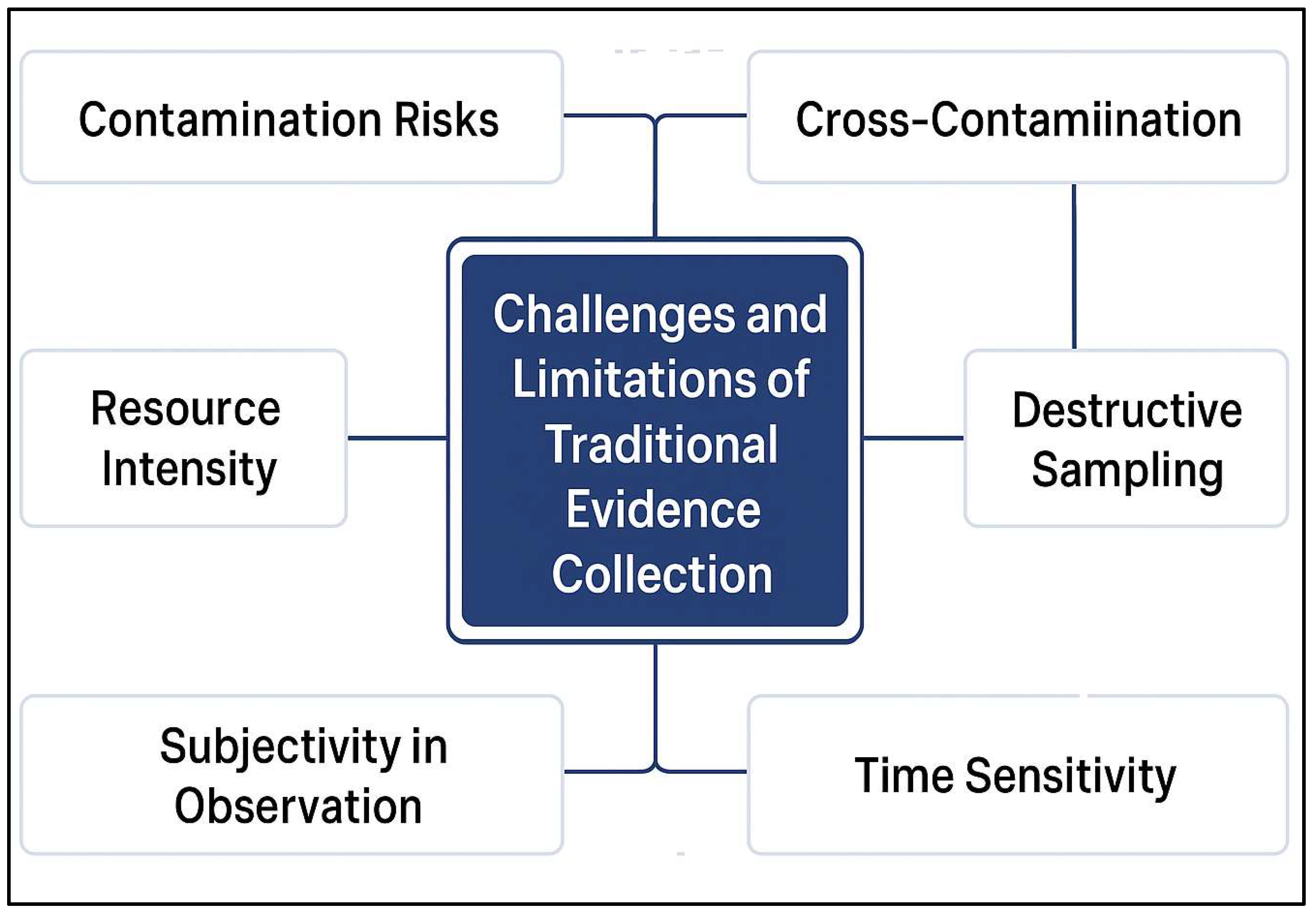
Figure 2.
Pheidole megacephala, commonly known as the Big-Headed Ant.
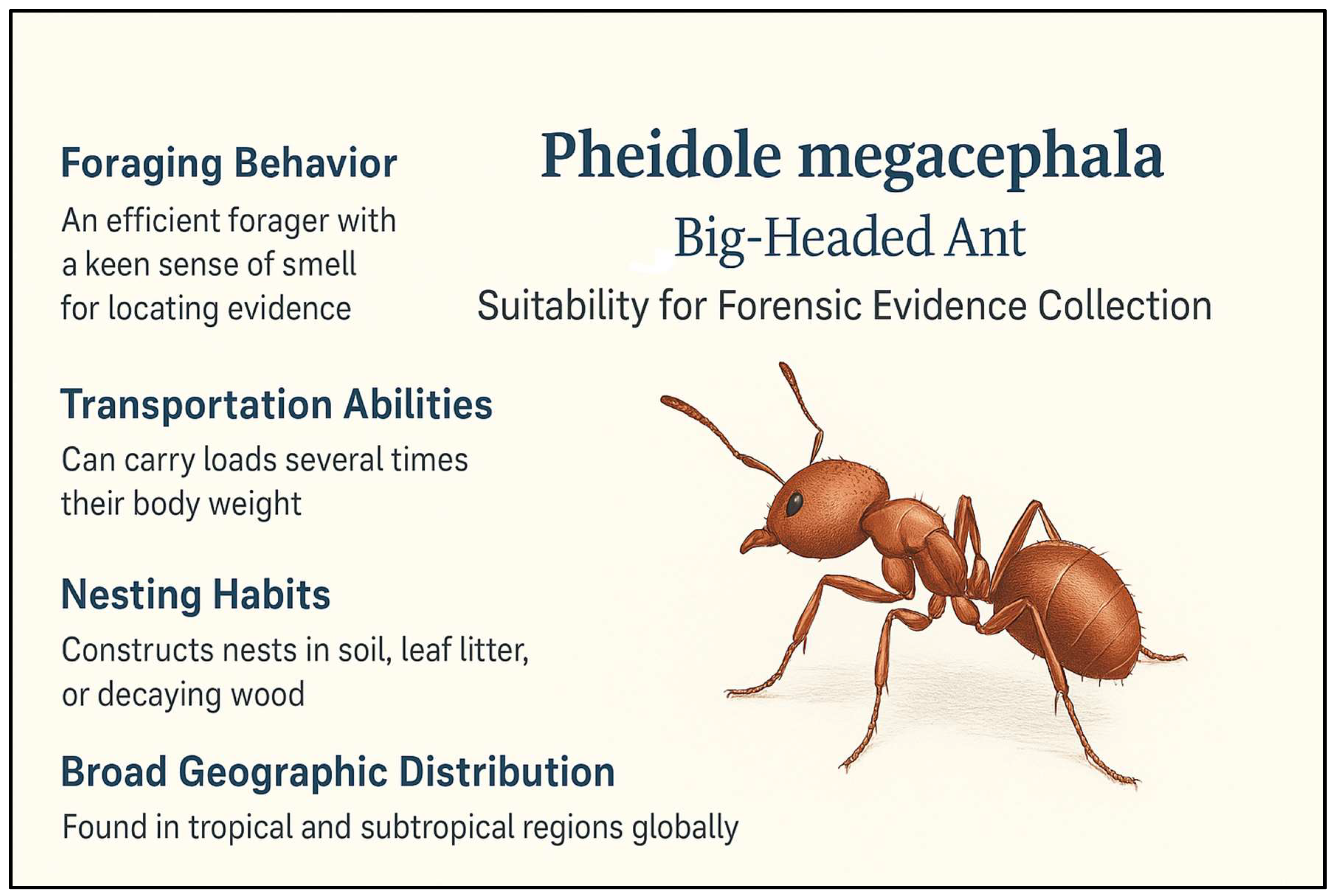
Figure 3.
Formica spp., commonly known as Wood Ants.
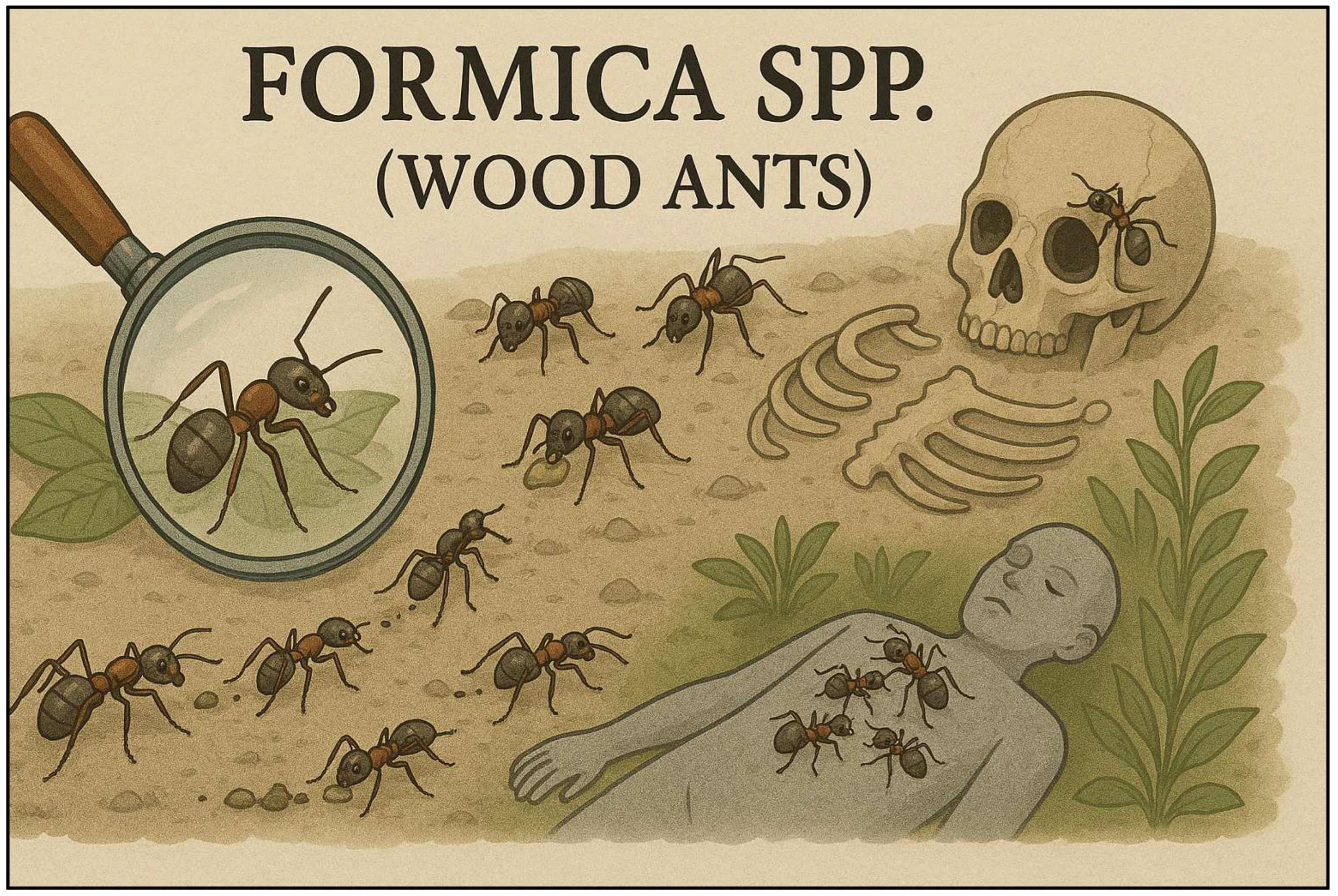
Figure 4.
Solenopsis invicta, commonly known as the Red Imported Fire Ant (RIFA).
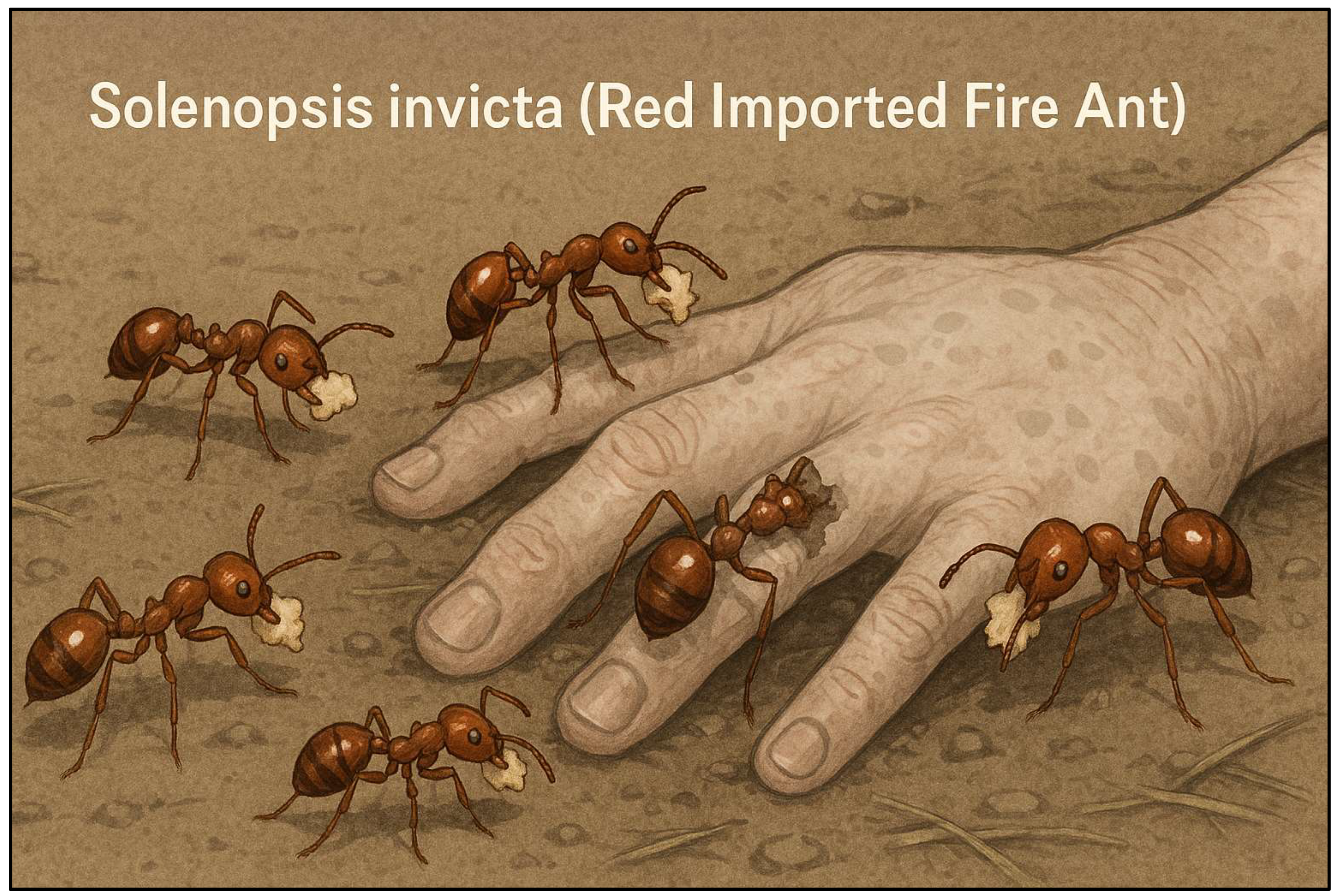
Figure 5.
Oecophylla smaragdina, commonly known as the Weaver Ant.
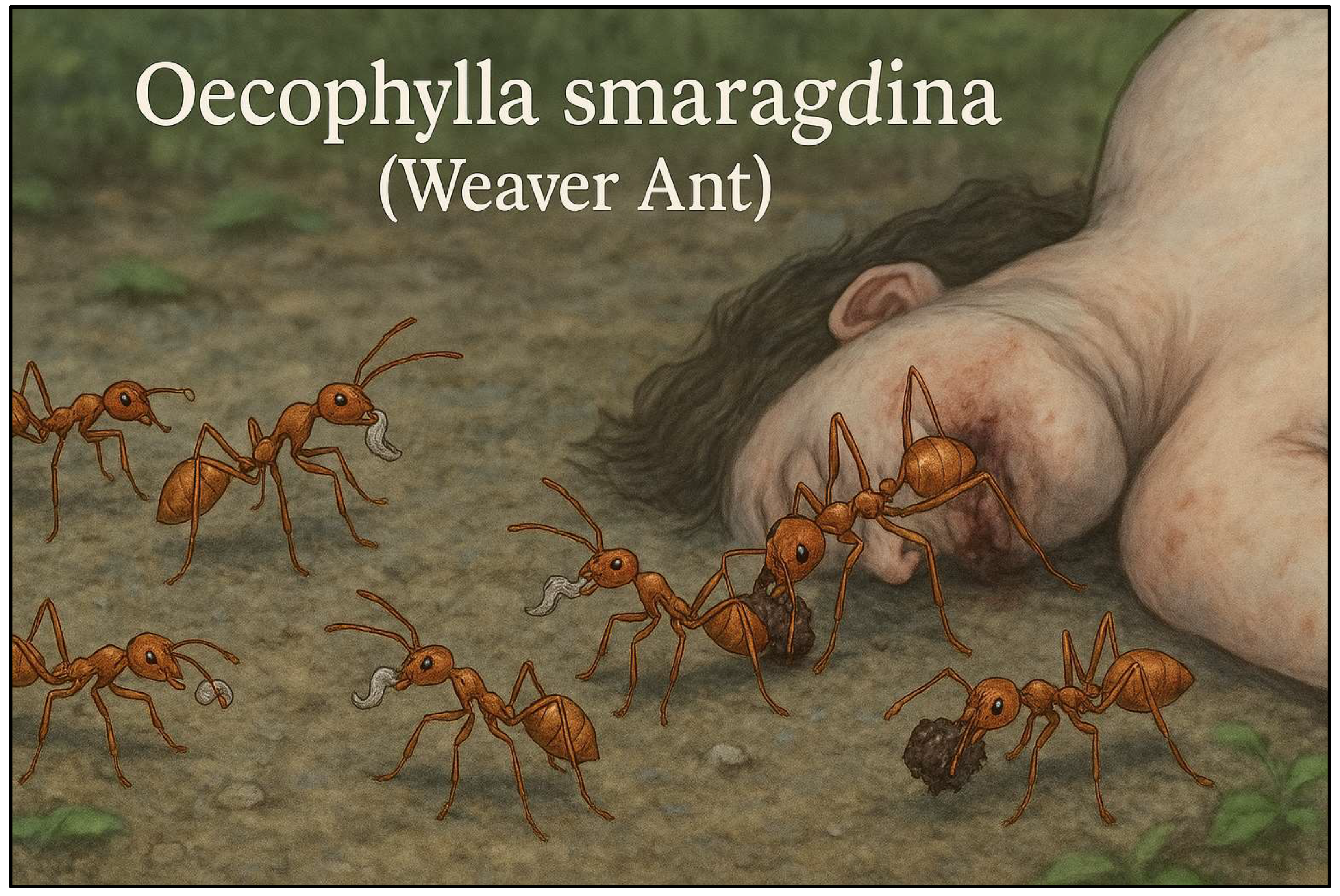
Figure 6.
Lasius spp., commonly known as the Yellow Meadow Ant.
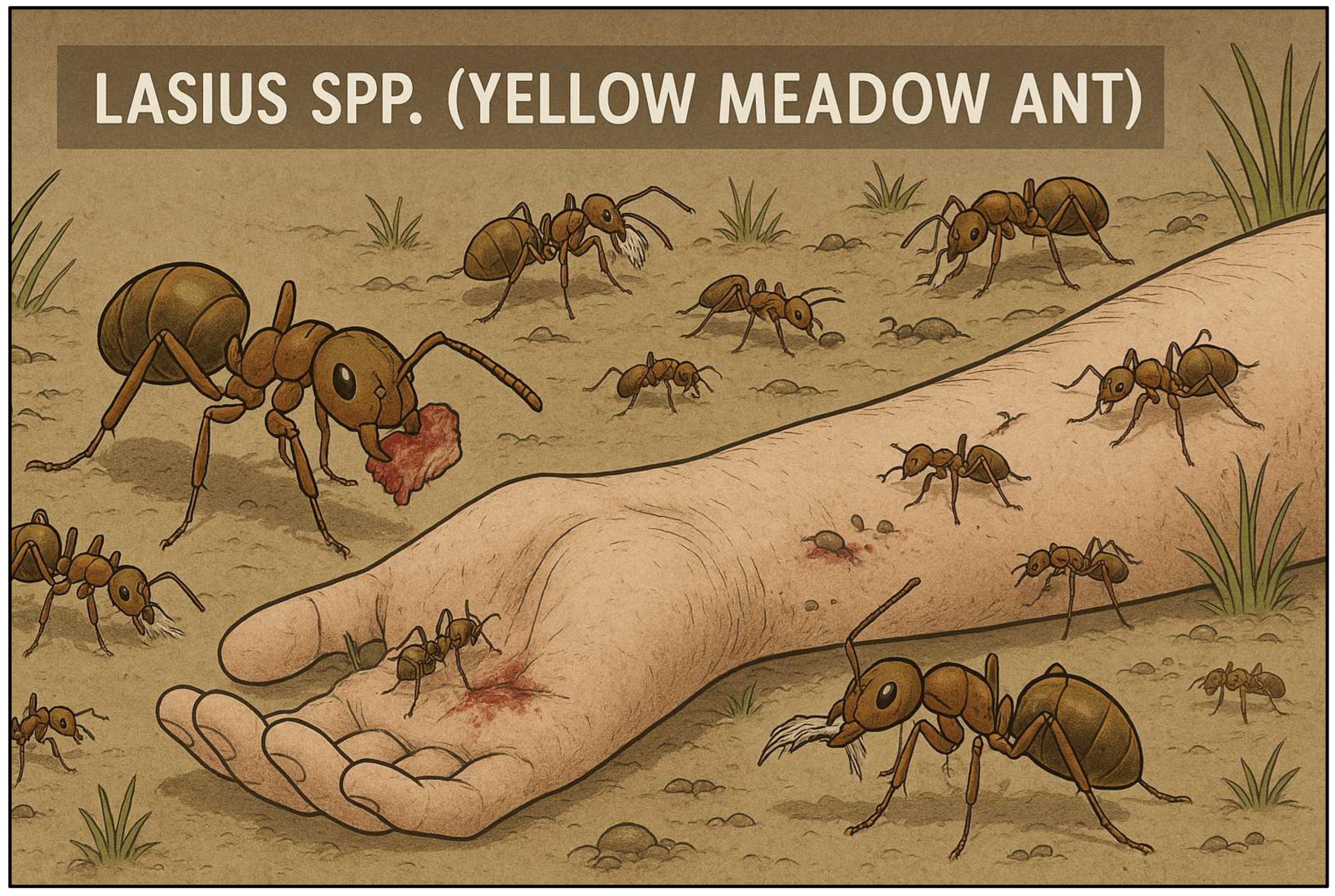
Figure 7.
Advantages of Ants as Evidence Collectors.
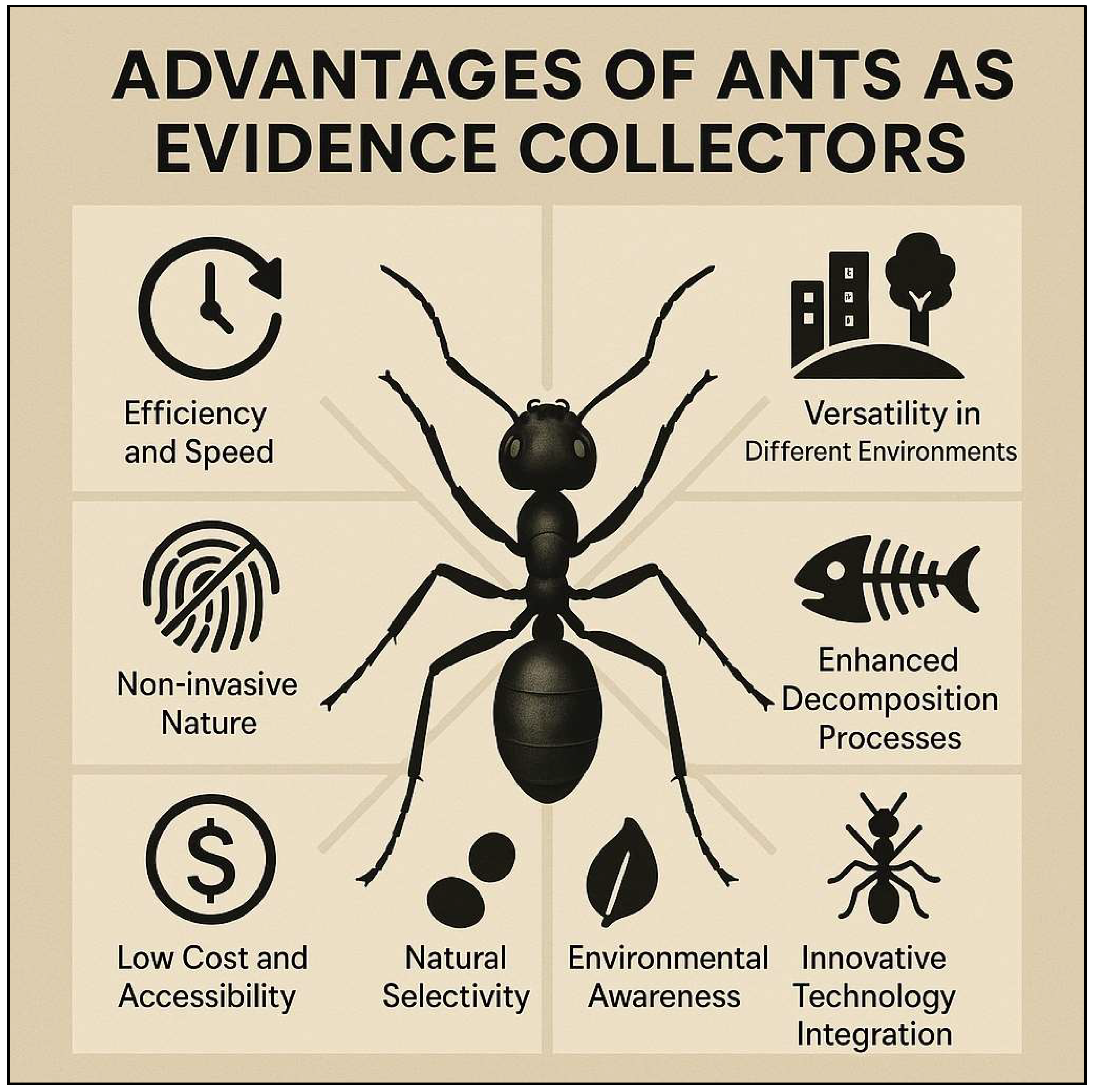
Disclaimer/Publisher’s Note: The statements, opinions and data contained in all publications are solely those of the individual author(s) and contributor(s) and not of MDPI and/or the editor(s). MDPI and/or the editor(s) disclaim responsibility for any injury to people or property resulting from any ideas, methods, instructions or products referred to in the content. |
© 2025 by the authors. Licensee MDPI, Basel, Switzerland. This article is an open access article distributed under the terms and conditions of the Creative Commons Attribution (CC BY) license (http://creativecommons.org/licenses/by/4.0/).
Copyright: This open access article is published under a Creative Commons CC BY 4.0 license, which permit the free download, distribution, and reuse, provided that the author and preprint are cited in any reuse.


