

Submitted:
15 April 2025
Posted:
17 April 2025
You are already at the latest version
Abstract
Strength and conditioning literature examining neuromuscular physiology, bioenergetics, neuroendocrine factors, nutrition and metabolic factors, the use of ergogenic aids, physical and physiological responses and adaptations have clearly identified the benefits of participating in regular resistance training programs for athletic populations, especially as it relates to improving muscular strength (1). Beyond evidence-based research, models for resistance training program implementation are of considerable value to optimizing athletic performance. In fact, several have been provided that address general to specific characteristics of athleticism (i.e., strength endurance, muscular strength, and muscular power) over the decades (1-7, 133, 144). For instance, Stone et al. 2022 published a model known as the strength-endurance continuum that enhances dynamic correspondence (i.e., training specificity) in athletic populations by developing structural, metabolic, and neural capacities across a high-load, low repetition and low-load, high repetition range (2). Further models have been developed to enhance performance approaches (i.e., optimum performance training model) and outcomes (i.e., performance pyramid) even within specific populations such as youth (i.e., youth physical development model) (5-7). The ten, five, three (TFT) model for strength and conditioning professionals synthesizes currently available information and provides a framework for the effective implementation of resistance training approaches to suit the needs of athletes preparing for competition. The model includes three key components to consider when designing strength and conditioning programs, denoted by the acronym TFT (ten, five, three). Over recent years, the model has gained much support from teams, coaches, and athletes mainly due to the ability to streamline common knowledge within the field into an efficient and effective resistance training system. This paper explains the model itself and begins to provide recommendations for those interested in implementing TFT-based approaches, including a summary of points as a brief take-home guide to implementing TFT interventions. It is the author’s hope that this paper encourages other performance professionals to share their models to appreciate human ingenuity and advance our understanding of individualized approaches and systems towards physical development of the modern-day athlete.
Keywords:
strength and conditioning
; systems
; frameworks
; models
; LTAD
; performance
; injury
; WTHPA
1. Introduction
Muscular strength is a key contributor to athletic performance, with an array of studies supporting its importance for the modern-day athlete, regardless of sport [1,7,8]. Based on our current understanding about the benefits of resistance training, athletic organizations across levels implement it in some form to mitigate injury risk and enhance athletic performance. In recognition of this apparent consensus that muscular strength is an important characteristic within athletic populations, there have been many models developed and reported in the strength training literature as to how resistance training approaches can be used in consideration of specific aims (i.e., muscular strength development, muscular power development, etc.), common constraints (i.e., limited time, resources, personnel, etc.) and population specific needs (i.e., amateur to professional) [9,10,11,12,13,14,15]. However, challenges exist for applied performance professionals, teams, coaches, and athletes in regard to synthesizing the available information and adapting it to suit their specific needs and goals. Realizing the need for a model based on solid theoretical and empirical foundations to help guide these populations use of resistance training approaches, the 10-5-3 (TFT) resistance training approach was devised which after successful implementation has been formalized into its current model form. TFT is an acronym representing a three-fold approach to be followed when developing and implementing a resistance training approach with the focus of enhancing physical preparedness, muscular strength, and muscular power that can be translated to athletic performance whether in training or in competition. The TFT model is based on findings from sport science [19], strength and conditioning [1,2,3,7,8,20,21,22,23,24,25,26,27,28,29,30,31,32], neuromuscular physiology [33,34,35,36,37,38,39], bioenergetics [40,41,42,43,44,45,46], neuroendocrine factors [47,48,49,50,51,52,53,54,55,56], nutrition and metabolic factors [57,58,59,60,61,62,63,64,65,66], the use of ergogenic aids [67,68,69,70,71,72,73,74,75,76], physical and physiological responses and adaptations [77,78,79,80,81,82,83,84,85,86,87,88,89], sport psychology [90,91,92,93,94,95,96], and ecological dynamics theory [97-100) research and aims to provide practitioners with a set of practical guidelines to aid their strength and conditioning programming. Perhaps the most fundamental difference between the TFT model and the more traditional resistance training models proposed is that resistance training has often been thought of as a rigid and focused effort towards maximizing muscular strength. However, the TFT posits that the development of physical conditioning, muscular strength, and muscular power simultaneously is not only possible, but advantageous for the development of the modern-day athlete based on the increasing demands of competitive athletics (e.g., increased competitions, early sport specialization, increased access to strength and conditioning programming). For example, training programs for basketball athletes that regularly include exercises that address strength endurance, muscular strength, and muscular power simultaneously will be a closer representation of what those athletes will experience at different times throughout training and competition (e.g., rebound, pass, transition, catch, layup), compared to a singular focus on muscular strength.
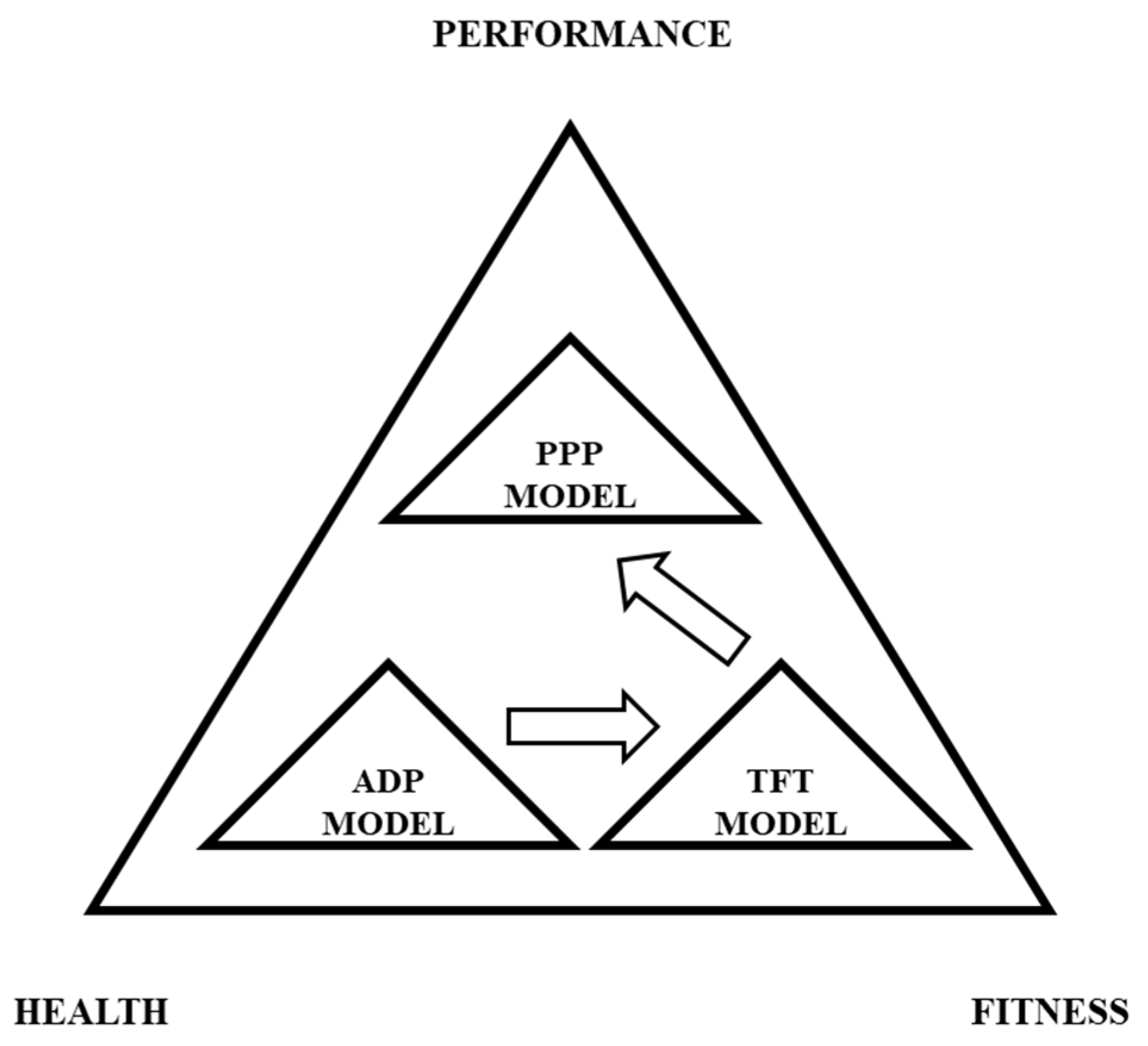
It should be noted that the TFT is but one model directly related to another that is encapsulated by one broader model that can be used to guide resistance training approaches for athletic populations. Figure 1 illustrates the broader prevent, prepare, performance (PPP) model which has synthesized evidence-based findings from strength and conditioning as well as sport science literature in order to consider each primary component of strength and conditioning programming to support athletic performance [1,2,3,4,20,21,22,23,24,25,26,27,28,29,30,31,32]. Figure 2 illustrates the assess, develop, perform (ADP) model which fits within the broader PPP model which has also synthesized evidence-based findings from the literature in order to streamline the process of implementing resistance training and sport science approaches. Figure 3 illustrates the TFT model which can be used to assist with the program design and implementation of resistance training approaches. Finally, Figure 4 illustrates the triple triangle complex system model (TTCS) which encapsulates each of the three models utilized to enhance physical and physiological development of the athlete.
2. Materials and Methods
The Three Components of the PPP Model
Prevent
The component “Prevent” refers to the importance of utilizing resistance training methods to contribute to the prevention or mitigation of injury risk within athletic populations [101,102,103,104,105,106]. Ample evidence suggests that in addition to increasing muscular strength and hypertrophy, resistance training promotes increases in the strength of ligaments, tendons, joint cartilage, connective tissue sheaths within muscle, and bone mineral density across an array of populations [101,102,103,104,105,106]. This preventative component to resistance training program design and implementation is best utilized with the inclusion of not only corrective or rehabilitative exercises but also exercises that develop muscular strength as a protective measure during sport-related activities.
Prepare
The component “Prepare” refers to the importance of adequate physical preparation within athletic populations to withstand the demands of training and competition with an ultimate aim of supporting optimal performance. Foundational strength and conditioning literature has highlighted the importance of physical preparation dating back as far as the ancient military training of the Chinese, Egyptians, Greeks, and Romans and transcending time to more modern literature and approaches adapted for the modern-day sportsman and sportswoman [107,108,109,110,111,112]. Generally, the literature suggests that adequate physical preparation follows a sequence of general to specific approaches which aim to enhance exercise technique, energy system development, muscular strength, and muscular power over a well-measured period of time [107,108,109,110,111,112]. This preparation component to resistance training program design and implementation can be used alongside the preventative component to achieve the primary component, which is performance.
Perform
The component “Perform” refers to the importance of utilizing resistance training models, modes, and methods to support the primary objective of most sporting organizations and teams, optimal athletic performance [89]. However, the author posits that this component can only be achieved consistently with a thorough understanding of sport science [19], strength and conditioning [1,2,3,7,8,20,21,22,23,24,25,26,27,28,29,30,31,32], neuromuscular physiology [33,34,35,36,37,38,39], bioenergetics [40,41,42,43,44,45,46], neuroendocrine factors [47,48,49,50,51,52,53,54,55,56], nutrition and metabolic factors [57,58,59,60,61,62,63,64,65,66], the use of ergogenic aids [67,68,69,70,71,72,73,74,75,76], physical and physiological responses and adaptations [77,78,79,80,81,82,83,84,85,86,87,88,89], sport psychology [90,91,92,93,94,95,96], and ecological dynamics theory [97-100) as well as how each of the foundational level components (i.e., prevent and prepare) interact with one another and can be adapted to make progress towards this chief objective.
The Three Components of the ADP Model
Assess
The component “Assess” refers to the importance of assessing performance and fatigue within athletic populations to not only understand an athlete’s strengths, weaknesses, and responses to training programs but to also adjust approaches if need be, to ensure positive adaptation occurs. Prior evidence across strength and conditioning as well as sport science literature has suggested the importance, validity, reliability, and many benefits of assessing athletic populations to support the aim of achieving optimal athletic performance [113-120). This assessment component to resistance training program design and implementation plays a critical role in the identification or creation of developmental approaches to be implemented that can enhance physical and physiological characteristics that contribute to optimal athletic performance. For instance, this component can be integrated into the resistance training sessions of the modern-day American college football athlete following their warmup. An assessment of lower-body neuromuscular performance and fatigue via the countermovement vertical jump can provide practitioners with force-time characteristic related data (i.e., braking force, power, and velocity, propulsive force, power, velocity, reactive strength index, etc.) that can be used to guide program design, practice design, exercise selection, or on a broader scale periodization approaches.
Develop
The component “Develop” refers to the importance of 1.) developing specific physical and physiological characteristics within athletic populations to support optimal performance and 2.) the resistance training means, methods, and modes implemented to achieve this goal [89]. Furthermore, this component aligns well with the “prepare” component included within the PPP model but can be viewed as a more detailed approach towards resistance training program design and implementation. While the strength and conditioning literature provides vast developmental approaches for athletes at different competitive levels, the identification, prioritization, and streamlining of this component is based on both experience and evidence, as well as consideration of constraints specific to each environment is necessary within the athletic environment [8-11, 95-100). Beyond periodization and program design, this component should be carefully considered, especially as it relates to the development of specific characteristics, such as muscular strength within athletic populations and the systematic approach for how they should be developed. Strength and conditioning professionals should consider not only the foundational elements of a comprehensive resistance training program (i.e., accounting for volumes, loads, intensities, training frequency, etc.) but also the more in-depth elements such as the training culture and philosophy towards athlete development that materializes into the environment created during the training process in conjunction with the exercises selected and technologies utilized (e.g., velocity based training) to of course, support optimal athletic performance [121,122]. Within the resistance training setting for collegiate American football athletes and many other sports, systems of development can contribute to the immediate and longer-term development of general and specific physical qualities, as well as ensure that consistent approaches are being implemented across the coaching staff. An added benefit to a system of physical development is the assessment of its effectiveness.
Perform
The component “Perform” ultimately aligns with performance related information reported within the PPP model but should also be adapted to evaluate and support optimal athletic performance within sport-specific training and competition environments. Further, this component can be specifically focused towards either standard performance statistics from competition or the subsequent data from implemented microtechnology (i.e., biometrics, total distances covered, physical workload, etc.) [20, 121-130). For the sport performance practitioner, a model such as this can not only enhance our understanding of how each component contributes to the next, but also how each can be aligned and adapted to support this higher-order objective as well as how information from this objective can be regressed to fit within developmental systems and guide assessment methods.
The Three Components of the TFT Model
Ten
The component “Ten” refers to the importance of the ten-repetition range for developing exercise technique, training capacity and foundational muscular strength through the prioritization of foundational exercise implementation and in alignment with prior evidence [40,132,145]. In particular, the 2006 Stone et al. publication clearly establishes the benefit of high-volume training approach within athletic population based on both his experience and evidence-based scientific approaches [145]. What first began as a foundational element to the TFT model to ensure that athletes are developing adequate exercise technique, physical fitness, and foundational strength, has come to play a critical role in the ability of athletes to sustain physical activity for longer periods of time at high intensities, low to moderate loads, and higher training densities such as that expressed by the three MMA professional level athletes who attained championship caliber performances by utilizing this system of training as well as several other athletes across sport [138,139,140,141,142,143].
Reported benefits of resistance exercise within 10-repetition range include [131,132,133,134,135,136,137,145]:
- Decreased body fat
- Improved metabolic alterations
- Improvements in strength-endurance and power-endurance
- Substantial increases testosterone and growth hormone concentrations postexercise
- Increased resting testosterone-cortisol ratio
- Adequately develops a physiological foundation for further, more specific resistance training
A brief list of foundational exercises as suggested in the National Strength and Conditioning Association’s Basics of Strength and Conditioning Manual [4]:
- Squat
- Step
- Hinge
- Lunge
- Push
- Pull
- Carry
Five
The component “Five” refers to the importance of the 5-repetition range for developing absolute and relative – as well as general and specific - muscular strength to withstand the physical and physiological stress of training and competitive demands as well as to express optimal ground reactive forces. Well established strength training literature has established the five-repetition range of multi-joint compound exercises as sufficient for developing muscular strength within most athletic populations [131,132,133,134,135,136,137,145]. Within the TFT model, exercises are programmed in trios. That is, there are typically three exercises to be performed within the 10-repetition range, three exercises within the 5-repetition range, and three exercises within the 3-repetition range. With that said, this model often utilizes one foundational muscular strength exercise alongside two variations of other foundational strength exercises. For instance, a boxer primarily utilizes their upper extremities to complete sporting actions, but the practitioner knows that force begins at the ground. When designing an upper-body resistance training program using the TFT model, the practitioner would program in a barbell back squat, alongside a goblet squat, and pullups. By approaching muscular strength development in this fashion, not only are the necessary muscles developed, but training also becomes more efficient, and the overall physical development of the athlete is likely more robust.
A brief list of multi-joint exercises to develop muscular strength as suggested in the National Strength and Conditioning Association’s Basics of Strength and Conditioning Manual [4].
- Barbell back squat
- Barbell front squat
- Barbell bench press
- Barbell incline bench press
- Barbell overhead press
- Barbell deadlift
- Trap bar deadlift
Three
The component “Three” refers to the importance of the 3-repetition range for developing muscular power. This can be achieved by focusing on transferring muscular strength capabilities to the velocity and time-dependent characteristics of training and competitive demands. In alignment with prior findings, exercises that are most adequate for developing this type of physical characteristic are those that are explosive, ballistic, plyometric or include Olympic weightlifting variations [131,132,133,134,135,136,137,145]. Furthermore, and beyond the repetition range, is the method of implementing training to ensure that athletes are properly recovered between sets and are able to train at maximal intensities. The TFT has leveraged existing knowledge provided by Stone et al., Tuffano et al., and Haff et al. in regard to the clustered nature of training for enhanced training intensity and transfer to sporting performance, this is a critical element to the TFT that will be explained in subsequent publications [21,22,27,145].
A brief list of multi-joint exercises to develop muscular strength as suggested in the National Strength and Conditioning Association’s Basics of Strength and Conditioning Manual [4]
- Landing
- Jumping
- Throwing
- Clean
- Jerk
- Snatch
Using the TFT Model to Guide Practice
The TFT model is best used in practice by implementing each component within a single session in a circuit-like fashion. For instance, a specific portion of the training session should be dedicated towards developing training technique and capacity by utilizing the ten-repetition range before proceeding to a specific portion of the training session dedicated towards developing muscular strength by utilizing the five-repetition range before concluding with a specific portion of the training session dedicated towards developing muscular power by utilizing the three-repetition range. In practice, the aforementioned approach would be used during the general physical preparatory period and more specific approaches would be utilized closer to competition (Table 1). Furthermore, as the strength and conditioning program transitions between phases the exercises within each phase should become more specific in order to adequately prepare the athlete for the demands of training and practice. For example, during the general physical preparation phase a focus on bilateral exercises should be prioritized for most athletic populations while during the specific physical preparation phase a focus on unilateral exercises or bilateral exercises performed at specific velocities should be prioritized.

Table 1.
Example of the TFT model implemented during the general physical preparation, specific physical preparation, and competitive phases.
Table 1.
Example of the TFT model implemented during the general physical preparation, specific physical preparation, and competitive phases.
| Emphasis | GPP | SPP | CP |
|---|---|---|---|
| 1. | 10-repetition range | 5-repetition range | 3-repetition |
| 2. | 5-repetition range | 3-repetition | 5-repetition range |
| 3. | 3-repetition | 10-repetition range | 10-repetition range |
Table 2.
Example of exercises used within each component of the TFT model.
| Exercise Order | Ten | Five | Three |
|---|---|---|---|
| 1. | Incline pushup | Barbell back squat | Jump landing technique |
| 2. | Kettlebell goblet squat | Incline dumbbell chest press | Depth drop |
| 3. | Inverted row | Dumbbell row | Box jump |
Figure 6.
Example of the TFT model implemented for amateur athlete populations. When compared to the adult model, it is noticeable that training volumes are different but dispersed over more sets for youth. This provides another benefit related to the potential longer-term development of athletes.
Figure 6.
Example of the TFT model implemented for amateur athlete populations. When compared to the adult model, it is noticeable that training volumes are different but dispersed over more sets for youth. This provides another benefit related to the potential longer-term development of athletes.
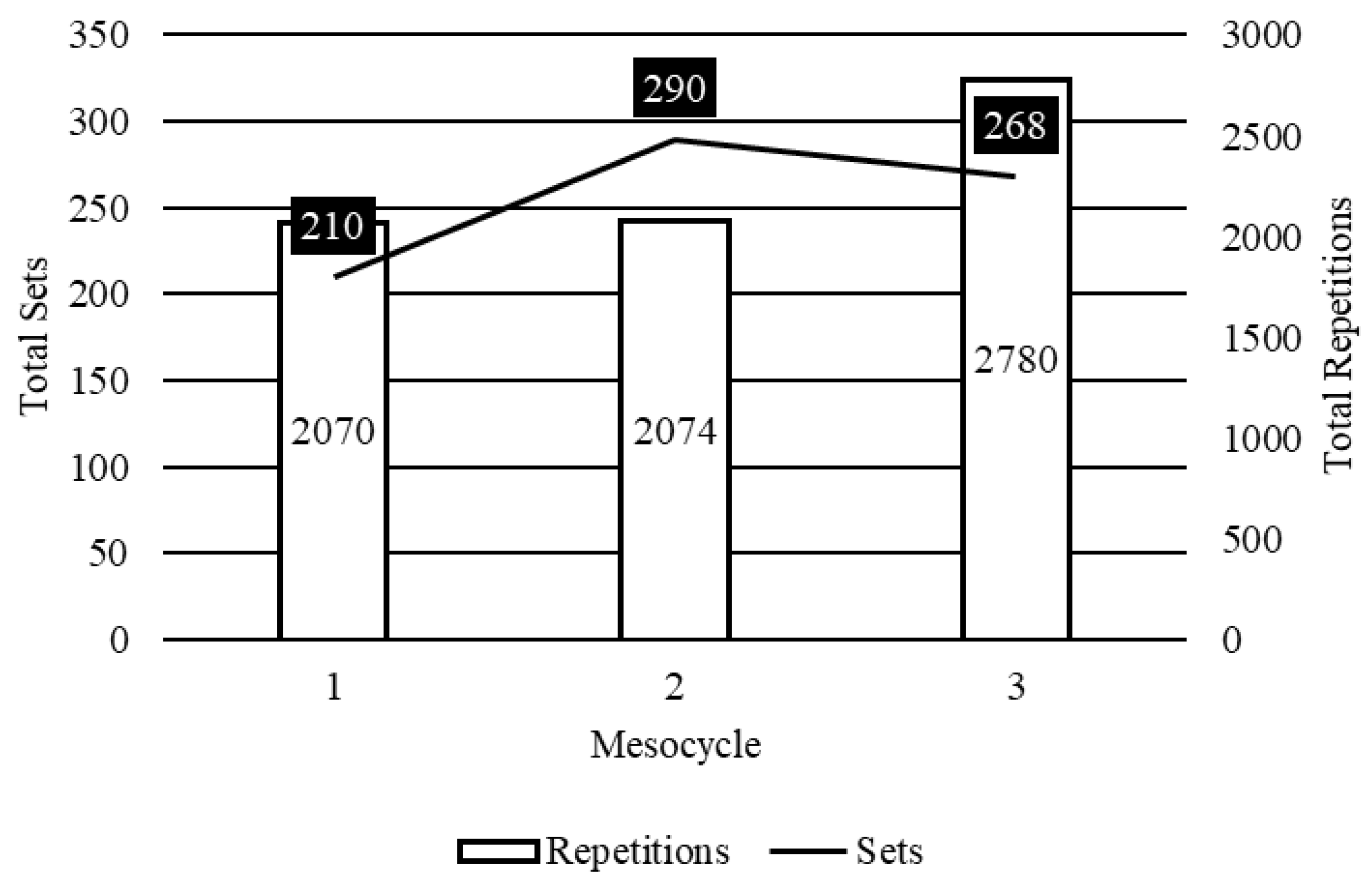
Table 3.
Mesocyclic characteristics of the example TFT model implemented for amateur athletic populations.
Table 3.
Mesocyclic characteristics of the example TFT model implemented for amateur athletic populations.
| Mesocycle | 1 | 2 | 3 |
|---|---|---|---|
| Sets | 210 | 290 | 268 |
| % change | 38.10% | -7.59% | |
| Repetitions | 2070 | 2074 | 2780 |
| %change | 0.19% | 34.04% | |
| Repetitions/Set | 9.86 | 7.15 | 10.37 |
| %change Sessions/Day |
-27.45% | 45.04% | |
| Sessions/Day | 1 | 1 | 1 |
| Days/Week | 2 | 2 | 2 |
| Intensity-cycle | 3/1 | 3/1 | 3/1 |
| Mesocycle | 1 | 2 | 3 |
| Sets | 210 | 290 | 268 |
Figure 7.
Example of the TFT model implemented for professional athlete populations.
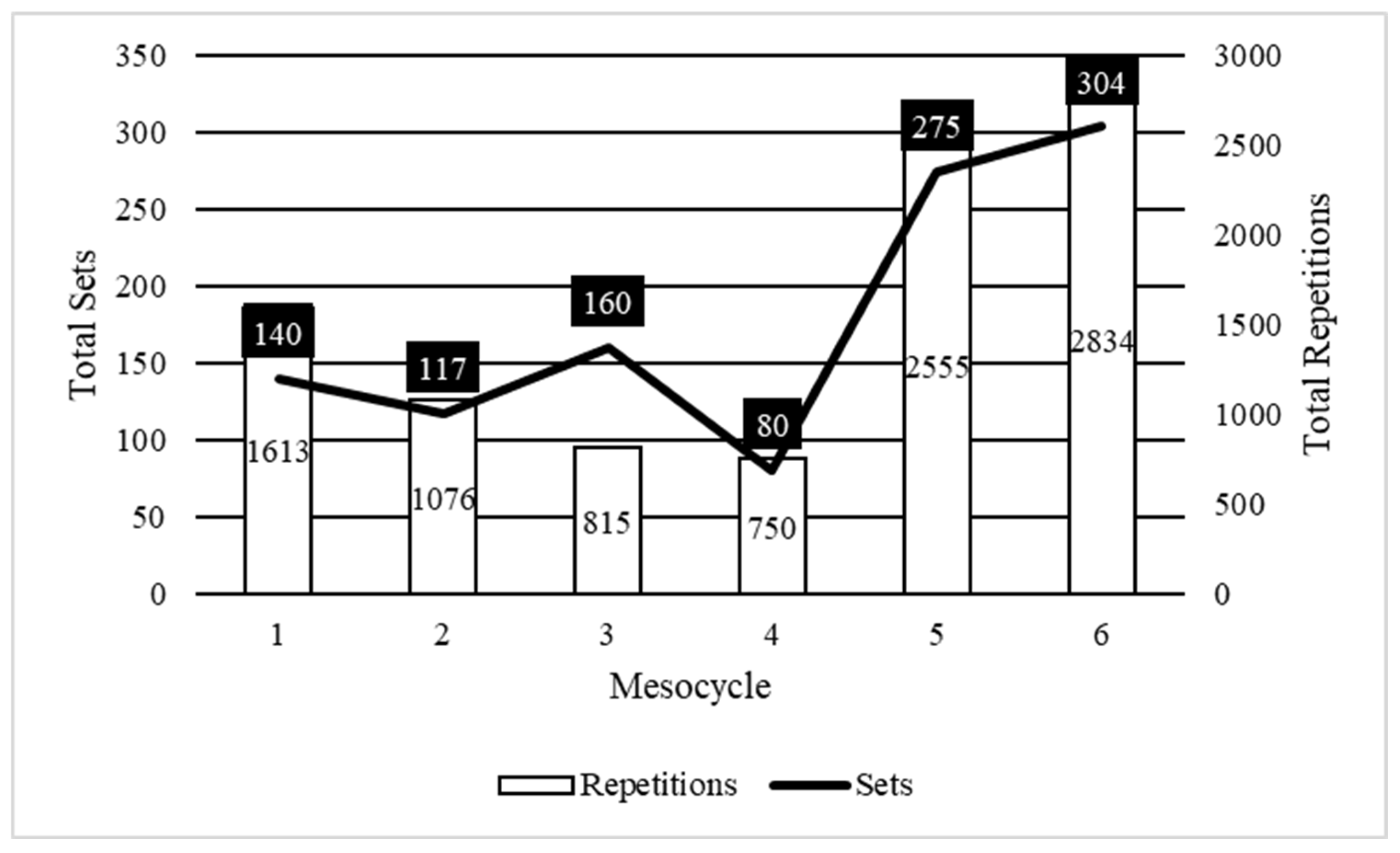
Table 4.
Mesocyclic characteristics of the example TFT model implemented for professional athletic populations.
Table 4.
Mesocyclic characteristics of the example TFT model implemented for professional athletic populations.
| Mesocycle | 1 | 2 | 3 | 4. | 5. | 6. |
|---|---|---|---|---|---|---|
| Sets | 140 | 117 | 160 | 80 | 275 | 304 |
| % change | -16.43% | 36.75% | -50.00% | 243.75% | 10.55% | |
| Repetitions | 1613 | 1076 | 815 | 750 | 2555 | 2834 |
| %change | -33.29% | -24.26% | -7.98% | 240.67% | 10.92% | |
| Repetitions/Set | 11.52 | 9.20 | 5.09 | 9.38 | 9.29 | 9.32 |
| %change | -20.18% | -44.61% | 84.05% | -0.90% | 0.34% | |
| Sessions/Day | 1-2 | 1-2 | 1-2 | 1-2 | 1-2 | 1-2 |
| Days/Week | 3 | 3 | 3 | 3 | 3 | 3 |
| Intensity-cycle | 2-3/1 | 2-3/1 | 2-3/1 | 2-3/1 | 2-3/1 | 2-3/1 |
| Mesocycle | 1 | 2 | 3 | 4. | 5. | 6. |
| Sets | 140 | 117 | 160 | 80 | 275 | 304 |
3. Conclusions
To conclude, resistance training has been supported by evidence as a valid and reliable method for enhancing physical and physiological qualities that contribute to optimal athletic performance (i.e., muscular strength). However, few models exist which aim to synthesize prior suggested evidence for application into practice. Collectively, the TFT model addresses each of the three primary underlying components that contribute to the optimal preparation of athletes (i.e., strength endurance, muscular strength, and muscular power). In the future, research should aim to investigate the physical and physiological adaptations that result from the implementation of this model in practice. Furthermore, subsequent models from the field should be published to further our current understanding of how prior evidence can be adapted to successfully prepare athletes for optimal performance.
Funding
This research was funded in part by the Wu Tsai Human Performance Alliance.
Acknowledgments
This manuscript was supported in-part by the Clara Wu and Joseph Tsai Foundation. Additionally, the author would like to thank my great friend and colleague Coach Richard Barajas of Kearney Combat Sports for entrusting me with the physical development of your mixed martial artists and for recommending texts related to constraints led approaches.
Conflicts of Interest
The authors declare no conflicts of interest. The funders had no role in the design of this model, in the writing of the manuscript; or in the decision to publish the results.
References
- Stone, M.; Suchomel, T.; Hornsby, W.; Wagle, J.; Cunanan, A. (2022). Strength and conditioning in sports: from science to practice. Routledge.
- Stone, M.H.; Hornsby, W.G.; Suarez, D.G.; Duca, M.; Pierce, K.C. (2022). Training specificity for athletes: Emphasis on strength-power training: A narrative review. Journal of functional morphology and kinesiology, 7(4), 102. [CrossRef]
- Stone, M.H.; Hornsby, W.G.; Haff, G.G.; Fry, A.C.; Suarez, D.G.; Liu, J.S.; … & Pierce, K.C. (2021). Periodization and block periodization in sports: emphasis on strength-power training—a provocative and challenging narrative. Journal of Strength and Conditioning Research, 35(8), 2351-2371. [CrossRef]
- Sands, W.A.; Wurth, J.J.; Hewit, J.K. (2012). Basics of strength and conditioning manual. Colorado Springs, CO: National Strength and Conditioning Association, 1, 100-104.
- National Academy of Sports Medicine. The Optimum Performance Training Model. https://www.nasm.org/certified-personal-trainer/the-opt-model?srsltid=AfmBOorZ0PunKb0Tws8ipgtXKux_ShSt3EbV-h_cJffExFYWrVp6SO0Z.
- Johnson, Q.R. (2025). The TFT Approach to Athlete Development: An Applied Model for Strength and Conditioning Professionals. Quincy Johnson Fitness. https://quincyjohnsonfitness.com/2025/03/30/the-tft-approach-to-athlete-development-an-applied-model-for-strength-and-conditioning-professionals/.
- Suchomel, T.J.; Nimphius, S.; Stone, M.H. (2016). The importance of muscular strength in athletic performance. Sports Medicine, 46(10), 1419-1449. [CrossRef]
- Suchomel, T.J.; Nimphius, S.; Bellon, C.R.; Stone, M.H. (2018). The importance of muscular strength: training considerations. Sports Medicine, 48(4), 765-785. [CrossRef]
- Suchomel, T.J.; Nimphius, S.; Bellon, C.R.; Stone, M.H. (2018). The importance of muscular strength: training considerations. Sports Medicine, 48(4), 765-785. [CrossRef]
- Kraemer, W.J.; Duncan, N.D.; Volek, J.S. (1998). Resistance training and elite athletes: adaptations and program considerations. Journal of Orthopaedic & Sports Physical Therapy, 28(2), 110-119. [CrossRef]
- Kraemer, W.J.; Deschenes, M.R.; Fleck, S.J. (1988). Physiological adaptations to resistance exercise: implications for athletic conditioning. Sports medicine, 6, 246-256.
- Bird, S.P.; Tarpenning, K.M.; Marino, F.E. (2005). Designing resistance training programmes to enhance muscular fitness: a review of the acute programme variables. Sports medicine, 35, 841-851.
- Weldon, A.; Duncan, M.J.; Turner, A.; Lockie, R.G.; Loturco, I. (2022). Practices of strength and conditioning coaches in professional sports: a systematic review. Biology of Sport, 39(3), 715-726. [CrossRef]
- Kukić, F.; Todorović, N.; Ćvorović, A.; Johnson, Q.; Dawes, J.J. (2020). Association of improvements in squat jump with improvements in countermovement jump without and with arm swing. Serbian Journal of Sports Sciences, 11(1), 29-35.
- Holloway, J.B.; Baechle, T.R. (1990). Strength training for female athletes: A review of selected aspects. Sports Medicine, 9, 216-228.
- McGuigan, M.R.; Wright, G.A.; Fleck, S.J. (2012). Strength training for athletes: does it really help sports performance?. International journal of sports physiology and performance, 7(1), 2-5. [CrossRef]
- Naclerio, F.; Chapman, M.; Larumbe-Zabala, E.; Massey, B.; Neil, A.; Triplett, T.N. (2015). Effects of three different conditioning activity volumes on the optimal recovery time for potentiation in college athletes. The Journal of Strength & Conditioning Research, 29(9), 2579-2585. [CrossRef]
- Lloyd, R.S.; Faigenbaum, A.D.; Myer, G.D.; Stone, M.; Oliver, J.; Jeffreys, I.; Pierce, K.J.P.S.C. (2012). UKSCA position statement: Youth resistance training. Prof Strength Cond, 26, 26-39.
- Faigenbaum, A.D.; Kraemer, W.J.; Blimkie, C.J.; Jeffreys, I.; Micheli, L.J.; Nitka, M.; Rowland, T.W. (2009). Youth resistance training: updated position statement paper from the national strength and conditioning association. The Journal of Strength & Conditioning Research, 23, S60-S79. [CrossRef]
- Bishop, D. (2008). An applied research model for the sport sciences. Sports medicine, 38, 253-263. [CrossRef]
- Tufano, J.J.; Brown, L.E.; Haff, G.G. (2017). Theoretical and practical aspects of different cluster set structures: a systematic review. The Journal of Strength & Conditioning Research, 31(3), 848-867. [CrossRef]
- Haff, G.G.; Burgess, S.; Stone, M.H. (2008). Cluster training: theoretical and practical applications for the strength and conditioning professional. Prof Strength Cond, 12, 12-17.
- Kawamori, N.; Haff, G.G. (2004). The optimal training load for the development of muscular power. The Journal of Strength & Conditioning Research, 18(3), 675-684. [CrossRef]
- Haff, G.G.; Jackson, J.R.; Kawamori, N.; Carlock, J.M.; Hartman, M.J.; Kilgore, J.L.; ... & Stone, M.H. (2008). Force-time curve characteristics and hormonal alterations during an eleven-week training period in elite women weightlifters. The Journal of Strength & Conditioning Research, 22(2), 433-446. [CrossRef]
- Marshall, J.; Bishop, C.; Turner, A.; Haff, G.G. (2021). Optimal training sequences to develop lower body force, velocity, power, and jump height: A systematic review with meta-analysis. Sports Medicine, 51, 1245-1271. [CrossRef]
- Haff, G.G.; Nimphius, S. (2012). Training principles for power. Strength & Conditioning Journal, 34(6), 2-12.
- Haff, G.G.; Hobbs, R.T.; Haff, E.E.; Sands, W.A.; Pierce, K.C.; Stone, M.H. (2008). Cluster training: A novel method for introducing training program variation. Strength & Conditioning Journal, 30(1), 67-76. [CrossRef]
- Lloyd, R.S.; Oliver, J.L.; Faigenbaum, A.D.; Myer, G.D.; Croix, M.B.D.S. (2014). Chronological age vs. biological maturation: implications for exercise programming in youth. The Journal of Strength & Conditioning Research, 28(5), 1454-1464.
- Radnor, J.M.; Oliver, J.L.; Waugh, C.M.; Myer, G.D.; Moore, I.S.; Lloyd, R.S. (2018). The influence of growth and maturation on stretch-shortening cycle function in youth. Sports Medicine, 48, 57-71. [CrossRef]
- Lloyd, R.S.; Radnor, J.M.; Croix, M.B.D.S.; Cronin, J.B.; Oliver, J.L. (2016). Changes in sprint and jump performances after traditional, plyometric, and combined resistance training in male youth pre-and post-peak height velocity. The Journal of Strength & Conditioning Research, 30(5), 1239-1247.
- Jeffreys, I. (2008). Quadrennial planning for the high school athlete. Strength & Conditioning Journal, 30(3), 74-83. [CrossRef]
- Eisenmann, J.C.; Hettler, J.; Till, K. (2024). The development of fast, fit, and fatigue resistant youth field and court sport athletes: a narrative review. Pediatric Exercise Science, 36(4), 211-223. [CrossRef]
- Gowtizke, B.; Milner, M. (1988). Scientific basis of human movement. Baltimore, MD: Williams & Wilkins, 1988.
- MacIntosh, BR, Gardiner, P.F.; and McComas, AJ. (2006) Muscle Architecture and Muscle Fiber Anatomy. Champaing, IL: Human Kinetics.
- McComas, A.J. Skeletal Muscle. Champaing, IL: Human Kinetics, 1996.
- Roberts, M.D.; Haun, C.T.; Vann, C.G.; Osburn, S.C.; Young, K.C. (2020). Sarcoplasmic hypertrophy in skeletal muscle: a scientific “unicorn” or resistance training adaptation?. Frontiers in Physiology, 11, 816. [CrossRef]
- Deschenes, M.R. (2019). Adaptations of the neuromuscular junction to exercise training. Current opinion in physiology, 10, 10-16. [CrossRef]
- Collins, B.W.; Pearcey, G.E.; Buckle, N.C.; Power, K.E.; Button, D.C. (2018). Neuromuscular fatigue during repeated sprint exercise: underlying physiology and methodological considerations. Applied Physiology, Nutrition, and Metabolism, 43(11), 1166-1175. [CrossRef]
- Deschenes, M.R.; Maresh, C.M.; Crivello, J.F.; Armstrong, L.E.; Kraemer, W.J.; Covault, J. (1993). The effects of exercise training of different intensities on neuromuscular junction morphology. Journal of neurocytology, 22, 603-615. [CrossRef]
- Stone, M.H.; Stone, M.; Sands, W.A. (2007). Principles and practice of resistance training. Human Kinetics.
- Morton, J.P.; Close, G.L. (2016). The bioenergetics of sports performance. In Strength and Conditioning for Sports Performance (pp. 109-133). Routledge.
- Groennebaek, T.; Vissing, K. (2017). Impact of resistance training on skeletal muscle mitochondrial biogenesis, content, and function. Frontiers in physiology, 8, 713. [CrossRef]
- Reis, V.M.; Júnior, R.S.; Zajac, A.; Oliveira, D.R. (2011). Energy cost of resistance exercises: An uptade. Journal of human kinetics, 29, 33. [CrossRef]
- Jeukendrup, A.E.; Craig, N.P.; Hawley, J.A. (2000). The bioenergetics of world class cycling. Journal of science and medicine in sport, 3(4), 414-433. [CrossRef]
- Fatemeh, B.; Ramin, S.; Marzieh, N. (2016). Effect of high-intensity interval training on body composition and bioenergetic indices in boys–futsal players. Физическoе вoспитание студентoв, (5), 42-49. [CrossRef]
- Morton, J.P.; Close, G.L. (2016). The bioenergetics of sports performance. In Strength and Conditioning for Sports Performance (pp. 109-133). Routledge.
- Fry, A.C.; Kraemer, W.J.; Ramsey, L.T. (1998). Pituitary-adrenal-gonadal responses to high-intensity resistance exercise overtraining. Journal of applied physiology, 85(6), 2352-2359. [CrossRef]
- Fry, A.C.; Lohnes, C.A. (2010). Acute testosterone and cortisol responses to high power resistance exercise. Human physiology, 36, 457-461. [CrossRef]
- Fry, A.C.; Kraemer, W.J.; Gordon, S.E.; Stone, M.H.; Warren, B.J.; Fleck, S.J.; Kearney, J.T. (1994). Endocrine responses to overreaching before and after 1 year of weightlifting. Canadian journal of applied physiology, 19(4), 400-410. [CrossRef]
- Fry, A.C.; Kraemer, W.J.; Van Borselen, F.; Lynch, J.M.; Triplett, N.T.; Koziris, L.P.; Fleck, S.J. (1994). Catecholamine responses to short-term high-intensity resistance exercise overtraining. Journal of applied physiology, 77(2), 941-946. [CrossRef]
- Fry, A.C.; Kraemer, W.J.; Stone, M.H.; Warren, B.J.; Kearney, J.T.; Maresh, C.M.; ... & Fleck, S.J. (1993). Endocrine and performance responses to high volume training and amino acid supplementation in elite junior weightlifters. International Journal of Sport Nutrition and Exercise Metabolism, 3(3), 306-322. [CrossRef]
- Kraemer, W.J.; Ratamess, N.A. (2003). Endocrine responses and adaptations to strength and power training. Strength and power in sport, 361-386.
- Kraemer, W.J. (1992). Exercise Physiology Corner: Influence of the endocrine system on resistance training adaptations. Strength & conditioning journal, 14(2), 47-54.
- Kraemer, W.J.; Rogol, A.D. (Eds.). (2008). The endocrine system in sports and exercise. John Wiley & Sons.
- Kraemer, W.J.; Ratamess, N.A. (2005). Hormonal responses and adaptations to resistance exercise and training. Sports medicine, 35, 339-361. [CrossRef]
- Kraemer, W.J.; Flanagan, S.D.; Volek, J.S.; Nindl, B.C.; Vingren, J.L.; Dunn-Lewis, C.; ... & Hymer, W.C. (2013). Resistance exercise induces region-specific adaptations in anterior pituitary gland structure and function in rats. Journal of Applied Physiology, 115(11), 1641-1647. [CrossRef]
- Haff, G.G.; Lehmkuhl, M.J.; McCoy, L.B.; Stone, M.H. (2003). Carbohydrate supplementation and resistance training. The Journal of Strength & Conditioning Research, 17(1), 187-196. [CrossRef]
- Fukuda, D.H.; Smith, A.E.; Kendall, K.L.; Stout, J.R. (2010). The possible combinatory effects of acute consumption of caffeine, creatine, and amino acids on the improvement of anaerobic running performance in humans. Nutrition research, 30(9), 607-614. [CrossRef]
- Fukuda, D.H.; Kendall, K.L.; Hetrick, R.P. (2013). Nutritional strategies to optimize youth development. In Strength and Conditioning for Young Athletes (pp. 207-221). Routledge.
- Volek, J.S. (2004). Influence of nutrition on responses to resistance training. Medicine & Science in Sports & Exercise, 36(4), 689-696. [CrossRef]
- Morton, R.W.; McGlory, C.; Phillips, S.M. (2015). Nutritional interventions to augment resistance training-induced skeletal muscle hypertrophy. Frontiers in physiology, 6, 245. [CrossRef]
- Jeukendrup, A.E. (2017). Periodized nutrition for athletes. Sports medicine, 47(Suppl 1), 51-63.
- Spriet, L.L.; Gibala, M.J. (2004). Nutritional strategies to influence adaptations to training. Food, Nutrition and Sports Performance II, 204-228.
- Volek, J.S.; Forsythe, C.E.; Kraemer, W.J. (2006). Nutritional aspects of women strength athletes. British Journal of Sports Medicine, 40(9), 742-748. [CrossRef]
- Roberts, B.M.; Helms, E.R.; Trexler, E.T.; Fitschen, P.J. (2020). Nutritional recommendations for physique athletes. Journal of human kinetics, 71, 79. [CrossRef]
- Kreider, R.B.; Wilborn, C.D.; Taylor, L.; Campbell, B.; Almada, A.L.; Collins, R.; ... & Antonio, J. (2010). ISSN exercise & sport nutrition review: research & recommendations. Journal of the international society of sports nutrition, 7, 1-43. [CrossRef]
- Juhn, M.S. (2003). Popular sports supplements and ergogenic aids. Sports medicine, 33, 921-939. [CrossRef]
- Silver, M.D. (2001). Use of ergogenic aids by athletes. JAAOS-Journal of the American Academy of Orthopaedic Surgeons, 9(1), 61-70.
- Tokish, J.M.; Kocher, M.S.; Hawkins, R.J. (2004). Ergogenic aids: a review of basic science, performance, side effects, and status in sports. The American journal of sports medicine, 32(6), 1543-1553. [CrossRef]
- Applegate, E. (1999). Effective nutritional ergogenic aids. International Journal of Sport Nutrition and Exercise Metabolism, 9(2), 229-239.
- Maughan, R.J. (1999). Nutritional ergogenic aids and exercise performance. Nutrition research reviews, 12(2), 255-280. [CrossRef]
- Clarkson, P.M. (1996). Nutrition for improved sports performance: current issues on ergogenic aids. Sports Medicine, 21, 393-401.
- Ellender, L.; Linder, M.M. (2005). Sports pharmacology and ergogenic aids. Primary Care: Clinics in Office Practice, 32(1), 277-292.
- Frączek, B.; Warzecha, M.; Tyrała, F.; Pięta, A. (2016). Prevalence of the use of effective ergogenic aids among professional athletes.
- Williams, M.H.; Branch, J.D. (2000). Ergogenic aids for improved performance. Exercise and Sport Science. Philadelphia, Pa: Lippincott, Williams and Wilkins, 373-384.
- Adami, P.E.; Koutlianos, N.; Baggish, A.; Bermon, S.; Cavarretta, E.; Deligiannis, A.; ... & Papadakis, M. (2022). Cardiovascular effects of doping substances, commonly prescribed medications and ergogenic aids in relation to sports: a position statement of the sport cardiology and exercise nucleus of the European Association of Preventive Cardiology. European Journal of Preventive Cardiology, 29(3), 559-575. [CrossRef]
- Fry, A.C. (2004). The role of resistance exercise intensity on muscle fibre adaptations. Sports medicine, 34, 663-679. [CrossRef]
- Fleck, S.J. (1988). Cardiovascular adaptations to resistance training. Medicine and science in sports and exercise, 20(5 Suppl), S146-51. [CrossRef]
- Farup, J.; Kjølhede, T.; Sørensen, H.; Dalgas, U.; Møller, A.B.; Vestergaard, P.F. ;... & Vissing, K. (2012). Muscle morphological and strength adaptations to endurance vs. resistance training. The Journal of Strength & Conditioning Research, 26(2), 398-407. [CrossRef]
- Stone, M.H.; Sanborn, K.I.M.; O’bryant, H.S.; Hartman, M.; Stone, M.E.; Proulx, C.; ... & Hruby, J. (2003). Maximum strength-power-performance relationships in collegiate throwers. The Journal of Strength & Conditioning Research, 17(4), 739-745. [CrossRef]
- Häkkinen, K.; Newton, R.U.; Gordon, S.E.; McCormick, M.; Volek, J.S.; Nindl, B.C.; ... & Kraemer, W.J. (1998). Changes in muscle morphology, electromyographic activity, and force production characteristics during progressive strength training in young and older men. The Journals of Gerontology Series A: Biological Sciences and Medical Sciences, 53(6), B415-B423. [CrossRef]
- Ploutz, L.L.; Tesch, P.A.; Biro, R.L.; Dudley, G.A. (1994). Effect of resistance training on muscle use during exercise. Journal of applied physiology, 76(4), 1675-1681. [CrossRef]
- Stone, M.H.; Potteiger, J.A.; Pierce, K.C.; Proulx, C.M.; O’bryant, H.S.; Johnson, R.L.; Stone, M.E. (2000). Comparison of the effects of three different weight-training programs on the one repetition maximum squat. The Journal of Strength & Conditioning Research, 14(3), 332-337. [CrossRef]
- Viitasalo, J.T.; Komi, P.V. (1981). Interrelationships between electromyographic, mechanical, muscle structure and reflex time measurements in man. Acta Physiologica Scandinavica, 111(1), 97-103. [CrossRef]
- Andersen, L.L.; Aagaard, P. (2006). Influence of maximal muscle strength and intrinsic muscle contractile properties on contractile rate of force development. European journal of applied physiology, 96, 46-52.
- Semmler, J.G.; Enoka, R.M. (2000). Neural contributions to changes in muscle strength. Biomechanics in sport: Performance enhancement and injury prevention, 2-20.
- Sale, D.G. (2003). Neural adaptation to strength training. Strength and power in sport, 281-314.
- Judge, L.; Moreau, C.; Burke, J. (2003). Neural adaptations with sport-specific resistance training in highly skilled athletes. Journal of sports sciences, 21(5), 419-427. [CrossRef]
- Stone, M.H.; Collins, D.; Plisk, S.; Haff, G.; Stone, M.E. (2000). Training principles: Evaluation of modes and methods of resistance training. Strength & Conditioning Journal, 22(3), 65.
- Boyd, J.M.; Andrews, A.M.; Wojcik, J.R.; Bowers, C.J. (2017). Perceptions of NCAA Division I athletes on strength training. Sport Journal, 1.
- Elder, C.; Elder, A.S.; Kelly, C. (2014). Collegiate athletes’ perceptions on the importance of strength and conditioning coaches and their contribution to increased athletic performance. J Athl Enhancement 3, 4(2).
- Bliss, A.; Langdown, B. (2023). Integrating strength and conditioning training and golf practice during the golf season: Approaches and perceptions of highly skilled golfers. International Journal of Sports Science & Coaching, 18(5), 1605-1614. [CrossRef]
- Foulds, S.J.; Hoffmann, S.M.; Hinck, K.; Carson, F. (2019). The coach–athlete relationship in strength and conditioning: High performance athletes’ perceptions. Sports, 7(12), 244. [CrossRef]
- Biscardi, L.M.; Miller, A.D.; Andre, M.J.; Stroiney, D.A. (2024). Self-efficacy, Effort, and Performance Perceptions Enhance Psychological Responses to Strength Training in National Collegiate Athletic Association Division I Athletes. The Journal of Strength & Conditioning Research, 38(5), 898-905. [CrossRef]
- Renshaw, I.; Chow, J.Y. (2019). A constraint-led approach to sport and physical education pedagogy. Physical Education and Sport Pedagogy, 24(2), 103-116. [CrossRef]
- Renshaw, I.; Davids, K.; Newcombe, D.; Roberts, W. (2019). The constraints-led approach: Principles for sports coaching and practice design. Routledge.
- Glazier, P.S. (2017). Towards a grand unified theory of sports performance. Human movement science, 56, 139-156. [CrossRef]
- McGarry, T. (2009). Applied and theoretical perspectives of performance analysis in sport: Scientific issues and challenges. International Journal of Performance Analysis in Sport, 9(1), 128-140. [CrossRef]
- Gibson, J.J. (2014). The ecological approach to visual perception: classic edition. Psychology press.
- Renshaw, I.; Chow, J.Y.; Davids, K.; Hammond, J. (2010). A constraints-led perspective to understanding skill acquisition and game play: a basis for integration of motor learning theory and physical education praxis?. Physical Education and Sport Pedagogy, 15(2), 117-137. [CrossRef]
- Renshaw, I.; Chow, J.Y.; Davids, K.; Hammond, J. (2010). A constraints-led perspective to understanding skill acquisition and game play: a basis for integration of motor learning theory and physical education praxis?. Physical Education and Sport Pedagogy, 15(2), 117-137. [CrossRef]
- Fleck, S.J.; Falkel, J.E. (1986). Value of resistance training for the reduction of sports injuries. Sports medicine, 3, 61-68. [CrossRef]
- Shaw, I.; Shaw, B.; Brown, G.; Shariat, A. (2016). Review of the role of resistance training and musculoskeletal injury prevention and rehabilitation. J Orthop Res Ther, 2016, 1-5. [CrossRef]
- Zwolski, C.; Quatman-Yates, C.; Paterno, M.V. (2017). Resistance training in youth: laying the foundation for injury prevention and physical literacy. Sports health, 9(5), 436-443. [CrossRef]
- Faigenbaum, A.D.; Myer, G.D. (2010). Resistance training among young athletes: safety, efficacy and injury prevention effects. British journal of sports medicine, 44(1), 56-63. [CrossRef]
- Lehman, G.J. (2006). Resistance training for performance and injury prevention in golf. The Journal of the Canadian Chiropractic Association, 50(1), 27.
- Saeterbakken, A.H.; Stien, N.; Pedersen, H.; Langer, K.; Scott, S.; Michailov, M.L.; ... & Andersen, V. (2024). The connection between resistance training, climbing performance, and injury prevention. Sports Medicine-Open, 10(1), 10.
- Junior, N.K.M. (2024). Structuring of the periodization in antiquity: the Roman military training. Tanjungpura Journal of Coaching Research, 2(1), 1-12. [CrossRef]
- Morente Montero, Á. (2019). Sports training in Ancient Greece and its supposed modernity. [CrossRef]
- Issurin, V. (2008). Block periodization versus traditional training theory: a review. Journal of sports medicine and physical fitness, 48(1), 65.
- Bompa, T.O. (1996). Variations of periodization of strength. Strength & Conditioning Journal, 18(3), 58-61.
- Matveyev, L.P. Periodization of Sports Training. Moscow: Fiscuttura i Sport, 1996.
- Graham, J. (2002). Periodization research and an example application. Strength & Conditioning Journal, 24(6), 62-70.
- Comfort, P.; Jones, P.A.; McMahon, J.J. (Eds.). (2018). Performance assessment in strength and conditioning. Routledge.
- Carling, C.; Reilly, T.; Williams, A.M. (2008). Performance assessment for field sports. Routledge.
- O’donoghue, P. (2009). Research methods for sports performance analysis. Routledge.
- McGuigan, M. (2019). Testing and evaluation of strength and power. Routledge.
- Suchomel, T.J.; Nimphius, S.; Bellon, C.R.; Hornsby, W.G.; Stone, M.H. (2021). Training for muscular strength: Methods for monitoring and adjusting training intensity. Sports Medicine, 51(10), 2051-2066. [CrossRef]
- Vanrenterghem, J.; Nedergaard, N.J.; Robinson, M.A.; Drust, B. (2017). Training load monitoring in team sports: a novel framework separating physiological and biomechanical load-adaptation pathways. Sports medicine, 47, 2135-2142.
- Halson, S.L. (2014). Monitoring training load to understand fatigue in athletes. Sports medicine, 44(Suppl 2), 139-147.
- Cabarkapa, D.; Johnson, Q.R.; Cabarkapa, D.V.; Philipp, N.M.; Eserhaut, D.A.; Fry, A.C. (2024). Changes in Countermovement Vertical Jump Force-Time Metrics During a Game in Professional Male Basketball Players. The Journal of Strength & Conditioning Research, 38(7), 1326-1329. [CrossRef]
- Weakley, J.; Mann, B.; Banyard, H.; McLaren, S.; Scott, T.; Garcia-Ramos, A. (2021). Velocity-based training: From theory to application. Strength & Conditioning Journal, 43(2), 31-49. [CrossRef]
- Mann, J.B.; Ivey, P.A.; Sayers, S.P. (2015). Velocity-based training in football. Strength & Conditioning Journal, 37(6), 52-57. [CrossRef]
- Haff, G.G. (2010). Sport science. Strength & Conditioning Journal, 32(2), 33-45.
- Balagué, N.; Torrents, C.; Hristovski, R.; Kelso, J. (2017). Sport science integration: An evolutionary synthesis. European journal of sport science, 17(1), 51-62. [CrossRef]
- Pol, R.; Balagué, N.; Ric, A.; Torrents, C.; Kiely, J.; Hristovski, R. (2020). Training or synergizing? Complex systems principles change the understanding of sport processes. Sports Medicine-Open, 6, 1-13. [CrossRef]
- Sampaio, J.; Leite, N. (2013). Performance indicators in game sports. In Routledge handbook of sports performance analysis (pp. 115-126). Routledge.
- Wisbey, B.; Montgomery, P.G.; Pyne, D.B.; Rattray, B. (2010). Quantifying movement demands of AFL football using GPS tracking. Journal of science and Medicine in Sport, 13(5), 531-536. [CrossRef]
- Johnson, Q.R.; Sealey, D.; Stock, S.; Gleason, D. (2023). Wins vs. Losses: Training Periodization Strategies Effect on Competition Outcomes within NCAA Division II Football. In Medicine & Science in Sports & Exercise (Vol. 55, No. 9, pp. 725-725). Lippincott, Williams, & Wilkins. [CrossRef]
- Cabarkapa, D.; Deane, M.A.; Fry, A.C.; Jones, G.T.; Cabarkapa, D.V.; Philipp, N.M.; Yu, D. (2022). Game statistics that discriminate winning and losing at the NBA level of basketball competition. Plos one, 17(8), e0273427. [CrossRef]
- Cabarkapa, D.; Fry, A.C.; Carlson, K.M.; Poggio, J.P.; Deane, M.A. (2021). Key kinematic components for optimal basketball free throw shooting performance. Central European Journal of Sport Sciences and Medicine, 36(04). [CrossRef]
- Zamparo, P.; Minetti, A.E.; Di Prampero, P. (2002). Interplay among the changes of muscle strength, cross-sectional area and maximal explosive power: theory and facts. European journal of applied physiology, 88(3), 193-202. [CrossRef]
- Bompa, T.O.; Buzzichelli, C. (2019). Periodization-: theory and methodology of training. Human kinetics.
- Stone, M.H.; O’Bryant, H.; Garhammer, J. (1981). A hypothetical model for strength training. The Journal of sports medicine and physical fitness, 21(4), 342-351.
- McMillan, J.L.; Stone, M.H.; Sartin, J.; Keith, R.; Marples, D.; Brown, C.; Lewis, R.D. (1993). 20-hour physiological responses to a single weight-training session. The Journal of Strength & Conditioning Research, 7(1), 9-21.
- Plisk, S.S.; Stone, M.H. (2003). Periodization strategies. Strength & Conditioning Journal, 25(6), 19-37.
- Stone, M.H.; Fry, A.C. (1998). Increased training volume in strength/power athletes. Overtraining in sport, 87-105.
- Kraemer, W.J. (1992). Endocrine responses and adaptations to strength training. Strength and power in sport, (s 292).
- Johnson, Q.R. (2025). The TFT Approach to MMA Athlete Development: Kearney Combat Sports Crowns Champions. Quincy Johnson Fitness. https://quincyjohnsonfitness.com/2025/03/30/the-tft-approach-to-mma-athlete-development-kearney-combat-sports-crowns-champions/.
- Johnson, Q.R. (2025). The TFT Approach to MMA Athlete Development: Jose Hernandez of Kearney Combat Sports Dominates. Quincy Johnson Fitness. https://quincyjohnsonfitness.com/2025/03/30/the-tft-approach-to-mma-athlete-development-jose-hernandez-of-kearney-combat-sports-dominates/.
- Johnson, Q.R. (2025). The TFT Approach to MMA Athlete Development: Delfino Benitez of Kearney Combat Sports Dominates. Quincy Johnson Fitness. https://quincyjohnsonfitness.com/2025/03/30/the-tft-approach-to-mma-athlete-development-delfino-benitez-of-kearney-combat-sports-dominates/.
- Johnson, Q.R. (2025). The TFT Approach to MMA Athlete Development: Vanessa Chavez of Kearney Combat Sports Dominates. Quincy Johnson Fitness. https://quincyjohnsonfitness.com/2025/03/30/the-tft-approach-to-mma-athlete-development-vanessa-chavez-of-kearney-combat-sports-dominates/.
- Johnson, Q.R. (2025). The TFT Approach to Powerlifting Athlete Development: Rylee Bentz of Kearney High School Dominates. Quincy Johnson Fitness. https://quincyjohnsonfitness.com/2025/03/30/the-tft-approach-to-powerlifting-athlete-development-rylee-bentz-of-kearney-high-school-dominates/.
- Johnson, Q.R. (2025). The TFT Approach to Powerlifting Athlete Development: Raeghann Mudloff-Behrens of St. Paul High School Dominates. Quincy Johnson Fitness. https://quincyjohnsonfitness.com/2025/03/30/the-tft-approach-to-powerlifting-athlete-development-raeghann-mudloff-behrens-of-st-paul-high-school-dominates/.
- Stone, M.H.; Pierce, K.C.; Sands, W.A.; Stone, M.E. (2006). Weightlifting: program design. Strength & Conditioning Journal, 28(2), 10-17.
Figure 1.
The three components of the overarching PPP.
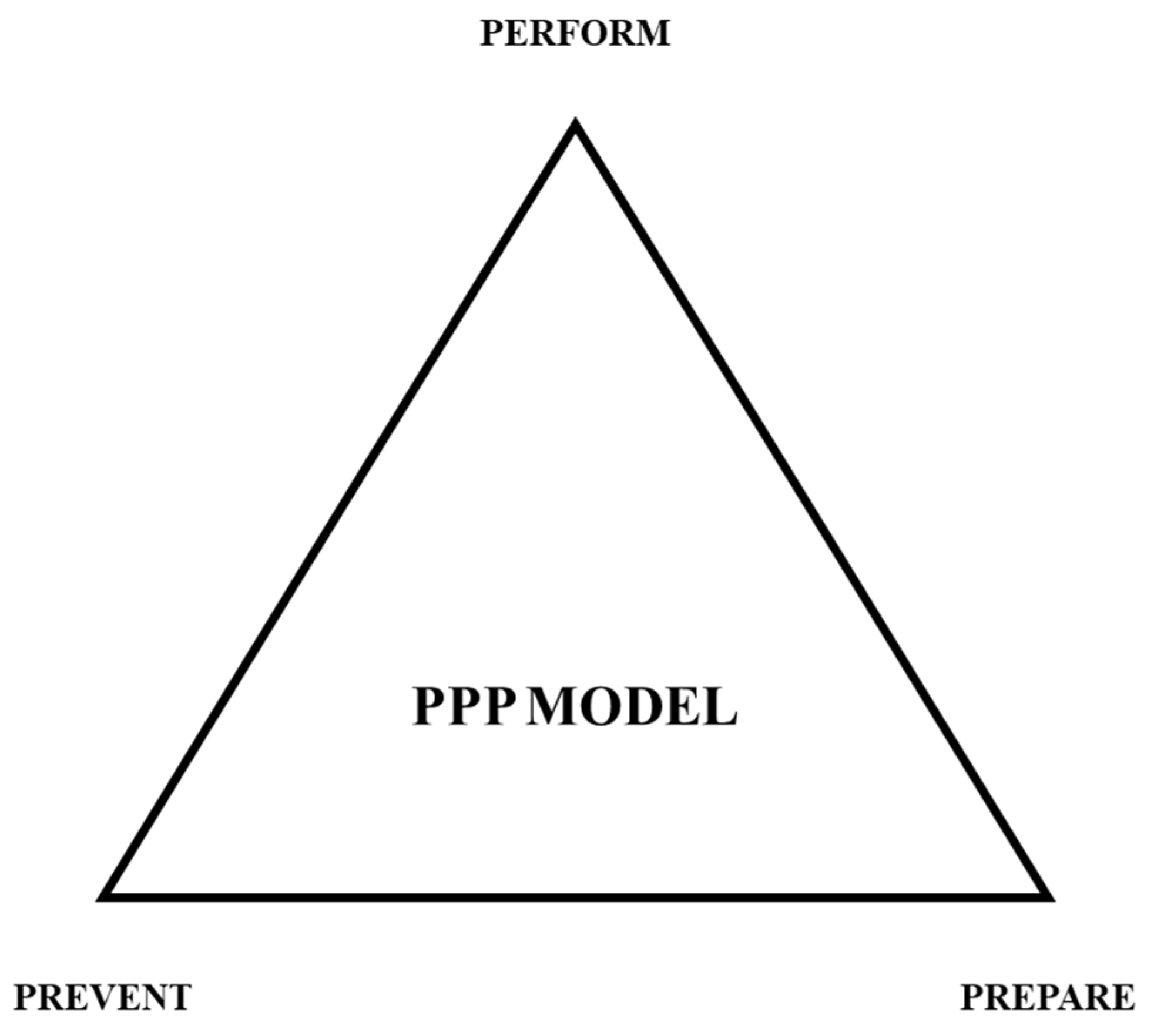
Figure 2.
The three components of the ADP model.
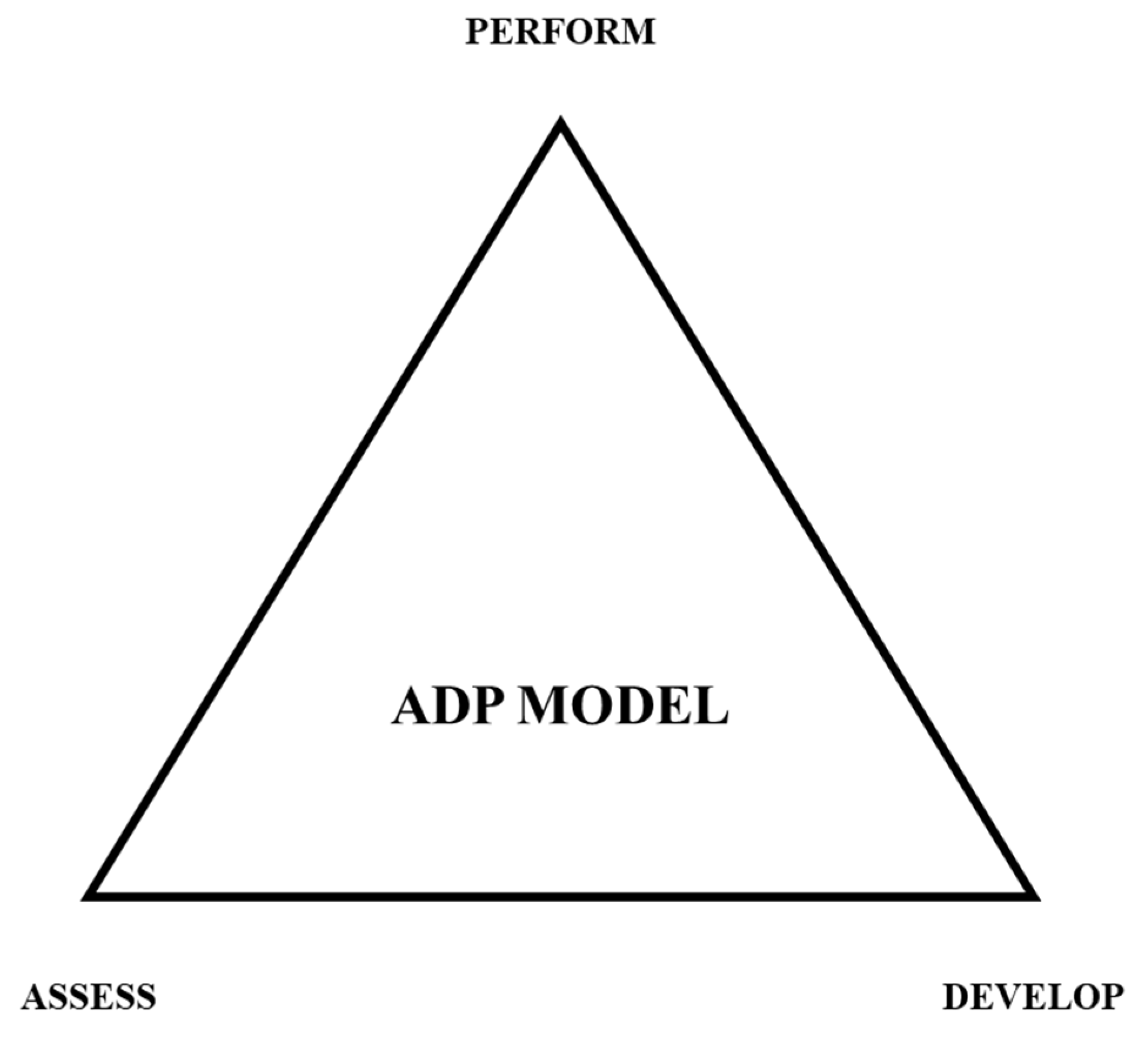
Figure 3.
The three components of the TFT model.
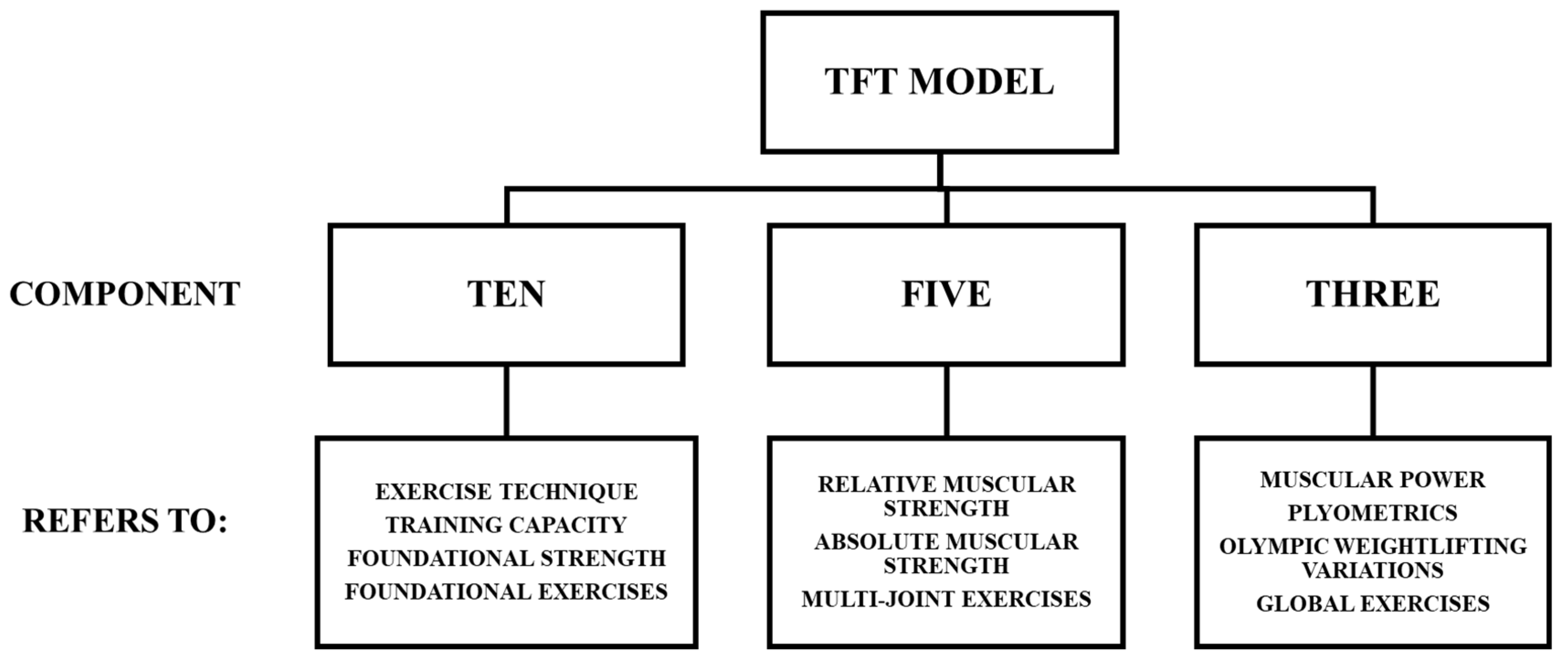
Figure 4.
An example of how the ADP and TFT models fit within the PPP model.
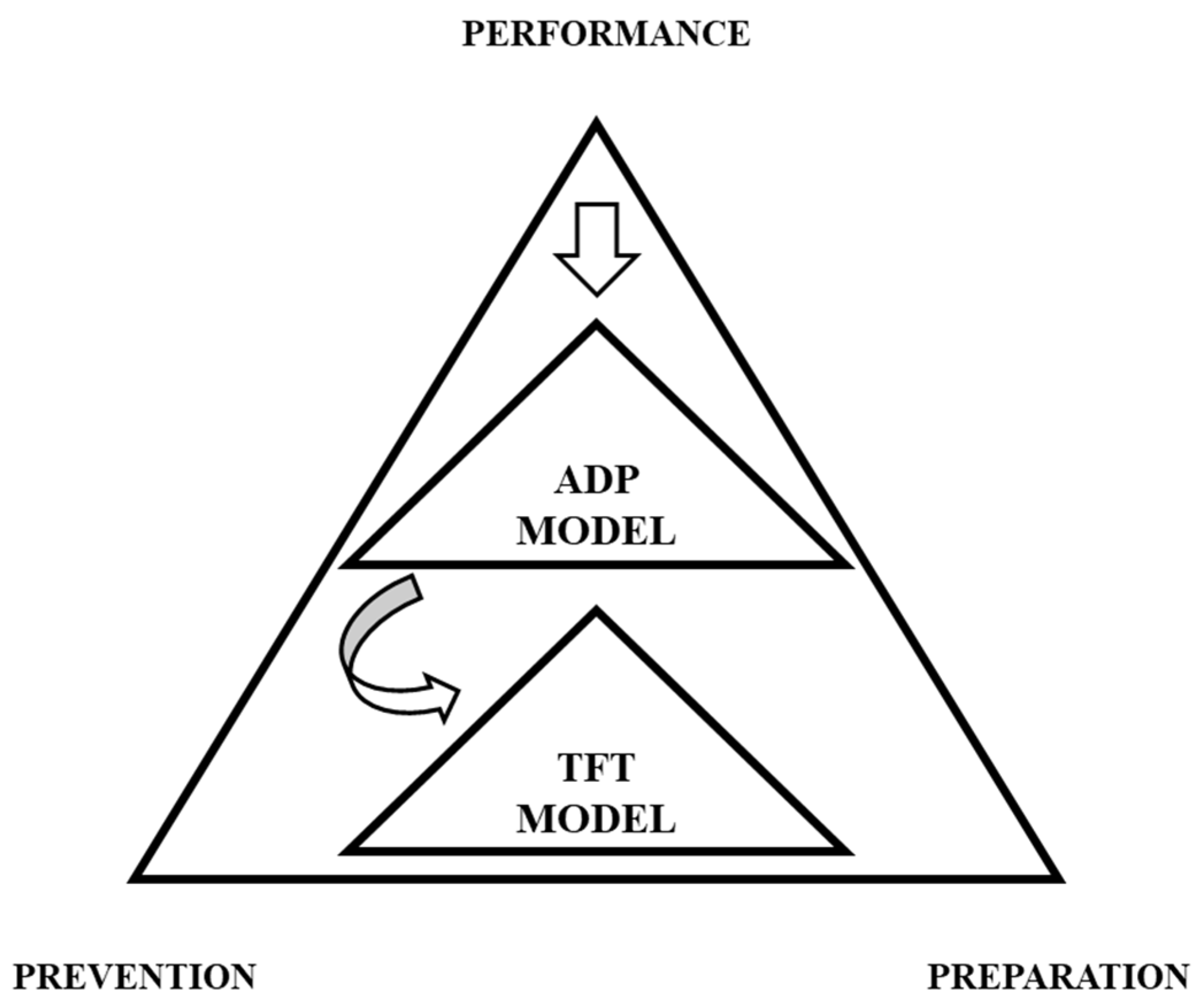
Figure 5.
An example of how the ADP, TFT, and PPP models fit within the TTCS model.
Disclaimer/Publisher’s Note: The statements, opinions and data contained in all publications are solely those of the individual author(s) and contributor(s) and not of MDPI and/or the editor(s). MDPI and/or the editor(s) disclaim responsibility for any injury to people or property resulting from any ideas, methods, instructions or products referred to in the content. |
© 2025 by the authors. Licensee MDPI, Basel, Switzerland. This article is an open access article distributed under the terms and conditions of the Creative Commons Attribution (CC BY) license (http://creativecommons.org/licenses/by/4.0/).
Copyright: This open access article is published under a Creative Commons CC BY 4.0 license, which permit the free download, distribution, and reuse, provided that the author and preprint are cited in any reuse.


