

Submitted:
08 April 2025
Posted:
08 April 2025
You are already at the latest version
Abstract
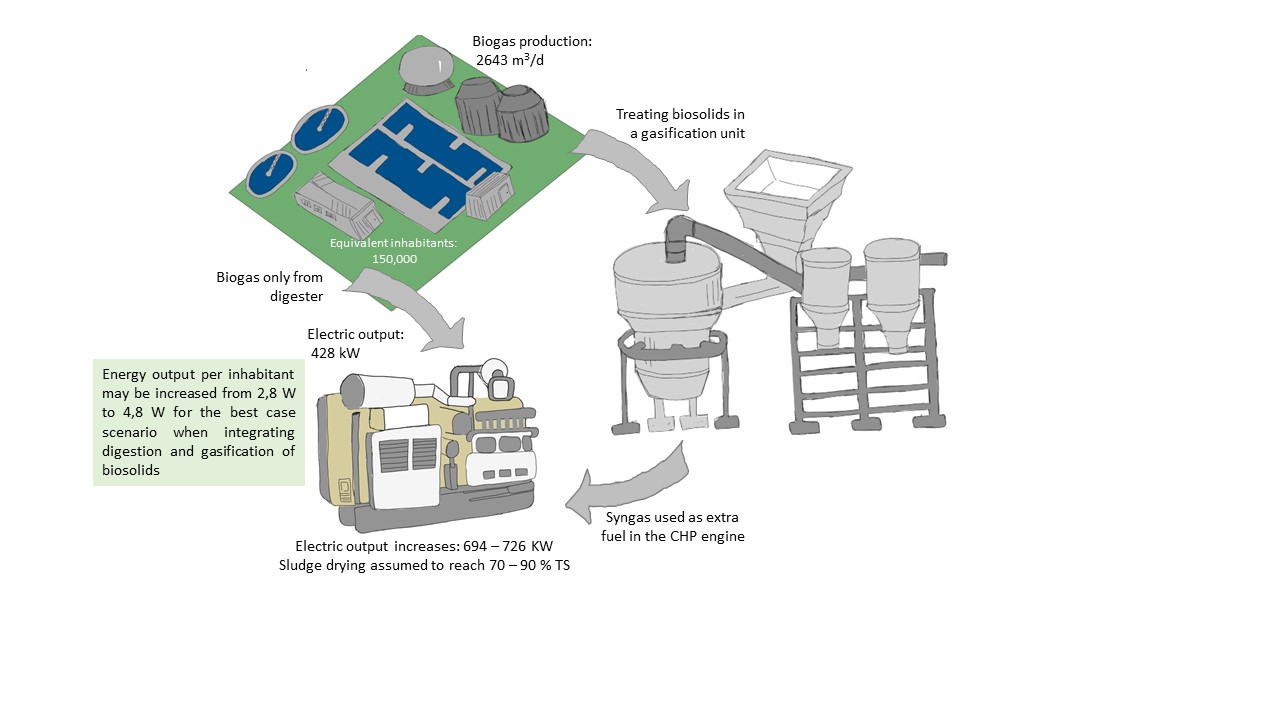
The high amount of sludge produced from wastewater treatment plants (WWTPs) requires final disposal, forcing plant operators to search for alternatives without exerting an excessive energy demand on the global plant balance. Future revisions of the WWTP directive will probably set additional constraints regarding land application of sludge. Therefore, thermal treatment may seem a logical solution based on the additional energy that can be extracted from the process. The purpose of the present manuscript was to assess the integration of anaerobic digestion of sewage sludge and subsequent gasification using SuperPro Designer V13. Mass and energy balances were carried out, and the net energy balance was estimated under different scenarios. The integration of the process showed an electricity power output of 726 kW (best scenario, equivalent to 4.84 W/inhab) against 428 kW (2.8 W/inhab) for the single digestion case. The thermal demand of the integrated approach can be fully covered by deviating a fraction of gaseous fuels for heat production in a burner. Transforming syngas into methane by biological conversion allows densifying the gas stream, but it reduces the total energy content.
Keywords:
Renewable energy
; anaerobic digestion
; biogas
; syngas fermentation
1. Introduction
Wastewater treatment inevitably generates sewage sludge that requires stabilization. Wastewater treatment plants (WWTPs) must deal with huge amounts of biological sludge (20 – 25 dry solid/person year) containing pathogenic microorganisms and different pollutants, which discourage its valorization by means of traditional practices such as land application [1,2]. Recycling nutrients from the sludge is desirable as long as the heavy metal content does not pose a risk to the population. The presence of pharmaceutical compounds is an important concern, as these substances can interact with other organisms when sludge is applied to land. Given these issues, thermal valorization of sludge appears to be the best alternative for reducing the volume of waste that requires final disposal, turning a problematic material into a valuable energy resource.
Gasification is an old technology widely studied in the scientific literature. It has been proposed as a suitable alternative to valorize lignocellulosic biomass, wastes of different origin, sewage sludge, and digestate [3,4,5,6]. However, the need for a dry substrate is one of the major drawbacks, reducing the feasibility of integrating anaerobic digestion and a subsequent thermal processing. In the case of digestate gasification, the drying stage may consume most of the extra energy obtained from the combined configuration. Guo et al. [7] assessed different process integrations, considering the maximization of energy recovery or gas recovery, corroborating that the major limitation was the high energy demand of drying.
Anaerobic digestion is a biological process usually applied for the treatment of organic wastes and it is a common stage of current WWTPs since it allows reducing the amount of sewage sludge, valorizing this stream into biogas (containing mainly methane and carbon dioxide). Biogas can be used as fuel in boilers, combined heat and power units, micro-turbines, or upgraded to produce a gas stream with similar characteristics to that of natural gas [8]. A slurry product known as digestate is also obtained. Digestate has a higher mineral content than its original raw material because of the degradation carried out by the anaerobic microflora. However, many volatile solids are still present [9].
Anaerobic digestion occurs in sequential stages, where hydrolysis is usually the limiting step when complex organics are treated. The soluble compounds are then transformed into volatile fatty acids that are later converted into methane and carbon dioxide. Hydrogenotrophic methanogens and aceticlastic methanogens are the main organisms responsible for methane evolution [10]. The presence of lignocellulosic material hinders the anaerobic degradation, requiring a prolonged digestion time to achieve the maximum degradation rate. This increase in digestion time results in larger digester volumes, negatively affecting plant installation costs and reducing biogas productivity. Recalcitrant compounds accumulate in the anaerobic slurry [11,12,13]. Therefore, treating the digested material with a thermochemical process allows complete recovery of the energy originally contained in the feed.
The coupling of two different processes, such as anaerobic digestion and gasification, to reduce the final amount of material implies some modifications in the operating conditions of the individual units. That is, digestion of the incoming material is initially designed to degrade organic compounds contained in the feed (produce biogas), stabilize them, and reduce their putrescible potential. Thus, the time that solids spend inside the digester affects the amount of biogas produced and digestate quality since a longer digestion time leads to an increase in recalcitrant and inorganic components [14,15]. Readily degradable materials will be assimilated first, but complex compounds must stay longer inside the digester to achieve complete conversion. The composition of the feed affects the process outcome, although operating conditions also play a relevant role. The hydraulic retention time (HRT) and organic loading rate (OLR) applied to the reactor are closely related to the specific methane production and the degree of stabilization obtained [16,17].
Optimization of the digester operating conditions by focusing solely on biogas production would be possible if the remaining slurry is intended to be thermally treated in a subsequent stage. Therefore, achieving a stabilized material with low putrescible potential would not have a significant relevance on the overall digestion performance. Integrating biological and thermal processes seems a suitable alternative as long as the energy demand of sludge drying does not eliminate the benefits of producing energetic by-products. An important point to consider is the mineralization that occurs during the biological degradation process. Increasing the hydraulic retention time (HRT) leads to a greater removal of volatile solids (VS), which in turn results in a higher mineral content in the digestate. This enhanced mineralization impacts the following thermal stage by increasing char production [18], although it may reduce the yield of gaseous products.
Many WWTPs have already incorporated a drying unit to facilitate digestate storage and handling and reduce transport requirements. In these cases, introducing a gasifier would not alter the energy demand for digestate preparation since drying is already a piece of basic plant equipment. Several studies have proposed the integration of anaerobic digestion with pyrolysis [19,20,21,22,23], with biochar being considered a valuable by-product suitable for land application. The gaseous and liquid streams are also valuable fuels that could be used for energy production. The liquid stream contains pyro-oil and an aqueous phase that needs further treatment. Anaerobic digestion has been suggested as an alternative to treat this aqueous pyrolysis phase [24,25]. However, the presence of toxic compounds may inhibit microbial degradation, adversely affecting biogas production. High dilution of the liquid phase or detoxification is necessary to degrade the organic components anaerobically. Both options add complexity to an already costly configuration [26,27]. A similar argument can be presented against hydrothermal liquefaction, in which the aqueous phase represents a challenging stream, which also needs pretreatment prior to biological valorization [28]. In addition, the application of hydrothermal liquefaction implies heating the entire sludge, which already has a high water content, increasing the thermal demand of the process.
Gasification is another alternative for treating biosolids. Sewage sludge gasification has been widely studied under laboratory conditions [29,30,31] and at a pilot scale [32,33]. The process produces syngas as the main calorific stream with a lower heating value (LHV) of about 5 MJ/m3 and char as a solid product, with small amounts of tars requiring special treatment [6]. The use of low-cost catalysts such as dolomite or steel slags may significantly reduce the production of undesirable tars [34,35,36]. Gasification occurs under oxygen-deprived conditions, preventing complete oxidation of the carbonaceous material. Thus, the main light components of the synthesis gas are H2, CO, CH4, and CO2. The concentration and yield of these gases are particularly affected by the operating conditions (temperature and gasification agent, among others), reactor configuration [37,38], and input material properties [39]. The presence of air significantly reduces the gas calorific value due to the dilution effect exerted by nitrogen. This factor may be the main disadvantage compared to pyrolysis, where air as a gasification agent is avoided.
The light C1 gases contained in syngas could be transformed into methane using anaerobic microorganisms. This type of conversion requires hydrogen, which is already present in syngas. Therefore, the coupling of anaerobic digestion and gasification as an integrated approach for waste treatment can be carried out with the dual objective of reducing the amount of digestate requiring disposal and increasing the energy extracted in the form of gaseous products by transforming syngas components into methane. Studies carried out by different authors demonstrated the ability of anaerobic microflora to adapt to gaseous substrates, transforming mixtures of H2/CO/CO2 without the need for complex acclimation stages and showing a fast conversion rate [40,41,42]. Cheng et al. [43] studied the conversion of syngas using a trickling filter, reporting a methane production rate of 1.26 L CH4/Lpacking bed d when feeding 5.33 L syngas/Lpacking bed d, also demonstrating that the process could be carried out under non-sterile conditions using the same digestate as a nutrient medium.
The idea of using microorganisms to transform syngas is not new, with several studies reporting on this subject [44,45,46,47]. Recent works proposed this conversion process to obtain a natural gas substitute from biomass gasification and steel mill off-gases at a high rate under thermophilic conditions and higher pressures [48,49,50,51]. However, syngas cleaning is a challenging issue due to the presence of inhibitory substances such as HCN, H2S, and tar compounds that may need removal to avoid inhibitory conditions during fermentation [52], with this subject still waiting for an affordable and practical solution.
The present manuscript aimed to evaluate the energetic feasibility of introducing sludge gasification in a WWTP to reduce sludge handling operations and enhance biogas production through the biological transformation of syngas. The plant performance was simulated using SuperPro Designer software. Even though several gaps remain, requiring extensive research to attain satisfactory process integration, the aim was set on the specific energy requirements of the different treatment units.
2. Materials and Methods
The description of the WWTP was based on the study of Martínez et al. [53], where a conventional plant treats residual wastewater by the activated sludge process. The number of equivalent inhabitants was 150,000, with an estimated production of 330 L/inhab. d [54]. The WWTP model used here was based on Ellacuriaga et al. [55]. The specific methane production (SMP) of the sludge was 243 mL CH4/g VS, as a mean value of those reported by Martínez et al. [56] and Arenas et al. [57]. The working volume of the digester was considered 85% of the total volume. The maximum digester size was assumed to be 4,000 m3. The hydraulic retention time was 21 d. The methane content in biogas was 60%, with a density of 1.133 kg/m3. The LHV of methane was 35.8 MJ/m3.
SuperPro Designer V13 Software was used to estimate the process performance. The conversion of the reactions was set at 98%. The energy demand of the digester was estimated by considering the heat required to increase the sludge temperature from the inlet stream (15 °C) to the fermentation temperature (37 °C), assuming 95% heat transfer efficiency and 5% heat losses.
The digestate was dehydrated using horizontal decanter centrifuges, obtaining a slurry stream with a total solids content of 27%. The subsequent drying process was performed in a horizontal dryer. A moisture content of 30 up to 10% (maximum drying level) was assumed for dried sludge. The digestate was transported by a truck with a loading capacity of 40 m3. The distance to the land application site was 30 km, and a tortuosity factor of 1.4 was assumed. Diesel consumption was estimated at 35 L/100 km [58]. LHV of diesel fuel is 44.8 MJ/kg with a density of 0.84 kg/L [59,60]. Electricity production from biogas considered the use of a combined heat and power (CHP) unit with an electrical efficiency of 38% and a thermal efficiency of 48.3% [61]. Thermal exhaust gas temperature was assumed to be 474 °C at 100% loading with operation under lean conditions [62].
Sludge gasification was assumed to be carried out in a fluidized bed gasifier. The higher heating value of the sludge was 14.5 MJ/kg (mean value of those reported by Magdziarz et al. [63], Mun et al. [64] and Mun et al. [65]). Based on the same literature references, it was assumed a sludge elemental composition of 36.5% carbon, 5.8% hydrogen, 23% oxygen, 4.7% nitrogen, 1.0% sulfur, and 28.9% ash content. The gasification temperature was based on equilibrium equations after setting the temperature of the incoming material at 780 °C. Carbon conversion was set at 85% with an ER of 0.15.
Biological methanation of syngas considered the following reactions, based on equations proposed by Schwede et al. [50] and Rafrafi et al. [66]:
CO2 + 4 H2 → CH4 + 2 H2O (selectivity for H2 assumed as 50%)
4 CO + 2 H2O → CH4 + 3 CO2
CH3COOH → CH4 + CO2
4 CO + 2 H2O → CH3COOH + 2 CO2 (selectivity for CO assumed as 50%)
2 CO2 + 4 H2 → CH3COOH + 2 H2O
For this process, a hydrogen conversion of 95% was assumed, which was the mean value reported by Asimakopoulos et al. [67] and Rachbauer et al. [68].
A sensitivity analysis was conducted by applying a 10% variation to the values of sludge SMP, TS, and VS content. This analysis aimed to assess the digester’s specific energy production. Additionally, sensitivity analysis was used to evaluate the drying requirements by varying (10% variations) the solid content of the sludge after dewatering operations, as well as adjusting the parameters related to dryer operating conditions, such as heat transfer efficiency, the temperature of the dried sludge, and its solid content.
The effect of increasing SMP thanks to the application of a pretreatment to the sludge stream was analyzed by increasing the SMP value up to 40% in 10% increments.
3. Results and Discussion
Figure 1 shows a scheme of the WWTP considering the stabilization of sludge through anaerobic digestion. Primary and secondary sludge were mixed and subsequently treated in the anaerobic digester. Based on assumptions described in the Material and Methods section, the biogas produced was 4,404 m3 biogas/d. Since the methane content in biogas was assumed to be 60%, the energy contained in this stream accounts for 94,614 MJ per day. The total sludge flow was 261 m3/d (with a volumetric proportion of 51% of primary sludge in the mixture). Two digesters with a volume of 3224 m3 were necessary to treat the whole sludge stream, given the restriction for the maximum size allowed of 4000 m3. The daily energy demanded by the digestion units was 26,700 MJ.
The main performance parameters of the WWTP are listed in Table 1. After digestion, a significant amount of sludge is obtained (278 m3/d). This digestate is then subjected to dewatering, a crucial step that greatly reduces the amount of sludge, thereby impacting the efficiency and transport costs. The dewatered sludge may find land application as a disposal option, with an associated energy demand of 766.5 MJ/d for transport. The specific energy production of the anaerobic reactor was estimated as 14.6 MJ/m3reactor d. Considering that sewage sludge is a material with great seasonal variability, if values regarding solid content and proportion of volatile solids are assumed to vary about 10% around their central value, then the expected specific energy would be around 13 – 16 MJ/m3reactor d.
Figure 2 represents the flow diagram where the transport of dried sludge is introduced into the plant operating mass balances. It also represents the results obtained from the sensitivity analysis regarding the effect of input variables on the energy demand for sludge drying.
The water content in sludge after the dewatering operation shows the major effect on the sludge drying demand, followed by the heat transfer efficiency of the drying equipment. The water content of the dewatered sludge can reach approximately 75%. In this study a value of solid content in dewatered sludge was assumed. Digestate drying is a treatment stage frequently found in many WWTPs because removing this water can further reduce transport costs. Drying this material reduces the mass of sludge to be transported. The dried sludge produced was 9 t/d with 90% solid content, in the present case. The transport of this material translates into an energy demand of 275.7 MJ/d, which, compared with the amount of energy required for sludge drying, seems insignificant. However, this transport operation supposes a high cost for WWTP management. Considering a cost of €1.6/km loaded and €1.3/km empty, the transport expenditures reach €11,000/year.
The energy needed for sludge drying accounts for 62,900 MJ/d (2.98 GJ/t water evaporated), making that for sludge transport meaningless. The value obtained is in the range of the energy demand estimated for convective drying (2.52 – 5.04 GJ/t water evaporated [69]). The advantages of drying sludge are not only associated with handling, easier storage, and transport of the material but also with the preference of final users for applying dried stable biosolids.
The land application of biosolids is an environmentally friendly choice because it allows for nutrient recycling (nitrogen and phosphorus) and retaining carbon in soils, with phosphorus being considered a strategic resource due to the limited reserves of mineral phosphate rock and the risk associated with the presence of Cd in low-quality phosphate rock [70,71]. Land application of digestate is a valorization option in line with circular economy principles. However, it may not be always possible. Restrictions regarding metal content can make using biosolids as an organic amendment inadequate. However, metals are not the only restriction. The new WWTP directive will also monitor the presence of cosmetic and pharmaceutical compounds along with microplastics, setting new bans on sludge land applications. In addition, not all urban areas have nearby locations which can be used as a safe disposal place. Therefore, finding a sustainable solution for transforming the remaining organics into valuable compounds is urgent. In many WWTPs, adding a subsequent thermal treatment stage would not represent an excessive thermal demand since many plants already have thermal drying units.
The energy contained in biogas was 94,614 MJ/d. When considering a CHP engine, this biogas stream will represent an electrical power of 428 kW (37,000 MJ/d). The heat available would account for 46,570 MJ/d, which may suffice digester energy demand but not that associated with sludge drying. In addition, if it is considered that the sludge drying unit uses hot combustion gases to supply the thermal demand, then only the energy associated with this gaseous stream is available for the drying process. This amount of energy corresponds to about 49% of the thermal energy available [58]. Therefore, the thermal energy derived from the engine can cover about 34% of the thermal energy required for drying. This result agreed with the report of Guilayn et al. [72], indicating that the heat from co-generators in biogas plants is insufficient to dry the whole digestate flow.
Increasing methane production not only has a direct effect on the energy contained in biogas but also reduces the energy required for drying sludge. The more effective the conversion of organics into biogas is, the lower the amount of remaining material needing subsequent drying. Figure 3 shows the effect of increasing sludge SMP up to 40% and how this parameter affects the plant’s thermal balance. Approximately 62% of the energy needed for the drying process can now be supplied by combustion gases from the engine’s exhaust. However, some of the thermal demand remains unmet, necessitating an auxiliary fuel.
Another important factor to consider is that increasing the digestibility of sludge is also an energy-consuming process and requires the installation of additional equipment, which may also increase the plant’s energy demand. Several studies deal with the use of different pretreatments (alkaline, thermal hydrolysis, electrooxidation, mechanical disruption) to increase the accessibility of microorganisms to the sludge particles [73,74,75]. Thermal processes have the advantage of heat recovery, greatly reducing sludge volume at the expense of relatively low energy demand [76]. However, biogas yield has shown no significant improvement under the industrial application of the process [77] in contrast with laboratory-scale experimental reports [78,79]. Even though the capacity of decreasing sludge volume and viscosity along with recovering energy as heat makes thermal hydrolysis a widely applied option on a large scale.
The report derived from the project POWERSTEP [80] financed by European Union HORIZON 2020 contains an analysis of the energy demand of different commercial processes available for improving sludge degradability, reporting on average energy consumption values in the range of 5.4 – 7.2 kWhe/m3 sludge (52 kWhe/t TS sludge) and 39-116 kWhheat/m3 sludge (620 kWhheat/t TS sludge) for thermal hydrolysis. Other processes also evaluated were pressure homogenization, ultrasounds, stirred ball mills, and ozone treatment, most of which had high energy demands except for ultrasonic treatment but without the feature of energy recovery as it does the thermal hydrolysis process. García-Cascallana et al. [81], reported a decrease of about 7.0% in net electricity production due to the auxiliary equipment required when installing a thermal pretreatment unit.
The amount of auxiliary fuel was estimated by considering the energy needed for sludge drying. The increase in sludge degradation affects the plant balance in two ways: by increasing the amount of biogas obtained and thus the energy derived and by reducing the mass of biosolids generated, decreasing the energy associated with sludge drying. Figure 4 shows the energy required for the engine to provide the drying demand. Since the energy contained in methane is used to produce electricity, the additional methane required was estimated based on the drying needs. However, if biogas is valorized exclusively by using CHP engines and the remaining thermal demand for drying sludge is supplied by a burner (95% efficiency) using natural gas as an auxiliary fuel, the extra fuel required could be highly reduced, although the benefit of extra electricity is lost. Previous model estimations assumed that sludge dehydration reached 27% TS content. Any improvement in water removal would be aligned with a lower demand for sludge drying.
3.1. Sludge Gasification
Figure 5 shows the integration with a gasification unit by considering the use of dried digested sludge. Previous estimations were made by assuming a water content in dried sludge of 20%, so the drying demand was not greatly penalized. However, increasing the sludge solid content reduces the thermal demand of the gasification stage. Based on this premise, the sludge drying stage was evaluated by considering a solid content of up to 90% in increments of 5 units using 30% as the first initial moisture value. Figure 5 shows the schematization of the process where a heat exchanger is used to increase the temperature of the material to the gasification temperature, thus allowing for the thermal demand to be estimated.
Pursuing a drier product did not yield sufficient syngas when considering the net energy balance, which is defined as the difference between the energy content of syngas and the energy required for sludge drying and gasification. Achieving a lower water content does not result in greater benefits in the gasification process, even though the thermal demand of the gasifier was reduced. The slight decreasing trend in this basic balance was due to a reduced amount of syngas produced and its lower energy content. The presence of water affects gasification reactions; thus, a higher water content results in higher hydrogen and methane proportion in syngas, a feature demonstrated by several authors [82,83]. However, if bed temperature is not properly controlled, the high water content in the raw material may adversely affect performance because water evaporation is an endothermic process [84]. Although a positive net energy balance was obtained in the present case, the values derived from the balance were insignificant compared to the energy demanded by any of the previous operations. Therefore, sludge gasification can be proposed when the aim is to reduce the material requiring final disposal rather than obtain a clear energy benefit.
Figure 6 shows the volumetric production of syngas along with H2 and CH4 composition. Evidently, the higher the moisture content in the dried sludge, the higher the amount of water condensate in syngas. However, a greater amount is available for the reaction to favor the conversion of organics into H2 and CH4. The condensable water in the syngas stream was reduced with increased drying efficiency. 96.5 kg/h of water condensate was obtained at 30% moisture content, whereas this value was reduced to 21.9 kg/h at 10% moisture content. In addition, a lower CO concentration was found in syngas with greater water content in sludge, which agreed with the results reported by Xie et al. [85] and Ayol et al. [86]. Mun et al. [65] demonstrated that increasing the water content in sludge led to a higher hydrogen concentration in syngas, reaching values of approximately 25 – 30%. However, not all water in sludge is transformed into a valuable fuel. Some of this water remains as condensable water, as observed from simulation results, which, in the case of gasification, may contain hydrocarbon molecules, requiring special treatment before final disposal.
The LHV of syngas was 7.5 – 8.0 MJ/m3 at an ER of 0.15. Depending on the type of gasifier utilized, this value may be significantly lower due to the requirement of introducing a larger quantity of air to assist in fluidizing the bed. At an ER of 0.25, the LHV was reduced to 5.6 MJ/m3 due to the dilution effect of nitrogen. This value was in accordance with results reported by other authors when dealing with pilot plant conditions [87,88]. In the present study, the addition of air was fixed to achieve a pre-established carbon conversion and a fixed value of 0.15 for the ER. Using pure oxygen as a gasification agent may produce syngas with higher energy content [89], but the costs associated with air distillation may offset any benefit in the energy balance.
3.2. Analyzing the Effect of Sludge Mineralization
Enhancing the mineralization capacity of the reactor increases gas production, which supports electricity generation and decreases the demand for sludge drying due to the reduced quantity of digestate. However, this feature also reduces the LHV of the digestate because of its higher ash content. The net energy balance shows disappointing results at any humidity level, but it improves as the water content of the dried sludge decreases. Figure 7 shows the results derived from the energy balance when assuming a 40% increase in SMP. The balance also considered the use of biogas in a CHP engine and the fact that high-grade thermal energy from the CHP unit is available to cover the drying demand. In the present case, the energy derived from syngas is much lower due to the smaller amount of digestate available. However, the integration of both processes (digestion and gasification) positively affects the energy balance despite the digestate mass’s negative impact on drying requirements.
The energy balance may be improved if the thermal demand required for the process is supplied by a burner using indistinctly biogas or syngas. Given that the efficiency of producing heat from a burner is much higher, the energy balance was recalculated by assuming that the thermal energy was fully covered by process fuels (biogas and/or syngas). In this case, the main assumption for the process was the use of gaseous fuels to produce heat to complement the thermal demand supplied by the engine. Due to the high energy requirements for sludge drying and gasification (see Figure 8a), digestion produced an electricity output of approximately 600 kW. About 30% of the energy in the combined stream of biogas and syngas was diverted to the burner for all cases analyzed. However, when a hypothetical pre-treatment was applied and digestion efficiency increased, the benefit was directly associated with the lower demand for drying sludge, given the lower mass produced (See Figure 8b). As it is observed, the CHP engine can fully cover the digester thermal demand in this second case. The amount of electricity was higher thanks to the greater fuel availability for the CHP engine (81 – 85% of the gas fuel is available for the engine).
The use of pretreatment to boost biogas production has the main drawback of increasing overall energy demand. When a thermal pretreatment is assessed, the benefit of biogas enhancement should surpass the extra energy demanded by the pretreatment process itself, an evident fact clearly reviewed by Cano et al. [90], which is often forgotten. If an averaged thermal energy demand of 6.55 kWh/m3 of sludge at an TS content of 168 g/L is assumed (based on data reported by Gurieff et al. [91], Pérez-Elvira et al. [92] and Tyagi and Lo [93] considering thermal recovery), the thermal energy of the pretreatment accounts for 21.6 kW, which slightly affects the global balance. Therefore, for the case of drying sludge up to 10% water content, an increase of 23% is expected in electricity generation after considering the process integration and assuming a 40% enhancement in biogas production. This value reduces to 21.2% after subtracting the thermal demand of the pretreatment.
3.3. Syngas Conversion
The biological transformation of syngas allows energy densification of the gaseous stream, thus reducing storage volume. The LHV of syngas can be increased from 7.7 MJ/m3 (average values of syngas obtained from all cases studied at 30 – 10% water content after drying) to 10 MJ/m3, attaining a volumetric reduction of 34% on average when H2 and CO are assumed to be transformed into methane (see Figure 9a). These results were obtained by assuming a 40% enhancement in biogas production (high mineralization case). Results in the case of conventional digestion followed a similar trend but with lower biogas production. This fuel has a poor calorific value due to the high CO2 and N2 content.
Results indicate that the energetic density of the stream is still low, and the total energy of the syngas stream is slightly reduced after the biological methanation process. The addition of a complex fermentation stage does not seem a feasible proposal. Implementing this biological conversion stage requires additional intermediary systems for attaining syngas cleaning, which was not considered in the present simplified approach (see Figure 9b). In fact, one major inconvenience of the gasification process is the presence of trace substances that may act as inhibitory molecules in chemical or biological transformations, such as hydrogen cyanide [52]. Another relevant parameter that is also a cause of concern is the presence of tar in syngas. No matter what the final use of syngas would be, removing these compounds is of the utmost importance to attain successful operation [52]. Even if the biological conversion stage is not included, the valorization of syngas by CHP engines still requires removing tar components to avoid problems associated with valve sticking and blocking inlet pipes.
The digestion of sewage sludge allows the recovery of energy captured in the form of biogas. However, the process also causes sludge mineralization since it is an intrinsic stabilization procedure. This increase in sludge mineral content creates an undesirable problem associated with slagging in gasifiers due to the low fusion temperature of sludge ashes [94]. Additionally, many gasification units operate below 1300 °C, generating conditions where tar formation is favored [95]. Tar is usually composed of compounds with a molecular weight greater than benzene, phenolic derivatives, olefins, and aromatic and polyaromatic hydrocarbons, among others. The formation of tar is influenced by several parameters, such as temperature, oxygen content, type of biomass material, and type of gasifier [96]. Product distribution obtained from the gasification of sludge reported by Mun et al. [65] under different operating conditions indicated that average values were about 69% for gas production, 18% for char, 10.4% for condensate liquid, and 1% for tar. Therefore, cleaning procedures must deal with poisoning substances in syngas, tar removal, and the final disposal of condensates. Ash content in sludge can be as high as 50% [6,86], but current small-scale gasifiers require low-ash material to avoid tar operating problems, as reported by Patuzzi et al. [97]. There seems to exist a contradiction between the expected application for gasification by scientific reports and the feasible current application of small gasification units.
4. Conclusions
The mass and energy balance based on the integrated approach showed better results when the conventional digestion system was assumed, leading to higher values even though sludge drying significantly affected the balance. The enhancement of digestion increased performance and reduced sludge production. However, the energy derived from a subsequent gasification process was lower. Despite this fact, a positive net balance was still obtained. Reducing the mass of sludge requiring drying increased electricity production to 21.2% compared to the case of the combined approach of gasification and a conventional digestion stage. The energy derived from syngas provides an auxiliary fuel to supply the extra heat needed for sludge drying. Nevertheless, several aspects still require a solution, such as those related to the energy demand of cleaning equipment for removing tar and inhibitory compounds from syngas. The densification stage based on a biological methanation process adds extra complexity to the approach and reduces any energy benefit due to the lower energy content of the treated stream.
Author Contributions
Conceptualization, X.G. and R.G.; methodology, X.G.; software, R.G.; validation, X.G., S.G-R.; formal analysis, R.G.; investigation, X.G.; data curation, R.G.; writing—original draft preparation, X.G.; writing—review and editing, S.G-R.; visualization, S.G-R.; supervision, X.G. All authors have read and agreed to the published version of the manuscript.
Funding
This research received no external funding.
Informed Consent Statement
Not applicable.
Data Availability Statement
Data will be available upon request to authors.
Conflicts of Interest
The authors declare no conflicts of interest.
Abbreviations
The following abbreviations are used in this manuscript:
| CHP | Combined heat and power |
| ER | Equivalence ratio |
| HRT | Hydraulic retention time |
| OLR | Organic loading rate |
| LHV | Lower heating value |
| SMP | Specific methane production |
| VS | Volatile solids |
| TS | Total solids |
| WWTP | Wastewater treatment plant |
References
- Sivaramakrishnan, S. 120,000 tonnes of Faecal Sludge: Why India Needs a Market for Human Waste. World Econ. Forum. 2019. Available online: https://www.weforum.org/agenda/2019/09/how-to-improve-sanitation-in-india/#:~:text=India’s%20urban%20areas%20produce%20120%2C000,connected%20to%20the%20sewer%20system (accessed on 11 November 2024).
- Capodaglio, A.G. Biorefinery of Sewage Sludge: Overview of Possible Value-Added Products and Applicable Process Technologies. Water 2023, 15, 1195. [Google Scholar] [CrossRef]
- Nipattummakul, N.; Ahmed, I.I.; Kerdsuwan, S.; Gupta, A.K. Hydrogen and syngas production from sewage sludge via steam gasification. Int. J. Hydrogen Energy 2010, 35(21), 11738–11745. [Google Scholar] [CrossRef]
- Opatokun, S.A.; Kan, T.; Al Shoaibi, A.; Srinivasakannan, C.; Strezov, V. Characterization of food waste and its digestate as feedstock for thermochemical processing. Energ. Fuel 2016, 30(3), 1589–1597. [Google Scholar] [CrossRef]
- Sun, Y.; Nakano, J.; Liu, L.; Wang, X.; Zhang, Z. Achieving waste to energy through sewage sludge gasification using hot slags: syngas production. Sci. Rep. 2015, 5, 11436. [Google Scholar] [CrossRef]
- Werle, S.; Sobek, S. Gasification of sewage sludge within a circular economy perspective: a Polish case study. Environ. Sci. Pollut. Res. 2019, 26, 35422–35432. [Google Scholar] [CrossRef]
- Guo, X.; Zhang, Y.; Guo, Q.; Zhang, R.; Wang, C.; Yan, B.; Lin, F.; Chen, G.; Hou, L. Evaluation on energetic and economic benefits of the coupling anaerobic digestion and gasification from agricultural wastes. Renew. Energy 2021, 176, 494–503. [Google Scholar] [CrossRef]
- Ellacuriaga, M.; García-Cascallana, J.; Gómez, X. Biogas Production from Organic Wastes: Integrating Concepts of Circular Economy. Fuels 2021, 2, 144–167. [Google Scholar] [CrossRef]
- González-Rojo, S.; Carrillo-Peña, D.; González, R.G.; Gómez, X. Assessing Digestate at Different Stabilization Stages: Application of Thermal Analysis and FTIR Spectroscopy. Eng 2024, 5, 1499–1512. [Google Scholar] [CrossRef]
- Angelidaki, I.; Karakashev, D.; Batstone, D.J.; Plugge, C.M.; Stams, A.J. Biomethanation and its potential. In Methods in enzymology, Academic Press, USA, San Diego, 2011; Volume 494, pp. 327–351.
- Gómez, X.; Cuetos, M.J.; García, A.I.; Morán, A. Evaluation of digestate stability from anaerobic process by thermogravimetric analysis. Thermochim. Acta. 2005, 426(1-2), 179–184. [Google Scholar] [CrossRef]
- González, R.; Peña, D.C.; Gómez, X. Anaerobic Co-Digestion of Wastes: Reviewing Current Status and Approaches for Enhancing Biogas Production. Appl. Sci. 2022, 12, 8884. [Google Scholar] [CrossRef]
- Molinuevo-Salces, B.; Gómez, X.; Morán, A.; García-González, M.C. Anaerobic co-digestion of livestock and vegetable processing wastes: fibre degradation and digestate stability. Waste Manage. 2013, 33(6), 1332–1338. [Google Scholar] [CrossRef]
- Fierro, J.; Martinez, E.J.; Rosas, J.G.; Fernández, R.A.; López, R.; Gómez, X. Co-Digestion of swine manure and crude glycerine: Increasing glycerine ratio results in preferential degradation of labile compounds. Water. Air Soil. Pollut. 2016, 227, 78. [Google Scholar] [CrossRef]
- González, R.; Smith, R.; Blanco, D.; Fierro, J.; Gómez, X. Application of thermal analysis for evaluating the effect of glycerine addition on the digestion of swine manure. J. Therm. Anal. Calorim. 2019, 135, 2277–2286. [Google Scholar] [CrossRef]
- Ellacuriaga, M.; Cascallana, J.G.; González, R.; Gómez, X. High-solid anaerobic digestion: Reviewing strategies for increasing reactor performance. Environments 2021, 8, 80. [Google Scholar] [CrossRef]
- Nkuna, R.; Roopnarain, A.; Rashama, C.; Adeleke, R. Insights into organic loading rates of anaerobic digestion for biogas production: a review. Crit. Rev. Biotechnol. 2022, 42(4), 487–507. [Google Scholar] [CrossRef] [PubMed]
- Martínez, E.J.; González, R.; Ellacuriaga, M.; Gómez, X. Valorization of Fourth-Range Wastes: Evaluating Pyrolytic Behavior of Fresh and Digested Wastes. Fermentation (Basel) 2022, 8, 744. [Google Scholar] [CrossRef]
- González-Arias, J.; Fernández, C.; Rosas, J.G.; Bernal, M.P.; Clemente, R.; Sanchez, M.E.; Gomez, X. Integrating anaerobic digestion of pig slurry and thermal valorisation of biomass. Waste Biomass Valori. 2020, 11, 6125–6137. [Google Scholar] [CrossRef]
- González, R.; González, J.; Rosas, J.G.; Smith, R.; Gómez, X. Biochar and energy production: Valorizing swine manure through coupling co-digestion and pyrolysis. C 2020, 6, 43. [Google Scholar] [CrossRef]
- Monlau, F.; Sambusiti, C.; Antoniou, N.; Barakat, A.; Zabaniotou, A. A new concept for enhancing energy recovery from agricultural residues by coupling anaerobic digestion and pyrolysis process. Appl. Energy 2015, 148, 32–38. [Google Scholar] [CrossRef]
- Diaz Perez, N.; Lindfors, C.; van den Broek, L.A.; van der Putten, J.; Meredith, W.; Robinson, J. Comparison of bio-oils derived from crop digestate treated through conventional and microwave pyrolysis as an alternative route for further waste valorization. Biomass Convers. Biorefin. 2024, 14, 15739–15754. [Google Scholar] [CrossRef]
- Zhang, J.; Zhang, T.; Zhang, R.; Liu, Z.; Ouyang, C.; Zhang, Z.; Zhou, L.; Guo, Y. Pyrolysis Characteristics of Anaerobic Biogas Solid Residue from Kitchen Waste. Waste Biomass Valori. 2024, 15, 1141–1153. [Google Scholar] [CrossRef]
- Rasi, S.; Kilpeläinen, P.; Rasa, K.; Korpinen, R.; Raitanen, J.E.; Vainio, M.; Kitunen, V.; Pulkkinen, H.; Jyske, T. Cascade processing of softwood bark with hot water extraction, pyrolysis and anaerobic digestion. Bioresour. Technol. 2019, 292, 121893. [Google Scholar] [CrossRef] [PubMed]
- Liaw, S.S.; Perez, V.H.; Westerhof, R.J.; David, G.F.; Frear, C.; Garcia-Perez, M. Biomethane Production from pyrolytic aqueous phase: biomass acid washing and condensation temperature effect on the bio-oil and aqueous phase composition. BioEnergy Res. 2020, 13, 878–886. [Google Scholar] [CrossRef]
- Seyedi, S.; Venkiteshwaran, K.; Zitomer, D. Current status of biomethane production using aqueous liquid from pyrolysis and hydrothermal liquefaction of sewage sludge and similar biomass. Rev. Environ. Sc. Bio. 2021, 20, 237–255. [Google Scholar] [CrossRef]
- Yu, X.; Zhang, C.; Qiu, L.; Yao, Y.; Sun, G.; Guo, X. Anaerobic digestion of swine manure using aqueous pyrolysis liquid as an additive. Renew. Energy 2020, 147, 2484–2493. [Google Scholar] [CrossRef]
- González-Arias, J.; de la Rubia, M.A.; Sánchez, M.E.; Gómez, X.; Cara-Jiménez, J.; Martínez, E.J. Treatment of hydrothermal carbonization process water by electrochemical oxidation: Assessment of process performance. Environ. Res. 2023, 216, 114773. [Google Scholar] [CrossRef] [PubMed]
- Aznar, M.; Anselmo, M.S.; Manya, J.J.; Murillo, M.B. Experimental study examining the evolution of nitrogen compounds during the gasification of dried sewage sludge. Energ. Fuel 2009, 23(6), 3236–3245. [Google Scholar] [CrossRef]
- Bijesh, R.; Arun, P.; Muraleedharan, C. Modified stoichiometric equilibrium model for sewage sludge gasification and its validation based on experiments in a downdraft gasifier. Biomass Convers. Biorefin. 2021, 13, 9023–9043. [Google Scholar] [CrossRef]
- Freda, C.; Cornacchia, G.; Romanelli, A.; Valerio, V.; Grieco, M. Sewage sludge gasification in a bench scale rotary kiln. Fuel 2018, 212, 88–94. [Google Scholar] [CrossRef]
- Campoy, M.; Gómez–Barea, A.; Ollero, P.; Nilsson, S. Gasification of wastes in a pilot fluidized bed gasifier. Fuel Process. Technol. 2014, 121, 63–69. [Google Scholar] [CrossRef]
- Chen, Y.H.; Ngo, T.N.L.T.; Chiang, K.Y. Enhanced hydrogen production in co-gasification of sewage sludge and industrial wastewater sludge by a pilot-scale fluidized bed gasifier. Int. J. Hydrogen Energy 2021, 46(27), 14083–14095. [Google Scholar] [CrossRef]
- Chen, A.; Tian, Z.; Han, R.; Wei, X.; Hu, R.; Chen, Y. Preparation of Ni-based steel slag catalyst by impregnation method for sludge steam gasification. Sustain. Energy Technol. Assessments 2021, 47, 101553. [Google Scholar] [CrossRef]
- Hong, S.P.; Dong, J.I.; Yeo, S.K.; Park, I.H.; Chung, M.S.; Kim, D.I.; Park, Y.K. Reduction of tar using cheap catalysts during sewage sludge gasification. J. Mater. Cycles Waste Manag. 2011, 13, 186–189. [Google Scholar] [CrossRef]
- Santos, M.P.; Hanak, D.P. Sorption-enhanced gasification of municipal solid waste for hydrogen production: a comparative techno-economic analysis using limestone, dolomite and doped limestone. Biomass. Convers Biorefin. 2022, 14, 7857–7872. [Google Scholar] [CrossRef] [PubMed]
- Gai, C.; Guo, Y.; Liu, T.; Peng, N.; Liu, Z. Hydrogen-rich gas production by steam gasification of hydrochar derived from sewage sludge. Int. J. Hydrogen Energy 2016, 41(5), 3363–3372. [Google Scholar] [CrossRef]
- Manya, J.J.; Sánchez, J.L.; Abrego, J.; Gonzalo, A.; Arauzo, J. Influence of gas residence time and air ratio on the air gasification of dried sewage sludge in a bubbling fluidised bed. Fuel 2006, 85(14-15), 2027–2033. [Google Scholar] [CrossRef]
- Gil, M.V.; González-Vázquez, M.P.; García, R.; Rubiera, F.; Pevida, C. Assessing the influence of biomass properties on the gasification process using multivariate data analysis. Energy Convers. Manag. 2019, 184, 649–660. [Google Scholar] [CrossRef]
- Andreides, D.; Pokorna, D.; Zabranska, J. Assessing the syngas biomethanation in anaerobic sludge digestion under different syngas loading rates and homogenisation. Fuel 2022, 320, 123929. [Google Scholar] [CrossRef]
- Robazza, A.; Welter, C.; Kubisch, C.; Baleeiro, F.C.; Ochsenreither, K.; Neumann, A. Co-Fermenting Pyrolysis Aqueous Condensate and Pyrolysis Syngas with Anaerobic Microbial Communities Enables L-Malate Production in a Secondary Fermentative Stage. Fermentation (Basel) 2022, 8(10), 512. [Google Scholar] [CrossRef]
- Westman, S.Y.; Chandolias, K.; Taherzadeh, M.J. Syngas Biomethanation in a Semi-Continuous Reverse Membrane Bioreactor (RMBR). Fermentation (Basel) 2016, 2(2), 8. [Google Scholar] [CrossRef]
- Cheng, G.; Gabler, F.; Pizzul, L.; Olsson, H.; Nordberg, Å.; Schnürer, A. Microbial community development during syngas methanation in a trickle bed reactor with various nutrient sources. Appl. Microbiol. Biotechnol. 2022, 106, 5317–5333. [Google Scholar] [CrossRef]
- Bredwell, M.D.; Srivastava, P.; Worden, R.M. Reactor design issues for synthesis-gas fermentations. Biotechnol. Prog. 1999, 15(5), 834–844. [Google Scholar] [CrossRef]
- Kimmel, D.E.; Klasson, K.T.; Clausen, E.C.; Gaddy, J.L. Performance of trickle-bed bioreactors for converting synthesis gas to methane. Appl. Biochem. Biotechnol. 1991, 28, 457–469. [Google Scholar] [CrossRef] [PubMed]
- Klasson, K.T.; Elmore, B.B.; Vega, J.L.; Ackerson, M.D.; Clausen, E.C.; Gaddy, J.L. Biological production of liquid and gaseous fuels from synthesis gas. Appl. Microbiol. Biotechnol. 1990, 24, 857–873. [Google Scholar] [CrossRef]
- Klasson, K.T.; Cowger, J.P.; Ko, C.W.; Vega, J.L.; Clausen, E.C.; Gaddy, J.L. Methane production from synthesis gas using a mixed culture of R. rubrum M. barkeri, and M. formicicum. Appl. Microbiol. Biotechnol. 1990, 24, 317–328. [Google Scholar] [CrossRef]
- Bachmann, M.; Völker, S.; Kleinekorte, J.; Bardow, A. Syngas from What? Comparative Life-Cycle Assessment for Syngas Production from Biomass, CO2, and Steel Mill Off-Gases. ACS Sustain. Chem. Eng. 2023, 11(14), 5356–5366. [Google Scholar] [CrossRef]
- Figueras, J.; Benbelkacem, H.; Dumas, C.; Buffière, P. Biomethanation of syngas by enriched mixed anaerobic consortium in pressurized agitated column. Bioresour. Technol. 2021, 338, 125548. [Google Scholar] [CrossRef]
- Schwede, S.; Bruchmann, F.; Thorin, E.; Gerber, M. Biological syngas methanation via immobilized methanogenic archaea on biochar. Energy Procedia 2017, 105, 823–829. [Google Scholar] [CrossRef]
- Zhang, J.; Wang, G.; Xu, S. Simultaneous tar reforming and syngas methanation for bio-substitute natural gas. Ind. Eng. Chem. Res. 2018, 57(32), 10905–10914. [Google Scholar] [CrossRef]
- Ellacuriaga, M.; Gil, M.V.; Gómez, X. Syngas Fermentation: Cleaning of Syngas as a Critical Stage in Fermentation Performance. Fermentation (Basel) 2023, 9(10), 898. [Google Scholar] [CrossRef]
- Martínez, E.J.; Sotres, A.; Arenas, C.; Blanco, D.; Martínez, O.; Gómez, X. Improving Anaerobic Digestion of Sewage Sludge by Hydrogen Addition: Analysis of Microbial Populations and Process Performance. Energies (Basel) 2019, 12(7), 1228. [Google Scholar] [CrossRef]
- Longo, S.; Mauricio-Iglesias, M.; Soares, A.; Campo, P.; Fatone, F.; Eusebi, A.L.; Akkersdijk, E.; Stefrani, L.; Hospido, A. ENERWATER–A standard method for assessing and improving the energy efficiency of wastewater treatment plants. Appl. Energy 2019, 242, 897–910. [Google Scholar] [CrossRef]
- Ellacuriaga, M.; González, R.; Gómez, X. Feasibility of coupling hydrogen and methane production in WWTP: Simulation of sludge and food wastes co-digestion. Energy Nexus 2024, 14, 100285. [Google Scholar] [CrossRef]
- Martínez, E.J.; Rosas, J.G.; Morán, A.; Gómez, X. Effect of ultrasound pretreatment on sludge digestion and dewatering characteristics: Application of particle size analysis. Water 2015, 7(11), 6483–6495. [Google Scholar] [CrossRef]
- Arenas, C.B.; González, R.; González, J.; Cara, J.; Papaharalabos, G.; Gómez, X.; Martínez, E.J. Assessment of electrooxidation as pre-and post-treatments for improving anaerobic digestion and stabilisation of waste activated sludge. J. Environ. Manage. 2021, 288, 112365. [Google Scholar] [CrossRef]
- González, R.; García-Cascallana, J.; Gómez, X. Energetic valorization of biogas. A comparison between centralized and decentralized approach. Renew. Energy 2023, 215, 119013. [Google Scholar] [CrossRef]
- Alptekin, E.; Canakci, M. Determination of the density and the viscosities of biodiesel–diesel fuel blends. Renew. Energy 2008, 33(12), 2623–2630. [Google Scholar] [CrossRef]
- Yilmaz, N. Comparative analysis of biodiesel–ethanol–diesel and biodiesel–methanol–diesel blends in a diesel engine. Energy 2012, 40(1), 210–213. [Google Scholar] [CrossRef]
- Jenbacher de tipo 2: J208. 2019. Available online: https://www.innio.com/es/productos/jenbacher/tipo-2 (accessed on 11 November 2024).
- García-Cascallana, J.; Carrillo-Peña, D.; Morán, A.; Smith, R.; Gómez, X. Energy Balance of Turbocharged Engines Operating in a WWTP with Thermal Hydrolysis. Co-Digestion Provides the Full Plant Energy Demand. Appl. Sci. 2021, 11(23), 11103. [Google Scholar] [CrossRef]
- Magdziarz, A.; Werle, S. Analysis of the combustion and pyrolysis of dried sewage sludge by TGA and MS. Waste Manage. 2014, 34(1), 174–179. [Google Scholar] [CrossRef]
- Mun, T.Y.; Kim, J.W.; Kim, J.S. Air gasification of dried sewage sludge in a two-stage gasifier: Part 1. The effects and reusability of additives on the removal of tar and hydrogen production. Int. J. Hydrogen Energy 2013, 38(13), 5226–5234. [Google Scholar] [CrossRef]
- Mun, T.Y.; Kim, J.S. Air gasification of dried sewage sludge in a two-stage gasifier. Part 2: Calcined dolomite as a bed material and effect of moisture content of dried sewage sludge for the hydrogen production and tar removal. Int. J. Hydrogen Energy 2013, 38(13), 5235–5242. [Google Scholar] [CrossRef]
- Rafrafi, Y.; Laguillaumie, L.; Dumas, C. Biological methanation of H2 and CO2 with mixed cultures: current advances, hurdles and challenges. Waste Biomass. Valori. 2021, 12, 5259–5282. [Google Scholar] [CrossRef]
- Asimakopoulos, K.; Gavala, H.N.; Skiadas, I.V. Biomethanation of syngas by enriched mixed anaerobic consortia in trickle bed reactors. Waste Biomass Valori. 2019, 11, 495–512. [Google Scholar] [CrossRef]
- Rachbauer, L.; Voitl, G.; Bochmann, G.; Fuchs, W. Biological biogas upgrading capacity of a hydrogenotrophic community in a trickle-bed reactor. Appl. Energy 2016, 180, 483–490. [Google Scholar] [CrossRef]
- Nylen, J.; Sheehan, M. Review of the Integration of Drying and Thermal Treatment Processes for Energy Efficient Reduction of Contaminants and Beneficial Reuse of Wastewater Treatment Plant Biosolids. Energies 2023, 16(4), 1964. [Google Scholar] [CrossRef]
- Garske, B.; Ekardt, F. Economic policy instruments for sustainable phosphorus management: taking into account climate and biodiversity targets. Environ. Sci. Eur. 2021, 33, 56. [Google Scholar] [CrossRef]
- Walsh, M.; Schenk, G.; Schmidt, S. Realising the circular phosphorus economy delivers for sustainable development goals. NPJ Sustain. Agric. 2023, 1, 2. [Google Scholar] [CrossRef]
- Guilayn, F.; Rouez, M.; Crest, M.; Patureau, D.; Jimenez, J. Valorization of digestates from urban or centralized biogas plants: a critical review. Rev. Environ. Sci. Bio. 2020, 19, 419–462. [Google Scholar] [CrossRef]
- Barrios, J.A.; Duran, U.; Cano, A.; Cisneros-Ortiz, M.; Hernández, S. Sludge electrooxidation as pre-treatment for anaerobic digestion. Water Sci. Technol. 2017, 75(4), 775–781. [Google Scholar] [CrossRef]
- Climent, M.; Ferrer, I.; del Mar Baeza, M.; Artola, A.; Vázquez, F.; Font, X. Effects of thermal and mechanical pretreatments of secondary sludge on biogas production under thermophilic conditions. Chem. Eng. J. 2007, 133(1-3), 335–342. [Google Scholar] [CrossRef]
- Li, H.; Li, C.; Liu, W.; Zou, S. Optimized alkaline pretreatment of sludge before anaerobic digestion. Bioresour. Technol. 2012, 123, 189–194. [Google Scholar] [CrossRef]
- Sahu, A.K.; Mitra, I.; Kleiven, H.; Holte, H.R.; Svensson, K. Cambi Thermal Hydrolysis Process (CambiTHP) for sewage sludge treatment. In Clean Energy and Resource Recovery. Ed: An A, Tyagi V, Kumar M, Cetecioglu Z (pp. 405–422). Elsevier (2022). [CrossRef]
- Liu, J.; Smith, S.R. A multi-level biogas model to optimise the energy balance of full-scale sewage sludge conventional and THP anaerobic digestion. Renew. Energy 2020, 159, 756–766. [Google Scholar] [CrossRef]
- Ferrentino, R.; Merzari, F.; Fiori, L.; Andreottola, G. Biochemical methane potential tests to evaluate anaerobic digestion enhancement by thermal hydrolysis pretreatment. BioEnergy Res. 2019, 12, 722–732. [Google Scholar] [CrossRef]
- Liu, X.; Lee, C.; Kim, J.Y. Thermal hydrolysis pre-treatment combined with anaerobic digestion for energy recovery from organic wastes. J. Mater. Cycles Waste Manag. 2020, 22, 1370–1381. [Google Scholar] [CrossRef]
- “Full scale demonstration of energy positive sewage treatment plant concepts towards market penetration” (POWERSTEP). WP3 – Biogas valorization and efficient energy management. D3.1: Best practices for improved sludge digestion. 2016. Available online: https://ec.europa.eu/research/participants/documents/downloadPublic?documentIds=080166e5af252ade&appId=PPGMS (accessed on 11 November 2024).
- García-Cascallana, J.; Barrios, X.G.; Martinez, E.J. Thermal Hydrolysis of Sewage Sludge: A Case Study of a WWTP in Burgos, Spain. Appl. Sci. 2021, 11(3), 964. [Google Scholar] [CrossRef]
- Bronson, B.; Gogolek, P.; Mehrani, P.; Preto, F. Experimental investigation of the effect of physical pre-treatment on air-blown fluidized bed biomass gasification. Biomass Bioenergy 2016, 88, 77–88. [Google Scholar] [CrossRef]
- Mirmoshtaghi, G.; Skvaril, J.; Campana, P.E.; Li, H.; Thorin, E.; Dahlquist, E. The influence of different parameters on biomass gasification in circulating fluidized bed gasifiers. Energy Convers. Manag. 2016, 126, 110–123. [Google Scholar] [CrossRef]
- Wu, C.Z.; Yin, X.L.; Ma, L.L.; Zhou, Z.Q.; Chen, H.P. Operational characteristics of a 1.2-MW biomass gasification and power generation plant. Biotechnol. Adv. 2009, 27(5), 588–592. [Google Scholar] [CrossRef]
- Xie, L.P.; Tao, L.I.; Gao, J.D.; Fei, X.N.; Xia, W.U.; Jiang, Y.G. Effect of moisture content in sewage sludge on air gasification. J. Fuel Chem. Technol. 2010, 38(5), 615–620. [Google Scholar] [CrossRef]
- Ayol, A.; Yurdakos, O.T.; Gurgen, A. Investigation of municipal sludge gasification potential: Gasification characteristics of dried sludge in a pilot-scale downdraft fixed bed gasifier. Int. J. Hydrogen Energy 2019, 44(32), 17397–17410. [Google Scholar] [CrossRef]
- Chen, G.; Guo, X.; Cheng, Z.; Yan, B.; Dan, Z.; Ma, W. Air gasification of biogas-derived digestate in a downdraft fixed bed gasifier. Waste Manage. 2017, 69, 162–169. [Google Scholar] [CrossRef]
- Elbl, P.; Baláš, M.; Lisý, M.; Lisá, H. Sewage sludge and digestate gasification in an atmospheric fluidized bed gasifier. Biomass. Convers. Biorefin. 2023, 14, 21821–21829. [Google Scholar] [CrossRef]
- Tezer, Ö.; Karabağ, N.; Öngen, A.; Ayol, A. Syngas production from municipal sewage sludge by gasification Process: Effects of fixed bed reactor types and gasification agents on syngas quality. Sustain. Energy Techn. 2023, 56, 103042. [Google Scholar] [CrossRef]
- Cano, R.; Pérez-Elvira, S.I.; Fdz-Polanco, F. Energy feasibility study of sludge pretreatments: a review. Appl. Energy 2015, 149, 176–185. [Google Scholar] [CrossRef]
- Gurieff, N.; Hoejsgaard, S.; Nielsen, B.; Boyd, J.; Kline, M. Successful application of the first EXELYS™ continuous thermal hydrolysis system in an operational WWTP in Denmark. Proc. Water Environ, Fed. 2012, 16, 1011–1024. [Google Scholar] [CrossRef]
- Pérez-Elvira, S.I.; Sapkaite, I.; Ferreira, L.C.; Fdz-Polanco, F. Thermal hydrolysis pre-treatment of biosolids: a review on commercial processes. In 13th world congress on anaerobic digestion. June 25-28 (2013). Santiago, Spain.
- Tyagi, V.K.; Lo, S.L. Sludge: a waste or renewable source for energy and resources recovery? Renew. Sustain. Energy Rev. 2013, 25, 708–728. [Google Scholar] [CrossRef]
- Seggiani, M.; Vitolo, S.; Puccini, M.; Bellini, A. Cogasification of sewage sludge in an updraft gasifier. Fuel 2012, 93, 486–491. [Google Scholar] [CrossRef]
- Rabou, L.P.; Zwart, R.W.; Vreugdenhil, B.J.; Bos, L. Tar in biomass producer gas, the Energy research Centre of the Netherlands (ECN) experience: an enduring challenge. Energy Fuels 2009, 23(12), 6189–6198. [Google Scholar] [CrossRef]
- Abdoulmoumine, N.; Adhikari, S.; Kulkarni, A.; Chattanathan, S. A review on biomass gasification syngas cleanup. Appl. Energy 2015, 155, 294–307. [Google Scholar] [CrossRef]
- Patuzzi, F.; Basso, D.; Vakalis, S.; Antolini, D.; Piazzi, S.; Benedetti, V.; Cordioli, E.; Baratieri, M. State-of-the-art of small-scale biomass gasification systems: An extensive and unique monitoring review. Energy 2021, 223, 120039. [Google Scholar] [CrossRef]
Figure 1.
Schematic representation of WWTP with sludge digestion and thermal drying and results from the sensitivity analysis showing the variation in the specific energy of the anaerobic reactor expressed as percentage.
Figure 1.
Schematic representation of WWTP with sludge digestion and thermal drying and results from the sensitivity analysis showing the variation in the specific energy of the anaerobic reactor expressed as percentage.
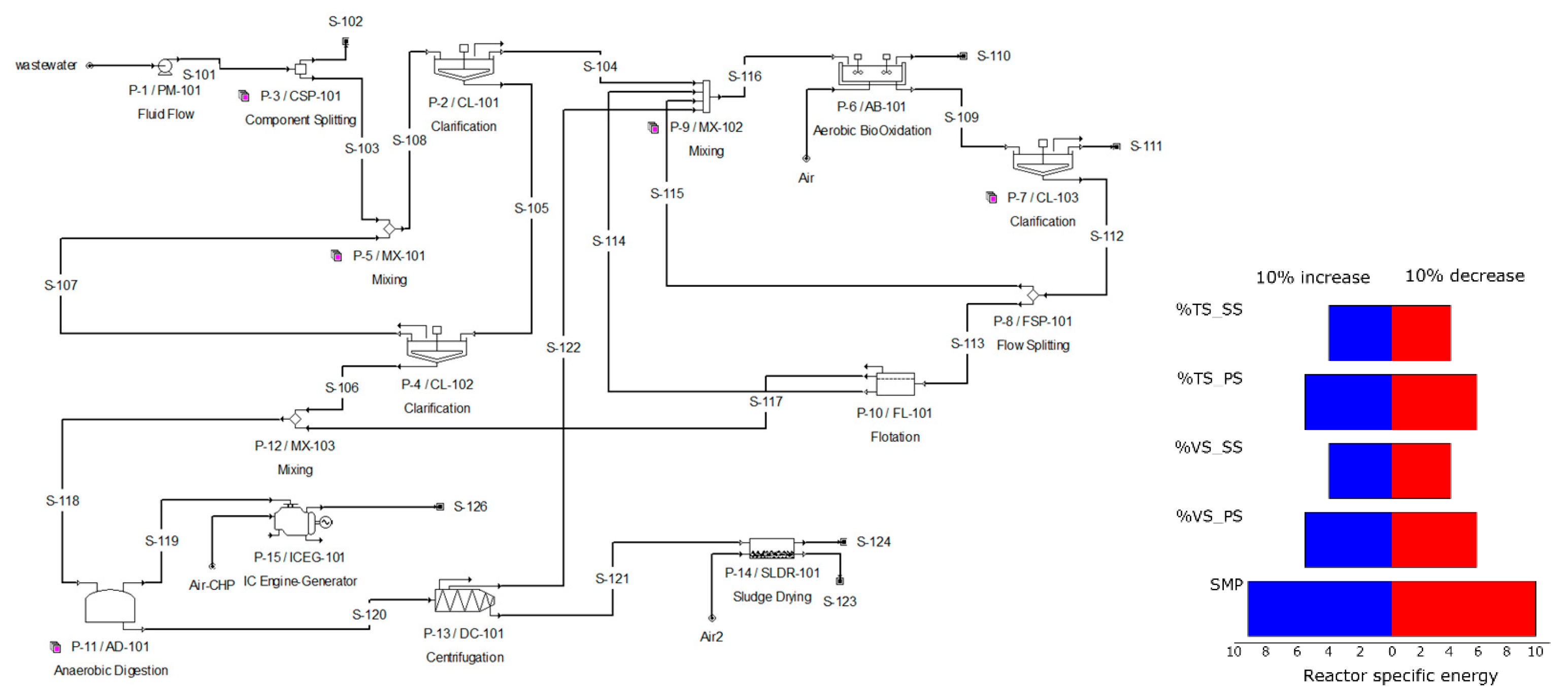
Figure 2.
Schematic representation of WWTP considering the transport of dried sludge to the final disposal site. Sensitivity analysis is also represented showing the variation expressed as percentage in sludge drying demand when applying a 10% variation in the water content of dehydrated sludge (%water dehyd.), TS content of dried sludge (%TS dried sludge), the dried sludge temperature (T dried sludge) and the dryer heat transfer efficiency (Heat transf. eff.).
Figure 2.
Schematic representation of WWTP considering the transport of dried sludge to the final disposal site. Sensitivity analysis is also represented showing the variation expressed as percentage in sludge drying demand when applying a 10% variation in the water content of dehydrated sludge (%water dehyd.), TS content of dried sludge (%TS dried sludge), the dried sludge temperature (T dried sludge) and the dryer heat transfer efficiency (Heat transf. eff.).
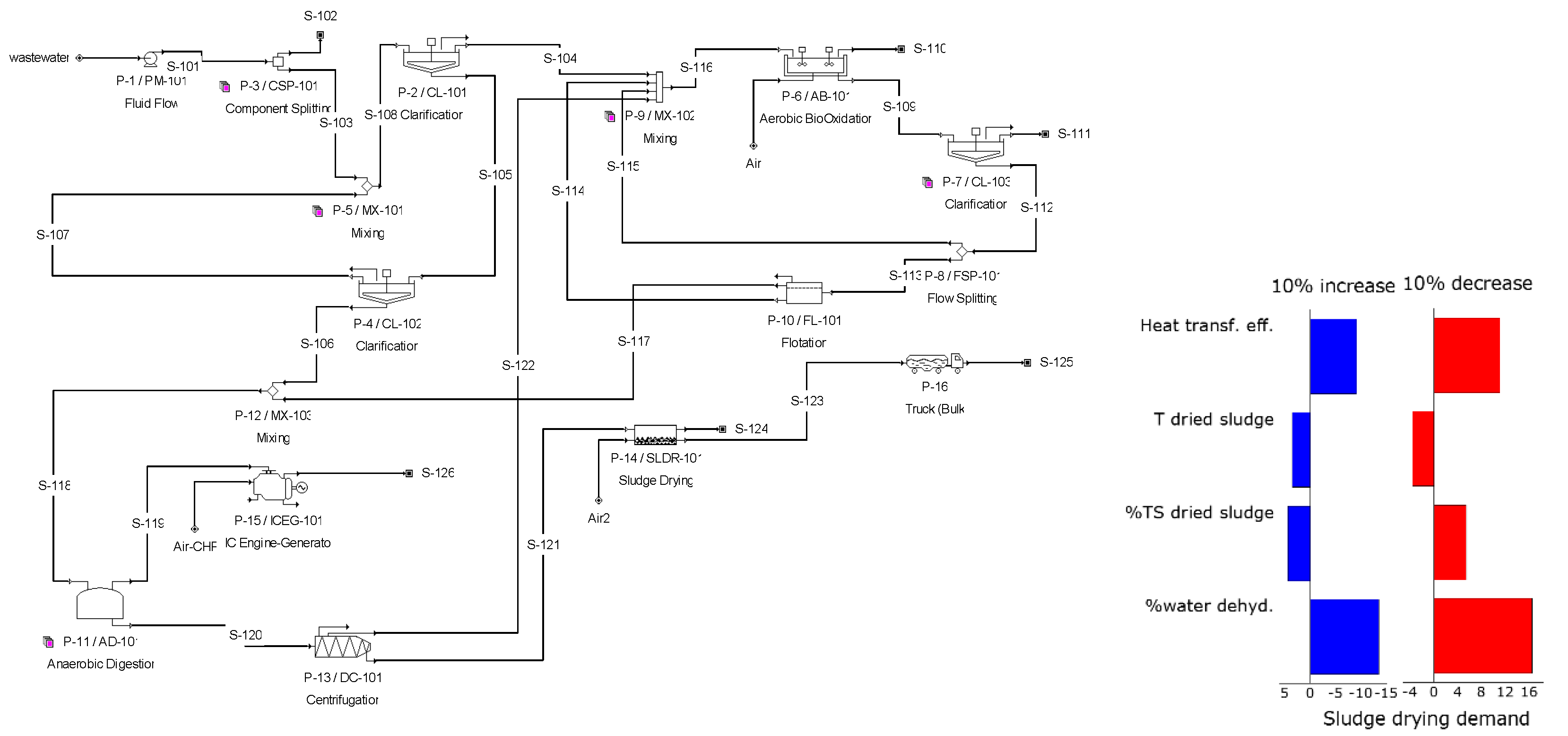
Figure 3.
Effect of increasing specific methane production (SMP) by up to 40% on the specific energy produced by the reactor (expressed as daily energy obtained as methane per unit of reactor volume, MJ/m3 d) and the thermal demand of the drying process also expressed per unit of reactor volume.
Figure 3.
Effect of increasing specific methane production (SMP) by up to 40% on the specific energy produced by the reactor (expressed as daily energy obtained as methane per unit of reactor volume, MJ/m3 d) and the thermal demand of the drying process also expressed per unit of reactor volume.
Figure 4.
CHP energy input and auxiliary energy demand for the drying process. Bars in blue indicate the energy input of the engine if exhaust gases cover the thermal demand of the sludge dryer. Bars in light blue represent the auxiliary energy needed. Bars in gray indicate the energy input of the engine when using biogas as a single fuel and the auxiliary energy to fulfill the thermal demand for sludge drying with the aid of a burner.
Figure 4.
CHP energy input and auxiliary energy demand for the drying process. Bars in blue indicate the energy input of the engine if exhaust gases cover the thermal demand of the sludge dryer. Bars in light blue represent the auxiliary energy needed. Bars in gray indicate the energy input of the engine when using biogas as a single fuel and the auxiliary energy to fulfill the thermal demand for sludge drying with the aid of a burner.
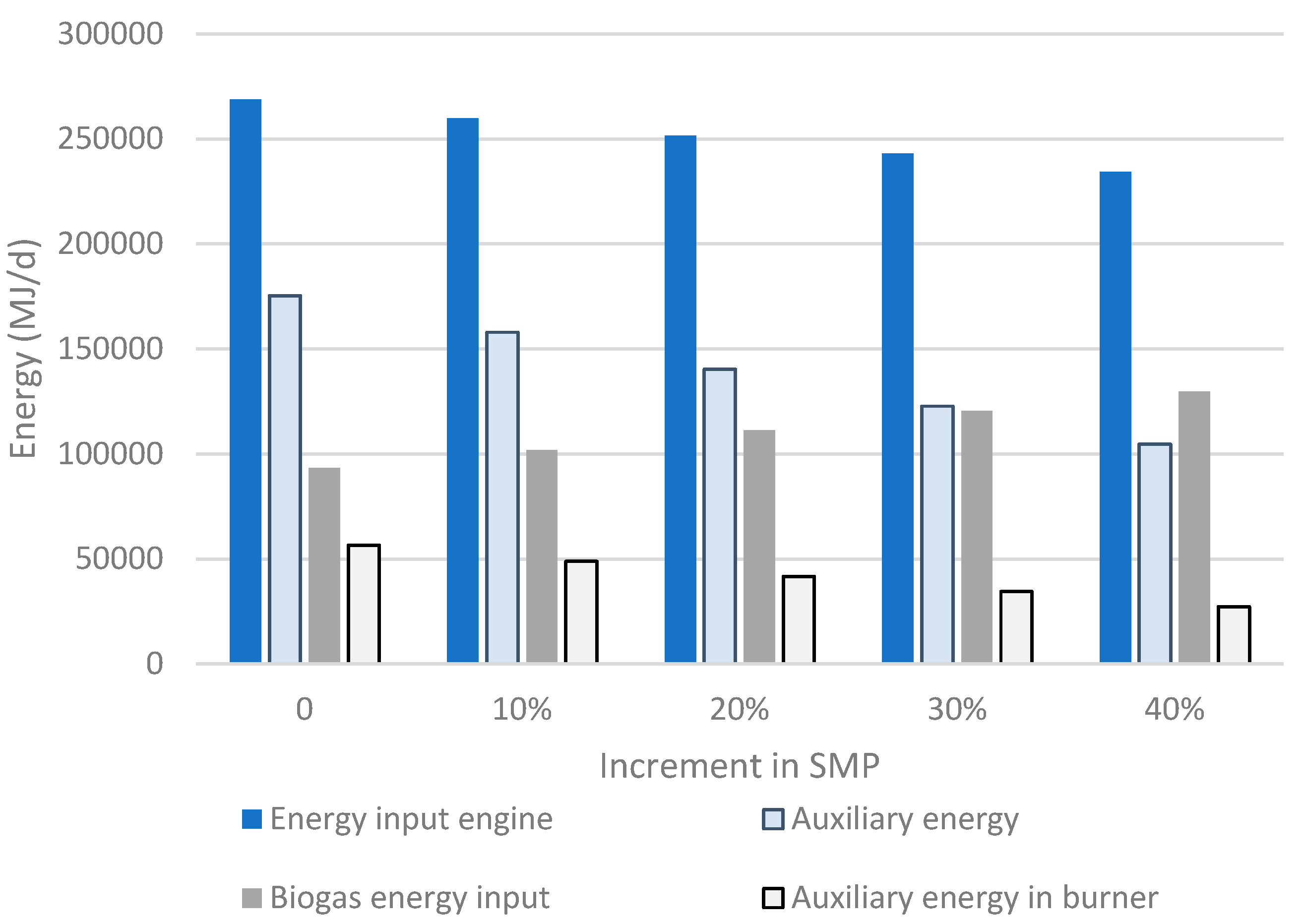
Figure 5.
Schematization of process integration for producing biogas and syngas from sludge: a) anaerobic digestion and sludge gasification. b) Net energy balance.
Figure 5.
Schematization of process integration for producing biogas and syngas from sludge: a) anaerobic digestion and sludge gasification. b) Net energy balance.
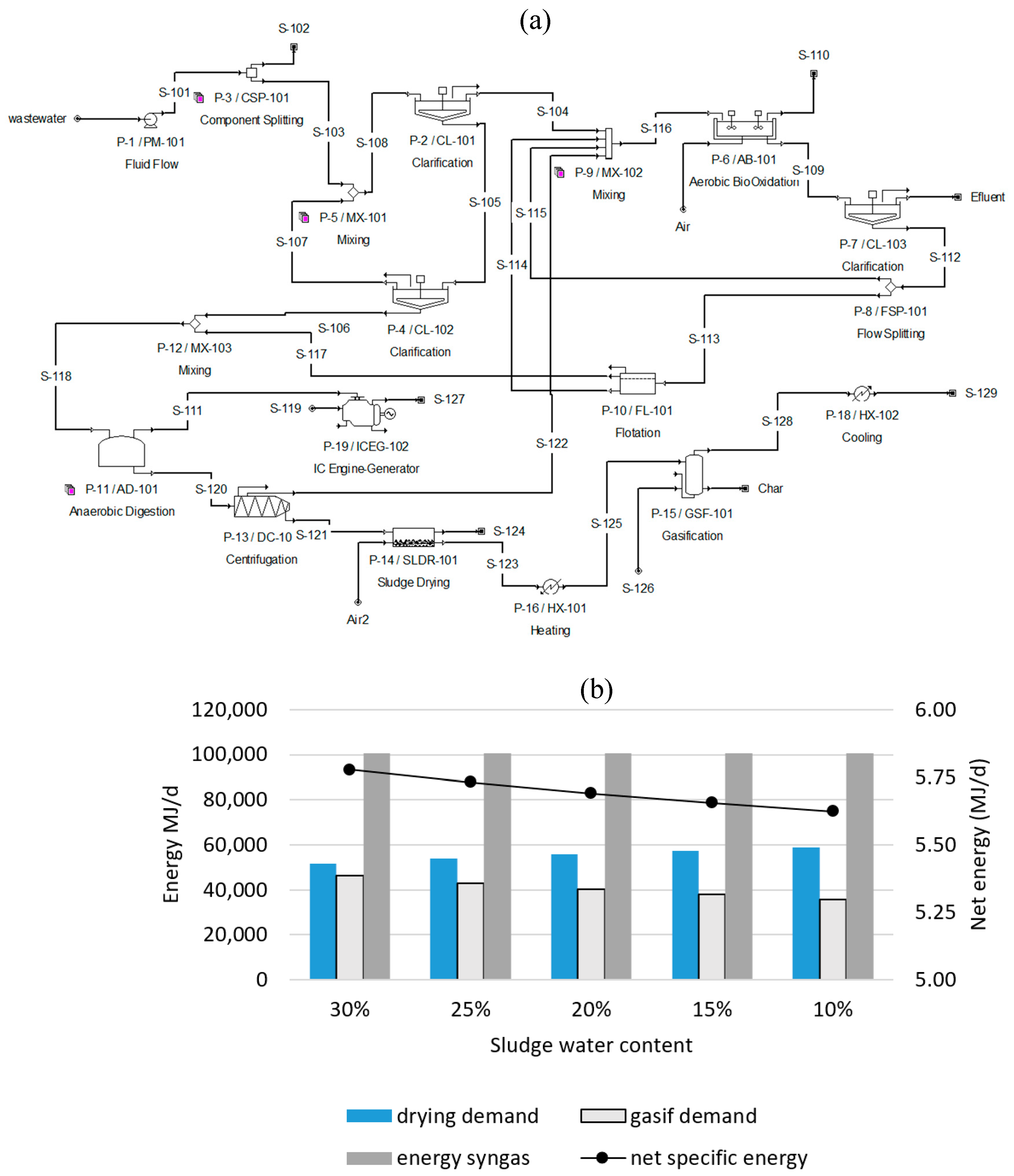
Figure 6.
Syngas volumetric flow and main characteristics under different content of water in dried sludge.
Figure 6.
Syngas volumetric flow and main characteristics under different content of water in dried sludge.
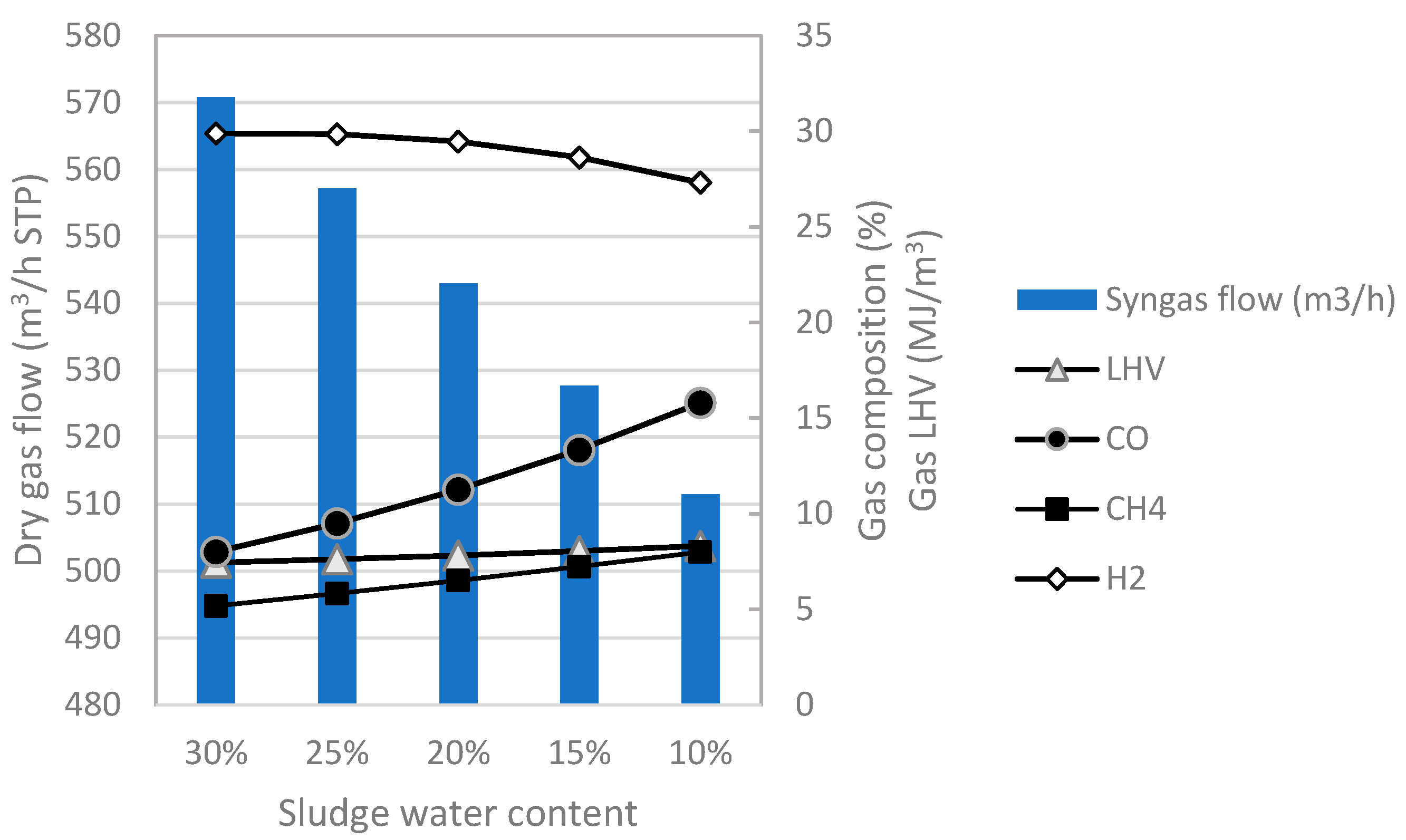
Figure 7.
Net energy balance considering a 40% increase in SMP by assuming a hypothetical application of sludge pre-treatment.
Figure 7.
Net energy balance considering a 40% increase in SMP by assuming a hypothetical application of sludge pre-treatment.
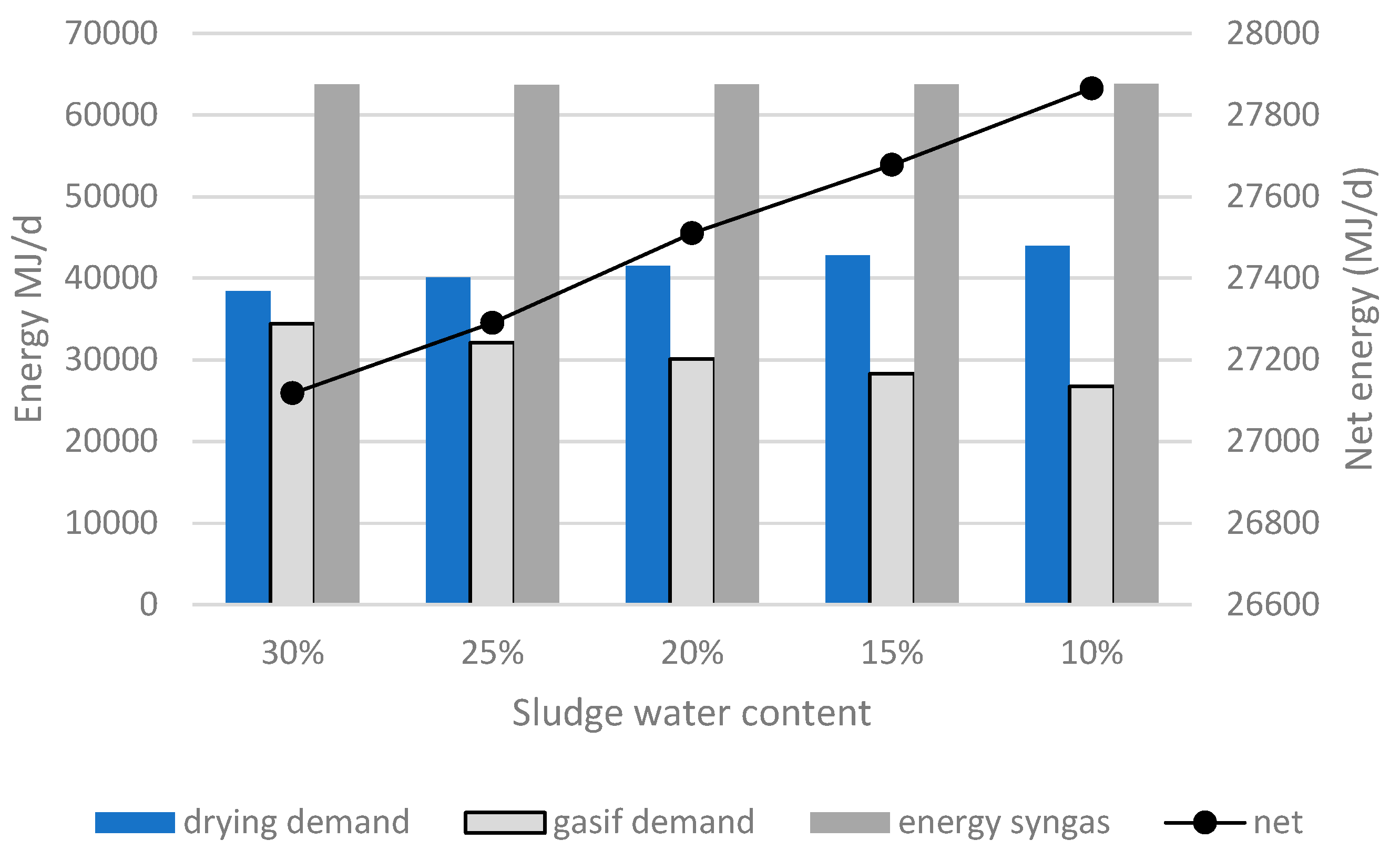
Figure 8.
a) Scheme representing the integration of digestion and gasification with fuel valorization using a CHP engine and a burner to supply thermal energy and net energy balance: (b) conventional digestion case, (c) enhanced digestion by the application of a thermal pretreatment. Estimation was carried out by considering that the thermal demand of the integrated approach was covered by biogas and syngas. In contrast, only excess gaseous fuels were used to produce electricity.
Figure 8.
a) Scheme representing the integration of digestion and gasification with fuel valorization using a CHP engine and a burner to supply thermal energy and net energy balance: (b) conventional digestion case, (c) enhanced digestion by the application of a thermal pretreatment. Estimation was carried out by considering that the thermal demand of the integrated approach was covered by biogas and syngas. In contrast, only excess gaseous fuels were used to produce electricity.
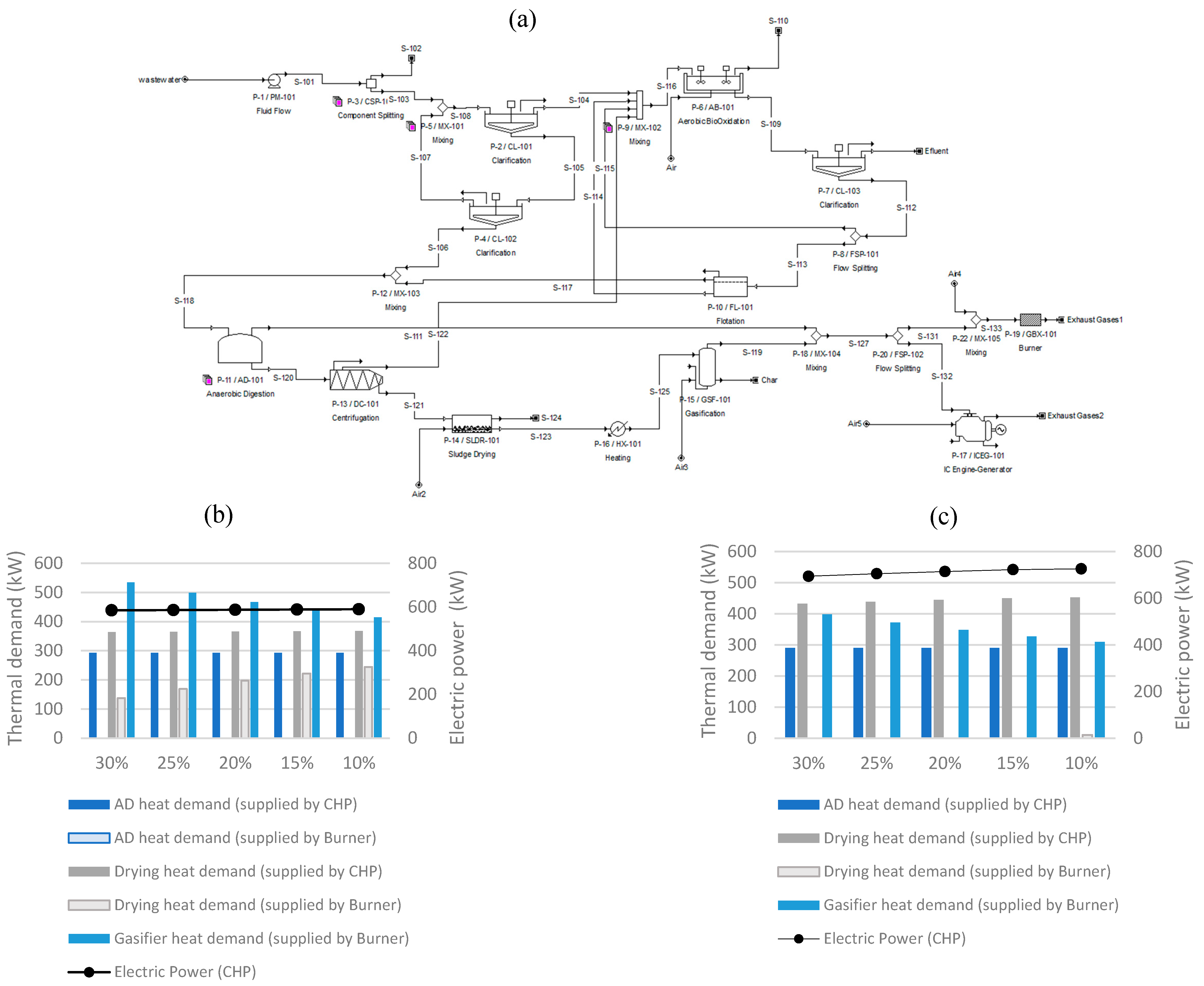
Figure 9.
a) Results from the energy densification stage by considering microbial methanation in a separate reactor. b) scheme representing the conversion of syngas stream into methane.
Figure 9.
a) Results from the energy densification stage by considering microbial methanation in a separate reactor. b) scheme representing the conversion of syngas stream into methane.
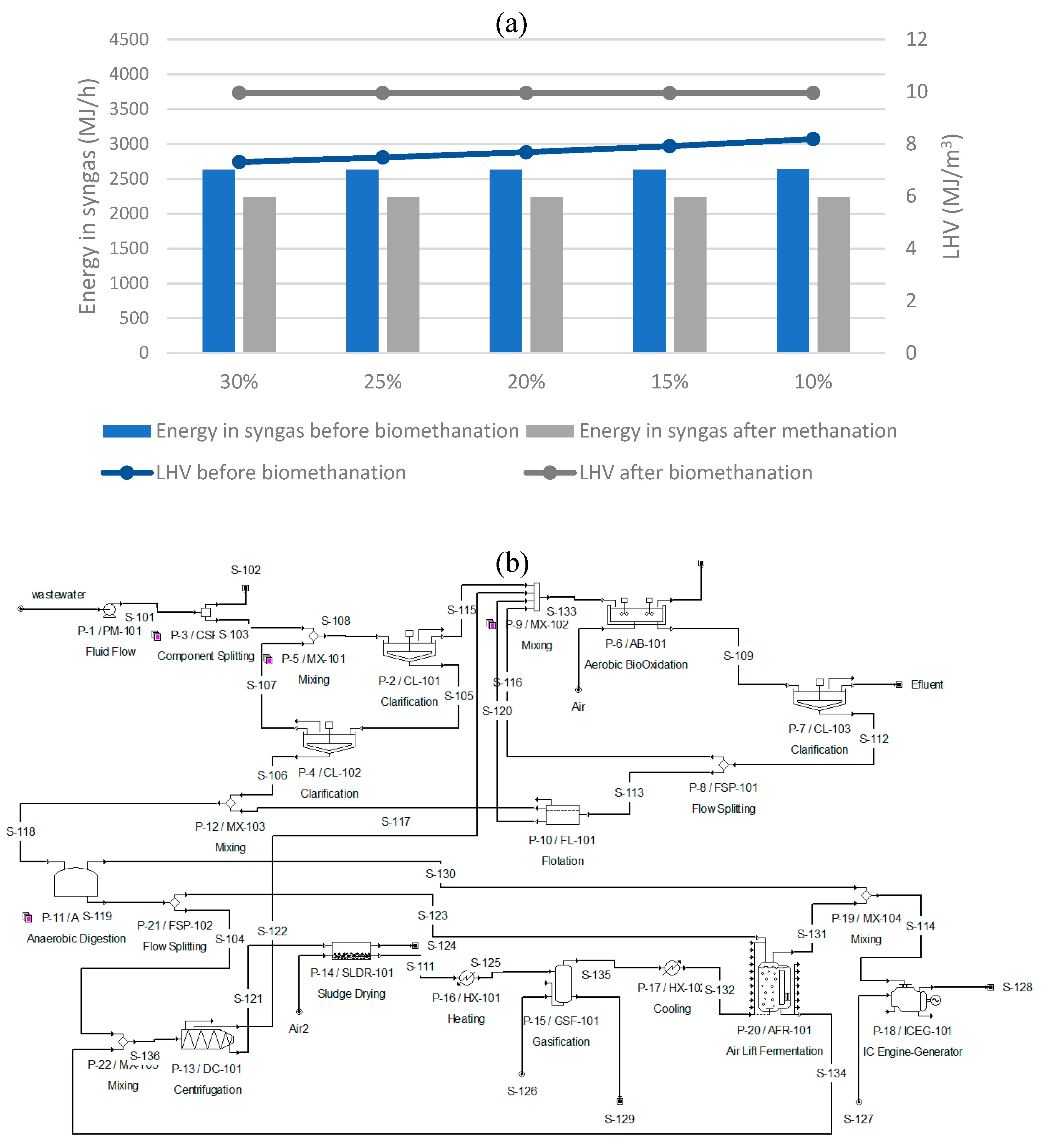

Table 1.
Main parameters and stream flows used for the WWTP simulation, as well as energy estimation.
Table 1.
Main parameters and stream flows used for the WWTP simulation, as well as energy estimation.
| Parameter | Value |
|---|---|
| Inlet wastewater flow (m3/d) | 49,500 |
| Equivalent Inhabitants | 150,000 |
| Primary sludge flow (m3/d) | 133 |
| Secondary sludge flow (m3/d) | 127 |
| Air flotation energy consumption (kWh/m3) | 0.015 |
| Methane production (m3/d) | 2643 |
| Methane production per volume of reactor (m3/m3 reactor d) | 0.41 |
| Energy in biogas (MJ/d) | 94,614 |
| Energy in biogas per unit of inlet wastewater flow (MJ/m3 inlet water d) | 1.91 |
| Biogas energy per equivalent inhabitant (E.I.) (MJ/E.I. d) | 0.63 |
| Biogas energy per unit of digester volume (MJ/m3 reactor d) | 14.6 |
| Electricity production (kW) | 410 |
| Digester thermal demand (MJ/d) | 26,700 |
| VS removal in digestion (%) | 43.7 |
| Dewatered digestate (m3/d) | 32.3 |
| Decanter energy consumption (kWh/m3) | 10 |
| Sludge drying daily energy demand (MJ/d) | 62,900 |
Disclaimer/Publisher’s Note: The statements, opinions and data contained in all publications are solely those of the individual author(s) and contributor(s) and not of MDPI and/or the editor(s). MDPI and/or the editor(s) disclaim responsibility for any injury to people or property resulting from any ideas, methods, instructions or products referred to in the content. |
© 2025 by the authors. Licensee MDPI, Basel, Switzerland. This article is an open access article distributed under the terms and conditions of the Creative Commons Attribution (CC BY) license (http://creativecommons.org/licenses/by/4.0/).
Copyright: This open access article is published under a Creative Commons CC BY 4.0 license, which permit the free download, distribution, and reuse, provided that the author and preprint are cited in any reuse.


