

Submitted:
03 April 2025
Posted:
07 April 2025
You are already at the latest version
Abstract
This paper presents a comprehensive overview of decarbonization strategies in sludge thermal treatments for electrical power generation, addressing the critical need for sustainable waste management in global efforts to mitigate climate change. Sludge, a byproduct of wastewater treatment, poses environmental challenges due to its high carbon content, contributing to greenhouse gas emissions. The study explores various decarbonization techniques applied to sludge thermal treatments, emphasizing their potential to enhance energy recovery while minimizing carbon footprint. The overview covers innovative technologies such as pyrolysis, gasification, and co-combustion, assessing their efficacy in reducing carbon emissions during sludge-to-energy conversion. Additionally, the paper evaluates the impact of process parameters, feedstock characteristics, and operational conditions on the success of decarbonization methods. Insights are drawn from recent advancements and case studies, providing a holistic understanding of the state-of-the-art practices in decarbonizing sludge-based power generation. The findings underscore the significance of integrating decarbonization strategies into sludge treatment processes for environmental sustainability and optimizing energy production. By outlining research gaps and proposing future directions for advancing decarbonization technologies in sludge thermal treatments, this work contributes to a more sustainable approach to wastewater management and energy generation.
Keywords:
Decarbonization
; Sludge
; Thermal Treatment
; Electrical power generation
1. Introduction
The removal of pollutants from carbon oxidation that can occur in electricity generation processes also called decarbonization through the application of technologies such as carbon capture and storage (CCS) has different strands of technological and scientific development being researched at the level of the evaluation of constructive configurations and control of the physical and chemical variables of the reactors in the thermal processes as pyrolysis/gasification with simulations. In the decarbonization process, the carbon dioxide (CO2) is converted to carbon monoxide (CO), which is a flammable combustion gas to produce another economic input with reforming temperature and steam, which needs to improve in large-scale plants. Still, it is still unknown if H2 decreased a lot in this operation of gasification/pyrolysis, however, this balance changed from composition mol% of the CO2 after being captured and recycled [1]. The processes for the thermal treatments that are covered here are presented in Figure 1.
Reaching a realistic energy transition depends on establishing a pathway in which dense power fuels are important for economic patterns in the global civilization as climate change is a priority [2]. Most studies focus separately on environmental impacts or energy performance inside power plants, however proposing an indicator that aggregates both from GWP unit exergy efficiency loss (GWPUEL) evaluating life cycle impacts of CCS technology combinations about different capacities is crucial to establishing trade-off of each optimal opportunity, diminishing the power related emission of post-combustion capture systems [3]. Optimization solutions are a way to improve energy systems in this regard [4,5,6]. As presented by Starke et al. [7], the graph neural networks can help the decision-making in the pump sizing process, the way that the connection is made to the grid may improve motor performances [8], and the finite element method can be applied for the optimal design of equipment [9].
Challenges to the adoption of CCS systems are mainly about the storage/distribution of chemical compounds generation with dioxide carbon transformation and heat steam from a turbine that affects the economic time returns schemes to retrofit implementation increasing electricity price, this could differ when producing methanol that almost reaches zero cost of some thermal power plants types according to Liu et al. [10].
Buratto et al. [11] underline the growing demand for efficient and sustainable energy generation, resulting to a significant dependence on thermal treatments in power plants. However, ensuring exact control over these treatments remains a difficulty, which needs the integration of complex automation systems and sensors. In heat treatment processes, automation can boost safety, enhance operations, and increase energy efficiency. Real-time data collection is made possible by sensors, which are essential for monitoring and controlling vital parameters including temperature, pressure, and flow rates. This makes it easier to make quick changes to preserve ideal operating conditions and stop system malfunctions.
The search for decarbonization in thermal treatments of sludge for generating electrical energy appears as an attractive solution with significant environmental, economic, and social implications. Sewage sludge has a high treatment and final disposal cost, with a very polluting life cycle in terms of methane and carbon dioxide emissions. Thermal technologies act as a divider in this process, transforming sewage sludge into valuable inputs for the basic sanitation and energy production chain, and can be converted into biochar, fuel oil, heat, electricity, and hydrogen, among other products, as addressed in this research (see Figure 2).
This approach not only addresses the urgent need to reduce carbon emissions, but it also highlights the potential to transform a waste stream into a valuable resource. By harnessing latent energy in sludge through advanced thermal treatments, we contribute to the diversification of energy sources and alleviate dependence on traditional fossil fuel-based power generation. This modification supports a more resilient and sustainable energy infrastructure and is consistent with international efforts to mitigate climate change [12].
Bio-energy corresponds to an important renewable source for different countries and the integration of these resources increasing dioxide carbon emissions capture can benefit environmental aspects and increase minimum fuel sell price from commercial interactions including cooling chemical compounds available only for fossil fuel reducing this dependence previously [13]. Potential to this bio-energy concept could be responsible for producing 12.5 million tons of hydrogen with 133 million tons of CO2 recovery collaborating with the development goals for energy transition and carbon neutrality [14].
Chu et al. [15] performed research about the feasibility of carbon neutrality in the sludge treatment industry and their results showed that realistic prediction will reach 30,291.65 kt CO2e in 2030 and that optimized possibility depends on the drying process improvement to establish 5816.19 kt CO2e in this same year projection. Wastewater fields are responsible for up to 7 and 10% of methane and nitrogen oxide arising from human emissions accounting for 60% of this derived from the processes and 30% provided an energy-related indirect contribution, decarbonization can be reached through optimization routes about chemical usage and transportation [16].
The main obstacles to clean transportation are financial planning to long-term demand, social acceptance, and willingness to pay higher prices for alternative fuels until improvement production is reached about research and development, regulatory stability, as an investment in direct air capture technology inside large scale production and storage facilities [17]. According to Yang et al. [18] the mitigation potential strategy has energy-saving improvement, operational optimization, and thermal energy recovery as the three main possibilities to reduce greenhouse gas emissions in China wastewater treatment plants, in the last 15 years increased the electricity intensity, representing 52% of the total emissions inside of this sector, promote solutions between this factors improve pollutant removal performance as economic costs too.
Implementing energy conversion technologies can eliminate external fuels in wastewater plants in Japan reducing 118% of greenhouse gas emissions in a horizon of 15 years in about 14 large cities of this country, from 2015 until 2030, integrating incineration with waste heat power generation and anaerobic digestion using solid fuel recovery [19]. In this context, the evaluation by researchers in verifying the efficiency obtained using chemical catalysts produced on an industrial scale in conjunction with process control and obtaining data by sensors [20].
A broad study that is dependent on the different solubility rates, the concentration of CO2, and applied volume of the catalyst and its adsorption in addition to validating the method of transferring or transporting this material and its disposition associated with cost and economic viability. There is a need to select the carbon capture process in which there is a huge range in a commercial context and is still under development, which is determined by the percentage of CO2 found in the oxidation gas used or generated inside or outside of the thermal reactor that will produce fuel gases later converted into electricity [21].
Although CCS technologies are still presented as a high investment, around 40% of the economic resource of the complete project, within the thermal typologies mentioned above, this can vary significantly depending on the scale and whether it will be used in nearby plants and where the technology will be acquired [22]. Thus, scientific research is necessary, to minimize costs and losses with CCS, enabling the generation of new marketable products such as bio-polymers and bio-chemicals resulting from the lower environmental impact that will be provided with good ecological balance [23].
One of the great challenges for decarbonization is to convince the world population to accept the change in current lifestyle and energy prices with the nowadays CO2 removal techniques to produce power, mainly in the richest countries with intensive resource usage and discharge, however, increasing demands with efficient and consistent environmental policies improving the decarbonization technologies with incentives using as possible as profitable the wastes generated in different processes can be an alternative to reach better emission reduction worldwide [24].
Hydrogen production derived from organic waste is a valuable route to energy supply with lower emissions and provides decarbonization than conventional methods from fossil fuels since 90% use as feed-stock originated from pollutant resources with an estimated demand of 8.6 Mt in 2020 globally [25]. In the complete process of the biomass-to-energy trading chain, analyzing this supply by machine learning tools improves the ability to meet sustainable development objectives by reducing uncertainties and collaborating in increasing efficiency and its relationship with the carbon sequestration ecosystem operated within all planting phases, harvesting, and operation of the transformation plant by regression analysis on the capacity that can be achieved to store the carbon emitted reducing risks in the implementation from the initial stage to the long-term operation [26].
Since it demands high investments that could be associated with greater gains in the previous treatment of biomass through biomass refineries so that lower water consumption is achieved, a higher ratio of energy produced per ton and products of greater economic value and higher electrical powers produced and that its energy sustainability will be evaluated according to the possibilities of maximizing controls concerning safety, health and environmental measures that can be achieved from the developed refinery [27].
The research highlights various technologies for decarbonizing the thermal treatment of sludge to generate electricity, each with its uses, advantages, and disadvantages. Comparing them is crucial to determining the most effective and sustainable approach in different contexts. Table 1 provides a comparative overview of the technologies discussed here.
It is worth noting that some technologies, such as pyrolysis and gasification, offer a wider range of applications and products compared to others. The choice of the most suitable technology will depend on the specific characteristics of the sludge, local needs, and the costs associated with each process. In addition, integrating different technologies, such as combining gasification with CCS or using biochar from pyrolysis to improve carbon capture, can lead to more efficient and sustainable systems [34].
2. Decarbonization Techniques
When it comes to the two most popular technological paths, the yield and products produced are altered by the primary parameters that inherently separate the pyrolysis process into slow and fast: reaction time and heating rate. However, because it is new and complicated by the mechanisms and difficulties of recovering the chemical molecule used as a catalyst, it is uncertain how CO2 is captured in either of these two pathways with the addition of different catalysts and the impact of these parameters under investigation. of action that varies based on whether this is in-situ or ex-situ, and it is easier to recover from this second mode because the catalyst does not mix inside the primary pyrolysis reactor, allowing for higher filtration [35].
The upgrading stage with the reuse of concentrated CO2 including bio-methane from anaerobic digestion allows the direct injection in the existing natural gas infrastructure providing minimization of the use of fossil gas including emission savings about the extraction benefiting competitiveness inside the rural ecosystem with the value chain of the agricultural sector in the decarbonization perspective [36].
There are some technical routes for capturing carbon, but the most applied worldwide are divided into two processes that are pre-combustion and post-combustion, both reach 90% efficiency but need significant investments and an amount of energy with the capacity to produce NOx resulting in undesired emissions. The second option is implemented with a retrofitting process making it flexible mainly because of the economical possibilities of input. The first option can be combined with bio-energy to create negative emissions [37].
Adding trends concerning hydrogen production from low-carbon pathways such as bio-gas pyrolysis, membrane separation, biomass gasification, bio-gas reforming, and electrolysis to reach sustainable targets and fuels derived from fossil resources are alternatives that could reduce emissions in the modern perspective where current electrolysis projects with carbon capture and storage increased 7.2 times their efficiency compared to the completed past ones of 1975 [38].
The economic and technical performance of the membrane system applied in a pre-combustion system is better than physical gas-liquid absorption concerning decarbonization techniques as biomass gasification provides the highest energy conversion efficiency to produce green hydrogen and cost penalties with concepts until 300 MW output equivalent to 100 thousand Nm³/h of hydrogen with 99.95% purity [39].
Co-pyrolysis is a reaction that occurs when two raw materials are added to the reactor. If organic products are added, water will form, which, once the steam has been reformed, produces free hydrogen as gaseous fuel, mostly in slow pyrolysis. The biomass is dependent on the reaction time, which influences the yields and characteristics of the products produced during the pyrolysis process, lowering the rate of carbon and oxygen. Furthermore, the performance and interference of the many carbon capture systems under investigation are unknown and have only recently been used in industrial and experimental settings [40].
Small power plants are more likely to use the thermal-chemical processes of gasification and pyrolysis, which enable plant compaction through methods like incineration and installations near the biomass or raw material. This will undergo oxidation and be produced in a way that allows for the reuse of the heat produced or by-products like biochar in a variety of energy applications and technological goods including carbon sequestered by the soil, gas adsorbents, fuel cells, super-capacitors, and activated carbon [41].
Li et al. [42] analyzed the carbon footprints of three thermal technologies that are hydrothermal liquefaction (HTL), pyrolysis, and incineration with the software OpenLCA and Ecoinvent Database verifying that the first one cited has the lowest greenhouse gas emission of 172.50 kg CO2eq/ ton of sewage sludge while pyrolysis and incineration processes presented 242.02 and 322.23 respectively indicating which the HTL has this advantage mainly because of its energy consumption ratio in relation of the input and recovered energy.
Incorporate a mixture of different aggregates as bio-char of sawdust pyrolysis process and bottom ash from municipal domestic waste incineration are evaluated for CO2 capture and sequestration, improving mechanical properties in the construction industry and contributing to pore structure attributed to the nucleation of bio-char particles forming innovative carbon capture artificial aggregates with maximum carbon rate captured around 26,27 kg per ton of this mixed compound [43].
Wood biochar is a carbonaceous substance studied as an adsorbent of CO2 with your capacity depending on different factors from modification techniques such as metal doping, activation, and surface functional group to improve the adsorption mechanism of CO2 stored for industrial applications and cost-effectiveness of durability and production’s price neutralizing another hazardous component in waste gas streams [44].
According to Wang et al. [45] biochar in different applications mitigates 2,56 x 10 greenhouse gas emissions per year, contributes as an immobilization agent in the soil with fertilizer, and has the potential to be a green catalyst of bio-refinery. Digestate solid derived from cattle slurry of anaerobic digestion can produce material for direct carbon oxide capture when this is inserted in a pyrolysis reactor increasing the concentration of pollutant gas according to increased temperature from 400ºC to 800º C due to pore volume and surface area [46].
Catalyst recovery in thermal treatment as gasification and pyrolysis is an important step to decarbonization and circular economy however the processes are still expensive, complex, and unreliable since cost-effective factors are challenges including environmental issues for regenerative catalysts [47].
Ionic liquids capture carbon composed of inorganic salts and coordination anions due to large molecular structures having lower adsorption capacity however changing the composition makes it easy to increase the interaction by introducing carboxyl or amine groups increasing the proportions adsorbed beyond increased pressure contributes to enhancing yet more this capacity [48].
The most widely used strategy of CO2 capture is from solvent absorption divided into physical, chemical, or physical-chemical methods. The physical solution applies propylene carbonate or polyethylene glycol in different conditions including high operating pressure, being the main solvents used nowadays. However, this is not an obstacle for the chemical methods that allow operation in low pressures despite the high energy consumption due to evaporation loss and oxidative degradation that needs to be reduced with better heat absorption presenting lower efficiency than physical methods, because of this problem, integrate both solutions is important to combine the advantages of each one. Other technological possibilities as electrochemical looping combustion and micro-algae had important progress but are still not used for large commercial applications yet [49].
Post-combustion capture technologies from retrofit power plants result in 3-15 vol% to concentrated CO2 derived according to different types of adsorbents recovering 82% with temperature swing adsorption until 100% of CO2 from vacuum swing adsorption using activated carbon [50].
The main considerations concerning adsorbents and absorbents for CO2 removal are stability, safety, cost, and durability as combining two or more different types can improve or decrease efficiency, incorporate nano-composite and enzymes-assisted solutions are researched to potentialities of the action in bio-based resources of carbon capture technologies [51].
Carbon capture for steam methane reforming of the pyrolysis process, the volatile CO2 has disadvantages to solid carbon because it should not be burned, either stored or used in a refined process to produce other chemical compounds for circular economic and decarbonization improvement as produce blue hydrogen category [52].
Reduce oil demand including bio-fuels such as green diesel and ethanol must be inserted by 2050 with a great percentage during the mixture of the freight transport sector, as the naphtha production can be reallocated for biomass co-processing and avoided emissions increased with the insertion of steam methane reforming units. It is important to estimate the individuality of refinery assessment aligned with decarbonization objectives verifying the assets commercialization integrating carbon market exporting these costs and reducing carbon lock risks, negotiating negative emissions according to the final product profile and investments inputs [53].
Sludge drying technology research is vital to decarbonization since it reduces energy consumption and carbon emissions, this process can be responsible for reducing 74.16%, according to Chu et al. [54] in China the carbon reduction from sludge incineration with technology for utilizing the waste heat to reduce carbon emissions including in the dewatering and need be predicted the importance in another thermal technology integrating sensors in this real-time parameterization and monitoring. Challenges to removing CO2 at lower temperatures with adsorbent are still being investigated, materials such as lithium have a good answer because of the fast kinetics to capture CO2 in temperatures even at 823 K, but they need better performance in low temperatures, despite CaO and MgO-based sorbents being most feasible in hydrogen production compared with other ones including in higher temperatures using chemisorption [55].
Carbon-based materials have desirable regeneration and cost-efficiency from nanotubes, composites, and aerogels researched in the scientific literature about porosity, surface chemistry, and physical architecture but still require high-cost chemicals to obtain functional properties in CO2 capture increasing the search for micro-porous and large-scale applications with inexpensive and abundant biomass as sewage sludge and micro-algae integrating with artificial intelligence applications to upgrade lab models [56]. Indeed prediction machine learning models are showing promising results compared to classic approaches [57,58,59], especially regarding time series forecasting [60,61,62,63,64,65,66]. According to Klaar et al. [67] the combination of methods can be promising solutions to enhance prediction deep learning approaches.
According to Quan et al. [68] a total solution of biomass-based carbon materials for CO2 capture including biochar with additions of other chemical compounds that would promote adsorption of greenhouse gas emissions and catalytic effect is a necessary future research topic which one suggested solution of regeneration could be the application of waste materials for products as super-capacitors and batteries.
Shi et al. [69] evaluated two different thermal treatment technologies for sludge which were incineration and steam gasification with carbon capture from chemical absorption and chemical looping respectively reporting lower costs for gasification concerning incineration, almost half of the costs showing 47.31$/ton and 91.76$/ton in these two processes.
Other typical wastes with a huge production used nowadays for the energy market can be solutions for chemical compounds accelerating the decarbonization route. Sugarcane bagasse is a byproduct that can be greatly responsible for producing methanol worldwide by pyrolysis for the chemical industry with carbon-negative co-production integrating physical activation and chemical loop with scenarios that can present in evaluated scenarios a payback until 7 years according to Su et al. [70] that evaluated three scenarios and predicting the feasibility improved when decreasing the green hydrogen costs in the future.
Renewable natural gas produced by different biomass as organic fractions of municipal solid waste and corn stover with gasification process can be competitive with natural gas prices in 2024 estimated in 1.4 American dollar/ Joule (US$/J) according [71] if it considered carbon credit minimum of 90US$/ton of CO2 and included avoided cost of land-filling contributing with decarbonization policies.
Applying artificial intelligence algorithms to forecast properties of different materials with molecular simulation according to the reaction mechanism of sorption could indicate bi-functional materials that performed better with optimizing operation process increasing the yield of H2 of power plants and CO2 adsorption as decreasing tar and other pollutant emission is a task to short and long-term data obtained of the practical field benefiting mainly in the large scale projects [72]. As presented in [73,74,75,76] machine learning can be also applied for time series forecasting in power energy problems.
Shang et al. [77] evaluated 10 polluting industries in China verifying that robotic technologies and artificial intelligence investments could boost carbon neutralization over short-term and long-term periods, they investigated annual data from 2000 and 2020 showing that policies to incentive these mechanisms are important in integrating green loan, credit, and bonds.
In Chinese cities, it was evaluated that robots are important mechanisms for reducing carbon intensity in labor and productivity as reported by Yu et al. [78] that investigated International Federal of Robotics from 2010 until 2018 verifying that robotic production associated with digitalization contribute to low-carbon emissions and which to achieve decarbonization goals is necessary to improve the variety of robots in different industrial fields that are not used nowadays.
The energy source of the CO2 removal needs to be low-carbon or carbon-free to generate power for the process, one of these solutions is to integrate two technologies, direct air capture integrated with bio-energy with carbon capture and storage, providing the thermal and electrical energy requirements mainly using heat recovery during the cooling of syngas in the gasification and pyrolysis processes [79].
Slavin et al. [80] developed a simulation via Aspen Plus v12.1 to integrate hydrogen production from direct air carbon capture using high-temperature steam electrolysis, finding out in your simulated process that both costs decreased with production scale detaching that improvement could identify general operating trends and depth heat transfer calculation collaborate to facilitate energy transfers and reduce yet more, your estimation reached the best results in 124.15$/tCO2 at energy demands of 31.67 kWh/tCO2.
3. Thermal Treatment of Sludge
Municipal sewage sludge, being a material with high moisture content, its energy use becomes expensive and a pre-treatment analysis is usually evaluated to optimize its fuel potential according to the associated costs and possible energy gains in a thermal route. Aiming at the parameterization of the optimized sludge dewatering in relation mainly to the factors of temperature, granularity, and volume that can be performed experimentally or computationally, the application of computational mechanisms is considered of high interest since experimental process costs usually have higher comparative costs, making it possible to previously verify intervening factors in reactor kinetics and thermodynamics by establishing different heating rates by numerical simulations and machine learning algorithms that can predict the percentage of products generated, simulate laboratory analyzes such as thermogravimetric analyze, chemical distribution rates of elements such as hydrogen and anticipate optimization routes [81]
Applying the carbonization process with municipal sewage sludge recommends dehydrating at least 60% before entering the system to avoid external energy inputs and establish constant temperature until 400ºC in pyrolysis, using part of the oil and gas produced with an air coefficient between 2.6 and 2.8 in the incineration chamber to provide heat to reduce this moisture and provide energy self-balance [82].
Plasma technology has the adaptability to retrieve phosphorous nutrients from the ash of sewage sludge to develop at the same time hydrogen with the water contained in this waste through high temperatures in the range of 1100 to 1300ºC, presenting the capacity to produce 0.5 m³/kg of hydrogen gas with this wastewater treated used as fuel in an average value of carbon conversion reaching 95% and heat content up to 10 MJ/Nm³ of the flammable gas cited previously [83].
Co-incineration in coal power plants and pyrolysis of municipal sludge are the two better technologies in China as stated by Huang et al. [84] compared with anaerobic digestion and mono incineration concerning environmental and economic performance resulting mainly from the usage of chemical and electricity consumption, being the organic content and sludge reception fee the two usual factors that increase the difference in competitiveness of the four compared systems.
Sorption-enhanced gasification of sewage sludge dried in a solar facility using CaO as bed material and steam as a gasifying agent results in high concentrations of hydrogen contents as described by Moles et al. [85] in their experiments obtaining a syngas with 70-73%vol of H2 and low CO and CO2 contents with 2-3 %vol and 8%vol respectively.
The residual heat energy when the process of carbonizing corn stalks together with sewage sludge according to Zhou et al. [86] reducing greenhouse gas emissions by 126.74 kg/ton obtaining a cost reduction of $23.12 compared with sludge incineration, generating 541 kWh of electricity allowing dry absolutely 1.2 tons of sludge for every 1.5 tons of corn stalk. Kostowski et al. [87] evaluated hydrothermal carbonization of dehydrated sewage sludge (15% of humidity) and after gasification of hydro-char to generate syngas promoting hydrogen separation showing 10 kg H2/ ton of sludge and compared with plasma gasification which allows generating 5.5 kg H2/ ton, the advantage of this technique is non-production of ashes however reduce the yield.
Membrane technology and advanced catalysis in biomass gasification to produce methanol, another valuable fuel as hydrogen cited before, can reduce greenhouse gas emissions and the challenge of tar-rich effluents generated in this process as the implementation of micro-channels and create different designs and technologies of modular reactor plug-and-play that are being developed in some researches [88].
For hydrothermal carbonization of sewage sludge, applying an acid catalyst benefits the produced ash properties by decreasing heavy metal contents such as nickel and chromium in the composition and increasing phosphorous proportion two times higher using a catalyst in comparison without catalyst and that improves soil fertility as reduced environmental impact [89]. Plasma gasification with carbon capture for municipal sludge was evaluated in simulation from Aspen Plus by Zhang et al. [90] that reached 50% of electrical efficiency operating in suitable conditions and temperatures nearest to 910ºC as capture rate system with capacity rate of 97%.
Sewage sludge gasification with combined heat and power generation can reduce CO2 emissions compared to natural gas combustion according to Carotenuto et al. [91] applied in Aspen plus simulation software producing until 2.54 kW/kg with dry solids, corresponding to the biggest percentage of thermal power and 0.81 kW of electrical power using air preheating temperature situated in 150ºC and equivalence ration of 0.2 reducing 0.59 kg CO2/kg sewage sludge comparing with the natural gas combustion to produce thermal and power energy.
The process of combustion with biomass can reach the highest index of CO2 capture by applying chemical looping approximately up to 98% as related by Flei et al. [92] including costs between 2 to 40 euro/ton of CO2 using natural and synthetic oxygen carrier composed of manganese-iron-cooper leveling the costs of products as heat and electricity.
A novel dual circulating fluidized bed combustion reactor was evaluated by Peltola et al. [93] to perform the thermal treatment of municipal sewage sludge and verified that the process is feasible where mechanically reducing the moisture of this feed-stock with 20% until 25% total solids for fertilizer recycling and self-sufficiency in terms of energy. Integrating post-combustion carbon capture technology in sewage sludge gasification makes it possible to reach negative emission in large-scale power plants at more than 50% of load conditions in the flue gas produced on the report of Subramanian and Madejski [94] applying amine in the absorption and desorption separating CO2 and vapor collaborating with the heat and power in combine cycle gas power plants despite reduce power generation and the attributed costs of amine production and regeneration that need be improved, evaluated and helped for policy strategies in reason to mitigate greenhouse gas emissions.
Bio-char derived from sewage sludge has different potentials since the adsorption of micro-pollutants presents a removal rate beginning at 49% until 99% in table water and 92% with wastewater, therefore considered as a promising adsorbent material to remove effectively organic pollutants, pathogens, and heavy metals. Acting too to improve air quality improvements in the purpose of carbon sequestration reaches a capacity of 48 mg/g until a maximum capacity of 182 mg/g of CO2 with KOH-modified sewage sludge-derived biochar, it is important to establish a standardizing to ensure consistent quality and efficacy for this environmental application and the government can help the industrial production with incentives, regulations associated in tax credits and grants [95].
Hydrogen yield can be increased with biochar in the amended dark fermentation process with ranges of contribution from 20% to 328% according to Roychowdhury and Ghosh [96] because of better electron transfer, regulation of pH, a combination of inorganic nanoparticles contribute with biologic system producing more bacteria favoring hydro-genesis step.
Circular economy of pyrolysis products such as char with potential and suitable soil enhancer, acting your function of carbon sequester, and this thermal technology could close the material loop for polymers into their constituent monomers, oil, and gas can be reused in the production cycle of industries. The main issues of pyrolysis are high energy and power consumption in developed countries, there are facilities to carry out this technology on an industrial scale however legislation needs to recognize the products as beneficial and establish a solid marketplace [97].
If sludge-derived biochar could be applied in brownfield soils in Europe of degraded post-industrial lands with areas equal to or above 45 thousand km² with 0.8 tons of carbon per hectare, the highest soil carbon sequestration of this material, it would be possible to capture between 23 and 84 million metric tons of CO2 derived from char of pyrolysis from sewage sludge by 2055 according to Sajdak et al. [98].
When inserted plastics with sewage sludge to produce biochar in the pyrolysis process is possible to enhance carbon structure mainly with polypropylene benefiting the surface properties and pore structure, mixing polyvinyl-chloride reduces potential ecological risks because inhibits the release of H2S, SO2, and CH3Cl that are harmful gases [99].
Wood sawdust and sewage sludge co-pyrolysis is one important step to high energy recovery and economic feasibility should be investigated improving from 141% to 191% reducing Eco-toxicity and with a net recovery reaching 17,097 kWh/ton of dried matter [100]. Adding chemical conditioning as chitosan, polyacrylamide, and K2Fe04 has the potential to increase the CO2 capture absorption in biochar and improve the re-usability as these conditioned and mixed contribute to chemisorption despite reduced specific surface area showing that the chemical capacity is determining than physical property in this case, this addition collaborated to reduce the time required for dry the sludge too [101].
Sewage sludge pyrolysis can implicate some advantages and disadvantages because seasonality contributes to the high content of water and a great concentration of carbon benefits the pathogenic microorganisms as elevated nitrogen and phosphorous contents generate harmful substances b, parameters control in automation are important to establish more aggregated solutions with thermal treatments that overcome the benefits in relation of disadvantages of set-point controllers [102].
Hazardous sludge derived from the oil can be treated with co-pyrolysis by mixing fly ashes to obtain hydrogen, reducing environmental risks, especially because the heavy metals contained are immobilized in stable fractions as related by Yu et al. [103] that concluded with the addition of 50% of the weight of fly ashes mixed with oily sludge improve the hydrogen yield verifying 21.02 L/kg of hydrogen without this mix and 60.95 L/kg of hydrogen after this addition cited before.
Sewage sludge-derived biochar is one promising technology for phosphorus recovery too and can be considerably accelerated using CaCO3, with the addition of 10% of this chemical compound has the potential to increase the conversion of non-apatite inorganic phosphorous into apatite phosphorous during the pyrolysis process, it may present characteristics to improve acidic soils beyond save energy because decrease moisture when inserted inside of the sludge dewatering process [104].
Dewatering conditioners such as polymeric aluminum chloride (PAC) and cationic polyacrylamide (CPAM) prepared with biochar can increase the adsorption capacities of CO2, this was related by Liu et al. [105] showing in their results that CPAM has the best efficiency on the reaction with 48.54 mg CO2/g in the biochar mixture while PAC with biochar obtained 31.86 mg CO2/g and untreated sludge biochar presented only 28.36 mg CO2/g. Improve physicochemical properties of sewage sludge integrating post and pre-treatments contribute to pollutant removal selectivity, the implementation on a large scale production depends on adsorption capacity and reducing application limitations to enable compounds to reduce carbon emissions as your actuation of water pollution control in wastewater plants [106].
Control of the sludge moisture not only contributed to hydrogen generation but reduced CO2 emissions as related by Lin et al. [107] in the microwave pyrolysis due to the energy consumption that decreased 35% corresponding at 45.60% reduction of global warming with this efficiency and mixing pyrolysis residue with biochar and catalyst. Calcium-based additives in a looping system of co-pyrolysis of sewage sludge increased the consumption of CO2 because of the mass and pH of biochar improving dissolved organic matter from carbon and component content enhancing the surface area as the total pore volume being important for carbon capture materials [108].
Hydrogen generation promotion can be increased because of higher surface area and the presence of mesopores in the biochar contributes to this purpose according to Farooq et al. [109] in sewage sludge gasification with the addition of Nickel-Cobalt and Nickel-Iron resulting in more tar cracking. Beyond surface area and porosity, the basicity and functional surface groups are important parameters for capturing CO2 with adsorption inside of the biochar [110].
Carbon neutrality can be reached with value-added energy and products derived from sewage sludge to upgrade the treatment process by applying techniques such as advanced oxidation reducing the production of activated sludge process promoting green deep dewatering technology, especially verifying alternatives to the ash in the thermochemical operations as incineration and gasification that includes concrete-related, ceramic-related and road pavements when it is not generated biochar or bio-oil from pyrolysis evaluating multiple technologies collaboration [111]. Torrefaction of biomass is a possible route to substitute coal for biomass in power generation, reducing CO2 emissions because implements advantages however it is not a mature commercial technology yet and needs research and development especially to apply in green chemicals [112].
Bio-char from agriculture as bagasse and sawdust mixed with cold-bonded artificial lightweight coarse aggregate originated from municipal solid household waste incineration bottom ash has good carbon sequestration as investigated by Liu et al. [113] that verified these compounds mixed reach 30 until 33 kg CO2/ton providing a cost-efficient solution.
Martínez-Alvarenga et al. [114] evaluated the potassium hydroxide generation with sewage sludge using an active agent by acid purification and produced activated carbon (AC) that costs approximately less than 8 euros/kg with humidity reduced to 80% and its transformation yields the equivalent of 0.627 kg of AC/ kg of sewage sludge.
The adsorbent technology to promote rapid cost reduction depends on meticulous modeling and in-depth economic analysis evaluating which costs are attributed to assure stability in the commercial standardizing and the ranking factors to reaching scale up at the industrial level mainly verifying the influence about the energy requirements and operational costs [115].
Energy loss caused by CO2 removal devices by around 20 to 30% is a problem for bio-energy production however the best option nowadays is to recover high-purity CO2 reaching 99 % to obtain an economic market and provide a circular economy, some researchers are trying to reach this using nano bio-materials as carbon nanotubes, micro-algae, sludge, and wood waste [116].
In a closed-loop system inserting sludge and micro-algae from pyrolysis can obtain a value above 90% of CO2 and chemical oxygen demand (COD) converting the hazardous solid waste into biochar and carbonaceous combustible gas, being applied this produces char as photo-catalyst to remove antibiotic in the wastewater treatment plants decreasing the costs around 471 USD/ton to 110 USD/ton approximately [117].
A sustainability model in a refinery that has as feed-stock, municipal sewage sludge, in a pyrolysis process can presume the capture and storage of carbon through management and decision support by advanced mechanisms such as meta-heuristic components in which techniques for minimizing emissions and maximizing yields in the generation of fuels and fertilizers are applied, in which artificial intelligence algorithms such as neural networks are applied in the prediction of these coefficients. artificial intelligence algorithms such as neural networks are applied to predict these coefficients, and sludge with higher organic content suggests the adoption of a symbiosis of pyrolysis technologies with anaerobic digestion, emitting lower levels of CO2 and sulfur by reducing the need for drying, which can consume energy, natural gas or other fuel because some models of pyrolysis reactors that can be damaged with excess water [118].
Muniz et al. [119] focuses on the analysis of tools to measure energy sustainability, and this can contribute to evaluating the impact and efficiency of thermal technologies used in sludge treatment. The use of these tools can provide valuable information for decision-making regarding the implementation of thermal technologies for sludge treatment, allowing the selection of more sustainable and efficient options.
Beik et al. [120] discussed the economic feasibility and scalability of the small-scale pyrolysis system, emphasizing its potential for decentralized waste treatment solutions. The results contribute valuable knowledge to the field of sludge management, offering a promising alternative for the sustainable treatment of sanitary sludge at smaller scales. This research marks a significant step towards advancing technologies for responsible waste disposal and resource recovery in the context of wastewater treatment.
Increasing the production capacity of the products in a pyrolysis reactor operating with sewage sludge as biomass from the prediction of the char yield and the nitrogen fixation rate on a dry basis so that the effect of humidity is discarded and reduces the uncertainties of the machine learning algorithm, collaborates in determining parameters that can be correlated as the ash produced and can currently also be evaluated the thermal degradation of the constituents lignin and cellulose structure that benefit the predictability of biochemical models promoting greater efficiency in the aggregate thermal process with the obtaining of estimates of fixed carbon concerning maximum and minimum loads of biomass inserted in the reactor adding better adsorption conditions to the biochar produced and possible better commercialization [121].
Optimal dispatch is considered essential for operation in thermal power plants including carbon capture systems as in waste incineration, adjusting output power to load and tariffs time, and adopting ladder-type carbon trading mechanisms reducing operating costs that can be evaluated for other models of generation of sludge and another ones [122].
One of the preponderant factors in obtaining an optimal forecast and in raising the optimization capacity in the production of compounds with greater economic added value through any biomass including municipal sewage sludge is the quality of the data, because the greater the homogeneity of the characteristics in the equipment used and similar applied methodology the better this qualitative balance, thus the analytical protocol becomes indispensable due to the model of future new refinery with biomass to deal with changes in biomass compositions and maintain the generation rate of biomass-derived products minimizing the production of wastes being incorporated into industry 5.0 which requires an extensive database from the advancement in the implementation of industry 4.0 in this sector from the previous data characterization of biomass, pre-treatment method and the expanded knowledge of the constituents generated in the biochemical and thermochemical routes of the pyrolysis process [123].

Table 2.
Main thermal treatments applied for sewage sludge.
| Authors | Thermal treatment / Challenge |
| Sikarwar et al. [83] | Thermal plasma with CCUS / It needs considerable energy for plasma torch and a better pathway in innovations to reduce greenhouse gas emissions and phosphorous recovery. |
| Kossińska et al. [124] | Hydrothermal carbonization / Limited research about degradation, effects of moisture contents and changes in pH of sewage sludge and its influence in the yield as improvements of mass-energy balance. |
| Hu et al. [125] | Supercritical water gasification / It needs to supply heat to reach the reaction temperature especially municipal sewage sludge without drying with high water content, increase the volume concentration of sewage sludge in this process, collaborate with hydrogen production . |
| Luo et al. [126] | Microwave pyrolysis / High maintenance and operation costs, easy corrosion, and elevated costs of investments for the reactor. |
| Jadlovec et al. [127] | Co-Incineration / It has the greatest impact on terrestrial ecotoxicity, climate change, and human toxicity, as the challenge evaluated is to find the right blend ratio to maximize cost savings with power plant performance and emission limits. |
| Salimbeni et al. [128] | Slow pyrolysis and post chemical leaching / Maximize the phosphorous recovery and extract inorganic compounds separating magnesium, silicon, and aluminum. Chemical extraction of silica requires high equipment and operational costs. |
| Zou et al. [129] | Co-pyrolysis of sewage sludge with corn stalks / Hard integration in the same industrial plant, however, increase carbon and nitrogen content in bio-chars, dilute the heavy metal contents present in sewage sludge and can be used to promote corn growth, improving the pore structure and germination rates as the potential to sequester carbon too. |
Among the priorities in a processing plant is to reduce energy consumption constantly and respectively raise production and economic gain, following this objective in a thermal treatment is to maximize the use of heat transfer and apply chemical reagents, that act as catalysts and can maximize the activated carbon in the biochar of slow pyrolysis or bio-oil in the fast pyrolysis equipment improving the energy balance processing with other biomass such as micro-algae, also increases the yield of this bio-fuel previously that can be evaluated by computational tools and machine learning algorithms, verifying the technical and environmental performance of this combination of raw materials in the reactor before the experimental test [130].
Bio-char and bio-oil are the main products derived from sewage sludge slow and fast pyrolysis respectively, primary product yield and market value consist of the two main factors responsible for applying activated carbon pre-treatment and post-treatment, thermal drying is crucial to reach economical feasibility, using less acid as an activating reagent impact positively financially and environmentally [131]. Beyond these works, many other applications have been highlighted for sustainable development in various fields [132,133,134]. In the next section, the main factors for implementing sustainability in thermal power generation processes are discussed.
4. Important factors for sustainable implementation
Maintenance costs and economic viability are vital factors in the development of a short to long-term project for the implementation of the circular economy that can be made possible with new technical contextualization of the use of by-products by new technological routes together with the understanding of the energy model structures that can contribute with potential and significant savings of expenses that can be reversed in profits or minimized throughout the process as the total loads of phosphorus, nitrogen, chemical oxygen demand, and energy tariffs about blowers and pump in a Sewage Treatment Plant in the recovery of these nutrients such as potassium in addition to phosphorus and nitrogen from marketable heavy metals like iron and copper if there is within the composition of the sludge [135].
An example of current sewage treatment is shown in Figure 3. In the conventional process, the water is disinfected and sent to a receiving water body. The sewage sludge, resulting from the separation and treatment of water, goes to equipment called a densifier, which promotes the concentration of solids and reduces the water in its composition. The thickened sludge goes through a drying and dehydration process, which has high maintenance costs and high electricity consumption. And then it is sent for final disposal in landfills, with high logistics costs. Once disposed of in the landfill, it is expensive to maintain the buried sludge, reducing the useful life of the landfill with large emissions of greenhouse gases.
In the verification of environmental performance, it is necessary to verify the application that will be given to the product generated in a thermal process that can be naphtha or liquefied petroleum gas and occurring this same assignment and final composition derived from fossil fuel, the gain in sustainability within the final result is little. Due to this problem, the science of the materials produced is vital in the reformulation of economic and environmental improvements such as the use of biochar as a substitute material in cement kilns contributes to the reduction of global warming and Eco-toxicity in water [136]. When sensitivity analysis is performed, the results will become crucial decisions, it is indicated to reevaluate and reanalyze so that different trends are seen, mainly in the insertion of reagents or catalysts in the process that can increase the range of products available and evaluate the gain ratio per inserted concentration of these added compounds [137].
Wastewater treatment plants can offer bio-economy as related for [138]. According to them, the rising population and the ensuing shortage of protein have spurred innovation in the production of protein-rich feeds. The conversion of nitrogen-rich effluents into microbial protein/single-cell protein stands out as a promising solution. This study aims to utilize life cycle assessment to pinpoint the most Eco-friendly approach to re-purpose nitrogen and carbon flows from wastewater treatment plants. Various methods were assessed for production facilities, considering different carbon sources and pretreatment methods for the rejected water. The findings revealed that electrochemical and bio-electrochemical nitrogen recovery not only effectively extracted nitrogen from rejected water but also offered a promising solution for microbial protein production from wastewater treatment plant effluents.
As a way to achieve carbon neutrality, that is, the ability to effectively consume the same amount of carbon produced at every stage of the process, it is a global goal to develop biorefineries with autonomous control by advanced models from the parameterization of embedded dynamic systems and with data servers that store, receive, and transmit operation data. These biorefineries can also apply minimization techniques to generate acceptable emission levels and maximization techniques in the quality and quantity of fuel, fertilizers, and chemical compounds generated. Advances in training machine learning algorithms that predict thermodynamic behaviors, evaluate immediate biomass analysis predicting volatile, ash, and fixed carbon content, and automatically re-evaluate temperatures, pressure, and heating rates with residence time would help ensure that commodities are commercialized appropriately. These metrics, which were previously calculated by machine learning models, would enable the economic modeling of the costs and financial profits of the biorefineries. These metrics can currently be estimated using various software programs, but they are still difficult to adapt to and are being developed on the actual scale of biorefineries these days [139].
Because they are smaller programmed systems that can be combined with chemical and environmental modeling from other software to create a complex software environment, reduced order models equipped with machine learning like long short-term memory networks (LSTM) are options within the first scope of acquiring autonomous plants. Since reduced order models with machine learning are smaller programmed systems that can be combined with chemical and environmental modeling from other software to create a complex software environment, they are alternatives within the initial scope of obtaining autonomous plants. The homogeneity of the raw material when it comes to municipal sewage sludge that has its particularities even though it is complex biomass due to humidity and organic chemical composition contributes to the analysis of energy consumption in multi-dynamic systems that combine the use of heat and electric power in addition to enabling the prediction of performance improvements, that is, greater energy efficiency from an extensive database of correlations between the parameters of compliance with local environmental standards, climatic data and the electrical power consumed by aeration devices and in the drying of sewage sludge in sewage treatment plants [140].
As presented by Yamasaki et al. [141] the use of machine learning can be applied to very short-term load forecasting. Some researchers are applying deep learning models [142] such as the LSTM [143,144,145], prophet [146,147,148], neural hierarchical interpolation time series [149], hybrid methods [150,151], temporal fusion transformer [152,153,154], or even models that require lower computational effort like the group method of data handling [155], or ensemble learning methods [156] for power system analysis [157,158,159]. This trend, which in some cases helps in sustainability development [160], is becoming popular since these models can deal with non-linearities [161]. Branco et al. [162] applied the wavelet transform with the LSTM network, and they proved that a denoising technique employed for noise reduction is a good strategy when signals with high frequencies are considered. In [163] the wavelet was combined with the neuro-fuzzy, their model is an approach that requires less computational effort and has acceptable error results compared to other structures for the same problem.
Conversion of combined heat and power from sewage sludge can be optimized with computational models [164]. According to Bąk et al. [165], the CO2 captured locally has huge emissivity reduction incorporated in gasification compared with globally reaching 460 kgCO2/MWh and 296 kgCO2/MWh respectively combining heat and power production, around 5 MW and more electrical is generated, the power losses are higher, mainly because of the steam extraction mass flow to reboiled demand and fuel compressor necessary power.
This correlation between internal energy consumed in the sewage treatment plant and potential energy recovery can be performed through computational modeling evaluating the removal of pollutants and presenting if there are improvements in the insertion and conjugation of new technological routes [166]. One of the main challenges to producing hydrogen from sewage sludge is still the lower yield and production rate as in biological processes as thermal technologies with possibilities to increase both techniques with nano-particle dosage research, this aspect must be evaluated including the participation and each material influence applied in a catalyst route for microorganisms or chemical participation as concluded by Khan et al. [167].
The bio-oil produced from the pyrolysis technological route presents a tremendous potential to be refined in various industrial applications of carbonaceous and binder materials such as bio-asphalt tar being the liquid compound of asphalt formation and has as main advantage of the reduction of human emissions compared to the the transformation of this product when derived from fossil fuel such as petroleum as well as in its conversion into bio-polymers generated by the poly-condensation technique [168].
This pyrolysis oil can also be converted into high-energy fuels such as bio-hydrogen by processes such as steam reforming which can also be a future premise in replacing natural gas by reducing CO2 production, representing one of the primary ecological raw materials studied in hydrogen production today, in which the main challenge is to find a catalyst (s) that allow reducing the production cost and that achieve the maximum possible yield by compounds derived from biological waste and can compete with the fossil route in which machine learning can act from the optimization reaction conditions to the formulation of nano-catalysts with their economic and environmental evaluation minimizing experimental costs [169].
5. Wastewater treatment plant necessary changes for reducing CO2
In the carbon balance estimation, the consumption of chemicals can become one of the main preponderant factors in the emission of greenhouse gases (GHG), especially when polymers such as polyacrylamide are applied in the processes of flotation and sludge dewatering and glucose in denitrification. This pollutant load generated is even higher when dealing with industrial processes compared to sewage sludge coming from cities making energy consumption more intensive [170].
The removal of nitrogen and carbon collaborate in the decrease of GHG while advanced modes of control compared to the Proportional-Integral-Derivative (PID) control allow for established parameters of operational efficiency from reinforced learning in evaluating the correlation between the achievement of energy savings in different climatic conditions with distant ranges of occurrence by environmental fines associated with the achievement of optimal standards of electrical consumption of the blowers responsible for aerobic treatment and concentrate ions by chemicals [171].
Evaluation by life cycle assessment contributes to verifying the relation between CO2 emission and other environmental impacts of wastewater management as freshwater ecotoxicity, eutrophication, water depletion, human toxicity, and marine animal toxicity as identified for [172] that checked over 75% combining categories are influenced when increasing greenhouse gas emissions, showing that only evaluate financial costs is not enough and must be measured environmental cost as it needs to adopt a broader system perspective using meta-analysis with different geographic spatial factors when is located the wastewater treatment plant.
Implement a joint interface with reinforcement learning programming languages to Supervisory Control and Data Acquisition (SCADA) systems, and thermal, chemical, and electrical kinetics simulator software. However, previously, the implementation and maintenance costs of storing this database linked to the reinforced learning model and the recurring costs of subscribing to cloud services must be observed, verifying that all these disbursements will be lower than the energy expenses that will be saved resulting from the application of this artificial intelligence mechanism in the Sewage Treatment Plant [173].
Future directions attributed to energy storage and CO2 capture relations of biochar from sewage sludge pyrolysis and influence by Van Der Waals electrostatic force, surface area, and functional chemical groups depend on low moisture sensitivity and high thermal stability adsorbents produced with activated carbon that can be produced with sewage sludge derived from thermal processes and transformed with chemical reagents in carbon of one dimension (carbon nanotubes), two dimensions (graphene) and three dimensions (activated carbon) and their application cited before as too the possibility to absorb contaminants inside of water. Because of these multiple purposes and applications, it needs to evaluate which of these products have higher prices with features properties in the operation and lower costs to produce with specific thermal technologies [174].
Different models are already studied at the computer simulation level from classes by time difference, policy gradient, and Monte Carlo or actor and critic algorithms, but they still need to be further applied in operating sewage plants to predict their efficiency at pilot scales and obtain better adjustments over time [175]. As presented in [176,177,178]artificial intelligence has been applied also for electrical inspections in the power grid, being a promising solution in energy systems. The inspection of the power grid is an important task performed by the electricity utility to ensure power stability and quality for the user [179]. As presented by Souza et al. [180], the broken insulators may lead to flashovers and lack of energy. Recovered sludge-derived carbon sources can be an auxiliary resource to enhance denitrification according to Wang et al. [181] that estimated an 8.05% reduction target in greenhouse gas emissions.
In this context, there are alternative treatments, as shown in Figure 4. In comparison to conventional treatment, illustrated in Figure 3, the dense sludge does not go through the stages of drying/dehydration, transportation, and final disposal in landfills, which are processes that are costly to operate, maintain, and emit greenhouse gases. When subjected to heat treatment, which can be located within the sewage treatment plant, the sludge is converted into added products of economic and energetic value, promoting decarbonization and carbon sequestration, adding new revenues to the conventional system with the commercialization of the resulting products, thereby increasing social gains and environmental benefits.
Carbon emissions during the operation of the sewage plant can be avoided by recycling this waste because mechanical processes are the main contributor compared with electricity and chemical consumption as reported by Zhang et al. [182] that verified water reclamation as the main potential carbon emission reduction for operational sewage sludge plants installed about anaerobic-anoxic-oxic processes. Reducing CO2 is a constant challenge that various authors have explored [183,184,185], applying techniques to mitigate these emissions [186]. Table 3 shows some examples of applications of methods and evaluations of the possibilities for reducing CO2 emissions.
6. Final Remarks
The pursuit of decarbonization for sludge thermal treatments in electrical power generation emerges as a compelling solution with profound environmental, economic, and social implications. This transformative approach not only addresses the urgent need to reduce carbon emissions but also underscores the potential for turning a waste stream into a valuable resource. By harnessing the energy latent in sludge through advanced thermal treatments, we not only contribute to the diversification of energy sources but also alleviate the burden on traditional fossil fuel-based power generation. This shift aligns with global efforts to combat climate change and fosters a more sustainable and resilient energy infrastructure.
Technological advancements in sludge-to-energy conversion processes play a pivotal role in achieving efficient and environmentally friendly outcomes. Continued research and innovation will be essential to optimize these methods, minimizing environmental impact, enhancing energy recovery, and ensuring economic viability. Moreover, the success of decarbonization in sludge thermal treatments hinges on collaborative efforts between governments, industry stakeholders, and the public. Policy frameworks, regulations, and incentives should be aligned to encourage the widespread adoption of cleaner technologies, fostering a supportive environment for sustainable practices.
As we navigate the complexities of energy transition, integrating sludge thermal treatments into the broader landscape of renewable energy sources becomes imperative. This holistic approach not only contributes to a reduction in greenhouse gas emissions but also promotes a diversified and resilient energy portfolio. In essence, decarbonization for sludge thermal treatments represents a proactive and strategic step toward a more sustainable future. By reimagining waste as a valuable asset and embracing innovative technologies, we can pave the way for a cleaner, greener, and more energy-secure world.
7. Acknowledgments
The authors would like to thank the Euclides da Cunha Foundation of the Fluminense Federal University (FEC - UFF) for the postdoctoral scholarship of the first author and by Coordination for the Improvement of Higher Education Personnel (CAPES - Brazil) for the scholarship of the second author and by the Council for Scientific and Technological Development (CNPq) for the grant of the third author. This study was financed (i) in part by CAPES under the doctoral scholarship number 88887.808258/2023-00, and (ii) by CNPq under grant number 310447/2021-6. Other financial support was available from Junta De Castilla y León— Consejería De Economía Y Empleo.
Author Contributions
Writing—original draft preparation, R.N.M., and W.G.B.; Writing—review and editing and supervision, R.C., C.F.O.B., A.N., and G.V.G. All authors have read and agreed to the published version of the manuscript.
Funding
This work is part of the project Self-adaptive platform based on intelligent agents for the optimization and management of operational processes in logistic ware-houses (PLAUTON) PID2023-151701OB-C21, funded by MCIN/AEI/10.13039/501100011033/FEDER, EU. The authors would like to thank the Euclides da Cunha Foundation (FEC - UFF) for the scholarship of the first author, and Coordination for the Improvement of Higher Education Personnel (CAPES - Brazil) for the scholarship of the second author. This study was financed (i) in part by CAPES under the doctoral scholarship number 88887.808258/2023-00, and (ii) by CNPq under grant number 310447/2021-6.
Institutional Review Board Statement
Not applicable.
Informed Consent Statement
Not applicable.
Data Availability Statement
Not applicable.
Conflicts of Interest
The authors declare no conflict of interest.
References
- Chai, Y.; Packham, N.; Wang, M. Process improvement analysis of pyrolysis/gasification of biomass and waste plastics with carbon capture and utilisation through process simulation. Fuel 2022, 324, 124571. [Google Scholar] [CrossRef]
- Cloete, S.; Melone, F.; del Pozo, C.A.; Dhoke, C.; Farmen, Ø.; Zaabout, A. Zero-cost partial decarbonization of natural gas via molten salt pyrolysis. International Journal of Hydrogen Energy 2024, 55, 164–176. [Google Scholar] [CrossRef]
- Xie, S.; Yang, Q.; Wang, Q.; Zhou, H.; Bartocci, P.; Fantozzi, F. Coal power decarbonization via biomass co-firing with carbon capture and storage: Tradeoff between exergy loss and GHG reduction. Energy Conversion and Management 2023, 288, 117155. [Google Scholar] [CrossRef]
- Gomes e Souza, H.; Finardi, E.C.; Brito, B.H.; Takigawa, F.Y.K. Partitioning approach based on convex hull and multiple choice for solving hydro unit-commitment problems. Electric Power Systems Research 2022, 211, 108285. [Google Scholar] [CrossRef]
- Larroyd, P.V.; Pedrini, R.; Beltrán, F.; Teixeira, G.; Finardi, E.C.; Picarelli, L.B. Dealing with Negative Inflows in the Long-Term Hydrothermal Scheduling Problem. Energies 2022, 15. [Google Scholar] [CrossRef]
- Colonetti, B.; Finardi, E.; Brito, S.; Zavala, V. Parallel Dual Dynamic Integer Programming for Large-Scale Hydrothermal Unit-Commitment. IEEE Transactions on Power Systems 2023, 38, 3. [Google Scholar] [CrossRef]
- Starke, L.; Hoppe, A.F.; Sartori, A.; Stefenon, S.F.; Santana, J.F.D.P.; Leithardt, V.R.Q. Interference recommendation for the pump sizing process in progressive cavity pumps using graph neural networks. Scientific Reports 2023, 13, 16884. [Google Scholar] [CrossRef]
- Itajiba, J.A.; Varnier, C.A.C.; Cabral, S.H.L.; Stefenon, S.F.; Leithardt, V.R.Q.; Ovejero, R.G.; Nied, A.; Yow, K.C. Experimental Comparison of preferential vs. common delta connections for the star-delta starting of induction motors. Energies 2021, 14, 1318. [Google Scholar] [CrossRef]
- Stefenon, S.F.; Nied, A. FEM applied to evaluation of the influence of electric field on design of the stator slots in PMSM. IEEE Latin America Transactions 2019, 17, 590–596. [Google Scholar] [CrossRef]
- Liu, J.; Chen, H.; Zhao, S.; Pan, P.; Wu, L.; Xu, G. Evaluation and improvements on the flexibility and economic performance of a thermal power plant while applying carbon capture, utilization & storage. Energy Conversion and Management 2023, 290, 117219. [Google Scholar]
- Buratto, W.G.; Muniz, R.N.; Nied, A.; Barros, C.F.d.O.; Cardoso, R.; Gonzalez, G.V. A Review of Automation and Sensors: Parameter Control of Thermal Treatments for Electrical Power Generation. Sensors 2024, 24, 967. [Google Scholar] [CrossRef] [PubMed]
- Muniz, R.N.; da Costa Júnior, C.T.; Buratto, W.G.; Nied, A.; González, G.V. The Sustainability Concept: A Review Focusing on Energy. Sustainability 2023, 15, 14049. [Google Scholar] [CrossRef]
- Michaga, M.F.R.; Michailos, S.; Akram, M.; Cardozo, E.; Hughes, K.J.; Ingham, D.; Pourkashanian, M. Bioenergy with carbon capture and storage (BECCS) potential in jet fuel production from forestry residues: A combined Techno-Economic and Life Cycle Assessment approach. Energy Conversion and Management 2022, 255, 115346. [Google Scholar] [CrossRef]
- Nandhini, R.; Sivaprakash, B.; Rajamohan, N.; Vo, D.V.N. Carbon-free hydrogen and bioenergy production through integrated carbon capture and storage technology for achieving sustainable and circular economy–A review. Fuel 2023, 342, 126984. [Google Scholar] [CrossRef]
- Chu, X.; Fei, Z.; Chu, Z.; Huang, W.c. Decarbonizing the sludge treatment industry: Assessing the feasibility of achieving carbon reduction from carbon peaking to carbon neutrality. Journal of Cleaner Production 2024, 434, 140023. [Google Scholar] [CrossRef]
- Maktabifard, M.; Al-Hazmi, H.E.; Szulc, P.; Mousavizadegan, M.; Xu, X.; Zaborowska, E.; Li, X.; Mąkinia, J. Net-zero carbon condition in wastewater treatment plants: A systematic review of mitigation strategies and challenges. Renewable and Sustainable Energy Reviews 2023, 185, 113638. [Google Scholar] [CrossRef]
- Khan, M.Z.A.; Khan, H.A.; Ravi, S.S.; Turner, J.W.; Aziz, M. Potential of clean liquid fuels in decarbonizing transportation–An overlooked net-zero pathway? Renewable and Sustainable Energy Reviews 2023, 183, 113483. [Google Scholar] [CrossRef]
- Yang, M.; Peng, M.; Wu, D.; Feng, H.; Wang, Y.; Lv, Y.; Sun, F.; Sharma, S.; Che, Y.; Yang, K. Greenhouse gas emissions from wastewater treatment plants in China: Historical emissions and future mitigation potentials. Resources, Conservation and Recycling 2023, 190, 106794. [Google Scholar] [CrossRef]
- Wang, K.; Nakakubo, T. Design of a sewage sludge energy conversion technology introduction scenario for large city sewage treatment plants in Japan: Focusing on zero fuel consumption. Journal of Cleaner Production 2022, 379, 134794. [Google Scholar] [CrossRef]
- Dhoke, C.; Zaabout, A.; Cloete, S.; Amini, S. Review on reactor configurations for adsorption-based CO2 capture. Industrial & Engineering Chemistry Research 2021, 60, 3779–3798. [Google Scholar]
- Sun, Y.; Dong, B.; Wang, L.; Li, H.; Thorin, E. Technology selection for capturing CO2 from wood pyrolysis. Energy Conversion and Management 2022, 266, 115835. [Google Scholar] [CrossRef]
- Singh, H.; Li, C.; Cheng, P.; Wang, X.; Liu, Q. A critical review of technologies, costs, and projects for production of carbon-neutral liquid e-fuels from hydrogen and captured CO 2. Energy Advances 2022, 1, 580–605. [Google Scholar] [CrossRef]
- Yaashikaa, P.; Kumar, P.S.; Saravanan, A.; Karishma, S.; Rangasamy, G. A biotechnological roadmap for decarbonization systems combined into bioenergy production: Prelude of environmental life-cycle assessment. Chemosphere 2023, 138670. [Google Scholar] [CrossRef]
- Papadis, E.; Tsatsaronis, G. Challenges in the decarbonization of the energy sector. Energy 2020, 205, 118025. [Google Scholar] [CrossRef]
- Bertasini, D.; Battista, F.; Rizzioli, F.; Frison, N.; Bolzonella, D. Decarbonization of the European natural gas grid using hydrogen and methane biologically produced from organic waste: A critical overview. Renewable Energy 2023. [Google Scholar] [CrossRef]
- Helal, M.A.; Anderson, N.; Wei, Y.; Thompson, M. A Review of Biomass-to-Bioenergy Supply Chain Research Using Bibliometric Analysis and Visualization. Energies 2023, 16, 1187. [Google Scholar] [CrossRef]
- Yin, C.; Zhao, W.; Ye, J.; Muroki, M.; Pereira, P. Ecosystem carbon sequestration service supports the Sustainable Development Goals progress. Journal of Environmental Management 2023, 330, 117155. [Google Scholar] [CrossRef] [PubMed]
- Zhu, Y.; Zhai, Y.; Li, S.; Liu, X.; Wang, B.; Liu, X.; Fan, Y.; Shi, H.; Li, C.; Zhu, Y. Thermal treatment of sewage sludge: A comparative review of the conversion principle, recovery methods and bioavailability-predicting of phosphorus. Chemosphere 2022, 291, 133053. [Google Scholar] [CrossRef]
- Phuphuakrat, T.; Namioka, T.; Yoshikawa, K. Tar removal from biomass pyrolysis gas in two-step function of decomposition and adsorption. Applied Energy 2010, 87, 2203–2211. [Google Scholar] [CrossRef]
- Shahabuddin, M.; Kibria, M.; Bhattacharya, S. Evaluation of high-temperature pyrolysis and CO2 gasification performance of bituminous coal in an entrained flow gasifier. Journal of the Energy Institute 2021, 94, 294–309. [Google Scholar] [CrossRef]
- Variny, M.; Varga, A.; Rimár, M.; Janošovskỳ, J.; Kizek, J.; Lukáč, L.; Jablonskỳ, G.; Mierka, O. Advances in biomass co-combustion with fossil fuels in the European context: A review. Processes 2021, 9, 100. [Google Scholar] [CrossRef]
- González-Arias, J.; Sánchez, M.E.; Cara-Jiménez, J.; Baena-Moreno, F.M.; Zhang, Z. Hydrothermal carbonization of biomass and waste: A review. Environmental Chemistry Letters 2022, 20, 211–221. [Google Scholar] [CrossRef]
- Hu, Y.; Gong, M.; Xing, X.; Wang, H.; Zeng, Y.; Xu, C.C. Supercritical water gasification of biomass model compounds: A review. Renewable and Sustainable Energy Reviews 2020, 118, 109529. [Google Scholar] [CrossRef]
- Shaw, R.; Mukherjee, S. The development of carbon capture and storage (CCS) in India: A critical review. Carbon Capture Science & Technology 2022, 2, 100036. [Google Scholar] [CrossRef]
- Jiang, G.; Xu, D.; Hao, B.; Liu, L.; Wang, S.; Wu, Z. Thermochemical methods for the treatment of municipal sludge. Journal of Cleaner Production 2021, 311, 127811. [Google Scholar] [CrossRef]
- Noussan, M.; Negro, V.; Prussi, M.; Chiaramonti, D. The potential role of biomethane for the decarbonization of transport: An analysis of 2030 scenarios in Italy. Applied Energy 2024, 355, 122322. [Google Scholar] [CrossRef]
- Davoodi, S.; Al-Shargabi, M.; Wood, D.A.; Rukavishnikov, V.S.; Minaev, K.M. Review of technological progress in carbon dioxide capture, storage, and utilization. Gas Science and Engineering 2023, 205070. [Google Scholar] [CrossRef]
- Pleshivtseva, Y.; Derevyanov, M.; Pimenov, A.; Rapoport, A. Comparative analysis of global trends in low carbon hydrogen production towards the decarbonization pathway. International Journal of Hydrogen Energy 2023. [Google Scholar] [CrossRef]
- Cormos, C.C. Green hydrogen production from decarbonized biomass gasification: An integrated techno-economic and environmental analysis. Energy 2023, 270, 126926. [Google Scholar] [CrossRef]
- Ketov, A.; Sliusar, N.; Tsybina, A.; Ketov, I.; Chudinov, S.; Krasnovskikh, M.; Bosnic, V. Plant Biomass Conversion to Vehicle Liquid Fuel as a Path to Sustainability. Resources 2022, 11, 75. [Google Scholar] [CrossRef]
- Das, A.; Peu, S.D. A comprehensive review on recent advancements in thermochemical processes for clean hydrogen production to decarbonize the energy sector. Sustainability 2022, 14, 11206. [Google Scholar] [CrossRef]
- Li, L.; Du, G.; Yan, B.; Wang, Y.; Zhao, Y.; Su, J.; Li, H.; Du, Y.; Sun, Y.; Chen, G.; et al. Carbon Footprint Analysis of Sewage Sludge Thermochemical Conversion Technologies. Sustainability 2023, 15, 4170. [Google Scholar] [CrossRef]
- Liu, J.; Liu, G.; Zhang, W.; Li, Z.; Jin, H.; Xing, F. A new approach to CO2 capture and sequestration: A novel carbon capture artificial aggregates made from biochar and municipal waste incineration bottom ash. Construction and Building Materials 2023, 398, 132472. [Google Scholar] [CrossRef]
- Francis, J.C.; Nighojkar, A.; Kandasubramanian, B. Relevance of wood biochar on CO2 adsorption: A review. Hybrid Advances 2023, 100056. [Google Scholar] [CrossRef]
- Wang, L.; Deng, J.; Yang, X.; Hou, R.; Hou, D. Role of biochar toward carbon neutrality. Carbon Research 2023, 2, 2. [Google Scholar] [CrossRef]
- Quan, C.; Zhou, Y.; Gao, N.; Yang, T.; Wang, J.; Wu, C. Direct CO2 capture from air using char from pyrolysis of digestate solid. Biomass and Bioenergy 2023, 175, 106891. [Google Scholar] [CrossRef]
- Sudalaimuthu, P.; Sathyamurthy, R. Forecast sustainable and renewable hydrogen production via circular bio-economy of agro waste. International Journal of Hydrogen Energy 2024. [Google Scholar] [CrossRef]
- Liu, H.; Lu, H.; Hu, H. CO2 capture and mineral storage: State of the art and future challenges. Renewable and Sustainable Energy Reviews 2024, 189, 113908. [Google Scholar] [CrossRef]
- Liu, E.; Lu, X.; Wang, D. A systematic review of carbon capture, utilization and storage: status, progress and challenges. Energies 2023, 16, 2865. [Google Scholar] [CrossRef]
- Krishnan, A.; Nighojkar, A.; Kandasubramanian, B. Emerging towards zero carbon footprint via carbon dioxide capturing and sequestration. Carbon Capture Science & Technology 2023, 100137. [Google Scholar]
- Peu, S.D.; Das, A.; Hossain, M.S.; Akanda, M.A.M.; Akanda, M.M.H.; Rahman, M.; Miah, M.N.; Das, B.K.; Islam, A.R.M.T.; Salah, M.M. A comprehensive review on recent advancements in absorption-based post combustion carbon capture technologies to obtain a sustainable energy sector with clean environment. Sustainability 2023, 15, 5827. [Google Scholar] [CrossRef]
- Dermühl, S.; Riedel, U. A comparison of the most promising low-carbon hydrogen production technologies. Fuel 2023, 340, 127478. [Google Scholar] [CrossRef]
- Bergman-Fonte, C.; da Silva, G.N.; Império, M.; Draeger, R.; Coutinho, L.; Cunha, B.S.; Rochedo, P.R.; Szklo, A.; Schaeffer, R. Repurposing, co-processing and greenhouse gas mitigation–The Brazilian refining sector under deep decarbonization scenarios: A case study using integrated assessment modeling. Energy 2023, 282, 128435. [Google Scholar] [CrossRef]
- Chu, X.; Fei, Z.; Chu, Z.; Huang, W.c. Decarbonizing the sludge treatment industry: Assessing the feasibility of achieving carbon reduction from carbon peaking to carbon neutrality. Journal of Cleaner Production 2023, 140023. [Google Scholar] [CrossRef]
- Aniruddha, R.; Singh, S.A.; Reddy, B.M.; Sreedhar, I. Sorption enhanced reforming: A potential route to produce pure H2 with in-situ carbon capture. Fuel 2023, 351, 128925. [Google Scholar] [CrossRef]
- Zaker, A.; ben Hammouda, S.; Sun, J.; Wang, X.; Li, X.; Chen, Z. Carbon-based materials for CO2 capture: their production, modification and performance. Journal of Environmental Chemical Engineering 2023, 109741. [Google Scholar] [CrossRef]
- Corso, M.P.; Stefenon, S.F.; Singh, G.; Matsuo, M.V.; Perez, F.L.; Leithardt, V.R.Q. Evaluation of visible contamination on power grid insulators using convolutional neural networks. Electrical Engineering 2023, 105, 3881–3894. [Google Scholar] [CrossRef]
- Stefenon, S.F.; Seman, L.O.; Schutel Furtado Neto, C.; Nied, A.; Seganfredo, D.M.; Garcia da Luz, F.; Sabino, P.H.; Torreblanca González, J.; Quietinho Leithardt, V.R. Electric field evaluation using the finite element method and proxy models for the design of stator slots in a permanent magnet synchronous motor. Electronics 2020, 9, 1975. [Google Scholar] [CrossRef]
- Stefenon, S.F.; Singh, G.; Souza, B.J.; Freire, R.Z.; Yow, K.C. Optimized hybrid YOLOu-Quasi-ProtoPNet for insulators classification. IET Generation, Transmission & Distribution 2023, 17, 3501–3511. [Google Scholar] [CrossRef]
- Li, C.; Dong, Z.; Ding, L.; Petersen, H.; Qiu, Z.; Chen, G.; Prasad, D. Interpretable Memristive LSTM Network Design for Probabilistic Residential Load Forecasting. IEEE Transactions on Circuits and Systems I: Regular Papers 2022, 69, 2297–2310. [Google Scholar] [CrossRef]
- Martínez, F.; Frías, M.P.; Pérez-Godoy, M.D.; Rivera, A.J. Time Series Forecasting by Generalized Regression Neural Networks Trained With Multiple Series. IEEE Access 2022, 10, 3275–3283. [Google Scholar] [CrossRef]
- Iftikhar, H.; Mancha Gonzales, S.; Zywiołek, J.; López-Gonzales, J.L. Electricity Demand Forecasting Using a Novel Time Series Ensemble Technique. IEEE Access 2024, 12, 88963–88975. [Google Scholar] [CrossRef]
- Moreno, S.R.; Seman, L.O.; Stefenon, S.F.; dos Santos Coelho, L.; Mariani, V.C. Enhancing wind speed forecasting through synergy of machine learning, singular spectral analysis, and variational mode decomposition. Energy 2024, 292, 130493. [Google Scholar] [CrossRef]
- Zhu, C.; Ma, X.; Ding, W.; Zhan, J. Long-Term Time Series Forecasting With Multilinear Trend Fuzzy Information Granules for LSTM in a Periodic Framework. IEEE Transactions on Fuzzy Systems 2024, 32, 322–336. [Google Scholar] [CrossRef]
- Pranolo, A.; Mao, Y.; Wibawa, A.P.; Utama, A.B.P.; Dwiyanto, F.A. Robust LSTM With Tuned-PSO and Bifold-Attention Mechanism for Analyzing Multivariate Time-Series. IEEE Access 2022, 10, 78423–78434. [Google Scholar] [CrossRef]
- Li, W.; Law, K.L.E. Deep Learning Models for Time Series Forecasting: A Review. IEEE Access 2024, 12, 92306–92327. [Google Scholar] [CrossRef]
- Klaar, A.C.R.; Stefenon, S.F.; Seman, L.O.; Mariani, V.C.; Coelho, L.S. Optimized EWT-Seq2Seq-LSTM with attention mechanism to insulators fault prediction. Sensors 2023, 23, 3202. [Google Scholar] [CrossRef]
- Quan, C.; Zhou, Y.; Wang, J.; Wu, C.; Gao, N. Biomass-based carbon materials for CO2 capture: A review. Journal of CO2 Utilization 2023, 68, 102373. [Google Scholar] [CrossRef]
- Shi, T.; Moktadir, M.A.; Ren, J.; Shen, W. Comparative economic, environmental and exergy analysis of power generation technologies from the waste sludge treatment. Energy Conversion and Management 2023, 286, 117074. [Google Scholar] [CrossRef]
- Su, G.; Zulkifli, N.W.M.; Liu, L.; Ong, H.C.; Ibrahim, S.; Yu, K.L.; Wei, Y.; Bin, F. Carbon-negative co-production of methanol and activated carbon from bagasse pyrolysis, physical activation, chemical looping, and methanol synthesis. Energy Conversion and Management 2023, 293, 117481. [Google Scholar] [CrossRef]
- Akbari, M.; Kumar, A. The development of data-intensive techno-economic models for the comparison of renewable natural gas production from six different biomass feedstocks for the decarbonization of energy demand sectors. Fuel 2024, 358, 130107. [Google Scholar] [CrossRef]
- Wang, Y.; Li, Y. Sorption-enhanced steam gasification of biomass for H2-rich gas production and in-situ CO2 capture by CaO-based sorbents: A critical review. Applications in Energy and Combustion Science 2023, 100124. [Google Scholar] [CrossRef]
- Wang, Q.; Li, S.; Li, R. Forecasting energy demand in China and India: Using single-linear, hybrid-linear, and non-linear time series forecast techniques. Energy 2018, 161, 821–831. [Google Scholar] [CrossRef]
- da Silva, E.C.; Finardi, E.C.; Stefenon, S.F. Enhancing hydroelectric inflow prediction in the Brazilian power system: A comparative analysis of machine learning models and hyperparameter optimization for decision support. Electric Power Systems Research 2024, 230, 110275. [Google Scholar] [CrossRef]
- Yamasaki, M.; Freire, R.Z.; Seman, L.O.; Stefenon, S.F.; Mariani, V.C.; dos Santos Coelho, L. Optimized hybrid ensemble learning approaches applied to very short-term load forecasting. International Journal of Electrical Power & Energy Systems 2024, 155, 109579. [Google Scholar] [CrossRef]
- Deb, C.; Zhang, F.; Yang, J.; Lee, S.E.; Shah, K.W. A review on time series forecasting techniques for building energy consumption. Renewable and Sustainable Energy Reviews 2017, 74, 902–924. [Google Scholar] [CrossRef]
- Shang, Y.; Yang, Q.; Pu, Y.; Taghizadeh-Hesary, F. Employing artificial intelligence and enhancing resource efficiency to achieve carbon neutrality. Resources Policy 2024, 88, 104510. [Google Scholar] [CrossRef]
- Yu, L.; Wang, Y.; Wei, X.; Zeng, C. Towards low-carbon development: The role of industrial robots in decarbonization in Chinese cities. Journal of Environmental Management 2023, 330, 117216. [Google Scholar] [CrossRef]
- Okonkwo, E.C.; AlNouss, A.; Shahbaz, M.; Al-Ansari, T. Developing integrated direct air capture and bioenergy with carbon capture and storage systems: progress towards 2° C and 1.5° C climate goals. Energy Conversion and Management 2023, 296, 117687. [Google Scholar] [CrossRef]
- Slavin, B.; Wang, R.; Roy, D.; Ling-Chin, J.; Roskilly, A.P. Techno-economic analysis of direct air carbon capture and hydrogen production integrated with a small modular reactor. Applied Energy 2024, 356, 122407. [Google Scholar] [CrossRef]
- Adibimanesh, B.; Polesek-Karczewska, S.; Bagherzadeh, F.; Szczuko, P.; Shafighfard, T. Energy consumption optimization in wastewater treatment plants: machine learning for monitoring incineration of sewage sludge. Sustainable Energy Technologies and Assessments 2023, 56, 103040. [Google Scholar] [CrossRef]
- Zhou, A.; Wang, X.; Yu, S.; Deng, S.; Tan, H.; Mikulčić, H. Process design and optimization on self-sustaining pyrolysis and carbonization of municipal sewage sludge. Waste Management 2023, 159, 125–133. [Google Scholar] [CrossRef]
- Sikarwar, V.S.; Mašláni, A.; Van Oost, G.; Fathi, J.; Hlína, M.; Mates, T.; Pohořelỳ, M.; Jeremiáš, M. Integration of thermal plasma with CCUS to valorize sewage sludge. Energy 2024, 288, 129896. [Google Scholar] [CrossRef]
- Huang, Y.; Zhen, Y.; Liu, L.; Ning, X.; Wang, C.; Li, K.; Zhao, L.; Lu, Q. Comprehensive competitiveness assessment of four typical municipal sludge treatment routes in China based on environmental and techno-economic analysis. Science of The Total Environment 2023, 165123. [Google Scholar] [CrossRef]
- Moles, S.; Martinez, I.; Callén, M.S.; Gómez, J.; López, J.M.; Murillo, R. Pilot-scale study of sorption-enhanced gasification of sewage sludge. Fuel 2024, 360, 130611. [Google Scholar] [CrossRef]
- Zhou, K.; Yang, Y.; Liu, B.; Tian, G.; Jiang, Z.; Bian, B. Waste to worth: A new approach to treat wastewater sludge. Separation and Purification Technology 2023, 305, 122412. [Google Scholar] [CrossRef]
- Kostowski, W.; Tańczuk, M.; Majchrzyk, M.; Banasik, A.; Klimanek, A. Generation of renewable hydrogen from sewage sludge—Quantitative and energy-based technology evaluation. International Journal of Hydrogen Energy 2024, 52, 983–994. [Google Scholar] [CrossRef]
- Bobadilla, L.F.; Azancot, L.; González-Castaño, M.; Ruíz-López, E.; Pastor-Pérez, L.; Durán-Olivencia, F.J.; Ye, R.; Chong, K.; Blanco-Sánchez, P.H.; Wu, Z.; et al. Biomass gasification, catalytic technologies and energy integration for production of circular methanol: New horizons for industry decarbonisation. Journal of Environmental Sciences 2024, 140, 306–318. [Google Scholar] [CrossRef]
- Wilk, M.; Śliz, M.; Czerwińska, K.; Śledź, M. The effect of an acid catalyst on the hydrothermal carbonization of sewage sludge. Journal of Environmental Management 2023, 345, 118820. [Google Scholar] [CrossRef]
- Zhang, J.; Cui, P.; Yang, S.; Zhou, Y.; Du, W.; Wang, Y.; Deng, C.; Wang, S. Thermodynamic analysis of SOFC–CCHP system based on municipal sludge plasma gasification with carbon capture. Applied Energy 2023, 336, 120822. [Google Scholar] [CrossRef]
- Carotenuto, A.; Di Fraia, S.; Massarotti, N.; Sobek, S.; Uddin, M.R.; Vanoli, L.; Werle, S. Sewage Sludge Gasification Process Optimization for Combined Heat and Power Generation. Energies 2023, 16, 4742. [Google Scholar] [CrossRef]
- Fleiß, B.; Priscak, J.; Hammerschmid, M.; Fuchs, J.; Müller, S.; Hofbauer, H. CO2 capture costs of chemical looping combustion of biomass: A comparison of natural and synthetic oxygen carrier. Journal of Energy Chemistry 2024, 92, 296–310. [Google Scholar] [CrossRef]
- Peltola, P.; Ruottu, L.; Larkimo, M.; Laasonen, A.; Myöhänen, K. A novel dual circulating fluidized bed technology for thermal treatment of municipal sewage sludge with recovery of nutrients and energy. Waste Management 2023, 155, 329–337. [Google Scholar] [CrossRef] [PubMed]
- Subramanian, N.; Madejski, P. Analysis of CO2 capture process from flue-gases in combined cycle gas turbine power plant using post-combustion capture technology. Energy 2023, 282, 128311. [Google Scholar] [CrossRef]
- Khan, R.; Shukla, S.; Kumar, M.; Zuorro, A.; Pandey, A. Sewage sludge derived biochar and its potential for sustainable environment in circular economy: Advantages and challenges. Chemical Engineering Journal 2023, 144495. [Google Scholar] [CrossRef]
- Roychowdhury, S.; Ghosh, S. State-of-the-art of biochar amended dark fermentative hydrogen production: A sustainable coupling of decarbonization pathways towards low carbon future. Journal of Cleaner Production 2024, 141208. [Google Scholar] [CrossRef]
- Andooz, A.; Eqbalpour, M.; Kowsari, E.; Ramakrishna, S.; Cheshmeh, Z.A. A comprehensive review on pyrolysis from the circular economy point of view and its environmental and social effects. Journal of Cleaner Production 2023, 388, 136021. [Google Scholar] [CrossRef]
- Sajdak, M.; Zajemska, M.; Ouadi, M.; Mucha, W.; Misztal, E.; Pieszko, C.; Gałko, G. Perspectives of Using Sewage Sludge Char in CO2 Sequestration on Degraded and Brownfield Sites. Energies 2023, 16, 3945. [Google Scholar] [CrossRef]
- Shen, J.; Wu, Y.; Lan, G.; Xia, Y.; Yan, B.; Li, Y.; Zhang, Y.; Yu, Y.; Fu, C.; Xu, A.; et al. Effect of co-pyrolysis of sewage sludge with different plastics on the nitrogen, sulfur, and chlorine releasing characteristics and the heavy metals ecological risk of biochar. Journal of Environmental Chemical Engineering 2023, 110406. [Google Scholar] [CrossRef]
- Huang, C.; Mohamed, B.A.; Li, L.Y. Comparative life-cycle energy and environmental analysis of sewage sludge and biomass co-pyrolysis for biofuel and biochar production. Chemical Engineering Journal 2023, 457, 141284. [Google Scholar] [CrossRef]
- Liu, C.; Fu, C.; Li, T.; Zhang, P.; Xia, Y.; Wu, Y.; Lan, Q.; Li, Y.; Zhang, Y.; Gui, J. CO2 capture using biochar derived from conditioned sludge via pyrolysis. Separation and Purification Technology 2023, 314, 123624. [Google Scholar] [CrossRef]
- Slezak, R.; Unyay, H.; Szufa, S.; Ledakowicz, S. An extensive review and comparison of modern biomass reactors torrefaction vs. biomass pyrolizers—part 2. Energies 2023, 16, 2212. [Google Scholar] [CrossRef]
- Yu, D.; Li, Z.; Li, J.; He, J.; Li, B.; Wang, Y. Enhancement of H2 and light oil production and CO2 emission mitigation during co-pyrolysis of oily sludge and incineration fly ash. Journal of Hazardous Materials 2024, 462, 132618. [Google Scholar] [CrossRef] [PubMed]
- Zhu, Y.; Zhao, Q.; Li, D.; Li, J.; Guo, W. Enhanced recovery of phosphorus in sewage sludge-derived biochar with CaCO3: Phosphorus speciation and slow-release phosphorus behavior. Separation and Purification Technology 2023, 311, 123325. [Google Scholar] [CrossRef]
- Liu, C.; Wu, Y.; Lan, G.; Ji, X.; Xia, Y.; Fu, C.; Shen, J.; Gui, J.; Liu, Y.; Qu, Y.; et al. CO2 capture performance of biochar prepared from sewage sludge after conditioning with different dewatering agents. Journal of Environmental Chemical Engineering 2022, 10, 108318. [Google Scholar] [CrossRef]
- Zhao, L.; Sun, Z.F.; Pan, X.W.; Tan, J.Y.; Yang, S.S.; Wu, J.T.; Chen, C.; Yuan, Y.; Ren, N.Q. Sewage sludge derived biochar for environmental improvement: Advances, challenges, and solutions. Water Research X 2023, 100167. [Google Scholar] [CrossRef]
- Lin, J.; Liu, S.; Han, Z.; Ma, R.; Cui, C.; Sun, S. Scaled-up microwave pyrolysis of sludge for hydrogen-rich biogas and life cycle assessment: Parameters synergistic optimization, carbon footprint analysis and technology upgrade. Chemical Engineering Journal 2023, 452, 139551. [Google Scholar] [CrossRef]
- Cai, Y.; Aihemaiti, A.; Su, Y.; Sun, Y.; Sun, X.; Li, H.; Chen, K.; Shen, X.; Yan, F.; Qu, F.; et al. CO2 assisted Ca-based additives on pyrolytic characteristics and products from the co-pyrolysis of sewage sludge and biomass. Separation and Purification Technology 2024, 330, 125470. [Google Scholar] [CrossRef]
- Farooq, A.; Ko, C.H.; Park, Y.K. Sewage sludge steam gasification over bimetallic mesoporous Al-MCM48 catalysts for efficient hydrogen generation. Environmental Research 2023, 224, 115553. [Google Scholar] [CrossRef]
- Fang, L.; Huang, T.; Lu, H.; Wu, X.L.; Chen, Z.; Yang, H.; Wang, S.; Tang, Z.; Li, Z.; Hu, B.; et al. Biochar-based materials in environmental pollutant elimination, H2 production and CO2 capture applications. Biochar 2023, 5, 42. [Google Scholar] [CrossRef]
- Hu, M.; Hu, H.; Ye, Z.; Tan, S.; Yin, K.; Chen, Z.; Guo, D.; Rong, H.; Wang, J.; Pan, Z.; et al. A review on turning sewage sludge to value-added energy and materials via thermochemical conversion towards carbon neutrality. Journal of Cleaner Production 2022, 134657. [Google Scholar] [CrossRef]
- Nunes, L.J.; Matias, J.C. Biomass torrefaction as a key driver for the sustainable development and decarbonization of energy production. Sustainability 2020, 12, 922. [Google Scholar] [CrossRef]
- Liu, J.; Zhang, W.; Jin, H.; Li, Z.; Liu, G.; Xing, F.; Tang, L. Exploring the carbon capture and sequestration performance of biochar-artificial aggregate using a new method. Science of The Total Environment 2023, 859, 160423. [Google Scholar] [CrossRef] [PubMed]
- Martínez-Alvarenga, H.; Gutiérrez, M.; Gómez-Cámer, J.; Benítez, A.; Martín, M.; Caballero, A. Integral evaluation of effective conversion of sewage sludge from WWTP into highly porous activated carbon. Journal of Environmental Management 2024, 351, 119822. [Google Scholar] [CrossRef]
- Ayeleru, O.O.; Modekwe, H.U.; Onisuru, O.R.; Ohoro, C.R.; Akinnawo, C.A.; Olubambi, P.A. Adsorbent technologies and applications for carbon capture, and direct air capture in environmental perspective and sustainable climate action. Sustainable Chemistry for Climate Action 2023, 100029. [Google Scholar] [CrossRef]
- Raza, S.; Orooji, Y.; Ghasali, E.; Hayat, A.; Karimi-Maleh, H.; Lin, H. Engineering approaches for CO2 converting to biomass coupled with nanobiomaterials as biomediated towards circular bioeconomy. Journal of CO2 Utilization 2023, 67, 102295. [Google Scholar] [CrossRef]
- Yang, Q.; Ke, J.; Li, H.; Guo, X.; Wang, D.; Liu, Y.; Chen, J.; Guo, R. Waste carbon conversion and utilization in chemical wastewater treatment process: Experimental approaches from lab-to pilot-scale. Separation and Purification Technology 2023, 308, 122884. [Google Scholar] [CrossRef]
- Culaba, A.B.; Mayol, A.P.; San Juan, J.L.G.; Ubando, A.T.; Bandala, A.A.; Concepcion II, R.S.; Alipio, M.; Chen, W.H.; Show, P.L.; Chang, J.S. Design of biorefineries towards carbon neutrality: A critical review. Bioresource technology 2022, 128256. [Google Scholar] [CrossRef]
- Muniz, R.N.; Stefenon, S.F.; Buratto, W.G.; Nied, A.; Meyer, L.H.; Finardi, E.C.; Kühl, R.M.; de Sa, J.A.S.; da Rocha, B.R.P. Tools for measuring energy sustainability: A comparative review. Energies 2020, 13, 2366. [Google Scholar] [CrossRef]
- Beik, F.; Williams, L.; Brown, T.; Wagland, S.T. Development and prototype testing of a novel small-scale pyrolysis system for the treatment of sanitary sludge. Energy Conversion and Management 2023, 277, 116627. [Google Scholar] [CrossRef]
- Li, J.; Li, L.; Tong, Y.W.; Wang, X. Understanding and optimizing the gasification of biomass waste with machine learning. Green Chemical Engineering 2023, 4, 123–133. [Google Scholar] [CrossRef]
- Zheng, W.; Xu, Z.; Shao, Z.; Li, J.; Lei, K.; Li, J. Optimal dispatch of nearly-zero carbon integrated energy system considering waste incineration plant-carbon capture system and market mechanisms. International Journal of Hydrogen Energy 2023. [Google Scholar] [CrossRef]
- Velidandi, A.; Gandam, P.K.; Chinta, M.L.; Konakanchi, S.; Bhavanam, A.R.; Baadhe, R.R.; Sharma, M.; Gaffey, J.; Nguyen, Q.D.; Gupta, V.K. State-of-the-art and future directions of machine learning for biomass characterization and for sustainable biorefinery. Journal of Energy Chemistry 2023. [Google Scholar] [CrossRef]
- Kossińska, N.; Krzyżyńska, R.; Ghazal, H.; Jouhara, H. Hydrothermal carbonisation of sewage sludge and resulting biofuels as a sustainable energy source. Energy 2023, 275, 127337. [Google Scholar] [CrossRef]
- Hu, D.; Ren, C.; Zhang, S.; Ma, M.; Chen, Y.; Chen, B.; Guo, L. Thermodynamic and environmental analysis of integrated supercritical water gasification of sewage sludge for power and hydrogen production. Energy 2024, 299, 131568. [Google Scholar] [CrossRef]
- Luo, J.; Ma, R.; Lin, J.; Sun, S.; Gong, G.; Sun, J.; Chen, Y.; Ma, N. Review of microwave pyrolysis of sludge to produce high quality biogas: Multi-perspectives process optimization and critical issues proposal. Renewable and Sustainable Energy Reviews 2023, 173, 113107. [Google Scholar] [CrossRef]
- Jadlovec, M.; Vỳtisk, J.; Honus, S.; Pospišilík, V.; Bassel, N. Pollutants production, energy recovery and environmental impact of sewage sludge co-incineration with biomass pellets. Environmental Technology & Innovation 2023, 32, 103400. [Google Scholar]
- Salimbeni, A.; Di Bianca, M.; Lombardi, G.; Rizzo, A.M.; Chiaramonti, D. Opportunities of Integrating Slow Pyrolysis and Chemical Leaching for Extraction of Critical Raw Materials from Sewage Sludge. Water 2023, 15, 1060. [Google Scholar] [CrossRef]
- Zou, Y.; Hu, J.; Zhang, S.; Shi, K.; Liu, X.; Zhao, S.; Yang, H.; Jia, J. Carbonization characteristics of co-pyrolysis of sewage sludge and corn stalks and its agricultural benefits. Journal of Soils and Sediments 2023, 23, 1674–1686. [Google Scholar] [CrossRef]
- Nasir, A.S.M.; Mohamed, B.; Li, L.Y. Comparative life cycle assessment of co-pyrolysing sewage sludge and wastewater-grown microalgae for biofuel production. Resources, Conservation and Recycling 2023, 190, 106780. [Google Scholar] [CrossRef]
- Huang, C.; Mohamed, B.A.; Li, L.Y. Comparative life-cycle assessment of pyrolysis processes for producing bio-oil, biochar, and activated carbon from sewage sludge. Resources, Conservation and Recycling 2022, 181, 106273. [Google Scholar] [CrossRef]
- Fakoya, M.B.; Imuezerua, E.O. Identifying ‘True’ Water Loss Information through the MFCA Model for Improved Cost-Saving Decisions in a Water Utility: A Case Study of the Doorndraai Water Treatment Scheme in South Africa. Sustainability 2020, 12, 7824. [Google Scholar] [CrossRef]
- Barska, A.; Jędrzejczak-Gas, J.; Wyrwa, J.; Kononowicz, K. Multidimensional assessment of the social development of EU countries in the context of implementing the concept of sustainable development. Sustainability 2020, 12, 7821. [Google Scholar] [CrossRef]
- Martinho, V.D.; Mourão, P.R. Circular economy and economic development in the European Union: A review and bibliometric analysis. Sustainability 2020, 12, 7767. [Google Scholar] [CrossRef]
- Cecconet, D.; Capodaglio, A.G. Sewage sludge biorefinery for circular economy. Sustainability 2022, 14, 14841. [Google Scholar] [CrossRef]
- Keller, F.; Voss, R.L.; Lee, R.P.; Meyer, B. Life cycle assessment of global warming potential of feedstock recycling technologies: Case study of waste gasification and pyrolysis in an integrated inventory model for waste treatment and chemical production in Germany. Resources, Conservation and Recycling 2022, 179, 106106. [Google Scholar] [CrossRef]
- Tarpani, R.R.Z.; Azapagic, A. Life cycle sustainability assessment of advanced treatment techniques for urban wastewater reuse and sewage sludge resource recovery. Science of The Total Environment 2023, 869, 161771. [Google Scholar] [CrossRef] [PubMed]
- Marami, H.; He, L.; Rafiee, S.; Khoshnevisan, B.; Tsapekos, P.; Mobli, H.; Elyasi, S.N.; Liu, H.; Angelidaki, I. Bridging to circular bioeconomy through a novel biorefinery platform on a wastewater treatment plant. Renewable and Sustainable Energy Reviews 2022, 154, 111895. [Google Scholar] [CrossRef]
- Akinpelu, A.; Alam, M.S.; Shafiullah, M.; Rahman, S.M.; Al-Ismail, F.S. Greenhouse Gas Emission Dynamics of Saudi Arabia: Potential of Hydrogen Fuel for Emission Footprint Reduction. Sustainability 2023, 15, 5639. [Google Scholar] [CrossRef]
- Olafasakin, O.; Chang, Y.; Passalacqua, A.; Subramaniam, S.; Brown, R.C.; Mba Wright, M. Machine learning reduced order model for cost and emission assessment of a pyrolysis system. Energy & Fuels 2021, 35, 9950–9960. [Google Scholar]
- Yamasaki, M.; Freire, R.Z.; Seman, L.O.; Stefenon, S.F.; Mariani, V.C.; dos Santos Coelho, L. Optimized hybrid ensemble learning approaches applied to very short-term load forecasting. International Journal of Electrical Power & Energy Systems 2024, 155, 109579. [Google Scholar] [CrossRef]
- Stefenon, S.F.; Seman, L.O.; Aquino, L.S.; dos Santos Coelho, L. Wavelet-Seq2Seq-LSTM with attention for time series forecasting of level of dams in hydroelectric power plants. Energy 2023, 274, 127350. [Google Scholar] [CrossRef]
- Sirisha, U.M.; Belavagi, M.C.; Attigeri, G. Profit Prediction Using ARIMA, SARIMA and LSTM Models in Time Series Forecasting: A Comparison. IEEE Access 2022, 10, 124715–124727. [Google Scholar] [CrossRef]
- Wen, X.; Li, W. Time Series Prediction Based on LSTM-Attention-LSTM Model. IEEE Access 2023, 11, 48322–48331. [Google Scholar] [CrossRef]
- Wan, S. A Denoising Time Window Algorithm for Optimizing LSTM Prediction. IEEE Access 2024, 12, 74268–74290. [Google Scholar] [CrossRef]
- Zhang, J.; Gao, K.; Yang, Y.R.; Bi, J. Prophet: Toward Fast, Error-Tolerant Model-Based Throughput Prediction for Reactive Flows in DC Networks. IEEE/ACM Transactions on Networking 2020, 28, 2475–2488. [Google Scholar] [CrossRef]
- Luo, D.; Cao, Z.; Zhao, D.; Lin, Z.; Wang, C.; Yuan, H.; Liu, L.; Ma, H. OD-Prophet: Toward Efficiently Predicting Individual Origin-Destination Travel Demand in Location-Based Services. IEEE Internet of Things Journal 2024, 11, 25010–25023. [Google Scholar] [CrossRef]
- Li, Y.; Yang, Y.; Zhu, K.; Zhang, J. Clothing Sale Forecasting by a Composite GRU–Prophet Model With an Attention Mechanism. IEEE Transactions on Industrial Informatics 2021, 17, 8335–8344. [Google Scholar] [CrossRef]
- Stefenon, S.F.; Seman, L.O.; Yamaguchi, C.K.; Coelho, L.D.S.; Mariani, V.C.; Matos-Carvalho, J.P.; Leithardt, V.R.Q. Neural Hierarchical Interpolation Time Series (NHITS) for Reservoir Level Multi-Horizon Forecasting in Hydroelectric Power Plants. IEEE Access 2025, 13, 54853–54865. [Google Scholar] [CrossRef]
- Stefenon, S.F.; Seman, L.O.; da Silva, E.C.; Finardi, E.C.; Coelho, L.d.S.; Mariani, V.C. Hypertuned wavelet convolutional neural network with long short-term memory for time series forecasting in hydroelectric power plants. Energy 2024, 313, 133918. [Google Scholar] [CrossRef]
- Larcher, J.H.K.; Stefenon, S.F.; dos Santos Coelho, L.; Mariani, V.C. Enhanced multi-step streamflow series forecasting using hybrid signal decomposition and optimized reservoir computing models. Expert Systems with Applications 2024, 255, 124856. [Google Scholar] [CrossRef]
- Lim, B.; Arık, S.O.; Loeff, N.; Pfister, T. Temporal Fusion Transformers for interpretable multi-horizon time series forecasting. International Journal of Forecasting 2021, 37, 1748–1764. [Google Scholar] [CrossRef]
- Stefenon, S.F.; Seman, L.O.; da Silva, L.S.A.; Mariani, V.C.; dos Santos Coelho, L. Hypertuned temporal fusion transformer for multi-horizon time series forecasting of dam level in hydroelectric power plants. International Journal of Electrical Power & Energy Systems 2024, 157, 109876. [Google Scholar] [CrossRef]
- Linardatos, P.; Papastefanopoulos, V.; Panagiotakopoulos, T.; Kotsiantis, S. CO2 concentration forecasting in smart cities using a hybrid ARIMA–TFT model on multivariate time series IoT data. Scientific reports 2023, 13, 17266. [Google Scholar] [CrossRef]
- Stefenon, S.F.; Seman, L.O.; Sopelsa Neto, N.F.; Meyer, L.H.; Mariani, V.C.; Coelho, L.d.S. Group method of data handling using Christiano-Fitzgerald random walk filter for insulator fault prediction. Sensors 2023, 23, 6118. [Google Scholar] [CrossRef] [PubMed]
- Alba, E.L.; Oliveira, G.A.; Ribeiro, M.H.D.M.; Rodrigues, E.O. Electricity Consumption Forecasting: An Approach Using Cooperative Ensemble Learning with SHapley Additive exPlanations. Forecasting 2024, 6, 839–863. [Google Scholar] [CrossRef]
- Liu, X.; Miao, X.; Jiang, H.; Chen, J.; Chen, Z. Fault Diagnosis in Power Line Inspection Using Normalized Multihierarchy Embedding Matching. IEEE Transactions on Instrumentation and Measurement 2023, 72, 1–10. [Google Scholar] [CrossRef]
- Ribeiro, M.H.D.M.; da Silva, R.G.; Moreno, S.R.; Canton, C.; Larcher, J.H.K.; Stefenon, S.F.; Mariani, V.C.; dos Santos Coelho, L. Variational mode decomposition and bagging extreme learning machine with multi-objective optimization for wind power forecasting. Applied Intelligence 2024, 54, 3119–3134. [Google Scholar] [CrossRef]
- Liu, Y.; Dong, J.; Li, Y.; Gong, X.; Wang, J. A UAV-Based Aircraft Surface Defect Inspection System via External Constraints and Deep Learning. IEEE Transactions on Instrumentation and Measurement 2022, 71, 1–15. [Google Scholar] [CrossRef]
- Klaar, A.C.R.; Stefenon, S.F.; Seman, L.O.; Mariani, V.C.; Coelho, L.S. Structure optimization of ensemble learning methods and seasonal decomposition approaches to energy price forecasting in Latin America: A case study about Mexico. Energies 2023, 16, 3184. [Google Scholar] [CrossRef]
- Ren, R.; Hung, T.; Tan, K.C. A Generic Deep-Learning-Based Approach for Automated Surface Inspection. IEEE Transactions on Cybernetics 2018, 48, 929–940. [Google Scholar] [CrossRef] [PubMed]
- Branco, N.W.; Cavalca, M.S.M.; Stefenon, S.F.; Leithardt, V.R.Q. Wavelet LSTM for fault forecasting in electrical power grids. Sensors 2022, 22, 8323. [Google Scholar] [CrossRef]
- Stefenon, S.F.; Kasburg, C.; Freire, R.Z.; Silva Ferreira, F.C.; Bertol, D.W.; Nied, A. Photovoltaic power forecasting using wavelet neuro-fuzzy for active solar trackers. Journal of Intelligent & Fuzzy Systems 2021, 40, 1083–1096. [Google Scholar] [CrossRef]
- Di Fraia, S.; Massarotti, N.; Uddin, M.R.; Vanoli, L. Conversion of Sewage Sludge to combined heat and power: Modeling and optimization. Smart Energy 2022, 5, 100061. [Google Scholar] [CrossRef]
- Bąk, K.; Ziółkowski, P.; Frost, J.; Drosińska-Komor, M. Comparative study of a combined heat and power plant retrofitted by CO2 capture during the combustion of syngas from sewage sludge gasification versus zero-emission combustion of hydrogen produced using renewables. international journal of hydrogen energy 2023, 48, 39625–39640. [Google Scholar] [CrossRef]
- Yang, S.g.; Hu, Z.; Zhou, X.y.; Cai, Q.; Xie, J.h.; Wu, Y.w.; Lu, Q.; et al. Site selection decision framework for biomass pyrolysis project based on a mixed method under probabilistic linguistic environment and low carbon perspective: A case study in China. Energy 2023, 272, 127118. [Google Scholar] [CrossRef]
- Khan, U.; Bilal, M.; Adil, H.M.; Darlington, N.; Khan, A.; Khan, N.; Ihsanullah, I. Hydrogen from sewage sludge: Production methods, influencing factors, challenges, and prospects. Science of The Total Environment 2024, 170696. [Google Scholar] [CrossRef]
- Qamar, O.A.; Jamil, F.; Hussain, M.; Ala’a, H.; Inayat, A.; Waris, A.; Akhter, P.; Park, Y.K. Feasibility-to-applications of value-added products from biomass: Current trends, challenges, and prospects. Chemical Engineering Journal 2023, 454, 140240. [Google Scholar] [CrossRef]
- Shahbeik, H.; Shafizadeh, A.; Gupta, V.K.; Lam, S.S.; Rastegari, H.; Peng, W.; Pan, J.; Tabatabaei, M.; Aghbashlo, M. Using nanocatalysts to upgrade pyrolysis bio-oil: A critical review. Journal of Cleaner Production 2023, 137473. [Google Scholar] [CrossRef]
- Croll, H.C.; Ikuma, K.; Ong, S.K.; Sarkar, S. Reinforcement learning applied to wastewater treatment process control optimization: Approaches, challenges, and path forward. Critical Reviews in Environmental Science and Technology 2023, 1–20. [Google Scholar] [CrossRef]
- Hernández-del Olmo, F.; Gaudioso, E.; Duro, N.; Dormido, R.; Gorrotxategi, M. Advanced Control by Reinforcement Learning for Wastewater Treatment Plants: A Comparison with Traditional Approaches. Applied Sciences 2023, 13, 4752. [Google Scholar] [CrossRef]
- Zheng, X.; Lam, K.L. An overview of environmental co-benefits and trade-offs to reduce greenhouse gas emissions in municipal wastewater management. Sustainable Production and Consumption 2024. [Google Scholar] [CrossRef]
- Deon, B.; Cotta, K.; Silva, R.; Batista, C.; Justino, G.; Freitas, G.; Cordeiro, A.; Barbosa, A.; Loução Jr, F.; Simioni, T.; et al. Digital twin and machine learning for decision support in thermal power plant with combustion engines. Knowledge-Based Systems 2022, 253, 109578. [Google Scholar] [CrossRef]
- Reza, M.S.; Afroze, S.; Kuterbekov, K.; Kabyshev, A.; Zh. Bekmyrza, K.; Haque, M.N.; Islam, S.N.; Hossain, M.A.; Hassan, M.; Roy, H.; et al. Advanced applications of carbonaceous materials in sustainable water treatment, energy storage, and CO2 capture: a comprehensive review. Sustainability 2023, 15, 8815. [Google Scholar] [CrossRef]
- Zhou, X.; Yang, J.; Zhao, X.; Dong, Q.; Wang, X.; Wei, L.; Yang, S.S.; Sun, H.; Ren, N.Q.; Bai, S. Towards the carbon neutrality of sludge treatment and disposal in China: A nationwide analysis based on life cycle assessment and scenario discovery. Environment International 2023, 174, 107927. [Google Scholar] [CrossRef] [PubMed]
- Ferreira, T.V.; Germano, A.D.; da Costa, E.G. Ultrasound and Artificial Intelligence Applied to the Pollution Estimation in Insulations. IEEE Transactions on Power Delivery 2012, 27, 583–589. [Google Scholar] [CrossRef]
- Sundaram, K.M.; Hussain, A.; Sanjeevikumar, P.; Holm-Nielsen, J.B.; Kaliappan, V.K.; Santhoshi, B.K. Deep Learning for Fault Diagnostics in Bearings, Insulators, PV Panels, Power Lines, and Electric Vehicle Applications—The State-of-the-Art Approaches. IEEE Access 2021, 9, 41246–41260. [Google Scholar] [CrossRef]
- Haj, Y.E.; El-Hag, A.H.; Ghunem, R.A. Application of Deep-Learning via Transfer Learning to Evaluate Silicone Rubber Material Surface Erosion. IEEE Transactions on Dielectrics and Electrical Insulation 2021, 28, 1465–1467. [Google Scholar] [CrossRef]
- Stefenon, S.F.; Seman, L.O.; Klaar, A.C.R.; Ovejero, R.G.; Leithardt, V.R.Q. Hypertuned-YOLO for interpretable distribution power grid fault location based on EigenCAM. Ain Shams Engineering Journal 2024, 102722. [Google Scholar] [CrossRef]
- Souza, B.J.; Stefenon, S.F.; Singh, G.; Freire, R.Z. Hybrid-YOLO for classification of insulators defects in transmission lines based on UAV. International Journal of Electrical Power & Energy Systems 2023, 148, 108982. [Google Scholar] [CrossRef]
- Wang, Q.; Li, X.; Liu, W.; Zhai, S.; Xu, Q.; Nie, S.; Ouyang, Q.; Wang, H.; Wang, A.; et al. Carbon source recovery from waste sludge reduces greenhouse gas emissions in a pilot-scale industrial wastewater treatment plant. Environmental Science and Ecotechnology 2023, 14, 100235. [Google Scholar] [CrossRef]
- Zhang, Q.; Wu, Q.; Xie, Y.; Dzakpasu, M.; Zhang, J.; Wang, X.C. A novel carbon emission evaluation model for anaerobic-anoxic-oxic urban sewage treatment. Journal of Environmental Management 2024, 350, 119640. [Google Scholar] [CrossRef]
- Crawford, T.W. Urban form as a technological driver of carbon dioxide emission: A structural human ecology analysis of onroad and residential sectors in the conterminous US. Sustainability 2020, 12, 7801. [Google Scholar] [CrossRef]
- Nie, S.; Zhou, J.; Yang, F.; Lan, M.; Li, J.; Zhang, Z.; Chen, Z.; Xu, M.; Li, H.; Sanjayan, J.G. Analysis of theoretical carbon dioxide emissions from cement production: Methodology and application. Journal of Cleaner Production 2022, 334, 130270. [Google Scholar] [CrossRef]
- Ahmed Ali, K.; Ahmad, M.I.; Yusup, Y. Issues, impacts, and mitigations of carbon dioxide emissions in the building sector. Sustainability 2020, 12, 7427. [Google Scholar] [CrossRef]
- Mostafaeipour, A.; Bidokhti, A.; Fakhrzad, M.B.; Sadegheih, A.; Mehrjerdi, Y.Z. A new model for the use of renewable electricity to reduce carbon dioxide emissions. Energy 2022, 238, 121602. [Google Scholar] [CrossRef]
- Han, Y.; Li, J.; Lou, X.; Fan, C.; Geng, Z. Energy saving of buildings for reducing carbon dioxide emissions using novel dendrite net integrated adaptive mean square gradient. Applied Energy 2022, 309, 118409. [Google Scholar] [CrossRef]
- Han, B.; Jin, Y.; Chen, B.; Zhou, W.; Yu, B.; Wei, C.; Wang, H.; Wang, K.; Chen, Y.; Chen, B.; et al. Maximizing electroactive sites in a three-dimensional covalent organic framework for significantly improved carbon dioxide reduction electrocatalysis. Angewandte Chemie International Edition 2022, 61, e202114244. [Google Scholar] [CrossRef]
- Ringe, S.; Morales-Guio, C.G.; Chen, L.D.; Fields, M.; Jaramillo, T.F.; Hahn, C.; Chan, K. Double layer charging driven carbon dioxide adsorption limits the rate of electrochemical carbon dioxide reduction on Gold. Nature communications 2020, 11, 33. [Google Scholar] [CrossRef]
- Hu, Q.; Han, Z.; Wang, X.; Li, G.; Wang, Z.; Huang, X.; Yang, H.; Ren, X.; Zhang, Q.; Liu, J.; et al. Facile synthesis of sub-nanometric copper clusters by double confinement enables selective reduction of carbon dioxide to methane. Angewandte Chemie International Edition 2020, 59, 19054–19059. [Google Scholar] [CrossRef]
- Banerjee, S.; Zhang, Z.Q.; Hall, A.S.; Thoi, V.S. Surfactant perturbation of cation interactions at the electrode–electrolyte interface in carbon dioxide reduction. ACS Catalysis 2020, 10, 9907–9914. [Google Scholar] [CrossRef]
- Liu, A.; Gao, M.; Ren, X.; Meng, F.; Yang, Y.; Gao, L.; Yang, Q.; Ma, T. Current progress in electrocatalytic carbon dioxide reduction to fuels on heterogeneous catalysts. Journal of Materials Chemistry A 2020, 8, 3541–3562. [Google Scholar] [CrossRef]
- Prabhu, P.; Jose, V.; Lee, J.M. Heterostructured catalysts for electrocatalytic and photocatalytic carbon dioxide reduction. Advanced Functional Materials 2020, 30, 1910768. [Google Scholar] [CrossRef]
- Zhu, H.; Liou, S.R.; Chen, P.C.; He, X.Y.; Sui, M.L. Carbon Emissions Reduction of a Circular Architectural Practice: A Study on a Reversible Design Pavilion Using Recycled Materials. Sustainability 2024, 16, 1729. [Google Scholar] [CrossRef]
- Shi, X.; Kou, L.; Liang, H.; Wang, Y.; Li, W. Evaluating Carbon Emissions during Slurry Shield Tunneling for Sustainable Management Utilizing a Hybrid Life-Cycle Assessment Approach. Sustainability 2024, 16, 2702. [Google Scholar] [CrossRef]
Figure 1.
Sludge thermal treatments flowchart.
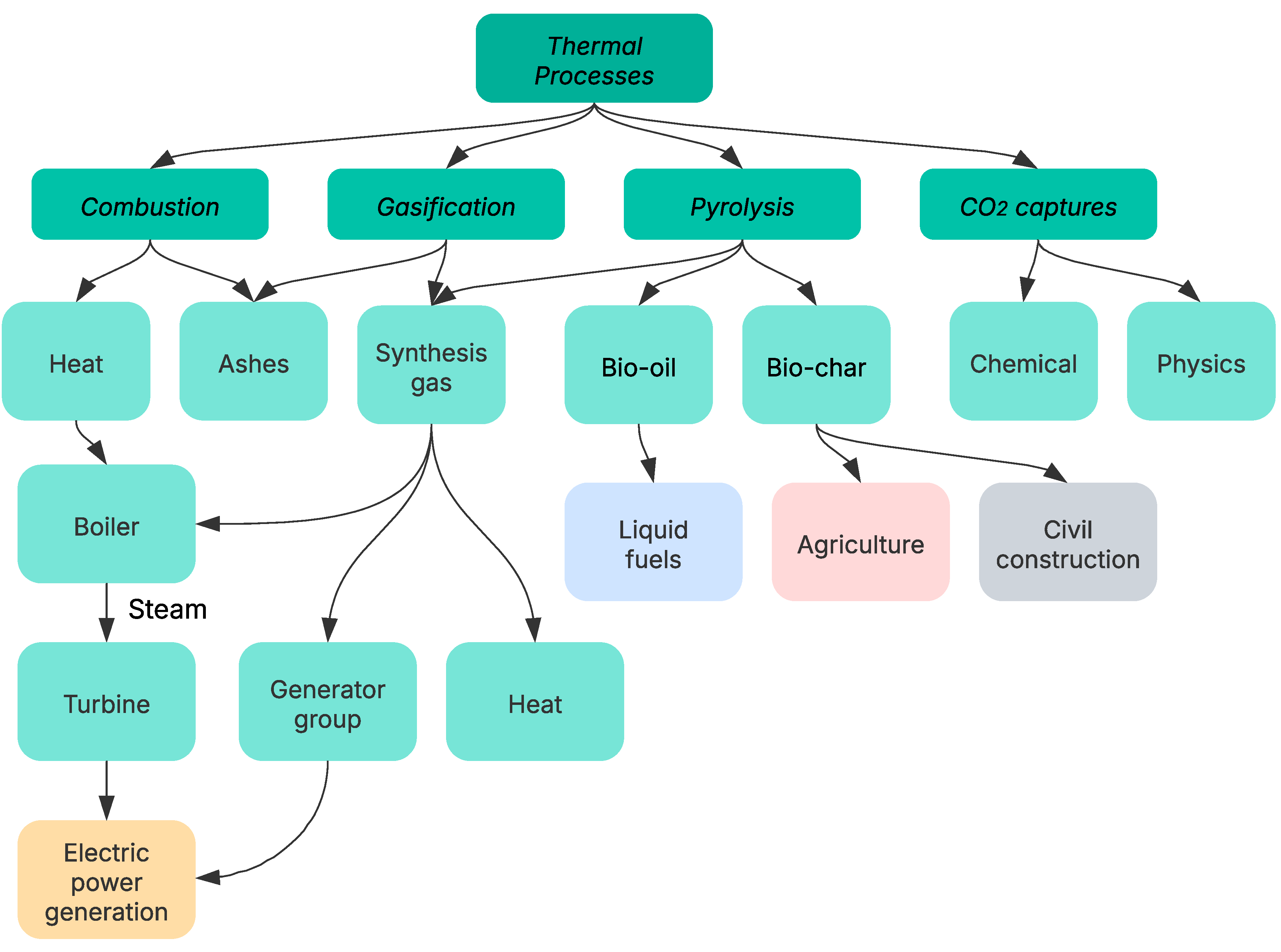
Figure 2.
Technologies for thermal treatment of sewage sludge and their benefits.
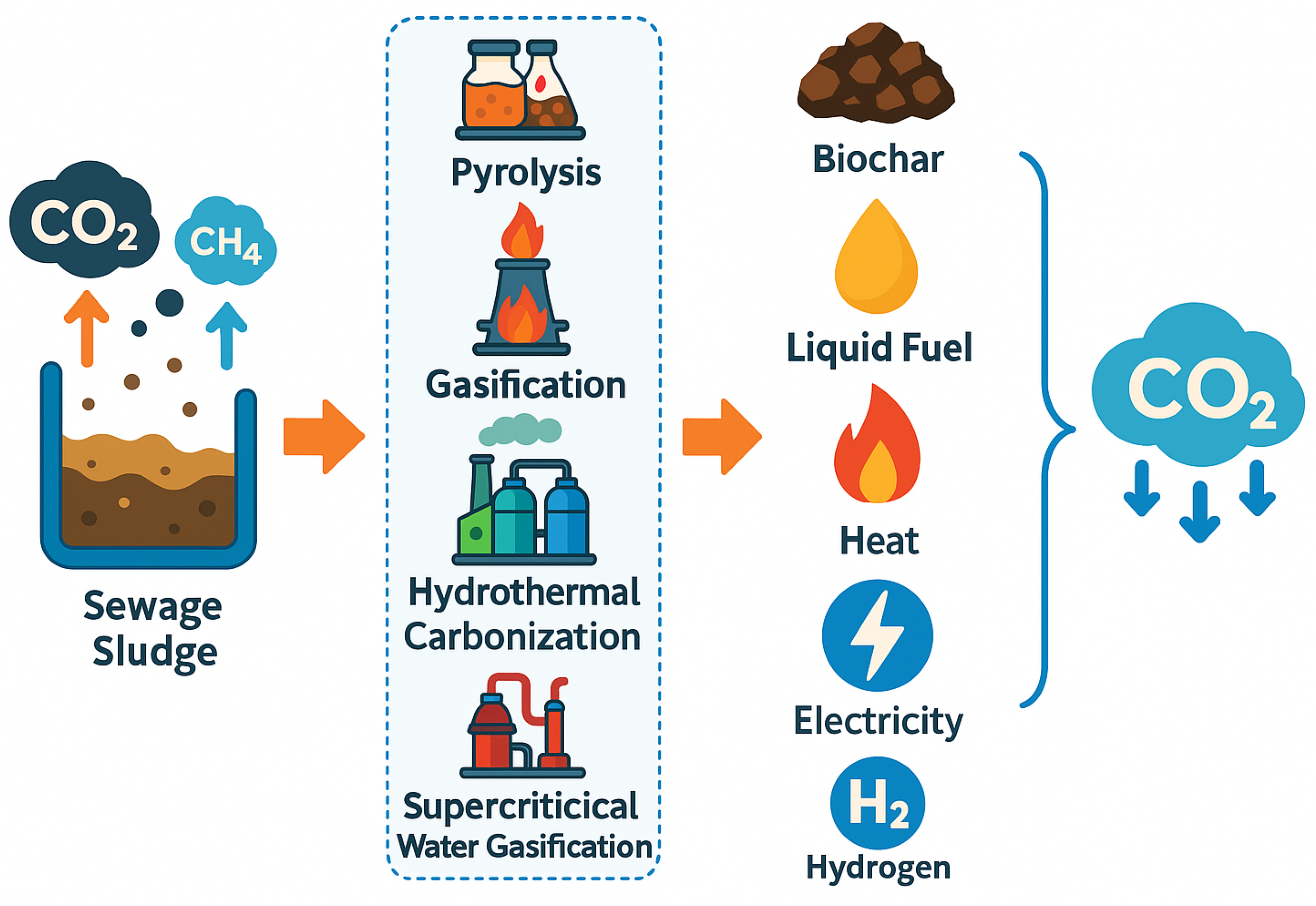
Figure 3.
Current sewage treatment systems.
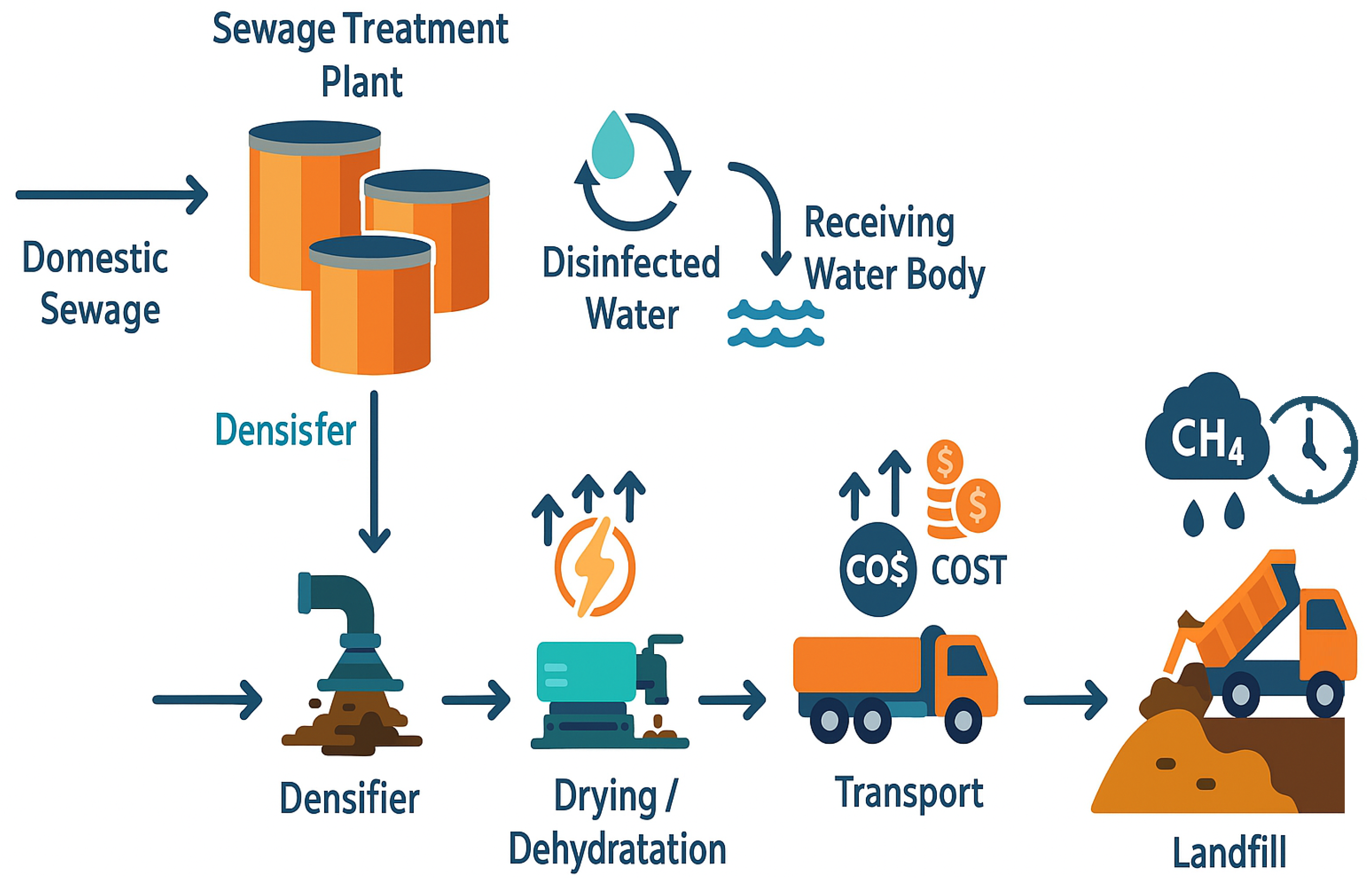
Figure 4.
Alternative treatment systems.
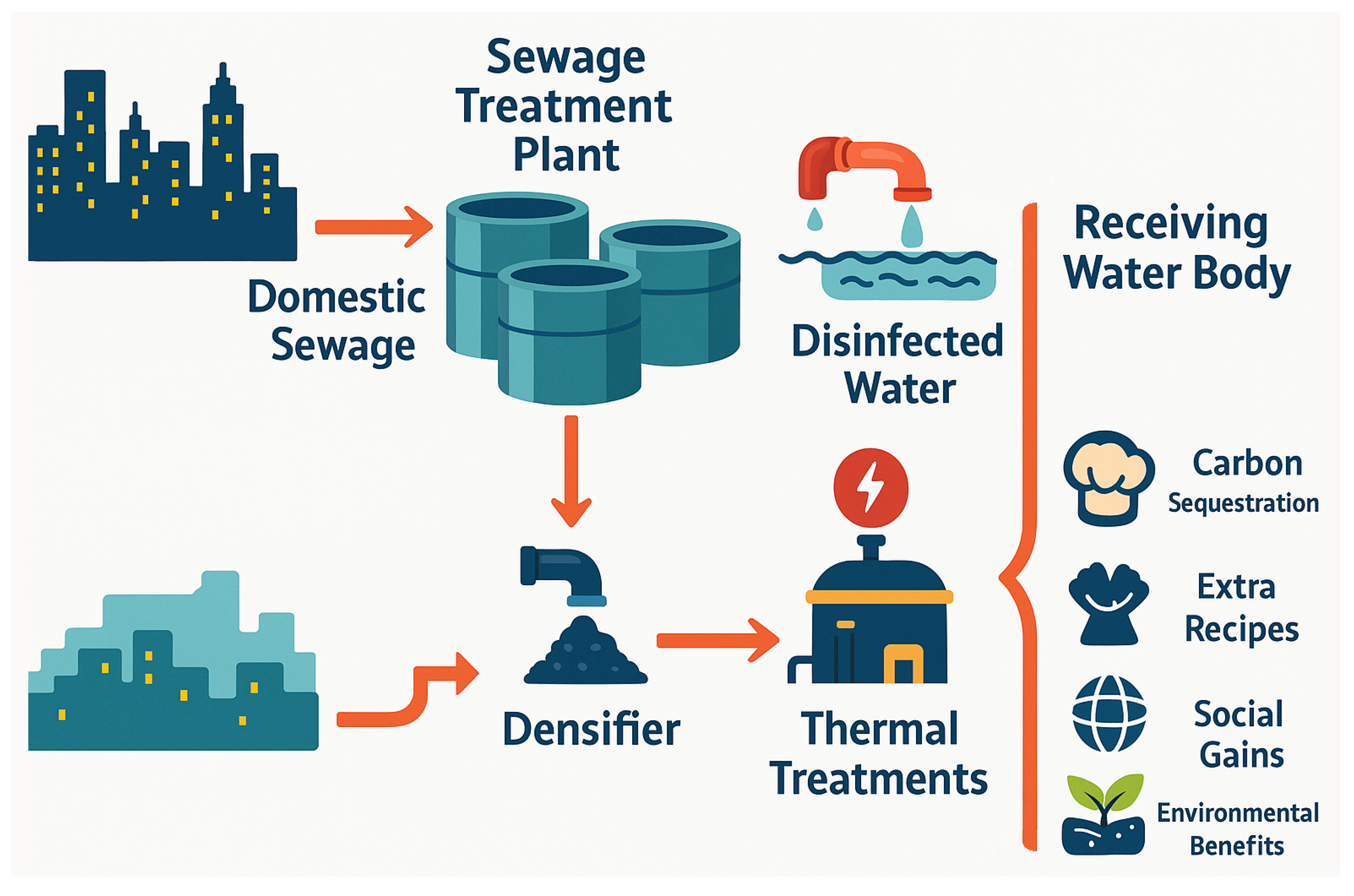
Table 1.
Comparative overview of technologies, concept, application, advantages and disadvantages.
| Concept / Application | Advantage | Disadvantages | |
| Pyrolysis | Thermochemical conversion of sludge into bio-oil, pyrolysis syngas, and biochar in an oxygen-free environment. Energy generation; Biofuel production; Soil improvement; Materials production. | Production of bio-oil that can be used as fuel or refined into chemical products. Production of biochar, a versatile material with potential for carbon sequestration, soil improvement, and application in various industries. Reduction in the volume of sludge. Production of synthesis gas from pyrolysis [28]. | High energy consumption, especially for drying the sludge before the process. The quality of the bio-oil can vary depending on the process conditions and the composition of the sludge. Need for standardization and market development for pyrolysis products such as bio-oil and biochar. The need to filter and remove tar from the pyrolysis synthesis gas [29]. |
| Gasification | Thermochemical conversion of sludge into synthesis gas (syngas). Energy generation; Hydrogen and Chemical products production. | Production of syngas, a versatile fuel that can be used to generate electricity, heat, or hydrogen. Possibility of integrating carbon capture to further reduce emissions. | Production of tar, an undesirable by-product that can clog equipment and cause environmental problems. The need for high temperatures and pressures can increase operating costs [30]. |
| Co-combustion | Burning sludge together with other fuels, such as coal or biomass. Energy generation; Reduction in the volume of waste. | Mature technology with existing infrastructure. Low investment costs compared to building new power plants. Reduced dependence on fossil fuels. | Significant greenhouse gas emissions remain, especially if carbon capture is not implemented. Risk of emissions of atmospheric pollutants such as nitrogen oxides and sulfur dioxide [31]. |
| Hydrothermal carbonization | Treatment of sludge with water at high temperature and pressure to produce hydrocarbon. | Efficient conversion of sludge with a high moisture content. Production of hydrocarbon with a higher energy density than the original sludge. | Relatively new technology with still high operating costs. Further research is needed to optimize process conditions and hydrocarbon quality [32]. |
| Supercritical Water Gasification | Sludge gasification using water in a supercritical state to produce hydrogen and other gases. Hydrogen production; Energy generation. | High hydrogen production efficiency; Low emission of atmospheric pollutants. | High temperatures and pressures require corrosion-resistant materials, which increases investment costs. Technology still in the development phase [33]. |
Table 3.
Reducing CO2 studies.
| Authors | Method / Application |
| Han et al. [187] | A dendrite network-integrated adaptive mean square gradient method for optimizing energy efficiency in buildings. |
| Han et al. [188] | Enhancing electroactive sites within a three-dimensional covalent organic framework. |
| Ringe et al. [189] | CO2 adsorption rate in electrochemical processes is constrained by double layer charging. |
| Hu et al. [190] | Sub-nanometric copper cluster synthesis through double confinement facilitates selective characteristics. |
| Banerjee et al. [191] | Waste sludge decreases greenhouse gas emissions in a pilot-scale industrial wastewater treatment facility. |
| Liu et al. [192] | Electrocatalytic carbon applied to fuels on heterogeneous catalysts. |
| Prabhu et al. [193] | Catalysts with heterostructures for both electrocatalytic and photocatalytic applications. |
| Zhu et al. [194] | Pavilion of reversible design crafted from recycled materials. |
| Shi et al. [195] | Sustainable management utilizing a life-cycle assessment. |
Disclaimer/Publisher’s Note: The statements, opinions and data contained in all publications are solely those of the individual author(s) and contributor(s) and not of MDPI and/or the editor(s). MDPI and/or the editor(s) disclaim responsibility for any injury to people or property resulting from any ideas, methods, instructions or products referred to in the content. |
© 2025 by the authors. Licensee MDPI, Basel, Switzerland. This article is an open access article distributed under the terms and conditions of the Creative Commons Attribution (CC BY) license (http://creativecommons.org/licenses/by/4.0/).
Copyright: This open access article is published under a Creative Commons CC BY 4.0 license, which permit the free download, distribution, and reuse, provided that the author and preprint are cited in any reuse.


