1. Introduction
The management of industrial waste, particularly sludge generated from wastewater treatment processes, presents a persistent environmental and economic challenge. In the detergent manufacturing sector, the sludge is especially problematic due to its complex chemical composition and heavy metal content—including chromium, arsenic, nickel, zinc, iron, and cadmium (Parde and Behera, 2023). These metals originate from additives and raw materials used in detergent formulations and, if not properly managed, can pose long-term risks to ecosystems and human health (El Hafidi et al., 2023; Fulke et al., 2024). Conventional disposal methods such as landfilling or incineration are not only costly and pollutive but also underutilize the latent potential of this waste.
Recent research has demonstrated that industrial and municipal sludges can be effectively used as supplementary cementitious materials (SCMs) or aggregates in construction. Their chemical and mineralogical compositions—rich in SiO₂, CaO, and Al₂O₃—closely resemble those of traditional cementitious binders and clays, allowing their integration into bricks, tiles, and mortars (Chang et al., 2020; Gherghel et al., 2019). Lin et al. (2005) and Chakraborty et al. (2017) showed that sludge ash and industrial byproducts can partially replace raw materials in cement and mortar, improving mechanical performance while reducing carbon emissions. However, the potential of sludge from detergent wastewater treatment—a unique type with high silica and calcium oxide content—remains largely unexplored.
An important advantage of using sludge in cementitious materials lies in its ability to stabilize toxic heavy metals during hydration. The formation of calcium silicate hydrate (C–S–H) and portlandite in cement can immobilize heavy metals by physical encapsulation or chemical bonding, thereby reducing their leachability (Mejdi et al., 2020; Yang et al., 2023; Agra et al., 2023). This mechanism makes cement-based matrices a promising solution for the safe and sustainable valorization of metal-rich sludges.
Energy efficiency is a key pillar of sustainable construction, particularly in light of rising global energy demand and CO₂ emissions. The building sector alone accounts for nearly one-third of total energy use and emissions (Li et al., 2019; Zhang et al., 2019). In climates like Morocco’s—characterized by large temperature fluctuations—thermal performance of materials becomes critical for maintaining comfort without reliance on energy-intensive HVAC systems (Tiskatine et al., 2018). Thermophysical properties such as thermal conductivity (λ), diffusivity (α), capacity (ρcp), and effusivity (E) define a material’s ability to retain and transmit heat. Materials with low thermal conductivity and high thermal inertia contribute to better indoor temperature regulation and lower energy costs (Chandel et al., 2016; Alfano et al., 2014; Barone et al., 2023; Vijayan et al., 2022).
Beyond sludge valorization, ongoing research emphasizes the role of alternative SCMs—both natural and industrial—in reducing clinker content in cement (Nassiri et al., 2025). Volcanic ash, calcined clay, and biomass-derived ashes are among the most promising options. Simultaneously, improvements in aggregate design, such as the optimization of grain size distribution and ITZ (interfacial transition zone) engineering, have shown to enhance mechanical strength and fracture toughness of concrete composites (Golewski et al., 2025). These advances point toward an integrative approach to sustainable material design.
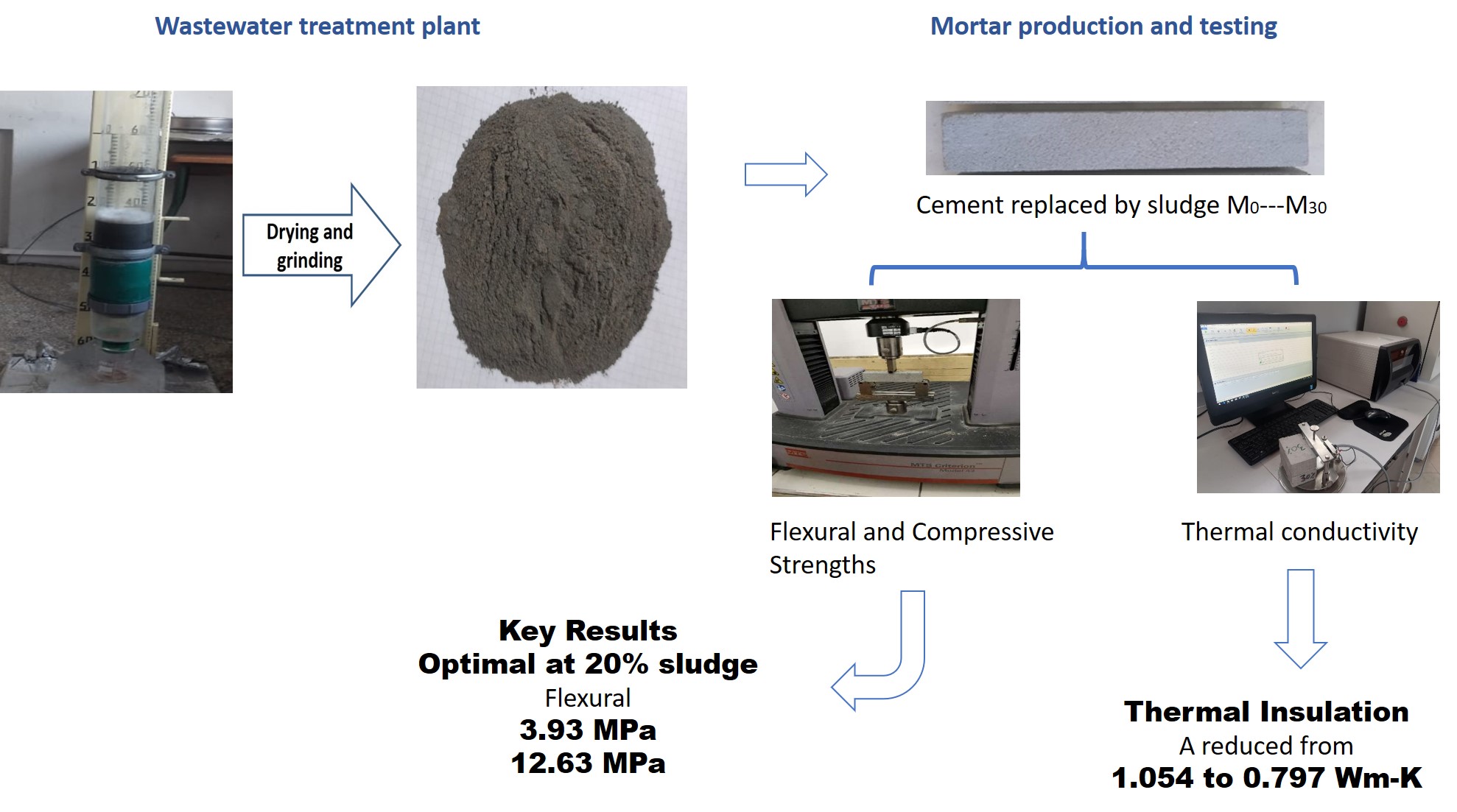
Despite these developments, limited work has investigated the valorization of detergent industry sludge, which possesses distinct physicochemical and mineralogical properties. This study addresses this gap by evaluating the mechanical and thermal behavior of mortars in which cement is partially replaced (0–30%) with sludge derived from the treatment of detergent wastewater. The mortars were prepared according to NF EN 196-1 standards, and their mechanical strengths (flexural and compressive) and thermophysical properties (λ, α, ρcp, E) were assessed using a Hot Disk TPS 1500 system. X-ray diffraction and ICP-OES analyses were also conducted to investigate mineral phase evolution and heavy metal stabilization. The objective is to determine whether detergent sludge can serve as a sustainable, safe, and thermally efficient cement substitute—contributing to waste valorization, CO₂ reduction, and energy-efficient building design.
2. Materials and Methods
2.1. Materials Used in Mortar Production
This study utilized three primary components: sludge obtained from detergent wastewater treatment, (CEM II cement (CPJ 45), and natural coastal sand from Souiria, Morocco.
2.1.1. Detergent Sludge
The sludge was gray in color, with a powdery appearance after drying and grinding. It resulted from a percolation treatment process combining fly ash, bottom ash, and sand. Its chemical composition—rich in SiO₂ (46.58%), CaO (28.66%), and Al₂O₃ (15.54%)—was determined by X-ray fluorescence and is shown in
Table S5. The D50 and D90 of the ground sludge powder were 81.7 µm and 173.2 µm, respectively, measured using a laser particle size analyzer (Malvern Mastersizer 2000). No screening was applied post-grinding, but the entire sludge was passed through a 315 µm sieve to ensure consistency. The sludge was first sun-dried for approximately 3–4 days, depending on ambient humidity (mean daily temperature ~30 °C), and then oven-dried at 105 °C for 24 hours to remove residual moisture. Samples were left unsealed during drying, and the moisture content was not measured before grinding.
Figure S1 shows the appearance of the sludge after drying.
2.1.2. Cement (CPJ 45)
A commercially available CEM II Portland cement conforming to NF EN 197-1 was used. It consists of 68% clinker, 27% limestone, and 5% gypsum.
Tables S1 and S2 detail its physical and chemical properties. The cement is gray in color with a fine, uniform texture.
2.1.3. Sand
Sand was sourced from Souiria beach (Safi, Morocco), thoroughly washed with distilled water to remove salts and organic matter, oven-dried at 40 °C, and sieved. The particle size ranged from 0.063 mm to 2 mm, with a fineness modulus of 2.4 and good granulometric uniformity. The chemical composition (
Table S3) reveals high silica content (>90% SiO₂), making it suitable for mortar formulation. (El Hafidi et al., 2024).
2.1.4. Mechanism of Sludge Generation
The sludge was produced via infiltration/percolation using a 3-layer filter column comprising:
Fly ash (30%)
Bottom ash (30%)
Coastal sand (40%)
Fly ash, composed mainly of spherical glassy particles rich in SiO₂ and Al₂O₃, enhances pozzolanic reactivity and improves sludge binding capacity. Bottom ash, coarser and porous, improves filtration by retaining solids and adsorbing heavy metals. Coastal sand stabilizes the column and ensures permeability. The 30/30/40 ratio was determined based on a previous optimization study (El Hafidi et al., 2023), balancing treatment efficiency and sludge stabilization. After percolation, the accumulated sludge was collected, dried, and ground as described above.
2.2. Mix Design for Mortar Preparation
Various mortars were prepared by partially replacing cement with wastewater sludge from the detergent manufacturing industry in proportions of 5%, 10%, 15%, 20%, 25%, and 30%. The mixes are designated as M
5, M
10, M
15, M
20, M
25, and M
30, respectively, with the control mortar (without sludge) identified as M0. The preparation of the mortars followed the European standard NF EN 196-1 (Bouaich et al., 2022), which prescribes a standard mortar composition by mass: 450 g of cement, 1350 g of sand, and 225 g of water. The specific details of the cement-sludge mortar formulations are outlined in
Table S4.
The mortar was prepared according to the NF EN 196-1 standard using a 5-liter electric mixer (Bouaich et al., 2022). The mixing process, lasting 4 minutes, proceeded as follows: water was added first, followed by cement, and the mixture was then stirred at low speed for 30 seconds. The sand was gradually added, the mixer was set to high speed for 60 seconds, and mixing was paused for 1 minute and 30 seconds to scrape down the mortar adhering to the walls. Finally, mixing resumed at high speed for another 60 seconds.
2.3. X-Ray Diffraction and Inductively Coupled Plasma Optical Emission Spectroscopy
X-ray diffraction (XRD) is a powerful technique for identifying crystalline phases in solids and determining crystal structure dimensions (Lizoul et al., 2024; El Hafidi et al., 2024). In this research, an advanced X-ray diffractometer equipped with a copper (Cu) Kα anticathode was utilized as the X-ray source, producing radiation with a wavelength of λKα = 1.5406 Å. The instrument included a rotatable sample holder with an automatic changer to ensure precise sample positioning. An X′Celerator detector, combined with a secondary monochromator, enhanced the accuracy of the measurements. Diffractograms were interpreted using the ICDD PDF-2 database (International Center for Diffraction Data, Powder Diffraction File version) to identify the crystalline phases in the mortar samples. Furthermore, the sludge was analyzed for metal content (As, Co, Cr, Cu, Al, Ni, Pb, Zn, and Fe) using inductively coupled plasma optical emission spectroscopy (ICP-OES) (Laasri et al., 2024).
2.4. Infrared Spectroscopy
Infrared spectra were acquired using a Nicolet iS10 Thermo Scientific spectrometer equipped with an Attenuated Total Reflectance-Fourier Transform Infrared (ATR-FTIR) accessory (Lizoul et al., 2024). Each spectrum was generated by averaging 32 scans recorded at a high resolution of 4 cm⁻¹. Solid samples were analyzed, with spectra representing the ratio of sample scans to a corresponding background spectrum recorded under identical conditions without the sample. This rigorous approach ensured reliable spectra, providing valuable insights into the molecular vibrations and composition of the studied materials.
2.5. Evaluation of Mechanical Properties
2.5.1. Preparation of Studied Samples
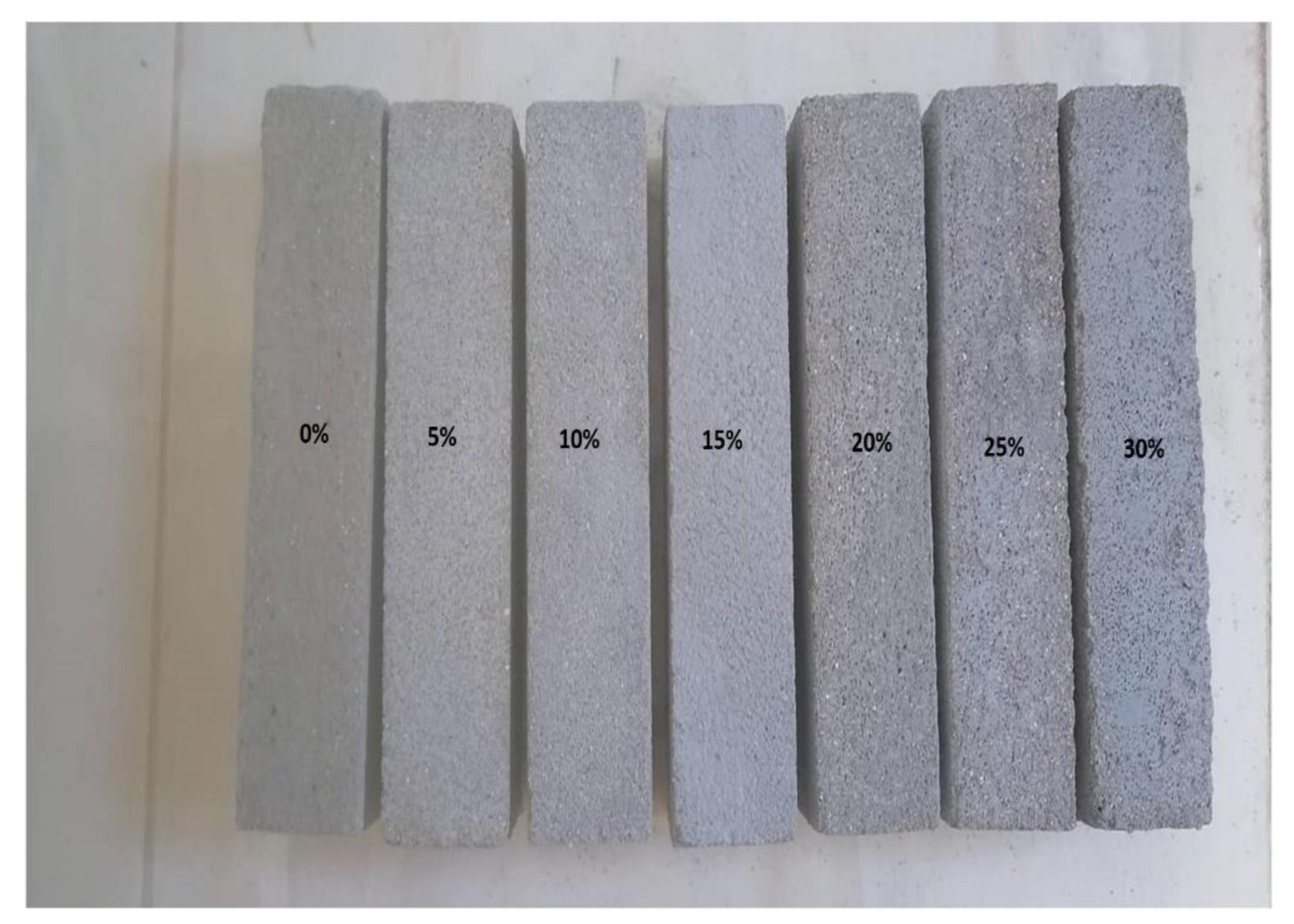
Before starting the mechanical study, the mortars are prepared in a parallelepiped form with dimensions of 4x4x16 cm³, as shown in
Figure 1. The samples are then stored in a room with controlled temperature (20 °C) and humidity. These specimens are tested for flexural and compressive strength after 7 and 28 days (Mghaiouini et al., 2020).
2.5.2. Methodology for Flexural and Compressive Strengths
The flexural and compressive strengths were measured using an MTS Criterion Electromechanical Press with three-point bending (TPB) tests. Each test was conducted in triplicate, and the average results were compared with a reference sample. The breaking load was obtained by applying a continuous force F
f to the upper surface of the specimen at a constant rate of 2 mm/min until fracture occurred, as depicted in
Figure S2a. The breaking strength was then determined (Mghaiouini et al., 2020). The flexural rupture strength R
f is determined using the formula:
where F
f is the fracture force, L is the support span, b and h represent the sample width and height, respectively (refer to
Figure S2). Following the flexural tests, the resulting half-prisms were utilized to measure the compressive strength R
c (see
Figure S2b), calculated as:
where A is the cross-sectional area (4 × 4 cm²) (Mghaiouini et al., 2020). A continuous force was applied to this transverse section at the same speed until fracture, providing the compressive strength value.
2.6. Studied Thermo-Physical Properties
2.6.1. Preparation of Samples
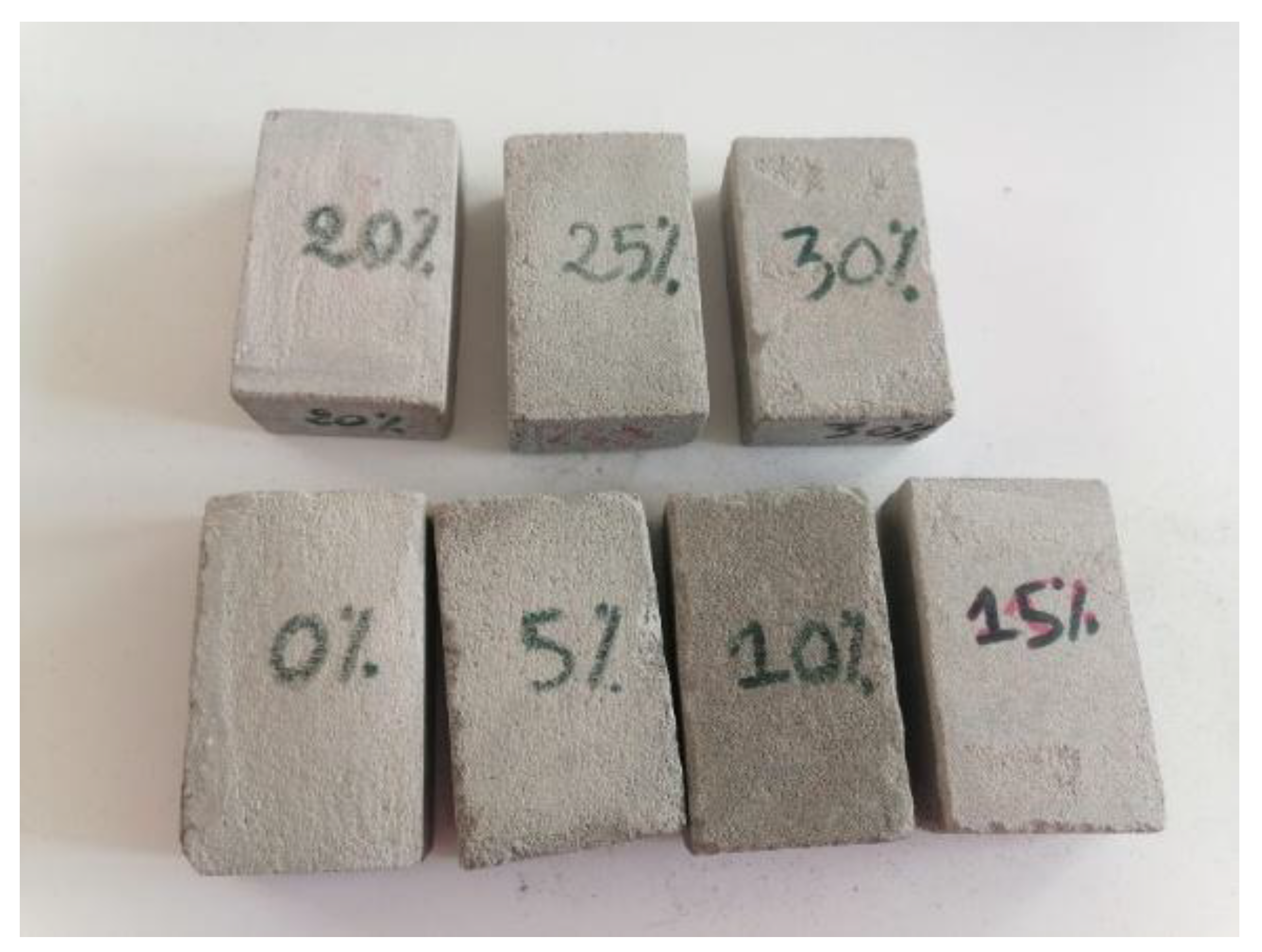
Seven samples were prepared using mortars in which cement was partially replaced by wastewater sludge from detergent manufacturing, in proportions of 0%, 5%, 10%, 15%, 20%, 25%, and 30%. This setup aimed to study the thermophysical properties and select the optimal building proportions, as shown in
Figure 2. These samples are parallelepipeds with dimensions of 3.5 x 7 x 11 cm³. For precise measurement of thermal conductivity and thermal diffusivity in low-conductivity materials, the sample thickness typically ranges from 20 to 40 mm and should ideally not be smaller than the radius of the hot disk sensor (Tiskatine et al., 2023). All the samples were demolded after 24 hours and then air-dried in the laboratory for 28 days. The results presented were obtained by calculating the average of the results from the different analyses.
2.6.2. Experimental Method
Most studies on construction materials focus on examining the absolute value of heat transfer (thermal conductivity) and the speed of this transfer (thermal diffusivity). Materials with low thermal conductivity serve as insulators and exhibit high thermal resistance (Tiskatine et al., 2018). When thermal conductivity varies with spatial coordinates (x, y, z) and temperature (T), which is time-dependent (t), the Fourier equation is represented as:
When the parameters do not depend on temperature, Eq. (3) simplifies to:
The heat equation describing transient one-dimensional heat transfer in a homogeneous wall of thickness is therefore expressed as:
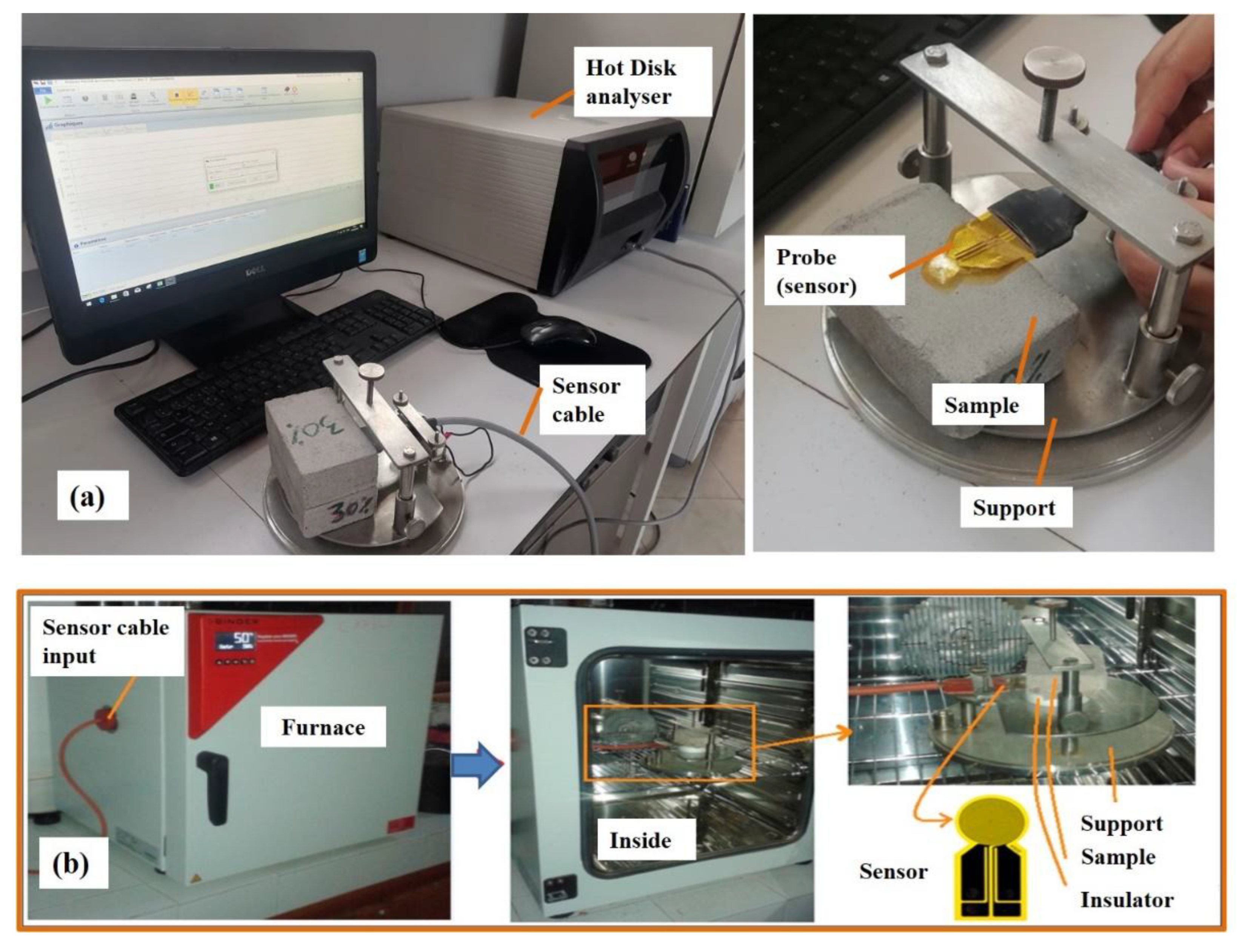
The thermal conductivity of building materials is typically measured using the stationary hot plate method. In this study, material characterization was performed with a Hot Disk TPS 1500 device (
Figure 3), which is designed to simultaneously determine both thermal conductivity and thermal diffusivity (Tiskatine et al., 2023).
The measurement principle is based on applying a uniform heat flow across a plane that divides two symmetrically placed samples. A probe situated between these samples delivers a constant electrical power (acting as the heat source) and monitors the temperature change in the samples (serving as the temperature sensor). The probe consists of a double nickel spiral, 10 μm thick, sandwiched between two layers of Kapton insulation. The increase in electrical resistance of the probe corresponds to the temperature rise, which can be represented over time as follows (Tiskatine et al., 2018):
R0 represents the resistance of the disk at the initial time t=0, right before heating begins. The variable r denotes the temperature coefficient of resistivity, while ΔTi indicates the constant temperature difference that quickly develops across the thin insulating layers on each side of the sensor. When thermal contact is perfect, Δti = 0.
The opposite side of the sensor is in contact with an insulating material that has well-defined thermal properties (see
Figure 3a). The sensor's sensitive area is protected from environmental influences and only interacts with the sample and the insulating material, allowing it to measure the temperature difference immediately after power is applied.
ΔT ave (τ) denotes the temperature increase on the sensor surface facing the sample.
To assess thermal properties at different temperatures (30, 40, and 50 °C), a furnace connected to the Hot Disk device was used (see
Figure 3b). Prior to each measurement, the sample was heated in the furnace for about 30 minutes to ensure temperature stabilization.
Once thermal conductivity, thermal diffusivity, and density are determined, specific heat can be calculated directly using the following formula:
Thermal effusivity is an essential property for describing heat fluxes, particularly when heat moves through various materials. It reflects how quickly a material's surface temperature increases. This property can be determined using the values for thermal conductivity and thermal capacity, as demonstrated in equation (8).
with
λ (W/m·K): Thermal conductivity
α (mm²/s): Thermal diffusivity = λ / (ρ·cp)
ρ (kg/m³): Density
cp (J/kg·K): Specific heat capacity
ρcp (MJ/m³·K): Volumetric heat capacity
E (J/m²·K·s½): Thermal effusivity
3. Results and Discussion
3.1. Particle Size and Chemical Composition of Sludge
3.1.1. Particle Size Analysis of Sludge
The particle size analysis of sludge, shown in
Figure S3, illustrates the particle size distribution and identifies the proportion of fine particles, which is essential for construction applications. The curve reveals three distinct zones: a low proportion of particles smaller than 0.2 mm, a significant concentration of particles between 0.2 mm and 0.4 mm, reaching 90% at 0.4 mm, and a final zone where particle size reaches 98% at 0.63 mm.
The analysis indicates a high proportion of fine particles in the sludge, making it particularly suitable for use in construction materials, especially as an additive in eco-friendly mortars. The fine particles in the sludge enhance mortar cohesion and density by filling voids between larger sand or gravel grains. This improves compaction, which can increase the mechanical strength of the final material. Moreover, incorporating sludge in mortars reduces the demand for cement, which is energy-intensive to produce and a source of CO₂ emissions (Sutcu et al., 2022).
3.1.2. Chemical Composition of Sludge
Table S5 shows that the chemical composition of sludge includes a significant concentration of SiO₂ (46.58%) and CaO (28.66%), indicating strong potential for pozzolanic applications, where these components can partially replace Portland cement by contributing to material solidification and stabilization. The high SiO₂ content, which exceeds that of Portland cement, enhances the sludge’s ability to participate in cementitious reactions, improving the mechanical properties of mixtures. The presence of Al₂O₃ (15.54%) further supports this by contributing to the formation of alumino-silicate compounds, while Fe₂O₃ (3.55%) and MgO (2.24%) offer additional stabilizing properties. The low proportions of Na₂O (0.63%) and K₂O (0.34%) minimize the risk of alkali-silica reactions (ASR), which is advantageous for material durability. Overall, this sludge has a balanced composition favorable for ecological construction, as it can function effectively as an activator or binder in pozzolanic processes while maintaining stable chemical properties (Świerczek et al., 2018; García et al., 2008).
3.2. Evaluation of the Mechanical Properties of Sludge-Based Mortars
To evaluate the mechanical properties of the mortars, samples were prepared by substituting cement with sludge at varying levels, ranging from 0% to 30%. flexural and compression tests were conducted on these samples after maturation periods of 7 and 28 days. The primary objective was to identify the optimal substitution rate of cement with sludge by analyzing its impact on the mechanical performance of the mortars.
3.2.1. Flexural Strength
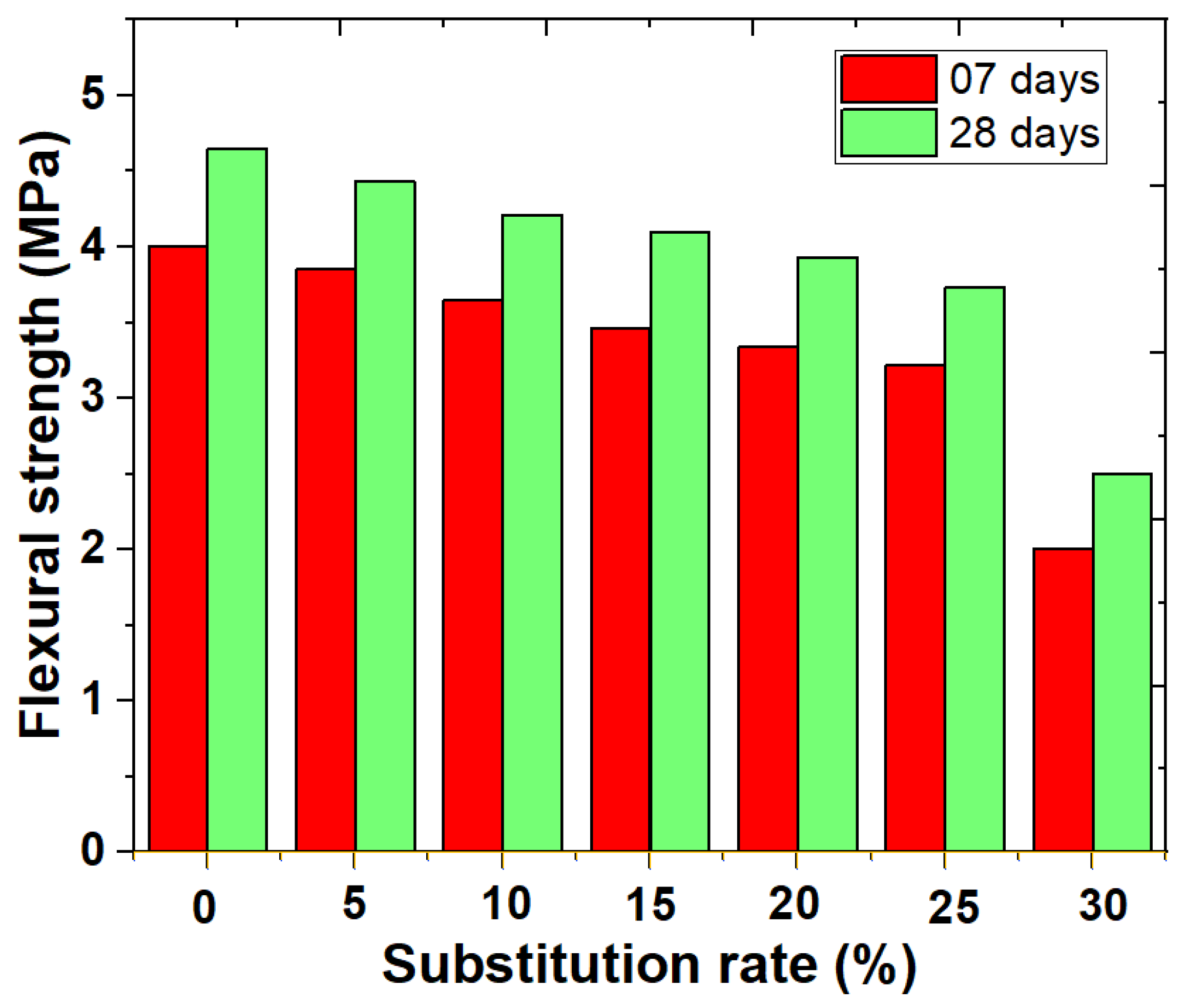
Flexural strength is a fundamental criterion in the design of construction materials, as it ensures the structural performance of elements subjected to bending stresses. The data in
Figure 4 indicate that the flexural strength of mortars decreases significantly as the cement substitution rate by sewage sludge increases. For the mortar without sludge, the strength is 4.00 MPa after 7 days and 4.65 MPa after 28 days, serving as the reference. With a 5% sludge substitution, the strength slightly decreases to 3.85 MPa after 7 days and 4.43 MPa after 28 days, corresponding to a reduction rate of 3.75% and 4.73%, respectively. At 10% substitution, the strength falls to 3.65 MPa after 7 days and 4.21 MPa after 28 days, representing decreases of 8.75% after 7 days and 9.46% after 28 days. From 15% substitution, the drop becomes more noticeable, with strengths of 3.46 MPa (13.50% decrease) after 7 days and 4.10 MPa (11.83% decrease) after 28 days. At 20% sludge, the strength declines to 3.34 MPa after 7 days and 3.93 MPa after 28 days, corresponding to reduction rates of 16.50% and 15.48%, respectively. With 25% substitution, the strength is 3.22 MPa after 7 days and 3.73 MPa after 28 days, showing a decrease of 19.50% after 7 days and 19.78% after 28 days. Finally, at 30% substitution, the strength drastically decreases to 2.01 MPa after 7 days and 2.50 MPa after 28 days, a significant reduction of 49.75% after 7 days and 46.24% after 28 days.
Figure 4 presents the mean flexural strength values (± standard deviation) for mortars cured for 7 and 28 days. As sludge content increased, strength decreased gradually due to higher porosity and reduced cement hydration products.
M0 (0% sludge): 4.65 ± 0.08 MPa
M20 (20% sludge): 3.93 ± 0.06 MPa (15.5% decrease)
M30 (30% sludge): 2.50 ± 0.09 MPa (46.2% decrease)
Although 20% substitution reduces flexural strength, it remains above the minimum threshold of 3.5 MPa for non-load-bearing masonry units according to EN 998-2.
The reductions in strength are attributed to the increased porosity and heterogeneity of the mortar’s microstructure due to the incorporation of sludge, which weakens its cohesion (Mashaly et al., 2018; Chen et al., 2022). To maintain optimal mechanical performance, it is recommended not to exceed a 20% substitution rate.
3.2.2. Compressive Strength
Compressive strength is a key indicator of construction material quality (Karaman et al., 2006).
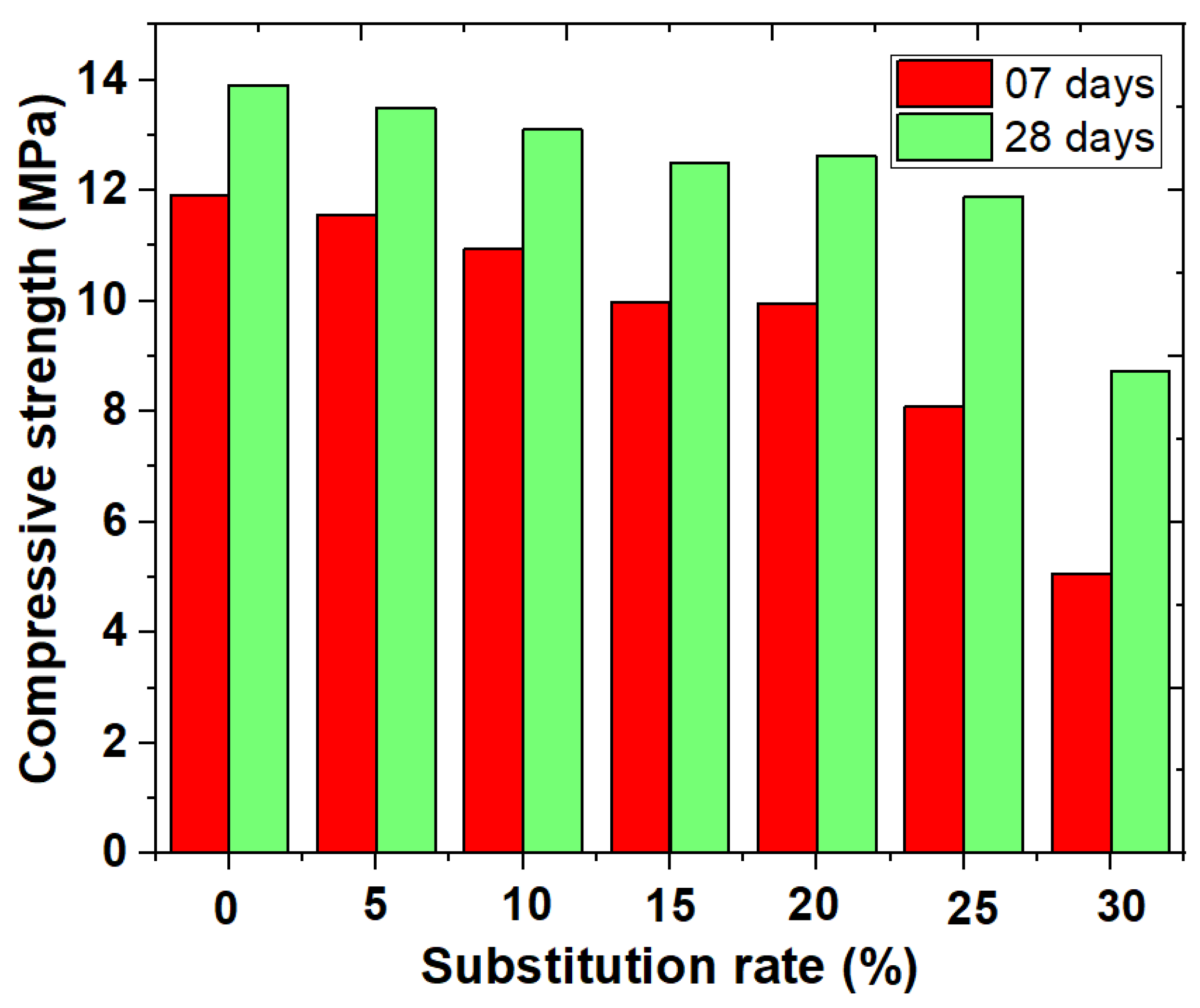
Figure 5 shows the effect of partially replacing cement with sludge from wastewater treatment in detergent manufacturing on the compressive strength of mortars after 7 and 28 days of curing. In all cases, compressive strength increases over time, with values at 28 days exceeding those at 7 days. This indicates that the addition of sludge does not hinder mortar solidification, regardless of the substitution percentage used (Ingunza et al., 2018).
The reference mortar, without sludge, has a compressive strength of 11.91 MPa at 7 days and 13.91 MPa at 28 days. As the cement substitution rate with sludge increases, compressive strength gradually decreases. For instance, after 7 days, a mortar with 5% sludge shows a slight reduction in strength to 11.55 MPa (a 3% decrease compared to the reference mortar), while with 30% sludge, the strength drops to 5.06 MPa, nearly a 57.5% reduction. This gradual decline in strength is also observed at 28 days, though the impact is slightly less pronounced over the long term. At 28 days, the mortar with 5% sludge reaches 13.48 MPa, nearly equivalent to the reference mortar with only a 3.1% reduction, while with 30% sludge, it falls to 8.73 MPa, representing a 37.2% decrease. At a 20% substitution rate, strength values are 9.95 MPa at 7 days (a 16.4% reduction) and 12.63 MPa at 28 days (a 9.2% reduction), which is considered the maximum substitution rate to maintain acceptable performance (Zhou et al., 2024).
The results show a clear trend: as the proportion of sludge increases, compressive strength decreases. This reduction can be attributed to the decrease in reactive cement available for forming hydration products that contribute to the mortar's strength. While the inclusion of sewage sludge in mortar mixes may offer ecological or economic benefits, it is crucial to limit its proportion to maintain adequate mechanical performance (Zhou et al., 2024). Specifically, substitution rates up to 20% result in strength reductions that remain within an acceptable range, allowing the mortar to develop sufficient strength after 7 and 28 days. Such rates could be suitable for non-structural applications or uses with less stringent strength requirements. In contrast, substitution rates above 20% lead to significant strength reductions, potentially compromising the mortar's performance in applications requiring high mechanical robustness. For instance, a 25% sludge substitution yields a strength of 8.09 MPa at 7 days and 11.88 MPa at 28 days, representing respective reductions of 32% at 7 days and 14.6% at 28 days compared to the reference mortar.
The optimal sludge substitution rate for maintaining acceptable mechanical performance appears to be limited to around 20%. Beyond this threshold, the negative impacts on compressive strength become too pronounced for typical applications.
At 28 days, the reduction in strength is less pronounced than at 7 days, indicating that the negative effect of the sludge decreases over time. This gradual improvement reduces the strength gap between sludge-containing mortars and reference mortars. This trend can be attributed to the relatively slow pozzolanic reactivity of the sludge (Chang et al., 2020).
The reduction in strength is attributed to the excessive presence of waste, which slows down the hydration reaction and hinders the formation of portlandite and calcium silicate hydrate (C-S-H), both essential for enhancing the mechanical strength of materials. This less intense hydration reaction may be due to the lower calcium oxide content in the sludge compared to that in cement (Yang et al., 2023). To maintain optimal mortar performance, the sludge substitution rate should not exceed 20%.
The partial replacement of cement with 20% sludge shows a notable improvement in compressive strength at 28 days, likely due to a more pronounced pozzolanic reaction (Agra et al., 2023).
Compressive strength increased from 7 to 28 days across all mixtures (
Figure 5), confirming ongoing hydration.
M0: 13.91 ± 0.13 MPa at 28 days
M20: 12.63 ± 0.11 MPa (9.2% reduction)
M30: 8.73 ± 0.14 MPa (37.2% reduction)
At 20% substitution, the mortar satisfies the standard EN 998-2 for structural masonry (≥10 MPa), making it technically viable. Higher substitution levels compromise compressive strength due to dilution of cementitious material and increased pore connectivity.
This improvement highlights the potential of sludge to positively influence the properties of mortar when used within optimal limits. These findings prompt further investigation into the crystallographic properties of mortars, particularly through X-ray diffraction (XRD) analysis, to evaluate the mineralogical changes occurring during the hydration process. This analysis is especially valuable for understanding the formation of beneficial hydration products like C-S-H, which are essential for enhancing the material's strength and durability (Mashaly et al., 2018).
3.3. X-Ray Diffraction (XRD) Analysis Results of Mortars
The X-ray diffraction (XRD) patterns shown in
Figure S4 for both hearth ash and fly ash clearly reveal diffraction lines corresponding to the crystalline structures of quartz (SiO₂) and mullite (3Al
₂O
₃·2SiO
₂). These identifications are based on their precise match with standard Powder Diffraction File (PDF) data, specifically PDF No. #01-085-0794# for quartz and #00-006-0259# for mullite (El Hafidi et al., 2023).
Additionally, Infrared (IR) analysis further confirms this identification by providing spectra for both types of ash. The IR spectra exhibit no significant differences between hearth ash and fly ash, displaying characteristic bands associated with O-Si-O and O-Al-O vibrations, consistent with literature reports (Li et al., 2023) (
Figure S5).
The combined evidence from XRD and IR analyses provides a robust understanding of the crystalline phases in the hearth ash and fly ash samples. The lack of variation in the IR spectra highlights the similarity in their chemical compositions, particularly regarding O-Si-O and O-Al-O functionalities. This integrated analytical approach reinforces the confidence in the identified crystalline structures, offering valuable insights into the mineralogical composition of the ash samples.
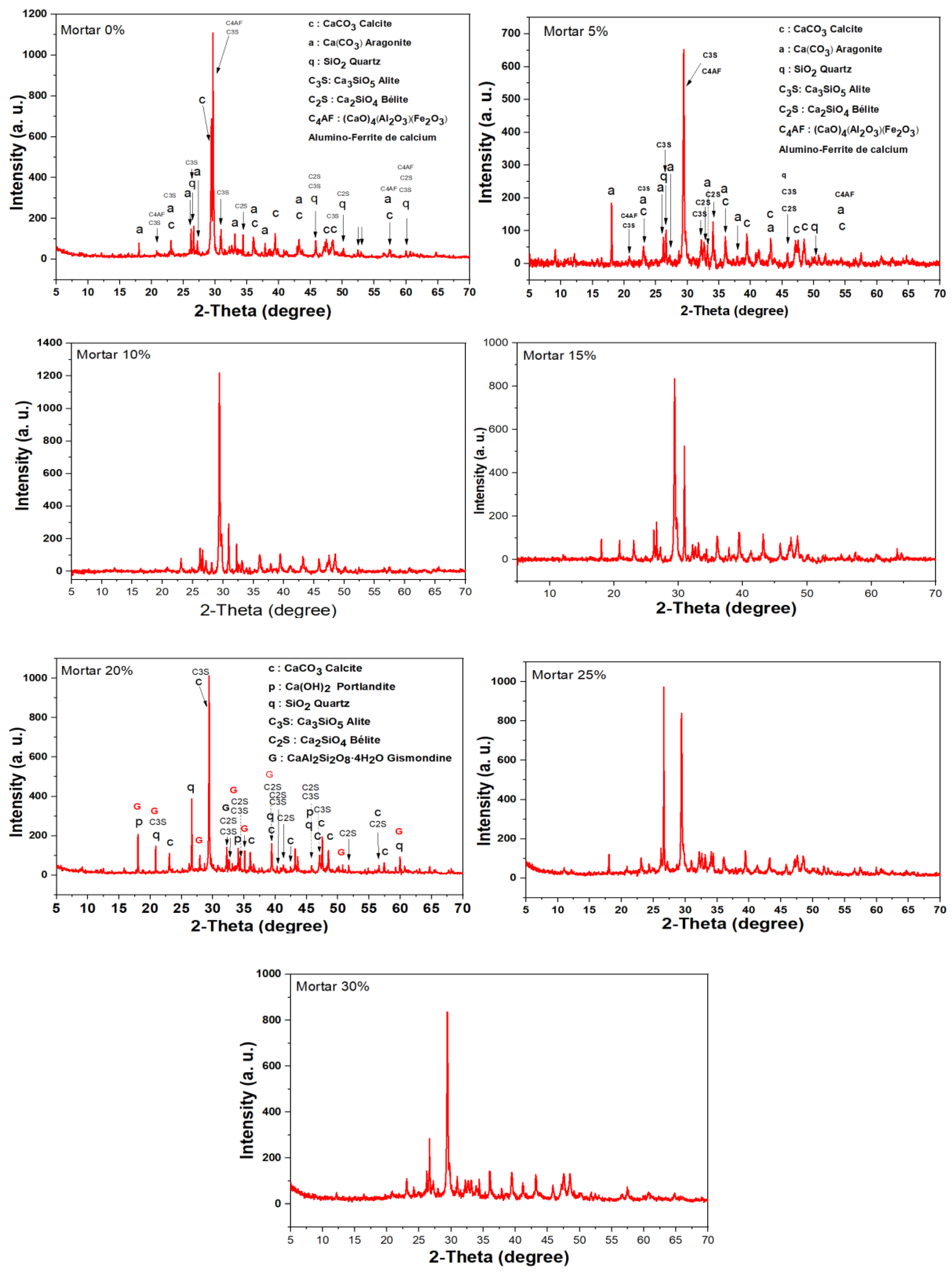
The X-ray diffraction (XRD) diagram of the mortar containing 0%, 5%, 10%, 15%, 25%, and 30% sludge, prepared using cement clinker and sand, is illustrated in
Table S6 and
Figure 6. The XRD pattern exhibits sharp peaks, providing 2θ angle values corresponding to various phases present in the cement clinker and sand. The identified phases closely align with the diffraction patterns of pure substances, including calcite (CaCO₃), aragonite (CaCO₃), quartz (SiO₂), alite (C₃S, tricalcium silicate), belite (C₂S, dicalcium silicate), and calcium alumino-ferrite ((CaO)₄(Al₂O₃)(Fe₂O₃)), which are the primary minerals found in clinker cement and sand (He et al., 2024).
The diffraction peaks match the standard Powder Diffraction File (PDF) data for each identified phase, specifically for calcite, aragonite, quartz, alite (C₃S), belite (C₂S), and calcium alumino-ferrite. These phases represent the principal constituents of clinker cement, comprising tricalcium silicates, dicalcium silicate, tetracalcium ferro-aluminate, and quartz. Their presence in the mortar confirms a well-defined and expected mineralogical composition consistent with the raw materials used in its preparation. The XRD analysis proves instrumental in characterizing the crystalline phases of the mortar, offering valuable insights into its structural and compositional attributes (Krakowiak et al., 2015).
Additionally, the XRD pattern of the mortar incorporating 20% sludge (residual solids derived from wastewater treatment using hearth ashes and fly ashes, both pozzolanic materials) reveals the emergence of a novel phase, gismondine (calcium aluminum silicate tetrahydrate). This new phase indicates a transformation in the mineralogical composition of the mortar due to the addition of sludge (Yang et al., 2023). Figure 5 demonstrates that the inclusion of 20% sludge significantly enhances the mortar's compressive strength. This improvement is attributed to the pozzolanic reaction within the mixture, leading to the conversion of tetracalcium alumino-ferrite into calcium aluminosilicate tetrahydrate, which substantially contributes to the observed increase in strength.
The use of pozzolanic additions, such as fly ash and sludge, not only introduces new mineral phases but also improves the mechanical performance of the mortar over the long term. This enhancement is particularly evident in increased resistance to compression and bending. The underlying mechanism involves the pozzolanic reaction between silica and portlandite (Ca(OH)₂), which results in the formation of additional calcium aluminosilicate hydrates. These hydrates densify the mortar matrix, thereby improving its mechanical properties.
The XRD analysis and compressive strength assessment highlight the positive effects of incorporating sludge and fly ash into mortar. The findings underscore the significance of pozzolanic reactions in enhancing the material's long-term mechanical performance and structural integrity.
3.4. Evaluation of the Thermophysical Properties of Sludge-Based Mortars
3.4.1. Analysis of Thermophysical Properties
The design of a building is based on two main factors: thermal comfort and energy efficiency (Martínez-Molina et al., 2016). While retaining heat is important for lowering energy consumption, it alone is not enough to achieve optimal thermal performance year-round. Equally important is the capacity to store heat within the building to reduce temperature fluctuations and maximize free solar gains (Tiskatine et al., 2023).
Thermal inertia (or thermal mass) and thermal phase shift are key aspects of building design, as they significantly affect thermal comfort. Thermal inertia refers to a material's ability to absorb and gradually release heat, mainly influenced by its thermal capacity. Thermal phase shift, on the other hand, refers to the time delay for heat flux to travel through a wall of a certain thickness, which is affected by the material's thermal capacity and the type of insulation used (Verbeke and Audenaert, 2018).
When selecting the most appropriate construction materials, it is important to assess several thermophysical properties: thermal conductivity (λ), which measures how well a material conducts heat; thermal diffusivity (α), which indicates how quickly heat moves through the material; thermal effusivity (E), which describes a material's ability to exchange heat with its surroundings; and thermal capacity, the product of specific heat capacity (cp) and density (ρ). These properties are essential for determining a material's ability to provide optimal thermal comfort while enhancing energy efficiency (Tiskatine et al., 2018).
3.4.2. Results of Thermophysical Properties
The study aimed to repurpose sludge generated from wastewater treatment in detergent manufacturing as a component of construction materials, with the objective of reducing thermal conductivity and enhancing thermal storage capacity at room temperature. Thermophysical property measurements for each sample were performed three times to calculate average values and assess measurement errors. Prior to the measurements, the samples were in their standard (dry) state and were conditioned for three days under controlled laboratory conditions: a temperature of 30 ± 2 °C and a pressure of 1 atm.
3.4.2.1. Thermophysical Characterization
Table 1 summarizes the thermophysical properties of the studied samples, measured under standard laboratory conditions. Uncertainty analyses for these measurements are also included in the
Table 1. These uncertainties were calculated using the following equations, resulting in highly satisfactory outcomes (Tiskatine et al., 2018):
Table 1 summarizes the thermophysical properties of various mortars containing different percentages of wastewater sludge from the detergent manufacturing industry, measured at an ambient temperature of 30°C. The properties measured include thermal conductivity (λ) in W/m·K, thermal diffusivity (α) in mm²/s, thermal capacity (ρcp) in MJ/m³·K, and thermal effusivity (E) in J/m²·K·s¹/₂ for each mortar formulation, with sludge content ranging from 0% to 30% by weight of cement.
The study of the thermophysical properties of mortars reveals significant variations in thermal conductivity (λ) and thermal diffusivity (α) with increasing sludge content. According to the literature, an insulating material typically has a thermal conductivity below 0.1 W/m·K (Tiskatine et al., 2018). In this study, the thermal conductivity decreases from 1.054 W/m·K for mortar without sludge to 0.6699 W/m·K for mortar containing 30% sludge, which can be attributed to the presence of materials less conductive than pure cement. Similarly, the thermal diffusivity follows a comparable trend, decreasing from 0.6096 mm²/s to 0.4706 mm²/s as the sludge content increases. These findings indicate that the material retains heat for longer periods, enhancing thermal stability. The relative uncertainties for these measurements, expressed as Δλ/λ and Δα/α, range from 0.18% to 1.15% and 0.13% to 2.38%, respectively, highlighting the high precision of the results.
The analysis reveals that the thermal capacity of mortars generally decreases as sludge content increases, dropping from 1.729 MJ/m³·K for mortar without sludge to 1.424 MJ/m³·K for mortar containing 30% sludge. This reduction is attributed to the lower density and less thermally conductive nature of sludge particles compared to pure cement. Similarly, thermal effusivity exhibits a comparable trend, decreasing from 1349.9 J/K·m²·s¹/² to 976.7 J/K·m²·s¹/² over the same range of sludge percentages. These findings suggest that mortars incorporating wastewater sludge can experience significant variations in thermal performance, potentially affecting their suitability for applications requiring precise heat management. The relative uncertainties for these measurements, expressed as Δ(ρcp)/(ρcp) and ΔE/E, range from 0.98% to 2.92% for thermal capacity and from 0.7% to 1.935% for thermal effusivity, underscoring the high precision of the results.
The addition of sludge to mortar enhances its insulating properties by reducing its ability to transmit and propagate heat, making it more suitable for applications requiring effective thermal insulation (Pan et al., 2023). These findings suggest that incorporating wastewater sludge into mortars can significantly improve their thermal insulation performance.
The variations in the thermal properties of mortars containing wastewater sludge are driven by several mechanisms. The incorporation of sludge, which is less dense and less thermally conductive than cement, reduces thermal conductivity by disrupting the heat transmission pathways. This also affects thermal diffusivity by hindering the uniform dispersion of heat within the mortar. Furthermore, the addition of sludge decreases the heat capacity of the mortar, reducing its ability to store heat. These changes collectively influence thermal effusivity, which integrates thermal conductivity and thermal capacity to define the material's response to temperature variations. Consequently, the addition of sludge induces a complex transformation in the thermal properties of the mortar, making it possible to tailor its performance to meet specific thermal insulation and thermal inertia requirements in various applications (Zhou et al., 2020).
3.4.2.2. Effect of Sludge Content on Thermal Conductivity
Figure S6 illustrates the thermal conductivity of mortars as a function of sludge percentage at ambient temperature. The data analysis clearly demonstrates the significant impact of sludge content on the thermal conductivity of mortars. As the percentage of wastewater sludge increases, thermal conductivity progressively decreases. For example, at 5% sludge, the average thermal conductivity is 0.9059 W/m·K, while at 30% sludge, it decreases to approximately 0.6699 W/m·K. This linear trend indicates that partially replacing cement with sludge, which is less dense and less thermally conductive, effectively reduces the mortar’s ability to transmit heat. Moreover, cement particles contribute to enhanced contact and bonding between clay grains, resulting in improved compaction and, an increase in the material's thermal conductivity (Sanou et al., 2024).
These results indicate that increasing the sludge content improves the thermal insulation properties of the mortar, which can be advantageous for applications requiring enhanced energy efficiency. However, it is also essential to consider other mechanical properties and the durability of the mortar when evaluating these formulations for practical use.
3.4.2.3. Variation of Thermal Conductivity with Temperature
Table 2 presents detailed results of thermal conductivity measurements for mortar samples containing varying proportions of wastewater treatment sludge from the detergent manufacturing industry, used as a partial replacement for cement. The samples were evaluated at three specific temperatures: 30°C, 40°C, and 50°C. For each sludge content (5%, 10%, 15%, 20%, 25%, and 30%) and temperature, the average thermal conductivity values (λ Average) and relative variations (Δλ/λ %) are provided. These measurements are crucial for understanding the thermal performance of these mortars under realistic conditions, such as those encountered in building structures. The data from
Table 2 are also represented in
Figure S7. The influence of temperature on thermal conductivity was significant. The results indicate that the average thermal conductivity increases with temperature for all samples, though the rate of increase varies with sludge content. This finding aligns with the study on palm fiber concrete conducted by Tiskatine et al. (Tiskatine et al., 2018).
At 30°C, the average thermal conductivity decreases from 1.054 W/m·K for the mortar without sludge to 0.6699 W/m·K for the mortar containing 30% sludge, indicating a progressive reduction in the mortar's ability to conduct heat as the sludge content increases. This trend continues at higher temperatures. At 40°C, the thermal conductivity increases by 1.14% for the mortar with 5% sludge and by 0.53% for the mortar with 30% sludge. Similarly, at 50°C, the increases are 0.37% and 0.53%, respectively. At 50°C, the highest thermal conductivity is observed for the mortar without sludge (1.083 W/m·K), while the lowest is recorded for the mortar containing 30% sludge (0.6745 W/m·K). The results also show that, although thermal conductivity increases slightly with temperature for each formulation, the relative differences (Δλ/λ) remain small, indicating a stable thermal response despite temperature variations. These findings highlight that, while thermal conductivity increases with temperature, the use of wastewater sludge as a partial cement substitute significantly reduces the material's thermal conductivity. This reinforces the potential utility of these mortars in applications where thermal insulation is a priority.
4. Conclusions
This study demonstrated the technical, thermal, and economic feasibility of using sludge derived from detergent industry wastewater treatment as a partial cement substitute in mortar formulations. The results indicate that a 20% substitution rate by mass of cement offers the best compromise between mechanical performance and thermal efficiency. At this level, the mortars achieved compressive strength above 12 MPa and a 25% reduction in thermal conductivity, making them suitable for specific non-load-bearing applications such as interior wall blocks, partition panels, and thermal insulation mortar layers. For applications where insulation is prioritized over strength—such as plasters or insulating underlayers—higher substitution levels (up to 30%) may be acceptable. A comparative cost analysis shows a reduction of approximately 12–15% in production costs compared to conventional mortars, while also eliminating sludge disposal costs, estimated between €20 and €40 per ton. These findings reinforce the value of this circular approach, especially in regions facing high cement costs or strict environmental regulations. The formation of gismondine at the 20% level indicates pozzolanic activity that enhances long-term durability. In the future, these eco-efficient mortars could be integrated into green building certification frameworks and low-carbon construction policies, promoting their adoption in the sustainable materials market.
Supplementary Materials
The following supporting information can be downloaded at the website of this paper posted on Preprints.org.
Author Contributions
El Mokhtar El Hafidi played a key role in sample collection and selection, data curation, analysis, methodology development, interpretation, writing, and initial project planning. Abdelhadi Mortadi and Brahim Lizoul contributed to the design and refinement of tables and figures, while El Ghaouti Chahid and Said Laasri participated in the revision process. All authors have thoroughly reviewed and approved the final version.
Funding
The authors confirm that no funding was received for this work.
Acknowledgments
We would like to express our sincere appreciation to Dr. Rachid Safoui from the Department of Physics at the University Ibn Zohr - Agadir for his invaluable help in carrying out the thermophysical property measurements.
Conflicts of Interest
The authors affirm that they have no financial or personal conflicts of interest that could have influenced the findings presented in this paper.
References
- Agra, T. M., Lima, V. M., Basto, P. E., & Neto, A. A. M. (2023). Characterizing and processing a kaolinite-rich water treatment sludge for use as high-reactivity pozzolan in cement manufacturing. Applied Clay Science, 236, 106870. [CrossRef]
- Alfano, F. R. D. A., Olesen, B. W., Palella, B. I., & Riccio, G. (2014). Thermal comfort: Design and assessment for energy saving. Energy and Buildings, 81, 326-336. [CrossRef]
- Barone, G., Buonomano, A., Forzano, C., Giuzio, G. F., Palombo, A., & Russo, G. (2023). A new thermal comfort model based on physiological parameters for the smart design and control of energy-efficient HVAC systems. Renewable and Sustainable Energy Reviews, 173, 113015. [CrossRef]
- Bouaich, F. Z., Maherzi, W., Benzerzour, M., Taleb, M., Abriak, N. E., Rais, Z., & Senouci, A. (2022). Mortar mixing using treated wastewater feasibility. Construction and Building Materials, 352, 128983. [CrossRef]
- Chakraborty, S., Jo, B. W., Jo, J. H., & Baloch, Z. (2017). Effectiveness of sewage sludge ash combined with waste pozzolanic minerals in developing sustainable construction material: An alternative approach for waste management. Journal of cleaner production, 153, 253-263. [CrossRef]
- Chandel, S. S., Sharma, V., & Marwah, B. M. (2016). Review of energy efficient features in vernacular architecture for improving indoor thermal comfort conditions. Renewable and Sustainable Energy Reviews, 65, 459-477. [CrossRef]
- Chang, Z., Long, G., Zhou, J. L., & Ma, C. (2020). Valorization of sewage sludge in the fabrication of construction and building materials: A review. Resources, Conservation and Recycling, 154, 104606. [CrossRef]
- Chen, X., Wu, J., Ning, Y., & Zhang, W. (2022). Experimental study on the effect of wastewater and waste slurry of mixing plant on mechanical properties and microstructure of concrete. Journal of Building Engineering, 52, 104307. [CrossRef]
- El Hafidi, E. M., Mortadi, A., Lizoul, B., Hairch, Y., Mghaiouini, R., Sabor, A., ... & Laasri, S. (2024). Assessment of sand and hearth ash filtration for wastewater treatment and novel monitoring via complex conductivity. Euro-Mediterranean Journal for Environmental Integration, 1-12. [CrossRef]
- El Hafidi, E. M., Mortadi, A., Graich, A., Chahid, E. G., Laasri, S., Moznine, R. E., & Monkade, M. (2023). Monitoring treatment of industrial wastewater using conventional methods and impedance spectroscopy. Environmental Monitoring and Assessment, 195(7), 832. [CrossRef]
- Fulke, A. B., Ratanpal, S., & Sonker, S. (2024). Understanding heavy metal toxicity: Implications on human health, marine ecosystems and bioremediation strategies. Marine Pollution Bulletin, 206, 116707. [CrossRef]
- García, R., de la Villa, R. V., Vegas, I., Frías, M., & de Rojas, M. S. (2008). The pozzolanic properties of paper sludge waste. Construction and Building Materials, 22(7), 1484-1490. [CrossRef]
- Gherghel, A., Teodosiu, C., & De Gisi, S. (2019). A review on wastewater sludge valorisation and its challenges in the context of circular economy. Journal of cleaner production, 228, 244-263. [CrossRef]
- Golewski, G. L. (2025). The Investigation of Shear Fracture Toughness and Structure of ITZ of Limestone Concrete with Different Aggregate Grain Size. Materials, 18(17), 3954. [CrossRef]
- He, Z. H., Wang, B., Shi, J. Y., Rong, H., Tao, H. Y., Jamal, A. S., & Han, X. D. (2024). Recycling drinking water treatment sludge in construction and building materials: A review. Science of The Total Environment, 171513. [CrossRef]
- Ingunza, M. D. P. D., Camarini, G., & da Costa, F. M. S. (2018). Performance of mortars with the addition of septic tank sludge ash. Construction and Building Materials, 160, 308-315. [CrossRef]
- Karaman, S., Gunal, H., & Ersahin, S. (2006). Assesment of clay bricks compressive strength using quantitative values of colour components. Construction and building materials, 20(5), 348-354. [CrossRef]
- Krakowiak, K. J., Wilson, W., James, S., Musso, S., & Ulm, F. J. (2015). Inference of the phase-to-mechanical property link via coupled X-ray spectrometry and indentation analysis: Application to cement-based materials. Cement and Concrete Research, 67, 271-285. [CrossRef]
- Laasri, S., El Hafidi, E. M., Mortadi, A., & Chahid, E. G. (2024). Solar-powered single-stage distillation and complex conductivity analysis for sustainable domestic wastewater treatment. Environmental Science and Pollution Research, 31(20), 29321-29333. [CrossRef]
- Li, H., Kong, J., Zhang, H., Gao, J., Fang, Y., Shi, J., ... & Li, H. (2023). Mechanisms and adsorption capacities of ball milled biomass fly ash/biochar composites for the adsorption of methylene blue dye from aqueous solution. Journal of Water Process Engineering, 53, 103713. [CrossRef]
- Li, Y. L., Han, M. Y., Liu, S. Y., & Chen, G. Q. (2019). Energy consumption and greenhouse gas emissions by buildings: A multi-scale perspective. Building and Environment, 151, 240-250. [CrossRef]
- Lin, K. L., & Lin, C. Y. (2005). Hydration characteristics of waste sludge ash utilized as raw cement material. Cement and Concrete Research, 35(10), 1999-2007. [CrossRef]
- Lin, K. L., Chiang, K. Y., & Lin, C. Y. (2005). Hydration characteristics of waste sludge ash that is reused in eco-cement clinkers. Cement and Concrete Research, 35(6), 1074-1081. [CrossRef]
- Lin, Y., Jia, Y., Alva, G., & Fang, G. (2018). Review on thermal conductivity enhancement, thermal properties and applications of phase change materials in thermal energy storage. Renewable and sustainable energy reviews, 82, 2730-2742. [CrossRef]
- Lizoul, B., Mortadi, A., El Hafidi, E. M., Kounbach, S., & Elmelouky, A. (2024). Exploring the interactions of apatitic tricalcium phosphate with copper ions: Time-resolved structural transformations and electrical property insights. Solid State Ionics, 410, 116552. [CrossRef]
- Martínez-Molina, A., Tort-Ausina, I., Cho, S., & Vivancos, J. L. (2016). Energy efficiency and thermal comfort in historic buildings: A review. Renewable and Sustainable Energy Reviews, 61, 70-85. [CrossRef]
- Mashaly, A. O., Shalaby, B. N., & Rashwan, M. A. (2018). Performance of mortar and concrete incorporating granite sludge as cement replacement. Construction and Building Materials, 169, 800-818. [CrossRef]
- Mejdi, M., Saillio, M., Chaussadent, T., Divet, L., & Tagnit-Hamou, A. (2020). Hydration mechanisms of sewage sludge ashes used as cement replacement. Cement and Concrete Research, 135, 106115. [CrossRef]
- Mghaiouini, R., Abderrazzak, G., Benzbiria, N., Elaoud, A., Garmim, T., Belghiti, M. E., ... & El Bouari, A. (2020). Elaboration and physico-mechanical characterization of a new eco-mortar composite based on magnetized water and fly ash. Journal of Ecological Engineering, 21(4), 245-254. [CrossRef]
- Nassiri, S., Butt, A. A., Zarei, A., Roy, S., Filani, I., Pandit, G. A., ... & Harvey, J. T. (2025). Opportunities for Supplementary Cementitious Materials from Natural Sources and Industrial Byproducts: Literature Insights and Supply Assessment. Buildings, 15(17), 3099. [CrossRef]
- Pan, D., Yan, S., Liu, X., Sun, X., Wu, Y., Wang, X., ... & Wang, J. (2023). Development of solid waste-based self-insulating material with high strength and low thermal conductivity. Ceramics International, 49(3), 5239-5248. [CrossRef]
- Parde, D., & Behera, M. (2023). Challenges of wastewater and wastewater management. In Sustainable industrial wastewater treatment and pollution control (pp. 229-255). Singapore: Springer Nature Singapore. [CrossRef]
- Sanou, I., Bamogo, H., Sory, N., Gansoré, A., & Millogo, Y. (2024). Effect of the coconut fibers and cement on the physico-mechanical and thermal properties of adobe blocks. Heliyon, 10(19). [CrossRef]
- Sutcu, M., Gencel, O., Erdogmus, E., Kizinievic, O., Kizinievic, V., Karimipour, A., & Velasco, P. M. (2022). Low cost and eco-friendly building materials derived from wastes: Combined effects of bottom ash and water treatment sludge. Construction and Building Materials, 324, 126669. [CrossRef]
- Świerczek, L., Cieślik, B. M., & Konieczka, P. (2018). The potential of raw sewage sludge in construction industry–a review. Journal of cleaner production, 200, 342-356. [CrossRef]
- Tiskatine, R., Bougdour, N., Idoum, A., Bazgaou, A., Oaddi, R., Ihlal, A., & Aharoune, A. (2023). Experimental investigation on rock thermal properties under the influence of temperature. Thermochimica Acta, 720, 179424. [CrossRef]
- Tiskatine, R., Bougdour, N., Oaddi, R., Gourdo, L., Rahib, Y., Bouzit, S., ... & Aharoune, A. (2018). Thermo-physical analysis of low-cost ecological composites for building construction. Journal of Building Engineering, 20, 762-775. [CrossRef]
- Verbeke, S., & Audenaert, A. (2018). Thermal inertia in buildings: A review of impacts across climate and building use. Renewable and sustainable energy reviews, 82, 2300-2318. [CrossRef]
- Vijayan, D. S., Sivasuriyan, A., Patchamuthu, P., & Jayaseelan, R. (2022). Thermal performance of energy-efficient buildings for sustainable development. Environmental Science and Pollution Research, 29(34), 51130-51142. [CrossRef]
- Yang, J., Ren, Y., Chen, S., Zhang, Z., Pang, H., Wang, X., & Lu, J. (2023). Thermally activated drinking water treatment sludge as a supplementary cementitious material: Properties, pozzolanic activity and hydration characteristics. Construction and Building Materials, 365, 130027. [CrossRef]
- Yang, Q., Xu, W., Yang, Y., Liu, X., Su, Q., Zhang, Y., ... & Ge, H. (2023). Mechanistic study of the effect of potassium ferrate and straw fiber on the enhancement of strength in cement-based solidified municipal sludge. Scientific Reports, 13(1), 7660. [CrossRef]
- Zhang, Y., Yan, D., Hu, S., & Guo, S. (2019). Modelling of energy consumption and carbon emission from the building construction sector in China, a process-based LCA approach. Energy Policy, 134, 110949. [CrossRef]
- Zhou, W., Yang, F., Zhu, R., Dai, G., Wang, W., Wang, W., ... & Wang, Z. (2020). Mechanism analysis of pore structure and crystalline phase of thermal insulation bricks with high municipal sewage sludge content. Construction and Building Materials, 263, 120021. [CrossRef]
- Zhou, X., Zhou, X., He, L., & Zhang, Y. (2024). Effect of sewage sludge ash on mechanical properties, drying shrinkage and high-temperature resistance of cement mortar. Case Studies in Construction Materials, 20, e03101. [CrossRef]
|
Disclaimer/Publisher’s Note: The statements, opinions and data contained in all publications are solely those of the individual author(s) and contributor(s) and not of MDPI and/or the editor(s). MDPI and/or the editor(s) disclaim responsibility for any injury to people or property resulting from any ideas, methods, instructions or products referred to in the content. |
© 2025 by the authors. Licensee MDPI, Basel, Switzerland. This article is an open access article distributed under the terms and conditions of the Creative Commons Attribution (CC BY) license (http://creativecommons.org/licenses/by/4.0/).