

Submitted:
03 April 2025
Posted:
04 April 2025
You are already at the latest version
Abstract
As emergencies and disasters continue to strain public health systems globally, integrating psychosocial support into national response frameworks has emerged as a critical, though often overlooked, priority. This study examines the role of the Red Cross of Serbia in delivering Psychoscial First Aid (PFA), highlighting it as a vital yet underrepresented component within the broader scope of emergency response. Grounded in a theoretical framework, the paper outlines the core principles of PFA, its significance during crises, and the psychosocial impact of disasters on individuals and communities. It further explores the relationship between mental health and community resilience, underscoring the importance of mental recovery in disaster contexts. Utilising a qualitative approach, the study draws on an expert interview with a representative of the Red Cross of Serbia to investigate the current state of PFA implementation. Particular attention is given to institutional integration, training protocols, and prevailing public perceptions of psychosocial support. The findings point to a marked disparity between the established provision of medical first aid and the marginal position of psychosocial assistance. Key barriers identified include insufficient institutional acknowledgment, a lack of structured and standardised training programs, and limited awareness of PFA as a distinct and necessary intervention. Despite these challenges, the Red Cross of Serbia has initiated several promising efforts—such as developing educational materials, training volunteers, and establishing internal support mechanisms—which provide a solid foundation for future advancement. This paper argues for systematically including psychosocial support in emergency management strategies. It emphasises the need for coordinated, evidence-informed, and person-centered approaches to fostering health and resilience in disaster-affected communities.
Keywords:
psychosocial first aid
; emergency and disaster response
; mental health
; Red Cross of Serbia
; disaster resilience
; humanitarian assistance
; crisis intervention
1. Introduction
The global community has witnessed numerous emergencies and disasters driven by natural and human factors in recent decades (Cvetković, Renner, Aleksova, & Lukić, 2024; Cvetković & Dragan Stojković, 2015; Cvetković & Stojković, 2015; Cvetković, Gačić, & Jakovljević, 2016; Devlin, Waterhouse, Taylor, & Brodie, 2001; Loukas & Quick, 1996; Martinez & Le Toan, 2007; Türkeş, Sümer, & Climatology, 2004). Climate-related events, armed conflicts, pandemics, technological accidents, and mass displacements have all increased in scale, frequency, and complexity (Breckner & Sunde, 2019; Chesler, 2024; Ide, 2023; Kelly-Hope, Harding-Esch, Willems, Ahmed, & Sanders, 2023; Levy, 2019; Mach et al., 2019; Zúñiga, De Lima, & Suarez-Herrera, 2024). These crises transcend borders and significantly impact public health, not only through direct physical harm but also through their psychosocial and social consequences. Consequently, international institutions, governments, and humanitarian actors have increasingly emphasised the need for integrated, multisectoral approaches to disaster preparedness and response (Cvetkovic, 2021; Cvetković, Dragašević, Protić, Janković, Nikolić, & Milošević, 2022; Cvetkovic & Martinović, 2020; Cvetković, Tanasić, Ocal, Kešetović, Nikolić, & Dragašević, 2021; Jehoshaphat & Oghenah, 2021; Kachanov, 2021; Milenković, Cvetković, & Renner, 2024; Molnár, 2024; Öcal, 2021; Rebouh, Tout, Dinar, Benzid, & Zouak, 2024; Thennavan, Ganapathy, Chandrasekaran, & Rajawat, 2020).
The World Health Organization (WHO), through its International Health Regulations (IHR) and Global Outbreak Alert and Response Network (GOARN), provides legal and operational frameworks for responding to public health emergencies of international concern. These frameworks emphasize the importance of coordination among health institutions, social services, and civil society actors, particularly in contexts where the collapse of infrastructure and social support systems worsens the human toll of disasters. Furthermore, international strategies such as the Sendai Framework for Disaster Risk Reduction (2015–2030) acknowledge psychological and psychosocial support as essential to enhancing community resilience and ensuring comprehensive recovery.
Psychosocial first aid (PFA), as defined by the Inter-Agency Standing Committee (IASC) and the International Federation of Red Cross and Red Crescent Societies (IFRC), is a humane, supportive, and practical response for individuals who are suffering and may require assistance. It involves listening without pressure, comforting, assessing basic needs, and connecting individuals to services and social support networks. The IFRC, WHO, and organizations such as the Australian Psychological Society have developed comprehensive guidelines for implementing PFA in disaster settings, highlighting its significance alongside traditional medical care. As described in Renner{Renner, 2024 #229}, different terms are used in different countries, such as psychosocial emergency care, crisis intervention or acute care for this preclinical care provided by peers who have basic psychotraumatological knowledge. In contrast to long-term professional psychosocial, psychotherapeutic or social support, this is a service provided in the acute phase. Needs-oriented and with a view to safety, calm, self-efficacy and collective effectiveness, solidarity and hope{Hobfoll, 2021 #133}, social and personal resources are strengthened and activated, whether through emotional support, discussions or practical and material support{Hausmann, 2016 #128}.
Despite this growing international consensus, the institutional integration of psychosoical support into national emergency response systems remains uneven, especially in countries with transitional healthcare infrastructures or limited resources (Bangpan, Felix, & Dickson, 2019; Chen, Li, & Zhao, 2024; Guilaran, De Terte, Kaniasty, & Stephens, 2018; Jacobs, Gray, Erickson, Gonzalez, & Quevillon, 2016; Mathai et al., 2023; Neil-Sztramko et al., 2023; Richards, Eustace, O' Dwyer, Wormald, Curtin, & Fortune, 2022; Zgueb et al., 2020). In these contexts, civil society organizations, notably the Red Cross and Red Crescent societies, often address critical gaps in service provision. Serbia is no exception. As a nation that has endured natural disasters, public health crises, and socio-political transitions, Serbia is a pertinent case for examining the intersection of medical and psychsocial assistance in emergencies (Cvetković, 2023; Cvetković, Tanasić, Renner, Rokvić, & Beriša, 2024a; El-Mougher, 2022; Hanspal & Behera, 2024; Marceta & Jurišic, 2024; Milošević, Cvjetković-Ivetić, & Baturan, 2024; Rajani, Tuhin, & Rina, 2023; Starosta, 2023).
Health, as defined by the WHO, is a state of complete physical, mental, and social well-being. However, disasters often disrupt this balance dramatically. The loss of a home, the death of a family member, exposure to violence or displacement, and the breakdown of health services create conditions where trauma becomes endemic. These situations frequently lead to anxiety, depression, helplessness, and grief, which, if left unaddressed, can hinder both individual and collective recovery. In such contexts, psychosocial support is not a luxury but a necessity to reduce the likelihood of trauma-related disorders.
In Serbia, the health system operates across several layers: primary, secondary, and tertiary care, supported by institutions such as the Ministry of Health, the Institute of Public Health “Dr Milan Jovanović Batut,” and the Republic Health Insurance Fund (Cvetković, Tanasić, Renner, Rokvić, & Beriša, 2024b). While emergency medical response is relatively well established—especially in mass casualty events—the integration of psychosocial assistance, particularly PFA, remains limited in scope and institutional backing. This is especially concerning given the country's exposure to floods, the COVID-19 pandemic, migration waves, and socioeconomic shocks.
The Red Cross of Serbia, with its long-standing presence and legal foundation in the Law on the Red Cross of Serbia (2005), plays a critical role in addressing these institutional gaps. As the country's leading humanitarian organization, it is tasked with providing immediate assistance and promoting community health, education, and psychosocial support. Its network of trained volunteers and cooperation with health and social institutions position it as a key actor in delivering psychosocial first aid during and after emergencies.
However, implementation challenges persist despite recognising psychosocial assistance in national strategies such as the National Disaster Risk Management Program (2014) and the Strategy for Health Care Protection (Cvetković et al., 2023; Tanasić & Cvetković, 2024). These include limited personnel trained in psychosocial first aid, lack of standardized protocols across institutions, and insufficient integration of psychosocial support into formal disaster preparedness plans. As noted in the academic literature and institutional reports, there is a need for more explicit policy articulation and operational frameworks to ensure that psychoscocial support becomes a systematic and expected component of emergency response.
This paper addresses the evident gap in integrating psychosocial first aid (PFA) within Serbia’s emergency response system. Building on a theoretical foundation that views health as a balance between physical and mental well-being, rooted in the operational context of Serbia’s disaster management system, this study examines PFA's current institutional, legal, and practical positioning. Through an in-depth expert interview with a representative from the Red Cross of Serbia, the research highlights both the strengths and shortcomings in training, implementation, and perception of psychosocial support during crises. By situating PFA within broader public health and resilience frameworks, the paper contributes to the discourse on creating a holisticapproach to disaster response, where psychosocialand medical first aid are recognized as interconnected and mutually reinforcing components.
2. Methods
This research employed a qualitative approach, using a semi-structured expert interview {Döringer, 2021 #626} as the primary data collection method. The goal was to explore the position and integration of psychosocial first aid (PFA) within the emergency response framework of the Red Cross of Serbia, particularly in relation to medical first aid.
The key informant in this study was a psychologist with long-standing experience in the Red Cross of Serbia, whose role and expertise in psychosocial support made her a relevant and credible source. The interview was conducted face-to-face and structured around a set of open-ended questions focused on the implementation, training, and institutional integration of psychosocial first aid. The content was thematically analyzed and presented according to the most prominent findings.
The selected interviewee brought a valuable combination of theoretical grounding and hands-on experience in psychosocial support. She offered a comprehensive and nuanced view of how psychosocial first aid (PFA) functions in practice. Her dual insight enabled a deeper exploration of real-world implementation within the Red Cross system.
The interview yielded detailed, context-specific insights into the challenges, achievements, and ongoing initiatives in the field of PFA. It shed light on the Red Cross of Serbia’s strategic priorities, internal training protocols, and broader societal attitudes toward psychosocial support, enriching the study with firsthand perspectives rarely captured through secondary sources.
2.1. Limitations
While the interview data proved valuable, the study has methodological constraints that must be clearly acknowledged. The research relies on a single interview, limiting the range of viewpoints and restricting opportunities for triangulation. Consequently, the findings may not reflect the diversity of practices or experiences across various institutions or regions in Serbia. The absence of recorded and fully transcribed interviews hindered a more rigorous qualitative content analysis, such as thematic coding or pattern recognition across responses. Due to the exploratory and qualitative nature of the research, the insights gathered are not generalizable to the broader population or to all stakeholders within Serbia’s emergency response system. Although the interviewee shared rich experiential knowledge, there was no accompanying quantitative or longitudinal data to substantiate the tangible effects of PFA interventions on community health and resilience. As the information was self-reported by a representative of the Red Cross, there is a possibility of bias—either through overemphasis on successes or underreporting of institutional gaps.
2.2. Justification of Method
Despite the noted limitations, the choice of expert qualitative interviewing was well-suited to the exploratory objectives of this study. This method allowed for collecting detailed, practice-based insights that would be difficult to capture using standardized instruments or existing data. By focusing on the lived experiences and professional observations of an individual deeply embedded in the field, the research accessed a level of depth and contextual specificity that enhances its relevance. Ultimately, while this study cannot claim representativeness, it provides a deeper understanding and a meaningful starting point for future investigations—particularly those aimed at evaluating the outcomes of PFA training, cross-sector collaboration, and the broader integration of mental health support within emergency frameworks.
3. Literary Review
3.1. Health in the Context of Emergencies and Disasters
Health systems represent a cornerstone of community resilience, particularly during emergencies and disasters threatening human life and public health (Chan & Shi, 2017; Ferguson, Ward, & Parke, 2024; Khan et al., 2018; Kruk, Myers, Varpilah, & Dahn, 2015; Nayani et al., 2022; Plough et al., 2013; Rawat et al., 2024; Ryan et al., 2023; Walton, Marr, Cahillane, & Bush, 2021; Wulff, Donato, & Lurie, 2015). In such critical situations, timely and organized medical assistance is vital in saving lives and preventing long-term health deterioration among affected populations. When communication systems are down and access to the injured is hindered by damaged infrastructure, medical services bear the most tremendous responsibility in collaboration with rescue teams: preserving life under the most challenging conditions (Jevtić, 2011; Ristanović, 2015, 2016).
Historical experiences such as outbreaks of influenza, typhoid, and smallpox, as well as the trauma caused by large-scale conflicts and natural disasters—including the 1999 NATO bombing—have illustrated the necessity for health institutions to be prepared, well-equipped, and resilient. These events have taught that health systems must be capable of operating in highly adverse conditions, prompting the need for detailed contingency plans and the mobilization of additional resources when disasters occur (Jevtić & Jevtić, 2017).
In the 21st century, the range of global health threats has expanded significantly to include bioterrorism, chemical and radiological incidents, pandemics, and the increasingly frequent and severe natural disasters attributed to climate change (Baek & Hong, 2022; Cvetković, 2013; Cvetković, Noji, Filipović, Marija, Želimir, & Nenad, 2018; Cvetković & Popović, 2011; Fahey, LaFree, Dugan, & Piquero, 2012; Mortelmans, Van Boxstael, De Cauwer, Sabbe, Emergency, & study, 2014; Wolff & Larsen, 2014; Wood, Mileti, Kano, Kelley, Regan, & Bourque, 2012). Consequently, international bodies have made considerable efforts to embed health protection into strategic and legal frameworks at both the global and national levels. The International Health Regulations (IHR), legally binding for 196 countries and coordinated by the World Health Organization (WHO), provide the legal foundation for responding to public health emergencies of international concern (PHEIC). In parallel, WHO’s Global Outbreak Alert and Response Network (GOARN) functions as a critical mechanism for the early detection and management of emerging infectious threats.
Within the national context, Serbia has experienced a rise in disaster-related health risks over the past decade, notably due to recurring floods, extreme weather events, and public health emergencies such as the COVID-19 pandemic. These challenges have drawn attention to structural weaknesses in emergency preparedness and health system coordination, motivating scholars, practitioners, and institutions to explore practical strategies for improving disaster health management (Anđelić, Lazić & Detki, 2015; Babić, 2012; Ivanović, 2014).
The Serbian healthcare system is organized across four levels of protection: lay (self-care), primary, secondary, and tertiary healthcare. Each level serves a distinct yet interdependent function. Primary healthcare, delivered through a network of over 150 community health centers (domovi zdravlja), represents the first contact point for most citizens and is expected to resolve approximately 80% of all health needs (Ministry of Health, 2013). Secondary care involves specialist services typically provided in general hospitals, while tertiary care is reserved for highly complex conditions managed by clinical centers and research institutes located in university cities (Mitrović & Gavrilović, 2013).
Three key institutions oversee and coordinate the healthcare system in Serbia: the Ministry of Health, the Institute of Public Health "Dr Milan Jovanović Batut", and the Republic Health Insurance Fund. These institutions are responsible for setting standards, overseeing service quality, organizing disease surveillance, and ensuring access to essential care. The "Batut" Institute, supported by a national network of regional public health institutes, plays a crucial role in epidemiological monitoring and response, particularly during outbreaks or in post-disaster environments (Batut, 2013).
Emergencies often disrupt the functionality of standard healthcare delivery. In mass casualty events, healthcare systems must rapidly reorganise to ensure that life-saving interventions can reach the affected population. Specific protocols—such as triage systems—must be enacted to prioritize care based on injury severity and survivability. Public health services must also initiate preventive measures, including hygiene control, vaccination, disinfection, and securing potable water and food supplies (Babić, 2011; Vico et al., 2013).
Particularly in emergency shelters and collective accommodations, the risk of infectious disease outbreaks increases significantly. As outlined in the Methodological Guidelines for Enhanced Epidemiological Surveillance During and After Floods (2014), all healthcare providers—across primary, secondary, and tertiary levels—are obligated to report suspected cases of communicable diseases to the nearest epidemiological units, which are in charge of monitoring and implementing response measures.
Finally, it is critical to recognize that the health system’s role in emergencies is not limited to physical care. Disasters also result in psychosocial suffering, social disintegration, and long-term mental health consequences. Therefore, alongside curative and preventive interventions, modern disaster response must include psychosocial support as an integral part of health protection. This demands coordinated efforts among health professionals, psychologists, social services, humanitarian organizations, ensuring that physical and mental health dimensions are addressed simultaneously. Trained peers (members of the civilian population) are needed for psychosocial emergency care, which is why a system must be set up to coordinate training and operations.
3.2. Psychological First Aid: Concept, Principles, and Relevance
In addition to medical care, psychosocial support is fundamental in safeguarding public health and facilitating recovery in the aftermath of emergencies (Khedr, Al-Ahmed, Mattar, Alshammari, & Ali, 2024; Neil-Sztramko et al., 2023; Nykonenko, 2022; Tang, Tan, & Yu, 2023; Z. Wang & Wang, 2021; 吕, 2023). Disasters often trigger intense emotional responses such as fear, anxiety, helplessness, and a sense of loss of control (Bangpan, Felix, & Dickson, 2019; Drury, Carter, Cocking, Ntontis, Guven, & Amlȏt, 2019; Guilaran et al., 2018; Jacobs et al., 2016). For many, the experience is further compounded by the death of a loved one or separation from family members. These psychosocial effects can be just as debilitating as physical injuries, and addressing them is essential for both individual and community resilience (WHO, 2003; Kordić & Babić, 2015).
Psychological support encompasses a variety of interventions aimed at helping individuals overcome distress and adapt to post-disaster challenges (Brooks, Dunn, Amlȏt, Greenberg, & Rubin, 2018; Brooks, Rubin, & Greenberg, 2018; Guilaran et al., 2018; Lotzin, De Pommereau, & Laskowsky, 2023; Maulana, Febrianti, & Nugraha, 2023; Semerci & Uzun, 2023; Yang & Bae, 2022). However, providing such support is not always straightforward. Victims who are in shock or suffering from depressive states may be unwilling to engage in conversation with professionals or emergency support teams (Burke, Sticca, & Perren, 2017; S. Chan, Khong, & Wang, 2017; Freeman & McDaniel, 2004; Hsieh, Chen, Wang, Chang, & Shu, 2016; McFarlane & Williams, 2012; Merandi et al., 2017). Traumatized individuals may not believe that psychosocial help can benefit them and may exhibit high levels of distrust toward institutions and service providers (Désilets et al., 2020; Ellis & Knight, 2018; Kantor, Knefel, & Lueger-Schuster, 2017; Schippert et al., 2023; Stewart & Gonzalez, 2023; Whetten, Reif, Whetten, & Murphy-McMillan, 2008).
Establishing trust is critical. Only by gaining the confidence of affected individuals can psychosocial first aid (PFA) achieve its primary goal—helping people recover from trauma (Wang, Norman, Edleston, Oyo, & Leamy, 2024). Even when there is initial resistance, non-intrusive interventions such as active listening, empathetic communication, providing relevant information, and creating a safe environment are generally well-received and contribute significantly to restoring psychosocial stability and daily functioning (Babaii, Mohammadi, & Sadooghiasl, 2021; Fap, 2025; Haribhai-Thompson, McBride-Henry, Hales, & Rook, 2022; Hunt, Bailey, Lennox, Crofts, & Vincent, 2021; McNaughton, 2024; Nagano, Chida, & Ozawa, 2021; Savvoulidou et al., 2024).
These individual reactions often expand into collective responses. Disasters frequently lead to the destruction of homes, separation of families, disruption of education and healthcare systems, job loss, and damage to critical infrastructure (Adams, 2018; Cvetković & Janković, 2020; Cvetković, Öcal, & Ivanov, 2019; Cvetković & Renner, 2024; Cvetković, Renner, & Jakovljević, 2024; Djordjević & Gačić, 2024; Kabir, Tanvir, & Haque, 2022; Kaur, 2020; Perić & Cvetković, 2019; Silei, 2014; Stough & Ducy, 2014). All these consequences negatively impact entire communities. These situations have standard emotional states such as anger, frustration, and uncertainty.
On the other hand, shared traumatic experiences can bring people closer together, encouraging mutual support and solidarity. As the Serbian writer Ivo Andrić once observed, “Nothing unites people as much as an ordinary and successfully endured misfortun“ (Andrić, 1977).
According to the World Health Organization (2003), “Mental health is a state of well-being in which an individual realizes their own potential, can cope with the normal stresses of life, work productively, and contribute to their community.” Traumatic events can disrupt this balance, impacting emotional and cognitive functioning. However, reactions vary greatly and depend on personal resilience, which refers to the successful use of internal and external resources (available support systems) to cope with the situation.
Individuals exposed to extreme stress often experience symptoms such as anxiety, panic attacks, and nervousness—especially when faced with reminders of the traumatic event. Fear of losing control or concern that the disaster might recur are common psychosocial patterns (Banyard, Edwards, & Kendall-Tackett, 2009; Betz, Penzel, Rosen, & Kambeitz, 2020; Engel, Berkowitz, Wolff, & Yehuda, 2005; Neuner, 2022; Schemitsch & Nauth, 2020; Stark et al., 2015; Zheng et al., 2022). In academic literature, there is a lack of consensus regarding the definition of stress (Putwain, 2007). Some view it as an external condition, including unfavourable life circumstances or traumatic experiences, while others consider it to stem from internal psychosocial processes.
Stressors—external stress-inducing events—are defined as intensified, new, or prolonged pressures requiring additional effort to overcome and adapt (Vrućinić, 2018). These include traumatic events, significant life changes (e.g., graduation, marriage), chronic social burdens (e.g., unemployment), and daily micro-stressors (e.g., traffic congestion). Meanwhile, stress can also be viewed as the body's internal response to external stimuli, manifesting in emotional and physiological symptoms such as restlessness, fear, or panic (Chrousos, 2009; Mora, Segovia, Arco, Blas, & Garrido, 2012; Takhdat, Adib, & Lamtali, 2020; Ursin & Eriksen, 2004; Yaribeygi, Panahi, Sahraei, Johnston, & Sahebkar, 2017).
Sleep disturbances, nightmares, impaired concentration, and memory issues are commonly reported after traumatic experiences (Colvonen, Straus, Acheson, & Gehrman, 2019; Lowe, Neligan, & Greenwood, 2020; Pace-Schott, Seo, & Bottary, 2022; Sopp, Brueckner, Schäfer, Lass-Hennemann, & Michael, 2019). Such symptoms interfere with daily functioning and quality of life. Some individuals may feel guilt over losses suffered or become overly concerned for the safety of family members, particularly children. Avoidance behaviors are also common—both mental (avoiding painful thoughts or memories) and physical (e.g., avoiding locations associated with trauma). While avoidance may offer temporary relief, prolonged suppression of trauma-related memories can lead to more severe mental health problems and hinder emotional recovery.
The reactions can range from an acute stress reaction, which only occurs for a short time, to a post-traumatic stress disorder, which occurs with a latency period and, in the worst case, can take a chronic course. Those affected relive the traumatic experience as described above, are anxious and overstimulated and react with avoidance behaviour (lack of participation, joylessness, etc.). The symptoms and clinical pictures described above are more likely to be avoided if rapid psychosocial help is guaranteed (ICD-10-GM-2025 Code Suche).
Psychosocal First Aid refers to humane, practical support for individuals affected by severe crises. As described by the Australian Psychological Society (2013), it is "a helping response to people affected by emergencies, disasters, or traumatic events” (Kordić, 2018, p. 44). Unlike clinical interventions, PFA does not involve diagnosing or treating mental health conditions. Instead, it emphasizes active listening, reassurance, and assistance in meeting immediate needs.
The key goals of PFA include (IASC, 2007): a) providing non-intrusive, practical care and support; b) identifying immediate needs and concerns; c) helping people meet basic necessities (food, water, shelter, information); d) listening attentively, without pressuring them to speak; e) offering comfort, reassurance, and emotional support; f) linking people to available services and social networks; g) protecting individuals from further harm.
Effective PFA fosters long-term recovery by enhancing: a) feelings of safety and calm; b) social connectedness; c) hope and optimism; d) access to physical and emotional support; e) a sense of individual and collective self-efficacy based on the five elements, defined by Hobfoll (2021, p. 133) (Red Cross of Serbia, 2011).
Although it can be delivered by trained professionals, PFA is designed to be accessible to community volunteers and laypersons as well. However, those providing such support must be aware of the emotional toll and secondary trauma they may experience when working with distressed individuals. Kordić and Babić (2015) emphasize the importance of adequate training and emotional readiness for those in “helping” professions. Even though PFA does not require clinical assessment, basic training is essential to ensure ethical and practical practice.
The World Health Organization (WHO, 2011, as cited in Kordić, 2018:49) outlines three core action principles that guide the application of PFA: a) look: observe the environment and assess who needs help; ensure safety for both victims and responders; b) listen: establish respectful, non-intrusive communication to understand what people need; c) link: help people connect with support systems, access information, and re-establish contact with loved ones.
Effective implementation of PFA requires proper preparation, adherence to action principles, and attention to self-care. Preparation involves understanding the nature of the crisis, evaluating available services, assessing safety risks, and ensuring the psychosocial readiness of responders. Self-care is particularly important, as volunteers and professionals are themselves at risk of burnout, fatigue, and secondary trauma.
As Arambašić (2000) notes, it is common for humanitarian workers to participate in debriefings after traumatic deployments to process accumulated stress. In situations where time does not allow for formal interventions, individuals should be equipped with techniques for managing stress and maintaining personal well-being. PFA represents the first and often most important step in restoring mental health after a disaster. While most individuals will recover with essential psychosocial support, those who continue to experience severe or prolonged symptoms require more intensive mental health care provided by qualified professionals.
3.3. Disaster Psychology and Community Resilience
Disaster psychology, also called the psychology of catastrophe, deals with the emotional and cognitive responses individuals and communities experience when exposed to crises. As Krstić (2009) notes, the term immediately evokes notions of stress, trauma, and crisis. A disaster is not only a physical or environmental event—it represents a psychosocial rupture that overwhelms the coping capacity of the affected population, creating lasting consequences both on an individual and collective level.
Disasters are usually abrupt, unpredictable, and devastating. The sudden loss of safety, control, and familiar structures often provokes intense emotional reactions such as fear, helplessness, uncertainty, and grief (Cvetković, 2015; Cvetković, 2016; Cvetković, 2016; Cvetković, 2019, 2024a, 2024b, 2024c). These responses, although natural, differ in their intensity and persistence. While many people recover spontaneously over time, others develop more profound psychosocial disturbances that require professional intervention. After such events, mental health challenges are particularly pronounced in children and youth but also affect adults, often manifesting as anxiety, depressive symptoms, or combined forms. Individuals may experience nervousness, heightened tension, or irrational fears such as fear of death or disfigurement—reactions that were not present before the crisis (Krstić, 2009, p. 415).
The way people respond to trauma is shaped by several interrelated factors. These include the degree of exposure to the traumatic event, their physical and psychosocial health, personal history—especially past traumatic experiences—and the level of available support, whether emotional, material, social, or spiritual (De Munter, Polinder, Havermans, Steyerberg, & De Jongh, 2021; Downing et al., 2020; Mooney, Speed, & Sheppard, 2005; Rigney, Jo, Williams, Terry, & Zuckerman, 2023; Schemitsch & Nauth, 2020; Stevens & Jovanović, 2018). Despite the challenges, recovery is possible—and it is most effective when support comes from all segments of society. Collective engagement in providing psychosocial, material, and logistical assistance sends a powerful message to survivors: they are not alone. This communal response instills a sense of safety and solidarity, empowering affected individuals to gradually regain their functionality and sense of purpose. The presence of empathetic individuals, institutions, and humanitarian organizations during the aftermath of a disaster helps restore trust and reduces the feeling of isolation. Such actions are supportive and reflect a broader social and ethical responsibility to alleviate suffering and rebuild human dignity.
Resilience plays a central role in navigating post-disaster recovery. It is defined as the ability of individuals or communities to adapt, endure, and recover following traumatic events (Cvetković, 2023, 2024a; Milenković, Cvetković, & Renner, 2024). Resilience does not imply emotional immunity but rather the capacity to access internal and external resources to overcome adversity. People often draw strength from within themselves, their families, or community networks, which enables them to view crises as challenges rather than insurmountable threats.
However, resilience is not uniformly distributed. It is influenced by personal characteristics such as self-confidence, emotional intelligence, adaptability, coping style, previous exposure to hardship, and the quality of one’s support network. According to the Red Cross of Serbia (2018), resilience is further enhanced by a sense of belonging and trust within one’s social environment, making it imperative to nurture strong, supportive relationships. In times of hardship, people instinctively turn to each other—seeking connection, empathy, and shared strength.
Ultimately, developing resilience involves more than merely withstanding adversity. It requires accepting change as an inherent part of life and recognizing that every disruption, despite its pain and unpredictability, can havethe potential for growth, renewal, and new beginnings.
Psychosocial support represents a critical dimension of post-disaster recovery, focusing on enabling individuals, families, and communities to regain emotional stability and prepare for future adversity. As Nenadović (2013) notes, effective psychosocial programs must go beyond fulfilling basic biological needs—such as water, food, shelter, and medical care—and instead address affected populations' broader emotional, social, and psychosocial needs. These interventions are most effective when they are context-sensitive, culturally appropriate, and tailored to the specific realities of the affected community (Red Cross of Serbia, Field Guide).
The term "psychosocial" refers to the dynamic interaction between emotional processes and social structures—linking the individual’s internal experience (thoughts, emotions, and behaviors) with the external reality of community, culture, and support systems. In emergency situations, people are exposed to cumulative stressors that can lead to emotional exhaustion, helplessness, and even hopelessness (Bretton, 2024; Martikainen, Bartley, & Lahelma, 2002; Peter, Helfer, Golz, Halfens, & Hahn, 2021; Ro & Clark, 2009; Taylor & McAvoy, 2015). Therefore, the aim of psychosocial support is to help individuals stabilize emotionally, re-establish a sense of connection, and restore hope. As Nenadović (2013:308) emphasizes, such programs should work to reduce stressors, enhance resilience, and prevent long-term psychosocial distress. Importantly, those who provide support—first responders, volunteers, and humanitarian workers—must also receive psychosocial care, as they are equally vulnerable to the emotional toll of disaster response and recovery.
3.4. Institutional Framework for Emergency Health and Psychosocial Support
The institutional framework for emergency health and psychosocial support in the Republic of Serbia is organized through a network of public institutions, legal provisions, and operational protocols to provide a timely, coordinated, and effective response to crises. According to the Law on Health Care and related legal acts (Official Gazette of RS, No. 107/2005, 72/2009, 88/2010, 119/2012, 113/2017, etc.), healthcare protection is provided through a structured system involving state institutions, healthcare organizations, local self-governments, and civil society actors.
The key institutional actors include the Ministry of Health, which is responsible for defining health policies, adopting standards of service provision, ensuring quality control, and supervising the functioning of the healthcare system. It is also in charge of coordinating emergency health care, issuing operational guidelines, and ensuring legal and financial conditions for crisis response (Ministry of Health RS, 2013).
The Institute of Public Health “Dr Milan Jovanović Batut” and its regional institutes and public health centers support the Ministry. This network conducts epidemiological surveillance, coordinates prevention efforts, monitors health indicators, and provides expert support for risk mitigation. Its scope of action in emergencies includes hygiene and environmental health, disease control, and health education initiatives (Institute of Public Health, 2013).
The Republic Health Insurance Fund finances health services and ensures access to basic healthcare packages, even during crises. It contracts services with both public and private providers, monitors implementation, and ensures the availability of essential resources, including medicines, medical supplies, and equipment.
In parallel, the Red Cross of Serbia plays a vital auxiliary role in the institutional landscape. As a member of the International Red Cross and Red Crescent Movement, it provides immediate support in emergency situations through first aid, logistics, distribution of aid, and—critically—psychosocial support. The Red Cross operates according to international humanitarian standards and is often the first point of contact for victims of disasters. Their trained volunteers and professionals deliver psychosocial first aid and long-term psychosocial assistance, especially in collaboration with local communities and vulnerable groups.
The Serbian disaster management system emphasizes intersectoral cooperation. The success of emergency health and psychosocial support depends heavily on coordination among healthcare institutions, emergency response units, local authorities, education institutions, NGOs, and international partners. The National Disaster Risk Management Program and related strategic documents call for strengthened capacities, planning, and preparedness of all institutions involved.
In addition to legal mandates, institutions must develop emergency preparedness and response plans, regularly conduct simulations and training, and ensure the psychosocial readiness of both responders and the affected population. As noted in the literature (Mitrović & Gavrilović, 2013), the absence of a dedicated law on emergency medical services remains a systemic weakness and highlights the need for comprehensive regulation.
Finally, the psychosocial component must be integrated into all phases of disaster management—from prevention to recovery. This includes developing support networks, culturally sensitive assistance programs, and community resilience strategies. As Nenadović (2013) emphasised, psychosocial support programs must be tailored to the needs of affected populations, going beyond biological survival to include mental well-being, empowerment, and dignity.
3.5. The Role of the Red Cross in Delivering Psychological Support
Humanitarian organizations have assumed a central role in safeguarding affected populations' health, dignity, and psychosocial stability in a world increasingly marked by natural disasters, technological accidents, armed conflicts, and social unrest. Among these, the International Federation of Red Cross and Red Crescent Societies (IFRC) is globally recognised as the largest and most active humanitarian network in immediate crisis response and long-term recovery, including delivering psychosocial and psychosocial first aid.
The Red Cross was founded in 1863 at the initiative of Swiss humanitarian Henri Dunant, whose harrowing experience following the Battle of Solferino inspired a movement to protect wounded soldiers and non-combatants during wartime. The battle left tens of thousands of wounded without aid, catalyzing a call for structured humanitarian action and the eventual establishment of the Geneva Conventions. Over time, the Red Cross expanded its scope to include a comprehensive humanitarian mandate, committed to impartial assistance to all those in need—regardless of nationality, ethnicity, religion, or political affiliation.
Since its formal establishment in 1919, the IFRC has coordinated international disaster response, built community resilience, and promoted humanitarian values through its 186 national societies. Its operational pillars—promotion of humanitarian principles, disaster response, disaster preparedness, and health and community services—are all infused with a psychosocial support component that aims to reduce suffering, build hope, and restore emotional balance in times of crisis (IFRC, 2018).
Psychosocial support is not a peripheral activity of the Red Cross but a key component of its mission. During emergencies, individuals frequently experience a range of intense emotional reactions—fear, anxiety, grief, disorientation, and despair. The Red Cross deploys trained staff and volunteers to provide psychosocial first aid, emotional support, and referral services to mental health professionals when necessary. The principles of empathy, confidentiality, cultural sensitivity, and respect for individual dignity guide these interventions. Especially during the recovery phase, psychosocial support helps individuals and communities rebuild emotional resilience and reestablish a sense of safety, agency, and normalcy.
In Serbia, the Red Cross has a long-standing tradition that dates back to 1876, when it was founded under the name The Serbian Red Cross Society. Throughout its history, it has played a critical role during significant conflicts, natural disasters, and periods of social crisis. After the dissolution of Yugoslavia, the Red Cross of Serbia became an independent national association, now consisting of two provincial branches and 183 municipal organizations across the country (Red Cross of Serbia – Organization, 2018).
The national association operates under the legal framework defined by the Law on the Red Cross of Serbia, which recognizes it as an independent, voluntary, and humanitarian organisation entrusted with public responsibilities of national importance (Official Gazette of the Republic of Serbia, No. 107/2005). Its operations are overseen by key bodies: the General Assembly, the Governing Board, and the Supervisory Board, and are implemented through specialized services and networks of volunteers.
The Red Cross of Serbia is mandated to provide support during armed conflicts, natural and man-made disasters, and social emergencies. This includes distributing food, clothing, hygiene kits, and medical supplies; organising temporary shelters; searching for and reuniting separated families; and delivering first aid. Equally significant, however, is its role in delivering psychosocial support during and after emergencies. Trained field teams offer immediate psychosocial first aid, organize safe spaces for affected populations, and provide continuous emotional care to help individuals process trauma and regain stability.
These services are tailored to meet the needs of vulnerable groups such as children, elderly people, people with disabilities, pregnant women, internally displaced individuals, and members of minority communities. Notably, the Red Cross applies a nondiscriminatory, inclusive approach that respects cultural and social diversity and emphasizes equal access to assistance and protection.
The Red Cross of Serbia also works proactively in preparedness and prevention, strongly focusing on community education. Its ongoing programs include psychosocial support training, disaster preparedness workshops, school-based awareness campaigns, and the operation of public soup kitchens. The organization runs mobile outreach units and engages in local partnerships to support people living in poverty, social isolation, or at risk of marginalization.
In recent years, one of the most important programs has been the development of structured modules for Psychosocial First Aid (PFA) and community-based psychosocial support, which are aligned with international standards (e.g., IFRC, WHO, IASC). These programs aim to build emotional resilience before disasters occur, reduce post-traumatic stress, and improve the overall mental health of the population. For example, during the devastating floods in Serbia in 2014, the Red Cross directly assisted over 37,000 families in over 80 municipalities, including psychosocial support to help individuals cope with displacement, loss, and trauma (Red Cross of Serbia – e-manual, 2018).
It is also vital to emphasize that psychosocial support is extended to affected populations, caregivers, and responders. Due to their continuous exposure to distressing events and emotional exhaustion, Red Cross staff and volunteers are provided with peer support programs and crisis debriefings to help mitigate secondary trauma. As Nenadović (2013) notes, those working in humanitarian emergencies are themselves often among the affected and require structured care to sustain their capacity to assist others.
Financially, the organization relies on a diversified portfolio, including membership fees, state budget allocations, international donations, income from humanitarian lotteries, gifts and legacies, and partnerships with international donors and institutions (Štrbac, 2008). This sustainability ensures long-term readiness to respond to future emergencies.
In conclusion, the Red Cross's role—globally and nationally—in delivering psychosocial support is indispensable. By integrating psychosocial care into all stages of disaster management, the organization alleviates immediate suffering and lays the foundation for long-term recovery and resilience. It bridges the domains of health, psychology, humanitarianism, and social solidarity, demonstrating how holistic, person-centered approaches are essential for restoring the well-being of individuals and communities in the aftermath of crisis.
3.6. Gaps and Challenges in the Integration of Psychosocial Support
Despite growing awareness of how critical psychosocial support is during emergency response and recovery, its integration into official protocols and institutional systems remains patchy and, in many cases, disjointed (Farchi, Bathish, Hayut, Alexander, & Gidron, 2024; Feuer, 2021; Guilaran et al., 2018; Limone & Toto, 2022; Zahos, Crilly, & Ranse, 2022). Effective incorporation of psychosocial care continues to face several roadblocks, particularly in disaster and crisis settings (Gaiser, Buche, Baum, & Grazier, 2023; Han, Schmidt, Waits, Bell, & Miller, 2020; Kouhirostamkolaei, 2023; McBride, 2020). These obstacles span a broad spectrum—from weak policy and legal foundations, poor collaboration across sectors, and limited access to expert training to persistent stigma around mental health and related services. At the same time, many national systems still fall short in terms of preparedness, sustained funding, and ensuring that the needs of the most vulnerable are fully addressed.
Table 1 below outlines some of the most pressing gaps and persistent challenges hindering the full integration of psychosocial support within emergency planning and response. These insights are essential for shaping inclusive, resilient, and lasting mental health and psychosocial support systems across all stages of disaster risk management.
4. Findings from Expert Interview
To better understand the current position, relevance, and implementation challenges of Psychosocial First Aid (PFA) within Serbia's emergency response system, a semi-structured interview was conducted with a psychologist and expert associated with the Red Cross of Serbia. The interview aimed to gather expert insights on the institutional readiness, practical application, and interrelation between medical and psychosocial first aid and training, education, and plans in this area.
Although the number of respondents limits the research—only one in-depth expert interview was conducted—the findings offer valuable perspectives grounded in professional experience and institutional practice. The results, presented thematically, reflect both existing achievements and systemic gaps that hinder the full integration of psychosocial support in emergency health response (Figure 1).
4.1. Interconnectedness of Medical and Psychosocial First Aid
The interviewee emphasised that emergency first aid should encompass two complementary and mutually dependent components: medical and psychosocial first aid. However, these two components are still insufficiently integrated in Serbia's practice. Medical first aid remains dominant and widely recognised as essential, while the importance of PFA is underestimated and less implemented.
The Red Cross of Serbia has initiated steps to raise awareness about the importance of psychosocial support by publishing materials such as the Field Workers’ Guide and the Pocket Guide. These guides provide volunteers and field workers with clear, accessible guidance on offering psychosocial support during emergencies. Plans for the near future include launching formal educational programs dedicated explicitly to PFA.
4.2. Institutional Capacity and Team Preparedness
An expert highlighted the impressive competence of medical first response teams in Serbia. Serbian Red Cross teams have won multiple European first aid competitions, demonstrating their preparedness and professionalism. Team members understand their responsibilities and procedures in emergency settings and act efficiently until professional medical services arrive. This high level of coordination and specialisation significantly minimises health risks and loss of life in disaster scenarios.
4.3. Clarifying the Distinction Between PFA and Clinical Intervention
One of the persistent misconceptions in practice, as noted by the expert, is the confusion between psychosocial first aid and clinical mental health services such as psychotherapy or psychiatric emergency care. The Red Cross of Serbia makes a continuous effort to educate both volunteers and staff on this important distinction. Recent training in psychosocial support has focused precisely on this differentiation—emphasising that lay providers can deliver PFA effectively without the need for clinical expertise.
4.4. Adherence to Core PFA Guidelines
The organisation ensures that clear guidelines are followed in all aspects of first aid delivery. Training modules include pre-tests, post-tests, and self-evaluation tools to assess the knowledge and readiness of participants. These tools are used to identify gaps and shape future educational content. The expert confirmed that volunteers and staff are generally aware of what is appropriate or inappropriate behavior when delivering PFA and follow standardised recommendations laid out in Red Cross handbooks.
4.5. The Role of Volunteers in Providing Psychological Support
Another significant finding is the recognition that PFA can be effectively delivered not only by mental health professionals but also by trained volunteers. The Red Cross of Serbia has established teams of psychologists and psychiatrists, and social worker who train and mentor volunteers. These professionals are available for consultation whenever volunteers encounter difficulties. Given that Red Cross teams often work with high-risk groups—such as migrants—the need for specialised PFA training for all staff and volunteers is becoming increasingly urgent.
4.6. Gaps in Education and Perception of PFA
Despite progress, PFA training remains underdeveloped compared to medical first aid. The expert pointed out that in many cases, psychosocial first aid is still incorrectly perceived by the public—and even some practitioners—as merely a method of calming distressed individuals. It involves much more: active listening, empathetic communication, connecting individuals with resources, and fostering a sense of safety and hope. Proper understanding and implementation require systematic training, which is currently lacking nationally.
4.7. Lack of Empirical Data and the Importance of Experience-Based Knowledge
Todorović noted the absence of systematic empirical studies documenting the effects of PFA in emergencies in Serbia. Although anecdotal and experience-based evidence indicates its importance, this lack of data remains a limitation. The expert emphasised that mental health is often overlooked in lower-income societies like Serbia, even though psychosocial trauma is frequently more prevalent and enduring than physical injuries. Without early and appropriate intervention, psychosocial distress can escalate into severe mental health disorders that affect entire communities.
4.8. Impact of First Aid on Community Health
Both medical and psychosocial first aid play critical roles in restoring and maintaining public health, especially in the aftermath of disasters. Their application helps individuals stabilise, reduces long-term psychosocial harm, and facilitates reintegration into daily life. The interviewee stressed that the right to health is universal, and access to both types of first aid should be considered a fundamental aspect of humanitarian response and public health resilience.
The following Table 2 and Figure 2 present a comparative analysis of the implementation, perception, and institutional support for medical and psychosocial first aid in Serbia, based on expert insights from the Red Cross. The data reveal a striking imbalance between the structured and recognised role of medical first aid and the still marginal, often informal status of psychosocial support, which remains undervalued despite its critical relevance in crisis recovery.
Table 3 and Figure 3 below identify key challenges that hinder the effective integration and implementation of psychosocial first aid in emergency response, along with suggested improvements. These barriers not only delay recovery but also expose affected individuals to long-term psychosocial consequences that could be mitigated through timely and structured support.
This overview provides key initiatives and programs undertaken by the Red Cross of Serbia to support and enhance psychosocial first aid within the broader emergency response system (Table 4 and Figure 4). These efforts demonstrate a structured and evolving approach aimed at strengthening responders' capacities and the overall resilience of affected communities.
Based on the expert interview, Table 5 and Figure 5 summaries’ essential recommendations for improving the status and implementation of psychosocial first aid in Serbia. These actions reflect the organisation’s strategic effort to build individual and community resilience through accessible and structured psychosocial assistance.
5. Conclusions
From the dawn of civilisation to the complexities of the modern age, societies have persistently confronted a broad spectrum of threats—ranging from wars and infectious disease outbreaks to natural disasters, technological accidents, and the devastating misuse of weapons of mass destruction. While these events inevitably inflict extensive material losses, the human toll—the disruption to life, health, and psychosocial stability—leaves the deepest scars. In response, diverse emergency measures have evolved, with medical and psychosocial first aid emerging as the cornerstones of immediate and effective intervention.
The initial moments following a crisis are often the most critical. Timely medical assistance can save lives and stabilize patients for further care. Equally important, psychosocial first aid plays a pivotal role in alleviating acute emotional distress, restoring a sense of safety, and mitigating the risk of enduring mental health complications. The synergy of these two forms of support is essential—not just for the survival of individuals but also for the collective recovery of communities. Yet, in real-world scenarios, their implementation is rarely balanced. Psychosocial support tends to be sidelined, overshadowed by the more visible urgency of physical injuries and clinical care.
The Red Cross of Serbia's experience serves as a compelling example of how structured psychosocial programs can bridge this gap. Through well-coordinated efforts grounded in humanitarian values, their initiatives span every phase of emergency response—from readiness and rapid reaction to long-term recovery—delivering compassionate, culturally appropriate care. Nonetheless, challenges persist. The shortage of trained mental health professionals, the fragmented application of psychosocial protocols, societal stigma, and limited public literacy about mental health all hinder the full integration of psychosocial support within national emergency strategies.
A multi-layered approach is essential to address these barriers. This includes strengthening institutional frameworks, securing sustained legal and financial backing, and promoting intersectoral collaboration across health, education, and emergency services. Parallel to this, cultivating a culture of prevention through public education, psychosocial preparedness, and community-based resilience programs can equip individuals to better navigate the emotional aftermath of disasters.
Ultimately, health must be understood as a balance between body and mind. Sustainable recovery is only possible when emergency systems reflect this duality—treating physical wounds while tending to psychosocial ones with equal care. Medical and psychosocial first aid are not parallel tracks but converging paths toward a singular mission: preserving human life, dignity, and the capacity to rebuild in the face of adversity.
Funding
This research was funded by the Scientific–Professional Society for Disaster Risk Management, Belgrade (https://upravljanje-rizicima.com/, accessed on 12 April 2025) and the International Institute for Disaster Research (https://idr.edu.rs/, accessed on 12 April 2025), Belgrade, Serbia.
Acknowledgments
The authors acknowledge the use of Grammarly Premium and ChatGPT 4.0 in the process of translating and improving the clarity and quality of the English language in this manuscript. The AI tools assisted in language enhancement but were not involved in developing the scientific content. The authors take full responsibility for the manuscript's originality, validity, and integrity.
Conflicts of Interest
The authors declare no conflicts of interest.
References
- Adams, R. (2018). Disabilities and Disasters: How Social Cognitive and Community Factors Influence Preparedness among People with Disabilities. Retrieved from https://consensus.app/papers/disabilities-and-disasters-how-social-cognitive-and-adams/3201c03ffba6507db9a53fd8c53e8df5/.
- Anđelić, M., Lazić, M., & Detki, R. (2015). Uloga javnog zdravlja u vanrednim situacijama [The role of public health in emergencies]. Novi Sad: Institut za javno zdravlje Vojvodine.
- Arambašić, L. (2000). Psihološka pomoć u kriznim situacijama [Psychological assistance in crisis situations]. Zagreb: Društvo za psihološku pomoć.
- Andric, I. (1977). The bridge on the Drina. University of Chicago press.
- Australian Psychological Society. (2013). Psychological first aid: An Australian guide to supporting people affected by disaster. Melbourne: APS.
- Babaii, A., Mohammadi, E., & Sadooghiasl, A. (2021). The Meaning of the Empathetic Nurse–Patient Communication: A Qualitative Study. Journal of Patient Experience, 8. [CrossRef]
- Babić, D. (2011). Zdravstvena zaštita u vanrednim situacijama [Health care in emergencies]. Beograd: Zdravstvena zaštita.
- Babić, D. (2012). Organizacija zdravstvene službe u kriznim situacijama [Organization of the health service in crisis situations]. Beograd: Vojnomedicinska akademija.
- Baek, J. S., & Hong, S. (2022). A Study on the Risk of Terrorism by Simulated Guns and Homemade Explosives. Forum of Public Safety and Culture. [CrossRef]
- Bangpan, M., Felix, L., & Dickson, K. (2019). Mental health and psychosocial support programmes for adults in humanitarian emergencies: a systematic review and meta-analysis in low and middle-income countries. BMJ Global Health, 4. [CrossRef]
- Banyard, V., Edwards, V., & Kendall-Tackett, K. (2009). Trauma and physical health : understanding the effects of extreme stress and of psychological harm.
- Batut – Institut za javno zdravlje Srbije. (2013). Plan pripravnosti za vanredne situacije [Preparedness plan for emergencies]. Beograd.
- Betz, L., Penzel, N., Rosen, M., & Kambeitz, J. (2020). Relationships between childhood trauma and perceived stress in the general population: a network perspective. Psychological Medicine, 51, 2696-2706. [CrossRef]
- Breckner, M., & Sunde, U. (2019). Temperature extremes, global warming, and armed conflict: new insights from high resolution data. World Development.
- Bretton, O. M. (2024). Mapping the Psychosocial: Introducing a Standardised System to Improve Psychosocial Understanding within Mental Health. Archives of Psychiatry and Mental Health. [CrossRef]
- Brooks, S., Dunn, R., Amlȏt, R., Greenberg, N., & Rubin, J. (2018). Training and post-disaster interventions for the psychological impacts on disaster-exposed employees: a systematic review. Journal of mental health, 1-25. [CrossRef]
- Brooks, S., Rubin, G., & Greenberg, N. (2018). Traumatic stress within disaster-exposed occupations: overview of the literature and suggestions for the management of traumatic stress in the workplace. British Medical Bulletin, 129, 25. [CrossRef]
- Burke, T., Sticca, F., & Perren, S. (2017). Everything’s Gonna be Alright! The Longitudinal Interplay among Social Support, Peer Victimization, and Depressive Symptoms. Journal of Youth and Adolescence, 46, 1999-2014. [CrossRef]
- Chan, E., & Shi, P. (2017). Health and Risks: Integrating Health into Disaster Risk Reduction, Risk Communication, and Building Resilient Communities. International Journal of Disaster Risk Science, 8, 107-108. [CrossRef]
- Chan, S., Khong, P., & Wang, W. (2017). Psychological responses, coping and supporting needs of healthcare professionals as second victims. International Nursing Review, 64, 242.
- Chen, L., Li, H., & Zhao, L. (2024). Pathway Selection for Enhancing the Efficiency of Psychological Crisis Intervention Resource Integration during Major Emergencies: Evidence from China. Applied Sciences. [CrossRef]
- Chesler, A. (2024). Environmental displacement and political instability: Evidence from Africa. Journal of Peace Research. [CrossRef]
- Chrousos, G. (2009). Stress and disorders of the stress system. Nature Reviews Endocrinology, 5, 374-381. [CrossRef]
- Colvonen, P., Straus, L., Acheson, D., & Gehrman, P. (2019). A Review of the Relationship Between Emotional Learning and Memory, Sleep, and PTSD. Current Psychiatry Reports, 21, 1-11. [CrossRef]
- Cvetkovic, V. (2021). Earthquake Risk Perception in Belgrade: Implications for Disaster Risk Management. International Journal of Disaster Risk Management.
- Cvetkovic, V. M., & Martinović, J. (2020). Innovative solutions for flood risk management. International Journal of Disaster Risk Management, 2(2), 71-100.
- Cvetković, V. (2013). Possibilities of biological weapons abuse for terrorist purposes. Bezbednost, Beograd, 55(1), 122-139.
- Cvetković, M. (2016). Citizens preparedness for responding to natural disaster caused by flood in Serbia (Doctoral dissertation, PhD Thesis, University of Belgrade, Serbia, 2016. https://eteze. bg. ac. rs/application/showtheses).
- Cvetković, V. (2016). Strah i poplave u Srbiji: spremnost građana za reagovanje na prirodne katastrofe (Fear and Floods in Serbia: Citizens’ Preparedness for Responding to Natural Disasters). Zbornik matice srpske za društvena istraživanja, 155(2), 2016.
- Cvetković, V. (2016). The relationship between educational level and citizen preparedness for responding to natural disasters. Journal of the Geographical Institute “Jovan Cvijić” SASA, 66(2), 237-253.
- Cvetković, V. (2019). First aid disaster kit for a family: a case study of Serbia. Paper presented at the IX International scientic conference Archibald Reiss days November 6-7, 2019. University of Criminal Investigation and Police Studies, Belgrade.
- Cvetković, V. (2023). A Predictive Model of Community Disaster Resilience based on Social Identity Influences (MODERSI). International Journal of Disaster Risk Management, 5(2), 57-80.
- Cvetković, V. (2024a). Disaster Resilience: Guide for Prevention, Response and Recovery. In: Scientific-Professional Society for Disaster Risk Management, Belgrade.
- Cvetković, V. (2024b). Disaster Risk Management. Scientific-Professional Society for Disaster Risk Management, Belgrade.
- Cvetković, V. (2024c). Essential Tactics for Disaster Protection and Rescue. Scientific-Professional Society for Disaster Risk Management, Belgrade.
- Cvetković, V. M., Dragašević, A., Protić, D., Janković, B., Nikolić, N., & Milošević, P. (2022). Fire safety behavior model for residential buildings: Implications for disaster risk reduction. International Journal of Disaster Risk Reduction, 76, 102981.
- Cvetković, V. M., Gačić, J., & Jakovljević, V. (2016). Geospatial and temporal distribution of forest fires as natural disasters. Vojno delo, 68(2), 108-127.
- Cvetković, V. M., Renner, R., & Jakovljević, V. (2024). Industrial Disasters and Hazards: From Causes to Conse-quences—A Holistic Approach to Resilience. International Journal of Disaster Risk Management, 6(2), 149-168.
- Cvetković, V. M., Tanasić, J., Ocal, A., Kešetović, Ž., Nikolić, N., & Dragašević, A. (2021). Capacity Development of Local Self-Governments for Disaster Risk Management. International Journal of Environmental Research and Public Health, 18(19), 10406.
- Cvetković, V., & Janković, B. (2020). Private security preparedness for disasters caused by natural and anthropogenic hazards. International Journal of Disaster Risk Management, 2(1), 23-33.
- Cvetković, V., & Popović, M. (2011). Possibilities of weapon of mass destruction abuse for terrorist purposes. Bezbednost, Beograd, 53(2), 149-167.
- Cvetković, V., & Renner, R. (2024). Comprehensive Databases on Natural and Man-Made (Technological) Hazards and Disasters: Mapping Risks and Challenges. Belgrade: Scientific-Professional Society for Disaster Risk Management.
- Cvetković, V., & Stojković, D. (2015). Analysis of geospatial and temporal distribution of storms as a natural disaster. Paper presented at the International scientific conference - Criminalistic education, situation and perspectives 20 years after Vodinelic.
- Cvetković, V., & Stojković, D. (2015). Analysis of geospatial and temporal distribution of storms as a natural disaster. In International scientific conference - Criminalistic education, situation and perspectives 20 years after Vodinelic. Skopje: Faculty of security, University St. Kliment Ohridski - Bitola in collaboration with Faculty of detectives and security, FON University.
- Cvetković, V., Noji, E., Filipović, M., Marija, M. P., Želimir, K., & Nenad, R. (2018). Public Risk Perspectives Regarding the Threat of Terrorism in Belgrade: Implications for Risk Management Decision-Making for Individuals, Communities and Public Authorities. Journal of Criminal Investigation and Criminology/, 69(4), 279-298.
- Cvetković, V., Öcal, A., & Ivanov, A. (2019). Young adults’ fear of disasters: A case study of residents from Turkey, Serbia and Macedonia. International Journal of Disaster Risk Reduction, 101095. [CrossRef]
- Cvetković, V., Renner, R., Aleksova, B., & Lukić, T. (2024). Geospatial and Temporal Patterns of Natural and Man-Made (Technological) Disasters (1900–2024): Insights from Different Socio-Economic and Demographic Perspectives. Applied Sciences, 14(18), 8129.
- Cvetković, V., Tanasić, J., Ocal, A., Živković-Šulović, M., Ćurić, N., Milojević, S., & Knežević, S. (2023). The Assessment of Public Health Capacities at Local Self-Governments in Serbia. Lex localis - Journal of Local Self Government, 21(4), 1201-1234.
- Cvetković, V., Tanasić, J., Renner, R., Rokvić, V., & Beriša, H. (2024b). Comprehensive Risk Analysis of Emergency Medical Response Systems in Serbian Healthcare: Assessing Systemic Vulnerabilities in Disaster Preparedness and Response. 12, 1962.
- De Munter, L., Polinder, S., Havermans, R., Steyerberg, E., & De Jongh, M. (2021). Prognostic factors for recovery of health status after injury: a prospective multicentre cohort study. BMJ Open, 11. [CrossRef]
- Désilets, L., Fernet, M., Otis, J., Cousineau, M.-M., Massie, L., De Pokomandy, A., & Mensah, M. N. (2020). Trauma-Informed Practices to Address Intersections Between HIV and Intimate Partner Violence Among Women: Perspective of Community Service Providers. Journal of the Association of Nurses in AIDS Care. [CrossRef]
- Devlin, M., Waterhouse, J., Taylor, J., & Brodie, J. (2001). Flood plumes in the Great Barrier Reef: spatial and temporal patterns in composition and distribution: Great Barrier Reef Marine Park Authority.
- Djordjević, I., & Gačić, J. (2024). Sustainable Recovery: the Link Between Development and Response to Disasters. International Journal of Disaster Risk Management, 6(2), 223-244.
- Downing, M., Hicks, A., Braaf, S., Myles, D., Gabbe, B., Cameron, P., Ponsford, J. (2020). Factors facilitating recovery following severe traumatic brain injury: A qualitative study. Neuropsychological Rehabilitation, 31, 889-913. [CrossRef]
- Drury, J., Carter, H., Cocking, C., Ntontis, E., Guven, S. T., & Amlȏt, R. (2019). Facilitating Collective Psychosocial Resilience in the Public in Emergencies: Twelve Recommendations Based on the Social Identity Approach. Frontiers in public health, 7. [CrossRef]
- Ellis, C., & Knight, K. (2018). Advancing a Model of Secondary Trauma: Consequences for Victim Service Providers. Journal of Interpersonal Violence, 36, 3557-3583.
- El-Mougher, M. M. (2022). Level of coordination between the humanitarian and governmental organizations in Gaza Strip and its impact on the humanitarian interventions to the Internally Displaced People (IDPs) following May escalation 2021. International Journal of Disaster Risk Management, 4(2), 15-45.
- Engel, S., Berkowitz, G., Wolff, M., & Yehuda, R. (2005). Psychological trauma associated with the World Trade Center attacks and its effect on pregnancy outcome. Paediatric and perinatal epidemiology, 19 5, 334-341. [CrossRef]
- Fahey, S., LaFree, G., Dugan, L., & Piquero, A. (2012). A Situational Model for Distinguishing Terrorist and Non-Terrorist Aerial Hijackings, 1948–2007. Justice Quarterly, 29, 573-595.
- Fap, B. (2025). Navigating Complex Cases With Empathetic Communication. Journal of the Advanced Practitioner in Oncology. [CrossRef]
- Farchi, M., Bathish, L., Hayut, N., Alexander, S., & Gidron, Y. (2024). Effects of a psychological first aid (PFA) based on the SIX Cs model on acute stress responses in a simulated emergency. Psychological trauma : theory, research, practice and policy. [CrossRef]
- Ferguson, A., Ward, K., & Parke, R. (2024). What is known about resilient healthcare systems in the context of natural disasters? A scoping review. Collegian. [CrossRef]
- Feuer, B. (2021). First Responder Peer Support: An Evidence-Informed Approach. Journal of Police and Criminal Psychology, 1-7. [CrossRef]
- Freeman, G., & McDaniel, J. (2004). An observational study to identify predictors of acute stress disorder and depressive symptoms in adult female victims of sexual assault. Annals of emergency medicine, 44. [CrossRef]
- Gaiser, M., Buche, J., Baum, N., & Grazier, K. (2023). Mental Health Needs Due to Disasters: Implications for Behavioral Health Workforce Planning During the COVID-19 Pandemic. Public Health Reports, 138, 48-55. [CrossRef]
- Guilaran, J., De Terte, I., Kaniasty, K., & Stephens, C. (2018). Psychological Outcomes in Disaster Responders: A Systematic Review and Meta-Analysis on the Effect of Social Support. International Journal of Disaster Risk Science, 9, 344-358. [CrossRef]
- Han, R., Schmidt, M., Waits, W., Bell, A., & Miller, T. (2020). Planning for Mental Health Needs During COVID-19. Current Psychiatry Reports, 22. [CrossRef]
- Hanspal, M. S., & Behera, B. (2024). Role of Emerging Technology in Disaster Management in India: An Overview. International Journal of Disaster Risk Management, 6(2), 133-148.
- Haribhai-Thompson, J., McBride-Henry, K., Hales, C., & Rook, H. (2022). Understanding of empathetic communication in acute hospital settings: a scoping review. BMJ Open, 12.
- Hsieh, H.-F., Chen, Y.-M., Wang, H.-H., Chang, S.-C., & Shu, C. (2016). Association among components of resilience and workplace violence-related depression among emergency department nurses in Taiwan: a cross-sectional study. Journal of clinical nursing, 25 17-18, 2639-2647. [CrossRef]
- Hunt, D., Bailey, J., Lennox, B., Crofts, M., & Vincent, C. (2021). Enhancing psychological safety in mental health services. International Journal of Mental Health Systems, 15. [CrossRef]
- Ide, T. (2023). Rise or Recede? How Climate Disasters Affect Armed Conflict Intensity. International Security, 47, 50-78. [CrossRef]
- IFRC – International Federation of Red Cross and Red Crescent Societies. (2018). Psychosocial Centre Manual. Geneva.
- Institute of Public Health of Serbia. (2013). Annual Report on the Health Status of the Population of Serbia. Belgrade.
- Inter-Agency Standing Committee (IASC). (2007). IASC Guidelines on Mental Health and Psychosocial Support in Emergency Settings. Geneva: IASC.
- Ivanović, S. (2014). Zdravstvena zaštita u kriznim situacijama [Health care in crisis situations]. Beograd: Institut za javno zdravlje Srbije.
- Jacobs, G., Gray, B., Erickson, S., Gonzalez, E., & Quevillon, R. (2016). Disaster Mental Health and Community-Based Psychological First Aid: Concepts and Education/Training. Journal of clinical psychology, 72 12, 1307-1317. [CrossRef]
- Jehoshaphat, J. D., & Oghenah, B. (2021). Building resilience through local and international partnerships, Nigeria experiences. International Journal of Disaster Risk Management (IJDRM), 3(2), 11-24.
- Jevtić, M. (2011). Katastrofe i zdravlje [Disasters and health]. Novi Sad: Medicinski fakultet.
- Jevtić, M., & Jevtić, G. (2017). Javno zdravlje u kriznim situacijama [Public health in crisis situations]. Novi Sad: Medicinski fakultet.
- Kabir, M. H., Tanvir, H., & Haque, M. W. (2022). Resilience to natural disasters: A case study on southwestern region of coastal Bangladesh. International Journal of Disaster Risk Management, 4(2), 91-105.
- Kachanov, S. (2021). Methodology for Building Automated Systems for Monitoring Engineering (Load-Bearing) Structures, and Natural Hazards to Ensure Comprehensive Safety of Buildings and Constructions. International Journal of Disaster Risk Management (IJDRM), 3(2), 1-10.
- Kantor, V., Knefel, M., & Lueger-Schuster, B. (2017). Perceived barriers and facilitators of mental health service utilization in adult trauma survivors: A systematic review. Clinical psychology review, 52, 52-68. [CrossRef]
- Kaur, B. (2020). Disasters and exemplified vulnerabilities in a cramped Public Health Infrastructure in India. International Journal of Disaster Risk Management, 2(1), 15-22.
- Kelly-Hope, L., Harding-Esch, E., Willems, J., Ahmed, F., & Sanders, A. (2023). Conflict-climate-displacement: a cross-sectional ecological study determining the burden, risk and need for strategies for neglected tropical disease programmes in Africa. BMJ Open, 13. [CrossRef]
- Khan, Y., O’Sullivan, T., Brown, A., Tracey, S., Gibson, J., Généreux, M., Schwartz, B. (2018). Public health emergency preparedness: a framework to promote resilience. BMC Public Health, 18. [CrossRef]
- Khedr, M. A., Al-Ahmed, N. A., Mattar, F. K., Alshammari, M., & Ali, E. A. (2024). The feasibility of a psychological first aid intervention as a supportive tactic for feelings of psychological distress and mental health recovery outcomes among earthquake survivors in Northern Syria. International journal of nursing practice. [CrossRef]
- Kordić, B. (2018). Psihološka prva pomoć: Priručnik za terenski rad [Psychological first aid: Field guide]. Beograd: Crveni krst Srbije.
- Kordić, B., & Babić, D. (2015). Psihološka pomoć u kriznim situacijama [Psychological support in crisis situations]. Beograd: Crveni krst Srbije.
- Kouhirostamkolaei, M. (2023). Integrating Mental Health Support in Emergency Planning and Disaster Risk Mitigation Strategies. Qeios. [CrossRef]
- Krstić, D. (2009). Psihologija katastrofa [Disaster psychology]. Psihologija, 42(4), 411–424.
- Kruk, M., Myers, M., Varpilah, T., & Dahn, B. (2015). What is a resilient health system? Lessons from Ebola. The Lancet, 385, 1910-1912. [CrossRef]
- Levy, B. (2019). Increasing Risks for Armed Conflict: Climate Change, Food and Water Insecurity, and Forced Displacement. International Journal of Health Services, 49, 682-691. [CrossRef]
- Limone, P., & Toto, G. (2022). Protocols and strategies to use emergency psychology in the face of an emergency: A systematic review. Acta psychologica, 229, 103697.
- Lotzin, A., De Pommereau, A. F., & Laskowsky, I. (2023). Promoting Recovery from Disasters, Pandemics, and Trauma: A Systematic Review of Brief Psychological Interventions to Reduce Distress in Adults, Children, and Adolescents. International Journal of Environmental Research and Public Health, 20. [CrossRef]
- Loukas, A., & Quick, M. C. (1996). Spatial and temporal distribution of storm precipitation in southwestern British Columbia. Journal of Hydrology, 174(1), 37-56.
- Lowe, A., Neligan, A., & Greenwood, R. (2020). Sleep disturbance and recovery during rehabilitation after traumatic brain injury: a systematic review. Disability and Rehabilitation, 42, 1041-1054. [CrossRef]
- Mach, K., Kraan, C., Adger, W., Buhaug, H., Burke, M., Fearon, J., Uexkull, N. (2019). Climate as a risk factor for armed conflict. Nature, 571, 193-197. [CrossRef]
- Marceta, Ž., & Jurišic, D. (2024). Psychological Preparedness of the Rescuers and Volunteers: A Case Study of 2023 Türkiye Earthquake. International Journal of Disaster Risk Management, 6(1), 27-40.
- Martikainen, P., Bartley, M., & Lahelma, E. (2002). Psychosocial determinants of health in social epidemiology. International journal of epidemiology, 31 6, 1091-1093. [CrossRef]
- Martinez, J.-M., & Le Toan, T. (2007). Mapping of flood dynamics and spatial distribution of vegetation in the Amazon floodplain using multitemporal SAR data. Remote sensing of Environment, 108(3), 209-223.
- Mathai, M., Mbwayo, A., Concepcion, T., Mutavi, T., Njeru, M., Waruinge, S., .Collins, P. (2023). Sustainable Partnerships to Ensure Quality in Psychological Support (EQUIP) for Adolescents. Psychiatric services. [CrossRef]
- Maulana, I., Febrianti, S., & Nugraha, B. A. (2023). Intervensi Terapi Dukungan Psikologis pada Korban Terdampak Bencana yang Mengalami PTSD (Literature Review). Malahayati Nursing Journal. [CrossRef]
- McBride, D. (2020). Emergency Department Preparedness for Children Seeking Mental Health Care. Journal of Pediatric Nursing, 54, 106-108. [CrossRef]
- McFarlane, A., & Williams, R. (2012). Mental Health Services Required after Disasters: Learning from the Lasting Effects of Disasters. Depression Research and Treatment, 2012. [CrossRef]
- McNaughton, M. (2024). A Shared Journey: Effective communication tools to successfully navigate the patient-provider relationship. Pain Management Nursing. [CrossRef]
- Merandi, J., Liao, N., Lewe, D., Morvay, S., Stewart, B., Catt, C., & Scott, S. (2017). Deployment of a Second Victim Peer Support Program: A Replication Study. Pediatric Quality & Safety, 2. Milenković, D., Cvetković, V. M., & Renner, R. (2024). A Systematic Literary Review on Community Resilience Indicators: Adaptation and Application of the BRIC Method for Measuring Disasters Resilience. International Journal of Disaster Risk Management, 6(2), 79-104.
- Milošević, G., Cvjetković-Ivetić, C., & Baturan, L. (2024). State Aid in Reconstruction of Natural and Other Disasters’ Consequences Using the Budget Funds of the Republic of Serbia. International Journal of Disaster Risk Management, 6(2), 169-182.
- Ministry of Health, Republic of Serbia. (2013). National Strategy for Health Care Protection. Belgrade.
- Mitrović, S., & Gavrilović, B. (2013). Zdravstvena zaštita u vanrednim situacijama [Health protection in emergencies]. Beograd: Zavod za unapređenje zdravlja.
- Molnár, A. (2024). A Systematic Collaboration of Volunteer and Professional Fire Units in Hungary. International Journal of Disaster Risk Management, 6(1), 1-13.
- Mooney, G., Speed, J., & Sheppard, S. (2005). Factors related to recovery after mild traumatic brain injury. Brain Injury, 19, 975-987. [CrossRef]
- Mora, F., Segovia, G., Arco, A., Blas, M., & Garrido, P. (2012). Stress, neurotransmitters, corticosterone and body–brain integration. Brain Research, 1476, 71-85. [CrossRef]
- Mortelmans, L. J. M., Van Boxstael, S., De Cauwer, H. G., Sabbe, M. B., Emergency, A. B. S. o., & study, D. M. (2014). Preparedness of Belgian civil hospitals for chemical, biological, radiation, and nuclear incidents: are we there yet? , 21(4), 296-300. [CrossRef]
- Nagano, H., Chida, K., & Ozawa, T. (2021). Can We Be at Peace With Unsolvable Suffering? A Qualitative Study Exploring the Effectiveness of Supportive Communication and Resilience Building. Journal of Hospice and Palliative Nursing, 24. [CrossRef]
- Nayani, R., Rajapaksha, U., Khatri, R., Abeysena, C., Supun, M., Wijesinghe, D., Alemu, Y. (2022). Success and challenges of health systems resilience-enhancing strategies for managing Public Health Emergencies of International Concerns (PHEIC): A systematic review protocol. BMJ Open, 12. [CrossRef]
- Neil-Sztramko, S., Belita, E., Hopkins, S., Sherifali, D., Anderson, L., Apatu, E., . . . Dobbins, M. (2023). What are effective strategies to respond to the psychological impacts of working on the frontlines of a public health emergency? Frontiers in public health, 11. [CrossRef]
- Nenadović, M. (2013). Psihosocijalna podrška kao deo humanitarnog odgovora [Psychosocial support as part of humanitarian response]. In M. Nenadović (Ed.), Psihosocijalna podrška u kriznim situacijama [Psychosocial support in crisis situations] (pp. 307–322). Beograd: Crveni krst Srbije.
- Neuner, F. (2022). Physical and social trauma: Towards an integrative transdiagnostic perspective on psychological trauma that involves threats to status and belonging. Clinical psychology review, 99, 102219. [CrossRef]
- Nykonenko, L. (2022). Model of victims’ socio-psychological support in emergency conditions. Scientific Studios on Social and Political Psychology. [CrossRef]
- Öcal, A. (2021). Disaster management in Turkey: a spatial approach. International Journal of Disaster Risk Management, 3(1), 15-22.
- Official Gazette of the Republic of Serbia. (2005–2017). Law on Health Care (No. 107/2005, 72/2009, 88/2010, 119/2012, 113/2017).
- Pace-Schott, E., Seo, J.-H., & Bottary, R. (2022). The influence of sleep on fear extinction in trauma-related disorders. Neurobiology of Stress, 22. [CrossRef]
- Perić, J., & Vladimir, C. M. (2019). Demographic, socio-economic and phycological perspective of risk perception from disasters caused by floods: case study Belgrade. International Journal of Disaster Risk Management, 1(2), 31-43.
- Peter, K., Helfer, T., Golz, C., Halfens, R., & Hahn, S. (2021). Development of an Interrelated Definition of Psychosocial Health for the Health Sciences Using Concept Analysis. Journal of psychosocial nursing and mental health services, 1-8. [CrossRef]
- Plough, A., Fielding, J., Chandra, A., Williams, M., Eisenman, D., Wells, K., . . . Magaña, A. (2013). Building community disaster resilience: perspectives from a large urban county department of public health. American journal of public health, 103 7, 1190-1197. [CrossRef]
- Putwain, D. (2007). Researching academic stress and anxiety in students: some methodological considerations. British Educational Research Journal, 33, 207-219. [CrossRef]
- Rajani, A., Tuhin, R., & Rina, A. (2023). The Challenges of Women in Post-disaster Health Management: A Study in Khulna District. International Journal of Disaster Risk Management, 5(1), 51-66.
- Rawat, A., Hsu, K., Ameha, A., Pun, A., Hassen, K., Simen-Kapeu, A., Rasanathan, K. (2024). Learning From Countries on Measuring and Defining Community-Based Resilience in Health Systems: Voices From Nepal, Sierra Leone, Liberia, and Ethiopia. International Journal of Health Policy and Management, 13. [CrossRef]
- Rebouh, N., Tout, F., Dinar, H., Benzid, Y., & Zouak, Z. (2024). Integrating Multi-Source Geospatial Data and AHP for Flood Susceptibility Mapping in Ain Smara, Constantine, Algeria. International Journal of Disaster Risk Management, 6(2), 245-264.
- Red Cross of Serbia. (2011). Pocket Guide for Field Workers. Beograd: Crveni krst Srbije.
- Red Cross of Serbia. (2018). Organization Overview. Beograd: Crveni krst Srbije.
- Richards, H., Eustace, J., O' Dwyer, A., Wormald, A., Curtin, Y., & Fortune, D. (2022). Healthcare workers use of psychological support resources during COVID-19; a mixed methods approach utilising Pillar Integration Analysis. PloS one, 17. [CrossRef]
- Rigney, G., Jo, J., Williams, K., Terry, D., & Zuckerman, S. (2023). Parental Factors Associated with Recovery after Mild Traumatic Brain Injury: A Systematic Review. Journal of neurotrauma. [CrossRef]
- Ro, E., & Clark, L. (2009). Psychosocial functioning in the context of diagnosis: assessment and theoretical issues. Psychological assessment, 21 3, 313-324. [CrossRef]
- Ryan, B., Kako, R. M., Fink, R., Ek, P. I., BmedSci, M.., Acosta, J., Brooks, B. (2023). Strategies for Strengthening the Resilience of Public Health Systems for Pandemics, Disasters, and Other Emergencies. Disaster Medicine and Public Health Preparedness, 17. [CrossRef]
- Savvoulidou, K., Papageorgiou, A., Kolokotroni, O., Kapreli, P., Tsokani, A., Strimpakos, N., & Kapreli, E. (2024). Facilitators and barriers of empathetic behaviour in physiotherapy clinical practice: A qualitative focus group study. Musculoskeletal science & practice, 70, 102923. [CrossRef]
- Schemitsch, C., & Nauth, A. (2020). Psychological factors and recovery from trauma. Injury. [CrossRef]
- Schippert, A., Grov, E., Dahl-Michelsen, T., Silvola, J., Sparboe-Nilsen, B., Danielsen, S., . . . Bjørnnes, A. (2023). Re-traumatization of torture survivors during treatment in somatic healthcare services: A mapping review and appraisal of literature presenting clinical guidelines and recommendations to prevent re-traumatization. Social science & medicine, 323, 115775. [CrossRef]
- Semerci, M., & Uzun, S. (2023). The effectiveness of post-disaster psychotherapeutic interventions: A systematic review and meta-analysis study. Asian journal of psychiatry, 85, 103615. [CrossRef]
- Silei, G. (2014). Technological Hazards, Disasters and Accidents. 1, 227-253. [CrossRef]
- Sopp, M., Brueckner, A., Schäfer, S., Lass-Hennemann, J., & Michael, T. (2019). Differential effects of sleep on explicit and implicit memory for potential trauma reminders: findings from an analogue study. European Journal of Psychotraumatology, 10.
- Stark, E., Stark, E., Parsons, C., Hartevelt, T., Hartevelt, T., Charquero-Ballester, M., Kringelbach, M. (2015). Post-traumatic stress influences the brain even in the absence of symptoms: A systematic, quantitative meta-analysis of neuroimaging studies. Neuroscience & Biobehavioral Reviews, 56, 207-221. [CrossRef]
- Starosta, D. (2023). Raised Under Bad Stars: Negotiating a culture of disaster preparedness. International Journal of Disaster Risk Management, 5(2), 1-16.
- Stevens, J., & Jovanović, T. (2018). Role of social cognition in post-traumatic stress disorder: A review and meta-analysis. Genes, 18. [CrossRef]
- Stewart, T., & Gonzalez, V. (2023). Associations of historical trauma and racism with health care system distrust and mental health help-seeking propensity among American Indian and Alaska Native college students. Cultural diversity & ethnic minority psychology. [CrossRef]
- Stough, L., & Ducy, E. M. (2014). Disasters and Disabilities. [CrossRef]
- Štrbac, S. (2008). Finansiranje humanitarnih organizacija u Srbiji [Financing humanitarian organizations in Serbia]. Beograd: Pravni fakultet.
- Takhdat, K., Adib, A. E., & Lamtali, S. (2020). Stress and anxiety in nursing simulation. Journal of psychiatric and mental health nursing. [CrossRef]
- Tanasić, J., & Cvetković, V. (2024). The Efficiency of Disaster and Crisis Management Policy at the Local Level: Lessons from Serbia. In: Scientific-Professional Society for Disaster Risk Management, Belgrade.
- Tang, M., Tan, Q., & Yu, K. (2023). Self-Rated Physiological Health and Psychological Intervention among Residents during Major Public Health Emergencies. Journal of Medicine and Health Science. [CrossRef]
- Taylor, S., & McAvoy, J. (2015). Researching the Psychosocial: An Introduction. Qualitative Research in Psychology, 12, 1-7. [CrossRef]
- Thennavan, E., Ganapathy, G., Chandrasekaran, S., & Rajawat, A. J. (2020). Probabilistic rainfall thresholds for shallow landslides initiation – A case study from The Nilgiris district, Western Ghats, India. 2(1).
- Türkeş, M., Sümer, U. J. T., & Climatology, A. (2004). Spatial and temporal patterns of trends and variability in diurnal temperature ranges of Turkey. 77(3-4), 195-227.
- Ursin, H., & Eriksen, H. (2004). The cognitive activation theory of stress. Psychoneuroendocrinology, 29, 567-592. [CrossRef]
- Vico, P., Milošević, Z., Džamić, Z., & Bokan, V. (2013). Zdravstveni aspekti vanrednih situacija [Health aspects of emergencies]. Beograd: Vojnomedicinska akademija.
- Vrućinić, Z. (2018). Stres i strategije suočavanja kod adolescenata [Stress and coping strategies among adolescents]. Beograd: Fakultet za specijalnu edukaciju i rehabilitaciju.
- Walton, A. A., Marr, J., Cahillane, M., & Bush, K. (2021). Building Community Resilience to Disasters: A Review of Interventions to Improve and Measure Public Health Outcomes in the Northeastern United States. Sustainability. [CrossRef]
- Wang, L., Norman, I., Edleston, V., Oyo, C., & Leamy, M. (2024). The Effectiveness and Implementation of Psychological First Aid as a Therapeutic Intervention After Trauma: An Integrative Review. Trauma, Violence & Abuse, 25, 2638-2656. [CrossRef]
- Wang, Z., & Wang, D. (2021). The influence and enlightenment of five public health emergencies on public psychology since new century: A systematic review. International Journal of Social Psychiatry, 67, 878-891. [CrossRef]
- Whetten, K., Reif, S., Whetten, R., & Murphy-McMillan, L. (2008). Trauma, mental health, distrust, and stigma among HIV-positive persons: implications for effective care. Psychosomatic medicine, 70 5, 531-538. [CrossRef]
- Wolff, K., & Larsen, S. (2014). Can terrorism make us feel safer? Risk perceptions and worries before and after the July 22nd attacks. Annals of Tourism Research, 44, 200-209.
- Wood, M. M., Mileti, D. S., Kano, M., Kelley, M. M., Regan, R., & Bourque, L. B. (2012). Communicating actionable risk for terrorism and other hazards. Risk Analysis, 32(4), 601-615.
- World Health Organization (WHO). (2003). Mental Health in Emergencies. Geneva: WHO.
- World Health Organization (WHO). (2011). Psychological first aid: Guide for field workers. Geneva: WHO.
- Wulff, K., Donato, D., & Lurie, N. (2015). What is health resilience and how can we build it? Annual review of public health, 36, 361-374. [CrossRef]
- Yang, Y., & Bae, S. (2022). Association between resilience, social support, and institutional trust and post-traumatic stress disorder after natural disasters. Archives of psychiatric nursing, 37, 39-44. [CrossRef]
- Yaribeygi, H., Panahi, Y., Sahraei, H., Johnston, T., & Sahebkar, A. (2017). The impact of stress on body function: A review. EXCLI Journal, 16, 1057-1072. [CrossRef]
- Zahos, H., Crilly, J., & Ranse, J. (2022). Psychosocial problems and support for disaster medical assistance team members in the preparedness, response and recovery phases of natural hazards resulting in disasters: A scoping review. Australasian emergency care. [CrossRef]
- Zgueb, Y., Bourgou, S., Neffeti, A., Amamou, B., Masmoudi, J., Chebbi, H., . . . Bouasker, A. (2020). Psychological crisis intervention response to the COVID 19 pandemic: A Tunisian centralised Protocol. Psychiatry Research, 289, 113042. [CrossRef]
- Zheng, K., Chu, J., Zhang, X., Ding, Z., Song, Q., Liu, Z., . . . Yi, J. (2022). Psychological resilience and daily stress mediate the effect of childhood trauma on depression. Child abuse & neglect, 125, 105485. [CrossRef]
- Zúñiga, R. A., De Lima, G. N., & Suarez-Herrera, J. C. (2024). Tackling Complexity: Integrating Responses to Internal Displacements, Extreme Climate Events, and Pandemics. Climate. [CrossRef]
- 吕, 晓. (2023). Research on Psychological Status and Coping Methods of Medical Staff in Public Health Emergencies. Advances in Psychology. [CrossRef]
Figure 1.
Visual representation of key concepts from the expert interview on psychosocial first aid.
Figure 1.
Visual representation of key concepts from the expert interview on psychosocial first aid.
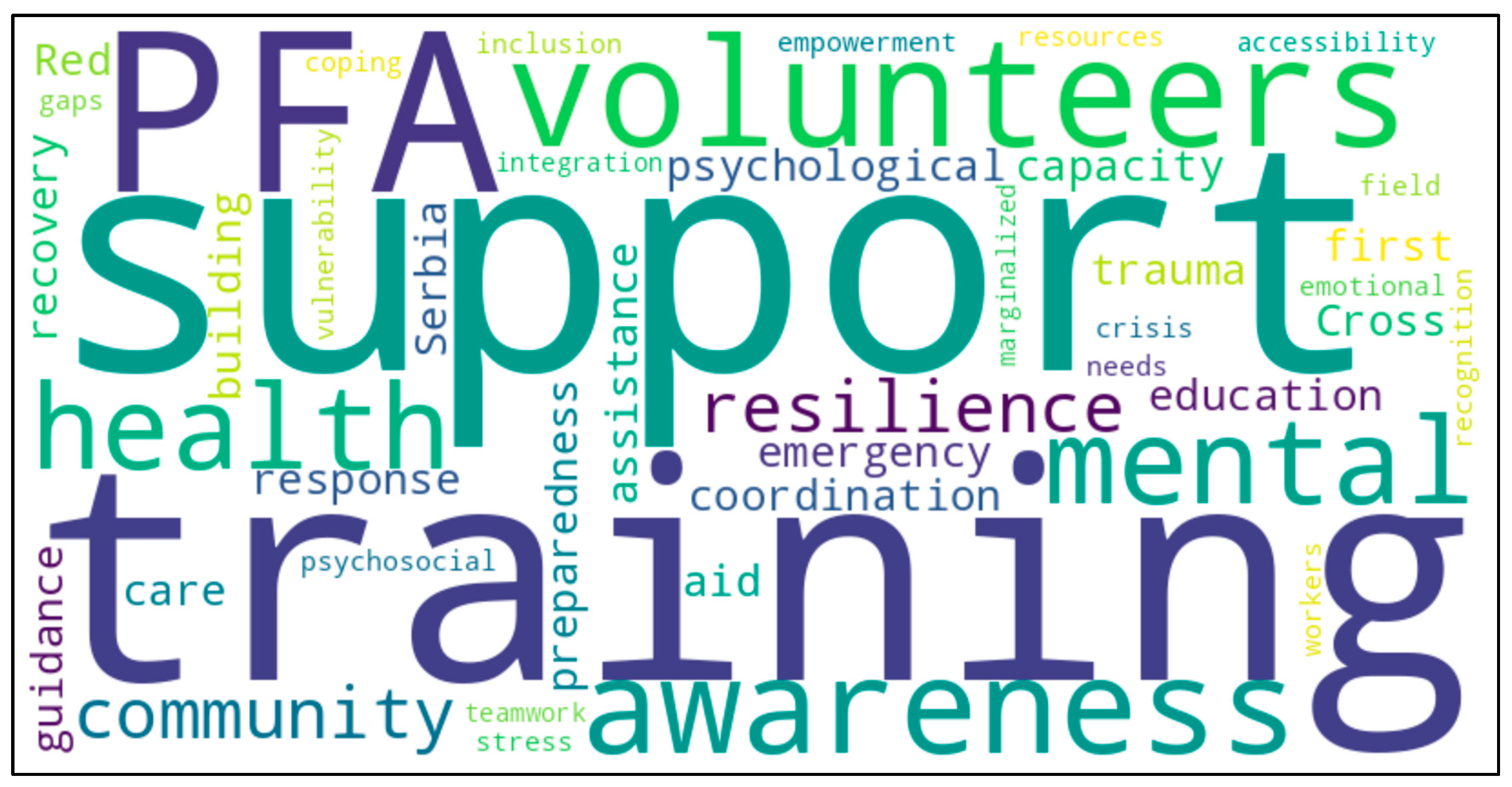
Figure 2.
Visual representation of comparative overview of medical and psychosocial first aid.
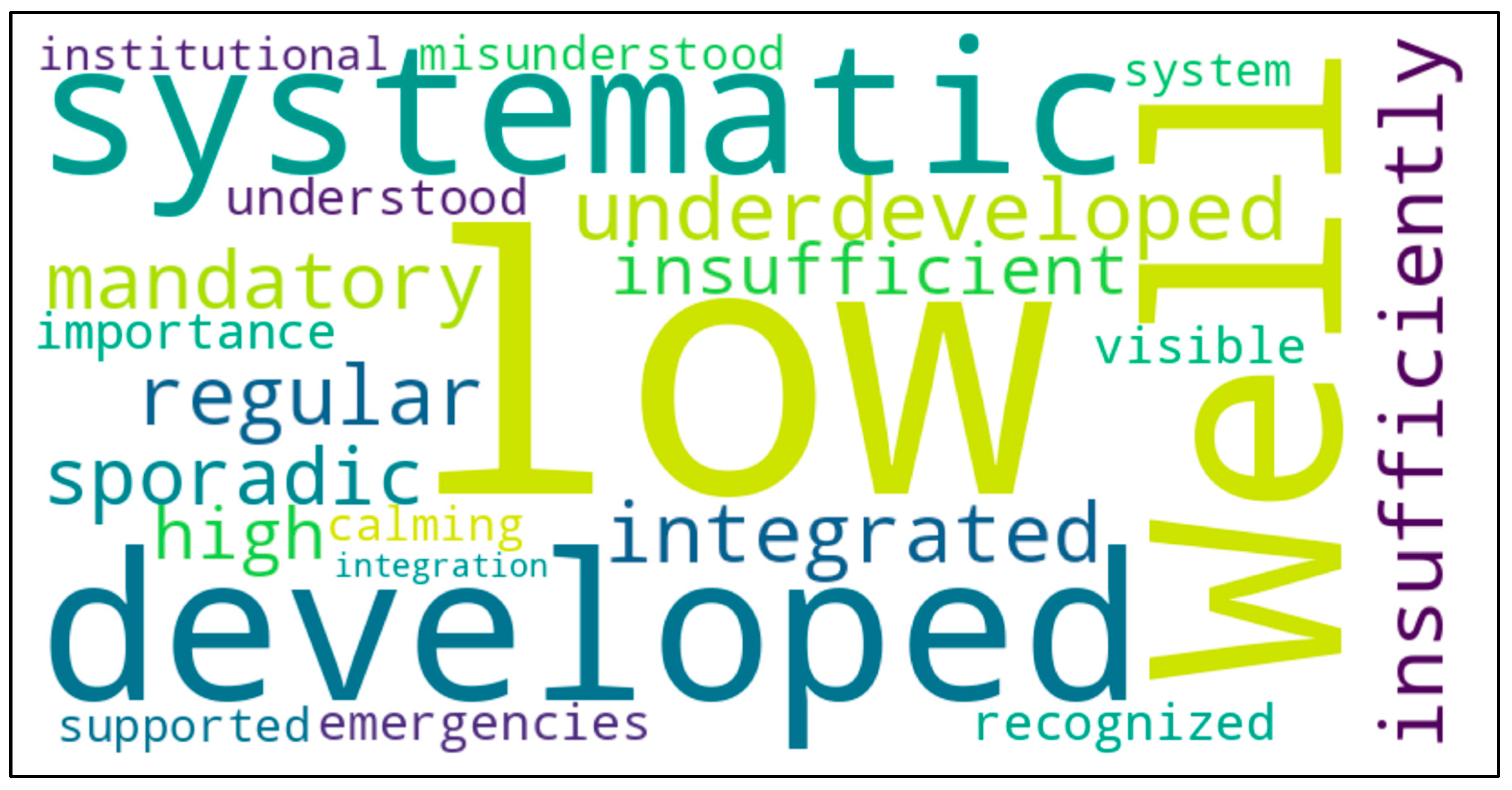
Figure 3.
Visual representation of key challenges in implementing psychosocial first aid.
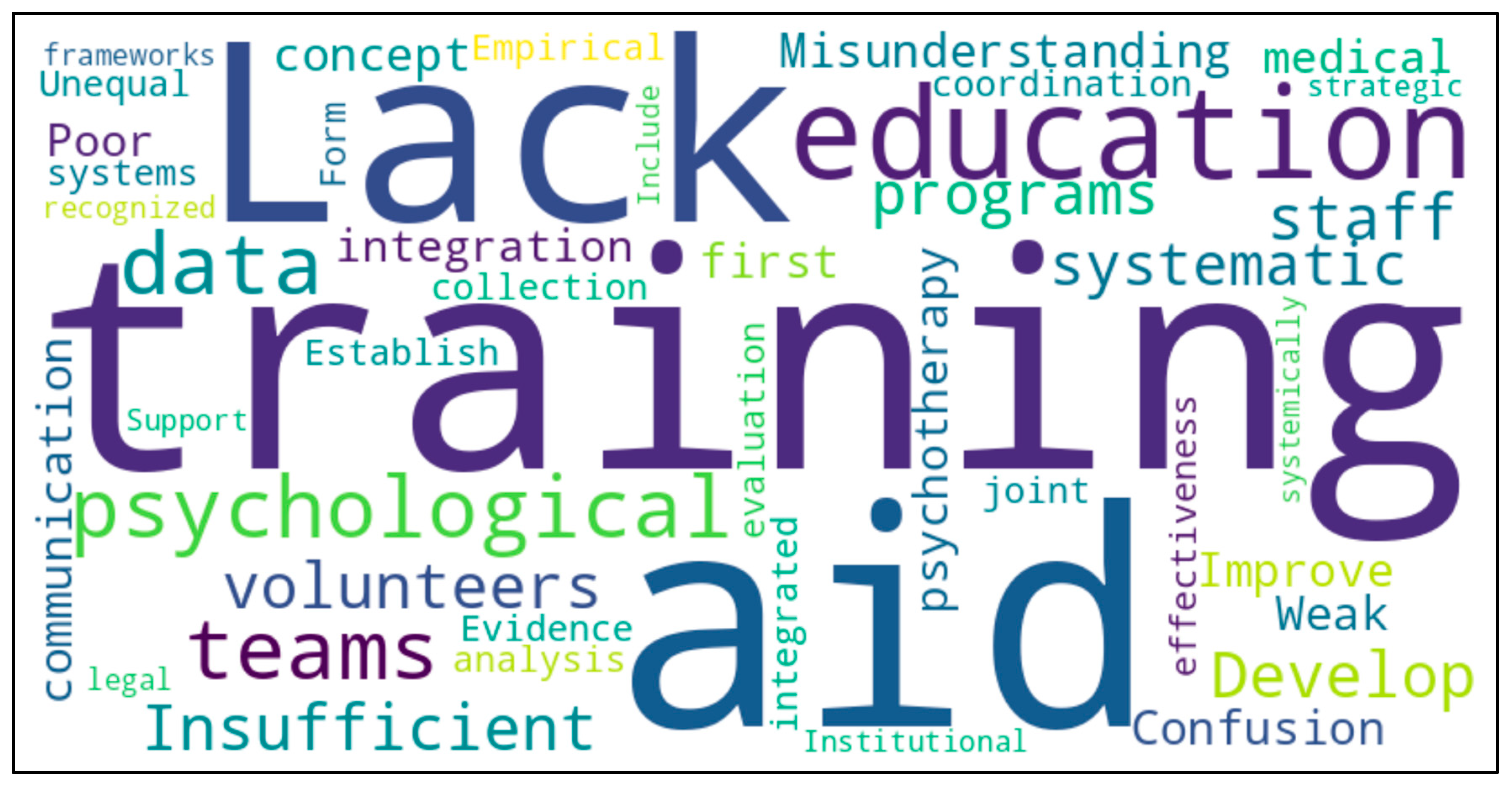
Figure 4.
Visual representation of the Red Cross of Serbia – initiatives in psychosocial support.
Figure 5.
Visual representation of the Red Cross of Serbia – initiatives in psychosocial support.

Table 1.
Identified gaps and challenges in the integration of psychosocial support.
| Category | Identified Gap/Challenge | Description |
|---|---|---|
| Legal and strategic framework | Absence of national strategy on psychosocial support | Mental health care is often marginal in legal documents and emergency preparedness plans. |
| Institutional coordination | Poor inter-agency cooperation | Fragmented responsibilities and lack of clear referral protocols between institutions involved. |
| Professional workforce | Shortage of trained professionals | A limited number of psychologists, social workers, and counsellors are trained in emergencies. |
| Training and preparedness | Inadequate training in psychosocial first aid | Lack of structured, certified training programs for first responders and volunteers. |
| Community awareness | Low public awareness and mental health literacy | Populations are often unaware of available support or reluctant to seek help due to stigma or distrust. |
| Access to services | Geographic and logistical barriers | Rural and remote areas lack timely access to psychosocial services during and after emergencies. |
| Support to vulnerable groups | Insufficient target-group specific focus on at-risk populations | Children, the elderly, persons with disabilities, and migrants often receive inadequate or generic support. |
| Cultural sensitivity | Lack of culturally appropriate approaches | Psychosocial programs often fail to align with local beliefs, traditions, and values. |
| Resources and funding | Limited and unstable funding | Budget constraints hinder the implementation of long-term psychosocial recovery programs. |
| Monitoring and evaluation | Absence of impact assessment and data collection | No standardised tools for monitoring mental health outcomes or evaluating intervention effectiveness. |
| Continuity of care | Discontinuation of services post-emergency (Missing transfer function) | Psychosocial support ends after an immediate crisis, leaving long-term needs unmet. |
| Support for responders | Lack of mental health care for professionals and volunteers | Frontline workers often face burnout and vicarious trauma with no systemic support in place. |
| Integration with medical care | Weak linkage between psychosocial and medical services | Lack of coordination between mental health providers and emergency medical services. |
| Policy implementation | Gaps between policy and practice | Even when policies exist, they are inconsistently applied or lack enforcement mechanisms. |
| Community resilience building | Neglected role of community in recovery | Insufficient inclusion of local leaders and networks in planning and delivering psychosocial support. |
Table 2.
Comparative overview of medical and psychosocial first aid.
| Aspect | Medical First Aid | Psychosocial First Aid |
| Level of implementation | Well-developed and systematic | Underdeveloped and insufficiently integrated |
| Training | Regular and mandatory | Sporadic and insufficient |
| Prevalence | High, especially in emergencies | Low, despite recognised importance |
| Public perception | Visible and understood | Often misunderstood as simple calming |
| Institutional support | Supported by system | Low institutional integration |
Table 3.
Key challenges in implementing psychosocial first aid.
| Identified challenges | Problem description | Suggested improvements |
| Lack of training | Insufficient education for staff and volunteers | Develop systematic training programs |
| Misunderstanding of concept | Confusion between psychosocial first aid and professional support such as psychotherapy | Improve education and communication |
| Weak integration with medical aid | Poor coordination between teams | Form integrated teams and joint training |
| Lack of empirical evidence | No data collection and analysis on effectiveness | Establish data systems and evaluation |
| Unequal institutional support | Psychosocial aid not systemically recognised | Include in legal and strategic frameworks International Networking Insufficient exchange at the international level Learn from existing best practice examples, concepts and experiences through exchange |
Table 4.
Red Cross of Serbia – initiatives in psychosocial support.
| Initiative/Activity | Description | Implementation Status |
| Field workers’ guide | Instructions for providing psychosocial first aid in the field | Active |
| Pocket guide | Clear directions for volunteers during emergencies | Active |
| Planned trainings | Training in psychosocial first aid for volunteers and staff | Planned/ongoing |
| Volunteer support team | Psychologists and psychiatrists support volunteers | Active |
| Knowledge self-assessment | Pre and post-training tests and self-evaluation | In use |
Table 5.
Key recommendations from expert interview.
| Recommendation | Rationale |
| Integrate medical and psychosocial first aid | To ensure a coordinated and effective response in emergencies. |
| Mandatory training for all responders | To effectively support victims and to protect themselves |
| Strengthen data collection and research | To establish evidence-based practices |
| Recognise psychosocial support institutionally | Currently underrepresented in legal frameworks |
| Empower volunteers to support vulnerable groups Psychosocial support can be provided by volunteers, but training, coordination and follow-up structures are needed to ensure quality. The mental health of the volunteers must be taken care of. |
Essential in dealing with migrants and trauma survivors The costs for this must be budgeted. Functioning pre- and post-care by professionals and psychosocial peer support should be guaranteed. |
Disclaimer/Publisher’s Note: The statements, opinions and data contained in all publications are solely those of the individual author(s) and contributor(s) and not of MDPI and/or the editor(s). MDPI and/or the editor(s) disclaim responsibility for any injury to people or property resulting from any ideas, methods, instructions or products referred to in the content. |
© 2025 by the authors. Licensee MDPI, Basel, Switzerland. This article is an open access article distributed under the terms and conditions of the Creative Commons Attribution (CC BY) license (http://creativecommons.org/licenses/by/4.0/).
Copyright: This open access article is published under a Creative Commons CC BY 4.0 license, which permit the free download, distribution, and reuse, provided that the author and preprint are cited in any reuse.


