
Submitted:
01 April 2025
Posted:
02 April 2025
You are already at the latest version
Abstract
The present study aimed to observe the relationship between the intrinsic factors of individuals, specifically consumer behavior as a citizen (CBC), perceived consumer effectiveness (PCE), green self-identity (GSI) and Trust (T), and the influence they exert on the intention to consume in restaurants that have sustainable gastronomic practices. Quantitative-descriptive research was carried out, with 398 questionnaires analyzed using the structural equation modeling (SEM) technique. It was identified that the CBC, GSI and T exert a positive influence on the intention to consume in restaurants with sustainable gastronomic practices, while PCE has not shown to exert influence. The PCE, GSI and T demonstrated direct and positive influence on CBC. Theoretically, this study contributes to the correlation of constructs that had not previously been presented together in research on sustainable consumption; by presenting the indirect role of the PCE on the intentions of sustainable consumption, and to the advances of the research of the relationship between sustainability and consumption by confirming the role of CBC, GSI and T on food consumption for the environment. Managerially, the findings aim to help companies direct their sustainable practices as a driving force for sustainable consumption, helping individuals to assert themselves and express their citizen behavior.
Keywords:
sustainable gastronomy
; perceived effectiveness
; citizenship consumer behavior
; green self-identity
; trust
1. Introduction
Food consumption is, like sustainable consumption, under the umbrella of a consumption system that involves, among several aspects, intrinsic and extrinsic factors to individuals (Sheth & Parvatiyar, 2020). In this system, the action of consuming, which involves what, when, where, and how to consume, is influenced by the interactions between these factors, and which results, for the most part, in behavioral responses directed to a socially validated consumption, allowing or inhibiting the adoption of new behaviors (Layton & Duffy, 2018). Based on this, the choice of new habits reflects the relationships between these factors, where internal and external agents to the individual can influence their ability to make more sustainable consumption choices, including food choices (Li, Liao, Yuan & Zhang, 2023).
Consumers' purchase of food and the willingness to adopt a healthy and sustainable diet are key factors that affect the sustainability of the entire food system (Polzin, Lusk & Wahdat, 2023), and denote individuals' concern and attention to socially and environmentally responsible food products (Rossi & Riveti, 2023), arising from a sustainable gastronomic system. The concept of sustainable gastronomy is based on reflections on environmental, sociocultural and economic responsibility that aim not only at food, but also at production and consumption practices (Binz & De Conto, 2019), consisting of a set of actions so that the food system occurs responsibly and in parallel with the development of a locality (Binz & De Conto, 2019; Petrini, 2009).
The insertion of this theme in the academic field is still recent, but there has been a growth in studies related to sustainable gastronomy, such as experiences in restaurants or at home consumption (Namkung & Jang, 2013), the presence of seals and certifications of sustainability of the enterprise (De Conto, Corrêa, Pessin, Zaro & Baptista, 2013; Namkunh & Jang, 2013), and the consumption of organic foods (Barros, Cabral, Bastos & Camargo 2018; White, Watanabe & Alfinito, 2019; Eberle, Erlo, Milan, & Lazzari, 2019). Analyzing demand, following the perspective of Elhoushy & Jang (2019), investigating intrinsic motivations and individual actions can point to important determinants of longer-lasting sustainable behaviors. Thus, the present study draws attention to three intrinsic aspects of the consumer as factors that can influence their behavior and consumption intention in restaurants that practice sustainable gastronomy: The consumer's behavior as a citizen – CCC; the perceived effectiveness of the consumer – EPC; green self-identity – AV. Added to these factors is trust.
Based on the research carried out and the relationships established and presented in the following sessions, it is empirically understood that when directing to the consumption of sustainable gastronomy, the individual exercises his behavior as a citizen consumer by choosing companies with socio-environmental responsibility, recognizes the positive capacity for change through his consumption, creates ties with pro-environment movements by self-identification, and establish bonds of trust with the local production chain. In summary, individuals with pro-environmental behavior, who understand the impacts of their consumption and have a strong green self-identity may be more willing to consume items that are pro-environment, such as sustainable gastronomy.
In addition, the research was carried out in the interior of Pernambuco, based on the region called Local Productive Arrangement (LPA) of clothing in Pernambuco, which comprises the second largest LPA of textile and apparel production in the North and Northeast of Brazil (Brazilian Association of Textile Industry, 2018). The region generates about 47.5 thousand direct jobs in 2,561 companies, 330 of which are textiles and 2,231 are clothing, a characteristic that favors the migration of individuals from all over the region, especially young people, triggering the opening of several courses and universities, in addition to the development of other markets, such as gastronomy. According to the Sectorial Chamber of Gastronomy of the Commercial and Business Association of Caruaru – ACIC (2020), the city of Caruaru, base of the APL, has more than 200 restaurants in different formats, which emerged to meet the growing demand for new services in the food area.
Based on the explanation presented, this work aimed to identify the relationship between consumer behavior as a citizen, perceived effectiveness, green self-identity and confidence in the consumption of sustainable gastronomy. To this end, we seek to answer the following research question: How do CCC, EPC, green self-identity and trust relate to the intention of the consumer of restaurants that practice sustainable gastronomy in the Pernambuco Clothing LPA?
To obtain and present the answers to these questions, the theoretical and methodological development was developed and analyzed, being presented throughout this article.
2. Theoretical Framework
2.1. Sustainable Gastronomy and Sustainable Restaurants
Sustainable gastronomy is observed and understood as a gastronomy that is increasingly concerned with the food cycle, based on a farm-to-table philosophy, and practices that strive for collaboration with the local community, appreciation of sustainable products and encouragement of environmental education (Binz & De Conto, 2019; Krause & Bahls 2013; Petrini, 2009). Philosophies such as Slow Food and veganism, for example, have sustainability principles that run through the entire production process and the raison d'être of establishments, always valuing the local community, healthy food and defending the world's agricultural biodiversity (Binz & De Conto, 2019). Thus, the union of good food with well-being in an environment committed to sustainability forms a differential to establishments (Binz & De Conto, 2019), contributing to the awareness of the impacts that consumer actions can have on the environment (De Conto, 2017; Kraue & Bahls, 2013).
These factors have contributed to the development of establishments aimed at meeting the demands for sustainable food, and among them are sustainable restaurants (Elhoushy, 2020). According to Puntel and Marinho (2015), sustainability indicators in restaurants began to be investigated in the mid-2000s from studies such as those of Souza (2000), Coral (2002), which address the correct management and reduction of waste produced, followed by the investigation of the use of clean technologies and conscious use of natural resources (Faria, Gasparotto and Barbosa, 2005; Savitz and Weber; 2007). Further on, works with Nunes (2012); Solla and Silva (2012) and Krause and Bahls (2013) brought conscious consumption through suppliers and the ecologically correct supply chain, and themes such as the valorization of local agriculture and the optimization and reuse of products appear in the research of Rubim (2013) and Silvério & Oltramari (2014).
In investigations such as Kim's, Yoon & Shin (2015), Jang, Chung &Kim, 2015; Wang, Chen, Lee, & Tsai (2013), who deal with sustainable restaurants, it is visible the difficulty in defining in a unique and standardized way the denomination of sustainable restaurants (Kim, Yoon & Shin, , 2015; Elhoushy, 2020). In this context, Jang, Chung &Kim (2015), Kim, Yoon & Choi, (2016) and Wang (2015) appear in the literature presenting in an analogous way terms such as "sustainable", "green", "ecologically correct" and "environmentally friendly" to define these establishments and differentiate them from the others. In short, sustainable restaurants can be identified and characterized by the adoption of a set of sustainable gastronomic practices that positively impact the environment and its agents (De Conto, 2017).
When reflecting on restaurants and their practices, Krause & Bahls (2013), and De Conto, (2017) identified central and important variables for the development of a sustainable gastronomy in these establishments. Krause & Bahls (2013) identified four central and important variables for this activity, such as: the preparation of menus, the type of ingredients used, the construction of physical spaces that use natural resources and environmental education. On the preparation of the menus, Binz & De Conto (2019) corroborate Krause & Bahls (2013) pointing out that establishments need to rethink portion sizes, seasonality and cultural aspects; for the ingredients, the efficiency of production, packaging and stock, in preservation as well as techniques to avoid waste. In addition, think about the planned construction of physical spaces that involves the use of renewable energy, the management of solid waste; and finally, carry out and encourage environmental education, observing the role of institutions in production and service through the training of the workforce, executing and maintaining the previous guidelines (Binz & De Conto, 2019; Krause & Bahals, 2013).
Thus, this study focused on the aspect of sustainable food consumption in restaurants that practice sustainable gastronomy. Through the consumption of these foods, it is possible to identify traces of sustainable consumer behavior that can help minimize the gap between theory and practice in the field of sustainable consumption (Censis & Coldiretti, 2010). In line with a theoretical development that proposes individual motivations as important determinants of sustainable behaviors (Elhoushy & Jang, 2019), this study investigated the intrinsic factors of the consumer through consumer behavior as a citizen - CBC, EPC, green self-identity and trust and the relationships they establish with the intention of consuming products from restaurants with sustainable gastronomic practices.
2.2. The Consumer Behavior as a Citizen - CBC
The consumer as a citizen is the individual who makes consumption choices aiming at the sustainable development of the community, seeking to balance their personal interests with social and environmental responsibility (Ricci, Marinelli & Puliti, 2015; Stone, Barnes & Montgomery, 1995; Wang, 2015). In addition to the search for this balance, this behavior leads the consumer to evaluate the business practices exercised towards employees, customers and the environment, as a criterion for their consumption decision (Ricci, Marinelli & Puliti, 2015). Thus, when these practices are positive, the consumer tends to act proactively towards the organization, carrying out voluntary actions capable of promoting the company (Rosenbaum and Massiah, 2007), while exposing its positioning and its environmental responsibility through its consumption (Ricci, Marinelli & Puliti, 2015; Stone, Barnes & Montgomery, 1995; Wang, 2015).
Environmental responsibility is represented when an individual demonstrates intentions to adopt measures aimed at helping to reduce environmental problems through their consumption (Stone, Barnes & Montgomery, 1995). Thus, the consumer does not act solely in a way concerned with his own economic interests, but as a citizen consumer (Stone, Barnes + Montgomery, 1995), analyzing jointly product and producer (Ricci, Marinelli & Puliti, 2015). In this perspective, organizations that have sustainable practices, for example, can influence the intention of consumption and help consumers to ratify their social role and their responsibility (Ricci, Marinelli & Puliti, 2015; Stone, Barnes & Montgomery, 1995).
However, the debate on consumer behavior as a citizen needs to deal with some challenges related to reconciling autonomy, responsibility and individual agency with collective obligations (Barnett et al. 2005). When analyzing this confrontation, it is noticed that, often, the initial statement of principles is not followed by coherent actions, as observed by Ricci, Marinelli and Puliti (2015) for example, pointing out in their studies that being more aware of the environmental pollution caused by conventional vehicles did not lead individuals, in the majority, to an adoption of "green cars". However, when the gaze on the phenomenon is directed to the field of food consumption, a relevant correspondence between values and practice can be perceived (Ricci, Marinelli & Puliti, 2015).
This is because, according to research conducted by Censis and Coldiretti (2010), the behavior of the citizen consumer makes him selective, competent and demanding for a better quality of the product (which attends to his personal needs), and for an organizational positioning increasingly directed to sustainable development (meeting collective needs). And this can best be seen in food preferences. For example, foods with controlled designation of origin, with organic seals and certificates, produced locally and coming from fair trade – all resulting from sustainable production – can be pointed out as an organizational reflection towards a consumer who pays attention to the production process (Ricci, Marinelli & Puliti, 2015). By a more selective and demanding choice, the consumer seeks to communicate his desire for authenticity or his protest something considered misleading, harmful to the environment (Ricci, Marinelli & Puliti, 2015), generating indications of his responsibility to the environment (Stone, Barnes + Montgomery, 1995), and this is more noticeable with food.
Consumer demand for better food quality and the search for local products that enhance environmental, economic and social sustainability reflect a new priority given to individuals' decision-making processes (Elhoushy, 2020; Lago, Marcon, Ribeiro, de Medeiros, Brião & Antoni, 2020). The growth of this demand in conjunction with the debate on the need to support local trade and the dangers related to the use of pesticides, is an example that balances the concern between human health and environmental safety (Ricci, Marinelli & Puliti, 2015; Stone, Barnes & Montgomery, 1995). Therefore, when consumers opt for this consumption, their behavior as a citizen aims to solve individual needs (food, health and well-being) while seeking to give vent to collective needs(sustainable development, incentive to small producers and local businesses, etc.), acting responsibly (Ricci, Marinelli & Puliti, 2015; Stone, Barnes & Montgomery, 1995), pointing out a consumer behavior as a citizen when making his choices.
Thus, it is believed that when consumers demonstrate their intention to consume in these restaurants, they believe in the organizational practices and processes developed, ratifying their behavior as citizens and their environmental responsibility. Within this context, the following hypothesis was formulated:
H1 – Consumer behavior as a citizen exerts a direct and positive influence on the intention to consume in restaurants with sustainable gastronomic practices.
2.3. Perceived Consumer Effectiveness
Thus, when talking about the consumer's own understanding of the impacts of their consumption on the environment, this can be observed through the perceived effectiveness of the consumer – PEC, the second intrinsic aspect observed in this study. More recent studies reinforce the relevance and timeliness of the theory. For example, the study of the role of EPC in the relationship between the ethical and environmental awareness of consumers and the use of information related to food products (Ghvanidze, Velikova, Dodd & Oldewage-Theron, 2016) and how EPC acts by moderating the relationship between attitude and intention to adopt more sustainable consumption practices (Higueras-Castillo, LiébanaCabanillas, Muñoz-Leiva & García-Maroto, 2019). In this study, the use of PEC takes place in the process of investigating the possible relationship between the perceived effectiveness of the consumer and his intention to consume food in restaurants that practice sustainable gastronomy, in addition to the possible influence that it can exert on the CBC, in which the positive perception about its actions can be observed as a reinforcement on sustainable behavior, ratifying their role as an individual in society.
More recent studies reveal that individuals who believe that, for example, green behavior can make a positive difference to the environment are more likely to form a favorable attitude toward that behavior (Jaiswal & Kant, 2018; Kang, Liu & Kim, 2013). In addition, consumers with this type of perception can be important contributors to a sustainable society by making, for example, food choices that are healthy and that their production process respects the environment, in accordance with socially ethical standards (Macdiarmid et al., 2012; Zander & Hamm, 2010). By empirically observing the consumption of products from restaurants that have sustainable gastronomic practices, as well as the consumption of organic products, it is suggested that EPC can exert a positive effect on the intention to consume these products.
In this context, it is believed that the consumer, by consuming these products, believes that he is contributing positively to the development of the local productive arrangement, a factor that leads to the development of the following hypothesis:
H2a – The perceived effectiveness of the consumer exerts a direct and positive influence on the intention to consume in restaurants with sustainable gastronomic practices.
In addition, the consumer's perception of the ability to perform and impact their actions may indicate a behavioral change, or intensify a pre-existing behavior, since the conviction that some action can be successfully performed leads the individual to express the behavior necessary to produce the result in question (Ajzen, 1991; Bandura, 1997). In this scenario, when choosing restaurants with sustainable gastronomic practices, it is suggested that individuals seek to reinforce or practice their behavior as citizens because they believe that the consumption of products from these establishments can contribute to the good of society and the environment.
Thus, it seems possible to understand that the presence of EPC leads consumers to express their behavior as citizens, directing their purchase intention to food from restaurants with sustainable gastronomic practices. In this sense, it is indicated that the CPE can exert a direct and positive influence on the CCC, formulating the following hypothesis:
H2b - EPC exerts a direct and positive influence on consumer behavior as a citizen.
2.4. Green Self-Identity
Studies present in the literature point out that people behave in an environmentally friendly way, even if it is expensive in terms of money and physical or mental effort (Steg et al., 2012), by the presence of intrinsic motivations and desires, present in their self-identity (Lawler, 1998). From a sociological point of view, self-identity is defined as a group of perceptions that are internalized as identity and help shape the role that each individual plays in the social structure, representing how individuals see themselves in these roles (Higueras-Castillo, LiébanaCabanillas, Muñoz-Leiva & García-Maroto, 2019; Whitmarsh & Neill, 2010). During the formation of behavior, people tend to adopt specific roles through which they absorb their meanings and expectations (Stets & Burke, 2000, 2003). Thus, self-identity can be understood as a marker used to describe the individual, where personal motivations and social interaction interfere with their attitude (Stryker & Burke, 2000).
Analyzing identity theory in a context of pro-environmental behavior, the perspective of green self-identity has been termed, which would be that individual willing to adopt behaviors that respect the environment (Barbarossa et al., 2015; Steg et al., 2012 Stets and Biga, 2003), as an individual's commitment to the environment (Khare, 2015; Lee, 2009). Ahn, Koo & Chang (2012) point out that green selfidentity is a combination of social (external motivations) and psychological (the individual's own motivations) factors, such as self-esteem, social connection, and perceived seriousness of environmental problems.
In studies such as that of Sparks & Shepherd (1992), the identity of the consumer is revealed as an important factor influencing the purchase of organic food and Stets & Biga (2003) suggested that the identity of an individual is important to determine their commitment to the environment. In this aspect, the way the individual recognizes and exposes himself are factors derived from his self-identity and, from the perspective of sustainability, the way he perceives himself and the importance he gives to pro-environmental behavior and actions are traits that indicate his green self-identity (Barbarossa et al., 2017; Chen and Chang, 2012; Khare, 2015; Stets and Biga, 2003; Whitmarsh and O'Neill, 2010).
Research in the field of marketing has highlighted how green self-identity can lead to green behavior favoring the adoption of green products or behaviors (Sparks & Shepherd, 1992). According to Barbarossa & de Pelsmacker (2016), self-identity has been determined as a significant predictor of various "green" actions, such as recycling behaviors being driven by consumers' feelings of being recyclers (Mannetti, Pierro & Livi, 2004). The same can be said of the intention to buy eco-friendly products, which has been found to be affected by individuals' perception of being green (Sparks & Shepherd, 1992). Findings, such as those of Lee (2009), bring consumers pride for showing a green behavior aligned with their self-identity.
In this sense, it seems analogously possible to infer that, as in the purchase of ecological products (durable goods), having a green self-identity is a key factor in the adoption of food consumption from sustainable practices, such as the one investigated in this study. Just as the relevance of green self-identity to individuals' buying behavior has been previously established (Ahn et al., 2012; Akehurst, Afonso & Martins Gonçalves 2012; Khare, 2015; Lee, 2008, 2009; Stets & Biga, 2003) and based on these studies, it is assumed that green self-identity would be an important determinant of the intention to purchase products from sustainable gastronomic practices. Based on this, the following hypothesis is developed:
H3a – Green self-identity exerts a positive influence on the intention to consume in restaurants with sustainable gastronomic practices.
The relevance of green self-identity for individuals' green attitudes and purchasing behavior has been established in studies such as those by Akehurst, Afonso & Martins Gonçalves (2012) and Khare (2015). In this scenario, the influence of consumers' identity on ecological purchasing behavior and attitudes related to the environment suggests that an individual's identity is important in determining their commitment to the environment (Stets and Biga, 2003). From this perspective, it is suggested that the green self-identity is possible to influence the behaviors in favor of the environment investigated here, leading to the development of the following hypothesis:
H3b – Green self-identity directly and positively influences consumer citizenship behavior
By expressing their behavior and aligning it with the sustainable gastronomic practices exercised by local companies, the consumer not only expresses his green self-identity and supports pro-environmental actions, but also demonstrates his trust placed in the products and the organizations that provide it.
2.5. Trust
Most of the time, the attributes that make the product a result of sustainable gastronomy and can favor its consumption are intrinsic to the product (such as being organic, for example) or distant from the consumer (such as sustainable production practices). Thus, pro-environmental behaviors and the intention of food consumption, seen here from the perspective of sustainable gastronomy, can still be intensified by the presence of trust. Introduced in the field of marketing from the studies of Dwyer, Schurr & Oh (1987), trust plays a central role in consumer relations because it can moderate the relationship between product attributes (in this case, being sustainable) and the intention to purchase individuals by reducing possible uncertainties (Anderson & Narus, 1990; Doney & Cannon, 1997; Nuttavuthisit & Thogersen, 2017).
The studies developed on trust are diverse and cover several perspectives (Nuttavuthisit & Thogersen, 2017; Rousseau et al. 1998; Truninger, 2013). Theorized in the field of marketing by Dwyer, Schurr & Oh (1987), trust can be defined as a psychological state that comprises the intention to accept vulnerability based on positive expectations about another person's intentions or behaviors. In short, it is based both on the expectation that the partner will act responsibly, and on the intention to trust the exchange partner, accepting contextual vulnerability (Nuttavuthisit & Thogersen, 2017).
In this perspective, there is a predisposition of the consumer to trust or not the products or institutions (Nuttavuthisit & Thogersen, 2017). In the purchase of green, organic, sustainable products, there is a predisposition of the consumer to trust in the effectiveness of these products, whether in assisting the environment by combating the impacts of mass production or contributing to the development of the local economy (Nuttavuthisit & Thogersen, 2017; Thøgersen et al. 2010). In this study, trust is adopted from the point of view of the intention to consume in restaurants that have sustainable gastronomic practices. Moreover, most research on the importance of trust to consumers' propensity to act in an environmentally friendly manner, including the purchase of organic food, implicitly or explicitly implies that its influence is motivational: this distrust causes consumers to dismiss any quality of credibility claimed and therefore reduces their motivation to act in an environmentally friendly manner. Thus, it is essential to trust so that the consumer has behaviors in favor of the environment.
Based on the above, it is equally possible to infer that the extent to which the consumer trusts the product and the producer, the greater his intention to consume. In this aspect, the following hypothesis is developed:
H4a – Trust exerts a direct and positive influence on the intention to consume in restaurants with sustainable gastronomic practices.
Studies such as those by Dang, Nguyen and Pervan (2020) assume that when consumers maintain a positive attitude and trust companies and the practices they exercise, they tend to express their citizenship behavior. When consumers develop trust in companies that exhibit socially responsible practices, they are motivated to perform reciprocal acts that benefit those companies and the community (Dang, Nguyen, & Pervan, 2020; Ho, 2014), actions that demonstrate their consumer behavior as citizens (Ricci, Marinelli & Puliti, 2015; Stone, Barnes & Montgomery, 1995; Wang, 2015). In this way, evaluating the effect of trust on the behavior of individuals can contribute to a better understanding of the field, in addition to helping restaurants to better position their products and services. Based on the above, the following hypothesis was developed:
H4b – Trust has a direct and positive influence on consumer behavior as a citizen.
By targeting the consumption of sustainable gastronomy, it is empirically understood that the individual exercises his citizen consumer behavior by choosing companies with socioenvironmental responsibility, recognizes the positive capacity for change through their consumption, creates ties with pro-environment movements by self-identification, and establishes bonds of trust with the local productive chain. In summary, individuals with pro-environment behavior, who understand the impacts of their consumption and have a strong green self-identity may be more willing to consumption items that are pro-environment, such as sustainable gastronomy.
3. Materials and Methods
The present work was dedicated to investigating the relationship between PCE, CBC, green self-identity and trust with the intention of consuming in restaurants with sustainable gastronomic practices. To this end, this research assumed a quantitative, descriptive and confirmatory character, since it aims to expose characteristics of a phenomenon, establishing relationships between variables and defining their objective nature (Sampieri, Collado & Lucio, 2013).
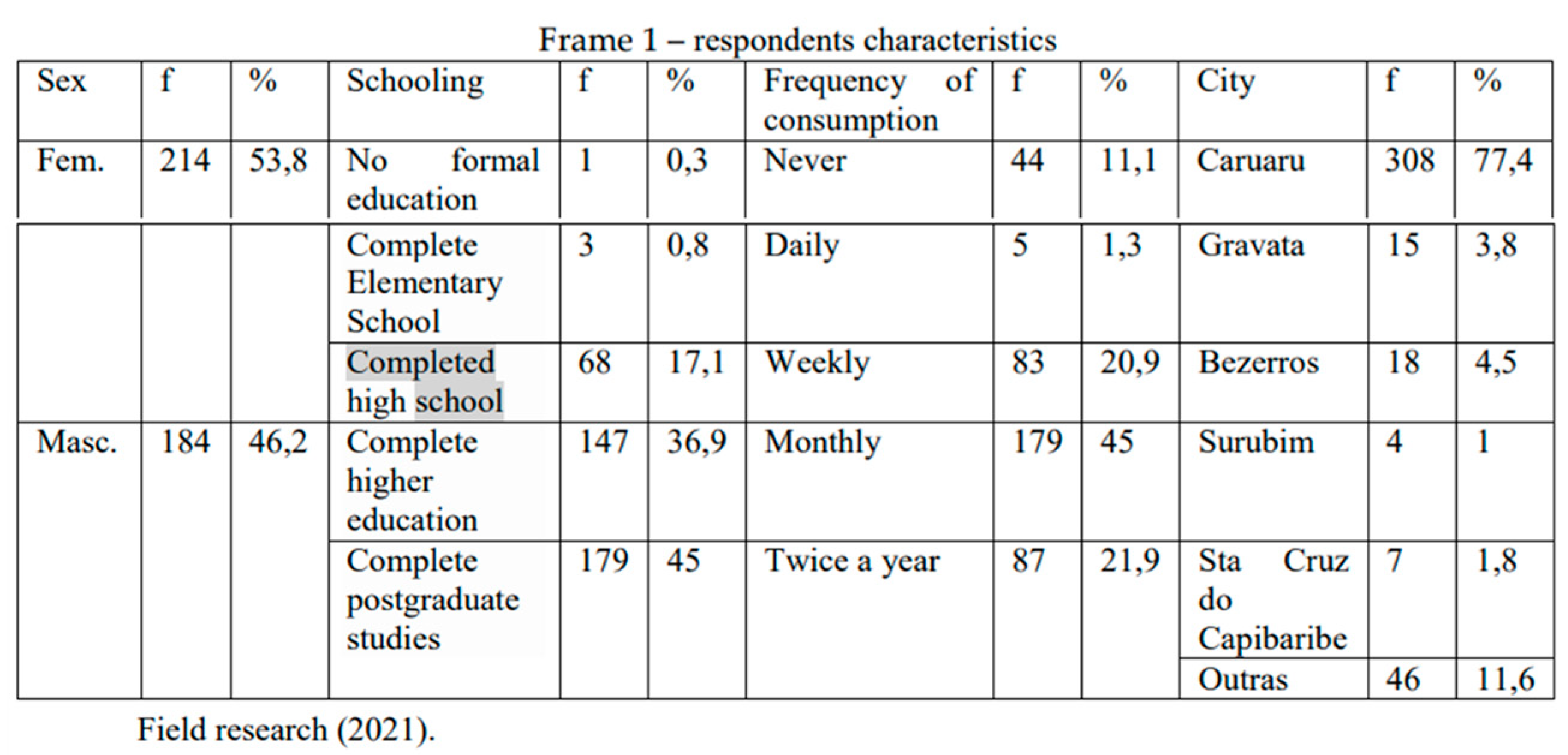
Initially, the final sample obtained was 404 respondents, who underwent a process of prior analysis to verify possible filling failures. Six questionnaires with completed failures were identified that were excluded, leading to a final sample of 398 valid questionnaires. It is emphasized that the questionnaires and respondents who participated in the pre-test were not used as samples and valid final answers. Of the 398 respondents, 53.8% were female, with a level of education in most complete graduate studies, with a total of 45% of the respondents, followed by those with complete higher education, with 36.9% of the respondents, and residents of the city of Caruaru, with a total of 77.4% of the answers and the frequency of consumption of sustainable gastronomy, 45% answered that they consume monthly.
For data collection, a questionnaire was formulated. The closed and structured survey questionnaire was applied via the Google Forms platform and disseminated online. To apply thedefinitive questionnaire, the sampling technique was defined from the target population of investigation and tracing the type of cut-off of the sample adopted, using the SPSS to treat and analyze the collected data, through descriptive statistics of frequency, mean and standard deviation for description of the sociodemographic profile of the sample, and use of the Conbrach alpha test (with levels considered acceptable from 0.6) for analysis of the sample reliability of items and factor analysis to test the dimensionality of scales, using tests such as Kaiser-MeyerOlkin (KMO) and bartlett's scouting test (Hair et al., 2006). The hypotheses and relationships of the variables established in the study were tested through structural equation modeling.
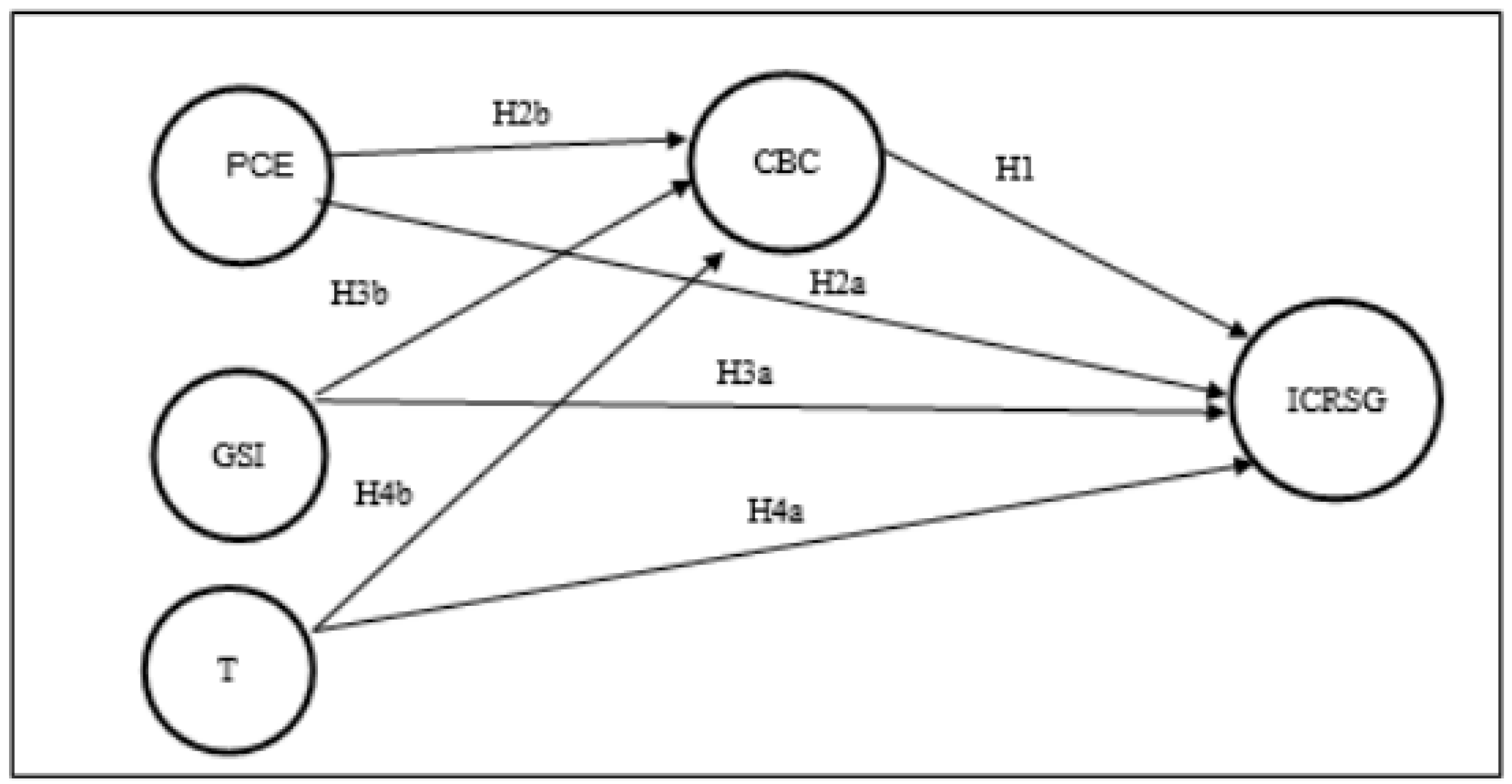
The following theoretical model has been structured:
Figure 1.
Theoretical model. Source: Authors, 2020.
To measure the Construct Perceived Effectiveness of the Consumer - PCE, scales adapted from the studies of Kabaday, Dursun, Alan, Tuğer (2015) – four items, Straughan & Roberts (1999) were used - three items, Hughner, McDonach & Prothero (2007) - three items. To measure Consumer Behavior as a Citizen - CBC, the adapted Wang scale (2015) was used, with 6 items. For green self-identity - GSI, the scales of Barbarossa et al. (2017) – 3 items, and Trust – T, was measured through the adapted scale of Nuttavuthisit, K., & Thøgersen, J. (2015), with 10 items. Finally, the intention to consume in restaurants with sustainable gastronomic practices, a variable dependent on this investigation, was measured from the elaboration of three items, developed by the author as indicated in Table 1 in the appendix section.
4. Results
4.1. Measurement Model Analysis
Regarding the measurement model, first, the Mahalanobis square distance (D2) was performed, a measure used to ascertain the existence of sample outliers (Marôco, 2010). No outliers were identified, and, for this reason, no observation was taken from the sample. Pearson's analysis of the variables was also performed, showing that the variables GSI02-GSI03, T01-T02 and T02-T03 obtained values above 0.7, with values of 0.779, 0.784 and 0.781, respectively. However, due to the importance of the items for the scale, we chose to maintain these items on the scale (Guimarães, Severo & Vasconcelos, 2017).
Soon after this stage, the data analysis was continued by investigating the level of adequacy of the scales of each construct. Thus, reliability (cronbach's alpha), composite reliability and Explained Mean Variance (AVE) were performed. It is emphasized that for reliability analysis, values above 0.7 were considered valid to affirm the internal consistency of the items (Hair et al, 2015). Table 5 presents cronbach's alpha values of the constructs, indicating that all obtained values above 0.7, demonstrating the internal consistency of each item of the constructs of the scale.
About Composite Reliability (WC), the recommendation was followed by Byrne (2010) and Fornell and Larcker (1981), that the values should be equal to or above 0.7 in each construct. Through Table 5 it is also possible to verify that the CC values of the constructs met the recommendations. To evaluate the value of the AVE, the recommendation of Byrne (2010) and Fornell and Larcker (1981) was also followed regarding the recommended values for the ave to be accepted, considering that they are equal to or greater than 0.5. Thus, this measure was also identified in the construct variables, indicating the acceptance of the ave. The values of the AVE are also found in Table 1.
Regarding the validity of construct scales, three validity measures were used: factorial, convergent and discriminant (Kline, 2011). For the analysis of factorial validity, we took as a basis the values of the standardized coefficients for each item of the constructs. Items PCE03 and PCE04, from construct PCE, items CBC03, CBC06, CBC07 and CBC08, from construct CBC, item GSI04 from construct GSI and T04 from construct T, were removed for values below 0.5. after removal, all other items presented values above 0.5, thus confirming factorial validity (Hair et al., 2015).
For the analysis of convergent validity, the values of the AVE were used. Thus, it is possible to observe in Table 6 that the constructs obtained values above the recommended and therefore it is possible to affirm that the convergent validity was met.
To verify the discriminant validity, a comparison was made between the values of the AVE of each construct with the shared variance, following the recommendation of Fornell and Larcker (1981), that to confirm the discriminating validity the items of a construct should not present a high correlation with the constructs that are theoretically different. Thus, the values of shared variance cannot be higher than the values of the AVE (Fornell & Larcker, 1981). Thus, as shown in Table 2, the values of shared variance were below the values of the AVE, confirming the discriminating validity.
After presenting the analysis of the measurement model, the structural model was analyzed, presented in the next section.
4.2. Structural Model Analysis and Discussion of Hypotheses
After performing the analysis of the measurement model, the procedure of analysis of the structural model was performed (Marôco, 2014). At this stage, the adjustment indexes of the model were calculated, incorporating relationships between the latent variables into the measurement model, and presented in Table 3. For the factors EVCI and RMR, the recommendation of Marôco (2014) was followed, that the lower these values, the better the adjustment of the model. The Values of EVCI and RMR for this research were considered the lowest expected values.
As shown in Table 3, all indexes met the recommended criteria for the quality of the model adjustment (Hair et al., 2015). Thus, the hypothetical model was evaluated based on standardized regression weights and p values, which indicate the statistical significance of the relationship between constructs and predict the effect of independent variables on dependent variables.
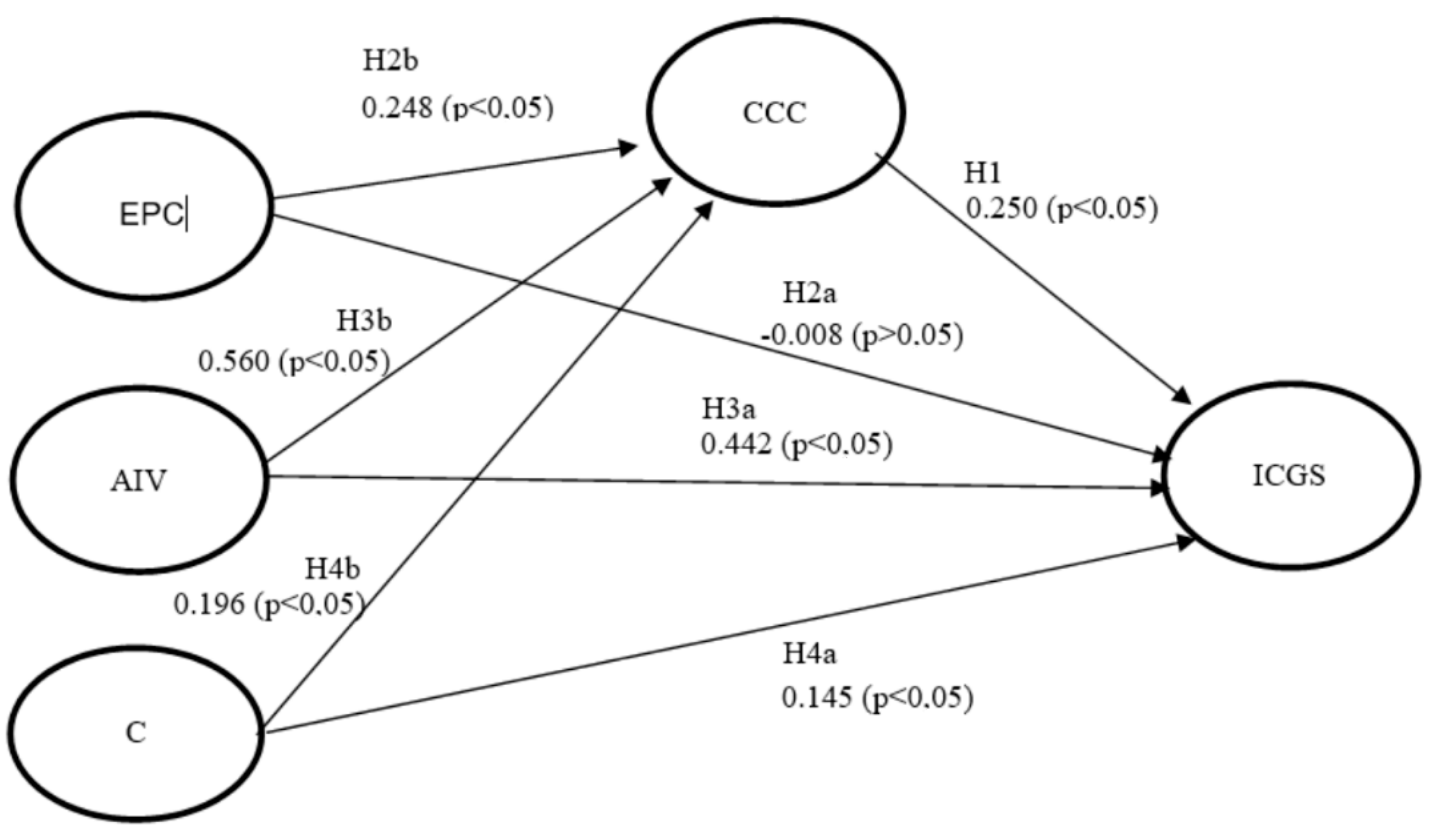
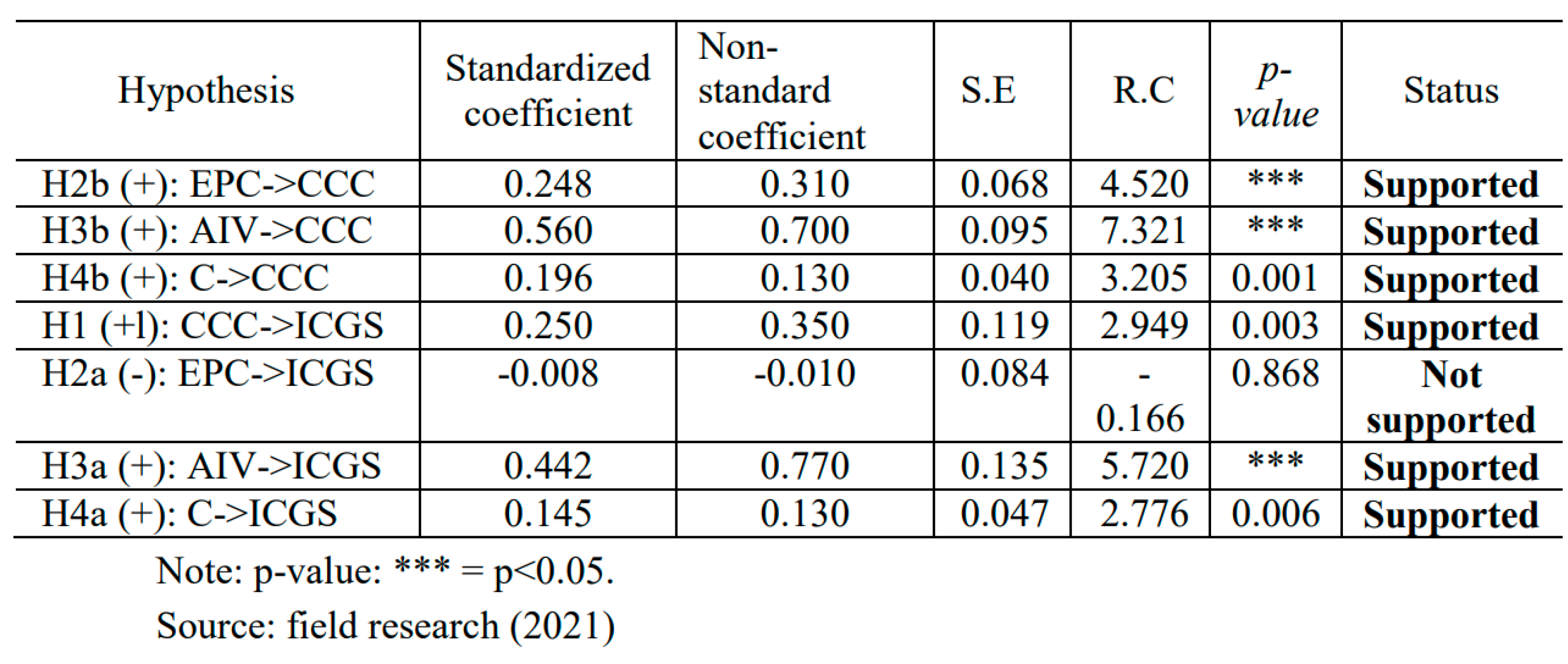
Table 4 presents the values of the hypothetical model, pointed out that the following hypotheses were supported: H1, H2b, H3a, H3b, H4a, H4b, were supported and only the H2a hypothesis was not supported because it did not present statistical significance.
Thus, to provide a graphical visualization of the relationships between hypotheses and constructs, graph X presents the values of the standardized coefficients of the hypotheses and their respective significances, defining the theoretical model of the study after the analyses.
Figure 2.
Theoretical model after analysis. Source: Author, 2020.
5. Discussion
Analyzing the results obtained, hypothesis H1 is observed, that the behavior of the consumer as a citizen exerts direct and positive influence on the intention to consume sustainable gastronomy, obtained a p<0.05 and was, therefore, confirmed. This means that individuals who intend to consume products from restaurants with sustainable gastronomic practices exercise their citizen consumer behavior by seeking to meet, through their consumption, not only their individual needs, but also support collective needs from their decisions (Ricci, Marinelli and Puliti, 2015). This result corroborates the results of research by the authors Ricci, Marinelli & Puliti (2015) and Stone, Barnes & Montgomery (1995), that, through consumer choices, the individual can express his consumer behavior as a citizen.
Furthermore, the confirmation of the hypothesis reinforces the understanding that, when consumption is directed to sustainable foods, the gap between theory and practice in the field of sustainable consumption tends to decrease (Censs & Clderetti, 2010; Ricci, Marinelli & Puliti, 2015). This means that consumers not only understand the importance of products produced and marketed within a sustainable sphere, but also directs their consumption intention to these items, a finding that reinforces the importance of studies in the field of food consumption to understand consumer behavior as a citizen and how it establishes its consumption choices.
Regarding the hypotheses of the field of perceived effectiveness of the consumer – PCE, two hypotheses were formulated: H2a, which states that PCE exerts direct and positive influence on the intention to consume in restaurants with sustainable gastronomic practices, and H2b, which states that PCE exerts direct and positive influence on consumer behavior as a citizen. In this field, the H2a hypothesis was obtained (p>0.05) and cannot be supported.
This result is in line with the results of other studies that bring the PCC as a variable capable of positively and directly influencing the consumption intention of individuals, such as Cho, Thyroff, Rapert, Park and Lee (2013), Lee, Kim and Choi (2014) and Vermeir and Verbeke (2006). This result can be explained because, when it comes to the consumption of sustainablegastronomy, the individual may not yet have a clear perspective on how his behavior can help in solving environmental problems from the choices of this type of gastronomy (Binz & De Conto, 2019), because many elements that can form the context of sustainable gastronomy are connected to internal practices, that occur in areas where the consumer does not have access easily (kitchens and production chains, for example) (Binz & De Conto, 2019; Krause & Bahls, 2013; Petrini, 2009).
Although they are discussed separately, when observing the relationship between the hypotheses H2a and H2b, the first being unconfirmed and the second confirmed, it is possible to indicate that PCE, in the field of sustainable gastronomy, may not exert a direct influence on the purchase intention, but may exert an indirect influence. Studies such as those by Dang, Nguyen and Pervan (2020), Kabaday, Dursun, Alan and Tuğer (2015), which point to a PCE that exercises a moderating variable and or influence variables that are predecessors of intent, justify the discussion. Thus, from the result presented here, PEC should be observed and understood as a variable capable of influencing behaviors that precede the purchase intention.
The H3a hypothesis, that green self-identity exerts a direct and positive influence on the intention to consume sustainable gastronomy, presenting p<0.05, and is therefore supported. ThiS result corroborates the findings of Barbarossa and Pelsmacker (2016), Carfora, Caso, and Conner, (2016) and Smith et al., (2008), who point to green self-identity as a positive and direct influencer of intentions to consumption sustainable products, which in this study are presented through sustainable gastronomic products. Additionally, the result contributes to the findings of Dennison and Shepherd (1995), Smith, Terry, Manstead, Louis, Kotterman and Wolfs, (2007) and Carfora et al. (2019), indicating that the effect of green self-identity on the intention to consume is direct and positive even in situations of behaviors with relative frequency, a characteristic of the field of food consumption that also extends to sustainable gastronomy.
The second hypothesis generated in the field of green self-identity was H3b, that green self-identity exerts a direct and positive influence on the behavior of the consumer as a citizen, presenting p<0.05, and thus being supported. Green self-identity can be understood as a variable that individuals use to describe themselves (Lalot, Quiamzade, Falomir-Pichastor & Gollwitzer, 2019; Whitmarsh & O'Neill, 2010) which is able to reflect a particular self-definition and, therefore, indicate their behavior (Gollwitzer, Wicklund, & Hilton, 1982). In this sense, the relevance of green self-identity as a factor of influence on the purchasing behavior of individuals is positive, since, by identifying themselves as a green consumer, the individual will seek to express himself/herself through his/her behavior (Akehurst, Afonso & Martins Gonçalves, 2012; Khare, 2015).
About trust, two hypotheses were generated. The first of these, H4a, points out that trust has a direct and positive influence on the intention to consume sustainable gastronomy, presenting p<0.05, being supported. The acceptance of the H4a hypothesis corroborates the studies by Nuttavuthisit and Thogersen (2017) by confirming that consumers express their confidence in products and production systems by directing their consumption to the items produced and marketed in local restaurants with sustainable gastronomic practices. In this sense, the trust ofrespondents is established through their personal relationships and their trust in local restaurants (trust rooted in institutions) (Torjusen, et al. 2004; Nuttavuthisit & Thogersen, 2017; Sassatelli & Scott, 2001).
Finally, the second hypothesis generated in the field of trust was H4b, which proposed that trust exerts direct and positive influence on consumer behavior as a citizen, presenting p<0.05, being supported. Trust is considered an important mechanism capable of increasing expectations of positive behavior on a given action (Gefen, 2004), indicating that, in its presence, the consumer tends to behave in a manner consistent with the situation (Teng & Wang, 2015). This finding corroborates the results found by Dang, Nguyen and Pervan (2020) by indicating that consumers who rely on companies with sustainable practices and their products are more likely to exercise their citizen behavior, as they tend to worry and support these companies that engage, for example, with local development (Dang, Nguyen & Pervan, 2020.)
Thus, the confirmation of the H4b hypothesis broadens the literature by indicating the positive effect that trust has on the behavior of the consumer as a citizen when one observes the intention to consume sustainable gastronomy. In this sense, the trust that individuals have in the products and practices of local restaurants is sufficient to positively influence their citizen consumer behavior (Dang, Nguyen & Pervan, 2020; Song, Daryanto & Scoopramanien, 2019), leading him to dismiss, for example, the presence of stamps and certifications as a decisive fator in his consumer choices.
Additionally, the confirmation of the H4b hypothesis also corroborates studies that identify trust as an antecedent of purchasing behaviors (Hughner et al., 2007; Teng & Wang, 2015), indicating that this influence is also positive when consumption is directed to products from restaurants that have sustainable gastronomic practices.
Every study, despite the innovative character and theoretical-practical contributions presented so far, has some limitations and, although they have not compromised the achievement of the objectives, they should be evidenced. Therefore, the paragraphs below highlight theselimitations.
- When it comes to an online survey, respondents can indicate responses that are socially accepted or desired, leading to the occurrence of the so-called Socially Desirable Responding (SDR).
- Because it is a very comprehensive theme, sustainable gastronomy may have made it difficult for respondents to understand how it would provide solutions on environmental impacts.
- Because it is a single cross-sectional study, the data were collected at a single moment in time, which makes it more difficult to establish a temporal relationship between events.
- The study was carried out in a specific context, considering only the region of the wild region of Pernambuco, which does not open possibilities for generalization of the results.
- The sample was considered homogeneous, since more than 50% of the respondents had high schooling and income. This represents a limitation of the research by indicating that the results demonstrate a set of perceptions restricted to individuals with these conditions, making it impossible to generalize the results.
These limitations can serve as a basis for better conduct of future investigations.
For future research, it is indicated:
- Delimit a set of sustainable gastronomic practices (such as the use of organic inputs and the execution of artisanal production techniques, for example) or profiling establishments (which are built sustainably, or that practice environmental education practices in the community, for example) to obtain a more precise view on the consumer's intention to consume products from these establishments. Additionally, this section can provide more accurate information on thesubject to individuals and thus obtain new answers, showing that knowledge can generate positive attitudes towards foods departing from the practice of sustainable gastronomy.
Future research may shed more light on the behavior of PCE as a mediating variable in sustainable food consumption relationships, given the positive result it has shown on consumer behavior as a citizen - CBC.
- The analysis of PCE levels among respondents, to identify how this variance influences the intention to consume sustainable products.
- Analyze the levels of confidence and what aspects the consumer takes as a basis to build it in the field of sustainable gastronomy (delimiting indicators of this gastronomy capable of increasing or strengthening confidence).
- Insert variables such as socially responsible consumption.
Based on these recommendations, it is believed that future research and studies may contribute even more to the existing theory related to the theme in question.
6. Conclusions
Based on the literature of consumer behavior, three intrinsic factors were considered, called consumer behavior as a citizen, perceived effectiveness, green self-identity and trust, which had the ability to influence the behavior of individuals, investigated about the context of their intention to consumption in restaurants with sustainable gastronomic practices. Among the results, the behavior of the consumer as a citizen demonstrated to exert a direct and positive influence on the intention to consume in restaurants that practice sustainable gastronomy. In turn, green self-identity and trust also demonstrated to exert a direct and positive influence on the intention to consume and, in addition to the perceived effectiveness, demonstrated to positively influence the behavior of the consumer as a citizen. On the other hand, the perceived effectiveness of the consumer has not shown to influence the intention to consume in restaurants that practice sustainable gastronomy.
The results presented here help the perception of the decrease, through food consumption, of the gap between knowledge and practice existing in the field of sustainable consumption. The study showed that when consumers understand the importance and effectiveness of their actions, identify themselves as a green consumer and have confidence in the local economy and production chain (knowledge), consumers exercise their consumer behavior as a citizen performing sustainable consumption practices aimed at personal and collective well-being. Thus, it is not enough for the consumer to understand that it is important to consume sustainably. It is necessary that he perceives himself as an agent capable of transforming, together with local institutions, the socio-environmental reality in which he is.
Based on these results, it is considered as an important contribution of this study to presente that the internal motivations of the victims are important factors that are the driving factors for behavior changes in favor of sustainability. Related to this fact, the study sought to contribute to the findings in the area by emphasizing that, through the consumption of these foods, it is possible to identify traces of the sustainable behavior of the consumer that can help to understand the gap between theory and practice in the field of sustainable consumption.
Analyzing the results obtained, the positive influence of consumer behavior as a citizen points out that the individuals interviewed not only understand the importance of products produced and marketed within a sustainable sphere, but also direct their intention of consumption to these items as an act capable of reinforcing their self-identity, the perception of effectiveness of their acts and the confidence established in the productive system. In this sense, individuals who have consumer behavior as a citizen have strived to realize increasingly sustainable food consumption options, balancing their collective principles and needs.
On the other hand, when analyzing the relationship between the perceived effectiveness of the consumer and the intention of consumption, the results indicate that having the perception about the effectiveness of its acts is not enough to direct the consumer to consumption in restaurants that practice sustainable gastronomy. Possibly, the fact that the elements that make up sustainable gastronomy are often alien to consumers, prevents them from understanding how the consumption of these products can help in solving environmental problems. Additionally, the result represented in the H2a hypothesis draws attention to the field of studies of PCE, indicating that consumption relationships where the perception of how this can contribute to the resolution of environmental problems is not clear, generate low rates of perceived effectiveness, not being able to predict the consumption of sustainable products. In fact, PEC emerges in the field of sustainable gastronomy as a variable of indirect influence, influencing behaviors that precede the purchase intention. This finding broadens the understanding of the literature on the subject by corroborating studies that have already demonstrated its moderating or influence role on predecessor variables of consumption intention (Dang, Nguyen & Pervan, 2020; Kabaday, Dursun, Alan & Tuğer, 2015).
On the other hand, the results involving green self-identity demonstrated that this represents a key factor in the development of sustainable behaviors, since, by declaring themselves as a green consumer, the individual will seek forms of consumption that help him/her to express this trait of his personality. In this case, the study contributes to the literature on the subject by demonstrating that self-identity, in the context of consumption in restaurants with sustainable gastronomic practices, plays two roles: the first is the predictor of consumer behavior as a citizen, where it exerts a positive influence on behavior; and the second is to influence the intention of consumption, where it exerts a direct and positive influence. Thus, it is understood that individuals who have a green self-identity make choices of sustainable consumption to reinforce their individual choices and their collective concern, besides allowing a self-projection of their green self-identity.
Since trust is an important element to increase the expectations of positive behavior (Gefen, 2004), the result found here contributes to the literature by confirming the role that trust has as a predictor of consumption in which sustainable choices are present, by exerting a direct and positive influence on the intention to consume in restaurants with sustainable gastronomic practices. In this sense, when consumers rely on the practices of local institutions, they feel motivated to behave collectively, altruistically and socially responsible from their consumption (Song, Daryanto & Scoopramanien, 2019), which was found in this study.
As for the practical contributions, this study shows to be relevant to the extent that, increasingly, consumers are interested and willing to consume sustainable products, especially in the field of food consumption. Thus, the findings aim to help local institutions to direct their sustainable practices, not only as a philosophy and structural basis of their activities, but as a tool capable of boosting sustainable consumption and helping individuals to assert themselves and express their behavior as citizens. In addition, companies that are interested in developing processes within sustainable gastronomy can use the information presented and the results generated in this study as a guide to the creation of more assertive strategies.
Appendix A
Research questionnaire
| Intenção de Compra de Gastronomia Sustentável |
Welcome!
|
Important information!
|
Purchase Intention of Sustainable Gastronomy
|
2 – Disagree 3 -Partially disagree 4 – Impartial 5 – Partially Agree 6 - Agree 7 – I totally agree |
|
|
|
Effectiveness of actions in favor of sustainability
|
|
|
|
|
|
Citizen behavior
|
|
|
|
|
|
|
|
|
Self-Identity
|
|
|
|
|
Trust
|
|
|
|
|
| About you! Ready! Now we just need some information to know a little more about you |
| What is your gender? Female Male Other |
| How old are you? |
| What City do you reside in? |
Daily Weekly Monthly Twice a year |
| What is your complete level of education? Mark the last completed degree. No formal education Completed elementary school Completed high school Complete higher education Complete Post-Graduation (MBA, Master's Degree) |
| What is the approximate amount of your monthly (family) income? |
| How many people live in your residence (including you)? |
Thank you!
|
| Email: |
References
- Ahn, J.-M.; Koo, D.-M.; Chang, H.-S. Different impacts of normative influences on pro-environmental purchasing behavior explained by differences in individual characteristics. Journal of Global Scholars of Marketing Science 2012, 22, 163–182. [Google Scholar] [CrossRef]
- Ajzen, I. The Theory of Planned Behavior. Organizational Behavior and Human Processes 1991, 50, 179–211. [Google Scholar] [CrossRef]
- Akehurst, G.; Afonso, C.; Martins Gonçalves, H. Re- examining green purchase behaviour and the green consumer profile: new evidence. Management Decision 2012, 50, 972–988. [Google Scholar] [CrossRef]
- Barbarossa, C.; de Pelsmacker, P. Positive and negative antecedents of purchasing eco-friendly products: A comparison between green and non-green consumers. Journal of Business Ethics 2016, 134, 229–247. [Google Scholar] [CrossRef]
- Barbarossa, C.; De Pelsmacker, P.; Moons, I. Personal values, green self-identity and electric car adoption. Ecol. Econ. 2017, 140, 190–200. [Google Scholar] [CrossRef]
- Barros, J., Cabral, R., M., Bastos, T., R., S., & Camargo, T., I. (2018). RELISE - Revista Livre de Sustentabilidade e Empreendedorismo, v. 3, n. 6, p. 230 -260, nov -dez, 2018ISSN: 2448-2889.
- Binz, P.; De Conto SM de, C. Gestión de la gastronomía sustentable - Prácticas del sector de alimentos y bebidas en hospedajes. Estudios y Perspectivas en Turismo Vol. 2019, 28, 507–525. [Google Scholar]
- Branco, T.V.C.; Watanabe., E.A.d.M.; Alfinito, S. Consciência saudável e confiança do consumidor: um estudo sobre a aplicação da teoria do comportamento planejado na compra de alimentos orgânicos. Revista de Gestão Social e Ambiental - RGSA, São Paulo 2019, 13, 2–20. [Google Scholar] [CrossRef]
- Carfora, V.; Cavallo, C.; Caso, D.; Del Giudice, T.; De Devitiis, B.; Viscecchia, R.; Cicia, G. Explaining consumer purchase behavior for organic milk: Including trust and green self-identity within the theory of planned behavior. Food Quality and Preference 2019, 76, 1–9. [Google Scholar] [CrossRef]
- Carfora, V.; Caso, D.; Conner, M. The role of self-identity in predicting fruit and vegetable intake. Appetite 2016, 106, 23–29. [Google Scholar] [CrossRef]
- Cho, Y.N.; Thyroff, A.; Rapert, M.I.; Park, S.-Y.; Lee, H.J. To be or not to be green: Exploring individualism and collectivism as antecedents of environmental behavior. Journal of Business Research 2013, 66, 1052–1059. [Google Scholar] [CrossRef]
- Dang, V.T.; Nguyen, N.; Pervan, S. Retailer corporate social responsibility and consumer citizenship behavior: The mediating roles of perceived consumer effectiveness and consumer trust. Journal of Retailing and Consumer Services. 2020, 55, 1002082. [Google Scholar] [CrossRef]
- De Conto, S. M. “Gastronomia sustentável: algumas reflexões”. Estudos Avançados em Educação Ambiental no Turismo e Hotelaria do Programa de PósGraduação em Turismo e Hospitalidade da Universidade de Caxias do Sul, Caxias do Sul. 2017.
- De Conto, S.M.; Corrêa, L.B.; Pessin, N.; Zaro, M.; Baptista, M.T. Educación ambiental em medios de hospedaje: información de los huéspedes en Caxias do Sul, Brasil. Estudios y Perspectivas en Turismo 2013, 22, 473–491. [Google Scholar]
- Dennison, C.M.; Shepherd, R. Adolescent food choice: an application of the Theory of Planned Behaviour. Journal of Human Nutrition and Dietetics 1995, 8, 9–23. [Google Scholar]
- Dwyer, F.R.; Schurr, P.H.; Oh, S. Developing Buyer-Seller Relationships. Journal of Marketing 1987, 51, 11–27. [Google Scholar]
- Eberle, L.; Erlo, F.L; Milan, G.S.; Lazzari, F. Um estudo sobre determinantes da intenção de compra de alimentos orgânicos. Revista de Gestão Social e Ambiental - RGSA, São Paulo 2019, 13, 94–111. [Google Scholar] [CrossRef]
- Elhoushy, S.; Jang, S.S. Factors affecting consumers sustainable behaviour formation: amulti-stage model. Paper presented at the 25th Asia Pacific Tourism Association Annual Conference da Nang City, Vietnam, 2019; Available online: http://hdl.handle.net/10278/3719912.
- Gefen, D. What makes an ERP implementation relationship worthwhile: linking trust mechanisms and ERP usefulness. Journal of Management Information Systems 2004, 21, 263–288. [Google Scholar]
- Gollwitzer, P.M.; Wicklund, R.A.; Hilton, J.L. Admission of failure and symbolic self-completion: Extending Lewinian theory. Journal of Personality and Social Psychology 1982, 43, 358–371. [Google Scholar] [CrossRef]
- Hair, J.F., Jr.; Black, W.C.; Babin, B.J.; Anderson, R.E. Multivariate data analysis, 7th edition; Pearson: Upper Saddle River, 2010. [Google Scholar]
- Hair, J.F., Jr.; Babin, B.; Money, A.H.; Samouel, P. Fundamentos de métodos de pesquisa em administração; Bookman: Porto Alegre, 2006. [Google Scholar]
- Hair, J.F.; Black, W.; Babin, B.J.; Anderson, R.E.; Tatham, R.L. Análise multivariada de dados, 5.ed.; Bookman: Porto Alegre, 2005. [Google Scholar]
- Hughner, R.S.; McDonagh, P.; Prothero, A.; Shultz, C.; Stanton, J. Who are organic food consumers? A compilation and review of why people purchase organic food. Journal of Consumer Behaviour 2007, 6, 94–110. [Google Scholar]
- Kabaday, E.T.; Dursun, I.; Alan, A.K.; Tuğer, A.T. Green purchase intention of young Turkish consumers: Effects of consumer’s guilt, self-monitoring and perceived consumer effectiveness. Procedia - Social and Behavioral Sciences 2015, 207, 165–174. [Google Scholar] [CrossRef]
- Khare, A. Influence of green self-identity, past environmental behaviour and income on Indian consumers' environmentally friendly behaviour. Journal of Global Scholars of Marketing Science 2015, 25, 379–395. [Google Scholar] [CrossRef]
- Kohlrausch, A.K.; Campos, L.M.S.; Selig, P.M. O comportamento do consumidor de produtos orgânicos em Florianópolis: uma abordagem estratégica. Revista Alcance, Florianópolis-SC 2004, 11, 157–177. [Google Scholar]
- Krause, R.W.; Bahls AA, D.S. M. Orientações Gerais Para Uma Gastronomia Sustentável. Turismo - Visão E Ação 2013, 15, 434–450. [Google Scholar]
- Lalot, F.; Quiamzade, A; Falomir-Pichastora, J.M.; Gollwitzerc, P.M. When does self-identity predict intention to act green? A self-completion account relying on past behaviour and majority-minority support for proenvironmental values. Juornal of Environmental Psychology 2019, 61, 79–92. [Google Scholar] [CrossRef]
- Nuttavuthisit, K.; Thøgersen, J. The Importance of Consumer Trust for the Emergence of a Market for Green Products: The Case of Organic Food. Journal of Business Ethics 2015, 140, 323–337. [Google Scholar]
- Nuttavuthisit, K.; Thøgersen, J. The importance of consumer trust for the emergence of a market for green products: The case of organic food. Journal of Business Ethics 2017, 140, 323–337. [Google Scholar]
- Petrini, C. Slow Food - Princípios Da Nova Gastronomia; Senac: São Paulo, 2009. [Google Scholar]
- Palihawadana, D.; Oghazi, P.; Liu, Y. Effects of ethical ideologies perceptions of CSR on consumer behavior, J. Bus. Res. 2016, 69, 4964–4969. [Google Scholar]
- Ricci, C.; Marinelli, N.; Puliti, L. The Consumer as Citizen: The Role of Ethics for a Sustainable Consumption. Agriculture and Agricultural Science Procedia. 2016, 8, 395–401. [Google Scholar] [CrossRef]
- Roberts, J.A. Green Consumers in the 1990s: Profile And Implications For Advertising. Journal Of Business Research 1996, 36, 217–231. [Google Scholar]
- Sampieri, R.H.; Collado, C.F.; Lucio, P.B. Metodologia de pesquisa, 5 ed.; McGraw-Hill: São Paulo, 2013. [Google Scholar]
- Sassatelli, R.; Scott, A. Novel food, new markets and trust regimes: Responses to the erosion of consumers’ confidence in Austria, Italy and the UK. European Societies 2001, 3, 213–244. [Google Scholar]
- Smith, J.R.; Terry, D.J.; Manstead AS, R.; Louis, W.R.; Kotterman, D.; Wolfs, J. Interaction effects in the theory of planned behavior: The interplay of selfidentity and past behavior. Journal of Applied Social Psychology 2007, 37, 2726–2750. [Google Scholar] [CrossRef]
- Song, Z.; Daryanto, A.; Scoopramanien, D. Place attachment, trust and mobility: Three-way interaction effect on urban residents' environmental citizenship behaviour. Journal of Business Research 2019, 105, 168–177. [Google Scholar] [CrossRef]
- Stets, J.E.; Biga, C.F. Bringing identity theory into environmental sociology. Socio. Theor. 2003, 21, 398–423. [Google Scholar] [CrossRef]
- Stets, J.E.; Burke, P. A Sociological Approach to Self and Identity. In Handbook of Self and Identity; p. 128152.
- Stone, G.; Barnes, J.H.; Montgomery, C. ECOSCALE: A Scale for the Measurement of Environmentally Responsible Consumers. Psychology & Marketing. 1995, 12, 595–612. [Google Scholar]
- Straughan, R.D.; Roberts, J.A. Environmental segmentation alternatives: a look at green consumer behavior in the new millennium, J. Consum. Mark. 1999, 16, 558–575. [Google Scholar] [CrossRef]
- Truninger, M. As bases plurais da confiança alimentar nos produtos orgânicos: da certificação ao 'teste da minhoca'. Ambiente & Sociedade 2013, 16, 81–102. [Google Scholar]
- Vermeir, I.; Verbeke, W. Sustainable food consumption: Exploring the consumer “attitude-behavioral intention” gap. Journal of Agricultural and Environmental Ethics 2006, 19, 169–194. [Google Scholar] [CrossRef]
- Wang, Y.F. Development and Validation of the Green Food and Beverage Literacy Scale. Asia Pacific Journal of Tourism Research 2016, 21, 20–56. [Google Scholar] [CrossRef]
- Whitmarsh, L.; O'Neill, S. Green identity, green living? The role of proenvironmental self-identity in determining consistency across diverse pro-environmental behaviours. Journal of Environmental Psychology 2010, 30, 305–314. [Google Scholar] [CrossRef]

Table 1.
Reliability and validity.
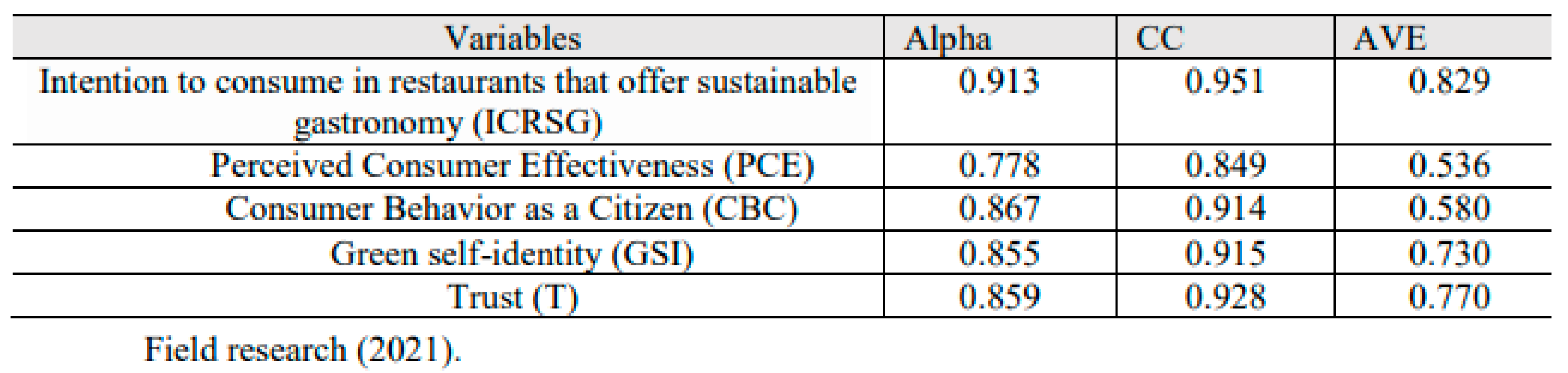
Table 2.
Correlations, Shared Variance and AVE.
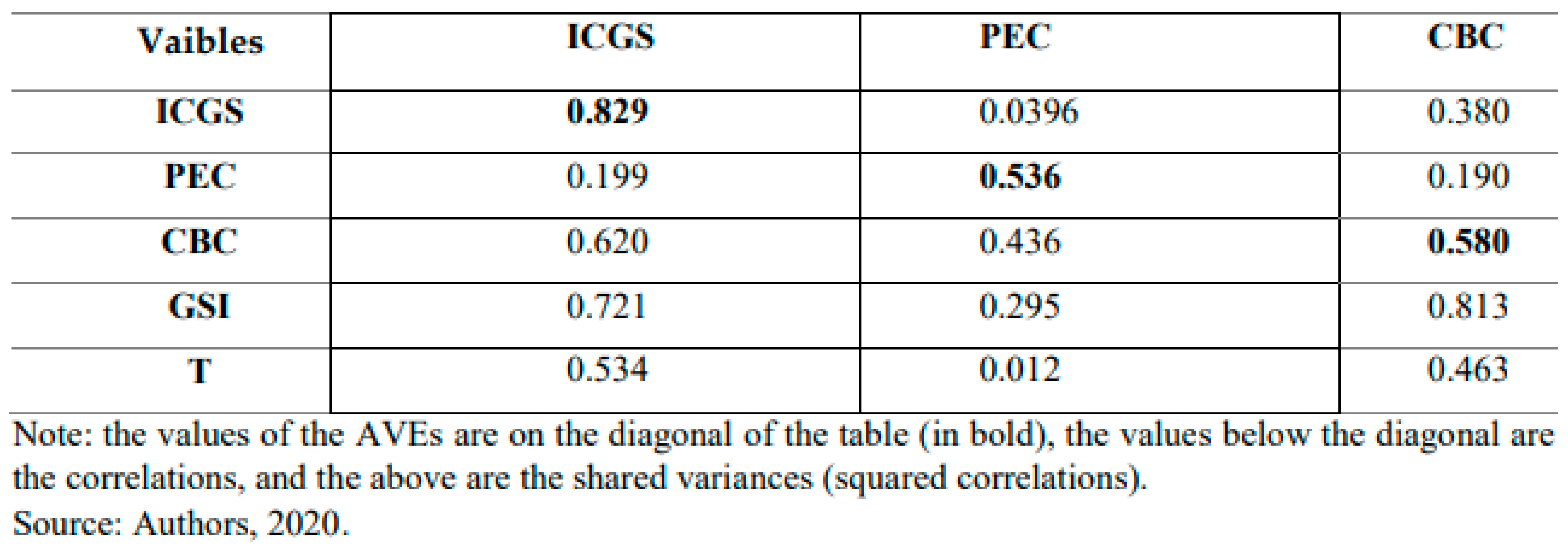
Table 3.
Model Adjustment Indexes.
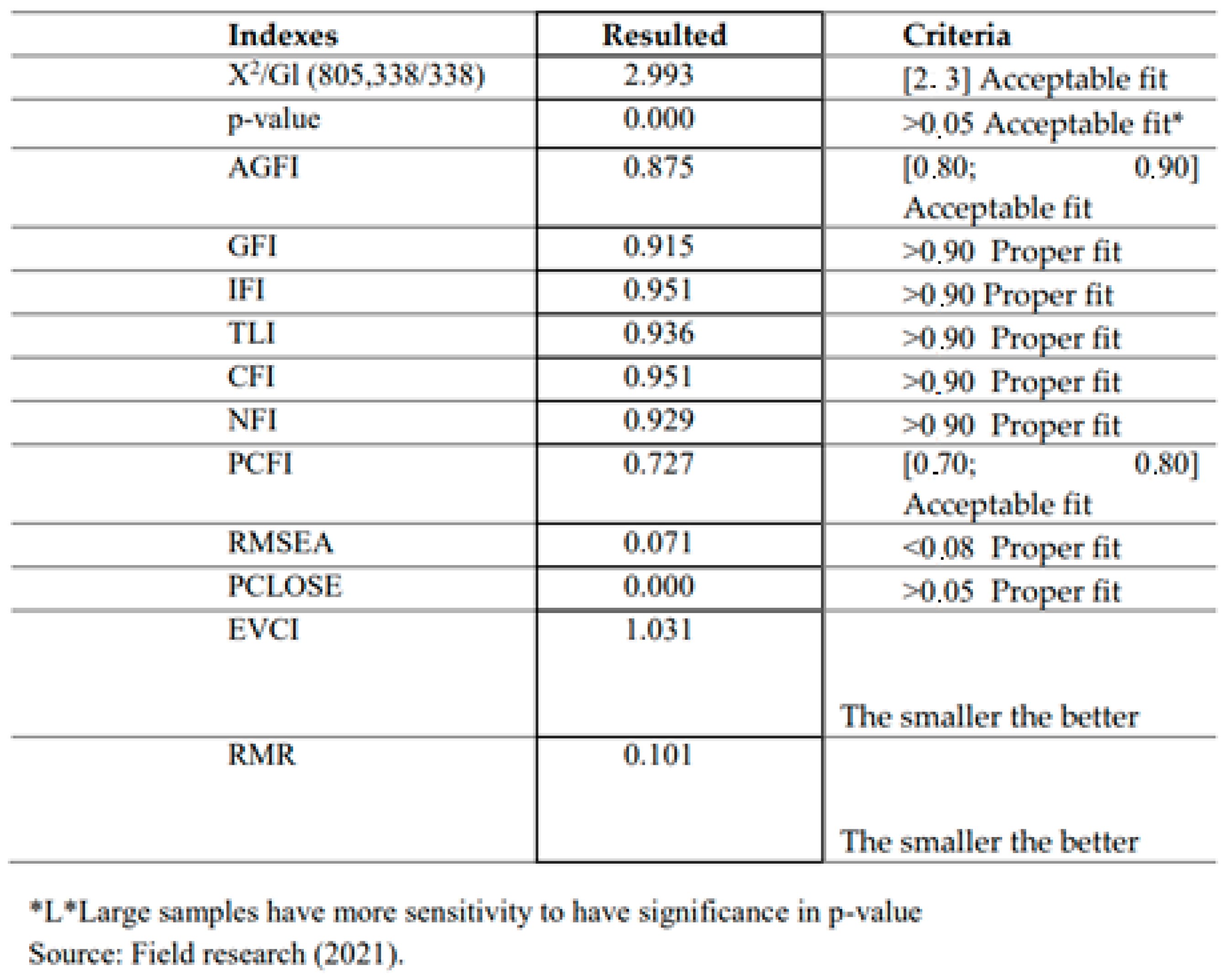
Table 4.
Hypothesis testing.
Disclaimer/Publisher’s Note: The statements, opinions and data contained in all publications are solely those of the individual author(s) and contributor(s) and not of MDPI and/or the editor(s). MDPI and/or the editor(s) disclaim responsibility for any injury to people or property resulting from any ideas, methods, instructions or products referred to in the content. |
© 2025 by the authors. Licensee MDPI, Basel, Switzerland. This article is an open access article distributed under the terms and conditions of the Creative Commons Attribution (CC BY) license (http://creativecommons.org/licenses/by/4.0/).
Copyright: This open access article is published under a Creative Commons CC BY 4.0 license, which permit the free download, distribution, and reuse, provided that the author and preprint are cited in any reuse.


