

Submitted:
26 March 2025
Posted:
27 March 2025
You are already at the latest version
Abstract
The status of infectious diseases in herds from the High Andean region has not been monitored despite these are frequently associated with losses in productive and reproductive efficiency of cattle. The seroprevalence of infectious agents with reproductive implications in cattle from the High Andean districts of Peru, using ELISA was determined. A total of 361 blood samples were collected to detect antibodies against Brucella spp. (BR), Mycobacterium avium subsp. paratuberculosis (MAP), bovine viral diarrhea virus (VDVB), bovine leukemia virus (BLV), bluetongue virus (BTV), bovine herpesvirus 1 (BHV), and Neospora caninum (NC). The highest seroprevalence were 18.28% BHV and 6.93% NC, with a similar trend at the sector and herd levels. BHV was predominant in Cotaruse and Oropesa (p<0.01) and NC in Oropesa and San Jerónimo (p<0.01). Diseases explained 42.4% of the variability, predictor heterogeneity was observed, and no association was found between seropositivities. The district was a risk factor for BHV and NC, although the 95% CI for BHV indicates a higher range of uncertainty. Environmental conditions and management practices could explain the relatively low seroprevalence rates in High Andean region; however, strengthening surveillance against IBR and bovine neosporosis is imperative to prevent risks of acute or subclinical infections.
Keywords:
high Andean cattle farming
; Bos taurus
; epidemiology
; risk factors
; ELISA
; infectious bovine rhinotracheitis
; bovine neosporosis
1. Introduction
Cattle farming in Peru has a population around of 5,866,168 heads [1], of which 36.45% are purebred and 63.55% correspond to Creole cattle, mainly distributed along the Andean region under the care of small- and medium-scale breeders in extensive or semi-intensive breeding systems. One of the main challenges in small-scale farming is the presence of infectious diseases, which affect herd productivity and cause reproductive issues [2]. There is limited information on the sanitary status of Creole cattle herds in high Andean regions, as well as on the factors limiting productivity and development in these breeding systems under harsh environmental conditions.
Infectious diseases reduce cattle productivity, with reproductive impacts reflected in a lower number of calves born, increased number of inseminations per conception, estrus repetition, infertility, embryonic death, congenital malformations, abortions, reduced milk production, economic losses, and costs associated with premature culling [3]. The etiology of infectious diseases is multifactorial, involving various causative agents such as bacteria, viruses, fungi, and parasites. Infectious agents in cattle farming include a great diversity and are widely distributed: bovine viral diarrhea virus (VDVB), bovine herpesvirus-1 (BHV-1), Neospora caninum, Brucella spp., Leptospira sp., Mycobacterium avium subsp. paratuberculosis, etc. [4]. Numerous reports worldwide describe varying seroprevalence rates across different latitudes and altitudes [5,6,7,8,9,10,11,12,13,14]
At the level of Peru, high seroprevalence rates of BVDV and N. caninum have been reported in dairy cattle from the valleys of Lima, Arequipa, and Mantaro, identifying these pathogens as major causes of reproductive disorders and abortions [15]. Brucella spp. and Leptospira sp. have also been detected in dairy cattle from Lima, Arequipa, and other milk-producing regions, though sporadically [16]. Infectious diseases with reproductive implications are associated with calf losses, reduced milk production, increased feed costs, expenses for reproductive treatments, and long-term impacts on female reproductive efficiency, ultimately leading to premature culling [3,17].
In the Andean region, varying seroprevalence rates of antibodies against major infectious agents affecting cattle have been reported to assess the sanitary status across different altitudinal zones. However, climate pattern variations due to global warming, along with dynamic changes in live animal movements, could alter life zones, host migration patterns, and the distribution of infectious agent vectors at higher elevations. Additionally, differences in the prevalence of infectious agents among populations could be influenced by environmental conditions, and breeding systems. The majority of cattle in Peru’s high Andean region are Creole, and monitoring herd health is crucial due to the socio-productive benefits of this species in subsistence breeding systems. Therefore, this study aimed to determine the seroprevalence of antibodies against infectious agents with reproductive implications in cows from the high Andean region of Peru above 3500 meters above level sea, specifically in the districts of San Jerónimo, Cotaruse, and Oropesa, in the department of Apurímac.
2. Materials and Methods
2.1. Location
The study was conducted in 93 herds grouped into 23 sectors within the districts of San Jerónimo (13°39′5″S latitude and 73°21′56″W longitude), Cotaruse (14°24′58″S latitude and 73°12′29″W longitude), and Oropesa (14°15′22″S latitude and 72°33′18″W longitude) (Figure 1). The districts were located in the department of Apurímac, Peru, within the range of 2915 to 5438 meters, and the herds were located above 3500 meters above level sea. Sample collection was carried out from April to December 2023. The region is classified as a Subalpine Subhumid (Cwc) and Alpine Tundra (ET) climate (Köpper-Geiger), with average daily temperatures ranging from a maximum of 29.1°C to a minimum of -0.5°C between June and August, and from a maximum of 28.1°C to a minimum of 3.1°C between September and May [18].
2.2. Design
The study was a cross-sectional descriptive cohort aimed at determining the seroprevalence of antibodies against the infectious agents Brucella spp., Mycobacterium avium subsp. paratuberculosis, bovine viral diarrhea pestivirus (VDVB), bovine leukemia retrovirus (BLV), bluetongue orbivirus (BTV), herpesvirus BHV-1, and Neospora caninum in a population of reproductive-age cows from three districts in the high Andean region of Peru.
2.3. Population and Sample
The total population of Creole cows was 6,105 in the districts of San Jerónimo (2,146 cows), Cotaruse (2,498 cows), and Oropesa (1,461 cows) [19]. The sample size was calculated with a 95% confidence level, 50% positive diagnosis probability, 50% negative diagnosis probability, and a maximum margin of error of 5%. A sample of 361 cows was stratified by proportional fractioning according to the population in each district. The number of cows sampled per district was: 126 in San Jerónimo (35%), 148 in Cotaruse (41%), and 87 in Oropesa (24%).
2.4. Sample Collection and Serological Analysis
Blood samples were collected from cows aged 2 to 7 years with a history of natural breeding. Each animal was properly identified, carefully restrained, and the sampling site was disinfected before drawing blood from the caudal vein using a Vacutainer needle. The human-animal interaction was limited to the extraction of blood samples, taking a time of 15 to 20 seconds for each animal, so the protocol was not submitted to an ethical committee for experimentation. Samples were labeled and refrigerated for transport to the Laboratorio de Sanidad Animal del Servicio Nacional de Sanidad Agraria (SENASA) in Lima, Peru. Serum was used to detect antibodies against infectious agents. Brucella spp. using competitive ELISA (DEX-UCDSA/Bac.19 “Instructivo ELISA Competitiva - Brucelosis”; SVANOVA). Mycobacterium avium subsp. paratuberculosis using indirect ELISA (DEX-UCDSA/Bac.90 - ID Screen Paratuberculosis Indirect Screening Test; IDvet Innovative Diagnostics). Bovine Viral Diarrhea Virus (VDVB) using antigen-detection ELISA (DEX-UCDSA/Vir-07 BVD-SERO-II; Idexx Laboratories). Bovine Leukemia Virus (BLV) using antibody-detection ELISA (DEX-UCDSA/Vir-03; Synbiotics Corporation). Bluetongue Virus (BTV) using solid-phase competitive ELISA (DEX-UCDSA/Vir-10 Identification and Titration of Anti-Bluetongue Virus Antibodies; Pan American Foot-and-Mouth Disease Center/PANAFTOSA 1998). Bovine Herpesvirus 1 (BHV-1) using antibody-detection ELISA (DEX-UCDSA/Vir-21; Idexx Laboratories). Neospora caninum using competitive ELISA (DEX-UCDSA/Par-17 ID Screen Neospora caninum Competition; IDvet Innovative Diagnostics).
2.5. Statistical Analysis
Positive serological diagnoses were organized into frequency tables, and individual, herd, and sector-level seroprevalence were analyzed using the Chi-square test for independence (p<0.05). Correlations were evaluated using Cramér’s V (p<0.05), and a multiple correspondence analysis (MCA) was performed to assess the joint variability of diseases with at least one positive case. Logistic regression and odds ratio analysis were applied to the diseases with the highest seroprevalence, using district, age group, and phenotypic traits as predictors. The Hosmer-Lemeshow test (p>0.05) was used to assess goodness of fit, while the McFadden test evaluated predictive capacity of the model. All analyses were conducted in R Studio 4.1.
3. Results
Serum samples from 361 reproductive-age cows across 93 herds, 23 sectors, and 3 districts of the Apurímac department in the Peruvian high Andean region were analyzed. No antibodies against Brucella spp. (BR) or Mycobacterium avium subsp. paratuberculosis (MAP) were detected in any district (Table 1). The overall seroprevalence of antibodies against bovine herpesvirus 1 (BHV) was 18.28%, showing a significant association with district and sector (p<0.01). The highest seroprevalence was observed in Oropesa (37.93%), followed by Cotaruse (21.62%) and San Jerónimo (0.79%). Within Oropesa, the sector Cahuatia had the highest BHV seroprevalence (42.86%), while in Cotaruse, the sectors Pamparica, Ancco Pamapamarca, and Pumaturco recorded 50.00%, 57.14%, and 100%, respectively.
According to Table 1, the overall seroprevalence of antibodies against bovine viral diarrhea virus (VDVB), bovine leukemia virus (BLV), and bluetongue virus (BTV) were 0.83%, 0.83%, and 0.55% (three, three, and two cases, respectively), with no significant association with district or sector (p>0.05). The overall seroprevalence of antibodies against Neospora caninum (NC) was 6.93%, with a higher frequency in San Jerónimo (10.32%), followed by Oropesa (6.90%) and Cotaruse (4.05%), though not statistically significant (p>0.05). At the sector level, NC seropositivity was significantly higher in Champaccocha (25.93%) and Cupisa (23.08%) in San Jerónimo, and Pucursa (27.27%) in Cotaruse (p<0.01). Additionally, the two positive BTV cases were recorded in the sectors Promesa and Panamericana in the Cotaruse district (p<0.05).
A general sector-level seropositivity of 65.20% for BHV, 13.00% for VDVB, 13.00% for BLV, 8.70% for BTV, and 34.80% for NC was observed (Table 2). Lower seropositivity rates for BHV and VDVB were found in sectors of the San Jerónimo district (p<0.05 and p<0.01), while lower seropositivity for NC was observed in sectors of the Cotaruse district (p<0.05). At the herd-level, 28.00% of the herds tested positive for BHV, 3.20% for VDVB, 3.20% for BLV, 2.20% for BTV, and 19.40% for NC, with the lowest BHV seropositivity found in herds from San Jerónimo (p<0.01).
The cows’ ages ranged from 2 to 7 years, with a higher percentage of BHV antibodies found in cows aged 5 and 7 years, as well as in the 4–5 years (19.47%) and 6–7 years (23.33%) age groups. Antibodies against NC were more prevalent in cows aged 3 and 5 years and in the 2–3 years (7.34%) and 4–5 years (7.08%) age groups, though these associations were not statistically significant (p>0.05) (Table 3). On the other hand, BTV antibody seroprevalence was significantly higher in 6-year-old cows, particularly in the 6–7 years age group (p<0.01). Seropositivity cases for VDVB, BLV, and NC were mostly concentrated in the 2–3 years and 4–5 years age groups; however, these associations were not significant (p>0.05). Additionally, seroprevalence was analyzed based on cows’ phenotypic traits, revealing a significant predominance of VDVB antibody-positive cases in cows with Brown Swiss traits (p<0.05) (Table 3). Higher frequencies of BHV, BTV, and NC antibody-positive cases were observed in cows with Creole traits, but these associations were not statistically significant (p>0.05).
The multiple correspondence analysis (MCA) showed that two dimensions explained 42.4% of the data variability (22.1% and 20.3%) (Figure 2). Negative cases for all tests clustered together, indicating cows with relatively more homogeneous profiles. In contrast, although seropositive cases for BHV, BLV, and VDVB tended to be homogeneous, the distances observed for BTV and NC represented more heterogeneous cows, which could be associated with different factors influencing their seropositivity.
The overall association values among positive antibody cases for BHV, VDVB, BLV, BTV, and NC were weak and non-significant (p>0.05), with a slight association observed between BHV and NC (Figure 3), as well as correlations within each district (Table 4).
The risk for seroprevalence of BHV and NC was assessed due to their higher frequency of positive cases. According to Table 5, the district could be a significant risk factor, where cows from Cotaruse were 35.1 times more likely to be infected with BHV compared to San Jerónimo (p<0.01), and cows from Oropesa were 70.8 times more likely than those from the same district (p<0.01). However, the confidence intervals were wide, likely due to the low number of positive cases found in San Jerónimo. Regarding NC, cows from Cotaruse were 0.33 times less likely to be infected compared to those in San Jerónimo. The predictors “age group” and “phenotypic traits” were not significant (p≥0.05). McFadden’s values indicate that the models have modest predictive power for BHV (p=0.177) and NC (p=0.049) seroprevalence.
4. Discussion
This study simultaneously analyzed the presence of antibodies against seven etiological agents with reproductive implications in cattle from the high-Andean region of Peru, in herds located above 3500 masl. The absence of seropositive cases for Brucella spp. (BR) and Mycobacterium avium subsp. paratuberculosis (MAP) could be attributed to the effectiveness of animal transit regulations and surveillance programs in the study areas, as well as environmental factors such as accessibility, climate, and extensive grazing systems that hinder the transmission of these infectious agents [20]. In neighboring regions, various reports of BR seroprevalence have been documented, including 0% in Amazonas, Peru [5], 0% in Oxapampa, Pasco [6], 4.85% in creole cattle from Ayacucho [20], 0.88% in Formosa, Argentina [21], and 2.19% in Manabí, Ecuador [22]. Regarding MAP, seroprevalence rates of 1.28% have been reported in crossbred Zebu cattle in Madre de Dios [11], 0.55% nationwide in Peru [23], 8.00% in dairy cattle from Nariño, Colombia [24], and 17.00% in Antioquia, Colombia [25], among others. Bovine paratuberculosis significantly affects the productive and reproductive performance of intensively reared cattle [26,27], impacting dairy farm profitability [28]. Along with bovine brucellosis, it is relevant to public health and local economies. Therefore, it is crucial to maintain periodic monitoring and prevention strategies for these diseases.
The seroprevalence of antibodies against Bovine Leukemia Virus (BLV), Bluetongue Virus (BTV), and Bovine Viral Diarrhea Virus (VDVB) was found to be below 1.00% at the individual level (0.55% to 0.83%), below 5.00% at the herd level (2.20% to 3.20%), and ranged from 8.70% to 13.00% at the sector level. Previous reports on BLV seroprevalence show high variability: 12.80% at the individual level and 14.60% at the herd level in dairy farms in the Arequipa Valley [29], 14.10% in dairy farms in Amazonas, Peru [30], 14.84% in dual-purpose cattle in the low tropics of Boyacá, Colombia [7]. High seroprevalence (92.70%) in a dairy farm in Lima [31], and 53.85% in Zebu cattle in the southeastern tropics of Peru, with 83.30% of animals seropositive for BLV and BHV [11]. This high co-infection rate is likely due to BLV’s immunosuppressive effect, which facilitates BHV-1 infection by reducing IgM and IgG2 levels [11,32]. However, no correlation between BLV and BHV was found in this study, probably due to the low BLV seroprevalence and extensive cattle management practices in the districts evaluated. Enzootic bovine leukosis is one of the most common tumor diseases in cattle, mainly affecting dairy cattle, and causing significant productivity losses in subclinical infections [33]. BLV seroprevalence is increasing worldwide, except in the European Union, likely due to the absence of measures to minimize transmission and inadequate management practices, which act as risk factors [29,34].
Regarding BTV, seroprevalence reports include 19.10% nationwide in Peru [8], 0.84% in Cusco [35], 85.12% in the Amazonian departments of Peru [36], 100% in Madre de Dios [11], and 86.00% to 98.90% in Brazil [37,38]. In China, a 12.20% seroprevalence was reported from 1988 to 2019, with a higher rate in free-ranging cattle (22.50%) compared to confined cattle (1.80%) [9]. Higher prevalence has been reported in animals aged 6 to 12 months and in tropical areas below 1000 masl [35,36]. Clinical signs of BTV infection in sheep include decreased production and abortions [39], while cattle often remain asymptomatic but serve as reservoirs for the virus [40,41]. In this study, despite the high-altitude conditions (above 3500 masl), two cases of BTV seropositivity were detected in 6- to 7-year-old cows from the Promesa and Panamericana sectors in the Cotaruse district, likely due to animal movement from lower-altitude regions. BTV is endemic to tropical regions where environmental conditions favor the development of the vector Culicoides insignis [35]. However, BTV distribution may shift due to environmental changes associated with climate change and inadequate management practices, which create favorable ecosystems for vectors and hosts [9,42].
Previous reports on VDVB seroprevalence show high variability, ranging from 2.51% individual seroprevalence and 17.60% at the herd level across Peru [12], 0.64% in Madre de Dios [11], 16.30% in Junín (ranging from 0% to 75% seropositive farms) [2]. High seroprevalence (73.70%) in mixed communal farming systems in Cusco [43], 50.80% in Anta [9], 56.20% in Espinar [16], 90.90% in Calca [44], 48.70% in Puno [45], 47.2% in Majes, Arequipa [46]. Another reports, 27.00% individual seroprevalence and 63.50% positive herds in Ecuador [47], and 32.60% individual seroprevalence with 69.80% positive herds in Ethiopia [48]. The high VDVB seroprevalence in some regions could be attributed to the presence of persistently infected (PI) animals within herds, acting as a permanent source of infection [49]. Bovine viral diarrhea is a disease of global importance, associated with gastrointestinal, respiratory, and reproductive disorders in cattle. Its immunosuppressive effect predisposes animals to secondary infections, while subclinically infected animals shed the virus, acting as a continuous source of infection [50]. However, despite the health significance of BVDV, there is limited control over livestock movement at the national level. In addition, pasture leasing and livestock fairs increase the risk of transmission to free populations and even to other species, such as South American camelids [43,51,52]. In this study, VDVB seropositive cases were limited to three herds located in three different sectors of the Cotaruse and Oropesa districts, likely due to the lower intensity of livestock movement, reduced interaction between herds, and a low probability of horizontal transmission under extensive high-Andean management conditions. Additionally, all positive cases were found in cows with Brown Swiss phenotypic traits, with no cases detected in creole cows. The harsh environmental conditions of the high-Andean region may challenge the adaptability of certain breeds that are more susceptible to infectious agents [53,54]. In this regard, 58.0% seroprevalence in Brown Swiss and 45.3% in creole cows were reported in animals without clinical signs of BVD but with some reproductive problems [10]. Similarly, 27.9% seroprevalence in crossbred Brown Swiss and 22.7% in creole cattle were reported, although breed was not a significant risk factor [47]. Higher seroprevalence has also been reported in Normande cattle [55]. Risk factors for VDVB infection identified in other studies include animals aged ≥18 months, Holstein Friesian crosses, and herds with ≥11 animals in Ethiopia [48], as well as large herds and high animal density [56]. In another study, 60.30% seroprevalence was found in Gyr cattle over 4 years old. In contrast, significant protective factors included Jersey breed animals, ages between 1 and 2 years [50], and the use of artificial insemination with infection-free bulls.
The BHV agent causes infectious bovine rhinotracheitis (IBR) in cattle, a disease with significant impact on productive and reproductive efficiency, and consequently on the economic performance of livestock farms [57,58]. BHV is a pneumotropic virus that predisposes animals to secondary respiratory tract infections, primarily in young calves, and remains latent until reactivated under stress conditions, causing new cycles of acute and subclinical infection [59,60]. The overall BHV seroprevalence in this study was the highest among all infectious agents evaluated (18.28%). The presence of antibodies indicates prior exposure to the virus, even in the absence of visible clinical signs at the time of sampling. However, this percentage is lower than the 27.40% national seroprevalence and 61.86% at the herd level [12], 59.56% in extensive farming systems in Ayacucho [13], 72.44% in crossbred Zebu cattle from Madre de Dios [11]. High individual seroprevalence (67.60%) and 100% seroreactive herds in Parinacochas [61], 73.13% in dual-purpose cattle and 99.00% positive herds in Caquetá, Colombia [58]. In this study, BHV seroprevalence varied between districts, sectors, and herds, with fewer cases reported in San Jerónimo district (0.79%), located in northern Apurímac. Although there were herds free of positive cases in Cotaruse and Oropesa, the proximity between these districts likely contributed to the proliferation of cases across sectors due to commercial exchanges. The high BHV seroprevalence in some populations could be attributed to animal movement between herds, the absence of regulations on livestock mobilization, lack of vaccination programs, poor disease prevention and control strategies within herds, and the absence of testing for animals entering new herds [58]. Additionally, the lack of physical boundaries between herds under extensive grazing systems and the limited reproductive control (natural mating or artificial insemination) could facilitate virus transmission [13,62,63,64]. In high-Andean conditions, cases may have originated from the introduction of animals from areas with high BHV seroprevalence. However, further transmission might be limited due to the region’s poor accessibility, resulting in a localized seroprevalence in 28.00% of herds (2.00% in San Jerónimo, 55.60% in Oropesa, and 65.50% in Cotaruse).
Bovine neosporosis is the leading cause of abortion in cattle, holding significant economic importance for livestock producers of all scales [14]. The seroprevalence of Neospora caninum (NC) reported in this study (6.93%) is higher than the 3.3% reported in Junín [2] and 3.85% in crossbred Zebu cattle in Madre de Dios, Peru [11]. This finding falls within the reported range of 3.87% to 46.7% in a meta-analysis conducted across Peru [12]. However, it is lower than the 18.00% in Puno [63], 12.20% in Parinacochas, Ayacucho [66], 10.2% in cows without reproductive issues in Colombia [67], 45.00% to 57.5% in dairy cattle from Boyacá, Colombia [68,69], 58.0% in 2020 and 42.0% in 2021 in cows with reproductive issues from Ecuadorian herds [70], and 14.8% in rural dogs from Puno [71]. High individual seroprevalence (20.33%) and 66.99% herd-level seroprevalence reported nationwide by SENASA [12], 31.00% in Lima’s dairy basin and 68.00% at the herd level [72]. NC transmission is most efficient through the congenital route, though transmission via contaminated feed and water is also significant. Poor livestock management practices, combined with inadequate disposal of carcasses and farm waste, may promote the dissemination of NC. When consumed by domestic dogs, these materials turn them into definitive hosts, perpetuating the parasite’s life cycle.
The correlation analysis revealed no significant association between seropositivities, a finding reinforced by the Multiple Correspondence Analysis (MCA). The MCA showed proximity among cows seropositive for VDVB, BLV, and BHV (with lower case frequencies), whereas the distance from BTV and NC suggests heterogeneity in the risk factors associated with seropositivity. The risk factor analysis indicated a significant effect of the district on seropositivity for BHV and NC. However, the wide confidence interval for BHV suggests high variability in the estimation, likely due to the low case frequency in San Jerónimo, which served as the reference district. Neither age nor phenotypic traits were significant predictors. However, previous research on a larger population of Belgian cattle identified older age, male sex, cattle origin, and smaller herd size as risk factors for BHV (Boelaert et al., 2005). For NC, Cotaruse appeared to be a protective factor compared to San Jerónimo, potentially due to differences in livestock management and animal movement. In contrast to BHV seropositivity, most NC cases were found in San Jerónimo herds and sectors, although the correlation was not significant. The distance between districts may hinder NC transmission, and since congenital transmission is predominant, cases likely originated from animals introduced from high-prevalence areas, becoming localized within certain herds. Expanding the sample size and exploring additional predictors in future studies is recommended to better understand the relationship between BHV and NC seroprevalence. Nonetheless, this report is valuable for documenting the presence of IBR and bovine neosporosis in the high Andean region, providing critical information for establishing prevention and monitoring strategies to mitigate the risk of acute or subclinical disease, which can impact the productive and reproductive efficiency of regional livestock.
5. Conclusions
In reproductive-age cows from the high Andean region studied, no seropositive cases were found for BR or MAP, while seroprevalence for VDVB, BLV, and BTV remained low (0.55% to 0.83%). In contrast, higher seroprevalence rates were observed for BHV (18.28%) and NC (6.93%). This trend was consistent across sectors and herds, with a predominance of BHV in Cotaruse and Oropesa, and NC in San Jerónimo. No correlation was found among seropositivity for different infectious agents, and the MCA suggested heterogeneity in the associated risk predictors. District was a significant risk factor for BHV and NC, although the 95% confidence interval indicated greater uncertainty due to the imbalance in BHV seropositive cases. Environmental conditions, livestock management practices, and limited accessibility in the Andean highlands could explain the relatively low overall seroprevalence. However, reinforcing monitoring programs for IBR and bovine neosporosis remains imperative to prevent the risks of acute or subclinical infections in the region.
Author Contributions
Conceptualization, E.M.P.; D.H.L.; V.E.C.V.; C.J.A.; A.A.L.; methodology, E.M.P.; D.H.L.; V.E.C.V.; software, E.M.P.; D.H.L.; H.A.Q.-C.; validation, E.M.P.; V.E.C.V.; C.J.A.; formal analysis, E.M.P.; D.H.L.; H.A.Q.-C.; investigation, E.M.P.; V.E.C.V.; resources, E.M.P.; D.H.L.; data curation, E.M.P.; D.H.L.; V.E.C.V.; H.A.Q.-C.; writing—original draft preparation, E.M.P.; writing—review and editing, H.A.Q.-C.; visualization, E.M.P.; D.H.L.; H.A.Q.-C.; supervision, A.A.L.; project administration, E.M.P.; D.H.L.; A.A.L.; funding acquisition, E.M.P.; D.H.L.; A.A.L. All authors have read and agreed to the published version of the manuscript.
Funding
This research was funded by the project “Mejoramiento de los Servicios de Investigación y Transferencia de Tecnología en Ganadería Alto Andina en las Regiones: Apurímac, Arequipa, Ayacucho, Cusco, Huancavelica, Junín, Moquegua, Pasco, Puno y Tacna, 33 Distritos” CUI N° 2491159, from the Instituto Nacional de Innovación Agraria (INIA).
Institutional Review Board Statement
The study was conducted according to Peruvian National Law No. 30407: “Animal Protection and Welfare”.
Data Availability Statement
The raw data supporting the conclusions of this article will be made available by the authors on request.
Conflicts of Interest
The authors declare no conflicts of interest.
References
- MIDAGRI [Ministerio de Desarrollo Agrario y Riego]. Anuario Estadístico de Producción Ganadera y Avícola 2023. Available online: https://cdn.www.gob.pe/uploads/document/file/6837096/2730346-anuario-produccion-ganadera-y-avicola-2023.pdf (accessed on 26 January 2025).
- Arauco, F.; Rosadio, R. Seroprevalence of Bovine Viral Diarrhea and Neosporosis in Cows in the Region of Junín, Peru. Rev. Inv. Vet. Perú 2015, 26(3), 543-547. [CrossRef]
- De Vries, A. Economic value of pregnancy in dairy cattle. J. Dairy Sci. 2006, 89(10): 3876-3885. [CrossRef]
- Brownlie, J.; Hooper, L.B.; Thompson, I.; Collins, M.E. Maternal recognition of foetal infection with bovine virus diarrhea virus – the bovine pestivirus. Clin. Diagn. Virol. 1998, 10: 141150. [CrossRef]
- López del Aguila, W.Y. Prevalence of Bovine Brucellosis in the Livestock Basin of Alto Imaza, Amazon region, Peru. Revista Científica UNTRM: Ciencias Naturales e Ingeniería 2021, 4(2), 15-19. [CrossRef]
- Reyes Rossi, A.E.; Gordillo, F.E.C.; Beltrán, H.A.S. Presence of bovine brucellosis in the province of Oxapampa, department of Cerro de Pasco, Peru. Biotempo 2017, 14(2), 97-102. [CrossRef]
- Guerrero, L.F.N.; Colorado, N.R.; Araque, J.M. Prevalence of bovine viral diarrhea, bovine neosporosis, enzootic bovine leukosis and bovine paratuberculosis in dual-purpose cows in conditions of the Colombian tropics. Rev. Inv. Vet. Perú 2022, 33(2), e20694. [CrossRef]
- Incil, E.B. Seroprevalencia y factores de riesgo de infección por el virus de lengua azul en bovinos del Perú. Master Thesis, Universidad Nacional de Cajamarca, Cajamarca, 2023.
- Gong, Q.L.; Wang, Q.; Yang, X.Y.; Li, D.L.; Zhao, B.; Ge, G.Y.; Zong, Y.; Li, J.M.; Leng, X.; Shi, K.; Liu, F., Du, R. Seroprevalence and risk factors of the bluetongue virus in cattle in China from 1988 to 2019: a comprehensive literature review and meta-analysis. Front. Vet. Sci. 2021, 7, 550381. [CrossRef]
- Valdez, E.; Pacheco, I.; Vergara, W.; Pinto, J.; Fernández, F.; Guzmán, F.; Rivera, H. Antibody detection against bovine viral diarrhea virus in cattle of the province of Anta, Cusco, Peru. Rev. Inv. Vet. Perú 2018, 29(4), 1500-1507. [CrossRef]
- León, S.E.; Barrantes, C.; Feijoo, S.; Huamán, E.; Ampuero, G.; Canto, F.; Quispe-Ccasa, H.A. Seroprevalence of reproductive and infectious diseases in cattle: the case of Madre de Dios in the Peruvian southeastern tropics. Am. J. Vet. Res. 2024, 85(4), 1-8. [CrossRef]
- SENASA [Servicio Nacional de Sanidad Agraria]. 2011. Caracterización de la Diarrea Viral Bovina, Neospororis Bovina, y Rinotraqueitis Infecciosa Bovina en el Perú. Informe Final. Available online: https://www.senasa.gob.pe/senasa/descargasarchivos/jer/BOVINOS/Caracterizacion%20DVB%20NB%20y%20RIB.pdf (accessed on 24 March 2025).
- Vilchez-Tineo, C.; Morales-Cauti, S. (2022). Seroprevalencia de anticuerpos contra el virus de la Rinotraqueitis Infecciosa Bovina en ganaderías de crianza extensiva en tres distritos de Ayacucho, Perú. Rev. Inv. Vet. Perú, 33(2), e22577. [CrossRef]
- Maldonado, J.E.; Pérez, C.L. Neospora caninum in the Andean Community of Nations. Arch. Latinoam. Prod. Anim. 2024. 32(Supl.1), 87-100. [CrossRef]
- Rivera, G.H. Causas frecuentes de aborto bovino. Rev. Inv. Vet. Perú 2001, 12(2), 117-122.
- Cárdenas, C.; Rivera, H.; Araínga, M.; Ramírez, M.; De Paz, J. Prevalence of bovine viral diarrhea virus and persistently infected cattle in the province of Espinar, Cusco. Rev. Inv. Vet. Perú 2011, 22(3), 261-267.
- Gädickea, P.; Monti, G. Epidemiological and analytical aspects of bovine abortion syndrome. Arch. Med. Vet. 2008, 40(3), 223-234. [CrossRef]
- SENAMHI [Servicio Nacional de Meteorología e Hidrología]. Estación Meteorológica Convencional Aymaraes. Datos hidrometeorológicos a nivel nacional. Available online: https://www.senamhi.gob.pe/?&p=estaciones (accessed on 21 March 2025).
- INEI [Instituto Nacional de Innovación Agraria]. 2012. IV Censo Nacional Agropecuario (CENAGRO). Available online: https://proyectos.inei.gob.pe/CenagroWeb/# (accessed on 26 January 2025).
- Valdivia P.L.; Rivera, G.H. Seroprevalencia de Brucella sp. en bovinos criollos de crianza extensiva de la provincia de Parinacochas, Ayacucho. Rev. Inv. Vet. Perú 2003, 14(2), 174-177.
- Elías, I.C.; Viola, M.N.; Russo, A.M.; Lozina, L.A.; Signorini, M.L. Situation and distribution of bovine brucellosis in the province of Formosa, Argentina. Rev. Inv. Vet. Perú 2023, 34(6), e24958. [CrossRef]
- Zambrano Aguayo, M.D.; Pérez Ruano, M.; Rodríguez Villafuerte, X. Bovine brucellosisinthe manabí province, ecuador. Study of risk factors. Rev. Inv. Vet. Perú. 2016, 27(3), 607-617. [CrossRef]
- SENASA. 2012. Caracterización de paratuberculosis bovina en el Perú. Available online: https://www.senasa.gob.pe/senasa/descargasarchivos/jer/BOVINOS/Informe%20SENASA%20PTBC.pdf (accessed on 24 March 2025).
- Benavides, B.; Arteaga, A.V.; Montezuma, C.A. Epidemiological Study of Bovine Paratuberculosis in Dairy Herds in Southern Nariño, Colombia. Rev. Med. Vet. 2016, 31, 57-66.
- Jaramillo, S.; Montoya, M.A.; Uribe, J.S.; Ramírez, N.F.; Fernández-Silva, J.A. Seroprevalence of paratuberculosis (Mycobacterium avium subsp. paratuberculosis) in a specialized dairy herd of the northern high plateau of Antioquia, Colombia. Veterinaria y Zootecnia 2017, 11(2), 24-33. [CrossRef]
- García, A.B., Shalloo, L. The economic impact and control of paratuberculosis in cattle. J. Dairy Sci. 2015, 98, 1-21. [CrossRef]
- Fecteau, M.E. Paratuberculosis in cattle. Vet. Clin. Food Anim. 2017, 34(1), 209-222. [CrossRef]
- Hasonova, L.; Pavlik, I. Economic impact of paratuberculosis in dairy cattle herds: a review. Vet. Med.-Czech. 2006, 51(5), 193-211. [CrossRef]
- Flores, A.; Rivera, G.H. (2000). Seroprevalencia del Virus de Leucosis Bovina en la Cuenca Lechera de Arequipa. Rev. Inv. Vet. Perú 2000, 11(2), 144-148. [CrossRef]
- Frias, H.; Murga, N.; Rojas-Bravo, Y.; Portocarrero, S.; Torres, E. Seroprevalence of bovine leukosis in dairy stables of Chachapoyas and Pomacochas. Rev. Agrop. Sci. & Biotech. 2021, 1(3), 62–69. [CrossRef]
- Sandoval, R.; Delgado, A.; Ruiz, L.; Ramos, O. Determination of the seroprevalence of bovine leukemia virus in a dairy farm of Lima, Peru. Rev. Inv. Vet. Perú 2015, 26(1), 152-158. [CrossRef]
- Mionetto, M.; Rodríguez, A.F. Asociación entre leucosis bovina enzoótica y la respuesta inmune humoral natural contra enfermedades infecciosas de interés reproductivo. Doctoral Thesis, Universidad de La República, Uruguay, 2018.
- Gutiérrez, S.E.; Lützelschwab, C.M.; Barrios, C.N.; Juliarena, M.A. Bovine Leukosis: an updated review. Rev. Inv. Vet. Perú 2020, 31(3), e16913. [CrossRef]
- Bartlett, P.C.; Ruggiero, V.J.; Hutchinson, H.C.; Droscha, C.J.; Norby, B.; Sporer, K.R.B.; Taxis, T.M. Current Developments in the Epidemiology and Control of Enzootic Bovine Leukosis as Caused by Bovine Leukemia Virus. Pathogens 2020, 9(12), 1058. [CrossRef]
- Tupayachi M. Seroprevalencia molecular de cepas emergentes del virus lengua azul en vacunos del distrito de Challabamba – Paucartambo – Cusco. Bachelor Thesis, Universidad Nacional de San Antonio Abad del Cusco, Peru. 2024.
- Ramos, H. Distribución espacial y seroprevalencia del virus Lengua Azul en bovinos de los departamentos de la selva del Perú. Bachelor Thesis, Universidad Nacional Mayor de San Marcos, Peru, 2023.
- Nogueira, A.C.; De Stefano, E.; Martins, M.S.N.; Okuda, L.H.; Lima, M.S.; Garcia, T.S.; Hellwig, O.H.; Lima, J.E.; Savini, G.; Pituco, E.M. Prevalence of Bluetongue virus serotype 4 in cattle in the State of Sao Paulo, Brazil. Vet. Ital. 2016, 52(3-4), 319-323. [CrossRef]
- Verdezoto, J.; Breard, E.; Viarouge, C.; Quenault, H.; Lucas, P.; Sailleau, C.; Zientara, S.; Augot, D.; Zapata, S. Novel serotype of bluetongue virus in South America 65 and first report of epizootic haemorrhagic disease virus in Ecuador. Transbound. Emerg. Dis. 2018, 65(1), 244-247. [CrossRef]
- MacLachlan, N.J.; Mayo, C.E.; Daniels, P.W.; Savini, G.; Zientara, S.; Gibbs, E.P.J. Bluetongue. Rev. Sci. Tech. 2015, 34, 329-340. [CrossRef]
- Katsoulos, P.D.; Giadinis, N.D.; Chaintoutis, S.C.; Dovas, D.I.; Kiossis, E.; Tsousis, G.; Psychas, V.; Vlemmas, I.; Papadopoulos, T.; Papadopoulos, O.; Zientara, S.; Karatzias, H.; Boscos, C. Epidemiological characteristics and clinicopathological features of bluetongue in sheep and cattle, during the 2014 BTV serotype 4 incursion in Greece. Trop. Anim. Health Prod. 2016, 48(3), 469-477. [CrossRef]
- Saminathan, M.; Singh, K.P.; Khorajiya, J.H.; Dinesh, M.; Vineetha, S.; Maity, M.; Rahman, A.F.; Misri, J.; Malik, Y.S.; Gupta, V.K.; Dhama, K. An updated review on bluetongue virus: epidemiology, pathobiology, and advances in diagnosis and control with special reference to India. Vet. Q. 2020, 40(1), 258-321. [CrossRef]
- Navarro Mamani, D.A.; Ramos Huere, H.; Vera Buendia, R.; Rojas, M.; Chunga, W.A.; Valdez Gutierrez, E.; Vergara Abarca, W.; Rivera Gerónimo, H.; Altamiranda-Saavedra, M. Would Climate Change Influence the Potential Distribution and Ecological Niche of Bluetongue Virus and Its Main Vector in Peru? Viruses 2023, 15, 892. [CrossRef]
- Álvarez, L.l.S.; Rivera, G.H.; Pezo, C.D.; García, V.W. Detección de anticuerpos contra pestivirus en rumiantes de una comunidad campesina de la provincia de Canchis, Cuzco. Rev. Inv. Vet. Peru 2002, 13(1), 46-51.
- Cabello, R.K.; Quispe, Ch.R.; Rivera, G.H. Frecuencia de los virus parainfluenza-3, respiratorio sincitial y diarrea viral bovina en un rebaño mixto de una comunidad campesina de Cusco. Rev. Inv. Vet. Perú 2006, 17(2), 167-172.
- Quispe, Q.R.; Ccama, S.A.; Rivera, G.H.; Araínga, R.M. Bovine viral diarrea virus in criollo cattle of the Province of Melgar, Puno. Rev. Inv. Vet. Perú 2008, 19(2), 176-182.
- Huamán, G.J.; Rivera, G.H.; Araínga, R.M.; Gavidia, Ch.C.; Manchego, S.A. Bovine viral diarrhoea and persistently infected animals in dairy herds in Majes, Arequipa. Rev. Inv. Vet. Perú 2007, 18 (2): 141-149.
- Herrera-Yunga, V.; Labada, J.; Castillo, F.; Torres, A.; Escudero-Sanchez, G.; Capa-Morocho, M.; Abad-Guaman, R. Prevalence of antibodies and risk factors to bovine viral diarrhea in non-vaccinated dairy cattle from Southern Ecuador. Trop. Subtrop. Agroecosyst. 2018, 21(1), 11-18. [CrossRef]
- Aragaw, K.; Sibhat, B.; Ayelet, G.; Skjerve, E.; Gebremedhin, E.Z.; Asmare, K. Seroprevalence and factors associated with bovine viral diarrhea virus (BVDV) infection in dairy cattle in three milksheds in Ethiopia. Trop. Anim. Health Prod. 2018. 50, 1821-1827. [CrossRef]
- Lindberg, A.I.E.; Alenius S. Principles for eradication of bovine viral diarrhea virus (BVDV) infections in cattle populations. Vet. Microbiol. 1999, 64, 197-222. [CrossRef]
- González-Bautista, E.D.D.; Bulla-Castañeda, D.M.; Lopez-Buitrago, H.A.; Díaz-Anaya, A.M.; Lancheros-Buitrago, D.J.; Garcia-Corredor, D.J.; Tobón, J.C.; Ortiz, D.; Pulido-Medellín, M.O. Seroprevalence of bovine viral diarrhea virus (BVDV) in cattle from Sotaquirá, Colombia. Vet. Anim. Sci. 2021, 14, 100202. [CrossRef]
- Gates, M.C.; Woolhouse, M.E.J.; Gunn, G.J.; Humphry, R.W. Relative associations of cattle movements, local spread and biosecurity with bovine viral diarrhea virus (BVDV) seropositivity in beef and dairy herds. Prev. Vet. Med. 2013, 112, 285-295. [CrossRef]
- Corro, A.; Escalona, J.; Mosquera, O.; Vargas, F. Risk factors associated with Bovine Viral Diarrohea seroprevalence in non-vaccinated cows and heifer in the Bolívar Municipality of Yaracuy state, Venezuela. Gaceta de Ciencias Veterinarias 2017, 22(1), 27-32.
- Bharti, V.; Giri, A.; Vivek, P.; Kalia, S. Health and productivity of dairy cattle in high altitude cold desert environment of Leh-Ladakh: A review. Indian J. Anim. Sci. 2017, 87, 3-10. [CrossRef]
- Begazo, C.; Portocarrero, H.; Dávila, R. Electrocardiographic Parameters in Holstein calves reared at High Altitude and at sea level. Rev. Inv. Vet. Perú 2017, 28, 227-235. [CrossRef]
- Rivera, D.C.; Rincón, J.C.; Echeverry, J.C. Prevalence of some infectious diseases in cattle of the indigenous resguards in Cauca, Colombia 2017. Rev. U.D.C.A. Actual. Divulg. Cient. 2018, 21(2), 507-517. [CrossRef]
- Almeida, L.L.; Miranda, I.C.S.; Hein, H.E.; Neto, W.S.; Costa, E.F.; Marks, F.S.; Rodenbusch, C.R.; Canal, C.W.; Corbellini, L.G. Herd-level risk factors for bovine viral diarrhea virus infection in dairy herds from Southern Brazil. Res. Vet. Sci. 2013, 95(3), 901–907. [CrossRef]
- Sayers, R.G. Associations between exposure to bovine herpesvirus 1 (BoHV-1) and milk production, reproductive performance, and mortality in Irish dairy herds. J. Dairy Sci. 2017. 100(2), 1340-1352. [CrossRef]
- Muñoz, A.L.; Motta-Delgado, P.A.; Herrera, W.; Polania, R.; Cháves, L.C. Prevalence of bovine infectious rhinotracheitis virus in Caquetá. Rev. Med. Vet. Zoot. 2020, 67(1), 9-16. [CrossRef]
- Rivera, G.H.; Benito, Z.A.; Ramos, C.O.; Manchego, S.A. Prevalencia de enfermedades de impacto reproductivo en bovinos de la estación experimental de trópico del centro de investigaciones IVITA. Rev. Inv. Vet. Perú 2004, 15(2), 120-126.
- Ruiz-Sáenz, J.; Jaime, J.; Vera, V. Prevalencia serológica y aislamiento del Herpesvirus Bovi-no-1 (BHV-1) en hatos ganaderos de Antioquia y del Valle del Cauca. Rev. Colomb. Cienci Pecu. 2010, 23(3), 299-307.
- Zacarías, R.E.; Benito, Z.A.; Rivera, G.H. Seroprevalencia del virus de la rinotraqueitis infecciosa en bovinos criollos de Parinacochas, Ayacucho. Rev. Inv. Vet. Perú, 2002, 13(2): 61-65.
- Boelaert, F.; Speybroeck, N.; Kruif, A.; Aerts, M.; Burzykowski, T.; Molenberghs, G.; Berkvens, D. Risk factors for bovine herpesvirus-1 seropositivity. Prev. Vet. Med. 2005, 69, 285-295. [CrossRef]
- Pawar, S.S.; Meshram, C.D.; Singh, N.K.; Saini, M.; Mishra, B.P.; Gupta, P.K. Development of a SYBR Green I based duplex real-time PCR for detection of bovine herpesvirus-1 in semen. J. Virol. Methods 2014, 208, 6-10. [CrossRef]
- Abad, J.; Ríos, A.; Rosete, J.; García, A.; Zarate, J. Prevalence of infectious bovine rhinotracheitis and bovine viral diarrhea in females in three seasons in the downtown area of Veracruz. Nova Scientia 2016, 8, 213–227.
- Atocsa, J.; Chávez, A.; Casas, E.; Falcón, N. Seroprevalencia de Neospora caninum en bovinos lecheros criados al pastoreo en la provincia de Melgar, Puno. Rev Inv Vet Perú 2005, 16, 71–75. [CrossRef]
- Cevallos, A.F.; Morales-Cauti, S. Seroprevalence of antibodies against Neospora caninum in extensive cattle farming in three districts of Parinacochas, Ayacucho. Rev. Inv. Vet. Perú 2021. 32(4), e20933. [CrossRef]
- Oviedo, T.; Betancur, C.; Mestra, A.; González, M.; Reza, L.; Calonge, K. Serological study about neosporosis in cattle with reproductive disorders in Monteria, Córdoba, Colombia. Rev. MVZ Cordoba 2007, 12(1). [CrossRef]
- Pulido Medellín, M.O.; Díaz Anaya, A.M.; Andrade Becerra, R.J. Association between reproductive variables and anti Neospora caninum antibodies in dairy cattle herds from a Colombian municipality. Rev. Mex. Cienc. Pecu. 2017, 8(2), 167-174. [CrossRef]
- Pulido Medellín, M.O.; Díaz Anaya, A.M.; García, D.J.; Andrade Becerra, R.J. Verifying presence of anti Neospora caninum antibodies in cows in Sugamuxi province, Colombia. Rev. Mex. Cienc. Pecu. 2013, 4(4), 501-506.
- Maldonado, J.E.; Pérez, C.L. Infectious diseases of cattle diagnosed between 2020 and 2022 in the southern highlands of Ecuador. Arch. Latinoam. Prod. Anim. 2022, 30(Supl.2), 63-65. [CrossRef]
- Vega, L.; Chávez, A.; Falcón, N.; Casas, E.; Puray, N. (2010). Prevalence of Neospora caninum in shepherd dogs of a livestock farm in the southern highlands of Peru. Rev. Inv. Vet. Perú 2010, 21(1), 80-86.
- Serrano-Martínez, M.E.; Cisterna, C.A.B.; Romero, R.C.E.: Huacho, M.A.Q.; Bermabé, A.M.; Albornoz, L.A.L. Evaluation of abortions spontaneously induced by Neospora caninum and risk factors in dairy cattle from Lima, Peru. Rev. Bras. Parasitol. Vet. 2019, 28(2), 215-220.
Figure 1.
Location map of the districts of San Jerónimo, Cotaruse, and Oropesa in the department of Apurímac, Peru.
Figure 1.
Location map of the districts of San Jerónimo, Cotaruse, and Oropesa in the department of Apurímac, Peru.
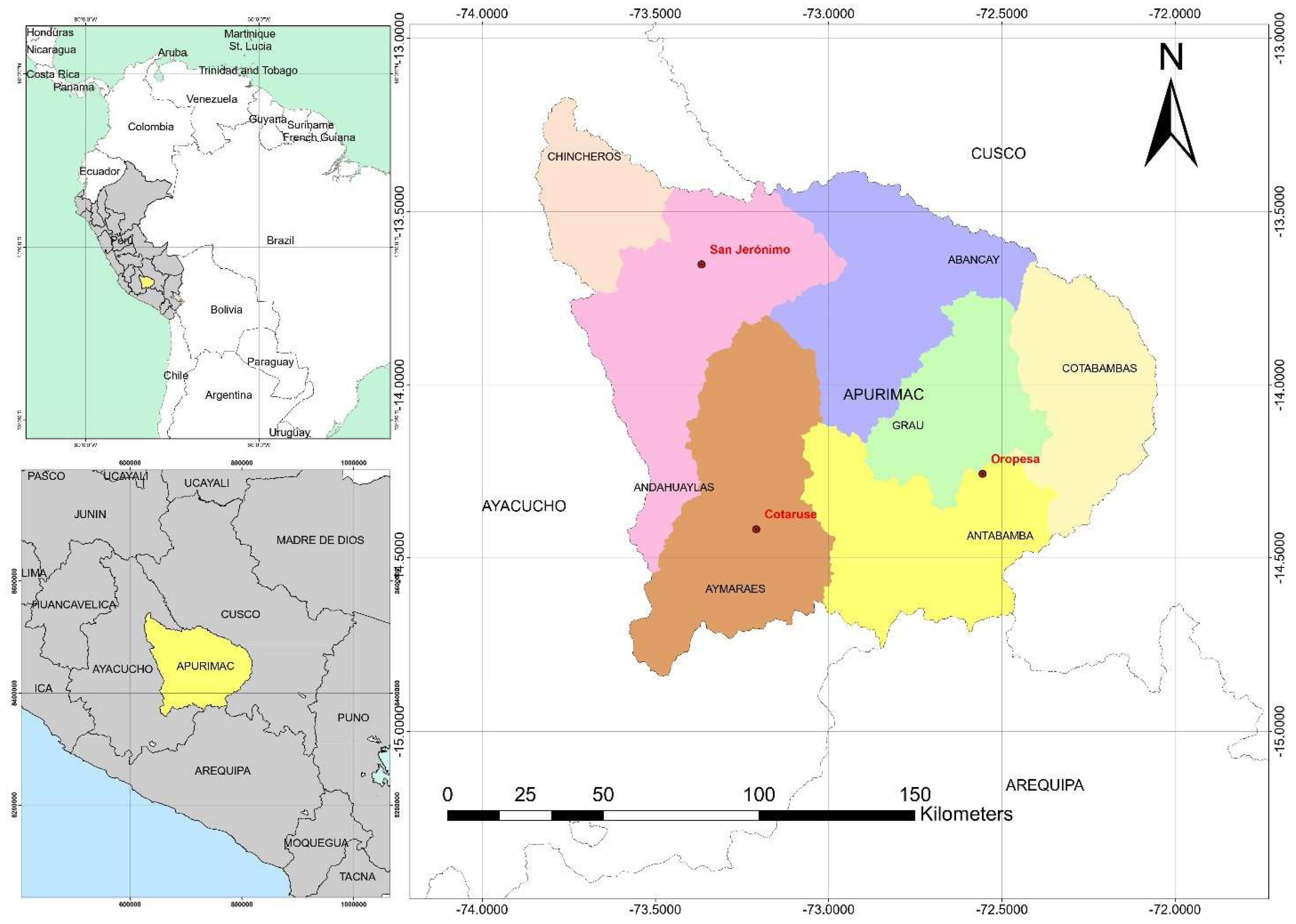
Figure 2.
Distribution of negative (0) and positive (1) cases of antibodies for infectious agents in the Multiple Correspondence Analysis (MCA) in the high Andean region. BHV: bovine herpesvirus 1, VDVB: bovine viral diarrhea virus, BLV: bovine leukemia virus, BTV: bluetongue virus, NC: Neospora caninum.
Figure 2.
Distribution of negative (0) and positive (1) cases of antibodies for infectious agents in the Multiple Correspondence Analysis (MCA) in the high Andean region. BHV: bovine herpesvirus 1, VDVB: bovine viral diarrhea virus, BLV: bovine leukemia virus, BTV: bluetongue virus, NC: Neospora caninum.
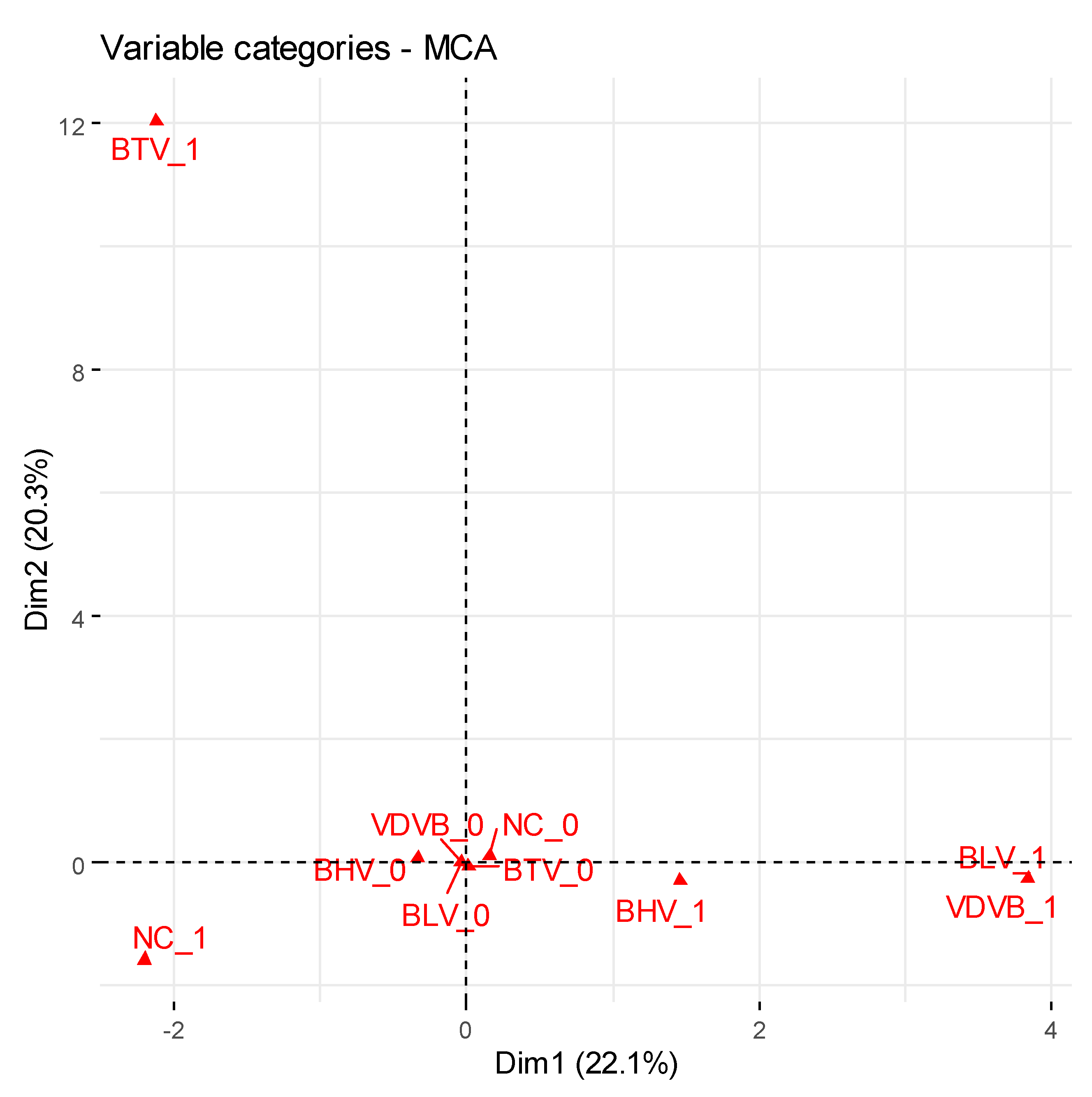
Figure 3.
Association between seropositivity for BHV (bovine herpesvirus 1), BVDV (bovine viral diarrhea virus pestivirus), BLV (bovine leukemia virus retrovirus), BTV (bluetongue virus orbivirus), and NC (Neospora caninum) in reproductive-age cows in the high Andean region.
Figure 3.
Association between seropositivity for BHV (bovine herpesvirus 1), BVDV (bovine viral diarrhea virus pestivirus), BLV (bovine leukemia virus retrovirus), BTV (bluetongue virus orbivirus), and NC (Neospora caninum) in reproductive-age cows in the high Andean region.
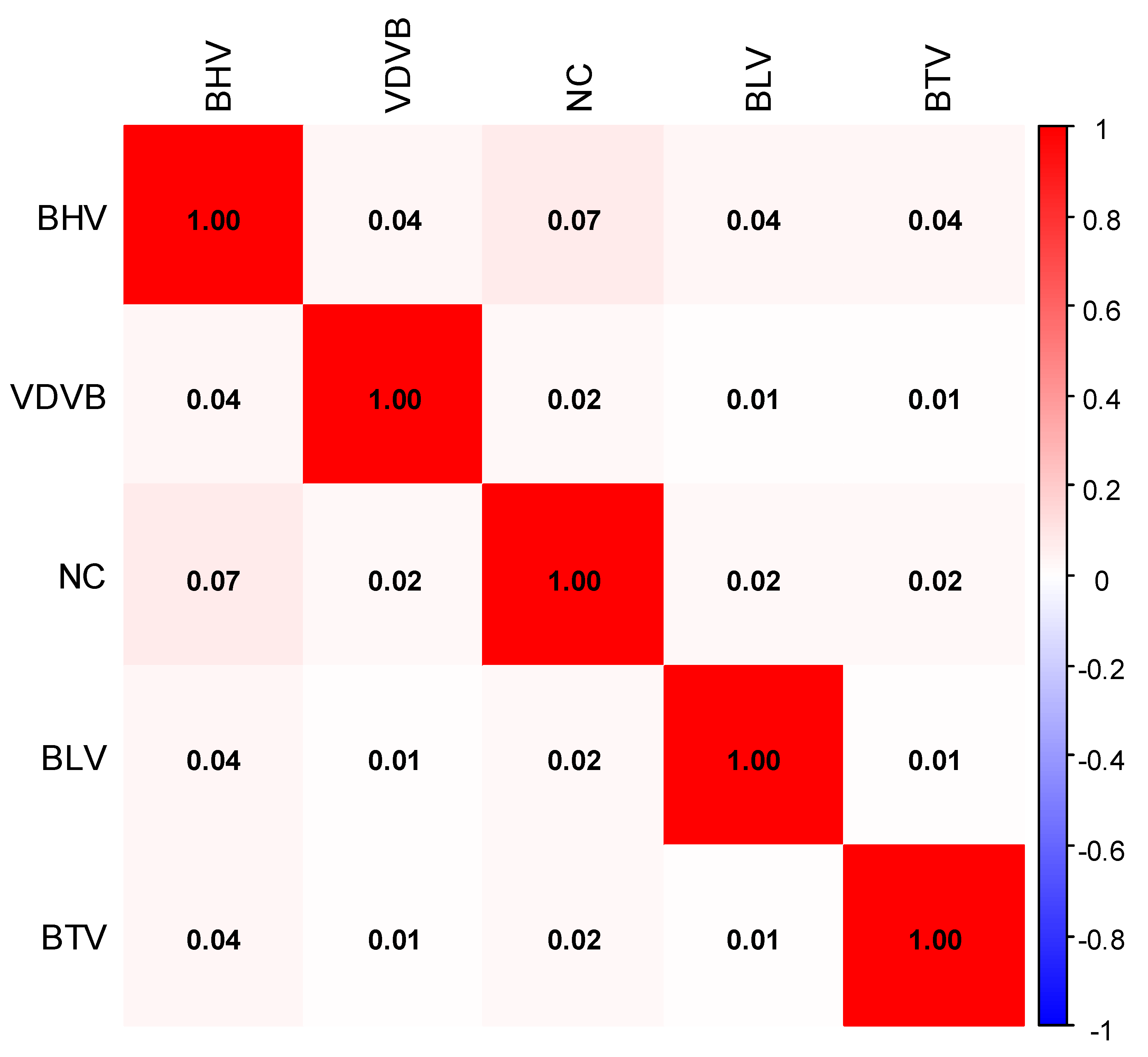

Table 1.
Seroprevalence of antibodies against infectious agents in reproductive-age cows by District and Sector in the high Andean region.
Table 1.
Seroprevalence of antibodies against infectious agents in reproductive-age cows by District and Sector in the high Andean region.
| Variable | BR | MAP | BHV | VDVB | BLV | BTV | NC |
|---|---|---|---|---|---|---|---|
| District | |||||||
| San Jerónimo | 0 (0) | 0 (0) | 0.79 (1) | 0 (0) | 0.79 (1) | 0 (0) | 10.32 (13) |
| Cotaruse | 0 (0) | 0 (0) | 21.62 (32) | 0.68 (1) | 1.35 (2) | 1.35 (2) | 4.05 (6) |
| Oropesa | 0 (0) | 0 (0) | 37.93 (33) | 2.30 (2) | 0 (0) | 0 (0) | 6.90 (6) |
| p-value | - | - | <0.001 | 0.185 | 0.544 | 0.235 | 0.126 |
| Sector | |||||||
| Choccecancha | 0 (0) | 0 (0) | 0 (0) | 0 (0) | 0 (0) | 0 (0) | 0 (0) |
| Champaccocha | 0 (0) | 0 (0) | 3.70 (1) | 0 (0) | 3.70 (1) | 0 (0) | 25.93 (7) |
| Ancatira | 0 (0) | 0 (0) | 0 (0) | 0 (0) | 0 (0) | 0 (0) | 14.29 (2) |
| Cupisa | 0 (0) | 0 (0) | 0 (0) | 0 (0) | 0 (0) | 0 (0) | 23.08 (3) |
| Totoral | 0 (0) | 0 (0) | 0 (0) | 0 (0) | 0 (0) | 0 (0) | 6.67 (1) |
| Soytocco | 0 (0) | 0 (0) | 20.00 (1) | 0 (0) | 0 (0) | 0 (0) | 0 (0) |
| Pilluni | 0 (0) | 0 (0) | 0 (0) | 0 (0) | 0 (0) | 0 (0) | 0 (0) |
| Llaccsa | 0 (0) | 0 (0) | 37.50 (6) | 0 (0) | 0 (0) | 0 (0) | 12.5 (2) |
| San Miguel de Mestisas | 0 (0) | 0 (0) | 0 (0) | 5.00 (1) | 0 (0) | 0 (0) | 0 (0) |
| Pallccapampa | 0 (0) | 0 (0) | 8.33 (1) | 0 (0) | 0 (0) | 0 (0) | 0 (0) |
| Promesa | 0 (0) | 0 (0) | 27.27 (3) | 0 (0) | 0 (0) | 9.09 (1) | 9.09 (1) |
| Cotaruse | 0 (0) | 0 (0) | 41.67 (5) | 0 (0) | 0 (0) | 0 (0) | 0 (0) |
| Ccosccoche - Pampamarca | 0 (0) | 0 (0) | 27.27 (3) | 0 (0) | 9.09 (1) | 0 (0) | 0 (0) |
| Puerto Aparanga | 0 (0) | 0 (0) | 0 (0) | 0 (0) | 0 (0) | 0 (0) | 0 (0) |
| Panamericana | 0 (0) | 0 (0) | 0 (0) | 0 (0) | 0 (0) | 14.29(1) | 0 (0) |
| Pamparica | 0 (0) | 0 (0) | 50.00 (3) | 0 (0) | 0 (0) | 0 (0) | 0 (0) |
| Ancco - Pamapamarca | 0 (0) | 0 (0) | 57.14 (4) | 0 (0) | 14.29 (1) | 0 (0) | 0 (0) |
| Pucursa | 0 (0) | 0 (0) | 9.09 (1) | 0 (0) | 0 (0) | 0 (0) | 27.27 (3) |
| Huayllucuna | 0 (0) | 0 (0) | 33.33 (2) | 0 (0) | 0 (0) | 0 (0) | 0 (0) |
| Pumaturco | 0 (0) | 0 (0) | 100.00 (2) | 0 (0) | 0 (0) | 0 (0) | 0 (0) |
| Hmpalla | 0 (0) | 0 (0) | 25.00 (1) | 0 (0) | 0 (0) | 0 (0) | 0 (0) |
| Totora | 0 (0) | 0 (0) | 36.99 (27) | 1.37 (1) | 0 (0) | 0 (0) | 8.22 (6) |
| Cahautia | 0 (0) | 0 (0) | 42.86 (6) | 7.14 (1) | 0 (0) | 0 (0) | 0 (0) |
| p-value | - | - | <0.001 | 0.922 | 0.123 | 0.010 | 0.005 |
| Total | 0 (0) | 0 (0) | 18.28 (66) | 0.83 (3) | 0.83 (3) | 0.55 (2) | 6.93 (25) |
BR: Brucella spp., MAP: Mycobacterium avium subsp. paratuberculosis, BHV: bovine herpesvirus 1, VDVB: bovine viral diarrhea virus, BLV: bovine leukemia virus, BTV: bluetongue virus, NC: Neospora caninum. Chi-Square Test of Independence (p<0.01).
Table 2.
Sector and herd seropositivity rates for infectious agents in reproductive-age cows, by district in the high Andean region.
Table 2.
Sector and herd seropositivity rates for infectious agents in reproductive-age cows, by district in the high Andean region.
| Seropositivity level | District | N | BHV | VDVB | BLV | BTV | NC |
|---|---|---|---|---|---|---|---|
| Sector-level seropositivity | San Jerónimo | 5 | 20.00 (1) | 0 (0) | 20.00 (1) | 0 (0) | 80.00 (4) |
| Oropesa | 2 | 100.00 (2) | 100.00 (2) | 0 (0) | 0 (0) | 50.00 (1) | |
| Cotaruse | 16 | 75.00 (12) | 6.30 (1) | 12.50 (2) | 12.50 (2) | 18.80 (3) | |
| p-value | 0.04 | <0.01 | 0.77 | 0.62 | 0.04 | ||
| Total | 23 | 65.20 (15) | 13.00 (3) | 13.00 (3) | 8.70 (2) | 34.80 (8) | |
| Herd-level seropositivity | San Jerónimo | 24 | 2.00 (1) | 0 (0) | 2.00 (1) | 0 (0) | 21.60 (11) |
| Oropesa | 18 | 55.60 (10) | 11.10 (2) | 0 (0) | 0 (0) | 16.70 (3) | |
| Cotaruse | 51 | 62.50 (15) | 4.20 (1) | 8.30 (2) | 8.30 (2) | 16.70 (4) | |
| p-value | <0.01 | 0.07 | 0.24 | 0.05 | 0.84 | ||
| Total | 93 | 28.00 (26) | 3.20 (3) | 3.20 (3) | 2.20 (2) | 19.40 (18) |
BHV: bovine herpesvirus 1, VDVB: bovine viral diarrhea virus, BLV: bovine leukemia virus, BTV: bluetongue virus, NC: Neospora caninum. Chi-Square Test of Independence (p<0.01).
Table 3.
Seroprevalence of antibodies against infectious agents in reproductive-age cows by age, age group, and phenotypic traits in the high Andean region.
Table 3.
Seroprevalence of antibodies against infectious agents in reproductive-age cows by age, age group, and phenotypic traits in the high Andean region.
| Variable | BHV | VDVB | BLV | BTV | NC |
| Age | |||||
| 2 years | 15.04 (17) | 1.77 (2) | 0 (0) | 0 (0) | 7.08 (8) |
| 3 years | 19.05 (20) | 0 (0) | 1.90 (2) | 0 (0) | 7.62 (8) |
| 4 years | 16.85 (15) | 1.12 (1) | 1.12 (1) | 0 (0) | 6.74 (6) |
| 5 years | 29.17 (7) | 0 (0) | 0 (0) | 0 (0) | 8.33 (2) |
| 6 years | 19.05 (4) | 0 (0) | 0 (0) | 9.52 (2) | 4.76 (1) |
| 7 years | 33.33 (3) | 0 (0) | 0 (0) | 0 (0) | 0 (0) |
| p-value | 0.517 | 0.756 | 0.706 | <0.001 | 0.964 |
| Age group | |||||
| 2-3 years | 16.97 (37) | 0.92 (2) | 0.92 (2) | 0 (0) | 7.34 (16) |
| 4-5 years | 19.47 (22) | 0.88 (1) | 0.88 (1) | 0 (0) | 7.08 (8) |
| 6-7 years | 23.33 (7) | 0 (0) | 0 (0) | 6.67 (2) | 3.33 (1) |
| p-value | 0.648 | 0.871 | 0.871 | <0.001 | 0.718 |
| Phenotypic traits | |||||
| Creole | 17.24 (40) | 0 (0) | 0.43 (1) | 0.86 (2) | 8.62 (20) |
| Brown Swiss | 14.78 (17) | 2.61 (3) | 1.74 (2) | 0 (0) | 4.35 (5) |
| p-value | 0.561 | 0.013 | 0.215 | 0.318 | 0.147 |
BHV: bovine herpesvirus 1, VDVB: bovine viral diarrhea virus, BLV: bovine leukemia virus, BTV: bluetongue virus, NC: Neospora caninum. Chi-Square Test of Independence (p<0.01).
Table 4.
Cramér’s V association values and significance for seropositivity to infectious agents by district, in reproductive-age cows in the high Andean region.
Table 4.
Cramér’s V association values and significance for seropositivity to infectious agents by district, in reproductive-age cows in the high Andean region.
| Seropositivity | District | |||||||||||
| Oropesa | Cotaruse | San Jerónimo | ||||||||||
| VDVB | NC | BLV | BTV | VDVB | NC | BLV | BTV | VDVB | NC | BLV | BTV | |
| BHV | 0.04 | 0.12 | . | . | 0.04 | 0.03 | 0.08 | 0.06 | . | 0.03 | 0.01 | . |
| 0.73 | 0.27 | . | . | 0.60 | 0.77 | 0.33 | 0.46 | . | 0.74 | 0.93 | . | |
| VDVB | 0.04 | . | . | 0.02 | 0.01 | 0.01 | . | . | . | |||
| 0.70 | . | . | 0.84 | 0.91 | 0.91 | . | . | . | ||||
| NC | . | . | 0.02 | 0.02 | 0.03 | . | ||||||
| . | . | 0.77 | 0.77 | 0.74 | . | |||||||
| BLV | . | 0.01 | . | |||||||||
| . | 0.87 | . | ||||||||||
BHV: bovine herpesvirus 1, VDVB: bovine viral diarrhea virus, BLV: bovine leukemia virus, BTV: bluetongue virus, NC: Neospora caninum.
Table 5.
Risk Factors for BHV and NC Seroprevalence in Reproductive-Age Cows in the high Andean region.
Table 5.
Risk Factors for BHV and NC Seroprevalence in Reproductive-Age Cows in the high Andean region.
| Coeficients | BHV | NC | |||||
| OR | IC 95% | p-value | OR | IC 95% | p-value | ||
| (Intercept) | 0.007 | 0.0004–0.04 | <0.01** | 0.167 | 0.08–0.33 | <0.01** | |
| San Jerónimo | Cotaruse | 35.109 | 7.33–630.75 | <0.01** | 0.333 | 0.11–0.88 | 0.033* |
| Oropesa | 70.764 | 14.11–1289.94 | <0.01** | 0.943 | 0.31–2.59 | 0.911 | |
| 2–3 years | 4–5 years | 1.581 | 0.80–3.09 | 0.181 | 0.808 | 0.31–1.94 | 0.644 |
| 6–7 años | 0.902 | 0.24–2.81 | 0.867 | 0.376 | 0.02–2.02 | 0.357 | |
| Creole | Brown Swiss | 0.693 | 0.33–1.39 | 0.313 | 0.384 | 0.12–1.02 | 0.074 |
BHV: bovine herpesvirus 1, VDVB: bovine viral diarrhea virus, BLV: bovine leukemia virus, BTV: bluetongue virus, NC: Neospora caninum.
Disclaimer/Publisher’s Note: The statements, opinions and data contained in all publications are solely those of the individual author(s) and contributor(s) and not of MDPI and/or the editor(s). MDPI and/or the editor(s) disclaim responsibility for any injury to people or property resulting from any ideas, methods, instructions or products referred to in the content. |
© 2025 by the authors. Licensee MDPI, Basel, Switzerland. This article is an open access article distributed under the terms and conditions of the Creative Commons Attribution (CC BY) license (http://creativecommons.org/licenses/by/4.0/).
Copyright: This open access article is published under a Creative Commons CC BY 4.0 license, which permit the free download, distribution, and reuse, provided that the author and preprint are cited in any reuse.


