

Submitted:
22 March 2025
Posted:
24 March 2025
You are already at the latest version
Abstract
This study expanded the theory of planned behavior to understand factors affecting employee intentions and actual preparedness behaviors in the Ghanaian energy sector. The paper ascertained the effect of psychological factors on employee preparedness intentions and examined whether these factors are mediated by employee’s intentions. Instruments were developed to collect data to assess the variables of the extended theory of planned behavior. Items on the instruments to be measured were structured into three major sections; demographic information on the first part, items of attitude, response efficacy, subjective norms, perceived behavioral control, intention, risk perception, and actual preparedness behaviors on the second part and items of management commitment and management priority on the last section. A pilot test was performed on 15 employees of a sub Gas Distribution Station to determine validity and reliability of the instruments. Content validity was assessed through expert judgment. Individuals with expertise in the field of psychology examined the questionnaires and provided feedback. The instruments were self-administered and data analyzed using the structural equation modelling technique. The novel extended TPB model best-explained employee preparedness intentions and actual emergency preparedness behaviours of employees, confirming the widely held perception that psychological factors do influence employee preparedness intentions. It further suggest employee’s intentions significantly mediate relationship between psychological factors and actual preparedness behaviors. Management must periodically appraise the impact of these factors on employee’s preparedness to make timely informed decisions and may adopt the expanded model to promote employee preparedness for emergencies in the oil and gas industry.
Keywords:
Safety preparedness
; planned behavior
; emergency response
; Oil and Gas industry
; psychological factors
; organizational factors
; employee preparedness intentions
; actual preparedness behavior
1. Introduction
Working in the oil and gas industry involves exposures to several risks [1,2,3,4,5]. Despite the introduction of modern safety equipment, accidents do occur due to the nature of oil and gas plant operations [6]. Employees in this sector are faced with hazardous exposures such as hydrocarbon leakages, falling objects, fire outbreaks, explosions, blowouts and toxic emissions [7]. Accidents in the oil and gas industry have already claimed many lives, caused disabilities and resulted in great damage to the environment and property [8]. Notable amongst them include the 1988 Piper Alpha disaster, Chevron limited oil rig explosion [6,7,8,9], and in recent past, the BP Deepwater Horizon Oil Spill disaster [6,7,8,9]. To mitigate the impact of damage associated with these accidents, employees must be well trained and be prepared to handle and cope with emergencies with minimum or zero casualties [10].
Emergency preparedness (EP) in this paper refer to the systematic process of employing measures, organizational and operational skills to execute strategies, policies and near to precise coping capacities to reduce adverse impacts of hazards [11,12,13]. Preparedness on the other hand is utilizing knowledge, capabilities and actions of a government, organization/ community groups, or individuals to anticipate, respond to, and recover effectively from the impacts of likely imminent hazardous incidents or conditions [10,14,15]. Emergency preparedness forms part of the four elements of an integrated emergency management system of which the other key elements are prevention, response and recovery [16]. Seen in the context of a framework, these elements enhances the ability to engage in and improve upon response activities as well as early recovery measures [11,13,14]. Key preparedness efforts for a quick and effective response in the oil and gas sector towards unforeseen contingencies include well-trained personnel in emergency response procedures, availability and functional equipment such as first aid kits, fire extinguishers and communication systems such as radios or cell phones [15,17,18]. Emergency preparedness also aids in timely recovery as having a plan in place before an emergency enables corporate establishments to quickly assess the nature and extent of damage for the process of recovery to commence on time [19]. In the workplace, emergency preparedness requires teamwork from employees across all units to mitigate unforeseen emergency contengencies [12].
The Occupational Health and Safety Administration (OSHA) stresses on a need to advocate for adequate preparation in the oil and gas industry to prepare the workforce deal with all types of emergencies eminent in the course of industrial operations [20]. As an important aspect of workplace safety, emergency preparedness will enable oil and gas industry respond timely to incidents and accidents when they do occur. Literature suggest aspects of preparedness focusing predominantly on human intentions and behaviors to mitigate such impacts, especially in the context of Ghana’s energy sector, has not been well researched into. This need to be quantitatively assessed [21] to understand the factors influencing formation of preparedness intentions and actual preparedness behaviors [22]. The novel extended TPB model is employed examine employee preparedness intentions and actual emergency preparedness behaviours of employees in this paper.
Actual preparedness behaviors refer to personal undertaking of expected activities before an incident in order to reduce the severity of its impact [23]. Key activities that may need to be taken to reduce potential impact of disasters include hazard impact and vulnerability assessments of emergency action plans, smart equipment to support response activities, assigning emergency responsibilities roles to employees, and prompt stakeholder engagement needs to embark on immediate actions [24]. Such activities also build capacity to undertake emergency restoration and early recovery measures and plans. Based on the above, some school of thought have classified actual preparedness activities into three:- material preparedness; (availability of firefighting equipment), knowledge preparedness; (acquiring knowledge about disasters and preparedness measures), and behavioral preparedness; (regular updates on emergency plans or attending workshops on emergency management) [25,26,27].
2. Psychosocial Constructs, Planned Behavior Theory (PBT) and Emergency Preparedness Intentions (EPI)
2.1. The Extended TPB Model
According to the TPB, intentions (attitudes, subjective norms, and perceived behavioural control) are known to predict the actual performance of behaviours [22]. To increase the model’s ability to explain employee preparedness in the energy sector, the paper extended the theory to include risk perception, response efficacy, management commitment and management priority as sufficient factors (Figure 1). The significance of risk perception and response efficacy as variables in occupational health and safety research and public health theories informed their inclusion to the constructs in the original TPB model. Inclusion of the management commitment and priority constructs is warranted by their impact on the performance of safety behaviours by employees in earlier research findings. Thus, the paper investigate whether these variables influence safety preparedness intentions and actual safety preparedness behaviours of workers during emergencies in the petroleum and energy industry.
2.2. Attitudes and Emergency Preparedness Intentions
Correlation between attitudes and the intention to prepare for emergencies have already been established [21]. Reported by some schools of thaught, attitudes are significant predictors of the intentions of residents to prepare for natural disasters such as volcanic eruptions, floods and earthquakes [28,29,30,31]. However, attitudes do not significantly correlate to getting prepared for emergencies because these may not always occur in everyday life activities [32,33]. Again, since individuals may not have stable attitudes towards emergency preparedness, attitudes cannot be a significant predictor of emergency safety preparedness [34]. These studies are however limited in scope since they were performed on respondents in non-industry setting and hence, may not apply to respondents in heavy industry setting such as a gas processing plant [12]. Although a study in an industry setting on the influence of attitudes in explaining and predicting school disaster preparedness behaviors by teachers in Taiwan did established that positive attitudes has higher intentions to elicit safety engagement in school disaster risk reduction work [36], the findings could only be limited to respondants in the advanced economic setting [33], and cannot be generalized to include that of a gas processing plant in developing economies such as Ghana due to differences in working environment and conditions [37].
2.3. Subjective Norms and Emergency Preparedness Intentions
Using questionnaires for data collection and the SEM technique for analysis, quantitative studies have established correlation between an individual’s subjective norms and the intention to prepare for emergencies [38]. It is established subjective norm is a sufficient predictor of emergency preparedness intentions among residents for natural disasters such as volcanic eruptions, floods, and earthquakes [29,39,40]. It determined that school management who place value on and provide support for school disaster preparedness enhanced the intentions of teachers to engage in school disaster risk reduction work [27]. Although subjective norms were found to be the strongest determinant of students intentions to engage in protective behaviors such as the wearing of masks to reduce spread of contagious diseases such as the COVID-19 virus, the study focused mainly on explaining factors that influence students’ intentions to engage in protective behaviors and did not consider factors influencing behavioral performances [41]. When the study was however tested on medical practitioners, subjective norms did not significantly impact the emergency preparedness intentions of staff [17,35]. This is because most human behaviors are under the control of self-will (attitudes and perceived behavioral control) making the role of subjective norms in influencing emergency preparedness intentions relatively weak [32].
2.4. Perceived Behavioral Control (PBC) and Emergency Preparedness Intentions (EPI)
Perceived behavioral control was identified as a significant predictor of the intention of a community to participate in emergency risk management according to [42], thus revealing a positive correlation between PBC and emergency preparedness intentions. Their studies confirmed that some residents in Asia are likely to participate in emergency risk reduction activities as they perceived control over influence of the external environment not to be enough to prevent behavioral such performance [43]. In their study [29], where preparedness intention was the main goal, Gumasing and Sobrevilla found out PBC had no significant influence on emergency preparedness intentions and hence, deemed an insignificant determinant when predicting the intention to participate in emergency preparations [40].To assess PBC and EPI in the plant, the study employed the SEM technique for data analysis and questionnaires to retrieve responses from respondents [38].
2.5. Mediating Role of Intention in Psychological Factors and Emergency Preparedness Behaviors
The theory of planned behavior (TPB) posits that psychological factors influence the performance of behaviors through behavioral intentions suggesting that intentions mediate the relationship between attitudes, subjective norms, perceived behavioral control, and behavioral performance [40,44]. Studies have established preparedness intention as a powerful mediator between subjective norms, attitude, perceived behavioral control, and preparedness behavior [40]. In a quantitative study by [27], Wang and Tsai using the bootstrapping method, behavioral intention was found mediating the relationship between psychological constructs and preparedness behaviors which is consistent with the assumptions of the theory of planned behavior [40]. Trifiletti, Shamloo, Faccini and Zaka [42], measured the indirect effects of attitudes, subjective norms, and perceived behavioral control on protective behaviors through intentions to be significant, implying the presence of a mediating effect of intention. The study however failed to present detailed results of the mediation analysis as it did not include important information needed to arrive at the type of mediation effect such as the magnitudes and significance of both the direct and indirect effects. In a cross-sectional study by Sin and Rochelle [36], the TPB was used to examine protective behaviors such as handwashing behaviors among nurses and found that intentions mediated the effect of subjective norms and perceived behavioral control on the protective behavior except attitudes as they did not influence the intention to engage in the behavior. Sin and Rochelle [36], failed to accurately report on the results of the mediation analysis. The magnitude of the direct and indirect effects and the type of mediation effect were not stated. To further explore factors influencing resident’s preparedness intentions and behaviors using a cross-sectional design study and questionnaires for data collection following an earthquake incidence, Tang and Feng [39], established that behavioral intentions mediate the relationship between psychological constructs and preparedness behaviors [45]. For the mediation analysis, this study applied the bias-corrected bootstrapping method to report correctly, the type of mediation as well as on the magnitudes of both direct and indirect effects [46] .
3. Research Methods
3.1. Sources and Description of Data
The focus of this study is on a gas processing plant in Ghana. The plant process raw gas into high-quality natural gas for industrial and domestic use [44,45,46,47]. The energy sector was selected because of its pivotal role in the oil and gas industry and its stated responsibility of ensuring adequate health and safety protection for the workforce during daily routine operations (SDG 8.8)[12]. The Atuabo gas plant is the only one in Ghana that leverages on associated gas from petroleum production to power energy in the country. The study was carried out over a period of three months (September to November, 2024). With a total work force of 300 people, the simple random sampling method was employed to select 170 employees based on Krejcie and Morgan. Numbers were assigned to every individual in the target population. Using a number generator, a subset of the target population was picked randomly [48]. Employees were distributed within the technical services, operations, marketing, administration, finance and communication units of the gas processing plant. Structured questionnaires were used to obtain information sourced from [49], [50] and [50]. Instruments were developed to collect data based on a manual designed for psychologists and non-psychologists involved in health service research to assess the variables of the expanded theory of planned behaviour [51]. Items on the instruments to be measured, were sourced and structured into three major sections; demographic information on the first part, items of attitude, response efficacy, subjective norms, perceived behavioural control, intention, risk perception, and actual preparedness behaviours on the second part and items of management commitment and management priority on the last section [52]. Items included in the questionnaire were presented in a closed-ended format where responses were rated on a 1-5 Likert scale with ‘1’ representing least agreement and ‘5’ representing highest agreement [53]. A pilot test was first performed to determine validity and reliability of the instruments. The construct of validity and reliability of the survey items were piloted on 15 employees of the Takoradi Gas Distribution Station. To assess construct validity, convergent validity and discriminant validity were tested. Content validity was assessed through expert judgment. Individuals with expertise in the field of psychology examined the self-developed questionnaire and provided feedback based on their knowledge and experience [54]. The experts assessed the relevance, representativeness, clarity, and comprehensiveness of the items. The instruments were self-administered and data analyzed using the structural equation modelling technique.
3.2. Analytical Framework
The structural equation modelling (SEM) technique, with the aid of the statistical package for social sciences (SPSS) Amos software, was used to analysis relationships between directly observed (indicator variables) and indirectly observed (latent) variables. It provided the framework for assessing relationships among the variables and examined the validity of the underlying theory [55,56]. Before the SEM analysis was performed, the dataset was mined and screened to minimize errors. Degree of collinearity of the observed variables of the latent construct was assessed based on the tolerance (Tol) and variance inflation factors (VIF)[57]. To further prepare the data for SEM analysis, it was ascertained whether the sample data exhibited normal distribution by checking the data for univariate normality. The skewness and kurtosis distribution of observed variables of the latent constructs were examined [49]. Framework of the extended TPB model was introduced into the measurement and structural models. To test for efficiency of the latent constructs to be used for structural model analysis, the validity and reliability of the measurement model were assessed by testing for convergent validity, internal consistency and discriminant validity [58]. The measurement model was also tested to evaluate how well the observed variables combine to identify underlying hypothesized constructs through the confirmatory factor analysis [59]. This verified the measurement quality of all the latent constructs that were used in the structural equation model. One final step for reviewing the measurement model was to run goodness of fit statistics to determine whether the observed data fit the proposed model. After verifying the measurement quality of all the latent constructs in the measurement model, the full structural model was tested to estimate relationships among unobserved variables (latent variables) [58,59,60]. The moderation analysis was performed to determine whether management commitment and management priority influenced the strength and direction of the relationship between employee preparedness intention and actual emergency preparedness behaviors [61,62]. Additionally, the explanatory abilities of both the original TPB and the extended TPB model were analyzed using the coefficient of determination to assess which of the models best explain employee preparedness intentions and the actual emergency preparedness behaviors of employees [60].
3.3. Ethical Concerns
The problem of ethics is a crucial aspect of human participation in the study [63]. Voluntary involvement, no damage to participants, informed consent, confidentiality, and research dishonesty were among the ethical concerns addressed in the research. The Institutional Review Board policy requirements to obtain ethical clearance from the Institute for Oil and Gas Studies, University of Cape Coast was satisfied before proceeding to the field to collect data. The study also followed participant information ethics. Respondents were not pressured into participating in this research on unethical or illegal grounds. Participants were apparent that their involvement was entirely voluntary. They were also given enough details about the study to make an informed decision regarding participation. The anonymity and confidentially of respondents were also guaranteed.
4. Results and Discussions
4.1. Descriptive Statistics
From Table 1, gender distribution among participants is predominantly male with 129, out of the 170 participants (75.9%), being male and 41 participants(24.1%), female. Gender skewedness may suggests that the study’s findings might be more reflective of the perspectives and experiences of male participants with the largest group aged between 20 and 29 years old. This gives positive impression that most respondents are in their prime age and that the plant is assumed to be managed by vibrant workforce with a long and productive years of service ahead of them. In terms of education, a significant proportion of participants (68.2%), hold postgraduate degrees depicting the importance of education in the company’s operations to suggest, perhaps, it target employees who are more innovative in their areas of expertise to boost productivity. As expected, majority of respondents(63%) have worked for not less than 5 and up to 10 years indicating a sample with moderate work experience (Table 1). Those with 1–5 years and 10–15 years of experience represent 15.9% and 11.2% of the sample, respectively. A smaller number of the respondants have 15-20 years of experience (5.3%), and a few have less than a year (4.7%). This is an indication that the company succession plan is secured as those with work experience between 5 to 10 years will become knowledgeable and experienced enough to take over from the matured and experienced staff with over 10-15 years of experience when they retire.
4.2. Testing the Measurement for Model Fit
The model fit was tested to determine if the model is feasible and fit for the data being tested. A bad fit of a model is an indication that the data is contrary to the specified model whereas a good model fit indicates that the model fits the data. A large fit index has been developed to determine the goodness of fit of a model. They include the Chi-square test, Comparative fit index (CFI), Incremental fit index (IFI), Normed Fit Index (NFI), Tucker Lewis Index (TLI), Root Mean square Error of Approximation (RMSEA), and the Standardized Root Mean Square Residual (SRMR). For the chi-square goodness of fit test, the chi-square value should not be significant if the model is a good fit for the data. According to Kline [60], the relative chi-square test with a value of below 3 is considered an acceptable fit. The recommended threshold for an acceptable fit for a CFI, IFI, NFI, and TLI value should be greater than or equal to 0.90 for a good model fit [60]. For RMSEA and SRMR the values for a good model fit should be less than 0.05 and less than 0.08 respectively. Table 2 presents the result of the model’s fit test.
All the model fit indices obtained after the test were above or equal to the recommended thresholds for a good model, fit indicating a good fit for the data (Table 2). Based on the conceptual framework of the study, attitudes, subjective norms, perceived behavioral control, response efficacy, and risk perception are inferred to have significant impact on employee emergency preparedness intentions (EEPI) in the gas workplace. The hypothesis was tested at 0.05 alpha and the summary of the path analysis is meticulously presented in Table 3.
Attitude ( β = 0.36, SE = 0.05, p- value = < 0.001 and T = 7.18) has significant and positive effect on an employee’s intent to prepare for emergencies (Table 3). The p-value, which is less than 0.001, along with a confidence interval ranging from 0.15 to 0.40, emphasizes the strength of this relationship. Subjective norms have significant and positive effect on employee preparedness intentions with β = 0.31, SE = 0.06, and T = 5.17, and a p-value of less than 0.001 (Table 3). The confidence interval for this relationship is between 0.18 and 0.42. Perceived behavioral control has a significant and positive effect on employee preparedness intentions, as indicated by β = 0.27, SE = 0.04, and T = 6.27, with a p-value of less than 0.001 and a confidence interval between 0.21 to 0.30. The table also reveals a significant and positive relationship between risk perception and employee preparedness intentions as indicated by a β = 0.22, SE = 0.03, T = 7.29, CI = 0.09, 0.25, and a p-value of less than 0.001. Lastly, a positive and significant relationship exists between response efficacy and employee preparedness intentions as indicated by a β = 0.12, SE = 0.02, T = 6.15, CI = 0.06, 0.14, and a p-value of less than 0.001. The mediation analysis was performed to assess the significance of the mediating role of employee preparedness intentions. The hypothesis was tested at 0.05 alpha and the summary of the results for the mediation analysis is presented in Table 4.
From Table 4, the direct effect between attitude and APB in the presence of EEPI is insignificant (β = 0.04, t = 1.25, p = 0.15). However, the indirect effect between attitude and APB through EEPI is significant (β = 0.29, t = 4.83, p < 0.001, and CI = 0.25, 0.35), an indication EPI fully mediates the relationship between attitudes and APB. An insignificant direct effect is observed in the relationship between subjective norms and APB in the presence of EPI(β = 0.09, t = 1.30, p = 0.10). A significant and positive indirect effect between subjective norms and APB, through EPI is observed (β = 0.16, t = 2.60, p = 0.005 and CI = 0.10, 0.20), an indication EPI fully mediates the relationship between subjective norms and APB. Moreover, it can be deduced from Table 4, an insignificant direct effect between perceived behavioral control and APB in the presence of EPI (β = 0.07, t = 0.85, p= 0.20). However, the indirect effect between perceived behavioral control and APB through EPI is significant (β = 0.18, t = 1.98, p = 0.025, and CI = 0.15, 0.24) which shows that EPI fully mediates the relationship between perceived behavioral control and APB.
In the relationship between risk perception and APB, an insignificant direct effect is observed in the presence of EPI (β = 0.07, t = 1.28, p = 0.10) whereas a significant indirect effect between risk perception and APB through EPI is observed (β = 0.10, t = 5.00, p < 0.001 and CI = 0.05, 0.15). This suggests EPI fully mediates the relationship between risk perception and APB. Lastly, an insignificant direct effect is observed between response efficacy and APB in the presence of EPI (β = 0.02, t = 0.68, p = 0.25) whereas a significant indirect effect between response efficacy and APB through EPI is observed (β = 0.22, t = 7.33, p < 0.001 and CI = 0.20, 0.26) which shows that EPI also fully mediates the relationship between risk perception and APB.
Attitudes, subjective norms, perceived behavioral control, risk perception, and response efficacy were found to have positive significant impact on an employee’s intention to prepare for emergencies at the workplace as shown in the appendix. The result corroborates with Budhathoki et al [63], and Chen and Chong [64], and aligns with the assertions of contemporary researchers who emphasize significance of the psychological constructs on the formation of behavioral intentions hence extending the foundational work of Ajzen [65].
Building on existing literature from previous research [6,12,66] on the original TPB, attitudes, subjective norms, perceived behavioral control and risk perception significantly influence employee’s intention to prepare for emergencies. These have been critiqued as insufficient. This study expanded the scope. It applied behavioral health models to emergency risk reduction research by examining its relevance in explaining the intentions to prepare for emergencies among employees in a gas processing plant [1,12]. Management of the plant need to reassess and leverage on the impulse of psychological factors when examining employee preparedness intentions and adopting measures that aim to increase or improve the level of preparedness among employees [60,66,67].
5. Conclusion and Policy Implications
The study employed a mixed method approach and correlational analytical research design to arrive at the findings. Data was analyzed using structural equation model (SEM). Confirmatory factor analysis was done on the measurement model to evaluate how well the observed variables (indicator variables) combine to identify underlying hypothesized constructs. The study found attitudes, subjective norms, perceived behavioural control, risk perception, and response efficacy to have positive significant effect on an employee’s intention to prepare for emergencies at the workplace. The findings aligned with results of other related studies [6,14,26,31] and with the assertions of contemporary researchers who emphasise the significance of the psychological constructs on the formation of behavioural health intentions, hence extending the foundational work of Ajzen [53]. From the study’s outcome, it can be concluded that emergency preparedness is a self-protective behavior and that behavioral health models are the best approach to explaining the factors that influence these behaviors. These models are relevant when developing strategies to improve on emergency preparedness measures in the oil and gas industry. They can be adopted to make accurate informed decisions when developing practical strategies to increase employee preparedness in the industry to minimize unforeseen contigencies.
The following recommendations are proffered. First, duty bearers of oil and gas companies and facilities are to organize regular work safety surveys to assess the perceptions of employees on their engagement in emergency preparedness activities. With the aid of employee safety surveys, managers and supervisors can have an idea of whether employee preparedness for workplace emergencies are institutionalized and well understood. These surveys can assess and address questions on attitudes towards preparedness, response efficacy on preparedness behaviors, and the level of perceived control that workers have on preparedness behaviors. This will help to identify and address negative employee attitudes towards emergency preparedness, low response efficacy, and low perceived control of preparedness behaviors among employees. Second, employees are to be reminded constantly of the risks associated with working in the oil and gas industry as with time, workers tend to become complacent and downplay risks associated their job discriptions. Other ways of imbibing risk perception among employees is to include risk information in all regular training sessions and ensure that employees participate in all risk assessments. Third, duty bearers are to demand periodic employee engagement in all emergency preparedness activities since it has been discovered that employee’s perception of the approval of others in their social circle concerning their involvement in such activities influence their intentions to prepare for emergencies.
For further studies, we recommend that the possibility of using the deep qualitative approach to analysing the effect of these factors on behaviour is exployed to offer in-depth understanding of the behavorial traits as responses from respondents will be more expressive. The paper also suggest future research to extend the focus of respondents beyond employees to employers to widen the scope. This will examine the model’s capacity to explain emergency preparedness among emergency responders from National and International agencies and Organizations responsible for disaster management such as the National Disaster Management Organisation (NADMO) Ghana and the Ghana National Fire Service since they assist in responding to workplace emergencies when the extent of damage escalates beyond individual companies’ abilities to respond.
References
- Benson C, Dimopoulos CD, Argyropoulos CD, et al. Assessing the common occupational health hazards and their health risks among oil and gas workers. Safety Sci. 2021;140(1):105284. [CrossRef]
- Edokpolo B, Yu QJ, Connell D. Health risk assessment for exposure to benzene in petroleum refinery environments. Int J Environ Res Public Health. 2015;1:595-610. [CrossRef]
- Aliyund AA, Saidu S. Pattern of occupational hazards and provisions of occupational health services and safety among workers of Kaduna Refinery and Petrochemical Company Ltd (KRPC), Kaduna, Nigeria. Cont J Trop Med. 2011;5(1):1-5.
- Islam B. Petroleum sludge, its treatment and disposal: A review. Int J Chem Sci. 2015;13(4):1584-1602.
- Eyayo F. Evaluation of occupational health hazards among oil industry workers: A case study of refinery workers. IOSR J Environ Sci Toxicol Food Technol. 2014;8(12):22-53. [CrossRef]
- Overton EB, Adhikari PL, Radovic JR, et al. Fates of petroleum during the Deepwater Horizon oil spill: A chemistry perspective. Front Mar Sci. 2022;9:928576. [CrossRef]
- Adamu UW, Yeboah E, Sarfo I, et al. Assessment of oil spillage impact on vegetation in South-Western Niger Delta, Nigeria. J Geo Environ Earth Sci Int. 2021;25(9):31-45. [CrossRef]
- Acheampong T, Phimister E, Kemp A. What difference has the Cullen Report made? Empirical analysis of offshore safety regulations in the United Kingdom's oil and gas industry. Energy Policy. 2021;155:112354. [CrossRef]
- Purohit BK, Tewari KSNV, Prasad VK, et al. Marine oil spill clean-up: A review on technologies with recent trends and challenges. Reg Stud Mar Sci. 2024;80:103876. [CrossRef]
- Edmund et al. Emotional intelligence as a conduit for improved occupational health safety environment in the oil and gas sector. Sci Rep. 2023;13(1). [CrossRef]
- Khan Y, O’Sullivan T, Brown A, et al. Public health emergency preparedness: a framework to promote resilience. BMC Public Health. 2018;18:1344. [CrossRef]
- Hammond M, Owusu NO, Nunoo EK, et al. How quality of work-life influences employee job satisfaction in a gas processing plant in Ghana. Discov Sustain. 2023;4:10. [CrossRef]
- Wendelboe AM, Morrow R, Hsu J, et al. Tabletop exercise to prepare institutions of higher education for an outbreak of COVID-19. J Emerg Manag. 2020;18(2):183–184. [CrossRef]
- Mabuku M, Nkhata S, Phiri J, et al. Rural households’ preparedness and social determinants in Mwandi district of Zambia and Eastern Zambezi Region of Namibia. Int J Disaster Risk Reduc. 2018;28:284–297. [CrossRef]
- Herstein J, Kuehnert M, Kahn K, et al. Emergency preparedness: What is the future? Antimicrob Steward Healthc Epidemiol. 2021;1(1):e29. [CrossRef]
- Keim M. Planning as a component of preparedness. In: Disaster Planning: A Practical Guide for Effective Health Outcomes. Cambridge, UK: Cambridge University Press; 2021:17-24.
- Aminizadeh S, Ranjbar S, Majidi M, et al. Hospital management preparedness tools in biological events: A scoping review. J Educ Health Promot. 2019;8(1):234. [CrossRef]
- Bazyar J, Gholami S, Mohammadi A, et al. The principles of triage in emergencies and disasters: A systematic review. Prehosp Disaster Med. 2020;35(3):305–313. [CrossRef]
- Paton D. Disaster risk reduction: Psychological perspectives on preparedness. Aust J Psychol. 2019;71(4):327–341. [CrossRef]
- International Labour Organization (ILO). Occupational safety and health and skills in the oil and gas industry operating in polar and subarctic climate zones of the northern hemisphere: Report for discussion at the Tripartite Sectoral Meeting on Occupational Safety and Health and Skills in the Oil and Gas Industry Operating in Polar and Subarctic Climate Zones of the Northern Hemisphere. Geneva: International Labour Office, Sectoral Policies Department; 2016.
- Ejeta LT, Ardalan A, Paton D. Application of behavioural theories to disaster and emergency health preparedness: A systematic review. PLoS Curr. 2015;7. [CrossRef]
- Najafi A, Shahraki A, Shahraki M, et al. The Theory of Planned Behaviour and Disaster Preparedness. PLoS Curr. 2017;9. [CrossRef]
- Dasgupta R, Yamaguchi K, Hoshino Y, et al. A rapid indicator-based assessment of foreign resident preparedness in Japan during Typhoon Hagibis. Int J Disaster Risk Reduct. 2020;51:101849.
- Wang H, Wang L, Zhang S, et al. Study on the formation mechanism of medical and health organisation staff’s emergency preparedness behavioural intention: From the perspective of psychological capital. Int J Environ Res Public Health. 2021;18(16):8246. [CrossRef]
- Wu G, Han Z, Xu W, Gong Y. Mapping individuals’ earthquake preparedness in China. Nat Hazards Earth Syst Sci. 2018;18(5):1315–1325. [CrossRef]
- Han Z, Wang H, Du Q, Zeng Y. Natural hazards preparedness in Taiwan: A comparison between households with and without disabled members. Health Secur. 2017;15(6):575–581. [CrossRef]
- Wang J, Tsai N. Factors affecting elementary and junior high school teachers’ behavioural intentions to school disaster preparedness based on the theory of planned behaviour. Int J Disaster Risk Reduct. 2022;69:102757. [CrossRef]
- Yanquiling RS. Predictors of risk reduction behavior: Evidence in last-mile communities. Int J Disaster Risk Reduct. 2024;113:104875. [CrossRef]
- Gumasing MJ, Sobrevilla MD. Determining factors affecting the protective behaviour of Filipinos in urban areas for natural calamities using an integration of Protection Motivation Theory, Theory of Planned Behaviour, and Ergonomic Appraisal: A sustainable disaster preparedness approach. Sustainability. 2023;15(8):6427. [CrossRef]
- Zaremohzzabieh Z, Samah AA, Roslan S, Shaffril HAM, D’Silva JL, Kamarudin S, Ahrari S. Household preparedness for future earthquake disaster risk using an extended theory of planned behaviour. Int J Disaster Risk Reduct. 2021;65:102533. [CrossRef]
- Vinnell LJ, Milfont TL, McClure J. Why do people prepare for natural hazards? Developing and testing a Theory of Planned Behaviour approach. Curr Res Ecol Soc Psychol. 2021;2:100011. [CrossRef]
- Kurata S, Otsuki K, Nakanishi H, et al. Factors affecting perceived effectiveness of Typhoon Vamco (Ulysses) flood disaster response among Filipinos in Luzon, Philippines: An integration of Protection Motivation Theory and Extended Theory of Planned Behavior. Int J Disaster Risk Reduct. 2022;67:102670. [CrossRef]
- Kurata S, Otsuki K, Nakanishi H, et al. Determining factors affecting perceived effectiveness among Filipinos for fire prevention preparedness in the National Capital Region, Philippines: Integrating Protection Motivation Theory and extended Theory of Planned Behaviour. Int J Disaster Risk Reduct. 2023; 85:103497. [CrossRef]
- Ng SL. Effects of risk perception on disaster preparedness toward typhoons: An application of the Extended Theory of Planned Behavior. Int J Disaster Risk Sci. 2022;13(1):100–113. [CrossRef]
- Wang H, Zhao J, Wang Y, Hong Y. Study on the formation mechanism of medical and health organization staff’s emergency preparedness behavioral intention: From the perspective of psychological capital. Int J Environ Res Public Health. 2021;18(16):8246. [CrossRef]
- Sin C, Rochelle T. Using the theory of planned behavior to explain hand hygiene among nurses in Hong Kong during COVID-19. J Hosp Infect. 2022; 123:119–125. [CrossRef]
- Sun Y, Qin B, Hu Z, Li H, Li X, He Y, Huang H. Predicting mask-wearing behaviour intention among international students during COVID-19 based on the theory of planned behavior. Ann Palliat Med. 2021;10(4):3633–3647. [CrossRef]
- Kline RB. Principles and practice of Structural Equation Modelling. 3rd ed. Guilford Press; 2011.
- Tang JS, Feng JY. Residents’ disaster preparedness after the Meinong Taiwan earthquake: A test of Protection Motivation Theory. Int J Environ Res Public Health. 2018;15(7):1434. [CrossRef]
- Ajzen I. Perceived behavioral control, self-efficacy, locus of control, and the Theory of Planned Behavior. J Appl Soc Psychol. 2002;32(4):665–683. [CrossRef]
- Obaidellah U, Al Haek M, Cheng P. A survey on the usage of eye-tracking in computer programming. ACM Comput Surv. 2019;51:1-58. [CrossRef]
- Trifiletti E, Shamloo SE, Faccini M, Zaka A. Psychological predictors of protective behaviours during the Covid-19 pandemic: Theory of planned behavior and risk perception. J Community Appl Soc Psychol. 2021;32(3):382–397. [CrossRef]
- Xing H, Que T, Wu Y, et al. Public intention to participate in sustainable geohazard mitigation: An empirical study based on an extended theory of planned behavior. Nat Hazards Earth Syst Sci. 2023;23(4):1529–1547. [CrossRef]
- Poe WA, Mokhatab S. Introduction to natural gas processing plants. In: Poe WA, Mokhatab S, eds. Modeling, Control, and Optimization of Natural Gas Processing Plants. Gulf Professional Publishing; 2017:1-72. [CrossRef]
- Wang X, Cheng Z. Cross-sectional studies: Strengths, weaknesses, and recommendations. Chest. 2020;158(1):65-71.
- Alfons A, Ateş NY, Groenen PJF. A robust bootstrap test for mediation analysis. Organ Res Methods. 2022;25(3):591-617. [CrossRef]
- Johnson N. Elevating natural gas liquid (NGL) extraction and fractionation train performance: A systematic approach of simulation analysis, advanced modification, and vertical advancement. 2024. [CrossRef]
- Krejcie RV, Morgan DW. Determining sample size for research activities. Educ Psychol Meas. 1970;30(3):607–610. [CrossRef]
- Karimi S, Mohammadimehr S. Socio-psychological antecedents of pro-environmental intentions and behaviors among Iranian rural women: An integrative framework. Front Environ Sci. 2022;10:979728. [CrossRef]
- Jacob J, Valois P, Tessier M. Using the theory of planned behavior to predict the adoption of heat and flood adaptation behaviors by municipal authorities in the province of Quebec, Canada. Sustainability. 2021;13(5):2420. [CrossRef]
- McClure J, Ferrick M, Henrich L, Johnston D. Risk judgments and social norms: Do they relate to preparedness after the Kaikōura earthquakes? Australasian Journal of Disaster and Trauma Studies. 2019;23(2):41-51.
- Mirzaei N, Dehdari T, Taghdisi MH, Zare N. Development of an instrument based on the theory of planned behavior variables to measure factors influencing Iranian adults' intention to quit waterpipe tobacco smoking. Psychology Research and Behavior Management. 2019;12:901-912. [CrossRef]
- Nunoo EK, Twum E, Panin A. A criteria and indicator prognosis for sustainable forest management assessments: Concepts and optional policy baskets for the high forest zone in Ghana. Journal of Sustainable Forestry. 2016;35(2):149-171. [CrossRef]
- Taherdoost H. Validity and reliability of the research instrument; how to test the validation of a questionnaire/survey in a research. International Journal of Academic Research in Management. 2016;5(1):28-36. [CrossRef]
- Khan et al. The role of sense of place, risk perception, and level of disaster preparedness in disaster vulnerable mountainous areas of Gilgit-Baltistan, Pakistan. Environmental Science and Pollution Research. 2020; 27:44342-44354. [CrossRef]
- Thompson C, Kim R, Aloe A, Becker B. Extracting the variance inflation factor and other multicollinearity diagnostics from typical regression results. Basic and Applied Social Psychology. 2017;39:1-10. [CrossRef]
- Nusair K, Hua N. Comparative assessment of structural equation modelling and multiple regression research methodologies: E-commerce context. Tourism Management. 2010;31(3):314-324. [CrossRef]
- Ganesh D, Justin P. CB-SEM vs PLS-SEM methods for research in social sciences and technology forecasting. Technological Forecasting and Social Change. 2021;173:121092.
- Best JW, Kahn JV. Research in Education. 10th ed. Boston, MA: Allyn & Bacon; 2006.
- Cai J, Hu S, Sun et al. Exploring the relationship between risk perception and public disaster mitigation behaviour in geological hazard emergency management: A research study in Wenchuan County. Disaster Prevention and Resilience. 2023. Available from: . [CrossRef]
- Nunoo EK, Twum E, Panin A. Assessment of students’ behavioural risk to environmental hazards in academic institutions in Ghana. J Environ Res. 2018;2(2):4-16.
- Nunoo EK, Panin A, Essien B. Environmental health risk assessment of asbestos containing materials in the brewing industry. J Environ Res. 2018;2(2):3-14.
- Budhathoki NK, Paton D, Lassa JA, Bhatta GD, Zander KK. Heat, cold, and floods: exploring farmers' motivations to adapt to extreme weather events in the Terai region of Nepal. Nat Hazards Rev. 2020;103(3):3213-3237. [CrossRef]
- Chen Z, Cong Z. Response efficacy perception and taking action to prepare for disasters with different lead time. Nat Hazards Rev. 2022;23(1). [CrossRef]
- Ajzen I. The Theory of Planned Behavior. Organ Behav Hum Decis Process. 1991;50(2):179-211. [CrossRef]
- Ejeta LT, Ardalan A, Paton D. Application of Behavioral Theories to Disaster and Emergency Health Preparedness: A Systematic Review. PLOS Curr Disasters. 2015. [CrossRef]
- Yeboah E, Sarfo I, Nunoo EK, et al. GIS-based emergency fire response for minimization of fire outbreaks in the Greater Accra Metropolis, Ghana. J Geogr Environ Earth Sci Int. 2021;25(5):30-45. [CrossRef]
Figure 1.
Extended TPB Model.
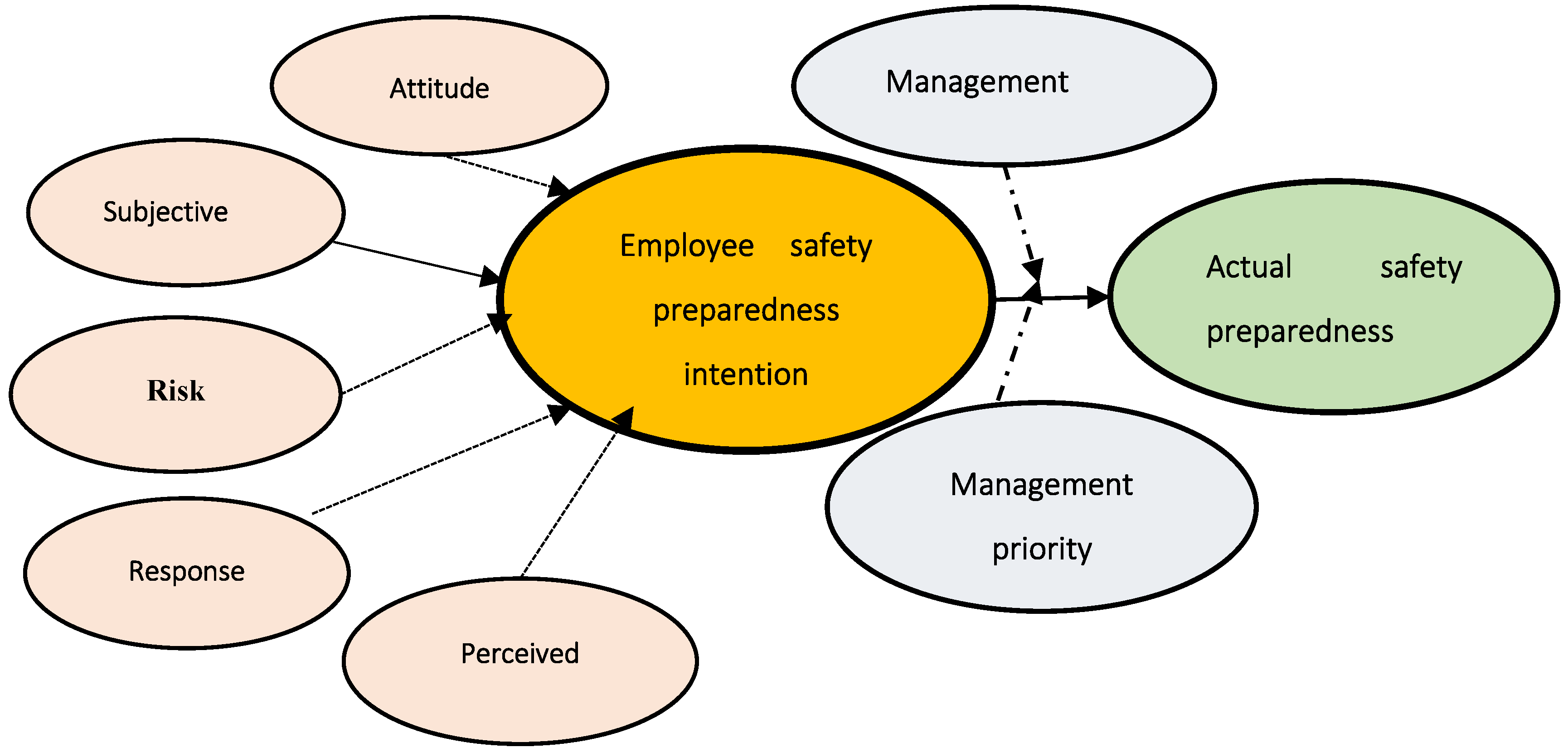

Table 1.
Demographics of participants.
| Description | Frequency (f) | Percent(%) | |
| Gender | Male | 129 | 75.9 |
| Female | 41 | 24.1 | |
| Age | 20-29 | 81 | 47.6 |
| 40-49 | 14 | 8.2 | |
| 50-59 | 11 | 6.5 | |
| 60-69 | 1 | 0.6 | |
| Highest level of Education | Undergraduate Degree | 54 | 31.8 |
| Postgraduate Degree | 116 | 68.2 | |
| Number of Years Worked | Less than a year | 8 | 4.7 |
| 1-5 years | 27 | 15.9 | |
| 5-10 years | 107 | 62.9 | |
| 10-15 years | 19 | 11.2 | |
| 15-20 years | 9 | 5.3 |
Source: Field Data, 2024.
Table 2.
Outcome of the model’s fit test.
| Measures for model fit | Index |
| Chi-square Fit Test | 1.33 |
| RMSEA | 0.04 |
| SUMMER | 0.03 |
| CFI | 0.97 |
| IF | 0.94 |
| NFI | 0.97 |
| TLI | 0.90 |
Source: Field Data, 2024. RMSEA = Root Mean square Error of Approximation, SRMR = Standardized Root Mean Square Residual. CFI = Comparative Fit Index, NFI = Normed Fit Index (NFI), TLI = Tucker Lewis Index.
Table 3.
Influence of psychological constructs on EEPI.
| Path Description | β | SE | T | P-Value | CI |
| ATT → EPI | 0.36 | 0.05 | 7.18 | < 0.001*** | 0.30, 0.40 |
| SN → EPI | 0.31 | 0.06 | 5.17 | < 0.001*** | 0.25, 0.42 |
| PBC → EPI | 0.27 | 0.04 | 6.72 | < 0.001*** | 0.21, 0.35 |
| RP → EPI | 0.22 | 0.03 | 7.29 | <0.001*** | 0.09, 0.25 |
| RE → EPI | 0.12 | 0.02 | 6.15 | <0.001*** | 0.06, 0.14 |
Source: Field Data, 2024. Note: β= Standard Coefficient, SE= Standard Error, T= t-Statistics, P= Probability (P) value, ATT= Attitude, SN= Subjective Norms, PBC= Perceived Behavioral Control, RP= Risk Perception, RE= Response efficacy, EEPI= Employee Emergency Preparedness Intention, CI= Confidence intervals, based on 95%.
Table 4.
Mediating effect of EPI on relationship between psychological constructs and APB.
| Path Description | Β | SE | T | P-Value | CI |
| ATT→ APB (Direct Effect) | 0.04 | 0.03 | 1.25 | 0.15 | |
| ATT → EPI → APB (Indirect Effect) | 0.29 | 0.06 | 4.83 | <0.001*** | 0.25, 0.35 |
| SN → APB (Direct Effect) | 0.09 | 0.07 | 1.30 | 0.10 | |
| SN→ EPI → APB (Indirect Effect) | 0.16 | 0.06 | 2.60 | 0.005 | 0.10, 0.20 |
| PBC → APB (Direct Effect) | 0.07 | 0.08 | 0.85 | 0.20 | |
| PBC → EPI → APB (Indirect Effect) | 0.18 | 0.09 | 1.98 | 0.025 | 0.15, 0.24 |
| RP → APB (Direct Effect) | 0.07 | 0.06 | 1.28 | 0.10 | |
| RP → EPI → APB (Indirect Effect) | 0.10 | 0.002 | 5.00 | <0.001*** | 0.05, 0.15 |
| RE → APB (Direct Effect) | 0.02 | 0.03 | 0.68 | 0.25 | |
| RE → EPI → APB (Indirect Effect) | 0.22 | 0.03 | 7.33 | <0.001*** | 0.20, 0.26 |
Source: Field Data, 2024. Note: β= Standard Coefficient, SE= Standard Error, T= t-Statistics, P= Probability (P) value, ATT= Attitude, SN= Subjective Norms, PBC= Perceived Behavioral Control, RP= Risk Perception, RE= Response efficacy, EEPI= Employee Emergency Preparedness Intention, APB= Actual Preparedness Behavior, CI= Confidence. intervals, based on 95% CI.
Disclaimer/Publisher’s Note: The statements, opinions and data contained in all publications are solely those of the individual author(s) and contributor(s) and not of MDPI and/or the editor(s). MDPI and/or the editor(s) disclaim responsibility for any injury to people or property resulting from any ideas, methods, instructions or products referred to in the content. |
© 2025 by the authors. Licensee MDPI, Basel, Switzerland. This article is an open access article distributed under the terms and conditions of the Creative Commons Attribution (CC BY) license (http://creativecommons.org/licenses/by/4.0/).
Copyright: This open access article is published under a Creative Commons CC BY 4.0 license, which permit the free download, distribution, and reuse, provided that the author and preprint are cited in any reuse.


