

Submitted:
20 March 2025
Posted:
23 March 2025
You are already at the latest version
Abstract
This study investigates the synthesis of shape-controlled titanium dioxide (TiO₂) nanoparticles via a hydrothermal method, examining the influence of pH variation (8, 10, 12, and 14) and subsequent thermal treatments (200°C and 230°C) on phase transitions and morphological transformations. The resulting TiO₂ nanostructures—including nanorods, nanotubes, nanoflowers, elongated bipyramids, and irregular flower-like assemblies—undergo phase transitions from anatase to brookite. Their photocatalytic performance is assessed for aqueous pollutant degradation and NOx abatement. TiO₂ synthesized at lower pH (8-10), exhibiting anatase-phase nanotubular and elongated bipyramidal morphologies, achieves near-complete photodegradation of phenol, methomyl, and diclofenac in both Milli-Q and stormwater matrices. Conversely, brookite-rich TiO₂ phases, formed at higher pH (12-14), show limited liquid-phase activity but excel in NOx abatement, making them promising candidates for air purification applications. These findings highlight the pivotal role of phase composition and morphology in optimizing photocatalytic performance, offering a strategic approach for the scalable development of efficient TiO₂-based photocatalysts for environmental remediation.
Keywords:
shape controlled titanium dioxide (TiO₂)
; photocatalytic degradation
; aqueous pollutants
; NOx abatement
1. Introduction
Environmental pollution, particularly from emerging aqueous contaminants and airborne nitrogen oxides (NOx), presents a growing global challenge. Pharmaceuticals, pesticides, and industrial chemicals persist in aquatic ecosystems, leading to bioaccumulation and long-term ecological risks [1,2]. Simultaneously, NOx emissions from industrial activities contribute to air quality deterioration, acid rain formation, and respiratory diseases [3,4,5]. Addressing these issues requires the development of advanced, efficient photocatalytic materials for sustainable pollutant remediation.
Titanium dioxide (TiO₂) is a widely studied photocatalyst due to its high stability, non-toxicity, and strong photocatalytic activity under UV light [6,7,8,9]. However, its practical applications are often constrained by a wide band gap and limited visible-light activity. To enhance its performance, strategies such as doping, surface modification, and morphology control have been explored. Among these, shape-controlled synthesis of TiO₂ nanostructures has proven effective in optimizing photocatalytic efficiency by increasing surface area, promoting charge separation, and improving light absorption [10,11,12,13,14,15,16,17,18,19]. Different crystal faces can be exposed by controlling the size and shape of photocatalytic materials at the nanoscale, each with distinct surface states and catalytic properties. This underscores the crucial role of synthesis parameters in optimizing TiO₂ properties for specific applications. Our recent work demonstrated the significant impact of shape-controlled TiO₂ nano cuboids and TiO₂ nanobelts heterostructures as highly effective nanocatalysts for efficiently mineralizing a broad range of pollutants [19,20].
Despite advancements in TiO₂-based photocatalysis, a comprehensive understanding of how synthetic parameters influence morphology and phase transitions (anatase, brookite) remains limited. While anatase is widely recognized for its superior photocatalytic efficiency in aqueous pollutant degradation, brookite has shown promise for NOx abatement due to its enhanced catalytic performance in gaseous reactions [21]. This study systematically investigates the role of pH and thermal treatment in tailoring TiO₂ morphology and phase composition, with an emphasis on its impact on photocatalytic applications in both liquids (Phenol, methomyl, diclofenac)- and gas-phase pollutant (NOx) removal.
2. Materials and Methods
2.1. Materials
P25 (EVONIK), NaOH (Beijing Chemicals, purity > 96.0%), deionized water (Milli-Q system), and stormwater (collected from a collection center in Madrid, Spain) were used in the study. Methanol and orthophosphoric acid (HPLC grade) were purchased from Scharlab (Barcelona, Spain) for chromatographic analysis. The pesticide methomyl (99.5% purity) was obtained from Aragonesas Agro S.A. (Madrid, Spain). Sodium diclofenac (DCF, >99% purity) and phenol (99% purity) were provided by Aldrich (Darmstadt, Germany). Table S1 (Supplementary Data) lists the general characteristics of the pollutants investigated, and Table S2 presents the chemical characteristics of alkaline stormwater.
2.2. Synthesis of Na-Titanate
A total of 3.5 g of P25 was dispersed in 140 mL of 10 M NaOH aqueous solution and transferred to a 200 mL Teflon-lined stainless-steel autoclave. The mixture was heated at 120°C for 24 hours, followed by air cooling, resulting in the formation of white Na-titanate precipitates. These precipitates were isolated by centrifugation and repeatedly washed with deionized water. The washing process was continued while adjusting the pH using NaOH solution to achieve final pH values of 14, 12, 10, and 8. The resulting Na-titanate powder was separated by centrifugation and freeze-dried overnight.
2.3. Synthesis of Shape-Controlled Brookite and Anatase TiO2
Na-titanates (1 g), synthesized at different pH values (14, 12, 10, and 8), were individually dispersed in 40 mL of deionized water and transferred to a 50 mL Teflon-lined stainless-steel autoclave. The mixtures were subjected to hydrothermal treatment at two different temperatures, 200°C and 230°C, for 24 hours, followed by natural air cooling, resulting in the formation of white TiO₂ precipitates. These precipitates were isolated by centrifugation, thoroughly washed with deionized water, and freeze-dried overnight.
The specimens were labelled based on their synthesis conditions as pH(X)-Y(°C), where "X" represents the pH value used during synthesis, and "Y" denotes the thermal treatment temperature. Initial trials at temperatures above 230°C led to phase instability, causing undesirable transitions to rutile, which disrupted the selective formation of anatase and brookite—key phases of interest in this study. To mitigate this, reaction temperatures were optimized to 200°C and 230°C, ensuring controlled phase formation while preserving the desired surface morphologies. Figure 1 illustrates the synthesis route of the developed TiO₂ nanostructures.
3. Characterization
3.1. Physical Characterization
Morphological and microstructural features were examined using a JEOL-IT300 scanning electron microscope (SEM). X-ray diffraction (XRD) patterns were obtained with a Rigaku X'Pert High Score diffractometer (Japan) under ambient conditions, utilizing cobalt K-α radiation (λ = 1.54 Å) at 10 mA and 30 kV. Measurements were performed with a step size of 0.005° over a 2θ range of 20° to 80°. UV-visible diffuse reflectance spectra (DRS) were collected using a Shimadzu UV-Vis-NIR spectrophotometer (Model UV-3600) at room temperature, with a wavelength range from 200 to 800 nm.
3.2. Photocatalytic Degradation of Aqueous Pollutants
A series of controlled experiments were conducted to assess the photocatalytic activity of the synthesized catalyst. Suspensions containing 1 g/L of the catalyst were placed in a photoreactor and exposed to ultraviolet (UVA) light from ten LED lamps (Seoul Viosys, Republic of Korea) emitting at 385 nm. The LEDs were arranged to ensure uniform illumination across the reactor surface, each operating at 250 mA with a power consumption of 8.38 W. The photon flux, measured using the potassium ferrioxalate actinometry method, was determined to be 1682.8 ± 77.1 μmol m² s⁻¹.
Photocatalytic degradation of pollutants was monitored by tracking concentration changes of initial 0.1 mM solutions, with degradation kinetics analyzed using an exponential decay model. Experiments were conducted under natural pH conditions. Before irradiation, the reaction mixture was stirred in the dark for 30 minutes to establish adsorption equilibrium. During irradiation, 0.8 mL aliquots were collected at specific intervals, filtered through a 0.45 μm nylon filter to remove suspended catalyst particles, and analyzed. Pollutant concentrations were determined using high-performance liquid chromatography (HPLC) equipped with a diode array detector, a binary gradient pump, and an automated sampler. After 120 minutes of irradiation, total organic carbon (TOC) content was measured using a TOC analyzer (TOC-VCSH/CSN, Shimadzu).
Two water matrices were used in this study: Milli-Q ultrapure water (UW) and rainwater (RW) collected from Madrid, Spain. Physicochemical analysis revealed that RW had a higher ionic concentration, leading to increased conductivity and total dissolved solids compared to UW. Additionally, RW exhibited a more alkaline pH, ranging from 8.1 to 8.6, in contrast to the nearly neutral pH of UW (Table S2).
3.3. Photocatalytic Performance for NOx Abatement
This study utilizes a customized NOx photoreactor developed by Maurino et al. [22], which is equipped with a compact 15 mL reaction chamber that ensures airtight operation. Inside the chamber, a UV-transparent polymer turbine facilitates turbulent gas flow with adjustable speed, minimizing the diffusion boundary layer above the catalytic surface. The reactor is designed with uniform LED irradiation and real-time monitoring of gaseous substrates, significantly enhancing photocatalytic performance assessment. The continuously stirred, low-volume setup allows for the precise measurement of the intrinsic photocatalytic activity of the surface under investigation by reducing mass transfer resistance in the gaseous boundary layer adjacent to the solid surface.
The UV light source is positioned external to the reaction chamber, with the fan integrated into the optical path of the LED array to optimize both the system size and gas flow characteristics. The LED array comprises six UV LEDs mounted on an aluminum printed circuit board and powered by a constant current supply. The LEDs are spaced to ensure uniform irradiation across the reactive surface, with adjustable incident UV radiation intensity ranging from 5 to 150 W m⁻². The fan speed is variable between 500 and 10,000 rpm, generating a swirling motion in the incoming gas. The coaxial design of the stator enhances turbulent flow within the chamber. Finite element analysis shows that turbulence can be achieved at fan speeds as low as 300 rpm, ensuring precise measurement of intrinsic photocatalytic activity.
NO and NO₂ gas concentrations are continuously monitored using electrochemical sensors (Alphasense models NO-A4 and NO2-A43 F, www.alphasense.com). Environmental parameters such as temperature and humidity are measured with a digital thermohygrometer sensor (Sensirion SHT75). Gaseous substrates are generated from N2 (99.9995%, Nippon Gases), O2 (99.995%, Nippon Gases), and a certified gas mixture containing NO and N2 (107.1 ppmv NO in N2) using an Entech 4650 dynamic diluter. The 15 mL internal volume of the reactor reaches steady state within 10–30 seconds, with continuous monitoring of key conditions throughout the process. The gas mixture flow rate is maintained at 0.5 L/min. The degradation rate is extrapolated at an infinite fan speed, where the boundary layer thickness approaches zero, removing mass transfer resistance and providing the true intrinsic photoactivity. NOx degradation rates for TiO₂ films are extrapolated based on the inlet gaseous substrate concentration, incident radiant power, LED power, and controlled environmental parameters. The conversion of NO and NOx, NO₂ release, and catalyst selectivity are analyzed using the following equations (Equations (1)-(4)).
Deposition of TiO2 film on Glass
TiO₂ films were prepared by depositing a concentrated (10 g L⁻¹) suspension onto a round glass support using the following steps:
- The glass support was thoroughly washed with water.
- A 10 g L⁻¹ TiO₂ suspension in water was prepared and sonicated for 1 hour.
- A 300 μL aliquot of the suspension was applied to the support and evenly spread using the doctor-blade technique to ensure uniform adhesion.
- The film was dried at ambient temperature.
- This process was repeated until the support surface was fully covered.
- Additional layers were applied and dried until a homogeneous thick film was obtained.
4. Results
4.1. Structure Analysis
Figure 2 presents the SEM images of the Na-titanates samples, illustrating the significant impact of pH on the morphological evolution of the initial structures. As the pH varies from 14 to 8, morphologies undergo a substantial transformation, shifting from a platelet-like distorted structure to a more elongated rod-fused structure. This transformation is driven by pH-sensitive nucleation and growth processes, highlighting pH's key role in sodium titanate formation of distinct surface morphologies.
Figure 3 and Figure 4 depict the morphological evolution of TiO₂ nanoparticles synthesized from Na-titanates (at different pH values) upon thermal treatments at 200°C and 230°C. The results reveal a pH- and temperature-dependent restructuring mechanism.
At pH 14, thermal treatment at 200°C and 230°C induced a transformation from platelet-like Na-titanates to a distinct flower-like TiO₂ morphology (Figure 3(a, b)). At 200°C, the specimen (pH14-200°C) exhibited a distorted flower-like structure, while at 230°C, the comparatively higher temperature led to a more compact structure with reduced particle size and a more pronounced flower-like morphology (pH14-230°C). The thermal treatment of Na-titanates at pH 12 promoted the formation of disordered fused nanosheet-like structures, resulting in a disordered morphology (pH 12, 200°C) (Figure 3(c)). However, at 230°C, the increased thermal energy triggered an anisotropic growth mechanism, leading to the self-organization of aloe-vera-like hierarchical structures (pH 12, 230°C) (Figure 3(d)).
For Na-titanates synthesized at pH 10, the relatively lower alkalinity resulted in a mixture of nanorods upon thermal treatment (Figure 4(a, b)). At 200°C, thermal treatment promoted the formation of more uniform nanorods, while at 230°C, the higher thermal energy overcame structural rigidity, facilitating the complete scrolling of nanorods into elongated nanotubes. This transition, driven by increased temperature, enhanced structural reorganization and favored nanotube formation, demonstrating a clear temperature-dependent mechanism.
The pH 8, 200°C specimen exhibited the nucleation of TiO₂ with a mixed nanotube/elongated bipyramidal morphology (Figure 4c). While surface rearrangements were more distinct at 200°C due to a dense population per unit length, increasing the temperature to 230°C resulted in a similar morphology but with a more well-defined shape and larger particle size (Figure 4d). This suggests that lower pH Na-titanates favour kinetically stable TiO₂ morphologies with minimal reorganization, maintaining structural consistency even with temperature variations. The observed structural evolutions are governed by a complex interplay of pH-dependent hydrolysis, and temperature-induced morphologies. These findings highlight the critical influence of alkaline pH and thermal treatment on TiO₂ morphology and phase transformations (discussed in a later section), which, in turn, impact photocatalytic efficiency by modulating surface area, defect density, and charge carrier dynamics [23]. The synergy between morphology and phase composition is further explored in subsequent sections to elucidate their combined impact on photocatalytic performance.
Figure 5 shows the XRD characterization of Na-titanate particles synthesized under controlled pH conditions. The prominent peaks at 2θ values of 28.20° and 48.20° correspond to the characteristic titanate pattern (Na2Ti3O7) [ICDD card no. 04-009-1210]. At pH 14, highly alkaline conditions promote the formation of Na₄TiO₄, exhibiting sharp peaks (indicative of Na₄TiO₄) along with broader peaks corresponding to TiO₂ and Ti₂O₃. At lower pH values (8 and 10), the synthesis results in a mixed-phase composition, including Na₂Ti₃O₇ and anatase, along with potentially amorphous species. Overall, the XRD profile highlights the influence of pH on phase evolution.
Figure 6 presents the XRD spectra of TiO₂ nanomaterials synthesized via hydrothermal treatment at 200°C and 230°C from Na-titanates at pH 8, 10, 12, and 14. The results highlight the critical role of both pH and reaction temperature in governing TiO₂ phase evolution, enabling precise control over anatase and brookite formation. For TiO₂ nanoparticles synthesized at pH 8 and pH 10 after thermal treatment, distinct diffraction peaks at 2θ = 25.00°, 37.00°, and 54.00° correspond to the (101), (004), and (211) planes of anatase TiO₂ (ICDD PDF card No. 01-075-2552). These results confirm the successful transformation of Na-titanate precursors into anatase TiO₂, with preferential stabilization of anatase-specific crystal planes. Combined XRD and SEM analyses indicate that moderate alkaline conditions (pH 8–10) favor the nucleation and growth of highly crystalline, phase-pure anatase nanoparticles. In contrast, at higher pH values (12 and 14), the synthesized TiO₂ exhibits diffraction peaks at 2θ = 25.49°, 38.19°, and 54.65°, corresponding to the (111), (311), and (421) planes of brookite TiO₂ (ICDD PDF card No. 04-022-2622). The selective formation of brookite under strongly alkaline conditions is attributed to an increased hydroxyl ion concentration, which induces deprotonation and stabilizes brookite-specific lattice planes by modifying the coordination environment of Ti species. Brookite formation occurs at both 200°C and 230°C, suggesting that pH plays a dominant role in phase selectivity, while temperature primarily influences crystallinity and particle growth. These findings highlight the interplay between pH and synthesis temperature in tuning TiO₂ crystalline phases. The hydrothermal synthesis strategy used here effectively tailors TiO₂ phases with distinct crystallographic properties. While temperature plays a limited role in determining the dominant TiO₂ phase under these conditions, it significantly impacts morphological evolution. The relationship between phase composition and morphology is further explored to elucidate their combined influence on photocatalytic performance.
Figure 7 presents the UV-Vis absorption analysis of TiO₂ nanoparticles, with bandgap values calculated from Tauc plots. Samples synthesized at pH 8–10 (anatase phase) exhibit a bandgap of ~3.18-3.20 eV, while those at pH 12–14 (brookite phase) show slightly higher values (3.23–3.28 eV). This increase is attributed to structural differences between anatase and brookite, affecting electronic band dispersion and charge carrier dynamics. The slight difference in bandgap between anatase and brookite TiO₂ with varying morphologies is attributed to changes in surface energy, quantum confinement effects, and crystallographic orientation, which influence electron density and charge carrier dynamics. The results highlight the influence of pH on phase composition and optical properties (Table 1), offering tunable electronic characteristics for photocatalytic and optoelectronic applications.
4.2. Photocatalytic Degradation of Aqueous Pollutants
The photocatalytic performance of TiO₂ for aqueous degradation was evaluated in two water matrices—Milli-Q water (UW) and highly basic stormwater (SW)—using a fixed pollutant concentration of 0.1 mM. For phenol degradation, TiO₂ samples synthesized at pH 8 (200°C) and pH 10 (230°C) exhibited significantly higher photocatalytic activity compared to those synthesized at pH 10 (200°C) and pH 8 (230°C), despite being primarily anatase (Figure 8). Considering the impact of morphology, TiO₂ specimens with nanotubes and mixed nanotubes/elongated bipyramids showed faster degradation rates, achieving nearly complete phenol removal within 20 minutes in UW and full degradation within 30 minutes in SW for pH-8, 200°C and pH-10, 230°C. The higher TOC removal values of 70% (in UW) and 56% (in SW) for pH-10, 230°C indicate more efficient photocatalytic activity. Higher TOC removal is critical as it reflects the extent of organic pollutant degradation, demonstrating the complete mineralization of contaminants into harmless byproducts like carbon dioxide and water. This suggests that the photocatalyst not only reduces the concentration of pollutants but also contributes to their complete breakdown, ensuring cleaner, safer output in environmental applications.
The distinctive photocatalytic performance among anatase-phase samples is attributed to differences in surface morphology. Fully developed, compact nanotubes and bipyramids (with dense populations and finer sizes) exhibited superior degradation efficiency due to their higher surface area, increased active sites, and enhanced generation of reactive hydroxyl radicals. In contrast, brookite-phase samples showed negligible photocatalytic activity across all morphologies. This is likely due to the lower charge mobility and higher electron-hole recombination rates associated with the brookite phase, significantly reducing the formation of reactive species necessary for pollutant degradation. Additionally, brookite’s structural characteristics may hinder its interaction with light, further decreasing its catalytic efficiency under the tested conditions, thus the morphology made no impact on degradation. As a result, brookite samples were excluded from aqueous pollutant degradation studies. Photocatalytic activity in both matrices followed first-order kinetics concerning phenol concentration. First-order rate constants and degradation rates were analyzed using the Langmuir-Hinshelwood model, with results summarized in Table 2.
Figure 9 illustrates the photodegradation of methomyl using TiO₂ with various morphologies under UV irradiation across different water matrices. Similar to phenol degradation, TiO₂ synthesized at pH 10 (230°C) and pH 8 (200°C) exhibited notable photocatalytic activity, achieving near-complete methomyl removal in 45 and 60 minutes in Milli-Q water (UW), respectively. In contrast, degradation in rainwater (RW) was slower, requiring 90 and 120 minutes for near-complete removal. This delay is likely due to the additional ions and organic matter in RW, which may compete with methomyl for active sites on the catalyst surface, thereby reducing efficiency. Compared to phenol, the methomyl degradation rate is slower. This is due to the more complex structure of methomyl, which contains multiple functional groups, making it more resistant to photocatalytic degradation. Furthermore, methomyl may form more persistent by-products that are difficult to degrade, which slows down the overall degradation process.
For mineralization, total organic carbon (TOC) conversion was significantly higher in UW than in RW after 120 minutes of UV exposure. Specifically, the TiO₂ samples synthesized at pH 10 (230°C) and pH 8 (200°C) achieved 57% and 46% TOC conversion in UW, respectively, indicating effective mineralization of methomyl into CO₂ and H₂O. However, in RW, mineralization efficiency was lower, with TOC conversions of 41% and 29%, suggesting that the RW matrix promotes the formation of more persistent by-products, which are more challenging to completely mineralize.
Notably, the TiO₂ synthesized at pH 10 (230°C) exhibited higher TOC conversion than pH 8 (200°C), demonstrating its superior performance in mineralizing methomyl. This can be attributed to the more optimized surface area and active sites of the anatase-phase structure formed at pH 10 (230°C), which enhances both pollutant degradation and mineralization efficiency. The higher TOC conversion observed for the pH 10 (230°C) TiO₂ further emphasizes the importance of tailoring synthesis conditions, such as pH and temperature, to enhance photocatalytic efficiency. Other morphologies, such as those formed under pH 8 (230°C) and pH 10 (200°C), exhibited relatively lower photocatalytic performance, likely due to less optimal surface structures that offer reduced surface area and active sites for degradation.
The apparent first-order rate constants (kₚₑₛₜ) for methomyl degradation in both water matrices are provided in Table 3, with high r² values (0.9194–0.9996) confirming the suitability of the first-order kinetic model for describing methomyl degradation under both UW and RW conditions.
Figure 10 illustrates the photodegradation of diclofenac (DCF) under UV irradiation in both mili-Q water (UW) and rainwater (RW), revealing a degradation trend similar to that of phenol and methomyl. The degradation rate was significantly higher in UW, with anatase-phase TiO₂ synthesized at pH 10 (230°C) and pH 8 (200°C) demonstrating the highest photocatalytic efficiency. In UW, nearly complete DCF degradation was achieved within 30 minutes, whereas in RW, TiO₂ synthesized at pH 10 (230°C) reached full degradation in 45 minutes, and the pH 8 (200°C) sample required 60 minutes.
The mineralization efficiency, measured by TOC conversion, was notably higher in UW than in RW, highlighting the simpler composition of UW, which facilitates more complete breakdown of organic pollutants. Specifically, anatase-phase TiO₂ synthesized at pH 10 (230°C) achieved up to 78% TOC removal in UW within 120 minutes, compared to 66% in RW. Kinetic analysis using a modified Langmuir-Hinshelwood model confirmed that degradation followed first-order kinetics in both matrices. The first-order rate constants for DCF degradation further underscore the influence of pH-induced phase transitions in TiO₂ (Table 4). Anatase-phase TiO₂ exhibited superior photocatalytic activity, contributing to more efficient mineralization. The degradation pathway of DCF follows sequential transformations into hydroxy- and dihydroxy-diclofenac derivatives, which then undergo further transformations into chloro- or hydroxyl-phenol intermediates. These intermediates are eventually mineralized through processes like ring opening, ultimately converting into carboxylic acids.
The significant differences in photocatalytic performance among TiO₂ samples can be attributed to the interplay between morphology, phase composition, and the consistently observed anatase phase in the pH 8–10 range. While the anatase phase dominates across all these pH conditions, variations in morphology—such as surface area, population density, and exposed crystal facets—play a critical role in determining photocatalytic efficiency. TiO₂ synthesized at pH 8 (200°C) and pH 10 (230°C) showed superior photocatalytic activity, mainly due to their unique morphologies. The sample synthesized at pH 10 (230°C), which forms nanotubes and mixed nanotubes/elongated bipyramids, has a higher surface area and more accessible active sites, improving interaction with pollutants and boosting degradation efficiency. Similarly, the bipyramidal morphology observed at pH 8 (200°C) exhibited comparable photocatalytic performance, highlighting the importance of morphology even when the crystal phase remains unchanged.
The Total Organic Carbon (TOC) values further reinforce the significance of these morphological variations. Higher TOC removal rates were observed for TiO₂ synthesized at pH 10 (230°C), indicating more complete mineralization of pollutants into CO₂ and H₂O. This suggests that the optimized surface area and active site accessibility in these morphologies enhance the overall breakdown of organic contaminants. TiO₂ synthesized under other conditions with less favorable morphologies exhibited comparatively lower TOC values, indicating reduced pollutant mineralization efficiency. This limitation is primarily due to their lower capacity for reactive oxygen species (ROS) generation and inefficient charge carrier separation, ultimately hindering their overall photocatalytic performance. This is indicative of the crucial role that surface characteristics play in not just the degradation of pollutants but also in their mineralization, which is essential for complete pollutant removal.
These findings underscore the critical synergy between phase composition, morphology, and TOC values in optimizing photocatalytic materials. By controlling not only the crystallographic phase but also the shape and surface characteristics of TiO₂ nanostructures, it becomes possible to enhance photocatalytic efficiency, as demonstrated by TiO₂ synthesized at pH 10 (230°C), which showed the highest TOC removal and the most efficient degradation of organic pollutants. This material, featuring a nanorod morphology, emerges as an ideal candidate for advanced photocatalytic applications.
4.3. Photocatalytic NOX Abatement
This study systematically investigates the photoconversion of nitrogen oxides (NOx) using TiO₂-based photocatalysts of two distinct phases, anatase and brookite. The impact of varying fan speeds (500–4000 rpm) on boundary layer thickness, mass transfer, and NO photodegradation is thoroughly examined in a custom-designed photoreactor. This approach enables a comparative analysis of the selective phases and morphologies, providing deeper insights into their photocatalytic efficiency and selectivity for NOx abatement (Figure 11). Higher fan speeds reduce the boundary layer thickness, minimizing mass transfer resistance and allowing for more efficient NO transport to the catalyst surface. This results in accelerated reaction rates and improves overall conversion efficiency.
For comparative analysis, TiO₂ synthesized at pH 10 (230°C) was selected due to its superior performance in aqueous pollutant degradation, making it an ideal candidate for evaluating NOx abatement efficiency. Meanwhile, the brookite-based specimen synthesized at pH 12 (200°C) was chosen after initial screening for its distinct response in air pollutant degradation, allowing a systematic comparison of phase-dependent photocatalytic performance. Under LED irradiation at 20 W/m², anatase-phase TiO₂ (pH-10, 230°C) achieved approximately 78% NO conversion efficiency, with degradation rates of 0.427 mg·min⁻¹·m⁻² for NO and 0.578 mg·min⁻¹·m⁻² for NOx. Although anatase-phase TiO₂ demonstrated high NO conversion efficiency, it released more NO₂ (16%) than brookite-phase TiO₂ (pH-12, 200°C), indicating that it is less selective in NOx abatement. This selectivity is a crucial factor in improving urban air quality. Brookite-phase TiO₂ (pH-12, 200°C) demonstrated high NO conversion (~60%) with remarkable selectivity (~91%) and minimal NO₂ release (3–4%), (Figure 12). This distinctive performance in NOx abatement, despite its comparatively lower efficiency in aqueous pollutant degradation, makes brookite-phase TiO₂ significant for air pollution control. Furthermore, brookite-phase TiO₂ showed a continuous increase in NO degradation efficiency even at decreasing fan speeds down to 100 rpm, after which the reaction rate plateaued. This suggests that at lower fan speeds (100–500 rpm), mass transfer is the limiting factor, while at higher speeds, reaction kinetics dominate. Thus, brookite-phase TiO₂ maintained excellent selectivity towards NOx degradation products and minimized NO₂ formation—an essential characteristic for optimizing deNOx processes in gas-phase applications. The comparison between anatase-phase TiO₂ (pH 10, 230°C) and brookite-phase TiO₂ (pH 12, 200°C) underscores the importance of phase engineering in determining photocatalytic efficiency. Anatase-phase TiO₂ (pH-10, 230°C) excelled in aqueous pollutant degradation, while brookite-phase TiO₂ demonstrated superior selectivity in NOx abatement, achieving higher selectivity and lower NO₂ release. This highlights the critical role of phase and morphology in optimizing TiO₂-based photocatalysts for different environmental applications.
In summary, this study emphasizes the significance of phase-engineered TiO₂ in photocatalytic applications, with anatase-phase TiO₂ excelling in aqueous pollutant degradation and brookite-phase TiO₂ performing remarkably well in NOx abatement. The interplay between morphology, crystallographic phase, and mass transfer dynamics is crucial for optimizing photocatalytic performance, and the results further emphasize the importance of selecting the appropriate phase and morphology for targeted environmental applications, particularly for air pollution control.
5. Discussion
This study underscores the critical role of phase engineering and morphology in optimizing the photocatalytic performance of TiO₂ nanoparticles synthesized through hydrothermal methods under controlled pH and temperature conditions. Anatase-phase TiO₂, particularly in its nanotube/bipyramid morphology, demonstrates significant efficiency in aqueous-phase pollutant degradation. Its high surface area, superior crystallinity, and enhanced charge separation facilitate efficient pollutant conversion, including phenol, methomyl, and diclofenac, with the highest total organic carbon (TOC) removal observed. Water matrix composition also influences degradation kinetics, with ultrapure water (UW) showing the fastest degradation and highest TOC removal (~79%), while methomyl degradation occurs at a slower rate due to its more complex structure [19,20].
In contrast, brookite-phase TiO₂ synthesized at pH 12 (200°C), despite showing negligible activity for aqueous pollutant degradation, excels in NOx abatement selectivity. This phase's unique crystallographic structure enhances NO₂ adsorption and conversion efficiency, resulting in high NO conversion (~60%) with remarkable selectivity (~91%) and minimal NO₂ release (~3–4%). These characteristics make brookite-phase TiO₂ ideal for air pollution control, especially in urban environments. The comparison between anatase-phase TiO₂ (pH 10, 230°C) and brookite-phase TiO₂ (pH 12, 200°C) highlights the distinct advantages of each phase for different applications. Anatase-phase TiO₂ is highly effective for aqueous-phase pollutant degradation and air-phase NOx abatement. In contrast, brookite-phase TiO₂ stands out in NOx removal, particularly for its selectivity in minimising NO₂ release. The generic mechanism of NOx abatement can be as follows (Equation 5-10),[24,25]:
TiO₂ + hν → e⁻ + h⁺
e⁻ + O₂ → O₂·⁻
h⁺ + H₂O → ·OH
NO + ·OH → HNO₂
HNO₂ + OH → NO2
NO2 + OH → HNO3
6. Conclusions
In conclusion, this study underscores the pivotal role of phase engineering and morphology in optimizing the photocatalytic performance of TiO₂ nanoparticles for environmental remediation. By systematically tailoring the synthesis conditions, including pH and temperature, TiO₂ nanostructures with distinct phases and morphologies were developed, demonstrating remarkable versatility in pollutant degradation. Anatase-phase TiO₂, particularly with nanotube morphology, exhibited significant efficiency in aqueous-phase pollutant degradation, achieving high reaction rates and complete degradation of phenol, methomyl, and diclofenac. In contrast, brookite-phase TiO₂, while showing negligible performance in liquid-phase applications, excelled in NOx abatement, achieving relevant NO conversion with high selectivity and minimal NO₂ release. Future research may focus on enhancing these properties further through doping strategies, such as incorporating noble metals, to promote photocatalyst activity. This approach could pave the way for next-generation photocatalytic technologies that effectively address diverse pollution challenges, from water contamination to atmospheric NOx reduction.
Supplementary Materials
The following supporting information can be downloaded at the website of this paper posted on Preprints.org.
Funding
V. Maurino kindly acknowledges funding by Regione Piemonte, Italy, through the project ECOBRAKE “Studio e Sviluppo di materiali frenanti ecologici e a bassa emissione di particolato per applicazioni automotive”—L.R. 34/2004—D.D. n° 409 del 02/11/2021. D. Hermosilla is grateful to Grant PID2020-114918RB-I00 (Project PHOTOPREBIO) funded by MCIN/AEI/10.13039/501100011033. MA Iqbal is grateful for the support of the European project UNA4CAREER (Marie Skłodowska Curie grant No 847635).
Conflicts of Interest
The authors declare no conflict of interest.
References
- Bell, K. Y.; Wells, M. J.; Traexler, K. A.; Pellegrin, M. L.; Morse, A.; Bandy, J. Emerging pollutants. WER 2011, 83, 1906–1984. [Google Scholar] [CrossRef]
- Deblonde, T.; Cossu-Leguille, C.; Hartemann, P. Emerging pollutants in wastewater: a review of the literature. Int. J. Hyg. Environ 2011, 214, 442–448. [Google Scholar] [CrossRef]
- Mohapatra, L.; Parida, K. A review on the recent progress, challenges and perspective of layered double hydroxides as promising photocatalysts. J. Mater. Chem. A 2016, 28, 10744–10766. [Google Scholar] [CrossRef]
- Pandey, S. K.; Singh, J. Nitrogen dioxide: Risk assessment, environmental, and health hazard. Hazardous Gases 2021, 273–288. [Google Scholar]
- Huang, S.; Li, H.; Wang, M.; Qian, Y.; Steenland, K.; Caudle, W. M.; Shi, L. Long-term exposure to nitrogen dioxide and mortality: A systematic review and meta-analysis. Sci. Total Environ 2021, 776, 145968. [Google Scholar] [CrossRef]
- Blake, D. M.; Webb, J.; Turchi, C.; Magrini, K.; Kinetic. Mechanistic overview of TiO2-photocatalyzed oxidation reactions in aqueous solution. Sol. Energy Mater 1991, 24, 584–593. [Google Scholar] [CrossRef]
- Schneider, J.; Matsuoka, M.; Takeuchi, M.; Zhang, J.; Horiuchi, Y.; Anpo, M. , Bahnemann, D. W. Understanding TiO2 photocatalysis: mechanisms and materials. Chem. Rev 2014, 114, 9919–9986. [Google Scholar] [CrossRef]
- Iqbal, M. A.; Asghar, H.; Maurino, V.; Matykina, E.; Arrabal, R.; Mohedano, M. Evaluating the energy consumption, structural, and corrosion resistance properties of photocatalytic TiO2-based PEO coatings on pre-anodized AA2024-Al. J. Surf 2024, 44, 103659. [Google Scholar] [CrossRef]
- Basavarajappa, P. S.; Patil, S. B.; Ganganagappa, N.; Reddy, K. R.; Raghu, A. V.; Reddy, C. V. Recent progress in metal-doped TiO2, non-metal doped/codoped TiO2 and TiO2 nanostructured hybrids for enhanced photocatalysis. Int. J. Hydrogen Energy 2020, 45, 7764–7778. [Google Scholar] [CrossRef]
- Bucharsky, E. C.; Schell, G.; Oberacker, R.; Hoffmann, M. J. Anatase–rutile transformation in TiO2–V2O5 catalyst coatings for ceramic foams. J. Eur. Ceram 2009, 29, 1955–1961. [Google Scholar] [CrossRef]
- Yang, Y.; Hu, J. X.; Liang, Y.; Zou, J. P.; Xu, K.; Hu, R. J.; Yuan, C. L. Anatase TiO2 hierarchical microspheres consisting of truncated nanothorns and their structurally enhanced gas sensing performance. J. Alloys Compd 2017, 694, 292–299. [Google Scholar] [CrossRef]
- Chen, D.; Cheng, Y.; Zhou, N.; Chen, P.; Wang, Y.; Li, K.; Ruan, R. Photocatalytic degradation of organic pollutants using TiO2-based photocatalysts: A review. J. Clean. Prod 2020, 268, 121725. [Google Scholar] [CrossRef]
- Eskandarloo, H.; Zaferani, M.; Kierulf, A.; Abbaspourrad, A. Shape-controlled fabrication of TiO2 hollow shells toward photocatalytic application. Appl. Catal. B: Environ 2018, 227, 519–529. [Google Scholar] [CrossRef]
- Maisano, M.; Dozzi, M. V.; Selli, E. Searching for facet-dependent photoactivity of shape-controlled anatase TiO2. J. Photochem. Photobiol 2016, 28, 29–43. [Google Scholar] [CrossRef]
- Pantaleone, S.; Pellegrino, F.; Maurino, V.; Corno, M.; Ugliengo, P.; Mino, L. Disclosing the true atomic structure of {001} facets in shape-engineered TiO2 anatase nanoparticles. J. Mater. Chem. A 2024, 12, 4325–4332. [Google Scholar] [CrossRef]
- D’Arienzo, M.; Carbajo, J.; Bahamonde, A.; Crippa, M.; Polizzi, S.; Scotti, R.; Morazzoni, F. Photogenerated defects in shape-controlled TiO2 anatase nanocrystals: a probe to evaluate the role of crystal facets in photocatalytic processes. J. Am. Chem. Soc 2011, 133, 17652–17661. [Google Scholar] [CrossRef]
- Li, J.; Yu, Y.; Chen, Q.; Li, J.; Xu, D. Controllable synthesis of TiO2 single crystals with tunable shapes using ammonium-exchanged titanate nanowires as precursors. Cryst. Growth Des 2010, 10, 2111–2115. [Google Scholar] [CrossRef]
- Liu, N.; Zhao, Y.; Wang, X.; Peng, H.; Li, G. Facile synthesis and enhanced photocatalytic properties of truncated bipyramid-shaped anatase TiO2 nanocrystals. Mater. Lett 2013, 102, 53–55. [Google Scholar] [CrossRef]
- Asghar, H.; Hermosilla, D.; Gascó, A.; Maurino, V.; Iqbal, M. A. Exploring the Photocatalytic Efficiency of Heterostructured TiO2 Nanobelts for Emerging Liquid Contaminants in Different Water Matrices. Separations 2025, 12, 49. [Google Scholar] [CrossRef]
- Asghar, H.; Hermosilla, D.; Pellegrino, F.; Muelas-Ramos, V.; de Los Ríos, C.; Gascó, A.; Iqbal, M. A. From Anatase TiO2 Nano-Cuboids to Nano-Bipyramids: Influence of Particle Shape on the TiO2 Photocatalytic Degradation of Emerging Contaminants in Contrasted Water Matrices. Molecules 2025, 30, 424. [Google Scholar] [CrossRef]
- Kamran, M.; Kandiel, T. A.; Abdel, A, S. ; Morsy, M. A.; Bahnemann, D. W. Mechanistic Insights into the High Selectivity and Photocatalytic Activity of Brookite TiO2 toward NO X Abatement. J. Phys. Chem. C 2023, 127, 7707–7717. [Google Scholar] [CrossRef]
- Pellegrino, F.; Zangirolami, M.; Minero, C.; Maurino, V. Portable photoreactor for on-site measurement of the activity of photocatalytic surfaces. Catal. Today 2020, 340, 363–368. [Google Scholar] [CrossRef]
- Wadge, M. D.; McGuire, J.; Thomas, K. G.; Stuart, B. W.; Felfel, R. M.; Ahmed, I.; Grant, D. M. Developing alkaline titanate surfaces for medical applications. Int. Mater. Rev 2023, 68, 677–724. [Google Scholar] [CrossRef]
- Rhimi, B.; Padervand, M.; Jouini, H.; Ghasemi, S.; Bahnemann, D. W.; Wang, C. Recent progress in NOx photocatalytic removal: Surface/interface engineering and mechanistic understanding. J. Environ. Chem. Eng 2022, 10, 108566. [Google Scholar] [CrossRef]
- Ângelo, J.; Andrade, L.; Madeira, L. M.; Mendes, A. An overview of photocatalysis phenomena applied to NOx abatement. JEM 2013, 129, 522–539. [Google Scholar] [CrossRef]
Figure 1.
Schematic route of the preparation of the shape-controlled TiO2 nanoparticles.
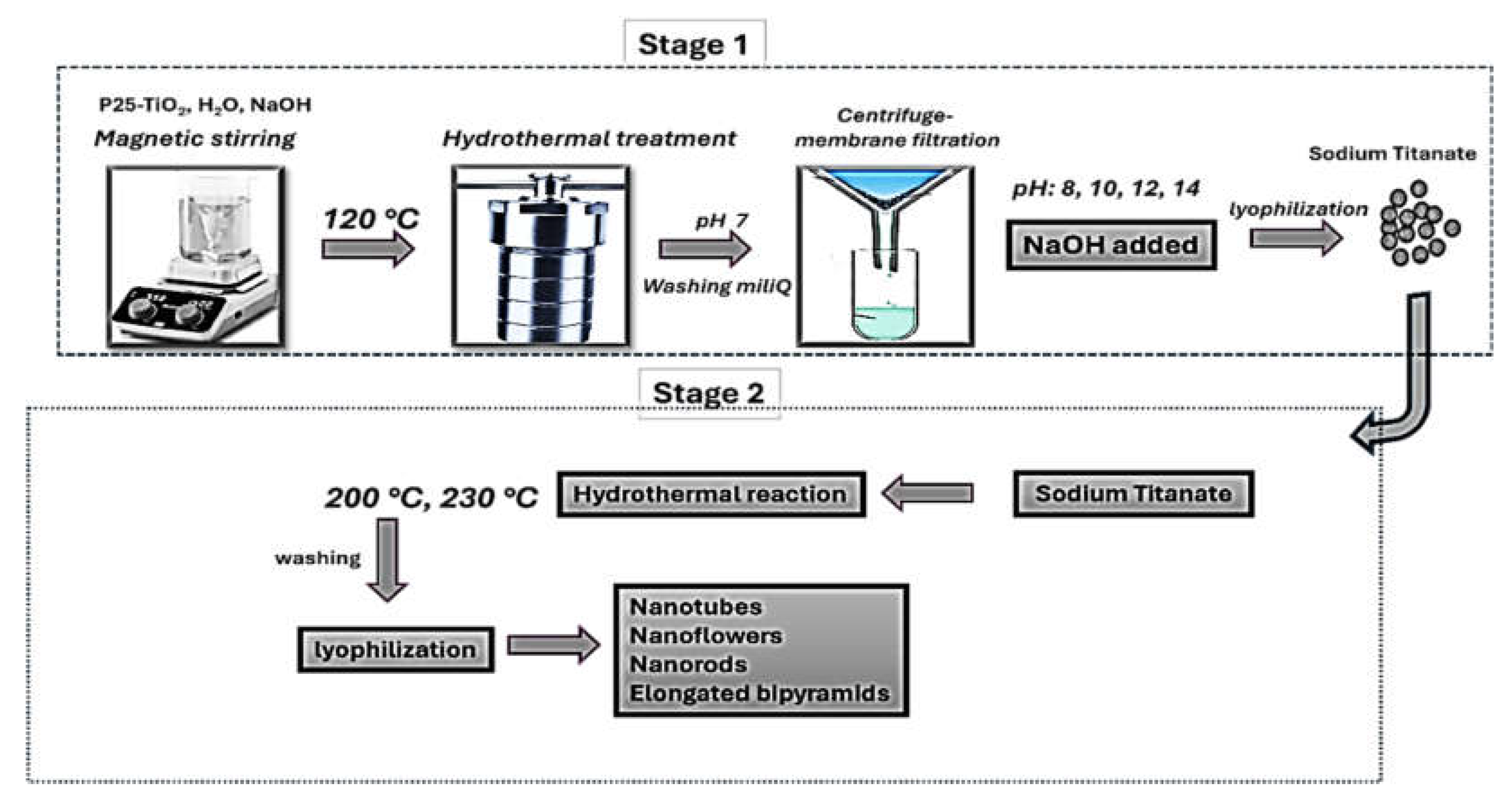
Figure 2.
FE-SEM images of Na-titanates prepared under different pH conditions.
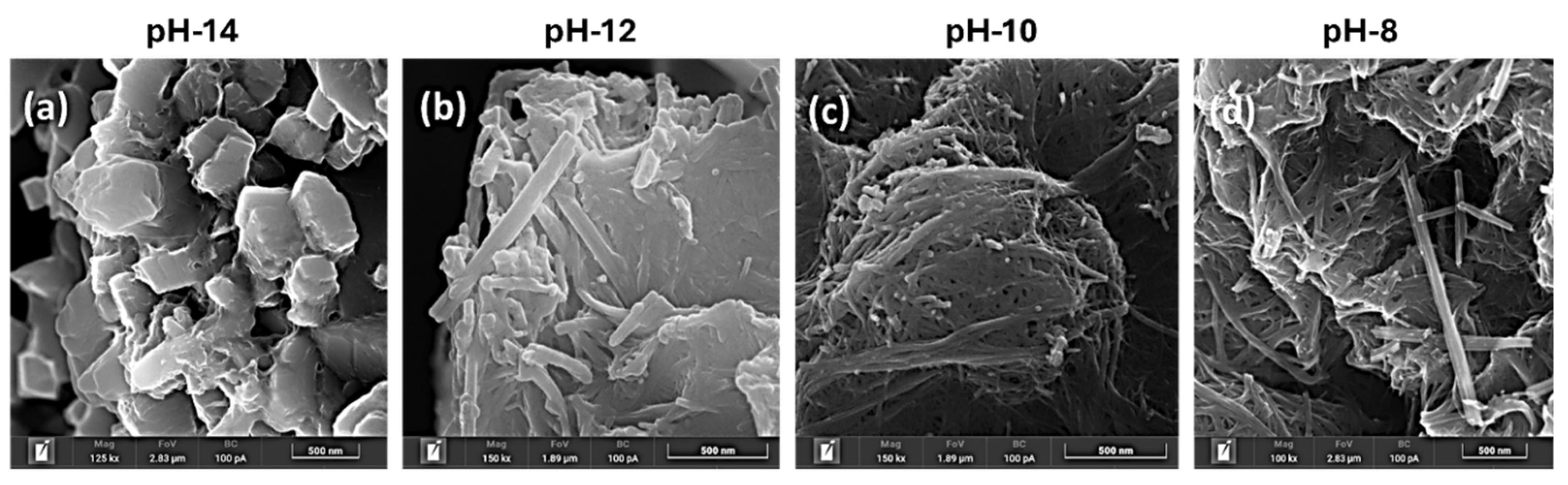
Figure 3.
FE-SEM images of TiO₂ derived from Na-titanates at pH 14 and pH 12, after thermal treatment at 200°C and 230°C.
Figure 3.
FE-SEM images of TiO₂ derived from Na-titanates at pH 14 and pH 12, after thermal treatment at 200°C and 230°C.
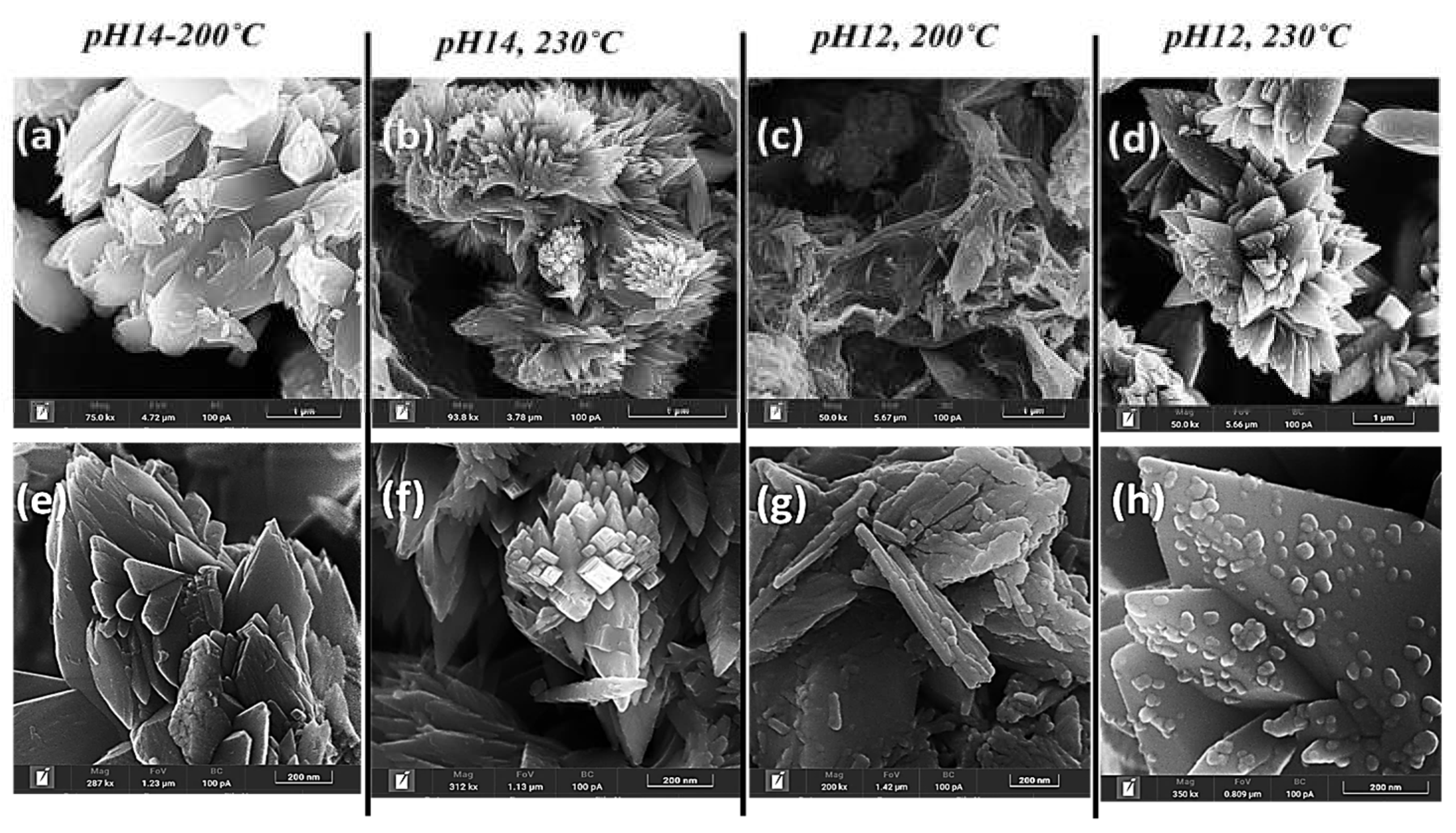
Figure 4.
FE-SEM images of TiO₂ derived from Na-titanates at pH 10 and pH 8, after thermal treatment at 200°C and 230°C.
Figure 4.
FE-SEM images of TiO₂ derived from Na-titanates at pH 10 and pH 8, after thermal treatment at 200°C and 230°C.
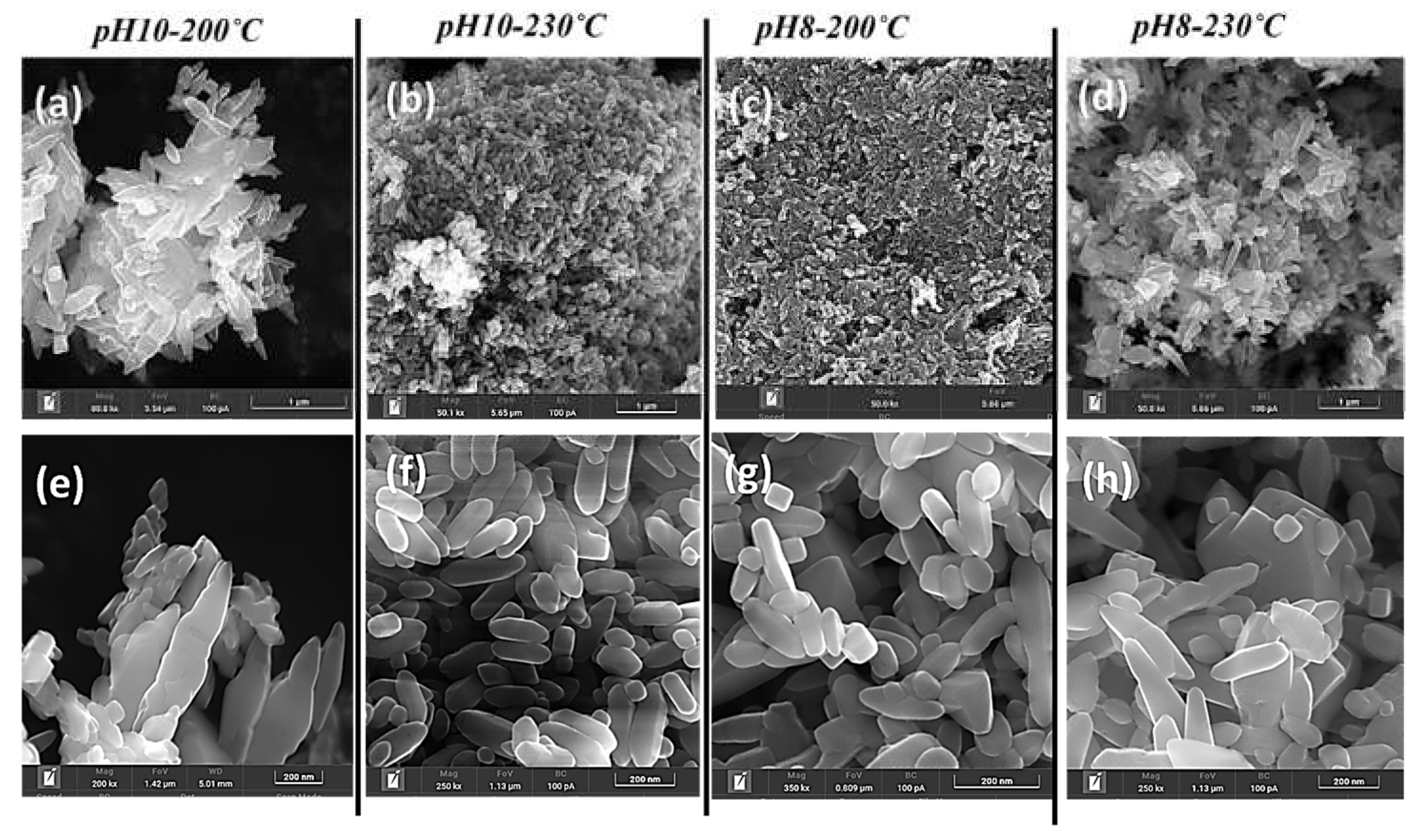
Figure 5.
X-ray diffraction patterns of the Na-titanate particles at different adjusted pH values.
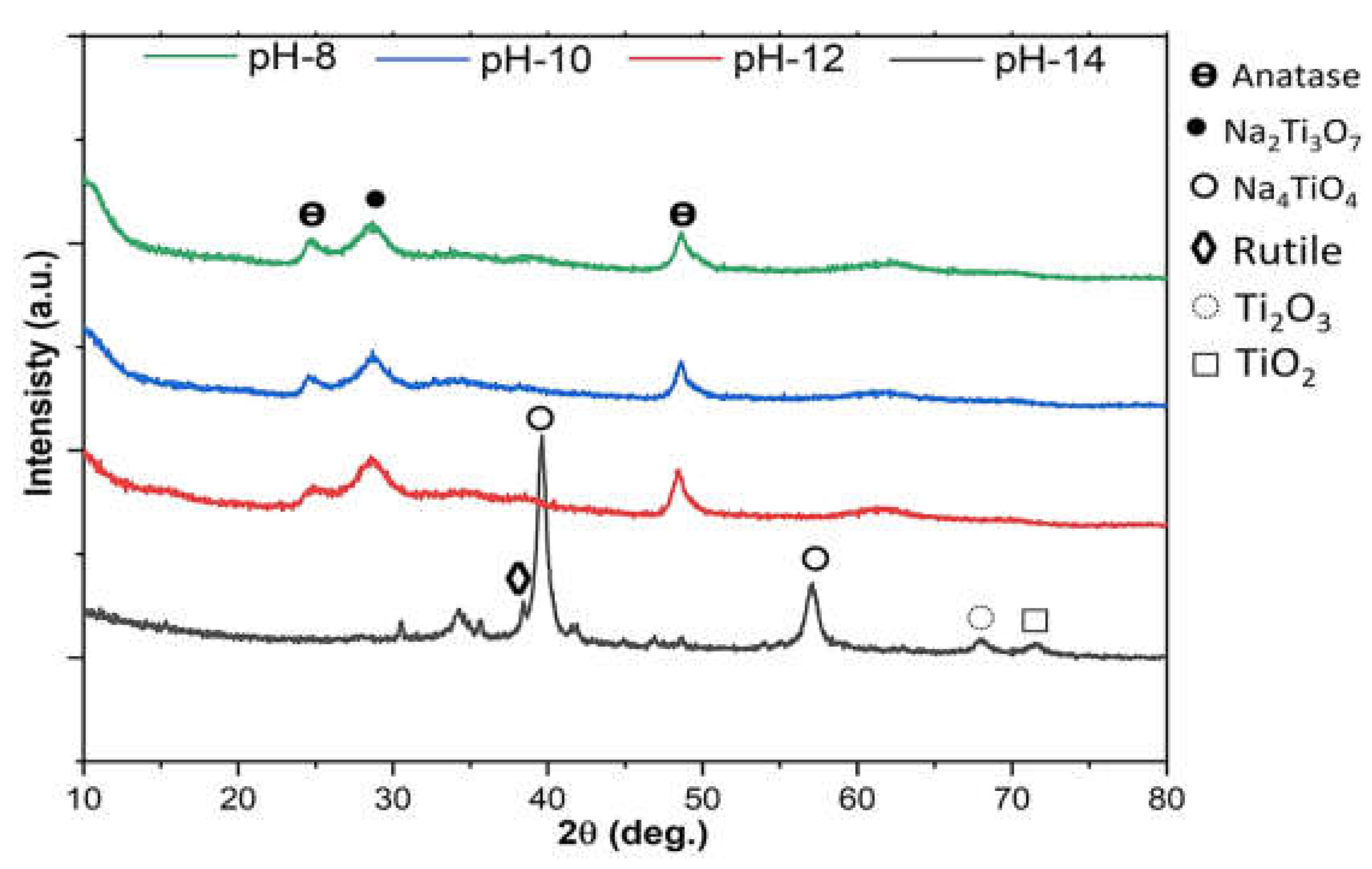
Figure 6.
XRD patterns of prepared TiO2 under different reaction conditions.
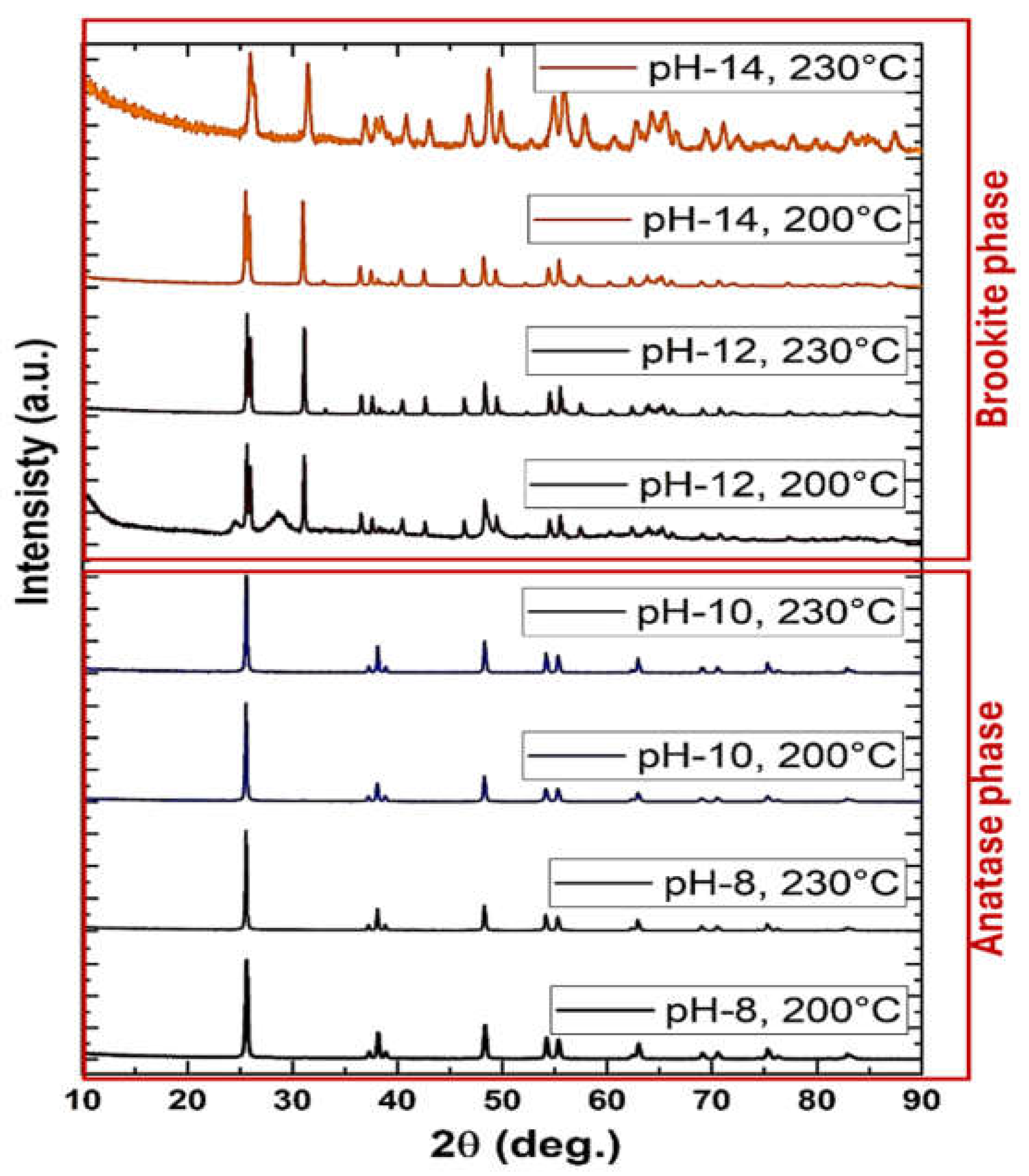
Figure 7.
(a, c) UV-VIs absorption spectra, (b, d) Band gap of developed TiO2 nanoparticles.
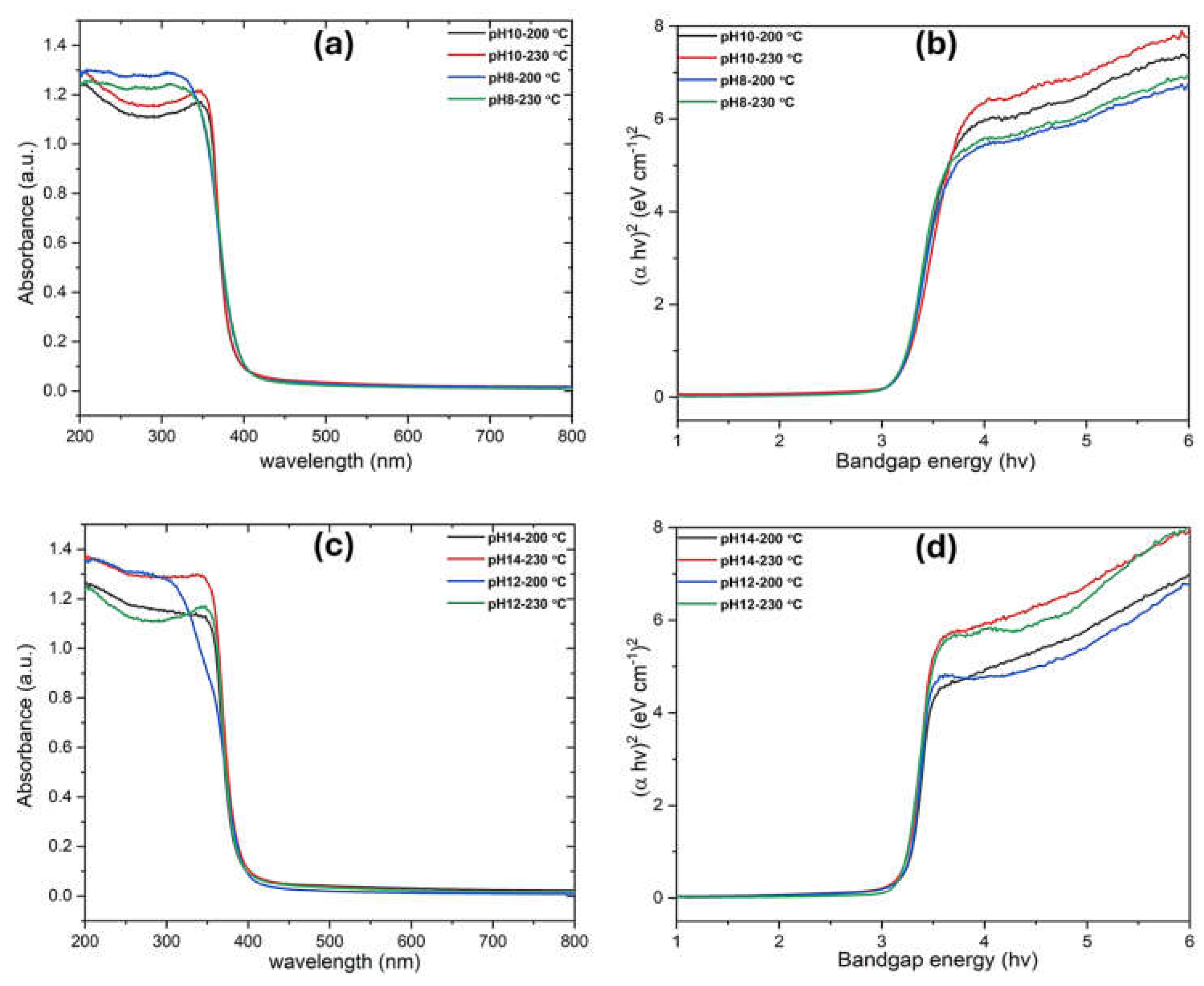
Figure 8.
Phenol photodegradation and Pseudo-first order kinetics plots, (a, b) Mili-Q water (UW), (c, d) Rainwater (RW).
Figure 8.
Phenol photodegradation and Pseudo-first order kinetics plots, (a, b) Mili-Q water (UW), (c, d) Rainwater (RW).
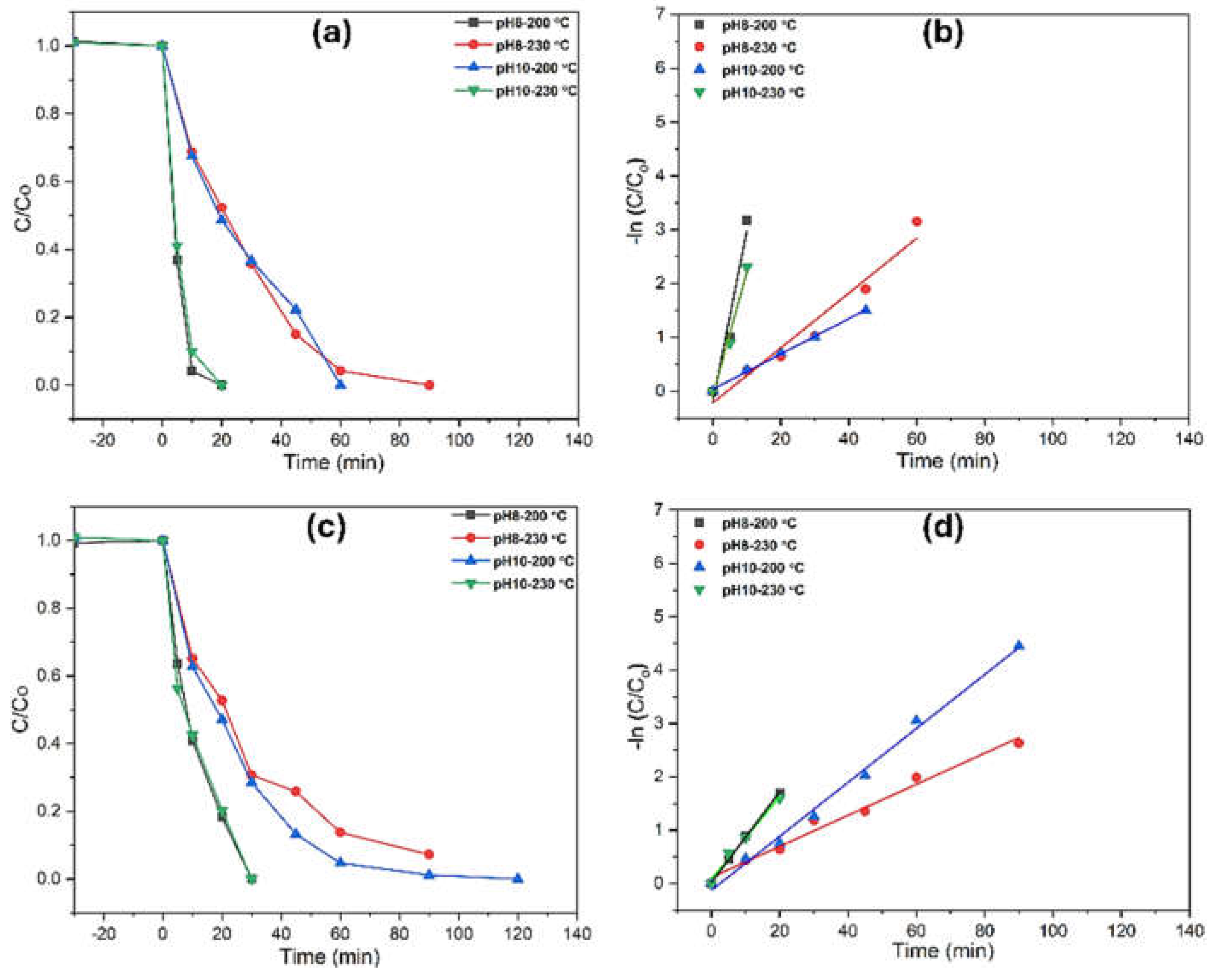
Figure 9.
Methomyl photodegradation and Pseudo-first order kinetics plots, (a, b) Mili-Q water (UW), (c, d) Rainwater (RW).
Figure 9.
Methomyl photodegradation and Pseudo-first order kinetics plots, (a, b) Mili-Q water (UW), (c, d) Rainwater (RW).
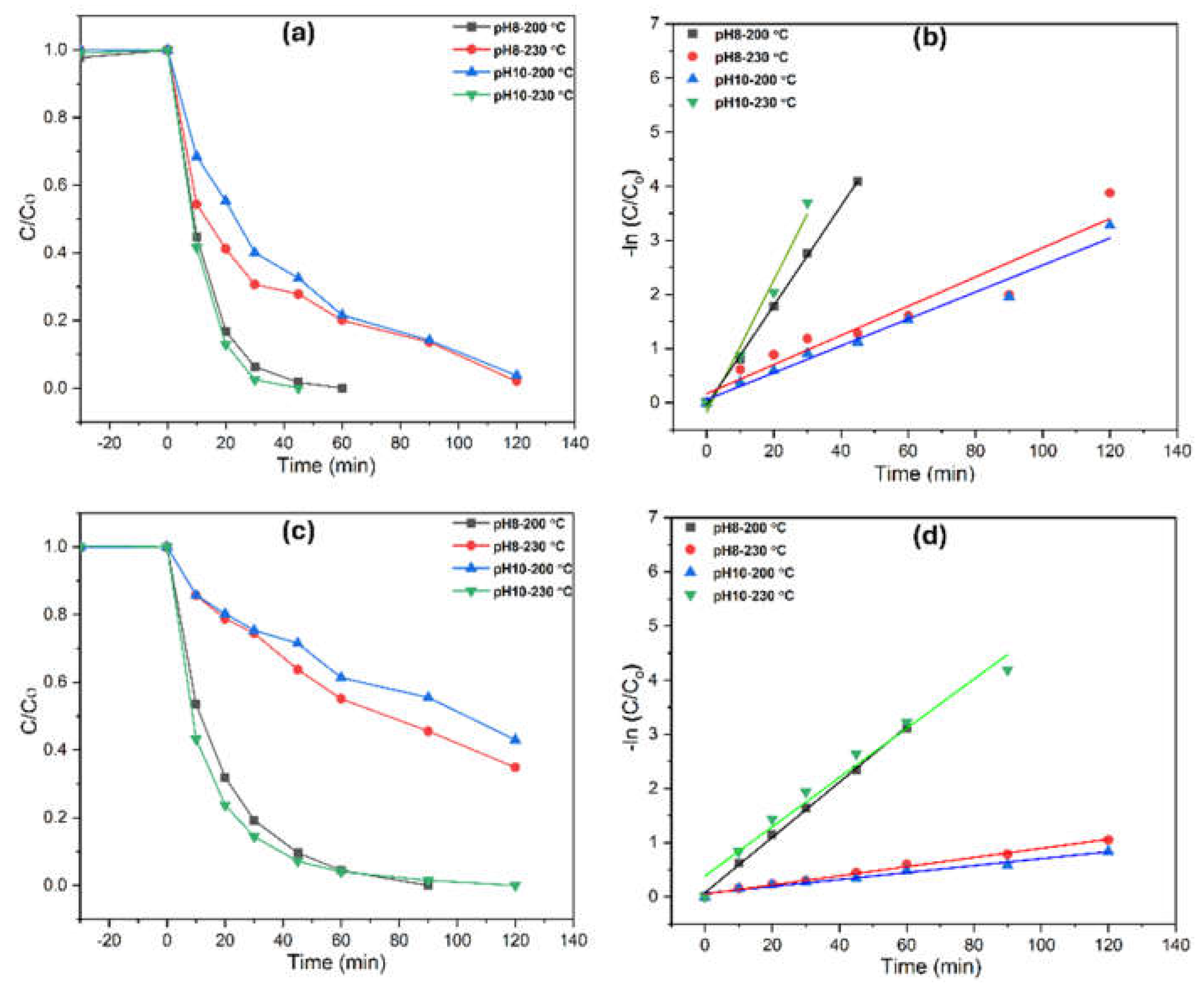
Figure 10.
Diclofenac photodegradation and Pseudo-first order kinetics plots, (a, b) Mili-Q water (UW), (c, d) Rainwater (RW).
Figure 10.
Diclofenac photodegradation and Pseudo-first order kinetics plots, (a, b) Mili-Q water (UW), (c, d) Rainwater (RW).
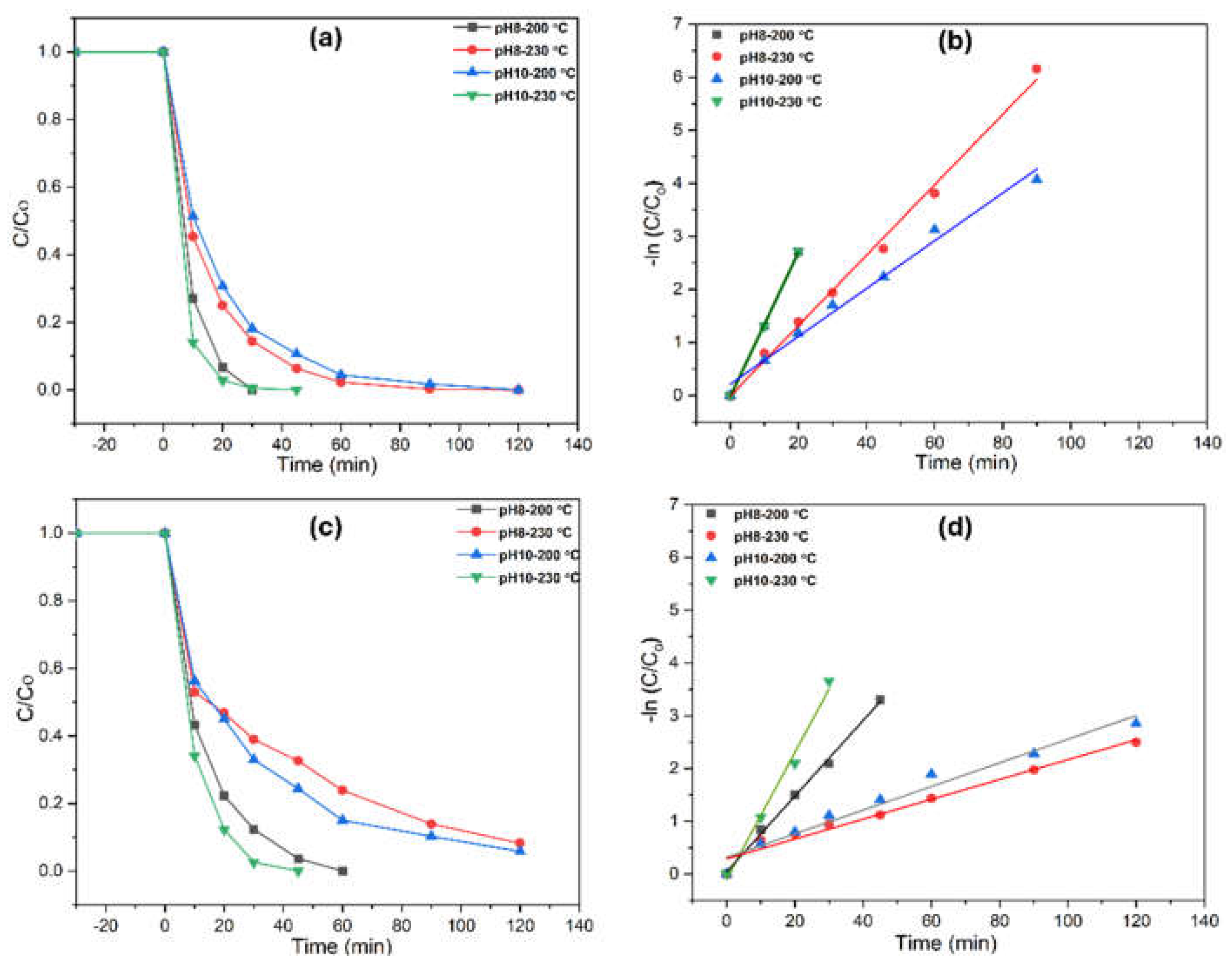
Figure 11.
Nitrogen oxide profiles and Plot of the NO/NOx degradation rate vs fan speed obtained during the photodegradation of gaseous NO under UV irradiation (20 Wm-2), (a, b) pH-10, 230 °C, (c, d) pH-12, 200 °C: The plots refer to the same measurement: 1 ppmv NO nominal initial concentration, 54% relative humidity.
Figure 11.
Nitrogen oxide profiles and Plot of the NO/NOx degradation rate vs fan speed obtained during the photodegradation of gaseous NO under UV irradiation (20 Wm-2), (a, b) pH-10, 230 °C, (c, d) pH-12, 200 °C: The plots refer to the same measurement: 1 ppmv NO nominal initial concentration, 54% relative humidity.
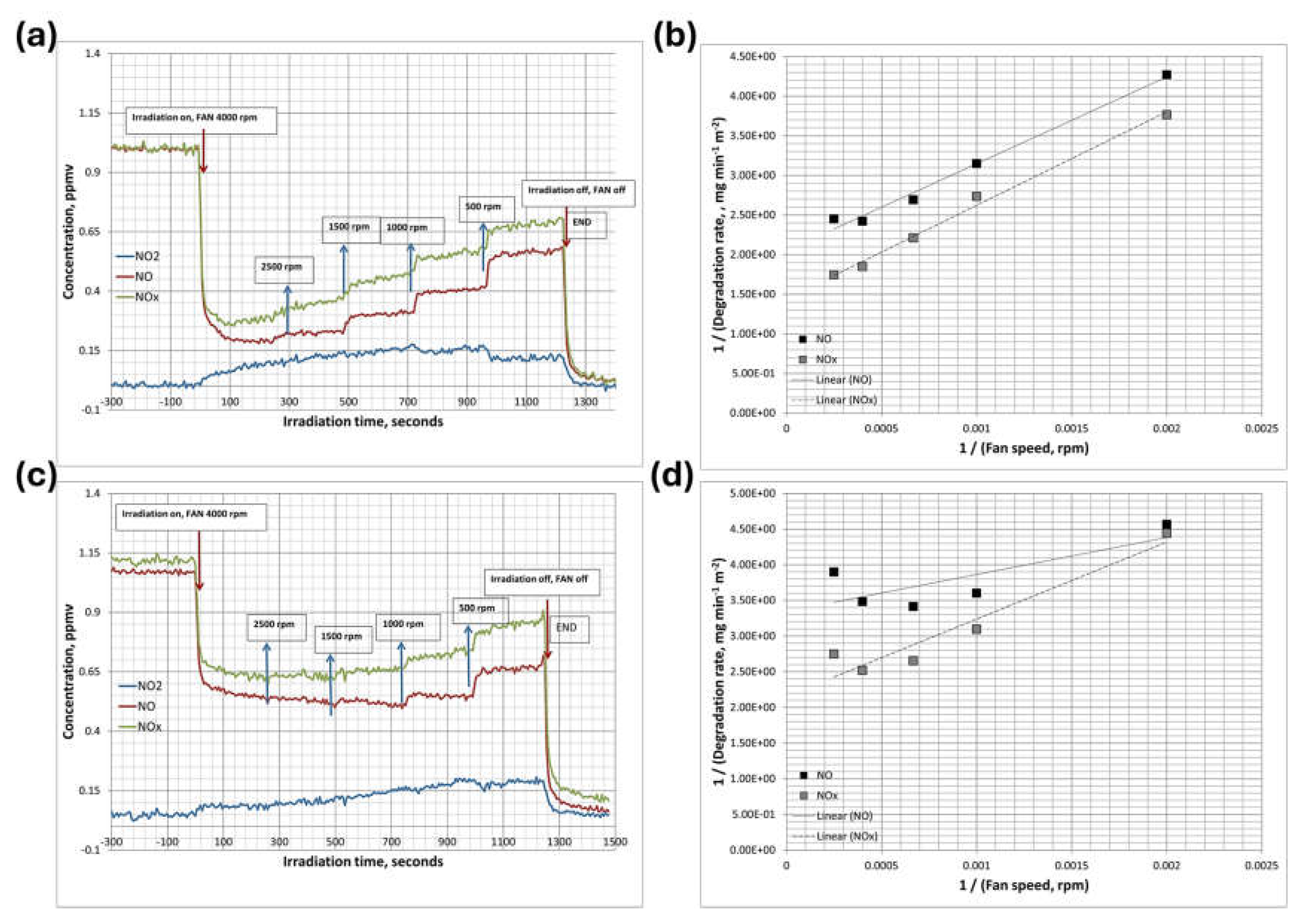
Figure 12.
NO, NOx conversions, NO2 release and “selectivity” values for the 20 Wm-2 lamp.
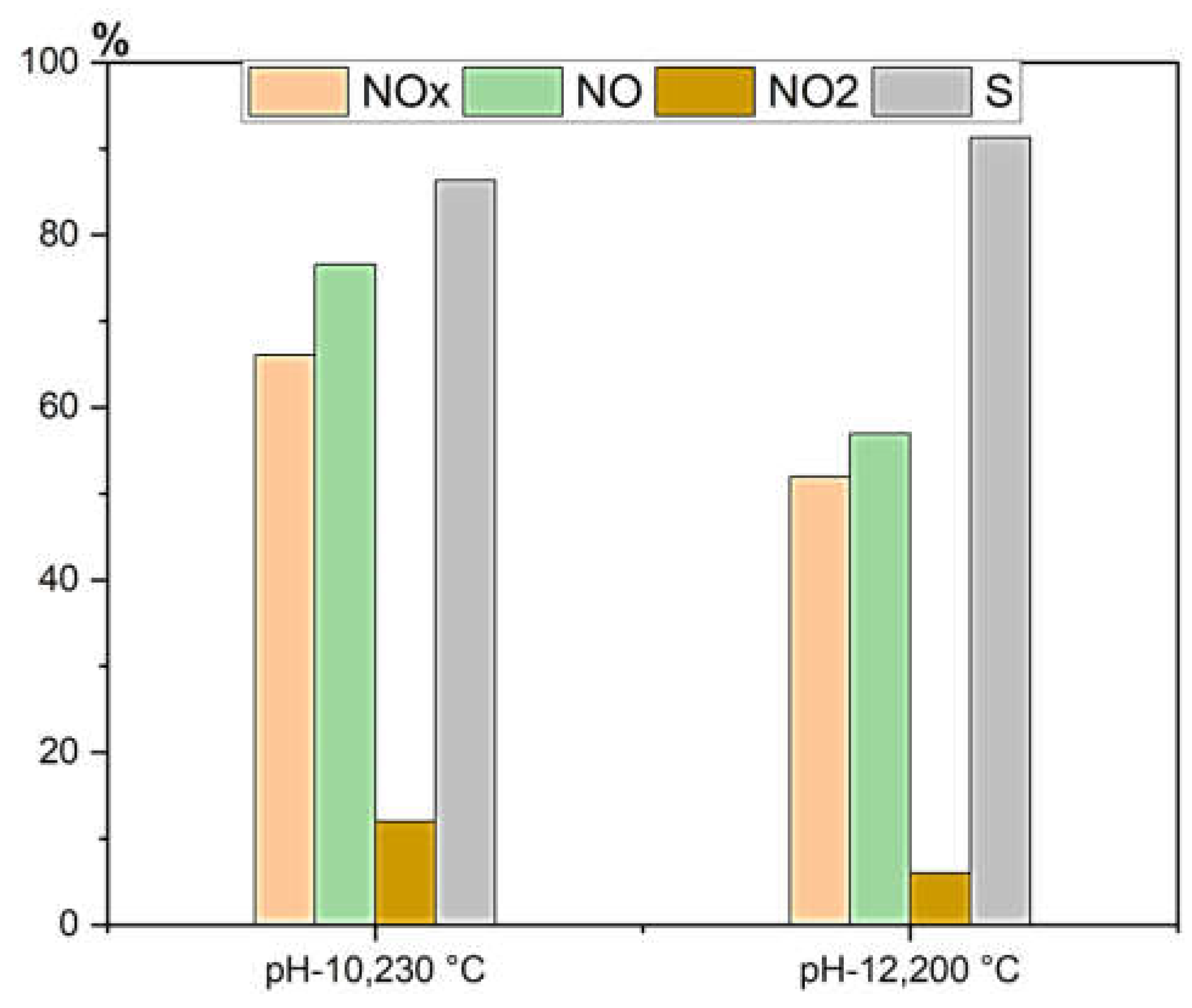

Table 1.
Band gap energies of developed TiO2 at various synthetic conditions.
| Specimen | Crystallographic form | Band gap energy/eV |
| pH8-200°C | anatase | 3.18 |
| pH8-230°C | anatase | 3.16 |
| pH10-200°C | anatase | 3.17 |
| pH10-230°C | anatase | 3.20 |
| pH12-200°C | Brookite | 3.26 |
| pH12-230°C | Brookite | 3.23 |
| pH14-200°C | Brookite | 3.28 |
| pH14-230°C | Brookite | 3.24 |
Table 2.
Constant rate (k) and decomposition rate (χ) of phenol in the presence of TiO2-based nanoparticles.
Table 2.
Constant rate (k) and decomposition rate (χ) of phenol in the presence of TiO2-based nanoparticles.
| Material | Removal Efficiency (%) | Time (min) | K1 | R2 | Normalized Degradation Rate (M.min-1) | TOC Removal (%) | ||||||
| Mili-Q | Rain Water | Mili-Q | Rain Water | Mili-Q | Rain Water | Mili-Q | Rain Water | Mili-Q | Rain Water | Mili-Q | Rain Water | |
| pH8-200°C | 100 | 100 | 20 | 30 | 0.2943 | 0.0861 | 0.9752 | 0.9995 | 2.6344 | 0.6799 | 61 | 50 |
| pH8-230°C | 100 | 100 | 90 | 90 | 0.0459 | 0.0291 | 0.9743 | 0.983 | 0.4405 | 0.3322 | 41 | 35 |
| pH10-200°C | 100 | 100 | 60 | 120 | 0.0339 | 0.0505 | 0.9986 | 0.9816 | 0.3136 | 0.5691 | 30 | 23 |
| pH10-230°C | 100 | 100 | 20 | 30 | 0.2199 | 0.0827 | 0.9911 | 0.9916 | 1.6721 | 0.6374 | 70 | 56 |
Table 3.
Constant rate (k) and decomposition rate (χ) of Methomyl in the presence of TiO2-based nanomaterials.
Table 3.
Constant rate (k) and decomposition rate (χ) of Methomyl in the presence of TiO2-based nanomaterials.
| Material | Removal Efficiency (%) | Time (min) | K1 | R2 | Normalized Degradation Rate (M.min-1) | TOC Removal (%) | ||||||
| Mili-Q | Rain Water | Mili-Q | Rain Water | Mili-Q | Rain Water | Mili-Q | Rain Water | Mili-Q | Rain Water | Mili-Q | Rain Water | |
| pH8-200°C | 100 | 100 | 60 | 90 | 0.0907 | 0.051 | 0.9996 | 0.998 | 1.498 | 0.754 | 46 | 29 |
| pH8-230°C | 98 | 65 | 120 | 120 | 0.027 | 0.0091 | 0.9194 | 0.9941 | 0.386 | 0.142 | 32 | 19 |
| pH10-200°C | 96 | 57 | 120 | 120 | 0.0256 | 0.0072 | 0.9894 | 0.9844 | 0.366 | 0.113 | 25 | 16 |
| pH10-230°C | 100 | 100 | 45 | 120 | 0.0992 | 0.0454 | 0.9966 | 0.9721 | 1.567 | 0.653 | 57 | 41 |
Table 4.
Pseudo first order rate constant (k) and decomposition rate (χ) of Diclofenac in the presence of TiO2-based nanomaterials.
Table 4.
Pseudo first order rate constant (k) and decomposition rate (χ) of Diclofenac in the presence of TiO2-based nanomaterials.
| Material | Removal Efficiency (%) | Time (min) | K1 | R2 | Normalized Degradation Rate (M.min-1) | TOC Removal (%) | ||||||
| Mili-Q | Rainwater | Mili-Q | Rainwater | Mili-Q | Rainwater | Mili-Q | Rainwater | Mili-Q | Rainwater | Mili-Q | Rainwater | |
| pH8-200°C | 100 | 100 | 30 | 60 | 0.1348 | 0.073 | 0.9998 | 0.9987 | 2.107 | 1.917 | 57 | 43 |
| pH8-230°C | 100 | 92 | 90 | 120 | 0.0662 | 0.0171 | 0.998 | 0.9972 | 1.860 | 0.490 | 24 | 20 |
| pH10-00°C | 100 | 94 | 120 | 120 | 0.045 | 0.0224 | 0.9872 | 0.9669 | 1.245 | 0.625 | 43 | 31 |
| pH10-30°C | 100 | 100 | 30 | 45 | 0.1813 | 0.116 | 0.9994 | 0.9954 | 3.230 | 3.010 | 78 | 66 |
Disclaimer/Publisher’s Note: The statements, opinions and data contained in all publications are solely those of the individual author(s) and contributor(s) and not of MDPI and/or the editor(s). MDPI and/or the editor(s) disclaim responsibility for any injury to people or property resulting from any ideas, methods, instructions or products referred to in the content. |
© 2025 by the authors. Licensee MDPI, Basel, Switzerland. This article is an open access article distributed under the terms and conditions of the Creative Commons Attribution (CC BY) license (http://creativecommons.org/licenses/by/4.0/).
Copyright: This open access article is published under a Creative Commons CC BY 4.0 license, which permit the free download, distribution, and reuse, provided that the author and preprint are cited in any reuse.


