
Submitted:
10 March 2025
Posted:
10 March 2025
You are already at the latest version
Abstract
In recent years, low temperature and freezing weather has seriously threatened the development of citrus industry. Arbuscular mycorrhizal (AMF) can enhance the absorption and utilization of nutrients and water and the tolerance to abiotic stresses. In this study, potted pot experiments were conducted to study the effects of AMF on low temperature stress of citrus (trifoliate orange, Poncirus aurantius) with AMF (Diversispora epigaea, D.e). The results showed that AMF inoculation significantly increased plant height, stem diameter, leaf number, above-ground and underground fresh weight, maximum light quantum efficiency (QY_max), steady-state light quantum efficiency (QY_Lss), net photosynthetic rate (Pn), transpiration rate (Tr), stomatal conductance (Gs) and intercellular CO2 concentration (Ci). The contents of soluble sugar, soluble protein, proline (Pro), catalase (CAT) activity and superoxide Dismutase (SOD) activity were significantly increased. Compared with 25℃, -5℃ stress significantly increased the relative electrical conductivity of plants, increased the contents of malondialdehyde (MDA), hydrogen peroxide (H2O2), soluble sugar, soluble protein and Pro, and enhanced the activities of CAT and SOD. Significantly reduced NPQ_Lss, QY_max, QY_Lss, Pn, Gs, Ci, and Tr. Under -5℃ stress conditions, QY_max and QY_Lss of AMF treatment were significantly higher than those of untreated group. It can be concluded that AMF can increase the activity of PSⅡ reaction center in leaves, improve the light energy conversion efficiency and electron transfer ability of leaves, promote the photosynthetic function of PSⅡ, and improve the tolerance to low temperature. Under -5℃ stress, Pn and Tr values of AMF treatment were significantly higher than those of the untreated group, but Gs and Ci had no significant changes. So, AMF could alleviate the restriction effect of low temperature stress on photosynthetic capacity of plants, that is, AMF-infected plants could enhance photocooperation to improve the cold resistance of trifoliate orange. Under -5℃ stress, the contents of soluble sugar and Pro as well as the activities of CAT and SOD in AMF group were significantly higher than those in AMF unvaccinated group. It can be concluded that AMF can enhance the antioxidant capacity and cold resistance of plants by increasing osmotic regulatory substances and antioxidant oxidase activities. In conclusion, AMF inoculation can promote the growth of aboveground and underground parts of trifoliate orange seedlings, and enhance their stress resistance under low temperature stress by enhancing photosynthesis, increasing the content of osmoregulatory substances and enhancing their antioxidant.
Keywords:
AMF
; Temperature stress
; Photosynthesis
; Osmotic regulation
; Antioxidant system
1. Introduction
Low temperature stress often occurs in crop production and cultivation, which affects the growth and development of crops and then affects the yield and quality of crops. Cotton (Gossypium hirsutum L.) seed suffered from cold damage during germination, which showed no germination or delayed germination [1]. Maize (Zea mays L.) and cucumber (Cucumis sativus L.) wilted when subjected to cold, and necrotic spots will appear on the leaves if the cold continues for 24 hours, and the edges of the leaves are usually dry after warming [2]. Low temperature stress can also induce the production of reactive oxygen species (ROS) in plants. Under the action of ROS, the cell membrane will produce Malondiadehyde (MDA), a substance toxic to cells, which can inhibit the activity of cell protective enzymes, thus aggravating membrane lipid peroxidation and further damaging the membrane structure [3]. Superoxide Dismutase (SOD) and Catalase (CAT) are the main components of the antioxidant enzyme system. By measuring the changes of SOD and CAT activities in camellia leaves under low temperature stress, the cold tolerance of different varieties of camellia can be judged [4]. Under low temperature stress, water in plant cells is passively lost, resulting in indirect water stress. In order to maintain the mutual balance of water inside and outside cells, plants will increase their intracellular osmotic regulatory substances to alleviate the damage of stress to plants [5]. Osmotic regulatory substances include cerebrosides, free sterols, sterol glycosides, acylated sterols, glycosides, raffinose, glycoxylans and other soluble sugars, in addition to aminoglutaric acid, amino acids (alanine, glycine, proline and serine, etc.), polyamines, betaine, etc. [6].
Low temperature stress can also affect the photosynthesis of plants. Low temperature stress affects the structure of photosynthetic organs and the synthesis of photosynthetic pigments [7]. The composition, selective permeability and fluidity of chloroplast thylakoid membrane change under low temperature stress, which affects the structure of the reaction center, light-trapping antenna, electron transmitter and other proteins on the thylakoid membrane, thus blocking the function of PSII and inhibiting it by light [7]. As a result, the activities of key enzymes in the Calvin cycle such as 1, 5-diphosphate ribulose carboxylase (RuBP) and 1, 6-diphosphatase (FBPase) are reduced, thus affecting the photosynthetic carbon assimilation of plants and blocking the production and transportation of photosynthetic products [8]. Under low temperature stress, the resistance of leaf stomata to CO2 diffusion increases, and the transport of photosynthetic products is slow, resulting in the accumulation of photosynthetic products in the leaves, which cannot be effectively transported to various tissues and organs of the plant [9]. Under low temperature stress, the water absorption and transport capacity of plant roots is weakened, resulting in water deficit resulting in stomatal closure and reduced gas exchange between plants and the external environment, thus reducing the photosynthetic rate [9]. In summary, low temperature stress affects the cell membrane system, antioxidant system, osmotic regulation system, photosynthesis system, etc., thus affecting the normal metabolism and growth and development of plants.
Arbuscular mycorrhiza (AM) is a symbiotic system that combines Arbuscular mycorrhial fungi (AMF) in soil with the roots of plants, and can form reciprocal symbionts with more than 80% of terrestrial plants on earth [10]. Host plants provide carbon sources for AMF to survive and reproduce, and AMF acts as root hair in host plant roots, expanding the root absorption area through mycelium, transporting nutrients to the plant, and helping plant roots absorb water and inorganic nutrients such as N, P, and K [11,12]. AMF can cope with adverse conditions by improving plant water absorption, mineral nutrients, root configuration, photosynthesis, osmotic balance, etc. [13,14,15]. Thus, AMF can improve host plant stress resistance.
Citrus is a small evergreen tree in the citrus subgenus of Rutaceae, belonging to tropical and subtropical evergreen fruit trees [16]. It likes light, is more resistant to shade, likes warm climate, the whole growth and development process requires temperature between 12.5-37°C. Citrus has no natural resting period in winter, and will suffer different degrees of low temperature damage every year in high-altitude and high-latitude areas [17]. Especially in some orange gardens with poor microclimate conditions, grapefruit or late-maturing citrus varieties that are not tolerant to freezing damage are more susceptible to cold damage and freezing damage [18].
A large number of studies have shown that AMF and citrus plants can form a good symbiotic relationship. AMF inoculation can promote the elongation and growth of citrus roots, improve the photosynthetic efficiency of leaves, increase plant biomass, regulate the osmotic regulation and antioxidant content of plants, and maintain the internal hormone balance of plants to enhance the stress resistance of citrus [14]. In recent years, more and more studies have begun to pay attention to the symbiotic relationship between citrus and AMF, which mainly includes the following three aspects: first, the effect of AMF inoculation on its growth; Second, the effect of AMF inoculation on its stress resistance under abiotic stress; Third, AMF interacts with other chemicals or microorganisms to affect their growth [14,15]. In this study, trifoliate orange (Poncirus trifoliata L. Raf), a major citrus rootstock, was treated with low temperature stress to study its morphological, physiological and biochemical changes, observe the effects of AMF on citrus cold resistance, and further explore the effects of AMF on cold resistance and its mechanism from a physiological perspective. To enrich and develop the mechanism of AMF enhancing host plant stress resistance, and guide the application of AMF in the growth and cultivation of citrus.
Materials and Methods
2.1. Experimental Design and Plant Material and Growth Conditions
The trifoliate orange (Poncirus trifoliata L. Raf) was used as plant material. The mixture of spores and mycelia of Diversispora epigaea (D.e) enriched with white clover was used in AMF. The AMF, provided by the Institute of Root Biology at Yangtze University, contains about 22 fungal spores per g of inoculum.
The experiment was conducted by 2 × 2 two-factor test, and the first factor was temperature: normal temperature (25 °C) and -5 °C under low temperature stress for 9 h (-5 °C, 9 h). The second factor was AMF treatment, including no inoculation (CK) and inoculation with D. e (AMF). The experiment consisted of 4 treatments with 5 replicates per treatment. After germination, trifoliate orange seeds were transplanted into their own culture pots (High × Diameter = 30 × 20 cm). All potted seedlings were placed in a light incubator with 150 mL of nutrient solution every 3-4 days. The temperature in the incubator was 25 °C and the air relative humidity was 70%. After 5 months of culture, the potted seedlings were treated with control and low temperature stress (25 °C and -5 °C) for 9 h. After the treatment, the fresh weight of the above-ground part and the underground part was determined respectively, the rhizosphere soil was collected for the subsequent determination of soil mycelia length, and the root segment with a length of 1-2 cm was stored in the FAA fixing solution for the determination of mycorrhiza infection rate. Fresh leaves were collected for the measurement of chlorophyll fluorescence imaging, relative electrical conductivity and relative water content. The remaining leaves and roots were quickly frozen in liquid nitrogen and stored at -80 °C for other physiological and biochemical measurements.
2.2. Determination and Methods
A tape measure was used to measure plant height, a vernier caliper was used to measure stem diameter, the number of leaves was manually calculated, and the fresh weight of above and below ground parts of the plant was determined by an electronic balance. After obtaining root images with Epson V700 scanner, the root configuration parameters were analyzed by WinRHIZO root analyzer.
The mycorrhizal infection rate determined method: after staining and fixation with trimethylene blue solution, the mycorrhizal infection was observed and calculated with a microscope. The formula is as follows:
Mycorrhizal infection rate (%) = (length of infected root segment/length of observed root segment) ×100%
The relative water content and photosynthetic parameters of trifoliate orange functional leaves (leaves 4-5) were determined. The photosynthetic parameters of the leaves were determined by the portable photosynthetic system analyzer (Li-6400, Li-Cor Corporation of the United States), and the formula for calculating the relative water content of the leaves was as follows:
Relative water content of leaves = (fresh weight of leaves - dry weight of leaves) ×100/ (saturated weight - dry weight)
Membrane permeability was determined by relative conductivity method, malondialdehyde content was determined by thiobarbituric acid method , H2O2 content was detected by the kit (hydrogen peroxide assay kit, Beijing Boxingong Technology Co., LTD.), soluble sugar content was determined by anthranone colorimetric method, and soluble protein content was reacted and determined by Coomasil bright blue reagent. Pro content was determined by ninhydrin colorimetry, SOD content was determined by xanthine oxidase method, and CAT activity was determined by ammonium molybdate method.
2.3. Statistical Analysis
According to the variance (ANOVA) (SAS software 8.1v) performed on statistical analysized data. Microsoft Excel 2003 and Photoshop 7.0.1 software were used for data processing and graphing, and Duncan's multirange experiment compared significant differences between treatments with P < 0.05.
3. Results
3.1. Effects of AMF on the Growth and Development of Trifoliate Orange Seedlings
As shown in Figure 1A, AMF infection was evident in the root segment of inoculated plants, and corresponding soil mycelia could also be seen during microscopic examination. The average AMF infection rate in the AMF treatment group was 60.40% (Table 1), while no AMF infection was observed in the control group (CK), and no soil mycelia was detected. As shown in FIG. 1B and C, the biomass of the AMF inoculated group was significantly higher than that of the uninoculated group. Compared with CK, plant height, stem diameter, number of leaves and fresh weight of aboveground and underground parts of trifoliate orange seedlings inoculated with AMF were significantly increased by 91.70%, 43.14%, 45.24%, 131.25% and 50.88%, respectively (Table 1). AMF inoculation significantly increased the total root length, total surface area and volume by 15.61%, 47.05% and 43.90%, respectively (Table 2, Figure 2). Compared with the control group, the projected root area and average diameter of the AMF treatment group also increased by 4.99% and 1.72%, respectively, but the difference was not significant compared with the control group (Table 2, Figure 2).
3.2. Effect of Low Temperature on the Morphology of Trifoliate Orange
Leaves are the main parts of plants for photosynthesis and transpiration. When plants are stressed, the leaves will curl, wither and dehydrate. After 9 h treatment at -5°C, compared with the control group, the leaves of trifoliate orange seedlings showed water-loss phenomena such as wilting and severe curling, regardless of whether they were exposed to bacteria (Figure 3).
3.3. Effect of AMF on Chlorophyll Fluorescence Parameters of Trifoliate Orange Leaves at Low Temperature
As shown in Table 3, regardless of AMF inoculation or not, low temperature stress significantly decreased QY_max and QY_Lss, and increased NPQ_Lss. Compared with CK, inoculation with AMF significantly increased QY_max and QY_Lss by 16.67% and 61.54% at room temperature and 71.43% and 140% at 9 h low temperature, respectively. Compared with CK, AMF inoculation had no significant effect on NPQ_Lss regardless of low temperature treatment for 0 h or 9 h (Table 3).
3.4. Effect of AMF on Photosynthesis of Trifoliate Orange Leaves at Low Temperature
As shown in Table 4, low temperature stress significantly reduced leaf Pn, Gs, Ci and Tr of trifoliate orange seedlings regardless of AMF inoculation. Compared with CK, AMF inoculation significantly increased the Pn and Tr of trifoliate orange leaf by 54.76% and 29.23% at room temperature and 72.97% and 26.67% at 9 h low temperature, respectively (Table 4). Compared with CK, AMF inoculation had no significant effect on Gs and Ci regardless of 0 h or 9 h of low temperature treatment (Table 4).
3.5. Effects of AMF on Relative Water Content And Relative Electrical Conductivity Of Trifoliate Orange Leaf At Low Temperature
As can be seen from Table 5, whether AMF was inoculated or not, low temperature stress significantly decreased the relative water content and increased the relative electrical conductivity of the leaves of trifoliate orange seedlings. Compared with CK, inoculation with AMF significantly increased the relative water content of leaves (13.75%) at room temperature, but had no significant effect on the relative electrical conductivity of leaves (Table 5). Compared with CK, under low temperature stress, AMF inoculation had no significant effect on the relative water content of leaves, but significantly reduced the relative electrical conductivity of leaves (33.26%, Table 5). It can be seen that low temperature stress increases membrane permeability, leads to electrolyte leakage, reduces the relative water content in leaves, and increases the relative conductivity. AMF can alleviate this change, thereby reducing the damage of low temperature to leaf cell membrane and increasing the cold resistance of plants.
3.6. Effect of AMF on the Content of Malondialdehyde and Hydrogen Peroxide in Trifoliate Orange Leaves at Low Temperature
The effects of AMF on MDA and H2O2 contents in leaves under low temperature conditions are shown in Table 6: regardless of AMF inoculation or not, low temperature stress significantly increased MDA and H2O2 contents in leaves of trifoliate orange seedlings. Compared with CK, the contents of MDA and H2O2 were significantly reduced by AMF inoculation, which decreased by 46.55% and 41.29% at room temperature, and by 28.21% and 29.29% at 9 h low temperature, respectively (Table 6). In conclusion, low temperature stress treatment caused damage to plants and significantly increased MDA and H2O2 contents in leaves. However, AMF alleviated the damage of low temperature to leaf cell membrane and thus increased cold resistance of plants.
3.7. Effects of AMF on Contents of Soluble Sugar, Soluble Protein and Trifoliate Orange leaf at Low Temperature
Table 7 shows the changes in the content of osmotic regulatory substances in trifoliate orange leaves. As can be seen from Table 7, whether AMF was inoculated or not, low temperature stress significantly increased the contents of soluble sugar, soluble protein and proline in trifoliate orange leaf. Compared with CK, AMF inoculation increased the contents of soluble sugar, soluble protein and proline by 15.22%, 34.38% and 11.38% at normal temperature, and 9.64%, 0.47% and 6.09% at low temperature for 9 h, respectively (Table 7). In conclusion, low temperature stress treatment caused damage to plants, and plants were protected by increasing soluble sugar, soluble protein and proline in leaves, and AMF could further increase the contents of these three osmoregulatory substances to cope with low temperature stress environment.
3.8. Effects of AMF On The Activities Of Superoxide Dismutase And Catalase In Trifoliate Orange At Low Temperature
Table 8 shows the changes of SOD and CAT activities in leaves. Low temperature stress significantly increased the activities of antioxidant enzymes (SOD and CAT) in the leaves of trifoliate orange seedlings regardless of AMF inoculation. Compared with CK, SOD and CAT activities increased by 13.33% and 13.72% at room temperature, and 5.51% and 13.46% at 9 h low temperature, respectively (Table 8).
4. Discussion
Whether the mycorrhizal effect can play a role depends on the affinity between AMF and the host, and the infection rate can indicate the infection of fungi and the biomass in the root tissue, which is the basis for the effectiveness of AMF [14]. Studies have shown that, the infection rate of AMF on citrus roots is generally between 17-48% [19]. In this experiment, the infection rate and promoting effect of AMF on the roots of Poncirus aurantius were studied. The results showed that the AMF infection rate of Poncirus aurantius reached 60.40%, and clear mycelium and arbuscular structure could be observed during microscopic examination, indicating that De could better infect the roots of Poncirus aurantius seedlings and had good affinity. This is roughly similar to the results of previous studies [19].
Recent studies have shown that AMF can promote the growth of most plants. In this study, AMF-inoculated potted seedlings were tested, and it was also observed that AMF had a significant promoting effect. The plant height, stem diameter, leaf number and other biomass indexes of mycorrhizated trifoliate orange seedlings were significantly higher than those of non-mycorrhizated seedlings. Plant phenotypic characteristics are the most intuitive manifestation of plant growth and development, among which root system is the main organ of plant nutrient cycling, so maintaining a good form of root system is crucial to the growth and development of the aboveground part [20,21,22,23]. The results of this study showed that AMF significantly increased the root volume, total root length and root surface area, and also increased the root projection area and average root diameter, which may be related to the expansion of the root absorption area, stimulating the secretion of endogenous hormones, increasing the photosynthetic area of leaves and accelerating the absorption of nutrients (N, P, K, etc.) by AMF [24,25,26]. The above results showed that AMF inoculation changed plant root morphology, increased the contact area between root and soil, and promoted the absorption of nutrients and water by plants.
Plants are often subjected to various abiotic stresses during their growth and development, and low temperature stress is one of the common abiotic stresses. Leaves of plants are the most sensitive parts to low temperature stress. Under mild low temperature stress, leaves will lose water, slowly curl, reduce photosynthesis, and dry and wither in severe cases [27]. The results of this study showed similar results: compared with the control group, the leaves of trifoliate orange seedlings treated at -5°C for 9 h showed water-loss wilting with more severe curling.
As a probe of plant photosynthesis, chlorophyll fluorescence technology can reflect the chemical properties of plant photosynthetic reaction centers, and is one of the powerful tools for studying plant stress phenotypes [28]. This technique has been applied to abiotic stress of barley, tomato, Arabidopsis, tea and other crops. The results of this study showed that low temperature treatment significantly decreased QY_max and QY_Lss of non-mycorrhizated trifoliate orange seedlings, and increased NPQ_Lss of the leaves of trifoliate orange seedlings. This phenomenon was similar to the results of Fazal [29], indicating that low temperature damaged the PSⅡ reaction center of the leaves of trifoliate orange. As a sensitive index of photosynthetic performance, QY_max can reflect the maximum light energy conversion efficiency of PSⅡ reaction center. The results of this study also showed that, compared with the absence of AMF, inoculation with AMF significantly increased QY_max and QY_Lss of trifoliate orange seedlings, while decreased NPQ_Lss, which was consistent with the results of Ren et al. [30], indicating that inoculation with AMF increased the activity of PSⅡ reaction center in plant leaves, and improved the light energy conversion efficiency and electron transfer ability of leaves. The photosynthetic function of PSⅡ was promoted and the ability of plant to resist low temperature was improved [31].
Low temperature stress can affect many indexes of plant photosynthesis, such as Pn, Gs, Ci, Tr, etc., which can reflect the damage of low temperature stress on plant photosynthesis [31]. In this study, Pn, Tr, Gs and Ci were significantly reduced by low temperature treatment regardless of whether it was treated with or without bacteria, which was in line with the results of Setua et al. [32] 's study on Morus alba L under low temperature stress: stomatal inhibition occurred during plant photosynthesis under low temperature stress. Stomatal inhibition further affected plant gas exchange and CO2 absorption, reduced CO2 supply, and thus affected plant photosynthetic rate. In addition, under the same temperature condition, the Pn of mycorrhizated trifoliate orange seedlings was significantly higher than that of non-mycorrhizal seedlings, which was similar to the results of Ullah et al. [33], indicating that AMF inoculation could improve the photosynthetic capacity of trifoliate orange seedlings by alleviating low temperature stress on leaf stomatal inhibition and other reactions, thus improving its cold tolerance.
The relative water content in plant cells was closely related to the metabolic intensity, growth rate and resistance of plants. Usually under low temperature stress, plants will resist the effect of low temperature on themselves by reducing the water content of leaves, thereby increasing the concentration of cell fluid to reduce the freezing point. In this study, after 9 h of low temperature treatment, the relative water content of leaves decreased significantly, and at this time, plants resisted the influence of low temperature by increasing the concentration of cell fluid, which was similar to the results of Ye et al. [34]. In addition, under low temperature stress, AMF inoculation significantly increased the relative water content of leaves of trifoliate orange seedlings, thus alleviating the damage to plants caused by low temperature stress, which is similar to the results of Zhou et al. [35].
Plants change their membrane systems when exposed to low temperatures. In the natural environment, the ROS concentration in leaves is usually low, and the ROS concentration will increase under low temperature stress [36]. The accumulation of ROS will not only destroy the membrane structure and affect the normal metabolism of plants, but also destroy the selectivity of biofilms, resulting in increased membrane permeability and membrane lipid peroxidation, which may eventually cause different degrees of injury or even death of plants [37]. H2O2, a kind of ROS, is an important product of peroxide reaction, and its content reflects the damage degree of plant cell membrane in low temperature environment [38]. MDA is the product of peroxidation, and the increase of its content will cause obvious damage to the cell membrane, while the selectivity and permeability of the cell membrane will be reduced, resulting in the exosmosis of the electrolyte in the cell [39]. Relative Conductance Rate (REC) indicates the ion exosmosis rate of plant cell membrane. The amount of electrolyte exosmosis is not only related to temperature, but also has a great relationship with the duration of stress [40]. Therefore, H2O2, MDA and REC can be used to evaluate the index of plant chilling injury. The contents of REC and MDA in leaves increased with the decrease of treatment temperature at low temperature [41]. REC and MDA contents showed an increasing trend with the extension of low temperature stress time [42]. In this study, the contents of MDA, REC and H2O2 in leaves of trifoliate orange seedlings increased under low temperature stress, and the cell membrane system was seriously damaged. This is consistent with the results of previous studies [36,37,38,39,40,41,42]. This study also found that under low temperature stress, AMF inoculation can reduce the accumulation of H2O2, MDA and REC, so as to alleviate the damage caused by low temperature on plants. This is similar to the research conclusion of Chen [43]: MDA content increased significantly under low temperature stress, while AMF treatment inhibited this effect. Liu et al. [44] also found that AMF alleviates chilling stress by boosting redox poise and antioxidant potential in tomato.
Soluble sugar, soluble protein and proline, as osmoregulatory substances, maintain cell osmotic pressure and can help plants resist osmotic stress caused by various abiotic stresses [45,46]. Under low temperature stress, plants can resist the damage caused by low temperature stress by synthesizing osmotic regulatory substances to maintain plant physiological state [47]. Proline (Pro) is the main organic osmoregulatory substance of plants, and plants will actively synthesize and accumulate Pro to regulate osmotic potential and protect cell membrane homeostasis under low temperature stress [48]. Soluble sugar is an important osmoregulatory substance in plant cells, which can increase the concentration of intracellular solute, reduce the freezing point of cell solution, buffer the excessive dehydration of cytoplasm, and protect cytoplasmic colloid from freezing, thus reducing the damage to cells caused by low temperature [49]. Soluble protein is another important osmoregulatory substance in plant cells, which can increase the water retention capacity of cells and enhance the cold resistance of plants. Under the same low temperature stress condition, the higher the content of soluble protein, the higher the cold resistance of plants [50]. In this study, it was found that low temperature stress resulted in an increase in the contents of soluble sugar, soluble protein and Pro in poncirus trifolata leaves, which echoed numerous research results [45,46,47,48,49,50]. The increase in the contents of soluble sugar and soluble protein may be due to the low low temperature stress, which leads to the reduction of cell respiration and consumption, and at the same time forces the hydrolysis of starch in leaves to increase cytoplasmic concentration to resist cold injury[49,50]. During this period, cells mainly enhance cold resistance by adjusting the contents of soluble sugar and soluble protein. In addition, in this study, under the same temperature condition, AMF significantly increased the contents of soluble sugar, soluble protein and Pro in leaves of trifoliate orange seedlings compared with CK group. These results may indicating that AMF inoculation can improve the cold resistance of plants by increasing the contents of soluble sugar, soluble protein and Pro in plants.
ROS is commonly found in plants. Exposure to low temperature stress for a long time will lead to the accumulation of excess ROS, and plants need some antioxidant enzymes to remove excess ROS [51]. Peroxidase, superoxide dismutase, catalase and ascorbate catalase can help plants remove ROS increased by abiotic stress [51]. Popov and Naraikina [52] have shown that SOD and CAT are defensive enzymes related to plant cold resistance, and they can reduce the high concentration of ROS produced by low temperature, so as to reduce the damage to plants caused by excessive ROS content. This study found that SOD and CAT activities in leaves of trifoliate orange seedlings were enhanced under low temperature stress. Under low temperature stress, the increased activity of antioxidant enzymes helps to eliminate intracellular ROS accumulation caused by low temperature on trifoliate orange seedlings, thus protecting the cell membrane system of trifoliate orange seedlings. This is similar to Meng et al. [52] findings: SOD and CAT activities of 6 lianas were significantly increased under different low temperature stress conditions. However, Li et al. [53] found that SOD and CAT activities were gradually decreased in red pine seedlings under low temperature stress. The different responses of antioxidant enzymes in different plant species to low temperature stress may be due to their different tolerance mechanisms to stress, and may also be related to plant species and root environment. In this experiment, no matter under low temperature stress or normal temperature treatment, the SOD and CAT enzyme activities in the leaves of trifoliate orange seedlings were increased by AMF inoculation compared with that without AMF inoculation. This is similar to the results of previous studies on cucumber [43] and maize [54]. Therefore, AMF can enhance plant cold tolerance by increasing the activity of antioxidant enzymes and enhancing the level of antioxidant metabolism in plants.
5. Conclusions
In conclusion, AMF inoculation can promote the growth of aboveground and underground parts of trifoliate orange seedlings. Under low temperature stress, AMF can enhance its cold resistance by improving root configuration and leaf nutrient status, enhancing photosynthesis, increasing osmoregulatory substance content, enhancing its antioxidant capacity, and reducing ROS levels.
Author Contributions
Conceptualization, C.L.; Data curation, C.L. and Y.W.; Formal analysis, Q.Y. and F.S.; Investigation, C.Y., H.Z. and Z.Y.; Project administration X.P.; Supervision, X.P.; Writing, C.L., Y.W. and D.Z. All authors have approved the final manuscript and agreed to the published version of the manuscript.
Funding
This research was funded by Wuhan Science and technology special correspondent "production, education and research" special project and the National Natural Science Foundation of China (No. 32001984).
Data Availability Statement
The original contributions presented in this study are included in the article. Further inquiries can be directed to the corresponding author.
Conflicts of Interest
The authors declare no conflict of interest.
References
- Dhaliwal, L.K.; Shim, J.; Auld, D.; Angeles-Shim, R.B. Fatty acid unsaturation improves germination of upland cotton (Gossypium hirsutum) under cold stress. Front Plant Sci. 2024, 15, 1286908. [Google Scholar] [CrossRef]
- Theocharis, A.; Clément, C.; Barka, E.A. Physiological and molecular changes in plants grown at low temperatures. Planta 2012, 235, 1091–1105. [Google Scholar] [CrossRef]
- Zhu, X.; Tang, C.; Zhang, T.; Zhang, S.; Wu, J.; Wang, P. PbrCSP1, a pollen tube-specific cold shock domain protein, is essential for the growth and cold resistance of pear pollen tubes. Mol Breeding. 2024, 44. [Google Scholar] [CrossRef]
- Wang, X.C.; Zhao, Q.Y.; Ma, C.L.; Zhang, Z.H.; Cao, H.L.; Kong, Y.M.; Yue, C.; Ha, X.Y.; Chen, L.; Ma, J.Q.; et al. Global transcriptome profiles of Camellia sinensis during cold acclimation. Bmc Genomics. 2013, 14, 415–415. [Google Scholar] [CrossRef]
- Feng, Y.; Li, Z.Q.; Kong, X.J.; Khan, A.; Ullah, N.; Zhang, X. Plant coping with cold stress: molecular and physiological adaptive mechanisms with future perspectives. Cells 2025, 14, 110. [Google Scholar] [CrossRef] [PubMed]
- Preet, M.; Parneeta, C.; Renu, D. Photosynthesis regulation, cell membrane stabilization and methylglyoxal detoxification seems major altered pathways under cold stress as revealed by integrated multi-omics meta-analysis. Physiol Mol Biol Pla. 2023, 29, 1395–1407. [Google Scholar] [CrossRef]
- Chen, S.; Wang, L.; Kang, R.; Liu, C.H.; Xing, L.Y.; Wu, S.B.; Wang, Z.H.; Wu, C.L.; Zhou, Q.Q.; Zhao, R.L. Exogenous calcium alleviates the photosynthetic inhibition and oxidative damage of the tea plant under cold stress. Horticulturae 2024, 10, 666. [Google Scholar] [CrossRef]
- Jian, L.; Muneer, M.A.; Aihua, S.; Guo, Q.Y.; Wang, Y.M.; Huang, Z.R.; Li, W.Q.; Zheng, C.Y. Magnesium application improves the morphology, nutrients uptake, photosynthetic traits, and quality of tobacco (Nicotiana tabacum L.) under cold stress. Fronti Plant Sci. 2023, 14, 1078128. [Google Scholar] [CrossRef]
- Saand, M.A.; Li, J.; Wu, Y.; Zhou, L.X.; Cao, H.X.; Yang, Y.D. Ntegrative omics analysis of three oil palm varieties reveals (Tanzania × Ekona) TE as a cold-resistant variety in response to low-temperature stress. Int J Mol Sci. 2022, 23, 14926. [Google Scholar] [CrossRef]
- Jian, P.; Zha, Q.; Hui, X.; Tong, C.; Zhang, D. Research progress of arbuscular mycorrhizal fungi improving plant resistance to temperature stress. Horticulturae 2024, 10, 855. [Google Scholar] [CrossRef]
- Zhang, D.J.; Tong, C.L.; Wang, Q.S.; Bie, S. Mycorrhizas Affect physiological performance, antioxidant system, photosynthesis, endogenous hormones, and water content in cotton under salt stress. Plants 2024, 13, 1–15. [Google Scholar] [CrossRef]
- Zhang, D.J.; Yang, Y.J.; Liu, C.Y.; Zhang, F.; Hu, W.; Gong, S.B.; Wu, Q.S. Auxin modulates root-hair growth through its signaling pathway in citrus. Sci Hortic-Amsterdam. 2018, 236, 73–78. [Google Scholar] [CrossRef]
- Sun, M.F.; Yuan, D.; Hu, X.C.; Zhang, D.J.; Li, Y.Y. Effects of mycorrhizal fungi on plant growth, nutrient absorption and phytohormones levels in tea under shading condition. Not Bot Horti Agrobo. 2020, 48, 2006–2020. [Google Scholar]
- Lu, Q.; Jin, L.F.; Wang, P.; Liu, F.; Huang, B.; Wen, M.X.; Wu, S.H. Effects of interaction of protein hydrolysate and arbuscular mycorrhizal fungi effects on citrus growth and expressions of stress-responsive genes (Aquaporins and SOSs) under salt stress. J Fungi. 2023, 9, 983. [Google Scholar] [CrossRef]
- Jian, P.Y.; Zha, Q.; Hui, X.R.; Tong, C.L.; Zhang, D.J. Research progress of arbuscular mycorrhizal fungi improving plant resistance to temperature stress. Horticulturae 2024, 10, 855. [Google Scholar] [CrossRef]
- Huang, B.; Wang, P.; Jin, L.F.; Yv, X.F.; Wen, M.X.; Wu, S.L.; Liu, F.; Xu, J.G. Methylome and transcriptome analysis of flowering branches building of citrus plants induced by drought stress. Gene 2023, 880, 147595. [Google Scholar] [CrossRef]
- Xiao, P.; Qu, J.; Wang, Y.; Fang, T.; Xiao, W.; Wang, Y.; Zhang, Y.; Khan, M.; Chen, Q.; Xu, X.; et al. Transcriptome and metabolome atlas reveals contributions of sphingosine and chlorogenic acid to cold tolerance in Citrus. Plant Physiol. 2024, 196, 634–650. [Google Scholar] [CrossRef]
- Xu, X.Y.; Miao, X.C.; Deng, N.Y.; Liang, M.G.; Wang, L.; Jiang, L.J.; Zeng, S.H. Identification of ascorbate oxidase genes and their response to cold stress in citrus sinensis. Agriculture 2024, 14, 1643. [Google Scholar] [CrossRef]
- Meng, L.L.; Xu, F.Q.; Zhang, Z.Z.; Alqahtani, M.D.; Tashkandi, M.A.; Wu, Q.S. Arbuscular mycorrhizal fungi, especially Rhizophagus intraradices as a biostimulant, improve plant growth and root columbin levels in Tinospora sagittata. Horticulturae 2023, 9, 1350. [Google Scholar] [CrossRef]
- Sha, Y.; Liu, Z.; Hao, Z.H.; Shao, H.; Feng, G.Z.; Chen, F.J.; Mi, G.H. Root growth, root senescence and root system architecture in maize under conservative strip tillage system. Plant and Soil. 2024, 495. [Google Scholar] [CrossRef]
- Zhang, D.J.; LIU, C.Y.; Yang, Y.J.; Wu, Q.S.; Li, Y.Y. Plant root hair growth in response to hormones. Not Bot Horti Agrobo. 2019, 47, 278–281. [Google Scholar] [CrossRef]
- Xu, Y.J.; Xu, C.Y.; Zhang, D.J.; Deng, X.Z. Phosphorus-induced change in root hair growth is associated with IAA accumulation in walnut. Not Bot Horti Agrobo. 2021, 49, 12504. [Google Scholar] [CrossRef]
- Hu, C.H.; Li, H.; Tong, C.; Zhang, D.J. Integrated transcriptomic and metabolomic analyses reveal the effect of mycorrhizal colonization on trifoliate orange root hair. Sci Hortic-Amsterdam. 2024, 336, 113429. [Google Scholar] [CrossRef]
- Hu, C.H.; Li, H.; Tong, C.L.; Zhang, D.J.; Lu, Y.M. Ethylene modulates root growth and mineral nutrients levels in trifoliate orange through the auxin-signaling pathway. Not Bot Horti Agrobo. 2023, 51, 13269. [Google Scholar] [CrossRef]
- Ullah, F.; Ullah, H.; Ishfaq, M.; Khan, R.; Gul, S.L.; Gulfraz, A.; Wang, C.W.; Li, Z.F. Genotypic variation of tomato to AMF inoculation in improving growth, nutrient uptake, yield, and photosynthetic activity. Symbiosis 2024, 92, 111–124. [Google Scholar] [CrossRef]
- Hu, C.H.; Zheng, Y.; Tong, C.L.; Zhang, D.J. Effects of exogenous melatonin on plant growth, root hormones and photosynthetic characteristics of trifoliate orange subjected to salt stress. Plant Growth Regul. 2022, 97, 551–558. [Google Scholar] [CrossRef]
- Zhang, F.; Huo, Z.; Yang, Z.; Zhang, L.; Wang, N.; Jiang, M.; Kong, R.; Mi, Q.; Li, M.; Wu, H. Construction of indicators of low-temperature stress levels at the jointing stage of winter wheat. Agriculture 2024, 14, 1430. [Google Scholar] [CrossRef]
- Tomaškinová, J.; Tomaškin, J.; Drimal, M.; Bellido, J. The Impact of Abiotic Environmental Stressors on Fluorescence and Chlorophyll Content in Glycine max (L.) Merrill. Agronomy 2025, 15, 263. [Google Scholar] [CrossRef]
- Fazal, U.; Habib, U.; Muhammad, I.; Rahmatullah, K.; Syeda, L.G.; Ashrit, G.; Wang, C.W.; Li, Z.F. Genotypic variation of tomato to AMF inoculation in improving growth, nutrient uptake, yield, and photosynthetic activity. Symbiosis 2023, 92, 111–124. [Google Scholar] [CrossRef]
- Ren, C.G.; Kong, C.C.; Wang, S.X.; Xie, Z.H. Enhanced phytoremediation of uranium contaminated soils by arbuscular mycorrhiza and rhizobium. Chemosphere 2019, 217, 773–779. [Google Scholar] [CrossRef]
- Parkash, V.; Snider, J.L.; Awori, K.J.; Pilon, C.; Brown, N.; Almeida, I.B.; Tishchenko, V. Peanut (Arachis hypogaea L.) growth and photosynthetic response to high and low temperature extremes. Plant Physiol Bioch. 2025, 220, 109479. [Google Scholar] [CrossRef]
- Setua, G.C.; Kar, R.; Ghosh, J.K.; Das, K.K.; Sen, S.K. Influence of arbuscular mycorrhizae on growth, leaf yield and phosphorus uptake in mulberry (morus alba L.) to VA-mycorrhizal inoculation under rainfed,lateritic soil condition. Biol Fertil Soil. 1999, 29, 98–103. [Google Scholar] [CrossRef]
- Ullah, F.; Ullah, H.; Ishfaq, M.; Khan, R.; Gul, S.L.; Gulfraz, A.; Wang, C.W.; Li, Z.F. Genotypic variation of tomato to AMF inoculation in improving growth, nutrient uptake, yield, and photosynthetic activity. Symbiosis 2024, 92, 111–124. [Google Scholar] [CrossRef]
- Ye, D.; Zhou, X.; Liu, X.; Wang, W.; Bian, J.; He, Z. Application of AMF Alleviates Growth and Physiological Characteristics of Impatiens walleriana under Sub-Low Temperature. Horticulturae 2024, 10, 856. [Google Scholar] [CrossRef]
- Zhou, Z.; Ma, H.; Liang, K.; Huang, G.H.; Pinyopusarerk, K. Improved Tolerance of Teak (Tectona grandis L.f.) Seedlings to Low-Temperature Stress by the Combined Effect of Arbuscular Mycorrhiza and Paclobutrazol. J Plant Growth Regul. 2012, 31, 427–435. [Google Scholar] [CrossRef]
- Zhao, H.D.; Meng, S.Q.; Fu, M.R.; Chen, Q.M. Near-Freezing Temperature Storage Improves Peach Fruit Chilling Tolerance by Regulating the Antioxidant and Proline Metabolism. Horticulturae 2024, 10, 337. [Google Scholar] [CrossRef]
- Chen, M.; Zhu, X.; Hou, M.; Luo, W.; Jiang, Y.; Yu, Y.; Wang, J.; Yuan, H.; Huang, X.; Hua, J. Effects of Low-Temperature Stress on Cold Resistance Biochemical Characteristics of Dali and Siqiu Tea Seedlings. Horticulturae 2024, 10, 823. [Google Scholar] [CrossRef]
- Zhang, Y.; Guo, T.; Li, J.; Jiang, L.; Wang, N. Tomato (Solanum lycopersicum L.) YTH Domain-Containing RNA-Binding Protein (YTP) Family Members Participate in Low-Temperature Treatment and Waterlogging Stress Responses. Horticulturae 2024, 10, 522. [Google Scholar] [CrossRef]
- Zhang, N.; Li, J.X.; Qiu, C.Y.; Wei, W.; Huang, S.; Li, Y.; Deng, W.; Mo, R.L.; Lin, Q. Multivariate Analysis of the Phenological Stages, Yield, Bioactive Components, and Antioxidant Capacity Effects in Two Mulberry Cultivars under Different Cultivation Modes. Horticulturae 2023, 9, 1334. [Google Scholar] [CrossRef]
- Frioni, T.; Biagioni, A.; Squeri, C.; Tombesi, S.; Gatti, M.; Poni, S. Grafting cv. Grechetto Gentile Vines to New M4 Rootstock Improves Leaf Gas Exchange and Water Status as Compared to Commercial 1103P Rootstock. Agronomy 2020, 10, 708. [Google Scholar] [CrossRef]
- Chen, H.; Liang, X.; Yang, Z. Effects of Low-Temperature Stress on Physiological Characteristics and Microstructure of Stems and Leaves of Pinus massoniana L. Plants 2024, 13, 2229. [Google Scholar] [CrossRef] [PubMed]
- Cui, P.; Li, Y.; Cui, C.; Huo, Y.; Lu, G.; Yang, H. Proteomic and metabolic profile analysis of low-temperature storage responses in Ipomoea batata Lam. tuberous roots. BMC Plant Biol. 2020, 20, 435. [Google Scholar] [CrossRef] [PubMed]
- Chen, S.C.; Jin, W.J.; Liu, A.R.; Zhang, S.J.; Liu, D.L.; Wang, F.H.; Lin, X.M.; He, C.X. Arbuscular mycorrhizal fungi (AMF) increase growth and secondary metabolism in cucumber subjected to low temperature stress. Scientia Hortic-Amsterdam. 2013, 160, 222–229. [Google Scholar] [CrossRef]
- Liu, A.R.; Chen, S.S.; Wang, M.M.; Liu, D.L.; Chang, R.; Wang, Z.H.; Lin, X.M.; Bai, B.; Ahammed, G.J. Arbuscular Mycorrhizal Fungus Alleviates Chilling Stress by Boosting Redox Poise and Antioxidant Potential of Tomato Seedlings. J Plant Growth Regul. 2016, 35, 109–120. [Google Scholar] [CrossRef]
- Lu, Q.; Jin, L.; Tong, C.L.; Liu, F.; Huang, B.; Zhang, D.J. Research Progress on the Growth-Promoting Effect of Plant Biostimulants on Crops. Phyton-Int J Exp Bot. 2024, 93, 661–679. [Google Scholar] [CrossRef]
- Zhang, P.; Liu, L.; Wang, X.; Wang, Z.; Zhang, H.; Chen, J.; Liu, X.; Wang, Y.; Li, C. Beneficial Effects of Exogenous Melatonin on Overcoming Salt Stress in Sugar Beets (Beta vulgaris L.). Plants 2021, 10, 886. [Google Scholar] [CrossRef]
- Swigonska, S.; Badowiec, A.; Mostek, A.; Krol, A.; Weidner, S. Formation and stability of polysomes and polysomal populations in roots of germinating seeds of soybean (Glycine max L.) under cold, osmotic and combined cold and osmotic stress conditions. Acta Physiol Plant. 2014, 36, 651–662. [Google Scholar] [CrossRef]
- Zhu, L.; Liu, H.; Zhang, Y.; Cao, Y.; Hu, Y.; Wang, Y.; Zheng, H.; Liu, M. Humic Acid Alleviates Low-Temperature Stress by Regulating Nitrogen Metabolism and Proline Synthesis in Melon (Cucumis melo L.) Seedlings. Horticulturae 2025, 11, 16. [Google Scholar] [CrossRef]
- Ma, H.; Jia, Y.; Wang, W.; Wang, J.; Zou, D.; Wang, J.; Gong, W.; Han, Y.; Dang, Y.; Wang, J.; et al. Effects of Low-Temperature Stress During the Grain-Filling Stage on Carbon–Nitrogen Metabolism and Grain Yield Formation in Rice. Agronomy 2025, 15, 417. [Google Scholar] [CrossRef]
- Zhang, Z.; Gu, Y.; Mao, Q.; Wang, J. Physiological Response to Low Temperature of Four Genotypes of Cyclocarya paliurus and Their Preliminary Evaluation to Cold Resistance. Forests 2023, 14, 1680. [Google Scholar] [CrossRef]
- Wang, D.; Ma, G.; Shen, J.; Xu, X.; Shou, W.; Xuan, Z.; He, Y. A SMALL AUXIN UP-REGULATED RNA gene isolated from watermelon (ClSAUR1) positively modulates the chilling stress response in tobacco via multiple signaling pathways. Horticulturae 2025, 11, 52. [Google Scholar] [CrossRef]
- Popov, V.N.; Naraikina, N.V. Change of antioxidant enzyme activity during low-temperature hardening of Nicotiana tabacum L. and Secale cereale L. Russ J Plant Physl. 2020, 67, 898–905. [Google Scholar] [CrossRef]
- Li, J.; Yan, X.F.; Zu, Y.G. Production of reactive oxygen species and changes of protective enzymes in red pine seedlings under low temperature stress. Acta Bot anica Sinica 2000, 42, 148–152. (In Chinese) [Google Scholar] [CrossRef]
- Chen, X.Y.; Song, F.B.; Liu, F.L.; Tian, C.J.; Liu, S.Q.; Xu, H.W.; Zhu, X.C. Effect of different arbuscular mycorrhizal fungi on growth and physiology of maize at ambient and low temperature regimes. The Scientific World J. 2014, 2014, 956141. [Google Scholar] [CrossRef]
Figure 1.
Effects of AMF inoculation on mycorrhiza development and plant growth of trifoliate orange. Note: A-Observation of root infection of trifoliate orange seedlings; B, C-Effects of AMF inoculation and non-AMF inoculation on the growth performance of trifoliate orange.
Figure 1.
Effects of AMF inoculation on mycorrhiza development and plant growth of trifoliate orange. Note: A-Observation of root infection of trifoliate orange seedlings; B, C-Effects of AMF inoculation and non-AMF inoculation on the growth performance of trifoliate orange.
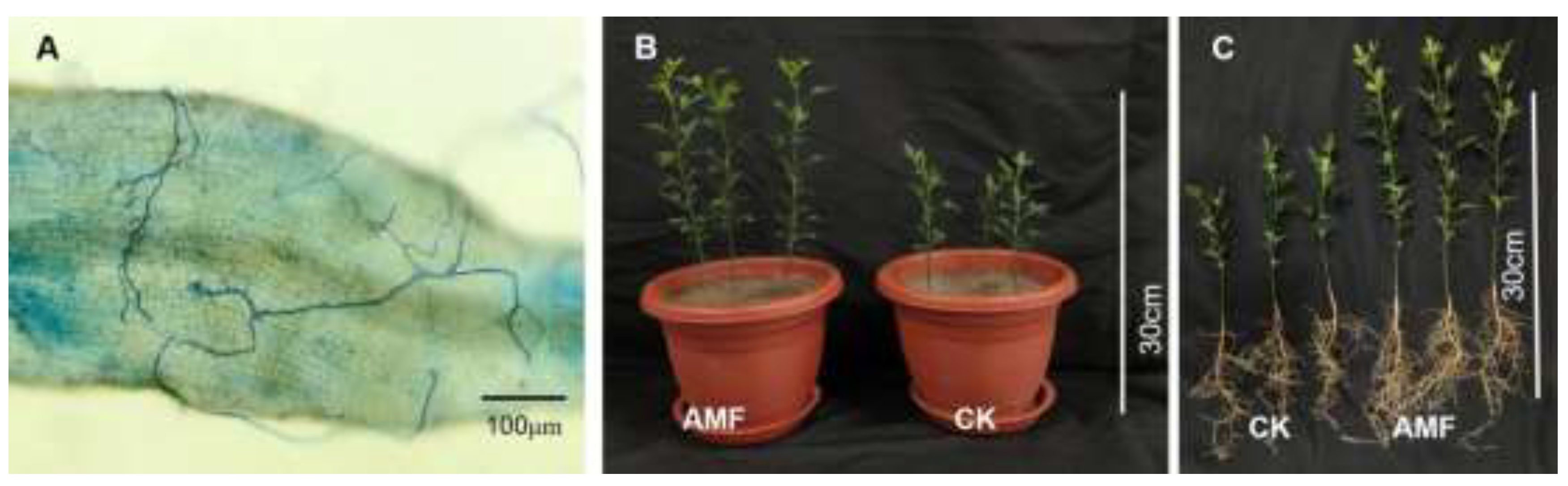
Figure 2.
Effects of AMF inoculation on root morphology of trifoliate orange seedlings. Note: A-AMF inoculation; B-CK.
Figure 2.
Effects of AMF inoculation on root morphology of trifoliate orange seedlings. Note: A-AMF inoculation; B-CK.
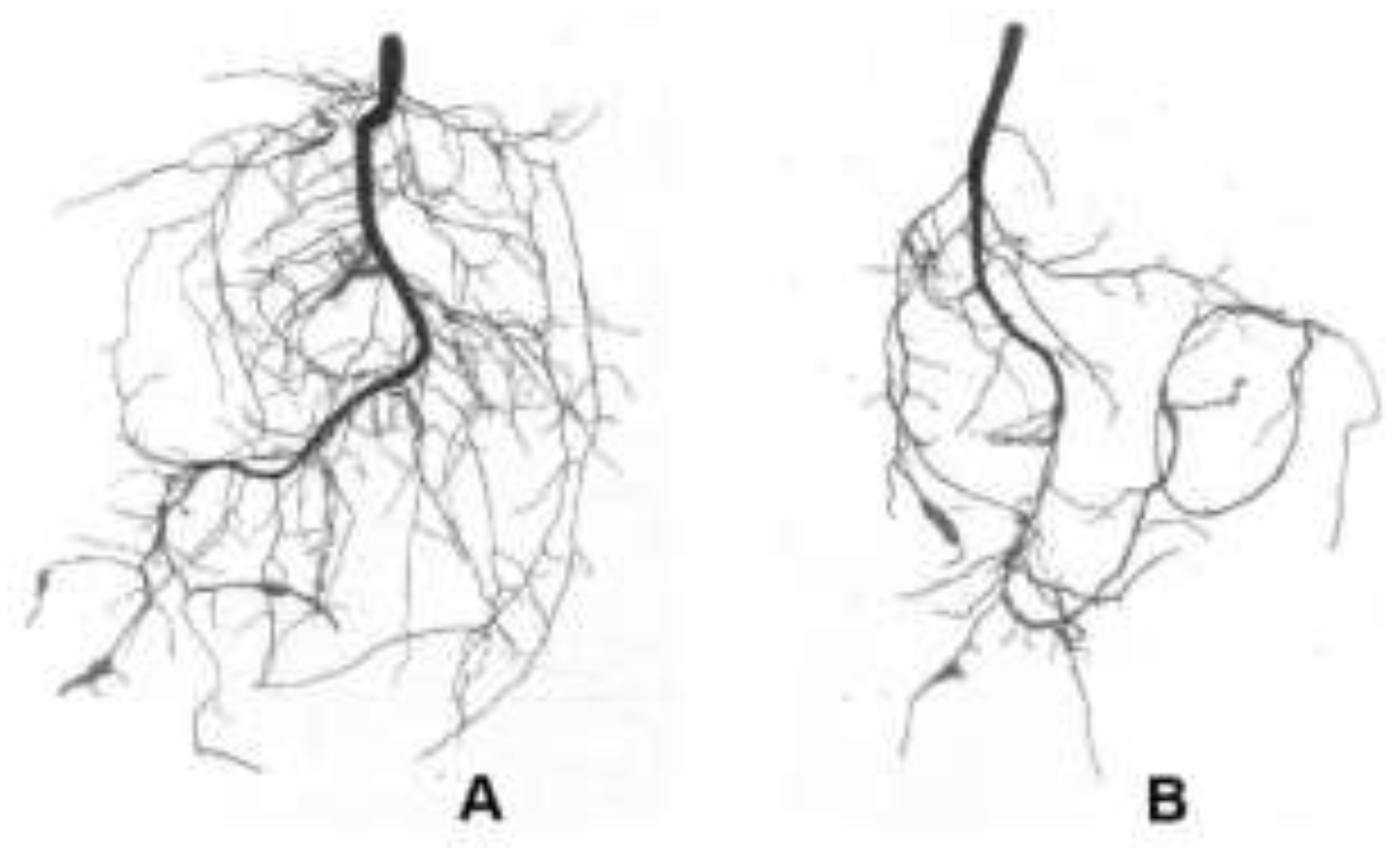
Figure 3.
Effect of AMF on the morphology of trifoliate orang under low temperature. Note: A-normal temperature 25°C treatment (0 h); B-Low temperature -5°C treatment 9 h. As shown in the figure, the left plant is treated with AMF, and the right plant is treated with CK.
Figure 3.
Effect of AMF on the morphology of trifoliate orang under low temperature. Note: A-normal temperature 25°C treatment (0 h); B-Low temperature -5°C treatment 9 h. As shown in the figure, the left plant is treated with AMF, and the right plant is treated with CK.
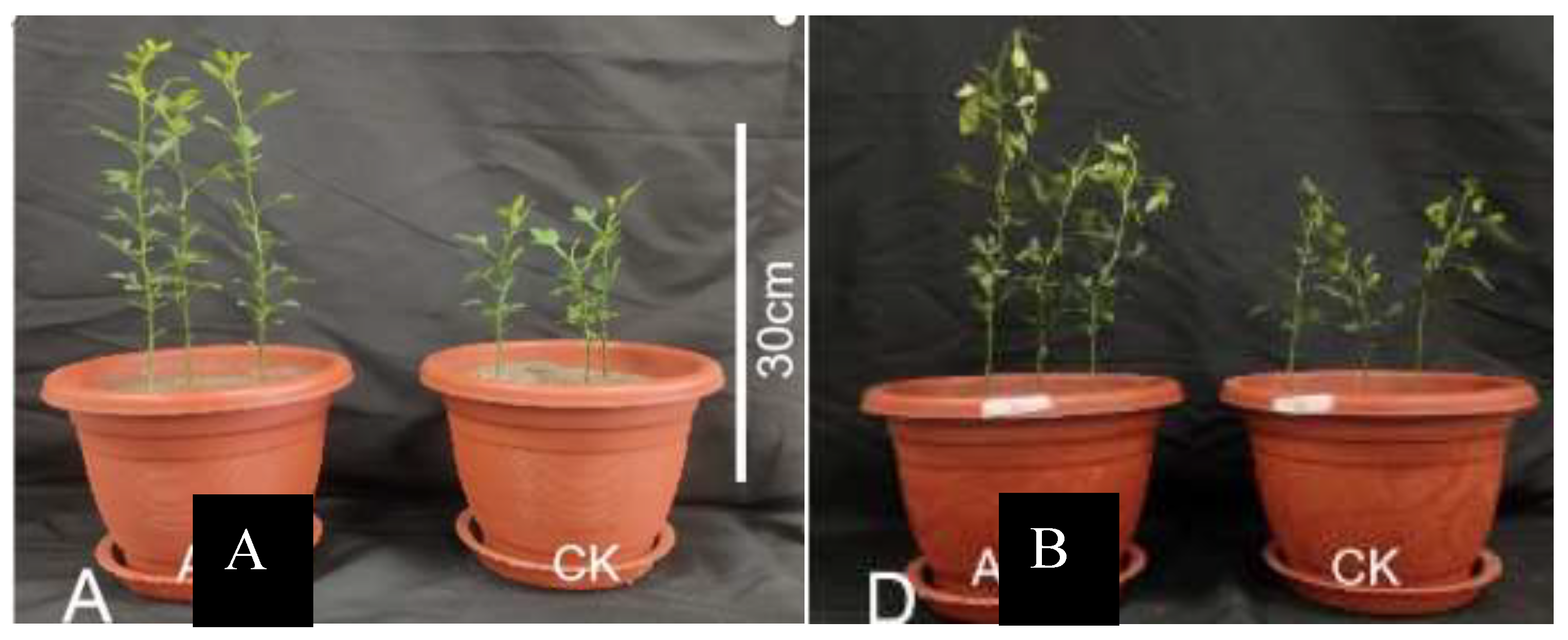

Table 1.
Effects of AMF inoculation on mycorrhiza development and plant growth of trifoliate orang (mean±SD).
Table 1.
Effects of AMF inoculation on mycorrhiza development and plant growth of trifoliate orang (mean±SD).
| Treatments | Mycorrhiza development | Plant growth | Biomass (g FM/plant ) |
||||
| Mycorrhizal infection rate AMF (%) |
Hyphal length (cm/g) |
Plant height (cm) | Stem diameter (mm) |
Leaf number | Shoot | Root | |
| AMF | 60.40±4.63a | 20.48±0.60a | 25.17±0.92a | 2.19±0.11a | 17.53±1.04a | 1.48±0.12a | 0.86±0.07a |
| CK | 0.00±0.00b | 0.00±0.00b | 13.13±1.10b | 1.53±0.09b | 12.07±1.11b | 0.64±0.05b | 0.57±0.04b |
Note: Different letters after the data in the column indicate significant differences between treatments at the 0.05 level, n=5. CK was the control, AMF was the inoculated sphaerospora. The same below.
Table 2.
Effect of AMF inoculation on root morphology of trifoliate orange.
| Treatments | Overall length (cm) | Projected area (cm2) |
Total surface area(cm2) | Diameter (mm) | Root volume (cm3) |
| AMF | 174.37±6.71a | 14.10±0.87a | 13.72±1.17a | 0.59±0.02a | 0.59±0.04a |
| CK | 150.82±9.04b | 13.43±1.29a | 9.33±0.64b | 0.58±0.04a | 0.41±0.03b |
Table 3.
Effect of AMF inoculation on chlorophyll fluorescence parameters of trifoliate orange under low temperature stress.
Table 3.
Effect of AMF inoculation on chlorophyll fluorescence parameters of trifoliate orange under low temperature stress.
| -5°C treated | QY_max | QY_Lss | NPQ_Lss | |
| CK | 0 h | 0.30±0.03b | 0.13±0.01b | 0.20±0.02b |
| 9 h | 0.14±0.01c | 0.05±0.00c | 0.26±0.02a | |
| AMF | 0 h | 0.35±0.02a | 0.21±0.02a | 0.17±0.01b |
| 9 h | 0.24±0.01b | 0.12±0.01b | 0.28±0.02a | |
Table 4.
Effects of AMF inoculation on photosynthetic parameters of trifoliate orange seedlings under low temperature stress.
Table 4.
Effects of AMF inoculation on photosynthetic parameters of trifoliate orange seedlings under low temperature stress.
| -5°C treated | Pn | Gs | Ci | Tr | |
| CK | 0 h | 4.31±0.37b | 0.14±0.01a | 330.65±14.61ab | 3.25±0.12b |
| 9 h | 0.74±0.06d | 0.02±0.00c | 243.22±22.86c | 0.15±0.01d | |
| AMF | 0 h | 6.67±0.57a | 0.16±0.01a | 355.35±32.14a | 4.20±0.39a |
| 9 h | 1.28±0.11c | 0.04±0.00bc | 302.67±29.33bc | 0.19±0.02c | |
Table 5.
Effects of low temperature stress on relative water content and relative electrical conductivity of leaves of trifoliate orange seedlings.
Table 5.
Effects of low temperature stress on relative water content and relative electrical conductivity of leaves of trifoliate orange seedlings.
| -5°C treated | Relative water content (%) | Relative electrical conductivity (%) | |
| CK | 0 h | 0.80±0.04b | 10.21±0.81c |
| 9 h | 0.63±0.05c | 48.01±2.25a | |
| AMF | 0 h | 0.91±0.08a | 10.22±0.72c |
| 9 h | 0.64±0.04c | 32.04±2.01b | |
Table 6.
Effects of AMF on the contents of MDA and H2O2 in leaves of trifoliate orange seedlings under low temperature stress.
Table 6.
Effects of AMF on the contents of MDA and H2O2 in leaves of trifoliate orange seedlings under low temperature stress.
| -5°C treated | Malondialdehyde (nmol/g) | Hhydrogen peroxide (umol/g) | |
| CK | 0 h | 0.58±0.04b | 55.26±4.89b |
| 9 h | 0.78±0.04a | 68.21±5.21a | |
| AMF | 0 h | 0.31±0.02c | 32.44±2.78d |
| 9 h | 0.56±0.03b | 48.23±2.45c | |
Table 7.
Effects of AMF on the contents of soluble sugar, soluble protein and Pro in leaves of trifoliate orange seedlings under low temperature stress.
Table 7.
Effects of AMF on the contents of soluble sugar, soluble protein and Pro in leaves of trifoliate orange seedlings under low temperature stress.
| -5°C treated | The soluble sugar (g/L) | The soluble protein (mg/g) | The content of Pro (ug/L) | |
| CK | 0 h | 8.08±0.34d | 2.56±0.19c | 310.54±21.12d |
| 9 h | 15.98±1.22b | 4.21±0.21a | 394.26±22.78b | |
| AMF | 0 h | 9.31±0.62c | 3.44±0.26b | 345.89±19.52c |
| 9 h | 17.52±1.43a | 4.23±0.35a | 418.28±32.37a | |
Table 8.
Effect of AMF on antioxidant oxidase activity in leaves of trifoliate orange seedlings under low temperature stress.
Table 8.
Effect of AMF on antioxidant oxidase activity in leaves of trifoliate orange seedlings under low temperature stress.
| -5°C treated | SOD (U/g) | CAT (U/g) | |
| CK | 0 h | 3008.22±198.31b | 152.51±10.12d |
| 9 h | 4755.92±354.24a | 215.28±13.26b | |
| AMF | 0 h | 3409.32±192.64b | 173.44±12.51c |
| 9 h | 5017.52±389.48a | 244.26±19.31a | |
Disclaimer/Publisher’s Note: The statements, opinions and data contained in all publications are solely those of the individual author(s) and contributor(s) and not of MDPI and/or the editor(s). MDPI and/or the editor(s) disclaim responsibility for any injury to people or property resulting from any ideas, methods, instructions or products referred to in the content. |
© 2025 by the authors. Licensee MDPI, Basel, Switzerland. This article is an open access article distributed under the terms and conditions of the Creative Commons Attribution (CC BY) license (http://creativecommons.org/licenses/by/4.0/).
Copyright: This open access article is published under a Creative Commons CC BY 4.0 license, which permit the free download, distribution, and reuse, provided that the author and preprint are cited in any reuse.


