

Submitted:
13 September 2025
Posted:
15 September 2025
You are already at the latest version
Abstract
Arbuscular Mycorrhizal Fungi (AMF) are a type of soil microorganism that can form symbiotic relationships with most higher plants and are widely distributed. They can promote plant nutrient absorption and the accumulation of secondary metabolites, thereby alleviating the toxic effects of heavy metals. This study analyzed the effects of AMF (Diversispora versiformis, D.v.) on the growth, chlorophyll synthesis, photosynthesis, reactive oxygen metabolism, antioxidant capacity, plant hormones, and root exudation of organic acids of tomato (Solanum lycopersicum L.) under cadmium (Cd) stress. This analysis aimed to elucidate how AMF enhances the Cd-tolerance of tomato. The results indicated that AMF inoculation rate of tomato seedlings ranged from 26.75% to 38.23%, and the AMF significantly promoted tomato growth. Cd significantly reduced the total plant weight, leaf number, plant height, , root fresh weight, above-ground fresh weight, and total root length by 34.17%, 9.62%, 28.94%, 21.31%, 34.09%, and 28.17%, respectively. However, AMF inoculation dramatically lowered the Cd level from 19.32 mg/kg to 11.54 mg/kg in tomato root, and effectively reduced the negative effect of Cd toxicity on seedlings’ growth. Cd stress also significantly reduced the chlorophyll fluorescence parameters, chlorophyll contents, and photosynthetic intensity parameters in seedlings’ leaves, while AMF treatment significantly increased these indicators. Under Cd stress, AMF observably increased the activities of SOD, POD, and CAT (increased by 16.13%, 12.16%, and 30.04%), reduced reactive oxygen species’ levels (H2O2 and superoxide anion decreased by 33.33% and 32.77%), and also reduced the content of osmotic adjustment substances (proline, malondialdehyde, soluble protein, and soluble sugar content decreased by 38.92%, 31.19%, 27.59%, and 49.27%) in the seedlings’ root. Under Cd condition, AMF also observably increased the auxin level (57.24%), significantly reduced the abscisic acid level (18.19%), but had no significant effect on trans-zeatin riboside and gibberellin content in the seedlings’ root. AMF can also regulate the content of respiratory metabolic products in the root under Cd condition. Cd stress markedly reduced the content of malic acid and succinic acid by 17.28% and 25.44%, respectively. However, after inoculation with AMF, these indicators only decreased by 2.47% and 2.63%. In summary, Cd stress inhibited the growth of tomato, while AMF could increase the chlorophyll fluorescence parameters and chlorophyll contents in tomato leaves and enhance photosynthesis to promote its growth. Under Cd stress, AMF could increase tomato root antioxidant capacity to reduce ROS level, thereby alleviating the toxic induced by ROS and maintaining reactive oxygen metabolism , enhancing plant's stress resistance. AMF enhances the osmotic regulation capacity and maintains the stability of cell membranes by reducing osmotic regulatory substances levels in the root system. It also enhances the Cd-tolerance of tomatoes through regulating the content of root hormones and aerobic respiration metabolites, among other pathways. Therefore, inoculating plants with AMF is a prospective strategy for heightening their adaptive capacity to Cd pollution soils.
Keywords:
cadmium
; Diversispora versiformis
; tomato
; photosynthesis
; organic acid
1. Introduction
In recent years,, heavy metal elements have accumulated in soil, water and the atmosphere, seriously affecting the cultivation and safe production of crops. Cadmium (Cd), as one of the main heavy metal elements in soil pollution, has the characteristics of wide range, wide distribution, non-degradability, strong toxicity, extremely strong mobility, easy absorption and accumulation by plants, and can also disrupt plant metabolism and damage plant growth [1]. When the Cd absorbed by plants accumulates beyond the safety threshold of the plants themselves, it will cause varying degrees of toxic effects on plants at the morphological, physiological and molecular levels [2]. The Cd toxicity response in plants is mainly manifested as inhibited growth, damaged root systems, curled and yellowed leaves, and even leaf drop [2]. After excessive accumulation of Cd in plants, it induces the production of a large number of reactive oxygen species, causing lipid peroxidation of cell membranes, degradation of chloroplasts, and severe damage to the photosynthetic reaction center of plants, and seriously inhibits the growth and development of plants [3]. Therefore, plants must quickly take a series of protective measures, mainly by enhancing the activity of the antioxidant enzyme system and promoting the production of osmotic adjustment substances, to ensure the rapid removal of accumulated reactive oxygen species in cells. Study has shown that Cd markedly increases the level of ROS in tomato. The plants enhance antioxidant enzymes’ activity to alleviate Cd phytotoxicity in tomato [4].
Plant hormones (such as auxin, gibberellin, cytokinin, abscisic acid, ethylene, etc.) are trace organic substances synthesized within plants, which can regulate growth and development as well as adapt to environmental changes. They can influence plant life activities through either synergistic or antagonistic effects [5,6,7,8,9]. Studies have shown that plant hormones can assist in integrating endogenous and exogenous signals, helping plants cope with abiotic stresses, such as Cd stress [10,11,12]. Gibberellins, abscisic acid, auxin, jasmonic acid, cytokinins, ethylene, salicylic acid, brassinosteroids, and polyamines have gained attention by botanical researchers as a sustainable phytohormones to induce tolerance in Cd stressed plants [13]. 4-Benzoylphenylboronic acid (PPBa) is a specific and effective inhibitor of flavin monooxygenase (YUCCA) enzymes, which can inhibit the synthesis of IAA [14]. The YUCCA plays a vital role in the synthesis pathway of IPA. If the activity of this enzyme is inhibited, it will affect the secretion of IAA, thereby regulating the accumulation of Cd [15]. Physiologically, Cd affects the normal growth of plants by mainly inhibiting photosynthesis, influencing antioxidant enzymesand protein synthesis enzymes activities, regulating the synthesis and transportation of phytohormone in plants [13]. At the molecular level, Cd stress also induces the expression of a series of genes, such as genes for plant chelators, genes for heavy metal ATPases, genes for YSL transport proteins, genes for ABC transport proteins, genes for antioxidant system activity and oxidative stress response, genes for chlorophyll synthesis or degradation [13].
As a type of symbiotic fungus, arbuscular mycorrhizal fungi (AMF) widely present in the soil, capable of forming symbiotic relationships with most terrestrial plants [16]. Under heavy metal stress, AMF can infect plant roots to form mycorrhizal symbioses. In particular, the AMF exogenous hyphal network can enhance the plant’s absorption of mineral nutrients, and alleviate the negative effects from heavy metal to plant growth [17,18]. Hristozkova et al. [19] have demonstrated that AMF alleviated the toxic of heavy metals (Cd and Pb) by promoting the nutrient absorption and secondary metabolite accumulation of Calendula officinalis. AMF (Rhizophagus irregularis) inoculation lowered Cd influx in in Perennial Ryegrass (Lolium perenne L.), enhanced the availability of nutrients in the rhizosphere, and mitigated Cd phytotoxicity [20]. AMF also causes changes in the root exudates of plants. For instance, low-molecular organic acids can form “heavy metal-low molecular organic acid” complexes with soil heavy metals, thereby reducing the mobility and bioavailability of heavy metals and alleviating heavy metals’ phytotoxicity [21]. The influence process of low-molecular organic acids on the availability of heavy metals is relatively complex. It is not only related to the types and properties of organic acids themselves, but also to factors such as soil conditions and planting patterns [22]. Under Cd stress, AMF affected the secretion amounts of different types of low-molecular organic acids, thereby causing changes in the forms of heavy metals [23]. The root systems of plants can alter the redox potential and pH in soil by secreting low-molecular organic acids (such as malic acid and citric acid), reducing the solubility and mobility of heavy metal elements, thereby alleviating the growth conditions of plants under heavy metal stress [23]. Therefore, after AMF establishes a symbiotic relationship with plants, it can improve the morphology of the roots. At the same time, it affects the low-molecular organic acids secreted by the roots, thereby facilitating the host plants’ absorption of nutrient elements, inhibiting heavy metals’ mobility, and regulating the transport process of heavy metals in the host plants through the mycorrhizal structure and the complex mycelial network. As a result, it reduces the heavy metals’ phytotoxicity on the host plants, promotes the growth of the host plants, and helps them resist non-biological adverse conditions such as heavy metal stress [17,18,24].
As an annual or perennial herbaceous plant of the Solanaceae family, tomatoes (Solanum lycopersicum) are rich in lycopene, vitamins and polyphenolic compounds, and are one of the widely cultivated fruits and vegetables worldwide. Non-biological stress mainly refers to adverse conditions caused by environmental factors, which include not only temperature stress, light stress, drought stress, and salt stress, but also various heavy metal stress, such as Pb and Cd stress [25,26,27,28]. Currently, most studies on non-biological stress in tomatoes focus on the effects of salt stress, drought stress, and high-temperature stress on tomatoes. However, existing studies have shown that tomatoes are sensitive to Cd. Moreover, the problem of Cd pollution is becoming increasingly severe, which not only reduces the yield and quality of vegetables such as tomatoes, but also poses a threat to human health [4]. A considerable amount of research has focused on the response mechanisms of vegetables such as cucumber, lettuce, and pepper under Cd stress. However, few studies focus on the mechanism of tomato’s tolerance to Cd stress from the perspective of microorganisms (such as AMF). Therefore, it is of certain significance to study the growth and physiological and biochemical changes of tomato under Cd condition from the perspective of AMF. This study used tomato (Ailsa Craig) as the material and applied AMF (Diversispora versiformis) and CdSO4 to interactively treat tomato seedlings. It explored the growth and physiological-biochemical responses of tomato plants to AMF and CdSO4, and further analyzed the mechanism by which AMF enhances tomato’s tolerance to Cd stress. This study provides a theoretical basis for using microorganisms to remediate heavy metal-contaminated soil and improving plant stress resistance.
2. Materials and Methods
2.1. Plants, Growth Conditions and Experimental Design
Diversispora versiformis (D. versiformis) was donated by the the Bank of Glomeromycota in China (BGC), and stored at 4 °C, was used in this study as an AMF (mycorrhizal fungal inoculum containing approximately 28 spores/g). Seeds of tomato (Ailsa Craig) were provided by Huazhong Agricultural University. On February 26, 2024, after sterilized with 78% alcohol, the tomato seeds germinated in autoclaved sands (0.11 MPa, 121 °C, 1.5 h) at 26 °C/18 °C (14 h/10 h, day and night) and 78-86% relative humidity. 3 leaves tomato seedlings were transplanted into plastic pots (14.6 × 8.2 × 12.2 cm) on April 2, 2024. The pot was pre-filled with autoclaved soil-sand mixture (2:1, v/v). Each pot was included three tomato seedlings.
The seedlings of tomato were inoculated with D. versiformis at the time of transplanting with about 180 g/pot (April 2, 2024). The un-inoculated pots likewise received equal amounts of autoclaved of D. versiformis. The tomato seedlings were placed in a plant light incubator (day/night temperature and time set as 26 °C/18 °C and 14 h/10 h, the photon flux density set as 644–886 μmol/m2/s, the air relative humidity set as 78-86%). Two months following inoculation with D. versiformis, a Cd stress (CdSO4, Sigma-Aldrich Merck KGaA, Darmstadt, Germany) treatment was began (June 2, 2024) and maintained for 30 days, then the seedlings were harvested (July 2, 2024).
This experiment included 4 treatments, viz., inoculation without D. versiformis at 0 μmol/L Cd, inoculation with D. versiformis at 0 μmol/L Cd, inoculation without D. versiformis at 50 μmol/L Cd, and inoculation with D. versiformis at 50 μmol/L Cd. Each treatment was replicated 5 times (each time included 1 pot), with a total of 60 seedlings planted in 20 pots.
2.2. Determination and Methods
The harvesting time of tomato seedlings was July 2, 2024. Whole roots of tomato seedlings were scanned by the Epson Scanner machine (Perfection V700, J221A, India), and analyzed with WinRHIZO for root system architecture (Regent Instruments Inc., Quebec, QC, Canada).
Chlorophyll a, chlorophyll b and total chlorophyll contents were measured on the basis of the protocol of Zhang et al. [28]. The chlorophyll fluorescence parameters were examined by M-series modulated chlorophyll fluorescence meter (IMAGING-PAM, Heinz Walz GmbH, Nuremberg, Germany). The unfolded leaves were chose for detection of maximum photochemical efficiency (Fv’/Fm’), actual photochemical efficiency (φPSII), photochemical quenching coefficient (qP), and non-photochemical quenching coefficient (NPQ) by a Handy PEA continuous excitation fluorometer (Hansha Scientific Instruments Co., Ltd., Taian, China) from 09:00 to 11:00. Also, the photosynthetic parameters (intercellular CO2 concentration, net photosynthetic rate, ranspiration rate, and stomatal conductance) were measured using a Li-6400 portable photosynthetic system analyzer (Li-COR Inc., Lincoln, NE, USA) from 09:00 to 11:00.
Tomato seedlings root (1-2 cm) were stained by 0.05% trypan blue and then for detection of mycorrhizal colonization on the basis of the protocol of Lu et al. [27]. Tomato seedlings roots were promptly treated with liquid nitrogen after harvesting and then stored at -80 °C for physiological and biochemical indicators analysis. Root Cd concentrations were assayed using the protocol of Zhuang et al. [12]. The malondialdehyde (MDA) concentration was measured by the thiobarbituric acid method, the proline (Pro) level was measured by ninhydrin colorimetry method, and the soluble sugar and soluble protein contents was detected in accordance with Li et al. [29]. The hydrogen peroxide (H2O2) and superoxide anion (O2.-) contents were detected by H2O2 assay kit and O2.- assay kit (Beijing Boxingong Technology Co., Ltd., Shanghai, China). CAT, SOD, and POD activities were detected by assay kits (ml201168, ml902210, and mll614100) (Shanghai Enzyme-link Biotechnology Co., Ltd., Shanghai, China), which in accordance with Li et al. [29]. The endogenous hormones in roots The abscisic acid (ABA) ELISA kit, trans-zeaxin nucleoside (tZR) ELISA kit, IAA ELISA kit, and gibberellin (GA3) ELISA kit (Nanjing Jiancheng Bioengineering Research Institute Co., Ltd., Nanjing, China) were determined for tomato seedlings root endogenous hormones. The concentrations of succinic acid and malic acid were measured by high-performance liquid chromatography (HPLC) in accordance with Chen et al. [23].
2.3. Statistical Analysis
We employed analysis of variance (ANOVA) for statistical analysis of the data by SAS (8.1v). Photoshop 7.2.4 and Microsoft Excel 2013 were used for figures and data processing. Furthermore, the significant differences between treatments was analsys by Duncan’s multirange (P < 0.05).
3. Results
3.1. Effects of AMF on the Agronomic Traits of Tomatoes Under Cd Stress Conditions
AMF significantly promoted tomato seedlings growth (Figure 1). Under non-Cd condition, AMF treatment increased the plant height, leaf number, total plant weight, root fresh weight, and above-ground fresh weight by 47.45%, 46.54%, 38.15%, 42.62%, and 39.35% respectively (Table 1). Under Cd stress conditions (50 μmol/L), AMF treatment also significantly increased the growth vigor of the seedlings, such as leaf number, plant height, total plant weight, root fresh weight, and above-ground fresh weight by 9.39%, 27.24%, 46.02%, 20.83%, and 49.49% respectively (Table 1). Table 1 also indicates that Cd markedly inhibited seedlings growth . Under the condition of no AMF inoculation, Cd stress significantly reduced the plant height, leaf number, total plant weight, root fresh weight, and above-ground fresh weight by 28.94%, 9.62%, 34.17%, 21.31%, and 34.09% respectively. However, after inoculation with AMF, these indicators were only reduced by 9.59%, 1.13%, 3.87%, 4.92%, and 1.48% respectively (Table 1). Thus, it can be concluded that AMF has a promoting effect on the growth of tomato seedlings, while Cd significantly inhibits the growth of the seedlings. However, AMF can alleviate the Cd phytotoxicity on the growth of tomato seedlings to a certain extent.
3.2. The Development of AMF in Tomato Root Systems and the Changes in Cd Content
From Figure 2, it can be observed that the root systems of the tomato seedlings subjected to the inoculation treatment have structures such as mycorrhizal fungal hyphae and vesicles, indicating that the root systems of the tomato plants subjected to the inoculation treatment were all infected to varying degrees by Diversispora versiformis. Through the analysis of the data on mycorrhizal infection rates, it can be seen that the infection rates of the root systems of the tomato seedlings without inoculation treatment were all 0.00% (Table 2). It can also be known from Table 2 that in the absence of Cd stress, the infection rate of the mycorrhizal fungi in the root systems of the tomato seedlings subjected to the inoculation treatment was 38.23%, significantly higher than the infection rate (26.75%) under Cd stress conditions. By detecting the content of Cd in the root systems of the tomato seedlings, it can be known that no Cd was detected in the root systems of the tomato seedlings without Cd stress. Under 50 μmol/L Cd stress conditions, the AMF treatment markedly lowered Cd level in the root systems of the tomato from 19.32 mg/kg to 11.54 mg/kg. This indicates that Cd stress to some extent inhibits the infection of AMF on the root systems of tomato seedlings, while AMF can effectively weaken the absorption effect of Cd by the root systems.
3.3. Effect of AMF on the Root Architecture of Tomato Under Cd Conditions
Effects of AMF on the structural indicators of tomato seedlings roots under Cd stress are shown in Figure 3. Under non-Cd stress conditions, AMF treatment significantly increased total root length and total root surface area by 41.06% and 45.30%, respectively, but had no significant difference on root volume (Table 1). Under Cd conditions (50 μmol/L), AMF treatment also significantly increased the total root length of the seedlings, increasing it by 24.98%, but had no significant effect on total root surface area and root volume (Table 2). Table 2 also indicates the effects of Cd stress on the root growth of the seedlings. Under the condition of no AMF inoculation, Cd stress significantly reduced total root length by 28.17%, but had no conspicuousness difference on total root surface area and root volume. However, after inoculation with AMF, total root length decreased by only 10.23%, and total root surface area and root volume remained without significant changes (Table 2). Thus, AMF has a certain promoting effect on the root growth of tomato seedlings. Cd significantly inhibits the total length of the root system of the seedlings. After inoculation with AMF, it can to some extent alleviate the Cd phytotoxicity on the root growth of tomato seedlings.
3.4. Effect of of AMF on Chlorophyll Contents and Chlorophyll Fluorescence Parameters of Tomato Leaves Under Cd Conditions
AMF increased the chlorophyll content in tomato leaves to a certain extent. Under non-Cd stress conditions, although Chlorophyl a, Chlorophyl b, and Total chlorophyll in tomato leaves increased after AMF treatment, they did not reach a significant level. However, under Cd stress conditions (50 μmol/L), AMF significantly increased these indicators by 57.38%, 72.73%, and 64.33% respectively (Table 3). Table 3 also indicates that Cd observably reduced the chlorophyll content in tomato leaves. Under the condition of no AMF inoculation, Cd stress significantly reduced Chlorophyl a, Chlorophyl b, and Total chlorophyll by 43.26%, 49.54%, and 46.73% respectively. However, after AMF inoculation, these indicators decreased by only 10.69%, 12.84%, and 12.46% (Table 3). Thus, AMF increased the chlorophyll content in tomato leaves to a certain extent, while Cd stress significantly inhibited the synthesis of chlorophyll. However, AMF could effectively alleviate the Cd phytotoxicity on the synthesis of chlorophyll in tomato seedlings.
Effects of AMF on chlorophyll fluorescence parameters in tomato seedling leaves under Cd condition are diaplayed in Table 4. AMF increased φPSII, Fv’/Fm’, qP, and NPQ in tomato leaves to a certain extent. Under non-Cd stress conditions, although φPSII, Fv’/Fm’, and qP in tomato leaves increased after AMF treatment, they did not reach a significant level. However, under Cd stress conditions (50 μmol/L), AMF significantly increased these parameters by 41.86%, 85.71%, and 150.00% respectively (Table 4). Table 4 also indicates that Cd stress significantly reduced the chlorophyll fluorescence parameters. Under the condition of no AMF inoculation, Cd stress significantly reduced φPSII, Fv’/Fm’, and qP by 34.85%, 50.59%, and 63.64% respectively. However, after AMF inoculation, these parameters decreased by only 7.58%, 8.75%, and 9.09% (Table 4). Thus, AMF increased the chlorophyll fluorescence parameters in tomato leaves to a certain extent, while Cd stress significantly reduced these parameters and thereby reduced the efficiency of light energy utilization. However, AMF could effectively alleviate the reduction of chlorophyll fluorescence parameters by Cd stress, thereby improving the efficiency of light energy utilization.
3.5. Effects of AMF on Photosynthesis of Tomato Leaves Under Cd Conditions
AMF increased the photosynthetic parameters (Pn, Gs, Ci, and Tr) of tomato leaves to a certain extent. Under non-Cd stress conditions, although Pn, Gs, and Tr in tomato leaves increased after AMF treatment, they did not reach a significant level. However, under Cd stress conditions (50 μmol/L), AMF markedly improved Pn, Gs, Ci, and Tr by 34.01%, 30.73%, 26.84%, and 18.82% respectively (Table 5). Table 5 also indicates that Cd stress significantly reduced the photosynthetic parameters of tomato leaves. Under the condition of no AMF inoculation, Cd markedly lowered Pn, Gs, Ci, and Tr by 33.52%, 33.33%, 35.38%, and 28.97% respectively. However, after AMF inoculation, these indicators decreased by only 10.91%, 12.85%, 18.03%, and 15.59% (Table 5). Thus, AMF to a certain extent increased the photosynthetic intensity of tomato leaves, while Cd stress inhibited the photosynthetic intensity and efficiency of tomato seedlings. However, AMF can effectively alleviate the Cd phytotoxicity on the photosynthetic intensity and efficiency of tomato seedlings, thereby increasing the photosynthetic products.
3.6. Effect of AMF on the ROS Level in Tomato Roots Under Cd Conditions
Effects of AMF on the internal ROS (H2O2 and O2.-) in the root systems of tomato seedlings under Cd stress are shown in Table 6. Under non-Cd conditions, the content of H2O2 and O2.- in the tomato root systems did not show significant changes after AMF treatment. However, under Cd stress conditions (50 μmol/L), AMF significantly reduced these contents by 33.33% and 32.77% (Table 6). Table 6 also indicates that Cd stress significantly increased the ROS concentration in the tomato root systems. Without AMF inoculation, Cd stress caused the content of H2O2 and O2.- to increase by 1.22 times and 1.63 times respectively. However, after AMF inoculation, these indicators only increased by 48.09% and 77.07% (Table 6). Thus, AMF has no significant effect on the internal ROS content of tomato seedling root systems, while Cd stress causes tomato seedling root systems to accumulate higher concentrations of ROS. However, AMF can effectively regulate the metabolism of ROS in tomato root systems, thereby reducing the accumulation of ROS and protecting the structure and function of the cell membrane.
3.7. Effects of AMF on the Antioxidant Enzyme Activities in Tomato Roots Under Cd Conditions
Changes in the activities of the antioxidant enzyme in the root systems of tomato seedlings are shown in Table 7. Under non-Cd conditions, SOD, POD, and CAT activities in the tomato root systems did not show significant changes after AMF treatment. However, under Cd stress conditions (50 μmol/L), AMF significantly increased these activities by 14.51%, 12.16%, and 30.04% (Table 7). Table 7 also indicates that Cd stress significantly increased the antioxidant enzyme activities in the tomato root systems. Under the condition of no AMF inoculation, Cd stress caused SOD, POD, and CAT activities to increase markedly by 1.49 times, 0.89 times, and 0.79 times respectively. However, after inoculation with AMF, these indicators increased by 1.85 times, 1.13 times, and 1.32 times (Table 7). Thus, AMF has no significant difference on the activities of antioxidant enzyme in the root systems of tomato seedlings, while Cd stress significantly enhances the activities of antioxidant enzyme in the root systems of tomato seedlings. However, under Cd stress conditions, inoculation with AMF can further increase the antioxidant enzyme activities, thereby improving the plant’s ability to remove reactive oxygen species and free radicals from the body, maintaining the redox balance within the plant cells, protecting the structure and function of cells, and effectively enhancing the plant’s antioxidant defense capacity.
3.8. Effects of AMF on the Content of Osmotic Regulatory Substances in Tomato Roots Under Cd Conditions
Under non-Cd stress conditions, the concentrations of osmotic regulatory substances in tomato roots after AMF treatment showed no significant changes. However, under Cd stress conditions (50 μmol/L), AMF significantly reduced the concentrations of Pro, MDA, soluble protein, and soluble sugar by 38.92%, 31.19%, 27.62%, and 49.27% (Table 8). Table 8 also indicates that Cd stress significantly increased the contents of osmotic regulatory substances in tomato roots. Under the condition of no AMF inoculation, Cd stress caused the concentrations of Pro, MDA, soluble protein, and soluble sugar to increase by 2.79 times, 1.05 times, 0.92 times, and 3.15 times respectively. However, after AMF inoculation, these indicators only increased by 1.32 times, 0.41 times, 0.39 times, and 1.11 times (Table 8). Thus, AMF has no significant effect on the contents of osmotic regulatory substances in the roots of tomato seedlings, while Cd stress causes tomato seedling roots to accumulate higher concentrations of osmotic regulatory substances. However, AMF can effectively alleviate the abnormal accumulation of osmotic regulatory substances induced by Cd stress, thereby regulating the water metabolism inside and outside the cells.
3.9. Effects of AMF on the Content of Endogenous Hormones in Tomato Roots Under Cd Conditions
Effects of AMF on the hormone concentrations in tomato roots under Cd stress conditions are shown in Table 9. Under non-Cd stress conditions, the IAA content in tomato roots significantly increased by 26.85% after AMF treatment, while the ABA content significantly decreased by 12.74%. The levels of GA3 and tZR showed no significant changes (Table 9). Under Cd stress conditions (50 μmol/L), AMF significantly increased the IAA content by 57.24% and decreased the ABA content by 18.19%, while the contents of tZR and GA3 remained unchanged (Table 9). Under the condition of no AMF inoculation, Cd stress significantly reduced the IAA and tZR contents by 38.92% and 20.77%, respectively, while increasing the ABA content by 22.43% and the GA3 content remained unchanged (Table 9). However, after AMF inoculation, the IAA and tZR contents decreased by only 3.96% and 14.26%, respectively, while the ABA and GA3 contents showed no significant changes (Table 9). Thus, AMF can positively regulate the endogenous auxin synthesis in tomatoes and negatively regulate the biosynthesis of abscisic acid to promote their growth. While Cd stress negatively regulates the endogenous auxin and cytokinin in tomatoes and positively regulates the biosynthesis of abscisic acid to inhibit their growth. It is noteworthy that AMF can effectively alleviate the Cd phytotoxicity on the synthesis of endogenous auxin and cytokinin in tomatoes and weaken the promoting effect on the synthesis of abscisic acid.
3.10. Effects of AMF on the Content of Succinic Acid and Malic Acid in Tomato Roots Under Cd Conditions
Effects of AMF on the succinic acid and malic acid in tomato roots under Cd conditions are diaplayed in Table 10. Under non-Cd conditions, AMF treatment significantly increased the succinic acid and malic acid levels in tomato roots by 21.93% and 22.22%, respectively. Under Cd conditions (50 μmol/L), AMF also increased their contents by 17.91% and 30.59% (Table 10). Table 10 also indicates that Cd stress significantly reduced the succinic acid and malic acid levels in tomato roots. Under the condition of no AMF inoculation, Cd stress significantly decreased the contents of malic acid and succinic acid by 17.28% and 25.44%, respectively. However, after AMF inoculation, these indicators decreased by only 2.47% and 2.63% (Table 10). Therefore, it can be concluded that AMF can positively regulate the biosynthesis of malic acid and succinic acid in tomato roots, while Cd stress shows a negative regulatory effect. It is noteworthy that AMF can availably alleviate the negative regulatory effect of Cd phytotoxicity on the biosynthesis of malic acid and succinic acid in tomato roots, thereby affecting the metabolism of endogenous acids, establishing a dynamic balance between energy supply, respiratory metabolism, redox homeostasis and osmotic protection, and thus remission the Cd phytotoxicity on tomato growth.
4. Discussion
The phytotoxicity of Cd refer to photosynthesis, growth, secondary metabolism, oxidative stress responses, and so on [18]. The morphological indicators of plants include total plant weight, leaf number, plant height, fresh weight of root system, fresh weight of aboveground part, total root length, and total root surface area, etc., which can reflect the response of the plants to Cd toxicity [30]. Yang et al. [20]used Lolium perenne L. as the material to study the impact of 100 mg/kg Cd stress on its growth and found that Ca significantly inhibited the growth indicators such as leaf fresh weight and root fresh weight. 400 mg·kg−1 Cd severely reduced the growth indicators of Rosa rugosa, and also caused chlorosis and leaf desiccation [34]. In this study, the growth of the aboveground parts and roots of tomato plants treated with 50 μmol/L Cd was significantly inhibited. At the same time, phenomena such as leaf wilting, edge curling, darkening of color, chlorosis, slow addition of new leaves, and shedding of old leaves occurred. The study suggests that Cd competes with mineral nutrients for the same transport pathways, thereby altering the absorption and distribution of mineral nutrients in plants, resulting in nutrient deficiency in the plants and inhibition of plant growth [35].
AMF is an important functional microorganism widely present in the soil. After AMF infects plants and forms a mycorrhizal symbiotic structure, it can improve the host plants nutrients and water absorption, thereby promoting the growth of the host plants and enhancing their stress resistance [26,36]. In this study, AMF significantly enhanced tomato growth. Especially under Cd stress conditions, AMF had a better recovery effect on the growth potential of tomato seedlings. This is similar to Yang et al. [20] in their study on AMF under Cd stress on Perennial Ryegrass (Lolium perenne L.) that AMF reduced Cd influx in plants, enhanced nutrient availability, and then mitigated Cd phytotoxicity. This is also consistent with the research results of Zhuang et al. [12]: AMF (Rhizophagus intraradices) can effectively alleviate the negative effects of Cd stress (300 μM) on the growth characteristics and nutrient element content of Malus hupehensis Rehd. Furthermore, the results of this study also indicate that after AMF inoculation, the Cd content in the root systems of tomato seedlings under Cd stress conditions decreased significantly from 19.32 mg/kg to 11.54 mg/kg. This is consistent with the results of previous studies. AMF dramatically reduced Cd level in the root and shoot, which weaken the phytotoxicity of excessive Cd in the maize (Zea mays L.) [37]. AMF significantly increased the maize height and biomas and decreased the available Cd content in soil and maize [38]. Mycorrhization (Rhizophagus intraradices) could avoid Cd-induced growth inhibition and reduce Cd accumulation in roots of Glycine max (L.) Merr [39]. AMF (D. eburnea) markedly altered soil Cd speciation by increasing the proportion of exchangeable Cd and decreasing residual Cd, resulting in Cd change in the root of L. perenne and A. fruticosa [40]. AMF inoculation reduced the Cd level in P. yunnanensis [41].
The toxic effects of heavy metals also manifest in the destruction of the chloroplast structure in plant leaves. Chloroplasts are the crucial sites for photosynthesis in plants, and chlorophyll, as an important photosynthetic pigment, plays a decisive role in the accumulation of plant biomass [42,43,44,45]. Li et al. [17] subjected Medicago truncatula to Cd Stress (20 mg/g), they found that the chlorophyll content in the leaves significantly decreased. Chlorophyll a, chlorophyll b, and total chlorophyll levels in ‘Baizizhi’ and ‘Zizhi’ decreased with increasing Cd contents [34]. The chlorophyll pigments were significantly reduced in 100 mg/kg Cd-contaminated Brassica chinensis L. seedlings, when compared to non-Cd treatment [42]. The damage of Cd to chloroplasts and thylakoid membranes occurs concurrently with the activities of enzymes involved in chlorophyll synthesis, and it will activate enzymes related to chlorophyll degradation and ROS production, then lead to a decrease in chlorophyll synthesis and content [46]. In this study, Cd dramatically lowered chlorophyll b, chlorophyll a and total chlorophyll concentrations in tomato seedlings leaves, indicating that Cd stress would damage the chlorophyll in tomato seedlings and inhibit the synthesis of chlorophyll. It is notable that AMF significantly increased chlorophyll a, chlorophyll b and total chlorophyll levels in tomato seedlings. Especially under Cd stress conditions, AMF had a better recovery effect on chlorophyll a, chlorophyll b and total chlorophyll levels in tomato seedlings. This is similar to the research results of Wang et al. [47] on AMF’s effect on tomato under Cd stress: after AMF inoculation, the agronomic traits of tomato significantly improved in moderately Cd contaminated soil, specifically manifested as increased plant height, stem diameter, and chlorophyll content. Therefore, Cd stress significantly inhibited the synthesis of chlorophyll, while AMF could effectively alleviate the Cd phytotoxicity on the chlorophyll synthesis in tomato.
When plants are subjected to heavy metal stress during their growth process, the inner membrane of the chloroplasts will be damaged, which affects the photosynthesis and the production of assimilates in the plants [12,48]. In PSII, when plants are subjected to abiotic stress, the ratio Fv’/Fm’ decreases, indicating that the photosystem II has been damaged [49]. Under Cd stress (20 mg/Kg), chlorophyll fluorescence parameters (φPSII and qP) of Medicago truncatula Gaertn decreased significantly, which indicates that Cd2+ stress damaged the photosynthetic organ [17]. Shaari et al. [42] study found that 100 mg/kg Cd presented the lowest Fv’/Fm’ ratio (0.73), indicating the Brassica chinensis L. seedlings were stressed as compared to control. This study found that Cd stress significantly reduced φPSII, Fv’/Fm’ and qP in the leaves of tomato seedlings. However, after inoculation with AMF, these indicators returned to normal levels. This is consistent with the results of other studies. In response to Cd stress (300 μM), Fv’/Fm’ was signiffcantly increased in mycorrhizal (R. intraradices) compared to non-mycorrhizal M. hupehensis Rehd seedlings [12]. Under Cd stress conditions (20 mg/kg), after inoculation with arbuscular mycorrhizal fungi, the chlorophyll fluorescence parameters (φPSII and NPQ) of alfalfa (Medicago truncatula) were significantly improved, effectively alleviating the damage to the PSII reaction center caused by Cd stress [17]. This indicates that AMF can alleviate and even restore the damage to PSII caused by Cd stress. Under Cd condition, AMF (R. irregularis) observably increase Fv’/Fm’, φPSII, and qP in Eucalyptus grandis [48]. The above results indicate that Cd stress weakens the efficiency of light energy utilization by reducing the chlorophyll fluorescence parameters. However, AMF can effectively alleviate the reduction effect of Cd stress on the chlorophyll fluorescence parameters, thereby improving the adverse effects of Cd on the PSII reaction center and enhancing the light energy utilization efficiency.
Photosynthesis is the process by which plants synthesize compounds rich in energy. It is the ultimate carbon synthesis pathway in various biochemical and physiological processes of plants, and it forms the basis of plant life activities [50]. Photosynthesis is highly sensitive to many adverse environmental conditions, including water stress, high temperature, salt damage, and heavy metal stress [18,51]. All these stresses will reduce the photosynthetic efficiency of plants and thereby affect growth and development. The parameters of photosynthetic intensity could precisely reflect the photosynthetic intensity in plants. As the degree of Cd stress increases, the Pn, Tr and Gs of Rosa rugosa leaves show a gradually decreasing trend [34]. This is in agreement to this study: Cd acts as an effective inhibitor of photosynthesis, suppressing plant photosynthesis through stomatal closure, damage to the photosynthetic apparatus, and destruction of the light-harvesting complexes and photosystems I and II [52]. There have been some reports on the effect of AMF vaccination in alleviating the negative impact of Cd stress on plant photosynthesis. AMF could mitigate Cd induced photosynthesis and growth phytotoxicity and nutrient ion disorders in Malus hupehensis Rehd [12]. AMF mediated mitigation of Cd phytotoxicity and their influence on photosynthesis efficiency in Cicer arietinum [53]. These results are consistent with those of this study: Under the condition of no AMF inoculation, Cd dramatically lowered the values of Pn, Gs, Ci and Tr. However, after AMF inoculation, these indicators returned to levels close to those without Cd stress. Therefore, Cd has a certain inhibitory effect on the photosynthetic intensity and efficiency of plants. However, AMF effectively alleviate the negative effects of Cd on photosynthesis, thereby increasing photosynthetic products and alleviating the damage caused by Cd to plants.
During normal physical metabolism, plants produce reactive oxygen species (ROS). However, the generation and clearance of ROS are in a dynamic equilibrium. Once plants are subjected to adverse stress, this dynamic equilibrium is disrupted, leading to the accumulation of ROS, which causes membrane lipid peroxidation, damaging the cell membrane structure and causing damage to lipids, proteins, and DNA [54,55]. During the evolution of plants, there is a set of protective enzyme systems within the plant cells that prevent ROS from causing damage to the cells, such as superoxide dismutase (SOD), peroxidase (POD), catalase (CAT), ascorbate peroxidase (APX), glutathione reductase (GR), etc [54]. Dixit et al. [56] research indicates that Cd stress increases the activity of lipoxygenase and NADPH oxidase, thereby causing a significant accumulation of ROS (such as hydrogen peroxide and superoxide anion radicals), which subsequently leads to membrane lipid peroxidation in plants, resulting in the disruption of the cell membrane system, cell damage, and electrolyte leakage. Cd treatment caused a significant increase in H2O2 contents and trigger membrane lipid peroxidation in Perennial Ryegrass (Lolium perenne L.) [20]. The results of this study also indicate that Cd stress triggered an outbreak of ROS in tomato roots, causing damage to the cell membranes and the outflow of cytoplasm, and subsequently leading to membrane lipid peroxidation. This study also found through inoculation with AMF that it significantly increased antioxidant enzymes activities (POD, SOD, CAT, etc.) to reduce ROS level (such as hydrogen peroxide, superoxide anion radicals, etc.), thereby alleviating the damage caused by Cd stress to tomato seedlings. AMF alleviated Cd phytotoxicity mainly by promoting immobilization and sequestration of Cd, reducing ROS production and accelerating their scavenging in wheat (Triticum aestivum L.) [57]. AMF improved ROS scavenging efficiency (by enhanced the activity of POD and CAT) and alleviated oxidative stress in Perennial Ryegrass (Lolium perenne L.), thereby mitigating Cd poisoning [20]. These research are in agreement with our study that Cd induce the production of excessive ROS in plants. However, AMF could availably enhance the activity of antioxidant enzymes in plants under Cd conditions, improve their antioxidant defense ability to reduce the content of ROS, maintain the redox balance within the cells, protect cell membrane’ function and structure, strengthen the antioxidant capacity, and mitigate Cd phytotoxicity to the cell membrane. AMF penetration and colonization involve a series of cytological and biochemical sequence of events and intracellular changes, including anti-oxidative damaging effect and ROS promotion [58]. At early stages of AMF-plant interaction, the mechanism of suppression or induction associated with plant defense hold the key to AMF and the plant-fungus compatibility in the context of this mutually beneficial symbiotic relationship [39,59]. These physiological processes include changes in the activation of plasma membrane-bound enzymes and of kinases, phosphatases, phospholipases, the permeability of the plasma membrane, and production of signal molecules, including ROS. Regarding Cd stresses, our study in conjunction with previous studies jointly demonstrated that AMF is also involved in defense processes and mechanisms, potentially with effects on the induction of abiotic stress tolerance [59].
Under heavy metal stress conditions, plants will produce a large amount of osmotic regulatory substances. These osmotic regulatory substances not only maintain the cell turgor pressure and prevent excessive water loss of the protoplasm, but also stabilize the structure of organelles, thereby regulating certain physiological functions and alleviating the damage caused by heavy metal stress to plants [60]. Proline (Pro), malondialdehyde (MDA), soluble proteins, soluble sugars, etc. are all osmotic regulatory substances in plants [60]. The content of MDA was significantly increased 2.5-fold under Cd2+ stress in M. truncatula, indicating that Cd2+ significantly caused the oxidative damage of cell membrane [17]. It is consistent with the conclusion of this study: Cd stress increased the content of osmotic regulatory substances (Pro, MDA, Soluble protein, and Soluble sugar) in the root systems of tomato seedlings. The increase in the concentration of these osmotic regulatory substances is an adaptive response of tomatoes under heavy metal Cd stress. It reduces lipid peroxidation in the cell membrane, alleviates membrane damage, and provides protection for tomatoes. This study also found through inoculation with AMF that it could significantly reduce the accumulation of these osmotic regulatory substances in the root systems of tomatoes, thereby alleviating the damage caused by Cd stress to tomato seedlings. This is in agreement with the previous research results and further confirms that reduced lipid peroxidation in AMF-inoculated seedlings supports the beneficial role of AMF in plants subjected to Cd stress [17,39]. Therefore, AMF can effectively alleviate the abnormal accumulation of osmotic regulatory substances induced by Cd, reduce the damage caused by membrane lipid peroxidation, and enhance the Cd tolerance of plants.
AMF also certainly change phytohormones levels such as strigolactone (SL), IAA, tZR, GA3, and ABA, which confer resistance to abiotic stress including drought, salt, and heavy metal stress in host plants by coordinating multiple signal transduction pathways [57]. Strigolactone (SL) induces spore germination and promotes hyphal growth in AMF [62]. Application of the strigolactone GR24 improved Cd tolerance by regulating its Cd uptake and antioxidant metabolism in Hordeum vulgare L. [63]. The high SL level in AMF tearted seedlings could lower Cd toxic action by regulating Cd accumulation and scavenging ROS in M. hupehensis [12]. AMF could increase seedlings biomass under Cd condition, possibly by increasing IAA level both in leaf and root of M. hupehensis [12]. In this research, the increase effect of IAA level in the mycorrhizal tomato under Cd condition have strengthened the mutualism between AMF and the host plants. AMF could inhibit the expression of Cd transport and absorption genes, increase Cd content in cell walls, promote antioxidant enzyme biosynthesis, and alleviate Cd-mediated growth inhibition [18]. Relatively high root IAA levels were associated with higher plant Cd tolerance in mycorrhizal tomato under Cd condition.
The normal functioning of respiratory metabolism plays a crucial role in the growth and development of plants. When plants are exposed to heavy metal stress, an appropriate amount of intermediate metabolic products serves as the foundation for their adaptation to heavy metal-contaminated soil [64]. As intermediate products of plant respiratory metabolism, succinic acid and malic acid are closely related to the plant’s metabolic process. In this study, Cd stress significantly reduced the contents of malic acid and succinic acid in the roots, which is consistent with the research results in sunflower [65]. The concentration of respiratory metabolites in the root system is memorably correlated with the root activity in the rhizosphere soil. Malic acid and succinic acid, as respiratory metabolites of the root system, could strengthen root activity and accelerate plant growth [64]. In this study, Cd stress may inhibit tomato growth by reducing the levels of malic acid and succinic acid in the roots, thereby weakening the root respiration metabolism. AMF not only significantly promotes plant growth and nutrient absorption, but also promotes the secretion of low-molecular-weight organic acids (such as malic acid and succinic acid) by the roots. Low-molecular-weight organic acids have significant impacts on the physical and chemical properties of the soil and the toxicity of heavy metals to plants. Low-molecular organic acids play a positive role in the activation and absorption of insoluble nutrients in the rhizosphere, which can convert insoluble substances into usable active components through acidification and other pathways, thereby promoting plant growth [66]. In this study, the AMF inoculation treatment significantly promoted the secretion of succinic acid and malic acid in root. Under Cd stress, low-molecular organic acids can alter the speciation and bioavailability of heavy metals, thereby affecting the absorption and accumulation of Cd by the plants [67]. The biological toxicity of Cd in soil mainly depends on its existence form. It exists in various forms in the soil, including exchangeable form, iron-manganese oxide form and organic-bound form, etc. Some studies have shown that the inoculation of AMF reduces the content of exchangeable Cd. This might be because the change in the number of soil microorganisms improves the growth of plant roots and their absorption of nutrients, thereby altering the form of Cd [68]. The low-molecular-weight organic acids secreted by the root system are also one of the factors that affect the form of Cd. Among them, citric acid and malic acid can increase the content of exchangeable heavy metals in the soil, thereby achieving the purpose of activating heavy metals. Lactic acid and malic acid can also cause changes in the form of Cd by altering the pH value. The content of iron-manganese complexed Cd in the soil treated with AMF increased significantly after inoculation. The possible reason is that under the space limitation of the root bags, organic acids were concentrated, making it easier to alter the pH value and redox potential of the soil, thereby promoting the formation of iron-manganese complexed Cd [69]. The content of organic Cd was significantly reduced. The possible reason for this is that AMF, in order to provide more nutrients to the host, promotes the decomposition of organic matter into small molecules that are easily absorbed by the host, thereby reducing the combination of organic matter and Cd, and resulting in a decrease in the content of organic-bound Cd [69]. This study indicate that AMF can to some extent alleviate the negative effects of Cd on the secretion of citric acid and malic acid by tomato roots, enhance the plant’s tolerance to heavy metals, and thereby alleviate the inhibitory effect of Cd stress on plant growth. In this study, the AMF treatment significantly reduced the Cd content in the plants, indicating that AMF may enhance the tolerance of tomatoes to Cd by increasing the contents of malic acid and citric acid in the roots, thereby promoting their growth. The main reasons are as follows: First, the mycelia of AMF contain sites that can provide for the binding of heavy metals, allowing the heavy metals to be adsorbed, bound, and fixed on the mycelia, thereby reducing the stress of heavy metals on the host plants; Second, the inoculation of AMF significantly increased the biomass of tomatoes and was much higher than that of the control, which indirectly led to a decrease in the Cd content of the plants under the dilution effect of growth. Yu et al. [70] indicate that the mycelium has a strong ability to adsorb Cd. This also fully demonstrates the significance of the AMF ecological function in this study. This research fully utilized the role of the AMF root exudate mycelium and concentrated the low-molecular organic acids secreted by the root system. It better promoted the complexation and chelation reactions between organic acids and Cd, reducing the toxicity of Cd to the plants, thereby enhancing the tolerance of tomatoes to Cd and promoting their growth.
5. Conclusions
Cd could disrupts plants physiological processes, adversely affecting plant growth, oxidative stress responses, photosynthesis, respiratory metabolism and so on. AMF could reduce Cd uptake in tomato seedlings. Furthermore, AMF can alleviate Cd phytotoxicity in tomato seedlings through multiple mechanisms, including reduce Cd transport in tissue, accelerate plant growth, modulation of organic acid exudation, strengthen photosynthesis and antioxidant capacity, etc. This study demonstrate that AMF is an effective strategy for remediating Cd pollutional soil. However, the efficacy of AMF in subduction of Cd phytotoxicity depends on several factors, such as environmental conditions, experimental duration, soil properties, and AMF taxa. Further knowledge of the intricate plant-AMF-Cd interactions is crucial for optimizing AMF-assisted phytoremediation strategies and developing Cd-tolerant and high-yielding crop varieties for cultivation in pollutional soil.
Author Contributions
Conceptualization, Q.Y.; Data curation, D.Z., X.L. and J.Y.; Formal analysis, Y.Z.; Investigation, D.Z.; Project administration Q.Y.; Supervision, Q.Y.; Writing, D.Z. All authors have approved the final manuscript and agreed to the published version of the manuscript.
Funding
This research was funded by the open funds of the National Key Laboratory for Germplasm Innovation & Utilization of Horticultural Crops (No. Horti-KF-2023-16).
Data Availability Statement
The original contributions presented in this study are included in the article. Further inquiries can be directed to the corresponding author.
Conflicts of Interest
The authors declare no conflict of interest.
References
- Wang, X.; Wang, S.; Gao, L.; Pan, G.; Hongxia, D.; Ming, M.; Heinz, R. Nitric oxide mitigates cadmium stress by promoting the biosynthesis of cell walls in Robinia pseudoacacia roots. Plant Physiol. Bioch. 2025, 220, 109544. [Google Scholar] [CrossRef]
- Di, H.; Liang, Y.; Gong, Y.; Jin, S.; Xu, Y. The Effect of Exogenous Melatonin on the Photosynthetic Characteristics of Rhododendron simsii Under Cadmium Stress. Plants 2025, 14, 125. [Google Scholar] [CrossRef]
- Xing, W.; Naijiang, G.; Yao, Z.; Gejiao, W.; Shuijiao, L.; Kaixiang, S. Cadmium-immobilizing bacteria utilize octanoic acid and two synthetic compounds to enhance nitrogen fixation in soybeans under cadmium stress. J. Exp. Bot. 2025, eraf290. [Google Scholar] [CrossRef]
- Xingyu, Z. Xingyu, Z.; Mei, Qing.; Haobo, X.; Jinbao, Tao.; Fangman, L.; Pingfei, Ge.; Yang, Y.; Wenqian, Wang.; Yongen, Lu.; Donald, Grierson.; Zhibiao, Y.; Yuyang, Zhang. Co-Selection of Low Cadmium Accumulation and High Yield During Tomato Improvement. Adv. Sci. 2025, e05138. [CrossRef]
- Zhang, D.; Yang, Y.; Liu, C.; Zhang, F.; Hu, W.; Gong, S.; Wu, Q. Auxin modulates root-hair growth through its signaling pathway in citrus. Sci. Hortic-Amsterdam 2018, 236, 73–78. [Google Scholar] [CrossRef]
- Yongjie, X.; Chunyong, X.; Dejian, Z.; Xianzhen, D. Phosphorus-induced change in root hair growth is associated with IAA accumulation in walnut. Not. Bot. Horti. Agrobo. 2021, 49, 12504. [Google Scholar] [CrossRef]
- Hu, C.; Yuan, S.; Tong, C.; Zhang, D.; Huang, R. Ethylene modulates root growth and mineral nutrients levels in trifoliate orange through the auxin-signaling pathway. Not. Bot. Horti. Agrobo. 2023, 51, 13269. [Google Scholar] [CrossRef]
- Shi, G.; Zhou, X.; Tong, C.; Zhang, D. The Physiological and Molecular Mechanisms of Fruit Cracking Alleviation by Exogenous Calcium and GA3 in the Lane Late Navel Orange. Horticulturae 2024, 10, 1283. [Google Scholar] [CrossRef]
- Yang, Y.; Shi, Y.; Tong, C.; Zhang, D. Effects and Mechanism of Auxin and Its Inhibitors on Root Growth and Mineral Nutrient Absorption in Citrus (Trifoliate Orange, Poncirus trifoliata) Seedlings via Its Synthesis and Transport Pathways. Agronomy 2025, 15, 719. [Google Scholar] [CrossRef]
- Sun, M.; Yuan, D.; Hu, X.; Zhang, D.; Li, Y. Effects of mycorrhizal fungi on plant growth, nutrient absorption and phytohormones levels in tea under shading condition. Not. Bot. Horti. Agrobo. 2020, 48, 2006–2020. [Google Scholar] [CrossRef]
- Hu, C.; Zheng, Y.; Tong, C.; Zhang, D. Effects of exogenous melatonin on plant growth, root hormones and photosynthetic characteristics of trifoliate orange subjected to salt stress. Plant Growth Regul. 2022, 97, 551–558. [Google Scholar] [CrossRef]
- Zhuang, X.; Liu, S.; Xu, S.; Qin, S.; Lyu, D.; He, J.; Zhou, J. Arbuscular Mycorrhizal Fungi Alleviate Cadmium Phytotoxicity by Regulating Cadmium Mobility, Physiological Responses, and Gene Expression Patterns in Malus hupehensis Rehd. Int. J. Mol. Sci. 2025, 26, 1418. [Google Scholar] [CrossRef]
- Asgher, M.; Khan, M.I.R.; Anjum, N.A.; Khan, N.A. Minimising toxicity of cadmium in plants-role of plant growth regulators. Protoplasma 2015, 252, 399–413. [Google Scholar] [CrossRef]
- Kakei, Y.; Yamazaki, C.; Suzuki, M.; Nakamura, A.; Sato, A.; Ishida, Y.; Kikuchi, R.; Higashi, S.; Kokudo, Y.; Ishii, T.; Soeno, K.; Shimada, Y. Small-molecule auxin inhibitors that target YUCCA are powerful tools for studying auxin function. Plant J. 2015, 84, 827–837. [Google Scholar] [CrossRef]
- Uc-Chuc, M.A.; Pérez-Hernández, C.; Galaz-Avalos, R.M.; Brito-Argaez, L.; Aguilar-Hernández, V .; Loyola-Vargas, V.M. YUCCA-mediated biosynthesis of the auxin IAA is required during the somatic embryogenic induction process in Coffea canephora. Int. J. Mol. Sci. 2020, 21, 4751. [CrossRef]
- Hu, C.H.; Li, H.; Tong, C.L.; Zhang, D.J.; Lu, Y.M. Integrated transcriptomic and metabolomic analyses reveal the effect of mycorrhizal colonization on trifoliate orange root hair. Sci. Hortic-Amsterdam 2024, 336, 113429. [Google Scholar] [CrossRef]
- Li, W.; Chen, K.; Li, Q.; Tang, Y.; Jiang, Y.; Su, Y. Effects of Arbuscular Mycorrhizal Fungi on Alleviating Cadmium Stress in Medicago truncatula Gaertn. Plants 2023, 12, 547. [Google Scholar] [CrossRef] [PubMed]
- Zhao, S.; Yan, L.; Kamran, M.; Liu, S.; Riaz, M. Arbuscular Mycorrhizal Fungi-Assisted Phytoremediation: A Promising Strategy for Cadmium-Contaminated Soils. Plants 2024, 13, 3289. [Google Scholar] [CrossRef]
- Hristozkova, M.; Geneva, M.; Stancheva, I.; Boychinova, M.; Djonova, E. Contribution of arbuscular mycorrhizal fungi in attenuation of heavy metal impact on Calendula officinalis development. Appl. Soil Ecol. 2016, 101, 57–63. [Google Scholar] [CrossRef]
- Yang, F.; Han, J.; Lin, R.; Yin, Y.; Deng, X.; Li, Y.; Lin, J.; Wang, J. Regulation of the Rhizosphere Microenvironment by Arbuscular Mycorrhizal Fungi to Mitigate the Effects of Cadmium Contamination on Perennial Ryegrass (Lolium perenne L.). Microorganisms 2024, 12, 2335. [Google Scholar] [CrossRef] [PubMed]
- Chen, Y.T.; Wang, Y.; Yeh, K.C. Role of root exudates in metal acquisition and tolerance. Curr. Opin. Plant Biol. 2017, 39, 66–72. [Google Scholar] [CrossRef] [PubMed]
- Montiel-Rozas, M.M.; Madejón, E.; Madejón, P. Effect of heavy metals and organic matter on root exudates (low molecular weight organic acids) of herbaceous species: An assessment in sand and soil conditions under different levels of contamination. Environ. Pollut. 2016, 216, 273–281. [Google Scholar] [CrossRef] [PubMed]
- Chen, J.X.; Guo, J.F.; Li, Z.R.; Liang, X.R.; You, Y.H.; Li, M.R.; He, Y.M.; Zhan, F.D. Effects of an Arbuscular Mycorrhizal Fungus on the Growth of and Cadmium Uptake in Maize Grown on Polluted Wasteland, Farmland and Slopeland Soils in a Lead-Zinc Mining Area. Toxics 2022, 10, 359–371. [Google Scholar] [CrossRef] [PubMed]
- Zhang, X.; Zhao, B.; Zheng, Y.; Li, M.; Zhang, H.; Wang, P.; Chen, S.; Jin, X.; Wu, X. Arbuscular Mycorrhizal Fungi Mitigate Lead Toxicity in Maize by Restructuring Rhizosphere Microbiome and Enhancing Antioxidant Defense Mechanisms. Agronomy 2025, 15, 1310. [Google Scholar] [CrossRef]
- Zhang, D.-J.; Tong, C.-L.; Wang, Q.-S.; Bie, S. Mycorrhizas Affect Physiological Performance, Antioxidant System, Photosynthesis, Endogenous Hormones, and Water Content in Cotton under Salt Stress. Plants 2024, 13, 805. [Google Scholar] [CrossRef]
- Jian, P.; Zha, Q.; Hui, X.; Tong, C.; Zhang, D. Research Progress of Arbuscular Mycorrhizal Fungi Improving Plant Resistance to Temperature Stress. Horticulturae 2024, 10, 855. [Google Scholar] [CrossRef]
- Lu, Q.; Jin, L.; Wang, P.; Liu, F.; Huang, B.; Wen, M.; Wu, S. Effects of Interaction of Protein Hydrolysate and Arbuscular Mycorrhizal Fungi Effects on Citrus Growth and Expressions of Stress-Responsive Genes (Aquaporins and SOSs) under Salt Stress. J. Fungi 2023, 9, 983. [Google Scholar] [CrossRef]
- Zhang, D.; Zheng, J.; Yi, Q. Effects of Exogenous Trehalose on Plant Growth, Physiological and Biochemical Responses in Gardenia Jasminoides Seedlings During Cold Stress. Horticulturae 2025, 11, 615. [Google Scholar] [CrossRef]
- Li, C.; Pei, X.; Yang, Q.; Su, F.; Yao, C.; Zhang, H.; Pang, Z.; Yao, Z.; Zhang, D.; Wang, Y. The Physiological Mechanism of Arbuscular Mycorrhizal in Regulating the Growth of Trifoliate Orange (Poncirus trifoliata L. Raf.) Under Low-Temperature Stress. Horticulturae 2025, 11, 850. [Google Scholar] [CrossRef]
- Dejian, Z.; Chunyan, L.; Yujie, YANG.; Qiangsheng, W.; Yeyun, L. Plant Root Hair Growth in Response to Hormones. Not. Bot. Horti. Agrobo. 2019, 47, 278–281. [CrossRef]
- Li, J.X.; Luo, M.M.; Tong, C.L.; Zhang, D.J.; Zha, Q. Advances in fruit coloring research in grapevine: an overview. Plant Growth Regul. 2023, 103, 51–63. [CrossRef]
- Wang, Z.; Luo, M.M.; Ye, L.X.; Peng, J.; Luo, X.; Gao, L.; Huang, Q.; Chen, Q.H.; Zhang, L. Prediction of the Potentially Suitable Areas of Actinidia latifolia in China Based on Climate Change Using the Optimized MaxEnt Model. Sustainability, 2024, 16, 5975. [Google Scholar] [CrossRef]
- Mo, R.L.; Zhang, N.; Zhou, Y.; Dong, Z.X.; Zhu, Z.X.; Li, Y.; Zhang, C.; Jin, Q.; Yu, C. Influence of eight rootstocks on fruit quality of Morus multicaulis cv. ‘Zijing’ and the comprehensive evaluation of fruit quality traits. Not. Bot. Horti. Agrobo. 2022, 50, 12598. [Google Scholar] [CrossRef]
- Ma, Y.; Lin, X.Z.; Liu, R.-F.; Wu, L.L.; Li, J.A. Analysis of Plant Growth and Flower Aromatic Composition in Chinese Rosa rugosa Cultivars Under Cadmium Stress. Horticulturae 2025, 11, 214. [Google Scholar] [CrossRef]
- Llamas, A.; Ullrich, C.I.; Sanz, A. Cd2+ effects on transmembrane electrical potential difference, respiration and membrane permeability of rice (Oryza sativa L) roots. Plant Soil 2000, 219, 21–28. [Google Scholar] [CrossRef]
- Lu, Q.; Jin, L.F.; Tong, C.L.; Liu, F.; Huang, B.; Zhang, D.J. Research Progress on the Growth-Promoting Effect of Plant Biostimulants on Crops. Phyton-Int. J. Exp. Bot. 2024, 93, 661–679. [Google Scholar] [CrossRef]
- Lao, R.; Guo, Y.; Hao, W.; Fang, W.; Li, H.; Zhao, Z.; Li, T. The Role of Lignin in the Compartmentalization of Cadmium in Maize Roots Is Enhanced by Mycorrhiza. J. Fungi 2023, 9, 852. [Google Scholar] [CrossRef]
- Guo, J.; Chen, J.; Li, C.; Wang, L.; Liang, X.; Shi, J.; Zhan, F. Arbuscular Mycorrhizal Fungi Promote the Degradation of the Fore-Rotating Crop (Brassica napus L.) Straw, Improve the Growth of and Reduce the Cadmium and Lead Content in the Subsequent Maize. Agronomy 2023, 13, 767. [Google Scholar] [CrossRef]
- Molina, A.S.; Lugo, M.A.; Pérez Chaca, M.V.; Vargas-Gil, S.; Zirulnik, F.; Leporati, J.; Ferrol, N.; Azcón-Aguilar, C. Effect of Arbuscular Mycorrhizal Colonization on Cadmium-Mediated Oxidative Stress in Glycine max (L.) Merr. Plants 2020, 9, 108. [Google Scholar] [CrossRef] [PubMed]
- Sun, J.; Jia, Q.; Li, Y.; Dong, K.; Xu, S.; Ren, Y.; Zhang, T.; Chen, J.; Shi, N.; Fu, S. Effect of Arbuscular Mycorrhiza Fungus Diversispora eburnea Inoculation on Lolium perenne and Amorpha fruticosa Growth, Cadmium Uptake, and Soil Cadmium Speciation in Cadmium-Contaminated Soil. Int. J. Environ. Res. Public Health 2023, 20, 795. [Google Scholar] [CrossRef] [PubMed]
- Di, L.; Zheng, K.Y.; Wang, Y.; Zhang, Y.; Lao, R.M.; Qin, Z.Y.; Li, T.; Zhao, Z.W. Harnessing an arbuscular mycorrhizal fungus to improve the adaptability of a facultative metallophytic poplar (Populus yunnanensis) to cadmium stress: Physiological and molecular responses. J. Hazard. Mater. 2022, 424, 127430. [Google Scholar] [CrossRef]
- Shaari, N.E.M.; Khandaker, M.M.; Tajudin, M.T.F.M.; Majrashi, A.; Alenazi, M.M.; Badaluddin, N.A.; Adnan, A.F.M.; Osman, N.; Mohd, K.S. Enhancing the Growth Performance, Cellular Structure, and Rubisco Gene Expression of Cadmium Treated Brassica chinensis Using Sargassum polycystum and Spirulina platensis Extracts. Horticulturae 2023, 9, 738. [Google Scholar] [CrossRef]
- Huang, B.; Wang, P.; Jin, L.F.; Yv, X.; Wen, M.X.; Wu, S.H.; Liu, F.; Xu, J.G. Methylome and transcriptome analysis of flowering branches building of Citrus plants induced by drought stress. Gene 2023, 880, 147595. [Google Scholar] [CrossRef]
- Ye, L.X.; Bai, F.X.; Zhang, L.; Luo, M.M.; Gao, L.; Wang, Z.; Peng, J.; Chen, Q.H.; Luo, X. Transcriptome and metabolome analyses of anthocyanin biosynthesis in post-harvest fruits of a full red-type kiwifruit (Actinidia arguta) ‘Jinhongguan’. Front. Plant Sci. 2023, 14, 1280970. [Google Scholar] [CrossRef]
- Ye, L.X.; Luo, M.M.; Wang, Z.; Bai, F.X.; Luo, X.; Gao, L.; Peng, J.; Chen, Q.H.; Zhang, L. Genome-wide analysis of MADS-box gene family in kiwifruit (Actinidia chinensis var. chinensis) and their potential role in floral sex differentiation. Front. Genet. 2022, 13, 1043178. [Google Scholar] [CrossRef]
- Haider, F.U.; Cai, L.Q.; Coulter, J.A.; Cheema, S.A.; Wu, J.; Zhang, R.Z.; Ma, W.J.; Farooq, M. Cadmium toxicity in plants: Impacts and remediation strategies. Ecotoxicol. Environ. Saf. 2021, 211, 111887. [Google Scholar] [CrossRef]
- Wang, Q.; Liu, Y.; Chen, G.; Liu, X.; Tanveer, M.; Guo, Y.; Zeng, P.; Huang, L. The Role of Vitekang Soil Conditioner and Arbuscular Mycorrhizae Fungi in Mitigating Cadmium Stress in Solanum lycopersicum Plants. Horticulturae 2025, 11, 179. [Google Scholar] [CrossRef]
- Kuang, Y.; Li, X.; Wang, Z.; Wang, X.; Wei, H.; Chen, H.; Hu, W.; Tang, M. Effects of Arbuscular Mycorrhizal Fungi on the Growth and Root Cell Ultrastructure of Eucalyptus grandis under Cadmium Stress. J. Fungi 2023, 9, 140. [Google Scholar] [CrossRef]
- Zhang, Q.; Gao, X.; Ren, Y.; Ding, X.; Qiu, J.; Li, N.; Zeng, F.; Chu, Z. Improvement of Verticillium Wilt Resistance by Applying Arbuscular Mycorrhizal Fungi to a Cotton Variety with High Symbiotic Efficiency under Field Conditions. Int. J. Mol. Sci. 2018, 19, 241. [Google Scholar] [CrossRef]
- Herath, B.M.; Bamunuarachchige, C.; Stephenson, S.L.; Elgorban, A.M.; Asad, S.; Kumla, J.; Suwannarach, N.; Karunarathna, S.C.; Yapa, P.N. Soil Heavy Metal Absorption Potential of Azolla pinnata and Lemna gibba with Arbuscular Mycorrhizal Fungi in Rice (Oryza sativa L.) Farming. Sustainability 2023, 15, 4320. [Google Scholar] [CrossRef]
- Clemente-Moreno, M.J.; Frey, C.; López-Serrano, L.; Acebes, J.L.; Flexas, J.; Gago, J. Photosynthesis and stress tolerance: cell walls at the cross-road. J. Exp. Bot. 2025. eraf281. [CrossRef]
- Azimi, F.; Oraei, M.; Gohari, G.; Panahirad, S.; Farmarzi, A. Chitosan-selenium nanoparticles (Cs-Se NPs) modulate the photosynthesis parameters, antioxidant enzymes activities and essential oils in Dracocephalum moldavica L. under cadmium toxicity stress. Plant Physiol. Bioch. 2021, 167, 257–268. [Google Scholar] [CrossRef]
- Bushra, S.; Faizan, S.; Badar, A.; Pandey, E.; Kumari, R.; Akhtar, M.S. AMF-mediated mitigation of Cd-induced toxicity in Cicer arietinum and their influence on growth, photosynthesis efficiency, cell viability, antioxidants and yield attributes. S. Afr. J. Bot. 2024, 164, 9–22. [Google Scholar] [CrossRef]
- Zhang, N.; Li, J.; Qiu, C.; Wei, W.; Huang, S.; Li, Y.; Deng, W.; Mo, R.; Lin, Q. Multivariate Analysis of the Phenological Stages, Yield, Bioactive Components, and Antioxidant Capacity Effects in Two Mulberry Cultivars under Different Cultivation Modes. Horticulturae 2023, 9, 1334. [Google Scholar] [CrossRef]
- Bao, X.; Liu, J.; Qiu, G.; Chen, X.; Zhang, J.; Wang, H.; Zhang, Q.; Guo, B. The Effect of Rhizophagus intraradices on Cadmium Uptake and OsNRAMP5 Gene Expression in Rice. Int. J. Mol. Sci. 2025, 26, 1464. [Google Scholar] [CrossRef] [PubMed]
- Dixit, V.; Pandey, V.; Shyam, R. Differential antioxidative responses to cadmium in roots and leaves of pea (Pisum sativum L. cv. Azad. J. Exp. Bot. 2001, 52, 1101–1109. [Google Scholar] [CrossRef]
- Li, H.; Wang, H.; Zhao, J.; Zhang, L.; Li, Y.; Wang, H.; Teng, H.; Yuan, Z.; Yuan, Z. Physio-Biochemical and Transcriptomic Features of Arbuscular Mycorrhizal Fungi Relieving Cadmium Stress in Wheat. Antioxidants 2022, 11, 2390. [Google Scholar] [CrossRef]
- Gutjahr, C.; Parniske, M. Cell and Developmental Biology of Arbuscular Mycorrhiza Symbiosis. Ann. Rev. Cell Dev. Biol. 2013, 29, 593–617. [Google Scholar] [CrossRef]
- García-Garrido, J.M.; Ocampo, J.A. Regulation of the plant defence response in arbuscular mycorrhizal symbiosis. J. Exp. Bot. 2002, 53, 1377–1386. [Google Scholar] [CrossRef]
- Xi, Y.; Zhang, L.; Xu, Y.; Cheng, W.; Chen, C. Physiological and Biochemical Responses of Perennial Ryegrass Mixed Planting with Legumes under Heavy Metal Pollution. Phyton-Int. J. Exp. Bot. 2024, 93, 1749–1765. [Google Scholar] [CrossRef]
- Pedranzani, H.; Rodríguez-Rivera, M.; Gutiérrez, M.; Porcel, R.; Hause, B.; Ruiz-Lozano, J.M. Arbuscular mycorrhizal symbiosis regulates physiology and performance of Digitaria eriantha plants subjected to abiotic stresses by modulating antioxidant and jasmonate levels. Mycorrhiza 2015, 26, 141–152. [Google Scholar] [CrossRef]
- Liu, H.G. Arbuscular mycorrhizal symbiosis regulates hormone and osmotic equilibrium of Lycium barbarum L. under salt stress. Mycosphere 2016, 7, 828–843. [Google Scholar] [CrossRef]
- Qiu, C.W.; Zhang, C.; Wang, N.H.; Mao, W.; Wu, F. Strigolactone GR24 improves cadmium tolerance by regulating cadmium uptake, nitric oxide signaling and antioxidant metabolism in barley (Hordeum vulgare L.). Environ. Pollut. 2021, 273, 116486. [Google Scholar] [CrossRef] [PubMed]
- Gao, Y.; Zhou, P.; Mao, L.A.; Zhi, Y.E.; Zhang, C.H.; Shi, W.J. Effects of plant species coexistence on soil enzyme activities and soil microbial community structure under Cd and Pb combined pollution. J. Environ. Sci. 2010, 22, 1040–1048. [Google Scholar] [CrossRef]
- Han, Y.; Qiao, D.M.; Qi, X.B.; Li, Z.Y.; Hu, C.; Lu, H.F.; Zhao, Y.L.; Bai, F.F.; Pang, Y. Effects of oxalic acid on oil sunflower biomass, enzyme activities and the Cd species in Cd-polluted soils. J. Agro-Environ.l Sci. 2020, 39, 1964–1973. [Google Scholar] [CrossRef]
- Macario ,B.J.; Sara, A.F.; Elsa, V.Z.; Eduardo, P.C.; Stephane B.; Edgar, Z. Chemical characterization of root exudates from rice (Oryza sativa) and their effects on the chemotactic response of endophytic bacteria. Plant Soil, 2003, 249, 271–277. [CrossRef]
- Qin, L.; He, Y.M.; Wang, J.X.; Li, B.; Jiang, M.; Li, Y. Lead accumulation and low-molecular-weight organic acid secreted by roots in Sonchus asper L.-Zea mays L. intercropping system. Chinese J. Eco-Agriculture, 2020, 28, 867–875. [Google Scholar] [CrossRef]
- Fatemeh, A.; Fayez, R.; Alireza, H. The influence of earthworm and mycorrhizal co-inoculation on Cd speciation in a contaminated soil. Soil Biol. Biochem. 2014, 78, 21–29. [Google Scholar] [CrossRef]
- Franks, M.; Duncan, E.; King, K.; Vázquez-Ortega, A. Role of Fe- and Mn-(oxy)hydroxides on carbon and nutrient dynamics in agricultural soils: A chemical sequential extraction approach. Chem. Geol. 2021, 561, 120035. [Google Scholar] [CrossRef]
- Yu, Z.; Zhao, X.; Liang, X.; Li, Z.; Wang, L.; He, Y.; Zhan, F. Arbuscular Mycorrhizal Fungi Reduce Cadmium Leaching from Sand Columns by Reducing Availability and Enhancing Uptake by Maize Roots. J. Fungi 2022, 8, 866. [Google Scholar] [CrossRef] [PubMed]
Figure 1.
Changes in growth performance in Solanum lycopersicum after inoculation with AMF under Cd conditions. Note: A-0 μmol/L Cd+AMF, B-0 μmol/L Cd-AMF, C-50 μmol/L Cd+AMF, D-50 μmol/L Cd-AMF.
Figure 1.
Changes in growth performance in Solanum lycopersicum after inoculation with AMF under Cd conditions. Note: A-0 μmol/L Cd+AMF, B-0 μmol/L Cd-AMF, C-50 μmol/L Cd+AMF, D-50 μmol/L Cd-AMF.
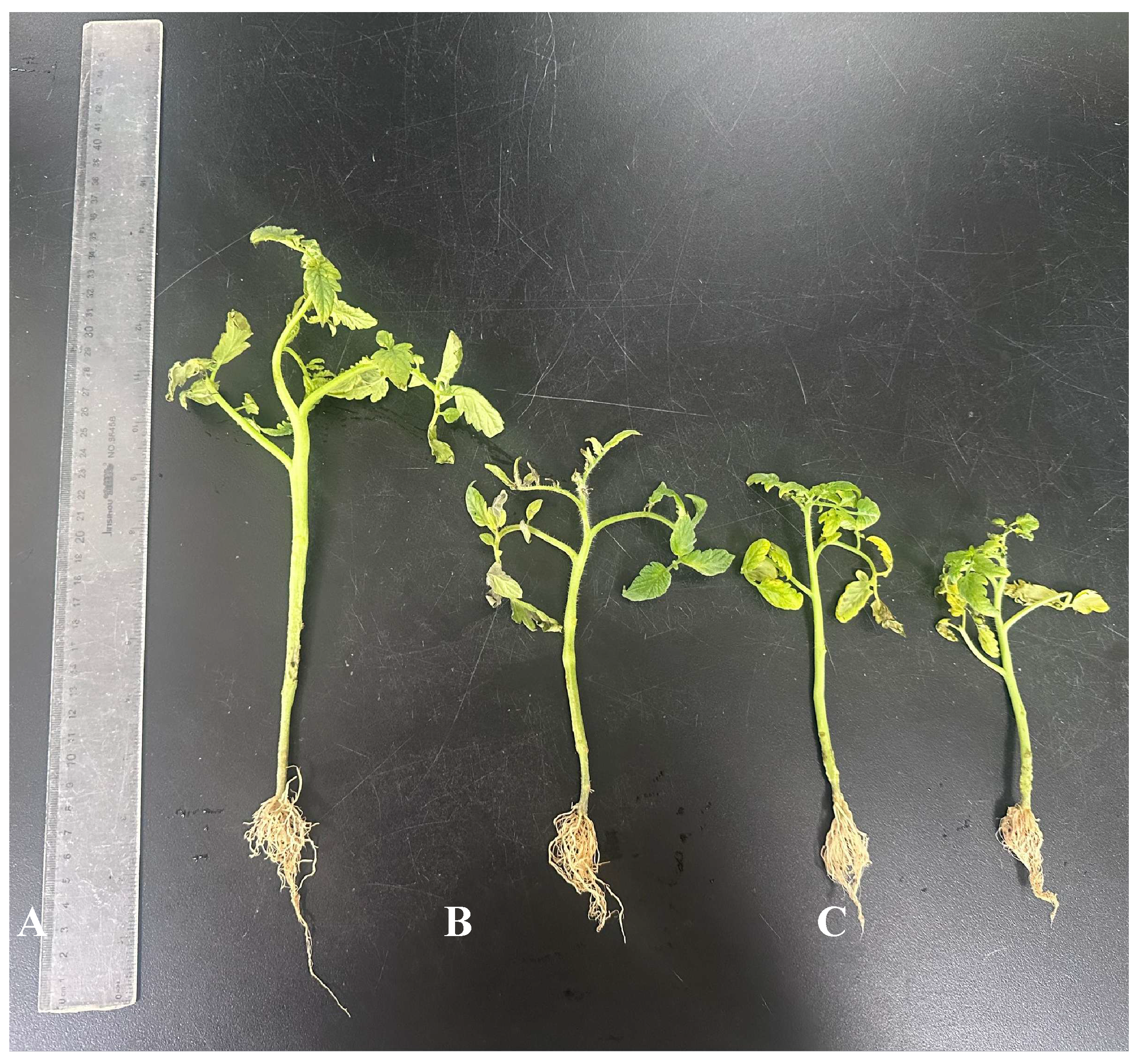
Figure 2.
Root colonization of D. versiformis of Solanum lycopersicum inoculated with D. versiformis at 0 μmol/L Cd and 50 μmol/L Cd. Note: (A)-Root colonization of Diversispora versiformis at 0 μmol/L Cd, (B)-Root colonization of Diversispora versiformis at 50 μmol/L Cd.
Figure 2.
Root colonization of D. versiformis of Solanum lycopersicum inoculated with D. versiformis at 0 μmol/L Cd and 50 μmol/L Cd. Note: (A)-Root colonization of Diversispora versiformis at 0 μmol/L Cd, (B)-Root colonization of Diversispora versiformis at 50 μmol/L Cd.
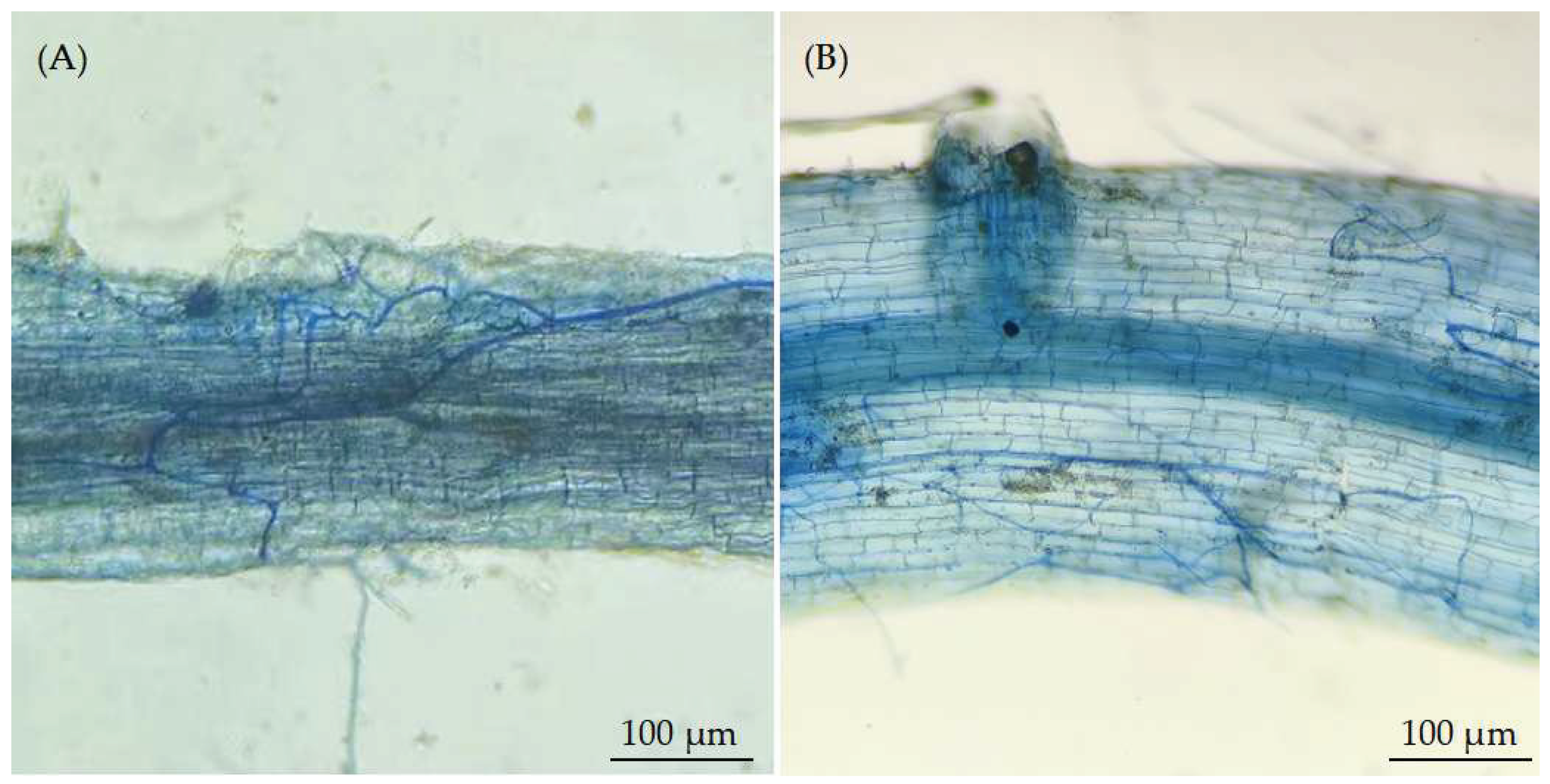
Figure 3.
Root system architecture of Solanum lycopersicum after inoculation with AMF under Cd conditions. Note: A-0 μmol/L Cd+AMF, B-0 μmol/L Cd-AMF, C-50 μmol/L Cd+AMF, D-50 μmol/L Cd-AMF.
Figure 3.
Root system architecture of Solanum lycopersicum after inoculation with AMF under Cd conditions. Note: A-0 μmol/L Cd+AMF, B-0 μmol/L Cd-AMF, C-50 μmol/L Cd+AMF, D-50 μmol/L Cd-AMF.
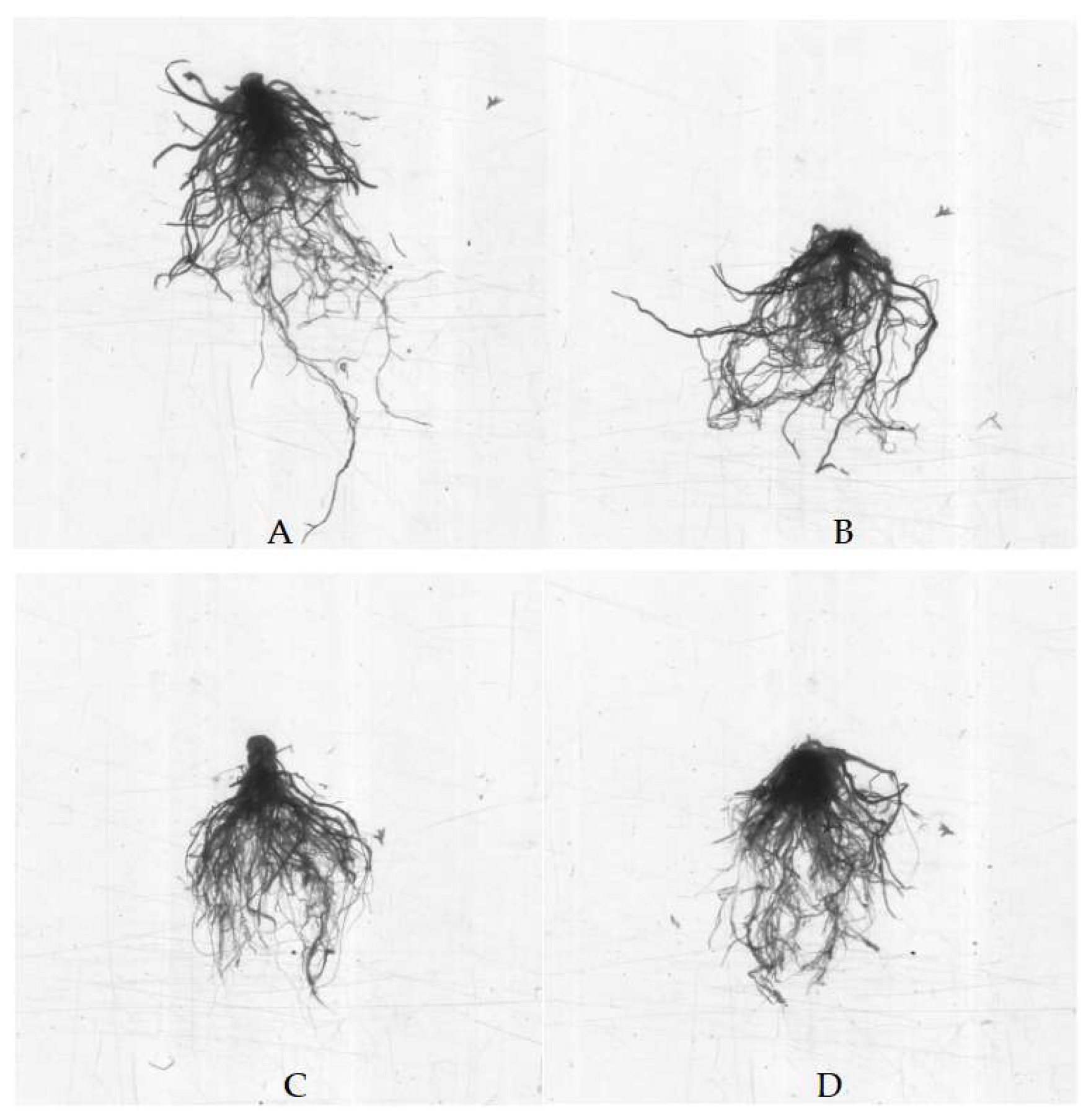

Table 1.
Effects of AMF on plant growth of Solanum lycopersicum seedlings under Cd conditions.
| Treatments | Plant height (cm) | Leaf number (#) | Totol weight (g) | Root weight (g) | Shoot weight (g) | Root Cd content (mg/Kg) | |
| 0 μmol/L Cd | -AMF | 17.62±1.06b | 23.81±1.18b | 8.02±0.49b | 0.61±0.05b | 7.42±0.44b | 0.00±0.00b |
| +AMF | 25.98±1.84a | 34.89±1.47a | 11.08±0.81a | 0.87±0.04a | 10.34±0.59a | 0.00±0.00b | |
| 50 μmol/L Cd | -AMF | 12.52±1.06c | 21.52±1.51c | 5.28±0.29c | 0.48±0.03c | 4.89±0.37c | 19.32±1.02a |
| +AMF | 15.93±1.32b | 23.54±2.01b | 7.71±0.25b | 0.58±0.04b | 7.31±0.42b | 11.54±1.04b | |
Note: Data (means ± SD) followed by different letters among treatments indicate significant differences at the p<0.05 level. The same as below.
Table 2.
Effects of AMF on root system architecture of Solanum lycopersicum under Cd conditions.
| Treatments | Total root length (cm/plant) | Total root surface area (cm2/plant) | Root volume (cm3/plant) | Root fungal colonization rate (%) | |
| 0 μmol/L Cd | -AMF | 72.73±11.16b | 6.49±0.52b | 0.39±0.03ab | 0.00 ±0.00c |
| +AMF | 102.59±10.11a | 9.43±0.84a | 0.46±0.04a | 38.23 ±3.12a | |
| 50 μmol/L Cd | -AMF | 52.24±14.05c | 5.65±0.49b | 0.33±0.03b | 0.00 ±0.00c |
| +AMF | 65.29±12.06b | 6.08±0.51b | 0.37±0.02b | 26.75 ±2.03b | |
Table 3.
Effects of AMF on the chlorophyll content in leaves of Solanum lycopersicum under Cd conditions.
Table 3.
Effects of AMF on the chlorophyll content in leaves of Solanum lycopersicum under Cd conditions.
| Treatments | Chlorophyl a (mg/g) | Chlorophyl b (mg/g) | Total chlorophyll (mg/g) | |
| 0 μmol/L Cd | -AMF | 2.15±0.18ab | 1.09±0.08ab | 3.21±0.12ab |
| +AMF | 2.21±0.17a | 1.27±0.11a | 3.49±0.21a | |
| 50 μmol/L Cd | -AMF | 1.22±0.11c | 0.55±0.02c | 1.71±0.12c |
| +AMF | 1.92±0.13b | 0.95±0.04b | 2.81±0.18b | |
Table 4.
Effects of AMF on the parameters of chlorophyll fluorescence in leaves of Solanum lycopersicum under Cd conditions.
Table 4.
Effects of AMF on the parameters of chlorophyll fluorescence in leaves of Solanum lycopersicum under Cd conditions.
| Treatments | φPSII | Fv’/Fm’ | qP | NPQ | |
| 0 μmol/L Cd | -AMF | 0.66±0.04ab | 0.85±0.05ab | 0.33±0.02ab | 0.81±0.04a |
| +AMF | 0.71±0.05a | 0.96±0.07a | 0.39±0.02a | 0.82±0.05a | |
| 50 μmol/L Cd | -AMF | 0.43±0.02c | 0.42±0.03c | 0.12±0.01c | 0.89±0.04a |
| +AMF | 0.61±0.03b | 0.78±0.04b | 0.30±0.02b | 0.81±0.06a | |
Table 5.
Effects of AMF on the photosynthetic parameters in leaves of Solanum lycopersicum under Cd conditions.
Table 5.
Effects of AMF on the photosynthetic parameters in leaves of Solanum lycopersicum under Cd conditions.
| Treatments | Pn (μmol/m2.s) | Gs (μmol/m2.s) | Ci (μmol/mol) | Tr (μmol/m2.s) | |
| 0 μmol/L Cd | -AMF | 8.89±0.79ab | 2.88±0.22ab | 256.28±24.12b | 3.59±0.22ab |
| +AMF | 9.81±0.63a | 3.22±0.23a | 345.43±29.19a | 4.15±0.26a | |
| 50 μmol/L Cd | -AMF | 5.91±0.35c | 1.92±0.17c | 165.62±11.21d | 2.55±0.23c |
| +AMF | 7.92±0.49b | 2.51±0.21b | 210.07±19.29c | 3.03±0.29b | |
Table 6.
Effects of AMF on the ROS levels in root of Solanum lycopersicum under Cd conditions.
| Treatments | H2O2 (μmol/g) | O2.-(μmol/g) | |
| 0 μmol/L Cd | -AMF | 105.14±9.26c | 82.22±2.15c |
| +AMF | 111.25±9.59c | 85.39±0.16c | |
| 50 μmol/L Cd | -AMF | 233.54±10.01a | 216.55±0.10a |
| +AMF | 155.71±13.47b | 145.59±0.14b | |
Table 7.
Effects of AMF on the antioxidant enzyme activity in root of Solanum lycopersicum under Cd conditions.
Table 7.
Effects of AMF on the antioxidant enzyme activity in root of Solanum lycopersicum under Cd conditions.
| Treatments | SOD (U/min g) | POD (U/min g) | CAT (U/min g) | |
| 0 μmol/L Cd | -AMF | 222.58±20.15c | 1980.21±152.12c | 105.91±9.72c |
| +AMF | 212.28±11.18c | 2004.92±165.31c | 108.32±8.42c | |
| 50 μmol/L Cd | -AMF | 554.36±44.38b | 3755.42±256.12b | 189.23±13.46b |
| +AMF | 634.78±50.46a | 4212.22±332.18a | 246.08±18.14a | |
Table 8.
Effects of AMF on the osmotic regulating substances in root of Solanum lycopersicum under Cd conditions.
Table 8.
Effects of AMF on the osmotic regulating substances in root of Solanum lycopersicum under Cd conditions.
| Treatments | Pro (ug/g) | MDA(μmol/g) | Soluble protein (mg/g) | Soluble sugar (μmol/g) | |
| 0 μmol/L Cd | -AMF | 32.13±2.26c | 2.21±0.13c | 13.31±1.02c | 10.25±0.92c |
| +AMF | 30.65±2.89c | 2.13±0.16c | 13.88±1.07c | 11.08±1.06c | |
| 50 μmol/L Cd | -AMF | 122.01±10.36a | 4.52±0.29a | 25.62±2.09a | 42.56±3.09a |
| +AMF | 74.52±5.44b | 3.11±0.26b | 18.55±1.14b | 21.59±2.02b | |
Table 9.
Effects of AMF on the contents of root phytohormone of Solanum lycopersicum under Cd conditions.
Table 9.
Effects of AMF on the contents of root phytohormone of Solanum lycopersicum under Cd conditions.
| Treatments | IAA (ng/g FW) | tZR (ng/g FW) | GA3 (ng/g FW) | ABA (ng/g FW) | |
| 0 μmol/L Cd | -AMF | 15.16±1.22b | 510.31±40.45a | 353.41±30.42a | 156.80±12.65b |
| +AMF | 19.23±1.49a | 549.82±50.19a | 346.58±30.13a | 136.83±10.26c | |
| 50 μmol/L Cd | -AMF | 9.26±0.85c | 404.31±30.42b | 338.62±20.78a | 191.97±16.21a |
| +AMF | 14.56±1.15b | 437.55±32.13b | 341.67±31.69a | 157.05±12.06b | |
Table 10.
Effects of AMF on succinic acid and malic acid concentrations in Solanum lycopersicum root under Cd conditions.
Table 10.
Effects of AMF on succinic acid and malic acid concentrations in Solanum lycopersicum root under Cd conditions.
| Treatments | Malic acid (μmol·g-1 FM) | Succinic acid (μmol·g-1 FM) | |
| 0 μmol/L Cd | -AMF | 0.81±0.07b | 1.14±0.08b |
| +AMF | 0.99±0.06a | 1.39±0.12a | |
| 50 μmol/L Cd | -AMF | 0.67±0.05c | 0.85±0.07c |
| +AMF | 0.79±0.06b | 1.11±0.09b | |
Disclaimer/Publisher’s Note: The statements, opinions and data contained in all publications are solely those of the individual author(s) and contributor(s) and not of MDPI and/or the editor(s). MDPI and/or the editor(s) disclaim responsibility for any injury to people or property resulting from any ideas, methods, instructions or products referred to in the content. |
© 2025 by the authors. Licensee MDPI, Basel, Switzerland. This article is an open access article distributed under the terms and conditions of the Creative Commons Attribution (CC BY) license (http://creativecommons.org/licenses/by/4.0/).
Copyright: This open access article is published under a Creative Commons CC BY 4.0 license, which permit the free download, distribution, and reuse, provided that the author and preprint are cited in any reuse.


