

Submitted:
05 March 2025
Posted:
05 March 2025
You are already at the latest version
Abstract
Agriculture is increasingly challenged by soil nutrient depletion, climate variability, and resource inefficiency. Advanced technologies have to be incorporated into agriculture and this makes the present assessment of the possible revolution the AI and ML in developing the crop and fertilizer recommendation systems relevant. Drawing from global research and case studies, multiple methodologies are combined including the neural network, a decision tree, as well as complex ensemble models of Random Forest and XGBoost, which can determine the optimality of soil nutrient management and crop selection, while simultaneously ensuring balance between environmental sustainability and economic productivity through tailored recommendations based on soil properties that are detailed on nitrogen (N), phosphorus (P), potassium (K), and pH levels. Some of the existing gaps in pre-existing research, like limited adaptability to localized agricultural conditions, open avenues for future interdisciplinary innovations. Reviewing the book underlines how AI-driven insights can change traditional farming practices toward enabling sustainable agricultural systems that harmonize with the dynamics of nature.
Keywords:
artificial intelligence
; crop recommendation
; fertilizer optimization
; sustainable farming
; soil nutrient management
; machine learning
; random forest
; neural networks
; agricultural transformation
I. Introduction
Agriculture remains a keystone towards food security and economic stability, supporting millions worldwide. The demands imposed by an ever-growing population are forcing immense pressure, coupled with the depletion of soil nutrients, climate variability, and inefficient use of resources, highlighting the need for innovative solutions in farming [10,11,14]. Although traditional agriculture has indeed been comparatively successful for its time, it tends to rely more on general guidelines and heritage knowledge rather than taking into account the specific needs of a given field. This gap has frequently permitted suboptimal crop yields, unproductive resource wastage, and adverse environmental effects [13,15].
Advancement in artificial intelligence and machine learning is expected to empower precision farming, driven by data-driven agriculture. Technologies will enable very specific recommendations on crops and fertilizers through complex interactions among soil attributes, climatic conditions, and historical yield data [11,12,16]. AI-based systems will optimize agricultural practices by granting unmatched accuracy in forecasts for crop suitability and requirements for adequate nutrition compared to conventional methods, thereby significantly improving productivity and sustainability [8,17].
The paper integrates the newest advances in crop and fertilizer recommendation systems, developed using integration methodologies with soil characteristics such as nitrogen (N), phosphorus (P), potassium (K), and pH levels [12,15]. Finally, the paper highlights the gaps existing in earlier research, such as the lack of localized and scalable solutions, as a foundational basis for future innovations in agricultural practices that align with sustainability principles [10,13,17]. This review examines the role played by AI in shaping the future of agriculture, elevating farming practices, transforming conventional agricultural systems, and bringing applicable knowledge to farmers’ hands to ensure environmentally conscious agriculture [8,14].
II. Literature Survey
A. Background
Agriculture remains the lifeblood of human civilization, providing the necessary food, fiber, and raw materials for economic and social growth. Through centuries of evolution, farming of subsistence-based orientations has gradually evolved into an industrial-scale industry. Among the lessons learned from that evolutionary journey is that intensive farming operations created problems such as soil degradation and nutrient depletion besides environmental pollution while trying to maximize yields [11]. This further
forms a wide application of the generalized crop and fertilizer recommendations, meant for specific plants but usually neglecting specific needs for specific fields [14]. Precision agriculture is an important landmark in countering many challenges facing the sector. Precision farming uses scientific and technological innovation to optimize resource use and increase productivity with fewer negative environmental impacts [15]. In other words, the essence of precision agriculture is data-driven insights tied directly to soil nutrient management. Crop health and yield determinations heavily rely on the parameters of the soil nitrogen (N), phosphorus (P), potassium (K), and pH levels. Such parameters determine how informed decisions are made about crop selection and the usage of fertilizer [10,12].
Within just a short recent past, AI and ML proved to be two of the most transformative tools in agriculture [8,13]. These technologies allow for the analysis of large datasets and complex relationships involving soil, climate, and crop performance. In its AI-based models, it has implemented decision trees, neural networks, and ensemble techniques involving Random Forest and XGBoost in developing systems that make crop and fertilizer recommendations [16,17]. Such systems will enable farmers to optimally produce using reduced over-fertilization and preserve the health of their soils. Despite these progressive endeavors, several gaps remain about the adoption of AI-driven systems in agriculture [12]. Besides, numerous models do not adapt to local conditions or rely on small datasets and/or cannot present multi-dimensional parameters appropriately [11,15]. The present work reports current state-of-the-art technologies and methodologies involved in the new and modern development of crop and fertilizer recommendation systems. This was a view that focused attention on the possibility of reconciling productivity with sustainability in data-driven agriculture at a time when farm productivity presented urgent challenges [14].
B. Literature Survey
Integration of AI and ML technologies in agriculture has gained much attention in the last few years as these technologies have a lot of potential for changing the face of traditional agriculture [11,13]. This review provides an overview of the available literature on crop and fertilizer recommendation systems using the key methods, applications, and gaps.
AI-Based Crop Recommendation Systems
AI and ML have extensively been used to predict the most suitable crops for given environmental and soil conditions. For instance, various machine learning algorithms such as Random Forest (RF), Support Vector Machines (SVM), and K-Nearest Neighbors (KNN) have been found to increase the efficiency in crop prediction with some of these scenarios showing above 99% precision using RF [8,12]. Besides, neurally network-based models have shown remarkable performance in determinations of complex relationships between soil properties and climatic factors concerning crop yields [16].
Recent developments also emphasize ensemble methods, XGBoost and CatBoost, to enhance the reliability of the prediction. Both algorithms outperform a typical model in terms of eliminating overfitting that afflicts most models, including handling high-dimensional datasets [17]. Meanwhile, combining soil nutrient levels, specifically N, P, K, and pH, greatly enhanced crop recommendation precision [10,14].
Optimization of Fertilizers using ML Models
Traditionally, fertilizer recommendation systems have used generalized recipes or onsite hand tests that are not very relevant to the particular field’s nutrient needs [15]. Advances in ML provide more bespoke solutions. Some utilized the ELM for the classification of soil fertility indices and showed an improved accuracy in fertilizer recommendation [13,16]. Also, rule-based systems have been created to recommend fertilizers simply and understandably, especially in developing agricultural regions where sophisticated tools may not be accessible to the farmer [11,14].
Other studies also explored hybrid systems that incorporate both the predictive power of ML algorithms and expert-driven rules [8]. These systems will combine all soil nutrient data with historical yield records and patterns for weathering to provide accurate fertilizer applications. Such systems minimize over-fertilization and enhance the practice of sustainable fertilizer application by optimizing nutrient use [12,17].
III. Technological Foundations
A. Background
In this review paper, we present the technological foundations of the new wave of crop and fertilizer recommendation systems. We outline the frameworks and methodologies that have been effectively used thus far in current research to enhance the precision and sustainability of agricultural practices through machine learning and datadriven models [11,14].
B. Literature Search and Selection
A proper search was performed on the professional databases, research journals, and open-access platforms by using the terms "crop recommendation systems," "fertilizer recommendation models," "machine learning in agriculture," and "AI-based precision farming." Datadriven studies that dealt with boosting agricultural productivity and resource use management practices were selected as relevant [10,13].
C. Basic Machine Learning Methods
Machine learning models are central to developing intelligent crop and fertilizer recommendation systems. The reviewed studies utilized various ML algorithms tailored to agricultural data, such as:
- Neural Networks: They are broadly utilized as they capture complex and nonlinear relationships existing among the input features, for example, soil nutrients as well as environmental conditions [12,16]. In these models, high-dimensional input spaces are mapped into outputs and adaptively learned patterns from training data. For example, a key application of a neural network established a study at 97% accuracy where crop recommendation was done by considering major soil attributes like nitrogen, phosphorus, potassium, pH, etc. [17].
Figure 1.
Artificial neural networks provide an efficient mathematical model mapping the inputs and outputs of the soil yield to yield recommendations of 97% accuracy [26].
Figure 1.
Artificial neural networks provide an efficient mathematical model mapping the inputs and outputs of the soil yield to yield recommendations of 97% accuracy [26].
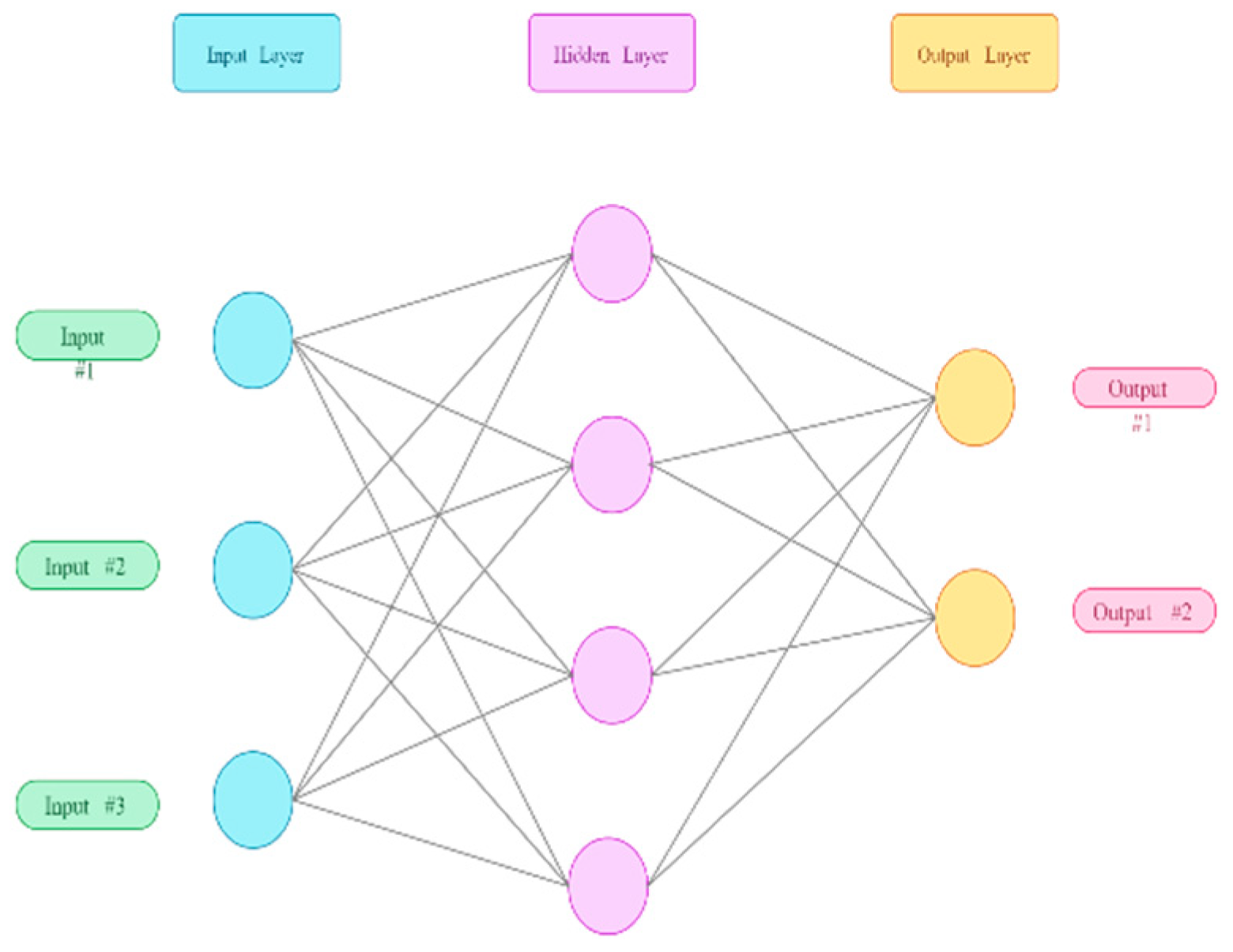
Figure 2.
Ensemble learning process in algorithms like C-Boost, which can make 99.51% precision by link weak learner to improve the figure of ground control in rotate agriculture dataset [27].
Figure 2.
Ensemble learning process in algorithms like C-Boost, which can make 99.51% precision by link weak learner to improve the figure of ground control in rotate agriculture dataset [27].
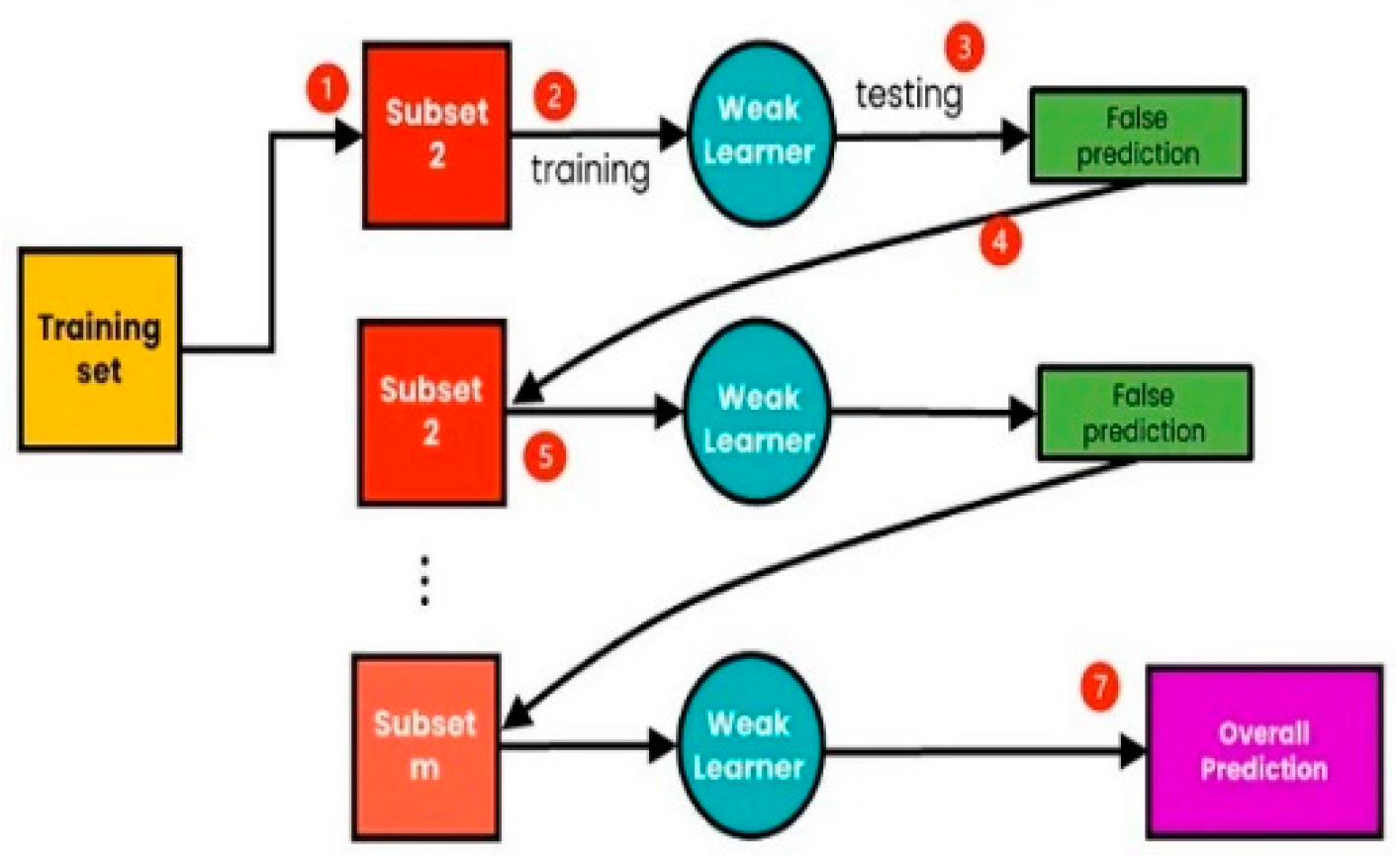
Figure 3.
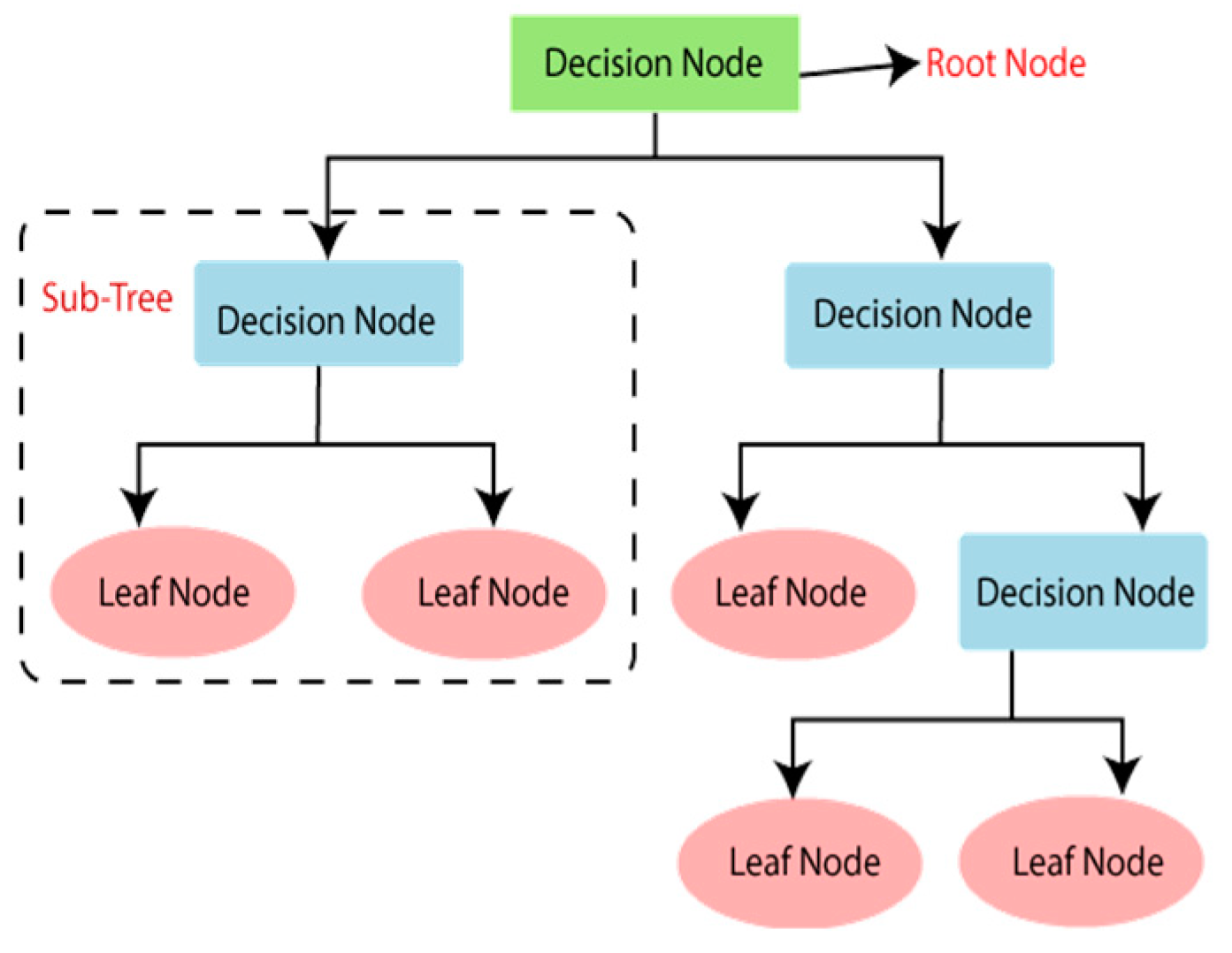
Decision tree algorithm: contributes to explaining high interpretability, as well as the ability to achieve high classification accuracy in predicting agricultural outcomes depending on special features, such as nutrient content or pH of the soil [28].
Figure 3.
Decision tree algorithm: contributes to explaining high interpretability, as well as the ability to achieve high classification accuracy in predicting agricultural outcomes depending on special features, such as nutrient content or pH of the soil [28].
D. Data Preprocessing and Feature Engineering
Data preprocessing and feature engineering are some of the crucial elements for the success of ML models in agriculture. The technological framework often includes:
- Feature Selection and Extraction: Effective feature selection methods reduce the dimensionality of data without losing the importance of variables. Key features often include soil nutrients (N, P, K), pH levels, temperature, and rainfall. Techniques such as correlation analysis are applied to prioritize variables that most significantly impact crop growth [10,16].
- Data Balancing Techniques: Dataset imbalances are quite common in agricultural data, and techniques like the SMOTE (Synthetic Minority Oversampling Technique) are used to handle such imbalances. This will prevent model bias by creating synthetic samples for the underrepresented classes, thereby making the model more reliable and robust [8,15].
E. Hybrid and Integrated Systems
Many other studies have tried to integrate machine learning with rule-based logic to develop more general recommendation systems.
- Hybrid Models: A rule-based fertilizer recommendation model integrated with ML-based crop recommendation forms models that are not only predictive but also interpretable [8,14]. Rule-based modules use established agricultural knowledge to give clear explanations for fertilizer recommendations based on soil types and nutrient levels.
- Neural Network and Rule-Based Reasoning Framework: In this framework, it was proposed that the neural network be specifically trained for crop recommendation, and the logic-based system be used for fertilizer guidance. This two-layer approach emphasizes transparency to enable farmers to understand the rationale behind recommendations [11,12].
F. Performance Metrics
The reviewed frameworks use different metrics to assess performance to ensure reliable and actionable outputs. These metrics are discussed below:
G. Practical Implementation Considerations
If crop and fertilizer recommendation systems are to be based on ML models, in practical terms, their applications are usually in these areas:
IV. Challenges and Gaps
This paper highlights important technological developments in AI-driven agricultural systems. Nevertheless, challenges and gaps needing to be addressed to best operationalize and realize crop and fertilizer recommendation systems are still noteworthy [11,14].
A. Data Quality and Availability
Another main issue here is the quality and availability of data used to train machine learning models. Most studies rely on datasets that do not precisely reflect the diversified agricultural conditions within different regions. This may lead to over-specialization of a model in a particular context, and the inability to generalize in other contexts [10,13]:
B. Model Generalization
Whereas certain models become too specific and therefore not flexible in new, variable environments, the effectiveness of the models is as below, depending on regions and environmental factors [8,14]:
C. Data Balancing and Feature Selection
While methods like SMOTE can alleviate some of the imbalanced dataset challenges, there is still no method for optimally balancing the data without inducing artificial bias [12,16]:
D. Little Comprehensive Multi-Factorial Input Integration
Most current systems focus on a few individual inputs, namely, soil nutrients (N, P, K, pH), some with temperature and humidity. Although this streamlined integration can limit the functionality of the model in making allencompassing recommendations [11,15]:
E. User Adoption and Trust
F. Resource Constraints for Smallholder Farmers
Although highly impressive, the adoption of such hightech AI-based systems is expensive and technically demanding [16,17]:
G. Real-World Validation
Most research focuses on theoretical model development and validation in controlled conditions [11,15]:
V. Future Directions
Crop and fertilizer recommendation systems need future directions to address the limitations identified above and unveil new opportunities for innovation. This section explores strategic recommendations on how to synergize multi-dimensional data together with interdisciplinary collaboration in agriculture and technology.
A. Recommendations on Integrating Multi-Dimensional Data
These days, crop and fertilizer recommendations are frequently based on a limited form of input data, such as those including soil nutrients and some basic environmental factors. Future improvements should center around making it possible to use more comprehensive, multi-dimensional sources of data to further increase the potential of predictability:
- Dynamic Data Input: Models trying to capture the changing conditions at each stage of the crop growth cycle would be helpful in more adaptive and realtime recommendations. This could mitigate impacts from unpredictable weather occurrences or sudden outbreaks of pests, thus providing stronger decision making support [11,14].
- Geospatial Data and Satellite Imagery: Geospatial data and remote sensing technology can add a layer of precision in soil and crop assessments. These data sources provide insights into land use, soil moisture content, and potential yield predictions, enabling localized and customized recommendations [16,17].
B. Scope for Interdisciplinary Research in Agriculture and Technology
One of the biggest opportunities for interdisciplinary research arises from the gap between technology and agriculture. More innovative and applicable solutions can be developed by combining these two scientific fields:
- Agronomists and Data Scientists in Collaboration: The expertise of both fields—integrating agronomy with data science—can help build models based on realistic farming practices and challenges. This ensures that machine learning models are grounded in real-world agricultural knowledge, enabling profound solutions [10,13].
- Integration of Soil Science, Environmental Studies, and AI: Much emphasis should be given to the convergence of soil science, environmental studies, and AI technologies to develop systems comprehensive enough to assess complex interactions between soil properties, crop needs, and environmental conditions [12,15].
- Policy and Technology Synergy: Research involving policymakers and technologists can ensure that advancements align with regulatory frameworks and sustainability goals. This synergy is crucial for creating guidelines that support technology adoption while promoting responsible and sustainable farming practices [14,16].
VI. Conclusions
In this paper, we discussed the AI-driven crop and fertilizer recommendation system advances, challenges, and potential applications in the future. Some crucial takeaways from the review underscore key strides taken in the use of machine learning and data-centric models towards better agricultural practices optimization. Different machine learning techniques, such as neural networks, boosting algorithms, and hybrid models, have been adopted to improve the accuracy and efficiency of crop recommendations. Other good contributions are from data preprocessing techniques and feature selection methods, which can lead to more robust and reliable systems.
The review, however, underlined several challenges: data quality, model generalization, poor integration of
multi-factorial inputs, and the practical constraints arising in small-scale farming. These call for improvements in future developments, especially extension of data sources to cover multi-dimensional environmental and socioeconomic dimensions and encouraging interdisciplinary collaborations aiming to improve model utility and reduce user barriers.
Data-driven agriculture is aptly transformative in the whole act of farming: making it precise, efficient, and sustainable. Advanced technologies, combined with superior knowledge in agriculture, empower farmers to take informed decisions, which means higher productivity and profitability. Hence, continued research and development must move towards creating scalable, adaptable, and userfriendly systems that bridge technological innovation with the needs of practical agriculture. Addressing the challenges that lie ahead while embracing future opportunities will position data-driven agriculture in a great place in ensuring food security for the world while promoting sustainable farming practices.
References
- Apat, S. K., Mishra, J., Raju, K. S., & Padhy, N. (2023). An Artificial Intelligence-based Crop Recommendation System Using Machine Learning. Journal of Scientific & Industrial Research, 82(5), 558-567.
- Musanase, C., Vodacek, A., Hanyurwimfura, D., Uwitonze, A., & Kabandana, I. (2023). Data-Driven Analysis and Machine Learning- Based Crop and Fertilizer Recommendation System for Revolutionizing Farming Practices. Agriculture, 13, 2141. Available: [Accessed: 16-Nov-2024]. [CrossRef]
- Mukhopadhyay, D. (2018). Crop Suitability and Fertilizers Recommendation Using Data Mining Techniques. Available: https://www.researchgate.net/publication/326304244_ Crop_Suitability_and_Fertilizers_Recommendation_ Using_Data_Mining_Techniques. [Accessed: 16-Nov-2024].
- Crop Recommendation System Using Machine Learning. Available: https://d1wqtxts1xzle7.cloudfront.net/67938662/ CSEIT2173129-libre.pdf. [Accessed: 16-Nov-2024].
- Tarle, B., et al. Soil-Based Fertilizer Recommendation System Using Internet of Things. Available: https://www.researchgate. net/publication/354528479_Soil_based_fertilizer_ recommendation_system_using_Internet_of_Things. [Accessed: 16-Nov-2024].
- AJAST (2023). An Overview of Agricultural Recommendations for Improved Productivity. Available: https://ajast.net/data/ uploads/88018.pdf. [Accessed: 16-Nov-2024].
- Crop Recommendation System Using K-Nearest Neighbor. Available: https://d1wqtxts1xzle7.cloudfront.net/ 87770882/978-981-33-4501-0_54-libre.pdf. [Accessed: 16-Nov-2024].
- Evaluation of Different Fertilizer Recommendation Systems. Available: https://d1wqtxts1xzle7.cloudfront.net/118517141/ 0010362090289579720240929-1-l2vza1-libre.pdf. [Accessed: 16-Nov-2024].
- Recommendation Studies. Available: https://link.springer.com/content/pdf/10.1007/ s00521-023-09391-2.pdf. [Accessed: 16-Nov-2024].
- K, K. (2024). Crop Recommendation System with XAI. INTERANTIONAL JOURNAL OF SCIENTIFIC RESEARCH IN ENGINEERING AND MANAGEMENT, 08(04), 1–5. Available: . [CrossRef]
- Meenakshi, P., Aniket, D., Rutuja, K., Moin, S., & Dnyaneshwari, S. (2023). Crop Recommendation System Using ML Algorithms. International Journal of Advanced Research in Science, Communication and Technology, 626–630. Available: . [CrossRef]
- Kavitha, D. D. (2023). Crop Recommendation System using ML. International Scientific Journal of Engineering and Management, 02(04). Available: . [CrossRef]
- Abdullahi, M. U., Aimufua, G. I. O., Egga, B. H., Anyachebelu, K. T., & Olalere, M. (2024). Crop Recommendation Predictive Analysis using Ensembling Techniques. Journal of Basics and Applied Sciences Research, 2(1), 162–176. Available: . [CrossRef]
- Devi, Dr. M. K., Sam, D. D., Raj, A., & Sharma, A. K. (2024). Crop Recommendation System Using Machine Learning. INTERANTIONAL JOURNAL OF SCIENTIFIC RESEARCH IN ENGINEERING AND MANAGEMENT, 08(02), 1–13. Available: . [CrossRef]
- Crop and Fertilizer Recommendation System. (2023). International Journal of Food and Nutritional Sciences, 11(12). Available: . [CrossRef]
- Jayashree, D., Paul Jasmin Rani, L., Beria, M. V., Pandithurai, O., Nithyalakshmi, S., & Menon, P. K. (2022). Fertilizer Recommendation System Using Machine Learning (pp. 709–716). Springer Nature Singapore. Available: . [CrossRef]
- Musanase, C., Hanyurwimfura, D., Kabandana, I., Uwitonze, A., & Vodacek, A. (2023). Data-Driven Analysis and Machine LearningBased Crop and Fertilizer Recommendation System for Revolutionizing Farming Practices. Agriculture, 13(11), 2141. Available: . [CrossRef]
- K, K. D., & Kumar, J. P. (2024). Sustainable Food Development Based on Ensemble Machine Learning Assisted Crop and Fertilizer Recommendation System. Journal of Machine and Computing, 317–326. Available: . [CrossRef]
- Thendral, R., & Vinothini, M. (2023, March 2). Crop And Fertilizer Recommendation to Improve Crop Yield using Deep Learning. Available: . [CrossRef]
- Pruthviraj, P., Akshatha, G. C., Nagaraj, N., Shastry, K. A., & Nikhil, N. (2021). Crop and Fertilizer Recommendation System Based on Soil Classification (pp. 29–40). Springer Singapore. Available: . [CrossRef]
- Lakshmi, M. V., & Abhishek, S. (2024). Crop and Fertilizer Recommendation and Plant Disease Prediction. 3075, 020197. Available: . [CrossRef]
- Govindwar, R., Jawale, S., Zade, S., Williams, I., Futane, P., & Kalpande, T. (2023). Crop and Fertilizer Recommendation System Using Machine Learning (pp. 139–149). Springer. Available: . [CrossRef]
- CROP AND FERTILIZER RECOMMENDATION SYSTEM USING MACHINE LEARNING. (2023). International Research Journal of Modernization in Engineering Technology and Science. Available: . [CrossRef]
- M.S, S., & Nagarathna, N. (2021). A Machine Learning Based Crop and Fertilizer Recommendation System. International Journal of Computer Sciences and Engineering, 9(7), 64–68. Available: . [CrossRef]
- Iniyan, S., Santhanakrishnan, C., Raja, M. S., Srinivasan, R., & Srinivasan, A. (2023). Crop and Fertilizer Recommendation System Applying Machine Learning Classifiers. 1–6. Available: . [CrossRef]
- Neural Network Diagram. Available: https://creately.com/diagram/example/gvt0PxHTJ8L/ neural-network-diagram.
- Soni, B. (2023). Understanding Boosting in Machine Learning: A Comprehensive Guide. Available: https://shorturl.at/PtNNO.
- Javatpoint. (n.d.). Machine Learning Decision Tree Classification Algorithm. Available: https://www.javatpoint.com/ machine-learning-decision-tree-classification-algorithm.
Disclaimer/Publisher’s Note: The statements, opinions and data contained in all publications are solely those of the individual author(s) and contributor(s) and not of MDPI and/or the editor(s). MDPI and/or the editor(s) disclaim responsibility for any injury to people or property resulting from any ideas, methods, instructions or products referred to in the content. |
© 2025 by the authors. Licensee MDPI, Basel, Switzerland. This article is an open access article distributed under the terms and conditions of the Creative Commons Attribution (CC BY) license (http://creativecommons.org/licenses/by/4.0/).
Copyright: This open access article is published under a Creative Commons CC BY 4.0 license, which permit the free download, distribution, and reuse, provided that the author and preprint are cited in any reuse.


