1. Introduction
The concept of sustainable development was first put forward in 1987 in the report our common future by the World Commission on Environment and Development. It emphasizes the coordinated development of the economic, social, and environmental dimensions, and pursues a development model that can meet the needs of the present generation without compromising the ability of future generations to meet their own needs. This means that when conducting sustainable activities and making decisions, we need to comprehensively consider the factors of these three dimensions to ensure that they promote and support each other rather than conflict with one another. It can be said that there is an interdependent relationship between the economy and heritage, society and heritage, as well as the environment and heritage.
On August 2, 2015, the United Nations also released the Sustainable Development Goals (SDGs), which regulated and defined sustainability from different perspectives and fields. Goal 11 explicitly states "Make cities and human settlements inclusive, safe, resilient and sustainable". Target 11.4 also emphasizes "Strengthen efforts to protect and safeguard the world’s cultural and natural heritage". Then, how exactly can the sustainable protection of heritage be achieved?
On June 1, 2012, the Chinese government released "National Report on Sustainable Development of the People's Republic of China", which introduced the overall situation of China's sustainable development. The report elaborated on several aspects, including economic structure, development mode, individual development, social progress, sustainable resource development, ecological environment protection, sustainable development construction, and international cooperation. In the section of "Capacity Building for Sustainable Development", no suggestions or opinions were put forward regarding the "sustainability" of cultural and natural heritage. Relevant protection requirements were only proposed in "Opinions on Strengthening the Protection and Inheritance of History and Culture in Urban and Rural Construction".
Overall, this paper finds that the concept of sustainability was put forward long ago, and it provides important guidance for the sustainable development of cultural and natural heritage. In China's sustainable development, there are no clear regulations and rules regarding the sustainable development of architectural heritage. More often, the concept of green buildings is used as a substitute. This is also the reason why the sustainable development of architectural heritage is often overlooked. In fact, there is a relationship of mutual dependence and promotion among the economy and heritage, society and heritage, and environment and heritage.
For example, in urban renewal, the renovation and upgrading of old buildings not only preserve local historical memories but also play a significant role in the transformation of the contemporary economic society and the creation of local spaces, bringing economic benefits (cultural tourism), local identity, and resource conservation [
1,
2,
3]. By inference, if we want to achieve the sustainable development of architectural heritage in the economic, social, and environmental aspects, protecting the authenticity and integrity of heritage information is a prerequisite [
4,
5].
One of the most effective ways to achieve heritage information recording and protection is HBIM technology. Therefore, leveraging this technology can bring benefits to sustainable development. Its emergence has not only introduced new digital, information - based, specialized, and intensive recording methods for conservation teams [
6], but also greatly facilitated subsequent sustainable research, management, development, decision - making, monitoring, and display. It also offers diverse means of expression and applications. Particularly in China, which is rich in cultural and natural heritage, HBIM technology undoubtedly serves as a booster to promote the in - depth and practical implementation of the country's sustainable development in heritage conservation.
For example, HBIM plays an important role in the process of sustainable development. For instance, relying on HBIM technology can improve the efficiency of heritage information protection and decision-making, and reduce the potential human and material costs that may be incurred in heritage protection and information recording, as well as the environmental damage that may be caused to the environment of the heritage site.
Another example is that, based on HBIM technology, by developing and introducing advanced BIM modeling software, scanning equipment, and display devices, it is possible to achieve accurate recording and management of heritage information, as well as precise control of heritage protection and restoration, so as to realize the information management of the whole life cycle of architectural heritage, and reduce the consumption brought to the heritage itself by secondary recording and surveying.
Furthermore, in the education and cultivation of postgraduate students in architecture, increasing the relevant courses and practical activities on the sustainable management and protection of HBIM is also conducive to cultivating students' awareness of sustainable development and encouraging them to develop and practice the concept of sustainability in other scientific research fields.
In addition, HBIM can provide scientific basis and practical guidance for the protection of architectural heritage by combining with informatized archives. It can also guide the construction of the disaster prevention and mitigation system and the formulation of emergency plans through this technology, as well as simulate the restoration and the reversible tracking of the restoration process, so as to achieve the sustainable development of architectural heritage protection.
Moreover, HBIM can combine with sensors and collaborative work platforms to achieve the sustainable recording and editing of heritage information, reduce human resource costs, establish a platform for multi-team joint management, and realize sustainable management. Overall, the sustainability of HBIM technology has not received extensive attention, especially in China.
2. An Overview of the Application of HBIM in the Field of Chinese Architectural Heritage
In 2009, Maurice Murphy from the University of Dublin in Ireland first proposed the concept of HBIM. In the same year, the Design and Research Institute of Tsinghua University and the Institute of Cultural Heritage Conservation in China also put forward the "historic/heritage building information model" (HBIM) technology, defining HBIM as an information management tool in the life cycle of historical buildings with 3D models. Based on cases and practices, Chinese scholar Cong Wu put forward some constructive viewpoints on the development of HBIM. That is, by establishing a cross - platform information surveying and recording system with HBIM as the core technology, it can provide systematic, practical and convenient information services for various aspects of heritage research, protection, management, display and utilization. He also predictively proposed that with the development of the combination of architectural heritage and knowledge base construction, the Internet of Things, big data, 3D printing, digital construction, virtual reality, augmented reality and artificial intelligence, the digital and information development of architectural heritage will move towards the direction of intelligence. Architectural heritage will also become perceptive, responsive and audience - friendly intelligent buildings [
6]. These viewpoints more specifically expound the great potential and research value of HBIM technology, and also provide many perspectives for the development of HBIM in China.
At present, some scholars like Jianzhuo Xu have reviewed the frontier developments and applications of foreign HBIM [
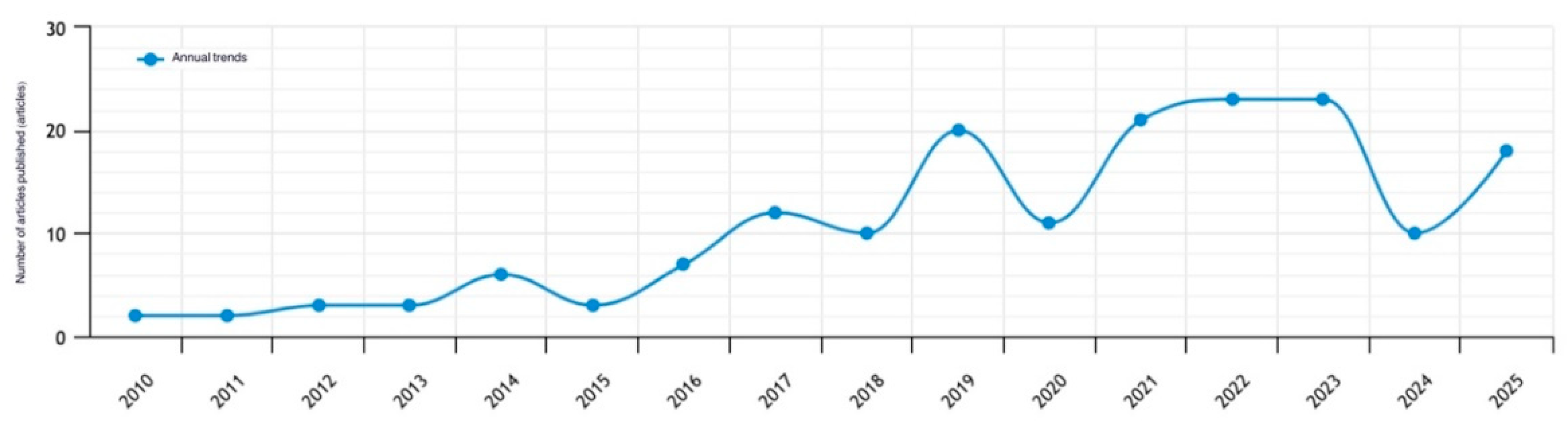
7]. However, no one has conducted a review study on the development of HBIM in China, and few scholars have approached it from the perspective of sustainable development. This study finds that the development and research of HBIM in China have gone through many twists and turns, but overall, it shows an upward trend. There are still about 20 articles published in 2025 (
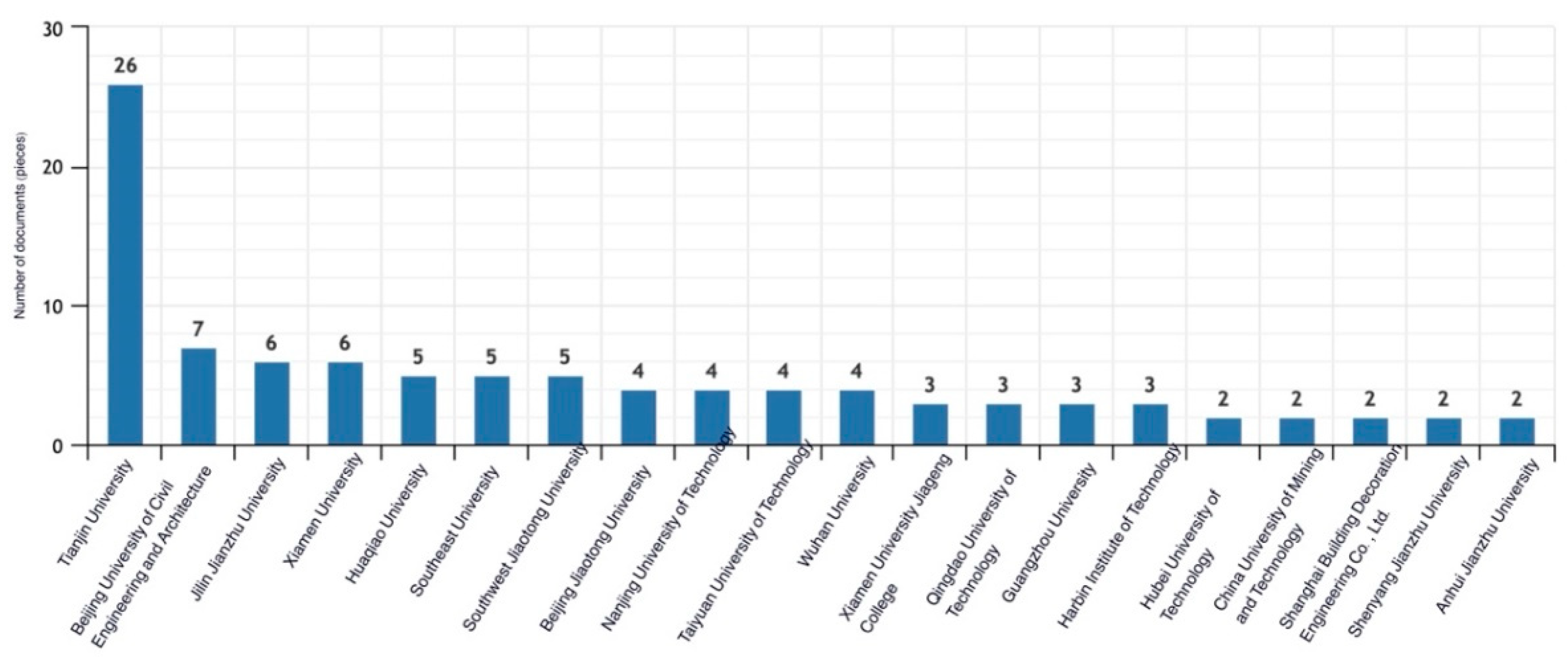
Figure 1). During the period from 2010 to 2025, Tianjin University conducted in - depth research on HBIM and the heritage - related applications of BIM (
Figure 2). In contrast, other schools and institutions are relatively weak in terms of the number of published papers, indicating that the research in this direction in China is still in its infancy.
2.1. Building Heritage Information Models and Visualization Display
Although the start and subsequent development of HBIM research in China lagged behind those in foreign countries, in recent years, numerous Chinese universities and research institutions have actively carried out research on HBIM technology, promoting continuous innovation in its theory and practice. Judging from the journal papers published during the period from 2010 to 2024, the vast majority of HBIM research and development in China is at the stage of model construction and demonstration.
For example, Wang Zhuonan and Gao Min's research focused on the protection and research of Liao - Dynasty brick pagodas based on digital technology. They expounded on the general situation and early research of Liao - Dynasty brick pagodas, and pointed out the advantages of digital technology in the field of ancient architecture protection. Regarding application key points, they emphasized that 3D laser scanning and UAV oblique photogrammetry technology should be selected and reasonably combined as surveying and mapping instruments, while also controlling data accuracy. In specific applications, digital technology can be used for the research of the tower body proportion and the shape of detailed components, and can also be used to observe the mathematical relationships and damage conditions of Wu'anzhou Pagoda [
8].
Another example is that Sun Xiangwang, based on HBIM and knowledge ontology technology, proposed the technical route for establishing the HBIM of Zhanyuan Garden. He constructed the knowledge ontology and semantic library framework for garden information preservation and achieved interaction with HBIM. This provided a comprehensive and systematic solution for the information preservation of Jiangnan gardens, standardized the digital modeling process standards, improved the levels of information management and knowledge reuse, and promoted the digital and intelligent development of garden research [
9].
Han Sai's research, taking the survey project of the duty rooms in Yangxin Hall of the Forbidden City as an example, explored the expression of architectural heritage survey information results based on HBIM. HBIM technology can effectively integrate, store, and manage survey information to meet the requirements of visualization, specialization, and integration. This research created a damage keyword dictionary and adopted two - parameter control to solve the problems of standardization and automation of survey information expression. Through the application of shadow primitives, the visual expression of the relationships between components, local damage, and overall unit information was achieved. Practice has proved that HBIM technology is feasible in survey work and provides a new technical means for architectural heritage protection work[
10,
11].
Lai Yujing and Xia Tian's research, taking the Xiangdian Hall in Qufu as an example, explored the construction of an architectural heritage information database based on HBIM. HBIM technology has advantages such as comprehensive and convenient information recording, integrity and authenticity, associated dynamics, and the ability to extend to 5D simulation. In the research of Xiangdian Hall in Qufu, an information database was constructed through data collection, classification, numbering, model creation, and the entry of detailed information. This database contains various types of information, facilitating the research, repair, and protection of architectural heritage [
12].
E Guangshu's research, taking the architectural heritage in Taipingjiao, Qingdao as an example, explored the application of HBIM under the concept of preventive protection. The model definition level was clarified, the Revit platform and suitable building types were selected, and the family library and model were constructed. The result expression utilized included thematic drawings and 3D model expressions, which can be used for structural analysis, monitoring, and information management. This research provided a useful reference for the preventive protection of architectural heritage[
13].
Zhang Jiahao used informatized surveying and mapping technology, HBIM technology, and software such as Trimble RealWorks, DJI Terra, and RealViewer to process point clouds, and constructed the component family library and HBIM building information models of the architectural heritages of Haicang Juren Di in Xiamen and Anxi Tea Factory in Quanzhou. Based on HBIM, the historical information and current damage information of Juren Di were recorded, managed, and visually analyzed. Its prominent feature is the phased modeling construction by recording the phased information of repair construction based on secondary - developed plugins. The research has an exploratory significance for the technical route of multi - source point cloud data fusion, proposed component information classification and coding methods, and carried out classification planning, naming, coding, and parametric design. It provided a standardized information management method for the digital protection of traditional Minnan large - style houses [
14,
15,
16]. Scholars with similar research types include Niu Pengtao and Tian Jiang [
17], Yang Lin [
18], Zhang Jingwei [
19], Zhang Enming [
20], Li Rui [
21]; Li Wenqiang [
22], Li Weirong [
23]; Chen Ye [
24], and so on.
Ji Huanqun, taking the Rouyuan Tower in Jiayuguan, a traditional building in the Hexi Corridor during the Ming and Qing dynasties, as an example, aiming at the problems of low efficiency in most modeling work, illogical model construction operations, and difficult - to - unify work processes, reconstructed the construction knowledge graph, divided the large - scale wooden frame units, analyzed the construction types, and combined theoretical results with modeling development to innovate the research perspective and modeling method, improving the modeling efficiency and quality of the large - scale wooden structure parts [
25].
Wang Lingxu et al., taking the restoration project of Jiangsu Road Church in Qingdao as an example, applied BIM technology to the entire process of the church restoration. They proposed the protection idea of tracking the restoration process with a data model, emphasizing the dynamic update and reverse - assisting role of building information in the restoration process, and innovating data translation, integration, and digital model applications, that is, physical models and virtual models. This improved the scientificity and accuracy of ancient building restoration and expanded the application field of digital models[
26].
Wang Licai explored the application of HBIM technology in the relocation plan and construction stages of relocated construction projects. In the plan stage, HBIM technology was utilized to build information models, locate components, simulate the environment, and display the plans. In the construction stage, it was applied to construction site layout, quantity calculation, information recording, and later - stage maintenance. Through the analysis of the process and the application of HBIM technology, this paper provided a new approach to solving the problems in the relocated construction of Huizhou traditional dwellings. It also helped relevant practitioners recognize the advantages of HBIM technology and promoted the protection and development of traditional dwellings [
27].
In addition, many scholars have made contributions in this regard. For example, Zhang Wenjing [
28], Zhu Ning [
29], Zhu Lei [
30], Shi Yue [
31], Shi Ruoming [
32], Li Shujing [
33], Li Lijuan [
34], Du Xin [
35], Zhou Chengchuanqi [
36], Xing Liang [
37], Tong Qiaohui [
38,
39,
40], Liu Yingxiang [
41], Guan Xian [
42], Chang Lei [
43], Wang Zhixin [
44], Shi Liwen [
45], Meng Hui [
46], Xun Haowei [
47], Ma Weikang [
48], Fu Jinyu [
49], Wang Hechi [
50], Du Shihu [
51], Wang He [
52], Liang Yi[
53], Jia Zheng [
54], Gui Yuhuan [
55], Jing Songfeng [
56], Tao Ye [
57], etc. These scholars have carried out work similar to that of the previously mentioned scholars, so it is not necessary to elaborate on each of them here.
2.2. Four Practical Directions of HBIM - Current Trends
In addition to the above - mentioned scholars and experts conducting HBIM practices on different types of architectural heritage, many Chinese teams have carried out in - depth research and practice based on these efforts. This includes several major directions such as BIM automatic modeling algorithms and automated routes, parametric and procedural modeling, multi - dimensional extended applications of HBIM, and the construction and management of collaborative platforms.
2.2.1. In the Aspect of Automatic Modeling Algorithms and Automated Routes
First, in terms of HBIM automatic modeling algorithms and automated routes, several scholars are the most representative. For example, Sun Zhuqing, Zhang Dabao and others took the main hall of a temple in Guangdong Province as the research object to explore a new practice of automatically converting point - cloud data into BIM models. They proposed an automatic BIM modeling algorithm based on architectural grammar and an automated roadmap, and verified the feasibility of the algorithm. This research improved the modeling efficiency of historical buildings, provided new technical means for digital protection, clarified the development direction and stage goals of automatic BIM modeling, and promoted its application in the construction industry [
58].
Another example is Huo Pengpeng. For the roof decorative components of Ming and Qing official - style buildings (such as the Qianqing Palace and the Jiaotai Hall in the Forbidden City), she used Context Capture to automatically generate a rough model of the decorative components. Then, she applied the 3DS Max 3D modeling software and referred to the design details listed in books and manuscripts of roof decorative components of Ming and Qing official - style buildings to refine the rough 3D model. Finally, she reconstructed decorative components with good - detailed expressions, established a template library of roof decorative components by building 3D models, and achieved high - efficiency and high - precision 3D reconstruction of Ming and Qing official - style buildings. She also proposed a registration method based on image and point - cloud data to realize the automatic invocation of the template library [
59].
Moreover, Wu Rui and others took the large - wooden structure of the Holy Mother Hall in Jinci Temple, Shanxi Province as the main experimental object to study the processing of its 3D point - cloud data, the construction and reasoning of knowledge graphs. They proposed an automatic HBIM generation method based on knowledge - graph construction and reasoning technology, which enabled the rapid and accurate construction of historical building models. Additionally, they solved the problems of data missing, uneven density, and data anomalies when obtaining 3D point - cloud data of historical buildings using lidar and oblique photogrammetry technology, as well as the problem that the 3D models generated by point - cloud fitting were non - disassemblable [
60].
2.2.2. In the Aspect of Automatic Modeling Algorithms and Automated Routes
Secondly, in terms of parametric and procedural modeling of HBIM. For example, Feng Xu proposed a new method for modeling the wooden frames of historical buildings in HBIM based on carpenter's architectural rules. Through the research on the drum towers in the Pingtan River Basin of Hunan, the carpenter's building rules were obtained, and the rapid generation of wooden frame models was achieved by using procedural modeling. This method can generate models similar to actual buildings according to simple constraints, reducing the workload of manual modeling and improving the modeling efficiency. Although there are some differences in model accuracy, it can generally meet the requirements of HBIM [
61].
Another example is that Yang Hongji and others proposed an innovative parametric and computational modeling method based on the HBIM technical process for the large - wooden frames of traditional Minnan residences. They innovated the geometric description of components and built a cloud - based display platform, which improved the efficiency and accuracy of modeling and provided a new path for the informatized protection of traditional residences [
62].
Wang Xi is a scholar who has conducted in - depth research in this field. He proposed a method for generating regular axes from irregular column grids through a genetic algorithm and a method for realizing the synergy between metadata and meta - models through algorithmic modeling. That is, he reconstructed the tile model in Grasshopper, generated IFC models and Cypher statements through algorithm clusters, and constructed a graph database [
63,
64,
65].
2.2.3. In the Aspect of Multi-dimensional Extended Applications
Thirdly, in terms of the multi - dimensional extended applications of HBIM. Currently, the more mainstream cross - platform displays and applications mainly involve combinations such as HBIM + GIS, HBIM + VR, HBIM + 3D, and HBIM + Dynamo. For example, Fang Dongya took the main building of Tianjin Foreign Studies University as an example to explore the applicability of BIM technology, elaborated on the process of constructing an information model, and analyzed the cooperation methods with other technologies, such as BIM + GIS, BIM + VR, and BIM + 3D scanning [
66].
Shi Yilin explored the advantages of the BIM + VR technology in response to the problems faced by the renovation of China's current industrial heritage, such as chaotic data management, lack of visual expression, and difficulties in collaborative design. He established an information model platform and applied it to the renovation project of the Traditional Architecture Museum at Inner Mongolia University of Technology. Additionally, during the stages of scheme design, construction drawing design, and optimization and adjustment, the BIM + VR technology achieved the informatization of data, the high efficiency of collaborative design, and the instant synchronization of information. This has improved the overall design level and the advancement efficiency of the project, providing a new technical path and practical reference for the renovation of industrial heritage [
67]. The article mentions the viewpoints that collaborative design and information synchronization are significant for sustainable development, yet it does not conduct in-depth discussions and research on these two aspects. Shang Dunjiang [
68,
69]also adopted the BIM + VR technology. Moreover, he explored the combinations of BIM with the Internet and BIM + MR.
Li Yuan's research analyzed the protection of architectural cultural heritage based on the BIM + concept, mainly including data collection of HBIM, integration with GIS, and construction of virtual scenes with VR. Valuable perspectives on the future development directions of HBIM were put forward, including user behavior analysis, monitoring of changes in the building environment, engineering construction management, and operation of intelligent museums [
70].
Liu Niancheng took the corners of Song - Dynasty official - style buildings as the research object. Based on the Yingzao Fashi (Treatise on Architectural Methods), the parametric logic of its large - wooden structure system was sorted out. The Revit - Dynamo platform was used to create a component family library. Not only was parametric modeling achieved and numerical control construction explored, but also a digital chain system from the parametric system to parametric modeling was established [
71].
2.2.4. In the Aspect of Construction and Management of Collaborative Platforms
Finally, in terms of the construction and management of collaborative platforms. For example, Zhang Kehan et al. analyzed the application status of the HBIM concept in architectural heritage protection projects. They pointed out that it has rich applications in information collection, integration, and collaborative cooperation, but relatively fewer applications in design, management, construction, and other aspects. Taking the Gulangyu Island Bagua Tower protection project as a case, this study constructed an application strategy framework for the HBIM concept, covering a basic data platform, a design management platform, a construction management platform, and a result display platform, and sorted out the application strategies and work functions of each participating team at different stages [
72]. It can be said that such a platform has a certain sense of sustainability, reducing the consumption of human and material resources and improving the efficiency of heritage protection and renewal.
Another example is that Li Ling proposed an HBIM system architecture suitable for ancient buildings and built a health monitoring platform for ancient buildings based on this. On the basis of the HBIM 3D model, an IFC model of the structural damage of ancient buildings was constructed, and the overall health status of ancient buildings was evaluated through the data fusion technology of multi - source sensors [
73]. Scholar Xu Mu [
74]also achieved preventive monitoring and protection based on the BIM platform, just like others.
Xu Chaoran explored the sustainable recording and protection of the Zangniang Pagoda and Sangzhou Temple in China using HBIM technology. Requirements for HBIM sustainable recording methods and the functional framework of the HBIM + Bentley + NAS sustainable information recording and management platform were proposed [
75], enabling a way for multiple teams or types of work to update the information model in real - time. Xu Jianzhuo proposed constructing an accessible resource database based on HBIM to promote public participation, and combining digital twins and deep learning with HBIM to improve the accuracy and efficiency of modeling [
7].
Overall, most domestic experts and scholars in China are discussing issues at the levels of model construction and display, automated modeling routes, parametric modeling, multi - dimensional extended applications, and information model management. There has been no in - depth discussion on the sustainability of HBIM. Only a few scholars such as Zhang Kehan, Li Ling, Xu Chaoran, and Xu Jianzhuo have put forward some insights on the construction of collaborative platforms.
3. Problems of HBIM Technology in China in Terms of "Sustainability"
The sustainability is not prominent before and after the construction process of HBIM. The pre - model - building stage is generally divided into phases such as model planning, data collection, geometric measurement, semantic segmentation, and modeling. It does not reflect the sustainability of the entire construction process. Instead, problems like secondary supplementary survey and information loss may occur. If there are problems in any of these links, it will inevitably cause waste of manpower, funds, and time, thus affecting the delivery and use of subsequent results. However, sustainable development emphasizes the efficient use and recycling of resources. The post - model - building stage is generally limited to three aspects: heritage visualization, heritage monitoring and analysis, and archive integration and management. That is, it is presented through the use of WEB platforms and media or software platforms and plugins such as PointKit, ReCap, Dynamo, Pyrevit, and Model Checker. But there is no exploration and demonstration of how to achieve sustainable update, management, or "intelligence" in the follow - up.
In addition, most of the latest foreign research on HBIM technology focuses on architectural structure analysis [
76], model accuracy control [
77], semantic segmentation, BIM software plugins [
78], and HBIM customization strategies [
79]. However, a small number of scholars have established remote access methods by updating customized repositories to sustainably record the historical evolution of heritage, update its preservation status and decay process [
80], and integrate multi - source information of historical buildings [
81], thus supporting decision - making in the protection, restoration, and management of architectural heritage. Some scholars have also built HBIM cross - cycle management platforms to manage the geometric data, decay degree, and material loss of architectural heritage structures in different time cycles [
82]. Meanwhile, some students use HBIM to analyze and visually display the collected data. They use the real - time data view function of the platform to display sensor positions and the latest readings, generate interactive charts through the data navigator and provide operations such as data browsing and export. They also use the analysis module to analyze the building's energy performance and generate reports to visually present the changing trends and characteristics of the building's energy performance, providing a basis for the building's energy management and optimization [
83]. This is also the strategy closest to the sustainable monitoring and analysis of heritage.
Overall, the HBIM technology research carried out in China tends to focus more on the realization and completion of model construction and digital display. The research achievements also show a fragmented and unsystematic state. Unlike some foreign scholars, Chinese researchers have not conducted explorations and studies with sustainable potential, such as remote access to databases, construction of cross-cycle management platforms, display of interactive icons, and continuous detection and analysis of heritage structures. Zhang Yunan also pointed out this issue in his discussion on the HBIM management platform and the extension of its later-stage operation in China[
84]. However, judging from the above-mentioned research, many scholars have not discussed or explored the sustainability of HBIM technology.
4. Exploration of How to Carry out "Sustainable" Work of HBIM in China
The sustainability of HBIM technology is essential and conducive to promoting the harmonious development of the economy and heritage, society and heritage, as well as the environment and heritage. It is necessary to control implementation costs and improve work efficiency, while also providing assistance and approaches for the sustainable protection and renewal of heritage in the future. This includes that HBIM should meet the needs of a series of activities such as tourism, education, popular science, and promotion in the future, bringing sustainable impetus to society and the economy. It should meet the requirement of minimal interference with the heritage itself and its environment, avoiding the impacts caused by activities such as inspections, scientific research, and surveying and mapping. It should achieve the sustainable monitoring and analysis of heritage, and make the protection plans and strategies economical, effective, and environmentally friendly. It should strive to meet the sustainability throughout the whole process of technical practice, rather than just the sustainability during the application process after the model and platform are constructed. Based on the above literature review, this paper takes the sustainable path of HBIM technology as the theme and puts forward sustainable ideas and suggestions for the two major stages of the technical practice respectively.
1. Sustainability in the Model Construction Stage: Currently, there are many software programs available for implementing HBIM models (
Table 1). By utilizing these platforms, we can use NAS cloud servers in the pre - model - construction stage to exchange and update BIM software model files, enabling cross - time - space, cross - specialty, and cross - platform collaborative work among different model and data entry teams, thus achieving sustainability in the model construction stage. In addition, through the division of labor and cooperation among different teams, mutual review and communication can be carried out, further improving the accuracy and integrity of the model. For example, ArchiCAD (Graphisoft), Tekla Structures, Bentley System, Revit Autodesk, and AccaSoftware Edificius (the component family libraries of the above software that are adapted to traditional Chinese architecture need to be built separately, which is also a relatively long process) can all achieve the exchange of model files. In China, Revit Autodesk and Bentley System are the main ones. They can not only be adapted to the construction of HBIM models for ancient buildings but also have the stability to meet the IFC data exchange (under the condition of compatibility between versions). Currently, the HBIM workflow proposed by Xu Chaoran and Wu Cong from Tianjin University in China can basically achieve sustainability [
75]. In addition, Liu Huiyuan[
85] , Di Yajing[
86]from this team also put forward the concepts of the whole life cycle and comprehensive sharing. Although Chang Zilu[
87] proposed the ideas of real-time monitoring, data sharing, and sustainable updating, she did not present specific implementation plans.
2. Sustainability in the Model Application Stage: This stage mainly relies on the HBIM platform, and its sustainable design involves several aspects such as model access, display, monitoring, analysis, interaction, and research. For example, through customizing the HBIM repository and platform, the sustainable management and remote access of architectural heritage can be achieved. By using software and approaches such as Navisworks Freedom, Tekla BIMsight, Open BIM xBIMXplorer, VR, and AR, sustainable education, interaction, and research can be realized. By using software such as Ecotect Analysis, DAYSIM, and Energy Plus (
Table 2), as well as remote detection instruments (PIR, LUX level sensor, VOC and dB sensor, CO2 level sensor, etc.), the sustainable monitoring, diagnosis, and energy conservation of the structure and space of architectural heritage can be achieved.
In addition to the above-mentioned methods for achieving the sustainability of HBIM, the current combination of HBIM with artificial intelligence, the Internet of Things and Digital Twins (IoT & Digital Twins), Mixed Reality, machine learning, and other means can offer more approaches and models for sustainability. For instance, it can realize aspects such as the Automated Scan-to-BIM workflow, Auto-classification and data enrichment of heritage information, Predictive maintenance, and Preventive conservation. This will be the main development direction of HBIM technology in China, as well as the major direction for the future protection, update, and application of architectural heritage information. It is also a convenient way to achieve sustainability.
Certainly, the sustainability of HBIM technology in China still confronts numerous problems and external irresistible factors:
The research outcomes are rather fragmented, and a great deal of research lacks systematicness. It is merely aimed at completing different stages of model construction. Hence, there is still a long journey ahead to achieve sustainability.
The current issues of software updates and compatibility also give rise to difficulties in realizing the sustainability of HBIM. Take, for instance, the compatibility and update problems between HBIM software versions and IFC versions. The conversion of data between different versions directly impacts the sustainable development of HBIM technology.
At present, the implementation of HBIM technology still requires a substantial amount of capital and human resources, and it demands an even longer process for research. This remains a challenge for smaller teams.
Overall, the sustainability of HBIM technology needs to be established at the application levels such as sustainable management, sustainable education, sustainable monitoring, sustainable display, and sustainable energy conservation. This is also in line with the three dimensions of economy, society, and environment in the concept of sustainable development. Currently, the development of HBIM technology in China not only needs to break away from the work logic and mindset of merely focusing on completing model construction and digital display, but also should carry out explorations and research in aspects such as remote access to databases, construction of cross-cycle management platforms, display of interactive icons, and continuous detection and analysis of heritage structures.
5. Results
This paper focuses on the development and application status of HBIM in the protection of Chinese architectural heritage, as well as the evaluation and prospects of the sustainability of HBIM technology. This research explores the relationship between HBIM and sustainability, reviews the current development stage and status of HBIM in China, and sorts out five aspects of the current development of HBIM, including building heritage information models and visualization display, automatic modeling algorithms and automated routes, parametric and procedural modeling, multi - dimensional extended applications, and the construction and management of collaborative platforms. It is found that the current development and research of HBIM in China are still at the two levels of exploring model - building methods and model visualization display, and there is a tendency to be "fragmented". Only a few scholars have carried out research in the other four aspects, but still have not conducted in - depth exploration from the perspective of sustainability. In contrast, foreign scholars have carried out a large number of studies by updating and customizing HBIM repositories, establishing remote access methods, sustainably recording multi - source information of heritage, building HBIM cross - cycle management platforms, and sustainably collecting building energy performance. Finally, based on the above analysis and research, this paper puts forward ideas and suggestions regarding the sustainability of HBIM technology in China. It also summarizes the possible dilemmas that HBIM may encounter during the process of sustainable development, encompassing multiple aspects such as funds, teams, software, and data conversion.
Overall, the research findings of this paper offer a perspective for the future research and development of HBIM in China. They demonstrate the possibility of HBIM achieving sustainable development in the three dimensions of economy, society, and environment, and summarize the potential in application aspects such as sustainable management, sustainable education, sustainable monitoring, sustainable display, and sustainable energy conservation. As such, this paper holds certain reference value and research significance.
6. Discussion
First, this paper only focuses on the research achievements of domestic Chinese scholars and foreign research papers on HBIM in China. The sources include databases such as CNKI, Web of Science, Elsevier ScienceDirect, IEEE/IET Electronic Library, and Wiley. However, this cannot fully cover all academic achievements. In the future, this paper will continuously increase the research samples and conduct further in-depth research and discussion on the sustainability of HBIM technology.
Second, the articles actually selected in this paper span from 2010 to 2025, and high-quality articles included in the Peking University Core Journals, CSSCI, SCI, and SSCI have been emphasized as references. Other articles are only reviewed and discussed as references. In the future, this paper will screen and study more articles to ensure the rigor and rationality of the research conclusions.
Third, the theme explored in this paper still poses certain challenges, which have been pointed out in the discussion of the last subsection of this paper. It can be said that various variables such as software, technology, platforms, funds, and time will all affect the sustainability of HBIM technology. However, this does not deny the value and significance of the research theme of this paper. The purpose of this literature review is to provide a perspective for the future research and development of HBIM and to attract the attention of more scholars.
Fourth, the viewpoints in this paper are possible and constructive viewpoints proposed based on the current domestic research achievements of HBIM in China, the development stage of this technology in China, its research highlights and deficiencies, as well as the latest foreign research achievements. This paper will focus on these viewpoints and directions and carry out applied research based on the current scientific research teams and platforms.
Author Contributions
Methodology, Cong wu; Data curation, Xiao zhang.; Writing—original draft preparation,Cong wu.; Writing—review and editing, Cong wu.; All authors have read and agreed to the published version of the manuscript.
Funding
The research funding is come from National Natural Science Foundation Project ( grant number: E080102): Study on BIM-based technical framework for informatization ofarchitectural heritage documentation, Sponsor: Cong Wu.
Institutional Review Board Statement
Not applicable.
Informed Consent Statement
Not applicable.
Data Availability Statement
Not applicable.
Acknowledgments
Thanks to Professor Wu Cong from the School of Architecture, Tianjin University, and the State Administration of Cultural Heritage Key Research Base for Surveying and Mapping of Cultural Relics Buildings (Tianjin University) for their support and encouragement.
Conflicts of Interest
The authors declare no conflicts of interest.
References
- Chen, W. Shanghai Drift: Roamers and Creators in the Urban Ruins. SDX Joint Publishing Company 2024, 120–121. Available online: http://book.ucdrs.superlib.net/views/specific/2929/bookDetail.jsp?dxNumber=000019972743&d=21175E8848B4A84228F50CFCDD70CEFB&fenlei=07020206.
- Research Institute of Architectural and Urban Space, Tongji University, Nihon Sekkei Inc. Experiences of Urban Regeneration in Tokyo: Case Studies of Major Urban Redevelopment Projects. Tongji university press 2019. Available online: http://book.ucdrs.superlib.net/views/specific/2929/bookDetail.jsp?dxNumber=000018620216&d=C85B48C3607B229D00884AC469EBA9C2&fenlei=1820150303.
- Tallon, A. Urban Regeneration in the UK. Tongji university press 2017. Available online: http://book.ucdrs.superlib.net/views/specific/2929/bookDetail.jsp?dxNumber=000016527449&d=2136A6B0F34BE87657B51DA5FDCBE89D&fenlei=1820150305.
- Chen, X. The Evolution of Architectural Heritage Protection Ideas. Tongji university press 2016. Available online: http://book.ucdrs.superlib.net/views/specific/2929/bookDetail.jsp?dxNumber=000016540296&d=72F1FA9A50393CEBE439037467ADC58C&fenlei=18200204.
- Lin, Y. Basic Theories of Chinese Architectural Heritage Protection. China Architecture Industry Press 2012. Available online: http://book.ucdrs.superlib.net/views/specific/2929/bookDetail.jsp?dxNumber=000008340439&d=0BB531423AB498EA9A74B0E9A6D3CD4F&fenlei=18200204.
- Wu, C.; Li, K.; Li, S.; et al. From Digitalization to Informatization: A Discussion on the Application of Information Technology in the Field of Architectural Heritage. Chinese Cultural Heritage 2016, 18–24. [Google Scholar]
- Xu, J.; Ma, D.; Scaioni, M. Review of the Frontier Developments of Heritage Building Information Modeling (HBIM) for Foreign Built Heritage. Chinese Cultural Heritage 2024, 5–16. [Google Scholar]
- Wang, Z.; Gao, M. Applied Practice of the Protection and Research of Liao Dynasty Brick Pagodas Based on Digital Technology. China Ancient City, 2022, 36, 40–46. [Google Scholar] [CrossRef]
- Sun, X. Information Preservation of Jiangnan Gardens Based on HBIM and Knowledge Ontology: A Case Study of Zhanyuan Garden in Nanjing. Nanjing University of Technology 2024. Available online: https://kns.cnki.net/KCMS/detail/detail.aspx?dbcode=CMFD&dbname=CMFDTEMP&filename=1024889989.nh.
- Han, S.; Wu, C.; Li, D. Expression of Survey Information Results of Architectural Heritage Based on HBIM: A Case Study of the Survey Projects of Three Guardhouses in the Research - oriented Protection Project of Yangxin Hall in the Forbidden City. Traditional Chinese Architecture and Gardens 2022, 52–57. [Google Scholar]
- Han, S. Information Management and Expression of Survey and Design Based on HBIM: A Case Study of the Survey and Design of the Guardhouses outside Yangxinmen in the Forbidden City. Tianjin University 2022. [Google Scholar]
- Lai, Y.; Tian, X.; Yujing; Lai, T. Exploration of the Construction of an Information Database for Architectural Heritage Based on HBIM: A Case Study of the Xiangdian Hall in Qufu. Housing and Real Estate 2023, 74–76. [Google Scholar]
- Guangshu, E. Research on HBIM under the Concept of Preventive Conservation: A Case Study of the Architectural Heritage in Taipingjiao, Qingdao. Shandong Jianzhu University 2024. [Google Scholar]
- Zhang, J.; Zhu, W.; Fei, Y.; et al. Research on the Informatization Display of Stone-structured Industrial Architectural Heritage in Southern Fujian: A Case Study of the Anxi Tea Factory in Quanzhou. Chinese and Overseas Architecture 2024, 91–99. [Google Scholar] [CrossRef]
- Zhang, J.; Zhuo, L.; Fei, Y. Construction of Information Models for Modern Regional Historical Buildings in Southern Fujian: A Case Study of the Juren Di in Haicang, Xiamen. Industrial Construction, 2024, 54, 63–71. [Google Scholar]
- Zhang, J.; Zhuo, L.; Fei, Y. Construction of the HBIM Information Management Model for Modern Regional Buildings in Southern Fujian: A Case Study of the Juren Di in Haicang, Xiamen. Industrial Construction 2023. Available online: https://kns.cnki.net/KCMS/detail/detail.aspx?dbcode=CAPJ&dbname=CAPJLAST&filename=GYJZ20231012001.
- Niu, P.; Tian, J. Exploration of the Application of 3D Laser Scanning and HBIM Technology in the Digital Archiving of Historical Buildings. Archives Management 2022, 68–70. [Google Scholar] [CrossRef]
- Yang, L. Research on Typical Diseases of Wooden Structures in Southern Hunan and Their Prevention and Control Strategies. Hunan University 2023. [Google Scholar] [CrossRef]
- Zhang, J. Research on the Application of BIM Technology in the Protection and Renovation of Modern Historical and Cultural Buildings: A Case Study of the Former Residence of Duan Qirui in Tianjin. Tianjin University 2020. [Google Scholar] [CrossRef]
- Zhang, E.M.; Cao, Y.K.; Pan, W.Z. Application of HBIM in the Management of Survey Data of Architectural Heritage: A Case Study of the Shikumen Buildings in Zhangyuan, Shanghai. Architecture & Culture 2021, 70–72. [Google Scholar] [CrossRef]
- Li, R.; Bai, M.H.; Wang, Q.; et al. Research on the Data Standards and Family Construction Paths of Heritage Buildings Based on BIM. China Construction Metal Structure, 2023, 22, 30–32. [Google Scholar] [CrossRef]
- Li, W.Q.; Wang, C.E.; Li, J.F.; et al. Research on the Digital Information of Architectural Heritage Based on BIM Technology: A Case Study of the Renovation of the Beamless Hall in Yongzuo Temple. Urbanism and Architecture, 2023, 20, 1–4. [Google Scholar] [CrossRef]
- Li, W.R. Research on the Integrated Design of Digital Protection of Architectural Heritage. Guangzhou University 2024. [Google Scholar] [CrossRef]
- Chen, Y.; Zhao, S.H. Construction of an Ontology of Ancient Architecture Knowledge by Integrating HBIM and Humanistic Knowledge. Library Tribune, 2024, 44, 90–102. [Google Scholar]
- Ji, H.Q. BIM Modeling and Application for the Timber Frame Units of Ancient Buildings: A Case Study of Traditional Buildings in the Hexi Corridor during the Ming and Qing Dynasties. Tianjin University 2022. [Google Scholar] [CrossRef]
- Wang, L.X.; Zhang, F.; Li, X.L.; et al. Application of BIM Technology in the Whole Process of Ancient Building Restoration. Architecture & Culture 2024, 222–224. [Google Scholar] [CrossRef]
- Wang, L.C. Exploration of the Application of HBIM Technology in the Relocated Construction of Huizhou Traditional Dwellings: A Case Study of Guangqi Hall. Anhui Jianzhu University 2024. [Google Scholar] [CrossRef]
- Zhang, W.J.; Liu, J.Z.; Ni, W.Q. Research on the Application of HBIM in Lifeng Architecture: A Case Study of the Design of the Door and Window Family Library for Building D-1 in Xian'anfang. Proceedings of the 2020 National Academic Symposium on the Teaching and Research of Architectural Digital Technology in Architecture Departments 2020, 448–454. [Google Scholar] [CrossRef]
- Zhu, N. Research on the Strategies of Digital Protection and Reuse of Industrial Heritage Combined with BIM Technology. Qingdao University of Technology 2013. Available online: https://kns.cnki.net/KCMS/detail/detail.aspx?dbcode=CMFD&dbname=CMFD201402&filename=1013242438.nh.
- Zhu, L. Practical Analysis of the Construction of Information Models (BIM) for Early Ancient Chinese Timber - framed Buildings. Tianjin University 2013. Available online: https://kns.cnki.net/KCMS/detail/detail.aspx?dbcode=CMFD&dbname=CMFD201301&filename=1013005171.nh.
- Shi, Y. Application of BIM in Information Collection and Management of Industrial Heritage. Tianjin University 2017. Available online: https://kns.cnki.net/KCMS/detail/detail.aspx?dbcode=CMFD&dbname=CMFD201701&filename=1016191849.nh.
- Shi, R.M.; Liu, H.; Wang, R.Y.; et al. Research on the Establishment of an Information Model for the Ancient Buildings in Courtyard 36, Fuxue Hutong. Journal of Beijing University of Civil Engineering and Architecture, 2014, 30, 1–7. [Google Scholar]
- Li, S.J. Information Collection and Expression of Architectural Heritage Based on BIM Technology under the Background of Informatized Surveying and Mapping. Tianjin University 2017. Available online: https://kns.cnki.net/KCMS/detail/detail.aspx?dbcode=CMFD&dbname=CMFD201701&filename=1016191974.nh.
- Li, L.J. A Preliminary Exploration of the Informatization Development of the Expression of Architectural Heritage Surveying and Mapping Results [D/OL]. Tianjin University 2012. Available online: https://kns.cnki.net/KCMS/detail/detail.aspx?dbcode=CMFD&dbname=CMFD2012&filename=1012022337.nh.
- Du, X. Surveying and Mapping of Industrial Architectural Heritage Based on BIM. Tianjin University 2015. Available online: https://kns.cnki.net/KCMS/detail/detail.aspx?dbcode=CMFD&dbname=CMFD201501&filename=1015018386.nh.
- Zhou, C.C.Q. Cloud Computing and Analysis of Architectural Heritage Sites. Tianjin University 2018. Available online: https://kns.cnki.net/KCMS/detail/detail.aspx?dbcode=CMFD&dbname=CMFD201802&filename=1018013883.nh.
- Xing, L. Research on the Application of BIM Technology in the Protection of Historical Buildings: A Case Study of the Protection of the Teaching Building of Changchun Institute of Geology. Jilin Jianzhu University 2017. Available online: https://kns.cnki.net/KCMS/detail/detail.aspx?dbcode=CMFD&dbname=CMFD201702&filename=1017171846.nh.
- Tong, Q.H.; Xu, P. Protection of Historical Buildings Based on BIM: A Case Study of Songqing Gymnasium of Wuhan University. Huazhong Architecture, 2022, 40, 48–52. [Google Scholar] [CrossRef]
- Tong, Q.H.; Yang, F.; Liu, T.H. Application of BIM Technology in the Protection of Historical Buildings: A Case Study of the Central China Hydraulic Laboratory of Wuhan University [J/OL]. Huazhong Architecture, 2021, 39, 31–36. [Google Scholar] [CrossRef]
- Tong, Q.H.; Wei, W. Digital Protection Models for Architectural Heritage in Macau. New Architecture 2016, 39–43. [Google Scholar]
- Liu, Y.X. Research on the Application of Basic Information Models of Ancient Buildings in Protection Projects. Lanzhou Jiaotong University 2017. Available online: https://kns.cnki.net/KCMS/detail/detail.aspx?dbcode=CMFD&dbname=CMFD201701&filename=1016279153.nh.
- Guan, X. Application of BIM Technology in the Protection of Lingling Ancient City. Shanxi Architecture, 2017, 43, 237–238. [Google Scholar] [CrossRef]
- Chang, L. Research on the Implementation Technology of an Information Management Platform for Timber - framed Architectural Heritage Based on BIM. Beijing Jiaotong University 2017. Available online: https://kns.cnki.net/KCMS/detail/detail.aspx?dbcode=CMFD&dbname=CMFD201701&filename=1016115842.nh.
- Wang, Z.X. Research on the Information Protection Method of Tianjin's Historic and Cultural Buildings Based on BIM Technology. Tianjin University 2019. Available online: https://kns.cnki.net/KCMS/detail/detail.aspx?dbcode=CMFD&dbname=CMFD201901&filename=1019703731.nh.
- Shi, L.W. Research on the Construction of Multilevel BIM Models for Typical Components of Song - style Dougong Based on Point Clouds. Beijing University of Civil Engineering and Architecture 2019. Available online: https://kns.cnki.net/KCMS/detail/detail.aspx?dbcode=CMFD&dbname=CMFD201902&filename=1019095282.nh.
- Meng, H.; Li, Y.; Zhang, Y. Exploration of the Digital Protection of Architectural and Cultural Heritage Based on the BIM+ Concept. Geospatial Information, 2019, 17, 20–23. [Google Scholar]
- Xun, H.W. Research on the Protection and Optimization Strategies for the Existing Buildings in the East Campus of Hebei University of Technology Based on BIM. Hebei University of Technology 2022. [Google Scholar] [CrossRef]
- Ma, W.K. Research on the Digital Information Recording, Display, and Protection of Industrial Architectural Heritage Based on Revit. Shandong University of Science and Technology 2021. [Google Scholar] [CrossRef]
- Fu, J.Y. Research on the 3D Visualization of Industrial Heritage Information Recording: A Case Study of the Shaanxi Laogangchang Building Complex. Xi'an University of Architecture and Technology 2021. [Google Scholar] [CrossRef]
- Wang, H.C.; Huang, Y.Y.; Zou, Y.Q. Research on the Protection and Regeneration of Modern Educational Buildings in Wuhan Based on BIM Technology. Architecture & Culture 2021, 196–197. [Google Scholar] [CrossRef]
- Du, S.H. Research on the Protection of Traditional Dwellings Based on BIM Technology: A Case Study of the Western Six Courtyards on Shunhe North Street in Daokou Ancient Town. Zhengzhou University 2022. [Google Scholar] [CrossRef]
- Wang, H.; Ji, H. Protection of Heritage Buildings under Information Technology: A Case Study of Yangxizhai in Shenyang Imperial Palace. Journal of Shenyang Jianzhu University (Social Science), 2022, 24, 239–246. [Google Scholar]
- Liang, Y. Research on the Architectural Form and Protection Technology of the Dabei Hall in Chongshan Temple, Taiyuan. Taiyuan University of Technology 2022. [Google Scholar] [CrossRef]
- Jia, Z. Research on the Protection and Renewal Design of the Gongzhuling Station Area of the Chinese Eastern Railway Based on Digital Technology. Jilin Jianzhu University 2023. [Google Scholar] [CrossRef]
- Gui, Y.H. Research on the Construction of Digital Archives of Ancient Bridges in Yunnan Based on BIM + 3D Laser Scanning Technology. Yunnan University 2024. [Google Scholar]
- Jing, S.F. Application of BIM Technology in the Information Expression of Architectural Heritage: A Case Study of the Damage Expression and Record of Wuying Hall. Hebei University of Engineering 2017. Available online: https://kns.cnki.net/KCMS/detail/detail.aspx?dbcode=CMFD&dbname=CMFD201702&filename=1017166436.nh.
- Tao, Y. Construction of Information Models for Garden Heritage Based on Point Cloud Technology: A Case Study of the Digital Practice of Yipu Garden. Soochow University 2023. [Google Scholar] [CrossRef]
- Sun, Z.Q.; Xu, P.C.; Zhang, D.B. Research on the BIM Automatic Modeling Algorithm for Historical Buildings Based on Dense 3D Point Clouds. Building Technology, 2023, 54, 1630–1634. [Google Scholar]
- Huo, P.P. Research on the Reconstruction of Roof Decoration Components of Ming and Qing Official-style Buildings Based on the Template Library. Beijing University of Civil Engineering and Architecture 2022. [Google Scholar] [CrossRef]
- Wu, R.; Huang, M.; Yang, Y.T. Knowledge Graph Assisted Automatic Construction of Historical Building Information Models. Science of Surveying and Mapping, 2024, 49, 163–180. [Google Scholar] [CrossRef]
- Xu, F.; Zou, Y.; Li, Y. Procedural modeling of historic buildings’ timber frames for HBIM based on carpenters’ architectural rules. Automation in Construction 2024, 168, 105862. [Google Scholar] [CrossRef]
- Yang, H.J.; Zhao, C.; Nie, F.D. Parametric and Computational HBIM Modeling Methods for the Timber Frames of Traditional Dwellings in Southern Fujian. Journal of Fuzhou University (Natural Science Edition), 2024, 52, 85–90. [Google Scholar]
- WANG X, WU C, QUE R. Regularized rebuild workflow of hbim for built heritage documentation. ISPRS Annals of the Photogrammetry, Remote Sensing and Spatial Information Sciences, 2021, VIII-M-1-2021: 193-200. [CrossRef]
- Wang, X.; Wu, C.; Bai, C. Generating the regular axis from irregular column grids through genetic algorithm. Applied Sciences 2022, 12. [Google Scholar] [CrossRef]
- Wang, X.; Wu, C.; Lu, Y.; Tian, M. The synergy of metadata and metamodel through algorithm modeling—case study of the roof tiles in yangxindian palace (beijing, china). Applied Sciences 2022, 12. [Google Scholar] [CrossRef]
- Fang, D.Y. Research on the Application of BIM Technology in the Field of Modern Architectural Heritage. Tianjin University 2020. [Google Scholar] [CrossRef]
- Shi, Y.L.; Guo, Z.; Shi, J.; et al. Research on the Renovation of Industrial Heritage Based on the "BIM + VR" Technology: A Case Study of the Renovation Project of the Traditional Architecture Museum of Inner Mongolia University of Technology. Urbanism and Architecture, 2023, 20, 174–178. [Google Scholar] [CrossRef]
- Shang, D.J.; Xu, B.C. Research on the Application of HBIM-MR Technology in the Evaluation and Management of Architectural Heritage from the Perspective of Ontology. Construction Economy, 2021, 42, 93–97. [Google Scholar] [CrossRef]
- Shang, D.J.; Yuan, H.B. Visualization Research of HBIM Technology in Architectural Heritage Data under the "Internet +" Background: A Case Study of Huangxi Academy. Journal of Changchun University, 2021, 31, 37–41. [Google Scholar]
- Li, Y.; Chen, Y.; Zhang, K.H.; et al. A Preliminary Study on the Information Management of Architectural Heritage Based on BIM Technology: A Case Study of the Bagua Building on Gulangyu Island. Urbanism and Architecture, 2020, 17, 110–113. [Google Scholar] [CrossRef]
- Liu, N.C. Research on the Timber Structure of Chinese Traditional Architecture Based on Parametric Modeling: A Case Study of the Corners of Song Dynasty Official-style Architecture. Southeast University 2022. [Google Scholar] [CrossRef]
- Zhang, K.H.; Zhang, S.J.; Zhang, N.; et al. Application Strategies of the HBIM Concept in Architectural Heritage Conservation Projects under the Background of Multi-team Collaboration: A Case Study of the Bagua Building on Gulangyu Island. Journal of Engineering Management, 2023, 37, 47–52. [Google Scholar] [CrossRef]
- Li, L. Research on the Construction of HBIM System for Ancient Building Structures. Beijing Jiaotong University 2025. [Google Scholar] [CrossRef]
- Xu, M. Research on the Monitoring System of Deshengmen Arrow Tower Based on the Theory of Preventive Conservation. Beijing University of Civil Engineering and Architecture 2024. [Google Scholar]
- Xu, C.; Zhao, Y.; Wu, C. ‘Sustainable’ Recording and Preservation of Zangniang Stupa and Sangzhou Lamasery in Qinghai, China with Heritage Building Information Model. Sustainability 2022, 14, 4549. [Google Scholar] [CrossRef]
- Moyano, J.; Musicco, A.; Nieto-Julián, J. E.; Domínguez-Morales, J. P. Geometric characterization and segmentation of historic buildings using classification algorithms and convolutional networks in HBIM. Automation in Construction 2024, 167, 105728. [Google Scholar] [CrossRef]
- Moyano, J.; Justo-Estebaranz, Á.; Nieto-Julián, J. E.; Barrera, A. O.; Fernández-Alconchel, M. Evaluation of records using terrestrial laser scanner in architectural heritage for information modeling in HBIM construction: The case study of the La Anunciación church (Seville). Journal of Building Engineering 2022, 62, 105190. [Google Scholar] [CrossRef]
- Santagati, C.; Papacharalambous, D.; Sanfilippo, G.; Bakirtzis, N.; Laurini, C.; Hermon, S. HBIM approach for the knowledge and documentation of the st. John the theologian cathedral in nicosia (cyprus). Journal of Archaeological Science: Reports 2021, 36, 102804. [Google Scholar] [CrossRef]
- Hamed, W.; El Antably, A. Knowledge-based HBIM for conservation: The case of yahya al-Shabih mausoleum. Digital Applications in Archaeology and Cultural Heritage 2023, 30, e00278. [Google Scholar] [CrossRef]
- Intrigila, C.; Giannetti, I.; Eramo, E.; Gabrielli, R.; Caruso, G. HBIM for conservation and valorization of structural heritage: The stylite tower at umm ar-Rasas, jordan. Journal of Cultural Heritage 2024, 70, 397–407. [Google Scholar] [CrossRef]
- Chelaru, B.; Onuțu, C.; Ungureanu, G.; Șerbănoiu, A. A. Integration of point cloud, historical records, and condition assessment data in HBIM. Automation in Construction 2024, 161, 105347. [Google Scholar] [CrossRef]
- Mol, A.; Cabaleiro, M.; Sousa, H. S.; Branco, J. M. HBIM for storing life-cycle data regarding decay and damage in existing timber structures. Automation in Construction 2020, 117, 103262. [Google Scholar] [CrossRef]
- Nagy, G.; Ashraf, F. HBIM platform & smart sensing as a tool for monitoring and visualizing energy performance of heritage buildings. Developments in the Built Environment 2021, 8, 100056. [Google Scholar] [CrossRef]
- Zhang, Y.N.; Chang, L. Research on the Application System Integration of BIM Models for Chinese Timber-framed Architectural Heritage. Huazhong Architecture, 2017, 35, 37–41. [Google Scholar] [CrossRef]
- Liu, H.Y. Research on the Informatization of Hexi Architecture Based on CGB Technology: A Case Study of Hexi Dougong. Tianjin University 2015. Available online: https://kns.cnki.net/KCMS/detail/detail.aspx?dbcode=CMFD&dbname=CMFD201501&filename=1015018462.nh.
- Di, Y.J.; Wu, C. Research on the Whole Life Cycle Management of Architectural Heritage and Building Information Modeling: A Case Study of the South Outer Gate of Ta Keo Temple in Cambodia. New Architecture 2013, 109–112. [Google Scholar]
- Chang, Z.L. Research on the Protection and Renewal Design of Historical Buildings along the Chinese Eastern Railway Based on BIM: A Case Study of the Renovation of the Kuanchengzi Building Complex. Jilin Jianzhu University 2024. [Google Scholar]
|
Disclaimer/Publisher’s Note: The statements, opinions and data contained in all publications are solely those of the individual author(s) and contributor(s) and not of MDPI and/or the editor(s). MDPI and/or the editor(s) disclaim responsibility for any injury to people or property resulting from any ideas, methods, instructions or products referred to in the content. |
© 2025 by the authors. Licensee MDPI, Basel, Switzerland. This article is an open access article distributed under the terms and conditions of the Creative Commons Attribution (CC BY) license (http://creativecommons.org/licenses/by/4.0/).