

Submitted:
06 August 2023
Posted:
08 August 2023
You are already at the latest version
Abstract
The construction industry of Ukraine shall not only recover but also to upgrade, enhance and reevaluate projects of existing buildings. Further research raises simultaneously two pertinent issues for Ukraine - retrofitting as well as reconstruction of destroyed infrastructure. The priority objective of the research is to restore damaged and ruined buildings rapidly. It may be achieved by means of a creation of recovery methods in Ukraine and countries in the post-conflict stage of development. The approach implies using Building Information Modeling (BIM) and Artificial Intelligence of things (AIoT) to make reconstruction faster, better and less costly. In addition, we acquire a reduction of energy consumption and increase in the lifespan of the building by choosing retrofitting methods. The effectiveness of BIM and AIoT technologies allows imple-menting modern requirements to reduce the time and cost of design, optimize design solutions based on experience in designing new buildings and structures, providing the necessary infor-mation support of the investment project throughout its life cycle.
Keywords:
ВIM-technologies
; AIoT
; information modeling
; retrofitting
; historical buildings
; sustainability
1. Introduction
Considering heritage buildings, energy retrofits are frequently depicted in literature as a process that involves reconciling multiple criteria, with conservation and energy efficiency being paramount [1]. Although there is currently no regulatory framework specifying minimum energy performance requirements for historic dwellings, the potential for energy savings and emissions reduction through retrofitting this unique building stock has been widely recognized, as evidenced by numerous research programs and studies. Moreover, there is a growing implementation of pilot studies focused on integrating renewable energy systems in historic buildings, indicating promising future advancements in this sector [2]. Retrofitting a building refers to the process of modifying its systems or structure after its initial construction. This approach not only addresses the need for upgrades but also contributes to reducing adverse environmental impacts, ultimately enhancing the comfort and well-being of its residents [3]. As stated in [4], with the reinforcement of anthropogenic impact on the environment it becomes necessary to develop and adopt the methods that allow estimating ecological state of natural-anthropogenic complex. Currently, the most pertinent aspect in environmental quality management lies in the advancement of diverse monitoring methodologies within the system of ecological and planning control. By setting objectives such as lowering operational expenses and enhancing the well-being and productivity of residents, these goals can be attained [5].
A crucial step is defining the main objective of rehabilitation works. In particular, conservative repair involves preserving the original structural layout by employing compatible products and techniques [6]. On the other hand, slightly more intrusive interventions focus on addressing the structural characteristics with the primary goal of achieving higher target reliability levels as outlined in Table 1.
Hence, by formulating appropriate strategies and utilizing diverse BIM programs, the building’s energy consumption can be simulated. Consequently, opting for one of the retrofitting methods leads to reduced energy usage and prolonged building lifespan.
The efficacy of BIM technologies enables the incorporation of contemporary requirements, resulting in reduced design time and costs. It also facilitates the optimization of design solutions based on past experiences in constructing new buildings and structures. Furthermore, BIM provides vital information support for the investment project throughout its entire lifespan. [5].
2. Methods
2.1. Research Problem
Project stakeholders encounter numerous challenges when aiming to achieve sustainable restoration and obtain building certification for heritage buildings. Consequently, research studies focus on developing rating systems specifically designed for historical buildings. These studies investigate the correlation between heritage building rating systems and the utilization of historical building information modeling analysis tools.
With the advent of global climate change, sustainable development has emerged as a paramount focus in architectural design. Consequently, it is receiving heightened attention in the field. Simultaneously, the building industry is rapidly shifting towards intelligent and digitalized practices. The architectural design process is becoming more centered around digital platforms, leading to an increasing amount of architectural 3D models. Throughout all stages of design, from initial concept to the final result, digital 3D models have increasingly become the crucial link between conceptualization and construction [7]. Consequently, 3D models have emerged as the primary means of communication and creation in architectural design.
In comparison to traditional 2D representations, 3D models offer a more comprehensive depiction of spatial relationships inherent in a given design [8], while providing an accurate and sufficient portrayal of architectural space and proportions. The shift from 2D to 3D has inevitably introduced greater complexity for architects in visualizing and exploring new ideas, particularly during the early stages of the design process. Here, any promising design concept must be translated into 3D to effectively convey its intent. To tackle this newfound complexity, there is a growing interest in utilizing artificial neural networks within digital design processes. However, training networks directly on 3D models remains a significant challenge [7].
Building Information Modeling (BIM) technology offers various advantages for building environmental design and assessment. BIM offers several ways to support the design of sustainable buildings which include:
- Building Orientation: BIM can help optimize the building’s orientation to maximize natural lighting, minimize heat gain or loss, and enhance energy efficiency.
- Building Massing: BIM enables the exploration and optimization of building massing strategies to improve energy performance, ventilation, and occupant comfort.
- Daylight Analysis: BIM tools can simulate and analyze the availability and distribution of natural daylight within the building, allowing designers to optimize window placements and shading devices for energy savings and occupant well-being.
- Water Harvesting: BIM can assist in the design and implementation of water harvesting systems, such as rainwater collection and graywater recycling, to reduce reliance on external water sources and promote sustainable water management.
- Energy Modeling: BIM facilitates energy modeling and simulation, enabling designers to assess the energy performance of the building and identify opportunities for energy efficiency improvements through equipment selection, insulation, and HVAC system optimization.
- Materials: BIM can incorporate databases of sustainable materials, allowing designers to evaluate and select environmentally friendly materials based on their life cycle analysis, embodied carbon, and other sustainability criteria [24].
By utilizing BIM in these ways, architects and engineers can enhance the sustainability of building designs, promoting energy efficiency, resource conservation, and environmental responsibility. Additionally, when combined with Performance Analysis tools, the integration of BIM greatly streamlines the often intricate and challenging analysis processes. In the realm of green construction, considerable efforts have been devoted to developing and demonstrating integrated BIM frameworks and workflows [22]. In this transformative process, Building Information Modeling (BIM) and the Artificial Intelligence of Things (AIoT) play pivotal roles and make significant contributions.
Although BIM was originally conceived as a tool for project implementation and management, its utilization has been limited due to a significant lack of interactivity in accessing data. The extensive growth of the AIoT and the widespread use of connected sensor applications have resulted in a substantial increase in data availability. However, the full potential of this data remains untapped, particularly in generating new insights, such as 3D visualization of complex parameters like energy consumption [9].
2.2. Strategies to Integration of BIM and AIoT
BIM serves as a virtual representation of a building, enabling efficient collaboration between designers and builders to achieve a common goal. It combines software and methodology to enhance the efficiency and functionality of both new and renovated structures. When it comes to the adaptive reuse of demolished buildings, selecting the most suitable option is a complex task, involving multiple parties and criteria. In an adaptive reuse project, it is crucial to determine the most appropriate selection strategy. BIM plays a significant role in this process by leveraging the BIM model to facilitate visualization, allowing users to explore various design options. Through the 3D-BIM model, the evaluation and selection of an alternative design directly impact constructability, coordination, 4D scheduling, and 5D cost planning. This approach helps in generating a wide range of alternatives that effectively deliver the desired functions at an optimal cost.
In an adaptive reuse project, it is crucial to determine the most appropriate selection strategy shown in Figure 1. BIM plays a significant role in this process by leveraging the BIM model to facilitate visualization, allowing users to explore various design options. Through the 3D-BIM model, the evaluation and selection of an alternative design directly impact constructability, coordination, 4D scheduling, and 5D cost planning. This approach helps in generating a wide range of alternatives that effectively deliver the desired functions at an optimal cost.
The integration of BIM and AIoT holds immense potential for enhancing efficiency throughout various stages of the construction life cycle. Real-time input is being harnessed from an expanded network of AIoT sensors and, therefore, there may be optimizations in construction operations, monitor projects, better health and safety management, and improvements in facilities management [10].
The contemporary office environment is experiencing a surge in the deployment of sensors and smart devices, resulting in a vast influx of data. This data-driven approach fosters enhanced efficiency and sustainability in office operations. Taking center stage in this data utilization is AI, which empowers organizations to extract valuable insights from these massive data pools for optimal benefits.
Automated systems are seamlessly incorporated throughout the commercial structure, enabling responsive actions to real-time events. Temperature sensors play a pivotal role by identifying specific areas within the building that require additional heating or cooling, all without human intervention, thus contributing to reduced utility costs.
AI has the capability to identify leaks and areas requiring repair within a building, while also monitoring water consumption levels. Whenever there are abnormal water-use patterns detected, the AI system promptly alerts the facilities teams, offering essential data to determine the nature of the event and the most effective approach to handle it.
In addition to its water management capabilities, AI also plays a crucial role in optimizing energy consumption within buildings. By tracking daylight levels and intelligently controlling lighting systems accordingly, AI ensures cost-effectiveness and minimizes unnecessary energy usage. The integration of sensors, cameras, actuators, and AIoT devices allows prioritizing human-centric tasks while reducing the potential for human errors in managing building systems.
In the context of smart construction, the paper delves into an analysis of recent scientific articles, highlighting the trends, opportunities, and challenges in this field. It provides a comprehensive overview of emerging smart construction applications, encompassing areas such as construction monitoring, construction site management, workplace safety, early disaster warning systems, and resources and assets management. Embracing these intelligent technologies promises a transformative shift in the construction industry, optimizing efficiency, safety, and resource management. [11].
As AIoT solutions for the construction sector are becoming increasingly widespread partners are able to efficiently supervise and manage each stage of the real-time development process including planning, post-development and administration.
Moreover, AIoT applications can help create a feasible disposal plan by recycling and reusing production, educating the personnel on the sustainable construction concept, leading to the adoption of zero waste technology. This plan will not only help to reduce waste but also promote understanding of its significance.
AIoT technology can be effectively applied in various aspects of the production process. These applications generate a large volume of data that are fast, accurate and various. Among them are control of production process, monitoring production lifecycle and environment, manufacturing tracking supply chain, as well as energy saving, and emission reduction. [12].
Although BIM is considered to be beneficial, it has its limitations as well. For instance, it primarily focuses on constructing static models without incorporating dynamic detection and lacks sufficient interactivity. The digitization of buildings necessitates optimizing collecting and managing information, thereby highlighting the importance of integrating BIM and AIoT [20]. BIM and AIoT technologies are considered to contribute to the smart development. While green buildings put emphasis on energy efficiency throughout the entire lifecycle of a building, it also relies on technological support and promotion. The The integration of AIoT brings innovative digital solutions to various industries, while the BIM approach enables the sharing and traceability of data among stakeholders and facilitates integrated management of the lifecycle of buildings or infrastructure through 3D virtual models [13].
2.3. Digital Twin Model
The expected outcomes may be achieved by developing an integrated information system that combines BIM technologies, artificial intelligence systems, as well as AIoT and Big Data technologies. This system enables creating a digital replica of a construction site, known as a digital twin. To accomplish this research goal, the focus is on characterizing the BIM design aspects that facilitate real-time data collection through AIoT and Big Data. This data will be utilized for intelligent video surveillance using multi-label classification of BIM attributes in the future digital twin model.
To begin with, BIM functions as a data repository that stores contextual information, which encompasses geometry of the building, description of AIoT devices, static information and soft building data accumulated from occupancy patterns and schedule information, as well as from sources like social media, building feedback, interactions of residents, room allocation, financial pricing and weather forecast [14]. The second element comprises time-series data, which involves the continued recording of sensor readings. Conventional time-series data is typically accumulated in an organized relational database. The third aspect focuses on the integration method that connects contextual information and time-series data [15].
Based on the Digital Twin model, information is being gathered on the site by means of an AIoT structure as shown in Figure 2. This data is further enriched with Big Data, forming a valuable source of information. Simultaneously, specialists from various fields asynchronously contribute to creating project`s BIM “Reference Model”. First, the actual data is collected on the construction site, then the algorithm classifies data and the attributes of the model are entered explicitly or implicitly into the BIM Data Storage [16]. By multi-label classification ready parts are connected by means of the FFNN model. This artificial intelligence approach enables determining the percentage correspondence between the actual construction processes and the state of the construction site compared to the reference object designed using BIM technologies across multiple parameters. Therefore, a digital twin is created using defined data and CAD systems [17]. Going forward, the digital twin is continuously supported by processing real-time data, facilitating operational adjustments as needed.
BIM contains relevant semantic data about construction components yet lacks the ability to represent element states and indoor conditions. To transform static models into real-time information models, it is necessary to update the states of BIM entities using real-time readings from AIoT devices. A potential solution for achieving this is the development of a new design of SOA patterns using RESTful Web Services, known as RESTful endpoints. These endpoints enable the update of BIM entities’ statuses by receiving readings from AIoT nodes and performing create/read/update/delete CRUD operations in the BIM data layer [6]. Different SOA design patterns can be utilized to enable the status update of BIM entities based on sensor readings [18].
From other key perspectives, BIM also considers concepts such as engineering network design and reviewing BIM models at different stages throughout the lifespan of a construction project. The aforementioned approach provided by BIM models contributes to the formation of a digital twin that both visualizes and predicts real-time decision-making and implements [automatic feedback support and control of the construction environment based on optimized results and management strategies] [18].
A systematic approach is described for implementing multi-label classification to address issues involving great amount of input and output classes. It is established that each task in multi-label classification has its own architecture, comprising multiple parameters and quality indicators. Furthermore, it involves managing a dataset with multiple parameters, conducting regression on multiple parameters, and training on multiple parameters. Additionally, it has the ability to represent a parameter space.
3. Results
3.1. Importance of a Digital Platform in Project Evaluation
Throughout the entire life cycle of a capital construction project—encompassing design, construction, operation, and eventual dismantling—information continuously evolves, replenishes, and transforms. Essentially, this process constitutes an information flow, leading to the formation of a structural information model for organization of object’s lifespan. This model comprises interconnected information flows from various project subsystems [18]. The digital transformation of construction management relies on the expanding capacities and tools provided by information and communication technologies, alongside the unique characteristics of information flows within the construction sector.
The central idea behind digitalization, both in general and within the construction industry, revolves around the concept of a digital platform. This platform serves as a unifying hub for all essential information and communication software tools needed to address industry-specific challenges. It grants specialists and other stakeholders access to a wide array of tasks that may be accomplished with significantly reduced exertion. Among such tasks are organization, planning and analytics of the project. With the integration of the platform, the once time-consuming and labor-intensive process of manually calculating construction volumes is no longer necessary. The platform automates this aspect, streamlining the entire construction planning process and significantly reducing the potential for errors.
Moreover, the platform’s advanced capabilities extend beyond volume calculations, as it also facilitates the creation of detailed calendar plans and schedules. By harnessing the power of automation and intelligent algorithms, the platform generates comprehensive and accurate schedules, taking into account various factors such as resource availability, project dependencies, and potential risks as presented in Figure 3.
The newfound efficiency and accuracy offered by the platform not only enhance the overall productivity of construction projects but also provide project managers and teams with greater control and foresight. As a result, construction timelines can be optimized, and potential delays can be identified and mitigated proactively, leading to smoother project execution and improved outcomes.
The functionality of the platform is its key attribute. It contains a set of algorithms that facilitate communication among production and participants of project within a unified data area. The capabilities and efficiency of the digital platform are contingent upon the available interaction functions of project participants and the corresponding algorithms. These factors determine the platform’s advantages, drawbacks, effectiveness, and level of development.
An effective management of a construction project requires implementing a model with organizational structure that is flexible and caters to the unique characteristics of each stage and accommodates the various participants involved in the project’s life cycle. This model is often referred to as a “virtual design enterprise.”
An effective management of a construction project requires implementing a model with organizational structure that is flexible and caters to the unique characteristics of each stage and accommodates the various participants involved in the project’s life cycle. This model is often referred to as a “virtual design enterprise.”
A wide array of tasks within the construction industry must be addressed by an industrial digital platform should possess extensive performance. These tasks include:
- Managing Information: The platform should enable easy access and efficient handling of project data, as well as real estate market information.
- Dealing with Infrastructure Challenges: It should provide access to various digital resources required for smooth infrastructure management.
- Handling Technological Requirements: The platform should offer specialized tools and technologies essential for construction processes.
- Streamlining Corporate Processes: It should optimize control procedures to enhance the overall efficiency of the construction project.
By adopting such a digital platform and utilizing a flexible organizational structure, the virtual design enterprise can effectively navigate the complexities of the construction industry, ensuring successful management of capital construction projects throughout their life cycle.
By utilizing the industry digital platform and its tools, the process of attracting resources can be streamlined, and continuous project monitoring becomes feasible. The platform enables swift organization of resource allocation, ensuring the right amount of resources is available at the required times, thus minimizing losses due to downtime or search of the resource.
The virtual engineering enterprise offers organizational flexibility that allows it to optimize its use of resources to sufficient minimum. This approach proves cost-effective since maintaining and sustaining owned assets can be more expensive, especially when they are not consistently in use. In contrast, the virtual engineering enterprise employs its own assets only for the extended duration required during the project’s life cycle, leading to increased project efficiency and overall effectiveness.
The virtual project enterprise is operated both in real-world and digital format, therefore, managing the facility’s entire life cycle. The digital structure consists of data flows that correspond to each successive life cycle stage and are structured in a way of a production chain, after unification on a single industry digital platform. This platform serves as the central hub for integrating all organizational and resource-related modifications.
To ensure real-time tracking and synchronization, the project’s digital twin is utilized. This digital twin is a virtual representation of the actual facility, capturing all updates and changes as they occur throughout the life cycle. Cloud technologies, big data analysis, the Internet of Things (IoT), and advanced communication technologies facilitate the seamless transfer of vast amounts of information, keeping the digital twin up-to-date with the real-world developments. This convergence of technologies enables efficient and accurate management of the project, leading to improved productivity and performance throughout its life cycle.
3.2. The Stages of Digital Twin Model Development
The initial step for the project team is to collect all necessary inputs, including on-site information, building documents, regulations, and relevant product information. This data gathering process, also known as a survey, involves utilizing laser scanner instruments. Once the inputs are gathered, the next step involves creating an external database and libraries. This process is guided by project templates and the data is separated into AIoT and BIM Data Storages. Subsequently, the BIM model of the existing state is developed using a BIM authoring tool. This model is controlled by a specifically designed authoring tool template and is passed on to the AIoT devices. Once the model of the existing state, also referred to as the digital twin, is created, the intervention project can commence, with a focus on effective data management.
The results in Section 2.3. indicate that the life cycle of a construction project can be divided into five distinct stages:
- Preparation Stage: This initial phase involves design and decision-making processes. It encompasses planning, conceptualization, and the formulation of crucial decisions that will shape the project’s direction.
- Construction Stage: During this phase, the actual construction of the project takes place. It involves the implementation of the plans and designs prepared in the previous stage.
- Usage Stage: Once the construction is complete, the facility enters the usage stage, where it is put into operation. This stage includes ongoing maintenance, regular operations, and any refurbishment or renovation necessary to ensure smooth functionality.
- End Stage: As the facility nears the end of its useful life or when it becomes obsolete, the deconstruction process begins. This stage involves dismantling or demolishing the structure in a safe and environmentally responsible manner.
- Complete Life Cycle: The complete life cycle encompasses all the stages mentioned above, from the initial preparation to the final deconstruction. It represents the entirety of the project’s existence, from inception to closure.
3.3. Implementation and Further Development of Digital Twin Model
The ultimate level of advancement proposed in the ladder characterization system not only involves real-time visualization and prediction to aid decision-making but also includes automated feedback and control of the built environment as presented in Figure 4. This level incorporates an intelligent feedback control system that enables the built environment to autonomously take actions based on optimized results and control strategies. Achieving this level of sophistication often relies on leveraging technologies like artificial intelligence (AI) and machine learning (ML) algorithms. Through these advanced Digital Twins, virtual and real-world built environments can seamlessly interact with each other.
In essence, an ideal next-generation Digital Twin must be capable of supporting buildings of varying scales, ranging from single structures to city-scale building stocks. The increasing complexity of elements to be considered must also be accommodated as the scale expands. The key results of this development process can be outlined as follows:
- Development of a cloud platform: This platform serves as a hosting and sharing hub for scan-to-BIM projects. It effectively manages large volumes of data, including point clouds from laser scanning and digital photogrammetry (primary data sources), as well as reports, digital drawings, and multimedia (secondary data sources).
- Enhanced workflow efficiency: The integration of the platform improves workflow, coordination, and collaboration among stakeholders. It provides a user-friendly 3D visualization interface, streamlining processes.
- Improved accessibility of Virtual Reality (VR) projects: The platform facilitates sharing of VR projects by allowing the distribution of executable files that can be installed on dedicated applications.
- Augmented Reality (AR) object implementation and sharing: The platform supports the integration and sharing of AR objects, enhancing the overall user experience.
- Enhanced interoperability of digital models: The platform promotes interoperability by utilizing specific proprietary and open-source exchange formats, enabling seamless data exchange between different software and systems.
- Diversification of digital uses: The platform enables various digital uses, including smart glasses, VR headsets, PCs, mobile phones, and tablets, catering to different user preferences and device capabilities.
The continuous advancement in Information Technology (IT) enhances the interactivity of the platform, particularly by integrating monitoring data. The ultimate objective is to combine digital models and real-time data into a unified digital solution that supports awareness and building management over time. Table 2 illustrates the fundamental elements of integrating BIM and AIoT in smart construction. In our view, prioritizing the analysis of potential consumers’ preferences becomes imperative. Therefore, for new construction projects and the redevelopment of residential areas, builders and developers are encouraged to employ the provided scheme to identify promising directions for the company’s growth and development.
Upon analyzing the data, the BIM implementation guideline has undergone revision, leading to the removal of two modeling methods. However, the guideline retains the content related to data capturing, laser and image survey data processing (as depicted in Table 3). The decision to eliminate the methods of mapping vectors onto point cloud and parametric modeling semi-automatically stems from the results, which indicate that these approaches are not widely accepted among most of the respondents.
4. Discussion
This section delves deeper into the importance of defining and establishing a clear scope for sustainable building in the context of BIM-AIoT integration. It also discusses the changes and future directions in this field, as well as the impact of emerging IT and green construction.
The integration of BIM and AIoT is currently experiencing rapid development which implicates applying device integration, VR, adoption of digital technology, smart construction and sensing information. Originally, “sensing information” garnered significant attention in terms of research focus. However, in recent years, research activity in this area has slowed down. It is important to note that sensing technology plays a crucial role as an enabler of AIoT. Sensor networks serve as end networks for data collection, enabling signal gathering and transmission within localized areas. AIoT is widely regarded as a pervasive global computing network that facilitates automatic organization and information and resource sharing. Therefore, visualization is provided by means of sensors and connected devices, data from which is monitored in real-time and processed through data analysis and mining [19]. With appearance of AIoT smart cities have become closer to realization and have attracted significant attention from researchers.
5. Conclusions
BIM technology offers various advantages for building environmental design and assessment. Additionally, when combined with Performance Analysis tools, the integration of Building Information Models greatly streamlines the often intricate and challenging analysis processes. In the realm of green construction, considerable efforts have been devoted to developing and demonstrating integrated BIM frameworks and workflows [22]. Integrating all building information into a unified digital setting holds significant importance for all professionals involved. It grants direct access to relevant information required for their respective consultations. This, in turn, enables energy engineers to offer revisions and recommendations for the design team throughout the entire project lifecycle, from initial concepts to detailed design phases. By doing so, time-consuming practices from the past can be minimized, and potential budgetary constraints can be avoided. Ultimately, implementing efficient design practices allows professionals to allocate their resources towards enhancing the overall quality of the final project [23].
The emphasis of the research is put on enhancing building intelligence and BIM in the core of application development. Regarding sustainable building practices, current research on BIM-AIoT integration is mainly concentrated on the initial stages of the building lifespan. The advancement in sustainable construction necessitates taking human dimension into consideration. A BIM platform is offered for the entire life cycle of a building. It shares information and allows stakeholder to communicate during each stage of construction. Simultaneously, AIoT makes sustainable design and decision-making approachable for residents. Further improvements in endorsing sustainable buildings will require the incorporation of big data and cloud computing. Focus should also be put on the retrofitting of existing buildings. A structure for the evolution of BIM may be proposed, which involves the gradual transformation of the static 3D visualization tool of BIM into a dynamic digital twin. This transformation involves integrating BIM, AIoT, and artificial intelligence methods into a unified system.
The “Digital Twin” model enables real-time object recognition and comparison through multi-label classification. The software integrates the IT products, including AIoT and Big Data, to accumulate and deal with vast amounts of construction site-related data. The effectiveness of the AI system in recognition of the design phase objects is evaluated, yielding an average precision of 90.4% [20]. Additionally, the artificial intelligence system achieves even higher accuracy, with a mean average precision of 98.38% based on BIM benchmarks. The research summarizes the improvement, demonstrating the reliability of the information system and its capability to provide accurate data for further coordination and design of digital twins.
References
- Webb AL. Energy retrofits in historic and traditional buildings: A review of problems and methods. Renewable and Sustainable Energy Reviews. 2017 Sep;77:748–59. [CrossRef]
- Durante A, Lucchi E, Maturi L. Building integrated photovoltaic in heritage contexts award: An overview of best practices in Italy and Switzerland. IOP Conf Ser: Earth Environ Sci. 2021 Oct 1;863(1):012018. [CrossRef]
- Khurudzhi Ye. V., Chashyn D. Yu., Dikarev K. B., Kutsenko-Skokova A. O., Implementing Building Information Modeling in retrofitting of building projects and energy efficient construction 2023 http://srd.pgasa.dp.ua:8080/bitstream/123456789/10743/1/KHURUDZHI.pdf. [CrossRef]
- Petro Sankov, Yuriy Zakharov, Nataliia Tkach, Dmytro Chashyn & Oleg Yurin, Innovative Program of Quality Assessment of Cities for the Compliance with «Smart City» Category 2023 https://link.springer.com/chapter/10.1007/978-3-031-17385-1_41. [CrossRef]
- Christine Ezzat Danial, Ayman Hassaan Ahmed Mahmoud, Manal Yehia Tawfik., (2023) Methodology for retrofitting energy in existing office buildings using building information modelling programs, p. 2-4. [CrossRef]
- S. Stellaccia,⁎, V. Ratoa, E. Polettib, G. Vasconcelosb, G. Borsoic Multi-criteria analysis of rehabilitation techniques for traditional timber frame walls in Pombalino buildings (Lisbon) 2018.
- Viktória Sándor, Mathias Bank, Kristina Schinegger, and Stefan Rutzinger Collapsing Complexities: Encoding Multidimensional Architecture Models into Images (2023), p. 2-3.
- Hirschberg U, Hovestadt L, Fritz O (eds) (2020) Atlas of digital architecture: Terminology, concepts, methods, tools, examples, phenomena. Birkhauser, Boston.
- Alexa Mitchell, BIM Uses and Model-Based Reviews, Transportation research circular E-C282 Building Information Modeling for Bridges and Structures (2022) 43, p. 30-36.
- Jingming Li. Using Text Understanding to Create Formatted Semantic Web from BIM, Hybrid Intelligence, Proceedings of the 4th International Conference on Computational Design and Robotic Fabrication (2022) 548, p. 212-214. [CrossRef]
- Shao, C.; Sun, G. Principles of the Internet of Things and Industry Applications; Tsinghua University Press: Beijing, China, 2013; pp. 320–323.
- Štefaniˇc, M.; Stankovski, V. A Review of Technologies and Applications for Smart Construction. Proc. Inst. Civ. Eng.-Civ. Eng. (2019) 172, p. 83–87. [CrossRef]
- Integration for Smart and Sustainable Environments: A Review. J. Clean. Prod. 2021, 312, 127716.
- S. Tang, D. R. Shelden, C. M. Eastman, P. Pishdad-Bozorgi, and X. Gao, “A review of building information modeling (BIM) and the internet of things (IoT) devices integration: Present status and future trends,” Automation in Construction vol 101, (2019), pp. 127-139. [CrossRef]
- E. Corry, J. O’Donnell, E. Curry, D. Coakley, P. Pauwels, M. Keane, Using semantic web technologies to access soft AEC data, Adv. Eng. Inform. (2014), p. 370–380. [CrossRef]
- Denys Chernysheva, Serhii Dolhopolova, Tetyana Honcharenkoa, Viktor Sapaieva and Maksym Delembovskyi. Digital Object Detection of Construction Site Based on Building Information Modeling and Artificial Intelligence Systems, (2022), p. 3-5.
- T. Honcharenko, V. Mihaylenko, Y. Borodavka, E. Dolya, and V. Savenko, “Information tools for project management of the building territory at the stage of urban planning,” CEUR Workshop Proceedings, 2851, (2021), p. 22-33.
- Fabrizio Banfi, Raffaella Brumana, Graziano Salvalai and Mattia Previtali, Digital Twin and Cloud BIM-XR Platform Development: From Scan-to-BIM-to-DT Process to a 4D Multi-User Live App to Improve Building Comfort, Efficiency and Costs, (2022), 26, p. 3-6. [CrossRef]
- Ghosh, A.; Edwards, D.J.; Hosseini, M.R. Patterns and Trends in Internet of Things (IoT) Research: Future Applications in the Construction Industry. ECAM (2020), 28, p. 457–481. [CrossRef]
- Yali Chen, Xiaozi Wang, Zhen Liu, Jia Cui, Mohamed Osmani and Peter Demian, Exploring Building Information Modeling (BIM) and Internet of Things (IoT) Integration for Sustainable Building (2023), 25, p. 3-5. [CrossRef]
- Horn, R.a., 2020. The BIM2LCA approach: An industry foundation classes (IFC)-based interface to integrate life cycle assessment in integral planning. Sustainability 12, 6558. [CrossRef]
- Timothy O. Olawumi, Daniel W.M. Chan, Identifying and prioritizing the benefits of integrating BIM and sustainability practices in construction projects: A Delphi survey of international experts, Sustainable Cities and Society, Volume 40, 2018, Pages 16-27, ISSN 2210-6707. [CrossRef]
- Yasmin Elkwisni, Ahmed E. ElMaidawy, Historical building information modelling (HBIM) integration with environmental analysis for green rating systems, Mansoura Engineering Journal, 48 (2023), p. 11-15. [CrossRef]
- M. Deng, C. Menassa, and V. Kamat, “From BIM to digital twins: A systematic review of the evolution of intelligent building representations in the AEC-FM industry,” Journal of Information Technology in Construction, vol. 26, pp. 58-83, March 2021. [CrossRef]
- T. Honcharenko, K. Kyivska, O. Serpinska, V. Savenko, D. Kysliuk, and Y. Orlyk, “Digital transformation of the construction design based on the Building Information Modeling andInternet of Things,” CEUR Workshop Proceedings, ITTAP, vol. 3039, pp. 267–279, November 2021. URL: https://cutt.ly/UCA8A7Z.
- Hafez Salleh, Yap Jia Jee, Zulkiflee Abdul-Samad, Mahanim Hanidv & Nor Azlinda Mohamed Sabli, Implementation of Heritage Building Information Modelling (HBIM) for construction and demolition waste management, Journal of the Malaysian Institute of Planners, vol. 20, issue 5(2022), pp. 302–315. [CrossRef]
Figure 1.
The key objectives of utilizing the BIM model in the adaptive reuse project.
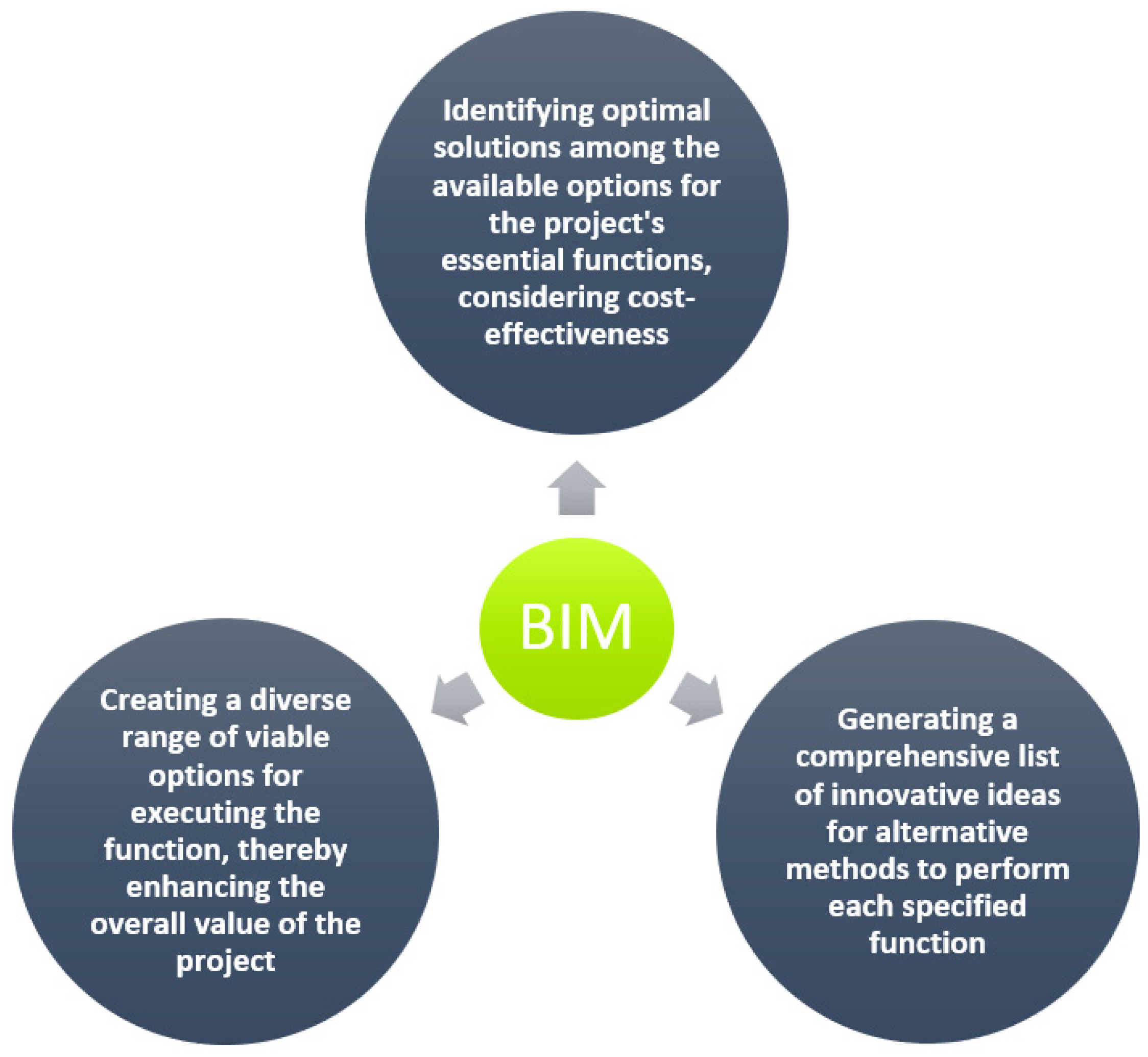
Figure 2.
Development of Digital Twin model.
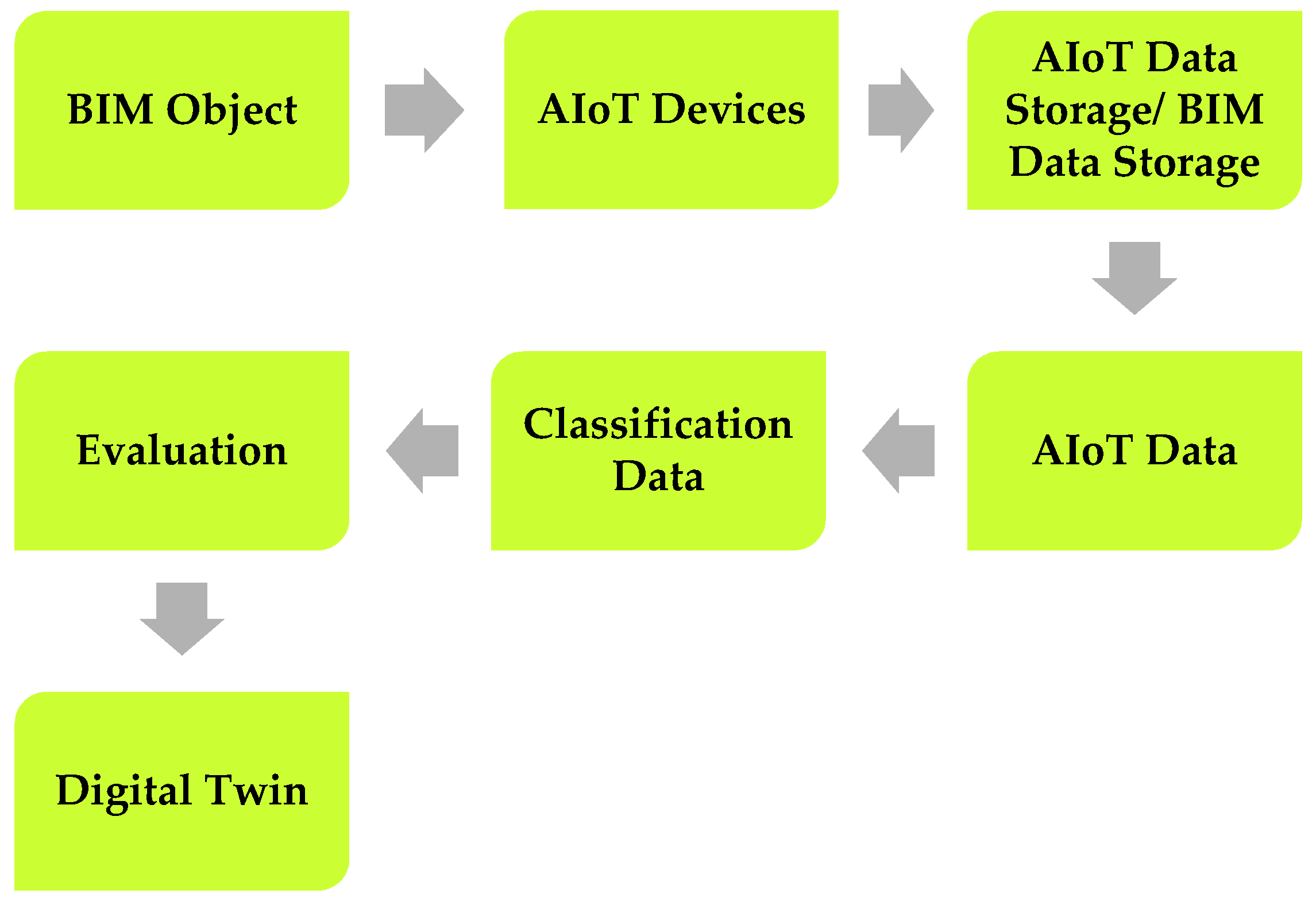
Figure 3.
Mind map diagram.
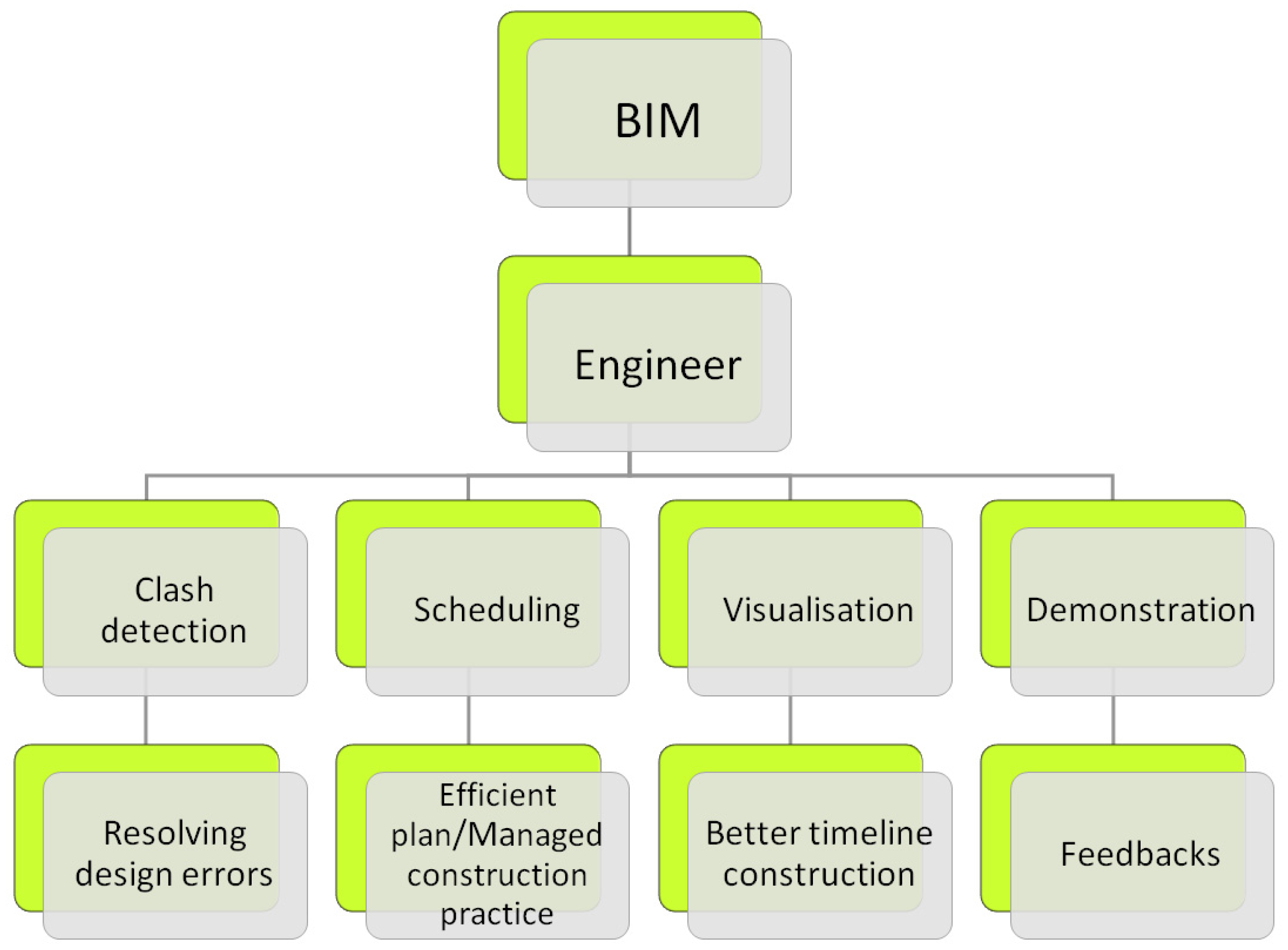
Figure 4.
Anticipated features and capabilities of the next-generation Digital Twins in the built environment.
Figure 4.
Anticipated features and capabilities of the next-generation Digital Twins in the built environment.
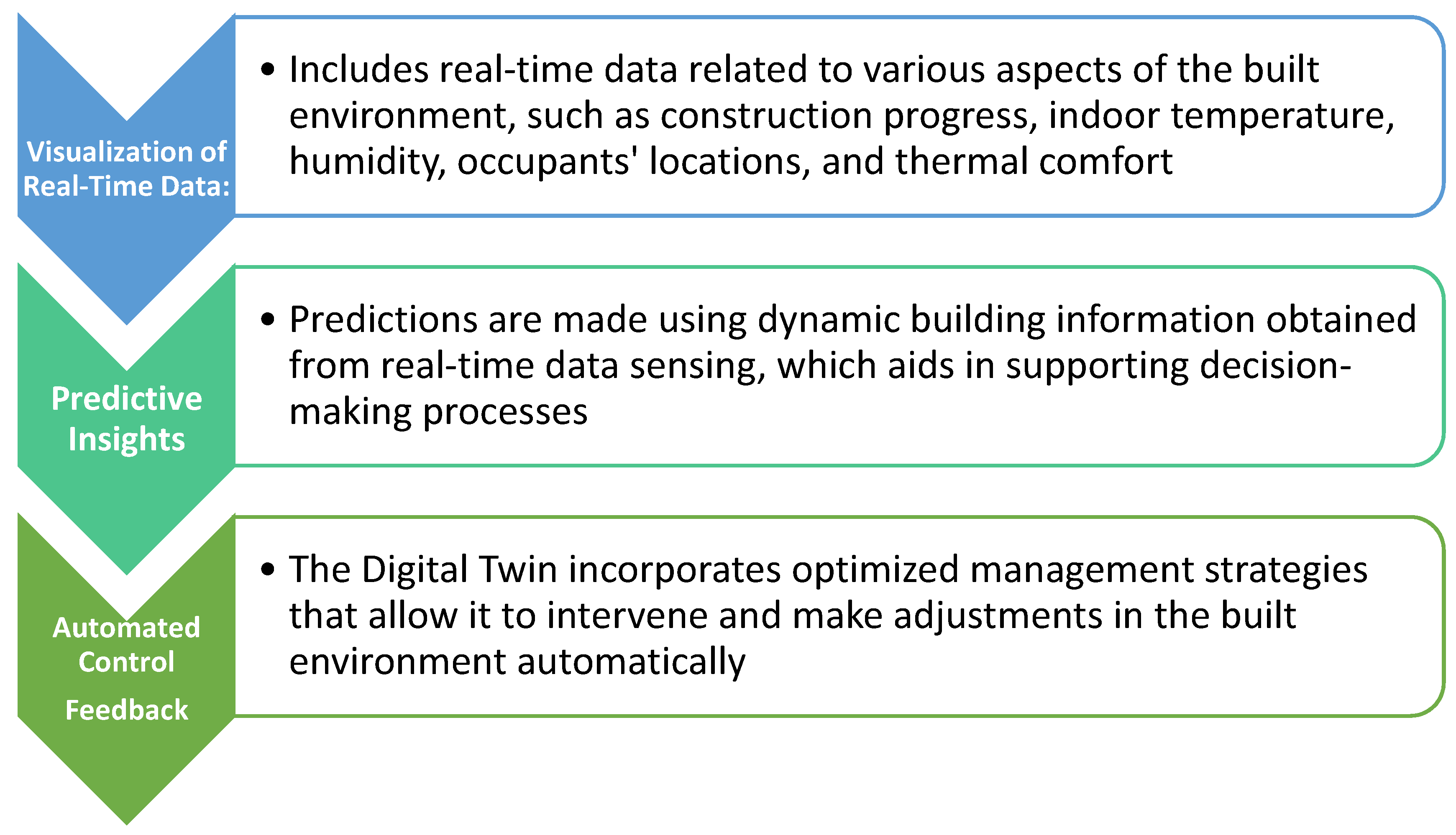

Table 1.
Problem-Solving Strategies.
| Strategy for inventing | Solutions | Advantages | Limitations |
|---|---|---|---|
|
a) Removing additional (newly added) storeys through demolition. b) Eliminating incompatible elements or unsuitable structures. c) Eliminating (newly created) openings and making alterations to the interior layout. |
Preserving the original layout and safeguarding the architectural value of the building. | Possible inconveniences to users, reduction in floor area, reliance on skilled craftsmanship, and potential decrease in financial value. |
| |||
|
a) Enhancing the rigidity of walls and floors. b) Constructing new walls or structures. |
Potential inconveniences to users, the need for skilled craftsmanship, and a decrease in floor area. | |
|
a) Enhancing the strength by incorporating composite materials without altering the geometry of the walls or increasing their weight. b) Partially filling with reinforced concrete through grouting. c) Local strengthening of specific areas, such as reinforcing connections between timber elements and masonry walls. d) Sealing openings using precast cement elements. |
Practical feasibility | Modifications to the original configuration resulting in an increase in mass. Inconvenience to residents, reduction in floor area, and a decrease in the financial value. |
|
a) Removing extra storeys through demolition or eliminating non-traditional partitions. b) Removing heavy furnishings. |
Table 2.
The fusion of Building Information Modeling (BIM) and Artificial Intelligence of Things (AIoT) in smart construction.
Table 2.
The fusion of Building Information Modeling (BIM) and Artificial Intelligence of Things (AIoT) in smart construction.
| Integration approach | Applications |
Current Developments and Difficulties |
|---|---|---|
| Application programming of BIM tools Utilization of a relational database Implementation of a new data schema Adoption of a new query language Incorporation of semantic web technology Utilization of a hybrid approach |
Construction operations and monitoring Construction logistics and facility management Health and safety management Facility management |
Cloud computing Service-oriented architecture and web services for BIM Requirement for integration and information standards Challenges in managing the interaction between BIM and AIoT |
Table 3.
The integration of Building Information Modeling (BIM) and the Artificial Intelligence of Things (AIoT) in intelligent construction.
Table 3.
The integration of Building Information Modeling (BIM) and the Artificial Intelligence of Things (AIoT) in intelligent construction.
| Data Capturing | Data Processing | Modelling |
|---|---|---|
| Laser Scanning Photogrammetry Image-based and Range-based Combination |
Data Cleaning and Resampling Data Registration Surface Meshing Texturing Creation of Orthographic Image |
Manual Parametric Modelling |
Disclaimer/Publisher’s Note: The statements, opinions and data contained in all publications are solely those of the individual author(s) and contributor(s) and not of MDPI and/or the editor(s). MDPI and/or the editor(s) disclaim responsibility for any injury to people or property resulting from any ideas, methods, instructions or products referred to in the content. |
© 2023 by the authors. Licensee MDPI, Basel, Switzerland. This article is an open access article distributed under the terms and conditions of the Creative Commons Attribution (CC BY) license (http://creativecommons.org/licenses/by/4.0/).
Copyright: This open access article is published under a Creative Commons CC BY 4.0 license, which permit the free download, distribution, and reuse, provided that the author and preprint are cited in any reuse.


