
Preprint
Article

This version is not peer-reviewed.

The Role of BIM 6D and 7D in Enhancing Sustainable Construction Practices: A Qualitative Study

A peer-reviewed article of this preprint also exists.

Submitted:

15 January 2025

Posted:

16 January 2025

You are already at the latest version

Abstract

The construction industry in Kuwait is experiencing a transformative shift with the adoption of Building Information Modeling (BIM) technologies, particularly BIM 6D for sustainability analysis and 7D for facility management. This study investigates the integration of these dimensions to address sustainability challenges in Kuwait’s construction sector, aligning practices with the United Nations Sustainable Development Goals (SDGs). Through qualitative interviews with 15 stakeholders—including architects, engineers, and contractors—and analysis of industry reports, policies, and case studies, the research identifies both opportunities and barriers to BIM adoption. While BIM offers significant potential for lifecycle analysis, waste reduction, and energy efficiency, its adoption remains limited, with only 27% of construction waste recycled. Challenges include high initial costs, a shortage of skilled personnel, and resistance to change. The study highlights actionable strategies, including enhanced regulatory frameworks, university curriculum integration, and professional training programs led by the Kuwait Society of Engineers, to address these barriers. It also emphasizes the critical role of collaboration among government bodies, industry leaders, and institutions like the Kuwait Institute for Scientific Research. Drawing from successful international BIM projects, the findings offer a practical framework for improving sustainability in arid regions, positioning Kuwait’s experience as a model for other Middle Eastern and North African countries. This research underscores the transformative role of BIM technologies in advancing global sustainable construction practices and achieving a more efficient and eco-friendly future.

Keywords: 
;  ;  ;  ;  ;  

1. Introduction

The construction industry is a key driver of global environmental impact, accounting for up to 42% of energy consumption and 35% of greenhouse gas emissions, particularly in regions like North America over the last decade [1]. These figures highlight the urgency of adopting innovative technologies to address the sector's sustainability challenges. While integral to the industry, traditional Computer-Aided Design (CAD) approaches have proven insufficient in meeting contemporary sustainability demands [6,7]. A comparative analysis of construction methods reveals that integrating low-carbon materials significantly reduces emissions compared to conventional practices [4]. This underscores the potential of advanced digital tools to support sustainability in construction. Moreover, research from Norway [5] demonstrates that digital governance platforms are vital in meeting the United Nations Sustainable Development Goals (SDGs), fostering the development of smart, sustainable cities. Globally, many nations, including Kuwait, are aligning their construction industries with the UN's 2030 SDGs. Since its endorsement in 2015, Kuwait has sought to harmonize these goals with its Vision 2035 and the Kuwait National Development Plan (KNDP) [6,7,8]. Yet, the Kuwaiti construction sector continues to encounter obstacles in achieving these sustainability objectives. A key solution lies in adopting advanced technologies such as Building Information Modeling (BIM), particularly its 6D and 7D dimensions, which offer a pathway to reducing the environmental footprint of construction and advancing sustainability in Kuwait. BIM has evolved from a tool that offers 3D visualizations of architectural assets into a comprehensive digital framework that integrates multiple dimensions of information. These dimensions extend from the traditional 3D geometric representations to 4D (time), 5D (cost), 6D (sustainability), and 7D (facility management) models [9,10]. This evolution has transformed how the architecture, engineering, and construction (AEC) industry plans, builds, and maintains assets, incorporating data from the entire lifecycle of a project [11,12]. Each BIM dimension enhances decision-making, from the design phase to construction, and through to facility management, offering a more holistic approach to sustainability [13,14]. These dimensions are defined by the level of information they provide and the project stage in which they are applied [15]. BIM 6D focuses on integrating sustainability into construction projects, enabling energy-efficient designs, waste reduction, and the adoption of sustainable materials throughout a building’s lifecycle. BIM 7D enhances the management of facilities, promoting efficient resource use, energy conservation, and optimized maintenance strategies. By leveraging these dimensions, Kuwait’s construction sector could significantly improve its environmental performance and operational efficiency [16,17]. However, the Kuwaiti industry faces significant barriers to fully realizing the benefits of BIM, particularly in areas like data standardization, cybersecurity concerns, and inconsistent data management practices. Overcoming these challenges is critical for advancing BIM's role in fostering sustainable development [18]. Global studies indicate that while awareness of BIM is growing, a significant gap remains between awareness and adoption. For instance, although 94% of UK construction professionals are familiar with BIM, only 39% report active implementation [19]. This highlights the need for strategic frameworks that support BIM’s integration into construction workflows [20].
This study aims to contribute to the broader discourse on sustainable construction by exploring the role of implementation of BIM 6D and 7D within the Kuwaiti context. The study aligns BIM practices with UN SDG 12 (responsible consumption and production) and SDG 9 (industry, innovation, and infrastructure). Through qualitative research, including interviews with 15 key stakeholders from government officials, policymakers, construction company executives, architects, engineers, and facility managers, and government document analysis. This research seeks to provide actionable insights for enhancing sustainability in Kuwait’s construction sector. Although the subjective nature of qualitative interviews may introduce bias, these expert perspectives offer crucial industry insights.

1.1. Integrating BIM Dimensions in Construction Practices

BIM dimensions offer a collaborative framework that significantly enhances communication, coordination, and operational efficiency across the entire project lifecycle. By enabling stakeholders to work within a unified digital environment, BIM supports real-time data sharing and decision-making [21]. BIM integrates multiple dimensions ranging from 3D to 10D that facilitate the holistic management of construction projects, from design through to operations [23]. Each dimension contributes uniquely to improving sustainability and efficiency in construction:
3D BIM: Enables clash detection, reduces rework, minimizes waste, lowers initial costs, and supports prefabrication efforts, enhancing overall construction efficiency.
4D BIM: Aids in construction planning and management, promotes early stakeholder involvement, shortens schedules, saves costs, and encourages the use of sustainable materials.
5D BIM: Focuses on whole-life costing and lifecycle cost (LCC) analysis, ensuring better financial management over the asset’s lifetime.
6D BIM: Facilitates early-stage energy analysis, reduces LCC, offers sustainable design alternatives, conducts lifecycle analyses, and minimizes waste, water, and material usage [16].
7D BIM: Improves space and maintenance management, ensures energy-efficient operations, supports economical renovations, and enhances lifecycle management of assets [17].
8D BIM: Emphasizes health and safety management, ensuring compliance with safety standards and minimizing risks during construction and operation phases.
9D BIM: Focuses on lean construction principles, optimizing resource use and reducing waste in construction processes.
10D BIM: Centers on industrialized construction, promoting automation, prefabrication, and modular construction techniques for greater efficiency and sustainability.
The adoption of BIM software, particularly in the context of 6D for dynamic energy analysis and simulation, offers notable advantages, including rapid assessment of design alternatives and detailed financial and operational insights across the project lifecycle. The integration of 7D BIM further enhances facility management by providing comprehensive data on building components, specifications, maintenance, and warranties, supporting efficient asset management [16]. The study [22] identifies practical benefits of big BIM data in the AEC sector, particularly emphasizing advancements in post-construction phases due to mature technologies like sensor networks and IoT devices. BIM has demonstrated significant economic benefits, including a substantial return on investment (ROI) [23]. Research consistently shows that BIM helps prevent scheduling delays and reduces rework, contributing to cost savings. For instance, a case study of a $35 million academic building at Emory University, Atlanta, Georgia, revealed that BIM's clash detection capabilities reduced design errors, resulting in approximately $259,000 in savings [24].
A review of literature from 2015 to mid-2021 identified two primary themes in the intersection of BIM and sustainability: green buildings and rating systems. Integrating facilities management information enables a holistic and sustainable approach to asset management, extending BIM’s benefits beyond the construction phase and into the operational lifespan of buildings [8,9,10], [27]. The development of a multi-dimensional BIM framework serves both as a research tool and a practical guide for industry stakeholders. This framework seeks to standardize BIM terminology, processes, and practices, facilitating clearer communication and effective implementation across the construction industry [28] Integrating BIM 6D and 7D during the design phase can streamline construction operations and maintenance, presenting opportunities for enhanced energy efficiency and resource optimization [29]. Addressing information gaps in the transition from construction to operations and maintenance through integrated knowledge-sharing models further emphasizes the importance of generating comprehensive information within BIM models [30]. This comprehensive approach, which leverages BIM’s various dimensions, optimizes construction processes and facility management, thereby contributing to a more sustainable built environment [31]. Additionally, a proposed BIM framework aligned with national sustainability agendas highlights the strategic integration of BIM 6D and 7D dimensions within broader sustainability initiatives. This framework is consistent with Kuwait's Vision 2035 for sustainable buildings and the United Nations’ Sustainable Development Goals (SDGs), underscoring the global importance of BIM in driving sustainable development [32].

2. Methodology

This study employs a qualitative approach to investigate the integration of BIM 6D (sustainability) and 7D (facilities management) into the Kuwaiti construction sector, with a focus on sustainable waste management and lifecycle optimization. Expert insights were gathered through a series of in-depth interviews with document analysis. The methodological steps are outlined in Figure 1.

2.1. Literature Review

An extensive literature review was conducted to establish a theoretical foundation on BIM 6D, 7D, sustainability in construction, and their integration. This review identified key knowledge gaps and areas requiring further investigation, which informed the study's direction. An extensive literature review was conducted to establish a theoretical foundation and identify research gaps.
BIM 6D and 7D frameworks and global applications.
Studies addressing sustainability challenges in Kuwait and comparable regional contexts.
The review highlighted critical gaps, particularly regarding the integration of BIM for sustainability and waste management and informed the development of the interview protocol.

2.2. Document Analysis

To complement the qualitative data from interviews, a systematic document analysis was conducted. This method involved reviewing policy documents, government reports, project case studies, and industry guidelines related to BIM 6D and 7D implementation in Kuwait’s construction sector.
National and regional policies on construction waste management and sustainability.
BIM-related frameworks and technical documentation from industry stakeholders.
Document analysis provided contextual data to corroborate and enrich interview findings, offering insights into existing practices, regulatory challenges, and the institutional landscape.
Key documents were identified based on their relevance to the research aims. These documents were analysed systematically to extract themes and align findings with the theoretical framework established through the literature review.

2.3. Interview Protocol Development

A semi-structured interview protocol was developed, tailored to extract expert insights on the integration of BIM 6D and 7D in the context of sustainability challenges and opportunities in Kuwait's construction sector. The protocol ensured consistency across interviews and focused on three key areas:
1. The contribution of BIM 6D to sustainability and waste reduction in construction projects.
2. The role of BIM 7D in facilities management for lifecycle sustainability.
3. The challenges and transformative potential of integrating BIM for sustainable construction.
The interview protocol was developed based on insights gained from the literature review and document analysis, focusing on sustainability, waste management, and collaboration among industry stakeholders. All participants were provided with an informed consent form and a plain language statement, both of which were approved by Brunel University's ethics committee.

2.4. Participant Selection

A purposive sampling technique was utilized to select 15 industry professionals, ensuring a diverse range of perspectives. The participants included BIM consultants, sustainability experts, architects, construction managers, and facilities management professionals, representing key stakeholders in Kuwait's construction sector. This diversity enriched the data by capturing a wide variety of insights and providing a holistic perspective on the research topic. Table 1 outlines the participants' professional backgrounds.
Table 1. Participant Positions and Experience.
Professional Years of Experience Position
A) The municipality director Engineer (Government) 30+ Director of the design department in government ministries.
B) BIM Consultant/Specialist 22+ Managing director of virtual projects.
C) Construction Manager/Contractor 32+ Manager of construction projects.
D) Architect 20+ Sustainability manager.

2.5. Data Collection

In-depth, semi-structured interviews were conducted with selected experts. The conversational interviews allowed participants to elaborate on their experiences and provide nuanced insights. Probing questions were used to explore specific topics further.
Additionally, insights from the document analysis were cross-referenced during interviews to explore how participants’ views aligned with or differed from documented policies and practices. The semi-structured interview questions (outlined in Table 2) were designed to elicit detailed responses on the integration of BIM 6D and 7D, sustainability challenges, and potential transformations in Kuwait's construction industry. These questions facilitated focused discussions, ensuring the collection of rich, actionable insights.
Table 2. Key Interview Questions (semi-structured interview questions).
Number Key Questions for Interviews
1 What are the prevailing challenges and gaps related to sustainability and waste management in the Kuwaiti construction industry?
2 How does the integration of BIM 6D enhance sustainability and reduce construction waste in the Kuwaiti construction process?
3 What role does BIM 7D play in facilities management, and how does it contribute to maintaining sustainability throughout the lifecycle of constructed assets?
4 To what extent can the integration of BIM 6D and 7D transform traditional construction practices in Kuwait, enhancing efficiency and reducing environmental impacts, including waste reduction?
5 What challenges are encountered during the integration of BIM 6D and 7D in Kuwaiti construction, particularly in relation to waste management, and what recommendations can be proposed to overcome these challenges?
6 How can BIM 6D and 7Dbe leveraged to optimize resource utilization and minimize material wastage during the construction phase in Kuwait?
7 What are the potential benefits and drawbacks of implementing BIM 6D and 7D specifically for waste management practices in Kuwaiti construction projects?
8 How can industry stakeholders, including government agencies and private sector companies, collaborate to promote the use of BIM 6D and 7D to reduce construction waste?

2.6. Data Analysis

Narrative analysis, as recommended by [47], was used to interpret the textual responses in the context of the respondents' industrial experiences. Figure 1 illustrates the research methodology. The narrative data obtained from the interviews, along with the findings from the document analysis, were analyzed using thematic analysis. This approach allowed for the identification of patterns, themes, and key insights across both datasets.
  • Thematic Coding: Data were coded and categorized into themes, integrating insights from interviews and document analysis.
  • Analytical rigor was maintained through constant comparison and validation of findings.
  • Synthesis: Themes from the interviews were contextualized with data from document analysis, ensuring a comprehensive understanding of BIM integration in Kuwait.
  • Validation: To ensure analytical rigor, findings were reviewed through iterative discussions among the research team and cross-referenced with existing literature.
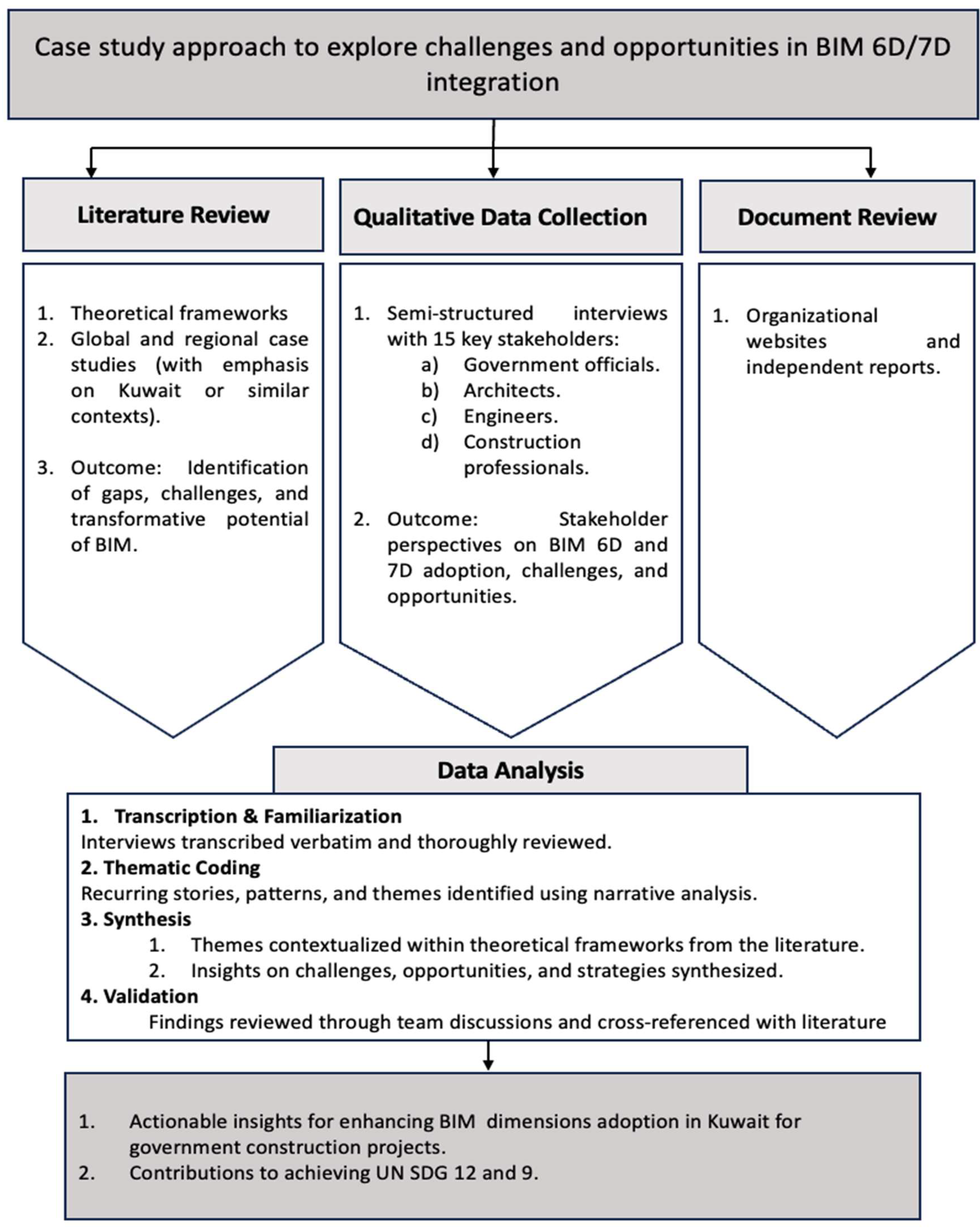
Figure 1. Research Methodology.
Preprints 146241 g001

3. Results and Discussion

The insights gathered from participating professionals reflect a diverse range of expertise in BIM implementation and sustainability management, offering a comprehensive examination of the transformative potential of integrating BIM dimensions 6D and 7D. Experts highlighted how these advanced functionalities can drive sustainable practices throughout the construction lifecycle by optimizing resource utilization and enhancing operational efficiency. However, they also pointed out significant challenges hindering widespread adoption, including technological barriers, organizational resistance, and cultural inertia.
Stakeholders, including Participants (A, B, C, and D,) identified the limited availability and awareness of sustainable construction materials as a major issue, raised by approximately 70% of interviewees. Participant A emphasized the importance of effective construction waste management, noting that the sector generates around 60% of total waste in Kuwait, yet only 27% of this waste is currently recycled. This situation exacerbates environmental pollution and undermines efforts to promote sustainable practices in the industry.

3.1. Document Analysis

To provide a foundational understanding of the current state of waste management and BIM adoption in Kuwait, a detailed document analysis was conducted. This analysis focused on policy documents, project reports, and industry publications to identify trends, gaps, and opportunities in integrating BIM 6D/7D technologies for sustainable construction.

3.1.1. Waste Management Policies and Practices

The document analysis revealed significant gaps in Kuwait's CDW management framework. While national policies acknowledge the importance of sustainability, there is limited enforcement of waste segregation and recycling practices. For instance, a report by the Kuwait Municipality (2019) indicates that only 27% of construction waste is recycled, compared to rates exceeding 70% in developed countries [33]. This disparity highlights a lack of infrastructure and regulatory enforcement for effective waste diversion. Additionally, key government documents such as the Environmental Protection [34]emphasize sustainable development but fail to provide detailed guidelines for the construction industry. This regulatory gap hinders the effective implementation of sustainable practices, including the integration of BIM for waste management.
Table 3 presents data on construction waste quantities and recycling rates in Kuwait from 2021 to 2023, as reported from municipality documents. The table highlights incremental improvements in waste recycling, while also underscoring the persistent challenges in reducing landfill waste. Despite gradual increases in recycling rates, a significant proportion of construction waste still ends up in landfills. This situation calls for more effective waste management strategies and stricter regulations. For instance, mandating the use of recycled materials in new construction projects, implementing stricter penalties for non-compliance with waste management standards, and providing incentives for companies that significantly reduce their landfill contributions are potential solutions. One major contributing factor is the absence of on-site recycling machinery in construction projects, particularly in large-scale developments, which exacerbates the waste management issue.
Table 3. Municipal Statistics data document on Construction Waste in Kuwait [35] (2021-2023).
Year Environment Preservation Industrial Company (EPIC) Arab International Industrial Project (AIIP) Waste sent to sandfills (%)
Total Construction Waste (tons) Waste Recycled (%) Total Construction Waste (tons) Waste Recycled (%)
2021 884,248.5 27% 901,942 22% 16%
2022 656,429 27% 635,592 23% 12%
2023 60,310 26% 45,277 27% 21%
Additionally, the regulatory frameworks and the industry-wide adoption of sustainable practices remain in their nascent stages. Only around 30% of stakeholders expressed confidence in existing regulations. Earlier research indicated that awareness of BIM's role in the construction sector is limited, with only 26% of surveyed participants recognizing its potential. Furthermore, 80% of stakeholders stressed the need for more comprehensive and robust regulations to effectively guide sustainable practices in construction projects [36].

3.1.2. BIM Adoption and Technological Readiness

Analysis of industry publications suggests that BIM awareness in Kuwait is growing but remains limited to large-scale infrastructure projects. Notably, projects like the Sheikh Jaber Al-Ahmad Cultural Centre and the new Kuwait International Airport have successfully adopted BIM 6D and 7D for sustainability and lifecycle management. However, smaller construction firms lack access to the technical expertise and financial resources needed for BIM adoption. A survey conducted by the Kuwait Environment Public Authority (2019) reported that only 22% of local construction firms actively use BIM technologies, and among these, integration of sustainability-focused dimensions (6D and 7D) is minimal. This low adoption rate underscores the need for targeted training programs and government incentives to bridge the technological readiness gap [37].

3.1.3. Alignment with Global Best Practices

Comparing Kuwait’s policies and practices with global leaders such as the UK and Finland reveals a stark contrast. For instance, both countries have national BIM mandates and standardized protocols that streamline the integration of sustainability in construction projects [38]. In Kuwait, the absence of such frameworks has created fragmentation in how BIM is understood and implemented [8].

3.2. Challenges in BIM 6D/7D Integration

The construction industry in Kuwait is encountering critical challenges in adopting sustainable practices and effectively managing waste. Addressing these challenges is essential for enhancing the sustainability of construction operations and aligning with global trends. Stakeholder interviews have revealed several pressing issues hindering progress in this area.

3.2.1. Lack of Awareness and Understanding

A recurring theme from stakeholder interviews was the limited awareness of sustainable practices among contractors and developers. As Participant D noted, "Many contractors prioritize cost over sustainability, leading to excessive waste. Additionally, there is a significant gap in the availability of sustainable materials locally." This lack of awareness is compounded by a limited understanding of how BIM 6D and 7D can drive sustainability. These challenges are not unique to Kuwait, as similar issues have been noted in other developing construction markets, where short-term cost savings often take precedence over long-term sustainability goals [39]. Despite the growing global awareness of BIM, particularly in countries like the UK, Canada, Finland, and New Zealand, there remains a substantial gap between awareness and implementation [19]. Another key barrier identified is the inadequacy of regulatory frameworks. Participant C, a project manager, highlighted the lack of stringent enforcement of waste management regulations: "Regulatory frameworks are not stringent enough to enforce waste management practices effectively. There is also a lack of standardized processes for waste segregation and recycling, which exacerbates the problem." This finding is consistent with global literature on the role of regulation in driving sustainability in construction [40]. Effective regulations, coupled with clear guidelines, are essential for promoting the adoption of BIM as a tool for sustainability in Kuwait.

3.2.2. Resistance and Initial Investment Costs

Resistance to change emerged as a critical challenge. As Participant A stated, "Resistance to change from traditional construction practices is a significant barrier. The initial investment required for sustainable materials and technologies is another hurdle." The financial burden of adopting BIM 6D and 7D, particularly for smaller firms, is significant. Literature supports the notion that high upfront costs can deter adoption despite long-term benefits [41]. This resistance is further exacerbated by limited access to training programs focused on sustainability.

3.3. Proposed Solutions to Overcome Challenges

To address the challenges identified in BIM integration, several strategic solutions are proposed.
  • Cost-Benefit Analysis for BIM Integration: A key strategy to overcome resistance is the use of comprehensive cost-benefit analyses. These analyses can demonstrate the long-term financial and operational benefits of BIM integration, showcasing potential cost savings over the lifecycle of a project. Advocacy for the incorporation of such analyses at the project inception stage is crucial. By highlighting reduced waste, optimized resource use, and improved project efficiency, stakeholders can be more readily convinced of the return on investment (ROI) [42]. Additionally, according to Participant D, BIM 6D and 7D models can address resource constraints such as water scarcity and energy consumption, which are crucial in Kuwait’s context. Integrating BIM in infrastructure projects also mitigates environmental and economic burdens by enabling better fund allocation and sustainability strategies [43]. By promoting cost-benefit analyses supported by government incentives, Kuwait can enhance its commitment to sustainable construction while aligning with global best practices.
  • Specialized Training and Upskilling: The need for specialized skills to operate BIM technologies was a significant concern for most participants. Upskilling staff or hiring new professionals is often seen as resource intensive [44]. To address this, collaboration with BIM consultancy services, such as those offered by Autodesk, could support the development of tailored training programs. Additionally, continuous professional development through certification programs can help build the necessary expertise within the workforce, reducing reliance on external specialists [45].
  • Change Management and Awareness Initiatives: Resistance to change is a common challenge in adopting new technologies. Effective change management strategies are essential, including clear communication about the benefits of BIM integration, engagement with all stakeholders, and the gradual introduction of new processes [46]. Industry conferences, such as the Gulf BIM & Digital Construction Conference, can play a pivotal role in raising awareness and building momentum for change. As the literature suggests, involving employees in the decision-making process and addressing their concerns early can foster a more accepting environment for digital transformation [47].
  • Standardization of Processes and Guidelines: A significant barrier to BIM integration is the lack of standardized processes across the industry. Standardization is critical for ensuring consistency in project execution and sustainability outcomes [44]. Collaboration with industry stakeholders and regulatory bodies is essential to develop industry-wide guidelines that facilitate seamless BIM integration. Research indicates that countries with well-established BIM guidelines tend to have higher rates of BIM adoption and more successful project outcomes [48].
  • Governmental Support and Policy Incentives: Governmental support is a key enabler of BIM adoption. Policies that incentivize the use of BIM, such as tax incentives for green building projects or subsidies for training programs, can significantly reduce barriers to entry. Participant E emphasized the need for active government involvement: "Supportive policies and incentives would encourage the wider adoption of BIM technologies." This finding aligns with global research that highlights the role of government intervention in accelerating the adoption of sustainable practices [49].
  • Continuous Assessment and Feedback Loops: Continuous assessment and feedback loops are essential for the successful integration of BIM [32]. Without ongoing evaluation, there is a risk of stagnation and missed opportunities for improvement. Establishing mechanisms for regular reviews of the integration process can help identify areas for improvement and implement refinements that enhance project efficiency and sustainability outcomes [50]. This study proposes solutions that include cost-benefit analysis, specialized training, regulatory reform, and change management strategies. By addressing these challenges, Kuwait can leverage BIM to significantly enhance its sustainability outcomes, aligning with both global construction trends SDG and the country's Vision 2035 goals. The Kuwaiti construction industry faces significant challenges in adopting BIM 6D and 7D for sustainability and waste management, which align with issues highlighted in existing literature. The integration of BIM in construction introduces a range of obstacles that hinder its widespread adoption. These challenges are deeply rooted in the industry's technical limitations, organizational structures, and financial constraints [51]. Despite these barriers, they can be addressed through strategic planning, stakeholder collaboration, and government support. This study proposes solutions such as cost-benefit analysis, specialized training programs, regulatory reforms, and change management strategies. By tackling these issues, Kuwait can harness BIM's potential to significantly improve sustainability outcomes, aligning with global construction trends, the Sustainable Development Goals (SDGs), and the country’s Vision 2035 objective.

3.4. Opportunities for Sustainable Construction

Industry experts in Kuwait recognize the substantial potential for advancing sustainable construction practices through the integration of BIM technologies, particularly 6D and 7D. Participant A highlighted that the rapid growth of Kuwait’s construction industry presents a unique opportunity to embed sustainability into projects from their inception. With urbanization and infrastructure development accelerating, adopting BIM technologies can improve efficiency and minimize environmental impact, aligning with Kuwait's Vision 2035 and the New Kuwait Development Plan. However, despite this potential, awareness of sustainable construction methods remains limited. Government initiatives are essential to effectively promote green practices and drive their adoption. Furthermore, ongoing research is critical to ensure the safe, efficient, and large-scale implementation of these technologies, maximizing their impact on Kuwait’s construction sector [52]. Participant B emphasized Kuwait’s critical challenge of limited resources, particularly water scarcity and high energy consumption. The integration of BIM 6D and 7D offers a potential solution by optimizing resource utilization, reducing waste, and improving energy efficiency in construction projects. Leveraging these technologies strategically can help Kuwait mitigate its environmental impact and align with global sustainable development standards. Over the past few decades, increasing environmental awareness has also driven significant scientific interest in renewable energy sources [53].

3.4.1. Exploring the Role of BIM 6D Integration in Kuwait’s Construction Industry

Participant D emphasized that integrating BIM 6D signifies a paradigm shift in the construction industry's sustainability approach. This advanced dimension enriches the geometric model with essential sustainability information, providing a comprehensive and dynamic view of the entire project lifecycle. A key benefit of BIM 6D is its profound impact on minimizing construction waste, extending property lifecycles, and reducing maintenance costs. Supporting this view, recent research [54] underscores how BIM 6D integrates environmental and sustainability data into building design and construction processes, leading to significant reductions in waste generation and operational costs over the lifecycle of a building. Further studies have demonstrated the potential of BIM 6D to enhance resource utilization and energy efficiency through life cycle cost analysis, operations and maintenance optimization, and efficient energy use [55]. Participant C noted that the Kuwait Green Building Council (KGBC), a nonprofit NGO, plays a pivotal role in promoting sustainable building practices in Kuwait through advocacy, education, and collaboration. By leveraging BIM 6D, resource optimization and energy efficiency can be enhanced at every stage of the construction process. This technology empowers informed decision-making that aligns with global environmental standards. Sustainability is no longer viewed as a standalone consideration but as an integral part of the design and construction philosophy. The integration of BIM 6D enables a proactive approach to sustainability, allowing for early identification and mitigation of potential environmental impacts throughout the project lifecycle. A notable example of this application is the Sheikh Jaber Al-Ahmad Cultural Centre in Kuwait. The project team employed 6D BIM to conduct a comprehensive lifecycle analysis, evaluating the long-term environmental implications of design choices, materials, and operational strategies, ensuring the building's sustainability throughout its lifespan. Similarly, the implementation of 6D BIM in the construction of the new airport in Kuwait extends beyond the construction phase, offering a holistic solution for efficient facility management and long-term sustainability. Research [56]further emphasizes that BIM capabilities—such as life cycle cost analysis, operations and maintenance optimization, energy efficiency, daylight analysis, thermal design, and cost transparency—significantly contribute to sustainability in construction. Essentially, the integration of BIM 6D is not just a technological upgrade; it is a transformative force that aligns construction projects with the principles of sustainable development. At the University of Kuwait, the adoption of BIM 6D has the potential to play a pivotal role in advancing sustainability goals for construction projects. This not only improves current project outcomes but also positions the institution as a leader in environmentally conscious and resilient construction practices.

3.4.2. The Role of BIM 7D in Maintaining Sustainability

BIM 7D extends the capabilities of traditional BIM by integrating advanced aspects such as facility management and asset performance. This expanded dimensionality holds significant promise for maintaining sustainability throughout the entire lifecycle of construction projects. Participant A emphasized the importance of BIM 7D in government ministries' design departments, particularly for facilities management, stating, "BIM 7D represents a vital advancement for us, offering a new level of sophistication in how we oversee and sustain our assets throughout their entire lifecycle." Recent studies [57,58] underscore the transformative potential of BIM 7D in enhancing sustainability practices within the construction industry. By incorporating facility management data and performance analytics into the BIM model, stakeholders gain valuable insights into building operations and maintenance, enabling proactive decision-making to optimize resource utilization and minimize environmental impact. One key area where BIM 7D contributes to sustainability is reducing construction waste. Research highlights that BIM-based approaches, particularly those incorporating 7D dimensions, facilitate the identification and mitigation of waste throughout the construction process. By providing real-time data on material usage, resource allocation, and project progress, BIM 7D empowers stakeholders to implement lean construction principles and minimize waste generation [59]. Moreover, integrating predictive maintenance and lifecycle analysis capabilities in BIM 7D models allows stakeholders to identify opportunities for extending the lifespan of built assets and optimizing their performance over time. This proactive approach enhances sustainability, reduces long-term operational costs, and strengthens the resilience of infrastructure against environmental challenges. Participant D, involved in the Kuwait Oil Company (KOC) project, highlighted the enhanced design capabilities offered by BIM 7D. He noted, "BIM 7D has revolutionized our approach to design by integrating detailed sustainability data. This allows us to make more informed decisions early in the design phase, ultimately reducing construction waste and improving energy efficiency." Participant D also reported significant improvements in lifecycle management and maintenance planning, further stating, "With BIM 7D, we have a comprehensive view of the building’s lifecycle, enabling proactive maintenance and reducing long-term operational costs. This level of detail was not possible with traditional 3D or 4D models. By integrating BIM 7D, the KOC project has achieved substantial improvements in both sustainability and operational efficiency, setting a new standard for future construction projects. Research [11,44] confirms that BIM 7D is an essential lifecycle management technology that significantly impacts the lifespan and sustainability of building projects.

3.5. Stakeholder Strategies and Recommendations

To effectively enhance stakeholder engagement in sustainable construction practices, exploring the potential of integrating advanced technologies such as BIM 6D and 7D is crucial. This integration fosters efficiency and aligns with sustainability objectives, providing a framework for informed decision-making among stakeholders.

3.5.1. The Integration Potential of BIM 6D and 7D

Participant B underscored the pivotal role of strategically integrating BIM 6D and 7D, signalling a significant evolution in construction methodology. As Managing Director of Virtual Projects, I perceive this integration as transformative, transcending traditional boundaries and heralding a comprehensive redefinition of our industry approach. BIM 7D, with its pronounced emphasis on sustainability, introduces a critical dimension to the construction process, extending beyond conventional design and construction phases to encompass the entire project lifecycle. This integration seamlessly integrates sustainability considerations into decision-making from initial design to ongoing maintenance, reflecting a paradigm shift rather than just a technological upgrade. A. et. al. 2023 highlights the transformative potential of BIM 7D, emphasizing its ability to integrate sustainability principles into every phase of a construction project [61]. Furthermore, [62] demonstrates how incorporating BIM technologies like 6D and 7D leads to improved project efficiency and reduced environmental impact. An experienced architect emphasizes that BIM 6D and 7D redefine the construction approach beyond mere efficiency. Beyond mere efficiency gains, the combined utilization of BIM 6D and 7D offers a unified and holistic perspective of projects, treating them as interconnected systems rather than discrete stages. This holistic view ensures that sustainability is not an addendum but an integral aspect throughout every phase, from inception to maintenance. A notable example of this integration's efficacy can be observed in the construction of the new airport in Kuwait. By employing BIM 6D and 7D methodologies, the project aimed to enhance operational efficiency and significantly reduce construction waste. The project achieved remarkable success in minimizing waste generation and optimizing resource utilization through real-time tracking of resources and material utilization, coupled with predictive maintenance insights. Another example from the private sector, Silicon Engineering Consultants Pvt. Ltd. has used BIM 6D and 7D in many projects in Kuwait. The "Al-Faisal Tower" project is one significant example, where the sustainability and energy efficiency of the structure were evaluated using BIM 6D. The facility management data was tracked using BIM 7D, ensuring the building's technical specifications and maintenance schedules were accurately recorded. To minimize the generation of waste and optimize the consumption of energy. The transformative potential of this integration lies in its alignment with sustainability objectives, facilitating efficiency enhancements across the entire project lifecycle. It empowers stakeholders to make informed decisions aligned with environmental stewardship, inherently reducing environmental impact and contributing to a more sustainable construction industry.
The strategic integration of BIM 6D and 7D represents a paradigm shift in construction methodology, underscoring a mindset that acknowledges the interconnectedness of project phases [63]. This shift towards sustainability-driven decision-making fosters improved efficiency and reduced environmental footprints, shaping the trajectory of sustainable construction practices beyond individual projects. The possibility of attracting investments in green technologies and sustainable infrastructure was also noted by participants. With sustainability becoming a global priority, Kuwait has the chance to showcase its commitment to innovative, environmentally responsible construction practices. The adoption of BIM 6D and 7D could position the country as a regional hub for sustainable development. Education was another recurring theme in the discussions. Several participants emphasized the importance of preparing future professionals with the necessary skills to implement BIM technology and promote sustainable construction practices. Investment in educational programs can foster a sustainability-driven culture within the industry and ensure its long-term success and resilience. Furthermore, participants stressed the need for international collaboration to accelerate the adoption of BIM 6D and 7D. By working with global experts and organizations, Kuwait can gain access to cutting-edge technologies and foster knowledge exchange. This approach could help solidify Kuwait's role as a leader in sustainable development at the regional and international levels. Table 4 outlines future recommendations from participants to enhance the adoption of BIM technologies and sustainable practices in Kuwait.
Table 4. Future Recommendations from the participant’s perspective.
Recommendations Description
Policy Recommendations
  • Establish robust regulatory frameworks mandating BIM technology.
  • Task the Kuwait Institute for Scientific Research (KISR) with developing BIM standards and guidelines.
  • Provide incentives (e.g., tax subsidies) for sustainable practices.
  • Increase government support for research and development in BIM for sustainability
Professional Development
  • Invest in training programs to enhance proficiency in BIM technologies among professionals.
  • Support the Kuwait Society of Engineers (KSE) in offering BIM training to construction professionals.
  • Prioritize workforce upskilling to better leverage BIM tools.
  • Promote knowledge sharing and collaboration across the industry
Education Integration
  • Integrate BIM and sustainability principles into educational curricula.
  • Encourage universities to offer BIM-related courses and degree programs.
  • Equip students with the skills to drive sustainable transformations within the industry.
  • Foster partnerships between educational institutions and industry stakeholders.
Collaboration and Knowledge Exchange
  • Create platforms for ongoing dialogue and collaboration between stakeholders.
  • Facilitate the exchange of ideas and best practices to address shared challenges.
  • Promote public-private partnerships to accelerate BIM adoption.

4. Conclusions

This study investigated the integration of BIM 6D (sustainability analysis) and 7D (facility management) dimensions to address sustainability challenges within Kuwait’s construction industry, a critical yet underexplored area in the regional context. The research highlights how these advanced BIM dimensions optimize resource utilization, minimize material waste, and support data-driven decision-making, aligning construction practices with international environmental standards. By embedding sustainability principles across the lifecycle phases of design, construction, and maintenance, the findings demonstrate a significant paradigm shift toward more sustainable and efficient practices in Kuwait’s construction sector. The proposed framework offers actionable strategies to overcome barriers such as high initial investment costs, a shortage of specialized personnel, and resistance to technological change. These include targeted training programs, awareness campaigns, government incentives, and enhanced regulatory measures. Furthermore, the study underscores the alignment of BIM adoption with the United Nations Sustainable Development Goals, particularly SDG 9 (Industry, Innovation, and Infrastructure) and SDG 12 (Responsible Consumption and Production), emphasizing the potential for BIM to contribute to global sustainability objectives. Collaboration among government entities, industry stakeholders, and academic institutions is identified as critical for maximizing the impact of BIM technologies. While this study provides a foundational framework for advancing sustainable construction practices in Kuwait, future research should investigate the economic implications of BIM adoption and its long-term cost-benefit dynamics to support widespread implementation. This work contributes to the global discourse on sustainable development by offering insights that can be adapted to regions with similar environmental and industrial challenges.

Author Contributions

HA conducted the research; analysed the data; wrote the paper; SG is the supervisor of the research and reviewed/edited and scrutinized the manuscript; all authors had approved the final version.

Funding

This study did not receive any internal or external funding.

Conflicts of Interest

The authors declare no conflict of interest.

References

  1. M. T. Suraj Vairagade, Narendra Kumar, Ravi Pratap Singh, ‘View of Automated Construction of Structures using 3D Printing_ A Review.pdf’, 2022.
  2. S. Shooshtarian, S. Caldera, T. Maqsood, and T. Ryley, ‘Using Recycled Construction and Demolition Waste Products: A Review of Stakeholders’ Perceptions, Decisions, and Motivations’, Recycl. 2020, Vol. 5, Page 31, vol. 5, no. 4, p. 31, Nov. 2020. [CrossRef]
  3. S. Azhar and J. Brown, ‘Bim for sustainability analyses’, Int. J. Constr. Educ. Res., vol. 5, no. 4, pp. 276–292. 2009. [CrossRef]
  4. N. F. Arenas and M. Shafique, ‘Reducing embodied carbon emissions of buildings – a key consideration to meet the net zero target’, Sustain. Futur., vol. 7, no. February, p. 100166, 2024. [CrossRef]
  5. A. M. Ibrahim, ‘A mapping towards a unified municipal platform: An investigative case study from a Norwegian municipality’, Sustain. Futur., vol. 4, no. January, p. 100063, 2022. [CrossRef]
  6. mohamed 1 M. M. S. 2 S. E. 3 N. M. 4, ‘Taking the SDGs into Account: A BIM-Based Strategy for Integrating Smart Materials in Building Components’, PORT SAID Eng. Res. J. Fac. Eng. - Port Said Univ. Vol. 28 No. 1 pp 56-72, 2023.
  7. United Nations, ‘General Secretariat of the Supreme Council for Planning and Development’,. 2015.
  8. G. S. of the S. C. for P. and Development, ‘Kuwait national development plan, 2020-2025.’ 2020.
  9. O. Bukunova and A. Bukunov, ‘Building Information Modeling for Sustainable Construction’, IOP Conf. Ser. Mater. Sci. Eng., vol. 1079, no. 3, p. 032080, 2021. [CrossRef]
  10. S. Kaewunruen, M. AbdelHadi, M. Kongpuang, W. Pansuk, and A. M. Remennikov, ‘Digital Twins for Managing Railway Bridge Maintenance, Resilience, and Climate Change Adaptation’, Sensors, vol. 23, no. 1. 2023. [CrossRef]
  11. S. Kaewunruen and Q. Lian, ‘Digital twin aided sustainability-based lifecycle management for railway turnout systems’, J. Clean. Prod., vol. 228, pp. 1537–1551, Aug. 2019. [CrossRef]
  12. M. Yalcinkaya and D. Arditi, ‘Building information modeling (BIM) and the construction management body of knowledge’, IFIP Adv. Inf. Commun. Technol., vol. 409, pp. 2013. [CrossRef]
  13. H. Y. Chong, C. Y. Lee, and X. Wang, ‘A mixed review of the adoption of Building Information Modelling (BIM) for sustainability’, J. Clean. Prod., vol. 142, pp. 4114–4126, Jan. 2017. [CrossRef]
  14. G. Ellis, ‘The Evolution of BIM Dimensions: 3D, 4D, 5D & Beyond’, Autodesk Inc, 2023. https://www.autodesk.com/blogs/construction/bim-dimensions/.
  15. W. D. Academies, National, ‘Chapter 2 - Literature Review | Lifecycle BIM for Infrastructure’, in Lifecycle BIM for Infrastructure, 2023.
  16. E. Team, ‘The-7-dimensions-of-BIM.pdf’, BibLus, 2018.
  17. N. Barnes, P., Davies, ‘BIM in Principle and in Practice"’, in ICE Publishing, London, UK., 2014.
  18. E. Team, ‘6D BIM and construction sustainability’, 6 Biblus, 2021. https://biblus.accasoftware.com/en/6d-bim-and-construction-sustainability/.
  19. L. A. Akanbi et al., ‘Disassembly and deconstruction analytics system (D-DAS) for construction in a circular economy’, J. Clean. Prod., vol. 223, pp. 386–396, Jun. 2019. [CrossRef]
  20. D. Ismael and T. Shealy, ‘Sustainable construction risk perceptions in the Kuwaiti construction industry’, Sustainability (Switzerland), vol. 10, no. 6. 2018. [CrossRef]
  21. F. Farhadi, ‘What are BIM Dimensions? 3D, 4D, 5D, 6D, 7D, 8D, 9D BIM’, In Construction Magazine. https://neuroject.com/bim-dimensions/.
  22. A. Sompolgrunk, S. Banihashemi, H. Golzad, and K. Le Nguyen, ‘Strategic alignment of BIM and big data through systematic analysis and model development’, Autom. Constr., vol. 168, no. 2024. [CrossRef]
  23. G. Lee, H. K. Park, and J. Won, ‘D3 City project — Economic impact of BIM-assisted design validation’, Autom. Constr., vol. 22, pp. 577–586, Mar. 2012. [CrossRef]
  24. S. Azhar, M. Khalfan, and T. Maqsood, ‘Building information modeling (BIM): Now and beyond’, Australas. J. Constr. Econ. Build., vol. 12, no. 4, pp. 2012. [CrossRef]
  25. H. Ferdosi, H. Abbasianjahromi, S. Banihashemi, and M. Ravanshadnia, ‘BIM applications in sustainable construction: scientometric and state-of-the-art review’, International Journal of Construction Management, vol. 23, no. 12. pp. 1969–1981, 2023. [CrossRef]
  26. P. A. Fokaides et al., ‘Research challenges and advancements in the field of sustainable energy technologies in the built environment’, Sustainability (Switzerland), vol. 12, no. 20. pp. 1–20, 2020. [CrossRef]
  27. IndiaCADworks, ‘BIM Implementation – Progressing from BIM 3D to 7D’, 2018. https://www.indiacadworks.com/blog/bim-implementation-progressing-from-bim-3d-to-7d/.
  28. B. Succar, ‘Building information modelling framework: A research and delivery foundation for industry stakeholders’, Autom. Constr., vol. 18, no. 3, pp. 357–375, May 2009. [CrossRef]
  29. M. Michaud, J. Meyer, D. Forgues, and C. Ouellet-Plamondon, ‘A taxonomy of sources of waste in bim information flows’, Buildings, vol. 11, no. 7. 2021. [CrossRef]
  30. A. Z. T. Tan, A. Zaman, and M. Sutrisna, ‘Enabling an effective knowledge and information flow between the phases of building construction and facilities management’, Facilities, vol. 36, no. 3–4, pp. 2018. [CrossRef]
  31. Z. Alwan, A. Nawarathna, R. Ayman, M. Zhu, and Y. ElGhazi, ‘Framework for parametric assessment of operational and embodied energy impacts utilising BIM’, J. Build. Eng., vol. 42, p. 102768, Oct. 2021. [CrossRef]
  32. H. Al-Raqeb, S. H. Ghaffar, H. Haitherali, and A. Gopakumar, ‘Overcoming Barriers to Implementing Building Information Modelling in Kuwait’s Ministry of Public Works: A Framework for Sustainable Construction’, vol. 14, no. 1, p. 130, Jan. 2024, Accessed: Jan. 04, 2024. [Online]. Available: https://www.mdpi.com/2075-5309/14/1/130.
  33. M. Alatoom, ‘Policy Paper for the Environment Pillar’, 2019, [Online]. Available: https://kppc.scpd.gov.kw/sites/default/files/2020-08/01-Environment-Policy-Paper-KPPC-web.pdf.
  34. W. Generation, W. Recycling, W. Collection, and W. M. Strategy, ‘Waste Management Atlas of Kuwait’, Kuwait Environ. Public Auth., 2022, [Online]. Available: https://epa.gov.kw/Portals/0/PDF/Atlas_En.pdf%0Ahttps://epa.gov.kw/.
  35. M. Director, ‘municipility statistics.pdf’. 2023.
  36. H. Al-Raqeb, S. H. Ghaffar, M. J. Al-Kheetan, and M. Chougan, ‘Understanding the challenges of construction demolition waste management towards circular construction: Kuwait Stakeholder’s perspective’, Clean. Waste Syst., vol. 4, p. 100075, Apr. 2023. [CrossRef]
  37. W. M. L. N. 87/2019., ‘Kuwait Environment Public Authority (KEPA).’, 2019.
  38. NIMBS Committe, ‘National Building Information Modeling Standard’, Nbim, p. 180, 2007.
  39. Benfancy Kelechi Enobie, Azubuike Chukwudi Okwandu, Sanni Ayinde Abdulwaheed, and Obinna Iwuanyanwu, ‘Effective waste management in construction: Techniques and implementation’, Int. J. Appl. Res. Soc. Sci., vol. 6, no. 8, pp. 1642–1652, 2024. [CrossRef]
  40. M. Alhawamdeh, J. A. Ferriz-Papi, and A. Lee, ‘Examining the Drivers to Support Improved Construction and Demolition Waste Management for a Circular Economy: A Comprehensive Review Using a Systematic Approach’, Sustain., vol. 16, no. [CrossRef]
  41. A. S. Vikram and S. Vidhya Lakshmi, ‘Advancements in Environmental Management Strategies and Sustainable Practices for Construction Industry: A Comprehensive Review’, SSRG International Journal of Civil Engineering, vol. 10, no. 8. pp. 2023. [CrossRef]
  42. L. Gharaibeh, K. Eriksson, and B. Lantz, ‘Quantifying BIM investment value: a systematic review’, J. Eng. Des. Technol. 2024. [CrossRef]
  43. A. S. Mohamed, F. Xiao, and C. Hettiarachchi, ‘Project Level Management Decisions in Construction and Rehabilitation of Flexible Pavements’, Autom. Constr., vol. 133, no. October 2021, 2022. [CrossRef]
  44. K. Eastman, C.; Teicholz, P.; Sacks, R.; Liston, BIM Handbook: A Guide to Building Information Modelling for Own-Ers, Managers, Designers, Engineers, and Contractors, 2nd ed.; John Wiley & Sons: Hoboken, NJ, USA, 2011.
  45. ‘prospects-for-the-use-of-bim-technologies-at-all-stages-of-1e3j827b.pdf’.
  46. K. Eastman, C., Teicholz, P., Sacks, R., & Liston, BIM handbook: A guide to Building Information Modeling for owners, managers, designers, engineers and contractors (2nd ed.). New York: John Wiley and Sons. 2008.
  47. B. Picado Argüello and V. González-Prida, ‘Integrating Change Management with a Knowledge Management Framework: A Methodological Proposal’, Inf., vol. 15, no. 2024. [CrossRef]
  48. K. A. Shawky and A. M. Abdelalim, ‘Standardization of BIM Execution Plans (BEP’s) for Mega Construction Projects; A Comparative and Scientometric Study’, Trans. Mach. Learn. Artif. Intell., vol. 12, no. 1, pp. 2024. [CrossRef]
  49. R. Kumar, R. singh, R. Goel, T. Singh, N. Priyadarshi, and B. Twala, ‘Incentivizing green building technology: A financial perspective on sustainable development in India’, F1000Research, vol. 13, p. 2024. [CrossRef]
  50. A. K. Verma, S. G. Adams, C. Y. Lin, N. Escobales, and I. L. Flory, ‘Institutionalizing continuous improvement plan in an engineering technology department - Closing the loop’, ASEE Annual Conference and Exposition, Conference Proceedings, vol. 2017-June. 2017. [CrossRef]
  51. T. N. Handayani, K. N. R. Putri, N. A. Istiqomah, and V. Likhitruangsilp, ‘The Building Information Modeling (BIM)-Based System Framework to Implement Circular Economy in Construction Waste Management’, J. Civ. Eng. Forum, vol. null, p. 2021. [CrossRef]
  52. N. O. Romero-Arismendi, J. C. Olivares-Galvan, R. Escarela-Perez, J. L. Hernandez-Avila, V. M. Jimenez-Mondragon, and F. Gonzalez-Montañez, ‘Multidisciplinary Review of Induction Stove Technology: Technological Advances, Societal Impacts, and Challenges for Its Widespread Use’, Technologies, vol. 12, no. 10, 2024. [CrossRef]
  53. I. Polymeropoulos, S. Bezyrgiannidis, E. Vrochidou, and G. A. Papakostas, ‘Enhancing Solar Plant Efficiency: A Review of Vision-Based Monitoring and Fault Detection Techniques’, Technologies, vol. 12, no. 2024. [CrossRef]
  54. A. Z. Sampaio, ‘BIM as a Computer-Aided Design Methodology in Civil Engineering’, Journal of Software Engineering and Applications, vol. 10, no. 02. pp. 2017. [CrossRef]
  55. A. Koutamanis, ‘Dimensionality in BIM: Why BIM cannot have more than four dimensions?’, Autom. Constr., vol. 114, no. 2020. [CrossRef]
  56. Q. Malik et al., ‘Bimp-chart—a global decision support system for measuring bim implementation level in construction organizations’, Sustain., vol. 13, no. 16, pp. 2021. [CrossRef]
  57. M. Andreani, S. Bertagni, C. Biagini, and F. Mallo, ‘7D BIM for sustainability assessment in design processes: A case study of design of alternatives in severe climate and heavy use conditions’, Archit. Eng., vol. 4, no. 2, pp. 2019. [CrossRef]
  58. S. R. Noor Akmal Adillah Ismail*, Raja Rafidah Raja Muhammad Rooshdi and M. A. M. Sahamir, ‘A Systematic Literature Review on BIM-based Facilities Management towards Sustainable Construction’, Chem. Eng. Trans. 2023. [CrossRef]
  59. S. Azhar, A. Nadeem, J. Y. N. Mok, and B. H. Y. Leung, ‘Building Information Modeling (BIM): A New Paradigm for Visual Interactive Modeling and Simulation for Construction Projects’, First Int. Conf. Constr. Dev. Ctries., vol. 1, pp. 435–446, 2008.
  60. H. Yan and P. Damian, ‘Benefits and barriers of building information modelling’, 12th Int. Conf. Comput. Build. Eng., pp. 1–5, 2008, [Online]. Available: https://hdl.handle.net/2134/23773.
  61. A. et Al., ‘Building Information Modelling (BIM) for Project Planning_ Measures to Improve Its Adoption.pdf’. 2023.
  62. R. Sood and B. Laishram, ‘a Review on Unexploited Features of N-Dimensional Bim: an Indian Construction Scenario’, World Constr. Symp., no. June, pp. 2022. [CrossRef]
  63. A. Widanage and K. P. Kim, ‘Integrating Design for Manufacture and Assembly (DfMA) with BIM for infrastructure’, Autom. Constr., vol. 167, no. August 2023, 2024. [CrossRef]
Disclaimer/Publisher’s Note: The statements, opinions and data contained in all publications are solely those of the individual author(s) and contributor(s) and not of MDPI and/or the editor(s). MDPI and/or the editor(s) disclaim responsibility for any injury to people or property resulting from any ideas, methods, instructions or products referred to in the content.
Copyright: This open access article is published under a Creative Commons CC BY 4.0 license, which permit the free download, distribution, and reuse, provided that the author and preprint are cited in any reuse.
Prerpints.org logo

Preprints.org is a free preprint server supported by MDPI in Basel, Switzerland.

Subscribe

Disclaimer

Terms of Use

Privacy Policy

Privacy Settings

© 2025 MDPI (Basel, Switzerland) unless otherwise stated
