

Submitted:
25 May 2024
Posted:
27 May 2024
You are already at the latest version
Abstract
Facility Management (FM) has increasingly focused on using Building Information Modeling (BIM) in large-scale development projects. To successfully integrate BIM in the FM sector, cooperation among different participants involved in various project stages must be improved. The objective of this digital revolution in FM is to enhance the efficacy of planning, constructing, and managing assets, benefiting all parties involved. However, the utilization of BIM in FM is limited due to factors such as incomplete owner understanding, insufficient data accessibility, and stakeholders' unfamiliarity with BIM procedures and standardization. Although the FM industry acknowledges BIM's significance, achieving successful implementation remains challenging. Facility managers lack a clear understanding of BIM's benefits in expediting operations and cost efficiency and the necessary skills for efficient utilization. To address this constraint, it is essential to develop an Employee’s Information Requirement (EIR) at the outset of a project, serving as a strategic plan and providing a comprehensive vision for all parties involved, particularly large-scale projects. Two essential technologies that facilitate the transition towards building operations are BIM and the Internet of Things (IoT). Incorporating these technologies is crucial to reducing time, expenses, and operational challenges throughout any project. The aim of this research is to create a Digital-Trio workflow, as a new expression, by providing a methodology for using facility management with BIM through the integration of EIR and IoT, maximizes the benefit of stakeholders strategically and operationally. It also explores how the preparation of the EIR by communicating with all parties will definitely improve the design process, sustainability, efficiency, cost, and time for any project, especially megaprojects.
Keywords:
Facility management
; BIM
; IoT
; Digital Twin
; Digital-Trio
; EIR
1. Introduction
This study introduces a comprehensive and innovative methodology for assessing building conditions and making informed decisions, yielding significant findings and contributions substantiated by quantitative data. A new approach utilizing Building Information Modeling (BIM) as a visualization platform and for predictive maintenance is proposed, which simplifies the evaluation of building comfort and accelerates the often-lengthy fault-detection process.
As BIM gains substantial momentum in the Architecture, Engineering, and Construction (AEC) sector and as many governments push for full BIM adoption, the integration of BIM and Facilities Management (FM) systems has become inevitable. BIM functions as a centralized repository for the data collected throughout a project’s life cycle. Research suggests that facility managers can exploit BIM capabilities to enhance the management of extensive data volumes. However, the integration of BIM and FM systems faces significant technical and nontechnical challenges. An exhaustive literature review conducted for this study identifies gaps in research related to BIM for FM and the practical challenges associated with BIM implementation during the facility management phase. Demonstrating the value of BIM for FM through case studies and empirical evidence is crucial for addressing these practical challenges. Strengthening relationships among various stakeholders within the AEC industry and fostering collaboration among facility managers, designers, and constructors are imperative, Abdelalim, A.M., et.al. 2016-2023, [1,2,3,4,5,6,7,8,9,10].
There is considerable debate regarding data acquisition, data exchange formats, and data management in FM systems. To ensure that a building information model effectively meets the needs of facility management, it is essential for the FM to proactively define information requirements at the beginning of the project lifecycle, rather than waiting until the project concludes to gather data.
The integration of BIM and the Internet of Things (IoT) has been identified as a critical requirement for managing smart buildings, Akinshipe, et.al 2022, Akinshipe, et.al. 20022, [11]. This integration can be achieved by developing a platform that combines BIM, Enhanced Information Request (EIR), and IoT into a user-friendly interface, enabling the monitoring and control of all assets and operation of any structure without requiring specialized engineers. This combination aims to evolve from the concept of a digital twin to a "digital trio" by incorporating EIR into the workflow. This research includes a case study on a platform created to manage and control a city by implementing sensors for various activities and displaying the data on a digital twin platform.
This research investigates two databases, namely the Web of Science and Scopus, focusing on digital twins in the AEC-FM industry. Publications from 2020 to 2024 were examined to ensure that the study was updated with the latest research.
2. Literature Review
In today's globalized world, organizations require a unique and dynamic performance measurement system. Furthermore, organizations need a multidimensional perspective on performance control because of the increasing competitiveness of the business environment, Ashworth, S.J. 2020, [12], Beadle, S., 2017, [13], Bhaskar, K.,2023, [14,15], Codinhoto, R., et.al. 2023, [16], Dawood, N., Kassem, M., 2020, [17]. The urgent need to implement mega-industrial projects in developing countries, such as Egypt, intensifies the challenges and difficulties faced by project management units, Abdelalim, A.M, et.al. 2016-2021, [18,19,20,21].
Data sources based on BIM, IoT, and EIR represent relatively new fields. BIM and IoT data can be viewed as mutually reinforcing components, each compensating for the deficiencies of the other. Researchers have examined several facets of Building Information Modeling (BIM) and the Internet of Things (IoT) and their use in a unified manner, encompassing areas such as sustainability, hazards, and safety, Harode, A., 2023, Hassanen, M.A.H.; Abdelalim, A.M., 2022, [23,24], Hosamo, H.H, 2023, [25,26].
Therefore, this research examines studies and research that have been published on the integration of BIM and IoT data. The content is organized as a bibliographic inquiry in which an examination of the present utilization of these technologies is conducted. The objectives of this study are to conduct a comprehensive bibliographic study of research endeavors focused on the integration of BIM and IoT to enhance FM procedures. The objective was to identify constraints in the research and present a plan for future research on enhancing FM through the utilization of novel technology.
BIM is advantageous in building management because of its proven capability to streamline inspection and evaluation processes, potentially leading to more automated practices. By utilizing maintenance data, it is possible to effectively reduce the effort required for inspections and prioritize inspection tasks, Hu, W., 2022, [27], Khedr, R.; Abdelalim, A.M, 2022, [28]. Despite the substantial potential of Building Information Modeling (BIM) and BIM Execution Plans (BEPs), the absence of standardized procedures for the creation and implementation of BEPs poses a considerable challenge. This study aims to explore the complexities inherent in BIM Execution Planning to address a critical gap in current industry standards. The rationale for this study stems from the recognition that the construction industry operates within a highly regulated environment, governed by an intricate web of regulations, standards, guidelines, and codes of conduct. The industry's complexity is underscored by the diversity of these regulatory and enabling frameworks; hence, a systematic and standardized approach is essential to ensure the effective deployment of BIM, Mannino, A., 2021, [29]
Recently, FM has experienced changes owing to the implementation of innovative technologies, which offer the potential to address the shortcomings of ineffective communication. To ensure smooth transition of data from one phase to another, it is necessary to utilize technologies that facilitate information management. BIM, or construction Information Modeling. BIM is a valuable tool for storing and representing historical data in a database. It is particularly beneficial throughout construction operation stages due to its advanced data storage capabilities and ability to vividly portray building information, Medhat, W., et.al. 2023, [30], Mohamed, N.A., et.al. 2020, [31].
Over the years, the AEC-FM industry has mostly concentrated on Digital Twin research as a technique for managing the entire lifecycle of a product. These two concepts, Digital Twin and product lifecycle management, have emerged as the most significant areas of research. Digital Twins are currently employed within the building construction sector throughout the duration of a project, highlighting the significance of this phrase. Each construction project produces intricate data. This substantial volume of data can be effectively utilized for facility management purposes by leveraging contemporary DT research in the AEC-FM sector, Moreno, C., 2019, [32].
The DT of the AECFM industry resulted in the development of a cognitive-enabled Digital Twin, which represents the building as a physical asset. The Digital Twin project aims to improve building information models, data processing, and efficiency in information management. Gathering and interpreting data is one of the most difficult activities in a project lifecycle. Effective information management is crucial in Digital Twin research. Critical analysis of Digital Twin technology in the Architecture, Engineering, Construction, and Facility Management (AEC-FM) industry, Nashwan D., 2020, [33].
Digital twins can provide immediate and accurate information about the state of assets, allowing the identification and precise location of potential problems. They also assist in the decision-making processes. Data monitoring can effectively anticipate the future conditions of machines and facilitate appropriate maintenance measures, thereby enabling predictive maintenance. This approach empowers users with the ability to determine the location, timing, and likelihood of potential failure. This form of maintenance results in cost reduction and prevents any disruption to building services. The integration of IoT and BIM to develop a Digital Twin and enable predictive maintenance is a vast and unexplored domain. Parsanezhad, P., et.al. 2019, [34].
Regarding crucial papers, such as the Environmental Impact Report (EIR) in the Building Information Modeling (BIM) process, this poses a significant challenge. Individuals frequently experience uncertainty regarding the initial steps and express a sense of being inundated by the extensive volume of material they must peruse to comprehend the basics and fully grasp their responsibilities. This is typically seen in the lack of the early integration of facility managers into projects, Rizk Elimam, A.Y.; Abdelkhalek, H.A.; Abdelalim, A.M., 2023, [35].
At the beginning of any project that is targeted to use its asset and apply facilities management on it, the employer’s information requirements (EIR) should be prepared using the Building Information Modelling BIM process. The EIR defines a client's objectives, expectations, and specific requirements for the project. This clarity ensures that all stakeholders, including the project team and those involved in the BIM process, have a clear understanding of what must be achieved.
By clearly defining the requirements and expectations upfront, the EIR helps identify potential risks related to information management and BIM implementation. This proactive approach allows the development of strategies to mitigate these risks and reduce the likelihood of issues arising during the project Saback, V.; Popescu, C.; Blanksvärd, T., 2022, [36].
In conclusion, preparing an Information Requirements (EIR) before commencing a project, especially in the context of BIM, is essential for establishing clear expectations, aligning BIM implementation with project objectives, mitigating risks, and promoting efficient collaboration among stakeholders. This sets the foundation for successful BIM implementation and helps ensure that the project delivers the desired outcomes. Abdelalim, A.M., et.al, 2021-2024, [37,38,39].
One of the important purposes of this research is to explain to all stakeholders how BIM benefits facility managers because if the top of any institute has the complete vision of using BIM, it will be easy to go through the process of operating and maintaining any asset. The use of BIM technology offers a wide range of advantages in several areas of facility management, which will be further elaborated. Siccardi, S.; Villa, V., 2022, [40]
Automating the process of data transfer and updating the 6D BIM model facilitates prompt and efficient access to information regarding all building components. As a result, the need for labor-intensive data entry processes to transfer attributes to a Computerized Maintenance Management system (CMMS) is eliminated, thereby saving time when retrieving the necessary data.
By incorporating building information Modeling, facility management professionals can play a more influential role in the initial phases of a project, leading to enhanced outcomes.
Understanding BIM data can be challenging because of the extensive quantity of information it encompasses, including schedules and asset details. However, improved data management is possible through the integration of BIM with FM software, such as a computer-aided facility management (CAFM) system, which enhances its capabilities.
In complex projects, time extensions resulting from multiple causes related to different stakeholders at different project phases constitute construction delays. The causes of delays are related to project partners, including contractors, clients, designers, investors, suppliers, supervisors, laborers, and the government, Stephen Beadle, 2017, [41].
Establish Maintenance Procedures Rely on historical trends by utilizing the comprehensive data stored inside BIM, which includes service history, specifications, and contract information. BIM enables thorough building analysis, particularly in areas focused on sustainability measures such as LEED-EBOM. In addition, BIM can assess several energy options to significantly reduce environmental effects and operational expenses, Building Information Modelling (BIM) for Road Infrastructure, 2021 [42].
3. Problem Statement
Facility managers commonly encounter the issue of limited access to information. During the operational period of a facility, the availability of readily accessible information required for efficient processing of work orders is typically limited. Nevertheless, the full potential of BIM in facilitating the provision of comprehensive and superior information for facility management objectives has not yet been fully achieved. The primary obstacles to implementing BIM in FM activities are not technological in nature, but stem from existing work processes and organizational structures. Issues such as the absence of well-defined roles and duties, as well as the lack of specific employee information requirements (EIR), are included.
The process of exchanging information between BIM and FM systems is complex, and an adequate understanding of the specific requirements for using BIM in FM is currently lacking. Uncertainty about what information must be provided, when it should be provided, and who is responsible for providing it is included. Although numerous studies on BIM for FM have been conducted in recent years, only a limited number of studies have thoroughly documented the entire process of developing and delivering asset information using BIM, adhering to predetermined information requirements, and exploring its implications in actual large-scale projects.
Furthermore, the interoperability of BIM and FM technologies is limited, mostly because of significant differences in their life cycles. Standardized data libraries and open systems are required. In Table 1, a comparison is made between the traditional approach of the facilities management of any building and the new approach using BIM and DT, especially for megaprojects.
4. Research Methodology
The primary research deficiency addressed in this study is the absence of data from actual examples concerning the creation and provision of asset information in BIM, specifically with regard to owner-specified information requirements. Specifically, there is a lack of unified characterization of the process for delivering asset information. This includes information requirements, major activities, information flows, scope of each stakeholder, and tools used. Additionally, there is a lack of connectivity among the many difficulties highlighted in this process. The Research aims and objectives were as follows.
- We conducted an in-depth review of current research to identify the challenges organizations encounter when implementing Building Information Modeling (BIM) to optimize Facility Management (FM) processes and maximize benefits.
- The concept of the "Digital Trio is defined within the context of the role of Facility Managers (FMs) in the BIM process. Explore how this framework can enhance organizational workflow and improve efficiency.
- Develop an intuitive Digital Twin Platform that seamlessly integrates BIM and IoT technologies to facilitate FM applications in buildings. Users can easily upload BIM models to foster the implementation of FM practices.
- Design a user-friendly interface for a Digital Twin Platform accessible to engineers and specialists. Provide scenario-based tools to address potentially critical situations encountered in various building environments.
- Advocate the early involvement of owners, operators, and vendors in projects using the Digital Trio framework. Emphasize collaborative creation of Employer Information Requirements (EIR) to preemptively mitigate challenges during the construction and operation phases.
- Validate the Digital Twin Platform with BIM/FM experts to refine and ensure its effectiveness.
Figure 1 illustrates the research methodology, which begins by preparing the state of the art from previous research and analyzing these data using two databases, Web of Science and Scopus, on the Digital Twin in the AEC-FM industry. Suitable filtration was applied using VOS viewer for data analysis.
Subsequently, a case study of a digital twin platform that integrates EIR, BIM, and IoT in the facility management of a city under the new concept of a "digital trio" is explained. This includes the involvement of operators and vendors at the project's inception. A roadmap for applying the digital trio workflow to both existing and new buildings is provided, followed by the results and conclusion.
4.1. BIM Process
Owing to the complete absence of well-established case studies and empirical evidence, the application of BIM in FM is viewed with uncertainty by stakeholders. Tangible empirical proof is required by facility managers to promote BIM to owners. In addition, the lack of endorsement for cost reduction in FM through BIM serves as an additional obstacle to its implementation. Uncertainty about the use of BIM for FM prevails among stakeholders, as there is a lack of best practice case studies and hard evidence demonstrating the benefits of BIM for FM. Real-world evidence is required by facility managers to advocate BIM for owners. Moreover, the lack of approval for BIM's cost-saving benefits of BIM poses another barrier to its adoption.
4.1.1. Vendors Input in EIR
Lack of Technical Feasibility: It may not be considered that the technical feasibility and limitations of software and tools, of which vendors possess deep knowledge, if they are not included in the EIR preparation. Requirements that are technically infeasible or inefficient may be set without their input as follows:
- Suboptimal Tool Selection: Optimal selection of tools and software might not be made without vendor involvement. Vendors who are capable of advising on the most suitable solutions that can efficiently meet the demands of a project might offer more effective or economical alternatives.
- Misalignment with Software Capabilities: Critical insights into the alignment between tool capabilities and the requirements might be missing if vendors are excluded. Such exclusion can lead to misalignment, causing delays and increased costs owing to necessary adjustments or changes in tools during the project.
- Inefficient Workflows: Without vendor guidance during EIR preparation, workflows might be designed that are not optimized for the tools being used, leading to reduced efficiency and possibly affecting the quality of the project.
- Increased risk of noncompliance: The risk that specified standards and practices may not be fully supported by the software increases if vendors are not involved in drafting the EIR. Compliance issues may arise, particularly if the software does not support certain standards or data formats.
To ensure the successful execution and delivery of a project, vendors must meticulously address a comprehensive array of technical requirements during the preparation of the EIR. By thoroughly preparing for these technical requirements in advance, vendors can ensure that they are well equipped to meet the project's demands, deliver high-quality results, and fulfill client expectations. This proactive approach enhances project outcomes and promotes a structured and efficient project execution process. In Table 2 an explanation for the requirements, consequences, and bad effects that make use of the digital trio concept is a must.
4.1.2. The Use of FM for the AEC and Owners
After reviewing expert opinions and visions, a clear misunderstanding was found between the stakeholders for any project, as follows:
- Design firms often perceive BIM as a tool for issuing schematics and drawing detailed designs. This limited perspective results in the minimal use of BIM technology post-construction during the operational stage, often without coordination. During the design process, equipment data are unavailable until the project is awarded to a contractor, preventing designers from applying real dimensions or tagging the final information on all elements.
- In most construction companies and projects, BIM is utilized only when mandated by the owner owing to insufficient awareness of BIM among the team or management. Furthermore, a well-prepared BIM model is required before construction work commences, necessitating considerable time investment, particularly at the outset of the project. Project managers often resort to using 2D tools to accelerate site progress during critical phases; however, this leads to numerous coordination issues, resulting in wasted time and increased costs.
- Owners play a critical role in implementing BIM in projects and should envision its use during the operation phase. However, many projects lack the preparation of the employer’s Information Requirements (EIR) before initiation, leading to a misalignment of the vision for using BIM in facility management. Often, owners assign project managers who lack experience and understanding BIM, causing the project to lose its full benefits.
- Operators responsible for asset usage have a significant influence on a project's alignment with their requirements. Frequently, owners negotiate with operators during the construction phase, missing the benefits that could be gained if the operator's requirements and vision are incorporated from the beginning.
4.1.3. Using FM in Operation and Maintenance
In building operation and maintenance (O&M) management, the decision to utilize BIM technology is influenced by the progress of the operational team, as well as by the asset owners and the recruited management personnel. Should the building operator decide to implement Building Information Modeling (BIM) technology for O&M, a substantial capital investment is necessary to achieve cost savings and enhance efficiency in the O&M process, deviating from conventional building O&M approaches.
4.1.4. Quality of BIM Models
Upon project completion, owners face the challenge of evaluating the information quality of BIM models for facility management. Inaccuracies in BIM pose a significant issue when owners begin to use as-built models received from contractors. Health checks of these models often show less than 50% of the required quality for use in operation and maintenance, frequently lacking the application of actual material submittals and equipment used in the project.
4.1.5. Contractual Framework between Stakeholders
The deployment of BIM presents contractual challenges, particularly when it comes to integrating FM and BIM. There ere is an urgent need to develop BIM for FM specifications and terms in contracts with the functions and needs of FM and O&M. The traditional contract terms should be revised to match the deliverable FM-BIM, especially when using the IOT in the operation stage. This prevents wasting time and effort. Clear terms in any contract should clearly specify all requirements in the BIM execution plan.
4.1.6. Cost
A common misconception is that BIM is more expensive and time-consuming for any project. However, while 3D models require significant time investment at the outset of the project, they ultimately save time and effort compared to 2D models. Although 2D models may initially seem faster to produce, they often lead to coordination issues and site progress delays, resulting in costs that exceed the expected budget. The capabilities of the manpower and management vision of all stakeholders directly influence the time and cost of BIM use in any project.
4.1.7. Economic Situation
The protracted conflict in Ukraine has diminished the prospects of the rising and developing economies for a post-pandemic economic rebound. Construction enterprises have experienced a substantial rise in operating costs due to the situation in Ukraine, characterized by soaring gasoline prices and heightened material expenses.
The supply chains, which were already experiencing considerable disruptions due to the global pandemic, have been further destabilized by the conflict with Ukraine. As a result, costs have increased, shortages of goods and project timeframes have been extended, often by a large amount. The disruption of transportation routes and lack of international collaboration could have a significant impact, leading to more disruptions in the supply chain. The availability of materials and equipment leads to many changes in the design and construction process, which makes it more difficult to prepare a complete vision of buying the required equipment and materials that have a direct influence on the FM.
Tracking technology has attracted the attention of researchers for several years, especially after COVID19. Many researchers have emphasized the benefits of using BIM technology in the construction industry. This study aimed to establish an integrated tracking system to analyze workers’ workplace behavior using a BIM environment.
5. Bibliometric Review of Research
Co-occurrence keyword analysis was conducted using both the authors' keywords and index terms. The analysis was based on the bibliographic data obtained from the Scopus database. The map consists of labels linked to circles. The dimensions of both are contingent upon the weight of the object, and certain dimensions may be concealed to prevent overlap. Every object is presented with a distinct color that indicates the cluster to which it is associated.
After applying The VOS model to the web of science publications, the data was cleaned to ensure the semantic meaning of the keywords The VOS viewer graph illustrates the evolving academic discourse in Building Information Modeling (BIM), with a notable increase in emphasis on the integration of 'digital twin' and 'facility management' over the recent years.
The timeline indicated by the color gradient shows the progression of the research focus from 2021.8 to 2022.4, with warmer colors representing more recent contributions.
Key terms, such as 'digital twin, facility management, BIM, and 'integration, ' are interconnected with robust lines, indicating a strong and growing relationship between these concepts. The node for 'digital twin' is closely aligned with 'BIM,’ signifying the digital twin's rising importance as a virtual representation in BIM processes. as shown in Figure 2.
6. Case Study
A case study was prepared for the mega-project “New Administrative Capital “in Egypt. The proposed city is situated 45 km (28 miles) east of Cai7iro, adjacent to the Second Greater Cairo Ring Road, in a predominantly undeveloped region halfway to the maritime city of Suez. According to the proposed designs, the city will serve as Egypt's new administrative and financial hub, accommodating primary government offices, ministries, and foreign embassies. With a total area of 700 square kilometers (270 sq. mi), the population of this region is currently 6.5 million people, but it is projected to potentially reach seven million. The project consists of residential, commercial, entertainment, and administrative buildings in addition to infrastructure and landscape works.
The main aim is to prepare a platform that collects data that will be connected to sensors on the targeted required activities running in any compound or city to show, follow, and control any issue that might face or lead to a problem that might cause any danger to either life or property.
Sensors are positioned in the selected areas and connected together on the Scada system control room by programming the reads from the screens that appear on the platform through gages and numbers.
The platform, as shown in Figure 3, also connects the BIM model LOD500, which contains the data of each machine and instrument, with the Scada system and integrates the following up with all data on the 3d model to show the location of any problem by showing warning messages if the reading from any sensor exceeds the limits that help any user to deal with the warning according to the protocol of each situation.
6.1. Digital Trio Platform
The main aim is to prepare a web platform that collects data from vendors, consultants, and operators that will be connected to sensors on the targeted required activities running in any compound or city to monitor, track, and control any issues that might arise or lead to a problem that could endanger life or property. Figure 4 explains the process of integration between stockholders through the digital trio platform to control all required parameters.
6.2. Humidity
As illustrated in Figure 5, the integration of sensors in the main halls with the platform interface for humidity measurement is crucial in large-scale buildings. The left section of the platform displays the sensor locations, allowing real-time monitoring of humidity levels. This setup is essential for preventing issues such as condensation, mold growth, mildew, staining, slippery surfaces, and the deterioration of equipment and building materials. Effective humidity management ensures the structural integrity of buildings and reduces maintenance costs. The integration of sensors with a humidity measurement platform is particularly important in large-scale buildings for the following reasons.
- Indoor Air Quality (IAQ): Proper humidity control is crucial for maintaining good indoor air quality. It helps prevent conditions that can lead to health issues, such as mold growth and proliferation of allergens.
- Comfort and Occupant Well-being: Maintaining optimal humidity levels enhances occupant comfort and well-being. Appropriate humidity levels can prevent respiratory issues, skin irritation, and other health problems caused by excessively dry or humid conditions.
- Energy Efficiency: Humidity control can improve the efficiency of HVAC systems. HVAC systems can operate more effectively by maintaining appropriate humidity levels, leading to energy savings and lower operational costs.
- Quality Preservation of Stored Products: For moisture-sensitive products, such as food and beverages, pharmaceuticals, and electronics, monitoring humidity levels is essential to prevent degradation and ensure quality preservation.
- System Performance and Maintenance: Continuous humidity monitoring helps identify potential issues with HVAC and other environmental control systems. The early detection of abnormal humidity levels can prompt timely maintenance, prevent significant problems, and extend the lifespan of equipment.
- Regulatory Compliance: In specific environments such as healthcare facilities, laboratories, and food storage areas, humidity control is necessary to meet regulatory standards. Proper monitoring ensures compliance and protects the integrity of the stored goods and processes.
- Data-Driven Decision Making: Collecting and analyzing humidity data provides valuable insights into environmental conditions, helping building managers make informed decisions about system adjustments, maintenance schedules, and potential building modifications.
6.3. Temperature
Measuring the temperature within a building is a critical task requiring immediate attention. Figure 6 presents the platform interface, featuring gauges connected to sensors placed at strategic locations throughout the building. This system offers several benefits, including enhanced comfort, improved energy efficiency, and overall optimization of building performance. The key benefits of temperature measurement in buildings include the following.
- Comfort and Occupant Well-being: Monitoring indoor temperature ensures comfortable environments for occupants and enhances their well-being.
- Energy Efficiency: Temperature measurements are vital for energy conservation. Analyzing temperature data helps identify HVAC inefficiencies, optimize settings, and implement energy-saving strategies, resulting in cost savings and environmental benefits.
- HVAC System Performance: Monitoring temperature variations allows for early detection of HVAC issues, such as inadequate airflow or equipment malfunctions, enabling timely maintenance and improving system performance and equipment lifespan.
- Indoor Air Quality (IAQ) Management: Temperature control affects humidity levels and indoor air quality, helping to prevent condensation and mold growth.
- Data-Driven Optimization: Analyzing temperature data over time reveals patterns and trends, enabling energy savings, optimizing equipment schedules, and assessing building modifications.
- Regulatory Compliance: In regulated environments such as healthcare facilities and laboratories, temperature monitoring ensures compliance with standards, safeguarding stored goods, and sensitive processes.
Integrating temperature monitoring into building management enhances occupant comfort, energy efficiency, HVAC performance, indoor air quality, data-driven optimization, and regulatory compliance.
6.4. Pressure
Pressure measurements in infrastructure are critical for ensuring system performance, safety, regulatory compliance, leakage detection, system balancing, equipment maintenance, and effective system design. As depicted in Figure 7, comprehensive network control facilitated by sensors that provide necessary readings is particularly valuable for detecting hidden issues, especially underground. The following points summarize the importance of monitoring pressure in any urban infrastructure.
- System Performance: Pressure measurement helps assess the efficiency and functionality of fluid or gas flow in infrastructure systems.
- Safety: Monitoring pressure levels helps to prevent equipment failures, leaks, bursts, and other hazardous situations.
- Compliance: Pressure measurement ensures adherence to regulatory standards and requirements.
- Leakage Detection: Monitoring pressure drops helps detect and locate leaks, conserve resources, and reduce the environmental impact.
- System Balancing: Pressure measurement allows for optimal pressure levels across different zones, improving the system performance and energy efficiency.
- Equipment Maintenance: Pressure monitoring helps identify abnormal variations, enabling timely maintenance and preventing equipment failure.
- System Design: Accurate pressure measurements can inform infrastructure design and planning for effective system operation and reliability.
6.5. CCTV
One of the primary functions of the digital trio platform is to monitor every hall, place, and street within a city and detect issues, such as fights, fires, or car accidents, using controlled cameras that record all activities. As depicted in Figure 8, the platform enhances the security, safety, operational efficiency, and incident response capabilities in buildings by providing real-time surveillance. The right section of the platform interface displays live camera feeds from targeted locations, enabling comprehensive monitoring. The key roles of implementing CCTV control within the platform are as follows:
- Crime Deterrence and Prevention: The installation of visible CCTV cameras acts as a deterrent for potential offenders, thereby decreasing the incidence of theft, vandalism, and unauthorized entry.
- Incident Detection and Response: CCTV cameras provide continuous real-time surveillance, enabling immediate identification of security breaches or safety hazards.
- Evidence Collection and Investigation: Recorded CCTV footage is crucial for investigating incidents or criminal activities, assisting in the identification of involved individuals, reconstructing the sequence of events, and supporting law enforcement and security teams.
- Safety and Emergency Management: CCTV systems monitor areas susceptible to accidents or safety risks, such as fire-prone zones or overcrowded spaces, aiding in timely responses, efficient crowd management during emergencies, and safe evacuation of occupants.
- Operational Monitoring and Efficiency: CCTV cameras can observe operational processes, allowing the identification of areas requiring improvement. By analyzing traffic patterns and observing key locations, building managers can optimize staffing, streamline operations, and improve customer service.
- Remote Monitoring and Control: Many CCTV systems offer remote access capabilities, facilitating surveillance and control from a central location or via mobile devices. This enhances proactive surveillance, enables rapid response, and allows for the simultaneous monitoring of multiple sites, thereby improving security management.
- Loss Prevention and Asset Protection: CCTV surveillance is instrumental in protecting valuable assets, equipment, and inventory by monitoring sensitive areas to detect and deter theft, unauthorized access, or tampering, thereby reducing financial losses and ensuring asset security.
- Liability and Risk Management: CCTV footage provides objective evidence in liability disputes or potential legal claims, helping to establish the sequence of events, providing accurate information, and safeguarding the interests of the building management and occupants involved.
7. Proposed Framework of Integration of IoT, FM and BIM
Following the explanation of the benefits of utilizing the digital twin platform, a roadmap for two building cases—an existing governmental building and a new building— is presented. The platform's user-friendly interface allows for comprehensive control by management and administration teams for both types of buildings. This capability presents a significant opportunity to enhance the building performance and reduce the running costs.
7.1. A Road Map to Apply Digital Twin in Existing or New Building
7.1.1. Methodology for Preparing Digital Twin Platform for Existing (Governmental) Building
It is well recognized that while the application of digital twins in the facility management of governmental buildings or any existing building offers many benefits, there are also major challenges that need to be addressed for successful implementation. Some of the main challenges are listed in Table 3.
Addressing these challenges requires careful planning, collaboration among different stakeholders, continuous training, and commitment to embrace technological advancements in facility management. While challenges exist, the potential benefits of using digital twins in governmental building management make this effort worthwhile.
Creating a digital trio for existing buildings involves several key steps and considerations, including data acquisition, modeling, and integration with existing systems. A more detailed explanation of each of these aspects is as follows.
- Data Acquisition: Data Sources: Identify the various data sources that will be used to create the digital trio platform. These include sensors, IoT devices, historical data, building information Modeling (BIM) data, and Geographic Information System (GIS) data.
- Sensor Deployment: Sensors and data collection devices are installed in the building to gather real-time data. These sensors include temperature sensors, humidity sensors, occupancy sensors, and security cameras.
- Data Quality: Ensure data quality by regularly calibrating and maintaining the sensors. Inaccurate or inconsistent data can lead to errors in the digital trio platforms.
- Data Types: Collect data on various aspects of the building, such as temperature, humidity, energy consumption, occupancy, structural data, and security data.
- Data Security and Privacy:
- Address data security and privacy concerns by implementing encryption, access control, and compliance with relevant regulations.
- Data Modeling: Building Information Modeling (BIM): If available, incorporate BIM data, which provide a detailed 3D model of the building's architecture, infrastructure, and systems. This can serve as a foundational element of digital trio platforms.
- Semantic Modeling: Create a semantic model that represents the components, systems, and relationships within a building. This involves defining the ontology and taxonomy of the DT.
- Time Series Data: Handle time-series data for monitoring and predictive analytics. This includes historical data and real-time data streaming from sensors.
- Machine Learning and AI: Implementation of machine learning algorithms and artificial intelligence for data analysis and predictive capabilities. For example, predictive maintenance models can help anticipate when equipment fails.
- Visualization: Develop a user-friendly interface for visualizing the digital trio. This may include 3D models, dashboards, and data visualizations.
Figure 9 shows the procedures for applying the DT platform workflow to existing buildings. In summary, the integration of a digital twin platform in an existing building can provide full control of the FM as follows:
7.1.2. Methodology for Preparing Digital Twin Platform for New Building
Applying a facility management digital trio platform in a new building is generally easier than in an existing building for several reasons.
- Design Integration: New buildings are often designed using digital tools that can be easily integrated with a digital trio platform. This means that the digital trio can be developed alongside the building using the same models and data used for construction.
- Sensor Integration: In a new building, the sensors and IoT devices necessary for a digital trio can be included in the design and built into the structure. This seamless integration ensured comprehensive data collection from the start.
- Data Availability: For digital trio to be effective, it requires data. New buildings can be designed to collect and feed data into twins from day one
- Technological Compatibility: New buildings can be constructed using the latest technology to ensure compatibility with modern digital trio platforms.
- Planning and Budgeting: When a digital trio is part of the original plan for a new building, it can be budgeted and implemented in the most efficient way.
- Customization and Optimization: With new construction, the digital trio can be customized and optimized during the design phase, ensuring that it meets all the specific needs of the building.
- Regulatory Compliance: New buildings will be designed to comply with current regulations, including those that may relate to digital systems and data handling.
Figure 10 shows the procedures for applying the DT platform workflow to new construction. In summary, the integration of a digital twin platform in a new building can be more straightforward, as it can be planned and implemented from the ground up, whereas retrofitting an existing building to accommodate such technology can be more challenging and resource-intensive.
7.2. Framework for Establishing DT
The new vision of the digital trio emphasizes the early involvement of the operator in projects, as shown in Figure 11, even before the owner makes a selection. It advocates the inclusion of a specialist in the preparation of the Employer's Information Requirements (EIR) and the Building Execution Plan (BXP) prior to the concept stage. This proactive approach aims to prevent the shock of necessary changes to meet operator requirements post-construction, a situation that traditionally occurs towards the end of a project.
Figure 12 is the proposed workflow diagram and illustrates the research methodology for the implementation of a digital twin in facility management, specifically within the context of BIM, as follows:
- Owner/Operator: This is where the process starts, likely with the building's owner or operator identifying the need for a digital twin and initiating the process.
- Collect Survey Results: The first action is to collect survey results, which could refer to the collection of data about the current state of the building or facility.
- Specify the Main Gaps: Based on the survey results, the main gaps in information or performance are identified. This is a critical step in understanding what needs to be addressed using the digital twin.
- EIR (Exchange Information Requirements): As a result of identifying gaps, improvements are made to the Exchange Information Requirements, which dictate what information needs to be collected and exchanged throughout the process.
- BXP BIM Execution Plan and DBIM Models: The consultant then developed a BIM Execution Plan (BXP) and Detailed BIM (DBIM) models. This involves planning how the BIM process will unfold and create detailed building models.
- 3D Coordinated Model and AS Built Model: The contractor, possibly with the help of specialized subcontractors, uses the execution plan and models to create a 3D coordinated model of the building as it is to be built (or as it exists, in the case of an existing building).
- AIM (Asset Information Model): The Asset Information Model (AIM) is developed, which contains detailed information about the assets within the building, crucial for the management of the facility.
- IoT (Internet of Things): IoT plays a role in this workflow by providing a network of sensors and devices that collect real-time data from the building.
- Digital Twin: This is the culmination of the previous steps, where AIM and IoT come together to form the digital twin, a virtual representation of the physical building that is dynamic and data-rich.
- Facilities Management with Smart Automated Operation: Finally, the digital twin is used for advanced facilities management, enabling smart, automated operations of the building systems, likely aimed at improving efficiency, reducing costs, and enhancing user experience within the building.
8. Results
The integration of BIM, EIR, and IoT for FM in mega construction projects, referred to as the "Digital Trio," has been recommended to be highly effective and necessary to avoid many operational issues.
The Digital Trio concept necessitates the involvement of all stakeholders, including owners, consultants, contractors, operators, and vendors. This inclusive approach simplifies design, construction, and operational processes. Incorporating material submittals into the design phase and envisioning the building's use can significantly reduce costs by mitigating numerous changes during the construction and operation phases, and it is essential that facility management requirements are included in the EIR from the project's inception to build a future vision for operating the buildings.
For existing and new buildings, a roadmap was developed to facilitate the creation of a Digital Trio platform, which aids in the control and operation of these structures, providing a clear flow chart to gain the maximum benefits of using the digital trio platform.
The Digital Trio platform provides the advantage of integrating EIR, BIM, and FM with an easy-to-use interface, thereby enabling comprehensive monitoring and detection. This platform connects sensors in critical areas of the building to measure essential parameters, such as temperature, CCTV, humidity, and pressure. In addition, the platform can be easily expanded to include more parameters, as required by the operator.
The primary advantages of incorporating BIM, IoT, and EIR in large-scale projects lie in the capacity to streamline facility management procedures, resulting in cost reduction, enhanced energy efficiency, and a prolonged lifespan of the structure or infrastructure. Through the utilization of BIM to generate a digital replica of the structure or infrastructure, facility managers can simulate and scrutinize various situations, enabling them to make better-informed choices regarding maintenance and operations. This can result in enhanced resource use and facilitate the early detection of possible concerns before they escalate into problems.
As shown in Figure 13, using the Integration of EIR, BIM and IOT in a new expression "Digital Trio" will lead directly to enhance the operation and maintenance of any building by using the digital trio workflow in order to improve Facilities Management with smart automated operation in the construction industry.
9. Conclusions
The integration of Building Information Modeling (BIM), Employer Information Requirements (EIR), and the Internet of Things (IoT) for Facilities Management (FM) in mega construction projects, in new expression "Digital Trio," has been identified as highly effective and necessary for mitigating numerous operational issues.
The Digital Trio concept requires the involvement of all stakeholders, including owners, consultants, contractors, operators, and vendors. This inclusive approach simplifies design, construction, and operational processes. Incorporating material submittals into the design phase and envisioning the building's use can significantly reduce costs by mitigating numerous changes during the construction and operational phases. It is essential that facility management requirements are included in the EIR from the inception of the project to build a future vision for operating the buildings.
The optimal integration of BIM, IoT, and EIR in megaprojects, particularly in Egypt, necessitates a comprehensive approach that includes the following steps:
- Education and Awareness: Raising awareness and educating stakeholders about the benefits of these technologies through training programs for architects, engineers, and construction professionals as well as workshops and seminars for government officials and developers.
- Development of Standards and Guidelines: Establishing standards and guidelines for data exchange and interoperability tailored to the Egyptian market in collaboration with international organizations and experts.
- Encouragement of Collaboration and Partnerships: Promote collaboration among stakeholders, including government agencies, private sector developers, and academic institutions, to facilitate successful implementation.
- Implementation of Pilot Projects: Demonstrating the benefits of BIM, IoT, and EIR through pilot projects in various sectors such as infrastructure, industrial, commercial, and residential projects to gather data and feedback for future implementation efforts.
- Establishment of a Legal Framework: Creating a legal framework to regulate data collection, sharing, and usage, ensuring the protection of data and the rights of stakeholders.
- Encouragement of Innovation and Research: Promoting innovation and research in BIM, IoT, and EIR to stay updated with the latest developments, potentially through funding initiatives.
By adopting this multi-faceted approach, the integration of BIM, IoT, and EIR in megaprojects in megaprojects can be effectively implemented, enhancing project outcomes and operational efficiencies.
Declarations
Author Contributions
Conceptualization, Ahmed Mohammed Abdelalim and Alaa Sherif; Data curation, Ahmed Mohammed Abdelalim, Ahmed Essawy, AlJawharah A.AL Nasser and Alaa Sherif; Formal analysis, Ahmed Mohammed Abdelalim and Ahmed Essawy ; Funding acquisition, Ahmed Mohammed Abdelalim and AlJawharah A.AL Nasser ; Investigation, Ahmed Mohammed Abdelalim and Ahmed Essawy ; Methodology, Ahmed Mohammed Abdelalim and Ahmed Essawy ; Project administration, Ahmed Mohammed Abdelalim and Alaa Sherif; Resources, Ahmed Mohammed Abdelalim, AlJawharah A.AL Nasser and Alaa Sherif; Software, Ahmed Mohammed Abdelalim and Ahmed Essawy ; Supervision, Ahmed Mohammed Abdelalim and Alaa Sherif; Validation, Ahmed Mohammed Abdelalim, Ahmed Essawy, AlJawharah A.AL Nasser and Amna Shibieka; Visualization, Ahmed Mohammed Abdelalim, Ahmed Essawy, AlJawharah A.AL Nasser and Amna Shibieka; Writing – original draft, Ahmed Mohammed Abdelalim and Ahmed Essawy ; Writing – review & editing, Ahmed Mohammed Abdelalim, Ahmed Essawy, AlJawharah A.AL Nasser, Amna Shibieka and Alaa Sherif.
Funding
The authors extend their appreciation to the Researchers Supporting Project number (RSPD2024R590), King Saud University, Riyadh, Saudi Arabia.
Data Availability Statement
The data presented in this study are available on request from the corresponding author.
Conflicts of Interest
The authors declare no conflict of interest.
Abbreviations
| BIM | Building Information Modeling |
| BXP | BIM Execution Plan |
| IoT | Internet of Things |
| EIR | Employer's information requirements |
| DT | Digital Twin |
| AEC industry | Architecture, Engineering and Construction industry |
| QA/ QC | Quality Assurance/ Quality Control |
| CDE | Common Data Environment |
| LOD | Level of Development |
| CCTV | Closed-circuit television |
References
- Abd El-Hamid, S.M.; Farag, S.; Abdelalim, A.M. , Construction Contracts’ Pricing according to Contractual Provisions and Risk Allocation. Int. J. Civ. Struct. Eng. Res. 2023, 11, 11–38. [Google Scholar] [CrossRef]
- Abd El-Karim, M.S.B.A.; Mosa El Nawawy, O.A.; Abdelalim, A.M. Identification and Assessment of Risk Factors Affecting Construction Projects. HBRC J. 2017, 13, 202–216. [Google Scholar] [CrossRef]
- Abdelalim, A.M. Risks Affecting the Delivery of Construction Projects in Egypt: Identifying, Assessing and Response. In Project Management and BIM for Sustainable Modern Cities; Proceedings of the 2nd GeoMEast International Congress and Exhibition on Sustainable Civil Infrastructures, Egypt 2018–The Official International Congress of the Soil-Structure Interaction Group in Egypt (SSIGE); Springer International Publishing: Cham, Switzerland, 2019; pp. 125–154. [Google Scholar] [CrossRef]
- Abdelalim, A.M.; Abo. Elsaud, Y. Integrating BIM-Based Simulation Technique for Sustainable Building Design. In Project Management and BIM for Sustainable Modern Cities; Proceedings of the 2nd GeoMEast International Congress and Exhibition on Sustainable Civil Infrastructures, Egypt 2018–The Official International Congress of the Soil-Structure Interaction Group in Egypt (SSIGE); Springer International Publishing: Cham, Switzerland, 2019; pp. 209-238. [CrossRef]
- Abdelalim, A.M.; El Nawawy, O.A.; Bassiony, M.S. Decision Supporting System for Risk Assessment in Construction Projects: AHP-Simulation Based. IPASJ Int. J. Comput. Sci. 2016, 4, 22–36. [Google Scholar]
- Abdelalim, A.M.; Elbeltagi, E.; Mekky, A.A. Factors Affecting Productivity and Improvement in Building Construction Sites. Int. J. Prod. Qual. Manag. 2019, 27, 464–494. [Google Scholar] [CrossRef]
- Abdelalim, A.M.; Said, S.O.M. Dynamic Labor Tracking System in Construction Project Using BIM Technology. Int. J. Civ. Struct. Eng. Res. 2021, 9, 10–20. [Google Scholar]
- Abd-Elhamed, A.; Amin, H.E.; Abdelalim, A.M. Integration of Design Optimality and Design Quality of RC Buildings from the Perspective of Value Engineering. Int. J. Civ. Struct. Eng. Res. 2020, 8, 105–116. [Google Scholar]
- Afifi, A.; Elsamadony, A.; Abdelalim, A. M, A Proposed Methodology for Managing Risks in Construction Industry in Egypt. Int. J. Civ. Struct. Eng. Res. 2020, 8, 63–78. [Google Scholar]
- Afifi, A.; Elsamadony, A.; Abdelalim, A.M. , Risk Response Planning for Top Risks Affecting Schedule and Cost of Mega Construction Projects in Egypt. Int. J. Civ. Struct. Eng. Res. 2020, 8, 79–93. [Google Scholar]
- Akinshipe, O.; Aigbavboa, C.; Anumba, C. The Future of Facility Management: A Case for Digital Twin. 2022.
- Ashworth, S.J. The Evolution of Facility Management (FM) in the Building Information Modelling (BIM). 2020.
- Beadle, S. Employer’s Information Requirements (EIR): An Overview of Facilities Management Requirements. 2017.
- Bhaskar, K. Requirements of Construction Scheduling for the BIM Execution Plan: A Literature Review. 2023.
- CIC BIM Standards. Hong Kong, 2021.
- Codinhoto, R.; Campos Fialho, B. BIM and IoT for Facilities Management: Understanding Key Maintenance Issues. 2023.
- Dawood, N.; Kassem, M. BIM for Facilities Management: A Framework and a Common Data Environment Using Open Standards. 2020.
- El Dean, S.M.; Abdelalim, A.M. A Proposed System for Prequalification of Construction Companies & Subcontractors for Projects in Egypt. Int. J. Manag. Commer. Innov. 2021, 9, 290–304. [Google Scholar]
- Elhosin, Y.; El Badawy Sayed, A.; Farag, M.A.M.; Abdelalim, A.M. Risk Identification of Building Construction Projects in Egypt. Buildings 2023, 13, 1084. [Google Scholar] [CrossRef]
- El-Kholy, A.M.; Abdelalim, A.M. A Comparative Study for Fuzzy Ranking Methods in Determining Economic Life of Equipment. Int. J. Constr. Eng. Manag. 2016, 5, 42–54. [Google Scholar]
- El-Samadony, A.A.; Abdelalim, A.M.; Elharony, A.A. Quantitative Risk Assessment and Mitigation for Construction Projects in Egypt. Proceedings of the International Conference of Sustainable Construction and Project Management, ICSCPM-16, 29-31 March 2016, Aswan, Egypt.
- Harode, A.; Thabet, W.; Dongre, P. A Tool-Based System Architecture for a Digital Twin: A Case Study in a Healthcare Facility. 2023.
- Hassanen, M.A.H.; Abdelalim, A.M. A Proposed Approach for a Balanced Construction Contract for Mega Industrial Projects in Egypt. Int. J. Manag. Commer. Innov. 2022, 10, 217–229. [Google Scholar] [CrossRef]
- Hassanen, M.A.H.; Abdelalim, A.M. Risk Identification and Assessment of Mega Industrial Projects in Egypt. Int. J. Manag. Commer. Innov. 2022, 10, 187–199. [Google Scholar] [CrossRef]
- Hosamo, H.H.; Imran, A.; Cardenas-Cartagena, J.; Svennevig, P.R. A Review of the Digital Twin Technology in the AEC-FM Industry. 2022.
- Hosamo, H.H.; Nielsen, H.K.; Kraniotis, D.; Svennevig, P.R.; Svidt, K. Energy and Buildings. Energy Build. 2023, 288, 112992. [Google Scholar] [CrossRef]
- Hu, W.; Lim, K.Y.H.; Cai, Y. Digital Twin and Industry 4. 0 Enablers in Building and Construction. 2022.
- Khedr, R.; Abdelalim, A.M. The Impact of Strategic Management on Projects Performance of Construction Firms in Egypt. Int. J. Manag. Commer. Innov. 2022, 9, 202–211. [Google Scholar]
- Mannino, A.; Dejaco, M.C.; Re Cecconi, F. Building Information Modelling and Internet of Things Integration for Facility Management—Literature Review and Future Needs. Appl. Sci. 2021. [CrossRef]
- Medhat, W.; Abdelkhalek, H.; Abdelalim, A.M., A Comparative Study of the International Construction Contract (FIDIC Red Book 1999) and the Domestic Contract in Egypt (the Administrative Law 182 for the Year 2018). 2023. [CrossRef]
- Mohamed, N.A.; Abdelalim, A.M.; Ghith, H.H.; Sherif, A.G. Assessment and Prediction Planning of RC Structures Using BIM Technology. Eng. Res. J. 2020, 167, 394–403. [Google Scholar] [CrossRef]
- Moreno, C.; Olbina, S.; Issa, R.R. BIM Use by Architecture, Engineering, and Construction (AEC) Industry in Educational Facility Projects. Adv. Civ. Eng. 2019. [CrossRef]
- Nashwan Dawood, Mohamad Kassem, BIM for facilities management: A framework and a common data environment using open standards. 2020.
- Parsanezhad, P. Towards a BIM-Enabled Facility Management: Promises, Obstacles and Requirements. Doctoral Thesis, Stockholm, Sweden, 2019. [Google Scholar]
- Rizk Elimam, A.Y.; Abdelkhalek, H.A.; Abdelalim, A.M. Project Risk Management during Construction Stage According to International Contract (FIDIC). Int. J. Civ. Struct. Eng. Res. 2022, 10, 76–93. [Google Scholar] [CrossRef]
- Saback, V.; Popescu, C.; Blanksvärd, T. Framework for Facility Management of Bridge Structures Using Digital Twins. 2022.
- Said, S.O.M.; Abdelalim, A.M. Theoretical Understanding of Indoor/Outdoor Tracking Systems in the Construction Industry. Int. J. Civ. Struct. Eng. Res. 2021, 9, 30–36. [Google Scholar]
- Shawky, K.A.; Abdelalim, A.M.; Sherif, A.G. Standardization of BIM Execution Plans (BEP’s) for Mega Construction Projects: A Comparative and Scientometric Study. Telematics Comput. Sci. 2024. [CrossRef]
- Sherif, A.; Abdelalim, A.M. Delay Analysis Techniques and Claim Assessment in Construction Projects. Int. J. Eng. Manag. Humanit. 2023, 10, 316–325. [Google Scholar] [CrossRef]
- Siccardi, S.; Villa, V. Trends in Adopting BIM, IoT and DT for Facility Management: A Scientometric Analysis and Keyword Co-Occurrence Network Review. 2022.
- Stephen Beadle, Matthew Tucker, Imon Ashworth, Employer’s information requirements (EIR) An overview of facilities management requirements, 2017.
- United Nations. Building Information Modelling (BIM) for Road Infrastructure. 2021.
Figure 1.
Research Methodology.
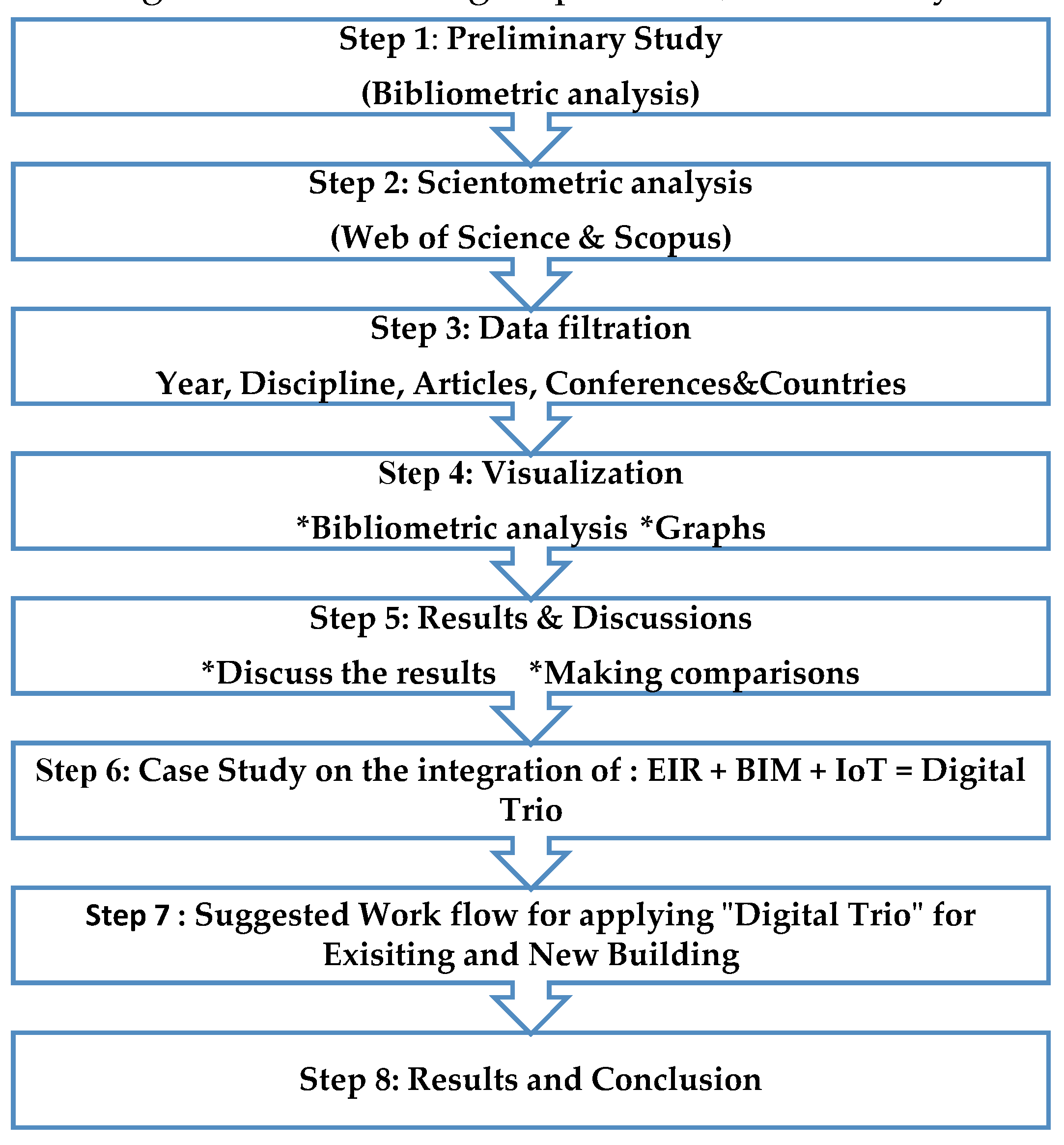
Figure 2.
Type of Documents on the Web of Science research with Keywords in the last three years.
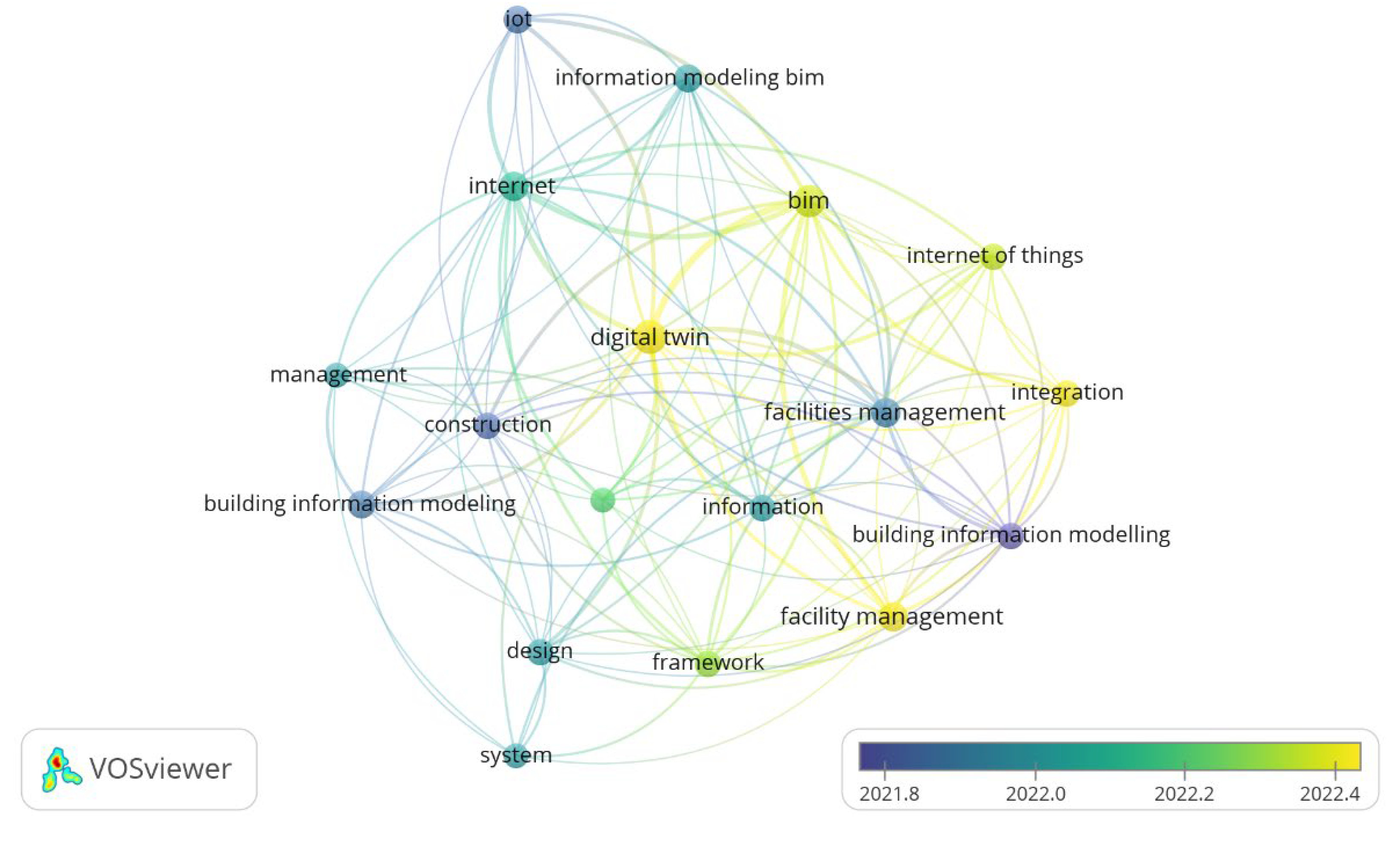
Figure 3.
Digital Twin interface.
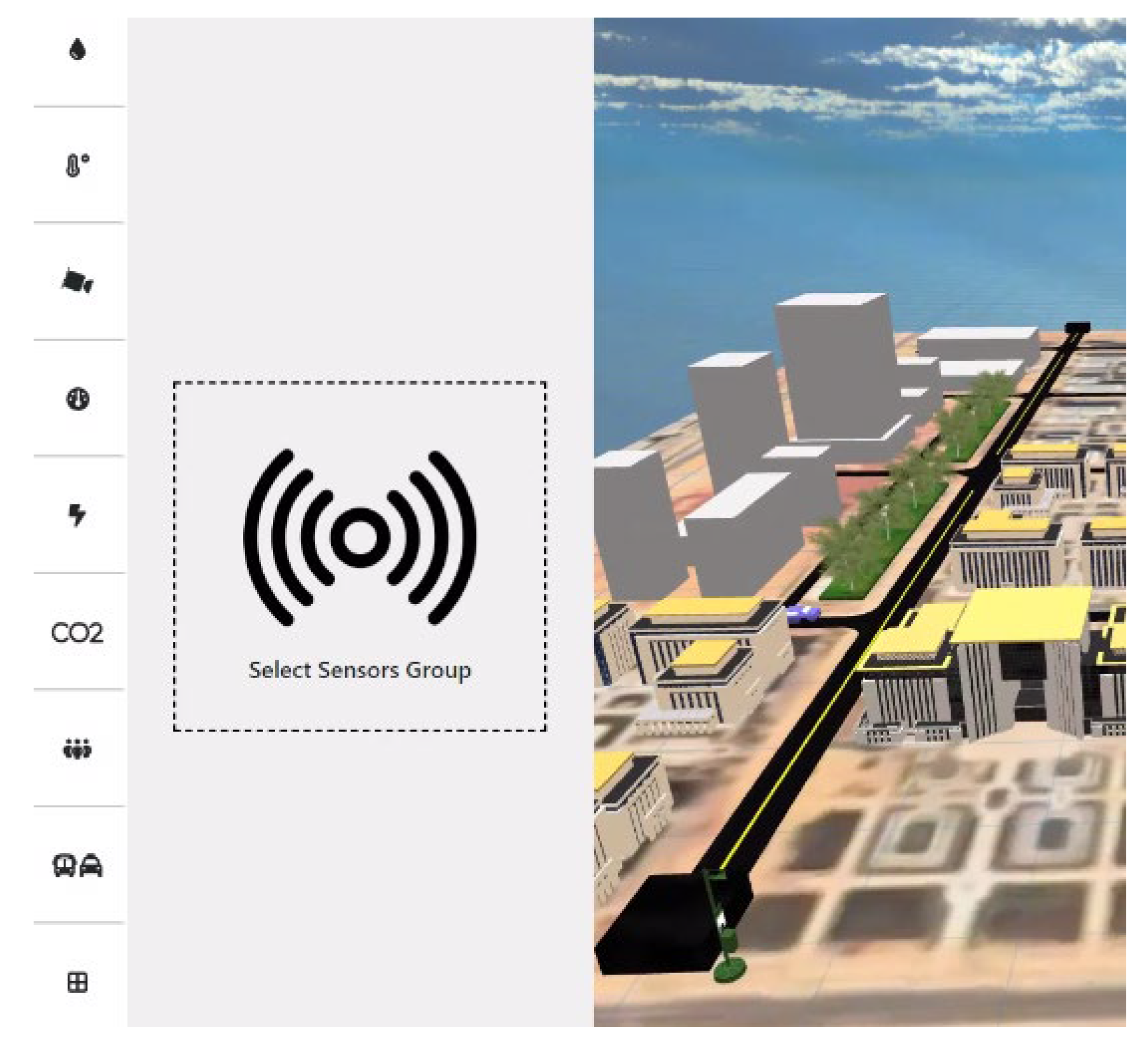
Figure 4.
Digital Trio process.
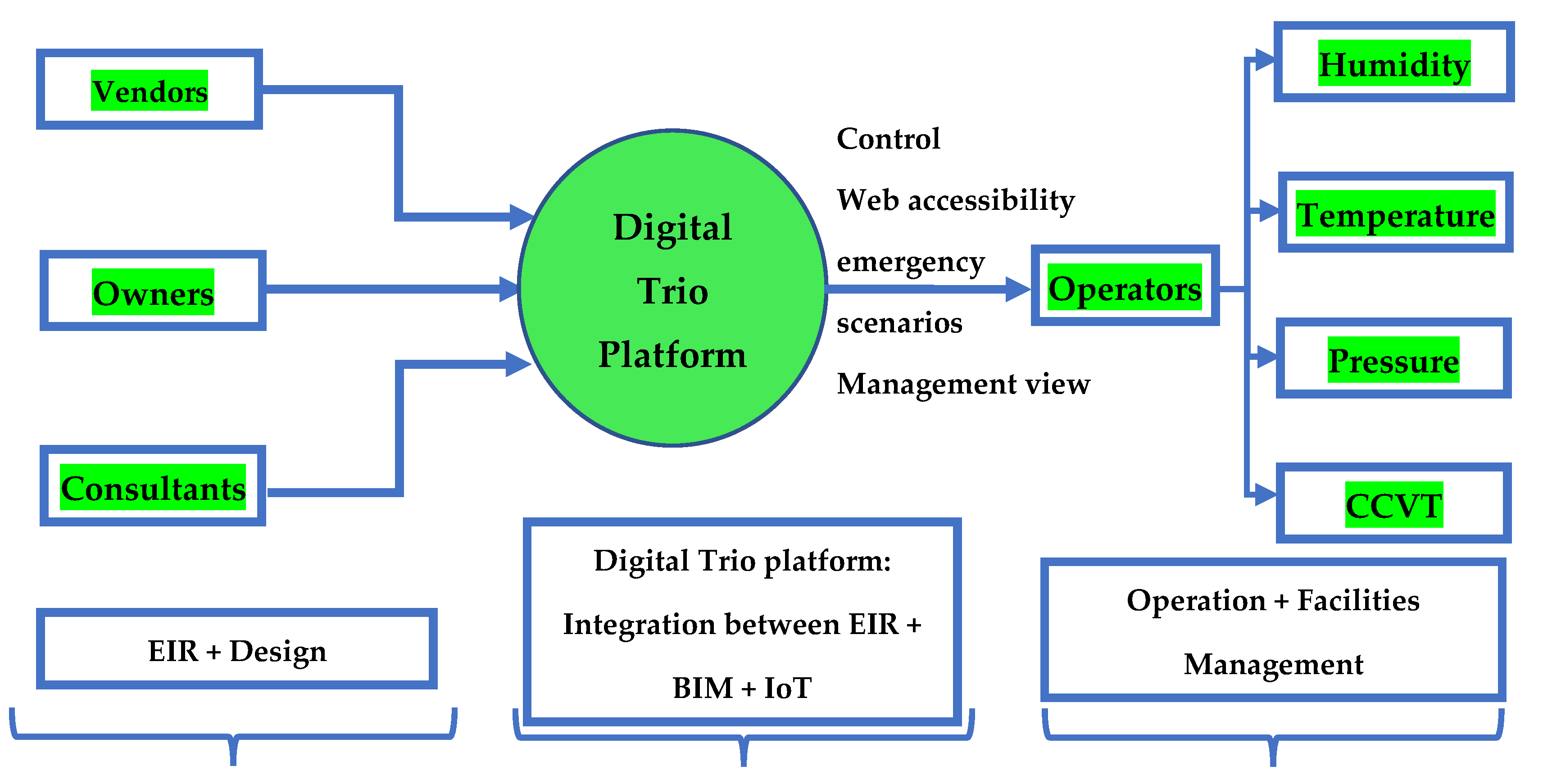
Figure 5.
Digital Twin Interface for Humidity.
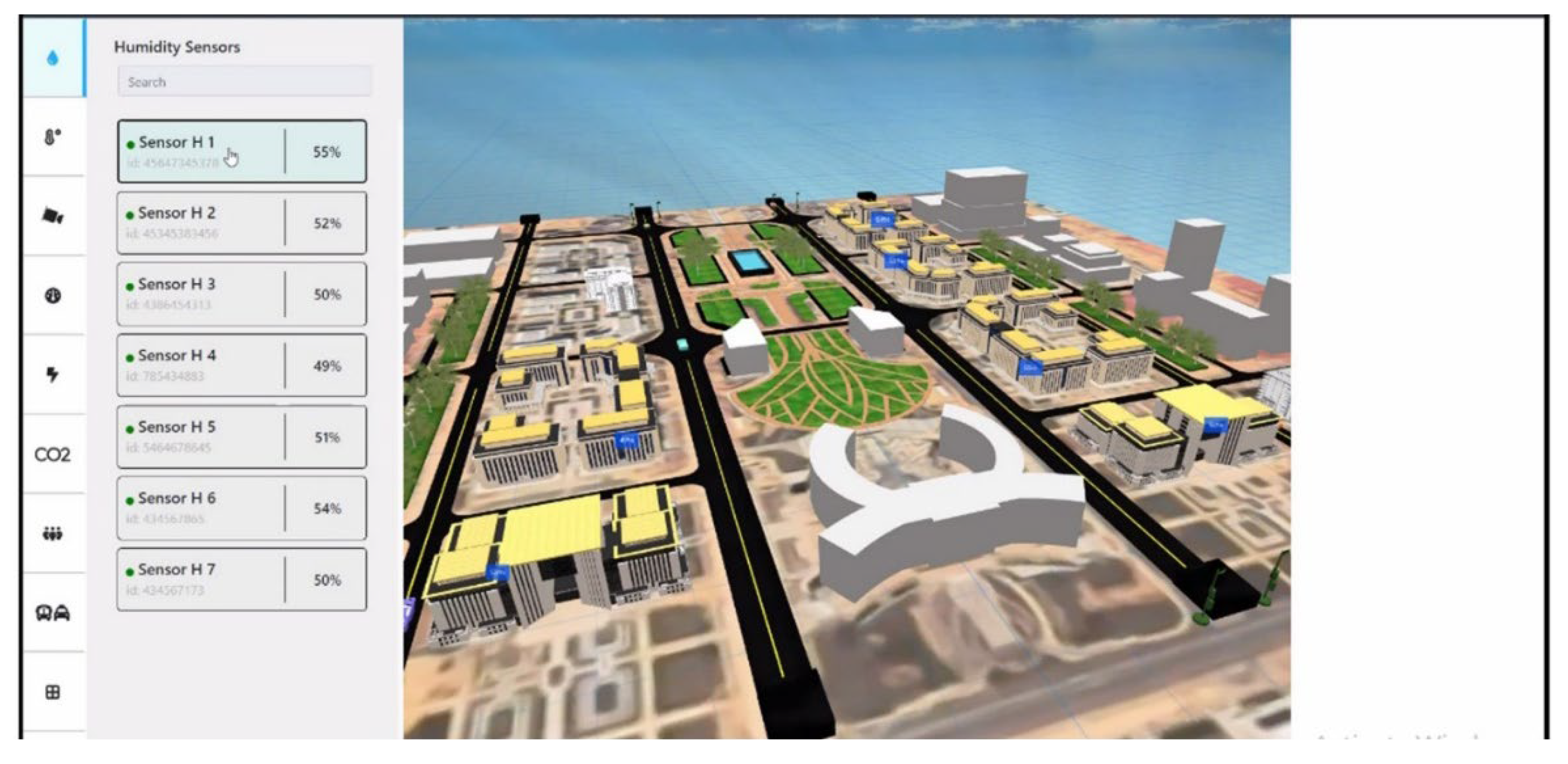
Figure 6.
Digital Twin Interface for Temperature.
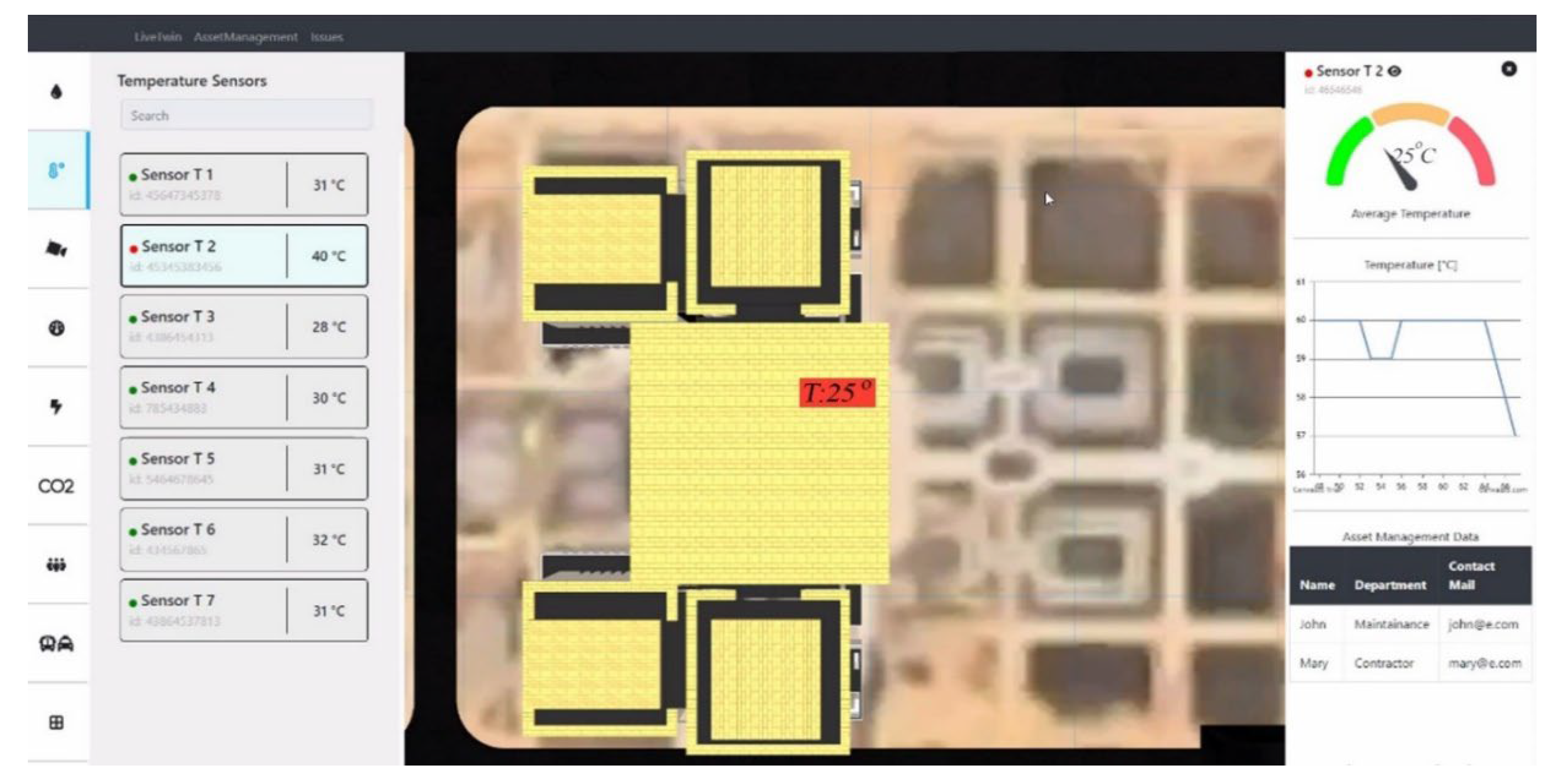
Figure 7.
Digital Twin Interface for Pressure.
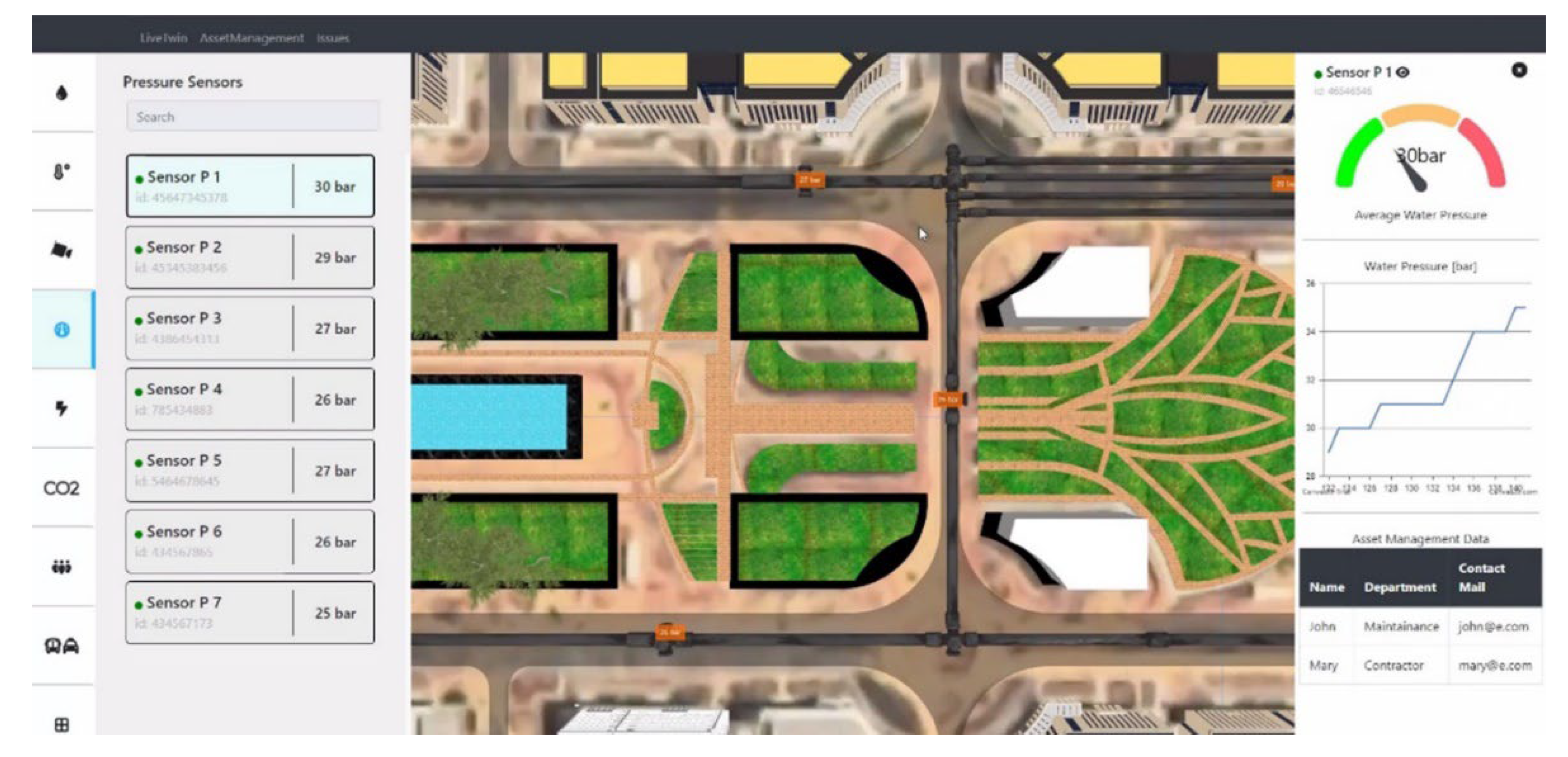
Figure 8.
Digital Twin interface for CCTV.
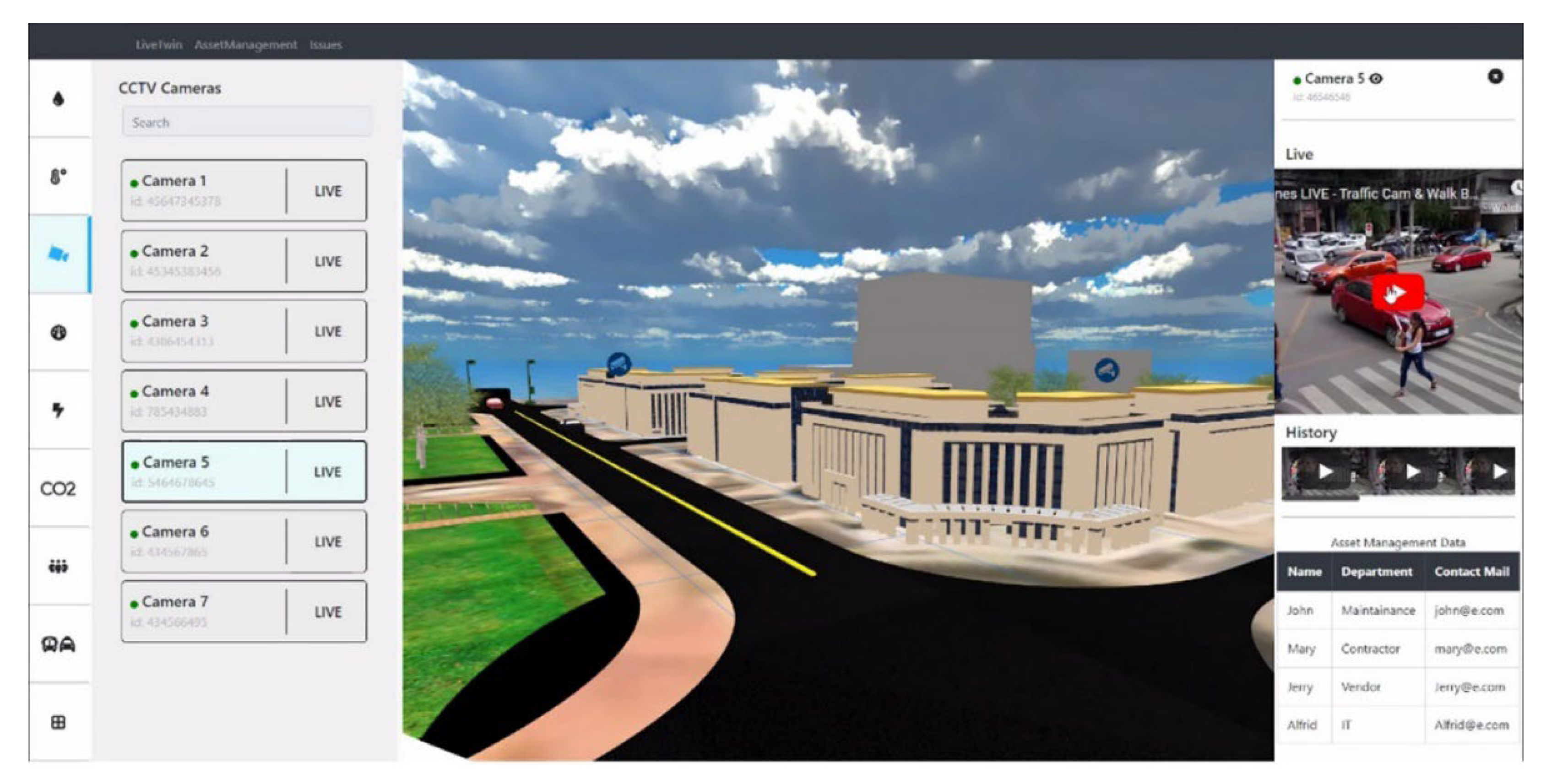
Figure 9.
Digital Trio Platform workflow for existing building.
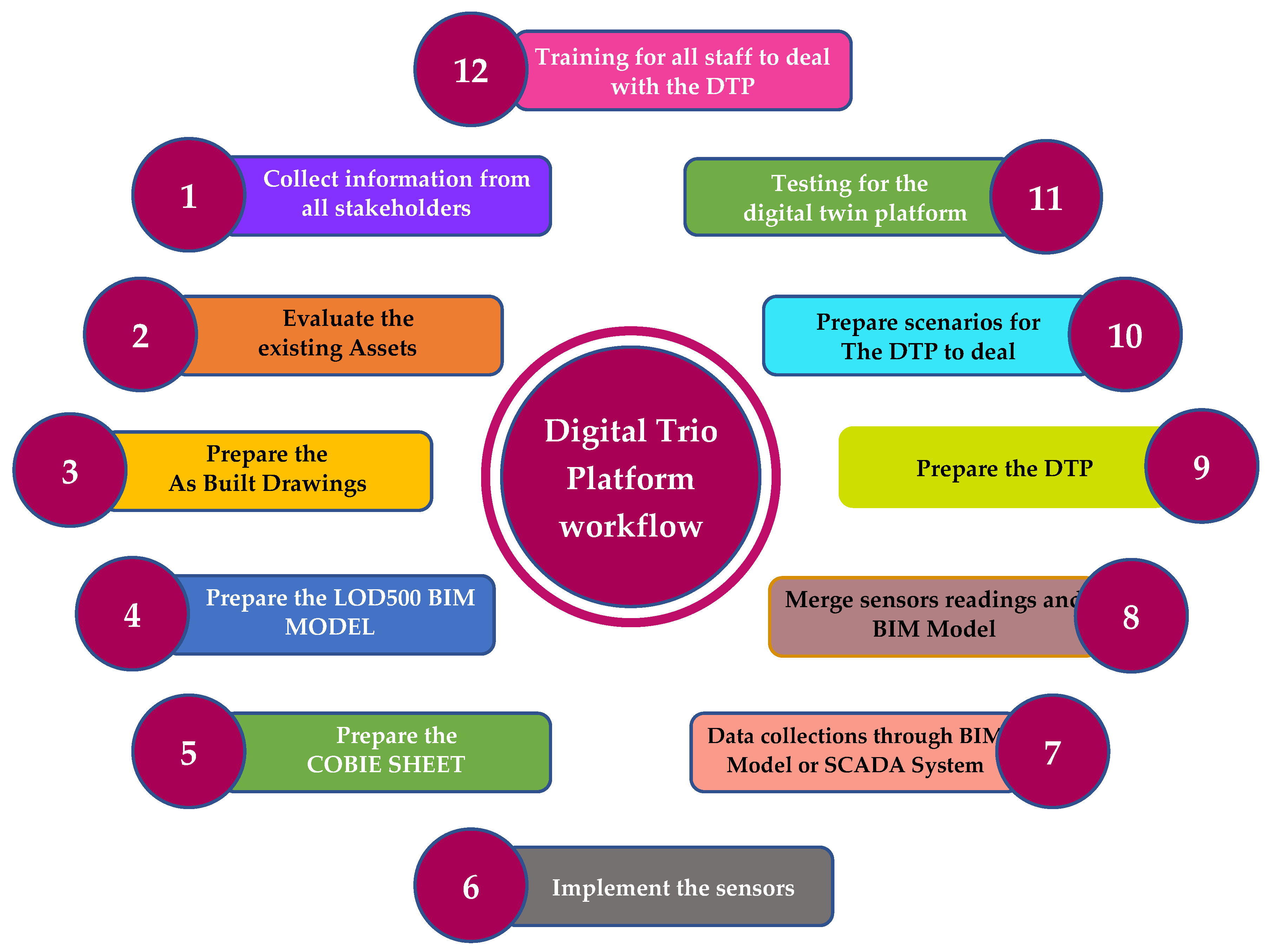
Figure 10.
Digital Trio Platform workflow for a new building.
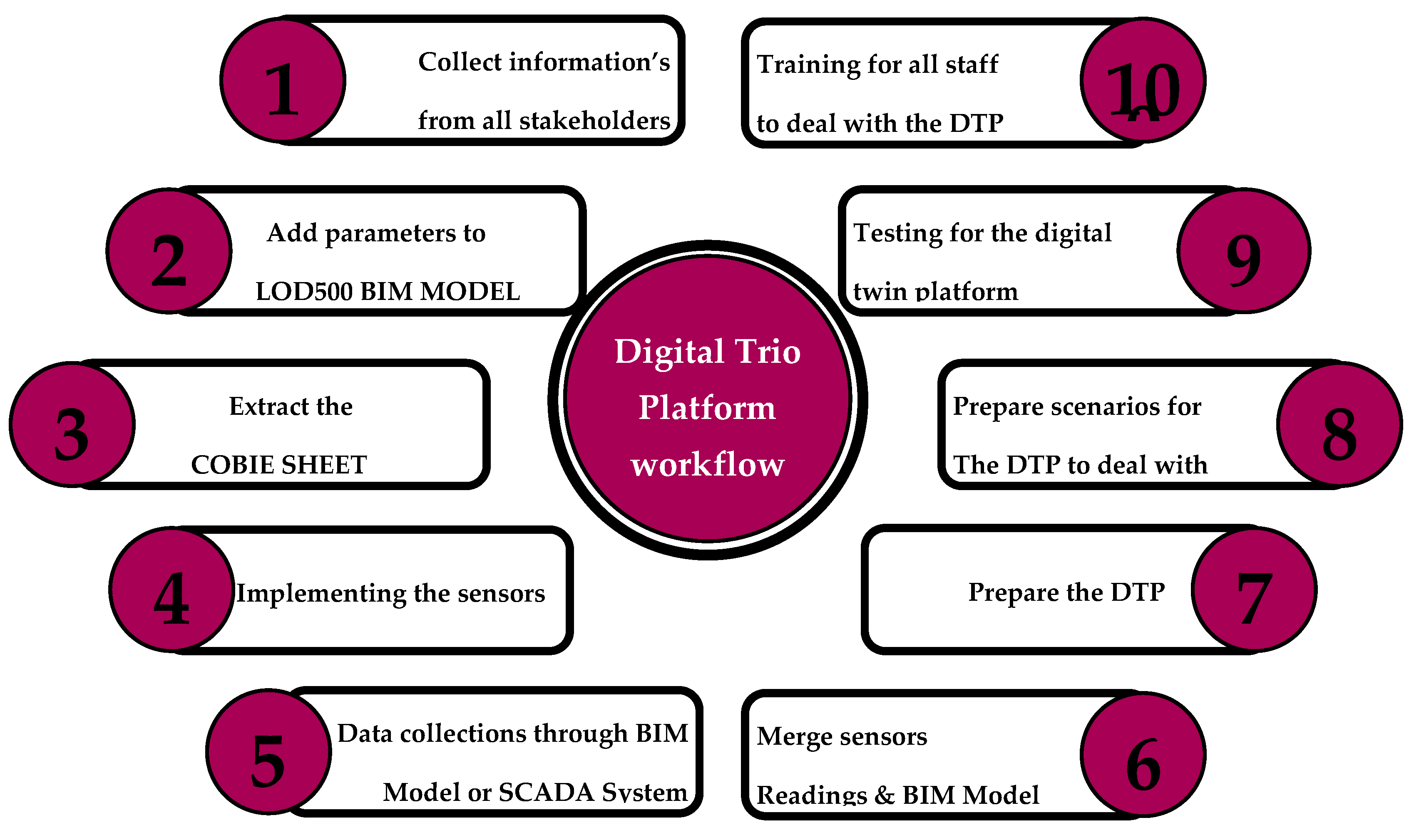
Figure 11.
Digital Trio Chart.
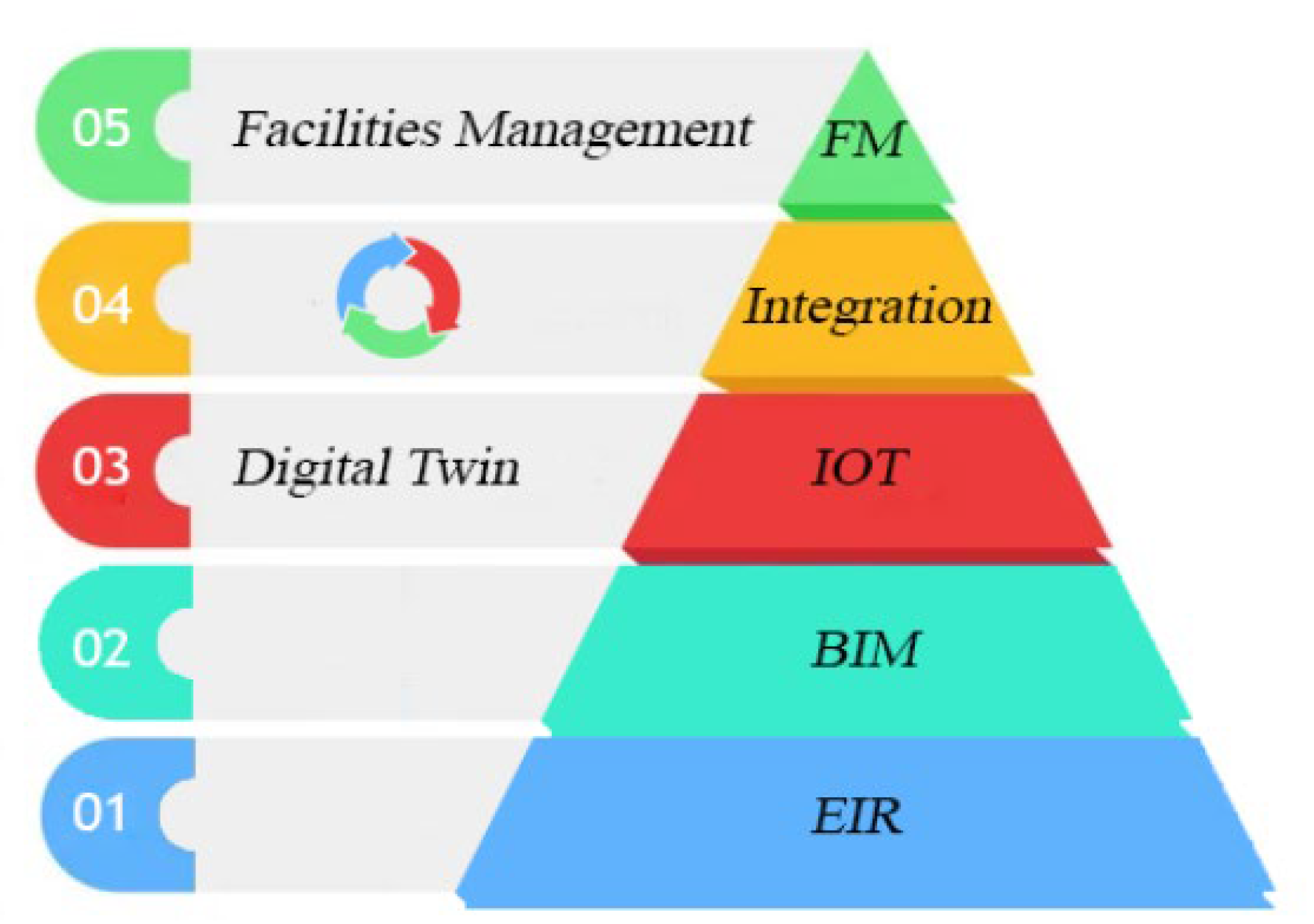
Figure 12.
Digital Trio workflow.
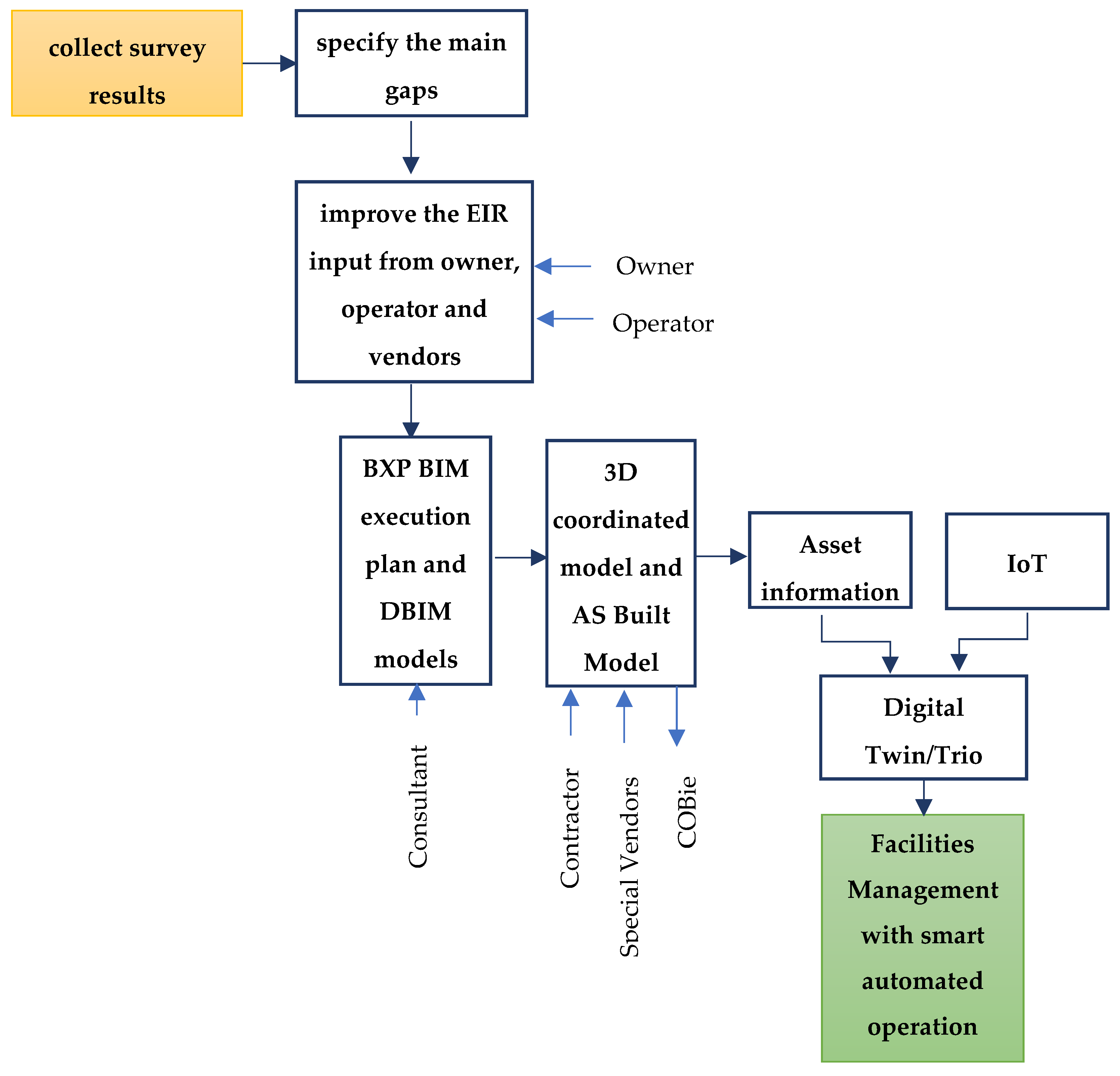
Figure 13.
Integration between BIM, EIR and IoT.
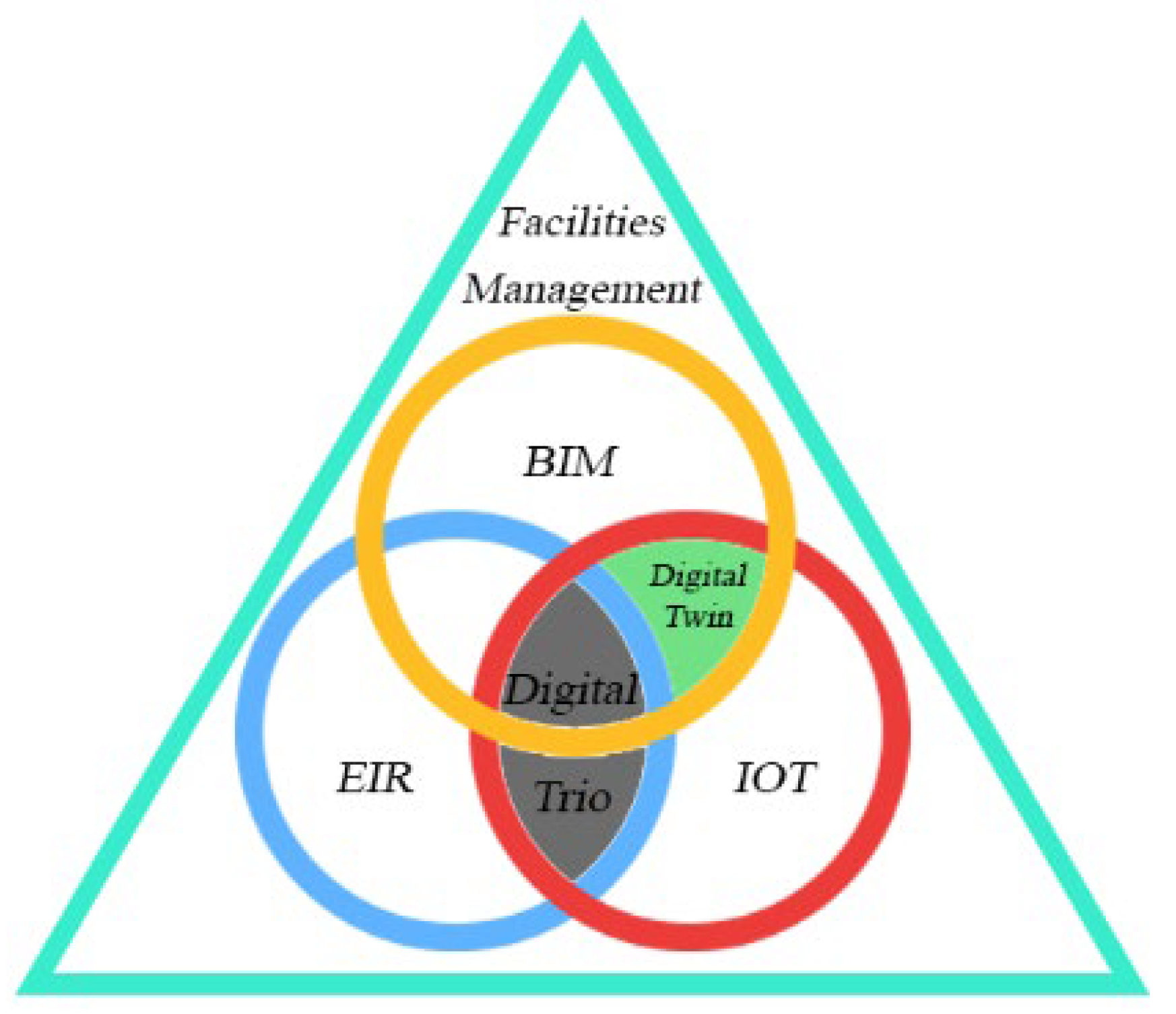

Table 1.
Traditional and New Approach in FM.
| Title | Traditional Approach | Using BIM and Digital Twin |
|---|---|---|
| Information Accessibility |
Description: Relied on scattered and paper-based documentation, making it challenging to access comprehensive and up-to-date information about the building. | Description: BIM and Digital Twins provide a centralized repository of comprehensive and real-time information, improving accessibility for facility managers, maintenance teams, and stakeholders. |
| Challenges: Limited accessibility, and potential for outdated information | Advantages: Enhanced access, and real-time data updates. | |
| Data Entry and Updates | Description: Facility management involved manual data entry and updates, leading to errors, inconsistencies, and delays in reflecting changes in building configurations. | Description: Automation in BIM and Digital Twins ensures that changes in the building are automatically updated, reducing manual data entry errors and ensuring data accuracy. |
| Challenges: Data inaccuracies, and time-consuming processes. | Advantages: Increased efficiency, and reduced errors. | |
| Collaboration and Communication |
Description: isolated information and lack of collaboration between design, construction, and facility management teams. | Description: BIM fosters collaboration by providing a common platform for stakeholders to access and update information throughout the building's lifecycle. |
| Challenges: Inefficiencies, miscommunication, difficulty in sharing information. | Advantages: Improved communication, and efficient collaboration | |
| Maintenance Practices | Description: Facility managers struggled with inefficient maintenance practices due to a lack of detailed and real-time information about the building's components. | Description: BIM and Digital Twins enable proactive and efficient maintenance practices by providing detailed information on the condition of building components. |
| Challenges: Reactive maintenance, and increased downtime. | Advantages: Predictive maintenance, and reduced downtime. | |
| Analytical Capabilities |
Description: the traditional way of analysis required a lot of effort and documents with the risk of human mistakes to conclude a result | Description: BIM and Digital Twins enable advanced analytics, allowing facility managers to simulate, analyze, and optimize building performance. |
| Challenges: hard to make a decision | Advantages: Improved decision-making, and optimization. | |
| Lifecycle Management | Description: Lack of sufficient information in all stages of the project on one software. | Description: BIM and Digital Twins support the entire lifecycle of a building, from design and construction to operation and decommissioning. |
| Challenges: Ensuring a seamless flow of information across different phases can be challenging due to diverse data sources and formats. | Advantages: Comprehensive lifecycle management, and historical data access. | |
| Cost Savings and Efficiency | Description: Managing costs efficiently throughout the lifecycle is challenging due to varying human manpower and documentation methods among stakeholders. | Description: The use of BIM and Digital Twins contributes to cost savings through improved operational efficiency, reduced downtime, and better-informed decision-making. |
| Challenges: limited ability to adapt to dynamic project conditions. | Advantages: Increased cost-effectiveness, and operational efficiency. | |
|
User Experience |
Description: it is always hard to give all stakeholders a complete vision for the project in all stages | Description: Digital Twins can enhance the overall user experience by personalizing building environments based on occupant preferences. |
| Challenges: big effort with less satisfaction | Advantages: Increased satisfaction, and improved productivity. |
Table 2.
Vendor Technical Requirements and Potential Consequences.
| Title | Technical Requirements in EIR | Consequences if Not Applied |
Effect |
|---|---|---|---|
| Technical Documentation and Specifications | Prepare detailed technical documentation including specifications, installation guides, user manuals, and maintenance instructions. | Misunderstandings, incorrect installations, improper use of systems. | Increased errors, higher maintenance costs, extended project timelines, reduced overall project quality. |
| BIM Compliance and Standards | Ensure all deliverables comply with relevant BIM standards such as ISO 19650. Develop BIM models that meet the specified Level of Detail (LOD) and Level of Information (LOI). | Inconsistent and incompatible data, coordination issues. | Project delays, cost overruns, potential rework due to misaligned models and information. |
| Data Management and Exchange | Establish protocols for data management, including naming conventions, file formats (e.g., IFC, COBie), and data exchange procedures. Set up a Common Data Environment (CDE) for collaboration and data sharing. | Data loss, inconsistencies, difficulty in data retrieval. | Inefficient project execution, miscommunication among stakeholders, potential legal disputes over data discrepancies. |
| Quality Assurance and Control | Implement a quality assurance plan with procedures for verifying the accuracy and completeness of deliverables. Conduct model-checking and clash detection processes to ensure data integrity. | Defects and errors can go unnoticed until late stages of the project. | Increased rework, compromised project integrity, higher costs, diminished client satisfaction. |
| Security and Data Protection | Implement measures for data security, including encryption, access control, and secure data transfer methods. Ensure compliance with data protection regulations | Data breaches and unauthorized access to sensitive information. | Legal penalties, loss of client trust, financial losses, potential project termination. |
| Software and Tools | Confirm the availability and compatibility of all software tools and platforms to be used. Ensure team proficiency with the required software | Incompatible or outdated software can hinder collaboration and data exchange. | Reduced productivity, increased likelihood of errors, project delays. |
| Integration and Interoperability | Prepare for integration with existing systems and infrastructure. Ensure interoperability of software and hardware components through standardized interfaces and protocols. | Siloed systems and data fragmentation | Inefficient workflows, increased manual intervention, higher operational costs |
| Training and Competency | Conduct training programs for team members to ensure proficiency in required tools and methodologies. Prepare training materials and schedules for project stakeholders. | Improper use of tools and technologies, reducing overall project efficiency. | Increased error rates, lower productivity, potential safety hazards. |
| Project Planning and Scheduling | Develop a detailed project plan including timelines, milestones, and resource allocation. Use project management tools to track progress and manage tasks. | Unrealistic timelines, resource conflicts, missed deadlines. |
Project delays, cost overruns, diminished project quality and stakeholder satisfaction. |
| Communication and Collaboration | Set up communication channels and collaboration platforms for efficient coordination with stakeholders. Define roles and responsibilities and establish protocols for issue resolution and decision-making. | Misunderstandings and misalignment among project stakeholders. | Increased conflicts, duplicated efforts, inefficient project execution |
| Hardware and Infrastructure | Ensure the availability of necessary hardware such as workstations, servers, and networking equipment. Verify hardware performance requirements for software and tasks. | Performance bottlenecks and inability to run necessary software | Reduced efficiency, increased downtime, potential project delays. |
| Regulatory Compliance | Ensure all deliverables and processes comply with relevant industry standards, codes, and regulations. Obtain necessary certifications and approvals before starting the project. |
Legal issues and project halts. | Legal penalties, increased costs for modifications, damage to reputation. |
| Risk Management | Identify potential risks and develop mitigation plans. Continuously monitor and manage risks throughout the project lifecycle. | Unforeseen issues and crises during the project. | Project delays, cost overruns, potential project failure. |
| Support and Maintenance |
Establish a plan for ongoing technical support and maintenance services. Ensure availability of support staff and resources for issue resolution. | Unresolved technical issues and system downtimes. | Increased operational disruptions, higher maintenance costs, decreased system reliability |
| Environmental and Sustainability Considerations | Implement practices supporting environmental sustainability, such as waste reduction and energy efficiency. Prepare documentation to support environmental assessments and compliance with sustainability | Environmental damage and non-compliance with regulations. | Legal penalties, increased operational costs, negative impact on the company’s reputation and social responsibility goals |
Table 3.
Challenges of applying DT in an old building.
| No | Challenge | Description |
|---|---|---|
| 1 | Old Buildings. | Many of the governmental buildings are established in old buildings that were used for another purpose, which means that there is no available full data like plans, equipment catalog and information for any asset.. |
| 2 | Data Integration | Inefficient project execution, miscommunication among stakeholders, potential legal disputes over data discrepancies. |
| 3 |
Data Integration. |
Governmental buildings often have various systems and equipment from different manufacturers and vendors. Integrating all data from different sources into one digital twin platform can be very hard and require standardized data formats and protocols |
| 4 | Accuracy and Quality of Data | The accuracy of the digital twin model depends on the quality of the data input. Inaccurate or outdated data can lead to build a wrong vision and decisions. Ensuring data accuracy and arranging documents is a challenge, especially when dealing with legacy systems |
| 5 | Initial Setup and Cost | Creating a comprehensive digital twin model requires significant huge investment in terms of technology, sensors, data collection infrastructure, and software development. Governmental budgets and procurement processes might pose challenges in acquiring the necessary resources |
| 6 | Technical Expertise | Developing and maintaining a digital twin platform requires expertise in fields such as IoT, data analytics, software development, and building systems. Government agencies might face challenges in recruiting or training staff with the required skills. |
| 7 | Data Privacy and Security | Government buildings often house sensitive information, and ensuring data privacy and security in the digital twin environment is crucial. Implementing robust cybersecurity measures to protect both the physical and virtual aspects of the building is challenging |
| 8 | Interoperability. | Digital twins may need to interact with other systems and databases within the governmental organization. Ensuring that the digital twin platform is compatible and can seamlessly integrate with existing systems can be challenging due to differing technologies and protocols. |
| 9 | Scalability | Governmental organizations often manage multiple buildings across various locations. Scaling a digital twin platform to cover a wide range of buildings while maintaining consistency and efficiency can be challenging. |
| 10 | Change Management. | Implementing a digital twin platform requires a shift in workflows and processes. Employees may resist change or require training to adapt to the new technology, which can pose challenges to adoption. |
| 11 | Regulatory Compliance | Government buildings must adhere to various regulations and standards. Integrating these compliance requirements into the digital twin model and ensuring ongoing compliance monitoring can be complex |
| 12 | Maintenance and Updates | Digital twin platforms require ongoing maintenance and updates to ensure they remain accurate and aligned with real-world changes. Ensuring regular updates without disrupting operations can be challenging |
| 13 | Vendor Lock-In | Depending on third-party vendors for digital twin solutions can lead to vendor lock-in, limiting flexibility and potentially increasing costs in the long run. |
| 14 | Return on Investment (ROI) Demonstrations | Establishing a clear ROI for digital twin implementations can be challenging, especially when the benefits may be realized over the long term or are difficult to quantify directly. |
Disclaimer/Publisher’s Note: The statements, opinions and data contained in all publications are solely those of the individual author(s) and contributor(s) and not of MDPI and/or the editor(s). MDPI and/or the editor(s) disclaim responsibility for any injury to people or property resulting from any ideas, methods, instructions or products referred to in the content. |
© 2024 by the authors. Licensee MDPI, Basel, Switzerland. This article is an open access article distributed under the terms and conditions of the Creative Commons Attribution (CC BY) license (http://creativecommons.org/licenses/by/4.0/).
Copyright: This open access article is published under a Creative Commons CC BY 4.0 license, which permit the free download, distribution, and reuse, provided that the author and preprint are cited in any reuse.


