

Submitted:
26 June 2024
Posted:
26 June 2024
You are already at the latest version
Abstract
This study explores the transformative potential of integrating Building Information Modeling (BIM) and Generative Design methodologies in heritage conservation and building management. By utilizing BIM, detailed architectural, structural, and MEP models were created, facilitating precise design and effective stakeholder collaboration. Generative Design enabled the exploration of multiple design solutions, optimizing spatial layouts and structural integrity. The project also integrated automated management systems and IoT sensors to enhance real-time monitoring, energy efficiency, and user comfort through the development of a digital twin. Despite encountering challenges such as technical complexities and budget constraints, the project successfully preserved the cinema's historical essence while incorporating modern functionalities. The findings highlight the contributions of BIM and Generative Design to the AEC industry, emphasizing their role in improving design accuracy, operational efficiency, and sustainability. This research provides valuable insights for future projects in heritage conservation, offering a blueprint for balancing historical preservation with contemporary needs. The revitalization of the "Ex Cinema Santa Barbara" in Paternò exemplifies these advancements, demonstrating how these technologies can restore and modernize culturally significant historical buildings effectively.
Keywords:
BIM
; Generative Design
; Building Management
; Cultural Heritage
; Digital Twin
; IoT
; Revitalization
1. Introduction
Building Information Modeling (BIM) has emerged as a transformative approach in the Architecture, Engineering, and Construction (AEC) industry, significantly enhancing design accuracy, collaboration, and project management [1]. BIM involves creating a digital representation of the physical and functional characteristics of a facility, serving as a shared knowledge resource for information throughout the lifecycle of a building [2]. This technology streamlines the design and construction processes and facilitates more effective building management and maintenance, aligning with the Sustainable Development Goals (SDGs) of the United Nations, particularly Goal 9 (Industry, Innovation, and Infrastructure) and Goal 11 (Sustainable Cities and Communities).
Generative Design, another innovative methodology, leverages computational algorithms to generate a wide array of design solutions based on a set of predefined criteria [3]. By iterating through numerous design possibilities, Generative Design enables architects and engineers to explore optimal solutions that balance various constraints such as spatial efficiency, structural integrity, and environmental performance [4]. The integration of Generative Design with BIM represents a significant advancement in the AEC industry, providing a powerful toolset for tackling complex design challenges and enhancing overall project outcomes [5].
Revitalizing historical buildings with modern functionalities presents significant challenges and opportunities [6]. The primary challenge lies in preserving the architectural integrity and cultural value of these structures while integrating contemporary features that meet current standards of accessibility, energy efficiency, and user comfort. This dual objective requires innovative solutions that can bridge the gap between historical preservation and modern demands, ensuring that the buildings remain functional and relevant in today's context [7]. Such efforts contribute to Goal 11 by making cities and human settlements inclusive, safe, resilient, and sustainable.
The revitalization of the "Ex Cinema Santa Barbara" in Paternò serves as an exemplary case study for the application of BIM and Generative Design in heritage conservation. This project aims to restore the cultural center, which holds substantial historical and cultural value, while integrating modern functionalities to meet contemporary needs. The specific objectives of the project include preserving the building's architectural integrity, enhancing its structural stability, improving accessibility, and implementing advanced building management systems to optimize comfort and energy efficiency, thereby aligning with the goals of Agenda 2030 and supporting Goal 11's focus on safeguarding cultural heritage.
The main objectives of this research are:
- To demonstrate the integration of BIM and Generative Design in heritage conservation, showcasing their combined potential to address complex design and restoration challenges.
- To develop and implement advanced automated management systems, including IoT technologies, to enhance the efficiency, sustainability, and user comfort of historical buildings.
- To provide a detailed case study analysis of the "Ex Cinema Santa Barbara" project, documenting the methodologies, challenges, solutions, and outcomes to serve as a reference for future projects in the AEC industry.
This research paper contributes to the field by:
- Providing empirical evidence of the benefits of integrating BIM and Generative Design in historical building revitalization.
- Offering practical insights and methodologies for implementing automated management systems in heritage conservation projects.
- Highlighting the potential of digital technologies to balance historical preservation with modern functionality, setting a precedent for future research and practice.
Through this comprehensive examination, the paper highlights the potential of BIM and Generative Design to transform heritage conservation practices, offering insights and recommendations for future projects in the AEC industry. This approach not only aligns with the principles of Agenda 2030 but also significantly advances the SDGs by promoting sustainable infrastructure, innovative design, and the preservation of cultural heritage.
2. Literature Review
This section provides an overview of existing research and developments in the fields of BIM, Generative Design, and their applications in building management and revitalization projects. It highlights the historical context, key concepts, and significant contributions to these areas, establishing a foundation for the current study. The literature is critically analyzed to show how these concepts relate to the present study and to identify any gaps that this research addresses.
2.1 Building Information Modeling (BIM)
BIM represents a digital approach to managing the physical and functional characteristics of facilities, serving as a shared knowledge resource throughout a building's lifecycle. BIM has significantly transformed the AEC industry by enhancing collaboration, improving efficiency, and reducing errors [8]. The conceptual roots of BIM can be traced back to the 1960s with the advent of Computer-Aided Design (CAD) systems. The modern concept of BIM emerged in the 1970s, with Charles M. Eastman's pioneering work at Carnegie Mellon University, proposing a system for storing and manipulating building information [9]. The term "Building Information Modeling" gained popularity in the early 2000s, thanks to Jerry Laiserin's efforts to facilitate discussions among industry leaders [10].
BIM encompasses various dimensions, from 3D modeling to 7D, covering aspects such as geometry, facility management, and sustainability [11]. Standards like the Industry Foundation Classes (IFC) and ISO 19650 provide frameworks for implementing BIM effectively [12]. In Italy, the UNI 11337 standards define the requirements for BIM processes and professional roles, ensuring consistency and quality in BIM projects [13].
Recent studies have shown that BIM can significantly reduce project costs and timelines while enhancing quality. For instance, Azhar and Brown [14] highlights that BIM enables complex building performance analyses during the early design and preconstruction stages, ensuring that sustainability goals are met from the outset. More recent research, such as the study by Liu et al. [15], emphasizes that BIM facilitates improved collaboration among project participants by integrating information across different roles and stages of construction. This integration leads to better coordination, reduced miscommunication, and enhanced trust among team members. Another study by Al Hattab and Hamzeh [16] discuss that BIM adoption improves design workflow by enhancing social interactions and information flow dynamics. However, its effectiveness is contingent on collaboration and changes in traditional mindsets.
However, there are gaps in the current research regarding the integration of BIM with emerging technologies and its application in heritage conservation. Most studies focus on new constructions and overlook the complexities involved in revitalizing historical buildings. This study addresses these gaps by demonstrating how BIM can be integrated with Generative Design and IoT technologies to enhance the revitalization of historical buildings.
2.2 Generative Design
Generative Design is an iterative process that leverages algorithms to generate diverse design solutions based on a set of constraints and goals. This approach harnesses computational power to explore design possibilities beyond human capabilities, leading to innovative and optimized outcomes [17]. Generative Design involves defining criteria such as spatial requirements, structural integrity, and environmental performance. Tools like Autodesk's Dynamo and Grasshopper for Rhino facilitate the creation of generative algorithms through visual scripting, enabling designers to automate repetitive tasks and explore a vast design space efficiently [18].
The integration of Generative Design in the AEC industry offers several advantages, including enhanced creativity, improved performance, and greater efficiency. Studies have shown that Generative Design can optimize building layouts, structural systems, and energy performance. For instance, Autodesk's office in Toronto utilized Generative Design to optimize workspace layouts, resulting in a more efficient and productive environment [19]. More recent applications, such as the use of Generative Design in the planning of urban spaces, showcase its potential to address large-scale, complex design problems [20].
Despite its potential, Generative Design faces challenges such as the complexity of algorithms, computational demands, and the need for interdisciplinary collaboration. Recent advancements have focused on improving user interfaces, enhancing algorithmic capabilities, and integrating Generative Design with emerging technologies like artificial intelligence (AI) and machine learning (ML) [21]. However, there is a need for more research on the practical implementation of Generative Design in heritage conservation and its integration with BIM. This study contributes to filling this gap by applying Generative Design principles in the context of the "Ex Cinema Santa Barbara" project, demonstrating its feasibility and benefits in revitalizing historical buildings.
2.3 Integration of BIM and Generative Design
The integration of BIM and Generative Design represents a significant advancement in the AEC industry, combining comprehensive data management with innovative problem-solving approaches. By integrating these technologies, designers can create more informed and optimized building models [22]. Generative Design can explore structural configurations within a BIM environment, ensuring that the final design meets performance and constructability criteria. This integration also facilitates the creation of digital twins, used for real-time monitoring and management of buildings [23].
Several projects highlight the successful integration of BIM and Generative Design. The Qatar National Library, designed by OMA, used Generative Design to optimize the building's structure and daylighting. The integration with BIM ensured that the design was innovative, feasible, and efficient to construct [24]. Another notable example is the implementation of these technologies in the design of Google's headquarters, where Generative Design was used to create an efficient and user-friendly workspace [25]. As the use of BIM and Generative Design becomes more prevalent, standards and best practices are emerging to guide practitioners, including the use of standardized data formats, adherence to BIM execution plans, and the development of customized algorithms tailored to specific project needs [26].
Despite these advancements, there is still a gap in comprehensive studies that explore the integration of BIM and Generative Design specifically in the context of heritage conservation. This study addresses this gap by showcasing the integration of these technologies in the "Ex Cinema Santa Barbara" project, providing insights into their practical application and benefits.
2.4 Applications in Building Management and Revitalization
The application of BIM and Generative Design in building management and revitalization projects has demonstrated promising results, particularly in optimizing building performance, enhancing user comfort, and preserving historical integrity [27]. BIM facilitates the management of building operations by providing a comprehensive digital representation of the facility, including real-time monitoring of building systems, predictive maintenance, and lifecycle management [28]. The integration of IoT sensors with BIM models, as seen in the "Ex Cinema Santa Barbara" project, allows for efficient and responsive building management.
In revitalization projects, BIM and Generative Design are invaluable for balancing the preservation of historical elements with modern functionality. Projects like the renovation of the Rijksmuseum in Amsterdam and the "Ex Cinema Santa Barbara" demonstrate how these technologies can restore and enhance historical buildings. BIM ensures that historical details are accurately preserved, while Generative Design enables innovative solutions to modern challenges [29]. Recent studies, such as those by Georgopoulos [30], discuss the techniques such as 3D modeling, laser scanning, and non-destructive testing are critical for diagnosing and conserving heritage structures. These methods provide detailed, three-dimensional records of artifacts, supporting both virtual and physical restoration efforts.
Both BIM and Generative Design contribute to sustainability and energy efficiency. By optimizing building performance through simulations and real-time data analysis, these technologies help reduce energy consumption and environmental impact. Studies have shown that buildings designed and managed with BIM and Generative Design achieve significant energy savings and improved sustainability metrics [31]. Recent research by Zhuang et al. [32] further supports these findings, demonstrating that the P-BIM framework can improve energy efficiency by 11.5% and reduce life cycle cost by 36.8% in a school building through optimization using simulations and real-time data analysis.
However, potential criticisms of existing research include the high initial costs and learning curves associated with adopting these technologies, which can be barriers for smaller firms or projects with limited budgets. Additionally, there is a need for more empirical data on the long-term performance and maintenance of buildings managed using these technologies.
In conclusion, the literature review underscores the transformative potential of BIM and Generative Design in the AEC industry. The integration of these technologies enhances design creativity, improves building performance, and supports the sustainable management of facilities. The "Ex Cinema Santa Barbara" project serves as a practical example of how these methodologies can be applied to preserve cultural heritage while meeting contemporary needs. This study contributes to the current literature by providing empirical evidence of the benefits and challenges of integrating BIM and Generative Design in heritage conservation, addressing gaps related to their practical application in historical building revitalization.
3. Methodology
The revitalization of the "Ex Cinema Santa Barbara" employed a meticulous and multi-faceted methodological approach, integrating BIM, Generative Design, and advanced automated management systems to achieve a comprehensive and sustainable renovation (Figure 1). The following sections outline the detailed methodology used in the project.
3.1 BIM Modeling
Autodesk Revit was selected as the primary software for BIM modeling due to its comprehensive capabilities in creating detailed architectural, structural, and MEP (Mechanical, Electrical, and Plumbing) models. Revit's robust functionality supports a holistic BIM approach, allowing for the creation of an integrated model that encompasses all aspects of building design. This software was chosen over others for several reasons:
- Revit provides a comprehensive suite of tools for detailed and multi-disciplinary modeling, which is essential for complex projects like the revitalization of historical buildings.
- Its widespread acceptance in the industry facilitates collaboration among various stakeholders, including architects, engineers, and contractors.
- Revit supports the IFC file format, ensuring seamless data exchange between different software platforms and stakeholders, which is crucial for maintaining consistency and collaboration.
The BIM model development process involved creating detailed parametric families for architectural, structural, and MEP components. These parametric families allowed for dynamic adjustments, ensuring that all elements within the model were interconnected. This approach significantly improved the model's accuracy and facilitated easier modifications and updates. Parameters such as dimensions, materials, and performance characteristics were meticulously defined, enabling the creation of a detailed and adaptable model.
To ensure seamless data exchange, the IFC file format was utilized, enhancing interoperability in the building industry and allowing various BIM tools to integrate seamlessly. This ensured that all parties involved could access and contribute to the model without compatibility issues.
The project adhered to several critical standards and legislative requirements to ensure quality, accuracy, and regulatory compliance. The Italian BIM standard UNI 11337 was followed, providing comprehensive guidelines for implementing BIM processes in construction projects, promoting consistency and reliability. The project also complied with Legislative Decree 50/2016 and Ministerial Decree 560/2017, which mandate the use of BIM methodologies in public procurement and construction projects in Italy. These standards and legislative requirements ensured that the BIM processes were robust, transparent, and aligned with national regulations, facilitating effective project management and collaboration while promoting best practices and reducing the risk of errors and rework.
3.2 Generative Design
Generative Design is an innovative and iterative design process that leverages advanced algorithms to generate multiple design solutions based on a predefined set of constraints and objectives. This approach enables designers to explore a wide array of possibilities, optimizing various performance criteria such as spatial configuration, structural integrity, energy efficiency, and user comfort.
Dynamo, a visual programming tool integrated with Autodesk Revit, was chosen for the Generative Design process due to its ability to create and manipulate data structures and algorithms graphically. Dynamo's visual scripting capabilities allowed for the creation of parametric and algorithmic design workflows, making it accessible to both novice and experienced users. By connecting various nodes representing different design parameters and operations, a dynamic and flexible design model was established. This model could be easily adjusted to explore different design scenarios and optimize the final solution based on the project's requirements.
The Generative Design process began with the establishment of specific goals and constraints for the cultural center. Key criteria included optimizing spatial layouts, ensuring structural stability, maximizing natural light and ventilation, enhancing energy efficiency, and providing a high level of user comfort. These criteria were encoded into Dynamo scripts, which served as the foundation for generating and evaluating design alternatives. The design process was highly iterative, with multiple rounds of generation and evaluation. Dynamo scripts were used to generate numerous design variations, each meeting the predefined constraints and objectives. These variations were then analyzed to identify the most promising solutions. Feedback from each iteration informed subsequent adjustments to the design parameters, leading to continuous improvement and refinement of the design.
Optimization techniques were employed to identify the best-performing design solutions from the generated alternatives. Key performance indicators (KPIs) such as spatial efficiency, structural load distribution, energy consumption, and user comfort levels were used to evaluate each design iteration. By optimizing these KPIs, the Generative Design process ensured that the final design not only met but exceeded the project's goals. The integration of Generative Design with BIM facilitated a seamless transition from conceptual design to detailed modeling. The optimized design solutions generated through Dynamo were directly incorporated into the Revit BIM model, ensuring that all design modifications were accurately reflected in the BIM model, maintaining consistency and coherence throughout the design process.
3.3 Validation and Verification
The accuracy and reliability of the BIM model and Generative Design solutions were ensured through a comprehensive validation and verification process. This process began with automated rule-based checking of the BIM model using tools such as Solibri Model Checker and Navisworks. These tools were instrumental in identifying clashes, inconsistencies, and compliance issues, which were systematically addressed to maintain the model's integrity. Additionally, regular peer reviews and coordination meetings were conducted to validate the model against project requirements and industry standards, ensuring thorough oversight and quality control.
Each design iteration produced through Generative Design was rigorously evaluated against predefined KPIs. These KPIs included spatial efficiency, structural load distribution, energy consumption, and user comfort levels. Detailed performance metrics were analyzed to identify the most promising design solutions. Stakeholder feedback, including insights from architects, engineers, and facility managers, was integral to refining the design parameters, facilitating continuous improvement and enhancement of the overall design quality.
Advanced simulation tools played a crucial role in assessing the performance of the design solutions. Energy simulations, daylighting analysis, and structural simulations were conducted to ensure that the design adhered to the project's performance criteria. Furthermore, the integration of real-time data from IoT sensors into the BIM model allowed for continuous monitoring and validation of the building's performance both during and after construction. This real-time data provided a dynamic feedback loop, enabling proactive adjustments and optimization of building systems.
Compliance with relevant BIM standards, particularly the UNI 11337, was rigorously maintained throughout the project. Adhering to these standards ensured that the model's Level of Development (LOD) was appropriate for each stage of the project, promoting accuracy, consistency, and reliability in all BIM processes. This compliance was crucial for achieving high-quality outcomes and meeting regulatory requirements.
User acceptance testing was another critical component of the validation and verification process. These tests ensured that the final design met the needs and expectations of the end-users. Feedback from user acceptance testing informed final adjustments to the design and operational systems, ensuring that the project not only met technical specifications but also provided a satisfactory user experience.
Through this detailed and iterative validation and verification process, the project ensured the accuracy, reliability, and success of the BIM model and Generative Design solutions. This comprehensive approach was instrumental in the successful realization of the project, showcasing the potential of advanced digital technologies in heritage conservation and building management.
3.4 Building Management
The study implemented advanced automated management systems to optimize comfort, energy efficiency, and overall building performance. These systems included HVAC (heating, ventilation, and air conditioning), lighting, and shading mechanisms, all integrated into the BIM model. Sensors were strategically placed throughout the building to monitor parameters such as temperature, humidity, and occupancy. This real-time data was processed using automation scripts developed in Dynamo, enabling responsive adjustments to maintain optimal comfort levels.
Automated HVAC systems were programmed to adjust heating and cooling based on occupancy patterns and external weather conditions. This approach enhanced comfort and improved energy efficiency by reducing unnecessary heating or cooling. The lighting system was automated to adjust based on natural light availability and occupancy. Sensors detected daylight levels and occupancy, dynamically dimming or brightening artificial lighting to maintain ideal illumination while conserving energy. Automated shading systems controlled the amount of natural light entering the building, adjusting window shades based on the position of the sun, external temperature, and internal light levels, contributing to both comfort and energy savings.
To ensure the effectiveness of these automated systems, comprehensive simulations were conducted. Dynamo scripts were used to model various scenarios, analyzing the performance of the HVAC, lighting, and shading systems under different conditions. The simulations provided valuable insights, allowing for fine-tuning of the systems to achieve the best balance between comfort and energy efficiency.
A digital twin was developed as part of the BIM model, allowing for real-time monitoring and management of the building systems. This digital replica provided a dynamic platform where changes in the physical environment were reflected in the digital model, facilitating proactive maintenance and management.
Internet of Things (IoT) sensors were integrated into the building management system to collect data on various environmental parameters, including temperature, humidity, occupancy, and air quality. The data collected from IoT sensors was fed into the BIM model, where it was processed and analyzed. Dynamo scripts played a crucial role in this process, automating data analysis and triggering system adjustments as needed. This continuous feedback loop ensured that the building systems operated efficiently and effectively.
The integration of the digital twin and IoT sensors facilitated real-time monitoring of the building’s performance. Facility managers could access up-to-date information on the status of various systems, enabling them to make informed decisions and quickly address any issues that arose. Additionally, the data collected supported predictive maintenance strategies. By analyzing trends and patterns in the sensor data, potential issues could be identified before they became critical, allowing for timely maintenance and reducing downtime.
The implementation of advanced building management systems, supported by BIM, IoT integration, and Generative Design principles, transforms buildings into highly efficient and responsive facilities. These innovations not only enhance comfort and energy efficiency but also ensure a sustainable and resilient infrastructure capable of adapting to future needs.
4. Case Study: Ex Cinema Santa Barbara
4.1. Historical Background
The "Ex Cinema Santa Barbara" in Paternò holds a significant place in the town's cultural and social history. Established in the early 20th century, this cinema was more than just a venue for film screenings; it was a vibrant hub of social interaction and cultural expression. The architectural style of the building, reflecting the design trends of its time, added to its prominence as a local landmark.
Throughout the decades, "Ex Cinema Santa Barbara" hosted numerous events, including theatrical performances, community gatherings, and cultural festivities. It was a place where residents of Paternò came together to share experiences, celebrate milestones, and enjoy the arts. The cinema's rich history is intertwined with the memories and traditions of the local community, making it an integral part of Paternò's cultural heritage.
However, like many historic cinemas, "Ex Cinema Santa Barbara" faced a decline in the latter half of the 20th century. The advent of modern entertainment options, such as television and multiplex cinemas, coupled with changing social dynamics, led to a decrease in patronage. Over time, the building fell into disrepair and was eventually abandoned, becoming a symbol of the town's changing cultural landscape.
Recognizing its historical and cultural value, the municipality of Paternò initiated a project to revitalize the "Ex Cinema Santa Barbara." The goal was to preserve the building's historical essence while adapting it to contemporary uses. The project aimed to transform the cinema into a multifunctional cultural center that could once again serve as a focal point for community activities and cultural events. This revitalization effort sought to honor the cinema's past while providing a space that meets the needs and interests of today's residents.
The significance of the "Ex Cinema Santa Barbara" project lies within the broader scope of heritage conservation projects, as it exemplifies the challenges and opportunities inherent in such endeavors. Similar projects, such as the renovation of the Elbphilharmonie in Hamburg and the Rijksmuseum in Amsterdam, also grappled with preserving historical integrity while integrating modern functionalities. The unique challenge of the "Ex Cinema Santa Barbara" project was to balance the cultural and historical value of a community landmark with the practical need for modern amenities and energy-efficient systems. The solutions implemented in this project, particularly the integration of advanced digital technologies like BIM and Generative Design, set a precedent for similar future initiatives in heritage conservation.
4.2 Current State Assessment
Before the commencement of the revitalization project, a thorough assessment of the current state of the "Ex Cinema Santa Barbara" was conducted (Figure 2). This evaluation was crucial in identifying the specific needs and challenges associated with restoring the building while preserving its historical integrity.
The assessment revealed significant structural and aesthetic deterioration resulting from years of neglect. The exterior of the building showed visible signs of wear, including cracked and peeling paint, damaged masonry, and corrosion of metal elements. The roof was found to be in poor condition, with leaks and water damage evident in several areas. These issues not only compromised the building's appearance but also posed serious risks to its structural stability.
Inside the cinema, the condition was similarly dire. The interior spaces, once vibrant and full of life, had become dilapidated. The seating areas were damaged, with many seats broken or missing. The decorative elements, such as moldings and wall coverings, had deteriorated significantly. Water damage had led to mold growth in several areas, contributing to the overall sense of decay.
The MEP systems were outdated and largely non-functional. The original HVAC system, designed for a much earlier era, was inadequate for modern comfort standards. Electrical wiring was found to be unsafe and in need of a complete overhaul. Plumbing fixtures were corroded and leaking, requiring comprehensive replacement.
Furthermore, the building did not comply with contemporary accessibility standards. The entrances, exits, and internal pathways were not designed to accommodate individuals with disabilities, necessitating significant modifications to ensure compliance with modern accessibility regulations.
The assessment also highlighted the potential for adaptive reuse of the space. Despite its dilapidated state, the "Ex Cinema Santa Barbara" retained its architectural charm and historical significance. The structural framework, though in need of repair, was largely intact and provided a solid foundation for the planned revitalization efforts.
The current state assessment underscored the urgency and importance of the revitalization project. It provided a detailed understanding of the building's existing conditions, guiding the development of a comprehensive restoration plan that would address structural, aesthetic, and functional deficiencies while preserving the historical essence of the cinema. This assessment was instrumental in laying the groundwork for transforming the "Ex Cinema Santa Barbara" into a modern, multifunctional cultural center that honors its storied past and serves the needs of the contemporary community.
4.3 Project Objectives
The revitalization of the "Ex Cinema Santa Barbara" is driven by a comprehensive set of project objectives that aim to transform the abandoned cinema into a multifunctional cultural center. These objectives are designed to address the various challenges identified in the current state assessment while honoring the building's historical and cultural significance.
One of the primary objectives is to preserve the historical essence of the "Ex Cinema Santa Barbara." This involves restoring the architectural features and decorative elements that characterize the building, ensuring that its historical charm is maintained. The project aims to respect and celebrate the cinema's rich history while adapting it to contemporary uses. Addressing the structural deficiencies identified in the assessment is critical, including comprehensive structural repairs to ensure the building's stability and safety. This involves reinforcing the foundation, repairing damaged masonry, and addressing issues with the roof and other structural elements.
The project seeks to replace the outdated MEP systems with modern, energy-efficient alternatives. Upgrading the HVAC system, electrical wiring, and plumbing fixtures is essential to meet contemporary standards for safety, comfort, and functionality. Ensuring that the cultural center is accessible to all individuals is a key objective. The project plans to modify entrances, exits, and internal pathways to comply with modern accessibility standards, including installing ramps, elevators, and other necessary features to accommodate individuals with disabilities.
The revitalized cinema will feature a variety of multifunctional spaces designed to host different types of events and activities, including areas for exhibitions, performances, community gatherings, and educational programs. The goal is to create a versatile cultural center that can serve a wide range of community needs and interests. To enhance visitor engagement, the project aims to incorporate interactive and immersive spaces, including areas for virtual reality experiences, interactive learning modules, and spaces inspired by successful models like the "Stanza Ulisse" and "Stanza Nirvana" at the TOG Center in Milan. These features are designed to provide unique and enriching experiences for visitors of all ages.
Sustainability is a core objective of the project. The revitalization plans include the implementation of energy-efficient systems and sustainable building practices. This involves optimizing the use of natural light, incorporating renewable energy sources, and using eco-friendly materials wherever possible. The project aims to integrate advanced automated management systems for HVAC, lighting, and shading to optimize comfort and energy efficiency. These systems will be controlled through IoT sensors and automation scripts, ensuring real-time adjustments based on environmental conditions and occupancy.
Ultimately, the project seeks to create a cultural center that fosters community engagement and cultural enrichment. By providing a space for cultural activities, educational programs, and community events, the revitalized "Ex Cinema Santa Barbara" will serve as a hub for social interaction and cultural exchange.
4.4 Design Interventions
The design interventions for the "Ex Cinema Santa Barbara" revitalization project are carefully crafted to address the building's deficiencies while enhancing its functionality and aesthetic appeal. These interventions are guided by the project objectives and are aimed at creating a vibrant, multifunctional cultural center that honors the cinema's historical significance and meets contemporary needs.
The first major intervention involves the structural restoration of the building. This includes reinforcing the foundation, repairing damaged masonry, and addressing issues with the roof and other structural elements. The goal is to ensure the building's stability and safety while preserving its historical architectural features. These repairs are crucial for maintaining the integrity of the cinema and providing a solid foundation for further enhancements.
A significant focus is placed on modernizing the MEP systems. The outdated HVAC system is replaced with a modern, energy-efficient alternative that provides optimal climate control for the various spaces within the cultural center. The electrical wiring is overhauled to meet contemporary safety standards and to support advanced lighting and audiovisual systems. The plumbing fixtures are updated to ensure reliable and efficient water supply and drainage throughout the building.
Accessibility is a key consideration in the design interventions. Entrances, exits, and internal pathways are modified to comply with modern accessibility standards, ensuring that the cultural center is welcoming and inclusive for all individuals. This includes the installation of ramps, elevators, and accessible restrooms, as well as the design of clear and navigable routes throughout the building.
The creation of multifunctional spaces is central to the design interventions (Figure 3). The main auditorium is restored and upgraded to accommodate a variety of events, including film screenings, theatrical performances, and community gatherings. Flexible seating arrangements and advanced audiovisual systems are incorporated to enhance the functionality of the space. Additionally, smaller rooms are designed to host exhibitions, workshops, and educational programs, providing versatile spaces that can adapt to different types of activities.
Interactive and immersive elements are introduced to enhance visitor engagement and provide unique experiences. Inspired by successful models like the "Stanza Ulisse" and "Stanza Nirvana" at the TOG Center in Milan, these spaces include interactive pediatric and therapeutic areas, motor and cognitive rehabilitation spaces, and an interactive music wall similar to the one in Cabot Circle, Bristol. Virtual reality (VR) spaces and interactive learning modules are also incorporated, drawing inspiration from institutions such as the Faurschou Foundation in Beijing and educational centers in Blue Island and Iceland.
The design also focuses on sustainability and energy efficiency. Natural light is maximized through the use of strategically placed windows and skylights, reducing the need for artificial lighting. Renewable energy sources, such as solar panels, are integrated into the building to provide a sustainable power supply. Eco-friendly materials are used in the construction and finishing of the spaces, promoting environmental sustainability and reducing the building's carbon footprint.
Advanced automated management systems are implemented to optimize the building's comfort and energy efficiency. These systems control HVAC, lighting, and shading based on real-time data from IoT sensors. Automation scripts developed in Dynamo enable responsive adjustments to environmental conditions, ensuring optimal comfort levels and efficient energy use. The integration of these systems enhances the building's functionality and sustainability.
Finally, the design interventions include the development of communal and recreational areas to foster social interaction and community engagement. An accessible terrace, a light path, and a musical staircase are designed to create inviting and interactive outdoor spaces. These features are inspired by similar successful installations, such as the Play Metro in Rome, and are aimed at enhancing the visitor experience and promoting inclusivity.
The design interventions for the "Ex Cinema Santa Barbara" revitalization project are comprehensive and innovative. They address the building's structural and functional deficiencies while enhancing its historical charm and creating a modern, multifunctional cultural center that serves the needs of the contemporary community.
4.5 Automated Management Systems
The implementation of advanced automated management systems is a cornerstone of the "Ex Cinema Santa Barbara" revitalization project, aimed at optimizing comfort, energy efficiency, and overall building performance. These systems integrate cutting-edge technologies to create a responsive and sustainable environment within the cultural center.
The primary components of the automated management systems include HVAC, lighting, and shading mechanisms. These systems are designed to work in harmony, ensuring optimal environmental conditions while minimizing energy consumption. The integration of these systems into the BIM model allows for seamless control and monitoring.
The HVAC system is upgraded to a modern, energy-efficient solution that adjusts heating and cooling based on real-time data from IoT sensors. These sensors monitor parameters such as temperature, humidity, and occupancy levels, providing continuous feedback to the system. Automation scripts developed in Dynamo process this data, enabling the HVAC system to make precise adjustments to maintain optimal comfort levels while reducing unnecessary energy usage. For instance, the system can reduce heating or cooling in unoccupied areas, thereby conserving energy.
Lighting automation is another critical aspect of the management systems. Sensors detect natural light availability and occupancy, dynamically adjusting artificial lighting to ensure ideal illumination levels. During daytime, when sufficient natural light is available, the system dims or turns off artificial lights to save energy. Conversely, in the evenings or in spaces with inadequate natural light, the system enhances artificial lighting to maintain a comfortable environment. This not only improves energy efficiency but also enhances the visitor experience by providing consistent and appropriate lighting conditions.
Shading systems are automated to control the amount of natural light entering the building, contributing to both comfort and energy efficiency. These systems adjust window shades based on the position of the sun, external temperature, and internal light levels. By reducing heat gain during hot periods and maximizing natural light during cooler periods, the shading system helps maintain a comfortable indoor environment and reduces the load on the HVAC system.
A digital twin of the "Ex Cinema Santa Barbara" is developed as part of the BIM model (Figure 4), enabling real-time monitoring and management of the building systems. The digital twin acts as a dynamic virtual replica of the physical building, reflecting changes and conditions in real-time. This allows facility managers to monitor the performance of the automated systems, identify issues promptly, and make data-driven decisions. The digital twin provides a comprehensive overview of the building’s status, from environmental conditions to energy usage, facilitating proactive maintenance and optimization.
The integration of IoT sensors throughout the building enhances the functionality of the automated management systems. These sensors collect data on various environmental parameters, feeding it into the BIM model where it is processed and analyzed. The use of automation scripts in Dynamo ensures that the data is effectively utilized to control the building systems. For example, occupancy sensors can trigger the HVAC and lighting systems to adjust settings based on the presence of people, ensuring comfort while conserving energy when areas are unoccupied.
Predictive maintenance is another significant benefit of the automated management systems. By analyzing trends and patterns in the sensor data, potential issues can be identified before they become critical. This allows for timely maintenance and repairs, reducing downtime and extending the lifespan of the building systems. Predictive maintenance helps maintain the efficiency and reliability of the systems, ensuring that the cultural center operates smoothly and sustainably.
The implementation of advanced automated management systems in the "Ex Cinema Santa Barbara" project represents a significant leap towards creating a responsive, efficient, and sustainable cultural center. These systems not only enhance the comfort and experience of visitors but also contribute to the building’s long-term sustainability by optimizing energy usage and enabling proactive maintenance. The integration of BIM, IoT, and automation technologies demonstrates the potential of modern digital methodologies in building management and heritage conservation.
The implementation and testing phase of the "Ex Cinema Santa Barbara" revitalization project was critical to ensuring the effectiveness and efficiency of the various design interventions and automated management systems. This phase involved a detailed and methodical approach to installing, configuring, and validating the integrated systems, with a focus on achieving the project’s objectives of comfort, energy efficiency, and functional adaptability.
The first step in the implementation process was the installation of the updated MEP systems. Skilled technicians and engineers installed the modern HVAC system, advanced lighting solutions, and new plumbing fixtures. Each system was carefully integrated into the existing structure, respecting the historical integrity of the building while ensuring modern functionality. The HVAC system, in particular, required precise installation to ensure optimal climate control throughout the diverse spaces within the cultural center.
Once the MEP systems were in place, the focus shifted to the integration of IoT sensors and the development of automation scripts using Dynamo (Figure 5). The sensors, strategically placed throughout the building, were calibrated to monitor various environmental parameters such as temperature, humidity, light levels, and occupancy. The data collected by these sensors was fed into the BIM model, where Dynamo scripts processed the information to control the HVAC, lighting, and shading systems dynamically. This integration ensured that the building’s environment could respond in real-time to changes in occupancy and external conditions, maintaining optimal comfort levels and energy efficiency.
Following the installation and integration, a comprehensive testing phase was conducted. The primary objective of this phase was to validate the performance of the automated systems and ensure they met the project’s design criteria. The testing process involved several key steps:
Each automated system (HVAC, lighting, shading) was tested individually to verify its functionality. Sensors were triggered to simulate various environmental conditions, and the responses of the systems were observed and recorded. This step ensured that each system operated correctly and responded appropriately to sensor inputs.
After functional testing, the systems were tested together to ensure seamless integration. This involved scenarios where multiple systems needed to work in harmony, such as adjusting lighting and HVAC settings based on occupancy and natural light levels. Integration testing confirmed that the systems communicated effectively and coordinated their actions to maintain optimal environmental conditions.
The performance of the automated systems was evaluated under different conditions to assess their efficiency and effectiveness. This included testing the systems during peak occupancy periods, varying weather conditions, and different times of the day. The goal was to ensure that the systems maintained comfort and energy efficiency across a range of scenarios.
Stakeholders, including facility managers and selected members of the community, were involved in user acceptance testing. This phase aimed to gather feedback on the usability and effectiveness of the automated systems from those who would interact with them regularly. Adjustments were made based on this feedback to improve user experience and system performance.
Data collected during the testing phase was analyzed to identify any areas for improvement. Performance metrics such as energy consumption, system responsiveness, and comfort levels were reviewed. Based on the analysis, the Dynamo scripts and system configurations were refined to optimize performance further.
A pilot testing phase was conducted, where the automated systems were monitored over an extended period under real-world conditions. This long-term testing provided valuable insights into the systems' reliability and efficiency, ensuring that any issues were addressed before full-scale implementation.
The iterative process of testing and optimization was crucial in achieving the desired outcomes of the project. By rigorously validating the automated systems, the project team ensured that the "Ex Cinema Santa Barbara" cultural center would operate efficiently, provide a comfortable environment for visitors, and maintain sustainability goals.
The implementation and testing phase demonstrated the effectiveness of combining advanced digital technologies with careful planning and execution. The successful integration of automated management systems into the historical structure of the cinema showcased the potential of modern methodologies in heritage conservation and building management, setting a precedent for future projects in the field.
5. Findings and Analysis
5.1. Key Findings
The revitalization of the "Ex Cinema Santa Barbara" provided valuable insights into the application of BIM and Generative Design methodologies in heritage conservation and building management. The project demonstrated several key findings that highlight the effectiveness and benefits of these advanced digital technologies.
The use of BIM, particularly Autodesk Revit, significantly improved the efficiency and accuracy of the design process. The parametric modeling capabilities allowed for precise and detailed architectural, structural, and MEP models. This facilitated seamless coordination among various stakeholders, reducing the risk of errors and ensuring that all design elements were accurately integrated.
Implementing Generative Design principles through Dynamo enabled the exploration of multiple design solutions based on predefined constraints and goals. This iterative process resulted in optimized spatial layouts, structural integrity, and energy efficiency. The ability to generate and evaluate numerous design options quickly allowed for a more informed decision-making process, ultimately leading to a superior final design.
The incorporation of automated HVAC, lighting, and shading systems, controlled through IoT sensors and Dynamo scripts, proved highly effective in maintaining optimal environmental conditions. These systems dynamically adjusted based on real-time data, ensuring comfort and energy efficiency. The use of automation significantly reduced manual intervention, leading to more consistent and reliable building performance.
The development of a digital twin provided a dynamic and comprehensive platform for real-time monitoring and management of the building systems. This virtual replica allowed for continuous data collection and analysis, enabling proactive maintenance and quick response to any issues. The digital twin facilitated a deeper understanding of the building’s performance and supported data-driven decision-making.
The integration of automated systems and the focus on energy-efficient design principles resulted in significant improvements in energy consumption. The automated management systems optimized the use of natural light and controlled the HVAC settings based on occupancy and external conditions, leading to reduced energy usage without compromising comfort.
The project successfully addressed the need for accessibility and inclusivity within the cultural center. The design interventions ensured that all areas were accessible to individuals with disabilities, meeting modern accessibility standards. This commitment to inclusivity enhanced the overall functionality and user experience of the cultural center.
One of the most notable achievements of the project was the ability to preserve the historical essence of the "Ex Cinema Santa Barbara" while incorporating modern functionalities. The careful restoration of architectural features and the respectful integration of new elements ensured that the cultural heritage of the building was maintained.
The revitalized cultural center successfully fostered community engagement and cultural enrichment. The creation of multifunctional spaces for exhibitions, performances, and educational programs provided a versatile venue for a wide range of activities. The inclusion of interactive and immersive elements further enhanced visitor engagement and provided unique cultural experiences.
The project demonstrated the practical application and benefits of BIM and Generative Design in heritage conservation projects. It showcased how these technologies could be used to address complex challenges in preserving and revitalizing historic buildings, setting a precedent for future projects in the field. The key findings from the "Ex Cinema Santa Barbara" project highlight the transformative potential of BIM and Generative Design in building management and heritage conservation. The successful integration of these technologies resulted in a modern, efficient, and culturally significant space that serves the needs of the contemporary community while honoring its historical legacy.
5.2 Quantitative Data on User Comfort: Indoor Environmental Quality and Lighting Quality
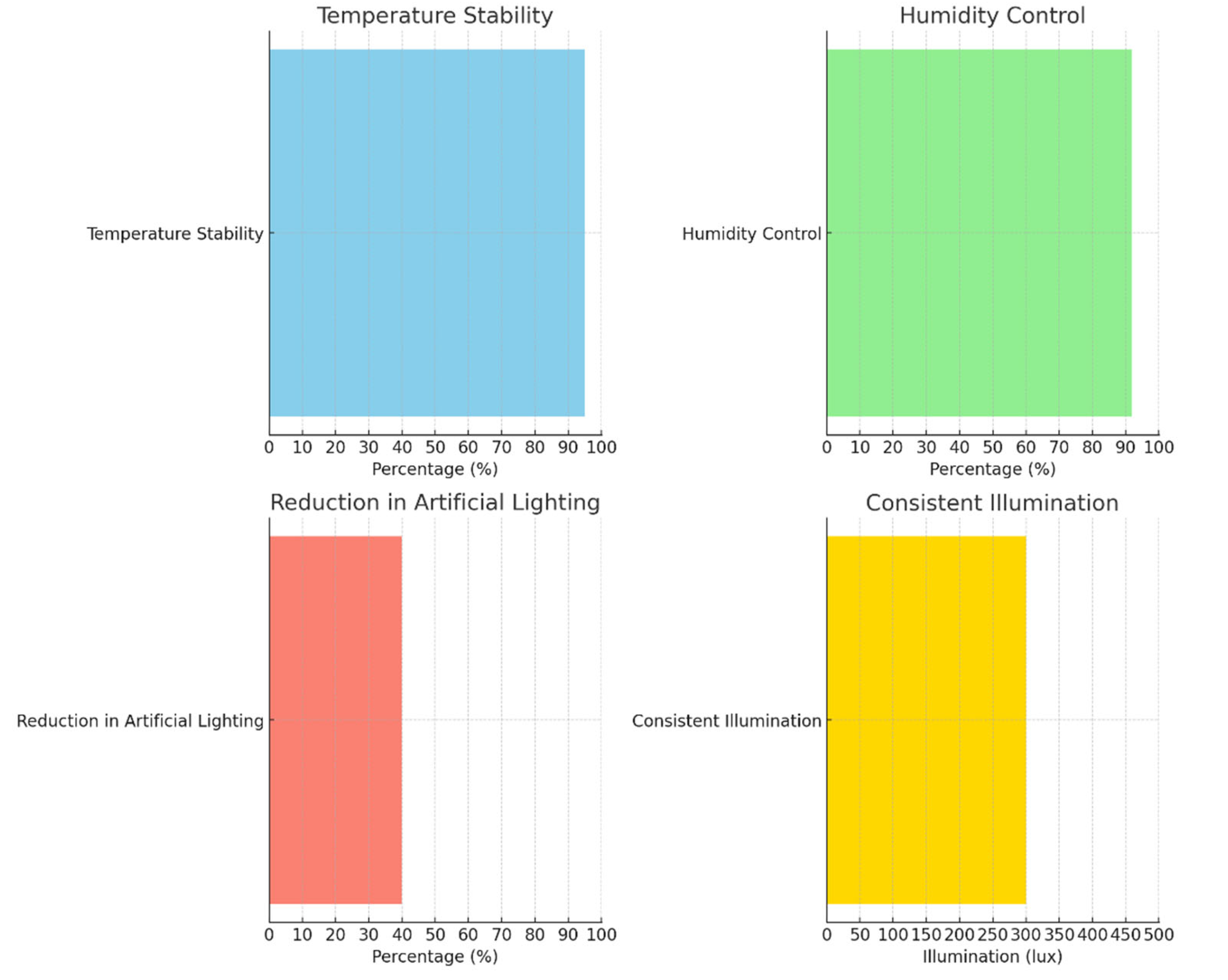
The revitalization of the "Ex Cinema Santa Barbara" cultural center incorporated advanced technologies to enhance user comfort, particularly focusing on indoor environmental quality and lighting quality. Real-time monitoring and automated control systems were implemented to ensure optimal indoor environmental conditions, significantly improving user comfort (Figure 5). The automated HVAC system maintained indoor temperatures within the comfort range of 20-24°C for 95% of the time during operational hours. Temperature deviations from this comfort range occurred less than 5% of the time, minimizing discomfort due to temperature fluctuations. Humidity levels were kept within the ideal range of 30-50% relative humidity for 92% of the time, with minimal deviations, contributing to a comfortable indoor environment and preventing issues such as mold growth and dry air.
The integration of automated lighting systems also improved visual comfort for occupants by optimizing both natural and artificial lighting. The automated shading systems and smart lighting controls reduced the need for artificial lighting by 40% during daylight hours, while maintaining visual comfort by ensuring optimal use of natural light. The lighting system maintained consistent illumination levels of 300-500 lux in occupied areas, adapting lighting levels based on occupancy and natural light availability. This provided suitable illumination for various activities such as reading, exhibitions, and performances.
The quantitative data highlights the improvements in user comfort achieved through enhanced indoor environmental quality and lighting quality at the "Ex Cinema Santa Barbara" cultural center. Key metrics such as temperature stability, humidity control, reduction in artificial lighting, and consistent illumination levels demonstrate the project's success in creating a comfortable and pleasant environment for all users. These findings underscore the importance of advanced environmental and lighting control systems in heritage conservation and building management, offering valuable insights for future projects.
5.3 Limitations and Challenges
While the "Ex Cinema Santa Barbara" project achieved significant successes, it also encountered several limitations and challenges that provide valuable lessons for future projects.
One of the primary challenges was the integration of modern technologies within the constraints of a historic building. Ensuring that the installation of new systems did not compromise the building's structural integrity or historical features required meticulous planning and execution. Future projects could benefit from more extensive pre-construction testing and simulations to anticipate and mitigate such challenges.
Another limitation was the reliance on real-time data and automated systems, which introduced complexities related to system interoperability and data management. The integration of various IoT devices and the creation of a coherent digital twin necessitated significant investment in both hardware and software. Addressing these complexities in future projects might involve the adoption of standardized protocols and more robust data management frameworks to streamline integration and ensure data reliability.
The project's emphasis on energy efficiency and sustainability, while commendable, faced practical challenges in balancing these goals with user comfort. For instance, the automated shading systems, while reducing energy consumption, occasionally resulted in reduced natural light, impacting the aesthetic and comfort levels for users. Future projects should explore more flexible and adaptive systems that can balance energy efficiency with user experience more effectively.
Accessibility improvements, while successfully implemented, highlighted the need for continuous engagement with user groups to ensure that all modifications truly meet the needs of diverse users. Regular feedback loops with community members and stakeholders could enhance the inclusivity and functionality of the design interventions.
The use of advanced technologies like BIM and Generative Design, although beneficial, required specialized skills and knowledge. This necessitated extensive training and coordination among the project team, which could be a barrier for smaller projects with limited resources. Future initiatives could benefit from developing more user-friendly tools and providing broader access to training resources to democratize the use of these advanced technologies.
In summary, the "Ex Cinema Santa Barbara" project faced several limitations and challenges, including integrating modern technologies within a historic structure, managing real-time data, balancing energy efficiency with user comfort, ensuring accessibility, and requiring specialized skills. Addressing these issues in future projects could involve enhanced pre-construction testing, standardized protocols, flexible and adaptive systems, continuous stakeholder engagement, and broader access to training resources. These improvements can further the effective application of BIM and Generative Design in heritage conservation and building management.
7. Conclusions
The revitalization of the "Ex Cinema Santa Barbara" in Paternò has showcased the transformative potential of integrating BIM and Generative Design methodologies in heritage conservation and building management. This project successfully preserved the historical and cultural significance of the cinema while introducing modern functionalities to meet contemporary needs. The use of advanced technologies enabled a meticulous and innovative approach to restoring and enhancing the building, setting a benchmark for future projects in the AEC industry.
Key achievements of the project include:
- Created detailed and accurate models of the building's architectural, structural, and MEP components, ensuring seamless coordination among stakeholders and adherence to Italian BIM standards (UNI 11337).
- Enabled the exploration of multiple design solutions, optimizing spatial layouts, structural integrity, and energy performance through iterative processes.
- Provided real-time monitoring and control, significantly improving energy efficiency and user comfort.
- Facilitated real-time, data-driven building management, supporting predictive maintenance and proactive system optimization.
- Set a benchmark for future projects to prioritize universal accessibility and user comfort.
- Combined with real-time data analysis, these systems contributed to significant energy savings and operational efficiency.
The study makes several significant contributions to the field:
- The use of BIM facilitated precise modeling and effective stakeholder coordination, setting a standard for detailed and accurate digital representations in heritage conservation projects.
- Generative Design enabled the exploration of various design alternatives, optimizing spatial layouts, structural integrity, and energy performance.
- The integration of a digital twin and IoT sensors showcased the potential for real-time, data-driven building management, enhancing building performance and sustainability.
- Emphasized the importance of designing accessible and inclusive spaces, setting a benchmark for future projects.
- The implementation of automated systems for HVAC, lighting, and shading, combined with real-time data analysis, contributed to significant energy savings and operational efficiency.
The study identifies several promising directions for future research:
- Further research is needed to enhance the user interface, computational power, and algorithmic capabilities of these tools, making them more accessible and effective for practitioners.
- Improving the accuracy and reliability of digital twins through advanced sensors and improved data analytics techniques, including the application AI and ML, can lead to more predictive and adaptive building management systems.
- Developing more robust and interoperable IoT ecosystems, standardizing communication protocols, ensuring data security, and enhancing scalability are crucial for the broader adoption of IoT in building management.
- Research into integrating renewable energy sources with BIM and automated management systems, as well as using BIM for lifecycle assessment and management of building materials, can contribute to more sustainable construction practices.
- Studying the impact of inclusive design on user experience and community engagement can provide valuable insights for future projects, ensuring that built environments cater to diverse user needs.
- Developing specialized BIM tools and techniques tailored for heritage conservation, improving the accuracy of digital models of historical structures, and creating guidelines for minimally invasive structural reinforcements can enhance the preservation and modernization of historical buildings.
In conclusion, the "Ex Cinema Santa Barbara" project has demonstrated the significant benefits of integrating advanced digital technologies in heritage conservation. By leveraging BIM, Generative Design, and automated management systems, the project not only preserved a cultural landmark but also enhanced its functionality and sustainability. The insights gained from this project contribute to the broader understanding of how these methodologies can be applied to similar projects, offering a blueprint for future initiatives that aim to balance historical preservation with modern needs.
Future research should focus on specific areas such as improving digital tool interfaces, integrating renewable energy, and enhancing data security. Potential funding sources and collaborative opportunities could include government grants, partnerships with technology firms, and collaboration with academic institutions specializing in heritage conservation and digital technologies.
Author Contributions
Conceptualization, S.C. and R.C.; methodology, S.C. and R.C.; investigation, G.P.; data curation, G.P. and S.C.; writing—original draft preparation, S.C.; writing—review and editing, S.C. and R.C.; supervision, R.C. All authors have read and agreed to the published version of the manuscript.
Informed Consent Statement
Not applicable.
Data Availability Statement
Data sharing is not applicable to this article.
Acknowledgments
The publication was created within the framework of the European Union—FSE-REACT-EU, PON Research and Innovation 2014–2020 DM1062/2021.
Conflicts of Interest
The authors declare no conflicts of interest.
References
- Jin, R.; Zou, Y.; Gidado, K.; Ashton, P.; Painting, N. Scientometric Analysis of BIM-Based Research in Construction Engineering and Management. Engineering, Construction and Architectural Management 2019, 26, 1750–1776. [Google Scholar] [CrossRef]
- Muller, M.F.; Esmanioto, F.; Huber, N.; Loures, E.R.; Canciglieri, O. A Systematic Literature Review of Interoperability in the Green Building Information Modeling Lifecycle. J Clean Prod 2019, 223, 397–412. [Google Scholar] [CrossRef]
- Gradišar, L.; Klinc, R.; Turk, Ž.; Dolenc, M. Generative Design Methodology and Framework Exploiting Designer-Algorithm Synergies. Buildings 2022, 12, 2194. [Google Scholar] [CrossRef]
- Zhang, J.; Liu, N.; Wang, S. Generative Design and Performance Optimization of Residential Buildings Based on Parametric Algorithm. Energy Build 2021, 244, 111033. [Google Scholar] [CrossRef]
- Abrishami, S.; Goulding, J.; Rahimian, F. Generative BIM Workspace for AEC Conceptual Design Automation: Prototype Development. Engineering, Construction and Architectural Management 2020, 28, 482–509. [Google Scholar] [CrossRef]
- Penića, M.; Svetlana, G.; Murgul, V. Revitalization of Historic Buildings as an Approach to Preserve Cultural and Historical Heritage. Procedia Eng 2015, 117, 883–890. [Google Scholar] [CrossRef]
- Pigliautile, I.; Castaldo, V.L.; Makaremi, N.; Pisello, A.L.; Cabeza, L.F.; Cotana, F. On an Innovative Approach for Microclimate Enhancement and Retrofit of Historic Buildings and Artworks Preservation by Means of Innovative Thin Envelope Materials. J Cult Herit 2019, 36, 222–231. [Google Scholar] [CrossRef]
- Singh, V.; Gu, N.; Wang, X. A Theoretical Framework of a BIM-Based Multi-Disciplinary Collaboration Platform. Autom Constr 2011, 20, 134–144. [Google Scholar] [CrossRef]
- Bredella, N. Simulation and Architecture: Mapping Building Information Modeling. NTM Zeitschrift für Geschichte der Wissenschaften, Technik und Medizin 2019, 27, 419–441. [Google Scholar] [CrossRef] [PubMed]
- Saieg, P.; Sotelino, E.D.; Nascimento, D.; Caiado, R.G.G. Interactions of Building Information Modeling, Lean and Sustainability on the Architectural, Engineering and Construction Industry: A Systematic Review. J Clean Prod 2018, 174, 788–806. [Google Scholar] [CrossRef]
- Cascone, S. Digital Technologies and Sustainability Assessment : A Critical Review on the Integration Methods between BIM and LEED. Sustainability (Switzerland) 2023, 15, 5548. [Google Scholar] [CrossRef]
- Eastman, C.M.; Jeong, Y.-S.; Sacks, R.; Kaner, I. Exchange Model and Exchange Object Concepts for Implementation of National BIM Standards. Journal of Computing in Civil Engineering 2010, 24, 25–34. [Google Scholar] [CrossRef]
- Acampa, G.; Forte, F.; De Paola, P. B.I.M. Models and Evaluations. In; 2020; pp. 351–363.
- Azhar, S.; Brown, J. BIM for Sustainability Analyses. Int J Constr Educ Res 2009, 5, 276–292. [Google Scholar] [CrossRef]
- Liu, Y.; van Nederveen, S.; Hertogh, M. Understanding Effects of BIM on Collaborative Design and Construction: An Empirical Study in China. International Journal of Project Management 2017, 35, 686–698. [Google Scholar] [CrossRef]
- Al Hattab, M.; Hamzeh, F. Simulating the Dynamics of Social Agents and Information Flows in BIM-Based Design. Autom Constr 2018, 92, 1–22. [Google Scholar] [CrossRef]
- Khan, S.; Awan, M.J. A Generative Design Technique for Exploring Shape Variations. Advanced Engineering Informatics 2018, 38, 712–724. [Google Scholar] [CrossRef]
- Sun, Y.; Dogan, T. Generative Methods for Urban Design and Rapid Solution Space Exploration. Environ Plan B Urban Anal City Sci 2023, 50, 1577–1590. [Google Scholar] [CrossRef]
- Qian, C.; Tan, R.K.; Ye, W. An Adaptive Artificial Neural Network-Based Generative Design Method for Layout Designs. Int J Heat Mass Transf 2022, 184, 122313. [Google Scholar] [CrossRef]
- Koenig, R.; Miao, Y.; Aichinger, A.; Knecht, K.; Konieva, K. Integrating Urban Analysis, Generative Design, and Evolutionary Optimization for Solving Urban Design Problems. Environ Plan B Urban Anal City Sci 2020, 47, 997–1013. [Google Scholar] [CrossRef]
- Verganti, R.; Vendraminelli, L.; Iansiti, M. Innovation and Design in the Age of Artificial Intelligence. Journal of Product Innovation Management 2020, 37, 212–227. [Google Scholar] [CrossRef]
- Abrishami, S.; Goulding, J.; Rahimian, F.P.; Ganah, A.; Sawhney, A. G-BIM Framework and Development Process for Integrated AEC Design Automation. Procedia Eng 2014, 85, 10–17. [Google Scholar] [CrossRef]
- Boje, C.; Guerriero, A.; Kubicki, S.; Rezgui, Y. Towards a Semantic Construction Digital Twin: Directions for Future Research. Autom Constr 2020, 114, 103179. [Google Scholar] [CrossRef]
- Omar, O.; García-Fernández, B.; Fernández-Balbuena, A.Á.; Vázquez-Moliní, D. Optimization of Daylight Utilization in Energy Saving Application on the Library in Faculty of Architecture, Design and Built Environment, Beirut Arab University. Alexandria Engineering Journal 2018, 57, 3921–3930. [Google Scholar] [CrossRef]
- Khan, S.; Awan, M.J. A Generative Design Technique for Exploring Shape Variations. Advanced Engineering Informatics 2018, 38, 712–724. [Google Scholar] [CrossRef]
- Ma, W.; Wang, X.; Wang, J.; Xiang, X.; Sun, J. Generative Design in Building Information Modelling (BIM): Approaches and Requirements. Sensors 2021, 21, 5439. [Google Scholar] [CrossRef] [PubMed]
- Panteli, C.; Kylili, A.; Fokaides, P.A. Building Information Modelling Applications in Smart Buildings: From Design to Commissioning and beyond A Critical Review. J Clean Prod 2020, 265, 121766. [Google Scholar] [CrossRef]
- Abideen, D.K.; Yunusa-Kaltungo, A.; Manu, P.; Cheung, C. A Systematic Review of the Extent to Which BIM Is Integrated into Operation and Maintenance. Sustainability 2022, 14, 8692. [Google Scholar] [CrossRef]
- Biagini, C.; Capone, P.; Donato, V.; Facchini, N. Towards the BIM Implementation for Historical Building Restoration Sites. Autom Constr 2016, 71, 74–86. [Google Scholar] [CrossRef]
- Georgopoulos, A. Contemporary Digital Technologies at the Service of Cultural Heritage. In Heritage Preservation; Springer Singapore: Singapore, 2018; pp. 1–20. [Google Scholar]
- Pereira, V.; Santos, J.; Leite, F.; Escórcio, P. Using BIM to Improve Building Energy Efficiency – A Scientometric and Systematic Review. Energy Build 2021, 250, 111292. [Google Scholar] [CrossRef]
- Zhuang, D.; Zhang, X.; Lu, Y.; Wang, C.; Jin, X.; Zhou, X.; Shi, X. A Performance Data Integrated BIM Framework for Building Life-Cycle Energy Efficiency and Environmental Optimization Design. Autom Constr 2021, 127, 103712. [Google Scholar] [CrossRef]
Figure 1.
The methodological approach
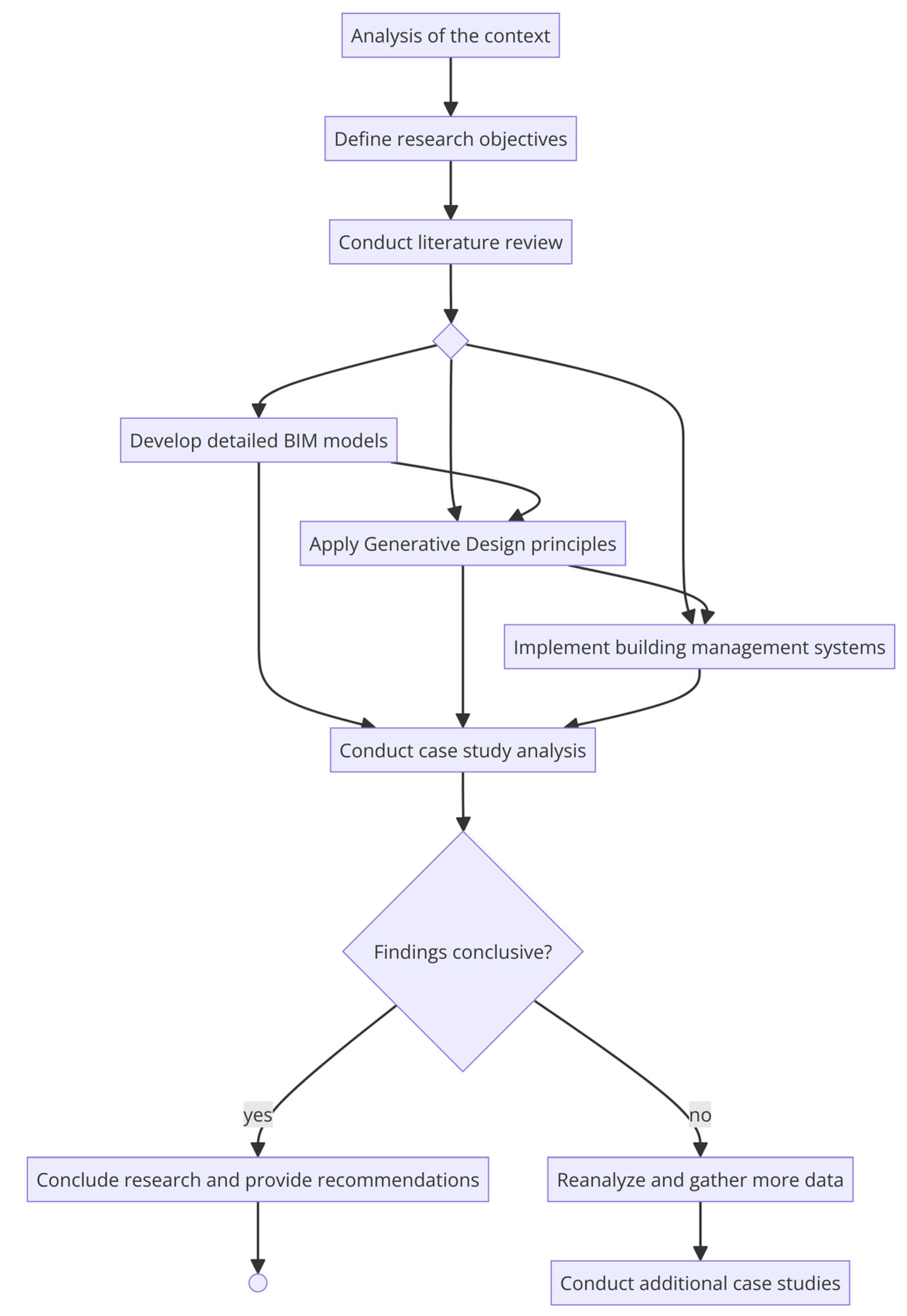
Figure 2.
Current state of the "Ex Cinema Santa Barbara" derived from the BIM model.
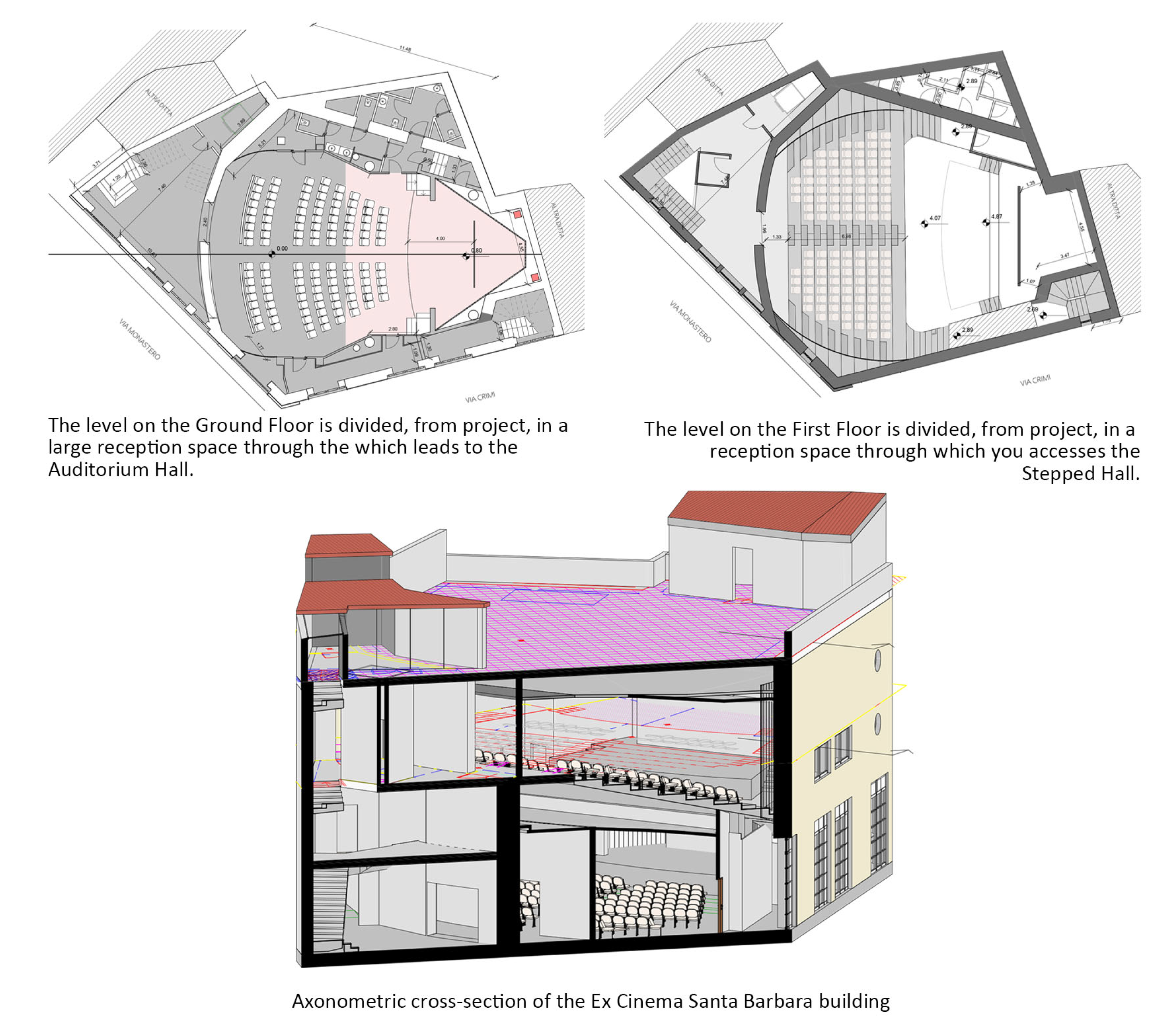
Figure 3.
The creation of multifunctional spaces inside the "Ex Cinema Santa Barbara".
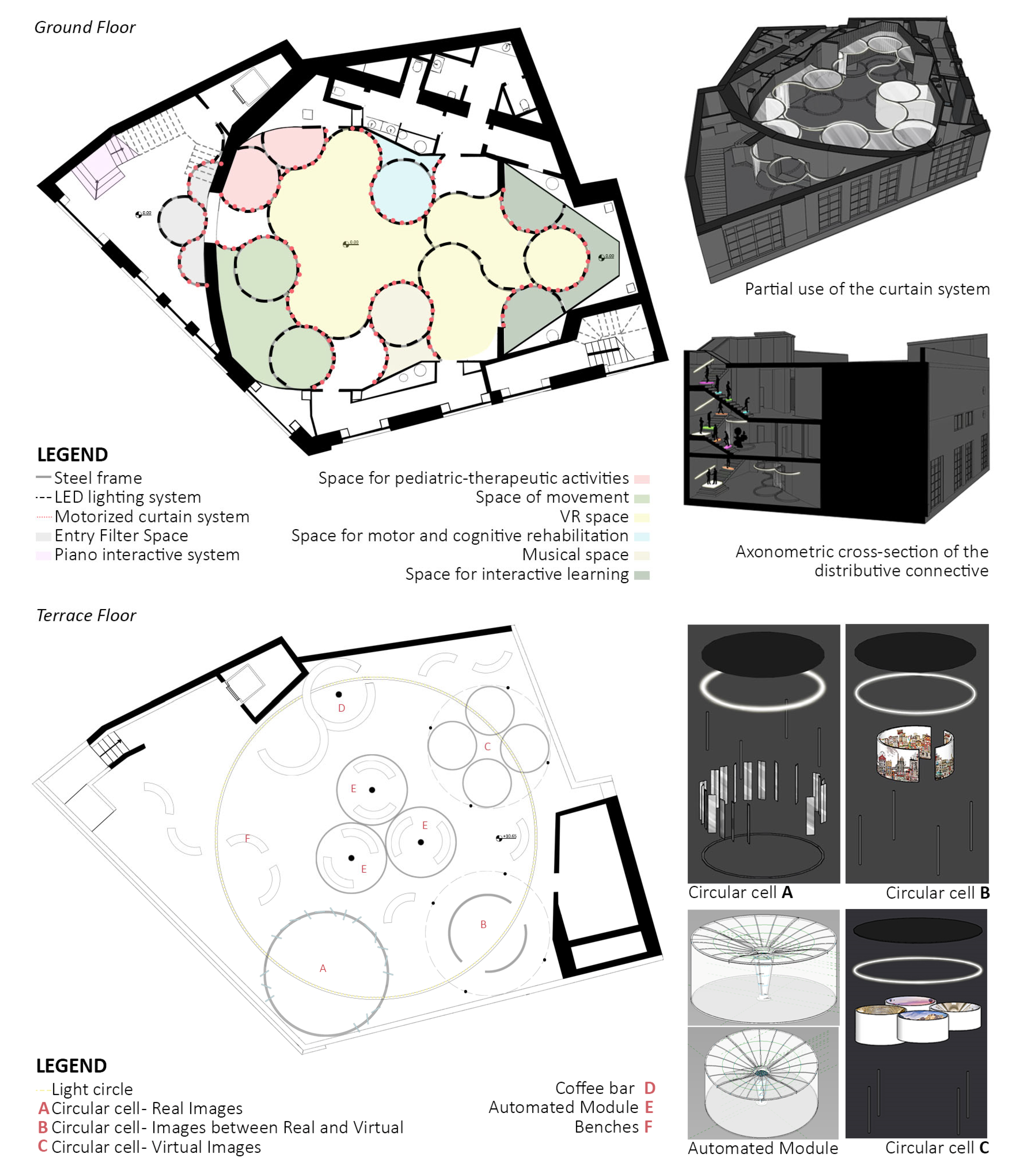
Figure 4.
BIM model for the "Ex Cinema Santa Barbara" developed using Autodesk Revit.
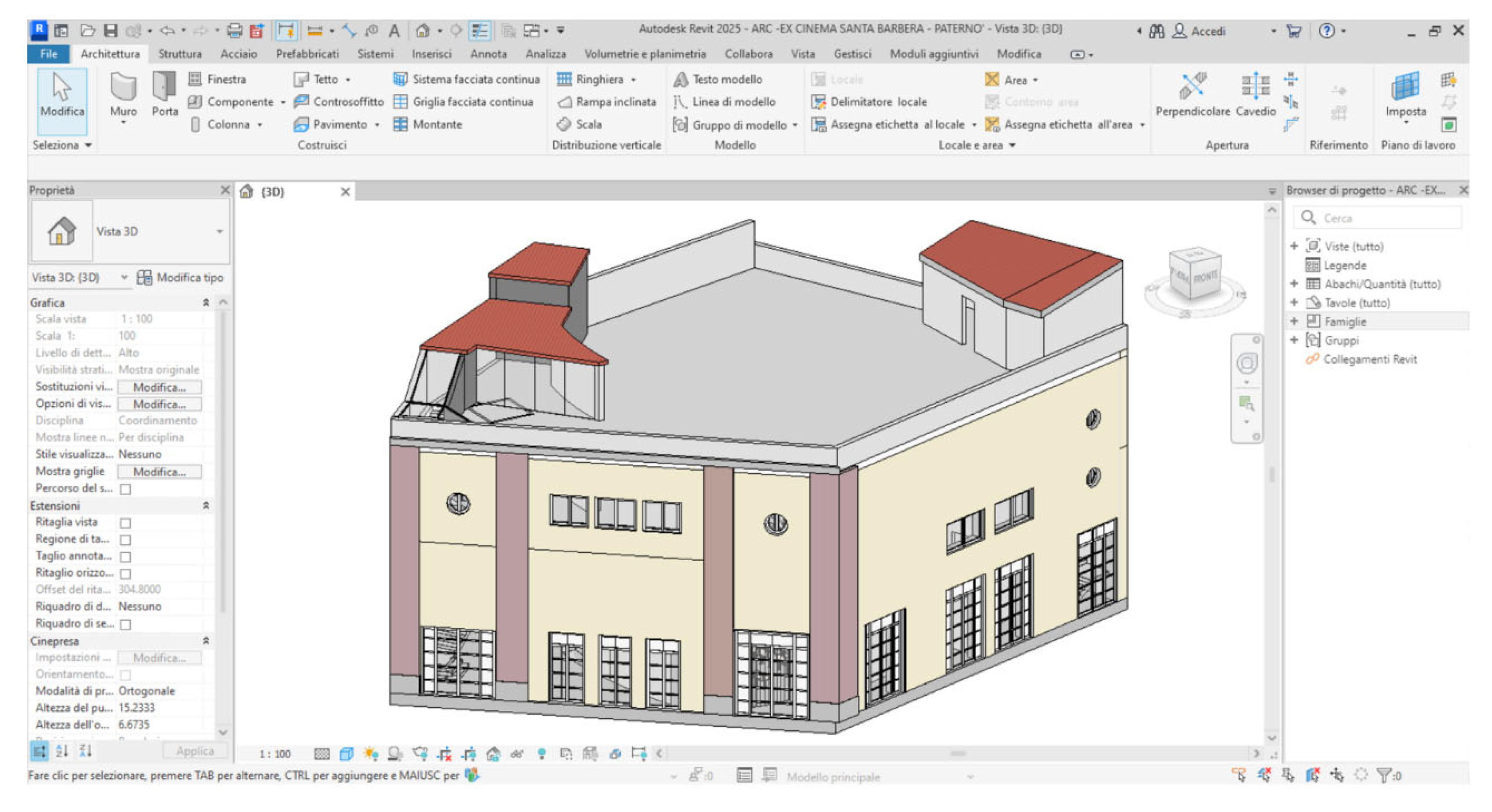
Figure 5.
Development of automation scripts using Dynamo
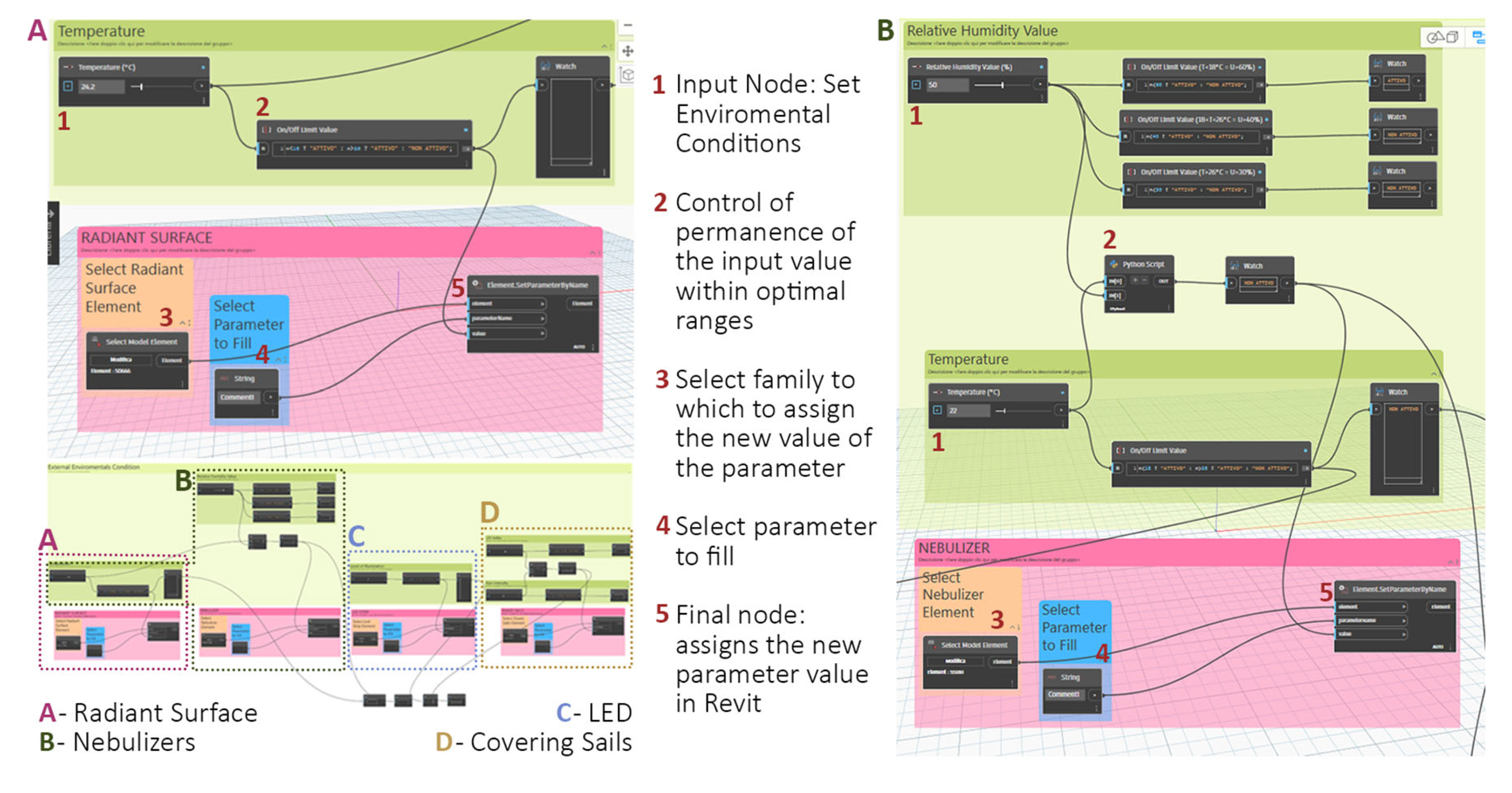
Figure 6.
Improvements in user comfort.
Disclaimer/Publisher’s Note: The statements, opinions and data contained in all publications are solely those of the individual author(s) and contributor(s) and not of MDPI and/or the editor(s). MDPI and/or the editor(s) disclaim responsibility for any injury to people or property resulting from any ideas, methods, instructions or products referred to in the content. |
© 2024 by the authors. Licensee MDPI, Basel, Switzerland. This article is an open access article distributed under the terms and conditions of the Creative Commons Attribution (CC BY) license (http://creativecommons.org/licenses/by/4.0/).
Copyright: This open access article is published under a Creative Commons CC BY 4.0 license, which permit the free download, distribution, and reuse, provided that the author and preprint are cited in any reuse.


