

Submitted:
24 February 2025
Posted:
25 February 2025
You are already at the latest version
Abstract
Agriculture is responsible for 37.8% of Ireland’s greenhouse gas (GHG) emissions, with a target to reduce overall emissions by 42% by 2030. For this, aligning with the Climate Action Plan and the European Green Deal, many agri-environmental schemes have been employed. Several models are also available for accounting and reporting but mostly fail to report on a mixed farm level. HOLOS-IE, an agricultural system-based digital platform enabling the simulation of the sectoral GHGs and net farm carbon footprint, is in development to combat this. To ensure the model's development, we engaged with various stakeholders through interviews, workshops, conferences, and online surveys. These engagements revealed several key points, including improving soil health, offering financial support for transitioning to sustainable practices and adopting biodiversity initiatives to improve farms’ environmental impact. When discussing the HOLOS-IE model, 84.13% of stakeholders thought it would be beneficial, 9.52% were neutral, and 6.35% did not believe it would be helpful. Stakeholders recommended enhancing accuracy, improving user-friendliness and accessibility, considering profitability, and ensuring data confidentiality to improve the model. These will guide the model’s refinement, focusing on developing a reliable, user-centred tool to assess farm carbon footprint, and report on and plan climate-resilient agricultural practices.
Keywords:
HOLOS-IE
; Sustainability
; Farm
; Stakeholders
; GHG
; Environmental Footprints
; Agri-Environmental Measures
1. Introduction
Mitigating greenhouse gas (GHG) emissions has never been more urgent in the face of escalating global warming. As of 2023, agriculture is responsible for 37.8% of Ireland’s GHG emissions (EPA, 2024)1. Of this 37.8%, 63% is a result of enteric fermentation, 18.3% is from agricultural soils, and 11.8% is from manure management, with fuel combustion, liming and urea application making up the remaining difference [1]. These data show that Ireland willnot reach the proposed 2030 emissions reduction target of 42%. As with existing measures, it is projected that Ireland will only reduce emissions by 9% overall, with agriculture setonly to reduce emissions by 1%. Currently, Ireland has many environmental measures in place to reduce emissions, for example, the Climate Action Plan, the National Adaptation Framework (NAF) [2], the Water Framework Directive (WFD) [3], Teagasc’s GHG and NH Marginal Abatement Cost Curves [4] and the National Biodiversity Action Plan (NBAP) [5], all of which aim to promote agri-environmental sustainability and mitigate climate change. On top of this, Ireland has to adhere to several European and global frameworks, such as the European Green Deal, the United Nations Sustainable Development Goals (SDGs), the EU Climate Law, and the Environmental Action Programme [6]. Despite these measures, which are projected to decrease Ireland’s GHG emissions by 20%, Ireland will fail to reach the proposed 2030 targets and, therefore, needs other solutions to mitigate the impact of the Irish climate [7].
At a farm and national level, measurement, reporting and verification (MRV) tools allow farmers to track their farm’s GHG emissions and carbon sequestration to assess its environmental impact [8]. Models and/or decision support tools (Tier 3 approach) are crucial for achieving agricultural sustainability by enabling efficient MRV of environmental and social impacts. These tools can help reduce reliance on labour-intensive data collection and provide valuable insights to inform sustainable decision-making, ultimately leading to more efficient and effective agricultural practices. Hence, the development of the HOLOS-IE model, an agricultural system digital platform, aims to predict and curb harmful emissions across agricultural sectors and offset through increasing carbon sequestration in soils and removal through agroforestry. Its mission is to promote sustainability through planning for alternative management/technological approaches, ensuring a climate-resilient agriculture for future generations. It also aims to support the implementation of agri-environmental schemes and advance efforts towards carbon neutrality in agricultural farms by 2050. To enhance the reliability, accuracy, user-friendliness, and utility of a model like HOLOS-IE, stakeholders’ perspectives are important. Since stakeholders are keys in agricultural systems and the associated decision-making processes, their various perspectives and creativity are highly important in developing technologies and tools. Furthermore, it facilitates improved risk management through early detection of possible issues. By ensuring that decisions are more sustainable and adhering to policies and relevant regulations, stakeholder involvement helps to avoid legal problems and delays. It facilitates the settlement of disputes, gives voice to underrepresented communities, and eventually boosts agroeconomic efficiency by avoiding expensive redesigns and delays. In addition to literature review, stakeholder insights and suggestions to incorporate into the model for making it more robust and user-friendly are crucial in shaping the future of the HOLOS-IE model. By understanding stakeholders’ desires for environmental change and their decision-making needs, the software’s user-friendliness can been hanced and tailored more closely to their preferences. Key stakeholders of the HOLOS-IE model are farmers, advisors, government departments, agri-food companies, academics, researchers, national and international policymakers, public and private agencies, NGOs, and non-profit organisations. The study’s primary objective was to gather insights about the problems these stakeholders face in their daily work in agricultural sectors, how they plan to overcome these challenges, how they intend to utilise the HOLOS-IE software, and their suggestions for additional features. As end users, their input is invaluable since they will be responsible for applying the model using their data. Success hinges on comprehend sively addressing their needs, including integrating economic considerations within the model.
2. Literature Review
This review examines existing policies and technological advancements in Ireland’s agricultural sectors, providing insight into the landscape within which stakeholders operate. It seeks to explore current challenges and opportunities in agriculture as Ireland and the EU strive to balance agricultural productivity with environmental sustainability.
2.1. Importance of Agri-Environmental Schemes
Agri-Environmental Schemes (AES) are instrumental in addressing agricultural challenges while promoting practices within the agriculture, forestry and other land use sectors (AFOLU). They play a critical role in coordinating agricultural productivity with environmental conservation objectives. The AES promotes sustainable farming practices that strengthen soil health, mitigate erosion, and minimise water pollution [9]. Techniques such as crop rotation, reduced pesticide use and the implementation of riparian buffers are actively encouraged within AES frameworks [10]. These practices are pivotal in safeguarding soil structures and water quality, ensuring agricultural landscapes’ long-term viability and productivity [11]. AES facilitates adopting climate-resilient practices to mitigate and adapt to climate change impacts. Strategies such as increasing soil organic carbon storage and carbon sequestration through agroforestry, reducing GHG emissions from agriculture including livestock operations, and promoting renewable energy generation on farms are climate-friendly measures endorsed by AES initiatives [12].
The AES initiatives have also demonstrated positive effects in preserving and enhancing biodiversity by incentivising farming practices that support diverse habitats, species, and ecosystems [13]. Measures such as habitat restoration, provision of buffer zones, and organic farming are integral components of AES, contributing to maintaining robust ecosystems and conserving wildlife populations.
The AES bolsters rural economies by providing financial incentives to farmers to adopt environmentally sustainable practices. Through income diversification, enhanced land productivity, and the facilitation of rural tourism via landscape preservation, these schemes play a pivotal role in strengthening the economic resilience of rural communities [10]. They also provide essential environmental benefits beyond agricultural production, encompassing improved air and water quality, preservation of cultural landscapes, and facilitating recreational opportunities. Through compensating farmers for delivering these benefits, AES acknowledges the multifaceted role of agriculture and its significant contribution to societal well-being [14]. In Ireland, MRV tools are crucial in enhancing the effectiveness and accountability of AES initiatives as they enable precise measurements and monitoring of environmental indicators, such as biodiversity levels, soil health and water quality [8] and overall farm carbon balance. While they can be effective, their use has some limitations, including the challenge of data collection, the financial aspect of implementing and maintaining MRV systems and the need for a standardised MRV framework in the EU [15]. The introduction of advanced digital platforms, such as the HOLOS-IE model, may aid in overcoming these limitations by providing a simplified method of data analysis, simulation and visualisation, accuracy and validation to adopt/reject technological approaches. This tool could facilitate opportunities for reporting and keep tracking by government agencies, and, in turn, improving the uptake of AES and climate-resilient sustainable practices.
2.2. Current Agri-Environmental Measures at a National and EU Level 119
The AES are integral components of the Common Agricultural Policy (CAP), aimed at ensuring sustainable agriculture and promoting environmentally friendly practices across European Union (EU) member states. In Ireland, AES is executed through the Rural Development Programme (RDP) under the CAP and managed by the Department of Agriculture, Food and the Marine (DAFM). Similarly, at a European level, they are integral in CAP’s Pillar II initiatives, guided by the European Commission (EC) to align with the EU’s environmental and climate objectives [16]. AES balance farming productivity with ecological preservation, with initiatives such as the Basic Income Support for Sustainability Scheme (BISS), the Agri-Climate Rural Environmental Scheme (ACRES), the ECO scheme, the Organic Farming Scheme (OFS), and the Beef Sector Efficiency Programme (BSEP) at national and EU levels. These schemes focus on biodiversity preservation, soil conservation and water management. They offer farmers financial incentives and technical assistance, informing policies and practices that reconcile agricultural production with environmental sustainability, reflecting an increasing commitment to ecological stewardship in European agriculture. The Basic Income Support for Sustainability Scheme (BISS): The BISS is an Irish AES that provides financial support to farmers per hectare of eligible land [17]. To receive payments, farmers must adhere to Conditionality, which sets the baseline requirements for farmers receiving CAP payments and includes the maintenance of land under Good Agricultural and Environmental Conditions (GAEC) and the fulfilment of Statutory Management Requirements (SMRs) related to soil health, water management and biodiversity [18]. Additionally, farmers must hold a herd number and be actively farming. The BISS promotes sustainable practices to enhance environmental performance and economic stability, aligning with Ireland’s CAP Strategic Plan [18]. BISS payments are required to access other schemes that are available in Ireland.
Agri-Climate Rural Environmental Scheme (ACRES): ACRES is a national AES that supports farmers in adopting environmentally sustainable practices to enhance biodiversity, improve water and air quality, and combat climate change by offering financial and technical support [19]. ACRES also provides training and resources to ensure effective implementation and monitoring of these practices, benefiting both the environment and the agricultural sector [19]. The ECO Scheme: The ECO Scheme rewards farmers for undertaking environmentally friendly actions that benefit the climate, water quality and biodiversity [20]. To qualify, farmers must implement two of the eight agricultural practices or one of three enhanced practices [18]. The eight agricultural practices include space for nature (enhanced), extensive livestock production (enhanced), limiting chemical nitrogen usage, planting native trees and hedgerows (enhanced), use of GPS-controlled fertiliser spreaders, soil sampling and appropriate liming, planting of a break crop, and sowing of multi-species swards [19]. Organic Farming Scheme (OFS): The OFS promotes organic farming practices by supporting farmers’ transition to organic agriculture and enhancing environmental sustainability. The scheme aims to improve soil health, water quality, and biodiversity while providing economic support and access to premium markets [21]. Farmers must adhere to EU organic standards, prohibiting synthetic fertilisers, pesticides, and genetically modified organisms (GMOs). Payments are made per hectare and vary based on land type and farming practices [22].
The Beef Sector Efficiency Programmes (BSEP): The Beef Sector Efficiency Programme (BSEP) is an Irish AES divided into two sectors: the Beef Environmental Efficiency Programme - Suckler (BEEP-S) and the National Dairy Beef Welfare Scheme. BEEP-S aims to enhance the environmental stability and efficiency of beef farming. To avail of these payments, farmers must have an active herd number, a BISS application and beef calves born the year of application [23]. BEEP-S supports productivity while reducing environmental impact through weight recording, carbon efficiency measures and improved animal health and welfare. Farmers receive financial support on a one-year basis to offset costs, promote sustainable practices and contribute to the long-term success of the Irish beef industry [17]. The National Dairy Beef Welfare Scheme supports beef farmers rearing dairy herd calves and aims to enhance beef production quality through economic support and sustainable practices. Eligible calves must be male dairy calves or beef-sired calves from dairy dams, registered with the Irish Cattle Breeding Federation (ICBF), and meet specific weight standards [23]. Payments are given on a per-calf basis, with a minimum of five and a maximum of fifty calves per farm [18].
2.3. Existing Agricultural Digital Platforms
In the rapidly evolving field of agricultural digitisation, several platforms have emerged to support farmers and other stakeholders in optimising land use, management decisions, and inventory reporting, particularly in Ireland. Notable platforms include HerdWatch, AgNav, HerdPlus, the SmartAgriHubs Innovation Portal, the National Farm Survey (NFS), the Farm Accountancy Data Network (FADN), AgriDISCRETE, and HNV_FarmForBio. Each platform contributes uniquely to agriculture’s digital transforma- 186 tion by offering tools and data that enhance decision-making, efficiency, and sustainability. 187 HerdWatch: HerdWatch is a cloud-based mobile application that operates entirely offline and promotes herd management among farmers, allowing them to instantly note the conditions of their compliance. With HerdWatch successfully growing yearly since its production, there are more than 1 million users in 110 countries [24]. The main features of HerdWatch are monitoring animal reproduction, weight, and milk yield. Additional features include recording sales and births, feed purchases, body condition score (BCS) measurements, castration, weaning, or hoof care, allowing for streamlined medical records.
The app logs general activities and jobs that need to be completed, creates reports for farm inspections, and grants farmers access to a user-friendly service with a customer support team available to offer assistance. The app also assists with managing breeding animals by recording serves, scans, dry-off periods and generating calf lists. It tracks livestock margins through its new performance feature, which allows farmers to monitor livestock sales and purchases, livestock average daily weight gain and feed purchases [25]. HerdWatch has also launched FlockWatch, which tracks flock performance and individual animal health on sheep farms. Additionally, they introduced a Grass & Crops system to the application, which assists farmers in the UK and Ireland with digital field record-keeping, crop management and grass planning [24].
AgNav: AgNav is a sustainability platform developed by Teagasc, the ICBF and Bord Bia that provides farmers with a decision-making support tool that guides profitability and environmental performance [26]. Between March 2023 and March 2024, AgNav was piloted with Bord Bia-certified farmers under the Signpost Advisory Programme and now aims to reach 10,000 farmers annually [27]. The AgNav system aims to support farmers in implementing climate action strategies with its three primary features: Assess, Forecast and Action Planner. The Assess feature utilises operational data from the Bord Bia Assurance Scheme and animal-specific data from the IBCF database to perform the farm’s life cycle assessment (LCA). This assessment details the farm’s GHG emissions and other environmental indicators [27]. The Forecast feature assesses the impact of mitigation measures on farm emissions. The Action Planner feature develops a farm-specific plan, allowing farmers to identify and implement the most effective measures for promoting environmental sustainability. Future updates to the AgNav platform are expected to include additional environmental indicators such as biodiversity, water quality and carbon sequestration [26].
HerdPlus: HerdPlus, developed by the ICBF, is a platform designed to provide herd owners with comprehensive performance data, facilitating informed farm management decisions and enhancing on-farm profitability [28]. The platform integrates diverse datasets, including animal events, genomic data, carcass information and weight records, to monitor animal health and generate detailed profiles and reports for herd management. It also facilitates nitrate loss tracking through a stock breakdown by animal category and month.
The platform’s mobile app allows for quick and efficient data recording, with automatic synchronisation to farm software providers linked to the ICBF. Additional benefits of HerdPlus include the ability to create herd catalogues for stock sales and access to support and guidance, assisting farmers in selecting profitable replacement heifers, tracking submission rates and calving intervals, and identifying culling candidates [28]. By minimising paperwork, HerdPlus provides easy access to online reports offering extensive data and insights to support breeding decisions and enhance farm productivity and sustainability.
SmartAgriHubs Innovation Portal: SmartAgriHubs is a European initiative developed under Horizon 2020. With a network of over 164 partners, this platform aims to digitise European agriculture, fostering innovation and sustainability [29]. To ensure practicality, SmartAgriHubs is divided into nine Regional Clusters: Central Europe, France, Iberia, Ireland & UK, Italy & Malta, North-East Europe, North-West Europe, Scandinavia, and South-East Europe [30]. These clusters cater to area-specific agricultural practices and allow integration with other European Initiatives. For instance, the Ireland & UK Regional Cluster showcases two Flagship Innovation Experiments (FIEs) on sustainability focused on animal welfare, water and energy consumption, and remote assessment and management of farmland [31]. As an interactive web-based platform, it serves as a search engine, marketplace, knowledge & training centre, network, and discussion forum, providing farmers and stakeholders with the tools to enhance sustainability and profitability. National Farm Survey: Conducted annually by Teagasc since 1972, the National 245
Farm Survey (NFS) aligns with the EU Farm Accountancy Data Network (FADN) to meet Ireland’s obligations to report farm output, costs and income data to the European Commission [32]. The survey includes a randomised selection of all farm types except poultry and pigs. The primary objective of the NFS is to analyse the financial aspects of the Irish agricultural sector, providing a database for researchers to access economic data on farms and enterprises, thereby supporting policy development at national and EU levels [32]. In recent years, the survey has expanded its scope to include data on farming households, such as off-farm employment, supplementary income, farm inheritance, and demographic information. Additionally, the NFS has started collecting data on environmental issues related to agriculture, reflecting the growing importance of sustainability in the sector [32].
Farm Accountancy Data Network: The FADN is a public European database that offers a comprehensive overview of farming economics across various groups within the EU, categorised by the member state, type of farming and economic size class [33]. The data from national surveys encompasses all commercial agricultural holdings in the dairy, beef and cereal sectors. The FADN provides valuable insights into European farms’ productivity, profitability, economic structure, and subsidies. Currently, the FADN is being converted into the Farm Sustainability Data Network (FSDN), which aims to broaden the scope of data collection to include environmental and social farming practices and reporting on farm performance [34].
AgriDISCRETE: Funded by the Department of Agriculture, Food, and the Marine, the two-year AgriDISCRETE project examined good data governance practices in Ireland’s forestry and agriculture sectors and has significantly improved issues related to Irish forestry and agriculture data utilisation [35]. The main goals of the AgriDISCRETE project were to understand the socio-economic and ethical effects of digitalisation on Irish forestry and agriculture as well as stakeholders’ attitudes and worries regarding digital data management. Co-design workshops with stakeholders influenced the project’s outcomes, which aided in developing a proof-of-concept data exchange platform and a multi-sided commercial platform. The project also involved stakeholders in co-creating sound data governance procedures and aimed to establish data-driven business models, design data sharing, governance, and security models, and ascertain data reuse and sharing requirements.
HNV_FarmForBio: The HNV FarmForBio Project is an initiative that aims to map, identify, and characterise the total area of High Nature Value (HNV) forest and farmland across the country. Techniques were developed to evaluate HNV land quality regarding biodiversity value and its contribution to ecosystem services, such as water quality and carbon storage, and the HNV FarmForBio Project is exploring the development of incentives to upkeep and enhance these areas. The project’s results will assist with targeting climate and biodiversity initiatives in Ireland by improving the design of agri-environmental, climate, and forestry measures in land use strategies [36]. The project aims to accomplish several goals, including raising awareness of the importance of HNV systems and effectively disseminating project findings to stakeholders at national and EU levels by ensuring effective internal and external communication throughout all project phases.
2.4. Gaps in Current Agricultural Platforms
All the platforms described in section 2.3 focus on specific aspects of farm management. For example, HerdWatch and HerdPlus are limited to herd management aspects like reproduction and milk yield. At the same time, AgNav focuses on environmental impact assessments and farm-specific plans with limited simulation capabilities to identify and implement the most effective measures. SmartAgriHubs is a knowledge centre promoting sustainability through innovation, but it cannot calculate GHG emissions from a farm level and mainly works as a marketplace. NFS and FADN emphasise farm economics, capturing detailed performance metrics but not broader environmental impacts. AgriDISCRETE promotes data utilisation and responsible digitalisation but only offers a little insight into farm management. HNV_FarmForBio maps and evaluates high-nature-value farmlands yet needs to simulate environmental impacts comprehensively. 299
2.5. Why HOLOS-IE?
The HOLOS-IE model is a multifaceted software designed for example to simulate sectoral/componentwise (and their balance at a farm level) GHG emissions, soil organic carbon, biomass carbon, water usage, energy consumption, and farms’ overall carbon and agroecological footprint. Based on the HOLOS model (v 4.0) developed by Agriculture and Agri-Food Canada [37], the development of the HOLOS-IE model aims to build on the strength of existing digital agricultural platforms by offering users comprehensive insights into their farm’s environmental impact and facilitating informed decision-making. By providing a holistic view of land use, HOLOS-IE supports the strategic management of agricultural landscapes and guides policymakers towards climate-resilient solutions.
Beyond its immediate benefits to farm management, HOLOS-IE will play a pivotal role in reducing the broader environmental footprint of agricultural practices, offering alternative reduction strategies to all farm types by considering the net carbon balance of a farm, including total biomass, GHG emissions, and soil organic carbon. Encouraging sustainable land use choices protects biodiversity and ecological integrity by nourishing ecosystems and their services. At its core, HOLOS-IE catalyses sustainable farming practices and builds resilience in climate change. Harnessing the power of geospatial data, users can pinpoint their farm location on a map, enabling precise analysis tailored to local climatic and soil conditions. The software encompasses various farm modules, from field management to livestock husbandry, each offering granular insights into specific aspects of farm operations.
Through its nuanced approach and user-friendly interface, HOLOS-IE empowers farmers to make informed decisions and aims to improve stakeholder compliance with existing agri-environmental measures and environmental reporting, paving the way for a more sustainable agricultural landscape. The current release of the HOLOS-IE platform consists of several modules (crops, grasses, livestock, and infrastructure) that have been adapted and modified for Irish agricultural practices and a new Agroforestry (trees within a farm) module [38]. This new module supports various tree species specific to Ireland for five agroforestry systems: silvoarable, silvopastoral, hedgerows, farm gardens, and orchards.
Using these species, the Agroforestry module can calculate tree biomass and compare it with farm baseline data to observe biomass changes due to agroforestry. Other features added to HOLOS-IE include calculating soil organic carbon and N2O emissions from fertiliser usage, which is being validated and refined for accuracy [39]. Figure 1 shows the initial flow diagram of the model and the decision making process. Figure 2 presnets platform’s current development version, demonstrating the ability to select a specific region from the map. HOLOS-IE can be used to explore the impact of alternate land use configurations for a given farm. Plans include transitioning from a desktop application to a web-based platform and enhancing data to improve the model’s effectiveness and usability.
3. Methodology
This section details the procedures and techniques used to gather various stakeholders’ opinions on the importance of digitising agriculture, their daily farming challenges, suggestions for overcoming these challenges, and their perspectives on our project’s goals, significance, sustainability, and environmental impact. 341
3.1. Survey Design
The stakeholder engagement process involved diverse groups, each contributing unique perspectives and expertise. These included farmers, advisors and consultants, academics, researchers, representatives from the National Parks and Wildlife Service (NPWS), and professionals from the agri-food industry. Additionally, key input was provided by the Climate Change Advisory Council (CCAC), the Environmental Protection Agency (EPA) Inventory team, the Department of Agriculture, Food and the Marine (DAFM), forestry and agroforestry representatives, and European Union stakeholders. These engagements occurred through four methods: in-person or face-to-face interviews, public-place interviews, HOLOS-IE workshops, and online feedback forms. The survey process varied for each method, with tailored questionnaires reflecting the nature of each approach. For example, personally contacted stakeholders were asked detailed questions depending on the stakeholder category, i.e., farmer, advisor, etc.
Generalised inquiries were used at the initial surveying stage (1) and revolved around identifying stakeholders’ roles in agriculture, their thoughts on current agri-environmental policies/schemes and sustainability, and their opinions on the HOLOS-IE model.
Following the first phase of interviews, the questions were refined to be more concise and incorporated a one to five scale based on importance, satisfaction, and value. The second phase focused on the participant’s role, three fundamental problems they face, potential solutions, and the current software or models they employ, if applicable. The HOLOS-IE platform’s features were described, and stakeholders’ opinions were solicited regarding its potential to provide a sustainable future and potential issues that may arise with the model. Suggestions relating to additional features, training availability and support provisions for platform utilisation were also gathered.
The final surveying phase was conducted as part of the HOLOS-IE national workshop. The questions addressed the importance of making farms carbon-neutral, intentions to change farm management practices, and specific steps to reduce agricultural GHG emissions, increasing carbon sequestration in soils or limitations preventing such changes. 3Participants were asked their opinions on the preliminary prototype of HOLOS-IE, including its potential impact on Irish agriculture, favoured features, and any missing elements. User-friendliness and suggestions for partners and collaborators were also queried. Additionally, questions focused on the introduction of agroforestry and the development of its module for integration into the mode, the role of trees in offsetting GHG emissions, and the integration of GIS for the automatic transfer of soils and climate data to use as inputs for running the model and utilising them for land use planning. The survey also sought to determine if respondents would be primary users of HOLOS-IE, their reasons for or against the model, and their views on funding availability for extending the project.
3.2. Sampling and Data Collection
The HOLOS-IE model focuses on the sustainability of agricultural practices and has several value propositions: farm sustainability and profitability; climate change mitigation and adaptation; carbon and environmental footprint reduction; circularity and ecosystem services; research and innovation; and policy formulation, monitoring, reporting, and validation (MRV) for the National Inventory and the assessment and evaluation of AES implementation, fostering options for result-based payment. The interview questions were tailored to the key stakeholders, ensuring they gathered relevant and comprehensive feedback from all groups.
During the first survey phase, stakeholders in Ireland were engaged through in-person visits, while meetings with European stakeholders were conducted via Zoom. These meetings were structured to ask predefined questions, with responses recorded using speech-to-text conversion and in-person notes. Each response underwent review and categorisation based on the relevant questions. Additionally, the HOLOS-IE team participated in agricultural events, such as the National Ploughing Championships, and conferences, including Achieving Sustainable Food Systems in Ireland and Beyond; the International Agroforestry Conference 2023; and Environ 2024 - the 34th Irish Environmental Researchers Colloquium to promote stakeholder engagement and raise awareness of the project. These events also facilitated discussions about the project’s goals and objectives with diverse stakeholders, and predesigned survey sheets relating to the HOLOS-IE project were distributed to stakeholders to gather feedback.
In the final phase, surveys were shared with participants from the HOLOS-IE workshop and their opinions were collected using Google feedback forms. This comprehensive approach ensured extensive insights were gathered to inform the development and refinement of the HOLOS-IE platform.Approximately 500 people from diverse sectors were contacted, and insights were successfully received from 117 stakeholders, whose distribution can be observed in Figure 3. Of the 117 responses, eighty were interviewed, and 37 completed surveys and feedback forms as part of the HOLOS-IE National workshop.
Of the eighty stakeholders interviewed, 54 were interviewed online, 15 were sourced in person at the National Ploughing Championships, and 11 were interviewed in person at the International Agroforestry Conference 2023. The distribution of interviewees included 35 farmers, 8 researchers, 8 officials from DAFM, 6 members from advisory and consultancy services, 4 stakeholders from forestry and agroforestry sectors, 3 individuals from the National Park and Wildlife Service of Ireland (NPWS), 3 professionals from the agri-food industry, 2 academics, 2 representatives from the Environmental Protection Agency of Ireland (EPA), 2 experts from the Climate Change Advisory Council of Ireland (CCAC), and one representative from AVOIN Finland. Six other individuals from miscellaneous sectors were also interviewed.
In addition to the surveys and interviews, our project reached around 1,000 people through various online platforms, including Facebook, X (previously Twitter), and LinkedIn. This comprehensive approach allowed us to gather valuable insights and perspectives from stakeholders, ensuring a well-rounded understanding of the topic.
3.3. Data Analysis
The data collected was analysed in several ways to understand stakeholder perceptions of sustainability in Irish agriculture and the HOLOS-IE model. All interview and survey responses were compiled into a need statement to begin the analysis. This document outlined the priorities of stakeholders regarding agriculture in Ireland, its digitalisation and the use of digital platforms like HOLOS-IE. A scoring system was implemented to assess and prioritise the needs discussed, and lever questions were used to evaluate each need addressed. They focused on the importance of addressing the need concerning the stakeholder’s role, their satisfaction with how current solutions address it, and whether the need is of high or low value to stakeholders. The three questions were scored out of five, with one indicating a low priority, five indicating a high priority, and the overall score ranging from zero to fifteen. Needs scoring between zero to five (0-5) were low priority, six to ten (6-10) were medium priority, and eleven to fifteen (11-15) were high priority needs. Following the scoring of individual needs, an average prioritisation score was calculated for all surveyed stakeholders to assess which needs were most significant. Stakeholders were also organised by groups, e.g., farmers, academics, etc., with the highest priority needs extracted based on their score. This approach highlighted the most critical and commonly identified needs, providing a focused interpretation of stakeholder groups’ most pressing challenges. It also provided valuable insights into stakeholders’ views on HOLOS-IE’s goals, significance, sustainability and environmental impact.
The initial stakeholder engagement analysis involved categorising stakeholders into groups based on their roles and affiliations. Multiple interviews were conducted within each group, involving different individuals. Responses were gathered based on the questions outlined in Table 1, and all answers were organised under the respective groups. A summary was then created for each stakeholder group, synthesising the responses provided by individuals within that group. This process ensured a clear and consolidated understanding of each group’s perspectives. ChatGPT was used to generate these summaries to minimise bias, ensuring consistency and neutrality in the analysis. Once individual group summaries were finalised, the responses were integrated into a single overarching summary for each question, encompassing insights from all groups. Table 2 presents the consolidated answers derived from the final summary. Throughout the process, ChatGPT was employed to enhance accuracy and ensure the integrity of the results.
Additionally, Correlation heat maps were used to analyse the degree of similarity in stakeholders’ opinions on needs and solutions to address the current challenges facing the agricultural sector in Ireland. The resulting heat map visually represents the correlations, with high values indicating a strong correlation and low values indicating a weak correlation. By examining the patterns in the heatmap, the degree of consensus was identified, and areas requiring further discussion were pinpointed, ensuring a comprehensive understanding of the varying perspectives of stakeholders.
A comprehensive table categorising macro and micro challenges in agriculture was also generated to analyse the challenges raised by farming stakeholders systematically. The table was divided into three primary macro challenges: environmental concerns, farming concerns and financial concerns. Each macro category was further dissected into positive and negative micro impacts, denoted by a plus (+) or minus (-) sign. This structured approach facilitated a nuanced understanding of the challenges, highlighting each category’s adverse effects and potential benefits.
4. Results
The study results were analysed using multiple approaches to provide a comprehensive understanding of stakeholder perspectives. The findings are organised and presented under distinct subheadings below. 470
4.1. Interview Responses
Table 2 contains the interview questions and a summary of participating stakeholders’ perceptions, problems, solutions, and other thoughts based on their responses. Appendix 1 contains the complete list of questions and responses from participating stakeholder groups.
The key challenges include land scarcity, financial constraints, data access, supply chain inefficiencies, and gaps in research and knowledge, and the main solutions provided by the stakeholders are incentives, improved data-sharing, climate education, and supporting small farms to promote effective climate action and sustainable agriculture. According to the stakeholders, policies promote agroforestry, biodiversity, and renewable energy but need better sector coordination, private investment, and a focus on forests’ carbon potential for climate action. New technology and digital systems are key to addressing climate change, helping farmers measure carbon footprints, optimise inputs, and access climate data for sustainable farm management, but they face challenges like farmer diversity, data access, and regulations. A successful digital platform for sustainable farming requires user profiles, simplicity, accurate data, soil health guidance, economic-environmental modelling, and intuitive interfaces for climate action. HOLOS-IE can address agri-food complexities by overcoming scepticism, comparing impacts, and balancing economic and environmental factors.
4.2. Need Statement Analysis
On analysis of the need statement, an example of which can be seen in Figure 4, the highest priority needs of all stakeholders were determined. Twenty-two percent (22%) of all interviewed stakeholders highlighted trained labour and data integration as top priorities. Twenty-one percent (21%) considered stakeholder engagement and the diversification of farmland used to promote sustainability a top priority. Eighteen percent (18%) emphasised the need for consistent pricing, product value and income, alongside support for farmers transitioning to sustainable practices. Improved weather management was noted by 13% of all respondents. Lastly, 11% of stakeholders agreed on increasing resources to improve biodiversity and conservation and securing long-term funding for sustainability objectives.
Several other needs were highlighted due to their high average prioritisation scores. These include support to reduce heavy workloads, improvements in milk pricing, decreased 501 input costs, and access to online help, models, and software. Additionally, the need for free or affordable access to systems, the ability to measure mixed farms in combination, and a focus on usability without overcomplicating HOLOS-IE were emphasised. To assist farmers, it was suggested to enhance HOLOS-IE’s ability to analyse revenue and cost-benefit metrics, offer options, and report annual emissions. It was expected the software to be free and easy to use, assisting farmers in making sure their operations comply with applicable regulations. Moreover, significant needs such as biodiversity protection across protected areas, clear land use policies, stricter rules on farmers, reduced dependence on subsidies, addressing climate inequality, and identifying knowledge gaps in current policies were also identified.
4.3. Stakeholder Challenges and Solutions
To address stakeholders’ problems and needs, the relations among stakeholders’ answers were analysed, and a correlation heat map was created (5). The heat map shows that stakeholders generally had few commonalities, with relationships primarily influenced by their respective sectors. The EPA Inventory and CCAC shared some common issues with a correlation value of 0.47, such as accessing data. Conversely, while farmers and academics were closely related, their issues differed significantly from those of the DAFMs. The NPWS and DAFM faced similar challenges, such as biodiversity loss and gaps in land use policies, reflected in a correlation value of 0.37. Academics, farmers, researchers, and advisors/consultants shared concerns about weather uncertainty and the need for farmers’ knowledge, with a corresponding heatmap value of 0.29. Academics and advisors/consultants also had issues aligned with those of the forestry and agroforestry departments regarding changing traditional farming practices. Additionally, the agrifood industry encountered challenges different from those of the other stakeholder groups. All the challenges are specified in Appendix A based on the groups.
During the interviews, stakeholders proposed solutions to various challenges, including promoting climate change awareness, improving decision-making, developing cohesive land use policies, advancing IT systems, ensuring sustainable financing, and resolving staffing and compliance issues. They also emphasized the use of GIS tools, increasing organic farming with premium pricing, enhancing supply chains, conducting research, and providing better data access. These solutions were suggested by diverse groups such as companies, regulators, farmers, NGOs, and government bodies. Appendix 1-B contains the complete list of all the solutions from participating stakeholder groups.
In Figure 6, Correlations among stakeholders were mapped based on their proposed solutions, revealing commonalities and potential areas for collaboration.
The correlation analysis reveals a strong alignment between farmers’ solutions and those of the EPA Inventory, with a correlation value of 0.62, focusing on promoting awareness of climate change and sustainable agricultural practices. These solutions are supported by academics, EU stakeholders, researchers, and advisors/consultants. However, significant differences are noted between the solutions of farmers and those of the NPWS, Agri-food industry, DAFM, and Agroforestry/Forestry sectors. Advisors/consultants and academics show a notable alignment in their solutions, with a correlation value of 0.59, emphasising stakeholder engagement mostly with farmers. Additionally, academics and researchers have a solid consensus on the challenges and solutions, indicated by a correlation value of 0.61.
4.4. Macro and Micro Analysis of Stakeholder Perspectives
The prioritisation of needs relating to agri-environmental practices and the HOLOS-IE model was also analysed based on stakeholder groups. Farmers raised several concerns, with three major concerns identified: environmental, farming, and financial. These major challenges were then divided into the farmers’ positive and negative micro impacts, such as the need for improved environmental regulations, improved labour planning, and decreased input costs. Further details are provided in Figure 7.
The responses of the various other stakeholders were analysed according to the three major challenges mentioned above. Categorising their feedback according to these overarching challenges helped identify key themes and actionable strategies to enhance sustainability, resilience, and efficiency in the agricultural sector.
Under environmental concerns, researchers emphasised the need for incentives to drive the adoption of sustainable practices and advocated for simplified agricultural policies to enhance implementation at a farm level. They highlighted the importance of addressing policy and support system gaps related to biodiversity protection and conservation efforts. Additionally, they underscore the necessity of filling knowledge gaps to develop effective policies tailored to regional environmental contexts. The EPA, CCAC and EU stakeholders focused on enhanced biodiversity protection and the development of clear land use policies. They advocated for increased funding for conservation efforts and emphasised the need for accessible platforms for engagement to support and implement conservation initiatives 5effectively. They aimed to improve resource availability and ensured that conservation policies are clear and actionable. Stakeholders from DAFM highlighted the importance of long-term research support in understanding and addressing environmental impacts. They called for diversification of farmland use and incentives for sustainable practices, focusing on effective communication regarding biodiversity and soil policies. Additionally, they recognised the challenge of assessing accurate information amidst cast data, underscoring the need for targeted research to support environmental sustainability. With farming concerns, forestry and agroforestry stakeholders expressed concerns about unpredictable weather and the necessity of training for new technologies. They highlighted the need for user-friendly models and financial support to overcome financial constraints and the complexities of evaluating systems in mixed farming. They stressed integrating databases and initiatives to provide accessible information and address climate change and decarbonisation challenges. Advisors and consultants emphasised the importance of addressing climate inequality and prioritising farmers’ needs. They advocated for equitable climate policies and targeted support to enhance resilience and sustainability in agriculture. They focused on reducing emissions in the farming sector and implementing strategies to minimise GHG emissions, thus supporting effective farming practices.
Regarding financial concerns, researchers and DAFM stakeholders recognised the 5impact of financial constraints on the agricultural sector. They advocated for incentives and financial support to promote sustainable practices and diversify land use. Agri-food industries and forestry stakeholders noted the impact of financial constraints on their ability to adapt to new technologies and establish native woodlands. They emphasised the need for financial support and accessible information to manage the costs associated with implementing new practices and technologies in the face of climate change. Advisors and 5consultants underscored the need for equitable climate policies and targeted support to address financial challenges faced by farmers. They focused on creating a more resilient 5and sustainable agricultural sector through policies that help manage financial pressures 5and reduce emissions.
5. Discussion
5.1. Stakeholder Perspectives on Agri-Environmental Challenges
The survey revealed diverse challenges and successes across various sectors. Addressing climate change is crucial, and new technology and digital systems play a significant role in achieving this goal. Farmers highlighted the importance of digital systems for measuring and assessing carbon footprints, optimising inputs, and accessing climate and weather information for effective farm management. This indicates that farmers are increasingly concerned about climate change and are motivated to adopt practices that help reduce carbon emissions and mitigate its effects. According to Jhaand Gupta, 2021, a study involving 700 farmers revealed that 80% perceive and predict climate changes and are inclined to adopt adaptive measures. However, some respondents, such as those from the EPA Inventory, needed more expertise to comment on prioritising agricultural systems at the landscape level. The CCAC emphasised the necessity of prioritising agroforestry and hedgerows to achieve carbon neutrality, promote biodiversity, and create space for nature, requiring government support and initiatives like Space for Nature and New Forest schemes. Researchers noted the challenge of balancing climate goals with agricultural production and ecosystem services but underscored the importance of emphasising agricultural systems, including forestry and agroforestry. Academics pointed out that while agroforestry can aid in adaptation by providing shade and addressing temperature concerns, its mitigation potential might be limited [40].
Additionally, the forestry and agroforestry sectors highlighted the need for skilled contractors and resources to promote forestry, while farmers faced recurring issues like financial constraints and weather uncertainty. The EPA struggled with data access, and the CCAC emphasised the difficulty of obtaining accurate climate data, suggesting that investing in advanced monitoring technologies and data analytics can help overcome this challenge. Increased deforestation and land scarcity were significant concerns for DAFM, whereas the Agri-Food Industry dealt with supply chain and packaging inefficiencies. Advisors and consultants noted a need for more research on organic farming and the high cost of fertilisers. Researchers identified numerous challenges, including soil quality and climate change, and academics stressed the need for stakeholder engagement to drive transformative action. Addressing these issues is crucial for promoting sustainable practices, enhancing data accessibility, and ensuring effective climate action and agricultural productivity. A collaborative approach involving all stakeholders, supported by government initiatives and technological advancements, is essential for achieving long-term sustainability goals [41]. Stakeholders, including farmers, industry, policymakers, and researchers, must collaborate to drive transformative action and ensure the long-term sustainability of the sector.
5.2. Existing Platforms Vs HOLOS-IE
Section 2.4 has already outlined the gaps in the existing digital platforms, as described in Section 2.3. These gaps highlight significant differences between the current software and HOLOS-IE. Addressing the complexity of evaluating systems and the challenge of assessing accurate information amidst vast data also relates to the financial aspects of managing agricultural operations and policies. The rationale for selecting HOLOS-IE is thoroughly explained in Section 2.5, given its advantages and capabilities. HerdWatch and HerdPlus are dedicated to herd management, while AgriDISCRETE focuses on dairy and forestry practices, offering practical solutions for users to record their compliance requirements. While similar to HOLOS-IE, AgNav’s features are less comprehensive, with HOLOS-IE considering more farm components, including five separate land-use and management modules: Crops, Grasses, Livestock, Agroforestry and Infrastructure. While the NFS and FADN offer reports on farm performance and environmental sustainability, the HOLOS-IE model offers a more extensive set of features aiding with recording and decision-making processes and providing reports while delivering results. Additionally, HOLOS-IE excels in its livestock modules, offering nearly twenty-four different farm configurations and calculations, with plans to increase the number of these configurations in future. In detail, HOLOS-IE could provide a broader scope, including simulations of sectoral GHG emissions, soil and biomass-C, water usage, and energy consumption, and integrate geospatial data for precise local analysis and tailored farm-specific sustainability plans, with potential to assess farm-C footprint. Regarding the agricultural systems-based platform HOLOS-IE, various stakeholders recognised its potential to inform climate change mitigation and adaptation policy, reduce environmental pollution, and align with initiatives such as NIR and CAP schemes, which aim to address the limitations of crop models, which often fail to account for all relevant climate change impacts and adaptation options. According to [42] changes in technology, policy, and prices have historically had and are likely to continue having a greater impact on farms than climate change itself. But this software can take care of both and farm at a time. Essential features for a successful digital platform for sustainable farming include user-friendly interfaces, accurate data integration, holistic farm modelling, and tools for monitoring carbon and nitrate usage, soil and water quality, biodiversity and ecosystem services, and optimising land use. The platform should also support automation, access to existing databases, and provide visual aids, case studies, and stakeholder collaboration to effectively aid farmers in reducing their carbon footprint and making sustainable decisions through alternative land use and management options. As part of the future management options, irrigation is being considered, and a strategy is also discussed [43].
To ensure the platform is user-friendly and accessible to everyone, it should feature a graphically organised interface, be accessible online and offline, and cater to various stakeholders through tailored modes. It should offer a free entry-level service with the potential for fee-based advanced features and include a mobile application with proper smartphone visualisation. Collaboration with UX experts and leveraging resources like open-source APIs will enhance usability. A focus on building an advisor network can engage farmers, provide experimentation tools, and secure data while exploring funding options. Additionally, stakeholder engagement is vital for input, regular updates, and validation of benefits through workshops, media promotion, and continuous feedback, ensuring the platform’s relevance, usability, and successful integration into existing agricultural processes.
5.3. Stakeholder Perspectives on HOLOS-IE Development
When asked, “What are your thoughts on the decision-making platform HOLOS-IE, and what benefits do you see?” stakeholders had varying opinions. HOLOS-IE could potentially be beneficial for sustainable farming, emphasising the importance of integrating the platform with practical farming considerations to ensure it aligns with farmers’ needs, user-friendly, and transparent to formulate effective policies. This could result in the current emissions and land use monitoring methods being more efficient, and the introduction of soil certification and quantitative metrics for results-based payments could promote proper land use and incentivise sustainable practices, in line with others (e.g. [44]). Our study recognises the value of a comprehensive landscape model like HOLOS-IE, which integrates alternative farming choices, accounting, reporting, and future potential of CAP scheme submissions, attracting less attention but important [45] [46]. It is a valuable aid for farmers to reduce environmental impacts and carbon emissions. From academics/researchers point of view, the key concerns about the model’s ambiguity and numerous assumptions, suggesting its usefulness in decision-making is still being determined but optimistic about the platform’s potential to provide valuable insights, inform policies, and bridge gaps between various areas of expertise in land use planning [47]. From the perspective of the agri-food industry, though sceptical but meeting up challenges in integrating scientific advancements, diversifying from traditional dairy and beef production due to economic implications, and stressing the difficulty of balancing financial and environmental concerns would be useful. Integration of agroforestry into land use modelling to achieve carbon neutrality and support sustainable farming transitions would be advantageous. Development of a system-based platform for land use planning aligns with crucial initiatives but noted the challenges of integrating diverse sectors and emphasised the need for flexibility and adaptability in policy decisions based on the platform’s outputs would be required. platform should help reduce water pollution and provide valuable information on soil and hydrology across all agricultural fields, including forestry and agroforestry. Our engagement with stakeholders reveal that he platform could be helpful in identifying suitable land use types and constraints for various land users, including forestry, emphasising the importance of ongoing land use reviews and digital support and considering societal values. This tool could enhance policy alignment in the future and hope policies recognise the platform’s impacts and adapt accordingly, emphasising the need for substantial alignment between systems and policies, and requiring large scale and resolution database, noting its current farm-level focus.
The study reveals that the systems-based platform HOLOS-IE for land use planning holds significant promise for informing policy on climate change mitigation, adaptation, and reducing environmental pollution, aligning with Climate Action, NIR, CAP schemes, and similar initiatives. It could assist in identifying suitable land types and constraints for various uses, including forestry within a farm and beyond, and provide valuable information on soil and hydrology, promoting sustainable farming practices. Additionally, HOLOS-IE intends to integrate more alternative farming choices and supports accounting, reporting, and CAP scheme submission, thus breaking down barriers between different areas of expertise.
However, the platform might face several challenges. Farmers emphasise the need for better integration and practical considerations, while data acquisition and inaccuracies remain significant hurdles. Accessibility, particularly for older farmers, is a concern, necessitating tailored communication, education, and support. Moreover, the platform must be user-friendly, both online and offline, with a free starting level while exploring funding options and ensuring data security. Collaboration with UX experts leveraging resources like ongoing stakeholder engagement is critical for the model’s relevance and effectiveness. Overcoming these challenges involves addressing technical aspects, data collection, knowledge transfer, and education. It also requires the involvement of an overarching body to prioritise specific areas of focus.
Furthermore, implementing the platform faces regulatory limitations and the need for financial incentives. Addressing these issues is crucial for promoting sustainable practices, enhancing data accessibility, and ensuring effective climate action and agricultural productivity. The platform’s success hinges on its ability to facilitate scheme compliance, manage carbon and nitrogen footprints, and align with existing certification schemes to provide a transparent and standardised way of demonstrating products’ carbon footprints to consumers.
6. Recommendations
6.1. Recommendations to Improve CurrentAgri-Environmental Measures
The study identifies several recommendations to address current agricultural challenges, limitations in agri-environmental measures, and policy gaps. Improving soil conditions emerged as a critical step for advancing sustainable agriculture. Implementing soil-specific management practices can enhance soil structure, water retention, and fertility while reducing erosion and fertiliser needs. Integrating soil, peat, and wetland management into agricultural practices is also recommended to boost carbon sequestration and biodiversity conservation, with peatlands and wetlands acting as significant carbon sinks and supporting ecosystem health. Additionally, diversification of land use, such as agroforestry and integration of various agricultural systems, is suggested to reduce dependence on monoculture and enhance resilience.
The need for regulatory and policy improvements, advocating for inclusive decision-making processes that involve farmers, local communities, researchers, environmental experts, and government bodies is vital. This approach would ensure policies are practical, widely accepted, and effectively implemented. Incorporating local knowledge into policymaking can tailor measures to specific regional needs, while international perspectives could introduce best practices from other countries. The importance of addressing the raised gaps in current policies to create a more robust and cohesive framework for sustainable agriculture.
Long-term funding availability is essential for the scalability of sustainability efforts. Stable financial mechanisms, such as public funding, private investments, or incentives for farmers adopting eco-friendly practices, are recommended to sustain projects and achieve lasting environmental benefits. Besides, environmental schemes must demonstrate tangible results to maintain adoption, as the absence of visible short-term outcomes might lead to a reversion to traditional practices with quicker economic returns.
Improved farm and water quality inspections are recommended to enhance agricultural sustainability and hold landowners accountable for their contribution to reducing GHG emissions. Stricter regulations on farming practices, including better slurry and waste management, are suggested to mitigate environmental impacts. Additionally, implementing agroforestry policies is proposed to improve soil health, enhance carbon sequestration potential, and provide broader ecological benefits by integrating trees into agricultural landscapes.
6.2. Recommendations to Improve HOLOS-IE Model Development
To enhance the HOLOS-IE model, the study identifies several critical areas that require attention to ensure its success. Accurate model results are essential for making informeddecisions. Additionally, a user-friendly interface is crucial to accommodate users of all ages and minimise challenges associated with technology adoption. The model should also be user-friendly, particularly for older users who may find technology challenging and require an intuitive and straightforward design. Also, the profitability of farming practices must be considered to ensure that adopting the model does not negatively impact financial outcomes. Usability in areas with limited or no internet connectivity is another significant concern, highlighting the need for offline functionality. Finally, safeguarding data privacy and maintaining confidentiality are critical to building trust in the system. Figure 8 shows the key recommendations provided by each stakeholder group for the research team. After analysing all the comments, the middle three points summarise the primary concerns. The stakeholder groups are linked to their respective statements on the right-hand side. On the left-hand side are the consolidated statements reflecting the collective comments on each topic.
To address these concerns, the research team has proposed several solutions. Gathering precise, up-to-date data and incorporating field data are priorities to improve result accuracy. An initial desktop version of the model ensures functionality in areas with limited connectivity, with plans for both desktop and online versions to enhance flexibility. These efforts aim to create a practical, accessible, and secure tool for climate-smart farming.
The research team emphasises continuous stakeholder engagement to refine the HOLOS-IE model. Stakeholder input and guidance, collaborative workshops, and regular updates with recent datasets will help maintain relevance and usability. Awareness campaigns through media and engagement will encourage testing and validation of the model’s benefits. Collaborations with knowledgeable individuals, relevant organisations, and government bodies will align the model with stakeholder needs and ensure successful implementation. Clear instructions, simplified carbon reporting processes, and a focus on practical design will cater to diverse users. Maintaining open communication, leveraging social media for engagement, and gathering ongoing feedback are crucial strategies. The team aims to balance model comprehensiveness with usability and concentrate on achievable goals, including spending time in rural areas to understand farming conditions better.
7. Conclusions
Engaging with stakeholders is essential for continuous learning and improvement. Those who face the challenges of maintaining environmental balance daily are best positioned to understand the practical difficulties and offer valuable insights. In the agricultural sector, achieving profitability while ensuring environmental sustainability is particularly challenging due to the sector’s dependence on unpredictable natural factors. Each region has unique weather patterns, soil quality, crops, and management practices, yet the common goal is a sustainable agricultural system. Based on the study, a range of information on current or recurrent problems, successes, and challenges is gathered from stakeholders of diverse professional backgrounds. This includes identifying the most affected groups and offering advice on addressing these issues, emphasising the importance of resolution for sustainable progress. The consensus underscores the critical need to address climate change, with many recognising the role of new technologies and digital approaches in achieving farm carbon neutrality, particularly by prioritising agricultural systems, including several components of agroforestry. The HOLOS-IE digital platform, a comprehensive agricultural system model, has a large potential for land use planning and management, including mitigation options, leading to minimising climate change and environmental pollution and aligning with NIR, CAP schemes, and similar initiatives. However, challenges such as data accuracy, user-friendliness, profit considerations, user accessibility, and data security are noted. It is emphasised that a digital platform that is easy to use, works both online and offline, is a mobile application, and ensures data safety is necessary. It is important to identify essential features for a digital platform, including integration with farming practices and agroforestry, facilitation of effective collaboration and partnerships, and provision of necessary support or incentives for adoption. Besides, the model’s ability to capture the complexities of the agri-food value chain, measure and reduce the carbon footprint, and integrate with existing certification schemes are deemed crucial. Training and support requirements for effectively using a digital platform like HOLOS-IE are also highlighted. Regular engagement, collaboration with knowledgeable entities, using recent datasets, organising workshops, and leveraging media for platform promotion are important to avoid associated risks. The focus should be on simplicity, accuracy, and accessibility, ensuring the platform’s alignment with stakeholder needs and continuous improvement through feedback and updates.
These could help understand how to redesign the model, refine the initial plans, what new features to include, and which problems to address, ultimately developing a more user-friendly and comprehensive model while achieving climate-resilient environmental sustainability. Since agricultural conditions can change rapidly, maintaining ongoing communication with stakeholders is crucial for keeping a model like HOLOS-IE relevant and effective. Therefore, continuous stakeholder engagement will be key to developing a digital platform that meets the agricultural community’s needs, making collaboration indispensable for current and future improvements.
Funding
This project is funded by the Science Foundation Ireland (SFI; currently Research Ireland) through the Government of Ireland and the European Commission Resilient and Recovery Facility (Grant No. 22/NCF/FD/10947).
Acknowledgments
The team acknowledges the collaboration with the ReLive Project funded by ERA-NET through the Department of Agriculture, Food and the Marine, Ireland; Agriculture and Agri-Food Canada; private and public agencies or individuals from Ireland and the EU.
Appendix A

Table A1.
Interview responses relating to current stakeholder challenges.
| What works well in your activities, and what key problems are you facing? Are these problems recurring or one-time? |
|
| Farmers | Farmers face various challenges, including financial constraints, weather uncertainty, poor product prices, animal disease control, weed pressure, tillage maintenance, and land availability and affordability. |
| NPWS | Key challenges include the need for coherent land use policies, a disconnect between policymakers and landowners, financial model development for sustainability, unmet SMRNGEC guide- lines causing biodiversity loss, under-resourced enforcement, agri- cultural sector opposition to biodiversity restoration, and aligning national policies with conservation goals. |
| Advisors/Consultants | Challenges in consultancy services include the need for more research on organic farming and farmers’ limited knowledge. At the same time, successes involve increased team members and support, high fertiliser prices, and climate change concerns. |
| Academics | Stakeholder engagement activities are successful, but ongoing challenges persist in convincing people to embrace transformative action due to a need for more awareness about the urgency of change. |
| Researchers | Ensuring research integration, improving soil quality and biomass management, transitioning livestock pasture, addressing infor- mation gaps, resolving employee-related challenges, changing farmers’ media perception, tackling climate change and water quality issues, and adapting soil conservation systems to the local climate are crucial aspects for the effective functioning of activities and addressing key problems. |
| Agri-food Industries | The respondents talked about the challenge of supply chain and packaging inefficiencies. Despite the company’s products solving issues for farmers and promoting healthier outcomes, there are difficulties in the supply chain. Supply chains need to be fixed as well as they used to, and packaging issues contribute to decreased efficiency. This suggests a need for improvements in supply chain management and packaging processes to enhance overall effec- tiveness. |
| CCAC | Obtaining accurate and relevant climate data poses challenges, and implementing climate models is time-consuming. These fac- tors highlight the need for improved data availability and efficient modelling processes. |
| EPA Inventory | The main problem is accessing data, specifically getting access to relevant data with appropriate attribution. Other challenges include resource availability in terms of software and hardware personnel. |
| DAFM | They mentioned that deforestation has increased significantly, leading to a scarcity of land for forestry. This is attributed to agri-environmental schemes, dairy production, and biodiversity initiatives. The preservation of carbon in peatlands is considered crucial in addressing this issue. |
| Forestry/Agroforestry | Skilled contractors are needed for afforestation work, and addi- tional resources are required for research, advisory services, and forestry promotion to landowners. |
| EU | The main challenges are securing funding and establishing con- nections with research institutes. |
Table A2.
Interview responses regarding addressing current challenges.
| How do you propose addressing these issues, considering their impacts and affected stakeholders, and what mitiga- tion strategies do you suggest? |
|
| Farmers | They promote awareness of climate change and sustainable agri- cultural practices while transitioning to smaller farms with im- proved management and decision-making processes. |
| NPWS | A diverse team spanning social, life, and policy sciences, IT, and administration is essential for cohesive land use policy. Sustain- able financing, robust IT systems, and stakeholder engagement are crucial. Challenges include staffing shortages, compliance is- sues, and new regulations. Practical GIS tools are vital for success. |
| Advisors/Consultants | Action on climate change needs a balanced approach, addressing policy gaps, promoting education, engaging farmers, and provid- ing resources for sustainable development. Challenges in organic farming impact farmers and consumers and can be mitigated by education, increased organic farming, premium price assurance, and improved supply. |
| Academics | People in the developing world engaged in subsistence farming are most affected by climate change caused by emissions from developed countries. To address this issue, it is essential to pro- vide easy-to-adopt solutions and promote fundamental changes, including using protected urea fertiliser and changing people’s minds through talking to stakeholders and farmers. |
| Researchers | The lack of data access hinders researchers’ work, waste manage- ment requires a policy framework, managing personnel in dairy companies is challenging, understanding farmers’ perspectives is crucial, Irish farmers need increased investment for climate change, growers face challenges in adopting sustainable practices, diverse cropping systems need development, and the effective- ness of cover crops requires further research. |
| Agri-food Industries | Stakeholder collaboration is vital for sustainable supply chains. It involves promoting eco-friendly practices among farmers, sup- porting them via processors, and implementing effective regu- lations. Transparency and data sharing are crucial for progress monitoring. Cooperation among companies, regulators, farmers, NGOs, and governments is essential for aligning interests and achieving industry goals. |
| CCAC | The identified problems impact the country’s overall well-being, emphasising the need for government intervention and efficient implementation of climate-related actions. The Climate Change Council plays a key role in monitoring, examining, and providing recommendations for improvement. |
| EPA Inventory | The lack of access to relevant data sets is most affecting the devel- opment of accurate data for carbon budgets, climate action plans, and Ireland Inc. More substantial agreements should be in place for data sharing. |
| DAFM | Environmental issues heavily impact farmers, and addressing the problem requires creating awareness, sharing information, considering farmers’ opinions, and promoting interaction among stakeholders. |
| Forestry/Agroforestry | Incentivising private landowners and compensating them for ecosystem services is crucial to overcoming low land mobility and cultural barriers. |
| EU | Farmers and forest owners need easy access to transparent in- formation about their properties’ sustainability and their actions’ potential impact, hindering their ability to make informed deci- sions. |
Table A3.
Interview responses on current practices in use to support agricultural sustainability.
| What practices do you currently have in place to support sustainable agriculture, climate change mitigation, and adaptation? |
|
| Farmers | Farmers engage in government schemes, implement biodiversity measures, explore renewable energy options, and make informed decisions to support sustainable agriculture and mitigate climate change. They use HerdWatch (livestock management progress), hi-vision calving camera apps, digital systems and new technolo- gies. |
| NPWS | Key land use policies include the Common Agricultural Policy (CAP), the Habitats Directive, the Water Framework Directive, and the Climate Action Plan. Poor coordination leads to incon- sistent outcomes. CAP funds land use, while Natura 2000 guides conservation. Weak enforcement of laws like the Habitats Direc- tive hampers biodiversity. Better coordination, GIS capabilities, and multidisciplinary approaches are needed. |
| Advisors/Consultants | Support facilities for farmers include a user-friendly digital pack- age, sector specialists, training, research sector, climate change support, and resources for sustainable agriculture and CAP scheme submissions. |
| Academics | No policies or programs are currently in place, but a climate action plan has been published to guide emissions in agriculture. The Irish government believes it needs to understand forests’ carbon sequestration potential. |
| Researchers | Insufficient integration and coordination between economic sec- tors hinder effective climate action planning and understanding of cross-sector emissions impacts. |
| Agri-food Industries | The respondents emphasise the significance of sustainable prac- tices in the industry, mainly sourcing products that promote mar- ket supply while reducing antibiotic overuse. They believe health- ier and more efficient animals are crucial in minimising the carbon footprint. |
| CCAC | Current policies and programs, such as the Climate Action Amendment Act, annual climate action plans, and the EU Com- mon Agricultural Policy, aim to address climate change in agricul- ture through specific targets, adaptation plans, climate-sensitive practices, biodiversity strategies, and laws on nature restoration and soil health. |
| EPA Inventory | No answer given |
| DAFM | They suggested implementing a new forest strategy or re-program focusing on improved management and increased private sector investment. The key emphasis is on the importance of long-term planning to effectively reduce carbon and nitrogen levels in the forest sector. |
| Forestry/Agroforestry | Forests should be included in sustainable agriculture and climate action policies, and efforts should be made to increase farmer involvement and convince landowners of the benefits of forestry, including exploring options like agroforestry. |
| EU | Suggests using open data and models to improve policies. Current agricultural funding needs clear links to sustainability metrics, making its impact on climate targets unclear. This should be corrected to show how funds support sustainable development. |
Table A4.
Interview responses on the importance of addressing climate change and the role of technology in achieving this goal.
Table A4.
Interview responses on the importance of addressing climate change and the role of technology in achieving this goal.
| How important do you believe in addressing climate change, and what role do you think new technology or digital systems can play in achieving this goal? |
|
| Farmers | Using digital systems and new technology supports farmers in measuring carbon footprints, optimising inputs, and accessing climate and weather information for effective farm management. |
| NPWS | No answer given |
| Advisors/Consultants | No answer given |
| Academics | Agroforestry can be valuable for adaptation, providing shade for livestock and addressing temperature concerns, but its contribu- tion to climate change mitigation may be limited. |
| Researchers | Balancing climate goals with agricultural production and ecosys- tem services is challenging, but it is crucial to emphasise agri- cultural systems, including forestry/agroforestry, in addressing climate change. |
| Agri-food Industries | No answer given |
| CCAC | Prioritising agricultural systems, including agroforestry and hedgerows, at the landscape level is vital for achieving carbon neutrality, promoting biodiversity, and creating space for nature. This necessitates government support and initiatives to address profitability challenges and incentivise farmers through programs like Space for Nature and New Forest schemes. |
| EPA Inventory | The respondent needs more expertise to comment on prioritising agricultural systems at the landscape level to achieve carbon neu- trality. |
| DAFM | No answer given |
| Forestry/Agroforestry | No answer given |
| EU | No answer given |
Table A5.
Interview responses on perspectives of the HOLOS-IE model.
| What are your thoughts on the decision-making platform (HOLOS-IE), which provides alternate choices for sustain- able farming through land use planning? What benefits do you see in such a platform? |
|
| Farmers | HOLOS-IE is potentially helpful for sustainable farming, but in- tegration with farmers and practical considerations must also be considered. |
| NPWS | Effective policies need to be user-friendly, transparent tools. Cur- rent methods for emissions and land use could be more efficient. Soil certification and quantitative metrics for results-based pay- ments can ensure proper land use and incentivise sustainable practices. |
| Advisors/Consultants | A one-stop landscape model/platform that integrates alternative farming choices, accounting, reporting and CAP scheme submis- sion would provide valuable assistance to farmers in reducing environmental impact and carbon emissions. |
| Academics | Due to its ambiguity and many assumptions, the HOLOS-IE model’s usefulness in decision-making can not be determined. |
| Researchers | The decision-making model/platform in land use planning has the potential to provide valuable insights, inform policies and break down barriers between different areas of expertise. |
| Agri-food Industries | Respondents were sceptical about the new system’s benefits, high- lighting the challenge of integrating scientific advancements and diversifying from dairy and beef production due to economic im- plications. Balancing financial and environmental concerns poses challenges. |
| CCAC | The budget policy perspective and integration of agroforestry and silvopastoral in land use modelling are crucial for achieving carbon neutrality and sustainable farming transitions. |
| EPA Inventory | The respondent believes that the system-based platform for land use planning aligns with important initiatives but acknowledges the challenges of integrating diverse sectors and emphasises the need for flexibility and adaptability in policy decisions based on the platform outputs. |
| DAFM | The decision-making platform can reduce water pollution and provide valuable information on soil and hydrology in all agricul- tural fields, including forestry and agroforestry. |
| Forestry/Agroforestry | A decision-making platform can assist in identifying suitable land use types and constraints for different land uses, including forestry, through ongoing land use review and digital support while considering societal values and other factors. |
| EU | A decision-making support system can better align policies in the future. Current policies can work in tandem with these systems. They hope policies will recognise immeasurable impacts and align accordingly. More substantial alignment between systems and policies is essential. |
Table A6.
Interview responses regarding the challenge of implementing digital platforms in agricul- ture.
Table A6.
Interview responses regarding the challenge of implementing digital platforms in agricul- ture.
| What challenges do you anticipate in implementing a digi- tal platform like this, and how do you propose overcoming them? |
|
| Farmers | Implementing a digital platform faces challenges due to the di- versity among farmers, limited network access, data collection difficulties, mindset change for long-term planning, regulatory limitations, and the need for financial incentives. Tailored commu- nication, education, and support for older farmers are essential in overcoming these challenges while ensuring compliance with environmental policies. |
| NPWS | Developing practical environmental and agricultural policy tools requires a multidisciplinary approach. User-friendly and trans- parent tools linked to policies like CAP drive meaningful land-use changes. Training agricultural advisors is crucial for successful implementation, promoting sustainable land use and achieving significant improvements. |
| Advisors/Consultants | Collaboration with organisations like Bord Bia and integration with existing infrastructure can address challenges and promote sustainability in farming through the digital platform. |
| Academics | Addressing data availability, targeting a specific audience, and making the platform open source can overcome the challenges of developing a digital model/platform for agricultural systems. |
| Researchers | Developing and using a digital model/platform for agricultural systems faces data, technology, and usability challenges, but over- coming them involves addressing technical aspects, data collec- tion, knowledge transfer, and education. |
| Agri-food Industries | The respondents emphasise the importance of adopting a land- based system with lower stocking rates, providing value for money, and practical solutions to ensure business sustainabil- ity. |
| CCAC | Implementing a systems-based/landscape digital platform in- volves data acquisition, integration, and security challenges, which require expertise to overcome. |
| EPA Inventory | Implementing a systems-based/landscape digital platform in Ire- land benefits decision-making and policy-making processes, but challenges include accessing relevant data and resolving inac- curacies. Overcoming these challenges may require additional research, coordination with ongoing projects, and the involve- ment of an overarching body to prioritise specific areas of focus. |
| DAFM | They mentioned that incorporating accurate, evidence-based data into the decision-making model is the main challenge. |
| Forestry/Agroforestry | Using a digital model/platform for agricultural systems allows effective management of complexity and information. However, challenges arise from the inherent complexity and variability of farming systems, as well as competing land uses and scarcity, which can be addressed through digital processes for decision- making and land use identification. |
| EU | Excessive data might burden farmers, as they already possess substantial data. Clear statistics and accessible features are crucial for planning improvements. Tools should provide relevant data quickly for both policymakers and farmers. |
Table A7.
Interview responses regarding essential features for the success of digital platforms.
| What features do you consider essential for a successful digital platform for sustainable farming linked to climate change mitigation and adaptation? |
|
| Farmers | The essential features for a successful digital platform for sustain- able farming linked to climate change mitigation and adaptation include user profiles and calf registration, accurate output with minimal input data, simplicity and user-friendliness, worm count- ing and soil health guidance, clear instructions and easy tasks, consideration of farm diversity, the inclusion of natural history and monuments, and holistic farm modelling integrating eco- nomic and environmental aspects. |
| NPWS | They stressed the model’s transparency, user-friendliness, and relevance, drawing insights from projects like HOLOS in Canada. Stakeholder engagement informs development. The model’s po- tential to influence policy, particularly in balancing production and nature restoration, is significant. Carbon measurement is accessible, but biodiversity assessment needs further study, lever- aging resources like the EPA’s land cover map. |
| Advisors/Consultants | The one-stop decision-making platform should include visual aids, trend lines, key factors contributing to carbon emissions, or- ganic farming practices, agroforestry information, a user-friendly interface, case studies, and stakeholder collaboration to effectively support farmers in reducing their carbon footprint and making sustainable decisions. |
| Academics | A whole farming approach, including circularity and economy, is essential for making agriculture carbon-neutral while sustaining profitable production and providing ecosystem services, although data availability poses a challenge. |
| Researchers | The platform should have features for studying similar projects, assessing land use, conducting economic impact assessments, un- derstanding farmer responses, integrating satellite images, and providing a user-friendly interface to analyse crop rotation, in- tegrate different crops, explore cover crops, and support mixed farm models. |
| Agri-food Industries | The platform should have features for studying similar projects, assessing land use, conducting economic impact assessments, un- derstanding farmer responses, integrating satellite images, and providing a user-friendly interface to analyse crop rotation, in- tegrate different crops, explore cover crops, and support mixed farm models. |
| CCAC | The essential features for a successful digital platform for sustain- able agricultural farming and policy include accurate calibration with Irish data, incorporating key parameters (C, N, P, energy, wa- ter footprints), adaptability to landscape changes, accurate change mapping, and an intuitive and user-friendly interface. |
| EPA Inventory | No answer given |
| DAFM | The model should include a farm management feature that allows farmers to monitor and manage carbon and nitrate usage, assess soil and water quality, and receive recommendations for optimis- ing land and crop usage. |
| Forestry/Agroforestry | No answer given |
| EU | They proposed a reporting feature that provides current, histori- cal, and future data and allows sharing via private login. Clear policies ensure ethical data use. Measurement options include cli- mate, weather impacts, trend leakage, and primary biodiversity. |
Table A8.
Interview responses on the importance of collaboration for project success.
| What kind of collaborations or partnerships, such as data sharing or research support, would benefit the success of this project and its implementation? |
|
| Farmers | Collaborating with organisations for accurate data, building trust with farmers, working with research institutes, partnering with the Environmental Protection Agency, and supporting research and data sharing are critical factors for the project’s success. |
| NPWS | The stakeholders stressed workshops, social scientists, and engag- ing state agencies. Leveraging existing projects provides valuable insights. Early involvement of stakeholders and starting with small-scale case studies ensure practical applicability within exist- ing frameworks like the CAP. |
| Advisors/Consultants | Collaboration with organisations, stakeholders, and experts from various fields, including agricultural associations, research institu- tions, biodiversity experts, advisors, and governmental agencies, is crucial for data acquisition, expertise, and comprehensive de- velopment of the modelling project. |
| Academics | Collaborations and partnerships, particularly with programs like the Signpost farm program, can be beneficial for data sharing and collecting information related to management and carbon observatory, contributing to the success of the modelling research and its implementation. |
| Researchers | Collaborations with academia, government, Agri-food companies, and research organisations are essential for data access, interdisci- plinary expertise, integration with existing databases, knowledge exchange, and obtaining accurate methodologies and standards in farm activity modelling. |
| Agri-food Industries | Respondents stress collaboration with key stakeholders for sus- tainability insights. They propose using data sets for transparent decision-making and advocate for a comprehensive approach to address challenges like high prices and water scarcity. |
| CCAC | Beneficial collaborations for the research project include part- nerships with Microsoft, schools, and research projects focusing on biomass measurements, drones, and gas emissions, mapping biomass across land uses, a comprehensive knowledge exchange plan for stakeholders, and collaboration with innovation interme- diaries to facilitate engagement with key stakeholders. |
| EPA Inventory | Collaborations with the climate change secretary and the DPA (Department of Public Administration) are beneficial for the suc- cess of the research project and its implementation. |
| DAFM | They mentioned the importance of collaboration and partnerships with stakeholders, including experts like NIR, agri-tech compa- nies, the food sector, dairy industries, farmers, and merchants. |
| Forestry/Agroforestry | Partnerships and collaborations with state organisations can en- able information sharing, establish a carbon registry, incentivise landowners, and promote a robust carbon market for successful research and platform development. |
| EU | Thinks open science is crucial. It allows users to understand calcu- lations and researchers worldwide to adopt the tool. Transparency validates global improvements, fostering trust among the scien- tific community and customers. |
Table A9.
Interview responses on how the digital platform supports existing policies.
| How can the digital platform support and enhance existing policies and initiatives related to sustainable agriculture in Ireland? |
|
| Farmers | No answer given |
| NPWS | No answer given |
| Advisors/Consultants | No answer given |
| Academics | No answer given |
| Researchers | No answer given |
| Agri-food Industries | No answer given |
| CCAC | No answer given |
| EPA Inventory | No answer given |
| DAFM | They mentioned the significance of conducting a sampling pro- gram and sharing accurate information with users. |
| Forestry/Agroforestry | Factors influencing agroforestry adoption include soil informa- tion, species selection, drainage, aspect, yield class, and geospatial location. The new program provides incentives such as increased premium rates and grants. |
| EU | No answer given |
Table A10.
Interview responses on how HOLOS-IE captures the complexities of the value chain in the agri-food industry.
Table A10.
Interview responses on how HOLOS-IE captures the complexities of the value chain in the agri-food industry.
| How can a model like HOLOS-IE better capture the com- plexities of the value chain in the agri-food industry, includ- ing the interactions between different stakeholders and the diverse environmental impacts associated with each stage of the chain? |
|
| Farmers | No answer given |
| NPWS | No answer given |
| Advisors/Consultants | No answer given |
| Academics | No answer given |
| Researchers | No answer given |
| Agri-food Industries | HOLOS-IE can better capture the complexities of the agri-food in- dustry by addressing business scepticism, comparing environmen- tal impacts, incorporating scientific advancements, and balancing economic and ecological metrics during transitions to alternative practices. |
| CCAC | No answer given |
| EPA Inventory | No answer given |
| DAFM | No answer given |
| Forestry/Agroforestry | No answer given |
| EU | No answer given |
Table A11.
Interview responses regarding specific metrics for measuring Carbon footprint.
| What specific metrics or indicators would be most valuable for measuring and reducing the carbon footprint of prod- ucts throughout the supply chain? |
|
| Farmers | No answer given |
| NPWS | No answer given |
| Advisors/Consultants | No answer given |
| Academics | No answer given |
| Researchers | No answer given |
| Agri-food Industries | Balancing financial implications and carbon emissions between exported beef and imported feed is crucial. A comprehensive approach should reduce emissions per unit in the beef industry, considering both exports, imports, and externalities. |
| CCAC | No answer given |
| EPA Inventory | No answer given |
| DAFM | No answer given |
| Forestry/Agroforestry | No answer given |
| EU | No answer given |
Table A12.
Interview responses on specific supply chain stages to reduce Carbon emission.
| Are there any specific supply chain stages, such as trans- portation, packaging, or processing, where the model could most effectively reduce carbon emissions? |
|
| Farmers | No answer given |
| NPWS | No answer given |
| Advisors/Consultants | No answer given |
| Academics | No answer given |
| Researchers | No answer given |
| Agri-food Industries | Transportation is crucial for carbon emissions, posing challenges to global carbon neutrality, especially with movements like dairy products and imported beef, despite efforts to monitor emissions from power stations. |
| CCAC | No answer given |
| EPA Inventory | No answer given |
| DAFM | No answer given |
| Forestry/Agroforestry | No answer given |
| EU | No answer given |
Table A13.
Interview responses regarding utilising digital platforms for policy-informing purposes.
| How could a digital platform like this help you comply with schemes? |
|
| Farmers | A digital platform can facilitate scheme compliance by mapping fields, managing farms, monitoring carbon and nitrogen foot- prints, ensuring water availability, protecting animal welfare, im- proving water quality, and benefiting public health. |
| NPWS | No answer given |
| Advisors/Consultants | No answer given |
| Academics | No answer given |
| Researchers | No answer given |
| Agri-food Industries | The respondents discussed the importance of tailoring training and education for different stakeholders. They suggested differ- ent approaches for farmers, food processors/manufacturers, and regulatory agencies to ensure adequate understanding and util- isation of the system. Customised training and engagement are emphasised based on the stakeholder’s role and needs. |
| CCAC | No answer given |
| EPA Inventory | He is interested in using the data generated by the digital platform for technical purposes, such as integrating it into other models, rather than for policy decision-making. |
| DAFM | No answer given |
| Forestry/Agroforestry | No answer given |
| EU | No answer given |
Table A14.
Interview responses on potential risks to promote sustainable practices throughout the value chain.
Table A14.
Interview responses on potential risks to promote sustainable practices throughout the value chain.
| Are there any potential risks associated with using the model to promote more sustainable practices throughout the value chain, and how can these risks be mitigated? |
|
| Farmers | No answer given |
| NPWS | No answer given |
| Advisors/Consultants | No answer given |
| Academics | No answer given |
| Researchers | No answer given |
| Agri-food Industries | Respondents suggested a carbon tax to reduce emissions despite higher manufacturing costs and market competitiveness impacts. |
| CCAC | No answer given |
| EPA Inventory | No answer given |
| DAFM | No answer given |
| Forestry/Agroforestry | No answer given |
| EU | No answer given |
Table A15.
Interview responses regarding the user-friendliness of the HOLOS-IE model.
| How can this platform be designed to be user-friendly and accessible to a wide range of stakeholders (e.g. open to public use, a commercial tool, online, offline, or both)? |
|
| Farmers | Design an online platform with easy access, a free starting level, and a focus on building an advisor network to engage farmers and provide user-friendly tools for experimentation and under- standing different practices while exploring funding options and ensuring data security. |
| NPWS | They suggest making initial testing publicly available for trans- parency. Access could be tiered based on need. Participants could assist in data capture at scale. They advocate for an open platform hosted on an organisation’s website, with a user-friendly interface for accessibility. |
| Advisors/Consultants | The platform should have a user-friendly data collection system, be open to the public as a free service, offer incentives for farmer engagement, integrate with existing processes, have multiple user interfaces, be compatible with smartphones and tablets, facilitate collaboration through a digital platform, and undergo a proba- tionary period for refinement. |
| Academics | Given its government funding, the platform needs to be designed as open-source to ensure transparency and accessibility to a wide range of stakeholders. |
| Researchers | Collaboration with coding and software development experts is necessary to create a user-friendly platform accessible both online and offline, with a well-designed interface that builds trust among stakeholders. |
| Agri-food Industries | The respondents are still determining whether the model dis- cussed in the first point should be freely available or require payment for access. However, they suggest making it available online without charge would be more sensible, as people will only pay if other options exist. |
| CCAC | The platform should have tailored modes for different stakehold- ers, a simplified interface with visual components, and consider- ation for online/offline accessibility and potential commerciali- sation to ensure user-friendliness, sustainability, and stakeholder collaboration. |
| EPA Inventory | Design the platform as an online tool with login access for public bodies, leverage resources like the Eden network or an open- source API for integration, and collaborate with UX experts to enhance user-friendliness and accessibility. |
| DAFM | The platform should be accessible online, offline, and through an Android application with proper smartphone visualisation, cater- ing to a wide range of users and their preferences for accessing the platform. |
| Forestry/Agroforestry | The platform should be user-friendly and accessible by graphi- cally organising information. It should be committed to accessi- bility and consideration of public use while acknowledging the potential for fee-based or separate information. |
| EU | He proposed offering the online tool for free to everyone, with potential customisation for commercial users. Farmers should have free access due to their time investment. Segmenting user types and focusing on farmers first, as they provide the data, would inform the user interface design. |
Table A16.
Interview responses regarding stakeholder’s interest in using the platform.
| Would you be interested in using the platform? | |
| Farmers | Farmers are interested in the digital platform, seeing potential benefits and considering it a better alternative to current systems. |
| NPWS | No answer given |
| Advisors/Consultants | No answer given |
| Academics | No answer given |
| Researchers | No answer given |
| Agri-food Industries | No answer given |
| CCAC | No answer given |
| EPA Inventory | No answer given |
| DAFM | No answer given |
| Forestry/Agroforestry | No answer given |
| EU | No answer given |
Table A17.
Interview responses regarding necessary supports for HOLOS-IE success.
| What training or support would be necessary for stakehold- ers to use this platform effectively, and how could it be provided? |
|
| Farmers | Training and support should be provided to stakeholders, es- pecially those with limited computer experience, through farm courses, training sessions, and manual training to ensure effective use of the platform and understanding of its outputs. |
| NPWS | They recommend using familiar platforms like Facebook to show- case benefits and gain buy-in. Identifying stakeholders through workshops and real-time framework construction is crucial. Prac- tical advisor training and upfront workshops with policymakers prevent complications. Data-sharing agreements and apps im- prove accessibility. |
| Advisors/Consultants | Establish links with stakeholders and provide training and con- tinuous education to ensure understanding and engagement with the platform’s data collection process and benefits. |
| Academics | To effectively use the platform, stakeholders would require clear documentation outlining the model’s functionality and intuitive interface, minimising the need for extensive training. |
| Researchers | The platform’s training and support should be tailored to stake- holders’ needs, with integrated help sections or FAQs, workshops, conferences, and a comprehensive training course focusing on limitations, data validation, and stakeholder involvement. |
| Agri-food Industries | The respondents mentioned that implementing online support, such as online world interest and 9-5 phone support or online phone chat, is considered the most sensible approach for facil- itating data automation and supporting farmers in using data systems effectively. |
| CCAC | To ensure the successful use of the platform, adequate training and support for stakeholders, including farmers and policymakers, should be provided through various means, such as instructional videos, workshops, individual consultations, collaboration with agricultural consultants, and ongoing knowledge exchange. |
| EPA Inventory | Stakeholders could be trained by designating super users and casual users and providing ongoing training through training guides, video guides, or similar resources. Two platform versions based on user type or permissions could be possible. |
| DAFM | To minimise the required training, focus on user-friendliness and provide flexible access to training materials, such as in-person workshops and online videos. |
| Forestry/Agroforestry | No answer given |
| EU | He mentioned that the less support needed for a service, the better it usually is, indicating a well-designed tool. However, support is essential, like a support email for improvement requests or technical issues. Sharing data with farm advisors could also be beneficial. |
Table A18.
Interview responses regarding recommendations for the development of HOLOS-IE.
| What other recommendations do you have for the research team developing this digital platform, and how can stake- holders like yourself support their efforts? |
|
| Farmers | Promote the digital platform through media and engagement to raise awareness, encourage testing, and validate its benefits. |
| NPWS | They emphasise clear communication of the platform’s benefits and risks. Early stakeholder involvement ensures alignment with existing schemes and farmer buy-in. Collaboration with experts provides real-world insights, while focused workshops shape iterative development. |
| Advisors/Consultants | Collaborate with the government to simplify carbon reporting, gather existing information, establish a specialist group, engage stakeholders, maintain communication, leverage social media, develop separate interfaces, and seek feedback for platform im- provement. |
| Academics | The research team should avoid excessive ambition in the model’s scope and focus on collaborating with stakeholders with expertise in specific areas to develop valuable and applicable solutions in those domains. |
| Researchers | Stakeholder consultation is crucial for gathering user opinions and balancing model comprehensiveness and usability while em- phasising long-term integration and evolution. |
| Agri-food Industries | Continuous stakeholder engagement is crucial throughout the project to ensure the modelling system’s relevance, user- friendliness, and success. They emphasise the need for ongoing collaboration, active participation in sessions, and feedback gath- ering from stakeholders at various stages. This approach helps avoid surprises, maintain stakeholder involvement, and achieve consensus for building a sustainable model. |
| CCAC | The research team should consider members’ expertise, including coding and agricultural land use backgrounds, while stakeholders can provide funding and support through research calls, collabo- ration, and reporting of outputs. |
| EPA Inventory | Engage with stakeholders regularly, provide updates as the project progresses, and seek the support and expertise of relevant experts while ensuring that the platform aligns with stakeholder needs and supports the system based on its output. |
| DAFM | They emphasised the importance of collaboration with knowl- edgeable individuals and entities in the project’s domain. Seeking recommendations and expertise from those who understand the project’s direction, engaging in question-answer sessions with relevant projects, and collaborating with organisations like Farm Carbon, Kevin Black, EPA, and environmental protection data can provide valuable insights and support for the project’s success. |
| Forestry/Agroforestry | Engage stakeholders for input and guidance, learn from success- ful initiatives, involve stakeholders in the design, ensure regular updates using recent datasets, and organise workshops for collab- oration. |
| EU | They suggest hiring a professional designer to improve usability while researchers focus on development. Collaboration with de- signers could enhance user experience through freelancing. Their organisation offers consultancy and is open to collaboration, but formal agreements and payments are necessary. |
References
- Environmental Protection Agency. Available online: https://www.epa.ie/our-services/monitoring–assessment/climate-change/ghg/agriculture/ (accessed on May 2024).
- Department of the Environment, Climate and Communications. Available online: https://www.gov.ie/en/publication/79659-climate-action-plan-2024/ (accessed on 20 December 2024).
- Department of Housing, Local Government and Heritage. Available online: https://www.gov.ie/en/consultation/2bda0-public-consultation-on-the-draft-river-basin-management-plan-for-ireland-2022-2027/ (accessed on 21 July 2022).
- Lanigan, G.; Black, K.; Donnellan, T.; Crosson, P.; Beausang, C.; Hanrahan, K.; Buckley, C.; Lahart, B.; Herron, J.; Redmond, J.; Shalloo, L.; Krol, D.; Forrestal, P.; Farrelly, N.; O’Brien, D.; Lenehan, J.J.; Hennessy, M.; O’Donovan, M.; Wall, D.; O’Sullivan, L.; O’Dwyer, T.; Dineen, M.; Waters, S.; NiFlahartha, N.; Houlihan, T.; Murphy, P.; Spink, J.; Dillon, P.; Upton, J.; Richards, K. MACC 2023: An Updated Analysis of the Greenhouse Gas Abatement Potential of the Irish Agriculture and Land-Use Sectors between 2021 and 2030; Teagasc, Oak Park, Carlow, 2023; 353pp.
- Department of Housing, Local Government and Heritage. Available online: https://www.gov.ie/en/publication/93973-irelands-4th-national-biodiversity-action-plan-20232030/ (accessed on 21 May 2024).
- EU Action. Available online: https://climate.ec.europa.eu/eu-action (accessed on 2024).
- Ireland’s Greenhouse Gas Emissions Projections. Available online: https://www.epa.ie/publications/monitoring–assessment/climate-change/air-emissions/EPA-GHG-Projections-2022-2040_Finalv2.pdf.
- Green, S.; Fealy, R.; Saunders, M.; Zou, J.; Bondi, G.; Richards, K. Farm carbon stocks monitoring, reporting and verification. Counting Carbon: Science and Practice. 2024 23–25.
- Finn, J. A.; hUallachain, D. O. A REVIEW OF EVIDENCE ON THE ENVIRONMENTAL IMPACT OF IRELAND’S RURAL ENVIRONMENT PROTECTION SCHEME (REPS). Biology and Environment: Proceedings of the Royal Irish Academy 2012, 112B, 11–34. [Google Scholar] [CrossRef]
- Piñeiro, V.; Arias, J.; Dürr, J.; Elverdin, P.; Ibáñez, A. M.; Kinengyere, A.; Opazo, C. M.; Owoo, N.; Page, J. R.; Prager, S. D.; Torero, M. A scoping review on incentives for adoption of sustainable agricultural practices and their outcomes. Nature Sustainability 2020, 3, 809–820. [Google Scholar] [CrossRef]
- Cole, L. J.; Stockan, J.; Helliwell, R. Managing riparian buffer strips to optimise ecosystem services: A review. Agriculture, Ecosystems & Environment 2020, 296. [Google Scholar]
- Colm, D.; O’Donoghue, C.; Ryan, M.; Styles, D.; Spillane, C. Afforestation: Replacing livestock emissions with carbon sequestration. Journal of Environmental Management 2020, 264. [Google Scholar]
- Peter, B.; Dicks, L. V.; Kleijn, D.; Sutherland, W. J. The Role of Agri-environment Schemes in Conservation and Environmental Management. Conservation Biology 2015, 29. [Google Scholar]
- Jane, M. Exploring the social benefits of agri-environment schemes in England. Journal of Rural Studies 2012, 28, 882. [Google Scholar]
- ISOS ERIC. Monitor, report and verify emissions to accelerate climate action. Fluxes - The European Greenhouse Gas Bulletin 2024, 03. Available online: https://www.icos-cp.eu/fluxes/3 (accessed on 2024).
- European Commission. Available online: https://agriculture.ec.europa.eu/common-agricultural-policy/cap-overview/cap-glance_en (accessed on 2024).
- Department of Agriculture Food and the Marine. Available online: https://www.gov.ie/en/service/4ae67-basic-income-support-for-sustainability-biss-scheme/ (accessed on 2023).
- Teagasc. Available online: https://www.teagasc.ie/rural-economy/rural-development/equine/grants-and-schemes/ (accessed on 2024).
- Department of Agriculture Food and the Marine. Available online: https://www.gov.ie/en/service/e5ed0-eco-scheme/ (accessed on 2023).
- Department of Agriculture Food and the Marine. Available online: https://www.youtube.com/watch?v=yiD5gcEU3O0 (accessed on 2023).
- Department of Agriculture Food and the Marine. Available online: https://www.gov.ie/en/service/d46aec-organic-farming-scheme/ (accessed on 2020).
- Irish Organic Association. Available online: https://www.irishorganicassociation.ie/farming-2/organic-farming-scheme-and-grant-aid-scheme/ (accessed on 2023).
- Martina, D. Beef Sector Efficiency Programmes 2022. Teagasc, 2024. Available online: https://www.teagasc.ie/publications/2022/beef-896 sector-efficiency-programmes-2022.php.
- HerdWatch. Available online: https://herdwatch.com/about/ (accessed on 23 May 2024).
- HerdWatch. Available online: https://help.herdwatch.com/en/articles/4570815-what-s-new-in-herdwatch (accessed on 2024).
- Jonathan, H.; O’Brien, D.; Jordan, S.; Shalloo, L. AgNav: The new digital sustainability platform for agriculture in Ireland. Irish Dairying 2023, 122–123. [Google Scholar]
- AgNav. Available online: https://www.agnav.ie/landing/learn-more (accessed on 2023).
- ICBF. Available online: https://www.icbf.com/herdplus/ (accessed on 2024).
- SmartAgriHubs. Available online: https://www.smartagrihubs.eu/about (accessed on 27 May 2024).
- SmartAgriHubs. Available online: https://www.smartagrihubs.eu/project/regions (accessed on 27 May 2024).
- SmartAgriHubs. Available online: https://www.smartagrihubs.eu/regional-cluster/ireland-and-uk (accessed on 27 May 2024).
- Teagasc. Available online: https://www.teagasc.ie/rural-economy/rural-economy/national-farm-survey/ (accessed on 29 May 2024).
- European Commission. Available online: https://agriculture.ec.europa.eu/data-and-analysis/farm-structures-and-economics/fadn (accessed on 29 May 2024).
- EESC. Available online: https://www.eesc.europa.eu/en/our-work/opinions-information-reports/opinions/conversion-farm-sustainability-data-network-fsdn (accessed on 2022).
- Hazel, P.; Sullivan, K. AgriDISCRETE. Walton Institute for Information and Communication Systems Science 2024. [Google Scholar]
- HNV Farm for Bio. Available online: https://agriculture.ec.europa.eu/data-and-analysis/farm-structures-and-economics/fadn (accessed on 29 May 2024).
- Government of Canada. Available online: https://agriculture.canada.ca/en/agricultural-production/holos (accessed on 2023).
- Siddique, M.; Collier, R.; Sen, B.; Pogue, S.; Mcpherson, A.; Kröbel, R.; Osborne, B.; Farrelly, C.; O’Brien, P.; Khalil, M. I. Creating an Agroforestry Module for HOLOS-IE Digital Platform to Assess Carbon-Neutral Farming. Environ2024, Waterford, Ireland, 25th-27th 24; 17. 20 March.
- Siddique, M.; Collier, R.; Sen, B.; Pogue, S.; Mcpherson, A.; Kröbel, R.; Osborne, B.; Farrelly, C.; Khalil, I. Creating an Agroforestry Module on the HOLOS-IE Digital Platform for Assessing Carbon-Neutral Agricultural Farming. ISCRAES 2024, Dublin, Ireland, 26th-28th 24; 39. 20 June.
- Emmet-Booth, J. P.; Dekker, S.; O’Brien, P. Climate Change Mitigation and the Irish Agriculture and Land Use Sector. CLIMATE CHANGE ADVISORY COUNCIL 2019. [Google Scholar]
- Fobbe, L. Analysing Organisational Collaboration Practices for Sustainability. Sustainability 2020, 12. [Google Scholar] [CrossRef]
- Reidsma, P.; Wolf, J.; Kanellopoulos, A.; Schaap, B. F.; Mandryk, M.; Verhagen, J.; Ittersum, M. K. V. Climate change impact and adaptation research requires integrated assessment and farming systems analysis: a case study in the Netherlands. ENVIRONMENTAL RESEARCH LETTERS 2015, 10. [Google Scholar] [CrossRef]
- Michele, R.; Zhenli, H. Chapter Six - Decision Support Systems to Manage Irrigation in Agriculture. Advances in Agronomy 2014, 123, 229–279. [Google Scholar]
- Raina, N.; Zavalloni, M.; Viaggi, D. Incentive mechanisms of carbon farming contracts: A systematic mapping study. Journal of Environmental Management 2024, 352. [Google Scholar] [CrossRef] [PubMed]
- Recanati, F.; Maughan, C.; Pedrotti, M.; Dembska, K.; Antonelli, M. Assessing the role of CAP for more sustainable and healthier food systems in Europe: A literature review. Science of The Total Environment 2019, 653, 908–919. [Google Scholar] [CrossRef]
- Duffy, C.; O’Donoghue, C.; Ryan, M.; Styles, D.; Spillane, C. Afforestation: Replacing livestock emissions with carbon sequestration. Journal of Environmental Management 2020, 264. [Google Scholar] [CrossRef] [PubMed]
- Mössinger, J.; Troost, C.; Berger, T. Bridging the gap between models and users: A lightweight mobile interface for optimized farming decisions in interactive modeling sessions. Agricultural Systems 2022, 195. [Google Scholar] [CrossRef]
Figure 1.
Preliminary schematic flow diagram of HOLOS-IE development and its integration with targeted decision-making processes.
Figure 1.
Preliminary schematic flow diagram of HOLOS-IE development and its integration with targeted decision-making processes.
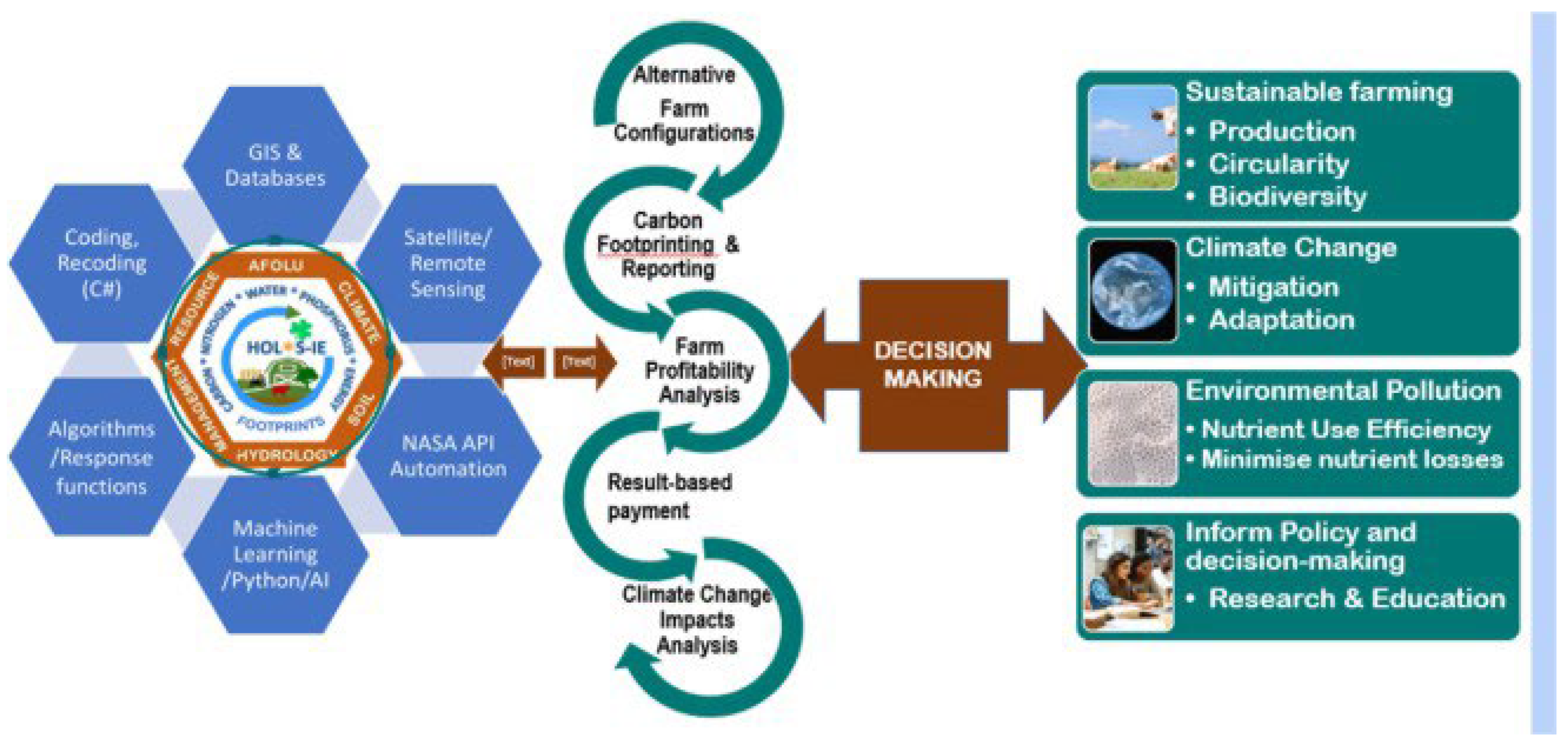
Figure 2.
Selection of a Specific Region from the Map of Ireland.
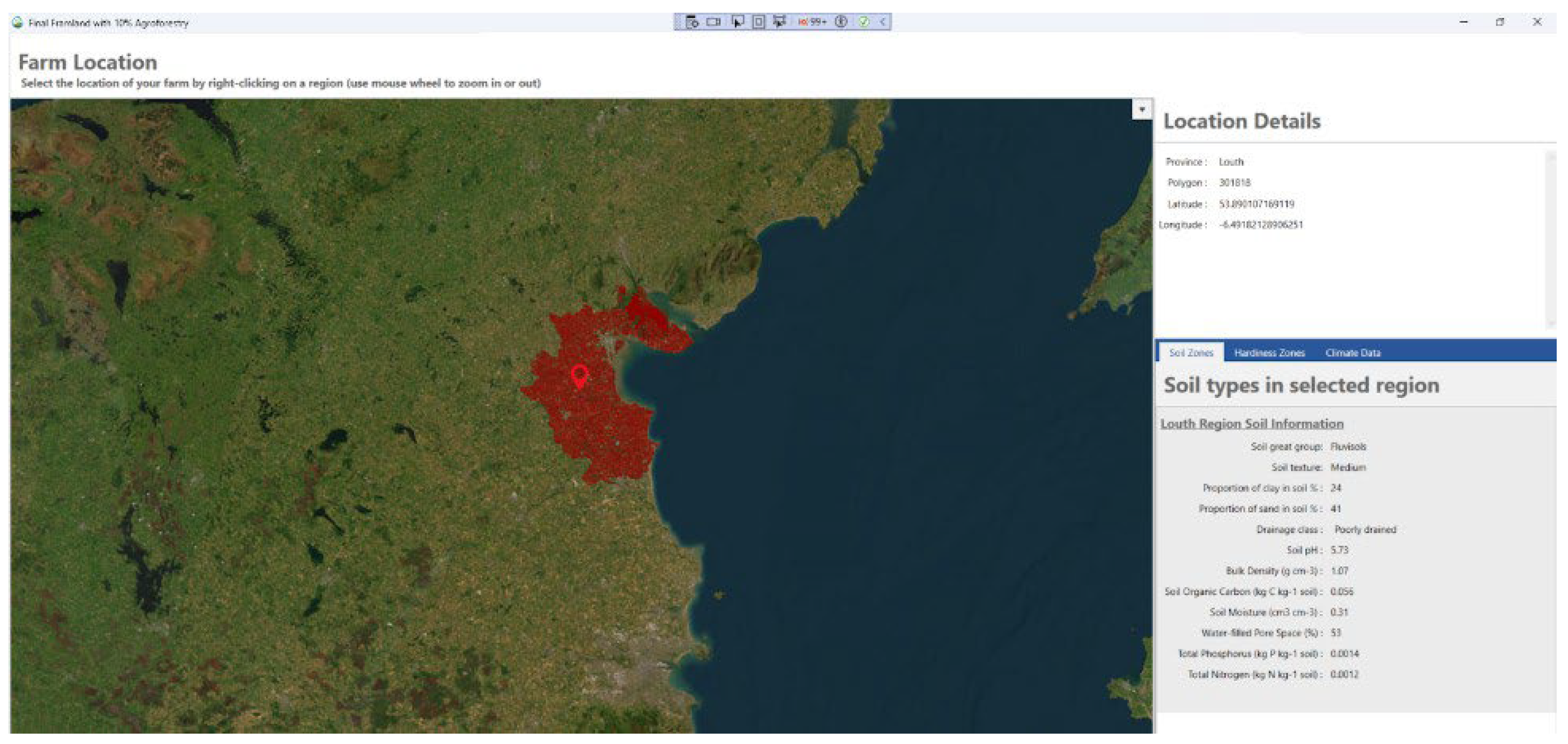
Figure 3.
Distribution of participation in HOLOS-IE stakeholder engagement.
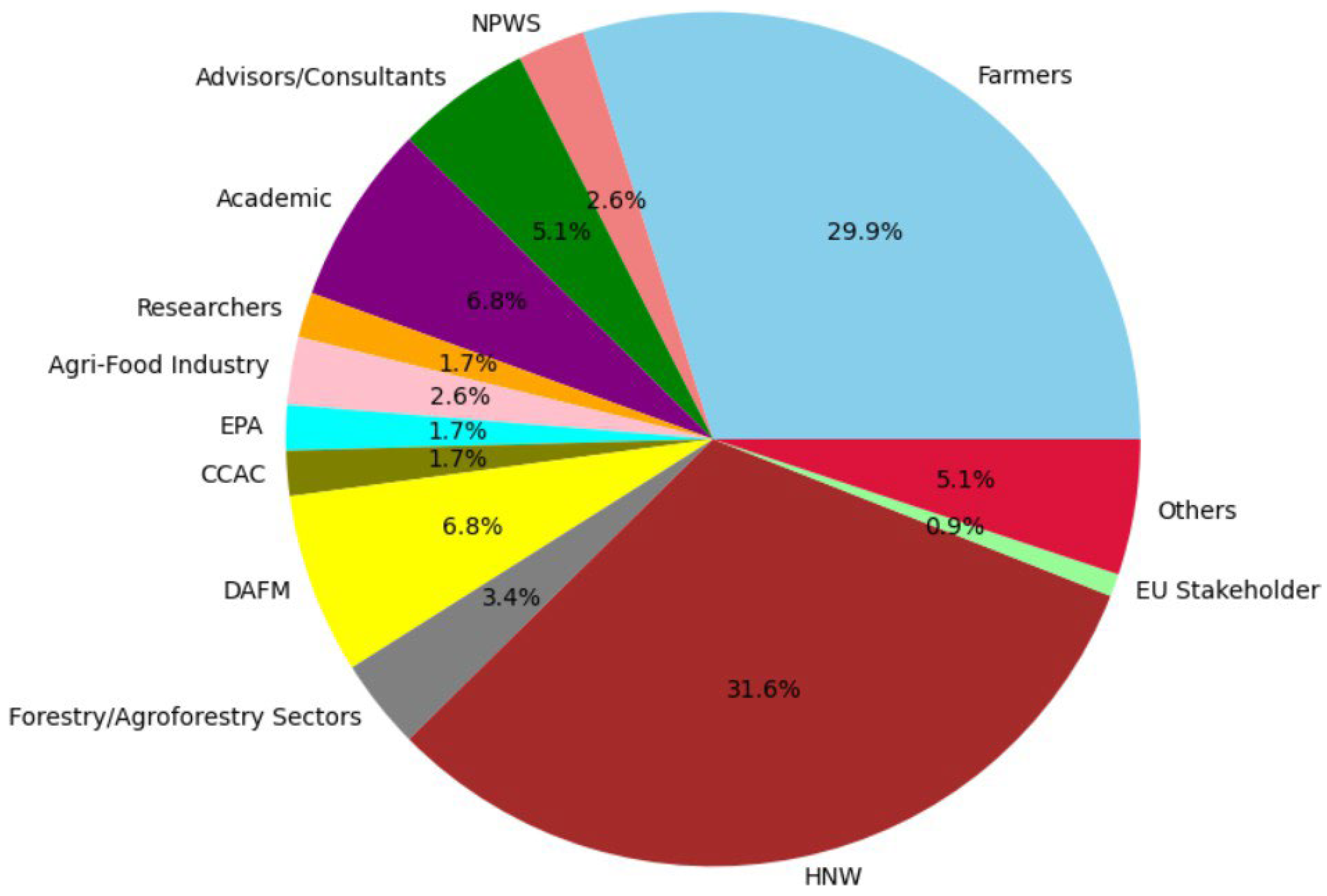
Figure 4.
A section of the need statement generated to analyse the average prioritisation scoring of needs highlighted by interviewed stakeholders.
Figure 4.
A section of the need statement generated to analyse the average prioritisation scoring of needs highlighted by interviewed stakeholders.
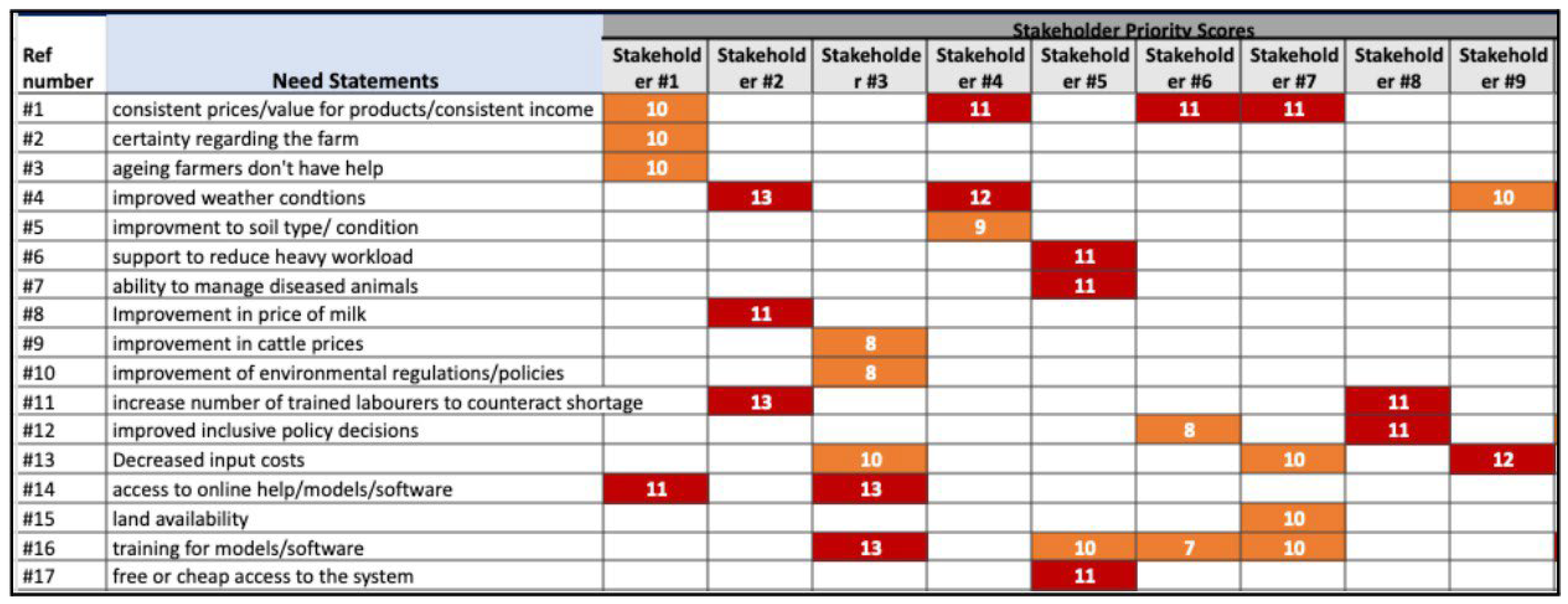
Figure 5.
Correlation Heat Map on the challenges stakeholders face.
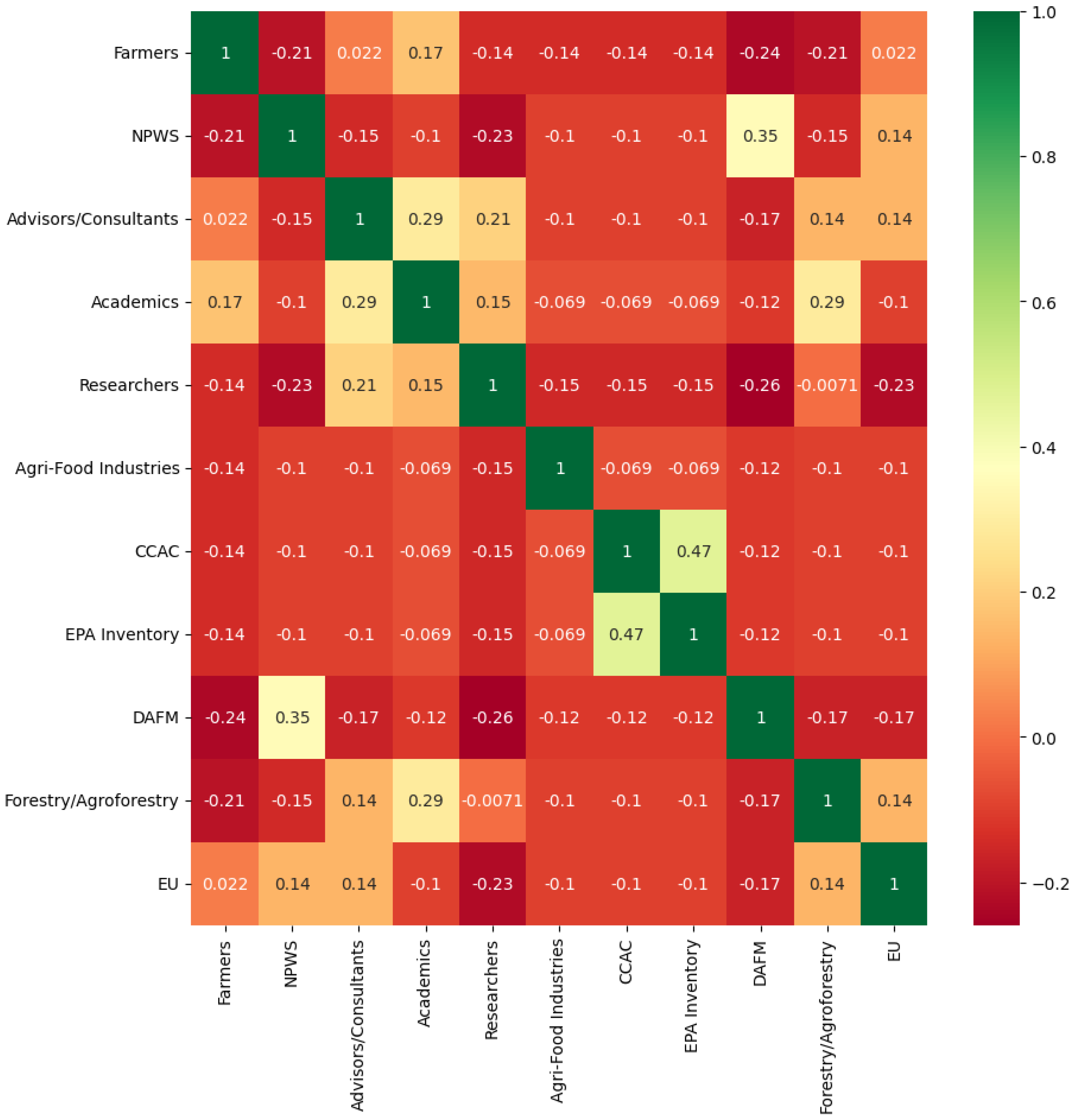
Figure 6.
Correlation Heat Map on the solution provided by the stakeholders.
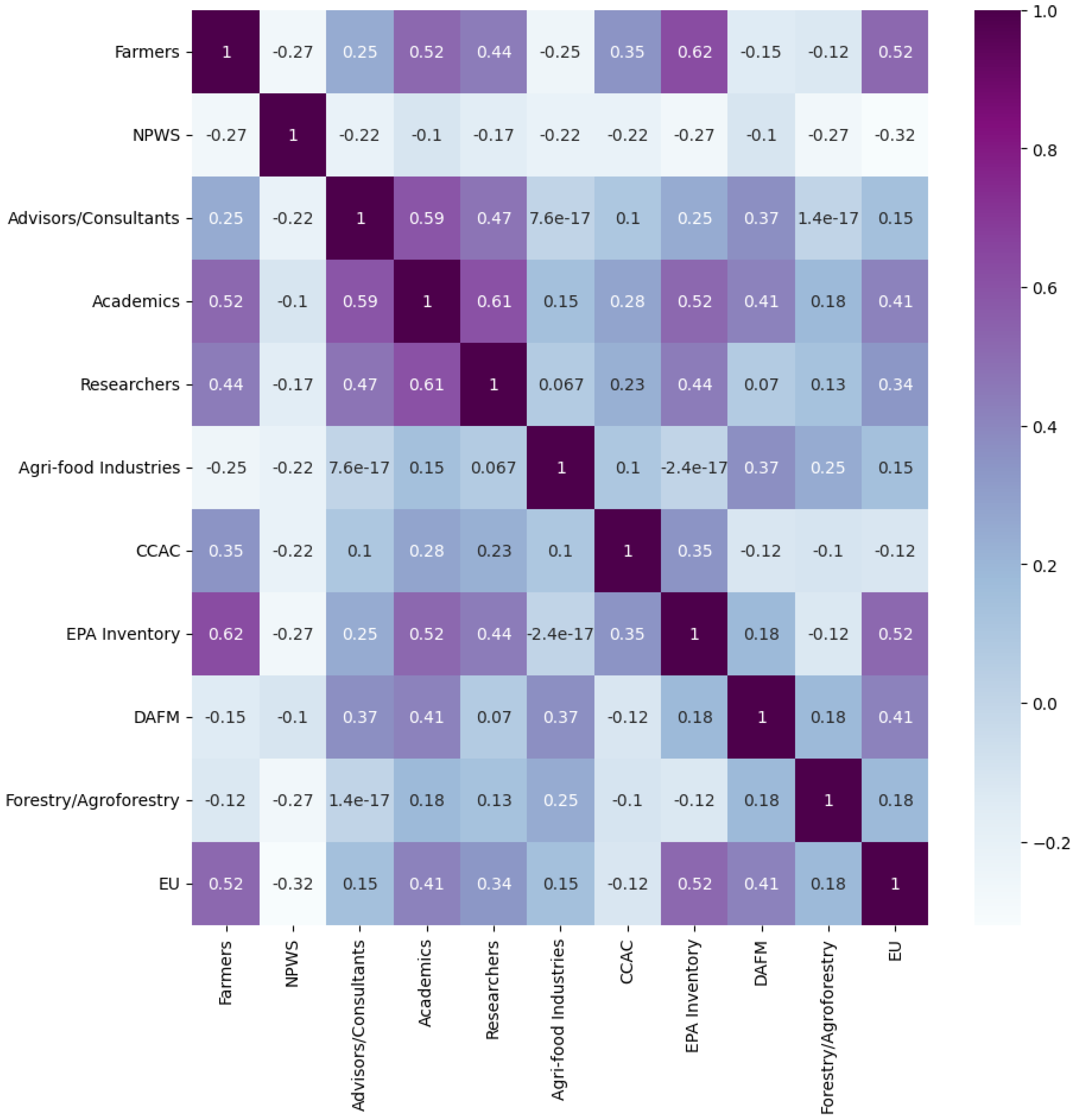
Figure 7.
The positive and negative micro impacts of the major challenges identified by interviewed farmers.
Figure 7.
The positive and negative micro impacts of the major challenges identified by interviewed farmers.
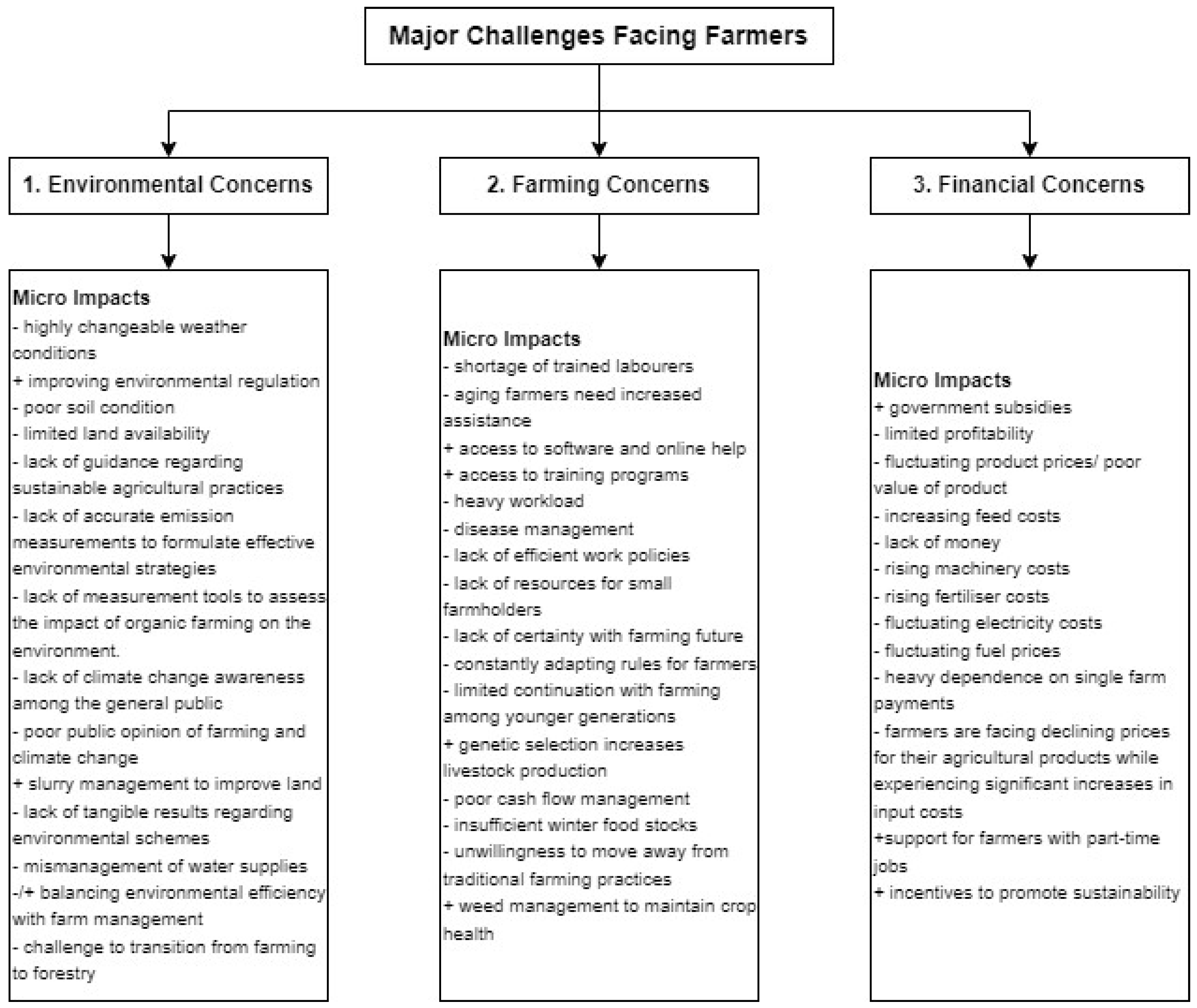
Figure 8.
Recommendations for the Research team.
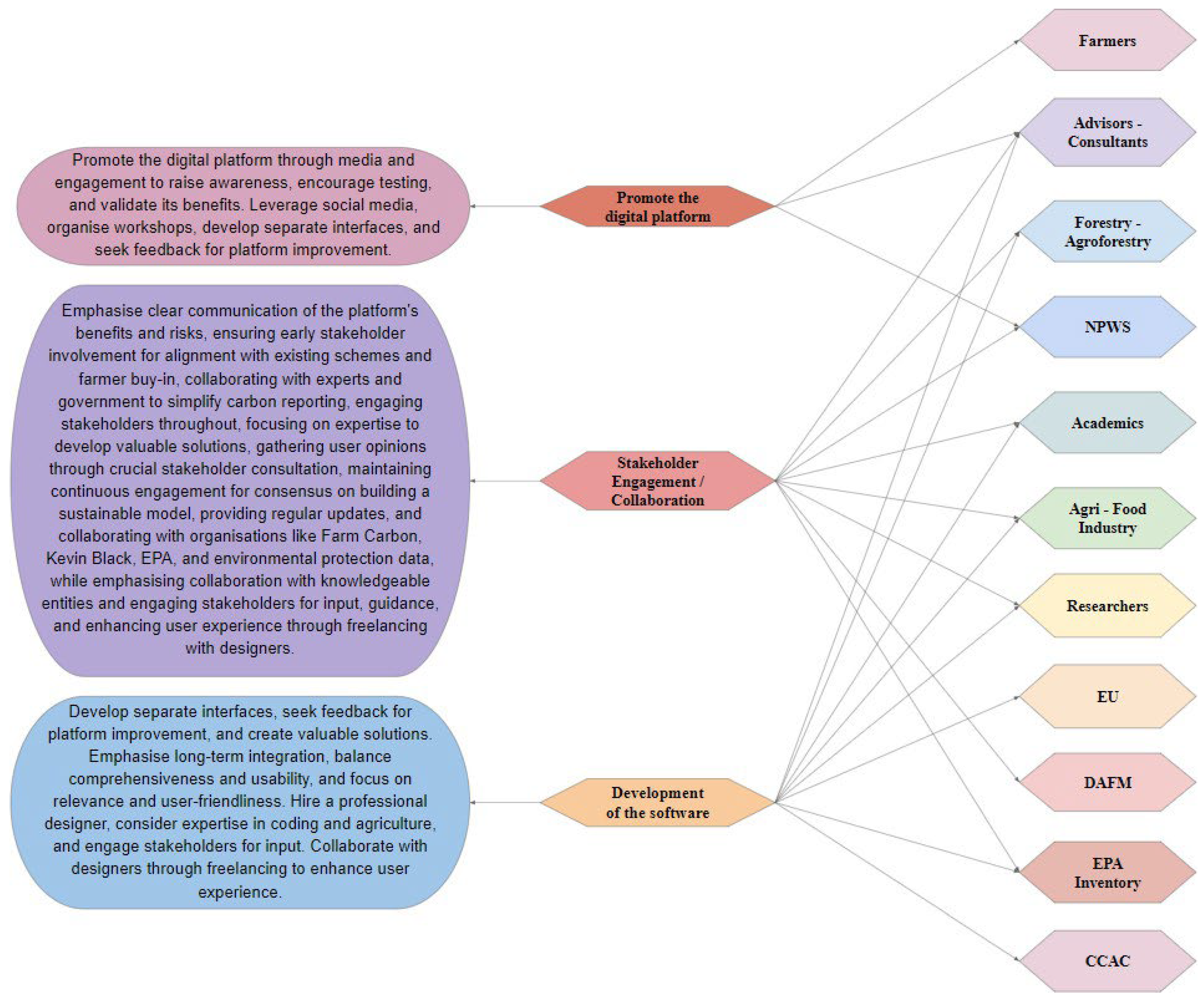
Table 1.
The generalised inquiries initially used to survey the stakeholders.
| 1 | What is your role in agriculture? |
| 2 | What are the current challenges and successes facing your industry? |
| 3 | In your opinion, who is most affected by these challenges? |
| 4 | What are your thoughts on existing problem-solving strategies, sustainability programmes and agricultural policies? |
| 5 | What is your opinion on the HOLOS-IE model? |
| 6 | What do you think the benefits and outcomes of using the HOLOS-IE model will be? |
| 7 | How do you think the HOLOS model will help land use and policy alignment with the CAP and other international policies? |
| 8 | What do you think are the challenges and benefits of digital platforms? |
| 9 | What would you suggest to ensure effective stakeholder engagement with digital platforms? |
| 10 | What do you think about the features of HOLOS-IE? |
| 11 | How effectively do you think the model will inform policy decisions and aid in achieving carbon neutrality? |
| 12 | Do you think the model is user-friendly and accessible? |
| 13 | Will training be required to support the uptake of platform use? |
| 14 | What recommendations would you have to improve the platform? |
| 15 | What recommendations do you have to improve stakeholder support for the model? |
Table 2.
A summary of the questions and responses from interviewed stakeholders.
| Questions | Responses |
|---|---|
| What works well in your activities, and what key problems are you fac- ing? | Skilled contractors and resources for afforesta- tion work well, but deforestation and land scarcity are issues. Farmers face financial, weather, and land challenges. Access to data and resources is a problem for the EPA In- ventory and CCAC. The agri-food industry needs help with supply chain and packag- ing inefficiencies. Advisors face challenges in organic farming research, farmer knowl- edge, and high fertiliser prices. Researchers succeed in integrating research but need help with information gaps, climate change, and local soil conservation. Academics find stake- holder engagement successful but need help to promote transformative action. |
| How do you propose addressing these issues, considering their im- pacts and affected stakeholders? What mitigation strategies do you suggest? | Private landowners, farmers, and subsistence farmers are most affected. Key issues include land mobility, data access, climate aware- ness, and sustainable practices. Incentivise landowners, improve data-sharing, educate on climate change, support smaller farms, and promote stakeholder collaboration. Address- ing these issues is crucial for effective climate action, sustainable agriculture, and environ- mental health. |
| What practices do you currently have in place to support sustainable agriculture, climate change mitiga- tion, and adaptation? | Policies include integrating forests into agri- culture, promoting agroforestry, and engaging farmers in biodiversity and renewable energy initiatives. Gaps remain in coordinating eco- nomic sectors, enhancing forest management with private sector investment, and under- standing forests’ carbon sequestration poten- tial for effective climate action in agriculture. |
| How important do you believe in addressing climate change, and what role do you think new technol- ogy or digital systems can play in achieving this goal? | Addressing climate change is crucial, and new technology and digital systems play a vital role. They help farmers measure carbon foot- prints, optimise inputs, and access climate data for effective farm management, contribut- ing to sustainable practices and ecosystem re- silience. |
| What are your thoughts on the systems-based platform (HOLOS- IE) for land use planning? This plat- form informs climate change miti- gation and adaptation policy and reduces environmental pollution, aligning with NIR, CAP schemes, and similar initiatives. |
HOLOS-IE’s integration with practical farm- ing considerations is crucial for effective im- plementation and policy alignment across di- verse sectors. |
| What are the challenges and benefits of using a digital model/platform for agricultural systems, and how can these challenges be overcome? | Using a digital platform for agricultural sys- tems offers benefits in managing complex- ity and information, but challenges include farmer diversity, data access, and regulatory constraints. Solutions involve tailored sup- port, improved data integration, and stake- holder collaboration. |
| What features do you consider es- sential for a successful digital plat- form for sustainable farming linked to climate change mitigation and adaptation? | Essential features for a successful digital plat- form for sustainable farming include user pro- files, simplicity, accurate data output, soil health guidance, holistic economic and envi- ronmental modelling, and intuitive interfaces for effective climate change action. |
| What kind of collaborations or part- nerships, such as data sharing or re- search support, would benefit the success of this project and its imple- mentation? | Collaborations with state organisations for information sharing, carbon registries, and landowner incentives are crucial. Partner- ships with research institutes and indus- try stakeholders support data accuracy and project success, facilitating innovation and sus- tainable advancements in agriculture. |
| How can the digital platform sup- port and enhance existing policies and initiatives related to sustainable agriculture in Ireland? | The digital platform supports agroforestry adoption by providing essential data like soil information, species selection, drainage de- tails, aspect analysis, yield class, and geospa- tial location. It also offers incentives such as increased premium rates and grants and con- ducts sampling programs to ensure accurate information sharing with users. |
| How can a model like HOLOS-IE better capture the complexities of the value chain in the agri-food in- dustry, including the interactions be- tween different stakeholders and the diverse environmental impacts asso- ciated with each stage of the chain? |
HOLOS-IE can better capture the complexities of the agri-food industry by addressing busi- ness scepticism, comparing environmental im- pacts, incorporating scientific advancements, and balancing economic and environmental metrics during transitions to alternative prac- tices. |
| What specific metrics or indicators would be most valuable for measur- ing and reducing the carbon foot- print of products throughout the supply chain? | Balancing the financial implications and car- bon emissions of exported beef and imported feed is crucial. A comprehensive approach should reduce emissions per unit in the beef industry, considering both exports, imports, and externalities. |
| Are there any specific supply chain stages, such as transportation, pack- aging, or processing, where the model could most effectively reduce carbon emissions? |
Transportation is crucial for carbon emissions, posing challenges to global carbon neutrality, especially with movements like dairy prod- ucts and imported beef, despite efforts to mon- itor emissions from power stations. |
| What are your thoughts on utilis- ing this digital platform for decision- making and policy-informing pur- poses, and to what extent would you be interested in using it? | The digital platform aids decision-making and policy with tailored training and tools for stakeholders, manages farms, monitors impacts, and enhances agricultural practices. The EPA Inventory is interested in its technical integration with other models. |
| How could a digital platform like this help you comply with schemes? | Tailored training is essential. The digital plat- form aids farm management and environmen- tal monitoring. The EPA prefers using data for technical models over policy-making. |
| Are there any potential risks as- sociated with using the model to promote more sustainable practices throughout the value chain, and how can these risks be mitigated? |
Respondents suggested a carbon tax to reduce emissions despite higher manufacturing costs and market competitiveness impacts. |
| How can the platform be user- friendly and accessible to everyone, whether it’s open to the public, a commercial tool, or available on- line/offline or both? | The platform should be user-friendly, acces- sible online and offline, offer free primary ac- cess, and store data securely. It also needs tai- lored modes for integrating stakeholders with existing processes. Transparency and open- source design are essential. |
| Would you be interested in using the platform? | Farmers are interested in the digital platform, seeing potential benefits and considering it a better alternative to current systems. |
| What training or support would be necessary for stakeholders to use this platform effectively, and how could it be provided? | For effective platform use, stakeholders re- quire training through farm courses, videos, workshops, and online support. Tailored to user levels, it ensures minimal training needs with a user-friendly design. |
| What recommendations do you have for the research team, and how can stakeholders support their ef- forts? |
Engage stakeholders for input, promote through media, update with recent data, col- laborate with experts, seek recommendations, and ensure ongoing engagement. |
Disclaimer/Publisher’s Note: The statements, opinions and data contained in all publications are solely those of the individual author(s) and contributor(s) and not of MDPI and/or the editor(s). MDPI and/or the editor(s) disclaim responsibility for any injury to people or property resulting from any ideas, methods, instructions or products referred to in the content. |
© 2025 by the authors. Licensee MDPI, Basel, Switzerland. This article is an open access article distributed under the terms and conditions of the Creative Commons Attribution (CC BY) license (http://creativecommons.org/licenses/by/4.0/).
Copyright: This open access article is published under a Creative Commons CC BY 4.0 license, which permit the free download, distribution, and reuse, provided that the author and preprint are cited in any reuse.


