Preprint
Article

This version is not peer-reviewed.

Farmers’ Perception of the Efficacy of Current Climate Risk Adaptation and Mitigation Strategies on Agriculture in The Gambia

A peer-reviewed article of this preprint also exists.

Submitted:

16 February 2025

Posted:

17 February 2025

You are already at the latest version

Abstract

Agricultural systems face increasing challenges due to climate change, necessitating effective adaptation and mitigation strategies. This study investigates smallholder farmers' perceptions of the efficacy of these strategies in The Gambia, employing a mixed-method approach that includes a Perception Index (PI), Effectiveness Score (ES), Importance-Performance Analysis (IPA) and statistical analysis. A structured survey was conducted among 420 smallholder farmers across three agricultural regions. Farmers rated adaptation and mitigation strategies using a Likert scale, and a PI was developed to quantify their responses. The index was 0.66, indicating a moderate level of perceived effectiveness. Additionally, ES was calculated to assess the performance of various strategies, while IPA categorized strategies based on their adoption and perceived impact. Chi-square tests and factor analysis were applied to explore differences in perceptions. Findings reveal that strategies such as crop diversification, pesticide application, irrigation, and use of inorganic fertilizers are widely adopted and perceived as effective. The IPA matrix identified key strategies needing improvement, particularly those with high importance but low performance. Barriers to adoption include limited financial resources (77%), lack of government support (64%), and insufficient knowledge (52%), with no significant gender-based differences in perceptions. The study underscores the need for policy interventions that integrate farmers' perceptions to enhance climate resilience. Targeted investments in adaptive technologies, financial support, and knowledge-sharing platforms can improve adoption and effectiveness. This research provides valuable insights into the interplay between farmer perceptions, adaptation strategies, and agricultural sustainability in The Gambia.

Keywords: 
;  ;  ;  ;  ;  

1. Introduction

Climate change poses a major global threat, affecting many industries, especially agriculture [1], causing disruptions in the production and food supply due to extreme weather variations. Numerous species’ survival is endangered by temperature shifts, causing biodiversity loss and alteration in the ecosystem dynamics. Moreover, climate variations increase the risk of food and waterborne diseases, as well as the emergence of antimicrobial resistance, presenting further risks to human health [2]. Climate change poses a substantial risk to the global viability of agriculture, especially in developing nations where agriculture plays a vital role in the economy. Adverse weather phenomena including water scarcity, storms heatwaves, floods, erratic rainfall, and pest outbreaks, are disrupting agricultural output and impacting the socioeconomic well-being of farmers [3]. The climate change phenomenon significantly disrupts food production in various parts of the world. The occurrence of extreme weather events such as droughts, heat waves, and cold spells present significant risks to crops while the atmospheric concentration of carbon dioxide level continues to rise [4]. Research by [5] reveals that higher temperatures and increased energy consumption have a detrimental effect on rice and vegetable output, while CO2 emissions notably impact coffee production. These results underscore the detrimental effects of climate change on agriculture in Malaysia. Soil drought presents a major risk to agriculture due to its uncertain range, length, and effects which are worsened by climate change resulting in the desertification of agricultural lands [5].
Climate risk adaptation and mitigation strategies are vital for enhancing the resilience and sustainability of agricultural systems, particularly in vulnerable regions such as sub-Saharan Africa (SSA). These strategies aim to mitigate the negative effects of climate change on agriculture by boosting productivity, building resilience, and reducing GHG emissions. Although many adaptation strategies also contribute to mitigation, including crop diversification, soil conservation, crop rotations, quality seeds, planting shaded trees, and halting deforestation [6]. In their meta-analysis, [7] highlighted various adaptation measures, including land management practices and livelihood diversification through income-generating activities. They also outlined mitigation strategies such as agroforestry, improved crop varieties, and soil conservation which can help mitigate the impact of climate change. These strategies aim to strengthen resilience, reduce vulnerability, and promote sustainable agricultural practices in the face of climate change. However, limited financing, minimal stakeholder engagement, insufficient access to weather data, and weak institutional support challenge the effective implementation of these strategies. [8] explore the association between agricultural specialists’ perception of climate change and their willingness to participate in mitigation efforts at both personal and professional levels. Key elements influencing mitigation intention to engage in mitigation activities include the new ecological paradigm (NEP), risk awareness, personal efficacy, accountability, belief in climate change, and low psychological distance. Key prioritized strategies identified in SSA countries include the use of improved seeds, good agricultural practices, and conservation agriculture.
The Gambia is highly vulnerable to drought hazards due to climate change. Irregular precipitation patterns and mid-season dry spells exhibit variability and negative trends largely attributed to the effect of climate change. Insufficient hydrometeorological data poses a significant threat to the agriculture sector, which employs more than 70% of the population. In their study, [9] identify various adaption and mitigation strategies for agriculture in The Gambia. These strategies include the use of climate-resilient crop varieties, crop diversification, climate information services, weather-indexed insurance, soil and water conservation, the use of manure and inorganic fertilizer, and agroforestry. In the Gambia [10,11] presents several climate change adaptation and mitigation strategies, such as crop diversification, drought-tolerant varieties, enhanced land management, decreased inputs derived from fossil fuels, microfinancing, bushfire control, agroforestry, education awareness, renewable energy, and reduced GHG emissions to enhance environmental sustainability. The Gambia is confronted with substantial challenges in addressing the increasing food demand, driven by climate change and the need to ensure adequate and nutritious food for its population. Enhancing fertilizer access, establishing sustainable irrigation systems, and climate change adaptation and mitigation strategies could significantly reduce the food supply gap [12]. The agriculture sector is heavily impacted by climate change, resulting in a sharp reduction in the consumption of essential commodities and an anticipated 35% decline in production by 2085. [13] reveal that climate change will worsen challenges such as hunger, poverty, and human suffering. It predicts a rise in agricultural commodity prices and altered trade patterns, leading to decreased exports and increased imports. [14] highlight the critical need for climate change adaptation in developing nations, especially the Gambia, which is highly vulnerable to the impact of global warming.
Identifying and assessing adaptation options are key pre-requisite steps to adaptation prioritization and effective adaptation planning [8]. Furthermore, the Paris Agreement mandates all parties to evaluate their adaptation progress, including assessing the effectiveness of adaptation strategies to guide climate action planning and commitments. Considering smallholder farmers’ perception of the effectiveness of adaptation and mitigation strategies is highly pertinent for policy decisions aimed at assisting farmers in addressing the impacts of climate change [15,16]. In developing and least-developed countries (LDCs), where interconnected climate risk may impede the attainment of the SDGs, urgent adaptation is required [17,18,19]. Adaptation is even more critical in highly vulnerable countries like The Gambia [20], where climate-sensitive sectors such as agriculture are vital to economic development. In a study by [21], found that while risk perception has a lesser impact, the farmer’s perceived capacity to adopt mitigation measures is a strong predictor of their intentions to engage in climate change mitigation efforts. Climate risk and adaptation strategies in agriculture include modifying crop production to respond to current climate impacts, such as adjusting planting dates or selecting crop varieties that effectively accommodate changing weather conditions. Mitigation strategies on the other hand include measures that prevent or reduce future climate change effects, such as the reduction of GHG emissions through the implementation of improved agricultural methods. Both strategies are critical for sustaining agricultural productivity and ensuring food security, particularly in climate-vulnerable regions. The study conducted by [22] assesses the efficacy of climate change adaptation and mitigation strategies in the Niger Delta, with a specific emphasis on their ability to promote sustainable agricultural systems. Successful implementation of these strategies requires cooperation among farmers, government entities, and other key stakeholders.
The scarcity of evidence from The Gambia along with the highly contextual impacts of the identified adaptation strategies underscore the need for a thoughtful examination of barriers to implementing policies and interventions aimed at enhancing productivity and income at the same time fostering resilience and climate risks and mitigating GHG emissions [8]. The studies by [8], [23] identify significant knowledge gaps regarding the efficacy and viability of adaptation strategies in The Gambia and the effectiveness of various adaptation strategies in future climates remains unclear. Furthermore, the Paris Agreement mandates all parties to evaluate adaptation progress, which encompasses reviewing the efficacy of adaptation to guide climate action planning and commitments. Consequently, the assessment of adaptation effectiveness has become imperative [16], [24]. Incorporating smallholder farmers’ perspectives on the efficacy of farm-level adaptation and mitigation techniques is crucial for policy formulation aimed at assisting farmers in alleviating the effects of climate change.
The research explores smallholder farmers’ perception of the effectiveness of current climate risk adaptation and mitigation strategies in agriculture. It evaluates how these strategies impact agricultural productivity, economic outcomes, and resilience to climate change, while also developing a perception index to quantify farmers’ views on the effectiveness of adaptation and mitigation strategies used. The study highlights the importance of incorporating smallholder farmers’ perspectives into policy decisions to enhance the adoption of sustainable agricultural practices. Engaging with farmers allows policymakers to tailor climate risk adaptation and mitigation strategies to more effectively address the specific needs of local agricultural communities.

2. Materials and Methods

2.1. Study Area

The Gambia, the smallest country in mainland Africa, encompasses a total land area of 11,300 km2 of which 1,300 km2 consists of aquatic bodies. The country is situated on the western coast of Africa, bordered by Senegal to the north, east, and south and the Atlantic Ocean to the west (Figure 1). Geographically, it lies between 130 and 140 North latitude and 130 and 170 West longitude. The Gambia has a population of 2.4 million people, with an annual growth rate of 2.5 %. More than 70% of the population works in the agriculture sector, with around 90% of the rural people directly or indirectly dependent on farming activities for livelihood. Agriculture is practiced by 47.2% of households, with crop farming being the most common activity, involving 28.8% of these households [25]. The Gambian economy is comprised of three main sectors, agriculture, forestry and fishing, services, and industry. With a GDP annual growth rate of 4.8%, agriculture, forestry, and fishing, contribute 24.8%, services account for 57.4% and industry makes up 17.8% [26]. The Gambia has a tropical climate characterized by distinct dry and wet seasons. The dry season lasting from mid-October to mid-June, features warm, dry weather with temperatures between 700F (210C) and 800F (270C) and humidity ranging from 30% to 60%. The rainy season commerce from mid-June to mid-October, with August being the wettest month. During this period temperatures are generally hot reaching up to 1050F (410C). [27]. Reported a 27% decline in annual rainfall since 1951, accompanied by a shorter rainy season and increased variability in year-to-year rainfall patterns.

2.2. Sampling and Data Collection

The study population consisted of 38,614 households, with the sample size determined using the Raosoft online sample size calculator, with a 5% margin of error and 95% confidence level. The sample was subsequently adjusted to account for missing data. A multi-stage sampling technique was employed to select the study area and 420 smallholder farmers.
Multi-stage sampling techniques are efficient for resource optimization and managing
logistics in a large and diverse population [28]. Initially, three main agricultural production
regions were chosen. The regions are predominantly characterized by cereal crop farming.
The selected regions also experience extreme climatic events such as floods, windstorms, droughts, poverty, and food insecurity. In the second stage, 5 districts from the North Bank Region (NBR), 4 districts from the Upper Revier Region URR), and 3 districts from the Central River Region (CRR) were randomly selected. In the third stage, 5 villages were randomly chosen from each district, and in the fourth and final stage, 7 smallholder farmers were randomly chosen from the village registry. A structured survey was conducted among smallholder farmer’s household heads to meet the research objectives. The questionnaires were administered by trained enumerators whose selection was based on fluency in the English language and local dialects.

2.3. Methodology

This study employed a multifaceted empirical framework integrating scoring, statistical analysis, diagnostic evaluation, and indexing formula adapted from the research conducted by [29] to assess adaptation strategies. This formula calculates a score based on the percentage of frequency and the weight assigned to each Likert option and is used to rank the adaptation measures. The model combined indices chi-square test, and importance performance analysis (IPA).

2.3.1. Effectiveness Score (ES)

E S = P H E × 1 + P I × 2 + P N U × 3 + P E × 4 + P H E × 5
Given:
PHI= Percentage of highly ineffective
PI= Percentage of ineffective
PNU= Percentage of not understanding,
PE= Percentage of effective
PHE= Percentage of highly effective
The frequency of strategies represents the percentage of farmers who identified each strategy as relevant or used in their adaptation practices. Additionally, the mean value of perceived efficacy reflects the average perceived effectiveness of each strategy on a scale of 1 to 5, with higher values indicating greater perceived effectiveness. To facilitate a relative comparison of perceived efficacy among strategies, a normalized score (NS) is derived to place the perception of each strategy on a comparable scale (ranging from 0 to 1).
N S = E S E S m i n E S m a x E S m i n  
where E S m i n and E S m a x are the minimum and maximum effectiveness scores respectively. The normalized score ranges from 0 to 1.

2.3.2. Perception Index (PI)

The PI measures the perceived effectiveness of adaptation and mitigation strategies based on frequency or relevance as reported by farmers.
P I x = i = 1 n F i N
where:
F i is the frequency of a strategy used by farmer i
N is the total number of farmers surveyed.
The effectiveness score (ES) is modelled as a function of the independent variables:
E S i = β 0 + β 1 A g e i + β 2 G e n d e r i + β 3 E d u i + β 4 e x p i + + ϵ i
where:
β 0 = intercepts
β x = coefficients of the explanatory variable
ϵ = error terms

2.3.3. Importance Performance Analysis (IPA)
The IPA framework, developed by [30] and further refined by [31] was utilized as a diagnostic tool to identify areas for improvement prioritization. The IPA is used in analyzing the attributes’ importance and corresponding performance using a Likert scale [31,32]. It generates a 2-dimensional graph that measures the importance and satisfaction levels of different attributes, thereby offering insights into the existing situation and practical recommendations [33]. Despite the significant value and application of the IPA by researchers, the original model has limitations that promoted several researchers to use modified or extended versions of the model [34]. In the context of farmers’ perceived effectiveness of adaptation and mitigation strategies, performance is typically assessed through direct ratings obtained from surveys. Farmers were asked to rate the effectiveness of each strategy on a 5-point Likert scale, ranging from “very ineffective” to “very effective.” Similarly, the importance of these strategies is measured using the frequency of the strategies used in addressing their agricultural or climate-related challenges.
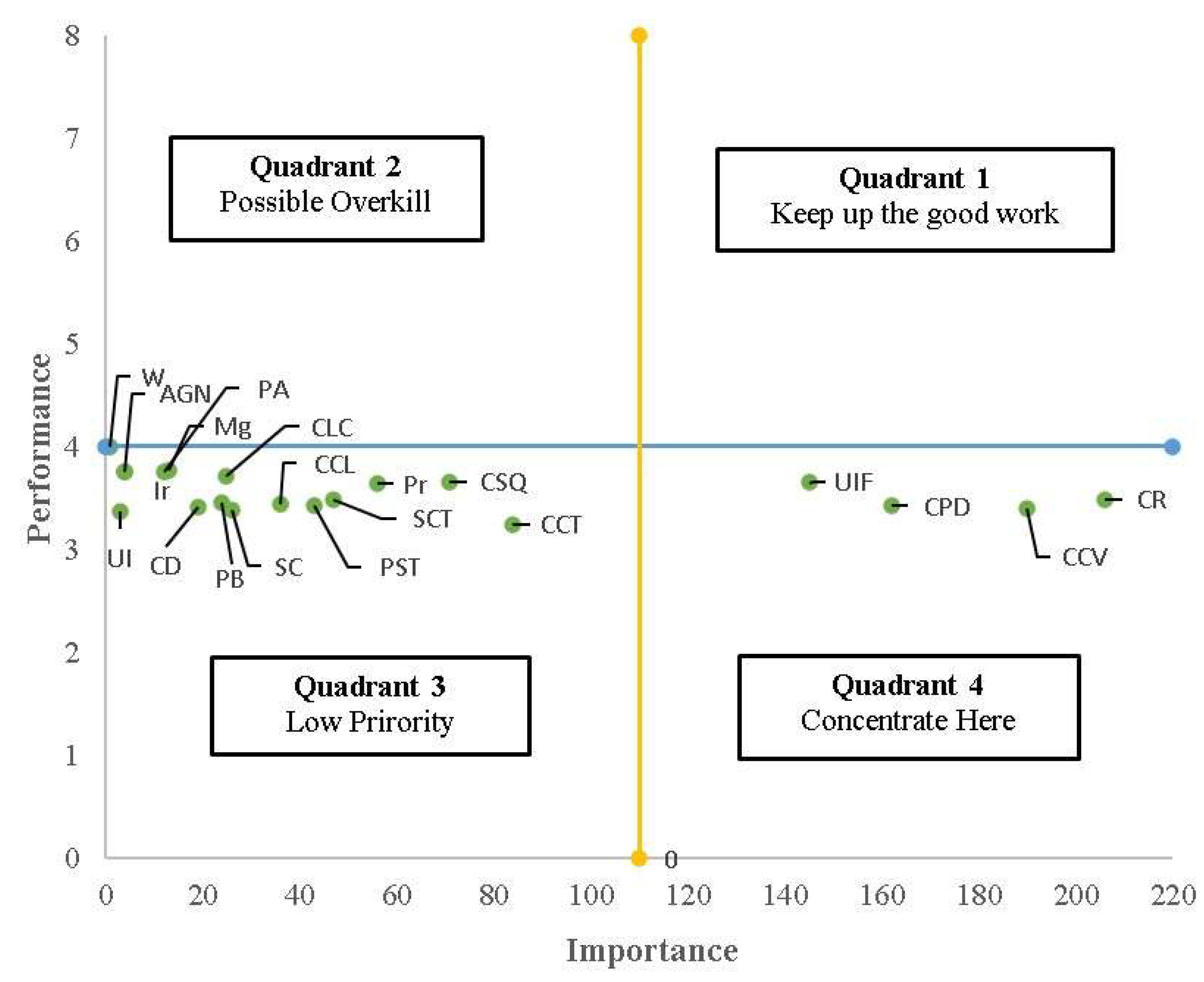
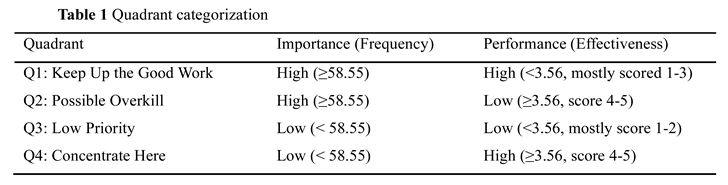
Table 1 shows the categorization of the four quadrants. Quadrant 1 represents strategies that are highly important and are perceived as effective or highly effective by farmers. Farmers should rely on these strategies, and they consistently deliver the expected results. The management approach for this quadrant is to ‘‘Keep up the good work,’’ as it reflects areas where the farmer excels in performance while addressing critical needs. These strategies should be preserved, expanded, or optimized. In this study, no adaptation strategy falls in this quadrant.
Quadrant 2 represents strategies that are effective but not widely adopted by farmers due to resource constraints or specialized nature.
Preprints 149546 i001
This means that the strategies are yielding positive results but not widely adopted. The management approach for this quadrant is ‘’possible overkill’’ suggesting that resources allocated to these strategies might be more effectively utilized in areas of greater significance to enhance overall performance.
Quadrant 3 signifies strategies that farmers do not prioritize or consider ineffective. These strategies have low adoption rates and moderately low effectiveness often misaligning with farmers’ immediate needs or local circumstances. They are either perceived as not effective or not well understood making them less effective in mitigating the impact of climate change. The management approach for this quadrant is ‘’low priority’’.
Quadrant 4 includes strategies that are widely utilized and considered crucial by farmers but are not perceived as effective in mitigating the impact of climate change. Despite their low perceived effectiveness farmers rely on these strategies in addressing climate challenges. These strategies require urgent attention for improvement to meet farmers’ needs and deliver meaningful results. Efforts should be directed towards identifying the main cause of their ineffectiveness and addressing them to enhance their performance. ‘’Concentrate here’’ is the management strategy for this quadrant.
This classification of adaptation strategies helps prioritize strategies according to their perceived effectiveness, allowing for targeted initiatives to support farmers in overcoming the impact of climate risk on agricultural production.
To explore potential differences in effectiveness scores across different subgroups of the population (e.g., by age, gender, and region), statistical analyses such as chi-square test were employed. This can highlight differences in how various demographic groups perceive adaptation measures. The comparison analyses aimed to elucidate how different demographic groups perceive adaptation measures. To further enhance the analysis, factor analysis was conducted to identify underlying relationships among the variables.

3. Results

3.1. Descriptive Statistics
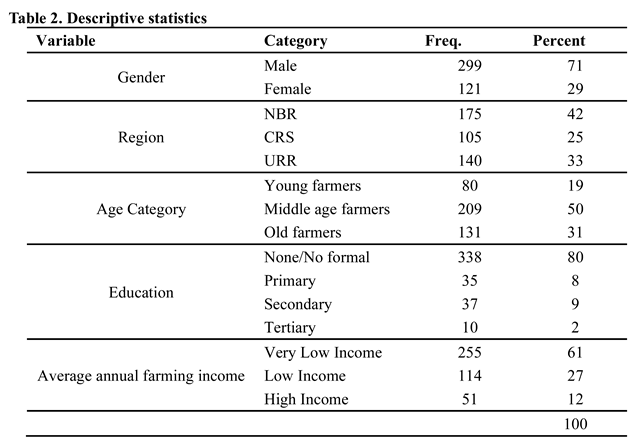
Table 2 shows the demographic characteristics of farmers in three regions: the North Bank Region (NBR=42%), the Central River Region South (CRR=25%), and the Upper River Region (URR=33%). Most of the farmers are middle-aged, with no formal education and a significant gender disparity. The average annual farming income is minimal with most farmers earning less than GMB 30, 000.00 ($415) annually.
Preprints 149546 i002

3.2. Farmers’ Perceptions of Different Adaptation and Mitigation Strategies
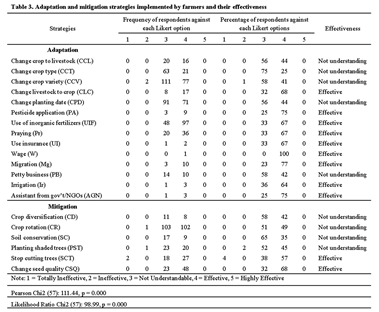
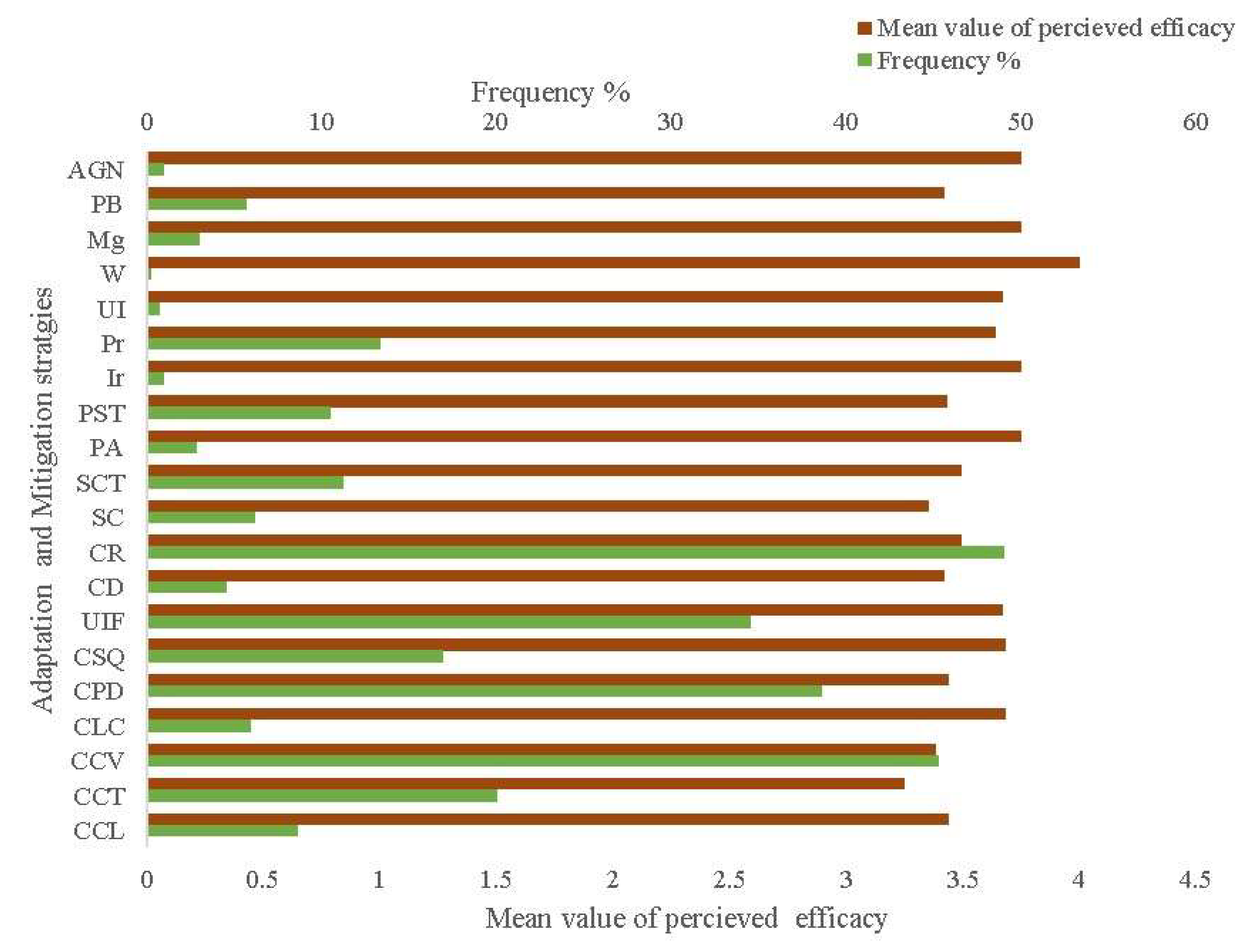
Figure 2 illustrates the frequency and perceived efficacy of adaptation and mitigation strategies implemented by farmers. Strategies like crop rotation (CR), use of inorganic fertilizers (UIF), change planting date (CPD), and change crop variety (CCV) are the most used strategies and have high perceived efficacy. UIF is widely adopted with a high perceived efficacy supporting [35] findings that chemical fertilizers are preferred despite their cost. Agroforestry-related strategies such as stop cutting trees (SCT), soil conservation (SC), and non-agricultural strategies like praying (Pr) and petty business have low adoption. Still, they are considered effective in mitigating the impact of climate change.
External support from the government and non-governmental organizations and migration is perceived as effective but less commonly used by smallholder farmers. Irrigation (Ir) is perceived as effective by smallholder farmers, it has low adoption rates likely due to high initial costs, labor requirements, and maintenance expenses as outlined by [36]. Despite their low frequency of use, their significant perceived efficacy reflects their potential impacts if barriers were mitigated. Despite the low adoption rate, insurance is highly perceived to be effective in mitigating the effects of climate change. [37] mirror the lack of empirical studies in The Gambia evaluating the effectiveness of microfinance and weather-indexed insurance in bolstering household resilience.
Table 3 presents the frequency of each adaptation and mitigation strategy implemented by farmers, indicating the number of farmers adopting each measure. Additionally, it includes the effectiveness score for each strategy based on farmers’ perceptions. Strategies such as Change livestock to crop (CLC), Pesticide application (PA), Use of inorganic fertilizers (UIF), Praying (Pr), Use insurance (UI), Wage (W), Migration (Mg), Irrigation (Ir), Assistant from gov’t/NGOs (AGN), Stop cutting trees (SCT) and Change seed quality CSQ) are perceived as effective strategies by farmers, as evidenced by higher effectiveness scores. While some strategies are widely used and perceived as effective, there remains a significant gap in farmer’s understanding of critical strategies, which could limit their ability to address the impact of climate change fully.
Preprints 149546 i003

3.3. Analysis of the Perception Index
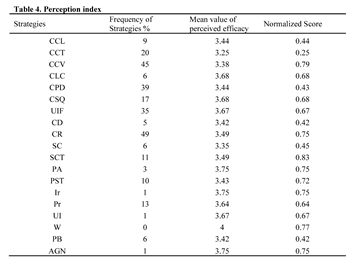
Table 4 presents the perception index of various strategies implemented by smallholder farmers. It highlights the percentage of strategies, mean perceived efficacy, and normalized score. The perception index was developed to assess farmers’ perceptions of the efficacy of adaptation and mitigation strategies in The Gambia. The index was calculated by assigning numerical values based on the Likert scale responses provided by farmers for each adaptation strategy. The mean scores for each adaptation strategy were then normalized to a scale of 0 to 1 to ensure consistency and comparability across different strategies.
Preprints 149546 i004
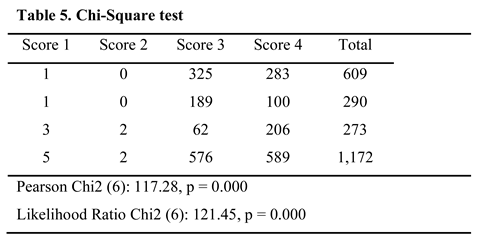
The perception index for each adaptation strategy was computed by averaging the normalized scores across all farmers. Change crop variety and crop rotation are the most adopted strategies employed by smallholder farmers with a robust normalized score of 0.79 and 0.75 respectively. Underscoring its importance in agricultural resilience. Despite their low adoption rates change seed quality, crop diversification, stop cutting trees, pesticide application, planting shaded trees, irrigation, praying, use of insurance, and wages are valued highly by smallholder farmers indicating the need for more awareness and promotion of these strategies. The overall perception index of farmers in the study was determined to be 0.66, indicating a moderate level of perceived effectiveness of climate risk adaptation strategies among farmers in The Gambia. This index serves as a quantitative measure of farmers’ perceptions, offering valuable insights into the efficacy of different adaptation measures and highlighting areas where awareness and understanding may need improvement. The result of the Chi-Square test shows a statistically significant (p<0.05) association between the adaptation strategies and the effectiveness score. Both the Pearson and likelihood-ratio chi-square tests have a p-value of 0.000, indicating different strategies lead to varying levels of perceived efficacy.
The perceived efficacy of various strategies as evaluated by farmers, using the perception index. Each strategy is accompanied by three metrics: frequency of strategies (%), mean value of perceived efficacy, and a normalized score.
High-perceived efficacy strategies
SCT has a high normalized score of 0.83 with a mean perceived efficacy score of 3.49, indicating it is considered one of the most effective strategies. CR and PA both show strong perceived efficacy with normalized scores of 0.75, suggesting that they are valued by farmers. W also has a high perceived efficacy score of 4 and a normalized score of 0.77, despite being used by a small number of respondents.
Moderate to low-perceived efficacy strategies
CCT had a frequency of 20% but a low normalized score of 0.25, indicating that while it is relatively known or used, its perceived efficacy is comparatively weak. CCL, CD, and PB have moderate mean efficacy scores of around 3.4 and normalized scores of around 0.4, reflecting a moderate but less significant perceived impact.
Table 5 shows the results of the chi-square test comparing the effectiveness scores across different regions are statistically significant at 1%, indicating the effectiveness score varies across regions. This implies that different regions have different patterns of effectiveness providing strong evidence against the null of independence.
Preprints 149546 i005
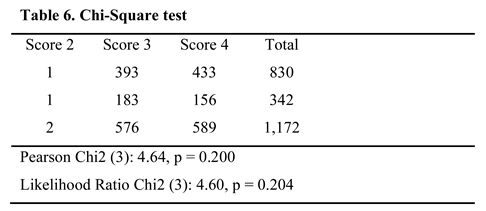
Table 6 shows the relationship between gender and perceived effectiveness is not statistically significant. This means there is no difference between the perceived effectiveness of adaptation strategies among men and women. Gender does not influence the perceived effectiveness of various adaptation strategies used by farmers.
Preprints 149546 i006

3.4. Importance Performance Analysis Matrix

Figure 3 illustrates the IPA matrix that categorizes adaptation strategies based on their importance (frequency) and performance (perceived effectiveness). The IPA reflects the importance of adaptation strategies farmers employ and their performance. The mean of performance and importance divide the matrix into four quadrants, each showing actional insights into priority areas.
IPA is extensively used in various sectors where customer satisfaction is crucial for business success [38,39,40,41,42]. Consumer satisfaction is determined by consumer perceptions, which encompass the quality of the organization’s product or service and customer expectations. [43] examine farmers’ and non-farmers adaptation and management perspectives regarding Invasive Alien Plant Species (IAPS), highlighting their understanding, importance, and effectiveness in IASP management. More recently, [44] employed the IPA to assess farmers’ satisfaction, facilitating the ongoing adoption of Agromet Advisory Services.
The positioning of all strategies in quadrants 3 and 4 raises substantial concerns about the agricultural strategies for climate adaptation. Quadrant 3, characterized by strategies perceived as ineffective, suggests a discount between what is available and what farmers truly need, indicating obstacles in effectively implementing these strategies. In quadrant 4, farmers relying on these strategies signifies a paradox in which farmers persist in using strategies that fail to produce intended outcomes. This situation calls for immediate adjustment of current measures to address farmer’s challenges. It requires understanding the causes of the ineffectiveness of the current adaptation strategies, highlighting critical needs for innovation and research to develop new, more effective alternatives. Involving farmers in the development and evaluation of these strategies will guarantee that solutions are practical and pertinent to their experience.

3.5. Perceived Economic, Social, and Environmental Outcomes of These Strategies
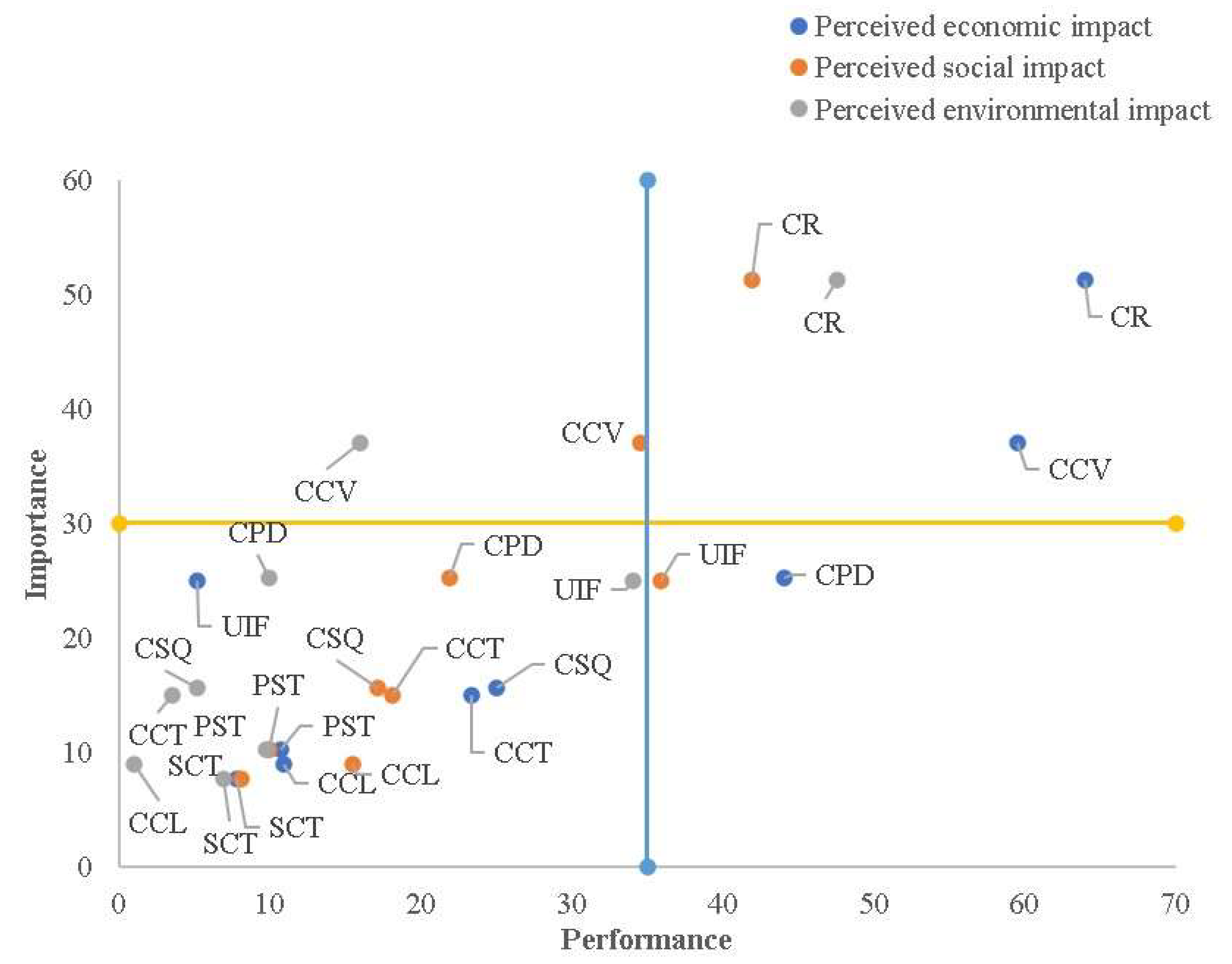
In Figure 4, the perceived economic impact of various adaptation strategies in the IPA matrix offers valuable insights into how stakeholders can assess the performance of each adaptation strategy in relation to its importance.
In quadrant 1, CR and CCV are rated highly in both importance and performance, meaning farmers recognize their economic value and believe it will increase crop yield and income. These strategies should be maintained and further promoted. In quadrant 3, CCT, CSQ, CCL, PST, SCT, and UIF fall in this quadrant. These strategies are neither performing nor perceived as economically important. In quadrant 4, CPD is found to be highly important but not performing well. This means that it has the potential to increase the crop yield and income of the farmers.
In quadrant 1, CR is perceived to be socially relevant by farmers, this means that they contribute to reducing poverty, improving nutrition, and increasing food security. In quadrant 2, the CCV strategy is effective but not widely adopted by farmers. This means that despite their potential of reducing poverty, improving nutrition, and increasing food security they are not well utilized by farmers. In quadrant 3, CPD, CCT, CSQ, CCL, PST, and SCT fall in this quadrant. These strategies are neither performing nor perceived as socially important, they provide limited social benefits in reducing poverty, improving nutrition, and increasing food security. In quadrant 4, UIF is found to be highly important but not performing well. This means that it has the potential to reduce poverty, improve nutrition, and increase food security if implemented well.
In quadrant 1, CR is perceived to be environmentally relevant by farmers, thereby regulating soil moisture and temperature, enhancing soil fertility, and reducing soil contamination. In quadrant 2, the CCV strategy is effective but not widely adopted by farmers. This means that despite their potential to regulate soil moisture and temperature, enhance soil fertility, and reduce soil contamination they are not well utilized by farmers.
In quadrant 3, CPD, CSQ, PST, CCT, CCL, and SCT fall in this quadrant. These strategies are neither performing nor perceived as socially important, they provide limited environmental benefits in regulating soil moisture and temperature, enhancing soil fertility, and reducing soil contamination. Farmers do not see these strategies as delivering significant environmental benefits.
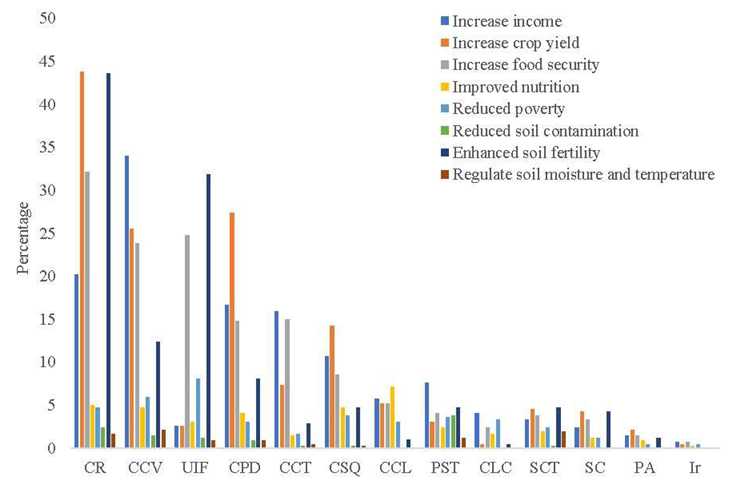
Figure 5 shows the perceived impact of adaptation and mitigation strategies. The perceived economic impact of adaptation and mitigation strategies was measured across three key outcomes: increased crop yield and increased income. Farmers view CCV to have a positive impact, as 34% anticipate a rise in income, and 25% predict a boost in crop yield. CCT as an adaptation strategy is believed to increase farmers’ income by 16% while 7% expected higher crop yield. CR enhances income by 20% and boosts crop yield by 44%. The implementation of CPD is expected to increase income by 17% and increase yield by 27%. The CSQ is believed to increase income and yield by 11% and 14% respectively.
The economic benefit of CLC production seems very minimal, as just 4% of farmers expect increased income. These adaptation strategies aim to mitigate the negative effects of climate change, particularly the declining crop yields documented in previous studies such as those by [45], [46]. Crop rotation demonstrates the most significant positive impact on crop yield, contributing nearly 50%, which is consistent with prior research indicating yield reductions in cereal crops in Africa due to climate change.
Preprints 149546 i007
Changing crop variety also significantly enhances both yield and income, suggesting that crop diversification is an effective adaptation strategy to mitigate the adverse effects of rising temperatures and increased evapotranspiration demands in West Africa. Conversely, strategies such as pesticide application and the use of inorganic fertilizers exhibit minimal effects on yield and income, indicating that these measures alone may not adequately address climate-related losses. Overall, adaptation strategies like crop rotation, changing crop variety, and adjusting planting dates show the highest potential for mitigating the negative impacts of climate change on crop yield and income. This supports the notion that, while some studies have reported yield reductions of up to 17% due to climate change [47] implementing strategic agricultural interventions can help offset these losses, thereby stabilizing agricultural productivity and enhancing farmer income. The perception of farmers can influence the adoption of these measures to mitigate the impact of climate on agricultural production, emphasizing the importance of taking economic concerns into account in adaptation planning.
The perceived social impact of adaptation and mitigation strategies is measured across three key outcomes: reducing poverty, improving nutrition, and increasing food security. The perceived social impact of adaptation strategies varies among different strategies. Implementing crop rotation (CR) is perceived to be the most effective strategy for enhancing food security, with about 32% of respondents acknowledging its significance, although its effect on reducing poverty, and improving nutrition is relatively modest. The use of inorganic fertilizers (UIF) has the potential to increase food security by 25% but has minimal effects on poverty reduction. Strategies like change crop variety (CCV) and change seed quality (CSQ) show balanced effectiveness across all three outcomes confirming the results [48,49,50]. Additionally, change planting date (CPD) is perceived to increase food security by 15%. Other strategies such as pesticide application (PA), irrigation (Ir), and soil conversion (SC), show minimal perceived benefits across the three dimensions, signifying their lesser role in enhancing livelihoods. Agroforestry strategies like stop cutting trees (SCT) and planting shaded trees (PST) aim to enhance nutrition and food security with similar findings reported by [37]. Additional strategies such as change livestock to crop (CLC), and soil conservation (SC) are perceived to have little social impact by farmers. These perceptions can influence the adoption and implementation of strategies in agricultural practices, emphasizing the importance of considering social factors in adaptation planning. [51] reported that on-farm crop diversification improved food security and facilitated effective adaptation to climate change. [52] also found that households that planted drought-resistant crop varieties were better able to mitigate loss and damage during the 2011 drought in The Gambia. Agroforestry strategies in West Africa made a significant impact on adaptation, mitigation, and improved food security [53,54,55].
The perceived environmental impact of adaptation and mitigation strategies is measured across three dimensions: regulating soil moisture and temperature, enhancing soil fertility, and reducing soil contamination. Crop rotation (CR) and the use of inorganic fertilizers (UIF) are perceived as the most effective strategies for enhancing soil fertility. Smallholder farmers perceived that crop variety (CCV) can positively impact the environment. Specifically, 12% of farmers believe that this strategy can enhance soil fertility. Change in crop type (CCT) is perceived to have minimal environmental impact, with no significant perceived benefits in terms of reducing soil contamination, improving nutrition, or enhancing the environment. Other strategies are also perceived to have minimal environmental impacts.
Overall, farmers perceive that certain adaptation strategies, particularly changing crop variety and converting livestock to crop production, have positive environmental impacts by enhancing soil fertility, regulating soil moisture, and improving overall environmental conditions. These perceptions can influence the adoption and implementation of these strategies in agricultural practices, emphasizing the importance of considering environmental factors in adaptation planning. No studies were found that assess the impact of conservative agriculture (CA) on the pillars of climate-smart agriculture (CSA), in the Gambia [37]. However, in West Africa, evidence shows that CA supports the productivity and adaptability of CSA by improving soil structure, water retention, organic matter, replenishing soil fertility, and mitigating soil erosion [53,55]. Additionally, a CA-based system greatly improves soil health, leading to higher farm productivity and income [53,56]. It has the potential to reduce GHG emissions associated with plowing [55,57].

3.6. Challenges of Adaptation and Mitigation Strategies

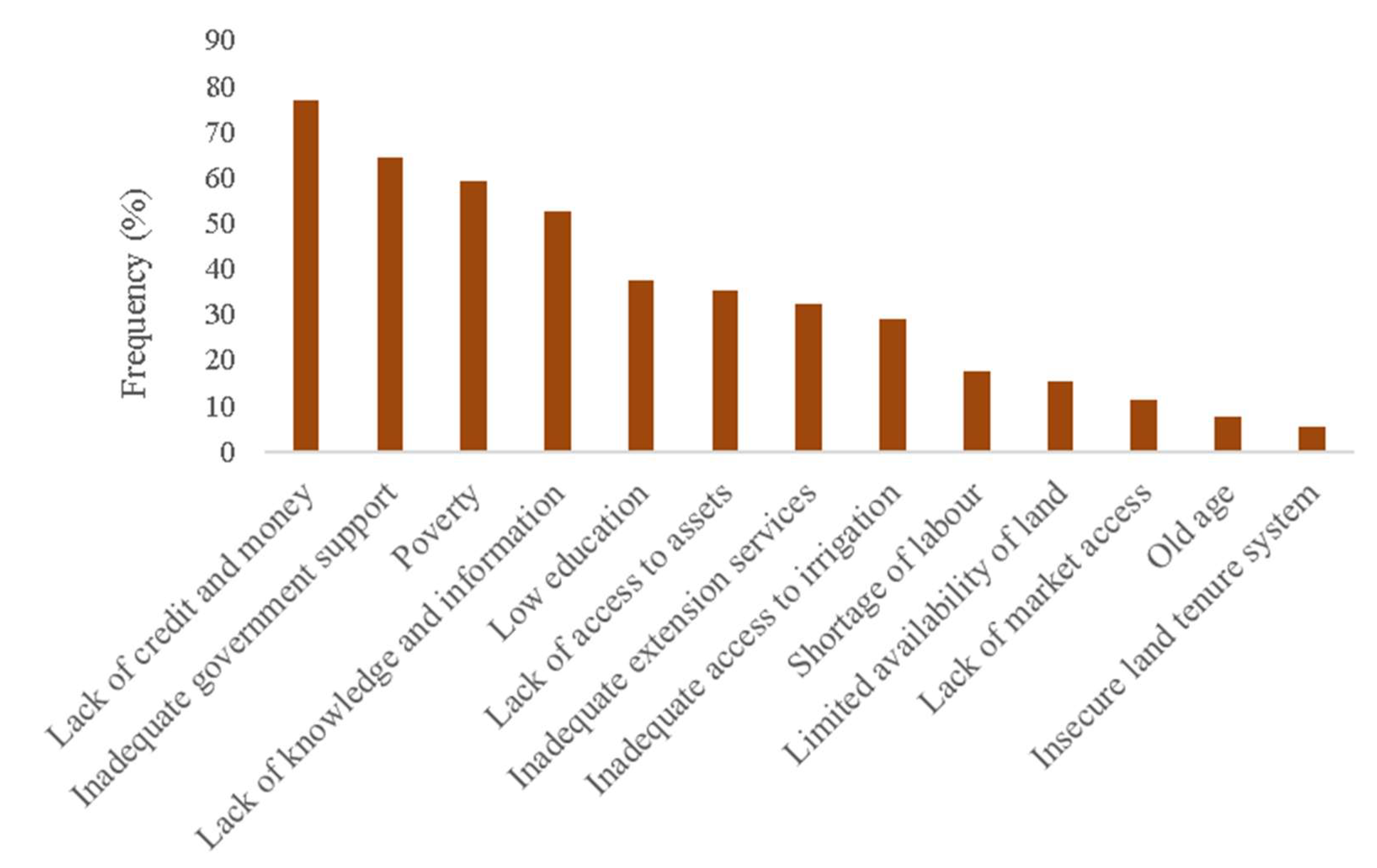
Figure 6 illustrates the diverse challenges smallholder farmers face in adopting adaptation and mitigation strategies. The most significant obstacle, cited 77% of the lack of credit and money, indicating that financial constraints hinder farmers from investing in vital tools and infrastructure for climate resilience. Inadequate government support is also a major concern (64%), indicating that farmers do not receive the necessary aid or policies to support their adaptation and mitigation efforts.
Inadequate government support is also a major concern (64%), indicating that farmers do not receive the necessary aid or policies to support their adaptation and mitigation efforts. Additionally, 59% of the farmers are constrained by poverty. Lack of knowledge and information was identified by 52% as a challenge in implementing adaptation and mitigation strategies. Low education is 37%, highlighting that information gaps limit their ability to implement adaptation and mitigation strategies. Other challenges include a lack of assets, inadequate extension services, and insufficient irrigation, 35%, 29%, and 32% respectively. Barriers such as shortage of labor, limited availability of land, and lack of market access, old age, insecure land tenure system add to these hurdles thought less frequently cited.

4. Discussion

The findings of this study reveal critical insights into the perception and effectiveness of climate adaptation and mitigation strategies employed by smallholder farmers in The Gambia. These results align with prior research, reinforcing both the challenges and opportunities that lie in adopting effective agricultural practices to mitigate climate risks. A notable aspect of this study is the moderate level of perceived efficacy of the strategies, as reflected in the perception index of 0.66. This suggests that while smallholder farmers acknowledge the importance of certain adaptation and mitigation strategies, their understanding and usage of these strategies remain limited. These findings are consistent with the work of [37], who reported significant knowledge gaps regarding the efficacy of climate adaptation strategies in The Gambia, noting that the effective implementation of such strategies remains hindered by a lack of awareness and accessibility.
For strategy improvement, emphasis should be placed on promoting strategies with high perceived efficacy, such as SCT, CR, and W, to strengthen adaptation measures. Strategies like CCT may require additional support to improve their perceived effectiveness and adoption. High perceived efficacy strategies with low frequency of adoption (e.g., W) suggest an opportunity for increased awareness and training. Strategies with lower normalized scores but relatively high frequencies (e.g., CCT) may require further refinement or additional resources to enhance their perceived effectiveness. highly rated strategies like CR and SCT could improve overall resilience and adaptation outcomes.
The frequent use of strategies such as crop rotation, use of inorganic fertilizers, and changing planting dates, which were highly rated for their perceived efficacy, mirrors findings from [35], who highlighted the preference for inorganic fertilizers among farmers despite their costs. These strategies are recognized for their ability to boost agricultural productivity, especially in areas like West Africa where erratic rainfall and changing climatic conditions have necessitated adaptive responses. However, this preference for inorganic inputs may need to be balanced with more sustainable practices, as pointed out by [58], who emphasize the need for long-term solutions that promote environmental health.
Low adoption rates of agroforestry-related strategies such as stop cutting trees and soil conservation, despite their perceived effectiveness, highlight a critical barrier to scaling sustainable agricultural practices. This is in line with findings by [55], who observed similar challenges in West Africa where agroforestry practices, though beneficial, are not widely adopted due to financial and labor constraints. The low uptake of such strategies in The Gambia indicates the need for stronger policy frameworks and support systems to encourage the adoption of agroforestry and other environmentally sustainable practices
The economic impact of adaptation strategies is also noteworthy. Strategies like crop rotation and changing crop varieties are perceived as having the most significant positive effect on income and crop yields. This finding corresponds with the studies by [45,47], who demonstrated the effectiveness of crop rotation and varietal changes in improving yields under climate stress. Conversely, strategies like pesticide application and inorganic fertilizers showed minimal effects on income, suggesting that while these methods may temporarily mitigate losses, they are not sustainable solutions for enhancing long-term productivity.
Moreover, the social impact analysis of these strategies suggests that farmers perceive crop rotation and the use of inorganic fertilizers as effective in enhancing food security. However, they are less effective in reducing poverty or improving nutrition. This echoes the findings of [50], who argued that while agricultural interventions can improve food security, their impact on other socio-economic factors like poverty alleviation requires a more comprehensive approach that includes access to markets, financial support, and education.
In terms of environmental outcomes, strategies like crop rotation and the use of inorganic fertilizers are perceived as the most effective for enhancing soil fertility, which aligns with the research by [53], who demonstrated that these practices significantly improve soil health in West Africa. However, there remains a disconnect between farmers’ perceptions of environmental benefits and the adoption of environmentally sustainable practices. This suggests a need for increased awareness and education about the long-term environmental advantages of certain adaptation strategies, a gap that [11] also identified in The Gambia.
This study highlights the urgent need for more targeted interventions and support to enhance the understanding, adoption, and effectiveness of climate risk adaptation and mitigation strategies in The Gambia. While farmers are aware of the strategies available to them, there is still considerable room for improving their knowledge and capacity to implement these strategies effectively. Addressing these gaps will be crucial in ensuring that Gambian agriculture can adapt to the increasing pressures of climate change.

5. Conclusions

The study highlights the importance of integrating farmers’ perceptions into climate adaptation and mitigation strategies to better meet the needs of local agricultural communities. By acknowledging and addressing farmers’ realities, policymakers can better tailor interventions for improved effectiveness and sustainability in the face of global climate change. Farmers’ perceptions of adaptation and mitigation strategies can influence the adoption and implementation of these strategies in agricultural practices, emphasizing the importance of considering social and environmental factors in adaptation planning.
The findings indicate a moderate level of perceived efficacy of these strategies, underscoring the need for greater awareness and knowledge among farmers. While widely adopted strategies like crop rotation, use of inorganic fertilizers, and changing planting dates are perceived as effective in improving agricultural productivity, the low perceived efficacy of agroforestry-related practices and other environmentally sustainable strategies signals the need for stronger support and education. The perceived efficacy of the economic, social, and environmental impacts of these strategies reveals that crop rotation and changing crop varieties have the greatest potential to improve yields and income, enhance food security, and promote soil fertility. However, strategies like pesticide application and inorganic fertilizers, though perceived as effective in mitigating short-term losses, may not offer sustainable long-term solutions. Addressing the challenges faced by smallholder farmers in implementing adaption and mitigation strategies through financial support, education, extension services, and improved infrastructure, coupled with strong government support, could significantly enhance farmers’ ability to adopt climate adaptation and mitigation strategies.
The study’s findings have practical applications in informing policymakers and other stakeholders about the importance of integrating farmers’ perceptions into climate adaptation and mitigation strategies. This can help to improve the effectiveness and sustainability of interventions aimed at addressing the impact of climate change on agricultural productivity. The study’s findings can inform policy decisions aimed at assisting farmers in addressing the impacts of climate change, and highlight the importance of incorporating farmers’ perspectives into policy decisions to enhance the adaption of sustainable agricultural practices. Policymakers and practitioners can use the findings to inform adaptation planning and promote the adoption of effective adaptation and mitigation strategies in agricultural practices.

Author Contributions

For research articles with several authors, a short paragraph specifying their individual contributions must be provided. The following statements should be used “Conceptualization, S.C. and F.L.; methodology, S.C, F.L, J.S.; software, S.C.; validation, F.L., M.S., D.S, MBON and J.S.; formal analysis, S.C.; investigation, S.C.; resources, S.C.; data curation, S.C.; writing—original draft preparation, S.C.; writing—review and editing, F.L, J.S, D.S, M.S, MBON.; visualization, S.C.; supervision, F.L., MBON, D.S, M.S; project administration, S.C.; funding acquisition, S.C. All authors have read and agreed to the published version of the manuscript.

Funding

This research was financially supported by the German Federal Ministry of Education and Research (BMBF) through the West African Science Service Centre on Climate Change and Adapted Land Use (WASCAL

Data Availability Statement

The data cannot be shared at this time as they form part of an ongoing study

Code Availability

STATA software version 16 was used and code will be available by open request

Ethic Approval

The study was approved by the Research Ethic Committee of Gambia College with approval number GC/REC/2023/005. This study was performed in line with the tenets of the Declaration of Helsinki

Informed Consent

All the research participants provided informed consent for participation and publication of the research findings.

Acknowledgments

The authors acknowledge the support of BMBF and the office of WASCAL, Senegal.

Conflicts of Interest

All authors declared that they have no conflicts of interest.

Abbreviations

The following abbreviations are used in this manuscript
AGN Assistant from government /NGOs
CCL Change crop to livestock
CCT Change crop type
CCV Change crop variety
CD Crop diversification
CLC Change livestock to crop
CPD Change planting date
CR Crop rotation
CSQ Change seed quality
IPA Importance Performance Analysis
Ir Irrigation
Mg Migration
NS Normalized Score
PA Pesticide application
PB Petty business
PE Percentage of effective
PHE Percentage of highly effective
PHI Percentage of highly ineffective
PI Percentage of ineffective
PI Perception Index
PNU Percentage of not understanding
Pr Praying
PST Planting shaded trees
SC Soil conservation
SCT Stop cutting trees
UI Use Insurance
UIF Use of inorganic fertilizers
W Wage

References

  1. F. Lambarraa-Lehnhardt, S. F. Lambarraa-Lehnhardt, S. Ceesay, M. B. O. Ndiaye, D. Thiaw, and M. Sawaneh, “Climate risk perception and adaptation strategies of smallholder farmers in The Gambia,” Discover Sustainability, vol. 5, no. 1, p. 506, Dec. 2024. [Google Scholar] [CrossRef]
  2. K. Abbass, M. Z. K. Abbass, M. Z. Qasim, H. Song, M. Murshed, H. Mahmood, and I. Younis, “A review of the global climate change impacts, adaptation, and sustainable mitigation measures,” Jun. 01, 2022, Springer Science and Business Media Deutschland GmbH. [CrossRef]
  3. K. K. Verma et al., “Climate change adaptation: Challenges for agricultural sustainability,” 2024, John Wiley and Sons Inc. [CrossRef]
  4. P. Kopeć, “Climate Change—The Rise of Climate-Resilient Crops,” Feb. 01, 2024, Multidisciplinary Digital Publishing Institute (MDPI). [CrossRef]
  5. R. Akhtar and M. M. Masud, “Dynamic linkages between climatic variables and agriculture production in Malaysia: a generalized method of moments approach,” Environmental Science and Pollution Research, vol. 29, no. 27, pp. 41557–41566, Jun. 2022. [CrossRef]
  6. Climate change adaptation and mitigation in the food and agriculture sector. technical background document from the expert consultation, held on 5 to 7 March 2008 FAO, Rome.
  7. T. Sinore and F. Wang, “Impact of climate change on agriculture and adaptation strategies in Ethiopia: A meta-analysis,” Feb. 29, 2024, Elsevier Ltd. [CrossRef]
  8. A. Braimoh, C. A. Braimoh, C. Roncoli, and A. C. Segnon, “Climate change adaptation options to inform the planning of agriculture and food systems in The Gambia: A systematic approach for stocktaking.” [Online]. Available: https://era.ccafs.cgiar.
  9. B. Bayo and S. Mahmood, “Geo-spatial analysis of drought in The Gambia using multiple models,” Natural Hazards, vol. 117, no. 3, pp. 2751–2770, Jul. 2023. [CrossRef]
  10. J. Amuzu, B. P. J. Amuzu, B. P. Jallow, A. T. Kabo-Bah, and S. Yaffa, “The climate change vulnerability and risk management matrix for the coastal zone of The Gambia,” Hydrology, vol. 5, no. 1, Mar. 2018). [CrossRef]
  11. E. S. Sanneh, A. H. E. S. Sanneh, A. H. Hu, C. W. Hsu, and M. Njie, “Prioritization of climate change adaptation approaches in the Gambia,” Mitig Adapt Strateg Glob Chang, vol. 19, no. 8, pp. 1163–1178, Nov. 2014. [Google Scholar] [CrossRef]
  12. T. W. Carr et al., “Addressing future food demand in The Gambia: an increased crop productivity and climate change adaptation close the supply-demand gap?,” Food Secur, vol. 16, no. 3, pp. 691–704, Jun. 2024. [CrossRef]
  13. C. Belford, D. Huang, Y. N. Ahmed, E. Ceesay, and L. Sanyang, “An economic assessment of the impact of climate change on the Gambia’s agriculture sector: a CGE approach. Int J Clim Chang Strateg Manag, 2022. [CrossRef]
  14. E. S. Sanneh, A. H. E. S. Sanneh, A. H. Hu, C. W. Hsu, and M. Njie, “Prioritization of climate change adaptation approaches in the Gambia,” Mitig Adapt Strateg Glob Chang, vol. 19, no. 8, pp. 1163–1178, Nov. 2014. [Google Scholar] [CrossRef]
  15. L. Berrang-Ford et al., “Tracking global climate change adaptation among governments,” Jun. 01, 2019, Nature Publishing Group. [CrossRef]
  16. C. Singh et al., “Interrogating ‘effectiveness’ in climate change adaptation: 11 guiding principles for adaptation research and practice,” 2022, Taylor and Francis Ltd. [CrossRef]
  17. R. Roy et al., “Determining synergies and trade-offs between adaptation, mitigation and development in coastal socio-ecological systems in Bangladesh,” Environ Dev, vol. 48, Dec. 2023. [CrossRef]
  18. Hoegh-Guldberg, *!!! REPLACE !!!*; et al. , “The human imperative of stabilizing global climate change at 1.5°C,” Sep. 20, 2019, American Association for the Advancement of Science. [CrossRef]
  19. N. P. Simpson et al., “Adaptation to compound climate risks: A systematic global stocktake,” iScience, vol. 26, no. 2, Feb. 2023. [CrossRef]
  20. G. Camara et al., “Impact of land tenure on deforestation control and forest restoration in Brazilian Amazonia,” Environmental Research Letters, vol. 18, no. 6, Jun. 2023. [CrossRef]
  21. E. De Gregorio et al., “Climate change opportunities reduce farmers’ risk perception: Extension of the value-belief-norm theory in the context of Finnish agriculture. [CrossRef]
  22. M. E. Ikehi, F. O. M. E. Ikehi, F. O. Ifeanyieze, F. M. Onu, T. E. Ejiofor, and C. U. Nwankwo, “Assessing climate change mitigation and adaptation strategies and agricultural innovation systems in the Niger Delta,” GeoJournal, vol. 88, no. 1, pp. 209–224, Feb. 2023. [Google Scholar] [CrossRef]
  23. T. W. Carr et al., “Climate change impacts and adaptation strategies for crops in West Africa: A systematic review,” 2022, Institute of Physics. [CrossRef]
  24. L. Berrang-Ford et al., “Tracking global climate change adaptation among governments,” Jun. 01, 2019, Nature Publishing Group. [CrossRef]
  25. “Preliminary Report THE GAMBIA 2024 POPULATION AND HOUSING CENSUS (2024).” https://www.gbosdata.
  26. “The Gambia Bureau of Statistics 2023.
  27. Ali Bah, “Land Use and Land Cover Dynamics in Central River Region of the Gambia, West Africa from 1984 to 2017,” American Journal of Modern Energy, vol. 5, no. 2, p. 2019; 5. [CrossRef]
  28. F. Lambarraa-Lehnhardt, S. F. Lambarraa-Lehnhardt, S. Uthes, P. Zander, and A. Benhammou, “How improving the technical efficiency of Moroccan saffron farms can contribute to sustainable agriculture in the Anti-Atlas region,” Studies in Agricultural Economics, vol. 124, no. 3, pp. 2022. [Google Scholar] [CrossRef]
  29. M. S. Islam, M. Z. M. S. Islam, M. Z. Hossain, and M. B. Sikder, “Drought adaptation measures and their effectiveness at Barind Tract in northwest Bangladesh: a perception study,” Natural Hazards, vol. 97, no. 3, pp. 1253–1276, Jul. 2019. [Google Scholar] [CrossRef]
  30. J. A. Martilla and J. C. James, “Importance-Performance Analysis,” 1977. The Journal of Marketing. [CrossRef]
  31. E. Azzopardi and R. Nash, “A critical evaluation of importance-performance analysis,”. Tour Manag, 2013; 35, 222–233. [CrossRef]
  32. A. Sörensson and Y. von Friedrichs, “An importance-performance analysis of sustainable tourism: A comparison between international and national tourists,” Journal of Destination Marketing and Management, vol. 2, no. 1, pp. 2013; 21. [CrossRef]
  33. L. A. Warner, A. L. A. Warner, A. Kumar, and A. J. Lamm, “Using importance-performance analysis to guide extension needs assessment,” J Ext, vol. 54, no. 2016; 6. [Google Scholar] [CrossRef]
  34. D. R. Bacon, “A comparison of approaches to Importance-Performance Analysis,” 2003.
  35. A. R. Bagagnan, I. A. R. Bagagnan, I. Ouedraogo, and W. M. Fonta, “Perceived climate variability and farm level adaptation in the Central River Region of The Gambia,” Atmosphere (Basel), vol. 10, no. 7, Jul. 2019. [Google Scholar] [CrossRef]
  36. M. Charles Boliko, “FAO and the Situation of Food Security and Nutrition in the World,” 2019. [CrossRef]
  37. A. Braimoh, C. A. Braimoh, C. Roncoli, and A. C. Segnon, “Climate change adaptation options to inform planning of agriculture and food systems in The Gambia: A systematic approach for stocktaking.” [Online]. Available: https://era.ccafs.cgiar.
  38. R. H. Taplin, “Competitive importance-performance analysis of an Australian wildlife park,” Tour Manag, vol. 33, no. 1, pp. 2012; 33, 29–37. [CrossRef]
  39. M. S. Wong, N. M. S. Wong, N. Hideki, and P. George, “The use of importance-performance analysis (IPA) in evaluating Japan’s e-government services,” 2011. [CrossRef]
  40. J. I. Shieh and H. H. Wu, “Applying importance-performance analysis to compare the changes of a convenient store,” Qual Quant, vol. 43, no. 3, pp. 20 May; 09. [CrossRef]
  41. S. Y. Hosseini and A. Ziaei Bideh, “A data mining approach for segmentation-based importance-performance analysis (SOM-BPNN-IPA): A new framework for developing customer retention strategies,” Service Business, vol. 8, no. 2, pp. 295–312, Jun. 2014. [CrossRef]
  42. B. Phadermrod, R. M. B. Phadermrod, R. M. Crowder, and G. B. Wills, “Importance-Performance Analysis based SWOT analysis.” International journal of information management, 44, 194-203. [CrossRef]
  43. B. I. Kanyangale and C. H. Lee, “Integrating Locals’ Importance-Performance Perception of Adaptation Behaviour into Invasive Alien Plant Species Management Surrounding Nyika National Park, Malawi,” Forests, vol. 14, no. 9, Sep. 2023. [CrossRef]
  44. J. Rohit et al., “Exploring farmers’ communication pattern and satisfaction regarding the adoption of Agromet advisory services in semi-arid regions of southern India,” Front Sustain Food Syst, vol. 2023; 7. [CrossRef]
  45. P. Roudier, B. Sultan, P. Quirion, and A. Berg, “The impact of future climate change on West African crop yields: What does the recent literature say?,” Global Environmental Change, vol. 21, no. 3, pp. 1073–1083, Aug. 2011. [CrossRef]
  46. A. Jalloh, G. C. Nelson, T. S. Thomas, R. Zougmoré, and H. Roy-Macauley, “West African Agriculture and Climate Change: A Comprehensive Analysis Issue Brief,” 2013.
  47. J. Knox, T. Hess, A. Daccache, and T. Wheeler, “Climate change impacts on crop productivity in Africa and South Asia,” Environmental Research Letters, vol. 7, no. 2012; 3. [CrossRef]
  48. L. Dibba, A. Diagne, S. C. Fialor, and F. Nimoh, “DIFFUSION AND ADOPTION OF NEW RICE VARIETIES FOR AFRICA (NERICA) IN THE GAMBIA.” In African Crop Science Journal (Vol. 20).
  49. A. Diagne, E. A. Diagne, E. Amovin-Assagba, K. Futakuchi, and M. C. S. Wopereis, “Estimation of cultivated area, number of farming households and yield for major rice-growing environments in Africa.,” in Realizing Africa’s rice promise, CABI, 2013, pp. 35–45. [CrossRef]
  50. Arouna, J. C. Lokossou, M. C. S. Wopereis, S. Bruce-Oliver, and H. Roy-Macauley, “Contribution of improved rice varieties to poverty reduction and food security in sub-Saharan Africa,” Glob Food Sec, vol. 14, pp. 54–60, Sep. 2017. [Google Scholar] [CrossRef]
  51. S. Anderson, “International Institute for Environment and Development Tracking adaptation and measuring development: Enabling evaluation of the effectiveness of climate change adaptation.
  52. K. Van Der Geest and K. Warner, “Editorial: Loss and damage from climate change: emerging perspectives,” 2015. International Journal of Global Warming.
  53. J. Bayala, J. Sanou, Z. Teklehaimanot, A. Kalinganire, and S. J. Ouédraogo, “Parklands for buffering climate risk and sustaining agricultural production in the Sahel of West Africa,” Curr Opin Environ Sustain, vol. 6, no. 1, pp. 28–34, Feb. 2014. [CrossRef]
  54. Mbow, P. Smith, D. Skole, L. Duguma, and M. Bustamante, “Achieving mitigation and adaptation to climate change through sustainable agroforestry practices in Africa,” Curr Opin Environ Sustain, vol. 6, no. 1, pp. 8–14, Feb. 2014. [Google Scholar] [CrossRef]
  55. S. T. Partey, R. B. Zougmoré, M. Ouédraogo, and B. M. C: Campbell, “Developing climate-smart agriculture to face climate variability in West Africa: Challenges and lessons learnt, 2018. [CrossRef]
  56. S. N. Araya, J. P. Mitchell, J. W. Hopmans, and T. A. Ghezzehei, “Long-term impact of cover crop and reduced disturbance tillage on soil pore size distribution and soil water storage,” SOIL, vol. 8, no. 1, pp. 177–198, Mar. 2022. [CrossRef]
  57. M. Charles Boliko, “FAO and the Situation of Food Security and Nutrition in the World,” 2019. Journal of nutritional science and vitaminology.
  58. S. Awuni, F. Adarkwah, B. D. Ofori, R. C. Purwestri, D. C. Huertas Bernal, and M. Hajek, “Managing the challenges of climate change mitigation and adaptation strategies in Ghana,” , 2023, Elsevier Ltd. 01 May. [CrossRef]
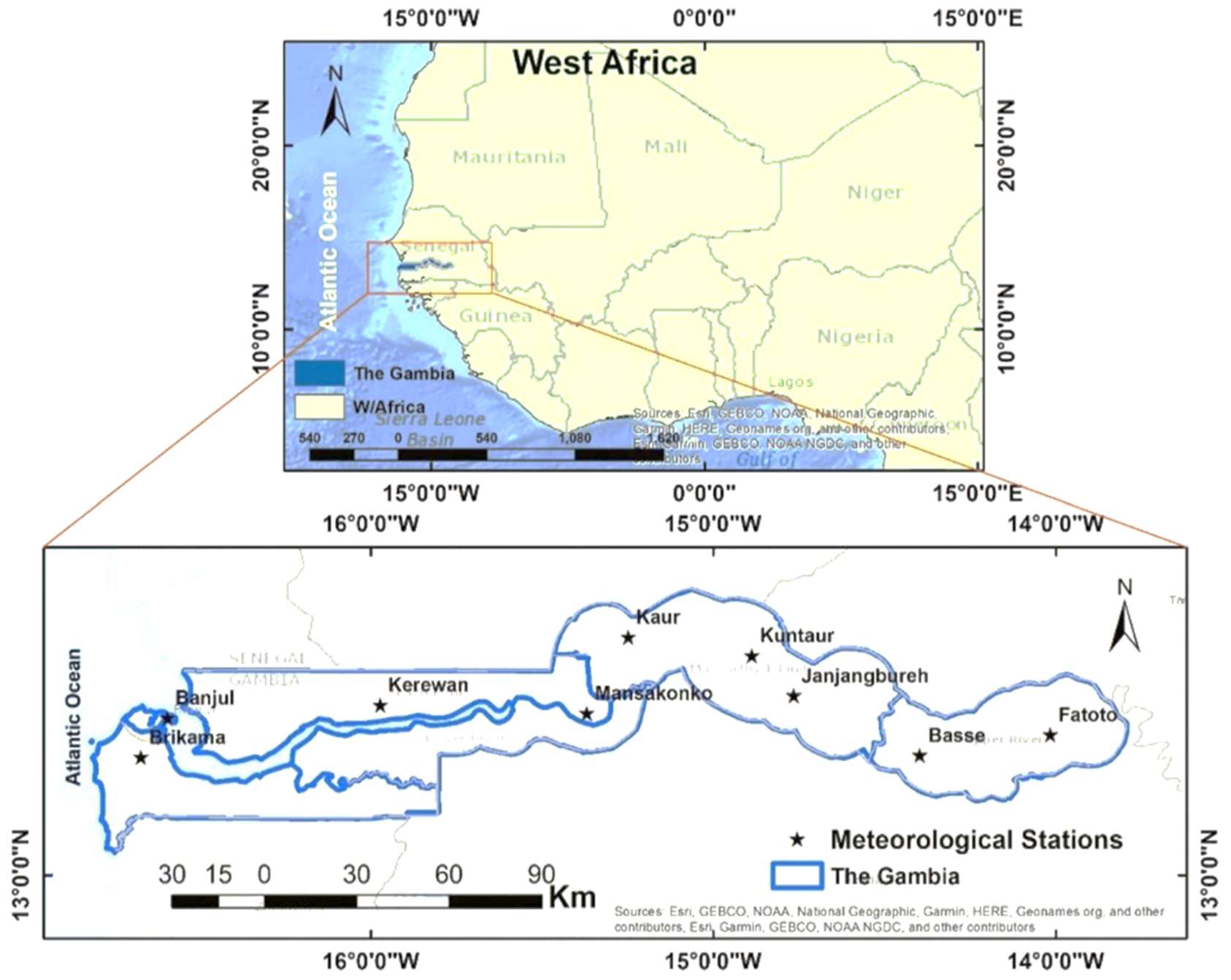
Figure 1. Location of The Gambia, adapted from [9].
Preprints 149546 g001
Figure 2. Frequency of adaptation and mitigation strategies and their perceived efficacy 1. (CCL=Change crop to livestock, CCT=Change crop type, CCV=Change crop variety, CLC=Change livestock to crop, CPD=Change planting date, CSQ=Change seed quality, UIF=Use of inorganic fertilizers, CD=Crop diversification, CR=Crop rotation, SC=Soil conservation, SCT=Stop cutting trees, PA=Pesticide application, PST=Planting shaded trees, Ir=Irrigation, Pr=Praying, UI=Use insurance, W=Wage, Mg=Migration, PB=Petty business, AGN= Assistant from government /NGOs)
Preprints 149546 g002
Figure 3. IPA Matrix.
Preprints 149546 g003
Figure 4. IPA of economic, social, and environmental impact .
Preprints 149546 g004
Figure 6. Challenges farmers face in adopting the adaptation and mitigation strategies.
Preprints 149546 g006
Disclaimer/Publisher’s Note: The statements, opinions and data contained in all publications are solely those of the individual author(s) and contributor(s) and not of MDPI and/or the editor(s). MDPI and/or the editor(s) disclaim responsibility for any injury to people or property resulting from any ideas, methods, instructions or products referred to in the content.
Copyright: This open access article is published under a Creative Commons CC BY 4.0 license, which permit the free download, distribution, and reuse, provided that the author and preprint are cited in any reuse.
Prerpints.org logo

Preprints.org is a free preprint server supported by MDPI in Basel, Switzerland.

Subscribe

Disclaimer

Terms of Use

Privacy Policy

Privacy Settings

© 2025 MDPI (Basel, Switzerland) unless otherwise stated