Preprint
Article

This version is not peer-reviewed.

The Effect of the Conformation Process on Physicochemical Properties of CMC/Starch Hydrogels

A peer-reviewed article of this preprint also exists.

Submitted:

06 February 2025

Posted:

07 February 2025

You are already at the latest version

Abstract

This study discusses the preparation of biopolymeric hydrogels (Biomaterial) via different techniques, such as casting and extrusion, to compare the effects of the process and the use of citric acid as a crosslinker on hydrogel morphology, physicochemical properties, and swelling degree. Casting is widely used for its low cost and space-saving nature, but up-scaling is problematic. Extrusion offers a way to produce materials in large quantities; these materials can undergo mechanical and thermal energy, which can significantly alter their properties. The samples obtained by extrusion had porous surfaces, which are critical for water penetration and swelling of superabsorbent hydrogels. In contrast, the hydrogels produced by casting did not form pores, resulting in a lower degree of swelling. Extrusion increased the swelling degree threefold due to the formation of pores, influencing water absorption and diffusion dynamics, especially in samples with higher starch content, where crosslinking occurred more effectively.
Keywords: 
;  ;  ;  ;  ;  

1. Introduction

Agricultural development is driven by the need to increase crop productivity due to population growth and the rising demand for food. Historically, these challenges have been mitigated by the intensive use of pesticides and fertilizers, as well as the overexploitation of natural resources, such as soil and water [1,2,3,4]. However, the issues of soil salinization and desertification, exacerbated by droughts and water scarcity, pose significant threats to sustainable agriculture. Therefore, developing innovative and sustainable irrigation techniques has become essential for ensuring long-term agricultural viability [5].
Hydrophilic substances, commonly called hydrogels, are promising for agricultural applications due to their unique water retention properties [6]. Research indicates that the application of hydrogels improves soil parameters, such as hydraulic conductivity [7], field capacity [8], and water retention [9] while also promoting improved crop development [10,11,12].
Hydrogels based on biopolymers such as starch, carboxymethylcellulose, and gelatin, among others, have been obtained through different processes, such as casting, extrusion, injection, or thermo-pressing [13,14,15,16]. According to Madhumitha et al. (2018) [17], most studies use the casting method on a laboratory scale to create materials of this type due to the cost-benefit of the technique and limited space. Nevertheless, a significant issue with the casting approach is the high processing costs associated with the low production volume and the upscaling challenge to an industrial level [18,19].
Studies describing the utilization of procedures such as extrusion are scarce despite the literature having a large amount of research on hydrogel manufacture utilizing the casting approach [19]. Extrusion exposes materials to mechanical and thermal energy, which causes chemical and physical reactions that significantly affect the material’s final properties [20]. This technique offers a highly effective solution for meeting high demands at a minimal cost. Extrusion stands out as the predominant method for producing industrial plastics on a large scale, owing to its ability to rapidly reach high temperatures and its straightforward operation [19].
The objective of the present study was to evaluate the effect of the processing technique (casting and extrusion) in CMC hydrogels crosslinked with citric acid on their morphology, physicochemical properties, and swelling degree.

2. Results and Discussion

2.1. Characterization
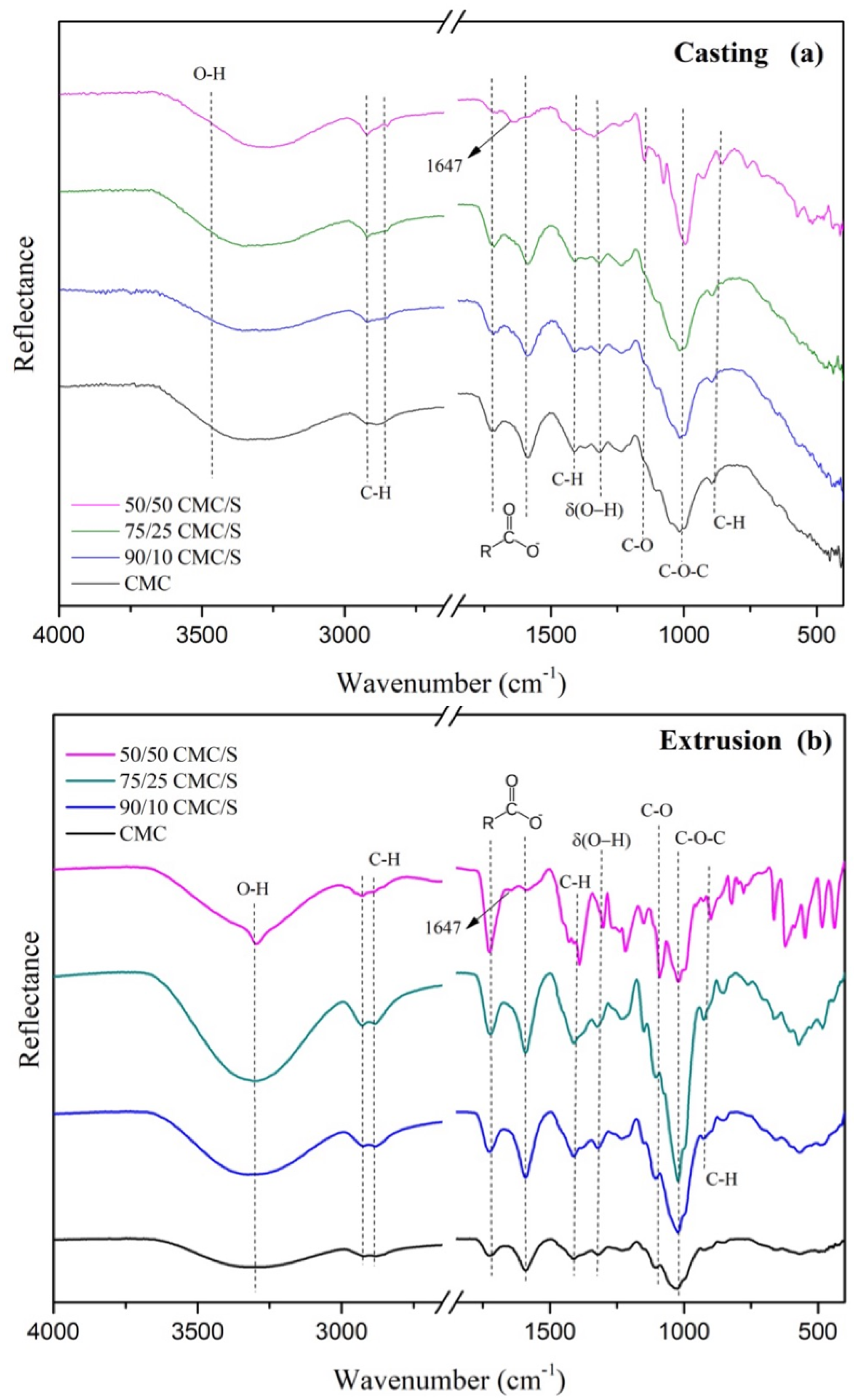
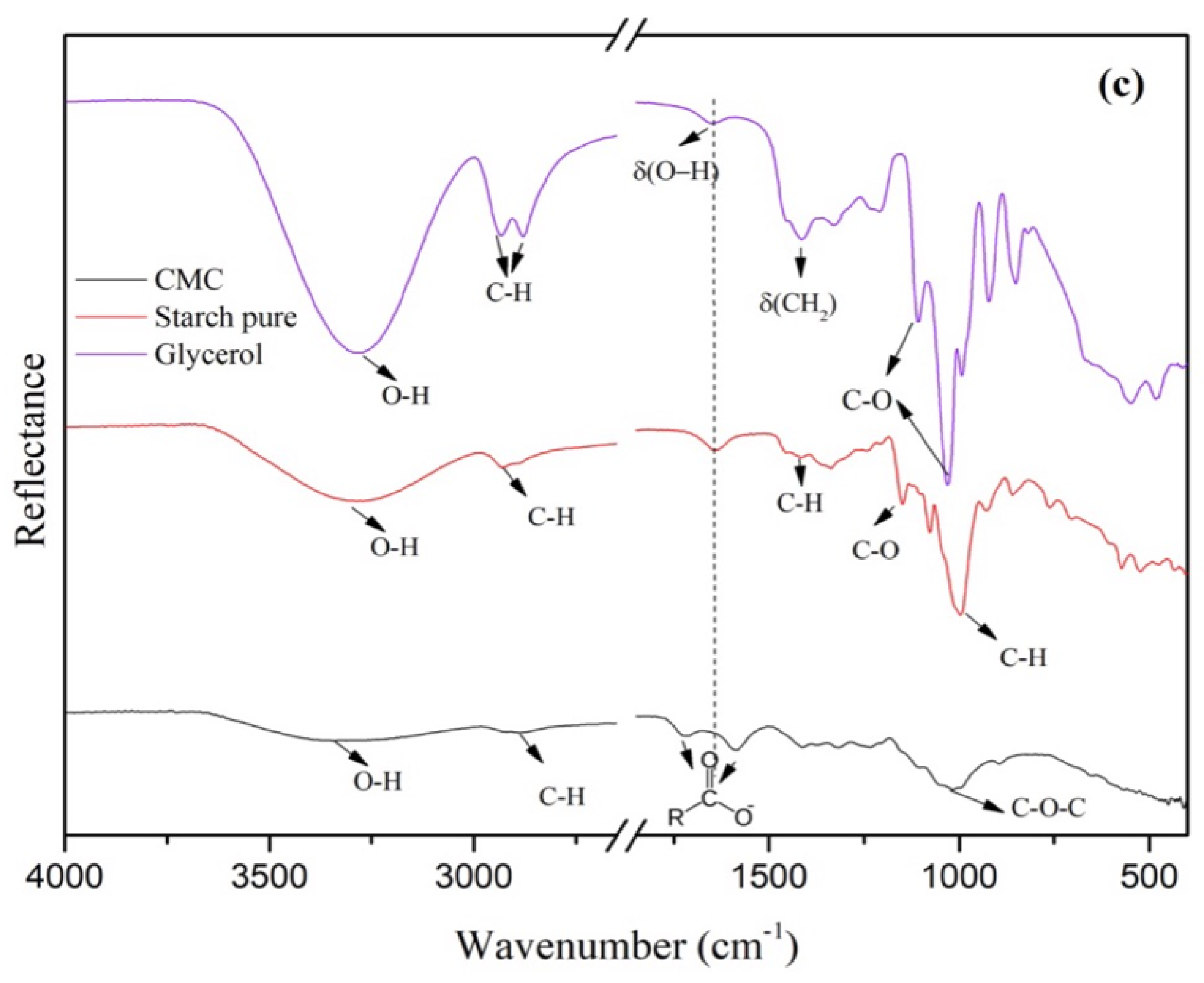
The FTIR spectra provide details about how the functional groups of the various components interact with each other. Figure 1 shows the FTIR spectra of CMC, starch, glycerol, and CMC/starch/glycerol.
Figure 1. FTIR spectra of samples: (a) casting, (b) extrusion, and (c) pure components.
Preprints 148517 g001aPreprints 148517 g001b
The vibrational infrared absorption spectrum of glycerol P.A. presents a broad absorption band at 3281 cm-1, characteristic of n(O–H) stretching originating from alcohol groups. The 2934 and 2879 cm-1 bands can be attributed to the n(C–H) bond stretching mode. The absorption at 1654 cm-1 corresponds to the angular deformation of the δ(O–H) group. The absorption band at 1407 cm-1 may be related to the angular deformation δ(–CH2), and absorptions at 1104 and 1029 cm-1 correspond to the stretching n(C–O) of secondary and primary alcohol, respectively [21].
The pure CMC spectrum presents a band at 2917 cm-1 referring to the asymmetric stretching n(C–H), and a broad band located around 3590-3039 cm-1 is attributed to the stretching n(O–H) [22]. The peaks at 1588 and 1715 cm-1 are associated with the stretching vibrational movements, both symmetric and asymmetric, of the carboxylate groups, respectively [22]. The stretching vibration n(C–O–C) referring to the polysaccharide skeleton can be observed at 1041 cm-1 [23], and the angular deformation δ(O–H) is found at about 1316 cm-1 [24].
In the spectrum of pure starch, a representative peak is found at 1644 cm-1 due to the presence of absorbed water. The peak at 1160 cm-1 arises from the n(C–O) stretch, and the n(C–H) stretch is found at 2929 cm-1 [25]. Due to intermolecular and intramolecular hydrogen bonds and free -OH groups, broadband is found at 3310 cm-1 related to n(O–H) stretching vibrations. The peak at 1453 cm-1 is attributed to the in-plane C–H bending of the CH2 groups, and the one at 994 cm-1 is attributed to the out-of-plane band [26].
The intense band found between 1064 and 955 cm-1 probably resulted from overlapping three bands characteristic of starch and cellulose [25]. Around 955 cm-1, it is attributed to n(C–O) of the C–O–H group. The characteristic range of angular deformation of δ(C–H) is observed in the region of 880 cm-1. In the spectrum of the CMC/starch mixture, this band is shifted to 859 cm-1, as well as the band related to the carboxylate group in CMC is shifted to 1644 cm-1 (casting) and 1647 cm-1 (extrusion), indicative of the ester bonds formation between the hydroxyl groups in the amylopectin branches of starch and the carboxylic acid groups of the CMC, forming a stable crosslinked structure between the starch and the CMC, in which it is possible to observe the band close to 1719 cm-1, related to the stretching n(C=O) of the carbonyl ester [25,27]. The n(C–O–C) stretching vibration of the polysaccharide skeleton is also changed to 1000 cm-1 [28]. This absence of differences observed in FTIR between the casting and extrusion procedures was likely due to the starch molecules’ non-drastic alterations, which were too subtle for this approach to detect. Figure 2 presents the findings of TG’s analysis of the thermal stability of the samples.
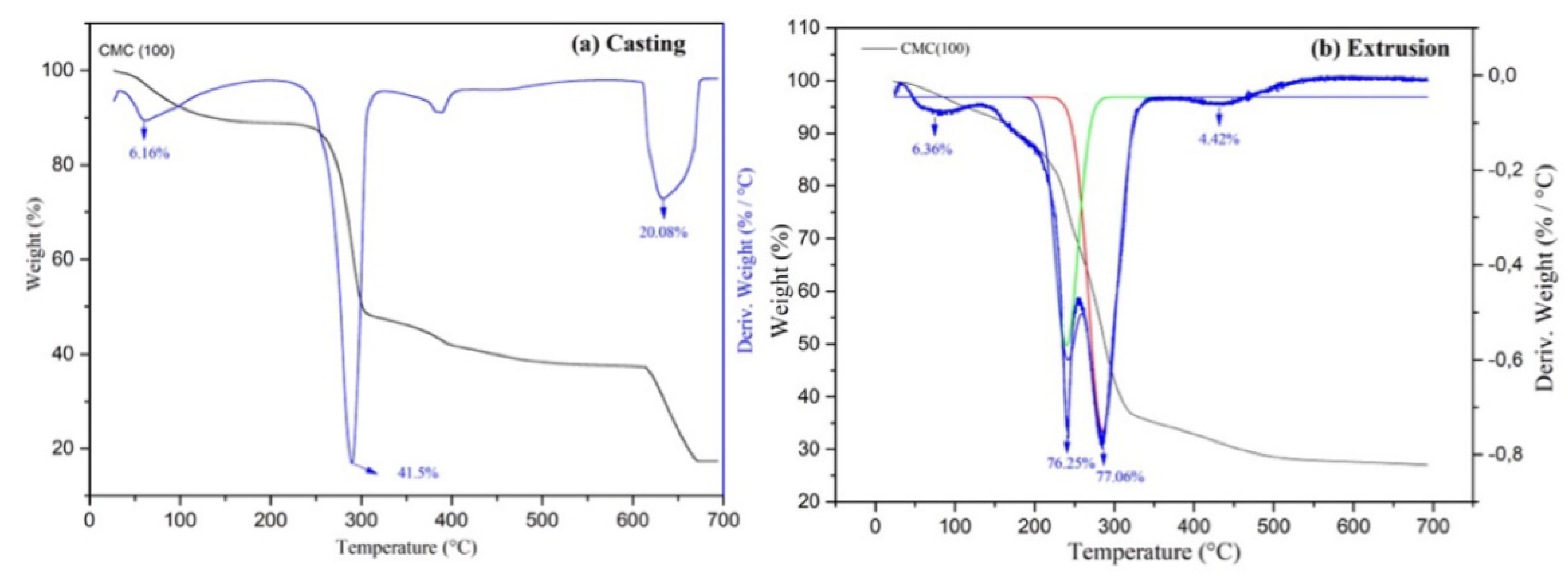
Figure 2. TGA and DTG analysis of CMC: (a) casting and (b) extrusion.
Preprints 148517 g002
The CMC by casting and extrusion was analyzed using thermal gravity analysis (TGA), shown in Figure 2. Three different weight decreases are seen. The first weight loss occurs at 60 °C for both processes, or approximately 6.16% and 6.36%. The sample’s first weight loss can be attributed to moisture. Rani et al. [29] have reported a similar observation. This is a result of biopolymers’ propensity to take in moisture from their immediate environment [29].
There is a second weight maximum degradation with a weight loss of 41.5% at 289.74 °C, which corresponds to the loss of COO− from the polysaccharide; in this temperature range, it undergoes decarboxylation [30]. In the extruded sample, this mass loss occurs in two stages (according to deconvolution), with losses of 76.25% and 77.06%, at 242.46 °C and 284.07 °C. The third mass loss for the sample obtained by casting started around 608.55–675.76 °C, with a maximum of 633.36 °C, resulting in a weight loss of 20.08%. However, for the extruded sample, there was a low mass loss, 4.42% at 433.5 °C [31]. At 700 °C, CMC presented residual weights of 17.26% and 27.09%, respectively, for the casting and extrusion sample, indicating the presence of a non-volatile component fraction [32].
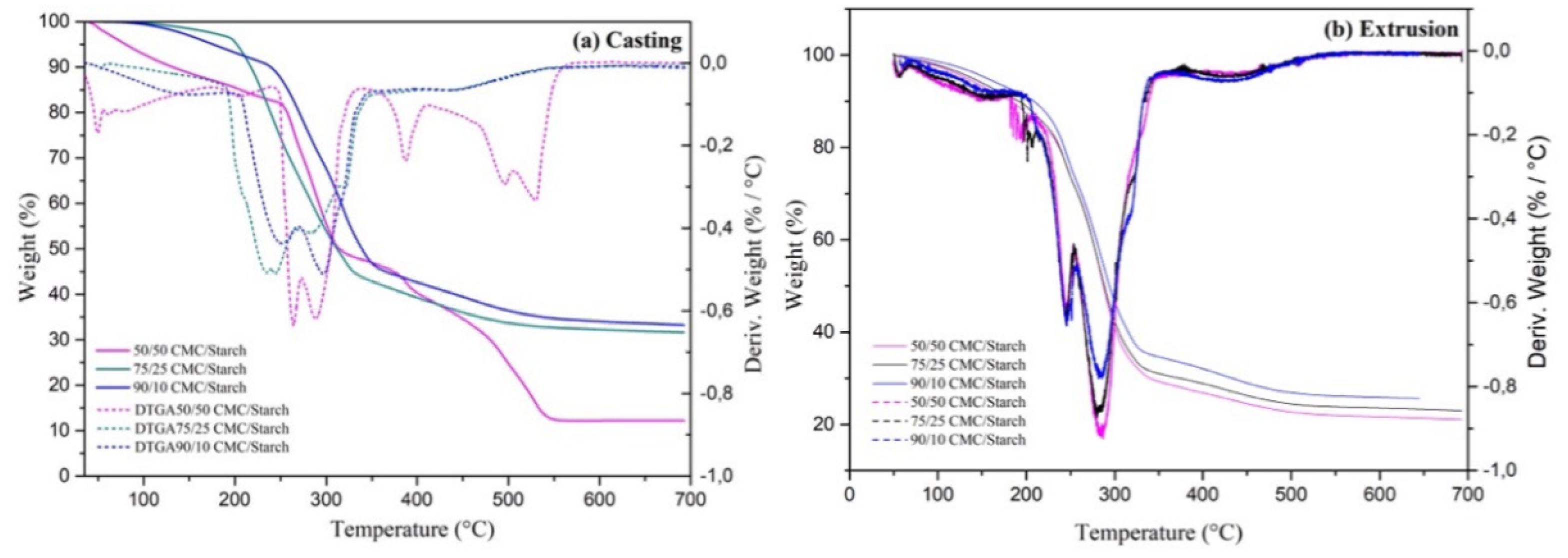
Figure 3. TGA and DTG analysis of CMC/S: (a) casting and (b) extrusion.
Preprints 148517 g003
Thermogravimetry was employed to assess the thermal stability of blends of starch and CMC, the result of which is shown in Figure 3. Furthermore, the material’s thermal decomposition temperature was determined in four main steps using the derivative of the TGA curves. About 89 °C was the first degradation temperature of the 50/50 CMC/S-containing material, which corresponds to the water loss; 207 °C is the second stage of thermal degradation of the samples, which is related to the volatilization of glycerol; and between 262; 288, and 386 °C is the third stage and the four-stage at 527 °C corresponds to the degradation of starch and CMC constituents [33]. For the 50/50 CMC/S sample, the CMC presented residual weights of 12.27 %, at 700 °C [32].
The degradation zones overlapped in the 75/25 and 90/10 CMC/S thermograms. The initial degradation peak, which corresponded to the glycerol volatilization, occurred at 250 °C and 237 °C for 90/10 and 75/25 CMC/S, respectively. At 319 °C and 285 °C, the starch and CMC components were degraded to 75/25 and 298 °C to 90/10 CMC/S [33]. However, for samples 75/25 and 90/10 CMC/S, the CMC presented residual weights of 31.7% and 33.30 %, respectively, at 700 °C, also suggesting greater stability, obtaining a greater fraction of non-volatile component [32].
The extruded samples maintained the same degradation profile. Thus, there was also an overlap in the degradation zones in the thermograms. The initial degradation peak occurred at around 245 °C. The second degradation peak occurred around 283 °C, corresponding to the starch and CMC components [33]. The residual mass of these samples was around 21.6%, 23.10% and 26.21% for 50/50, 75/25 and 90/10 CMC/S, respectively, due to the non-volatile fraction of CMC [32].
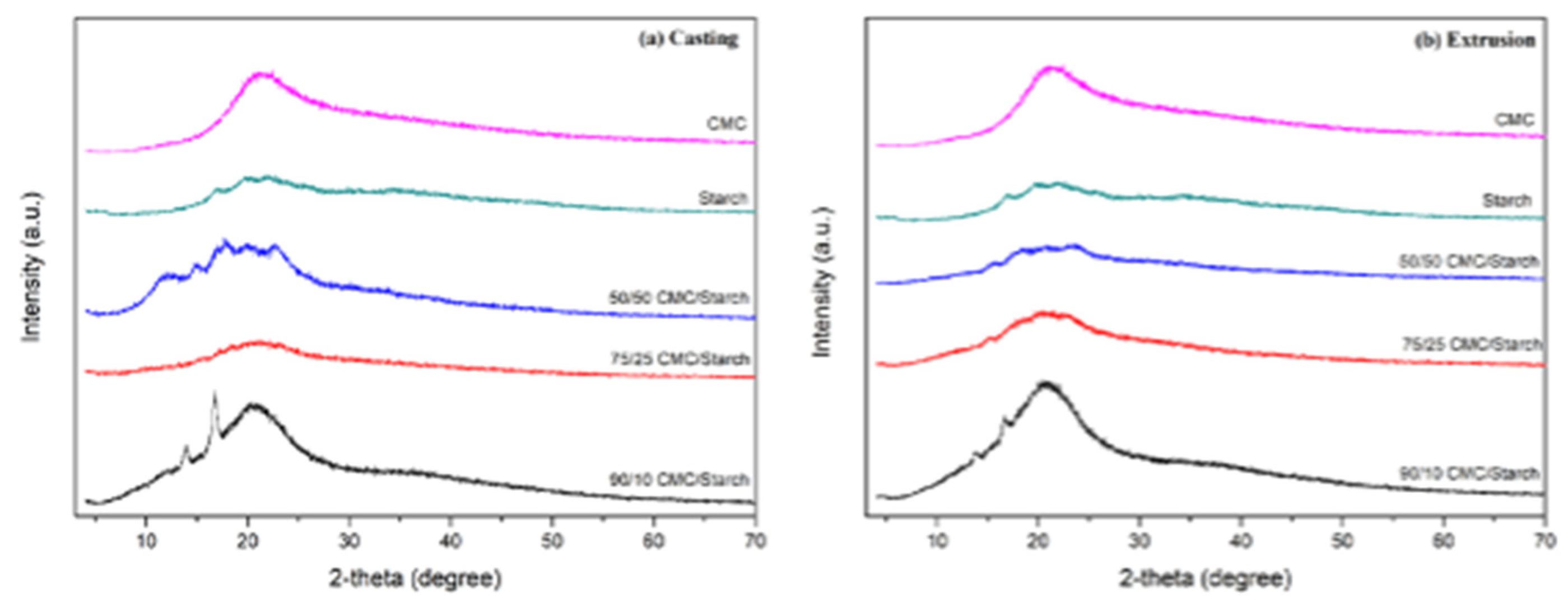
Figure 4 presents the X-ray diffraction patterns of CMC, starch, and their respective formulations. The starch diffractogram shows an amorphous halo superimposed on intense diffraction peaks, indicating the polymer’s semicrystalline state. Moreover, the starch diffractogram presented peaks at 17.3, 18.2, and 23.1º, characteristic of the type A polymorphic structure of amylose and amylopectin. In the same context, the CMC shows a broad peak at about 2θ = 22.4°, indicating that its crystal structure was amorphous. The peaks for the different formulations were similar, as well as the main peaks were observed between 15 and 25º. It is possible to verify that the characteristic peaks for the formulations (casting and extrusion) coincide with the diffraction signals for the precursor reagents, such as starch and CMC. These observations suggest that the diffractograms are a superposition of pure starch and CMC profiles. The characteristics of the peaks also show no crystalline transformations of the structure based on the treatments.
Figure 4. X-ray diffraction (XRD) patterns of CMC, starch, and their respective formulations: (a) casting and (b) extrusion.
Preprints 148517 g004

2.2. Mechanical Properties

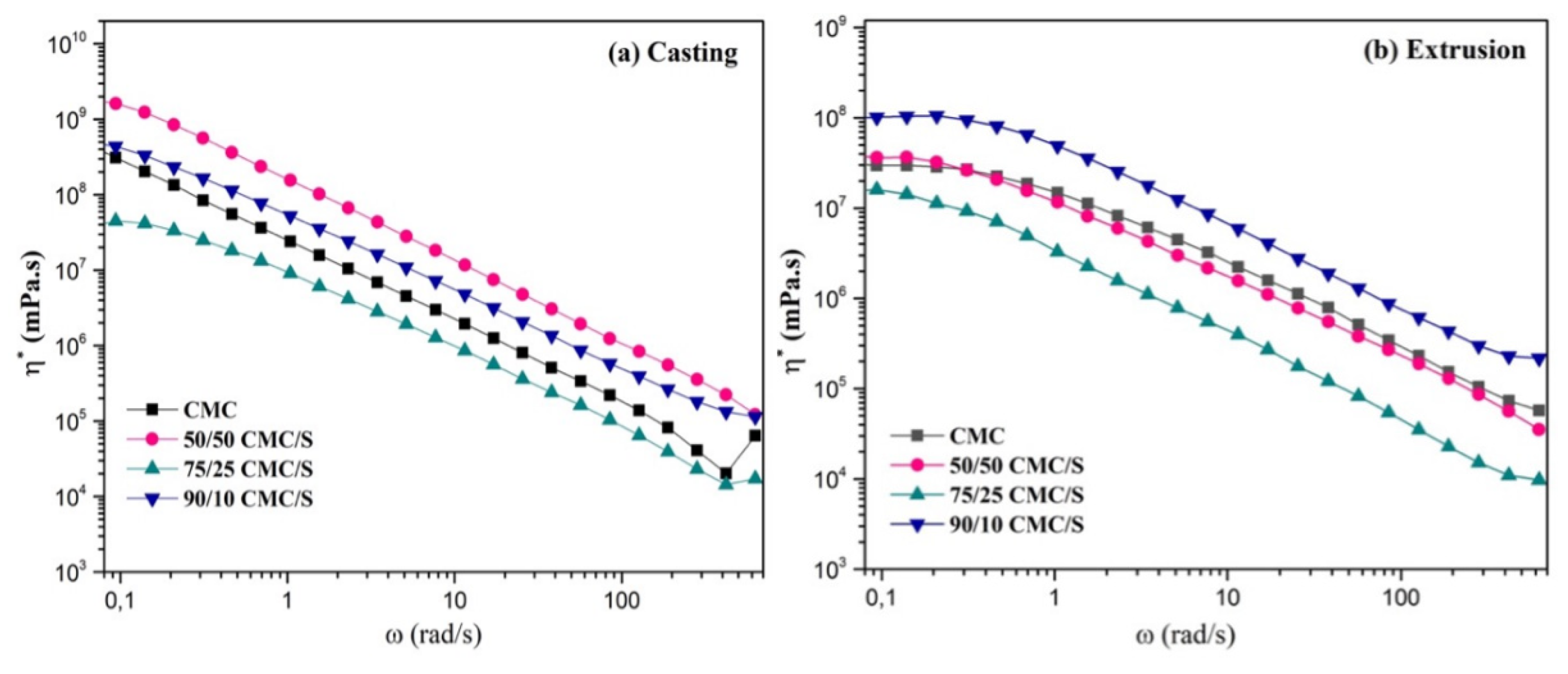
Figure 5 presents the viscosity versus angular frequency results for samples with varying CMC/S ratios, prepared using two different methods: (a) casting and (b) mechanical extrusion. As observed in both casting and extrusion samples, viscosity decreases with increasing shear rate, confirming the pseudoplastic fluid behavior described in the literature[34,35].
Figure 5. Complex viscosity versus angular frequency for samples with varying CMC/S ratios was prepared using (a) casting and (b) mechanical extrusion.
Preprints 148517 g005
However, notable differences are observed, including the profile of the viscosity decrease curve during the frequency sweep, the viscosity values, and the influence of mixture proportions depending on the methodology used to produce the samples.
For the CMC/S mixtures produced by casting, a significant decrease in viscosity is observed as the shear rate increases, with a slight Newtonian plateau at low frequencies for the 75/25 ratio sample. This suggests that this production method results in structures with a low degree of organization. In contrast, samples produced by extrusion exhibit a Newtonian plateau across all formulations, followed by a gradual decrease in pseudoplastic behavior as the shear rate increases. This indicates that the material produced through extrusion has a higher degree of chain organization [34].
The 50/50 and 90/10 CMC/S ratio samples showed increased viscosity for casting and extrusion samples. In the casting method, the highest viscosity increase occurred in the 50/50 sample, while in the extrusion method, the greatest increase was seen in the 90/10 sample compared to pure CMC obtained from both methods. Additionally, the 75/25 ratio sample showed a decrease in viscosity for both production methods, with a result lower than that of the pure CMC sample.
In general, the methods used to obtain CMC/S mixtures showed the same degree of increase in viscosity for the 50/50 and 90/10 samples and the same tendency to decrease for the 75/25 sample compared to the control sample, CMC. However, the methods differed regarding the chains’ organizational structure, as shown by the Newtonian plateau, which was more pronounced for the samples produced by the extrusion process, as described above. This corroborates the swelling degree since the higher the viscosity degree, the greater the diffusivity of water molecules through the polymer chains.

2.3. Morphology

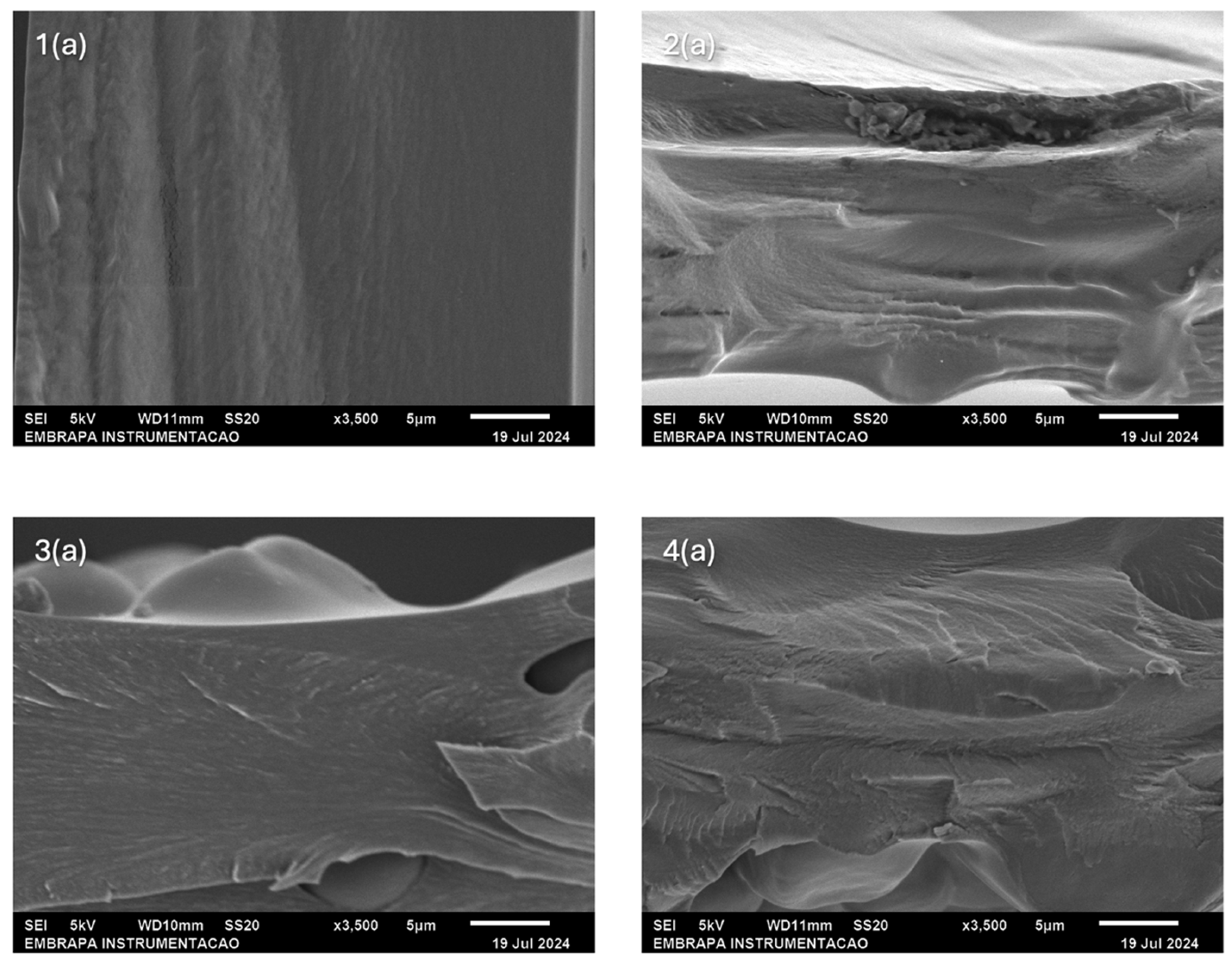
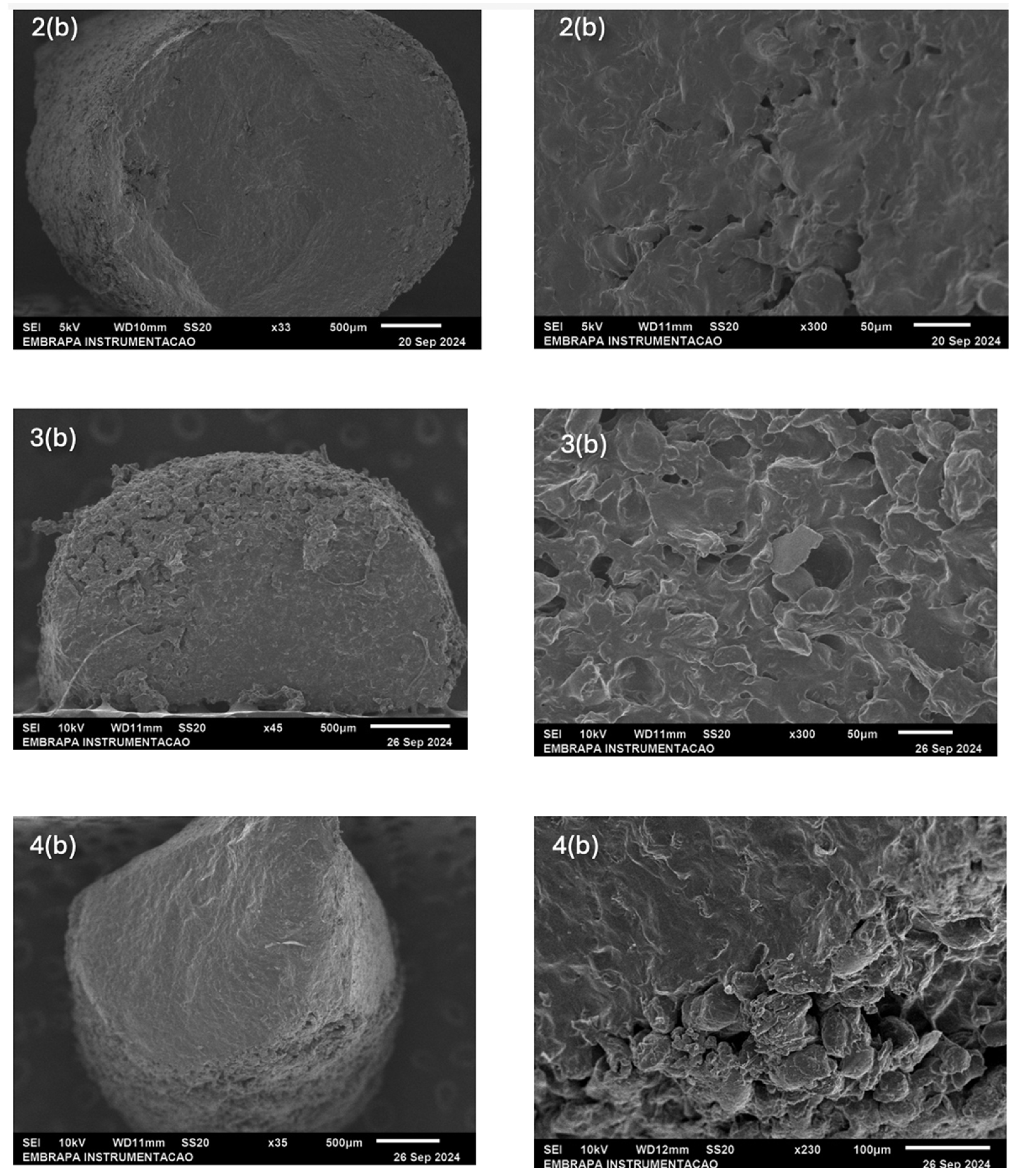
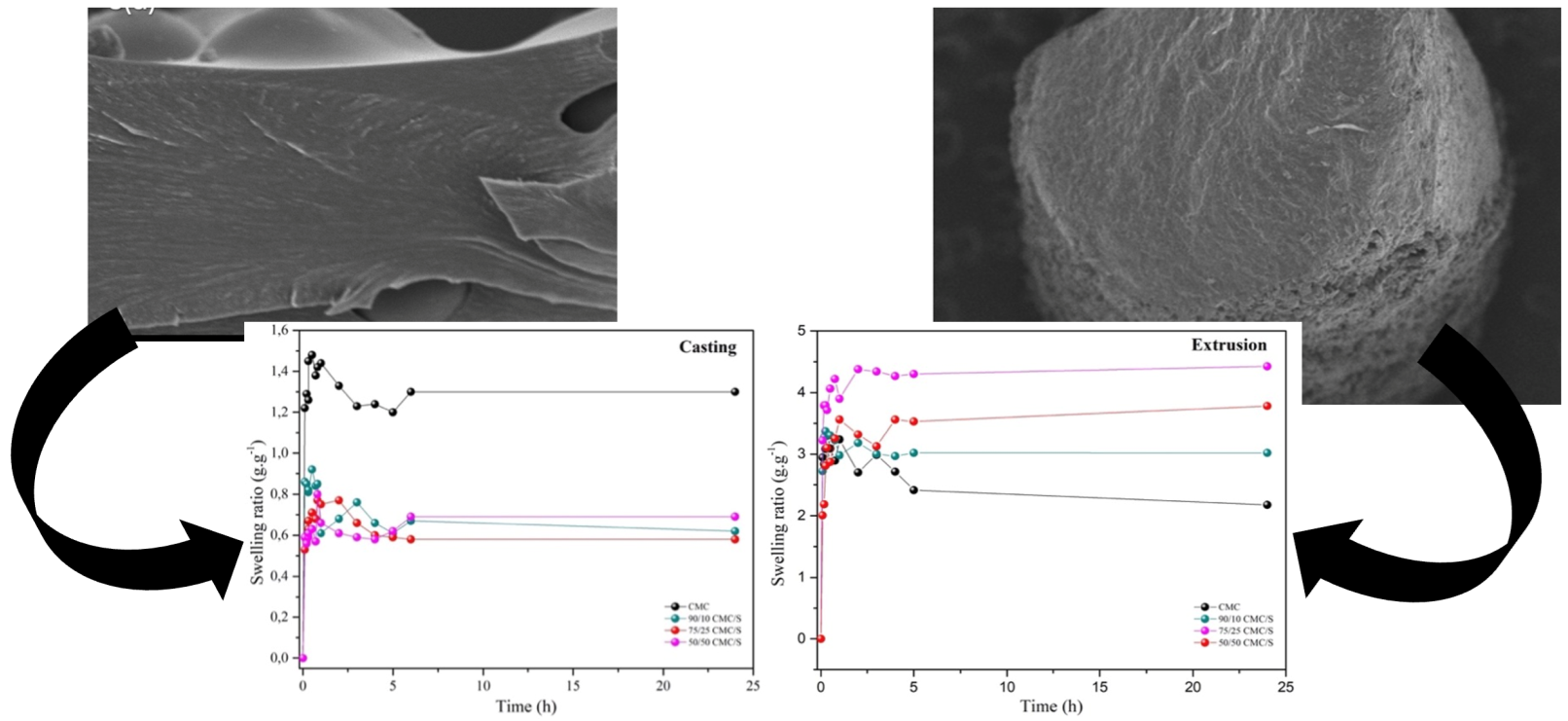
Figure 6 shows the images of the cryogenic fracture surface micrographs of the composites obtained by casting (a) and extrusion (b). The films obtained by starch casting and CMC exhibited homogeneous and compact structures without pores.
Figure 6. SEM micrographs of the cryogenic fracture surface of the composites obtained by (a) casting and (b) extrusion: 1. CMC; 2. CMC/S; 3. CMC/S and 4. CMC/S.
Preprints 148517 g006aPreprints 148517 g006b
In the magnification of the samples obtained by extrusion (Figure 1-4b), there are many pores on the surfaces of each sample. The pores allow water to penetrate the structure of the superabsorbent hydrogels used in agriculture, and their presence is essential to favor swelling. Duquette et al. [36] report that the surfaces of hydrogels made of starch and citric acid reacted in an aqueous medium are highly porous and irregular. These pores allow the diffusion of solvents and ions within the hydrogel matrix and facilitate particle trapping.
In contrast to samples produced by extrusion, the casting process results in the production of “dense hydrogels.” Although the literature uses the terminology dense hydrogel, these materials allow for easy diffusion of water molecules with dimensions of 0.265 nm. That is, in non-porous hydrogels, swelling is controlled by the diffusion of water within the polymer network. Meanwhile, open-pore hydrogels can induce capillary action driven by surface tension [37]. Therefore, porous hydrogels tend to permeate more water molecules. It causes the degree of swelling of a non-porous hydrogel to be lower, as demonstrated by swelling tests, which proved that samples obtained by casting presented a lower degree of swelling.

2.4. Swelling Degree

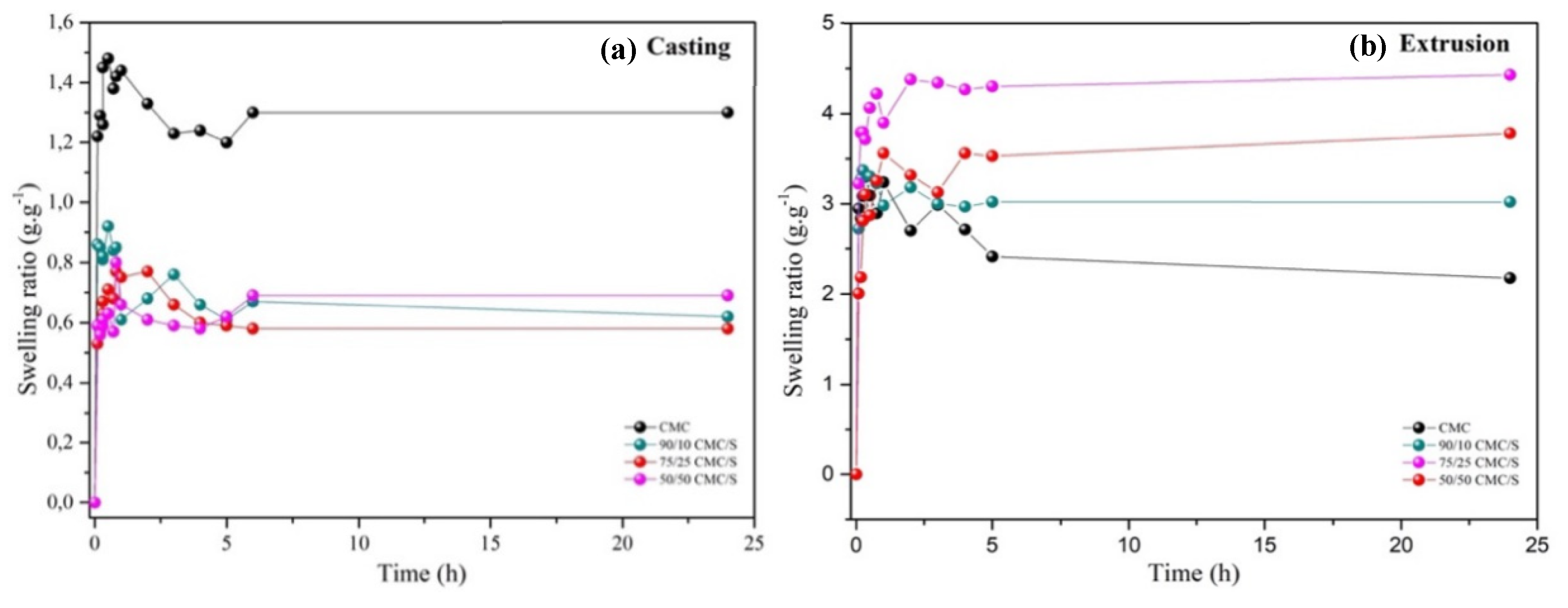
The swelling degree of the 100% CMC for the sample processed by casting showed a rapid increase, up to 30 min of analysis, then a small decrease until equilibrium, around 180 min, after immersing the material in distilled water. Samples containing CMC/S showed a lower degree of swelling throughout the process when compared to pure CMC (Figure 7a). However, the casting method used to process the hydrogels showed a low swelling rate.
Figure 7. The swelling ratio of CMC/S: (a) casting and (b) extrusion.
Preprints 148517 g007
Compared with casting processing, extrusion processing achieved three times greater swelling degrees, particularly for samples with higher starch concentrations (Figure 7b). It implies that crosslinking occurred more effectively during processing. This increase in the swelling degree is due to the presence of pores in the extruded samples. The existence of pores in it can significantly alter a polymeric material’s characteristics [37].
A hydrogel swells due to a complex interaction between chemical and physical factors, allowing liquid to seep into the polymer matrix. Hydrophilic groups first absorb water in the hydrogel due to diffusion forces. Consequently, the selection and ratio of material crosslinking play a crucial role in dictating the dynamics of the diffusion process. In the early stages, water is rapidly absorbed owing to the substantial free space between the crosslinked chains. However, as the process continues, the rate of water sorption decreases because molecules encounter barriers at the crosslinking points, hindering further absorption and leading the material toward equilibrium [27,38].
Several factors, such as crosslinking density, chemical composition, and porosity, act to ensure that the hydrogel reaches equilibrium, all of which govern characteristics such as hydrophilicity, charge, and intermolecular interactions [27,39].

2.5. Porosity Measurement

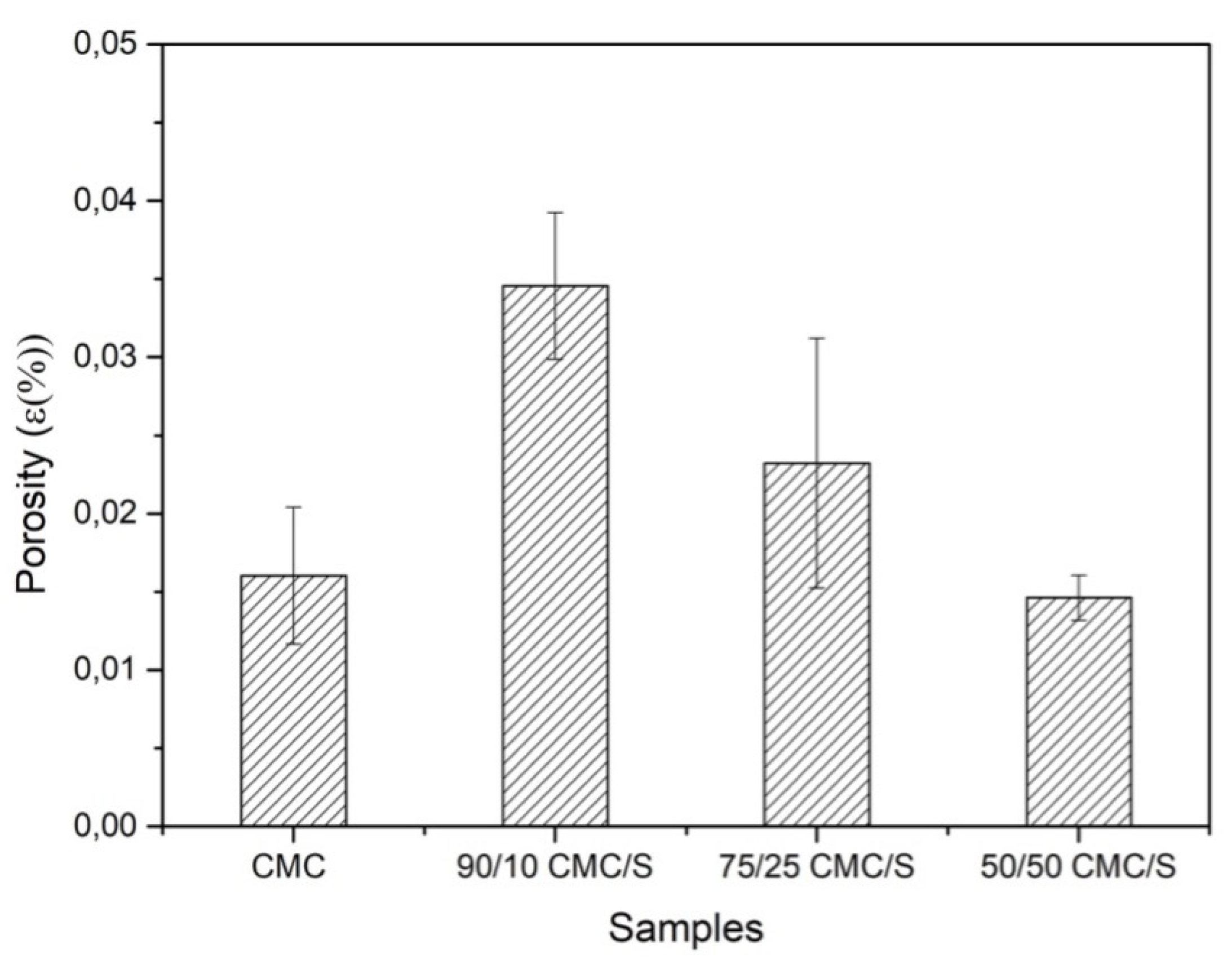
Figure 7 contains the porosity values of the hydrogels obtained by extrusion. The porosity of these hydrogels varied from 0.16 to 0.34%, because pore formation occurred mainly on the surface. When starch/CMC is processed, these compounds combine inside the extruder, increasing viscosity through cross-linking. This affects the stages of air bubble nucleation and bubble growth, predominantly on the hydrogel’s surface, where pores can be seen forming, as seen in SEM images [27].
The viscoelastic matrix’s properties influence materials’ expansion and porosity based on extruded starch. Both expansion and porosity depend on the capacity of materials to resist the pressure that water vapor exerts, which is the result of superheated water evaporating after the molten material exits the matrix [40]. Karathanos and Saravacos [41] suggest that extrusion processing affects the porosity of starch materials since they are susceptible to factors such as cylinder temperature, screw speed, and moisture content of the feed material [41]. As it was possible to observe that the higher the starch concentration, the greater the porosity, as shown in Figure 7.
Figure 8. Percentage of porosity of samples.
Preprints 148517 g008

3. Conclusions

This study emphasizes the notable distinctions between the characteristics of hydrogels made by casting and extrusion techniques, especially when crosslinking with citric acid. The extrusion procedure created highly porous materials that permitted enhanced water absorption and swelling, whereas the casting method produced denser hydrogels with lesser swelling capacities due to limited porosity. Processing methods enhance hydrogels’ physical and chemical properties, and these features are critical for agricultural applications that aim to improve soil health and water retention. Further optimization of these hydrogels could provide viable solutions to address issues like soil degradation and water scarcity as the need for sustainable agricultural techniques rises.

4. Materials and Methods

4.1. Reagents

Carboxymethylcellulose (Dynamica®) CAS-9004-32-4Visc.1000/2000 CP, Commercial Starch—food grade (Amilogil® 2100- Cargill®), Anhydrous Citric Acid PA (Êxodo científica®) CAS-77-92-9, Glycerol (Dynamica®) CAS-56-81-5.

4.2. Preparation of Hydrogels with Carboxymethylcellulose (CMC) and Starch (S) by Casting

The hydrogel synthesis was based on the work of Albuquerque et al. (2019) [42]. The films formed by the mixes were obtained using the solvent evaporation technique (casting), as indicated in Table 1. The polymers were dissolved in deionized water under mechanical stirring (1000 rpm) for two hours. Citric acid was added to the solution to promote crosslinking, and glycerol was used as a plasticizer (fixed to 5% in weight—wt%). The solutions were poured into Petri dishes for solvent evaporation at 100 °C to promote crosslinking (overnight).
Table 1. Sample formulation (g 100 g−1).
Sample CMC Starch Citric acid
CMC 100 0 20
CMC/S 90 10 20
CMC/S 75 25 20
CMC/S 50 50 20

4.3. Preparation of Hydrogels with Carboxymethylcellulose (CMC) and Starch (S) by Extrusion

The synthesis of hydrogels was based on the work of Cagnin et al. (2021) [27]. The samples were produced by reactive extrusion, using citric acid as a crosslinker. The formulations are presented in Table 2.
Table 2. Sample formulation (g 100 g−1).
Sample CMC Starch Citric acid
CMC 100 0 20
CMC/S 90 10 20
CMC/S 75 25 20
CMC/S 50 50 20
Starch/CMC-containing hydrogels were prepared by mixing the components with enough water to condition the sample to 23% humidity — 40% wt. Glycerol was used as a plasticizer. The samples were placed in airtight polyethylene bags for homogenization and given at least 12 hours to equilibrate under refrigeration. The samples were allowed to reach 25 ºC before processing. Extrusion was carried out in a Thermo Scientific Process parallel twin-screw extruder with cylinder length L = 40D, and a standard configuration dies using 11 mm diameter pressure screws. The temperature profile, from the feed zone to the outlet zone, was 90, 100, 100, and 100 ºC, and the screw rotation was 30 rpm.

4.4. Fourier Transform Infrared Spectrometry (FTIR)

Fourier transform infrared (FTIR) analyses were performed using a Vertex 70 instrument (Bruker) fitted with a diamond crystal in attenuated total reflectance (ATR) mode in the frequency range from 4000 to 400 cm−1, with 4 cm−1 resolution.

4.5. Thermal Properties

The thermogravimetric analysis was performed using a simultaneous thermogravimetric analyzer (TGA/DSC) (TA Instrument model SDT 650), using ~ 10 mg of samples, which were heated from 25 °C to 700 °C, at a rate of 10 °C min-1 under nitrogen flow.

4.6. Mechanical Properties

The rheological measurements were performed on an Anton Paar 302 at 90 °C, using 25 mm diameter plates with a gap distance of 1 mm, under an inert nitrogen atmosphere. Complex viscosity (ƞ*) was measured via dynamic frequency sweep tests performed in the linear viscoelasticity regime at 0,1% strain amplitude within the angular frequency range 0,1-500 rad/s.

4.7. Morphology

Samples of all composit e materials were frozen and fractured under liquid nitrogen to study their morphology. Scanning Electron Microscopy (SEM) was used, and the SEM analyses were carried out using the JEOL JSM 6510 equipment with an energy-dispersive X-ray analysis system. The samples were placed on a carbon tape fixed to a metal support (stub) surface and coated with gold in an ionization chamber (Baltec Med. 020). The SEM images were obtained with an accelerating voltage of 5 kV using a secondary electron detector of the JSM 6510 instrument (JEOL).

4.8. X-Ray Diffraction

The materials were characterized by X-ray diffraction (XRD) using a LabX XRD-6000 diffractometer (Shimadzu, Japan), operating at 30 mA and 30 kV. Each sample was placed in sample holders with a diameter and depth of 25 and 1 mm, respectively. Scans were performed in the 2θ = 5–70º range with Cu-Kα radiation of 1.5406 Å and scanning rate 1.0º min-1.

4.9. Degree of Swelling

The swelling degree (SD) was determined as described by Cagnin et al. (2021) with adaptations [27]. The samples were weighed to determine dry mass and then immersed in approximately 30 mL of water at 25 ºC. At specific time intervals, the sample was removed, the excess solution was removed with absorbent paper for the casting samples, and the sample was weighed again.
For the extrusion samples, the swelling at different times was calculated following the protocol outlined by Yoshimura et al. (2006) and Marim et al. (2022), using the tea-bag method to measure the product’s water absorbency [43,44]. Within permeable nylon tea bags measuring 500 mm by 700 mm, dried pellets (0.5 g) were allowed to swell. The water was 25 °C, and the tea bag was immersed. After an hour of procedure, the tea bag was removed from the water, and any remaining water was drained for a minute. The swelling degree was calculated by Equation 1.
S D = w S w i w i
WHERE wS is the mass of the wet sample, and wi is the initial dry mass.
The tea bag’s swollen weight (Wtb) was also calculated (Eq. 2). The analyses were performed in triplicate.
S D = w S w t b w i w i
where Ws is the weight of the dry superabsorbent hydrogel sample, and Wtb is the weight of the tea bag following the water processing. The tea bag was immersed for two hours and lifted for one minute to test the absorbency again. The same method was used to assess the abstinence after 24 hours.

4.10. Porosity Measurements

Porosity ε (%) of the samples was measured according to a gravimetric method, Eq. 3 [45,46]:
ε ( % ) = W w W d V × ρ w × 100
where (i) Ww and Wd are the masses of the samples: wet (immersed in hexane for 24 h) and dry (dried at 40 °C) respectively; (ii) V is the volume (cm3) of the samples; and (iii) ρw is the density of hexane (0,659 g cm−3 at 20 °C). The volume of samples can be measured from its dimensions, as it is cylindrical [46].

Author Contributions

Writing—original draft preparation: Priscila Vedovello; writing—review, editing, analyses: Priscila Vedovello; Ricardo Bortoletto-Santos; Robert Paiva; supervision Caue Ribeiro, Fernando Ferrari Putti; project administration, EMBRAPA; funding acquisition, FAPESP and CAPES. All authors have read and agreed to the published version of the manuscript.

Funding

This research was funded by Fundação de Amparo à Pesquisa do Estado de São Paulo (FAPESP, grants 22/03005-2, 20/12210-3 and 23/01549-8), Brazilian National Council for Scientific and Technological Development (CNPq, grants 442575/2019-0-SISNANO/MCTI program, 406925/2022-4-INCT Program, 405924/2022-4-INCT Program and 402713/2023-0—Universal), and FNDCT/CT-AGRO/FINEP (Cooperation Agreement No. 01.22.0080.00, Ref. 1219/21—FertBrasil, FINEP No. 01.22.0274.00—MATFERT), and Foundation for the Coordination of Improvement of Higher Education Personnel (CAPES) for the financial support.

Data Availability Statement

Data available on request.

Acknowledgments

The authors thank the Fundação de Amparo à Pesquisa do Estado de São Paulo (FAPESP, grants 22/03005-2, 20/12210-3 and 23/01549-8), Brazilian National Council for Scientific and Technological Development (CNPq, grants 442575/2019-0-SISNANO/MCTI program, 406925/2022-4-INCT Program, 405924/2022-4-INCT Program and 402713/2023-0—Universal), and FNDCT/CT-AGRO/FINEP (Cooperation Agreement No. 01.22.0080.00, Ref. 1219/21—FertBrasil, FINEP No. 01.22.0274.00—MATFERT), and Foundation for the Coordination of Improvement of Higher Education Personnel (CAPES) for the financial support. The authors also thank the Agronano Network (Embrapa Research Network), the National Nanotechnology Laboratory for Agribusiness (LNNA), and the Laboratory of Process and Materials (ProMat—UNAERP) and Laboratory Agricultural Biosystems (BioAgro-UNESP) for providing institutional support and facilities.

Conflicts of Interest

The authors declare no conflicts of interest.

References

  1. Ribeiro, C.; Carmo, M. Why Nonconventional Materials Are Answers for Sustainable Agriculture. MRS Energy and Sustainability 2019, 6. [Google Scholar] [CrossRef]
  2. Wang, Y.; Torres, J.A.; Shviro, M.; Carmo, M.; He, T.; Ribeiro, C. Photocatalytic Materials Applications for Sustainable Agriculture. Prog Mater Sci 2022, 130, 100965. [Google Scholar] [CrossRef]
  3. Kearney, J. Food Consumption Trends and Drivers. Philosophical Transactions of the Royal Society B: Biological Sciences 2010, 365, 2793–2807. [Google Scholar] [CrossRef] [PubMed]
  4. Damalas, C.A.; Eleftherohorinos, I.G. Pesticide Exposure, Safety Issues, and Risk Assessment Indicators. Int J Environ Res Public Health 2011, 8, 1402–1419. [Google Scholar] [CrossRef]
  5. Chang, L.; Xu, L.; Liu, Y.; Qiu, D. Superabsorbent Polymers Used for Agricultural Water Retention. Polym Test 2021, 94, 107021. [Google Scholar] [CrossRef]
  6. Tariq, Z.; Iqbal, D.N.; Rizwan, M.; Ahmad, M.; Faheem, M.; Ahmed, M. Significance of Biopolymer-Based Hydrogels and Their Applications in Agriculture: A Review in Perspective of Synthesis and Their Degree of Swelling for Water Holding. RSC Adv 2023, 13, 24731–24754. [Google Scholar] [CrossRef]
  7. Singh, N.; Agarwal, S.; Jain, A.; Khan, S. 3-Dimensional Cross Linked Hydrophilic Polymeric Network “Hydrogels”: An Agriculture Boom. Agric Water Manag 2021, 253, 106939. [Google Scholar] [CrossRef]
  8. Felippe, D.; Navroski, M.C.; Pereira, M. de O.; Baptista, K.R.S. de P. Hydrogel in the Seedling Growth of Eucalyptus Dunnii Maiden under Different Irrigation Management. Revista Ambiente & Água 2021, 16, e2582. [Google Scholar] [CrossRef]
  9. Montesano, F.F.; Parente, A.; Santamaria, P.; Sannino, A.; Serio, F. Biodegradable Superabsorbent Hydrogel IncreasesWater Retention Properties of Growing Media and Plant Growth. Agriculture and Agricultural Science Procedia 2015, 4, 451–458. [Google Scholar] [CrossRef]
  10. El-Asmar, J.; Jaafar, H.; Bashour, I.; Farran, M.T.; Saoud, I.P. Hydrogel Banding Improves Plant Growth, Survival, and Water Use Efficiency in Two Calcareous Soils. Clean (Weinh) 2017, 45, 1700251. [Google Scholar] [CrossRef]
  11. Zhang, H.; Yang, M.; Luan, Q.; Tang, H.; Huang, F.; Xiang, X.; Yang, C.; Bao, Y. Cellulose Anionic Hydrogels Based on Cellulose Nanofibers As Natural Stimulants for Seed Germination and Seedling Growth. J Agric Food Chem 2017, 65, 3785–3791. [Google Scholar] [CrossRef] [PubMed]
  12. González Gómez, H.; Ramírez Godina, F.; Ortega Ortiz, H.; Benavides Mendoza, A.; Robledo Torres, V.; Cabrera De la Fuente, M. Use of Chitosan-PVA Hydrogels with Copper Nanoparticles to Improve the Growth of Grafted Watermelon. Molecules 2017, 22, 1031. [Google Scholar] [CrossRef] [PubMed]
  13. Babaluei, M.; Mottaghitalab, F.; Seifalian, A.; Farokhi, M. Injectable Multifunctional Hydrogel Based on Carboxymethylcellulose/Polyacrylamide/Polydopamine Containing Vitamin C and Curcumin Promoted Full-Thickness Burn Regeneration. Int J Biol Macromol 2023, 236, 124005. [Google Scholar] [CrossRef] [PubMed]
  14. Gregorova, A.; Saha, N.; Kitano, T.; Saha, P. Hydrothermal Effect and Mechanical Stress Properties of Carboxymethylcellulose Based Hydrogel Food Packaging. Carbohydr Polym 2015, 117, 559–568. [Google Scholar] [CrossRef]
  15. Pereira, J.F.; Marim, B.M.; Simões, B.M.; Yamashita, F.; Mali, S. Hydrogels Based on Gelatin, Xanthan Gum, and Cellulose Obtained by Reactive Extrusion and Thermopressing Processes. Prep Biochem Biotechnol 2023, 53, 942–953. [Google Scholar] [CrossRef]
  16. Simões, B.M.; Cagnin, C.; Yamashita, F.; Olivato, J.B.; Garcia, P.S.; de Oliveira, S.M.; Eiras Grossmann, M.V. Citric Acid as Crosslinking Agent in Starch/Xanthan Gum Hydrogels Produced by Extrusion and Thermopressing. LWT 2020, 125. [Google Scholar] [CrossRef]
  17. Madhumitha, G.; Fowsiya, J.; Mohana Roopan, S.; Kumar Thakur, V. Recent Advances in Starch-Clay Nanocomposites. International Journal of Polymer Analysis and Characterization 2018, 23, 331–345. [Google Scholar] [CrossRef]
  18. Hernandez-Izquierdo, V.M.; Reid, D.S.; McHugh, T.H.; Berrios, J.D.J.; Krochta, J.M. Thermal Transitions and Extrusion of Glycerol-Plasticized Whey Protein Mixtures. J Food Sci 2008, 73, E169–E175. [Google Scholar] [CrossRef]
  19. Ochoa-Yepes, O.; Di Giogio, L.; Goyanes, S.; Mauri, A.; Famá, L. Influence of Process (Extrusion/Thermo-Compression, Casting) and Lentil Protein Content on Physicochemical Properties of Starch Films. Carbohydr Polym 2019, 208, 221–231. [Google Scholar] [CrossRef]
  20. Alam, M.S.; Pathania, S.; Sharma, A. Optimization of the Extrusion Process for Development of High Fibre Soybean-Rice Ready-to-Eat Snacks Using Carrot Pomace and Cauliflower Trimmings. LWT 2016, 74, 135–144. [Google Scholar] [CrossRef]
  21. Custódio, A.C.; Patrik, R.; Ribeiro, S.; Brunelle, T.; De Lima, S.; Silvano De Araújo, E.; Lopes Barros De Araújo, P. Purificação Simplificada Do Rejeito de Glicerina Bruta Da Produção de Biodiesel Da Biorrefinaria Berso-UFPE: Uma Prática Sustentável Simple Purification Process of Waste Glycerol from Berso-Ufpe Biorefinary Biodiesel Production: A Sustainable Practice Revista Brasileira de Geografia Física; 2022; Vol. 15;
  22. Jiao, Z.; Zhang, B.; Li, C.; Kuang, W.; Zhang, J.; Xiong, Y.; Tan, S.; Cai, X.; Huang, L. Carboxymethyl Cellulose-Grafted Graphene Oxide for Efficient Antitumor Drug Delivery. Nanotechnol Rev 2018, 7, 291–301. [Google Scholar] [CrossRef]
  23. Jha, P.; Dharmalingam, K.; Nishizu, T.; Katsuno, N.; Anandalakshmi, R. Effect of Amylose–Amylopectin Ratios on Physical, Mechanical, and Thermal Properties of Starch-Based Bionanocomposite Films Incorporated with CMC and Nanoclay. Starch—Stärke 2020, 72, 1900121. [Google Scholar] [CrossRef]
  24. Jha, P.; Dharmalingam, K.; Nishizu, T.; Katsuno, N.; Anandalakshmi, R. Effect of Amylose-Amylopectin Ratios on Physical, Mechanical, and Thermal Properties of Starch-Based Bionanocomposite Films Incorporated with CMC and Nanoclay. 2019. [CrossRef]
  25. Parvaneh, S.; Pourmadadi, M.; Abdouss, M.; Pourmousavi, S.A.; Yazdian, F.; Rahdar, A.; Díez-Pascual, A.M. Carboxymethyl Cellulose/Starch/Reduced Graphene Oxide Composite as a PH-Sensitive Nanocarrier for Curcumin Drug Delivery. Int J Biol Macromol 2023, 241. [Google Scholar] [CrossRef] [PubMed]
  26. Simi, C.K.; Emilia Abraham, T. Hydrophobic Grafted and Cross-Linked Starch Nanoparticles for Drug Delivery. Bioprocess Biosyst Eng 2007, 30, 173–180. [Google Scholar] [CrossRef] [PubMed]
  27. Cagnin, C.; Simões, B.M.; Yamashita, F.; Andrello, A.C.; de Carvalho, G.M.; Grossmann, M.V.E. Hydrogels of Starch/Carboxymethyl Cellulose Crosslinked with Sodium Trimetaphosphate via Reactive Extrusion. J Appl Polym Sci 2021, 138. [Google Scholar] [CrossRef]
  28. Jha, P.; Dharmalingam, K.; Nishizu, T.; Katsuno, N.; Anandalakshmi, R. Effect of Amylose–Amylopectin Ratios on Physical, Mechanical, and Thermal Properties of Starch-Based Bionanocomposite Films Incorporated with CMC and Nanoclay. Starch—Stärke 2020, 72, 1900121. [Google Scholar] [CrossRef]
  29. Rani, M.S.A.; Rudhziah, S.; Ahmad, A.; Mohamed, N.S. Biopolymer Electrolyte Based on Derivatives of Cellulose from Kenaf Bast Fiber. Polymers (Basel) 2014, 6, 2371–2385. [Google Scholar] [CrossRef]
  30. Biswal, D.R.; Singh, R.P. Characterisation of Carboxymethyl Cellulose and Polyacrylamide Graft Copolymer. Carbohydr Polym 2004, 57, 379–387. [Google Scholar] [CrossRef]
  31. Kumar, B.; Deeba, F.; Priyadarshi, R.; Sauraj; Bano, S.; Kumar, A.; Negi, Y.S. Development of Novel Cross-Linked Carboxymethyl Cellulose/Poly(Potassium 1-Hydroxy Acrylate): Synthesis, Characterization and Properties. Polymer Bulletin 2020, 77, 4555–4570. [Google Scholar] [CrossRef]
  32. El-Sakhawy, M.; Tohamy, H.-A.S.; Salama, A.; Kamel, S. THERMAL PROPERTIES OF CARBOXYMETHYL CELLULOSE ACETATE BUTYRATE; 2019; Vol. 53;
  33. Ma, X.; Chang, P.R.; Yu, J. Properties of Biodegradable Thermoplastic Pea Starch/Carboxymethyl Cellulose and Pea Starch/Microcrystalline Cellulose Composites. Carbohydr Polym 2008, 72, 369–375. [Google Scholar] [CrossRef]
  34. Rohr, T.G. UFRRJ INSTITUTO DE TECNOLOGIA CURSO DE PÓS-GRADUAÇÃO EM ENGENHARIA QUÍMICA DISSERTAÇÃO ESTUDO REOLÓGICO DA MISTURA CARBOXIMETILCELULOSE/AMIDO E SUA UTILIZAÇÃO COMO VEÍCULO DE INOCULAÇÃO BACTERIANO; 2007;
  35. Ochoa-Yepes, O.; Di Giogio, L.; Goyanes, S.; Mauri, A.; Famá, L. Influence of Process (Extrusion/Thermo-Compression, Casting) and Lentil Protein Content on Physicochemical Properties of Starch Films. Carbohydr Polym 2019, 208, 221–231. [Google Scholar] [CrossRef] [PubMed]
  36. Duquette, D.; Nzediegwu, C.; Portillo-Perez, G.; Dumont, M.J.; Prasher, S. Eco-Friendly Synthesis of Hydrogels from Starch, Citric Acid, and Itaconic Acid: Swelling Capacity and Metal Chelation Properties. Starch/Staerke, 2020; 72. [Google Scholar] [CrossRef]
  37. Foudazi, R.; Zowada, R.; Manas-Zloczower, I.; Feke, D.L. Porous Hydrogels: Present Challenges and Future Opportunities. Langmuir 2023, 39, 2092–2111. [Google Scholar] [CrossRef] [PubMed]
  38. Zheng, Y.; Li, P.; Zhang, J.; Wang, A. Study on Superabsorbent Composite XVI. Synthesis, Characterization and Swelling Behaviors of Poly(Sodium Acrylate)/Vermiculite Superabsorbent Composites. Eur Polym J 2007, 43, 1691–1698. [Google Scholar] [CrossRef]
  39. Kirschner, C.M.; Anseth, K.S. Hydrogels in Healthcare: From Static to Dynamic Material Microenvironments. Acta Mater 2013, 61, 931–944. [Google Scholar] [CrossRef]
  40. Ye, J.; Hu, X.; Luo, S.; Liu, W.; Chen, J.; Zeng, Z.; Liu, C. Properties of Starch after Extrusion: A Review. Starch—Stärke 2018, 70, 1700110. [Google Scholar] [CrossRef]
  41. Karathanos, V.T.; Saravacos, G.D. $ Porosity and Pore Size Distribution of Starch Materials; 1993; Vol. 18;
  42. De Albuquerque, G.; Neto, A.; Monteiro, M.; Dantas, I.; Da Silva, V.; Menegaz, C.; Cristiano, Z. ESTUDOS DE DEGRADAÇÃO TÉRMICA E NO SOLO DE FILMES FORMADOS POR GOMA XANTANA E CARBOXIMETILCELULOSE RETICULADOS COM ÁCIDO CÍTRICO; 2019; Vol. 20;
  43. Marim, B.M.; Mantovan, J.; Gil-Giraldo, G.A.; Pereira, J.F.; Simões, B.M.; Yamashita, F.; Mali, S. Reactive Extrusion-Assisted Process to Obtain Starch Hydrogels through Reaction with Organic Acids. Polysaccharides 2022, 3, 792–803. [Google Scholar] [CrossRef]
  44. Yoshimura, T.; Matsuo, K.; Fujioka, R. Novel Biodegradable Superabsorbent Hydrogels Derived from Cotton Cellulose and Succinic Anhydride: Synthesis and Characterization. J Appl Polym Sci 2006, 99, 3251–3256. [Google Scholar] [CrossRef]
  45. Vedovello, P.; Fernandes, C.; Tiritan, M.E.; Paranhos, C.M. Chiral Mixed Matrix Membranes with the (S,S)-Whelk-O®1 Selector Supported on Polyethersulfone/MCM-41. New Journal of Chemistry 2024. [CrossRef]
  46. Chavda, H.; Patel, C. Effect of Crosslinker Concentration on Characteristics of Superporous Hydrogel. Int J Pharm Investig 2011, 1, 17. [Google Scholar] [CrossRef]
Disclaimer/Publisher’s Note: The statements, opinions and data contained in all publications are solely those of the individual author(s) and contributor(s) and not of MDPI and/or the editor(s). MDPI and/or the editor(s) disclaim responsibility for any injury to people or property resulting from any ideas, methods, instructions or products referred to in the content.
Copyright: This open access article is published under a Creative Commons CC BY 4.0 license, which permit the free download, distribution, and reuse, provided that the author and preprint are cited in any reuse.
Prerpints.org logo

Preprints.org is a free preprint server supported by MDPI in Basel, Switzerland.

Subscribe

Disclaimer

Terms of Use

Privacy Policy

Privacy Settings

© 2025 MDPI (Basel, Switzerland) unless otherwise stated