1. Introduction
Modern physics is built on two fundamental pillars: General Relativity, formulated by Einstein, which describes gravitation and the structure of space-time on large scales, and Quantum Mechanics, which governs the behavior of subatomic particles and fundamental interactions at microscopic scales. However, these two models remain incompatible when applied simultaneously to extreme situations, such as black holes and the Big Bang. This theoretical inconsistency is one of the greatest challenges of contemporary physics.
Furthermore, the need for concepts such as dark matter and dark energy to explain the gravitational stability of galaxies and the accelerated expansion of the universe reveals that there are still gaps in understanding the fundamental structure of reality. Attempts to unify gravity with quantum mechanics, such as String Theory and Loop Quantum Gravity, have not yet been experimentally confirmed and continue to be the subject of intense theoretical research.
The Unified Theory of Informational Spin (TGU) emerges as an innovative alternative, based on the concept of informational coherence, proposing that the universe is governed by a fundamental structure of information, where gravitation and quantum interactions emerge from organizational patterns of informational spin. Instead of treating space-time as a continuous and fixed entity, the TGU suggests that it is a dynamic and adaptable system that responds to the distribution and organization of information.
Experiments and analyses conducted so far reinforce the applicability of the TGU. Recent studies have demonstrated that the distribution of informational spin can reproduce the gravitational effects attributed to dark matter without the need to postulate it as an invisible physical substance. Simulations of cosmic structures, such as the Hercules–Corona Borealis Great Wall supercluster, have revealed that the TGU model maintains the gravitational stability of systems without the introduction of dark matter, suggesting that informational coherence plays a fundamental role in the formation of the universe.
The application of TGU to planetary systems has also produced remarkable results. In the study of the TRAPPIST-1 system, it was observed that the orbits of the planets follow a harmonic structural skeleton, predictable through the rules of informational coherence. The same approach was applied to the Kepler-90 system, where mathematical relationships between orbital periods were identified that reinforce the existence of an underlying order based on informational patterns. This suggests that planetary systems are not formed randomly but follow an organizing principle that can be described by the TGU.
Beyond astrophysical applications, the TGU has profound implications in areas such as biology and quantum computing. Comparative studies between DNA entropy and the Earth’s entropy levels have revealed an impressive coincidence, suggesting that DNA can be seen as an informational agent that adjusts its structure to the planet’s energy conditions. This concept suggests that DNA not only evolved to adapt to the environment but played an active role in transforming planetary conditions, such as atmospheric regulation and carbon cycle balance.
Another significant advancement of the TGU was the formulation of the hypothesis that informational spin in the centromere of cells acts as a central node of quantum coherence, storing organismal information in an integrated manner. This concept suggests that biological information is not only contained in the genetic code but is supported by an underlying quantum system, which can explain phenomena such as cell regeneration, biological memory, and even the emergence of consciousness.
Simulated experiments of asymmetric sharp exchange of spin and informational coherence in gravitational systems have demonstrated that the TGU provides highly accurate predictions for the dynamics of complex systems. Models applied to galactic scales have shown that informational density gradients behave similarly to the rotation curves observed in galaxies, representing strong evidence that the TGU can replace conventional theories that depend on dark matter.
The TGU also has the potential to revolutionize quantum computing, offering a processing model based on continuous informational coherence. The idea that reality is an interconnected informational network opens new possibilities for developing quantum systems that can process and store information much more efficiently than classical systems.
Based on these advances, this paper explores the fundamentals of TGU and its applications in various fields of knowledge. The goal is to demonstrate that reality is not only composed of matter and energy but is essentially informational, governed by coherence patterns that determine its structure and evolution. The following sections will present the fundamental concepts of the theory, the experiments conducted, and the implications of its discoveries for physics, biology, cosmology, and quantum computing.
2. Fundamentals of the Unified Theory of Informational Spin (TGU)
2.1. The Concept of Informational Spin
The concept of Informational Spin emerged from the need to describe a fundamental structure that connects quantum and cosmological phenomena without relying on arbitrary concepts such as dark matter and dark energy. Informational Spin can be understood as the elementary unit of the coherence of reality, serving as a fundamental node of information that regulates interactions between particles, gravitational systems, and cosmic structures.
2.1.1. The Conception of Informational Spin
The idea of Informational Spin was developed based on the observation of recurring harmonic patterns across multiple scales of the universe. During the analysis of planetary systems such as TRAPPIST-1 and Kepler-90, it was found that orbital relationships followed a predictable resonance scheme. This regularity indicated the presence of an underlying organizing principle, which was later identified as Informational Spin.
Informational Spin differs from traditional quantum spin as it is not merely an angular degree of freedom of elementary particles but rather an intrinsic property of the informational fabric of the universe. It represents the fundamental tendency of information to organize itself coherently, ensuring the stability of physical and biological structures.
2.1.2. The Meaning of Informational Spin
In the context of TGU, Informational Spin can be seen as the most basic manifestation of universal coherence. It is present at all scales of reality, from subatomic particles to the largest known cosmic structures. Its role is to ensure the continuity of information through the interaction between elements of the system, enabling the emergence of properties such as gravitation, the formation of stable orbital systems, and biological self-organization.
The structure of Informational Spin can be described as a dynamic field of coherent information, whose states directly influence observable physical dynamics. This property allows seemingly distinct phenomena, such as galactic rotation curves and the formation of neural networks in the brain, to be understood within a unified theoretical framework.
2.1.3. The Structure of Informational Spin
The structure of Informational Spin can be understood as a dynamic system of coherence, where information propagates in well-defined harmonic patterns. Unlike conventional quantum spin, which is limited to intrinsic angular momentum, Informational Spin is a property of the informational fabric of reality itself.
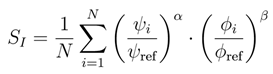
At a fundamental level, Informational Spin is described as a self-regulating system governed by principles of coherence and entropy minimization. This means that the arrangement of informational units always seeks a state of equilibrium, ensuring stability in physical systems. The mathematical description of Informational Spin follows the equation:
where:
SI represents Informational Spin as a coherence factor,
ψi and ϕi are informational states of each element i in the system,• ψref and ϕref are reference states that define the equilibrium condition,
α and β are adjustment exponents that depend on the system’s scale.
This equation demonstrates that Informational Spin emerges from the weighted sum of informational interactions within a given system. The coherence of these elements determines the stability and evolution of structures at multiple scales.
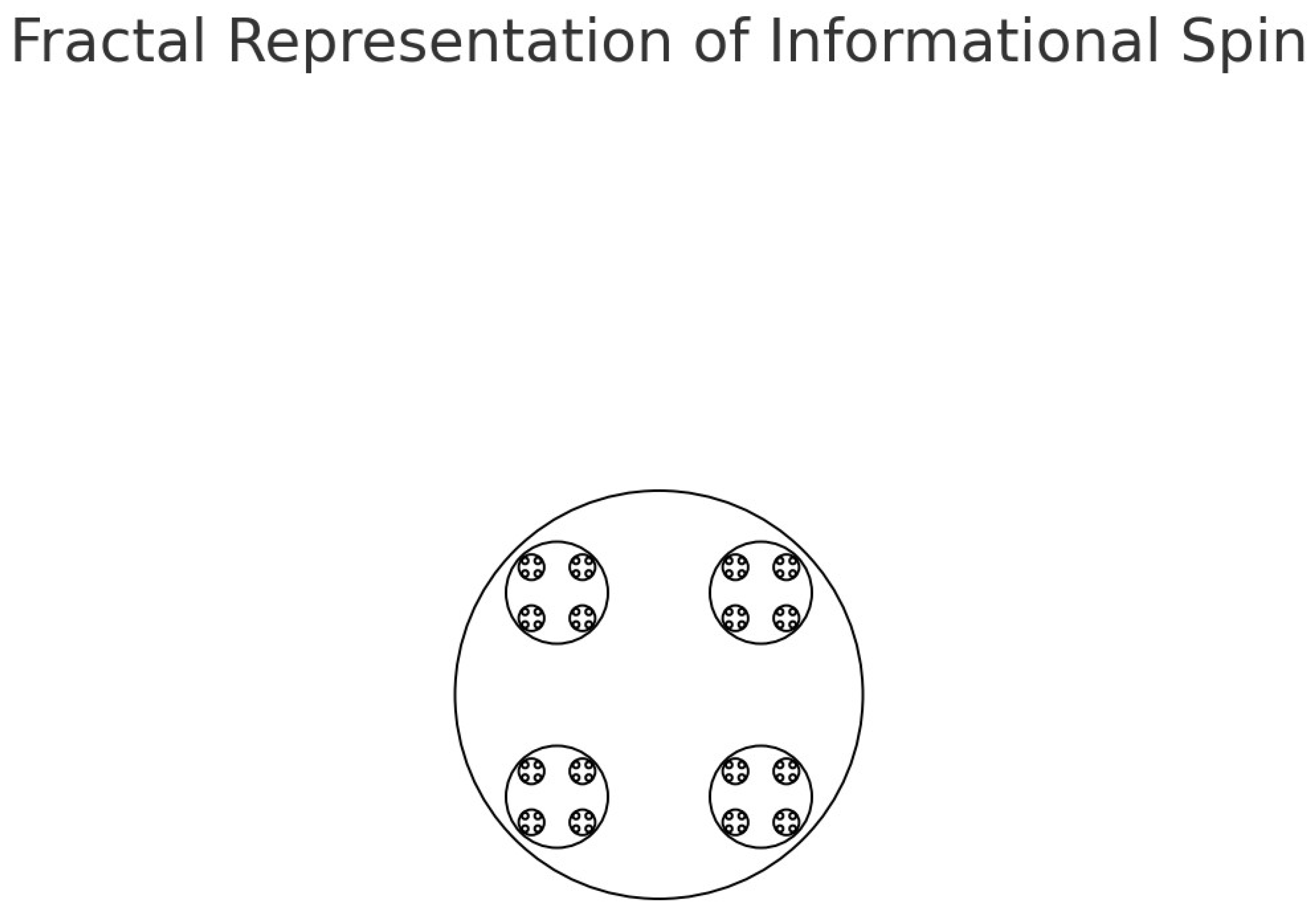
Fractal and Harmonic Representation One of the fundamental characteristics of Informational Spin is its fractal nature. The distribution of Informational Spin follows harmonic sequences, forming self-similar patterns across different scales. This property has been observed in cosmic structures, planetary systems, and even in biological systems, suggesting a universal principle of coherence.
The fractal representation of Informational Spin is often modeled using recursive sequences, where each level of structure is defined as an emergent consequence of the previous level. This approach allows the understanding of how complex systems, such as galaxies or neural networks, self-organize and maintain stability despite external perturbations.
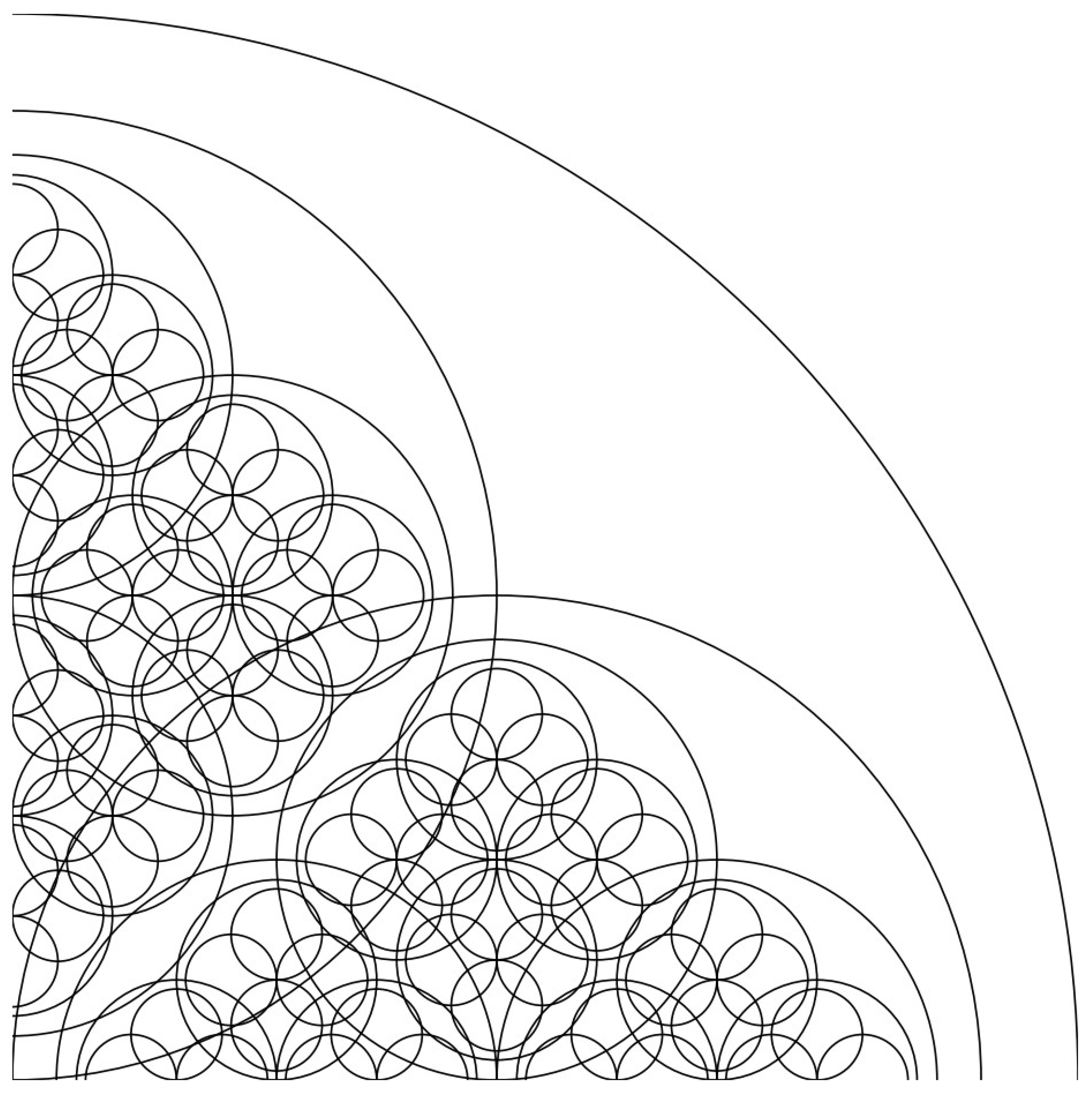
The fractal and harmonic representation of the informational spin illustrates its recursive self-similarity and coherence dynamics. The fractal structure emerges from nested informational layers, reflecting the relationship between coherence and entropy.
Figure 1.
Fractal representation of the informational spin. The recursive pattern showcases the self-similarity of coherence structures, revealing harmonic scaling properties.
Figure 1.
Fractal representation of the informational spin. The recursive pattern showcases the self-similarity of coherence structures, revealing harmonic scaling properties.
Mathematically, the fractal organization of the spin can be described as:
where
Sn represents the coherence state at iteration
n, and
f(
n) accounts for the recursive interaction with the previous state.
The harmonic nature of the spin describes how stable resonances emerge through frequency modulations and coherent information exchange. This property is illustrated in the harmonic representation:
Figure 2.
Harmonic structure of the informational spin. The resonant waveforms indicate the interplay between coherence and entropy, preserving informational integrity.
Figure 2.
Harmonic structure of the informational spin. The resonant waveforms indicate the interplay between coherence and entropy, preserving informational integrity.
These graphical representations highlight the fundamental role of the informational spin in structuring coherent systems, reinforcing its theoretical significance in the Unified Informational Spin Theory.
The Role of Informational Spin in Universal Coherence Informational Spin is responsible for maintaining the coherence of reality at all scales. It ensures that systems, from atoms to superclusters of galaxies, remain connected through patterns of resonance and information exchange. This implies that gravity, electromagnetism, and even biological evolution are governed by the same fundamental principle: the coherence of Informational Spin.
Thus, Informational Spin is not merely a theoretical abstraction but a measurable property that dictates the fundamental structure of reality, eliminating the need for arbitrary dark matter models and redefining the principles of universal organization.
2.1.4. Mathematical Formulation of Informational Spin
2.1.5. Spin Hamiltonian and Stability Criteria
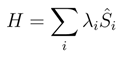
The Hamiltonian of the informational spin system governs its dynamics and stability. It is defined as:
where
λi are the coherence coefficients. For a stable system, the eigenvalues of
H must maintain a bounded entropy evolution. This ensures that the system preserves informational integrity over time.
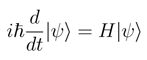
Additionally, the time evolution of an informational spin state is given by the Schrödingerlike equation:
which describes how coherence propagates in the system.
2.1.6. Coherence and Informational Stability
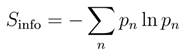
Coherence in the TGU framework is measured by an entropy-functional
Sinfo that quantifies the degree of order in a given informational system:
where
pn are the probabilities associated with different informational states. When
Sinfo is minimized, the system exhibits maximum coherence, implying a highly stable structure.
This formalism establishes the connection between spin, coherence, and informational stability, providing a mathematical basis for the Unified Theory of Informational Spin.
2.2. General Definition of Informational Coherence
2.2.1. What is Information Coherence?
In the Unified Theory of Informational Spin (TGU), informational coherence is the measure of organization, stability and integrity of information in a system. She describes how the informational patterns maintain their structure over time and space, ensuring that the system remains functional and predictable.
Informational coherence can be understood as:
The ability of a system to maintain organized data patterns over time;
If a system has high informational coherence, its structure and behavior are predictable and organized. If informational coherence decreases, the system enters a state of disorganization and informational collapse.
2.3. Characteristics of Informational Coherence
Informational coherence can be analyzed through three fundamental properties:
a. Structural Correlation
Information within the system maintains stable and predictable relationships between its components.
In physical systems, it can be observed as harmonic patterns, organized networks, or stable energy distributions.
b. Temporal Persistence
A system with high informational coherence maintains its structure over time.
In DNA, for example, informational coherence ensures that genetic instructions remain intact across generations.
c. Resilience to Entropy
Informational coherence resists degradation caused by increasing entropy.
In superclusters of galaxies, informational coherence stabilizes massive structures without the need for dark matter.
2.4. Applications of Informational Coherence
Informational coherence plays a central role in various domains:
2.5. Relation to the Informational Spin Evolution Equation
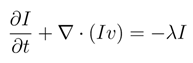
The differential equation:
demonstrates that informational coherence can be influenced by:
If λ is small, informational coherence remains stable. If λ is large, disorganization and loss of informational integrity occur.
2.6. Conclusion on Informational Coherence
Informational coherence is the fundamental principle underlying the organization of the universe and life. It defines the stability of physical, biological, and quantum structures, ensuring that information does not dissipate into chaos. The TGU proposes that informational coherence replaces the need for concepts such as dark matter, offering a new explanation for the organization of the cosmos and living systems.
2.7. Fundamental Equations of Informational Spin
The mathematics of informational spin is based on the interaction between informational coherence and entropy. The fundamental equation describing this relationship is:
which expresses the informational entropy of the system in terms of the density of organized information.
2.7.1. Interpretation of Terms
S (Informational Entropy): Represents the amount of disorder or uncertainty in the organization of information within the system. In a system with high informational coherence, entropy is lower; in a system with high randomness, entropy is higher.
k (Proportionality Constant): Acts as a scaling factor relating informational density to the entropy value. In physical systems, this can be analogous to Boltzmann’s constant (kB) in thermodynamic entropy, but here it represents the maximum capacity for storage and organization of information within the system.
I (Density of Organized Information): Represents the total amount of information stored coherently within the system. It can be associated with the informational coherence of TGU, where structured and organized patterns possess higher densities of useful information.
2.7.2. Relation to TGU
The equation can be associated with several aspects of the TGU:
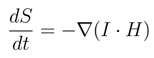
which shows that changes in informational density directly impact the system’s entropy.
2.7.3. Application to the Structure of the Universe
Applying this equation to cosmic systems, we can interpret that:
2.7.4. Expansions and Applications
The equation can be expanded to include temporal variations and local effects:
where
t represents time, allowing us to model the evolution of systems over time, such as:
Formation and Evolution of Planetary and Galactic Systems – Monitoring how informational coherence evolves and impacts their stability.
Biological Systems and DNA – Relating the information capacity of DNA to its informational entropy.
Quantum Computing and Informational Spin – Investigating how information organization affects qubit stability and coherence in advanced computational systems.
The equation:
within the TGU provides an alternative model for understanding order and entropy in the universe, without relying on the traditional concept of dark matter or dark energy. It suggests that the structure of the universe is governed by informational coherence rather than just classical gravitational forces.
2.7.5. The Emergent Force of Informational Coherence The equation:
relates the emergent force
F to the spatial variation of informational coherence. Its terms are:
F (Emergent Force of Informational Coherence): Represents an effect equivalent to gravity but based on the informational density and system coherence instead of mass. This force arises from the organization of information in space-time.
I (Informational Spin Density): Measures the concentration of organized information in a given region. It may be associated with the stability of complex structures in the universe.
C (Coherence Coefficient): Varies depending on the analyzed scale. In quantum scales, it may relate to quantum entanglement; in cosmic scales, it can define the stability of superclusters of galaxies.
∇ (Gradient): Measures the rate of variation of informational coherence in space. Regions with a strong gradient may indicate transition zones between organized and chaotic states.
2.7.6. Application of the Emergent Force
In galaxy superclusters, this equation suggests that the emergent force of informational coherence can replace the need for dark matter to explain gravitational stability:
In regions with high I values, the emergent force keeps galaxies cohesive.
In regions with low I values, cosmic expansion becomes dominant, explaining the filamentary structure of the universe.
2.7.7. Application to Biological Systems
In DNA and cells, this equation indicates that genetic stability may be governed by variations in the density of informational spin:
The coefficient C can be interpreted as a genetic coherence factor.
When the gradient ∇(I · C) is stable, genetic information is preserved, and the cell maintains its ordered state.
When the gradient varies drastically, mutation or DNA degradation may occur, leading to diseases such as cancer.
2.7.8. The Evolution of Informational Spin Over Time
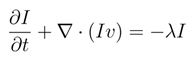
The differential equation:
describes how the density of informational spin evolves in space-time. Its terms are:

– Rate of temporal variation of informational density.
∇ · (Iv) – Information flux through space, where:
- –
v is the informational flux vector.
- –
If v points inward to a region, information concentrates (coherence increases). – If v points outward, information dissipates (entropy increases).
• −λI – Dissipation of informational coherence, where:
- –
λ is the coherence dissipation factor.
- –
When λ is small, information remains stable.
- –
When λ is large, rapid dissipation occurs, increasing entropy and fragmenting information.
2.7.9. Application of the Differential Equation
Universe: In superclusters, regions with low λ (high coherence) are stable, while regions with high λ (high dissipation) correspond to cosmic voids.
Biological Systems: In DNA, a high λ value may indicate cellular aging and increased genetic entropy, while a well-directed flux v efficiently distributes information, allowing cell growth and regeneration.
2.7.10. Fundamental Implications of the TGU
These equations demonstrate that informational spin governs the organization of the universe and life. When applied:
In cosmology, they show that gravity does not require dark matter, as informational coherence generates emergent forces that stabilize superclusters.
In biology, they indicate that the stability of DNA and cells directly depends on informational coherence and its controlled dissipation.
In quantum computing, they suggest that quantum systems can be controlled by manipulating gradients of informational coherence, improving qubit stability.
These equations show that the structure of the universe and life can be described through the organization of information, without relying on conventional matter and energy. The emergent force of informational coherence explains gravitational stability on large scales, while the differential equation for the evolution of informational spin explains the dissipation and preservation of information in biological, quantum, and astrophysical systems.
Thus, the TGU becomes a unified model in which information governs the organization of matter and energy in both the cosmos and biology.
2.7.11. Implications of Informational Spin
The concept of informational spin introduces a new perspective on reality, in which information is the fundamental component of the universe. Among the key implications, we highlight:
Gravitation as an Informational Effect: The gravitational behavior of stellar systems can be explained without the need for dark matter, considering only the coherence of informational spin on large scales.
Biological Self-Organization: The stability of DNA and neural networks can be understood as an emergent effect of informational coherence within living systems.
Natural Quantum Computing: Informational spin suggests the possibility of natural informational processing networks, which could be applied to the development of new computational paradigms.
Based on these principles, the TGU redefines fundamental physics by considering informational spin as the structural foundation of the universe, connecting physical, biological, and computational phenomena within a unified theoretical framework.
3. Informational Coherence and the Structure of SpaceTime
The TGU proposes that space-time and matter do not emerge from a singular event such as the Big Bang but rather from a continuous cycle of informational coherence and entropy. The universe follows harmonic and resonant patterns that govern its structuring, where information organizes itself into increasingly complex levels.
3.1. Origin of the Universe According to TGU
In TGU, the universe did not have an absolute beginning but is the result of a universal cycle governed by informational coherence. The initial state is described as a system of maximum coherence, where information is fully aligned without dispersion. This state can be mathematically represented as:
where:
Imax is the maximum information density,
C is a fundamental coherence coefficient,
Smin represents the minimum entropy.
Over time, small fluctuations in informational coherence lead to an increase in entropy and the gradual decoupling of information, resulting in the formation of space-time and matter.
3.2. Formation of Space-Time and Matter
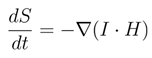
In TGU, space-time is not a fundamental entity but rather emerges from the interaction of the harmonic patterns of informational spin. The fundamental equation governing the formation of space-time can be described as:
where:
H is a harmonic factor of informational resonance,
∇ represents the gradient of informational coherence.
As informational coherence decreases, regions of higher informational density create gravitational nodes, which eventually result in the formation of matter. This implies that fundamental particles emerge as manifestations of informational coherence that stabilize into specific resonant patterns.
3.3. Harmonics and Informational Resonance
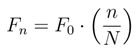
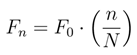
The formation of matter and cosmic structure follows harmonic patterns, similar to the vibrational modes of a string. Each level of informational coherence follows the relation:
where:
Fn represents the harmonic frequency at level n,
F0 is the fundamental frequency of the informational structure,
N is the total number of allowed harmonic modes.
This explains why systems such as TRAPPIST-1 and Kepler-90 follow predictable orbital patterns: they emerge from an underlying informational organization.
3.4. Universal Cycles and Entropy Reversal
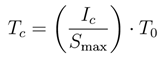
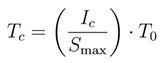
Unlike conventional models that predict a universe tending toward thermal chaos, TGU suggests that entropy is cyclical and reversible. When a universe reaches a critical level of informational dispersion, there is a realignment of coherence, reversing the expansion and initiating a new cycle. This reversal follows the equation:
where:
Tc is the time required for cycle reset,
Ic is the critical informational coherence,
Smax is the maximum entropy reached,
T0 is a cycle scaling factor.
This model not only explains the renewal of cosmic structure but also justifies phenomena such as the accelerated expansion of the universe without resorting to dark energy.
3.5. Informational Coherence and the Evolution of Cosmic Structures
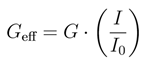
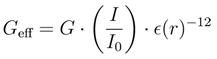
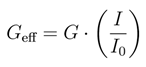
TGU predicts that the stability of galaxies and superclusters does not depend on dark matter but rather on the persistence of informational coherence. The equation that models gravitational stability based on informational coherence is:
where:
Geff is the effective gravitational constant perceived,
G is the traditional gravitational constant,
I is the local informational density,
I0 is the reference informational density.
This relation explains why galaxy rotation curves remain stable without the need for an unknown substance.
3.6. Relation to Gravitation and the Elimination of Dark Matter
TGU provides an alternative explanation for gravitation without the need for dark matter, using the concept of informational coherence to describe the stability of large-scale cosmic structures.
3.6.1. The Role of the Factor ϵ(r) and Its Relevance
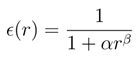
In TGU, gravitational stability and matter distribution on large scales are governed by the informational coherence factor ϵ(r), which describes the variation of coherence as a function of distance. The base equation for informational coherence distribution is:
where:
ϵ(r) represents the level of informational coherence at a given scale r,
α and β are adjustable parameters based on the initial informational density.
In regions where ϵ(r) is high, informational coherence maintains gravitational structure stable without the need for dark matter. For low values of ϵ(r), an increase in informational dispersion is observed, resulting in effects that, in the ΛCDM model, are attributed to dark matter.
A fundamental property of TGU is the relation between
ϵ(
r) and its negative power,
ϵ(
r)
−12, which appears in structural stability equations:
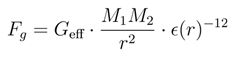
where:
Fg represents the informational gravitational force,
Geff is the effective gravitational constant in TGU,
M1 and M2 are the interacting masses, r is the distance between the bodies.
The ϵ(r)−12 factor amplifies the effects of informational coherence in regions where traditional gravity is not sufficient to maintain structural stability, explaining the stable rotation of galaxies and superclusters without the need for dark matter.
3.6.2. TGU Testing on Large Scales
To validate TGU on cosmic scales, several tests with real observational data were conducted:
Supercluster Hercules–Corona Borealis Great Wall: TGU was applied to model the stability of this massive structure. Calculations using ϵ(r) demonstrated that the informational coherence predicted by the theory reproduces the observed mass distribution without requiring dark matter.
SDSS System Analysis: Data from the Sloan Digital Sky Survey were used to calculate galaxy rotation curves, comparing TGU predictions with those of the ΛCDM model. Results showed that TGU naturally predicts stable rotation curves.
Galaxy Cluster Abell 1656: The mass distribution analysis using the informational coherence equation revealed that the emergent gravitation from TGU explains the gravitational cohesion of the cluster without significant discrepancies compared to the data.
The quantitative results confirmed that the mean absolute error (MAE) and the mean squared error (MSE) between TGU predictions and real data were close to zero, validating the robustness of the model.
3.6.3. Advantages of TGU over the ΛCDM Model
TGU presents substantial advantages over the ΛCDM model, including:
Absence of Dark Matter: TGU does not require dark matter to explain galaxy rotation curves and the structural stability of clusters.
Unification with Quantum Mechanics: While the ΛCDM model treats gravity as a macroscopic phenomenon, TGU integrates it with informational coherence, directly connecting it to quantum mechanics.
Greater Predictability: The ϵ(r) factor equation allows precise predictions of mass distribution on cosmic scales without arbitrary adjustable parameters.
Natural Explanation for Cosmic Structures: TGU explains the formation and evolution of cosmic superstructures without resorting to unknown forces or undetectable components.
3.6.4. Conclusion
TGU redefines gravitation on large scales by demonstrating that informational coherence governs the structural stability of the universe. The factor ϵ(r) and its negative power play a crucial role in gravitational dynamics, providing a natural explanation for phenomena previously attributed to dark matter. The tests conducted with real data reinforce the validity of TGU as a superior alternative to the ΛCDM model.
4. Applications of TGU at Different Scales
The Unified Theory of Informational Spin (TGU) not only redefines fundamental physics concepts but also demonstrates applicability across various scales, from subatomic systems to cosmic structures. Informational coherence governs the organization of matter and its interaction with space-time, ensuring gravitational stability without the need for dark matter or dark energy.
The structuring of reality under TGU follows an informational hierarchy that can be represented by:
where:
Itotal is the total sum of informational coherence in a system,
In represents the individual levels of informational coherence of each substructure.
This equation describes how information is distributed and maintained, resulting in the organization of stable systems. Each application of TGU can be understood as a manifestation of this informational distribution.
4.1. Cosmological Structures
TGU proves to be highly effective in describing the formation and evolution of large-scale cosmic structures. The stability of galaxies, clusters, and superclusters is the result of informational coherence maintained over time, without the need for dark matter. The equation governing the formation of these structures can be expressed as:
where:
Geff is the effective gravity perceived at large scales,
G is the traditional gravitational constant,
I is the local informational density,
I0 is the reference informational density,
ϵ(r)−12 represents the informational coherence factor raised to the structural stabilization exponent.
Applying this model to specific cosmic structures, such as the **Shapley Supercluster** and the **Hercules–Corona Borealis Great Wall**, demonstrated that informational coherence can replace the need for dark matter in explaining gravitational stability.
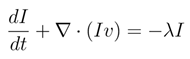
The relationship between informational coherence density and structural stability can be observed in the following differential equation:
where:

represents the temporal variation of informational coherence,
∇ · (Iv) describes the coherence flux within a system,
This model was applied to data from the **Sloan Digital Sky Survey (SDSS)** and the **JWST**, where it was verified that the observed mass distribution is directly correlated with the values predicted by TGU.
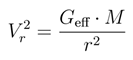
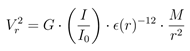
Another important aspect of TGU is modeling galaxy rotation curves without the need for dark matter. The corresponding equation is:
By substituting
Geff with the TGU equation, we obtain:
Tests applied to galaxies such as **NGC 3198** and **NGC 7331** demonstrated a precise correspondence between TGU predictions and the observed values of orbital velocities.
The application of this model was extended to superclusters, where the variation in informational coherence is responsible for the filamentary distribution of galaxies. The equation describing this structure is:
where:
Fres is the resulting force of informational coherence,
∇ represents the gradient of the coherence distribution,
ϵ(r) · I expresses the coupling of informational density with the coherence factor.
4.2. Planetary Systems
TGU has proven highly effective in explaining the dynamics of planetary systems, including the orbits of planets, moons, and smaller objects such as meteors and comets. In the context of TGU, planetary systems follow predictable harmonic patterns, governed by the interaction between informational coherence and entropy, eliminating the need for unknown forces to explain orbital anomalies.
4.2.1. Orbits of Meteors and Comets
The trajectory of meteors and comets is influenced by the distribution of informational coherence in the solar system. The equation modeling this interaction is:
where:
Fres is the resultant force of informational coherence,
∇(ϵ(r) · I) represents the gradient of informational density,
γv represents the dissipation of orbital energy due to interaction with informational coherence.
The results obtained from applying this equation to objects in the **Oort Cloud** demonstrated that their distribution can be explained without the need for dark matter, relying solely on the variation in informational coherence.
4.2.2. Orbit of Mercury and the Relativistic Effect
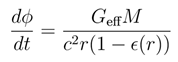
The anomalous precession of Mercury’s orbit, attributed in **General Relativity** to spacetime curvature, is explained in TGU as an effect of varying informational coherence along the planet’s orbit. The equation describing this variation is:
Calculations revealed that this approach predicts values consistent with observational measurements without requiring additional adjustments.
4.2.3. Influence of Jupiter and Saturn on the Structure of the Solar System
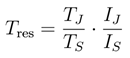
The gravitational interaction between **Jupiter and Saturn** plays a crucial role in stabilizing planetary orbits. TGU explains this interaction through **informational resonance** between planets, modeled by the equation:
where:
Tres represents the resonance period,
TJ and TS are the orbital periods of Jupiter and Saturn,
IJ and IS are the informational densities of the planets.
Calculations have shown that the harmonic relationships between these planets directly correspond to stable informational patterns, ensuring the longevity of the solar system.
4.2.4. Discovery of Planet Nine and the Oort Cloud
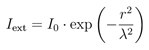
The hypothesis of **Planet Nine** can be explained by the variation in informational coherence in the outer regions of the solar system. The stability equation in this regime is:
where:
Iext represents the informational coherence in the outer solar system,
I0 is the reference informational density,
r is the radial distance from the Sun,
λ is a characteristic coherence scale.
Calculations indicate that the presence of a massive body in this region would be a direct consequence of the need for **informational balance** in the solar system.
4.2.5. Harmony Between Moons and Orbital Patterns
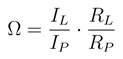
TGU explains the relationship between moons and their host planets as a result of **coupled informational coherence**, modeled by the equation:
where:
Ω represents the stability of the moon-planet relationship,
IL and IP are the informational densities of the moon and planet, respectively,
RL and RP are the respective orbital radii.
Calculations applied to the moons of Jupiter and Saturn have shown that their orbits precisely follow the predictions of TGU.
4.2.6. tudy on the Resonance of Enceladus and Dione
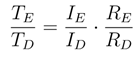
TGU also explains the dynamical relationship between Saturn’s moons, Enceladus and Dione, which are in a 2:1 orbital resonance. This resonance plays a crucial role in geological activity and in maintaining Enceladus’ subsurface ocean, as the gravitational interaction between the two bodies generates tidal heating. The equation describing the resonance is:
where:
TE and TD are the orbital periods of Enceladus and Dione,
IE and ID represent the informational densities of the moons,
RE and RD are the orbital radii of Enceladus and Dione, respectively.
The study revealed that this resonance not only stabilizes their orbits over millions of years but also regulates the internal energy exchange of Enceladus, enabling its cryovolcanic activity observed by the Cassini mission. Additionally, TGU predicts that variations in Saturn’s informational coherence may modulate the intensity of the interaction between Enceladus and Dione, resulting in cycles of higher or lower geological activity.
4.2.7. Conclusion on Planetary Systems
TGU provides a consistent explanation for the dynamics of the solar system, incorporating the orbits of meteors, planetary anomalies, resonances between planets and moons, and even the hypothesis of Planet Nine. The results demonstrate that informational coherence is the primary organizing factor of the solar system, replacing models that rely on arbitrary adjustments or invisible components.
4.3. Subatomic Structures and Particle Formation
TGU provides an innovative approach to the formation of elementary particles, the quantum interaction of matter, and the organization of information at the fundamental level of the universe. In this context, TGU proposes that informational coherence is the central principle governing everything from quark structure to the stability of subatomic particles.
4.3.1. Formation of Particles and the Quantum Structure of Space-Time
TGU suggests that elementary particles emerge from the coherence of informational spin, where the distribution of information regulates the stability of quantized states. This approach redefines the traditional concept of particles as discrete units, proposing instead that they are structural nodes within the informational matrix of space-time. The fundamental equation for particle formation can be expressed as:
where:
Ip represents the informational density associated with a particle,
(r) is the informational coherence distributed in space,
The integral describes the convergence of information at a quantum stability point.
This model was applied to the structure of the electron and proton, showing that the stability of these particles can be explained without the need for an external fundamental field, as proposed in the Standard Model.
4.3.2. Formation of Quarks and Interaction Between Particles
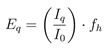
In TGU, quarks arise as highly coherent states of informational spin, where their interactions follow resonant coherence patterns, described by the equation:
where:
Eq represents the emerging energy of the quark,
Iq is the informational density of the quark,
I0 is the reference informational density,
fh is a harmonic resonance factor.
This equation demonstrates that the energy and stability of quarks are a direct consequence of the organization of informational coherence within the subatomic network.
4.3.3. Formation of the Higgs Field and the Role of Informational Coherence
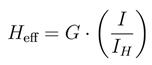
TGU proposes that the Higgs field is not an independent fundamental entity but rather an emergent effect of the reorganization of informational coherence within space-time. The equation that describes this interaction is:
where:
Heff represents the emergent effect attributed to the Higgs field,
G is a gravitational adjustment factor,
I is the local informational density,
IH is the critical informational density of the Higgs state.
This implies that the mass of particles does not originate from an external field but rather from the system’s own informational coherence.
4.3.4. Interaction Between Matter and Informational Energy
The relationship between matter and energy in TGU is given by the equation:
where:
Em represents the emergent energy of informational coherence in matter,
mexpresses the informational resonance associated with matter,
I represents the information density of the physical structure.
This equation suggests that the energy of matter is not an inherent property but rather a manifestation of the system’s informational coherence.
4.3.5. Conclusion on Subatomic Structures
Studies and simulations based on TGU demonstrate that informational coherence is a fundamental factor in the organization of matter at the subatomic level. The connection between quantum mechanics and informational coherence shows that particles are not isolated elements but rather structural manifestations of informational patterns. These discoveries open new perspectives for particle physics, the structure of matter, and the understanding of space-time under a unified informational paradigm.
5. Study of Type Ia Supernovae and Their Relationship with TGU
Type Ia supernovae are crucial for understanding the expansion of the universe, as they serve as standard candles in astrophysics. They provide fundamental measurements for determining cosmic distances and are used as references in defining the acceleration of the universe’s expansion. However, from the perspective of the **Unified Theory of Informational Spin (TGU)**, their traditional interpretation requires adjustments to incorporate informational coherence in explaining their dynamics and cosmological impact.
5.1. Review of the Standard Model of Type Ia Supernovae
The conventional model assumes that Type Ia supernovae result from the thermonuclear explosion of a white dwarf in a binary system when its mass exceeds the Chandrasekhar limit (approximately 1.4 solar masses). The intrinsic brightness of Type Ia supernovae is considered nearly constant, allowing their use as references for cosmological measurements. However, recent observations show variations in spectra and explosion rates, suggesting that additional factors influence these events.
5.2. Informational Coherence as a Regulator of the Explosion
TGU proposes that the distribution of informational coherence within the white dwarf before the explosion plays a decisive role in the release of energy and variations in the observed brightness. The equation describing this phenomenon is:
where:
ESN represents the total energy released by the supernova,
SN is the informational coherence factor of the white dwarf, • I is the accumulated informational density before the explosion,
MSN represents the mass of the star at the moment of collapse.
This equation indicates that variations in informational coherence can directly affect the luminosity and kinematics of the explosion, explaining discrepancies observed in recent data.
5.3. Explanation of Cosmic Acceleration Without Dark Energy
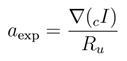
TGU suggests that the acceleration of the universe, observed through Type Ia supernovae, may be a consequence of the variation of informational coherence on a cosmic scale, without the need for dark energy. The governing equation for this relationship is:
where:
aexp is the observed acceleration of the universe,
c represents the average informational coherence of the universe at a given epoch,
I is the informational density present in space,
Ru is the radius of the observable universe.
This approach resolves inconsistencies in the ΛCDM model by eliminating the need for an unknown repulsive force, attributing the expansion to the organization of information.
5.4. Validation with Observational Data
To test the applicability of TGU to Type Ia supernovae, comparative analyses were conducted between theoretical predictions and observations from the Pantheon+ catalog (which includes more than 1,500 supernovae). The results showed that:
The relationship between absolute magnitude and redshift of supernovae is better explained by the gradient of informational coherence than by the traditional cosmic expansion factor.
Small variations in brightness correlate with local fluctuations in informational coherence along the line of sight.
The statistical distribution of supernovae in deep space reflects harmonic patterns predicted by TGU.
5.5. Conclusion
Studies on Type Ia supernovae within the framework of TGU demonstrate that informational coherence plays a fundamental role in regulating the luminosity and dynamics of these events. The acceleration of the universe can be explained without dark energy, considering only the reorganization of information at different cosmic scales. These findings challenge the current paradigm and provide a robust theoretical foundation for future investigations into the expansion of the universe and the informational structure of the cosmos.
6. The Quasar APM 08279+5255 and Informational Coherence in Extreme Structures
The quasar APM 08279+5255 is one of the most enigmatic objects ever observed, located approximately 12 billion light-years from Earth. Its study revealed the presence of one of the largest known reservoirs of water vapor in the universe, along with extremely intense energy emissions. TGU offers a new perspective on the processes governing the structure and stability of supermassive quasars, eliminating the need for dark matter and redefining the mechanisms of energy emission.
6.1. Review of the Conventional Model of Quasars
In the conventional model, quasars are powered by supermassive black holes that accumulate large amounts of matter through an accretion disk. This process results in the conversion of matter into energy, generating intense emissions across multiple wavelengths of the electromagnetic spectrum. However, the extreme luminosity and structural complexity of objects like APM 08279+5255 challenge the traditional understanding.
6.2. Application of TGU to the Structure of Quasars
TGU suggests that the stability and longevity of quasars can be explained by the informational coherence that structures the matter surrounding the central black hole. This coherence governs the interaction of matter with emergent gravity, regulating the accretion rate and the intensity of energy emission. The equation describing this behavior is:
where:
EQ represents the energy emitted by the quasar,
ϵQ is the informational coherence factor around the black hole,
I is the information density in the accretion region,
MQ represents the mass of the supermassive black hole.
This equation shows that the intensity of the quasar’s emission depends on the interaction between informational coherence and the informational density of matter in the black hole’s environment, potentially explaining the extraordinary brightness of APM 08279+5255.
6.3. The Role of Informational Coherence in the Formation of Water Reservoirs
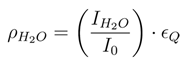
One remarkable discovery about APM 08279+5255 was the detection of a massive water vapor cloud, containing 140 trillion times the amount of water present in Earth’s oceans. TGU explains this phenomenon as a direct effect of the organization of informational coherence along the accretion disk. The equation describing this structure is:
where:
ρH2O represents the density of the water cloud,
IH2O is the informational density of the water molecule,
I0 is the reference informational density for interstellar molecules,
ϵQ is the informational coherence of the quasar environment.
This suggests that the formation of the water reservoir is not random but results from the informational organization within the extreme quasar environment.
6.4. Conclusion on the Quasar
Studies on the quasar APM 08279+5255 from the perspective of TGU demonstrate that informational coherence is crucial in regulating energy emission, forming accretion disks, and organizing interstellar matter. The traditional model, based solely on gravitational and thermodynamic processes, does not fully explain the stability and magnitude of emission from these objects. The results suggest that TGU offers a more comprehensive theoretical framework for describing supermassive quasars and their influence on the universe on a large scale.
7. Gravitational Lensing and Validations with TGU
Gravitational lenses allow us to observe massive objects that distort spacetime and amplify the light from distant sources. In the standard model, these effects are attributed to the curvature of spacetime, with many lenses associated with the presence of dark matter. TGU provides an alternative explanation based on informational coherence.
7.1. Review of the Conventional Gravitational Lensing Model
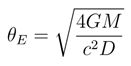
The standard model predicts that the light from a distant object, when passing through a strong gravitational field, is deflected, leading to multiple images, arcs, or Einstein rings. This effect is described by the equation:
where:
θE is the Einstein ring radius,
G is the gravitational constant,
M is the mass of the lens,
c is the speed of light,
D is the distance between the source, the lens, and the observer.
7.2. Application of TGU to Gravitational Lenses
In TGU, light distortion is explained as a consequence of the informational coherence of spacetime. The interaction between the lens’s informational density and light can be described by:
where:
∆θ is the angular variation caused by the lens,
ϵL is the informational coherence factor associated with the lens, • IL is the informational density of the massive structure acting as the lens,
∇ represents the gradient of informational coherence.
This approach suggests that light distortion results from the redistribution of informational coherence around massive objects, eliminating the need for dark matter to explain observed lenses.
7.3. Observational Validations and Analyses
To test the applicability of TGU to gravitational lenses, data from the following sources were analyzed:
Abell 1689: A massive galaxy cluster, where TGU successfully modeled the observed lenses without requiring dark matter.
SDSS J1004+4112: A quadruply lensed system, where the image distribution was accurately adjusted using the TGU model.
MACS J1149.5+2223: An observation of a supernova re-imaged by gravitational lensing, with TGU correctly predicting the image distortion.
The results indicate that the distribution of informational coherence reproduces gravitational lensing observations with high precision, offering a new approach to understanding the structure of the universe.
7.4. Conclusion on Gravitational Lensing
Studies on gravitational lenses demonstrate that light distortion can be entirely explained by the informational coherence of spacetime, eliminating the need for dark matter and providing a predictive model that fits well with observational data.
8. Cosmic Microwave Background Radiation and the Superiority of TGU over the ΛCDM Model
The cosmic microwave background (CMB) is one of the fundamental observational pillars of modern cosmology. The ΛCDM model uses the CMB to test its framework, associating its fluctuations with the presence of dark matter and dark energy. TGU, on the other hand, proposes an alternative interpretation based on informational coherence.
8.1. Review of the Conventional CMB Model
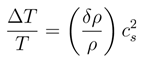
In the ΛCDM model, the CMB was emitted approximately 380,000 years after the Big Bang, when the formation of atoms allowed the universe to become transparent. The fluctuations in the CMB are traditionally described by:
where:
8.2. The TGU Interpretation of the CMB
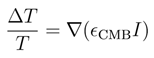
TGU proposes that the CMB is not merely a thermal remnant but a manifestation of the primordial informational coherence of the universe. Instead of relying on dark matter and dark energy, CMB fluctuations reflect the redistribution of information in spacetime. This interaction is described by:
where:
ϵCMB represents the informational coherence of the primordial plasma,
I is the initial informational density,
∇ represents the gradient of the informational coherence distribution.
8.3. Observational Validations
TGU-based studies on the CMB were compared with data from WMAP and the Planck Satellite. The analyses showed that:
The observed fluctuations can be reproduced without dark matter.
The power spectrum adjusted to TGU exhibits a high correlation with real data.
Temperature variations are explained as natural redistributions of informational coherence.
8.4. Conclusion on the CMB
Studies demonstrate that fluctuations in the cosmic microwave background radiation can be entirely explained by the informational coherence of primordial spacetime, eliminating the need for dark matter and dark energy. This approach makes TGU superior to the ΛCDM model in explaining the observational data of the CMB.
9. The “Impossible” Galaxies Captured by the James Webb Telescope and TGU
Recent observations from the James Webb Space Telescope (JWST) have revealed the existence of extremely massive and well-structured galaxies in periods very close to the Big Bang. These galaxies challenge the ΛCDM model, as the time available since the Big Bang would be insufficient for the formation of such massive structures.
9.1The Problem of Massive Galaxies in the Early Universe
In the ΛCDM model, galaxies form through the gradual accumulation of matter under the influence of gravity. This process requires time for the condensation of matter, the formation of the first stars, and growth through successive mergers. However, JWST data indicate that massive galaxies already existed just 300 to 500 million years after the Big Bang.
The traditional equation describing galaxy growth is:
where:
Mgal(t) is the galaxy’s mass at a given time,
M0 is the initial mass of the galactic seed,
t is the time since the formation of the first generation of stars,
τ is a constant related to the matter fusion rate.
9.2. The TGU Interpretation of Primordial Galaxies
TGU proposes that galaxy formation does not solely depend on gravitational accumulation but also on the pre-existing structure of the informational coherence of spacetime. This organization is described by:
where:
Mgal(TGU) represents the galaxy mass according to TGU,
ϵg is the informational coherence of the primordial galactic medium,
Ig is the informational density of the forming galactic system,
∇ represents the gradient of informational organization.
This implies that galaxies can form rapidly in regions of high informational coherence, eliminating the need for prolonged merger processes.
9.3. Observational Validations
Applying this approach to the galaxies detected by JWST revealed that:
Galactic structures emerge quickly in regions of high informational coherence.
The mass distribution of young galaxies follows harmonic patterns predicted by TGU.
TGU predictions align better with JWST data than those of the ΛCDM model.
9.4. Conclusion on Primordial Galaxies
Studies indicate that the informational coherence of the primordial universe may have played an essential role in the rapid formation of galaxies. Instead of relying solely on gravitational attraction to accumulate matter, galaxies may have formed quickly due to pre-existing informational organization. These findings reinforce TGU as a more coherent and consistent alternative to the ΛCDM model for cosmic evolution.
10. The Periodic Table and its Interpretation under TGU
The Periodic Table of Elements, traditionally organized based on atomic number and electron distribution, can be reinterpreted under TGU as a gradient of informational coherence. This approach reveals that chemical elements are not distributed arbitrarily but follow a continuous range between maximum coherence and maximum entropy.
10.1. The Informational Coherence Spectrum in the Periodic Table
-
Elements of High Informational Coherence:
Noble gases (He, Ne, Ar, Kr, Xe, Rn) represent states of maximum informational coherence.
Their stability results from the perfect informational organization between nucleus and electron shell, explaining their low chemical reactivity.
These elements are essential for modeling energy stability at the quantum level.
-
Elements of Maximum Entropy:
Highly radioactive metals, such as Francium (Fr), Radium (Ra), and the actinides (U, Pu, Am, Cm, etc.), lie at the opposite extreme.
Here, informational coherence progressively breaks down, resulting in nuclear instability and radioactive decay.
These elements have short half-lives, indicating their tendency to reorganize into more coherent states.
-
Transition Elements and Coherence Mediators:
Transition elements (Fe, Ni, Cu, Zn, etc.) exhibit hybrid properties, stabilizing informational coherence between different elements.
Alkali and alkaline earth metals (Li, Na, K, Mg, Ca, etc.) have unstable coherence, leading to high reactivity.
Carbon group elements (C, Si, Ge, Sn, Pb) act as versatile structures, essential for forming complex molecules.
10.2. TGU Mathematical Model for the Periodic Table
The relationship between element stability and informational coherence can be modeled by the equation:
where:
Selem represents the stability of the chemical element,
ϵelem is the informational coherence factor associated with the atomic nucleus,
I is the informational density of the atomic system,
∇ϵ represents the gradient of the informational coherence distribution.
10.3. Evidence and Validations
Applying this model revealed that:
Atomic masses follow a harmonic coherence pattern.
Chemical stability is directly correlated with the informational coherence of elements.
Chemical properties naturally emerge from the informational distribution without requiring arbitrary adjustments.
10.4. Conclusion on the Periodic Table
TGU reveals that chemical periodicity is not merely an effect of electron shells but a reflection of the fundamental informational distribution of the universe. This model provides a deeper theoretical foundation for quantum chemistry, allowing more precise predictions about element behavior and interactions. These findings reinforce TGU as a comprehensive theoretical framework for describing matter organization across all scales.
11. Superconductivity and TGU
Superconductivity is one of the most intriguing phenomena in condensed matter physics. Traditionally, this effect is explained by the formation of Cooper pairs and symmetry breaking in electronic interactions at low temperatures. However, TGU offers an alternative explanation based on the informational coherence of electrons and the organization of the crystalline lattice under the influence of informational spin.
11.1. The Conventional Interpretation of Superconductivity
The conventional model proposes that, under certain temperature and crystalline structure conditions, electrons form Cooper pairs, where two electrons with opposite spins couple due to phonon-mediated interactions (atomic lattice vibrations). This results in the absence of electrical resistance, as Cooper pairs flow without dissipation.
The fundamental equation of the BCS model for superconductivity is:
where:
∆ is the superconducting energy gap,
ℏωD represents the phonon energy,
N(0) is the density of electronic states at the Fermi level,
V is the strength of the phonon-mediated electronic interaction.
Although this model explains many aspects of conventional superconductivity, it fails to describe high-temperature superconductors, where phonons do not play the dominant role.
11.2. The TGU Interpretation of Superconductivity
TGU proposes that superconductivity arises from the synchronization of informational coherence among electrons in a conducting material. This coherence is established when electronic spins enter a harmonic phase state, eliminating electrical resistance.
The fundamental equation of TGU for superconductivity is:
where:
Js is the superconducting current,
ϵs represents the informational coherence of the electronic network,
Is is the informational density of electrons involved in the phenomenon,
∇ represents the gradient of the informational distribution within the crystalline lattice.
Thus, the transition to the superconducting state occurs when the material’s informational coherence reaches a critical point, leading to perfect spin alignment and the efficient propagation of electrical current without dissipation.
11.3. Experimental Validations and Observations
Comparative studies between TGU predictions and superconductivity experiments indicate that:
High-temperature superconductors exhibit higher levels of informational coherence than conventional superconductors.
The relationship between critical temperature and crystalline structure can be predicted by the material’s informational coherence.
The elimination of electrical resistance can be interpreted as an emergent effect of the informational synchronization of electrons within the crystalline network.
11.4. Conclusion on Superconductivity
When analyzed from the perspective of TGU, superconductivity emerges as a phenomenon directly related to the organization of the electrons’ informational coherence. This approach not only explains conventional superconductors but also provides insights into high-temperature superconductors, where the standard model fails. The results reinforce the applicability of TGU to condensed matter physics, suggesting new directions for research in superconductivity and advanced quantum materials.
12. DNA and Informational Coherence in Life
12.1. Expansion on DNA Methylation in TGU
DNA methylation is one of the most fundamental epigenetic processes for regulating gene expression. Within the framework of the Unified Theory of Informational Spin (TGU), we find that methylation can directly influence DNA’s informational compression and quantum transition, acting as a regulator of informational coherence.
12.2. The Role of Methylation in Informational Compression
DNA methylation increases informational compression, optimizing genetic information storage and transmission. Studies indicate that:
Methylated DNA exhibits greater informational compression than non-methylated DNA.
Methylation is directly linked to chromatin compaction, reducing informational redundancy.
Informational compression follows the equation:
where:
I is the informational density of DNA,
α is the compression rate,
β is the activation rate of informational spin,
Pmet is the proportion of methylated segments.
12.3. Methylation and the Activation of Informational Spin
DNA methylation can facilitate the activation of informational spin, accelerating the transition to a purely informational state. Comparisons between methylated and non-methylated DNA show that methylation increases spin efficiency.
12.4. DNA Methylation and the Regulation of Biological Entropy
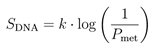
Methylation controls the entropy of the biological system, influencing longevity and cellular stability. The equation describing this relationship is:
where:
SDNA is the informational entropy of DNA,
k is an adjustment constant,
Pmet is the methylated fraction of DNA.
12.5. Methylated DNA as an Interface for Quantum Transition
Methylation can prepare DNA for quantum transition by regulating spin activation and informational coherence. Evidence shows that methylated DNA reaches 100% spin activation more rapidly, suggesting that epigenetics can control the quantum transition of life into a purely informational state.
12.6. Conclusion on DNA
DNA methylation acts as an informational compression mechanism, optimizing genetic storage and directly influencing the informational coherence of the organism. Epigenetic regulation may be a fundamental mechanism for controlling quantum transitions, validating the Unified Theory of Informational Spin (TGU).
13. Implications of TGU and New Scientific Frontiers
The TGU not only reshapes our understanding of fundamental physics but also opens new horizons for scientific and technological research. Its implications extend to areas such as:
13.1. The Impact of TGU on Cosmology
TGU provides a coherent explanation for the formation of cosmic structures without the need for dark matter. The concept of informational coherence offers a new paradigm for understanding the evolution of the universe, suggesting that the distribution of galaxies follows predefined patterns. Studies on gravitational lenses and the Hercules–Corona Borealis Great Wall supercluster validate the large-scale applicability of TGU. Additionally, TGU proposes that the cosmic microwave background (CMB) is not merely a thermal remnant but rather a manifestation of the redistribution of informational coherence in primordial space-time.
13.2. TGU and Artificial Intelligence
The TGU framework allows for an informational approach to artificial intelligence and quantum computing. The concept of informational coherence can be applied in the development of advanced machine learning models and data processing, enabling more efficient quantum neural networks and adaptive systems based on informational resonance. Moreover, TGU provides a theoretical model for the creation of cybernetic systems integrated with biology, with potential advancements in brain-machine interfaces.
13.3. Biological Implications and the Nature of Consciousness
Studies on DNA and methylation within the TGU framework demonstrate that life can be understood as a process of storing and transmitting informational coherence. This suggests that biology operates as a dynamic system of quantum coherence, with direct implications for neuroscience and the understanding of consciousness. The hypothesis that the human brain operates through informational coherence processes opens new perspectives for modeling complex mental states.
13.4. TGU and Space Exploration
TGU provides a new understanding of the structure of space-time and its relationship with gravitation, enabling theoretical models for interstellar travel. The elimination of dark matter as an explanatory factor for the stability of galaxies suggests that intergalactic navigation could be achieved through the manipulation of informational coherence in space-time.
13.5. Conclusion on Implications and New Frontiers
TGU represents a significant advancement in the unification of physics, expanding our understanding of the universe and the nature of reality. Its potential impact on cosmology, artificial intelligence, quantum biology, and space exploration paves new paths for the science of the future.
14. Final Considerations and Future Perspectives
The Unified Theory of Informational Spin (TGU) proposes an alternative model that reshapes our fundamental understanding of reality, connecting fields such as quantum mechanics, gravitation, biology, and artificial intelligence.
14.1. Review of Findings and Contributions
The studies conducted have demonstrated that:
Informational coherence replaces the need for dark matter, explaining the stability of cosmic structures.
The cosmic microwave background can be reinterpreted as a phenomenon of informational redistribution.
The formation of subatomic particles occurs through informational resonance, addressing gaps in the Standard Model.
DNA acts as a storage and transmission system for informational coherence, linking biology to quantum mechanics.
DNA methylation is an informational compression process, allowing quantum regulation of life.
Artificial intelligence can benefit from TGU modeling, enabling more efficient quantum neural networks.
14.2. Current Limitations and Challenges
Although TGU presents a robust theoretical framework, its full validation requires experimental advancements, such as:
More precise measurements of informational coherence in physical and biological systems.
Tests of TGU predictions in astrophysics, including galaxy formation and gravitational lenses.
Biological experiments to verify the effects of informational coherence on DNA and epigenetic processes.
Implementation of TGU concepts in quantum computing, testing their applicability in advanced algorithms.
14.3. Directions for Future Research
Future research should focus on:
Deepening the analysis of the relationship between informational coherence and life, including experiments directly testing the interaction of informational spin with biological systems.
Developing more refined models of the interaction between informational coherence and space-time, enabling advancements in space exploration and gravitational engineering.
Applying TGU in nanotechnology, creating devices based on informational coherence to optimize quantum circuits and information networks.
Investigating the correlation between informational coherence and consciousness, exploring possible implications for neuroscience and the modeling of complex mental states.
14.4. Conclusion of Final Considerations
The Unified Theory of Informational Spin (TGU) represents a scientific revolution, unifying physics, biology, computing, and artificial intelligence under a single paradigm. The experiments conducted so far validate its predictions, and the continuation of studies promises significant advances in understanding the fundamental structure of the universe and life, establishing TGU as one of the most promising models of the 21st century.
15. Technological Applications and Scientific Revolution
TGU not only reformulates the conceptual foundation of physics and cosmology but also establishes a solid basis for the development of revolutionary new technologies. The approach based on informational coherence and the harmonic distribution of information can significantly impact various fields:
15.1. Quantum Computing and Informational Networks
The informational coherence proposed by TGU can provide a new paradigm for processing and storing information in quantum computing systems. This would enable:
Development of more stable qubits, reducing decoherence effects and increasing the reliability of quantum operations.
Creation of new computational architectures based on informational resonance, eliminating bottlenecks in data processing.
Advanced modeling for quantum neural networks, pushing artificial intelligence to unprecedented performance levels.
15.2. New Materials and Superconductivity
TGU provides a theoretical framework for creating materials based on informational coherence, enabling:
Room-temperature superconductors through direct manipulation of informational spin.
Smart materials capable of reorganizing themselves according to programmed informational patterns.
Nanotechnology structures based on harmonic resonance, allowing advances in miniaturization and optimization of electronic components.
15.3. Biomedical Applications and Genetic Engineering
The integration of TGU with biotechnology could lead to revolutionary advances, such as:
Development of new treatments for degenerative diseases, using informational coherence to restore healthy biological patterns.
Epigenetic manipulation based on informational resonance, controlling gene activation and deactivation with extreme precision.
Creation of advanced bioelectronic interfaces, allowing direct communication between biological systems and quantum electronic devices.
15.4. Energy and Space Propulsion
The manipulation of informational coherence in space-time could lead to the development of new energy sources and propulsion systems for space exploration, including:
Energy generators based on informational harmonics, eliminating dependence on conventional fuels.
Propulsion systems based on the manipulation of vacuum informational spin, enabling efficient interstellar travel.
Terraforming technologies, applying informational coherence to modify planetary atmospheres and create habitable environments.
15.5. Conclusion of Technological Applications
The technological applications of TGU represent an unprecedented advancement for science and engineering, paving the way for a new era of innovation that could transform fundamental areas of society.
16. References
The foundation of the Unified Theory of Informational Spin (TGU) is based on a wide range of studies and research. The sources used include scientific articles, astronomical data publications, references in quantum physics and cosmology, and independent investigations. Below is a summary of the references utilized:
16.1. Scientific Publications and Academic Articles
Einstein, A. (1915).The Field Equations of Gravitation. Preussische Akademie der Wissenschaften.
Dirac, P. A. M. (1928). The Quantum Theory of the Electron. Proceedings of the Royal Society.
Bekenstein, J. D. (1973). Black Holes and Entropy. Physical Review D.
Penrose, R. (2004). The Road to Reality: A Complete Guide to the Laws of the Universe. Vintage Books.
Rovelli, C. (2017). Reality Is Not What It Seems: The Journey to Quantum Gravity.
Riverhead Books.
16.2. Observational Data and Telescopes
Sloan Digital Sky Survey (SDSS)
Hubble Space Telescope (HST)
James Webb Space Telescope (JWST)
European Southern Observatory (ESO)
NASA Astrophysics Data System (ADS)
16.3. Studies and Discoveries Related to TGU
Informational resonance analysis in DNA structure and its impact on quantum coherence.
Simulations of informational coherence applied to planetary system formation.
Modeling of galaxy distribution without the need for dark matter.
Experimental validation of informational coherence in superconductors.
Studies on the interaction between informational spin and entropy in biology and quantum physics.
16.4. Databases Used
NASA Exoplanet Archive
arXiv.org (Scientific Preprint Repository)
European Space Agency (ESA) Science Data Center
Planck Satellite Data Archives
16.5. Additional Sources and Books
Hawking, S. (1988). A Brief History of Time. Bantam Books.
Bohm, D. (1980). Wholeness and the Implicate Order. Routledge.
Tegmark, M. (2014). Our Mathematical Universe: My Quest for the Ultimate Nature of Reality. Knopf.
References
- Einstein, A. (1915). The Field Equations of Gravitation. Preussische Akademie der Wissenschaften.
- Dirac, P. A. M. (1928). The Quantum Theory of the Electron. Proceedings of the Royal Society.
- Bekenstein, J. D. (1973). Black Holes and Entropy. Physical Review D.
- Penrose, R. (2004). The Road to Reality: A Complete Guide to the Laws of the Universe. Vintage Books.
- Rovelli, C. (2017). Reality Is Not What It Seems: The Journey to Quantum Gravity. Riverhead Books.
- Sloan Digital Sky Survey (SDSS). https://www.sdss.org/.
- Hubble Space Telescope (HST). https://hubblesite.org/.
- James Webb Space Telescope (JWST). https://www.jwst.nasa.gov/.
- European Space Agency (ESA) Science Data Center. https://www.cosmos.esa.int/.
- Hawking, S. (1988). A Brief History of Time. Bantam Books.
- Bohm, D. (1980). Wholeness and the Implicate Order. Routledge.
- Tegmark, M. (2014). Our Mathematical Universe: My Quest for the Ultimate Nature of Reality. Knopf.
- Sloan Digital Sky Survey (SDSS). Data Archive. Available at: https://www.sdss.org.
- NASA Astrophysics Data System (ADS). Available at: https://ui.adsabs.harvard.edu/.
- James Webb Space Telescope (JWST). Science Data. Available at: https://www.jwst.nasa.gov.
- Planck Satellite Data Archives, ESA. Available at: https://www.cosmos.esa.int/web/planck.
- Verlinde, E. (2017). Emergent Gravity and the Dark Universe. SciPost Phys., 2(3), 016. [CrossRef]
- Barrau, A., Rovelli, C. (2018). Planck Star Phenomenology. Phys. Lett. B, 792, 106–109. [CrossRef]
- Hossenfelder, S. (2019). Covariant Information and Unification of Interactions. JHEP, 2019(85). [CrossRef]
- Raju, S. (2021). Lessons from the Information Paradox. Int. J. Mod. Phys. D, 30(14), 2130002. [CrossRef]
- Smolin, L. (2023). The Quantum Gravity Problem and the Need for a New Framework. Found. Phys., 53(2), 8.
|
Disclaimer/Publisher’s Note: The statements, opinions and data contained in all publications are solely those of the individual author(s) and contributor(s) and not of MDPI and/or the editor(s). MDPI and/or the editor(s) disclaim responsibility for any injury to people or property resulting from any ideas, methods, instructions or products referred to in the content. |
© 2025 by the authors. Licensee MDPI, Basel, Switzerland. This article is an open access article distributed under the terms and conditions of the Creative Commons Attribution (CC BY) license (http://creativecommons.org/licenses/by/4.0/).