1. Introduction
Technology is a powerful catalyst for enhancing education, offering unique opportunities for learning and collaboration. In today's world, smartphones, mobile gadgets, and digital devices are increasingly popular among students, making it essential for teachers to harness these tools to improve classroom teaching. The integration of technology into education dates back to the 1950s, with early examples such as the Sensorama Simulator (1957) and the first augmented reality (AR) headset, the "Sword of Damocles" in 1966, designed to assist helicopter pilots. By 1999, Hirokazu Kato developed ARToolKit, an open-source library that further advanced AR technology (Arena et al., 2022). As the use of digital devices grows, teachers must adopt innovative teaching methods to create engaging learning experiences. One such technological innovation is AR, which overlays virtual objects, audio, video, or simulations onto real-world settings (Dunleavy et al., 2009). AR integrates two- and three-dimensional digital content into real environments, engaging sensory modalities like visual, auditory, and tactile experiences (Cipresso et al., 2011). This multi-sensory approach enhances traditional teaching methods, fostering critical thinking and increasing student engagement. Currently, three types of AR are used in education: marker-based AR, which relies on target images or markers to overlay 3D content; marker-less AR, which uses sensors and algorithms to map real-world spaces; and location-based AR, which overlays digital objects based on geographical data (Softtek, 2021). These AR technologies are applied across disciplines, such as arts, science, social studies, and mathematics, making abstract or complex concepts easier to grasp. AR also benefits subjects like language education, history, vocational training, and special education, as well as higher education research, where realistic simulations enable safe practice environments. AR enhances teaching and learning outcomes by improving access to learning materials, increasing motivation and attention, enabling safer hands-on practice, and fostering creativity, imagination, and abstract thinking. It also helps in presenting complex concepts that are challenging to teach through traditional methods. By blending virtual elements with real-world settings through mobile devices and tablets, AR provides immersive and interactive educational opportunities (Pasalidou et al., 2023). Studies have shown that AR enhances student engagement, motivation, confidence, and overall satisfaction (Akcayir, 2017; Weng et al., 2020). However, successful AR integration depends on teachers' attitudes, perceptions, and behaviors. Educators’ willingness to adopt AR is influenced by factors such as perceived ease of use, enjoyment, and the relative advantage of AR over traditional teaching. Positive perceptions lead to positive attitudes, which encourage teachers to integrate AR into their practices. This creates a feedback loop where consistent AR usage further reinforces favourable attitudes and perceptions (Wu et al., 2013). Teachers play a crucial role as guides, fostering discovery and self-exploration among students. AR supports this by making education more engaging and enjoyable, preparing students to become curious and empathetic global citizens (AlGerafi et al., 2023). As education continues to evolve, AR remains a valuable tool for creating dynamic, immersive, and effective learning environments.
1.1. Review of Literature
Research on teachers' awareness of Mobile Augmented Reality (MAR) consistently highlights positive awareness and a willingness to integrate this technology into educational practices. Studies show that educational mobile AR apps can significantly enhance teaching performance, effectiveness, and productivity (Pasalidou & Fachantidis, 2021). Teachers, especially in biology and language education, view MAR as a tool that makes their teaching more engaging and interactive (Ashley-Welbeck & Vlachopoulos, 2020; Schmidthaler et al., 2023). This positive perception extends to various applications, such as interactive learning, experiential learning, and the visualization of complex concepts (Perifanou et al., 2023). Despite these positive perceptions, challenges like technological errors, GPS issues, software lags, and students’ unfamiliarity with AR can hinder its effective use (Mundy et al., 2019). However, teachers generally report feeling knowledgeable about AR technology and express a strong willingness to learn more to better integrate it into classrooms (Dsouza & Hemmige, 2023; Mohamad & Husnin, 2023). Factors such as perceived usefulness, attitude, and behavioral intention are significant drivers of AR adoption, while perceived ease of use plays a moderate role (Ibili et al., 2019; Salmee & Majid, 2022). There are also notable gender and geographical disparities, with female and urban teachers demonstrating more positive attitudes towards AR than their male and rural counterparts (Putiorn et al., 2018). Teachers also express concerns about institutional support, teacher training, and the availability of AR educational applications. Despite these concerns, they remain hopeful about AR’s potential to enhance student motivation and bridge gaps between learners and educators (Manna, 2023). Overall, teachers are enthusiastic about the integration of AR, particularly when provided with adequate training and resources (Jamrus & Razali, 2021; Koutromanos et al., 2022). Research has shown that MAR significantly impacts teachers' knowledge acquisition and behavioral changes (Cheng & Tsai, 2014; Do et al., 2020). Several studies highlight that knowledge and subjective norms are key factors influencing MAR adoption in research and higher secondary education (Buchner et al., 2022; Cheon et al., 2012; Marín-Marin et al., 2023). Additionally, AR has been found to enhance cognitive processes like information collection and problem-solving (Georgiou & Kyza, 2017). Despite challenges in pinpointing specific effects on higher-order thinking, AR is generally seen as beneficial by both teachers and students (Wijnen et al., 2023; Ozdamli & Hursen, 2017). Factors such as perceived usefulness and ease of use strongly influence teachers' intention to adopt AR (Romano et al., 2020). Teachers in science education tend to favor smartphone applications and marker-based content, which are the most popular AR tools (Arici et al., 2021). Female teachers, in particular, show a more favourable perception of AR due to its role in enhancing classroom engagement and memorability (Alamaki et al., 2021). Age also plays a role in familiarity with technology, with younger educators typically being more aware of AR applications than older teachers (Staddon, 2022; Ventouris et al., 2021). Experienced educators tend to rely on traditional teaching methods, making them less likely to explore AR tools compared to their less experienced counterparts (Khukalenko et al., 2022). Additionally, STEM teachers exhibit higher awareness of AR due to its relevance to their fields, compared to educators in humanities or arts (da Silva et al., 2019; Sirakaya & Sirakaya, 2022). Societal and cultural factors in India also influence the exposure to and use of technology among male and female educators (Gomez-Trigueros & Aldecoa, 2021; Huang et al., 2019). However, while teachers are generally positive about MAR and its potential to enhance education, the successful integration of AR relies on adequate training, resources, and institutional support. Gender, geography, age, and subject specialization also play significant roles in shaping perceptions and adoption of this technology in educational settings.
1.2. Rationale of the Study
The integration of Augmented Reality (AR) technology into education holds transformative potential, especially in Indian schools where traditional teaching methods still dominate. This study aims to explore how Indian school teachers perceive, approach, and engage with AR applications in the classroom. While global research indicates positive awareness of AR and its potential to enhance learning, challenges such as technological limitations and insufficient training often hinder its widespread adoption. In India, where educational resources and access to technology vary significantly, understanding these dynamics is crucial (Shivani & Chander, 2023). This study seeks to bridge the gap in existing literature by examining teachers' perceptions of AR across various dimensions. It aims to assess teachers' readiness to embrace digital transformation, as well as their views on the usefulness and impact of AR on teaching and learning. The study would also explore how gender, age, teaching experience, and subject specialization influence AR adoption, as well as the factors contributing to these differences. Additionally, it would investigate the role of technological readiness, professional development, and institutional support in the adoption of AR, and asked to know what primary factors shaping Indian school teachers' awareness of augmented reality (AR) applications in education along with to what extent external elements, such as curriculum guidelines, peer collaboration, or student engagement, influence the integration of augmented reality in Indian classrooms. The findings would offer valuable insights into the barriers and enablers of AR integration, providing recommendations for policymakers and educators to enhance the adoption of AR in Indian schools.
1.3. Statement of the Study
The study titled "Teachers and Technology: A Comprehensive Study on Augmented Reality Awareness Among School Educators in India" aims to explore Indian educators' awareness of Augmented Reality (AR) in the classroom. AR technology, which integrates digital elements like sounds or images into the physical world through devices such as smartphones or AR glasses, offers significant potential in education. This research examines key issues, including teachers’ perceptions of AR—whether they find it useful, their thoughts on implementing it, and their emotional responses (e.g., apprehension, interest, excitement). The study also investigates how frequently teachers use AR, and how awareness of AR varies across factors like age, teaching experience, and subject specialization. Additionally, it explores gender differences in AR awareness and the influence of school-related factors on AR adoption. By employing a descriptive survey research method, the study aims to provide a comprehensive understanding of the current state of AR awareness among Indian educators.
To assess the level of awareness of Augmented Reality (AR) applications among school educators in India.
To investigate the demographic factors such as age, gender, teaching experience, and subject specialization in shaping AR awareness among educators.
A majority of school educators in India are anticipated to have limited awareness of Augmented Reality (AR) applications in education.
Male educators are expected to demonstrate a significantly higher level of awareness of AR applications compared to female educators.
Educators teaching in urban schools are expected to have a significantly higher level of awareness of AR applications compared to their counterparts in rural schools.
The level of awareness of AR applications among school educators in India is likely to vary significantly across different age groups.
Awareness of AR applications among educators is likely to differ significantly based on their teaching experience.
Educators in private schools are expected to exhibit significantly higher awareness of AR applications compared to those in government schools.
Awareness of AR applications among school educators in India is likely to vary significantly based on their subject specializations.
2. Methodology
2.1. Design
This study employed a descriptive survey design, utilizing a quantitative research approach to provide a comprehensive understanding of the research problem. The quantitative methodology involved collecting and analyzing numerical data to identify patterns, trends, and correlations, enabling the extrapolation of findings to a larger population (Creswell & Clark, 2023; Schoonenboom & Johnson, 2017). Closed-ended survey methods were used to gather detailed insights into participants' experiences and perspectives, facilitating a structured analysis. The descriptive design allowed for effective data tabulation and calculation, enhancing the validity and coherence of the study's findings. By offering a thorough and nuanced perspective, this approach ensures that the research addresses the full scope of the topic, informing actionable recommendations and conclusions.
2.2. Sample
This study employed a robust sampling process, selecting 730 teachers from urban and rural schools across India. A combination of random and stratified sampling techniques was used, with participants drawn from all 28 states and 8 union territories by selecting 10% of districts in each region (Makwana et al., 2023; Tipton, 2013). Data collection was conducted through both online methods (email, WhatsApp, social media) and offline approaches (pen-and-paper), ensuring a diverse and representative sample of educators.
2.3. Tools
In this study, we created standardized questionnaires with 20 multiple-choice questions to measure educators' awareness of using Augmented Reality (AR) in schools. Each question had four answer options, with 5 points given for a correct answer and 0 points for an incorrect one (Garratt et al., 2011; Zaidi et al., 2021). The total scores ranged from 0 to 100. Based on these scores, awareness levels were divided into three categories—Low, Moderate, and High—using equal intervals, as described by Ascher-Svanum et al. (2013). To ensure the reliability and validity of the questionnaire, we carried out a detailed validation process, focusing on content and face validity, with feedback from nine experts in the field. The questionnaire was tested on a group of 30 participants, and the Kuder-Richardson reliability coefficient was calculated at 0.79, showing good reliability.
2.4. Procedure of Data Collection
In this study, survey questionnaire was distributed to educators from private and government schools across India, including rural and urban areas, regardless of age, gender, qualifications, or the educational board of their institutions. To ensure a diverse sample, we used both physical and digital methods for distribution. In-person sessions were followed by sharing the questionnaire via email and WhatsApp. For online responses, we used Google Forms, providing clear instructions and timelines to ensure timely submissions (Regmi et al., 2016). Before participation, all educators received detailed information about the study's purpose, the survey’s nature, and the time required to complete it, allowing them to make an informed choice. We received 730 responses: 237 from male and 493 from female participants, with 531 from urban areas and 199 from rural areas. Participants provided informed consent before participating. While formal ethical approval was not sought, we emphasized ethical practices by ensuring all participants voluntarily joined with a clear understanding of their rights and the study's objectives.
3. Result
3.1. Hypothesis 1
The result of Hypothesis1 examined the level of awareness among school educators in India about Augmented Reality (AR) applications. This was done by calculating the range, frequency, and percentage of respondents based on their scores.
The
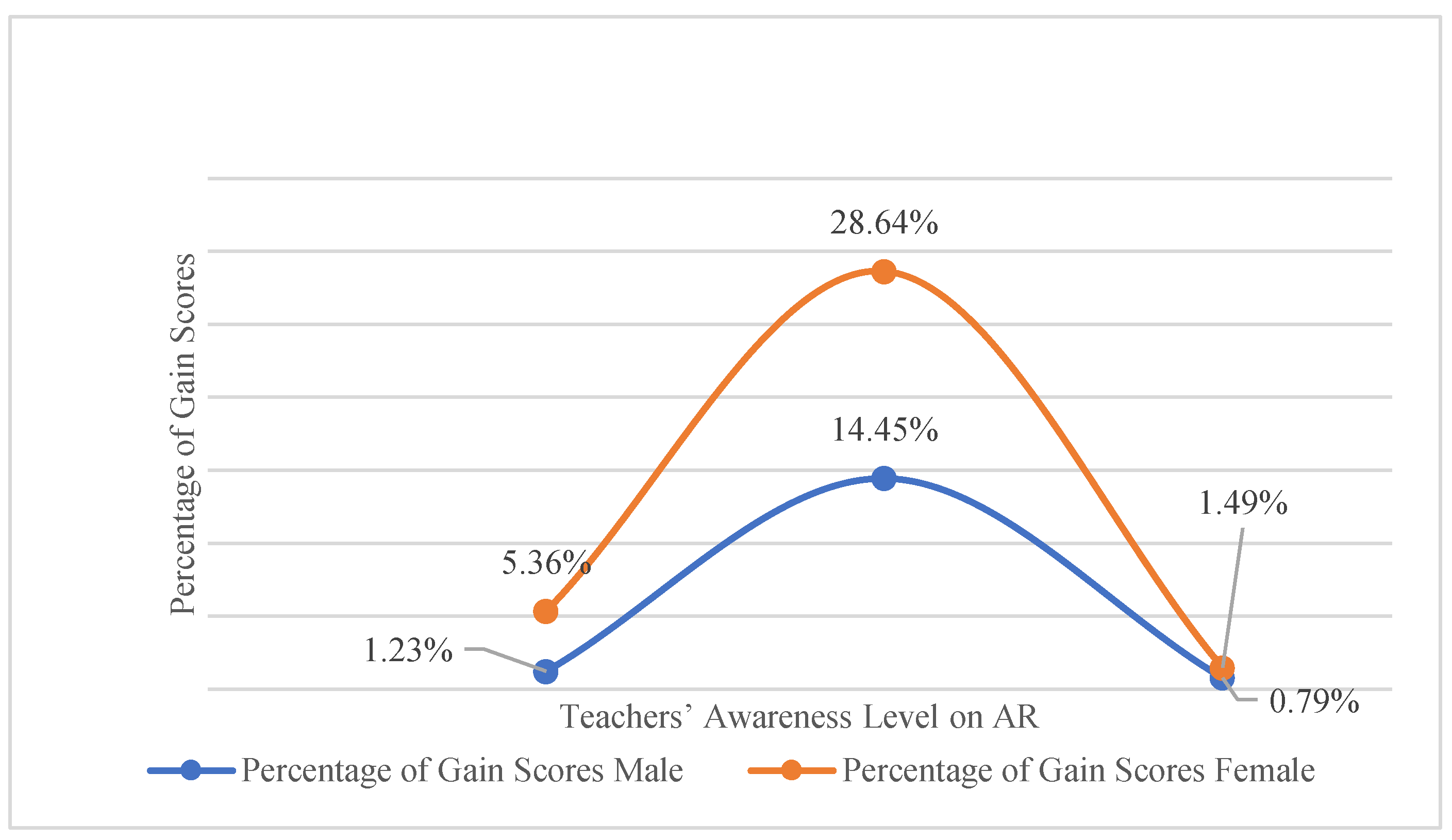
Table 1 illustrates the level of awareness among teachers regarding augmented reality (AR) applications, categorized into high, moderate, and low levels, along with corresponding gain scores and percentages. A higher proportion of female teachers (54) demonstrated a high awareness level compared to males (12), with gain scores of 3910 and 900, respectively, contributing 5.36% and 1.23% to the total percentage of gain scores (6.59%). In the moderate awareness category, the majority of both male (202) and female (400) teachers were represented, with gain scores of 10,550 and 20,905, contributing significantly to the overall gain scores at 14.45% and 28.64%, respectively, accounting for a combined 43.09%. Conversely, a smaller number of teachers exhibited low awareness, with 23 males and 39 females, whose gain scores (580 for males and 1085 for females) resulted in a minor contribution of 0.79% and 1.49% to the total, respectively, summing to 2.28%. Overall, female teachers had a higher awareness level and contributed more significantly to the total percentage of gain scores, which collectively reached 51.96%.
In this
Figure 1, the line graph shows the percentage of gain scores for males and females based on their teachers' awareness of AR. Male scores rise from 1.23% to 14.45% before dropping to 0.79%, while female scores increase from 5.36% to a peak of 28.64% before declining to 1.49%. Females exhibit a more pronounced peak, indicating greater sensitivity to teachers' awareness levels.
3.2. Hypothesis 2
The second hypothesis looked at whether male educators have a significantly higher awareness of Augmented Reality (AR) applications compared to female educators. This hypothesis was tested by calculating the awareness levels of male and female school educators in India using t-tests. The calculation included various statistical measures such as Mean (M), Standard Deviation (SD), Standard Error of the Mean (SEM), Number of Participants (N), Standard Error of the Difference (SED), Degrees of Freedom (df), and p-values from the gain scores of these variables.
Table 2 presents the significant differences in awareness levels of Augmented Reality applications between male and female school educators. The mean awareness score for female educators (M
1 = 52.54, SD
1 = 12.86, SE
M1 = 0.58) is slightly higher than that of male educators (M
2 = 50.76, SD
2 = 12.67, SE
M2 = 0.82). The total number of participants is 730 (N
1 = 493 for females, N
2 = 237 for males), with degrees of freedom (
df) at 728. The Standard Error of the Difference (SE
D) is 1.012, and the calculated
t-value is 1.755, with a
p-value of 0.0796, indicating no statistically significant difference in awareness levels between the two groups.
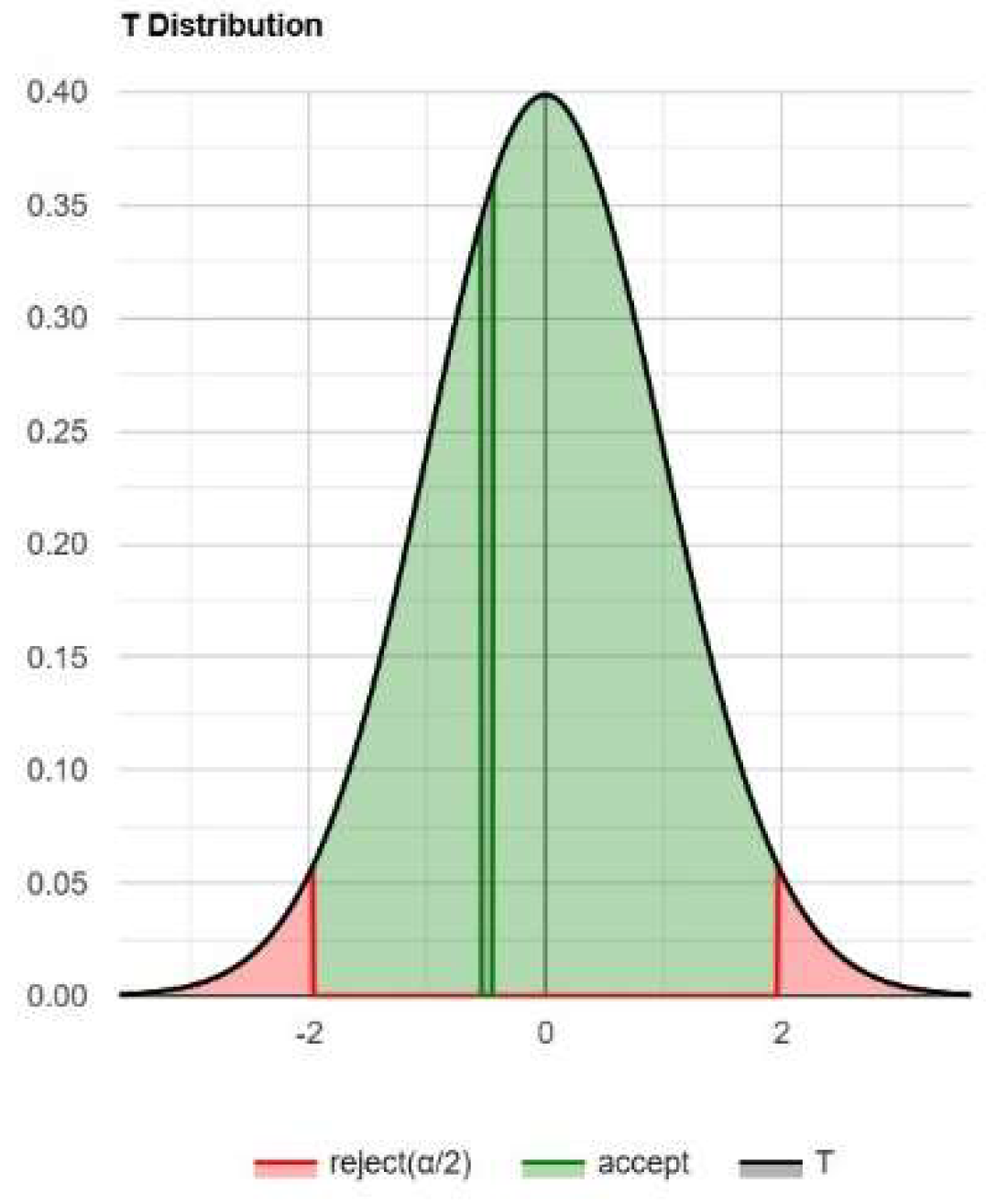
This
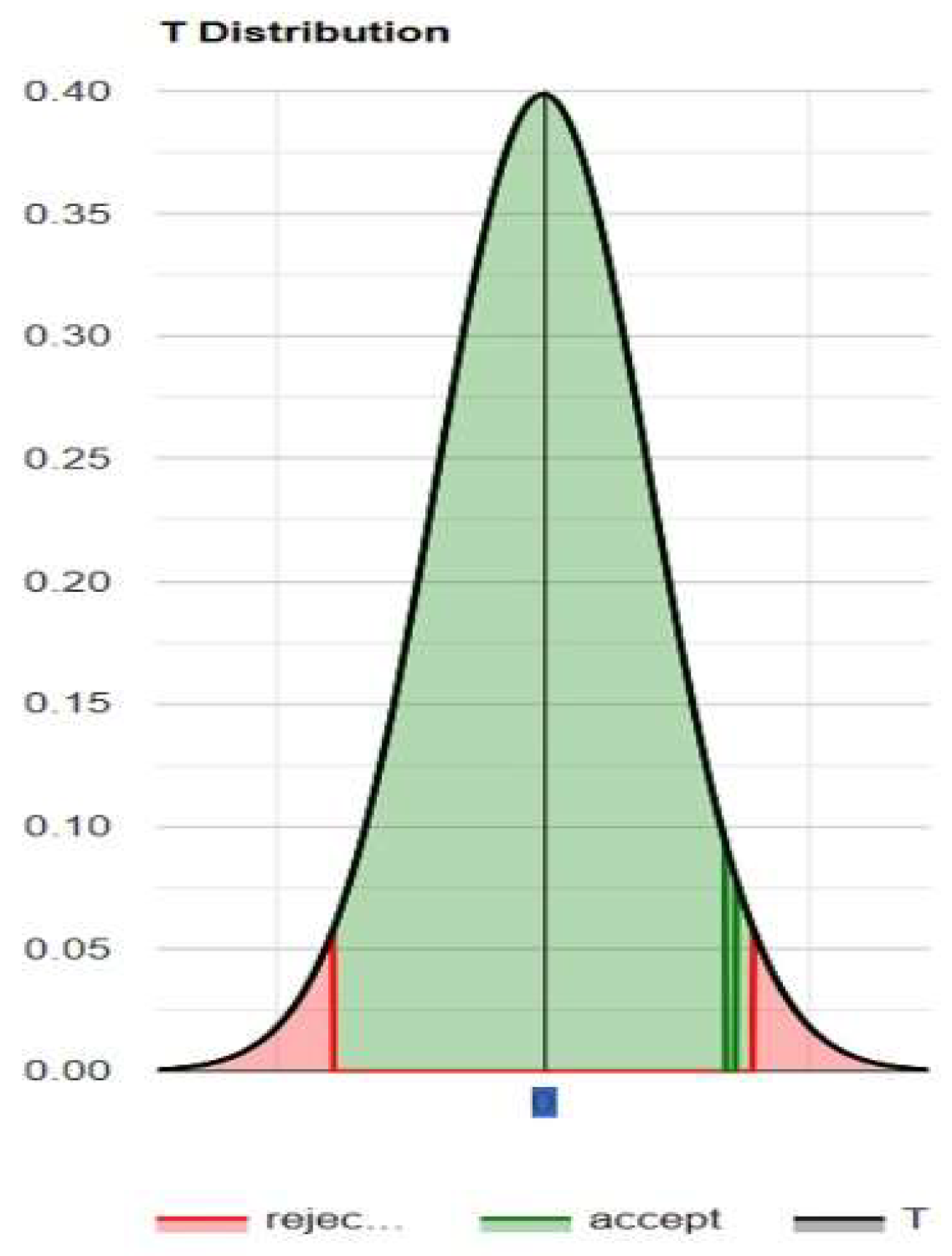
Figure 2 represents a T-distribution, highlighting the rejection and acceptance regions for a hypothesis test. The green area indicates the acceptance region (where the null hypothesis is retained), while the red areas represent the rejection regions (where the null hypothesis is rejected). The black curve shows the T-distribution, and the blue marker represents the calculated
t-value, which lies in the acceptance region, suggesting insufficient evidence to reject the null hypothesis.
3.3. Hypothesis 3
In this Hypothesis3, the educators in urban schools are expected to have significantly higher awareness of AR applications compared to those in rural schools. This was tested using t-tests to scrutinize the awareness levels of urban and rural male and female school educators in India. The scrutiny included statistical measures such as Mean (M), Standard Deviation (SD), Standard Error of the Mean (SEM), Number of Participants (N), Standard Error of the Difference (SED), Degrees of Freedom (df), and p-values.
The
Table 3 compares the awareness levels of augmented reality (AR) applications among urban and rural school educators. Urban educators have a slightly higher mean awareness score (52.25) than rural educators (51.18), with respective sample sizes of 531 and 199. The standard deviations are similar (12.90 and 12.59), and the standard error of the difference (SE
D) is 1.065. A
t-test shows a
t-value of 1.004 and a
p-value of 0.316, which is greater than the conventional significance threshold of 0.05. This indicates that the difference in awareness levels is not statistically significant, suggesting that urban and rural educators have comparable levels of familiarity with AR applications.
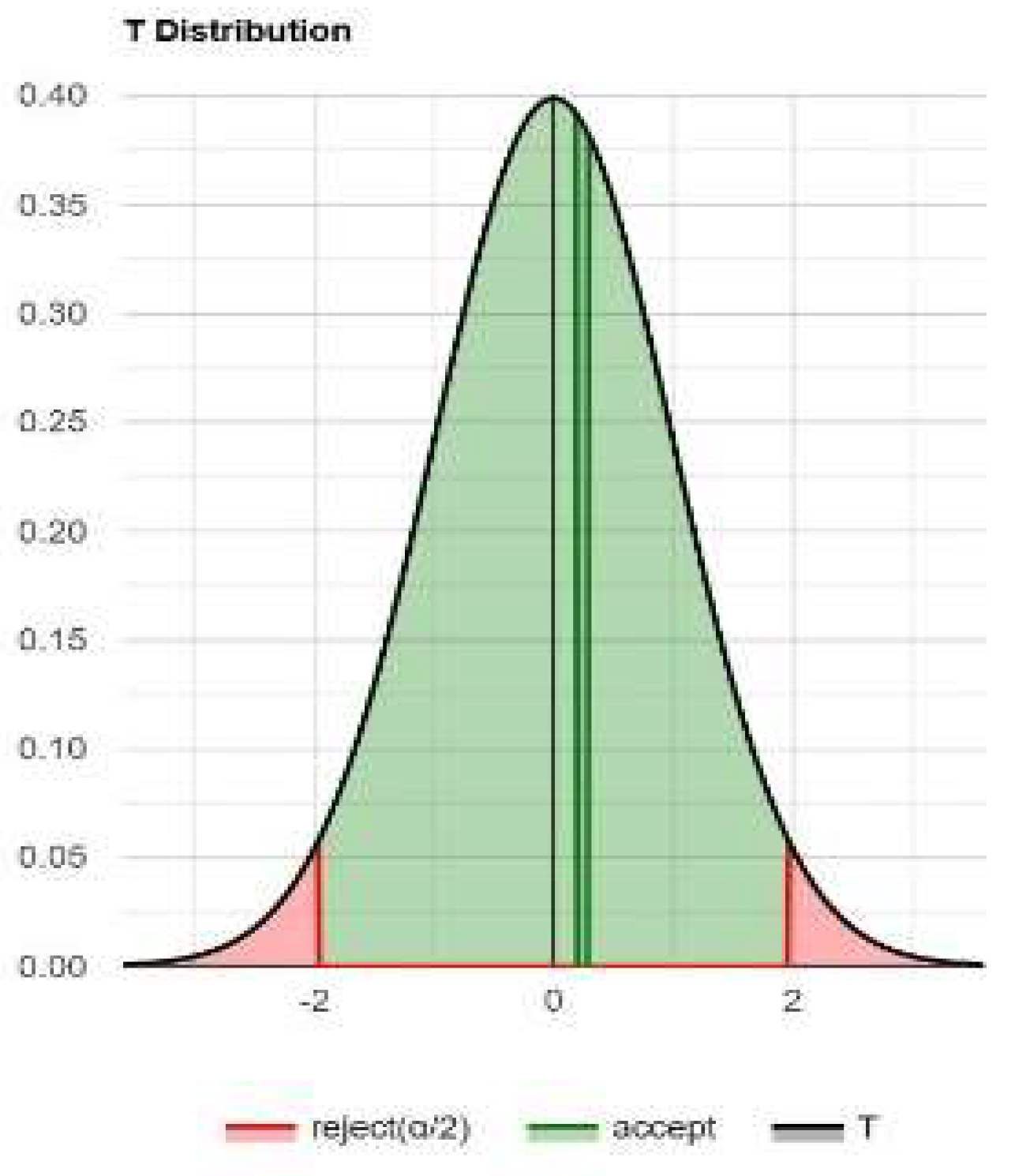
This graph in
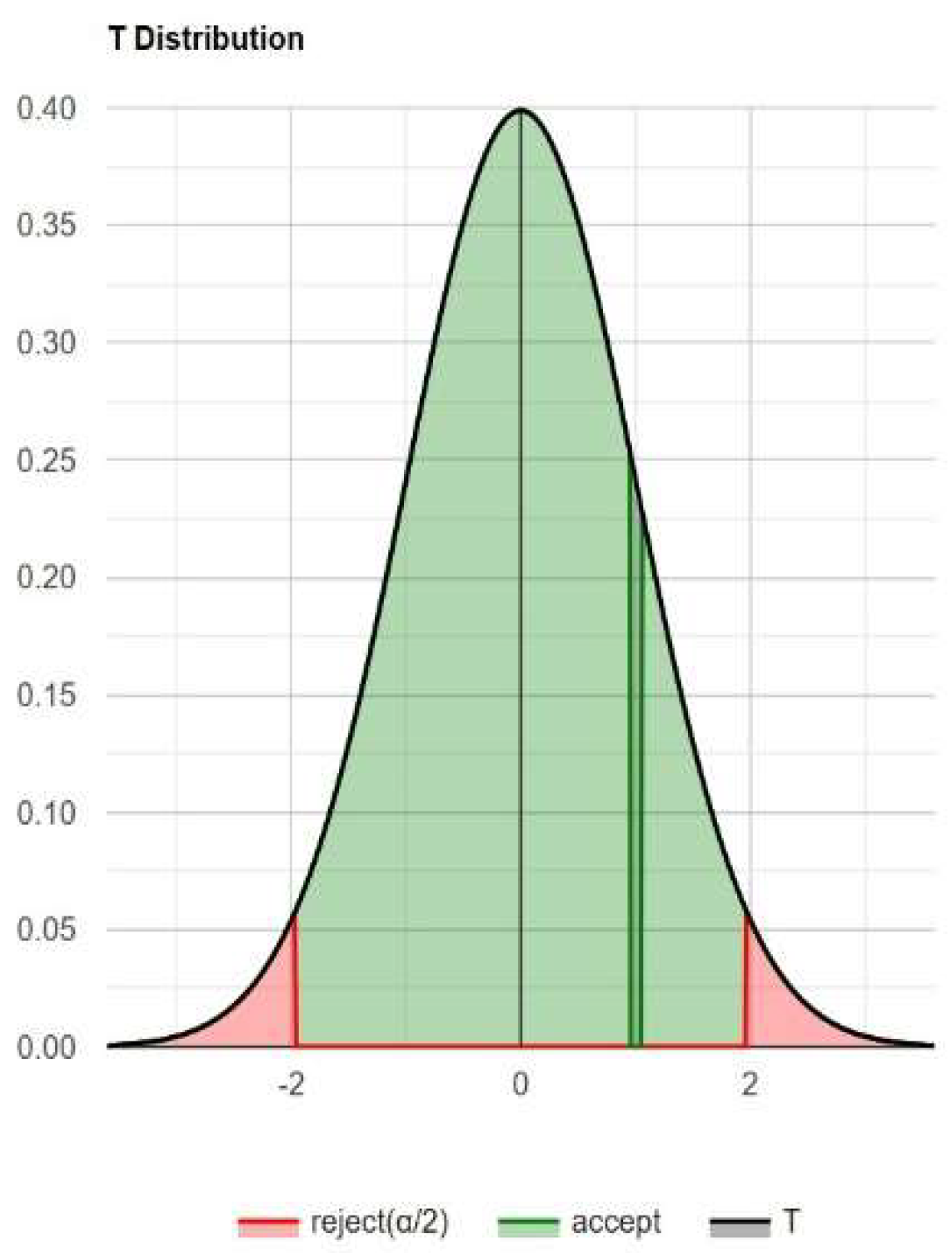
Figure 3 illustrates a T-distribution used in hypothesis testing, showing rejection regions (red) and the acceptance region (green). The rejection regions, located in the tails, represent extreme
t-values where the null hypothesis is rejected. The green area in the centre indicates the range of
t-values where the null hypothesis is accepted. The black curve represents the T-distribution, and the vertical green line marks the calculated
t-value, which falls within the acceptance region, indicating that the null hypothesis is not rejected.
3.4. Hypothesis 4
Hypothesis4 advocates that school educators from different age groups exhibit significantly different levels of awareness regarding AR applications. To test this hypothesis, the gain scores of school educators, categorized by age group, were analyzed using a one-way analysis of variance (ANOVA). The results are presented in table 4, where the Sum of Squares (SS), Degrees of Freedom (df), Mean Square (MS), and F-values represent the ANOVA output.
Table 4 presents the results of a one-way analysis of variance (ANOVA) conducted to compare teachers' awareness of AR across different age groups. The analysis revealed that the between-groups variation for the 20–33 years age group had a Sum of Squares (SS) of 226.71, with 2 degrees of freedom (
df), resulting in a Mean Square (MS) of 113.35 and an
F-value of 0.689 (
p = 0.502). For the 34–47 years age group, the within-groups variation had an SS of 119,572.06 with 727
df and an MS of 164.47. The corrected total for the 48–60+ years age group was 119,798.77, with 729
df and an MS of 164.33. These results indicate no statistically significant differences in AR awareness among teachers across the age groups, as the
p-value exceeds the 0.05 threshold.
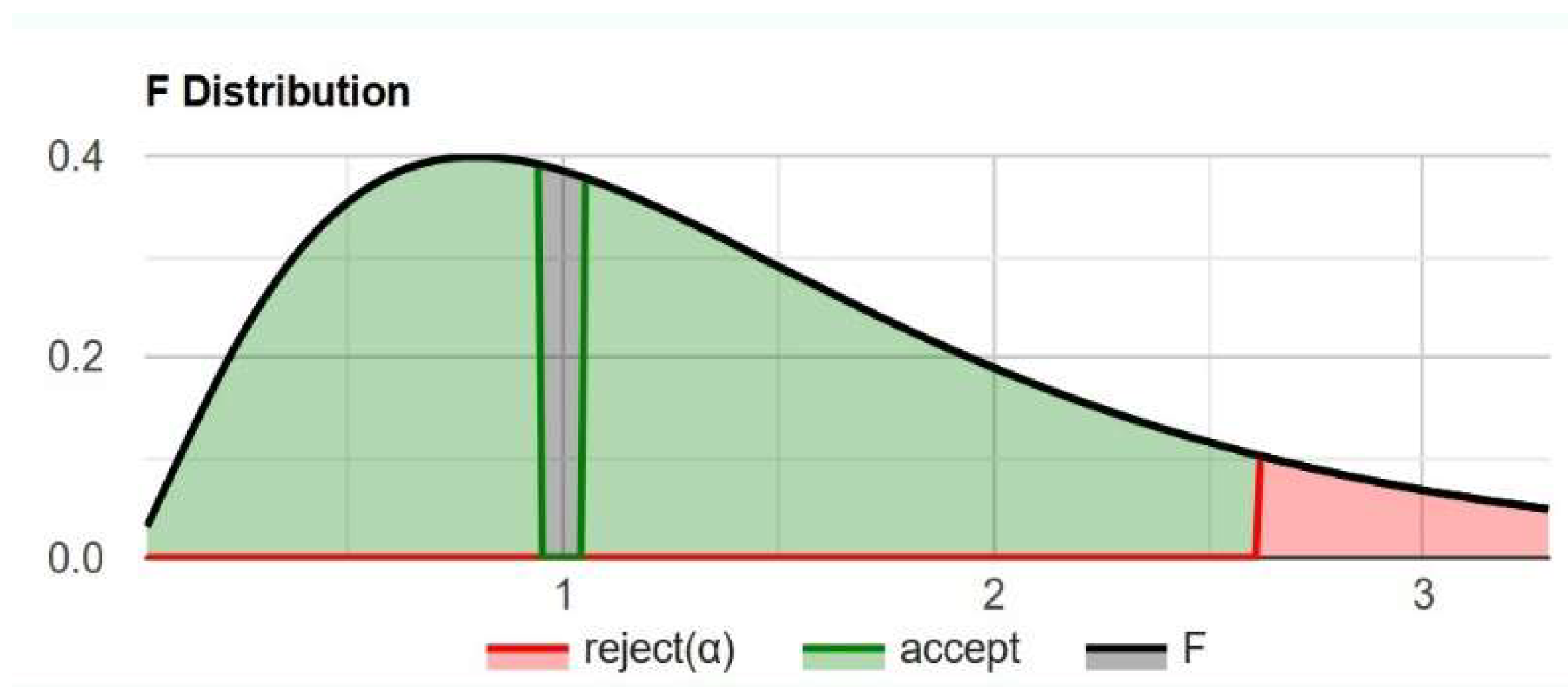
This graph in
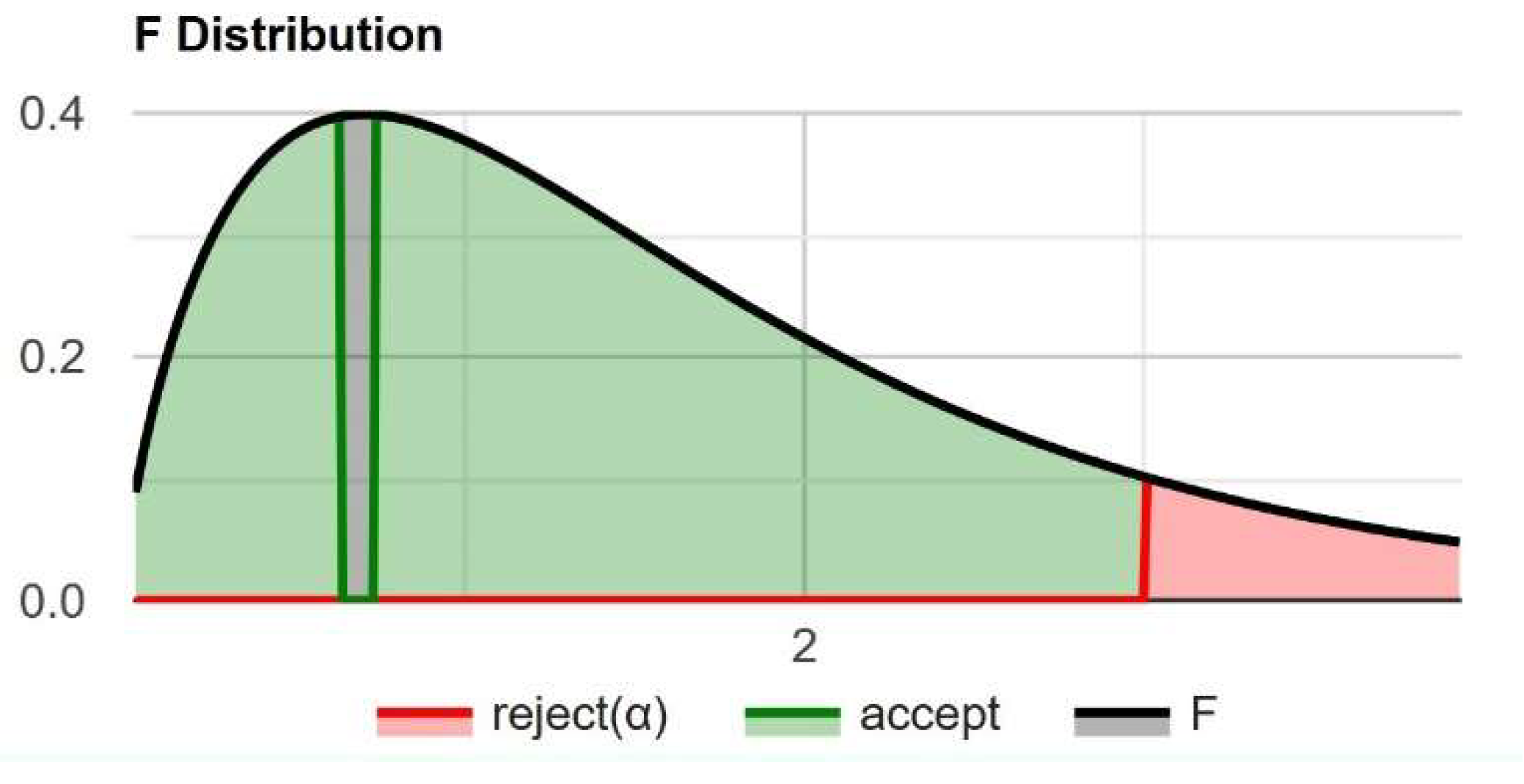
Figure 4 depicts the right-skewed
F-distribution used in hypothesis testing, with the x-axis showing
F-statistic values and the y-axis showing probability density. It highlights the rejection region (red, significance level
α) and acceptance region (green), separated by critical
F values, with the black curve representing the distribution.
3.5. Hypothesis 5
Hypothesis5 indicates that school educators with varying levels of teaching experience show significant differences in their awareness of AR applications. To examine this, the gain scores of educators, grouped by their teaching experience, were evaluated using a one-way analysis of variance (ANOVA). The findings are summarized in table 4, which includes the Sum of Squares (SS), Degrees of Freedom (df), Mean Square (MS), and F-values as part of the ANOVA results.
Table 5 displays the results of a one-way analysis of variance (ANOVA) conducted to compare teachers' awareness of AR across different levels of teaching experience. For educators with less than 10 years of experience, the between-groups variation had a Sum of Squares (SS) of 489.85, with 3 degrees of freedom (
df), resulting in a Mean Square (MS) of 163.28 and an
F-value of 0.9936 (
p = 0.3952). For educators with 11–20 years of experience, the within-groups variation had an SS of 119,308.92 with 726
df, and the corrected total for those with 21–30 years and 31–40+ years of experience was 119,798.77 with 729
df and an MS of 164.33. These results indicate no statistically significant differences in AR awareness based on teaching experience, as the
p-value is greater than 0.05.
In
Figure 5, this graph illustrates a right-skewed
F-distribution with probability density on the y-axis and
F-statistic values on the x-axis. It divides the area into the rejection region (red, for significance level
α) and the acceptance region (green), separated by critical
F values. The black curve represents the
F-distribution.
3.6. Hypothesis 6
This hypothesis looked at whether private schools’ educators have a significantly higher awareness of Augmented Reality (AR) applications compared to government schools’ educators. This hypothesis was tested by calculating the awareness levels of private and government school educators in India using t-tests. The calculation included various statistical measures such as Mean (M), Standard Deviation (SD), Standard Error of the Mean (SEM), Number of Participants (N), Standard Error of the Difference (SED), Degrees of Freedom (df), and p-values from the gain scores of these variables.
Table 6 presents the comparison of awareness levels of augmented reality (AR) applications between educators from private and government schools. Private school educators have a mean awareness score (M
1) of 51.76 (SD
1 = 13.24, SE
M1 = 0.64) based on 424 participants, while government school educators have a mean score (M
2) of 52.24 (SD
2 = 12.23, SE
M2 = 0.70) based on 306 participants. With a total sample size of 730 and degrees of freedom (
df) of 728, the standard error of difference (SE
D) is 0.962. The
t-value of 0.500 and
p-value of 0.617 indicate no significant difference in AR awareness levels between private and government school educators.
This curve in
Figure 6 represents a symmetric T-distribution with probability density on the y-axis and
t-statistic values on the x-axis. It shows two rejection regions (red, for significance level
α/2) on the tails and an acceptance region (green) in the centre, separated by critical
t values. The black curve represents the T-distribution.
3.7. Hypothesis 7
Hypothesis7 examines whether school educators teaching science-based subjects have significantly higher awareness of Augmented Reality (AR) applications compared to educators teaching social science or art-based subjects. To test this, the awareness levels of educators in India were calculated using t-tests. The calculation incorporated various statistical measures, including the Mean (M), Standard Deviation (SD), Standard Error of the Mean (SEM), Number of Participants (N), Standard Error of the Difference (SED), Degrees of Freedom (df), and p-values, derived from the gain scores of these variables.
Table 7 compares the awareness levels of Augmented Reality (AR) applications between school educators teaching science-based subjects and those teaching social science or art-based subjects. Educators in science subjects have a mean score (M
1) of 52.09 (SD
1 = 13.55, SE
M1 = 0.75) based on 326 participants, while educators in social science or art subjects have a mean score (M
2) of 51.86 (SD
2 = 12.21, SE
M2 = 0.61) based on 404 participants. With a total sample size of 730 and degrees of freedom (
df) of 728, the standard error of difference (SE
D) is 0.955. The
t-value of 0.240 and
p-value of 0.8102 indicate no significant difference in AR awareness levels between the two groups of educators.
In the
Figure 7 graph represents a T-distribution, showing the acceptance region (green) where the null hypothesis is retained, and the rejection regions (red) on both sides, determined by the significance level (
α).
4. Analysis and Interpretation
The data in
Table 1 provides a comprehensive analysis of teachers' awareness levels regarding augmented reality (AR) applications, categorized as high, moderate, and low, along with corresponding gain scores and percentages. The findings reveal differences in awareness levels between male and female educators (Karthick & Shanmugam, 2024). So far this analysis is concerned a higher proportion of female teachers (54) demonstrated a high level of awareness compared to male teachers (12). The gain scores for females and males in this category were 3,910 and 900, respectively. These scores contributed 5.36% (females) and 1.23% (males) to the total gain score percentage, making a combined contribution of 6.59%. This indicates that female educators are more likely to exhibit high awareness of AR applications than their male counterparts. On the other hand, the moderate awareness category accounted for the majority of teachers from both genders. Among male teachers, 202 fell into this category, contributing a gain score of 10,550, equivalent to 14.45% of the total. Female teachers represented 400 individuals in this category, with a gain score of 20,905, contributing 28.64%. Together, this category made up 43.09% of the total percentage of gain scores, reflecting its dominance in the overall awareness landscape. Similarly, a smaller proportion of teachers exhibited low awareness of AR applications. This included 23 male teachers with a gain score of 580 (0.79%) and 39 female teachers with a gain score of 1,085 (1.49%). The combined contribution of this category was minimal, totalling 2.28% of the overall gain scores. However, the analysis highlights those female educators not only displayed higher levels of awareness across categories but also made a more substantial contribution to the total percentage of gain scores. Collectively, female teachers accounted for 51.96% of the total gain scores, underscoring their prominent role in AR awareness within the teaching profession. These findings suggest targeted interventions may be needed to elevate AR awareness among male teachers and those in lower awareness categories, thereby fostering a more uniform understanding of AR applications across the teaching community (Tripathy & Panda, 2021).
The analysis of
Table 2 evaluates the awareness levels of AR applications among male and female school educators, revealing that female educators have a slightly higher mean score than their male counterparts. However, the calculated
t-value (1.755) and corresponding two-tailed
p-value (0.0796) exceed the conventional significance threshold (
p>0.05), indicating no statistically significant difference between the two groups. The 95% confidence interval for the mean difference (-0.21 to 3.76) includes zero, further supporting the lack of meaningful disparity. With degrees of freedom (
df = 728), the critical
t-values for both the 0.05 (1.96) and 0.01 (2.58) significance levels are greater than the observed
t-value, placing the results firmly in the region of acceptance for both 95% and 99% confidence levels. These findings suggest that the observed mean difference is too small to reject the null hypothesis (H
0), which posits that the awareness levels of male and female educators are equal (Amores-Valencia et al., 2023). Moreover, the
p-value (0.0796) indicates a 7.96% probability of committing a Type I error (wrongly rejecting H
0), which exceeds the acceptable threshold for statistical significance. Thus, the evidence strongly suggests that gender does not significantly influence educators' awareness of AR applications in this sample (Ghobadi et al., 2023).
Table 3 compares the awareness levels of Augmented Reality (AR) applications among urban and rural school educators. Urban educators have a slightly higher mean awareness score compared to rural educators, and similar standard deviations for urban and rural educators.
t-test yields a
t-value of 1.004 and a two-tailed
p-value of 0.316, which is greater than the conventional significance threshold (
p>0.05), indicating that the difference in awareness levels is not statistically significant. The 95% confidence interval for the mean difference (-1.02 to 3.16) includes zero, further supporting the conclusion that there is no meaningful disparity. With 728 degrees of freedom, the critical
t-values for the 0.05 (1.96) and 0.01 (2.58) significance levels exceed the observed
t-value, placing the result within the region of acceptance. The
p-value of 0.316 suggests a 31.6% probability of committing a Type I error (incorrectly rejecting the null hypothesis), which is too high to justify rejection. Therefore, the analysis concludes that urban and rural educators have comparable levels of awareness of AR applications, with no significant difference between the groups (Liao et al., 2024; Perifanou et al., 2023).
Table 4 summarizes the results of a one-way ANOVA conducted to evaluate differences in teachers' awareness of AR across age groups. The analysis produced an
F-value of 0.689 with degrees of freedom (2, 727) and a
p-value of 0.502. As the
p-value exceeds the standard significance thresholds of 0.05 and 0.01, the results indicate no statistically significant differences in AR awareness between the age groups. The null hypothesis (H₀), which assumes equal group averages, is accepted since the difference between the group means is too small to be meaningful. The test statistic [
F(2, 727) = 0.689] lies within the 95% region of acceptance [0, 3.0081] and does not approach the critical values (19.50 at 95% and 99.50 at 99% confidence levels). Additionally, the
p-value (0.502) suggests that rejecting the null hypothesis would entail a high risk (50.2%) of committing a Type I error. A larger
p-value strengthens support for H₀, confirming no significant differences between group means. Thus, teachers’ AR awareness is statistically consistent across all age groups (Cyril et al., 2022; Radu et al., 2022).
Table 5 presents the results of a one-way ANOVA comparing teachers' awareness of AR across different levels of teaching experience. For educators with less than 10 years of experience, the analysis showed between-groups variation with 3 degrees of freedom (
df) and within-groups variation with 726
df. The
F-value was 0.9936, with a
p-value of 0.3952. Since the
p-value exceeds the significance level (
α = 0.05), the null hypothesis (H₀), which assumes the group means are equal, is not rejected. This indicates that the differences in sample averages among the groups are not statistically significant (De Lima et al., 2022; Nikou, 2024). Additionally, the
p-value of 0.3952 corresponds to a 39.52% probability of a Type I error if H₀ were rejected, which is too high to justify rejecting it. The test statistic falls within the 95% acceptance region [0, 2.6172], and does not exceed the critical values at either the 95% (8.53) or 99% (26.12) confidence levels. These findings confirm there is no significant difference in AR awareness based on teaching experience. Thus, the analysis concludes that teaching experience of less than 10 years does not significantly affect teachers' awareness of AR (Stoner et al., 2024).
Table 6 compares the awareness levels of augmented reality (AR) applications between educators from private and government schools, based on a total sample size of 730 and 728 degrees of freedom (
df), the analysis yielded a
t-value of -0.5005 and a
p-value of 0.617. Since the
p-value is greater than the significance level (
α = 0.05,
p>
α), the null hypothesis (H₀), which assumes no difference in AR awareness levels between the two groups, is not rejected (Chang et al., 2022; Oueida et al., 2023). This indicates that the observed difference in sample averages between private and government school educators is not statistically significant. The
p-value of 0.617 corresponds to a 61.7% chance of a Type I error (rejecting a correct H₀), which is too high to justify rejection. The test statistic falls within the 95% acceptance region [-1.9632, 1.9632], further supporting the acceptance of H₀. Similarly, the difference in sample means (x₁ - x₂ = -0.48) lies within the 95% confidence interval [-1.8887, 1.8887]. These results confirm that the average AR awareness levels of educators from private and government schools are statistically equivalent, as the
p-value strongly supports the null hypothesis.
Table 7 compares the awareness levels of AR applications among school educators teaching science-based subjects and those teaching social science or art-based subjects. The analysis is based on responses from 326 educators teaching science subjects and 404 educators teaching social science or art subjects. Both groups exhibited nearly identical mean scores, indicating similar levels of AR awareness. With 728 degrees of freedom, the critical
t-values for significance at the 0.05 (1.96) and 0.01 (2.58) levels exceed the calculated
t-value of 0.240, demonstrating no statistically significant difference between the two groups. The calculated test statistic (
t = 0.240) falls well within the 95% region of acceptance [-1.9632, 1.9632], supporting the null hypothesis (H₀). Additionally, the difference in mean scores between the two groups (x₁ - x₂ = 0.23) lies within the 95% confidence interval [-1.8749, 1.8749], further reinforcing the conclusion that the observed differences are not statistically significant. The
p-value associated with the
t-test is 0.8102, which is considerably greater than the typical significance level of α = 0.05. This
p-value indicates an 81.02% probability of a Type I error (incorrectly rejecting a true null hypothesis), making the risk of rejecting H₀ excessively high. Consequently, H₀ cannot be rejected, meaning there is insufficient evidence to conclude that the mean AR awareness levels differ between educators teaching science-based subjects and those teaching social science or art-based subjects (Singh et al., 2024). However, the analysis validates that educators teaching science-based subjects and those teaching social science or art-based subjects have statistically equivalent levels of AR awareness. The high
p-value of 0.8102 strongly supports the null hypothesis, and the test statistic, along with the confidence interval, confirms that the small observed difference in mean scores between the groups is not significant. These findings suggest that subject specialization does not significantly influence AR awareness among school educators (Castano-Calle et al., 2022; Tzima et al., 2019).
5. Major Findings
Female teachers demonstrated a higher level of awareness and contributed more significantly to the overall percentage of gain scores compared to male teachers regarding Augmented Reality (AR) applications. This advocates that female teachers exhibited a more pronounced peak in sensitivity to awareness levels.
No statistically significant difference was found in awareness levels between male and female school educators regarding AR applications, indicating that gender did not have a notable impact on educators' awareness of AR applications.
The difference in awareness levels between urban and rural educators was not statistically significant, implying that both groups had comparable levels of familiarity with AR applications.
There was no statistically significant difference in AR awareness among teachers across different age groups, confirming that AR awareness levels were consistent regardless of age.
The findings also revealed no significant differences in AR awareness among school educators with varying levels of teaching experience. Thus, having less than 10 years of teaching experience did not significantly influence educators' awareness of AR applications.
No significant difference was observed in AR awareness levels between private and government school educators, confirming that both groups had statistically equivalent levels of awareness.
There was no significant difference in AR awareness levels between educators teaching science subjects and those teaching social science or arts. This indicates that subject specialization does not significantly affect educators' awareness of AR applications.
6. Discussion
In today’s digital age, the teaching-learning process is inseparable from technology. Regarding Augmented Reality (AR), findings revealed that female teachers demonstrated higher awareness and contributed more significantly to overall gain scores in AR applications, underscoring notable gender dynamics in educational technology adoption. This observation suggests that female educators may exhibit heightened receptiveness to technological innovations and their pedagogical applications (Mercader & Duran-Bellonch, 2021). Factors such as a proactive engagement in professional development, an inclination toward adopting innovative classroom practices, and a strong commitment to fostering collaborative, inclusive learning environments may account for this trend (Peikos & Sofianidis, 2024; George-Reyes et al., 2024). Their greater awareness might also reflect a learner-centered approach aligned with contemporary pedagogical frameworks. However, this does not imply that male educators lack awareness or engagement but highlights nuanced gender-based differences in perceiving and responding to emerging technologies. To further explore this dynamic, future research could examine factors such as access to training, motivational drivers, or resource availability, which may contribute to these disparities. Identifying such determinants is crucial for developing equitable strategies to support all educators and enhance AR integration into teaching practices. Similarly, findings indicated no statistically significant difference in AR awareness between male and female educators, suggesting that gender does not critically influence educators’ familiarity with AR technologies. This uniformity could result from equal access to educational resources and training across genders and points to a shared level of interest and engagement with AR tools within the teaching community (Al-Shahrani & Asir, 2023; Turan et al., 2018). Yet, the overall low awareness among both groups reveals systemic gaps in professional development and highlights that AR integration in educational settings remains underemphasized. Despite AR’s potential to revolutionize education through interactive and immersive experiences, its limited adoption stems from insufficient awareness (Wu et al., 2013). Addressing this gap requires targeted initiatives, including workshops, training sessions, and practical demonstrations, to enhance AR literacy regardless of gender (Zhang, 2024). Equal access to such resources is vital to modernizing education and improving teaching effectiveness. Furthermore, the study found no significant difference in AR awareness between urban and rural educators, indicating comparable familiarity with AR technologies across geographic boundaries. This parity likely reflects uniform challenges, such as limited training opportunities, inadequate technological infrastructure, and insufficient emphasis on AR in professional development programs, which are common to both urban and rural settings (Wang et al., 2024). Although urban educators are presumed to have better access to resources (Nikou et al., 2024), this advantage does not translate into higher AR awareness compared to their rural counterparts, who face notable technological constraints. The findings emphasize a widespread gap in AR literacy, calling for inclusive training initiatives that address the needs of both urban and rural educators. Online platforms and localized workshops can provide equitable access to AR training, bridging the digital divide and improving education quality across diverse contexts (Sulisworo et al., 2021). Similarly, findings revealed no significant difference in AR awareness across different age groups, suggesting that age does not significantly impact educators’ familiarity with AR technologies. This uniform lack of awareness across all age groups highlights systemic issues, such as the insufficient inclusion of AR in professional development programs and the lack of hands-on training (Kaminska et al., 2023). These results challenge assumptions that younger educators, being more digitally inclined, are more familiar with emerging technologies, and dispel stereotypes about older educators being less receptive to technological advancements (Diehl & Wahl, 2010; Schlomann et al., 2022). Addressing this requires age-inclusive strategies that provide accessible, tailored training programs for educators across all age groups. Professional development initiatives, including workshops and ongoing support, are critical to equipping educators of all ages with the skills to integrate AR effectively into teaching practices (Philipsen et al., 2019). Promoting AR literacy across all demographics is essential for ensuring technological integration in education. Additionally, the study found no significant difference in AR awareness levels among educators with varying teaching experience, including those with less than 10 years of experience. This suggests that teaching tenure does not substantially influence educators’ familiarity with AR technologies. The consistently low awareness levels across experience groups reflect a broader gap in professional development programs, which fail to emphasize AR integration regardless of educators’ tenure (Schwaiger et al., 2024). Experienced teachers may not have encountered AR during their training, while less experienced educators might lack exposure to comprehensive AR education in recent training programs (De-Lima et al., 2022). To bridge this gap, targeted interventions must focus on promoting AR awareness among both novice and seasoned teachers. Tailored workshops and professional development programs that integrate AR training as a core component can empower educators to utilize AR effectively, thereby enhancing teaching quality and interactivity (Alalwan et al., 2020; Wells & Miller, 2020). Moreover, findings indicated no significant difference in AR awareness levels between private and government school educators, showing that educators from both types of institutions are equally familiar with AR technologies. This equivalence suggests systemic factors, such as limited AR training and a lack of emphasis on AR in teaching practices, affect educators universally (Sirakaya & Cakmak, 2018). Despite the perceived advantages of private schools in terms of resources, these do not necessarily translate into higher AR awareness compared to government schools, which often face infrastructural and technological constraints. Addressing this cross-institutional gap in AR literacy requires collaborative efforts among policymakers, educational institutions, and technology providers to design and implement inclusive training programs. Equipping educators in both private and government schools with AR-related knowledge can facilitate broader adoption of innovative teaching tools and enhance educational outcomes for students universally (Dembe, 2024; Mena et al., 2023). Finally, findings indicated no significant difference in AR awareness levels between educators specializing in science subjects and those teaching social sciences or arts, suggesting that subject specialization does not influence educators’ familiarity with AR technologies. This widespread gap in AR awareness across disciplines reflects the underutilization of AR in professional development and the absence of subject-specific training resources that align AR applications with teaching needs (Rahmat et al., 2023). Although AR has immense potential for enhancing subject-specific teaching, such as simulating scientific experiments or visualizing historical events, its integration into pedagogy remains inadequate (Marrahi-Gomez & Belda-Medina, 2022). Addressing this requires subject-specific training programs and the development of AR resources tailored to different disciplines (Bilawar, 2022; Papakostas et al., 2022). Providing educators with the tools to utilize AR effectively, irrespective of their specialization, can foster an interactive and engaging learning environment that benefits students across all subject areas.
7. Conclusions
In conclusion, technology has become an essential part of education, and digital pedagogy offers a powerful way for teachers to simplify complex concepts and make learning more engaging. Among the various digital tools, Augmented Reality (AR) stands out as an effective method to enhance both teaching and learning by improving content clarity. However, this study revealed that teachers in India are largely unfamiliar with AR and continue to rely on traditional teaching methods. Though the analysis showed no significant differences in AR awareness across various factors such as gender, location, age, teaching experience, institutional type (private or government schools), or subject specialization. Although female teachers displayed slightly higher sensitivity to AR applications, the overall awareness levels were consistently low across all groups. This highlights a systemic gap in exposure and training for educators, regardless of their background or professional role. Therefore, these findings emphasize the urgent need to prioritize digital pedagogy through tools like AR and Virtual Reality (VR) to better equip teachers for modern classrooms. By providing targeted training programs and resources, educators can be empowered to adopt these innovative technologies, transforming teaching methods and improving learning outcomes for students nationwide.
References
- Akcayır, M.; Akcayır, G. Advantages and challenges associated with augmented reality for education: A systematic review of the literature. Educational Research Review 2017, 20, 1–11. [Google Scholar] [CrossRef]
- Alalwan, N.; Cheng, L.; Al-Samarraie, H.; Yousef, R.; Alzahrani, A.I.; Sarsam, S.M. Challenges and prospects of virtual reality and augmented reality utilization among primary school teachers: A developing country perspective. Studies in Educational Evaluation 2020, 66, 100876. [Google Scholar] [CrossRef]
- Alamaki, A.; Dirin, A.; Suomala, J. Students' expectations and social media sharing in adopting augmented reality. The International Journal of Information and Learning Technology 2021, 38, 196–208. [Google Scholar] [CrossRef]
- AlGerafi, M.A.M.; Zhou, Y.; Oubibi, M.; Wijaya, T.T. Unlocking the potential: A comprehensive evaluation of augmented reality and virtual reality in education. Electronics 2023, 12, 3953. [Google Scholar] [CrossRef]
- Al-Shahrani, H.A.M.; Asir, A.M.S. The reality of using augmented reality technology by secondary school female teachers in Abha city in teaching from their point of view. Journal of Educational and Social Research 2023, 13, 46–59. [Google Scholar] [CrossRef]
- Amores-Valencia, A.; Burgos, D.; Branch-Bedoya, J.W. The Impact of Augmented Reality (AR) on the Academic Performance of High School Students. Electronics 2023, 12, 2173. [Google Scholar] [CrossRef]
- Arena, F.; Collotta, M.; Pau, G.; Termine, F. An overview of augmented reality. Computers 2022, 11, 28. [Google Scholar] [CrossRef]
- Arici, F.; Yilmaz, R.M.; Yilmaz, M. Affordances of augmented reality technology for science education: Views of secondary school students and science teachers. Hum Behav & Emerg Tech 2021, 3, 1153–1171. [Google Scholar] [CrossRef]
- ARToolKit. (2024, October 9). In Wikipedia. https://en.wikipedia.org/wiki/ARToolKit.
- Ascher-Svanum, H.; Novick, D.; Haro, J.M.; Aguado, J.; Cui, Z. Empirically driven definitions of “good,” “moderate,” and “poor” levels of functioning in the treatment of schizophrenia. Quality of Life Research 2013, 22, 2085–2094. [Google Scholar] [CrossRef] [PubMed]
- Ashley-Welbeck, A.; Vlachopoulos, D. Teachers’ perceptions on using augmented reality for language learning in primary years programme (PYP) education. International Journal of Emerging Technologies in Learning (iJET) 2020, 15, 116–135. [Google Scholar] [CrossRef]
- Bilawar, P.B. An exploration of computer, internet and database literacy skills of the university students. The Indian Journal of Technical Education 2022, 45, 64–71. [Google Scholar]
- Buchner, J.; Krüger, J.M.; Bodemer, D.; Kerres, M. (2022). Teachers’ use of augmented reality in the classroom: Reasons, practices, and needs. In Proceedings of the 16th International Conference of the Learning Sciences-ICLS 2022, (pp. 1133–1136). International Society of the Learning Sciences. [CrossRef]
- Castano-Calle, R.; Jimenez-Vivas, A.; Castro, R.P.; Alvarez, M.I.C.; Jenaro, C. Perceived benefits of future teachers on the usefulness of virtual and augmented reality in the teaching-learning process. Education Sciences 2022, 12, 855. [Google Scholar] [CrossRef]
- Chang, H.Y.; Binali, T.; Liang, J.C.; Chiou, G.L.; Cheng, K.H.; Lee, S.W.Y.; Tsai, C.C. Ten years of augmented reality in education: A meta-analysis of (quasi-) experimental studies to investigate the impact. Computers & Education 2022, 191, 104641. [Google Scholar] [CrossRef]
- Cheng, K.H.; Tsai, C.C. Children and parents' reading of an augmented reality picture book: Analyses of behavioral patterns and cognitive attainment. Computers & Education 2014, 72, 302–312. [Google Scholar] [CrossRef]
- Cheon, J.; Lee, S.; Crooks, S.M.; Song, J. An investigation of mobile learning readiness in higher education based on the theory of planned behavior. Computers & Education 2012, 59, 1054–1064. [Google Scholar] [CrossRef]
- Cipresso, P.; Meriggi, P.; Carelli, L.; Solca, F.; Meazzi, D.; Poletti, B.; ... & Silani, V. (2011, May 23). The combined use of brain computer interface and eye-tracking technology for cognitive assessment in amyotrophic lateral sclerosis. In 2011 5th International conference on pervasive computing technologies for healthcare (Pervasive Health) and workshops (pp. 320–324). IEEE. [CrossRef]
- Creswell, J.W.; Clark, V.L.P. (2023). Revisiting mixed methods research designs twenty years later. In Poth C. (Ed.), Sage handbook of mixed methods designs (pp. 623–635). Sage Publications.
- Cyril, N.; Thoe, N.K.; Sinniah, D.N.; Rajoo, M.; Sinniah, S.; Adzmin, W.N. . & Shukor, S.A. Exploring the effect of science teachers’ age group on technological knowledge, technological content and pedagogical knowledge in augmented reality. Dinamika Jurnal Ilmiah Pendidikan Dasar 2022, 14, 1–11. [Google Scholar] [CrossRef]
- da Silva, M.M.O.; Teixeira, J.M.X.N.; Cavalcante, P.S.; Teichrieb, V. Perspectives on how to evaluate augmented reality technology tools for education: a systematic review. Journal of the Brazilian Computer Society 2019, 25, 1–18. [Google Scholar] [CrossRef]
- De-Lima, C.B.; Walton, S.; Owen, T. A critical outlook at augmented reality and its adoption in education. Computers and Education Open 2022, 3, 100103. [Google Scholar] [CrossRef]
- Dembe, H.A. The integration of virtual reality (VR) and augmented reality (AR) in classroom settings. Research Invention Journal of Engineering and Physical Sciences 2024, 3, 102–113. [Google Scholar]
- Diehl, M.K.; Wahl, H.W. Awareness of age-related change: Examination of a (mostly) unexplored concept. Journals of Gerontology Series B: Psychological Sciences and Social Sciences 2010, 65, 340–350. [Google Scholar] [CrossRef] [PubMed]
- Do, H.N.; Shih, W.; Ha, Q.A. Effects of mobile augmented reality apps on impulse buying behavior: An investigation in the tourism field. Heliyon 2020, 6. [Google Scholar] [CrossRef] [PubMed]
- Dsouza, N.P.; Hemmige, B.D. Teacher’s perspective on using augmented reality in the classroom to teach scientific concepts. Iconic Research And Engineering Journals 2023, 6, 207–213. [Google Scholar]
- Dunleavy, M.; Dede, C.; Mitchell, R. Affordances and limitations of immersive participatory augmented reality simulations for teaching and learning. Journal of Science Education and Technology 2009, 18, 7–22. [Google Scholar] [CrossRef]
- Garratt, A.M.; Helgeland, J.; Gulbrandsen, P. Five-point scales outperform 10-point scales in a randomized comparison of item scaling for the Patient Experiences Questionnaire. Journal of clinical epidemiology 2011, 64, 200–207. [Google Scholar] [CrossRef] [PubMed]
- George-Reyes, C.E.; Peláez-Sánchez, I.C.; Glasserman-Morales, L.D. Digital environments of education 4.0 and complex thinking: Communicative literacy to close the digital gender gap. Journal of Interactive Media in Education 2024, 2024, 1–24. [Google Scholar] [CrossRef]
- Georgiou, Y.; Kyza, E.A. (2017, June). Investigating immersion in relation to students’ learning during a collaborative location-based augmented reality activity [Paper presentation]. International Conference of Computer Supported Collaborative Learning, PA, Philadelphia.
- Ghobadi, M.; Shirowzhan, S.; Ghiai, M.M.; Mohammad Ebrahimzadeh, F.; Tahmasebinia, F. Augmented reality applications in education and examining key factors affecting the users’ behaviors. Education Sciences 2023, 13, 10. [Google Scholar] [CrossRef]
- Gomez-Trigueros, I.M.; de Aldecoa, C.Y. The digital gender gap in teacher education: The TPACK framework for the 21st century. European Journal of Investigation in Health, Psychology and Education 2021, 11, 1333–1349. [Google Scholar] [CrossRef] [PubMed]
- Huang, T.L.; Mathews, S.; Chou, C.Y. Enhancing online rapport experience via augmented reality. Journal of Services Marketing 2019, 33, 851–865. [Google Scholar] [CrossRef]
- Ibili, E.; Resnyansky, D.; Billinghurst, M. Applying the technology acceptance model to understand maths teachers’ perceptions towards an augmented reality tutoring system. Education and Information Technologies 2019, 24, 2653–2675. [Google Scholar] [CrossRef]
- Jamrus, M.H.M.; Razali, A.B. Acceptance, readiness and intention to use augmented reality (AR) in teaching english reading among secondary school teachers in Malaysia. Asian Journal of University Education (AJUE) 2021, 17, 312–326. [Google Scholar] [CrossRef]
- Kaminska, D.; Zwolinski, G.; Laska-Lesniewicz, A.; Raposo, R.; Vairinhos, M.; Pereira, E. . & Anbarjafari, G. Augmented reality: Current and new trends in education. Electronics 2023, 12, 3531. [Google Scholar] [CrossRef]
- Karthick, M.; Shanmugam, P.N.L. Exploring prospective teachers' awareness and perception of augmented reality (AR): A survey-based study. Educational Administration: Theory and Practice 2024, 30, 2984–2991. [Google Scholar] [CrossRef]
- Khukalenko, I.S.; Kaplan-Rakowski, R.; An, Y.; Iushina, V.D. Teachers’ perceptions of using virtual reality technology in classrooms: A large-scale survey. Education and Information Technologies 2022, 27, 11591–11613. [Google Scholar] [CrossRef] [PubMed]
- Koutromanos, G.; Jimoyiannis, A. (2022). Augmented reality in education: Exploring Greek teachers’ views and perceptions. In Reis, A.; Barroso, J.; Martins, P.; Jimoyiannis, A.; Huang, R.YM.; Henriques, R. (Eds.), Technology and Innovation in Learning, Teaching and Education. TECH-EDU 2022. Communications in Computer and Information Science, 1720, (pp. 31–42).. Springer, Cham. [CrossRef]
- Liao, CH.D.; Wu, WC.V.; Gunawan, V.; Chang, T.C. Using an Augmented-Reality Game-Based Application to Enhance Language Learning and Motivation of Elementary School EFL Students: A Comparative Study in Rural and Urban Areas. Asia-Pacific Edu Res 2024, 33, 307–319. [Google Scholar] [CrossRef]
- Makwana, D.; Engineer, P.; Dabhi, A.; Chudasama, H. Sampling methods in research: a review. International Journal of Trend in Scientific Research and Development 2023, 7, 762–768. [Google Scholar]
- Manna, M. Teachers as Augmented reality designers: A study on Italian as a foreign language-teacher perception. International Journal of Mobile and blended learning 2023, 15, 1–16. [Google Scholar] [CrossRef]
- Marín-Marín, J.A.; López-Belmonte, J.; Pozo-Sánchez, S.; Moreno-Guerrero, A.J. Attitudes towards the development of good practices with augmented reality in secondary education teachers in Spain. Technology, Knowledge and Learning 2023, 28, 1443–1459. [Google Scholar] [CrossRef]
- Marrahi-Gomez, V.; Belda-Medina, J. The integration of augmented reality (AR) in education. Advances in Social Sciences Research Journal 2022, 9, 475–487. [Google Scholar] [CrossRef]
- Mena, J.; Estrada-Molina, O.; Pérez-Calvo, E. Teachers’ professional training through augmented reality: A literature review. Education Sciences 2023, 13, 517. [Google Scholar] [CrossRef]
- Mercader, C.; Duran-Bellonch, M. Female Higher Education teachers use digital technologies more and better than they think. Digital Education Review 2021, 40, 172–184. [Google Scholar] [CrossRef]
- Mohamad, S.; Husnin, H. Teachers’ perception of the use of augmented reality (AR) modules in teaching and learning. International Journal of Academic Research in Business and Social Sciences 2023, 13, 9–34. [Google Scholar] [CrossRef] [PubMed]
- Mundy, M.; Hernandez, J.; Green, M. Perceptions of the effects of augmented reality in the classroom. Journal of Instructional Pedagogies 2019, 22, 1–15. [Google Scholar]
- Nikou, S.A. Factors influencing student teachers’ intention to use mobile augmented reality in primary science teaching. Educ Inf Technol 2024, 29, 15353–15374. [Google Scholar] [CrossRef]
- Nikou, S.A.; Perifanou, M.; Economides, A.A. Development and validation of the teachers’ augmented reality competences (TARC) scale. J. Comput. Educ. 2024, 11, 1041–1060. [Google Scholar] [CrossRef]
- Oueida, S.; Awad, P.; Mattar, C. Augmented Reality Awareness and Latest Applications in Education: A Review. International Journal of Emerging Technologies in Learning 2023, 18, 21–44. [Google Scholar] [CrossRef]
- Ozdamli, F.; Hursen, Ç. An emerging technology: Augmented reality to promote learning. Int. J. Emerg. Technol. Learn. 2017, 12, 121–137. [Google Scholar] [CrossRef]
- Pasalidou, C.; Fachantidis, N. (2021). Teachers’ perceptions towards the use of mobile augmented reality: The case of Greek educators. In Internet of Things, Infrastructures and Mobile Applications: Proceedings of the 13th IMCL Conference 13 (pp. 1039–1050). Springer International Publishing. [CrossRef]
- Pasalidou, C.; Fachantidis, N.; Koiou, E. (2023). Using augmented reality and a social robot to teach geography in primary school. In P. Zaphiris & A. Ioannou (Eds.), Learning and collaboration technologies HCII 2023, lecture notes in computer science, (pp. 371–385), 14041. Springer, Cham. [CrossRef]
- Peikos, G.; Sofianidis, A. What is the future of augmented reality in science teaching and learning? An exploratory study on primary and pre-school teacher students’ views. Education Sciences 2024, 14, 480. [Google Scholar] [CrossRef]
- Perifanou, M.; Economides, A.A.; Nikou, S.A. Teachers’ views on integrating augmented reality in education: Needs, opportunities, challenges and recommendations. Future Internet 2023, 15, 20. [Google Scholar] [CrossRef]
- Philipsen, B.; Tondeur, J.; Pareja Roblin, N.P.; Vanslambrouck, S.; Zhu, C. Improving teacher professional development for online and blended learning: A systematic meta-aggregative review. Educational Technology Research and Development 2019, 67, 1145–1174. [Google Scholar] [CrossRef]
- Putiorn, P.; Nobnop, R.; Buathong, P.; Soponronnarit, K. (2018, November 25-28). Understanding Teachers' Perception Toward the Use of an Augmented Reality-Based Application for Astronomy Learning in Secondary Schools in Northern Thailand. In 2018 Global Wireless Summit (GWS) (pp. 77–81). IEEE. [CrossRef]
- Radu, I.; Joy, T.; Bott, I.; Bowman, Y.; Schneider, B. (2022, May 30-June 4). A Survey of Educational Augmented Reality in Academia and Practice: Effects on Cognition, Motivation, Collaboration, Pedagogy and Applications. In 2022 8th International Conference of the Immersive Learning Research Network (iLRN) (pp. 1–8). IEE. [CrossRef]
- Rahmat, A.D.; Kuswanto, H.; Wilujeng, I.; Putranta, H.; Ilma, A.Z. Teachers' perspective toward using augmented reality technology in science learning. Cypriot Journal of Educational Science 2023, 18, 215–227. [Google Scholar] [CrossRef]
- Regmi, P.R.; Waithaka, E.; Paudyal, A.; Simkhada, P.; Teijlingen, E.V. Guide to the design and application of online questionnaire surveys. Nepal journal of epidemiology 2016, 6, 640. [Google Scholar] [CrossRef]
- Romano, M.; Diaz, P.; Aedo, I. Empowering teachers to create really experiences: the effects on the educational experience. Interactive learning environments 2020, 31, 1546–1563. [Google Scholar] [CrossRef]
- Salmee, M.S.A.; Majid, A.F. A study on in-service english teachers’ perceptions towards the use of augmented reality (AR) in ESL classroom: Implications for TESL programme in higher education institutions. Asian Journal of University Education 2022, 18, 499–509. [Google Scholar] [CrossRef]
- Schlomann, A.; Memmer, N.; Wahl, H.W. Awareness of age-related change is associated with attitudes toward technology and technology skills among older adults. Frontiers in Psychology 2022, 13, 905043. [Google Scholar] [CrossRef]
- Schmidthaler, E.; Anđic, B.; Schmollmüller, M.; Sabitzer, B.; Lavicza, Z. Mobile augmented reality in biological education: Perceptions of austrian secondary school teachers. Journal on Efficiency and Responsibility in Education and Science 2023, 16, 113–127. [Google Scholar] [CrossRef]
- Schoonenboom, J.; Johnson, R.B. How to construct a mixed methods research design. Kolner Zeitschrift fur Soziologie und Sozialpsychologie 2017, 69, 107–131. [Google Scholar] [CrossRef] [PubMed]
- Schwaiger, M.; Krajncan, M.; Vukovic, M.; Jenko, M.; Doz, D. Educators’ opinions about VR/AR/XR: An exploratory study. Education and Information Technologies 2024, 29, 24861–24880. [Google Scholar] [CrossRef]
- (2024, May 26). In Wikipedia. https://en.wikipedia.org/wiki/Sensorama.
- Shivani; Chander, Y. Effect of online learning augmented reality programme on academic achievement in science. Indian Journal of Educational Technology 2023, 5, 8–23. [Google Scholar]
- Singh, S.; Kaur, A.; Gulzar, Y. The impact of augmented reality on education: A bibliometric exploration. Frontiers in Education 2024, 9, 1458695. [Google Scholar] [CrossRef]
- Sirakaya, M.; Cakmak, E.K. Investigating student attitudes toward augmented reality. Malaysian Online Journal of Educational Technology 2018, 6, 30–44. [Google Scholar]
- Sirakaya, M.; Sirakaya, D.A. Augmented reality in STEM education: A systematic review. Interactive Learning Environments 2022, 30, 1556–1569. [Google Scholar] [CrossRef]
- Softtek. (2021, September 1). What are the different types of augmented reality? The softtek blog. https://blog.softtek.com/en/what-are-the-different-types-of-augmented-reality.
- Staddon, R. Taxonomies of technological knowledge in higher education: A mapping of students’ perceptions. Australasian Journal of Educational Technology 2022, 38, 184–201. [Google Scholar] [CrossRef]
- Stoner, R.; Ahmad, M.; Patel, S.B.; Cowell, A.; Hurkxkens, T.; Bastrot, L.; ... & Shalhoub, J. A comparison between augmented reality and traditional in-person teaching for vascular anastomotic surgical skills training. JVS-Vascular Insights 2024, 2, 100032. [CrossRef]
- Sulisworo, D.; Drusmin, R.; Kusumaningtyas, D.A.; Handayani, T.; Wahyuningsih, W.; Jufriansah, A. . & Prasetyo, E. The science teachers’ optimism response to the use of marker-based augmented reality in the global warming issue. Education Research International 2021, 2021, 1–9. [Google Scholar]
- The sword of damocles (virtual reality). (2024, April 1). In Wikipedia. https://en.wikipedia.org/wiki/The_Sword_of_Damocles_(virtual_reality).
- Tipton, E. Stratified sampling using cluster analysis: A sample selection strategy for improved generalizations from experiments. Evaluation Review 2013, 37, 109–139. [Google Scholar] [CrossRef] [PubMed]
- Tripathy, M.K.; Panda, B.N. Adaptability and awareness of augmented reality in teacher education. Educational Quest: An Int. J. of Education and Applied Social Sciences 2021, 12, 107–114. [Google Scholar] [CrossRef]
- Turan, Z.; Meral, E.; Sahin, I.F. The impact of mobile augmented reality in geography education: achievements, cognitive loads, and university students' views. Journal of Geography in Higher Education 2018, 42, 427–441. [Google Scholar] [CrossRef]
- Tzima, S.; Styliaras, G.; Bassounas, A. Augmented reality applications in education: Teachers point of view. Education Sciences 2019, 9, 99. [Google Scholar] [CrossRef]
- Ventouris, A.; Panourgia, C.; Hodge, S. Teachers’ perceptions of the impact of technology on children and young people’s emotions and behaviours. International Journal of Educational Research Open 2021, 2, 100081. [Google Scholar] [CrossRef]
- Wang, X.; Young, G.W.; Iqbal, M.Z.; Guckin, C.M. The potential of extended reality in rural education’s future–perspectives from rural educators. Education and Information Technologies 2024, 29, 8987–9011. [Google Scholar] [CrossRef]
- Wells, T.; Miller, G. Teachers’ opinions about virtual reality technology in School-based Agricultural Education. Journal of Agricultural Education 2020, 61, 92–109. [Google Scholar] [CrossRef]
- Weng, C.; Otanga, S.; Christianto, S.; Chu, R. Enhancing student’s biology learning by using augmented reality as a learning supplement. Journal of Educational Computing 2020, 58, 747–770. [Google Scholar] [CrossRef]
- Wijnen, F.; Molen, J.W.V.D.; Voogt, J. Primary school teachers’ attitudes toward technology use and stimulating higher-order thinking in students: a review of the literature. Journal of research on technology in education 2023, 55, 545–567. [Google Scholar] [CrossRef]
- Wu, H.K.; Lee, S.W.Y.; Chang, H.Y.; Liang, J.C. Current status, opportunities and challenges of augmented reality in education. Computers & Education 2013, 62, 41–49. [Google Scholar] [CrossRef]
- Zaidi, S.F.; Mgarry, R.; Alsanea, A.; Almutairi, S.K.; Alsinnari, Y.; Alsobaei, S.; Ahmed, K. A questionnaire-based survey to assess the level of knowledge and awareness about drug–food interactions among general public in western Saudi Arabia. Pharmacy 2021, 9, 76. [Google Scholar] [CrossRef] [PubMed]
- Zhang, W. Bridging the gap: Implementation and impact of virtual reality technology on parental educational engagement. International Journal of Emerging Technologies and Advanced Applications 2024, 1, 1–12. [Google Scholar] [CrossRef]
|
Disclaimer/Publisher’s Note: The statements, opinions and data contained in all publications are solely those of the individual author(s) and contributor(s) and not of MDPI and/or the editor(s). MDPI and/or the editor(s) disclaim responsibility for any injury to people or property resulting from any ideas, methods, instructions or products referred to in the content. |
© 2025 by the authors. Licensee MDPI, Basel, Switzerland. This article is an open access article distributed under the terms and conditions of the Creative Commons Attribution (CC BY) license (http://creativecommons.org/licenses/by/4.0/).