

Submitted:
24 April 2023
Posted:
26 April 2023
You are already at the latest version
Abstract
The Practicum is regarded as a fundamental aspect of the training of prospective teachers. In addition, digital tools are increasingly used to enrich a traditional face-to-face experience. However, the technological exploitation of augmented reality (AR) by undergraduate students studying early childhood and primary education is low. A Systematic Literature Review (SLR) on the use of augmented reality (AR) in teacher training was conducted. Based on the overarching objectives of the ERASMUS+ project, entitled Digital Practicum 3.0 Exploring Augmented Reality, Remote Classrooms, and Virtual Learning to Enrich and Expand Preservice Teacher Education Preparation (2020-1-ES01-KA226-HE- 096120), the ultimate purpose of this study was to assess whether the use of this resource favors learning and expertise. Two main results are prominent. First, it is noteworthy how the use of this digital technology is limited, given the scarcity of studies. Second, the research studies available focus largely on the benefits of the use of AR in teacher education at a theoretical level. Thus, future research needs to further explore the use of AR in teacher training specially focused on the student teachers’ learning processes.
Keywords:
Augmented reality
; Teacher Education
; SLR
; Digital technologies for education
1. Introduction
The Practicum subject plays a fundamental role to train prospective teachers [1]. However, there are few technological initiatives for undergraduate students in Early Childhood and Primary Education that favours such learning [2].
Looking backwards, only a decade ago from now, great transformations have been occurred impacting society, economics, politics, and, also, education. One of the most significant transformations has been the digitalization of almost every representation (e.g., objects, images, sounds, documents, etc.) giving rise to the arrival of the so-called In-formation and Communication Technologies (ICT) society, a revolution that has pro-moted a different way of understanding our world and the rise of new types of learning that necessarily promote interactive and innovative processes [3]. This revolution was accelerated by the recent COVID-19 outbreak, that force professionals around the world to urgently adapt to digital formats [4].
Confronted with these changes, educational institutions have to adapt rapidly to let their learners to acquire and develop skills in, with, and for digital technologies that are necessary for the new societal challenges [5]. Consequently, many schools at all levels have been prompted to include a number of technological resources that endorse the teaching-learning process through the use of innovative pedagogical approaches. It is commonplace that, nowadays, students do not learn in the same way as years before. Therefore, it has been necessary to find effective and engaging pedagogical approaches to implement technologies and adapt the curriculum contents [6,7].
One of the current and future trends in education is the use of Augmented Reality (AR), an immersive technology that uses virtual elements on real scenarios and that teachers could make use of [8,9].
However, it is noteworthy that in the last five years, few systematic reviews have been published in the literature (as indexed in Scopus and Web of Science) that are related to the use of AR in teacher training. As Chang et al. [10] reported there is a need for experimental studies to test the effectiveness of the use of AR in education. The available systematic reviews approach thorough bibliometric analysis of scientific production but fail to characterize the bibliometric indicators associated with the studies that analyse the use of AR in the specific domain of teacher training. Most of the studies analyse the scientific production of the use of augmented reality and artificial intelligence in a general sense [11] and within specific contexts such as:
- -
- Science Education [12–17]
- -
- Language Learning [18],
- -
- Student Training Through M-learning [19]
- -
- Teaching Didactic Planning [20]
- -
- Development of Emotions [21]
- -
- Motivation and School Performance [22]
- -
- The Use of Augmented Reality in Informal Learning Environments [23]
In the present study, a Systematic Literature Review (SLR) was conducted to identify published research papers related to the use of AR in teacher education. Based on the main objectives of the ERASMUS+ project entitled Digital Practicum 3.0 Exploring Augmented Reality, Remote Classrooms, and Virtual Learning to Enrich and Expand Pre-service Teacher Education Preparation (2020-1-ES01-KA226-HE-096120), the ultimate goal is to examine whether the use of this resource favours student teachers’ and schools’ teachers learning and expertise.
Theoretical Framework
Technology-enhanced learning constitutes a crucial aspect of today’s educational pro-grams [24]. The use of technologies combined with active methods triggers quality teaching as they facilitate attending students’ needs and pace of learning [25,26].
AR is defined as a part of the mixed reality within the reality-virtuality continuum that improves real environments through the use of digital information projected on them. AR uses technological applications “[…]to enrich users’ perceived physical environment with interactive virtual objects and information in real time” (p. 2) [15]. The immersive nature of this technology makes it adaptable across any educational level and subject [27].
Even though AR and Virtual Reality (VR) are considered as part of the same spectrum (e.g., mixed reality), if they are confronted, it is noticeable that their relationship with the real-world changes, which leads to different learning experiences when presenting the subject contents to the students. Virtual reality takes the users to a world that does not exist and AR allows us to be in the real world by adding a new perspective in which additional information is included through the superimposition of virtual elements in three dimensions [28]. The main characteristics of AR can be summarized as follows [29]:
- -
- It is a mixed reality that allows a view of the physical environment accompanied by visualization of interrelated digital components.
- -
- The input is integrated and occurs in real time, i.e., both real and virtual information are delivered in parallel.
- -
- It offers a variety of layers of digital information, allowing the interleaving of different digital elements, such as text, graphics, audio, video, web pages, 3D objects, etc.
- -
- It allows interaction, which means the result of the digital information allows the user to interact with it; for example, 3D objects allow for a variety of options such as the objects being rotated or enlarged, where the animation can even be activated or deactivated. It can improve or change the parts of reality when using techno-logical devices that display additional information seen through the screen. It then requires the users’ mediation for it to take place.
Types of Augmented Reality (AR)
Depending on the physical component or marker that activates the digital information, different types of AR can be differentiated. The levels are understood as a type of measurement, which indicates the complexity of the technologies that are involved in developing augmented reality systems. Thus, the more levels there are, the greater the possibilities the applications can provide. Table 1 shows all the levels that currently exist, taking into account their physical and virtual components, as well as their functionality [30,31,32,33,34].
As shown in Table 1, the AR levels are based on technological criteria. However, the classification based on functionality: increased perception, could be better suited for educational approaches as the different virtual projections can evoke particular learning patterns in the students.
2. Materials and Methods
A systematic review is a type of study that analyses the scientific literature production in a given range and area of knowledge [35]. For this reason, the PRISMA protocol and its extension PRISMA-S were used, in addition to a meta-analysis of quantitative studies [36]. The PRISMA protocol consists of four steps to direct the design and implementation of systematic reviews: Step 1. Main goal; Step 2. Review protocol; Step 3: Data mining; Step 4: Data analysis.
Step 1: The main goal of the present systematic review is to analyze research related to the use of AR in teacher training. To meet this goal, the following research questions were posed:
Q1. What are the main bibliometric indicators of scientific production in terms of publication sources of a regional and institutional origin?
Q2. What are the most representative keywords used by the authors?
Q3. What types of studies are most common in the scientific literature?
Q4. Which studies state the reliability and validity obtained in the design and application of the instruments applied?
Q5. Which augmented reality components are used depending on the user's virtual component? At which stage of teacher training were they applied?
2.1. Validity
Step 2: Review protocol.
Three types of validity were measured in this SLR:
- -
- Internal validity: the analysis of each study included the analysis of the keywords, abstract, article content, methodological approach, and type of research.
- -
- External validity: the studies that lacked validation and discussion of the results were excluded.
- -
- Conclusion validity: the Joanna Briggs Institute evaluation criteria for systematic literature reviews were applied37 in relation to transparency, replicability, quality, and meta-aggregation.
2.2. Inclusion and Exclusion Criteria
The Keywording technique and the Mendeley manager were used to manage keywords 38. The following criteria were applied:
- -
- Inclusion criteria: (a) publication period from 2012 to October 2022; (b) articles indexed in Scopus; (c) articles in English; (b) studies related to teacher training for the didactic use of augmented reality (Please refer to Supplementary Information).
- -
- Exclusion criteria: date of publication, type of research (tutorials, essays), and relation to the object of study and the aim of the research.
2.3. Search Indicators
The Scopus database was used for article selection, which was limited to the last 10 years (2012-October 2022). Combinations between AND/OR logical operators were used and the keywords were: practicum, teachers, training, initial teacher education (ITE), pre-service, candidate, student, and augmented reality. Several terms established in the se-mantic framework of teacher training were used such as teachers, professors, initial, pre-service, and candidate.
The search string used was the following: (KEY (practicum) OR KEY (teachers AND training) OR KEY (initial AND training) OR KEY (preservice AND teachers) OR KEY (candidate AND teachers) OR KEY (student AND teachers) AND KEY (augmented AND reality)) AND PUBYEAR > 2011 AND PUBYEAR < 2023 AND PUBYEAR > 2012 AND PUBYEAR < 2023.
2.4. Data Analysis.
Step 3: Data mining.
A data matrix was used to analyses each study in depth and to achieve the analysis, synthesis, and grouping of the information [36] which included authors, studies, publication sources, type of research, stage of teacher training, reliability and validity of the instruments, and the components of augmented reality according to the user's virtual component used in the studies. The three researchers rated each component from 1 (lowest score) to 5 (highest score) The process followed the established PRISMA method stages: grouping of variables, trend analysis, and statistics (see Figure 1). Cohen's Kappa reliability coefficient (k=0.826) was applied to the observations, achieving 96% and adequate co-incidence [39].
2.5. Information Selection and Representation
Step 4: Data analysis.
Functions of the VOSViewer were employed to determine the most common terms used from among the authors' keywords using the co-occurrence of keywords and the networks they formed. In this regard, the functions were applied to the clusters and subclusters. This software is used because it allows the construction and visualization of networks based on clustering techniques [40].
3. Results
Q1. What are the main bibliometric indicators of scientific production in terms of publi-cation sources of a regional and institutional origin?
A total of 72 documents were selected from the SCOPUS (meta)database, in-cluding 50 articles and 22 conference proceedings. The years with the highest scholarly production (Figure 2) were 2013, 2019, and 2020.
The research papers were published in the following journals (Figure 3): Computers and Education (23), Procedia Computer Science (19), Computers in Human Behavior (6), Heliyon (2), International Journal of Human-Computer Studies (2) and, Teaching and Teacher Education (2). It was observed that for subject matter, the conference proceedings presented in Procedia Computer Science had a great influence. Therefore, the indexing categories related to Education and General Computer Science were the most representative, which reaffirms the interdisciplinary nature of the educational technology domain.
Q4. Which studies state the reliability and validity obtained in the design and application of the instruments applied?
Reliability indicates the degree to which repeated application of the instrument to the same subject will produce the same results, and validity refers to the degree to which a given instrument measures what it is supposed to measure [115]. Of the 72 documents, only 27 explicitly state reliability [41,47,49,51,52,72,77,89,99] and nine the validity of the instruments applied [42,43,44,46,57,87,88,105,106], which provides evidence of the limited transparency in data sharing.
Q5. Which AR components are mainly used by teachers? At which stage of teacher training were they applied?
The answers to these two questions can be found in Table 4 based on the following three legends.
Legend 1: Research topic (related to AR)
- (1)
- Use of 360º videos in AR. Studies based on the use of immersive videos in aug-mented reality
- (2)
- Virtual environments embedded in AR. Studies based on virtual learning envi-ronments and their integration with augmented reality technology
- (3)
- Teacher Digital Competencies. Studies focused on the development of digital teaching skills through the use of augmented reality
- (4)
- Learning Applications for AR. Studies focused on the use of various gaming ap-plications and learning environments, for example, Mobile learning, ubiquitous games
- (5)
- Development or adaptation of new augmented reality technologies. For example, the plugin development (COPIE-STEM protocol)
Legend 2: Augmented Reality component.
- (1)
- With markers (e.g., Images, QR, Printed Images)
- (2)
- Without markers
- (3)
- Projection-based
- (4)
- Superimposition-based
Legend 3: Teacher training Phase
- (1)
- Expert (teachers with teaching experience)
- (2)
- Beginner (teachers new to teaching)
- (3)
- Pre-service (teacher training students)

Table 4.
List of Study Types (n=72).
| Classification | Augmented Reality Component (Virtual User Component) | Stage of Teacher Training Subject |
|
| Subject of study | Studies (reference) |
||
| 1 | [75] | 2 | 3 |
| [63] | 2 | 3 | |
| [114] | 1 | 3 | |
| [106] | 1 | 1,2,3 | |
| 2 | [73] | 1 | 3 |
| [69] | 1 | 1,3 | |
| [105] | 1 | 1 | |
| [113] | 1 | 3 | |
| [108] | 1 | 3 | |
| [101] | 3 | 3 | |
| [102] | 2 | 3 | |
| 3 | [91] | 1 | 1,3 |
| [111] | 1 | 3 | |
| [68] | - | 1 | |
| 4 | [49] | 1 | 3 |
| [83] | 1 | 3 | |
| [44] | 1 | 1,3 | |
| [51] | 1 | 3 | |
| [70] | 1 | 3 | |
| [107] | 1 | 3 | |
| [85] | 1 | 3 | |
| [76] | 1 | 1,3 | |
| [86] | 1 | 3 | |
| [43] | 1 | 3 | |
| [77] | 1 | 3 | |
| [87] | 1 | 3 | |
| [110] | 1 | 3 | |
| [109] | 1 | 3 | |
| [78] | 1 | 3 | |
| [79] | 1 | 3 | |
| [80] | 1 | 3 | |
| [88] | 1 | 3 | |
| [89] | 1 | 3 | |
| [81] | 1 | 3 | |
| [90] | 1 | 3 | |
| [91] | 1 | 3 | |
| [92] | 1 | 3 | |
| [41] | 2 | 3 | |
| [93] | 3 | 3 | |
| [84] | 1 | 3 | |
| [48] | 2 | 3 | |
| [94] | 1 | 3 | |
| [82] | 4 | 3 | |
Table 4.
List of Study Types (continued).
| Classification | Augmented Reality Component (Virtual User Component) | Stage of Teacher Training Subject |
|
| Subject of study | Studies (reference) |
||
| 4 | [54] | 2 | 3 |
| [95] | 1 | 3 | |
| [96] | 1 | 3 | |
| [60] | 2 | 3 | |
| [46] | 2 | 3 | |
| [42] | 1 | 3 | |
| [50] | 1 | 3 | |
| [61] | 1 | 3 | |
| [97] | 1 | 3 | |
| [98] | 4 | 1,3 | |
| [64] | 1 | 3 | |
| [99] | 1 | 3 | |
| [62] | 1 | 3 | |
| [100] | 2 | 3 | |
| [53] | 1 | 2 | |
| [52] | 1 | 3 | |
| [55] | 1,2 | 3 | |
| [47] | 1 | 3 | |
| [65] | 3 | 3 | |
| [66] | 1,3 | 3 | |
| [45] | 1 | 3 | |
| [57] | 1 | 3 | |
| [67] | 1 | 3 | |
| [56] | 1 | 3 | |
| [103] | 1 | 3 | |
| [71] | 1,2 | 3 | |
| [104] | - | 3 | |
| [72] | - | 1 | |
| 5 | [112] | 1 | 3 |
As Table 4 shows, the most frequent research topics in the reviewed articles are Learning Applications for AR (79.19%), Virtual environments embedded in AR (9.72%), and the Use of 360º videos in AR (5.55%). As for the AR component, the physical markers such as QRs or images are the most used in educational research (54; 75%) while other studies (10) research on AR with no markers (13.88%). However, to a lesser extent, five research works focused on a more sophisticated technology: projection-based AR (4; 5.55%) or superimposition AR (1; 1.38%).
Finally, the majority of the studies included in this SLR did research AR within the Pre-service teaching period (66; 91.66%); eight (11.11%) investigated the AR components as used by expert teachers whereas only two (2.77%) tested AR in the teaching induction period (beginning teachers).
4. Discussion
The aim of this research was to conduct a Systematic Literature Review related to the use of AR in teacher education. To this end, five research questions were posed in relation to 1) the analysis of academic production using bibliometric indicators (publication re-sources, author keywords, and countries), 2) methodological analysis, and 3) the analysis of the topics (subjects of study) related to the research topic.
The research production analysed mainly came from three well-known journals in the field of technologies applied to education: Computers and Education (23), Computers in Human Behavior (6), and the conference proceedings published in Procedia Computer Science (19). Our analysis of the papers indicates that technologies in Teacher Education with an emphasis on the use of augmented reality has been increasing over the last ten years (2012-October 2022).
Moreover, the analysis of author keywords highlights the importance of the use of AR in Education and more specifically in teacher education. In this regard, in recent theoretical studies [12,116], and empirical studies carried out at the university [117], primary education [118], and high school [119,120] levels, shed evidence on the pedagogical use of AR as an effective tool to promote students’ learning. However, the analysis of the scientific production gathered from Scopus reaffirms a lack of sufficient empirical research related to the importance of AR for the teacher training processes. The scarcity of qualitative and mixed studies carried out in educational research related has had a negative impact on the generalizability of our results [121].
The results of other similar theoretical studies [122] scrutinising the effect of gamification on academic performance have also reaffirmed the need for teacher training not only in the use of serious games based on AR but also in the understanding and pedagogical use of several digital technologies [123,124,125].
Five clusters were identified from the analysis of the author keywords, which show there is a strong relationship between Augmented reality, Mobile learning, Interactive learning environments, and Motivation.
Concerning Mobile Learning, the effectiveness of augmented reality in improving student engagement and providing a sense of reality is well known, especially in science education [12,13,15,19]. In this context, the concerns related to pedagogical usability [127,128], safety and privacy [19], and pedagogic practice are also important [129,130].
In the studies related to the keywords Augmented reality and Interactive learning environments, the need for educational software to be able to record, interact and visualize objects in 3D is pointed out. However, the design of this software can be done with or without bookmarks. The essence and effectiveness of interactive learning lie in selecting the right environment, instructional design, teacher training, and content management tools. The main tools used in educational studies for visualization are commercial or open-source ARs such as ARToolKit and Unity 3D. While content management tools like Vuforia (virtual content storage) and Maya 3D are used for virtual content creation [131,132].
In the relationship between AR and Motivation, it is noteworthy that the motivational factors of attention, satisfaction, and confidence increase with the use of AR, but not for the factor related to relevance [85,108].
This SLR of 72 research works shows that there is a great deal of diversity in the type of studies conducted, with a focus on exploratory and quasi-experimental studies. However, only 27 explicitly state the reliability of the instruments applied, nine mention the validity, and only eight only show the reliability and validity obtained in the design and application of the instruments. This does not detract from the quality of peer review and the editorial process of the journals, but it is a call to the community to offer reliable data and instruments for subsequent use (replicability).
Although the 72 studies are related to teacher training through AR, only 52 focuses explicitly on this topic. As for the AR component used according to the user's point of view the studies focus their application on the use of markers (53) with an emphasis on teachers’ technological training of teachers. Few studies were related to the components of artificial intelligence based on projection and superimposition. On the other hand, regarding the stage of teacher training, 66 studies focus their attention on initial training (66), which highlights the limited number of studies on in-service teacher training. This reinforce the idea that educational research on AR is still on a preliminary phase and needs of more evidence to test whether this technology is efficient for the teachers’ training.
Finally, an overwhelming number of studies focus on student teachers leading us to think that main results are limited to the initial teacher training and could be different when applied in other Teacher Education Phases such as beginner or expert teachers.
5. Conclusions
A Systematic Literature Review (SLR) was conducted to find research articles related to the use of AR in teacher Education. However, it is important to consider that the study selection was based on those articles detected by Scopus during the period ranging from the year 2012 to October 2022 and on articles written in English. Therefore, valuable studies written in other languages may have been excluded from this study. Although 72 studies by authors from 32 countries were analyzed, this does not imply that it is representative of the world's current educational reality but may however offer a possible perspective on the use of AR in the field of education.
The results of this systematic review reaffirm the scarcity of studies on teacher training using Augmented Reality. However, regardless of the type of studies, the didactic use of Augmented Reality in teacher training requires (a) initial and ongoing didactic training of teachers; (b) digital literacy appropriate to the new technological environments; and (c) the adaptation of techno-pedagogical models for teacher training in the context of Augmented reality.
Another relevant finding from this review is the lack of research papers connecting the use of AR with the teaching Practicum, which highlights the importance of this type of study for empirically validating the extent to which this immersive technology could be useful in preparing future teachers. Further research could consider conducting qualitative and mixed method studies to enrich the comprehension of the phenomenon under study, specially to those areas that are less researched and more prominent such as the AR based on Artificial Intelligence (e.g., superimposition). Only by generating a robust corpus of knowledge around this topic would enable teachers and teacher educators to know whether this type of technology would be beneficial for learning purposes.
Conflicts of Interest
The authors declare no conflict of interest.
References
- Zhu, G.; Chen, M. Positioning Preservice Teachers’ Reflections and I-Positions in the Context of Teaching Practicum: A Dialogical-Self Theory Approach. Teach. Teach. Educ. 2022, 117, 103734. [CrossRef]
- Soni, A.; Reyes-Soto, M.; Lynch, P. A Review of the Factors Affecting Children with Disabilities Successful Transition to Early Childhood Care and Primary Education in Sub-Saharan Africa. J. Early Child. Res. 2022, 20, 59–79. [CrossRef]
- Fernández-Batanero, J.-M.; Montenegro-Rueda, M.; Fernández-Cerero, J.; García-Martínez, I. Digital Competences for Teacher Professional Development. Systematic Review. Eur. J. Teach. Educ. 2020, 45, 513–531. [CrossRef]
- Cutri, R.-M.; Mena, J.; Whiting, E.-F. Faculty Readiness for Online Crisis Teaching: Transitioning to Online Teaching during the COVID-19 Pandemic. Eur. J. Teach. Educ. 2020, 43, 523–541. [CrossRef]
- Riofrío-Calderón, G.; Ramírez-Montoya, M.-S. Mediation and Online Learning: Systematic Literature Mapping (2015–2020). Sustainability 2022, 14. [CrossRef]
- Aznar-Díaz, I.; Hinojo-Lucena, F. J.; Cáceres-Reche, M. P.; Trujillo-Torres, J. M.; Romero-Rodríguez, J. M. Environmental Attitudes in Trainee Teachers in Primary Education. The Future of Biodiversity Preservation and Environmental Pollution. Int. J. Environ. Res. Public Health 2019, 16. [CrossRef]
- Estrada-Molina, O. A Systematic Mapping of Variables Studied in Research Related to Education in Informatics and Computing. J. Eng. Educ. Transform. 2022, 36, 109–125. [CrossRef]
- Koutromanos, G.; Jimoyiannis, A. Augmented Reality in Education: Exploring Greek Teachers’ Views and Perceptions. 2022, 31–42. [CrossRef]
- Perifanou, M.; Economides, A.; Nikou, S. Teachers’ Views on Integrating Augmented Reality in Education: Needs, Opportunities, Challenges and Recommendations. Futur. Internet 2022, 15. [CrossRef]
- Chang, H. Y.; Binali, T.; Liang, J. C.; Chiou, G. L.; Cheng, K. H.; Lee, S. W. Y.; Tsai, C. C. Ten Years of Augmented Reality in Education: A Meta-Analysis of (Quasi-) Experimental Studies to Investigate the Impact. Comput. Educ. 2022, 191. [CrossRef]
- López-Belmonte, J.; Moreno-Guerrero, A.; López-Núñez, J.; Hinojo-Lucena, F. Augmented Reality in Education. A Scientific Mapping in Web of Science. Interact. Learn. Environ. 2020. [CrossRef]
- Arici, F.; Yildirim, P.; Caliklar, Ş.; Yilmaz, R. M. Research Trends in the Use of Augmented Reality in Science Education: Content and Bibliometric Mapping Analysis. Comput. Educ. 2019, 142, 103647. [CrossRef]
- Mystakidis, S.; Christopoulos, A.; Pellas, N. A Systematic Mapping Review of Augmented Reality Applications to Support STEM Learning in Higher Education. Educ. Inf. Technol. 2022, 27, 1883–1927. [CrossRef]
- Xu, W.; Ouyang, F. The Application of AI Technologies in STEM Education: A Systematic Review from 2011 to 2021. Int. J. STEM Educ. 2022, 9, 1–20. [CrossRef]
- Lampropoulos, G.; Keramopoulos, E.; Diamantaras, K.; Evangelidis, G. Augmented Reality and Gamification in Education: A Systematic Literature Review of Research, Applications, and Empirical Studies. Appl. Sci. 2022, 12, 6809. [CrossRef]
- Sırakaya, M.; Alsancak-Sırakaya, D. Augmented Reality in STEM Education: A Systematic Review. Interact. Learn. Environ. 2020, 30, 1556–1569. [CrossRef]
- Ibáñez, M. B.; Delgado-Kloos, C. Augmented Reality for STEM Learning: A Systematic Review. Comput. Educ. 2018, 123, 109–123. [CrossRef]
- Parmaxi, A.; Demetriou, A. A. Augmented Reality in Language Learning: A State-of-the-Art Review of 2014–2019. J. Comput. Assist. Learn. 2020, 36, 861–875. [CrossRef]
- (19) Statti, A.; Villegas, S. The Use of Mobile Learning in Grades K–12: A Literature Review of Current Trends and Practices. Peabody J. Educ. 2020, 95, 139–147. [CrossRef]
- Theodoropoulos, A.; Lepouras, G. Augmented Reality and Programming Education: A Systematic Review. Int. J. Child-Computer Interact. 2021, 30, 100335. [CrossRef]
- Gómez-Rios, M. D.; Paredes-Velasco, M.; Hernández-Beleño, R. D.; Fuentes-Pinargote, J. A. Analysis of Emotions in the Use of Augmented Reality Technologies in Education: A Systematic Review. Comput. Appl. Eng. Educ. 2022. [CrossRef]
- Amores-Valencia, A.; Burgos, D.; Branch-Bedoya, J. W. Influence of Motivation and Academic Performance in the Use of Augmented Reality in Education. A Systematic Review. Front. Psychol. 2022, 13. [CrossRef]
- (23) Markouzis, D.; Baziakou, A.; Fesakis, G.; Dimitracopoulou, A. A Systematic Review on Augmented Reality Applications in Informal Learning Environments. Int. J. Mob. Blended Learn. 2022, 14, 1–16. [CrossRef]
- Dubey, P.; Sahu, K. K. Investigating Various Factors That Affect Students’ Adoption Intention to Technology-Enhanced Learning. J. Res. Innov. Teach. Learn. 2022, 15, 110–131. [CrossRef]
- Oliveira, G.; Grenha Teixeira, J.; Torres, A.; Morais, C. An Exploratory Study on the Emergency Remote Education Experience of Higher Education Students and Teachers during the COVID-19 Pandemic. Br. J. Educ. Technol. 2021, 52, 1357–1376. [CrossRef]
- Martins, R. M.; Gresse, C.; Wangenheim, V. Findings on Teaching Machine Learning in High School: A Ten - Year Systematic Literature Review. Informatics Educ. 2022. [CrossRef]
- Garzón, J.; Pavón, J.; Baldiris, S. Systematic Review and Meta-Analysis of Augmented Reality in Educational Settings. Virtual Real. 2019, 23, 447–459. [CrossRef]
- Garzón, J.; Acevedo, J. Meta-Analysis of the Impact of Augmented Reality on Students’ Learning Gains. Educ. Res. Rev. 2019, 27, 244–260. [CrossRef]
- Barroso-Osuna, J.; Gallego Pérez, Ó. Learning Resource Production in Augmented Reality Supported by Education Students [Producción de Recursos de Aprendizaje Apoyados En Realidad Aumentada Por Parte de Estudiantes de Magisterio]. EDMETIC 2017, 6, 23–38. [CrossRef]
- Huertas-Abril, C. A.; Figueroa-Flores, J. F.; Gómez-Parra, M. E.; Rosa-Dávila, E.; Huffman, L. F. Augmented Reality for Esl/Efl and Bilingual Education: An International Comparison. Educ. XX1 2021, 24, 189–208. [CrossRef]
- Badilla-Quintana, M. G.; Sepulveda-Valenzuela, E.; Arias, M. S. Augmented Reality as a Sustainable Technology to Improve Academic Achievement in Students with and without Special Educational Needs. Sustain. 2020, 12. [CrossRef]
- Roig-Vila, R.; Lorenzo-Lledó, A.; Mengual-Andrés, S. Perceived Usefulness of Augmented Reality as a Didactic Resource in the Infant Education Teacher Degree. Campus Virtuales 2019, 8, 19–35.
- Belmonte, J. L.; Sánchez, S. P.; Belmonte, G. L. The Effectiveness of Augmented Reality in Infant Education: A BLS and CPR Learning Study in 5 Year-Old Students. Pixel-Bit, Rev. Medios y Educ. 2019, 157–178. [CrossRef]
- Cabero-Almenara, J.; Barroso-Osuna, J. Learning Ecosystem with «augmented Reality»: Educational Possibilities [Ecosistema de Aprendizaje Con «realidad Aumentada»: Posibilidades Educativas]. Rev. Tecnol. Cienc. y Educ. 2016, 141–154. [CrossRef]
- Sánchez-Serrano, S.; Pedraza-Navarro, I.; Donoso-González, M. How to Conduct a Systematic Review under PRISMA Protocol? Uses and Fundamental Strategies for Its Application in the Educational Field through a Practical Case Study. Bordon. Rev. Pedagog. 2022, 74, 51–66. [CrossRef]
- Page, M. J.; McKenzie, J. E.; Bossuyt, P. M.; Boutron, I.; Hoffmann, T. C.; Mulrow, C. D.; Shamseer, L.; Tetzlaff, J. M.; Akl, E. A.; Brennan, S. E.; Chou, R.; Glanville, J.; Grimshaw, J. M.; Hróbjartsson, A.; Lalu, M. M.; Li, T.; Loder, E. W.; Mayo-Wilson, E.; McDonald, S.; McGuinness, L. A.; Stewart, L. A.; Thomas, J.; Tricco, A. C.; Welch, V. A.; Whiting, P.; Moher, D. The PRISMA 2020 Statement: An Updated Guideline for Reporting Systematic Reviews. BMJ 2021, 372. [CrossRef]
- Lockwood, C.; Munn, Z.; Porritt, K. Qualitative Research Synthesis: Methodological Guidance for Systematic Reviewers Utilizing Meta-Aggregation. Int. J. Evid. Based. Healthc. 2015, 13, 179–187. [CrossRef]
- Estrada-Molina, O.; Fuentes-Cancell, D.-R. Engagement and Desertion in MOOCs: Systematic Review. Comunicar 2022, 30. [CrossRef]
- Tang, W.; Hu, J.; Zhang, H.; Wu, P.; He, H. Kappa Coefficient: A Popular Measure of Rater Agreement. Shanghai Arch. Psychiatry 2015, 27, 62–67. [CrossRef]
- van Eck, N. J.; Waltman, L. Citation-Based Clustering of Publications Using CitNetExplorer and VOSviewer. Scientometrics 2017, 111, 1053–1070. [CrossRef]
- Di Serio, Á.; Ibáñez, M. B.; Kloos, C. D. Impact of an Augmented Reality System on Students’ Motivation for a Visual Art Course. Comput. Educ. 2013, 68, 586–596. [CrossRef]
- Ibáñez, M. B.; Di Serio, Á.; Villarán, D.; Delgado Kloos, C. Experimenting with Electromagnetism Using Augmented Reality: Impact on Flow Student Experience and Educational Effectiveness. Comput. Educ. 2014, 71, 1–13. [CrossRef]
- Chang, S. C.; Hwang, G. J. Impacts of an Augmented Reality-Based Flipped Learning Guiding Approach on Students’ Scientific Project Performance and Perceptions. Comput. Educ. 2018, 125, 226–239. [CrossRef]
- Yilmaz, R. M. Educational Magic Toys Developed with Augmented Reality Technology for Early Childhood Education. Comput. Human Behav. 2016, 54, 240–248. [CrossRef]
- Fonseca, D.; Martí, N.; Redondo, E.; Navarro, I.; Sánchez, A. Relationship between Student Profile, Tool Use, Participation, and Academic Performance with the Use of Augmented Reality Technology for Visualized Architecture Models. Comput. Human Behav. 2014, 31, 434–445. [CrossRef]
- Chiang, T. H. C.; Yang, S. J. H.; Hwang, G. J. Students’ Online Interactive Patterns in Augmented Reality-Based Inquiry Activities. Comput. Educ. 2014, 78, 97–108. [CrossRef]
- Hsu, T. C. Learning English with Augmented Reality: Do Learning Styles Matter? Comput. Educ. 2017, 106, 137–149. [CrossRef]
- Zhang, J.; Sung, Y. T.; Hou, H. T.; Chang, K. E. The Development and Evaluation of an Augmented Reality-Based Armillary Sphere for Astronomical Observation Instruction. Comput. Educ. 2014, 73, 178–188. [CrossRef]
- Sahin, D.; Yilmaz, R. M. The Effect of Augmented Reality Technology on Middle School Students’ Achievements and Attitudes towards Science Education. Comput. Educ. 2020, 144, 103710. [CrossRef]
- Wojciechowski, R.; Cellary, W. Evaluation of Learners’ Attitude toward Learning in ARIES Augmented Reality Environments. Comput. Educ. 2013, 68, 570–585. [CrossRef]
- Kamarainen, A. M.; Metcalf, S.; Grotzer, T.; Browne, A.; Mazzuca, D.; Tutwiler, M. S.; Dede, C. EcoMOBILE: Integrating Augmented Reality and Probeware with Environmental Education Field Trips. Comput. Educ. 2013, 68, 545–556. [CrossRef]
- Akçayir, M.; Akçayir, G.; Pektaş, H. M.; Ocak, M. A. Augmented Reality in Science Laboratories: The Effects of Augmented Reality on University Students’ Laboratory Skills and Attitudes toward Science Laboratories. Comput. Human Behav. 2016, 57, 334–342. [CrossRef]
- Cai, S.; Wang, X.; Chiang, F. K. A Case Study of Augmented Reality Simulation System Application in a Chemistry Course. Comput. Human Behav. 2014, 37, 31–40. [CrossRef]
- Huang, T. C.; Chen, C. C.; Chou, Y. W. Animating Eco-Education: To See, Feel, and Discover in an Augmented Reality-Based Experiential Learning Environment. Comput. Educ. 2016, 96, 72–82. [CrossRef]
- Chen, C. M.; Tsai, Y. N. Interactive Augmented Reality System for Enhancing Library Instruction in Elementary Schools. Comput. Educ. 2012, 59, 638–652. [CrossRef]
- Sommerauer, P.; Müller, O. Augmented Reality in Informal Learning Environments: A Field Experiment in a Mathematics Exhibition. Comput. Educ. 2014, 79, 59–68. [CrossRef]
- Lin, T.-J.; Duh, H.-B.; Li, N.; Wang, H.-Y.; Tsai, C.-C. An Investigation of Learners’ Collaborative Knowledge Construction Performances and Behavior Patterns in an Augmented Reality Simulation System. Comput. Educ. 2013, 68, 314–321. [CrossRef]
- Chang, C. Y.; Lai, C. L.; Hwang, G. J. Trends and Research Issues of Mobile Learning Studies in Nursing Education: A Review of Academic Publications from 1971 to 2016. Comput. Educ. 2018, 116, 28–48. [CrossRef]
- Hsu, S. Developing and Validating a Scale for Measuring Changes in Teachers’ ICT Integration Proficiency over Time. Comput. Educ. 2017, 111, 18–30. [CrossRef]
- González, N. A. A. How to Include Augmented Reality in Descriptive Geometry Teaching. Procedia Comput. Sci. 2015, 75, 250–256. [CrossRef]
- Behzadan, A. H.; Kamat, V. R. Enabling Discovery-based Learning in Construction Using Telepresent Augmented Reality. Autom. Constr. 2013, 33, 3–10. [CrossRef]
- Kose, U.; Koc, D.; Yucesoy, S. A. An Augmented Reality Based Mobile Software to Support Learning Experiences in Computer Science Courses. Procedia Comput. Sci. 2013, 25, 370–374. [CrossRef]
- Walshe, N.; Driver, P. Developing Reflective Trainee Teacher Practice with 360-Degree Video. Teach. Teach. Educ. 2019, 78, 97–105. [CrossRef]
- Suárez-Warden, F.; Barrera, S.; Neira, L. Communicative Learning for Activity with Students Aided by Augmented Reality within a Real Time Group HCI. Procedia Comput. Sci. 2015, 75, 226–232. [CrossRef]
- Muñoz-Cristóbal, J. A.; Prieto, L. P.; Asensio-Pérez, J. I.; Martínez-Monés, A.; Jorrín-Abellán, I. M.; Dimitriadis, Y. Deploying Learning Designs across Physical and Web Spaces: Making Pervasive Learning Affordable for Teachers. Pervasive Mob. Comput. 2014, 14, 31–46. [CrossRef]
- Zhang, N.; Tan, L.; Li, F.; Han, B.; Xu, Y. Development and Application of Digital Assistive Teaching System for Anatomy. Virtual Real. Intell. Hardw. 2021, 3, 315–335. [CrossRef]
- Rai, A. S.; Rai, A. S.; Mavrikakis, E.; Lam, W. C. Teaching Binocular Indirect Ophthalmoscopy to Novice Residents Using an Augmented Reality Simulator. Can. J. Ophthalmol. 2017, 52, 430–434. [CrossRef]
- Lucas, M.; Bem-Haja, P.; Siddiq, F.; Moreira, A.; Redecker, C. The Relation between In-Service Teachers’ Digital Competence and Personal and Contextual Factors: What Matters Most? Comput. Educ. 2021, 160, 104052. [CrossRef]
- Lai, C. H.; Wu, T. E.; Huang, S. H.; Huang, Y. M. Developing a Virtual Learning Tool for Industrial High Schools’ Welding Course. Procedia Comput. Sci. 2020, 172, 696–700. [CrossRef]
- Coimbra, M. T.; Cardoso, T.; Mateus, A. Augmented Reality: An Enhancer for Higher Education Students in Math’s Learning? Procedia Comput. Sci. 2015, 67, 332–339. [CrossRef]
- Arango-López, J.; Cerón Valdivieso, C. C.; Collazos, C. A.; Gutiérrez Vela, F. L.; Moreira, F. CREANDO: Tool for Creating Pervasive Games to Increase the Learning Motivation in Higher Education Students. Telemat. Informatics 2019, 38, 62–73. [CrossRef]
- Kearney, M.; Burden, K.; Rai, T. Investigating Teachers’ Adoption of Signature Mobile Pedagogies. Comput. Educ. 2015, 80, 48–57. [CrossRef]
- Carrion, B.; Gonzalez-Delgado, C. A.; Mendez-Reguera, A.; Erana-Rojas, I. E.; Lopez, M. Embracing Virtuality: User Acceptance of Virtual Settings for Learning. Comput. Electr. Eng. 2021, 93, 107283. [CrossRef]
- Limani, Y.; Hajrizi, E.; Stapleton, L.; Retkoceri, M. Digital Transformation Readiness in Higher Education Institutions (HEI): The Case of Kosovo. IFAC-PapersOnLine 2019, 52, 52–57. [CrossRef]
- Eiris, R.; Wen, J.; Gheisari, M. IVisit-Collaborate: Collaborative Problem-Solving in Multiuser 360-Degree Panoramic Site Visits. Comput. Educ. 2022, 177, 104365. [CrossRef]
- Iftene, A.; Trandabǎt, D. Enhancing the Attractiveness of Learning through Augmented Reality. Procedia Comput. Sci. 2018, 126, 166–175. [CrossRef]
- López-Faican, L.; Jaen, J. EmoFindAR: Evaluation of a Mobile Multiplayer Augmented Reality Game for Primary School Children. Comput. Educ. 2020, 149, 103814. [CrossRef]
- Sampaio, D.; Almeida, P. Pedagogical Strategies for the Integration of Augmented Reality in ICT Teaching and Learning Processes. Procedia Comput. Sci. 2016, 100, 894–899. [CrossRef]
- Che Dalim, C. S.; Sunar, M. S.; Dey, A.; Billinghurst, M. Using Augmented Reality with Speech Input for Non-Native Children’s Language Learning. Int. J. Hum. Comput. Stud. 2020, 134, 44–64. [CrossRef]
- Cen, L.; Ruta, D.; Al Qassem, L. M. M. S.; Ng, J. Augmented Immersive Reality (AIR) for Improved Learning Performance: A Quantitative Evaluation. IEEE Trans. Learn. Technol. 2020, 13, 283–296. [CrossRef]
- Lin, C.; Chai, H.; Wang, J.; Chen, C.; Liu, Y.; Chen, C.; Lin, C.; Huang, Y. Augmented Reality in Educational Activities for Children with Disabilities. Displays 2016, 42, 51–54. [CrossRef]
- Kugelmann, D.; Stratmann, L.; Nühlen, N.; Bork, F.; Hoffmann, S.; Samarbarksh, G.; Pferschy, A.; von der Heide, A. M.; Eimannsberger, A.; Fallavollita, P.; Navab, N.; Waschke, J. An Augmented Reality Magic Mirror as Additive Teaching Device for Gross Anatomy. Ann. Anat. - Anat. Anzeiger 2018, 215, 71–77. [CrossRef]
- Scaravetti, D.; Doroszewski, D. Augmented Reality Experiment in Higher Education, for Complex System Appropriation in Mechanical Design. Procedia CIRP 2019, 84, 197–202. [CrossRef]
- Kurniawan, M. H.; Suharjito; Diana; Witjaksono, G. Human Anatomy Learning Systems Using Augmented Reality on Mobile Application. Procedia Comput. Sci. 2018, 135, 80–88. [CrossRef]
- Ibáñez, M. B.; Uriarte Portillo, A.; Zatarain Cabada, R.; Barrón, M. L. Impact of Augmented Reality Technology on Academic Achievement and Motivation of Students from Public and Private Mexican Schools. A Case Study in a Middle-School Geometry Course. Comput. Educ. 2020, 145, 103734. [CrossRef]
- Cabero-Almenara, J.; Fernández-Batanero, J. M.; Barroso-Osuna, J. Adoption of Augmented Reality Technology by University Students. Heliyon 2019, 5, e01597. [CrossRef]
- Bursali, H.; Yilmaz, R. M. Effect of Augmented Reality Applications on Secondary School Students’ Reading Comprehension and Learning Permanency. Comput. Human Behav. 2019, 95, 126–135. [CrossRef]
- Joo-Nagata, J.; Martinez Abad, F.; García-Bermejo Giner, J.; García-Peñalvo, F. J. Augmented Reality and Pedestrian Navigation through Its Implementation in M-Learning and e-Learning: Evaluation of an Educational Program in Chile. Comput. Educ. 2017, 111, 1–17. [CrossRef]
- (89) Danaei, D.; Jamali, H. R.; Mansourian, Y.; Rastegarpour, H. Comparing Reading Comprehension between Children Reading Augmented Reality and Print Storybooks. Comput. Educ. 2020, 153, 103900. [CrossRef]
- Sharma, B.; Mantri, A. Assimilating Disruptive Technology: A New Approach of Learning Science in Engineering Education. Procedia Comput. Sci. 2020, 172, 915–921. [CrossRef]
- Bal, E.; Bicen, H. Computer Hardware Course Application through Augmented Reality and QR Code Integration: Achievement Levels and Views of Students. Procedia Comput. Sci. 2016, 102, 267–272. [CrossRef]
- Del Bosque, L.; Martinez, R.; Torres, J. L. Decreasing Failure in Programming Subject with Augmented Reality Tool. Procedia Comput. Sci. 2015, 75, 221–225. [CrossRef]
- Yip, J.; Wong, S. H.; Yick, K. L.; Chan, K.; Wong, K. H. Improving Quality of Teaching and Learning in Classes by Using Augmented Reality Video. Comput. Educ. 2019, 128, 88–101. [CrossRef]
- Cieza, E.; Lujan, D. Educational Mobile Application of Augmented Reality Based on Markers to Improve the Learning of Vowel Usage and Numbers for Children of a Kindergarten in Trujillo. Procedia Comput. Sci. 2018, 130, 352–358. [CrossRef]
- Martín-Gutiérrez, J.; Contero, M.; Alcañiz, M. Augmented Reality to Training Spatial Skills. In Procedia Computer Science; Elsevier, 2015; 77, 33–39. [CrossRef]
- Ke, F.; Hsu, Y. C. Mobile Augmented-Reality Artifact Creation as a Component of Mobile Computer-Supported Collaborative Learning. Internet High. Educ. 2015, 26, 33–41. [CrossRef]
- Georgiou, Y.; Kyza, E. A. Bridging Narrative and Locality in Mobile-Based Augmented Reality Educational Activities: Effects of Semantic Coupling on Students’ Immersion and Learning Gains. Int. J. Hum. Comput. Stud. 2021, 145, 102546. [CrossRef]
- Redondoa, E.; Fonsecab, D.; Sáncheza, A.; Navarroa, I. New Strategies Using Handheld Augmented Reality and Mobile Learning-Teaching Methodologies, in Architecture and Building Engineering Degrees. Procedia Comput. Sci. 2013, 25, 52–61. [CrossRef]
- Wang, Y. H. Exploring the Effectiveness of Integrating Augmented Reality-Based Materials to Support Writing Activities. Comput. Educ. 2017, 113, 162–176. [CrossRef]
- Georgiou, Y.; Kyza, E. A. Relations between Student Motivation, Immersion and Learning Outcomes in Location-Based Augmented Reality Settings. Comput. Human Behav. 2018, 89, 173–181. [CrossRef]
- Martín-Gutiérrez, J.; García-Domínguez, M.; Roca-González, C.; Sanjuán-HernanPérez, A.; Mato-Carrodeguas, C. Comparative Analysis between Training Tools in Spatial Skills for Engineering Graphics Students Based in Virtual Reality, Augmented Reality and PDF3D Technologies. Procedia Comput. Sci. 2013, 25, 360–363. [CrossRef]
- Yang, F.; Miang Goh, Y. VR and MR Technology for Safety Management Education: An Authentic Learning Approach. Saf. Sci. 2022, 148, 105645. [CrossRef]
- Blanco-Fernández, Y.; López-Nores, M.; Pazos-Arias, J. J.; Gil-Solla, A.; Ramos-Cabrer, M.; García-Duque, J. REENACT: A Step Forward in Immersive Learning about Human History by Augmented Reality, Role Playing and Social Networking. Expert Syst. Appl. 2014, 41, 4811–4828. [CrossRef]
- Punithavathi, P.; Geetha, S. Disruptive Smart Mobile Pedagogies for Engineering Education. Procedia Comput. Sci. 2020, 172, 784–790. [CrossRef]
- Alalwan, N.; Cheng, L.; Al-Samarraie, H.; Yousef, R.; Ibrahim Alzahrani, A.; Sarsam, S. M. Challenges and Prospects of Virtual Reality and Augmented Reality Utilization among Primary School Teachers: A Developing Country Perspective. Stud. Educ. Eval. 2020, 66, 100876. [CrossRef]
- Cross, S.; Wolfenden, F.; Adinolfi, L. Taking in the Complete Picture: Framing the Use of 360-Degree Video for Teacher Education Practice and Research. Teach. Teach. Educ. 2022, 111, 103597. [CrossRef]
- Lindner, C.; Rienow, A.; Jürgens, C. Augmented Reality Applications as Digital Experiments for Education – An Example in the Earth-Moon System. Acta Astronaut. 2019, 161, 66–74. [CrossRef]
- Matsika, C.; Zhou, M. Factors Affecting the Adoption and Use of AVR Technology in Higher and Tertiary Education. Technol. Soc. 2021, 67, 101694. [CrossRef]
- Luis, C. E. M.; Mellado, R. C.; Díaz, B. A. PBL Methodologies with Embedded Augmented Reality in Higher Maritime Education: Augmented Project Definitions for Chemistry Practices. Procedia Comput. Sci. 2013, 25, 402–405. [CrossRef]
- Sonntag, D.; Albuquerque, G.; Magnor, M.; Bodensiek, O. Hybrid Learning Environments by Data-Driven Augmented Reality. Procedia Manuf. 2019, 31, 32–37. [CrossRef]
- Crawford, E. O.; Higgins, H. J.; Hilburn, J. Using a Global Competence Model in an Instructional Design Course before Social Studies Methods: A Developmental Approach to Global Teacher Education. J. Soc. Stud. Res. 2020, 44, 367–381. [CrossRef]
- Hsiao, J. C.; Chen, S. K.; Chen, W.; Lin, S. S. J. Developing a Plugged-in Class Observation Protocol in High-School Blended STEM Classes: Student Engagement, Teacher Behaviors and Student-Teacher Interaction Patterns. Comput. Educ. 2022, 178, 104403. [CrossRef]
- Uriel, C.; Sergio, S.; Carolina, G.; Mariano, G.; Paola, D.; Martín, A. Improving the Understanding of Basic Sciences Concepts by Using Virtual and Augmented Reality. Procedia Comput. Sci. 2020, 172, 389–392. [CrossRef]
- Amir, M. F.; Fediyanto, N.; Rudyanto, H. E.; Nur Afifah, D. S.; Tortop, H. S. Elementary Students’ Perceptions of 3Dmetric: A Cross-Sectional Study. Heliyon 2020, 6, e04052. [CrossRef]
- Miller, M. D.; Linn, R. L.; Gronlund, N. Measurement and Assessment in Readling, 11th ed.; Pearson Education, Inc.: Boston, 2013.
- Viñoles-Cosentino, V.; Sánchez-Caballé, A.; Esteve-Mon, y. F. M. Development of the Digital Teaching Competence in University Contexts. A Systematic Review. REICE. Rev. Iberoam. Sobre Calidad, Efic. y Cambio en Educ. 2022, 20, 11–27. [CrossRef]
- Sjöberg, J.; Lilja, P. University Teachers’ Ambivalence about the Digital Transformation of Higher Education. Int. J. Learn. Teach. Educ. Res. 2019, 18, 133–149. [CrossRef]
- Marques, M. M.; Pombo, L. The Impact of Teacher Training Using Mobile Augmented Reality Games on Their Professional Development. Educ. Sci. 2021, 11, 404. [CrossRef]
- López-Belmonte, J.; Pozo-Sánchez, S.; Fuentes-Cabrera, A.; Trujillo-Torres, J.-M. Analytical Competences of Teachers in Big Data in the Era of Digitalized Learning. Educ. Sci. 2019, 9, 177. [CrossRef]
- Ramírez-Rueda, M. del C.; Cózar-Gutiérrez, R.; Roblizo Colmenero, M. J.; González-Calero, J. A. Towards a Coordinated Vision of ICT in Education: A Comparative Analysis of Preschool and Primary Education Teachers’ and Parents’ Perceptions. Teach. Teach. Educ. 2021, 100, 103300. [CrossRef]
- Daniels, K.; Bower, K.; Burnett, C.; Escott, H.; Hatton, A.; Ehiyazaryan-White, E.; Monkhouse, J. Early Years Teachers and Digital Literacies: Navigating a Kaleidoscope of Discourses. Educ. Inf. Technol. 2020, 25, 2415–2426. [CrossRef]
- Martinez, L.; Gimenes, M.; Lambert, E. Entertainment Video Games for Academic Learning: A Systematic Review. J. Educ. Comput. Res. 2022, 60, 1083–1109. [CrossRef]
- Espinosa, M. P. P.; Cartagena, F. C. Advanced Technologies to Face the Challenge of Educational Innovation. RIED-Revista Iberoam. Educ. a Distancia 2021, 24, 35–53. [CrossRef]
- López-García, A.; Miralles Martínez, P. The Augmented Reality in Teacher Training. An Experience in the Practices of the Master’s Degree in Teaching Secondary Education. Campus Virtuales 2018, 7, 39–46.
- Fuentes, A.; López, J.; Pozo, S. Analysis of the Digital Teaching Competence: Key Factor in the Performance of Active Pedagogies with Augmented Reality. REICE. Rev. Iberoam. Sobre Calidad, Efic. y Cambio en Educ. 2019, 17, 27–42. [CrossRef]
- Lampropoulos, G.; Keramopoulos, E.; Diamantaras, K.; Evangelidis, G. Augmented Reality and Gamification in Education: A Systematic Literature Review of Research, Applications, and Empirical Studies. Appl. Sci. 2022, 12. [CrossRef]
- Molina, O. E.; Fuentes-Cancell, D. R.; García-Hernández, A. Evaluating Usability in Educational Technology: A Systematic Review from the Teaching of Mathematics. LUMAT Int. J. Math, Sci. Technol. Educ. 2022, 10, 65–88–65–88. [CrossRef]
- Estrada-Molina, O.; Fuentes-Cancell, D. R.; Morales, A. A. The Assessment of the Usability of Digital Educational Resources: An Interdisciplinary Analysis from Two Systematic Reviews. Educ. Inf. Technol. 2022, 27, 4037–4063. [CrossRef]
- Molina, O. E.; Cancell, D. R. F. Is It Possible to Predict Academic Performance? An Analysis from Educational Technology. Rev. Fuentes 2021, 3 (23), 363–375. [CrossRef]
- Jinot, B. L. An Evaluation of a Key Innovation: Mobile Learning. Acad. J. Interdiscip. Stud. 2019, 8, 39. [CrossRef]
- Prit Kaur, D.; Mantri, A.; Horan, B. Design Implications for Adaptive Augmented Reality Based Interactive Learning Environment for Improved Concept Comprehension in Engineering Paradigms. Interact. Learn. Environ. 2019, 30, 589–607. [CrossRef]
- Tugtekin, U.; Odabasi, H. F. Do Interactive Learning Environments Have an Effect on Learning Outcomes, Cognitive Load and Metacognitive Judgments? Educ. Inf. Technol. 2022, 27, 7019–7058. [CrossRef]
Figure 1.
(PRISMA flowchart) summarizes the procedure followed.
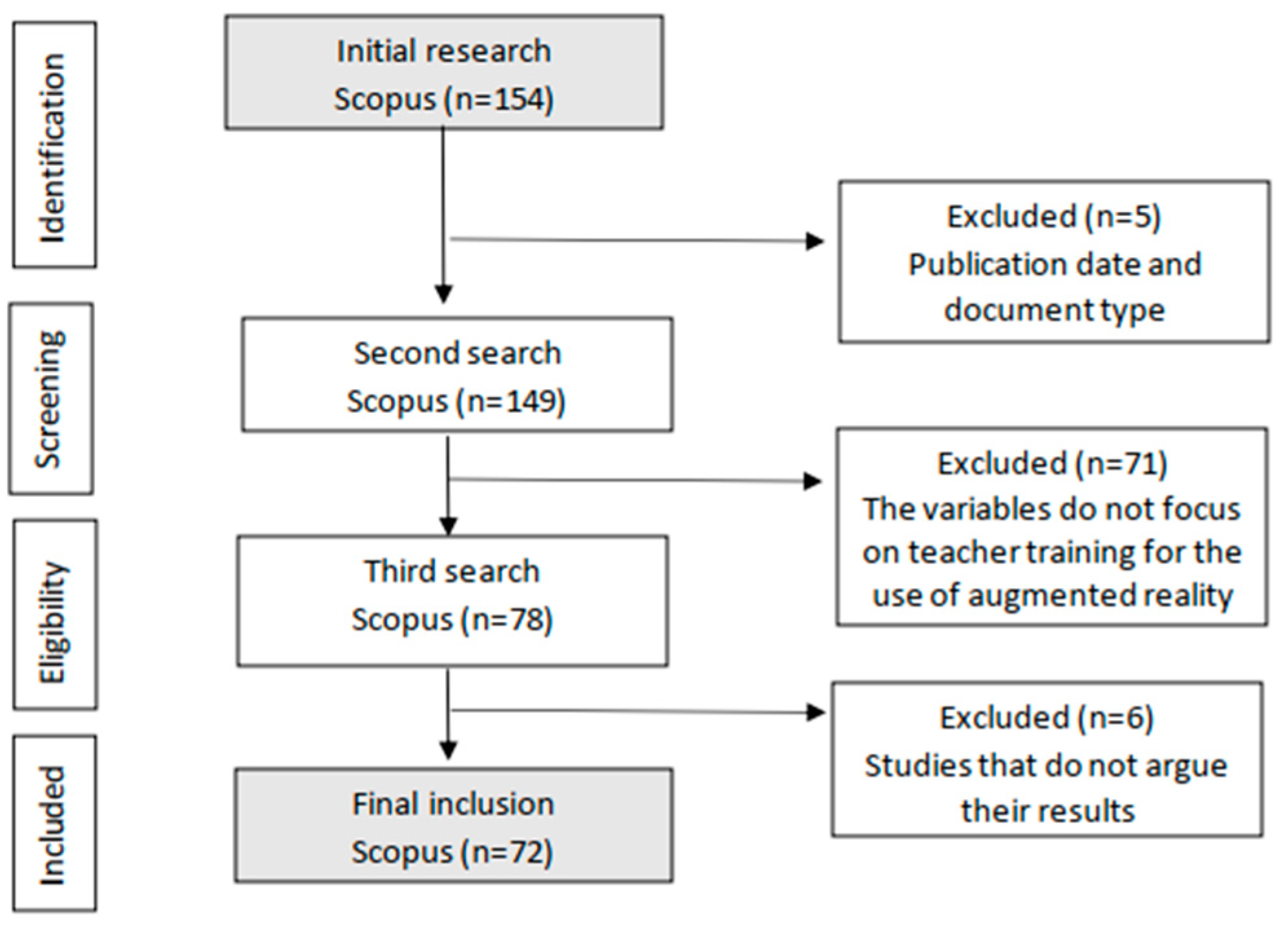
Figure 2.
Document Per Years.
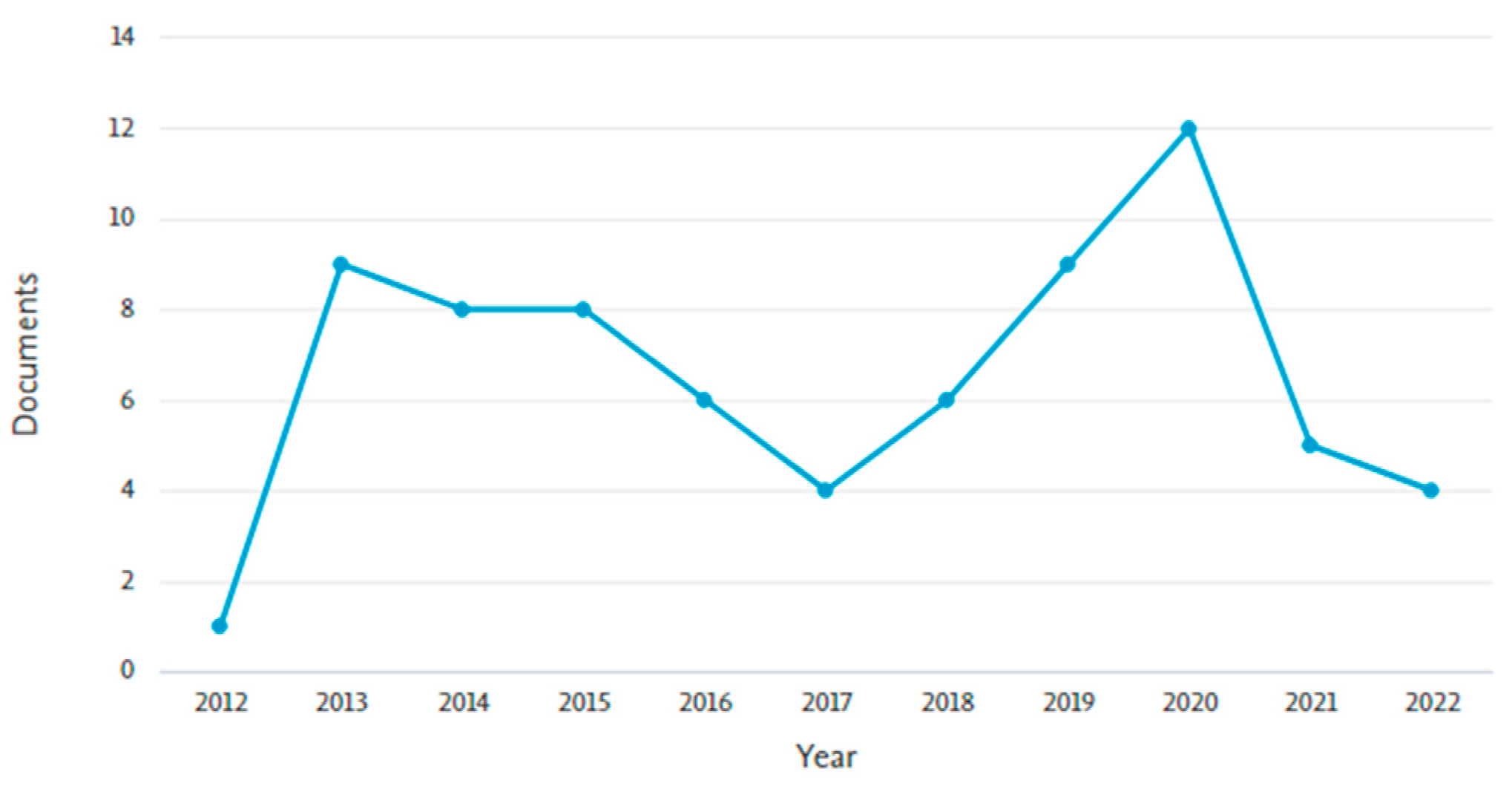
Figure 3.
Relationship Between Publication Resources and Years.
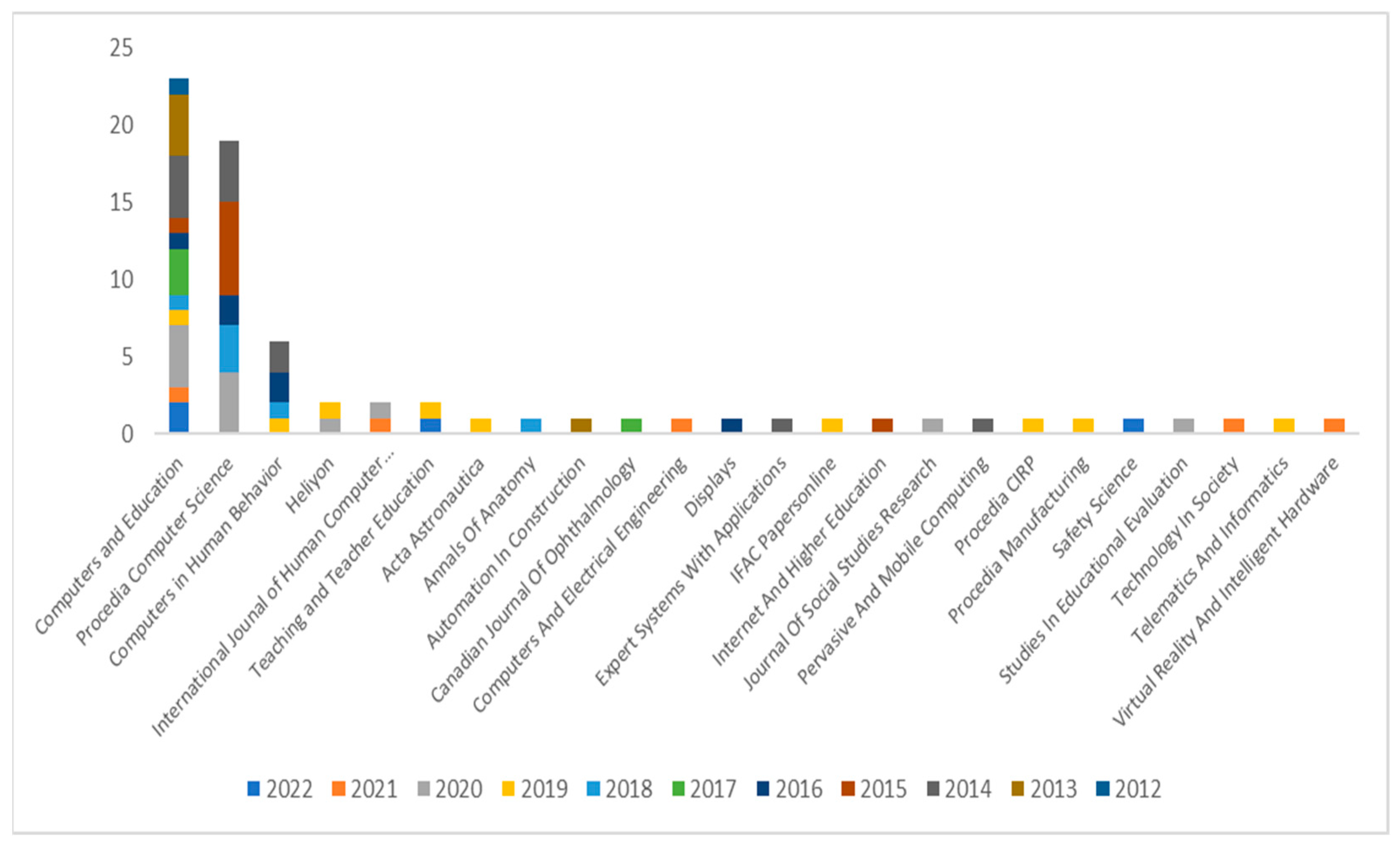
Figure 4.
Keyword Network.
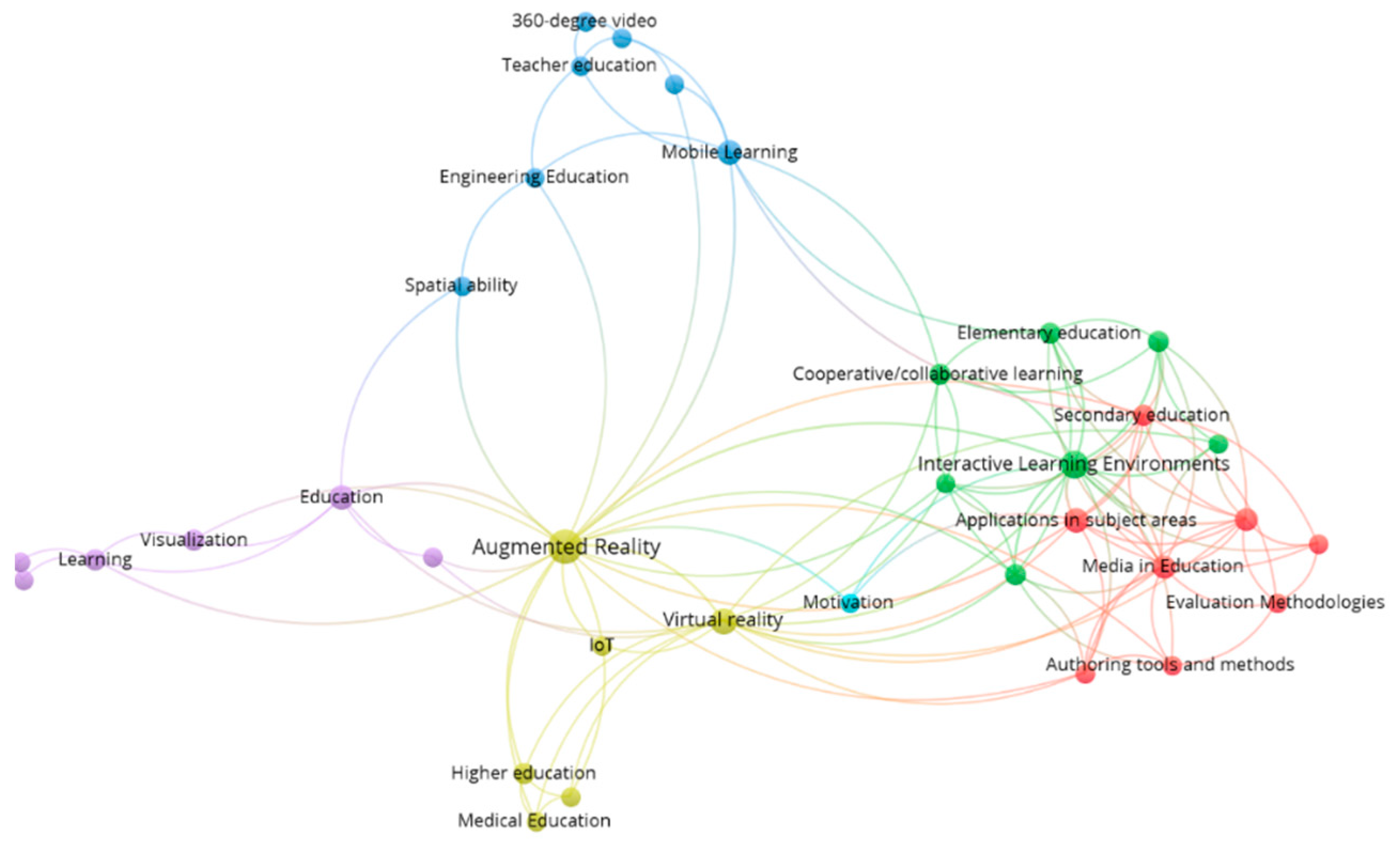
Figure 5.
First and Second Clusters (Left to Right).
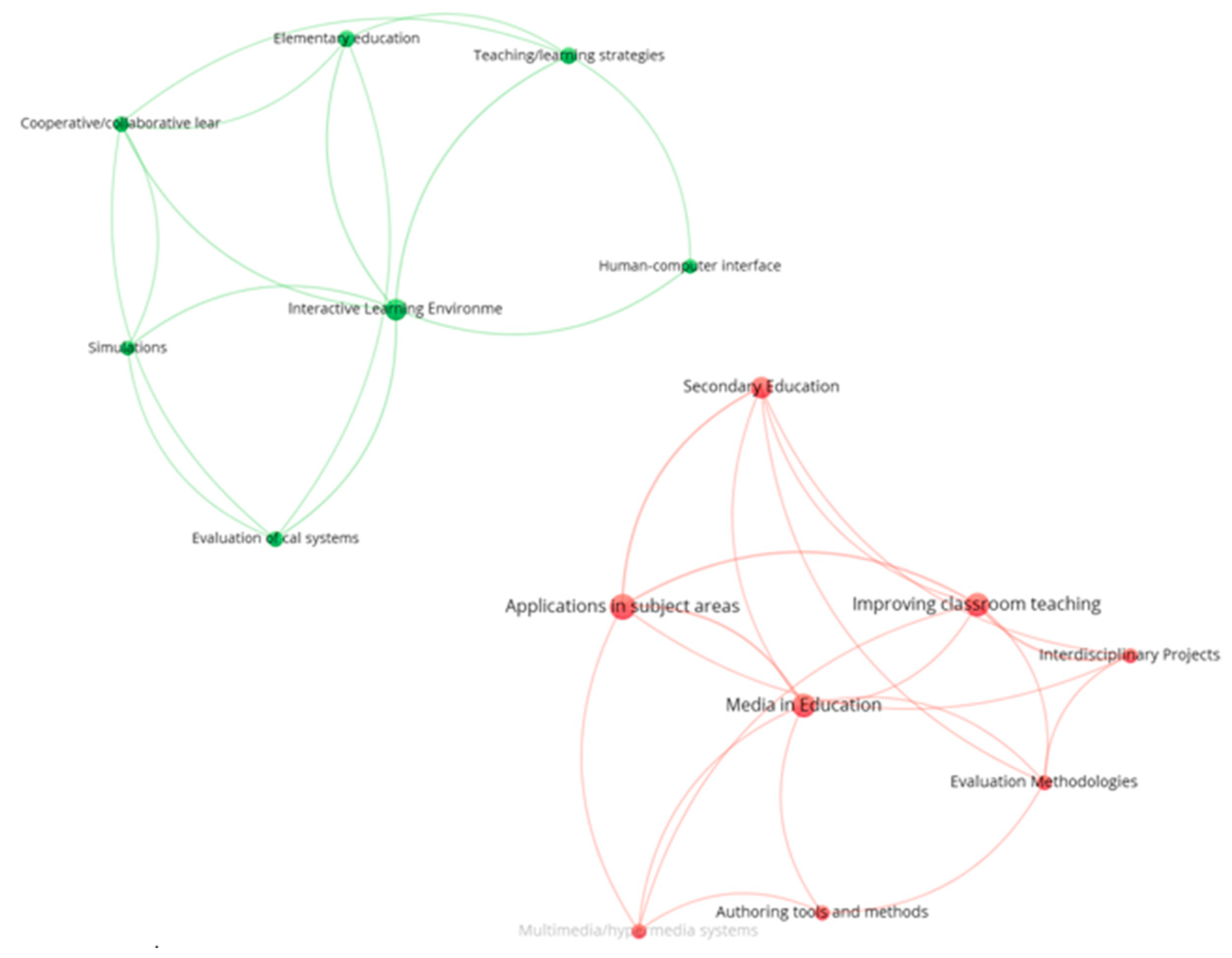
Figure 6.
Third and Fourth Clusters (Left to Right).
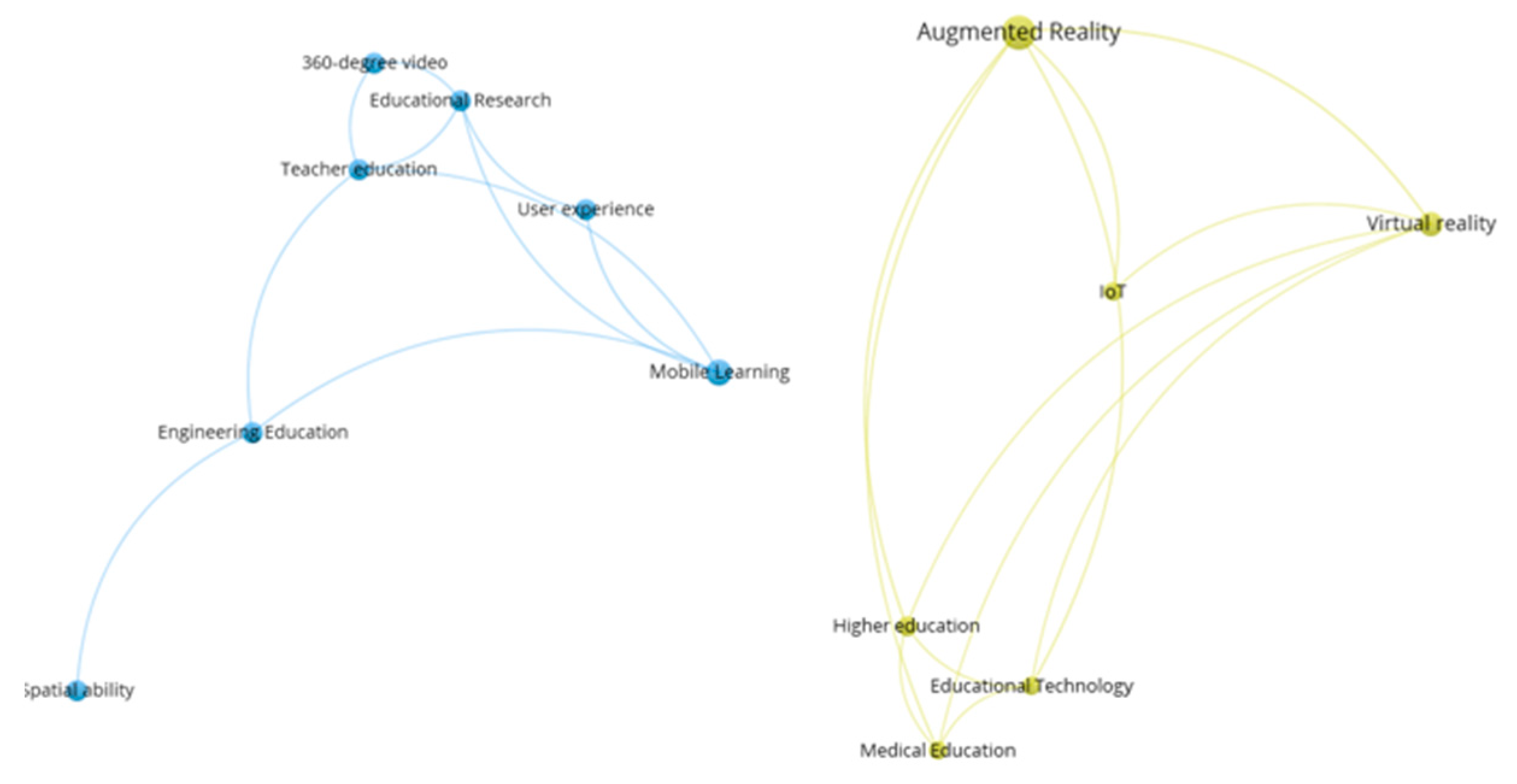
Figure 7.
Fifth Cluster.
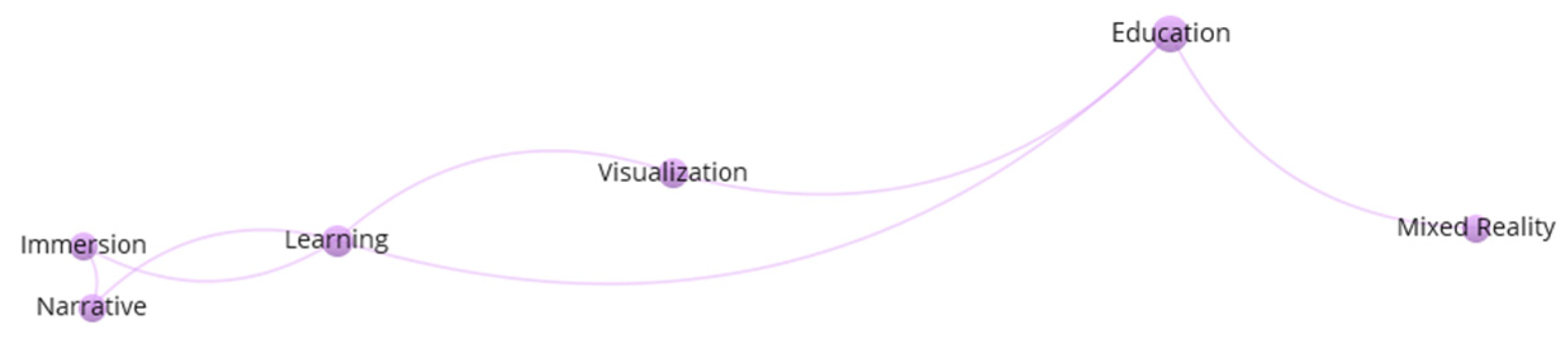
Figure 8.
Countries with the Highest Scientific Production.
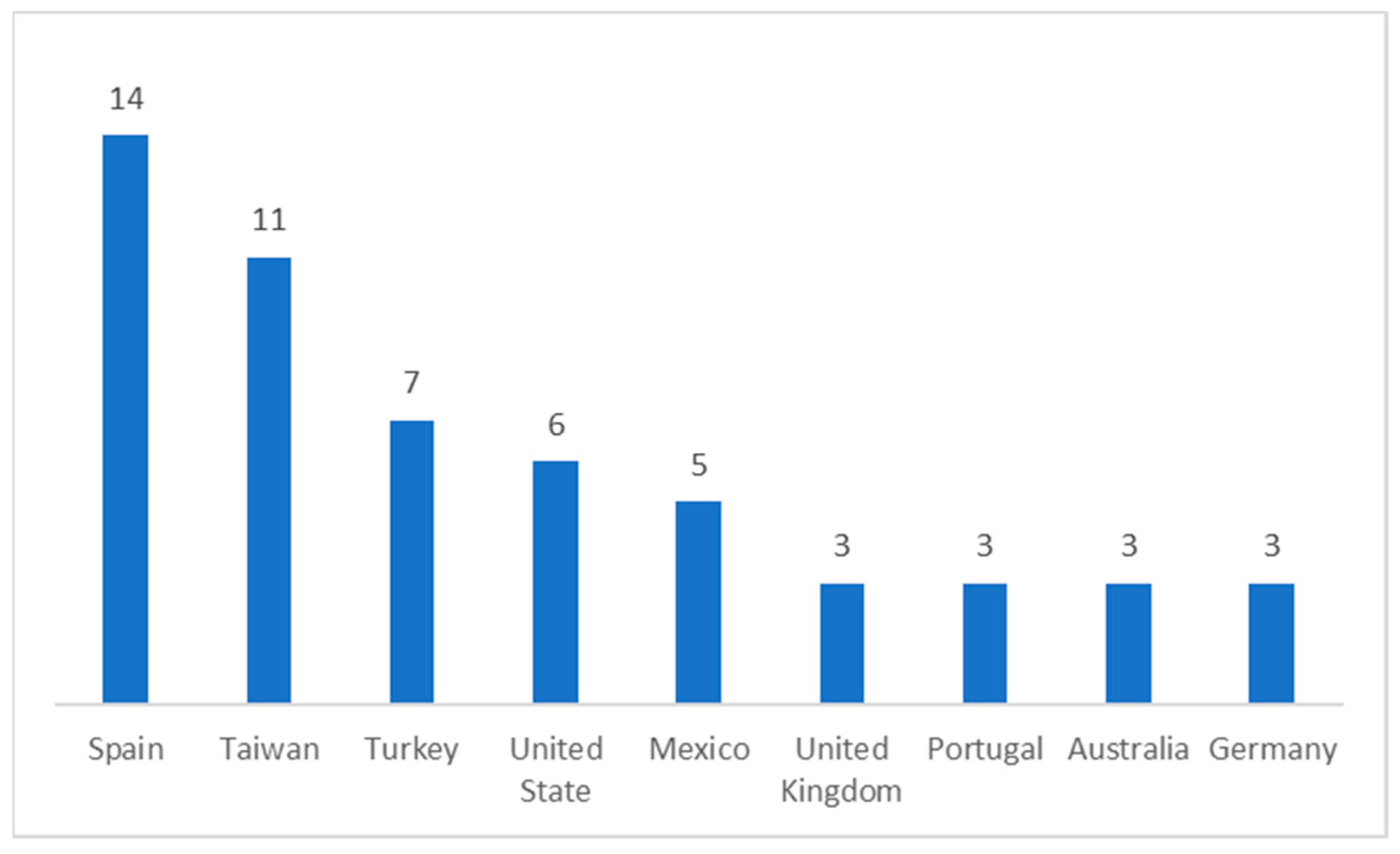
Table 1.
Levels of Augmented Reality.
| Based on its physical component | Based on its virtual component | Based on functionality | |
|---|---|---|---|
| Functionality: increased perception |
Functionality: the creation of an artificial environment |
||
| Level 1: black and white pattern (QR codes) | Image | Documented reality and virtuality | To imagine the reality that could be in the future, associating the real with the virtual |
| Level 2: image | 3D |
Reality with augmented perception or comprehension |
|
| Level 3: 3D entity | Video |
Perceptual association of the real and the virtual |
To imagine the reality that was in the past, associating the real with the virtual |
|
Level 4: a point on the planet determined by GPS coordinates |
Audio |
Behavioral association of the real and the virtual |
|
| Level 5: thermal footprint | Multimedia | Substitution of the real by the virtual or virtualized reality | To imagine an impossible reality |
Table 2.
Keywords (number in brackets) vs. Top Articles.
| Keywords | Articles with at least 100 citations |
| Augmented reality (59) |
[41,42,43,44,45,46,47,48,49,50,51,52,53,54,55,56,57] (Chen and Tsai 2012, Kamarainen et al. 2013, Lin et al. 2013, Wojciechowski and Cellary 2013, Di Serio et al. 2013, Cai et al. 2014, Sommerauer and Müller 2014, Zhang et al. 2014, Chiang et al. 2014, Fonseca et al. 2014, Ibáñez et al. 2014, Akçayir et al. 2016, Yilmaz 2016, Huang et al. 2016, Hsu 2017b, Chang and Hwang 2018, Sahin and Yilmaz 2020) |
| Students (32) |
[41,42,43,45,46,47,48,49,51,52,54,55,57] (Chen and Tsai 2012, Lin et al. 2013, Di Serio et al. 2013, Kamarainen et al. 2013, Zhang et al. 2014, Chiang et al. 2014, Fonseca et al. 2014, Ibáñez et al. 2014, Akçayir et al. 2016, Huang et al. 2016, Hsu 2017b, Chang and Hwang 2018, Sahin and Yilmaz 2020) |
| Education (26) |
[47,51,52,54] (Kamarainen et al. 2013, Akçayir et al. 2016, Huang et al. 2016, Hsu 2017b) |
|
Computer-aided instruction (21) |
[41,42,43,46,47,48,50,54,55,56,57] (Chen and Tsai 2012, Di Serio et al. 2013, Lin et al. 2013, Wojciechowski and Cellary 2013, Zhang et al. 2014, Chiang et al. 2014, Ibáñez et al. 2014, Sommerauer and Müller 2014, Huang et al. 2016, Hsu 2017b, Chang and Hwang 2018) |
| Teaching (21) |
[44,46,48,51,58] (Kamarainen et al. 2013, Chiang et al. 2014, Zhang et al. 2014, Yilmaz 2016, Chang et al. 2018) |
| E-Learning (17) |
[55,56] (Chen and Tsai 2012, Sommerauer and Müller 2014) |
| Engineering education (15) |
[52,54] (Akçayir et al. 2016, Huang et al. 2016) |
| Virtual reality (14) |
[49,55,57] (Chen and Tsai 2012, Lin et al. 2013, Sahin and Yilmaz 2020) |
| Interactive learning environments (12) |
[42,43,46,48,50,54,55,57,59] (Chen and Tsai 2012, Lin et al. 2013, Wojciechowski and Cellary 2013, Chiang et al. 2014, Ibáñez et al. 2014, Zhang et al. 2014, Huang et al. 2016, Hsu 2017a, Chang and Hwang 2018) |
| Learning systems (11) |
42,43,46,50,54,55,57] (Chen and Tsai 2012, Lin et al. 2013, Wojciechowski and Cellary 2013, Chiang et al. 2014, Ibáñez et al. 2014, Huang et al. 2016, Chang and Hwang 2018) |
Table 3.
List of study types (n=72).
| Quantitative studies | Qualitative studies | Mixed Method | ||||
| Exploratory | Descriptive | Quasi-experimental | Exploratory | Descriptive | Quasi-experimental | Exploratory |
| [50,55,60,61,62,63,64,65,66,67,68,69,70,71,72,73,74,75,76,77,78,79,80,81,82] | [41,83,84] | [43,45,46,47,48,49,52,54,56,57,85,86,87,88,89,90,91,92,93,94,95,96,97,98,99,100,101,102,103,104] | [51,105,106,107,108,109,110,111,112] | [51,53] | [44,113] | [42,114] |
Disclaimer/Publisher’s Note: The statements, opinions and data contained in all publications are solely those of the individual author(s) and contributor(s) and not of MDPI and/or the editor(s). MDPI and/or the editor(s) disclaim responsibility for any injury to people or property resulting from any ideas, methods, instructions or products referred to in the content. |
© 2023 by the authors. Licensee MDPI, Basel, Switzerland. This article is an open access article distributed under the terms and conditions of the Creative Commons Attribution (CC BY) license (http://creativecommons.org/licenses/by/4.0/).
Copyright: This open access article is published under a Creative Commons CC BY 4.0 license, which permit the free download, distribution, and reuse, provided that the author and preprint are cited in any reuse.


