

Submitted:
20 September 2024
Posted:
22 September 2024
You are already at the latest version
Abstract
This paper explores Augmented Reality (AR) as an innovative active methodology for student assessment in the Higher Education Authority of Arcoverde, proposing an alternative to the traditional assessment model. It investigates how AR can transform the educational process, making assessments more interactive, engaging and effective. The study focuses on three main issues: the impact of AR on student motivation and engagement, its effectiveness in improving content comprehension and retention, and the challenges and limitations of its implementation as an assessment method. Employing dialectical methods, action research and literature reviews, this research documents a 34% increase in students’ content comprehension and a 47% increase in their participation in practical activities. These findings suggest that, despite the technical and curricular integration challenges, AR not only improves assessment methodologies, but also enhances learning, promoting a more dynamic and interactive environment. The overall objective is to demonstrate the ability of AR to replace conventional approaches with a more innovative and efficient practice, highlighting the importance of this technology in advancing pedagogical practices and improving student performance. This study sheds light on the relevance of AR in the educational field, encouraging its adoption to enrich the learning and assessment experience.
Keywords:
Augmented Reality
; Active Methodologies
; Educational Technology
; Formative Assessment
; Pedagogical Innovation
1. Introduction
This article explores the adoption of Augmented Reality (AR) as an active methodology in the Higher Education Authority of Arcoverde, focusing on Civil Engineering, Law and Commercial Management courses between 2022.1 and 2023.2. The research investigates the replacement of conventional methods by more dynamic and interactive educational practices, emphasizing the ability of AR to transform student assessment and encourage more engaging learning. This study not only seeks to improve teaching-learning processes, but also seeks to promote a significant advance in assessment models, making them more adapted to contemporary demands and students’ needs. The delimitation of the theme focuses on the use of AR as an innovative active methodology in the educational process, exploring its applicability as a new assessment method. This approach directly addresses the challenges and opportunities that AR presents in the reinvention of assessment practices in the educational environment, proposing a critical and systematic analysis of how this technology can be integrated to overcome the limitations of conventional teaching and promote more interactive and immersive education.
The research also answers the central question: “How can the implementation of Augmented Reality improve student interactivity and understanding in assessments?”, exploring the direct impacts of AR on the assessment process and its potential beyond the mere replacement of traditional methods. This key problem addresses the technical, pedagogical and logistical feasibility of implementing AR as an assessment method, confronting the possibility that advanced educational technologies, such as AR, can replace traditional assessment methods, bringing significant benefits to the learning and assessment process. The research is carried out at the Autarquia de Ensino Superior de Arcoverde, in Arcoverde-PE, Brazil, during the academic year 2022.1 to 2023.2, and is based on an action research methodology rather than an experimental one.
The study revolutionizes the traditional assessment paradigm by integrating AR and active learning, aiming not only to enrich educational interaction, but also to significantly improve the understanding, retention and application of knowledge in real environments. The importance of this study transcends by offering a methodology more aligned with contemporary digital demands, while its academic relevance stands out for its contribution to the advancement of pedagogical practices. The article encourages research on the impact of technology on education, promoting more inclusive, engaging and effective teaching. The delimitation of the theme reflects the need to modernize teaching, using augmented reality to transform assessments into immersive and interactive experiences, directing education towards a future where technology and learning merge to overcome limitations of the traditional model. The adoption of AR in the educational process, replacing the traditional assessment model, allows the visualization of abstract and complex concepts in an intuitive and immersive way, thus promoting a deeper and lasting understanding. The application of AR in a classroom can transform student assessment, allowing them to demonstrate understanding through interactive simulations instead of traditional written tests. This paper will be presented as described, with an emphasis on a critical and comparative approach, focusing on the evaluation of active methodologies with special attention to augmented reality, as opposed to the traditional model of educational evaluation. The critical approach will allow identifying and discussing the potentialities and challenges of integrating AR into the educational process, while the comparative analysis will highlight the differences in effectiveness, engagement and learning outcomes between traditional methods and the proposed innovations. This methodology will allow not only to describe the potentialities of AR in education, but also to actively engage teachers and students in the evaluation process, promoting a continuous cycle of feedback and improvement.
This research aims to critically analyze: texts, documents, data and information collected, aiming to establish a clear connection between the use of AR and its educational benefits, in addition to proposing a practical implementation methodology that can be adopted by educational institutions.
2. Theoretical Basis:
2.1. Augmented Reality in Education
Augmented Reality (AR) has revolutionized the educational field by reshaping traditional assessment methodologies, providing a more interactive and immersive learning experience. This technology allows the integration of virtual elements into the real world, creating an educational environment that challenges conventional practices and promotes deep and meaningful student engagement ( Azuma, 1997; Maciel, 2022). Initially explored by pioneers such as Ivan Sutherland in the 1960s and later developed by figures such as Ron Azuma and Tom Caudell, AR has evolved from isolated experiments to become an integral component of innovative educational strategies (Sutherland, 1968; Azuma, 1997; Caudell, 1992). This article investigates the application of AR as an active methodology in the educational assessment process, arguing that it can transform assessment into a richer experience adapted to the digital needs of the 21st century ( Bacich & Moran, 2018; Ferreira, 2024).
Since the early 2000s, AR has been the subject of a growing debate in education, marked by technological advances and pedagogical changes. Discontent with outdated teaching methods, which often failed to effectively engage students, coincided with the accelerated development of AR, which promised to transform the educational experience ( Gallego, 2015). Technology has emerged as a tool capable of enriching learning through interaction and immersion, allowing for deeper personalization of teaching and better adapting to students’ individualities (Junqueira, 2017).
The article highlights several significant implementations of AR, especially in Civil Engineering, Law, and Commercial Management courses at the Higher Education Authority of Arcoverde, where the technology was systemically integrated into the curriculum between 2022 and 2023. These cases illustrate how AR not only improves student engagement but also how it can radically transform assessment methods, making them more adaptive and engaging (Ferreira, 2021; Maciel, 2023). For example, the experience at AESA involved 163 students in assessment methodologies that combined narrations and audiovisual feedback, which resulted in a substantial increase in student engagement and satisfaction (Ferreira, 2021). However, the discussion of AR also highlights important concerns, such as the potential to diminish human interactions and widen inequalities in access to technology (Slater, 2000). Critics such as Mel Slater have pointed out the risks of augmented realities that create hyper-realistic experiences, which can lead to adverse psychological impacts (Slater, 2000). Despite these concerns, this article argues that AR, when implemented with appropriate digital inclusion policies and teacher training, can be a valuable educational tool, capable of transforming education by making it more interactive and less intimidating (Silva, Bieging & Busarello, 2017).
Furthermore, this study highlights the role of continued research and development in optimizing AR for educational purposes. Researchers such as Iulian Radu and Sonia Maria da Silva Junqueira have contributed significantly to the understanding of how AR can facilitate the visualization of abstract concepts and improve knowledge retention ( Radu, 2014; Junqueira, 2017). Radu ’s analyses, which include meta-analyses of studies on AR, and Junqueira’s work on the application of technology in mathematics education are fundamental to understanding the full potential of AR in the educational context ( Radu, 2014; Junqueira, 2017). In short, AR is more than a technological tool; it is a catalyst for educational reform. This article concludes that, despite the challenges, the integration of AR into the educational process can significantly enrich learning, offering students richer and more adapted experiences that respond to the demands of the digital age, while preserving and revitalizing consolidated pedagogical practices.
3. Transforming Assessment and the Learning Experience
Augmented reality (AR), implemented at the Arcoverde Higher Education Authority (AESA) in Pernambuco, Brazil, is redefining the educational landscape by revolutionizing assessment and the learning experience. Introduced as an immersive assessment method, AR provides students with an experience that integrates the virtual and physical environments, using narration, virtual text, and illustrations in assessment questions, creating an interactive environment that not only increases interaction and immersion, but also improves student engagement and performance ( Bacich & Moran, 2018; Maciel, 2019).
This technology replaces outdated assessment methods with more dynamic approaches and improves the understanding of complex concepts through hands-on, interactive simulations. In addition, it prepares students for an advanced job market by developing critical skills such as analytical thinking and problem-solving in realistic scenarios (Costa, 2013). The successful implementation of AR at AESA has resulted in a significant increase in student engagement, a better understanding of complex content, and a more effective preparation of students for the demands of the job market. Despite these benefits, there are significant challenges. Critics such as Mel Slater warn of the dangers of AR’s exaggerated realism, which can blur the lines between real and virtual, exposing students to significant ethical, psychological, and social challenges (Slater, 2000). The resistance of some traditional educators to the adoption of AR also poses a challenge, arguing that it may lose essential human interaction in the educational process ( Gallego, 2015).
However, the potential benefits of AR, such as increased student engagement and improved comprehension of complex content through interactive visualizations.
4. Enhancing Education through Innovative Augmented Reality Solutions
At the Higher Education Authority of Arcoverde (AESA), the integration of augmented reality (AR) is redefining the educational landscape by offering innovative solutions to long-standing pedagogical challenges ( Bacich & Moran, 2018; Maciel, 2022). Through AR, adaptive virtual environments are developed that automatically adjust to students’ individual learning needs, promoting personalized and dynamic education (Silva, Bieging & Busarello, 2017). These environments, sensitive to student interactions, adjust in real time to provide additional support or challenges, thus increasing the effectiveness of the teaching process. In addition, AESA has implemented automated assessment systems that use AR to provide instant and personalized feedback. These systems analyze student responses in real time and adjust subsequent questions to focus on areas where students are struggling, expanding opportunities for adaptive and more efficient learning (Maciel, 2019).
Constantly training faculty in emerging technologies, such as AR, is essential to overcome skepticism regarding the adoption of these new approaches and to maximize their educational impact ( Bacich & Moran, 2018; Maciel, 2021). The work of Thiago Maciel Ferreira, who explored the application of AR at AESA, illustrates how this technology can transform traditional educational methodologies and intensify student engagement. The research highlights the ability of AR to create highly interactive and motivating learning environments (Maciel, 2021). However, as Carolei Tori points out, the full implementation of adaptive AR in school curricula still faces significant challenges, despite its potential to personalize and enrich the educational experience, making it more interactive and tailored to students’ individual needs ( Tori, 2021).
To overcome the challenges faced in the educational field, AESA has adopted a new AR-based assessment approach that immerses students in engaging and interactive learning experiences. The gamified assessments developed by Ferreira, integrated with audiovisual content in the students’ real environment, provide immediate feedback and are designed to encourage more effective and stimulating learning (Ferreira, 2021; Ferreira and Jiménez, 2021). This method is justified by AR’s ability to personalize education, increase student engagement through immersive interactions, and facilitate access to complex content in a visual and interactive way, transforming the educational process (Costa, 2013).
5. Methodological Decisions
This article analyzes the integration of augmented reality in the educational context through a dialectical approach, considering its potential and challenges in reformulating traditional assessment methods ( Sampieri, 2014). Adopting a critical perspective, it highlights how augmented reality can transform education, making it more interactive and integrated, overcoming the conventional assessment paradigm. Analytical and comparative methodologies were used to explore the various dimensions of augmented reality in education ( Lakatos, 2003). The analytical method helps to detail the impacts, while the comparative method confronts these new practices with traditional approaches, elucidating improvements and challenges.
The use of action research and non-experimental methods, enriched by dialectical and analytical approaches, serves as the backbone of this study ( Kemmis, 1989). Action research facilitates the practical application of augmented reality, allowing direct observations of its impact on student engagement and learning ( Kemmis, 1985). This methodology promotes a cycle of constant innovation through testing, evaluation, and refinement of pedagogical strategies. The non-experimental approach provides deep insight into the natural interactions between students, technology, and content, without manipulating variables (Gil, 1999). Dialectical and analytical methodologies are essential for a critical evaluation of the data, identifying advantages and obstacles of augmented reality as an evaluation tool.
The comparative analysis between augmented reality and traditional assessment methods demonstrates the transformative potential of technology, justifying its adoption to transcend pedagogical barriers and promote more effective learning. A descriptive cross-sectional approach was used to observe and analyze educational phenomena at a single point in time ( Lakatos, 2003). Non-experimental research allows for authentic observation of the context without interference, favoring the collection of qualitative data through questionnaires and observations ( Lakatos, 2003). The descriptive scope of this study does not formulate hypotheses, but seeks to answer key questions that help in the understanding of the phenomena studied ( Kemmis, 1985). The practical purpose of the research aims to apply the knowledge acquired to solve specific problems in the educational environment, supported by the action-research method that allows for continuous reflection and improvement of pedagogical practices ( Kemmis, 1989). Data collection is carried out with the help of questionnaires and observations, ensuring the validity and reliability of the information collected, which is corroborated by qualitative analyses (Severino, 2013). The results are shared with the academic community, contributing to the continuous evolution of educational methodologies.
6. Development of Action-Research Actions
This last action involves the development of an assessment based on augmented reality. The aim is to involve the student in an immersive experience, virtually inserting audiovisual information into their real environment or classroom.
Action Research, Augmented Reality, 1st Cycle Planning:
The focus of this article is on the development of an innovative assessment system using augmented reality. The main objective is to engage students by providing virtual content in a creative way within the educational context.
Proposed Actions:
Implement questions based on augmented reality to measure the academic performance of the students involved;
Each question will be accompanied by a narration and virtual visualization, including pertinent text and illustrations;
Facilitate deeper interaction through an immersive experience supported by
Information and Communication Technologies (ICT);
Integrate video feedback for both correct and incorrect answers.
Figure 1 illustrates the initial stage of the action plan described.
Observation:
The initial implementation of this cycle was extremely successful. This phase achieved its goals by effectively assessing student performance through an augmented reality-based assessment system. Each test item included text, images, and an explanatory narrative, providing instant feedback on correct and incorrect answers. The novelty of this active assessment approach captured the interest and imagination of students.
Reflection:
This segment of the research proved to be effective due to the creation of an assessment environment that stood out for being both creative and interactive, as well as engaging and challenging students in a meaningful way. The practical results of this study will be detailed in the final research reports.
Closing of the Action: Augmented Reality
In this last fragment of the action research, an assessment was produced according to the active method, augmented reality. This new assessment proposal, in addition to qualifying the students’ learning process, also aims to promote their engagement. Finally, this excerpt will help answer the problem of this research, as well as help achieve the proposed objectives and answer the research questions.
7. Data Analysis
Analysis of Participant Observation
To carry out the analysis of participant observation, six specific actions will be detailed as described in Table 1.
Action - Implementation of New Method
This action research segment was designed with the aim of establishing a new assessment model based on augmented reality, seeking to immerse the student in an engaging experience. This action aims to replace traditional assessment methods. The data collected originated from observations made during the implementation of this method in the courses participating in the study. The goal is to engage students by providing virtual content in an innovative way within the educational environment. Thus, the researcher developed an augmented reality proposal to measure the educational performance of the students involved. See more details in Figure 2.
Questionnaire Analysis
1st Question: How satisfied are you with the way classes are being conducted, according to active methodologies? The variables for tabulating data are shown in Table 2 below.
Cat 22 - Extremely Satisfactory Grade for Augmented Reality
- -
- “Exceeding expectations, with technological instruments, improving our learning and knowledge.” (Informant 532);
- -
- “I am 100% satisfied, the way the explanations are given and all our participation in the classes, all of this contributes greatly to our learning, the student who participates has much more to contribute than those who do not participate.” (Informant 615);
- -
- “Extremely positive, with excellent class delivery, he has an ability to transmit knowledge that helped us understand the content covered.” (Informant 654);
- -
- “Satisfied. Even though the subject is complex and full of details, and I think that because the teaching is done through distance learning, it makes it a little difficult to interact with the teacher, in terms of being supported to solve any doubts, the classes are very explanatory, and later, when we develop the work through the pre- project and the project itself, we will solve any difficulties in person.” (Informant 697 );
Cat 23 - Satisfactory Level for Augmented Reality
- -
- “High level of satisfaction due to methodological changes that differ from traditional ones.” (Informant 262);
- -
- “The classes are very dynamic, which facilitates the teaching-learning process. The methodology yields benefits, since it deals with specific topics, within a macrological perspective, making the interactive environment viscerally rich and beneficial.” (Informant 269);
- -
- “Satisfactory, all creativity attracts attention and makes the student interested in the subject.” (Informant 280).
Cat 12 - I Totally Agree That Augmented Reality Is Appropriate
- -
- “Yes. The student-teacher environment becomes lighter and consequently the class becomes more dynamic.” (Informant 130);
- -
- “Yes, under normal conditions, reading and listening to a teacher speaking are already limiting learning methods.” (Informant 152);
- -
- “ Yes, because it stimulates reflection and works on the student’s critical sense.” (Informant 177);
Cat - 9 I totally agree on the use of ICTs in Augmented Reality
- -
- “Yes, since, from my point of view, it facilitates learning and the dynamics of the class.” (Informant 74);
Cat - 10 I agree with the use of ICTs in Augmented Reality
- -
- “Yes...we left the tiring and boring classes for a new world.” (Informant 206);
- -
- “Yes. By involving students in a more dynamic way, they feel part of the process.” (Informant 213);
- -
- “Yes, because in my opinion these methods contribute a lot to learning content in a more dynamic way and in a certain way moving away from traditional teaching.” (Informant 215);
- -
- “Yes, the current challenges faced by teachers require having environments that allow interaction, pedagogical mediation, the production of collaborative knowledge and the development of skills in the use of information and communication technologies (ICT).” (Informant 236);
4th Question: How important is the application of active actions: augmented reality; did it improve the quality of your learning? Finally, the variables for tabulating the data are described in Table 3, below.
Cat - 13 Very Important to Apply Active Actions for Augmented Reality
- -
- “Yes. Hahaha, I found it very interesting, very creative, it helped to take away some of the tension, the nervousness!” (Informant 80);
- -
- “Yes, I had never done a similar activity, very interesting.” (Informant 81);
- -
- “Yes, learning through play is a super interesting methodology. I LOVED IT!” (Informant 130); 100
- -
- “Yes, because I was able to remember what I had already studied and learn even more.” (Informant 334);
- -
- “I simply love the dynamics used, it breaks away from that monotony.” (Informant 152);
- -
- “It has improved a lot, it makes the student more interested in answering the questions on the test, as it is a far cry from the old and boring system of applying tests that we are used to.” (Informant 184);
- -
- “It improved a lot, it took the tension away and improved attention!” (Informant 187);
- -
- “Yes, it made them more objective, attractive and intuitive.” (Informant 202);
- -
- “This method is definitely much more dynamic and we are excited about taking the test.” (Informant 697);
Cat - 14 Important to apply active actions for Augmented Reality
- -
- Yes, it is a new way of learning without being tiring and routine (Informant 141);
- -
- Yes, since it is a different way of reviewing what you studied. (Informant 144);
- -
- Yes. Because I was able to concentrate more and try to be more agile and objective (Informant 145);
- -
- Much, it becomes much more objective, didactic and it doesn’t get tiring. (Informant 147);
- -
- Yes, this type of activity makes learning simpler and lighter. (Informant 157);
- -
- A lot. I feel less tense and I can respond faster (Informant 158);
- -
- Yes, besides being different, it becomes enjoyable to carry out the activity. (Informant 160);
- -
- Yes, because it is a way to relax and make the subject more interesting (Informant 166);
- -
- In addition to improving, it takes us away from the monotony of the ordinary (Informant 167);
- -
- I thought this idea was really cool, I hope it continues! (Informant 369);
- -
- Yes, he left something that is quite serious, like a test, very relaxed (Informant 173);
- -
- It definitely makes it much more dynamic this way, I love it... (Informant 185);
- -
- Yes. It makes learning easier and makes the student study more. (Informant 188); 101 - I think it’s really interesting, you can relax more and feel more comfortable doing the assessments, which leads to better performance (Informant 189 ); - It’s very dynamic and gives us pleasure in answering them. “(Informant 195);
- -
- Yes, the questions and activities make us understand the subjects better, because we interact better. (Informant 28);
- -
- Yes, because they make us feel more at ease and eliminate anxiety, thus facilitating better reasoning. (Informant 204);
- -
- Yes, very much...because it brought us to a world of games that is really cool. (Informant 206);
- -
- Yes, it ends up awakening interest when it comes to putting into practice what you understand about the content. (Informant 225);
- -
- Yes, use of different methodology. (Informant 226);
- -
- Yes, it brought a relaxed and inviting connotation to learning. (Informant 229); - Yes, being a form of activity that would not be applied in face-to-face classes and a dynamic way to “entertain” the student and get out of the routine of tests, whether digital or written (Informant 231);
- -
- Yes, it was quite practical, it took some of the stress out of the assessment (Informant 235);
- -
- Yes. To be more positive, it was quite attractive and playful, reflecting stimulus and enthusiasm. (Informant 239);
Cat - 15 It is not important to apply active actions for Augmented Reality 102
- -
- “No, for me the traditional methods make it clearer what we should do. But it was a good experience” (Informant 174);
Chapter 7: Data Interpretation
Interpretation of Participant Observation
This innovative instrument was also essential to address the proposed research question. It emerged as a modern alternative to conventional assessment methods, introducing new, more dynamic assessment practices. In this part of the action research, the researcher will demonstrate the observed benefits, detailed in Table 4.
In summary, the researcher’s analysis of the specific objectives revealed that they were effectively achieved. The introduction of this active assessment method based on augmented reality confirmed several advantages. Initially, it demonstrated significant contributions of active methodologies in the construction of knowledge, evidenced by the video feedback that clarified correct and incorrect answers. It was also successful in measuring the educational performance of students, thus achieving the second objective. The third objective was equally satisfied, proving the increase in student engagement and interaction with the learning process. It is undeniable that this study answered the research questions. For example, the question of whether the adoption of active methods by the teacher compensates for the lack of similar resources in the college was answered affirmatively. The study observed that there is no movement to adopt other methodologies, indicating a lack of incentive to abandon traditional teaching. This suggests that new teaching approaches have filled the necessary gap.
Regarding the advantages of active methodologies, the benefits were substantial, including greater student autonomy, in-depth content, and increased engagement and collaboration. The implementation of active methodologies in different contexts was also successful, regardless of the course, be it Law, Engineering or Management, showing uniformly positive results. Finally, no significant barriers were identified for the adoption of these methodologies as predominant practices in higher education. The main obstacles seem to be the comfort zone of teachers and the lack of demand from educational institutions for changes, maintaining the status quo of the traditional educational model.
Questionnaire Analysis
Augmented Reality Quiz:
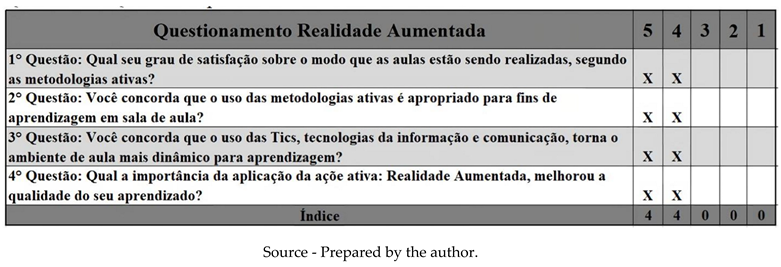
In this context, those involved in this participatory research answered a questionnaire focused on the use of Augmented Reality, using the traditional teaching method as a reference. This research instrument aims to fulfill three specific objectives: to identify the contributions, to examine the impacts and to elucidate the level of engagement resulting from the active teaching activities implemented. Next, we will present Table 5, derived from the data collected through this questionnaire.
Therefore, it is possible to record some findings from this action taken:
- -
- The 1st question reveals that 57% of those interviewed were: Extremely Satisfied. As well as, 43%, stated that they were: Satisfactory, with the current active method.
- -
- The 2nd question shows that 43% Totally Agree. Likewise, 57% Agree that the use of this active methodology for learning purposes.
- -
- The 3rd question reveals that 20% Totally Agree, as well as 80% Agree with the use of ICTs for learning purposes.
The 4th question asked the students about two aspects of the importance of Augmented Reality. Likewise, they were asked whether or not there were improvements in learning after applying the same active method. The results were as follows: 26% said it was: Very Important. And 74% said it was: Important, the application of this active method. Therefore, the 1st specific objective of identifying what was the contribution of the Active Methodology: Augmented Reality, in the construction of knowledge; it is aligned with the answers to question 4, as shown in the table above. Regarding the purpose of the 2nd specific objective of analyzing the effects on higher education; the answers were strongly favorable regarding the degree of satisfaction with its use in the classroom, as per question 1. Finally, the 3rd specific objective of describing student engagement; the results were completely positive. Given question 2, the vast majority find the use of active methodology in the classroom appropriate, as well as question 3, they agree with the dynamism provided by ICTs in the classroom.
Research Findings
Completion of Data Analysis:
In this research, when comparing the results of the observations made and the responses to the questionnaire, as well as the empirical investigation and the outlined objectives, as well as between the theoretical results and the implemented actions. Thus, surprisingly, the implementation of the augmented reality method met all expectations, as evidenced by the data collected and analyzed. Consequently, all research questions were adequately answered, fully achieving all proposed objectives. Additionally, this innovative action-research revealed its results to the participants, configuring an evaluation environment that was both creative and interactive. Thus, the present research fully met the fourth proposed research question.
Conclusions
The study demonstrated the benefits of the practical application of augmented reality in the Higher Education Authority of Arcoverde, as well as the potential to transform educational dynamics. This implementation not only improves student engagement and understanding, but also addresses significant challenges such as adequate infrastructure and the need for teacher training, laying the foundation for future innovations. The results showed that augmented reality contributed to increased engagement and academic performance, in addition to promoting the development of practical skills.
Augmented reality has enriched students’ interaction with complex content, requiring substantial adaptations on the part of educators, who needed ongoing support to effectively use the technology. These advances have not only improved the quality of education offered, but have also instigated academic discussions on the integration of modern technologies in higher education. This study concludes that replacing traditional assessment methods with innovative approaches that include augmented reality promotes more interactive and engaging education, as well as meeting current needs and enriching students’ educational experience, transforming assessment into a continuous and integrated process.
References
- AZUMA, R. A survey of augmented reality. Presence: Teleoperators & Virtual Environments, v. 6, n. 4, pp. 355-385, 1997.
- BACICH, L.; MORAN, J. Active methodologies for innovative education: a theoretical- practical approach. Penso Editora, 2018.
- CAMPOY, T. Scientific research methodology. Ciudad del Este: National University of the East, 2016.
- CAUDELL, TP; MIZELL, DW Augmented reality: an application of heads-up display technology in manual manufacturing processes. Proceedings of the Hawaii International Conference on Systems Sciences, 1992.
- COSTA, JR Google Docs in the Classroom: Pedagogical Implications of Virtual Learning. São Paulo: SEMED, 2013.
- FERREIRA, Thiago Maciel. JIMÉNEZ, Luiz Ortiz. The use of the active method, problem-based learning, in higher education: a proposal for action research. Multidisciplinary Scientific Journal Knowledge Center. Year 06, Ed. 06, Vol. 16, pp. 23-45. June 2021.
- FERREIRA, Thiago Maciel. New evaluation methods mediated by gamification : A proposal for action-research. Revista Multivisões -AESA, v. 1, n. 01, May 24, 2024. Available online: https://revistamultivisoesaesa.com.br/index.php/aesa/article/view/4 (accessed on 28 June 2024).
- GALLEGO, L. Generic skills in Higher Education: Specific methodologies for their development. Narcea Editions, 2015.
- GIL, AC Social research methods and techniques. São Paulo: Atlas, 1999.
- JUNQUEIRA, SM da S. Use of augmented reality in mathematics teaching. 2017. Monograph (Graduation in Mathematics) – Paulista State University, São Paulo.
- KEMMIS, S. Action research and the politics of reflection. In: BOUD, D.; KEEGAN, R. The Politics of Reflection in Higher Education . London: Sage Publications, 1985.
- KEMMIS, S. Research in action. International Encyclopedia of Education, v. 3330-3337, 1989.
- KEMMIS, S. Action research. In: HAMMERSLEY, M. (Ed.). Educational research and evidence-based practice. London: Sage Publications, 2007.
- LAKATOS, E. Fundamentals of scientific methodology. 5th ed. São Paulo: Atlas, 2003.
- LAKATOS, EM; MARCONI, MA Fundamentals of scientific methodology . São Paulo: Atlas, 2001.
- Maciel-Ferreira, T. (2019). New Methods for a New Education,” International Journal of Research en Sciences Sociales, vol. 15, no. 1, pp. 83-102, 2019. [Online]. [CrossRef]
- Maciel-Ferreira, T. (2021). Active Methodologies in Communication with Deaf Students: Evaluation of an Action-Research Experience. Rev. Int. Investig. Cienc. Soc, 24-51. [CrossRef]
- Maciel-Ferreira, T. (2023). Co-creating Education: Active Methodologies, Inclusion, Learning, Technologies and Assessments.ISBN 9786553872141. The Application of Active Methodologies in Higher Education and its Influence on Teaching. pp. 11-24.
- Maciel-Ferreira, T. (2022). the application of active methodologies in higher education and their influence on teaching. Available online: http://revistacientifica.uaa.edu.py/index.php/repositorio/article/view/1311. [CrossRef]
- MARCONI, MD; LAKATOS, EM Fundamentals of scientific methodology . São Paulo: Atlas, 2003.
- RADU, I. Augmented reality in education: a meta-analysis of the literature on its benefits and uses. Journal of Educational Technology & Society, v. 4, pp. 153-168, 2014.
- SAMPIERI, R. Research methodology. Santa Fe: McGraw Hill, 2014.
- SEVERINO, AJ Methodology of scientific work. São Paulo: Cortez, 2013.
- SILVA, A.; BIEGING, P.; BUSARELLO, R. Active methodology in education. Pimenta Cultural, 2017.
- SLATER, M. A framework for immersive virtual environments (FIVE): Speculations on the role of presence in virtual environments. Teleoperators and Virtual Environments, v. 6, n. 6, pp. 603-616, 2000.
- SUTHERLAND, I. E. A three-dimensional head-mounted display. Proceedings of the Autumn Joint Computing Conference, part I, pp. 757-764, 1968.
Figure 1.
Augmented Reality. Source: Prepared by the author.
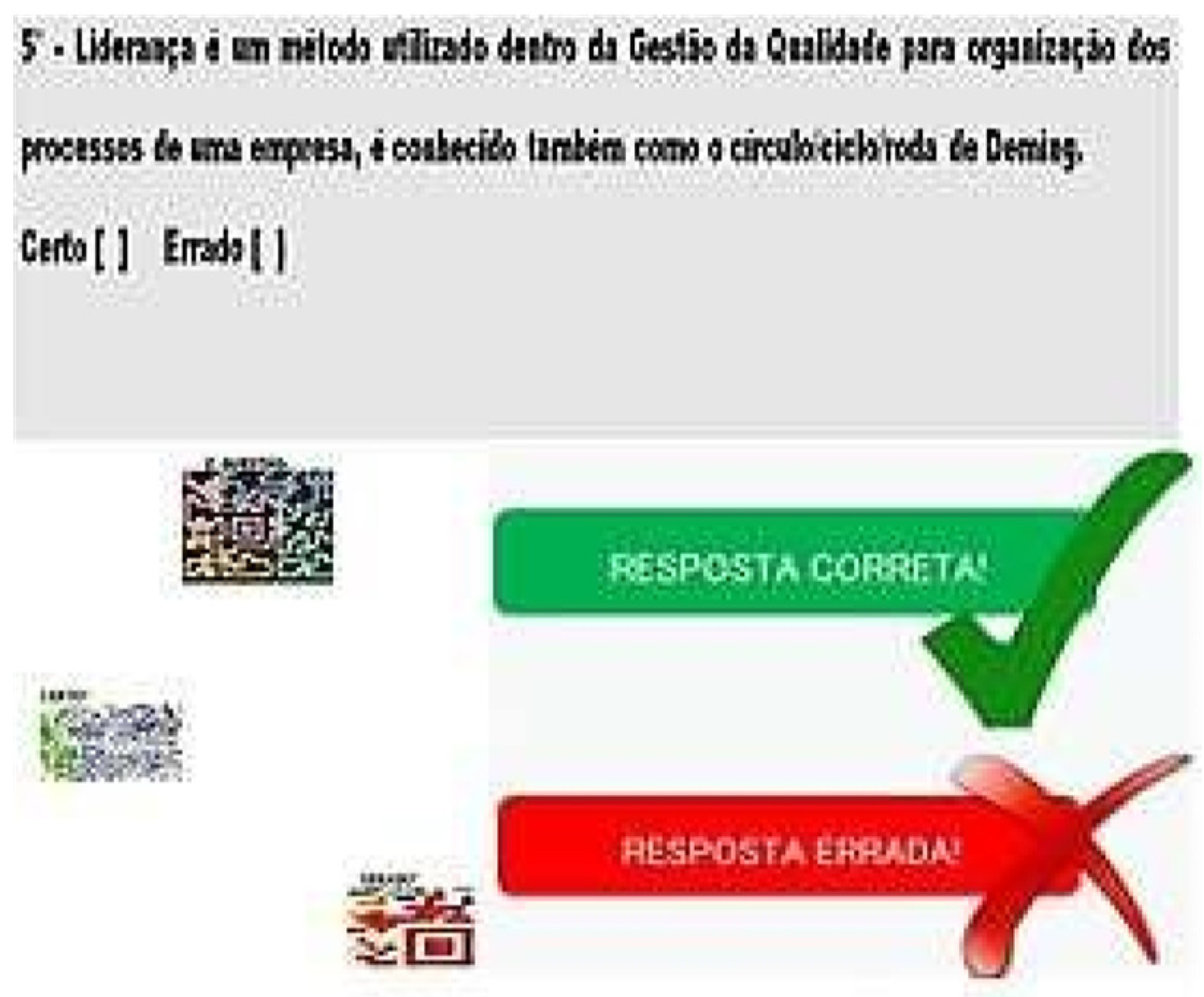
Figure 2.
Innovative Method in Augmented Reality. Source: Prepared by the author.
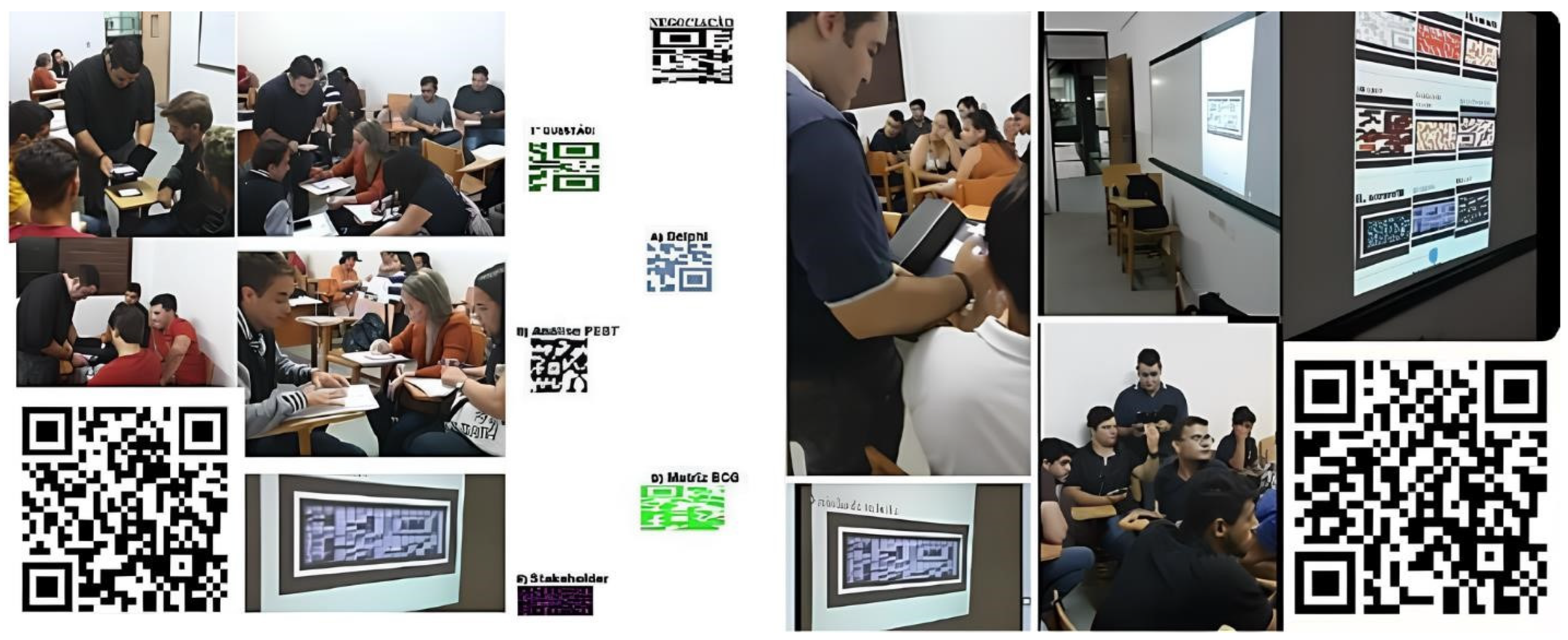

Table 1.
Participant Observation.
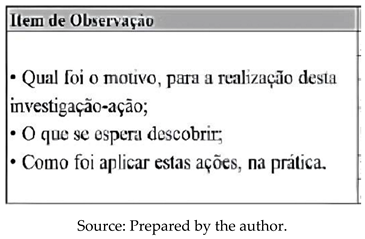 |
Table 2.
Questionnaire Analysis, Question 1.
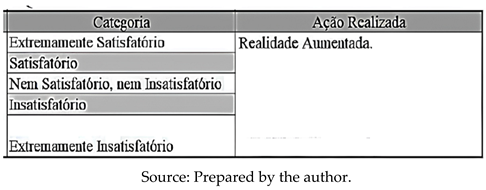 |
Table 3.
- Questionnaire Analysis, Question 4.
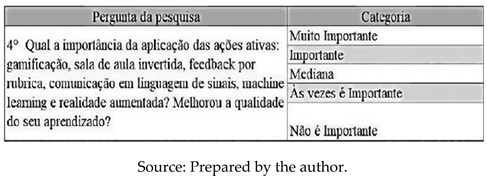 |
Table 4.
- Interpretation of Action Data.
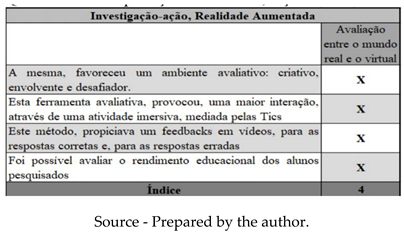 |
Table 5.
- Applied Questions: Augmented Reality.
 |
Disclaimer/Publisher’s Note: The statements, opinions and data contained in all publications are solely those of the individual author(s) and contributor(s) and not of MDPI and/or the editor(s). MDPI and/or the editor(s) disclaim responsibility for any injury to people or property resulting from any ideas, methods, instructions or products referred to in the content. |
© 2024 by the authors. Licensee MDPI, Basel, Switzerland. This article is an open access article distributed under the terms and conditions of the Creative Commons Attribution (CC BY) license (http://creativecommons.org/licenses/by/4.0/).
Copyright: This open access article is published under a Creative Commons CC BY 4.0 license, which permit the free download, distribution, and reuse, provided that the author and preprint are cited in any reuse.


