
Submitted:
16 May 2025
Posted:
16 May 2025
You are already at the latest version
Abstract
This study explores the pedagogical impact of an Artificial Intelligence (AI)-driven Augmented Reality (AR) application, "Time Traveler," designed to enhance elementary school students' engagement with Tainan's Japanese colonial architectural culture. The AR system, leveraging AI for interactive 3D model rendering and context-aware information delivery, aimed to improve students' self-efficacy, learning attitudes, and motivation. A quasi-experimental design with pre/post-tests and Analysis of Covariance (ANCOVA) compared an experimental group using the AI-powered AR instruction against a control group receiving traditional instruction. Results demonstrated that the AI-AR group achieved significantly greater improvements in learning outcomes, motivation, attitudes, and self-efficacy. Qualitative interviews corroborated these findings, highlighting increased student satisfaction, deeper understanding, and enhanced motivation attributed to the intelligent and immersive AR experience. This research contributes to the field of AI in education by demonstrating the efficacy of AI-enhanced AR in creating engaging and effective learning environments for cultural heritage, overcoming traditional pedagogical limitations.
Keywords:
AI
; augmented reality
; historical architecture
; cultural heritage education
; self-efficacy
; learning attitude
; learning motivation
; learning outcomes
; educational technology
; interactive learning
; virtual-real integration
; elementary school students
1. Introduction
Tainan City, a significant historical and cultural hub in Taiwan, possesses a rich heritage of architectural sites dating back to the Japanese colonial period. However, with the passage of time, these valuable cultural assets face the peril of being forgotten and overlooked. Traditional approaches to teaching history and culture, which predominantly rely on field trips and classroom lectures, encounter numerous challenges. For instance, field trips demand substantial time and resources, imposing considerable burdens on both educators and students in terms of scheduling and finances (Abdullah et al., 2023). Moreover, conventional teaching methods often tend to be unidirectional, limiting effective student participation and resulting in superficial learning with constrained educational outcomes (Abdullah et al., 2023). Particularly in history and cultural education, students’ understanding of historical knowledge can remain shallow, failing to stimulate their interest and motivation for learning (Yuen et al., 2011).
The integration of Augmented Reality (AR) technology, particularly when enhanced by Artificial Intelligence (AI) for more adaptive and responsive experiences, offers a pathway to transcend the limitations of traditional pedagogy. By merging AI-processed virtual elements with the real world, AR can enable students to experience historical scenes virtually, with AI algorithms potentially personalizing content delivery, thereby enhancing immersion and increasing the enjoyment and engagement of the learning process (Abdullah et al., 2023).. AR technology is now widely applied in various fields, including social media, gaming, and education, providing interactive learning experiences that help maintain student focus (Hsin-Yi Chang et al., 2022). Research indicates that AR is particularly well-suited for history education. For example, studies by Garzón (2019) and Rodríguez-Abad (2022) have shown that AR can concretize abstract historical knowledge, aiding students in better understanding and mastering complex content.
Considering the current challenges in history and culture education and the capabilities of AR technology, this study aims to explore the specific impact of using AR in teaching historical architectural culture on students’ self-efficacy, learning attitudes, and learning motivation. Self-efficacy refers to students’ confidence in their ability to complete learning tasks. The immersive and interactive nature of AR-based learning can provide students with a greater sense of control, potentially enhancing their self-efficacy (Garzón, 2019). Learning attitude and motivation are core factors influencing learning outcomes. Studies suggest that AR can stimulate students’ learning interest through interaction and enjoyment, fostering a positive attitude towards the subject matter (Rodríguez-Abad, 2022). Therefore, this research will employ experimental teaching and questionnaire surveys to analyze students’ performance and feedback in an AR-integrated learning environment. The goal is to understand the role of AR technology as an educational tool in history teaching and to investigate its effects on students’ self-efficacy, learning attitudes, and learning motivation.
This study aims to investigate the impact of integrating AR technology into the teaching of Tainan’s architectural culture from the Japanese colonial period on students’ self-efficacy, learning attitudes, and learning motivation. The research employs Analysis of Covariance (ANCOVA) to examine pre-test and post-test data, comparing the differences in learning outcomes across different teaching modalities. By combining culture with technology, this study hopes not only to enhance students’ understanding of historical culture but also to foster their learning motivation and autonomous learning capabilities, thereby exploring the potential of this innovative teaching method to improve the effectiveness of traditional classroom instruction.
The research questions addressed are as follows: 1. Does the integration of AR into teaching the architectural heritage of the Japanese colonial period enhance students’ learning attitudes? 2. Does the integration of AR into teaching the architectural heritage of the Japanese colonial period enhance students’ learning motivation? 3. Does the integration of AR into teaching the architectural heritage of the Japanese colonial period enhance students’ self-efficacy? 4. Does the integration of AR into teaching the architectural heritage of the Japanese colonial period improve learning outcomes?
2. Literature Review
2.1. Augmented Reality
2.1.1. Definition of Augmented Reality
Augmented Reality (AR) integrates virtual information with the real world, leveraging technologies like image recognition and real-time interaction (Chen & Zhang, 2018). Key definitions include Milgram and Kishino’s (1994) Reality-Virtuality Continuum, placing AR near reality within a Mixed Reality (MR) spectrum, and Azuma’s (1997) three core characteristics: the combination of real and virtual objects, real-time interactivity, and 3D registration of virtual objects in the real world. AR's educational potential, significantly amplified by AI in areas such as intelligent object recognition, dynamic scene understanding, and adaptive content generation, lies in creating personalized and immersive experiences that can enhance learning motivation and efficiency (Abdullah et al., 2023)..
AR technology is broadly categorized into marker-based and markerless AR.
2.1.2. Marker-Based AR
Marker-based AR relies on specific target objects, such as printed cards, QR codes, specific items, or images, for recognition. The use of markers ensures stability and reduces system errors. When a user points a device’s camera at these markers, the system recognizes them and overlays virtual information onto the physical objects. The advantage of this technology lies in its relatively simple and precise development process, enabling the system to effectively identify targets and display virtual content accurately.
However, marker-based AR has limitations. Firstly, markers must be sufficiently distinct for the system to achieve accurate recognition. If a marker is damaged or obscured, the system may fail to track it.
2.1.3. Markerless AR
Markerless AR does not depend on specific physical targets for recognition. Instead, it analyzes features of the surrounding environment, such as color, shape, or depth information, through the camera to identify the scene and overlay virtual elements. The main advantage of markerless AR is its lower environmental dependency, making it suitable for a broader range of scenarios without the need to prepare specific markers, thus offering greater freedom. However, the primary challenges of markerless AR include higher development complexity and susceptibility to environmental changes, such as lighting conditions and scene complexity. Furthermore, development costs are relatively higher compared to marker-based techniques due to the increased resources required for environmental analysis.
2.2. Application of Augmented Reality in Education
AR technology in education is increasingly recognized for enhancing student motivation and cognitive performance. It allows learners to interact with virtual objects in real scenes, making learning engaging, especially for complex concepts like geometry (Kaufmann & Schmalstieg, 2003), chemistry (Cai, Wang, & Chiang, 2014), and music (Guclu, Kocer, & Dundar, 2022). AR can reduce cognitive load, deepen comprehension through interaction, and improve learning attitudes, particularly for abstract topics (Kucuk, Yilmaz, & Göktas, 2014; Cai, Wang, & Chiang, 2014). It fosters active exploration and is becoming a vital educational tool.
2.3. Historical Architectural Heritage
2.3.1. Significance of Historical Architectural Heritage
Historical architectural heritage is a vital cultural legacy, embodying a place’s historical, social, and cultural memory, crucial for identity, education, and local development (Tweed & Sutherland, 2007). It plays a key role in forming local identity, connecting communities to their past (Rodwell, 2007). Economically, heritage sites drive cultural tourism and can be repurposed for modern societal functions (Harrison, 2013). As Lowenthal (1998) emphasized, these sites offer tangible connections to history, allowing experiential learning and providing valuable research data.
2.3.2. Significance of Architectural Heritage from the Japanese Colonial Period
The Japanese colonial period (1895-1945) profoundly influenced Taiwan’s urban development and architectural styles, particularly in Tainan, a major southern city that retains many representative buildings from this era. These structures not only bear witness to the historical process of colonial rule but are also an integral part of Tainan’s cultural fabric. Architectural styles of the Japanese colonial period blended traditional Japanese construction techniques with Western modern architectural concepts, which were concretely applied in Taiwan. In Tainan, representative heritage buildings include the Tainan Weather Observatory and the National Museum of Taiwan Literature, among others. They reflect the social structures and cultural symbolism of the colonial era, showcasing a fusion of Japanese and Western architectural styles in their design.
Furthermore, the architecture of the Japanese colonial period has had a lasting impact on modern Tainan’s urban development and heritage preservation policies. Tsai (2014) pointed out that these buildings are not only testaments to past history but also influence Tainan’s contemporary urban planning and cultural asset protection policies. For instance, many historical districts and heritage buildings in modern Tainan, after restoration and reuse, have become important resources for contemporary cultural education and tourism. As Chu and Lin (2001) noted in their research, public buildings from the Japanese colonial period were not only functional but also carried symbols of order under colonial rule, reflecting how Japanese colonial administration in Taiwan reinforced its influence through architectural space. Pao-San Ho (2017) also mentioned how Japanese colonial policies influenced Taiwan’s urban development through modern construction, with the architectural planning of the Japanese era in Tainan’s historical streets becoming an asset for modern urban culture.
From a cultural and social functional perspective, buildings from the Japanese colonial period reflected the societal needs and power structures of the time. These buildings included not only government and religious sites but also public facilities such as schools and courts, manifesting the social functions under colonial rule. For example, the design of the Tainan District Court was not only practical but also symbolized the colonial authorities’ emphasis on law and order, which had a profound impact on Taiwanese society at the time.
As times change, educating the public about these heritage buildings has become an important issue. Lin (2023) mentioned that these buildings are not only historical witnesses but also part of contemporary cultural resources. Her research indicates that heritage tour education can effectively enhance students’ understanding of historical culture and increase their awareness of the importance of preserving historical buildings. Through the protection of cultural assets and the integration of modern technology, these buildings have become important media for learners to understand history and culture.
2.3.3. Relevant Architectural Heritage Sites
- Tainan University Hong-Lou (Red Building): Built in 1921, originally Tainan Normal School, a key Japanese colonial educational building integrating Japanese and Western Renaissance styles. Now part of National University of Tainan.
- Tainan Weather Observatory: Established in 1901 for meteorological research, featuring Western classical design. Contributed to agricultural development and disaster prevention; now a meteorology museum.
- National Museum of Taiwan Literature: Formerly Tainan Prefectural Hall (1896), a colonial government office. Established as a museum in 2003 to promote Taiwanese literature and culture.
- Chihkan Tower (Fort Provintia): Originally Dutch Fort Provintia (1653), rebuilt multiple times. A significant historical political and military site, later used for education and public office during Japanese rule.
- Hayashi Department Store: Built in 1932, a prominent Japanese colonial commercial building. Renovated and reopened in 2014 as a multifunctional cultural and commercial landmark.
2.4. Learning Motivation
2.4.1. Definition of Learning Motivation
Learning motivation, a key factor in learning effectiveness, is typically divided into intrinsic (interest-driven) and extrinsic (reward-driven) types (Deci & Ryan, 1985). It’s an internal psychological force initiating and sustaining learning behavior (Chang, 1994; Wen, 1997). Motivation influences learning strategies, effort, and persistence (Pintrich & De Groot, 1990), and is affected by students’ task expectancy and value (Eccles, 1983), emotional responses (Pintrich, 1991), and attributions for success/failure (Weiner, 1985). It is dynamic and influenced by environment and experience (Ryan & Deci, 2000; Schunk et al., 2012).
2.4.2. Research on the Impact of AR Application in Various Fields on Learning Motivation
Research consistently shows AR enhances learning motivation across disciplines. Studies indicate AR-based systems improve understanding and interest in puzzles, make engineering theories more visual and engaging (Kaura et al., 2020), increase motivation in visual arts (Di Serio, Ibáñez, & Kloos, 2013), aid comprehension of abstract science concepts like electromagnetism (Ibáñez et al., 2014), and boost motivation in library resource use (Chen & Tsai, 2012). AR’s immersive, interactive environments improve engagement and overall learning effectiveness.
2.5. Learning Attitude
2.5.1. Definition of Learning Attitude
Learning attitude, a student’s evaluation of learning activities, significantly influences progress and outcomes. It encompasses emotional, cognitive, and behavioral responses, with positive attitudes correlating with higher achievement (Chen, 2003; Schunk & Meece, 2006). Cultural background can also affect learning attitudes. Generally, it is formed through experience and reflects tendencies towards learning elements, influencing behavior (Woolfolk, 2014).
2.5.2. Research on the Impact of AR Application in Various Fields on Learning Attitude
Studies show AR positively impacts learning attitudes. For instance, AR improved elementary students’ attitudes in pet owner responsibility education. In physics, AR combined with Problem-Based Learning enhanced attitudes (Fidan & Tuncel, 2019). Middle school science students using AR showed more positive attitudes than control groups (Sahin & Yilmaz, 2020). AR also improved attitudes and reduced cognitive load in English language learning (Küçük, Yılmaz & Göktaş, n.d.). These findings highlight AR’s positive influence on student learning attitudes.
2.6. Self-Efficacy
2.6.1. Definition of Self-Efficacy
Self-efficacy, as defined by Bandura (1977), is an individual’s belief in their capability to complete specific tasks. It influences academic engagement and performance (Zhang et al., 2016). It stems from four sources: mastery experiences (enactive attainment), vicarious experiences (observing others), verbal persuasion, and physiological/affective states. These factors collectively shape one’s confidence when facing challenges.
2.6.2. Research on the Impact of AR Application in Various Fields on Self-Efficacy
High self-efficacy correlates with better performance and proactivity, while low self-efficacy can lead to anxiety and avoidance (Anthonysamy et al., 2020; Bandura, 1986). AR has shown promise in enhancing self-efficacy. Studies indicate AR improved self-efficacy in students with special needs (Alahmari, 2023), elderly individuals in oral health education (Worachate, 2023), students using AR library tours (Kannegiser, 2021), and students learning physics concepts (Cai, 2021). These findings suggest AR’s interactive nature can bolster users’ confidence in their abilities.
3. Methodology
This study aimed to develop an AR application named “Time Traveler” (時空漫遊) to integrate AR into classroom teaching, providing elementary school students with a more vivid and engaging learning experience to understand the historical architectural culture of Tainan during the Japanese colonial period. This teaching model was also intended to enhance the flexibility and enjoyment of traditional teaching. The experiment was conducted with students from an elementary school in Kaohsiung City. Learning effectiveness, learning motivation, learning attitudes, and self-efficacy were assessed using pre- and post-tests to understand the differences resulting from different learning models. The following sections detail the research flow and structure, experimental design, experimental procedure, the AR application, and assessment tools.
3.1. Research Flow and Structure
The research process began with identifying the research background and motivation, followed by a literature review to confirm the research theme. Subsequently, curriculum design and system development were undertaken. The experimental phase then commenced, during which pre-test and post-test questionnaire data were collected. Finally, the questionnaire data were analyzed.
The research structure consists of independent variables, covariates, dependent variables, and control variables:
- Independent Variable: Teaching method (AR-integrated instruction vs. traditional instruction).
- Covariates: Pre-test scores for learning achievement, learning motivation, learning attitude, and self-efficacy.
- Dependent Variables: Post-test scores for learning achievement, learning motivation, learning attitude, and self-efficacy.
- Control Variables:
- Students: All participants were fifth-grade elementary school students.
- Instructor: The same teacher conducted all lessons to avoid variations in teaching style.
- Curriculum Content: The teaching content was primarily based on the fifth-grade social studies curriculum.
Figure 1.
System Interface.

Figure 2.
ARG Miniature Model: The Red Chamber.
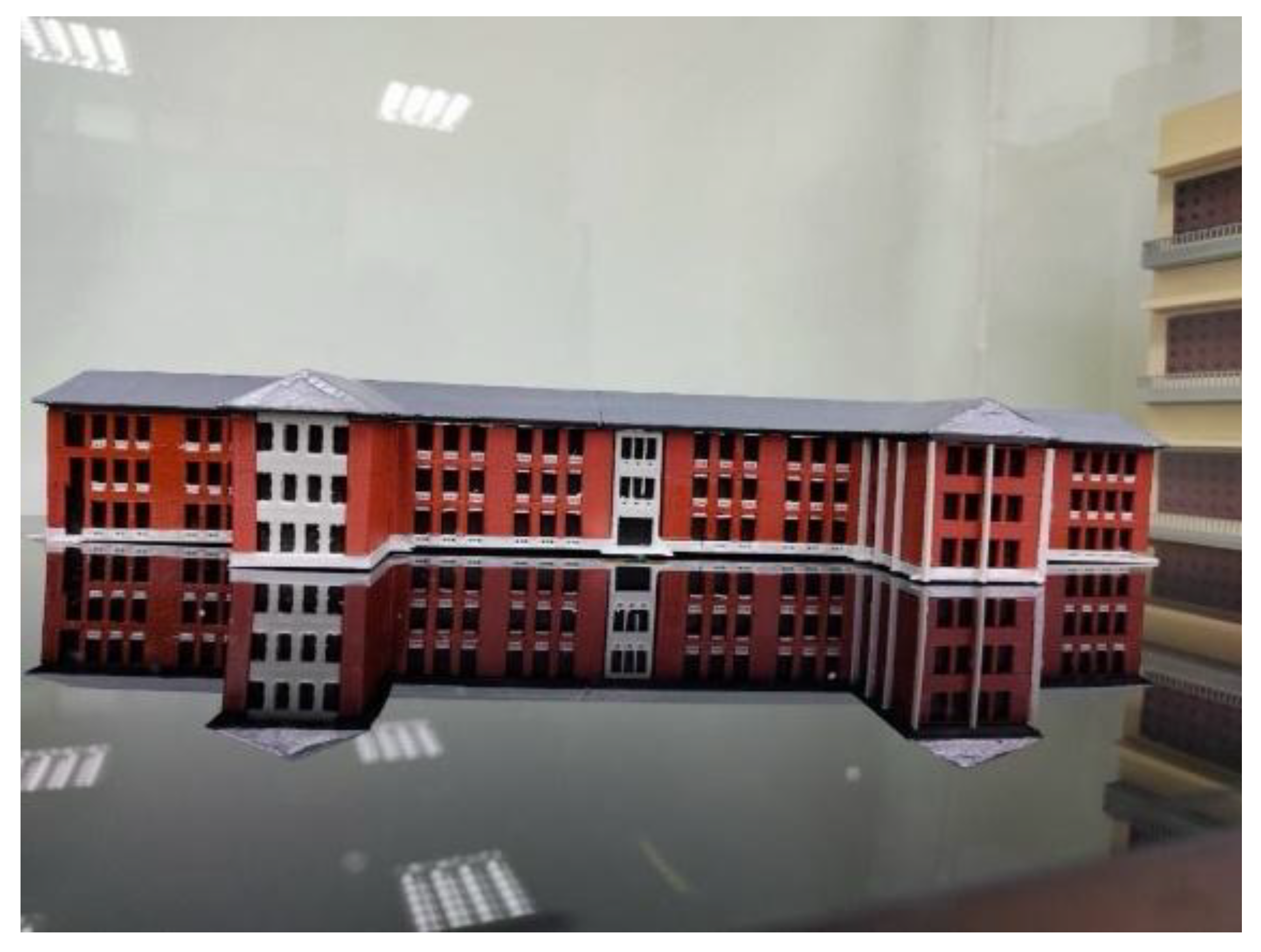
Figure 3.
ARG Miniature Model: Taiwan Literature Museum.
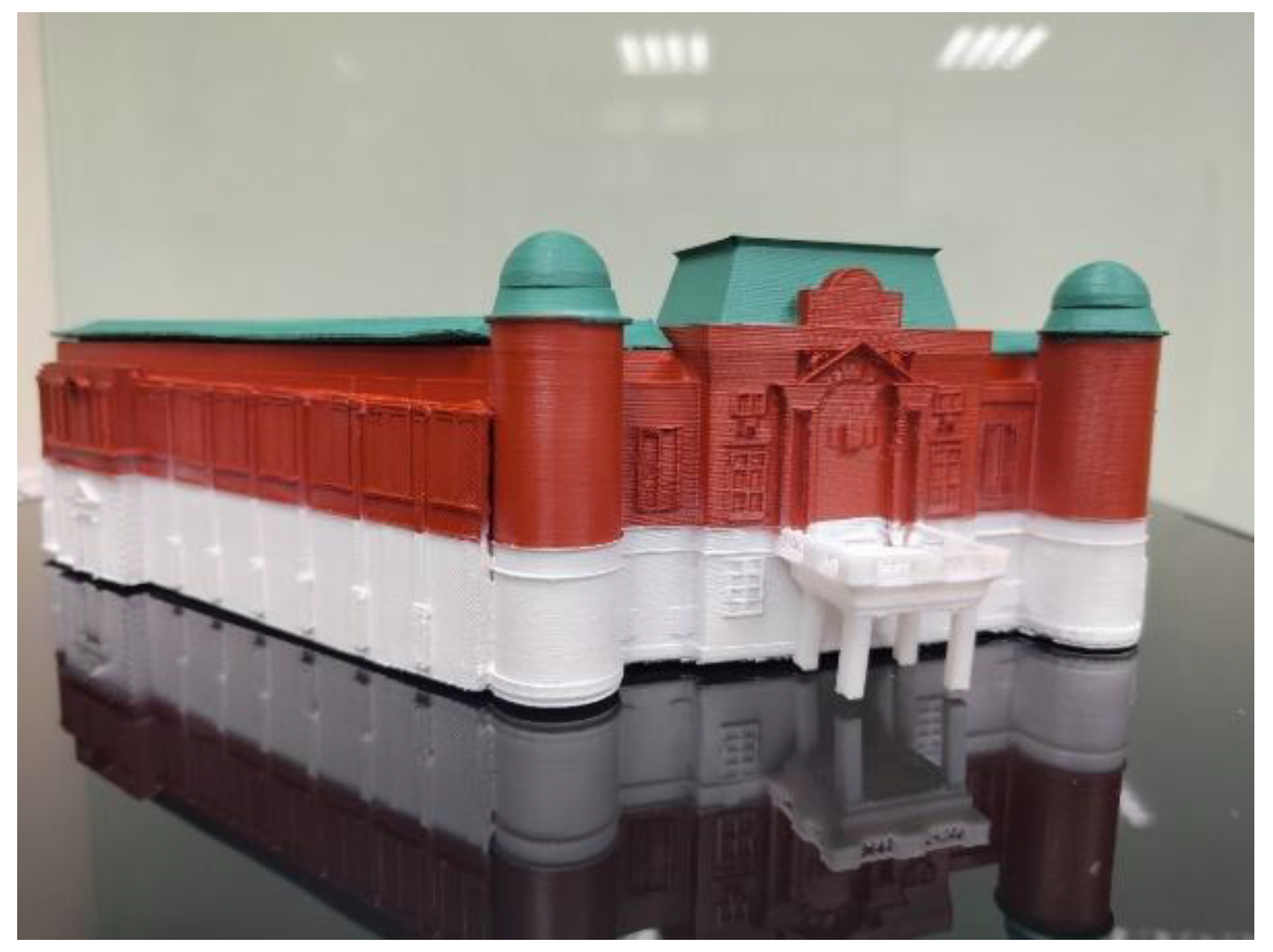
Figure 4.
ARG Miniature Model: Hayashi Department Store.
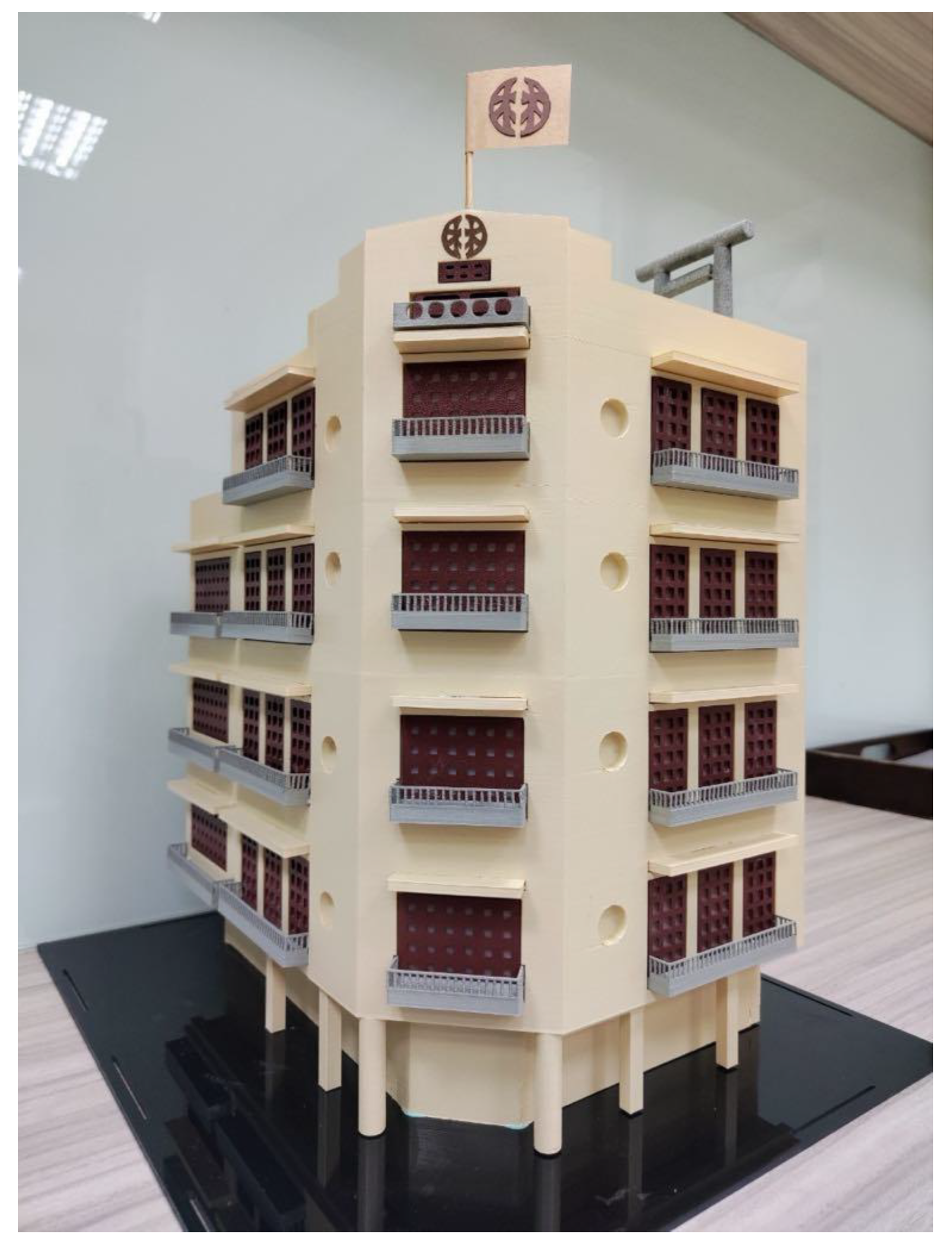
Figure 5.
ARG Miniature Model: Weather Observatory.
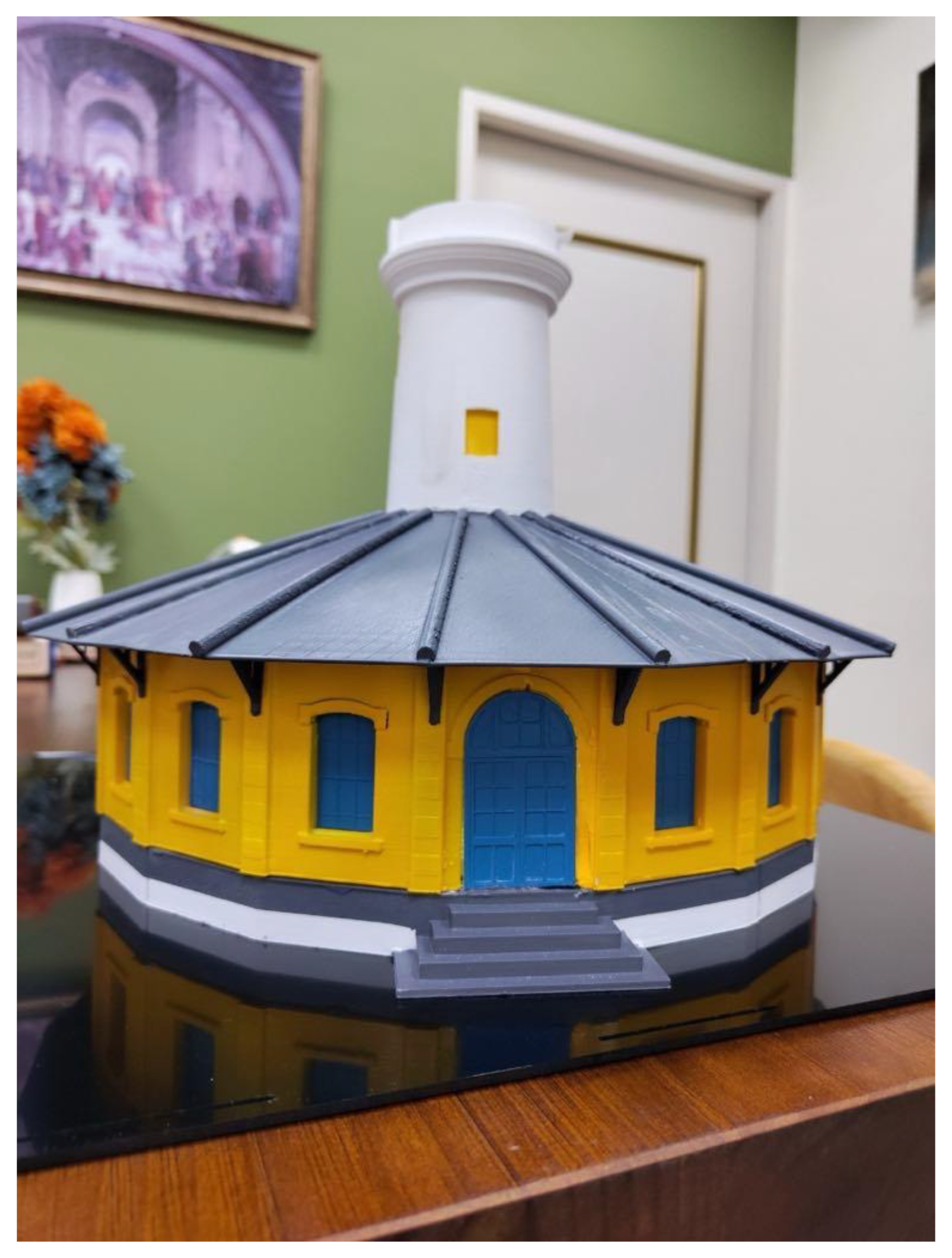
Figure 6.
ARG Miniature Model: Chihkan Tower.
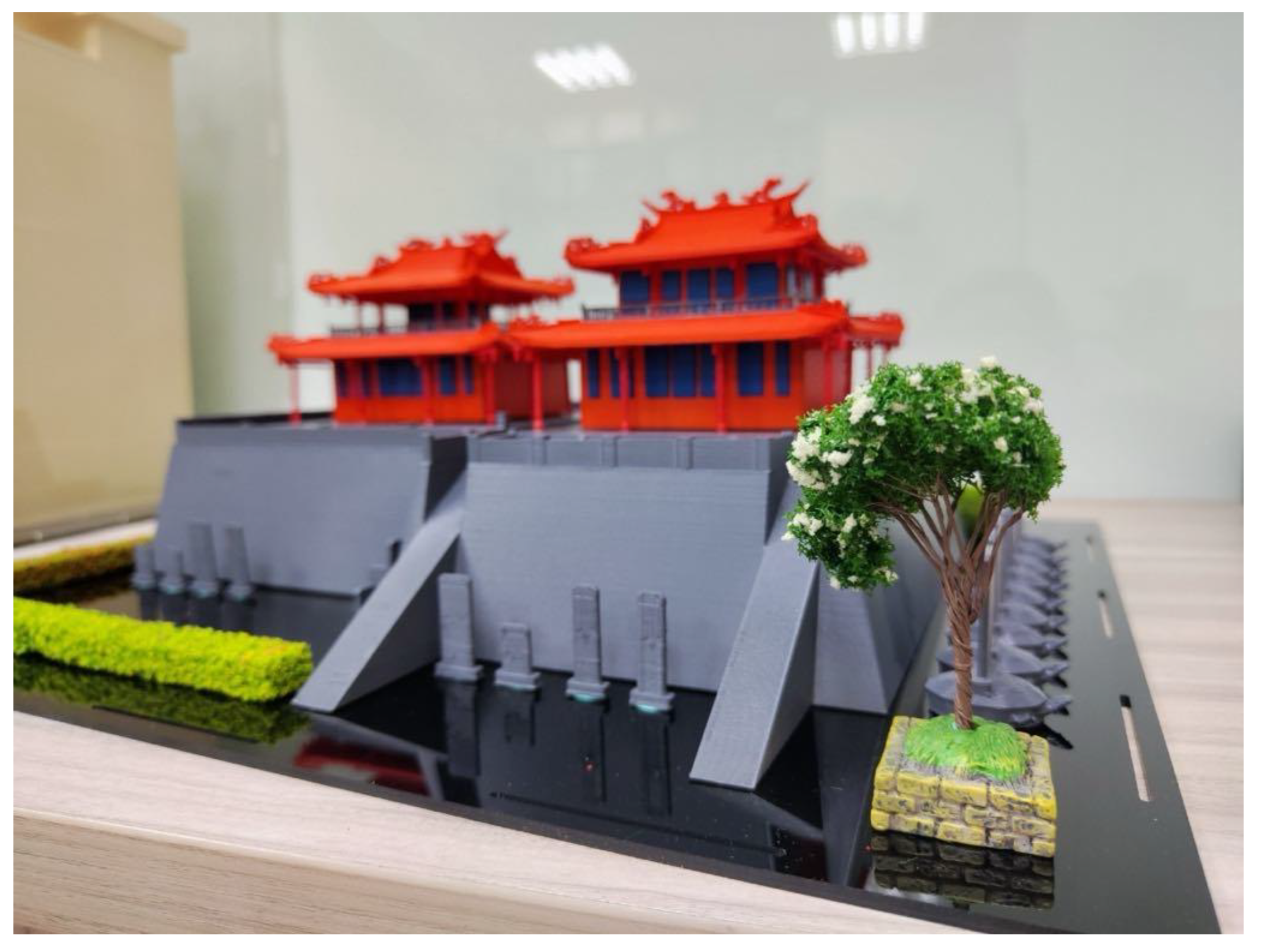
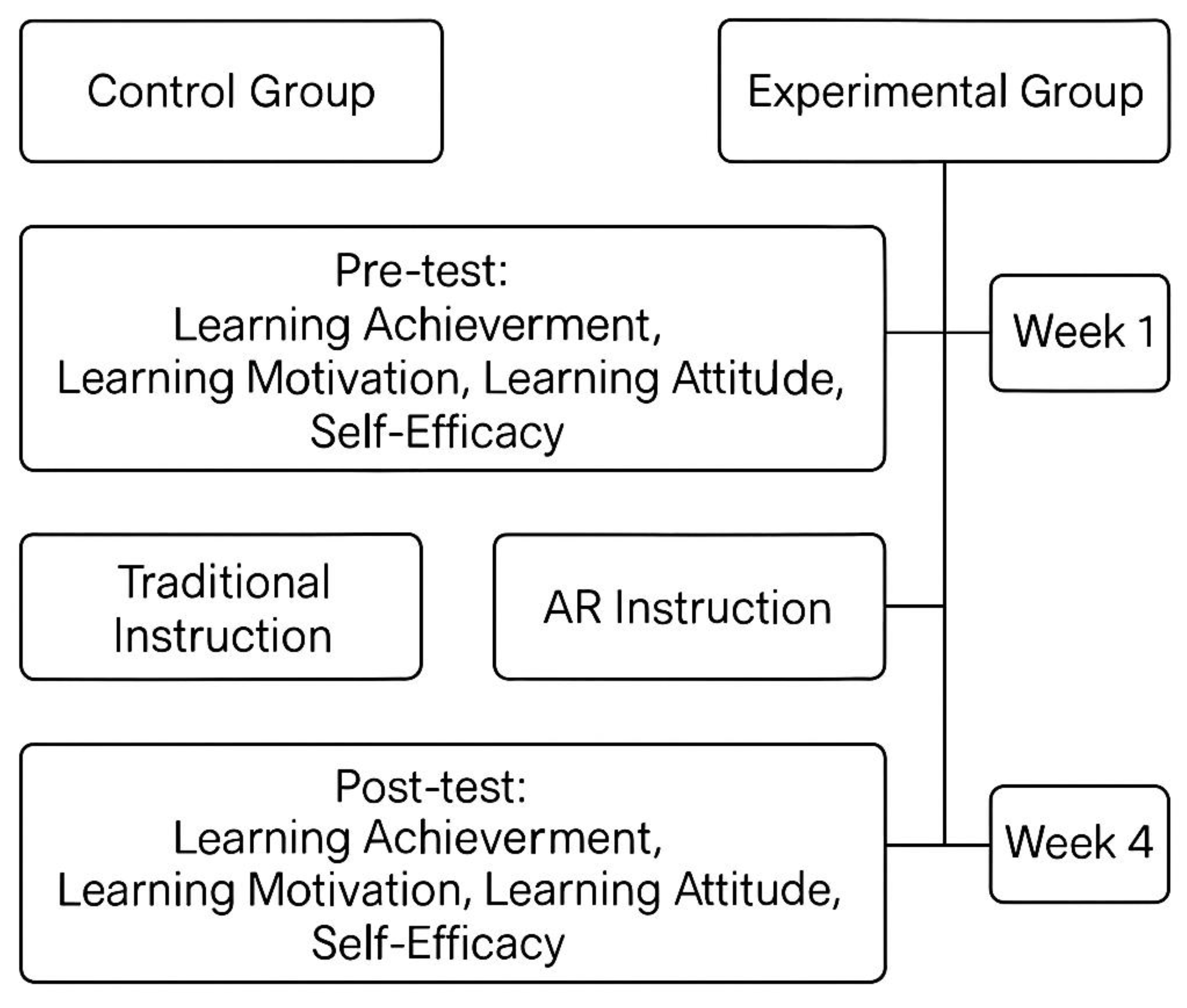
Figure 7.
Experiment Flow.
3.2. Experimental Design
3.2.1. System Development
The AR system required a screen to display virtual information. Among various display types (head-mounted, handheld, etc.), this system utilized a handheld approach with tablets. The AR application was developed using Unity with the Vuforia SDK for AR functionalities. Animations were created using Blender, and graphics were drawn using Procreate. The app features included a 360-degree view of architectural models, allowing students to rotate and examine heritage structures on their tablets. It also featured a “Past Traces” function, where scanning 3D-printed building models would trigger animations of historical figures and activities, and scanning “story capsule” image markers would provide knowledge about the heritage sites.
The "Time Traveler" application integrates Artificial Intelligence (AI) modules to enhance the learning experience. These AI components facilitate AI-driven narrative adaptation based on student interaction patterns and provide intelligent feedback mechanisms to guide learning. Alongside these AI-driven features, the core AR functionalities, such as 3D object recognition for interacting with physical models of the heritage sites, were powered by the Vuforia engine, working in concert with the AI system to deliver a comprehensive and adaptive educational tool.
3.2.2. AR System Development Tools
The AR application was developed using the Unity engine, a cross-platform tool for creating interactive 3D and 2D experiences, with C# as the primary scripting language. For AR functionalities, the Vuforia Engine SDK was integrated within Unity. Vuforia supports various target recognition methods, including the 3D object recognition utilized in this study for interacting with physical models of the heritage sites.
3.2.4. “Time Traveler” AR Curriculum
The “Time Traveler” AR curriculum centered on five historical buildings in Tainan’s West Central District: Tainan Weather Observatory, Chihkan Tower, Tainan University Hong-Lou, National Museum of Taiwan Literature, and Hayashi Department Store. A narrative involving a “time traveler” character guided students. Using tablets with the AR app, students scanned 3D-printed models of these buildings and image markers (“story capsules”) to access historical information, view 3D architectural models, and observe animations of historical figures and activities. Worksheets supported the learning process, encouraging exploration and documentation of findings related to each site’s background and significance.
3.3. Participants
The participants in this study were fifth-grade students from two classes at an elementary school in Kaohsiung City. One class was assigned as the control group (n=24), and the other as the experimental group (n=25).
3.4. Experimental Procedure
This study employed a control group and an experimental group to investigate the impact of different teaching methods on student learning outcomes. The control group received traditional instruction using only school textbooks, while the experimental group received AR-enhanced instruction integrated into classroom teaching.
Assessment was conducted through pre-tests and post-tests covering historical knowledge, learning motivation, learning attitudes, and self-efficacy. Pre-tests were administered before the instruction began to ascertain students’ baseline knowledge and initial motivation and attitudes. Post-tests were conducted after the instruction concluded to evaluate changes in knowledge mastery, learning motivation, learning attitudes, and self-efficacy in both groups.
During the experiment, students in the experimental group learned through the AR application, engaging in more intuitive and interactive learning experiences within a blended virtual and real environment. For example, they could observe animated historical figures within the virtual scenes. Small tasks were incorporated during AR use to make the learning process more engaging. The control group received traditional instruction, primarily through teacher lectures and textbook study. The curriculum materials centered on five well-known historical sites in Tainan’s West Central District: Tainan University Hong-Lou, Tainan Weather Observatory, National Museum of Taiwan Literature, Chihkan Tower, and Hayashi Department Store. These locations were chosen due to the rich historical significance of the West Central District and the close proximity of these sites, all within walking distance of each other. A virtual character was designed to connect the narratives of these five sites.
3.5. Experimental Process Record
The experiment spanned four weeks (two hours/week). Week 1 involved pre-tests and an introduction to the course and AR technology. Week 2 focused on instruction about the historical architectural culture of the five selected sites. Week 3 was dedicated to hands-on student exploration using the AR application and group discussions. Week 4 included post-tests, sharing of learning outcomes, and course feedback.
3.6. Research Instruments
- Learning Achievement Test: Designed by two elementary teachers, covering social studies content (max score 100), including various question types.
- Learning Motivation Scale: Adapted from Pintrich et al. (1991) MSLQ (31 items, 5-point Likert). Pre-test Cronbach’s α = 0.913, Post-test α = 0.935. Validated by teachers and a professor.
- Learning Attitude Scale: Adapted from Sung et al. (2015) (17 items, 5-point Likert). Pre-test α = 0.906, Post-test α = 0.956. Validated similarly.
- Self-Efficacy Scale: Adapted from Ng & Lucianetti (2016) and Schwarzer (1993, 1997) (10 items, 5-point Likert). Pre-test α = 0.774, Post-test α = 0.872. Validated similarly.
4. Results
This study aimed to explore the effectiveness of an AI-enhanced AR-integrated teaching approach for Tainan’s architectural culture during the Japanese colonial period. The experimental group (N=25) utilized an AR application incorporating AI-driven features for personalized learning experiences, compared to a control group (traditional teaching, N=24). This section details the comparison of the two groups in terms of learning achievement, learning motivation, learning attitudes, and self-efficacy. SPSS was used for data analysis, employing Analysis of Covariance (ANCOVA) to assess the impact of the AI-augmented intervention.
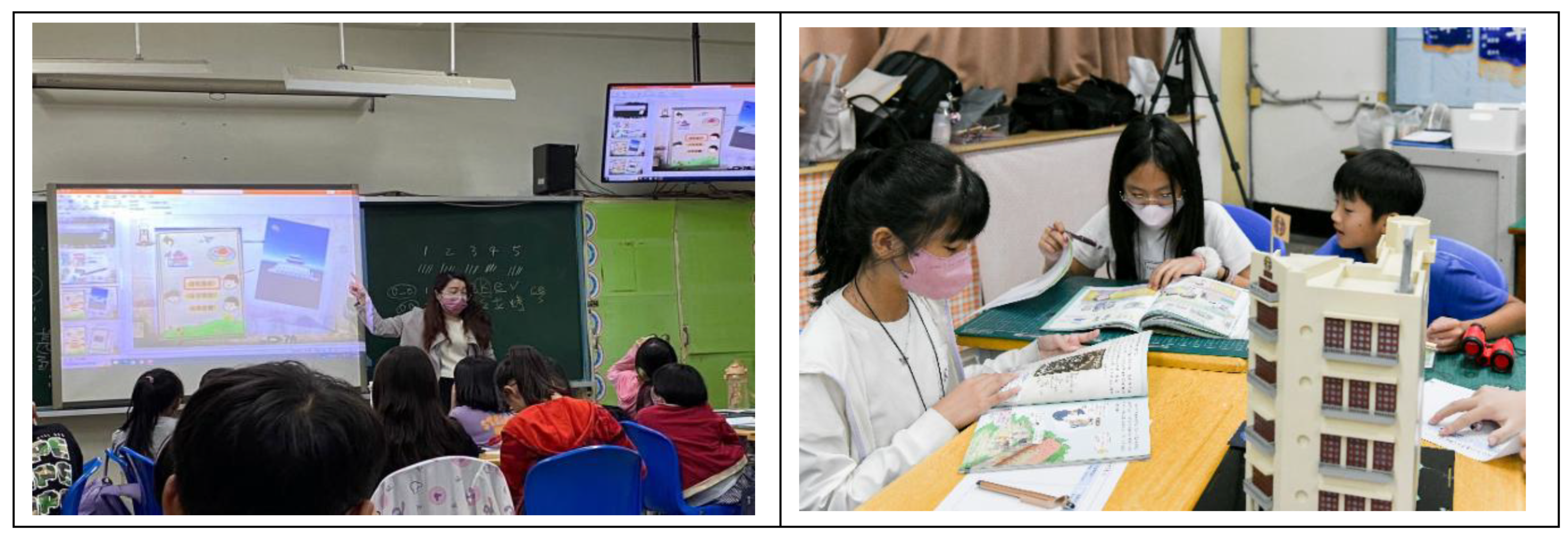
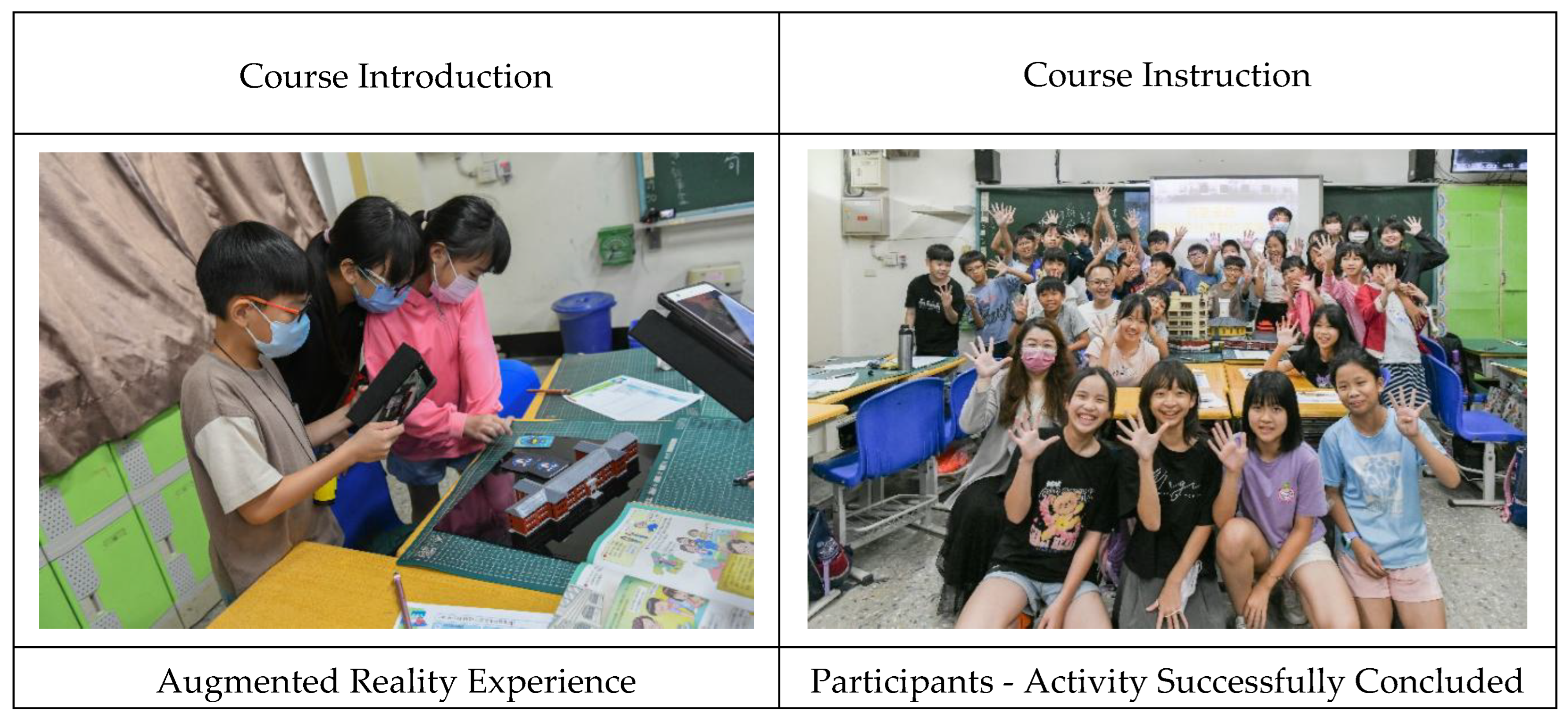
Figure 8.
Experimental Record.
4.1. Learning Achievement.
To assess the impact of AR integration on learning achievement, a comparison was made between the control and experimental groups. First, a homogeneity of regression slopes test was conducted. The results showed that the interaction effect of group * pre-test score was not significant (F(1, 45) = 0.293, p = 0.591 > 0.05), indicating that the regression slopes were homogeneous, allowing for ANCOVA.
Levene’s test for homogeneity of error variances was also not significant (F(1, 47) = 0.007, p = 0.935 > 0.05), indicating that the error variances were equal across groups, satisfying the assumption for ANCOVA.
Table 1 resents the ANCOVA results for learning achievement. After controlling for pre-test scores, there was a significant difference between the groups (F(1, 46) = 4.434, p = 0.041 < 0.05). The adjusted mean score for the experimental group (M_adj = 90.866) was significantly higher than that of the control group (M_adj = 86.577).
4.2. Learning Motivation
To evaluate the effect on learning motivation, the adapted MSLQ learning motivation subscale was used. The homogeneity of regression slopes testindicated that the interaction effect of group * pre-test motivation score was not significant (F(1, 45) = 3.880, p = 0.055 > 0.05), meeting the ANCOVA assumption.
Levene’s test for homogeneity of error variances was not significant (F(1, 47) = 0.747, p = 0.392 > 0.05).
Table 2 shows the ANCOVA results for learning motivation. A significant difference was found between the groups (F(1, 46) = 4.291, p = 0.044 < 0.05). The adjusted mean motivation score for the experimental group (M_adj = 3.726) was significantly higher than that of the control group (M_adj = 3.393).
4.3. Learning Attitude
For learning attitude, the adapted scale by Sung, Hwang, and Chang (2015) was used. The homogeneity of regression slopes test showed no significant interaction (F(1, 45) = 0.806, p = 0.374 > 0.05).
Levene’s test was not significant (F(1, 47) = 1.332, p = 0.254 > 0.05).
Table 3 presents the ANCOVA results for learning attitude. There was a significant difference between the groups (F(1, 46) = 4.506, p = 0.039 < 0.05). The adjusted mean attitude score for the experimental group (M_adj = 3.850) was significantly higher than that of the control group (M_adj = 3.448).
4.4. Self-Efficacy
To assess self-efficacy, the adapted scale was used. The homogeneity of regression slopes test indicated no significant interaction (F(1, 45) = 0.617, p = 0.436 > 0.05).
Levene’s test was not significant (F(1, 47) = 2.057, p = 0.158 > 0.05).
Table 4 shows the ANCOVA results for self-efficacy. A significant difference was found between the groups (F(1, 46) = 7.713, p = 0.008 < 0.05). The adjusted mean self-efficacy score for the experimental group (M_adj = 4.406) was significantly higher than that of the control group (M_adj = 4.061).
4.5. Summary of Qualitative Findings
Interviews with 20 experimental group students revealed generally positive experiences with the AR application. Key themes from a grounded theory analysis indicated that AR enhanced engagement and provided a novel, intuitive way to understand Tainan’s architectural history. Students appreciated the immersive experience of virtually visiting historical sites and interacting with 3D models, which they felt deepened their comprehension and motivation.
Challenges included initial unfamiliarity with AR technology and occasional technical issues (e.g., gesture recognition, interface navigation), which sometimes caused minor frustration but were largely overcome with guidance. Students suggested improvements in system stability and more comprehensive historical narratives.
Overall, the qualitative data strongly supported the quantitative findings, with students expressing high satisfaction with AR-based learning and a keen interest in using AR in other subjects. The interplay between positive technical interaction, content comprehension, and emotional engagement was evident, highlighting the potential of well-designed AR experiences to significantly improve learning outcomes and attitudes.
5. Discussion
The findings of this study demonstrate that integrating Augmented Reality (AR) into teaching the architectural culture of Tainan during the Japanese colonial period significantly enhanced fifth-grade students’ learning achievement, learning motivation, learning attitudes, and self-efficacy compared to traditional teaching methods. These results align with a growing body of literature supporting the pedagogical benefits of AR in various educational contexts.
The immersive and interactive nature of the "Time Traveler" AR application, potentially enhanced by underlying AI processes for optimizing user experience and dynamically adapting content (even if not explicitly detailed as a primary AI system in this iteration), likely fostered active learning and deeper engagement, leading to the observed improvements. Future iterations could explicitly leverage AI to personalize the learning pathways within the AR environment. Qualitative data further underscored AR's positive impact on student experience and understanding.
The significant improvement in learning achievement in the AR group (experimental group) corroborates findings from studies such as Fonseca et al. (2014), which highlighted AR’s capacity to improve academic performance. Traditional teaching methods, often characterized by a lack of interactivity, can lead to passive learning, especially when dealing with abstract or potentially dry subject matter. While self-disciplined students might still achieve good results, AR-based instruction, with its inherent interactivity and engaging tasks, encourages students to actively explore and reflect, thereby enhancing their learning outcomes and ability to apply knowledge.
Regarding learning motivation, the AR group showed a significant increase, supporting research by Fonseca et al. (2014) and Abdullah et al. (2023). The AR environment transformed learning content from mere text into tangible, interactive virtual objects. This shift from passive reception to active engagement appears to have invigorated students’ desire to learn, fostering intrinsic motivation as suggested by Astuti et al. (2019) and Bower et al. (2014).
The positive shift in learning attitudes within the AR group is also consistent with previous research. The interactive tasks in the AR curriculum likely transitioned students from a passive to an active learning stance. The ability to interact with virtual elements made students more enthusiastic about participating in discussions and classroom activities, leading to improved attitudes towards learning, a finding that resonates with the work of Chiu (2018) and Wang (2020).
Perhaps one of the most crucial findings is the significant enhancement of self-efficacy in the AR group. This aligns with the theoretical framework of Bandura (1977; 1986) and empirical studies by Alahmari et al. (2023) and Yuen et al. (2011). AR’s hands-on nature, as noted by Zhang et al. (2016), likely increased students’ attention and engagement, which are precursors to heightened self-efficacy. The interactive and mastery experiences provided by the AR application allowed students to build confidence in their learning capabilities. Successfully navigating the AR tasks and understanding complex historical concepts through direct interaction likely contributed to a stronger belief in their own academic abilities, as suggested by Anthonysamy et al. (2020).
The qualitative findings from student interviews further illuminate these quantitative results. Students’ positive feedback on the AR experience, citing increased engagement, deeper understanding, and heightened motivation, provides rich contextual support for the statistical outcomes. The ability to “walk into” historical scenes and interact with virtual reconstructions of heritage sites made the learning process more immersive and memorable. Challenges related to initial technical unfamiliarity were largely overcome with guidance, transitioning into proficient and enthusiastic use of the AR tools. This progression from novice to competent user likely played a role in bolstering self-efficacy.
The cross-comparison between knowledge-constructive and affective-experiential themes from the interviews highlighted the interconnectedness of cognitive gains and emotional responses. Positive technical interactions and a deeper understanding of the content fostered positive emotions and higher motivation. Conversely, initial technical hurdles or feelings of being overwhelmed by information could lead to temporary frustration, underscoring the importance of careful scaffolding and user-friendly design in AR educational tools.
This study’s results also resonate with broader theories of educational technology. The AR application, “Time Traveler,” effectively transformed abstract historical information into concrete, manipulable virtual experiences. This aligns with constructivist learning theories, where learners actively build knowledge through interaction with their environment. The AR environment provided a rich, interactive space for such construction to occur.
In summary, the integration of AR technology into history education, as demonstrated in this study, offers a powerful means to improve not only students’ grasp of subject matter but also their motivation, attitudes towards learning, and belief in their own learning capabilities. The findings strongly advocate for the potential of AR to create more engaging, effective, and empowering learning experiences.
6. Conclusions and Recommendations
This study investigated the impact of integrating AR technology into teaching the architectural culture of Tainan from the Japanese colonial period on fifth-grade students’ learning achievement, learning motivation, learning attitudes, and self-efficacy. Based on the quantitative data analyzed using ANCOVA and qualitative data from student interviews, the following conclusions are drawn:
- AR-integrated teaching significantly improves learning achievement: Students in the experimental group, who received AR-enhanced instruction, demonstrated significantly higher gains in learning achievement compared to the control group receiving traditional instruction (p = 0.041). This suggests that AR can make historical content more accessible and understandable, leading to better academic performance.
- AR-integrated teaching significantly enhances learning motivation: The experimental group showed significantly greater improvement in learning motivation (p = 0.044). The interactive and immersive nature of AR appears to transform learning from a passive activity to an engaging exploration, thereby boosting students’ intrinsic drive to learn.
- AR-integrated teaching significantly fosters positive learning attitudes: A significant improvement in learning attitudes was observed in the experimental group (p = 0.039). AR’s interactive tasks encouraged active participation, leading to a more positive disposition towards the learning process and subject matter.
- AR-integrated teaching significantly increases self-efficacy: The experimental group exhibited significantly higher gains in self-efficacy (p = 0.008). The hands-on, mastery-oriented experiences within the AR environment likely empowered students, increasing their confidence in their ability to learn and succeed.
These findings collectively indicate that AR technology offers distinct advantages over traditional teaching methods in the context of historical architectural education for elementary school students. The immersive and interactive qualities of AR contribute to a more holistic and impactful learning experience, positively influencing cognitive, motivational, attitudinal, and self-perceptual outcomes.
6.1. Recommendations for Future Research and Practice
Based on the study’s findings and limitations, the following recommendations are proposed:
- Expand Participant Demographics and Sample Size: Future research should involve a larger and more diverse sample of students, potentially including different age groups (e.g., middle or high school students) to compare the effects of AR across various developmental stages. This would enhance the generalizability of the findings.
- Refine System Design and Interactivity: While the “Time Traveler” app was generally well-received, feedback indicated room for improvement in system interactivity and responsiveness. Future development could focus on more sophisticated dialogue systems with virtual characters to enhance user empathy and engagement. Optimizing 3D object scanning to reduce sensitivity to specific angles would improve the user experience.
- Enhance Instructional Design and Scaffolding: Although AR proved beneficial, some students initially struggled with operational aspects. Future implementations should incorporate more robust onboarding and scaffolding strategies to familiarize students with AR controls and interactions, minimizing initial frustration and ensuring a smoother learning curve. Task design could also be made more challenging and varied, and the number of heritage sites could be expanded. Linking tasks more cohesively to create a stronger narrative flow could deepen memory retention.
- Integrate with Local Curriculum and Daily Life: To increase relevance and resonance, AR-based historical education could be more closely integrated with local community studies or aspects of students’ daily lives, fostering a stronger connection to the subject matter.
- Longitudinal Studies: Conducting longitudinal studies could provide insights into the long-term effects of AR-based learning on knowledge retention, sustained motivation, and the development of historical thinking skills.
- Comparative Studies of Different AR Features: Research could explore the differential impacts of various AR features (e.g., marker-based vs. markerless, different levels of interactivity) on learning outcomes to identify best practices in AR educational design.
Recommendations for future work include expanding participant demographics, refining AR system design by incorporating more sophisticated AI algorithms for adaptive learning and intelligent tutoring, further developing AI-driven instructional scaffolding within the AR environment, and conducting longitudinal studies to assess long-term impacts of such AI-enhanced AR interventions. By addressing these areas, the potential of AR technology to revolutionize history education and other disciplines can be further realized, creating more dynamic, effective, and engaging learning environments for students.
Acknowledgments
The authors would like to express their sincere gratitude to Master Yi-Hsun Tseng for his invaluable assistance with technical support and in conducting the experiments for this research.
References
- Abdullah, N. A. S., Affendi, S. A. S. M., & Halim, N. D. A. (2023). Augmented reality (AR) in education: A review of literature. International Journal of Academic Research in Progressive Education and Development, 12(1), 1066–1087.
- Alahmari, M., Jdaitawi, M., Alzahrani, M., Kholif, M., Ghanem, R., & Nasr, N. (2023). Promoting self-efficacy for students with special needs through augmented reality. International Journal of Information and Education Technology, 13(7), 1021–1026. [CrossRef]
- Al-Ansi, A. M., Jaboob, M., Garad, A., & Al-Ansi, A. (2023). Analyzing augmented reality (AR) and virtual reality (VR) recent development in education. SSRN Electronic Journal. [CrossRef]
- Anthonysamy, L., Koo, A. C., & Hew, S. H. (2020). Self-regulated learning strategies in higher education: Fostering digital literacy for sustainable lifelong learning. Education and Information Technologies, 25, 2393–2414. [CrossRef]
- Astuti, I. P., Sumarni, W., & Subali, B. (2019). The effect of augmented reality on students’ motivation and learning outcome. Journal of Physics: Conference Series, 1321(3), 032076.
- Azuma, R. T. (1997). A survey of augmented reality. Presence: Teleoperators & Virtual Environments, 6(4), 355-385.
- Bandura, A. (1977). Self-efficacy: Toward a unifying theory of behavioral change. Psychological Review, 84(2), 191–215. [CrossRef]
- Bandura, A. (1986). Social foundations of thought and action: A social cognitive theory. Prentice-Hall.
- Bower, M., Howe, C., McCredie, N., Robinson, A., & Grover, D. (2014). Augmented Reality in education – cases, places and potentials. Educational Media International, 51(1), 1-15.
- Cai, S., Wang, X., & Chiang, F. K. (2014). A case study of Augmented Reality simulation system application in a chemistry course. Computers in Human Behavior, 37, 31-40. [CrossRef]
- Cai, S. (2021). Effects of an augmented reality-based flipped classroom on students’ learning achievements, learning motivation, and cognitive load in a physics course. Journal of Science Education and Technology, 30(5), 680-693.
- Chen, C. M., & Tsai, Y. N. (2012). Interactive augmented reality system for learning anatomy. Computers & Education, 59(2), 611-625.
- Chen, P., & Zhang, C. (2018). A survey of augmented reality: Technical aspects, applications, and challenges. IEEE Access, 6, 71399-71417.
- Chen, Y. C. (2003). The relationships among learning attitude, learning satisfaction, and learning achievement of college students in central Taiwan. Journal of Taichung Healthcare and Management University, 1(2), 181-198.
- Chu, Y. H., & Lin, J. L. (2001). Political development in 20th-century Taiwan: State-building, regime transformation, and the construction of national identity. The China Quarterly, 165, 102-123. [CrossRef]
- Deci, E. L., & Ryan, R. M. (1985). Intrinsic motivation and self-determination in human behavior. Plenum.
- Di Serio, Á., Ibáñez, M. B., & Kloos, C. D. (2013). Impact of an augmented reality system on students’ motivation for a visual art course. Computers & Education, 68, 586-596. [CrossRef]
- Eccles, J. S. (1983). Expectancies, values, and academic behaviors. In J. T. Spence (Ed.), Achievement and achievement motives: Psychological and sociological approaches (pp. 75–146). W. H. Freeman.
- Fidan, M., & Tuncel, M. (2019). Integrating augmented reality into problem based learning: The effects on learning achievement and attitude in physics education. Computers & Education, 142, 103635. [CrossRef]
- Fonseca, D., Martí, N., Redondo, E., Navarro, I., & Sánchez, A. (2014). Relationship between student profile, tool use, participation, and academic performance with the use of Augmented Reality technology for visualized architecture models. Computers in Human Behavior, 31, 434-445. [CrossRef]
- Garzón, J. (2019). An overview of twenty-five years of augmented reality in education. Multimodal Technologies and Interaction, 3(4), 67. [CrossRef]
- Guclu, M., Kocer, H. E., & Dundar, S. (2022). The effect of augmented reality applications on students’ academic achievement and motivation in music education. Education and Information Technologies, 27(3), 3015-3031.
- Harrison, R. (2013). Heritage: Critical approaches. Routledge.
- Ho, P. S. (2017). The KMT and the Rapprochement between Taiwan and China. Routledge.
- Hsin-Yi Chang, G. J. H., & Chen, N. S. (2022). The effects of an augmented reality-based educational game on students’ learning achievement and motivation in a history course. Interactive Learning Environments, 30(4), 695-709.
- Ibáñez, M. B., Di Serio, Á., Villarán, D., & Kloos, C. D. (2014). Experimenting with electromagnetism using augmented reality: Impact on flow student experience and educational effectiveness. Computers & Education, 71, 1-13. [CrossRef]
- Kannegiser, S. (2021). Augmented reality library tours: Effects on student self-efficacy and anxiety. Master’s thesis, San Jose State University.
- Kaufmann, H., & Schmalstieg, D. (2003). Mathematics and geometry education with collaborative augmented reality. Computers & Graphics, 27(3), 339-345. [CrossRef]
- Kaura, R., Saini, B. S., & Saini, J. S. (2020). Augmented reality in engineering education: A review. Archives of Computational Methods in Engineering, 27(5), 1559-1578.
- Kucuk, S. (2014). The effects of augmented reality on students’ achievement and motivation in a primary school science course. Journal of Science Education and Technology, 23(1), 62-72.
- Kucuk, S., Yilmaz, R. M., & Göktas, Y. (2014). Augmented reality for learning English: A comparison of a marker-based AR application and a traditional picture book. Egitim ve Bilim, 39(176).
- Lin, M. R. (2023). Presenting Multiple Historical Aspects of Heritage Sites with Augmented Reality Mobile Applications. Master’s thesis, National Taipei University of Technology. Taiwan Electronic Thesis & Dissertation Service. https://hdl.handle.net/11296/5r33qp (Duplicate of Chinese ref, keeping English for consistency if cited in English text).
- Lowenthal, D. (1998). The heritage crusade and the spoils of history. Cambridge University Press.
- Milgram, P., & Kishino, F. (1994). A taxonomy of mixed reality visual displays. IEICE Transactions on Information and Systems, E77-D(12), 1321-1329.
- Ng, T. W. H., & Lucianetti, L. (2016). Within-individual increases in innovative behavior and creative, persuasion, and change self-efficacy over time: A social–cognitive theory perspective. Journal of Applied Psychology, 101(1), 14-34.
- Pintrich, P. R. (1991). Editor’s comment. Educational Psychologist, 26(3-4), 199-205.
- Pintrich, P. R., & De Groot, E. V. (1990). Motivational and self-regulated learning components of classroom academic performance. Journal of Educational Psychology, 82(1), 33–40.
- Pintrich, P. R., Smith, D. A. F., Garcia, T., & McKeachie, W. J. (1991). A manual for the use of the Motivated Strategies for Learning Questionnaire (MSLQ). National Center for Research to Improve Postsecondary Teaching and Learning.
- Pintrich, P. R., & Schunk, D. H. (2008). Motivation in education: Theory, research, and applications (3rd ed.). Pearson Merrill Prentice Hall.
- Rodríguez-Abad, C., Fernández-Sanz, L., & Pérez-Juárez, M. Á. (2022). Augmented reality in history education: A systematic review. Education Sciences, 12(3), 193.
- Rodwell, D. (2007). Conservation and sustainability in historic cities. Blackwell Publishing.
- Ryan, R. M., & Deci, E. L. (2000). Self-determination theory and the facilitation of intrinsic motivation, social development, and well-being. American Psychologist, 55(1), 68–78.
- Sahin, D., & Yilmaz, R. M. (2020). The effect of augmented reality on the achievement, attitude and scientific process skills of middle school students. Journal of Education in Science, Environment and Health, 6(2), 123-137.
- Schunk, D. H., & Meece, J. L. (2006). Self-efficacy development in adolescence. In F. Pajares & T. Urdan (Eds.), Self-efficacy beliefs of adolescents (pp. 71–96). Information Age Publishing.
- Schunk, D. H., Pintrich, P. R., & Meece, J. L. (2012). Motivation in education: Theory, research, and applications (4th ed.). Pearson.
- Schwarzer, R. (1993). Measurement of perceived self-efficacy: Psychometric scales for cross-cultural research. Freie Universitaet Berlin.
- Schwarzer, R., & Aristi B. (1997). Optimistic self-beliefs: Assessment of general perceived self-efficacy in 13 cultures. World Psychology, 3(1-2), 177-190.
- Sung, H. Y., Hwang, G. J., & Chang, S. C. (2015). A personalized game-based learning approach to improving students’ learning effectiveness and attitudes in mathematics. British Journal of Educational Technology, 46(2), 291-303.
- Tweed, C., & Sutherland, M. (2007). Built cultural heritage and sustainable urban development. Landscape and Urban Planning, 83(1), 62-69. [CrossRef]
- Weiner, B. (1985). An attributional theory of achievement motivation and emotion. Psychological Review, 92(4), 548–573.
- Woolfolk, A. (2014). Educational psychology (12th ed.). Pearson.
- Worachate, S. (2023). The effectiveness of an augmented reality-integrated oral health education program on oral health literacy, self-efficacy, and behaviors among older adults: A randomized controlled trial. Archives of Gerontology and Geriatrics, 107, 104901.
- Yuen, S. C. Y., Yaoyuneyong, G., & Johnson, E. (2011). Augmented reality: An overview and five directions for AR in education. Journal of Educational Technology Development and Exchange, 4(1), 119-140. [CrossRef]
- Zhang, J., Sung, Y. T., Hou, H. T., & Chang, K. E. (2016). The development and evaluation of an augmented reality-based armillary sphere for astronomical observation learning. Interactive Learning Environments, 24(8), 1799-1812. [CrossRef]

Table 1.
ANCOVA Summary for Learning Achievement.
| Source | df | Adjusted Mean (Experimental) | Adjusted Mean (Control) | F-value | p-value |
| Between Groups | 1 | 90.866 | 86.577 | 4.434 | 0.041* |
Note: p < 0.05.
Table 2.
ANCOVA Summary for Learning Motivation.
| Source | df | Adjusted Mean (Experimental) | Adjusted Mean (Control) | F-value | p-value |
| Between Groups | 1 | 3.726 | 3.393 | 4.291 | 0.044* |
Note: p < 0.05.
Table 3.
ANCOVA Summary for Learning Attitude.
| Source | df | Adjusted Mean (Experimental) | Adjusted Mean (Control) | F-value | p-value |
| Between Groups | 1 | 3.850 | 3.448 | 4.506 | 0.039* |
Note: p < 0.05.
Table 4.
ANCOVA Summary for Self-Efficacy.
| Source | df | Adjusted Mean (Experimental) | Adjusted Mean (Control) | F-value | p-value |
| Between Groups | 1 | 4.406 | 4.061 | 7.713 | 0.008** |
Note: **p < 0.01.
Disclaimer/Publisher’s Note: The statements, opinions and data contained in all publications are solely those of the individual author(s) and contributor(s) and not of MDPI and/or the editor(s). MDPI and/or the editor(s) disclaim responsibility for any injury to people or property resulting from any ideas, methods, instructions or products referred to in the content. |
© 2025 by the authors. Licensee MDPI, Basel, Switzerland. This article is an open access article distributed under the terms and conditions of the Creative Commons Attribution (CC BY) license (http://creativecommons.org/licenses/by/4.0/).
Copyright: This open access article is published under a Creative Commons CC BY 4.0 license, which permit the free download, distribution, and reuse, provided that the author and preprint are cited in any reuse.


