

Submitted:
22 January 2025
Posted:
23 January 2025
You are already at the latest version
Abstract
Bacillus, a versatile microorganism, has widespread industrial applications, particularly in the fields of biotechnology and environmental sustainability. This study uses bibliographic analysis through VOSviewer to explore key trends in Bacillus research, identifying significant keywords, organizations, and countries or regions leading the field. One notable discovery is the potential use of Bacillus in cement production, where its incorporation can enable self-healing of cracks in cement. This self-healing property can significantly reduce maintenance and labor costs in construction. Furthermore, the study highlights future opportunities for Bacillus research, particularly the integration of big data and machine learning. By leveraging large-scale data and advanced algorithms, Bacillus applications can be optimized for various industries, offering more efficient and sustainable solutions. This study provides insights into both current applications and future research directions for Bacillus in industrial settings.
Keywords:
Bacillus
; Bibliography
; VOSviewer
; Big Data
; Machine Learning
1. Introduction
Bacillus, a genus of microorganisms, is gaining increasing attention due to its diverse industrial applications [1,2]. This bacterium is known for its ability to survive in various harsh environments, making it a valuable asset in a range of sectors such as agriculture, environmental remediation, and biotechnology [3,4]. Its resilience and metabolic activities enable it to play pivotal roles in processes like biodegradation and waste treatment, offering solutions that are both cost-effective and sustainable [5,6]. In recent years, Bacillus has been explored for even more innovative uses, particularly in the field of materials science, where it holds the potential to revolutionize industries like construction and cement production [7,8].
To deepen our understanding of Bacillus and its industrial potential, this study utilizes bibliographic analysis, specifically through the use of VOSviewer, a powerful tool that enables the extraction and visualization of key data from scientific literature [9,10]. By analyzing a large corpus of research articles, we have identified the most prominent keywords, organizations, and countries or regions that are at the forefront of Bacillus -related studies. This bibliometric approach provides valuable insights into the trends and advancements in Bacillus research [11], offering a comprehensive overview of the current state of knowledge and highlighting emerging areas of interest for further exploration.
One particularly promising application of Bacillus is its integration into the cement production process [12,13], where it has been found to possess self-healing capabilities [14,15]. Cement, over time, is prone to cracking due to physical stress, chemical reactions, and environmental factors [16,17]. These cracks can significantly weaken the material, leading to costly repairs and reduced lifespan of structures [18,19]. Bacillus, however, offers an innovative solution by being incorporated into the cement mix, where its metabolic activity triggers the precipitation of calcium carbonate, effectively filling the cracks and preventing further damage [20,21]. This self-healing property not only reduces the need for external interventions but also holds the potential to cut down on labor and maintenance costs, making it an economically viable and sustainable alternative for the construction industry [22,23].
Looking forward, we also explore the exciting opportunities that lie in combining Bacillus research with the power of big data and machine learning [24]. These technologies have already shown great promise in various fields, such as facial recognition [25,26] and autonomous driving [27,28]. By applying them to Bacillus research, scientists can harness large-scale data sets to identify patterns and optimize its industrial applications [29,30]. For instance, by collecting data on factors like temperature, humidity, and the timing of Bacillus inoculation in concrete, machine learning algorithms could be trained to predict the ideal conditions for Bacillus-based self-healing cement. This combination of biotechnology with data-driven insights holds immense potential to advance Bacillus research, leading to more effective, sustainable, and cost-efficient solutions across a wide range of industries.
2. Materials and Methods
The bibliographic analysis method followed previous studies with slightly modifications [31,32]. On January 21, 2025, we performed a comprehensive bibliometric search in the Web of Science database using the keyword “Bacillus.” This search returned a total of 224,918 articles, highlighting the extensive research conducted on Bacillus across various disciplines. To streamline our analysis, we downloaded the default 1,000 articles ranked as most relevant by the database. These articles provided a representative dataset for conducting bibliometric evaluations to uncover research trends, key contributors, and thematic focuses in the Bacillus-related literature. The data was then analyzed using VOSviewer [33,34], a powerful tool for visualizing and interpreting bibliometric networks.
For the keyword analysis, we applied a threshold of at least five occurrences for a keyword to be included in the network visualization. This ensured that only the most significant and frequently used terms were considered. The analysis revealed the central themes of Bacillus-related research, which likely included topics such as probiotics, biofilm formation, industrial applications, and environmental remediation. This approach allowed us to identify the key scientific domains where Bacillus plays a pivotal role, providing insights into its widespread utility in research and practical applications.
In analyzing organizational contributions, we set a minimum threshold of five documents per organization. This enabled us to identify the leading institutions actively engaged in Bacillus research. The results highlighted key academic and industrial organizations that are central to advancing this field, emphasizing their roles in knowledge generation and innovation. Such insights are invaluable for researchers seeking potential collaborators or institutions at the forefront of Bacillus research.
For the country and region analysis, we used a higher threshold of 20 documents to focus on the most prolific contributors on a national or regional scale. This analysis revealed the global distribution of Bacillus research, identifying countries and regions that are major players in the field. The results underscored the geographical hubs of scientific activity, providing a clear picture of where the most impactful Bacillus studies are conducted. Together, these analyses offer a holistic understanding of the current landscape of Bacillus research, guiding future studies and fostering global collaboration.
3. Results
Figure 1 showcases the most prominent keywords associated with research in the Bacillus domain, revealing the diverse areas of study and applications. Several keywords are directly related to environmental applications, highlighting Bacillus's role in addressing ecological challenges. Keywords such as "degradation," "detoxification," "decontamination," and "removal" underscore the organism's utility in processes like breaking down pollutants, neutralizing toxins, and purifying contaminated environments. These findings reflect the significant interest in leveraging Bacillus for bioremediation and sustainable environmental solutions, showcasing its potential to combat pollution and promote ecological restoration.
Another set of keywords in Figure 1 pertains to molecular biology, illustrating the central role of Bacillus in advancing our understanding of genetic and molecular processes. Terms like "plasmid," "RNA," "16S rDNA," and "DNA" indicate a strong focus on genetic studies, gene expression, and evolutionary relationships. These keywords suggest that researchers frequently use Bacillus as a model organism to study molecular pathways, genetic transfer mechanisms, and the genetic diversity within microbial communities. Such studies have broad implications, including the development of genetic tools, biotechnology innovations, and a deeper understanding of microbial ecology and evolution.
Additionally, Figure 1 highlights several keywords associated with research methodologies, reflecting the tools and approaches commonly used in Bacillus studies. Words such as "classification," "conjugation," "extraction," and "sequence-analysis" point to the techniques employed for identifying and characterizing Bacillus strains and their genetic and functional attributes. These methods are integral to uncovering the potential applications of Bacillus in various fields, from industrial production to healthcare. The prominence of these methodological keywords underscores the importance of technical advancements in driving forward Bacillus-related research, enabling scientists to explore its capabilities and address both fundamental and applied scientific questions.
Figure 2 highlights the key organizations involved in Bacillus research, with the University of Georgia occupying the most central position, underscoring its pivotal role in advancing the field. The prominence of this institution suggests a strong focus on Bacillus-related studies, likely encompassing a broad spectrum of topics such as environmental applications, molecular biology, and industrial uses. This central positioning also reflects the collaborative and influential nature of the University of Georgia in shaping the direction of global Bacillus research, including its connections with other leading institutions and contributions to high-impact publications.
In addition to the University of Georgia, Figure 2 reveals other significant contributors to Bacillus research, particularly institutions in South Korea. These include Seoul National University, Chung-Ang University, Korea University, Korea Food Research Institute, Kyung Hee University, and Kyungpook National University. The presence of multiple South Korean organizations in close proximity highlights the country’s active involvement and leadership in this area of study. These institutions are likely focusing on a variety of applications, such as food safety, biotechnology, and environmental remediation, leveraging Bacillus's unique properties to address regional and global challenges. The clustering of these organizations in the figure also suggests robust collaboration within the South Korean research community, as well as with international partners, driving innovation and knowledge exchange in the field of Bacillus research.
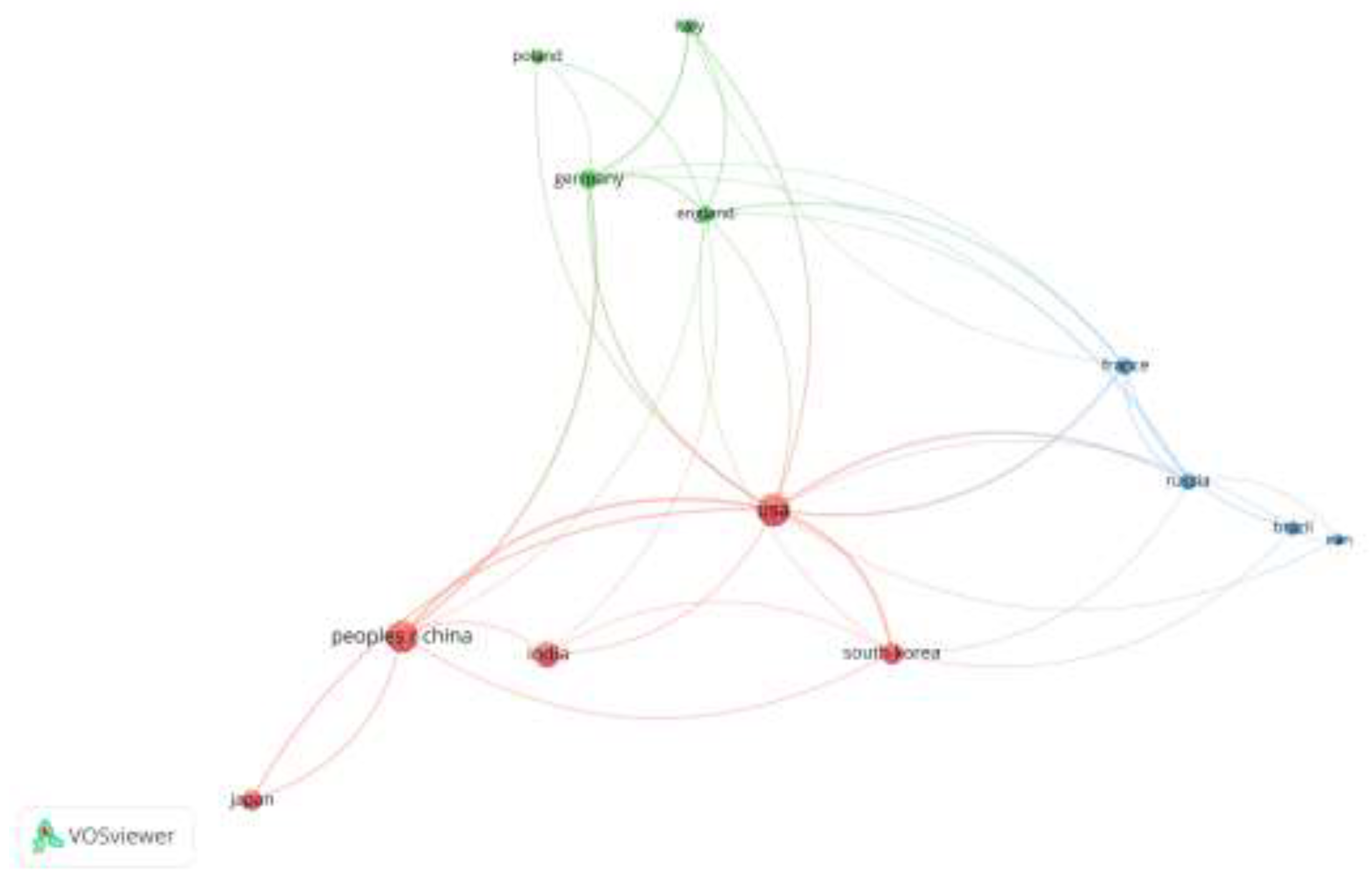
Figure 3 highlights the major countries and regions contributing to Bacillus research, with China, the United States, India, and South Korea occupying central positions. These countries are pivotal in advancing the field, reflecting their extensive research output, significant funding, and collaborative networks. China’s strong presence can be attributed to its investment in biotechnology and environmental sciences, while the United States, with its robust academic and industrial research framework, leads in innovation and applications of Bacillus in diverse areas. India and South Korea, known for their focus on agricultural biotechnology and industrial microbiology, further emphasize the global importance of Bacillus research.
Beyond the central contributors, other nations such as Japan, Poland, Germany, the United Kingdom, Italy, France, Russia, Brazil, and Iran also play essential roles in this field. These countries bring unique perspectives and expertise to Bacillus research, focusing on applications such as bioremediation, food safety, and medical microbiology. For instance, Japan and Germany are known for their technological advancements and precision in industrial applications, while countries like Brazil and India emphasize agricultural solutions to enhance crop yield and combat plant diseases. This diversity in research priorities reflects the multifaceted nature of Bacillus as a subject of study, encompassing molecular biology, environmental sustainability, and industrial innovation.
The global collaboration among these countries is a defining feature of Bacillus research. The interconnectedness seen in Figure 3 underscores the shared scientific goals and cooperative efforts that drive progress in this field. International partnerships facilitate knowledge exchange, technology transfer, and joint initiatives, ensuring that breakthroughs are not confined to individual regions but contribute to a broader understanding and utilization of Bacillus. This collaborative landscape highlights the importance of global networks in tackling challenges and optimizing Bacillus applications, showcasing a collective effort to address pressing issues such as environmental pollution, food security, and public health.
4. Discussion
4.1. Bacillus and Its Industrial Potential
Through bibliographic analysis, we discovered that Bacillus has a wide range of industrial applications, with its potential to address various challenges in manufacturing and environmental sustainability [35,36]. One particularly fascinating industrial application is its use in the production of cement [37,38]. Cement, over time, is prone to cracking due to physical stress, weathering, and chemical reactions [39,40]. These cracks, if left untreated, can lead to the degradation of structures, shortening their lifespan and requiring costly repairs [41,42]. Bacillus, however, offers an innovative solution by being incorporated into the cement-making process [43,44]. The microorganism’s metabolic activity plays a key role in filling these cracks with calcium compounds, effectively sealing them and reducing the need for external interventions [45,46].
This self-healing property of cement reinforced with Bacillus is a significant breakthrough in materials science [47]. As Bacillus bacteria metabolize within the cracks, they precipitate calcium carbonate, which solidifies and fills the voids in the concrete, preventing further deterioration [48]. This biological approach to healing cracks not only extends the life of the cement but also provides an eco-friendly alternative to traditional methods that rely on chemical treatments or manual repairs [49]. By using Bacillus in cement, the need for frequent maintenance is reduced, making it a cost-effective and sustainable solution for construction projects, especially in areas prone to environmental stress.
Moreover, this technology offers a complementary approach to human intervention in concrete maintenance. Traditional methods of crack repair, such as injecting epoxy or applying sealants, are labor-intensive and often require costly materials. Bacillus-based self-healing cement could significantly decrease the reliance on such manual repairs, thus offering a more efficient and less resource-intensive alternative [50,51]. The integration of Bacillus in cement not only helps with reducing repair costs but also contributes to a more sustainable construction industry by minimizing waste and the environmental impact associated with frequent repairs and replacements [52]. This promising application of Bacillus in cement demonstrates the growing potential of biotechnology in industrial sectors and highlights its role in advancing more resilient and sustainable materials [53,54].
Considering the applications of other bacterial species, such as Shewanella, which have been shown to have diverse industrial uses—including electricity generation through Shewanella biofilms [55,56], the removal of chromium pollutants via Shewanella biofilms [57], and the production of extracellular nanoparticles by Shewanella oneidensis [58]—it is worthwhile to explore expanding the applications of Bacillus. By broadening its scope of industrial applications, Bacillus could potentially demonstrate similar versatility and innovation in addressing a wider range of challenges across different sectors [59,60]. This expansion could unlock new opportunities for Bacillus-based technologies, further advancing its role in biotechnology and industrial sustainability [60,61].
4.2. Future Opportunities in Bacillus Research with Big Data and Machine Learning
We believe that the future opportunities for Bacillus research lie in its integration with big data and machine learning. The power of big data and machine learning has already been widely demonstrated in various fields such as facial recognition [62,63], autonomous driving [64,65], global species distribution prediction [66], educational outcome forecasting [67], and cancer estimation [68]. These technologies have revolutionized many industries, and we foresee a similarly transformative potential in the study and application of Bacillus. By combining these advanced tools with Bacillus research, we can unlock new avenues for optimizing its use, particularly in industrial applications such as cement production and environmental remediation.
One promising direction involves creating a large-scale database that includes a wide range of Bacillus applications, particularly in industries where its utility is growing [69,70]. This database could collect critical parameters such as temperature, humidity, rainfall, the timing of Bacillus inoculation, concentration levels, and the resulting effects. By aggregating this data, scientists can create comprehensive datasets that offer valuable insights into the optimal conditions for Bacillus application. Once this data is collected, machine learning models like neural networks can be trained using it to identify patterns and correlations that might otherwise go unnoticed [71,72], potentially leading to more efficient and targeted use of Bacillus in industrial settings.
In the future, these machine learning models could provide invaluable decision support in real-time situations. For example, if a concrete structure develops cracks, machine learning algorithms could analyze the available data and suggest whether Bacillus-based self-healing cement would be a viable solution. Such models, trained on large and diverse datasets, would have the potential to offer more accurate and practical recommendations than even experienced scientists could provide. This fusion of Bacillus research with big data and machine learning not only enhances the precision of industrial applications but also accelerates the development of more sustainable and effective solutions in biotechnology.
5. Conclusions
In conclusion, Bacillus presents significant potential for various industrial applications, particularly in cement production where it can enable self-healing of cracks, thus reducing labor costs. Through bibliographic analysis with VOSviewer, we identified key trends in Bacillus research, including prominent keywords, organizations, and countries/regions involved. The integration of Bacillus with big data and machine learning offers promising future opportunities for optimizing its applications across industries. By harnessing these advanced technologies, Bacillus-based solutions can be refined, making them more efficient, sustainable, and cost-effective in addressing industrial challenges. This research underscores the growing impact of Bacillus in biotechnology and industry.
References
- Ngalimat, M.S.; Yahaya, R.S.R.; Baharudin, M.M.A.-a.; Yaminudin, S.M.; Karim, M.; Ahmad, S.A.; Sabri, S. A review on the biotechnological applications of the operational group Bacillus amyloliquefaciens. Microorganisms 2021, 9, 614. [Google Scholar] [CrossRef]
- Danilova, I.; Sharipova, M. The practical potential of bacilli and their enzymes for industrial production. Frontiers in microbiology 2020, 11, 1782. [Google Scholar] [CrossRef] [PubMed]
- Akinsemolu, A.A.; Onyeaka, H.; Odion, S.; Adebanjo, I. Exploring Bacillus subtilis: Ecology, biotechnological applications, and future prospects. Journal of Basic Microbiology 2024, e202300614. [Google Scholar] [CrossRef] [PubMed]
- Tiwari, S.; Prasad, V.; Lata, C. Bacillus: Plant growth promoting bacteria for sustainable agriculture and environment. In New and future developments in microbial biotechnology and bioengineering; Elsevier: 2019; pp. 43-55.
- Wang, X.; Liu, S.; Ding, X.; Zhang, L.; Lv, X.; Li, J.; Song, C.; Zhang, C.; Wang, S. Coexistence of diverse metabolic pathways promotes p-cresol biodegradation by Bacillus subtilis ZW. International Biodeterioration & Biodegradation 2025, 196, 105933. [Google Scholar]
- Akash, K.; Parthasarathi, R.; Elango, R.; Bragadeeswaran, S. Exploring the intricate studies on low-density polyethylene (LDPE) biodegradation by Bacillus cereus AP-01, isolated from the gut of Styrofoam-fed Tenebrio molitor larvae. Biodegradation 2025, 36, 12. [Google Scholar] [CrossRef] [PubMed]
- Fang, C.; Achal, V. Enhancing engineering properties of cement mortars through microbial self-healing and community analysis. Construction and Building Materials 2025, 462, 139934. [Google Scholar] [CrossRef]
- Ye, N.; Liu, Z.; Wang, P.; Sun, Y.; He, X. Self-healing of concrete crack based on modified zeolite immobilizing microorganisms. Biochemical Engineering Journal 2025, 213, 109541. [Google Scholar] [CrossRef]
- Wong, D. VOSviewer. Technical Services Quarterly 2018, 35, 219–220. [Google Scholar] [CrossRef]
- Arruda, H.; Silva, E.R.; Lessa, M.; Proença Jr, D.; Bartholo, R. VOSviewer and bibliometrix. Journal of the Medical Library Association: JMLA 2022, 110, 392. [Google Scholar] [CrossRef] [PubMed]
- Wu, X.; Liu, Y.; Jia, B.; Tao, L.; Li, H.; Wang, J.; Yuan, Z.; Sun, X.; Yao, Y. Four Decades of Bacillus Biofertilizers: Advances and Future Prospects in Agriculture. Microorganisms 2025, 13, 187. [Google Scholar] [CrossRef] [PubMed]
- Nasser, A.A.; Sorour, N.M.; Saafan, M.A.; Abbas, R.N. Microbially-Induced-Calcite-Precipitation (MICP): A biotechnological approach to enhance the durability of concrete using Bacillus pasteurii and Bacillus sphaericus. Heliyon 2022, 8. [Google Scholar] [CrossRef] [PubMed]
- Milović, T.; Bulatović, V.; Pezo, L.; Dramićanin, M.; Tomić, A.; Pezo, M.; Šovljanski, O. Enhancing Compressive Strength of Cement by Indigenous Individual and Co-Culture Bacillus Bacteria. Materials 2024, 17, 4975. [Google Scholar] [CrossRef]
- Ivaškė, A.; Gribniak, V.; Jakubovskis, R.; Urbonavičius, J. Bacterial viability in self-healing concrete: A case study of non-ureolytic bacillus species. Microorganisms 2023, 11, 2402. [Google Scholar] [CrossRef] [PubMed]
- Tie, Y.; Ji, Y.; Zhang, H.; Jing, B.; Zeng, X.; Yang, P. Investigation on the mechanical properties of Bacillus subtilis self-healing concrete. Heliyon 2024, 10. [Google Scholar] [CrossRef] [PubMed]
- Safiuddin, M.; Kaish, A.B.M.A.; Woon, C.-O.; Raman, S.N. Early-age cracking in concrete: Causes, consequences, remedial measures, and recommendations. Applied Sciences 2018, 8, 1730. [Google Scholar] [CrossRef]
- Zhao, H.; Hu, Y.; Tang, Z.; Wang, K.; Li, Y.; Li, W. Deterioration of concrete under coupled aggressive actions associated with load, temperature and chemical attacks: A comprehensive review. Construction and Building Materials 2022, 322, 126466. [Google Scholar] [CrossRef]
- Frangopol, D.M.; Soliman, M. Life-cycle of structural systems: recent achievements and future directions. In Structures and infrastructure systems; Routledge: 2019; pp. 46-65.
- Frangopol, D.M.; Lin, K.-Y.; Estes, A.C. Life-cycle cost design of deteriorating structures. Journal of structural engineering 1997, 123, 1390–1401. [Google Scholar] [CrossRef]
- Sharma, T.K.; Alazhari, M.; Heath, A.; Paine, K.; Cooper, R.M. Alkaliphilic Bacillus species show potential application in concrete crack repair by virtue of rapid spore production and germination then extracellular calcite formation. Journal of applied microbiology 2017, 122, 1233–1244. [Google Scholar] [CrossRef] [PubMed]
- Kumar, J.B.G.; Prabhakara, R.; Pushpa, H. Bio mineralisation of calcium carbonate by different bacterial strains and their application in concrete crack remediation. International Journal of Advances in Engineering & Technology 2013, 6, 202. [Google Scholar]
- Du, X.; Si, Z.; Qi, D.; Li, Y.; Huang, L.; Zhang, Y.; Gao, Y. Optimization of spore production and activation conditions of concrete crack healing bacteria and research on crack repair effect. Construction and Building Materials 2023, 394, 132140. [Google Scholar] [CrossRef]
- Ehtisham, R.; Javed, A.; Aslam, F.; Nouman, H.M.; Ahmad, A.; Manzoor, A. Enhancing the Mechanical Properties of Concrete and Self-Healing Phenomena by adding Bacteria, Silica fume and Fibres. Sustainable Structures and Materials, An International Journal 2023, 6, 32–38. [Google Scholar]
- Bağcıoğlu, M.; Fricker, M.; Johler, S.; Ehling-Schulz, M. Detection and identification of Bacillus cereus, Bacillus cytotoxicus, Bacillus thuringiensis, Bacillus mycoides and Bacillus weihenstephanensis via machine learning based FTIR spectroscopy. Frontiers in microbiology 2019, 10, 902. [Google Scholar] [CrossRef]
- Chen, J.; Jenkins, W.K. Facial recognition with PCA and machine learning methods. 2017; pp. 973-976.
- Sharma, S.; Bhatt, M.; Sharma, P. Face recognition system using machine learning algorithm. 2020; pp. 1162-1168.
- Bachute, M.R.; Subhedar, J.M. Autonomous driving architectures: insights of machine learning and deep learning algorithms. Machine Learning with Applications 2021, 6, 100164. [Google Scholar] [CrossRef]
- Shafaei, S.; Kugele, S.; Osman, M.H.; Knoll, A. Uncertainty in machine learning: A safety perspective on autonomous driving. 2018; pp. 458-464.
- Schallmey, M.; Singh, A.; Ward, O.P. Developments in the use of Bacillus species for industrial production. Canadian journal of microbiology 2004, 50, 1–17. [Google Scholar] [CrossRef] [PubMed]
- Gu, Y.; Xu, X.; Wu, Y.; Niu, T.; Liu, Y.; Li, J.; Du, G.; Liu, L. Advances and prospects of Bacillus subtilis cellular factories: from rational design to industrial applications. Metabolic engineering 2018, 50, 109–121. [Google Scholar] [CrossRef]
- Chen, S.; Ding, Y. A bibliography study of Shewanella oneidensis biofilm. FEMS Microbiology Ecology 2023, 99, fiad124. [Google Scholar] [CrossRef]
- Chen, S.; Ding, Y. Tackling heavy metal pollution: evaluating governance models and frameworks. Sustainability 2023, 15, 15863. [Google Scholar] [CrossRef]
- Chen, S.; Ding, Y. From bibliography to understanding: water microbiology and human health. Journal of Water and Health 2024, 22, 1911–1921. [Google Scholar] [CrossRef]
- Chen, S.; Ding, Y. Bibliographic Insights into Biofilm Engineering. Acta Microbiologica Hellenica 2024, 69, 3–13. [Google Scholar] [CrossRef]
- Herrmann, L.W.; Letti, L.A.J.; de Oliveira Penha, R.; Soccol, V.T.; Rodrigues, C.; Soccol, C.R. Bacillus genus industrial applications and innovation: First steps towards a circular bioeconomy. Biotechnology Advances 2024, 70, 108300. [Google Scholar] [CrossRef] [PubMed]
- Khan, A.R.; Mustafa, A.; Hyder, S.; Valipour, M.; Rizvi, Z.F.; Gondal, A.S.; Yousuf, Z.; Iqbal, R.; Daraz, U. Bacillus spp. as bioagents: uses and application for sustainable agriculture. Biology 2022, 11, 1763. [Google Scholar] [CrossRef]
- Su, Y.; Zheng, T.; Qian, C. Application potential of Bacillus megaterium encapsulated by low alkaline sulphoaluminate cement in self-healing concrete. Construction and Building Materials 2021, 273, 121740. [Google Scholar] [CrossRef]
- Amiri, Y.; Hassaninasab, S.; Chehri, K.; Zahedi, M. Investigating the effect of adding bacillus bacteria and nano-clay on cement mortar properties. Case Studies in Construction Materials 2022, 17, e01167. [Google Scholar] [CrossRef]
- Golewski, G.L. The phenomenon of cracking in cement concretes and reinforced concrete structures: the mechanism of cracks formation, causes of their initiation, types and places of occurrence, and methods of detection—a review. Buildings 2023, 13, 765. [Google Scholar] [CrossRef]
- Lu, L.; Zhao, D.; Fan, J.; Li, G. A brief review of sealants for cement concrete pavement joints and cracks. Road Materials and Pavement Design 2022, 23, 1467–1491. [Google Scholar] [CrossRef]
- Bano, S.; Jaiswal, G.; Kumar, R.; Tiwari, A.; Karthikeyan, M. Experimental study on the crack repair techniques of concrete structures: A case study. 2023; p. 012006.
- Wang, Y.; Su, F.; Li, P.; Wang, W.; Yang, H.; Wang, L. Microbiologically induced concrete corrosion in the cracked sewer pipe under sustained load. Construction and Building Materials 2023, 369, 130521. [Google Scholar] [CrossRef]
- Anjali, R.; Kumar, S.A.; Gangolu, J.; Abiraami, R. Experimental Study on Self-Healing of Micro-Cracks in Concrete with Combination of Environmentally Friendly Bacteria. Sustainable Structures and Buildings 2024, 95. [Google Scholar]
- Gojević, A.; Netinger Grubeša, I.; Marković, B.; Juradin, S.; Crnoja, A. Autonomous Self-Healing methods as a potential technique for the improvement of concrete’s durability. Materials 2023, 16, 7391. [Google Scholar] [CrossRef] [PubMed]
- Suarez-Riera, D.; Restuccia, L.; Falliano, D.; Ferro, G.A.; Tuliani, J.-M.; Pavese, M.; Lavagna, L. An Overview of Methods to Enhance the Environmental Performance of Cement-Based Materials. Infrastructures 2024, 9, 94. [Google Scholar] [CrossRef]
- Ibrahim, O.A.; Mohamed, A.I.H.; Ibrahim, W.; Abd-Al Ftah, R.O.; Hamed, S.R.; Abd-Elnaby, S.F.M. The influence of adding B. subtilis bacteria on the mechanical and chemical properties of cement mortar. Beni-Suef University Journal of Basic and Applied Sciences 2025, 14, 3. [Google Scholar] [CrossRef]
- Zhang, Z.; Liu, D.; Ding, Y.; Wang, S. Mechanical performance of strain-hardening cementitious composites (SHCC) with bacterial addition. Journal of Infrastructure Preservation and Resilience 2022, 3, 3. [Google Scholar] [CrossRef]
- Zhang, Z.; Weng, Y.; Ding, Y.; Qian, S. Use of genetically modified bacteria to repair cracks in concrete. Materials 2019, 12, 3912. [Google Scholar] [CrossRef] [PubMed]
- Zhang, Z.; Ding, Y.; Qian, S. Influence of bacterial incorporation on mechanical properties of engineered cementitious composites (ECC). Construction and Building Materials 2019, 196, 195–203. [Google Scholar] [CrossRef]
- Durga, C.S.S.; Venkatesh, C.; Bellum, R.R.; Chaitanya, B.K.; Rao, B.N.M.; Rao, T.M. Influence of Bacillus species on mechanical and microstructural properties of concrete. Multiscale and Multidisciplinary Modeling, Experiments and Design 2024, 7, 5079–5095. [Google Scholar] [CrossRef]
- Šovljanski, O.; Bulatović, V.; Milović, T.; Grahovac, J.; Erceg, T.; Dramićanin, M.; Tomić, A. Bioaugmentation of Industrial Wastewater and Formation of Bacterial–CaCO3 Coupled System for Self-Healing Cement. Buildings 2024, 14, 4011. [Google Scholar] [CrossRef]
- Fazelikia, S.; Abtahi, S.A.; Kargar, M.; Jafarinia, M. Microbial induced calcite precipitation (MICP) potential of ureolytic Bacillus sp. isolated from the soil of eroded ecosystems for stabilizing and improving the fertility of eroded soils. Geomicrobiology Journal 2023, 40, 569–581. [Google Scholar] [CrossRef]
- Nair, P.S.; Gupta, R.; Agrawal, V. Self-healing concrete: a promising innovation for sustainability-a review. Materials Today: Proceedings 2022, 65, 1410–1417. [Google Scholar] [CrossRef]
- Mokhtar, N.; Johari, M.A.M.; Tajarudin, H.A.; Al-Gheethi, A.A.; Algaifi, H.A. A sustainable enhancement of bio-cement using immobilised Bacillus sphaericus: Optimization, microstructural properties, and techno-economic analysis for a cleaner production of bio-cementitious mortars. Journal of Cleaner Production 2021, 318, 128470. [Google Scholar] [CrossRef]
- Zhao, C.-e.; Chen, J.; Ding, Y.; Wang, V.B.; Bao, B.; Kjelleberg, S.; Cao, B.; Loo, S.C.J.; Wang, L.; Huang, W. Chemically functionalized conjugated oligoelectrolyte nanoparticles for enhancement of current generation in microbial fuel cells. ACS Applied Materials & Interfaces 2015, 7, 14501–14505. [Google Scholar]
- Yang, Y.; Ding, Y.; Hu, Y.; Cao, B.; Rice, S.A.; Kjelleberg, S.; Song, H. Enhancing bidirectional electron transfer of Shewanella oneidensis by a synthetic flavin pathway. ACS synthetic biology 2015, 4, 815–823. [Google Scholar] [CrossRef] [PubMed]
- Ding, Y.; Peng, N.; Du, Y.; Ji, L.; Cao, B. Disruption of putrescine biosynthesis in Shewanella oneidensis enhances biofilm cohesiveness and performance in Cr (VI) immobilization. Applied and environmental microbiology 2014, 80, 1498–1506. [Google Scholar] [CrossRef] [PubMed]
- Ng, C.K.; Sivakumar, K.; Liu, X.; Madhaiyan, M.; Ji, L.; Yang, L.; Tang, C.; Song, H.; Kjelleberg, S.; Cao, B. Influence of outer membrane c-type cytochromes on particle size and activity of extracellular nanoparticles produced by Shewanella oneidensis. Biotechnology and Bioengineering 2013, 110, 1831–1837. [Google Scholar] [CrossRef] [PubMed]
- Aqel, H.; Farah, H.; Al-Hunaiti, A. Ecological versatility and biotechnological promise: Comprehensive characterization of the isolated thermophilic Bacillus strains. Plos one 2024, 19, e0297217. [Google Scholar] [CrossRef]
- Zalila-Kolsi, I.; Ben-Mahmoud, A.; Al-Barazie, R. Bacillus amyloliquefaciens: harnessing its potential for industrial, medical, and agricultural applications—a comprehensive review. Microorganisms 2023, 11, 2215. [Google Scholar] [CrossRef]
- Muras, A.; Romero, M.; Mayer, C.; Otero, A. Biotechnological applications of Bacillus licheniformis. Critical Reviews in Biotechnology 2021, 41, 609–627. [Google Scholar] [CrossRef]
- Ge, H.; Zhu, Z.; Dai, Y.; Wang, B.; Wu, X. Facial expression recognition based on deep learning. Computer Methods and Programs in Biomedicine 2022, 215, 106621. [Google Scholar] [CrossRef]
- Ali, W.; Tian, W.; Din, S.U.; Iradukunda, D.; Khan, A.A. Classical and modern face recognition approaches: a complete review. Multimedia tools and applications 2021, 80, 4825–4880. [Google Scholar]
- Abolhasani, M.; Kumacheva, E. The rise of self-driving labs in chemical and materials sciences. Nature Synthesis 2023, 2, 483–492. [Google Scholar] [CrossRef]
- Cai, X.; Giallorenzo, M.; Sarabandi, K. Machine learning-based target classification for MMW radar in autonomous driving. IEEE Transactions on Intelligent Vehicles 2021, 6, 678–689. [Google Scholar] [CrossRef]
- Chen, S.; Ding, Y. Machine learning and its applications in studying the geographical distribution of ants. Diversity 2022, 14, 706. [Google Scholar] [CrossRef]
- Chen, S.; Ding, Y. A machine learning approach to predicting academic performance in Pennsylvania’s schools. Social Sciences 2023, 12, 118. [Google Scholar] [CrossRef]
- Ding, Y. Machine Learning Model Construction and Testing: Anticipating Cancer Incidence and Mortality. Diseases 2024, 12, 139. [Google Scholar] [CrossRef]
- Harirchi, S.; Sar, T.; Ramezani, M.; Aliyu, H.; Etemadifar, Z.; Nojoumi, S.A.; Yazdian, F.; Awasthi, M.K.; Taherzadeh, M.J. Bacillales: from taxonomy to biotechnological and industrial perspectives. Microorganisms 2022, 10, 2355. [Google Scholar] [CrossRef] [PubMed]
- Łubkowska, B.; Jeżewska-Frąckowiak, J.; Sroczyński, M.; Dzitkowska-Zabielska, M.; Bojarczuk, A.; Skowron, P.M.; Cięszczyk, P. Analysis of industrial Bacillus species as potential probiotics for dietary supplements. Microorganisms 2023, 11, 488. [Google Scholar] [CrossRef] [PubMed]
- Lahiri, D.; Nag, M.; Sarkar, T.; Dutta, B.; Ray, R.R. Antibiofilm activity of α-amylase from Bacillus subtilis and prediction of the optimized conditions for biofilm removal by response surface methodology (RSM) and artificial neural network (ANN). Applied Biochemistry and biotechnology 2021, 193, 1853–1872. [Google Scholar] [CrossRef]
- Marimuthu, S.; Rajendran, K. Artificial neural network modeling and statistical optimization of medium components to enhance production of exopolysaccharide by Bacillus sp. EPS003. Preparative Biochemistry & Biotechnology 2023, 53, 136–147. [Google Scholar]
Figure 1.
Keyword Analysis Visualized by VOSviewer. Lines represent connections between keywords.
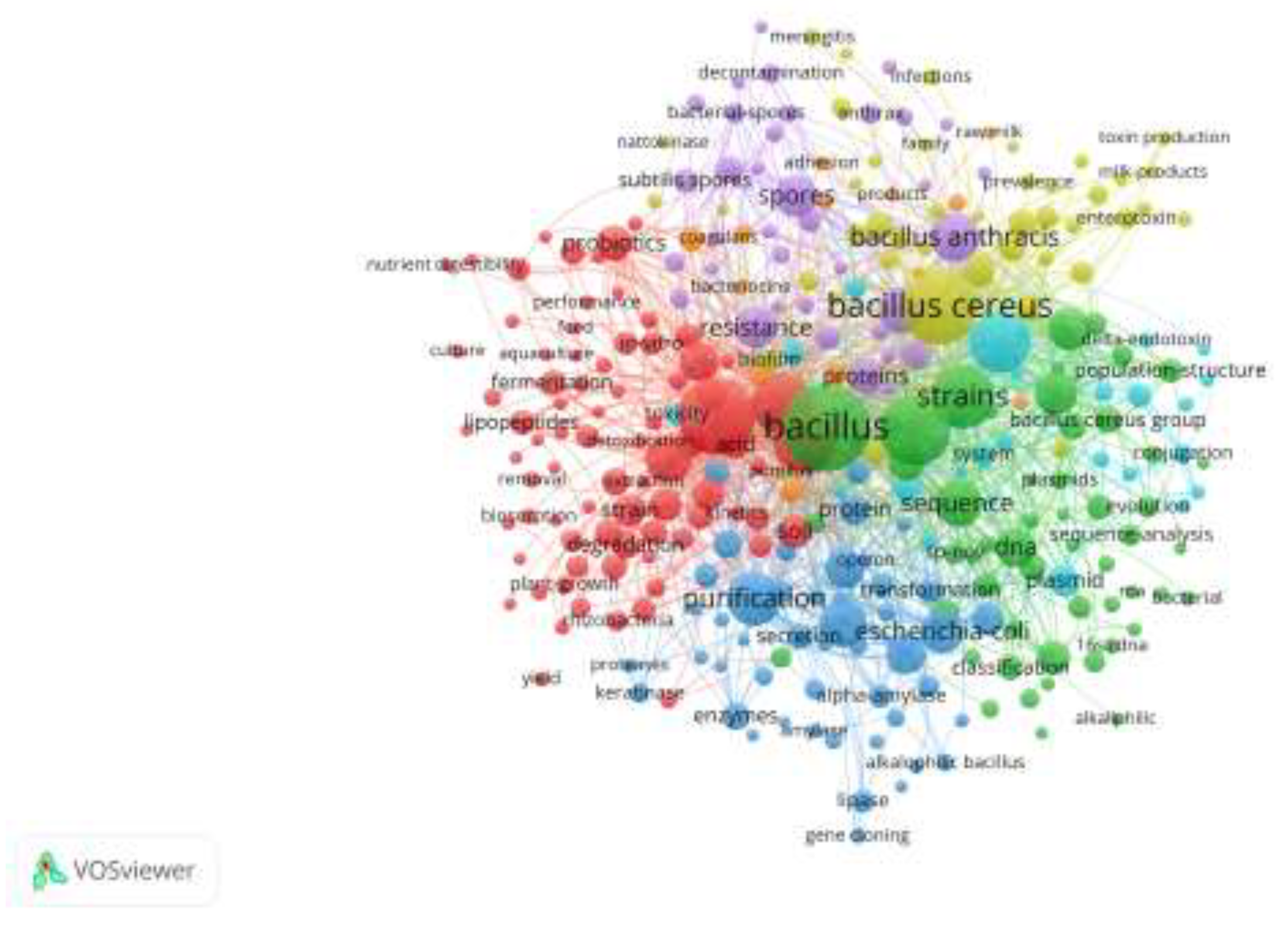
Figure 3.
Organization Analysis Visualized by VOSviewer. Collaborative connections are shown by the linking lines.
Figure 3.
Organization Analysis Visualized by VOSviewer. Collaborative connections are shown by the linking lines.
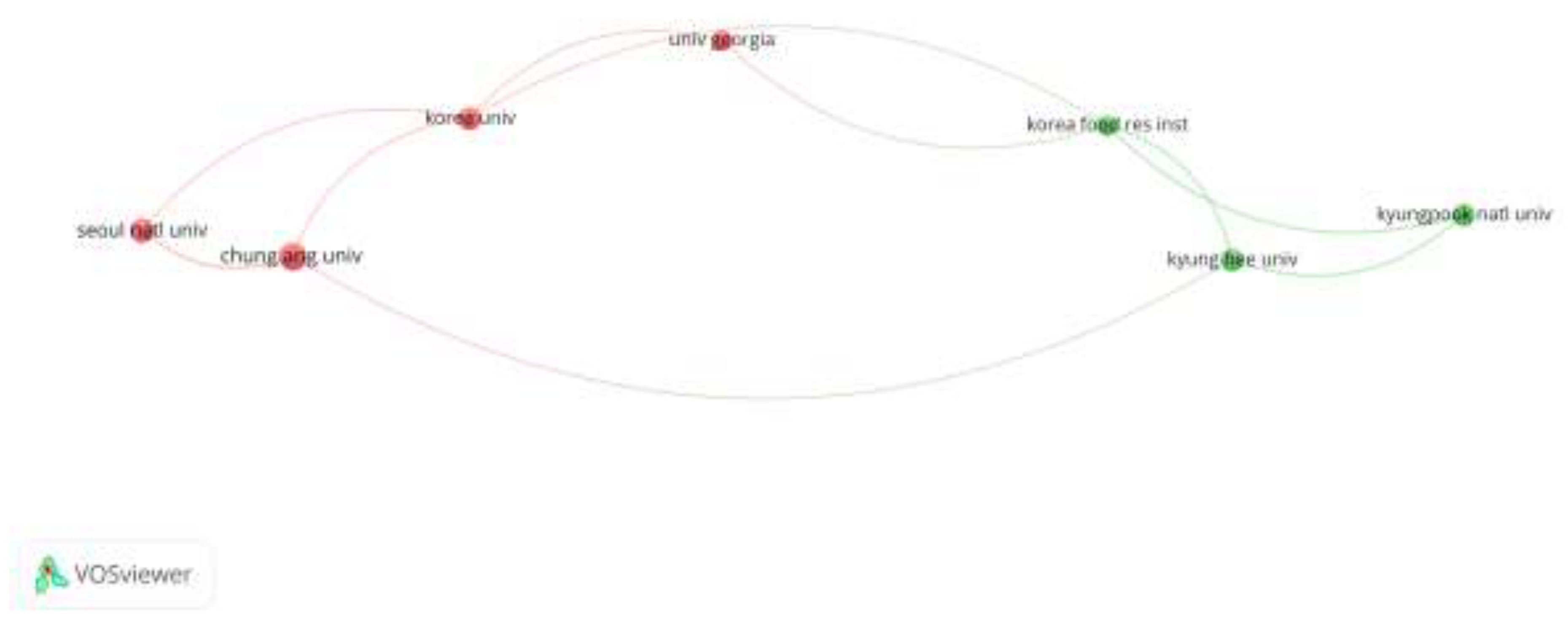
Figure 3.
Country/Region Analysis Visualized by VOSviewer. Collaborative connections are shown by the linking lines.
Figure 3.
Country/Region Analysis Visualized by VOSviewer. Collaborative connections are shown by the linking lines.
Disclaimer/Publisher’s Note: The statements, opinions and data contained in all publications are solely those of the individual author(s) and contributor(s) and not of MDPI and/or the editor(s). MDPI and/or the editor(s) disclaim responsibility for any injury to people or property resulting from any ideas, methods, instructions or products referred to in the content. |
© 2025 by the author. Licensee MDPI, Basel, Switzerland. This article is an open access article distributed under the terms and conditions of the Creative Commons Attribution (CC BY) license (https://creativecommons.org/licenses/by/4.0/).
Copyright: This open access article is published under a Creative Commons CC BY 4.0 license, which permit the free download, distribution, and reuse, provided that the author and preprint are cited in any reuse.


