
Submitted:
16 January 2025
Posted:
16 January 2025
You are already at the latest version
Abstract
The aim of this study was to explore the differences in the expression of foxtail millet characteristics between different years, and scientifically determine the stability within foxtail millet varieties and the distinctness between varieties. Using 69 foxtail millet germplasm resources as test materials, data on quantitative and qualitative characteristics of foxtail millet were obtained by the method of testing the DUS of foxtail millet. The 3-year testing data showed that the absolute average variation degree (ⅠVDⅠ) of each quantitative characteristic were as follows: single panicle weight 69.06%, peduncle length 45.99%, stem length 44.25%, single-grain number 39.90%. The absolute average variation degree (ⅠVDⅠ) of other characteristics were lower than 26.00%. The variation rates (VR) of each qualitative characteristic were as follows: dehusked grain color 35.21%, seedling leaf posture 32.39%, first leaf tip shape 25.35%, grain shape 25.35% , panicle shape 23.94%. The variation rates (VR) of other characteristics were lower than 16.00%. Compared with 2021, the average variation degree (VD) of 13 quantitative characteristics in 2022 were positive except for the negative average variation degree of heading stage, number of elongated internodes and number of culms per panicle. Compared with 2022, the average variation degree (VD) of the 10 quantitative characteristics in 2023 were negative except for the positive average variation degree of bristle length, width of blade, panicle density, single-grain number, single panicle weight and grain yield per panicle. The expression of different characteristics in foxtail millet varied in different years, and the corresponding variation should be referenced for different characteristics.
Keywords:
foxtail millet
; DUS
; quantitative characteristics
; qualitative characteristics
; variance rates
; variation degree
; stability
; distinctness
1. Introduction
Foxtail millet (Setaria italica (L.) Beauv.) originated in China has a long history of cultivation [1,2,3]. It is an important crop in the dry farming area of northern China, characterized by drought tolerance, poor soil tolerance, high water use efficiency, and wide adaptability [4]. With the rapid development of foxtail millet breeding, more and more high-quality varieties have been bred, and what promoting the planting area increased year by year [5], also its economic benefits are becoming more prominent [6]. Especially the successful breeding of hybrid foxtail millet [7,8,9,10,11,12,13], which adds strength to ensuring world food security.
China has rich resources of foxtail millet [14], with many varieties. Many scholars have reported research on different aspects, such as cellular [15], genetic [16,17], cultivation [18], germplasm bank construction [19], processing and utilization [20], but there are no reports on the differences in foxtail millet characteristics in different years. In order to protect and make reasonable use of germplasm resources, standardize variety breeding, and promote the healthy development of the seed industry, China has promulgated and implemented the new "Seed Law of the People's Republic of China", which requires that crops applying for protection, certification and registration of plant variety rights must undergo plant variety DUS testing (testing for plant variety uniformity, stability, and distinctiveness, referred to as DUS testing), and have a qualified DUS testing. In the DUS testing, the accurate determination of intra-variety stability and inter-variety distinctiveness is particularly important [21,22,23]. Especially in the case of disputes over variety rights, the DUS testing report plays a pivotal role. The DUS determination of any characteristic determines the right of the variety, so it is necessary to accurately determine the phenotypic characteristic.
Due to the influence of external environment, there are different degrees of variation in phenotypic characteristics from year to year. It is the most important work at present to grasp and analyze the degree of difference objectively and accurately, and issue the DUS testing report scientifically and accurately. This experiment systematically analyzed the annual differences in 32 basic characteristics of 69 foxtail millet varieties from six provinces of China for first time. It providing a reference for more objective, scientific, and accurate determination of the stability within foxtail millet varieties and the distinctiveness in different varieties.
2. Materials and Methods
2.1. Plant Materials and Field Experiments
With 69 varieties of foxtail millet germplasm resources as experimental materials. They include varieties from the main production areas of foxtail millet in Hebei, Shanxi, Inner Mongolia in China, as well as some varieties from Shandong, Shaanxi, and Guangdong (Table 1). Planting experiments were conducted in Zhangjiakou City, Hebei Province, China (115° 30’ E, 40° 60’ N, altitude 688m) from 2021 to 2023. The experimental field is an irrigated field with a calcareous soil, which has been in long-term rotation with soybeans. The experiments were designed using a randomized complete block design with two replicates. Each variety was planted in mid-May, with a minimum of 300 plants per plot planted in 4 rows. Each plot measured 5 m in length and 1.6 m in width. Row spacing was 40 cm and the plant spacing is about 5 cm. All experiments were performed according to standard agricultural practices. After planting the plots were irrigated 1–2 times. Each variety is observed for two consecutive growing cycles.
2.2. Determination of Phenotypic Characteristics and Data Collection
In total, 32 characteristics were investigated as outlined in the foxtail millet DUS testing guidelines (Table 2), comprising 1 qualitative (QL), 15 pseudo-quantitative (PQ), and 16 quantitative (QN) characteristics. All quality characteristics and pseudo-quality characteristics were investigated using the scoring method, and quantitative characteristics were measured using professional measuring tools. The investigation time, location, and method for each characteristic were conducted in accordance with the provisions of the guidelines for the cunduct of tests for distinctness, uniformity, and stability-Foxtail millet(Setaria italica (L.)Beauv.)[24] (hereinafter referred to as the foxtail millet DUS test guidelines).
2.3. Data Statistics
Data were organized and analyzed using Microsoft Excel 2013 to calculate the annual variance rates (VR) of quality characteristics, and the minimum value (Min), maximum value (Max), mean, standard deviation (SD), and variation degree (VD) of quantitative characteristics. The correlation coefficient of quantitative characteristics was calculated using Origin 2021. The VR for each QL and PQ characteristic was calculated using the following formula: VR = Number of varieties with character variation/ Total number of tested varieties × 100%. The VD for QN characteristic in consecutive years was calculated using the following formula: VD =(the mean of one characteristic for this year - the mean of this characteristic for last year)/ the mean of the characteristic for last year × 100%. A negative VD indicates the degree of shortening, decreasing or decreasing of a characteristic compared to the previous year, while a positive is the opposite. The mean of VD reflects the variation trend of a certain character of the whole varieties, and the absolute mean of VD reflects the difference amplitude of a certain character of the whole varieties.
3. Results
3.1. Annual Differences in Quality Characteristics
The experimental data showed that among the QL and PQ characteristics, the highest annual variance rate was dehusked grain color, accounting for 35.21%, followed by: seedling leaf posture (32.39%), tip shape of first leaf (25.35%), grain shape (25.35%), panicle tape (23.94%), peduncle attitude (15.49%), grain color (11.27%), plant leaf posture (8.45%), seedling leaf color (5.63%), bristles color (5.63%),anther color (5.63%), anthocyanin coloration of pulvinus (4.23%), color of glume (4.23%), plant color (2.82%), seedling leaf sheath color (1.41%)and endosperm type (0.00%) (Figure 1).
3.2. Coefficient of Variation of Quantitative Characteristics Among Years
The coefficient of variation (CV; %) for all quantitative characteristics was calculated as CV¼ S = X, where S is the standard deviation and X is the mean. The coefficient of variation for the 17 QN of the tested varieties from 2021 to 2023 was 5.24%~44.12% (Table 3). In 2021, the coefficient of variation for the number of culms per panicle was the highest at 44.12%, while the coefficient of variation for the number of elongated internodes was the lowest at 6.37%. The coefficients of variation of other characteristics were as follows: single-grain number 36.84%, single panicle weight 31.33%, bristles length 31.25%, stem length 31.03%, peduncle length 28.19%, grain yield per panicle 19.46%, panicle length 18.44%, panicle density 15.76%, stem diameter 12.74%, length of blade 11.95%, heading date 11.54%, panicle diameter 11.15%, 1000 grain weight 10.00%, and width of blade 9.31. In 2022, the coefficient of variation for the number of culms per panicle was the highest, at 39.66%. While the coefficient of variation for the number of elongated internodes was the lowest at 9.67%. The coefficients of variation for the other characteristics in descending order, were as follows: single-grain number 35.02%, single panicle weight 25.43%, bristles length 23.33%, panicle density 18.93%, peduncle length 18.38%, grain yield per panicle 15.93%, stem length 14.56%, panicle length 11.97%, panicle diameter 11.94%, length of blade 11.87%, heading date 11.21%, width of blade 10.68%, 1000 grain weight 10.32%, and stem diameter 9.88%. In 2023, the coefficient of variation for the number of culms per panicle was the highest at 38.81%, while the coefficient of variation for the grain yield per panicle was the lowest at 5.24%. The coefficients of variation for the other characteristics in descending order, were as follows: single-grain number 31.93%, bristles length 29.91%, single panicle weight 26.52%, panicle density 25.32%, peduncle length 19.08%, panicle diameter 16.55%, panicle length 14.73%, width of blade 14.53%, stem diameter 14.30%, stem length 12.94%, heading date 12.81%, number of elongated internodes 11.82%,1000 grain weight 10.58%,and length of blade 9.02%.
3.3. Annual Differences in Quantitative Characteristics
Compared with 2021, the VD in the length of blade of all tested varieties in 2022 were all positive, while the VD in other quantitative characteristics were both positive and negative (Figure 2). The negative average VD were: number of culms per panicle -10.44%, number of elongated internodes -6.41%, and heading date -0.44%. The average VD that were positive were: single panicle weight 47.12%, peduncle length 44.95%, stem length 43.36%, single-grain number 27.28%, panicle length 24.89%, grain yield per panicle 23.64%, width of blade 15.20%, bristles length 13.00%, panicle diameter 9.41%, 1000 grain weight 7.06%, stem diameter 5.05%, and panicle density 3.99%. The absolute mean value of VD, from highest to lowest, are as follows: single panicle weight 49.25%, peduncle length 45.99%, stem length 44.25%, single-grain number 39.90%, panicle length 25.44%, grain yield per panicle 24.64%, length of blade 23.90%, number of culms per panicle 23.01%, bristles length 17.43%, width of blade 15.41%, panicle diameter 10.45%, stem diameter 10.17 %, 1000 grain weight 8.08%, number of elongated internodes 7.31%, panicle density 6.16%, and heading date 4.42%.
Compared with 2022, the VD in bristles length and panicle density of all varieties tested in 2023 were positive (Figure 3), with an average of 1.59% and 2.90%. The VD of stem length and number of elongated internodes of all varieties was negative, with an average of -1.02% and -6.09%. The average VD of other quantitative characteristics was negative, which were as follows: length of blade -9.86%, peduncle length -8.19%, number of culms per panicle -6.03%, panicle length -5.57%, 1000 grain weight -5.15%, stem diameter -4.75%, heading date -3.33%, panicle diameter -1.30%. The average VD was positive as follows: single panicle weight 42.75%, single-grain number 26.67%, width of blade 6.82% and grain yield per panicle 3.66%. The absolute mean values of VD in descending order are as follows: single panicle weight 69.06%, single-grain number 29.65%, number of stems per panicle 23.03%, peduncle length 13.81%, width of blade 11.66%, panicle diameter 11.14%, length of blade 10.44%, grain yield per panicle 9.18%, panicle length 8.61%, stem diameter 7.67%, 1000 grain weight 6.64%, number of elongated internodes 6.09%, heading date 5.43%, panicle density 2.90%, bristles length 1.59%, and stem length 1.02%.
The average VD of quantitative characteristics of 69 varieties tested from 2021 to 2023 was -8.97% to 28.30% (Figure 4). The average VD was negative as follows: number of stems per panicle -8.97%, number of elongated internodes -6.30% and heading date -1.41%. The average VD was positive as follows: single panicle weight 28.30%, peduncle length 27.24%, single-grain number 24.24%, stem length 23.65%, grain yield per panicle 16.98%, panicle length 14.74%, length of blade 12.64%, width of blade 12.41%, bristles length 9.20%, panicle diameter 5.84%, panicle density 3.62%, 1000 grain weight 2.99% and stem diameter 1.79%. The absolute mean of the VD in descending order were as follows: single panicle weight 38.50%, peduncle length 35.26%, stem length 34.75%, single-grain number 33.64%, number of stems per panicle 23.01%, panicle length 19.83%, grain yield per panicle 19.49%, length of blade 9.41%, width of blade 14.16%, bristles length 12.15%, panicle diameter 10.68%, stem diameter 9.34%, 1000 grain weight 7.60%, number of elongated internodes 6.91%, panicle density 5.07%, and heading date 4.75%.
The experimental data showed that the qualitative and pseudo-quantitative characteristics of different varieties had little variation compared with the quantitative characteristics. There were no variation in leaf sheath color, seedling leaf color, anthocyanin coloration of pulvinus, bristles color, anther color, plant color, plant leaf posture and glume color of most varieties. All tested varieties showed strong stability in the characteristic of grain endosperm type. This experimental investigation showed that the VD of quantitative characteristics of the tested varieties varied between different years. Compared with 2021, the characteristics with large fluctuations in 2022 were as follows: stem length, peduncle length and single panicle weight, the absolute average of VD was greater than 40%.Compared with 2022, only the single panicle weight and the single-grain number in 2023 have changed, with variations of 69.06% and 29.65% respectively, while the other quantitative characteristics have changed little.
3.4. Correlation Analysis of Quantitative Characteristics
Origin 2021 was used to calculate the correlation coefficient among various quantitative characteristics, and the results showed that (Figure 5) the length of blade was positively correlated with the width of blade, stem length, stem diameter, peduncle length, panicle length, panicle diameter, single panicle weight, grain yield per panicle and 1000 grain weight, and was negatively correlated with the number of stems per panicle. The width of blade was positively correlated with stem length, stem diameter, peduncle length, single-grain number, single panicle weight and grain yield per panicle, and was negatively correlated with number of stems per panicle. The number of stems per panicle was significantly negatively correlated with peduncle length, single-grain number, single panicle weight, grain yield per panicle and 1000 grain weight. Among all significant correlations, the largest significantly positive correlation (r = 0.77) was observed between characteristic 6 and characteristic 17, whereas the largest significantly negative correlation (r = −0.65) was observed between characteristic 14 and characteristic 18.
4. Discussion
4.1. QL and PQ Characteristics Variation of Foxtail Millet Resources
This study systematically analyzed the variations in the expression of qualitative, pseudo-quantitative and quantitative characteristics of different sorghum varieties over the years for the first time. Lü et al. Xiang et al. and Ji et al. reported on the genetic diversity of foxtail millet-related phenotypic characteristics, and consistently found that the genetic diversity index of quantitative characteristics is higher than that of qualitative characteristics [25,26,27,28]. Most scholars believe that the higher the diversity index, the more likely the characteristic is to undergo variation [29,30].The view of this article is consistent with theirs. In this experiment, the same varieties were observed for two consecutive years, and it was found that the top shape of first leaf of 18 varieties had changed, which was the difference between the pointed and the pointed to rounded. It may be caused by the change of leaf length caused by the influence of the environment between years. But the variation between years was not significant. The leaf color of seedlings of 4 varieties changed, which was the variation between yellowish-green and green, indicating that only some special varieties had slight changes in leaf color under the influence of annual environment. Only one variety showed variation in the leaf sheath color, which was between light purple and medium purple, indicating that this characteristic is relatively stable. The seedling leaf posture of 23 varieties changed from upright to semi-upright, and from semi-upright to spreading, indicating that the characteristic was greatly influenced by the environment during the seedling stage. There were 6 varieties with variant leaf postures, which were semi-upright and spreading, indicating that the leaf posture of the plant was relatively stable than that of seedling. The anther color of 4 varieties varied, with a difference between white and yellow. Since the foxtail millet testing guidelines only specify three anther colors: white, yellow and brown, in fact, this experiment showed that the anther color of individual varieties varies from white to light yellow or even a little lighter from year to year. This indicates that the anther color of a few varieties may vary slightly under the influence of the environment, and it also suggests that the current coding for millet anther color is no longer sufficient for DUS testing of new varieties. The testing guidelines urgently need to be revised. The color of glume of 3 varieties changed, showing differences between green, red, and light purple. Since the millet testing guidelines specify the period for observing the color of glume, some varieties may continue to change after this observation period. Whether the optimal observation time for this characteristic needs to be adjusted remains to be studied. There were 11 varieties with changes in panicle neck attitude, which was the difference between medium curve, strong curve and hook shape. Among them, 5 varieties did not make panicle neck attitude more curved due to the increase of panicle weight. It indicating that this characteristic may be influenced by other reasons besides environment. There were 17 varieties with panicle shape variation, which were the differences among conical, spindle, cylinder and club, the most common shape in the field. Xiangji Shan et al. [31] reported that the same variety of millet would produce 4 different panicle shape variations through EMS mutation, which proved that there were multiple genes controlling panicle shape. The experiment also confirmed that some varieties had different degrees of variation in panicle shape from year to year. There were 8 varieties of grain color variation, although the amount of variation was small but the degree of variation was high, which was manifested as the difference between white, yellow, red and gray. Whether the variation of grain color was related to the annual grain maturity remains to be further studied. There were 25 varieties with dehusked grain color variation, which was between light yellow and medium yellow. Although the variation rate was high, the variation difference was small. This indicating that the environment had little influence on dehusked grain color between years. There was no varietal variation in endosperm type was found between years, which is in agreement with the report by Jijun jian et al. [24] that grain endosperm type diversity in foxtail millet is extremely low. The determination of glutinousness of grains is determined by chemical color reaction, and the glutinousness of grains depends on the content of starch in grains. Glutinous foxtail millet contains a high amount of amylopectin, while japonica foxtail millet contains a high amount of amylose. Therefore, whether the endosperm type of grains should be revised to measure the content of amylopectin remains to be discussed.
4.2. QN Characteristics Variation of Foxtail Millet Resources
The expression of quantitative characteristics varied to different degrees under the influence of the external environment between years. In this experiment, the variation of quantitative characteristics with a 100% difference rate include: length of blade, width of blade, stem length, stem diameter, number of elongated internodes, peduncle length, panicle length, single-grain number, single panicle weight and grain yield per panicle. The average annual variation amplitude of quantitative characteristics from large to small were as follows: single panicle weight 38.50%, peduncle length 35.26%, stem length 34.75%, single-grain number 33.64%, number of stems per panicle 23.01%, panicle length 19.83%, grain yield per panicle 19.49%, length of blade 9.41%, width of blade 14.16%, bristles length 12.15%, panicle diameter 1.68%, stem diameter 9.34%, 1000 grain weight 7.60%, number of elongated internodes 6.91%, panicle density 5.07% and heading date 4.75%. The variation amplitude can be used as a reference factor for the stability of quantitative characteristics.
5. Conclusion
In this study, it was found that the expression of the qualitative, pseudo-quantitative and quantitative characteristics of foxtail millet varieties of the same variety or different propagation types varied in different degrees from year to year. The variation degree of quantitative characteristics was higher than that of qualitative and pseudo-quantitative characteristics. The annual variation in qualitative characteristics of color is less than that in characteristics of shape and posture. The annual assignment codes for quality characteristics of foxtail millet except for the endosperm type varied by 0~1, or the absolute average variation degree of single panicle weight, stem length, peduncle length, single-grain number ranging from 0~3%, the grain yield per panicle, panicle length, number of stems per panicle, length of blade ranging from ~25%, the width of blade, panicle diameter ranging from 0~15%, the stem diameter, number of elongated internodes, 1000 grain weight ranging from 0~10%, and the heading date ranging from 0~5%, then the stability of the variety can be considered qualified. Due to the limited experimental materials, only the annual experimental observation was done in the northwest region of Hebei Province, so the obtained model data are for reference only, and can be adjusted according to needs in different planting areas. Since the variation degree of various characteristics among varieties fluctuates greatly, when necessary, the distinctness of varieties can be determined by combining the difference of gene loci between varieties.
Declaration of Competing Interest
The authors declare that they have no conflicts of interest.
Data Availability Statement
The original contributions presented in the study are included in the article/Supplementary Material, further inquiries can be directed to the corresponding authors.
References
- Ding, Y.D.; Nie, S. H. ; Wang, X; Hu, X. W.; Feng, G.J.; Geng, H.W.; Zhan, S.S. Genetic diversity of agronomic traits of foxtail millet ( Setaria italica ( L.) Beauv.) mainly bred varieties in xinjiang province,China[J]. Journal of Plant Genetic Resources, 2018, 19, 211–221. [Google Scholar]
- Martin, L.; Messager, E.; Bedianashvili, G.; Rusishvili, N.; Lebedeva, E.; Longford, C.; Hovsepyan, R.; Bitadze, L.; Chkadua, M.; Vanishvili, N.; Le, M.F.; Kakhiani, K.; Abramishvili, M.; Gogochuri, G.; Murvanidze, B.; Giunashvili, G.; Licheli, V.; Salavert, A.; Andre, G.; Herrscher, E. The place of millet in food globalization during Late Prehistory as evidenced by new bioarchaeological data from the Caucasus[J]. Scientific Reports, 2021, 11, 13124. [Google Scholar] [CrossRef] [PubMed]
- Pospieszny, Ł.; Makarowicz, P.; Lewis, J.; Górski, J.; Taras, H.; Włodarczak, P.; Szczepanek, A.; Ilchyshyn, V.; Jagodinska, M.O.; Czebreszuk, J.; Muzolf, P.; Nowak, M.; Polańska, M.; Juras, A.; Chyleński, M.; Wójcik, I.; Lasota-Kuś, A.; Romaniszyn, J.; Tunia, K.; Przybyła, M.M.; Grygiel, R.; Matoga, A.; Makowiecki, D.; Goslar, T. Isotopic evidence of millet consumption in the Middle Bronze Age of East-Central Europe[J]. Journal of Archaeological Science, 2021, 126, 105292. [Google Scholar] [CrossRef]
- Diao, X.M. Progresses in stress tolerance and field cultivation studies of orphan cereals in China[J]. Scientia Agricultura Sinica, 2019, 52, 3943–3949. [Google Scholar]
- Qu, J.J. Chinese academy of agricultural sciences thesis[D].Beijing: Chinese Academy of Agricultural Sciences Thesis, 2021.
- Bian, S.H.; Xing, G.F.; Liang, X.; Zhang, S.W.; Wang, J.N.; Ye, H.Y. Effects of different forms selenium and dosage on foxtail millet growth and physiology at seedling stage[J]. Crops,2023,(01):152-157.
- Li, S.Y.; Cui, Y.J.; Dou, B.F.; Liu, Z.L. Research progress and discussion on related issues of heterosis utilization of foxtail millet [Setaria italica ( L. ) P. Beauv.) in China[J]. Chinese Agricultural Science Bulletin, 2023, 39, 24–32. [Google Scholar]
- Cheng, R.H. The present situation of foxtail millet (Setaria italica Beauv) breeding and production as well as the further research directions in China[J]. Journal of Hebei Agricultural Sciences, 2005, 9, 86–90. [Google Scholar]
- Liu, J.J; Zhao, Z. H. Cultivation technology and extension experiences of hybrid millet in Ethiopia[J]. Journal of Hebei Agricultural Sciences, 2012, 16, 9–12. [Google Scholar]
- Tian, G.; Wang, Y.W.; Li, H.X.; Wang, G.H.; Shi, Q.X. Breeding and studies of foxtail millet hybrid changzagu 2 with herbicide-resistance[J]. Journal of Agricultural Science and Technology. 2009, 11(S2):138-141.
- Jing, X.L.; Li, Z.H.; Mu, T.T.; Zhang, F.Y. simplified cultivation techniques for millet hybrid jingu 50 of herbicide resistance[J]. Crops, 2016, 2, 168–172. [Google Scholar]
- Shi, G.Y.; Yang, C.Y.; Shi, G.S.; Ma, H.F.; Hou, G.L. Analysis of cultivation and management measures on corn breeding in hainan[J]. Crops, 2012, 5, 112–113. [Google Scholar]
- Niu, Y.H.; Li, Y.; Shi, Y.S.; Song, Y.C.; Ma, Z.Y.; Wang, T.Y.; Darmency, H. AFLP Mapping for the Gene Conferring Sethoxydim Resistance in Foxtail Millet (Setaria italica (L. ) Beauv.) [J]. Acta Agronomica Sinica, 2002, 28, 359–362. [Google Scholar]
- Jia, G.Q.; Diao, X.M. Current status and perspectives of researches on foxtail millet (Setaria italica (L. )P. Beauv.): A potential model of plant functional genomics studies[J]. Chinese bulletin of life sciences, 2017, 29, 292–301. [Google Scholar]
- Li, J.L.; Wang, S.B.; Li, Y.J.; Hao, X.Y.; Zong, Y.Z.; Zhang, D.S.; Shen, J.; Shi, X.R.; Li, P. Effects of elevated CO2 concentration on cell structure and stress resistance physiology of setaria italica under drought stress[J]. Chinese Journal of Applied Ecology, 2023, 34, 1281–1289. [Google Scholar] [PubMed]
- Dai, S.T.; Zhu, C.C.; Ma, X.Q.; Qin, N.; Song, Y.H.; Wei, X.; Wang, C.Y.; Li, J.X. Genome-wide identification of the HAK/KUP/KT potassium transporter family in foxtail millet and its response to K+ deficiency and high salt stress[J]. Acta Agronomica Sinica, 2023, 49, 2105–2121. [Google Scholar]
- Li, K.Y.; Wang, R.; Zhao, P.Y.; Guo, E.H.; Zhang, A.Y.; Zhang, L. Construction and genetic transformation of millet sibl1 gene promoter and GUS fusion cector[J]. Molecular Plant Breeding, network launch: 2023-02-16.
- Ma, J.Y.; Wang, S.; Li, Y.; Guo, Z.Q.; Wang, J.; Lin, X.H.; Han, Y.C. Effects of planting density on agronomic characteristics and yield of foxtail millet[J]. Crops, 2023,(02):222-228.
- Song, H.; He, Z.; Li, G.Q.; Xie, H.F.; Xing, L.; Li, L.; Wang, S.Y.; Liu, J.R.; Zheng, G.Q. Construction of backbone germplasm bank based on the phenotypic traits of foxtail millet[J]. Journal of China Agricultural University, 2022, 27, 102–115. [Google Scholar]
- Sharma, N.; Niranjan, K. Foxtail millet: Properties, processing, health benefits, and uses[J]. Food Reviews International, 2018, 34, 329–363. [Google Scholar] [CrossRef]
- Riek, D.J.; Calsyn, E.; Everaert, I.; Bockstaele, V.E.; Loose, D.M. AFLP based alternatives for the assessment of distinctness, uniformity and stability of sugar beet varieties[J]. Theoretical and Applied Genetics, 2001, 103, 1254–1265. [Google Scholar] [CrossRef]
- Singh, R.K.; Sharma, R.K.; Singh, A.K.; Singh, V.P.; Singh, N.K.; Tiwari, S.P.; Mohapatra, T. Suitability of mapped sequence tagged microsatellite site markers for establishing distinctness, uniformity and stability in aromatic rice[J]. Euphytica, 2004, 135, 135–143. [Google Scholar] [CrossRef]
- Arens, P.; Mansilla, C.; Deinum, D.; Cavellini, L.; Morett, Ai.; Rolland, S.; Schoot, H.; Calvache, D.; Ponz, F.; Collonnier, C.; Mathis, R.; Smilde, D.; Caranta, C.; Vosman, B. Development and evaluation of robust molecular markers linked to disease resistance in tomato for distinctness, uniformity and stability testing[J]. Theoretical and Applied Genetics, 2010, 120, 655–664. [Google Scholar] [CrossRef]
- Diao, X.M.; Li, W.; Zhao, Z.H.; Zhi, H.; Zhang, W.Y.; Wang, Y.F.; Wang, P. NY/T 2425-2013 Guidelines for the conduct of tests for distinctness, uniformity and stability-Foxtail millet (Setaria italica (L.) Beauv.).Beijing: China Agricultural Press,2013.
- Lv, J.Z.; Wang, H.Y.; Ren, Y.; Ma, J.P.; Zhao, K. Phenotypic evaluation and SSR genetic diversity analysis of foxtail millet cultivars in different ecological regions[J]. Journal of Nuclear Agricultural Sciences, 2023, 37, 471–482. [Google Scholar]
- Xiang, J.S.; Zhang, H.R.; Liu, H.; Suo, L.X.; Jia, S.J.; Zhang, Y.; Shi, J.Q.; Hu, L.Z.; Cai, Y.N. Comparison of phenotypic traits of foxtail millet germplasm resources from different ecological regions[J]. Journal of Agricultural Science and Technology, 2020, 22, 31–41. [Google Scholar]
- Xiang, J.S.; Xu, F.; Suo, L.X.; Cheng, K.; Wang, Y.C.; Meng, H.L.; Zhang, J.L.; Jia, B.; Wang, D.X.; Diao, X.M. Comparison on the phenotypic traits between landraces and cultivars of foxtail millet [Setaria italica (L. ) P. Beauv.] in Northeast China[J]. Journal of Plant Genetic Resources, 2018, 19, 642–656. [Google Scholar]
- Ji, J.J.; Fu, G.Q.; Kou, S.J.; Wang, Y.; Zuo, Z.X.; Yang, D.Z.; Liu, X.J.; Huo, A.H. Quantitative character classification and genetic diversity of new millet varieties based on DUS testing[J]. Seed, 2022, 41, 17–27. [Google Scholar]
- Liu, S.N. Analysis and evaluation of phenotypic diversity of ornamental crabapple[D]. Zhengzhou: Henan Agricultural University,2022.
- Zhang, B.B.; Cai, Z.X.; Shen, Z.J.; Yan, J.; Ma, R.J.; Yu, M.L. Diversity analysis of phenotypic characters in germplasm resources of ornamental peaches[J]. Scientia Agricultura Sinica, 2021, 54, 2406–2420. [Google Scholar]
- Xiang, J.S.; Zhi, H.; Yong, H.; Tang, S.; Wang, C.M.; Jia, G.Q.; Jia, Y.C.; Diao, X.M. Phenotypic analysis of panicle development mutants of foxtail millet [Setaria italica (L. ) P. Beauv.] [J]. Acta Agriculturae Boreali-occidentalis Sinica, 2020, 29, 1603–161. [Google Scholar]
Figure 1.
Variance rates of QL and PQ characteristics in 2021-2023.
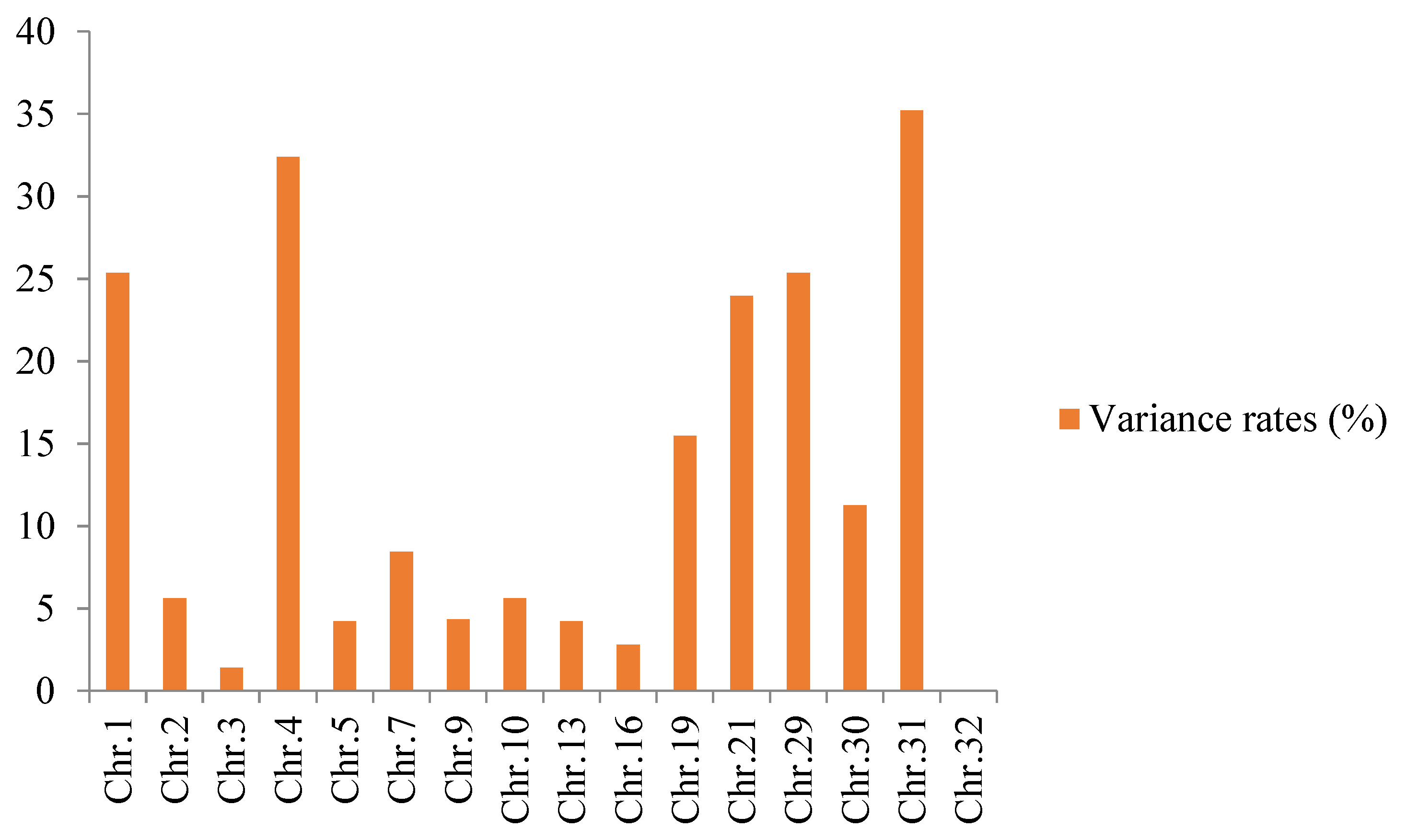
Figure 2.
Variation degree of quantitative characteristics among 46 cultivars in 2021-2022.
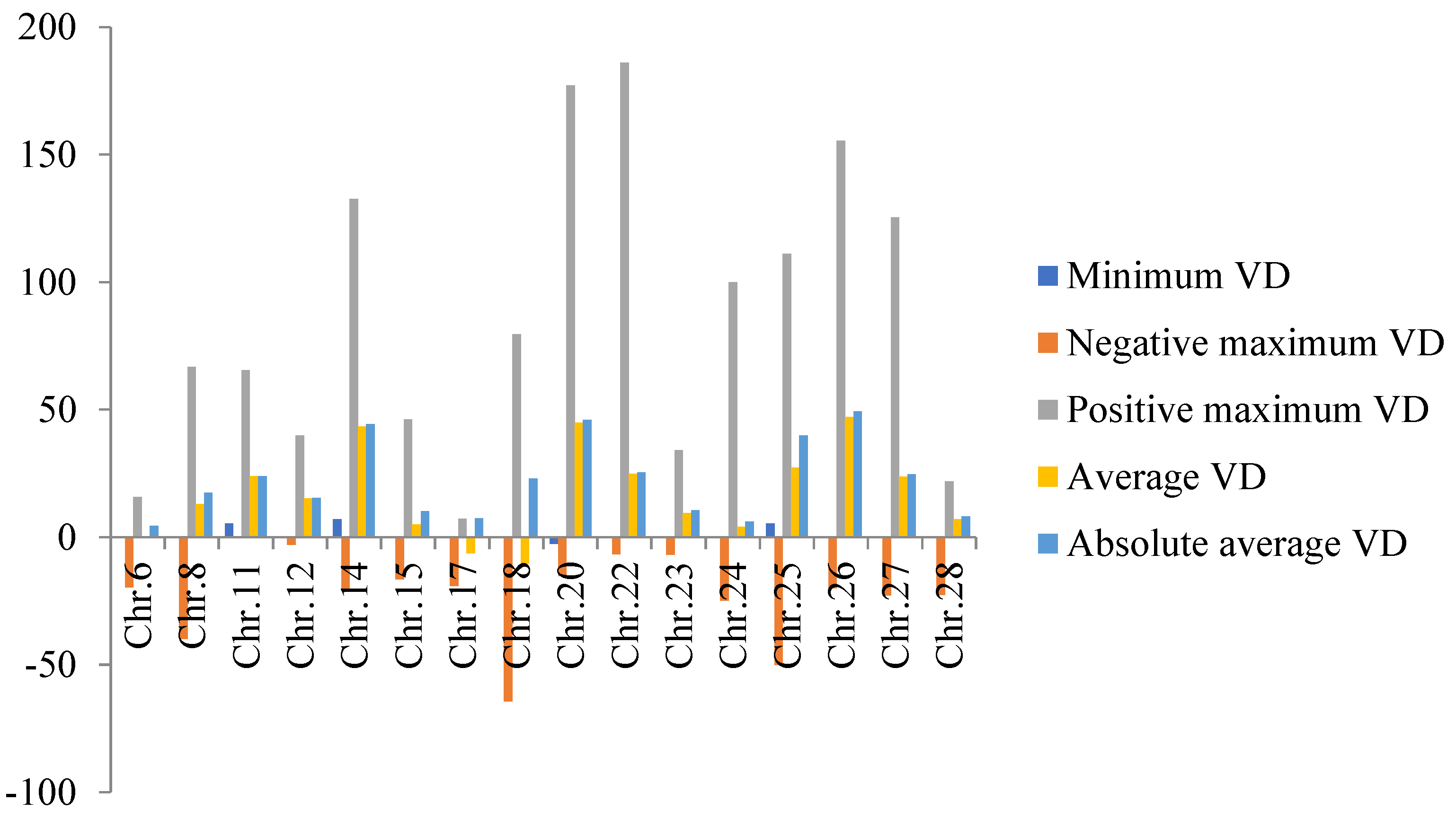
Figure 3.
Variation degree of quantitative characteristics among 23 cultivars in 2022-2023.
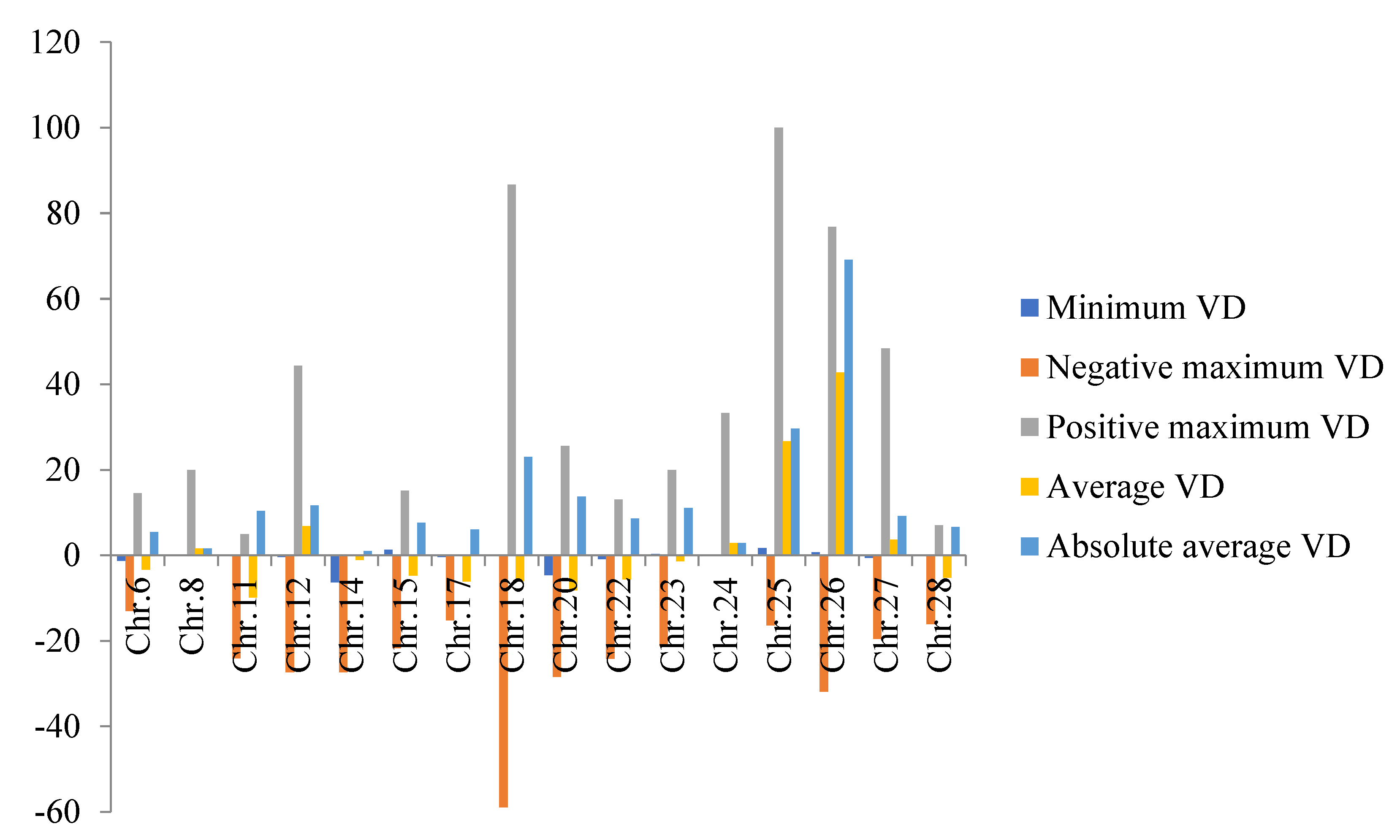
Figure 4.
Variation degree of quantitative characteristics among 69 cultivars in 2021-2023.
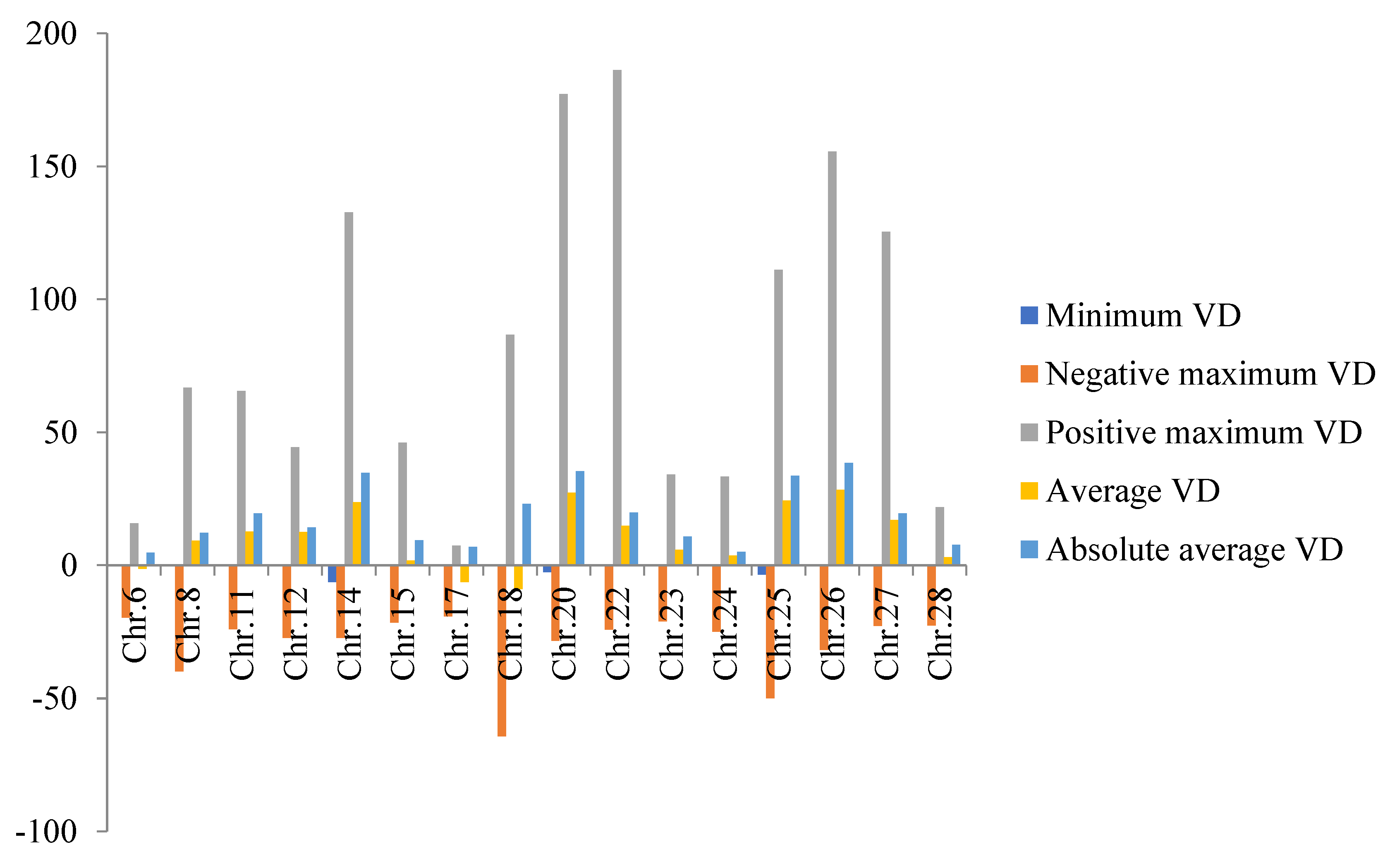
Figure 5.
The correlation coefficient of quantitative characteristics.
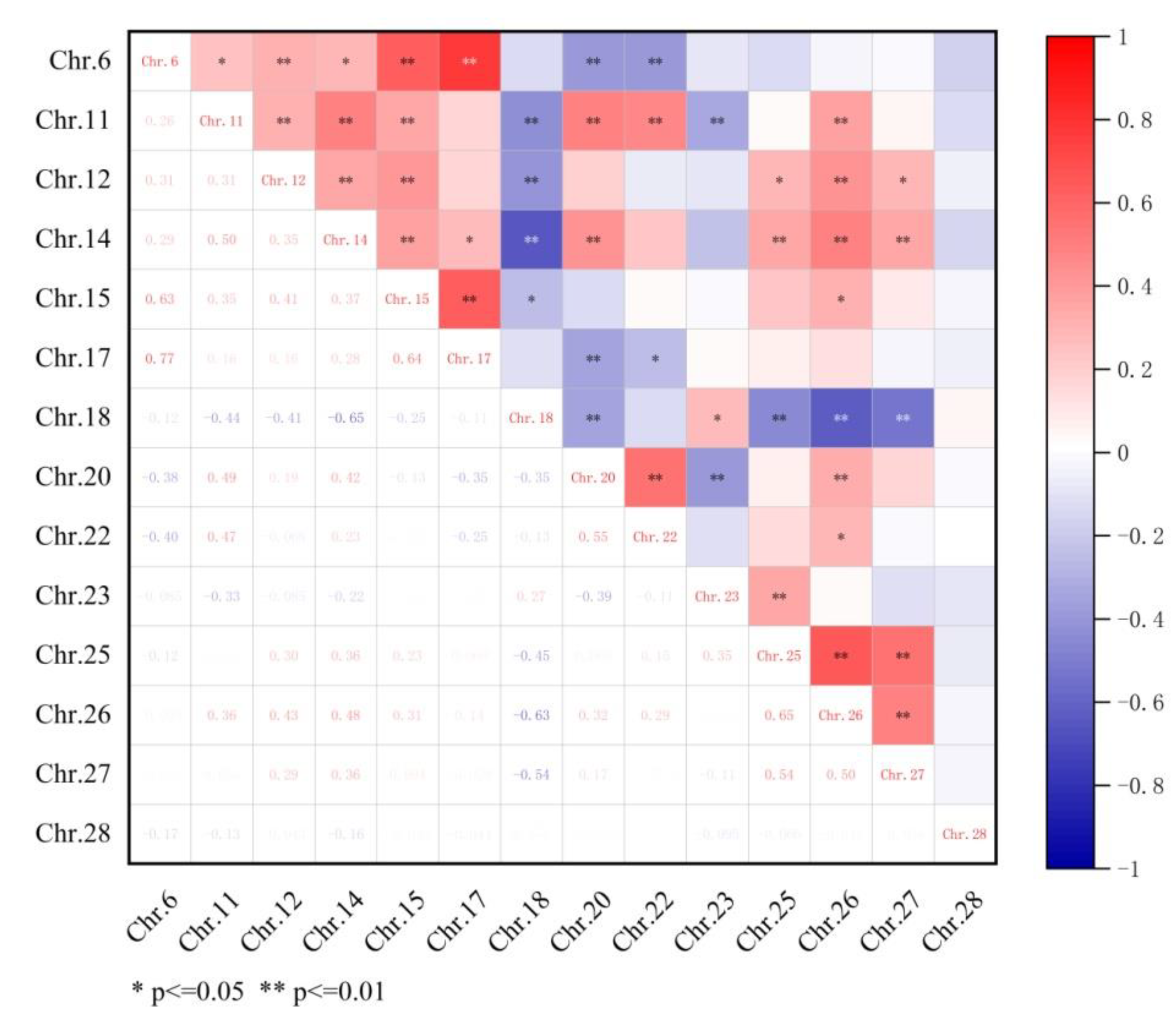

Table 1.
Varieties for the experiment.
| No. | Test year | Deposit number | Sources |
|---|---|---|---|
| 1 | 2021-2022 | XIN20619 | Hebei |
| 2 | 2021-2022 | XIN20621 | Hebei |
| 3 | 2021-2022 | XIN25046 | Hebei |
| 4 | 2021-2022 | XIN25049 | Hebei |
| 5 | 2021-2022 | XIN26180 | Hebei |
| 6 | 2021-2022 | XIN26181 | Shandong |
| 7 | 2021-2022 | XIN26183 | Hebei |
| 8 | 2021-2022 | XIN26184 | Hebei |
| 9 | 2021-2022 | XIN26778 | Shaanxi |
| 10 | 2021-2022 | XIN26779 | Shaanxi |
| 11 | 2021-2022 | XIN27067 | Hebei |
| 12 | 2021-2022 | XIN27068 | Hebei |
| 13 | 2021-2022 | XIN27069 | Hebei |
| 14 | 2021-2022 | XIN28314 | Hebei |
| 15 | 2021-2022 | XIN28315 | Hebei |
| 16 | 2021-2022 | XIN28317 | Hebei |
| 17 | 2021-2022 | XIN28318 | Hebei |
| 18 | 2021-2022 | XIN28649 | Guangdong |
| 19 | 2021-2022 | ZJK20171001 | Hebei |
| 20 | 2021-2022 | ZJK20171002 | Hebei |
| 21 | 2021-2022 | ZJK20171003 | Hebei |
| 22 | 2021-2022 | ZJK20171005 | Hebei |
| 23 | 2021-2022 | ZJK20171006 | Hebei |
| 24 | 2021-2022 | ZJK20171007 | Hebei |
| 25 | 2021-2022 | ZJK20171008 | Hebei |
| 26 | 2021-2022 | ZJK20171009 | Hebei |
| 27 | 2021-2022 | ZJK20171010 | Hebei |
| 28 | 2021-2022 | ZJK20171011 | Hebei |
| 29 | 2021-2022 | ZJK20171012 | Hebei |
| 30 | 2021-2022 | ZJK20171013 | Hebei |
| 31 | 2021-2022 | ZJK20171014 | Hebei |
| 32 | 2021-2022 | ZJK20171015 | Hebei |
| 33 | 2021-2022 | ZJK20171016 | Hebei |
| 34 | 2021-2022 | ZJK20171017 | Hebei |
| 35 | 2021-2022 | ZJK20171018 | Hebei |
| 36 | 2021-2022 | ZJK20171019 | Hebei |
| 37 | 2021-2022 | ZJK20171020 | Hebei |
| 38 | 2021-2022 | ZJK20171021 | Hebei |
| 39 | 2021-2022 | ZJK20171022 | Hebei |
| 40 | 2021-2022 | ZJK20171023 | Hebei |
| 41 | 2021-2022 | ZJK20171024 | Hebei |
| 42 | 2021-2022 | ZJK20171025 | Hebei |
| 43 | 2021-2022 | ZJK20171026 | Hebei |
| 44 | 2021-2022 | ZJK20171027 | Hebei |
| 45 | 2021-2022 | ZJK20171028 | Inner Mongolia |
| 46 | 2021-2022 | ZJK20171029 | Inner Mongolia |
| 47 | 2022-2023 | ZJK20171030 | Inner Mongolia |
| 48 | 2021-2022 | ZJK20171031 | Inner Mongolia |
| 49 | 2022-2023 | ZJK20181001 | Shanxi |
| 50 | 2022-2023 | ZJK20181002 | Shanxi |
| 51 | 2022-2023 | ZJK20181003 | Shanxi |
| 52 | 2022-2023 | ZJK20181003B | Shanxi |
| 53 | 2022-2023 | ZJK20181004 | Shanxi |
| 54 | 2022-2023 | ZJK20181004B | Shanxi |
| 55 | 2022-2023 | ZJK20181005 | Hebei |
| 56 | 2022-2023 | ZJK20181006 | Hebei |
| 57 | 2022-2023 | ZJK20181006B | Hebei |
| 58 | 2022-2023 | ZJK20181007 | Hebei |
| 59 | 2022-2023 | ZJK20181008 | Shanxi |
| 60 | 2022-2023 | ZJK20181009 | Shanxi |
| 61 | 2022-2023 | ZJK20181010 | Shanxi |
| 62 | 2022-2023 | XIN09882 | Shandong |
| 63 | 2022-2023 | XIN24684 | Inner Mongolia |
| 64 | 2022-2023 | XIN28946 | Hebei |
| 65 | 2022-2023 | XIN28947 | Shanxi |
| 66 | 2022-2023 | XIN29471 | Hebei |
| 67 | 2022-2023 | XIN30208 | Inner Mongolia |
| 68 | 2022-2023 | XIN30209 | Shandong |
| 69 | 2022-2023 | XIN31919 | Hebei |
Table 2.
The information on foxtail millet DUS testing characteristics.
| Characteristics | Character code | Type of expression | Method of observation | States and code of expression |
|---|---|---|---|---|
| First leaf: shape of tip | char1 | PQ | VG | pointed(1)pointed to rounded(2)rounded(3) |
| Seedling: leaf color | char2 | PQ | VG | yellowish green(1)green(2)light purple(3)dark purple (4) |
| Seedling: leaf sheath color | char3 | PQ | VG | green(1)light purple(2)medium purple(3) |
| Seedling: leaf posture | char4 | PQ | VG | upright(1)semi-upright(2)spreading(3)drooping(4) |
| Seedling: anthocyanin coloration of pulvinus | char5 | PQ | VG | absent or weak(1)medium(2)strong(3) |
| Time of heading | char6 | QN | MG | very early(1)early(3)medium(5)late(7)very late(9) |
| Plant: leaf posture | char7 | PQ | VG | upright(1)semi-upright(2)spreading(3)drooping(4) |
| Panicle: length of bristles | char8 | QN | VG | short(3)medium(5)long(7) |
| Panicle: bristles color | char9 | PQ | VG | green(1)yellow(2)purple(3) |
| Anther: color | char10 | PQ | VG | white(1)yellow(2)brown(3) |
| The penultimate leaf: length of blade | char11 | QN | MS/MG | short(1)medium(3)long(5) |
| The penultimate leaf: width of blade | char12 | QN | MS/MG | narrow(1)medium(3)broad(5) |
| Panicle: color of glume | char13 | PQ | VG | yellowish green(1)green(2)red(3)light purple(4)medium purple(5) |
| Stem: length | char14 | QN | MS/MG | very short(1)short(3)medium(5)long(7)very long(9) |
| Stem: diameter | char15 | QN | MS/MG | narrow(3)medium(5)broad(7) |
| Plant: color | char16 | PQ | VG | yellow(1)green(2)light purple(3)medium purple(4) |
| Plant: number of elongated internodes | char17 | QN | MG | few(1)medium(3)many(5) |
| Plant: number of culms per panicle | char18 | QN | MS | few(1)medium(3)many(5) |
| Panicle: peduncle attitude | char19 | PQ | VG | erect(1) semi-erect(2)strong curve(3)claw(4) |
| Panicle: peduncle length | char20 | QN | MS | short(3)medium(5)long(7) |
| Panicle: type | char21 | PQ | VG | conical(1)spindle(2)cylindrical(3)club(4)duck mouth(5)cat foot(6)branched(7) |
| Panicle: length | char22 | QN | MG | very short(1)short(3)medium(5)long(7)very long(9) |
| Panicle: diameter | char23 | QN | MS | narrow(3)medium(5)broad(7) |
| Panicle: density | char24 | QN | VG | lax(1)lax to medium(2)medium(3)medium to dense(4)dense(5) |
| Panicle: single-grain number | char25 | QN | MG | very few(1)few(3)medium(5)many(7)very many(9) |
| Panicle: single panicle weight | char26 | QN | MS | very low(1)low(3)medium(5)high(7)very high(9) |
| Panicle: grain yield per panicle | char27 | QN | MS | low(1)medium(2)high(3) |
| 1000 grain weight | char28 | QN | MG | low(1)medium(2)high(3) |
| Grain: shape | char29 | PQ | VG | narrow ovate(1)medium ovate(2)circular(3) |
| Grain: color | char30 | PQ | VG | white(1)yellow(2)red(3)brown(4)grey(5)black(6) |
| Dehusked grain: color | char31 | PQ | VG | white(1)grey green(2)light yellow(3)medium yellow(4) |
| Endosperm: type | char32 | QL | VG | waxy(1)non-waxy(2) |
Table 3.
Differences of quantitative characteristics in 2021-2023.
| Year | parameter | Chr.6(d) | Chr.8 | Chr.11(cm) | Chr.12(cm) | Chr.14(cm) | Chr.15(mm) | Chr.17 | Chr.18 | Chr.20(cm) | Chr.22(cm) | Chr.23(mm) | Chr.24 | Chr.25 | Chr.26(g) | Chr.27(%) | Chr.28(g) |
|---|---|---|---|---|---|---|---|---|---|---|---|---|---|---|---|---|---|
| 2021 | Min | 52.00 | 2 | 32.38 | 2.43 | 48.32 | 6.10 | 12.80 | 1.00 | 9.65 | 8.275 | 17.20 | 2.00 | 10.00 | 6.96 | 19.06 | 2.28 |
| Max | 84.00 | 7 | 56.72 | 3.74 | 183.65 | 10.93 | 16.85 | 6.05 | 36.16 | 28.97 | 29.80 | 4.00 | 92.00 | 29.79 | 76.73 | 3.56 | |
| M | 66.11 | 4 | 41.74 | 2.90 | 105.65 | 8.48 | 15.08 | 2.38 | 23.06 | 22.51 | 25.02 | 3.49 | 50.38 | 15.61 | 61.09 | 2.90 | |
| SD | 7.63 | 1.25 | 4.99 | 0.27 | 32.79 | 1.08 | 0.96 | 1.05 | 6.50 | 4.15 | 2.79 | 0.55 | 18.56 | 4.89 | 11.89 | 0.29 | |
| CV | 11.54 | 31.25 | 11.95 | 9.31 | 31.03 | 12.74 | 6.37 | 44.12 | 28.19 | 18.44 | 11.15 | 15.76 | 36.84 | 31.33 | 19.46 | 10.00 | |
| 2022 | Min | 52.00 | 3 | 36.15 | 2.37 | 100.35 | 6.65 | 11.70 | 1.10 | 21.35 | 20.20 | 20.50 | 1.00 | 5.00 | 3.05 | 19.59 | 2.033 |
| Max | 81.00 | 6 | 70.82 | 4.59 | 212.95 | 10.93 | 19.15 | 4.40 | 46.55 | 36.50 | 37.30 | 4.00 | 117.00 | 34.85 | 93.23 | 3.92 | |
| M | 65.86 | 4.20 | 51.83 | 3.37 | 162.60 | 8.91 | 14.37 | 1.79 | 31.45 | 26.82 | 27.80 | 3.38 | 62.85 | 22.22 | 73.55 | 3.10 | |
| SD | 7.38 | 0.98 | 6.15 | 0.36 | 23.67 | 0.88 | 1.39 | 0.71 | 5.78 | 3.21 | 3.32 | 0.64 | 22.01 | 5.65 | 11.72 | 0.32 | |
| CV | 11.21 | 23.33 | 11.87 | 10.68 | 14.56 | 9.88 | 9.67 | 39.66 | 18.38 | 11.97 | 11.94 | 18.93 | 35.02 | 25.43 | 15.93 | 10.32 | |
| 2023 | Min | 48 | 3 | 32.66 | 2.76 | 117.30 | 6.41 | 11.20 | 1.00 | 20.08 | 15.72 | 20.30 | 1.00 | 74.00 | 16.59 | 70.80 | 2.29 |
| Max | 80 | 7 | 51.51 | 4.91 | 179.95 | 11.13 | 18.45 | 2.80 | 38.37 | 32.91 | 40.20 | 4.00 | 205.00 | 44.59 | 84.40 | 3.46 | |
| M | 62.54 | 4.38 | 45.58 | 3.51 | 141.46 | 8.39 | 13.62 | 1.34 | 28.56 | 25.26 | 28.76 | 3.08 | 112.04 | 23.08 | 76.91 | 2.93 | |
| SD | 8.01 | 1.31 | 4.11 | 0.51 | 18.31 | 1.20 | 1.61 | 0.52 | 5.45 | 3.72 | 4.76 | 0.78 | 35.77 | 6.12 | 4.03 | 0.31 | |
| CV | 12.81 | 29.91 | 9.02 | 14.53 | 12.94 | 14.30 | 11.82 | 38.81 | 19.08 | 14.73 | 16.55 | 25.32 | 31.93 | 26.52 | 5.24 | 10.58 |
Disclaimer/Publisher’s Note: The statements, opinions and data contained in all publications are solely those of the individual author(s) and contributor(s) and not of MDPI and/or the editor(s). MDPI and/or the editor(s) disclaim responsibility for any injury to people or property resulting from any ideas, methods, instructions or products referred to in the content. |
© 2025 by the authors. Licensee MDPI, Basel, Switzerland. This article is an open access article distributed under the terms and conditions of the Creative Commons Attribution (CC BY) license (http://creativecommons.org/licenses/by/4.0/).
Copyright: This open access article is published under a Creative Commons CC BY 4.0 license, which permit the free download, distribution, and reuse, provided that the author and preprint are cited in any reuse.


