

Submitted:
14 January 2025
Posted:
15 January 2025
You are already at the latest version
Abstract
This study presents a scientometric analysis of renewable energy applications in low-temperature regions, focusing on green hydrogen production, carbon storage, and future trends. The research covers three distinct periods from 1988 to 2024, using bibliometric tools such as R-Studio and VOSviewer to evaluate scientific publications and keyword co-occurrence. The study highlights an exponential growth in renewable energy research post-2021, driven by global initiatives to achieve carbon neutrality. Life Cycle Assessment (LCA) plays a crucial role in identifying the environmental impacts of energy systems, emphasizing the need to integrate renewable energy sources to reduce carbon emissions. The analysis reveals that hydrogen production via electrolysis has emerged as a key topic in reducing carbon footprints, particularly in hard-to-abate sectors. Carbon storage technologies, including bioenergy with carbon capture and storage (BECCS), have gained traction as essential components of future energy systems. The results indicate a growing interest in optimizing renewable energy systems for low-temperature environments, with significant progress in solar, wind, and hydrogen technologies. The study underscores the importance of local and regional adaptations, integrating energy storage solutions, and diversifying energy matrices to enhance energy security. Future trends suggest a focus on multi-objective optimization using deep learning and AI to improve energy system performance. The findings contribute to understanding the global research landscape on renewable energy applications in cold regions, offering valuable insights into sustainable solutions for extreme climates.
Keywords:
Low-Temperature Regions
; Scientometric Analysis
; Green Hydrogen
; LCA
1. Introduction
Climate change is characterized as a noticeable modification in climate variability, sustained over several decades or longer [1]. At the global level, river flows, temperatures, precipitation, water availability, soil moisture and evapotranspiration are already affected by climate change [2]. As for temperature variations, it has increased 0,08 °C every ten years since 1880, but has started to increase 0,18 °C every ten years since 1981, while 2021 was considered the sixth warmest year on record according to statistics from the National Oceanic and Atmospheric Administration (NOAA) [3]. This increase in global temperature can be attributed to human activities such as deforestation and fossil fuel combustion, which have also led to an increase in greenhouse gas emissions [4,5].
It has been found that the scientific community has paid little attention to the effects of future cold waves, compared to the impacts of heat waves that had been well documented. On the one hand, mortality rates have been found to increase significantly with extreme cold events [6,7]. In addition, numerous studies have indicated suggest that the increased mortality associated with cold snaps may persist for a period of two or more weeks, whereas the effects of heat waves are more immediate and transient [8,9]. Among the effects to short-term exposure to extremely low temperatures can increase blood pressure, cholesterol and blood viscosity in fewer hours leading to a number of diseases such as asthma [10], myocardial infarction [11] and stroke [12]. Extreme cold spells, such as those recorded in Siberia and Scandinavia, where temperatures can drop below -40 °C, have been linked to disruptions in energy systems and increased health risks [13]. Moreover, studies have shown that Arctic warming can disrupt atmospheric patterns, causing extreme cold events to spill into mid-latitudes [14].
On the other hand, global food security is seriously threatened by climate change, which has increased the frequency and intensity of severe weather events both globally and regionally [15,16]. Prolonged cold spells have damaged staple crops such as wheat and rice, particularly in regions like South Asia and sub-Saharan Africa, exacerbating existing inequalities [17]. The rate of energy consumption has increased due to changes in lifestyles and the rapid increase in world population [18]. The main cause of this environmental catastrophe is the combustion of fossil fuels, which has increased energy consumption and, therefore, greenhouse gas (GHG) emissions [19]. Although this is an unsustainable source with detrimental effects on the environment and human health [20].
Renewable energy, recognized as clean energy because it comes from natural sources or processes that are constantly being renewed, is expected to play a key role as a solution to combat climate change [21]. Among its main types of energy are solar, geothermal, wind, hydroelectric, bioenergy, and marine energy [22].
The use of such technologies brings environmental, social, and economic benefits [23]. Compared to fossil fuels, renewable energy sources are mostly more abundant and accessible, and emit little or no greenhouse gases [24,25]. Moreover, this shift to renewables has been driven by the potential reduction in the availability of fossil fuels, the increasing complexity in their extraction, and the increase in energy demand, which contributes to the reduction of pollutant emissions, strengthens ecosystem health, and boosts economic growth [26]. Therefore, in remote locations, where there is no grid supply, renewable energies offer an outstanding solution due to the abundance of energy sources, especially solar radiation and wind [27]. However, the increase in the management of the transition to renewable energy heavily depends on factors such as socioeconomic aspects, including financial crises and policy implementation. Additionally, a thorough analysis of the energy matrix for each country and its unique context is crucial, the concept of an energy matrix represents the distribution and diversification of energy sources within a country’s energy system, highlighting the balance between renewable and non-renewable resources. For example, Brazil’s energy matrix is predominantly renewable, with hydropower as the leading contributor, showcasing a model for integrating natural resources sustainably [28]. In contrast, countries like Iran are exploring diversification strategies, such as incorporating renewable energy into their traditionally gas-dominated energy systems to address environmental concerns and reduce dependency on fossil fuels [29]. The integration of innovative technologies, such as hydrogen and enhanced oil recovery (EOR), as seen in BRICS countries, further exemplifies how nations adapt their energy matrices to transition toward low-carbon economies [30].
Scientometric analysis offers a comprehensive overview of the scientific domain, extending beyond mere numerical metrics. It explores the qualitative aspects of research, including evolving themes, trends, and collaborative networks. This approach not only sheds light on the current research landscape but also provides insights into future trajectories and potential innovations [31,32,33]. In fact, scientometrics can evaluate extensive amounts of scientific data, allowing dispersed observation in different fields of science, different countries and journals where articles have been disseminated, among other elements, including the co-occurrence of key words [34]. Recently, several researchers have suggested using this methodology based to improve the understanding of the current state of research in topics related to renewable energy, such as solar energy technologies [35]. Therefore, the purpose of this article is to quantitatively assess patterns and trends in the scientific literature; methodically examine the history of relevant research and consider its future trajectory in particular scientific fields; analyze the current state of research.
2. Materials and Methods
Bibliometrics, a key methodological tool employed in this investigation, utilizes quantitative techniques to systematically assess academic literature, allowing researchers to identify patterns, trends, and knowledge gaps within a given field. Specifically, this study incorporates scientometrics, a subset of bibliometrics that focuses on the quantitative analysis of scientific outputs to evaluate research performance and map intellectual landscapes [33]. The bibliometric technique, often referred to as science mapping, was applied in this context to examine scholarly productivity and identify key research themes in the field of renewable energy applications in low-temperature regions.
This method enables the visualization of relationships across various domains, including disciplines, research sectors, specialties, publications, and authors. It incorporates a wide range of bibliometric indicators, such as the evolution of scientific output over time, contributions from leading countries and institutions, the most prolific authors and influential sources, commonly used keywords, patterns of international collaboration, primary funding agencies, highly cited articles, and emerging research themes [36]. To gather relevant bibliographic data for analysis, a carefully constructed search query was employed using the Scopus database, with a specific focus on terms like Low-Temperature, Renewable Energy and Climate Change. The search was conducted on 31 December 2024. Two pieces of software were used, R-studio (2024.09.1+394) and VOSviewer (1.6.20). R-Studio software was employed to perform the bibliometric analysis, facilitating visualization through dual map overlays of journals, keywords, timelines, and burst citation analysis [36]. Additionally, the Rstudio package called bibliometrix (available at https://www.bibliometrix.org, accessed on 31 December 2024) was used to analyze the thematic evolution of publications. Furthermore, VOSviewer (accessed on 31 December 2024) was used for showing the co-occurrence keywords network for the three periods. As shown in Figure 1 shows the entire methodology used for data collection in the article research.
3. Results
3.1. Yearly Publications and Citations Trends
The data presented in Figure 2 highlights a notable evolution in the annual scientific production from 1988 to 2024. The graph demonstrates a gradual increase in the number of publications over the years, with a significant surge beginning in 2022. This substantial growth can be attributed to a combination of factors such as advancements in research methodologies, increased funding opportunities, and a heightened societal or industrial interest in the field. During the early years, from 1988 to 2018, scientific output remained relatively low, possibly indicating limited interest or nascent development of the research area. However, the period from 2019 onwards shows steady growth, with a marked exponential increase beginning in 2021. This trend suggests that the field gained considerable traction in recent years, becoming a focal point for researchers globally. Despite this growth in the number of publications, the mean total citations (TC) per year exhibit a fluctuating pattern. The mean TC per year shows an upward trajectory until it reaches a peak around 2018, suggesting that articles published during this period garnered significant visibility and impact. This peak is followed by a noticeable decline in 2019, which may reflect changes in the research landscape or the emergence of competing topics. Notably, a new rise in citation counts is observed in 2020, which could indicate a temporary resurgence in interest or relevance. From 2021 onwards, however, there is a steady decline in the average citation impact, reaching its lowest point in 2024. This downward trend suggests that recent publications have not maintained the same level of influence as earlier works. Several factors could explain this decline, including a saturation of existing knowledge, a shift in research priorities toward emerging trends, or variability in the quality and originality of the published studies. The sustained decrease in citation impact since 2021 could also reflect a consolidation phase within the field, signaling a need for new innovations and perspectives to reinvigorate interest and visibility. While the field has experienced remarkable growth in the number of published articles, the citation trend suggests a declining impact of recent publications. This highlights the importance of fostering novel approaches and addressing emerging research challenges to sustain the field’s long-term relevance and scholarly influence.
3.2. Top Leading Journals in Application of Renewable Energy in Low-Temperature Regions
Table 1 highlights the leading sources publishing on renewable energy applications in low-temperature regions, showcasing the top 10 journals with significant contributions to the field. “Energy”, “Applied Energy”, and “Renewable and Sustainable Energy Reviews” emerge as the most impactful journals based on their total citation counts and citation-per-paper ratios, indicating their pivotal role in disseminating research in this area. The high h-index and g-index values further underscore the influence of these journals in renewable energy studies. Notably, “International Journal of Hydrogen Energy” and “Energy Policy” have particularly high citation-per-paper ratios, indicating the relevance of their contributions to the research community. Journals such as “Renewable Energy” and “Climate Policy” also demonstrate considerable impact factors, highlighting their importance in shaping policy and technical advancements in renewable energy applications. The geographical distribution of these journals indicates a strong presence in the United Kingdom, with notable contributions from Switzerland, reflecting the broad international interest in this field. The findings from this table emphasize the diverse range of influential journals contributing to advancements in renewable energy applications, especially in addressing challenges in low-temperature regions.
3.3. Most Cited Publications
Table 2 highlights the top 10 most-cited publications related to energy transition technologies, focusing on areas such as hydrogen energy, renewable integration, energy efficiency, and decarbonization policies. These articles are published in high-impact journals like the International Journal of Hydrogen Energy, Nature, and Energy Policy, reflecting the widespread scientific interest in addressing climate change through sustainable energy solutions. A significant portion of the publications addresses hydrogen as a key energy carrier for the future. For instance, [37] provides an in-depth overview of hydrogen’s sources, production methods, and its environmental impact, a topic that continues to gain momentum in global energy discussions. Similarly, [38] explores the integration of renewable hydrogen into light-duty vehicles, linking energy security with reduced carbon emissions. These works underline hydrogen’s potential in various sectors as both a clean fuel and an energy storage medium.
Furthermore, research focuses on renewable energy grid optimization and efficiency improvements. [39] propose a low-cost solution to achieve 100% penetration of intermittent renewable sources such as wind, water, and solar power, emphasizing the need for reliable grids. [40] further refine this concept by analyzing wind farm optimization through wake steering. Together, these studies show the technical challenges and innovations needed to ensure a stable and sustainable power supply from renewable sources
The transition toward carbon neutrality and decarbonization is another critical theme in these publications. [41] highlight the need for accelerating the energy transition to achieve carbon neutrality, emphasizing policy measures and innovative technologies. [42] present an assessment framework for energy security under different decarbonization scenarios, providing policymakers with essential tools for evaluating energy strategies
Lastly, some articles address energy efficiency in residential and infrastructure sectors. [43] discusses methods to alter existing buildings in the UK to improve energy efficiency, which is essential for reducing emissions in urban environments. [44] explore how energy efficiency can reduce residential electricity and natural gas use under changing climate conditions, stressing the importance of adapting buildings to future climate challenges. Research in this table provide valuable insights into the multifaceted challenges of energy transition. From hydrogen energy and renewable integration to decarbonization policies and energy efficiency improvements, these works highlight the ongoing innovations and policy frameworks that are driving the global shift toward sustainable energy systems. The repeated appearance of themes like hydrogen integration and grid reliability indicates the research community’s focus on finding practical, scalable solutions for future energy needs.

Table 2.
Top 10 most cited publications on Application of Renewable Energy in Low-Temperature Regions.
Table 2.
Top 10 most cited publications on Application of Renewable Energy in Low-Temperature Regions.
| Rank | Authors | Article Title | Source Title | Total Citation (TC) |
|---|---|---|---|---|
| 1 | [37] | Hydrogen: A brief overview on its sources, production and environmental impact | International Journal of Hydrogen Energy | 485 |
| 2 | [39] | Low-cost solution to the grid reliability problem with 100% penetration of intermittent wind, water, and solar for all purposes | Proceedings of the National Academy of Sciences of the United States of America | 344 |
| 3 | [40] | Wind farm power optimization through wake steering | Proceedings of the National Academy of Sciences of the United States of America | 246 |
| 4 | [45] | A model-tested North Atlantic Oscillation reconstruction for the past millennium | Nature | 227 |
| 5 | [46] | A small-scale solar organic Rankine cycle combined heat and power system with integrated thermal energy storage | Applied Thermal Engineering | 181 |
| 6 | [41] | Accelerating the energy transition to achieve carbon neutrality | Resources, Conservation and Recycling | 179 |
| 7 | [42] | Energy security under de-carbonization scenarios: An assessment framework and evaluation under different technology and policy choices | Energy Policy | 154 |
| 8 | [38] | Integration of renewable hydrogen in light-duty vehicle: Nexus between energy security and low carbon emission resources | International Journal of Hydrogen Energy | 153 |
| 9 | [43] | Altering existing buildings in the UK | Energy Policy | 149 |
| 10 | [44] | Energy efficiency to reduce residential electricity and natural gas use under climate change | Nature Communications | 147 |
3.3. Analysis of Author Keywords
The central theme of the Figure 3, that is climate change dominates the network, connecting various subtopics related to energy transition, solar energy, hydrogen production, biofuels, and sustainability. Each cluster, represented by distinct colors, reflects critical advancements and directions in renewable energy technologies tailored for low-temperature regions. The red cluster predominantly focuses on energy transition, sustainability, and greenhouse gas emissions, indicating a strong emphasis on decarbonization strategies and the role of renewable energy in reducing emissions. Topics like biomass and bioenergy feature prominently, suggesting that alternative energy sources such as biofuels are essential for meeting energy demands in cold regions while maintaining environmental sustainability. Meanwhile, the blue cluster centers on hydrogen, low-carbon transition, biodiesel, steam reforming signifying the growing interest in green hydrogen as a clean energy alternative and the optimization of biofuel production for reducing the carbon footprint in these environments. The green cluster highlights the significance of solar energy and energy storage systems in low-temperature regions, which face challenges like reduced sunlight and extreme weather. The integration of photovoltaic (PV) technology and phase change materials (PCMs) for energy storage reflects the importance of enhancing energy efficiency and stability in renewable energy systems. Additionally, smaller clusters such as the purple cluster address carbon footprint, life cycle assessment, microalgae, while the yellow cluster focuses on sustainable development, torrefaction and global warming. Collectively, these clusters indicate that future research should prioritize decarbonization, clean energy production, and energy storage solutions, particularly adapted to the unique climatic challenges of cold regions.
3.3. Research Trends and Future Directions
The analysis of the research network was divided into three distinct periods: Period I (1988-2007), Period II (2008-2015), and Period III (2016-2024), each reflecting an evolution in focus and research priorities. As shown in Figure 4, three periods are presented with the co-occurrence analysis for each period.
In this initial period, the focus of research was primarily centered on climate change awareness, with greenhouse gas emissions and adaptation strategies being the key themes. The network shows that human settlements and the impact of climate change in Africa were prominent topics. Discussions on energy security and sustainable development began to emerge during this time, but renewable energy technologies were still not a dominant part of the discourse.
Between 2008 and 2015, research shifted from general climate change discussions toward renewable energy technologies. The network indicates a rise in research on solar energy, geothermal energy, and biomass gasification. Notably, energy security and food security became interconnected themes, highlighting the recognition of energy’s role in sustainable development. The introduction of distributed power systems and closed cycles suggests a transition from centralized energy production toward decentralized and localized renewable energy solutions. This period marks the beginning of practical renewable energy applications that could be deployed in low-temperature regions to improve energy resilience and address thermal gradients. Key advancements during this period also include research on energy-efficient technologies such as the Earth-to-Air Heat Exchanger System (EAHE), which is relevant to ensuring energy efficiency in extreme climates.
In the most recent period, research has become highly focused on renewable energy integration, decarbonization, and energy transitions. The dominant keyword has shifted from climate change to renewable energy, indicating a more solution-oriented approach. Energy transition, solar power, hydrogen production, and carbon neutrality are prominent themes in this period, reflecting the global shift toward net-zero emissions targets. The network also shows significant interest in life cycle assessment (LCA), energy storage technologies, and phase change materials (PCMs), which are crucial for the deployment of renewable energy systems in low-temperature regions. The focus on geothermal energy and bioenergy further highlights the diversification of renewable energy portfolios to meet regional energy demands efficiently. In this period, global policies like the Paris Agreement have influenced research priorities, emphasizing decarbonization and climate change mitigation strategies. The focus on energy storage systems, green hydrogen, and multi-objective optimization suggests a strong emphasis on sustainable energy systems that can operate reliably in extreme climates.
In Figure 5 is shown the thematic map for each period. This map is divided into four sections: i) motor themes, ii) basic themes, iii) emerging or declining themes, and iv) very specialized/niche themes [47]. The motor themes are characterized by having a high centrality and density which means that they are well developed and important topics; basic themes are important for research but not well developed; niche themes are highly developed but less central to the broader research field. These topics are specialized and often focus on specific subfields or case studies. Niche themes tend to have a smaller audience and are more relevant to experts in particular areas rather than the general scientific community. Emerging or declining themes are low in both centrality and density. These topics may represent new research areas that are still underdeveloped or older topics that are losing relevance.
During the early stage, climate change dominates as an emerging or declining theme, suggesting that while it was recognized as important, it was still in its infancy in terms of research development. The lack of other prominent themes indicates that renewable energy topics were not yet central to scientific discourse. This aligns with the historical context, as global awareness of climate change and sustainability began to take shape in the late 1980s and early 1990s. However, during this period, research efforts were more exploratory, and there was little integration of climate change into practical renewable energy solutions.
In the second period, the thematic landscape shows significant diversification. Climate change, energy security, renewable energy, and geothermal emerge as basic themes, indicating their growing relevance in scientific discourse. Research during this period focused on practical applications, such as optimizing energy systems and developing low-carbon technologies. The classification of solar energy and energy analysis as niche themes suggests that these areas were gaining attention but were not yet mainstream. The presence of biodiesel and passive solar heating and cooling as niche topics shows that research also targeted more specific energy solutions for different climate regions. The third period represents a substantial shift toward actionable solutions, with renewable energy, climate change, carbon neutrality, energy storage, and hydrogen becoming motor themes. These themes are characterized by high centrality and density, indicating that they are both well-developed and critical for driving future research. The emergence of hydrogen production and green hydrogen as motor themes demonstrates the growing recognition of hydrogen as a key enabler of deep decarbonization, especially in hard-to-electrify sectors. During this period, research themes have become more solution-oriented, focusing on energy transition strategies, bioenergy, and carbon capture. Energy efficiency, district heating, and organic Rankine cycles appear as motor themes, indicating advancements in integrating renewable energy into various sectors. The appearance of machine learning and multi-objective optimization as niche themes also shows that researchers are applying advanced computational techniques to optimize renewable energy systems. Meanwhile, composite materials, phase change materials, and thermal conductivity emerge as niche themes, reflecting the ongoing exploration of new materials for improving energy storage and efficiency. These niche themes suggest that research is moving toward more specialized areas that can enhance the performance of renewable energy technologies.
4. Discussion
The significant growth in publications indicates increasing research interest, particularly from 2015 onward, with a sharp rise in both the number of articles and citations per year. This increase can be attributed to the growing importance of renewable energy solutions for extreme environments, as highlighted in various studies. For instance, [48], emphasize the enhancement of battery energy storage systems for photovoltaic applications in extremely cold regions, it illustrates the challenges and technological advancements required to optimize energy storage solutions in such climates. Similarly, [49] explore the integration of renewable energy sources into low-temperature district heating systems, which is crucial for energy-efficient building operations in colder regions. Furthermore, [50] analyze the role of ultra-low temperature district heating and cooling systems as a storage mechanism for renewable energy, highlighting their practical applications in various European climates. Recent studies also focus on the electrochemical storage solutions for harsh climates. For instance, [51] assess the use of electrochemical cells to enhance the renewable energy share in northern regions, demonstrating technological adaptations for extreme conditions. The increasing volume of scientometric outputs signifies growing attention to the unique challenges posed by low-temperature regions and the corresponding need for specialized renewable energy systems. These findings indicate promising future directions for research and development in sustainable energy technologies tailored for harsh climates.
Research on renewable energy applications has shown consistent growth, as reflected in the number of publications and their respective citations. The most impactful topics today are related to hydrogen as a clean energy source, the integration of renewable energy sources into electrical systems, wind farm optimization, and strategies to accelerate the energy transition toward carbon neutrality. The increasing availability of green hydrogen, produced through renewable energy, has strengthened its position as a fundamental pillar in the global energy transition. Advances in hydrogen storage and transportation technologies are essential for its implementation in extreme climates, where environmental conditions may hinder the use of other renewable sources such as solar and wind energy. For example, [52] analyze the optimization of a hybrid renewable energy system with hydrogen storage for zero-energy buildings in different climates. This study demonstrates how combining renewable resources, such as solar and wind power, with a hydrogen storage system can significantly enhance the energy efficiency of buildings in various climatic regions, including those with extreme temperatures. Wind farm optimization has also been a key topic in recent years, as demonstrated by [40], who propose strategies to maximize turbine efficiency through wake steering. This type of research has gained importance due to the need to improve the performance of existing wind installations, particularly in regions where wind intermittency poses a challenge to maintaining a consistent energy supply. Additionally, recent studies have explored the integration of renewable energy sources into hybrid systems, combining solar, wind, and thermal storage, as shown by [46] in their work on organic Rankine cycles. Another relevant topic is energy security in the context of decarbonization. [41] analyze how to accelerate the energy transition to achieve carbon neutrality, emphasizing the importance of diversifying energy sources and ensuring supply security under different scenarios. In this sense, [53] evaluate the technical feasibility of an off-grid domestic energy system based on solar photovoltaic panels, using batteries and hydrogen storage in northern climates. Their study highlights the importance of hydrogen storage to ensure continuous operation throughout the year, despite adverse weather conditions that can limit solar energy availability. Overall, research trends have evolved from studying specific renewable energy technologies to creating integrated systems that address complex issues such as intermittency, efficiency, and energy security. Current research focuses not only on the production of clean energy but also on ensuring that electrical grids are flexible, resilient, and adapted to local needs. Regions with cold climates and extreme weather conditions present unique opportunities to apply advanced technologies such as hydrogen and hybrid systems, opening new research lines that will contribute to global sustainability in the coming years.
Over the last decade, the focus of research in the field of renewable energy has shifted toward more specific and actionable topics that are critical for addressing climate change and advancing the global energy transition. Key areas of attention include energy transition, decarbonization, hydrogen production, and life cycle assessment. These topics have gained significant relevance due to the urgency of mitigating climate change impacts and achieving carbon neutrality. Technologies based on the use of renewable energy sources can be divided into three general categories (electric power, transport, and heating and cooling) and further subdivided into more specific types [54]. The use of one or more technologies will depend on each country’s energy mix and the resources available for their implementation.
The energy transition is a multifaceted process that requires a combination of renewable energy adoption, technological innovation, and policy interventions to achieve carbon neutrality and mitigate climate change impacts. [41] and [55] highlight the importance of integrating renewable energy systems and Carbon Capture, Utilization, and Storage (CCUS) to reduce greenhouse gas emissions while ensuring energy security. [56] adds that climate change impacts must be considered in the transition, as changing weather patterns affect the performance of renewable energy systems like photovoltaics. [57] stresses that achieving the goals of the Paris Agreement requires not only a rapid shift to renewables but also the development of nuclear power as a low-carbon baseload energy source. In addition, [58] highlights the importance of bioenergy, energy efficiency improvements, and carbon dioxide removal technologies to meet the revised IPCC carbon budgets. Together, these articles underline that the energy transition requires a holistic and multi-dimensional approach involving the rapid deployment of renewables, technological innovations, policy frameworks, and adaptation strategies to ensure a sustainable and resilient energy future.
A current topic in the energy field is hydrogen production; however, its sustainability will depend on whether its production sources are based on renewable energy, such as water electrolysis, methane pyrolysis, biomass gasification, among others [59]. Green hydrogen has become a key focus of global research, with growing exploration into its production and economic viability through the Levelized Cost of Hydrogen (LCOH), as demonstrated in countries such as Chile [60], New Zealand [61]. In addition, life cycle analysis (LCA) has gained importance in assessing the sustainability of green hydrogen production, along with techno-economic evaluations of hydrogen production systems [62]. [63] emphasize that biomass-based aerogels represent a promising alternative for sustainable building insulation, although the freeze-drying process contributes significantly to their environmental footprint. [64] report that cultivated meat can reduce land use and nitrogen emissions compared to conventional meat; however, its production is energy-intensive and highly dependent on a renewable energy mix to lower its carbon footprint. [65] indicate that biodiesel derived from microalgae does not yet outperform fossil diesel in terms of GWP100, stressing the need to improve system productivity and reduce electricity consumption to enhance its sustainability. Finally, [66] show that green hydrogen production via water electrolysis could significantly reduce carbon emissions from 27.5 kg CO₂eq/kg H₂ in 2022 to as low as 1.33 kg CO₂eq/kg H₂ by 2045, depending on the use of wind energy and technological advancements. Collectively, these studies highlight the critical role of energy optimization and the integration of renewable sources to minimize the environmental impacts of emerging industrial processes.
Table 3.
LCA in different research articles.
| Item | Type of Renewable Energy | Country | Scope | Results | Reference |
|---|---|---|---|---|---|
| 1 | Biomass used for insulation material in construction | Reino Unido | Gate-to-gate, production of 1 m³ of biomass aerogel | Climate Change Potential: 6.76 x 10² kg CO₂-eq/m³.Non-Renewable Energy Consumption: 1.65 x 10⁴ MJ/m³ | [63] |
| 2 | Cultured meat produced with renewable energy | Europe | Cradle-to-gate, production of 1 kg of cultured meat. | Carbon Footprint: ~14 kg CO₂-eq/kg of meat (global average scenario). Ambitious Scenario: <3 kg CO₂-eq/kg. | [64] |
| 3 | Biofuel derived from microalgae | Portugal | Cradle-to-gate, combustion of 1 MJ of microalgae biodiesel. | 1.48 × 10⁻¹ kg CO₂-eq/MJ (Scenario C, photovoltaic electricity).Direct Energy Consumption: 0.99 MJ/MJ of biodiesel. | [65] |
| 4 | Green hydrogen produced by water electrolysis | Germany | Cradle-to-gate, considering resource extraction, plant construction and hydrogen supply. | Electricity Consumption: 55 kWh/kg H₂ in 2022, projected to 35 kWh/kg H₂ by 2045.CO₂ Emissions Reduced by up to 93% in Wind Energy Scenarios. | [66] |
5. Conclusions
The bibliometric analysis reveals a steady growth in scientific research on renewable energy applications in low-temperature regions, with a sharp increase in publications since 2015. Despite this growth, citation trends have declined in recent years, indicating the need for more innovative and impactful research. Key journals contributing to this field, such as Energy, Applied Energy, and International Journal of Hydrogen Energy, have played a pivotal role in disseminating knowledge on energy transition strategies and hydrogen technologies. These publications reflect a growing focus on policy frameworks and practical solutions to integrate renewable energy systems, especially hydrogen, into existing infrastructures to achieve carbon neutrality. Most-cited works emphasize hydrogen’s potential as a key decarbonization tool and the importance of grid stability and energy efficiency in optimizing renewable energy systems.
The keyword analysis highlights an evolution from general climate change topics toward more actionable research on hydrogen production, energy storage, and carbon footprint reduction. Recent research clusters show increasing interest in bioenergy, solar energy, phase change materials (PCMs), and life cycle assessment (LCA), reflecting a focus on evaluating the environmental impacts of renewable technologies. Future research trends indicate that integrating green hydrogen, AI-driven optimization models, and advanced storage solutions will be crucial for meeting net-zero targets, particularly in extreme climates. Additionally, international collaboration and policy support are essential to accelerate the energy transition, with a strong emphasis on decarbonization strategies and sustainable solutions tailored to local climatic and energy needs. These trends point to a future where renewable energy systems will be more resilient, efficient, and adaptable to diverse environmental conditions.
Author Contributions
Conceptualization, C.R.-A, J.P.-G., J.M.-P., and L.B.-T; methodology, P.M.-V., R.S.-F. and J.C.-T.; software, P.V.-V. and J.F.-S; investigation, A.P.-N. and F.T.-C.; resources, C.R.., A.; writing—original draft preparation, P.M.-V. and R.S.-F.; writing—review and editing, A.P.-N. and P.V.-V..; visualization, P.V.-V.; supervision, L.B.-T. All authors have read and agreed to the published version of the manuscript.
Funding
This research received no external funding.
Institutional Review Board Statement
Not applicable.
Informed Consent Statement
Not applicable.
Data Availability Statement
The data are available after the first revision.
Conflicts of Interest
The authors declare no conflicts of interest.
References
- Milentijević, N.; Valjarević, A.; Bačević, N.; Ristić, D.; Kalkan, K.; Cimbaljević, M.; Dragojlović, J.; Savić, S.; Pantelić, M. Assessment of observed and projected climate changes in Bačka (Serbia) using trend analysis and climate modeling 2022.
- Bokhari, S.A.A.; Ahmad, B.; Ali, J.; Ahmad, S.; Mushtaq, H.; Rasul, G. Future climate change projections of the Kabul River Basin using a multi-model ensemble of high-resolution statistically downscaled data. Earth Syst Environ 2018, 2, 477–97. [Google Scholar] [CrossRef]
- Malakouti, S.M. Utilizing time series data from 1961 to 2019 recorded around the world and machine learning to create a Global Temperature Change Prediction Model. Case Stud Chem Environ Eng 2023, 7, 100312. [Google Scholar] [CrossRef]
- Abbas, A.; Ekowati, D.; Suhariadi, F.; Fenitra, R.M. Health implications, leaders societies, and climate change: a global review. Ecol Footprints Clim Chang Adapt Approaches Sustain 2023, 653–75. [Google Scholar]
- Pathak, H. Impact, adaptation, and mitigation of climate change in Indian agriculture. Environ Monit Assess 2023, 195, 52. [Google Scholar] [CrossRef]
- Allen, S.M.J.; Gough, W.A.; Mohsin, T. Changes in the frequency of extreme temperature records for Toronto, Ontario, Canada. Theor Appl Climatol 2015, 119, 481–91. [Google Scholar] [CrossRef]
- Parmesan, C.; Root, T.L.; Willig, M.R. Impacts of extreme weather and climate on terrestrial biota. Bull Am Meteorol Soc 2000, 81, 443–50. [Google Scholar] [CrossRef]
- Ryti, N.R.I.; Guo, Y.; Jaakkola, J.J.K. Global association of cold spells and adverse health effects: a systematic review and meta-analysis. Environ Health Perspect 2016, 124, 12–22. [Google Scholar] [CrossRef]
- Barnett, A.G.; Hajat, S.; Gasparrini, A.; Rocklöv, J. Cold and heat waves in the United States. Environ Res 2012, 112, 218–24. [Google Scholar] [CrossRef]
- Guo, Y.; Jiang, F.; Peng, L.; Zhang, J.; Geng, F.; Xu, J.; Zhen, C.; Shen, X.; Tong, S. The association between cold spells and pediatric outpatient visits for asthma in Shanghai, China. PLoS One 2012, 7, e42232. [Google Scholar] [CrossRef] [PubMed]
- Sun, Z.; Chen, C.; Xu, D.; Li, T. Effects of ambient temperature on myocardial infarction: A systematic review and meta-analysis. Environ Pollut 2018, 241, 1106–14. [Google Scholar] [CrossRef]
- Chen, Z.; Liu, P.; Xia, X.; Wang, L.; Li, X. The underlying mechanisms of cold exposure-induced ischemic stroke. Sci Total Environ 2022, 834, 155514. [Google Scholar] [CrossRef]
- Overland, J.; Hall, R.; Hanna, E.; Karpechko, A.; Vihma, T.; Wang, M.; Zhang, X. The polar vortex and extreme weather: the Beast from the East in winter 2018. Atmosphere (Basel) 2020, 11, 664. [Google Scholar] [CrossRef]
- Cohen, J.; Screen, J.A.; Furtado, J.C.; Barlow, M.; Whittleston, D.; Coumou, D.; Francis, J.; Dethloff, K.; Entekhabi, D.; Overland, J. Recent Arctic amplification and extreme mid-latitude weather. Nat Geosci 2014, 7, 627–37. [Google Scholar] [CrossRef]
- Ziegler, A.D.; Sheffield, J.; Maurer, E.P.; Nijssen, B.; Wood, E.F.; Lettenmaier, D.P. Detection of intensification in global-and continental-scale hydrological cycles: Temporal scale of evaluation. J Clim 2003, 16, 535–47. [Google Scholar] [CrossRef]
- Stott, P. How climate change affects extreme weather events. Science (80-) 2016, 352, 1517–8. [Google Scholar] [CrossRef]
- Toromade, A.S.; Soyombo, D.A.; Kupa, E.; Ijomah, T.I. Reviewing the impact of climate change on global food security: Challenges and solutions. Int J Appl Res Soc Sci 2024, 6, 1403–16. [Google Scholar] [CrossRef]
- Hoppe, T.; Coenen, F.; van den Berg, M. Illustrating the use of concepts from the discipline of policy studies in energy research: An explorative literature review. Energy Res Soc Sci 2016, 21, 12–32. [Google Scholar] [CrossRef]
- Gong, X.; Shi, R.; Xu, J.; Lin, B. Analyzing spillover effects between carbon and fossil energy markets from a time-varying perspective. Appl Energy 2021, 285, 116384. [Google Scholar] [CrossRef]
- Curtin, J.; McInerney, C.; Gallachóir, B.Ó.; Hickey, C.; Deane, P.; Deeney, P. Quantifying stranding risk for fossil fuel assets and implications for renewable energy investment: A review of the literature. Renew Sustain Energy Rev 2019, 116, 109402. [Google Scholar] [CrossRef]
- Zohuri, B.; Rahmani, F.M.; Behgounia, F. Knowledge is power in four dimensions: models to forecast future paradigm: with artificial intelligence integration in energy and other use cases, Academic Press, 2022.
- Bhattacharya, M.; Paramati, S.R.; Ozturk, I.; Bhattacharya, S. The effect of renewable energy consumption on economic growth: Evidence from top 38 countries. Appl Energy 2016, 162, 733–41. [Google Scholar] [CrossRef]
- Włodarczyk, A.; Mesjasz-Lech, A. Ecological and economic context of managing enterprises that are particularly harmful to the environment and the well-being of society. Energies 2021, 14, 2884. [Google Scholar] [CrossRef]
- Tomczyk, P.; Wiatkowski, M.; Kuriqi, A. Small hydropower plants’ impacts on the ecological status indicators of urban rivers. Appl Sci 2022, 12, 12882. [Google Scholar] [CrossRef]
- Owusu, P.A.; Asumadu-Sarkodie, S. A review of renewable energy sources, sustainability issues and climate change mitigation. Cogent Eng 2016, 3, 1167990. [Google Scholar] [CrossRef]
- Jaramillo Nieves, L. Aceptación de mercado y comunitaria de la energía renovable en Puerto Rico 2018.
- Yahyaoui, I. Advances in renewable energies and power technologies: volume 1: solar and wind energies, Elsevier, 2018.
- Ghazarian, A.; Champetier, C.; Quiroga, D.; Baqueriza, F.; Barros, N.; Souilla, L.; Sanz, R.; Gomelsky, R.; Salinas, E.; Rios, J. Just Energy Transition/Scenarios Brazil 2024.
- Rastegarfar, M.; Kamali, Y.; maleki, A. The future of Iran’s natural gas energy policy in post-war of Ukraine. Q J Macro Strateg Policies 2024. [Google Scholar]
- Quintella, C.M.; Rodrigues, P.D.; Ramos-de-Souza, E.; Carvalho, E.B.; Nicoleti, J.L.; Hanna, S.A. Integration of EOR/IOR and environmental technologies in BRICS and nonBRICS: A patent-based critical review. Energy Reports 2025, 13, 747–58. [Google Scholar] [CrossRef]
- Hosseini, M.R.; Martek, I.; Zavadskas, E.K.; Aibinu, A.A.; Arashpour, M.; Chileshe, N. Critical evaluation of off-site construction research: A Scientometric analysis. Autom Constr 2018, 87, 235–47. [Google Scholar] [CrossRef]
- Ghaleb, H.; Alhajlah, H.H.; Bin Abdullah, A.A.; Kassem, M.A.; Al-Sharafi, M.A. A Scientometric Analysis and Systematic Literature Review for Construction Project Complexity. Buildings 2022, 12. [Google Scholar] [CrossRef]
- Lrhoul, H.; Assaoui, N. El.; Turki, H. Mapping of water research in Morocco: A scientometric analysis. Mater Today Proc 2021, 45, 7321–8. [Google Scholar] [CrossRef]
- Belter, C.W.; Seidel, D.J. A bibliometric analysis of climate engineering research. WIREs Clim Chang 2013, 4, 417–27. [Google Scholar] [CrossRef]
- Rúa-Ortiz, A.; Merritt, H.; Alejandro, V.-A. Innovación tecnológica inducida: un análisis bibliométrico de la investigación en energía solar, 1960-2018. Análisis Económico 2020, 35. [Google Scholar] [CrossRef]
- Aria, M.; Cuccurullo, C. bibliometrix: An R-tool for comprehensive science mapping analysis. J Informetr 2017, 11, 959–75. [Google Scholar] [CrossRef]
- Baykara, S.Z. Hydrogen: A brief overview on its sources, production and environmental impact. Int J Hydrogen Energy 2018, 43, 10605–14. [Google Scholar] [CrossRef]
- He, W.; Abbas, Q.; Alharthi, M.; Mohsin, M.; Hanif, I.; Vinh Vo, X.; Taghizadeh-Hesary, F. Integration of renewable hydrogen in light-duty vehicle: Nexus between energy security and low carbon emission resources. Int J Hydrogen Energy 2020, 45, 27958–68. [Google Scholar] [CrossRef]
- Jacobson, M.Z.; Delucchi, M.A.; Cameron, M.A.; Frew, B.A. Low-cost solution to the grid reliability problem with 100% penetration of intermittent wind, water, and solar for all purposes. Proc Natl Acad Sci 2015, 112, 15060–5. [Google Scholar] [CrossRef]
- Howland, M.F.; Lele, S.K.; Dabiri, J.O. Wind farm power optimization through wake steering. Proc Natl Acad Sci 2019, 116, 14495–500. [Google Scholar] [CrossRef]
- De La Peña, L.; Guo, R.; Cao, X.; Ni, X.; Zhang, W. Accelerating the energy transition to achieve carbon neutrality. Resour Conserv Recycl 2022, 177, 105957. [Google Scholar] [CrossRef]
- Jewell, J.; Cherp, A.; Riahi, K. Energy security under de-carbonization scenarios: An assessment framework and evaluation under different technology and policy choices. Energy Policy 2014, 65, 743–60. [Google Scholar] [CrossRef]
- Roberts, S. Altering existing buildings in the UK. Energy Policy 2008, 36, 4482–6. [Google Scholar] [CrossRef]
- Reyna, J.L.; Chester, M.V. Energy efficiency to reduce residential electricity and natural gas use under climate change. Nat Commun 2017, 8, 14916. [Google Scholar] [CrossRef]
- Ortega, P.; Lehner, F.; Swingedouw, D.; Masson-Delmotte, V.; Raible, C.C.; Casado, M.; Yiou, P. A model-tested North Atlantic Oscillation reconstruction for the past millennium. Nature 2015, 523, 71–4. [Google Scholar] [CrossRef]
- Freeman, J.; Guarracino, I.; Kalogirou, S.A.; Markides, C.N. A small-scale solar organic Rankine cycle combined heat and power system with integrated thermal energy storage. Appl Therm Eng 2017, 127, 1543–54. [Google Scholar] [CrossRef]
- Bravo-Toledo, L.; Barreto-Pio, C.; Herrera, J.L.; Milla-Figueroa, C.; Nuñez, A.P.; Virú-Vásquez, P. Global Research Trends in Emergy and Wastewater Treatment: A Bibliometric Analysis. Environ Res Eng Manag 2023, 79, 16–36. [Google Scholar] [CrossRef]
- Li, Q.; Wei, X.; Wang, J.; Chao, Y.; Li, Y.; Fan, H. Enhancing battery energy storage systems for photovoltaic applications in extremely cold regions: A brief review. Energy Sustain Dev 2024, 81, 101517. [Google Scholar] [CrossRef]
- Sarbu, I.; Mirza, M.; Muntean, D. Integration of Renewable Energy Sources into Low-Temperature District Heating Systems: A Review. Energies 2022, 15. [Google Scholar] [CrossRef]
- Quirosa, G.; Torres, M.; Soltero, V.M.; Chacartegui, R. Analysis of an ultra-low temperature district heating and cooling as a storage system for renewable integration. Appl Therm Eng 2022, 216, 119052. [Google Scholar] [CrossRef]
- Ahoutou, Y.; Ilinca, A.; Issa, M. Electrochemical Cells and Storage Technologies to Increase Renewable Energy Share in Cold Climate Conditions—A Critical Assessment. Energies 2022, 15. [Google Scholar] [CrossRef]
- Marocco, P.; Ferrero, D.; Lanzini, A.; Santarelli, M. The role of hydrogen in the optimal design of off-grid hybrid renewable energy systems. J Energy Storage 2022, 46, 103893. [Google Scholar] [CrossRef]
- Puranen, P.; Kosonen, A.; Ahola, J. Technical feasibility evaluation of a solar PV based off-grid domestic energy system with battery and hydrogen energy storage in northern climates. Sol Energy 2021, 213, 246–59. [Google Scholar] [CrossRef]
- Baskutis, S.; Baskutiene, J.; Navickas, V.; Bilan, Y.; Cieśliński, W. Perspectives and Problems of Using Renewable Energy Sources and Implementation of Local “Green” Initiatives: A Regional Assessment. Energies 2021, 14. [Google Scholar] [CrossRef]
- Islam, R.; Sohel, R.N.; Hasan, F. Fighting Climate Change Through Technology and Innovation: Reviewing Actions of the Petroleum Industry. Offshore Technol Conf 2022, D021S025R009. [Google Scholar]
- Feron, S.; Cordero, R.R.; Damiani, A.; Jackson, R.B. Climate change extremes and photovoltaic power output. Nat Sustain 2021, 4, 270–6. [Google Scholar] [CrossRef]
- Akaev, A.A.; Davydova, O.I. The Paris Agreement on Climate Is Coming into Force: Will the Great Energy Transition Take Place? Her Russ Acad Sci 2020, 90, 588–99. [Google Scholar] [CrossRef]
- Fragkos, P. Global Energy System Transformations to 1.5 °C: The Impact of Revised Intergovernmental Panel on Climate Change Carbon Budgets. Energy Technol 2020, 8, 2000395. [Google Scholar] [CrossRef]
- María Villarreal Vives, A.; Wang, R.; Roy, S.; Smallbone, A. Techno-economic analysis of large-scale green hydrogen production and storage. Appl Energy 2023, 346, 121333. [Google Scholar] [CrossRef]
- Garcia G., M.; Oliva H., S. Technical, economic, and CO2 emissions assessment of green hydrogen production from solar/wind energy: The case of Chile. Energy 2023, 278, 127981. [Google Scholar] [CrossRef]
- Alvear, C.; Haas, J.; Palma-Behnke, R.; Peer, R.; Medina, J.P.; Kern, J.D. Green hydrogen exports in New Zealand and Chile can improve electricity supply security if configured as local energy insurance. Energy 2024, 131930. [Google Scholar] [CrossRef]
- Rodríguez-Aburto, C.; Poma-García, J.; Montaño-Pisfil, J.; Morcillo-Valdivia, P.; Oyanguren-Ramirez, F.; Santos-Mejia, C.; Rodriguez-Flores, R.; Virú-Vasquez, P.; Pilco-Nuñez, A. Bibliometric Analysis of Global Publications on Management, Trends, Energy, and the Innovation Impact of Green Hydrogen Production. Sustainability 2024, 16. [Google Scholar] [CrossRef]
- Wang, Y.; Rasheed, R.; Jiang, F.; Rizwan, A.; Javed, H.; Su, Y.; Riffat, S. Life cycle assessment of a novel biomass-based aerogel material for building insulation. J Build Eng 2021, 44, 102988. [Google Scholar] [CrossRef]
- Sinke, P.; Swartz, E.; Sanctorum, H.; van der Giesen, C.; Odegard, I. Ex-ante life cycle assessment of commercial-scale cultivated meat production in 2030. Int J Life Cycle Assess 2023, 28, 234–54. [Google Scholar] [CrossRef]
- Bradley, T.; Rajaeifar, M.A.; Kenny, A.; Hainsworth, C.; del Pino, V.; del Valle Inclán, Y.; Povoa, I.; Mendonça, P.; Brown, L.; Smallbone, A.; Roskilly, A.P.; Joyce, S.; Heidrich, O. Life cycle assessment of microalgae-derived biodiesel. Int J Life Cycle Assess 2023, 28, 590–609. [Google Scholar] [CrossRef]
- Koj, J.C.; Zapp, P.; Wieland, C.; Görner, K.; Kuckshinrichs, W. Life cycle environmental impacts and costs of water electrolysis technologies for green hydrogen production in the future. Energy Sustain Soc 2024, 14, 64. [Google Scholar] [CrossRef]
Figure 1.
Flowchart of PRISMA diagram used for the article research.
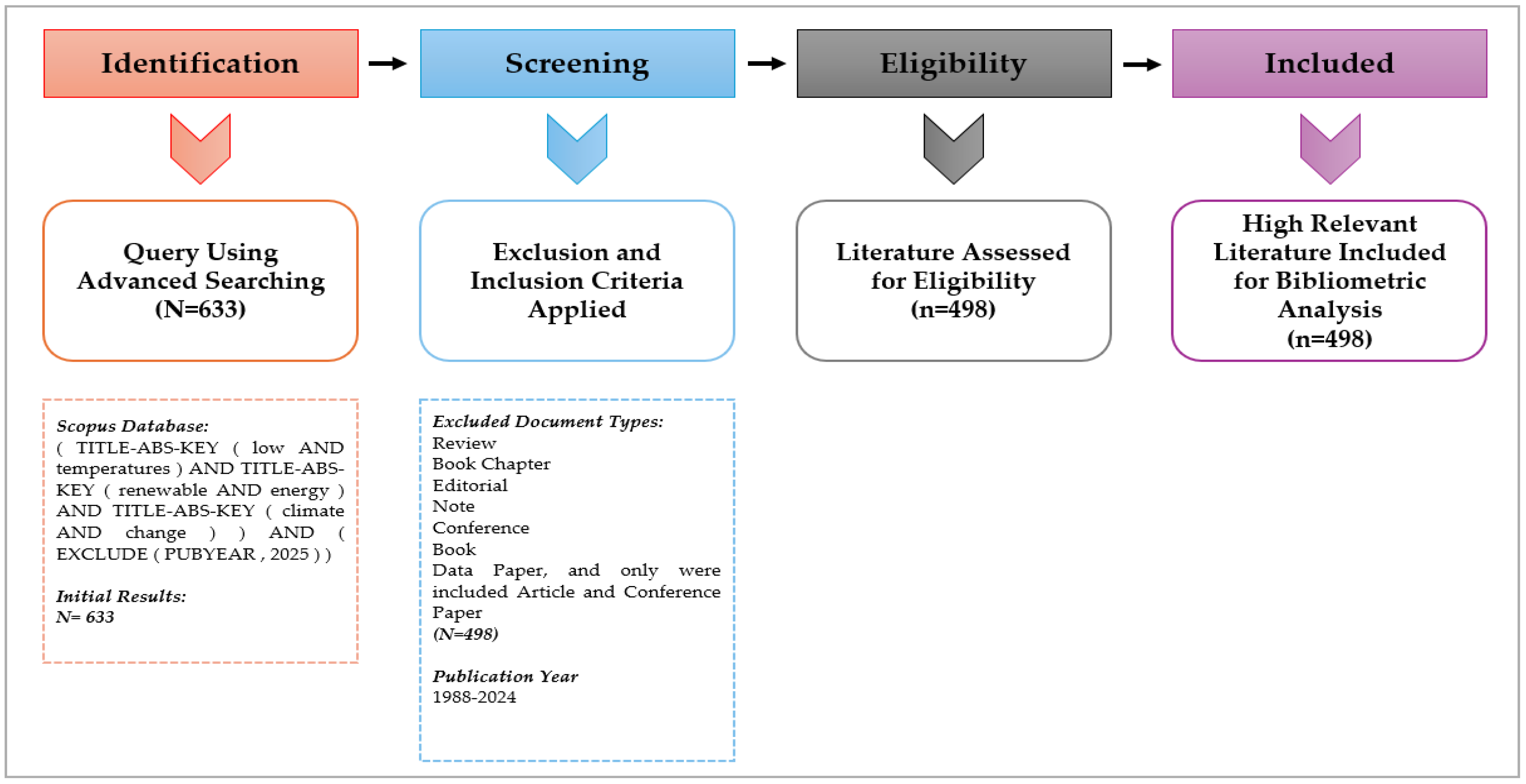
Figure 2.
Annual scientific production between 1988 and 2024.
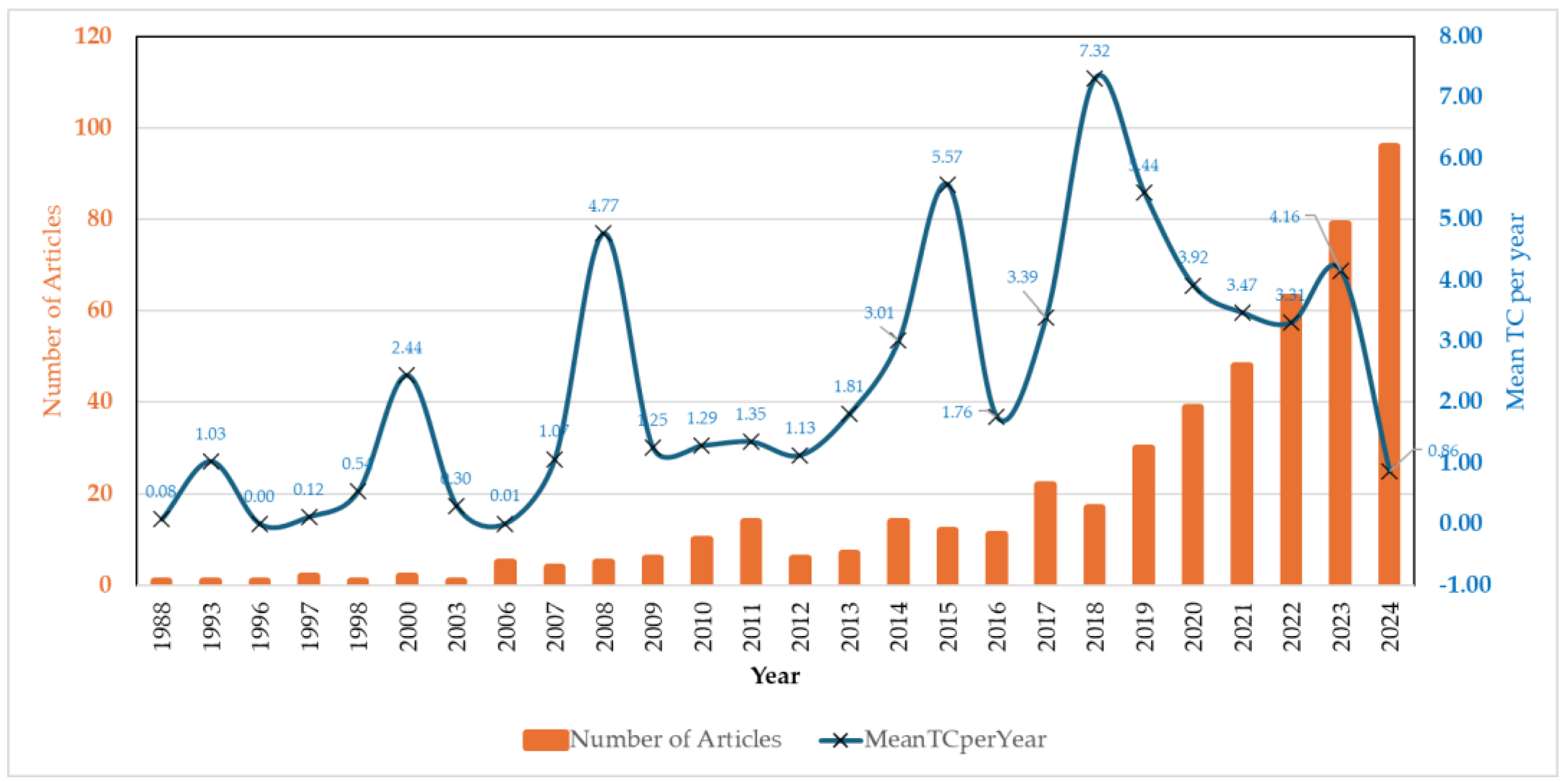
Figure 3.
Co-occurrence of author’s Keywords.
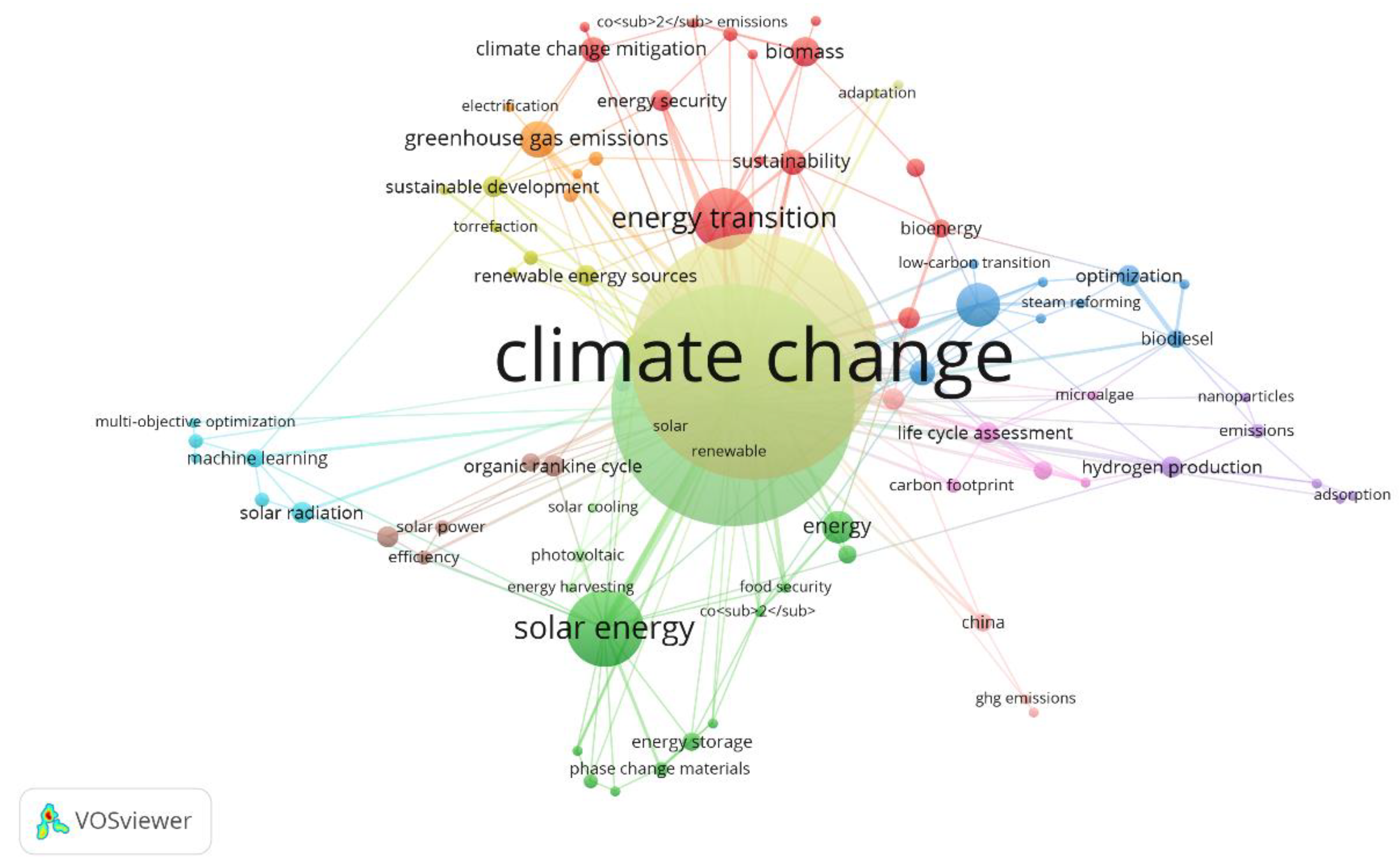
Figure 4.
Analysis of Co-occurrence Author’s Keywords in different periods.
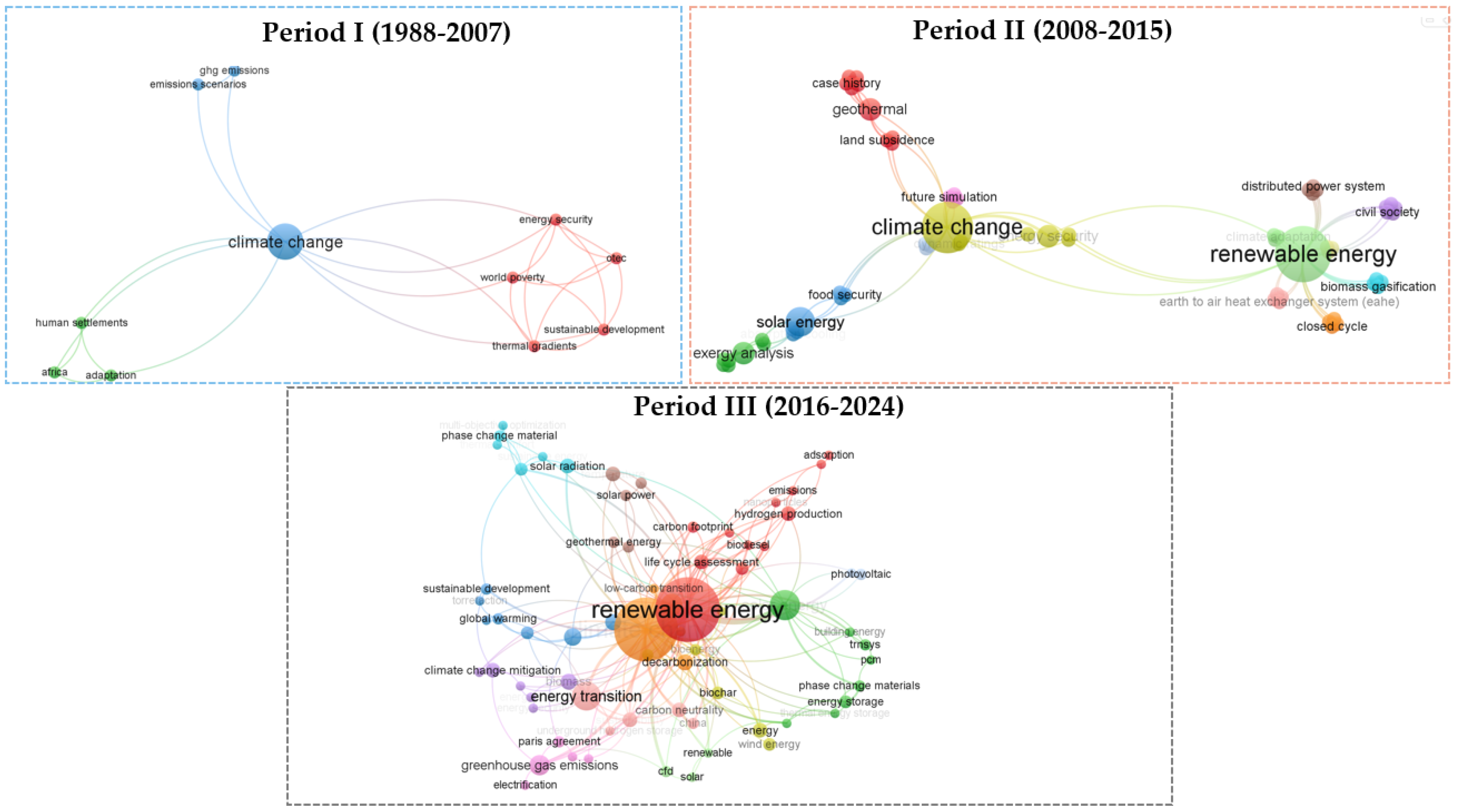
Figure 5.
Analysis of Thematic Map of Author’s Keywords in different periods.
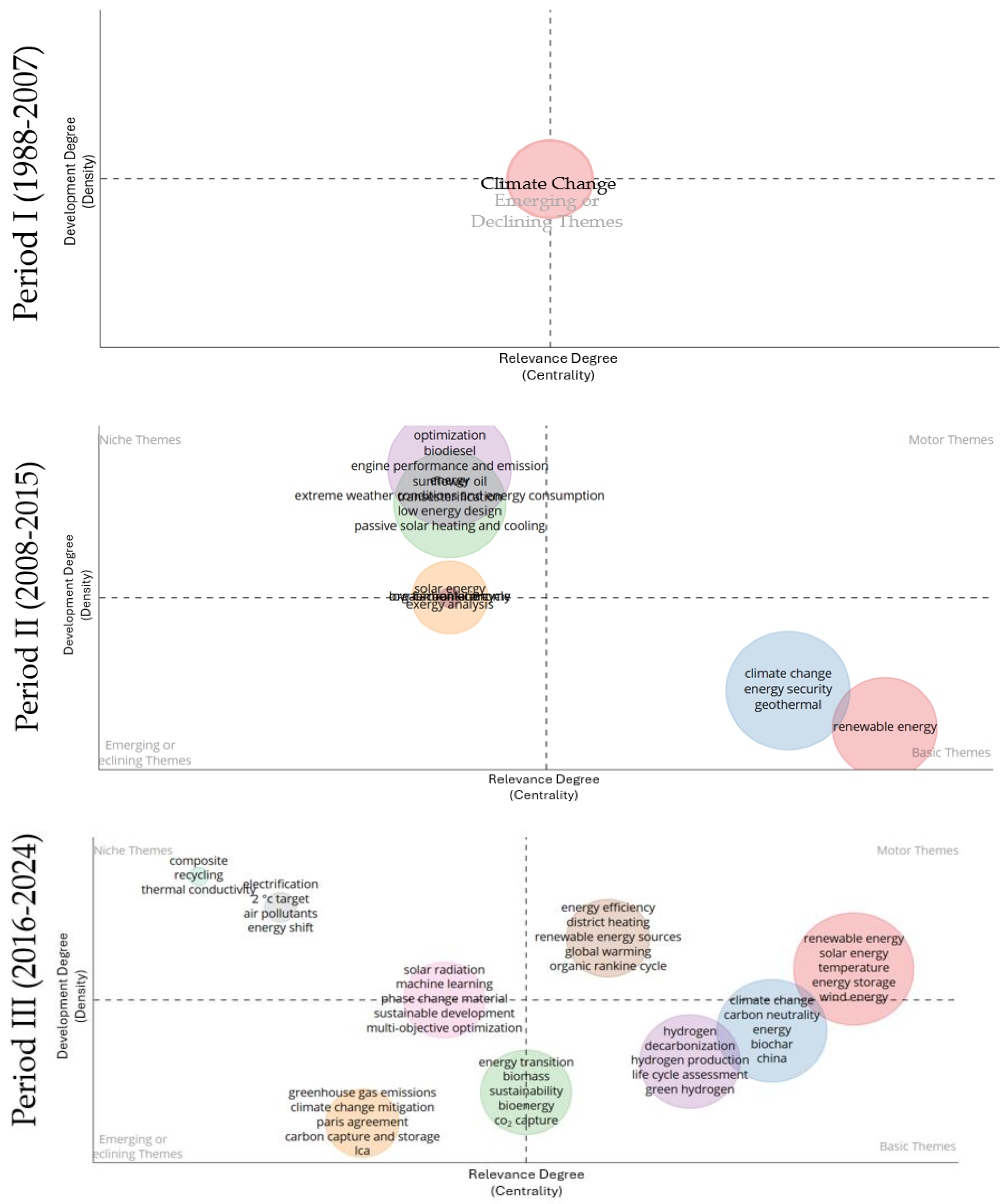
Table 1.
Top Leading Journals in Application of Renewable Energy in Low-Temperature Regions.
| Rank | Source | Total Citation (TC) | Total Citation/ Total Paper (TC/TP) | h_Index | g_Index | m_Index | Journal Impact Factor | Country |
|---|---|---|---|---|---|---|---|---|
| 1 | Energy | 499 | 38.38 | 11 | 13 | 0.733 | 15.3 | United Kingdom |
| 2 | Energies | 179 | 13.77 | 9 | 13 | 1.286 | 6.2 | Switzerland |
| 3 | Applied Energy | 245 | 24.50 | 8 | 10 | 0.727 | 21.2 | United Kingdom |
| 4 | Energy Conversion and Management | 383 | 42.56 | 7 | 9 | 0.467 | 19 | United Kingdom |
| 5 | Energy Procedia | 135 | 16.88 | 7 | 8 | 0.467 | 4.4 | United Kingdom |
| 6 | International Journal of Hydrogen Energy | 754 | 83.78 | 7 | 9 | 0.875 | 13.5 | United Kingdom |
| 7 | Energy Policy | 475 | 79.17 | 6 | 6 | 0.333 | 17.3 | United Kingdom |
| 8 | Renewable Energy | 173 | 15.73 | 6 | 11 | 0.207 | 18.4 | United Kingdom |
| 9 | Renewable and Sustainable Energy Reviews | 193 | 38.60 | 5 | 5 | 0.714 | 31.2 | United Kingdom |
| 10 | Climate Policy | 169 | 28.17 | 4 | 6 | 0.308 | 12.9 | United Kingdom |
Disclaimer/Publisher’s Note: The statements, opinions and data contained in all publications are solely those of the individual author(s) and contributor(s) and not of MDPI and/or the editor(s). MDPI and/or the editor(s) disclaim responsibility for any injury to people or property resulting from any ideas, methods, instructions or products referred to in the content. |
© 2025 by the authors. Licensee MDPI, Basel, Switzerland. This article is an open access article distributed under the terms and conditions of the Creative Commons Attribution (CC BY) license (http://creativecommons.org/licenses/by/4.0/).
Copyright: This open access article is published under a Creative Commons CC BY 4.0 license, which permit the free download, distribution, and reuse, provided that the author and preprint are cited in any reuse.


