

Submitted:
06 January 2025
Posted:
07 January 2025
You are already at the latest version
Abstract
The global consumption of fossil fuels such as diesel and gasoline represent a considerable per-centage of global emissions, it is important to know for sure the percentage and type of gas emitted, there are many alternative energies that mitigate the production of emissions in different sectors such as the transport sector and the energy sector. The percentage use of hydrogen mixed with gasoline in internal combustion engines is a viable alternative because it helps the com-bustion process, but it is necessary to know the behavior of the engine and determine the carbon footprint, to quantify the benefit of these actions it is necessary to design and implement a network of low-cost sensors that monitor the emissions produced during the combustion processes and provide reliable data that can be used to make a statistical comparison between vehicles. This research proposes two software systems of an architecture (client-server) working in a synchro-nized manner in order to collect and store information in a database. The first software works as the client and runs on an IoT development board called ESP32 in conjunction with esp32 ttgo and communication between both devices is done through the esp now protocol, this software estab-lishes the connection with the physical sensors to detect and collect gas information, the data is sent wirelessly to the web server, the second software works as a server in addition to providing a graphical interface for user control and data visualization from a ground station. The tests were carried out using 100% Mexican gasoline (G100) and a mixture of hydrogen fuel with gasoline (GH) for the hydrogen cell a concentration of 0.0211 ml / gal of electrolytes (80 ml) was used, the same route and vehicle were used at an average acceleration of 40 and 60 km / h, the data obtained are taken every 30 seconds, the process was repeated 3 times and an average emission reduction of 5% and 10% of CO and CO2 respectively was obtained with GH fuel.
Keywords:
distributed IoT system
; emissions
; biofuels
; IoT
1. Introduction
Fossil fuels such as natural gas, coal, oil and their derivatives such as gasoline and diesel, just to mention the most important, satisfy most of the world’s energy demand, the dependence on fossil fuels can be seen even more in Mexico where biofuels have an intangible participation, for 2023 the fuel consumption for the transportation sector totaled an energy consumption of 2,567.72 PJ, 3.8% lower than in 2022, highlighting, within the global energy consumption in Mexico for 2023, was the transportation sector, it is the most representative component with a 48.36% share among which are, energy consumption for the industrial sector, agricultural sector, residential commercial and public sector [1,2,3]. However, the combustion products of these fossil fuels such as carbon monoxide (CO), carbon dioxide (CO2), sulfur oxides (SOx), nitrogen oxides (NOx), hydrocarbons (HC), toxic metals and ash have been causing many environmental problems and pose a great danger to the Earth [4,5,6]. Reported research indicates that the solution to these problems is to replace the existing fossil fuel systems with clean renewable energy systems considering the technological modifications that this entails [7]. There are many studies supporting the reduction of emissions using biofuels. It is expected that by gradually or completely implementing the use of fossil fuels, emissions will be reduced [8,9]. An essential parameter in the production of biofuels is to determine the optimal blend proportions that allow reducing the environmental impact of emissions. Some experts claim that biofuels produce cleaner combustion than conventional fuels [10]. However, other researchers report an increase of up to 10% in NOX (nitrogen oxide) emissions [7,11,12] which is a harmful gas for living beings and the environment. In [13,14], authors investigate the recommended mixture proportions to mitigate this problem. Hydrogen provides an important path towards a sustainable energy future for the transportation sector in general, since it can be produced from wind, photovoltaic, solar, hydroelectric, biomass or solid waste without consumption of non-renewable resources and without pollution of any kind. The current accessibility for the creation of cells that produce hydrogen further opens the possibilities for the massive implementation of these technologies [15,16]
During the emergence of potential technological innovation, most engineers spend years optimizing processes. In most cases, this optimization can be achieved by adding mature technologies that, at first glance, may seem unrelated. Nowadays, there is a tendency to introduce communication technologies to improve most processes since it is known that the best decisions are made if relevant and up-to-date information is provided. Nowadays, a wide range of communication protocols and reprogrammable Internet of Things (IoT) devices are available [17], which allow the transfer of information over long distances with a very short time delay as well as facilitating the implementation of artificial intelligence techniques capable of making fast and accurate decisions. We live in a digitalized environment where Internet of Things devices and technological gadgets are necessary and included in most of our activities. For example, in [18,19] an air quality monitoring system was designed and implemented using IoT, considering temperature, humidity and other gases in the environment. In [20,21] an IoT system was developed and implemented for the online visualization of collected solar energy.
In recent years, the application of IoT devices has been increasing, paving the way for a more optimistic future. For example, in agriculture it has been used to monitor humidity and temperature in crops [22,23,24], also to monitor air quality. In [25,26] an innovative model is presented that uses these artificial intelligence techniques to detect pests in cotton crops. We can also find potential applications and advances in health care [27]. In [28], the authors developed a cloud-based distributed system to store data from users with chronic health problems, improving patient care and control. For domestic use, facial recognition access control (AI) systems and edge computing integration have been developed, which is commonly known as smart homes [29,30,31,32]. [33,34] They have used IoT tools for the development of systems focused on monitoring air quality and traffic, in [35] proposes the study of CO2 emissions from traffic flow sensors, estimates the CO2 in the air with respect to different congested and non-congested conditions.
The design and implementation of a safe and low-cost real-time air pollution monitoring system is presented by authors such as [22,36,37], their proposals consist of developing and implementing information systems (client-server), which provide information to users on air pollution rates, one of the differences between our proposal and the previous approach is in the application for monitoring emissions gases produced by the combustion of gasoline and hydrogen mixtures, our prototype measures the levels of gases emitted by vehicles, specifically carbon monoxide CO, hydrogen H2 and carbon dioxide CO2, as well as the temperature of the emissions to analyze the environmental impact and determine the carbon footprint caused by the use of. The primary contribution of this research lies in the technological innovation achieved through the design and development of a distributed client-server architecture that integrates both hardware and software components. This system incorporates Internet of Things (IoT) devices and a robust software platform for efficient data management. The core objective is to develop and implement a sensor network specifically designed to monitor vehicle emissions from internal combustion engines, enabling the collection and analysis of critical environmental data.
The data gathered by this system facilitates a statistical comparison of emissions between vehicles powered by biofuels and those using conventional fuels. This comparative analysis provides valuable insights that support efforts to reduce environmental pollution—one of the most pressing ecological challenges both regionally and globally.
By combining innovative IoT technology with its application in a critical domain, this research demonstrates a dual focus: advancing technological solutions and addressing globally significant environmental concerns. This unique intersection of technology and environmental impact establishes the novelty and practical relevance of the work.
The design and implementation of secure and low-cost real-time air pollution monitoring systems have been explored in previous studies [3,25,26]. These systems primarily focus on monitoring air quality by measuring pollution levels in the environment, providing critical information to users about air pollution indices through client-server architectures.
Our proposal, however, addresses a significantly different application: measuring the gas levels emitted directly by vehicles during operation. Specifically, we focus on monitoring carbon monoxide (CO), hydrogen (H2), and carbon dioxide (CO2), as well as the temperature of emissions. This approach allows us to analyze the environmental impact of vehicular emissions and determine the carbon footprint associated with the use of biofuels.
Measuring pollution while the vehicle is in motion is crucial because it captures real-world emission levels under varying driving conditions, such as acceleration, deceleration, on streets with slopes, and with 5 crew members in the vehicle, the demand for fuel is greater. Unlike stationary environmental monitoring, this method provides more accurate and dynamic insights into how vehicles contribute to air pollution in real time. Such data is invaluable for evaluating the performance of biofuels compared to conventional fuels, identifying emission patterns, and informing strategies to reduce vehicular pollution. Ultimately, this innovation supports global efforts to mitigate environmental damage by providing actionable data for policymakers, researchers, and stakeholders.
2. Materials and Methods
The proposed system is mainly based on two devices: the first device is a TTGO T-Call V1.3 ESP32 with SIM800L 240Mhz [38,39]. This module is from the family of SoC chips with low cost and energy consumption (5V dc), in addition to having a SIM800l module that allows a GPRS 3G/4G connection to be performed. The manufacturer of the development board used in this work, “Espressif,” developed a communication protocol called “ESP-Now” that works under the 2.4 Ghz [40,41] band. This communication protocol allows the connection of many devices in a master-slave network to provide information from different nodes simultaneously; see Figure 1. As we can see in Figure 1, the master device receives information from the node 1 device with slave settings; the data is collected through the sensors shown in Figure 1.
The ESP32 module has the following features: Xtensa dual-core processor, 32-bit architecture and Bluetooth, 24 GPIO pins, Analog-to-Digital Converter: Two SAR-type 12-bit ADCs, power supply (USB) of 5V DC. This module has the necessary features for this project. Chart 1 shows the features of the physical components proposed for this project.
Figure 2 shows the system that consists of cloud-based software architecture (client-server); information comes from the software that establishes a connection with the specific sensors to detect carbon dioxide (CO2), carbon monoxide (CO), hydrogen (H2), the temperature of the gasses of emissions and GPS positioning. These sensors are connected to a development board. They are connected wirelessly using a gsm data network to the second software to send the collected data of pollutant emissions of vehicles that use mixtures of petroleum fuels and biofuels mixed with fuels for observation and analysis. The developed software is a website where users can register and view data from the emissions of their cars or units to evaluate, with a graphical interface to visualize real-time data. It also has administrator operations for user control.
Figure 2 shows the illustration of communication used in this project. Some of the features are mentioned below:
- (a)
- The sensors used in this project were placed in a device designed and manufactured according to the requirements of this project (see Figure 3). Features and list of additional components are described in chart 1.
The design ensures the correct operation of the device; adapters were also designed for the connection in exhaust pipes so the device could be versatile and adaptable to most vehicles. This provides advantages for performing tests in any vehicle. The components of the designed device are described in Table 1.
The collected data is sent by module TTGO T-Call using the GSM network with 4G mobile data service.
- (b)
- The data collected by the sensors are sent to a cloud-based web server to be stored in a database. The web-based system, designed with user-friendliness in mind, features a mysql database manager, php programming language, html, CSS style sheet, JavaScript, node.js, see https://hcarbono.com/. The software tools proposed in this project allow the creation of an intuitive and interactive web system. The programming for the master and slave devices is a C-type code, carried out by using the Arduino programming interface in accordance with the indications provided by manufacturers. The device provides libraries to simplify communication and operation with sensors.
- (c)
- The user interface allows the creation of a customizable profile account. It also visualizes the data through graphs and exports it to different formats so that it can be analyzed and characterized with specialized software.
2.1. Hardware Proposal
The Table 2 shows the main characteristics of the electronic components used in this project.
Unlike the CO2 sensor, the sensors used for this project feature self-calibration. Calibration for this sensor is performed based on the recommendation of [43].
Based on Figure 1, it is considered important to mention the following: the main component of this project is the ESP 32 TTGO t-call ‘Esp 32 Master’. The purpose of this device is to gather and send to the cloud the data coming from the emissions of the test vehicle. A second ESP 32 ‘slave’ device is also implemented to communicate with the sensors to perform the readings and collect the data to send to the master device. Figure 4 and 5 describe the phases of the process. For synchronization and communication between the two devices, the ESP now [41,43] protocol is used; this protocol is developed and proposed by the manufacturer of these ESP32 development boards. Figure 4 shows a flow diagram illustrating the process of the ESP 32 Slave ‘Node 1’.
Step 1: As mentioned in the previous section, the slave module is programmed following the C language syntax. The required parameters by the components are initialized, values are also established for variables, and communication with the sensors is synchronized for self-calibration and to initiate data reading. A condition is established to validate communication of the GPS module with at least 3 satellites for optimal accuracy. In addition, communication with the master module (node 2) is validated. If this condition is not met, the process cannot continue. Therefore, this step is repeated until the conditional is true.
Step 2: In this step, a condition is established to validate the communication and synchronization with all the sensors used in this project. If the condition is not met, the process cannot continue. Therefore, this step is repeated until the conditional is true.
Step 3: At this stage, the test vehicle must be in operation, and the device must be attached to the emissions exhaust so that the sensors can start collecting data and send it to the master module (node 2). The task is performed if the device has a power supply and is turned on. Otherwise, the task is finished, and the connection to the master module is closed.
Step 4: In this step, the communication with the master device is closed, and the data transmission is ceased; this can happen due to the following conditions: Power shortage, test time expired for the vehicle, or circuit failure.
Figure 5 shows the process diagram showing the ESP 32 TTGO t-call ‘Esp 32 master’ process.
Step 1: At this stage, the primary system services must be active, a condition is established to validate it, the communication protocol esp now [44] must be active, and also the slave esp 32 (node 1) must be synchronized, otherwise the process cannot continue, therefore, this step is repeated until the condition is proper.
Step 2: For the successful delivery of data to the developed web system, the following must be validated: the gms module must be connected to the 4g mobile network with data packages sending service, and the master module must be synchronized with the web server, otherwise, the process is repeated until the 2 conditions are true.
Step 3: If the conditions established in the previous steps are true, the data reception starts, and then the data is sent to the web system: https://hcarbono.com/. The process is repeated as long as the device has a power supply and is turned on; otherwise, the connection with the slave module ‘node 1’ is closed, and the services mentioned in steps 1 and 2 are ceased.
Step 4: In this step, a condition is established to validate if the device is on; if this condition is true, steps 2 and 3 are repeated. Otherwise, the connection to the slave device is closed, and the services are ceased. Figure 4 and Figure 5 describe the general process carried out by each device used in this project.
For the experimental tests, a vehicle will be used, the technical characteristics are: Toyota Corolla 2017 has a 1.8-liter engine, with 132 horsepower and a torque of 128 lb-ft associated with a 5-speed automatic transmission CVT w / OD, the tests were carried out over a distance of 10 km on a road with few curves and slopes, mostly a straight route considering two accelerations at 40 km / h and 60 km / h. For the two speeds, two fuels were used 100% gasoline (G100) and a mixture of gasoline and hydrogen (G-H). For the first test scenario, 100% Mexican gasoline is used; The physicochemical properties of gasoline are an average octane rating of 87, an average density of 0.746 kg / L, an average maximum sulfur content of 30 (ppm) and an average calorific value of 44 MG / L. Physicochemical properties may vary depending on the region of the country [45,46,47,48,49]. The second scenario is the use of a mixture of hydrogen fuel with gasoline; for the hydrogen cell, a concentration of 0.0211 ml/gal of electrolyte (80 ml) was used, see Table 3. For the measurement and calibration of the sensors used by the device, specialized equipment for measuring emissions was used: Enerac 700 portable equipment with the technical specifications shown in Table 4. For this work, the measuring instruments were previously tested and calibrated.
3. Results
As part of the obtained results, the communication and synchronization circuit of the sensors with the reprogrammable esp32 devices used on this project was designed and developed, see Figure 1. This first integrated software and hardware prototype was initially developed and designed to work with sensors for the detection of gases such as CO, CO2, SOX, H2, NOX, and PPM. However, for the purposes of this article, the information is limited to the CO and CO2 exhaust gases produced by combustion. In the next phase of the project, results for the remaining exhaust gases will be presented. The col-lected data will be available for the user to interact with; in Figure 2 the illustration of the communication design is displayed. In Figure 3, the device designed to integrate the components used in this project is displayed. Figure 6 shows the communication interface between the user and the web system developed for this project. The following link can be used to visit the system H.Carbono | Pagina Principal. Figure 6 is divided into 5 sections that are described below: In this session of the interface, the user selects which data to display in graph (5) (Emissions humidity, Emissions temperature, atmospheric pressure, H2, CO, CO2).
- The user selects the range of dates for the data to be display.
- The user can delete the collected data so far, plus a button to log out or exit the systhem.
- The user can export the collected data to a format (.xlsx) to perform a specific analysis.
-
In this area the user can graphically observe the selected data. The displayed data are obtained and sent from the esp32 modules (Slave and master).
- X: Displays the time of the test in minutes.
- Y: Represents the value assigned for each data.
Chart 3 shows the results obtained from the tests performed on the vehicle; technical features are: Toyota Corolla 2017 has a 1.8-liter engine, with 132 horsepower and a torque of 128 lb-ft associated with a 5-speed automatic transmission CVT w/OD. The tests were conducted over a distance of 6 km on a road with few curves and slopes, mostly a straight route as shown in Figure 6.
The results of all experimental runs were conducted under identical conditions: maintaining a constant average speed of either 40 km/h or 60 km/h, depending on the type of experiment. The experiments followed a straight 10 km route with minimal obstacles and negligible differences in terrain elevation. These conditions were chosen to ensure basic tests with reduced vibrations, thereby minimizing risks to the integrity of the developed prototype. Environmental parameters included an average temperature of 30 °C, a relative humidity of 91%, and an atmospheric pressure of 101.76 kPa.
Figure 7a presents the CO and CO2 emission results from the experimental runs with the vehicle operating on G100 fuel at an average speed of 40 km/h. The emissions averaged 283 ppm of CO and 15.43% Vol of CO2 over the entire route. These results correspond to a vehicle operating under conditions that do not demand significant power, with the engine running at low revolutions.
Figure 7b illustrates the CO and CO2 emissions for runs using GH fuel at an average speed of 40 km/h. On average, emissions measured 255 ppm of CO and 15% Vol of CO2. Compared to the G100 fuel runs, these values indicate a reduction of 28 ppm in CO and 0.38% Vol in CO2. This decrease aligns with expectations, as hydrogen mixed with gasoline enhances combustion efficiency within the combustion chamber.
Figure 7c shows the emission results for runs using G100 fuel at an average speed of 60 km/h. Emissions averaged 245 ppm of CO and 15% Vol of CO2. These findings reflect conditions where the engine operates at moderate revolutions, and the vehicle approaches the manufacturer-recommended speed range of 100–105 km/h for optimal fuel efficiency and mileage. Maintaining a steady speed in this range minimizes energy consumption and enhances overall efficiency.
Figure 7d reports the CO and CO2 emissions for runs conducted with GH fuel at an average speed of 60 km/h. Emissions averaged 240 ppm of CO and 14.2% Vol of CO2. As anticipated, the use of hydrogen in the fuel mixture led to a further reduction of 5 ppm in CO and 0.8% Vol in CO2. This outcome highlights the positive impact of hydrogen in improving combustion dynamics and reducing pollutant emissions.
In a study conducted by the University of California, a 2.4-liter four-cylinder engine was used to analyze emissions produced by different blends of gasoline and hydrogen. The results showed that using a 20% hydrogen blend reduced carbon dioxide (CO₂) emissions by 12% and total emissions by 38%. However, using a 40% hydrogen blend increased total emissions due to higher production of nitrogen oxides (NOx) [50]. Another study by the Technical University of Denmark used a diesel engine to analyze emissions from a blend containing 30% hydrogen in natural gas. The results showed a significant reduction in total emissions, including CO₂, NOx, and particulates. Additionally, an improvement in engine performance was observed [51,52].
When using G100 and GH fuels at a speed of 40 km/h, under the conditions mentioned, an average decrease of 10% CO and 5% CO2 can be observed, for the speed of 60 km/h a reduction of 2% and 5% CO and CO2 emissions was obtained working with G100 and GH fuels as show in Figure 8. This is because hydrogen improves the combustion stage within the engine by accelerating the burning process [53]; It should be noted that hydrogen has a higher calorific value than gasoline, but it should also be noted that increasing the speed from 40 km/h to 60 km/h improves performance and increases combustion efficiency considering that the road that is traveled does not demand a power demand from the engine and considering that the environmental conditions are favorable for a friendly operation [54].
4. Final Considerations and Future Research
The developed prototype incorporates stages of research, design, software, and hardware development. It is a distributed system with a client-server architecture, integrating Internet of Things (IoT) devices alongside data management software. The device is designed to census and evaluate the carbon footprint. A website, H.Carbono | Pagina Principal, was created to receive real-time data transmitted by the device, along with data from the developed software and hardware. This information is then evaluated to calculate the carbon footprint, based on two constant speeds, 40 km/h and 60 km/h, using G100 and GH fuels.
On average, a reduction in emissions of 5% to 10% was achieved due to hydrogen use in the vehicle. Although the emission reduction is relatively low, future research aims to increase the concentration of electrolytes in the solution to boost hydrogen production and increase the amount of hydrogen injected into the combustion chamber. Initial tests started with 0.1198 ml of electrolytes dissolved in 1 liter of solution within the hydrogen cell, in a hydrogen-gasoline mixture. In future developments, sensors specifically for vehicle emissions will be incorporated to provide more precise gas emission measurements. This includes sensors for Oxygen, NOx, and Unburned Hydrocarbons, as well as sensors to determine the engine’s RPM and fuel consumption.
Developing a prototype equipped with portable hardware and software, featuring its own power source and incorporating Internet of Things (IoT) devices alongside a robust software platform for efficient data management, would enable precise measurement of the carbon footprint under real road conditions. This solution would be applicable to vehicles of various brands and models, including those with 4, 6, and 8 pistons, powered by G100 gasoline, diesel mixed with biodiesel, propane, or natural gas.
The system would facilitate the collection and analysis of emissions data, allowing for the detection of regular or irregular behavior in vehicle performance. Additionally, it would support the evaluation of emission levels over time, building a comprehensive database to enhance understanding of emission patterns. This approach is particularly relevant in the context of the gradual adoption of biofuels in internal combustion engines (ICEs), a process that is just beginning to gain traction in countries like Mexico.
Author Contributions
Substantial contributions to the conception of the experiments were carried out by C.C, and A.P.-S.; the methodology and statistical experimental design were mostly conceptualized by J.A.S and J.R.-O.; the analysis corresponding to the desirability function and optimization were performed by L.C.-H. and S.J. All authors have read and agreed to the published version of the manuscript.
Funding
This research received no external funding.
Institutional Review Board Statement
Not applicable.
Informed Consent Statement
Not applicable.
Data Availability Statement
Not applicable.
Acknowledgments
The authors thank the National Council of Science and Technology CONACYT Mexico, Faculty of Engineering and Technology Sciences and the Autonomous University of Baja California for their support in the development of this work.
Conflicts of Interest
The authors declare no conflict of interest.
References
- BP. (2021). BP statistical review of world energy 2021. Available online: https://www.bp.com/content/dam/bp/business-sites/en/global/corporate/pdfs/energy-economics/statistical-review/bp-stats-review-2021-full-report.pdf.
- Davenport, J. (2024). Launch presentation: AGM. Available online: https://www.energy.ox.ac.uk/wp-content/uploads/2024/09/4.-11.50am-Juliet-Davenport-SLIDES-SR-2024-launch-presentation-AGM.pdf.
- Gobierno de México. (2023). Balance nacional de energía: Preliminar 2023. Available online: https://www.gob.mx/cms/uploads/attachment/file/947752/BALANCE_NACIONAL_DE_ENERG_A_PRELIMINAR_2023.pdf.
- Scholz, I.; Brandi, C. Implementing the 2030 Agenda for Sustainable Development: Achievements and Limitations of the G20 Presidency in 2017. Glob. Summitry 2017, 3, 156–175. [Google Scholar] [CrossRef]
- Edenhofer, O.; Pichs-Madruga, R.; Sokona, Y.; Minx, J.C.; Farahani, E.; Kadner, S.; Seyboth, K.; Adler, A.; Baum, I.; Brunner, S.; et al. Climate Change 2014 Mitigation of Climate Change; Cambridge University Press: Cambridge, UK, 2014. [Google Scholar]
- Sarkodie, S.A.; Strezov, V. A Review on Environmental Kuznets Curve Hypothesis Using Bibliometric and Meta-Analysis. Sci. Total Environ. 2019, 649, 128–145. [Google Scholar] [CrossRef] [PubMed]
- Chauhan, B. S., Kumar, N., & Cho, H. M. A study on the performance and emission of a diesel engine fueled with Jatropha biodiesel oil and its blends. Energy 2012, 37(1), 616–622. [CrossRef]
- Frijters, P. J. M., & Baert, R. S. G. (2006). Oxygenated fuels for clean heavy-duty diesel engines. International Journal of Vehicle Design, 41(1–4), 242–255. [CrossRef]
- Sahoo, P. K., Das, L. M., Babu, M. K. G., Arora, P., Singh, V. P., Kumar, N. R., & Varyani, T. S. (2009). Comparative evaluation of performance and emission characteristics of jatropha, karanja and polanga based biodiesel as fuel in a tractor engine. Fuel, 88(9), 1698–1707. [CrossRef]
- Igbum, O. G., Eloka-Eboka, A. C., Ubwa, S. T., & Inambao, F. L. (2014). Evaluation of environmental impact and gaseous emissions of biodiesel fuels and blends of selected feed-stocks. International Journal of Global Warming, 6(1), 99–112. [CrossRef]
- Tesfa, B., Gu, F., Mishra, R., & Ball, A. (2014). Emission Characteristics of a CI Engine Running with a Range of Biodiesel Feedstocks. Energies, 7(1), 334–350. [CrossRef]
- Hansen, A. C., Gratton, M. R., & Yuan, W. (2006). Diesel engine performance and NO X emissions from oxygenated biofuels and blends with diesel fuel. Transactions of the ASABE, 49(3), 589–595. [CrossRef]
- Varatharajan, K., Cheralathan, M., & Velraj, R. (2011). Mitigation of NOx emissions from a jatropha biodiesel fuelled DI diesel engine using antioxidant additives. Fuel, 90(8), 2721–2725. [CrossRef]
- Pérez, A., Ramos, R., Montero, G., Coronado, M., García, C., & Pérez, R. (2016). Virtual Instrument for Emissions Measurement of Internal Combustion Engines. Journal of Analytical Methods in Chemistry, 2016. [CrossRef]
- Jurić, Z.; Vidović, T.; Šimunović, J.; Radica, G. A Comprehensive Analysis of Hydrogen–Gasoline Blends in SI Engine Performance and Emissions. Energies 2024, 17, 1557. [Google Scholar] [CrossRef]
- Desantes, J.; Molina, S.; Novella, R.; Lopez-Juarez, M. Comparative global warming impact and NOX emissions of conventional and hydrogen automotive propulsion systems. Energy Convers. Manag. 2020, 221, 113137. [Google Scholar] [CrossRef]
- Li, S., Xu, L. da, & Zhao, S. (2018). 5G Internet of Things: A survey. Journal of Industrial Information Integration, 10, 1–9. [CrossRef]
- Landge, P. D., & Harne, R. (2018). Air Quality Monitoring System for City: A Review.
- Saffran, J., Garcia, G., Souza, M. A., Penna, P. H., Castro, M., Góes, L. F. W., & Freitas, H. C. (2017). A low-cost energy-efficient raspberry Pi cluster for data mining algorithms. Lecture Notes in Computer Science (Including Subseries Lecture Notes in Artificial Intelligence and Lecture Notes in Bioinformatics), 10104 LNCS, 788–799. [CrossRef]
- Patil, S. M., Vijayalashmi, M., & Tapaskar, R. (2017). IoT based solar energy monitoring system. 2017 International Conference on Energy, Communication, Data Analytics and Soft Computing (ICECDS), 1574–1579. [CrossRef]
- Paneque, M. (2017). Bioenergy - a Sustainable and Reliable Energy Source. Agricultural Research & Technology: Open Access Journal, 4(4). [CrossRef]
- Navulur, S., Sastry, A. S. C. S., & Giri Prasad, M. N. (2017). Agricultural Management through Wireless Sensors and Internet of Things. International Journal of Electrical and Computer Engineering, 7(6), 3492–3499. [CrossRef]
- Lai, X., Yang, T., Wang, Z., & Chen, P. (2019). IoT Implementation of Kalman Filter to Improve Accuracy of Air Quality Monitoring and Prediction. Applied Sciences, 9(9). [CrossRef]
- Kumar, R., & Pallikonda Rajasekaran, M. (2016). An IoT based patient monitoring system using raspberry Pi. 2016 International Conference on Computing Technologies and Intelligent Data Engineering (ICCTIDE’16). [CrossRef]
- Rustia, D. J. A., & Lin, T. te. (2017). An IoT-based wireless imaging and sensor node system for remote greenhouse pest monitoring. Chemical Engineering Transactions, 58, 601–606. [CrossRef]
- Sarangdhar, A. A., & Pawar, V. (2017). Machine learning regression technique for cotton leaf disease detection and controlling using IoT. Proceedings of the International Conference on Electronics, Communication and Aerospace Technology, ICECA 2017, 2017-January, 449–454. [CrossRef]
- Sanjeevi, P., Siva Kumar, B., Prasanna, S., Maruthupandi, J., Manikandan, R., & Baseera, A. (2021). An ontology enabled internet of things framework in intelligent agriculture for preventing post-harvest losses. Complex and Intelligent Systems, 7(4), 1767–1783. [CrossRef]
- Qi, J., Yang, P., Min, G., Amft, O., Dong, F., & Xu, L. (2017). Advanced internet of things for personalised healthcare systems: A survey. Pervasive and Mobile Computing, 41, 132–149. [CrossRef]
- Calo, S. B., Touna, M., Verma, D. C., & Cullen, A. (2017). Edge computing architecture for applying AI to IoT. Proceedings - 2017 IEEE International Conference on Big Data, Big Data 2017, 2018-January, 3012–3016. [CrossRef]
- (PDF Internet of Thuing) (PDF) Internet of Things (IOT) Based Gas Leakage Monitoring and Alerting System with MQ-2 Sensor. (n.d.). Retrieved April 10, 2023. Available online: https://www.researchgate.net/publication/357768388_Internet_of_Things_IOT_Based_Gas_Leakage_Monitoring_and_Alerting_System_with_MQ-2_Sensor.
- IoT based Water Monitoring and Alerting System. (n.d.). Retrieved April 10, 2023. Available online: https://www.researchgate.net/publication/341908442_IoT_based_Water_Monitoring_and_Alerting_System.
- Al-Mutawa, R. F., & Eassa, F. A. (2020). A smart home system based on internet of things. International Journal of Advanced Computer Science and Applications, 2, 260–267. [CrossRef]
- Martín-Baos, J. Á., Rodriguez-Benitez, L., García-Ródenas, R., & Liu, J. (2022). IoT based monitoring of air quality and traffic using regression analysis. Applied Soft Computing, 115, 108282. [CrossRef]
- Wang, H., Chen, Y., & Li, L. (2019). A novel deep learning method for traffic flow forecasting based on Web traffic data. IEEE Access, 7, 104453–104464.
- Bilotta, S., & Nesi, P. (2022). Estimating CO₂ emissions from IoT traffic flow sensors and reconstruction. Sensors, 22(9), 3382. [CrossRef]
- Guanochanga, B., Cachipuendo, R., Fuertes, W., Salvador, S., Benítez, D. S., Toulkeridis, T., Torres, J., Villacís, C., Tapia, F., & Meneses, F. (2019). Real-time air pollution monitoring systems using wireless sensor networks connected in a cloud-computing, wrapped up web services. Advances in Intelligent Systems and Computing, 880, 171–184. [CrossRef]
- Alkandari, A. A., & Moein, S. (2018). Implementation of monitoring system for air quality using raspberry PI: Experimental study. Indonesian Journal of Electrical Engineering and Computer Science, 10(1), 43–49. [CrossRef]
- Kodali, R. K., Borra, K. Y., Sharan Sai, G. N., & Domma, H. J. (2018). An IoT Based Smart Parking System Using LoRa. 2018 International Conference on Cyber-Enabled Distributed Computing and Knowledge Discovery (CyberC), 151–154. [CrossRef]
- Tovar-Soto, J. P., Pareja-Figueredo, C. F., García-Navarrete, O. L., & Gutiérrez-Martínez, L. C. (2021). Performance evaluation of lora technology for implementation in rural areas. DYNA (Colombia), 88(216), 69–78. [CrossRef]
- Hoang, T. N., Van, S. T., & Nguyen, B. D. (2019). ESP-NOW Based Decentralized Low Cost Voice Communication Systems For Buildings. 2019 International Symposium on Electrical and Electronics Engineering (ISEE), 108–112. [CrossRef]
- Cameron, N. (2021). Electronics Projects with the ESP8266 and ESP32. Electronics Projects with the ESP8266 and ESP32. [CrossRef]
- Maier, A., Sharp, A., & Vagapov, Y. (2017). Comparative analysis and practical implementation of the ESP32 microcontroller module for the internet of things. 2017 Internet Technologies and Applications (ITA), 143–148. [CrossRef]
- Hoang, T. N., Van, S. T., & Nguyen, B. D. (2019). ESP-NOW Based Decentralized Low Cost Voice Communication Systems for Buildings. Proceedings - 2019 International Symposium on Electrical and Electronics Engineering, ISEE 2019, 108–112. [CrossRef]
- Gutai, I., Sovilj, P., Subotin, M., Novakovic, D., Gazivoda, N., & Vujicic, B. (2021). A prototype of a system for detecting G force in an automobile, based on two ESP32’s. 2021 Zooming Innovation in Consumer Technologies Conference (ZINC), 191–192. [CrossRef]
- Pemex. Available online: https://www.pemex.com/.
- Secretaría de Energía de México. Available online: https://www.gob.mx/sener.
- Agencia Nacional de Seguridad Industrial y de Protección al Medio Ambiente del Sector Hidrocarburos (ASEA). Available online: https://www.gob.mx/asea.
- Instituto Mexicano del Petróleo (IMP). Available online: http://www.imp.mx/.
- Normas Oficiales Mexicanas (NOM) relacionadas con la gasolina. Available online: https://www.gob.mx/busqueda?utf8=%E2%9C%93&search=gasolina+noms.
- Dimitriou, P., Kumar, M., Tsujimura, T., & Suzuki, Y. (2018). Combustion and emission characteristics of a hydrogen-diesel dual-fuel engine. International Journal of Hydrogen Energy, 43(29), 13605–13617. [CrossRef]
- Dimitriou, P., & Tsujimura, T. (2017). A review of hydrogen as a compression ignition engine fuel. International Journal of Hydrogen Energy, 42(38), 24470–24486. [CrossRef]
- Jurić, Z.; Vidović, T.; Šimunović, J.; Radica, G. A Comprehensive Analysis of Hydrogen–Gasoline Blends in SI Engine Performance and Emissions. Energies 2024, 17, 1557. [Google Scholar] [CrossRef]
- Ji, C., Wang, S., & Zhang, B. (2010). Effect of spark timing on the performance of a hybrid hydrogen–gasoline engine at lean conditions. International Journal of Hydrogen Energy, 35(5), 2203–2212. [CrossRef]
- Ji, C., & Wang, S. (2010). Experimental study on combustion and emissions performance of a hybrid hydrogen–gasoline engine at lean burn limits. International Journal of Hydrogen Energy, 35(3), 1453–1462. [CrossRef]
Figure 1.
Master-slave communication scheme.
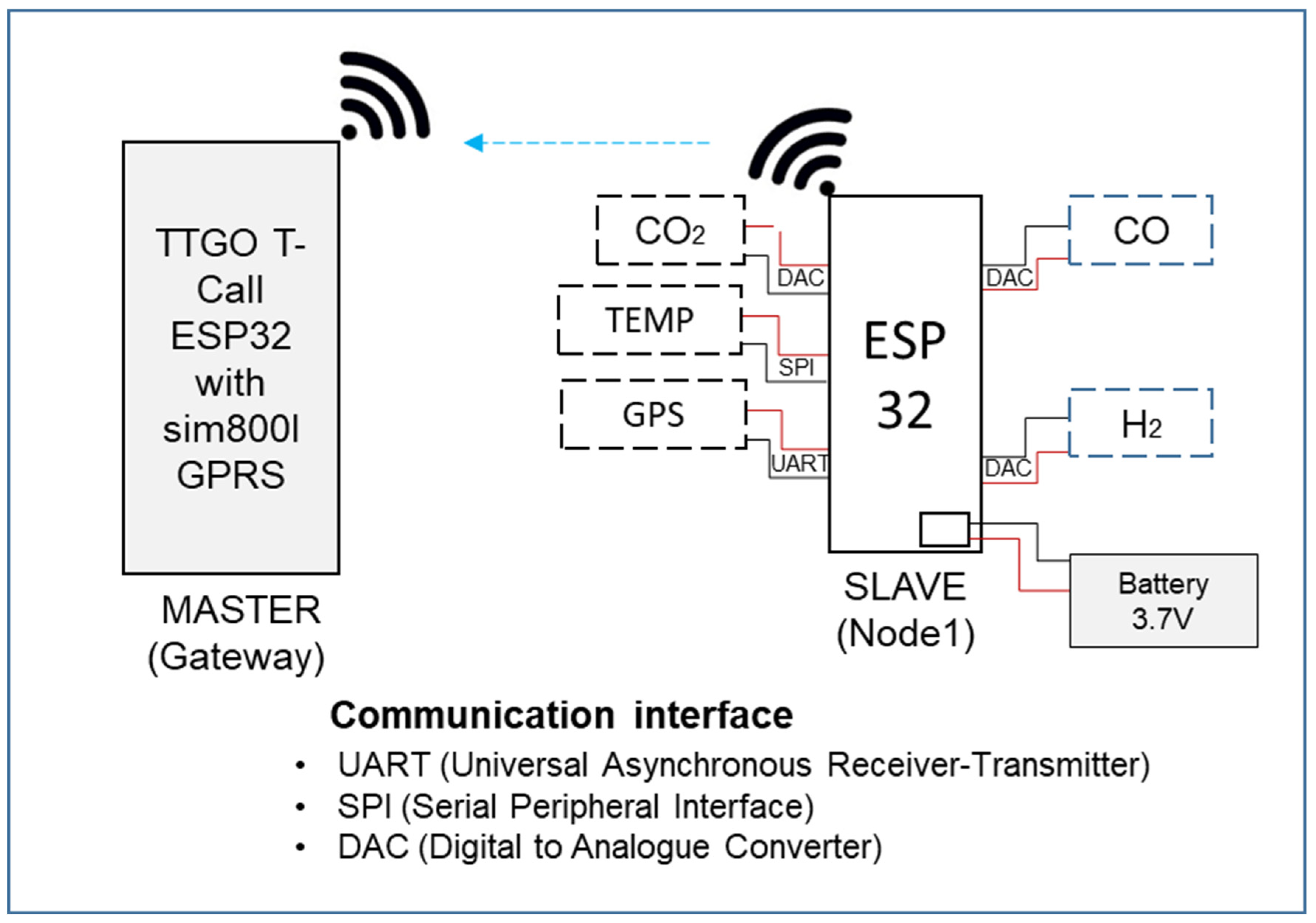
Figure 2.
General illustration of the proposal.
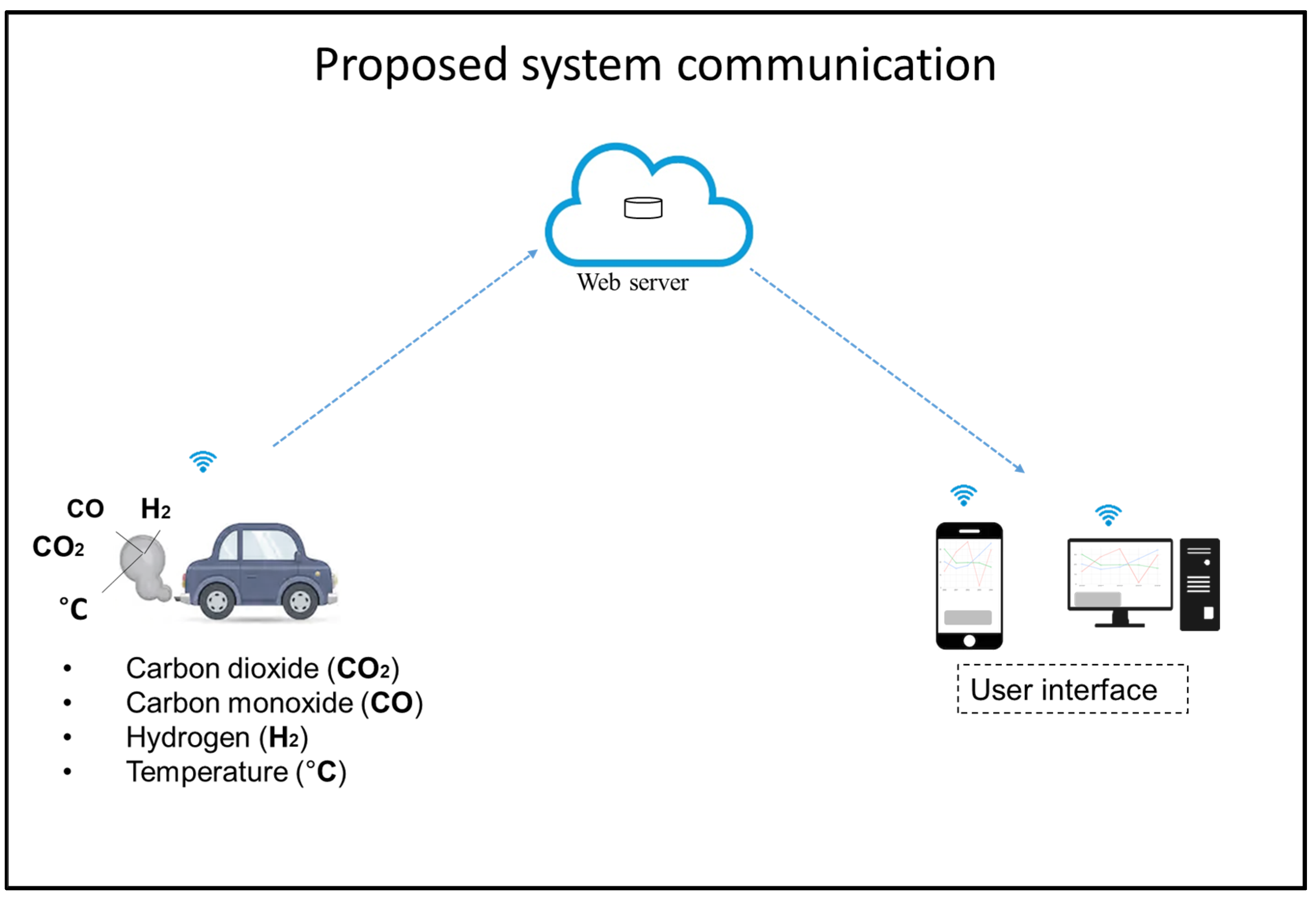
Figure 3.
Illustration of the developed system.
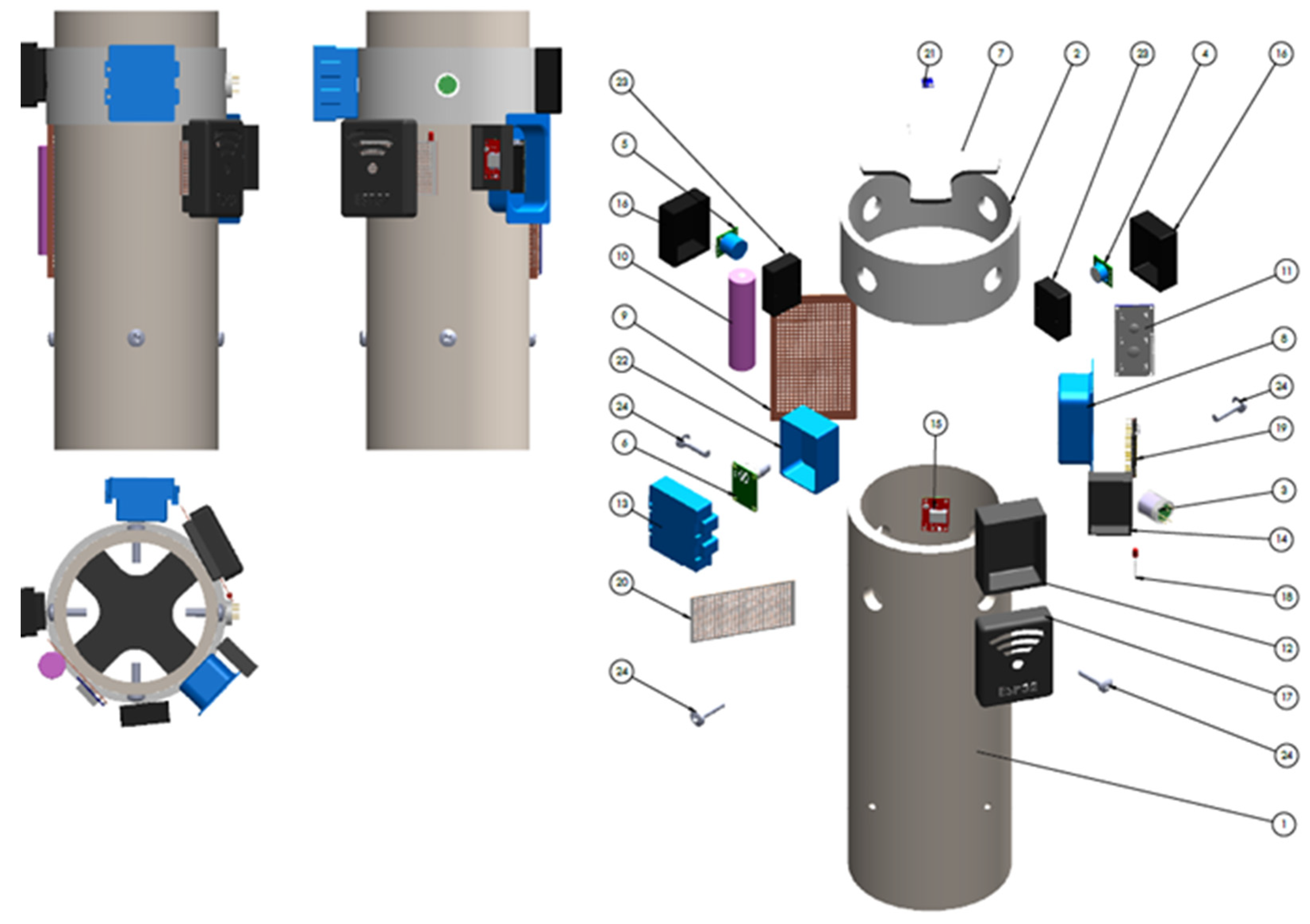
Figure 4.
Process flow diagram of ESP 32 Slave ‘Node 1’.
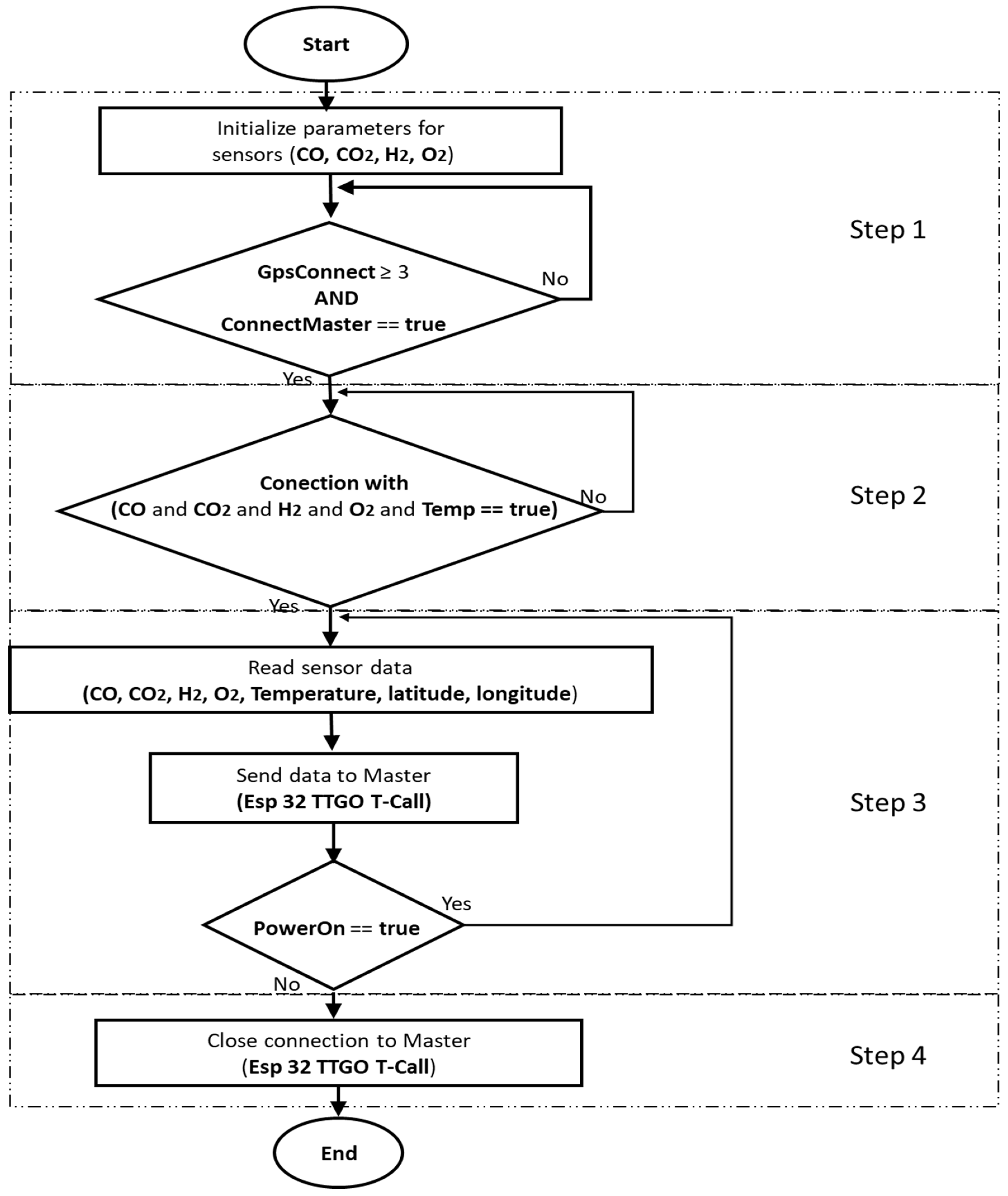
Figure 5.
Flowchart 2 ESP 32 TTGO t-call process “Esp 32 Master”.
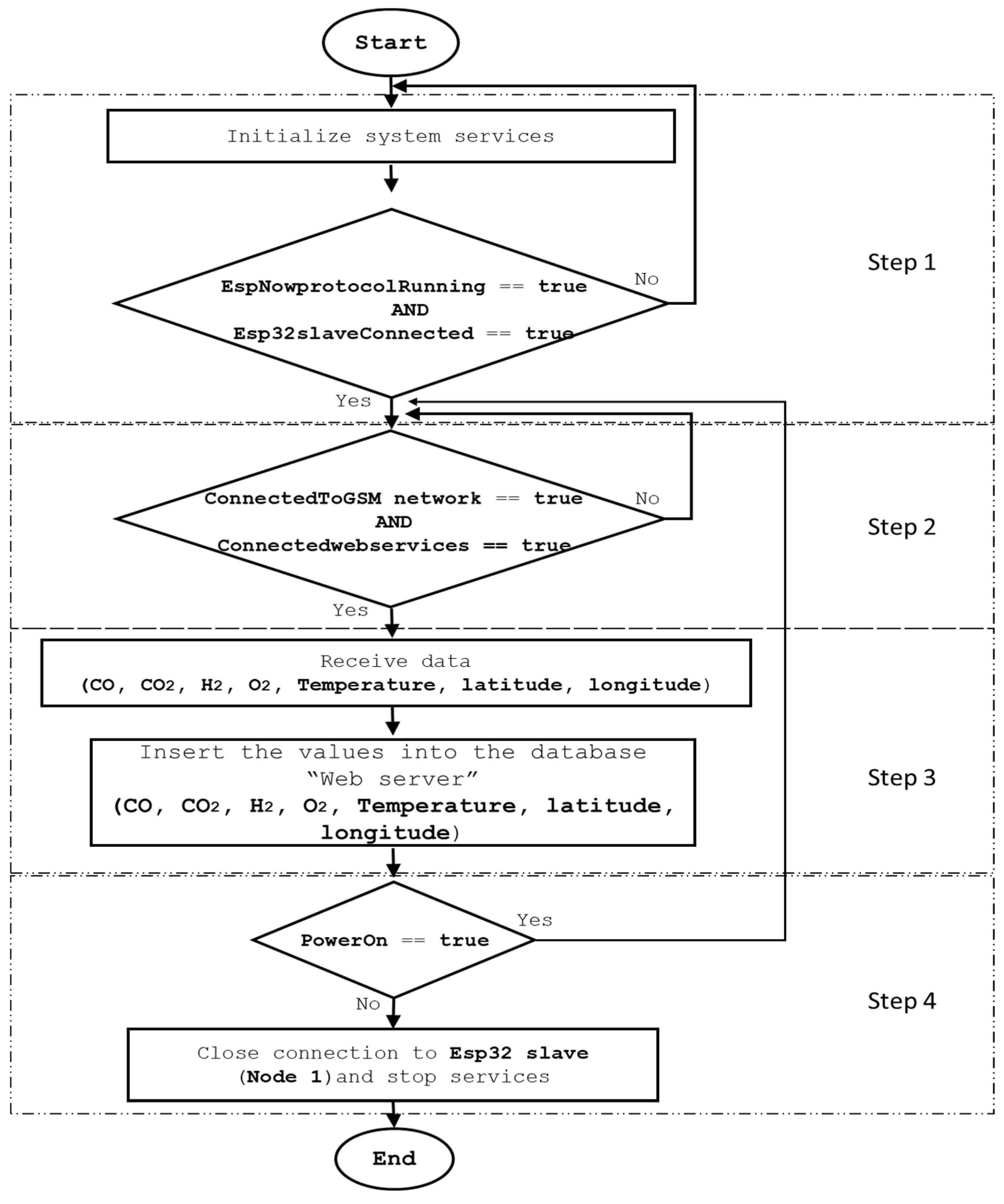
Figure 6.
User interface for data visualization.
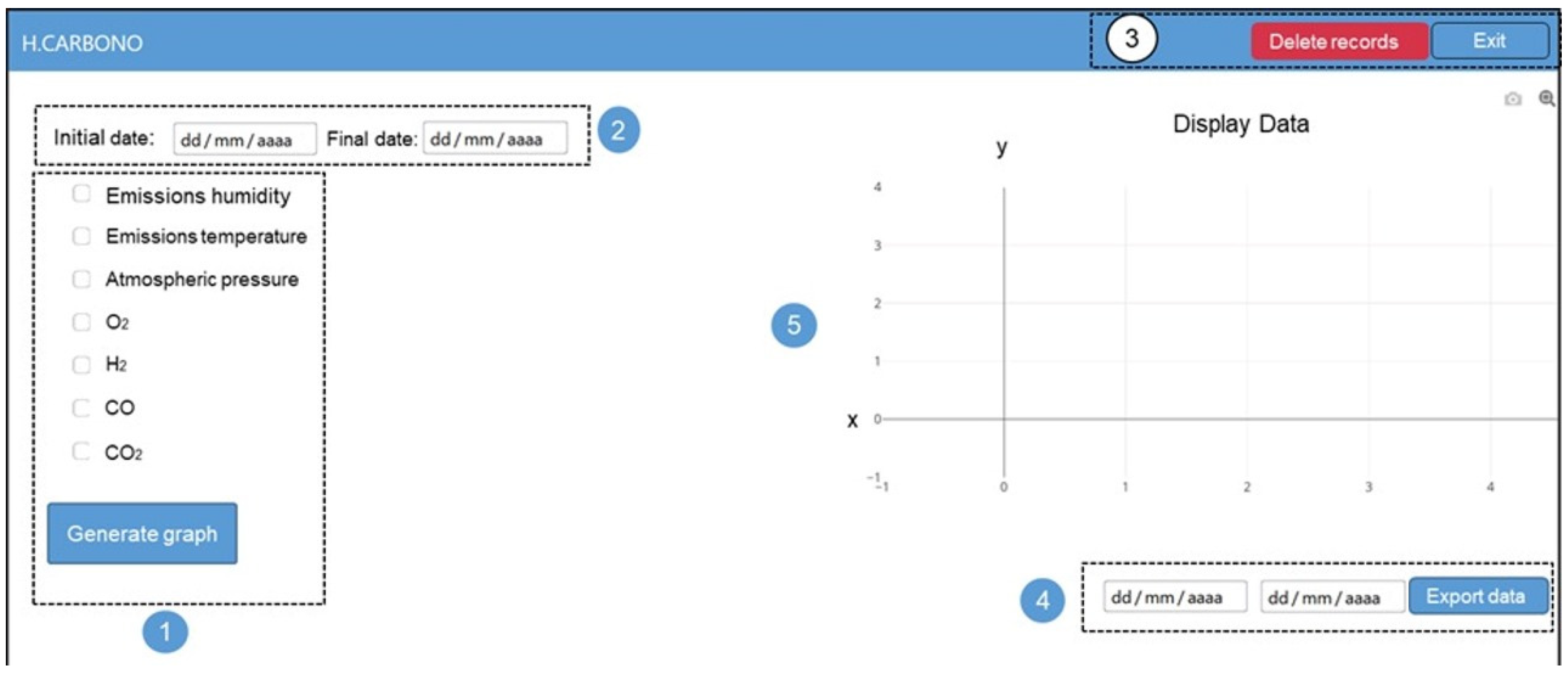
Figure 7.
a. Speed of 40 km/h using G100 fuel. b. Speed of 40 km/h using G-H fuel. c. Speed of 60 km/h using G100 fuel. d. Speed of 60 km/h using G-H fuel.
Figure 7.
a. Speed of 40 km/h using G100 fuel. b. Speed of 40 km/h using G-H fuel. c. Speed of 60 km/h using G100 fuel. d. Speed of 60 km/h using G-H fuel.
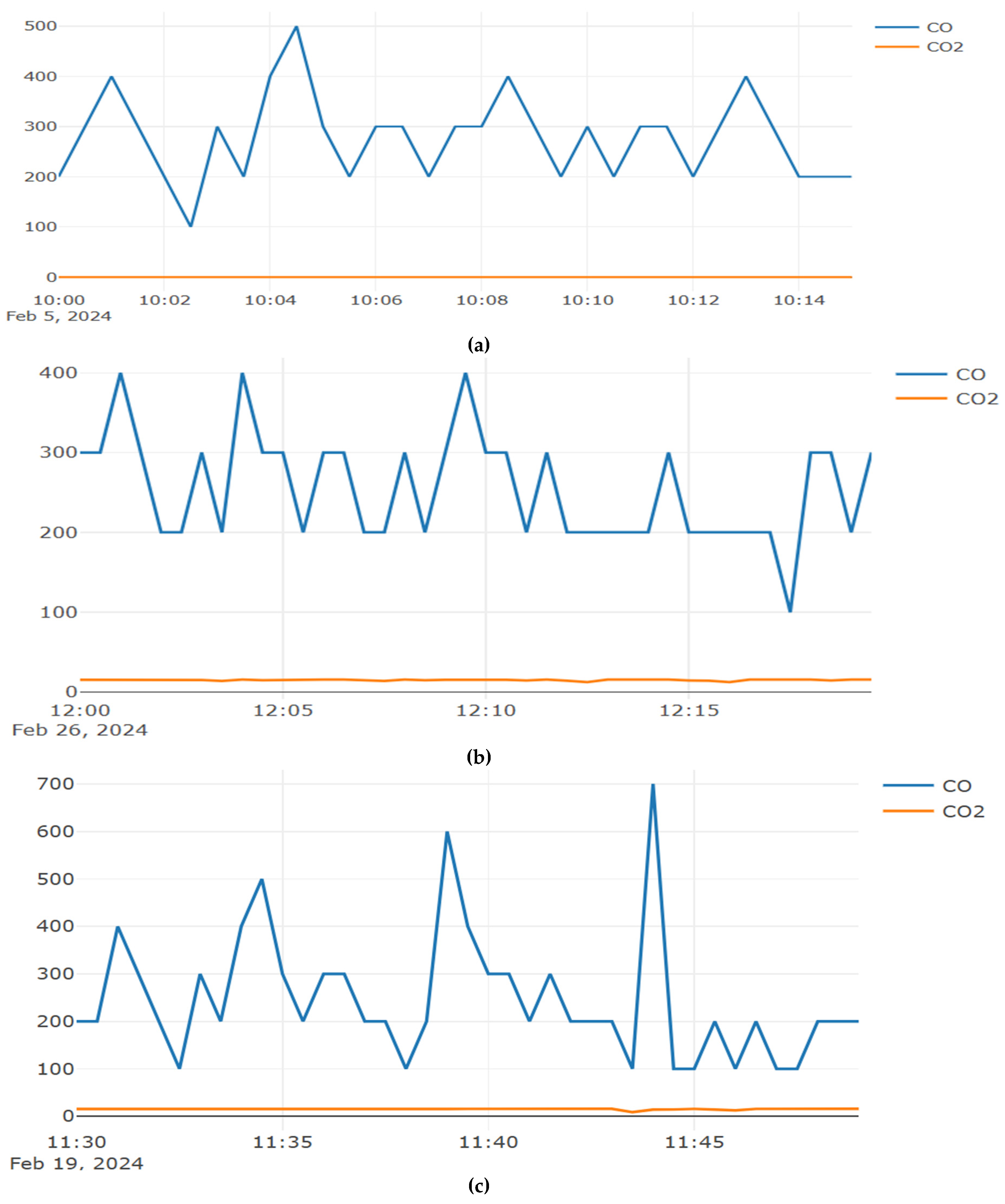
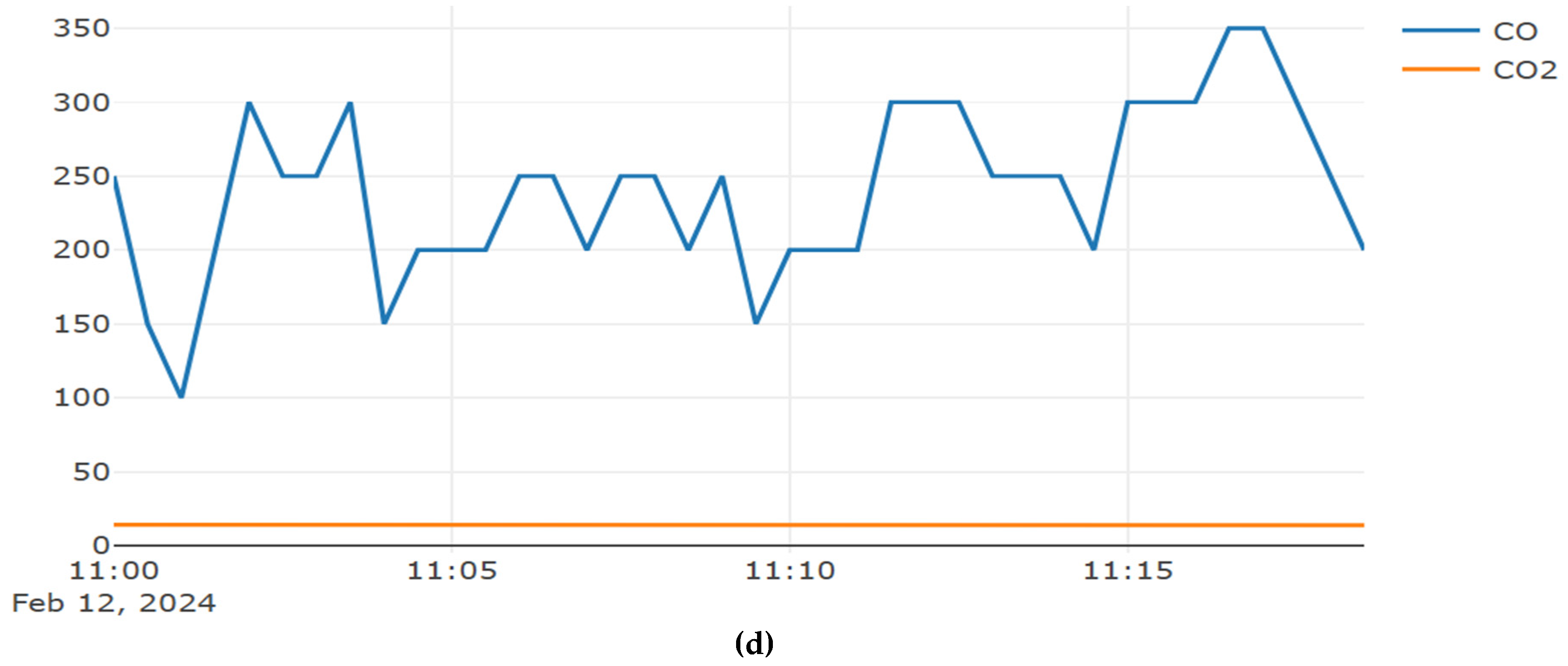
Figure 8.
Average emissions at 40 km/h and 60 km/h using G100 and GH as fuel.
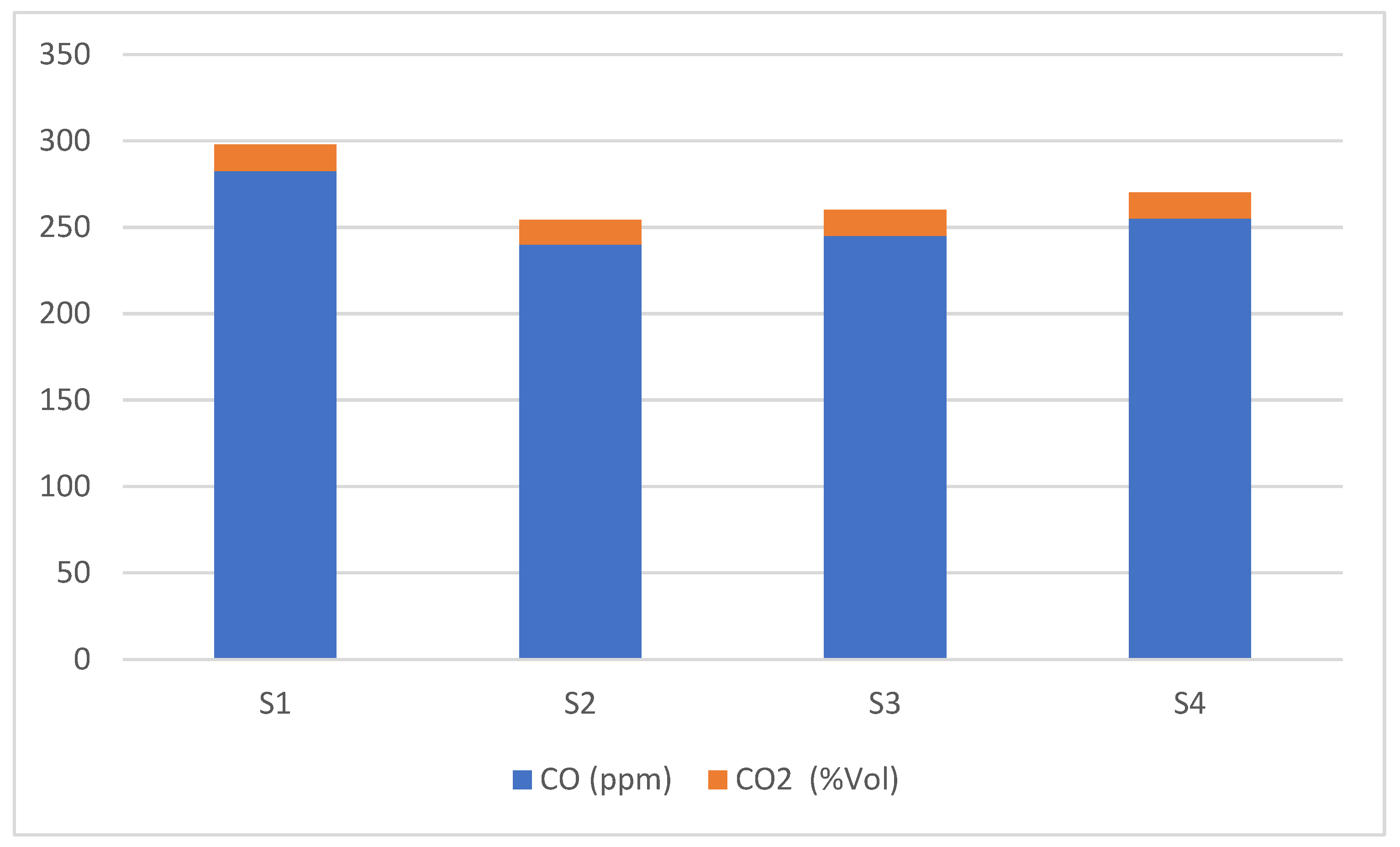

Table 1.
description of the device components.
| Num | Description |
|---|---|
| 1 | Base aluminum enclosure to install electronic components |
| 2 | Neoprene base for sensors |
| 3 | ZE07-CO sensor |
| 4 | CO2 sensor |
| 5 | ZE07-H2 sensor |
| 6 | N/A |
| 7 | Device to create turbulence in exhaust air |
| 8 and 14 | Case 2: protector for CO sensor |
| 9 | Perforated phenolic board |
| 10 | 3.7v battery |
| 11 | System Power Supply Controller |
| 12 and 17 | Case protector for ESP 32 |
| 13 and 22 | Case 2 protector for CO2 sensor |
| 15 | Module GPS u-blox NEO-6M |
| 16 and 23 | (2x) Case 1 protector for ZE07-H2 sensor |
| 18 | System status LED indicator |
| 19 | ESP 32 development board |
| 20 | Perforated phenolic board |
| 21 | BMP180 Breakout |
| 24 | Fastening screws |
Table 2.
Characteristics of the sensors.
| Model | Description | Output Data |
|---|---|---|
| ZE07-H2 | ZE07-CH2O is a general-purpose and miniaturization electrochemical Formaldehyde detection module. It utilizes electrochemical principles to detect H2 in air which makes the module with high selectivity and stability. Detection Range 0- 450 ppm, Response time ≤ 60s. This sensor has automatic calibration. | UART/Analog Voltage/PWM wave output |
| ZE07-CO | ZE07-CO is a general-purpose and miniaturization electrochemical carbon monoxide detection module. It utilizes electrochemical principles to detect CO in air which makes the module with high selectivity and stability. Response time ≤60s, Detection Range 0~500 ppm. This sensor has automatic calibration. | UART/Analog Voltage/PWM wave output |
| CO2-NDIR | This sensor is used to read the concentration of CO2, the measurement range of 400 to 10,000 ppm, with an average response time of 20 seconds, in addition to low energy consumption and has the feature of reading the temperature and humidity of the environment. | UART |
| NEO-6M | It is a GPS receiver manufactured by the Swiss company u-blox. It has all the receiver modules and calculation of latitude and longitude, date and world time. The information can be obtained by any external device through any of its two serial communication interfaces. | UART |
| BMP180 | It consists of two sensors: a barometric pressure sensor and temperature sensor. The BMP180 provides the digitize data through an 12C interface, since it does not require calibration its incorporation into the system was direct. | Digital-I2C |
| ESP32 | It is a SoC (System on Chip) manufactured by Espressif focus on the IoT [42] application market. The ESP32 features an extra low power consumption dual-core 32-bit RISC processor, which is able to reach speeds up to 240 MHz. Its hardware and firmware includes interfaces and protocols for wi-fi 802.11 b/g/n(802.11n, Bluetooth v4.2. communication. | NA |
| ESP 32 TTGO t-call | TTGO T-Call is a development board based on the ESP32 that integrates the SIM800L GSM/GPRS module, Chipset ESPRESSIF-ESP32 240MHz Xtensa single-/dual-core 32-bit LX6 microprocessor, Modular interface UART, SPI, SDIO, I2C, PWM, TV PWM, I2S, IRGPIO. It integrates wi-fi 802.11 b/g/n (802.11n, Bluetooth v4.2. module. | NA |
Table 3.
Experimental Design of the Tests.
| Speed (km/h) | Fuels | Experimental Trials |
|---|---|---|
| 40 | G100 | C1, C2, C3 |
| GH5 | C1, C2, C3 | |
| 60 | G100 | C1, C2, C3 |
| GH5 | C1, C2, C3 |
Table 4.
Emissions analyzer specifications.
| Measured Parameter | Range | Resolution | Accuracy | Sensor Type |
|---|---|---|---|---|
| Ambient Temperature | 0–66 °C | 1 degree F or C | ±0.1 °C M | Type RTD |
| Stack Temperature (net) | 0–1, 100 °C | 1 degree F or C | ±0.1 °C M | Type K Thermocouple |
| Oxygen (O2) | 0–25% | 0.10% | ±0.2% M | Electrochemical |
| Nitrogen Oxide (NO(x)) | 0–5000 PPM | 1 PPM | ±2% M | Dual range SEM |
| Stack Velocity/Flow | 0–200 ft/s (0–6500 cfm) | 1 ft/s | Meets EPA Method 2 | Type S pitot pipe |
| Hydrocarbons (CH) | 0–30,000 PPM | 1 PPM | ±3% M (EPA Method 25B) | NDIR |
| Carbon Monoxide (CO) | 0–15% | 0.01% | ±3% M | NDIR |
| Carbon Dioxide (CO2) | 0–20% | 0.10% | ±3% M | NDIR |
M: Measured.
Disclaimer/Publisher’s Note: The statements, opinions and data contained in all publications are solely those of the individual author(s) and contributor(s) and not of MDPI and/or the editor(s). MDPI and/or the editor(s) disclaim responsibility for any injury to people or property resulting from any ideas, methods, instructions or products referred to in the content. |
© 2025 by the authors. Licensee MDPI, Basel, Switzerland. This article is an open access article distributed under the terms and conditions of the Creative Commons Attribution (CC BY) license (https://creativecommons.org/licenses/by/4.0/).
Copyright: This open access article is published under a Creative Commons CC BY 4.0 license, which permit the free download, distribution, and reuse, provided that the author and preprint are cited in any reuse.


