

Submitted:
02 January 2025
Posted:
06 January 2025
You are already at the latest version
Abstract
Organic materials are emerging as promising candidate for electrode material for lithium-ion batteries and supercapacitors because of their unique properties and potential advantages over traditional inorganic materials. This paper is focused on polypyrrole doped surface modified carbon nanotuube sheets as electrode materials for energy storage devices such as lithium-ion batteries and supercapacitors. The advantages, challenges, and ongoing developments in this area are discussed and electrode materials properties such as energy density, cycling stability, and specific capacitance are systematically investigated.
This paper also addresses the limitations of organic electrode materials such as low energy density, cycling stability, poor discharge capability. It presents a systematic study and investigation of polypyrrole doped polyimide-modified carbon nanotube sheets. The effect of polyimide processing temperature and polypyrrole deposition time on the electrochemical properties of the electrode materials were investigated.
Electrochemical impedance spectroscopy, EIS showed that short deposition times of about 60s and low processing temperatures between 80 and 150˚C provided the best balance between electrode material structure, and electrochemical properties. This study provides a methodology for constructing electrode materials with a combination of high energy and power densities. This study also shows that the processing conditions that produced electrode materials that exhibited a combination of redox reactions and charge displacement mechanisms, typical of a pseudosupercapacitor, resulted in the highest specific capacitance and energy density.
Keywords:
Carbon nanotube sheets
; Polyimide
; Polypyrrole
; Pseudosupercapacitor
; Specific capacitance
; Energy density
; Specific capacity
; Electrochemical Impedance spectroscopy
; Cyclic voltammetry
; Gravimetric charge-discharge process
1. Introduction
Due to global concerns about energy challenges and environmental issues, there is an urgent need for sustainable energy storage batteries to efficiently use renewable energy [1]. Current battery materials rely heavily on non-renewable minerals, which could limit their widespread use due to significant economic and resource constraints. Redox-active organic compounds emerge as promising alternatives for sustainable energy storage materials due to their advantages such as widespread availability, environmental friendliness, ease of processing, lightweight, redox stability, a wide range of structures, recyclability of resources, potential flexibility, etc. Affordability. Organic electrode materials, particularly as cathodes in lithium-ion batteries (LIBs), are gaining attention due to their structural diversity and as a potential replacement for inorganic battery materials [1,2].
Organic cathode materials represent a promising category of energy storage materials with wide application potential. They are characterized by several advantages compared to inorganic cathode materials: they have high theoretical specific capacities, are environmentally friendly, offer flexible structural design options, offer a high level of Safety, and occur frequently in nature [3]. However, turning these potential applications into practical reality remains a major challenge. Despite numerous studies investigating various structures, it is still extremely difficult to find promising organic cathode materials that simultaneously offer high energy density, stable cycling, and low cost [4]. In the field of organic electrochemistry, quinone- and nitrogen-containing heteroatomic molecules have attracted great interest. However, a common problem with most organic electrode materials, including this one, is the rapid loss of capacity during cycling due to their tendency to dissolve in aprotic electrolytes [5]. To overcome this dissolution problem, various strategies have been used, such as polymerization, the incorporation of functional groups into conductive scaffolds, and the formation of salts with polyanions. Another challenge for these electrodes is their poor electronic conductivity, which directly affects their charge and discharge rates [5]. In the last decade, various organic compounds with unique structures have been developed and their electrochemical performance and reaction mechanisms have been extensively studied.
1.1. Polyimide
Polyimides are High-performance polymers with exceptional mechanical strength, chemical resistance, and thermal stability [6]. Polyimide-based composites provide a special combination of properties appropriate for advanced electrode materials when combined with carbon nanotubes (CNTs) and PVDF [7,8,9]. The electrical performance of the composite can be greatly improved by CNTs because of their high electrical conductivity [10,11,12]. Polyimide (PI) films are employed as thermal control coatings and protective layers for electronic devices and space applications. This is attributed to their remarkable optical properties, such as transparency, low solar absorption, and infrared emission. Additionally, they exhibit high thermal stability, and a wide service temperature range from -300 to +300 °C. PI films are also known for their radiation resistance, enhanced electrical insulation (dielectric constant 3.4-3.5), low density, toughness, flexibility, and high mechanical stability [13]. Generally, aromatic polyimide (PI) is produced through a two-step process.
The first step involves the synthesis of poly(amic acid), PAA from dianhydride and diamine monomers by a polycondensation reaction in a dipolar solvent, such as N-methyl pyrrolidone (NMP). The second step is the imidization reaction, which occurs after the solvent is eliminated from the PAA, as illustrated in Figure 1.
An aromatic PI is electroactive and it is reduced to its anions via a two-step 2e- reduction processes at potential lower than 1.0 V versus Li/Li+ [22]. At higher applied potential between 2.0 and 2.5 V, PI based electrode material produces its highest possible specific capacity.
1.2. Polypyrrole
Polypyrrole (PPy) is an intrinsically conducting polymers (ICP), that provides a wider range of conductivity compared to the other ICPs. The synthesis of PPy, involves a nucleation and growth oxidation and reduction processes. The polymerization of pyrrole, Py can be carried out electrochemically and by chemical oxidation and coupling processes. The synthesis of PPy typically occurs in an aqueous acid solution, containing a doping material [14]. PPy polymerization utilizes a broader array of reducing agents compared to other ICPs. Regarding its material properties, PPy is considered the stiffest of all ICPs, yet it more flexible than most metallic and ceramic materials [14].
PPy is easily processable and cost effective. These properties make PPy a valuable material in various applications, particularly where flexibility, conductivity, and cost-effectiveness are key considerations [14]. PPy is frequently used in biosensors, gas sensors, wires, microactuators, anti-electrostatic coatings, solid electrolytic capacitors, electrochromic windows, displays, and packaging, as well as in electronic devices, functional membranes, and polymeric batteries [15]. Polypyrrole (PPy) is a multifunctional polymer whose properties are influenced by the dopant composition and synthesis process. PPy has efficient redox activity, and it can form nanowires with conductivity between 104 and 102 S/cm at room temperature. It has excellent ion-exchange, and ion discrimination capacities. It produces an electrochromic effect that varies with electrochemical conditions. These characteristics make PPy suitable for electrochemical synthesis and deposition on conducting surfaces, leading to its widespread use in developing various electrochemical sensors and biosensors [16]. Polypyrrole (PPy) displays a pseudocapacitive behavior in addition to its electric double-layer storage mechanism. Doping PPy with inorganic and organic acids, as well as polymeric stabilizers, has been shown to enhance its electrical and electrochemical properties by influencing its morphology [17].
Composite materials made of polypyrrole (PPy) and carbon aerogel (CA) with varying PPy composition can be prepared by chemical oxidation polymerization, and ultrasonic irradiation. They are utilized as active electrode materials for supercapacitors. Scanning electron microscopy, SEM and transmission electron microscopy, TEM are used to evaluate the morphology and structure of PPy/CA composite. PPy is deposited into the surface of CA, and studied by cyclic voltammetry, galvanostatic charge/discharge test, and electrochemical impedance spectroscopy, EIS. PPy/CA composites were shown to have higher specific capacitance than CA. Data from cyclic voltammetry show that PPy/CA composite material has a high specific capacitance of 433 Fg-1, which is about 2.5 times higher than that for the neat CA electrode of about 174 Fg-1. The specific capacitance of the composite after 500 cycles is constant with capacitance retention of 100% [18].
Using a novel microwave hydrothermal method, thorn-like organic metal-functionalized carbon nanotubes were synthesized. This process involved direct polymerization of pyrrole on carbon nanotubes using a reactive seed template of methyl orange and iron (III) chloride, without additional oxidants. The resulting composites, including the carbon nanotube/methyl orange-iron (III) chloride and polypyrrole/carbon nanotube, were characterized using TEM, EDS, infrared spectroscopy, and XRD. Their electrochemical properties were evaluated by cyclic voltammetry and galvanostatic charge-discharge tests, revealing a specific capacitance of 304 Fg-1 in a 1M KCl solution [19].
A variety of polypyrrole-LiFePO4 (PPy-LiFePO4) composites were created by polymerizing pyrrole on the surface of LiFePO4 particles. AC impedance measurements reveal that the polypyrrole coating greatly lowers the charge-transfer resistance of LiFePO4 electrodes. Charge/discharge testing was used to assess the electrochemical reactivity of polypyrrole and PPy-LiFePO4 composites for lithium insertion and extraction. In comparison to the pure LiFePO4 electrode, the PPy-LiFePO4 composite electrodes displayed a higher reversible capacity and improved cycling [20]. A novel conducting sulfur-polypyrrole composite material was prepared by the chemical polymerization method with sodium p-toluene sulphonate as the dopant,4-styrene sulphonic sodium salts as the surfactant, and FeCl3 as the oxidant. Raman spectroscopy, thermogravimetric analysis, and scanning electron microscopy were used to analyze the resulting material. The electrical conductivity, capacity, and cycle durability in a lithium cell were dramatically increased when nanosized polypyrrole particles were uniformly deposited onto the surface of the sulfur powder [21].
Though the composite materials, including PPy-LiFePO4, PPy-H4/PVMo11O40, PPy@MnMoO4, and polyimide-SWCNT-PPy composites, have remarkable advantage in energy storage applications, they exhibit limited specific capacitance, incomplete optimization of material structures, scalability challenges, and long-term cycling stability issues. While these materials demonstrate enhanced performance through pseudocapacitive phenomenon, doping strategies, and hybridization, their limitations arise from their poor porosity, restricted ion transport, and suboptimal conductivity. To address these issues, strategies have been proposed to enhance conductivity, porosity, and stability. These include modifying the molecular structure, combining organic materials with inorganic components to leverage the benefits of both, designing materials with porous structures and adding conductive components to improve performance, developing new electrolytes that minimize the dissolution of organic materials, and optimizing the binder and electrode structure to enhance stability and performance. In light of these strategies, a polyimide-based polymer composite electrode is an attractive alternative. Polyimide (PI) is known for its chemical, mechanical, and electrical stability, making it an ideal matrix for incorporating electroactive components, such as carbon nanotubes (CNTs). The exceptional lightweight electrical properties of CNTs and their stable electrocatalytic responses to electrolytes make them highly suitable for use in this nanocomposite, aiming to develop a high-performance energy storage device. This study hypothesizes that varying synthesis conditions such as PPy deposition times of and polyimide processing temperatures will influence the composite structure, affecting porosity, and the electrochemical properties. By carefully controlling the processing conditions, unique microstructures that enable higher electrolyte-electrode interaction, resulting in outstanding electrochemical properties will be uncovered. The objective of this study is to systematically investigate the effect of processing temperatures and polypyrrole (PPy) deposition times on the structural, porosity, and electrochemical properties of (PI/CNTs)/PPy hybrid composites. Specifically, the study aims to determine how these parameters influence the porosity, bulk resistance, and specific capacitance of the composite electrode material, and to establish conditions that achieve effective energy storage performance while ensuring mechanical stability and scalability.
This approach leverages the intrinsic properties of CNTs for improved conductivity and electrocatalytic properties while optimizing the structural characteristics of the PI matrix for superior ion transport and charge storage. This study is motivated by the need to develop high-performance organic-based materials for energy storage applications, particularly in lithium-ion batteries and supercapacitors. Traditional inorganic materials, while offering high energy density, suffer from drawbacks such as low cycling stability, environmental concerns, and high production costs. Organic materials like polyimides (PI), combined with conductive additives like carbon nanotubes (CNTs) and polypyrrole (PPy), offer promising alternatives due to their flexibility, environmental friendliness, and tunable electrochemical properties. This research examines the influence of the deposition time of PPy and processing temperature for PI in a hybrid nanocomposite system, aiming to develop an electrode material with improved conductivity, porosity, and ion transport properties to support greater energy storage efficiency. The novelty of this work lies in its systematic investigation of the relationship between polyimide processing temperature and PPy deposition times to precisely control the structure of the (PI/CNTs)/PPy hybrid composite. Unlike prior studies, this work demonstrates how partial imidization at low curing temperatures creates a porous polyimide matrix that enhances ion diffusion and reduces bulk resistance, which is critical for improving energy storage performance. The ability to tailor porosity through controlled deposition times and processing conditions provides unique insights into achieving an optimal balance between mechanical stability, ion mobility, and electrochemical efficiency. This focus on structure as a tunable parameter represents a significant advancement over existing approaches that often overlook its impact on energy storage applications.
At applied potential between 2 and 2.5 V, PI based cathode materials exhibit high specific capacity close to the theoretical capacity. The reversible capacities of PI electrode lies between between 83 and 95% of their initial values after 100 cycles at 0.2 C [23,24]. To produce a satisfactory rate performance, the PI cathode material must be filled with at least 30 wt.% conductive carbon. Thus, another study area of interest for practical applications is how to improve the conductivity of the materials used in PI cathodes [25]. A composite organic cathode material based on aromatic polyimide (PI) and highly conductive graphene particles was prepared by an easy in-situ polymerization process. Because of the delocalized electron of the aromatic main chain and PI’s efficient π-π interactions with the conductive graphene backbone, PI electrodes materials exhibit fast electron conduction, quick ion diffusion, and a high rate capability. PI/graphene composite containing about 10% graphene ((PI10G), produced a high reversible capacity of 232.6 mAhg-1 at a 10 coulomb charge-discharge rate. It also eexhibited outstanding high-rate extended cycling stability, and a high capacity of 122.0 mAhg-1 at 20 coulomb with a capacity retention of 94% after 1000 cycles. The remarkable electrochemical performance of the PI10G composite showed how well PI and graphene are combined to achieve good redox reaction reversibility and strong electronic conductivity [26]. Excellent electrochemical performance for Mg2 storage can be achieved with organic cathode materials based on composites of CNTs and polyimides (PIs) produced from aromatic dianhydrides. The PI/CNT cathodes displayed exceptional capacities and ultralong cycling stability due to the highly reversible multi-electron redox processes of π-conjugated PIs and the 3D-crosslinked conductive networks of CNTs [27]. Recent studies have focused on tailoring the composition, processing conditions, and structural configuration of polyimide hybrid nanocomposites doped with polypyrrole to achieve greater energy storage efficiency [28].
Figure 2.
Chemical structure of (a) polyimide and (b) polypyrrole.

In this paper, polyimide-modified carbon nanotube sheet was synthesized and doped with polypyrrole, PPy by electrodeposition in the presence of p-toluenesulfonic acid (PTSA) as a dopant and supporting electrolyte. The electrode materials performance was studied by cyclic voltammetry, CV, Electrochemical impedance spectroscopy, EIS and Gravimetric charge-discharge processes. The effect of PPy deposition times was determineed. Additionally, the influence of the processing temperatures of the polyimide-carbon nanotube sheets substrate on the structure and electrochemical properties of the working electrode was was systematically investigated. The goal of this study is to develop a high-performance energy storage device by tailoring the synthesis and processing conditions of the composite electrodes to improve their electrochemical properties.
Polyimides are well-known for their exceptional thermal stability and mechanical properties, which enable their use in a broad range of applications and commercial products. Incorporating carbon nanotubes sheets (CNTs) into the polyimide matrix imparts electrical conductivity and significantly enhances its energy storage capabilities.
Carbon nanotubes (CNT) are known for their exceptional electrical conductivity and high specific capacitance, making them excellent conductive nanofillers for energy storage applications. To enhance the interaction and compatibility between CNT and polyimide, insertion of polypyrrole (PPy), a secondary heterocyclic amine was used. The resulting hybrid composite will be used to construct a high temperature stable pseudosupercapacitor electrode material, for energy storage applications.

Table 1.
Properties of carbon materials.
| Property | Standalone CNT Sheets | Graphene Sheets | Activated Carbon | Carbon Fibers |
|---|---|---|---|---|
| Electrical Conductivity | ~103–104 S/cm (highly conductive). | ~104–105 S/cm (extremely high for high-quality graphene). | ~10–100 S/cm (moderate conductivity). | ~102–103 S/cm (depends on fiber alignment and purity). |
| Tensile Strength | ~150–300 MPa (moderate strength). | ~100–150 MPa (weaker but improves when stacked). | ~20–80 MPa (low due to porous structure). | ~1–5 GPa (exceptionally high for advanced fibers). |
| Young’s Modulus | ~10–20 GPa (high stiffness). | ~1–5 GPa (lower stiffness due to 2D nature). | ~0.5–2 GPa (weak mechanical stability). | ~70–300 GPa (extremely high for structural uses). |
| Thermal Conductivity | ~1000–2000 W/m·K (exceptionally high). | ~5000 W/m·K (highest known for pure graphene). | ~1–10 W/m·K (low due to high porosity). | ~100–600 W/m·K (moderate, improves with alignment). |
| Porosity | ~10–50 nm (moderate porosity, defined by CNT bundle packing). | ~Few nanometers (depends on stacking, typically low). | ~0.1–1 μm (high porosity due to activated structure). | Negligible (dense and aligned structure). |
| Density | ~1.3–1.5 g/cm3 (lightweight). | ~1–2 g/cm3 (depends on number of layers and defects). | ~0.5–0.9 g/cm3 (very lightweight). | ~1.8–2.0 g/cm3 (heavier due to structural density). |
| Specific Capacitance | ~10–50 F/g (limited to double-layer capacitance). | ~50–200 F/g (depends on surface area and electrolyte). | ~100–300 F/g (high due to extensive surface area). | ~10–50 F/g (low due to dense structure). |
| Thermal Stability | Stable up to ~600–800 °C in inert environments. | Stable up to ~400 °C in air, higher in inert atmospheres. | Stable up to ~600 °C (depends on activation process). | Stable up to ~1000 °C in inert conditions. |
| Flexibility | High; bendable and stretchable. | High for single-layer graphene; reduced for stacked layers. | Low; brittle and prone to cracking. | Low; rigid and prone to fracture under bending. |
| Scalability | Challenging; uniformity over large areas is difficult. | Difficult; large-scale production of defect-free sheets is hard. | High; widely available and inexpensive. | Moderate; high-quality fibers are expensive to produce. |
Table 2.
Properties of polyimide and polypyrrole.
| Properties | Polypyrrole (PPy) | Polyimide (PI) |
|---|---|---|
| Electrical Conductivity | ~10–100 S/cm (doped with appropriate agents like p-toluene sulfonic acid) | ~10−12 S/cm (intrinsic); can be increased with conductive additives like CNTs. |
| Redox Activity | Exhibits pseudocapacitance; specific capacitance values range from 200–600 F/g, depending on structure and doping. | No intrinsic redox activity; primarily used as a structural matrix. |
| Mechanical Strength | Moderate; tensile strength ranges from 10–50 MPa, brittle in pure form. | High; tensile strength ranges from 80–200 MPa, depending on processing and reinforcement. |
| Thermal Stability | Degrades above 150–200 °C, depending on polymerization and doping conditions. | High stability: thermal degradation starts at ~400 °C, suitable for high-temperature applications. |
| Porosity Contribution | Can form layers with pores in the range of 10–50 nm (dependent on deposition conditions). | Porosity is tunable; partial imidization at 90 °C results in a porous structure, while full imidization at 250 °C reduces porosity. |
| Chemical Stability | Sensitive to over-oxidation in electrolytes; stability depends on the potential range. | Excellent chemical stability; resistant to solvents, acids, and bases. |
| Young’s Modulus | ~1–2 GPa (moderate, brittle polymer). | ~2–8 GPa (high, depends on reinforcement and processing conditions). |
| Density | ~1.5 g/cm3 (bulk material). | ~1.4 g/cm3 (varies slightly with processing). |
| Specific Capacitance | Ranges from 200–600 F/g (varies with doping and structure). | Not applicable; PI does not contribute directly to capacitance. |
| Scalability | Easily deposited via chemical or electrochemical polymerization. | Scalable synthesis through imidization of polyamic acid, suitable for large-scale applications. |
2. Experimental
2.1. Synthesis of Polyimide
Poly(amic acid), PAA was synthesized by polycondensation of equimolar amount (0.0225 mol) of pyromellitic dianhydride, PMDA and Oxydianiline, ODA in N-methyl pyrrolidone, NMP at 5 °C. The resulting PAA was preheated at 80 °C for 8 h to eliminate the solvent. Calculated amount of PAA was solution cast onto the carbon nanotube sheet, CNTs and imidized for 8 h at 90, 180 and 250 °C, respectively, under vacuum. The PI-modified CNT sheet is then studied by differential scanning calorimetry, DSC before it is doped with polypyrrole by electrochemical polymerization of pyrrole, Py.
2.2. Electrochemical Deposition of Polypyrrole
Electrodeposition of polypyrrole was carried out in a 3-electrode electrochemical cell containing 0.05 M pyrrole and 0.022 5M toluene sulphonic acid solution. Electrodeposition was done potentiostatically at an applied potential of 2 V vs Ag/Ag+. The working electrode used is the PI/CNTs hybrid nanocomposite material, previously processed at the appropriate imidization temperature. The counter electrode is conducting glass rod while the reference electrode is the Ag/AgCl reference electrode. Electrodeposition was carried out for deposition times ranging from 60 to 700 s.
2.3. Differential Scanning Calorimetry
Differential Scanning Calorimetry (DSC) was used to study the extent of imidization of polyimide. DSC revealed how the processing temperature influenced the conversion of poly(amic acid) (PAA) to polyimide (PI). DSC of the neat PAA and PAA cast onto CNT sheets, CNTs was carried out at a heating rate of 5°/min in a temperature range between 80 and 350 °C. The neat PAA sample exhibited two reaction endotherms at 65 °C due to poly(amic acid) formation and between 170-250 °C due to cyclodehydration (imidization) process. For hybrid nanocomposites, samples processed at lower temperature ≤ 90 °C poly(amic acid) endotherm was prominent as well as the polyimide formation endotherm at a temperature ≤ 250 °C. Imidization was completed when the peak for imidization had completely disappeared.
2.4. Electrochemical Characterization, EC
A Gamry 3000 Potentiostat, configured in a three-electrode setup (Figure 4), was used to perform electrochemical characterization. EC experiments were conducted in a 1 M H2SO4 electrolyte solution. A glassy carbon rod was the counter electrode, while an Ag/AgCl electrode was the reference electrode. The working electrodes consisted of free-standing films of the samples, which were immersed in the electrolyte solution.
Cyclic voltammetry (CV) was done in a voltage range between 0 V to 1 V at three different scan rates of 5, 10, and 25 mV/s for 10 cycles to determine the peak current and charge storage capacity of the nanocomposite electrode.
2.5. Electrochemical Characterization
A Gamry 3000 potentiostat, configured in a three-electrode setup (Figure 4), was employed for the experiments conducted in a 1 M H2SO4 electrolyte solution. A glassy carbon rod was the counter electrode, while an Ag/AgCl electrode was the reference electrode. The working electrodes consisted of free-standing films of the samples, which were immersed in the electrolyte solution.
Cyclic voltammetry (CV) was done in a voltage range between 0 V to 1 V at two different scan rates of 5, 10, and 25 mV/s for 10 cycles to determine the peak current and charge storage capacity or higher capacitance of the nanocomposite electrode.
Gravimetric charge-discharge test was performed at a current density of 0.5 A/g, between a potential range of 0 to 0.8 V. Samples were cycled under galvanostatic conditions.
EIS test was performed between 106 Hz and 10-2 Hz, with applied DC voltage of 1 V open circuit potential. The porosity of the composite materials was determined by using the modified Archie’s law and the bulk resistivity Ru of the working electrode. Ru was obtained from the complex Nyquist curve fitted with a 5-element Randle’s cell circuit model.
3. Results and Discussion
3.1. Thermal Analysis and Imidization
The DSC thermograms show that the heat of imidization was highest for the control PAA sample that was thermally treated at 80 °C for 8 h under vacuum. The PI/CNTs composites show significantly lower heat of imidization that the neat control PAA sample. It is shown that the heat of imidization decreased with thee imidization temperature.
At 120 °C, the heat of the reaction decreased as imidization reaction increased, producing a denser structure, while at 150 °C, a significant reduction in heat of the reaction reflected near-complete imidization. Samples processed at 180 °C and 250 °C exhibited negligible heat of reaction, confirming full imidization and the formation of dense, thermally stable microstructures (Figure 3a,b).
The degree of imidization, α was calculated by using the following equation:
where DHT is the heat of imidization at the test temperature and DH0 is the heat of imidization for PAA. The heat of imidization decreased while the extent of imidization increased with increasing testing temperature as shown in Figure 3c,d.
α = 1 – DHT/DH0
The electrochemical analysis focused on samples processed at 90 °C, 180 °C, and 250 °C, with the 90 °C sample showing the best performance due to its partially imidized microstructure that balances porosity and ion transport for effective charge storage. The 180 °C sample exhibited reduced performance as the denser structure from advanced imidization restricted ion diffusion despite improved stability. The 250 °C sample showed the lowest performance, as complete imidization resulted in a highly dense structure with minimal porosity, limiting ion accessibility and redox activity. These findings highlight how processing temperature affects thermal behavior, microstructural evolution, and electrochemical performance in hybrid nanocomposites for energy storage applications.
3.2. Electrodeposition of Polypyrrole
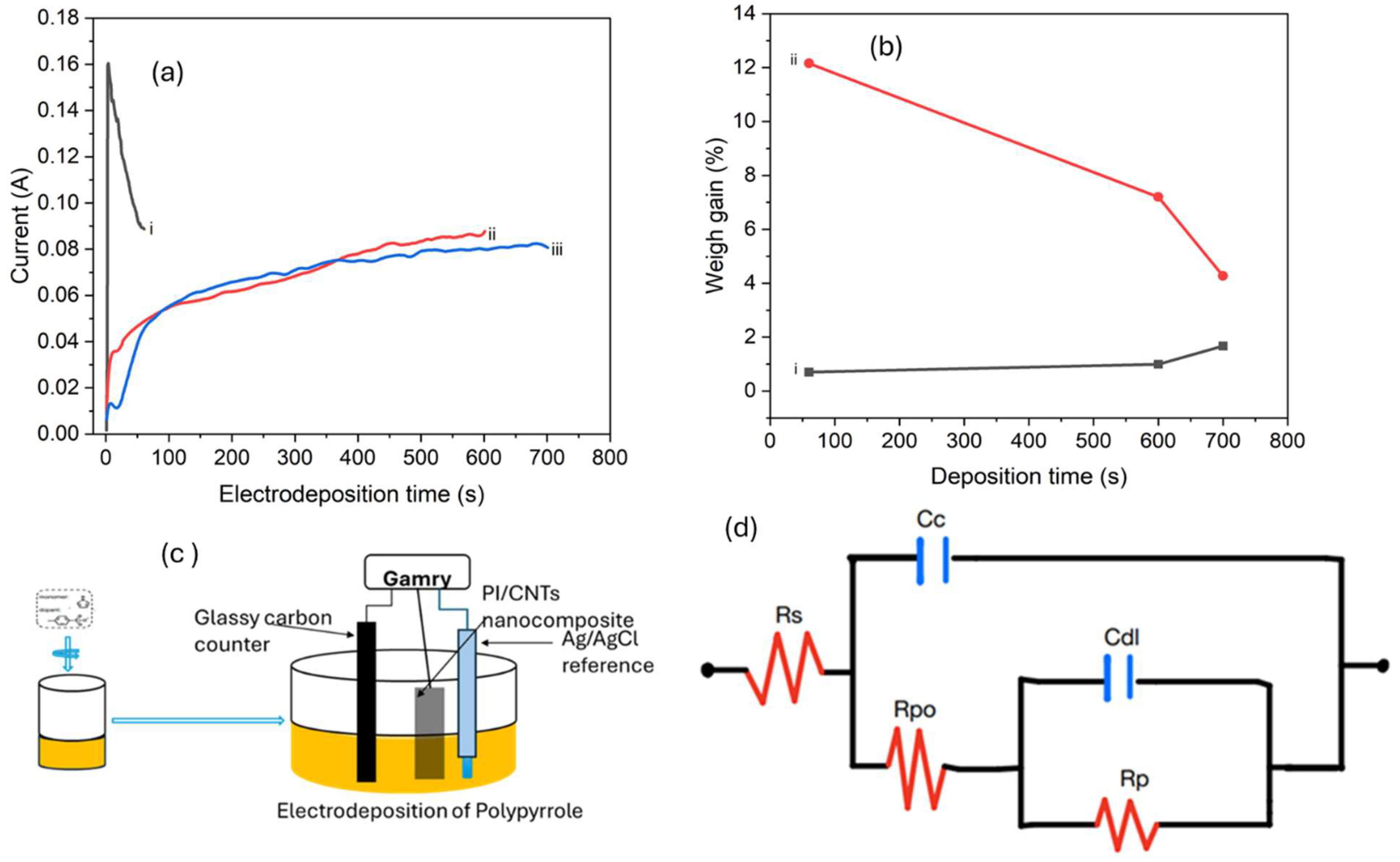
The transient current–time curves obtained during potentiostatic electrochemical polymerization of pyrrole onto the hybrid nanocomposite electrodes is shown on Figure 4a. As the time of polymerization increased, the steady-state current approached 0.06 A. The sample prepared under 60 seconds of deposition showed the highest initial current of about 0.16 A which drastically dropped to about 0.08 A due to the formation of a thin, uniform PPy layer. This thin PPy layer allows for efficient ion diffusion and charge transfer, leading to superior performance for energy storage applications. In contrast, the transient current for the electrode material synthesized after 600 seconds of deposition reached a lower initial peak current of 0.05 A, and remained constant at 0.06 A. Thicker PPy film was formed after 600 s of deposition as shown by the increased weight gain (Figure 4b) of the working electrode. Finally, the steady-state transient current-time curve for the composite obtained after 700 seconds of deposition was 0.02 A, reflecting the formation of a dense, thick PPy film. The higher weight gain for this sample is due to formation of PPy and is associated with reduced porosity of the working electrode material (Figure 4a,b). Figure 4c,d show the electrochemical cell used in electrodeposition and the equivalent electrical circuit model used to fit the electrochemical impedance data, respectively.
Figure 4.
(a) Transient i–t curves obtained during potentiostatic polymerization of 0.05 M pyrrole in a 0.0225 M toluene sulphonic acid solution at an applied potential of 2 V onto PI/CNTs hybrid nanocomposite working electrodes processed at (i) 90 °C for 60 sec, (ii) 90 °C for 600, (iii) 90 °C for 700 seconds and (b) (i) porosity, (ii) weigh gain percent, (c) electrochemical synthesis of polypyrrole, (d) A simplified Randles cell model for EIS failed coating fitting.
Figure 4.
(a) Transient i–t curves obtained during potentiostatic polymerization of 0.05 M pyrrole in a 0.0225 M toluene sulphonic acid solution at an applied potential of 2 V onto PI/CNTs hybrid nanocomposite working electrodes processed at (i) 90 °C for 60 sec, (ii) 90 °C for 600, (iii) 90 °C for 700 seconds and (b) (i) porosity, (ii) weigh gain percent, (c) electrochemical synthesis of polypyrrole, (d) A simplified Randles cell model for EIS failed coating fitting.
3.3. Electrochemical Properties
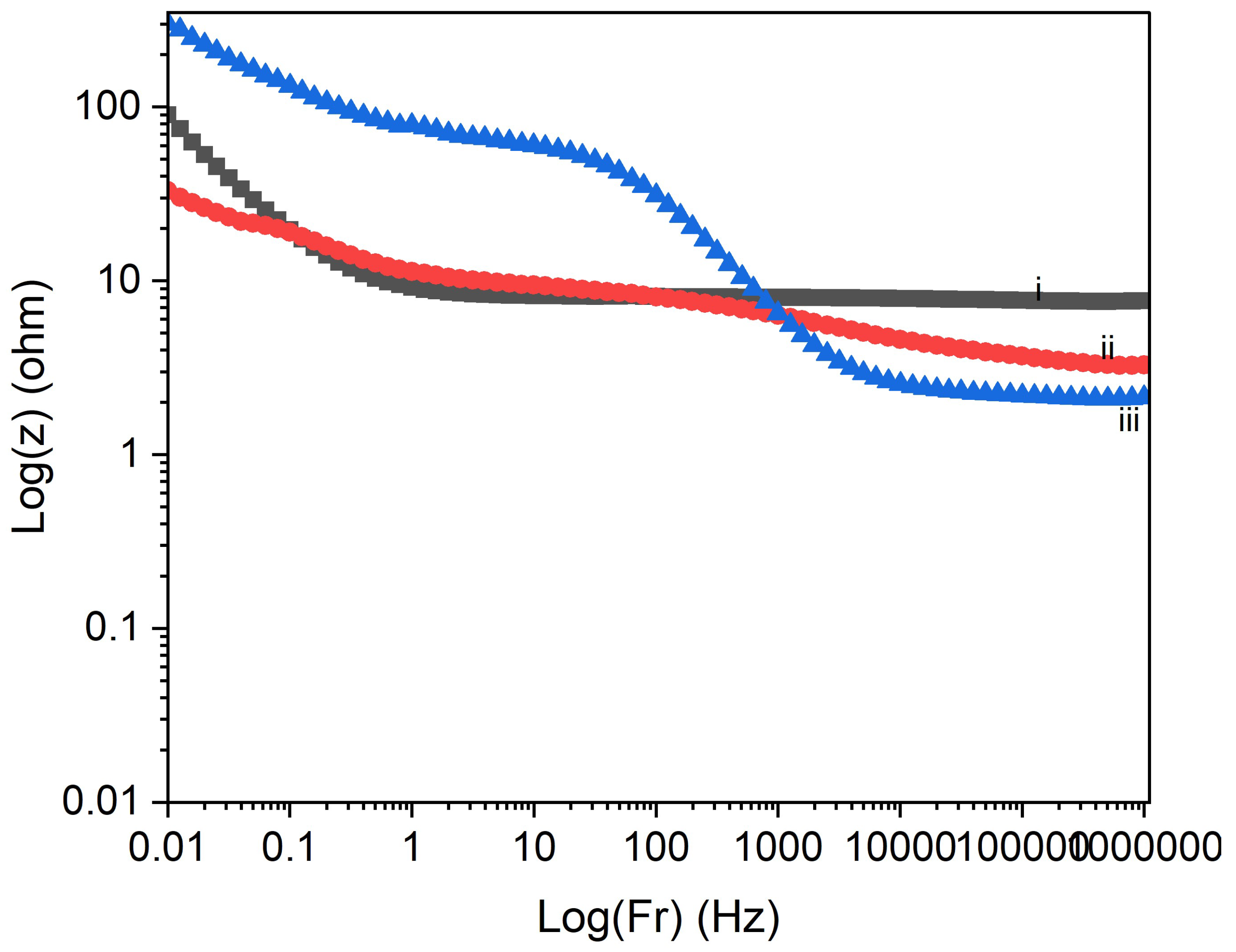
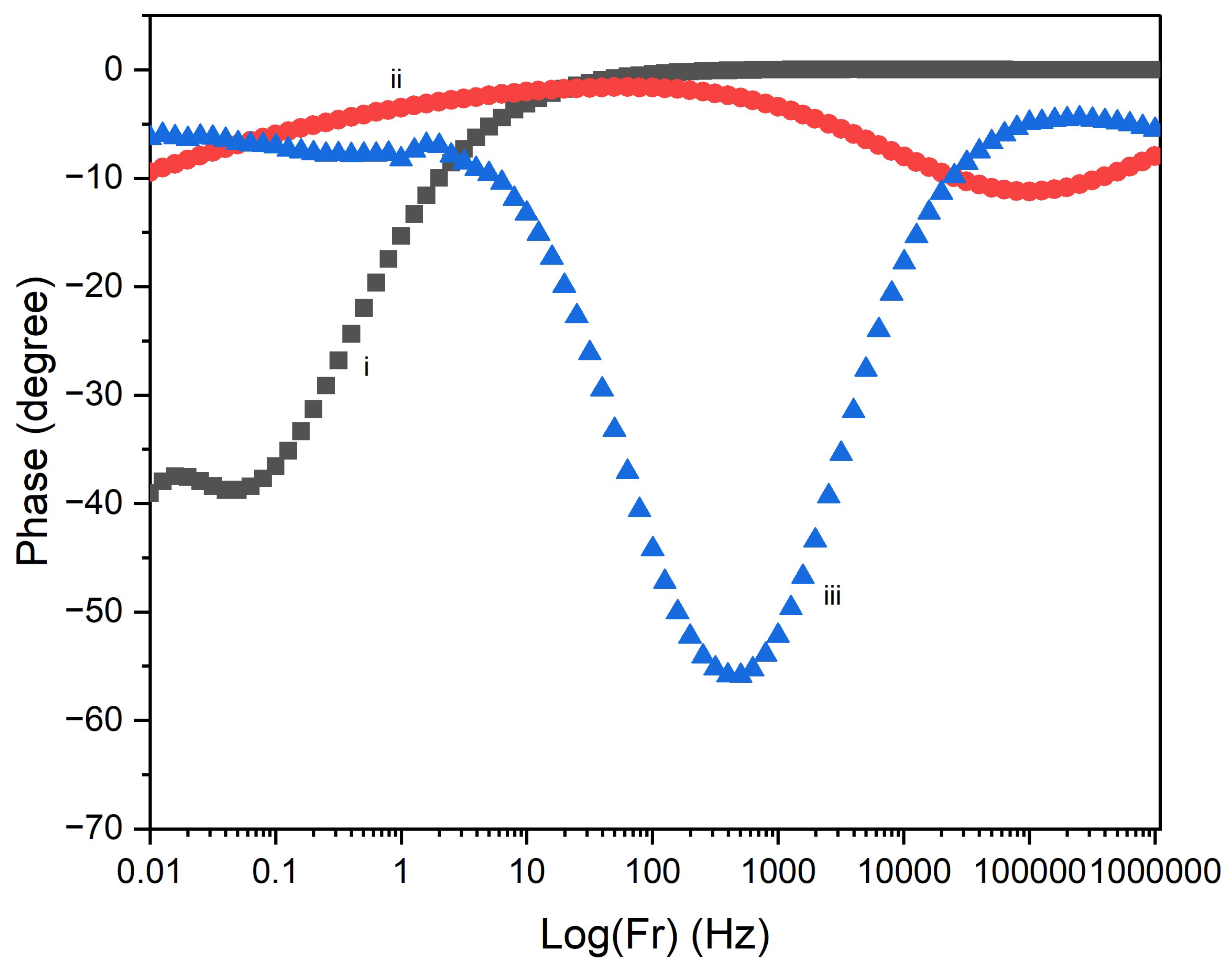
Figure 5, Figure 6 and Figure 7 show the cyclic voltammograms obtained at scan rates of 5, 10, and 25 mV/s. The CV data were used to determine the specific gravimetric capacitance (Cp) of the electrode material before and after deposition of PPy. The results indicate that samples prepared in 60 seconds of deposition, exhibited higher current responses and higher specific capacitance compared to the samples prepared at higher deposition times of 600 and 700 seconds. This is indicative of better electrochemical activity and higher charge storage capacity. Specifically, at a scan rate of 5 mV/s, the specific capacitance for the sample processed at 90 °C showed varying behaviors depending on the deposition time. For the 60-second deposition, the specific capacitance decreased slightly from 858.2 F/g for 1 cycle to 802.3 F/g for 10 cycles, suggesting a slight decrease over repeated cycles. In contrast, for the 600-second deposition, the specific capacitance started at a lower value and decrease slightly over 10 cycles. The 700-second deposition yields the lowest capacitance values across all scan rates, indicating that the thicker PPy layer formed at this deposition time restricted ion mobility and electron transfer efficiency, especially at higher scan rates. A similar pattern is observed after 5 and 10 cycles, with the samples formed in 60 seconds of deposition consistently maintaining the highest capacitance across all cycles and scan rates. The drop in capacitance is less steep at 5 cycles compared to 1 cycle, but the 60-second deposition remains superior, particularly at 5 mV/s. By 10 cycles, the capacitance continues to decrease across all deposition times, but the 60-second deposition still provides the best performance. Deposition of PPy onto the PI/CNTs hybrid nanocomposite was observed to shift the redox potential by approximately 0.1 V and diminish the second redox peak around 0.6 V, indicating a change in electrochemical behavior. The shape of the cyclic voltammogram suggests that the system stores charge both in an electric double layer and faradaic form, as reflected in the CV curves (Figure 5, Figure 6 and Figure 7). The specific capacitance values and trends observed in the scan rate plots were derived from these CV curves (Figure 5, Figure 6 and Figure 7) using models shown below where I (A) is the response current obtained during the voltage sweep ∆V (V) at given scan rates v (mV/s) of the specific active material m (g). Figure 7 shows the electrochemical performance of PI/CNTs-PPy composites formed in 60 s, 600 s, and 700 s of deposition. The gravimetric charge/discharge duration increases with deposition time (Figure 7b), but specific capacitance (Figure 7c) and both power and energy densities (Figure 7d) are highest at 60 s, indicating it as the most effective deposition time for superior performance. Figure 8 shows that lower processing temperatures (90 °C) resulted in higher specific capacitance and capacity, while higher temperatures (250 °C) reduced performance, confirming that lower processing temperatures and short deposition times yield the best electrochemical performance. Figure 9 shows that the redox peak ratio, redox charge, and fractional charge all increase with the number of cycles, indicating improved redox activity and charge utilization during cycling. Figure 10 shows that the combination of (a) 90 °C, at 60 s has the lowest impedance, indicating better charge transfer, (b) lower processing temperatures of 90 °C resulted in the highest specific capacitance, energy density, and cycling stability, and (c) 90 °C outperforms both higher temperatures (180 °C, 250 °C) and other reported works in energy and power density. Figure 11 shows that the combination of 90 °C at 60 s deposition outperformed samples synthesized in 600 s and 700 s of deposition, with the lowest impedance, shortest time constant, and highest phase angle, indicating superior charge transfer and capacitive performance.
EIS models for determining specific capacitance (Cp) utilize the Bode and Nyquist plots according to equation [4]. Where f represents the Bode frequency (s-1) at the peak of the Nyquist plot, Z’max is the maximum imaginary impedance (Ω), and m denotes the mass of the active material (g):
The specific capacitance (Cp) from charge-discharge curves can be calculated using equation 5. In this equation, Im is the discharge current density (A/g), Δt is the duration of the discharge (s), and ΔV is the voltage drop (V) observed during the discharge period.
Table 3.
Parameter of PI/CNTs- PPy obtained using (EIS).
| Deposition time | Bulk resistance (Ω) | Porosity (%) |
|---|---|---|
| 60 s | 17.7 | 12.2 |
| 600 s | 42.2 | 7.2 |
| 700 s | 61.9 | 4.3 |
4. Effect of Time and Temperature on the Hybrid Nanocomposite
The deposition time and temperature effect on polyimide hybrid nanocomposites significantly impact their electrochemical performance, porosity, and resistance characteristics. Shorter deposition times, such as 60 seconds, generally produce thinner polypyrrole (PPy) layers, which enhance porosity and ion transport, yielding high specific capacitance and lower charge transfer resistance (Rct) in electrochemical impedance spectroscopy (EIS) measurements. However, as deposition time increases to 600 and 700 seconds, the PPy layer thickens, decreasing porosity and increasing Rct due to reduced ion diffusion, which impedes charge storage capacity. Similarly, processing temperature influences these properties, with lower temperatures (90 °C) preserving porosity and enhancing ion transport, leading to better electrochemical performance. Higher temperatures (such as 180 °C and 250 °C) promote a more extensive imidization process in the polyimide matrix, which strengthens the composite but may also reduce porosity and increase bulk resistance. This combined effect of temperature and deposition time indicates that lower temperatures and shorter deposition times are generally more favorable for producing high-performance polyimide hybrid nanocomposites, as they maintain an optimal balance of structural integrity, ion transport, and electrochemical activity suitable for energy storage applications.
5. Conclusion
The porosity of the electrode at 90 °C processed sample is higher than the other one. This porosity is essential for efficient ion transport, reducing impedance, and improving the overall electrochemical performance of the composite in energy storage devices.
From the cyclic voltammograms (CVs) of hybrid nanocomposites processed at 90 °C with PPy electrodeposition times of 60, 600, and 700 seconds at scan rates of 5, 10, and 25 mV/s, along with EIS Nyquist plots and specific capacitance measurements, the 60-second deposition consistently shows the best electrochemical performance across multiple parameters. At 5 mV/s, the specific capacitance peaks at around 850 F/g for the 60-second deposition, whereas the 600-second deposition reaches a slightly lower capacitance at 600 F/g. Although the 700-second deposition achieves comparable performance at 5 mV/s, the specific capacitance drops significantly at higher scan rates, reaching around 300 F/g at 25 mV/s. This trend indicates that while the 700-second deposition performs well at lower scan rates, the 60-second deposition offers the best balance, maintaining a more stable and higher performance across both low and high scan rates. Therefore, the 60-second deposition is the optimal deposition time for real-world energy storage applications, offering enhanced ion mobility and charge transfer kinetics.
The DSC results complement the CV findings by confirming that 90 °C processing enhances porosity and ensures that the composite retains a well-structured, porous matrix, which enables efficient ion transport during charge and discharge cycles. The enhanced porosity in the 60-second deposition allows for lower impedance and better ion diffusion, as reflected in the Nyquist plot, where the 60-second deposition exhibits lower impedance and better conductivity than the 600-second and 700-second depositions.
Overall, the 60-second deposition strikes the best balance between deposition thickness, porosity, and electrochemical performance. It results in higher current responses in CV measurements, lower impedance in EIS, and stable specific capacitance across varying scan rates. The porosity and ion transport capabilities, as demonstrated by the DSC and CV analyses, make the 60-second deposition the most suitable for applications requiring both high energy storage capacity and fast ion transport, providing better performance compared to the 600-second and 700-second depositions.
References
- Xu, F.; Wang, H.; Wu, M.; Nan, J.; Li, T.; Cao, S.A. Electrochemical properties of poly (anthraquinonyl imide) s as high-capacity organic cathode materials for Li-ion batteries. Materials Chemistry and Physics 2018, 214, 120–125. [Google Scholar] [CrossRef]
- Sui, D.; Xu, L.; Zhang, H.; Sun, Z.; Kan, B.; Ma, Y.; Chen, Y. A 3D cross-linked graphene-based honeycomb carbon composite with excellent confinement effect of organic cathode material for lithium-ion batteries. Carbon 2020, 157, 656–662. [Google Scholar] [CrossRef]
- Lyu, H.; Sun, X.G.; Dai, S. Organic Cathode Materials for Lithium-Ion Batteries: Past, Present, and Future. Advanced Energy and Sustainability Research 2021, 2, 2000044. [Google Scholar] [CrossRef]
- Shi, T.; Li, G.; Han, Y.; Gao, Y.; Wang, F.; Hu, Z.; Cai, T.; Chu, J.; Song, Z. Oxidized indanthrone is a cost-effective and high-performance organic cathode material for rechargeable lithium batteries. Energy Storage Materials 2022, 50, 265–273. [Google Scholar] [CrossRef]
- Wang, Y.; Zhao, X.; Wang, Y.; Qiu, W.; Song, E.; Wang, S.; Liu, J. Trinitroaromatic Salts as High-Energy-Density Organic Cathode Materials for Li-Ion Batteries. ACS Applied Materials & Interfaces 2022. [Google Scholar] [CrossRef]
- Zhang, M.; Wang, L.; Xu, H.; Song, Y.; He, X. Polyimides as Promising Materials for Lithium-Ion Batteries: A Review. Nano-Micro Letters 2023, 15, 1–29. [Google Scholar] [CrossRef] [PubMed]
- Liu, S.; Yang, H.; Sui, L.; Jiang, S.; Hou, H. Self-Adhesive Polyimide (PI)@ Reduced Graphene Oxide (RGO)/PI@ Carbon Nanotube (CNT) Hierarchically Porous Electrodes: Maximizing the Utilization of Electroactive Materials for Organic Li-Ion Batteries. Energy Technology 2020, 8, 2000397. [Google Scholar] [CrossRef]
- Rathod, V.T.; Kumar, J.S.; Jain, A. Polymer and ceramic nanocomposites for aerospace applications. Applied Nanoscience 2017, 7, 519–548. [Google Scholar] [CrossRef]
- Barbosa, J.C.; Fidalgo-Marijuan, A.; Dias, J.C.; Gonçalves, R.; Salado, M.; Costa, C.M.; Lanceros-Méndez, S. Molecular design of functional polymers for organic radical batteries. Energy Storage Materials 2023, 102841. [Google Scholar] [CrossRef]
- Guo, W.; Liu, C.; Sun, X.; Yang, Z.; Kia, H.G.; Peng, H. Aligned carbon nanotube/polymer composite fibers with improved mechanical strength and electrical conductivity. Journal of Materials Chemistry 2012, 22, 903–908. [Google Scholar] [CrossRef]
- Wang, Q.; Dai, J.; Li, W.; Wei, Z.; Jiang, J. The effects of CNT alignment on electrical conductivity and mechanical properties of SWNT/epoxy nanocomposites. Composites Science and Technology 2008, 68, 1644–1648. [Google Scholar] [CrossRef]
- Ma, P.C.; Liu, M.Y.; Zhang, H.; Wang, S.Q.; Wang, R.; Wang, K.; Wong, Y.K.; Tang, B.Z.; Hong, S.H.; Paik, K.W.; Kim, J.K. Enhanced electrical conductivity of nanocomposites containing hybrid fillers of carbon nanotubes and carbon black. ACS Applied Materials & Interfaces 2009, 1, 1090–1096. [Google Scholar] [CrossRef]
- Sezer Hicyilmaz, A.; Celik Bedeloglu, A. Applications of polyimide coatings: A review. SN Applied Sciences 2021, 3, 363. [Google Scholar] [CrossRef]
- Wang, H.; Lin, J.; Shen, Z.X. Polyaniline (PANi) based electrode materials for energy storage and conversion. Journal of Science: Advanced Materials and Devices 2016, 1, 225–255. [Google Scholar] [CrossRef]
- Chougule, M.A.; Pawar, S.G.; Godse, P.R.; Mulik, R.N.; Sen, S.; Patil, V.B. Synthesis and characterization of polypyrrole (PPy) thin films. Soft Nanoscience Letters 2011. [Google Scholar] [CrossRef]
- Ramanavičius, A.; Ramanavičienė, A.; Malinauskas, A. Electrochemical sensors based on conducting polymer—polypyrrole. Electrochimica Acta 2006, 51, 6025–6037. [Google Scholar] [CrossRef]
- Gooneratne, R.; Iroh, J.O. Polypyrrole Modified Carbon Nanotube/Polyimide Electrode Materials for Supercapacitors and Lithium-ion Batteries. Energies 2022, 15, 9509. [Google Scholar] [CrossRef]
- An, H.; Wang, Y.; Wang, X.; Zheng, L.; Wang, X.; Yi, L.; Bai, L.; Zhang, X. Polypyrrole/carbon aerogel composite materials for supercapacitor. Journal of Power Sources 2010, 195, 6964–6969. [Google Scholar] [CrossRef]
- Mi, H.; Zhang, X.; Xu, Y.; Xiao, F. Synthesis, characterization, and electrochemical behavior of polypyrrole/carbon nanotube composites using organometallic-functionalized carbon nanotubes. Applied Surface Science 2010, 256, 2284–2288. [Google Scholar] [CrossRef]
- Wang, G.X.; Yang, L.; Chen, Y.; Wang, J.Z.; Bewlay, S.; Liu, H.K. An investigation of polypyrrole-LiFePO4 composite cathode materials for lithium-ion batteries. Electrochimica Acta 2005, 50, 4649–4654. [Google Scholar] [CrossRef]
- Wang, J.; Chen, J.; Konstantinov, K.; Zhao, L.; Ng, S.H.; Wang, G.X.; Guo, Z.P.; Liu, H.K. Sulfur-polypyrrole composite positive electrode materials for rechargeable lithium batteries. Electrochimica Acta 2006, 51, 4634–4638. [Google Scholar] [CrossRef]
- Wang, M.; Zhang, H.; Cui, J.; Yao, S.; Shen, X.; Park, T.J.; Kim, J.K. Recent advances in emerging nonaqueous K-ion batteries: from mechanistic insights to practical applications. Energy Storage Materials 2021, 39, 305–346. [Google Scholar] [CrossRef]
- Li, K.; Wang, Y.; Gao, B.; Lv, X.; Si, Z.; Wang, H.G. Conjugated microporous polyarylimides immobilization on carbon nanotubes with improved utilization of carbonyls as cathode materials for lithium/sodium-ion batteries. Journal of Colloid and Interface Science 2021, 601, 446–453. [Google Scholar] [CrossRef]
- Xu, F.; Wang, H.; Lin, J.; Luo, X.; Cao, S.A.; Yang, H. Poly (anthraquinonyl imide) as a high capacity organic cathode material for Na-ion batteries. Journal of Materials Chemistry A 2016, 4, 11491–11497. [Google Scholar] [CrossRef]
- Wang, Y.; Liu, Z.; Wang, C.; Hu, Y.; Lin, H.; Kong, W.; Ma, J.; Jin, Z. π-Conjugated polyimide-based organic cathodes with extremely long cycling life for rechargeable magnesium batteries. Energy Storage Materials 2020, 26, 494–502. [Google Scholar] [CrossRef]
- Luo, C.; Ji, X.; Hou, S.; Eidson, N.; Fan, X.; Liang, Y.; Deng, T.; Jiang, J.; Wang, C. Azo compounds derived from electrochemical reduction of nitro compounds for high performance Li-ion batteries. Advanced Materials 2018, 30, 1706498. [Google Scholar] [CrossRef]
- Long, Z.; Shi, C.; Wu, C.; Yuan, L.; Qiao, H.; Wang, K. Heterostructure Fe 2 O 3 nanorods@ imine-based covalent organic framework for long cycling and high-rate lithium storage. Nanoscale 2022, 14, 1906–1920. [Google Scholar] [CrossRef] [PubMed]
- Andezai, A.; Iroh, J.O. Influence of the Processing Conditions on the Rheology and Heat of Decomposition of Solution Processed Hybrid Nanocomposites and Implication to Sustainable Energy Storage. Energies 2024, 17, 3930. [Google Scholar] [CrossRef]
- Gooneratne, R.S. Development of Multicomponent Polyimide-Carbon Nanotube/polypyrrole Composites for Enhanced Energy Storage in Supercapacitor Electrodes. Doctoral Dissertation, University of Cincinnati, 2022. [Google Scholar]
- Zhang, T.; Zhang, F.; Zhang, L.; Lu, Y.; Zhang, Y.; Yang, X.; Ma, Y.; Huang, Y. High energy density Li-ion capacitor assembled with all graphene-based electrodes. Carbon 2015, 92, 106–118. [Google Scholar] [CrossRef]
- Yang, C.; Ji, X.; Fan, X.; Gao, T.; Suo, L.; Wang, F.; Sun, W.; Chen, J.; Chen, L.; Han, F.; Miao, L. Flexible aqueous Li-ion battery with high energy and power densities. Advanced Materials 2017, 29, 1701972. [Google Scholar] [CrossRef] [PubMed]
- Ajuria, J.; Arnaiz, M.; Botas, C.; Carriazo, D.; Mysyk, R.; Rojo, T.; Talyzin, A.V.; Goikolea, E. Graphene-based lithium ion capacitor with high gravimetric energy and power densities. Journal of Power Sources 2017, 363, 422–427. [Google Scholar] [CrossRef]
Figure 1.
Synthesis of polyimide.
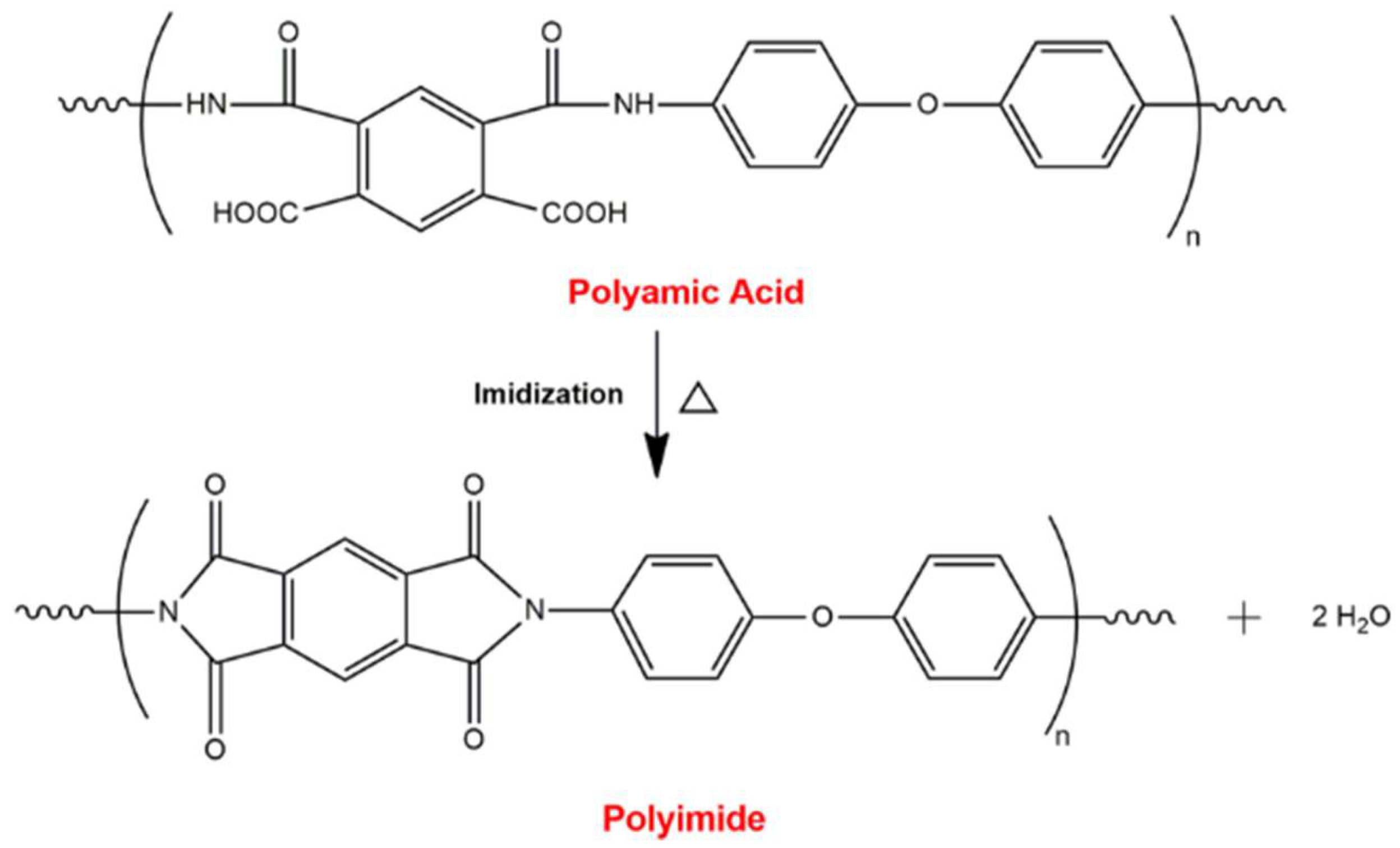
Figure 3.
(a) DSC analysis of (i) Neat PAA, (ii) 80 °C, (iii) 90 °C, (iv) 120 °C processed hybrid nanocomposite, at the rate 10 °C/min from 25 °C to 350 °C, (b) DSC analysis of (i) Neat PAA, (ii) 150 °C, (iii) 180 °C, and (iv) 250 °C processed hybrid nanocomposite, at the rate 10 °C/min from 25 °C to 350 °C, and (c) Heat of reaction for imidization, (d) Degree of conversion.
Figure 3.
(a) DSC analysis of (i) Neat PAA, (ii) 80 °C, (iii) 90 °C, (iv) 120 °C processed hybrid nanocomposite, at the rate 10 °C/min from 25 °C to 350 °C, (b) DSC analysis of (i) Neat PAA, (ii) 150 °C, (iii) 180 °C, and (iv) 250 °C processed hybrid nanocomposite, at the rate 10 °C/min from 25 °C to 350 °C, and (c) Heat of reaction for imidization, (d) Degree of conversion.
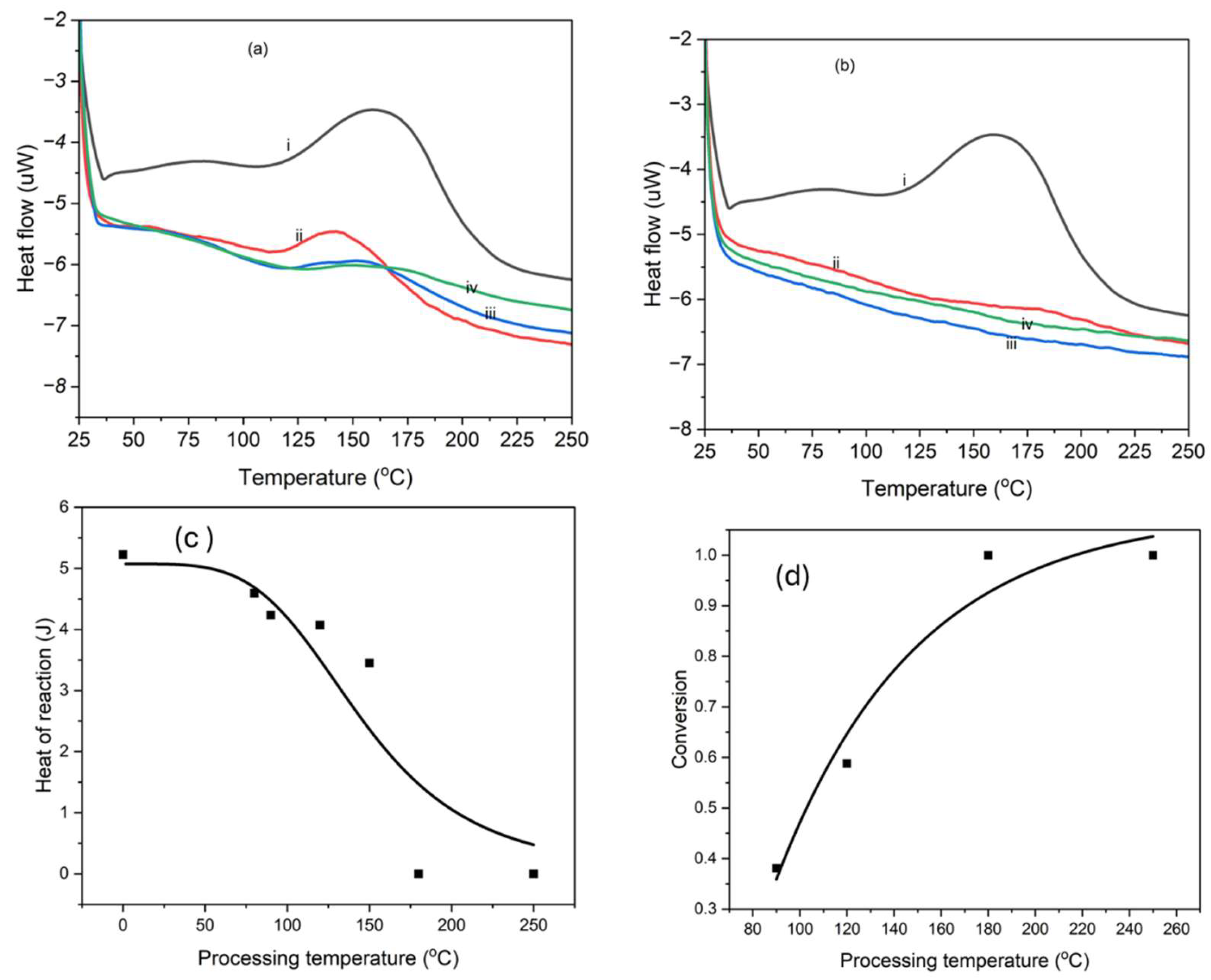
Figure 5.
Cyclic voltammograms of PI/CNTs hybrid nanocomposites processed at 90 °C followed by electrodeposition of PPy using an Ag/AgCl reference electrode and a graphite rod counter electrode for (a) (i) 60 sec 1 cycle at 5 mV/s, (ii) 600 sec 1 cycle at 5 mV/s, (iii) 700 sec 1 cycle at 5 mV/s, (iv) No deposition, (b) (i) 60 sec 1 cycle at 10 mV/s, (ii) 600 sec 1 cycle at 10 mV/s, and (iii) 700 sec 1 cycle at 10 mV/s, (c) (i) 60 sec 1 cycle at 25 mV/s, (ii) 600 sec 1 cycle at 25 mV/s, and (iii) 700 sec 1 cycle at 25 mV/s, (d) (i) 60 sec 5 cycle at 5 mV/s, (ii) 600 sec 5 cycle at 5 mV/s, and (iii) 700 sec 5 cycle at 5 mV/s.
Figure 5.
Cyclic voltammograms of PI/CNTs hybrid nanocomposites processed at 90 °C followed by electrodeposition of PPy using an Ag/AgCl reference electrode and a graphite rod counter electrode for (a) (i) 60 sec 1 cycle at 5 mV/s, (ii) 600 sec 1 cycle at 5 mV/s, (iii) 700 sec 1 cycle at 5 mV/s, (iv) No deposition, (b) (i) 60 sec 1 cycle at 10 mV/s, (ii) 600 sec 1 cycle at 10 mV/s, and (iii) 700 sec 1 cycle at 10 mV/s, (c) (i) 60 sec 1 cycle at 25 mV/s, (ii) 600 sec 1 cycle at 25 mV/s, and (iii) 700 sec 1 cycle at 25 mV/s, (d) (i) 60 sec 5 cycle at 5 mV/s, (ii) 600 sec 5 cycle at 5 mV/s, and (iii) 700 sec 5 cycle at 5 mV/s.
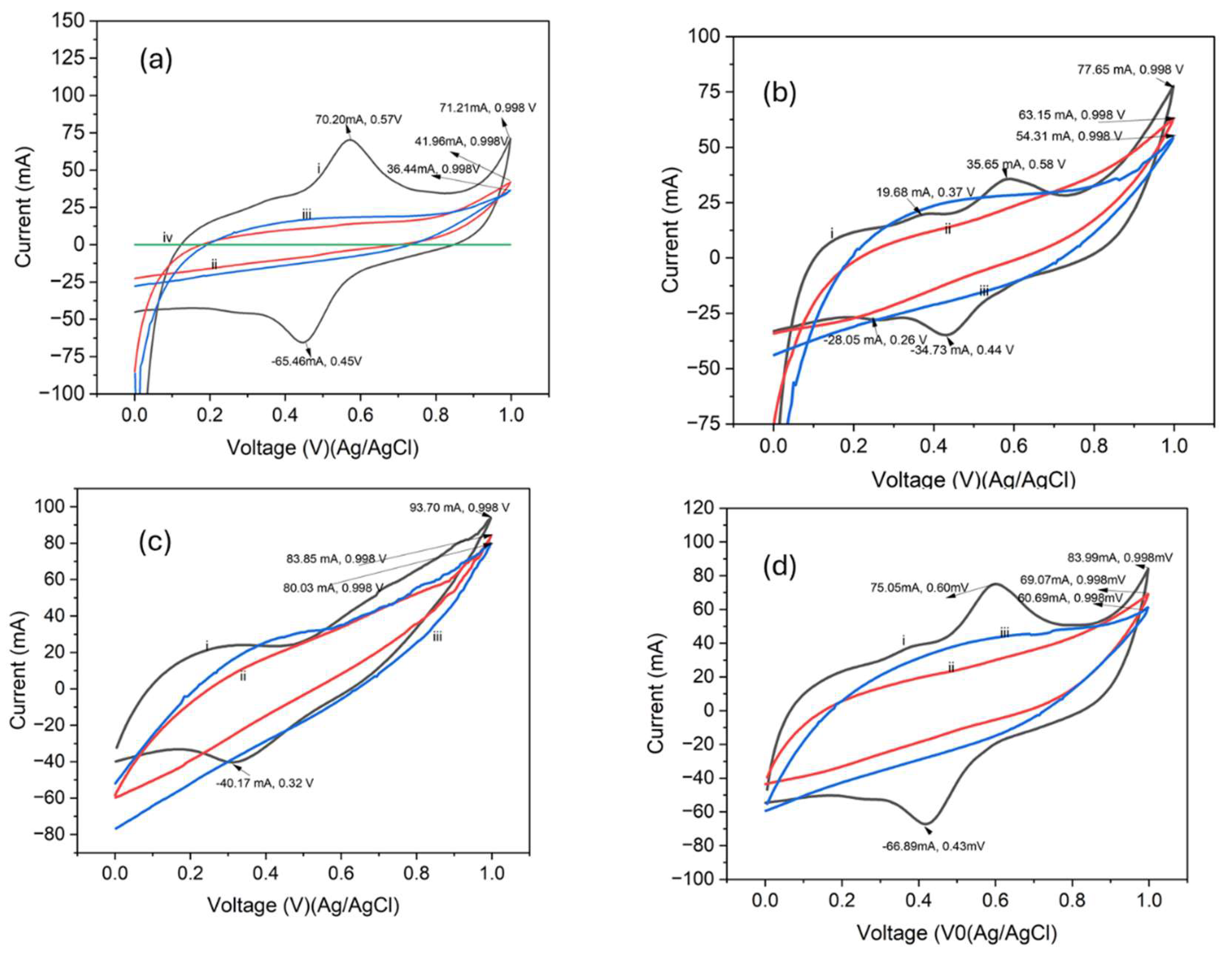
Figure 6.
Cyclic voltammograms of PI/CNTs hybrid nanocomposites processed at 90 °C followed by electrodeposition of PPy using an Ag/AgCl reference electrode and a graphite rod counter electrode for (a) (i) 60 sec 5 cycle at 10 mV/s, (ii) 600 sec 5 cycle at 10 mV/s, and (iii) 700 sec 5 cycle at 10 mV/s, (b) (i) 60 sec 5 cycle at 25 mV/s, (ii) 600 sec 5 cycle at 25 mV/s, and (iii) 700 sec 5 cycle at 25 mV/s, (c) (i) 60 sec 10 cycle at 5 mV/s, (ii) 600 sec 10 cycle at 5 mV/s, and (iii) 700 sec 10 cycle at 5 mV/s, (d) (i) 60 sec 10 cycle at 10 mV/s, (ii) 600 sec 10 cycle at 10 mV/s, and (iii) 700 sec 10 cycle at 10 mV/s.
Figure 6.
Cyclic voltammograms of PI/CNTs hybrid nanocomposites processed at 90 °C followed by electrodeposition of PPy using an Ag/AgCl reference electrode and a graphite rod counter electrode for (a) (i) 60 sec 5 cycle at 10 mV/s, (ii) 600 sec 5 cycle at 10 mV/s, and (iii) 700 sec 5 cycle at 10 mV/s, (b) (i) 60 sec 5 cycle at 25 mV/s, (ii) 600 sec 5 cycle at 25 mV/s, and (iii) 700 sec 5 cycle at 25 mV/s, (c) (i) 60 sec 10 cycle at 5 mV/s, (ii) 600 sec 10 cycle at 5 mV/s, and (iii) 700 sec 10 cycle at 5 mV/s, (d) (i) 60 sec 10 cycle at 10 mV/s, (ii) 600 sec 10 cycle at 10 mV/s, and (iii) 700 sec 10 cycle at 10 mV/s.
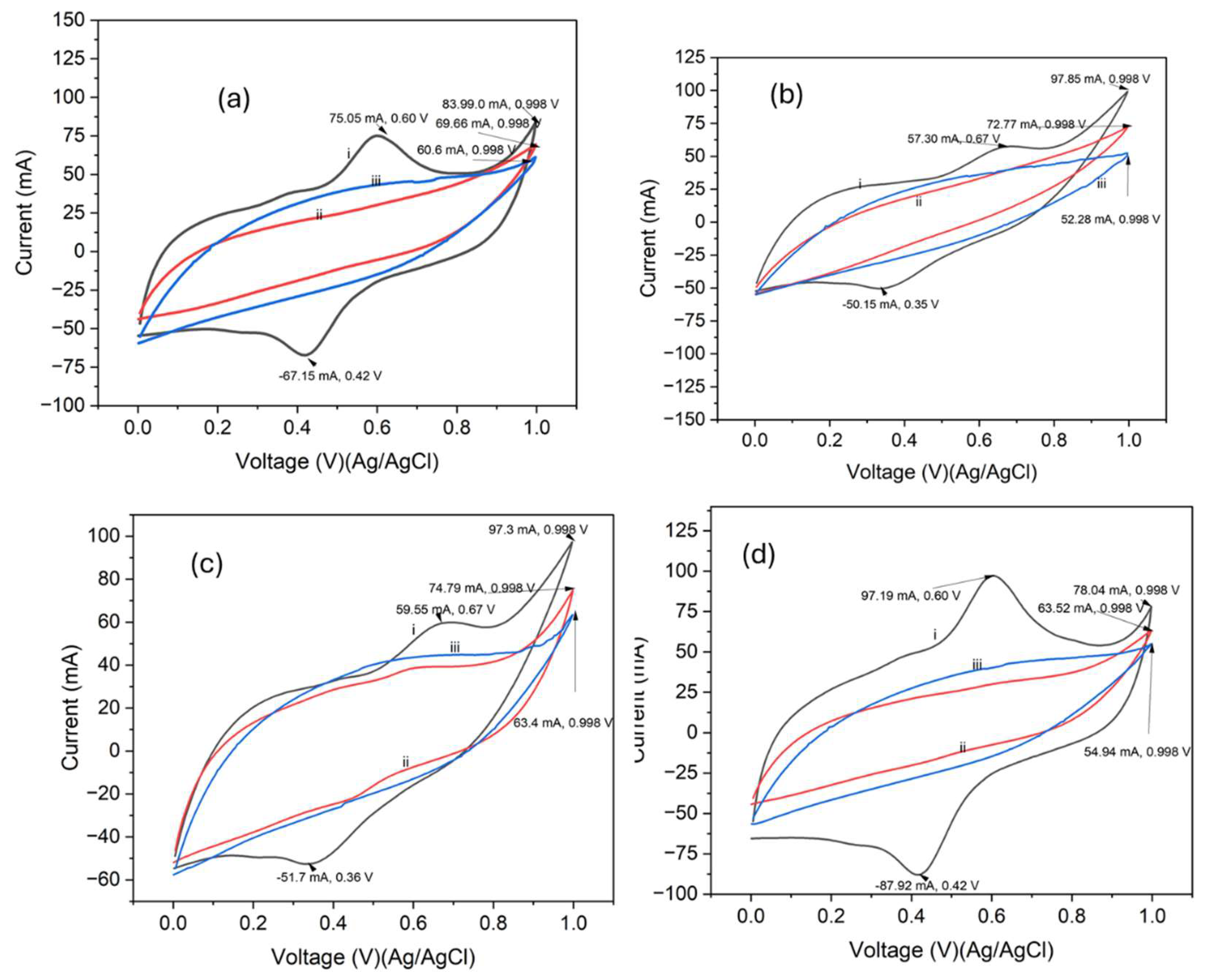
Figure 7.
Cyclic voltammograms of PI/CNTs hybrid nanocomposites processed at 90 °C followed by electrodeposition of PPy using an Ag/AgCl reference electrode and a graphite rod counter electrode for (a) (i) 60 sec 10 cycle at 25 mV/s, (ii) 600 sec 10 cycle at 25 mV/s, and (iii) 700 sec 10 cycle at 25 mV/s and (b) Charge/discharge curve of PI/CNTs-PPy at different deposition time (i) 90 °C 60 sec, (ii) 90 °C 600 sec and (iii) 90 °C 700 sec, (c) (i) Specific capacitance, (ii) Specific capacity and (d) (i) power density, and (ii) Energy density.
Figure 7.
Cyclic voltammograms of PI/CNTs hybrid nanocomposites processed at 90 °C followed by electrodeposition of PPy using an Ag/AgCl reference electrode and a graphite rod counter electrode for (a) (i) 60 sec 10 cycle at 25 mV/s, (ii) 600 sec 10 cycle at 25 mV/s, and (iii) 700 sec 10 cycle at 25 mV/s and (b) Charge/discharge curve of PI/CNTs-PPy at different deposition time (i) 90 °C 60 sec, (ii) 90 °C 600 sec and (iii) 90 °C 700 sec, (c) (i) Specific capacitance, (ii) Specific capacity and (d) (i) power density, and (ii) Energy density.
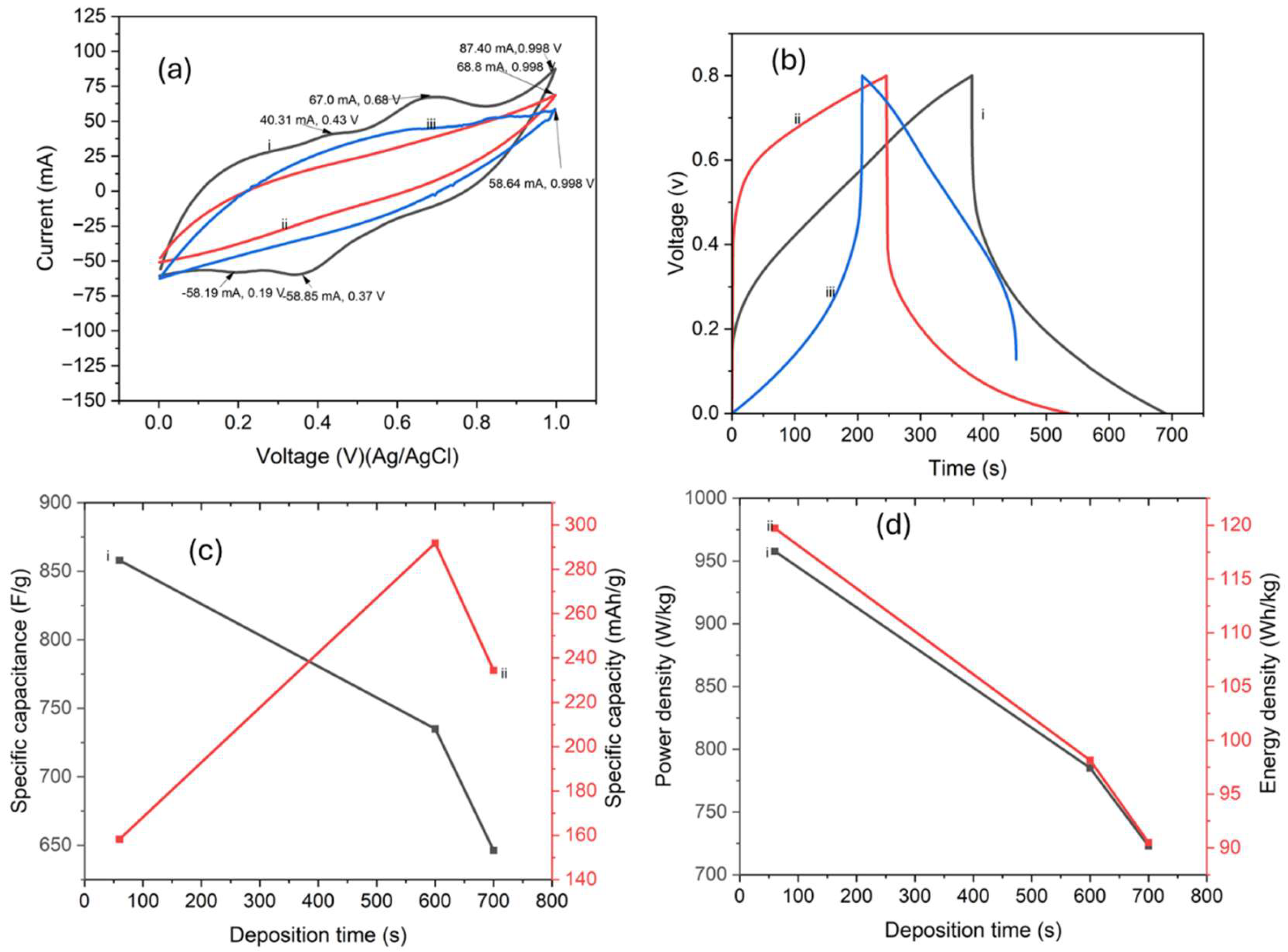
Figure 8.
Comparison of Specific capacitance and capacity for (a) 90 °C (i) Specific capacitance, (ii) Specific capacity, 250 °C (iii) Specific capacitance, (iv) Specific capacity and (b) 180 °C (i) Specific capacitance, (ii) Specific capacity, 250 °C (iii) Specific capacitance, (iv) Specific capacity.
Figure 8.
Comparison of Specific capacitance and capacity for (a) 90 °C (i) Specific capacitance, (ii) Specific capacity, 250 °C (iii) Specific capacitance, (iv) Specific capacity and (b) 180 °C (i) Specific capacitance, (ii) Specific capacity, 250 °C (iii) Specific capacitance, (iv) Specific capacity.
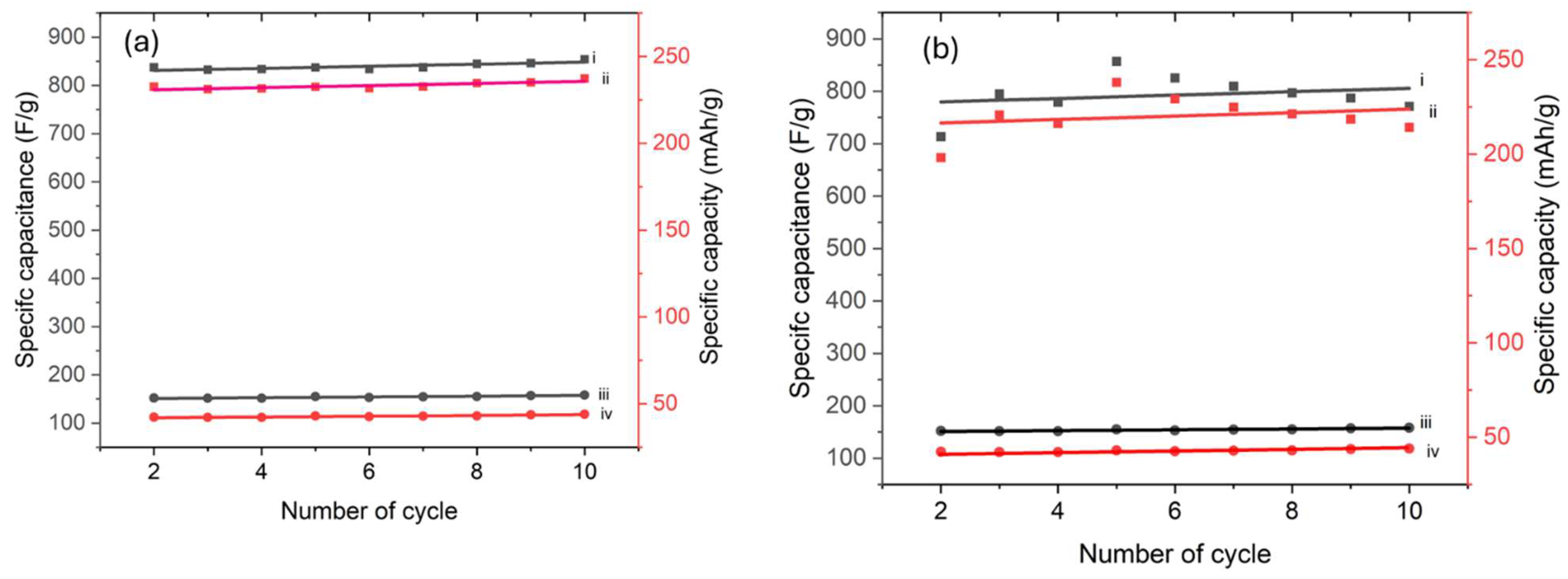
Figure 9.
(a) Plot for the redox ratio, (b) Fraction charge, (c) Redox charge.
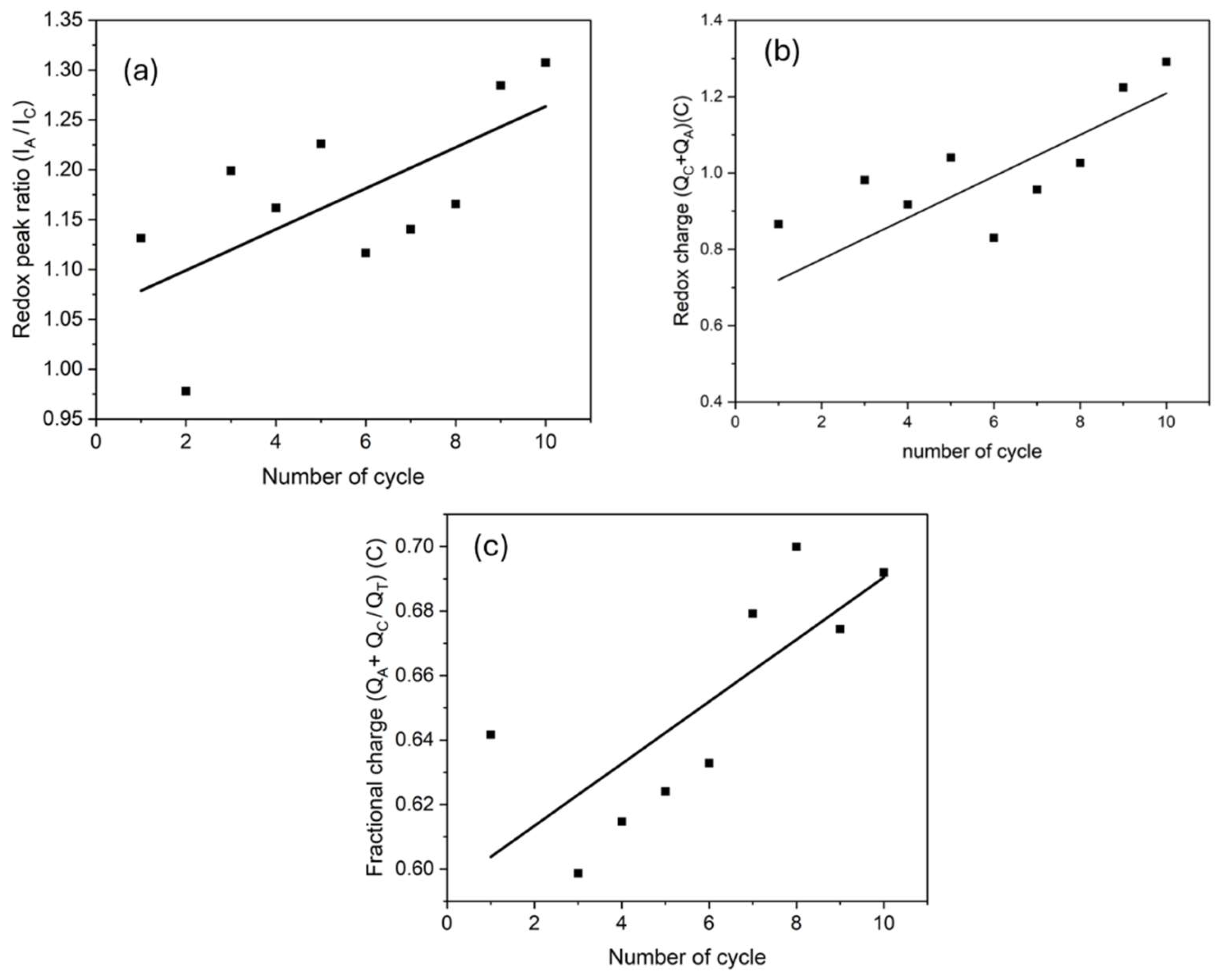
Figure 10.
(a) EIS plot with model fit for (i) 90 °C 60 sec, (ii) 90 °C 600 sec, and (iii) 90 °C 700 sec (b) Phase Diagram of PI-CNTs-PPy Hybrid Nanocomposite Properties at Different Temperatures, and (c) Comparison of energy and power densities of different electrode materials for (i) PI/CNTs at 90 °C, (ii) PI/CNTs at 180 °C, and (iii) PI/CNTs at 250 °C.
Figure 10.
(a) EIS plot with model fit for (i) 90 °C 60 sec, (ii) 90 °C 600 sec, and (iii) 90 °C 700 sec (b) Phase Diagram of PI-CNTs-PPy Hybrid Nanocomposite Properties at Different Temperatures, and (c) Comparison of energy and power densities of different electrode materials for (i) PI/CNTs at 90 °C, (ii) PI/CNTs at 180 °C, and (iii) PI/CNTs at 250 °C.
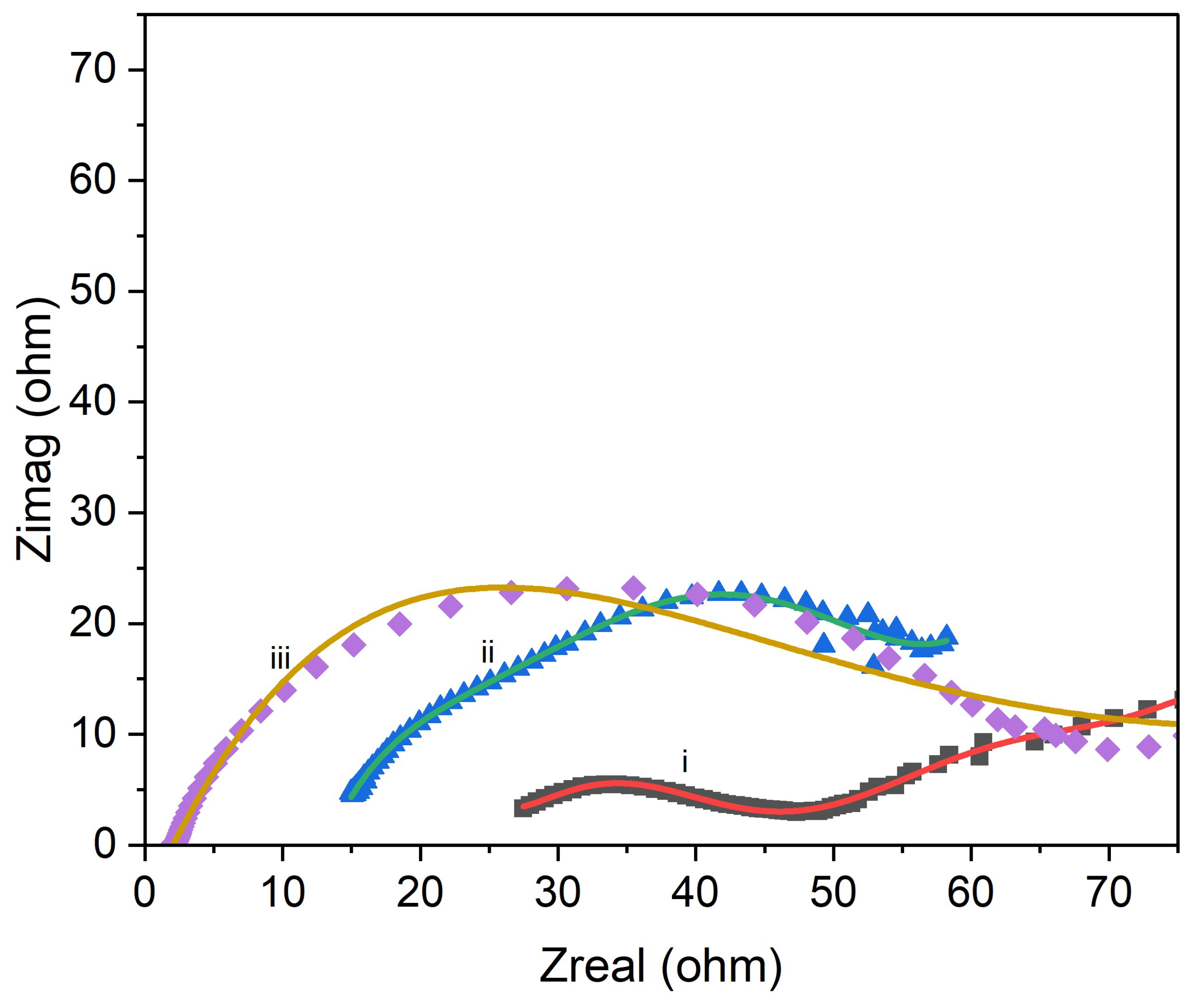
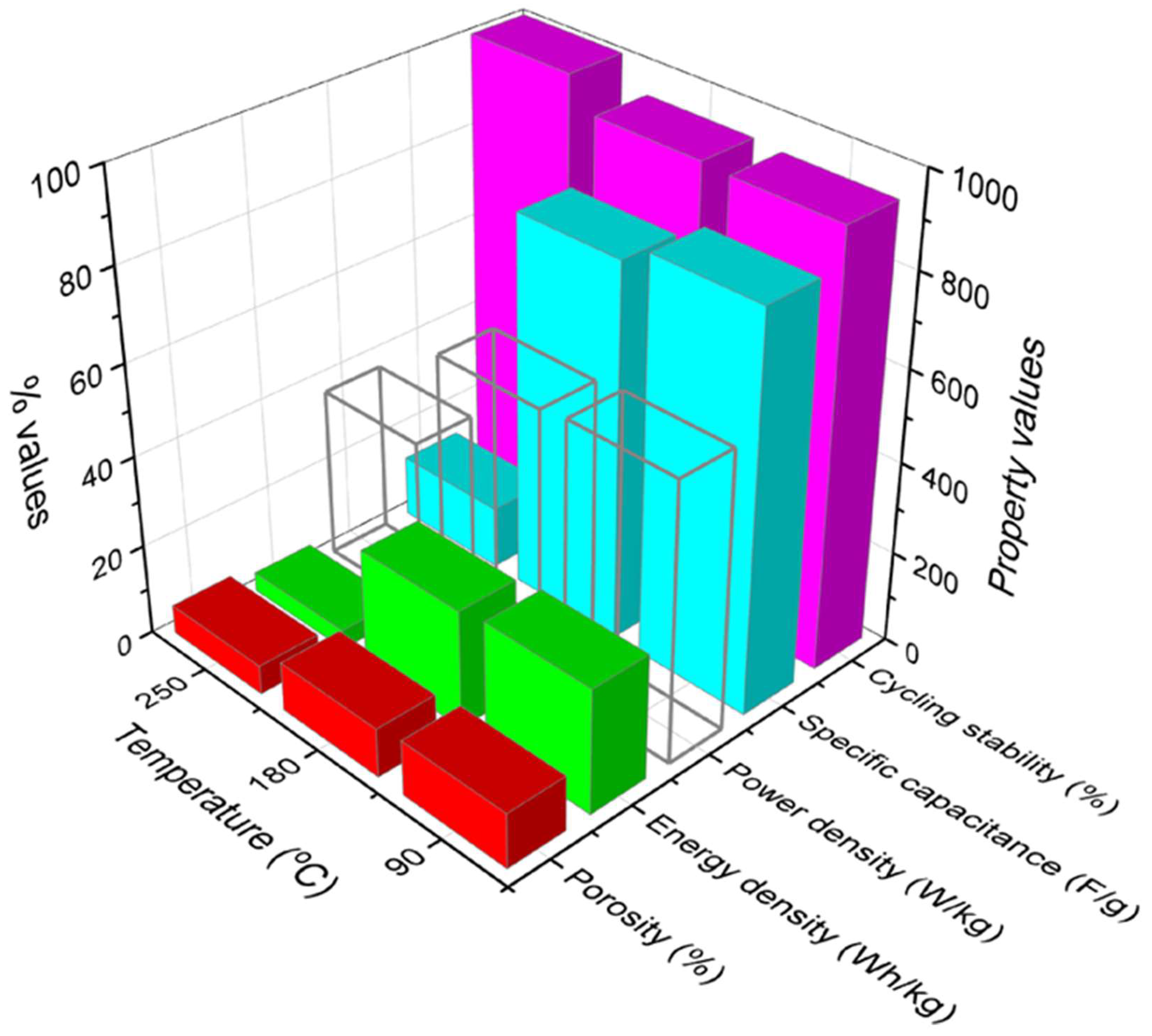
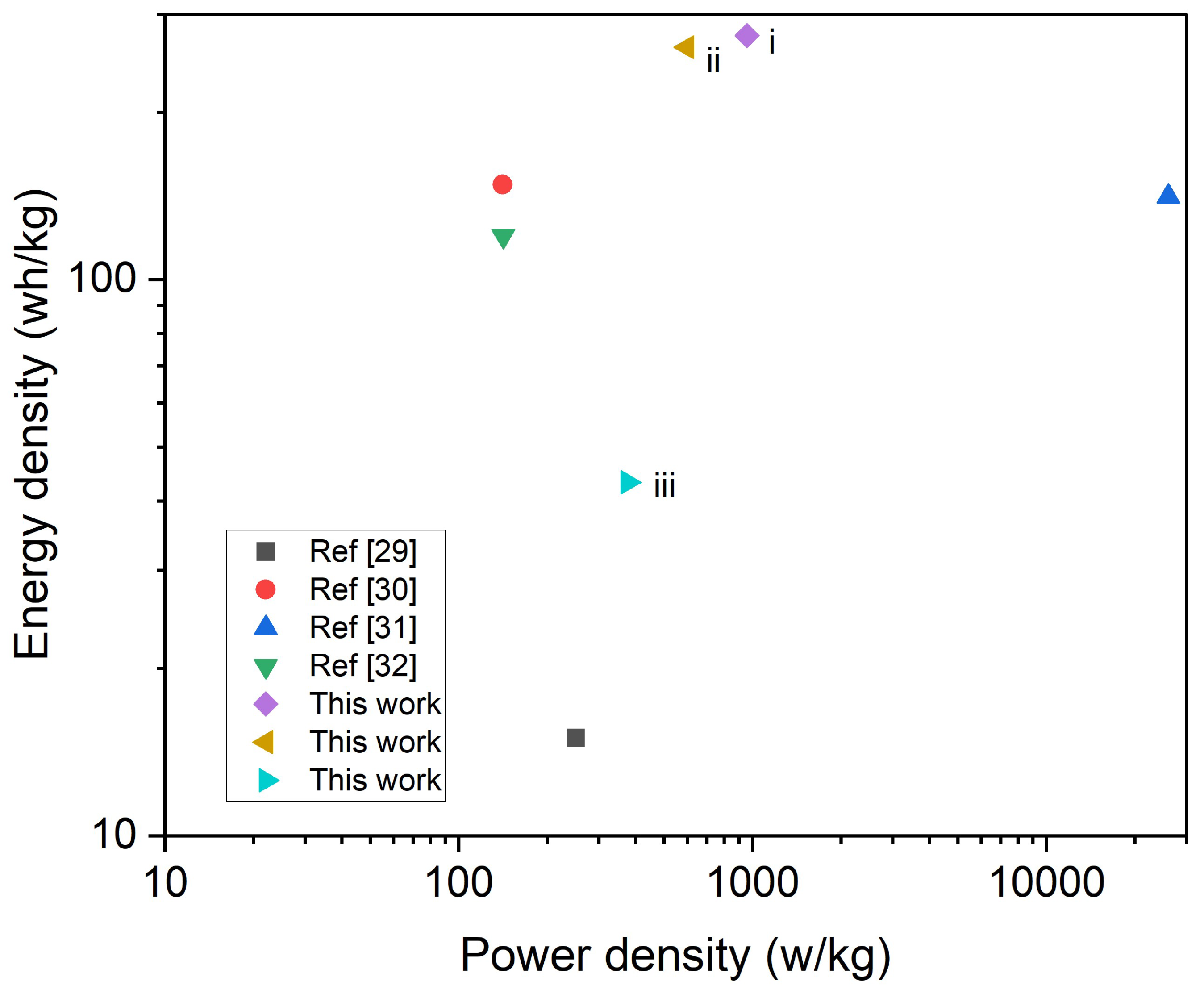
Figure 11.
(a) EIS Bode plot for PI/CNTs hybrid nanocomposite processed at (i) 90 °C at 60 sec depositions, (ii) 90 °C at 600 sec deposition and (iii) 90 °C at a 700-sec deposition of PPy, (b) Phase angle plot for hybrid nanocomposite processed at (i) 90 °C at 60 sec depositions, (ii) 90 °C at 600 sec deposition and (iii) 90 °C at 600 sec depositions of PPy.
Figure 11.
(a) EIS Bode plot for PI/CNTs hybrid nanocomposite processed at (i) 90 °C at 60 sec depositions, (ii) 90 °C at 600 sec deposition and (iii) 90 °C at a 700-sec deposition of PPy, (b) Phase angle plot for hybrid nanocomposite processed at (i) 90 °C at 60 sec depositions, (ii) 90 °C at 600 sec deposition and (iii) 90 °C at 600 sec depositions of PPy.
Disclaimer/Publisher’s Note: The statements, opinions and data contained in all publications are solely those of the individual author(s) and contributor(s) and not of MDPI and/or the editor(s). MDPI and/or the editor(s) disclaim responsibility for any injury to people or property resulting from any ideas, methods, instructions or products referred to in the content. |
© 2025 by the authors. Licensee MDPI, Basel, Switzerland. This article is an open access article distributed under the terms and conditions of the Creative Commons Attribution (CC BY) license (http://creativecommons.org/licenses/by/4.0/).
Copyright: This open access article is published under a Creative Commons CC BY 4.0 license, which permit the free download, distribution, and reuse, provided that the author and preprint are cited in any reuse.


