
Submitted:
31 December 2024
Posted:
03 January 2025
You are already at the latest version
Abstract
This study explores consumer perceptions of the Greek food system, focusing on safety concerns related to pesticide residues. Utilizing a qualitative research design, thematic analysis was conducted on data collected from 1,024 participants through an online survey platform between May and November 2024. Participants, representing diverse demographics across Greece, provided insights into their experiences and concerns regarding food safety. The analysis revealed significant themes, including a crisis of confidence in governance, demands for transparency, and skepticism towards food system actors. Participants expressed disillusionment with the state's role in ensuring food safety and highlighted the need for a governance framework that aligns with community values. The findings underscore the importance of empowering consumers with accurate information to foster informed decision-making and rebuild trust in the food system. Ultimately, the study emphasizes the necessity for a transformative approach to food governance that incorporates diverse voices and perspectives, aiming to create a more equitable and sustainable food system in Greece. These insights contribute to the broader discourse on food citizenship and the collective responsibilities of all stakeholders in ensuring food safety and integrity.
Keywords:
food safety
; pesticide residues
; consumer perceptions
; food governance
; trust
; transparency
1. Introduction
The industrialization of agriculture has led to significant challenges, including food overproduction, reliance on monocultures, and increased use of agrochemicals, which in turn exacerbate issues of hunger, malnutrition, and environmental degradation. In response, food sovereignty has emerged as a crucial framework advocating for sustainable practices [1,2,3,4]. At the same time, the global food supply is becoming increasingly strained due to population growth, urbanization, and climate change, highlighting the need for reduced waste and effective crop protection measures [5].
A report from the European Food Safety Authority [6] indicates that individuals from Greece and Spain are most likely to view a diet rich in fruit and vegetables as a key component of a healthy lifestyle. The available evidence indicates that increased consumption of these foods outweighs the potential adverse effects of pesticide residues [7,8,9]. It is recommended that public health messages promote regular and abundant consumption of a variety of fruits and vegetables [8]. Sufficient fruit and vegetable intake play a pivotal role in ensuring a diverse and nutritionally balanced diet. It has been estimated that at least 5.6 million deaths annually worldwide could be prevented by dietary modifications that reduce the risk of chronic diseases [10].
In the context of contemporary agriculture, which is facing significant challenges related to population growth, food security, and the health risks associated with chemical pesticides, the importance of consumer perceptions of food safety has increased [11,12]. Consumers in Greece prioritize a diet rich in fruits and vegetables for health benefits [13]. However, perceptions of food safety remain divided, influenced by factors such as education, age, gender, and concerns about pesticide residues [14,15]. To foster trust between regulatory bodies and various sociodemographic groups, effective communication strategies are essential [14,16,17,18].
Public perception of pesticides is increasingly shaped by social media, where users and NGOs emphasize health risks, while government and industry focus on regulations [19]. Health-conscious consumers prioritize nutritional value and healthy behaviors, while environmentally aware individuals consider the broader impact of their consumption, leading to significant concerns about food safety and pesticide residues affecting purchasing decisions [20,21]. The stigma surrounding pesticides stems from fear of long-term illnesses like cancer, leading people to blame external factors. This mindset creates a sense of control by fighting a perceived enemy [15]. In Brazil, over 60% believe food can be produced without pesticides, and 95.3% support labeling for pesticide presence [22]. To address these issues, effective marketing strategies, including labeling, origin reassurance and sustainability systems are recommended [16,23,24], along with improved pesticide monitoring and farmer education on unauthorized pesticide risks [25]. Additionally, Meagher [11] found that Europeans are more concerned about chemical than biological risks, highlighting the need for public engagement in regulatory science [26].
The European Union (EU) is actively working to mitigate pesticide risks and promote sustainable agriculture through policies like Directive 2009/128/EC and the European Green Deal, which aims to reduce pesticide use by 50% by 2030 as part of the Farm to Fork (F2F) Strategy [27,28]. Currently, only 466 of the 1378 registered active substances are approved for use [29]. The F2F Strategy sets ambitious targets for pesticides, fertilizers, organic farming, and antimicrobial resistance by 2030 [27], but achieving these goals presents challenges, including increased costs, food security concerns, and necessary shifts in agricultural practices [30].
A comprehensive approach that balances environmental, social, and economic factors is crucial for success. The EU's integration of Sustainable Development Goals into the Common Agricultural Policy reflects its commitment to sustainable agriculture [30]. However, Omar and Thorsøe [31] contend that the F2F Strategy's focus on technology and finance may not benefit farmers or promote a sustainable food system. Achieving sustainable agriculture requires a multifaceted strategy, including raising public awareness through media, providing subsidies and financial support to farmers, and improving subsidy management [32]. The success of the F2F Strategy hinges on the EU's ability to balance environmental sustainability, food security, and economic viability.
The interplay between trust, risk perception, and consumer behavior in food choices, particularly regarding pesticides, is vital for understanding food safety attitudes. Research indicates that higher trust in the food system enhances perceived benefits and reduces perceived risks, thereby boosting consumer confidence [33]. Conversely, diminished trust correlates with increased concerns about pesticides, as individuals perceive greater risks in conventionally grown produce [34,35]. Those who view the benefits of pesticides as outweighing their risks tend to exhibit greater confidence in plant-based food safety, while skepticism diminishes trust [17]. Effective communication and transparency through food labeling are essential for building consumer trust and influencing public risk acceptance [36,37,38,39,40]. Trust in government agencies and confidence in the food supply are critical predictors of risk perceptions, especially when individuals feel a lack of direct control [35,41,42]. Confidence stems from impersonal relationships with formal institutions, emphasizing standardization and predictability. It relies on collective public opinion and formal information, as well as trust in the legitimacy of established procedures like monitoring and traceability [41]. Positive perceptions of government actions enhance food protective behaviors [43], while favorable views of technology bolster trust in risk management organizations [44]. Governance reforms emphasizing transparency, stakeholder participation, and environmental protection can improve acceptance of regulatory decisions, influenced by citizens' environmental ideologies and the balance between environmental protection and economic growth [45].
The concept of food citizenship has emerged in response to new demands for food systems, global agro-food governance, and citizen participation in food policy, emphasizing the need to address hunger, malnutrition, and food equity while providing better food information [46]. However, barriers such as an unsustainable food system, federal policies favoring large-scale agriculture, and corporate interests complicate the practice of food citizenship [1,47]. The theoretical framework of food citizenship is based on eight core principles: the universal right to sufficient, healthy food; justice and fairness in the food system; autonomy and access to truthful information; responsibilities towards humans, other beings, and the environment; recognition of all citizens as subjects of food citizenship; individual and collective action; participatory governance; and a cosmopolitan perspective acknowledging the global interconnectedness of food issues [4,46].
The objective of this study is to examine the underlying motivations that contribute to the heightened apprehension among Greek individuals regarding food safety and pesticide residues. In order to achieve this, the study employs the lens of food citizenship theory. The objective of this study is to examine the beliefs and stances articulated by the Greek public in order to address the research question of the socially situated lived experiences and interpretations of individuals with regard to food safety and pesticide residues. In particular, the study seeks to understand the factors that contribute to the high level of uncertainty among Greek people in this area. Furthermore, it seeks to contribute to the ongoing debate surrounding the implications of food citizenship for food systems, consumer attitudes and policy-making.
2. Materials and Methods
This study employed a qualitative research design utilizing thematic analysis to gain insight into the complex landscape of participants' experiences and perceptions regarding the safety of Greek food. A total of 1,024 participants were recruited for the data collection process. The selection strategy for the participant group involved the use of multiple recruitment channels, including email calls, social media posts, website announcements, and electronic news outlets. The data set was collected between May and November 2024 as part of a larger ongoing epidemiological study, designated "HELLANS 2024-2025," which was designed to record consumers' perceptions regarding food safety in relation to pesticide residues, as well as to collect information pertaining to food consumption and related matters among adults residing permanently in Greece. As part of this survey, respondents are invited to answer an open question, prompting them to identify their primary concerns regarding the safety of Greek food. These verbatim texts constituted the primary data source for the analysis.
The data were collected via the EU Commission EUSurvey platform, which serves as an online survey management system designed for the creation of official public opinion surveys. An advanced privacy option was implemented to ensure the confidentiality of respondents while facilitating the creation of an anonymous data set. The study protocol complied with the EU General Data Protection Regulation (GDPR) and covered all aspects of data protection, including comprehensive anonymization procedures, data access and exchange, record linkage, and a defined data retention period. The study received ethical approval from the ethics committee of the Hellenic Mediterranean University in line with the requisite ethical standards. Prior to the commencement of data collection, informed consent was obtained from all participants. To guarantee the confidentiality of the data, it was anonymized and stored securely. The process of communication between a potential participant and the research team was designed to ensure that the individual had a comprehensive understanding of the scope of the study, the methods employed, and the intended use of the data. The participants were informed of their rights and were entitled to terminate their participation in the survey at any time. Once the individual had consented to participate, their acceptance and compliance with the survey procedures was assured through the digital signing of the consent form.
Thematic analysis was conducted in accordance with the methodology originally proposed by Braun and Clarke [48] as modified in 2019 [49,50]. At the outset of the analysis, the research team engaged in repeated examination of the data, with the objective of familiarizing themselves with the material and facilitating the identification of preliminary patterns and themes. Subsequently, the data were subjected to preliminary coding by the first author in order to assign specific codes to segments of the data, reflecting the participants' experiences and perspectives. The coding process was facilitated by the use of the ATLAS.ti Web software (version 9.6.0).
The thematic analysis of the coded data underwent an iterative process of evolution, transitioning between inductive and deductive approaches. Initially, the researchers familiarized themselves with the dataset, identifying a number of potentially significant themes. A theme can be defined as a pattern of meaning that is anchored by a shared concept or idea. These themes are conceptualized as being produced by the researchers through their systematic analytical engagement with the data set [50]. As part of the coding procedure, the first author collated the codes into broader patterns of meaning, which were then reviewed and refined by the research team. This involved constructing a coding frame to guide the allocation of data, followed by repeated reviews and discussions to ensure the coherence and distinctiveness of the emerging themes [50].
The analysis underwent a substantial shift, transitioning from a superficial examination of semantic subjects to a more profound exploration of the underlying, latent meanings. The initial coding phase revealed a multitude of codes, many of which captured the subtle nuances and complexities within the dataset. As the codes were subsequently clustered, three broad patterns of meaning emerged, centering upon skepticism, apprehension and distrust.
A subsequent review of the data in relation to the codes, the coded data, and the full dataset revealed a particular interest in the underlying ideas driving articulations about the food system. This development subsequently gave rise to a more theoretical and conceptual analysis, which revealed a distinct logic surrounding the food system. This logic encompassed complementary yet distinct ideas related to trust, uncertainty, and disempowerment, including a desire for agency and citizenship within the system.
Key aspects of this desire for food citizenship included demands for greater transparency, accountability, and sustainability. The analysis culminated in the formulation of an analytic structure comprising six themes, which resonated with the concept of food citizenship theory. This theory emphasizes the importance of active participation and engagement in shaping the food system, highlighting the need for individuals to take an active role in influencing the development and direction of the food system.
In order to ensure the rigor and reliability of the findings, a number of strategies were implemented. The research team engaged in peer briefing, during which the findings and the coding process were discussed in order to ensure consistency and coherence. Moreover, a detailed account was kept, which was examined by the research team. The record detailed the data collection and analysis process, including all coding decisions and theme development.
Utilizing a constructionist epistemological perspective [51], our analysis unveils the complex interweaving of social influences that shape individuals' experiences and perceptions of the food system. In the context of our study, it is posited that individuals' comprehension of the food system is forged through their interactions with a diverse array of actors and institutions, including food producers, retailers, and policymakers. These interactions are further influenced by the broader social and cultural landscape, where norms such as the emphasis on individual choice and responsibility play a significant role in shaping perceptions.
In this analysis, we delve into the intricate and multidimensional world of food systems, recognizing their formation through social interactions, institutional influences, and cultural norms. This approach constitutes a "social construction" of the food system, emphasizing the complexities of individual experiences and perceptions. Our analysis aims to shed light on the social and cultural contexts of food systems, using food citizenship theory [52] as a foundation. By examining themes and patterns from our data, we aspire to offer a nuanced understanding of these contexts, ultimately advocating for a more equitable and sustainable food system that values the diverse perspectives and experiences of the individuals within it.
3. Results
3.1. Sociodemographic Characteristics of the Participants
The study included a diverse group of participants (N = 1024) with a range of demographic characteristics. There was a slightly higher number of male participants, and most were middle-aged, particularly in their 40s and 50s. However, there were also younger participants included. The participants had an advanced educational background and were geographically distributed across Greece, with the majority residing in urban areas. The cohort was also diverse in terms of family structures, with a mix of participants who had minor children and those who did not. Lifestyle choices varied, with most participants being non-smokers and exhibiting a range of physical activity levels. Finally, the presence of a relatively small number of vegetarians by choice and a higher proportion of pesticide users among the participants suggests a diversity of opinions regarding health and environmental matters.
A comprehensive illustration of the sociodemographic attributes of the sample is presented in Table A1.
3.2. Thematic Analysis Results
A thematic analysis of the data was conducted, resulting in the identification of six key themes. These key themes were constructed from the participants' responses, which were subsequently coded, categorized and analyzed. The summary of these themes is presented in Table 1.
The following sections describe the six key themes that were constructed from the thematic analysis of participants' responses to the open question 'Please describe your main concerns regarding the safety of Greek food'. These themes offer a nuanced understanding of consumers' experiences and perceptions of the food system, highlighting the specific issues that are most pressing for them. Representative excerpts of participants' statements are provided to illustrate the richness and depth of their concerns. The analysis adopts a social constructionist epistemology approach [51], recognizing that participants' concerns and perceptions are actively constructed through their interactions, interpretations, and meaning-making processes.
3.2.1. Theme No 1—Crisis of Confidence in the Food System Governance
Participants express profound distrust towards institutions responsible for food safety, feeling abandoned by the state, as one noted, "the state does not protect its citizens". This sentiment is fueled by perceptions that government policies neglect local food production, with a participant expressing desire for a return to traditional practices, "I would like them [the food] to be produced in Greece, as in the past", reflecting the influence of their social, cultural, and historical contexts on their understanding of the government's role.
Participants' language portrays an environment where bureaucratic inefficiencies and delays have fostered corruption, with some suspecting inspectors' complicity, as expressed in concerns about "Transparency of controls. Corruption of inspectors". Others perceive an "ineffective legal framework for official controls" and inadequate enforcement, citing "inadequate and few controls, bureaucracy and delays in dealing with infringement cases", highlighting their negotiation of the perceived lack of transparency and accountability within the control mechanisms.
The participants' accounts further construct the control mechanisms as inadequate and ineffective, resulting in a sense of powerlessness. As one participant observed, they worry about "The problematic functioning of the public control mechanisms" while another noted, "But control is the main thing that I believe is not being implemented". These concerns are particularly salient in the context of food safety, where the perceived lack of controls is seen as having serious consequences.
Participants perceive a lack of accountability in the system, where unlawful actors operate with impunity, as one noted, "no fines are paid to those who violate the law so that they are corrected". This has led to the construction of certifications as unreliable, with a participant highlighting the "huge disorder from the mainly private certification bodies", and another pointing out the lack of "proper and accurate information for citizens" and "systematic controls".
The participants' concerns also extend to the perceived "lack of control over agronomists and farmers regarding the distribution and use of pesticides", which they construct as contributing to the "indiscriminate use of pesticides", and to a perceived "lack of awareness of food safety by agronomists, farmers, ordinary citizens". These understandings are shaped by the participants' own experiences and the social and cultural contexts in which they are embedded.
In the participants' view, the under-staffing of control services and the lack of legal protection for inspectors have further compromised the effectiveness of the food safety system. One participant noted, "The fact that food controls by the responsible state services are minimal or even non-existent due to lack of staff", while another pointed out, "Under-staffing of all services that carry out safety and hygiene controls. The lack of legal cover for inspectors and the means to do their job properly".
Ultimately, this theme reveals how participants' deep-seated distrust towards food safety institutions is socially constructed through their language and discursive practices, reflecting their perceptions of government failure, bureaucratic inefficiencies, corruption, and inadequate controls, all situated within their lived experiences and the broader social and cultural context.
3.2.2. Theme No 2—Experiences of Uncertainty Regarding Food Risks
Participants' accounts express profound concerns about the cumulative effects of pesticides, as one noted, "The excessive use of pesticides […] is dangerous for health, in the long term and the environment". This highlights how these concerns are socially produced, reflecting participants' fears and anxieties about the long-term consequences of agricultural practices on health and the environment.
Participants' personal experiences shape their concerns about pesticide residues, as one noted, "If the concentration of pesticides in the items I eat regularly (apple, pear, potato, tomato) can have a negative impact on my health". This highlights how their concerns are tied to everyday food consumption and perceived health risks.
Participants' accounts also convey uncertainty and skepticism about food safety controls, as seen in their questions, such as "How often residue control is carried out on fresh fruit and vegetables, and what action is taken when a product is found to have an excess of pesticides?" and "Whether the necessary controls on the use of prohibited or dangerous pesticides are carried out before they are placed on the market". This highlights how their understandings of control mechanisms are socially produced and negotiated.
The question of the validity of controls is another critical concern, prompting the call for "Ensuring the validity of controls", as well as the implementation of food control measures prior to the product's market release, with participants questioning, "Whether the necessary controls on the use of prohibited or dangerous pesticides are carried out before they are placed on the market". This skepticism extends to the enforcement of regulations, as one participant queries, "Are controls being carried out? Are fines imposed?".
Participants worry about the proper use of pesticides and the effectiveness of controls, seeking reassurance about food safety, as seen in questions like "The controls carried out (how often and how effectively)". Their language also constructs concerns about pesticide use, as exemplified by the statement, "The extent to which farmers are using the right amounts of pesticides and not overdosing for quicker and bigger production?". These concerns reflect their attempts to navigate the complexities and uncertainties of food production practices.
Participants' language about food choices reveals an attempt to navigate the complexities of food safety, as illustrated by the statement, "What is appropriate? To have the possibility of proper residue-free use of pesticides or to risk exposure to mycotoxins?". This statement highlights the intricate and context-dependent nature of food safety, reflecting the influence of social and cultural factors on participants' understandings. By framing their decision-making in terms of a trade-off between two risks, participants demonstrate the complex and nuanced ways in which they construct and negotiate the meaning of food safety.
Overall, this theme reveals how the participants' uncertainty and apprehension regarding food safety and quality risks are socially constructed through their language and discursive practices. Their concerns about pesticides and the effectiveness of control mechanisms are shaped by their personal experiences, social and cultural contexts, and the broader discourses surrounding food safety.
3.2.3. Theme No 3—Deficit of Confidence in Food System Actors
The food system, a social construct, is a source of unease and distrust as participants collectively make sense of key actors' actions and roles, shaping a reality through shared understandings, norms, and values. The root of the issue lies in the social construction of agronomists' and farmers'/producers' identities and competencies. Participants have expressed concerns about the perceived "ignorance of agronomists and farmers about how harmful pesticides residues in food are", a socially negotiated understanding that has emerged through their interactions and interpretations.
The notion that farmers are "misinformed" by agronomists, who provide incomplete or misleading information on "correct use of pesticides (e.g. the amount and frequency of pesticides to be applied per area)", is a socially constructed narrative that positions these actors as deficient or untrustworthy. Conversely, concerns about farmers not following agronomists' instructions, prompting for "Compliance with agronomists' instructions for harvesting after spraying", reveal another socially constructed understanding that erodes confidence in these actors.
The distrust extends to farmers and producers, who are socially constructed as "semi-literate", "uneducated" individuals prioritizing financial gain over public health, as evident in their concerns about "indiscriminate use of pesticides" and "failure to comply with production specifications". This characterization is a socially negotiated interpretation that positions them as untrustworthy and unfit to fulfill their roles, reflecting a perceived prioritization of quantity over quality, as "[…] producers attach great importance to the quantity they produce and not to the quality of their production", and a disregard for the "seriousness of the situation".
Underlying these socially constructed perceptions is a sense of powerlessness and a belief that those with the "ability to influence public opinion" are equally "ignorant" and complicit in this system. The notion of a "lack of scientific knowledge" among agricultural producers and the perception of "insufficient controls" by regulatory authorities are further examples of socially constructed understandings that contribute to the perception that the food supply is somehow compromised.
The deeply rooted sentiments of distrust present a troubling picture of the food system as a socially constructed narrative that has emerged through the interactions and interpretations of the participants. The rebuilding of trust will necessitate a fundamental shift in the ways in which the practices, motivations, and accountability of the key actors are socially constructed and communicated within this critical domain.
3.2.4. Theme No 4—Perceived Disempowerment Within the Food System
The theme highlights a critical concern, particularly through a constructionist lens, which emphasizes that knowledge is constructed through individual experiences and social interactions. Participants express frustration about the lack of clear information on food production practices, chemicals, and treatments, which is not due to ignorance, but rather a constructed reality shaped by their experiences and interactions with the food system. The unsettling realization that "farmers and breeders may lack the knowledge of what they use and the risks" amplifies their unease, reflecting their active interpretation of their environment and the information they receive.
The perceived lack of transparency in the food system is a significant concern, as seen in the statement, "That you cannot know what sprays/pesticides or fertilizers the plants have received, […], if they apply the precautions and time limits of use prescribed, either out of ignorance or indifference". This highlights the perceived complexity of the food system and the challenges participants face in understanding production processes and risks, leading to a collective narrative of uncertainty and alienation.
Participants express skepticism about "whether organic products are truly organic" and the "absence of an official and impartial body" to provide food safety updates. This contributes to feelings of disempowerment, as seen in statements like "I can't know everything when I am at the farmers' market. I think that the suitability of all products must be certified before they reach the consumer" and "The fact that ultimately we know nothing or almost nothing about the use of pesticides from official and authoritative sources". These statements highlight the desire for a more structured and transparent system to support decision-making.
Underlying this theme is a profound sense of vulnerability, as participants articulate fears about the "dangerous foods we consume as a family" of which they are unaware. This fear is compounded by a pervasive suspicion of "pesticide residues" and other unseen hazards, which they interpret as potential threats to their health. The lack of transparency fuels concerns about carcinogenic risks, as expressed by a male participant who worries about the "zero information of carcinogenesis associated with pesticides". These constructed fears reflect the participants' attempts to make sense at experiential level the complex food landscape.
Participants also convey a lack of knowledge that hinders their ability to make informed decisions. The statement, "That unfortunately I don't know much in general about pesticides, their use and how many dangerous foods we consume as a family" illustrates the gap between their lived experiences and the information available to them. This gap reinforces their feelings of disempowerment and alienation.
Participants feel disempowered by the perceived failure of institutions meant to support consumers, such as agricultural education, research, and public oversight. They express deep-seated distrust in these institutions, as seen in the statement, "The weaknesses of agricultural, agronomic education combined with the research decline of laboratories […] the weakened, disoriented and lacking organization of public control […]". This highlights the need for a more robust and reliable system of official control and education to support informed food choices.
The importance of clear and accurate labeling becomes apparent as a crucial factor in empowering consumers to make informed decisions. As one participant stated, "Pesticide residues and the undefined (unlabeled) control of the above products by the state. Consumers have little information about the products we buy". This sentiment emphasizes the need for transparent labeling that provides participants with the necessary information to navigate their food choices effectively.
Ultimately, this theme illustrates that participants are not merely seeking additional information; they are striving for a sense of control and involvement in their food-related decisions. The statement, "There is not the right information and education for the consumer or it is so scattered that it is hard to gather" encapsulates their desire for a more coherent and accessible framework of knowledge.
In conclusion, the perceived lack of transparency, control, and reliable information within the food system leaves participants feeling uncertain about their food choices. There is a pressing need for improved public control, education, and communication to empower consumers, enabling them to construct informed narratives about their food and fostering a sense of agency in their decision-making processes.
3.2.5. Theme No 5—Demands for Food System Transparency
The theme reflects participants' subjective experiences and constructed understandings of the food safety regulatory framework, marked by profound mistrust and disillusionment. Consumers perceive the current system as inadequate and call for "thorough and frequent controls" and "stricter fines for indiscriminate use of pesticides", reflecting a socially constructed reality that shape a notion of what constitutes an effective food safety system. These demands represent the meanings and interpretations consumers have assigned to food safety, influenced by their perspectives on regulatory bodies and public health.
Consumers' frustration with the perceived lack of transparency in the control process reflects their subjective understandings of transparency. They feel that foods are not monitored frequently enough for pesticide residues and that controls are insufficient. They demand greater transparency in assessing contamination throughout the production process and want to know more about the health effects of pesticides. As one participant notes, "more controls need to be carried out and the results need to be made more public so that people are aware of them". They seek transparent labeling and public disclosure of pesticide residue test results, particularly regarding the "non-obvious certification of controls on the finished product", driven by their own understanding of what transparency entails.
The participants' skepticism towards certification bodies and organic producers also highlights the constructed nature of their perceptions. As one respondent notes, there is "no control of the certification bodies (it is formal and not substantial) […] (incidents are detected even in organic producers)". They have constructed their own meanings and understandings of the value and reliability of certification, which may differ from the intended purpose and design of the certification system.
Ultimately, the theme of consumer demands for transparency reflects the participants' subjective realities and their constructed understandings of the food safety regulatory framework. From a constructionist perspective, these demands are the result of the participants' unique experiences, beliefs, and interpretations of the world around them.
3.2.6. Theme No 6—Concerns About Food System Sustainability and Integrity
Consumers have expressed a collective sense of unease and mistrust in relation to the food system, perceiving it as prioritizing profits over human and planetary well-being. Their concerns stem from lived experiences, observations and the socio-environmental context regarding the excessive use of agrochemicals, which they view as posing a threat to environmental health and food safety. One consumer noted "incomplete control by competent authorities" and "excessive environmental pollution from the use of chemicals in agriculture" reflecting personal experiences and societal narratives that shape their negative view of the food system.
Consumers are concerned about the perceived decline in food quality, particularly in flavors and aromas of fruits and vegetables. The statement "prices are rising while quality is constantly deteriorating" reflects a constructed reality where economic pressures overshadow food's intrinsic value. This narrative shows that consumers link declining food quality to broader health implications, interpreting the relationship between profit motives and food quality through their personal experiences.
Pesticide use is a major concern for consumers, who worry about its impact on soil fertility, human health, and the environment. They note that "every year they [farmers] use more and more pesticides to ensure their production". The perceptions that "the indiscriminate use of pesticides […] for the profit of multinational corporations" and "[…] the phenomenon is global and not Greek" highlight a constructed understanding of the global food system's priorities, where local experiences are part of a larger, interconnected narrative.
Consumers seek greater transparency and accountability in the food system, seeking for trust and security in food sourcing. This desire is reflected in their preference for buying from known producers, as expressed in statements such as, "products I consume […] almost always come from relatives – friends producers and I do not trust the retail trade", highlighting the importance of personal connections with producers in alleviating uncertainty and mistrust. Furthermore, concerns about the accessibility of pesticides, such as "the abundance of pesticides in commerce", underscore regulatory inadequacies and a perceived lack of protective measures, prompting consumers to advocate for more stringent controls and responsible practices that prioritize safety within the food system.
There is a collective desire for a holistic approach to food production, prioritizing sustainability, transparency, and accountability. Participants advocate for practices that enhance plant health, rather than relying on chemicals, as seen in their calls for "controls on proper preservation methods, as well as pesticide residues" and "investigating of nutritional status of plants in order to enhance their defensive capacity", reflecting a constructed understanding of food production that aligns with their values and concerns.
In summary, concerns about the food system's sustainability and integrity reveal how consumers construct their perceptions through experiences, societal narratives, and shared unease, driving calls for transparency, accountability, and a holistic approach that aligns with their values.
3.3. Interactions Between Themes
Figure 1 illustrate the complex interplay of factors influencing consumers' perceptions of food safety in Greece. A key interaction is the negative relationship between the crisis of confidence in governance and uncertainty about food safety, with many participants perceiving a lack of government protection, leading to heightened apprehension and exacerbated uncertainty about food safety controls.
The uncertainty surrounding food safety contributes to a lack of confidence in food system actors, particularly agronomists and farmers, who are perceived as prioritizing profit over public health due to inadequate knowledge about pesticide risks. A perceived misinformation, fueled by agronomists and agrochemical companies, creates a cycle of distrust, alienating participants from the food system.
The perceived disempowerment and alienation of consumers are driving demands for transparency in food safety processes, as individuals seek to regain control over their food choices amidst a lack of reliable information. This highlights the complex interplay between governance, consumer uncertainty, and food system actor performance. Addressing these interrelated issues is crucial to promoting a food system that prioritizes safety, transparency, and public health in Greece, requiring a comprehensive approach that considers consumer perspectives and promotes accountability among all actors.
4. Discussion
The objective of the study was to employ thematic analysis to examine how individuals perceive the food system in Greece. This approach allowed for the identification of the factors that may influence consumer perceptions of governance and the overall integrity of food system. The study was conducted with a demographically diverse group of participants located across Greece. The participants represented a range of gender identities, age groups, educational backgrounds, and geographic regions, including urban, rural, and semi-urban areas. This diverse composition of the participant pool was intended to facilitate a comprehensive understanding of individual perceptions and experiences within the Greek food system.
The constructed themes, which ranged from crises of confidence in governance to demands for transparency, highlighted significant challenges that resonated with the principles of food citizenship theory as conceptualized by Lozano-Cabedo and Gómez-Benito [46]. This discussion aims to connect these themes and codes of participants' statements to the principles of food citizenship, with a particular focus on the necessity for a transformative approach to food governance and consumer engagement that incorporates diverse voices and perspectives [4,53,54,55].
In discussing the profound crisis of confidence among participants regarding the governance and integrity of the Greek food system, it is essential to weave together the various themes that were constructed during the thematic analysis while incorporating a social construction perspective. This perspective emphasizes that our understanding of reality, including the food system, is shaped by social interactions, cultural norms, and shared beliefs [51,56]. At the heart of this crisis is a challenge to the foundational principle of food citizenship which asserts that access to healthy food is a social right [46,53]. Participants express disillusionment with the state's role in ensuring food safety, reflecting a collective belief that their entitlement to adequate nutrition is being undermined [53]. Food governance narratives in contemporary society significantly shape our perceptions and emotions. Research indicates that our feelings are closely linked to cultural beliefs and social contexts. This interplay between societal narratives and emotions is both powerful and pervasive [57]. Ultimately, this crisis highlights the need for a governance framework that aligns with community values regarding food security and safety [53].
The regulatory landscape described by participants is characterized by bureaucratic delays, corruption, and a lack of effective control mechanisms, which further challenges the principles of justice, equality, and fairness inherent in food citizenship [46]. It has been reported in the past that consumers in Greece are skeptical about food safety control systems. Consumers believe the system is ineffective due to insufficient enforcement against violators, with corruption identified as a major obstacle [36,58,59,60]. The participants’ frustrations about the opacity of the current system and the unbalanced power dynamics highlight a significant sense of injustice, which is not merely an individual grievance but is socially constructed through shared experiences and narratives that shape their understanding of the food system [51,61]. This sense of injustice is compounded by a deep-seated distrust, which may stem less from uncertainty and more from an inability to exert practical control over the outcomes of these issues [42]. Therefore, improving trust will require more than just alleviating feelings of uncertainty or minimizing potential hazards; it necessitates tangible improvements in the quality of food and a demonstration of social justice [41]. By addressing these interconnected concerns, we can foster a more equitable and transparent food system that empowers participants and rebuilds trust.
This uncertainty is exacerbated by the participants' experiences with food safety, where they grapple with ambiguous information about the health effects of pesticide residues and the reliability of official controls. The perceived absence of an impartial body to provide clear and truthful information about food safety directly contravenes the principle of autonomy in food citizenship theory [46]. Participants feel adrift, unable to exercise their rights and responsibilities due to the lack of accessible information. Kjærnes et al. [41] suggest that declining trust is linked to the dramatic increase in access to information through TV and the Ιnternet, centralizing government and amplifying risk through the media. Empowering consumers with accurate, comprehensible information is crucial for fostering informed decision-making and a sense of agency within the food system [52,62]. Previous research indicates that authoritative knowledge on pesticides can significantly reduce consumers' risk perception, underscoring the importance of transparency and information accessibility [14,36].
Underlying these perceived systemic failures is a pervasive deficit of confidence in food system actors, including agronomists, farmers, producers, retailers. Participants express skepticism about the motivations of these stakeholders, perceiving a prioritization of profit over public health. This skepticism is socially constructed through narratives that circulate within the community [51,56], reinforcing distrust and undermining the principle of food citizenship that emphasizes responsibilities to human beings, other living beings, and the environment [1,46]. In essence, trust thrives when individuals and institutions consistently meet their obligations, fostering a sense of stability and confidence in their actions [41,63]. The disconnect between the ethical obligations of food citizenship and the realities of the Greek food system further erodes trust and confidence among consumers.
In response to these perceived systemic failures, participants express a clear demand for greater transparency within the food system. They call for more thorough and frequent controls, stricter enforcement of legislation, and greater public dissemination of control results. These demands align with the principle of food citizenship which asserts the right and obligation to participate in the governance of the food system. This principle is crucial, as it not only enables individuals to make informed choices but also empowers them to actively engage in reshaping the food system [46,53,54,62]. The participants’ insistence on stricter enforcement and transparency reflects a deep-seated desire to be active agents in food system governance, highlighting their aspiration to influence decision-making processes that impact their lives [1]. Performative issues, the control of science, scientific contingencies and the handling of the unknown are more closely associated with people’s skepticism [41,54].
Underlying these concerns are participants' worries about food system sustainability and integrity, which encompass issues such as environmental degradation, loss of quality and flavor, and a perceived disconnect between producers and consumers. These concerns resonate with the principles of food citizenship which emphasize responsibilities to the environment, as well as the importance of both individual and collective action in the private and public spheres [4,46]. Participants demonstrate an acute awareness of the broader responsibilities inherent in food citizenship, expressing worries about environmental pollution, soil fertility, and the increasing frequency of pesticide use. This recognition of shared responsibilities – both positive and negative – highlights a fundamental tenet of food citizenship, requiring individuals to be conscious of the consequences of their food-related behaviors and to assume obligations to nature, society, and future generations [46,55].
The discourse surrounding food citizenship reveals a profound understanding among participants that every individual, irrespective of their role in the food system, is inherently a stakeholder in this collective endeavor. This holistic view emphasizes that food citizenship transcends socioeconomic boundaries, challenging the misconception that it is a privilege reserved for the affluent [4,46,64]. Participants express a strong belief in the necessity of collaboration among diverse actors – ranging from agronomists and farmers to retailers and consumers – to reshape the food system into one that is more just and equitable. Their narratives reflect a shared commitment to inclusivity, underscoring the idea that the responsibility for a sustainable food future lies with all members of society [4,55,65]. This perspective highlights how social constructs influence their beliefs and actions, reinforcing the notion that food citizenship is a collective endeavor rooted in mutual accountability and shared values [52].
Furthermore, the participants exhibit a deep awareness of the global interconnectivity of food systems, aligning with the cosmopolitan principles of food citizenship [46]. They recognize that the challenges posed by practices such as the indiscriminate use of pesticides and the influence of multinational corporations are not confined to local contexts but are part of a larger, global framework. This cosmopolitan understanding is shaped by the participants' interactions and shared narratives, which inform their perceptions of food citizenship as a collective responsibility that extends beyond national borders [1,4]. The participants’ statements about the "global and not Greek" nature of these challenges reflect a sophisticated understanding of the complex dynamics that shape food systems worldwide, illustrating how their beliefs are constructed through social discourse and collective awareness of global interdependencies [66].
6. Conclusions
In the context of these circumstances, the analysis demonstrates that participants as part of Greek consumer base is becoming increasingly disillusioned with the prevailing state of the food system. The participants express a desire for a model that aligns with the principles of food citizenship, namely justice, transparency and sustainability. The narratives presented illustrate a significant discrepancy between the aspirations for a more equitable food system and the realities encountered, emphasizing the urgent necessity for systemic reforms. This disillusionment serves to highlight the necessity for a renewed commitment to the empowerment of citizens as active participants in the food system.
The incorporation of these insights into the theoretical framework of food citizenship facilitates a nuanced comprehension of the multifaceted challenges confronting the Greek food system. It is evident that in order to address the concerns raised by the participants, it is not sufficient to merely strengthen regulatory oversight and control mechanisms. Instead, there is a pressing need to foster a culture of transparency, accountability, and shared responsibility among all actors in the agro-food system. By embracing the principles of food citizenship – which include recognizing the social right to food, promoting justice and equality, ensuring autonomy and access to information, and integrating individual and collective responsibilities – we can work towards the realization of a food system that reflects the aspirations of all citizens. It is only through such a comprehensive and inclusive approach that a sustainable and just food future can be achieved.
7. Limitations
This study is subject to several limitations that must be considered. A key limitation is the inherent subjectivity involved in qualitative research, particularly in reflexive thematic analysis [50]. The personal experiences, beliefs, and background in food safety control of the primary researcher – data coder (K.B.S.) may have shaped interpretations and analysis of the data. Rather than perceiving this subjectivity as a limitation to be controlled, it is recognized as a vital resource that enriches the analysis and provides depth to the understanding of participants' perspectives [67,68]. This subjectivity allows for a nuanced interpretation of the themes, reflecting the complexities of participants' attitudes toward food safety. While the researcher's subjectivity is instrumental in this process, it is crucial to recognize that it may also result in an emphasis on certain themes over others, potentially influencing the study's overall findings. Additionally, while concerted efforts were made to include a diverse data set, concerns regarding transferability persist. The study's objective is to capture a range of meanings and experiences within the specific context of the participants, which may limit the extent to which findings can be applied to other settings or populations. However, the in-depth exploration of the research questions provides valuable insights that may resonate with similar contexts, allowing for potential applicability in related areas. The reliance on self-reported data may also introduce biases, as participants might express socially desirable responses. Finally, it is important to consider the context in which the survey was conducted, as consumer attitudes can be influenced by various factors such as economic conditions and current events. In this case, the survey was conducted during a specific time when the country was recovering from a decade of austerity politics and the COVID-19 pandemic. Consequently, longitudinal approaches should be considered in future research to capture these changes and further explore the role of social construction in qualitative analysis.
Author Contributions
Conceptualization, K.B.S.; methodology, K.B.S.; validation, K.B.S., P.S. and E.R.; formal analysis, K.B.S.; investigation, K.B.S.; data curation, K.B.S.; writing—original draft preparation, K.B.S.; writing—review and editing, K.B.S., P.S. and E.R; visualization, K.B.S.; supervision, E.R.; All authors have read and agreed to the published version of the manuscript.
Funding
This research received no external funding
Institutional Review Board Statement
The study was conducted in accordance with the Declaration of Helsinki, and approved by the Ethics Committee of HELLENIC MEDITERRANEAN UNIVERSITY (protocol code 12656 16 May 2024).
Informed Consent Statement
Informed consent was obtained from all subjects involved in the study.
Data Availability Statement
Data are subject to retention restrictions by the Ethics Committee.
Acknowledgments
The authors wish to express their gratitude to all the anonymous participants of the survey for sharing their thoughts, beliefs, and concerns.
Conflicts of Interest
The authors declare no conflicts of interest.
Appendix A

Table A1.
Sociodemographic characteristics of the respondents (N = 1024).
| Percentage | Frequency | Demographic variables | |
|---|---|---|---|
| 43.30% | 581 | Female | Gender |
| 56.70% | 443 | Male | |
| 6.50% | 67 | 18 – 24 | Age |
| 5.80% | 59 | 25 – 34 | |
| 15.40% | 158 | 35 – 44 | |
| 41.80% | 428 | 45 – 54 | |
| 25.80% | 264 | 55 – 64 | |
| 4.70% | 48 | ≥ 65 | |
| 0.30% | 3 | Less than high school | Educational background |
| 14.00% | 143 | High school - Technical education | |
| 37.40% | 383 | Bachelor’s degree | |
| 39.20% | 402 | Master's degree | |
| 8.90% | 91 | Doctoral degree | |
| 9.80% | 100 | Rural area (< 2,000 residents) | Population of place of residence |
| 13.60% | 139 | Semi-urban area (2,000 - 10,000 residents) | |
| 76.60% | 785 | Urban area (> 10,000 residents) | |
| 37.50% | 384 | Northern Greece | Residential geographical area |
| 39.70% | 407 | Central Greece | |
| 22.80% | 233 | Southern Greece | |
| 56.20% | 575 | No | Minor children in the family |
| 43.80% | 449 | Yes | |
| 78.40% | 803 | No | Smoking attitude |
| 21.60% | 221 | Yes | |
| 12.10% | 124 | Never | Sports activity |
| 29.80% | 305 | Rarely | |
| 19.40% | 199 | Often | |
| 38.70% | 396 | Habitually | |
| 96.50% | 988 | No | Vegetarians by conviction |
| 3.50% | 36 | Yes | |
| 69.20% | 709 | No | Pesticide users |
| 30.80% | 315 | Yes | |
References
- McGregor, J. Public Interests and the Duty of Food Citizenship. In Citizenship and Immigration - Borders, Migration and Political Membership in a Global Age; Cudd, A.E., Lee, W., Eds.; AMINTAPHIL: The Philosophical Foundations of Law and Justice; Springer International Publishing: Cham, 2016; Vol. 6, pp. 71–88 ISBN 978-3-319-32785-3.
- Nicolopoulou-Stamati, P.; Maipas, S.; Kotampasi, C.; Stamatis, P.; Hens, L. Chemical Pesticides and Human Health: The Urgent Need for a New Concept in Agriculture. Front. Public Health 2016, 4. [CrossRef]
- Sampson, D.; Cely-Santos, M.; Gemmill-Herren, B.; Babin, N.; Bernhart, A.; Bezner Kerr, R.; Blesh, J.; Bowness, E.; Feldman, M.; Gonçalves, A.L.; et al. Food Sovereignty and Rights-Based Approaches Strengthen Food Security and Nutrition Across the Globe: A Systematic Review. Front. Sustain. Food Syst. 2021, 5, 686492. [CrossRef]
- Bindi, L.; Belliggiano, A. A Highly Condensed Social Fact: Food Citizenship, Individual Responsibility, and Social Commitment. Sustainability 2023, 15, 6881. [CrossRef]
- Popp, J.; Pető, K.; Nagy, J. Pesticide Productivity and Food Security. A Review. Agron. Sustain. Dev. 2013, 33, 243–255. [CrossRef]
- European Food Safety Authority (EFSA). Food Safety in the EU: Report; Special Eurobarometer—March 2022; Publications Office: Luxembourg, 2022; Available online: https://www.efsa.europa.eu/sites/default/files/2022-09/EB97.2-food-safety-in-the-EU_report.pdf (accessed on 10 December 2024).
- Reiss, R.; Johnston, J.; Tucker, K.; DeSesso, J.M.; Keen, C.L. Estimation of Cancer Risks and Benefits Associated with a Potential Increased Consumption of Fruits and Vegetables. Food and Chemical Toxicology 2012, 50, 4421–4427. [CrossRef]
- Valcke, M.; Bourgault, M.-H.; Rochette, L.; Normandin, L.; Samuel, O.; Belleville, D.; Blanchet, C.; Phaneuf, D. Human Health Risk Assessment on the Consumption of Fruits and Vegetables Containing Residual Pesticides: A Cancer and Non-Cancer Risk/Benefit Perspective. Environment International 2017, 108, 63–74. [CrossRef]
- Sandoval-Insausti, H.; Chiu, Y.-H.; Lee, D.H.; Wang, S.; Hart, J.E.; Mínguez-Alarcón, L.; Laden, F.; Ardisson Korat, A.V.; Birmann, B.; Heather Eliassen, A.; et al. Intake of Fruits and Vegetables by Pesticide Residue Status in Relation to Cancer Risk. Environment International 2021, 156, 106744. [CrossRef]
- Aune, D.; Giovannucci, E.; Boffetta, P.; Fadnes, L.T.; Keum, N.; Norat, T.; Greenwood, D.C.; Riboli, E.; Vatten, L.J.; Tonstad, S. Fruit and Vegetable Intake and the Risk of Cardiovascular Disease, Total Cancer and All-Cause Mortality—a Systematic Review and Dose-Response Meta-Analysis of Prospective Studies. International Journal of Epidemiology 2017, 46, 1029–1056. [CrossRef]
- Meagher, K.D. Public Perceptions of Food-Related Risks: A Cross-National Investigation of Individual and Contextual Influences. Journal of Risk Research 2019, 22, 919–935. [CrossRef]
- Djekic, I.; Nikolic, A.; Mujcinovic, A.; Blazic, M.; Herljevic, D.; Goel, G.; Trafiałek, J.; Czarniecka-Skubina, E.; Guiné, R.; Gonçalves, J.C.; et al. How Do Consumers Perceive Food Safety Risks? – Results from a Multi-Country Survey. Food Control 2022, 142, 109216. [CrossRef]
- Camanzi, L.; Ahmadi Kaliji, S.; Prosperi, P.; Collewet, L.; El Khechen, R.; Michailidis, A.Ch.; Charatsari, C.; Lioutas, E.D.; De Rosa, M.; Francescone, M. Value Seeking, Health-Conscious or Sustainability-Concerned? Profiling Fruit and Vegetable Consumers in Euro-Mediterranean Countries. BFJ 2024, 126, 303–331. [CrossRef]
- Simoglou, K.B.; Skarpa, P.El.; Roditakis, E. Pesticide Safety in Greek Plant Foods from the Consumer Perspective: The Importance of Reliable Information. Agrochemicals 2023, 2, 484–502. [CrossRef]
- Rembischevski, P.; Lauria, V.B.D.M.; Da Silva Mota, L.I.; Caldas, E.D. Risk Perception of Food Chemicals and Technologies in the Midwest of Brazil: A Population-Based Cross-Sectional Survey. Food Control 2022, 135, 108808. [CrossRef]
- Wendt, M.-C.; Weinrich, R. Consumer Segmentation for Pesticide-Free Food Products in Germany. Sustainable Production and Consumption 2023, 42, 309–321. [CrossRef]
- Simoglou, K.; Roditakis, E. Pesticides and Integrated Crop Management food products: Factors affecting their acceptance by consumers. Entomologia Hellenica 2023, 32, 1–16. Retrieved from https://ejournals.epublishing.ekt.gr/index.php/entsoc/article/view/34850.
- Dickson-Spillmann, M.; Siegrist, M.; Keller, C. Attitudes toward Chemicals Are Associated with Preference for Natural Food. Food Quality and Preference 2011, 22, 149–156. [CrossRef]
- Jun, I.; Feng, Z.; Avanasi, R.; Brain, R.A.; Prosperi, M.; Bian, J. Evaluating the Perceptions of Pesticide Use, Safety, and Regulation and Identifying Common Pesticide-related Topics on Twitter. Integr Envir Assess & Manag 2023, 19, 1581–1599. [CrossRef]
- Tan, B.C.; Lau, T.C.; Sarwar, A.; Khan, N. The Effects of Consumer Consciousness, Food Safety Concern and Healthy Lifestyle on Attitudes toward Eating “Green.” BFJ 2022, 124, 1187–1203. [CrossRef]
- Nguyen, H.V.; Nguyen, N.; Nguyen, B.K.; Lobo, A.; Vu, P.A. Organic Food Purchases in an Emerging Market: The Influence of Consumers’ Personal Factors and Green Marketing Practices of Food Stores. IJERPH 2019, 16, 1037. [CrossRef]
- Rembischevski, P.; Caldas, E.D. Consumers’ Trust in Different Sources of Information Related to Food Hazards and Their Judgment of Government Performance—A Cross-Sectional Study in Brazil. Foods 2023, 12, 3285. [CrossRef]
- Kendall, H.; Clark, B.; Rhymer, C.; Kuznesof, S.; Hajslova, J.; Tomaniova, M.; Brereton, P.; Frewer, L. A Systematic Review of Consumer Perceptions of Food Fraud and Authenticity: A European Perspective. Trends in Food Science & Technology 2019, 94, 79–90. [CrossRef]
- Skalkos, D.; Kosma, I.S.; Vasiliou, A.; Guine, R.P.F. Consumers’ Trust in Greek Traditional Foods in the Post COVID-19 Era. Sustainability 2021, 13, 9975. [CrossRef]
- Kazimierczak, R.; Średnicka-Tober, D.; Golba, J.; Nowacka, A.; Hołodyńska-Kulas, A.; Kopczyńska, K.; Góralska-Walczak, R.; Gnusowski, B. Evaluation of Pesticide Residues Occurrence in Random Samples of Organic Fruits and Vegetables Marketed in Poland. Foods 2022, 11, 1963. [CrossRef]
- Blok, A.; Jensen, M.; Kaltoft, P. Regulating Pesticide Risks in Denmark: Expert and Lay Perspectives. Journal of Environmental Policy & Planning 2006, 8, 309–330. [CrossRef]
- European Commission. Farm to Fork Strategy. Available online: https://food.ec.europa.eu/horizontal-topics/farm-fork-strategy_en (accessed on 28 Dec. 2024).
- Schebesta, H.; Candel, J.J.L. Game-Changing Potential of the EU’s Farm to Fork Strategy. Nat Food 2020, 1, 586–588. [CrossRef]
- Kalyabina, V.P.; Esimbekova, E.N.; Kopylova, K.V.; Kratasyuk, V.A. Pesticides: Formulants, Distribution Pathways and Effects on Human Health – a Review. Toxicology Reports 2021, 8, 1179–1192. [CrossRef]
- Calabro, G.; Vieri, S. Limits and Potential of Organic Farming towards a More Sustainable European Agri-Food System. BFJ 2024, 126, 223–236. [CrossRef]
- Omar, A.; Thorsøe, M.H. Rebalance Power and Strengthen Farmers’ Position in the EU Food System? A CDA of the Farm to Fork Strategy. Agric Hum Values 2024, 41, 631–646. [CrossRef]
- Xiang, W.; Gao, J. Do Not Be Anticlimactic: Farmers’ Behavior in the Sustainable Application of Green Agricultural Technology—A Perceived Value and Government Support Perspective. Agriculture 2023, 13, 247. [CrossRef]
- Saba, A.; Messina, F. Attitudes towards Organic Foods and Risk/Benefit Perception Associated with Pesticides. Food Quality and Preference 2003, 14, 637–645. [CrossRef]
- Knight, A.J.; Warland, R. Determinants of Food Safety Risks: A Multi-Disciplinary Approach*. Rural Sociology 2005, 70, 253–275. [CrossRef]
- Williams, P.R.D.; Hammitt, J.K. Perceived Risks of Conventional and Organic Produce: Pesticides, Pathogens, and Natural Toxins. Risk Analysis 2001, 21, 319–330. [CrossRef]
- Van Kleef, E.; Ueland, Ø.; Theodoridis, G.; Rowe, G.; Pfenning, U.; Houghton, J.; Van Dijk, H.; Chryssochoidis, G.; Frewer, L. Food Risk Management Quality: Consumer Evaluations of Past and Emerging Food Safety Incidents. Health, Risk & Society 2009, 11, 137–163. [CrossRef]
- Meira, A.P.G.; Favaro, B.F.; De Oliveira, A.S.; Zanin, L.M.; Da Cunha, D.T. The Role of Risk Perception as a Competitive Mediator of Trust and Purchase Intention for Vegetables Produced with Pesticides. Food Control 2024, 160, 110351. [CrossRef]
- Velasco, J.E.; Marques, J.M.R.; Torres, A.P.; Marshall, M.I.; Deering, A.J. Safe, Sustainable, and Nutritious Food Labels: A Market Segmentation of Fresh Vegetables Consumers. Food Control 2024, 165, 110654. [CrossRef]
- Siegrist, M.; Cvetkovich, G. Perception of Hazards: The Role of Social Trust and Knowledge. Risk Analysis 2000, 20, 713–720. [CrossRef]
- Bronfman, N.C.; Vázquez, E.L.; Dorantes, G. An Empirical Study for the Direct and Indirect Links between Trust in Regulatory Institutions and Acceptability of Hazards. Safety Science 2009, 47, 686–692. [CrossRef]
- Kjærnes, U.; Harvey, M.; Warde, A. Trust in Food: A Comparative and Institutional Analysis; Palgrave Macmillan: Basingstoke, 2007; ISBN 978-1-4039-9891-0.
- Pauer, S.; Rutjens, B.T.; Brick, C.; Lob, A.B.; Buttlar, B.; Noordewier, M.K.; Schneider, I.K.; Van Harreveld, F. Is the Effect of Trust on Risk Perceptions a Matter of Knowledge, Control, and Time? An Extension and Direct-Replication Attempt of Siegrist and Cvetkovich (2000). Social Psychological and Personality Science 2024, 15, 1008–1023. [CrossRef]
- Liu, J.; Han, Z.; Liu, Y.; William, S. Trust in Government, Perceived Integrity and Food Safety Protective Behavior: The Mediating Role of Risk Perception. Int J Public Health 2023, 68, 1605432. [CrossRef]
- Siegrist, M. Trust and Risk Perception: A Critical Review of the Literature. Risk Analysis 2021, 41, 480–490. [CrossRef]
- Zeitlin, J.; Van Der Duin, D.; Kuhn, T.; Weimer, M.; Jensen, M.D. Governance Reforms and Public Acceptance of Regulatory Decisions: Cross-national Evidence from Linked Survey Experiments on Pesticides Authorization in the European Union. Regulation & Governance 2023, 17, 980–999. [CrossRef]
- Lozano-Cabedo, C.; Gómez-Benito, C. A Theoretical Model of Food Citizenship for the Analysis of Social Praxis. J Agric Environ Ethics 2017, 30, 1–22. [CrossRef]
- Wilkins, J.L. Eating Right Here: Moving from Consumer to Food Citizen: 2004 Presidential Address to the Agriculture, Food, and Human Values Society, Hyde Park, New York, June 11, 2004. Agric Hum Values 2005, 22, 269–273. [CrossRef]
- Braun, V.; Clarke, V. Using Thematic Analysis in Psychology. Qualitative Research in Psychology 2006, 3, 77–101. [CrossRef]
- Braun, V.; Clarke, V. Reflecting on Reflexive Thematic Analysis. Qualitative Research in Sport, Exercise and Health 2019, 11, 589–597. [CrossRef]
- Braun, V.; Clarke, V. Thematic Analysis: A Practical Guide; SAGE: Los Angeles London New Delhi Singapore Washington DC Melbourne, 2022; ISBN 978-1-4739-5324-6.
- Gergen, K.J. An Invitation to Social Construction: Co-Creating the Future; 4th edition.; SAGE: Los Angeles ; Thousand Oaks, California, 2023; ISBN 978-1-5297-7779-6.
- De Tavernier, J. Food Citizenship: Is There a Duty for Responsible Consumption? J Agric Environ Ethics 2012, 25, 895–907. [CrossRef]
- Escajedo San-Epifanio, L. Challenging Food Governance Models: Analyzing the Food Citizen and the Emerging Food Constitutionalism from an EU Perspective. J Agric Environ Ethics 2015, 28, 435–454. [CrossRef]
- He, A.J.; Ma, L. Citizen Participation, Perceived Public Service Performance, and Trust in Government: Evidence from Health Policy Reforms in Hong Kong. Public Performance & Management Review 2021, 44, 471–493. [CrossRef]
- Yates, J.; Gillespie, S.; Savona, N.; Deeney, M.; Kadiyala, S. Trust and Responsibility in Food Systems Transformation. Engaging with Big Food: Marriage or Mirage? BMJ Glob Health 2021, 6, e007350. [CrossRef]
- Weinberg, D. The Social Construction of Emotion. In: Handbook of Constructionist Research; Holstein, J.A., Gubrium, J.F., Eds. Guilford Press: New York, 2008; ISBN 978-1-59385-305-1.
- Loseke, D.R.; Kusenbach, M. The Social Construction of Emotion. In: Handbook of Constructionist Research; Holstein, J.A., Gubrium, J.F., Eds. Guilford Press: New York, 2008; ISBN 978-1-59385-305-1.
- Krystallis, A.; Frewer, L.; Rowe, G.; Houghton, J.; Kehagia, O.; Perrea, T. A Perceptual Divide? Consumer and Expert Attitudes to Food Risk Management in Europe. Health, Risk & Society 2007, 9, 407–424. [CrossRef]
- Van Kleef, E.; Houghton, J.R.; Krystallis, A.; Pfenning, U.; Rowe, G.; Van Dijk, H.; Van Der Lans, I.A.; Frewer, L.J. Consumer Evaluations of Food Risk Management Quality in Europe. Risk Analysis 2007, 27, 1565–1580. [CrossRef]
- Murphy, B.; Benson, T.; Lavelle, F.; Elliott, C.; Dean, M. Assessing Differences in Levels of Food Trust between European Countries. Food Control 2021, 120, 107561. [CrossRef]
- Gergen, K.J.; Gergen, M.M. Social Construction and Research as Action. In: The SAGE Handbook of Action Research: Participative Inquiry and Practice; Reason, P., Bradbury, H., Eds.; 2. ed., paperback ed.; SAGE: London, 2013; ISBN 978-1-4129-2029-2.
- Beekman, V. Consumer Rights to Informed Choice on the Food Market. Ethic Theory Moral Prac 2008, 11, 61–72. [CrossRef]
- Wang, E.S.-T.; Lin, H.-C.; Tsai, M.-C. Effect of Institutional Trust on Consumers’ Health and Safety Perceptions and Repurchase Intention for Traceable Fresh Food. Foods 2021, 10, 2898. [CrossRef]
- Bernaschi, D.; Leonardi, L. Food Insecurity and Changes in Social Citizenship. A Comparative Study of Rome, Barcelona and Athens. European Societies 2023, 25, 413–443. [CrossRef]
- Kriflik, L. Consumer Citizenship: Acting to Minimise Environmental Health Risks Related to the Food System. Appetite 2006, 46, 270–279. [CrossRef]
- Beck, U. Critical Theory of World Risk Society: A Cosmopolitan Vision. Constellations 2009, 16, 3–22. [CrossRef]
- Braun, V.; Clarke, V. Can I Use TA? Should I Use TA? Should I Not Use TA? Comparing Reflexive Thematic Analysis and Other Pattern-based Qualitative Analytic Approaches. Couns and Psychother Res 2021, 21, 37–47. [CrossRef]
- Braun, V.; Clarke, V. Toward Good Practice in Thematic Analysis: Avoiding Common Problems and Be(Com)Ing a Knowing Researcher. International Journal of Transgender Health 2023, 24, 1–6. [CrossRef]
Figure 1.
Mind map showing interactions between themes constructed from the thematic analysis of participants statements on Greek food safety. Solid arrows indicate a positive relationship; dotted arrows indicate a negative relationship.
Figure 1.
Mind map showing interactions between themes constructed from the thematic analysis of participants statements on Greek food safety. Solid arrows indicate a positive relationship; dotted arrows indicate a negative relationship.
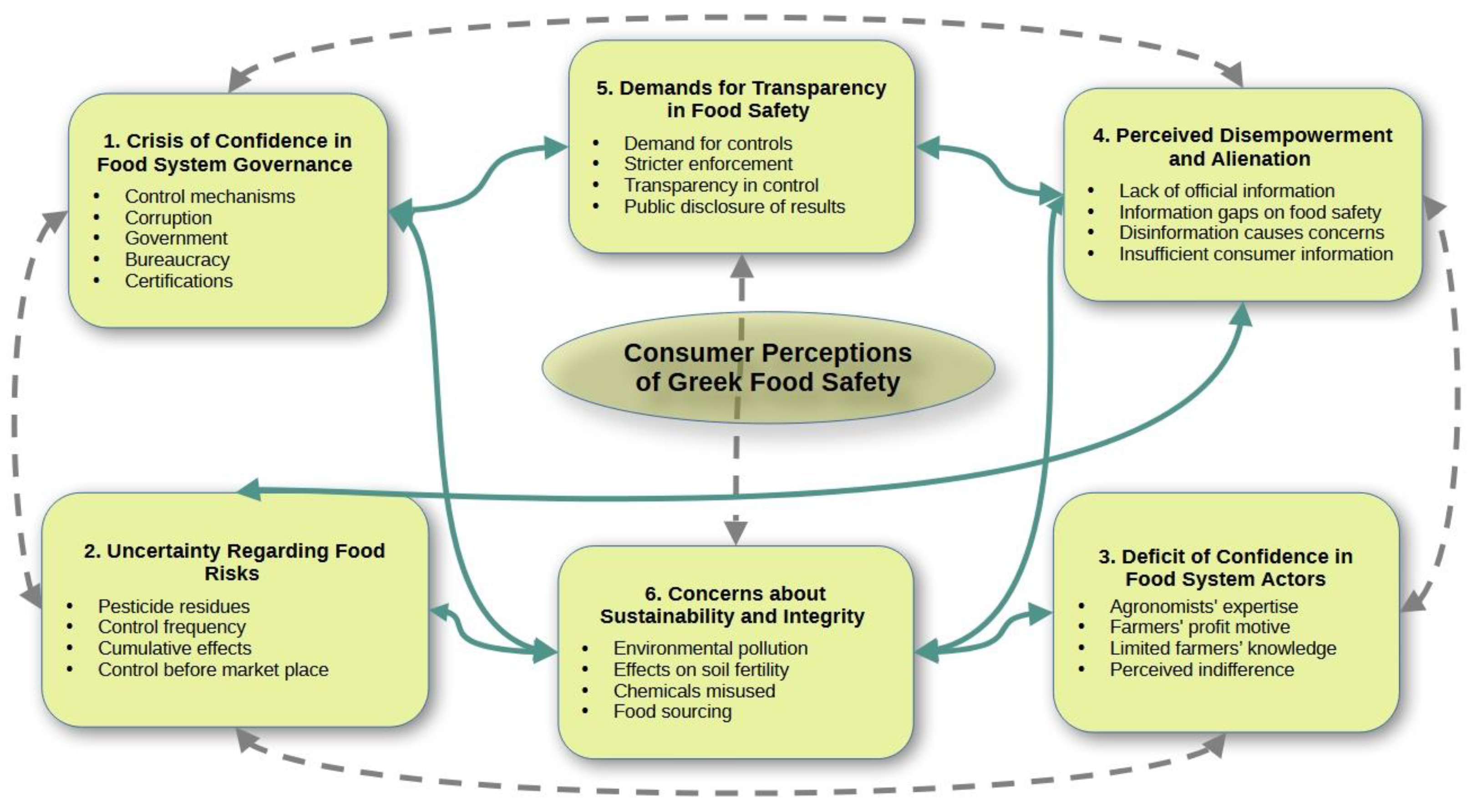
Table 1.
Key themes constructed from thematic analysis of consumers’ responses.
| DESCRIPTION | THEME | |
|---|---|---|
| Lack of trust in the credibility and accountability of food system governance | Participants' Crisis of Confidence in Food System Governance | 1 |
| Uncertainty and apprehension about food safety and quality risks | Participants' Experiences of Uncertainty Regarding Food Risks | 2 |
| Questioning of food system stakeholder credibility | Deficit of Confidence in Food System Actors | 3 |
| Perceived disempowerment and alienation within the food provisioning landscape | Participants' Disempowerment in the Food System | 4 |
| The issue for enhanced transparency in food safety | Participants' Demands for Food System Transparency | 5 |
| Concerns about the long-term viability and ethical soundness of the food production | Concerns about Food System Sustainability and Integrity | 6 |
Disclaimer/Publisher’s Note: The statements, opinions and data contained in all publications are solely those of the individual author(s) and contributor(s) and not of MDPI and/or the editor(s). MDPI and/or the editor(s) disclaim responsibility for any injury to people or property resulting from any ideas, methods, instructions or products referred to in the content. |
© 2025 by the authors. Licensee MDPI, Basel, Switzerland. This article is an open access article distributed under the terms and conditions of the Creative Commons Attribution (CC BY) license (http://creativecommons.org/licenses/by/4.0/).
Copyright: This open access article is published under a Creative Commons CC BY 4.0 license, which permit the free download, distribution, and reuse, provided that the author and preprint are cited in any reuse.


