

Submitted:
30 December 2024
Posted:
31 December 2024
You are already at the latest version
Abstract
ʻTiggianoʼ and ʻPolignanoʼ carrots are two Apulian (Southern Italy) landraces, noteworthy for their historical, cultural, and agricultural significance. In this research, both morphological traits and seed yield ability of these landraces were evaluated aiming of potential registration for the seed commercialization as a tool of valorization. Data of morphological traits according to the “International Union for the Protection of New Varieties of Plants” guideline evidenced a clear distinction between the two landraces. However, the great variability observed in certain characters represents an obstacle for their registration in the national variety register, except for the Conservation Varieties one. ʻPolignanoʼ and ʻTiggianoʼ carrots showed an average seed yield of about 63 and 106 g/plant, equating to about 1,258 and 2,116 kg/ha. Average seed germination rates were 80 and 87%, respectively for ‘Polignano’ and ‘Tiggiano’ carrots. In conclusion, registering these local varieties as Conservation Varieties could enhance their appreciation, encourage sustainable cultivation, and help mitigate genetic erosion, while boosting their economic and cultural value.
Keywords:
Daucus carota L.
; DUS criteria
; European seed legislation
; local varieties
; seed germination
; seed production
; seed traits
; UPOV descriptors
1. Introduction
Carrots (Daucus carota L.) are among the most important root crops worldwide, valued for their high nutritional content, including pro-vitamin A, antioxidants, and dietary fiber [1]. While global carrot production is dominated by commercial hybrid varieties, traditional landraces hold significant importance for biodiversity conservation, local gastronomy, and sustainable agriculture. In particular, landraces often exhibit unique morphological, agronomic, and organoleptic characteristics, making them well-adapted to specific agroecological conditions and cultural practices [2].
In the Apulia region (Southern Italy), two local carrot landraces, ‘Tiggiano carrot’ (TC) and ‘Polignano carrot’ (PC), are noteworthy for their historical, cultural, and agricultural significance. PC (Figure 1A) is cultivated in the municipality of Polignano a Mare (Figure 2), where limestone soils and proximity to the sea strongly influence its development and flavor profile. TC (Figure 1B) is cultivated in the small coastal area near Tiggiano (Figure 2), characterized by sandy soils and traditional farming methods. Both landraces are distinguished by their vibrant colors, unique shapes, and flavors, as well as their resilience to local environmental stresses [3,4]. For example, PC is highly valued for its unique taste, tenderness, crispness, aroma, and the remarkable range of colors found in its root tissues. The outer core (cortex) varies from yellow or deep orange to dark purple, while the inner core displays shades from pale yellow to light green [5]. These distinctive color patterns (Figure 1A) are characteristic of PC and are absent in other commercial carrot varieties. This diversity in coloration likely contributes to its premium prices on the local market, typically three to five times higher than standard orange carrots. Additionally, the purple roots of this landrace exhibit significantly higher antioxidant activity (averaging 42.7 mg of Trolox equivalent per 100 g fresh weight), approximately ten times that of yellow and orange types [5]. Regarding sugar content, PC contains a total glucose, fructose, and sucrose concentration of about 4.38 g per 100 g fresh weight, which is roughly 22% lower than that of commercial orange carrots [5]. However, its relative sweetness is comparable to some commercial varieties, primarily due to its high fructose content, which influences both its unique flavor and glycemic index [5]. Analogously to the PC, the TC has a dark purple epidermis and a yellow-orange inner. Its roots TC shows an anthocyanins content over 100 mg cyanidin-3-glucoside equivalents per 100 g of fresh weight, while chlorogenic acid (2.6 mg/g dry weight) and caffeic acid (0.26 mg/g dry weight) represent the main phenolic acids [4].
Both local varieties have been included in the list of Italian traditional agri-food products [6,7], which are products “whose methods of processing, storage and maturing are consolidated over time for a period not less than twenty-five years” [8].
Several Apulian vegetable landraces are included in the list of vegetables at risk of genetic erosion, which constitute an issue for the loss of the genetic traits important for the biodiversity and nutritional quality of the varieties [2,3]. Even TC is today considered a landrace at risk of genetic extinction since it is cultivated only on a few hectares; its cultivation practices risk being lost due to several factors such as abandonment of rural areas, ageing of the farmers who grow this landrace, failure to pass information down the generations. Fortunately, TC cultivation is so far strongly related to the popular cult of the Saint Ippazio, protector of male virility. In celebration of the saint, the colored carrots are usually sold as a pagan ritual concerning fertility, and to receive protection from the saint against hernias or male impotency [4]. Until a few years ago, even the PC was considered a variety at risk of genetic erosion. However, thanks to several valorization actions (i. e. biochemical characterization, application of the best post-harvest strategies for preserving its quality, communication strategies, ext.) boosting consumer demand, the PC cultivation has spread over several hectares. The progressive increase in cultivated areas it also been happened thanks to young farmers who have ascertained the possibility of obtaining a good real income through the cultivation of this landrace.
Considering both the strengths and weaknesses described above, for both landraces it could interesting to consider the opportunity of seed registration for their commercialization as a tool for better valorize these plant genetic resources. Sure enough, the registration of plant varieties plays a pivotal role in the conservation and utilization of plant genetic resources. As a matter of fact, by formally documenting and recognizing these varieties, especially local and traditional ones, the registration provides a structured framework that ensures their accessibility, protection, and potential for further research and development. This process is particularly critical for vegetable landraces, as it could help to secure their presence in agricultural systems while promoting their sustainable use. A formal registration for seed commercialization would enable the dissemination of these genetic resources within regulated markets, ensuring their availability to farmers, breeders, and researchers. Moreover, it could raise awareness about their unique traits, potential resilience to environmental stresses, and adaptability to specific agro-ecological conditions. For TC and PC, this practice not only could aid in preserving their genetic distinctiveness but also help to enhance their economic value. It is important to underline that both carrot landraces are included in the Apulian regional register of plant genetic resources [9] as well as in the list of traditional agri-food products of Puglia [8]. However, these registration tools are not suitable for the seed commercialization.
Since 1972, the European Community has established the “Common Catalogue of Varieties of Vegetable Species”, which consolidates the respective national registers of the most significant vegetable species cultivated in Europe [10,11]. These registers include varieties that have demonstrated valuable traits through evaluations conducted at specialized experimental centers. Registration in this catalogue is a mandatory requirement for the commercial distribution of vegetable seeds. To qualify for registration, varieties must meet three key criteria: distinctness, uniformity, and stability (DUS)—essential characteristics required for inclusion in the Common European Catalogue [10,11].
Considering all the above remarks and the lack of a comprehensive knowledge about the carrot landraces, the aims of the present study were: (i) to carry out a morphological characterization by using both descriptors and scores according to international standards; (ii) to evaluate some aspects regarding production and traits of the seeds. The more general goal was to increase the knowledge about these landraces considering the opportunity of their registration for seed commercialization as a tool of valorization.
2. Materials and Methods
2.1. Cropping Details
Two trials were carried out in 2022-2024 for both PC and TC. The cultivation practices applied by local farmers for these two local carrot landraces have been adopted. Seeds for crop propagation were self-produced and stored on-farm by each farmer. Trials were carried out in a field located in the Polignano a Mare (40.982260; 17.153361) and Tiggiano (39.939526; 18.371277) countryside, respectively for PC and TC. For each trial, sowing was done in September using a distance about 5x25 cm, resulting in a final density of 70–100 plants·m−2, according with the local common practices for roots production and commercialization of these landraces. In February, the plants to be used for seed production were selected. The selection of plants was made based on the criteria adopted by local farmers choosing the most vigorous plants with the healthiest and most interesting roots [3]. The chosen roots were lifted with the help of a hoe. The whole foliage was cut leaving only 3-5 cm and root cut leaving only 3-4 cm to its length. Transplanting was carried with a distance of 50x100 cm, resulting in a final density of 2 plants·m−2. During the period April-May, two irrigation treatments were carried out with a total administration of 200 m3 ha-1. Thereafter, it was stopped to enhance umbel maturity. The soil was fertilized with 70 kg ha-1 of N and 130 kg ha-1 of P2O5, while weed control was carried out mechanically. Isolation of at least 800 m from other carrot varieties and by wild carrot plants was carried out to avoid cross-contamination. A non-woven agrotextile was also used to cover plant rows for reducing the risk of cross-contamination by other Apiaceae species, in particular wild carrots. The seeds were harvested in July, when the seeds turned brown and dried. For each trial three replications of plants were randomly chosen avoiding plants on the border rows of the field. Daily temperatures (min and max), daily rain and cumulative rain are reported in Supplementary files (Figures S1 and S2).
2.2. Morphological Characterization
To assess morphological traits of the two landraces, 29 traits were scored by using descriptors of the UPOV (International Union for the Protection of new Varieties of Plants) Guideline TG/49/8 Rev. (2023-10-24) for the conduct of tests for Distinctness, Uniformity and Stability on carrot (UPOV Species Code: DAUCU_CAR) [12], on 15 plants per genotype for a total of 45 plants, considering the three experimental replications.
2.3. Umbels and Seeds Traits
Number of second order umbels per plant, length of umbels, number of rays per umbel and seeds weight per umbel were measured. Seed length, seed width and weight of 1000 seeds were also measured.
2.4. Germination Assays
Seed germination was measured by evaluating emergence of the radicle. The seeds were selected and purified by washing with sodium hypochlorite solution and then rinsed three times with demineralized water. For each sample, three replicates of 40 seeds were sown in Petri dishes containing filter paper soaked with demineralized water. The plates were placed in a phytotron at 22 °C with a photoperiod of 16 h light (light intensity of 10 kLx) and 8 h dark. Every day, the seeds with a protruding radicle were counted and removed from the dish. About 20 days after sowing time, the course and germination rate were evaluated. The germination parameter was determined for each genotype and was expressed as mean of the three replicates. Results will be also expressed as the times to reach 50% germination (T50).
2.5. Statistical Analysis
For each landrace a two-way analysis of variance (ANOVA) was performed using the CoStat-Statistics Software, applying a two-way randomized blocks design with umbel order and year of cultivation as main factors. The separation of means was obtained by the LSD test.
3. Results
3.1. Plant Morphological Traits
Scores of morphological tratits for both carrot landraces are reported in Table 1. Generally, the two landraces showed differences for some descriptors, especially with regards to leaf traits, root size and root color traits. In particular, the roots of the TC were longer than those of the PC. Furthermore, the color of the roots of the PC showed greater variability than the roots of the TC (Table 1).
3.2. Umbel and Seed Traits
For TC the mean values of numbers of second order umbels per plant, lenght of umbels, number of rays per umbel and seeds weight per umbel were, respectively, 12.7, 6.28 cm, 88.7, and 7.72 g, without any differences between years, umbel order and their interaction. Significant differences in maximum and minimum widht of umbels were detected among umbel orders, whereas no significant differences were found between years and for the interaction between year and umbels order. Umbels of first order showed values of maximum and minimum width respectively 12 and 14% higher than umbels of second order (Figure 3).
For PC the mean values of numbers of second order umbels per plant, maximum and minimum widht of umbels were respectively 13.0, 8.83 cm and 8.00 cm, without any differences between years, umbel order and their interaction. Significant differences in lenght of umbels, number of rays per umbel and seeds weight per umbel were detected among umbel order, whereas no significant differences were found between years and for the interaction between year and umbel order. Umbels of first order showed values of lenght of umbels, number of rays per umbel and seeds weight per umbel respectively 28, 30 and 70% higher than umbels of second order (Figure 4).
The effects of year and umbel order on seed length, seed width and weight of 1000 seeds for TC are reported in Table 2, whereas the interaction between year and umbel order was not significant. The average values of seed length and seed width of the year 2023 were respectively 12 and 15% higher than those of year 2024. Umbels of first order showed values of seed length and seed width higher respectively of 18% higher and 20% than umbels of second order (Table 2). The weight of 1000 seeds was 24% higher in year 2023 than year 2024, and 21% higher in umbels of first order than those of second order (Table 2).
For PC the effects of year and umbel order on seed length, seed width and weight of 1000 seeds are reported in Table 3, whereas the interaction between year and umbel order was not significant. The average values of seed length of the year 2024 and umbels of the first order were respectively 2 and 1.5% higher than those of year 2023 and umbels of second order. On the other hand, the average values of seed width of the year 2023 and umbels of the first order were, respectively, 2 and 2% higher than those of year 2024 and umbels of second order. The weight of 1000 seeds was 5% higher in 2023 than 2024, and 16% higher in umbels of first order than those of second order (Table 3).
3.3. Germination Rate
PC seeds of the 2023 showed a germination rate 13% higher than those of 2024 (Figure 5), whereas no significant differences were found between umbels order and for the interaction between year and umbels order. The average germination time was 8.71 days, without any differences between year, umbels order and their interaction.
For TC germination rate of seeds from first-order umbels collected in 2024 was lower than that of seeds from second-order umbels collected in the same year, as well as compared to seeds from umbels of the same order collected in 2023 (Figure 6). Average germination time was 7.8 days without any differences between year, umbels order or their interaction.
4. Discussion
In this study, the morphological characterization using UPOV descriptors was conducted to create a preliminary repository aimed at promoting the valorization of these landraces. However, in the context of a potential seed commercialization, all plant genotypes including landraces must be registered in a national variety register, which requires compliance with DUS criteria (Distinctness, Uniformity, and Stability). Results of the present study regarding the morphological data collected on PC and TC following UPOV guidelines indicated clear distinctness among these landraces, particularly concerning certain leaf traits, root size, and root color (Table 1). However, the uniformity criterion was not met, as morphological analysis revealed a great variability in certain characteristics, especially root color (Table 1).
The implementation of DUS criteria has led to the development of two distinct seed systems over time. The formal seed system, established by current seed legislation, is centered on modern varieties produced through specific breeding programs managed by public or private breeders. Conversely, the informal system includes diverse varieties, referred to as “farmers’ varieties”, encompassing both traditional landraces and new varieties created through farmers' breeding efforts or participatory programs [13,14,15].
In practice, the DUS system has posed a significant obstacle to the commercialization of many local landraces, as they are inherently “variable populations," albeit clearly identifiable, adapted to specific environmental and cultivation conditions [16,17,18,19]. To address this challenge, the European Union introduced two exemptions within its seed regulations through Directive 95/98/EC: (i) varieties with no intrinsic value for commercial crop production, referred to as “Varieties Developed for Growing under Particular Conditions” (VDPC) in subsequent Directives, applicable only to vegetables, and (ii) conservation varieties (CVR), covering both agricultural and vegetable species.
Following ten years of negotiations, EU Directive 95/98/EC was enforced through specific legislation: Directive 2008/62/EC for agricultural species, Directive 2009/145/EC for vegetable species, and Directive 2010/60/EU for mixtures and fodder species. Conservation varieties (CVRs) are defined as “landraces and varieties traditionally cultivated in specific locations and regions that face the threat of genetic erosion” (EU Directive 2009/145/EC). The CVR framework highlights three essential aspects distinguishing this exemption: (i) agricultural landraces and varieties exhibiting some degree of genetic diversity, (ii) their region of origin, and (iii) the associated risk of genetic erosion [17,18,19,20,21].
Registering a landrace as a CVR involves providing detailed information, including a description of its characteristics based on practical experience gained during cultivation, reproduction, and usage [22,23]. Among these details, the annual seed production data holds particular significance. For TC, our findings indicate an average seed yield of about 105.8 g/plant, equating to about 2,116 kg/ha. At the same time, seed size and the weight of 1000 seeds showed the highest values in both 2023 and from first-order umbels (Table 2). This trend could be attributed to lower average temperatures during the critical seed growth period of May to June in 2023 (Figure S2). These findings align with the research by Grey et al. [24], who reported that raising temperatures from 20/10 °C to 30/20 °C reduced the average seed weight by 13-20%. Similarly, for PC the weight of 1000 seeds was highest in 2023 (Table 3) even if in a lower percentage than what occurred for TC. Even in this case results could be attributed to lowest average temperatures during the critical seed growth period of May to June in 2023 (Figure S1). On the other hand, considering the differences in seed weight between umbels of different orders (Figure 4C), PC landrace showed an average seed yield of about 62.9 g per plant, equating to about 1,258 kg per hectare. These findings align with data reported in the literature. For instance, Gray et al. [25] observed seed yield ranges between 966 and 2,414 kg/ha, depending on the year and plant density. However, the same authors highlight that carrot seed yields documented in the literature can vary from 180 to 1,700 kg/ha, even within relatively narrow density ranges. They also reported that yields within the same plant population can fluctuate by a factor of five, even if the reasons are not well known. To a potential registration as CVR for both landraces, data of this study would be essential for estimating the annual seed yield in the “region of origin” (EU Directive 2009/145/EC) where production is planned [23].
In addition to the morphological characterization using UPOV descriptors, other results of this study could be useful to better describe the two landraces and provide further evaluation elements on these potential CVR as regards the “distinctness” criteria [23]. For example, the umbels length of TC (6.28 cm) was greater than that of PC (4.15 cm, on average). However, it is important to underline that a further distinctive feature of PC concerns the different length between umbels of first and second order (Figura 4A). Similarly, the umbels width values in PC (8.83 and 8.00 cm) were also lower than that of TC (13.06 cm and 11.73 cm, on average). However, in this case TC showed differences between umbels of different orders (Figure 3). These umbel traits could be important for the purpose of “stability” criteria since no differences between years were found in both landraces.
The valorizing of these two carrot landraces through registration as CVR is also aimed at seed commercialization. Therefore, information on seed germination in this study represents a crucial aspect for potential commercial evaluations.
PC seeds exhibited an average germination rate of 80%, though variations were observed between the two years (Figure 5). Similarly, TC seeds demonstrated an average germination rate of 87%, with differences noted both across the two years and among different umbel orders (Figure 6). Pereira et al. [26] reported an average seed germination of 85% at 20 °C, while Brocklehurst and Dearman [27] reported a similar germination percentage at 10 °C rather than the standard 20 °C used for seed trials, as germination at 10 °C provides a better match with field emergence of carrots. The findings of our study align with those reported in the literature. However, it is important to consider that various factors can influence the successful establishment of carrot crops. For instance, temperatures exceeding 35 °C can delay or inhibit carrot seed germination in the field, potentially compromising crop establishment [26]. This consideration is particularly relevant for carrot cultivation in TC and PC, where high temperatures may occur during the sowing period (August-September) (Figures S1 and S2), especially in the current context of climate change [28]. Anyway, from a commercial perspective, the germination rates observed in our study can be considered satisfactory, given that the minimum required germination rate for D. carota L. set by current legislation is 65% [29].
5. Conclusions
European legislation increasingly supports the conservation and promotion of landraces through the establishment of the Conservation Varieties regime. This system enables the registration of plant varieties that are naturally adapted to specific local environments and hold historical significance, even if they are not always widely grown for commercial purposes. Due to their distinct agronomic, morphological, and cultural traits, ‘Tiggiano’ and ‘Polignano’ carrots fulfill the criteria for their registration as Conservation Varieties. Registering these landraces as Conservation Varieties could enhance their appreciation, encourage sustainable cultivation, and help mitigate genetic erosion while boosting their economic and cultural value. Future research activities may be aimed to evaluate the effect of some agronomic practices, such as plant density, on the production and quality of the seed for these local varieties. An evaluation of seed germination at temperatures higher than 30 °C is another possible goal considering that such temperatures could be found more and more frequently in Southern Italy especially in the current context of climate change.
Supplementary Materials
The following supporting information can be downloaded at the website of this paper posted on Preprints.org, Figure S1: Daily temperatures (min and max), daily rain and cumulative rain from 1 September 2022 to 31 July 2024 in Polignano countryside; Figure S2: Daily temperatures (min and max), daily rain and cumulative rain from 1 September 2022 to 31 July 2024 in Tiggiano countryside.
Author Contributions
Conceptualization, R.A. and M.R.; methodology, R.A., E.C., P.S. and M.R; validation, P.S, and M.R.; formal analysis, E.C.; investigation, R.A., D.B, E.C. and M.R.; resources, R.A. and E.C.; data curation, R.A. and M.R; writing—original draft preparation, M.R.; writing—review and editing, R.A., D.B. E.C. P.S. and M.R.; visualization, P.S. and M.R.; supervision, P.S. and M.R.; project administration, M.R.; funding acquisition, P.S. All authors have read and agreed to the published version of the manuscript.”
Funding
This research was funded by Regione Puglia Administration under the Rural Development Program 2014–2020, Project Biodiversity of Apulian vegetable species (BiodiverSO Veg) , Measure 10, Sub measure 10.2, Operation 1 “Program for the conservation and the valorization of the genetic resources in agriculture” (DDS n. 04250182807, CUP: B97H22003760009)-n. 14.
Data Availability Statement
All results are included in this article.
Acknowledgments
The authors thank Cesare Lasorella for the technical assistance.
Conflicts of Interest
The authors declare no conflicts of interest.
References
- Que, F.; Hou, X.-L.; Wang, G.-L.; Xu, Z.-S.; Tan, G.-F.; Li, T.; Wang, Y.-H.; Khadr, A.; Xiong, A.-S. Advances in Research on the Carrot, an Important Root Vegetable in the Apiaceae Family. Hortic Res 2019, 6, 1–15. [Google Scholar] [CrossRef] [PubMed]
- Renna, M.; Montesano, F.; Signore, A.; Gonnella, M.; Santamaria, P. BiodiverSO: A Case Study of Integrated Project to Preserve the Biodiversity of Vegetable Crops in Puglia (Southern Italy). Agriculture 2018, 8, 128. [Google Scholar] [CrossRef]
- Renna, M.; Serio, F.; Signore, A.; Santamaria, P. The Yellow–Purple Polignano Carrot (Daucus Carota L.): A Multicoloured Landrace from the Puglia Region (Southern Italy) at Risk of Genetic Erosion. Genet Resour Crop Evol 2014, 61, 1611–1619. [Google Scholar] [CrossRef]
- Scarano, A.; Gerardi, C.; D’Amico, L.; Accogli, R.; Santino, A. Phytochemical Analysis and Antioxidant Properties in Colored Tiggiano Carrots. Agriculture 2018, 8, 102. [Google Scholar] [CrossRef]
- Cefola, M.; Pace, B.; Renna, M.; Santamaria, P.; Signore, A.; Serio, F. COMPOSITIONAL ANALYSIS AND ANTIOXIDANT PROFILE OF YELLOW, ORANGE AND PURPLE POLIGNANO CARROTS.
- PAT Puglia - Carota Di Polignano Available online: https://www.patpuglia.it/it/12/Carota_di_Polignano/5_85_C. (accessed on 12 December 2024).
- PAT Puglia - Carota Giallo Viola Di Tiggiano Available online: https://www.patpuglia.it/it/12/Carota_giallo-viola_di_Tiggiano/5_87_C (accessed on 12 December 2024).
- Didonna, A.; Renna, M.; Santamaria, P. Traditional Italian Agri-Food Products: A Unique Tool with Untapped Potential. Agriculture 2013, 13, 1313. [Google Scholar] [CrossRef]
- Apulian regional register of plants genetic resources Available online: https://filiereagroalimentari.regione.puglia.it/agrobiodiversit%C3%A0-registro-regionale (accessed on 18 December 2024).
- Didonna, A.; Santamaria, P. Biodiversity of Vegetable Species: Issues and Opportunities through Environmental Policies and Research. International Journal of Vegetable Science 2024, 1–6. [Google Scholar] [CrossRef]
- Didonna, A.; Bocci, R.; Renna, M.; Santamaria, P. The Conservation Varieties Regime: Its Past, Present and Future in the Protection and Commercialisation of Vegetable Landraces in Europe. Horticulturae 2024, 10, 877. [Google Scholar] [CrossRef]
- UPOV_carrot Available online: https://www.upov.int/test_guidelines/en/fulltext_tgdocs.jsp?lang_code=EN&q=daucus (accessed on 12 December 2024).
- Louwaars, N.P. Seed Systems: Managing, Using and Creating Crop Genetic Resources. In Routledge Handbook of Agricultural Biodiversity; Routledge, 2017 ISBN 978-1-315-79735-9.
- Andersen, R. (2009). Information Paper on Farmers’ Rights Submitted by the Fridtjof Nansen Institute, Norway, Based on the Farmers’ Rights Project - Farmers Rights Available online: https://www.farmersrights.org/literature-and-other-resources/global-level-and-conceptual-work-1/andersen-r-2009-information-paper-on-farmers-rights-submitted-by-the-fridtjof-nansen-institute-norway-based-on-the-farmers-rights-project (accessed on 12 December 2024).
- Almekinders, C.J.M.; Louwaars, N.P. The Importance of the Farmers’ Seed Systems in a Functional National Seed Sector. Journal of New Seeds 2002, 4, 15–33. [Google Scholar] [CrossRef]
- Visser, B. An Agrobiodiversity Perspective on Seed Policies. Journal of New Seeds 2002, 4, 231–245. [Google Scholar] [CrossRef]
- Lorenzetti, F.; Negri, V. The European Seed Legislation on Conservation Varieties. In European Landraces: On-Farm Conservation, Management and Use; Biodiversity International: Rome, Italy, 2009 ISBN 978-92-9043-805-2.
- Ministry of Agriculture, Food and Forestry National Plan on Biodiversity of Agricultural Interest. 2008.
- Pimbert, M.P. Participatory Research and On-Farm Management of Agricultural Biodiversity in Europe; IIED.; London UK, 2011; ISBN 978-1-84369-809-8.
- European Commission Commission Directive 2009/145/EC of 26 November 2009 Providing for Certain Derogations, for Acceptance of Vegetable Landraces and Varieties Which Have Been Traditionally Grown in Particular Localities and Regions and Are Threatened by Genetic Erosion and of Vegetable Varieties with No Intrinsic Value for Commercial Crop Production but Developed for Growing under Particular Conditions and for Marketing of Seed of Those Landraces and varietiesText with EEA Relevance. Official Journal of the European Union 2009, 312/44.
- Frese, L.; Reinhard, U.; Bannier, H.; Germeier, C.U. Landrace Inventory in Germany - Preparing the National Implementation of the EU Directive 2008/62/EC. In European Landraces: On-Farm Conservation, Management and Use; Biodiversity International, 2009 ISBN 978-92-9043-805-2.
- DECRETO LEGISLATIVO 30 Dicembre 2010, n. 267 Available online: https://www.gazzettaufficiale.it/atto/vediMenuHTML?atto.dataPubblicazioneGazzetta=2011-02-11&atto.codiceRedazionale=011G0033&tipoSerie=serie_generale&tipoVigenza=originario (accessed on 13 December 2024).
- DECRETO LEGISLATIVO 2 febbraio 2021, n. 20 Available online: https://www.gazzettaufficiale.it/eli/id/2021/02/27/21G00022/sg (accessed on 12 December 2024).
- Gray, D.; Steckel, J.R.A.; Dearman, J.; Brocklehurst, P.A. Some Effects of Temperature during Seed Development on Carrot ( Daucus Carota ) Seed Growth and Quality. Annals of Applied Biology 1988, 112, 367–376. [Google Scholar] [CrossRef]
- Gray, D.; Steckel, J.R.A.; Ward, J.A. Studies on Carrot Seed Production: Effects of Plant Density on Yield and Components of Yield. Journal of Horticultural Science 1983, 58, 83–90. [Google Scholar] [CrossRef]
- Pereira, R.S.; Nascimento, W.M.; Vieira, J.V. Carrot Seed Germination and Vigor in Response to Temperature and Umbel Orders. Sci. agric. (Piracicaba, Braz.) 2008, 65, 145–150. [Google Scholar] [CrossRef]
- Brocklehurst, P.A.; Dearman, J. The Germination of Carrot (Daucus Carota L.) Seed Harvested on Two Dates: A Physiological and Biochemical Study. Journal of Experimental Botany 1980, 31, 1719–1725. [Google Scholar] [CrossRef]
- Godwin, A.; McGill, C.; Ward, A.; Sofkova-Bobcheva, S.; Pieralli, S. Phenological Phase Affects Carrot Seed Production Sensitivity to Climate Change – A Panel Data Analysis. Science of The Total Environment 2023, 892, 164502. [Google Scholar] [CrossRef] [PubMed]
- Council Directive 2002/55/EC of 13 June 2002 on the Marketing of Vegetable Seed Available online: https://eur-lex.europa.eu/legal-content/EN/TXT/HTML/?uri=CELEX%3A32002L0055 (accessed on 13 December 2024).
Figure 1.
ʻPolignano carrotʼ (A) and ʻTiggiano carrotʼ (B).
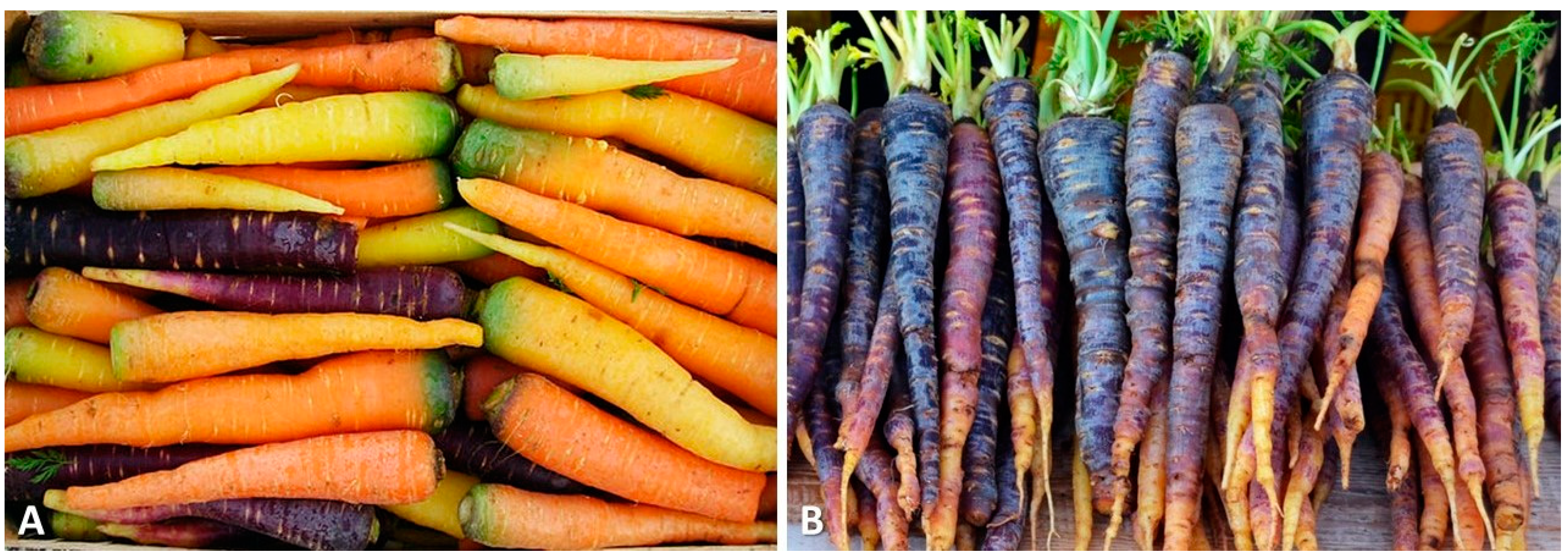
Figure 2.
Map of Italy focused on Polignano and Tiggiano territories and the areas (within the red circle) where ‘Polignano’ and ‘Tiggiano’ carrots are grown.
Figure 2.
Map of Italy focused on Polignano and Tiggiano territories and the areas (within the red circle) where ‘Polignano’ and ‘Tiggiano’ carrots are grown.
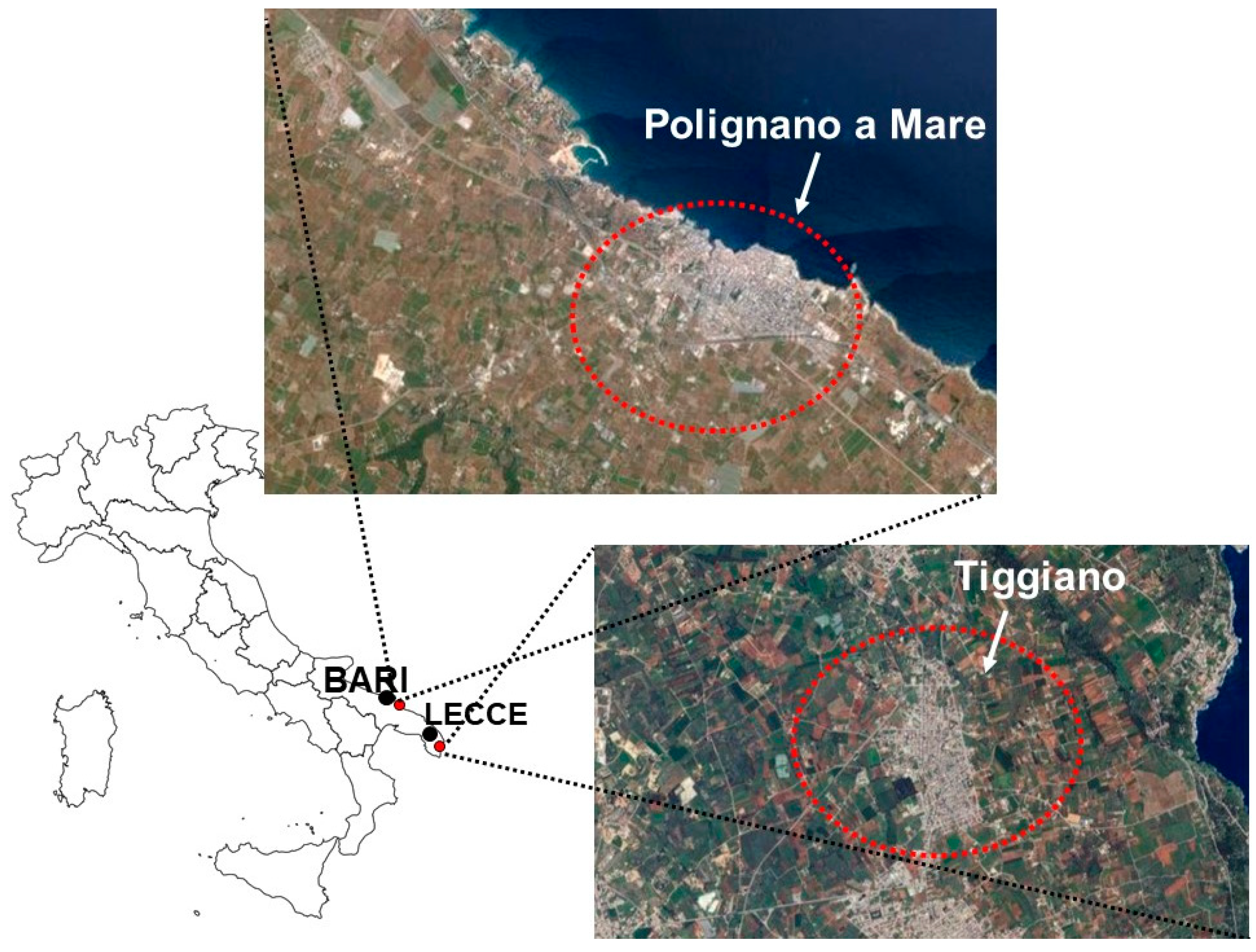
Figure 3.
Effects of umbel order on umbel maximum (A) and minimum width (B) of the TC. Vertical bars represent ± standard error of the mean values.
Figure 3.
Effects of umbel order on umbel maximum (A) and minimum width (B) of the TC. Vertical bars represent ± standard error of the mean values.
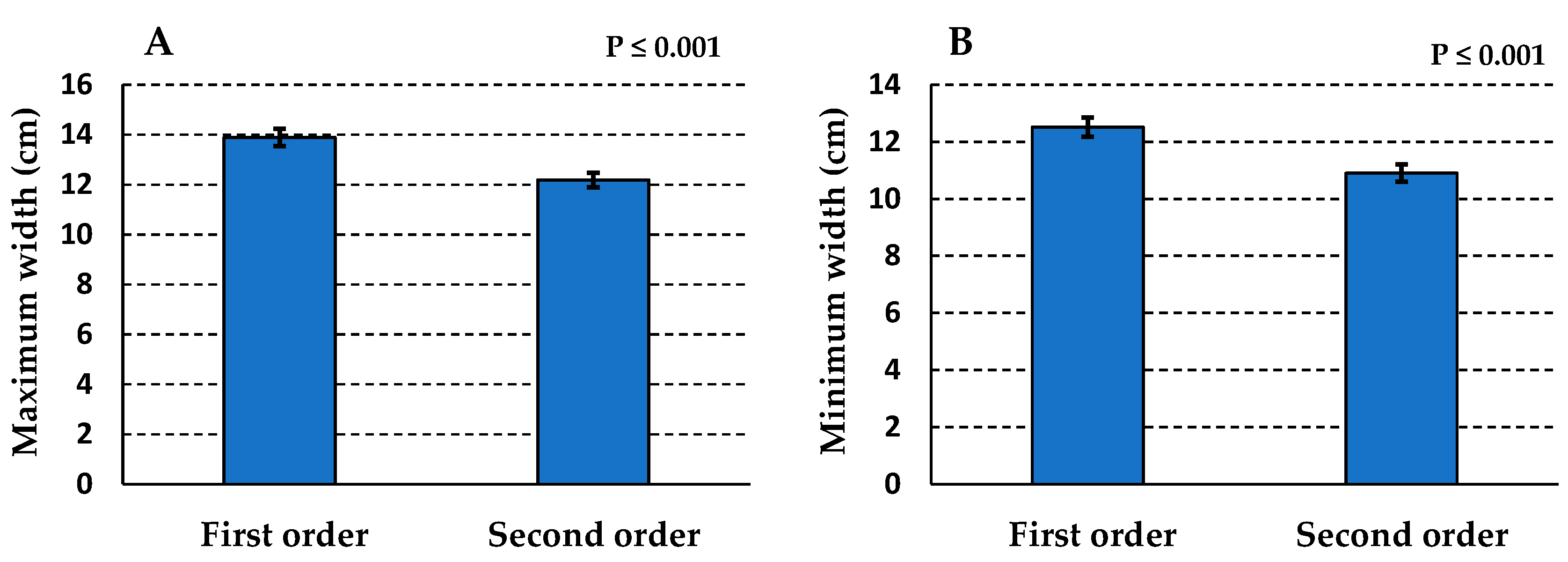
Figure 4.
Effects of umbel order on umbel length (A), number of rays per umbel (B) and seed weight per umbel (C) of the PC. Vertical bars represent ± standard error of the mean values.
Figure 4.
Effects of umbel order on umbel length (A), number of rays per umbel (B) and seed weight per umbel (C) of the PC. Vertical bars represent ± standard error of the mean values.
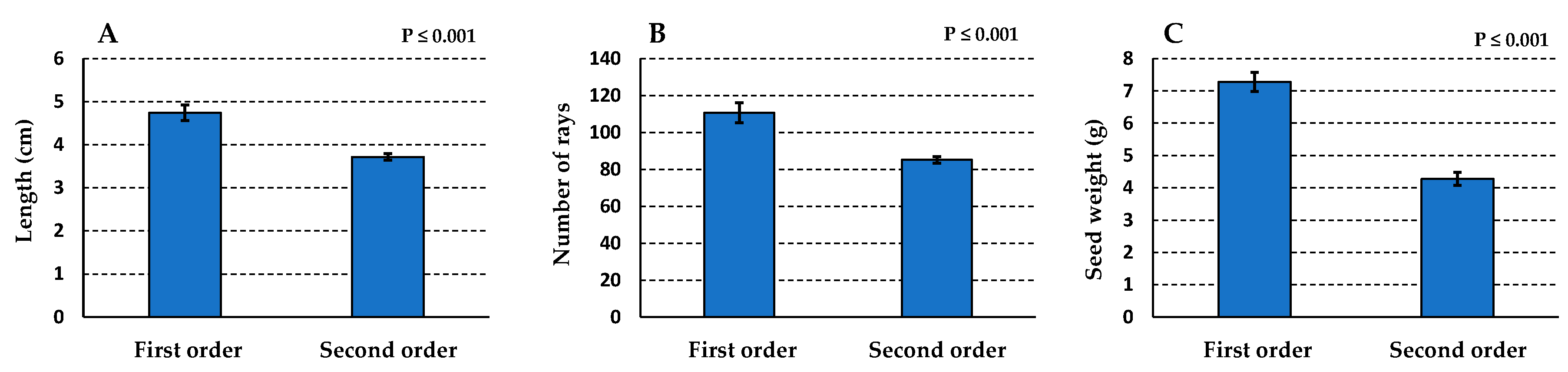
Figure 5.
Effects of year on seed germinability of the ‘Polignano carrot’ landrace. Vertical bars represent ± standard error of the mean values.
Figure 5.
Effects of year on seed germinability of the ‘Polignano carrot’ landrace. Vertical bars represent ± standard error of the mean values.
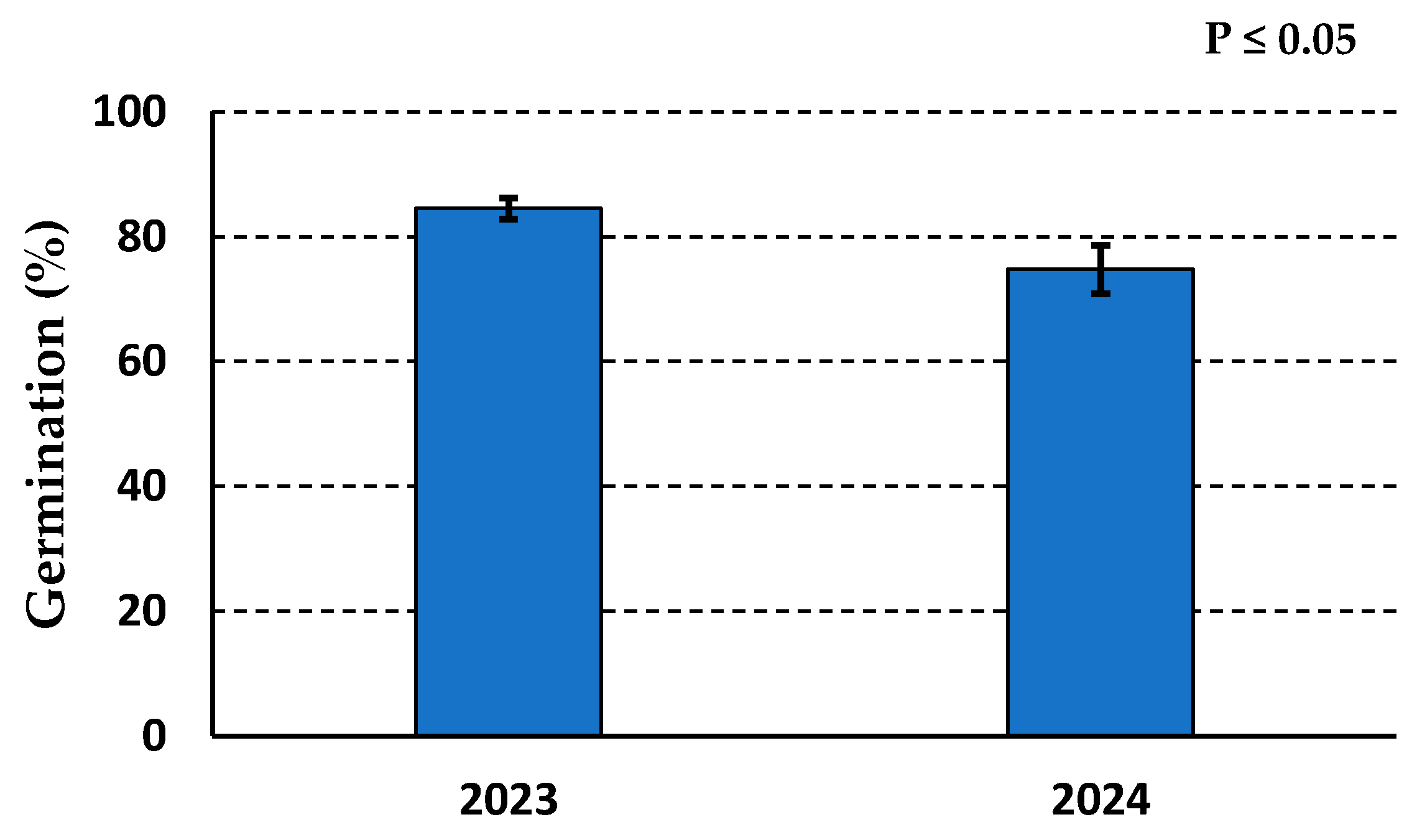
Figure 6.
Effects of year and umbel order on seed germinability of the ‘Tiggiano carrot’ landrace. Vertical bars represent ± standard error of the mean values. Different letters indicate that mean values are significantly different (P = 0.05).
Figure 6.
Effects of year and umbel order on seed germinability of the ‘Tiggiano carrot’ landrace. Vertical bars represent ± standard error of the mean values. Different letters indicate that mean values are significantly different (P = 0.05).
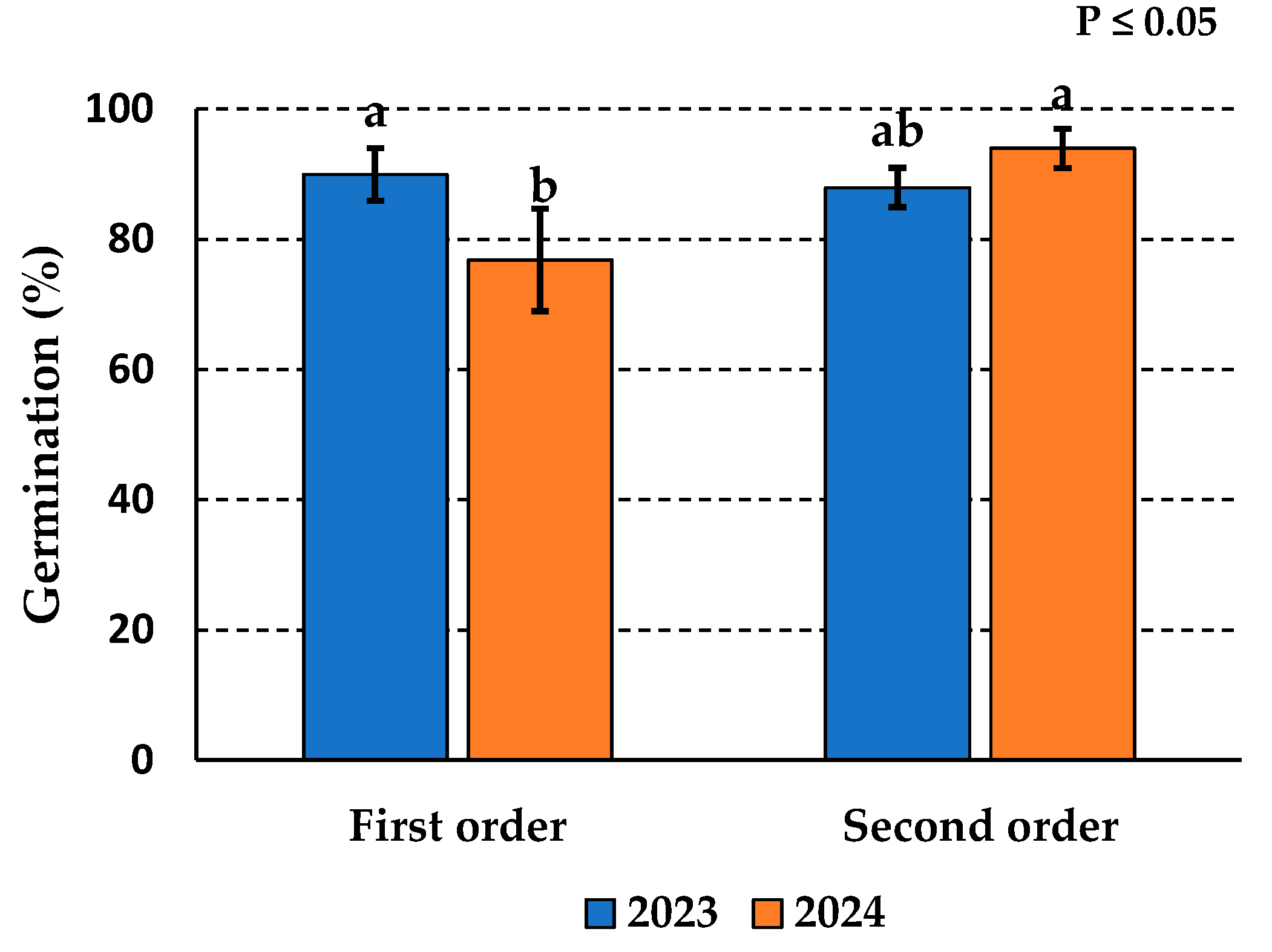

Table 1.
Data of morphological traits scored in the two carrot landraces (‘Tiggiano’ and ‘Polignano’) according to the UPOV (International Union for the Protection of new Varieties of Plants) Guideline TG/49/8 Rev. (2023-10-24) for the conduct of tests for Distinctness, Uniformity and Stability on tomato (UPOV Species Code: DAUCU_CAR) [12].
Table 1.
Data of morphological traits scored in the two carrot landraces (‘Tiggiano’ and ‘Polignano’) according to the UPOV (International Union for the Protection of new Varieties of Plants) Guideline TG/49/8 Rev. (2023-10-24) for the conduct of tests for Distinctness, Uniformity and Stability on tomato (UPOV Species Code: DAUCU_CAR) [12].
| Descriptor | Score scale | Score | |
| ‘Tiggiano’ | ‘Polignano’ | ||
| Foliage: width of crown | 3, narrow; 5, medium; 7, broad | 5 | 7 |
| Leaf: attitude | 1, erect; 3, semi-erect; 5, prostate | 1 | 3 |
| Leaf: length (including petiole) | 1, very short; 3, short; 5, medium; 7, long; 9, very long | 7 | 7 |
| Leaf: division | 3, fine; 5, medium; 7, coarse | 5 | 5 |
| Leaf: intensity of green color | 3, light; 5, medium; 7, dark | 3 | 5 |
| Leaf: anthocyanin coloration of petiole | 1, absent; 9, present | 1 | 1 |
| Root: length | 1, very short; 3, short; 5, medium; 7, long; 9, very long | 7 | 5 |
| Root: width | 3, narrow; 5, medium; 7, broad | 5 | 5 |
| Root: ratio length/width | 1, very small; 3, small; 5, medium; 7, large; 9, very large | 7 | 5 |
| Root: shape in longitudinal section | 1, circular; 2, obovate; 3, medium obtriangolar; 4, narrow obtriangular; 5, narrow obtriangular to narrow oblong; 6 narrow oblong | 4 | 4 |
| Root: tendency to conical shape | 1, very weak; 3, weak; 5, medium; 7, strong; 9, very strong | 7 | 7 |
| Root: shape of shoulder | 1, flat; 2, flat to rounded; 3, rounded; 4, rounded to conical; 5, conical | 1 | 1 |
| Root: tip (when fully developed) | 1, blunt; 2, slightly pointed; 3, strongly pointed | 3 | 3 |
| Root: external color | 1, white; 2, yellow; 3, orange; 4, pinkish red; 5, red; 6 purple | 2 and 6 | 2, 3 and 6 |
| Root: intensity of external color | 3, light; 5, medium; 7, dark | 5 | 5 |
| Root: anthocyanin coloration of skin ofshoulder | 1, present; 9, absent | 9 | 9 |
| Root: extent of green color of skin of shoulder | 1, absent o very small; 3, small; 5, medium; 7, large; 9, very large | 3 | 5 |
| Root: ridging of surface | 1, absent o very weak; 3, weak; 5, medium; 7, strong; 9, very strong | 3 | 3 |
| Root: diameter of core relative to totaldiameter | 1, very small; 3, small; 5, medium; 7, large; 9, very large | 5 | 5 |
| Root: color of core | 1, white; 2, yellow; 3, orange; 4, pinkish red; 5, red; 6 purple | 2 | 1 and 2 |
| Root: intensity of color of core | 3, light; 5, medium; 7, dark | 3 | 3 |
| Root: color of cortex | 1, white; 2, yellow; 3, orange; 4, pinkish red; 5, red; 6 purple | 2 and 6 | 2, 3 and 6 |
| Root: intensity of color of cortex | 3, light; 5, medium; 7, dark | 7 | 5 |
| Root: color of core compared to color ofcortex | 1, lighter; 2, same; 3, darker | 1 | 1 |
| Root: extent of green coloration of interior (in longitudinal section) | 1, absent o very small; 3, small; 5, medium; 7, large; 9, very large | 1 | 1 |
| Root: protrusion above soil | 1, absent o very small; 3, small; 5, medium; 7, large; 9, very large | 1 | 3 |
| Root: time of coloration of tip inlongitudinal section | 1, very early; 3, early; 5, medium; 7, late; 9, very late | 5 | 5 |
| Plant: height of primary umbel at time of its flowering | 3, short; 5, medium; 7, tall | 5 | 5 |
| Plants: proportion of male sterile plants | 1, absent o very low; 2, intermediate; 3, high | 2 | 1 |
Table 2.
Main effects of year and umbel order on seed length, seed width and weight of 1000 seeds of the ‘Tiggiano carrot’ landrace.
Table 2.
Main effects of year and umbel order on seed length, seed width and weight of 1000 seeds of the ‘Tiggiano carrot’ landrace.
| Attributes | Seed lenght | Seed width | Weight of 1000 seeds | |
| (mm) | (g) | |||
| Year (A) | ||||
| 2023 | 4.19 | 1.96 | 2.16 | |
| 2024 | 3.74 | 1.71 | 1.74 | |
| Significance(1) | *** | *** | *** | |
| Umbel order (B) | ||||
| First | 4.32 | 2.00 | 2.13 | |
| Second | 3.67 | 1.67 | 1.76 | |
| Significance | *** | *** | *** | |
Significance: *** significant for P ≤ 0.001. A × B interaction was not significant.
Table 3.
Main effects of year and umbel order on seed length, seed width and weight of 1000 seeds of the Polignano landrace.
Table 3.
Main effects of year and umbel order on seed length, seed width and weight of 1000 seeds of the Polignano landrace.
| Attributes | Seed lenght | Seed width | Weight of 1000 seeds | |
| (mm) | (g) | |||
| Year (A) | ||||
| 2023 | 4.53 | 1.95 | 2.56 | |
| 2024 | 4.63 | 1.91 | 2.44 | |
| Significance(1) | *** | *** | *** | |
| Umbel order (B) | ||||
| First | 4.61 | 1.95 | 2.69 | |
| Second | 4.54 | 1.91 | 2.31 | |
| Significance(1) | *** | *** | *** | |
Significance: *** significant for P ≤ 0.001. A × B interaction was not significant.
Disclaimer/Publisher’s Note: The statements, opinions and data contained in all publications are solely those of the individual author(s) and contributor(s) and not of MDPI and/or the editor(s). MDPI and/or the editor(s) disclaim responsibility for any injury to people or property resulting from any ideas, methods, instructions or products referred to in the content. |
© 2024 by the authors. Licensee MDPI, Basel, Switzerland. This article is an open access article distributed under the terms and conditions of the Creative Commons Attribution (CC BY) license (http://creativecommons.org/licenses/by/4.0/).
Copyright: This open access article is published under a Creative Commons CC BY 4.0 license, which permit the free download, distribution, and reuse, provided that the author and preprint are cited in any reuse.


