Preprint
Article

This version is not peer-reviewed.

Composition of EETP801 Cocoa Powder, a Native Amazonian Cocoa Cultivar Grown Under Sustainable Organic Conditions

A peer-reviewed article of this preprint also exists.

Submitted:

28 December 2024

Posted:

30 December 2024

You are already at the latest version

Abstract

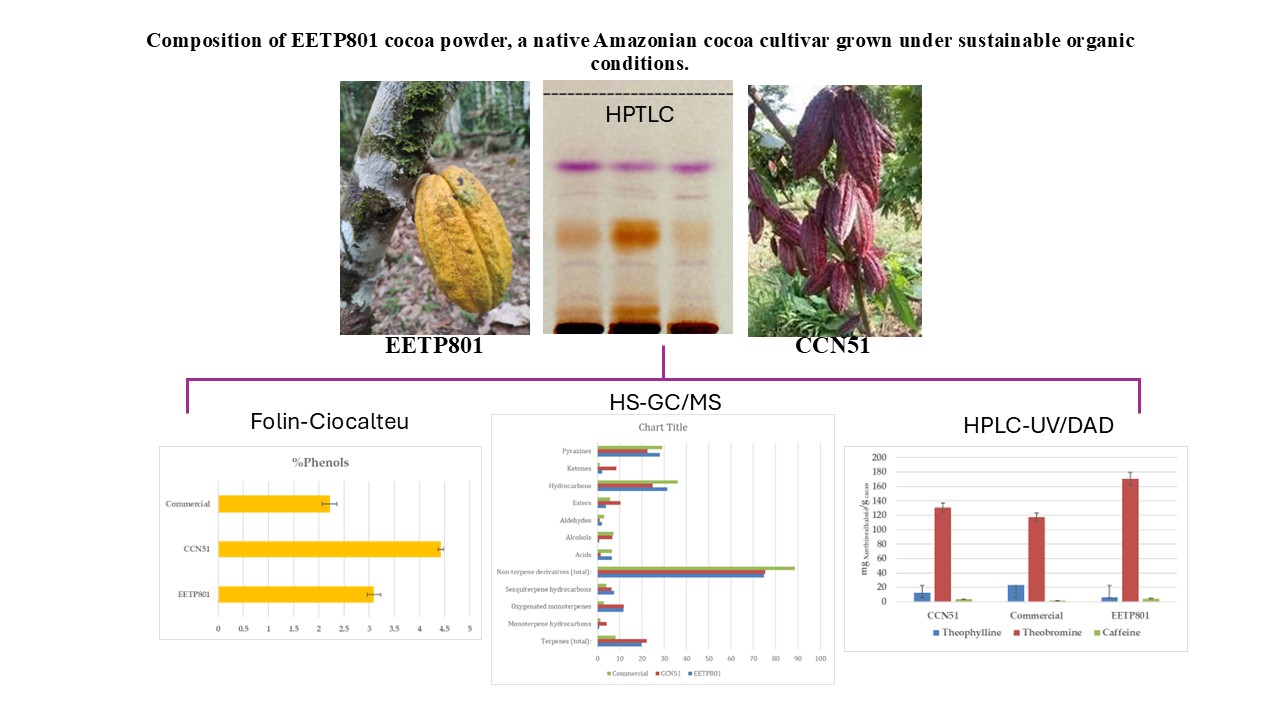
In this study, we have analysed the Amazonian variety EETP801 Cacao, grown under sustainable organic conditions, in comparison to CCN51 cacao grown on a neighbouring commercial farm using standard practices and an European commercial cacao powdered beverage. The overall metabolite profile was analysed by high performance TLC analyses (HPTLC), the volatile fraction by head-space gas chromatography–mass spectrometry (HS-GC-MS) and the xanthine alkaloids by quantitative liquid chromatography-UV photodiode array (HPLC-DAD) analyses. Total polyphenol content was determined by the Folin-Ciocalteu method. Despite the reduced production of cocoa by the EETP801 cultivar in comparison with the CCN51 cultivar, the obtained produce is significantly richer in theobromine (130 mg vs 170 mg per g of cacao) with CCN51 having double concentration of theophylline (12.6 vs 6.5 mg per g of cacao). Qualitatively, EETP-801 has the same polyphenolic composition (as per the HPTLC fingerprint) of the CCN51 cultivar but shows more traces of glycosylated flavonoids (rutin). The HS-GC-MS analyses revealed that the fragrance of both Amazonian cacao samples was superior to that of the commercial sample. The variability in the artisan fermentation and roasting processes influenced certain aspects of the volatile composition. The cultivar EETP801 is a viable option for a more ecologically conscious sector of the cocoa beverages consumer group.
Keywords: 
;  ;  ;  

1. Introduction

The earliest evidence of cocoa drink consumption dates back to the Early Formative Period (1900–900 BC) in Mesoamerica. The Mokayan people on the Pacific coast of Chiapas, Mexico, were consuming cacao drinks by 1900 BC. However, the earliest written references to cocoa drinks come from the Mayan civilization, who called it "xocolātl" (meaning "bitter water"). Their drink was made from ground cacao beans, water, chili peppers, and various spices. It was often served cold and was a significant part of their culture and rituals. The Aztecs later adopted and adapted this drink, adding their own twists, including honey to sweeten it. It was not until the 16th century that cocoa drinks were introduced to Europe by the Spanish conquistadors, where they gradually gained popularity among the upper classes as a social, stimulating drink. Linnaeus gave it the scientific name Theobroma cacao which in Latin means “Cocoa God’s food” thus highlighting the special place of this beverage in humans’ rituals and culture [1]. To this day it is one of the most traded commodities in the drinks industry, together with tea and coffee [2,3].
The development of cocoa beverages still faces challenges due to the peculiarities of its composition, dominated by lipids and polyphenols. The main issues during production are sedimentation and layer formation, but marbling and curdling might also occur [4]. The content on stimulant alkaloids“ and cardiovascular protecting/antioxidant/antidiabetic polyphenols [5,6] as well as the sustainability of the production of cocoa beverages [7] have added pressure to these challenges as the consumers’ base grow more conscious of the health value and environmental footprint of their choices [8].
There are many steps and factors in the cocoa beverage production process -mainly the fermentation and roasting- that can affect the content in “bioactive” polyphenols. To compensate for this loss, there is an increased interest in replacing them by adding polyphenols from other herbal sources. It is an important requirement to expand academic studies to enrich products with bioactive components during mixing and production without affecting the quality parameters such as the aroma and colour of cocoa-based beverages [4,9].
The chocolate industry has changed to a much higher demand for certified cocoa (Rainforest Alliance, UTZ, FairTrade) [10]. Companies like Mars have stated that by 2020, all their cocoa will be certified sustainable [11]. By this time, demand for cocoa is predicted to surpass the available supply by more than one million tons [7]. There is, therefore, a need for new sustainable and fair-trade sources of cocoa.
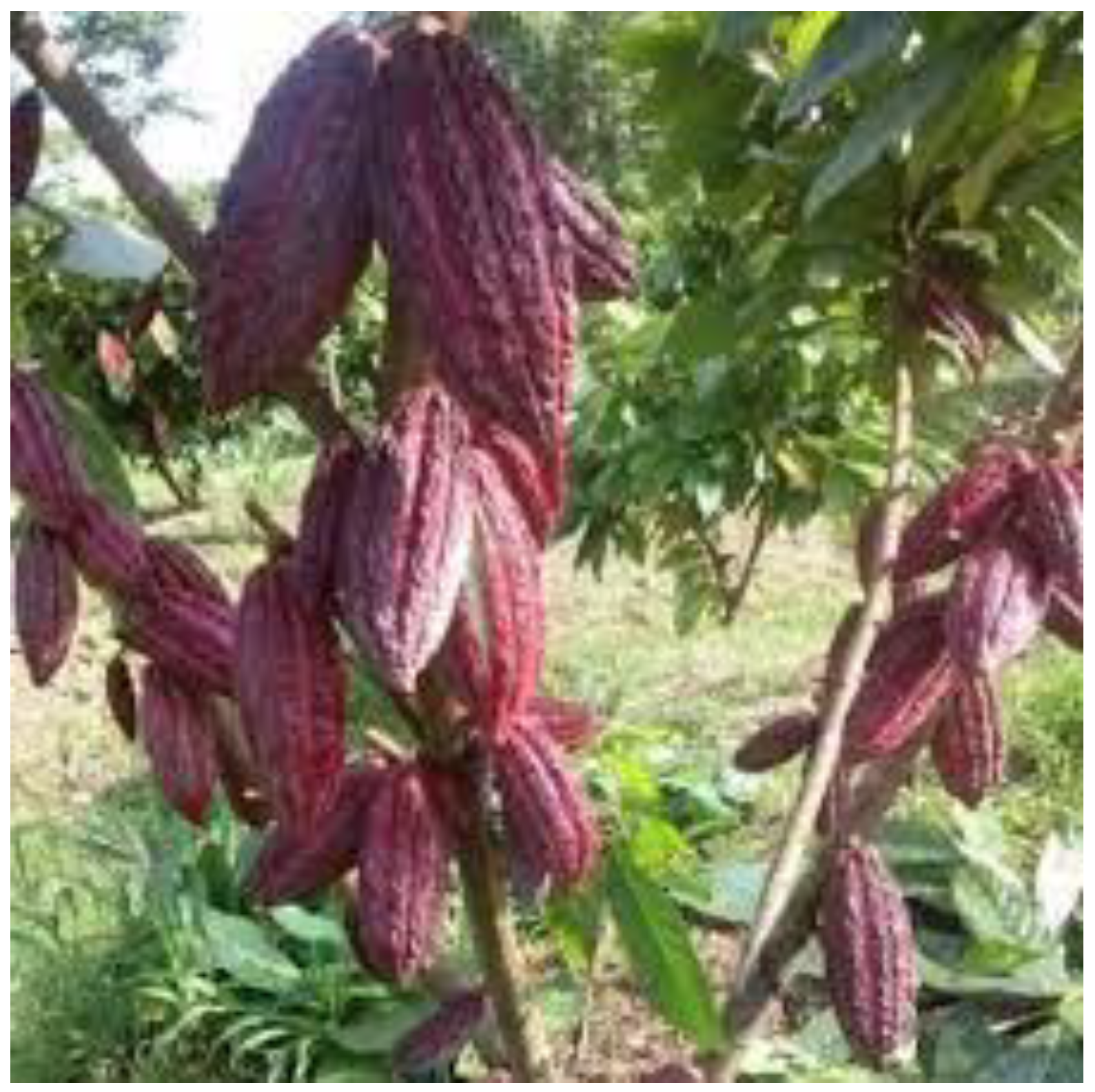
Ecuador is a region where cocoa is farmed by different communities such as Afro-Ecuadorian, Mestizo and Indigenous. All of them face the dilemma of the sustainability performance between fine flavour cultivars (collectively known as "Complejo Nacional" cultivars) versus the most productive but less flavoured cultivars such as CCN-51 [12]. In 2011, The Iamoe Center started an experiment growing a native Amazonian cultivar of cocoa, commonly named “Nacional 801” or “Fino Pichilingue” and classified by the International Cocoa Germplasm Database as “EET-801” or “EETP-801” [13]. Aspects of its morphology are shown in Figure 1.
It was therefore of our interest to examine the composition of this Amazonian Cocoa in comparison with the more productive but less sustainable cultivar CCN51.

2. Materials and Methods

2.1. Plant Materials

Seeds of the EETP-801 cultivar (synonym: Fino Pichilingue) were acquired from the INIAP (National Institute for Agricultural Research) and grown under organic conditions in a shaded area of primary rainforest (Lat 0, 41' South, Lon 76, 50' West, Altitude 260 m). Only organic kitchen waste, coffee grounds and rice hulls were used to support the growth of the plants. Not any kind of fertilizer or pesticide was applied. They yielded the first fruits after 15 months only. The seeds were collected, dried, roasted, peeled and ground within the premises of the Iamoe Centre (Kupi Village, Dayuma Parish, Francisco de Orellana Province, Ecuador) following traditional, fully manual processing techniques. Leaves samples were picked from the same trees.
Cocoa samples from a high yield cultivar (CCN-51) grown in a surrounding area of Iamoe Centre were collected by Dr Rocío Alarcón and Dr M. Viteri. These plants were grown in a deforested area under non-organic conditions.
A commercial pure defatted cocoa powder (Chocolate Valor S.A., Villajoyosa, Spain) was bought in the supermarket and used for comparison with the Amazonian samples. The manufacturer's labelling declares a 16% fat content and no added sugars.

2.2. Extraction

Cocoa samples of 0.25 g were extracted in 5 ml acetone and water (70:30 v/v) in a 15 ml test tube shaken for 20 min.
After the extract was separated by centrifugation (1600 rpm for 10min), filtered with a 0.22 µm pore filter and aliquoted into 1.5 mL glass vials. The extract was used in the subsequent analyses.

2.3. Phenol Content Determination by the Folin-Ciocalteu’s Method.

The samples were dissolved in methanol 4.12 mg/5 ml. 50 µl of each filtered extraction solution were transferred to a 15 mL test tube with 3,5 ml of water. After swirling the contents, 250 µl of Folin-Ciocalteu’s phenol reagent was added and the solutions were swirled again. After 8 min, 750 µl of sodium carbonate solution was filled up to 5 mL exactly with water. UV absorption was measured 2 hours after the carbonate solution was added, at 610 nm.
The percentage of total phenols in extracts was calculated using the following equation:
Total phenols % = 100 x (Asamplex Astandard)/(Astandard x Csample )
Where A: Absorption and C: Concentration. The absorbances of blank experiments were subtracted from the absorbances of samples. Blanks were prepared in the same way as samples by changing the Folin-Ciocalteu reagent with water.

2.4. High-Performance Thin Layer Chromatography (HPTLC)

Extracts were diluted to a concentration of 50 mg/mL in methanol. Control compounds were prepared at a concentration of 1 mg/mL, also diluted in methanol. A CAMAG Linomat 5 was used to apply 5 μL of the samples onto TLC silica gel 60 F254 aluminium sheets. The plates were developed using a CAMAG ADC2 automatic developing chamber. The method included 30-second pre-drying, a 10 min humidity control using magnesium chloride to 48.3% relative humidity and a 20 min saturation time, using saturation pads, all done at 25.2°C. The mobile phase used was ethyl acetate:formic acid:water (82:9:9). During development, the solvent front was allowed to migrate 80 mm before a drying time of 5 min. For derivatization, we used Natural products reagent (NPR) followed by PEG 4000 (Reich and Schibli, 2007). All visualization and analyses were performed using a CAMAG TLC visualizer both before and after derivatization.

2.5. High-Performance Liquid Chromatography (HPLC)

The HPLC unit used in this study was an Agilent 1200 series. The HPLC conditions used was Evo Biphenyl (Phenomenex) 150x4.6 mm column, a flow rate of 1 mL/min, an injection volume of 10 µl for samples and 5 µl for standards, column oven temperature of 35C and a gradient mobile phase as follows: 0 min— 90% acid water (0.00% H3PO4) 10% acetonitrile, 30 min—10% acid water (0.001% H3PO4) 90% acetonitrile.

2.6. Solid Phase Micro-Extraction of Volatiles

Each sample, once ground, was put in a glass vial closed with aluminium foil and left to equilibrate at room temperature for 30 min. Supelco SPME (Solid Phase Micro-Extraction) devices coated with polydimethylsiloxane (PDMS, 100 μm) were used to sample the headspace. SPME sampling was performed using the same new fibre, preconditioned according to the manufacturer's instructions, for all the analyses. Sampling was accomplished in an air-conditioned room (22±1°C) to guarantee a stable temperature. After the equilibration time, the fibre was exposed to the headspace for one hour for each sample. Once sampling was finished, the fibre was withdrawn into the needle and transferred to the injection port of the GC-MS system. The desorption conditions were identical for all the samples. Furthermore, blanks were performed before each first SPME extraction and randomly repeated during each series. Quantitative comparisons of relative peak areas were performed between the same chemicals in different samples.

2.7. GC/MS Analysis of Volatiles

GC/EI-MS analyses were performed with a Varian CP-3800 apparatus equipped with a DB-5 capillary column (30 m X 0.25 mm i.d., film thickness 0.25 μm) coupled with a Varian Saturn 2000 ion-trap mass detector. The oven temperature was programmed to rise from 60° C to 240° C at 3° C/min; injector temperature, 250°C; transfer-line temperature, 240° C; carrier gas, He (1 ml/min).
The identification of the constituents was based on the comparison of their retention times (tR) with those of pure reference samples and their linear retention indices (LRIs) determined relative to the tR of a series of n-alkanes. The mass spectra were compared with those listed in the commercial libraries NIST 14 and ADAMS and a homemade mass-spectral library, built up from pure substances and components of known mixtures, and MS literature data [15,16,17,18,19,20,21].

2.8. Statistical Analyses

Statistical analyses were performed with GraphPad Prism v. 5 using a one-way Analysis of Variance (ANOVA) followed by Multiple comparison test (Tukey HSD). Other basic statistical calculations (averages, SD, SEM, etc.) and figures were performed with the help of Excel (Microsoft, Redmond, WA, USA).

3. Results

3.1. Total Phenol Content

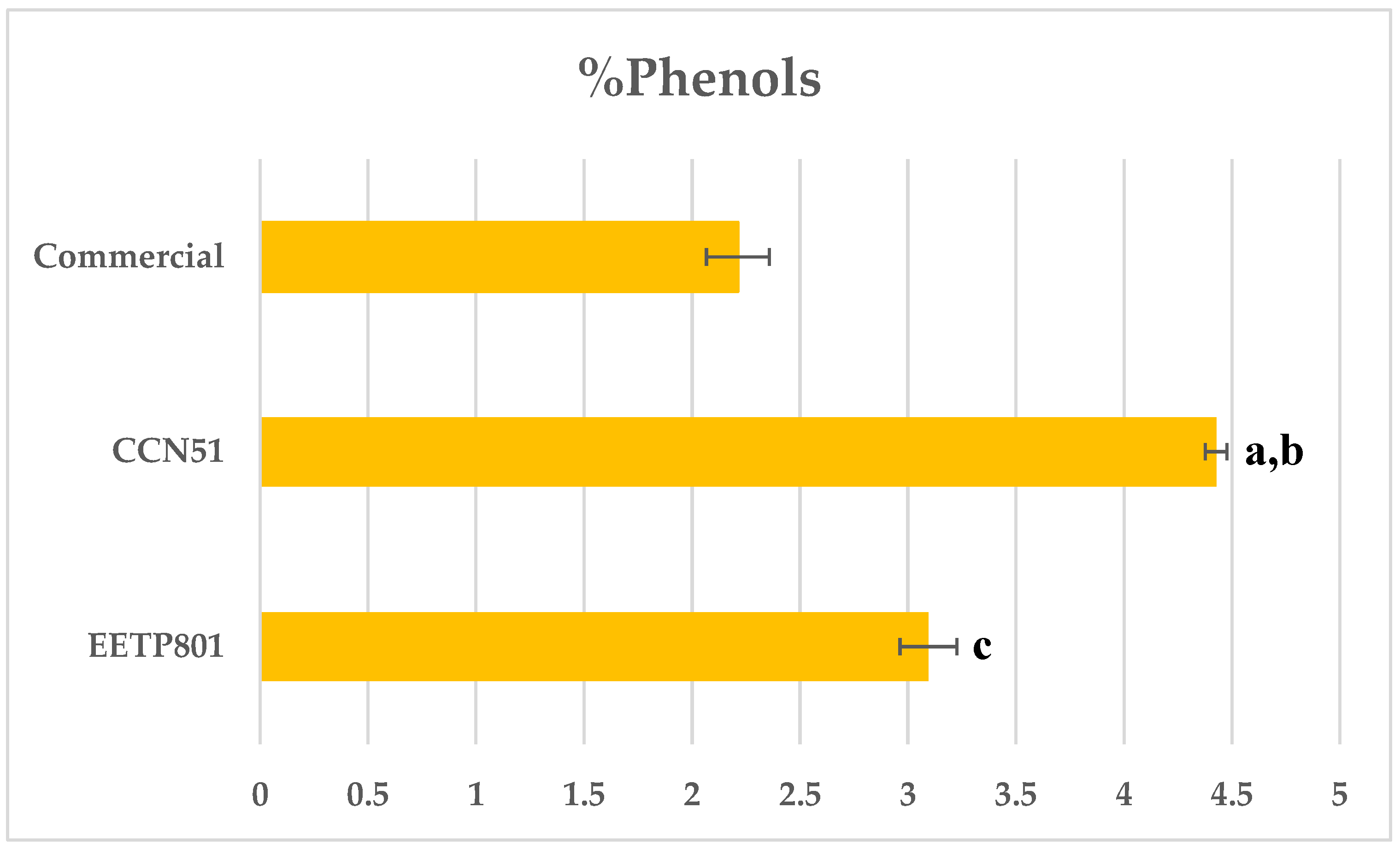
The content of phenols calculated as per the Folin Ciocalteu’s method shown that the CCN51 cultivar had a significantly higher content (** p < 0.01) followed by EETP801 which was also significantly higher (** p < 0.01) than the commercial sample. The latter had a lower content, probably due to the industrial processing (Figure 2).

3.2. Chromatographic Fingerprint of the Amazonian Samples

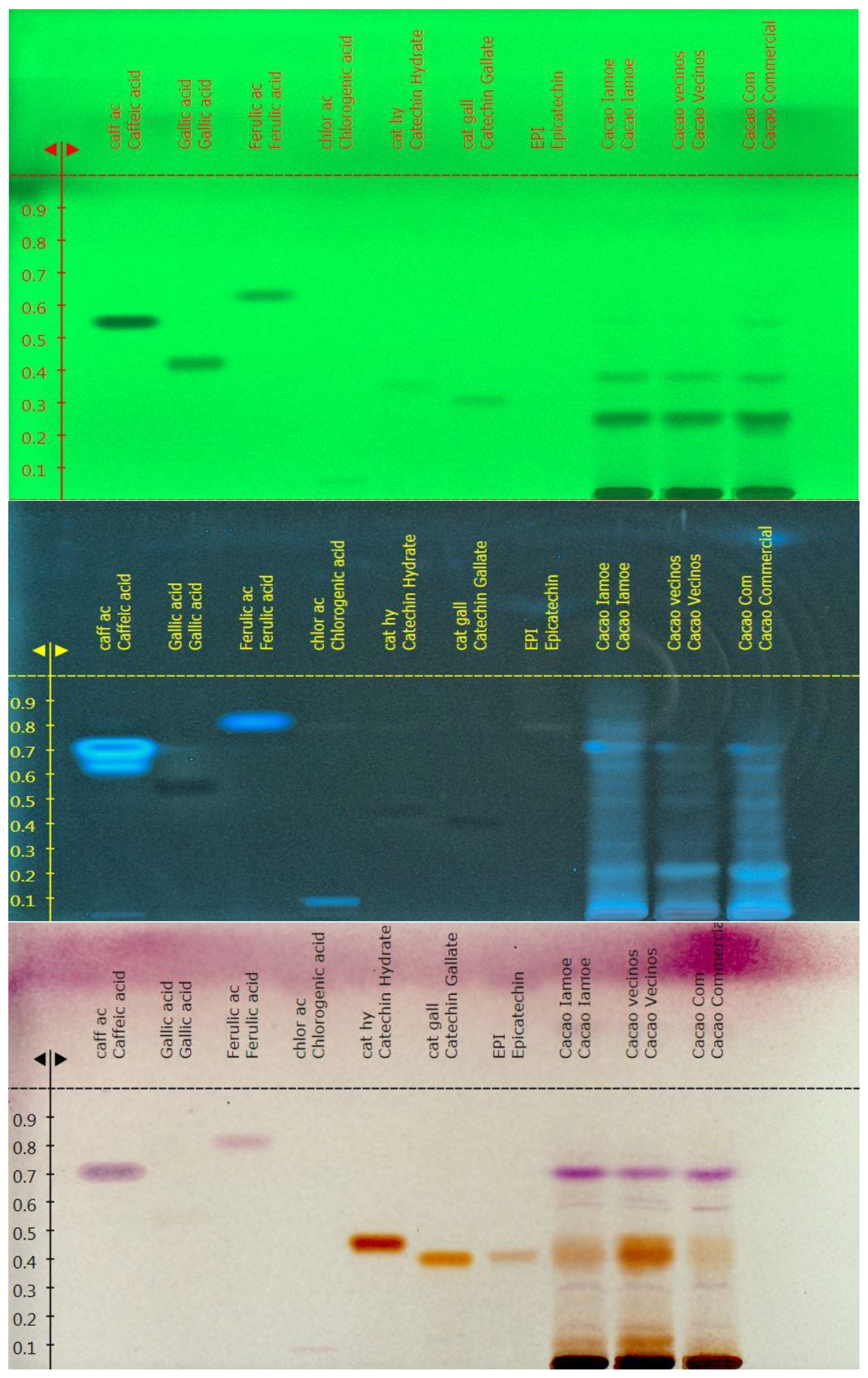
The overall fingerprint of the pure Amazonian cocoa samples EETP801 and CCN51 was obtained by means of high-performance thin layer chromatography. The standards used included kaempferol, catechin gallate, epicatechin, epigallocatechin gallate, gallic acid, chlorogenic acid, rutin, ferulic acid, and hesperidin. Only catechin was unambiguously identified in the two cocoa samples and rutin in the ETTP801 sample. In this case the commercial sample was not compared as it was industrially processed.

3.3. Analysis of the Volatile Metabolites of the Amazonian Samples
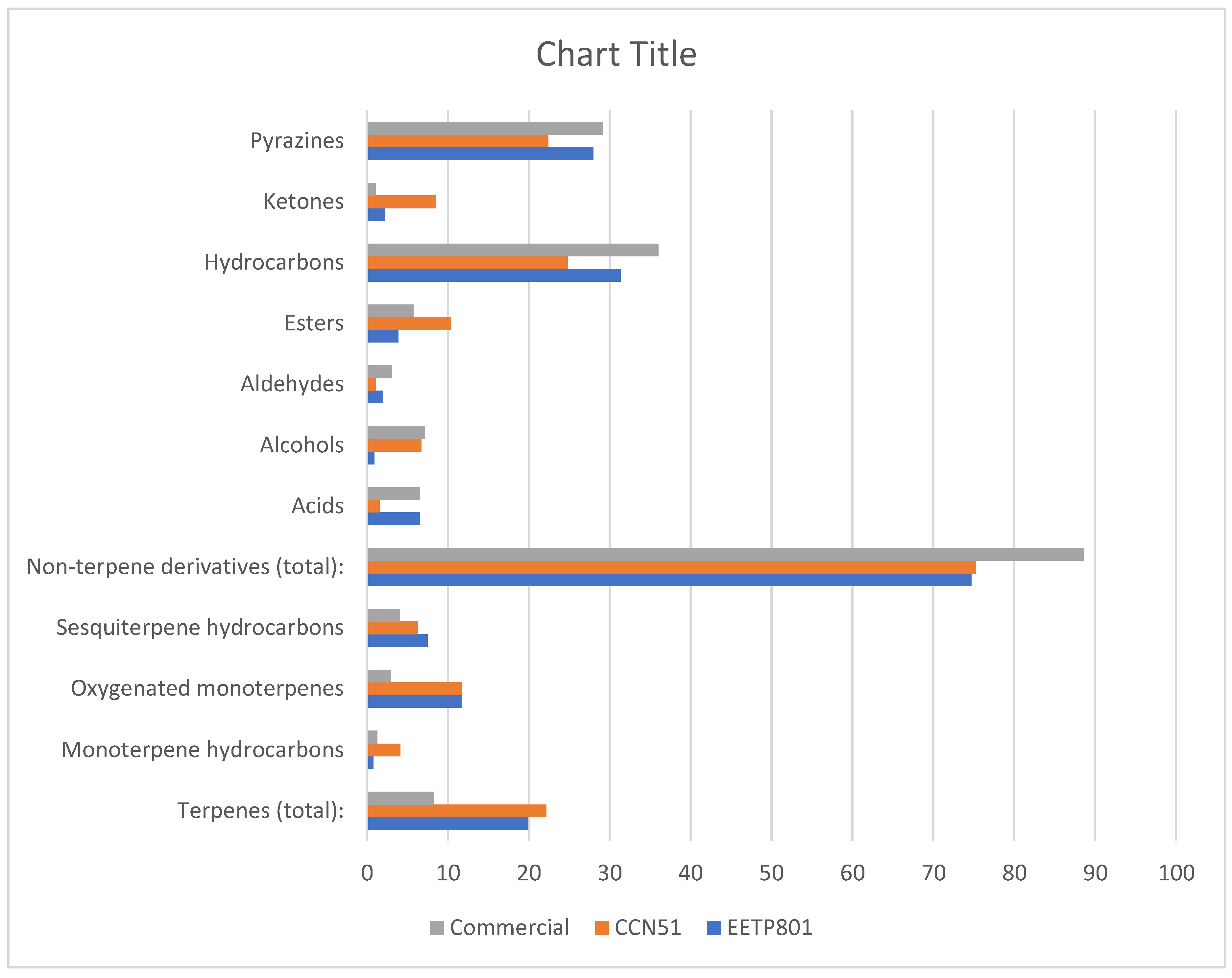
In terms of volatiles, all the samples show a spontaneous emission profile (Table 2) mainly rich in non-terpene derivatives, of which hydrocarbons and pyrazines are the most abundant groups. For EETP801 and CCN51, n-tridecane is the most represented volatile organic compound, whilst 2,3,5,6-tetramethyl pyrazine (TMP) is the most abundant volatile in the head-space of the commercial chocolate (Figure 3).
Figure 2. HPTLC analysis of cocoa samples (mobile phase Ethyl acetate:Water:Formic acid:Acetic acid (100:11:11:27): (a) no derivatization, visible light; (b) no derivatization, UV light (235 nm); (c) derivatization with 5% NPR + PEG4000, UV light (366 nm). The three last lanes on the right are ETTP801 (“Cacao Iamoe”), CCN51 (“Cacao vecinos”), and commercial sample (“Cacao Commercial”).
Preprints 144440 g003
Table 2. HS-GC-MS analysis of cocoa samples.
Constituents L.R.I.a Relative abundance (%)
Commercial CCN51 EETP801
acetic acid 599 5.52 -b 5.56
ethyl acetate 616 - 7.58 -
2,3-butanediol 799 5.78 2.24 -
2-methyl pyrazine 833 1.21 0.33 1.04
isovaleric acid 834 1.03 0.99 0.6
2-methylbutanoic acid 860 - 0.55 0.39
isopentyl acetate 876 - 0.15 -
2-heptanone 891 - 0.9 -
2-heptanol 902 - 3.29 0.88
2,6-dimethyl pyrazine 910 3.18 1.73 5.1
2,5-dimethyl pyrazine 920 - 0.9 -
2-ethyl pyrazine 925 1.51 - -
2,3-dimethyl pyrazine 930 0.96 0.6 1.02
benzaldehyde 963 2.06 0.63 0.77
myrcene 993 - 0.85 -
2-ethyl-6-methyl pyrazine 1001 1.42 0.75 1.44
2,3,5-trimethyl pyrazine 1005 5.64 4.84 6.45
limonene 1032 1.26 1.72 0.76
(Z)-β-ocimene 1042 - 1.31 -
(E)-β-ocimene 1052 - 0.22 -
acetophenone 1068 - 0.47 0.63
trans-linalool oxide (furanoid) 1076 - 1.4 1.09
2,6-diethyl pyrazine 1080 3.57 2.58 6.31
2,3,5,6-tetramethyl pyrazine 1086 10.04 9.6 -
cis-linalool oxide (furanoid) 1090 - - 5.53
2-nonanone 1093 1.05 7.1 1.13
n-undecane 1100 - 1.19 0.87
linalool 1101 1.01 8.64 2.66
nonanal 1102 1.01 - 1.16
isodihydrolavandulyl aldehyde 1110 - - 2.01
phenylethyl alcohol 1111 - 1.15 -
trans-limonene oxide 1141 - 0.14 -
5H-5-methyl-6,5-dihydrocyclopentapyrazine 1142 - - 0.32
camphor 1143 0.63 0.27 0.36
3,5-diethyl-2-methyl pyrazine 1156 0.78 0.27 0.99
2,3,5-trimethyl-6-ethyl pyrazine 1163 0.83 0.8 1.59
tetrahydrolavandulol 1168 - 0.19 -
trans-linalool oxide (pyranoid) 1177 - 0.93 -
α-terpineol 1191 - 0.17 -
1-dodecene 1192 1.58 0.42 -
n-dodecane 1200 1.96 8.9 8.53
decanal 1204 - 0.4 -
2,5-dimethyl-3-(2-methylpropyl) pyrazine 1208 - - 2.07
2-phenylethyl acetate 1258 2.69 2.61 1.45
1-tridecene 1292 5.12 0.3 0.61
2-undecanone 1294 - - 0.46
2,5-dimethyl-3-(3-methylbutyl) pyrazine 1298 - - 1.62
n-tridecane 1300 4.08 11.37 16.44
1-nonanol acetate 1312 0.48 - -
(Z)-2-tridecene 1315 - 0.12 0.42
geranyl acetate 1385 1.26 - -
isolongifolene 1387 - 0.27 -
1-tetradecene 1392 6.37 0.19 -
ethyl decanoate 1395 0.9 - 0.65
β-longipinene 1398 3.31 3.18 -
n-tetradecane 1400 5.88 1.91 3.5
longifolene 1403 - 0.48 0.98
β-caryophyllene 1420 - 0.33 0.7
α-neo-clovene 1454 0.74 0.58 -
γ-muurolene 1477 - - 0.39
cis-β-guaiene 1490 - 0.23 -
epizonarene 1497 - 0.54 -
α-muurolene 1498 - 0.19 1.17
n-pentadecane 1500 7 - -
trans-γ-cadinene 1513 - - 1.11
δ-cadinene 1524 - 0.49 3.13
ethyl dodecanoate 1596 1.63 - 1.75
n-hexadecane 1600 1.66 0.4 0.96
1-tetradecanol 1676 1.37 - -
n-heptadecane 1700 2.35 - -
Total identified: 96.87% 97.39% 94.60%
Figure 3. Comparison of the main types of volatiles present in the aromas of the cacao samples.
Preprints 144440 g004

3.4. Quantitative Analysis of the Xanthine Alkaloids in Cocoa Samples
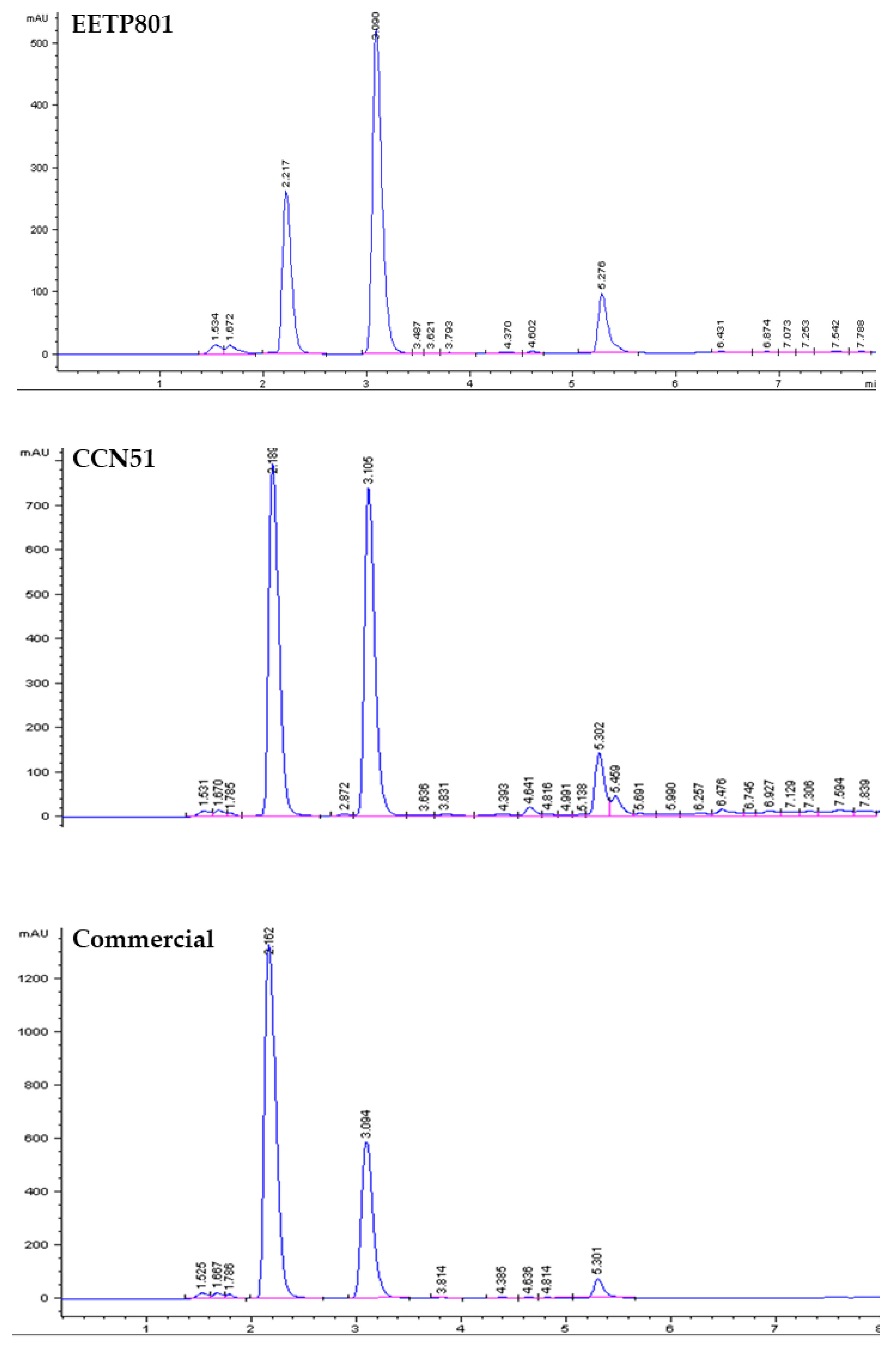
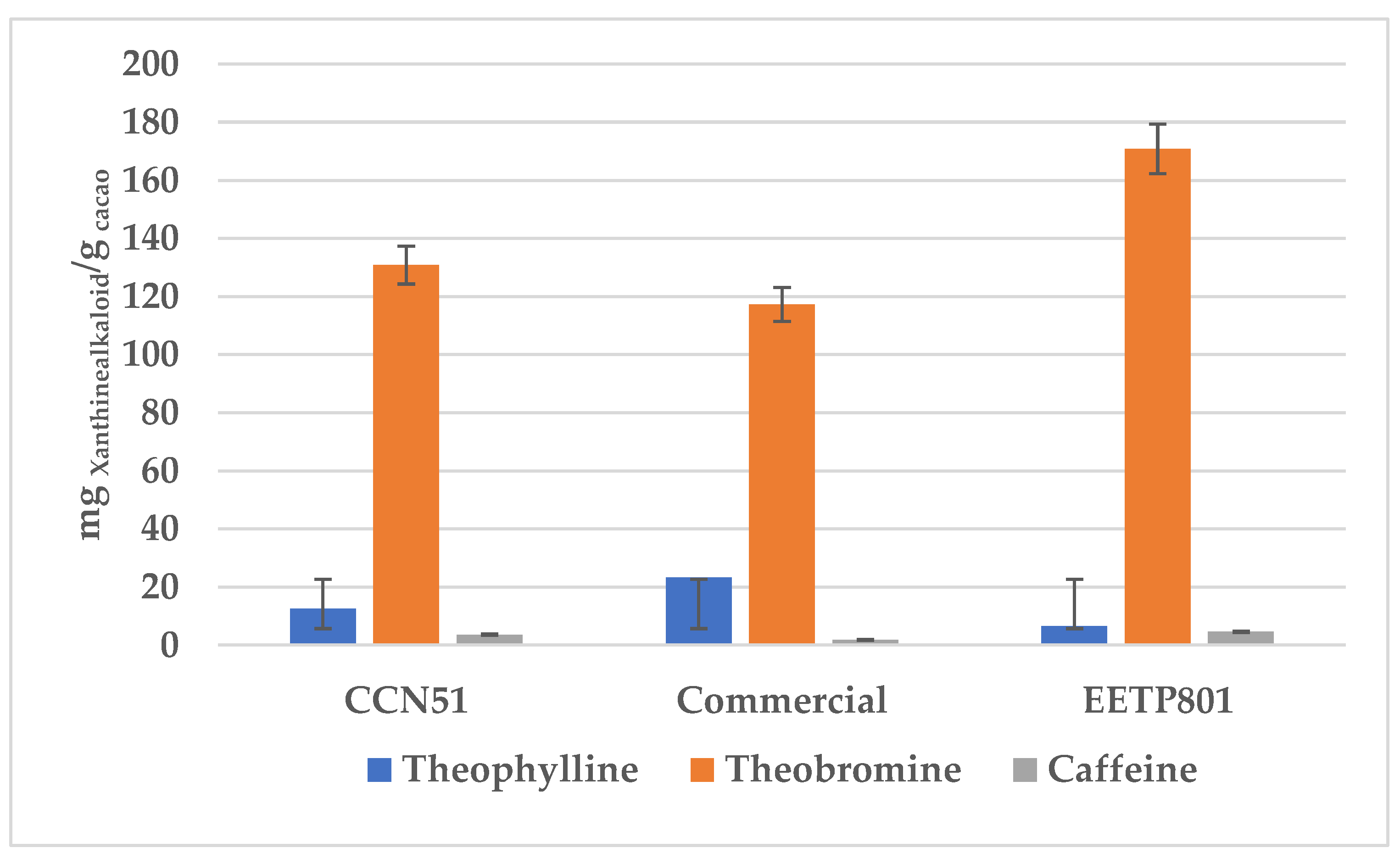
Xanthine alkaloids, the stimulant bioactive ingredients of cocoa, were separated and quantified by HPLC-UV showing the following order of elution: theophylline (Rt=2.1 min), theobromine (Rt=3.1 min) and caffeine (Rt=5.3 min) (Figure 4).
All the samples show theobromine as their most prominent one, followed by theophylline and caffeine with EETP801 showing the highest content in theobromine (Figure 5).
Figure 4. HPLC-UV chromatograms of cocoa samples (Abs 270 nm, Ref = 380 nm). Theophylline (Rt=2.1 min); theobromine (Rt=3.1 min); caffeine (Rt=5.3 min).
Preprints 144440 g005
Figure 5. Concentration of xanthine alkaloids (mg alkaloid per gram of cocoa) in the samples. All values are significantly different from each other (p =0.01) according to Tukey HSD.
Preprints 144440 g006

4. Discussion

The total polyphenol content measured by FC using caffeic acid as standard showed that it is slightly higher in CCN51 than in EETP801, 4.42% and 3.09% respectively, and significantly higher than in commercial cocoa 2.21%.
In terms of volatiles, all the samples show a spontaneous emission profile mainly rich in non-terpene derivatives, of which hydrocarbons and pyrazines are the most abundant groups. For EETP801 and CCN51, n-tridecane is the most represented volatile organic compound, whilst 2,3,5,6-tetramethyl pyrazine (TMP) is the most abundant volatile in the head-space of Valor chocolate.
Pyrazines are important aroma-active compounds in chocolate volatile emission. Apart from tri- and tetra-methyl pyrazines, which are produced during the fermentation process by bacterial enzymes [15,16], pyrazines are developed during the Maillard reactions, which take place during the roasting phase of cocoa seeds. Their total abundance reflects the degree of fermentation and the overall aroma potential [17]. Tetramethyl pyrazine was not detected in the Jamoe sample, whilst it represents 9.60 and 10.04% in CCN51and commercial samples, respectively (see Table 1). TMP confers positive characteristics to chocolate flavour: it is described as a green aroma contributor to cocoa, with coffee- and cocoa-like attributes [15,18,19]. The second most represented pyrazine in the samples is 2,3,5-trimethyl pyrazine (TrMP): it represents 6.45, 4.84 and 5.64% in EETP801 and CCN51 and commercial samples, respectively. It is a positive aroma contributor described as green, rhum-, cocoa- and roasted nuts-like [15,18]. The TMP/TrMP ratio is an important parameter for the evaluation of the degree of roasting: the higher the ratio, the better the roasting conditions [20]. Therefore, CCN51 and commercial samples seem to have undergone better roasting conditions than the EETP801 sample.
Other typical and positive attributes to chocolate come from the ester’s bouquet of chocolate head-space: they are aroma-active compounds, with low odour-thresholds, and they confer fruity and floral notes to the final product [15]. 2-Phenylethyl acetate is detected in all the samples, and it accounts for 1.45, 2.61 and 2.69% in EETP801 and CCN51 and commercial samples, respectively. Its aroma contribution is perceived as positive, as it has rose, honey and tobacco-like notes [21]. Ethyl acetate was only detected in the CCN51 sample, where it accounts for 7.58%. Its aroma contribution is defined as sweet and fruity [21], so its presence is desirable. It is developed during the fermentation as a product of esterification from acetic acid and ethanol [22]: in CCN51 sample acetic acid was not detected, presumably because it has all been converted in ethyl acetate through this esterification reaction and/or volatilized during the roasting phases.
Aldehydes, particularly those derived from the Strecker degradation like benzaldehyde and phenyl acetaldehyde, are relevant in the perception of a desirable cocoa aroma [17,23]. Benzaldehyde confers a bitter final aroma to chocolate [15]: in EETP801 and CCN51 it was detected in low amounts (0.77 and 0.63%, respectively), whilst its relative abundance is more significant in the commercial sample, where it accounts for 2.06%. According to Bonvehí [15], the presence of aliphatic aldehydes is favourable, as they confer fruity and flowery notes to the final product: nonanal accounts for 1.16 and 1.01% in EETP801 and commercial sample, respectively, whilst decanal is only detected in CCN51, where it accounts for 0.4%. Aldehyde's behaviour is like that of pyrazines, as their relative abundance is lower in less fermented chocolate: the commercial sample seems to be more fermented than EETP801 and CCN51.
The only relevant non-terpene ketone detected is 2-nonanone, whose relative abundance is particularly significant in the CCN51 sample, where it accounts for 7.10%. Its aroma contribution is positive, as it is described as fresh and sweet [15].
Volatile acids are critical for the consumer appreciation of the final product: high amounts (over 1%) of these compounds are undesirable, as they confer unpleasant rancid notes to chocolate [15]. Among these, acetic acid is the most important contributor, as it generally is the most abundant one and tastes more acidic than the other acids [24]. They are produced during the fermentation phase and are then released during the drying and roasting phases. Acetic acid relative abundance is significant in EETP801 and the commercial samples, as it accounts for 5.56 and 5.52%, respectively. The reasons could be different: i) the raw seeds were particularly rich in acid content to begin with, which is generally the case for low-quality varieties of cocoa (like other cocoa cultivars such as Trinitario and Forastero); ii) the drying phase was conducted with forced air drying and/or at high temperatures, which hardened the husks and did not permit the volatile acids release; iii) incomplete or inadequate roasting. Acetic acid was not detected in the CCN51 sample headspace. A negative contributor to chocolate taste is also 2-methylbutanoic acid, whose aroma notes are described as rancid and sweaty [15,25,26]. It was detected only in EETP801 and CCN51 samples but with low relative abundance, as it accounts for 0.39 and 0.55%, respectively.
The HPLC-UV analyses of the characteristic stimulant xanthine alkaloids of cocoa beverages showed that the organically grown EETP801 is significantly richer in theobromine. The samples were similar in their contents of theophylline and caffeine. Theobromine is a sought-after bioactive ingredient in the wellness industry both as nutraceutical and cosmeceutical [9].
In agronomic terms, EETP801 is less productive than the CCN51 cultivar but it is considered of a much higher quality and market value [13]. EETP801 is more sustainable as it requires the natural canopy of the rainforest to thrive, whilst CCN51 needs to grow in full sunlight, therefore forcing deforestation. In our experiment, we planted 400 EETP801 seedlings 13 years ago. At the age of 3 years, it gave its first harvest. About 50 plants have died for different reasons in the past 13 years (drought and strong winds cause trees to fall on them). The average amount of cocoa beans produced per year is ca 45 kg, in a single annual harvest. This variety does not produce two harvests per year as CCN51 does.

5. Conclusions

Despite the lower cocoa yield of the EETP801 cultivar compared to CCN51, the EETP801 cultivar's produce boasts a higher theobromine content. While the overall polyphenolic composition of EETP801 is qualitatively similar to CCN51, the latter exhibits a richer quantity of these metabolites. Both Amazonian cacao varieties exhibit a superior fragrance profile compared to the commercial sample, though the artisan fermentation and roasting processes introduced some variability in volatile composition. EETP801 presents a viable and sustainable option for the ecologically conscious cocoa beverage consumer.

Author Contributions

Conceptualization, J.M.P.; methodology, R.DLP-A., R.A., J.M.P. and G.F.; formal analysis, R.A., J.M.P. and G.F.; resources, R.A. and M.V.; writing—original draft preparation, J.M.P., R.A., and G.F.; writing—review and editing, J.M.P.; visualization, J.M.P.; supervision, J.M.P. All authors have read and agreed to the published version of the manuscript.”

Funding

This research received no external funding.

Data Availability Statement

Data are available on demand.

Acknowledgments

Rocio De la Peña-Armada is grateful for an ERASMUS+ scholarship.

Conflicts of Interest

The authors declare no conflicts of interest.

References

  1. Diby, L.; Kahia, J.; Kouamé, C.; Aynekulu, E. Tea, Coffee, and Cocoa. In Encyclopedia of Applied Plant Sciences; Elsevier, 2017; pp. 420–425 ISBN 978-0-12-394808-3.
  2. International Monetary Fund Primary Commodities: Market Developments & Outlook; World Economic and Financial Surveys; International Monetary Fund: Washington, D.C., 1986; ISBN 978-1-4519-4304-7.
  3. Coe, S.D.; Coe, M.D. The True History of Chocolate; Thames & Hudson: New York, 1996; ISBN 978-0-500-29474-1. [Google Scholar]
  4. Barišić, V.; Icyer, N.C.; Akyil, S.; Toker, O.S.; Flanjak, I.; Ačkar, Đ. Cocoa Based Beverages – Composition, Nutritional Value, Processing, Quality Problems and New Perspectives. Trends Food Sci. Technol. 2023, 132, 65–75. [Google Scholar] [CrossRef]
  5. González-Garrido, J.A.; García-Sánchez, J.R.; López-Victorio, C.J.; Escobar-Ramírez, A.; Olivares-Corichi, I.M. Cocoa: A Functional Food That Decreases Insulin Resistance and Oxidative Damage in Young Adults with Class II Obesity. Nutr. Res. Pract. 2023, 17, 228. [Google Scholar] [CrossRef] [PubMed]
  6. Yang, J.; Zhou, J.; Yang, J.; Lou, H.; Zhao, B.; Chi, J.; Tang, W. Dark Chocolate Intake and Cardiovascular Diseases: A Mendelian Randomization Study. Sci. Rep. 2024, 14, 968. [Google Scholar] [CrossRef] [PubMed]
  7. Kongor, J.E.; Owusu, M.; Oduro-Yeboah, C. Cocoa Production in the 2020s: Challenges and Solutions. CABI Agric. Biosci. 2024, 5, 102. [Google Scholar] [CrossRef]
  8. Kim, N.; Lee, K. Environmental Consciousness, Purchase Intention, and Actual Purchase Behavior of Eco-Friendly Products: The Moderating Impact of Situational Context. Int. J. Environ. Res. Public. Health 2023, 20, 5312. [Google Scholar] [CrossRef]
  9. Samanta, S.; Sarkar, T.; Chakraborty, R.; Rebezov, M.; Shariati, M.A.; Thiruvengadam, M.; Rengasamy, K.R.R. Dark Chocolate: An Overview of Its Biological Activity, Processing, and Fortification Approaches. Curr. Res. Food Sci. 2022, 5, 1916–1943. [Google Scholar] [CrossRef]
  10. Rainforest Alliance, T. Rainforest Alliance Certified Cocoa 2022.
  11. Halliday, J. Mars Pledges Sustainable Cocoa Only by 2020. Available online: https://www.foodnavigator.com/Article/2009/04/10/Mars-pledges-sustainable-cocoa-only-by-2020/ (accessed on 13 December 2024).
  12. Heredia-R, M.; Blanco-Gutiérrez, I.; Esteve, P.; Puhl, L.; Morales-Opazo, C. Assessment of Sustainability in Cocoa Farms in Ecuador: Application of a Multidimensional Indicator-Based Framework. Int. J. Agric. Sustain. 2024, 22, 2379863. [Google Scholar] [CrossRef]
  13. EETP-801. Available online: https://icgd.reading.ac.uk/all_data.php?nacode=33607&&tables=planting_mat-country (accessed on 14 December 2024).
  14. Ramiro-Puig, E.; Castell, M. Cocoa: Antioxidant and Immunomodulator. Br. J. Nutr. 2009, 101, 931–940. [Google Scholar] [CrossRef]
  15. Bonvehí, J.S. Investigation of Aromatic Compounds in Roasted Cocoa Powder. Eur. Food Res. Technol. 2005, 221, 19–29. [Google Scholar] [CrossRef]
  16. Rodriguez-Campos, J.; Escalona-Buendía, H.B.; Contreras-Ramos, S.M.; Orozco-Avila, I.; Jaramillo-Flores, E.; Lugo-Cervantes, E. Effect of Fermentation Time and Drying Temperature on Volatile Compounds in Cocoa. Food Chem. 2012, 132, 277–288. [Google Scholar] [CrossRef] [PubMed]
  17. Van Durme, J.; Ingels, I.; De Winne, A. Inline Roasting Hyphenated with Gas Chromatography–Mass Spectrometry as an Innovative Approach for Assessment of Cocoa Fermentation Quality and Aroma Formation Potential. Food Chem. 2016, 205, 66–72. [Google Scholar] [CrossRef] [PubMed]
  18. Afoakwa, E.O. Chocolate Science and Technology; Wiley-Blackwell: Chichester, U.K. ; Ames, Iowa, 2010; ISBN 978-1-4051-9906-3.
  19. Rodriguez-Campos, J.; Escalona-Buendía, H.B.; Orozco-Avila, I.; Lugo-Cervantes, E.; Jaramillo-Flores, M.E. Dynamics of Volatile and Non-Volatile Compounds in Cocoa (Theobroma Cacao L.) during Fermentation and Drying Processes Using Principal Components Analysis. Food Res. Int. 2011, 44, 250–258. [Google Scholar] [CrossRef]
  20. Tran, P.D.; Van De Walle, D.; De Clercq, N.; De Winne, A.; Kadow, D.; Lieberei, R.; Messens, K.; Tran, D.N.; Dewettinck, K.; Van Durme, J. Assessing Cocoa Aroma Quality by Multiple Analytical Approaches. Food Res. Int. 2015, 77, 657–669. [Google Scholar] [CrossRef]
  21. Rodríguez, A.; San Andrés, V.; Cervera, M.; Redondo, A.; Alquézar, B.; Shimada, T.; Gadea, J.; Rodrigo, M.J.; Zacarías, L.; Palou, L.; et al. Terpene Down-Regulation in Orange Reveals the Role of Fruit Aromas in Mediating Interactions with Insect Herbivores and Pathogens. Plant Physiol. 2011, 156, 793–802. [Google Scholar] [CrossRef]
  22. Pretorius, I.S. Tailoring Wine Yeast for the New Millennium: Novel Approaches to the Ancient Art of Winemaking. Yeast 2000, 16, 675–729. [Google Scholar] [CrossRef] [PubMed]
  23. Acierno, V.; Yener, S.; Alewijn, M.; Biasioli, F.; Van Ruth, S. Factors Contributing to the Variation in the Volatile Composition of Chocolate: Botanical and Geographical Origins of the Cocoa Beans, and Brand-Related Formulation and Processing. Food Res. Int. 2016, 84, 86–95. [Google Scholar] [CrossRef]
  24. Jinap, S.; Dimick, P.S.; Hollender, R. Flavour Evaluation of Chocolate Formulated from Cocoa Beans from Different Countries. Food Control 1995, 6, 105–110. [Google Scholar] [CrossRef]
  25. Frauendorfer, F.; Schieberle, P. Identification of the Key Aroma Compounds in Cocoa Powder Based on Molecular Sensory Correlations. J. Agric. Food Chem. 2006, 54, 5521–5529. [Google Scholar] [CrossRef] [PubMed]
  26. Frauendorfer, F.; Schieberle, P. Changes in Key Aroma Compounds of Criollo Cocoa Beans During Roasting. J. Agric. Food Chem. 2008, 56, 10244–10251. [Google Scholar] [CrossRef] [PubMed]
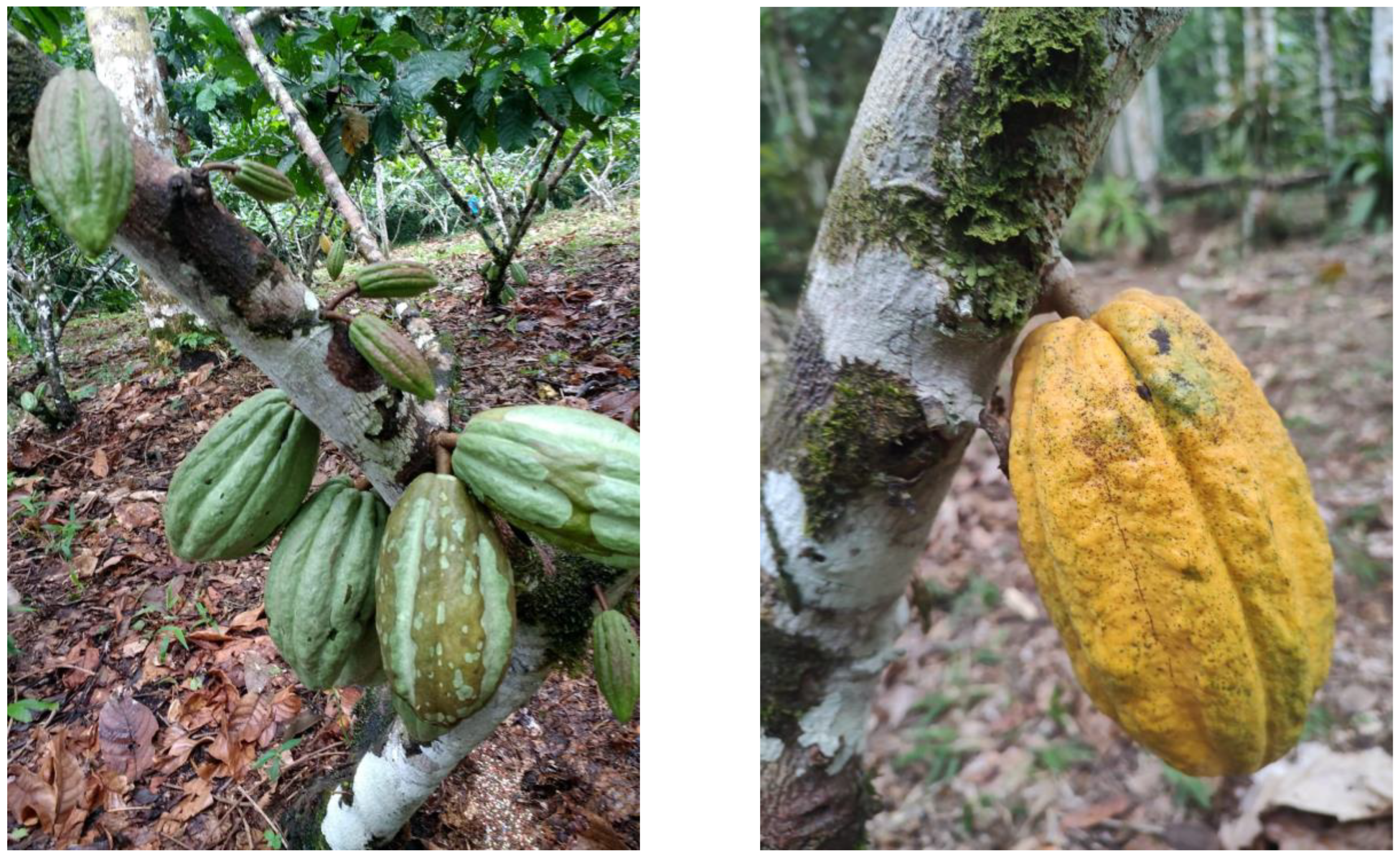
Figure 1. Above: EETP801 pods from Iamoe Centre (Dayuma, Ecuador) at two maturity stages. Below: CCN51 pods from a neighbouring plantation (Dayuma, Ecuador) (Credits: Dr Viteri).
Preprints 144440 g001aPreprints 144440 g001b
Figure 2. Total phenols content measured by the Folin-Ciocalteu method. (a) CCN51 vs Commercial p < 0.01); (b) CCN51 vs EETP801 p < 0.01); (c) EETP801 vs Commercial p < 0.01) according to Tukey HSD.
Preprints 144440 g002
Disclaimer/Publisher’s Note: The statements, opinions and data contained in all publications are solely those of the individual author(s) and contributor(s) and not of MDPI and/or the editor(s). MDPI and/or the editor(s) disclaim responsibility for any injury to people or property resulting from any ideas, methods, instructions or products referred to in the content.
Copyright: This open access article is published under a Creative Commons CC BY 4.0 license, which permit the free download, distribution, and reuse, provided that the author and preprint are cited in any reuse.
Prerpints.org logo

Preprints.org is a free preprint server supported by MDPI in Basel, Switzerland.

Subscribe

Disclaimer

Terms of Use

Privacy Policy

Privacy Settings

© 2025 MDPI (Basel, Switzerland) unless otherwise stated